


Simple Summary
In this study, conducted over four consecutive years (2022–2025), we investigated the prevalence in Hungarian swine herds of leptospirosis caused by serovars for which pigs serve as maintenance (reservoir) hosts—such as Pomona, Tarassovi, and Bratislava—as well as the presence of L. icterohaemorrhagiae, the serovar most frequently responsible for zoonotic infections. Our aim was to define the current leptospirosis status in domestic herds and provide recommendations. Analysis of more than 180,000 serum samples revealed that seroprevalence for Pomona and Tarassovi remained consistently below 1%, whereas rates varied for Bratislava (0.81–2.13%) and Icterohaemorrhagiae (0.85–1.86%). Antibodies against incidental serovars (Sejroe, Canicola, Grippotyphosa) occurred rarely. Importantly, our data highlight that the increase in L. pomona seropositive herds and samples in 2024 and 2025 was driven primarily by an increasing number of abortions. For L. bratislava, increased seropositivity was directly tied to quarantine screening of thousands of replacement gilts imported in 2024. As demonstrated, swine leptospirosis (Pomona, Bratislava) in its acute stage can be managed and eliminated, with the herd rendered free through targeted veterinary interventions. For the few chronically infected herds, depopulation and repopulation is the definitive solution. Under current conditions in Hungary, eliminating porcine leptospirosis appears to be a technically simpler task than eradicating either Aujeszky or PRRS diseases—requiring no routine immunization at either the farm or national level—while also being achievable within a short timeframe and at a lower cost.
Abstract
Background: The objective of our study was to identify supporting and/or opposing arguments regarding whether it is worthwhile to launch—or relaunch—a nationwide program against leptospirosis in Hungarian swine herds, modeled after the successful eradication programs for Aujeszky’s disease and PRRS. It is essential to determine which Leptospira serogroups currently infect Hungarian swine herds and the nationwide distribution of this infection. It is of particular importance to ascertain the prevalence of the swine-adapted (hosted) Leptospira strains (Pomona, Tarassovi, Bratislava)—specifically, in how many herds and across what geographical area they occur, and what percentage of breeding stock is affected—as well as how the infection was introduced to the farm. Furthermore, we sought to identify the available options for eliminating specific Leptospira serovars and achieving disease-free status for individual herds. Materials and methods: We had an analysis of more than 180,000 serum samples across 4 years, including seroprevalence for Pomona, Tarassovi, Bratislava and Icterohaemorrhagiae. Antibodies against incidental serovars (Sejroe, Canicola, Grippotyphosa) occurred rarely. Authors describe their experiences with establishing a new, import-based unit with Bratislava and an eradication method of a large-scale swine herd after Pomona infection. Conclusions: Our aim was to define the current leptospirosis status in domestic herds and provide recommendations. Hungary must decide whether to preserve swine leptospirosis freedom—a status that delivers cost savings by eliminating routine vaccination and treatment costs, provides market value for domestic swine health, and protects against a zoonosis—or leave infection unregulated and manage disease conventionally through vaccines and antibiotics, as practiced elsewhere in the EU.
1. Introduction
The global significance of infections caused by spirochetal bacteria belonging to the genus Leptospira—of which 260 serotypes have been identified in recent years—stems from the fact that they not only cause infectious disease with severe clinical signs in livestock and wildlife, but also pose a zoonotic threat to human health [1]. Globally, among these clinical forms, Weil’s disease caused by L. interrogans serovar Icterohaemorrhagiae receives the highest prominence [2].
According to the table titled “Infectious Diseases Registered in Hungary During the Reporting Week” in the publication “Weekly Epidemiological Situation Report Week 52, 2025” issued by the Department of Epidemiology and Infection Control of the National Center for Public Health and Pharmacy (NNGYK), an annual median of 5 human leptospirosis cases occurred between 2019 and 2023, followed by 11 cases in 2024 and 14 cases in 2025 in Hungary [3].
A continental meta-analysis established that the seroprevalence of leptospirosis in swine is highest in South America (36.40%), followed by North America (34.05%), Africa (22.18%), Oceania (17.40%), Europe (13.30%), and Asia (13.36%) [4].
When classifying leptospires, host specificity is of primary importance. Swine serve as the reservoir (maintenance) host for three Leptospira species/serovars: L. pomona, L. tarassovi (hyos), and L. bratislava. In the case of the latter, some sources also designate horses as a reservoir host [5,6]. Pigs can also be infected by other serotypes (Icterohaemorrhagiae, Canicola, Sejroe, Grippotyphosa). These serogroups and serovars most frequently play a role in incidental (accidental) infections identified in swine [7,8].
In swine, the pathogen can cause fetal infection during the acute phase of the disease and genital tract lesions during the chronic phase [9,10,11].
The primary sources of infection are rodents, cattle, swine, and dogs [5]. Transmission can occur indirectly through contaminated water or soil, or directly via contact with the urine of infected animals [12].
Because of its ability to test multiple serovars representing different serogroups simultaneously, the microscopic agglutination test (MAT) is considered the gold standard reference method in the serological diagnosis of leptospirosis, particularly in epidemiological investigations. The technique is based on an antigen–antibody reaction and detects both IgM and IgG antibody classes [13]. Its drawback is that identifying the infecting serovar is often impossible due to widespread cross-reactions among serovars within the same serogroup [14].
During the pathogenesis of porcine leptospirosis, ingested pathogens cause leptospiremia after a few days. Under the influence of antibodies appearing in the blood of infected pigs, the bacteremia resolves, and leptospires colonize the convoluted renal tubules for a serotype-dependent duration and are shed in the urine [15]. When pregnant sows become infected, there is often a significant delay between infection and abortion; consequently, antibody titers may peak before abortion, and analysis of acute and convalescent serum samples may show stable or declining antibody titers. In transplacental infection, pre-colostral serum samples from piglets may contain leptospiral antibodies. These antibodies are present in low titers (<1:100) but are generally specific to the infecting serotype. Detection of fetal antibody titers in swine can be very useful in establishing a diagnosis of leptospirosis [16].
The use of vaccines can complicate the interpretation of widely used serological tests that provide cost-effective evidence of infection during herd health monitoring and surveillance [17,18]. Earlier studies indicated that MAT titers are very low following vaccination and considerably higher in naturally infected pigs [17,18], which is why MAT titers of 1:100 or greater against one or more serovars are generally considered significant [18]. However, American authors reported markedly different findings: high MAT titer levels can occur purely because of vaccination, and high titers do not necessarily indicate infection. Therefore, the interpretation of MAT titers as an indicator of Leptospira infection must be reconsidered [19].
In Hungary during the 1980s, ministerial guidelines assisted in implementing leptospirosis eradication [20]. These guidelines recommended eradication of leptospirosis (L. pomona and L. hyos-tarassovi) via total herd depopulation and repopulation. Subsequently, the designation of “triple-free” and later “quadruple-free” herd status became an industry standard in certifying domestic swine farms (freedom from brucellosis, Aujeszky’s disease, leptospirosis, and fourth: PRRS).
The veterinary administrative assessment of swine leptospirosis in Hungary is currently contradictory. The prevailing Veterinary Health Regulations mandate that the district authority must classify large-scale swine herds—regardless of whether they consist of breeding or fattening units—with respect to leptospirosis (Section 208 of Ministry of Agriculture Decree 41/1997 (V. 28.) on the issuance of the Veterinary Health Regulations [21]). In accordance with Point III.A.2 of Annex 3 to VM Decree 87/2012 (VIII. 27.) on the animal health rules for the domestic transport of live animals [22], the transport of breeding pigs requires—in addition to individual free of disease—certification that the herd of origin is free from L. pomona and L. tarassovi. Leptospirosis is listed in Point II(c) of Annex 1 to FVM Decree 81/2002 (IX. 4.) on the animal health tasks related to protection against zoonoses [23] as a zoonosis not subject to mandatory notification, for which the organization of official control measures is the responsibility of the county government office.
At the same time, there is no unified legislation or implementing instruction outlining how disease control measures or the classification of swine herds should be carried out, or the conditions under which herd freedom from disease is to be established. In the absence of such regulations, the authority is unable to fulfill the aforementioned obligations; it can only determine and certify individual disease-free status prior to the transport of breeding animals.
Commission Implementing Regulation (EU) 2018/1882 did not categorize leptospirosis even into category “E”. The OIE previously listed leptospirosis as a notifiable “List B” disease, but the current WOAH Terrestrial Animal Health Code no longer contains specific provisions for the disease.
None of this alters the fact that leptospiral serogroups that utilize swine as a reservoir (maintenance) host (Table 1) significantly impair herd economic performance, in addition to threatening public health as a zoonosis. No further justification is required to review the leptospirosis situation in Hungarian swine herds.
Table 1.
Typical reservoir hosts of common leptospiral serovars.
The objective of our study was to identify supporting and/or opposing arguments regarding whether it is worthwhile to launch—or relaunch—a nationwide program against another infectious disease capable of causing major economic losses in Hungarian swine herds, modeled after the successful eradication programs for Aujeszky’s disease and PRRS.
Just as we did when laying the groundwork for eradication programs against the two previously mentioned diseases, in the case of leptospirosis, it is essential to determine which Leptospira serogroups currently infect Hungarian swine herds and the nationwide distribution of this infection. It is of particular importance to ascertain the prevalence of the swine-adapted (hosted) Leptospira strains (Pomona, Tarassovi, Bratislava)—specifically, in how many herds and across what geographical area they occur, and what percentage of breeding stock is affected—as well as how the infection was introduced to the farm. Furthermore, we sought to identify the available options for eliminating specific Leptospira serovars and achieving disease-free status for individual herds. Our study aimed to address these questions.
2. Materials and Methods
- Investigation over four consecutive years (2022–2025) of the occurrence of antibodies against Leptospira serovars, for which swine serve as the maintenance host, and the occurrence of L. icterohaemorrhagiae, the primary zoonotic serovar, in swine herds during the same period.
In Hungary, the laboratories of the Veterinary Diagnostic Directorate of the National Food Chain Safety Office (NÉBIH ÁDI) conduct the largest number and most extensive investigations for all infectious diseases. The diagnostic methods of NÉBIH ÁDI laboratories—including those for leptospirosis—operate under EU accreditation, complying in all respects with international standards. We evaluated the results of leptospirosis tests submitted to this laboratory from domestic swine herds in 2022, 2023, 2024, and 2025 for serovars L. pomona, L. hyos-tarassovi, and L. bratislava, for which swine are the maintenance host species. For the same period, we conducted the same analysis regarding L. icterohaemorrhagiae, the primary leptospiral zoonotic serovar.
Samples originated from breeding herds of large-scale commercial units, monitoring, diagnostic, and post-abortion investigations in commercial finishing operations and backyard farm herds, as well as blood sampling associated with animal movements (import quarantine, domestic quarantine, livestock transport).
- 2.
- Investigation over two consecutive years of antibodies against Leptospira serovars for which swine are NOT the maintenance host.
For 2024–2025, we assessed the number of tests performed in swine herds for other serovars utilizing swine only as secondary/incidental hosts: Grippotyphosa, Sejroe, and Canicola.
- 3.
- Serological Case Study on Antibodies Against Leptospira Interrogans, Serogroup Australis and Serovar Bratislava.
We separately analyzed test results for L. bratislava antibodies in a large-scale breeding herd established via total depopulation–repopulation, stocked with replacement gilts imported from Denmark. We evaluated the appearance of seropositivity, the occurrence of clinical signs, and herd-level seroprevalence shifts over nearly two years.
- 4.
- Eradication of leptospirosis caused by Pomona and Bratislava serovars on a large-scale farrow-to-finish breeding farm.
Based on our own experience—involving a Hungarian large-scale farrow-to-finish swine breeding farm—we describe the losses caused by the introduction of L. pomona, the method used to eliminate the infection, the costs incurred, and whether long-term vaccination against the disease is justified.
Serological testing for leptospirosis was performed by detecting antibodies against the pathogen using the microscopic agglutination test (MAT), protocol reference: WOAH Manual of Diagnostic Tests and Vaccines for Terrestrial Animals 2021, Chapter 3.1.12.B.2.1. [24].
3. Results
- Four-Year Investigation (2022–2025) of Antibodies Against Leptospira Serovars Maintained by Swine.
According to official records, in 2025 there were nearly 540 commercial breeding herds and over 500 commercial fattening herds in Hungary. Table 2 presents the coverage of our investigations across these herds, farm operators, sow-holding operations, and settlements. In 2022, 2023, 2024, and 2025, there were 401, 369, 364, and 348 swine herds in Hungary, respectively, where at least one sample was tested for at least one Leptospira serotype. Within this figure, the number of breeding farms keeping sows was 322 in 2022, 268 in 2023, 258 in 2024, and 276 in 2025. This means that test data were available for approximately 45–50% of the breeding farms.
Table 2.
Representativeness of Leptospira testing on swine farms between 2022 and 2025.
Our findings consist of descriptive evaluations of the available data; they do not include statements based on inferential statistics. The presentation of this data highlights the fact that, in the absence of regulation, the volume of observational findings—which would provide the most accurate picture of the prevalence of various Leptospira serovars—has been declining year by year. Although the dataset includes laboratory results from animal holdings across Hungary, these findings are not representative of the national prevalence or geographical distribution of Leptospira infection.
Data were collected for various diagnostic and epidemiological surveillance purposes, involving animal populations with varying probabilities of testing positive. Furthermore, participation in the investigations was not consistent across either the farms or the years. Consequently, the observed temporal and spatial patterns reflect the distribution of positive results within the available laboratory dataset, rather than the epidemiological situation across the entire country. The above observation holds true even if, for instance, the test results from more than 50% of the country’s large-scale pig breeding farms are included in the data for 2025.
Table 3 summarizes the MAT results conducted between 2022 and 2025 to detect antibodies against Leptospira interrogans, serogroup Pomona and serovar Pomona.
Table 3.
Leptosipra pomona serological tests.
Among herds with seropositive results, sow farms accounted for 13 in 2022, 20 in 2023, 47 in 2024, and 29 in 2025. Seropositivity was detected in commercial fattening herds in one herd in 2023, three in 2024, and seven in 2025. A nearly fourfold increase is noticeable between 2022 and 2024 in herds where the laboratory detected seropositivity in at least one sample. Although this number decreased in 2025, it still represents a more than twofold increase compared to 2022. As the total number of tested herds declined steadily year-on-year, the percentage of positive herds increased 2.5-fold from 2022 to 2025.
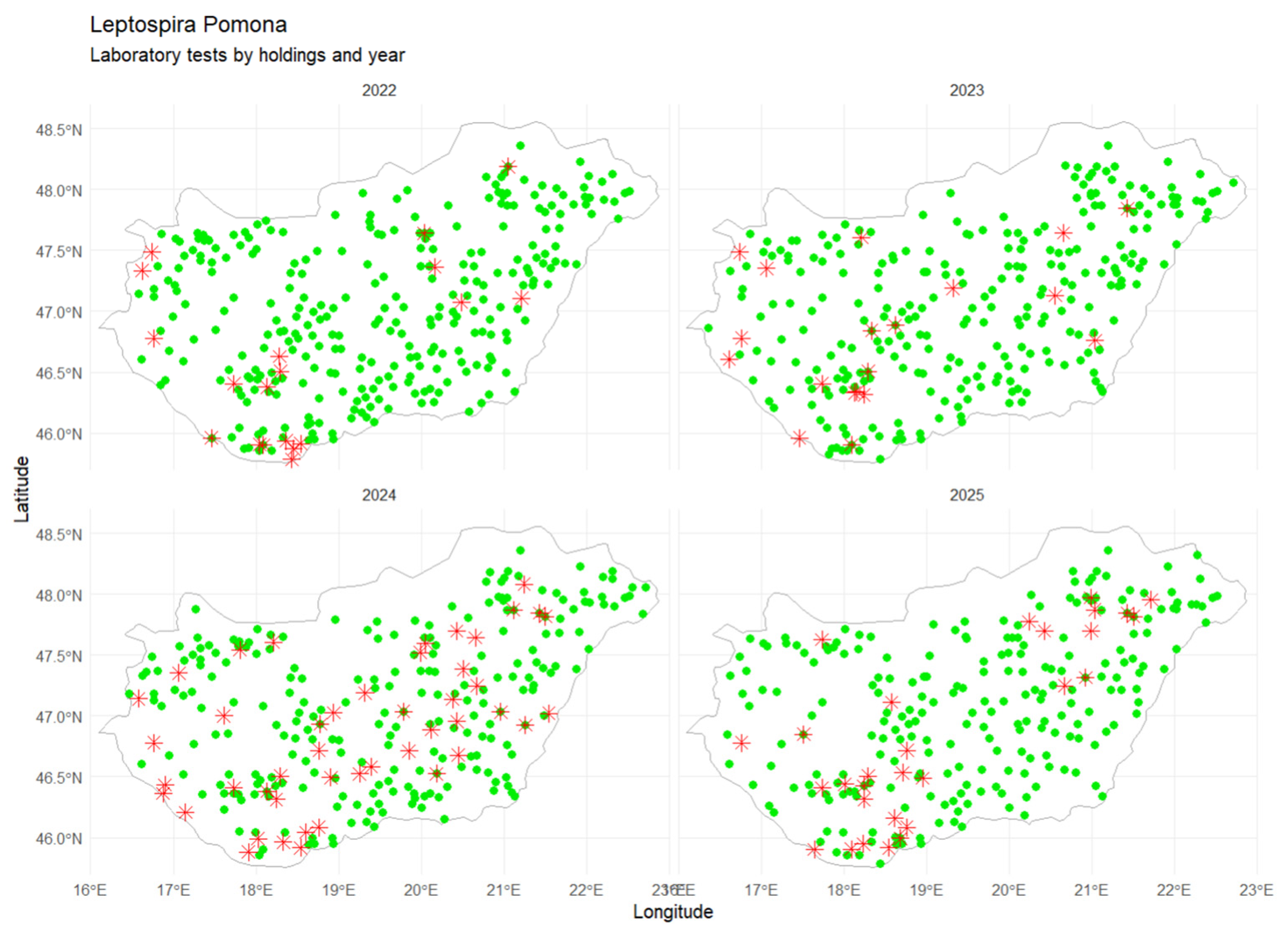
Figure 1 shows the geographical distribution of farms tested for antibodies against Leptospira interrogans, serogroup Pomona and serovar Pomona, and the national distribution of seropositive farms.
Figure 1.
Geographical location of farms tested for antibodies against Leptospira interrogans (serogroup Pomona, serovar pomona) and the distribution within the country of farms where seropositivity was detected (2022–2025). Negative farms are indicated in green; farms with at least one positive result are shown in red.
The results indicate that seropositive and doubtful cases occurred throughout the country and are not restricted to specific regions.
The number of seropositive samples also increased compared to 2022 (Table 3). In 2025, 290 samples were found seropositive, of which 100 samples from a single farm gave seropositive results due to vaccination (which is why only 190 samples are counted among field seropositives). Thus, in all four years, antibodies against Leptospira interrogans, serogroup Pomona and serovar Pomona, were present in less than 1% of samples. However, in 2024 and 2025, the proportion of seropositive samples increased fourfold.
Table 4 summarizes the MAT results conducted between 2022 and 2025 to detect antibodies against Leptospira borgpetersenii, serogroup Tarassovi and serovar Tarassovi.
Table 4.
Leptosira tarassovi serological tests.
Among the farms with seropositive test results, there was one sow farm in 2022, zero in 2023, three in 2024, and five in 2025. No seropositivity was detected on large-scale fattening farms in any of the years. It is evident that, compared to 2022–2023, the number of farms where the laboratory detected seropositivity in at least one sample increased threefold in 2024 and fivefold in 2025. A decline in the total number of farms tested was also observed; consequently, the proportion of positive herds rose above 1% by 2025.
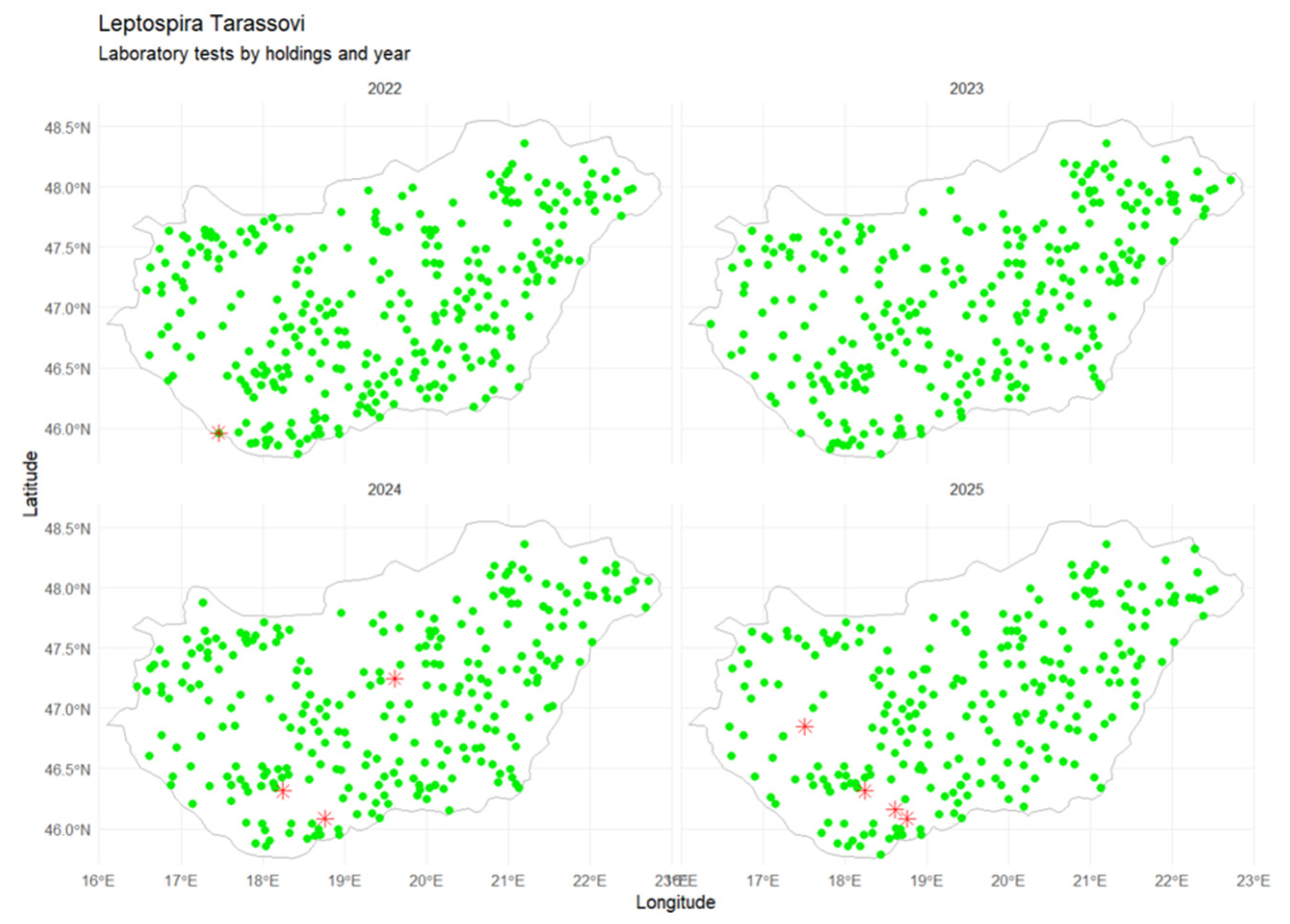
Figure 2 shows the geographical locations of the herds tested for antibodies against Leptospira borgpetersenii (serogroup Tarassovi, serovar Tarassovi) and the distribution of seropositive herds within the country.
Figure 2.
Geographical location of farms tested for antibodies against Leptospira borgpetersenii (serogroup Tarassovi, serovar tarassovi) and the distribution of seropositive farms within the country (2022–2025). Negative farms are indicated in green; farms with at least one positive result are shown in red.
The very few seropositive cases were likewise not restricted to any specific region.
The number of samples showing seropositivity during testing also increased compared to 2022 (Table 4). In 2025, 108 samples were found to be seropositive; however, at one farm (the same farm mentioned in the L. pomona evaluation), 100 samples (from the same 100 animals that also tested positive for L. pomona) showed seropositivity as a result of vaccination against the disease (Porcilis Ery parvo lepto® Intervet International)—which is why only eight samples are counted among the seropositive ones. Thus, across all four years, antibodies against Leptospira borgpetersenii (serogroup Tarassovi, serovar Tarassovi) were present in significantly less than 1% of the samples. In 2025, the number of seropositive samples increased by a negligible proportion.
Table 5 summarizes the MAT results conducted in 2024–2025 for antibodies against Leptospira interrogans, serogroup Australis and serovar Bratislava.
Table 5.
Leptosira bratislava serological tests.
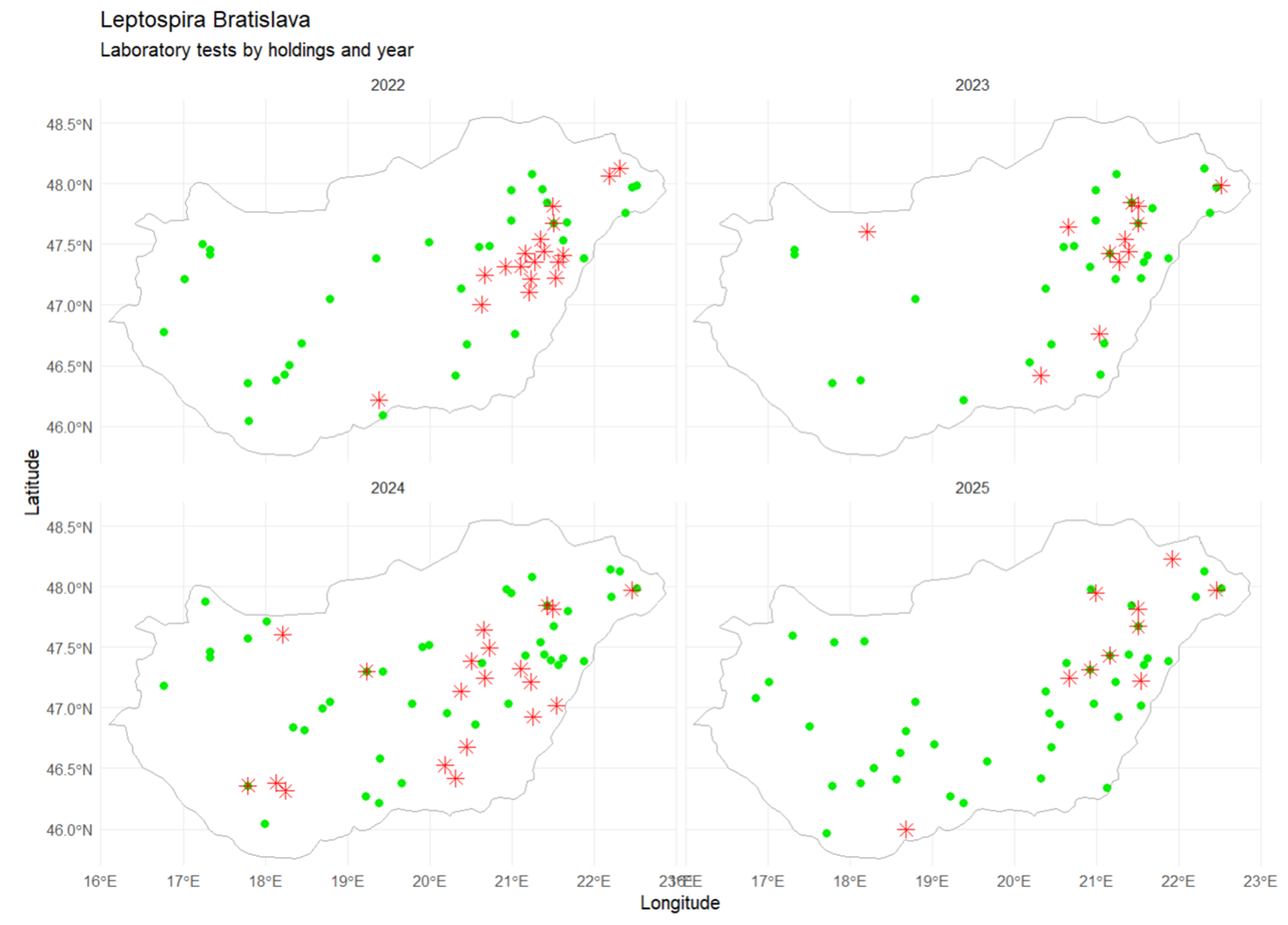
Among herds with seropositive results, sow farms accounted for 18 in 2022, 12 in 2023, 21 in 2024, and 10 in 2025. No seropositivity was detected in commercial fattening herds in any year. The number of tested herds was approximately 1/8 of those evaluated for L. pomona and L. tarassovi, but the proportion of positive herds was higher. In 2022–2024, seropositivity occurred in 26–30% of tested herds, declining to 19% by 2025.
Figure 3 illustrates the geographical location of farms tested for antibodies against Leptospira interrogans, serogroup Australis and serovar Bratislava, and the distribution of seropositive farms.
Figure 3.
Geographical location of herds tested for antibodies against Leptospira interrogans (serogroup Australis, serovar Bratislava) and the distribution within the country of herds where seropositivity was detected (2022–2025) Negative farms are indicated in green; farms with at least one positive result are shown in red.
Results show that seropositive and doubtful cases typically occurred in the eastern region of the country on farms that imported breeding pigs, primarily from Denmark.
The number and proportion of positive samples fluctuated across the four years without a clear trend (Table 5). In 2024, 204 samples tested seropositive in connection with post-quarantine testing of an import consignment of more than 3000 replacement gilts (see details in Section 3). During the 4 studied years, antibodies against Leptospira interrogans, serogroup Australis and serovar Bratislava, were present in 0.81–2.13% of samples.
Table 6 summarizes MAT results (2022–2025) for antibodies against Leptospira interrogans, serogroup Icterohaemorrhagiae and serovar Icterohaemorrhagiae.
Table 6.
Leptosira icterohaemorrhagiae serological tests.
Among herds with seropositive results, sow farms accounted for three in 2022, three in 2023, seven in 2024, and four in 2025. No seropositivity was found in commercial fattening herds in any year. Similar to L. bratislava, the number of tested herds was far lower than for the first two serovars; herd positivity rates were comparable to L. pomona. Between 2022 and 2024, herds with at least one positive sample nearly doubled, returning roughly to baseline annual levels in 2025.
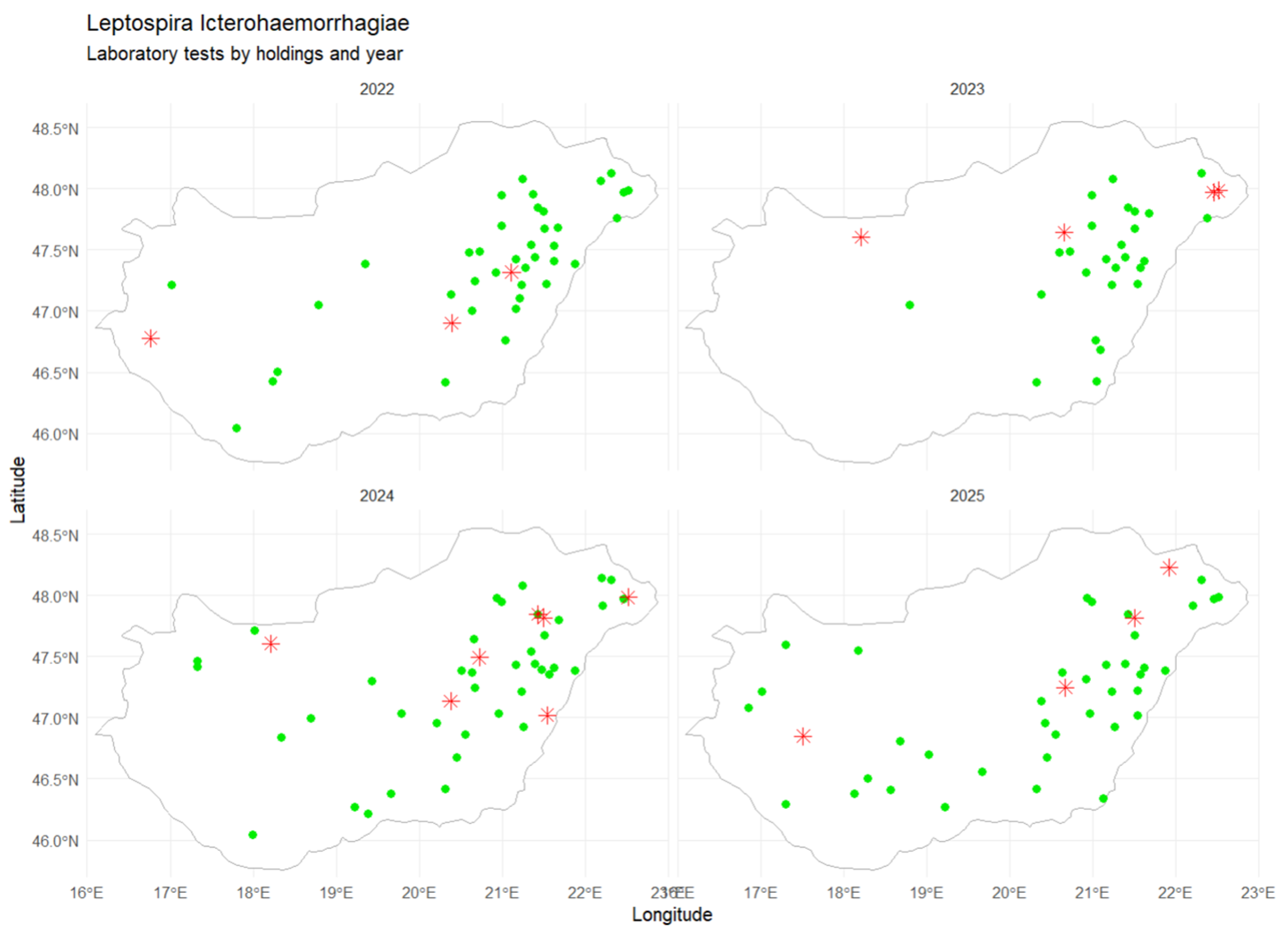
Figure 4 presents the geographical distribution of farms tested for Leptospira interrogans, serogroup Icterohaemorrhagiae and serovar Icterohaemorrhagiae, and the distribution of positive farms.
Figure 4.
Geographical distribution of farms tested for antibodies against Leptospira interrogans, serogroup Icterohaemorrhagiae, serovar Icterohaemorrhagiae, and the national distribution of seropositive farms (2022–2025). Negative farms are indicated in green; farms with at least one positive result are shown in red.
The results indicate that seropositive and doubtful cases occurred nationwide without regional clustering.
Across the 4 evaluated years, antibodies against Leptospira interrogans, serogroup Icterohaemorrhagiae and serovar Icterohaemorrhagiae, were present in 0.55–1.86% of samples. Following 2023, the number and proportion of seropositive samples dropped to less than a third.
Table 7 displays the indications for serological laboratory testing of individual Leptospira serovars. Testing reasons were classified into four groups: diagnostic; quarantine and animal movement; abortion investigation; and herd leptospirosis monitoring. These groups were analyzed separately for herds where all samples were seronegative and herds where seropositivity was detected.
Table 7.
Distribution of Leptospira tests by purpose on swine farms between 2022 and 2025.
The increase in seropositive cases for L. pomona stemmed primarily from an increasing number of abortions yielding seropositive results in 2024 and 2025; whereas for L. bratislava, the rise in seropositivity was predominantly the result of quarantine testing associated with the importation of several thousand replacement gilts in 2024.
Cross-reactions may occur during serological testing for leptospirosis, particularly within serogroups [25]. Table 8 presents the test results for herds where, in 2024 and 2025, multiple serotypes—among the three for which pigs serve as reservoirs—yielded positive results simultaneously.
Table 8.
Trends in the simultaneous seropositivity for multiple.
There were three sites where this occurred in both years. At site D, the Pomona and Tarassovi positivity observed in 2025 resulted from the introduction of immunization against erysipelas, parvovirus, and leptospirosis.
- 2.
- Investigation over two consecutive years of antibodies against Leptospira serovars for which swine are NOT the maintenance host.
Table 9 summarizes testing in 2024–2025 for antibodies against serovars for which swine are not maintenance hosts: Leptospira kirschneri, serogroup Grippotyphosa and serovar Grippotyphosa; Leptospira interrogans, serogroup Canicola and serovar Canicola; and Leptospira borgpetersenii, serogroup Sejroe and serovar Sejroe.
Table 9.
Serological testing for other serovars in Hungarian pig farms.
Negligible seropositivity was detected across a small number of tests in both years.
- 3.
- Case Study on Serum Antibodies Against Leptospira Interrogans, Serogroup Australis and Serovar Bratislava.
The stocking of a newly built, large-scale pig farm with a capacity of 3000 sows was planned for 2024 using gilts sourced from Denmark. During the meticulous preparatory phase, a pool of potential breeding gilts was selected in Denmark—comprising 307 animals from Danish farm “A,” 2979 from farm “B,” and 548 from farm “C”—from which the final group for transport to Hungary would be chosen. Blood samples were collected from these animals in Denmark in June 2024 and subsequently tested in Hungary at the NÉBIH ÁDI Laboratory for the presence of antibodies against—among others—Leptospira interrogans (serogroup Australis, serovar Bratislava). MAT tests were also performed on the samples to detect antibodies against Leptospira interrogans (serogroup Pomona, serovar Pomona) and Leptospira borgpetersenii (serogroup Tarassovi, serovar Tarassovi). All results were negative; no antibodies against the specified Leptospira serovars were detected in any of the blood samples.
Of the pigs sampled in Denmark, 3368 arrived in Hungary, where they underwent a 60-day quarantine in compliance with animal health regulations. At the end of the quarantine period, all the gilt-aged sows were re-tested for the three specified serovars—again at the NÉBIH ÁDI laboratory—in early September 2024. The MAT tests conducted to detect antibodies against Leptospira interrogans (serogroup Pomona, serovar Pomona) and Leptospira borgpetersenii (serogroup Tarassovi, serovar Tarassovi) yielded negative results in all cases.
At the same time, out of the 3368 Danish breeding weaners quarantined in Hungary, a total of 204 (6.06%) tested positive for antibodies against Leptospira interrogans (serogroup Australis, serovar Bratislava). No titer determination was performed on the seropositive samples during the testing.
At the end of November of the same year, 253 animals—including the previously seropositive pigs—underwent repeat testing for the presence of antibodies against Leptospira interrogans (serogroup Australis, serovar Bratislava), Leptospira interrogans (serogroup Pomona, serovar Pomona), and Leptospira borgpetersenii (serogroup Tarassovi, serovar Tarassovi). The MAT results were negative in all cases.
Because all three test rounds were performed in the same laboratory using identical methodology, testing execution was unlikely the cause. This transient “seropositivity” was most likely a non-specific, “false-positive” reaction associated with housing and nutritional changes.
Blood samples from 360 breeding pigs from this herd were re-tested on 19 June 2026—more than a year and a half after the animals’ arrival in Hungary—for the presence of antibodies against Leptospira interrogans (serogroup Australis, serovar Bratislava), Leptospira interrogans (serogroup Pomona, serovar Pomona), and Leptospira borgpetersenii (serogroup Tarassovi, serovar Tarassovi). The testing was conducted at the EUROFINS Vetcontrol Kft. laboratory. These MAT tests also yielded negative results in every instance.
- 4.
- Eradication of leptospirosis caused by Pomona and Bratislava serovars on a large-scale farrow-to-finish breeding farm
A Hungarian pig farm—operating on a “farrow-to-finish” model—maintained a herd of 1400 sows and their progeny. Farrowing facilities comprised a total of three buildings containing ten rooms, each equipped with 32 farrowing pens. The farm operates a breeding center where pregnant sows are housed in 12 static pens (each with a capacity of 50–55 animals) until farrowing. The herd is officially certified free from Aujeszky’s disease, porcine brucellosis, PRRS, and leptospirosis. Based on laboratory, diagnostic, and slaughterhouse tests conducted regularly on the source stock and following restocking, the herd is free from the pathogens causing mycoplasmosis, actinobacillosis, and atrophic rhinitis. On 13 December 2023, screening tests performed on 92 pigs—comprising 72 lactating sows (from 3 of the 10 farrowing units), seven heat-detector boars, and 14 fattening pigs—for Pomona, Tarassovi, Bratislava, and Icterohaemorrhagiae serovars yielded negative results for all samples. On the same day, two sows at 90–100 days of gestation aborted at the breeding center. Analysis of their blood serum samples showed that, for one of them, the antibody titer against Leptospira interrogans (serogroup Australis, serovar Bratislava) was 1:100, while the titer against Leptospira interrogans (serogroup Pomona, serovar Pomona) was 1:1600. The blood of the other aborted sow tested negative for both of the aforementioned serovars. Testing for antibodies against the Leptospira borgpetersenii species (serogroup Tarassovi, serovar Tarassovi) and the Leptospira interrogans species (serogroup Icterohaemorrhagiae, serovar Icterohaemorrhagiae) also yielded negative results. However, testing conducted in December following the abortions of four additional sows revealed seropositivity against the Bratislava (titers of 1:100 and 1:800) and Pomona (titers of 1:200, 1:800, and 1:1600) serovars. Upon testing the blood of an additional 100 sows (60 pregnant ones from the breeding center and 40 lactating ones from the farrowing units previously examined), we detected Pomona antibodies in 14 cases. All the seropositive animals were located in the farrowing unit.
This demonstrated that infection occurred in late-gestation pens within the breeding center, and sows transferred from there to farrowing units were infected.
Farm management instituted the following control measures to prevent further disease spread:
We fed the animals an OTC-containing diet—mixed into the feed—for one month (from 22 December 2023 to 22 January 2024) in the farrowing unit and the gestation sow housing and repeated this regimen between 18 March and 10 April 2024.
In December 2023, all sows in farrowing rooms were injected twice with a long-acting amoxicillin formulation.
Continuous serological monitoring of farrowed sows for common swine leptospirosis serovars.
In the course of 240 tests conducted across 24 farrowing units up to the end of June 2024, antibodies against Leptospira interrogans (serogroup Australis, serovar Bratislava) were detected in two instances in February and one in March, with a titer of 1:100 in each case.
In June 2024, as well as in May, November 2025, and May 2026 we examined a further 340 sows in total, yielding negative results in every case for the presence of Bratislava, Pomona, and Tarassovi serovars. The number of abortions occurring after 90 days of gestation has returned in 2024–2025 from 8 cases in December 2023 to the level of 0–1 cases/month seen in previous periods.
This protocol proved effective in eliminating leptospirosis. Eradication costs were as follows (the prices of all veterinary medicinal products were determined based on the 2024 price list of the same Hungarian distributor):
(a) Price of OTC mixed into feed: 1,085,000 HUF (approx. €3000 at current exchange rates);
(b) LA amoxicillin injection: 75,000 HUF (approx. €210), total €3210.
Had we chosen to eliminate the infection through vaccination, the cost of the vaccine alone would have been 1,700,000 HUF (approx. €4700), an expenditure that would have needed to be repeated annually. We did not factor in labor and other costs, as these apply to both methods. Regarding the vaccine, it should also be noted that the currently available leptospirosis vaccines are used against three diseases (swine erysipelas, parvovirus, and leptospirosis). According to the manufacturer, the vaccine is suitable for reducing and/or alleviating symptoms caused by porcine leptospirosis serovars. Suitability for disease eradication is not listed in the vaccine’s Summary of Product Characteristics (SPC). At the same time, since the DIVA (Differentiation of Infected from Vaccinated Animals) laboratory test used for Aujeszky’s disease is not available for porcine leptospirosis—as previously described—vaccination significantly complicates the monitoring of infection events and the spread of Leptospira within the herd for an extended period.
4. Discussion
Establishing which serovars circulate and determining infection prevalence within a country is the essential first step in controlling and eradicating leptospirosis in swine herds.
In France, Naude et al. [26] tested 19,395 swine sera, predominantly from Brittany, finding 22.7% positive for at least one Leptospira serogroup. Analysis of 4346 seropositive results where the putative infecting serogroup could be identified revealed two dominant serogroups out of ten: Australis (48.5%) and Icterohaemorrhagiae (38.2%). Other serogroups (Autumnalis, Panama, Ballum, Tarassovi, Sejroe, Grippotyphosa, Bataviae, and Pomona) occurred less frequently.
In Poland, Wasiński and Pejsak [25] analyzed a total of 7112 porcine serum samples. The samples were collected between January and October 2008 and originated from 280 counties across all 16 Polish provinces. All serum samples were initially screened using an enzyme-linked immunosorbent assay (ELISA) with a heat-stable antigen preparation. Samples testing positive or equivocal by ELISA were further analyzed using the microscopic agglutination test (MAT) against the Icterohaemorrhagiae, Pomona, Canicola, Sejroe, Tarassovi, and Grippotyphosa serovars.
Of the collected serum samples tested by ELISA, 73 (1.02%) were positive, 85 (1.20%) were doubtful, and 6954 were negative. Among the ELISA-positive and doubtful sera, 64 samples (from 14 regions) tested positive in the MAT. Of the MAT-positive samples, 42.19% showed titers against the Pomona serovar, 32.81% against Sejroe, 14.06% against Icterohaemorrhagiae, 6.25% against Tarassovi, 3.13% against Grippotyphosa, and 1.56% against Canicola.
According to White [27], L. pomona infection has never been diagnosed in the United Kingdom. In that country, L. bratislava may be the cause of specific disease in sows, but unfortunately, it is generally cited as the cause of reproductive failure—often without sufficient diagnostic evidence.
In Greece, a seropositivity rate of 28.2% regarding leptospires belonging to the L. interrogans serogroup was determined in intensive pig herds, based on 280 samples from the north and 120 from the south [28].
In studies conducted in Italy, 1194 serum samples were collected from healthy slaughtered pigs across 61 farms in five different regions of northwestern Italy. Overall, 52.5% of the analyzed farms had at least one Leptospira-positive animal, and 34.4% had at least one positive pig with a titer of ≥1:400. Tuscany and Lombardy showed the highest proportions of positive farms (64.3% and 54.6%, respectively) and positive serum samples (28.5% and 13.3%, respectively). The predominant Leptospira serogroups were Australis (21.3% positive farms, 8.2% positive sera) and Pomona (18.0% positive farms, 8.1% positive sera). It is concluded that porcine leptospirosis is likely underestimated in Italy and may pose a potential risk to animal and human health [29].
Among European countries regularly exporting swine to Hungary, Germany reported leptospiral antibodies in 20.9% of 29,819 blood samples tested between 2011 and 2016 [8]. Antibodies against L. bratislava were most prevalent (11.6%), while L. pomona antibodies were rarest (1.2%).
In Denmark, 796 sows and gilts from 30 herds were examined on three occasions at 6-week intervals to detect serum antibodies against Leptospira Bratislava using the microscopic agglutination test (MAT). The prevalence of seropositive animals across the three consecutive samplings was 2.7%, 2.5%, and 2.9%; 4.5% of the animals tested positive in at least one of the three tests, and 2.2% showed a more than twofold rise in titer between two consecutive samplings. In 21 of the 30 herds (70%), the within-herd seroprevalence among sows and gilts ranged from 4% to 13% [30].
In 2020, an outbreak of enzootic leptospirosis caused by L. pomona and associated with abortions was reported in four Danish herds [31].
In this study, conducted over four consecutive years (2022–2025), we investigated the prevalence in Hungarian swine herds of leptospirosis caused by serovars for which pigs serve as maintenance (reservoir) hosts—such as Pomona, Tarassovi, and Bratislava—as well as the presence of L. icterohaemorrhagiae, the serovar most frequently responsible for zoonotic infections. As early as 1986, the competent veterinary authority in Hungary issued guidelines for the eradication of leptospiral infections in swine herds, specifying the target serotypes and the most effective methods for carrying out the eradication process. This guide outlines the criteria for classifying herds as disease-free and the epidemiological and laboratory testing requirements for maintaining that status. By the early 2000s, the concept of “triple-free” status (freedom from brucellosis, leptospirosis, and Aujeszky’s disease) for breeding herds had become an established expectation among livestock producers. However, the economic value of freedom from these infectious diseases was subsequently altered by several factors: the emergence of Porcine Reproductive and Respiratory Syndrome (PRRS) in the 1990s; the changes following Hungary’s accession to the European Union; the liberalization of the pork market (exports and imports); the significant rise of large-scale, independent finishing farms; and EU regulations regarding how the disease burden of infectious diseases can restrict market access. Leading the way in significantly reducing the harmful effects of infectious diseases and the quantity of antibiotics used in production, Hungary completed the eradication of brucellosis, Aujeszky’s disease, and PRRS from its swine herds by 2022 [32,33].
Changes in the epidemiology of porcine leptospirosis (e.g., the emergence of L. bratislava), the prevalence of Leptospira infection in pig herds across EU member states, and the substantial financial and intellectual investment required for eradication programs targeting major infectious diseases (such as Aujeszky’s disease and PRRS) have prevented the introduction of new regulatory measures for controlling porcine leptospirosis that would align with the current structure of the pig industry. In practice, over the past decade or more, it was merely force of habit that kept porcine leptospirosis on the list of diseases for which official certification of a disease-free status was in the shared interest of the herd owner, the industry, and the country. A declaration of freedom from porcine leptospirosis (L. pomona and L. tarassovi) remained mandatory only for breeding stock facilities and in connection with the import of breeding animals associated with their operations.
Our aim was to define the current leptospirosis status in domestic herds and provide recommendations. We must decide whether to preserve swine leptospirosis freedom—a status that delivers cost savings by eliminating routine vaccination and treatment costs, provides market value for domestic swine health, and protects against a zoonosis—or leave infection unregulated and manage disease conventionally through vaccines and antibiotics, as practiced elsewhere in the EU.
Analysis of more than 180,000 serum samples across 4 years revealed that seroprevalence for Pomona and Tarassovi remained consistently below 1%, whereas rates varied for Bratislava (0.81–2.13%) and Icterohaemorrhagiae (0.85–1.86%). Antibodies against incidental serovars (Sejroe, Canicola, Grippotyphosa) occurred rarely.
Importantly, our data highlight that the increase in L. pomona seropositive herds and samples in 2024 and 2025 was driven primarily by an increasing number of abortions. This warning sign indicates that regulatory absence is leading to more frequent clinical disease. If uncontrolled, large-scale nationwide epidemics could emerge, given that seropositivity lacks regional clustering.
For L. bratislava, increased seropositivity was directly tied to quarantine screening of thousands of replacement gilts imported in 2024.
Herds testing positive for Bratislava were those importing breeding stock regularly or intermittently. Serological detection does not necessarily imply active clinical involvement, as confirmed by our case study showing transient seropositivity resolving over time.
When clinical leptospirosis appears, comprehensive veterinary epidemiology is essential: rapid laboratory diagnosis, immediate mapping of within-herd spread, tailored herd treatment plans, and ongoing monitoring of disease course.
Following the successful eradication of Aujeszky’s disease [32] and Porcine Reproductive and Respiratory Syndrome (PRRS) [33] from domestic swine herds, we consider the time ripe to establish and declare freedom from leptospirosis, mirroring the eradication efforts undertaken for the two aforementioned diseases.
The strongest counter-arguments raised so far have been that there are numerous Leptospira serovars—raising the question of which ones to target for eradication—and that there is no legislation mandating protection against the disease.
The first issue is easily resolved: domestic (Hungarian) swine herds must be declared free from serovars for which swine act as the reservoir (maintenance) host:
(1) Leptospira interrogans species, Pomona serogroup and Pomona serovarian;
(2) Leptospira borgpeterseni species, Tarassovi serogroup and Tarassovi serovarian;
(3) Leptospira interrogans species, Australis serogroup and Bratislava serovariant.
Studies conducted over many years confirm that these serovariants pose the greatest threat to pigs. It is also crucial to note that the Bratislava serovar was previously absent from the country, emerging in the swine population alongside the increased importation of breeding stock and feeder pigs. While it does not currently cause severe clinical symptoms, the example of the United Kingdom demonstrates that this reprieve is temporary; therefore, establishing the conditions for disease-free status is a matter of urgency.
Leptospira interrogans, serogroup Icterohaemorrhagiae and serovar Icterohaemorrhagiae—the most important zoonotic serovar—can also be incorporated into herd surveillance programs, adapting blood testing frequency to detect infection.
The second consideration is the lack of legal regulation. In the absence of such regulation, the serological testing of herds remains voluntary, and there are still no standardized principles regarding classification or the acquisition, maintenance, loss, and reinstatement of disease-free status. Enacting new legislation is not strictly necessary for this purpose; amending an existing decree or implementing a national program could also be viable options. In the absence of formal regulation, the implementation of such a program could be facilitated by classification criteria developed and issued by the relevant industry organization, combined with incentives that reward compliance with those criteria.
The regulations need only address infections caused by other Leptospira serovars if a new serovar is discovered for which the pig serves as the host; in such a case, the rules must apply to that serovar as well. It should be emphasized that, regarding potential infections by other serovars, the protection of human health is the primary consideration.
As demonstrated, swine leptospirosis (Pomona, Bratislava) in its acute stage can be managed and eliminated, with the herd rendered free through targeted veterinary interventions. For the few chronically infected herds, depopulation and repopulation is the definitive solution.
Should the authorities responsible for ensuring that Hungary’s pig herds remain free from infectious diseases—along with organizations representing the interests of pig farmers—decide to accept our arguments (namely, that it would be worthwhile to eradicate Leptospira serotypes for which pigs serve as the primary host), then, given the current level of infection, it is worth considering the role of vaccination against leptospirosis within any future eradication program in Hungary causes harm by allowing Leptospira bacteria to persist and rendering the use of cost-effective laboratory methods for assessing herd infection status impossible. We particularly emphasize that there is currently NO vaccine available against porcine leptospirosis that would prevent infection from occurring.
Import control protocols require no new framework; testing protocols currently maintaining PRRS-free status need only be extended to maintenance Leptospira serovars.
The potential economic loss caused by porcine leptospirosis infection can be estimated at HUF 18,750 (EUR 52.1) per sow [34].
5. Conclusions
According to our findings, the impact of the disease has increased in Hungarian pig herds over the past four years. Although the spread of the disease is currently still relatively slow, it has the potential to escalate rapidly at any time. This unfavorable trend can largely be attributed to the absence of specific veterinary administrative regulations governing the control of the disease.
It is therefore an urgent task for pig producers and their professional, representative, and advocacy organizations to take responsible action and make, or facilitate, a prompt decision on the establishment of a uniform national regulatory framework for the control of porcine leptospirosis. Such regulation is essential to eliminate the sector’s expected losses, whether arising from disease-related production losses and associated costs or from the introduction of a nationwide immunization program.
To improve the epidemiological representativeness of future Leptospira data in Hungary, a more standardized and coordinated sampling strategy would be beneficial. Particular attention should be paid to ensuring adequate geographical coverage, maintaining consistent participation by farms over time, and establishing sampling targets based on the geographical distribution and size of the animal population.
Surveillance data must be distinguished from samples collected for diagnostic purposes, investigations into abortions, or animal movements, as these represent populations with varying probabilities of a positive laboratory test result. The inclusion of unique farm identifiers, herd sizes, animal-level information, vaccination history, and standardized laboratory testing protocols would facilitate a more accurate interpretation of temporal and spatial trends.
A surveillance system that includes a representative group of farms sampled regularly over successive years would be particularly valuable for distinguishing true epidemiological changes from variations in sampling intensity and participation.
By achieving freedom from infectious diseases such as Aujeszky’s disease and PRRS—a status attained by very few worldwide—the Hungarian pig sector has demonstrated that significant progress in combating infectious diseases is possible at a national level. Under current conditions, eliminating porcine leptospirosis appears to be a technically simpler task than eradicating either of the aforementioned diseases—requiring no routine immunization at either the farm or national level—while also being achievable within a short timeframe and at a lower cost.
Author Contributions
Conceptualization: Z.T., I.N. and I.S.; methodology: Z.T., A.T. and Z.K.; validation: Z.T., I.N., A.H.-N., F.P., A.T. and Z.K.; formal analysis: Z.T. and I.S.; investigation: Z.T., I.N., A.H.-N., F.P. and I.S.; resources: I.N. and I.S., writing—original draft preparation: Z.T. and I.S., writing—review and editing: Z.T. and I.S., supervision: Z.T., I.N. and I.S. All authors have read and agreed to the published version of the manuscript.
Funding
The authors gratefully acknowledge the Hungarian National Food Chain Safety Office for covering the article processing charge (APC) associated with the publication of this article. This financial support was limited to publication costs and did not extend to the research itself.
Institutional Review Board Statement
None of the tests described in the manuscript titled ‘The Situation of Swine Leptospirosis in Hungary and a Proposal for Establishing Requirements for Declared Herd Freedom from Specific Leptospira Species (Serogroups, Serovars) in Domestic Swine Herds’ required the Ethics Committee or Institutional Review Board approval. There were not any experimental animals involved in the study.
Informed Consent Statement
Not applicable.
Data Availability Statement
Detailed data, pictures and notes are available via the corresponding author’s e-mail address.
Conflicts of Interest
Ferenc Polyák is an employee of Tedej Agricultural Producer and Service Provider Ltd. Other authors are not employees of the company. The company had no involvement in the study design, data collection, analysis, interpretation of results, preparation of the manuscript, or the decision to submit the manuscript for publication.
References
- Lee, H.S.; Thanh, T.L.; Ly, N.K.; Nguyen-Viet, H.; Thakur, K.K.; Grace, D. Seroprevalence of leptospirosis and Japanese encephalitis in swine in ten provinces of Vietnam. PLoS ONE 2019, 14, e0214701. [Google Scholar] [CrossRef] [Scilit] [PubMed]
- Johnson, D.I. (Ed.) Leptospira spp. In Bacterial Pathogens and Their Virulence Factors; Springer International Publishing: Cham, Switzerland, 2018; pp. 289–294. [Google Scholar]
- Cases of Notifiable Communicable Diseases Recorded Current Week in Hungary (Preliminary Partly Corrected Figures). Available online: https://nngyk.gov.hu/dokumentumok/fertozo_betegsegek_heti_adatai/2025/Heti%20t%C3%A1j%C3%A9koztat%C3%B3%20a%20hazai%20j%C3%A1rv%C3%A1ny%C3%BCgyi%20helyzetr%C5%91l%202025.%2052.%20h%C3%A9t.pdf (accessed on 2 November 2026).
- Gomes de Araújo, H.; Limeira, C.H.; Viviane Ferreira de Aquino, V.; Longo Ribeiro Vilela, V.; José Alves, C.; Silvano dos Santos Higino, S.; Santos, C.D.S.A.B.; Azevedo, S.S.D. Global Seropositivity of Swine Leptospirosis: Systematic Review and Meta-Analysis. Trop. Med. Infect. Dis. 2023, 8, 158. [Google Scholar] [CrossRef] [Scilit]
- Bharti, A.R.; Nally, J.E.; Ricaldi, J.N.; Mathias, M.A.; Diaz, M.M.; Lovett, M.A.; Levett, P.N.; Gilmann, R.H.; Willig, M.; Gottuzo, R.; et al. Leptospirosis: A zoonotic disease of global importance on behalf of the Peru–United States Leptospirosis Consortium. Lancet Infect. Dis. 2003, 3, 757–771. [Google Scholar] [CrossRef] [Scilit]
- Arent, Z.; Frizzell, C.; Gilmore, C.; Allen, A.; Ellis, W.A. Leptospira interrogans serovars Bratislava and Muenchen animal infections: Implications for epidemiology and control. Vet. Microbiol. Vol. 2016, 190, 19–26. [Google Scholar] [CrossRef] [Scilit]
- Ellis, W.A.; McParland, P.J.; Bryson, D.G.; Cassells, J.A. Boars as carriers of leptospires of the Australis serogroup on farms with an abortion problem. Vet. Rec. 1986, 118, 563. [Google Scholar] [CrossRef] [Scilit] [PubMed]
- Strutzberg-Minder, K.; Tschentscher, A.; Beyerbach, M.; Homuth, M.; Kreienbrock, L. Passive surveillance of Leptospira infection in swine in Germany. Porc. Health Manag. 2018, 4, 10. [Google Scholar] [CrossRef] [Scilit] [PubMed]
- Figueiredo, Í.L.; Alves, C.J.; Silva, L.C.A.; Oliveira, R.M.; Azevedo, S.S. Leptospirose suína: Uma importante causa de falhas eperdas reprodutivas. Rev. Bras. Reprod. Anim. 2013, 37, 344–353. [Google Scholar]
- Pratt, N.; Rajeev, S. Leptospira seroprevalence in animals in the Caribbean region: A systematic review. Acta Trop. 2018, 182, 34–42. [Google Scholar] [CrossRef] [Scilit]
- Fernandes, J.J.; Araújo Júnior, J.P.; Malossi, C.D.; Ullmann, L.S.; Costa, D.F.; Silva, M.L.C.R.; Alves, C.J.; de Azevedo, S.S.; Higino, S.S.D.S. High frequency of seropositive and carriers of Leptospira spp. in pigs in the semiarid region of northeastern Brazil. Trop. Anim. Health Prod. 2020, 52, 2055–2061. [Google Scholar] [CrossRef] [Scilit] [PubMed]
- Picardeau, M. Diagnosis and epidemiology of leptospirosis. Med. Mal. Infect. 2013, 43, 1–9. [Google Scholar] [CrossRef] [Scilit] [PubMed]
- Guedes, I.B.; Souza, G.O.; Castro, J.F.P.; Cavalini, M.B.; Souza Filho, A.F.; Heinemann, M.B. Usefulness of the ranking technique in the microscopic agglutination test (MAT) to predict the most likely infecting serogroup of Leptospira. Front. Vet. Sci. 2021, 8, 654034. [Google Scholar] [CrossRef] [Scilit] [PubMed]
- Levett, P.N. Leptospirosis. Clin. Microbiol. Rev. 2001, 13, 296–326. [Google Scholar] [CrossRef] [Scilit] [PubMed]
- Varga, J.; Tuboly, S.; Mészáros, J. A Háziállatok Fertőző Betegségei (Állatorvosi Járványtan II.); Mezőhgazda Kiadó: Budapest Hungary, 1999; p. 238. [Google Scholar]
- Bolin, C.A. Diagnosis of leptospirosis in swine. Swine Heal. Prod. 1994, 2, 23–24. [Google Scholar]
- Frantz, J.C.; Hanson, L.E.; Brown, A.L. Effect of vaccination with a bacterin containing Leptospira interrogans serovar bratislava on the breeding performance of swine herds. Am. J. Vet. Res. 1989, 50, 1044–1047. [Google Scholar] [CrossRef] [Scilit]
- Jacobs, A.A.; Harks, F.; Hoeijmakers, M.; Collell, M.; Segers, R.P. Safety and efficacy of a new octavalent combined Erysipelas, Parvo and Leptospira vaccine in gilts against Leptospira interrogans serovar Pomona associated disease and foetal death. Vaccine 2015, 33, 3963–3969. [Google Scholar] [CrossRef] [Scilit] [PubMed]
- Schommer, S.K.; Harrison, N.; Linville, M.; Samuel, M.S.; Hammond, S.L.; Wells, K.D.; Prather, R.S. Serologic titers to Leptospira in vaccinated pigs and interpretation for surveillance. PLoS ONE 2021, 16, e0260052. [Google Scholar] [CrossRef] [Scilit] [PubMed]
- Szakmai Útmutató a Sertésállományok Aujeszky Betegségtől, Leptospirozistól És Brucellozistól Való Országos Mentesítéséhez 23.462/9/1986; MÉM Állategészségügyi és Élelmiszerhigiéniai Főosztály: Budapest, Hungary, 1986.
- Decree of the Ministry of Agriculture No. 41/1997 (V. 28.) on the Issuance of the Animal Health Regulations. Available online: https://njt.jog.gov.hu/jogszabaly/1997-41-20-11 (accessed on 2 November 2026).
- Decree of the Ministry of Ministry of Rural Development No. 87/2012 (VIII. 27.) on the Animal Health Rules for the Domestic Transport of Live Animals. Available online: https://njt.jog.gov.hu/jogszabaly/2012-87-20-2Y (accessed on 2 November 2026).
- Decree 81/2002. (IX. 4.) of the Ministry of Agriculture and Rural Development on the Veterinary Tasks Related to the Control of Zoonoses. Available online: https://njt.jog.gov.hu/jogszabaly/2002-81-20-82 (accessed on 2 November 2026).
- WOAH Manual of Diagnostic Tests and Vaccines for Terrestrial Animals 2021, Chapter 3.1.12.B.2.1. Available online: https://www.woah.org/fileadmin/Home/fr/Health_standards/tahm/3.01.12_LEPTO.pdf (accessed on 2 November 2026).
- Wasiński, B.; Pejsak, Z. Occurrence of leptospiral infections in swine population in Poland evaluated by ELISA and microscopic agglutination test. Pol. J. Vet. Sci. 2010, 13, 695–699. [Google Scholar] [CrossRef] [Scilit] [PubMed]
- Naudet, J.; Crespin, L.; Cappelle, J.; Kodjo, A.; Ayral, F. Circulating serogroups of Leptospira in swine from a 7-year study in France (2011–2017). Porc. Health Manag. 2022, 8, 15. [Google Scholar] [CrossRef] [Scilit] [PubMed]
- White, M. Leptospirosis in Pigs (Review 2016). Available online: https://www.nadis.org.uk/disease-a-z/pigs/leptospirosis-in-pigs/#:~:text=LeptospirosisinPigs (accessed on 2 November 2026).
- Burriel, A.R.; Varoudis, L.; Alexopoulos, C.; Kritas, S.; Kyriakis, S.C. Serological evidence of Brucella species and Leptospira sertovars in Greek swine herds. J. Swine Health Prod. 2003, 11, 186–189. [Google Scholar] [CrossRef] [Scilit]
- Bertelloni, F.; Turchi, B.; Vattiata, E.; Viola, P.; Pardini, S.; Cerri, D.; Fratini, F. Serological survey on Leptospira infection in slaughtered swine in North-Central Italy. Epidemiol. Infect. 2018, 146, 1275–1280. [Google Scholar] [CrossRef] [Scilit] [PubMed]
- Mousing, J.; Christensen, J.; Haugegaard, J.; Schirmer, A.L.; Friis, N.F. A seroepidemiological survey of Leptospira bratislava infections in Danish sow herds. Prev. Vet. Med. 1995, 23, 201–213. [Google Scholar] [CrossRef] [Scilit]
- Friis, N.F.; Jorsa, S.E.; Sorensen, V.; Schirmer, A.L.; Lindah, J.; Thorup, F. Enzootics of Leptospira Abortions in Danish Sow Herds Practising Loose Housing on Deep Straw Bedding. Acta Vet. Scand. 2000, 41, 387–390. [Google Scholar] [CrossRef] [Scilit] [PubMed]
- Szabó, I.; Molnár, T. Az Aujeszky-betegségtől való mentesítés Magyarországon 1998–2002 között. Magy. Állatorvosok Lapja 2004, 126, 80–86. [Google Scholar]
- Szabó, I.; Nemes, I.; Búza, L.; Polyák, F.; Bálint, Á.; Fitos, G.; Holtkamp, D.J.; Ózsvári, L. The Impact of PRRS Eradication Program on the Production Parameters of the Hungarian Swine Sector. Animals 2023, 13, 1565. [Google Scholar] [CrossRef] [Scilit] [PubMed]
- Suwanchareon, D.; Kunavongkrit, A. An outbreak of leptospirosis in a swine breeding herd: It’s diagnosis, treatment and economic effect. Thai J. Vet. Med. 2000, 30, 26–32. [Google Scholar] [CrossRef] [Scilit]

Disclaimer/Publisher’s Note: The statements, opinions and data contained in all publications are solely those of the individual author(s) and contributor(s) and not of MDPI and/or the editor(s). MDPI and/or the editor(s) disclaim responsibility for any injury to people or property resulting from any ideas, methods, instructions or products referred to in the content. |
© 2026 by the authors. Licensee MDPI, Basel, Switzerland. This article is an open access article distributed under the terms and conditions of the Creative Commons Attribution (CC BY) license.