


Simple Summary
Golden pompano is one of the most valuable marine-farmed fish in China. Intensive farming often leads to intestinal disorders and poor disease resistance in fish, while overuse of antibiotics brings risks for aquatic product safety and the surrounding marine environment. Probiotics isolated from the target fish itself may serve as safe alternatives to antibiotics for aquaculture production. In this work, we fed juvenile golden pompano with feed supplemented with different doses of host-origin Enterococcus faecalis SZ07 over 42 days. Suitable addition of this bacterial strain improved intestinal tissue structure, boosted digestive and antioxidant capacity, balanced immune responses, and optimized intestinal bacterial composition. The dose range of 1 × 10⁷–1 × 10⁸ CFU per gram of feed produced the most consistent beneficial effects. Our findings provide practical support for developing safe feed additives to promote healthy golden pompano farming.
Abstract
Trachinotus ovatus (golden pompano) represents one of the dominant high-value mariculture fish species farmed across coastal regions of China. In intensive farming modes, intestinal damage and immune suppression are frequent issues in golden pompano; the widespread application of antibiotics in disease control has also triggered increasing worries about ecological risks and aquatic product safety. Host-origin probiotics have been widely recognized as a green and safe strategy to mitigate health risks and promote growth in farmed fish. Nevertheless, the regulatory roles and mechanisms of autochthonous E. faecalis strains on the intestinal health of golden pompano are still poorly understood. In this study, a 42-day feeding trial was conducted using golden pompano reared in a large-capacity floating net-cage system. The experimental fish were fed diets supplemented with different concentrations of E. faecalis SZ07 (1 × 10⁵ to 1 × 10⁹ CFU/g feed). Dietary supplementation with SZ07 at suitable doses (1 × 10⁷ to 1 × 10⁸ CFU/g feed) notably improved intestinal tissue structure, elevated the activities of digestive, antioxidant, and immune enzymes, and modulated the mRNA levels of key immune genes in the spleen. Analysis of the gut microbiota revealed that dietary E. faecalis SZ07 reshaped the intestinal microbial community, with an increased abundance of beneficial taxa and a decreased proportion of opportunistic pathogens. Taken together, our results indicate that autochthonous E. faecalis SZ07 acts as an effective probiotic to enhance intestinal health and immune function of golden pompano and offers technical support for the healthy development of its aquaculture industry.
1. Introduction
Golden pompano (Trachinotus ovatus) is a high-value mariculture species with increasing market demand in China [1]. This species exhibits persistent, fast group-swimming activity; insufficient swimming space within overly small confined enclosures can restrict its natural locomotion and induce stress responses, potentially altering physiological and immune functions [2]. For juvenile golden pompano reared in offshore floating net cages, stocking densities ≥ 100 fish/m3 may induce crowding stress, and lower densities are conducive to reducing confinement-related stress [3]. Under commercial mariculture circumstances, intensively cage-reared golden pompano frequently develop intestinal dysfunction, impaired digestive capacity, and suppressed non-specific immunity, which limits farming productivity [4]. Excessive antibiotic application in aquaculture has given rise to a series of issues, including antimicrobial resistance and ecological pollution, creating an urgent need to develop eco-friendly and safe feed additives [5]. The detrimental impacts of antibiotics on fish health have been documented across multiple species. For instance, dietary florfenicol (10–30 mg/kg for 30 days) induced severe intestinal histopathological damage, including epithelial cell degeneration and necrosis, in Nile tilapia (Oreochromis niloticus) [6]. Additionally, oxytetracycline treatment exerts an inhibitory effect on innate immunity. In gilthead seabream (Sparus aurata), it lowers hemolytic complement activity; in the Atlantic salmon (Salmo salar) SHK-1 cell line, it weakens phagocytic function [7,8]. In zebrafish (Danio rerio), gut microbiota disturbance caused by florfenicol failed to recover within the standard 15-day withdrawal period and significantly elevated the risk of subsequent Aeromonas hydrophila infection [9]. In rainbow trout (Oncorhynchus mykiss), oxytetracycline administration significantly elevated lipid peroxidation levels while reducing catalase and superoxide dismutase activities, indicating severe oxidative stress [10]. Collectively, these findings highlight that excessive or non-therapeutic antibiotic use poses substantial risks to fish intestinal health, immunity, and overall physiological homeostasis.
Aquaculture faces numerous threats from unrestricted antibiotic usage, which has driven broad adoption of probiotic additives. These biological supplements can optimize growth traits, intestinal integrity, innate immunity, and gut microbial balance in cultured fish [11]. Host-derived probiotics exhibit better adaptability and colonization ability in the host gut, showing more stable probiotic effects [12]. In Pacific white shrimp (Penaeus vannamei), dietary Bacillus subtilis supplementation increased the abundance of Proteobacteria and Firmicutes while improving growth performance [13]. It has been demonstrated that dietary Lactobacillus plantarum improves antioxidant capacity, innate immunity, and disease resistance against Vibrio parahaemolyticus in Manila clam (Ruditapes philippinarum) [14]. In European sea bass (Dicentrarchus labrax), dietary supplementation of live yeast Saccharomyces cerevisiae boulardii reduced the mRNA expression of intestinal pro-inflammatory cytokines, which indicates an anti-inflammatory function [15]. In golden pompano, the host-origin B. subtilis strain HGCC-1 enhanced growth performance and mitigated hepatic steatosis via regulating intestinal microbiota [16]. A recent comprehensive review identified Bacillus and Lactobacillus as the most studied probiotic genera for aquaculture applications [17].
As a representative lactic acid bacterium, certain strains of E. faecalis have been widely confirmed to possess favorable probiotic properties [18]. In Nile tilapia (Oreochromis niloticus), the combined dietary addition of E. faecalis and Bacillus subtilis effectively enhanced growth performance, immune function, and disease resistance to Streptococcus agalactiae challenge [19]. In snakehead fish (Channa striatus), E. faecalis isolated from the host intestine demonstrated strong probiotic potential against pathogenic infections [20]. In our earlier work, an E. faecalis strain, named SZ07, was isolated from the gut of healthy golden pompano, and its basic biological traits were preliminarily identified [21]. Nevertheless, research on the application of this autochthonous E. faecalis strain in golden pompano farming is still limited; specifically, its effects on intestinal structure, digestive enzyme activities, antioxidant capacity, immune responses, and gut microbiota composition have not been systematically elucidated.
Nevertheless, E. faecalis constitutes a genetically heterogeneous species; some isolates act as opportunistic pathogens harboring key virulence determinants and horizontally transferable antimicrobial-resistance genes, which raises safety concerns for feed-additive usage [22]. Our strain SZ07 was previously subjected to whole-genome and phenotypic biosafety assessment. Although several adhesion-related genes were annotated in its genome, key cytotoxic virulence gene cylA was absent. Even though a small set of resistance-related genes was detected, SZ07 remained sensitive to vancomycin, supporting its preliminary safety as a candidate aquaculture probiotic [23].
Given this research gap, we performed the present experiment in large-capacity floating net cages to investigate the regulatory roles of dietary E. faecalis SZ07 administration in golden pompano. Our results are expected to offer a reliable theoretical basis and practical technical support for developing E. faecalis SZ07 as a species-specific probiotic for the intensive farming of golden pompano.
2. Materials and Methods
2.1. Experimental Design
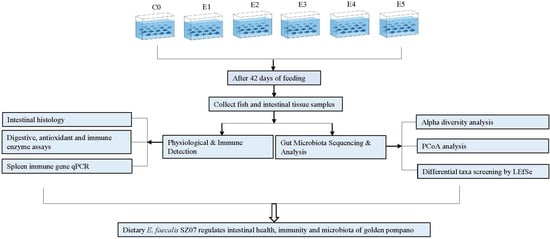
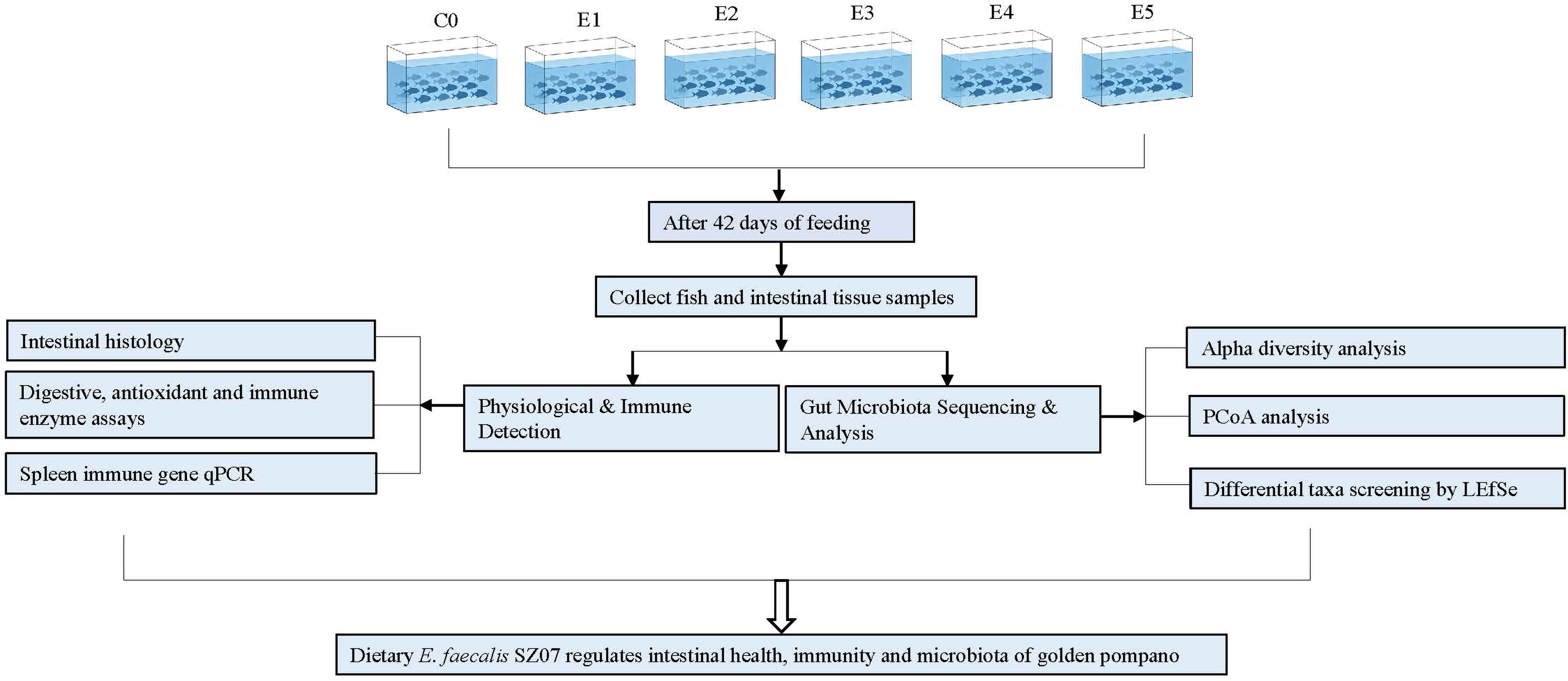
To explore the impacts of dietary E. faecalis SZ07 on intestinal health and immune function of golden pompano, a 42-day feeding trial was performed in the current work. The detailed experimental workflow is illustrated in Figure 1. Briefly, gradient concentrations of E. faecalis SZ07 (105–109 CFU/g diet) were prepared and sprayed onto basal feed to produce experimental diets. All fish were randomly assigned to six groups and fed twice per day (08:00 and 16:00 h) over the 42-day trial period. After the feeding trial, tissue samples were collected for intestinal histology, biochemical and immune index detection, and gut microbiota sequencing.
Figure 1.
Schematic diagram of the experimental workflow.
The feeding trial was conducted in Zhanjiang, Guangdong, China (N 20°50′, E 109°42′). The feeding experiment ran from 6 June 2024 to 17 July 2024, lasting for 42 consecutive days. Each floating net cage was 2.0 m × 2.0 m × 1.5 m with a mesh size of 10 mesh. The water depth inside the culture pool was maintained at 1.2 m. During the experiment, water temperature fluctuated between 27.0 °C and 30.0 °C, while salinity was maintained within the range of 24–28 ppt throughout the trial.
This trial was arranged to evaluate how dietary supplementation with E. faecalis SZ07 affects intestinal health and innate immune performance of golden pompano. Six distinct treatments were set up in total: one blank control group and five treatment groups receiving gradient doses of the probiotic strain.
2.2. Probiotic Strain and Feed Preparation
The E. faecalis SZ07 strain used in this study was originally isolated from the intestinal tract of healthy golden pompano in our laboratory. Its basic biological characteristics have been reported in our previous study [21]. In addition, a genomic study focusing on its probiotic potential, biosafety, and aquaculture applicability has also been published [23]. The strain was preserved at −80 °C in MRS broth containing 50% (v/v) glycerol until use. SZ07 was cultured in MRS broth at 37 °C to mid-logarithmic phase. A linear regression model between OD600 and viable counts was calibrated by plate enumeration: y = 2947x − 717.4 (R2 = 0.9910), where y is bacterial concentration (106 CFU/mL) and x is OD600; an OD600 value of 1 corresponds to approximately 2 × 10⁹ CFU/mL. The bacterial suspension was evenly sprayed onto the surface of feed pellets to achieve uniform distribution of the strain.
A commercial basal diet for marine fish (Hengxing Feed Co., Ltd., Zhanjiang, China) was used as the control diet. The proximate composition of the basal diet was as follows: crude protein 45%, crude fiber 4%, crude fat 7%, crude ash 15%, lysine 2.2%, total phosphorus 0.8%, and moisture 12%. The basal commercial feed had a pellet size of 3.4 mm; its main protein sources were fishmeal and soybean meal. Fish were fed to apparent satiation twice daily. Feed consumption per cage was not quantified in the present trial. Six experimental diets were prepared by spraying different concentrations of SZ07 bacterial suspension onto the surface of the basal diet using a gradient inoculation method. The final concentrations of SZ07 in the diets were 0 (control group, C0), 1 × 10⁵ (E1), 1 × 10⁶ (E2), 1 × 10⁷ (E3), 1 × 10⁸ (E4), and 1 × 10⁹ (E5) CFU/g diet, respectively. This 10-fold dose gradient covering 105–109 CFU/g was designed according to the dosage range reported for dietary Enterococcus faecalis in fish and our preliminary in vitro assays of strain SZ07 [24]. All prepared diets were air-dried in a ventilated place, sealed in plastic bags, labeled, and stored at 4 °C. Fresh diets were prepared every 7 days to ensure the viability of the probiotic.
2.3. Experimental Fish and Feeding Management
The experiment was conducted at a commercial aquaculture facility in Zhanjiang, Guangdong, China. Juvenile golden pompano were procured from a local seedling farm in Zhanjiang, Guangdong, for this investigation. The juvenile golden pompano were acclimated to experimental conditions for two weeks. After acclimation, the experimental fish with an initial body weight of 13.00 ± 0.95 g were randomly allocated into six floating net cages after the two-week acclimation period. Each cage contained 60 fish, giving a total of 360 experimental fish across all treatments. Randomization was performed by simple random sampling of individuals from the common acclimation stock pool. Each floating net cage had a volume of 6 m3. It should be noted that each dietary treatment occupied one independent net cage. The six dietary treatments were randomly arranged to minimize the potential positional effect.
At the end of the feeding trial, fish were fasted for 24 h before dissection and were randomly sampled from each independent net cage, with only one separate net cage allocated to each dietary treatment. Sampling was performed at 08:00. Fish were anesthetized with eugenol (50 mg L−1). All tissue samples for different assays were collected from distinct individual fish. Six individual golden pompano were harvested as biological replicates for each detection item. Midgut tissues from six fish were collected and fixed for histological observation; another six individuals were sampled to measure intestinal and hepatic biochemical enzyme activities as well as splenic immune gene expression via qPCR; and an extra six fish were obtained for intestinal gut microbiota high-throughput sequencing. All dissected tissue samples, except those reserved for histological observation, were instantly snap-frozen in liquid nitrogen and preserved at −80 °C for subsequent laboratory analyses.
2.4. Intestinal Histological Analysis
Intestinal tissue specimens were fixed with 4% paraformaldehyde solution for 24 h. Following fixation, samples were processed through gradient ethanol dehydration, xylene clearing, and paraffin wax embedding. Serial sections were cut, deparaffinized, rehydrated, and stained with hematoxylin and eosin (HE). The stained sections were mounted with neutral balsam and observed under a Zeiss Axioscope 5 light microscope (Carl Zeiss, Oberkochen, Germany). Intestinal morphometric parameters were quantified using Image-Pro Plus 6.0 (Media Cybernetics, Rockville, MD, USA).
For each intestinal tissue section, three morphological parameters were quantified: mucosal fold height, mucosal fold width, and muscle layer thickness. Mucosal fold height referred to the vertical distance from the mucosal fold base to its apical tip. Mucosal fold width was defined as the maximum transverse diameter perpendicular to the mucosal fold height axis. Muscle layer thickness corresponded to the thickness of the smooth muscle layer in the intestinal wall.
2.5. Biochemical Parameter Determination
Intestinal and liver tissue samples were homogenized in ice-cold phosphate-buffered saline. The homogenates were centrifuged, and the supernatants were collected for enzyme activity assays.
The activities of superoxide dismutase (SOD), catalase (CAT), glutathione peroxidase (GSH-Px), acid phosphatase (ACP), alkaline phosphatase (ALP), trypsin, amylase, and lipase were determined using commercial assay kits (Jin Shaoyuan Biotechnology Co., Ltd., Shanghai, China). All assays were performed strictly following the manufacturer’s instructions. Total protein was determined via the BCA method, and all enzyme activities were normalized to total protein concentration.
2.6. Immune-Related Gene Expression Analysis in Spleen
Total RNA was isolated from golden pompano spleen samples with Transzol Up Plus RNA Kit (TransGen Biotech Co., Ltd. Beijing, China) following the official kit operating protocols. RNA purity and concentration were detected via spectrophotometry, and 1% agarose gel electrophoresis was applied to confirm intact RNA bands.
EasyScript® One-step gDNA Removal and cDNA Synthesis Super Mix (TransGen Biotech Co., Ltd.) was used to reverse transcribe qualified RNA into first-strand cDNA. All cDNA samples were preserved at −80 °C for subsequent qPCR detection. Quantitative real-time PCR amplification was conducted with the PerfectStart™ Green qPCR SuperMix kit (TransGen Biotech Co., Ltd.). The total reaction volume was 10 μL, containing 5.0 μL PerfectStart Green qPCR SuperMix, 1.0 μL forward primer, 1.0 μL reverse primer, 1.0 μL cDNA template, and 2.0 μL ddH2O. The cycling protocol was as follows: initial denaturation at 95 °C for 30 s, followed by 40 cycles of 95 °C for 5 s and 60 °C for 20 s. Melting curve analysis was carried out at 95 °C for 15 s, 60 °C for 1 min, and 95 °C for 1 s to confirm the specificity of amplification. All specific primer pairs were custom synthesized by Sangon Biotech Co., Ltd. (Shanghai, China), and full primer sequences are provided in Table 1. The 2−ΔΔCt algorithm was adopted to calculate relative gene expression, with β-actin selected as the housekeeping reference gene, consistent with the methodology described in previous studies on golden pompano [25].
Table 1.
Primer sequences.
2.7. Intestinal Microbiota Sequencing Analysis
Microbial genomic DNA was extracted from golden pompano intestinal tissue samples with the MagPure Soil DNA LQ Kit (Magen Biotechnology Co., Ltd., Guangzhou, China) under standard kit protocols. DNA integrity and concentration were jointly evaluated through agarose gel electrophoresis and NanoDrop 2000 spectrophotometer detection (Thermo Fisher Scientific, Waltham, MA, USA). The V3–V4 hypervariable region of the bacterial 16S rRNA gene was amplified via PCR with barcoded primers 343F (5′-TACGGRAGGCAGCAG-3′)/798R (5′-AGGGTATCTAATCCT-3′) and high-fidelity DNA polymerase (Takara Bio Inc., Kusatsu, Shiga, Japan). AMPure XP magnetic beads (Beckman Coulter, Brea, CA, USA) were used to purify all PCR amplicons. Index amplification was carried out to build sequencing libraries, which were quantified by a Qubit fluorometer (Thermo Fisher Scientific, Waltham, MA, USA) and normalized for concentration. Paired-end sequencing was conducted on the Illumina NovaSeq 6000 platform (Illumina Inc., San Diego, CA, USA), with all sequencing services completed by OE Biotech Co., Ltd., (Shanghai, China). Cutadapt software (v4.0) was used to trim raw sequencing reads and remove adapter sequences. The DADA2 plug-in integrated into QIIME 2 (default parameters) was adopted to generate amplicon sequence variants (ASVs). Taxonomic classification of ASVs was completed against the SILVA 138 database via the q2-feature-classifier tool. Alpha diversity (Ace, Chao1, Shannon, Simpson indices) was analyzed in QIIME 2.
2.8. Statistical Analysis
All measurement data are expressed as mean ± standard deviation, with six independent fish as biological replicates within each single culture cage (n = 6 per treatment for all assays). SPSS 22.0 software (IBM, Armonk, NY, USA) was adopted for all statistical comparisons. Prior to one-way ANOVA, the Shapiro–Wilk test and Levene’s test were used to assess normality and homogeneity of variance, respectively. Appropriate data transformation was performed for datasets that failed to meet the assumptions of ANOVA. One-way ANOVA combined with Duncan’s multiple range test was applied to identify significant inter-group differences. Differences with p < 0.05 were defined as statistically significant. All visualization graphs were plotted with GraphPad Prism 8.0 (GraphPad Software, San Diego, CA, USA). For gut microbiota analysis, the Kruskal–Wallis test was used for comparisons of alpha-diversity indices. For beta diversity, principal coordinates analysis (PCoA) based on binary Jaccard distance was plotted in R, and Linear Discriminant Analysis Effect Size (LEfSe) with the built-in FDR multiple testing correction was applied to identify differentially abundant taxa. PCoA was visualized using the ggplot2 R package (v3.4.4); LEfSe analysis was performed within the QIIME2 plugin. Biomarker taxa were identified using LEfSe, with the Kruskal–Wallis test significance alpha set at 0.05 and the LDA score threshold of 2.0.
3. Results
3.1. Intestinal Morphology
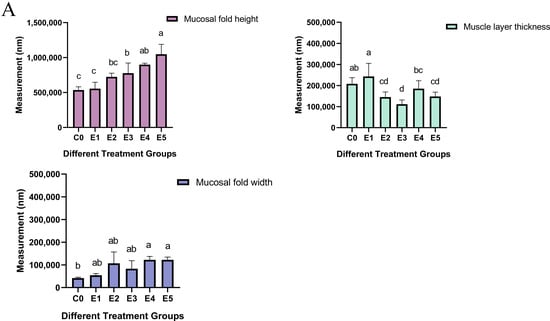
Changes in mid-intestinal morphological indices of golden pompano fed diets with graded levels of E. faecalis SZ07 are presented in Figure 2A. Relative to the C0 control group, mucosal fold height was markedly elevated in the E3, E4, and E5 treatment groups (p < 0.05). Mucosal fold width in the E4 and E5 groups was significantly greater than that in the control group (p < 0.05), whereas no statistically significant difference was found among the E1, E2, and E3 groups and the control. Regarding muscle layer thickness, significantly lower values were detected in the E2, E3, and E5 groups compared with the control group (p < 0.05).
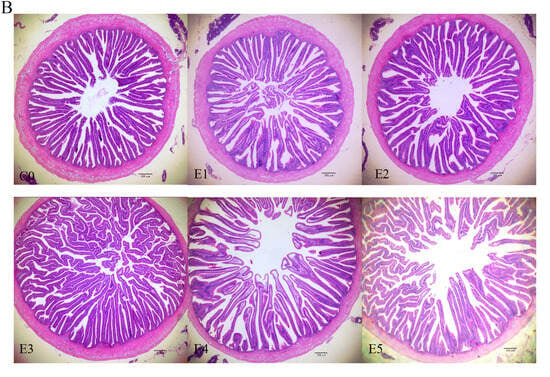
Figure 2.
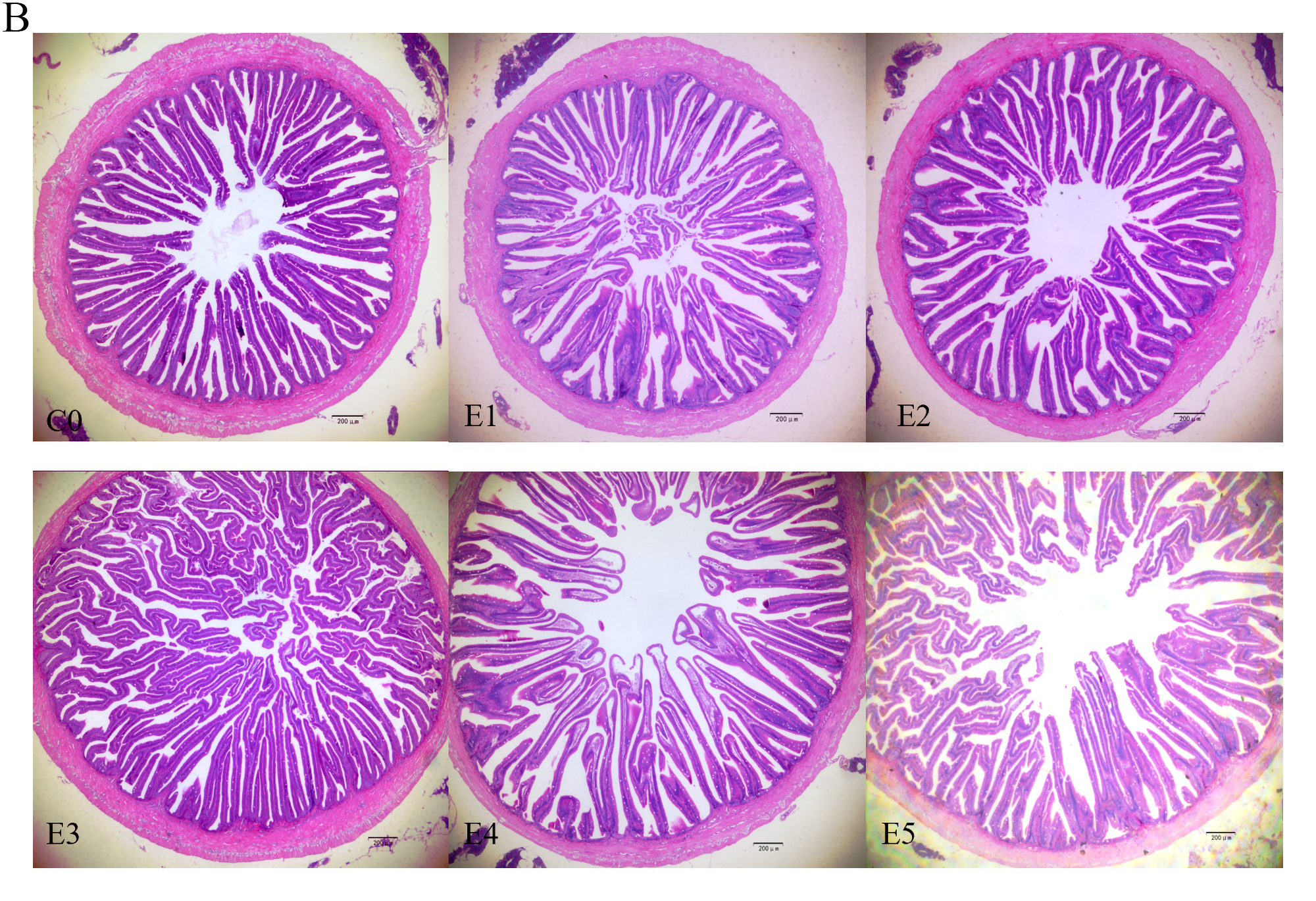
(A) Quantitative statistics of midgut morphological indexes (n = 6 per group); (B) representative histological sections of midgut tissue. Note: C0: control group; E1–E5: treatment groups with 1 × 10⁵ to 1 × 10⁹ CFU/g E. faecalis SZ07 supplementation. Scale bars = 200 µm. Different lowercase letters indicate significant differences at p < 0.05.
Microscopic examination of intestinal sections showed that intestinal mucosal folds in the probiotic treatment groups were longer and arranged more compactly than those in the control group, along with reduced muscle layer thickness (Figure 2B). No histopathological lesions were detected in the intestinal tissues across all experimental groups. Collectively, these findings suggest that dietary E. faecalis SZ07 supplementation does not induce structural injury to the golden pompano intestine. Rather, it effectively enhanced intestinal absorption area and functional performance by improving mucosal fold morphological traits and decreasing muscle layer thickness.
3.2. Digestive, Antioxidant and Metabolic-Immune Enzyme Activities
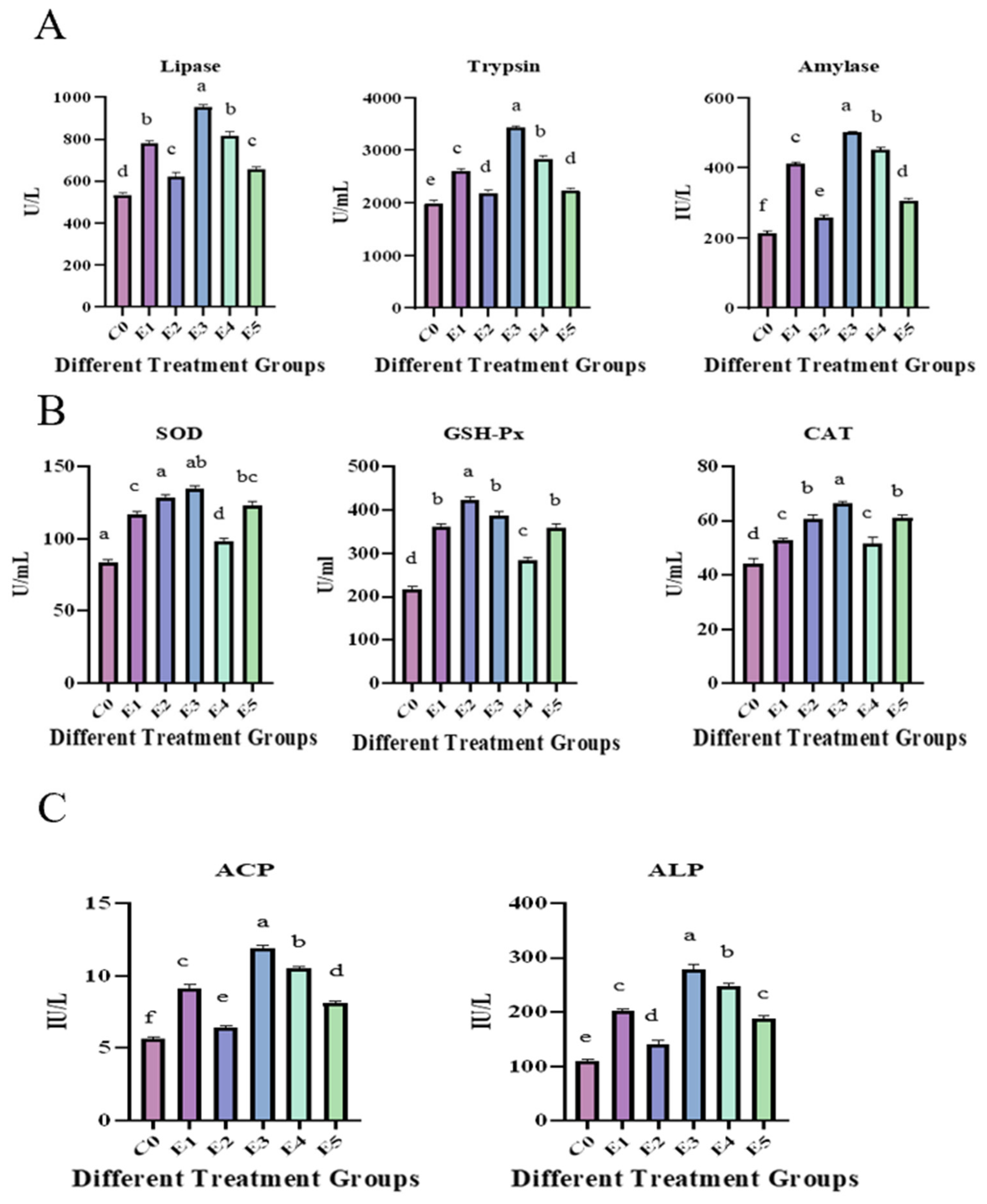
Three core intestinal digestive enzymes of golden pompano were measured, and the corresponding data are shown in Figure 3A. One-way ANOVA revealed a significant effect of dietary SZ07 supplementation on lipase activity (F = 110.964, p < 0.001). Lipase activity was remarkably elevated in E1, E3, and E4 groups relative to the C0 control (p < 0.05), while no significant difference existed between E1 and E4 groups (p > 0.05). E2 and E5 also exhibited significantly higher lipase activity than C0. Similarly, trypsin activity rose significantly in E1, E3, and E4 treatments (p < 0.05), whereas E2 and E5 showed comparable trypsin levels to the control group. Amylase activity was significantly enhanced across all five probiotic supplementation groups compared with C0 (p < 0.05).
Figure 3.
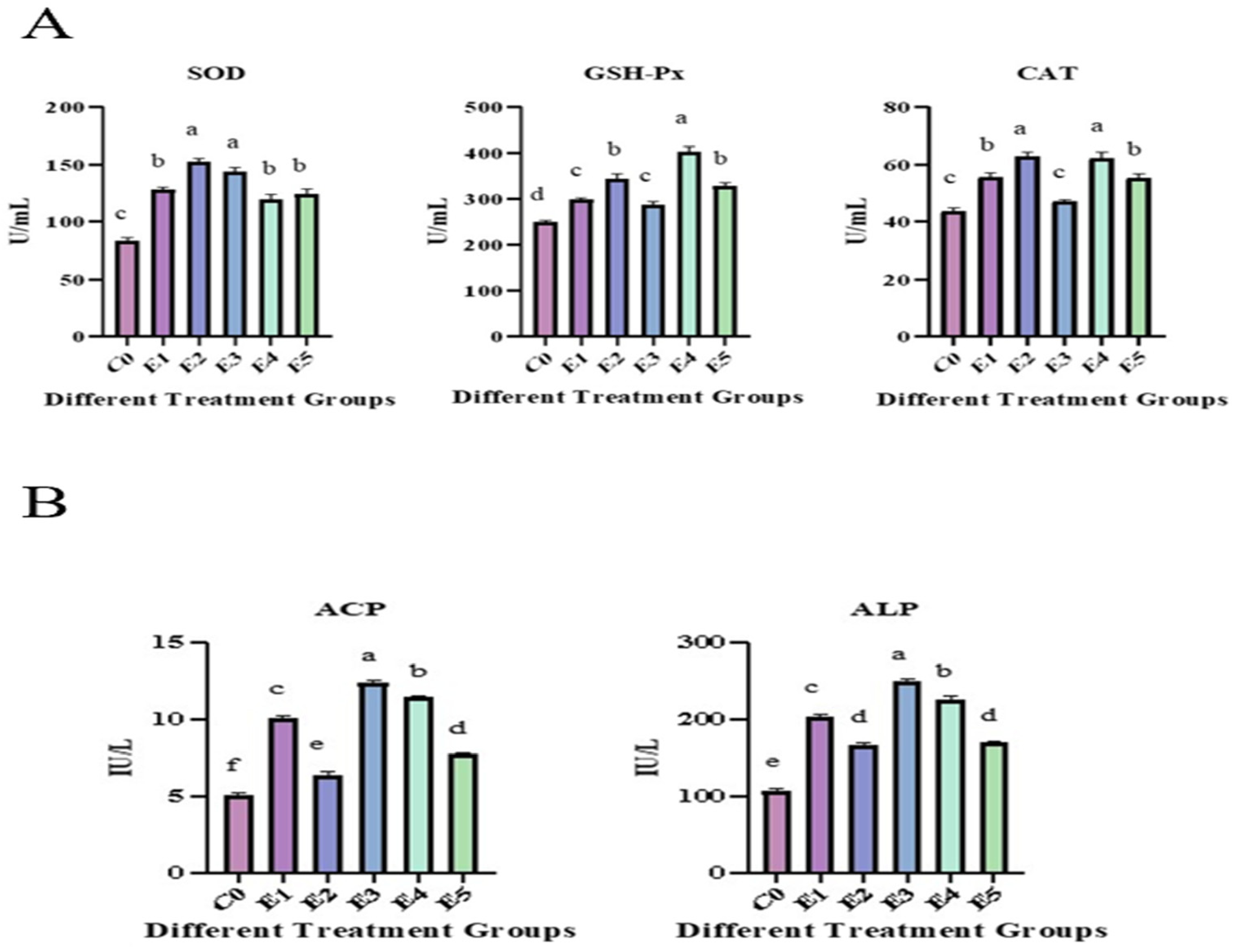
(A) Detection results of intestinal digestive enzyme activity; (B) detection results of antioxidant indicators in intestinal tissues; (C) detection results of metabolism-immunity bifunctional enzymes in intestinal tissues (n = 6 per group). Different lowercase letters indicate significant differences at p < 0.05.
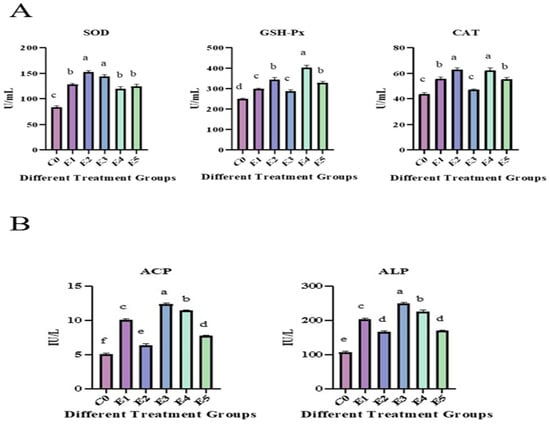
We further detected three key intestinal antioxidant enzymes, and relevant results are summarized in Figure 3B. SOD activity was significantly higher in E1, E4, and E5 groups than in the blank control (p < 0.05). Both GSH-Px and CAT activity were significantly elevated in all probiotic-supplemented groups (p < 0.05), and significant differences were observed between E2 and E4 for these two indicators.
Figure 3C illustrates how dietary SZ07 supplementation affects intestinal ACP and ALP activity. ACP activity was significantly enhanced in E3, E4, and E5 treatments compared with C0 (p < 0.05). Similarly, E3 and E4 groups showed remarkably higher ALP activity than the control (p < 0.05), while E1 and E5 exhibited ALP levels comparable to C0.
Figure 4A presents the measured antioxidant enzyme activity values in liver tissues. Compared with the blank C0 group, dietary SZ07 supplementation significantly increased hepatic SOD activity across all five treatment groups (p < 0.05). Comparable SOD levels were observed between E1, E4, and E5, as well as between E2 and E3 groups. Consistent with intestinal tissue results, hepatic GSH-Px activity was also markedly enhanced in all fish receiving SZ07-containing feeds (p < 0.05). No obvious inter-group differences in GSH-Px were found between E1 vs. E3 and E2 vs. E5. For hepatic CAT activity, E1, E2, E4, and E5 treatments showed remarkably higher activity than C0 (p < 0.05), while E3 displayed CAT levels comparable to the control group.
Figure 4.
(A) Detection results of antioxidant indicators in the liver; (B) detection results of metabolism-immunity bifunctional enzymes in the liver (n = 6 per group). Different lowercase letters indicate significant differences at p < 0.05.
Figure 4B illustrates the hepatic activities of two immune-metabolic dual-function enzymes. Hepatic ACP activity was significantly boosted in E1, E2, E3, E4 and E5 groups relative to C0 (p < 0.05). For hepatic ALP, E1, E2, E3, E4, and E5 showed statistically elevated activity versus the control (p < 0.05).
3.3. Immune-Related Gene Expression in Spleen
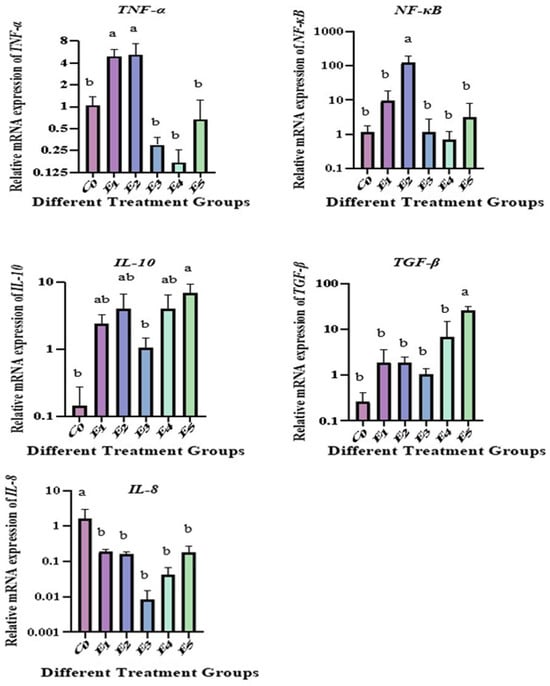
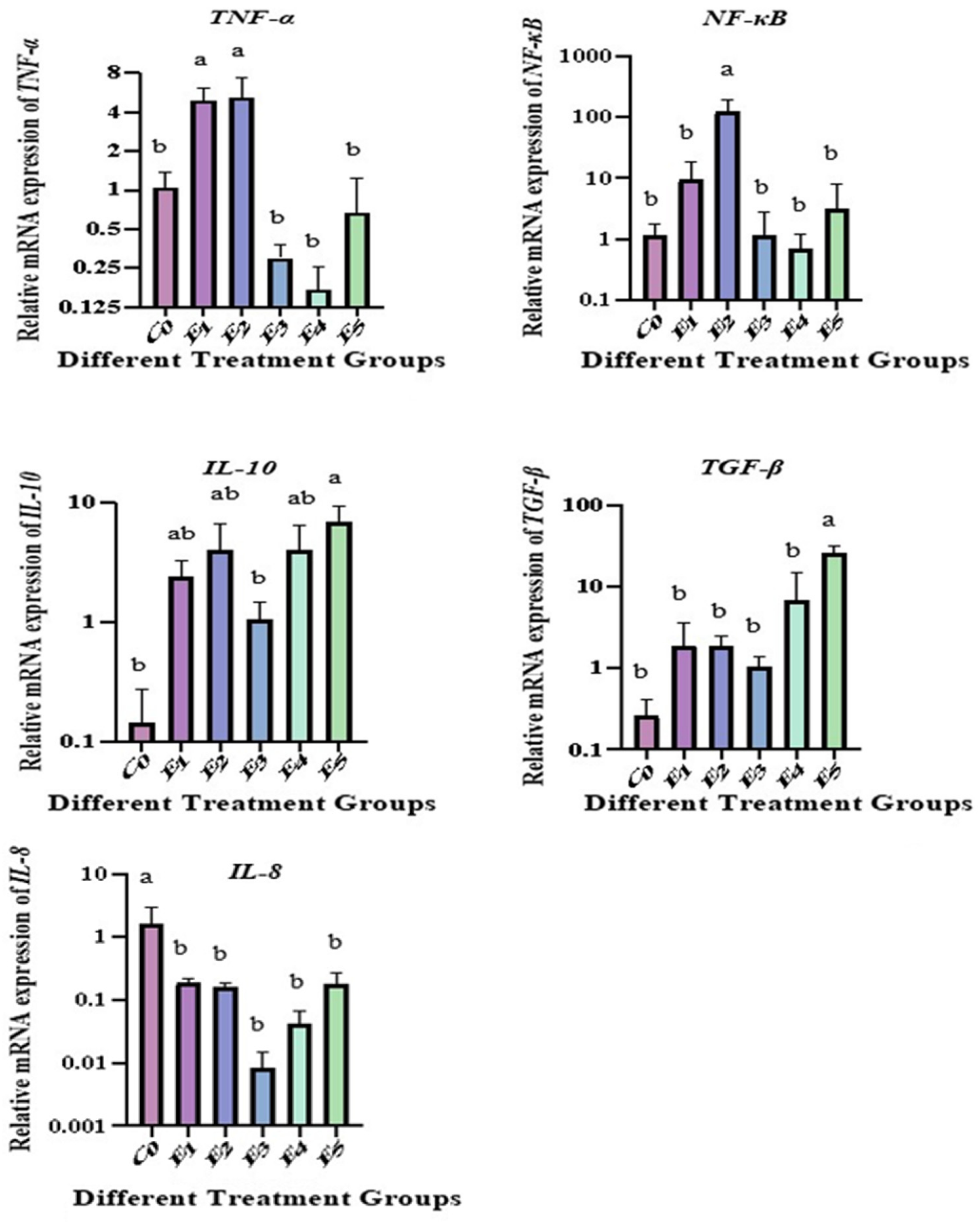
Figure 5 displays the expression patterns of immune-associated genes in the spleen. Dietary administration of graded doses of E. faecalis SZ07 exerted a marked regulatory effect on the splenic immune response of golden pompano.
Figure 5.
Real-time fluorescence quantitative PCR results of spleen (n = 6 per group). Note: Vertical axis shows mRNA transcript levels; abscissa labels show experimental groups. Different lowercase letters indicate significant differences at p < 0.05.
Specifically, the mRNA level of TNF-α increased at low supplementary doses (E1 and E2) and decreased at moderate doses (E3 and E4). Relative to the C0 control group, NF-κB expression was significantly upregulated in the E2 group, whereas the remaining treatment groups exhibited irregular change trends. Conversely, the mRNA level of IL-8 was significantly suppressed in all SZ07-supplemented groups relative to the C0 group (p < 0.05).
Notably, the E5 group had markedly higher IL-10 and TGF-β mRNA levels than the control (p < 0.05). Although E1–E4 groups did not reach statistical significance for these two anti-inflammatory genes, their expression levels all rose to varying degrees against the C0 baseline.
3.4. Intestinal Microbiota Diversity
High-throughput sequencing of the V3–V4 hypervariable region of the 16S rRNA gene was performed on the Illumina MiSeq platform. After quality filtering and chimera removal, a total of 4730 ASVs were obtained from all samples.
We adopted 16S rRNA high-throughput sequencing to characterize the diversity and community composition of golden pompano intestinal microbiota, and full alpha diversity metrics are listed in Table 2. All samples achieved Good’s coverage above 0.99, which verifies sufficient sequencing depth to capture the majority of intestinal microbial taxa.
Table 2.
Analysis of gut microbiota abundance and diversity (n = 6 per group).
Analysis of alpha diversity revealed no statistically significant differences in the Chao1, Ace, Simpson, and Shannon indices across all experimental groups. Specifically, The Shannon index exhibited an upward trend in groups E3 and E4.
3.5. Intestinal Microbiota Structure
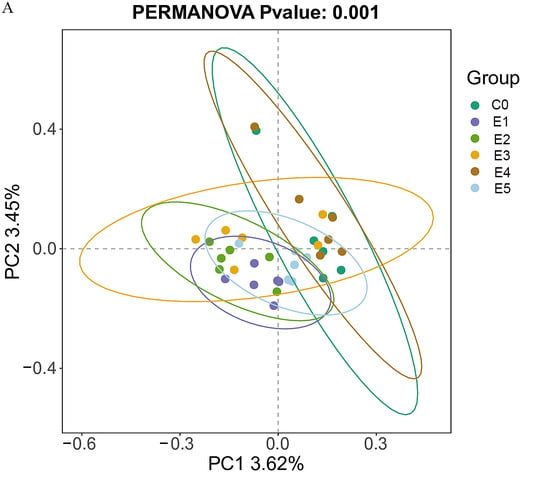
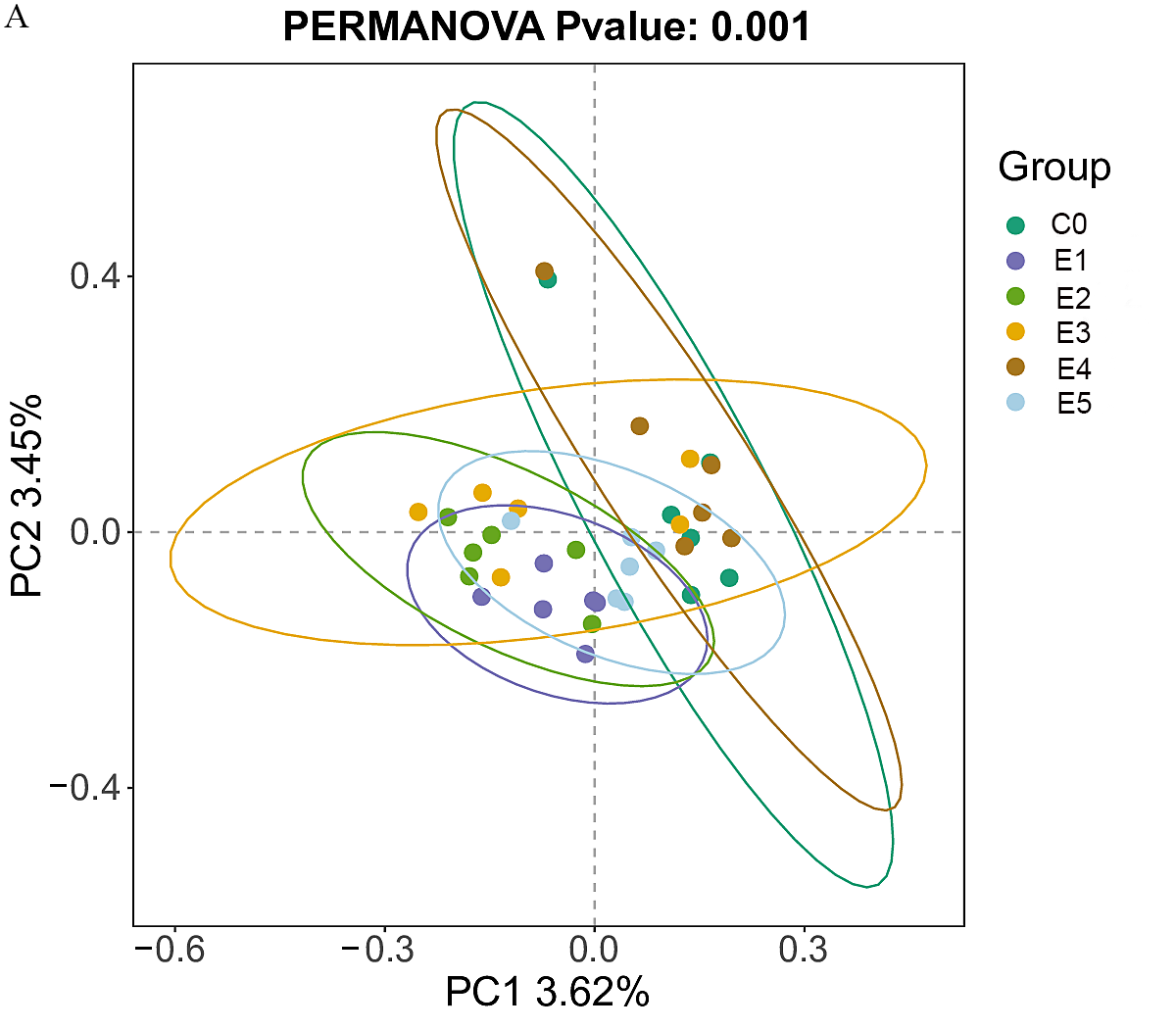
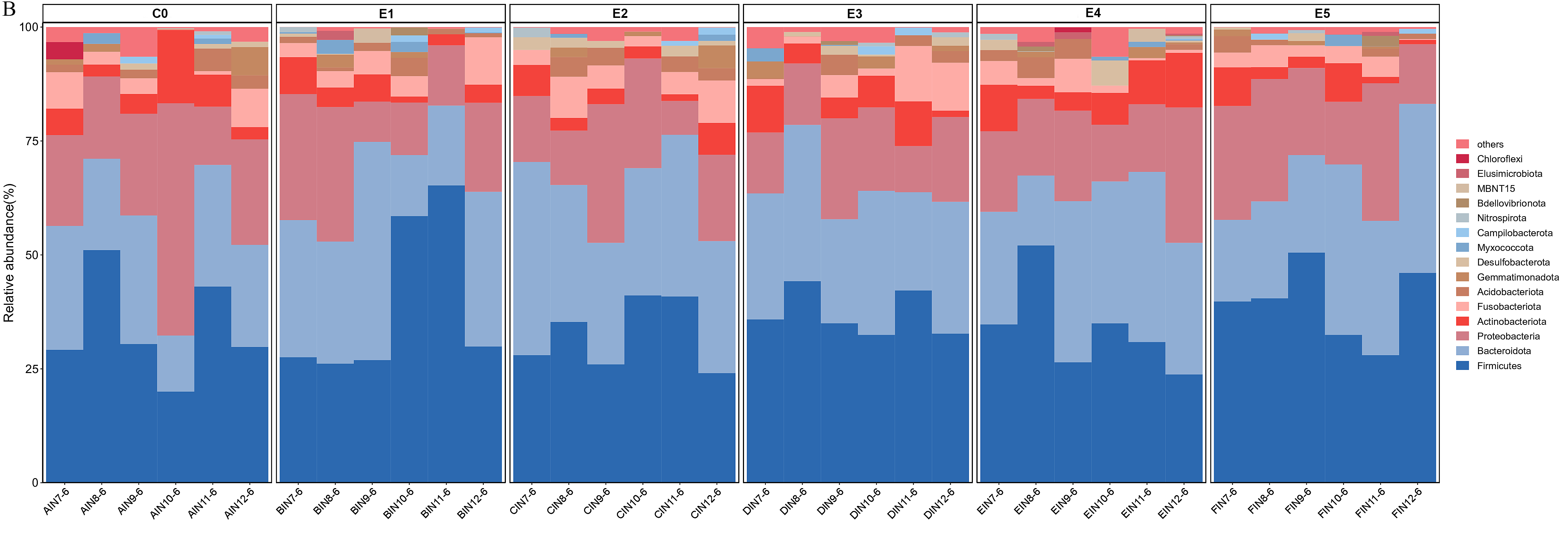
The PCoA ordination plot showed that the first two principal coordinates explained 3.62% and 3.45% of the total community variation, respectively. The distribution of samples in the PCoA coordinate space demonstrated that C0, E1, and E2 clustered closely along PCo1, while E3, E4, and E5 were widely separated along PCo2, indicating distinct microbial community reshaping effects under different SZ07 doses.
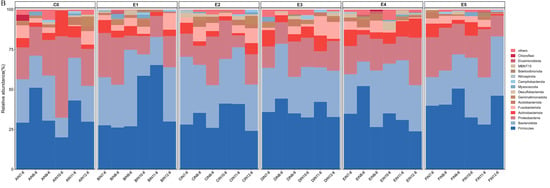
Figure 6B displays the taxonomic composition of gut microbiota at the phylum taxonomic rank. Eight dominant phyla were shared by all experimental groups: Proteobacteria, Firmicutes, Bacteroidetes, Actinobacteriota, Fusobacteriota, Acidobacteriota, Gemmatimonadota, and Desulfobacterota.
Figure 6.
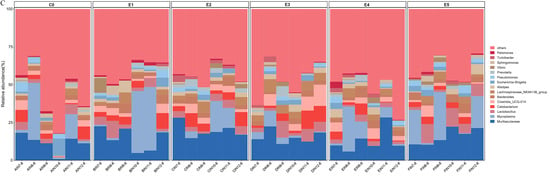
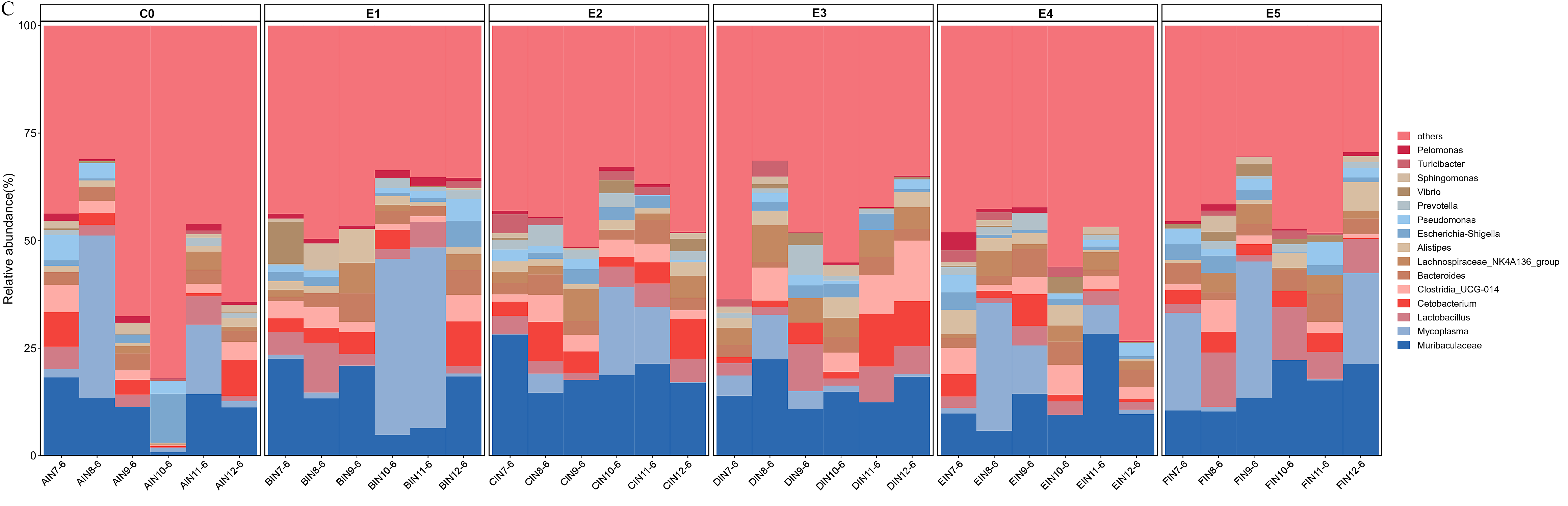
(A) PCoA (binary Jaccard distance) with PERMANOVA test; (B) top15 community composition bar plots (Phylum level); (C) top15 community composition bar plots (Genus level) (n = 6 per group) Note: C0: Add 0 CFU/g Enterococcus faecalis group; control group; E1: Add 1 × 10⁵ CFU/g Enterococcus faecalis group; E2: Add 1 × 10⁶ CFU/g Enterococcus faecalis group; E3: Add 1 × 10⁷ CFU/g Enterococcus faecalis group; E4: Add 1 × 10⁸ CFU/g Enterococcus faecalis group; E5: Add 1 × 10⁹ CFU/g Enterococcus faecalis group.
Genus-level gut microbial composition is visualized in Figure 6C. The dominant genera shared by all treatments included Muribaculaceae (family, CFB clade, order Bacteroidales), Mycoplasma, Lactobacillus, Cetobacterium, Bacteroides, and Pseudomonas. Compared with C0, Lactobacillus abundance tended to rise in all groups except E4. The relative proportion of Cetobacterium increased in E1–E3, while Pseudomonas abundance dropped to varying degrees within E1 to E4.
3.6. Differential Microbial Taxa Identified by Lefse Analysis
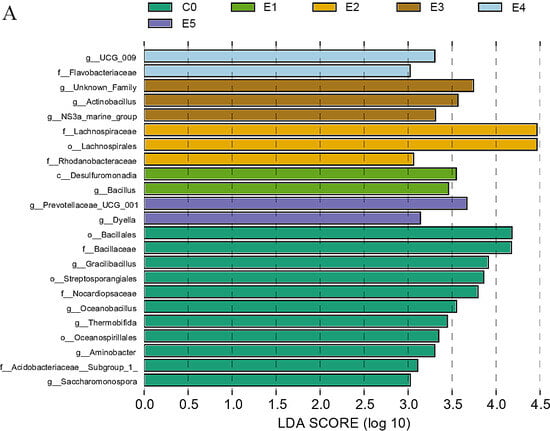
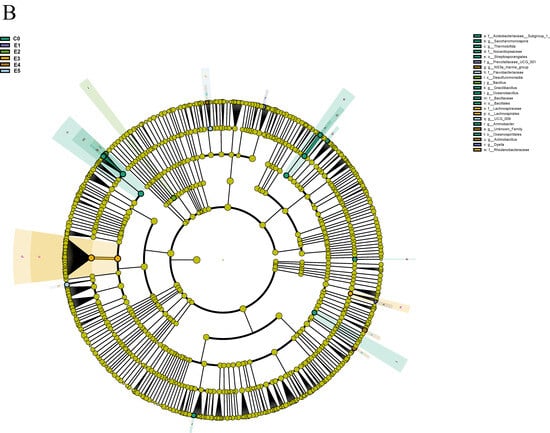
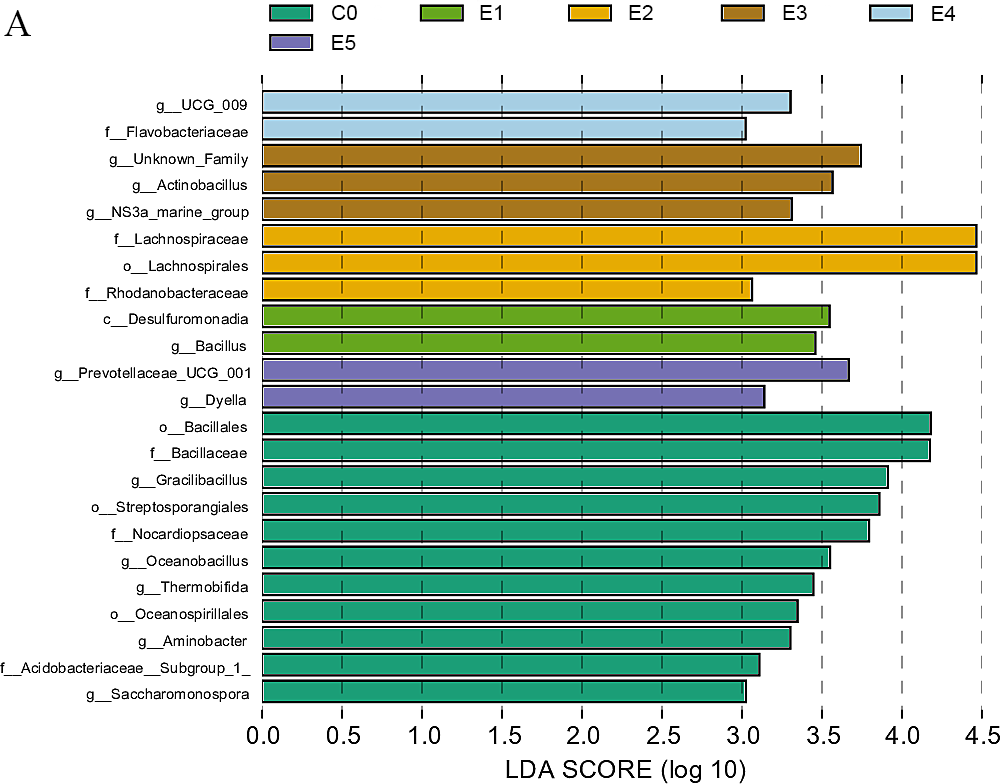
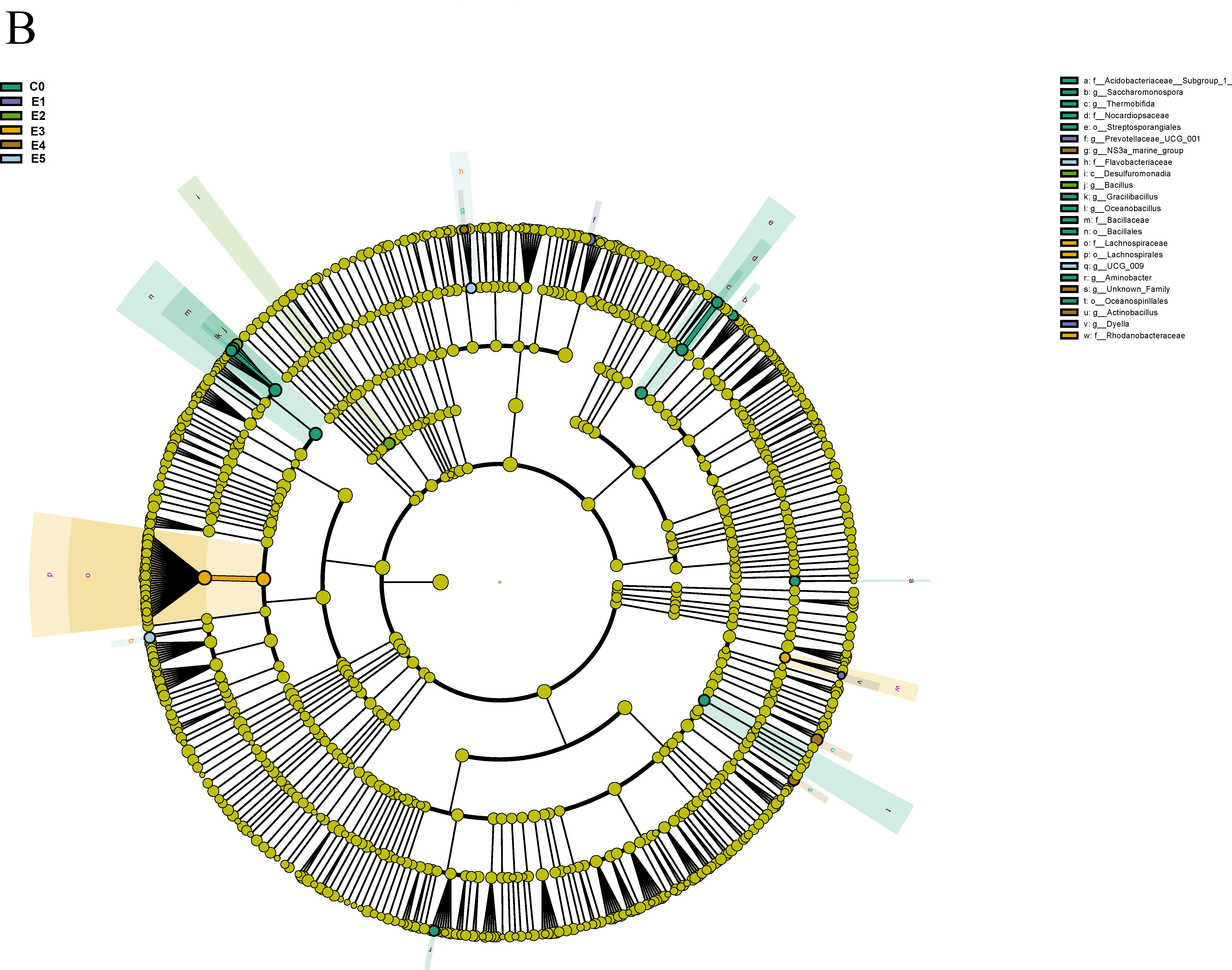
LEfSe (Linear Discriminant Analysis Effect Size) was applied to identify biomarker bacterial taxa with significantly differential abundance among treatments. Figure 7 contains the corresponding LDA score histogram and taxonomic evolutionary cladogram.
Figure 7.
(A) Linear discriminant analysis (LDA) effect size plot; (B) branching diagram of differential species annotation (n = 6 per group). Note: Different colors indicate different groups; Each layer node represents the phylum/class/order/family/genus from the inside out. The annotations of species markers in each layer indicate phyla/class/order/family/genus from the inside out; The species names are shown in the legend on the right.
The results showed that the taxa significantly enriched in the control group (C0) included order Bacillales, family Bacillaceae, genera OceanoBacillus, GraciliBacillus, Thermobifida, Saccharomonospora, family Nocardiopsaceae, order Streptosporangiales, family Acidobacteriaceae__Subgroup_1_, order Oceanospirillales, and genus Aminobacter.
For the experimental groups, the characteristic differentially abundant taxa were as follows: Prevotellaceae_UCG_001 and Dyella were enriched in the E1 group; class Desulfuromonadia and genus Bacillus were enriched in the E2 group; order Lachnospirales and family Rhodanobacteraceae were enriched in the E3 group; NS3a_marine_group (unclassified order Bacteroidales) and genus ActinoBacillus were enriched in the E4 group; family Flavobacteriaceae and Ruminococcaceae_UCG_009 were enriched in the E5 group.
4. Discussion
4.1. Effect of E. faecalis SZ07 on Intestinal Morphology
E. faecalis has been extensively applied as a safe and efficacious probiotic in food supplements for both humans and animals, and has emerged as a promising antibiotic alternative in aquaculture for its capacity to improve fish health and mitigate disease outbreaks [26,27]. Notably, autochthonous E. faecalis strains isolated from the gut of host fish species exhibit better adaptability to the host intestinal microenvironment, with superior colonization capacity and higher biosafety compared with strains of terrestrial origin [28]. As a pivotal organ in fish, the intestine serves as both the primary site for digestion and nutrient uptake and the frontline barrier of innate immune defense. Sustaining intestinal homeostasis—including preserving mucosal fold structural integrity, regulating microbial balance, and boosting immune function—is essential for enhancing growth performance, disease resistance, and overall physiological health of farmed fish. Longer, more compact intestinal mucosal folds effectively expand the intestinal absorptive surface area, which further elevates the efficiency of nutrient utilization [29].
In this study, dietary administration of golden pompano-origin E. faecalis SZ07 exerted a notable dose-dependent influence on the intestinal morphological structure of golden pompano. Histological examination revealed that, relative to the C0 control group, mucosal fold height was significantly elevated in the E3, E4, and E5 groups (p < 0.05). Mucosal fold width in the E4 and E5 groups was significantly greater than that in the control group (p < 0.05), whereas no statistically significant difference was detected among the E1, E2, and E3 groups and the control. With respect to muscle layer thickness, significantly lower values were recorded in the E2, E3, and E5 groups in comparison with the control group (p < 0.05). The elevation of mucosal fold length and width enlarges the absorptive surface area of the intestinal mucosa, while the reduction in muscle layer thickness lowers energy expenditure for intestinal peristalsis. This allows more energy to be distributed to growth and immune function, which aligns with prior observations in Pacific white shrimp supplemented with Clostridium butyricum [30]. The reduction in intestinal muscular layer thickness may reflect tissue remodeling of the gut wall. Altered muscular thickness can modify intestinal peristalsis and digesta transit, although it may also represent structural atrophy under certain conditions. Further functional assays are required to distinguish these possibilities [31]. Overall, these morphological alterations offer direct histological proof that E. faecalis SZ07 can enhance intestinal health and nutrient absorption capacity in golden pompano.
4.2. Modulation of Intestinal Digestive Enzyme Activities
Digestive enzymes play a crucial role in the digestion and nutrient absorption process of aquatic animals [32]. These enzymes, secreted by the fish itself or produced by intestinal microbiota, decompose macronutrients such as proteins, fats, and carbohydrates into small absorbable molecules including amino acids, fatty acids, and monosaccharides. E. faecalis as a feed additive has been widely reported to enhance intestinal digestive enzyme activity, thereby improving intestinal health and innate immunity of fish [33]. Accumulating evidence confirms that E. faecalis is capable of secreting multiple digestive enzymes, including amylase and protease; these enzymes directly enhance the catabolic function of the fish digestive tract and boost feed utilization efficiency [34].
Our current findings demonstrate that dietary administration of golden pompano-origin E. faecalis SZ07 markedly increased intestinal digestive enzyme activities in golden pompano. Specifically, amylase activity was significantly upregulated in all treatment groups relative to the C0 control group (p < 0.05). The activities of both lipase and trypsin were significantly enhanced in the E1, E3, and E4 groups compared with the C0 group (p < 0.05), whereas no statistically significant changes were detected in the E2 and E5 groups. The uniform and significant elevation of amylase activity in all SZ07-supplemented groups is especially remarkable, which corresponds to the intrinsic property of E. faecalis to synthesize large amounts of amylase [34]. These findings suggest that dietary supplementation of E. faecalis SZ07 at suitable dosages can effectively strengthen the digestive enzyme activities of golden pompano, thereby improving its nutrient digestion and absorption capacity. As an autochthonous probiotic strain isolated from healthy golden pompano, SZ07 exhibits better adaptability to the intestinal microenvironment of its host species, which may account for its stable and robust digestion-promoting efficacy.
4.3. Enhancement of Antioxidant and Non-Specific Immune Functions
The improved digestive function further promoted the elevation of antioxidant capacity and non-specific immune function in golden pompano [35]. The antioxidant enzyme system serves as a critical defense system in living organisms; it eliminates excessive reactive oxygen species (ROS) and free radicals to shield cells from oxidative injury [36]. As core components of the antioxidant defense system, superoxide dismutase (SOD), glutathione peroxidase (GSH-Px), and catalase (CAT) activities are widely adopted as biomarkers to assess fish health condition and antioxidant capacity [37]. During aquaculture farming, fish are vulnerable to various environmental stressors, including temperature fluctuations, water quality degradation, and pathogen infection, all of which trigger excessive ROS generation. Strengthening the antioxidant enzyme system assists fish in counteracting oxidative stress and boosting immune competence [38].
Our results revealed that dietary E. faecalis SZ07 supplementation markedly elevated antioxidant enzyme activities in golden pompano. Specifically, significantly higher activities of SOD, GSH-Px, and CAT in both liver and intestine were detected in the E4 and E5 groups relative to the C0 group (p < 0.05). In the E3 group, hepatic and intestinal GSH-Px activity, hepatic SOD activity, and intestinal CAT activity were all significantly increased compared with the control group (p < 0.05), whereas no significant changes were found for the other indices. Prior research has indicated that dietary E. faecalis supplementation can boost antioxidant enzyme activities in mud crabs, thus modulating the immune system and enhancing disease resistance [39]. Another study reported that E. faecalis, when used as a feed additive, can significantly raise SOD activity in sea cucumbers and benefit their growth performance [40].
Acid phosphatase (ACP) and alkaline phosphatase (ALP) are two important phosphatases widely present in organisms and involved in various physiological processes [41,42]. Their activities in fish are often used as biomarkers to evaluate health status, metabolic function, and immune response, and they are mainly distributed in tissues such as the liver and intestine [43]. ACP mainly reflects immune status, while ALP mainly reflects growth and metabolic status [42,44].
Notably, the activities of both ACP and ALP exhibited a marked upward trend in all E1–E5 treatment groups relative to the C0 group (p < 0.05). Previous studies have demonstrated that E. faecalis and Lactococcus lactis, applied individually or in combination as candidate probiotics, can elevate ACP and ALP activities, thus strengthening humoral immunity and boosting disease resistance [45].
The improvement of non-specific immune capacity was also mirrored by the altered expression of immune-associated genes in the spleen. Probiotics are able to interact with intestinal immune cells and commensal microbiota to regulate targeted immune functions and preserve immune homeostasis. Cytokines are involved in a wide range of physiological processes, such as the modulation of immune and inflammatory responses [46,47]. TNF-α and IL-8 are representative pro-inflammatory cytokines that perform diverse functions in initiating inflammatory responses [48]. Upregulated NF-κB expression is regarded as a critical pathogenic contributor to various acute and chronic inflammatory disorders [49].
In the present study, dietary administration of E. faecalis SZ07 at suitable concentrations markedly suppressed the mRNA expression levels of TNF-α and IL-8 in the spleen of golden pompano. The expression pattern of NF-κB displayed irregular changes across the experimental groups relative to the control group. IL-10 and TGF-β are anti-inflammatory cytokines capable of inhibiting excessive inflammatory reactions and sustaining immune equilibrium [50]. Significantly higher expression levels of IL-10 and TGF-β were observed in the E5 group compared with the control group (p < 0.05). Despite the absence of statistically significant differences in the E1–E4 groups, both genes exhibited upward trends to different extents relative to the C0 group. These findings suggest that dietary E. faecalis SZ07 can alleviate tissue inflammatory reactions via upregulating the expression of anti-inflammatory cytokine genes. It should be noted that this experiment was carried out without pathogen challenge. The inflammatory cytokine response induced by this strain varied with dosage, showing immune priming at low doses and an anti-inflammatory tendency only at the highest dose [4]. It has been proposed that probiotic-derived metabolites such as short-chain fatty acids may activate the Nrf2 signaling pathway to modulate the antioxidant system in golden pompano. It should also be noted that increased antioxidant enzyme activity may not always be beneficial, and such elevation can occasionally serve as a compensatory response to oxidative stress [51].
4.4. Regulation of Intestinal Microbiota Structure
Stable intestinal immune homeostasis largely relies on the structural balance of host gut microbial communities [52]. As a safe and effective feed supplement, probiotics can markedly improve the health condition and growth performance of farmed animals by optimizing intestinal microecological balance, boosting immune function, and facilitating nutrient absorption [53].
Alpha diversity analysis revealed no statistically significant differences in the Chao1, Ace, Simpson, and Shannon indices across all groups. Nevertheless, the Shannon index exhibited an upward trend in the E3 and E4 groups relative to the C0 group, indicating that moderate doses of E. faecalis SZ07 may exert a beneficial effect on gut microbiota evenness. Prior research has shown that oral probiotic supplementation elevated the relative abundance of beneficial bacteria and decreased the proportion of pathogenic bacteria in the shrimp intestine [54]. Another study reported that probiotic intervention at an appropriate dosage can effectively enhance the species richness and evenness of gut microbiota in Litopenaeus vannamei [55]. These results suggest that E. faecalis may modulate the composition of indigenous microbiota through competitive exclusion, and appropriate concentrations of E. faecalis can improve the community distribution evenness of intestinal microbiota in golden pompano [56].
Consistent with the trend of improved microbiota evenness, the overall structure of the intestinal microbiota was modulated by dietary Enterococcus faecalis SZ07. In most teleost fish, Proteobacteria, Firmicutes, and Bacteroidetes are the dominant phyla in the intestinal microbiota, which play crucial roles in host digestion, immunity, and overall health [57]. Members of Proteobacteria have diverse metabolic capabilities and can utilize various carbon and nitrogen sources. Many bacteria in Firmicutes, such as Bacillus, are widely used as probiotics to improve fish intestinal health. Bacteroidetes bacteria can modulate host immune reactions and balance the release of pro-inflammatory and anti-inflammatory cytokines to avoid excessive inflammatory responses [58,59,60].
Our results verified that these three phyla constituted the dominant bacterial communities in the intestinal microbiota of golden pompano across all groups. Relative to the C0 control group, dietary E. faecalis SZ07 altered the proportional distribution of Proteobacteria, Firmicutes, and Bacteroidetes, suggesting that it did not shift the core dominant-phylum composition of the golden pompano gut microbiota. At the genus taxonomic level, Lactobacillus and Cetobacterium represented the predominant genera across all groups. As a typical lactic acid bacterial genus, Lactobacillus is frequently employed as a probiotic to ameliorate digestive health and strengthen immune function [11]. As a dominant symbiotic bacterium colonizing the fish intestine, Cetobacterium is prevalent across diverse fish species and exerts a potential function in preserving fish health via modulating gut microbiota structure and metabolic performance [61].
In agreement with the above results, Lactobacillus abundance was elevated in all treatment groups with the exception of the E4 group relative to the control group. Cetobacterium abundance was raised in the E1, E2, and E3 groups, whereas Pseudomonas abundance was reduced in the E1, E2, E3, and E4 groups. Certain Pseudomonas species, exemplified by Pseudomonas aeruginosa, are opportunistic pathogens that trigger infections when aquatic animals have compromised immunity [62]. These results indicate that dietary supplementation with appropriate amounts of E. faecalis SZ07 can improve host intestinal health through a dual mechanism: on the one hand, it significantly enhances the digestive and absorptive capacity and immune function of golden pompano; on the other hand, it effectively regulates the intestinal microbiota structure, manifested as a tendency for reduced abundance of potential pathogens (such as Pseudomonas) and increased colonization of beneficial bacteria (such as Lactobacillus), ultimately improving intestinal health and overall host health status. Notably, the genus Mycoplasma was identified as a dominant taxon in the intestinal microbiota of golden pompano. Consistent with previous reports on golden pompano, this genus represents a core host-associated intestinal component rather than a sequencing contaminant [63]. Host-adapted Mycoplasma are frequently detected as dominant commensals in the gut of marine teleosts, and some strains exhibit mutualistic interactions with fish hosts [64].
LEfSe screening was further performed to screen distinct biomarker taxa with differential abundance across all treatments, which provided more detailed information about the modulation of intestinal microbiota by E. faecalis SZ07. The characteristic taxa in the E5 group were Flavobacteriaceae and Ruminococcaceae_UCG_009. Flavobacteriaceae are widely distributed in marine environments and can degrade complex organic matter such as proteins and polysaccharides, participating in carbon and nitrogen cycles. Ruminococcaceae can ferment complex polysaccharides such as cellulose and starch to produce short-chain fatty acids (SCFAs), which help maintain intestinal health [65,66]. The characteristic taxa in the E4 group were NS3a_marine_group (unclassified Bacteroidales) and ActinoBacillus. Bacteria of the order Bacteroidales may participate in the degradation of organic matter and nutrient cycling in marine ecosystems [67].
The characteristic taxa in the E3 group were Lachnospirales and Rhodanobacteraceae. Most members of Lachnospirales are anaerobic bacteria with fermentative and chemoorganotrophic capabilities [68]. Rhodanobacteraceae are widely distributed in aquatic environments such as rivers, lakes, and oceans, and are common in eutrophic waters [69]. The characteristic taxa in the E2 group were Desulfuromonadia and Bacillus. Bacillus bacteria can form endospores and have strong environmental adaptability. In aquaculture, Bacillus species are often introduced as probiotics to improve water quality and promote the health of aquatic animals. Accumulating evidence has demonstrated that Bacillus can elevate digestive enzyme activities, activate antioxidant enzyme systems, and upregulate the expression of immune- and stress-associated genes, thus enhancing growth performance and disease resistance in farmed fish [11]. Accordingly, the increased abundance of Bacillus in the E2 group may have exerted a synergistic effect on the observed health-promoting benefits. The observed enrichment of Bacillus in the E2 group cannot be definitively explained by the present dataset. This phenomenon may reflect cross-feeding or niche modification driven by metabolites produced by E. faecalis. Further co-culture assays or in vivo animal trials are required to uncover the underlying inter-microbial interaction.
4.5. Limitations of the Study
The present study is subject to several notable limitations. First, this feeding trial was performed in large-capacity floating net cages, which were selected to match the natural schooling and continuous swimming behavior of golden pompano. Research shows that limited rearing space can induce severe confinement-related stress in fish and impair their physiological and immune functions, which is critical for evaluating the biological effects of dietary probiotic supplementation [2,70]. Restricted by the layout of the commercial aquaculture facility, each dietary group was maintained within one large floating cage unit, and biological replicates were obtained from individual fish sampled within the corresponding unit.
Second, the present experiment evaluated the short-term effects of dietary probiotics on juvenile golden pompano under relatively stable water quality conditions. It is worth noting that offshore cage culture environments are highly dynamic, where temperature, salinity, and dissolved oxygen fluctuate frequently under natural weather conditions. Based on this, we believe that the physiological and immune responses of golden pompano to probiotic diets may differ substantially under variable field conditions. These confounding factors may limit the direct extrapolation of the present findings to full-scale commercial marine cage farming, and the practical applicability of these probiotic formulations therefore remains to be further validated.
In the interpretation of the present study’s findings, it is critical to account for the fact that the probiotic effects were only assessed at the physiological and immune level of juvenile fish. While this study identified the beneficial effects of dietary probiotics on fish physiological performance, the long-term persistence of probiotic colonization in the gut and the sustained regulatory effects on intestinal microbiota were not fully quantified during the experimental period. That said, all experimental fish were reared in identical large-capacity cages and exposed to consistent background environmental conditions throughout the trial, thereby ensuring their uniform exposure to the probiotic-supplemented diets. On this basis, we believe that the observed differences between dietary groups are mainly attributable to dietary probiotic treatments rather than background environmental disturbance.
In addition, viable bacterial enumeration was only performed for the initial liquid bacterial suspension, and we did not re-quantify viable counts in experimental diets after spraying, drying, and storage. Background loads of Enterococcus and lactic acid bacteria in the basal commercial feed were also not analyzed, which may bring uncertainties to the actual effective dosage of probiotic in feeding practice. Moreover, feed consumption per cage was not quantified in this trial, which restricts our ability to assess feed efficiency and nutrient utilization among treatments. Nevertheless, fish were fed to apparent satiation twice daily under identical feeding protocols across all groups to minimize potential feeding bias. Although each dietary treatment was allocated to a single floating cage under commercial farm constraints and growth and survival data were not recorded, the consistent physiological and immunological responses across measured indices provide preliminary support for the bioactivity of SZ07, as observed in similar dose-screening aquaculture trials [71]. The present findings offer preliminary field-relevant information regarding the suitable dose range of dietary E. faecalis SZ07 for golden pompano. Future work should validate these outcomes using multiple independent cage replicates per treatment, and further clarify the long-term gut colonization dynamics, microbiota succession, and stress resistance benefits of SZ07 under fluctuating offshore cage conditions.
The deficiencies in this measurement provide implications for future research. Besides extending the feeding cycle to track long-term probiotic regulation on gut microbiota and immune homeostasis, expanding the experimental scale and optimizing the treatment design of target fish are also recommended. Additional studies can also carry out systematic assessments of probiotic stability in feed under farm conditions, host gut microbial succession, and the synergistic interactions between probiotics and environmental stressors, so as to improve the validity and applicability of probiotic feeding strategies for golden pompano industrial culture.
5. Conclusions
This study demonstrated that host-derived E. faecalis SZ07 serves as a promising and efficient feed additive for juvenile golden pompano culture. Appropriate dietary supplementation with SZ07 positively regulated intestinal morphological structure by increasing mucosal fold height and width while reducing muscular layer thickness, which effectively improved the intestinal digestive and absorptive capacity of juvenile golden pompano. Meanwhile, SZ07 supplementation significantly enhanced the activities of digestive enzymes, antioxidant enzymes, and immune-related metabolic enzymes, and balanced the intestinal immune response by downregulating pro-inflammatory gene expression and upregulating anti-inflammatory gene levels. Furthermore, dietary SZ07 optimized intestinal microbiota composition, enriched beneficial microbial communities, and inhibited the proliferation of potential pathogenic bacteria. Notably, the supplementation dose of 1 × 10⁷–1 × 10⁸ CFU/g feed exhibited the most stable and comprehensive beneficial effects among all treatment groups. From an economic perspective for on-farm production, 1 × 10⁷ CFU/g feed (E3) is the preferred option for commercial use, as elevating the dosage to 1 × 10⁸ CFU/g feed brings limited additional benefits but increases the input cost of probiotics.
Although one net-cage was assigned to each dietary treatment in this trial, limiting broad statistical extrapolation, the consistent intestinal, biochemical, and microbial responses among sampled fish support the credibility of our findings. Benefiting from the large-capacity net-cage culture system adopted in the present study, sufficient swimming space effectively reduced confinement stress interference, ensuring that the physiological and intestinal responses of golden pompano were mainly attributed to dietary probiotic intervention rather than environmental disturbance. Based on these findings, host-derived E. faecalis SZ07 has been verified to effectively improve intestinal health, antioxidant capacity, and immune homeostasis of golden pompano under aquaculture conditions, showing great application potential as a safe and sustainable green feed additive in mariculture.
Future studies could further explore the long-term colonization stability of SZ07 in the intestinal tract and verify its persistent regulatory effects on growth performance and disease resistance under complex commercial aquaculture conditions. In conclusion, dietary supplementation with host-derived E. faecalis SZ07 is an effective and feasible strategy to improve the overall health status of golden pompano, which provides a reliable theoretical basis and technical reference for the healthy and sustainable culture of golden pompano.
Author Contributions
X.Z.: Conceptualization, Methodology, Software, Formal analysis, Data curation, Investigation, Writing—original draft, Writing—review and editing. J.C.: Supervision, Writing—review and editing, Funding acquisition. L.W.: Supervision, Writing—review and editing. P.L.: Investigation, Resources. Y.L.: Investigation, Supervision. Y.H.: Investigation, Supervision. D.Y.: Investigation, Supervision. B.W.: Investigation, Formal analysis. J.J.: Methodology, Resources, Supervision. H.C.: Methodology, Resources, Supervision. S.L.: Methodology, Resources. All authors have read and agreed to the published version of the manuscript.
Funding
This research was funded by the special project of Guangdong Province for the transformation of science and technology to promote the regional coordinated development of urban-rural (2025B0202010041), the Guangdong S&T Program (2025B0202080001), National Natural Science Foundation of China (42306100), the Postgraduate Education Innovation Project of Guangdong Ocean University (202422, 202638), the Fund of Southern Marine Science and Engineering Guangdong Laboratory (Zhanjiang) (ZJW-2024-14), the Science and Technology Plan of Guangdong Province (2023B0202010016), the Program for Scientific Research Start-up Funds of Guangdong Ocean University (060302022310, 080506022606), the Youth Science and Technology Innovation Talent of Guangdong TeZhi plan talent (2023TQ07A888), the Science and Technology Plan of Zhanjiang City (2024E03007), the Department of Education of Guangdong Province (No. 2023ZDZX4013), Projects of the “One Hundred Thousand Hundred” Initiative under the Guangdong Provincial Education Department (2025ZDZX4016).
Institutional Review Board Statement
The animal experimental protocols in this study were reviewed and approved by the Institutional Animal Care and Use Committee (IACUC) of Guangdong Ocean University (approval code: GDOU-IACUC-20240315; approval date: 15 March 2024).
Informed Consent Statement
Written informed consent has been obtained from the owner of the animals involved in this study.
Data Availability Statement
The original contributions presented in this study are included in the article. Further inquiries can be directed to the corresponding author(s).
Acknowledgments
The authors express sincere gratitude to all laboratory members for their assistance throughout the research.
Conflicts of Interest
Author Sen Li was employed by the company Guangdong Havwii Agricultural Group Co., Ltd. All the authors declare that the research was conducted in the absence of any commercial or financial relationships that could be construed as a potential conflict of interest.
References
- Sun, J.; Liu, G.; Guo, H.; Zhu, K.; Guo, L.; Liu, B.; Zhang, N.; Zhang, D. Skeletal Anomalies in Cultured Golden Pompano Trachinotus ovatus at Early Stages of Development. Dis. Aquat. Org. 2020, 137, 195–204. [Google Scholar] [CrossRef] [Scilit] [PubMed]
- Li, T.; Sun, M.; Wang, Y.; Yuan, H.; Tang, Z.; Chen, Z.; Zhang, J. Measurement of Length and Swimming Speed of Golden Pompano (Trachinotus ovatus) in Offshore Cage Using Adaptive Resolution Imaging Sonar. J. Mar. Sci. Eng. 2026, 14, 314. [Google Scholar] [CrossRef] [Scilit]
- Yang, Q.; Guo, L.; Liu, B.-S.; Guo, H.-Y.; Zhu, K.-C.; Zhang, N.; Jiang, S.-G.; Zhang, D.-C. Effects of Stocking Density on the Growth Performance, Serum Biochemistry, Muscle Composition and HSP70 Gene Expression of Juvenile Golden Pompano Trachinotus ovatus (Linnaeus, 1758). Aquaculture 2020, 518, 734841. [Google Scholar] [CrossRef] [Scilit]
- Liu, J.-X.; Zhu, K.-C.; Guo, H.-Y.; Liu, B.-S.; Zhang, N.; Zhang, D.-C. Effects of Cysteine Addition to Low-Fishmeal Diets on the Growth, Anti-Oxidative Stress, Intestine Immunity, and Streptococcus agalactiae Resistance in Juvenile Golden Pompano (Trachinotus ovatus). Front. Immunol. 2022, 13, 1066936. [Google Scholar] [CrossRef] [Scilit] [PubMed]
- Li, W.; Zeng, J.; Zheng, N.; Ge, C.; Li, Y.; An, X.; Yao, H. Astragalus Polysaccharide Slows the Dissemination of Antibiotic Resistance Genes and Reduces the Prevalence of Opportunistic Pathogens in the Fish Gut. J. Environ. Manag. 2025, 389, 126058. [Google Scholar] [CrossRef] [Scilit] [PubMed]
- Bardhan, A.; Abraham, T.J.; Dash, G.; Nagesh, T.S.; Sau, S.K.; Patil, P.K. Intestinal Histopathological Aberrations in Oreochromis niloticus Juveniles upon Dietary Florfenicol Administration. Bull. Environ. Contam. Toxicol. 2024, 112, 50. [Google Scholar] [CrossRef] [Scilit] [PubMed]
- Guardiola, F.A.; Cerezuela, R.; Meseguer, J.; Esteban, M.A. Modulation of the Immune Parameters and Expression of Genes of Gilthead Seabream (Sparus aurata L.) by Dietary Administration of Oxytetracyclin. Aquaculture 2012, 334–337, 51–57. [Google Scholar] [CrossRef] [Scilit]
- Vargas-Chacoff, L.; Figueroa, D.; Nualart, D.; Muñoz, J.L. The Oxytetracycline and Florfenicol Effect on the Immune System and Oxidative Stress Response of the SHK-1 Cell Line of Salmo salar. Fishes 2024, 9, 493. [Google Scholar] [CrossRef] [Scilit]
- Burgos, F.A.; Cai, W.; Arias, C.R. Gut Dysbiosis Induced by Florfenicol Increases Susceptibility to Aeromonas hydrophila Infection in Zebrafish Danio rerio after the Recommended Withdrawal Period. J. Aquat. Anim. Health 2024, 36, 113–127. [Google Scholar] [CrossRef] [Scilit] [PubMed]
- Enis Yonar, M.; Mişe Yonar, S.; Silici, S. Protective Effect of Propolis Against Oxidative Stress and Immunosuppression Induced by Oxytetracycline in Rainbow Trout (Oncorhynchus mykiss, W.). Fish Shellfish Immunol. 2011, 31, 318–325. [Google Scholar] [CrossRef] [Scilit] [PubMed]
- Ringø, E.; Van Doan, H.; Lee, S.H.; Soltani, M.; Hoseinifar, S.H.; Harikrishnan, R.; Song, S.K. Probiotics, Lactic Acid Bacteria and Bacilli: Interesting Supplementation for Aquaculture. J. Appl. Microbiol. 2020, 129, 116–136. [Google Scholar] [CrossRef] [Scilit] [PubMed]
- Wang, X.; Zhu, L.; Du, Z.; Li, H.; Hou, L.; Li, C.; Jiang, X.; Zhang, J.; Pei, C.; Li, L.; et al. Host-Derived Pediococcus acidilactici B49: A Promising Probiotic for Immunomodulation and Disease Control in Largemouth Bass (Micropterus salmoides). Fish Shellfish Immunol. 2025, 158, 110148. [Google Scholar] [CrossRef] [Scilit] [PubMed]
- Cao, H.; Chen, D.; Guo, L.; Jv, R.; Xin, Y.; Mo, W.; Wang, C.; Li, P.; Wang, H. Effects of Bacillus subtilis on Growth Performance and Intestinal Flora of Penaeus vannamei. Aquac. Rep. 2022, 23, 101070. [Google Scholar] [CrossRef] [Scilit]
- Liu, L.; Zhuang, H.; Tian, X.; Zhou, Y.; Wang, F.; Liu, Z.; Li, J.; Jiao, M.; Xue, S.; Li, J.; et al. Understanding the Probiotic Potential of Lactobacillus plantarum: Antioxidant Capacity, Non-Specific Immunity and Intestinal Microbiota Improvement Effects on Manila Clam Ruditapes Philippinarum. Fish Shellfish Immunol. 2024, 154, 109971. [Google Scholar] [CrossRef] [Scilit] [PubMed]
- Perdichizzi, A.; Meola, M.; Caccamo, L.; Caruso, G.; Gai, F.; Maricchiolo, G. Live Yeast (Saccharomyces cerevisiae var. boulardii) Supplementation in a European Sea Bass (Dicentrarchus labrax) Diet: Effects on the Growth and Immune Response Parameters. Animals 2023, 13, 3383. [Google Scholar] [CrossRef] [Scilit] [PubMed]
- Li, M.; Liang, H.; Zhang, J.; Chen, J.; Xu, S.; Zhou, W.; Ding, Q.; Yang, Y.; Zhang, Z.; Yao, Y.; et al. Bacillus subtilis HGCC-1 Improves Growth Performance and Liver Health via Regulating Gut Microbiota in Golden Pompano. Anim. Microbiome 2025, 7, 7. [Google Scholar] [CrossRef] [Scilit] [PubMed]
- Hoseinifar, S.H.; Faheem, M.; Liaqat, I.; Van Doan, H.; Ghosh, K.; Ringø, E. Promising Probiotic Candidates for Sustainable Aquaculture: An Updated Review. Animals 2024, 14, 3644. [Google Scholar] [CrossRef] [Scilit] [PubMed]
- Jiao, Y.; Yang, H.; Shigwedha, N.; Zhang, S.; Liu, F.; Zhang, L. Probiotic Effects and Metabolic Products of Enterococcus faecalis LD33 with Respiration Capacity. Foods 2022, 11, 606. [Google Scholar] [CrossRef] [Scilit] [PubMed]
- Liu, Q.; Wen, L.; Pan, X.; Huang, Y.; Du, X.; Qin, J.; Zhou, K.; Wei, Z.; Chen, Z.; Ma, H.; et al. Dietary Supplementation of Bacillus subtilis and Enterococcus faecalis Can Effectively Improve the Growth Performance, Immunity, and Resistance of Tilapia against Streptococcus agalactiae. Aquac. Nutr. 2021, 27, 1160–1172. [Google Scholar] [CrossRef] [Scilit]
- Sayyed, K.A.; Einar, R.; Fatimah, M.Y.; Hassan, M.D.; Aini, I. Properties of Enterococcus faecalis, a New Probiotic Bacterium Isolated from the Intestine of Snakehead Fish (Channa striatus Bloch). Afr. J. Microbiol. Res. 2014, 8, 2215–2222. [Google Scholar] [CrossRef] [Scilit][Green Version]
- Zhang, X.; Li, Y.; Yu, D.; Huang, Y.; Wang, B.; Jian, J.; Cai, J. Isolation, Identification and Biological Characteristics Analysis of Enterococcus faecalis from the Intestinal Tract of Trachinotus ovatus. Guangdong Nongye Kexue 2024, 51, 47–56. [Google Scholar] [CrossRef]
- Krawczyk, B.; Wityk, P.; Gałęcka, M.; Michalik, M. The Many Faces of Enterococcus spp.—Commensal, Probiotic and Opportunistic Pathogen. Microorganisms 2021, 9, 1900. [Google Scholar] [CrossRef] [Scilit] [PubMed]
- Zhang, X.; Cai, J.; Wang, L.; Li, Y.; Huang, Y.; Yu, D.; Wang, B.; Jian, J.; Chen, H. Characterization and Genomic Evaluation of Probiotic Potential, Safety, and Aquaculture Applicability of Enterococcus faecalis SZ07 Isolated from Trachinotus ovatus Intestine in Vitro. Acta Oceanol. Sin. 2026, 45, 164–181. [Google Scholar] [CrossRef] [Scilit]
- Li, H.; Luo, L.; Zhou, Y.; Ling, H.; Yang, Q.; Qi, D. Dietary Administration of Enterococcus faecalis Affects the Growth, Disease Resistance and Immune Function of Tilapia (Oreochromis niloticus). Aquac. Rep. 2020, 18, 100440. [Google Scholar] [CrossRef] [Scilit]
- Xun, P.; Huang, Q.; Feng, D.; Yu, W.; Yang, Y.; Guo, X.; Lin, H. Effects of Dietary Sodium Propionate on Growth Performance, Fillet Texture, Hematologic and Plasma Biochemical Parameter, Immune Responses, and Intestine Histology of Juvenile Trachinotus ovatus. Aquac. Nutr. 2024, 2024, 9148613. [Google Scholar] [CrossRef] [Scilit]
- Badr, L.; Yasir, M.; Alkhaldy, A.A.; Soliman, S.A.; Ganash, M.; Turkistani, S.A.; Jiman-Fatani, A.A.; Al-Zahrani, I.A.; Azhar, E.I. Genomic Evaluation of the Probiotic and Pathogenic Features of Enterococcus faecalis from Human Breast Milk and Comparison with the Isolates from Animal Milk and Clinical Specimens. PeerJ 2024, 12, e18392. [Google Scholar] [CrossRef] [Scilit] [PubMed]
- Matsuura, Y.; Takasaki, M.; Miyazawa, R.; Nakanishi, T. Stimulatory Effects of Heat-Killed Enterococcus faecalis on Cell-Mediated Immunity in Fish. Dev. Comp. Immunol. 2017, 74, 1–9. [Google Scholar] [CrossRef] [Scilit] [PubMed]
- Lazado, C.C.; Caipang, C.M.A.; Estante, E.G. Prospects of Host-Associated Microorganisms in Fish and Penaeids as Probiotics with Immunomodulatory Functions. Fish Shellfish Immunol. 2015, 45, 2–12. [Google Scholar] [CrossRef] [Scilit] [PubMed]
- Liu, L.; Huang, X.; Tu, C.; Chen, B.; Bai, Y.; Yang, S.; Zhang, L.; Lin, L.; Qin, Z. The Effects of Starvation Stress on Intestinal Morphology and Flora of Grass Carp (Ctenopharyngodon idella). Microb. Pathog. 2024, 186, 106502. [Google Scholar] [CrossRef] [Scilit] [PubMed]
- Duan, Y.; Zhang, Y.; Dong, H.; Wang, Y.; Zheng, X.; Zhang, J. Effect of Dietary Clostridium butyricum on Growth, Intestine Health Status and Resistance to Ammonia Stress in Pacific White Shrimp Litopenaeus vannamei. Fish Shellfish Immunol. 2017, 65, 25–33. [Google Scholar] [CrossRef] [Scilit] [PubMed]
- Xun, P.; Zhuang, S.; Yao, H.; Su, J.; Yang, Y.; Shu, H.; Yu, W.; Lin, H. Effects of Sodium Acetate Supplementation on Growth, Hematologic and Plasma Biochemical Parameter, Lipid Deposition, and Intestinal Health of Juvenile Golden Pompano Trachinotus ovatus Fed High-Lipid Diets. Aquac. Nutr. 2024, 2024, 7904141. [Google Scholar] [CrossRef] [Scilit] [PubMed]
- Assan, D.; Kuebutornye, F.K.A.; Hlordzi, V.; Chen, H.; Mraz, J.; Mustapha, U.F.; Abarike, E.D. Effects of Probiotics on Digestive Enzymes of Fish (Finfish and Shellfish); Status and Prospects: A Mini Review. Comp. Biochem. Physiol. Part B Biochem. Mol. Biol. 2022, 257, 110653. [Google Scholar] [CrossRef] [Scilit] [PubMed]
- Rafanan, K.C.; Herrera, M.J.; Catabay, C.; German, D.P. Diet Shifts Alter the Activity and Distribution of Digestive Enzymes in an Herbivorous Fish. Fish Physiol. Biochem. 2025, 51, 166. [Google Scholar] [CrossRef] [Scilit] [PubMed]
- Yuan, M.; Li, Z.; Zhou, Q.; Zheng, X.; Sun, C.; Liu, B.; Wang, A.; Zhu, A. Enhancement of Digestive Enzyme Activity in Enterococcus faecalis Using ARTP Mutagenesis. Microorganisms 2024, 12, 2425. [Google Scholar] [CrossRef] [Scilit] [PubMed]
- Tan, X.; Sun, Z.; Zhou, C.; Huang, Z.; Tan, L.; Xun, P.; Huang, Q.; Lin, H.; Ye, C.; Wang, A. Effects of Dietary Dandelion Extract on Intestinal Morphology, Antioxidant Status, Immune Function and Physical Barrier Function of Juvenile Golden Pompano Trachinotus ovatus. Fish Shellfish Immunol. 2018, 73, 197–206. [Google Scholar] [CrossRef] [Scilit] [PubMed]
- Corrêa, A.P.N.; Neto, L.N.; de Souza, M.R.D.P.; da Silva, N.G.; Ratko, J.; Neundorf, A.K.A.; Schleger, I.C.; Herrerias, T.; Donatti, L. Antioxidant Defenses in the Kidneys and Heart of the Freshwater Fish Astyanax lacustris Subjected to High (31 °C) and Low (15 °C) Temperatures. Cell Biochem. Funct. 2025, 43, e70133. [Google Scholar] [CrossRef] [Scilit] [PubMed]
- Jia, Y.; Wang, F.; Gao, Y.; Qin, H.; Guan, C. Hypoxia Stress Induces Hepatic Antioxidant Activity and Apoptosis, but Stimulates Immune Response and Immune-Related Gene Expression in Black Rockfish Sebastes schlegelii. Aquat. Toxicol. 2023, 258, 106502. [Google Scholar] [CrossRef] [Scilit] [PubMed]
- Lushchak, V.I.; Bagnyukova, T.V. Temperature Increase Results in Oxidative Stress in Goldfish Tissues. 2. Antioxidant and Associated Enzymes. Comp. Biochem. Physiol. Part C Toxicol. Pharmacol. 2006, 143, 36–41. [Google Scholar] [CrossRef] [Scilit] [PubMed]
- Yang, Q.; Lü, Y.; Zhang, M.; Gong, Y.; Li, Z.; Tran, N.T.; He, Y.; Zhu, C.; Lu, Y.; Zhang, Y.; et al. Lactic Acid Bacteria, Enterococcus faecalis Y17 and Pediococcus pentosaceus G11, Improved Growth Performance, and Immunity of Mud Crab (Scylla paramamosain). Fish Shellfish Immunol. 2019, 93, 135–143. [Google Scholar] [CrossRef] [Scilit] [PubMed]
- Li, C.; Ren, Y.; Jiang, S.; Zhou, S.; Zhao, J.; Wang, R.; Li, Y. Effects of Dietary Supplementation of Four Strains of Lactic Acid Bacteria on Growth, Immune-Related Response and Genes Expression of the Juvenile Sea Cucumber Apostichopus japonicus Selenka. Fish Shellfish Immunol. 2018, 74, 69–75. [Google Scholar] [CrossRef] [Scilit] [PubMed]
- Sasagawa, I. Activity of Alkaline and Acid Phosphatases in Dental Epithelial Cells and Enameloid during Odontogenesis in Two Teleost Fish, Oreochromis niloticus and Tilapia buttikoferi. Eur. J. Oral Sci. 1998, 106, 513–518. [Google Scholar] [CrossRef] [Scilit] [PubMed]
- Zacarias-Soto, M.; Barón-Sevilla, B.; Lazo, J.P. Ontogeny and Distribution of Alkaline and Acid Phosphatases in the Digestive System of California Halibut Larvae (Paralichthys californicus). Fish Physiol. Biochem. 2013, 39, 1331–1339. [Google Scholar] [CrossRef] [Scilit] [PubMed]
- Swetha, S.; Rao, G.N.; Mahalakshmi, V.; Sathya, R. Alkaline Phosphatase and Acid Phosphatase in Health and Disease—A Systematic Review. J. Oral Maxillofac. Pathol. JOMFP 2025, 29, 324–334. [Google Scholar] [CrossRef] [Scilit] [PubMed]
- Sun, C.-B.; Wang, G.; Chan, S.F. Effects of Artificial Infection of Litopenaeus vannamei by Micrococcus lysodeikticus and WSSV on the Activity of Immunity Related Enzymes. Fish Shellfish Immunol. 2015, 46, 778–786. [Google Scholar] [CrossRef] [Scilit] [PubMed]
- Kong, Y.; Gao, C.; Du, X.; Zhao, J.; Li, M.; Shan, X.; Wang, G. Effects of Single or Conjoint Administration of Lactic Acid Bacteria as Potential Probiotics on Growth, Immune Response and Disease Resistance of Snakehead Fish (Channa argus). Fish Shellfish Immunol. 2020, 102, 412–421. [Google Scholar] [CrossRef] [Scilit] [PubMed]
- Mazziotta, C.; Tognon, M.; Martini, F.; Torreggiani, E.; Rotondo, J.C. Probiotics Mechanism of Action on Immune Cells and Beneficial Effects on Human Health. Cells 2023, 12, 184. [Google Scholar] [CrossRef] [Scilit] [PubMed]
- Kulms, D.; Schwarz, T. NF-κB and Cytokines. In Vitamins and Hormones; Interleukins; Academic Press: Amsterdam, Boston, 2006; Volume 74, pp. 283–300. [Google Scholar]
- Feghali, C.A.; Wright, T.M. Cytokines in Acute and Chronic Inflammation. Front. Biosci. 1997, 2, d12–d26. [Google Scholar] [CrossRef] [Scilit] [PubMed]
- Capece, D.; Verzella, D.; Flati, I.; Arboretto, P.; Cornice, J.; Franzoso, G. NF-κB: Blending Metabolism, Immunity, and Inflammation. Trends Immunol. 2022, 43, 757–775. [Google Scholar] [CrossRef] [Scilit] [PubMed]
- Komai, T.; Inoue, M.; Okamura, T.; Morita, K.; Iwasaki, Y.; Sumitomo, S.; Shoda, H.; Yamamoto, K.; Fujio, K. Transforming Growth Factor-β and Interleukin-10 Synergistically Regulate Humoral Immunity via Modulating Metabolic Signals. Front. Immunol. 2018, 9, 1364. [Google Scholar] [CrossRef] [Scilit] [PubMed]
- Xun, P.; Huang, Q.; Lin, H.; Feng, D.; An, S.; Lei, Y.; Ma, Y.; Zhou, C.; Liu, J.; Yu, W. Potential Mechanisms of Dietary Potassium Diformate and Sodium Propionate Driving Intestinal Microbiota and Lipid Metabolites to Modulate Intestinal Health of Trachinotus ovatus. Aquac. Nutr. 2025, 2025, 5594216. [Google Scholar] [CrossRef] [Scilit] [PubMed]
- Ding, G.; Yang, X.; Li, Y.; Wang, Y.; Du, Y.; Wang, M.; Ye, R.; Wang, J.; Zhang, Y.; Chen, Y.; et al. Gut Microbiota Regulates Gut Homeostasis, Mucosal Immunity and Influences Immune-Related Diseases. Mol. Cell. Biochem. 2025, 480, 1969–1981. [Google Scholar] [CrossRef] [Scilit] [PubMed]
- Mercado-Monroy, J.; Falfán-Cortés, R.N.; Muñóz-Pérez, V.M.; Gómez-Aldapa, C.A.; Castro-Rosas, J. Probiotics as Modulators of Intestinal Barrier Integrity and Immune Homeostasis: A Comprehensive Review. J. Sci. Food Agric. 2026, 106, 2578–2590. [Google Scholar] [CrossRef] [Scilit] [PubMed]
- Chiu, S.-T.; Chu, T.-W.; Simangunsong, T.; Ballantyne, R.; Chiu, C.-S.; Liu, C.-H. Probiotic, Lactobacillus pentosus BD6 Boost the Growth and Health Status of White Shrimp, Litopenaeus vannamei via Oral Administration. Fish Shellfish Immunol. 2021, 117, 124–135. [Google Scholar] [CrossRef] [Scilit] [PubMed]
- Luis-Villaseñor, I.E.; Castellanos-Cervantes, T.; Gomez-Gil, B.; Carrillo-García, A.E.; Campa-Córdova, A.I.; Ascencio, F. Probiotics in the Intestinal Tract of Juvenile Whiteleg Shrimp Litopenaeus vannamei: Modulation of the Bacterial Community. World J. Microbiol. Biotechnol. 2013, 29, 257–265. [Google Scholar] [CrossRef] [Scilit] [PubMed]
- El-Saadony, M.T.; Alagawany, M.; Patra, A.K.; Kar, I.; Tiwari, R.; Dawood, M.A.O.; Dhama, K.; Abdel-Latif, H.M.R. The Functionality of Probiotics in Aquaculture: An Overview. Fish Shellfish Immunol. 2021, 117, 36–52. [Google Scholar] [CrossRef] [Scilit] [PubMed]
- Kanika, N.H.; Liaqat, N.; Chen, H.; Ke, J.; Lu, G.; Wang, J.; Wang, C. Fish Gut Microbiome and Its Application in Aquaculture and Biological Conservation. Front. Microbiol. 2024, 15, 1521048. [Google Scholar] [CrossRef] [Scilit] [PubMed]
- Deb, S.; Das, L.; Das, S.K. Composition and Functional Characterization of the Gut Microbiome of Freshwater Pufferfish (Tetraodon Cutcutia). Arch. Microbiol. 2020, 202, 2761–2770. [Google Scholar] [CrossRef] [Scilit] [PubMed]
- Anyairo, C.S.; Unban, K.; Wongputtisin, P.; Rojtinnakorn, J.; Shetty, K.; Khanongnuch, C. Bacillus Spp. Isolated from Miang as Potential Probiotics in Nile Tilapia Culture-In Vitro Research. Microorganisms 2024, 12, 1687. [Google Scholar] [CrossRef] [Scilit] [PubMed]
- Bousbaine, D.; Fisch, L.I.; London, M.; Bhagchandani, P.; Rezende de Castro, T.B.; Mimee, M.; Olesen, S.; Reis, B.S.; VanInsberghe, D.; Bortolatto, J.; et al. A Conserved Bacteroidetes Antigen Induces Anti-Inflammatory Intestinal T Lymphocytes. Science 2022, 377, 660–666. [Google Scholar] [CrossRef] [Scilit] [PubMed]
- Larsen, A.M.; Mohammed, H.H.; Arias, C.R. Characterization of the Gut Microbiota of Three Commercially Valuable Warmwater Fish Species. J. Appl. Microbiol. 2014, 116, 1396–1404. [Google Scholar] [CrossRef] [Scilit] [PubMed]
- Abou Elez, R.M.M.; Zahra, E.M.F.; Gharieb, R.M.A.; Mohamed, M.E.M.; Samir, M.; Saad, A.M.; Merwad, A.M.A. Resistance Patterns, Virulence Determinants, and Biofilm Genes of Multidrug-Resistant Pseudomonas aeruginosa Isolated from Fish and Fish Handlers. Sci. Rep. 2024, 14, 24063. [Google Scholar] [CrossRef] [Scilit] [PubMed]
- You, C.; Chen, B.; Wang, M.; Wang, S.; Zhang, M.; Sun, Z.; Juventus, A.J.; Ma, H.; Li, Y. Effects of Dietary Lipid Sources on the Intestinal Microbiome and Health of Golden Pompano (Trachinotus ovatus). Fish Shellfish Immunol. 2019, 89, 187–197. [Google Scholar] [CrossRef] [Scilit] [PubMed]
- Rasmussen, J.A.; Villumsen, K.R.; Duchêne, D.A.; Puetz, L.C.; Delmont, T.O.; Sveier, H.; von Jørgensen, L.G.; Præbel, K.; Martin, M.D.; Bojesen, A.M.; et al. Genome-Resolved Metagenomics Suggests a Mutualistic Relationship between Mycoplasma and Salmonid Hosts. Commun. Biol. 2021, 4, 579. [Google Scholar] [CrossRef] [Scilit] [PubMed]
- Xing, P.; Hahnke, R.L.; Unfried, F.; Markert, S.; Huang, S.; Barbeyron, T.; Harder, J.; Becher, D.; Schweder, T.; Glöckner, F.O.; et al. Niches of Two Polysaccharide-Degrading Polaribacter Isolates from the North Sea during a Spring Diatom Bloom. ISME J. 2015, 9, 1410–1422. [Google Scholar] [CrossRef] [Scilit] [PubMed]
- La Reau, A.J.; Suen, G. The Ruminococci: Key Symbionts of the Gut Ecosystem. J. Microbiol. 2018, 56, 199–208. [Google Scholar] [CrossRef] [Scilit] [PubMed]
- Unfried, F.; Becker, S.; Robb, C.S.; Hehemann, J.-H.; Markert, S.; Heiden, S.E.; Hinzke, T.; Becher, D.; Reintjes, G.; Krüger, K.; et al. Adaptive Mechanisms That Provide Competitive Advantages to Marine Bacteroidetes during Microalgal Blooms. ISME J. 2018, 12, 2894–2906. [Google Scholar] [CrossRef] [Scilit] [PubMed]
- Zaplana, T.; Miele, S.; Tolonen, A.C. Lachnospiraceae Are Emerging Industrial Biocatalysts and Biotherapeutics. Front. Bioeng. Biotechnol. 2024, 11, 1324396. [Google Scholar] [CrossRef] [Scilit] [PubMed]
- Friedrich, I.; Kuritsyn, A.; Hertel, R.; Daniel, R. Luteibacter flocculans sp. Nov., Isolated from a Eutrophic Pond and Isolation and Characterization of Luteibacter Phage vB_LflM-Pluto. Microorganisms 2023, 11, 307. [Google Scholar] [CrossRef] [Scilit] [PubMed]
- Zhang, J.; Liu, X.; Dai, J.; Niu, S.; Wang, X.; Tang, B. Transcriptomic Analysis of Trachinotus ovatus under Flow Velocity Stress. Animals 2025, 15, 1932. [Google Scholar] [CrossRef] [Scilit] [PubMed]
- Hamwi, N.I.; Altajer, H.A. Partial Fishmeal Replacement with Poultry By-Product Meal and Yeast Enhances Growth and Health in Clarias gariepinus, While Unbalanced PBM Diets Induce Metabolic Stress. PLoS ONE 2026, 21, e0349664. [Google Scholar] [CrossRef] [Scilit] [PubMed]

Disclaimer/Publisher’s Note: The statements, opinions and data contained in all publications are solely those of the individual author(s) and contributor(s) and not of MDPI and/or the editor(s). MDPI and/or the editor(s) disclaim responsibility for any injury to people or property resulting from any ideas, methods, instructions or products referred to in the content. |
© 2026 by the authors. Licensee MDPI, Basel, Switzerland. This article is an open access article distributed under the terms and conditions of the Creative Commons Attribution (CC BY) license.