


Simple Summary
Lipid metabolism disorders trigger excessive fat deposition and heavy economic losses in monogastric livestock and aquatic animals. While gut-derived lactobacilli can regulate lipid homeostasis, existing reviews lack systematic strain-specific analysis, and most mechanistic data are from rodent models. This review summarizes the lipid-modulating effects and underlying pathways of lactobacilli. Current research limitations and future priorities for their precise application in animal production are also highlighted.
Abstract
Lipid metabolism disorder is a common physiological problem in monogastric livestock and aquatic animals which easily leads to excessive fat deposition, poor meat quality, and inhibited growth performance, bringing huge economic losses to the aquaculture and livestock industries. Lactobacilli, as core bacteria found in the gut of animals, play a crucial role in growth and health in monogastric animals, mainly including pigs, poultry, and pets, and even in aquatic animals. Nevertheless, existing relevant reviews mostly provide simple descriptive summaries of phenotypic effects, lacking systematic collation of strain-specific differences and multi-level regulatory mechanisms. Moreover, most mechanistic conclusions are predominantly inferred from rodent studies, while the applicability and specificity of these regulatory pathways in target livestock and aquatic animals remain unclear, forming an important research gap. In view of the above deficiencies, this review summarizes the beneficial effects of different lactobacilli on lipid metabolism in monogastric (including swine, poultry and pets) and aquatic animals. Furthermore, we elucidate the underlying mechanisms in different dimensions: short-chain fatty acid-mediated lipid signal transduction, regulation of liver–adipose axis-related genes (PPARs, SREBP-1c, FAS, etc.), and improvement in intestinal barrier function to inhibit lipid absorption. Also, considering the current limitations that existing mechanistic evidence in livestock and aquatic species is insufficient, this review highlights the bottlenecks of current research and proposes future research priorities, including species-specific mechanism verification, strain functional screening and precise application exploration. This study deepens the comprehensive understanding of lactobacillus-mediated lipid metabolism regulation and provides a reliable theoretical reference for the targeted application of lactobacilli in improving lipid metabolic disorders in monogastric animals and aquaculture animals.
1. Introduction
For decades, lactobacilli have been known to be a core group of beneficial bacteria found in the gastrointestinal tracts of animals. It is widely reported that lactobacilli could play important roles, such as modulating gut health [1,2], enhancing immunity [3], and maintaining microbiota balance in animals [4] including swine, poultry, companion animals and even aquatic animals. In recent years, it has been found that beyond gut health and immunoregulation, lactobacilli strains also play a role in the regulation of lipid metabolism.
Dysregulated lipid metabolism represents a critical risk for multiple production-related problems in livestock animals, such as excessive fat deposition, fatty liver syndrome and reduced feed utilization efficiency [5]; meanwhile, lipid metabolic disturbance also contributes to obesity and related metabolic diseases in companion animals [6], as well as abnormal lipid nutrition-related growth performance in aquatic species [7]. These effects bring huge economic losses to the aquaculture and livestock industries and represent a huge threat to the health of pets.
Given the conserved lipid regulatory signaling pathways shared by these different animal taxa, it is scientifically valuable to summarize the current progress of lactobacilli–lipid metabolism research across pigs, poultry, companion animals and aquatic animals within one review framework, which could identify specific strain–host interaction and cross-species research gaps that cannot be easily observed in single-species summaries.
While many excellent reviews have focused on the intestinal or immune-related functions of lactobacilli [8,9,10], few articles have comparatively showed the molecular mechanisms by which different lactobacillus strains modulate lipid metabolism in different animals. Therefore, this review specifically centers on lipid metabolism as its core theme. Herein, we summarize the latest findings regarding lactobacillus-mediated regulation of lipid absorption, lipogenesis, lipolysis and fatty acid oxidation in pigs, poultry, companion animals and aquatic species. We further discuss the underlying probable mechanism based on the gut–microbiota–liver axis in different animals. Finally, the existing limitations, unresolved questions and promising future directions for lactobacillus-based probiotic strategies in animal production are highlighted.
2. Application of Lactobacilli in Monogastric and Aquatic Animals
In monogastric (e.g., pigs and poultry) and aquatic animals, studies have demonstrated that dietary supplementation with lactobacilli can significantly enhance growth performance [11,12,13], improve both immunity and gastrointestinal health [12,14,15,16], and improve meat and egg quality [3,17,18,19]. Major health concerns for many monogastric animals are obesity and fatty liver disease. In fact, fatty liver is a prevalent issue in monogastric animals, particularly when fed high-energy diets (e.g., high-fat-content diets). Research has shown that lactobacilli can reduce the accumulation of fat in the liver in several monogastric species. By optimizing lipid metabolism, lactobacilli enable animals to utilize dietary lipids more efficiently, converting them into energy and body components with greater efficacy.
2.1. Swine
In swine, numerous studies have focused on the effects of lactobacilli on gut health and immune function, particularly in weaned pigs under severe-diarrhea conditions. In growing pigs, meat quality was also researched, and it could be related to many factors, including muscle fiber characteristics, oxidative stability, genetics, nutrition, and postmortem metabolism. Furthermore, it was indicated that meat quality of swine was also related to lipid metabolism [20]. The effects of lactobacilli on lipid related metabolism in pigs are summarized in Table 1.
Table 1.
The effects of lactobacilli on lipid metabolism in swine.
These studies have demonstrated that lactobacilli can enhance intestinal barrier function in weaned pigs [11]. Additionally, it has been reported that specific strains of lactobacilli can improve average daily gain and feed conversion ratio in pigs while reducing serum concentrations of total cholesterol (TC), total bile acids (TBAs), triglycerides (TG), and low-density-lipoprotein cholesterol (LDL-C) [20]. These effects may be attributed to improved lipid digestion, absorption, and/or metabolism.
2.2. Poultry
There as a been a particular focus on reducing fatty liver syndrome, as this disease is prevalent in poultry, including laying hens and broilers; it poses significant threats to health and can even cause death [36]. The physiological factors of FLS in layers and broilers are totally different, for in the former, it is closely associated with their reproductive physiological characteristics [37], while in the latter, it is linked with their growth-oriented physiological traits [38]. Long-term feeding high-energy diets exceeds the metabolic capacity of broilers, leading to abnormal lipid metabolism and severe liver fat deposition, while in layers, high-energy diets could probably lead to liver hemorrhage. Several studies have also evaluated the effects of supplementing poultry diets with lactobacilli (Table 2). But because the liver metabolism mechanism could be different in layers and broilers, the effects of lactobacilli could be different. Generally, lactobacilli play a role by affecting gut microbiota and its metabolism, like bile acids and related enzymes, probably further affecting liver metabolism. It was reported that estrogens in serum could be increased by using lactobacilli [39], which showed that lactic acid bacteria could affect ovarian function in layers.
Table 2.
The effects of lactobacilli on lipid metabolism in poultry.
Table 2 summarizes the effects of lactobacilli on lipid metabolism in broilers and laying hens. In broiler chickens, dietary inclusion of lactobacilli has been associated with a more favorable lipid profile.
Egg quality, specifically cholesterol concentrations in eggs, which are closely related to lipid metabolism, is a primary focus in laying hens. Studies have reported that lactobacilli supplementation can enhance egg quality (as shown in Table 2). Additionally, lactobacilli can regulate the levels of various lipid components in the body, including serum total TC, TG, LDL-C, and high-density-lipoprotein cholesterol (HDL-C) [40].
2.3. Pets
Obesity is a significant health concern for pets, especially dogs and cats. There are many influencing factors, including high nutrition intake, physiology, genetics, intestinal flora, and endocrine diseases [60], and it is particularly prevalent in older animals. Similar to humans, obesity in pets can lead to various complications, such as diabetes, arthrosis, respiratory problems, cardiovascular diseases, and digestive disorders [61]. Obesity is also closely related to lipid metabolism disorders.
The beneficial effects of lactobacilli have been well documented in dogs, particularly in addressing diarrhea [62] and other health issues, including oral health [63], prevention of atopic dermatitis [64], and immune system enhancement [65,66,67] Similarly, in cats, lactobacilli have demonstrated immunoregulation and gut health modulation effects [68,69]. However, research on the impact of lactobacilli on lipid metabolism in dogs and cats remains limited.
Several studies have shown that lactobacilli may have potential applications in managing obesity in pets by modulating lipid metabolism (as summarized in Table 3). In dogs, lactobacillus treatments were linked with decreases in bodyweight, subcutaneous fat mass, and circulating cholesterol concentrations [70,71,72]. In cats, limited studies showed that Lactobacillus spp. could decrease the TG contents in serum [73,74], but the parameters were very limited and only focused on blood, without considering subcutaneous fat content and fat digestibility. Also, the test period was only 28 days, so longer periods should be implemented in future. These findings suggest that Lactobacillus spp. could be a valuable tool in future strategies to address obesity in dogs and cats.
Table 3.
The effects of lactobacilli on lipid metabolism in pets.
2.4. Aquaculture
Numerous studies have demonstrated the beneficial effects of L. spp. on immune function in aquaculture, particularly in species such as carp and shrimp [75,76,77,78,79]. However, research on lipid metabolism in these species remains limited. For example, L. casei has been shown to protect the liver in common carp fry from damage caused by iron oxide nanoparticles (IoNPs), with no abnormalities having been observed in neither normal nor probiotic-based treatments [80]. Additionally, postbiotics derived from lactobacilli have gained significant attention in recent years. These postbiotics have been shown to improve liver health and reduce liver TG levels in common carp (Cyprinus carpio) fed a high-fat diet [71], indicating that inactivated lactobacilli can exert beneficial effects through their metabolites or bacterial components.
Table 4 summarizes the current applications of lactobacilli in aquaculture, focusing on lipid metabolism. These findings suggest that lactobacilli could play a crucial role in future strategies for improving lipid metabolism and overall health in aquaculture species. But most studies focused on lipid metabolism, without considering meat quality in aquaculture.
Table 4.
The effects of lactobacilli on lipid metabolism in aquatic animals.
Despite the beneficial effects of lactobacilli reported in most investigations, inconsistent outcomes remain across studies. Such different responses can be largely attributed to multiple critical variables, including probiotic strain specificity, applied dosage, basal dietary composition, host species, and experimental duration. Even closely related lactobacillus strains may exert distinct regulatory effects on SCFA production. In addition, differences in feed nutrient background, animal model, and the length of intervention further complicate the comparability of the available results.
3. Mechanism
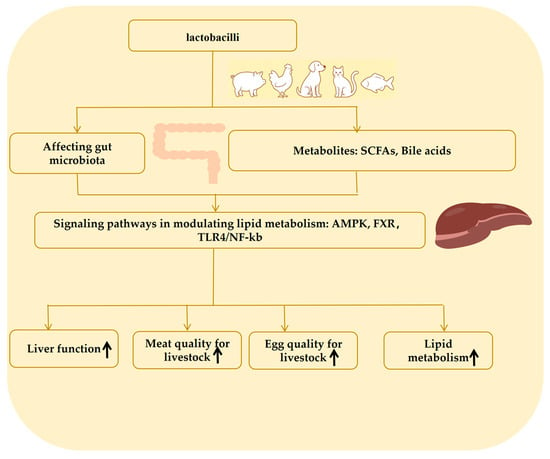
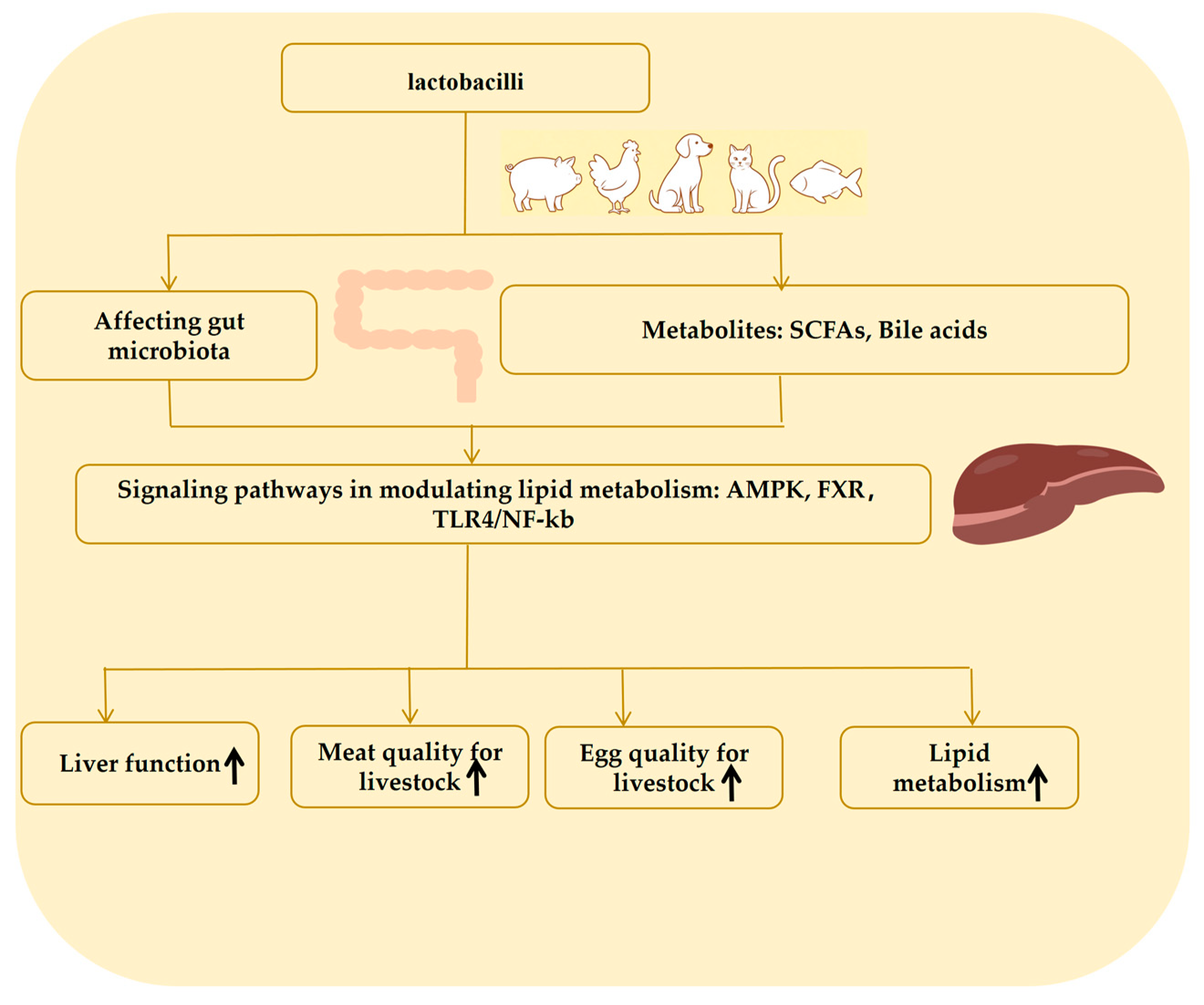
Although the modulatory mechanisms of L. spp. on lipid metabolism have been extensively elucidated in murine models, most frequently using high-fat-diet or hyperlipidemia-induced obese mice, these robust mechanistic findings cannot be directly and indiscriminately extrapolated to livestock, aquatic animals, or companion animals. Murine studies have clearly verified that lactobacilli regulate lipid metabolism via multiple conserved signaling pathways, including the AMPK, PPAR-α, Nrf2, and TLR4/NF-κB pathways (Figure 1) [87,88,89,90]. However, it should be emphasized that such pathway-centered mechanistic evidence is predominantly derived from rodent experiments. In contrast, the corresponding regulatory mechanisms in livestock, fish, and pets remain largely hypothetical. Direct cross-species extrapolation is currently lacking sufficient experimental validation due to interspecific differences in digestive physiology, gut microbiota, and lipid metabolic pathways. Furthermore, existing studies, whether in rodents or non-rodent animals, mainly focus on macroscopic pathway changes, while the key intermediate metabolites linking lactobacilli intervention and lipid metabolic regulation remain poorly clarified. Future research is therefore required to identify core metabolic intermediates and verify species-specific regulatory mechanisms, so as to improve the mechanistic rationality of cross-species application of lactobacillus-based lipid regulation.
Figure 1.
Lactobacilli play a role in the relationships of the gut–liver axis. Notes: ↑ meant up-regulation.
3.1. Regulation of Signaling Pathways in Modulation of Lipid Metabolism
Meat quality in both broiler chickens and pigs could be influenced by dietary supplementation with L. spp. [3]. In broilers, the up-regulation of stearoyl-CoA desaturase-1 (SCD-1; Δ9-desaturase) enhanced the conversion of saturated fatty acids (SFAs) into monounsaturated fatty acids (MUFAs), thereby modifying the fatty acid composition of chicken meat through a shift from SFA dominance to MUFA enrichment. A probiotic was also indicated to modulate meat constitution by up-regulating ATGL, CPT-1, and HSL expression levels in the PMM in pigs [35].
AMPK pathway. As mentioned above, the AMPK pathway is wildly studied in lipid metabolism in mice and rats. In poultry, dietary supplementation with L. spp. has been found to up-regulate the AMPK-α/PPAR-α/CPT-1 pathway in the liver [44], which showed that lactobacilli could also modulate the AMPK pathway in broilers. Whether this remains true in other mammalian species remains to be investigated.
Farnesoid X receptor (FXR) pathway. This pathway is closely associated with bile acids and related metabolites, which play an important role in lipid metabolism. Certain lactobacillus strains have been shown to reduce the expression of lipid transporters in the intestine, thereby decreasing lipid uptake. L. paracasei led to the accumulation of cholesteryl-esters by antagonizing the LXR pathways in pigs def a high-fat diet [91]. Furthermore, L. delbrueckii was indicated to regulate the gut–liver FXR-FGF19 axis by down-regulating the expression of lipid metabolism-related genes, including ileal apical sodium-dependent bile acid transporter (ASBT), ileal bile acid-binding protein (IBABP), hepatic farnesoid X receptor (FXR), fibroblast growth factor (FGF19), and small heterodimer partner (SHP), but up-regulating hepatic high-density-lipoprotein receptor (HDLR), low-density-lipoprotein receptor (LDLR), sterol regulatory element-binding protein-2 (SREBP-2), and cholesterol-7alpha hydroxylase (CYP7A1) expression; this indicated that L. delbrueckii promoted ileal bile acid deconjugation with subsequent fecal total cholesterol and total bile acid extraction by modifying ileal microbiota composition and inducing hepatic bile acids synthesis in growing–finishing pigs [23].
Notably, current evidence reveals obvious limitations on universality and replicability. First, all above-mentioned valid FXR mechanistic studies are confined to individual species, and no replicated trials have verified whether such lactobacillus–FXR regulatory patterns are conserved in poultry or other species. Also, most existing studies focus only on phenotypic pathway changes at the mRNA levels, lacking verification of core intermediate metabolites and protein-level validation, which further weakens the robustness of current mechanistic evidence.
Other pathways. L. salivarius SNK-6 improved hepatic lipid mobilization and attenuated NAFLD-associated liver damage in laying hens, partly through modulation of the miR-130a-5p/MBOAT2 signaling pathway [92]. In broilers, L. johnsonii was found to modulate lipid metabolism by down-regulating key genes involved in lipogenesis, including lipoprotein lipase (LPL) in adipose tissue and stearoyl-CoA desaturase-1 (SCD-1), sterol regulatory element-binding protein-1c (SREBP-1c), and fatty acid synthase (FAS) in the liver [45]. Simultaneously, peroxisome proliferator-activated receptor alpha (PPARα), acyl-CoA oxidase (ACOX), and carnitine palmitoyltransferase-1 (CPT-1α) were up-regulated in hepatic tissue. These transcriptional changes were associated with elevated serum HDL cholesterol, consistent with enhanced lipid metabolism and reduced fat deposition [45].
3.2. Regulation of Intestinal Flora and SCFAs
Many of the positive effects of dietary lactobacillus treatments may be partly mediated by changes in the intestinal microbiome. Indeed, supplementation with lactobacilli can alter intestinal microbial composition, increasing the abundance of beneficial taxa and short-chain fatty acid (SCFA)-producing bacteria, which may contribute to improvements in lipid metabolism. They can also inhibit the growth of harmful bacteria and reshape the host intestinal microbial community through competitive exclusion, production of antimicrobial substances and regulation of intestinal pH.
The gut microbiota and its metabolites, like SCFAs, also play a pivotal role in host lipid metabolism. It has been implied that lactobacilli could modulate lipid metabolism in animals by altering intestinal microbiota composition and subsequently influencing SCFA metabolism. The primary SCFAs include acetate, propionate, butyrate, isobutyrate, valerate, and isovalerate [93,94]. Changes to the concentrations of these SCFAs have the potential to directly affect systemic lipid metabolism. Butyrate serves as an energy source for colonic epithelial cells [95], activates the AMPK/Sirt1/PGC-1α pathway to enhance mitochondrial function [96], and promotes systemic energy metabolism. Both acetate and propionate activate the AMPK pathway while suppressing fatty acid, cholesterol, and triglyceride (TG) synthesis [97]. These SCFAs also inhibit adipocyte activity through G protein-coupled receptor 43 (GPR43) activation, thereby reducing circulating fatty acid concentrations [98]. As the primary source of SCFAs, gut microbiota provide key enzymes for SCFA biosynthesis [99].
Lactobacillus-mediated modulation of gut microbiota in monogastric animals and aquatic species represents a major pathway for lipid metabolism regulation by altering SCFA levels. For instance, L. casei significantly increase total SCFAs, specifically propionate and valerate, in porcine intestines [100,101]. Artificial administration of sodium acetate, propionate, butyrate, or mixed SCFAs can reduce TG, total cholesterol (TC), and LDL-C levels in blood and liver, as well as increasing serum GLP-1, PYY, and leptin concentrations; this implies that SCFAs can modulate lipid metabolism and appetite-regulating hormones [102,103]. In broilers, volatile fatty acids (VFAs), such as acetate, propionate, and butyrate, play crucial roles in cecal microbiota development by suppressing Enterobacteriaceae and Salmonella growth [104]. Sodium butyrate (NaB) has also been shown to alleviate hepatic steatosis through AMPK/PPARα pathway activation, down-regulating lipid synthesis genes (SREBF1, ACC1, FASN, SCD1, LXRα, and HMGR) and promoting fatty acid oxidation [105].
Research suggests that probiotic lactobacilli can modulate host lipid metabolism through the production of short-chain fatty acids (SCFAs), particularly acetate and butyrate. In vitro cecal models showed that L. salivarius salicinius JCM 1230 and L. agilis JCM 1048 significantly increased propionate and butyrate production, which was accompanied by inhibition of pathogenic bacteria [106]. Combined use of L. reuteri PTA5-F13 and glycerol was found to enhance butyrate production in chicken cecal microbiota, which in turn improved lipid metabolism [107]. Treatment of immortalized chicken preadipocytes (ICP2) with butyrate (4 mM) reduced triglyceride and total cholesterol concentrations, suppressed expression of adipogenic genes (FABP4, C/EBPα, PPARγ, and LPL), and decreased lipid synthesis proteins [108]. In canines, another probiotic, Bifidobacterium lactis IDCC 4301, has been shown to alleviate diet-induced metabolic disorders by enhancing SCFA production, which, through acetate/butyrate-mediated dopamine stimulation, promotes glycolysis and ATP generation, and restoring glucose/insulin tolerance [109]. In crustaceans, lactobacilli and acetate emerged as potential intervention targets for improving lipid tolerance via bile acid and SCFA modulation [110]. Probiotic L. rhamnosus counteracted perfluorobutanesulfonate-induced bile acid dysregulation in zebrafish by enhancing fatty acid synthesis and β-oxidation [111]. Together, these studies suggest that probiotic lactobacilli can increase SCFAs and that SCFAs such as acetate and butyrate play an important role in regulating lipid metabolism through effects, including anti-inflammatory effects [112], across multiple levels, from microbial activity to adipocyte function.
However, the magnitude of SCFA increase following lactobacillus supplementation is not consistent across studies, even within the same species, and strain-, dose- and diet-dependent effects are evident. Therefore, generalizing SCFA-driven mechanisms across species should be done cautiously, and more standardized, multi-species replicated studies are needed to distinguish conserved responses from model-specific findings.
3.3. Intestinal Barrier and Lipid Metabolism in Current Models In Vivo and Vitro
Human cell sources are often used for mechanism studies for their stability. The HepG2 cell model was used to evaluate the modulation of lactobacilli in vitro. By establishing an NAFLD (non-alcoholic fatty liver disease) cell model, both L. plantarum AR113 and L. casei pWQH01 appeared to improve steatosis in a bile salt hydrolase (BSH)-dependent manner.
Primary chicken intestinal epithelial cells were isolated from 18-day-old chicken embryos and tested for lipid metabolism effects exerted by lactobacilli [44]; the results showed that TC and TG could be reduced in intestinal epithelial cells, but further pathways were not mentioned. Primary cells from monogastric animals are not stable, which limits the application of such cells.
In recent studies, more methods, including metabonomics, were used to study lipid metabolism in monogastric and aquatic animals. But due to limits such as cost and convenience, the mechanism was mostly studied in mice or rats. More studies about the lipid modulation mechanism need to be implemented in corresponding target animals.
4. Conclusions
Multiple lactobacillus strains exert beneficial regulatory effects on lipid metabolism across monogastric livestock, companion animals and aquatic species via multi-faceted pathways. Nevertheless, the overall strength of existing mechanistic evidence remains relatively weak, since most regulatory conclusions are extrapolated from rodent studies rather than being validated directly in target farmed animals. Several critical knowledge gaps still persist, including strain-specific functional differences, species-dependent responses, and the precise crosstalk between short-chain fatty acid signaling and the liver–adipose axis.
Above all, future work should focus on verifying species-specific lactobacillus regulatory mechanisms, exploring the main metabolic intermediates involved in bile acid–SCFA–gut microbiota signaling axes, and conducting multi-species replicated trials to improve the robustness of current mechanistic evidence.
Author Contributions
Conceptualization, B.H.; methodology, B.H. and C.J.A.; software, B.H. and C.J.A.; validation, B.H.; formal analysis, B.H.; investigation B.H.; resources, B.H.; data curation, B.H.; writing—original draft preparation, B.H. and C.J.A.; writing—review and editing, B.H.; visualization, B.H.; supervision, B.H.; funding acquisition: B.H. All authors have read and agreed to the published version of the manuscript.
Funding
Major Scientific and Technological Mission (Institute-Level), Chinese Academy of Agricultural Sciences, Development of Innovative Feed Protein Products (CAAS-IFR-ZDRW-202602).
Informed Consent Statement
Not applicable.
Data Availability Statement
No new data were created or analyzed in the study. Data sharing is not applicable to this article.
Conflicts of Interest
The authors declare no conflicts of interest.
Abbreviations
| SCFA | short-chain fatty acid |
| TC | total cholesterol |
| TBAs | total bile acids |
| TG | triglycerides |
| ALT | alanine aminotransferase |
| AST | aspartate aminotransferase |
| LDL-C | low-density-lipoprotein cholesterol |
| HDL-C | high-density-lipoprotein cholesterol |
| IoNPs | iron oxide nanoparticles |
| HFD | high-fat diet |
| SFA | saturated fatty acid |
| MUFA | monounsaturated fatty acid |
| AMPK | adenosine 5′-monophosphate (AMP)-activated protein kinase |
| ASBT | apical sodium-dependent bile acid transporter |
| IBABP | ileal bile acid-binding protein |
| FXR | farnesoid X receptor |
| FGF | fibroblast growth factor |
| SHP | small heterodimer partner |
| HDLR | high-density-lipoprotein receptor |
| LDLR | low-density-lipoprotein receptor |
| SREBP-2 | sterol regulatory element-binding protein-2 |
| CYP7A1 | cholesterol-7alpha hydroxylase |
| LPL | lipoprotein lipase |
| SCD-1 | stearoyl-CoA desaturase-1 |
| SREBP-1c | sterol regulatory element-binding protein-1c |
| FAS | fatty acid synthase |
| PPARα | peroxisome proliferator-activated receptor alpha |
| ACOX | acyl-CoA oxidase |
| CPT-1α | carnitine palmitoyltransferase-1 |
| VFAs | volatile fatty acids |
| NAFLD | non-alcoholic fatty liver disease |
| GLP-1 | glucagon-like peptide-1 |
| GPR43 | G protein-coupled receptor 43 |
| BSH | bile salt hydrolase |
| PMM | psoas major muscle |
| AFB1 | aflatoxin B1 |
| LDM | longissimus dorsi muscle |
| BCS | body condition score |
References
- Cui, Y.; Liu, Y.; Yang, J.; Duan, H.; Wang, P.; Guo, L.; Guo, Y.; Li, S.; Zhao, Y.; Wang, J.; et al. Microencapsulated Lactobacillus plantarum promotes intestinal development through gut colonization of layer chicks. Anim. Nutr. 2024, 18, 1–16. [Google Scholar] [CrossRef] [Scilit] [PubMed]
- Duan, H.; Lu, L.; Zhang, L.; Li, J.; Gu, X.; Li, J. Effects of Lactobacillus Lactis Supplementation on Growth Performance, Hematological Parameters, Meat Quality and Intestinal Flora in Growing-Finishing Pigs. Animals 2023, 13, 1247. [Google Scholar] [CrossRef] [Scilit] [PubMed]
- Lan, R.; Koo, J.; Kim, I. Effects of Lactobacillus acidophilus supplementation on growth performance, nutrient digestibility, fecal microbial and noxious gas emission in weaning pigs. J. Sci. Food Agric. 2017, 97, 1310–1315. [Google Scholar] [CrossRef] [Scilit] [PubMed]
- Cesari, V.; Mangiagalli, M.G.; Giardini, A.; Galimberti, P.; Carteri, S.; Gallazzi, D.; Toschi, I. Egg quality and productive performance of laying hens fed different levels of skimmed milk powder added to a diet containing Lactobacillus acidophilus. Poult. Sci. 2014, 93, 1197–1201. [Google Scholar] [CrossRef] [Scilit] [PubMed]
- Zhang, Y.; Liu, Y. The gut-liver axis in animal diseases: Roles, mechanisms, and veterinary clinical applications. Front. Vet. Sci. 2026, 13, 1812064. [Google Scholar] [CrossRef] [Scilit] [PubMed]
- Li, K.; Xiao, X.; Li, Y.; Lu, S.; Zi, J.; Sun, X.; Xu, J.; Liu, H.-Y.; Li, X.; Song, T.; et al. Insights into the interplay between gut microbiota and lipid metabolism in the obesity management of canines and felines. J. Anim. Sci. Biotechnol. 2024, 15, 114. [Google Scholar] [CrossRef] [Scilit] [PubMed]
- Zou, J.; Liu, Y.; Lu, J. Fatty Liver in Fish: Metabolic Drivers, Molecular Pathways and Physiological Solutions. Animals 2026, 16, 236. [Google Scholar] [CrossRef] [Scilit] [PubMed]
- Dempsey, E.; Corr, S.C. Lactobacillus spp. for Gastrointestinal Health: Current and Future Perspectives. Front. Immunol. 2022, 13, 840245. [Google Scholar] [CrossRef] [Scilit] [PubMed]
- Rastogi, S.; Singh, A. Gut Microbiome and Human Health: Exploring How the Probiotic Genus Lactobacillus Modulate Immune Responses. Front. Pharmacol. 2022, 13, 1042189. [Google Scholar] [CrossRef] [Scilit] [PubMed]
- Wang, Y.; Liu, J. Contribution of Lactobacilli on Intestinal Mucosal Barrier and Diseases: Perspectives and Challenges of Lactobacillus casei. Life 2022, 12, 1910. [Google Scholar] [CrossRef] [Scilit] [PubMed]
- Yi, H.; Wang, L.; Xiong, Y.; Wen, X.; Wang, Z.; Yang, X.; Gao, K.; Jiang, Z. Effects of Lactobacillus reuteri LR1 on the growth performance, intestinal morphology, and intestinal barrier function in weaned pigs. J. Anim. Sci. 2018, 96, 2342–2351. [Google Scholar] [CrossRef] [Scilit] [PubMed]
- Xin, J.; Zeng, D.; Wang, H.; Sun, N.; Zhao, Y.; Dan, Y.; Pan, K.; Jing, B.; Ni, X. Probiotic Lactobacillus johnsonii BS15 Promotes Growth Performance, Intestinal Immunity, and Gut Microbiota in Piglets. Probiotics Antimicrob. Proteins 2020, 12, 184–193. [Google Scholar] [CrossRef] [Scilit] [PubMed]
- Wang, X.; Farnell, Y.Z.; Peebles, E.D.; Kiess, A.S.; Wamsley, K.G.; Zhai, W. Effects of prebiotics, probiotics, and their combination on growth performance, small intestine morphology, and resident Lactobacillus of male broilers. Poult. Sci. 2016, 95, 1332–1340. [Google Scholar] [CrossRef] [Scilit] [PubMed]
- Yang, K.M.; Zhu, C.; Wang, L.; Cao, S.T.; Yang, X.F.; Gao, K.G.; Jiang, Z.Y. Early supplementation with Lactobacillus plantarum in liquid diet modulates intestinal innate immunity through toll-like receptor 4-mediated mitogen-activated protein kinase signaling pathways in young piglets challenged with Escherichia coli K88. J. Anim. Sci. 2021, 99, skab128. [Google Scholar] [CrossRef] [Scilit] [PubMed]
- Zhang, T.; Qu, H.; Zheng, W.; Zhang, Y.; Li, Y.; Pan, T.; Li, J.; Yang, W.; Cao, X.; Jiang, Y.; et al. Oral vaccination with a recombinant Lactobacillus plantarum expressing the Eimeria tenella rhoptry neck 2 protein elicits protective immunity in broiler chickens infected with Eimeria tenella. Parasit. Vectors 2024, 17, 277. [Google Scholar] [CrossRef] [Scilit] [PubMed]
- Guo, S.; Xi, Y.; Xia, Y.; Wu, T.; Zhao, D.; Zhang, Z.; Ding, B. Dietary Lactobacillus fermentum and Bacillus coagulans Supplementation Modulates Intestinal Immunity and Microbiota of Broiler Chickens Challenged by Clostridium perfringens. Front. Vet. Sci. 2021, 8, 680742. [Google Scholar] [CrossRef] [Scilit] [PubMed]
- Liu, W.; Liu, J.; Li, D.; Han, H.; Yan, H.; Sun, Y.; Lei, Q.; Wang, J.; Zhou, Y.; Cao, D.; et al. Effect of Lactobacillus salivarius SNK-6 on egg quality, intestinal morphology, and cecal microbial community of laying hens. Poult. Sci. 2024, 103, 103224. [Google Scholar] [CrossRef] [Scilit] [PubMed]
- Choe, D.W.; Loh, T.C.; Foo, H.L.; Hair-Bejo, M.; Awis, Q.S. Egg production, faecal pH and microbial population, small intestine morphology, and plasma and yolk cholesterol in laying hens given liquid metabolites produced by Lactobacillus plantarum strains. Br. Poult. Sci. 2012, 53, 106–115. [Google Scholar] [CrossRef] [Scilit] [PubMed]
- Tian, Z.; Cui, Y.; Lu, H.; Wang, G.; Ma, X. Effect of long-term dietary probiotic Lactobacillus reuteri 1 or antibiotics on meat quality, muscular amino acids and fatty acids in pigs. Meat Sci. 2021, 171, 108234. [Google Scholar] [CrossRef] [Scilit] [PubMed]
- Chen, Z.; Sun, Y.; Chen, L.; Zhang, Y.; Wang, J.; Li, H.; Yan, X.; Xia, L.; Yao, G. Differences in meat quality between Angus cattle and Xinjiang brown cattle in association with gut microbiota and its lipid metabolism. Front. Microbiol. 2022, 13, 988984. [Google Scholar] [CrossRef] [Scilit] [PubMed]
- Park, Y.H.; Kim, J.G.; Shin, Y.W.; Kim, H.S.; Kim, Y.J.; Chun, T.; Kim, S.H.; Whang, K.Y. Effects of Lactobacillus acidophilus 43121 and a mixture of Lactobacillus casei and Bifidobacterium longum on the serum cholesterol level and fecal sterol excretion in hypercholesterolemia-induced pigs. Biosci. Biotechnol. Biochem. 2008, 72, 595–600. [Google Scholar] [CrossRef] [Scilit] [PubMed][Green Version]
- Kim, D.; Min, Y.; Yang, J.; Heo, Y.; Kim, M.; Hur, C.G.; Lee, S.C.; Lee, H.K.; Song, K.D.; Heo, J.; et al. Multi-Probiotic Lactobacillus Supplementation Improves Liver Function and Reduces Cholesterol Levels in Jeju Native Pigs. Animals 2021, 11, 2309. [Google Scholar] [CrossRef] [Scilit] [PubMed]
- Hou, G.; Peng, W.; Wei, L.; Li, R.; Yuan, Y.; Huang, X.; Yin, Y. Lactobacillus delbrueckii Interfere With Bile Acid Enterohepatic Circulation to Regulate Cholesterol Metabolism of Growing-Finishing Pigs via Its Bile Salt Hydrolase Activity. Front. Nutr. 2020, 7, 617676. [Google Scholar] [CrossRef] [Scilit] [PubMed]
- Alonso, L.; Fontecha, J.; Cuesta, P. Combined effect of Lactobacillus acidophilus and beta-cyclodextrin on serum cholesterol in pigs. Br. J. Nutr. 2016, 115, 1–5. [Google Scholar] [CrossRef] [Scilit] [PubMed]
- De Rodas, B.Z.; Gilliland, S.E.; Maxwell, C.V. Hypocholesterolemic action of Lactobacillus acidophilus ATCC 43121 and calcium in swine with hypercholesterolemia induced by diet. J. Dairy Sci. 1996, 79, 2121–2128. [Google Scholar] [CrossRef] [Scilit] [PubMed]
- Zhang, D.; Liu, H.; Wang, S.; Zhang, W.; Wang, S.; Wang, Y.; Ji, H. Sex-dependent changes in the microbiota profile, serum metabolism, and hormone levels of growing pigs after dietary supplementation with Lactobacillus. Appl. Microbiol. Biotechnol. 2021, 105, 4775–4789. [Google Scholar] [CrossRef] [Scilit] [PubMed]
- Suo, C.; Yin, Y.; Wang, X.; Lou, X.; Song, D.; Wang, X.; Gu, Q. Effects of lactobacillus plantarum ZJ316 on pig growth and pork quality. BMC Vet. Res. 2012, 8, 89. [Google Scholar] [CrossRef] [Scilit] [PubMed]
- Yang, M.; Xie, Q.; Wang, J.; Zha, A.; Chen, J.; Jiang, Q.; Kang, M.; Deng, Q.; Yin, Y.; Tan, B. Ningxiang pig-derived Lactobacillus reuteri modulates host intramuscular fat deposition via branched-chain amino acid metabolism. Microbiome 2025, 13, 32. [Google Scholar] [CrossRef] [Scilit] [PubMed]
- Park, J.; Kim, J.; Kim, Y. Effects of host-specific multi-lactic acid bacterial probiotics on performance, carcass traits, meat quality, and gut microbiome in fattening pigs. Animals 2025, 15, 2214. [Google Scholar] [CrossRef] [Scilit] [PubMed]
- Duan, Y.H.; Zeng, L.M.; Li, F.N.; Kong, X.F.; Xu, K.; Guo, Q.P.; Wang, W.L.; Zhang, L.Y. Lactobacillus amylovorus supplementation modifies muscle fatty-acid profile in growing-finishing pigs. J. Anim. Physiol. Anim. Nutr. 2018, 102, 1328–1339. [Google Scholar] [CrossRef] [Scilit] [PubMed]
- Song, H.; Zhang, Q.; Ding, X. Dietary Lactobacillus jensenii TL2937 modulates carcass characteristics and pork quality in finishing pigs. J. Anim. Sci. Biotechnol. 2020, 11, 78. [Google Scholar] [CrossRef] [Scilit] [PubMed]
- Geng, T.; Su, S.; Sun, K.; Zhao, L.; Zhao, Y.; Bao, N.; Pan, L.; Sun, H. Effects of feeding a Lactobacillus plantarum JL01 diet on caecal bacteria and metabolites of weaned piglets. Lett. Appl. Microbiol. 2021, 72, 24–35. [Google Scholar] [CrossRef] [Scilit] [PubMed]
- Wang, Z.; Hu, J.; Zheng, W.; Yang, T.; Wang, X.; Xie, C.; Yan, X. Lactobacillus frumenti mediates energy production via fatty acid beta-oxidation in the liver of early-weaned piglets. J. Anim. Sci. Biotechnol. 2019, 10, 95. [Google Scholar] [CrossRef] [Scilit] [PubMed]
- Liong, M.T.; Dunshea, F.R.; Shah, N.P. Effects of a synbiotic containing Lactobacillus acidophilus ATCC 4962 on plasma lipid profiles and morphology of erythrocytes in hypercholesterolaemic pigs on high- and low-fat diets. Br. J. Nutr. 2007, 98, 736–744. [Google Scholar] [CrossRef] [Scilit] [PubMed]
- Zhu, Q.; Azad, M.A.K.; Li, R.; Li, C.; Liu, Y.; Yin, Y.; Kong, X. Dietary probiotic and synbiotic supplementation starting from maternal gestation improves muscular lipid metabolism in offspring piglets by reshaping colonic microbiota and metabolites. Msystems 2024, 9, e0004824. [Google Scholar] [CrossRef] [Scilit] [PubMed]
- Shini, A.; Shini, S.; Bryden, W.L. Fatty liver haemorrhagic syndrome of laying hens: Impact of production system. Br. Poult. Sci. 2019, 60, 25–34. [Google Scholar] [CrossRef] [Scilit] [PubMed]
- Shini, S.; Shini, A.; Bryden, W.L. Unravelling fatty liver haemorrhagic syndrome: 1. Oestrogen and inflammation. Br. Poult. Sci. 2020, 61, 87–98. [Google Scholar] [CrossRef] [Scilit] [PubMed]
- Hermier, D. Lipoprotein metabolism and fattening in poultry. J. Nutr. 1997, 127, 805S–808S. [Google Scholar] [CrossRef] [Scilit] [PubMed]
- Li, D.J.; Cai, H.Y.; Liu, G.H.; Han, Y.; Qiu, K.; Liu, W.; Meng, K.; Yang, P. Lactiplantibacillus plantarum FRT4 attenuates high-energy low-protein diet-induced fatty liver hemorrhage syndrome in laying hens through regulating gut-liver axis. J. Anim. Sci. Biotechnol. 2024, 15, 31. [Google Scholar] [CrossRef] [Scilit] [PubMed]
- Yulianto, A.B.; Lokapirnasari, W.P.; Najwan, R.; Wardhani, H.C.P.; Rahman, N.F.N.; Huda, K.; Ulfah, N. Influence of Lactobacillus casei WB 315 and crude fish oil (CFO) on growth performance, EPA, DHA, HDL, LDL, cholesterol of meat broiler chickens. Iran. J. Microbiol. 2020, 12, 148–155. [Google Scholar] [CrossRef] [Scilit]
- Chen, X.; Ishfaq, M.; Wang, J. Effects of Lactobacillus salivarius supplementation on the growth performance, liver function, meat quality, immune responses and Salmonella Pullorum infection resistance of broilers challenged with Aflatoxin B1. Poult. Sci. 2022, 101, 101651. [Google Scholar] [CrossRef] [Scilit] [PubMed]
- Chen, F.; Gao, S.S.; Zhu, L.Q.; Qin, S.Y.; Qiu, H.L. Effects of dietary Lactobacillus rhamnosus CF supplementation on growth, meat quality, and microenvironment in specific pathogen-free chickens. Poult. Sci. 2018, 97, 118–123. [Google Scholar] [CrossRef] [Scilit] [PubMed]
- Dev, K.; Begum, J.; Biswas, A.; Kannoujia, J.; Mir, N.A.; Sonowal, J.; Kant, R.; Narender, T. Dietary Lactobacillus acidophilus and Mannan-Oligosaccharides Alter the Lipid Metabolism and Health Indices in Broiler Chickens. Probiotics Antimicrob. Proteins 2021, 13, 633–646. [Google Scholar] [CrossRef] [Scilit] [PubMed]
- Ding, C.; Wu, H.; Cao, X.; Ma, X.; Gao, X.; Gao, Z.; Liu, S.; Fan, W.; Liu, B.; Song, S. Lactobacillus johnsonii 3-1 and Lactobacillus crispatus 7-4 promote the growth performance and ileum development and participate in lipid metabolism of broilers. Food Funct. 2021, 12, 12535–12549. [Google Scholar] [CrossRef] [Scilit] [PubMed]
- Wang, H.; Ni, X.; Qing, X.; Zeng, D.; Luo, M.; Liu, L.; Li, G.; Pan, K.; Jing, B. Live Probiotic Lactobacillus johnsonii BS15 Promotes Growth Performance and Lowers Fat Deposition by Improving Lipid Metabolism, Intestinal Development, and Gut Microflora in Broilers. Front. Microbiol. 2017, 8, 1073. [Google Scholar] [CrossRef] [Scilit] [PubMed]
- Shokryazdan, P.; Faseleh Jahromi, M.; Liang, J.B.; Ramasamy, K.; Sieo, C.C.; Ho, Y.W. Effects of a Lactobacillus salivarius mixture on performance, intestinal health and serum lipids of broiler chickens. PLoS ONE 2017, 12, e0175959. [Google Scholar] [CrossRef] [Scilit] [PubMed]
- Qing, X.; Zeng, D.; Wang, H.; Ni, X.; Liu, L.; Lai, J.; Khalique, A.; Pan, K.; Jing, B. Preventing subclinical necrotic enteritis through Lactobacillus johnsonii BS15 by ameliorating lipid metabolism and intestinal microflora in broiler chickens. Amb. Express 2017, 7, 139. [Google Scholar] [CrossRef] [Scilit] [PubMed]
- Khanian, M.; Karimi-Torshizi, M.A.; Allameh, A. Alleviation of aflatoxin-related oxidative damage to liver and improvement of growth performance in broiler chickens consumed Lactobacillus plantarum 299v for entire growth period. Toxicon 2019, 158, 57–62. [Google Scholar] [CrossRef] [Scilit] [PubMed]
- Kalavathy, R.; Abdullah, N.; Jalaludin, S.; Ho, Y.W. Effects of Lactobacillus cultures on growth performance, abdominal fat deposition, serum lipids and weight of organs of broiler chickens. Br. Poult. Sci. 2003, 44, 139–144. [Google Scholar] [CrossRef] [Scilit] [PubMed]
- Guo, W.; Wang, C.; Qin, K.; Shi, H.; Yang, X.; Yang, X. Lactobacillus Plantarum injection at the embryonic stage alters the early growth performance and lipid metabolism of broilers by specific genera of bacteria. Poult. Sci. 2023, 102, 102522. [Google Scholar] [CrossRef] [Scilit] [PubMed]
- Zhang, X.; Sun, L.; Wu, M.; Yu, C.; Zhao, D.; Wang, L.; Zhang, Z.; Yi, D.; Hou, Y.; Wu, T. Effect of supplementation with Lactobacillus rhamnosus GG powder on intestinal and liver damage in broiler chickens challenged by lipopolysaccharide. Front. Microbiol. 2024, 15, 1466274. [Google Scholar] [CrossRef] [Scilit] [PubMed]
- Eglite, S.; Ilgaza, A.; Mancevica, L.; Zolovs, M. The Effects of Lactobacillus farciminis and Lactobacillus rhamnosus on Growth, Blood Biochemical, and Meat Quality Indicators of Specific Pathogen-Free Broiler Chickens. Vet. Med. Int. 2023, 2023, 6297068. [Google Scholar] [CrossRef] [Scilit] [PubMed]
- Capcarova, M.; Weiss, J.; Hrncar, C.; Kolesarova, A.; Pal, G. Effect of Lactobacillus fermentum and Enterococcus faecium strains on internal milieu, antioxidant status and body weight of broiler chickens. J. Anim. Physiol. Anim. Nutr. 2010, 94, e215–e224. [Google Scholar] [CrossRef] [Scilit] [PubMed]
- Abdulrahim, S.M.; Haddadin, S.Y.; Hashlamoun, E.A.; Robinson, R.K. The influence of Lactobacillus acidophilus and bacitracin on layer performance of chickens and cholesterol content of plasma and egg yolk. Br. Poult. Sci. 1996, 37, 341–346. [Google Scholar] [CrossRef] [Scilit] [PubMed]
- Loh, T.C.; Choe, D.W.; Foo, H.L.; Sazili, A.Q.; Bejo, M.H. Effects of feeding different postbiotic metabolite combinations produced by Lactobacillus plantarum strains on egg quality and production performance, faecal parameters and plasma cholesterol in laying hens. BMC Vet. Res. 2014, 10, 149. [Google Scholar] [CrossRef] [Scilit] [PubMed]
- Liu, L.; Zhang, G.; Qu, G.; Liu, B.; Zhang, X.; Li, G.; Jin, N.; Li, C.; Bai, J.; Zhao, C. Effects of dietary Lactobacillus rhamnosus GG supplementation on the production performance, egg quality, eggshell ultrastructure, and lipid metabolism of late-phase laying hens. BMC Vet. Res. 2023, 19, 150. [Google Scholar] [CrossRef] [Scilit] [PubMed]
- Forte, C.; Moscati, L.; Acuti, G.; Mugnai, C.; Franciosini, M.P.; Costarelli, S.; Cobellis, G.; Trabalza-Marinucci, M. Effects of dietary Lactobacillus acidophilus and Bacillus subtilis on laying performance, egg quality, blood biochemistry and immune response of organic laying hens. J. Anim. Physiol. Anim. Nutr. 2016, 100, 977–987. [Google Scholar] [CrossRef] [Scilit] [PubMed]
- Zhu, Y.Z.; Cheng, J.L.; Ren, M.; Yin, L.; Piao, X.S. Effect of gamma-Aminobutyric Acid-producing Lactobacillus Strain on Laying Performance, Egg Quality and Serum Enzyme Activity in Hy-Line Brown Hens under Heat Stress. Asian-Australas. J. Anim. Sci. 2015, 28, 1006–1013. [Google Scholar] [CrossRef] [Scilit] [PubMed][Green Version]
- Alaqil, A.A.; Abbas, A.O.; El-Beltagi, H.S.; El-Atty, H.K.A.; Mehaisen, G.M.K.; Moustafa, E.S. Dietary Supplementation of Probiotic Lactobacillus acidophilus Modulates Cholesterol Levels, Immune Response, and Productive Performance of Laying Hens. Animals 2020, 10, 1588. [Google Scholar] [CrossRef] [Scilit] [PubMed]
- Hampton, S.M. Current Topics in Canine and Feline Obesity. Vet. Clin. N. Am. Small Anim. Pract. 2016, 46, 231–247. [Google Scholar] [CrossRef] [Scilit] [PubMed]
- German, A.J. The growing problem of obesity in dogs and cats. J. Small Anim. Pract. 2006, 47, 2–10. [Google Scholar] [CrossRef] [Scilit] [PubMed]
- Wang, L.; Zhang, Z.; Zhu, X.; Zhao, Y.; Iqbal, M.; Lin, Z.; Nawaz, S.; Xu, M.; Hu, M.; Bhutto, Z.A.; et al. The Effect of Lactobacillus sakei on Growth Performance and Intestinal Health in Dogs: Gut Microbiota and Metabolism Study. Probiotics Antimicrob. Proteins 2024, 16, 2116–2131. [Google Scholar] [CrossRef] [Scilit] [PubMed]
- You, I.; Mahiddine, F.Y.; Park, H.; Kim, M.J. Lactobacillus acidophilus novel strain, MJCD175, as a potential probiotic for oral health in dogs. Front. Vet. Sci. 2022, 9, 946890. [Google Scholar] [CrossRef] [Scilit] [PubMed]
- Marsella, R. Evaluation of Lactobacillus rhamnosus strain GG for the prevention of atopic dermatitis in dogs. Am. J. Vet. Res. 2009, 70, 735–740. [Google Scholar] [CrossRef] [Scilit] [PubMed]
- Liu, L.; Guo, S.; Chen, X.; Yang, S.; Deng, X.; Tu, M.; Tao, Y.; Xiang, W.; Rao, Y. Metabolic profiles of Lactobacillus paraplantarum in biofilm and planktonic states and investigation of its intestinal modulation and immunoregulation in dogs. Food Funct. 2021, 12, 5317–5332. [Google Scholar] [CrossRef] [Scilit] [PubMed]
- Kumar, S.; Pattanaik, A.K.; Sharma, S.; Jadhav, S.E.; Dutta, N.; Kumar, A. Probiotic Potential of a Lactobacillus Bacterium of Canine Faecal-Origin and Its Impact on Select Gut Health Indices and Immune Response of Dogs. Probiotics Antimicrob. Proteins 2017, 9, 262–277. [Google Scholar] [CrossRef] [Scilit] [PubMed]
- Gaspardo, A.; Zannoni, A.; Turroni, S.; Barone, M.; Sabetti, M.C.; Zanoni, R.G.; Forni, M.; Brigidi, P.; Pietra, M. Influence of Lactobacillus kefiri on Intestinal Microbiota and Fecal IgA Content of Healthy Dogs. Front. Vet. Sci. 2020, 7, 146. [Google Scholar] [CrossRef] [Scilit] [PubMed]
- Wang, W.; Dong, H.; Chang, X.; Chen, Q.; Wang, L.; Chen, S.; Chen, L.; Wang, R.; Ge, S.; Wang, P.; et al. Bifidobacterium lactis and Lactobacillus plantarum Enhance Immune Function and Antioxidant Capacity in Cats through Modulation of the Gut Microbiota. Antioxidants 2024, 13, 764. [Google Scholar] [CrossRef] [Scilit] [PubMed]
- Marshall-Jones, Z.V.; Baillon, M.L.; Croft, J.M.; Butterwick, R.F. Effects of Lactobacillus acidophilus DSM13241 as a probiotic in healthy adult cats. Am. J. Vet. Res. 2006, 67, 1005–1012. [Google Scholar] [CrossRef] [Scilit] [PubMed]
- Strompfova, V.; Marcinakova, M.; Simonova, M.; Bogovic-Matijasic, B.; Laukova, A. Application of potential probiotic Lactobacillus fermentum AD1 strain in healthy dogs. Anaerobe 2006, 12, 75–79. [Google Scholar] [CrossRef] [Scilit] [PubMed]
- Lee, H.J.; Cho, J.H.; Cho, W.J.; Gang, S.H.; Park, S.H.; Jung, B.J.; Kim, H.B.; Song, K.H. Effects of Synbiotic Preparation Containing Lactobacillus gasseri BNR17 on Body Fat in Obese Dogs: A Pilot Study. Animals 2022, 12, 642. [Google Scholar] [CrossRef] [Scilit] [PubMed]
- Mao, A.; Chen, X.; Zhao, W.; Nan, W.; Huang, Y.; Sun, Y.; Zhang, H.; Xu, C. Bacterial Community Influences the Effects of Lactobacillus acidophilus on Lipid Metabolism, Immune Response, and Antioxidant Capacity in Dogs. Animals 2024, 14, 1257. [Google Scholar] [CrossRef] [Scilit] [PubMed]
- Han, B.; Liang, S.; Sun, J.; Tao, H.; Wang, Z.; Liu, B.; Wang, X.; Liu, J.; Wang, J. The Effect of Lactobacillus plantarum on the Fecal Microbiota, Short Chain Fatty Acids, Odorous Substances, and Blood Biochemical Indices of Cats. Microorganisms 2024, 12, 91. [Google Scholar] [CrossRef] [Scilit] [PubMed]
- Liang, S.; Gu, X.; Sun, J.; Wang, X.; Tao, H.; Wang, Z.; Zhong, Y.; Wang, J.; Han, B. Application of Lactobacillus plantarum and Pediococcus lactis on Lipid Metabolism, Anti-Inflammatory, and Fecal Microbiota in Cats. Microorganisms 2025, 13, 239. [Google Scholar] [CrossRef] [Scilit] [PubMed]
- Chiu, C.H.; Guu, Y.K.; Liu, C.H.; Pan, T.M.; Cheng, W. Immune responses and gene expression in white shrimp, Litopenaeus vannamei, induced by Lactobacillus plantarum. Fish. Shellfish Immunol. 2007, 23, 364–377. [Google Scholar] [CrossRef] [Scilit] [PubMed]
- Ahmadifar, E.; Moghadam, M.S.; Dawood, M.A.O.; Hoseinifar, S.H. Lactobacillus fermentum and/or ferulic acid improved the immune responses, antioxidative defence and resistance against Aeromonas hydrophila in common carp (Cyprinus carpio) fingerlings. Fish. Shellfish Immunol. 2019, 94, 916–923. [Google Scholar] [CrossRef] [Scilit] [PubMed]
- Adeshina, I.; Abubakar, M.I.; Ajala, B.E. Dietary supplementation with Lactobacillus acidophilus enhanced the growth, gut morphometry, antioxidant capacity, and the immune response in juveniles of the common carp, Cyprinus carpio. Fish. Physiol. Biochem. 2020, 46, 1375–1385. [Google Scholar] [CrossRef] [Scilit] [PubMed]
- Abidin, Z.; Huang, H.T.; Hu, Y.F.; Chang, J.J.; Huang, C.Y.; Wu, Y.S.; Nan, F.H. Effect of dietary supplementation with Moringa oleifera leaf extract and Lactobacillus acidophilus on growth performance, intestinal microbiota, immune response, and disease resistance in whiteleg shrimp (Penaeus vannamei). Fish. Shellfish Immunol. 2022, 127, 876–890. [Google Scholar] [CrossRef] [Scilit] [PubMed]
- Dash, G.; Raman, R.P.; Pani Prasad, K.; Makesh, M.; Pradeep, M.A.; Sen, S. Evaluation of paraprobiotic applicability of Lactobacillus plantarum in improving the immune response and disease protection in giant freshwater prawn, Macrobrachium rosenbergii (de Man, 1879). Fish. Shellfish Immunol. 2015, 43, 167–174. [Google Scholar] [CrossRef] [Scilit] [PubMed]
- Hedayati, S.A.; Sheikh Veisi, R.; Hosseini Shekarabi, S.P.; Shahbazi Naserabad, S.; Bagheri, D.; Ghafarifarsani, H. Effect of Dietary Lactobacillus casei on Physiometabolic Responses and Liver Histopathology in Common Carp (Cyprinus carpio) After Exposure to Iron Oxide Nanoparticles. Biol. Trace Elem. Res. 2022, 200, 3346–3354. [Google Scholar] [CrossRef] [Scilit] [PubMed]
- Yu, Z.; Hao, Q.; Liu, S.B.; Zhang, Q.S.; Chen, X.Y.; Li, S.H.; Ran, C.; Yang, Y.L.; Teame, T.; Zhang, Z.; et al. The positive effects of postbiotic (SWF concentration(R)) supplemented diet on skin mucus, liver, gut health, the structure and function of gut microbiota of common carp (Cyprinus carpio) fed with high-fat diet. Fish. Shellfish Immunol. 2023, 135, 108681. [Google Scholar] [CrossRef] [Scilit] [PubMed]
- Xu, R.; Wang, T.; Ding, F.F.; Zhou, N.N.; Qiao, F.; Chen, L.Q.; Du, Z.Y.; Zhang, M.L. Lactobacillus plantarum Ameliorates High-Carbohydrate Diet-Induced Hepatic Lipid Accumulation and Oxidative Stress by Upregulating Uridine Synthesis. Antioxidants 2022, 11, 1238. [Google Scholar] [CrossRef] [Scilit] [PubMed]
- Wang, J.S.; Lu, D.L.; Li, Y.; Fu, H.; Leng, X.; Chen, L. Dietary Lactobacillus casei K17 Improves Lipid Metabolism, Antioxidant Response, and Fillet Quality of Micropterus salmoides. Animals 2021, 11, 2564. [Google Scholar] [CrossRef] [Scilit] [PubMed]
- Ding, F.F.; Zhou, N.N.; Mao, Y.J.; Yang, J.; Limbu, S.M.; Galindo-Villegas, J.; Du, Z.-Y.; Zhang, M.-L. Lactiplantibacillus plantarum attenuate gossypol-induced hepatic lipotoxicity by altering intestinal microbiota for enriching microbial tryptophan metabolites in Nile tilapia (Oreochromis niloticus). Microbiome 2025, 13, 180. [Google Scholar] [CrossRef] [Scilit] [PubMed]
- Chen, Y.; Zheng, K.; Leng, Y.; Zhang, Z.; Li, X.; Li, X.; Ou, H.; Wen, M.; Qiu, F.; Yu, H. Alleviating effect of Lactobacillus fermentum E15 on hyperlipidemia and hepatic lipid metabolism in zebrafish fed by a high-fat diet through the production of short-chain fatty acids. Front. Nutr. 2025, 12, 1522982. [Google Scholar] [CrossRef] [Scilit] [PubMed]
- Qian, L.; Lu, S.; Jiang, W.; Mu, Q.; Lin, Y.; Gu, Z.; Wu, Y.; Ge, X.; Miao, L. Lactobacillus plantarum Alters Gut Microbiota and Metabolites Composition to Improve High-Starch Metabolism in Megalobrama amblycephala. Aquac. Nutr. 2025, 15, 583. [Google Scholar] [CrossRef] [Scilit] [PubMed]
- Zhu, K.; Tan, F.; Mu, J.; Yi, R.; Zhou, X.; Zhao, X. Anti-Obesity Effects of Lactobacillus fermentum CQPC05 Isolated from Sichuan Pickle in High-Fat Diet-Induced Obese Mice through PPAR-alpha Signaling Pathway. Microorganisms 2019, 7, 194. [Google Scholar] [CrossRef] [Scilit] [PubMed]
- Xu, H.; Wang, J.; Cai, J.; Feng, W.; Wang, Y.; Liu, Q.; Cai, L. Protective Effect of Lactobacillus rhamnosus GG and its Supernatant against Myocardial Dysfunction in Obese Mice Exposed to Intermittent Hypoxia is Associated with the Activation of Nrf2 Pathway. Int. J. Biol. Sci. 2019, 15, 2471–2483. [Google Scholar] [CrossRef] [Scilit] [PubMed]
- Liu, Z.; Zhao, J.; Sun, R.; Wang, M.; Wang, K.; Li, Y.; Shang, H.; Hou, J.; Jiang, Z. Lactobacillus plantarum 23-1 improves intestinal inflammation and barrier function through the TLR4/NF-kappaB signaling pathway in obese mice. Food Funct. 2022, 13, 5971–5986. [Google Scholar] [CrossRef] [Scilit] [PubMed]
- Liang, S.; Sun, J.; Gu, X.; Zhao, Y.; Wang, X.; Tao, H.; Wang, Z.; Zhong, Y.; Wang, J.; Han, B. Lactobacillus plantarum L11 and Lactobacillus reuteri LR: Ameliorate Obesity via AMPK Pathway. Nutrients 2024, 17, 4. [Google Scholar] [CrossRef] [Scilit] [PubMed]
- Trasino, S.E.; Dawson, H.D.; Urban, J.F., Jr.; Wang, T.T.; Solano-Aguilar, G. Feeding probiotic Lactobacillus paracasei to Ossabaw pigs on a high-fat diet prevents cholesteryl-ester accumulation and LPS modulation of the Liver X receptor and inflammatory axis in alveolar macrophages. J. Nutr. Biochem. 2013, 24, 1931–1939. [Google Scholar] [CrossRef] [Scilit] [PubMed]
- Zhu, L.; Liao, R.; Huang, J.; Xiao, C.; Yang, Y.; Wang, H.; He, D.; Yan, H.; Yang, C. Lactobacillus salivarius SNK-6 Regulates Liver Lipid Metabolism Partly via the miR-130a-5p/MBOAT2 Pathway in a NAFLD Model of Laying Hens. Cells 2022, 11, 4133. [Google Scholar] [CrossRef] [Scilit] [PubMed]
- Bergman, E.N. Energy contributions of volatile fatty acids from the gastrointestinal tract in various species. Physiol. Rev. 1990, 70, 567–590. [Google Scholar] [CrossRef] [Scilit] [PubMed]
- Jia, X.; Xu, W.; Zhang, L.; Li, X.; Wang, R.; Wu, S. Impact of gut microbiota and microbiota-related metabolites on hyperlipidemia. Front. Cell Infect. Microbiol. 2021, 11, 634780. [Google Scholar] [CrossRef] [Scilit] [PubMed]
- Marques, F.Z.; Mackay, C.R.; Kaye, D.M. Beyond gut feelings: How the gut microbiota regulates blood pressure. Nat. Rev. Cardiol. 2018, 15, 20–32. [Google Scholar] [CrossRef] [Scilit] [PubMed]
- Ye, K.; Zhao, Y.; Huang, W.; Zhu, Y. Sodium butyrate improves renal injury in diabetic nephropathy through AMPK/SIRT1/PGC-1α signaling pathway. Sci. Rep. 2024, 14, 17867. [Google Scholar] [CrossRef] [Scilit] [PubMed]
- Tazoe, H.; Otomo, Y.; Kaji, I.; Tanaka, R.; Karaki, S.I.; Kuwahara, A. Roles of short-chain fatty acids receptors, GPR41 and GPR43 on colonic functions. J. Physiol. Pharmacol. 2008, 59, 251–262. [Google Scholar] [PubMed]
- Ge, H.; Li, X.; Weiszmann, J.; Wang, P.; Baribault, H.; Chen, J.L.; Tian, H.; Li, Y. Activation of G protein-coupled receptor 43 in adipocytes leads to inhibition of lipolysis and suppression of plasma free fatty acids. Endocrinology 2008, 149, 4519–4526. [Google Scholar] [CrossRef] [Scilit] [PubMed]
- Xiao, S.; Zhang, Z.; Chen, M.; Zou, J.; Jiang, S.; Qian, D.; Duan, J. Xiexin Tang ameliorates dyslipidemia in high-fat diet-induced obese rats via elevating gut microbiota-derived short chain fatty acids production and adjusting energy metabolism. J. Ethnopharmacol. 2019, 241, 112032. [Google Scholar] [CrossRef] [Scilit] [PubMed]
- Wang, S.X.; Ji, H.F.; Liu, H.; Zhang, D.Y.; Wang, J.; Chen, M.X.; Wang, Y.M. Effects of probiotics on growth performance, nutrient apparent digestibility, fecal microflora and short-chain fatty acids in the late fattening phase of fattening pigs. Chin. J. Anim. Nutr. 2022, 34, 4227–4236. (In Chinese) [Google Scholar]
- Mair, C.; Plitzner, C.; Domig, K.J.; Schedle, K.; Windisch, W. Impact of inulin and a multispecies probiotic formulation on performance, microbial ecology and concomitant fermentation patterns in newly weaned piglets. J. Anim. Physiol. Anim. Nutr. 2010, 94, e164–e177. [Google Scholar] [CrossRef] [Scilit] [PubMed]
- Jiao, A.; Yu, B.; He, J.; Yu, J.; Zheng, P.; Luo, Y.; Luo, J.; Mao, X.; Chen, D. Short chain fatty acids could prevent fat deposition in pigs via regulating related hormones and genes. Food Funct. 2020, 11, 1845–1855. [Google Scholar] [CrossRef] [Scilit] [PubMed]
- Jiao, A.R.; Diao, H.; Yu, B.; He, J.; Yu, J.; Zheng, P.; Huang, Z.Q.; Luo, Y.H.; Luo, J.Q.; Mao, X.B.; et al. Oral administration of short chain fatty acids could attenuate fat deposition of pigs. PLoS ONE 2018, 13, e0196867. [Google Scholar] [CrossRef] [Scilit] [PubMed]
- van der Wielen, P.W.; Biesterveld, S.; Notermans, S.; Hofstra, H.; Urlings, B.A.; van Knapen, F. Role of volatile fatty acids in development of the cecal microflora in broiler chickens during growth. Appl. Environ. Microbiol. 2000, 66, 2536–2540. [Google Scholar] [CrossRef] [Scilit] [PubMed]
- Ding, J.; Liu, J.; Chen, J.; Cheng, X.; Cao, H.; Guo, X.; Hu, G.; Zhuang, Y. Sodium butyrate alleviates free fatty acid-induced steatosis in primary chicken hepatocytes via the AMPK/PPARα pathway. Poult. Sci. 2024, 103, 103482. [Google Scholar] [CrossRef] [Scilit] [PubMed]
- Meimandipour, A.; Shuhaimi, M.; Soleimani, A.F.; Azhar, K.; Hair-Bejo, M.; Kabeir, B.M.; Javanmard, A.; Muhammad Anas, O.; Yazid, A.M. Selected microbial groups and short-chain fatty acids profile in a simulated chicken cecum supplemented with two strains of Lactobacillus. Poult. Sci. 2010, 89, 470–476. [Google Scholar] [CrossRef] [Scilit] [PubMed]
- Asare, P.T.; Greppi, A.; Geirnaert, A.; Pennacchia, A.; Babst, A.; Lacroix, C. Glycerol and reuterin-producing Limosilactobacillus reuteri enhance butyrate production and inhibit Enterobacteriaceae in broiler chicken cecal microbiota PolyFermS model. BMC Microbiol. 2023, 23, 384. [Google Scholar] [CrossRef] [Scilit] [PubMed]
- Liu, X.; Qin, K.; Wang, C.; Sun, X.; Li, Y.; Liu, Y.; Yang, X. Butyric acid reduced lipid deposition in immortalized chicken preadipocyte by inhibiting cell proliferation and differentiation. Poult. Sci. 2024, 103, 104171. [Google Scholar] [CrossRef] [Scilit] [PubMed]
- Kang, A.; Kwak, M.J.; Lee, D.J.; Lee, J.J.; Kim, M.K.; Song, M.; Lee, M.; Yang, J.; Oh, S.; Kim, Y. Dietary supplementation with probiotics promotes weight loss by reshaping the gut microbiome and energy metabolism in obese dogs. Microbiol. Spectr. 2024, 12, e0255223. [Google Scholar] [CrossRef] [Scilit] [PubMed]
- Zheng, X.; Xu, X.; Liu, M.; Yang, J.; Yuan, M.; Sun, C.; Zhou, Q.; Chen, J.; Liu, B. Bile acid and short chain fatty acid metabolism of gut microbiota mediate high-fat diet induced intestinal barrier damage in Macrobrachium rosenbergii. Fish. Shellfish Immunol. 2024, 146, 109376. [Google Scholar] [CrossRef] [Scilit] [PubMed]
- Chen, L.; Lam, J.C.W.; Tang, L.; Hu, C.; Liu, M.; Lam, P.K.S.; Zhou, B. Probiotic modulation of lipid metabolism disorders caused by perfluorobutanesulfonate pollution in zebrafish. Environ. Sci. Technol. 2020, 54, 7494–7503. [Google Scholar] [CrossRef] [Scilit] [PubMed]
- Sun, J.; Gu, X.; Zhang, H.; Zhao, L.; Wang, J.; Wang, X.; Tao, H.; Wang, Z.; Han, B. Application of Probiotics in Cats and Dogs: Benefits and Mechanisms. Vet. Sci. 2025, 12, 1008. [Google Scholar] [CrossRef] [Scilit] [PubMed]

Disclaimer/Publisher’s Note: The statements, opinions and data contained in all publications are solely those of the individual author(s) and contributor(s) and not of MDPI and/or the editor(s). MDPI and/or the editor(s) disclaim responsibility for any injury to people or property resulting from any ideas, methods, instructions or products referred to in the content. |
© 2026 by the authors. Licensee MDPI, Basel, Switzerland. This article is an open access article distributed under the terms and conditions of the Creative Commons Attribution (CC BY) license.