


Simple Summary
As climate change and human activity reshape aquatic ecosystems, understanding how antibiotics and resistance genes behave differently matters directly for the health of aquatic animals and the safety of aquaculture products. Antibiotic concentrations and resistance-related genetic signals do not always change together in rivers, lakes, reservoirs, and estuaries. This review finds that antibiotic levels alone do not reveal how resistance-related genetic material changes. Field studies point to seasonal shifts, sediment storage, water movement, and other environmental pressures as reasons why chemical and genetic signals can diverge. Monitoring should therefore measure both antibiotics and resistance-related genetic indicators across water, sediment, and biofilms. This approach can help environmental managers distinguish continuing pollution from longer-lasting environmental effects.
Abstract
Antibiotics and antibiotic resistance genes (ARGs) are widespread in aquatic ecosystems affected by climate variability, urbanization, and intensifying aquaculture. Yet parent-antibiotic concentrations and resistance-related genetic endpoints do not always vary in parallel across seasons, sites, or environmental compartments. This discrepancy matters for aquatic animals as ecological receptors, potential vectors, and targets for antimicrobial resistance monitoring and management. To examine whether transport, retention, and biological processes may contribute to these mismatches, we conducted a structured narrative review. We screened studies retrieved from Web of Science Core Collection, Scopus, and PubMed for paired measurements in aquatic systems. Of 98 field studies, 25 provided sufficient paired data for matched chemical–genetic assessment. Among these, 16 provided Moderate evidence and 9 provided Suggestive evidence for coupled, mismatched, or compartment-dependent responses. No study met the stricter criteria for field-supported legacy persistence. Seasonal reversals, spatial divergence, and differences among water, particles, and sediments suggest that water-column antibiotic concentrations alone are incomplete proxies for ARG abundance. Such measurements alone cannot assess ARG mobility or host context. Potential contributors include sediment and biofilm retention, extracellular DNA, hydrodynamic redistribution, horizontal gene transfer, transformation products, and co-selective stressors, although their relative roles remain unresolved. These findings support monitoring that combines chemical and genetic endpoints with information on sources, hydrology, compartments, and hosts to inform aquatic-animal risk assessment and management.
1. Introduction
Antimicrobial resistance (AMR) poses environmental, animal-health, and public-health concerns. Aquatic environments bring together antimicrobial residues, resistant microorganisms, antibiotic resistance genes (ARGs), and mobile genetic elements (MGEs) [1,2,3]. Sulfonamides (SAs), fluoroquinolones (FQs), tetracyclines (TCs), and macrolides (MLs) are widely detected in rivers, lakes, reservoirs, estuaries, and coastal waters [4,5,6,7,8]. Major inputs include municipal wastewater, livestock production, aquaculture, pharmaceutical use, and other human activities [8,9,10]. These inputs may also introduce resistant bacteria, ARGs, MGEs, nutrients, metals, disinfectants, and other contaminants that can influence the environmental resistome.
Aquatic animals warrant attention because they inhabit environments where chemical residues and resistance determinants are transported, retained, and redistributed. Exposure may occur through surrounding water, suspended particles, sediment, diet, and animal-associated microbial communities. Antibiotics can accumulate in aquatic organisms and move through food webs, although the extent varies by compound and species [11,12,13,14]. Resistance determinants may also enter or interact with animal-associated microbiota. Experimental and field evidence indicates that aquatic organisms can contribute to the environmental dissemination of ARGs [15,16]. In aquaculture, stocking density, antimicrobial use, feed inputs, sediment accumulation, and water exchange shape these interactions [17,18,19]. Aquatic animals are therefore ecological receptors and potential carriers and monitoring targets in broader environmental and One Health assessments.
Many studies have documented the co-occurrence of antibiotics and ARGs in aquatic environments. Co-occurrence alone does not show that these endpoints share a source, environmental fate, or response trajectory. Resistance determinants predate modern antibiotic use and remain part of natural microbial communities [20,21]. Human activities can introduce resistant organisms and ARGs directly, while antibiotic residues and other stressors may promote their enrichment or selection in receiving environments [22,23,24,25,26,27,28,29,30,31,32,33]. Thus, detecting an ARG at a site with low antibiotic concentrations does not, by itself, demonstrate recent antibiotic selection or persistence following earlier exposure. Conversely, high antibiotic concentrations do not necessarily produce a proportional genetic response. Interpreting environmental antibiotic–ARG relationships requires distinguishing background resistance, external loading, environmental enrichment, in situ selection, and persistence after chemical pressure declines.
Chemical and genetic endpoints are shaped by partly distinct environmental processes. Dissolved antibiotics can be diluted, degraded, transformed, sorbed to particles, or transferred among water, sediment, and biofilm compartments. ARGs are associated with microbial cells, mobile genetic elements, extracellular DNA, and host-community dynamics. Rivers, lakes, reservoirs, and estuaries differ in residence time, particle transport, stratification, sediment–water exchange, and disturbance regimes [34,35,36,37,38,39]. An instantaneous water-column antibiotic concentration may therefore differ from the exposure history of sediment, biofilm, or animal-associated microbial communities. Seasonal runoff, floods, droughts, tidal exchange, and resuspension can redistribute both chemical and genetic material [36,37,40,41]. Heavy metals, disinfectants, microplastics, and other stressors may also influence resistance dynamics when concentrations of the measured parent antibiotic are low [22,23,24,25].
These differences matter for aquatic-animal risk assessment and management. A decrease in water-column antibiotic concentrations may indicate reduced chemical exposure, but does not necessarily mean that ARG abundance, mobility, host association, or exposure through particles, sediments, biofilms, and food webs has also declined. Likewise, a genetic signal that persists after chemical attenuation does not, by itself, establish a legacy effect. Continued source inputs, hydrological redistribution, changes in bacterial biomass, or non-antibiotic co-selection can produce similar patterns. Monitoring water-phase antibiotic concentrations alone may therefore miss changes in the biological and genetic components of AMR risk. Interpretation should combine paired chemical and genetic measurements with information on source continuity, environmental compartments, hydrological conditions, microbial hosts, and mobility.
Previous reviews have synthesized the occurrence, sources, environmental fate, removal, ecological effects, and transmission of antibiotics and ARGs in aquatic and aquaculture systems [4,7,19,42,43]. These reviews describe the role of aquatic environments in AMR dissemination. Less attention has been given to whether parent-antibiotic concentrations and resistance-related genetic endpoints change in the same direction within a field system, and how to interpret divergence between them. This distinction matters because spatial correlations or simultaneous detection cannot establish whether an ARG pattern reflects current antibiotic exposure, continued external loading, environmental retention, hydrological redistribution, or persistence after earlier chemical pressure. A synthesis focused on paired chemical–genetic responses can help distinguish observed mismatches from stronger mechanistic or temporal interpretations.
The working hypothesis is that differences in transport, retention, and biological processes can partly decouple resistance-related genetic responses from contemporaneous parent-antibiotic concentrations. We use a structured narrative evidence synthesis to examine paired measurements of antibiotics and resistance-related genetic endpoints across aquatic field studies and assess the strength of observed response patterns. We distinguish background resistomes, anthropogenic loading, environmental enrichment, selection-supported in situ amplification, and legacy persistence. These categories define the evidentiary boundaries for interpreting chemical–genetic relationships. Mechanistic evidence is used to examine candidate explanations for observed mismatches, including hydrodynamic redistribution, sediment and biofilm retention, extracellular DNA persistence, horizontal gene transfer, transformation products, and multi-stressor co-selection. Finally, we consider implications for AMR monitoring and management in aquatic animals and aquaculture, focusing on study designs that can distinguish continued loading or redistribution from genuine legacy persistence after chemical concentrations decline. Throughout, we treat aquatic animals as ecological receptors, potential vectors, and monitoring and management targets for antimicrobial resistance, and we situate the observed chemical–genetic mismatches within the broader context of climate change, urbanization, and other anthropogenic pressures that are reshaping aquatic ecosystems.
2. Review Methodology
This review used a structured narrative evidence-synthesis approach. Web of Science Core Collection, Scopus, and PubMed were searched from database inception to 23–24 July 2026 for studies linking parent antibiotics with antibiotic resistance genes (ARGs) and/or mobile genetic elements (MGEs) in aquatic environments. Web of Science returned 8395 records, Scopus 8235, and PubMed 4696 unique records after within-database deduplication. Complete search strings, search fields, retrieval dates, and query-level hit counts are provided in Supplementary Table S1.
Across databases, 21,326 records were identified. Duplicates were removed by DOI and, where DOI was unavailable, normalized exact-title matching, leaving 10,513 records for two-stage title/abstract screening. After screening, 438 candidates remained; 11 additional verified records were added during supplementary record reconciliation, giving 449 reports for full-text assessment. Study selection was applied sequentially. First, studies entered the broader field-evidence pool only when they (1) investigated a natural or semi-natural aquatic system and (2) reported parent-antibiotic measurements together with ARG and/or MGE endpoints within the same study. Second, entry into core matched-response coding additionally required (3) chemical and genetic observations that could be aligned by sampling site, period, event, intervention, or environmental compartment; (4) a study-supported within-study comparator or reference condition; and (5) sufficient result-level information to interpret the directions of the chemical and genetic responses without constructing a new comparison not supported by the original study design. Studies that met the broader field-evidence criteria but did not meet one or more of these core requirements were not used for core response coding; they were retained either for evidence-map coverage or, when directly informative to interpretation, as contextual evidence. Of the 449 reports, 351 were excluded, leaving 98 eligible field studies. Twenty-seven had sufficient information for final matched-response assessment: 25 entered the core analytical dataset and two were retained as contextual evidence; the remaining 71 were retained for evidence-map coverage only. The selection process is summarized in Figure 1.
Figure 1.
PRISMA 2020-style flow diagram for study identification and selection in the structured evidence synthesis. Notes: Records were deduplicated using DOI and, where DOI was unavailable, normalized exact-title matching. Title/abstract triage was used to prioritize manual review and did not itself establish final study eligibility. No meta-analysis was undertaken.
For the 25 core studies, we extracted study setting and design, environmental matrix, antibiotic and ARG/MGE endpoints, response direction, normalization and comparator information, and relevant hydrological, source, and environmental context. In this review, an endpoint refers to a measured or derived variable used to characterize the chemical or resistance-related genetic state of a sample or system. Chemical endpoints include parent-antibiotic concentrations or loads, whereas genetic endpoints include ARG abundance or normalized abundance, expression, association with mobile genetic elements, host linkage, and transfer-related measures. Evidence grades reflected confidence in the interpretability of the observed paired chemical–genetic response rather than overall study quality, causal attribution, or evidence for legacy persistence. The assessment considered paired measurement, reference conditions, endpoint normalization, matrix comparability, temporal or spatial resolution, and source attribution and hydrological context (Table 1). Moderate evidence indicated a directly interpretable paired response without a major comparability or resolution limitation, whereas Suggestive evidence indicated an informative pattern for which one or more limitations materially constrained interpretation. Legacy persistence was evaluated separately using a stricter criterion requiring a documented and sustained decline in antibiotic input or chemical selection pressure, temporally ordered paired chemical–genetic observations, appropriate normalization, and consideration of continued loading or hydrological redistribution.
Table 1.
Operational checklist used to interpret and grade paired antibiotic–ARG field evidence.
Because study matrices, analytical methods, units, genetic targets, and reporting denominators were heterogeneous, no meta-analysis or pooled effect-size calculation was undertaken. The synthesis therefore emphasized within-study response direction, environmental context, and evidence strength. Mechanistic studies without paired field trajectories were used only to interpret candidate pathways. Study-level coding for the 25 core studies is provided in Supplementary Table S2.
3. Conceptual and Interpretive Framework for Antibiotic–ARG Decoupling
ARG trajectories can differ from those of the antibiotics with which they co-occur, are transported, or are selected [44,45,46,47]. Their interpretation requires a defensible reference condition, paired chemical and genetic observations, and attention to source continuity and environmental context. We therefore distinguish forms of anthropogenic influence and define the conceptual states used to interpret chemical–genetic response patterns; the operational search, selection, coding, and grading procedures are described in Section 2.
3.1. Natural Background Resistome and Anthropogenic Influence
Recent antibiotic selection requires evidence beyond ARG occurrence alone. Resistance determinants predate modern antibiotic use and occur in microbial communities with little identifiable human influence [20,21]. Genes annotated as resistance determinants may also have broader ecological functions, including metabolite transport, cellular defense, signaling, and microbial competition [21]. Detection in water, sediment, or biofilm establishes the presence of a resistome. Attribution to pollution, contemporary selection, or direct human-health risk requires additional evidence on enrichment, mobility, host context, and source association [26,27,28,29,30,31].
Aquatic resistomes combine this natural background with organisms and genes introduced or altered by human activity. Separating these components requires evidence on source origin, host identity, mobility, and environmental selection. A downstream increase in ARGs may reflect passive loading and survival of fecal bacteria rather than selection within the receiving water [26,27,28]. Conversely, a low total ARG abundance may still be consequential when a clinically relevant determinant occurs in a potential pathogen or on a mobile genetic element (MGE) [29,30,31]. Anthropogenic influence is more strongly supported when several signals converge, such as enrichment relative to an upstream, low-impact, historical, or matched-control reference; association with plasmids, transposons, or class 1 integrons; expanded host range or occurrence in potential pathogens; and transcriptional or transfer activity [26,27,28,29,30,31]. These signals support anthropogenic enrichment or human association. Attribution to continued loading or selection within the receiving environment requires targeted source and process evidence.
Loading and in situ selection make different predictions and should be evaluated separately. Wastewater, livestock production, aquaculture, and industrial discharge can directly introduce resistant organisms, ARGs, and MGEs [27,28,32,33]. Antibiotic residues and non-antibiotic stressors can then select or co-select organisms already present in the receiving environment [22,23,24,25]. These pathways often operate together, but they are not interchangeable. Fecal indicators, microbial source-tracking markers, longitudinal mass balances, and intervention designs should be considered when distinguishing continued organism input from selection-supported in situ amplification [26,27,44].
We use five terms consistently. The background resistome comprises resistance determinants for which no recent anthropogenic influence has been demonstrated. Anthropogenic loading is the direct introduction of resistant organisms, ARGs, or mobile genetic elements (MGEs) from wastewater, livestock production, aquaculture, industrial discharge, or other human-associated sources. Environmental enrichment is an increase in ARG abundance, expression, mobility, host range, or carriage in potential pathogens relative to a defensible environmental reference. It does not assign a single mechanism. Selection-supported in situ amplification is used when evidence indicates that selection, growth, or horizontal transfer in the receiving environment contributed to that enrichment. Legacy persistence is the continued elevation, activity, or mobility of resistance-related genetic endpoints after a documented and sustained decline in the relevant antibiotic input or chemical selection pressure. It is not inferred from continued ARG detection or from ARG occurrence under low measured parent-antibiotic concentrations. This terminology separates observed response patterns from causal interpretation while identifying the evidence needed to link them.
3.2. Definition and Evidence Hierarchy for Decoupling
We define antibiotic–ARG decoupling as a mismatch between the trajectory of parent-antibiotic exposure and that of an anthropogenically enriched resistome within a specified system, period, and environmental compartment. The genetic trajectory may involve persistence, enrichment, expression, or mobilization. This definition emphasizes matched trajectories and environmental context, rather than a single detection event.
The genetic evidence considered in this review captures four response dimensions: persistence, enrichment, expression, and mobilization. Persistence is a delayed or negligible decline in normalized ARG abundance after antibiotic concentrations or inputs decrease. Enrichment is maintenance above an upstream, low-impact, pre-disturbance, or matched-control reference. Expression is sustained transcriptional activity despite chemical attenuation or little change in DNA-level abundance. Mobilization is maintained or increased association of ARGs with plasmids, integrons, transposons, extracellular DNA available for natural transformation, a broadened host range, or transfer into potential pathogens [29,30,31,48]. Abundance describes how much genetic material is present. Expression, mobility, and host context more directly constrain whether that material is active and capable of dissemination [29,30,31,48].
A chemical–genetic mismatch is most informative when plausible alternatives are evaluated. Continuous or repeated loading, hydrological mixing, shifts in bacterial biomass, and fecal pollution can each shape apparent ARG patterns [26,27,36,44]. We therefore assessed whether antibiotics and ARGs or MGEs were measured in matched sampling units. We also assessed whether the design resolved time or compartment, whether ARG measurements were normalized, and whether hydrology, source intensity, biomass, and fecal inputs were considered.
Moderate and Suggestive grades describe confidence in the observed paired chemical–genetic response pattern. Moderate evidence captures paired measurements across time, space, or compartments that show different chemical and genetic responses, but do not resolve a post-decline temporal lag or all major alternatives. Suggestive evidence identifies a possible association or mismatch when temporal resolution, normalization, comparability, reference condition, or source attribution remains incomplete. Field-supported legacy persistence was evaluated using a separate, stricter inferential criterion. A field-supported legacy inference requires paired before–after, intervention, or sufficiently resolved temporal data from the same field system following a documented and sustained decline in the relevant external antibiotic input or chemical selection pressure. It must also include matched antibiotic and ARG or MGE measurements, appropriately normalized genetic endpoints, established temporal ordering, and evaluation of major alternative explanations. This approach separates observation from inference and assigns each study the strongest conclusion justified by its design.
Cross-compartment comparisons retained their original matrices and denominators. Water concentrations in ng/L were not numerically compared with sediment concentrations in ng/g. Similarly, ARG copies per mL were not treated as equivalent to copies per g. Where possible, we used within-study directions of change, removal fractions, partition coefficients, and mass distributions. We also used copies per 16S rRNA gene, reported estimates of copies per bacterial cell, and metagenomic abundance normalized by sequencing depth. When normalization was not possible, we described the pattern qualitatively as sediment- or particle-associated retention rather than fixed fold enrichment [44,49,50,51].
To translate mismatch patterns into testable process hypotheses, we use four system-level constructs. Chemical–genetic hysteresis denotes a path-dependent lag between chemical attenuation and a genetic response. Hydrological memory denotes storage and later remobilization of material from earlier conditions. Risk displacement denotes transfer of chemical or genetic risk among water, particles, sediment, biofilm, and hosts rather than true removal. Threshold lowering denotes the possibility that mixtures, biofilms, or co-selectors permit selection at lower parent-antibiotic concentrations than single-compound tests predict [22,23,24,25,36,37,39,52]. These constructs organize measurements and competing explanations. They are not treated as direct proof of any one mechanism in a field system.
4. Cross-System Evidence for Antibiotic–ARG Decoupling
4.1. Evidence Landscape
The 25 retained paired field studies encompassed wastewater-receiving rivers, mixed-use catchments, lakes and reservoirs, aquaculture waters, river–estuary continua, and water–sediment comparisons. The studies reported several response patterns: coupled chemical and genetic enrichment or attenuation, seasonal reversal, spatial mismatch, compartment-dependent association, hydrodynamically mixed responses, and scale-dependent loss of correlation. This variation shows that parent-antibiotic concentrations are not universal proxies for ARG abundance, mobility, or host context.
Taken together, these studies span a range of aquatic settings and geographic contexts, although the coverage is not evenly distributed. The core evidence includes sites in Asia, Europe, North America, and Africa, with a substantial proportion from China and other East Asian settings. Ecosystem coverage is broader, including wastewater-receiving rivers, mixed-use watersheds, lakes and reservoirs, estuaries, water–sediment systems, and a smaller number of aquaculture settings. Climatic contexts range from Mediterranean and subtropical systems to temperate and seasonally ice-covered environments, but the evidence base was not designed to provide balanced representation across climate zones. The framework should therefore be applied with explicit consideration of local hydrology, climate, source structure, and ecosystem characteristics.
The evidence grades indicate confidence in the observed chemical–genetic response. Sixteen studies provided Moderate evidence through paired seasonal, spatial, intervention, or compartmental comparisons. Nine provided Suggestive evidence because normalization, matrix comparability, reference conditions, or source attribution were incomplete. The studies indicate where paired monitoring is most informative and which field designs are needed to test post-decline legacy persistence directly. A concise study-level summary of the 25 core studies is provided in Table 2; expanded design context and full bibliographic details are retained in Supplementary Table S2.
Table 2.
Summary of the 25 core field studies used for matched antibiotic–ARG/MGE response coding.
Several studies reported broadly concordant chemical and genetic responses. Antibiotics and ARGs declined together through reservoir ecological-purification facilities [57]. Both endpoint families were higher near wastewater discharges or during low-flow periods in several receiving rivers [55,61,62]. Poyang Lake showed higher antibiotic concentrations and ARG abundance during the dry season [64]. The Chishui River showed dry-season maxima for antibiotics and most measured ARGs, with gene-specific exceptions [65]. Urbanized rivers [54] and sediments affected by pharmaceutical manufacturing [75] also showed coupled enrichment of antibiotics, ARGs, and MGEs.
These studies describe settings in which current loading, hydrological concentration, and chemical exposure remain aligned with genetic endpoints [54,55,61,62,64,65,75]. They provide a comparison for the mismatch patterns described below and reinforce the need for context-specific chemical–genetic interpretation (Table 3).
Table 3.
Representative field evidence for concordant antibiotic and ARG/MGE responses across environmental gradients.
4.2. Seasonal, Spatial, and Compartmental Mismatch
The clearest seasonal mismatches occurred when antibiotic and ARG responses moved in opposite directions within the same campaign. Across two subtropical river basins, water-column antibiotics were higher in the dry season, whereas 16S-normalized ARG abundance was higher in the wet season. Sediments did not show the same contrast [56]. In the Songliao Basin, antibiotics again peaked in the dry season, whereas relative ARG abundance and culturable resistant bacteria peaked in the wet season [70]. An urban river affected by macrolide pollution showed a more complex reversal. Macrolide concentrations and macrolide–lincosamide–streptogramin resistance genes increased together along the dry-season pollution gradient. The genetic gradient reversed during the wet season [69]. Other seasonal surveys reported gene-, compound-, matrix-, or hydrodynamics-specific responses rather than one shared trajectory [53,58,66,67]. These reversals provide a candidate signature of chemical–genetic hysteresis. Seasonal contrasts alone cannot resolve whether delayed response, changing inputs, or hydrological redistribution caused the pattern. Rainfall, biomass, nutrient conditions, and MGE dynamics are therefore priorities for explanatory measurement [53,56,58,66,67,69,70].
Spatial evidence likewise shows that chemical and genetic signals can diverge across receiving systems. In a Dutch wastewater-receiving river, several ARGs remained detectable far downstream while measured antibiotics declined [72]. A Northern European receiving river showed increased ARGs in sediment-associated material when antibiotics in effluent and downstream water were at low ng/L concentrations [63]. At a broader scale, sediment antibiotic–ARG correlations observed along a short wastewater-impacted lake transect disappeared across river systems [71]. These contrasts may reflect the storage and later remobilization of material from earlier inputs (“hydrological memory”) or the redistribution of chemical or genetic risk among water, particles, sediment, biofilms, and hosts rather than true removal (“risk displacement”). Source continuity, transport, and retention measurements are needed to distinguish these alternatives.
Estuarine circulation provides one representative hydrodynamic setting in which suspended particulate matter (SPM) can be trapped and redistributed (Figure 2) [34].
Figure 2.
Schematic representation of suspended particulate matter (SPM) transport and trapping in an estuarine system, showing mixing intensity, water and SPM transport, estuarine circulation, the estuarine turbidity maximum (ETM), and the bottom pool of easily erodible sediment. Source: Burchard et al. [34].
Cross-compartment studies provide quantitative evidence that chemical and genetic signals can be distributed differently among water, particles, and sediment. In one water–particle–sediment comparison, the reported total antibiotic concentrations were 1405.45 ng/L in surface water, 892.59 ng/g in suspended particulate matter, and 542.64 ng/g in sediment; sediment was nevertheless identified as the predominant ARG reservoir [60]. Around a tidal sewage outlet, ARG abundances ranged from 101–105 copies/mL in water and 105–108 copies/g in sediment, while maximum antibiotic concentrations reached 303 ng/L and 19,212 ng/kg, respectively; antibiotic–ARG correlations were strong in water but insignificant in sediment [68]. Aquaculture ponds likewise showed significant antibiotic–ARG correlations in sediment but not in source water or pond water [40]. These quantitative and statistical contrasts support compartment-dependent associations and are consistent with the redistribution of chemical and genetic signals among water, suspended particles, and sediment, a pattern relevant to the concept of risk displacement. This compartmental perspective is especially relevant in aquaculture and other managed waters, where exposure can involve water, particles, sediment, and biofilms concurrently.
4.3. What Field Mismatch Reveals and How to Test Post-Decline Legacy Persistence
The paired field evidence shows that chemical–genetic mismatch recurs across seasons, distances, and compartments. Direct tests of post-decline legacy persistence require a documented decline in source or selection pressure, sufficient follow-up, and concurrent measurement of continued loading, hydrology, biomass, and fecal inputs. Most existing studies were designed to characterize occurrence, association, or environmental gradients rather than post-decline recovery. They therefore identify the response patterns and environmental settings that should anchor source-reduction and before–after designs.
Seasonal reversals, downstream detectability, and cross-compartment divergence identify settings in which water-column parent-antibiotic concentrations are incomplete indicators of resistance-related genetic endpoints. These patterns inform a monitoring strategy: chemical and genetic trajectories should be paired with source indicators and hydrological context to distinguish continuing inputs, redistribution, and delayed genetic responses.
4.4. Mechanistic Evidence Explains Candidate Pathways for Chemical–Genetic Mismatch
Controlled experiments and focused mechanistic studies identify processes that can delay genetic recovery. ARG responses can remain dynamic after imposed antibiotic removal [77]. Extracellular DNA can persist in sediment and remain available for natural transformation [48,78]. Biofilm retention, host-community succession, sediment burial, and HGT can maintain genetic material after water-column parent compounds attenuate [77,79,80]. Hydrological retention and resuspension can also store and remobilize ARG-bearing particles [34,39,81]. Metals, disinfectants, and other stressors may maintain co-selection [24,25,82].
The mechanistic literature helps interpret mismatch. The following sections examine hydrodynamic memory, sediment and particulate reservoirs, transformation products, and multi-stressor co-selection. These interacting pathways can generate distinct chemical and genetic trajectories. Their relative importance can be resolved through source-aware, time-resolved field designs.
5. Interacting Mechanisms Generating and Sustaining Chemical–Genetic Mismatch
The interconnected source, transport, and fate processes that can generate chemical–genetic mismatch are summarized in Figure 3.
Figure 3.
Sources, transport pathways, and environmental fate of antibiotics and antibiotic resistance genes (ARGs) in aquatic systems. The schematic contains three interconnected zones. The first covers source inputs: urban/industrial, agricultural/aquaculture, and atmospheric. The second covers transport and emerging vectors: microplastics, reclaimed water irrigation, and heavy metals. The third covers receiving environments and fate processes, including abiotic transformation, phase partitioning, biotic interactions, and co-selection pressure. The sediment-water interface shows redox stratification from oxic to anoxic conditions (Created in BioRender. Huang, L. (2026) https://BioRender.com/rsh7dnm). Representative quantitative evidence for selected processes illustrated here is summarized in Supplementary Table S3.
5.1. Hydrodynamic Redistribution and System Memory
Hydrodynamics can generate chemical–genetic mismatch through hydrological memory. Material from earlier inputs can be stored in particles, sediments, biofilms, and upstream compartments before later remobilization [36,39,81]. Residence time, advection, stratification, tidal exchange, and resuspension affect parent antibiotics and resistance-related genetic endpoints through different transport and retention pathways [34,35,83]. Paired monitoring should therefore resolve source intensity alongside chemical and genetic measurements.
The Three Gorges Reservoir Area illustrates how hydrodynamic models can guide interpretation. Model results indicate that source inputs, downstream transport, degradation, and sediment interaction redistribute antibiotic mass among locations and phases [84]. The case illustrates why phase-specific and source-resolved measurements are needed to link transport and retention to genetic endpoints.
In rivers, point-source inputs, downstream advection, tributary mixing, and dilution can produce steep local gradients in parent-antibiotic concentrations [85,86,87,88,89,90]. ARG measurements may show a similar spatial pattern near active discharges [55,61,62]. Farther downstream, chemical and genetic patterns may diverge as resistant organisms, particle-associated genes, and dissolved compounds move or decay at different rates [63,72]. Matched chemical and genetic sampling along the gradient may help distinguish transport effects from differences in source inputs.
Lakes and reservoirs have longer residence times, stratification, and repeated sediment–water exchange [91,92,93,94]. These processes can retain material from past inputs and delay recovery [49,95,96]. Estuaries also experience tidal mixing, salinity gradients, and particle trapping [34,40]. Across these systems, matched chemical and genetic trajectories are more informative for assessing differential attenuation, retention, and remobilization than isolated concentrations from different matrices. Salinity should also be treated as an ecological covariate rather than only as a hydrodynamic descriptor. Estuarine studies show that salinity gradients can restructure microbial communities, whereas their association with ARG profiles is system-dependent and may be weaker than the influence of anthropogenic inputs or mobile genetic elements [97,98].
Seasonal responses vary among systems. Dry-season enrichment has been reported in some settings [64,65,88]. Others show wet-season maxima, compound-specific responses, or gene-specific reversals [53,56,58,66,67,69,70]. Reduced dilution, temperature-dependent degradation, storm runoff, catchment loading, and shifts in bacterial biomass can act together [56,69,99]. Seasonal campaigns should therefore combine repeated sampling with hydrological and source indicators. Nutrient status can co-vary with seasonal runoff and wastewater loading and can modify microbial growth and the partitioning of resistance determinants. Experimental nutrient manipulations have produced contrasting responses between intracellular and extracellular ARG pools, indicating that nutrient enrichment can alter the biological context of a chemical–genetic trajectory without producing a uniform ARG response [100].
Storms, floods, droughts, reservoir drawdown, and tidal resuspension can alter both exposure and sampling context. They can mobilize particle-associated antibiotics and ARG-bearing material, dilute dissolved compounds, or reconnect stored and contemporary inputs [36,37,41,99]. Event-resolved mass balance and source indicators can reveal how these processes contribute to hydrological memory and chemical–genetic mismatch. Such event-driven redistribution can therefore change the timing and compartment of exposure even when routine water-column measurements suggest attenuation. Representative quantitative evidence for these event-driven storage and remobilization processes is summarized in Table 4.
Table 4.
Representative quantitative evidence for hydrodynamically driven storage and remobilization.
5.2. Sediment, Suspended-Particle, and Biofilm Reservoirs
Sediments frequently contain substantial ARG inventories and may function as genetic reservoirs [44,101,102]. Their role is best evaluated using within-study normalized abundance, mass distribution, particle association, or experimentally resolved retention. These measures preserve the distinct denominators of water and sediment measurements.
Particle association and resuspension can displace chemical and genetic risk among sediment, particles, and water [39,81,103]. Storms can dilute dissolved signals while mobilizing catchment- and sediment-associated material [26,36,104]. The resulting pulses connect hydrology to resistance-related endpoints. Measurements of growth, transfer, and selection can then distinguish redistribution from in situ amplification.
Vertical ARG profiles vary with depositional history, sediment age, microbial biomass, redox conditions, and physical disturbance [49,50,96]. Surface enrichment, subsurface maxima, monotonic decline, and non-monotonic profiles can reflect different combinations of loading, burial, degradation, and resuspension [49,50,96]. Interpretation benefits from a common matrix and normalization scheme. At sediment–water interfaces, oxygen availability, redox state, organic matter, and nutrient loading are especially relevant because they regulate microbial metabolism, transformation conditions, and particle-associated retention. Nitrogen-driven eutrophication experiments further show that extracellular and intracellular ARG fractions can respond differently across water and sediment, with nutrient and co-occurring geochemical conditions contributing to the observed distribution patterns [105].
ARG distributions vary among aquatic-system types [49,50,51,106]. Lentic systems can retain ARG-bearing material, rivers can redistribute it longitudinally, and estuaries can trap or repeatedly resuspend particles [34,36,83]. Biofilms and extracellular DNA add further storage and transfer pathways [48,78,79,106]. These mechanisms can produce distinct chemical and genetic trajectories across compartments.
Bacteriophages provide an additional biological route for ARG persistence and dissemination. Phage-mediated transduction can move resistance determinants between bacterial hosts, while phage particles may protect packaged DNA from degradation and support transport across water, sediment, and biofilm compartments [107,108]. Field studies have detected ARGs in phage fractions of wastewater-impacted rivers, supporting their inclusion alongside plasmids and extracellular DNA in multi-compartment surveillance [62,109]. However, ARG detection in viral fractions does not by itself demonstrate functional transfer, and virome-based estimates can be inflated by bacterial DNA contamination or sequence misclassification [110]. Phage-associated resistance should therefore be interpreted together with host linkage, viral genomic context, and evidence of transfer activity.
Parent antibiotics partition among dissolved water, suspended particles, sediments, biofilms, and organisms according to compound properties and site chemistry [92,111,112]. Strong sorption by some fluoroquinolones and tetracyclines can support sediment retention [38,113]. Within-study mass distributions, partition coefficients, desorption behavior, and event-resolved release provide complementary evidence for this process [81,103,114].
Storms, floods, reservoir drawdown, overturn, and tidal currents can resuspend stored material and transiently increase water-column exposure [81,104,114]. Such pulses can redistribute chemical and genetic risk among compartments [39,68,81]. Hydrological state should therefore be recorded as part of chemical–genetic monitoring.
Abiotic reservoirs, including sediments and SPM, can integrate exposure over longer periods than a single water sample [81,115,116]. Biofilms and other biotic compartments may do the same [79,117]. Exchange with the water column makes present-day concentrations an incomplete record of cumulative exposure [38,81,114]. It also offers a testable explanation for chemical–genetic mismatch. These storage and exchange pathways are synthesized in the dual-reservoir framework shown in Figure 4. Accordingly, exposure assessment for aquatic organisms should not rely on water samples alone when sediment, particles, or biofilms are connected to the local transport network. Representative quantitative evidence for storage and enrichment across abiotic and biotic reservoirs is summarized in Table 5.
Figure 4.
Conceptual dual-reservoir framework for chemical–genetic mismatch. Abiotic reservoirs include sediments and suspended particulate matter; biotic reservoirs include biofilms and pelagic or benthic organisms. Arrows represent candidate exchange pathways mediated by sorption–desorption, biological uptake–excretion, and hydrodynamic transport (Created in BioRender. Huang, L. (2026) https://BioRender.com/u2efw01).
Table 5.
Representative quantitative evidence for abiotic and biotic reservoirs relevant to chemical–genetic mismatch.
5.3. Transformation Products and Residual Chemical Pressure
A decline in a measured parent antibiotic can coincide with continuing chemical pressure from transformation products, altered bioavailability, or partitioning into particles and sediments [119,120,121]. Some antimicrobial transformation products retain, and in individual cases may exceed, the parent compound’s ecotoxicological or selection-related activity [121,122,123]. Where these factors retain activity, they may contribute to threshold lowering. Chemical–genetic mismatch therefore warrants characterization of active products alongside parent compounds and genetic endpoints.
Transformation rates depend on antibiotic structure, pH, light, dissolved organic matter, turbidity, oxygen availability, and microbial-community composition [119,124,125,126]. Site-specific measurement of parent compounds, plausible transformation products, and associated co-selectors can connect chemical fate to genetic response. These physicochemical controls should not be treated as ancillary water-quality descriptors. Salinity and organic matter can influence sulfamethoxazole adsorption to suspended particles [103], while water-matrix composition can influence photolysis of selected antibiotic transformation products [127].
Laboratory and mesocosm studies point to extracellular DNA, particle-associated material, and ARG-carrying hosts as potential reservoirs that can complicate the interpretation of chemical attenuation [39,48,79]. These studies identify targets for field monitoring but do not by themselves establish field-supported legacy persistence.
Microbial transformation can couple chemical removal to shifts in community composition and MGEs [117,126,128,129]. Matched measurements of parent compounds, transformation products, hosts, mobile elements, and transfer or expression activity can test how this pathway contributes to chemical–genetic mismatch.
5.4. Multi-Stressor Co-Selection
Heavy metals, including copper, zinc, and cadmium, frequently co-occur with antibiotics in aquatic systems [24,82,130]. Field observations and controlled studies report associations or experimentally induced increases in ARGs and intI1 under metal exposure [130,131,132]. Co-resistance, cross-resistance, and co-regulation can allow metal exposure to maintain or enrich resistance determinants independently of the parent antibiotic (Figure 5A) [82]. Such pathways may lower the effective parent-antibiotic concentration at which selection occurs [82,133]. Source-resolved, time-resolved field measurements are needed to establish their contribution in specific systems.
Figure 5.
Candidate mechanisms of multi-stressor co-selection relevant to chemical–genetic mismatch. (A) Three heavy-metal co-selection mechanisms [82]: co-resistance, physical linkage of an antibiotic resistance gene (ARG) and a metal resistance gene (MRG) on the same mobile genetic element; cross-resistance, a single mechanism (illustrated by an efflux pump) conferring resistance to both antibiotics and metals; and co-regulation, shared control of ARG and MRG expression. Gray circles indicate metal ions and red-and-white symbols indicate antibiotics. (B) Structural-equation model linking microplastics (MPs), sediment properties, bacterial community, horizontal gene transfer (HGT), and ARG abundance in mariculture sediments [22]. Colored arrows represent modeled pathways; numerical values are standardized path coefficients, and R2 values indicate variance explained. The model represents direct and indirect MP effects on ARG abundance through sediment properties, bacterial communities, and HGT. Copyright 2025 Elsevier.
Microplastics can provide surfaces where bacteria, antibiotics, metals, and extracellular DNA co-occur [22,120,134,135]. A field structural-equation model associated microplastics with resistome propagation, primarily through host-community enrichment (Figure 5B) [22]. Laboratory evidence further indicates that weathering can alter sorption [120,136,137]. Microplastic-derived stress can also affect membrane permeability or genes associated with horizontal transfer [134,136,137,138]. These findings point to particle characteristics, host communities, and co-occurring stressors as linked measurements for evaluating plastisphere-associated resistance dynamics.
A controlled wastewater-system study showed that hydrogen sulfide can modify bacterial redox signaling and enhance plasmid conjugation (Figure 6A) [23]. Whether the same mechanism contributes materially in sedimentary or eutrophic anoxic zones requires field testing.
Figure 6.
Controlled-study mechanisms by which chemical stressors may promote horizontal gene transfer (HGT). (A) Hydrogen-sulfide signaling and plasmid conjugation [23]. (B) Low-dose chlorine, oxidative stress, and HGT [25]. These mechanisms identify measurable pathways for field studies of chemical-genetic mismatch.
Sublethal disinfectant exposure provides another potential co-selection route. Controlled studies show that low-dose chlorine can induce oxidative and DNA-repair responses, alter host composition, and increase ARG abundance and transcriptional activity under tested treatment conditions (Figure 6B) [25]. This evidence supports joint monitoring of disinfectants, host dynamics, and mobile elements along treatment and receiving-water gradients.
The stressors described above can act through distinct pathways, including genetic linkage, shared efflux, host enrichment, altered conjugation, and stress responses [23,80,135,139]. When they co-occur, their combined effects may produce chemical–genetic trajectories that differ from those predicted by a single parent antibiotic.
These mechanisms provide routes through which ARGs may persist, diversify, or spread as parent-antibiotic concentrations decline [48,77,80,128]. Their relative contributions will vary with residence time, compartment structure, hydrodynamic disturbance, source continuity, and stressor profile. These system characteristics can guide targeted monitoring. In aquaculture settings, these co-occurring stressors can also complicate attribution of resistance responses to antibiotic exposure alone.
Supplementary Table S4 summarizes these system characteristics as testable expectations for targeted monitoring. It links hydrodynamic setting and stressor profile to candidate mismatch mechanisms and to the measurements most useful for resolving them. Supplementary Table S5 compiles study-reported non-antibiotic stressor conditions associated with resistance-related responses.
5.5. Mechanism Interactions and Emergent System Properties
These mechanisms can interact rather than operate independently. Hydrodynamic retention changes the duration and compartment of chemical exposure [34,35,83]. Particle and biofilm reservoirs alter host density and contact [22,79,80,134]. Transformation changes the identity of chemical pressure [119,121,123]. Co-selectors can sustain selection when a measured parent compound declines [24,25,82,135]. Their joint action can appear as chemical–genetic hysteresis, hydrological memory, risk displacement, or threshold lowering. These system properties are testable interpretations rather than retrospective labels.
Each system property specifies a different measurement strategy. Testing chemical–genetic hysteresis requires time-resolved paired trajectories after a documented chemical decline. Testing hydrological memory requires mass balance, storage, and remobilization measurements. Testing risk displacement requires linked measurements across water, particles, sediment, biofilm, and hosts. Testing threshold lowering requires co-selector and mixture measurements alongside parent antibiotics. These designs can discriminate among competing explanations without assigning a mechanism from co-occurrence alone. This process-based view helps explain environmental mismatch. It also highlights implications for aquatic-animal risk and management.
6. Risk Implications of Chemical–Genetic Mismatch for Aquatic Animals and One Health
6.1. Why Chemical Attenuation Is an Incomplete Risk Indicator
Parent-antibiotic concentrations remain relevant to toxicological exposure [17,18,140,141,142,143,144,145,146,147,148,149]. However, they do not capture the full resistance-related risk. Chemical attenuation can coincide with continued ARG loading, particle or sediment retention, mobile genetic elements, altered host communities, or transformation products [22,48,127]. Risk interpretation is strengthened by integrating chemical concentration, genetic abundance and mobility, host context, compartment, and source continuity. Declining water-column residues may therefore not coincide with reduced exposure to ARG-bearing particles, biofilms, or viable hosts. Risk assessment should distinguish chemical attenuation from changes in exposure and dissemination potential.
6.2. Aquatic Animal Exposure, Mobility, and Host Context
Aquatic organisms are both ecological receptors and potential links between environmental residues, resistance determinants, and human exposure [11,15,16,150]. Residue accumulation depends on compound and species [12,13,14]. Genetic risk depends more directly on viable hosts, mobile elements, expression, and transfer potential [15,16,150]. Integrating genomic linkage, host attribution, and persistence through processing and consumption will refine assessment of these exposure pathways. Exposure should therefore be considered across water, sediment, diet, and animal-associated microbial communities rather than inferred from water concentrations alone. Residue accumulation and genetic dissemination need not respond in parallel.
6.3. Aquaculture and the Boundaries of One Health Inference
Environmental, animal, food, and clinical resistomes are connected [151,152]. Clinically relevant genes and plasmids can move across these domains [151,152,153]. Genomic context, host resolution, source tracking, and temporal or epidemiological linkage can clarify transmission routes and directionality [29,151,153]. These measurements can support more specific One Health inference without treating environmental co-occurrence as a complete transmission map. In aquaculture systems, environmental ARG enrichment does not by itself demonstrate transmission into cultured animals or onward through the food chain. Stronger inference requires linkage among environmental sources, animal-associated hosts or mobile elements, and temporally resolved exposure or transfer evidence.
Accordingly, AMR assessment in aquatic production systems can pair environmental chemistry and resistome measurements with information on animal-associated microbial communities, viable resistant bacteria, mobile elements, and relevant exposure pathways. This combined approach links chemical–genetic mismatch to risk interpretation and aquaculture management.
7. Monitoring and Intervention Priorities for Aquatic AMR Management
The evidence synthesis translates into an operational agenda for aquatic resistance monitoring. Paired field studies repeatedly report seasonal, spatial, and compartmental mismatch. Parent-antibiotic concentrations should therefore be interpreted with source, hydrological, and genetic context. Monitoring can be organized around the four system properties introduced above. Priority designs are source-reduction or before–after studies. They should resolve continued loading and hydrological redistribution, normalize genetic endpoints to bacterial biomass or cell abundance, and measure MGEs, host context, transformation products, and major co-selectors. For aquaculture and aquatic-animal surveillance, this framework links environmental measurements to exposure pathways relevant to animals rather than treating water-column concentration as the sole management endpoint.
7.1. Expanding Monitoring Beyond Water-Phase Measurements
Although antibiotics and ARGs have been widely documented in aquatic systems, monitoring remains predominantly water-centric and spatiotemporally inconsistent [19,43]. Sediments and biofilms can retain resistance-related genetic material and may act as reservoirs [76,79,154]. Other compartments, including suspended particles, microplastics, hyporheic zones, and biota, should be included where they are connected to the local transport network.
Future monitoring campaigns should co-measure dissolved and particulate phases, representative biofilms and biota, and mobility markers such as integrons and other co-selective elements [28,155]. Sampling plans should include hydrological events, including floods, droughts, and typhoons, that change mixing and stratification [36,41,156]. Expanding beyond indicator genes to plasmid- and phage-associated vectors can better align surveillance with dissemination potential [62,157,158]. Where aquatic animals form part of the exposure pathway, host-associated measurements can be paired with environmental sampling to determine whether changes in surrounding water, particles, sediment, or biofilms are reflected in animal-associated resistance signals.
Future studies should, where feasible, combine genetic methods with conventional microbiological assays. Genetic analyses can identify resistance determinants and their genomic context, while culture-based isolation and antimicrobial susceptibility testing assess phenotypic resistance in viable microorganisms. Together, these approaches can help interpret genetic detections in light of microbial viability and phenotypic resistance.
Phage-associated ARGs should be interpreted with host linkage, viral genomic context, and transfer activity to distinguish carriage from demonstrated mobility [62,107,108,109,110].
Accordingly, paired monitoring should record the physicochemical and ecological covariates most relevant to each system. Temperature and pH should be measured routinely; dissolved oxygen or redox potential and organic matter are particularly important for sediment- and biofilm-linked settings; salinity should be resolved across estuarine gradients; and nutrient status should be characterized where eutrophication or wastewater inputs are plausible drivers [97,98,100,105]. These variables are best used as explanatory covariates alongside source, hydrology, microbial-community, and ARG/MGE measurements rather than interpreted as independent causal proxies.
7.2. Bridging Laboratory Models and Field Realities
Transformation pathways and metabolite risks remain poorly resolved under field conditions [4,121,127,159]. Photolysis, hydrolysis, and biodegradation are widely discussed [119,125,160,161]. Yet only a fraction of transformation products has been structurally identified and evaluated for ecological or antimicrobial-resistance-related risks [4,159]. Field conditions, including dissolved organic carbon, turbidity, metal oxides, microplastics, and sulfide-rich microenvironments, can alter reaction pathways [23,120,122,124]. They are therefore targets for combined chemical and genetic studies [135,162].
Minimum selective concentrations (MSCs) provide another route for connecting chemical exposure to resistance dynamics. Existing values derive largely from single-species and single-antibiotic experiments [163]. Metal co-selection, disinfectant pressure, interspecies competition, and biofilm structure may alter effective selection thresholds [82,133]. Suspect and non-target screening, redox-aware experiments, and field sampling during source changes and resuspension events can define these conditions more directly [164,165]. Experiments intended to inform aquaculture management should therefore reproduce environmentally realistic exposure histories and, where appropriate, include sediment, biofilm, or host-associated conditions that are absent from simplified single-compound systems.
7.3. Integrating Resistance Endpoints into Animal-Health and Environmental Risk Assessment
Conventional ecological risk assessment based on predicted environmental concentration/predicted no-effect concentration (PEC/PNEC) ratios primarily addresses apical toxicological effects [141,166,167]. Integrating resistance selection, HGT, and ARG mobility could extend this framework to resistance-related endpoints. MSCs and resistance-related PNECs can complement conventional ecotoxicological thresholds when their distinct purposes are retained [166,167].
A One Health-oriented exposure assessment can integrate trophic-transfer kinetics, perturbation of fish gut microbiomes, and food-borne mobility potential across the environmental-to-human transmission chain [168,169,170]. High-resolution approaches, including suspect screening, non-target liquid chromatography–high-resolution mass spectrometry (LC-HRMS), isotopic fingerprinting, and plasmid profiling, can better distinguish wastewater, livestock, aquaculture, septic, and atmospheric sources [171,172,173,174].
These priorities call for a shift from static concentration thresholds to time- and compartment-resolved risk assessment. They also move monitoring from single-compartment measurements to linked exposure pathways, and from toxicological endpoints alone to system-level interpretation that includes resistance selection, mobility, and host context.
7.4. Mechanism-Informed Intervention Options
Interventions should target the process identified by the monitoring design. Where continued loading dominates, priorities include antibiotic-use stewardship, source reduction, upgraded wastewater treatment, and management of aquaculture or livestock discharges. Where hydrological memory or risk displacement dominates, interventions should address storage, resuspension, and transport rather than water-column concentrations alone. Constructed wetlands, adsorption-based polishing, and other treatment trains can be evaluated jointly for parent antibiotics, ARGs, mobile elements, viable hosts, and transformation products [175,176,177,178].
Where source-resolved assessment identifies a sediment or particle reservoir, several strategies may be appropriate. These include monitored natural recovery, targeted removal, thin-layer capping, and reactive amendments. Their suitability depends on resuspension risk, habitat disturbance, and the fate of retained genetic material [179,180]. In catchments dominated by particle transport, riparian buffers, constructed wetlands, and particle-retention measures may reduce delivery during runoff events [175,176,178,181]. Before–after monitoring should determine whether interventions reduce loading, mobility, and host-associated genetic risk alongside water-column parent-antibiotic concentrations. In aquaculture systems, intervention design should connect antimicrobial stewardship and discharge control with monitoring of environmental reservoirs and host-associated endpoints.
7.5. Economic and Implementation Considerations
Cost-effectiveness cannot be inferred from chemical removal alone. A comparison should combine intervention cost with the mass of antibiotic and resistance-related risk avoided. It should also consider benefit duration, energy and material demand, land or habitat footprint, residuals, and monitoring burden. Interventions should be compared with a no-action or source-reduction baseline at the scale of the relevant compartment.
Source reduction and treatment upgrades are the first options when continued loading is documented. For diffuse runoff, riparian buffers, constructed wetlands, and particle-retention measures can be assessed where land and hydraulic capacity are available [176,178,181]. Where a sediment reservoir dominates, natural recovery, capping, reactive amendments, and targeted removal should be compared [179,180]. The comparison should consider resuspension risk, habitat disturbance, disposal requirements, and expected reductions in mobile or host-associated genetic endpoints. Reporting capital, operating, energy, land, and monitoring costs alongside paired chemical–genetic outcomes would enable future cross-system quantitative synthesis. For aquaculture implementation, feasibility should also consider production continuity, animal welfare, and the operational burden placed on farms or hatcheries.
8. Summary and Outlook
The most important observation from this review is that parent-antibiotic concentrations and resistance-related genetic endpoints do not follow a single, generalizable trajectory across aquatic systems. Among the 25 paired field studies, 16 provided Moderate and 9 Suggestive evidence for coupled, mismatched, or compartment-dependent responses, whereas none satisfied the stricter criterion for field-supported legacy persistence. Recurrent observations included seasonal reversals between antibiotics and ARGs, continued downstream detection of ARGs after chemical attenuation, and divergence among water, suspended particles, sediments, and biofilms. These patterns show that water-column parent-antibiotic concentrations alone are insufficient to characterize resistance-related genetic risk and that apparent persistence must be distinguished from continued loading, hydrological redistribution, and cross-compartment storage.
Three groups of mechanisms are especially important for interpreting these observations. First, storage and redistribution processes, including sediment and suspended-particle retention, biofilm accumulation, and hydrodynamic remobilization, can separate current water-column concentrations from earlier or compartment-specific exposure. Second, biological persistence and mobility, including extracellular DNA, viable ARG-bearing hosts, and horizontal gene transfer, can maintain or redistribute genetic determinants without closely tracking changes in dissolved parent-antibiotic concentrations. Third, residual or alternative selection pressures, including transformation products and non-antibiotic co-selectors such as metals and disinfectants, can sustain selection when the measured parent compound declines. These mechanisms may interact, but their relative contributions cannot yet be ranked reliably because most field studies lack source-resolved, time-resolved, and multi-compartment designs.
Management should therefore target the dominant source and process rather than ARG abundance alone. Where continued loading dominates, priorities are antimicrobial stewardship, reduction of wastewater, livestock, and aquaculture inputs, and treatment upgrades that are evaluated for both antibiotics and resistance-related endpoints. Where runoff and particle transport are important, riparian buffers, constructed wetlands, and particle-retention measures can reduce delivery to receiving waters. Where sediments act as important reservoirs and sources of remobilization, monitored natural recovery, capping, reactive amendments, or targeted removal may be considered according to resuspension risk and habitat impact. In aquaculture systems, antimicrobial-use reduction and discharge control should be coupled with monitoring of water, sediment, biofilms, viable hosts, ARGs, MGEs, and relevant co-selectors. Before–after and source-reduction studies are essential for determining whether these interventions reduce not only chemical exposure but also mobile and host-associated resistance signals. As climate change, urbanization, and expanding aquaculture continue to reshape aquatic ecosystems, treating aquatic animals as ecological receptors, vectors, and monitoring and management targets for antimicrobial resistance will be central to safeguarding aquatic animal health and food safety in this changing world.
Supplementary Materials
The following supporting information can be downloaded at: https://www.mdpi.com/article/10.3390/ani16193070/s1. Supplementary Tables S1–S5 are provided as supporting information with this manuscript. References [182,183,184,185,186,187,188,189,190,191,192,193,194,195,196,197,198,199,200,201,202,203,204,205,206,207] are cited in the Supplementary Materials.
Author Contributions
Writing—original draft, Methodology and Investigation, D.L. and L.H.; Formal analysis, Investigation, Y.H. and C.W.; Validation, Visualization, Q.K.; Writing—review and editing, Conceptualization, Y.D. and X.Y.; Writing—review and editing, Supervision, M.Y. and X.Y. All authors have read and agreed to the published version of the manuscript.
Funding
This research received no external funding.
Institutional Review Board Statement
Not applicable.
Informed Consent Statement
Not applicable.
Data Availability Statement
The data supporting this review are included in the article and Supplementary Tables S1–S5.
Acknowledgments
During the preparation of this work, the authors used ChatGPT GPT6—Astra (OpenAI) in order to improve the readability and language expression of the manuscript. After using this tool, the authors reviewed and edited the content as needed and take full responsibility for the content of the publication. The graphical abstract was Created in BioRender. Huang, L. (2026) https://BioRender.com/u2efw01.
Conflicts of Interest
The authors declare no conflicts of interest.
References
- Global Antibiotic Resistance Surveillance Report 2025: WHO Global Antimicrobial Resistance and Use Surveillance System (GLASS); World Health Organization: Geneva, Switzerland, 2025.
- Larsson, D.G.J.; Flach, C.-F. Antibiotic resistance in the environment. Nat. Rev. Microbiol. 2021, 20, 257–269. [Google Scholar] [CrossRef] [Scilit] [PubMed]
- Murray, C.J.L.; Ikuta, K.S.; Sharara, F.; Swetschinski, L.; Robles Aguilar, G.; Gray, A.; Han, C.; Bisignano, C.; Rao, P.; Wool, E.; et al. Global burden of bacterial antimicrobial resistance in 2019: A systematic analysis. Lancet 2022, 399, 629–655. [Google Scholar] [CrossRef] [Scilit]
- Chen, Y.; Huang, Y.; Chen, Y.; Li, Y.; Sidikjan, N.; Lin, N.; Li, Y.; Guo, X.; Shen, G.; Liu, M. A systematic review of sources, occurrence, behavior and risks of global marine antibiotics. npj Emerg. Contam. 2025, 1, 15. [Google Scholar] [CrossRef] [Scilit]
- Vilimanovic, D.; Andaluri, G.; Hannah, R.; Suri, R.; MacGillivray, A.R. Occurrence and aquatic toxicity of contaminants of emerging concern (CECs) in tributaries of an urbanized section of the delaware river watershed. AIMS Environ. Sci. 2020, 7, 302–319. [Google Scholar] [CrossRef] [Scilit]
- Hossain, A.; Nakamichi, S.; Habibullah-Al-Mamun, M.; Tani, K.; Masunaga, S.; Matsuda, H. Occurrence and ecological risk of pharmaceuticals in river surface water of Bangladesh. Environ. Res. 2018, 165, 258–266. [Google Scholar] [CrossRef] [Scilit] [PubMed]
- Liu, C.; Tan, L.; Zhang, L.; Tian, W.; Ma, L. A review of the distribution of antibiotics in water in different regions of China and current antibiotic degradation pathways. Front. Environ. Sci. 2021, 9, 692298. [Google Scholar] [CrossRef] [Scilit]
- Ngigi, A.N.; Magu, M.M.; Muendo, B.M. Occurrence of antibiotics residues in hospital wastewater, wastewater treatment plant, and in surface water in Nairobi county, kenya. Environ. Monit. Assess. 2020, 192, 18. [Google Scholar] [CrossRef] [Scilit] [PubMed]
- Paul, D.; Talukdar, D.; Kapuganti, R.S.; Gupta, V.; Narendrakumar, L.; Jana, P.; Kumar, P.; Singh, J.; Kumari, S.; Basak, C.; et al. Antibiotic contamination and antimicrobial resistance dynamics in the urban sewage microbiome in India. Nat. Commun. 2025, 17, 1274. [Google Scholar] [CrossRef] [Scilit] [PubMed]
- Zhang, Q.-Q.; Ying, G.-G.; Pan, C.-G.; Liu, Y.-S.; Zhao, J.-L. Comprehensive evaluation of antibiotics emission and fate in the river basins of China: Source analysis, multimedia modeling, and linkage to bacterial resistance. Environ. Sci. Technol. 2015, 49, 6772–6782. [Google Scholar] [CrossRef] [Scilit] [PubMed]
- Tang, J.; Zhang, J.; Su, L.; Jia, Y.; Yang, Y. Bioavailability and trophic magnification of antibiotics in aquatic food webs of pearl river, China: Influence of physicochemical characteristics and biotransformation. Sci. Total Environ. 2022, 820, 153285. [Google Scholar] [CrossRef] [Scilit] [PubMed]
- Wu, N.-N.; Liu, S.; Xu, R.; Huang, Q.-Y.; Pan, Y.-F.; Li, H.-X.; Lin, L.; Hou, R.; Cheng, Y.-Y.; Xu, X.-R. New insight into the bioaccumulation and trophic transfer of free and conjugated antibiotics in an estuarine food web based on multimedia fate and model simulation. J. Hazard. Mater. 2024, 465, 133088. [Google Scholar] [CrossRef] [Scilit] [PubMed]
- Gómez-Regalado, M.d.C.; Martín, J.; Santos, J.L.; Aparicio, I.; Alonso, E.; Zafra-Gómez, A. Bioaccumulation/bioconcentration of pharmaceutical active compounds in aquatic organisms: Assessment and factors database. Sci. Total Environ. 2023, 861, 160638. [Google Scholar] [CrossRef] [Scilit] [PubMed]
- Bastos, H.; Pereira, A.M.P.T.; Pena, A.; Freitas, A.; Leite, M.; Silva, L.J.G. Effectiveness of cooking procedures in reducing antibiotic residues in bivalves. Antibiotics 2024, 13, 1200. [Google Scholar] [CrossRef] [Scilit] [PubMed]
- Fu, J.; Yang, D.; Jin, M.; Liu, W.; Zhao, X.; Li, C.; Zhao, T.; Wang, J.; Gao, Z.; Shen, Z.; et al. Aquatic animals promote antibiotic resistance gene dissemination in water via conjugation: Role of different regions within the zebra fish intestinal tract, and impact on fish intestinal microbiota. Mol. Ecol. 2017, 26, 5318–5333. [Google Scholar] [CrossRef] [Scilit] [PubMed]
- Wang, C.; Song, Y.; Liang, J.; Wang, Y.; Zhang, D.; Zhao, Z. Antibiotic resistance genes are transferred from manure-contaminated water bodies to the gut microbiota of animals through the food chain. Environ. Pollut. 2024, 363, 125087. [Google Scholar] [CrossRef] [Scilit] [PubMed]
- Limbu, S.M.; Chen, L.-Q.; Zhang, M.-L.; Du, Z.-Y. A global analysis on the systemic effects of antibiotics in cultured fish and their potential human health risk: A review. Rev. Aquac. 2021, 13, 1015–1059. [Google Scholar] [CrossRef] [Scilit]
- Huang, J.; Yong, H.; Huang, J.; Che, Y.; Klümper, U.; Yu, K.; Zhang, J.; Honda, R.; Li, X.; Berendonk, T.U.; et al. Microbial risks triggered by oral administration of antibiotics in fish aquaculture persist long after the legally mandated antibiotic withdrawal time. Nat. Water 2025, 3, 1057–1069. [Google Scholar] [CrossRef] [Scilit]
- Yuan, X.; Lv, Z.; Zhang, Z.; Han, Y.; Liu, Z.; Zhang, H. A review of antibiotics, antibiotic resistant bacteria, and resistance genes in aquaculture: Occurrence, contamination, and transmission. Toxics 2023, 11, 420. [Google Scholar] [CrossRef] [Scilit] [PubMed]
- D’Costa, V.M.; King, C.E.; Kalan, L.; Morar, M.; Sung, W.W.L.; Schwarz, C.; Froese, D.; Zazula, G.; Calmels, F.; Debruyne, R.; et al. Antibiotic resistance is ancient. Nature 2011, 477, 457–461. [Google Scholar] [CrossRef] [Scilit] [PubMed]
- Allen, H.K.; Donato, J.; Wang, H.H.; Cloud-Hansen, K.A.; Davies, J.; Handelsman, J. Call of the wild: Antibiotic resistance genes in natural environments. Nat. Rev. Microbiol. 2010, 8, 251–259. [Google Scholar] [CrossRef] [Scilit] [PubMed]
- Liu, Y.; Liu, L.; Wang, X.; Shao, M.; Wei, Z.; Wang, L.; Li, B.; Li, C.; Luo, X.; Li, F.; et al. Microplastics enhance the prevalence of antibiotic resistance genes in mariculture sediments by enriching host bacteria and promoting horizontal gene transfer. Eco-Environ. Health 2025, 4, 100136. [Google Scholar] [CrossRef] [Scilit] [PubMed]
- Huang, H.; Lin, L.; Liu, Q.; Li, X.; Liao, J.; Dong, L.; Zhang, J.; Su, Y.; Luo, J.; Feng, L.; et al. Hydrogen sulfide drives horizontal transfer of plasmid-borne antibiotic resistance genes in wastewater ecosystems. Nat. Water 2025, 3, 1268–1280. [Google Scholar] [CrossRef] [Scilit]
- Komijani, M.; Shamabadi, N.S.; Shahin, K.; Eghbalpour, F.; Tahsili, M.R.; Bahram, M. Heavy metal pollution promotes antibiotic resistance potential in the aquatic environment. Environ. Pollut. 2021, 274, 116569. [Google Scholar] [CrossRef] [Scilit] [PubMed]
- Meng, Q.; Wang, J.; Li, K.; Zhang, Y.; Hu, Z.; Wang, F.; Pan, F.; Fu, J.; Dang, C. Low-dose chlorine disinfection poses a greater potential risk of antibiotic resistance genes and their pathogenic hosts. Water Res. 2026, 289, 124895. [Google Scholar] [CrossRef] [Scilit] [PubMed]
- Garner, E.; Benitez, R.; Wagoner, E.; Sawyer, R.; Schaberg, E.; Hession, W.C.; Krometis, L.-A.H.; Badgley, B.D.; Pruden, A. Stormwater loadings of antibiotic resistance genes in an urban stream. Water Res. 2017, 123, 144–152. [Google Scholar] [CrossRef] [Scilit] [PubMed]
- Pärnänen, K.M.M.; Narciso-da-Rocha, C.; Kneis, D.; Berendonk, T.U.; Cacace, D.; Do, T.T.; Elpers, C.; Fatta-Kassinos, D.; Henriques, I.; Jaeger, T.; et al. Antibiotic resistance in european wastewater treatment plants mirrors the pattern of clinical antibiotic resistance prevalence. Sci. Adv. 2019, 5, eaau9124. [Google Scholar] [CrossRef] [Scilit] [PubMed]
- Drane, K.; Sheehan, M.; Whelan, A.; Ariel, E.; Kinobe, R. The role of wastewater treatment plants in dissemination of antibiotic resistance: Source, measurement, removal and risk assessment. Antibiotics 2024, 13, 668. [Google Scholar] [CrossRef] [Scilit] [PubMed]
- Cross, B.J.; Partridge, S.R.; Sheppard, A.E. Impacts of mobile genetic elements on antimicrobial resistance genes in gram-negative pathogens: Current insights and genomic approaches. Microbiol. Res. 2026, 302, 128340. [Google Scholar] [CrossRef] [Scilit] [PubMed]
- Wan, X.; Li, Q.; Li, Z.; Shi, L.; Pan, Y.; Li, M.; Liu, Z. MGE-associated ARGs exhibit higher expression efficiency than chromosomal non-MGE loci and predominantly contribute to resistance expression in pig farm wastewater. Environ. Int. 2025, 202, 109653. [Google Scholar] [CrossRef] [Scilit] [PubMed]
- Moumi, N.A.; Ahmed, S.; Brown, C.; Pruden, A.; Zhang, L. ARGContextProfiler: Extracting and scoring the genomic contexts of antibiotic resistance genes using assembly graphs. Front. Microbiol. 2025, 16, 1604461. [Google Scholar] [CrossRef] [Scilit] [PubMed]
- Li, S.; Hofstra, N.; Schans, M.G.M.; Yang, J.; Li, Y.; Zhang, Q.; Ma, L.; Strokal, M.; Kroeze, C.; Chen, X.; et al. Riverine antibiotics from animal production and wastewater. Environ. Sci. Technol. Lett. 2023, 10, 1059–1067. [Google Scholar] [CrossRef] [Scilit]
- Shi, B.; Cheng, X.; Chen, H.; Xie, J.; Zhou, Z.; Jiang, S.; Peng, X.; Zhang, Y.; Zhu, D.; Lu, Z. Occurrence, source tracking and removal of antibiotics in recirculating aquaculture systems (RAS) in southern China. J. Environ. Manag. 2022, 324, 116311. [Google Scholar] [CrossRef] [Scilit] [PubMed]
- Burchard, H.; Schuttelaars, H.M.; Ralston, D.K. Sediment trapping in estuaries. Annu. Rev. Mar. Sci. 2018, 10, 371–395. [Google Scholar] [CrossRef] [Scilit] [PubMed]
- Liu, X.; Lv, K.; Deng, C.; Yu, Z.; Shi, J.; Johnson, A.C. Persistence and migration of tetracycline, sulfonamide, fluoroquinolone, and macrolide antibiotics in streams using a simulated hydrodynamic system. Environ. Pollut. 2019, 252, 1532–1538. [Google Scholar] [CrossRef] [Scilit] [PubMed]
- Dong, J.; Shang, M.; Feng, R.; Song, X.; Yan, D.; Xie, H. Export and risk from antibiotic remobilization from surrounding water to lake in the extreme 2020 yangtze river basin flooding. Sci. Total Environ. 2022, 834, 155176. [Google Scholar] [CrossRef] [Scilit] [PubMed]
- Luo, W.; Lu, J.; Zhu, S.; Yue, Y.; Xiao, L. Investigation of the impact of hydrodynamic conditions on sediment resuspension in shallow lakes. Int. J. Digit. Earth 2022, 15, 1676–1691. [Google Scholar] [CrossRef] [Scilit]
- Zhang, L.; Dong, D.; Hua, X.; Guo, Z. Sorption of the fluoroquinolone antibiotic ofloxacin by aquatic sediments: Influence of biofilm development at the sediment-water interface. J. Soils Sediments 2019, 19, 4063–4072. [Google Scholar] [CrossRef] [Scilit]
- Heß, S.; Berendonk, T.U.; Kneis, D. Antibiotic resistant bacteria and resistance genes in the bottom sediment of a small stream and the potential impact of remobilization. FEMS Microbiol. Ecol. 2018, 94, fiy128. [Google Scholar] [CrossRef] [Scilit] [PubMed]
- Yuan, J.; Ni, M.; Liu, M.; Zheng, Y.; Gu, Z. Occurrence of antibiotics and antibiotic resistance genes in a typical estuary aquaculture region of Hangzhou bay, China. Mar. Pollut. Bull. 2019, 138, 376–384. [Google Scholar] [CrossRef] [Scilit] [PubMed]
- Zheng, C.-L.; Ruan, T.; Chan, F.K.S.; Bao, P.; Li, G.; Xu, Y.-Y. Statistical approach reveals tidal effect on the antibiotics and environmental relationship with the case study of Yongjiang estuary, China. Mar. Environ. Res. 2021, 164, 105244. [Google Scholar] [CrossRef] [Scilit] [PubMed]
- Shao, S.; Hu, Y.; Cheng, J.; Chen, Y. Research progress on distribution, migration, transformation of antibiotics and antibiotic resistance genes (ARGs) in aquatic environment. Crit. Rev. Biotechnol. 2018, 38, 1195–1208. [Google Scholar] [CrossRef] [Scilit] [PubMed]
- Zhang, T.; Fan, L.; Zhang, Y.-N. Antibiotic resistance genes in aquatic systems: Sources, transmission, and risks. Aquat. Toxicol. 2025, 284, 107392. [Google Scholar] [CrossRef] [Scilit] [PubMed]
- Bueno, I.; Beaudoin, A.; Arnold, W.A.; Kim, T.; Frankson, L.E.; LaPara, T.M.; Kanankege, K.; Wammer, K.H.; Singer, R.S. Quantifying and predicting antimicrobials and antimicrobial resistance genes in waterbodies through a holistic approach: A study in minnesota, united states. Sci. Rep. 2021, 11, 18747. [Google Scholar] [CrossRef] [Scilit] [PubMed]
- Duarte, D.J.; Oldenkamp, R.; Ragas, A.M.J. Modelling environmental antibiotic-resistance gene abundance: A meta-analysis. Sci. Total Environ. 2019, 659, 335–341. [Google Scholar] [CrossRef] [Scilit] [PubMed]
- Tong, X.; Goh, S.G.; Mohapatra, S.; Tran, N.H.; You, L.; Zhang, J.; He, Y.; Gin, K.Y.-H. Predicting antibiotic resistance and assessing the risk burden from antibiotics: A holistic modeling framework in a tropical reservoir. Environ. Sci. Technol. 2024, 58, 6781–6792. [Google Scholar] [CrossRef] [Scilit] [PubMed]
- Li, S.; Murava, R.T.; Zhang, Q.; Zhou, T.; Omoregie, A.I.; Rajasekar, A.; Ouahbi, T. Linking antibiotic residues and antibiotic resistance genes to water quality parameters in urban reservoirs: A seasonal perspective. Environments 2025, 12, 96. [Google Scholar] [CrossRef] [Scilit]
- Mao, D.; Luo, Y.; Mathieu, J.; Wang, Q.; Feng, L.; Mu, Q.; Feng, C.; Alvarez, P.J.J. Persistence of Extracellular DNA in River Sediment Facilitates Antibiotic Resistance Gene Propagation. Environ. Sci. Technol. 2014, 48, 71–78. [Google Scholar] [CrossRef] [Scilit] [PubMed]
- Wang, C.; Mao, Y.; Zhang, L.; Wei, H.; Wang, Z. Insight into environmental adaptability of antibiotic resistome from surface water to deep sediments in anthropogenic lakes by metagenomics. Water Res. 2024, 256, 121583. [Google Scholar] [CrossRef] [Scilit] [PubMed]
- Di Cesare, A.; Eckert, E.M.; Cottin, C.; Bouchez, A.; Callieri, C.; Cortesini, M.; Lami, A.; Corno, G. The vertical distribution of tetA and intI1 in a deep lake is rather due to sedimentation than to resuspension. FEMS Microbiol. Ecol. 2020, 96, fiaa002. [Google Scholar] [CrossRef] [Scilit] [PubMed]
- Wu, C.; Zhang, G.; Xu, W.; Jian, S.; Peng, L.; Jia, D.; Sun, J. New estimation of antibiotic resistance genes in sediment along the Haihe river and Bohai bay in China: A comparison between single and successive DNA extraction methods. Front. Microbiol. 2021, 12, 705724. [Google Scholar] [CrossRef] [Scilit] [PubMed]
- Tian, L.; Fang, H.; Mao, Q.; Bai, Y.; Ye, Z.; Hu, D.; Wang, X.; Hou, Y.; Ye, N.; Zhang, S.; et al. Low Concentrations of Antibiotics Alter Microbial Communities and Induce High Abundances of Antibiotic-Resistant Genes in Ornamental Water. Water 2023, 15, 3047. [Google Scholar] [CrossRef] [Scilit]
- Garcia-Torné, M.; Falcó, I.; Borrell, X.; Bautista, A.; Mazigh, R.; Aznar, R.; Sánchez, G.; Farré, M.; Llorca, M. Comprehensive study of antibiotics and antibiotic resistance genes in wastewater and impacted mediterranean water environments. Antibiotics 2025, 14, 341. [Google Scholar] [CrossRef] [Scilit] [PubMed]
- Zhang, L.; Chen, H.; Gao, S.; Song, Y.; Zhao, Y.; Tang, W.; Cui, J. Antibiotic resistance genes and mobile genetic elements in different rivers: The link with antibiotics, microbial communities, and human activities. Sci. Total Environ. 2024, 919, 170788. [Google Scholar] [CrossRef] [Scilit] [PubMed]
- Beltrán de Heredia, I.; Garbisu, C.; Alkorta, I.; Urra, J.; González-Gaya, B.; Ruiz-Romera, E. Spatio-seasonal patterns of the impact of wastewater treatment plant effluents on antibiotic resistance in river sediments. Environ. Pollut. 2023, 319, 120883. [Google Scholar] [CrossRef] [Scilit] [PubMed]
- Gao, F.-Z.; He, L.-Y.; Hu, L.-X.; Chen, J.; Yang, Y.-Y.; He, L.-X.; Bai, H.; Liu, Y.-S.; Zhao, J.-L.; Ying, G.-G. The variations of antibiotics and antibiotic resistance genes in two subtropical large river basins of south China: Anthropogenic impacts and environmental risks. Environ. Pollut. 2022, 312, 119978. [Google Scholar] [CrossRef] [Scilit] [PubMed]
- Li, P.; Wu, Y.; He, Y.; Zhang, B.; Huang, Y.; Yuan, Q.; Chen, Y. Occurrence and fate of antibiotic residues and antibiotic resistance genes in a reservoir with ecological purification facilities for drinking water sources. Sci. Total Environ. 2020, 707, 135276. [Google Scholar] [CrossRef] [Scilit] [PubMed]
- Xu, Y.; Guo, C.; Lv, J.; Hou, S.; Luo, Y.; Zhang, Y.; Xu, J. Spatiotemporal profile of tetracycline and sulfonamide and their resistance on a catchment scale. Environ. Pollut. 2018, 241, 1098–1105. [Google Scholar] [CrossRef] [Scilit] [PubMed]
- Gao, H.; Li, B.; Li, R.; Lou, Y.; Jia, X.; Zhang, S.; Yao, Z. Occurrence characteristics, cross-media behavior, and influencing factors of antibiotics and ARGs in typical rivers around the Bohai Sea. Mar. Pollut. Bull. 2026, 226, 119322. [Google Scholar] [CrossRef] [Scilit] [PubMed]
- Ohore, O.; Zhang, J.; Ifon, B.; Kumwimba, M.; Mu, X.; Kuang, D.; Wang, Z.; Gu, J.-D.; Yang, G. Microbial phylogenetic divergence between surface-water and sedimentary ecosystems drove the resistome profiles. Sci. Total Environ. 2024, 915, 170122. [Google Scholar] [CrossRef] [Scilit] [PubMed]
- Wang, L.; Zhu, M.; Li, Y.; Zhao, Z.; Hu, T. Deterministic assembly process dominates bacterial antibiotic resistome in wastewater effluents receiving river. Environ. Sci. Pollut. Res. 2022, 29, 90207–90218. [Google Scholar] [CrossRef] [Scilit] [PubMed]
- Lekunberri, I.; Villagrasa, M.; Balcázar, J.L.; Borrego, C.M. Contribution of bacteriophage and plasmid DNA to the mobilization of antibiotic resistance genes in a river receiving treated wastewater discharges. Sci. Total Environ. 2017, 601–602, 206–209. [Google Scholar] [CrossRef] [Scilit] [PubMed]
- Berglund, B.; Fick, J.; Lindgren, P.-E. Urban wastewater effluent increases antibiotic resistance gene concentrations in a receiving northern European river. Environ. Toxicol. Chem. 2015, 34, 192–196. [Google Scholar] [CrossRef] [Scilit] [PubMed]
- Liang, X.; Guan, F.; Chen, B.; Luo, P.; Guo, C.; Wu, G.; Ye, Y.; Zhou, Q.; Fang, H. Spatial and seasonal variations of antibiotic resistance genes and antibiotics in the surface waters of Poyang lake in China. Ecotoxicol. Environ. Saf. 2020, 196, 110543. [Google Scholar] [CrossRef] [Scilit] [PubMed]
- Wu, T.; Zhang, Y.; Wang, B.; Chen, C.; Cheng, Z.; Li, Y.; Wang, B.; Li, J. Antibiotic resistance genes in chishui river, a tributary of the Yangtze River, china: Occurrence, seasonal variation and its relationships with antibiotics, heavy metals and microbial communities. Sci. Total Environ. 2022, 846, 157472. [Google Scholar] [CrossRef] [Scilit] [PubMed]
- Jiang, X.; Liu, L.; Chen, J.; Fan, X.; Xie, S.; Huang, J.; Yu, G. Antibiotic resistance genes and mobile genetic elements in a rural river in southeast China: Occurrence, seasonal variation and association with the antibiotics. Sci. Total Environ. 2021, 778, 146131. [Google Scholar] [CrossRef] [Scilit] [PubMed]
- Zhang, Y.; Liu, L.; Liu, Y.; Chen, L.; Wang, J.; Li, Y.; Wang, K.; Wang, W. Deciphering the natural and anthropogenic drivers on the fate and risk of antibiotics and antibiotic resistance genes (ARGs) in a typical river-estuary system, china. J. Hazard. Mater. 2024, 480, 136006. [Google Scholar] [CrossRef] [Scilit] [PubMed]
- Lou, S.; Xiao, C.; Jin, Y.; Liu, S.; Dorzhievna, R.L.; Fedorova, I.V. Occurrence of antibiotics and antibiotic resistance genes influenced by tides around a sewage outlet in the Yangtze estuary, china. Mar. Environ. Res. 2026, 214, 107766. [Google Scholar] [CrossRef] [Scilit] [PubMed]
- Yang, C.; Yan, S.; Zhang, B.; Yao, X.; Mo, J.; Rehman, F.; Guo, J. Spatiotemporal distribution of the planktonic microbiome and antibiotic resistance genes in a typical urban river contaminated by macrolide antibiotics. Environ. Res. 2024, 262, 119808. [Google Scholar] [CrossRef] [Scilit] [PubMed]
- Chen, A.; Zhang, T.; Cheng, F.; Yang, H.; Guo, Z.; Zhao, S.; Zhang, Y.; Qu, J. Comprehensive analysis and risk assessment of antibiotic contaminants, antibiotic-resistant bacteria, and resistance genes: Patterns, drivers, and implications in the songliao basin. Environ. Pollut. 2024, 361, 124852. [Google Scholar] [CrossRef] [Scilit] [PubMed]
- Kerrigan, J.F.; Sandberg, K.D.; Engstrom, D.R.; LaPara, T.M.; Arnold, W.A. Small and large-scale distribution of four classes of antibiotics in sediment: Association with metals and antibiotic resistance genes. Environ. Sci. Process. Impacts 2018, 20, 1167–1179. [Google Scholar] [CrossRef] [Scilit] [PubMed]
- Sabri, N.A.; Schmitt, H.; Van der Zaan, B.; Gerritsen, H.W.; Zuidema, T.; Rijnaarts, H.H.M.; Langenhoff, A.A.M. Prevalence of antibiotics and antibiotic resistance genes in a wastewater effluent-receiving river in the Netherlands. J. Environ. Chem. Eng. 2020, 8, 102245. [Google Scholar] [CrossRef] [Scilit]
- Cho, S.; Hiott, L.M.; Read, Q.D.; Damashek, J.; Westrich, J.; Edwards, M.; Seim, R.F.; Glinski, D.A.; Bateman McDonald, J.M.; Ottesen, E.A.; et al. Distribution of Antibiotic Resistance in a Mixed-Use Watershed and the Impact of Wastewater Treatment Plants on Antibiotic Resistance in Surface Water. Antibiotics 2023, 12, 1586. [Google Scholar] [CrossRef] [Scilit] [PubMed]
- Tsholo, K.; Molale-Tom, L.; Horn, S.; Bezuidenhout, C.C. Bacterial community composition, quantification of antibiotic resistance genes and antibiotic residues in wastewater treatment plant and receiving rivers. Front. Microbiol. 2025, 16, 1635253. [Google Scholar] [CrossRef] [Scilit] [PubMed]
- Milaković, M.; Vestergaard, G.; González-Plaza, J.J.; Petrić, I.; Šimatović, A.; Senta, I.; Kublik, S.; Schloter, M.; Smalla, K.; Udiković-Kolić, N. Pollution from azithromycin-manufacturing promotes macrolide-resistance gene propagation and induces spatial and seasonal bacterial community shifts in receiving river sediments. Environ. Int. 2019, 123, 501–511. [Google Scholar] [CrossRef] [Scilit] [PubMed]
- Luo, Y.; Mao, D.; Rysz, M.; Zhang, H.; Xu, L.; Alvarez, P.J.J. Trends in antibiotic resistance genes occurrence in the Haihe river, china. Environ. Sci. Technol. 2010, 44, 7220–7225. [Google Scholar] [CrossRef] [Scilit] [PubMed]
- Deng, C.; Liu, X.; Li, L.; Shi, J.; Guo, W.; Xue, J. Temporal dynamics of antibiotic resistant genes and their association with the bacterial community in a water-sediment mesocosm under selection by 14 antibiotics. Environ. Int. 2020, 137, 105554. [Google Scholar] [CrossRef] [Scilit] [PubMed]
- Zarei-Baygi, A.; Smith, A.L. Intracellular versus extracellular antibiotic resistance genes in the environment: Prevalence, horizontal transfer, and mitigation strategies. Bioresour. Technol. 2021, 319, 124181. [Google Scholar] [CrossRef] [Scilit] [PubMed]
- Guo, X.; Yang, Y.; Lu, D.; Niu, Z.; Feng, J.; Chen, Y.; Tou, F.; Garner, E.; Xu, J.; Liu, M.; et al. Biofilms as a sink for antibiotic resistance genes (ARGs) in the Yangtze estuary. Water Res. 2018, 129, 277–286. [Google Scholar] [CrossRef] [Scilit] [PubMed]
- Zhao, Q.; Guo, W.; Luo, H.; Xing, C.; Wang, H.; Liu, B.; Si, Q.; Ren, N. Deciphering the transfers of antibiotic resistance genes under antibiotic exposure conditions: Driven by functional modules and bacterial community. Water Res. 2021, 205, 117672. [Google Scholar] [CrossRef] [Scilit] [PubMed]
- Li, S.; Huang, Z.; Wang, Y.; Liu, Y.-Q.; Luo, R.; Shang, J.-G.; Liao, Q.-J.-H. Migration of two antibiotics during resuspension under simulated wind–wave disturbances in a water–sediment system. Chemosphere 2018, 192, 234–243. [Google Scholar] [CrossRef] [Scilit] [PubMed]
- Gillieatt, B.F.; Coleman, N.V. Unravelling the mechanisms of antibiotic and heavy metal resistance co-selection in environmental bacteria. FEMS Microbiol. Rev. 2024, 48, fuae017. [Google Scholar] [CrossRef] [Scilit] [PubMed]
- Hou, W.; Yu, J.; Shi, H.; Xu, J.; Chen, S.S.; Shaban, S.S.; Kim, Y.; Bai, J. As a reservoir of antibiotic resistance genes and pathogens, the hydrodynamic characteristics drive their distribution patterns in lake victoria. Environ. Pollut. 2025, 370, 125903. [Google Scholar] [CrossRef] [Scilit] [PubMed]
- Li, S.; Zhang, Q.; Chen, M.; Strokal, M.; Kroeze, C.; Ma, L.; Zhang, F.; Chen, X.; Chen, X.; Hofstra, N. Antibiotics sources, concentrations, and risk of antimicrobial resistance selection in the three gorges reservoir basin, China. Environ. Sci. Technol. 2025, 59, 19398–19413. [Google Scholar] [CrossRef] [Scilit] [PubMed]
- Fan, D.; Zhang, Y.; Sun, S.; Zhang, B.; Liang, M.; Xu, J.; Wang, L. Occurrence, spatial distribution, source apportionment, and risk assessment of antibiotics in Yangtze River surface water. Emerg. Contam. 2025, 11, 100437. [Google Scholar] [CrossRef] [Scilit]
- Wilkinson, J.L.; Boxall, A.B.A.; Kolpin, D.W.; Leung, K.M.Y.; Lai, R.W.S.; Galbán-Malagón, C.; Adell, A.D.; Mondon, J.; Metian, M.; Marchant, R.A.; et al. Pharmaceutical pollution of the world’s rivers. Proc. Natl. Acad. Sci. USA 2022, 119, e2113947119. [Google Scholar] [CrossRef] [Scilit] [PubMed]
- Yin, Z. Distribution and ecological risk assessment of typical antibiotics in the surface waters of seven major rivers, China. Environ. Sci. Process. Impacts 2021, 23, 1088–1100. [Google Scholar] [CrossRef] [Scilit] [PubMed]
- Cao, S.; Zhang, P.; Halsall, C.; Hou, Z.; Ge, L. Occurrence and seasonal variations of antibiotic micro-pollutants in the Wei river, China. Environ. Res. 2024, 252, 118863. [Google Scholar] [CrossRef] [Scilit] [PubMed]
- Kuang, Y.; Guo, X.; Hu, J.; Li, S.; Zhang, R.; Gao, Q.; Yang, X.; Chen, Q.; Sun, W. Occurrence and risks of antibiotics in an urban river in northeastern Tibetan Plateau. Sci. Rep. 2020, 10, 20054. [Google Scholar] [CrossRef] [Scilit] [PubMed]
- Huangfu, Y.; Li, Q.; Yang, W.; Bu, Q.; Yang, L.; Tang, J.; Gan, J. Occurrence, source apportionment, and ecological risk of typical pharmaceuticals in surface waters of Beijing, China. Toxics 2024, 12, 171. [Google Scholar] [CrossRef] [Scilit] [PubMed]
- Chu, K.; Qin, S.; Tian, Z.; Ye, F.; Yang, X.; Gu, L.; Liu, Y.; Zhang, Y.; Sha, Y. Distribution and potential risks of antibiotics in inland lakes in China. Environ. Res. 2026, 288, 123289. [Google Scholar] [CrossRef] [Scilit] [PubMed]
- Liu, X.; Lu, S.; Guo, W.; Xi, B.; Wang, W. Antibiotics in the aquatic environments: A review of lakes, China. Sci. Total Environ. 2018, 627, 1195–1208. [Google Scholar] [CrossRef] [Scilit] [PubMed]
- Blair, B.; Crago, J.; Hedman, C.; Klaper, R. Pharmaceuticals and personal care products found in the great lakes above concentrations of environmental concern. Chemosphere 2013, 93, 2116–2123. [Google Scholar] [CrossRef] [Scilit] [PubMed]
- Qiu, X.; Pu, M.; Zhang, H.; Xu, B.; Wang, J.; Xuan, R. Occurrence, distribution, and correlation of antibiotics in the aquatic ecosystem of Poyang lake basin, China. J. Hazard. Mater. 2024, 479, 135656. [Google Scholar] [CrossRef] [Scilit] [PubMed]
- Brown, P.C.; Borowska, E.; Peschke, R.; Schwartz, T.; Horn, H. Decay of elevated antibiotic resistance genes in natural river sediments after sedimentation of wastewater particles. Sci. Total Environ. 2020, 705, 135861. [Google Scholar] [CrossRef] [Scilit] [PubMed]
- Yan, D.; Han, Y.; Zhong, M.; Wen, H.; An, Z.; Capo, E. Historical trajectories of antibiotics resistance genes assessed through sedimentary DNA analysis of a subtropical eutrophic lake. Environ. Int. 2024, 186, 108654. [Google Scholar] [CrossRef] [Scilit] [PubMed]
- Huang, J.; Zhu, J.; Liu, S.; Luo, Y.; Zhao, R.; Guo, F.; Li, B. Estuarine salinity gradient governs sedimentary bacterial community but not antibiotic resistance gene profile. Sci. Total Environ. 2022, 806, 151390. [Google Scholar] [CrossRef] [Scilit] [PubMed]
- Ohore, O.E.; Wei, Y.; Wang, Y.; Nwankwegu, A.S.; Wang, Z. Tracking the influence of antibiotics, antibiotic resistomes, and salinity gradient in modulating microbial community assemblage of surface water and the ecological consequences. Chemosphere 2022, 305, 135428. [Google Scholar] [CrossRef] [Scilit] [PubMed]
- Huang, X.; Wang, C.; Chen, Y.; Zhang, M.; Hashmi, M.Z.; Sun, T.; Zou, B.; Zhang, Y.; Lin, J.; Wang, Z. Seasonal water level fluctuations regulate the source, distribution, and risk of antibiotics in the largest floodplain-lake in China. Water Res. 2025, 286, 124158. [Google Scholar] [CrossRef] [Scilit] [PubMed]
- Liu, L.; Zou, X.; Cheng, Y.; Li, H.; Zhang, X.; Yuan, Q. Contrasting dynamics of intracellular and extracellular antibiotic resistance genes in response to nutrient variations in aquatic environments. Antibiotics 2024, 13, 817. [Google Scholar] [CrossRef] [Scilit] [PubMed]
- Huang, Z.; Zhao, W.; Xu, T.; Zheng, B.; Yin, D. Occurrence and distribution of antibiotic resistance genes in the water and sediments of Qingcaosha reservoir, Shanghai, China. Environ. Sci. Eur. 2019, 31, 81. [Google Scholar] [CrossRef] [Scilit]
- Do, U.T.; Tran, S.H.; Vu, Q.D.; Nguyen, Q.H. Distribution of antibiotic resistance genes in marine water and sediments in aquaculture areas in khanh hoa, vietnam. Vietnam J. Biotechnol. 2025, 23, 251–262. [Google Scholar] [CrossRef] [Scilit]
- Fan, J.; Yang, J.; Cheng, F.; Zhang, S.; Sun, J. Adsorption and migration of sulfamethoxazole driven by suspended particulate matter in water body. Mar. Pollut. Bull. 2025, 211, 117488. [Google Scholar] [CrossRef] [Scilit] [PubMed]
- Jiang, Y.; Bao, X.; Huang, Z.; Chen, Y.; Wu, X.; Li, X.; Wu, X.; Hu, Y. Identification of pollutant delivery processes during different storm events and hydrological years in a semi-arid mountainous reservoir basin. Sci. Total Environ. 2023, 883, 163606. [Google Scholar] [CrossRef] [Scilit] [PubMed]
- Wang, Y.; Song, Y.; Zhang, D.; Xing, C.; Liang, J.; Wang, C.; Yang, X.; Liu, Z.; Zhao, Z. Effects of nitrogen-driven eutrophication on the horizontal transfer of extracellular antibiotic resistance genes in water-sediment environments. Environ. Res. 2025, 274, 121317. [Google Scholar] [CrossRef] [Scilit] [PubMed]
- Zhao, Z.; Zhang, K.; Wu, N.; Li, W.; Xu, W.; Zhang, Y.; Niu, Z. Estuarine sediments are key hotspots of intracellular and extracellular antibiotic resistance genes: A high-throughput analysis in Haihe estuary in China. Environ. Int. 2020, 135, 105385. [Google Scholar] [CrossRef] [Scilit] [PubMed]
- Calero-Cáceres, W.; Muniesa, M. Persistence of naturally occurring antibiotic resistance genes in the bacteria and bacteriophage fractions of wastewater. Water Res. 2016, 95, 11–18. [Google Scholar] [CrossRef] [Scilit] [PubMed]
- Calero-Cáceres, W.; Ye, M.; Balcázar, J.L. Bacteriophages as environmental reservoirs of antibiotic resistance. Trends Microbiol. 2019, 27, 571–577. [Google Scholar] [CrossRef] [Scilit] [PubMed]
- Nolan, T.M.; Sala-Comorera, L.; Reynolds, L.J.; Martin, N.A.; Stephens, J.H.; O’Hare, G.M.P.; O’Sullivan, J.J.; Meijer, W.G. Bacteriophages from faecal contamination are an important reservoir for AMR in aquatic environments. Sci. Total Environ. 2023, 900, 165490. [Google Scholar] [CrossRef] [Scilit] [PubMed]
- Enault, F.; Briet, A.; Bouteille, L.; Roux, S.; Sullivan, M.B.; Petit, M.-A. Phages rarely encode antibiotic resistance genes: A cautionary tale for virome analyses. ISME J. 2017, 11, 237–247. [Google Scholar] [CrossRef] [Scilit] [PubMed]
- Shi, H.; Yang, Y.; Liu, M.; Yan, C.; Yue, H.; Zhou, J. Occurrence and distribution of antibiotics in the surface sediments of the Yangtze estuary and nearby coastal areas. Mar. Pollut. Bull. 2014, 83, 317–323. [Google Scholar] [CrossRef] [Scilit] [PubMed]
- Luo, Y.; Xu, L.; Rysz, M.; Wang, Y.; Zhang, H.; Alvarez, P.J.J. Occurrence and transport of tetracycline, sulfonamide, quinolone, and macrolide antibiotics in the Haihe river basin, China. Environ. Sci. Technol. 2011, 45, 1827–1833. [Google Scholar] [CrossRef] [Scilit] [PubMed]
- Luo, Y.; Chen, J.; Wu, C.; Zhang, J.; Tang, J.; Shang, J.; Liao, Q. Effect of particle size on adsorption of norfloxacin and tetracycline onto suspended particulate matter in lake. Environ. Pollut. 2019, 244, 549–559. [Google Scholar] [CrossRef] [Scilit] [PubMed]
- Ye, F.; Chu, K.; Hua, Z.; Liu, Y.; Yang, X.; Qing, S.; Gu, L. Distribution and fate of antibiotics in water–sediment–biofilm phases and their potential risks in urban lakes within a large-scale city in eastern China. J. Hazard. Mater. 2025, 496, 139421. [Google Scholar] [CrossRef] [Scilit] [PubMed]
- Hanna, N.; Tamhankar, A.J.; Lundborg, C.S. Antibiotic concentrations and antibiotic resistance in aquatic environments of the WHO western pacific and south-east Asia regions: A systematic review and probabilistic environmental hazard assessment. Lancet Planet. Health 2023, 7, e45–e54. [Google Scholar] [CrossRef] [Scilit] [PubMed]
- Lu, Y.; Zhou, X.; Zheng, Y.; Yang, H.; Cao, W. How far do we still need to go with antibiotics in aquatic environments? Antibiotic occurrence, chemical-free or chemical-limited strategies, key challenges, and future perspectives. Water Res. 2025, 275, 123179. [Google Scholar] [CrossRef] [Scilit] [PubMed]
- Ohore, O.E.; Zhang, J.; Zhou, S.; Sanganyado, E.; Gu, J.-D.; Yang, G. Tetracycline and quinolone contamination mediate microbial and antibiotic resistant gene composition in epiphytic biofilms of mesocosmic wetlands. Water Res. 2024, 267, 122484. [Google Scholar] [CrossRef] [Scilit] [PubMed]
- Li, Q.; Zhang, Q. Prevalence and pollution characteristics of antibiotic resistant genes in one high anthropogenically-impacted river. PLoS ONE 2020, 15, e0231128. [Google Scholar] [CrossRef] [Scilit] [PubMed]
- Bueno, I.; He, H.; Kinsley, A.C.; Ziemann, S.J.; Degn, L.R.; Nault, A.J.; Beaudoin, A.L.; Singer, R.S.; Wammer, K.H.; Arnold, W.A. Biodegradation, photolysis, and sorption of antibiotics in aquatic environments: A scoping review. Sci. Total Environ. 2023, 897, 165301. [Google Scholar] [CrossRef] [Scilit] [PubMed]
- Wang, Y.; Yang, Y.; Liu, X.; Zhao, J.; Liu, R.; Xing, B. Interaction of microplastics with antibiotics in aquatic environment: Distribution, adsorption, and toxicity. Environ. Sci. Technol. 2021, 55, 15579–15595. [Google Scholar] [CrossRef] [Scilit] [PubMed]
- Löffler, P.; Escher, B.I.; Baduel, C.; Virta, M.P.; Lai, F.Y. Antimicrobial transformation products in the aquatic environment: Global occurrence, ecotoxicological risks, and potential of antibiotic resistance. Environ. Sci. Technol. 2023, 57, 9474–9494. [Google Scholar] [CrossRef] [Scilit] [PubMed]
- Chen, C.; Roose-Amsaleg, C.; Hanna, K.; Laverman, A.M. How mineral induced antibiotic transformation products impact bacterial growth and denitrification activity. Environ. Sci. Pollut. Res. 2024, 31, 41025–41031. [Google Scholar] [CrossRef] [Scilit] [PubMed]
- Guo, Z.; Zhang, T.; Yang, H.; Zhu, X.; Lu, S.; Chen, A.; Fan, M.; Qu, J. Unraveling tetracycline and its degradation product: Induction mechanisms of antibiotic resistance in Escherichia coli. Sci. Total Environ. 2025, 970, 178959. [Google Scholar] [CrossRef] [Scilit] [PubMed]
- Kiki, C.; Yan, X.; Elimian, E.A.; Jiang, B.; Sun, Q. Deciphering the Role of Microbial Extracellular and Intracellular Organic Matter in Antibiotic Photodissipation: Molecular and Fluorescent Profiling under Natural Radiation. Environ. Sci. Technol. 2024, 58, 11661–11674. [Google Scholar] [CrossRef] [Scilit] [PubMed]
- Zhong, S.-F.; Yang, B.; Xiong, Q.; Cai, W.-W.; Lan, Z.-G.; Ying, G.-G. Hydrolytic transformation mechanism of tetracycline antibiotics: Reaction kinetics, products identification and determination in WWTPs. Ecotoxicol. Environ. Saf. 2022, 229, 113063. [Google Scholar] [CrossRef] [Scilit] [PubMed]
- Akay, C.; Ulrich, N.; Rocha, U.; Ding, C.; Adrian, L. Sequential anaerobic–aerobic treatment enhances sulfamethoxazole removal: From batch cultures to observations in a large-scale wastewater treatment plant. Environ. Sci. Technol. 2024, 58, 12609–12620. [Google Scholar] [CrossRef] [Scilit] [PubMed]
- Löffler, P.; Henschel, H.; Ugolini, V.; Quintana, H.F.; Wiberg, K.; Lai, F.Y. Exploring the role of photolysis in the aquatic fate of antimicrobial transformation products: Implications for one health. ACS ES T Water 2025, 5, 4112–4119. [Google Scholar] [CrossRef] [Scilit]
- Yan, R.; Wang, Y.; Li, J.; Wang, X.; Wang, Y. Determination of the lower limits of antibiotic biodegradation and the fate of antibiotic resistant genes in activated sludge: Both nitrifying bacteria and heterotrophic bacteria matter. J. Hazard. Mater. 2022, 425, 127764. [Google Scholar] [CrossRef] [Scilit] [PubMed]
- Zhang, J.; Lei, H.; Huang, J.; Wong, J.W.C.; Li, B. Co-occurrence and co-expression of antibiotic, biocide, and metal resistance genes with mobile genetic elements in microbial communities subjected to long-term antibiotic pressure: Novel insights from metagenomics and metatranscriptomics. J. Hazard. Mater. 2025, 489, 137559. [Google Scholar] [CrossRef] [Scilit] [PubMed]
- Gupta, S.; Graham, D.W.; Sreekrishnan, T.R.; Ahammad, S.Z. Effects of heavy metals pollution on the co-selection of metal and antibiotic resistance in urban rivers in UK and India. Environ. Pollut. 2022, 306, 119326. [Google Scholar] [CrossRef] [Scilit] [PubMed]
- Dehon, E.; Vrchovecká, S.; Mathieu, A.; Favre-Bonté, S.; Wacławek, S.; Droit, A.; Vogel, T.M.; Sanchez-Cid, C. Impact of fluoroquinolone and heavy metal pollution on antibiotic resistance maintenance in aquatic ecosystems. Environ. Microbiome 2025, 20, 58. [Google Scholar] [CrossRef] [Scilit] [PubMed]
- He, X.; Xu, Y.; Chen, J.; Ling, J.; Li, Y.; Huang, L.; Zhou, X.; Zheng, L.; Xie, G. Evolution of corresponding resistance genes in the water of fish tanks with multiple stresses of antibiotics and heavy metals. Water Res. 2017, 124, 39–48. [Google Scholar] [CrossRef] [Scilit] [PubMed]
- Wicaksono, W.A.; Erschen, S.; Krause, R.; Müller, H.; Cernava, T.; Berg, G. Enhanced survival of multi-species biofilms under stress is promoted by low-abundant but antimicrobial-resistant keystone species. J. Hazard. Mater. 2022, 422, 126836. [Google Scholar] [CrossRef] [Scilit] [PubMed]
- Liu, X.; Wang, H.; Li, L.; Deng, C.; Chen, Y.; Ding, H.; Yu, Z. Do microplastic biofilms promote the evolution and co-selection of antibiotic and metal resistance genes and their associations with bacterial communities under antibiotic and metal pressures? J. Hazard. Mater. 2022, 424, 127285. [Google Scholar] [CrossRef] [Scilit] [PubMed]
- Balta, I.; Lemon, J.; Gadaj, A.; Cretescu, I.; Stef, D.; Pet, I.; Stef, L.; McCleery, D.; Douglas, A.; Corcionivoschi, N. The interplay between antimicrobial resistance, heavy metal pollution, and the role of microplastics. Front. Microbiol. 2025, 16, 1550587. [Google Scholar] [CrossRef] [Scilit] [PubMed]
- Huang, X.; Ni, Y.; Ma, Z.; Xie, Z.; Ding, Z.; Xu, H.; Wei, H.; Jin, Q.; Zhou, R. Polymer type and aging drive the selective enrichment of antibiotic resistance genes and pathogens in microplastics biofilms. Water Res. 2026, 292, 125364. [Google Scholar] [CrossRef] [Scilit] [PubMed]
- Yuan, Q.; Sun, R.; Yu, P.; Cheng, Y.; Wu, W.; Bao, J.; Alvarez, P.J.J. UV-aging of microplastics increases proximal ARG donor-recipient adsorption and leaching of chemicals that synergistically enhance antibiotic resistance propagation. J. Hazard. Mater. 2022, 427, 127895. [Google Scholar] [CrossRef] [Scilit] [PubMed]
- Wang, J.; Peng, C.; Dai, Y.; Li, Y.; Jiao, S.; Ma, X.; Liu, X.; Wang, L. Slower antibiotics degradation and higher resistance genes enrichment in plastisphere. Water Res. 2022, 222, 118920. [Google Scholar] [CrossRef] [Scilit] [PubMed]
- Wales, A.D.; Davies, R.H. Co-selection of resistance to antibiotics, biocides and heavy metals, and its relevance to foodborne pathogens. Antibiotics 2015, 4, 567–604. [Google Scholar] [CrossRef] [Scilit] [PubMed]
- Li, J.-J.; Chao, J.-J.; McKay, R.M.L.; Xu, R.-B.; Wang, T.; Xu, J.; Zhang, J.-L.; Chang, X.-X. Antibiotic pollution promotes dominance by harmful cyanobacteria: A case study examining norfloxacin exposure in competition experiments. J. Phycol. 2021, 57, 677–688. [Google Scholar] [CrossRef] [Scilit] [PubMed]
- Fu, B.; Li, E.; Yan, Y.; Jiang, S.; Wu, Y.; Ma, Y. Ecological criteria for antibiotics in aquatic environments based on species sensitivity distribution. Ecotoxicol. Environ. Saf. 2024, 287, 117261. [Google Scholar] [CrossRef] [Scilit] [PubMed]
- Gray, A.D.; Bernhardt, E. Are nitrogen and carbon cycle processes impacted by common stream antibiotics? A comparative assessment of single vs. Mixture Exposures. PLoS ONE 2022, 17, e0261714. [Google Scholar] [CrossRef] [Scilit] [PubMed]
- Pei, M.; Fan, J.; Zhang, C.; Xu, J.; Yang, Y.; Wei, H.; Zhang, C.; Zhu, L.; Gao, P. Antibiotic and microplastic co-exposure: Effects on daphnia magna and implications for ecological risk assessment. Crit. Rev. Environ. Sci. Technol. 2024, 55, 287–309. [Google Scholar] [CrossRef] [Scilit]
- Guo, X.; Feng, C.; Bi, Z.; Islam, A.; Cai, Y. Toxicity effects of ciprofloxacin on biochemical parameters, histological characteristics, and behaviors of corbicula fluminea in different substrates. Environ. Sci. Pollut. Res. 2022, 29, 23700–23711. [Google Scholar] [CrossRef] [Scilit] [PubMed]
- Barnhill, A.E.; Brewer, M.T.; Carlson, S.A. Adverse Effects of Antimicrobials via Predictable or Idiosyncratic Inhibition of Host Mitochondrial Components. Antimicrob. Agents Chemother. 2012, 56, 4046–4051. [Google Scholar] [CrossRef] [Scilit] [PubMed]
- Fadda, H.; Khan, R.H.; Shqair, Y.; Uslu, C.; Panov, A.V.; Lyakhovich, A. Antibacterials exert toxic effects on aquatic organisms by inhibiting respiration, inducing oxidative stress, mitochondrial dysfunction and autophagy. Aquat. Toxicol. 2025, 280, 107284. [Google Scholar] [CrossRef] [Scilit] [PubMed]
- Kalghatgi, S.; Spina, C.S.; Costello, J.C.; Liesa, M.; Morones-Ramirez, J.R.; Slomovic, S.; Molina, A.; Shirihai, O.S.; Collins, J.J. Bactericidal antibiotics induce mitochondrial dysfunction and oxidative damage in mammalian cells. Sci. Transl. Med. 2013, 5, 192ra85. [Google Scholar] [CrossRef] [Scilit] [PubMed]
- Li, Y.; Zhang, J. The effect of acute erythromycin exposure on the swimming ability of zebrafish (Danio rerio) and medaka (Oryzias latipes). Int. J. Environ. Res. Public Health 2020, 17, 3389. [Google Scholar] [CrossRef] [Scilit] [PubMed]
- Xu, B.; Pu, M.; Jiang, K.; Qiu, W.; Xu, E.G.; Wang, J.; Magnuson, J.T.; Zheng, C. Maternal or paternal antibiotics? Intergenerational transmission and reproductive toxicity in zebrafish. Environ. Sci. Technol. 2024, 58, 1287–1298. [Google Scholar] [CrossRef] [Scilit] [PubMed]
- James, C.; Dixon, R.; Talbot, L.; James, S.J.; Williams, N.; Onarinde, B.A. Assessing the impact of heat treatment of food on antimicrobial resistance genes and their potential uptake by other bacteria—A critical review. Antibiotics 2021, 10, 1440. [Google Scholar] [CrossRef] [Scilit] [PubMed]
- Hu, Y.; Yang, X.; Li, J.; Lv, N.; Liu, F.; Wu, J.; Lin, I.Y.C.; Wu, N.; Weimer, B.C.; Gao, G.F.; et al. The bacterial mobile resistome transfer network connecting the animal and human microbiomes. Appl. Environ. Microbiol. 2016, 82, 6672–6681. [Google Scholar] [CrossRef] [Scilit] [PubMed]
- Hernando-Amado, S.; Coque, T.M.; Baquero, F.; Martínez, J.L. Defining and combating antibiotic resistance from one health and global health perspectives. Nat. Microbiol. 2019, 4, 1432–1442. [Google Scholar] [CrossRef] [Scilit] [PubMed]
- Forster, S.C.; Liu, J.; Kumar, N.; Gulliver, E.L.; Gould, J.A.; Escobar-Zepeda, A.; Mkandawire, T.; Pike, L.J.; Shao, Y.; Stares, M.D.; et al. Strain-level characterization of broad host range mobile genetic elements transferring antibiotic resistance from the human microbiome. Nat. Commun. 2022, 13, 1445. [Google Scholar] [CrossRef] [Scilit] [PubMed]
- Wang, L.; Hu, T.; Li, Y.; Zhao, Z.; Zhu, M. Unraveling the interplay between antibiotic resistance genes and microbial communities in water and sediments of the intensive tidal flat aquaculture. Environ. Pollut. 2023, 339, 122734. [Google Scholar] [CrossRef] [Scilit] [PubMed]
- Heredia, I.B.; Alkorta, I.; Garbisu, C.; Ruiz-Romera, E. A practical framework for environmental antibiotic resistance monitoring in freshwater ecosystems. Antibiotics 2025, 14, 840. [Google Scholar] [CrossRef] [Scilit] [PubMed]
- Ramos, T.B.; Gonçalves, M.C.; Branco, M.A.; Brito, D.; Rodrigues, S.; Sánchez-Pérez, J.-M.; Sauvage, S.; Prazeres, Â.; Martins, J.C.; Fernandes, M.L.; et al. Sediment and nutrient dynamics during storm events in the enxoé temporary river, southern Portugal. Catena 2015, 127, 177–190. [Google Scholar] [CrossRef] [Scilit]
- Naccache, C.; Ibrahim, C.; Hassen, A.; Khemakhem, M.M. Metagenomics-based analysis of mobile genetic elements and antibiotic/metal resistance genes carried by treated wastewater. PeerJ 2025, 13, e19682. [Google Scholar] [CrossRef] [Scilit] [PubMed]
- Zhang, R.-M.; Liao, M.-N.; Wu, J.; Lu, X.; Tan, H.; Sun, J.; Liao, X.-P.; Liu, Y.-H. Metagenomic insights into the influence of mobile genetic elements on ARGs along typical wastewater treatment system on pig farms in China. Sci. Total Environ. 2022, 839, 156313. [Google Scholar] [CrossRef] [Scilit] [PubMed]
- Montone, C.M.; Moneta, B.G.; Laganà, A.; Piovesana, S.; Taglioni, E.; Cavaliere, C. Transformation products of antibacterial drugs in environmental water: Identification approaches based on liquid chromatography-high resolution mass spectrometry. J. Pharm. Biomed. Anal. 2024, 238, 115818. [Google Scholar] [CrossRef] [Scilit] [PubMed]
- Song, C.; Zhang, K.-X.; Wang, X.-J.; Zhao, S.; Wang, S.-G. Effects of natural organic matter on the photolysis of tetracycline in aquatic environment: Kinetics and mechanism. Chemosphere 2021, 263, 128338. [Google Scholar] [CrossRef] [Scilit] [PubMed]
- Mitchell, S.M.; Ullman, J.L.; Teel, A.L.; Watts, R.J. pH and temperature effects on the hydrolysis of three β-lactam antibiotics: Ampicillin, cefalotin and cefoxitin. Sci. Total Environ. 2014, 466–467, 547–555. [Google Scholar] [CrossRef] [Scilit] [PubMed]
- Oberbeckmann, S.; Kreikemeyer, B.; Labrenz, M. Environmental factors support the formation of specific bacterial assemblages on microplastics. Front. Microbiol. 2018, 8, 2709. [Google Scholar] [CrossRef] [Scilit] [PubMed]
- Kneis, D.; de la Cruz Barron, M.; Konyali, D.; Westphal, V.; Schröder, P.; Westphal-Settele, K.; Schönfeld, J.; Jungmann, D.; Berendonk, T.U.; Klümper, U. Ecology-based approach to predict no-effect antibiotic concentrations for minimizing environmental selection of resistance. ISME J. 2025, 19, wraf172. [Google Scholar] [CrossRef] [Scilit] [PubMed]
- Cai, S.; Zhang, X.; Sun, T.; Zhou, H.; Zhang, Y.; Yang, P.; Wang, D.; Zhang, J.; Hu, C.; Zhang, W. Integrating machine learning, suspect and nontarget screening reveal the interpretable fates of micropollutants and their transformation products in sludge. J. Hazard. Mater. 2025, 487, 137183. [Google Scholar] [CrossRef] [Scilit] [PubMed]
- González-Gaya, B.; Lopez-Herguedas, N.; Bilbao, D.; Mijangos, L.; Iker, A.M.; Etxebarria, N.; Irazola, M.; Prieto, A.; Olivares, M.; Zuloaga, O. Suspect and non-target screening: The last frontier in environmental analysis. Anal. Methods 2021, 13, 1876–1904. [Google Scholar] [CrossRef] [Scilit] [PubMed]
- Klümper, U.; Fang, P.; Li, B.; Xia, Y.; Frigon, D.; Hamilton, K.A.; Quon, H.; Berendonk, T.U.; Barron, M. Towards the integration of antibiotic resistance gene mobility into environmental surveillance and risk assessment. npj Antimicrob. Resist. 2025, 3, 81. [Google Scholar] [CrossRef] [Scilit] [PubMed]
- Murray, A.K.; Zhang, L.; Yin, X.; Zhang, T.; Buckling, A.; Snape, J.; Gaze, W.H. Novel insights into selection for antibiotic resistance in complex microbial communities. mBio 2018, 9, e00969-18. [Google Scholar] [CrossRef] [Scilit] [PubMed]
- Zhu, D.; Xiang, Q.; Yang, X.-R.; Ke, X.; O’Connor, P.; Zhu, Y.-G. Trophic transfer of antibiotic resistance genes in a soil detritus food chain. Environ. Sci. Technol. 2019, 53, 7770–7781. [Google Scholar] [CrossRef] [Scilit] [PubMed]
- Kokou, F.; Sasson, G.; Mizrahi, I.; Cnaani, A. Antibiotic effect and microbiome persistence vary along the european seabass gut. Sci. Rep. 2020, 10, 10003. [Google Scholar] [CrossRef] [Scilit] [PubMed]
- Xue, X.; Jiang, S.; Ge, Y.; Chen, Y.; Gao, D.; Ren, L.; Kuang, Z. Trophic attenuation and transmission of antibiotic resistance in the aquatic food webs. J. Hazard. Mater. 2025, 500, 140407. [Google Scholar] [CrossRef] [Scilit] [PubMed]
- Yang, W.; Wang, X. Transmission mechanisms and risk tracing of antibiotic resistance genes in rivers driven by wastewater inputs. J. Hazard. Mater. 2025, 500, 140523. [Google Scholar] [CrossRef] [Scilit] [PubMed]
- Men, C.; Ma, Y.; Jiang, H.; Tao, H.; Li, Z.; Zuo, J. Probabilistic ecological risk characterizing and source-specific risk apportionment of antibiotics in rivers in the sub-center of Beijing, china. J. Environ. Sci. 2025, 158, 694–709. [Google Scholar] [CrossRef] [Scilit] [PubMed]
- Peter, K.T.; Wu, C.; Tian, Z.; Kolodziej, E.P. Application of nontarget high resolution mass spectrometry data to quantitative source apportionment. Environ. Sci. Technol. 2019, 53, 12257–12268. [Google Scholar] [CrossRef] [Scilit] [PubMed]
- Duedu, K.O.; Mends, J.Q.; Ayivor-Djanie, R.; Essandoh, P.E.; Nattah, E.M.; Gyamfi, J.; Kpeli, G.S. Plasmidome AMR screening (PAMRS) workflow: A rapid screening workflow for phenotypic characterization of antibiotic resistance in plasmidomes. Open Res. Afr. 2021, 4, 18. [Google Scholar] [CrossRef] [Scilit]
- Hu, X.; Huo, J.; Yue, J.; Hu, Z.; Xie, H.; Zhang, J. Substrate-mediated trade-offs between pollutant removal efficiency and ecological risks in constructed wetlands treating multi-antibiotic wastewater. Water Res. 2026, 293, 125414. [Google Scholar] [CrossRef] [Scilit] [PubMed]
- Cadena-Aponte, F.X.; Plaza-Bolaños, P.; Agüera, A.; Nahim-Granados, S.; Berruti, I.; Abeledo-Lameiro, M.J.; Polo-López, M.I. From the reclaimed water treatment plant to irrigation in intensive agriculture farms: Assessment of the fate of antibiotics, antibiotic resistance bacteria and genes, and microbial pathogens at real scale. Environ. Sci. Technol. 2025, 59, 19953–19965. [Google Scholar] [CrossRef] [Scilit] [PubMed]
- Mukhopadhyay, R.; Drigo, B.; Sarkar, B. Mitigation potential of antibiotic resistance genes in water and soil by clay-based adsorbents. npj Mater. Sustain. 2024, 2, 26. [Google Scholar] [CrossRef] [Scilit]
- Chen, P.; Yu, X.; Zhang, J.; Wang, Y. New and traditional methods for antibiotic resistance genes removal: Constructed wetland technology and photocatalysis technology. Front. Microbiol. 2023, 13, 1110793. [Google Scholar] [CrossRef] [Scilit] [PubMed]
- Grundy, J.; Lambert, M.; Burgess, R. Passive sampling-based versus conventional-based metrics for evaluating remediation efficacy at contaminated sediment sites: A review. Environ. Sci. Technol. 2023, 57, 10151–10172. [Google Scholar] [CrossRef] [Scilit] [PubMed]
- Merritt, K.; Conder, J.; Kirtay, V.; Chadwick, D.; Magar, V. Review of thin-layer placement applications to enhance natural recovery of contaminated sediment. Integr. Environ. Assess. Manag. 2010, 6, 749–760. [Google Scholar] [CrossRef] [Scilit] [PubMed]
- Stutter, M.; Costa, F.; ÓhUallacháin, D. The interactions of site-specific factors on riparian buffer effectiveness across multiple pollutants: A review. Sci. Total Environ. 2021, 798, 149238. [Google Scholar] [CrossRef] [Scilit] [PubMed]
- Liu, W.; Zhou, C.; Wang, X.; Bai, X.; Ren, Y. Spatiotemporal distribution of ecological risk of antibiotics in seven major river basins of China: An optimized multilevel assessment approach. Water Sci. Technol. 2024, 89, 2035–2043. [Google Scholar] [CrossRef] [Scilit] [PubMed]
- Liu, X.-Y.; Gbadegesin, L.A.; He, Y.; Zhang, J.-Q.; Liu, C. Plot-scale observation on antibiotics migration in surface runoff and leachate from chicken-raising orchard of entisol during rainstorms. Ecotoxicol. Environ. Saf. 2025, 294, 118105. [Google Scholar] [CrossRef] [Scilit] [PubMed]
- Lai, C.; Wang, Z.; Gu, T.; Jian, L.; Meng, X.; Meng, Q.; Gao, D. Overall evaluation of antibiotics occurrence from large-scale livestock farms in Sichuan Basin, China: Spatial distribution, source apportionment, and risk assessment. Toxics 2025, 13, 154. [Google Scholar] [CrossRef] [Scilit] [PubMed]
- Wang, D.; Li, M.; Liao, C.; Dong, K.; Yao, Y. The occurrence characteristics and ecological risks of antibiotics in surface water and groundwater of the Huixian Wetland. Toxics 2025, 13, 460. [Google Scholar] [CrossRef] [Scilit] [PubMed]
- Barrantes-Jiménez, K.; Mendoza-Guido, B.; Morales-Mora, E.; Rivera-Montero, L.; Montiel-Mora, J.; Chacón-Jiménez, L.; Rojas-Jiménez, K.; Arias-Andrés, M. Influence of seasonality and pollution on the presence of antibiotic resistance genes and potentially pathogenic bacteria in a tropical urban river. Antibiotics 2025, 14, 798. [Google Scholar] [CrossRef] [Scilit] [PubMed]
- Javvadi, Y.; Mohan, S.V. Temporal dynamics and persistence of resistance genes to broad spectrum antibiotics in an urban community. npj Clean Water 2024, 7, 56. [Google Scholar] [CrossRef] [Scilit]
- Hou, L.; Li, J.; Wang, H.; Chen, Q.; Su, J.-Q.; Gad, M.; Ahmed, W.; Yu, C.-P.; Hu, A. Storm promotes the dissemination of antibiotic resistome in an urban lagoon through enhancing bio-interactions. Environ. Int. 2022, 168, 107457. [Google Scholar] [CrossRef] [Scilit] [PubMed]
- Shang, M.; Dong, J.; Xie, H.; Li, Y.; Wan, N.; Xiong, Z.; Lai, X. Unraveling transport mechanisms and rainfall event-driven controls on non-point source antibiotic pollution by high-resolution process-based modeling. J. Hazard. Mater. 2025, 495, 139177. [Google Scholar] [CrossRef] [Scilit] [PubMed]
- Wei, C.; Wang, Y.; Zhang, R.; Liu, F.; Zhang, Z.-E.; Wang, J.; Yu, K. Spatiotemporal distribution and potential risks of antibiotics in coastal water of Beibu Gulf, South China Sea: Livestock and poultry emissions play essential effect. J. Hazard. Mater. 2024, 466, 133550. [Google Scholar] [CrossRef] [Scilit] [PubMed]
- Lu, S.; Lin, C.; Lei, K.; Xin, M.; Gu, X.; Lian, M.; Wang, B.; Liu, X.; Ouyang, W.; He, M. Profiling of the spatiotemporal distribution, risks, and prioritization of antibiotics in the waters of Laizhou Bay, northern China. J. Hazard. Mater. 2022, 424, 127487. [Google Scholar] [CrossRef] [Scilit] [PubMed]
- Wang, J.; Hao, R.; He, X.; Chen, J.; Wang, H. Coastal antibiotics hotspots: Decoding spatiotemporal drivers and risk gradients in Chinese marine ecoregions. Mar. Pollut. Bull. 2026, 223, 118965. [Google Scholar] [CrossRef] [Scilit] [PubMed]
- Zhang, R.; Zhang, R.; Zou, S.; Yang, Y.; Li, J.; Wang, Y.; Yu, K.; Zhang, G. Occurrence, distribution and ecological risks of fluoroquinolone antibiotics in the Dongjiang River and the Beijiang River, Pearl River Delta, South China. Bull. Environ. Contam. Toxicol. 2017, 99, 46–53. [Google Scholar] [CrossRef] [Scilit] [PubMed]
- Hsu, L.-C.; Liu, Y.-T.; Syu, C.-H.; Huang, M.-H.; Tzou, Y.-M.; Teah, H.Y. Adsorption of tetracycline on Fe (hydr)oxides: Effects of pH and metal cation (Cu2+, Zn2+ and Al3+) addition in various molar ratios. R. Soc. Open Sci. 2018, 5, 171941. [Google Scholar] [CrossRef] [Scilit] [PubMed]
- Huang, L.; Mo, Y.; Wu, Z.; Rad, S.; Song, X.; Zeng, H.; Bashir, S.; Kang, B.; Chen, Z. Occurrence, distribution, and health risk assessment of quinolone antibiotics in water, sediment, and fish species of Qingshitan Reservoir, South China. Sci. Rep. 2020, 10, 15777. [Google Scholar] [CrossRef] [Scilit] [PubMed]
- Leng, Y.; Xiao, H.; Li, Z.; Wang, J. Tetracyclines, sulfonamides and quinolones and their corresponding resistance genes in coastal areas of Beibu Gulf, China. Sci. Total Environ. 2020, 714, 136899. [Google Scholar] [CrossRef] [Scilit] [PubMed]
- Li, F.; Mai, Z.; Qiu, C.; Long, L.; Hu, A.; Huang, S. Dissemination of antibiotic resistance genes from the Pearl River Estuary to adjacent coastal areas. Mar. Environ. Res. 2023, 188, 105978. [Google Scholar] [CrossRef] [Scilit] [PubMed]
- He, Y.; Bai, M.; He, Y.; Wang, S.; Zhang, J.; Jiang, S.; Wang, G. Suspended particles are hotspots for pathogen-related bacteria and ARGs in coastal beach waters of northern China. Sci. Total Environ. 2022, 817, 153004. [Google Scholar] [CrossRef] [Scilit] [PubMed]
- Wang, K.; Su, Z.; Reguyal, F.; Bian, R.; Li, W.; Yu, H.; Sun, Y.; Zhuang, Y.; Shang, W. Seasonal occurrence of multiple classes of antibiotics in east China rivers and their association with suspended particulate matter. Sci. Total Environ. 2022, 853, 158579. [Google Scholar] [CrossRef] [Scilit] [PubMed]
- Wen, L.; Dai, J.; Ma, J.; Li, X.; Yuan, H.; Duan, L.; Zhao, C.; Song, J. Comprehensive profiling of quinolone antibiotics in the Bohai Sea: Occurrence, source apportionment, and environmental risks. Environ. Pollut. 2025, 387, 127338. [Google Scholar] [CrossRef] [Scilit] [PubMed]
- Han, Q.F.; Zhang, X.R.; Xu, X.Y.; Wang, X.L.; Yuan, X.Z.; Ding, Z.J.; Zhao, S.; Wang, S.G. Antibiotics in marine aquaculture farms surrounding Laizhou Bay, Bohai Sea: Distribution characteristics considering various culture modes and organism species. Sci. Total Environ. 2021, 760, 143863. [Google Scholar] [CrossRef] [Scilit] [PubMed]
- Zhao, J.; Han, Y.; Liu, J.; Li, B.; Li, J.; Li, W.; Shi, P.; Pan, Y.; Li, A. Occurrence, distribution and potential environmental risks of pollutants in aquaculture ponds during pond cleaning in Taihu Lake Basin, China. Sci. Total Environ. 2024, 939, 173610. [Google Scholar] [CrossRef] [Scilit] [PubMed]
- Chen, L.; Shi, J.; Wu, D.; Zhu, Y.; Adams, J.M.; Wu, J.; Chen, X.; Guo, H. Unveiling the role of wetland strategies in antibiotic risk reduction across China by machine learning. Environ. Sci. Technol. 2025, 59, 15865–15876. [Google Scholar] [CrossRef] [Scilit] [PubMed]
- Wu, C.; Ye, H.; Xu, M.; Zhao, X.; Zhao, X.; Li, L.; Li, M.; Wei, Y.; Li, Y.; Hu, B. Occurrence of antibiotics and antibiotic resistance genes at various stages of different aquaculture modes surrounding Tai Lake, China. Front. Microbiol. 2025, 16. [Google Scholar] [CrossRef] [Scilit] [PubMed]
- Murray, A.K.; Stanton, I.C.; Tipper, H.J.; Wilkinson, H.; Schmidt, W.; Hart, A.; Singer, A.C.; Gaze, W.H. A critical meta-analysis of predicted no effect concentrations for antimicrobial resistance selection in the environment. Water Res. 2024, 266, 122310. [Google Scholar] [CrossRef] [Scilit] [PubMed]
- Fernanda, P.A.; Liu, S.; Yuan, T.; Ramalingam, B.; Lu, J.; Sekar, R. Diversity and abundance of antibiotic resistance genes and their relationship with nutrients and land use of the inflow rivers of Taihu Lake. Front. Microbiol. 2022, 13, 1009297. [Google Scholar] [CrossRef] [Scilit] [PubMed]
- Silva, I.; Tacão, M.; Henriques, I. Selection of antibiotic resistance by metals in a riverine bacterial community. Chemosphere 2021, 263, 127936. [Google Scholar] [CrossRef] [Scilit] [PubMed]
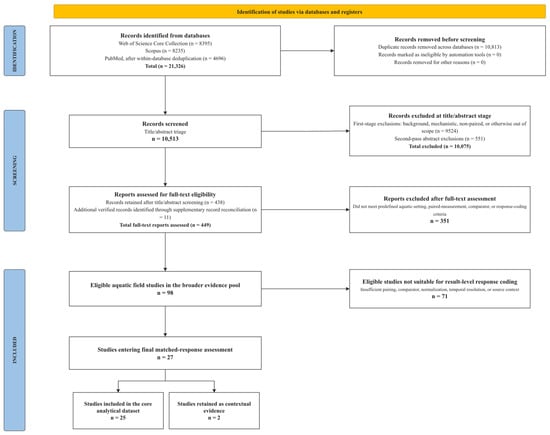
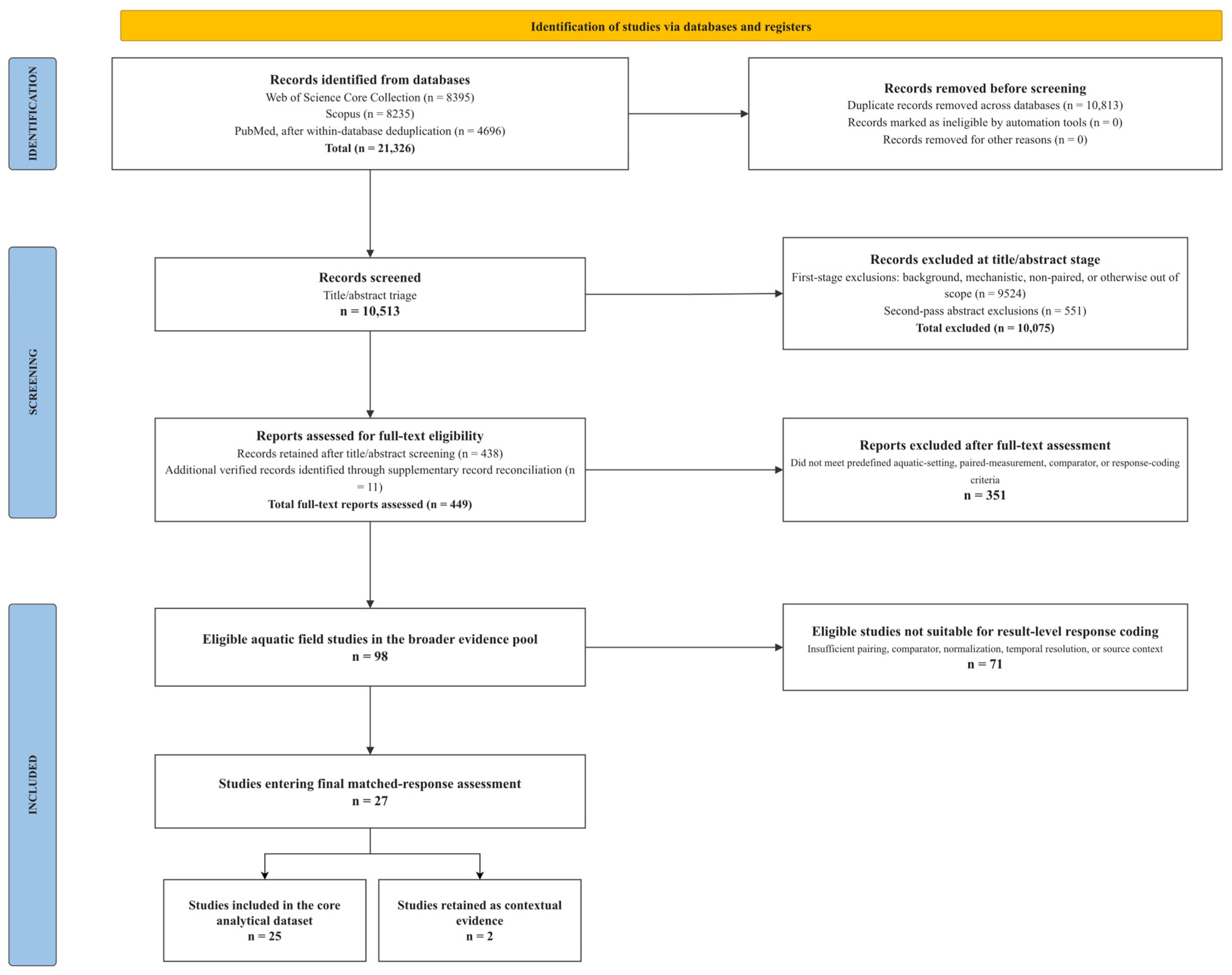
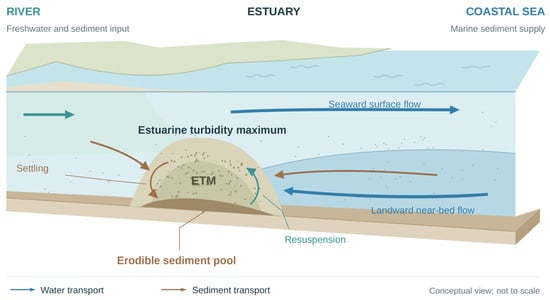
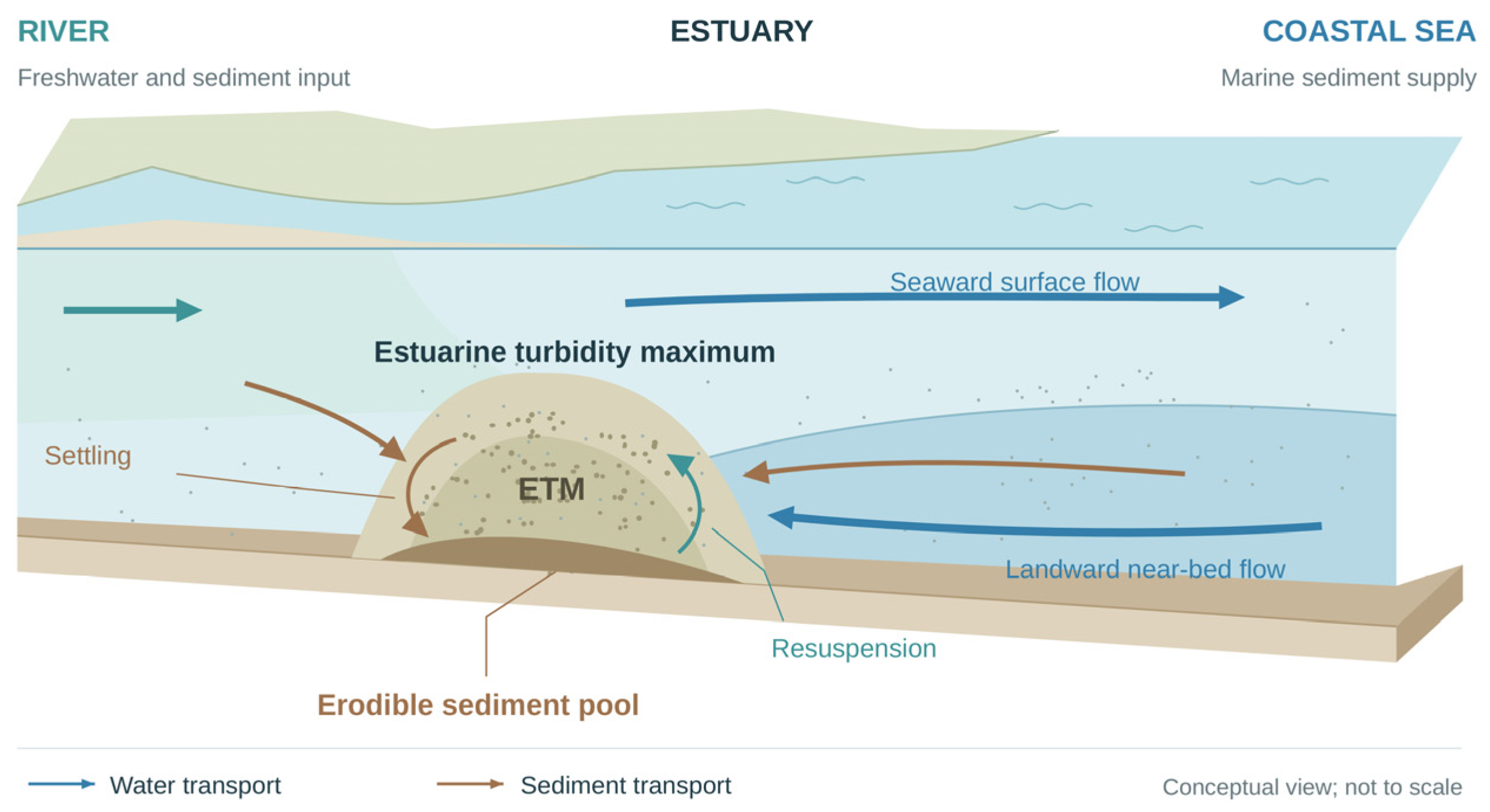
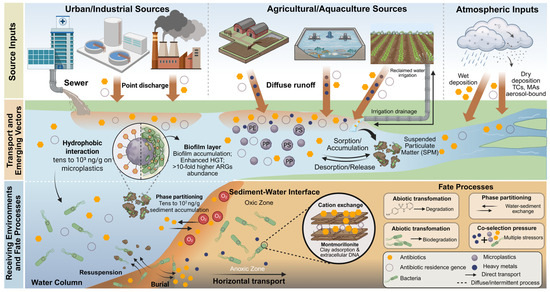
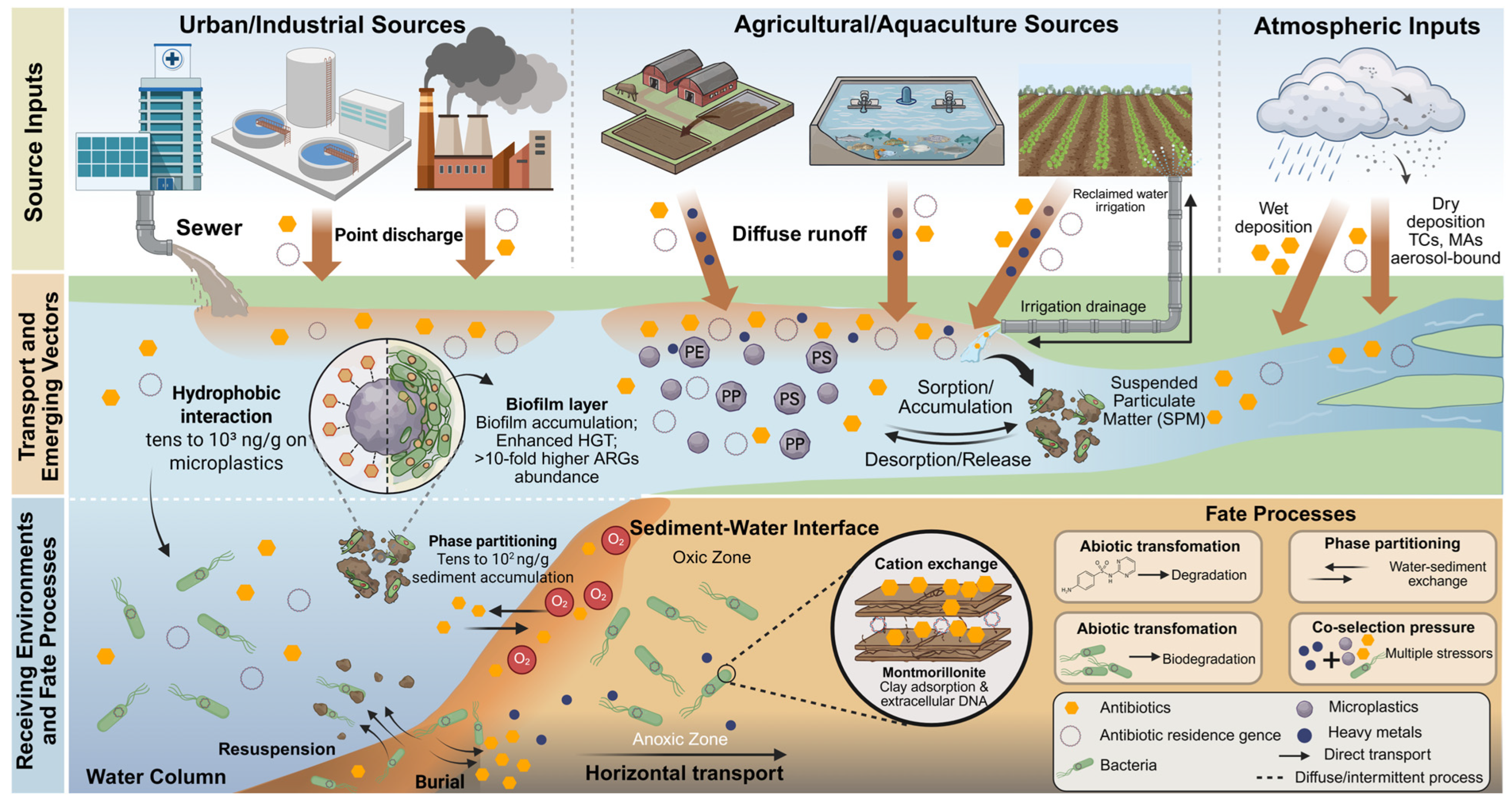
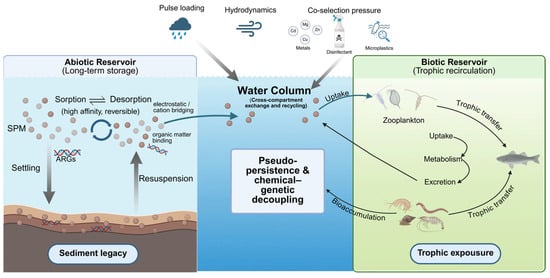
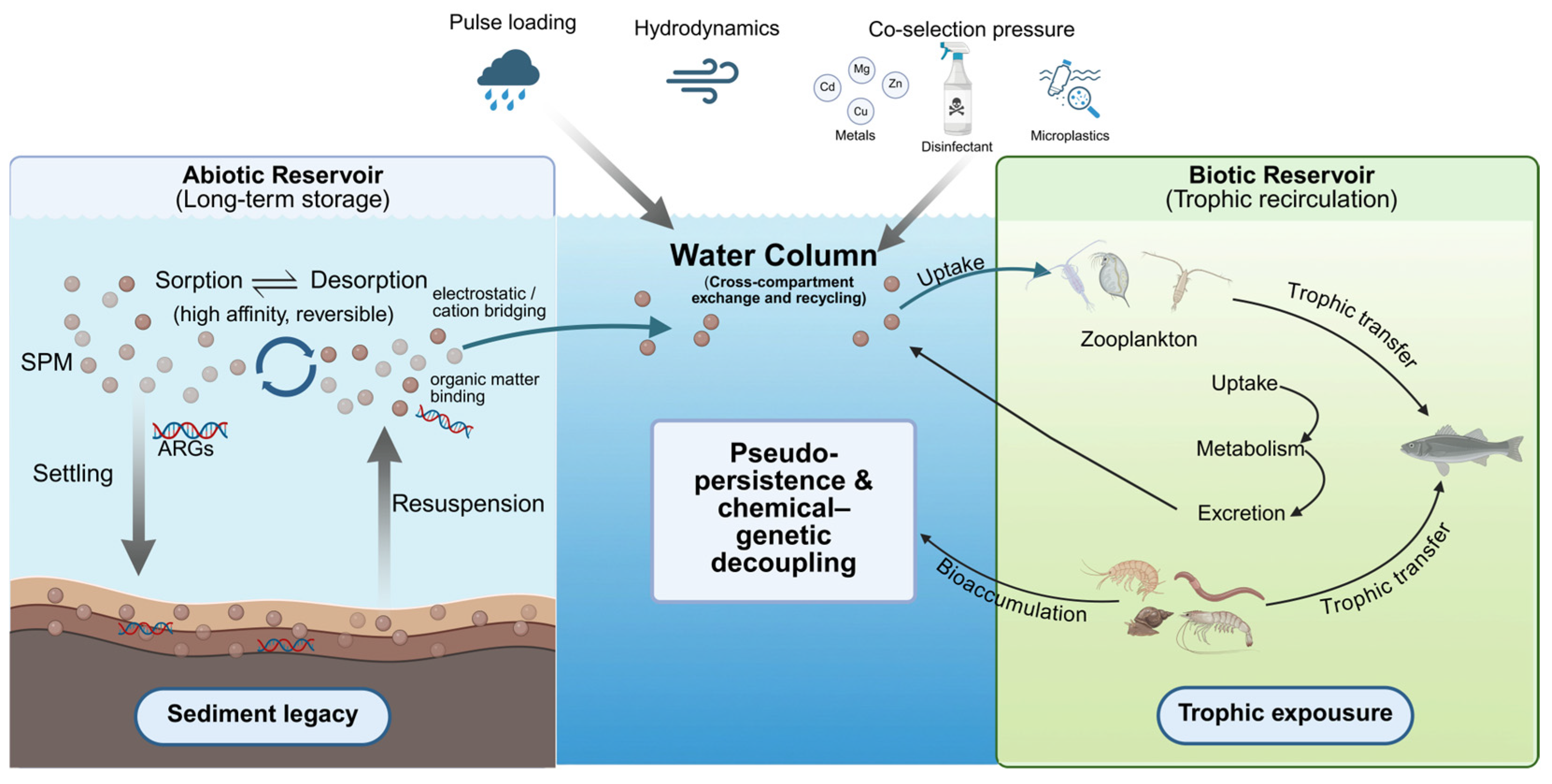
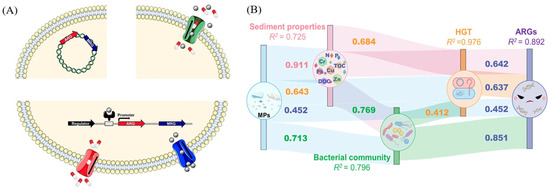
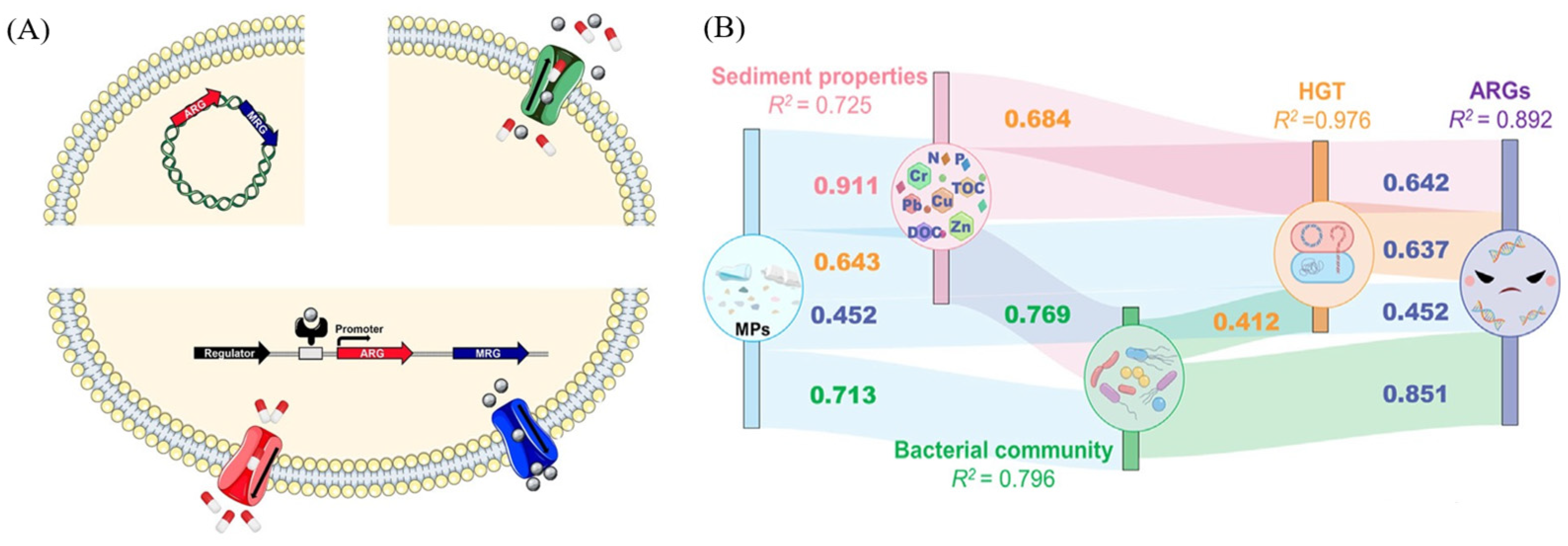
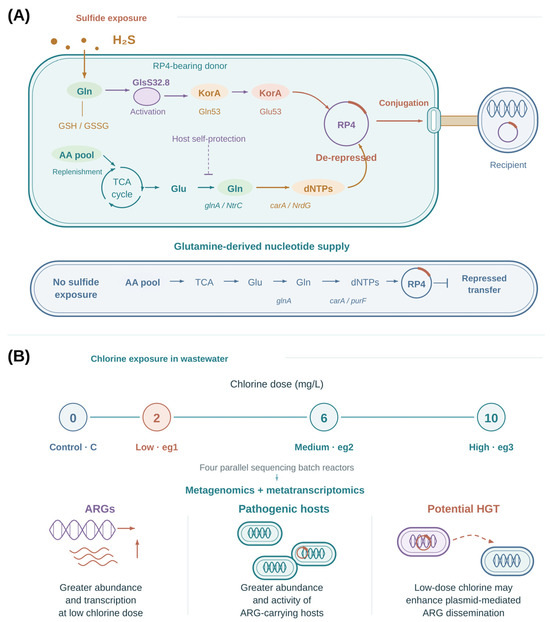
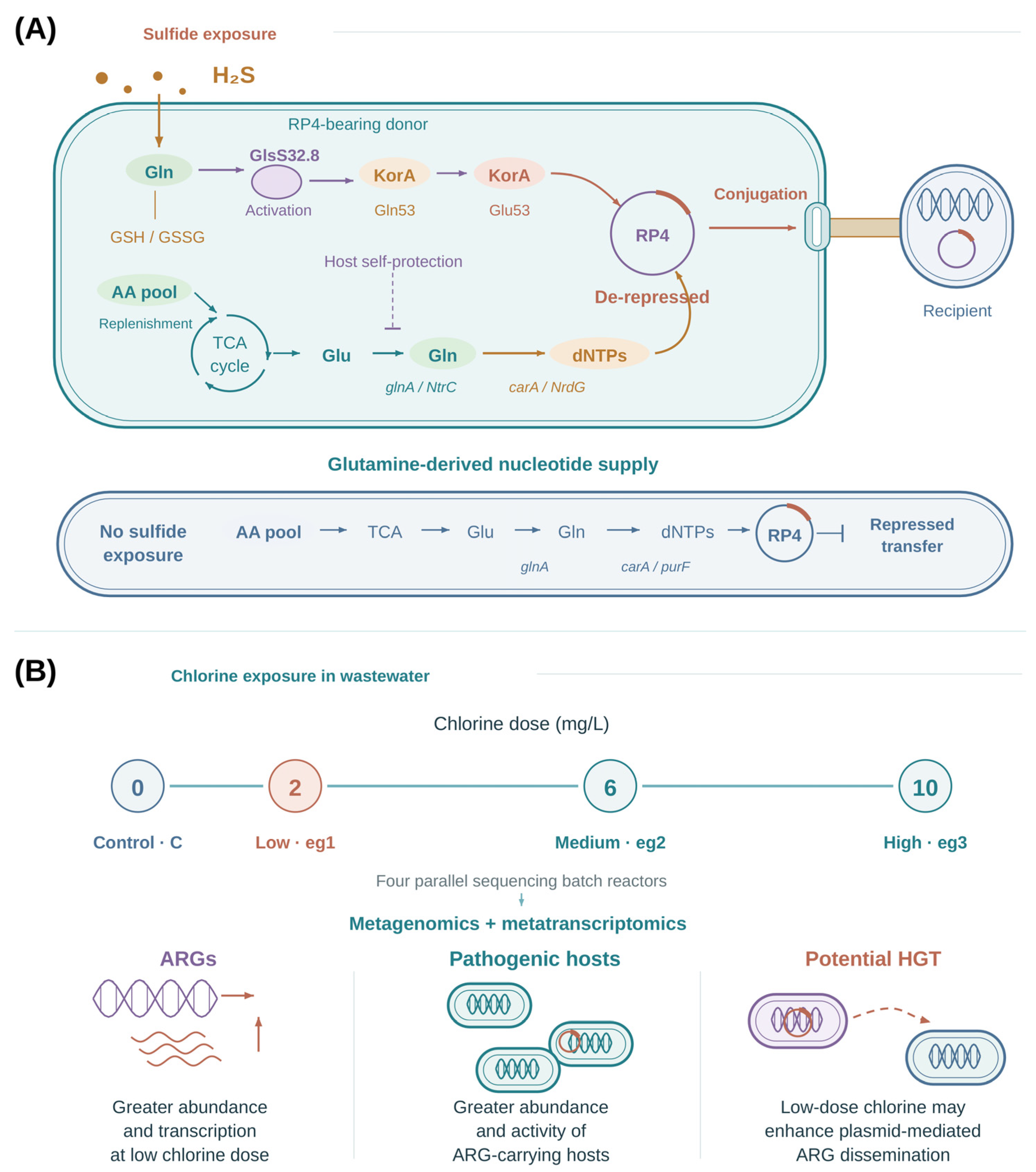

Disclaimer/Publisher’s Note: The statements, opinions and data contained in all publications are solely those of the individual author(s) and contributor(s) and not of MDPI and/or the editor(s). MDPI and/or the editor(s) disclaim responsibility for any injury to people or property resulting from any ideas, methods, instructions or products referred to in the content. |
© 2026 by the authors. Licensee MDPI, Basel, Switzerland. This article is an open access article distributed under the terms and conditions of the Creative Commons Attribution (CC BY) license.