Stage-Associated Reorganization of Epidural ECoG Functional Networks During Pigeon Homing Flight
by
 , , , and
Fuli Jin
1,2 ,
,
Yue Qin
3,4,
Youtang Gao
1,2,
Yanna Ping
2,3,
Xiaomi Qi
1,2,
Dongyun Wang
2,3 and
Xinyu Liu
1,2,* 1
School of Electronic Information, Huanghuai University, Zhumadian 463000, China
2
Henan Engineering Research Center of Intelligent Human-Machine Interaction Equipment, Huanghuai University, Zhumadian 463000, China
3
School of Intelligent Manufacturing, Huanghuai University, Zhumadian 463000, China
4
School of Electronic and Information, Zhongyuan University of Technology, Zhengzhou 450007, China
*
Author to whom correspondence should be addressed.
Animals 2026, 16(13), 2025; https://doi.org/10.3390/ani16132025
Submission received: 17 June 2026
/
Revised: 26 June 2026
/
Accepted: 29 June 2026
/
Published: 2 July 2026
(This article belongs to the Special Issue Advances in Birds' Neural Mechanisms)
Simple Summary
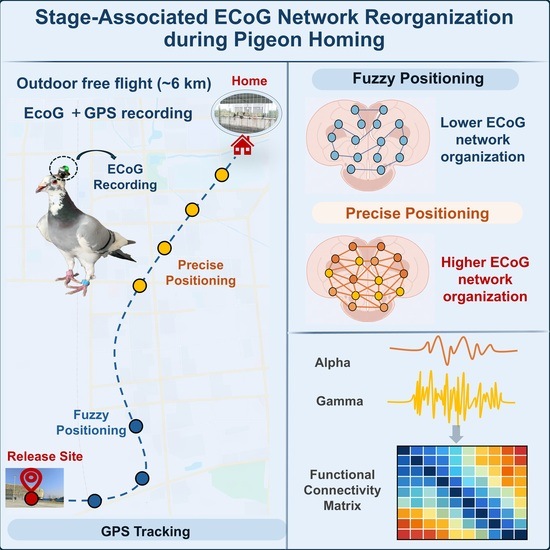
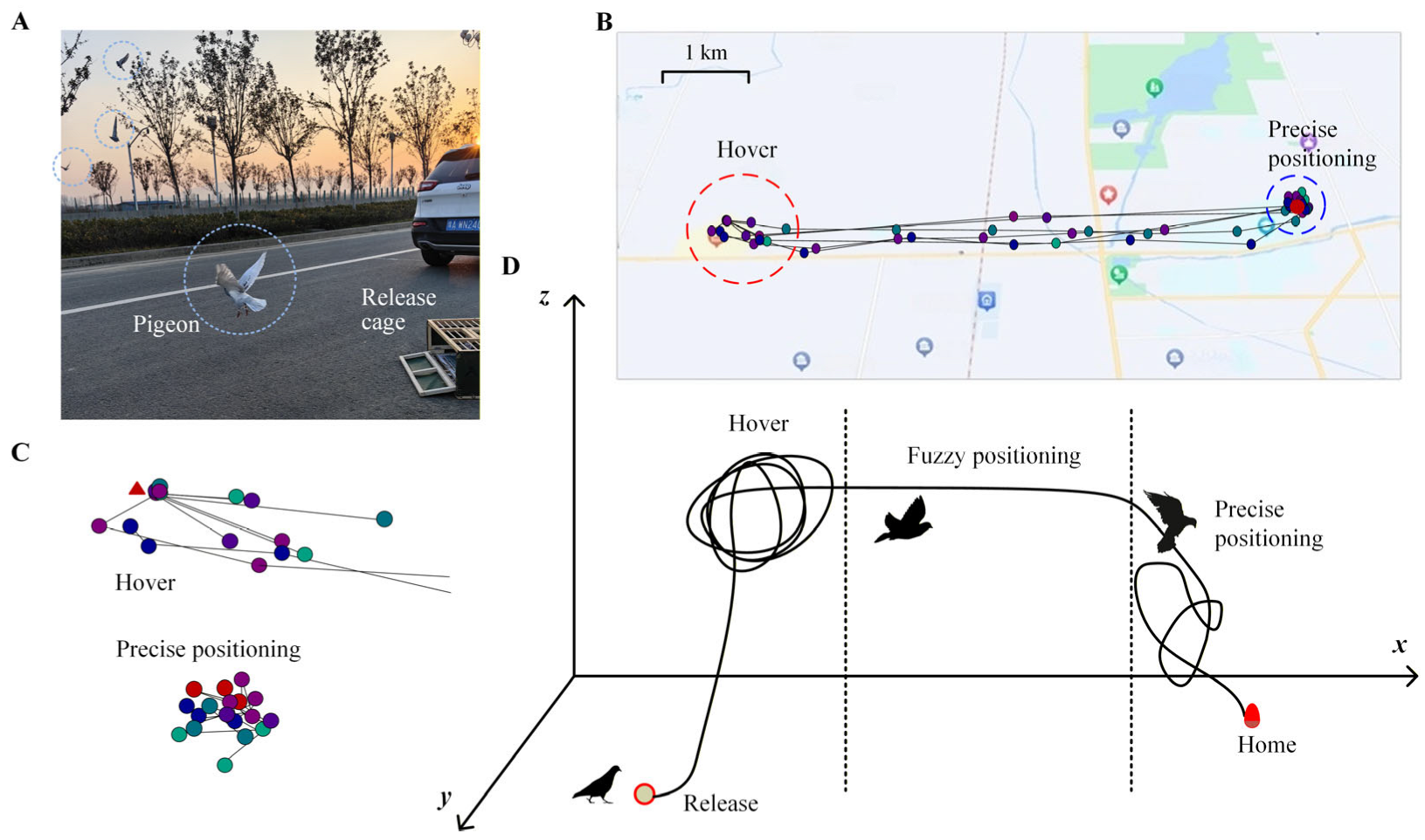
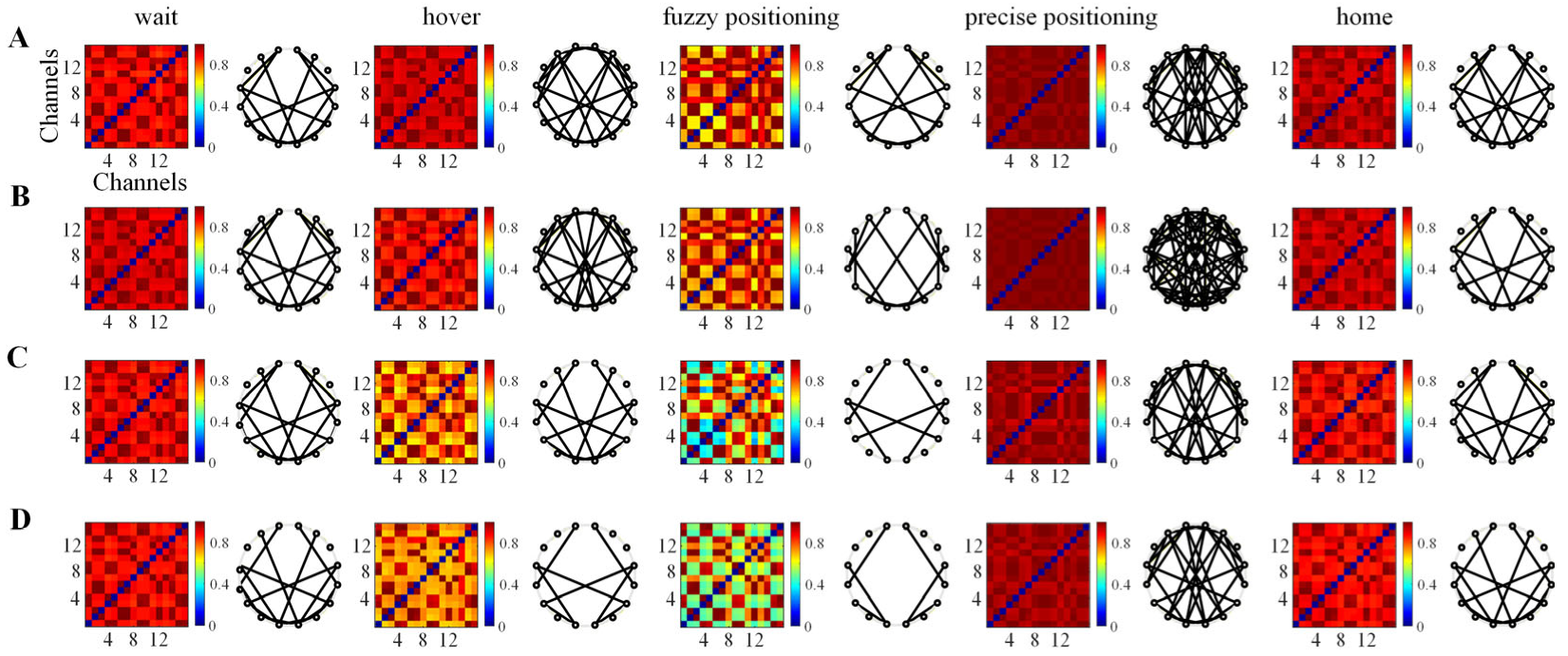
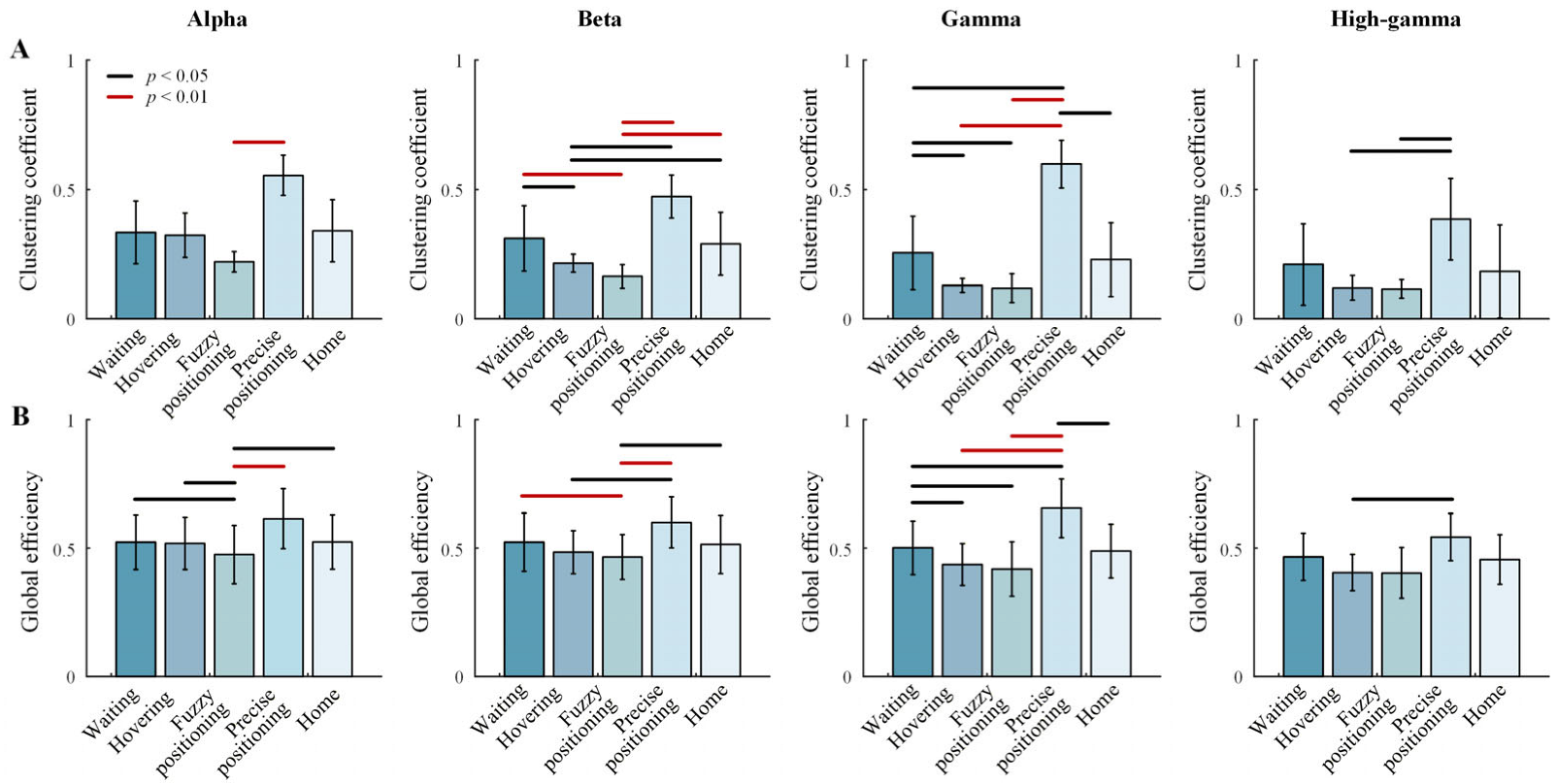
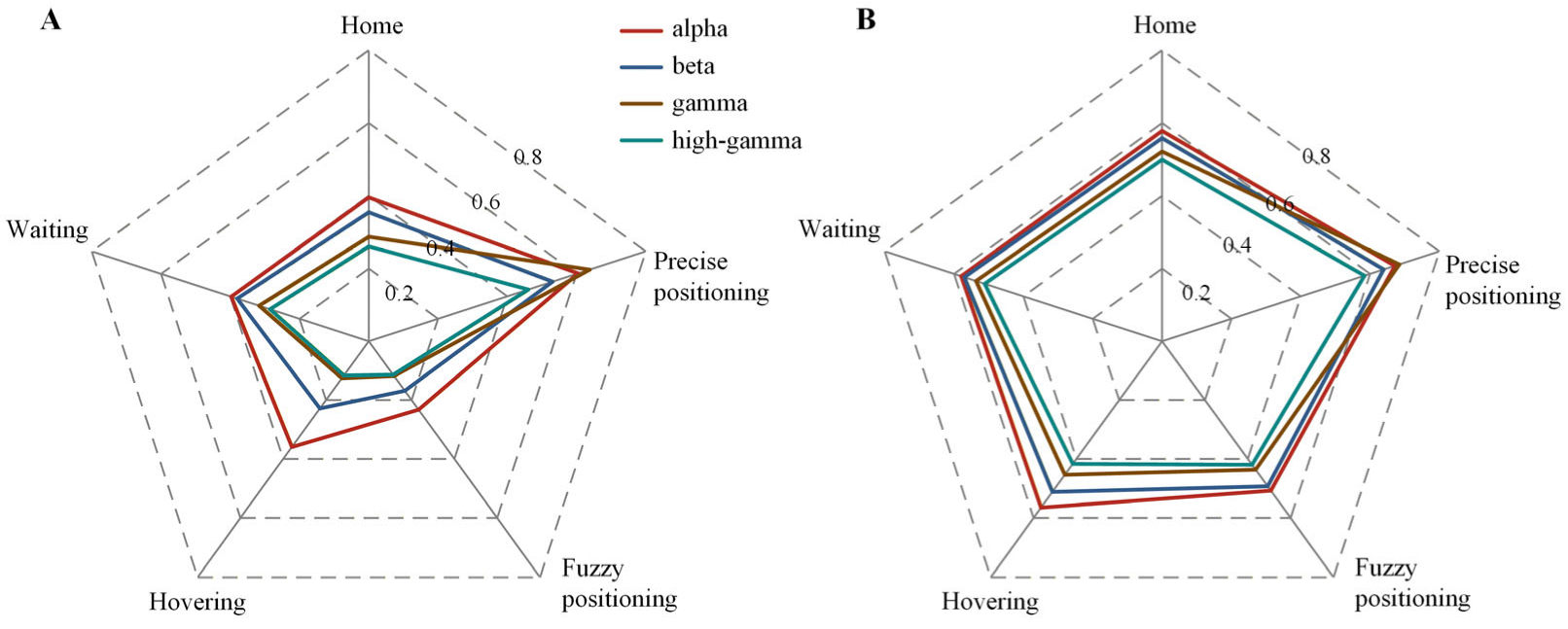
Homing pigeons can return to their home loft after being released from distant locations, making them an important animal model for studying natural navigation. However, it remains difficult to record brain activity while pigeons are flying freely outdoors. In this study, we recorded epidural electrocorticographic signals from pigeons during outdoor homing flight and analyzed how the relationships among recording channels changed across different stages of the journey. The homing process was divided into waiting, hovering, fuzzy positioning, precise positioning, and home stages using position-tracking trajectory information. We found that the functional network organization of the recorded brain signals changed across these stages. In particular, network measures were generally higher during the precise positioning stage near the home loft and lower during the fuzzy positioning stage. These findings suggest that pigeon homing flight is accompanied by dynamic reorganization of large-scale brain activity, especially during the final localization phase before returning home.
Abstract
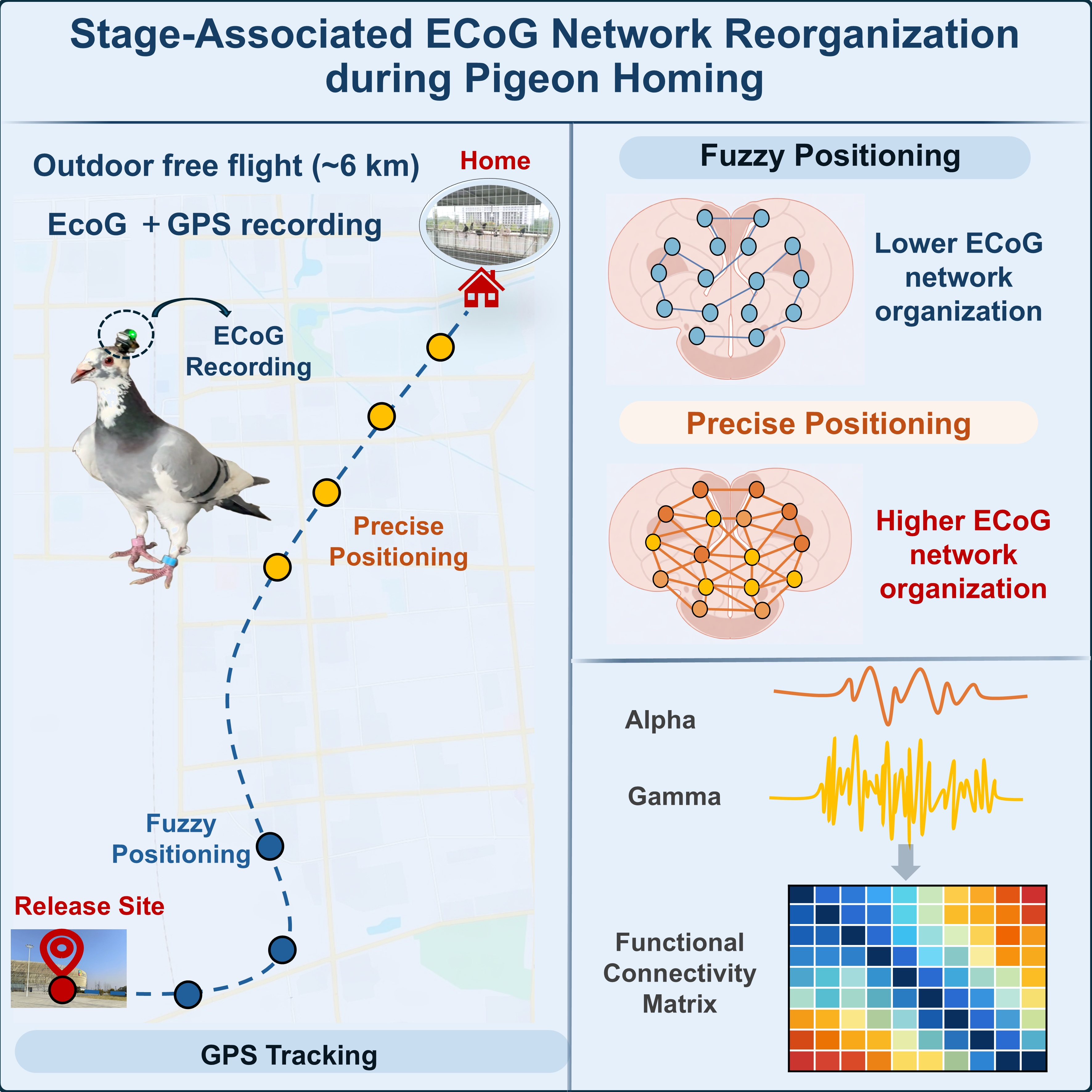
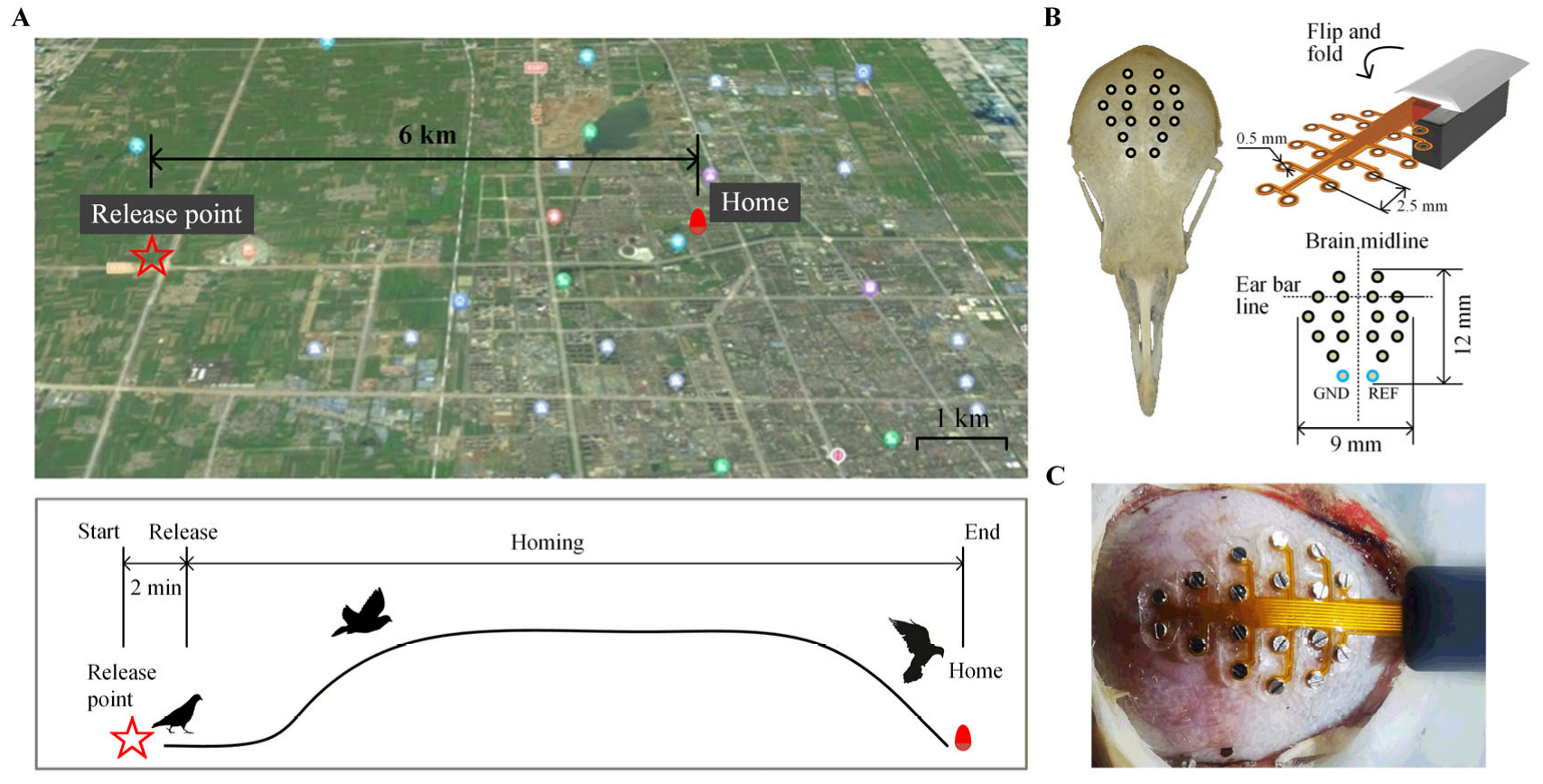
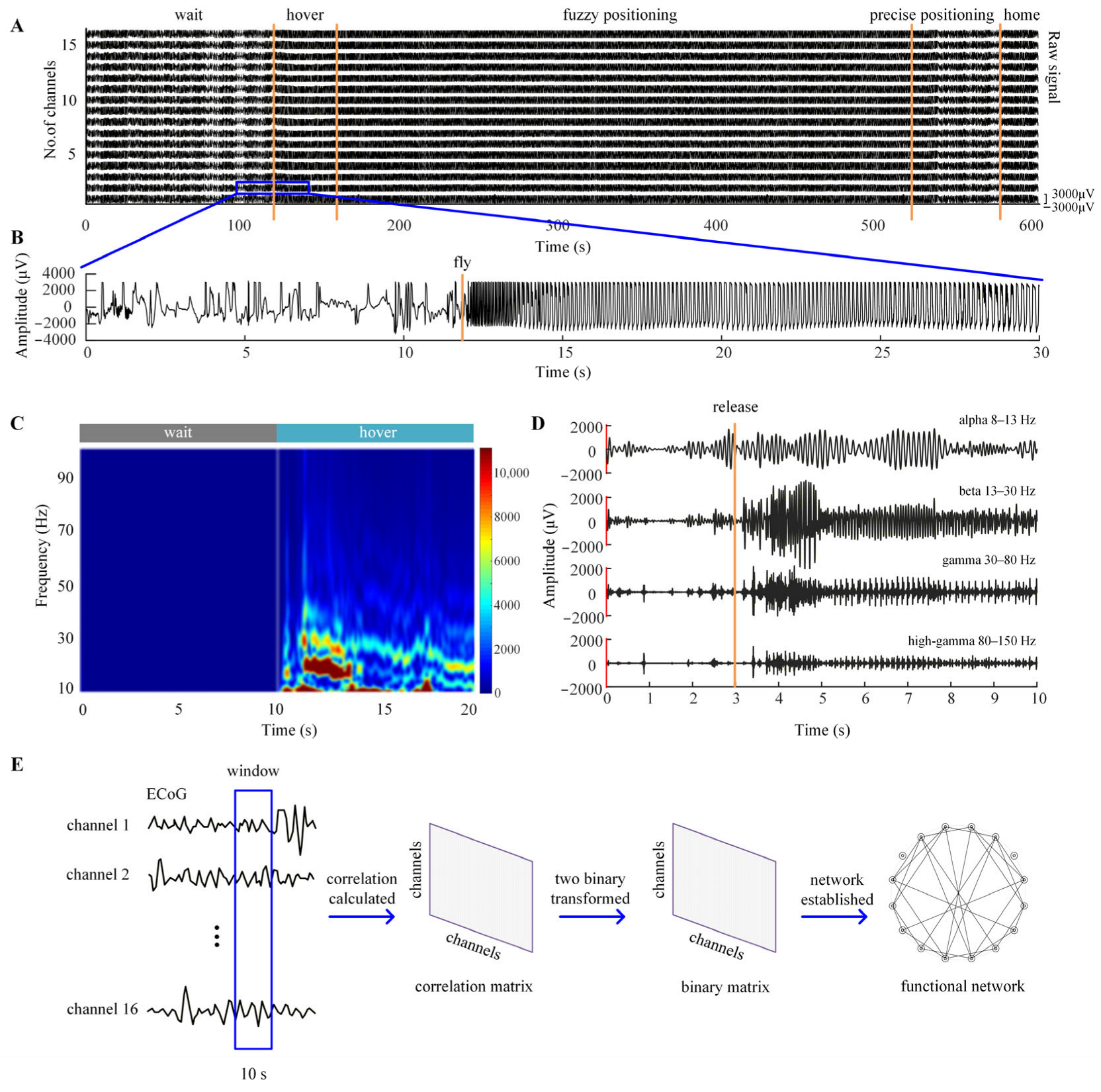
Pigeon homing provides an important model for studying navigation after displacement, yet how large-scale brain activity is organized across different phases of homing flight remains unclear. In this study, we recorded 16-channel epidural electrocorticographic signals from freely flying pigeons during outdoor homing flights initiated approximately 6 km from the home loft. GPS trajectories were used to divide the homing process into waiting, hovering, fuzzy positioning, precise positioning, and home stages. Correlation-based inter-channel functional networks were constructed across alpha, beta, gamma, and high-gamma frequency bands, and their topological properties were quantified using the clustering coefficient and global efficiency. The results showed that ECoG functional network topology varied across homing stages. Network measures were generally higher during the precise positioning stage near the home loft and lower during the fuzzy positioning stage. Gamma-band networks showed a relatively stronger tendency toward the precise positioning stage, whereas alpha-band networks showed a relatively stronger tendency toward the hovering stage. Together, these findings suggest that natural pigeon homing flight is accompanied by stage-associated reorganization of epidural ECoG functional networks.