Environmental Complexity: Additional Human Visual Contact Reduced Meat Chickens’ Fear of Humans and Physical Items Altered Pecking Behavior


1
School of Environmental and Rural Science, University of New England, Armidale, NSW 2350, Australia
2
Animal Welfare Science Centre, University of Melbourne, Parkville, VIC 3052, Australia
3
Institute of Animal Welfare Science, University of Veterinary Medicine Vienna, Veterinaerplatz 1, 1210 Vienna, Austria
*
Author to whom correspondence should be addressed.
Animals 2022, 12(3), 310; https://doi.org/10.3390/ani12030310
Submission received: 15 December 2021
/
Revised: 10 January 2022
/
Accepted: 25 January 2022
/
Published: 27 January 2022
(This article belongs to the Special Issue Environmental Enrichment for Animals in our Care)
Simple Summary
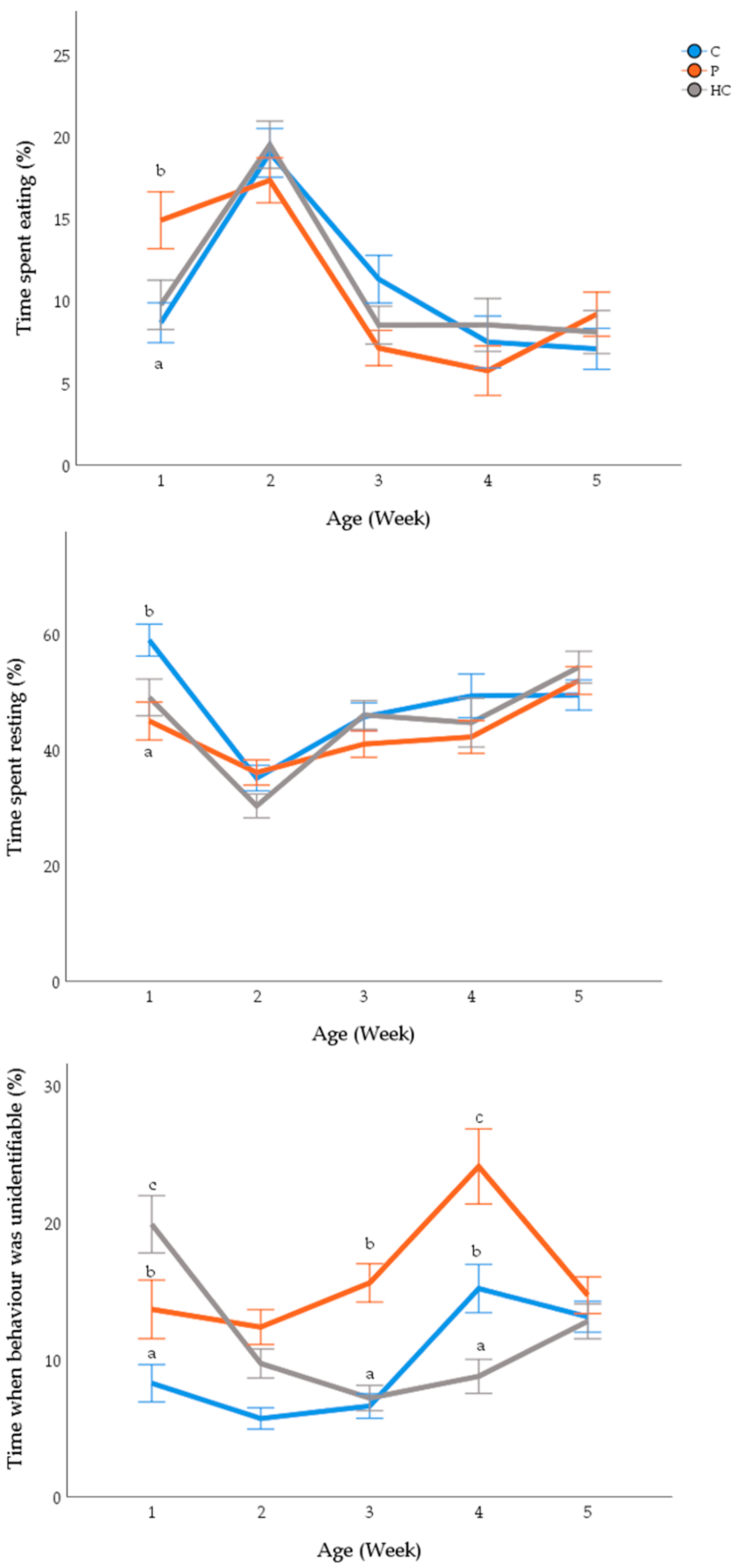
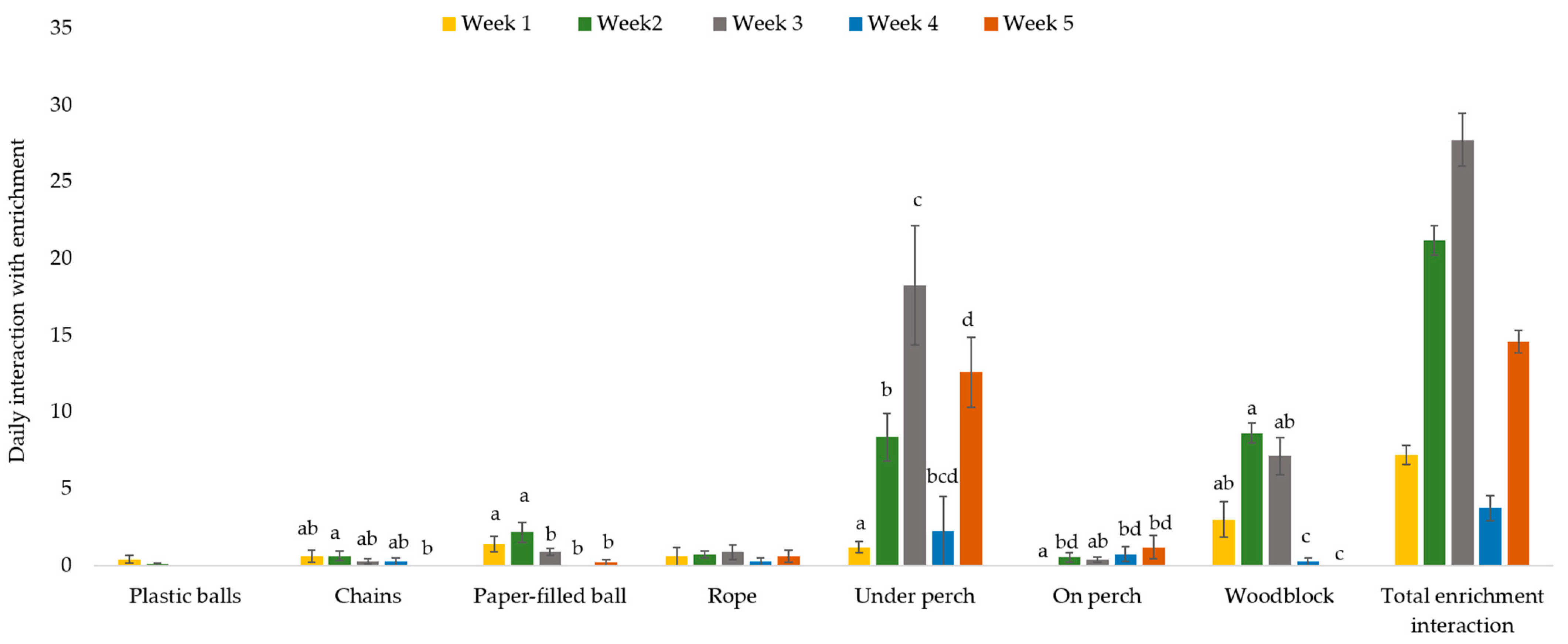
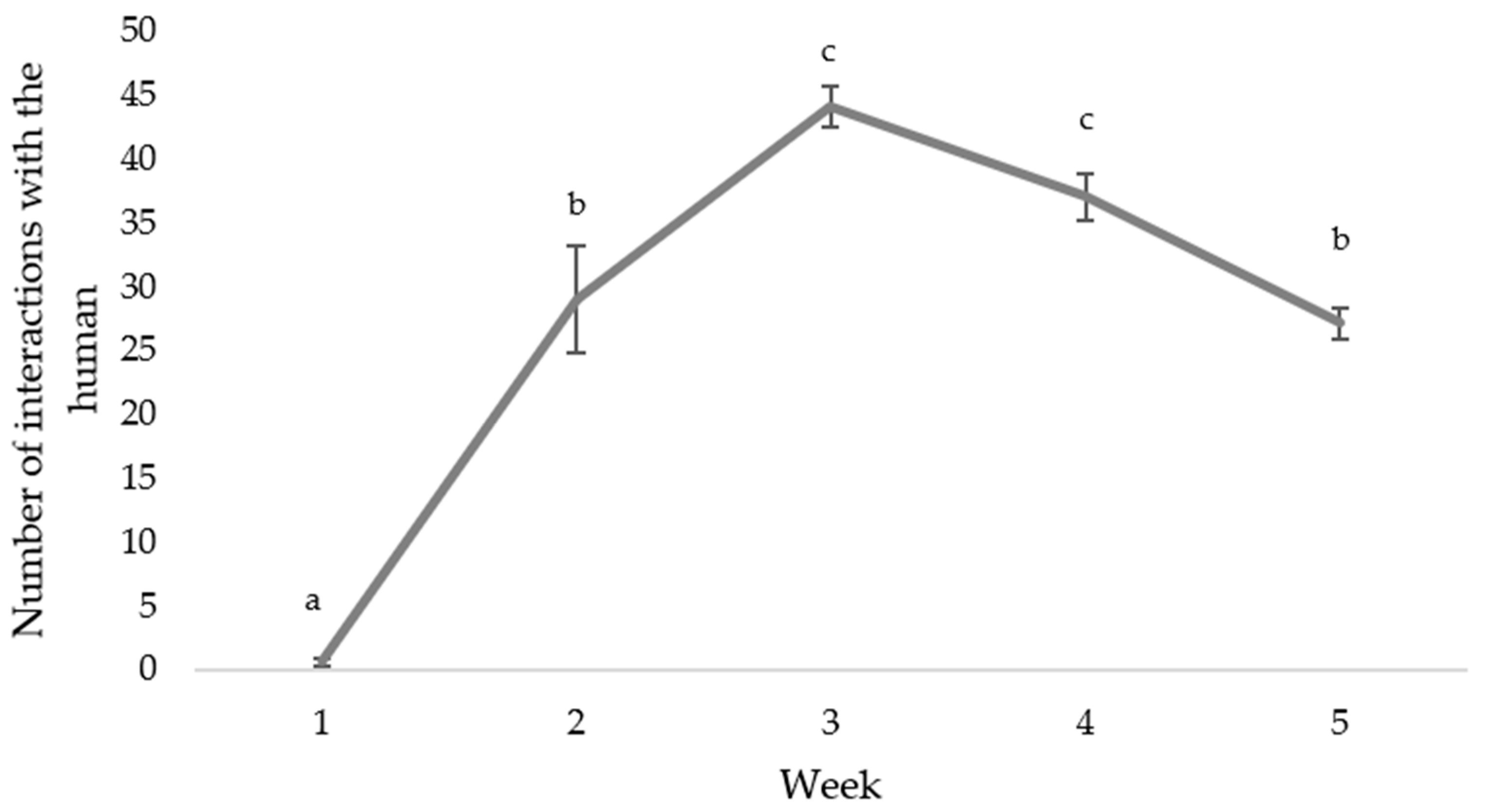
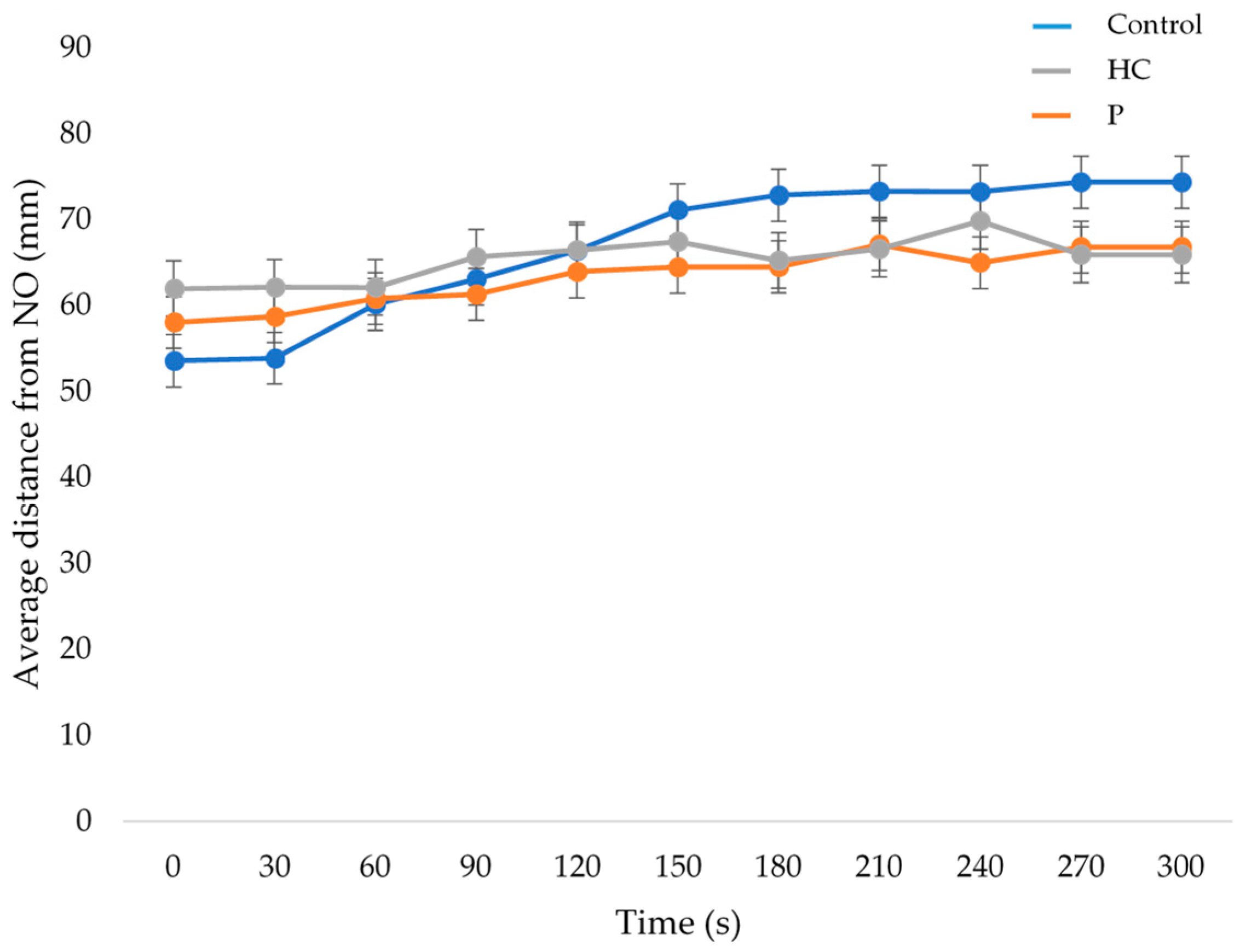
Environmental complexity can improve chicken welfare. However, the outcome of such environmental changes will depend on the resources provided. We provided either various physical items that posed no biosecurity risk and were inexpensive (such as balls, chains, a perch and rope) to alter behavioral time budgets and interactions with the environment or provided additional visual contact with humans (10 min daily) with the aim to reduce fearfulness. Additional human contact reduced fear of humans at 35 days of age, but did not affect general fearfulness. Increased environmental complexity via the provision of physical items reduced some indicators of fear at 21 days, but not at 35 days of age. A woodblock and perch were the most favored physical items, but chickens preferred to sit underneath the perch rather than on top. When pecking items were not provided, chickens redirected their pecking to the wood shaving litter. Overall, there was little evidence that our physical items improved the chickens’ behavioral time budget, fear, physiological stress or production. The benefits of additional visual contact with humans should be investigated on larger groups to ensure that such effects are practical and effective to reduce fear of humans on farm.
Abstract
Increased environmental complexity can improve animal welfare, depending on the resources provided and use by the animal. We provided chickens either with physical items that posed no biosecurity risk and were inexpensive (balls, chains, perches and rope) (P; n = 36) or additional visual human contact (10 min daily) (HC; n = 36) compared to farm-like standard control groups (C; n = 36) with 3 pens per treatment. Additional human contact reduced fear of humans at 35 days of age, but not general fearfulness. P birds required more inductions to induce tonic immobility compared to HC and C birds at 21 days of age. However, other indicators of fear (open field test and plasma corticosterone concentration) did not significantly differ. P birds favored the woodblock for resting, and the perch but preferred to sit underneath the perch rather than on top. When pecking items were not provided, C and HC chickens redirected their pecking behavior toward the litter. Overall, there was little evidence that our physical items improved the chickens’ behavioral time budget, fear, physiological stress or production. Additional human contact should be investigated in large scale experiments to ensure its effectiveness to reduce fear of humans on farm.
Keywords:
enrichment; broiler; behavior; welfare; human-animal interaction; physiological stress