Review

The Potential Utility of Prebiotics to Modulate Alzheimer’s Disease: A Review of the Evidence
Department of Nutrition, University of California, Davis, CA 95616, USA
*
Author to whom correspondence should be addressed.
Microorganisms 2021, 9(11), 2310; https://doi.org/10.3390/microorganisms9112310

Submission received: 14 October 2021 / Revised: 2 November 2021 / Accepted: 2 November 2021 / Published: 6 November 2021
(This article belongs to the Special Issue Gut Microbioma Structure and Functions in Human Health and Disease)

Abstract

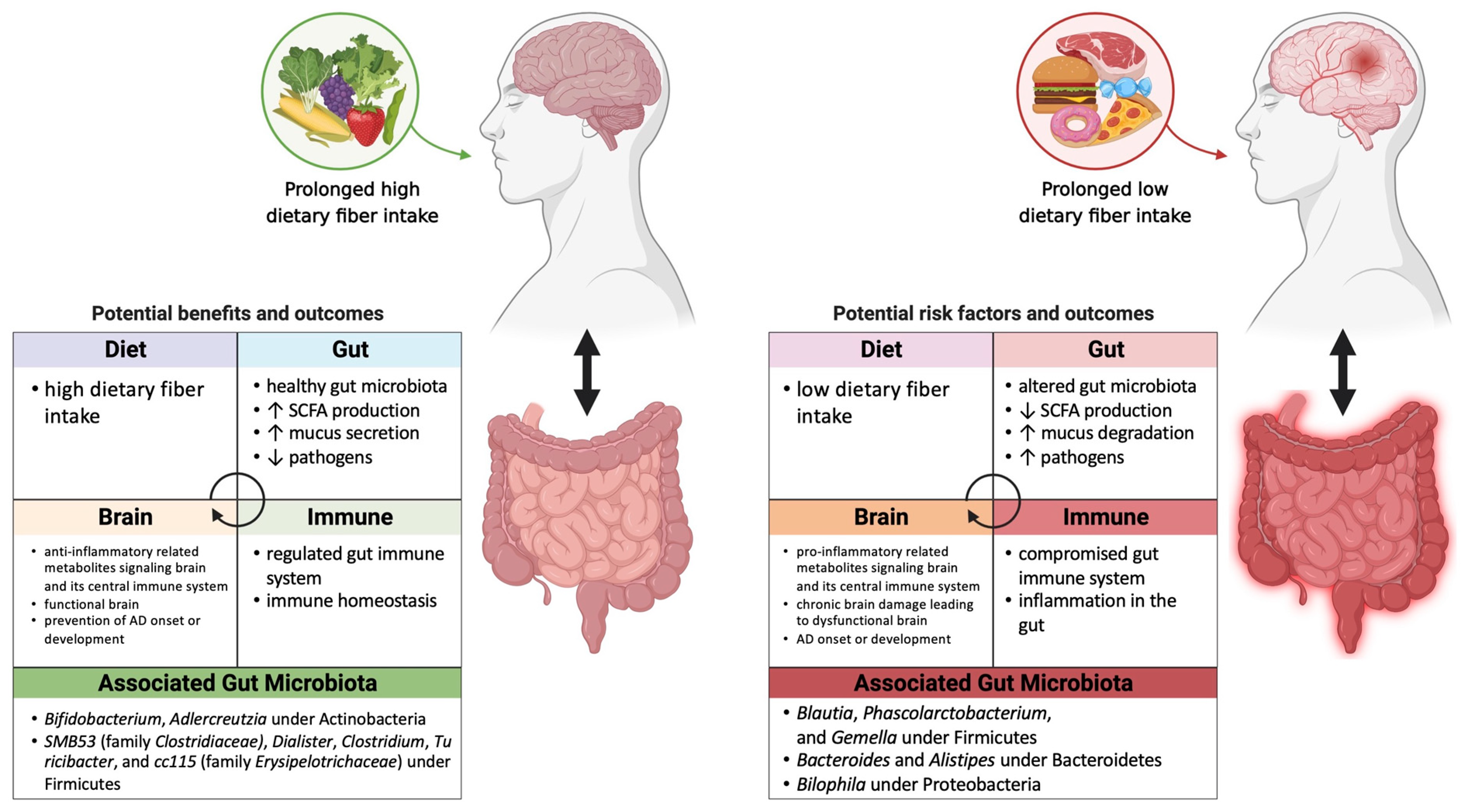
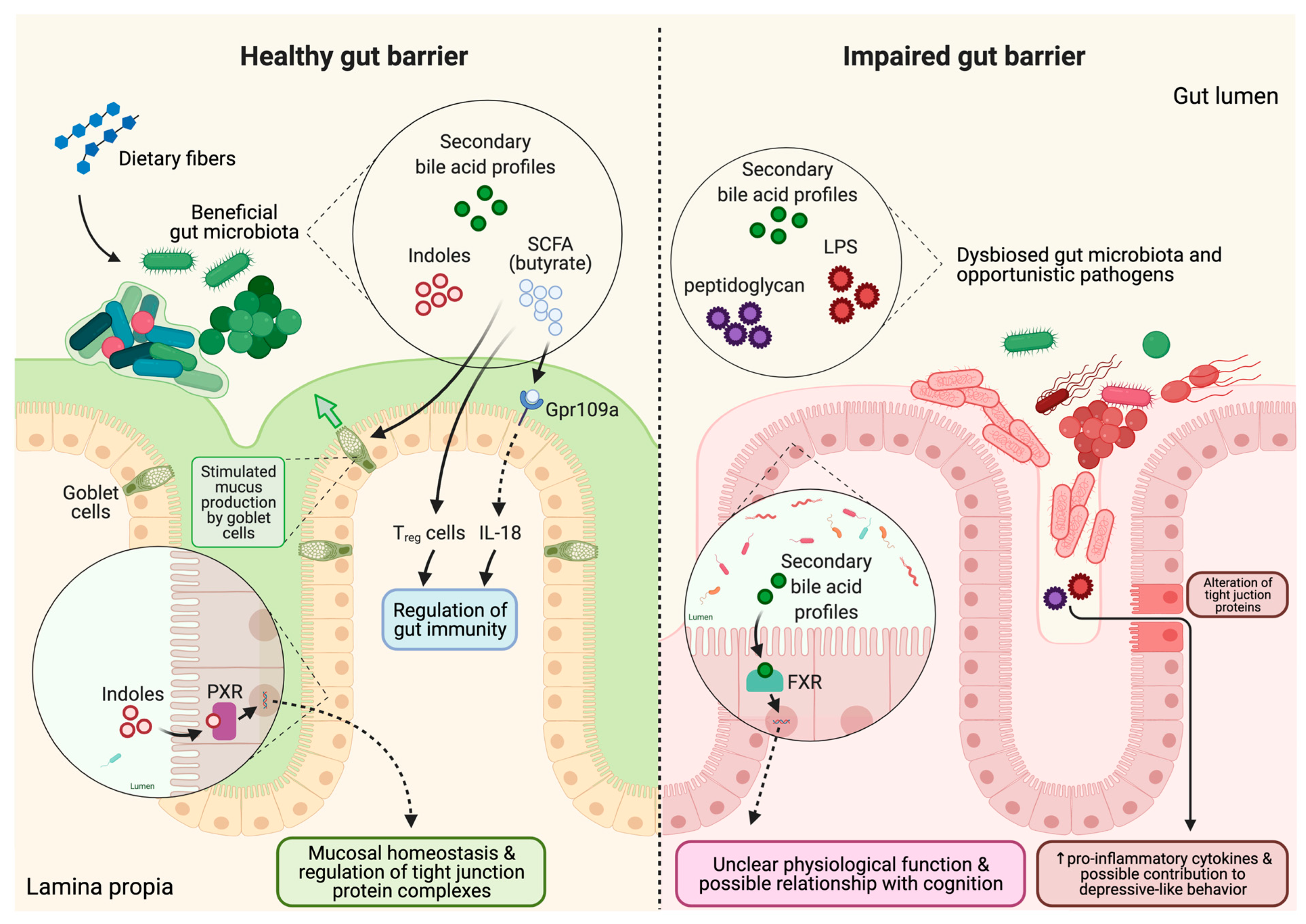
The gut microbiome has recently emerged as a critical modulator of brain function, with the so-called gut-brain axis having multiple links with a variety of neurodegenerative and mental health conditions, including Alzheimer’s Disease (AD). Various approaches for modulating the gut microbiome toward compositional and functional states that are consistent with improved cognitive health outcomes have been documented, including probiotics and prebiotics. While probiotics are live microorganisms that directly confer beneficial health effects, prebiotics are oligosaccharide and polysaccharide structures that can beneficially modulate the gut microbiome by enhancing the growth, survival, and/or function of gut microbes that in turn have beneficial effects on the human host. In this review, we discuss evidence showing the potential link between gut microbiome composition and AD onset or development, provide an overview of prebiotic types and their roles in altering gut microbial composition, discuss the effectiveness of prebiotics in regulating gut microbiome composition and microbially derived metabolites, and discuss the current evidence linking prebiotics with health outcomes related to AD in both animal models and human trials. Though there is a paucity of human clinical trials demonstrating the effectiveness of prebiotics in altering gut microbiome-mediated health outcomes in AD, current evidence highlights the potential of various prebiotic approaches for beneficially altering the gut microbiota or gut physiology by promoting the production of butyrate, indoles, and secondary bile acid profiles that further regulate gut immunity and mucosal homeostasis, which are associated with beneficial effects on the central immune system and brain functionality.
Keywords: gut microbiome; Alzheimer’s disease; gut-brain axis; prebiotics gut microbiome; Alzheimer’s disease; gut-brain axis; prebiotics