Article

Re-Emerging Bacterial Pathogens, Resistance Genes and Promising Bioindicators in Raw and Treated Sewage—Addressing a Known Issue from a Different Angle and Perspective


by
Karol Korzekwa
1,2,*,
Agnieszka Bisak
3,
Tomasz Lepionka
4,
Oliwia Obuch-Woszczatyńska
5,6,
Klaudia Bylińska
5,6,
Agnieszka Kauc
1,
Katarzyna Skuza
4,
Bartosz Zaborski
3 and
Małgorzata Krzyżowska
1
1
Department of Medical and Environmental Microbiology, Military Institute of Hygiene and Epidemiology, 01-163 Warsaw, Poland
2
Laboratory of Hygiene and Environmental Sanitary Surveillance, Military Institute of Hygiene and Epidemiology, 01-163 Warsaw, Poland
3
Municipal Water and Sewerage Company of Warsaw, 02-015 Warsaw, Poland
4
Biological Threats Identification and Countermeasure Center, Military Institute of Hygiene and Epidemiology, 24-100 Pulawy, Poland
5
Parasitology Laboratory, Military Institute of Hygiene and Epidemiology, 01-163 Warsaw, Poland
6
Department of Preclinical Sciences, Faculty of Veterinary Medicine, Warsaw University of Life Sciences, 02-787 Warsaw, Poland
*
Author to whom correspondence should be addressed.
Microorganisms 2026, 14(9), 2069; https://doi.org/10.3390/microorganisms14092069

Submission received: 21 August 2026 / Revised: 8 September 2026 / Accepted: 11 September 2026 / Published: 16 September 2026
(This article belongs to the Special Issue Surveillance of Health-Relevant Pathogens Employing Wastewater)

Abstract

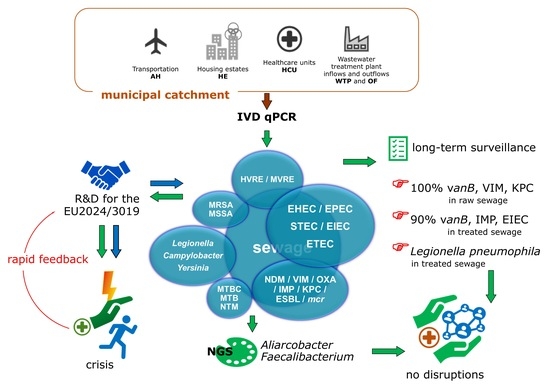
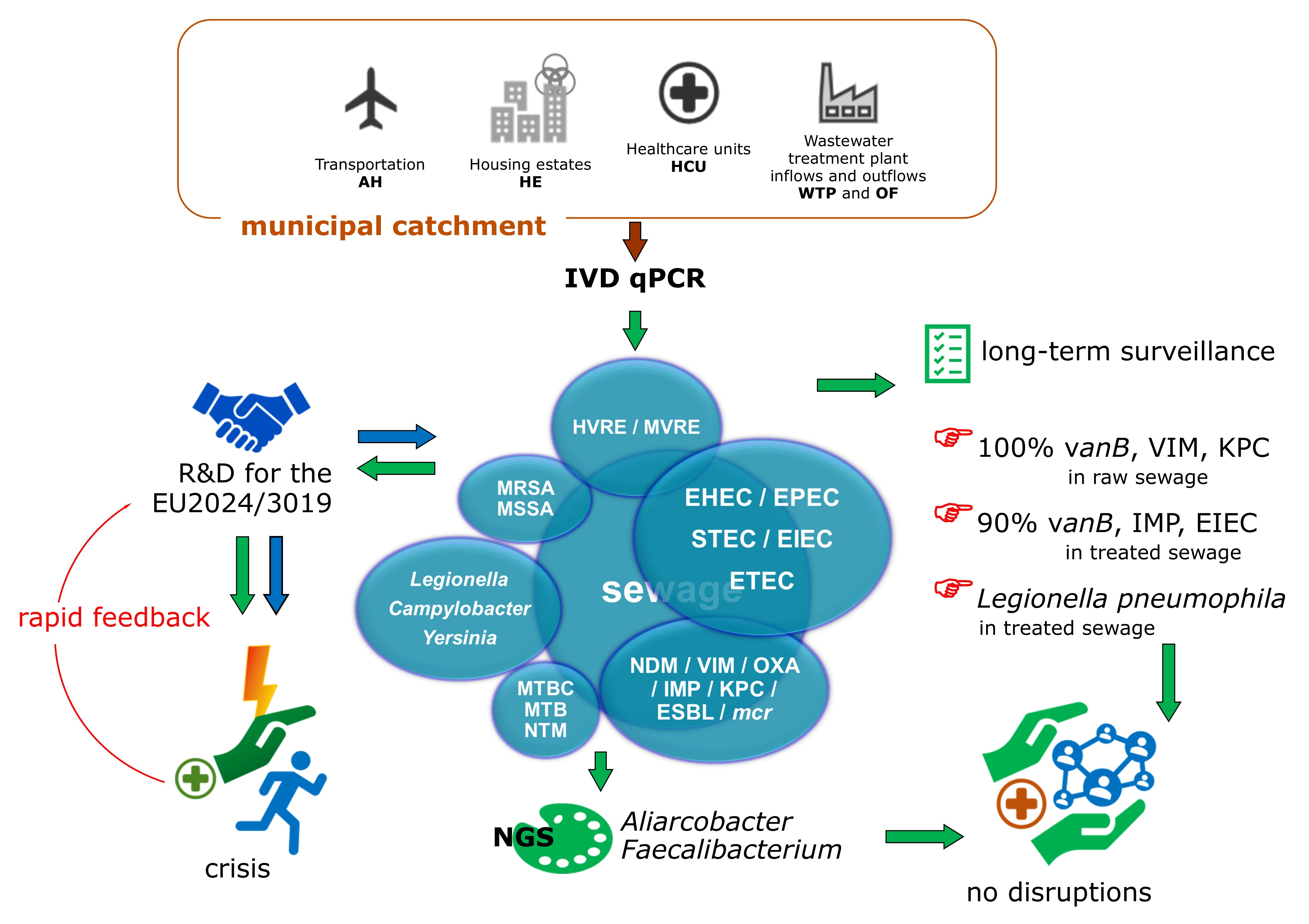
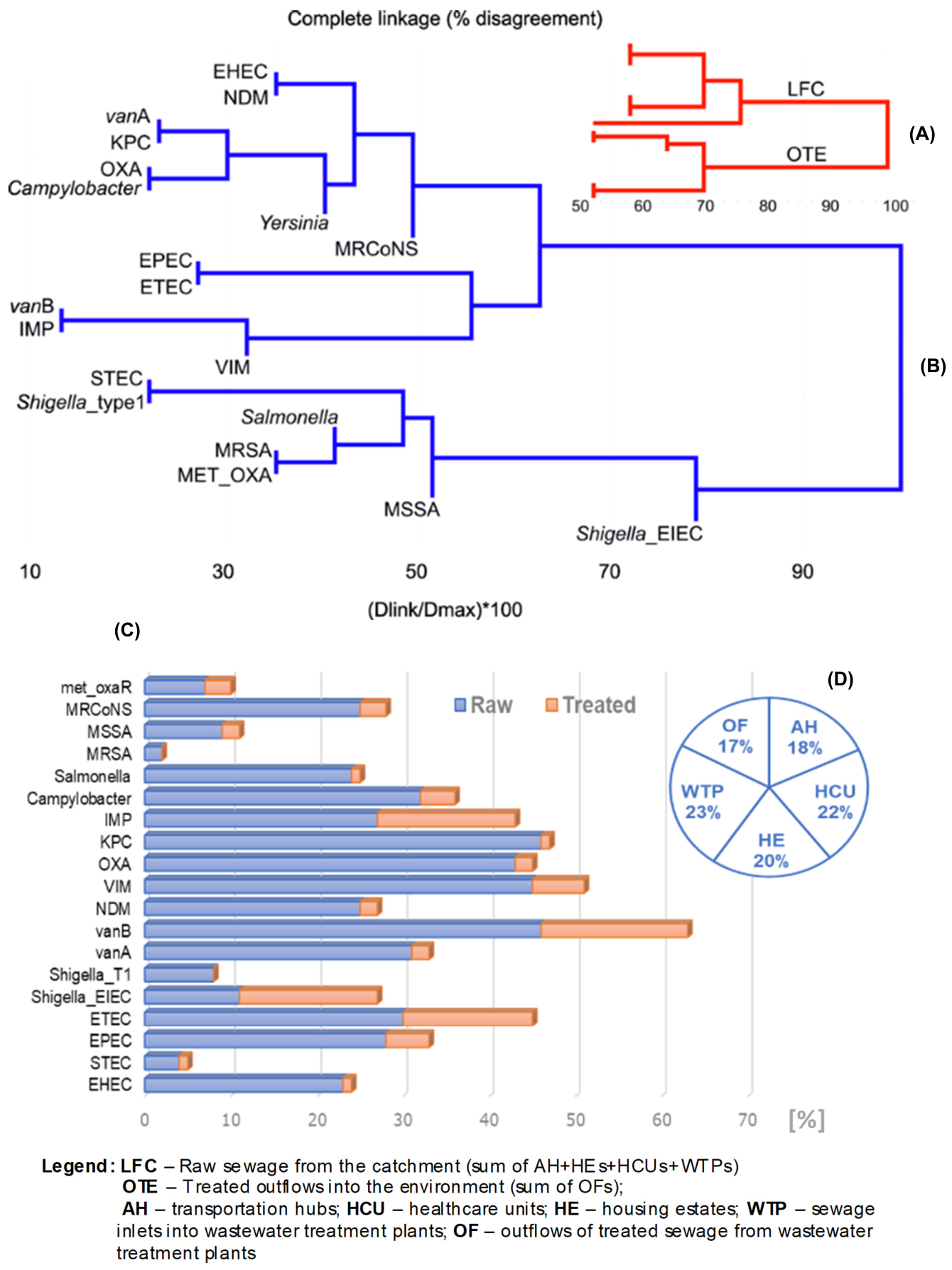
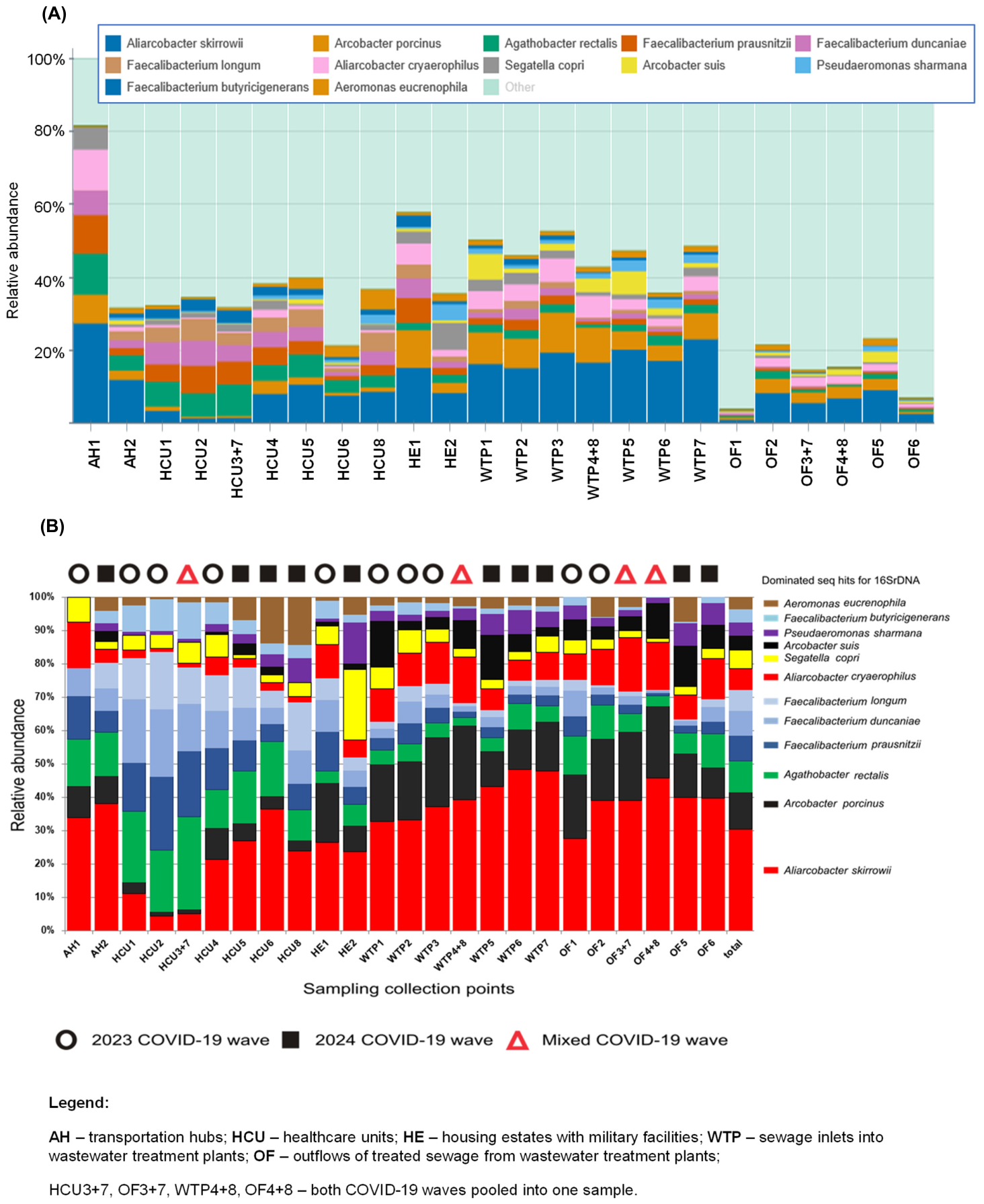
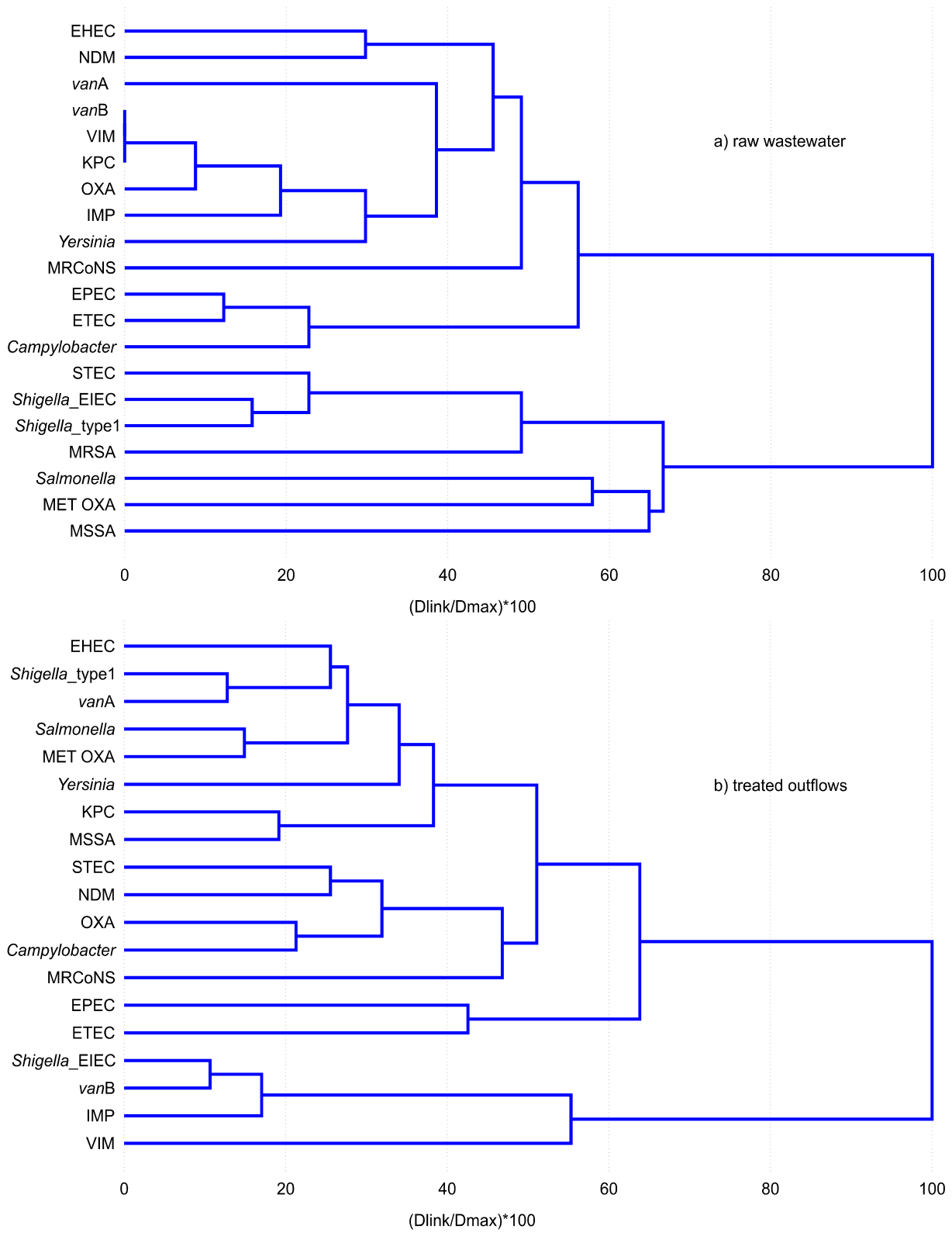
Municipal wastewater catchments are significant sources of symbiotic, opportunistic, and drug-resistant bacteria that can acquire or enhance their resistance. This “re-emergence of threats” presents a serious public health issue, especially during crisis conditions (COVID-19). The aim of this study was to propose a sampling algorithm, identify strategically important sites within the wastewater catchment, expand the range of bacterial indicators, and rapidly confirm potential threats using in vitro diagnostics in both raw and treated sewage. A parallel objective was to evaluate the effectiveness of sequencing methods in pre-epidemic studies. The research was conducted as part of a long-term surveillance program at transportation hubs, healthcare facilities, residential complexes, and wastewater treatment plants in Warsaw, Poland. Total nucleic acid (TNA) was isolated from samples, amplified using qPCR kits, and selected samples underwent next-generation sequencing. In raw sewage, the most frequently detected regions included sequences complementary to the bacterial vanB gene, the Integron Verona-encoded metallo-β-lactamase (VIM) gene, and markers for Mycobacterium tuberculosis. Treated environmental effluents primarily contained DNA fragments complementary to the bacterial vanB sequence, along with genes related to resistance against oxacillin and imipenem, as well as the VIM gene and Legionella sp. 16S rRNA sequencing of the sewage samples revealed the presence of 12 promising bacterial indicators relevant to public health and environmental hygiene. The proposed algorithm aligns with the provisions of EU Directive 2024/3019 and in vitro diagnostic tests demonstrated the potential and utility of rapid screening analyses of wastewater during disruptions or crises, as well as in situations involving equipment shortages and logistical challenges in healthcare. The proposed expanded range of bioindicators could expedite decision-making regarding preventive measures and medical support for various counties, hospitals, and transportation hubs in large urban areas. The sequencing results further emphasized the need to broaden the scope of the bacterial indicators for environmental surveillance.
Keywords: drug-resistant bacteria; wastewater-based epidemiology; environmental hygiene; public health; prevention; pre-epidemic counteractions drug-resistant bacteria; wastewater-based epidemiology; environmental hygiene; public health; prevention; pre-epidemic counteractions
Graphical Abstract