


Abstract
Cider is a low-alcohol fruit wine produced by partial or complete fermentation of apple juice. In recent years, its consumption has grown significantly, especially in Asia. Its distinctive flavor profile reflects a complex interplay of aroma and non-volatile components. The composition of cider is mainly influenced by three factors: raw materials, starter cultures, and production process. This review begins by outlining the composition of cider, covering both its aromatic compounds and non-volatile components. The primary aroma profile is defined by higher alcohols, esters, fatty acids, and carbonyl compounds, while sugars, organic acids, and polyphenols are the key determinants of its taste. Subsequently, it provides a detailed analysis of how the raw material, the choice of starter cultures, and the applied production processes collectively shape the cider’s flavor. Research shows that apple variety and maturity influence the levels of sugars, organic acids, and polyphenols, shaping the flavor foundation of cider. To enhance flavor diversity, inoculation strategies have shifted from single-strain fermentation with Saccharomyces cerevisiae to mixed fermentations using non-Saccharomyces yeasts and lactic acid bacteria, either simultaneously or sequentially. Currently, screening non-Saccharomyces strains has become a key strategy to increase cider flavor complexity. Precise micro-oxygenation and nutrient supply regulate microbial metabolism, thereby controlling the fermentation process and the production of specific flavor compounds. In the future, given the untapped diversity of non-Saccharomyces yeasts and lactic acid bacteria in winemaking traits, research in this direction may be key to improving cider quality. In addition, selecting apple cultivars tailored to specific cider styles and exploring pre-fermentation treatments such as cold maceration and enzymolysis may also contribute to enhancing the flavor diversity of cider.
1. Introduction
Cider is the world’s second-largest fruit wine category [1]. The term cider refers to artisanal products made by the partial or complete fermentation of apple juice, including flavored variants that incorporate other fruits [2]. Cider has a relatively low alcohol content, ranging from 1.2% to 8.5% (v/v). It is positioned by the market as a natural and refreshing beverage [3]. European countries such as the United Kingdom, Ireland, France, and Spain have long-standing traditions of cider production, with different regions developing unique brewing styles [4]. Globally, fermented apple beverages are known by various names, such as cider, cidre, sidre, sidra, and apfelwein (Table 1). However, in North America, the term “cider” typically refers to cloudy, unfiltered, and unpasteurized apple juice, while the fermented alcoholic product is specifically called “hard cider” [5]. Although cider can be produced from any apple cultivar, it is typically made from specific varieties with higher sugar and phenolic contents [6]. Furthermore, depending on the region of production, cider may be made exclusively from apples or may include the addition of pears or concentrated apple juice. Additives such as sugar, acid, or colorants may also be used [5]. Based on production techniques and cultural traditions, ciders are generally categorized into two main types: Standard Ciders (including New World Cider, English Cider, French Cider, etc.) and Specialty Ciders (such as New England Cider, Flavoured Cider, Ice Cider, etc.) [7]. “Ice Cider,” a relatively recent style, originated in Quebec, Canada. It is produced using apples that have naturally frozen on the tree, resulting in a must with a high sugar concentration [8].
Table 1.
The richness of the European cider market.
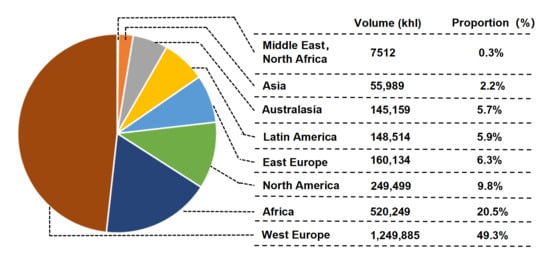
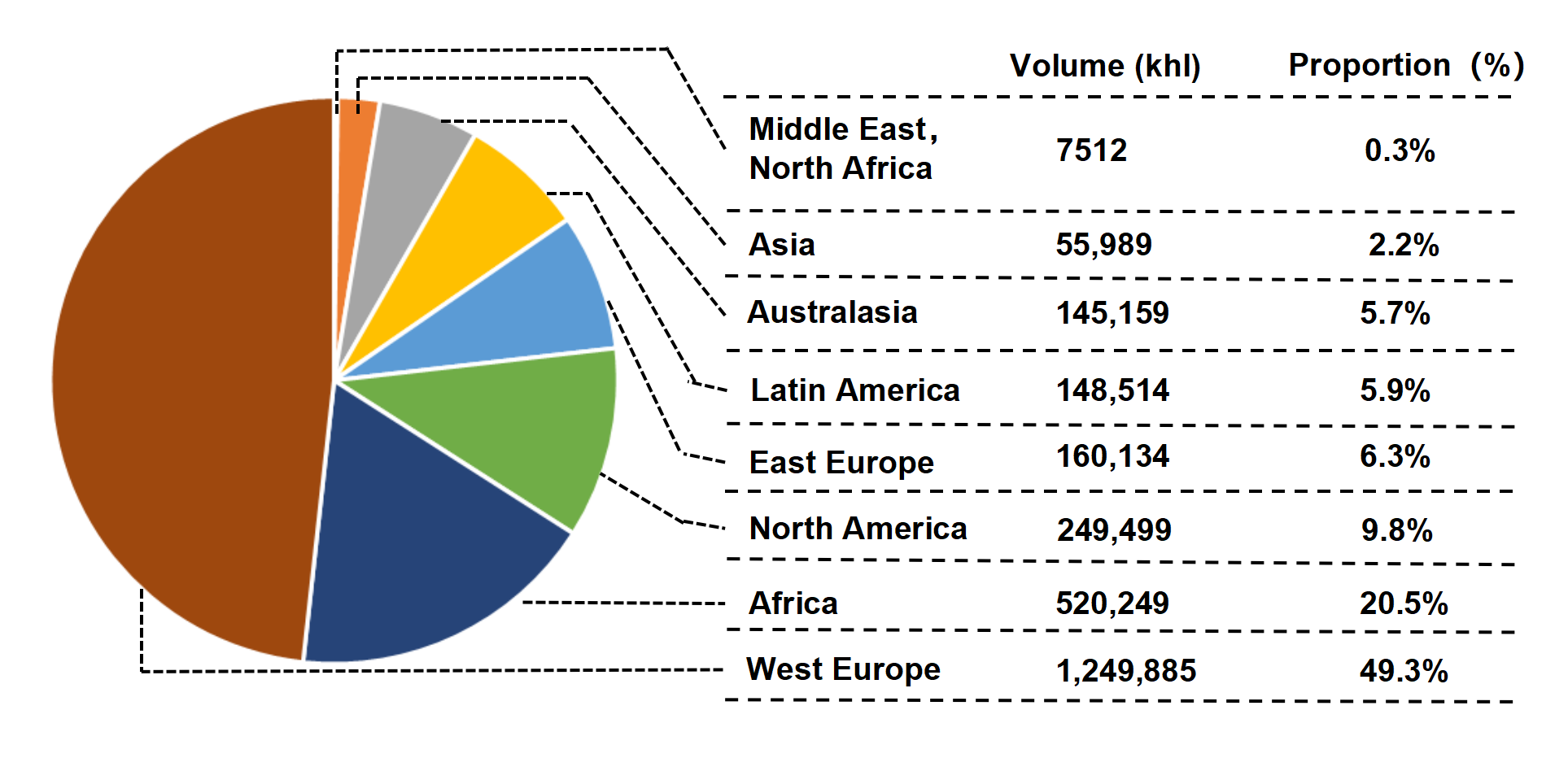
Cider is experiencing a surge in both consumption and production globally. The global cider market is valued at 26 million hectoliters, with a relatively modest compound annual growth rate (CAGR) of 0.8% over the past five years. As shown in Figure 1, the consumption volume of cider across different regions in 2024 highlights Western Europe’s dominant share of 49.3%, followed by Africa at 20.5%, while Asia contributes only 2.2% (source: https://aicv.org/en). In recent years, Western Europe has seen a slight decline in consumption, whereas emerging markets in Asia, Africa, Eastern Europe, and Latin America have become the primary drivers of growth—with Asia being the fastest-growing region. According to statistics from the Food and Agriculture Organization of the United Nations (FAO), China ranks first globally in both apple cultivation area and production output, accounting for over 50% of the world’s total (source: https://www.fao.org/faostat/en/#data (accessed on 1 June 2026)). Looking forward, as consumer habits evolve and acceptance of cider grows, the Asian cider market holds considerable potential for innovation and vigorous development.
Figure 1.
Regional share of consumption in 2024. Data from AICV’s official website: https://aicv.org/en.
Despite similarities between apple wine fermentation and grape wine making, there are significant differences in apple juice composition, such as higher fructose and L-malic acid content and lower yeast assimilable nitrogen [9,10]. These factors affect microbial activity differently compared to grape must, ultimately leading to distinct compositional and sensory profiles (taste and odor) in cider versus wine. Current research mainly focuses on how apple variety, starter culture, and fermentation technology affect the sensory quality and functional properties of cider. Among these, the screening of non-Saccharomyces yeast strains is a research hotspot. Fabien J. Cousin et al. summarized the microbial communities in cider and their impact on sensory quality [3]. Paul Cristian Calugar et al. reviewed the effects of apple varieties and microorganisms on the volatile composition of cider [11]. However, with the rapid growth of cider research, new findings have continuously emerged, including non-Saccharomyces yeast strains (e.g., Kluyveromyces marxianus), mixed-culture inoculation strategies (such as simultaneous inoculation of non-Saccharomyces yeast and lactic acid bacteria), and micro-oxygenation fermentation technology, among others. Therefore, it is necessary to update the review of recent findings, especially regarding the fermentation characteristics of non-Saccharomyces yeasts in cider making.
This review first outlines the flavor basis of cider (non-volatile and aroma components) and the anabolic pathways of related metabolites. It then summarizes the effects of apple raw materials and starter cultures (non-Saccharomyces yeasts and lactic acid bacteria) on cider flavor. Furthermore, it presents research advances in regulating microbial metabolism by controlling oxygen and nutrient supply, which ultimately impacts cider quality.
2. Ingredients of Cider: The Foundational Basis of Flavor
The composition of cider is primarily determined by that of the apple juice. Therefore, the apple variety, cultivation conditions, fruit maturity, as well as physical damage (such as cracks and bruises) or biological damage (e.g., mold, insect infestation) all influence the final composition of the cider [12]. Secondly, it depends on the fermentation process and the activity of microorganisms during fermentation [13]. The main constituents of cider include water, carbohydrates, organic acids, polyphenols, and volatile aroma compounds [14].
2.1. Volatile Components
The aroma of fruit wine is primarily derived from three sources: varietal aroma, which refers to the volatile compounds inherent to the raw material; fermentation aroma, comprising secondary products formed during fermentation; and post-fermentation aroma, which consists of unique mixtures developed during the aging process [15,16]. The raw material variety can largely define the wine’s aroma profile, especially in young fruit wines. Aromatic compounds in fruit may exist in free forms that directly contribute to scent, but more frequently, they are present as non-volatile, sugar-bound precursors. Odorless glycosides serve as these aroma precursors, accumulating during fruit ripening and are predominantly located in the peel. Glycosides release odor-active aglycones through acid or enzymatic hydrolysis (by plant, yeast, or added β-glucosidase). When the levels of these aglycones exceed their perception thresholds, they become the active aromatic components. Volatile compounds synthesized by fruit wine yeast during fermentation mainly include higher alcohols (imparting fusel, almond, and floral notes), medium- and long-chain volatile acids (contributing fatty, cheesy, or sweaty odors), acetate and ethyl esters (providing fruity and floral aromas), and aldehydes (imparting buttery, fruity, or nutty notes). Furthermore, aromatic substances can interact with each other or with other molecules in the wine matrix—such as oxygen, proteins, polyphenols, and polysaccharides—thereby altering their sensory impact [17].
Although some aroma compounds in cider are already present in the apple juice (e.g., hexanol, ethyl 2-hydroxyhexanoate, ethyl lactate), the majority are generated during fermentation. The most significant aroma compounds in apple cider are higher alcohols, esters, fatty acids, carbonyl compounds (aldehydes and ketones), and terpenes. Table 2 lists the types, concentrations, and odor characteristics of the major aroma compounds in cider. The content of these aroma compounds varies considerably across different ciders due to differences in apple cultivars, fermentation microorganisms, and brewing techniques.
Table 2.
The dominant volatile compounds in Cider.
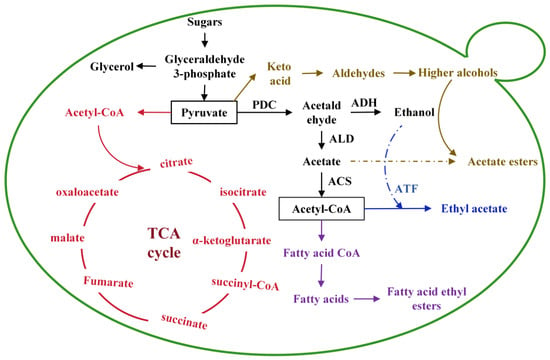
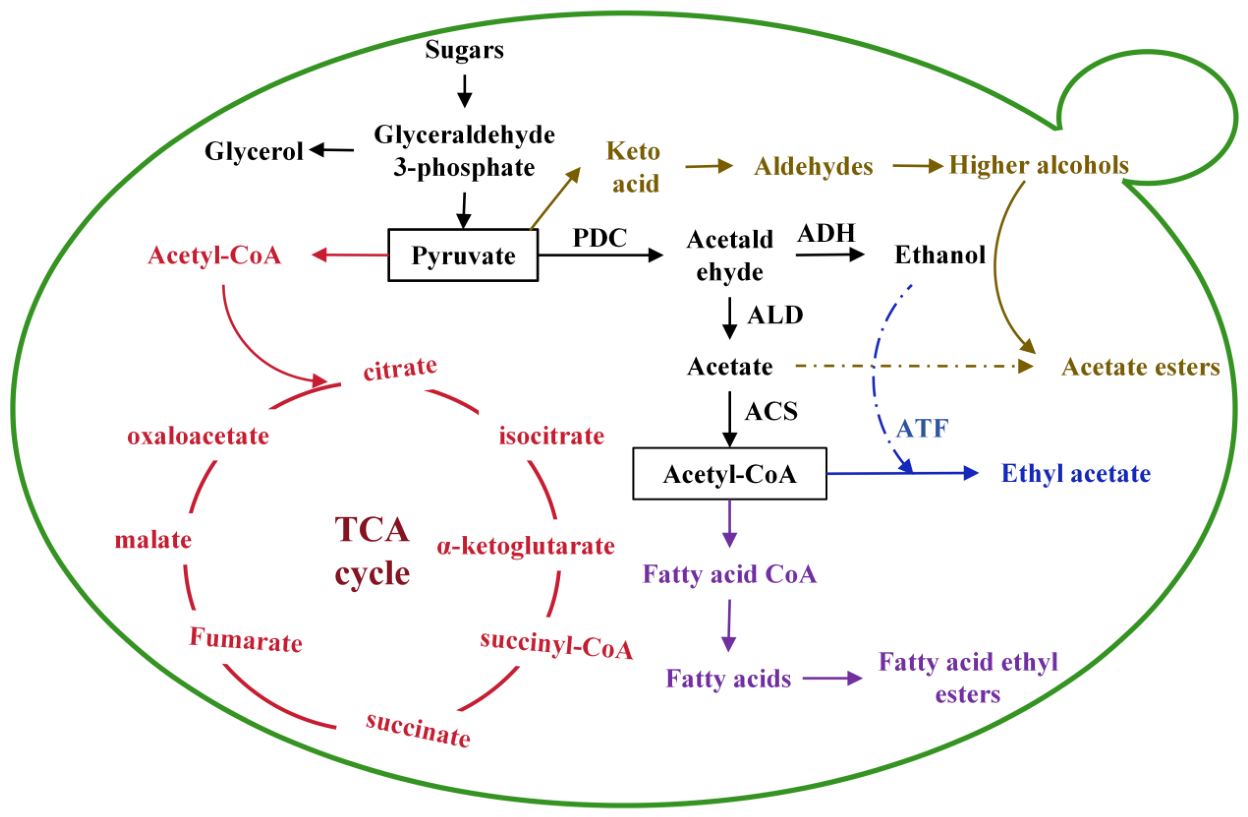
The synthesis of volatile compounds in yeasts are showed in Figure 2. Higher alcohols refer to alcohols containing more than two carbon atoms. Most higher alcohols are produced by yeast through the biosynthetic pathway of sugar metabolism or the catabolic Ehrlich pathway of amino acids, with the formation of intermediate keto acids being a vital step in both [24]. In media with low yeast-assimilable nitrogen, higher alcohols are primarily formed via the biosynthetic pathway rather than through amino acid catabolism [18]. The predominant higher alcohols in apple cider are 2-phenylethanol and 3-methyl-1-butanol (isoamyl alcohol) [12,19]. Higher alcohols serve as precursors to esters and positively contribute to the aromatic complexity of fruit wine. However, at concentrations exceeding 300 mg/L, they can produce intense, pungent odors. During fruit wine maturation, higher alcohols can also be oxidized into aldehydes. The apple raw material is the primary source of aldehydes; after microbial fermentation, both the variety and concentration of aldehydes decrease [25].
Figure 2.
Overview of the central carbon metabolism and the synthesis of volatile and non-volatile compounds in yeast. PDC, pyruvate decarboxylase; ADH, alcohol dehydrogenase; ALD, acetaldehyde dehydrogenase; ACS, acetyl-CoA synthetase; ATF, alcohol acetyltransferase. Different colors indicate the metabolic pathways of different aroma compounds. References: [18,22,26].
Fatty acids, particularly acetic, hexanoic, octanoic, and decanoic acids, help create a fresh aroma in the wine. Esters are primarily classified into two groups based on their formation: acetate esters and ethyl esters. They are synthesized via esterification, with acetate esters resulting from acetic acid and higher alcohols, and ethyl esters from ethanol and medium-chain fatty acids [20]. In cider, esters constitute nearly 50% of the total variety of volatile compounds [21]. Esters with odor activity values (OAVs) above their thresholds primarily include acetate esters (e.g., ethyl acetate, isoamyl acetate, hexyl acetate) and ethyl esters of medium-chain fatty acids (e.g., ethyl hexanoate, ethyl octanoate, ethyl decanoate) [27]. In young wine, ethyl acetate contributes significantly to the fruity aroma, but high concentrations can suppress fruity and floral notes [28]. Esters at appropriate concentrations impart a pleasant fruity character to the wine, whereas excessive levels can introduce undesirable solvent-like or nail polish off-odors [17].
Semi-volatile organic compounds (SVOCs) are increasingly recognized for their contribution to beverage aroma. Characterized by boiling points between 200 and 400 °C, these compounds can exist in both gaseous and particulate phases at room temperature [29]. Ciro Orecchio et al. characterized SVOCs in 56 Italian ciders using comprehensive two-dimensional gas chromatography coupled with time-of-flight mass spectrometry (GC×GC-TOF-MS). The detected SVOCs, with an average molecular weight of around 160 Da, encompassed alcohols, cyclic hydrocarbons, esters, and terpenes [30]. However, research focusing on SVOCs in cider remains relatively limited.
To date, hundreds of volatile compounds have been identified in cider using headspace solid-phase microextraction (HS-SPME) combined with GC-MS. However, the concentrations of these aroma compounds are generally low (particularly for esters, often at the μg/L level) and are markedly influenced by factors such as raw materials, yeast strains, and fermentation conditions. Moreover, most studies rely on internal standard methods for semi-quantitative analysis of aroma components. These factors make it difficult to directly compare the reported concentrations of the same aroma compound across different studies.
2.2. Non-Volatile Components
Sugars, organic acids, and polyphenols significantly contribute to the taste of cider. They interact to create an integrated sensation in the mouth. Sugars contribute to perceived sweetness, with fructose and sorbitol largely responsible for the sweet flavor of the final product. Organic acids define the cider’s taste profile and directly influence the perception of sweetness; a positive perception of acidity is associated with the product’s freshness. Polyphenols primarily influence the bitterness, astringency, and color of the product [5]. Polyphenols like epicatechin, catechin, and procyanidins (trimers C1, dimers B1, B2) contribute to the bitter taste of cider, while phenolic acids such as coumaric, gallic, and protocatechuic acids are responsible for its astringency [31]. Proanthocyanidins significantly contribute to the astringent mouthfeel of the wine, and a higher degree of polymerization leads to increased bitterness and astringency in the wine body [14].
The sugar content in cider is as follows: fructose (3.0–32.9 g/L), sorbitol (3.1–14.1 g/L), glucose (0.1–20.8 g/L), sucrose (0.1–11.8 g/L). The organic acid content is: malic acid (0.37–2.9 g/L), citric acid (0.0–2.8 g/L), L-lactic acid (0.04–4.35 g/L [20,21]. Generally, cider contains fewer phenolic compounds than the corresponding apple juice. Apple juice contains more flavonoid glycosides and dihydrochalcones, while the fermentation process increases the content of free hydroxycinnamic acids in cider [32]. The phenolic compounds in apple cider fall into five categories: (1) Flavan-3-ols, including (+)-catechin, (−)-epicatechin, and their polymers, with a content range of 2–5 g/kg; (2) Hydroxycinnamic acids, including caffeic acid, p-coumaric acid, and ferulic acid, and their esters (e.g., chlorogenic acid, 5-caffeoylquinic acid), with a content range of 0.3–2.5 g/kg; (3) Dihydrochalcones, including phloridzin, phloretin, and phloretin-2′-xyloglucoside, with a content range of 0.02–0.10 g/kg; (4) Flavonols (e.g., quercetin, isorhamnetin); (5) Trace amounts of anthocyanins [5,32]. Flavonoids (114.81–253.44 mg/L) were the second most abundant class of phenolic compounds in ciders, following hydroxycinnamic acids (141.47–327.44 mg/L) [4]. Catechin (8.13 mg/L), epicatechin (24.44 mg/L), caffeic acid (20.72 mg/L), and chlorogenic acid (14.43 mg/L) are the major monomeric phenolic compounds in cider [33].
Compared with volatile components, research on non-volatile components in cider remains relatively limited. Current studies commonly employ untargeted metabolomics for measurement, with compound identification mainly relying on existing databases, while subsequent quantitative validation is insufficient. This leads to a limited discovery of novel functional compounds and compromised data reliability. Furthermore, the types of compounds subjected to quantitative analysis are mostly confined to a few amino acids, organic acids, and phenolic substances.
3. Factors Influencing the Flavor Profile of Cider
3.1. Apple Raw Materials: Cultivar and Maturity
Based on their malic acid and tannin content, apples can be classified into four types: sweet, bitter-sweet, bitter-sharp, and sharp. Fuji is the world’s most widely cultivated apple cultivar. In the European market, Golden Delicious, Jonagold, and Red Delicious collectively represent over 70% of the market share [12]. The raw materials for cider production primarily include fresh apples, dehydrated apples, apple juice (pulp), and concentrated apple juice. Generally, cider producers prefer specific apple varieties over dessert apples to produce high-quality ciders with a balanced profile of acidity, sweetness, astringency, and bitterness. In China, due to the lack of specialized cider apple varieties, fresh dessert apple varieties are commonly used in cider processing [34]. Ciders made from dessert apple varieties may exhibit more desirable mouthfeel and aroma, whereas those produced from varieties richer in polyphenols are often perceived as more astringent [35]. Consequently, the choice of apple cultivar serves as an essential strategy for enhancing cider quality.
Apple juice consists primarily of water (80–90%) but also contains various soluble compounds. Sugars constitute the main soluble components (approximately 75–90%) and exist in multiple forms: monosaccharides, oligosaccharides, and polysaccharides (e.g., amylose, amylopectin, pectin). Fructose is the predominant sugar. Malic acid (1–10 g/L) is the predominant organic acid in apple juice, constituting approximately 85% of the total acidity and, together with citric and quinic acids, accounting for 95.57% of the total organic acid content [6,13]. Amino acids are the primary nitrogen source for yeasts and also act as precursors for key volatile compounds, particularly higher alcohols and esters. Aspartic acid, glutamic acid, asparagine, and serine collectively account for over 80% of the total amino acids present. A deficiency of amino acids in apple juice can lead to sluggish fermentation and reduced aroma production. Furthermore, stuck fermentation is likely if the assimilable nitrogen concentration falls below 75 mg/L [36].
Different apple varieties exhibit significant differences in the content of organic acids, polyphenols, phosphates, minerals, and trace elements [37]. The main constituents of apple polyphenols include chlorogenic acid, phloridzin, proanthocyanidins, epicatechin, anthocyanins, and flavonoids. A strong correlation exists between apple polyphenols and their health benefits, such as anticancer, anti-inflammatory, antioxidant, and antimicrobial activities [38]. The types and concentrations of apple polyphenols vary depending on the cultivar and the growth stage [39]. Cider made from typical dessert apples (Red Delicious) contains higher levels of phenolic compounds than cider produced from varieties such as Pink Lady and Royal Gala [40]. Although the use of different yeast strains can influence the final astringency and bitterness of cider to some extent, the primary sensory differences originate from the apple variety itself [41].
The maturity of the apple raw material substantially impacts its compositional profile. As maturity increases, the sugar content of the fruit rises while acidity decreases [28]. The soluble solids content in apples of different maturity stages ranges from 8.0 to 18.9 °Brix, and malic acid content varies between 0.13 and 17.2 g/L [42]. Regarding phenolic compounds, unripe apples contain higher levels than ripe or overripe apples; ciders produced from them follow the same trend. Apple maturity also influences the composition of volatile compounds. Cider made from overripe apples contains more volatile compounds, such as higher alcohols and acetate esters, than cider from less ripe fruit [43]. Analysis of volatile compounds in apples at different maturity stages (unripe, ripe, and senescent) revealed that ripe apples possess the highest content of aroma substances [42].The phenolic content also varies markedly among different apple cultivars [44]. The apple variety further influences the composition and content of polyphenols in the corresponding pomace. The primary phenolic compounds in fresh apple pomace include chlorogenic acid, caffeic acid, (+)-catechin, (-)-epicatechin, rutin, and quercetin glycosides, among others [45].
Although a wide range of commercial apple varieties are available, there is currently no industry consensus on which varieties are suitable for cider making. Many dessert and wild varieties are also frequently used for cider fermentation. Moreover, the processing of apple raw materials lacks standardized practices: fresh juice and concentrate are all employed for fermentation, and whether to retain the peels and seeds remains unclear.
3.2. Starter Cultures: From Spontaneous Fermentation to Synthetic Microbial Community
Fermentation of fruit wines is primarily driven by microorganisms originating from the raw fruit materials, the winery environment and equipment, or by inoculated cultures. Yeast plays a decisive role in cider fermentation. The biosynthesis of yeast metabolites strongly influences the flavor complexity and mouthfeel of cider [46]. Traditional cider is produced through spontaneous fermentation by indigenous yeasts. Saccharomyces cerevisiae is typically absent or present at very low levels in unfermented juice yet rapidly dominates spontaneous fermentation to complete alcoholic conversion [47]. Cider production in regions such as France, Ireland, and Spain relies entirely on natural microbiota, requiring at least six weeks of fermentation before bottling. However, the population of wild microorganisms (e.g., bacteria and molds) on the peel and stems of ripe fruit far exceeds that of indigenous yeasts. These wild microbes frequently interfere with yeast fermentation, adversely affecting wine quality [20].
To accelerate fermentation and minimize sensory deviations in the product, starter cultures are often inoculated into apple juice [48]. S. cerevisiae is considered the traditional commercial yeast for cider production due to its robust fermentative capacity, high tolerance to harsh environments, and predictable production of flavor compounds [49]. On intact, ripe grapes, S. cerevisiae constituted only a minor part of the microbial flora. Other yeast species were far more numerous and play a crucial role in the initial hours of wine fermentation. In the middle and late stages of fermentation, S. bayanus and S. cerevisiae together accounted for over 50% of the isolates [50]. Analysis of the dynamic changes in the yeast community during spontaneous cider fermentation revealed that Hanseniaspora spp. and Metschnikowia pulcherrima thrive in the early stages. S. bayanus dominates the mid-fermentation phase. In contrast, S. cerevisiae became the predominant yeast in the late fermentation stage.
In fruit wine production, inoculating starter cultures—primarily yeasts and lactic acid bacteria—not only helps control fermentation but also improves flavor by reducing off-flavors from volatile acids, sulfur compounds, and phenolic compounds [37]. Table 3 lists yeast and bacterial strains used in cider fermentation. Inoculation alters the cider’s microbial composition. It suppresses other yeasts but increases bacterial diversity, making inoculated cider more bacteriologically diverse than spontaneously fermented cider [51]. In spontaneously fermented ciders, dominant bacteria included Leuconostoc genus, Gluconobacter genus, and Rahnella genus. Yeasts were primarily Saccharomyces cerevisiae (77.4%), alongside Hanseniaspora genus and Torulaspora genus. In contrast, inoculated fermentation largely suppressed Firmicutes [51]. Different yeast strains mainly affected anthocyanin and flavonoid profiles [52]. Compared to S. cerevisiae, S. bayanus produced ciders with higher levels of hydroxycinnamic acid derivatives [44]. S. bayanus var. uvarum exhibits a shorter lag phase, higher cell viability, and better cold tolerance than S. cerevisiae [53].
Table 3.
Starter cultures and fermentation conditions of ciders.
Commercial yeast has been widely used as a single inoculum in alcoholic fermentation [59]. However, fermentation relying solely on S. cerevisiae often results in a limited aroma profile, constraining the overall sensory complexity of the cider. Mixed-culture fermentations have been widely investigated as a strategy to address the limitations of single-strain inoculation. These desired sensory characteristics can be achieved when multiple yeasts participate in fermentation, as in spontaneous or mixed fermentations [60]. Non-Saccharomyces yeasts are naturally predominant in freshly pressed juice but were historically considered spoilage microorganisms. Current research has demonstrated that non-Saccharomyces yeasts (such as Torulaspora delbrueckii, Pichia kluyveri, Hanseniaspora uvarum, Wickerhamomyces anomalus, and Metschnikowia pulcherrima) possess excellent oenological properties for fruit wine fermentation [61,62]. These include the release of flavor and aroma compounds that positively contribute to the final wine’s sensory complexity [63]. The central carbon metabolism and the synthesis of main flavor compounds in yeast are showed in Figure 2. Acetyl-CoA is a key intermediate metabolite in the central carbon metabolic pathway of yeasts. The variation in aroma compounds production among different yeast strains during fermentation primarily arises from differences in their enzyme systems. Microorganisms synthesize key flavorzyme, which generate aroma compounds via proteolysis, lipolysis, and related reactions. Metschnikowia koreensis showed notable protease and lipase activities, which contributed to its fermentation performance [64]. Yeasts from the genera Hanseniaspora and Torulaspora were used to enhance the aroma and quality of wine. In Hanseniaspora, the absence of genes for branched-chain amino acid transaminases and acyl-CoA/ethanol O-acyltransferases reduces the production of branched-chain higher alcohols, fatty acids, and ethyl esters [47]. Torulaspora delbrueckii is characterized by lower production of acetic acid and ethanol, and higher yields of glycerol, fruit esters, thiols, and terpenes. It also positively contributes to the concentration of phenolic compounds and mannoproteins in wine, leading to increased levels of ethyl lactate, ethyl acetate, and 2-phenylethyl acetate [65,66]. The reduction in ethanol and acetic acid may result from the yeast’s ability to divert carbon flux from their synthesis toward the production of higher alcohols and esters via the α-ketoglutarate pathway, or toward glycerol synthesis through the glycerol-pyruvate pathway [67]. Compared to S. cerevisiae, Schizosaccharomyces pombe reduces the malic acid content and sourness in cider [41]. Kluyveromyces marxianus has been shown to produce high levels of ethyl acetate [68]. In cider making, the esters produced by K. marxianus were mainly acetates (ethyl acetate, propyl acetate, and hexyl acetate). Among these, the yield of ethyl acetate was 8.7–12.0 times higher than that produced by Saccharomyces cerevisiae [56].
However, non-Saccharomyces yeasts are sensitive to ethanol, limiting their industrial use. Additionally, the low concentration of assimilable nitrogen in apple juice can be rapidly depleted by yeasts during the early stages of fermentation. Consequently, some non-Saccharomyces yeasts are unable to complete alcoholic fermentation independently [69]. In order to ensure reliable fermentation while also enhancing the sensory profile of the wine, researchers have adopted mixed fermentations using both non-Saccharomyces and Saccharomyces cerevisiae yeasts [70]. Wines produced by co-culture of M. pulcherrima and S. cerevisiae were found to contain elevated concentrations of higher alcohols and esters relative to those from single-strain fermentation [71]. Sequential inoculation of S. bayanus and T. delbrueckii led to a 53.3% increase in ester content (predominantly ethyl esters) and a 32.8% reduction in acid content compared to single-strain fermentation [72]. However, antagonistic interactions in direct co-culture between S. cerevisiae and non-Saccharomyces yeasts often result in limited survival of the non-Saccharomyces species. S. cerevisiae produces antimicrobial peptides (1–10 kDa) that may inhibit competitors [73]. Microbial interactions are species- and strain-dependent, influenced by nutrient competition, differential ethanol tolerance, and the production of inhibitory or signaling metabolites [13]. Sequential inoculation provides an effective strategy to optimize the synergistic effect between S. cerevisiae and non-Saccharomyces yeasts. Sequential inoculation allows non-Saccharomyces yeasts to establish metabolic activity before S. cerevisiae dominates ethanol production [74]. Yuening Li et al. evaluated sequential inoculation of M. koreensis with S. cerevisiae. The results showed that a 48-h delayed inoculation extended the survival of M. koreensis to 9 days, increased ethanol production, and imparted sensory attributes characterized by reduced acidity and astringency alongside enhanced umami and richness [58].
Malolactic fermentation (MLF) significantly influences the aromatic complexity of fruit wines by generating odor-active compounds and transforming volatile compounds and flavor precursors from both the fruit and yeast [75]. MLF decarboxylates the major acid, malic acid, into lactic acid. Quinic and shikimic acids are converted into phenolic or other compounds. An alternative pathway for lactate formation is the reduction in pyruvate by lactic acid bacteria [76]. Following MLF, the content of flavonoids increases notably [4]. Lactic acid bacteria (LAB) are the primary agents of MLF. They can enhance the mouthfeel and aroma of the wine and improve its microbial stability. LAB from various genera, including Lactobacillus, Pediococcus, and Oenococcus, participate in this secondary wine fermentation. Spontaneous MLF is often unpredictable. To control the process and prevent off-flavors, the use of MLF starter cultures has become common practice [77]. Oenococcus oeni is the predominant LAB conducting MLF in fruit wines [78]. Inoculation with Oenococcus oeni rapidly reduced malic and citric acid content in cider. It also increased levels of lactic acid, ethyl lactate, fatty acids, and terpenes, while leaving higher alcohols unchanged [54]. Traditionally, MLF is conducted sequentially after alcoholic fermentation. However, the ethanol and metabolites produced by yeast can inhibit the growth of LAB strains, leading to failed MLF initiation. Currently, strains of Lactobacillus plantarum (reclassified as Lactiplantibacillus plantarum) have demonstrated resistance mechanisms that enable survival and proliferation in wine. Consequently, they are considered suitable starter cultures for inducing MLF. Lactobacillus plantarum UNQLp 11 exhibited glucosidase activity, leading to a significant increase in neutral polysaccharide concentration after being inoculated into wine [79]. Co-fermentation of Lactiplantibacillus plantarum and Saccharomyces cerevisiae increased the contents of ethyl acetate and isoamyl alcohol in cider and significantly enhanced its antioxidant capacity [57].
3.3. Process Precision: Oxygen and Nutrients
Factors including fermentation oxygen and additives (nutrients) collectively alter the chemical profile of cider, ultimately shaping its sensory characteristics.
Oxygen plays a dual role in the winemaking and aging process, exerting both positive and negative effects on wine quality [80]. During fermentation, oxygen primarily influenced wine composition by modulating yeast activity. During aging, micro-oxygenation promotes a series of reactions including oxidation, esterification, polymerization, and condensation, which significantly enhance the wine’s complexity and depth [81]. Under low-lipid conditions, oxygen supplementation induced yeast biosynthesis of ergosterol and unsaturated fatty acids, promoting nitrogen assimilation [82]. Research indicated that nitrogen directly impacts fermentation kinetics by reactivating protein synthesis (notably sugar transporters), while oxygen primarily affects late-stage kinetics by synthesizing unsaturated fatty acids and sterols, thereby increasing yeast ethanol tolerance [83]. Excessive oxygen, however, leads to negative outcomes such as phenol oxidation, increased tannin astringency and dryness, loss of freshness, and aroma oxidation [84]. One common mitigation strategy is the use of sulfur dioxide (SO2), which serves a dual purpose: inhibiting enzymatic/non-enzymatic oxidation and limiting microbial growth (Antioxidant strategies and mechanisms of cider fermentation with ergothioneine- and glutathione-producing yeasts: an alternative to sulfur dioxide.). Adding SO2 at 50 mg/L can reduce polyphenol oxidase activity by 75–90%. Furthermore, SO2 limits oxidation by reducing reaction products back to their original forms [85]. Micro-oxygenation (MOX) is an innovative technique in winemaking that enhances wine quality by facilitating slow, controlled oxidation. By precisely regulating the rate and amount of oxygen transfer, MOX achieved effects similar to those of long-term traditional aging in a shorter timeframe. This technology offered high batch-to-batch consistency and reproducibility, ensuring stable and predictable wine quality [86]. A recent strategy to reduce fruit wine alcohol content involves using aerobic conditions to allow respiro-fermentative metabolism of sugar. Non-Saccharomyces strains are employed to overcome limitations imposed by the Crabtree-positive character of S. cerevisiae [87]. Sequential fermentations with three non-Saccharomyces strains under different aeration conditions showed ethanol reductions of 1.6%, 0.9%, and 1.0% for M. pulcherrima, T. delbrueckii, and Zygosaccharomyces bailii, respectively, compared to S. cerevisiae wine [67].
Nutritional deficiencies, particularly in nitrogen and vitamins, are associated with stuck or sluggish fermentations. Therefore, external nutrients are sometimes added to unfermented juice to avoid such problems. Assimilable nitrogen is crucial not only for yeast biomass but also for synthesizing aromatic compounds [88]. It exists primarily as inorganic nitrogen (ammonium ions) or organic nitrogen (free amino nitrogen) [89]. Insufficient levels can lead to slow or stuck fermentation and promote the formation of undesirable volatile hydrogen sulfide [90]. Supplementation with 60 mg N/L of diammonium phosphate significantly increased the content of volatile compounds in cider, especially ethyl esters of medium-chain fatty acids and fatty acids. Adding 150 mg N/L of amino acids notably raised the concentrations of higher alcohols and acetate esters [91]. Yeast derivatives are widely used in winemaking for fermentation management and wine stabilization. They provide assimilable nitrogen, stimulate the growth of yeast and lactic acid bacteria, prevent sluggish fermentation, and enhance colloidal stability through the action of yeast mannoproteins [92]. The International Organisation of Vine and Wine (OIV) permits the use of yeast protein extracts for wine clarification. This practice reduces turbidity, preserves color and structure, removes excess tannins, and improves filterability [17].
4. Conclusions and Prospects
This review systematically elucidates that the final flavor profile of cider are the direct result of a complex interaction among three primary factors: the raw materials, the fermenting microorganisms, and the process control. The apple cultivar forms the foundational basis for flavor, with its specific sugar-to-acid ratio and polyphenol profile. The starter cultures, particularly the strategic shift from pure S. cerevisiae fermentations to simultaneous or sequential inoculations involving diverse non-Saccharomyces yeasts, have become the central driver for shaping aromatic complexity. LAB-driven malolactic fermentation also plays a critical role in shaping cider flavor. These microbial communities synergistically regulate the synthesis and balance of key aroma compounds. Precise control over key parameters—including oxygen management and nutrient supply—is essential for ensuring smooth fermentation and enhancing sensory quality.
Future research perspectives on cider are structured around the three key factors discussed above. Regarding raw materials, although a wide range of apple cultivars is available, the most suitable varieties for cider making remain unclear. Future efforts should therefore focus on selecting specific cultivars tailored to different cider styles, and standardizing the processing protocols for apple raw materials. Concerning starter cultures, although the use of non-Saccharomyces yeasts is becoming a trend in cider fermentation, completing alcoholic fermentation alone under relatively anaerobic conditions remains a challenge, limiting their commercial application. Given their Crabtree-negative trait, the application of micro-oxygenation and nutrient supplementation to improve their fermentation kinetics may offer a promising direction. In addition, research on malolactic fermentation (MLF) deserves further exploration. Beyond Oenococcus oeni and Lactiplantibacillus plantarum, more lactic acid bacteria strains that are well adapted to the cider environment and capable of co-fermentation with yeasts should be screened. With respect to process control, in addition to modulating microbial metabolism, pre-fermentation treatments such as cold maceration and enzymolysis should be investigated to enhance the extraction of soluble components from apples, thereby improving the flavor and functional properties of cider.
Author Contributions
Z.Z.: Investigation, Writing—Original Draft; C.Y.: Visualization; J.L.: Investigation; L.Z.: Investigation; L.L.: Investigation; R.C.: Resources, Project Administration; W.W.: Supervision; S.L.: Supervision. All authors have read and agreed to the published version of the manuscript.
Funding
This work was supported by Scientific Research Fund Project of the Education Department of Yunnan Province [grant number 2026J1144]; Yunnan Provincial Enterprise Science and Technology Commissioner Project; Yunnan Provincial Education Department Zhaotong Apple Industry Green Development Engineering Research Center; Zhaotong University High-Level Talent Research Start-up Fund Project.
Institutional Review Board Statement
Not applicable.
Informed Consent Statement
Not applicable.
Data Availability Statement
No new data were created or analyzed in this study. Data sharing is not applicable to this article.
Conflicts of Interest
The authors declare no conflicts of interest.
References
- Zuo, W.; Zhang, T.; Xu, H.; Wang, C.; Lu, M.; Chen, X. Effect of fermentation time on nutritional components of red-fleshed apple cider. Food Bioprod. Process. 2019, 114, 276–285. [Google Scholar] [CrossRef] [Scilit]
- Alonso González, P.; Parga Dans, E.; de las Heras Tranche, I.; Carolina Acosta-Dacal, A.; Macías Montes, A.; Zumbado Peña, M.; Pérez Luzardo, O. Comparative analyses of pesticide residues, elemental composition and mycotoxin levels in Spanish traditional and novel ciders. Food Control 2024, 160, 110310. [Google Scholar] [CrossRef] [Scilit]
- Cousin, F.; Le Guellec, R.; Schlusselhuber, M.; Dalmasso, M.; Laplace, J.-M.; Cretenet, M. Microorganisms in Fermented Apple Beverages: Current Knowledge and Future Directions. Microorganisms 2017, 5, 39. [Google Scholar] [CrossRef] [Scilit] [PubMed]
- Călugăr, P.C.; Coldea, T.E.; Pop, C.-R.; Stan, L.; Socaci, S.A.; Ranga, F.; Hegheș, S.C.; Geană, E.-I.; Mudura, E. Effect of co-inoculation of Saccharomyces and non-Saccharomyces yeasts and nutrients addition during malolactic fermentation on apple cider composition. Food Biosci. 2024, 60, 104314. [Google Scholar] [CrossRef] [Scilit]
- Coton, E.; Coton, M.; Guichard, H. Cider (Cyder; Hard Cider): The Product and Its Manufacture. In Encyclopedia of Food and Health; Elsevier: Amsterdam, The Netherlands, 2016; pp. 119–128. [Google Scholar] [CrossRef] [Scilit]
- Joshi, V.K.; Panesar, P.S.; Rana, V.S.; Kaur, S. Science and Technology of Fruit Wines. In Science and Technology of Fruit Wine Production; Academic Press: Cambridge, MA, USA, 2017; pp. 1–72. [Google Scholar] [CrossRef] [Scilit]
- Pando Bedriñana, R.; Picinelli Lobo, A.; Rodríguez Madrera, R.; Suárez Valles, B. Characteristics of ice juices and ciders made by cryo-extraction with different cider apple varieties and yeast strains. Food Chem. 2020, 310, 125831. [Google Scholar] [CrossRef] [Scilit] [PubMed]
- Clément, A.; Panneton, B.; Bastien, R.; Fernandez, P. Ice cider fingerprinting using optical spectroscopy and simple laboratory measurements. J. Food Eng. 2017, 204, 55–63. [Google Scholar] [CrossRef] [Scilit]
- Svedlund, N.; Kiepert, A.; Rodríguez Pérez, J.; Magalhães, F.; Wietstock, P.C.; Gibson, B. Enhancement of dry-hopped cider aroma through selection of apple cultivar, hop variety and yeast strain. Food Microbiol. 2025, 129, 104755. [Google Scholar] [CrossRef] [Scilit] [PubMed]
- Antón-Díaz, M.J.; Suárez Valles, B.; Mangas-Alonso, J.J.; Fernández-García, O.; Picinelli-Lobo, A. Impact of different techniques involving contact with lees on the volatile composition of cider. Food Chem. 2016, 190, 1116–1122. [Google Scholar] [CrossRef] [Scilit] [PubMed]
- Calugar, P.C.; Coldea, T.E.; Salanță, L.C.; Pop, C.R.; Pasqualone, A.; Burja-Udrea, C.; Zhao, H.; Mudura, E. An Overview of the Factors Influencing Apple Cider Sensory and Microbial Quality from Raw Materials to Emerging Processing Technologies. Processes 2021, 9, 502. [Google Scholar] [CrossRef] [Scilit]
- Ye, M.; Yue, T.; Yuan, Y. Changes in the profile of volatile compounds and amino acids during cider fermentation using dessert variety of apples. Eur. Food Res. Technol. 2014, 239, 67–77. [Google Scholar] [CrossRef] [Scilit]
- Zhang, Y.; Chen, F.; Liu, Y.; Song, X.; Wu, Y.; Ma, S.; Yuan, Y.; Wei, J.; Yue, T. Inoculation strategy-driven changes in volatiles and organoleptic properties of cider: Insights from GC-MS, GC-IMS, and multivariate statistical models. LWT 2026, 240, 119010. [Google Scholar] [CrossRef] [Scilit]
- Symoneaux, R.; Baron, A.; Marnet, N.; Bauduin, R.; Chollet, S. Impact of apple procyanidins on sensory perception in model cider (part 1): Polymerisation degree and concentration. LWT—Food Sci. Technol. 2014, 57, 22–27. [Google Scholar] [CrossRef] [Scilit]
- Sieiro, C.; Villa, T.G.; da Silva, A.F.; García-Fraga, B.; Vilanova, M. Albariño wine aroma enhancement through the use of a recombinant polygalacturonase from Kluyveromyces marxianus. Food Chem. 2014, 145, 179–185. [Google Scholar] [CrossRef] [Scilit] [PubMed]
- Vilanova, M.; Sieiro, C. Determination of free and bound terpene compounds in Albariño wine. J. Food Compos. Anal. 2006, 19, 694–697. [Google Scholar] [CrossRef] [Scilit]
- Rigou, P.; Mekoue, J.; Sieczkowski, N.; Doco, T.; Vernhet, A. Impact of industrial yeast derivative products on the modification of wine aroma compounds and sensorial profile. A review. Food Chem. 2021, 358, 129760. [Google Scholar] [CrossRef] [Scilit] [PubMed]
- Liu, S.; Lou, Y.; Li, Y.; Zhao, Y.; Laaksonen, O.; Li, P.; Zhang, J.; Battino, M.; Yang, B.; Gu, Q. Aroma characteristics of volatile compounds brought by variations in microbes in winemaking. Food Chem. 2023, 420, 136075. [Google Scholar] [CrossRef] [Scilit] [PubMed]
- Ye, M.; Yue, T.; Yuan, Y. Effects of sequential mixed cultures of Wickerhamomyces anomalus and Saccharomyces cerevisiae on apple cider fermentation. FEMS Yeast Res. 2014, 14, 873–882. [Google Scholar] [CrossRef] [Scilit] [PubMed]
- Lorenzini, M.; Simonato, B.; Slaghenaufi, D.; Ugliano, M.; Zapparoli, G. Assessment of yeasts for apple juice fermentation and production of cider volatile compounds. LWT 2019, 99, 224–230. [Google Scholar] [CrossRef] [Scilit]
- Qin, Z.; Petersen, M.A.; Bredie, W.L.P. Flavor profiling of apple ciders from the UK and Scandinavian region. Food Res. Int. 2018, 105, 713–723. [Google Scholar] [CrossRef] [Scilit] [PubMed]
- Picinelli Lobo, A.; Pando Bedriñana, R.; Rodríguez Madrera, R.; Suárez Valles, B. Aromatic, olfactometric and consumer description of sweet ciders obtained by cryo-extraction. Food Chem. 2021, 338, 127829. [Google Scholar] [CrossRef] [Scilit] [PubMed]
- Sumby, K.M.; Grbin, P.R.; Jiranek, V. Microbial modulation of aromatic esters in wine: Current knowledge and future prospects. Food Chem. 2010, 121, 1–16. [Google Scholar] [CrossRef] [Scilit]
- Hazelwood, L.A.; Daran, J.-M.; van Maris, A.J.A.; Pronk, J.T.; Dickinson, J.R. The Ehrlich Pathway for Fusel Alcohol Production: A Century of Research on Saccharomyces cerevisiae Metabolism. Appl. Environ. Microbiol. 2008, 74, 2259–2266. [Google Scholar] [CrossRef] [Scilit]
- Wei, J.; Zhang, Y.; Wang, Y.; Ju, H.; Niu, C.; Song, Z.; Yuan, Y.; Yue, T. Assessment of chemical composition and sensorial properties of ciders fermented with different non-Saccharomyces yeasts in pure and mixed fermentations. Int. J. Food Microbiol. 2020, 318, 108471. [Google Scholar] [CrossRef] [Scilit] [PubMed]
- Styger, G.; Jacobson, D.; Bauer, F.F. Identifying genes that impact on aroma profiles produced by Saccharomyces cerevisiae and the production of higher alcohols. Appl. Microbiol. Biotechnol. 2011, 91, 713–730. [Google Scholar] [CrossRef] [Scilit] [PubMed]
- Cordente, A.G.; Curtin, C.D.; Varela, C.; Pretorius, I.S. Flavour-active wine yeasts. Appl. Microbiol. Biotechnol. 2012, 96, 601–618. [Google Scholar] [CrossRef] [Scilit] [PubMed]
- Braga, C.M.; Zielinski, A.A.F.; Silva KMd de Souza, F.K.F.; Pietrowski, G.d.A.M.; Couto, M.; Granato, D.; Wosiacki, G.; Nogueira, A. Classification of juices and fermented beverages made from unripe, ripe and senescent apples based on the aromatic profile using chemometrics. Food Chem. 2013, 141, 967–974. [Google Scholar] [CrossRef] [Scilit] [PubMed]
- Zhu, Y.; Sun, R.; Dong, Y.; Liu, Y.; Chen, Y.; Yuan, Z.; Pan, B.; Xu, N. A sensitive method for rapid determination of 256 semi-volatile organic compounds (SVOCs) in water by solid-phase extraction and GC–MS/MS. J. Environ. Sci. 2026, 159, 362–373. [Google Scholar] [CrossRef] [Scilit] [PubMed]
- Orecchio, C.; Bedini, A.; Romagnoli, M.; Pantò, S.; Alladio, E.; Pazzi, M. Characterization of semi-volatile compounds in 56 Italian ciders using GC×GC-TOF-MS and multivariate analysis. Heliyon 2024, 10, e35687. [Google Scholar] [CrossRef] [Scilit] [PubMed]
- Huang, R.; Xu, C. An overview of the perception and mitigation of astringency associated with phenolic compounds. Compr. Rev. Food Sci. Food Saf. 2020, 20, 1036–1074. [Google Scholar] [CrossRef] [Scilit] [PubMed]
- He, W.; Laaksonen, O.; Tian, Y.; Heinonen, M.; Bitz, L.; Yang, B. Phenolic compound profiles in Finnish apple (Malus × domestica Borkh.) juices and ciders fermented with Saccharomyces cerevisiae and Schizosaccharomyces pombe strains. Food Chem. 2022, 373, 131437. [Google Scholar] [CrossRef] [Scilit] [PubMed]
- Xu, J.; Qi, Y.; Zhang, J.; Liu, M.; Wei, X.; Fan, M. Effect of reduced glutathione on the quality characteristics of apple wine during alcoholic fermentation. Food Chem. 2019, 300, 125130. [Google Scholar] [CrossRef] [Scilit] [PubMed]
- Zeng, C.; Mu, Y.; Yuan, J.; Zhang, H.; Song, J.; Kang, S. Apple cultivar-influenced differences in cider: A comprehensive analysis of physicochemical and aroma compounds. Microchem. J. 2025, 208, 112382. [Google Scholar] [CrossRef] [Scilit]
- Ruppert, V.; Innerhofer, G.; Voit, J.; Hiden, P.; Siegmund, B. The Impact of the Fermentation Strategy on the Flavour Formation of Ilzer Rose (Malus domestica Borkh.) Apple Wine. Foods 2021, 10, 2348. [Google Scholar] [CrossRef] [Scilit] [PubMed]
- Ma, S.; Neilson, A.P.; Lahne, J.; Peck, G.M.; O’Keefe, S.F.; Stewart, A.C. Free amino acid composition of apple juices with potential for cider making as determined by UPLC-PDA. J. Inst. Brew. 2018, 124, 467–476. [Google Scholar] [CrossRef] [Scilit]
- Tempere, S.; Marchal, A.; Barbe, J.C.; Bely, M.; Masneuf-Pomarede, I.; Marullo, P.; Albertin, W. The complexity of wine: Clarifying the role of microorganisms. Appl. Microbiol. Biotechnol. 2018, 102, 3995–4007. [Google Scholar] [CrossRef] [Scilit] [PubMed]
- Sun, L.; Liu, D.; Sun, J.; Yang, X.; Fu, M.; Guo, Y. Simultaneous separation and purification of chlorogenic acid, epicatechin, hyperoside and phlorizin from thinned young Qinguan apples by successive use of polyethylene and polyamide resins. Food Chem. 2017, 230, 362–371. [Google Scholar] [CrossRef] [Scilit] [PubMed]
- Zheng, H.-Z.; Kim, Y.-I.; Chung, S.-K. A profile of physicochemical and antioxidant changes during fruit growth for the utilisation of unripe apples. Food Chem. 2012, 131, 106–110. [Google Scholar] [CrossRef] [Scilit]
- Girschik, L.; Jones, J.E.; Kerslake, F.L.; Robertson, M.; Dambergs, R.G.; Swarts, N.D. Apple variety and maturity profiling of base ciders using UV spectroscopy. Food Chem. 2017, 228, 323–329. [Google Scholar] [CrossRef] [Scilit] [PubMed]
- He, W.; Liu, S.; Heponiemi, P.; Heinonen, M.; Marsol-Vall, A.; Ma, X.; Yang, B.; Laaksonen, O. Effect of Saccharomyces cerevisiae and Schizosaccharomyces pombe strains on chemical composition and sensory quality of ciders made from Finnish apple cultivars. Food Chem. 2021, 345, 128833. [Google Scholar] [CrossRef] [Scilit] [PubMed]
- Lanzerstorfer, P.; Wruss, J.; Huemer, S.; Steininger, A.; Muller, U.; Himmelsbach, M.; Borgmann, D.; Winkler, S.; Hoglinger, O.; Weghuber, J. Bioanalytical characterization of apple juice from 88 grafted and nongrafted apple varieties grown in Upper Austria. J. Agric. Food Chem. 2014, 62, 1047–1056. [Google Scholar] [CrossRef] [Scilit] [PubMed]
- Rosend, J.; Kuldjarv, R.; Rosenvald, S.; Paalme, T. The effects of apple variety, ripening stage, and yeast strain on the volatile composition of apple cider. Heliyon 2019, 5, e01953. [Google Scholar] [CrossRef] [Scilit] [PubMed]
- Laaksonen, O.; Kuldjarv, R.; Paalme, T.; Virkki, M.; Yang, B. Impact of apple cultivar, ripening stage, fermentation type and yeast strain on phenolic composition of apple ciders. Food Chem. 2017, 233, 29–37. [Google Scholar] [CrossRef] [Scilit] [PubMed]
- Barreira, J.C.M.; Arraibi, A.A.; Ferreira, I.C.F.R. Bioactive and functional compounds in apple pomace from juice and cider manufacturing: Potential use in dermal formulations. Trends Food Sci. Technol. 2019, 90, 76–87. [Google Scholar] [CrossRef] [Scilit]
- Song, Y.; Gibney, P.; Cheng, L.; Liu, S.; Peck, G. Yeast Assimilable Nitrogen Concentrations Influence Yeast Gene Expression and Hydrogen Sulfide Production During Cider Fermentation. Front. Microbiol. 2020, 11, 1264. [Google Scholar] [CrossRef] [Scilit] [PubMed]
- Prior, K.J.; Bauer, F.F.; Divol, B. The utilisation of nitrogenous compounds by commercial non-Saccharomyces yeasts associated with wine. Food Microbiol. 2019, 79, 75–84. [Google Scholar] [CrossRef] [Scilit] [PubMed]
- Wei, J.; Zhang, Y.; Yuan, Y.; Dai, L.; Yue, T. Characteristic fruit wine production via reciprocal selection of juice and non-Saccharomyces species. Food Microbiol. 2019, 79, 66–74. [Google Scholar] [CrossRef] [Scilit] [PubMed]
- Albergaria, H.; Arneborg, N. Dominance of Saccharomyces cerevisiae in alcoholic fermentation processes: Role of physiological fitness and microbial interactions. Appl. Microbiol. Biotechnol. 2016, 100, 2035–2046. [Google Scholar] [CrossRef] [Scilit] [PubMed]
- Tronchoni, J.; Curiel, J.A.; Sáenz-Navajas, M.P.; Morales, P.; de-la-Fuente-Blanco, A.; Fernández-Zurbano, P.; Ferreira, V.; Gonzalez, R. Aroma profiling of an aerated fermentation of natural grape must with selected yeast strains at pilot scale. Food Microbiol. 2018, 70, 214–223. [Google Scholar] [CrossRef] [Scilit] [PubMed]
- Han, Y.; Du, J. A comparative study of the effect of bacteria and yeasts communities on inoculated and spontaneously fermented apple cider. Food Microbiol. 2023, 111, 104195. [Google Scholar] [CrossRef] [Scilit] [PubMed]
- Kokkinomagoulos, E.; Nikolaou, A.; Kourkoutas, Y.; Kandylis, P. Evaluation of Yeast Strains for Pomegranate Alcoholic Beverage Production: Effect on Physicochemical Characteristics, Antioxidant Activity, and Aroma Compounds. Microorganisms 2020, 8, 1583. [Google Scholar] [CrossRef] [Scilit] [PubMed]
- Masneuf-Pomarede, I.; Bely, M.; Marullo, P.; Lonvaud-Funel, A.; Dubourdieu, D. Reassessment of phenotypic traits for Saccharomyces bayanus var. uvarum wine yeast strains. Int. J. Food Microbiol. 2010, 139, 79–86. [Google Scholar] [CrossRef] [Scilit] [PubMed]
- Li, C.; Zhao, X.; Zuo, W.; Zhang, T.; Zhang, Z.; Chen, X. The effects of simultaneous and sequential inoculation of yeast and autochthonous Oenococcus oeni on the chemical composition of red-fleshed apple cider. LWT 2020, 124, 109184. [Google Scholar] [CrossRef] [Scilit]
- Li, H.; Huang, J.; Wang, Y.; Wang, X.; Ren, Y.; Yue, T.; Wang, Z.; Gao, Z. Study on the nutritional characteristics and antioxidant activity of dealcoholized sequentially fermented apple juice with Saccharomyces cerevisiae and Lactobacillus plantarum fermentation. Food Chem. 2021, 363, 130351. [Google Scholar] [CrossRef] [Scilit] [PubMed]
- Zhang, Z.; Lan, Q.; Yu, Y.; Zhou, J.; Lu, H. Comparative metabolome and transcriptome analyses of the properties of Kluyveromyces marxianus and Saccharomyces yeasts in apple cider fermentation. Food Chem. 2022, 4, 100095. [Google Scholar] [CrossRef] [Scilit] [PubMed]
- Hu, L.; Chen, X.; Cao, Y.; Gao, P.; Xu, T.; Xiong, D.; Zhao, Z. Lactiplantibacillus plantarum exerts strain-specific effects on malolactic fermentation, antioxidant activity, and aroma profile of apple cider. Food Chem. X 2024, 23, 101575. [Google Scholar] [CrossRef] [Scilit] [PubMed]
- Li, Y.; Liang, H.; Wu, Y.; Lin, X.; Dai, Y.; Ji, C. Microbial interactions and sequential inoculation of Metschnikowia koreensis and Saccharomyces cerevisiae shape cider flavor development. Food Biosci. 2026, 75, 108196. [Google Scholar] [CrossRef] [Scilit]
- Roca-Mesa, H.; Delgado-Yuste, E.; Mas, A.; Torija, M.J.; Beltran, G. Importance of micronutrients and organic nitrogen in fermentations with Torulaspora delbrueckii and Saccharomyces cerevisiae. Int. J. Food Microbiol. 2022, 381, 109915. [Google Scholar] [CrossRef] [Scilit] [PubMed]
- Jolly, N.P.; Varela, C.; Pretorius, I.S. Not your ordinary yeast: Non-Saccharomyces yeasts in wine production uncovered. FEMS Yeast Res. 2014, 14, 215–237. [Google Scholar] [CrossRef] [Scilit] [PubMed]
- Cheng, Y.; Geng, S.; Zhang, J.; Zhao, X.; Jiang, J.; Liang, Y.; Mu, H.; Li, W.; Qin, Y.; Liu, Y.; et al. A comprehensive study on fermentation and aroma contributions of Torulaspora delbrueckii in diverse wine varieties: Insights from pure and co-fermentation studies. Food Res. Int. 2025, 199, 115340. [Google Scholar] [CrossRef] [Scilit] [PubMed]
- Yang, X.; Zhao, F.; Yang, L.; Li, J.; Zhu, X. Enhancement of the aroma in low-alcohol apple-blended pear wine mixed fermented with Saccharomyces cerevisiae and non-Saccharomyces yeasts. LWT 2022, 155, 112994. [Google Scholar] [CrossRef] [Scilit]
- Zeng, C.; Mu, Y.; Yuan, J.; Zhang, H.; Song, J.; Kang, S. Effects of Torulaspora delbrueckii and Saccharomyces cerevisiae Co-Fermentation on the Physicochemical and Flavor Compounds of Huaniu Apple Cider. Molecules 2024, 29, 1750. [Google Scholar] [CrossRef] [Scilit] [PubMed]
- Kim, D.-H.; Lee, S.-B.; Jeon, J.-Y.; Park, H.-D. Development of air-blast dried non-Saccharomyces yeast starter for improving quality of Korean persimmon wine and apple cider. Int. J. Food Microbiol. 2019, 290, 193–204. [Google Scholar] [CrossRef] [Scilit] [PubMed]
- Benito, S. The impact of Torulaspora delbrueckii yeast in winemaking. Appl. Microbiol. Biotechnol. 2018, 102, 3081–3094. [Google Scholar] [CrossRef] [Scilit] [PubMed]
- Giorello, F.; Valera, M.J.; Martin, V.; Parada, A.; Salzman, V.; Camesasca, L.; Farina, L.; Boido, E.; Medina, K.; Dellacassa, E.; et al. Genomic and Transcriptomic Basis of Hanseniaspora vineae’s Impact on Flavor Diversity and Wine Quality. Appl. Environ. Microbiol. 2019, 85, e01959-18. [Google Scholar] [CrossRef] [Scilit] [PubMed]
- Canonico, L.; Solomon, M.; Comitini, F.; Ciani, M.; Varela, C. Volatile profile of reduced alcohol wines fermented with selected non-Saccharomyces yeasts under different aeration conditions. Food Microbiol. 2019, 84, 103247. [Google Scholar] [CrossRef] [Scilit] [PubMed]
- Löser, C.; Urit, T.; Keil, P.; Bley, T. Studies on the mechanism of synthesis of ethyl acetate in Kluyveromyces marxianus DSM 5422. Appl. Microbiol. Biotechnol. 2014, 99, 1131–1144. [Google Scholar] [CrossRef] [Scilit] [PubMed]
- Gschaedler, A.; Iniguez-Munoz, L.E.; Flores-Flores, N.Y.; Kirchmayr, M.; Arellano-Plaza, M. Use of non-Saccharomyces yeasts in cider fermentation: Importance of the nutrients addition to obtain an efficient fermentation. Int. J. Food Microbiol. 2021, 347, 109169. [Google Scholar] [CrossRef] [Scilit] [PubMed]
- Tufariello, M.; Fragasso, M.; Pico, J.; Panighel, A.; Castellarin, S.D.; Flamini, R.; Grieco, F. Influence of Non-Saccharomyces on Wine Chemistry: A Focus on Aroma-Related Compounds. Molecules 2021, 26, 644. [Google Scholar] [CrossRef] [Scilit] [PubMed]
- Contreras, A.; Hidalgo, C.; Henschke, P.A.; Chambers, P.J.; Curtin, C.; Varela, C. Evaluation of non-Saccharomyces yeasts for the reduction of alcohol content in wine. Appl. Environ. Microbiol. 2014, 80, 1670–1678. [Google Scholar] [CrossRef] [Scilit] [PubMed]
- Liu, J.; Liu, M.; Ye, P.; He, C.; Liu, Y.; Zhang, S.; Huang, J.; Zhou, J.; Zhou, R.; Cai, L. Ethyl esters enhancement of Jinchuan pear wine studied by coculturing Saccharomyces bayanus with Torulaspora delbrueckii and their community and interaction characteristics. Food Biosci. 2022, 46, 101605. [Google Scholar] [CrossRef] [Scilit]
- Branco, P.; Francisco, D.; Chambon, C.; Hébraud, M.; Arneborg, N.; Almeida, M.G.; Caldeira, J.; Albergaria, H. Identification of novel GAPDH-derived antimicrobial peptides secreted by Saccharomyces cerevisiae and involved in wine microbial interactions. Appl. Microbiol. Biotechnol. 2013, 98, 843–853. [Google Scholar] [CrossRef] [Scilit] [PubMed]
- Li, R.-R.; Xu, M.; Zheng, J.; Liu, Y.-J.; Sun, C.-H.; Wang, H.; Guo, X.-W.; Xiao, D.-G.; Wu, X.-L.; Chen, Y.-F. Application Potential of Baijiu Non-Saccharomyces Yeast in Winemaking Through Sequential Fermentation with Saccharomyces cerevisiae. Front. Microbiol. 2022, 13, 902597. [Google Scholar] [CrossRef] [Scilit] [PubMed]
- Sumby, K.M.; Grbin, P.R.; Jiranek, V. Implications of new research and technologies for malolactic fermentation in wine. Appl. Microbiol. Biotechnol. 2014, 98, 8111–8132. [Google Scholar] [CrossRef] [Scilit] [PubMed]
- Zhang, H.; Zhou, F.; Ji, B.; Nout, R.M.J.; Fang, Q.; Yang, Z. Determination of organic acids evolution during apple cider fermentation using an improved HPLC analysis method. Eur. Food Res. Technol. 2008, 227, 1183–1190. [Google Scholar] [CrossRef] [Scilit]
- Ruiz, P.; Izquierdo, P.M.; Seseña, S.; Palop, M.L. Selection of autochthonous Oenococcus oeni strains according to their oenological properties and vinification results. Int. J. Food Microbiol. 2010, 137, 230–235. [Google Scholar] [CrossRef] [Scilit] [PubMed]
- Jones, R.C.; Visger, C.J.; Lopez, C.A. The microbiota of wild fermented cider from U.S. west coast apples. Food Microbiol. 2026, 139, 105120. [Google Scholar] [CrossRef] [Scilit] [PubMed]
- Brizuela, N.S.; Franco-Luesma, E.; Bravo-Ferrada, B.M.; Pérez-Jiménez, M.; Semorile, L.; Tymczyszyn, E.E.; Pozo-Bayon, M.A. Influence of Patagonian Lactiplantibacillus plantarum and Oenococcus oeni strains on sensory perception of Pinot Noir wine after malolactic fermentation. Aust. J. Grape Wine Res. 2020, 27, 118–127. [Google Scholar] [CrossRef] [Scilit]
- Sánchez-Gómez, R.; Nevares, I.; Martínez-Gil, A.M.; Del Alamo-Sanza, M. Oxygen Consumption by Red Wines under Different Micro-Oxygenation Strategies and Q. Pyrenaica Chips. Effects on Color and Phenolic Characteristics. Beverages 2018, 4, 69. [Google Scholar] [CrossRef] [Scilit]
- Ji, J.; Henschen, C.W.; Nguyen, T.H.; Ma, L.; Waterhouse, A.L. Yeasts Induce Acetaldehyde Production in Wine Micro-oxygenation Treatments. J. Agric. Food Chem. 2020, 68, 15216–15227. [Google Scholar] [CrossRef] [Scilit] [PubMed]
- Ochando, T.; Mouret, J.R.; Humbert-Goffard, A.; Sablayrolles, J.M.; Farines, V. Impact of initial lipid content and oxygen supply on alcoholic fermentation in champagne-like musts. Food Res. Int. 2017, 98, 87–94. [Google Scholar] [CrossRef] [Scilit] [PubMed]
- Gobert, A.; Tourdot-Maréchal, R.; Sparrow, C.; Morge, C.; Alexandre, H. Influence of nitrogen status in wine alcoholic fermentation. Food Microbiol. 2019, 83, 71–85. [Google Scholar] [CrossRef] [Scilit] [PubMed]
- Anli, R.E.; Cavuldak, Ö.A. A review of microoxygenation application in wine. J. Inst. Brew. 2012, 118, 368–385. [Google Scholar] [CrossRef] [Scilit]
- Tarko, T.; Duda-Chodak, A.; Sroka, P.; Siuta, M. The Impact of Oxygen at Various Stages of Vinification on the Chemical Composition and the Antioxidant and Sensory Properties of White and Red Wines. Int. J. Food Sci. 2020, 2020, 7902974. [Google Scholar] [CrossRef] [Scilit] [PubMed]
- Cui, D.; Ling, M.; Huang, Y.; Duan, C.; Lan, Y. Micro-oxygenation in red wines: Current status and future perspective. Food Chem. 2025, 464, 141678. [Google Scholar] [CrossRef] [Scilit] [PubMed]
- Gonzalez, R.; Quirós, M.; Morales, P. Yeast respiration of sugars by non-Saccharomyces yeast species: A promising and barely explored approach to lowering alcohol content of wines. Trends Food Sci. Technol. 2013, 29, 55–61. [Google Scholar] [CrossRef] [Scilit]
- Su, Y.; Heras, J.M.; Gamero, A.; Querol, A.; Guillamon, J.M. Impact of Nitrogen Addition on Wine Fermentation by S. cerevisiae Strains with Different Nitrogen Requirements. J. Agric. Food Chem. 2021, 69, 6022–6031. [Google Scholar] [CrossRef] [Scilit] [PubMed]
- Boudreau TFt Peck, G.M.; O’Keefe, S.F.; Stewart, A.C. Free amino nitrogen concentration correlates to total yeast assimilable nitrogen concentration in apple juice. Food Sci. Nutr. 2018, 6, 119–123. [Google Scholar] [CrossRef] [Scilit] [PubMed]
- Boudreau, T.F.; Peck, G.M.; Ma, S.; Patrick, N.; Duncan, S.; O’Keefe, S.F.; Stewart, A.C. Hydrogen sulphide production during cider fermentation is moderated by pre-fermentation methionine addition. J. Inst. Brew. 2017, 123, 553–561. [Google Scholar] [CrossRef] [Scilit]
- Xu, J.; Guo, L.; Wang, T.; Ma, M.; Wang, B.; Wei, X.; Fan, M. Effect of inorganic and organic nitrogen supplementation on volatile components and aroma profile of cider. Food Res. Int. 2022, 161, 111765. [Google Scholar] [CrossRef] [Scilit] [PubMed]
- Pozo-Bayón, M.Á.; Andújar-Ortiz, I.; Moreno-Arribas, M.V. Volatile profile and potential of inactive dry yeast-based winemaking additives to modify the volatile composition of wines. J. Sci. Food Agric. 2009, 89, 1665–1673. [Google Scholar] [CrossRef] [Scilit]

Disclaimer/Publisher’s Note: The statements, opinions and data contained in all publications are solely those of the individual author(s) and contributor(s) and not of MDPI and/or the editor(s). MDPI and/or the editor(s) disclaim responsibility for any injury to people or property resulting from any ideas, methods, instructions or products referred to in the content. |
© 2026 by the authors. Licensee MDPI, Basel, Switzerland. This article is an open access article distributed under the terms and conditions of the Creative Commons Attribution (CC BY) license.