


Abstract
Attention-deficit/hyperactivity disorder (ADHD) is a common neurodevelopmental condition. Growing evidence suggests that the gut–brain axis may contribute to its pathophysiology. However, findings regarding gut microbiota alterations in ADHD remain inconsistent. This systematic review aimed to synthesize the current evidence on the gut microbiota composition and microbial diversity in individuals with ADHD. A systematic search of PubMed, Scopus, and Web of Science was conducted up to 31 December 2025 following PRISMA guidelines, yielding 562 studies. Twenty-three studies published between 2015 and 2025 were included. Most studies reported no significant differences in alpha-diversity in ADHD and control groups. More consistently, beta-diversity analysis reported significant differences in microbial composition between ADHD and control groups. ADHD was often associated with a reduced abundance of Alistipes and butyrate producers such as Faecalibacterium and increased abundance of Roseburia and Agathobacter. Some longitudinal studies suggested that distinct early-life microbial patterns may precede the ADHD diagnosis. ADHD appears to be associated with alterations in the gut microbiota, particularly in taxa involved in short-chain fatty acid production and immune regulation. However, findings remain inconsistent due to methodological heterogeneity and potential confounding factors. Future research should prioritize longitudinal multi-omics approaches to clarify causal mechanisms and refine microbiota-targeted interventions.
1. Introduction
Attention-deficit/hyperactivity disorder (ADHD) represents a neurodevelopmental disorder, and its diagnosis has increased significantly over recent years [1,2,3]. This condition is characterized by symptoms of inattention, hyperactivity, and/or impulsivity [4]. Approximately 8% of children and adolescents across the world are diagnosed with ADHD, and in the majority of them, the symptoms persist into adulthood [5]. In fact, an umbrella review estimates a 3.1% global prevalence for adult ADHD, higher than other well-known mental health conditions such as bipolar disorder and anxiety/panic disorders [6]. This condition has a significant impact on the daily life of those affected. This population has a reduced quality of life, lower educational attainment and occupational functioning, difficulties in relationships, and a greater risk of criminality and other mental health disorders [7]. A systematic review from 2021 estimated a total cost per person ranging from 831.38 to 20,538 US dollars and national costs ranging from 356 million to 20.27 billion US dollars [8]. For that reason, this disorder represents a burden not only for affected individuals and their surroundings, but also for society and healthcare systems [9].
Over the last decade, the literature on the gut microbiota has grown dramatically, especially in areas studying its connection to neurodevelopmental and psychiatric disorders. This concept is known as the gut–brain axis, a communication network between the central nervous system (CNS) and the gastrointestinal tract. It is a complex bidirectional system that occurs through neural, endocrine, and immune pathways [10]. Certain intestinal bacteria can secrete neurotransmitters such as gamma-aminobutyric acid (GABA), dopamine, and serotonin, which have been implicated in ADHD pathophysiology [11]. The modulation of these neurotransmitters is mediated by specific peptides and metabolites, also released by the gut microbiota. In addition, the vagus nerve may also play an important role, as children with ADHD are found to have reduced vagus nerve activity and parasympathetic tone [12]. Lastly, gut dysbiosis can lead to increased gut permeability, resulting in systemic inflammation. This may help explain why elevated markers of inflammation have been reported in ADHD patients [13]. All of these represent possible ways the gut microbiota could interfere with brain mechanisms relevant to ADHD.
Findings from animal studies show that mice, after being transplanted with fecal microbiota from individuals with and without ADHD, have an altered brain structure and function and even changes in their behavior [14]. Regarding human research, differences in gut microbiota composition have been documented between those with ADHD and those without [15]. More recent studies suggest that supplementation with probiotics may improve ADHD symptomatology, reducing hyperactivity and increasing academic performance [16]. However, findings have been inconsistent across studies, and recent systematic reviews highlight several limitations, including the poor control of confounding factors (e.g., diet, medication, or age) [17], small sample sizes [18,19], and heterogeneous methodologies [17].
Considering all of this, clarifying the relationship between gut microbiota and ADHD is crucial for a better understanding of this pathology and opening new doors to microbiota-targeted interventions such as probiotics, prebiotics, and dietary modulation, with the goal of improving ADHD symptoms and the quality of life of patients.
The purpose of this systematic review was to evaluate and synthesize the existing evidence on the gut microbiota composition, microbial diversity, and their potential clinical implications in ADHD. Specifically, this review aimed to synthesize evidence from studies evaluating the gut microbiota composition and microbial diversity in individuals with ADHD, including comparisons with healthy control groups when available, and to explore how these microbiota features may relate to ADHD symptomatology or treatment responses.
2. Materials and Methods
The systematic review was carried out in strict accordance with the Cochrane Handbook for Systematic Reviews of Interventions [20] and the Preferred Reporting Items for Systematic Reviews and Meta-Analyses (PRISMA) checklist [21] was followed (Supplementary Materials Table S1).
2.1. Search Strategy
A systematic search strategy was performed from database inception until 31 December 2025 in three databases: PubMed, Scopus, and Web of Science. A combination of Medical Subject Headings (MeSH) terms and keywords was used as follows: (ADHD OR “attention-deficit” OR hyperactivity OR “hyperactivity disorder”) AND (microbiota* OR microbiome*) AND (child* OR children*). MeSH terms and keywords were selected to capture studies related to ADHD, pediatric populations, and the gut microbiota composition and diversity. No language restrictions were applied during the search process. However, all studies ultimately included in the final analysis were published in English.
2.2. Eligibility Criteria
The search included all original studies published up to 31 December 2025, excluding reviews, systematic reviews, and editorials. Articles were included based on the following criteria: (i) studies performed on humans under 18 years old with a diagnosis of ADHD; (ii) studies addressing the gut or intestinal microbiota and/or microbiome analysis; and (iii) studies including a control group. Comparisons between ADHD and non-ADHD populations were derived from the control groups included within eligible studies.
2.3. Study Selection and Data Extraction
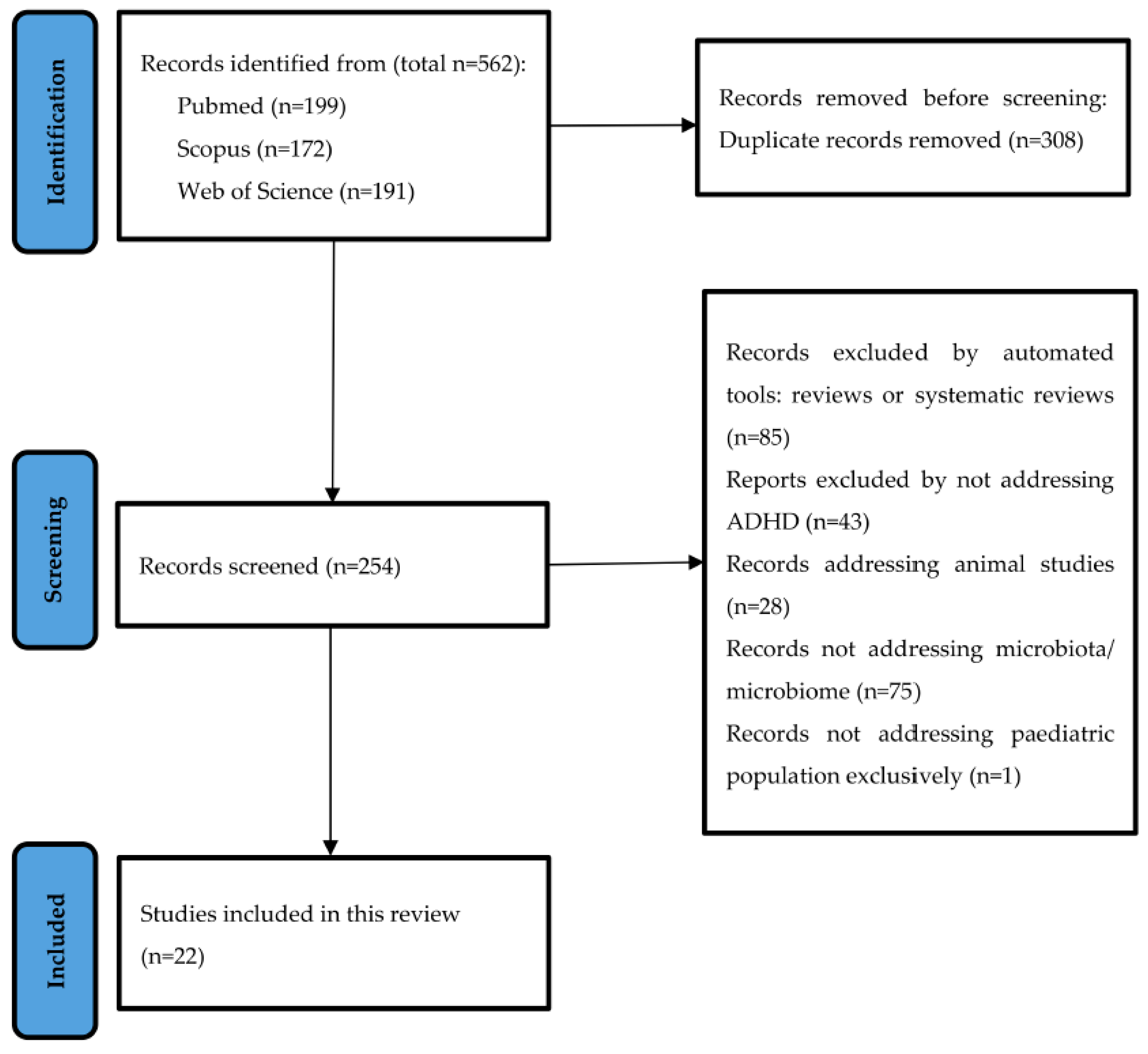
A total of 562 references were obtained in the three databases. The extracted studies were uploaded to EndNote 20.6 and the Rayyan software [22] for duplicate removal and further selection. In a blinded, standardized manner, screening of the title, abstract, and full text was performed by two independent reviewers (BR and SCO) based on the inclusion criteria. Disagreements were resolved via consensus. The PRISMA flowchart (Figure 1) summarizes the literature search and screening strategies.
Figure 1.
PRISMA flowchart representing the studies identified during the systematic search and analysis.
A protocol was established to uniformly and consistently synthesize the data collected from the selected studies. Data were organized according to the study characteristics, microbiota assessment methodology, microbial taxonomy, and diversity. No meta-analysis was performed due to the heterogeneity of the studies. This heterogeneity involved multiple dimensions, including clinical variability (age ranges, medication exposure, comorbidities), methodological differences (study design, sequencing platforms, DNA extraction protocols), statistical heterogeneity (different alpha- and beta-diversity metrics), and outcome heterogeneity related to taxonomic reporting. Given these differences, quantitative pooling could generate misleading summary estimates and reduce the interpretability of findings.
2.4. Risk of Bias (RoB) Assessment
Risk of bias was assessed at the study level using design-appropriate tools, as the included gut microbiota–ADHD literature included randomized trials (Cochrane RoB 2), non-randomized interventions (ROBINS-I), observational and case-control studies (Newcastle-Ottawa Scale), cross-sectional studies (Joanna Briggs Institute Critical Appraisal Checklist), and Mendelian randomization (ROB-MR). Two reviewers (SCO and IMM) independently completed the assessments using full texts and resolved disagreements through consensus.
3. Results
3.1. Study Characteristics
This review included a total of 22 studies, published between 2015 and 2025 [23,24,25,26,27,28,29,30,31,32,33,34,35,36,37,38,39,40,41,42,43,44]. The characteristics of the included studies are summarized in Table 1. The included study designs comprised 12 cross-sectional studies, 6 randomized controlled trials, 3 prospective cohort studies, and 1 two-sample Mendelian randomization (MR) study.
Table 1.
Characteristics of the included studies.
Studies were conducted across Europe, Asia (including China, Japan, South Korea, Thailand, and Taiwan), Oceania (New Zealand), and North America. Asian countries were the most frequently represented, particularly China and Taiwan, accounting for the largest proportion of the included research [25,28,29,30,31,32,35,36,38,39,40,41,43]. European countries also contributed significantly (Finland, Germany, Denmark, Sweden, United Kingdom, Spain, and Italy) [23,25,32,36,43,44]. Fewer studies were conducted in North America (USA and USA/Canada) [33,41] and Oceania (New Zealand) [26]. Overall, Asia constituted the most common geographical setting among the included studies.
Study populations varied widely in size, ranging from 17 participants [26] to 16,640 individuals in a national cohort study [36]. Most cross-sectional microbiome analyses included the 30 to 110 participant range, while intervention trials were typically smaller (n = 17–76).
Participants were predominantly children and adolescents aged 6–16 years. However, some cohorts followed participants from birth into adolescence [23,33,36] Most samples were male-predominant, with male representation frequently exceeding 60%, consistent with ADHD epidemiology.
3.1.1. ADHD Diagnosis
The ADHD diagnosis was primarily based on Diagnostic and Statistical Manual of Mental Disorders (DSM-IV, DSM-IV-TR, or DSM-5) criteria, commonly assessed through structured clinical interviews such as the Kiddie Schedule for Affective Disorders and Schizophrenia (K-SADS) and its various versions [24,25,27,28,31,39] or through validated rating scales such as the ADHD Rating Scale (ADHD-RS), Conners, Swanson, Nolan, and Pelham Questionnaire IV (SNAP-IV), and Korean ADHD Rating Scale (K-ARS) [27,30,37]. A smaller subset of studies relied on International Classification of Diseases (ICD-10) criteria [23,32,35,36]. Differences in diagnostic criteria across studies may contribute to increased heterogeneity in findings.
3.1.2. Medication Status
Medication status varied across studies. While several cross-sectional studies excluded medicated participants [24,28,30,31,34,39], others included both medicated and unmedicated individuals [32,37,42]. Some studies required medication washout periods prior to sampling [25].
In intervention trials, participants were either medication-free [41,44], on stable methylphenidate treatment [40], or receiving standard ADHD pharmacotherapy alongside dietary intervention [38]. Among the pharmacological treatments reported, the most commonly used medication was a psychostimulant (methylphenidate). Medication use represents a potential confounder since psychostimulants may influence the composition of the gut microbiota.
3.1.3. Dietary Assessment
Dietary intake was variably assessed across studies. Some studies excluded participants following a vegetarian diet [24,27,28,31,34,40], whereas others recorded dietary intake by using Food Frequency Questionnaires (FFQ) or dietary diaries [25,26,29,37,42,43]. One study reported no significant differences between the ADHD and control groups [42], whereas others identified differences in dietary patterns between groups [28,29].
3.1.4. Probiotic/Prebiotic and Antibiotic Use
Antibiotic and probiotic use were frequently identified as potential confounding factors. For this reason, most studies excluded participants with recent antibiotic or probiotic exposure within 2 weeks to 3 months prior to sample collection [24,26,27,28,29,30,31,32,34,37,39,40,42,43], although exclusion criteria varied considerably between studies. Some studies also recorded antibiotic use without excluding participants [23,41].
Early-life antibiotic exposure was examined in one large longitudinal cohort study and it was reported that children experiencing three or more antibiotic-requiring infections had a higher risk of developing ADHD. Those with six or more infections requiring antibiotic treatment showed an even higher risk [36].
Notably, several studies did not systematically assess or report participants’ medication status, dietary patterns, or probiotic and antibiotic use.
3.1.5. Interventions
The intervention studies comprised several microbiota-targeted and nutritional approaches. These included perinatal probiotic supplementation with Lactobacillus rhamnosus GG [23], add-on supplementation with Bifidobacterium bifidum (Bf-688) [40], multistrain probiotic or synbiotic supplementation [43,44], micronutrient supplementation [26,41], and a dietary intervention by introducing a low-lectin diet [38].
Most intervention trials lasted between 6 and 16 weeks, with one long-term perinatal follow-up study extending up to 13 years [23].
3.2. Microbiota/Microbiome Methodology
In all studies, fecal samples were stored at −80 °C until extraction (Table 2). Deoxyribonucleic acid (DNA) extraction methods varied considerably across studies. Frequently used kits included the following: QIAamp DNA Stool Mini Kit or PowerFecal kits (Qiagen), DNeasy Blood and Tissue Kit, FastDNA Spin Kit for Soil, PowerSoil Pro extraction kit. Automated extraction systems were used in some studies [23,32]. The characterization of gut microbial communities was assessed via 16S rRNA gene sequencing using Illumina MiSeq platforms, being used in approximately 18 studies. Targeted regions varied across studies and included V1–V2, V3–V4, and V4 regions.
Table 2.
Microbiota/microbiome sampling and analytical methodology.
Two studies used shotgun metagenomic sequencing [27,39], enabling species-level taxonomic resolution and functional profiling. One Mendelian randomization study used GWAS (genome-wide association studies) summary statistics rather than direct microbiome sequencing [35]. Findings from shotgun metagenomics should be interpreted separately from those from 16S rRNA studies, as these approaches differ substantially in taxonomic resolution and functional inference capacity.
Fungal analyses (mycobiome) were conducted in one cohort study using the internal transcribed spacer 2 (ITS2) sequencing region [34].
Considerable heterogeneity was observed in the reference databases used for taxonomic classification, and these included SILVA, GreenGenes, Ribosomal Database Project (RDP), MetaPhlAn2, EzBioCloud, and the Unified Human Gastrointestinal Genome (UHGG) database. These methodological differences may influence the microbial composition and constitute an important source of heterogeneity across studies.
3.3. Diversity Analysis
Alpha diversity, beta diversity, and taxonomic abundance represent distinct biological constructs. Alpha diversity reflects microbial richness and evenness within a sample, while beta diversity evaluates differences in microbial compositions between groups. Taxonomic abundance refers to the relative presence of specific microbial taxa. Therefore, these outcomes were analyzed and interpreted separately throughout this review. Also, the term “significant” used throughout this review refers to statistical significance as defined within the individual included studies.
3.3.1. Alpha-Diversity
Microbiota diversity and composition in the ADHD population are described in Table 3. Across the 22 included studies, results regarding microbial richness and evenness (alpha-diversity) were largely inconsistent. Most cross-sectional analyses reported no significant differences between individuals with ADHD and controls across several diversity indices, such as Shannon, Chao1, Simpson, Abundance-based Coverage Estimator (ACE), and Faith’s phylogenetic diversity [24,27,30,31,34,37].
Table 3.
Microbial diversity and microbial profile in each study.
When significant differences were detected, the contributing metrics varied across studies. Reductions limited to the Shannon index were reported in one cohort [25], while another study showed decreases in both Shannon and Simpson indices [39]. In other studies, differences were driven primarily by reduced richness measures, including amplicon sequence variant (ASV) richness and Faith’s phylogenetic diversity [32], or described as an overall decrease in alpha-diversity without specifying the contributing indices [29]. Conversely, some studies reported a higher alpha-diversity in ADHD, including higher Chao1 and Shannon with lower Simpson [28], as well as higher Faith’s phylogenetic diversity [42]. Longitudinal studies suggested that associations may be age-dependent. Higher Faith’s phylogenetic diversity at 6 months was observed in children who later developed ADHD [33].
Intervention studies yielded inconsistent results. Micronutrient supplementation increased evenness-related metrics [41]. Probiotic trials reported significant changes in Shannon and Chao1 in both intervention and placebo groups in one study [40], while another reported no significant changes [43]. A low-lectin diet did not significantly modify alpha-diversity [38].
Additionally, psychostimulant treatment was associated with lower alpha-diversity compared with unmedicated individuals with ADHD [42].
3.3.2. Beta-Diversity
Beta-diversity findings remained heterogeneous, although between-group differences were reported more consistently than for alpha-diversity. Several studies reported significant differences in the overall microbial community composition between individuals with ADHD and controls using UniFrac, Bray–Curtis, or Jaccard distance metrics [25,29,30,32,34,39,42]. In contrast, other studies did not observe clear group separation, often attributing this finding to high interindividual variability in microbial composition [24,27].
In longitudinal analyses, microbial composition at 6 months of age differed between children who later developed ADHD and neurotypical controls [33].
Among intervention studies, micronutrient supplementation and probiotic treatment significantly altered beta-diversity compared with the placebo in some trials [40,41], whereas others reported no pre–post differences [26,43]. Additionally, psychostimulant medication was associated with distinct microbial community profiles compared with unmedicated individuals with ADHD [42].
3.4. Taxonomic Composition
Table 4 summarizes the results achieved regarding the taxonomic changes across studies. ADHD was most frequently associated with decreased Firmicutes [42] and increased Proteobacteria (Table 3 and Table 4) [30,42]. Findings for Actinobacteria were inconsistent across studies [42]. Additional findings included increased Fusobacteria [28] and decreased Verrucomicrobiota, Desulfobacterota, and Bacteroidota [42]. Prevotellaceae was the most consistently reduced family in ADHD [25,42], whereas other families, including Rikenellaceae, Porphyromonadaceae, and Ruminococcaceae, showed discordant results across studies [25,27,30,31].
Table 4.
Summary of the results from the included studies regarding ADHD vs. controls signature. Taxa reported in fewer than two studies were not included in the evidence map to improve interpretability. Only cross-sectional studies were included in this heatmap.
Several recurrent patterns were observed at the genus level. Faecalibacterium [24,27,29] and Alistipes [30,39] were most frequently reduced. By contrast, Roseburia [30,31], and Agathobacter [30,31] were commonly increased. Several genera (including Bifidobacterium, Odoribacter, Parabacteroides, Prevotella, and Lactobacillus) showed inconsistent trends. Many additional taxa were reported in single studies only, precluding a meaningful comparison across studies.
Bacteroides uniformis was the most consistently increased species in ADHD [28,31], whereas other species showed conflicting results across studies.
3.4.1. Longitudinal Studies: Microbial Trajectories
Early-life microbiota differed between children who later developed ADHD and controls. At 1 month of age, children who later developed ADHD exhibited a lower abundance of Dorea, Pseudoramibacter, Eubacterium, Lachnospiraceae, Prevotella, and Veillonella and a higher abundance of Megasphaera, Clostridiaceae, Lactococcus, Bacteroides, Streptococcus, Akkermansia muciniphila, and Collinsella aerofaciens [33]. At 6 months, a lower abundance of 51 bacterial operational taxonomic units (OTUs), including Enterococcus, Ruminococcus, and multiple Lactobacillales, and a higher abundance of Dorea and Blautia were reported [33]. Another longitudinal study reported higher levels of Megamonas funiformis and Veillonella parvula and lower Bifidobacterium, Coprococcus, Alistipes, Roseburia, Akkermansia, and Phascolarctobacterium in ADHD [36].
3.4.2. Effects of Interventions
Early-life supplementation with Lactobacillus rhamnosus GG was associated with a lower incidence of later neuropsychiatric disorders (17.1% in the placebo group vs. 0% in the probiotic; p = 0.008) [23]. In established ADHD, probiotics were associated with changes in the microbial composition, increasing Odoribacter and decreasing Escherichia–Shigella [43]. Micronutrient supplementation reduced Actinobacteria abundance compared with the placebo [26,41] and modestly increased Proteobacteria in the intervention group only [26]. Furthermore, Bifidobacterium bifidum (Bf-688) supplementation was found to increase the Firmicutes/Bacteroidetes ratio [40]. Regarding dietary intervention, a low-lectin diet combined with standard treatment resulted in post-treatment dominance of Lactobacillaceae, Pasteurellaceae, and Pasteurellales [38].
Psychostimulant medication significantly influenced the microbial landscape, being associated with a lower abundance of nine distinct genera, while specifically increasing the abundance of Anaerostipes [42].
3.5. Mycobiome
Only two of the 23 included studies investigated the mycobiome, both assessing fungal taxonomic composition [33,34]. At the phylum level, ADHD was associated with increased Ascomycota and decreased Basidiomycota [34]. At lower taxonomic levels, Candida was enriched in individuals with ADHD, with increased levels of C. albicans and C. tropicalis [34]. In early-life cohorts, several fungal OTUs were reduced at 1 month in children who later developed ADHD. At 6 months, Candida and Saccharomyces were reduced, whereas Trichosporon was increased [33].
3.6. Causal Inference Through Mendelian Randomization
Genomic proxy markers identified specific genera associated with an increased ADHD risk, including the Eubacterium hallii group, Ruminococcaceae UCG013, and the Ruminococcus torques group. Conversely, several taxa were identified as potentially protective, such as Butyricicoccus, Roseburia, Desulfovibrio, Romboutsia, Oxalobacteraceae, and Peptostreptococcaceae [35]. Reverse causality was suggested for Roseburia [35].
3.7. Microbiota Correlation with Symptom Severity and Clinical Improvement
Several taxa were associated with symptom severity. Faecalibacterium was negatively correlated with total and hyperactivity scores [24]. Ruminococcus gnavus, Agathobacter, and Acidaminococcus were associated with behavioral and emotional symptoms after an adjustment for confounders [30]. Sutterella stercoricanis and Bacteroides ovatus were positively correlated with hyperactivity scores [28]. Higher Bifidobacterium abundance was associated with lower ADHD-IV-RS scores [26]. No associations with Child Behaviour Checklist (CBCL) scales were observed in one study [25].
Clinical improvement following micronutrients was associated with increased Oscillospiraceae and Rikenellaceae [41] and correlated with reduced Actinobacteria and improved Child Global Assessment Scale (C-GAS) scores [26]. Bf-688 improved Continuous Performance Test (CPT) performance [40]. A low-lectin diet improved multiple clinical ratings [38]. A multistrain synbiotic produced small parent-reported improvements not directly linked to microbiota changes [44].
3.8. Risk of Bias–Quality Assessment
Across the 22 included studies (Supplementary Material Tables S2 and S3), the overall risk of bias was most frequently rated as some concerns (n = 6) or moderate (n = 6), with a substantial proportion of moderate–high (n = 4), high (n = 4) or serious (n = 1) concerns. Among the seven randomized trials assessed with RoB 2, six were judged to have some concerns and one was judged to be at high risk, largely driven by missing outcome data and a long follow-up. For the ten case-control studies assessed with the Newcastle-Ottawa Scale, risk of bias was moderate to moderate–high, with the main limitations relating to the selection of controls and the incomplete control of confounding (particularly diet, antibiotic/probiotic exposure, comorbidities, and ADHD medication). Cross-sectional studies according to the JBI checklist ranged from moderate to high risk, mainly due to residual confounding and small samples. Cohort studies generally showed a lower risk, reflecting stronger temporality but remaining vulnerable to attrition and residual confounding. The single non-randomized dietary intervention study assessed with ROBINS-I was judged to be at a serious risk of bias, primarily due to confounding and deviations from the intended interventions, while the Mendelian randomization study assessed with ROB-MR was rated as having some concerns, reflecting potential instrument weakness and horizontal pleiotropy despite sensitivity analyses.
4. Discussion
This systematic review synthesized evidence from 22 studies exploring the relationship between the gut microbiota composition and ADHD.
Overall, the findings suggest a potential association between this neurodevelopmental disorder and alterations in gut microbial communities. However, the direction and magnitude of these differences were highly heterogeneous and seem to depend on several factors, including age, medication status, dietary patterns, and methodological differences in microbiome analysis. The interpretation of microbiota findings should consider that medication exposure was inconsistently reported across studies, and several studies included a mixed population of medicated and non-medicated participants without separate subgroup analysis. Consequently, the potential confounding effects of psychostimulant treatment on the gut microbiota composition could not be fully disentangled.
4.1. Diversity Findings
Alpha-diversity findings were inconsistent across studies, with the majority reporting no significant differences between ADHD and controls, whereas a minority described either reduced or increased diversity. These discrepancies were driven by distinct diversity indices across studies, potentially implying that richness and evenness may be differentially affected in ADHD. This variability likely reflects methodological heterogeneity but may also indicate that global diversity is not the most sensitive marker of dysbiosis related to ADHD. Instead, this disorder may be better characterized by changes in specific microbial taxa rather than an overall loss of diversity.
Beta-diversity analyses more consistently identified differences in the overall microbial community structure between ADHD and controls, although this pattern was not observed in all studies. These findings suggest that changes between groups may capture ADHD-related microbial alterations more effectively than within-sample analysis.
4.2. Taxonomic Composition and Functional Interpretation
Despite heterogeneity across studies, several recurrent taxonomic patterns emerged. However, an interpretation of the findings should consider that a substantial proportion of included studies presented a moderate-to-high risk of bias, limiting the strength and certainty of the available evidence. A reduced abundance of Faecalibacterium and Alistipes was among the most consistent findings.
Faecalibacterium is a key producer of butyrate in the gut, playing a central role in the maintenance of intestinal barrier integrity, modulation of neuroinflammatory processes, regulation of microglial function, and neurotransmitter synthesis [45]. Furthermore, butyrate acts as an inhibitor of histone deacetylases (HDACs) [46], meaning that reduced butyrate availability may alter the expression of neurotrophic factors, such as brain-derived neurotrophic factor (BDNF) in the prefrontal cortex, a brain region critically involved in attention control and executive function, which is implicated in ADHD. Furthermore, Faecalibacterium was negatively correlated with ADHD symptom severity [24], possibly contributing to the hypothesis that it may play a protective role.
In contrast, Alistipes typically produces metabolites such as succinate and acetate and is involved in tryptophan metabolism [47]. Disruption of this metabolism can influence serotonin synthesis and the kynurenine pathway. Both have an important role in emotional regulation, the response to stress, and cognitive behavior [48]. On the other hand, several taxa increased. At higher taxonomic levels, the frequently reported increase in Proteobacteria, a phylum often enriched in pro-inflammatory pathobionts, is consistent with a low-grade inflammatory state and increased intestinal permeability, mechanisms proposed in ADHD pathophysiology [49]. Notably, Odoribacter is recognized as an important producer of butyrate and propionate, and it is considered a next-generation probiotic [50]. Findings regarding Odoribacter were inconsistent across studies. While one study reported increased abundance in ADHD populations [27], another observed reduced levels [39]. Discrepancies were also observed regarding other taxa such as Bifidobacterium, Prevotella, and Parabacteroides. These inconsistencies are likely driven by differences in the methodological approaches, age, dietary patterns, medication status, ADHD subtype, and comorbidities, as well as geographic and lifestyle factors. Therefore, the role of these taxa in ADHD remains uncertain and should be interpreted cautiously, highlighting the need for better phenotypic stratification in future studies regarding the microbiome in ADHD.
At the species level, Ruminococcus gnavus and Bacteroides uniformis were the most consistently increased. Ruminococcus gnavus has been associated with inflammatory bowel disease [51] and is known to be able to degrade intestinal mucin, thereby contributing to alterations in gut barrier functions [52]. In turn, Bacteroides uniformis is a commensal bacterium with immunomodulatory properties that produces metabolites such as succinate, acetate, and bile acids [53]. Interestingly, Bacteroides uniformis has been associated with beneficial effects on metabolic and immune function in other contexts [54]. However, its increased abundance in ADHD may reflect compensatory responses to dysbiosis or altered metabolic demands within the gut ecosystem.
The depletion of short-chain fatty acids (SCFAs) producers, such as Faecalibacterium, combined with an increase in mucin degraders such as Ruminococcus gnavus may compromise the intestinal barrier. This can allow pro-inflammatory and bacterial metabolites to cross into systemic circulation and ultimately reach the blood–brain barrier (BBB) [55].
These findings highlight that the taxonomic composition alone may not fully capture microbiome alterations associated with ADHD. Instead, the functional profiling of microbial metabolic pathways may provide more meaningful insights into gut–brain interactions. It is to be noted that these proposed biological pathways remain hypothetical because none of the included studies directly evaluated mechanistic gut–brain interactions.
4.3. Early-Life Microbiota
Longitudinal cohort studies provided particularly compelling findings, showing distinct microbial trajectories years before the ADHD diagnosis. These results strengthen the hypothesis that microbiota alterations are not merely a consequence of the disorder or its treatment, but could contribute to its developmental origins.
The early-life depletion of butyrate producers such as Lachnospiraceae and Roseburia and the reduction of 51 bacterial OTUs by six months may have significant neurodevelopmental consequences, possibly impairing the epigenetic regulation of neurotrophic factors like BDNF, which is a key mediator of synaptic plasticity and cognitive function [56]. Additionally, the increase in Akkermansia muciniphila during the first month of life [33], compared to its depletion in older cohorts [36], may suggest temporal shifts in the microbial composition. Although Akkermansia muciniphila is generally considered a beneficial commensal in adults [57], its increased abundance in early infancy could lead to excessive mucin degradation, potentially disrupting the immature intestinal barrier [58]. This suggests that the timing of microbial colonization may be as important as the identity of the taxa involved.
4.4. Intervention Effects
Intervention studies indicated that the gut microbiota is modifiable in individuals with ADHD. However, microbial changes were not always accompanied by clinical improvements nor were the symptom improvements always correlated with clear microbial alterations. This suggests that current interventions may not target the most relevant microbial pathways or that functionally meaningful changes may occur without detectable shifts in bacterial composition.
The success of early Lactobacillus rhamnosus GG supplementation [23] suggests that targeting the microbiota during the neonatal window may exert a prophylactic effect on neurodevelopmental trajectories. In contrast, interventions in established ADHD show more modest and localized effects. However, the influence of micronutrients on Actinobacteria and the impact of a low-lectin diet on Lactobacillaceae underscore the nutritional status as being a significant driver of microbial variance.
Psychostimulant medication was associated, in several studies, with distinct microbial profiles and lower alpha-diversity, raising the possibility that part of the microbiota signature attributed to ADHD may be related to medication. This should motivate more future research in treatment-naive children.
4.5. Microbiota and Clinical Outcomes
Several microbial taxa were reported to be correlated with ADHD symptom severity, particularly hyperactivity and emotional dysregulation. The negative association between Faecalibacterium and symptom scores is of particular interest, given its anti-inflammatory and butyrate-producing properties [59]. A key pathway underlying these clinical correlations may involve the vagus nerve, which provides a direct neural communication pathway between the gut and the brain [60]. SCFAs produced by beneficial bacteria act as signaling molecules that stimulate vagal afferents. These signals reach the locus coeruleus, which constitutes the brain’s primary hub for norepinephrine production [61]. Norepinephrine is essential for regulating arousal, attention, and executive function in the prefrontal cortex [61]. In ADHD, a microbiota-induced deficit in vagal stimulation may contribute to the understimulation of the prefrontal cortex, providing a biological explanation for why lower levels of SCFA-producing taxa correlate so strongly with increased inattention and hyperactivity. Additionally, these findings suggest that the microbial composition may influence the clinical expression of ADHD symptoms, rather than being only associated with the presence or absence of the disorder.
4.6. Insights from Mendelian Randomization
The results from Mendelian randomization analysis provide preliminary evidence for potential causal relationships between the gut microbiota composition and ADHD. The identification of specific taxa as risk-associated, such as the Eubacterium hallii group and Ruminococcus torques group, alongside protective taxa like Butyricicoccus and Roseburia, suggests that ADHD risk may be linked to the baseline gut microbial composition. In addition, the reverse causal signal observed for Roseburia is particularly illuminating. It suggests that ADHD-related behaviors, such as impulsivity and reward-seeking behavior, may drive dietary choices high in refined sugars and low in fiber. Such a diet actively inhibits the growth of beneficial and fiber-fermenting taxa like Roseburia, thereby reducing the production of neuroprotective SCFAs. This creates a self-perpetuating cycle where the behavioral manifestations of ADHD further degrade the gut environment, potentially exacerbating the severity of the disorder over time. Despite this study, findings remain inconsistent. Roseburia is suggested as a potential protective taxa in [35] but it is reported in other studies to be increased in the ADHD population [30,31]. Therefore, these findings may be interpreted with caution, requiring further investigation to better comprehend these alterations.
4.7. Mycobiome
Although still limited, the available evidence suggests that fungal communities may also contribute to ADHD-related gut–brain interactions. The observed increase in Candida species in individuals with ADHD along with developmental shifts in early-life fungal colonization, may point toward a broader ecological dysbiosis beyond bacterial communities. Importantly, fungal overgrowth often occurs in niches left behind by depleted bacterial communities [62]. Candida species can compromise the gut mucosal layer by promoting intestinal inflammation and disrupting epithelial tight junctions, acting synergistically with bacterial dysbiosis to increase intestinal permeability and systemic inflammation [62]. Fungal-related findings remain preliminary due to the limited number of available studies and should therefore be interpreted cautiously. Integrating the mycobiome into future ADHD research will likely be important to capture the full ecological complexity of the gut–brain axis.
4.8. Clinical and Research Implications
Taken together, the current evidence does not appear to support the existence of a single ADHD-specific microbial signature. Instead, ADHD appears to be associated with alterations in microbial pathways related to SCFA production, immune modulation, and neurotransmitter metabolism. These findings suggest that ADHD management may benefit from a stratified approach. The identification of early-life microbial trajectories may open a possible window for preventive approaches. This raises the possibility that, in the future, microbiome screening in infancy could help identify high-risk individuals who may benefit from targeted probiotics, like Lactobacillus rhamnosus GG, to stabilize neurodevelopmental paths.
For established ADHD, the findings emphasize that pharmacological treatment alone may be insufficient. In the longer term, adjunctive nutritional approaches may warrant investigation as complementary strategies, where diets and supplements are tailored to the individual’s specific microbial deficits (e.g., using prebiotics to boost Faecalibacterium in patients with high hyperactivity scores). Future studies should prioritize longitudinal designs beginning in early life, together with multi-omics approaches such as metagenomics and metabolomics. Greater methodological standardization, including consistent reporting of diversity metrics and improved control for confounding factors, as well as stratification by medication status and ADHD phenotype, will be crucial to improve comparability between studies. These approaches may help move the field beyond descriptive taxonomic findings and towards a clearer understanding of the metabolites and mechanisms underlying gut–brain interactions in ADHD. In fact, alterations in the gut microbiota may represent a potential area for future therapeutic investigation. However, current evidence remains insufficient to support clinical applications.
4.9. Strengths and Limitations of This Review
The primary strength of this systematic review lies in its integrative approach, synthesizing evidence from diverse study designs, including cross-sectional studies, longitudinal cohorts, randomized controlled trials, and Mendelian randomization analysis. By incorporating emerging evidence on the gut mycobiome and early-life trajectories, this work provides a more holistic view of the gut–brain axis than many previous reviews.
However, significant limitations remain, most notably the high degree of methodological heterogeneity (including small sample sizes, predominantly cross-sectional designs, differences in sequencing regions and in the reference databases used, inadequate control for key confounders such as diet, medication status, and probiotic use), which precluded the realization of a meta-analysis.
Additionally, most studies relied on 16S rRNA sequencing, thereby limiting our understanding to taxonomic shifts, leaving the actual functional and metabolic output of these communities largely unexplored. Furthermore, the inconsistent control for dietary patterns and medication usage across the included literature means that the ADHD-specific dysbiosis observed remains partially obscured by the noise of lifestyle and pharmacological confounders. This systematic review was not prospectively registered in PROSPERO, which may increase the risk of reporting bias.
5. Conclusions
This systematic review highlights a growing body of evidence connecting ADHD to changes in the gut microbiota composition. While no specific microbial signature related to ADHD has been identified, recurrent patterns suggests disruptions in microbial pathways involved in short-chain fatty acid production, immune modulation, intestinal barrier integrity, and neurotransmitter metabolism.
Specifically, the reduction of key butyrate-producing taxa alongside the enrichment of mucin-degrading and potentially pro-inflammatory microbes may contribute to mechanisms potentially linking gut dysbiosis with neurodevelopmental and behavioral outcomes.
Notably, longitudinal evidence indicates that microbiota alterations may emerge early in life, suggesting that the gut microbiome may contribute to the developmental origins of ADHD. More importantly, the timing of microbial colonization may be critical, suggesting that disruptions during early developmental windows may influence long-term gut-brain signaling.
While intervention studies demonstrate that the microbiota is modifiable, therapeutic approaches to date have shown variable clinical effects, suggesting that the most relevant microbial pathways have yet to be identified.
Overall, these findings suggest that ADHD is associated with functional disruptions within the gut–brain axis, rather than a single taxonomic signature. However, interpretation should remain cautious given the methodological heterogeneity and moderate-to-high risk of bias across the included studies. Future research should prioritize longitudinal cohort studies, multi-omics approaches, and improved methodological standardization to clarify the causal mechanisms and identify clinically meaningful microbial targets. Such advances may ultimately help determine whether microbiome-informed preventive strategies and personalized interventions for ADHD are feasible and clinically meaningful.
Supplementary Materials
The following supporting information can be downloaded at: https://www.mdpi.com/article/10.3390/microorganisms14061301/s1, Table S1: PRISMA 2020 Checklist; Table S2: Summary of risk of bias assessment of the included studies; Table S3: Domain-level judgments in RoB 2 included studies.
Author Contributions
B.R.: Conceptualization, Methodology, Validation, Data Analysis, Original Draft Preparation; I.M.M.: Validation, Review and Editing; S.C.d.O.: Conceptualization, Methodology, Validation, Data Analysis, Review and Editing, Supervision. All authors have read and agreed to the published version of the manuscript.
Funding
This article was funded by National Funds through FCT—Fundação para a Ciência e a Tecnologia, I.P., within the project RISE-Health—UID/06397/2025.
Institutional Review Board Statement
Not applicable.
Informed Consent Statement
Not applicable.
Data Availability Statement
This systematic review has been retrospectively registered in the Open Science Framework (OSF). Data are available on reasonable request.
Conflicts of Interest
The authors declare no conflicts of interest.
Abbreviations
The following abbreviations are used in this manuscript:
| ACE | Abundance-based Coverage Estimator |
| ADHD | Attention-Deficit/Hyperactivity Disorder |
| ADHD-IV-RS | ADHD Rating Scale IV |
| ASV | Amplicon Sequence Variant |
| BBB | Blood-Brain Barrier |
| BDNF | Brain-Derived Neurotrophic Factor |
| Bf-688 | Bifidobacterium bifidum strain Bf-688 |
| CBCL | Child Behaviour Checklist |
| C-GAS | Child Global Assessment Scale |
| CNS | Central Nervous System |
| CPT | Continuous Performance Test |
| DNA | Deoxyribonucleic Acid |
| DSM-IV | Diagnostic and Statistical Manual of Mental Disorders, Fourth Edition |
| DSM-IV-TR | Diagnostic and Statistical Manual of Mental Disorders, Fourth Edition, Text Revision |
| DSM-5 | Diagnostic and Statistical Manual of Mental Disorders, Fifth Edition |
| FFQ | Food Frequency Questionnaire |
| GABA | Gamma-Aminobutyric Acid |
| GWAS | Genome-Wide Association Studies |
| HDACs | Histone Deacetylases |
| ICD-10 | International Classification of Diseases, 10th Revision |
| ITS | Internal Transcribed Spacer |
| JBI | Joanna Briggs Institute |
| K-ARS | Korean ADHD Rating Scale |
| K-SADS | Kiddie Schedule for Affective Disorders and Schizophrenia |
| MR | Mendelian Randomization |
| MeSH | Medical Subject Headings |
| OTUs | Operational Taxonomic Units |
| PRISMA | Preferred Reporting Items for Systematic Reviews and Meta-Analyses |
| RDP | Ribosomal Database Project |
| RoB | Risk of Bias |
| RoB 2 | Revised Cochrane Risk of Bias tool for randomized trials |
| ROBINS-I | Risk of Bias In Non-randomized Studies–of Interventions |
| ROB-MR | Risk of Bias in Mendelian Randomization |
| RCT | Randomized Controlled Trial |
| SCFAs | Short-Chain Fatty Acids |
| SDQ | Strengths and Difficulties Questionnaire |
| SNAP-IV | Swanson, Nolan and Pelham Questionnaire IV |
| UHGG | Unified Human Gastrointestinal Genome |
References
- Polanczyk, G.V.; Willcutt, E.G.; Salum, G.A.; Kieling, C.; Rohde, L.A. ADHD prevalence estimates across three decades: An updated systematic review and meta-regression analysis. Int. J. Epidemiol. 2014, 43, 434–442. [Google Scholar] [CrossRef] [Scilit]
- McKechnie, D.G.J.; O’Nions, E.; Dunsmuir, S.; Petersen, I. Attention-deficit hyperactivity disorder diagnoses and prescriptions in UK primary care, 2000–2018: Population-based cohort study. BJPsych Open 2023, 9, e121. [Google Scholar] [CrossRef] [Scilit]
- Danielson, M.L.; Claussen, A.H.; Bitsko, R.H.; Katz, S.M.; Newsome, K.; Blumberg, S.J.; Kogan, M.D.; Ghandour, R. ADHD Prevalence Among U.S. Children and Adolescents in 2022: Diagnosis, Severity, Co-Occurring Disorders, and Treatment. J. Clin. Child Adolesc. Psychol. 2024, 53, 343–360. [Google Scholar] [CrossRef] [Scilit]
- American Psychiatric Association. Diagnostic and Statistical Manual of Mental Disorders, 5th ed.; American Psychiatric Association: Washington, DC, USA, 2022. [Google Scholar] [CrossRef] [Scilit]
- Ayano, G.; Demelash, S.; Gizachew, Y.; Tsegay, L.; Alati, R. The global prevalence of attention deficit hyperactivity disorder in children and adolescents: An umbrella review of meta-analyses. J. Affect. Disord. 2023, 339, 860–866. [Google Scholar] [CrossRef] [Scilit]
- Ayano, G.; Tsegay, L.; Gizachew, Y.; Necho, M.; Yohannes, K.; Abraha, M.; Demelash, S.; Anbesaw, T.; Alati, R. Prevalence of attention deficit hyperactivity disorder in adults: Umbrella review of evidence generated across the globe. Psychiatry Res. 2023, 328, 115449. [Google Scholar] [CrossRef] [Scilit] [PubMed]
- French, B.; Nalbant, G.; Wright, H.; Sayal, K.; Daley, D.; Groom, M.J.; Cassidy, S.; Hall, C.H. The impacts associated with having ADHD: An umbrella review. Front. Psychiatry 2024, 15, 1343314. [Google Scholar] [CrossRef] [Scilit]
- Chhibber, A.; Watanabe, A.H.; Chaisai, C.; Veettil, S.K.; Chaiyakunapruk, N. Global Economic Burden of Attention-Deficit/Hyperactivity Disorder: A Systematic Review. Pharmacoeconomics 2021, 39, 399–420. [Google Scholar] [CrossRef] [Scilit] [PubMed]
- Schein, J.; Adler, L.A.; Childress, A.; Gagnon-Sanschagrin, P.; Davidson, M.; Kinkead, F.; Cloutier, M.; Guérin, A.; Lefebvre, P. Economic burden of attention-deficit/hyperactivity disorder among adults in the United States: A societal perspective. J. Manag. Care Spec. Pharm. 2022, 28, 168–179. [Google Scholar] [CrossRef] [Scilit] [PubMed]
- Wang, Q.; Yang, Q.; Liu, X. The microbiota-gut-brain axis and neurodevelopmental disorders. Protein Cell 2023, 14, 762–775. [Google Scholar] [CrossRef] [Scilit]
- Strandwitz, P. Neurotransmitter modulation by the gut microbiota. Brain Res. 2018, 1693, 128–133. [Google Scholar] [CrossRef] [Scilit] [PubMed]
- Robe, A.; Dobrean, A.; Cristea, I.A.; Păsărelu, C.R.; Predescu, E. Attention-deficit/hyperactivity disorder and task-related heart rate variability: A systematic review and meta-analysis. Neurosci. Biobehav. Rev. 2019, 99, 11–22. [Google Scholar] [CrossRef] [Scilit] [PubMed]
- Mitchell, R.H.; Goldstein, B.I. Inflammation in children and adolescents with neuropsychiatric disorders: A systematic review. J. Am. Acad. Child Adolesc. Psychiatry 2014, 53, 274–296. [Google Scholar] [CrossRef] [Scilit]
- Tengeler, A.C.; Dam, S.A.; Wiesmann, M.; Naaijen, J.; Bodegom, M.; Belzer, C.; Dederen, P.J.; Verweij, V.; Franke, B.; Kozicz, T.; et al. Gut microbiota from persons with attention-deficit/hyperactivity disorder affects the brain in mice. Microbiome 2020, 8, 44. [Google Scholar] [CrossRef] [Scilit]
- Aarts, E.; Ederveen, T.H.A.; Naaijen, J.; Zwiers, M.P.; Boekhorst, J.; Timmerman, H.M.; Smeekens, S.P.; Netea, M.G.; Buitelaar, J.K.; Franke, B.; et al. Gut microbiome in ADHD and its relation to neural reward anticipation. PLoS ONE 2017, 12, e0183509. [Google Scholar] [CrossRef] [Scilit] [PubMed]
- Levy Schwartz, M.; Magzal, F.; Yehuda, I.; Tamir, S. Exploring the impact of probiotics on adult ADHD management through a double-blind RCT. Sci. Rep. 2024, 14, 26830. [Google Scholar] [CrossRef] [Scilit]
- Dias, M.F.; Nogueira, Y.J.A.; de Albuquerque, G.S.; Romano-Silva, M.A.; de Miranda, D.M. A systematic review on the associations between attention-deficit/hyperactivity disorder and gut microbiome. J. Psychiatr. Res. 2025, 191, 597–603. [Google Scholar] [CrossRef] [Scilit]
- Ng, R.W.Y.; Chen, Z.; Yang, L.; Wong, O.W.H.; Leung, A.S.Y.; Tsui, K.W.; Kwok, N.M.W.; Tang, L.H.Y.; Cheung, P.M.H.; Chan, P.K.S.; et al. Association between attention-deficit/hyperactivity disorders and intestinal disorders: A systematic review and Meta-analysis. Sci. Rep. 2025, 15, 19278. [Google Scholar] [CrossRef] [Scilit]
- Gkougka, D.; Mitropoulos, K.; Tzanakaki, G.; Panagouli, E.; Psaltopoulou, T.; Thomaidis, L.; Tsolia, M.; Sergentanis, T.N.; Tsitsika, A. Gut microbiome and attention deficit/hyperactivity disorder: A systematic review. Pediatr. Res. 2022, 92, 1507–1519. [Google Scholar] [CrossRef] [Scilit]
- Higgins, J.; Thomas, J.; Chandler, J.; Cumpston, M.; Li, T.; Page, M.; Welch, V. (Eds.) Cochrane Handbook for Systematic Reviews of Interventions; Version 6.4; Cochrane: London, UK, 2023; Available online: https://www.cochrane.org/authors/handbooks-and-manuals/handbook (accessed on 3 April 2025).
- Page, M.J.; McKenzie, J.E.; Bossuyt, P.M.; Boutron, I.; Hoffmann, T.C.; Mulrow, C.D.; Shamseer, L.; Tetzlaff, J.M.; Akl, E.A.; Brennan, S.E.; et al. The PRISMA 2020 statement: An updated guideline for reporting systematic reviews. BMJ 2021, 372, n71. [Google Scholar] [CrossRef] [Scilit]
- Ouzzani, M.; Hammady, H.; Fedorowicz, Z.; Elmagarmid, A. Rayyan—A web and mobile app for systematic reviews. Syst. Rev. 2016, 5, 210. [Google Scholar] [CrossRef] [Scilit] [PubMed]
- Pärtty, A.; Kalliomäki, M.; Wacklin, P.; Salminen, S.; Isolauri, E. A possible link between early probiotic intervention and the risk of neuropsychiatric disorders later in childhood: A randomized trial. Pediatr. Res. 2015, 77, 823–828. [Google Scholar] [CrossRef] [Scilit]
- Jiang, H.Y.; Zhou, Y.Y.; Zhou, G.L.; Li, Y.C.; Yuan, J.; Li, X.H.; Ruan, B. Gut microbiota profiles in treatment-naïve children with attention deficit hyperactivity disorder. Behav. Brain Res. 2018, 347, 408–413. [Google Scholar] [CrossRef] [Scilit]
- Prehn-Kristensen, A.; Zimmermann, A.; Tittmann, L.; Lieb, W.; Schreiber, S.; Baving, L.; Fischer, A. Reduced microbiome alpha diversity in young patients with ADHD. PLoS ONE 2018, 13, e0200728. [Google Scholar] [CrossRef] [Scilit]
- Stevens, A.J.; Purcell, R.V.; Darling, K.A.; Eggleston, M.J.F.; Kennedy, M.A.; Rucklidge, J.J. Human gut microbiome changes during a 10 week Randomised Control Trial for micronutrient supplementation in children with attention deficit hyperactivity disorder. Sci. Rep. 2019, 9, 10128, Correction in Sci. Rep. 2020, 10, 1180. https://doi.org/10.1038/s41598-020-58141-0. [Google Scholar] [CrossRef] [Scilit]
- Wan, L.; Ge, W.R.; Zhang, S.; Sun, Y.L.; Wang, B.; Yang, G. Case-Control Study of the Effects of Gut Microbiota Composition on Neurotransmitter Metabolic Pathways in Children with Attention Deficit Hyperactivity Disorder. Front. Neurosci. 2020, 14, 127. [Google Scholar] [CrossRef] [Scilit] [PubMed]
- Wang, L.J.; Yang, C.Y.; Chou, W.J.; Lee, M.J.; Chou, M.C.; Kuo, H.C.; Yeh, Y.M.; Lee, S.Y.; Huang, L.H.; Li, S.C. Gut microbiota and dietary patterns in children with attention-deficit/hyperactivity disorder. Eur. Child Adolesc. Psychiatry 2020, 29, 287–297. [Google Scholar] [CrossRef] [Scilit] [PubMed]
- Jung, T.H.; Hwang, H.J.; Han, K.S. Correlation of attention deficit hyperactivity disorder with gut microbiota according to the dietary intake of Korean elementary school students. PLoS ONE 2022, 17, e0275520. [Google Scholar] [CrossRef] [Scilit] [PubMed]
- Lee, M.J.; Lai, H.C.; Kuo, Y.L.; Chen, V.C. Association between Gut Microbiota and Emotional-Behavioral Symptoms in Children with Attention-Deficit/Hyperactivity Disorder. J. Pers. Med. 2022, 12, 1634. [Google Scholar] [CrossRef] [Scilit]
- Wang, L.J.; Li, S.C.; Li, S.W.; Kuo, H.C.; Lee, S.Y.; Huang, L.H.; Chin, C.Y.; Yang, C.Y. Gut microbiota and plasma cytokine levels in patients with attention-deficit/hyperactivity disorder. Transl. Psychiatry 2022, 12, 76. [Google Scholar] [CrossRef] [Scilit]
- Bundgaard-Nielsen, C.; Lauritsen, M.B.; Knudsen, J.K.; Rold, L.S.; Larsen, M.H.; Hindersson, P.; Villadsen, A.B.; Leutscher, P.D.C.; Hagstrøm, S.; Nyegaard, M.; et al. Children and adolescents with attention deficit hyperactivity disorder and autism spectrum disorder share distinct microbiota compositions. Gut Microbes 2023, 15, 2211923. [Google Scholar] [CrossRef] [Scilit]
- Cassidy-Bushrow, A.E.; Sitarik, A.R.; Johnson, C.C.; Johnson-Hooper, T.M.; Kassem, Z.; Levin, A.M.; Lynch, S.V.; Ownby, D.R.; Philips, J.M.; Yong, G.J.M.; et al. Early-life gut microbiota and attention deficit hyperactivity disorder in preadolescents. Pediatr. Res. 2023, 93, 2051–2060. [Google Scholar] [CrossRef] [Scilit] [PubMed]
- Wang, L.J.; Li, S.C.; Yeh, Y.M.; Lee, S.Y.; Kuo, H.C.; Yang, C.Y. Gut mycobiome dysbiosis and its impact on intestinal permeability in attention-deficit/hyperactivity disorder. J. Child. Psychol. Psychiatry 2023, 64, 1280–1291. [Google Scholar] [CrossRef] [Scilit]
- Wang, L.; Xie, Z.; Li, G.; Li, G.; Liang, J. Two-sample Mendelian randomization analysis investigates causal associations between gut microbiota and attention deficit hyperactivity disorder. Front. Microbiol. 2023, 14, 1144851. [Google Scholar] [CrossRef] [Scilit]
- Ahrens, A.P.; Hyötyläinen, T.; Petrone, J.R.; Igelström, K.; George, C.D.; Garrett, T.J.; Orešič, M.; Triplett, E.W.; Ludvingsson, J. Infant microbes and metabolites point to childhood neurodevelopmental disorders. Cell 2024, 187, 1853–1873.e15. [Google Scholar] [CrossRef] [Scilit]
- Kurokawa, S.; Nomura, K.; Sanada, K.; Miyaho, K.; Ishii, C.; Fukuda, S.; Iwamoto, C.; Naraoka, M.; Yoneda, S.; Imafuku, M.; et al. A comparative study on dietary diversity and gut microbial diversity in children with autism spectrum disorder, attention-deficit hyperactivity disorder, their neurotypical siblings, and non-related neurotypical volunteers: A cross-sectional study. J. Child. Psychol. Psychiatry 2024, 65, 1184–1195. [Google Scholar] [CrossRef] [Scilit]
- Long, L.; Peng, H.; Chen, X.; Wang, F.; Long, W.; Cheng, M.; Ma, J. The Impact of Integrating a Low-Lectin Diet with Traditional ADHD Treatments on Gut Microbiota Composition and Symptom Improvement in Children—A Cohort Study. Neuropsychiatr. Dis. Treat. 2024, 20, 535–549. [Google Scholar] [CrossRef] [Scilit]
- Wang, N.; Wang, H.; Bai, Y.; Zhao, Y.; Zheng, X.; Gao, X.; Zhang, Z.; Yang, L. Metagenomic Analysis Reveals Difference of Gut Microbiota in ADHD. J. Atten. Disord. 2024, 28, 872–879. [Google Scholar] [CrossRef] [Scilit]
- Wang, L.J.; Tsai, C.S.; Chou, W.J.; Kuo, H.C.; Huang, Y.H.; Lee, S.Y.; Dai, H.Y.; Yang, C.Y.; Li, C.J.; Yeh, Y.T. Add-On Bifidobacterium Bifidum Supplement in Children with Attention-Deficit/Hyperactivity Disorder: A 12-Week Randomized Double-Blind Placebo-Controlled Clinical Trial. Nutrients 2024, 16, 2260. [Google Scholar] [CrossRef] [Scilit] [PubMed]
- Ast, H.K.; Hammer, M.; Zhang, S.; Bruton, A.; Hatsu, I.E.; Leung, B.; McClure, R.; Srikanth, P.; Farris, Y.; Norby-Adams, L.; et al. Gut microbiome changes with micronutrient supplementation in children with attention-deficit/hyperactivity disorder: The MADDY study. Gut Microbes 2025, 17, 2463570. [Google Scholar] [CrossRef] [Scilit]
- Boonchooduang, N.; Louthrenoo, O.; Likhitweerawong, N.; Kunasol, C.; Thonusin, C.; Sriwichaiin, S.; Nawara, W.; Chattipakorn, N.; Chattipakorn, S.C. Impact of psychostimulants on microbiota and short-chain fatty acids alterations in children with attention-deficit/hyperactivity disorder. Sci. Rep. 2025, 15, 3034. [Google Scholar] [CrossRef] [Scilit] [PubMed]
- Novau-Ferré, N.; Papandreou, C.; Rojo-Marticella, M.; Canals-Sans, J.; Bulló, M. Gut microbiome differences in children with Attention Deficit Hyperactivity Disorder and Autism Spectrum Disorder and effects of probiotic supplementation: A randomized controlled trial. Res. Dev. Disabil. 2025, 161, 105003. [Google Scholar] [CrossRef] [Scilit]
- Trezzi, S.; Scaccabarozzi, G.; Nossa, R.; Piazza, C.; Bianchi, A.R.; Rosi, E.; Tizzoni, F.; Mauri, M.; Camillo, L.; Baragetti, A.; et al. Behavioural, cognitive, and neurophysiological effects of a synbiotic supplementation enriched with pigmented corn extract or cornstarch in drug-naïve children with attention-deficit hyperactivity disorder: A randomised, double-blind, comparison-controlled clinical trial. Clin. Nutr. ESPEN 2025, 65, 408–417. [Google Scholar] [CrossRef] [Scilit] [PubMed]
- Singh, V.; Lee, G.; Son, H.; Koh, H.; Kim, E.S.; Unno, T.; Shin, J.H. Butyrate producers, “The Sentinel of Gut”: Their intestinal significance with and beyond butyrate, and prospective use as microbial therapeutics. Front. Microbiol. 2023, 13, 1103836. [Google Scholar] [CrossRef] [Scilit]
- Davie, J.R. Inhibition of histone deacetylase activity by butyrate. J. Nutr. 2003, 133, 2485S–2493S. [Google Scholar] [CrossRef] [Scilit] [PubMed]
- Liu, S.; Li, Y.; Shi, Y.; Rao, Z.; Zhang, Y.; Zhang, Y.; Wang, T.; Kong, H.; Zhu, S.; Zhu, D.M.; et al. Multi-omics analyses of the gut microbiome, fecal metabolome, and multimodal brain MRI reveal the role of Alistipes and its related metabolites in major depressive disorder. Psychol. Med. 2025, 55, e190. [Google Scholar] [CrossRef] [Scilit] [PubMed]
- Gao, K.; Mu, C.L.; Farzi, A.; Zhu, W.Y. Tryptophan Metabolism: A Link Between the Gut Microbiota and Brain. Adv. Nutr. 2020, 11, 709–723. [Google Scholar] [CrossRef] [Scilit]
- Shin, N.R.; Whon, T.W.; Bae, J.W. Proteobacteria: Microbial signature of dysbiosis in gut microbiota. Trends Biotechnol. 2015, 33, 496–503. [Google Scholar] [CrossRef] [Scilit]
- Li, J.; Xu, J.; Guo, X.; Xu, H.; Huang, C.; Nie, Y.; Zhou, Y. Odoribacter splanchnicus—A Next-Generation Probiotic Candidate. Microorganisms 2025, 13, 815. [Google Scholar] [CrossRef] [Scilit]
- Henke, M.T.; Kenny, D.J.; Cassilly, C.D.; Vlamakis, H.; Xavier, R.J.; Clardy, J. Ruminococcus gnavus, a member of the human gut microbiome associated with Crohn’s disease, produces an inflammatory polysaccharide. Proc. Natl. Acad. Sci. USA 2019, 116, 12672–12677. [Google Scholar] [CrossRef] [Scilit]
- Tailford, L.E.; Crost, E.H.; Kavanaugh, D.; Juge, N. Mucin glycan foraging in the human gut microbiome. Front. Genet. 2015, 6, 81. [Google Scholar] [CrossRef] [Scilit]
- Fernandes, D.; Andreyev, J. The Role of the Human Gut Microbiome in Inflammatory Bowel Disease and Radiation Enteropathy. Microorganisms 2022, 10, 1613. [Google Scholar] [CrossRef] [Scilit]
- Gauffin Cano, P.; Santacruz, A.; Moya, Á.; Sanz, Y. Bacteroides uniformis CECT 7771 ameliorates metabolic and immunological dysfunction in mice with high-fat-diet induced obesity. PLoS ONE 2012, 7, e41079. [Google Scholar] [CrossRef] [Scilit] [PubMed]
- Braniste, V.; Al-Asmakh, M.; Kowal, C.; Anuar, F.; Abbaspour, A.; Tóth, M.; Korecka, A.; Bakocevic, N.; Ng, L.G.; Kundu, P.; et al. The gut microbiota influences blood-brain barrier permeability in mice. Sci. Transl. Med. 2014, 6, 263ra158. [Google Scholar] [CrossRef] [Scilit]
- Maqsood, R.; Stone, T.W. The Gut-Brain Axis, BDNF, NMDA and CNS Disorders. Neurochem. Res. 2016, 41, 2819–2835. [Google Scholar] [CrossRef] [Scilit]
- Feng, J.; Hu, X.; Liu, J.; Wang, W.; Chen, L.; Pang, R.; Zhang, A. Akkermansia muciniphila in neurological disorders: Mechanisms and therapeutic potential via the gut-brain axis. Front. Neurosci. 2025, 19, 1650807. [Google Scholar] [CrossRef] [Scilit] [PubMed]
- Lei, W.; Cheng, Y.; Gao, J.; Liu, X.; Shao, L.; Kong, Q.; Zheng, N.; Ling, Z.; Hu, W. Akkermansia muciniphila in neuropsychiatric disorders: Friend or foe? Front. Cell Infect. Microbiol. 2023, 13, 1224155. [Google Scholar] [CrossRef] [Scilit]
- Martín, R.; Rios-Covian, D.; Huillet, E.; Auger, S.; Khazaal, S.; Bermúdez-Humarán, L.G.; Sokol, H.; Chatel, J.M.; Langella, P. Faecalibacterium: A bacterial genus with promising human health applications. FEMS Microbiol. Rev. 2023, 47, fuad039. [Google Scholar] [CrossRef] [Scilit]
- Gargus, M.; Ben-Azu, B.; Landwehr, A.; Dunn, J.; Errico, J.P.; Tremblay, M.È. Mechanisms of vagus nerve stimulation for the treatment of neurodevelopmental disorders: A focus on microglia and neuroinflammation. Front. Neurosci. 2025, 18, 1527842. [Google Scholar] [CrossRef] [Scilit]
- Samuels, E.R.; Szabadi, E. Functional neuroanatomy of the noradrenergic locus coeruleus: Its roles in the regulation of arousal and autonomic function part I: Principles of functional organisation. Curr. Neuropharmacol. 2008, 6, 235–253. [Google Scholar] [CrossRef] [Scilit] [PubMed]
- Jawhara, S. How Gut Bacterial Dysbiosis Can Promote Candida albicans Overgrowth During Colonic Inflammation. Microorganisms 2022, 10, 1014. [Google Scholar] [CrossRef] [Scilit]

Disclaimer/Publisher’s Note: The statements, opinions and data contained in all publications are solely those of the individual author(s) and contributor(s) and not of MDPI and/or the editor(s). MDPI and/or the editor(s) disclaim responsibility for any injury to people or property resulting from any ideas, methods, instructions or products referred to in the content. |
© 2026 by the authors. Licensee MDPI, Basel, Switzerland. This article is an open access article distributed under the terms and conditions of the Creative Commons Attribution (CC BY) license.