


Abstract
The gut microbiome is central to immune, metabolic, and gastrointestinal health across species. Dysbiosis disrupts microbial communities and is linked to inflammatory bowel disease, celiac disease, and other immune-mediated gastrointestinal disorders. This review addresses the central question of how diet- and environment-driven gut dysbiosis in farm animals and fish is transmitted through the food chain to influence human gastrointestinal health within a One Health framework. This review synthesizes recent evidence within the One Health framework, focusing on how diet- and environment-induced dysbiosis in farm animals and fish can influence human gastrointestinal health via the food chain. We highlight mechanisms of immune modulation, alterations in food products, and the risks of pathogen transmission and antimicrobial resistance. An important limitation of the current body of evidence is the lack of studies that comprehensively trace the proposed axis from animal gut dysbiosis to human health outcomes. Emerging interventions, including precision nutrition, probiotics, and microbiota-targeted therapies, show potential for restoring microbial balance, though translating these findings into clinical practice remains challenging. By integrating human, veterinary, and environmental perspectives, this work proposes a novel cross-species microbiome–diet–immune framework to guide future research and interventions, advancing One Health strategies for disease prevention, antimicrobial resistance mitigation, and sustainable gastrointestinal health.
1. Introduction
Defining a healthy microbiome remains a major challenge today, given the high compositional variability between individuals. It is impossible to establish a fixed set of microorganisms as a universal marker of health [1,2,3]. Instead, accumulating evidence suggests that a healthy microbiome should be viewed as a dynamic functional spectrum [4], characterized by microbial diversity, functional stability, and the preservation of essential community roles, including nutrient metabolism, immune modulation, and protection against pathogenic colonization. These functional attributes, rather than the presence or absence of specific microbial taxa, are increasingly recognized as more reliable indicators of gut health across species [3,5,6,7,8,9].
Rather than being a passive microbial community, the gut microbiome functions as an immunological interface that influences intestinal health in both humans and food-producing animals. A healthy gut microbiome plays a crucial role in preventing and modulating gastrointestinal diseases by maintaining local immune balance [10]. The most important mechanisms by which the microbiota influence immunity include producing metabolites such as transformed bile acids and n-butyrate, which regulate macrophage function by inhibiting histone deacetylases (HDACs) [11]; stimulating or inhibiting immune cells (Tregs, Th17, macrophages, and neutrophils) [12]; and controlling inflammation through cytokines and antigens presented by dendritic cells [13,14]. When this functional equilibrium is disrupted, alterations in microbial metabolic output and barrier integrity can lead to increased intestinal permeability and sustained immune activation. These mechanisms are directly involved in the pathogenesis of inflammatory bowel disease (IBD) [15,16], coeliac disease [17], and other immunologically based digestive disorders [18]. Beyond bacterial dysbiosis, increasing evidence indicates that the gut virome, particularly bacteriophages, is a critical regulator of microbial community structure and mucosal immune responses, with a documented role in the pathogenesis of IBD [19]. Beyond bacteria, the gut microbiome also includes viruses (the virome) and fungi (the mycobiome), which interact closely with bacterial communities and the host’s immune system [20]. Emerging evidence shows that these non-bacterial components play key roles in shaping the microbial ecosystem, regulating immune responses, and supporting metabolic functions [21]. Although important, they are often overlooked in microbiome studies, leaving gaps in our understanding. Considering the virome and mycobiome helps provide a more complete picture of how the microbiome affects health and disease across different species [22]. Farm animals and fish constitute a primary source of human nutrition, providing meat, dairy, eggs, and fish-derived products [23,24]. These species are frequently exposed to a range of stressors, including suboptimal husbandry conditions, nutritional factors, antibiotic administration, and environmental challenges. These stressors can perturb the intestinal microbial community, leading to dysbiosis, compromised gut barrier function, and disrupted metabolic and immune function. Dysbiosis can also alter host immune responses and trigger intestinal inflammation, which may in turn modify the microbial composition of animal-derived food products. Consequently, these microbial imbalances have potential downstream effects on human health through the food chain, including pathogen transmission, contamination of animal products, and the spread of antimicrobial resistance [25,26]. This highlights the importance of nutrition in shaping gut microbiome composition and function, with direct consequences for host immune, metabolic, and neurological health [27,28]. To better understand these cross-species microbial interactions, it is necessary to adopt a microbiome–diet–immune axis across species. This conceptual framework traces the trajectory from the gut microbiome of food-producing animals, through diet- or environment-induced dysbiosis, to immune modulation with downstream effects on the microbial and metabolic characteristics of animal-derived food products. Ultimately, these changes may expose the human gut microbiome to metabolic and immunological perturbations, with potential consequences for gastrointestinal health. This interaction is investigated in the context of One Health, where human, animal, and environmental health are viewed as interconnected elements [29,30]. The interdependence between humans, animals, and the environment, as illustrated by the One World–One Health concept, is schematically represented in Figure 1.
Figure 1.
One World–One Health: Interconnections among humans, livestock, and the environment. The image was created using Canva.
The One World–One Health concept promotes human and animal welfare by integrating human medicine, veterinary medicine, and environmental sciences to address global issues such as zoonoses, food safety, and climate change [31,32,33,34]. Implementing this concept provides an interdisciplinary research framework to optimize ecosystem stability and balance. This is achieved by identifying complex relationships among biological, ecological, and anthropogenic factors and by developing rigorous forecasts for disease prevention based on a thorough understanding of cause and effect. ct [35,36,37].
This review synthesizes recent mechanistic and translational evidence on gut microbiome health in farm animals and fish within the One Health framework, highlighting the interconnected roles of diet, microbial composition, and immune regulation across species. It examines key factors influencing intestinal homeostasis and immune-mediated gastrointestinal disorders, as well as interventions to restore microbial homeostasis. It also highlights risks such as antimicrobial resistance, zoonotic pathogens, and the indirect effects of dysbiosis. Integrating perspectives from different disciplines is essential for understanding and managing health at the species and ecosystem levels. The review also examines how microbiome perturbations in food-producing animals may affect human gut health through the consumption of animal-derived products. In addition, the review critically discusses emerging microbiome-targeted interventions to restore microbial balance, as well as ongoing challenges related to antimicrobial resistance, zoonotic pathogen transmission, and the indirect consequences of dysbiosis. By integrating perspectives from human medicine, veterinary science, and environmental research, this work proposes a cross-species conceptual framework linking animal dysbiosis to human gastrointestinal disease risk, thereby advancing the One Health agenda and informing future preventive and therapeutic strategies.
2. Materials and Methods
This review was conducted following a structured literature search focused on the gut microbiome in farm animals and fish, with an emphasis on translational implications for human health within the One Health framework. Searches were conducted in key peer-reviewed databases, including Google Scholar, PubMed, Web of Science, and Scopus, using keywords such as ‘One Health approach’, ‘gut microbiome ‘, ‘dysbiosis’, ‘zoonotic pathogens’, ‘microbial transmission’, and ‘antimicrobial resistance’. Eligibility criteria included original research and review articles published in English between 2000 and 2026. Exclusion criteria were non-peer-reviewed sources, non-English publications, and studies without original data. The search was limited to the Title, Abstract, and Author Keywords fields. Included studies addressed gut microbiota composition, immune-mediated dysbiosis, microbial metabolites, or interventions targeting microbial balance. They followed a cross-species microbiome-diet-immune axis, tracing the trajectory from the gut microbiome of food-producing animals, through diet- and environment-induced dysbiosis, to immune modulation and consequent alterations in the microbial and metabolic composition of animal-derived food products, with potential implications for the human gut microbiome. Data synthesis focused on determinants of microbial balance, immune and systemic consequences of dysbiosis, zoonotic and antimicrobial resistance risks, and microbiome-targeted interventions. By integrating human, veterinary, and environmental perspectives, the review adopts a One Health approach to advance understanding of the gut microbiome and its relevance for disease prevention and public health.
3. The Intestinal Microbiome in Farm Animals and Fish: Implications for Human Health
The gut microbiome of farm animals and economically significant aquatic species is essential for maintaining health, supporting growth and production performance, and regulating feed intake [38,39]. It also influences behavior and stress responses [40] and contributes to the safety and quality of animal-derived food products [41,42,43]. Imbalances in the microbiome of farm animals can lead to reduced disease resistance and excessive antibiotic use, increasing the risk of antimicrobial resistance, a phenomenon that directly affects human health [44]. In aquaculture, the fish intestinal microbiome contributes to efficient feed conversion, resilience to pathogens, and product quality. From a human perspective, interactions with the animal microbiome primarily occur through food consumption [29,45], but can also occur through bioaerosols (e.g., farm dust) [46], direct contact during animal handling [47], and gene transfer (resistome) [48]. Therefore, maintaining a balanced intestinal microbiome in animals can mitigate contamination of animal products with pathogens and reduce the likelihood of transmitting antibiotic resistance genes. For example, the rumen microbiome directly influences milk or meat quantity and quality, animal health, and greenhouse gas emissions [49].
In accordance with the One Health principle, modern management strategies such as the use of prebiotics, probiotics, synbiotics, postbiotics, and phytobiotics [50,51,52,53,54,55] in animal nutrition not only do they improve animal health but also ensure safer, more nutritious animal products for human consumption while reducing greenhouse gas emissions.
To provide a structured analysis of species-specific differences, the following subsections examine the gut microbiomes of farm animals and fish, highlighting features of a healthy microbiome, stressors that can induce dysbiosis, and the effects on the safety and quality of animal-derived products. This analysis is framed within a cross-species perspective, linking animal gut health to human health through food, environmental exposure, and One Health considerations.
3.1. Ruminants
The gut microbiota of ruminants, such as cows, goats, and sheep, comprises a complex ecosystem of bacteria, protozoa, fungi, and archaea that facilitate the digestion of fibrous plants through microbial fermentation processes [56]. This ability makes ruminants unique, as they are capable of efficiently converting carbohydrates from plant cell walls into nutrients for meat and milk production [9,57].
In cows, for example, bacteria constitute about 90% of the gastrointestinal tract (GIT) microbial community and play a pivotal role in feed digestion and host metabolism. They ferment complex carbohydrates, such as cellulose, hemicellulose, and starch, producing volatile fatty acids (VFAs) that serve as the animal’s primary energy source. The main bacterial phyla are Firmicutes (Bacillota), including families such as Ruminococcaceae, Lachnospiraceae, and Clostridiaceae, and Bacteroidetes, including families such as Bacteroidaceae and Rikenellaceae [49,58]. Other phyla present in smaller quantities include Proteobacteria, Actinobacteria, Spirochaetes, and Tenericutes [59,60]. Rumen protozoa, unicellular and ciliates (Ciliophora), play a vital role in carbohydrate digestion in the rumen and indirectly contribute to protein metabolism by preying on bacteria and fungi. These microorganisms produce characteristic enzymes that are uncommon in other organisms, including pectin esterases (for pectin degradation), cathepsins (proteases), and various glycosyl hydrolases [61]. Taxonomically, protozoa are divided into entodinomorphs, the most abundant, which include species such as Entodinium, Isotricha, and Dasytricha, and Holotrichs. Although Holotrichs are less common, they contribute significantly to fiber digestion and microbial population regulation [62]. The rumen microbiome of cows comprises diverse anaerobic fungi from the Neocallimastigomycota phylum, which play a key role in digesting plant fibers and in the host’s metabolism [63]. Archaea are anaerobic prokaryotic microorganisms that play a central role in rumen methanogenesis, using hydrogen and carbon dioxide (CO2) to produce methane [49,64]. This process occurs through three primary metabolic pathways: hydrogenotrophic, methylotrophic, and aceticlastic. These pathways help maintain redox balance in the rumen and eliminate excess hydrogen generated by microbial fermentation [65]. Methanogenic archaea represent approximately 4% of the microbial biomass in the rumen and include species such as Methanobrevibacter and Methanosarcina [66,67].
The rumen microbiome of ruminants can undergo significant changes under conditions of physiological stress (e.g., transport or exposure to extreme temperatures) [68], inadequate nutrition (e.g., diets rich in concentrates and low in fiber) [69], or drug treatments [70].
Stressors affect the intestinal microbiome in cattle, leading to dysbiosis, altered bacterial diversity, increased abundance of pathogenic organisms, and other changes. For example, heat stress in lactating cows significantly alters the composition of the ruminal microbiome, particularly bacterial and protozoal communities [71]. Heat-sensitive breeds, such as Holstein cattle, exhibit a significantly higher number of unique operational taxonomic units (OTUs) compared with more heat-tolerant breeds. Moreover, heat stress is associated with an increased relative abundance of Bacteroidetes and a concomitant reduction in Firmicutes, resulting in an altered Firmicutes-to-Bacteroidetes ratio and the development of ruminal microbial dysbiosis [71]. Elevated ambient temperature adversely affects ruminal fermentation by lowering ruminal pH, inhibiting fibrolytic bacteria, and reducing acetate concentration, a major short-chain fatty acid (SCFA). Furthermore, heat stress significantly impairs milk quality by decreasing antioxidant capacity and altering the milk microbiota, favoring taxa associated with spoilage [72].
Inadequate maintenance and husbandry conditions of dairy cows represent another risk factor that leads to reduced milk quality and the development of mastitis, which subsequently results in oxidative stress, increased somatic cell count (SCC), decreased immunity, dysbiosis, tissue damage, and elevated levels of pro-inflammatory cytokines: IL-1β (Interleukin-1 beta), IL-6 (Interleukin-6), and TNF-α (Tumor Necrosis Factor alpha) [73,74].
Johne’s disease represents another risk factor for both animals and humans through the consumption of milk and dairy products derived from infected animals. The disease is caused by infection with Mycobacterium avium subsp. paratuberculosis, which is transmitted primarily via the fecal–oral route and is able to persist both in the environment and within the host organism. The infection leads to intestinal inflammation and progressive clinical manifestations following a prolonged latent period, resulting in malabsorption, diarrhoea, and weight loss [75]. The disease affects immune responses through activation of a pro-inflammatory T helper 1 (Th1) immune response and induces metabolic alterations, particularly in lipid metabolism, in animals such as cattle, sheep, and goats [75].
Overall, these effects impact animal health and food safety (Table 1). Exposure of dairy cows to thermal stress negatively affects milk quality, leading to lower concentrations of milk fat and protein. Moreover, heat stress is linked to increased somatic cell counts (SCCs) [76], reflecting compromised immune function and a higher prevalence of mastitis. The subsequent use of antimicrobial treatments raises concerns about food safety and public health, particularly regarding the emergence and spread of antimicrobial resistance (AMR). Unhygienic conditions on farms, particularly during milking, transport, and milk processing, present a significant risk to human food safety, potentially leading to illnesses ranging from enterocolitis to hemorrhagic colitis and hemolytic uremic syndrome [77,78].
Consumption of milk from MAP-infected cows has been associated with Crohn’s disease and dysbiosis in humans. The risk is particularly significant when milk is not tested for MAP and when manure from infected animals is applied as fertiliser to soil. MAP can persist in the environment for up to 12 months, enabling contamination of pasture and potential infection of healthy animals [79]. Following the One Health approach, careful monitoring of dairy herds, manure management, and soil contamination is essential to reduce the risk of zoonotic transmission.
Recent studies suggest that administering biotics (probiotics, prebiotics, postbiotics, and synbiotics) may be an effective way to maintain intestinal balance and microbiota, thereby improving animal health and performance whilst reducing the need for antibiotics [80,81]. To mitigate heat stress in dairy cows, it is recommended to implement early detection and monitoring, effective environmental management through the provision of natural and artificial shade, optimized ventilation systems, dietary adjustments and supplementation (including minerals, vitamins, and antioxidants), fiber optimization, proper design and placement of housing facilities, and genetic selection of breeds with enhanced heat tolerance [71,72,82].
Beyond strategies to reduce heat stress, additional preventive measures are necessary to manage other health challenges in dairy cows, such as mastitis, which can affect milk quality, immunity, and overall productivity. Effective mastitis prevention depends primarily on proper barn and milking hygiene [83], isolation of infected cows, prevention of overcrowding, and adequate ventilation [84]. Additional critical strategies include regular monitoring and early diagnosis, vaccination, genetic selection, and ensuring appropriate nutrition for the animals [85]. Besides the previously mentioned methods, incorporating biotics into the cows’ diet represents another effective approach. Thus, several studies [86,87] highlighted that probiotics can serve as an alternative to antibiotics for the prevention of mastitis. Specifically, oral administration of the probiotic Bacillus subtilis C-3102, Saccharomyces cerevisiae and L. lactis strain was associated with a significant reduction in mastitis incidence, a decrease in the average number of days of discarded milk, lower SCC, reduced levels of stress markers such as cortisol and Thiobarbituric Acid Reactive Substances (TBARS), and an improved regulation of the adaptive immune response, including an increase in CD4+ T cells and dendritic cells. The administration of probiotics via intramammary infusion, including Enterococcus mundtii H81, Lactococcus lactis DPC 3147, Lactobacillus rhamnosus GG, Enterococcus faecium SF68, Bifidobacterium breve, Lactococcus lactis subsp. lactis CRL1655, and Lactobacillus perolens CRL1724, has been shown to reduce pro-inflammatory cytokines, inhibit pathogen colonization, decrease SCC, and reduce neutrophil infiltration and inflammation [87].
Table 1.
Impact of Cattle Gut Microbiome Disruption: Causes, Effects on Food Products, and Implications for Human Health.
3.2. Poultry
The gastrointestinal tract (GIT) of poultry hosts a diverse microbiota, comprising bacteria, archaea, fungi, and viruses [129], which is essential for nutrient absorption and for protecting against pathogenic microorganisms [130]. The intestinal microbiota of poultry is primarily composed of bacteria belonging to the phyla Firmicutes (e.g., Lactobacillus, Clostridium, Enterococcus, Turicibacter and Romboutsia), Bacteroidetes and Proteobacteria (e.g., Escherichia coli and Helicobacter), as well as Actinobacteria (e.g., Bifidobacterium, Olsenella and Collinsella). The diversity and dynamics of these microbial communities vary depending on the species and age of the birds, as well as environmental conditions [131].
Poultry are exposed to a variety of stressors, including heat and various diseases, which significantly impact their health. Their well-being increasingly relies on the integrated functioning of the immune system and metabolism. The gut microbiota produces important metabolites, such as SCFAs and vitamins, which play crucial roles in energy metabolism, maintaining intestinal barrier integrity, and modulating immune responses. These functions are vital for the immune competence of poultry, energy metabolism, intestinal protection, and, most importantly, their ability to handle stress and disease. As a result, a balanced gut microbiota enhances vaccination effectiveness, enhances resistance to infections, and improves overall production performance. Within the One Health framework, investigating the poultry gut microbiome is of paramount importance. The microbiota plays a central role in maintaining poultry health by regulating digestion and nutrient absorption, suppressing pathogenic bacteria such as Salmonella, Clostridium perfringens, and Campylobacter, and modulating the immune system to enhance disease resistance [132,133,134].
In poultry, dysbiosis may occur as a result of high-concentrate diets, low dietary fiber intake, stress, antibiotic administration, or infectious challenges [135]. This reduces beneficial bacteria (Lactobacillus, Bifidobacterium) and increases pathogenic bacteria, increasing susceptibility to diseases such as necrotic enteritis and salmonellosis. Dysbiosis is also associated with impaired activation of protective T-cell responses, systemic inflammatory responses that can affect growth and feed conversion efficiency.
Gut dysbiosis in poultry not only affects bird health but also has direct consequences on food safety and quality (Table 2) by influencing the risk of contamination in meat and eggs, thereby affecting the transmission of zoonotic pathogens (Salmonella, Campylobacter, Clostridium perfringens) to humans [136,137]. Additionally, research indicates that the poultry microbiome contributes to the nutritional quality (protein, lipid content, vitamin levels) of these products, which are among the most widely consumed foods worldwide [138,139,140]. Maintaining a balanced microbiota is therefore crucial to ensuring safe, high-quality poultry products for human consumption.
Humans can be exposed to pathogenic bacteria through the consumption of contaminated meat, eggs, or other poultry products. These can cause diarrhoea, vomiting, and abdominal cramps from Salmonella and enterotoxigenic E. coli. Also, Staphylococcal food poisoning is caused by enterotoxins produced by S. aureus in contaminated food. Potential exposure to AMR bacteria increases the public health risk. Maintaining gut microbial balance is key to both animal health and food safety.
Among the most recommended preventive measures are the inclusion of dietary fiber, prebiotics, and a well-balanced nutrient ratio. Continuous monitoring of intestinal health, growth performance, and feed conversion efficiency is essential for the early detection of dysbiosis or disease. Supplementation with probiotics such as Lactobacillus (L. acidophilus, L. plantarum, L. casei, L. reuteri, L. salivarius), Bifidobacterium (B. bifidum, B. longum), Enterococcus (E. faecium, E. faecalis), Bacillus spp., Saccharomyces cerevisiae, and Aspergillus oryzae has demonstrated beneficial effects on both growth performance and immune function by restoring microbial balance [141,142]. These microorganisms play a key role in reducing intestinal pH, enhancing digestive efficiency, stimulating immune responses, maintaining gut microbiota balance, improving nutrient absorption, and producing digestive enzymes. When these strategies are combined, they create synergistic effects. Furthermore, reducing stress and using antibiotics carefully are essential for preventing the development of intestinal dysbiosis.
Table 2.
Impact of Poultry Gut Microbiome Disruption: Causes, Effects on Food Products, and Implications for Human Health.
3.3. Pig
The intestinal microbiota of pigs is complex and comparable to that of humans. It is dominated by Firmicutes (68.65%) and Bacteroidetes (20.94%), alongside smaller proportions of Proteobacteria, Spirochaetes, Tenericutes, Actinobacteria, Verrucomicrobia, Cyanobacteria, and Planctomycetes [160]. As in other species and humans, the characteristics of the microbiota vary with factors such as diet, age, and gender.
Pigs are widely used as models of the human gut microbiome due to their physiological and immunological similarities and their omnivorous diet [161]. They can also serve as reservoirs for zoonotic pathogens. Occupational exposure on pig farms has been shown to shape the human gut microbiota, with workers exhibiting higher levels of Prevotellaceae and lower levels of Bacteroidaceae, resembling the porcine intestinal microbial profile [162]. These microorganisms can be inhaled and ingested through the air, thereby altering the human microbiota.
The causes of dysbiosis in pigs include the use of antibiotics, which promote the growth of resistant or opportunistic bacteria [44], inadequate diets or abrupt dietary changes [163], stress resulting from transport, overcrowding, or poor housing conditions, and infections with pathogens [164].
The gut microbiome can influence weight gain and energy metabolism in animals and humans [165]. A recent study investigated the effects of dietary restriction in pigs and analysed which factors influence metabolism through the gut microbiome. The pigs’ gut microbiomes were then transplanted into gnotobiotic mice, allowing them to be evaluated in a controlled environment. The results showed that the gut microbiome directly affects weight gain and energy metabolism, highlighting its central role in regulating the host’s development and metabolic processes [165]. These studies suggest that managing the gut microbiome could support healthy growth in farm animals, especially when dietary restrictions are in place or when antibiotics are not used to promote growth. Similarly, these mechanisms have implications for humans, suggesting that microbiome optimisation could be beneficial in cases of malnutrition or suboptimal diets.
In pigs, dysbiosis has been associated with variations in meat quality traits, including intramuscular fat content and the physicochemical characteristics of muscle tissue [166].
Another relevant approach to studying the human microbiota is to investigate changes in the gut microbiota of pigs in the context of infectious diseases, analyzing the impact on intestinal barrier integrity and local immune responses in the presence of pathogens [167]. In pigs infected with pathogens such as Mycoplasma hyorhinis, dysbiosis of the gut microbiota is associated with reduced expression of tight junction proteins, increased markers of barrier dysfunction and systemic inflammation, indicating that infection not only alters microbial communities but also compromises intestinal integrity and immune homeostasis [164]. Dysbiosis in pigs can significantly affect both animal production and the quality of their products (Table 3). From a zoonotic and public health standpoint, dysbiosis in pigs can enhance susceptibility to pathogens with recognized zoonotic potential, such as Salmonella and Brachyspira pilosicoli. Imbalances in microbial communities may lead to the overgrowth and shedding of these bacteria, increasing the risk of contaminating meat products, farm environments, and water sources, thereby increasing the risk of human exposure [168]. Measures for the prevention and mitigation of dysbiosis in pigs include a balanced diet and nutritional strategies, supplementation with prebiotics and probiotics (Lactobacillus, Bifidobacterium) to support epithelial health, the competitive exclusion of pathogens, and good management practices aimed at improving hygiene and reducing stressors [169].
Table 3.
Impact of Pig Gut Microbiome Disruption: Causes, Effects on Food Products, and Implications for Human Health.
3.4. Fish
The GIT microbiome of fish differs from that of other vertebrates, being dominated by Proteobacteria (≈51.7%) and Firmicutes (≈13.5%) [183]. The gut microbiota is influenced more strongly by the host’s habitat (freshwater vs. marine) than by phylogenetic affiliation or diet [183]. Thus, freshwater fish are characterized by a predominance of the phyla Firmicutes and Fusobacteria, particularly the genus Cetobacterium, whereas marine fish are dominated by the phylum Proteobacteria. Within the class Gammaproteobacteria, marine species are mainly associated with the families Moraxellaceae, Vibrionaceae, and Enterobacteriaceae, along with Alcaligenaceae (Betaproteobacteria), while freshwater fish are enriched in Aeromonadaceae (Gammaproteobacteria). Moreover, Clostridiaceae (Clostridia) exhibited higher abundance in freshwater fish compared to marine counterparts, whereas Leuconostocaceae (Bacilli) is more abundant in marine fish [183]. The dynamic microbiome enables fish to adapt to their specific environment by modulating physiological and metabolic functions [184].
However, exposure to various stressors such as antibiotic treatments, extreme temperature fluctuations, bacterial infections, parasitic infestations, and aquatic environmental pollutants can disrupt the intestinal microbiota, leading to dysbiosis. Microbiome imbalance impairs the production of beneficial metabolites (SCFA), compromising intestinal barrier integrity and growth performance in fish, particularly in intensive aquaculture systems.
Fish and fishery products, as well as aquatic organisms, are considered healthy due to their high biological value [184]. However, caution is required, as they also represent one of the food groups with the highest risks if they are not fresh, properly processed, or if they may contain toxins [185].
A recent study shows that the intestinal microbiome of marine fish harbors a diversity of bacteria capable of producing bacteriocins, which may be used in the development of new antibiotics to combat drug-resistant bacterial infections [186]. Another important aspect is that fish consumption, particularly of cod or salmon, can modulate the human gut microbiome, thereby contributing to intestinal health [187].
The consumption of fish, particularly fatty species, provides a beneficial source of Eicosapentaenoic Acid (EPA) and Docosahexaenoic Acid (DHA), which can promote the growth of beneficial bacteria (e.g., Bifidobacterium, Lactobacillus) as well as short-chain fatty acid (SCFA) producing bacteria, contributing to the maintenance of intestinal barrier integrity, regulation of inflammation, and modulation of immune responses [188].
Details on the impact of the fish microbiome and zoonoses on human health through food products are presented in Table 4.
Table 4.
Impact of Fish Gut Microbiome Disruption: Causes, Effects on Food Products, and Implications for Human Health.
4. Linking Animal-Derived Foods to Gut Microbiome Dynamics and Human Health Implications
Recent technological advances in the field of ‘omics’ have profoundly transformed the study of microbiota. The use of 16S and 18S rRNA gene sequencing has enabled microbes to be classified with greater accuracy, from the phylum level to the species level [203], whereas traditional culture methods only allowed for the classification of less than 1% of human microorganisms [203,204]. Recently, on these tools, a global mapping of the human gut microbiome was achieved by analyzing 32,152 metagenomes from 94 microbiome studies, revealing the extensive genetic diversity and complexity of the microbial communities inhabiting the human gastrointestinal tract [205].
These insights provide a foundation for the integration of microbiome science into strategies for the prevention of zoonotic diseases [30,206]. Microorganisms present in humans, animals, plants, and the environment are critical for maintaining ecosystem health through co-evolution and co-regulation [29], for disease control via pathogen suppression [207,208], for influencing antimicrobial resistance (AMR) [209], and for supporting environmental resilience and nutrient cycling [210].
Within this framework, studies increasingly highlight the complex relationship between the consumption of animal-derived foods, gut microbiome dynamics, and human health. Animal proteins (meat, dairy, eggs) exert distinct influences on the microbiome, and differences among types of meat and dairy products can modulate gut health in diverse ways. For example, processed red meat may reduce beneficial short-chain fatty acid (SCFA) producing bacteria, whereas fermented dairy products support microbial diversity [45]. Another important aspect is that animal proteins can stimulate the production of trimethylamine (TMA) in the microbiome, which is subsequently metabolized into trimethylamine N-oxide (TMAO), a compound associated with cardiovascular risks [211].
Fermented dairy products (yogurt, cheese, kefir, etc.) can positively influence the gut microbiome through their probiotic cultures, which can support microbial balance and reduce the risk of IBD [45]. Table 5 presents a detailed overview of the impact of dietary factors on the human microbiome.
Table 5.
The impact of diet on the human microbiome.
The human microbiome represents a highly complex community of microorganisms inhabiting both internal and external surfaces of the human body, exerting critical influences on health and disease [219]. Within the gut, Firmicutes and Bacteroidetes dominate, together accounting for nearly 90% of the microbial population, while Actinobacteria, Fusobacteria, Proteobacteria, and Verrucomicrobia are present at lower abundances [220]. These microbial groups play essential roles in nutrient digestion, the synthesis of vitamins (B and K) [221] and the regulation of immune responses [222]. Beyond bacteria, the human microbiome encompasses a broader diversity of organisms, including Archaea [223], fungi, viruses, protozoa, and parasites [224].
Numerous studies have identified specific microbial taxa that are consistently altered in the gut microbiota of patients with IBD and celiac disease, suggesting potential roles in disease pathogenesis and immune modulation. In IBD, dysbiosis is characterized by a reduced abundance of beneficial SCFA producers such as Faecalibacterium prausnitzii, Roseburia spp., members of Lachnospiraceae, and Ruminococcaceae, alongside an increased prevalence of pro-inflammatory Proteobacteria, including adherent invasive Escherichia coli and members of the Enterobacteriaceae family, which have been linked with disease activity and mucosal immune responses [225]. Similarly, in celiac disease, patients exhibit gut microbiota alterations with increased representation of Bacteroides and Escherichia coli, and decreased levels of commensal genera such as Lactobacillus and Bifidobacterium, which may contribute to barrier dysfunction and immune activation in genetically susceptible hosts [226]. These microbial alterations, especially the reduction in anti-inflammatory taxa and enrichment of pathobionts, underscore the immunomodulatory potential of the microbiome in chronic intestinal inflammation and highlight the need for further mechanistic studies to establish direct cause–and–effect relationships.
Microbial transfer between humans and animals can occur either directly or indirectly. Direct transfer occurs through close contact with animals, including handling, caregiving, or consumption of animal-derived products (meat, milk, eggs), facilitating the transfer of microorganisms between species [227]. These interactions can influence the diversity and composition of the human microbiome, with potential health implications. Indirect transfer occurs via contamination of soil with uncomposted or insufficiently treated manure, which may contain Escherichia coli and Salmonella [228]; through contamination of irrigation water [229]; and via farm bioaerosols and dust, which can be transported over long distances, representing a significant route for zoonotic disease transmission [230].
Although there is a substantial body of literature on dysbiosis in animals and humans, very few studies investigate direct cause–effect relationships within the One Health framework, tracing pathways from environmental sources (soil, water, air) to animal-derived products and ultimately to human health outcomes. The available information is extensive but fragmented, which limits the ability to draw comprehensive conclusions. Additional research is needed to cover a wider range of pathologies, species, and environmental contexts to develop an integrated understanding of microbiome-related health impacts across the One Health continuum.
5. Conclusions
The gut microbiome of farm animals and aquatic species has a major impact on animal health, productivity, food safety, and immune and metabolic processes, with direct consequences for human health. Across a wide range of animals, from ruminants to monogastrics and fish, dysbiosis commonly arises in response to nutritional imbalances, environmental stressors, antimicrobial exposure, and infections. This can influence pathogen shedding, the emergence of antimicrobial resistance, and the quality of animal-derived food products.
Despite the large volume of literature on dysbiosis in animals and humans, important research gaps remain. Most studies are cross-sectional, species-specific, and focused on isolated components of the One Health continuum, which limits the ability to establish direct cause–and–effect relationships. Few studies trace microbiome changes from environmental reservoirs (soil, water, air) through food-producing animals and aquaculture systems to animal-derived products, and then to effects in the human gut microbiome, immune function, and disease risk. Moreover, variation in study methodologies, host species, diets, and environments makes it difficult to compare results and understand underlying mechanisms.
This review is unique in introducing a framework that highlights connections among microbes across species, diets, and the immune system. By integrating data from terrestrial livestock, ruminants, poultry, pigs, fish, and humans, it illustrates how microbial, immunological, and metabolic pathways collectively influence zoonotic risks, food safety, and susceptibility to chronic disease. Rather than treating animals’ and human microbiomes as separate, this synthesis emphasizes their biological continuity across environmental, nutritional, and production systems. It provides a conceptual foundation for future longitudinal, multi-omics, and interdisciplinary research aimed at microbiome-informed disease prevention and sustainable health management.
Author Contributions
Conceptualization, A.I. and C.R.; methodology, M.R.; investigation, P.U., C.R., A.A. and A.I.; data curation, A.I. and M.R.; writing original draft preparation, A.I., M.R., A.A. and C.R.; writing—review and editing, A.I., P.U., C.R. and M.R. All authors have read and agreed to the published version of the manuscript.
Funding
This research received no external funding.
Institutional Review Board Statement
Not applicable.
Informed Consent Statement
Not applicable.
Data Availability Statement
No new data were created or analyzed in this study. Data sharing is not applicable to this article.
Conflicts of Interest
The authors declare no conflicts of interest.
Abbreviations
The following abbreviations are used in this manuscript:
| HDACs | Histone deacetylases |
| IBD | Inflammatory bowel disease |
| Tregs | Regulatory T cells |
| Th17 | T helper 17 cells |
| VFAs | Volatile fatty acids |
| GIT | Gastrointestinal tract |
| CO2 | Carbon dioxide |
| ARGs | Antibiotic resistance genes |
| AMR | Antimicrobial resistance |
| MAP | Mycobacterium avium subsp. paratuberculosis |
| MRSA | Methicillin-resistant S. aureus |
| Th2 | T helper 2 |
| LP | Lamina propria |
| ALT | Alanine Aminotransferase |
| AST | Aspartate Aminotransferase |
| EPA | Eicosapentaenoic Acid |
| DHA | Docosahexaenoic Acid |
| SCFA | Short-chain fatty acids |
| PCR | Polymerase Chain Reaction, |
| MPN | Most probable number |
| TMA | Trimethylamine |
| TMAO | Trimethylamine N-oxide |
| OTUs | Operational Taxonomic Unit |
| UFA | Unsaturated fatty acids |
| CLA | Conjugated linoleic acid |
| SCC | Somatic cell count |
| IL-1β | Interleukin-1 beta |
| IL-6 | Interleukin-6 |
| TNF-α | Tumour Necrosis Factor alpha |
| ROS | Reactive oxygen species |
| TBARS | Thiobarbituric Acid Reactive Substances |
| Th1 | T helper 1 cells |
| blaCMY-2 | AmpC-type β-lactamase |
| HUS | Hemolytic uremic syndrome |
| IFN-γ | Interferon gamma |
| IL-2 | Interleukină 2 |
| IL-4 | Interleukină 4 |
| AMPK | Activated Adenosine Monophosphate Kinase |
| insulin/mTOR | Insulin/mammalian target of rapamycin (mTOR) |
| IL-17A | Interleukin 17A |
| IL-17F | Interleukin-17F |
| IgM | Immunoglobulin M |
| IgG | Immunoglobulin G |
| HEV | Hepatitis E virus |
| IgA | Immunoglobulin A |
| IgG1 | Imunoglobulina G1 |
| HACCP | Hazard Analysis and Critical Control Points |
References
- McBurney, M.I.; Davis, C.; Fraser, C.M.; Schneeman, B.O.; Huttenhower, C.; Verbeke, K.; Walter, J.; Latulippe, M.E. Establishing what constitutes a healthy human gut microbiome: State of the science, regulatory considerations, and future directions. J. Nutr. 2019, 149, 1882–1895. [Google Scholar] [CrossRef] [Scilit] [PubMed]
- Shanahan, F.; Ghosh, T.S.; O’tOole, P.W. The healthy microbiome—What is the definition of a healthy gut microbiome? Gastroenterology 2021, 160, 483–494. [Google Scholar] [CrossRef] [Scilit] [PubMed]
- Rothschild, D.; Weissbrod, O.; Barkan, E.; Kurilshikov, A.; Korem, T.; Zeevi, D.; Costea, P.I.; Godneva, A.; Kalka, I.N.; Bar, N.; et al. Environment dominates over host genetics in shaping human gut microbiota. Nature 2018, 555, 210–215. [Google Scholar] [CrossRef] [Scilit] [PubMed]
- Zielińska, K.; Udekwu, K.I.; Rudnicki, W.; Frolova, A.; Łabaj, P.P. Healthy microbiome—Moving towards functional interpretation. GigaScience 2025, 14, giaf015. [Google Scholar] [CrossRef] [Scilit] [PubMed]
- Van Hul, M.; Cani, P.D.; Petitfils, C.; De Vos, W.M.; Tilg, H.; El-Omar, E.M. What defines a healthy gut microbiome? Gut 2024, 73, 1893–1908. [Google Scholar] [CrossRef] [Scilit] [PubMed]
- Kraimi, N.; Dawkins, M.; Gebhardt-Henrich, S.G.; Velge, P.; Rychlik, I.; Volf, J.; Creach, P.; Smith, A.; Colles, F.; Leterrier, C. Influence of the microbiota-gut-brain axis on behavior and welfare in farm animals: A review. Physiol. Behav. 2019, 210, 112658. [Google Scholar] [CrossRef] [Scilit] [PubMed]
- Sommer, F.; Bäckhed, F. The gut microbiota—Masters of host development and physiology. Nat. Rev. Microbiol. 2013, 11, 227–238. [Google Scholar] [CrossRef] [Scilit]
- Muloi, D.M.; Caron, A.; Berkley, J.A.; Hassell, J.M.; Brito, I.L.; King, K.; Moodley, A.; Fèvre, E.M. Using the microbiota to study connectivity at human–animal interfaces. Trends Microbiol. 2025, 33, 1110–1120. [Google Scholar] [CrossRef] [Scilit]
- One Health High-Level Expert Panel (OHHLEP); Adisasmito, W.B.; Almuhairi, S.; Behravesh, C.B.; Bilivogui, P.; Bukachi, S.A.; Casas, N.; Becerra, N.C.; Charron, D.F.; Chaudhary, A.; et al. One Health: A new definition for a sustainable and healthy future. PLoS Pathog. 2022, 18, e1010537. [Google Scholar]
- Ding, G.; Yang, X.; Li, Y.; Wang, Y.; Du, Y.; Wang, M.; Ye, R.; Wang, J.; Zhang, Y.; Chen, Y.; et al. Gut microbiota regulates gut homeostasis, mucosal immunity and influences immune-related diseases. Mol. Cell. Biochem. 2025, 480, 1969–1981. [Google Scholar] [CrossRef] [Scilit]
- Chang, P.V.; Hao, L.; Offermanns, S.; Medzhitov, R. The microbial metabolite butyrate regulates intestinal macrophage function via histone deacetylase inhibition. Proc. Natl. Acad. Sci. USA 2014, 111, 2247–2252. [Google Scholar] [CrossRef] [Scilit] [PubMed]
- Surd, A.O.; Răducu, C.; Răducu, E.; Ihuț, A.; Munteanu, C. Lamina propria and GALT: Their relationship with different gastrointestinal diseases, including cancer. Gastrointest. Disord. 2024, 6, 947–963. [Google Scholar] [CrossRef] [Scilit]
- Ullah, H.; Arbab, S.; Tian, Y.; Chen, Y.; Liu, C.-Q.; Li, Q.; Li, K. Crosstalk between gut microbiota and host immune system and its response to traumatic injury. Front. Immunol. 2024, 15, 1413485. [Google Scholar] [CrossRef] [Scilit] [PubMed]
- Neagu, A.I.; Bostan, M.; Ionescu, V.A.; Gheorghe, G.; Hotnog, C.M.; Roman, V.; Mihaila, M.; Stoica, S.I.; Diaconu, C.C.; Diaconu, C.C.; et al. The impact of the microbiota on the immune response modulation in colorectal cancer. Biomolecules 2025, 15, 1005. [Google Scholar] [CrossRef] [Scilit]
- Michielan, A.; D’Incà, R. Intestinal permeability in inflammatory bowel disease: Pathogenesis, clinical evaluation, and therapy of leaky gut. Mediat. Inflamm. 2015, 2015, 628157. [Google Scholar] [CrossRef] [Scilit]
- Hetta, H.F.; Ramadan, Y.N.; Alharbi, A.A.; Alsharef, S.; Alkindy, T.T.; Alkhamali, A.; Albalawi, A.S.; El Amin, H. Gut microbiome as a target of intervention in inflammatory bowel disease pathogenesis and therapy. Immuno 2024, 4, 400–425. [Google Scholar] [CrossRef] [Scilit]
- Chibbar, R.; Dieleman, L.A. The gut microbiota in celiac disease and probiotics. Nutrients 2019, 11, 2375. [Google Scholar] [CrossRef] [Scilit] [PubMed]
- Macura, B.; Kiecka, A.; Szczepanik, M. Intestinal permeability disturbances: Causes, diseases and therapy. Clin. Exp. Med. 2024, 24, 232. [Google Scholar] [CrossRef] [Scilit] [PubMed]
- Hetta, H.F.; Ahmed, R.; Ramadan, Y.N.; Fathy, H.; Khorshid, M.; Mabrouk, M.M.; Hashem, M. Gut virome: New key players in the pathogenesis of inflammatory bowel disease. World J. Methodol. 2025, 15, 92592. [Google Scholar] [CrossRef] [Scilit]
- Vemuri, R.; Shankar, E.M.; Chieppa, M.; Eri, R.; Kavanagh, K. Beyond just bacteria: Functional biomes in the gut ecosystem including virome, mycobiome, archaeome and helminths. Microorganisms 2020, 8, 483. [Google Scholar] [CrossRef] [Scilit]
- Matijašić, M.; Meštrović, T.; Paljetak, H.Č.; Perić, M.; Barešić, A.; Verbanac, D. Gut microbiota beyond bacteria—Mycobiome, virome, archaeome, and eukaryotic parasites in IBD. Int. J. Mol. Sci. 2020, 21, 2668. [Google Scholar] [CrossRef] [Scilit] [PubMed]
- Lam, S.; Bai, X.; Shkoporov, A.N.; Park, H.; Wu, X.; Lan, P.; Zuo, T. Roles of the gut virome and mycobiome in faecal microbiota transplantation. Lancet Gastroenterol. Hepatol. 2022, 7, 472–484. [Google Scholar] [CrossRef] [Scilit] [PubMed]
- Ihuţ, A.; Răducu, C.; Cocan, D.; Lațiu, C.; Uiuiu, P.; Mireşan, V. Meat quality of rainbow trout (Oncorhynchus mykiss) from the Bistrișorii valley trout farm, Alba County. Bull. UASVM Anim. Sci. Biotechnol. 2018, 75, 46–48. [Google Scholar] [CrossRef] [Scilit]
- Răducu, C.; Paşcalău, S.; Mireşan, V.; Cocan, D.; Constantinescu, R.; Uiuiu, P.; Laţiu, C.; Vinţe, C.; Sava, A.; Ihuţ, A. The sheep milk quality as a raw material for the telemea cheese assortment from Vinţe Farm. Anim. Biol. Anim. Husb. 2022, 14, 75–80. [Google Scholar]
- Bava, R.; Castagna, F.; Lupia, C.; Poerio, G.; Liguori, G.; Lombardi, R.; Naturale, M.D.; Mercuri, C.; Bulotta, R.M.; Britti, D.; et al. Antimicrobial resistance in livestock: A serious threat to public health. Antibiotics 2024, 13, 551. [Google Scholar] [CrossRef] [Scilit]
- Elbehiry, A.; Marzouk, E. From Farm to Fork: Antimicrobial-Resistant Bacterial Pathogens in Livestock Production and the Food Chain. Vet. Sci. 2025, 12, 862. [Google Scholar] [CrossRef] [Scilit]
- Sanz, Y.; Cryan, J.F.; Deschasaux-Tanguy, M.; Elinav, E.; Lambrecht, R.; Veiga, P. The gut microbiome connects nutrition and human health. Nat. Rev. Gastroenterol. Hepatol. 2025, 22, 534–555. [Google Scholar] [CrossRef] [Scilit]
- Singh, R.K.; Chang, H.-W.; Yan, D.; Lee, K.M.; Ucmak, D.; Wong, K.; Abrouk, M.; Farahnik, B.; Nakamura, M.; Zhu, T.H.; et al. Influence of diet on the gut microbiome and implications for human health. J. Transl. Med. 2017, 15, 73. [Google Scholar] [CrossRef] [Scilit] [PubMed]
- Ma, L.-C.; Zhao, H.-Q.; Wu, L.B.; Cheng, Z.-L.; Liu, C. Impact of the microbiome on human, animal, and environmental health from a One Health perspective. Sci. One Health 2023, 2, 100037. [Google Scholar] [CrossRef] [Scilit] [PubMed]
- Tomasulo, A.; Simionati, B.; Facchin, S. Microbiome One Health model for a healthy ecosystem. Sci. One Health 2024, 3, 100065. [Google Scholar] [CrossRef] [Scilit] [PubMed]
- Zinsstag, J.; Schelling, E.; Waltner-Toews, D.; Tanner, M. From “one medicine” to “one health” and systemic approaches to health and well-being. Prev. Vet. Med. 2011, 101, 148–156. [Google Scholar] [CrossRef] [Scilit] [PubMed]
- Queenan, K.; Garnier, J.; Nielsen, L.R.; Buttigieg, S.; Meneghi, D.D.; Holmberg, M.; Zinsstag, J.; Rüegg, S.; Häsler, B.; Kock, R. Roadmap to a One Health agenda 2030. CABI Rev. 2017, 2017, 1–17. [Google Scholar] [CrossRef] [Scilit]
- Mackenzie, J.S.; Jeggo, M. The one health approach—Why is it so important? Trop. Med. Infect. Dis. 2019, 4, 88. [Google Scholar] [CrossRef] [Scilit] [PubMed]
- Velazquez-Meza, M.E.; Galarde-López, M.; Carrillo-Quiróz, B.; Alpuche-Aranda, C.M. Antimicrobial resistance: One health approach. Vet. World 2022, 15, 743. [Google Scholar] [CrossRef] [Scilit]
- Ginnan, N.; Crandall, S.G.; Imchen, M.; Dini-Andreote, F.; Miyashiro, T.I.; Singh, V.; Ganda, E.; Bordenstein, S.R. Ecologically expanding the One Health framework to unify the microbiome sciences. mBio 2025, 16, e03147-24. [Google Scholar] [CrossRef] [Scilit]
- Heyer, R.; Wolf, M.; Benndorf, D.; Uzzau, S.; Seifert, J.; Grenga, L.; Pabst, M.; Schmitt, H.; Mesuere, B.; Bossche, T.V.D.; et al. Metaproteomics in the One Health framework for unraveling microbial effectors in microbiomes. Microbiome 2025, 13, 134. [Google Scholar] [CrossRef] [Scilit]
- Oltean, H.N.; Lipton, B.; Black, A.; Snekvik, K.; Haman, K.; Buswell, M.; Baines, A.E.; Rabinowitz, P.M.; Russell, S.L.; Shadomy, S.; et al. Developing a one health data integration framework focused on real-time pathogen surveillance and applied genomic epidemiology. One Health Outlook 2025, 7, 9. [Google Scholar] [CrossRef] [Scilit]
- Tapio, M.; Fischer, D.; Mäntysaari, P.; Tapio, I. Rumen microbiota predicts feed efficiency of primiparous nordic red dairy cows. Microorganisms 2023, 11, 1116. [Google Scholar] [CrossRef] [Scilit]
- Huavas, J.; Heyse, J.; Props, R.; Delamare-Deboutteville, J.; Shelley, C. Microbiomes of Tilapia Culture Systems: Composition, Affecting Factors, and Future Perspectives. Aquac. Res. 2024, 1, 5511461. [Google Scholar] [CrossRef] [Scilit]
- Chen, S.; Luo, S.; Yan, C. Gut microbiota implications for health and welfare in farm animals: A review. Animals 2021, 12, 93. [Google Scholar] [CrossRef] [Scilit]
- Costello, M.K.; McClure, J.C.; Brown, J.A.; Amorín de Hegedüs, R.; Mantovani, H.C.; Ricke, S.C. The gastrointestinal tract microbiome of Holstein× Angus cross cattle is negatively impacted by the pre-harvest process. Appl. Environ. Microbiol. 2025, 91, e0259924. [Google Scholar] [CrossRef] [Scilit] [PubMed]
- Simon, B.O.; Nnaji, N.D.; Anumudu, C.K.; Aleke, J.C.; Ekwueme, C.T.; Uhegwu, C.C.; Ihenetu, F.C.; Obioha, P.; Ifedinezi, O.V.; Ezechukwu, P.S.; et al. Microbiome-based interventions for food safety and environmental health. Appl. Sci. 2025, 15, 5219. [Google Scholar] [CrossRef] [Scilit]
- Tay, D.D.; Kumar, V.S.; Shapawi, R.; Shah, M.D.; Ahmad, H.F.; Mazlan, N. The Relationship Between the Gut Microbiome and the Aqua Cultured Fish, General Prospects Toward Fish Health: A Systematic Review. Appl. Biochem. Biotechnol. 2025, 197, 6314–6357. [Google Scholar] [CrossRef] [Scilit] [PubMed]
- Silvestro, S.; Biondo, C.; Midiri, A.; Lucia, B.; Mancuso, G. The Role of Livestock Antibiotic Use in Microbiota Dysbiosis and Neuroinflammation. Antibiotics 2025, 14, 608. [Google Scholar] [CrossRef] [Scilit] [PubMed]
- Lee, C.; Lee, J.; Eor, J.Y.; Kwak, M.J.; Huh, C.S.; Kim, Y. Effect of consumption of animal products on the gut microbiome composition and gut health. Food Sci. Anim. Resour. 2023, 43, 723. [Google Scholar] [CrossRef] [Scilit] [PubMed]
- Kozajda, A.; Miśkiewicz, E.; Jeżak, K. Zoonotic bacteria in the vicinity of animal farms as a factor disturbing the human microbiome: A review. Int. J. Occup. Med. Environ. Health 2024, 37, 138. [Google Scholar] [CrossRef] [Scilit]
- Wang, X.; Chen, D.; Du, J.; Cheng, K.; Fang, C.; Liao, X.; Liu, Y.; Sun, J.; Lian, X.; Ren, H. Occupational exposure in swine farm defines human skin and nasal microbiota. Front. Microbiol. 2023, 14, 1117866. [Google Scholar] [CrossRef] [Scilit]
- Sun, J.; Liao, X.-P.; D’sOuza, A.W.; Boolchandani, M.; Li, S.-H.; Cheng, K.; Martínez, J.L.; Li, L.; Feng, Y.-J.; Fang, L.-X.; et al. Environmental remodeling of human gut microbiota and antibiotic resistome in livestock farms. Nat. Commun. 2020, 11, 1427. [Google Scholar] [CrossRef] [Scilit]
- Tardiolo, G.; La Fauci, D.; Riggio, V.; Daghio, M.; Di Salvo, E.; Zumbo, A.; Sutera, A.M. Gut microbiota of ruminants and monogastric livestock: An overview. Animals 2025, 15, 758. [Google Scholar] [CrossRef] [Scilit]
- Gibson, G.R.; Hutkins, R.; Sanders, M.E.; Prescott, S.L.; Reimer, R.A.; Salminen, S.J.; Scott, K.; Stanton, C.; Swanson, K.S.; Cani, P.D.; et al. Expert consensus document: The International Scientific Association for Probiotics and Prebiotics (ISAPP) consensus statement on the definition and scope of prebiotics. Nat. Rev. Gastroenterol. Hepatol. 2017, 14, 491–502. [Google Scholar] [CrossRef] [Scilit]
- Pineiro, M.; Asp, N.G.; Reid, G.; Macfarlane, S.; Morelli, L.; Brunser, O.; Tuohy, K. FAO Technical meeting on prebiotics. J. Clin. Gastroenterol. 2008, 42, S156–S159. [Google Scholar] [CrossRef] [Scilit] [PubMed]
- Morelli, L.; Capurso, L. FAO/WHO guidelines on probiotics: 10 years later. J. Clin. Gastroenterol. 2012, 46, S1–S2. [Google Scholar] [CrossRef] [Scilit] [PubMed]
- Abd El-Ghany, W.A. Paraprobiotics and postbiotics: Contemporary and promising natural antibiotics alternatives and their applications in the poultry field. Open Vet. J. 2020, 10, 323–330. [Google Scholar] [CrossRef] [Scilit] [PubMed]
- Arain, M.A.; Nabi, F.; Shah, Q.A.; Alagawany, M.; Fazlani, S.A.; Khalid, M.; Soomro, F.; Khand, F.M.; Farag, M.R. The role of early feeding in improving performance and health of poultry: Herbs and their derivatives. World’s Poult. Sci. J. 2022, 78, 499–513. [Google Scholar] [CrossRef] [Scilit]
- Mohammadi Gheisar, M.; Kim, I.H. Phytobiotics in poultry and swine nutrition—A review. Ital. J. Anim. Sci. 2018, 17, 92–99. [Google Scholar] [CrossRef] [Scilit]
- Bagwan, W.A.; Durgawale, P.; Jadhav, M.A.V.; Vidyapeeth, K.V. Exploring the gut microbiota of ruminants and its impact on digestive efficiency and methane emissions in livestock production systems. Afr. J. Biol. Sci. 2024, 6, 2226–2236. [Google Scholar]
- Silva, É.B.R.D.; Silva, J.A.R.D.; Silva, W.C.D.; Belo, T.S.; Sousa, C.E.L.; Santos, M.R.P.D.; Neves, K.A.L.; Rodrigues, T.C.G.D.C.; Camargo-Júnior, R.N.C.; Lourenço-Júnior, J.D.B. A Review of the Rumen Microbiota and the Different Molecular Techniques Used to Identify Microorganisms Found in the Rumen Fluid of Ruminants. Animals 2024, 14, 1448. [Google Scholar] [CrossRef] [Scilit] [PubMed]
- Jami, E.; Israel, A.; Kotser, A.; Mizrahi, I. Exploring the bovine rumen bacterial community from birth to adulthood. ISME J. 2013, 7, 1069–1079. [Google Scholar] [CrossRef] [Scilit]
- Hagey, J.V.; Bhatnagar, S.; Heguy, J.M.; Karle, B.M.; Price, P.L.; Meyer, D.; Maga, E.A. Fecal microbial communities in a large representative cohort of California dairy cows. Front. Microbiol. 2019, 10, 1093. [Google Scholar] [CrossRef] [Scilit]
- Kim, Y.-H.; Nagata, R.; Ohkubo, A.; Ohtani, N.; Kushibiki, S.; Ichijo, T.; Sato, S. Changes in ruminal and reticular pH and bacterial communities in Holstein cattle fed a high-grain diet. BMC Vet. Res. 2018, 14, 310. [Google Scholar] [CrossRef] [Scilit]
- Williams, C.L.; Thomas, B.J.; McEwan, N.R.; Stevens, P.R.; Creevey, C.J.; Huws, S.A. Rumen protozoa play a significant role in fungal predation and plant carbohydrate breakdown. Front. Microbiol. 2020, 11, 720. [Google Scholar] [CrossRef] [Scilit]
- Andersen, T.O.; Altshuler, I.; de León, A.V.-P.; Walter, J.M.; McGovern, E.; Keogh, K.; Martin, C.; Bernard, L.; Morgavi, D.P.; Park, T.; et al. Metabolic influence of core ciliates within the rumen microbiome. ISME J. 2023, 17, 1128–1140. [Google Scholar] [CrossRef] [Scilit] [PubMed]
- Meili, C.H.; TagElDein, M.A.; Jones, A.L.; Moon, C.D.; Andrews, C.; Kirk, M.R.; Janssen, P.H.; Yeoman, C.J.; Grace, S.; Borgogna, J.-L.C.; et al. Diversity and community structure of anaerobic gut fungi in the rumen of wild and domesticated herbivores. Appl. Environ. Microbiol. 2024, 90, e01492-23. [Google Scholar] [CrossRef] [Scilit] [PubMed]
- Henderson, G.; Cox, F.; Ganesh, S.; Jonker, A.; Young, W.; Global Rumen Census Collaborators; Janssen, P.H. Rumen microbial community composition varies with diet and host, but a core microbiome is found across a wide geographical range. Sci. Rep. 2015, 5, 14567, Erratum in Sci. Rep. 2016, 6, 19175. [Google Scholar] [CrossRef] [Scilit] [PubMed]
- Mi, J.; Jing, X.; Ma, C.; Shi, F.; Cao, Z.; Yang, X.; Yang, Y.; Kakade, A.; Wang, W.; Long, R. A metagenomic catalogue of the ruminant gut archaeome. Nat. Commun. 2024, 15, 9609, Erratum in Nat. Commun. 2025, 16, 408. [Google Scholar] [CrossRef] [Scilit]
- Danielsson, R.; Dicksved, J.; Sun, L.; Gonda, H.; Müller, B.; Schnürer, A.; Bertilsson, J. Methane production in dairy cows correlates with rumen methanogenic and bacterial community structure. Front. Microbiol. 2017, 8, 226. [Google Scholar] [CrossRef] [Scilit]
- Tapio, I.; Snelling, T.J.; Strozzi, F.; Wallace, R.J. The ruminal microbiome associated with methane emissions from ruminant livestock. J. Anim. Sci. Biotechnol. 2017, 8, 7. [Google Scholar] [CrossRef] [Scilit]
- Li, Y.; Mao, K.; Zang, Y.; Lu, G.; Qiu, Q.; Ouyang, K.; Zhao, X.; Song, X.; Xu, L.; Liang, H.; et al. Revealing the developmental characterization of rumen microbiome and its host in newly received cattle during receiving period contributes to formulating precise nutritional strategies. Microbiome 2023, 11, 238. [Google Scholar] [CrossRef] [Scilit] [PubMed]
- Palmonari, A.; Federiconi, A.; Formigoni, A. Animal board invited review: The effect of diet on rumen microbial composition in dairy cows. Animal 2024, 18, 101319. [Google Scholar] [CrossRef] [Scilit] [PubMed]
- Qian, J.; Wu, Z.; Zhu, Y.; Liu, C. One Health: A holistic approach for food safety in livestock. Sci. One Health 2022, 1, 100015. [Google Scholar] [CrossRef] [Scilit] [PubMed]
- Park, T.; Ma, L.; Gao, S.; Bu, D.; Yu, Z. Heat stress impacts the multi-domain ruminal microbiota and some of the functional features independent of its effect on feed intake in lactating dairy cows. J. Anim. Sci. Biotechnol. 2022, 13, 71. [Google Scholar] [CrossRef] [Scilit] [PubMed]
- Zhao, Y.; Wang, F.; Wang, Y.; Tan, J.; Niu, H.; Guo, G.; Fang, L.; Jiang, L. Heat stress compromises nutritional quality and flavor of bovine raw milk: Evidence from multi-omics analyses. Food Chem. X 2025, 32, 103361. [Google Scholar] [CrossRef] [Scilit] [PubMed]
- Akhtar, M.; Guo, S.; Guo, Y.F.; Zahoor, A.; Shaukat, A.; Chen, Y.; Umar, T.; Deng, G.; Guo, M. Upregulated-gene expression of pro-inflammatory cytokines (TNF-α, IL-1β and IL-6) via TLRs following NF-κB and MAPKs in bovine mastitis. Acta Trop. 2020, 207, 105458. [Google Scholar] [CrossRef] [Scilit] [PubMed]
- Zhang, Y.; Zhang, M.; Wang, D.; Zhao, F.; Jia, L.; Sun, Z.; Cao, G.; Zhang, Y. Oxidative-Stress-Mediated AMPK/mTOR Signaling in Bovine Mastitis: An Integrative Analysis Combining 16S rDNA Sequencing and Molecular Pathology. Biology 2026, 15, 115. [Google Scholar] [CrossRef] [Scilit]
- Fecteau, M.-E.; Pitta, D.W.; Vecchiarelli, B.; Indugu, N.; Kumar, S.; Gallagher, S.C.; Fyock, T.L.; Sweeney, R.W. Dysbiosis of the Fecal Microbiota in Cattle Infected with Mycobacterium avium subsp. paratuberculosis. PLoS ONE 2016, 11, e0160353. [Google Scholar] [CrossRef] [Scilit]
- Džermeikaitė, K.; Krištolaitytė, J.; Malašauskienė, D.; Arlauskaitė, S.; Girdauskaitė, A.; Antanaitis, R. The impact of heat stress on dairy cattle: Effects on milk quality, rumination behaviour, and reticulorumen pH response using machine learning models. Biosensors 2025, 15, 608. [Google Scholar] [CrossRef] [Scilit]
- Pierezan, M.D.; Maran, B.M.; Maran, E.M.; Verruck, S.; Pimentel, T.C.; da Cruz, A.G. Relevant safety aspects of raw milk for dairy foods processing. In Advances in Food and Nutrition Research; Elsevier: Amsterdam, The Netherlands, 2022; pp. 211–264. [Google Scholar]
- Ullah, S.; Khan, S.U.H.; Khan, M.J.; Khattak, B.; Fozia, F.; Ahmad, I.; Wadaan, M.A.; Khan, M.F.; Baabbad, A.; Goyal, S.M. Multiple-drug resistant Shiga toxin-producing E. coli in raw milk of dairy bovine. Trop. Med. Infect. Dis. 2024, 9, 64. [Google Scholar] [CrossRef] [Scilit]
- Whittington, R.J.; Marshall, D.J.; Nicholls, P.J.; Marsh, I.B.; Reddacliff, L.A. Survival and Dormancy of Mycobacterium avium subsp. paratuberculosis in the Environment. Appl. Environ. Microbiol. 2004, 70, 2989–3004. [Google Scholar] [CrossRef] [Scilit]
- Donovan, D.; Franklin, S.; Chase, C.; Hippen, A. Growth and health of Holstein calves fed milk replacers supplemented with antibiotics or Enteroguard. J. Dairy Sci. 2002, 85, 947–950. [Google Scholar] [CrossRef] [Scilit]
- Bettini, S.; Perini, F.; Colombi, D.; Ghilardi, M.; Trabalza-Marinucci, M.; Lasagna, E. Assessing the impact of biotics on the ruminal microbiome to enhance sustainability, welfare, and performance in beef cattle: Highlighting the omics approach. Ital. J. Anim. Sci. 2025, 24, 660–676. [Google Scholar] [CrossRef] [Scilit]
- Rezaei-Ahvanooei, M.R.; Lamanna, M.; Colleluori, R.; Formigoni, A.; Norouzian, M.A.; Assadi-Alamouti, A.; Cavallini, D. Effects of Microminerals on Performance and Metabolic Adaptation in Heat-Stressed Dairy Cows: A Review. Biol. Trace Elem. Res. 2025, 1–18. [Google Scholar] [CrossRef] [Scilit] [PubMed]
- Zigo, F.; Vasil’, M.; Ondrašovičová, S.; Výrostková, J.; Bujok, J.; Pecka-Kielb, E. Maintaining optimal mammary gland health and prevention of mastitis. Front. Vet. Sci. 2021, 8, 607311. [Google Scholar] [CrossRef] [Scilit] [PubMed]
- Ruegg, P.L. Mastitis in Dairy Cows, an Issue of Veterinary Clinics: Food Animal Practice; Elsevier Health Sciences: Amsterdam, The Netherlands, 2012; Volume 28. [Google Scholar]
- Kamel, M.S.; Bakry, N.M. Clinical and subclinical mastitis. In The Microbiology, Pathogenesis and Zoonosis of Milk Borne Diseases; Elsevier: Amsterdam, The Netherlands, 2024; pp. 153–190. [Google Scholar]
- Urakawa, M.; Zhuang, T.; Sato, H.; Takanashi, S.; Yoshimura, K.; Endo, Y.; Katsura, T.; Umino, T.; Tanaka, K.; Watanabe, H.; et al. Prevention of mastitis in multiparous dairy cows with a previous history of mastitis by oral feeding with probiotic Bacillus subtilis. Anim. Sci. J. 2022, 93, e13764. [Google Scholar] [CrossRef] [Scilit] [PubMed]
- Kober, A.H.; Saha, S.; Islam, M.A.; Rajoka, M.S.R.; Fukuyama, K.; Aso, H.; Villena, J.; Kitazawa, H. Immunomodulatory effects of probiotics: A novel preventive approach for the control of bovine mastitis. Microorganisms 2022, 10, 2255. [Google Scholar] [CrossRef] [Scilit]
- Li, M.; Chen, P.; Liu, C.; Wang, S.; Zhang, H.; Li, J.; Karrow, N.A.; Mao, Y.; Yang, Z. Gut Microbiome and Metabolome Signatures Associated with Heat Tolerance in Dairy Cows. Microorganisms 2025, 13, 2829. [Google Scholar] [CrossRef] [Scilit] [PubMed]
- Habimana, V.; Nguluma, A.S.; Nziku, Z.C.; Ekine-Dzivenu, C.C.; Morota, G.; Mrode, R.; Chenyambuga, S.W. Heat stress effects on milk yield traits and metabolites and mitigation strategies for dairy cattle breeds reared in tropical and sub-tropical countries. Front. Vet. Sci. 2023, 10, 1121499. [Google Scholar] [CrossRef] [Scilit] [PubMed]
- Becker, C.; Stone, A. Graduate Student Literature Review: Heat abatement strategies used to reduce negative effects of heat stress in dairy cows. J. Dairy Sci. 2020, 103, 9667–9675. [Google Scholar] [CrossRef] [Scilit] [PubMed]
- Min, L.; Li, D.; Tong, X.; Nan, X.; Ding, D.; Xu, B.; Wang, G. Nutritional strategies for alleviating the detrimental effects of heat stress in dairy cows: A review. Int. J. Biometeorol. 2019, 63, 1283–1302. [Google Scholar] [CrossRef] [Scilit]
- Khalil, A.; Batool, A.; Arif, S. Healthy cattle microbiome and dysbiosis in diseased phenotypes. Ruminants 2022, 2, 134–156. [Google Scholar] [CrossRef] [Scilit]
- Ma, C.; Sun, Z.; Zeng, B.; Huang, S.; Zhao, J.; Zhang, Y.; Su, X.; Xu, J.; Wei, H.; Zhang, H. Cow-to-mouse fecal transplantations suggest intestinal microbiome as one cause of mastitis. Microbiome 2018, 6, 200. [Google Scholar] [CrossRef] [Scilit]
- Chowdhury, T.; Roy, M.C.; Hossain, F.M.A. Prevalence and zoonotic risk of multidrug-resistant Escherichia coli in bovine subclinical mastitis milk: Insights into the virulence and antimicrobial resistance. Food Sci. Nutr. 2025, 13, e4761. [Google Scholar] [CrossRef] [Scilit] [PubMed]
- Kajdanek, A.; Kluska, M.; Matusiak, R.; Kazimierczak, J.; Dastych, J. A Rapid and Inexpensive PCR Test for Mastitis Diagnosis Based on NGS Data. Pathogens 2024, 13, 423. [Google Scholar] [CrossRef] [Scilit] [PubMed]
- Whittington, R.; Donat, K.; Weber, M.F.; Kelton, D.; Nielsen, S.S.; Eisenberg, S.; Arrigoni, N.; Juste, R.; Sáez, J.L.; Dhand, N.; et al. Control of paratuberculosis: Who, why and how. A review of 48 countries. BMC Vet. Res. 2019, 15, 198. [Google Scholar] [CrossRef] [Scilit] [PubMed]
- Singh, A.V.; Chauhan, D.S.; Singh, S.V.; Kumar, V.; Singh, A.; Yadav, A.; Yadav, V.S. Current status of Mycobacterium avium subspecies paratuberculosis infection in animals & humans in India: What needs to be done? Indian J. Med. Res. 2016, 144, 661–671. [Google Scholar]
- Kuenstner, L.; Kuenstner, J.T. Mycobacterium avium ssp. paratuberculosis in the food supply: A public health issue. Front. Public Health 2021, 9, 647448. [Google Scholar] [CrossRef] [Scilit]
- Biopharma, R. RedHill Receives Positive FDA Feedback on Pathway to Approval of Groundbreaking RHB-204 for Crohn’s Disease. 2025. Available online: https://www.redhillbio.com/news/news-details/2025/RedHill-Receives-Positive-FDA-Feedback-on-Pathway-to-Approval-of-Groundbreaking-RHB-204-for-Crohns-Disease/default.aspx?utm_source=chatgpt.com (accessed on 16 September 2025).
- Mahmud, B.; Vargas, R.C.; Sukhum, K.V.; Patel, S.; Liao, J.; Hall, L.R.; Kesaraju, A.; Le, T.; Kitchner, T.; Kronholm, E.; et al. Longitudinal dynamics of farmer and livestock nasal and faecal microbiomes and resistomes. Nat. Microbiol. 2024, 9, 1007–1020. [Google Scholar] [CrossRef] [Scilit]
- Salerno, B.; Cornaggia, M.; Sabatino, R.; Di Cesare, A.; Mantovani, C.; Barco, L.; Cordioli, B.; Bano, L.; Losasso, C. The “best practices for farming” successfully contributed to decrease the antibiotic resistance gene abundances within dairy farms. Front. Vet. Sci. 2025, 11, 1420282. [Google Scholar] [CrossRef] [Scilit] [PubMed]
- He, Y.; Yuan, Q.; Mathieu, J.; Stadler, L.; Senehi, N.; Sun, R.; Alvarez, P.J. Antibiotic resistance genes from livestock waste: Occurrence, dissemination, and treatment. npj Clean Water 2020, 3, 4. [Google Scholar] [CrossRef] [Scilit]
- Ahrens, C.; Martin, R.; Zablotski, Y.; Zerbe, H. Early detection of subclinical ketosis and clinical diseases in dairy cows using peripartum motion activity. Prev. Vet. Med. 2025, 242, 106574. [Google Scholar] [CrossRef] [Scilit] [PubMed]
- Mafra, I.H.S.; Balthazar, G.D.R. MastitisApp: A software for preventive diagnosis of mastitis in dairy cows. arXiv 2025, arXiv:2508.14124. [Google Scholar] [CrossRef] [Scilit]
- Krizsan, S.J.; Ramin, M.; Chagas, J.C.; Halmemies-Beauchet-Filleau, A.; Singh, A.; Schnürer, A.; Danielsson, R. Effects on rumen microbiome and milk quality of dairy cows fed a grass silage-based diet supplemented with the macroalga Asparagopsis taxiformis. Front. Anim. Sci. 2023, 4, 1112969. [Google Scholar] [CrossRef] [Scilit]
- Campbell, B.E.; Hassan, M.M.; Moore, R.J.; Olchowy, T.; Ranjbar, S.; Soust, M.; Ramirez-Garzon, O.; Al Jassim, R.; Alawneh, J.I. Temporal Changes in Faecal Microbiota Composition and Diversity in Dairy Cows Supplemented with a Lactobacillus-Based Direct-Fed Microbial. Animals 2024, 14, 3437. [Google Scholar] [CrossRef] [Scilit] [PubMed]
- Auffret, M.D.; Dewhurst, R.J.; Duthie, C.A.; Rooke, J.A.; John Wallace, R.; Freeman, T.C.; Stewart, R.; Watson, M.; Roehe, R. The rumen microbiome as a reservoir of antimicrobial resistance and pathogenicity genes is directly affected by diet in beef cattle. Microbiome 2017, 5, 159, Erratum in Microbiome 2019, 7, 149. [Google Scholar] [CrossRef] [Scilit] [PubMed]
- Wang, S.; Kong, F.; Dai, D.; Li, C.; Cao, Z.; Wang, Y.; Wang, W.; Li, S. Subclinical disease elevates zoonotic risks of antibiotic resistance and virulence factor genes through gut microbial network in dairy cow production system. J. Hazard. Mater. 2025, 496, 139218. [Google Scholar] [CrossRef] [Scilit]
- Chow, J.T.; Gall, A.R.; Johnson, A.K.; Huynh, T.N. Characterization of Listeria monocytogenes isolates from lactating dairy cows in a Wisconsin farm: Antibiotic resistance, mammalian cell infection, and effects on the fecal microbiota. J. Dairy Sci. 2021, 104, 4561–4574. [Google Scholar] [CrossRef] [Scilit]
- Sharma, S.; Gandhi, A.; Sah, S.; Singh, M.P.; Sharma, G.D.; Verma, A. Listeria infections: The unexpected risks in everyday foods. Clin. Infect. Pract. 2025, 26, 100489, Erratum in Clin. Infect. Pract. 2026, 29, 100533. [Google Scholar] [CrossRef] [Scilit]
- Janakiraman, V. Listeriosis in pregnancy: Diagnosis, treatment, and prevention. Rev. Obstet. Gynecol. 2008, 1, 179–185. [Google Scholar]
- Ribeiro, A.C.; Almeida, F.A.D.; Medeiros, M.M.; Miranda, B.R.; Pinto, U.M.; Alves, V.F. Listeria monocytogenes: An inconvenient hurdle for the dairy industry. Dairy 2023, 4, 316–344. [Google Scholar] [CrossRef] [Scilit]
- Banka, R.; Ghosh, J. Listeriosis in India: Prevalence, Risks, & Preventive Measures. Int. J. Sci. Res. 2023, 12, 2131–2135. [Google Scholar]
- Quinn, P.J.; Markey, B.K.; Leonard, F.C.; Hartigan, P.; Fanning, S.; Fitzpatrick, E. Veterinary Microbiology and Microbial Disease; John Wiley & Sons: Hoboken, NJ, USA, 2011. [Google Scholar]
- He, L.; Wang, C.; Simujide, H.; Aricha, H.; Zhang, J.; Liu, B.; Zhang, C.; Cui, Y.; Aorigele, C. Effect of early pathogenic Escherichia coli infection on the intestinal barrier and immune function in newborn calves. Front. Cell. Infect. Microbiol. 2022, 12, 818276. [Google Scholar] [CrossRef] [Scilit] [PubMed]
- Ayichew, S.; Zewdu, A.; Megersa, B.; Sori, T.; Gutema, F.D. Detection and antimicrobial susceptibility of E. coli O157: H7 in the milk supply chain, milking environments and humans in Woliata Sodo, Ethiopia. BMC Microbiol. 2025, 25, 565. [Google Scholar] [CrossRef] [Scilit] [PubMed]
- García, A.; Fox, J.G.; Besser, T.E. Zoonotic enterohemorrhagic Escherichia coli: A one health perspective. Ilar J. 2010, 51, 221–232. [Google Scholar] [CrossRef] [Scilit] [PubMed]
- Jakobsen, L.; Garneau, P.; Bruant, G.; Harel, J.; Olsen, S.S.; Porsbo, L.J.; Hammerum, A.M.; Frimodt-Møller, N. Is Escherichia coli urinary tract infection a zoonosis? Proof of direct link with production animals and meat. Eur. J. Clin. Microbiol. Infect. Dis. 2012, 31, 1121–1129. [Google Scholar] [CrossRef] [Scilit] [PubMed]
- Jeong, K.C.; Kang, M.Y.; Kang, J.; Baumler, D.J.; Kaspar, C.W. Reduction of Escherichia coli O157: H7 shedding in cattle by addition of chitosan microparticles to feed. Appl. Environ. Microbiol. 2011, 77, 2611–2616. [Google Scholar] [CrossRef] [Scilit] [PubMed]
- Gomes-Neto, J.C.; Pavlovikj, N.; Korth, N.; Naberhaus, S.A.; Arruda, B.; Benson, A.K.; Kreuder, A.J. Salmonella enterica induces biogeography-specific changes in the gut microbiome of pigs. Front. Vet. Sci. 2023, 10, 1186554. [Google Scholar] [CrossRef] [Scilit]
- European Food Safety Authority (EFSA); European Centre for Disease Prevention and Control (ECDC). The European union one health 2022 zoonoses report. EFSA J. 2023, 21, e8442. [Google Scholar]
- Kim, H.B.; Isaacson, R.E. Salmonella in swine: Microbiota interactions. Annu. Rev. Anim. Biosci. 2017, 5, 46–63. [Google Scholar] [CrossRef] [Scilit]
- Straub, C.; Taylor, W.; French, N.P.; Murdoch, D.R.; Priest, P.; Anderson, T.; Scott, P. Zoonotic transmission of asymptomatic carriage Staphylococcus aureus on dairy farms in Canterbury, New Zealand. Microb. Genom. 2024, 10, 001318. [Google Scholar] [CrossRef] [Scilit]
- Liu, D.; Chai, T.; Xia, X.; Gao, Y.; Cai, Y.; Li, X.; Miao, Z.; Sun, L.; Hao, H.; Roesler, U.; et al. Formation and transmission of Staphylococcus aureus (including MRSA) aerosols carrying antibiotic-resistant genes in a poultry farming environment. Sci. Total Environ. 2012, 426, 139–145. [Google Scholar] [CrossRef] [Scilit]
- Wertheim, H.F.; Melles, D.C.; Vos, M.C.; Van Leeuwen, W.; Van Belkum, A.; Verbrugh, H.A.; Nouwen, J.L. The role of nasal carriage in Staphylococcus aureus infections. Lancet Infect. Dis. 2005, 5, 751–762. [Google Scholar] [CrossRef] [Scilit]
- Touaitia, R.; Mairi, A.; Ibrahim, N.A.; Basher, N.S.; Idres, T.; Touati, A. Staphylococcus aureus: A Review of the Pathogenesis and Virulence Mechanisms. Antibiotics 2025, 14, 470. [Google Scholar] [CrossRef] [Scilit] [PubMed]
- Sawodny, S.; Käsbohrer, A.; Bröker, L.; Firth, C.; Marschik, T. Intervention strategies for methicillin-resistant Staphylococcus aureus control in pig farming: A comprehensive review. Porc. Health Manag. 2025, 11, 17. [Google Scholar] [CrossRef] [Scilit] [PubMed]
- Mccann, J.C.; Wickersham, T.A.; Loor, J.J. High-throughput methods redefine the rumen microbiome and its relationship with nutrition and metabolism. Bioinform. Biol. Insights 2014, 8, BBI–S15389. [Google Scholar] [CrossRef] [Scilit] [PubMed]
- Yue, Y.; Luasiri, P.; Li, J.; Laosam, P.; Sangsawad, P. Research advancements on the diversity and host interaction of gut microbiota in chickens. Front. Vet. Sci. 2024, 11, 1492545. [Google Scholar] [CrossRef] [Scilit]
- O’Hara, A.M.; Shanahan, F. The gut flora as a forgotten organ. EMBO Rep. 2006, 7, 688–693. [Google Scholar] [CrossRef] [Scilit] [PubMed]
- Bhagat, N.R.; Bharti, V.K.; Shukla, G.; Rishi, P.; Chaurasia, O.P. Gut bacteriome dynamics in high altitude-adapted chicken lines: A key to future poultry therapeutics. Sci. Rep. 2025, 15, 11910. [Google Scholar] [CrossRef] [Scilit] [PubMed]
- Shang, Y.; Kumar, S.; Oakley, B.; Kim, W.K. Chicken gut microbiota: Importance and detection technology. Front. Vet. Sci. 2018, 5, 254. [Google Scholar] [CrossRef] [Scilit] [PubMed]
- Aruwa, C.E.; Pillay, C.; Nyaga, M.M.; Sabiu, S. Poultry gut health–microbiome functions, environmental impacts, microbiome engineering and advancements in characterization technologies. J. Anim. Sci. Biotechnol. 2021, 12, 119. [Google Scholar] [CrossRef] [Scilit]
- Bindari, Y.R.; Gerber, P.F. Centennial Review: Factors affecting the chicken gastrointestinal microbial composition and their association with gut health and productive performance. Poult. Sci. 2022, 101, 101612. [Google Scholar] [CrossRef] [Scilit]
- Fathima, S.; Shanmugasundaram, R.; Adams, D.; Selvaraj, R.K. Gastrointestinal microbiota and their manipulation for improved growth and performance in chickens. Foods 2022, 11, 1401. [Google Scholar] [CrossRef] [Scilit]
- Marmion, M.; Ferone, M.T.; Whyte, P.; Scannell, A.G.M. The changing microbiome of poultry meat; from farm to fridge. Food Microbiol. 2021, 99, 103823. [Google Scholar] [CrossRef] [Scilit] [PubMed]
- Ayoola, M.B.; Pillai, N.; Nanduri, B.; Rothrock, M.J., Jr.; Ramkumar, M. Predicting foodborne pathogens and probiotics taxa within poultry-related microbiomes using a machine learning approach. Anim. Microbiome 2023, 5, 57. [Google Scholar] [CrossRef] [Scilit] [PubMed]
- Lei, J.; Dong, Y.; Hou, Q.; He, Y.; Lai, Y.; Liao, C.; Kawamura, Y.; Li, J.; Zhang, B. Intestinal microbiota regulate certain meat quality parameters in chicken. Front. Nutr. 2022, 9, 747705. [Google Scholar] [CrossRef] [Scilit] [PubMed]
- Chen, B.; Li, D.; Leng, D.; Kui, H.; Bai, X.; Wang, T. Gut microbiota and meat quality. Front. Microbiol. 2022, 13, 951726. [Google Scholar] [CrossRef] [Scilit]
- Wu, L.; Zhang, T.; Luo, Z.; Xiao, H.; Wang, D.; Wu, C.; Fang, X.; Li, J.; Zhou, J.; Miao, J.; et al. Impact of gut microbial diversity on egg production performance in chickens. Microbiol. Spectr. 2025, 13, e0192724. [Google Scholar] [CrossRef] [Scilit]
- Chen, C.; Li, J.; Zhang, H.; Xie, Y.; Xiong, L.; Liu, H.; Wang, F. Effects of a probiotic on the growth performance, intestinal flora, and immune function of chicks infected with Salmonella pullorum. Poult. Sci. 2020, 99, 5316–5323. [Google Scholar] [CrossRef] [Scilit]
- Lutful Kabir, S. The role of probiotics in the poultry industry. Int. J. Mol. Sci. 2009, 10, 3531–3546. [Google Scholar] [CrossRef] [Scilit]
- Niu, Q.; Wang, X.; Qi, X.; Cao, C.; Yang, K.; Gu, C.; Zhou, Z.; Huang, Q. Identification of the gut microbiota affecting Salmonella pullorum and their relationship with reproductive performance in hens. Front. Microbiol. 2023, 14, 1216542. [Google Scholar] [CrossRef] [Scilit] [PubMed]
- Shivaprasad, H.L. Fowl typhoid and pullorum disease. Revue scientifique et technique. Int. Off. Epizoot. 2000, 19, 405–424. [Google Scholar]
- Fraser, R.W.; Williams, N.T.; Powell, L.F.; Cook, A.J.C. Reducing Campylobacter and Salmonella infection: Two studies of the economic cost and attitude to adoption of on-farm biosecurity measures. Zoonoses Public Health 2010, 57, 7–8. [Google Scholar] [CrossRef] [Scilit] [PubMed]
- Jia, S.; McWhorter, A.R.; Andrews, D.M.; Underwood, G.J.; Chousalkar, K.K. Challenges in vaccinating layer hens against Salmonella typhimurium. Vaccines 2020, 8, 696. [Google Scholar] [CrossRef] [Scilit]
- Wigley, P.; Hulme, S.D.; Powers, C.; Beal, R.K.; Berchieri, A., Jr.; Smith, A.; Barrow, P. Infection of the reproductive tract and eggs with Salmonella enterica serovar Pullorum in the chicken is associated with suppression of cellular immunity at sexual maturity. Infect. Immun. 2005, 73, 2986–2990. [Google Scholar] [CrossRef] [Scilit] [PubMed]
- Robinson, K.; Assumpcao, A.L.; Arsi, K.; Erf, G.F.; Donoghue, A.; Jesudhasan, P.R. Effect of Salmonella typhimurium colonization on microbiota maturation and blood leukocyte populations in broiler chickens. Animals 2022, 12, 2867. [Google Scholar] [CrossRef] [Scilit] [PubMed]
- Pal, M.; Merera, O.; Abera, F.; Rahman, M.T.; Hazarika, R.A. Salmonellosis: A major foodborne disease of global significance. Beverage Food World 2015, 42, 21–24. [Google Scholar]
- Dar, M.A.; Ahmad, S.M.; Bhat, S.A.; Ahmed, R.; Urwat, U.; Mumtaz, P.T.; Bhat, S.A.; Dar, T.A.; Shah, R.A.; Ganai, N.A. Salmonella typhimurium in poultry: A review. World’s Poult. Sci. J. 2017, 73, 345–354. [Google Scholar] [CrossRef] [Scilit]
- Arsenault, R.J.; Napper, S.; Kogut, M.H. Salmonella enterica Typhimurium infection causes metabolic changes in chicken muscle involving AMPK, fatty acid and insulin/mTOR signaling. Vet. Res. 2013, 44, 35. [Google Scholar] [CrossRef] [Scilit]
- Shaji, S.; Selvaraj, R.K.; Shanmugasundaram, R. Salmonella infection in poultry: A review on the pathogen and control strategies. Microorganisms 2023, 11, 2814. [Google Scholar] [CrossRef] [Scilit]
- Jiang, X.; Zhang, X.; Sun, Y.; Sun, Z.; Li, X.; Liu, L. Effects of Salmonella Enteritidis infection on TLRs gene expression and microbial diversity in cecum of laying hens. Heliyon 2023, 9, e16414. [Google Scholar] [CrossRef] [Scilit]
- Nazir, J.; Manzoor, T.; Saleem, A.; Gani, U.; Bhat, S.S.; Khan, S.; Haq, Z.; Jha, P.; Ahmad, S.M. Combatting Salmonella: A focus on antimicrobial resistance and the need for effective vaccination. BMC Infect. Dis. 2025, 25, 84. [Google Scholar] [CrossRef] [Scilit]
- Tennant, S.M.; Levine, M.M. Live attenuated vaccines for invasive Salmonella infections. Vaccines 2015, 33, C36–C41. [Google Scholar] [CrossRef] [Scilit] [PubMed]
- Connerton, P.L.; Richards, P.J.; Lafontaine, G.M.; O’Kane, P.M.; Ghaffar, N.; Cummings, N.J.; Darren, L.S.; Neville, M.F.; Connerton, I.F. The effect of the timing of exposure to Campylobacter jejuni on the gut microbiome and inflammatory responses of broiler chickens. Microbiome 2018, 6, 88. [Google Scholar] [CrossRef] [Scilit] [PubMed]
- Fischer, G.H.; Hashmi, M.F.; Paterek, E. Campylobacter Infection. In StatPearls [Internet]; StatPearls Publishing: St. Petersburg, FL, USA, 2024. [Google Scholar]
- Yang, N.; Mu, M.Y.; Li, H.K.; Long, M.; He, J.B. Seroprevalence of Toxoplasma gondii infection in slaughtered chickens, ducks, and geese in Shenyang, northeastern China. Parasites Vectors 2012, 5, 237. [Google Scholar] [CrossRef] [Scilit] [PubMed]
- Farhab, M.; Aziz, M.W.; Shaukat, A.; Cao, M.X.; Hou, Z.; Huang, S.Y.; Li, L.; Yuan, Y.G. Review of Toxoplasmosis: What We Still Need to Do. Vet. Sci. 2025, 12, 772. [Google Scholar] [CrossRef] [Scilit]
- Wang, C.; Wei, S.; Chen, N.; Xiang, Y.; Wang, Y.; Jin, M. Characteristics of gut microbiota in pigs with different breeds, growth periods and genders. Microb. Biotechnol. 2022, 15, 793–804. [Google Scholar] [CrossRef] [Scilit]
- Van de Vliet, M.; Joossens, M. The resemblance between bacterial gut colonization in pigs and humans. Microorganisms 2022, 10, 1831. [Google Scholar] [CrossRef] [Scilit]
- Moor, J.; Wüthrich, T.; Aebi, S.; Mostacci, N.; Overesch, G.; Oppliger, A.; Hilty, M. Influence of pig farming on human gut microbiota: Role of airborne microbial communities. Gut Microbes 2021, 13, 1927634. [Google Scholar] [CrossRef] [Scilit]
- Gresse, R.; Chaucheyras-Durand, F.; Fleury, M.A.; Van de Wiele, T.; Forano, E.; Blanquet-Diot, S. Gut microbiota dysbiosis in postweaning piglets: Understanding the keys to health. Trends Microbiol. 2017, 25, 851–873. [Google Scholar] [CrossRef] [Scilit]
- Zhang, Y.; Gan, Y.; Wang, J.; Feng, Z.; Zhong, Z.; Bao, H.; Xiong, Q.; Wang, R. Dysbiosis of gut microbiota and intestinal barrier dysfunction in pigs with pulmonary inflammation induced by Mycoplasma hyorhinis infection. Msystems 2022, 7, e00282-22. [Google Scholar] [CrossRef] [Scilit]
- Zhang, K.; Zhang, Q.; Qiu, H.; Ma, Y.; Hou, N.; Zhang, J.; Kan, C.; Han, F.; Sun, X.; Shi, J. The complex link between the gut microbiome and obesity-associated metabolic disorders: Mechanisms and therapeutic opportunities. Heliyon 2024, 10, e37609. [Google Scholar] [CrossRef] [Scilit]
- Zhang, Q.; Du, M.; Wei, S.; Zhu, L.; Yan, R.; Jin, M.; Wang, Y. Variation of Meat Quality and Relationship to Gut Microbiota Among Different Pig Breeds. Microb. Biotechnol. 2025, 18, e70139. [Google Scholar] [CrossRef] [Scilit] [PubMed]
- Zhang, Y.; Si, L.; Shu, X.; Qiu, C.; Wan, X.; Li, H.; Ma, S.; Jin, X.; Wei, Z.; Hu, H. Gut microbiota contributes to protection against porcine deltacoronavirus infection in piglets by modulating intestinal barrier and microbiome. Microbiome 2025, 13, 93. [Google Scholar] [CrossRef] [Scilit] [PubMed]
- Fouhse, J.; Zijlstra, R.; Willing, B. The role of gut microbiota in the health and disease of pigs. Anim. Front. 2016, 6, 30–36. [Google Scholar] [CrossRef] [Scilit]
- Upadhaya, S.D.; Kim, I.H. Maintenance of gut microbiome stability for optimum intestinal health in pigs—A review. J. Anim. Sci. Biotechnol. 2022, 13, 140. [Google Scholar] [CrossRef] [Scilit]
- Bilska-Zajac, E.; Tonanzi, D.; Pozio, E.; Rozycki, M.; Cencek, T.; Thompson, P.C.; Rosenthal, B.M.; La Rosa, G. Genetic evidence substantiates transmission of Trichinella spiralis from one swine farm to another. Parasites Vectors 2021, 14, 359. [Google Scholar] [CrossRef] [Scilit]
- Sun, X.-M.; Hao, C.-Y.; Wu, A.-Q.; Luo, Z.-N.; El-Ashram, S.; Alouffi, A.; Gu, Y.; Liu, S.; Huang, J.-J.; Zhu, X.-P. Trichinella spiralis-induced immunomodulation signatures on gut microbiota and metabolic pathways in mice. PLoS Pathog. 2024, 20, e1011893. [Google Scholar] [CrossRef] [Scilit]
- Kindie, E.A.; Sirak, E.H.; Weyessa, T.G. Pediatric trichinosis: A case report. Int. J. Surg. Case Rep. 2024, 125, 110607. [Google Scholar] [CrossRef] [Scilit]
- Napieralska, A.; Garbarczyk, W.; Kapla, A.; Černohorská, A.; Bednarczyk, D.; Białeta, J.; Siembab, K.; Rowińska, K.; Jurkiewicz, M.; Pysiewicz, W. Taeniasis: Symptoms, diagnosis and treatment—A systematic review. J. Educ. Health Sport 2025, 79, 58206. [Google Scholar] [CrossRef] [Scilit]
- Mkupasi, E.M.; Ngowi, H.A.; Sikasunge, C.S.; Leifsson, P.S.; Johansen, M.V. Distribution and histopathological changes induced by cysts of Taenia solium in the brain of pigs from Tanzania. J. Helminthol. 2015, 89, 559–564. [Google Scholar] [CrossRef]
- Mu, W.; Ma, P.; Wang, Y.; Li, Y.; Ding, Y.; Zou, Y.; Pu, L.; Yan, Q.; Kong, H.; Guo, X. Taeniasis impacts human gut microbiome composition and function. ISME J. 2024, 18, wrae213. [Google Scholar] [CrossRef] [Scilit]
- Chembensofu, M.; Mwape, K.E.; Van Damme, I.; Hobbs, E.; Phiri, I.K.; Masuku, M.; Zulu, G.; Colston, A.; Willingham, A.L.; Devleesschauwer, B.; et al. Re-visiting the detection of porcine cysticercosis based on full carcass dissections of naturally Taenia solium infected pigs. Parasites Vectors 2017, 10, 572. [Google Scholar] [CrossRef] [Scilit] [PubMed]
- Jayashi, C.M.; Kyngdon, C.T.; Gauci, C.G.; Gonzalez, A.E.; Lightowlers, M.W. Successful immunization of naturally reared pigs against porcine cysticercosis with a recombinant oncosphere antigen vaccine. Vet. Parasitol. 2012, 188, 261–267. [Google Scholar] [CrossRef] [Scilit] [PubMed]
- Dong, X.; Chao, Y.; Zhou, Y.; Zhou, R.; Zhang, W.; Fischetti, V.A.; Wang, X.; Feng, Y.; Li, J. The global emergence of a novel Streptococcus suis clade associated with human infections. EMBO Mol. Med. 2021, 13, e13810. [Google Scholar] [CrossRef] [Scilit] [PubMed]
- Yang, W.J.; Ansari, A.R.; Niu, X.Y.; Zou, W.H.; Lu, M.Q.; Dong, L.; Li, F.; Chen, Y.H.; Yang, K.L.; Song, H. Interaction between gut microbiota dysbiosis and lung infection as gut-lung axis caused by Streptococcus suis in mouse model. Microbiol. Res. 2022, 261, 127047. [Google Scholar] [CrossRef] [Scilit]
- Liu, F.; Zhang, S.; Erdeljan, M.; Zhang, Y.; Chen, Z.; Li, J.; Ding, L.; Zhang, L.; Sun, W.; Yu, J.; et al. Streptococcus suis: Epidemiology and resistance evolution of an emerging zoonotic bacteria. One Health 2025, 21, 101098. [Google Scholar] [CrossRef] [Scilit]
- Halbur, P.G.; Kasorndorkbua, C.; Gilbert, C.; Guenette, D.; Potters, M.B.; Purcell, R.H.; Emerson, S.U.; Toth, T.E.; Meng, X.J. Comparative pathogenesis of infection of pigs with hepatitis E viruses recovered from a pig and a human. J. Clin. Microbiol. 2001, 39, 918–923. [Google Scholar] [CrossRef] [Scilit]
- Fong, I. Hepatitis E: A zoonosis. In Emerging Zoonoses: A Worldwide Perspective; Springer: Berlin/Heidelberg, Germany, 2017; pp. 155–171. [Google Scholar]
- Kim, P.S.; Shin, N.-R.; Lee, J.-B.; Kim, M.-S.; Whon, T.W.; Hyun, D.-W.; Yun, J.-H.; Jung, M.-J.; Kim, J.Y.; Bae, J.-W. Host habitat is the major determinant of the gut microbiome of fish. Microbiome 2021, 9, 166. [Google Scholar] [CrossRef] [Scilit]
- Noreen, S.; Hashmi, B.; Aja, P.M.; Atoki, A.V. Health benefits of fish and fish by-products—A nutritional and functional perspective. Front. Nutr. 2025, 12, 1564315. [Google Scholar] [CrossRef] [Scilit]
- Abera, B.D.; Adimas, M.A. Health benefits and health risks of contaminated fish consumption: Current research outputs, research approaches, and perspectives. Heliyon 2024, 10, e33905. [Google Scholar] [CrossRef] [Scilit]
- Uniacke-Lowe, S.; Stanton, C.; Hill, C.; Ross, R.P. The marine fish gut microbiome as a source of novel bacteriocins. Microorganisms 2024, 17, 1346. [Google Scholar] [CrossRef] [Scilit]
- Bratlie, M.; Hagen, I.V.; Helland, A.; Erchinger, F.; Midttun, Ø.; Ueland, P.M.; Rosenlund, G.; Sveier, H.; Mellgren, G.; Hausken, T.; et al. Effects of high intake of cod or salmon on gut microbiota profile, faecal output and serum concentrations of lipids and bile acids in overweight adults: A randomised clinical trial. Eur. J. Nutr. 2021, 60, 2231–2248. [Google Scholar] [CrossRef] [Scilit] [PubMed]
- Kumar, M.; Pal, N.; Sharma, P.; Kumawat, M.; Sarma, D.K.; Nabi, B.; Verma, V.; Tiwari, R.R.; Shubham, S.; Arjmandi, B.; et al. Omega-3 fatty acids and their interaction with the gut microbiome in the prevention and amelioration of type-2 diabetes. Nutrients 2022, 14, 1723. [Google Scholar] [CrossRef] [Scilit] [PubMed]
- Uzal, F.A.; Henderson, E.; Asin, J. Botulism in fish: A review. J. Vet. Diagn. Investig. 2024, 36, 312–318. [Google Scholar] [CrossRef] [Scilit] [PubMed]
- Pillai, S.P.; Hill, K.K.; Gans, J.; Smith, T.J. Real-time PCR assays that detect genes for botulinum neurotoxin A–G subtypes. Front. Microbiol. 2024, 15, 1382056. [Google Scholar] [CrossRef] [Scilit] [PubMed]
- Hashish, E.; Merwad, A.; Elgaml, S.; Amer, A.; Kamal, H.; Elsadek, A.; Marei, A.; Sitohy, M. Mycobacterium marinum infection in fish and man: Epidemiology, pathophysiology and management; a review. Vet. Q. 2018, 38, 35–46. [Google Scholar] [CrossRef] [Scilit] [PubMed]
- Hochberg, N.S.; Hamer, D.H.; Hughes, J.M.; Wilson, M.E. Anisakidosis: Perils of the deep. Clin. Infect. Dis. 2010, 51, 806–812. [Google Scholar] [CrossRef] [Scilit] [PubMed]
- Kravvas, G.; Aboukhatwah, N.; Meghoma, L.; Vilenchik, V.; Oxley, J.; Keith, D. A Novel, Nonaquatic Zoonotic Transmission of Mycobacterium marinum. Case Rep. Infect. Dis. 2024, 2024, 2767290. [Google Scholar] [CrossRef] [Scilit]
- Jeamsripong, S.; Odoi, J.O.; Shahi, M.K.; Anuntawirun, S.; Roongrojmongkhon, N.; Thiptara, A. Global spread and antimicrobial resistance of Aeromonas hydrophila in aquatic food animals: A systematic review and meta-analysis. Sci. Rep. 2025, 15, 28441. [Google Scholar] [CrossRef] [Scilit]
- Kumari, R.; Yadav, R.; Kumar, D.; Chaube, R.; Nath, G. Evaluation of bacteriophage therapy of Aeromonas hydrophila infection in a freshwater fish, Pangasius buchanani. Front. Aquac. 2023, 2, 1201466. [Google Scholar] [CrossRef] [Scilit]
- Park, S.B.; Aoki, T.; Jung, T.S. Pathogenesis of and strategies for preventing Edwardsiella tarda infection in fish. Vet. Res. 2012, 43, 67. [Google Scholar] [CrossRef] [Scilit]
- An, L.; Chan, J.L.; Nguyen, M.; Yang, S.; Deville, J.G. Case report: Disseminated Edwardsiella tarda infection in an immunocompromised patient. Front. Cell. Infect. Microbiol. 2023, 13, 1292768. [Google Scholar] [CrossRef] [Scilit]
- Zhou, Y.; Ren, D.; Li, Y.; Gui, S. A case of septic shock caused by drug-resistant Edwardsiella tarda and literature review. BMC Infect. Dis. 2025, 25, 393. [Google Scholar] [CrossRef] [Scilit] [PubMed]
- Makino, T.; Sugano, I.; Kamitsukasa, I. An autopsy case of Edwardsiella tarda meningoencephalitis. Case Rep. Neurol. 2018, 10, 252–260. [Google Scholar] [CrossRef] [Scilit] [PubMed]
- Manchanayake, T.; Salleh, A.; Amal, M.N.A.; Yasin, I.S.M.; Zamri-Saad, M. Pathology and pathogenesis of Vibrio infection in fish: A review. Aquac. Rep. 2023, 28, 101459. [Google Scholar] [CrossRef] [Scilit]
- Bross, M.H.; Soch, K.; Morales, R.; Mitchell, R.B. Vibrio vulnificus infection: Diagnosis and treatment. Am. Fam. Physician 2007, 76, 539–544. [Google Scholar] [PubMed]
- Mohamad, A.; Mursidi, F.-A.; Zamri-Saad, M.; Amal, M.N.A.; Annas, S.; Monir, S.; Loqman, M.; Hairudin, F.; Al-Saari, N.; Ina-Salwany, Y. Laboratory and field assessments of oral vibrio vaccine indicate the potential for protection against vibriosis in cultured marine fishes. Animals 2022, 12, 133. [Google Scholar] [CrossRef] [Scilit] [PubMed]
- Skoufos, S.; Stavropoulou, E.; Tsigalou, C.; Voidarou, C. Microbial Interconnections in One Health: A Critical Nexus Between Companion Animals and Human Microbiomes. Microorganisms 2025, 13, 1564. [Google Scholar] [CrossRef] [Scilit] [PubMed]
- Deng, P.; Swanson, K.S. Gut microbiota of humans, dogs and cats: Current knowledge and future opportunities and challenges. Br. J. Nutr. 2015, 113, S6–S17. [Google Scholar] [CrossRef] [Scilit] [PubMed]
- Andreu-Sánchez, S.; Blanco-Míguez, A.; Wang, D.; Golzato, D.; Manghi, P.; Heidrich, V.; Fackelmann, G.; Zhernakova, D.V.; Kurilshikov, A.; Valles-Colomer, M.; et al. Global genetic diversity of human gut microbiome species is related to geographic location and host health. Cell 2025, 188, 3942–3959.e9. [Google Scholar] [CrossRef] [Scilit]
- Couradeau, E.; Martiny, J.B.H.; Fontaine, F.; Brechot, C.; Bonneville, M.; Callens, K.; the Microbiomes for One Health Initiative; Asnicar, F.; Baker, B.J.; Berg, G.; et al. Incorporating microbiomes into the One Health Joint Plan of Action. mBio 2025, 16, e01456-25. [Google Scholar] [CrossRef] [Scilit]
- Herrera-Vásquez, A.; Schlechter, R.; Armijo-Godoy, G.; Monteoliva, M.I. Pathogen suppression by plant-associated microbiota. Front. Plant Sci. 2025, 16, 1604449. [Google Scholar] [CrossRef] [Scilit]
- Maciel-Fiuza, M.F.; Muller, G.C.; Campos, D.M.S.; Costa, P.D.S.S.; Peruzzo, J.; Bonamigo, R.R.; Veit, T.; Vianna, F.S.L. Role of gut microbiota in infectious and inflammatory diseases. Front. Microbiol. 2023, 14, 1098386. [Google Scholar] [CrossRef] [Scilit] [PubMed]
- Langelier, C.; Graves, M.; Kalantar, K.; Caldera, S.; Durrant, R.; Fisher, M.; Backman, R.; Tanner, W.; DeRisi, J.L.; Leung, D.T. Microbiome and antimicrobial resistance gene dynamics in international travelers. Emerg. Infect. Dis. 2019, 25, 1380. [Google Scholar] [CrossRef] [Scilit]
- Koch, H.; Sessitsch, A. The microbial-driven nitrogen cycle and its relevance for plant nutrition. J. Exp. Bot. 2024, 75, 5547–5556. [Google Scholar] [CrossRef] [Scilit] [PubMed]
- Rinninella, E.; Tohumcu, E.; Raoul, P.; Fiorani, M.; Cintoni, M.; Mele, M.C.; Cammarota, G.; Gasbarrini, A.; Ianiro, G. The role of diet in shaping human gut microbiota. Best Pract. Res. Clin. Gastroenterol. 2023, 62, 101828. [Google Scholar] [CrossRef] [Scilit] [PubMed]
- Shi, J.; Zhao, D.; Zhao, F.; Wang, C.; Zamaratskaia, G.; Li, C. Chicken-eaters and pork-eaters have different gut microbiota and tryptophan metabolites. Sci. Rep. 2021, 11, 11934. [Google Scholar] [CrossRef] [Scilit]
- Gao, J.; Guo, X.; Wei, W.; Li, R.; Hu, K.; Liu, X.; Jiang, W.; Liu, S.; Wang, W.; Sun, H.; et al. The association of fried meat consumption with the gut microbiota and fecal metabolites and its impact on glucose homoeostasis, intestinal endotoxin levels, and systemic inflammation: A randomized controlled-feeding trial. Diabetes Care 2021, 44, 1970–1979. [Google Scholar] [CrossRef] [Scilit]
- Fackelmann, G.; Manghi, P.; Carlino, N.; Heidrich, V.; Piccinno, G.; Ricci, L.; Piperni, E.; Arrè, A.; Bakker, E.; Creedon, A.C.; et al. Gut microbiome signatures of vegan, vegetarian and omnivore diets and associated health outcomes across 21,561 individuals. Nat. Microbiol. 2025, 10, 41–52. [Google Scholar] [CrossRef] [Scilit]
- Choi, J.; Takeda, M.; Managi, S. Dietary and Environmental Modulation for the Gut Environment: Yogurt Promotes Microbial Diversity While Chloride Hot Springs Improve Defecation Status in Healthy Adults. Front. Nutr. 2025, 12, 1609102. [Google Scholar] [CrossRef] [Scilit] [PubMed]
- Choi, Y.; Keum, G.B.; Kang, J.; Doo, H.; Kwak, J.; Kim, H.; Chae, Y.; Lee, S.; Yang, H.; Kim, S.; et al. Evaluation of kefir consumption on gut microbial diversity in a healthy young population using full-length 16S rRNA sequencing. Front. Microbiol. 2025, 16, 1587831. [Google Scholar] [CrossRef] [Scilit] [PubMed]
- Larsson, S.C.; Ericson, U.; Dekkers, K.F.; Arage, G.; Rašo, L.M.; Sayols-Baixeras, S.; Hammar, U.; Baldanzi, G.; Nguyen, D.; Nielsen, H.B.; et al. Meat intake in relation to composition and function of gut microbiota. Clin. Nutr. 2025, 45, 124–133. [Google Scholar] [CrossRef] [Scilit] [PubMed]
- Torre, I.R.; Plaza-Diaz, J.; Miguel-Berges, M.L.; Gil, A.; Grasa, L.; Esteban, L.M.; Sabroso-Lasa, S.; Campo, M.M.; Santolaria, P.; Moreno, L.A.; et al. Effect of the Consumption of Lean Red Meat from Beef (Pirenaica Breed) Versus Lean White Meat (Chicken) on the Gut Microbiota: A Randomized Cross-Over Study in Healthy Young Adults. Mol. Nutr. Food Res. 2025, 69, e70189. [Google Scholar] [CrossRef] [Scilit] [PubMed]
- Ma, Z.; Zuo, T.; Frey, N.; Rangrez, A.Y. A systematic framework for understanding the microbiome in human health and disease: From basic principles to clinical translation. Signal Transduct. Target. Ther. 2024, 9, 237. [Google Scholar] [CrossRef] [Scilit] [PubMed]
- Govender, P.; Ghai, M. Population-specific differences in the human microbiome: Factors defining the diversity. Gene 2025, 933, 148923. [Google Scholar] [CrossRef] [Scilit] [PubMed]
- Grant, E.T.; Parrish, A.; Boudaud, M.; Hunewald, O.; Hirayama, A.; Ollert, M.; Fukuda, S.; Desai, M.S. Dietary fibers boost gut microbiota-produced B vitamin pool and alter host immune landscape. Microbiome 2024, 12, 179. [Google Scholar] [CrossRef] [Scilit]
- Wiertsema, S.P.; van Bergenhenegouwen, J.; Garssen, J.; Knippels, L.M. The interplay between the gut microbiome and the immune system in the context of infectious diseases throughout life and the role of nutrition in optimizing treatment strategies. Nutrients 2021, 13, 886. [Google Scholar] [CrossRef] [Scilit]
- Mohammadzadeh, R.; Mahnert, A.; Duller, S.; Moissl-Eichinger, C. Archaeal key-residents within the human microbiome: Characteristics, interactions and involvement in health and disease. Curr. Opin. Microbiol. 2022, 67, 102146. [Google Scholar] [CrossRef] [Scilit]
- Belvoncikova, P.; Splichalova, P.; Videnska, P.; Gardlik, R. The human mycobiome: Colonization, composition and the role in health and disease. J. Fungi 2022, 8, 1046. [Google Scholar] [CrossRef] [Scilit]
- Shah, D.; Phan, F.; Yu, Z.; Choi, J.D.W.; Toh, J.W.T. Is the microbiome the answer to inflammatory bowel disease: Systematic review. Langenbeck’s Arch. Surg. 2026, 411, 2. [Google Scholar] [CrossRef] [Scilit]
- Shah, D.; Phan, F.; Yu, Z.; Choi, J.D.W.; Toh, J.W.T. Intestinal microbiota and celiac disease: Cause, consequence or co-evolution? Nutrients 2015, 7, 6900–6923. [Google Scholar] [CrossRef] [Scilit]
- Trinh, P.; Zaneveld, J.R.; Safranek, S.; Rabinowitz, P.M. One health relationships between human, animal, and environmental microbiomes: A mini-review. Front. Public Health 2018, 6, 235. [Google Scholar] [CrossRef] [Scilit]
- Sarnino, N.; Basak, S.; Collineau, L.; Merle, R. Pathways of Escherichia coli transfer from animal manure: Risks and mitigation in agriculture. Front. Public Health 2025, 13, 1568621. [Google Scholar] [CrossRef] [Scilit]
- Samaddar, S.; Karp, D.S.; Schmidt, R.; Devarajan, N.; McGarvey, J.A.; Pires, A.F.; Scow, K. Role of soil in the regulation of human and plant pathogens: Soils’ contributions to people. Philos. Trans. R. Soc. B 2021, 376, 20200179. [Google Scholar] [CrossRef] [Scilit]
- Yu, X.; Han, Y.; Liu, J.; Cao, Y.; Wang, Y.; Wang, Z.; Lyu, J.; Zhou, Z.; Yan, Y.; Zhang, Y. Distribution characteristics and potential risks of bioaerosols during scattered farming. iScience 2023, 26, 108378. [Google Scholar] [CrossRef] [Scilit]
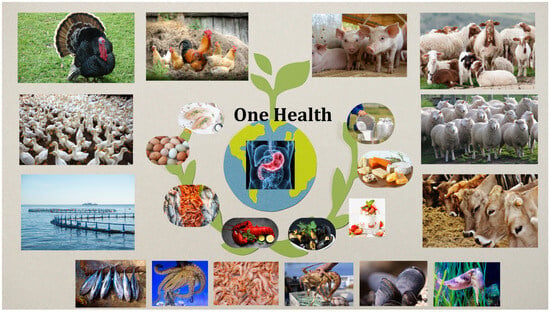
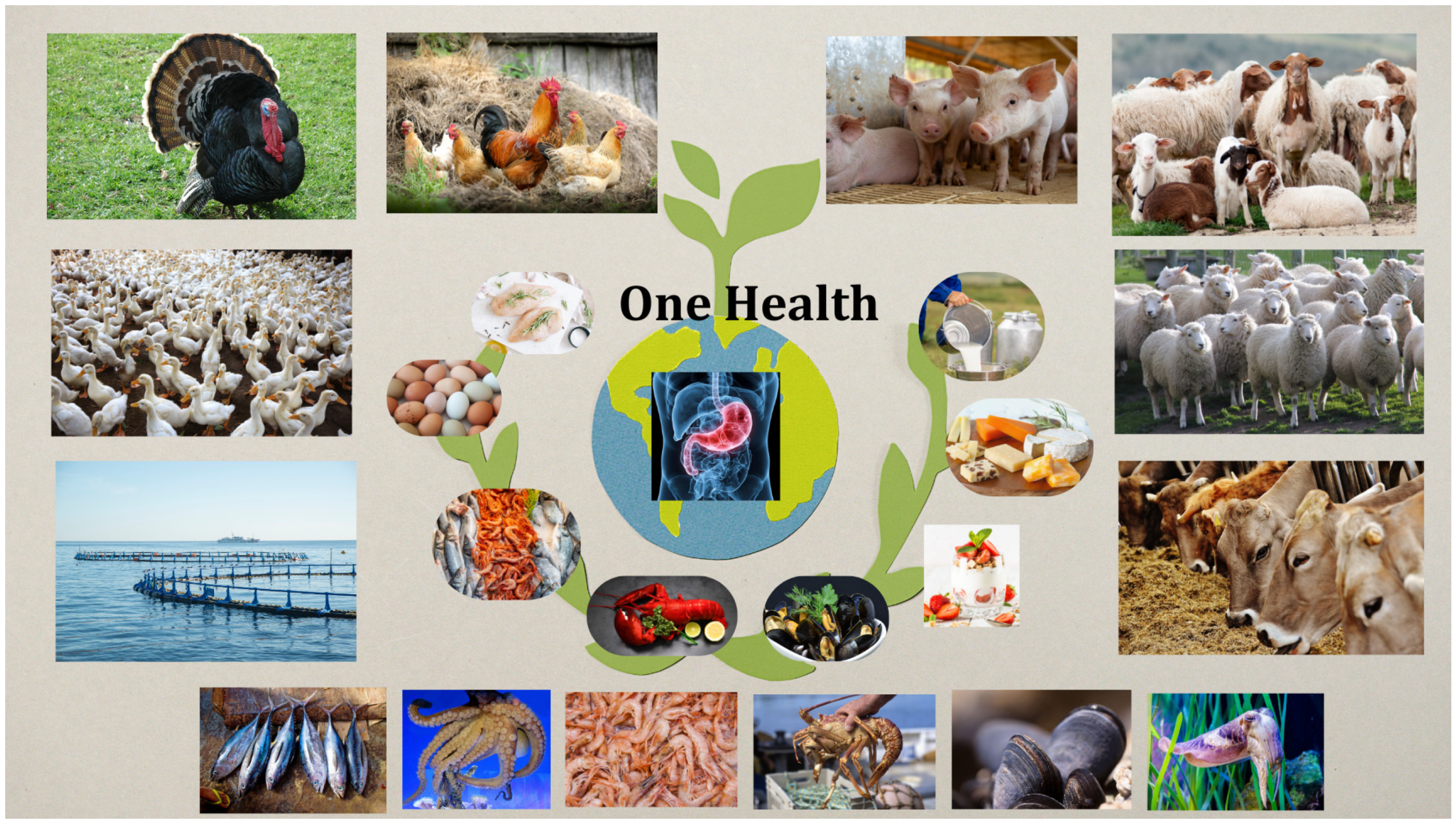

Disclaimer/Publisher’s Note: The statements, opinions and data contained in all publications are solely those of the individual author(s) and contributor(s) and not of MDPI and/or the editor(s). MDPI and/or the editor(s) disclaim responsibility for any injury to people or property resulting from any ideas, methods, instructions or products referred to in the content. |
© 2026 by the authors. Licensee MDPI, Basel, Switzerland. This article is an open access article distributed under the terms and conditions of the Creative Commons Attribution (CC BY) license.