


Abstract
Gianna Molinari’s 2018 novel Hier ist noch alles möglich is set in a Swiss factory approaching closure, narrated by a night watchwoman whose repetitive patrols along the fences defamiliarize borders and surveillance by making them visible as practices enmeshed in regimes of capital accumulation. At a time of mass redundancies, policing the factory’s fences in its dying days becomes an allegory of modes of securing the stability of capital during crisis times. I read Molinari’s allegorical aesthetics as illuminating how controlling people who are about to be rendered surplus goes hand-in-hand with displacement onto a racialized crisis of borders. Textual figuration of avoiding dealing with the root causes of surplusification emphasises the question about what has the capacity to render people disposable. Drawing on Marxist materialist methodologies, racial capitalism and critical border studies, I argue that the text’s imagery foregrounds questions of the political economy by showing the economy and border security working in tandem. Bordering and security appear as political-economic technologies that create and perpetuate the divisions upon which capital depends. Molinari mobilizes the figure of the wolf, said to be lurking around the fences, to critique the expansion of borders by showing them as a response to the crises of capitalism which does not resolve the structural contradictions but performs sovereignty through infrastructures of exclusion and securitization. The externalized and racialized figure of the wolf exposes the ways that economic turmoil is politically negotiated through displacement onto narratives of belonging and a panic about dangerous figures. The text effects a reverse displacement by foregrounding the real violence which is the rendering of populations excludable in the service of capital accumulation. The wolf refers to the institution of the ‘free’ labour market as a form of capitalist domination, as well as to how the real crisis of working people’s disposability is displaced onto a crisis about external threats. In a second critical strand, the text links the factory to the nearby airport to foreground the close relation between the fences of capital and national borders. By weaving in the true story of a stowaway, probably from Cameroon, who fell to his death from the wheel well of an aeroplane near Zürich, Molinari re-routes the criticism of capital through colonial–racial histories. Property and racialized belonging, capitalism and the state, emerge as an encompassing political-economic system. The man’s death is viewed through the fences of capital and, conversely, European capital in relation to the nation-state’s race-making. Molinari’s novel addresses in codified form the aftermath of the 2008 financial crisis, contemporary border enforcement and migration control, and rising ethnonationalism in Europe. My reading of Molinari, expands Swiss literary studies predominantly concerned with the construction and deconstruction of (national) identity.
Es braucht hier keine Nachtwache. Ich weiß nicht, wer was von diesem Gelände entfernen sollte. Hier gibt es nichts zu holen. Mehr als Karton kann ein Einbrecher hier nicht finden.
Ich frage mich, warum der Chef mich eingestellt hat, ob es ihm dabei wirklich um die Fabrik geht oder ob er mich aus anderen Gründen auf dem Gelände wohnen lässt. Wahrscheinlich sind Clemens und ich so etwas wie Trostmittel des Chefs; Solange Nachtwachen hier ihre Runden drehen, ist seine Fabrik noch als Fabrik zu bezeichnen. Ich bin froh um den Wolf. Vielleicht verleiht der Wolf meiner Tätigkeit eine Wichtigkeit.(Molinari 2018, p. 18. Further references to Hier ist noch alles möglich given as HIA)
There’s no need for night security guards. I don’t know who would want to steal anything from the premises. There’s nothing to take. An intruder would not find anything apart from cardboard boxes. I ask myself why the boss employed me, whether it is really to do with the factory or whether he lets me live on the premises for other reasons. Probably Clemens and I are something like consoling presences for the boss; as long as the night watch conducts its patrols here, his factory can be still termed a factory. I am glad about the wolf. Perhaps he will lend my activity a sense of importance.(All translations are my own.)
Gianna Molinari’s complex novel Hier ist noch alles Möglich is made up of textual fragments, bizarre vignettes set in imaginary places, drawings, marginal doodling, anecdotes, photographs, endless speculative passages, lists, calculations, and collections of trivia. These are assembled around the main narrative strand set at the time the novel was published in 2018 in a European factory (eventually identifiable as a Swiss factory) on the brink of closure. Narrated by the newly employed nameless night security guard, the textual fragments depict the narrator’s perceptions throughout the dying days of the factory during which time she builds up friendships with the few remaining workers and searches in vain for the wolf whom the cook claims to have seen by the bins. The assembled vignettes—the opening quotation serves as an example—depict faintly farcical scenarios which can be mined for their underlying political meanings.
My reading here explains how the whimsical and absurd literary registers are the mode through which the text foregrounds questions of the political economy. The fragmented form of the novel conveys a profound sense of rupture while eschewing discursive analysis. I argue that the text can be read as a nexus of parables and allegories that can be deciphered along a number of interrelated lines. First, the text brings together images of mass redundancies, property relations, long histories of demonization of the wolf, emotional and practical investment in border security, and control over mobile and disposable populations to foreground questions of coercion and governance during a prolonged period of economic unsettlement. Second, Molinari uses the figure of the wolf to refer to the ways that the real crisis—the source of which is the economic order—is displaced onto a crisis about the wolf, whom I read as a ‘racialized outsider’ figure. These dynamics become acute in the final days of the factory as the factory owner secures the sale of the factory while fomenting panic about the wolf. Third, a crucial second textual ‘moment’ concerns the events eight years prior to the factory strand of the narrative when an unknown man, whom the authorities think was a stowaway in the undercarriage of an aeroplane, fell near the factory’s fences. This strand leads to an implied critique of migration control and of citizenship as a form of racialized belonging. The text’s images of borders connect capitalism and the state as an encompassing political-economic system and effects a reverse displacement by foregrounding that it is this system, and not the wolf, that is generating social dislocation and violent borders.
Molinari’s vignettes start by defamiliarizing capitalism and its borders. As the opening quotation suggests, there is more to the factory’s fences than meets the eye. Policing the fences is not merely protecting the commodities as physical objects (the ridiculous cardboard boxes that the factory produces) but something more fundamental like the conditions of possibility of the economic system. The narrator senses that her patrols that demarcate the outer limits of the factory bring the entity ‘factory’ into being. The strange thought-image depicts borders and capitalism as strongly connected, if not synonymous. Further, the fences appear fabricated rather than neutral markers of territory, they bring worlds into being rather than describing what already exists (Mezzadra and Neilson 2012). The text’s associations stress that the fences are as much a site of production as the machines in the production plant themselves. As the narrator intuits, the fences also seem to serve a purpose that has something to do with making the boss, who is the owner of the factory, feel better at a time of economic crisis. Her physical movements around the fences are securing the stability of the concept of the factory for the boss at a time of financial turmoil. This appears as code for securing the capitalist mode of (re)production. The fragmentary yet connective form of the novel suggests that it is not a coincidence that bordering and surveillance intensify in these crisis times yet there is no clear cause and effect. As the quotation suggests, the wolf seems to give the security apparatus a sense of necessity which the security guards are glad about. The image speaks of the centrality of the economy alongside the figure of the elusive wolf who distracts the guards from the economic order while they help reproduce it.
The narrator’s hunch that her bordering practices are a means to secure the stability of the economic system is taken further through the mobilization of the figure of the wolf. The simple device of having the characters wonder about the whereabouts of the wolf while they are doing their daily tasks, constantly connects the wolf to the everyday running of the factory, and to the all-pervading sense of imminent job losses. It means that the characters are always talking or thinking about the wolf and not their own impending unemployment. This displacement occurs as the boss secures the sale of the factory. Patrolling the fences becomes linked to keeping the wolf out and akin to policing a manufactured ‘wolf crisis’ which helps the boss shore up property while everyone avoids dealing with the root cause of the redundancies. (I am drawing on Stuart Hall’s seminal text Policing the Crisis: Mugging, The State, and Law and Order. See (Hall et al. [1978] 2013) The devastating effects of mass unemployment are hinted at but not articulated. Also not expressed directly by the characters but illuminated by the text in the second narrative strand, is the real crisis of the deaths of migrants.
In this introduction I give an overview of the essay’s arguments, explain the complexity of Molinari’s debut novel and how it fits in Swiss literary studies, and stress the importance of a reading that places the political themes at the centre of interpretation. These have been downplayed by the reception of the work. The review in the FAZ, for instance, interpreted the novel as an intriguing ‘Psychogramm’ (psychological profile) of a young woman and praised the novel for its language, humour and irony (Platthaus 2018). The novel first attracted wider attention through Molinari’s award-winning appearance at the Ingeborg Bachmann Competition in 2017, where she received the 3sat Prize for an excerpt from it and then went on to garner much attention upon publication in 2018, being awarded the Robert Walser Prize and the Clemens Brentano Prize. It was nominated for both the German and Swiss Book Prizes. Gianna Molinari (b. 1988), a graduate of the Swiss Literature Institute in Biel, has emerged as an important voice in contemporary Swiss literature. Alongside her writing. she campaigns for visibility of marginal groups, is engaged in activism to bring writing to wider sections of the public, and clearly believes in collective activism as a response to social inequality. In 2019, she, together with Katja Brunner, Anaïs Meier, Sarah Elena Müller, Michelle Steinbeck, Tabea Steiner and Julia Weber, founded the feminist authors’ collective «RAUF» which draws attention to patriarchal structures in the cultural landscape through public actions, symposia, and texts.
The reason why her debut novel has not on the whole been read as political lies undoubtedly in the text’s complex codification and webs of associative imagery. In my readings below I explain that Hier ist noch alles Möglich is far from being merely a psychological portrait of a young woman. The narrator, as nightwatchwoman, is in fact one of the main conduits into political thinking for several reasons. Firstly, she appears to be the author of all the bizarre marginalia and collections of trivia, the illustrator of the drawings, and the photographer of the strange images and thus she is associated with a labyrinthine and absurd imagination which appears subversive. The tone and content of many of these marginal fragments are themselves political. The very first fragment, for instance, is set on a far-flung island on which visiting colonial-sounding scientists catch a hitherto unknown species and vie with each other to bestow their name on it. The mini parable refers to geographies of ownership, and it critiques hegemonic structures when the ‘Tierchen’ (little animal) escapes and the scientists are deflated. Secondly, simply by noticing the absurdity in the everyday the narrator renders the situation at the factory, and later at the airport, strange. The farcical and the uncanny are put to political use, as the examples below show. Thirdly, because she casts doubt on the unsubstantiated report of a wolf, she makes the boss’s panic about the wolf feel strange. She asks herself questions about the wolf trap and the surveillance apparatus throughout, and explicitly contradicts the boss on several occasions. Lastly, the first-person narrative suffuses the text with a sense of unknowing and speculation. This is not just the literal lack of knowledge that comes from a limited perspective, nor merely about how the boss keeps them all in the dark: ‘Vielleicht kennt der Chef das Datum bereits, vielleicht ist der Tag der Schließung in seiner Agenda rot markiert’ (HIA 179) (perhaps the boss knows the date already and has marked the day of closure in red in his diary). In addition, not-knowing is inflected through an ontological register. Molinari marshals the uncertainty of the transcendental subject to whom the world does not appear in a transparent way and places her in the factory at a time of crisis. The text places her almost literally at the heart of the capitalist mode of production in the images in the production plant, as we will see. She is represented as questioning the factory’s security apparatus while standing right next to the machines. Without ever mentioning the word ‘capitalism’, Molinari makes it the text’s central concern.
Hence, the text operates on a level beyond the narrator requiring the reader to make links where the narrator does not. As the opening quotation suggests securing the borders serves two purposes—it displaces attention from the economic crisis onto putative external threats as well as controlling the divisions that underwrite regimes of capital accumulation. The presence of security guards doing their rounds convinces the boss that the capitalist social and economic order is in good shape despite the financial difficulties. This is what comforts the boss. And, indeed, this is not just false comfort. The factory might be closing in this locality and causing mass redundancies, but the tacit understanding is that this is a result of market forces and part of the normal functioning of the economic order, not its breakdown (see Harvey 2010). At the end of the novel, the boss sells the factory (or so we think); we see Clemens, the other security guard, rewind the CCTV film and interpret the silent footage of the boss greeting a visitor with a folder in an expensive car. At the same time, there is a splintering of the workforce with untold numbers still out of work. The sale of the factory and the dissolution of the workforce is the assertion of property understood ‘not as personal possession but as the legally-sanctioned power to dispose of the means of production, and thus to dispose of labour-power: property as synonymous with capital’ (Bhandar and Toscano 2015, p. 10). Crises of capitalism and hegemony, the text suggests, are negotiated by doubling down on the existing asymmetries of power while displacing attention to supposedly external dangers.
To decipher Molinari’s thought-images I use Marxist materialism, critical border studies and racial capitalism as my critical framework. Because the factory is an obvious symbol of capitalism, Molinari is able to draw on it in multiple ways to evoke the logics of property, relations of power, structural inequality, hegemony, histories and modes of production and present conjunctures. Following Marx, the factory is not merely a workplace but the institutional form through which capitalist social relations are organized and reproduced (Marx [1867] 1976). As is well known, the factory is the ‘hidden abode’ of capitalism for Marx. Entering the factory was an exercise that exposed what was not visible in the sphere of commodity exchange. It illuminated what Nancy Fraser calls capital’s ‘dirty secrets’ (Fraser 2019), chief among them the extraction of value from a human being’s physical and creative energies, the organization of production around profit rather than use, and the separation of workers from the means of production (the division between capital and labour), itself predicated upon historical forms of dispossession through enclosure and usurpation of land formerly held in common. (Marx [1867] 1976).
In Molinari’s novel, there is a sense of layers upon layers of dirty secrets, some completely invisible to the naked eye. The fragmentary form of the novel combines hints about the process of being rendered disposable alongside images of the factory as a space of control. It is clear that people are being controlled as workers in the factory. The boss pays the narrator for the night shifts but because the narrator lives in one of the warehouses and is on the premises all the time and never seems to sleep, her whole life is entirely given over to her security duties. But importantly, the more subterranean form of control, at this present moment, is alluded to through the people who are being controlled as imminently unemployed. In her interview at the beginning of the novel, the boss, who is the owner of the factory, ensures that the narrator understands that her employment will terminate when the factory closes; it is only a matter of months until the machines are switched off (HIA15). That all the characters are in the process of losing their jobs for the duration of the text makes the question about who or what has the capacity to render people excludable particularly acute. The text places this question next to images of regimes of capital accumulation. It is not that it is unfortunate that the factory is in decline. Rather the text probes the underlying economic and political reasons why there is deep uncertainty for working people through the repeatedly unanswered question of how the characters are going to survive without wages. This is all the more forceful because it is not directly posed by the characters themselves (including the narrator) who fall into a strange state of disavowal or are distracted by the wolf. This is not to say that they acquiesce or are duped. They all express frustration to each other. A few pages before the end of the novel the affable Clemens comes close to anger about losing his job and blames the boss (HIA p. 177). Earlier in the text Lose, an older worker, tells the narrator that the boss is the sort of person who leaves his Christmas decorations up in the garden all year round (HIA p. 56). The insinuation is that the boss is too lazy to put up a fight to save the factory. Yet these fragments do not coalesce into collective resistance.
I read these affective atmospheres and scenarios as allegories through which the text speaks volumes about the financial crisis of 2008 and four decades of neoliberal capitalism, the denigrating effects of low, temporary, and non-existent wages and the crisis of social reproduction. By working at the borders of capital for a temporary wage, we glean that the narrator might be comforting the boss, but at the same time she draws the parameters of her own, and her colleagues’, containment in the highly uncertain position of the ‘free’ labourers (Marx [1867] 1976) who, having been deprived of the means of subsistence, are dependent upon wages for survival but can never guarantee buyers for their labour power (see Mulcahy 2023). This necessity of continually having to find a buyer without ever knowing whether one exists describes the existential contingency of labour power as a commodity. By linking the imagery of borders to mass unemployment, Molinari’s novel suggests that the characters are locked into this imposed condition of uncertainty that Ken Kawashima identifies as “a mode of capitalist domination” (Kawashima 2005). Moreover, the novel suggests intensified forms of contingency and dispossession as illustrated through the images of security and surveillance that serve to shore up the boss’s property. At the end of the novel, while he sells his property, she is jobless, friendless and homeless; the companionship between the few remaining workers has been destroyed and the narrator is suspected of committing bank robbery because she resembles the photofit image of the suspect. The narrator goes from policing the borders during the factory’s crisis to being on the receiving end of surveillance capitalism herself.
In what follows I argue that the novel allegorizes how the economic system produces crisis-levels of surplus populations, but that attention to the economy is displaced onto a crisis about the ‘wolf-threat’. This displacement is linked to the expansion of violent borders. The boss gives the security guards the task of digging a pit to make a wolf trap and places brutal iron leg traps around the fences. The whole pack could arrive next, he says (HIA 26-8). The allegory cleverly suggests that the boss is fomenting panic about ‘external invaders’ while arranging the sale of the factory and thus the text intimates that the ‘wolf crisis’ is the mode through which the economic crisis is managed to shore up hegemony (See Hall et al. [1978] 2013).
The proliferation of borders and surveillance at the factory refer in codified ways to migration control and militarized borders in Europe today. The novel speaks urgently to rising ethnonationalism in Europe, recent violent attacks on immigrants, and organized anti-immigration protests across Europe. Rather than addressing these issues through the genre of realism, Molinari uses the multifaceted allegorical figure of the wolf in combination with evocations of violent border regimes. Like her fellow Swiss writer, Verena Stefan, histories of human-perpetrated violence against animals are evoked to critique contemporary migration control. Stefan has used the centuries-old tradition of imprisoning bears in a bear pit in the centre of Bern as a symbol of the Swiss penal and national security state (Stefan 2007; Ludden 2024) which increasingly uses its power to incarcerate and deport (Le Blond 2013). The literary device allows the contemporary conjuncture to resonate within longer genealogies of European violence stemming from social formations based on differentiation and hierarchization. As Cedric Robinson has shown, the longue durée is important for understanding feudal Europe as the incubator of racial capitalism (Robinson 2021).
Molinari’s novel differs from Stefan’s because it places capitalism front and centre by hinting that border enforcement is linked to the systemic requirements of capital. In addition, and crucially, the wolf can be interpreted in this nexus of issues as a racialized figure. The textual allusions and analogies create important implications. When images of capital and property are associated with the man who fell from the sky, the novel stresses that his death needs to be seen in relation to regimes of capital accumulation. The novel stresses the materialist production of borders embedded in these regimes andthat racialized panics about ‘migrants’ are not natural or inevitable. The emphasis on production underscores that capitalism and the border regimes it spawns are fabrications not inevitable consequences of human nature. (Wood 2002). The imagery depicts the border in complex ways as an ideological apparatus, a technology of differentiation, and a means of displacing antagonisms generated by neoliberal dispossession. Thus the novel intimates that xenophobia is not inevitable during economic crisis; it is not an instinctive reaction of people anxious about their survival but is the mode in which capital manages its structural antagonisms in specific social formations shaped by racial-colonial histories and riven with ‘internal’ tensions.
Importantly, these issues are embedded in real lives. The text includes a true story of a man, known in the text as the ‘man who fell from the sky’. The man was a stowaway in the undercarriage of an aeroplane and was killed when he fell into Swiss territory. At the back of the book in the acknowledgements, Molinari informs the reader of the real event in Weisslingen in 2010 when the remains of an unknown man were found. The man’s dark skin colour (HIA p. 82) and a Cameroonian banknote led the Swiss authorities to assume that he came from Cameroon, but his identity has never been established. His next of kin have never been found. Molinari weaves this real event into the fictional scenario at the factory as if to require the reader to see the connections between capital’s capacity to render people disposable and the man’s death. It is not just that social rupture is negotiated by displacing tensions onto imaginary racialized figures; the novel requires us to keep in mind the real bodies that in Achille Mbembe’s sense, constitute the ‘fleshy surplus’ of the colonial accumulation of capital (Mbembe 2003, 2019). The textual configurations do not explain the man’s death but nevertheless suggest that it was not an isolated accident because it resonates in relation to images of a political-economic system that generates forms of extreme vulnerability to premature death (Albahari 2015). This contradicts the images of dangerous intruders invoked in the moral panic over the wolf (Hall et al. [1978] 2013).
The questions Molinari’s novel raises call for critical frameworks that expand Swiss Studies that has been organized around questions of national identity, cultural memory and Swiss exceptionalism. As the call for papers for this Special Issue demonstrates, Swiss Cultural Studies has increasingly conceptualized Switzerland less as a homogeneous national culture than as a space traversed by linguistic, territorial, and cultural borders (Barkhoff and Heffernan 2010). Drawing on paradigms of transnationalism, cosmopolitanism and globalization, scholars have foregrounded Switzerland’s position as a site of encounters, circulations and entanglements rather than a bounded national culture (Zimmer 2003). This refigures Switzerland as an interconnected hub, an imagined space of cosmopolitan openness, a space of borders, and conduits and encounters with connections. In her interpretation of Dorothee Elimger’s work, Linda Shortt, for instance, foregrounds bordering as connecting multiple border spaces and producing new inclusive geographics (Shortt 2021). While this scholarship has productively displaced methodological nationalism, the language of mobility, circulation and connectivity risks obscuring borders as political–economic and racializing technologies.
Borders in Hier ist noch alles möglich are not spaces of hospitality and openness. They appear as fortified regimes linked to racialized crisis management to secure the stability of capital. They are metonyms of the power of the state and of capital to render people surplus. To read these violent borders (Jones 2016) as transcended in transnational flows would be to miss the point. While scholars of political theory have recently addressed how Swiss national identity and borders are maintained through implicit racial hierarchies (Michel 2015, 2022), these frameworks have not often been applied to Swiss literature.
Prevailing cultural discourses centre on Swiss transnational identities and hail Switzerland’s multilingual geography as a natural laboratory for cosmopolitan encounters. At first glance, transnationalism appears to mark a significant departure from earlier literary negotiations of Swiss identity. When Max Frisch’s protagonists travelled beyond Switzerland, geographical displacement frequently staged menacing encounters with threatening otherness, which ultimately exposed the limits of cosmopolitan self-fashioning (Frisch [1957] 1977, [1975] 2024; Butler 2004). Today, scholarship continues to be organized around questions of Swiss identity that is now a transnational rather than a singular national identity (Rothenbühler et al. 2018).
Alexandra Ludewig’s reading of Hier ist noch alles möglich (Ludewig 2021) approaches the novel through the related frames of the ‘province’ and the ‘local versus the global’. This paradigm often uses the local as a launchpad for global connections; characters are rooted in the Swiss landscapes but their ethical awareness through which they explore themes like the climate emergency and migration are global. Such approaches read bordering through assumptions similar to what cosmopolitan theory terms ‘rooted cosmopolitanism’ (Appiah 1997). While this approach helpfully shifts attention away from a single national identity, it is limited in Molinari’s case. Firstly, the scales in Molinari’s text do not map onto the concepts ‘local’ and ‘global’. The novel repeatedly connects something smaller than the local to forces and genealogies that the concept of ‘the global’ misses. Molinari shifts constantly from the sub-local—the hidden minutiae of the everyday, the textures of feeling—to capitalism and the national security state as an encompassing political-economic system. Secondly, the conception of borders, as we have seen in the opening quotation, is one that stresses that borders are material, dynamic, systemic; embedded in structures of accumulation and dispossession. (Mezzadra and Neilson 2013) ‘Inside and outside’, ‘here and there’, ‘local and beyond’ emerge as effects of the capitalist mode of production. Instead of seeing a pre-existing local Swiss setting impinged upon by ‘the global’, both spheres are revealed to be produced by the operations of capital and its border regimes. Inside and outside are generated as spatial manifestations of the exact same underlying logic, that of the expansion of capital which creates a world after its own image (Marx and Engels [1848] 2015). This productive political ontology is important in the context of migration control because it emphasises that ‘migrant’ is not a natural category, but a specific relation of difference imposed by the state. In placing the capitalist crisis front and centre, Molinari’s novel bypasses both transnational cosmopolitanism and Frisch’s uncanny cosmopolitanism and calls for different theoretical lenses.
Molinari is not in the only contemporary Swiss writer turning to critiques of capitalism. Dorothee Elmiger, another prominent Swiss writer from the younger generation, addresses histories of ownership and contemporary racialized mobility in her novel Schlafgänger (Elmiger 2014). Elmiger’s second novel Aus der Zuckerfabrik (Elmiger 2020) focuses on financial networks, colonial histories and Switzerland’s role as a safe haven for global surplus value. Hier ist noch alles möglich is, however, not self-consciously intertextual like Elmiger’s work. At the centre are the embodied lives of the unknown man who fell from the sky and working people dependent on temporary, stagnant, and non-existent wages. The narrator befriends the cooks, the mechanics, and the bus drivers. Molinari spends (narrative) time with their lives in genuine affection. Throughout the novel, the workers are facing unemployment and the question of how they are going to make ends meet after the closure of the factory remains unresolved at the end. From the space of the lives of the people who keep everything running, the question of social reproduction is posed and not answered. But the more gaping rupture overlayered on top of this unanswered question concerns the man, perhaps from Cameroon, whose ‘non-story’ (since no facts about him are known) is presented as a critique of the production and policing of racialized mobility. This enables the text to illuminate the violence that ‘splits humanity into those associated with property, citizenship and wages, on the one hand, and those subjected to super-exploitation and dispossession on the other’ (Danewid 2023, p. 41).
1. Borders, Security, and Managing the (Wolf) Crisis
The following sections offer close readings of the novel to analyse how the aesthetic form and textual strategies produce allegorical political meanings.
Upon taking up her job at the beginning of the text, Molinari’s first-person, nameless narrator moves into the factory and sets up a home in one of the warehouses. There is no plot to speak of. She does her job, makes friends with the few remaining workers, and enjoys digging the wolf trap because the project fills her otherwise empty time. In interspersed fragments she longs to spot the wolf but questions the proliferation of security measures and the boss’s obsession with policing the fences. (HIA 26–7) The novel’s first sixty pages evoke the prevailing atmosphere at the factory which is a strange mixture of uncertainty mixed with boredom, a sense of very slow, almost imperceptible decline and abandonment. This is conveyed in vignettes that humorously foreground the security guards’ embodied states of frantic inertia (Southwood 2011). They spend so much time staring into the monitor screens and patrolling the fences watching nothing happening that they both long for an actual intruder. (HIA 24) The narrator repeatedly emphasizes that there is nothing on the factory premises worth stealing. Apart from cardboard boxes there are no obvious objects that would justify surveillance patrols, fences or wolf traps. The security guards appear superfluous. As characters they are gentle and not exactly efficient. One fragment merely notes that Clemens has not done a good job patching up the holes in the fence. If the wolf wanted to get through, it would not be difficult. (HIA 96) Clemens approaches catching the wolf like a game. He thinks the wolf is not so stupid as to fall into the trap. The narrator sabotages the iron Tellereisen (leg traps) by putting branches in them. All these fragments make the fences and security measures feel strange, ludicrous even, rather than ominous or violent. Yet the reader comes to realize that the guards eke out the job of securitizing the fences; if they keep digging the pit they believe that they can perhaps stave off unemployment. The final image of the text places the narrator in the pit of the wolf trap, still digging even though the factory has closed and everyone has left. The economic crisis and the real problem of unemployment are displaced throughout onto a ‘wolf crisis’. Endless speculation about the possible appearance of the wolf both masks and reveals the uncertainty surrounding the impending job losses and leads to intensified policing of the borders. Hence the atmosphere created for the first sixty pages that nothing at all seems to be happening apart from the farcical hunt for the imaginary wolf wonderfully sets the tone for the novel as a whole by capturing the displacements, disavowals and worry felt by the dwindling workforce during a prolonged period of crisis of accumulation.
From the beginning the narrator alerts the reader to the sense of something invisible happening at the factory. Although the factory’s fences are prominent features of the landscape the narrator reflects on the existence of invisible borders that are harder to apprehend.
Zu den sichtbaren Grenzen gehören die Waldgrenze, die Grenze zwischen Land und Wasser, zwischen Licht und Schatten, die Wände meiner Halle und die Umzäunung der Fabrik. Diese Grenzen sind leicht zu erkennen. Andere sind es nicht.(13)
The narrator’s musings condition the reader to look out for what is being hidden by the setting of limits (another meaning of the word Grenze). Further fragments suggest that there is something that the narrator is not seeing but perhaps is intuiting subliminally. When she looks into the multiple monitor screens in the surveillance room she sees nothing happening except time moving.
Manchmal wird das bewegte Bild zu einem Standbild, weil sich nichts darauf bewegt, weil die Einfahrt, die Ausfahrt, das Zentralgelände und der Haupteingang unverändert daliegen. Die einzig auszumachenden Veränderungen sind das Licht, das heller oder dunkler wird, und die Schatten, die langsam über den Betonboden wandern. (HIA 14) (Sometimes the moving image becomes a still image because nothing is moving in it, because goods entrance, exit and central area and the main entrance just lie there not changing. The only changes that you can discern are those cast by the light becoming lighter or darker, and the shadows that wander slowly across the concrete ground.)
Molinari juxtaposes these passages with the narrator’s unease about the security at the factory. The narrator is puzzled about why the boss is placing a premium on security at the very moment of the factory’s demise. What is driving the need for guards and fences, for stricter policing at this time? The ubiquitous images of surveillance suggest that just because nothing can be seen to be happening, does not mean that control is not happening. It is as if the narrator is ferreting out the factory’s hidden secrets by constantly missing seeing the wolf.
Häufig sitze ich im Überwachungsraum und lese in einem Buch. Dann linse ich nur aus den Augenwinkeln auf die Monitore.
Manchmal meine ich mitten in einem Satz eine Bewegung zu sehen. Der Wolf, denke ich, aber bis ich meinen Blick vollständig von den Zeilen löse und auf den Bildschirm richte, ist der Schatten weg. (HIA, 14) (I often sit in the surveillance room reading a book. Then I only glance at the monitors out of the corner of my eye. Sometimes I think I see a movement mid-sentence. The wolf, I think, but by the time I fully look away from the text and focus on the screen, the shadow is gone.)
In the first chapter the wolf is used to usher in a materialism of the invisible. The text repeatedly connects the wolf to something that continually slips from view. This is reinforced by the book cover, which reveals only the outermost tips of bristly black fur. The image invites the reader to run a palm along it. You never see the wolf, but you almost feel him. The same aesthetic recurs in the novel’s dictionary-like fragments that take the form of the narrator’s handwritten marginal additions to her Universal Encyclopedic Dictionary, “WOLF: ich warte noch” (“WOLF: I am still waiting”), which register expectation rather than appearance.
The narrator’s longing to see the wolf becomes linked to the question as to what is being rendered excludable as part of the smooth functioning of the factory world. The text allows the reader to form the idea of the wolf as the blind spot and then establishes an alignment between the wolf and the missing workers. As the narrator remarks, ‘in der Fabrik fehlt einiges: angefangen bei den Mitarbeitern, die ich so selten sehe, bis hin zum Wolf, der gänzlich fehlt’ (HIA, 17) (‘There are things missing in the factory: from the employees, whom I so rarely see, to the wolf, who is completely absent’). Here the wolf’s absence is linked to the unemployed people who are also not visible. The associations foreground the notion of a necessary structuration that involves including entities as excluded. The surplus labour might be not visible in the factory, but it is part of the overall mode of production. Molinari’s mobilisation of the wolf as the blind spot is thus highly political but the text constructs these meanings not discursively but through imagery. The wolf appears as a literal blind spot in the two black and white photographs in chapter one that feature fences and undergrowth with prominent white stickers stuck next to the fences. These images appear alongside textual evocations of the factory’s fences and the narrator’s search for the wolf. The stickers on the photographs suggest that the wolf is under the sticker. The stickers look ridiculous, something that a child would stick over a photo, and in this indirect, nonverbal way, the text undermines the idea of the wolf as a dangerous intruder and figures him instead as a constitutive part of the system but one that has to be rendered invisible or excludable as condition of the functioning of the system. In this way the text suggests there may be ulterior motives surrounding the anti-wolf campaign.
The text’s fragmentary form links the question of being rendered excludable to the capitalist mode of production as the narrator brings her strange questions into the production plant. She voices concerns about the role of the security measures while standing right next to the commodities being produced. Watching the cardboard move through the machines, she wonders ‘who needs all of these boxes?’ but is also glad that people do because she does not want to lose her job. (HIA p. 56) The images in the production plant, like the patrols around the fences, stress an ontology of production that de-familiarises the commodity and the border while showing them as interconnected. For instance, in the fragment where she stands next to Lose, an older worker operating the machines producing the cardboard boxes, the narrator questions the introduction of the wolf trap at the factory’s fences. Molinari finds a wonderful image in the boxes: commodities designed to package and transport other commodities, images of circulation for its own sake, a circulation that the image suggests is maintained systematically by the legitimized violence against the wolf. Such passages bring together the capitalist mode of production, the workers’ situation, and the hostility towards the wolf. The narrator remembers a phrase the boss used in her interview and it bothers her. He said that he was employing her as security guard to make sure that ‘alles mit rechten Dingen abläuft’. (HIA 56) This is an idiom meaning he wants ‘everything to be above board’ or to ‘follow the proper procedure’. The narrator questions whether wolf traps belong to ‘doing everything correctly’. The boss hardly speaks in the text, but these snatches suggest that the boss wants a managed decline, no unrest, protest, no savages encroaching at the last minute. By placing these ideas within the scene of capitalist production, the text links the factory’s border regimes to the need to secure capital accumulation which in turn is linked to the (re)production of the wolf’s excludability. Because the wolf is aligned with the redundant workers, unemployment appears part and parcel of the economy. Thus while there is no scene in which the boss sacks everyone (staff are just leaving quietly in dribs and drabs), the text clearly links dispossession to the capitalist mode of production.
Molinari never uses the word ‘Eigentum’ (property) but there are oblique references to property in many fragments, most notably those featuring the boss. During the narrator’s tour of the production plant, she struggles to hear the boss over the noise of the machinery. ‘der Chef nickte und ich nickte. Dann formte der Mund des Chefs Worte: Sie klangen nach Karl-Heinz. Vielleicht sagt er aber auch: sehr heiß oder alles meins’ (HIA p. 21). (The boss nodded, and I nodded. Then the boss’s mouth formed words: they sounded like Karl-Heinz. But maybe he’s also saying: ‘Very hot!’ or ‘All mine!’) Watching his mouth move, she cannot determine whether he is introducing a worker named Karl-Heinz, commenting that it is ‘very hot’, or simply declaring ‘all mine’ (alles meins). The joke is deceptively simple. Against the noise of machines churning out endless cardboard boxes, critical questions about ownership might ordinarily be drowned out but Molinari places them on the agenda in this understated way. She makes property appear like an unnatural relation, as an absurd claim laid over the productive activity of others.
This question is made more explicit in the boss’s office. When the narrator looks at a photograph on the wall, the boss explains who it is:
Mein Onkel, sagt er und schiebt den Karton über den grauen Teppich neben den alten Kopierer. Ihm gehörte die Fabrik und davor gehörte sie meinem Großvater.
Wie das so ist, sage ich und helfe ihm, den neuen Kopierer aus dem Karton zu heben.
Ja, wie das eben so ist, sagt er, und wir heben den alten Kopierer in die Kartonschachtel hinein. (HIA 25) (“My uncle,” he says, sliding the box across the gray carpet next to the old photocopier. “He owned the factory, and before that, it belonged to my grandfather.” “That’s how it goes,” I say, helping him lift the new photocopier out of the box. “Yes, that’s just how it goes,” he says, and we lift the old photocopier into the cardboard box.)
The narrator learns that the factory belonged first to the boss’s grandfather and then to his uncle before passing to him. The exchange is striking for its casualness. Neither character expresses surprise that one person should inherit ownership of a factory while another must sell her labour in order to survive. Their laconic responses present property as self-evident. Yet the very understatement of the scene has a defamiliarizing effect. The replacement of the photocopier that accompanies the brief exchange invites a symbolic reading about the reproduction of property relations which appear as inherited from one generation to the next and accepted as common sense but which in fact require a whole mechanics of reproduction. The constant sense that we are not seeing something happening adds to the strangeness of the relation between the boss and the narrator and provokes the reader into inquiring into property’s conditions of possibility. According to Marx in his critique of primitive accumulation, the relation between the owner of property and the seller of labour power did not arise naturally but through force, expropriation, and enclosure (Marx [1867] 1976, p. 873). Property is the result of a violent history of production through enclosure and dispossession, but these historical and ongoing conditions are often not seen. The acquisition of the new photocopier in Molinari’s image suggests the assertion of property at the very moment the nonowners are being sacked. The symbolism thus evokes the boss as clamping down on the logics of dispossession to secure the stability of capital accumulation at a time of financial turmoil. This involves renewing and intensifying forms of surplusification and disposability (Thompson 2026).
These dynamics find expression in the series of fragments set in the factory canteen that chart over the course of the text the rising numbers of the unemployed in exchanges between the cook and the narrator. The factory’s cook is a crucial character. The fragmentary form of the novel ensures that he appears not as an individual but as a figuration through which the novel alludes to the morbid symptoms that start to appear when the factory approaches closure. He alludes to the displacement of crisis onto the wolf as the way of managing the period of transition at the factory. The cook’s actions illuminate a crisis of accumulation (Brenner 2002). When the cook, the text suggests, both intuits and disavows the contradictions in which he is mired, it allows the reader to see that the economics of disposability is what is driving the crisis but the cook is distracted by the imagined dangerous wolf supposedly lurking at the borders. When the narrator first meets the cook, the empty canteen becomes a spatial register of disappearance.
Nicht viel los, sage ich und zeige mit der Gabel in den Raum.
Der Koch schaut mich an. Hast du bisher schon erlebt, dass hier viel los ist? Früher war das anders, früher kochte ich jeden Tag vier Menüs und machte Salate und Desserts. Früher waren diese Tische voll.
The missing bodies of the unemployed appear tangible in the space of the canteen. This tactic is repeated in other fragments for instance in the missing photographs of former workers taken down from corridor walls. (HIA p. 45) The simple image of empty spaces evokes the hollowing out of space as an image of the transition from the factory’s heyday, when it had a large workforce, to the present day of mass redundancies. The image evokes deindustrialisation, outsourcing, and neoliberal restructuring that has rendered people increasingly disposable. As the factory’s location is left indeterminate the text alludes to the structural changes over the last five decades which have led to massive losses of working-class jobs in Europe (Harvey 2014). The narrator’s comment that the wolf only turned up now, i.e. when people can feel that the vast surplus populations have reached crisis levels, plants the seed in the reader’s mind about the need to see the border regimes at the factory in relation to widespread and diversified forms of economic and social dispossession. The insinuation is that whipping up fear about the wolf displaces the crisis of capitalism onto externalized figures.Früher gab es hier auch keine Wölfe, sage ich (HIA 19) (“Not much going on,” I say, gesturing with my fork around the room. The cook looks at me. “Have you ever experienced anything going on here before? It used to be different. I used to cook four different dishes every day, plus salads and desserts. These tables used to be full.” “And there weren’t any wolves here back then,” I add.)
Because his job is to feed the workforce, the cook realizes how many workers are not there any more when the leftover meals accrue. The cook is strangely reluctant to simply throw the uneaten meals away. Throughout the novel the cook freezes the uneaten meals which take up space in the freezers. This renders the missing bodies seemingly present materially in the space of the factory. As the novel progresses the freezers fill up which can be read as an indication of the scale of the redundancies. The factory becomes the space where absences accrue.
Je länger ich in der Fabrik bin, desto häufiger denke ich, dass es einfacher wäre, die Welt als Scheibe zu denken, mit klaren Rand, mit Welt und Nichtwelt, mit Etwas and Nichts. Aber die Welt ist keine Scheibe. Die Welt ist nicht ausschließlich Etwas: Auf der Welt gibt es Stellen von Nichts. Der Wolf ist eine davon. (HIA 46–47) (The longer I am in the factory, the more I think that it would be easier to imagine the world as a disc, with a clear edge, with world and non-world, with something and nothing. But the world isn’t a disc. The world isn’t exclusively something: there are places in the world of nothing. The wolf is one of them.)
The wolf figure directs attention to a dynamics of dispossession linked to the systemic requirements of capital. About half-way through the text the cook becomes more anxious, and briefly even criticizes the boss when he says:
The frozen meals in the overflowing freezers is another of Molinari’s thought-images. It evokes the inverse of capital’s ‘growth fetish’ (Fisher 2009, p. 16). As capital accumulates elsewhere, at the factory job losses accrue. By not throwing out the left-over food the cook illuminates capital’s logics of waste. The cook becomes the character most fixated on trapping and killing the wolf because he comes to believe doing so will save his job. The overflowing freezers go beyond merely registering surplus labour and connect to the images of border security via the wolf figure who shifts the question from the production of surplus populations to the policing of those rendered surplus. As the social contradictions of the factory deepen, they are increasingly displaced onto the wolf, whose imagined intrusion transforms a crisis of accumulation into an external problem of contamination and control. The cook starts to invoke the wolf as contagious and polluting at precisely the moment when the freezers are full to the brim and he stops cooking altogether. It is in this context that the wolf becomes an image of a stigmatized racialized Other: a dangerous figure who must be contained before he can cross the fences and spread disease.dass aber einmal Ansagen gemacht werden müssten, dass er und auch die anderen wenigen Mitarbeiter die noch in der Fabrik arbeiteten, jetzt endlich einmal Klarheit bräuchten, dass das so nicht gehe, dass die Tiefkühltruhe bald voll sei, voller geht nicht, von all der Suppe und dem anderen Essen, das er einfrieren müsse, weil niemand komme und esse, dass der Chef jetzt einmal sagen müssen, was Sache sei. (HIA 91–92) (that some kind of announcement needed to be made, that he and the few other employees still working in the factory finally needed clarity, that things couldn’t continue like this, that the freezer would soon be full, as full as it could get, with all the soup and other food he had to freeze because nobody was coming to eat, that the boss now had to say what was going on.)
Er stellt den Suppentopf zur Seite und legt nacheinander alle Beutel in eine Box.
Es gibt Gründe, warum der Wolf hier schon einmal ausgerottet wurde, sagt er.
Was für Gründe, will ich wissen.
Der Wolf ist ein agressives Tier, ein Raubtier, oftmals von Tollwut befallen […]
Er geht mit der Box in die Küche und legt die mit Suppe gefüllten Beutel in die Tiefkühltruhe. Ab jetzt nur noch Aufgetautes, sagt er und schlägt den Truhendeckel mit einem lauten Knall zu. (HIA, 94) (The cook sets the soup pot aside and places each pouch of soup into a box. There are reasons why the wolf was eradicated here once before, he says. What reasons, I ask. The wolf is an aggressive animal, a predator, often infected with rabies […] He takes the box into the kitchen and places the soup-filled pouches in the freezer. From now on, only thawed food, he says, slamming the freezer lid shut with a loud bang.)
Molinari introduces just enough realism to allow the reader to connect the wolf to the real situation in Switzerland where wolves were hunted to extinction in the nineteenth century and their return in recent years has divided Swiss society (Lettau 2024; Ludewig 2021). However, the allegorical tenor produces wider meanings. The loud bang of the freezer lid speaks volumes about the cook’s worry about losing his job and his suspicions about the narrator’s sympathies with the wolf. But because he does not voice his sense of deep uncertainty, the effect is that attention is redirected onto the wolf here evoked as a contamination threat. The cook recasts the factory’s crisis as one of hygiene rather than political economy. The wolf is no longer merely a predator but a contaminating presence whose imagined intrusion threatens the integrity of the factory’s bounded space and thereby legitimates extraordinary forms of bordering and surveillance. The implication is that he will spread pollution into the ‘clean spaces’. The infectious wolf threatens social breakdown. This stigmatizes the wolf’s body and casts the factory as the ‘pure’ space. The text hints at how racial imaginaries are at work here. As Frantz Fanon showed racial science frequently used metaphors of contamination and degeneration to evoke miscegenation as weakening the white race (Fanon [1952] 2008).
The evocation of the wolf as infecting presence appears within the scenario of the cook not making any more fresh meals and the remaining colleagues now subsisting entirely on the defrosted meals that are not eaten by their unemployed fellow workers, a cannibalistic image evoking self-devouring violences, often used in critiques of capitalism (Jappe 2019; Fraser 2022). The affective atmosphere at the factory suggests that Swiss workers in the twenty-first century are starting to experience levels of precarity that they have previously not been used to. When the cook stops cooking, the image speaks of jobs becoming defunct and there not being a solution. The cook’s investment in border enforcement appears then not as a response to an actual threat, but as a revanchist response to a loss of hegemony. (See Hall et al. [1978] 2013; Danewid 2022, p. 28).
By leaving things fragmentary and diffuse, however, the text does not suggest the cook is deliberately instrumentalising anti-wolf rhetoric. Nor is he simply duped by the boss; the cook as an allegorical-figurative device suggests how capitalist crisis is translated into the policing of racialized mobility. The cook’s emotional investment in border enforcement is inseparable from his own increasingly precarious situation. In the third and final chapter he becomes a half-hearted vigilante when he turns up at night at the fence with a gun. The general affectionate treatment of all the characters ensures that there is no suggestion that the cook is really dangerous. Rather Molinari uses the cook to show that his desire to kill the wolf points to the way European states instrumentalize security, often alongside narratives of economic necessity, during periods of financial and political instability in order to shore up their hegemony. (Brown 2010).
The tragedy for the cook is that he mistakes the wolf for the source of his precarity when it is the economic order whose borders he defends. He allows the reader to see that the workers help police the borders of the factory only to discover that they too can be very quickly out on their ear, suddenly on the other side of the factory fence. The narrator in one of her throw-away remarks makes a crucial diagnosis of the social pathology when she says she thinks that the cook believes if he kills the wolf and lays him at the boss’s door it will save his job. (HIA, p. 165) This is an image of a racial formation in crisis that can only be ‘fixed’ by killing the racialized outsider on behalf of the owners of property as a way of clinging to a conditional inclusion within the dominant racial order. (See Roediger 1999) Molinari thus suggests that the continual reinforcement of the boundary between ‘inside’ and ‘outside’ is central to the governance of racialized labour, binding workers to the system even as it fractures them along racial lines.
When the cook accidentally steps into the Tellereisen (leg trap) shortly before the end of the novel, it marks a significant moment in the text, not least because it is the only concrete event in a text otherwise comprising associative digressions, encyclopaedic accumulations of seemingly incidental details, whimsical thought experiments, perceptions and imaginative extrapolations. The symbolism is very clear: the cook has got things the wrong way round. One of the closing fragments is set in the canteen when the cook gets out of hospital and the small group of remaining workers eat together for the last time in the canteen that is now closed. The cook blames the wolf for his injury:
Verdammter Wolf, sagt er.
Ein Wolfsbiss wäre weniger schlimm gewesen als das Tellereisen, sage ich, beiße in ein Pizzastück und ziehe einen Käsefaden […]Für den Koch muss es jetzt dringend einen Wolf geben. Er ist der Einzige, der ein Opfer gebacht hat. Im Kampf gegen den Wolf. Im Kampf zur Erhaltung einer sicheren Zone (HIA 188).
(“Bloody wolf,” he says. “A wolf bite wouldn’t have been as bad than the leg trap,” I say, biting into a slice of pizza and pulling a thread of cheese […]The cook urgently needs a wolf now. He’s the only one who’s made a sacrifice. In the fight against the wolf. In the fight to maintain a safe zone.”)
With her mouth full of take-away pizza, the narrator delivers the moral: violence has not been inflicted by the outsider but by the anti-wolf apparatus itself. The point is not merely to make the instruments of torture that the boss has placed around the factory resonate as images of the coercion of ownership, nor even just to suggest class antagonism. Rather the cook’s accident foregrounds the close relation between capitalism’s crises, authoritarian clamp-downs on borders and state-sanctioned violent policing of racialized ‘dangers’. It shows how displacement onto the ‘wolf crisis’ does not address the economic crisis but rather reinforces existing divisions while fuelling the notion of being under attack. The narrator imagines that the cook understands the battle against the wolf as a struggle to preserve the integrity of the ‘safe zone’. His ‘sacrifice’ is revealing in this respect. The injury acquires meaning only insofar as it can be incorporated into a narrative of defending the border. As the narrator observes, the cook now urgently needs there to be a wolf. This marks a disturbing escalation in the logic of bordering. The abstract figure of the threatening outsider must be attached to actual populations that can be identified, managed, and excluded.
While the text does not use the word ‚migrant‘ at all, these fragments evoke associations with contemporary militarized border regimes and their spectacles of control (De Genova 2013). The wolf becomes a textual device to evoke the powers of the European nation-state to detain, deport and even kill. The narrator comes close to aligning the wolf’s treatment with migration control when she states: ‘Der Wolf wird nicht gefürchtet, weil er Containern wühlt und fressen will, sondern weil er eine Grenze überschritten hat.’ (HIA 163) (The wolf is feared not because he rummages through bins in search of food but because he has crossed a border.) She shifts the focus away from the characteristics of the wolf to the work performed by the border. The border does not simply regulate pre-existing threats; it actively produces them by rendering particular forms of mobility illegitimate. Racialization is central to this process because it determines whose movement is read as suspicious or unlawful. In this sense, the border racializes mobility itself, materializing racial categories through the differential criminalization of movement and rendering people governable through their designation as migrants (Walia 2021).
2. Racialized Belonging and the Nation-State
In chapter two the narrator leaves the factory for the nearby airport, the only other space she lingers in throughout the novel. The critique of surveillance and bordering developed at the factory is carried into this second border zone, where the relation between capitalist production and the nation-state becomes more fully visible. The movement from factory to airport reveals the national border as an extension of the same political–economic logic that organizes the factory’s fences. The factory thus provides the interpretive framework through which the airport is read. But on top of this framework there is the lens of the death of the man who fell from the sky. This re-routes the critique of capital’s border regimes through the man’s smashed body and eradicated identity.
The narrator cannot see the national border at the airport nor people being controlled as migrants. Instead, she draws doodles of what she finds (for example in the lost property office) and presents the airport as a complex assemblage: mechanics, engineers, pilots, customs officials, surveillance systems, travellers, and even the bus driver all contribute to its operation. At first, everything seems to function smoothly, but she homes in on the pigeons. There is a constant war being waged against them. The pigeons are the equivalent of the wolf. They are cast as a threat. The location has changed but the logics appear the same. The pigeons need to be expelled because they need to be prevented from flying into the planes’ engines and causing crashes. The discussion between the workers at the airport reveals that the fear of accidents is not really to do with the loss of human lives but economic disruption. The fear is that a crash would deter air travel and interrupt the circulation of capital (HIA, p. 118). The movement of people through the airport becomes inseparable from the movement of value. The pigeons’ mobility is framed as a threat to the economic order. They have to be kept off the runways, out of the ‘safe zone’, at all costs. All the workers agree because their livelihoods depend on their jobs at the airport. As the narrator knows Lose, the older worker from the factory who has just managed to find a job as an airport bus driver, the question of the socio-economic system that depends on the strategic deployment of violence to sustain itself is embedded in the concrete lives of the workers who depend on that system.
The critique here centres on regulation and control of those rendered dangerous or unwanted by the security state acting in the service of capital accumulation. While the narrator does not draw the leg traps, the cook, or the wolf, at the airport the written text is accompanied by bizarre marginalia which are the means of conveying the political critique. There is a sketch that is barely a drawing at all but rather half a page of small dots (HIA p. 129). Because the narrator talks of looking at the pigeons in the sky, the reader is inclined to interpret the dots as a flock of birds viewed in the far distance. But they could equally be the freckles on the custom official’s hands which are also described nearby. Through these juxtapositions, the text produces a sense of indeterminacy. The flock comes to encapsulate openness, multiplicity, and randomness before movement has been organized into politically meaningful distinctions. Close to the sketch of the dots there are black and white photographs of the open, unframed sky which intimates a sense of free and undifferentiated movement. This openness is immediately subjected to technologies of regulation and control. Among the miscellaneous collection of drawings is the narrator’s rudimentary sketch of the robotic bird of prey deployed to disperse pigeons (see Figure 1). This fantastical contraption encapsulates, in a single absurd image, capital’s systems of control. The robotic bird is not simply a metaphor for the bordering devices of the nation-state but an image of how undifferentiated mobility is transformed into governable mobility. Although it appears ridiculous, the accompanying text stresses that it is a drone that terrorizes the pigeons by emitting a harsh, loud noise to drive them away from the runways.
Figure 1.
Surveillance terror at the airport: “I heard it screaming. A high, harsh tone. The pigeons flee in the direction of the factory” (HIA, p. 133).
The effect is that the textual experience of randomness foregrounds the contingent production of the distinctions through which the state regulates, classifies, and governs. In the context of migration control, the flock visualizes mobility before it has been divided into legitimate and illegitimate forms, throwing into relief the work performed by borders, passports, and surveillance in producing the distinctions through which the right to move is differentially allocated according to racialized national belonging. Thus the text suggests that the national border is not simply a line of exclusion, but a productive system that creates the very ‘illegality’ it claims to combat (Andersson 2014). Border enforcement, as intimated, actively generates distinctions such as ‘citizen’, ‘national’, and ‘illegal migrant’ which function as mechanisms for distributing rights, mobility, and recognition. To be recognized as a citizen is to be positioned within a regime of inclusion that depends upon the simultaneous production of those who are excluded, rendered deportable, or made illegible within the political order (Balibar 2004).
The text does not mention the nation-state directly. The critique is enabled through the criss-crossing of imagery and ideas connected with the wolf. As a figure, the wolf has multiple functions in the text. He de-familiarizes the fences and security which are stripped of their self-evident nature when he appears imaginary. He alludes to structural inequalities as conditions of possibility for the functioning of the capitalist economy when he is repeatedly evoked as a constitutive invisibility, that which the economic order needs to exclude or eradicate as a condition of its smooth functioning. I interpreted him above as a racialized Other, and he is also criminalized for being mobile and a problem to control, for crossing borders. Thus he links the two spheres of border enforcement and surplus populations and connects the factory and the airport as spaces that allude to capital accumulation, on the one hand, and to state-sanctioned border violence on the other.
The story of the man who fell from the sky is presented as strongly connected to the factory narrative but in indeterminate ways. The nation-state appears as part of the regimes of ownership and vice versa and both are connected the man’s death, but the text does not join up the dots. It becomes clear that the violence that has shattered knowledge about the man’s life is what gives rise to the text’s aesthetics of fragmentation. The text’s presentation of the man who fell from the sky underlines that the narrator does not have the language to be able to explain the circumstances and forces that led to the man’s death. His death is where the narrator’s imagination meets its limits and so goes into overdrive. The mode of presentation is cryptic and fragmentary; it proceeds via documentary evidence from the case, large numbers of drawings and whimsical marginalia. It is unclear whether the diversions help or hinder. She finds a picture of Icarus falling and pins it to her wall; she finds a little Lego man and pushes him off the edge of a table. She draws the Lego man holding an umbrella falling in six crude drawings at different distances from the ‘ground’. She works out the rate of velocity of the Lego man’s fall and the time it took to fall. There is a very rudimentary ‘picture’, something like a child would draw, comprising one straight black line to represent the ground, an aeroplane-shaped doodle and a very small sort of dash that resembles a slightly fatter exclamation mark to represent the man’s body falling towards the ground. These drawings make a visual impact on the reader in ways that underscore the difficulty of making the man’s death an object of representation. In place of being able to piece together the man’s story, the narrator visits his grave in the nearby cemetery and describes the gravestone. This makes another visual impact on the reader’s imagination. Missing on the gravestone, because unknown, is the date of birth. Only the year of death is engraved. Most strikingly, the dash that normally comes between the date of birth and death on a gravestone is missing. This indicates the duration of the life that was lived and its absence seems to repeat the erasure of his life at the site of his last bodily remains. The reader might connect this missing dash to the narrator’s drawing of the man’s fall towards the ground and interpret the narrator’s dash retrospectively as an attempt to make a mark to represent his life. This is, of course, as the text foregrounds, entirely inadequate and incommensurate. The narrator says this:
Seit ich weiß, dass nicht weit von meiner Halle ein Mann aus einem Flugzeug fiel und als Unbekannte gefunden und ein Unbekannte blieb scheinen mir die grundlegendsten Dinge nicht mehr sicher zu sein: die Zugehörigkeit zu einer Familie, der eigene Name (HIA, p. 99). (Since I learned that a man fell from a plane not far from my warehouse and was found as an unknown person, and remained an unknown person, the most fundamental things no longer seem certain to me: belonging to a family, my own name.)
Faced with a person who remains “unknown” even in death, the most fundamental forms of belonging (ownership of a name, inclusion within a family) have been shaken to the core. The novel’s concern is not the narrator’s personal uncertainty but the vast asymmetries of power that produce the unknown man as someone whose humanity fails to register. He is not simply denied legal or political recognition; he occupies a position of racialized nonbeing, excluded from the category of fully human (Fanon [1952] 2008). Because Molinari places the man alongside the factory the effect is to suggest, without directly stating, that capital’s logics are entangled with the grammars of belonging. The German word Zugehörigkeit (“belonging”) acquires particular significance because it shares its root with gehören (“to belong to” or “to own”). Earlier, the boss used the same verb to describe his ownership of the factory (es gehört mir—”it belongs to me”). The novel thereby hints that the proprietary distinction between what belongs and what does not is reproduced at the level of the nation-state, where citizenship and national belonging become forms of authorized possession. Conversely, citizenship becomes visible as embedded within global systems of accumulation and dispossession even while the text eschews discursive analysis of these conjunctions.
The closest the text comes to directly linking capital, state bordering and racialized regimes of belonging comes in another strange image. When the narrator visits the airport in chapter two, she learns the code words of the alphabet of the International Civil Aviation Organization and changes some of the words. It is printed in the text with Golf, Kilo, Mike, Papa and Zulu crossed out and changed to the words Grenze (border), Kontrolle (security/control), Man who fell from the sky, Pass (passport) and Zaun (fence). Her re-coding of the international alphabet looks on the page like another of her whimsical diagrams (see Figure 2) but it in fact represents the clearest articulation of the close relation between racial difference, capitalism and state violence in the context of migration control.
Figure 2.
Overwriting the alphabet.
The reader can work out from this overwriting that the man who fell from the sky did not have the ‘right’ passport to enter Switzerland/Europe. The passport extends the proprietary logic of belonging into the domain of mobility. Like the abstraction of property, the passport invents value through a formal mechanism that determines whose mobility is legitimate and who can be excluded. Like property documents, passports appear to merely record an already existing status, yet they actively produce the distinctions through which access or freedom of movement is distributed. The passport does not simply identify the bearer as a citizen; it materializes a hierarchy of racialized mobility by attaching differential rights of movement to national origin. Simply by placing the word passport next to the words ‘man who fell out of the sky’, the text renders the passport visible as a gatekeeping mechanism that decides who has legitimate claim to mobility (Torpey 2000; Shachar 2009) and who is subjected to surveillance, restriction, or death (Sharma 2020). The narrator’s subversions seem to invite inquiry into the reasons behind this way of ordering the world. Robert Young explains that the passport was introduced after the First World War “as part of the same process of the reinvention of the political map as a bundle of nation-states” (Young 2003, p. 66). He stresses the legal and economic dimensions of state bordering: as it “creates and marks the limit of the nation, [it] produces the space in which the nation’s infrastructural machinery, its government, its tax collectors, can operate” (Young 2001). As Soomro argues, the universalization of passports abandoned an older ideal of free movement as something belonging to all people and instead created a hierarchical system that ranks people according to nationality (Soomro 2024). She rightly discerns the imperialism underlying the apparently neutral international system and calls the passport a ‘proxy for race’ because race is effectively translated into paper categories rather than named directly (Soomro 2024, p. 363).
The security guards become more than employees performing routine checks, as the narrator intuited right from the beginning. They are not only securing the stability of capitalism by policing the borders; they become figures that refer to the policing of the racialized boundaries of belonging. The factory becomes a microcosm of the nation state and vice versa. When she writes the word passport next to border and next to the words man who fell from the sky, the narrator establishes metonymic reflections whereby the passport and the border are made visible as interconnected technologies forged through imperial histories and hints at how they continue to be deployed with increasing intensity today. The story of the man’s death stresses how racialized citizenship differentially allocates mobility, precarity, and exposure to violence. Writing the words Zaun (fence) and Kontrolle over the alphabet rolls the motifs of surveillance and property from the factory narrative into the story of the man who fell from the sky. ‘Kontolle’ is the German for ‘security checks’, often in a border setting, but the wider meanings of ‘control’ are activated. In the factory, people were controlled as non-owners while nationality emerges as proprietary forms of belonging. Molinari shows through aesthetic form what Balibar and Wallerstein argued: that race, nation, and class are not separate categories but interconnected structures of modern capitalism (Balibar and Wallerstein 1991). From this perspective, the man’s trajectory from Cameroon to his fatal fall into European space cannot be understood as an isolated tragic accident. Rather, it is the outcome of the articulation of class and race (Hall [1980] 2018) in the contemporary arena of international border regimes.
3. Conclusions
I have argued that rather than advancing its critique discursively, Molinari’s novel assembles textual fragments to produce thought-images in an aesthetic form that shifts between embodied attention and affect (spaces of work, everyday life, and perception) and the racial-colonial histories materialized in contemporary border regimes. By repeatedly showing that the crisis of social reproduction is displaced onto the racialized figure of the wolf, Molinari allows the reader to glean that policing the borders is about controlling those rendered disposable while securing the stability of capital accumulation. The implications, the novel suggests, is that rather than tackling economic forms of dispossession, we witness the assertion of racial capital which is seen to intensify its logics of disposability in times of crisis. The factory and the airport emerged as homologous spaces in which the policing of property and the policing of mobility reproduce the same proprietary order. Read through the factory, the story of the man who fell from the sky is seen in the light of the control of racialized mobility in the service of capital accumulation. By connecting migrant deaths to the capitalist mode of production the novel suggests that racialized border regimes do not just perpetuate uneven development (Rodney 1972; Wallerstein 2004) but operate according to a necropolitical logics of waste (Bufkin 2026, p. 15). The man’s fall appears in the text as the consequence of migration regimes embedded within a global system of accumulation and dispossession. When read through the fate of the unknown man, the critique of the Swiss factory is re-routed through the perspective of the Global South which frames the current crisis of capital accumulation in Europe within longer histories of racialized extraction and dispossession. This resonates with scholarship that has demonstrated Switzerland’s constitutive participation in colonial modernity despite its lack of a formal empire (Purtschert et al. 2012; Purtschert and Fischer-Tiné 2015; Schär 2016).
While the novel’s fragmented form offers these readings, there are no political solutions leading to change represented in the text. Solidarity is raised as a possibility but not actualized. The workers have collegiate relations and all of them gently articulate dissent at different points in the novel. The narrator disagrees with the boss and the cook throughout. The boss’s authoritarian invocations of border security have failed to produce consensus. When the wolf appears in the narrator’s room in a kind of real hallucination (Clemens cannot see him but the narrator describes the animal in detail), the moment marks a possibility for radical transformation. The narrator talks to the wolf but keeps his appearance to herself. She wants to tell Clemens about the wolf but does not trust him. ‘Vielleicht ist er doch mehr Nachtwächter, als ich denke.‘ (HIA, p. 175) (Perhaps he is more of a security guard than I think). Then she photographs the wolf. When the wolf disappears, she realizes that she could show the photo to Clemens and then ‘perhaps we would stop looking at the monitor screens altogether’ (HIA, p. 182). The thought is striking because it momentarily opens the horizon of abolition but only to show why it cannot yet be realized. The wolf gathers together the novel’s different figures of dispossession; to momentarily ‘see’ the wolf is to glimpse all the violences at once. Throughout the novel, policing the fences allegorized the surveillance state’s capacity to render people excludable. To stop operating the surveillance screens would also be to stop searching for an intruder figure like the wolf onto whom the economic crisis may be displaced. Yet the narrator keeps the photograph to herself. By the novel’s end, she has herself become an internal pariah because an identikit photo of a suspect bank robber which closely resembles her is put up in the nearby town. Clemens and the cook don’t trust her. She is stripped of the collective relations through which her glimpses of the wolf might be shared and lead to collective struggle. Two unanswered questions fundamentally rupture the text: the first question concerns the unemployed workers and how they will survive, the second is the open question of the unknown man’s lifestory and his death which hangs over the whole text and confers on it absolute non-closure. The gaping open questions spur the reader to think politically through Molinari’s associative poetics as they testify to the displacements, refusals or inability to address questions of political economy.
Funding
This research received no external funding.
Data Availability Statement
No new data were created or analyzed in this study. Data sharing is not applicable.
Conflicts of Interest
The author declares no conflict of interest.
References
- Albahari, Maurizio. 2015. Crimes of Peace: Mediterranean Migrations at the World’s Deadliest Border. Philadelphia: University of Pennsylvania Press. [Google Scholar]
- Andersson, Ruben. 2014. Illegality, Inc.: Clandestine Migration and the Business of Bordering Europe. Oakland: University of California Press. [Google Scholar]
- Appiah, Kwame A. 1997. Cosmopolitan Patriots. Critical Inquiry 23: 617–39. [Google Scholar] [CrossRef] [Scilit]
- Balibar, Étienne. 2004. We, the People of Europe? Reflections on Transnational Citizenship. Translated by James Swenson. Princeton: Princeton University Press. [Google Scholar]
- Balibar, Étienne, and Immanuel Wallerstein. 1991. Race, Nation, Class: Ambiguous Identities. London: Verso. [Google Scholar]
- Barkhoff, Jürgen, and Valerie Heffernan, eds. 2010. Mythos Schweiz: Zur Konstruktion und Dekonstruktion des Schweizerischen in der Literatur. Milan: Aisthesis. [Google Scholar]
- Bhandar, Brenna, and Alberto Toscano. 2015. Race, real estate and real abstraction. Radical Philosophy 194: 8–17. [Google Scholar]
- Brenner, Robert. 2002. The Boom and the Bubble: The US in the World Economy. London: Verso. [Google Scholar]
- Brown, Wendy. 2010. Walled States, Waning Sovereignty. New York: Zone Books. [Google Scholar]
- Bufkin, Sarah. 2026. Toward a conjunctural critique of racial capitalism. European Journal of Political Theory. [Google Scholar] [CrossRef] [Scilit]
- Butler, Michael. 2004. Identity and authenticity in Swiss and Austrian novels of the postwar era: Max Frisch and Peter Handke. In The Cambridge Companion to the Modern German Novel. Edited by Graham Bartram. Cambridge: Cambridge University Press, pp. 232–48. [Google Scholar]
- Danewid, Ida. 2022. Policing the (migrant) crisis: Stuart Hall and the defence of whiteness. Security Dialogue 53: 21–37. [Google Scholar] [CrossRef] [Scilit]
- Danewid, Ida. 2023. Resisting Racial Capitalism. Cambridge: Cambridge University Press. [Google Scholar]
- De Genova, Nicholas. 2013. Spectacles of migrant “illegality”: The scene of exclusion, the obscene of inclusion. Ethnic and Racial Studies 36: 1180–98. [Google Scholar] [CrossRef] [Scilit]
- Elmiger, Dorothee. 2014. Schlafgänger. Köln: DuMont. [Google Scholar]
- Elmiger, Dorothee. 2020. Aus der Zuckerfabrik. Munich: Karl Hanser Verlag. [Google Scholar]
- Fanon, Frantz. 2008. Black Skin, White Masks. Translated by Richard Philcox. New York: Grove Press. First published 1952. [Google Scholar]
- Fisher, Mark. 2009. Capitalist Realism. New York: Zero Books. [Google Scholar]
- Fraser, Nancy. 2019. Behind Marx’s hidden abode: For an expanded conception of capitalism. In Critical Theory in Critical Times: Transforming the Global Political and Economic Order. Edited by Penelope Deutscher and Cristina Lafont. New York: Columbia University Press. [Google Scholar]
- Fraser, Nancy. 2022. Cannibal Capitalism. London: Verso. [Google Scholar]
- Frisch, Max. 1977. Homo faber: Ein Bericht. Berlin: Suhrkamp. First published 1957. [Google Scholar]
- Frisch, Max. 2024. Montauk: Eine Erzählung. Berlin: Suhrkamp. First published 1975. [Google Scholar]
- Hall, Stuart. 2018. Race, Articulation, and Societies Structured in Dominance. In Essential Essays, Volume 1: Foundations of Cultural Studies. Edited by David Morley. Durham: Duke University Press, pp. 172–221. First published 1980. [Google Scholar]
- Hall, Stuart, Chas Critcher, Tony Jefferson, John Clarke, and Brian Roberts. 2013. Policing the Crisis: Mugging, the State, and Law and Order. London: Macmillon. First published 1978. [Google Scholar]
- Harvey, David. 2010. A Companion to Marx’s Capital. London: Verso. [Google Scholar]
- Harvey, David. 2014. Seventeen Contradictions and the End of Capitalism. London: Profile Books. [Google Scholar]
- Jappe, Anselm. 2019. The Self-Devouring Society: Capitalism, Excess and Self-Destruction. Translated by Eric-John Russell. New York: Common Notions Press. [Google Scholar]
- Jones, Reece. 2016. Violent Borders: Refugees and the Right to Move. London: Verso. [Google Scholar]
- Kawashima, Ken. 2005. Capital’s Dice-Box Shaking: The Contingent Commodifications of Labor Power. Rethinking Marxism 17: 609–26. [Google Scholar] [CrossRef] [Scilit]
- Le Blond, Josie. 2013. Swiss Segregation of Asylum Seekers: ‘we get less respect than an animal’. The Guardian. Available online: https://www.theguardian.com/world/2013/aug/26/swiss-segregation-asylum-seekers (accessed on 18 July 2026).
- Lettau, Marc. 2024. The Big Wolf Hunt in the Swiss Mountains. Available online: https://www.swisscommunity.org/en/news-media/swiss-revue/article/the-big-wolf-hunt-in-the-swiss-mountains (accessed on 2 April 2026).
- Ludden, Teresa. 2024. Embodied Relationality and Alterity in Verena Stefan’s Fremdschläfer. Oxford German Studies 53: 346–64. [Google Scholar] [CrossRef] [Scilit]
- Ludewig, Alexandra. 2021. Wolfszeit in der Provinz. Gianna Molinaris Debütroman Hier ist noch alles möglich. In Provinz in der Gegenwartsliteratur. Edited by Goran Lovrić. Lausanne: Peter Lang. [Google Scholar]
- Marx, Karl. 1976. Capital: A Critique of Political Economy, Volume I. Translated by Ben Fowkes. London: Penguin. First published 1867. [Google Scholar]
- Marx, Karl, and Friedrich Engels. 2015. The Communist Manifesto. London: Penguin Classics. First published 1848. [Google Scholar]
- Mbembe, Achille. 2003. Necropolitics. Public Culture 15: 11–40. [Google Scholar] [CrossRef] [Scilit]
- Mbembe, Achille. 2019. Necropolitics. Durham: Duke University Press. [Google Scholar]
- Mezzadra, Sandro, and Brett Neilson. 2012. Between Inclusion and Exclusion: On the Topology of Global Space and Borders. Theory, Culture & Society 29: 58–75. [Google Scholar] [CrossRef] [Scilit]
- Mezzadra, Sandro, and Brett Neilson. 2013. Border as Method, or, the Multiplication of Labor. Durham: Duke University Press. [Google Scholar]
- Michel, Noemi. 2015. Sheepology: The Postcolonial Politics of Raceless Racism in Switzerland. Postcolonial Studies 18: 410–26. [Google Scholar] [CrossRef] [Scilit]
- Michel, Noemi. 2022. Racialized citizenship and the figure of the migrant in Switzerland. In Un/Doing Race: Racialisation en Suisse. Edited by Jovita dos Santos Pinto, Pamela Ohene-Nyako, Mélanie-Evely Pétrémont, Anne Lavanchy, Barbara Lüthi, Patricia Purtschert and Damir Skenderovic. Zürich: Éditions Seismo. [Google Scholar]
- Molinari, Gianna. 2018. Hier ist noch alles möglich. Berlin: Aufbau Verlag. [Google Scholar]
- Mulcahy, Niamh. 2023. The aleatory moment of finance and the structural production of class-based inequality. Distinktion: Journal of Social Theory 26: 37–55. [Google Scholar] [CrossRef] [Scilit]
- Platthaus, Andreas. 2018. “Hier ist noch Alles möglich” von Gianna Molinari. Available online: https://www.faz.net/aktuell/feuilleton/1-buch-1-satz-hier-ist-noch-alles-moeglich-von-gianna-molinari-15698736.html (accessed on 7 July 2026).
- Purtschert, Patricia, and Harald Fischer-Tiné, eds. 2015. Colonial Switzerland: Rethinking Colonialism from the Margins. London: Palgrave Macmillan. [Google Scholar] [CrossRef] [Scilit]
- Purtschert, Patricia, Barbara Lüthi, and Francesca Falk, eds. 2012. Postkoloniale Schweiz: Formen und Folgen eines Kolonialismus ohne Kolonien. Bielefeld: Transcript Verlag. [Google Scholar]
- Robinson, Cedric James. 2021. Black Marxism: The Making of the Black Radical Tradition, 3rd ed. Chapel Hill: University of North Carolina Press. [Google Scholar]
- Rodney, Walter. 1972. How Europe Underdeveloped Africa. London: Bogle-L’Ouverture Publications. [Google Scholar]
- Roediger, David. 1999. The Wages of Whiteness: Race and the Making of the American Working Class. London and New York: Verso. [Google Scholar]
- Rothenbühler, Daniel, Bettina Spoerri, and Martina Kamm. 2018. The Faces of a New Transnational Swiss Nation. In Immigrant and Ethnic-Minority Writers since 1945: Fourteen National Contexts in Europe and Beyond. Edited by Wiebke Sievers and Sandra Vlasta. Boston and Leiden: Brill Rodopi, pp. 388–427. [Google Scholar]
- Schär, Bernhard. 2016. ‘The Swiss of All People!’ Politics of Embarrassment and Dutch Imperialism around 1900. In Anxieties, Fears and Panic in Colonial Settings. Edited by Harald Fischer-Tiné. London: Palgrave Macmillan, pp. 279–303. [Google Scholar]
- Shachar, Ayelet. 2009. The Birthright Lottery: Citizenship and Global Inequality. Cambridge, MA: Harvard University Press. [Google Scholar]
- Sharma, Nandita. 2020. Home Rule: National Sovereignty and the Separation of Natives and Migrants. Durham: Duke University Press. [Google Scholar]
- Shortt, Linda. 2021. Borders, bordering, and irregular migration in novels by Dorothee Elmiger and Olga Grjasnowa. Modern Language Review 116: 132–50. [Google Scholar] [CrossRef] [Scilit]
- Soomro, Anam. 2024. People, Paper and Power: The Birth of the Passport in International Law. Asian Journal of International Law 14: 358–85. [Google Scholar] [CrossRef] [Scilit]
- Southwood, Ivor. 2011. Non-Stop Inertia. New York: Zero Books. [Google Scholar]
- Stefan, Verena. 2007. Fremdschläfer: Roman. Zürich: Ammann Verlag. [Google Scholar]
- Thompson, Vanessa. 2026. Surplusification, carceral violence, and super-exploitation in Europe: Racial capitalism as a bridging analytic. South Atlantic Quarterly 125: 73–96. [Google Scholar] [CrossRef] [Scilit]
- Torpey, John. 2000. The Invention of the Passport: Surveillance, Citizenship, and the State. Cambridge: Cambridge University Press. [Google Scholar]
- Walia, Harsha. 2021. Border and Rule: Global Migration, Capitalism, and the Rise of Racist Nationalism. Chicago: Haymarket Books. [Google Scholar]
- Wallerstein, Immanuel. 2004. World-Systems Analysis: An Introduction. Durham: Duke University Press. [Google Scholar]
- Wood, Ellen Meiksins. 2002. The Origin of Capitalism: A Longer View. London: Verso. [Google Scholar]
- Young, Robert J. C. 2001. Postcolonialism: An Historical Introduction. Oxford: Blackwell. [Google Scholar]
- Young, Robert J. C. 2003. Postcolonialism. A Very Short Introduction. Oxford: Oxford University Press. [Google Scholar]
- Zimmer, Oliver. 2003. A Contested Nation: History, Memory and Nationalism in Switzerland, 1761–1891. Cambridge: Cambridge University Press. [Google Scholar]
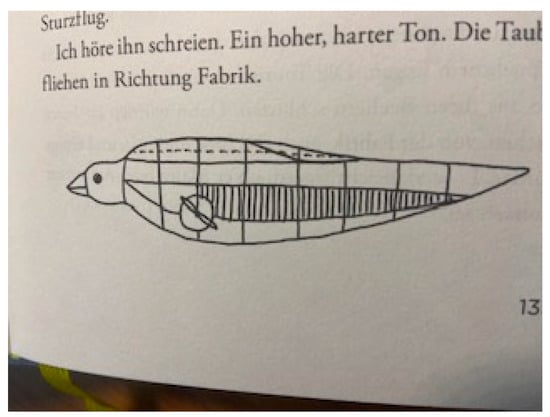
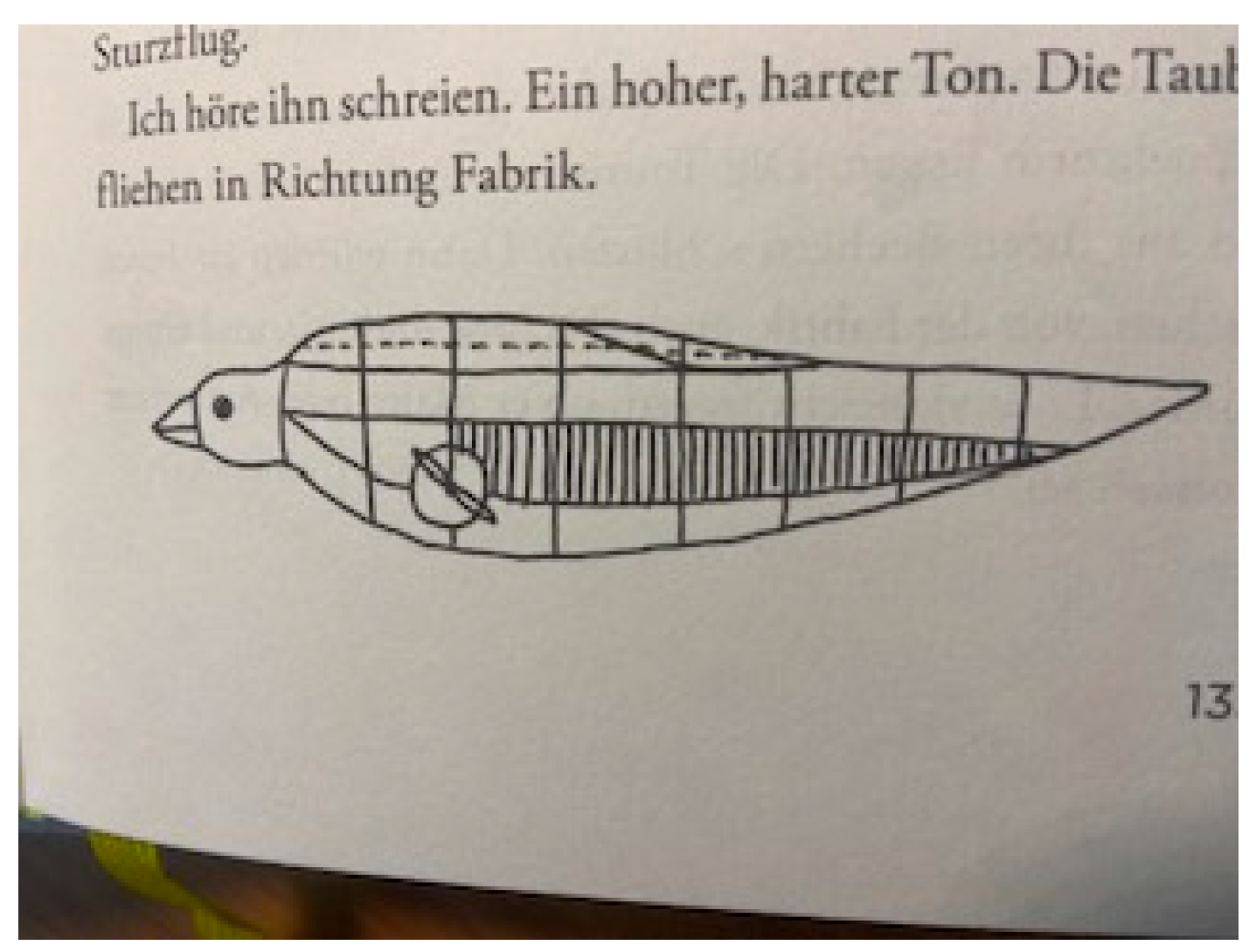
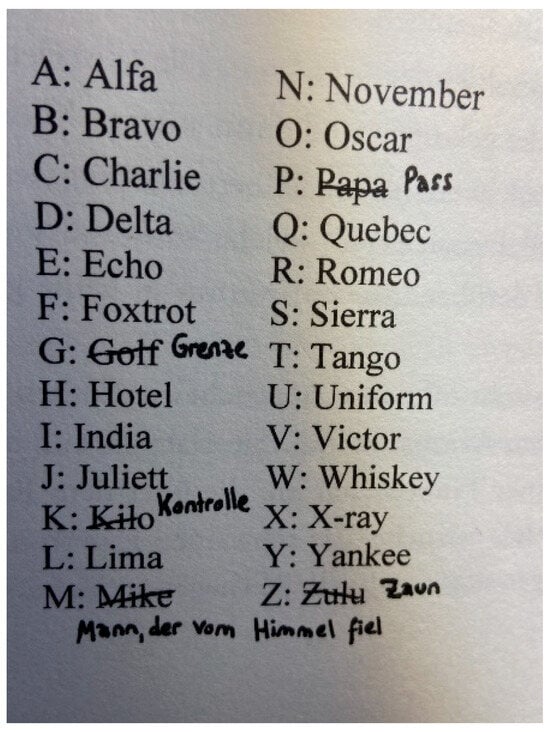
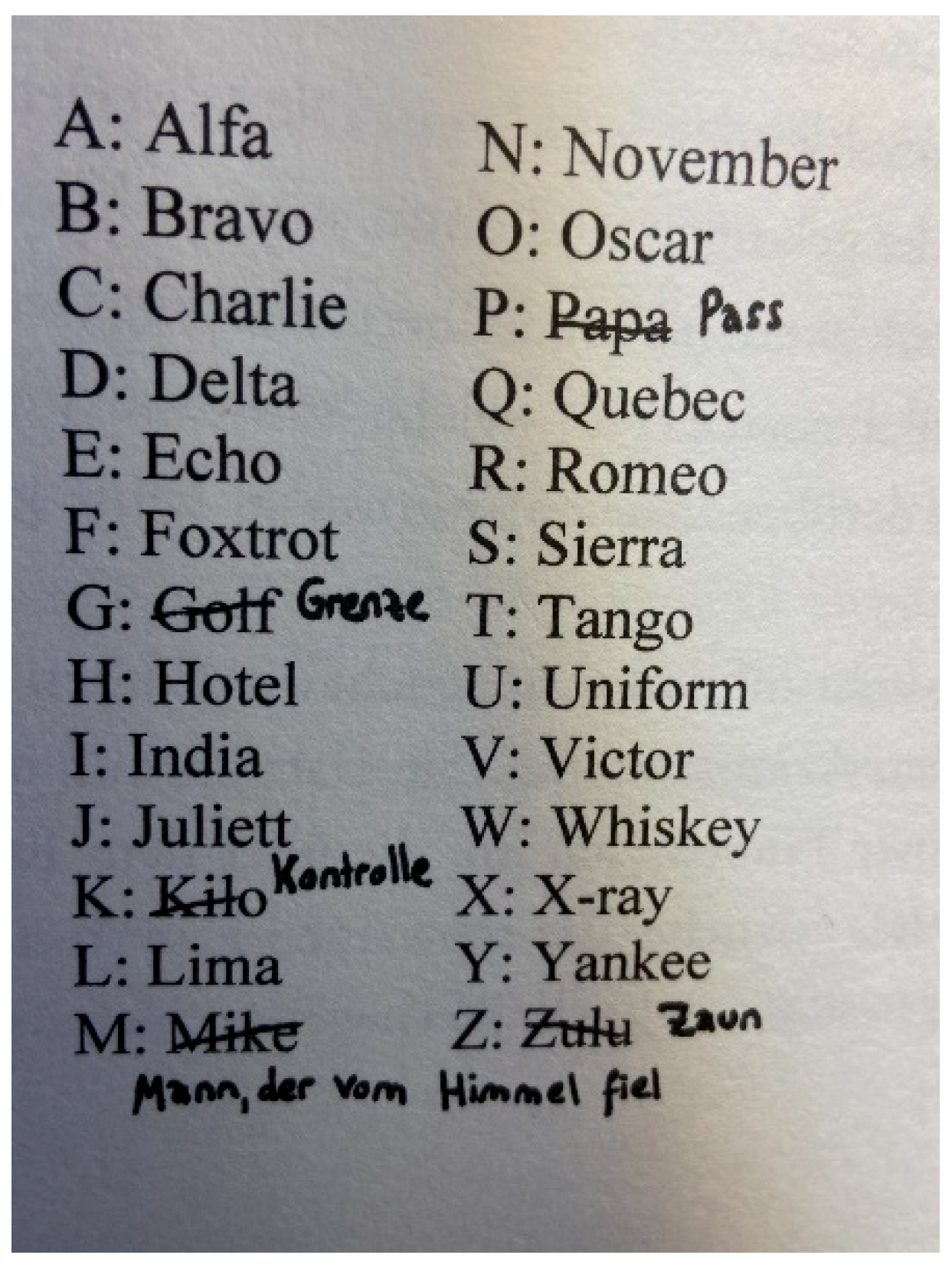
Disclaimer/Publisher’s Note: The statements, opinions and data contained in all publications are solely those of the individual author(s) and contributor(s) and not of MDPI and/or the editor(s). MDPI and/or the editor(s) disclaim responsibility for any injury to people or property resulting from any ideas, methods, instructions or products referred to in the content. |
© 2026 by the author. Licensee MDPI, Basel, Switzerland. This article is an open access article distributed under the terms and conditions of the Creative Commons Attribution (CC BY) license.