


Abstract
This study conceptualizes the youth observatory as an analytical and governance-oriented framework for examining social change, inequality, and youth development in urban contexts characterized by persistent structural disparities, using Cartagena, Colombia, as an empirical case study. Rather than conceptualizing the observatory solely as a technical mechanism for data collection and monitoring, the article argues that it should be understood as a platform for knowledge production capable of identifying emerging patterns in youth trajectories, institutional fragmentation, and evolving forms of civic engagement. The research employed a qualitative, descriptive, and interpretive design based on documentary analysis and a focus group comprising institutional stakeholders involved in youth-related initiatives. Findings indicate that the principal challenge in Cartagena is not the absence of youth-related information but the fragmentation, discontinuity, and weak articulation of existing institutional and knowledge-production systems. As a result, valuable evidence remains underutilized in policy formulation and institutional decision-making processes. The findings further demonstrate that education, labour-market integration, political participation, cultural access, mental health, and digital vulnerability should not be treated as discrete dimensions but rather as interconnected and mutually reinforcing components of contemporary youth experience. Ultimately, this article contributes to current debates by proposing the youth observatory as an analytical, interpretive, and governance mechanism that links evidence generation, public deliberation, and policy development. The study provides both empirical and conceptual foundations for the establishment of youth observatories in contexts marked by urban inequality, institutional fragmentation, and accelerated social transformation.
1. Introduction
Young people have become a key lens through which to interpret the fractures and transformations of contemporary society. Their experiences are shaped not only by precarious employment, unstable or incomplete educational trajectories, weak institutional integration, and unequal access to rights, but also by emerging forms of agency, participation, and meaning-making in contexts where promises of social mobility have lost much of their credibility. These conditions reveal the limits of approaches that treat youth merely as an age group or as a population targeted by institutional intervention. What matters, therefore, is not only to describe the situation of young people, but to understand what their trajectories reveal about the functioning of the social order, the legitimacy of institutions, and the possibilities of building a collective future (Clerici et al. 2025; Baeza-Correa and Albuccó-Henríquez 2023).
Within this conceptual framework, a youth observatory should not be conceived merely as a local mechanism for the collection and systematization of information. Across many Latin American cities, data on young people remain fragmented, dispersed, and only weakly integrated into policy and decision-making processes. This condition does not necessarily indicate a scarcity of information; rather, it reflects the absence of a robust institutional architecture capable of systematically integrating, updating, and interpreting available evidence over time. Consequently, the principal challenge extends beyond data availability to encompass the analytical capacity required to transform information into actionable and policy-relevant knowledge. A youth observatory acquires analytical significance insofar as it enables the identification of patterns, structural tensions, and emerging discontinuities that illuminate the evolving dynamics of youth experiences within socially fragmented urban environments. Its primary contribution, therefore, lies not in documenting isolated occurrences but in generating analytical linkages between the everyday lived experiences of young people and broader structural processes of social inequality, life-course transitions, civic participation, and urban governance.
Comparative research performed on Argentina, Brazil, Colombia, and Mexico has revealed that there is a growing complexity in the way young people are connected to politics and democracy. According to Clerici et al. (2025), there are two main trends affecting the relationship between youth and politics: (1) a large number of young people do not associate themselves with democratic processes; and (2) many young people perceive an increasing number of punitive strategies related to politics in their lives. In addition, Fernández-Poncela (2025) points out that there is a high level of distrust between youth and institutions. These trends are not simply indicative of apathy towards politics or being an uninterested generation; they are indicative of major changes in the way youth view their ability to be politically represented or expect democratic representation from their governments during a period characterized by weak economic opportunities and limited confidence in government. For this reason, Cartagena can be maintained within the wider context of Latin America regarding how young people are experiencing inequality, recognition, and governance in a period of social change.
2. Theoretical Framework
2.1. Youth, Transition, and Social Condition
Drawing from data collected through interviews with youth and by analyzing youth program theory and practice in relation to social justice, this theoretical model sees youth as socially constructed social statuses. Specifically, researchers Baeza-Correa and Albuccó-Henríquez (2023) find three characteristics about youth in the Southern Cone region (Argentina, Chile, Paraguay, Uruguay). The first is that youth are defined as having access to higher education but not necessarily as included; second is that youth have different experiences based on historical context; and third is that youth experience various transitions throughout their developmental stages. These findings provide a new perspective on what it means to be a young person today; this shift will impact how we view youth transition and develop programs tailored to meet their needs.
2.2. Inequality and Accumulated Vulnerability
Inequality is not just an external factor impacting young people’s opportunities; it’s also a lasting framework for where youth’s experiences can be categorized. Many consider youth inequality related to how young people access services; however, youth inequality also identifies who gets a voice, who gets a chance to attend school and continue to succeed in school, and who gets an opportunity to create knowledge and experience stigma. Noreña-Herrera et al. (2025) identify that when a young person leaves the Colombian child protection system, they do not have the ability to simply move on from the vulnerabilities that they have faced while in an institutional care environment. Rather, they may continue to face discrimination, hunger, and emotional trauma, be impacted by violence in their family and/or in their communities, be displaced in their territory and continue to be socially excluded. This finding has important theoretical implications in terms of how to understand inequality as a cumulative process, rather than as isolated deprivation. The other implication of this finding is to understand why some groups of young people have such fragile ties to institutions, particularly when their lived experiences have been influenced by both institutional protection and abandonment.
2.3. Youth Citizenship and Participation Networks
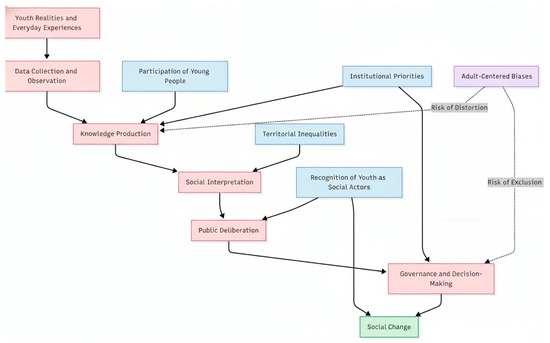
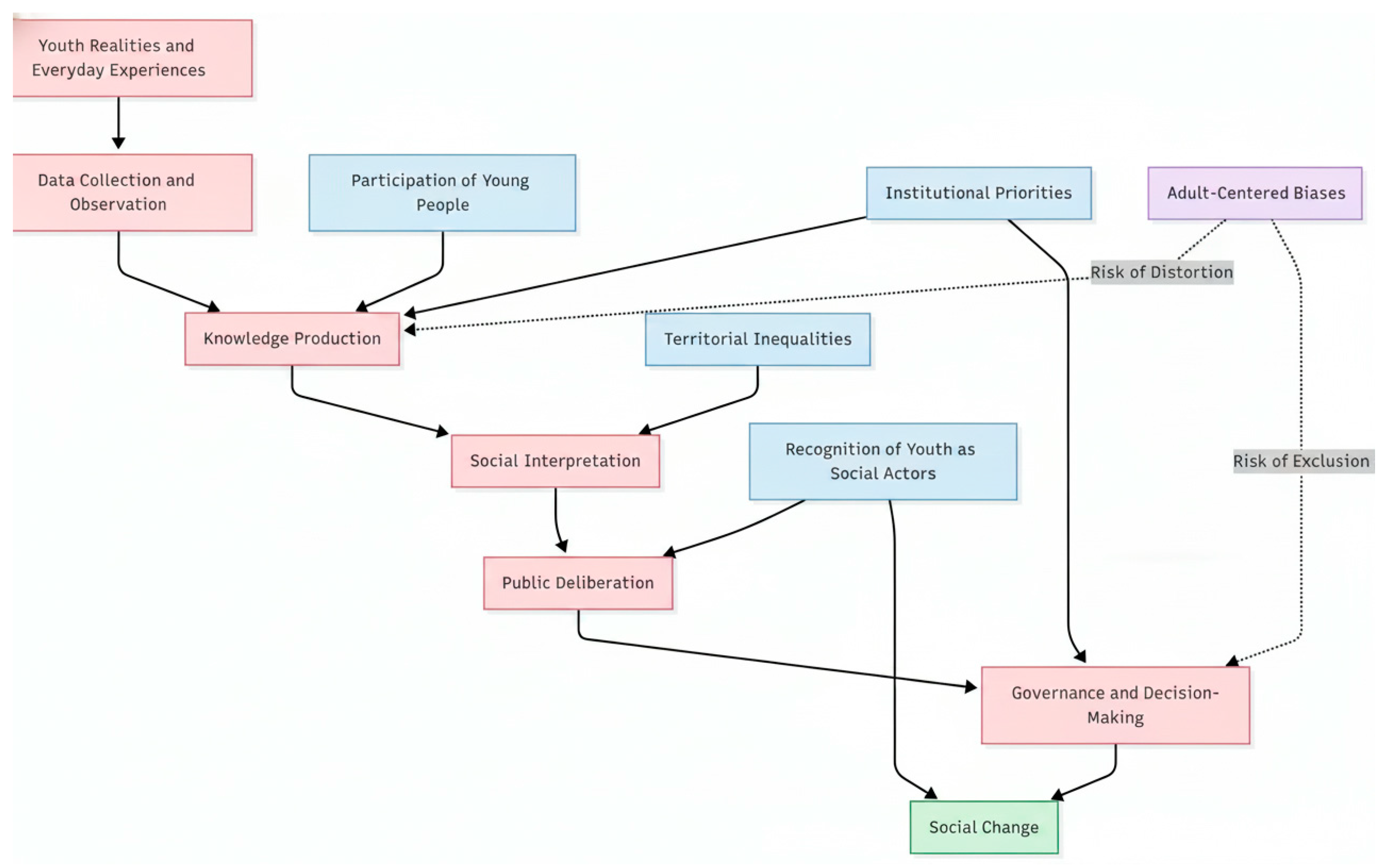
Youth citizenship encompasses more than the formal participation of young people in the day-to-day workings of the institutionalized society. The work of Galindo-Ubaque et al. (2024) shows how participation is created and realized through relational contexts in which youth develop their sense of themselves as active participants in their society (through family, community, culture, and collective action), thereby shifting the lens from one of understanding citizenship through its binary (legal) definition as either a citizen or not to understanding it as a situated social practice. The significance of this way of understanding youth citizenship is profound; since the agency of a young person is developed through their connection to these relational contexts, any observatory dedicated to tracking the manifestation of youth voice cannot restrict its tracking of youth engagement to participation in formal (e.g., voting or attendance at an institution) ways; it must also include their capacity to exhibit community-based forms of mediation and engage in shared action built on relational dynamics exhibiting youth citizenship within their daily lives. The relationship(s) between youth, observatory, and knowledge and regulation are illustrated in Figure 1.
Figure 1.
Conceptual relationship between the youth observatory, knowledge production, and governance. Source: Own elaboration based on Sierra-Barón et al. (2025), Galindo-Ubaque et al. (2024), Fernández-Poncela (2025), and Clerici et al. (2025).
2.4. Politics, Recognition, and Social Change
The last dimension discussed in this theoretical framework is politics and recognition. Young people perceive political institutions as not taking them seriously (Fernández-Poncela 2025), and there is a large portion of the adult population who question these young people’s capacity to hold public office due to their age. Clerici et al. (2025) continue this same discussion and provide evidence showing that youth distancing from liberal democracy is not simply an indication of apathy; it may also be attributed to feelings of disillusionment, decreased expectations and the role in which they are positioned within the political order. Evidence suggests that disaffection towards youth politics may be linked to new ideological orientations towards punitive policies and a distancing from democratic ideologies.
Both studies demonstrate that governance involving youth cannot be limited to formalised inclusion or institutionalised programmes. Governance with youth must involve rebuilding trust, creating opportunities for dialogue and increasing legitimacy by both youth and political institutions. Under such a perspective, a youth observatory is theoretically relevant when it can make visible the dichotomy that exists between youth and political institutions, instead of masking this tension with neutral or merely administrative diagnoses. The function of a youth observatory is not simply to describe issues associated with youth but also to demonstrate how youth trajectories are fundamentally connected to larger mediating crises and the unequal distribution of opportunities, and the need for new forms of civic recognition and public participation in contemporary society.
3. Materials and Methods
The methodology of this study consists of qualitative, descriptive and interpretative formats for evaluating youth in Cartagena and examining how a youth observatory can assist in understanding processes of societal change, social inequalities and governance experienced by youth living in urban areas impacted by social transformations in education, employment, politics, and psychosocial behaviours. The purpose of this study is to reconstruct meanings of youth, identify gaps in data regarding youth, review previous institutional actions regarding youth, and identify key problem areas to justify establishing a permanent mechanism for the observation of youth through social processes. The interpretation of the results is formulated based upon a review of recent literature regarding youth transition, employment, political involvement, and governance, showing the complexity of youth and the difficulty of attributing youth’s experiences or outcomes to one variable. Their experience can be explained by describing how the following factors combine to create differing pathways for youth: inequitable access to education; workforce instability; institutional intervention; psychosocial health; and new forms of participation (Baeza-Correa and Albuccó-Henríquez 2023; López-Sánchez and Rodríguez-Ariza 2025; Clerici et al. 2025). The study data were collected and subsequently analyzed using the following methodological procedures:
Analysis of documents related to young people in Cartagena consisted of institutional reports, academic studies, technical documents, and public records. The analysis compared the findings from Cartagena with broader Latin American debates on young people. The analysis was conducted from February to March 2022 using criteria for thematic relevance, institutional source, and explanatory capacity as the basis of review. The purpose was (1) to refine the corpus of documents related to young people in Cartagena; (2) to establish patterns of repetition and omissions in the literature; and (3) to establish which areas of study have been the subject of the most research. The analysis focused on studies concerning: (1) educational pathways; (2) labour market participation; (3) political participation; (4) mental health; (5) violence; and (6) access to opportunities. This document analysis provides context for the local experience of youth in Cartagena within the broader debates regarding transition into adulthood, employment, and democratic participation.
In addition to the documentary analysis, a single focus group session was conducted on 29 April 2022, lasting approximately three hours. The session brought together eleven key informants representing public institutions, civil society organizations, and academia, including the District Secretariat of Education, the Educational Quality Division, the District Institute of Sports and Recreation, a youth development foundation, specialists in cultural management and educational research, and faculty members from Fundación Universitaria Tecnológico Comfenalco. Participants were recruited through purposive sampling based on their recognized expertise in the design, implementation, monitoring, evaluation, and scholarly investigation of youth-related policies, programmes, and initiatives in Cartagena. The purpose was not to generate statistically generalizable findings but rather to elicit informed institutional perspectives on the challenges confronting young people, the limitations of existing information systems, and opportunities for strengthening inter-institutional coordination.
The focus group protocol was structured around four thematic domains: (1) institutional perspectives on the ways in which youth-related issues are currently addressed in Cartagena; (2) the criteria guiding the design and implementation of youth programmes; (3) the limitations of existing information systems in supporting evidence-informed decision-making concerning youth; and (4) institutional perspectives on the establishment of a youth observatory. Although the study comprised a single focus group session, participants initially engaged in small-group discussions guided by structured prompting questions. Their reflections were subsequently presented, discussed, and synthesised during a plenary session. This collaborative procedure facilitated the systematic comparison of institutional perspectives, fostered the co-construction of knowledge, and enabled the identification of shared priorities for youth development and inter-institutional collaboration. Furthermore, it provided an opportunity to interpret the empirical findings in relation to recent theoretical contributions concerning youth participation, mental health, and institutional capacity to address emerging social challenges (Galindo-Ubaque et al. 2024; García-Salido et al. 2025).
The findings derived from the documentary review and the focus group data were systematically organised into thematic categories. The analytical coding process integrated both deductive and inductive strategies. Initially, a set of preliminary categories was established on the basis of the research objectives and the conceptual framework addressing youth, governance, and social inequality. Subsequently, the systematic examination of the documentary corpus and the focus group transcript facilitated the emergence of additional subcategories and thematic relationships, enabling the analytical framework to be progressively refined through an iterative analytical process. Data were analysed using thematic analysis in conjunction with the constant comparative method, contrasting documentary evidence with participants’ narratives to identify convergences, divergences, and existing information gaps.
The relationships, inconsistencies, and information gaps identified across both data sources were subsequently examined through an integrated analytical process. Accordingly, triangulation was not employed to validate a single interpretation; instead, it functioned as an analytical strategy for integrating complementary dimensions of the phenomenon by systematically comparing institutional documentation, evidence from the scholarly literature, and the priorities identified by local stakeholders as fundamental to understanding youth development. This integrative analytical process resulted in the identification of five overarching analytical categories: (1) educational transitions; (2) labour market integration; (3) civic participation and citizenship; (4) psychosocial well-being; and (5) institutional governance capacity.
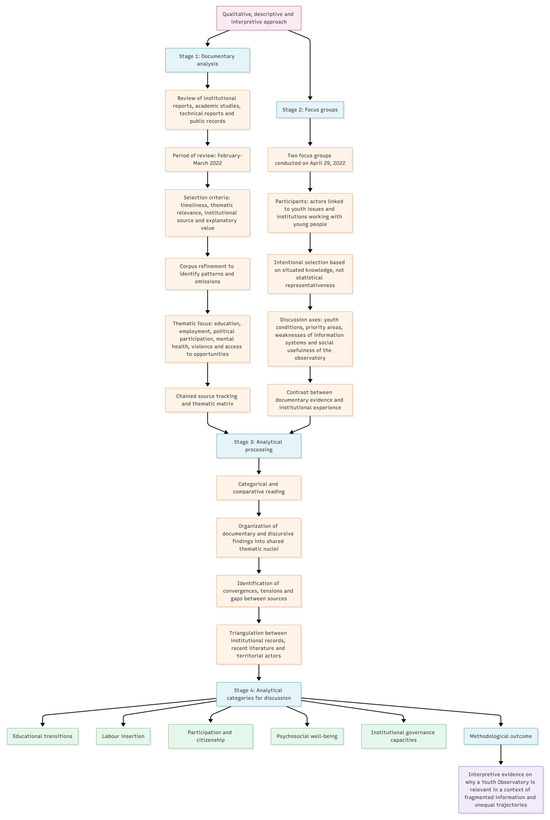
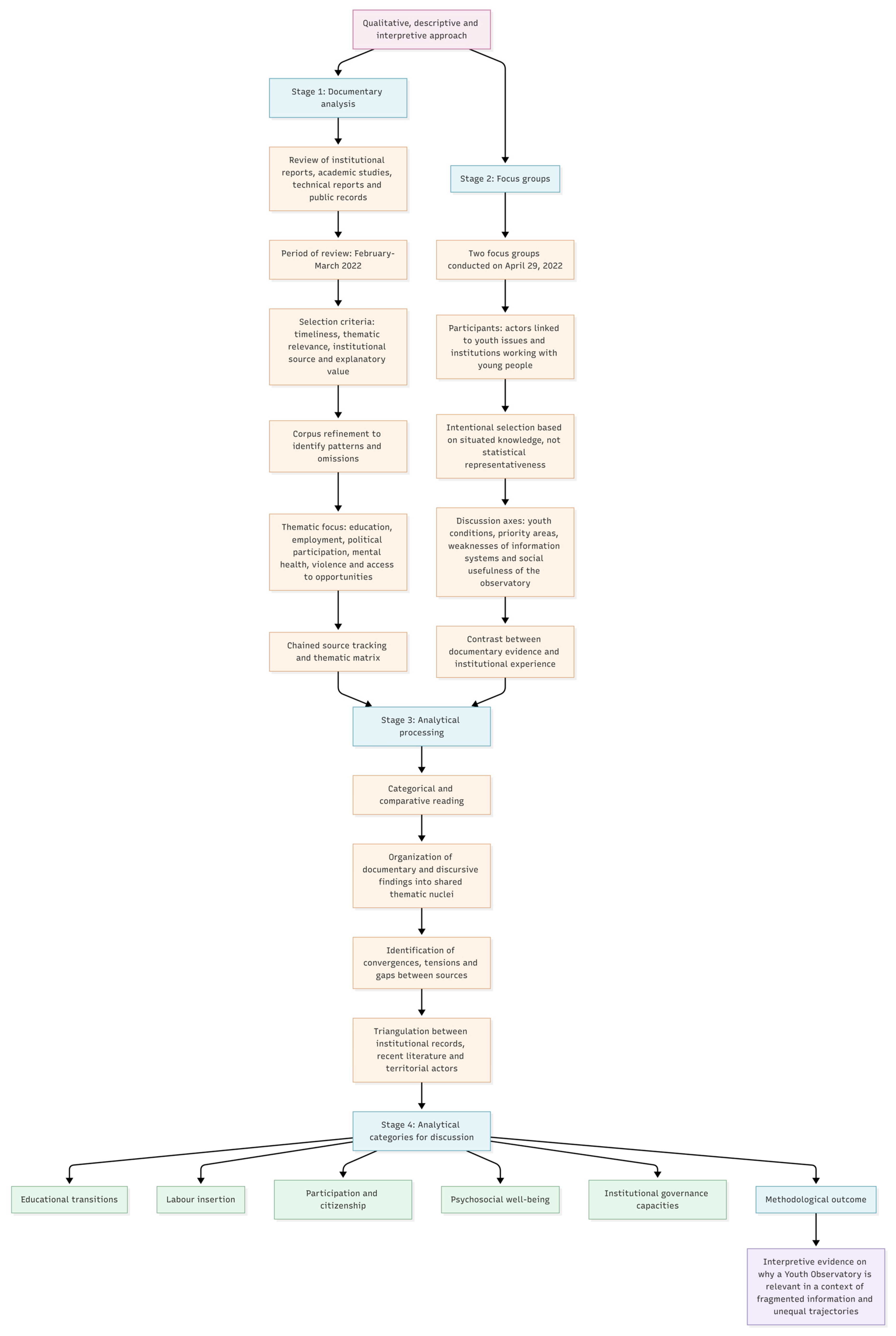
Figure 2 summarizes the main stages of the methodological design, showing how documentary review, focus group discussion, categorical analysis, and interpretive triangulation were connected throughout the study.
Figure 2.
Stages of the study’s methodological design. Source: Author’s own elaboration based on the methodological design of the study.
Within this framework, the objectives guiding this article are the following:
General Objective
To critically examine the role of a youth observatory as an analytical and governance framework for interpreting the urban inequalities and social transformations affecting young people in Cartagena, while establishing its relevance through the integration of documentary evidence and institutional perspectives.
Specific Objectives
To identify the development of available educational and institutional documents related to youth in the city of Cartagena, with the purpose of recognizing existing information, who develops it, and under what approaches it operates.
To evaluate the main dimensions that organize contemporary youth experiences, specifically those associated with education, employment, collaboration, and psychosocial well-being, because these are the areas where the tensions caused by the transition to adulthood are most clearly observed.
To identify institutional information gaps and opportunities for inter-institutional coordination in addressing youth-related issues in Cartagena.
To develop an analytical framework that conceptualizes the youth observatory as a governance instrument and a knowledge-generation mechanism.
4. Analysis and Results
This analysis of the documentary material and the focus group findings shows that the city of Cartagena is not entirely lacking in information on youth; however, its knowledge base is scattered, discontinuous, and poorly coordinated. This alters the article’s initial premise. The problem lies not only in the scarcity of studies on youth but also in the fact that the available data have not been collected through a systematic mechanism that would allow for their compilation, comparison, and interpretation, as well as their use as evidence for institutionalized actions. Therefore, the main contribution of this article was not to advocate for a restrictive local administrative proposal, but rather to support the argument that a youth observatory could serve as a tool for social analysis in contexts where youth inequality manifests itself through poor educational trajectories, unstable employment opportunities, strained political relations, and interrelated psychological vulnerabilities that cannot be examined in isolation. From this perspective, the observatory would move beyond passively archiving information to actively functioning as a bridge between knowledge creation, social change, and governance.
The findings derived from the documentary analysis provide empirical support for this interpretation. The documentary corpus comprised 52 documents selected according to the methodological criteria of thematic relevance, institutional provenance, and explanatory value outlined in the research design. Of the total corpus, 87% (n = 45) corresponded to studies conducted in Cartagena, whereas the remaining 13% (n = 7) examined other geographical contexts or adopted a comparative perspective. The publications were predominantly concentrated between 2016 and 2020, although their temporal distribution was uneven: 1% (n = 1) in 2016, 33% (n = 17) in 2017, 37% (n = 19) in 2018, 22% (n = 11) in 2019, and 7% (n = 4) in 2020.
The qualitative data were analysed through manual thematic analysis. Both the documentary corpus and the focus group transcript were subjected to repeated and systematic examination to identify recurrent themes, analytical patterns, and conceptual relationships associated with the lived realities of young people in Cartagena. The coding process was undertaken manually, guided by the analytical categories derived from the study objectives while remaining open to the emergence of new themes grounded in the empirical data. Subsequently, evidence obtained from both sources was systematically compared and integrated to identify convergences, complementarities, and priority thematic dimensions, thereby establishing the analytical foundation for the proposed youth observatory.
These descriptive data might suggest a certain level of academic and institutional interest in the study of local youth; however, a more detailed analysis might indicate the opposite. Based on the findings of this study, the existing body of research does not appear to be sufficient to establish a permanent and continuous system for monitoring youth. While reports, institutional assessments, policy documents, and academic studies do exist, there is no organizational structure capable of systematically gathering evidence over time, comparing findings across different periods, or translating this evidence into knowledge that can inform decision-making. The absence of a continuous monitoring process limits our understanding of the transitions young people undergo at different stages of life and makes it difficult to track changes in their needs, perceptions, and material living conditions. The study by Baeza-Correa and Albuccó-Henríquez (2023) on young people’s transition to higher education in the Southern Cone supports this interpretation by demonstrating that educational trajectories are characterized by inequality, discontinuity, unequal access, and uncertain transitions. These conditions require dynamic analytical categories rather than static representations of the phenomenon.
The focus group results reinforced this interpretation. In the words of one of the participants: “It is very important for the city to have instruments or tools that allow us to gain clarity on accurate and up-to-date data about youth; of course, this will make it much more feasible for government agencies to make sound and targeted decisions” (P4, focus group, 29 April 2022).
In general, it was observed that young people living in Cartagena face various obstacles when trying to turn their interests into sensible and sustainable career paths. The focus group discussions in the education sector revealed significant gaps in access to higher education (both public and private) and difficulties in remaining in training programs that would improve their long-term career prospects. Thus, education is viewed not only as a right but also as a means of social mobility and a crucial component of the transition to adulthood. Where access to education has been limited, selective, or geographically unequal, the transition from secondary to higher education has become less predictable and more unstable.
This reality was also expressed by one of the young participants in the focus group, who noted: “It’s very difficult to move forward in a context that doesn’t guarantee you access to higher education. There’s no assurance of admission; often this depends on the family support you receive and your own personal effort. On top of that, when you finally manage to graduate, it’s very difficult to enter the workforce. It has happened to me many times that I’ve been denied a position because I lack experience. The number of young people today who are unable to enter the workforce due to a lack of experience is worth studying” (Participant 3, focus group, 29 April 2022).
This finding is consistent with other regional studies on youth and higher education that show that educational systems continue to perpetuate hierarchies based on social background, geographic/economic location, the availability of institutional educational resources, and the social capital available in the student’s immediate environment—regardless of the overall increase in the availability of formal education (Baeza-Correa and Albuccó-Henríquez 2023). In both the literature review and the focus group, the employment component also offers unique insights and implications. Employment cannot be understood solely as an economic measure; it is also a means through which young people connect with their own autonomy, receive social recognition, and achieve their life goals. Young people not only face a lack of job opportunities and low-paying jobs, but they also simply lack access to training that meets the economic needs of their communities. This was a recurring theme in the focus group, as participants emphasized the crucial importance of aligning training programs with local labor market requirements through the use of information and communication technologies.
Consequently, the focus is on developing employability skills rather than merely earning a salary. It is important to emphasize, therefore, that to achieve true transformation, the analysis must shift from a purely individual perspective to an institutional one. Thus, academic institutions, the public sector, the private sector, and social organizations must collaborate to build a more integrated ecosystem of opportunities. This point can be illustrated by recent studies that have explored employment and entrepreneurship intentions among college students in Colombia, demonstrating that integration into the labor market depends not only on personal skills but also on educational ecosystems, self-efficacy, institutional support, and conditions that facilitate access to entrepreneurship and employment opportunities (López-Sánchez and Rodríguez-Ariza 2025).
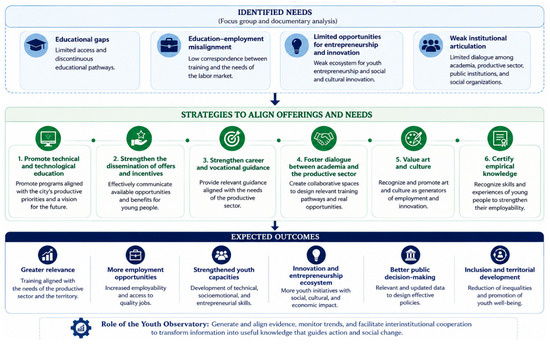
In line with the above, it can be inferred that the difficulties young people face in accessing employment today cannot and should not be addressed solely through academic training and the traditional labor market; it is necessary to establish linkages between the education, production, and business sectors with an eye toward new trends and information technologies. Based on this analysis, an analytical model was developed that integrates the main needs identified with the intervention strategies derived from the literature review and focus group. Figure 3 graphically represents this model of coordination between educational offerings and the needs of young people in the city of Cartagena.
Figure 3.
Model of strategies to align education and training offerings with the needs of young people in Cartagena. Source: Author’s own elaboration based on the methodological design of the study. Figure created using ChatGPT (GPT-4/DALL·E 3, OpenAI).
The issue of political participation requires greater attention from this results group. The focus group clearly conveyed the need to create spaces for young people to advocate for themselves, starting in their schools, so that political participation becomes an ongoing activity rather than a sporadic event. This represents a shift: from discussing a lack of trust in politics to addressing the infrastructure needed to facilitate collective political participation. Young people not only distrust the political system, but they also lack opportunities to participate in a tangible, educational manner with the support of society at large. Comparative studies on youth political participation show that young people become politically engaged when they feel their actions have an impact; when credible methods for institutional mediation are in place; and when the issues at hand are relevant to their daily lives. The observatory has the potential to play a governance role, particularly by gathering information on young people and providing data to begin reorganizing communication channels between the government, educational institutions, civil society, and youth organizations (Clerici et al. 2025).
Consequently, youth observatories are viewed as a tool for documenting social change in urban contexts marked by inequality, analyzing how youth demographics are disproportionately affected by conflicting tensions related to education, employment, citizenship, health and well-being, digital vulnerability, and recognition. These findings also demonstrate that youth observatories must be understood in a context that goes beyond simply providing evidence for the creation of local institutions. It requires rethinking the current ways in which cities generate information about the young people living there and whether this information can facilitate more reflective forms of governance, rather than merely reactive procedures.
However, a comprehensive youth observatory cannot be viewed simply as an inventory of indicators. It would serve as a method for organizing a significant amount of raw data and identifying new areas of interest, generating both qualitative and quantitative evidence and contributing to the development of public policies that recognize the complexity of young people’s lived experiences. While it is true that a social observatory on youth would not be a panacea for the problems currently afflicting the youth population, it would be of great help and support to government institutions in making more informed decisions that are in line with the current reality of this population.
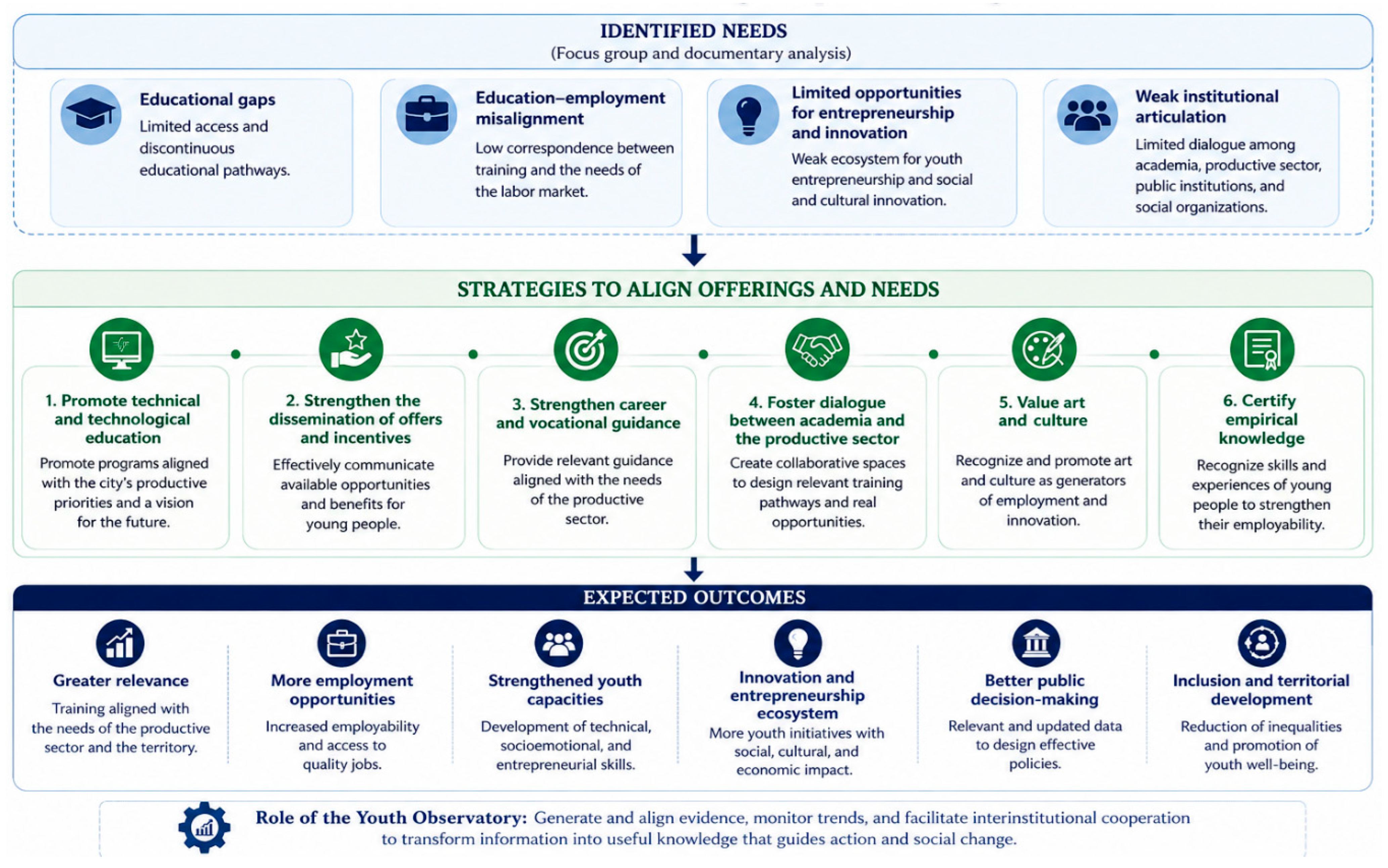
An analysis of the results from the focus group revealed proposals that emerged progressively as the exercise unfolded and were subsequently grouped by similarity. Participants identified the following areas as priorities: education and educational retention, employability, civic participation, social innovation, culture and access to artistic venues, mental health, prevention of psychoactive substance use, gender-based violence, sexual exploitation of children, adolescents, and young people, bullying and cyberbullying, and digital inclusion. Although the proposals initially appeared as separate issues, the discussion revealed that they all converge on a common concern related to opportunities for the holistic development of young people. Participants agreed that the observatory should not be limited to producing statistics or indicators but should instead become a permanent space for knowledge production, inter-institutional coordination, and the generation of evidence to inform decision-making.
Based on the above, a conceptual synthesis was developed of the main thematic areas that should guide the research and monitoring agenda of a future social observatory on youth, in accordance with the participants’ perspectives and experiences. As shown in Figure 4, these areas encompass educational, occupational, social, cultural, and well-being dimensions, which converge into a comprehensive vision of youth development.
Figure 4.
Priority thematic areas and issues for the future youth social observatory. Source: Author’s own elaboration based on the methodological design of the study. Figure created using Google Gemini (Gemini Advanced model, August 2026 version; Google LLC).
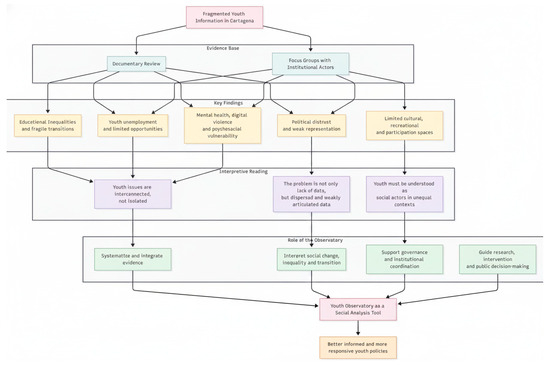
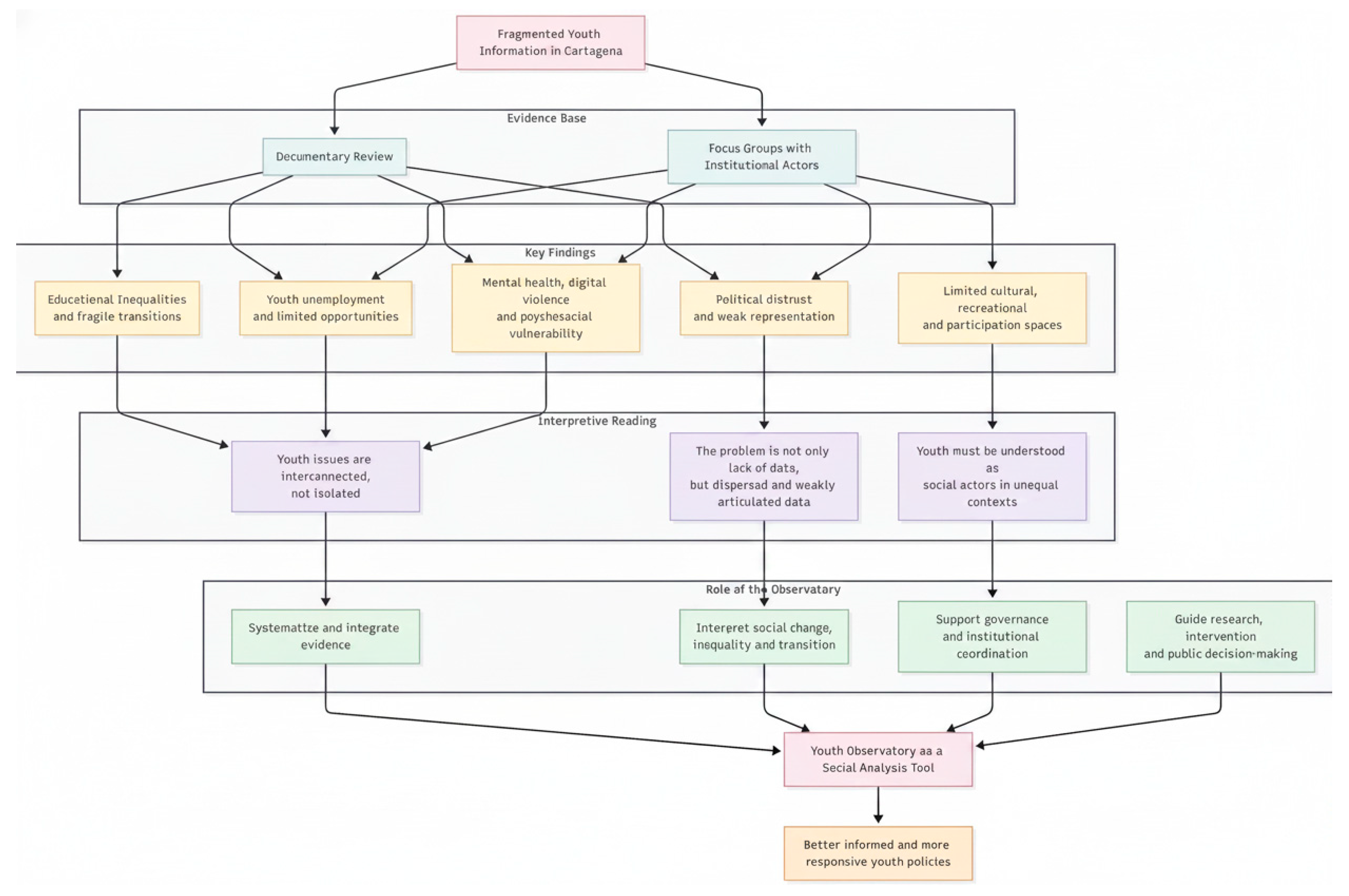
In conclusion, there is evidence supporting the concept of youth observatories as an interdisciplinary approach that can help public agencies develop intermediary structures to support fragmented forms of evidence and assist them in developing and implementing public policies for youth. The purpose of these intermediary bodies is to add value by linking data on education, employment, civic participation, access to culture, mental health, and digital violence—among other areas—to broader processes of social assessment and governance that lead to the effective development of youth policies. The observatory can also help transform isolated data into categories for social analysis, making it possible to analyze and understand the relationship between youth trajectories, territorial disparities, and public responses to the needs of young people. Figure 5 illustrates how the observatory links social diagnosis with knowledge creation and governance-oriented action.
Figure 5.
Youth observatory as a tool for social analysis and governance. Source: Author’s own elaboration based on the study results.
Limitations of the Study
The findings of this study should be interpreted within the context of several methodological limitations. First, the analysis is based on a documentary review and a single focus group involving institutional stakeholders. As such, the findings provide an exploratory and context-specific understanding of the challenges affecting young people in Cartagena rather than evidence intended for statistical generalization. Second, the study was designed to identify analytical priorities and inform the conceptual development of a youth observatory, rather than to establish causal relationships or test explanatory hypotheses. Consequently, the findings should be interpreted as analytically grounded propositions that offer a conceptual basis for future empirical research, institutional decision-making, and evidence-informed policy development.
5. Conclusions
In summary, the central problem with youth research in Cartagena lies not in the absence of research, but in the lack of operational systems for collecting, classifying, processing, storing, using, and ultimately transforming data into useful knowledge about youth. An effective system for linking this research with young people’s experiences would offer a method for understanding how the various social processes they undergo function and for designing responses that reflect those experiences. Therefore, a youth observatory should not be interpreted solely as a local or administrative process. Based on the findings of this study, a youth observatory could provide other actors who conduct social analyses, coordinate institutions, and make evidence-based decisions with a source of reliable and relevant data. In other words, a youth observatory could go beyond data collection, offering a space to better understand the inequalities young people face, the changes they experience, and the tension between the everyday realities of youth, institutional responses, and young people’s ability to integrate and participate in community life.
In summary, the findings of this study suggest that the main challenge for youth research in Cartagena lies not in the absence of studies, but in the lack of permanent mechanisms for collecting, organizing, analyzing, and transforming available information into useful knowledge for understanding the realities of young people. In this context, the proposal for a youth observatory should be understood as a potential mechanism for strengthening evidence production, fostering institutional collaboration, and contributing to decision-making processes based on systematic information. More than a solution in itself, this proposal constitutes an analytical framework aimed at integrating different sources of information and facilitating a broader understanding of the inequalities and transformations affecting young people.
Finally, the findings of this study suggest that the experiences of young people in Cartagena are driven by a series of overlapping and interconnected problems and cannot be viewed in isolation. The results suggest an interrelationship between education, employment, mental health, political participation, violence against young people, and access to cultural spaces; all are interconnected through a social network. The interrupted educational trajectories of young people, unstable employment, and psychological difficulties do not occur in isolation. They are interrelated and negatively impact autonomy, recognition, and the ability to develop a life plan. This is supported by studies by Baeza-Correa and Albuccó-Henríquez (2023) and Galindo-Ubaque et al. (2024), which show that young people in Latin America have different access to education, the transition to adulthood, and the ways in which they participate. Through these studies, they have found that young people need more than a traditional sector-based approach to diagnose their needs.
Another important component of this analysis is the political aspect of the findings. Young people are not described as alienated from the public sphere. Instead, the relationship between young people and institutional representation is described as tense and fragile, and often characterized by insufficient recognition. Existing institutions do not always adequately respond to the needs, expectations, and disagreements of young people, making it inappropriate to reduce youth participation to simply attending a pre-established event or claiming to trust the government. These findings suggest the need to reconsider how young people can participate in dialogue, civic education, and advocacy for their rights in diverse situations, including generational gaps, regional inequality, and distrust of government. This observation broadens the scope of the article by positioning young people not as passive recipients of public policies, but as social actors whose place in the city reveals broader tensions related to governance, recognition, and representation.
Taken together, the findings suggest that the challenges facing young people cannot be fully understood using only traditional indicators, such as academic performance and unemployment. To achieve this, mental health, affective/digital violence, and the instability of some social bonds could be incorporated as relevant dimensions of the analytical framework concerning youth, in order to ensure that understandings of their agency are comprehensive and do not continue to reproduce incomplete or outdated diagnoses. In this context, a youth observatory, as proposed in this study, could contribute to offering a perspective more in line with contemporary forms of vulnerability in which emotional distress, digital exposure, uncertainty in education, and difficulty in maintaining life projects are closely related. Therefore, mental health, as well as technology-related violence, emerge as priority areas that should be considered within the processes of social observation, public intervention, and institutional learning, and should not be seen simply as a secondary issue.
Funding
This research received no external funding.
Institutional Review Board Statement
The study was conducted in accordance with the Declaration of Helsinki, and approved by the Ethics Committee of Fundación Universitaria Tecnológico Comfenalco (protocol code 00290422, date of approval: 29 April 2022).
Informed Consent Statement
Informed consent was obtained from all subjects involved in the study. All participants were fully informed about the purpose of the research, the intended use of the data collected, and the potential risks associated with their participation. Their anonymity and confidentiality were guaranteed throughout the study.
Data Availability Statement
The original contributions presented in the study are included in the article. Further inquiries can be directed to the corresponding author.
Acknowledgments
The author would like to thank the institutional representatives and professionals who participated in the focus groups and generously shared their knowledge, experiences, and perspectives on youth issues in Cartagena. Special appreciation is extended to the representatives of the District Education Secretariat, the Participation Secretariat, and the Juan Felipe Escobar Foundation for their valuable contributions to this study. The author also acknowledges the support provided by the Research Directorate and the Ethics Committee of Fundación Universitaria Tecnológico Comfenalco throughout the development of the research. ChatGPT (OpenAI, GPT-5.5) was used during the preparation of the graphical abstract and figures to support the design and visual organization of the study findings. The author reviewed, edited, and validated the final content and assumes full responsibility for the accuracy and integrity of the material presented.
Conflicts of Interest
The author declares no conflicts of interest.
References
- Baeza-Correa, Jorge, and José Albuccó-Henríquez. 2023. Youth and higher education in the Southern Cone of America. Revista Latinoamericana de Ciencias Sociales, Niñez y Juventud 21: 1–26. [Google Scholar]
- Clerici, Paula, Gabriel Kessler, and Gabriel Vommaro. 2025. Youth engagement with politics: Generational and gender gaps, and neo-authoritarianism in Argentina, Brazil, Colombia, and Mexico. Colombia Internacional 122: 147–86. Available online: https://www.redalyc.org/journal/812/81282195006/ (accessed on 17 August 2026).
- Fernández-Poncela, Ana Marí. 2025. Conflicting views: Beliefs, emotions and opinions regarding youth political participation. Revista Latinoamericana de Ciencias Sociales, Niñez y Juventud 23: 161–85. [Google Scholar]
- Galindo-Ubaque, Adrián David, Jenny Patricia Bustos-Abril, Diana Carolina Méndez, Eduardo Aguirre-Dávila, Ana Estrella Meza-Rodríguez, Paola Andrea Pulido-Escobar, and Felipe Ramírez-Cortázar. 2024. Adolescent citizen participation: An analysis of youth networks in Cundinamarca. Revista Latinoamericana de Ciencias Sociales, Niñez y Juventud 22: 208–32. [Google Scholar]
- García-Salido, Cristina, Estel la Ramírez-Baraldes, Felix Miedaner, Martina Hasseler, Andrea Hlubučková, and Daniel Garcia-Gutierrez. 2025. Understanding the mental health of students and professors within universities: A cross-sectional, multicultural analysis across three European countries. Investigación y Educación en Enfermería 43: e08. [Google Scholar] [CrossRef] [Scilit] [PubMed]
- López-Sánchez, Lina Marleny, and Lázaro Rodríguez-Ariza. 2025. Youth employment and entrepreneurial intention of Colombian university students. Apuntes del Cenes 44: 199–231. [Google Scholar]
- Noreña-Herrera, Camilo, Iván Felipe Muñoz-Echeverri, and Valentina Pérez-Bedoya. 2025. Rights violations in young people who have been released from care in Colombia. Revista Latinoamericana de Ciencias Sociales, Niñez y Juventud 23: 135–60. [Google Scholar]
- Sierra-Barón, Willian, Katy Luz Millán-Otero, Anyerson Stiths Gómez-Tabares, and Erika Judith López-Santamaría. 2025. Children, young people and climate change in Latin America: A qualitative review. Revista Latinoamericana de Ciencias Sociales, Niñez y Juventud 23: 1–22. [Google Scholar]
Disclaimer/Publisher’s Note: The statements, opinions and data contained in all publications are solely those of the individual author(s) and contributor(s) and not of MDPI and/or the editor(s). MDPI and/or the editor(s) disclaim responsibility for any injury to people or property resulting from any ideas, methods, instructions or products referred to in the content. |
© 2026 by the author. Licensee MDPI, Basel, Switzerland. This article is an open access article distributed under the terms and conditions of the Creative Commons Attribution (CC BY) license.