


Abstract
Introduction: The Awareness/Acceptance/Action Model (AAAM) was initially developed by one of the authors to explore stigma and prejudice towards people living with HIV/AIDS. In the present study, the AAAM was examined for its personal and professional relevance to people affected by the Troubles, 30 years of sectarian conflict in Northern Ireland. When unchecked, judgmental or reactive attitudes can undermine intentions to consistently deliver services in line with professional standards and human rights. Methods: Despite a devolved, power-sharing government and steps to address longstanding political and religious grievances, cultural sensitivities and animosity remain on both sides of the divide. A university in Northern Ireland recruited 11 practice teachers and 18 social work students, who participated in one of four focus groups. Mindfulness principles and techniques were used to allow participants to visualise “the other” before exploring how prejudice might impact personal and professional interactions. Thematic analysis of focus group transcripts was conducted using Braun and Clarke to assess the presence and nature of labelling, stereotyping, out-grouping and discriminating against people perceived as “the other”. Findings: Given the potential differences in identity, background, and experiences of social work practitioners and service users, it is important that we critically reflect on how we serve people based on direct or intergenerationally transmitted encounters. The AAAM was then piloted in undergraduate social work degree programmes and shared with practice teachers. Feedback confirmed that it offers a theoretical framework to promote anti-oppressive practice and critical reflection during professional social work training. Using Mindfulness techniques to visualise “the other” prompted participants to listen well and look deeply at the origins of their prejudices or fear, and how these could lead to biased interactions with service users.
1. Introduction
1.1. The Northern Ireland Context
The Troubles, a period of conflict in Northern Ireland (1968–1998), was rooted in contested identities and systemic civil rights challenges. This involved armed republican/nationalist (catholic) and loyalist/unionist (protestant) paramilitary groups bombing and shooting civilians and representatives of the British state (army or police). During the Troubles, there were over 3600 deaths and several thousand people grievously injured (McKittrick et al. 1999). However, following the landmark 1998 Good Friday (Belfast) Agreement, overt political violence significantly declined in Northern Ireland. According to Bryson and McEvoy (2023), who explored the four pillars of transitional justice post-conflict, institutional reform was achieved through a mandatory power-sharing government and reform of the police service. However, a fragmented and incomplete application of the remaining pillars of transitional justice means communities carry unresolved, unaddressed historical trauma. For example, truth-seeking through high-profile historical inquiries created a hierarchy of victims; the Northern Ireland Troubles (Legacy and Reconciliation) Act passed in 2023 halted attempts to prosecute perpetrators of the Troubles era; and protracted disputes over who constitutes a victim, with the right to reparation, delayed the Troubles Permanent Disablement Payment Scheme until 2021 (Bryson and McEvoy 2023). This “reflects persistent issues of discomfort… [that] are still producing unhealthy and prickly branches that extend awkwardly into the present” (Hayward and McManus 2020, p. 1).
1.2. The Other
Depending on their direct or indirect experiences of the Troubles, some people may struggle to set aside their assumptions or prejudices about people whose cultural identity significantly differs from their own—“the other”. This is particularly relevant when people have experienced injury or trauma by people they identify as “the other”, such as those who lived in Northern Ireland during the Troubles. Frontline social workers continue to engage with wary and suspicious communities who live shoulder-to-shoulder, protected by “peace walls” (walls constructed to protect members of one community from another) (cf. Belfast Interface Project 2012; Cosstick 2015). More recent research that captured the experiences of social workers during and after the Troubles (Campbell et al. 2021) acknowledged the burden of living and working through such perilous times and the prevalent impulse to “just get on with it”. Freeing ourselves from the habits and reactivity associated with our biases is harder when our personal identities are bound up in believing we are right and must defend our safety and security. Sewpaul notes that patterns of habituation run so deeply as to literally be “inscribed in our blood” (Sewpaul 2013, p. 116).
Even when presented with information that contradicts our assumptions or prejudices about “the other”, some practitioners may struggle to let go of strongly held beliefs. This suggests that we seem predisposed to react habitually rather than intentionally. However, unchecked, we may promote dysfunctional relations with service users, undermining our ability to meet professional social work standards.
1.3. Professional Standards and Ethics
Registered social workers are professionally obligated to adhere to the Global Statement of Ethical Principles (IFSW 2018), which charges us to respect the inherent dignity and worth of all and to challenge oppressive, unfair, or harmful policies and practices. The Northern Ireland Social Care Council (NISCC) echoes these principles in their Standards of Practice Learning (NISCC 2020) and Standards of Conduct and Practice (NISCC 2015). The IFSW global guidelines for professional education and training (CIASSW/IFSW—Interim Education 2020) encourage appreciation of diversity, equity, and inclusion with specific attention to political and environmental concerns. They encourage practitioners to critically reflect on factors shaping social problems and their parts in perpetuating or challenging the status quo (Sewpaul and Henrickson 2019).
Fook (2016) defines critical reflection as the process of unmasking power dynamics, structural inequalities, and hidden organisational assumptions. She describes reflexivity as an awareness of how our own identities, life experiences and biases can actively shape the service user/professional relationship (Fook 2016). Houston defined reflexivity as “a cognitive and emotionally intelligent process involving…scrutiny of how our…characteristics and experience shape the way we view and react to others [whose] experience may be widely different compared to our own” (Houston 2015, p. 8). In the Northern Ireland context, Houston suggests that social workers must use reflexivity to monitor their personal histories (e.g., growing up in a specific community) while simultaneously engaging in critical reflection to navigate the structural realities of the political economy and segregated culture.
1.4. Theoretical Models for Critical Reflection and Reflexivity
Although Crenshaw (1989) developed intersectionality to explain racism and sexism experienced by Black women in the United States, she later argued that the framework should be used to explore the intersectionality of power, rather than identities (Crenshaw 2019). If used in supervision, social workers could explore how their religion, community background, class, gender, age and experiences of the Troubles impact how they over-identify or avoid service users. However, Yuval-Davis (2006) argues that the framework should not be transferred uncritically across contexts because the categories of inequality and power differ across varying historical and political scenarios.
Thompson’s (2016) Personal, Cultural, and Structural (PCS) model offers another lens for social workers to critically reflect on how interacting factors may shape personal thoughts, attitudes and behaviours. These may promote prejudice regarding assumptions and stereotypes about, and discrimination towards, service users. Thompson’s (1993) original PCS model primarily focuses on analysing discrimination across three levels, rather than examining how multiple social identities intersect. As a result, some scholars argue that the PCS model can oversimplify identity unless it is used alongside intersectional perspectives (Yuval-Davis 2006; Crenshaw 2019).
Tedam’s (2021) 4D2P model provides a structured framework for practitioners to discuss, discover, decide and disrupt assumptions regarding power and privilege that may influence their social work practice. Although valuable in promoting reflexivity and professional accountability, it requires a skilled supervisor, emotional honesty and psychological safety in supervision. If applied in a post-conflict society such as Northern Ireland, it may require the integration of trauma-informed principles to support practitioners in managing, rather than eliminating, the influence of traumatic experiences on professional judgement. Furthermore, social workers or students may not feel safe enough in supervision to be emotionally honest with their line manager, given the power differential.
The concepts of reflexivity and reflective practice imply a clearer distinction between their constituent elements than exists in practice. We are simultaneously products and interpreters of our social contexts, while also acting as agents of change in determining how these contexts influence our behaviour. The AAAM seeks to integrate these interconnected dynamics, providing a framework to guide ethical service interactions.
1.5. Theory Underpinning AAAM: Stress, Coping and Stigma
Perception becomes the critical lens through which experiences are filtered, assessed, and shaped by prior conditioning. In stressful contexts, social workers’ conclusions about others may be based more on assumptions about who someone is imagined to be rather than who they actually are. These forms of judgement serve to “keep people in, keep people down, and keep people away” (Link and Phelan 2013), and can be thought of as “normal”, particularly when they are echoed by others, and risk becoming self-reinforcing (p. 534).
Whereas instrumental stigma represents the risk that the practitioner might be literally harmed through unguarded contact with “the other”, symbolic stigma considers how simple association may subject the practitioner to the same mistreatment “the other” endures (Herek 2002). Stress theory further differentiates felt stigma (experiencing internalised emotional reactions) from enacted stigma (actively judging or reacting) (Herek 2002). The risk is that “the other” may become aware of or assume these felt or expressed judgements, undermining working relationships. This, in turn, can lead to labelling, stereotyping, or distancing from “the other” (Link and Phelan 2001).
1.6. Mindfulness: Promoting Compassionate and Intentional Interaction
Mindfulness principles can help us gain insight into our motives and behaviours, and guide converting reactive tendencies into intentional, compassionate action. When confronted with evidence that we are not living up to our ideals, we may deny or ignore rather than address the gaps. Examining our inner processes and our interactions with compassion for both self and other becomes key to personal and professional growth.
Compassion, when directed towards another, involves seeing needs and concerns of “the other” as equal to one’s own. It means “to suffer with” (Hanh 1991, p. 82). More than tolerance, sympathy or empathy, compassion rests on the notion of interbeing, seeing that we are not separate from “the other”, nor they from us (Hanh 2001). Solidarity, standing with “the other”, however, does not mean passively accepting their oppression of or aggression towards others. Even while we aspire to work in union with those whose identities differ from our own, social workers remain obligated to challenge views and actions that violate the rights and dignity of others (Sewpaul 2013; NISCC 2015).
Because this recognition can be difficult to achieve when engaged with someone we may fear or mistrust, social workers may feel they are failing if, having acknowledged an internalised bias, they are unable to overcome it. Reconciling the difference between our education and the reactions we may have towards others is difficult. Moreover, if the resulting tension is too great, we may naturally respond by shutting down our reactions before they have been understood, or by condemning ourselves for having them. Ultimately, either response may break the moment of awareness of our true predicament, delay our coming to grips with its basis and implications, and increase our potential to discriminate against others. One goal of mindfulness is to give ourselves permission to be imperfect without rejection of who we are. This is critical to looking more deeply and promoting growth.
1.7. The Awareness/Acceptance/Action Model
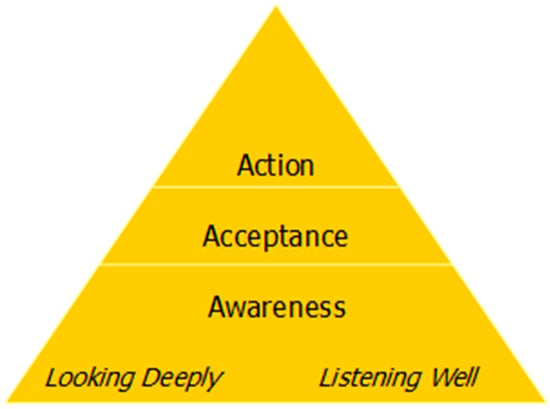
The Awareness/Acceptance/Action Model (AAAM) (Figure 1) was originally developed by Rutledge and Abell (2005) with respect to HIV/AIDS. However, after frequently visiting Northern Ireland for more than a decade, Abell saw the potential relevance of the AAAM when exploring how people of different identities engage with one another following the Troubles. The AAAM is grounded in the observation that when conditions are sufficient, something will arise, and the goal is to see ourselves and others as we actually are, rather than as we imagine ourselves and others to be.
Figure 1.
The Awareness/Acceptance/Action Model (Rutledge and Abell 2005).
The first principle suggests that the confluence of experiences and circumstances operating at any given moment inspires our views and constrains or supports our actions. The second principle identifies the associated risk of misperception. How we perceive or act results from a combination of our personal histories, our selective awareness of experience, the meanings we assign to what we experience, and the qualities we project onto those involved. Chodron (2019) refers to this as imputed meaning and suggests it limits our capacity to see things as they are in the present, rather than as a projected accumulation of past impressions.
If we react to encounters with “the other” by withdrawing from them, judging them as flawed or threatening, our interactions will be constrained. We may aim to move on from the uncomfortable encounter as quickly as possible, leaving important issues unaddressed. If, instead, we can take a deep breath, release our initial tension, and summon some compassion, we may see “the other” more as a whole person and respond with greater care. Looking deeply into how we frame these events can be illuminating, as we may see how decisions we made led to a particular outcome and guide us in making more informed choices.
The goal is straightforward: drop our prior assumptions and see things afresh. Can we find the courage to interrogate ourselves and our rush to judgement in every encounter? What are the risks, particularly for delivering ethical services, if we don’t? The core elements of awareness, acceptance, and action, as expressed in
Figure 1
and initially developed in the context of HIV/AIDS, provide a model for examining these dynamics.
1.7.1. Awareness
Awareness is a product of looking deeply and listening well (Rutledge and Abell 2005). What do I notice about my thoughts and feelings when encountering “the other”? What do I assume to be true about “the other” before we have even engaged?
In the HIV/AIDS pandemic, many social workers were quickly overwhelmed with the sheer intensity of the issues they faced (Rowan et al. 2015). The conditions surrounding contagion were unclear, and even as science revealed the truth regarding risk, successfully educating the public about safety was hard. Rational fears of risking death and irrational fears driven by the unknown led many to fear contact with “the other”. These fears contributed to a rush to judge others about personal characteristics (i.e., sexual orientation, drug use) associated with risk. For many providers, these triggered pushback from those suspected of having the disease. Providers and those in need doubted that “the other” could be trusted to effectively work with them.
Looking deeply encourages becoming aware of and reflecting on what we are feeling and thinking. If this person reminds me of my vulnerability, how can I accurately assess real versus imagined risk of engaging with them? Where the threat is valid, how can I manage overreaction? How much of my perception arises from my past experiences rather than present reality? Looking deeply does not mean automatically rejecting early concerns but does promote recognising that sometimes our fears are not justified. In our professional training and development, achieving such clarity is an ongoing part of education and supervision. Listening well is similarly challenging and central to perceiving interactions more objectively. Where our fears or judgements are actively engaged, the potential to focus on only those things that confirm our biases is huge. We are in effect seeing “the other” as we imagine them to be, rather than as they actually are. Social work ethics begin with an emphasis on recognising and respecting everyone’s inherent dignity and worth (IFSW 2018; NISCC 2015). Once we have boxed the “other” into our preconceived notions, we have missed the opportunity to understand who they are. Awareness is best cultivated by being patient with our rush to judge. Criticising ourselves harshly promotes shutting down and looking away from our predispositions. Compassion for self, on the other hand, leads us to recognise the role of honest self-awareness in our personal and professional growth.
1.7.2. Acceptance
In the AAAM, acceptance means acknowledging how our perceptions impact our ability to ethically engage (Rutledge and Abell 2005). How do my biases impact my ability to live up to my professional expectations? If I am reactively judging “the other” as threatening or undeserving, how will that affect my assessment? As the cliché goes, you can’t leave your baggage at the door if you don’t know what you’re carrying. Acceptance involves learning to avoid the trap of shutting down what we become aware of and can help us acknowledge the costs of getting it wrong. While this process can seem negative at first, the upside is a template for getting it right. If we notice, for instance, that our biases lead to reactive, unhelpful interactions, we could address that directly by identifying compassionate, intentional alternatives.
1.7.3. Action
Action guides us to generate constructive and compassionate behaviours towards “the other” (Rutledge et al. 2011). We use our awareness and acceptance of discriminatory tendencies to creatively imagine ways our words and deeds could be more respectful and effective. As with anti-oppressive practice, this mindful process can be central to constructive supervision and training. Illustrations follow where results are presented below.
In collaboration with practice teachers and social work students at a university in Northern Ireland, we examined ways in which the AAAM might be adapted to respond to conditions where residuals of traumatic history impact service delivery in an evolving society.
2. Materials and Methods
To ensure the rigour and integrity of this qualitative research, Lincoln and Guba’s (1985) four-dimensional framework was used to establish trustworthiness: credibility, dependability, confirmability, and transferability. In terms of transferability, it was only on receipt of formal ethical approval on 7 August 2016 (IRB00000446) that participants were purposively recruited in line with agreed inclusion criteria. Students had to be enrolled in the Bachelor of Social Work degree at the participating university, be able to provide written consent, and be willing to attend a focus group meeting, estimated to last 1–2 h. Practice Teachers (PTs) had to be involved in the supervision and assessment of student social workers, be able to provide written consent, and be willing to attend a focus group meeting, estimated to last 1–2 h. Student announcements were shared on Canvas, the Virtual Learning platform, resulting in the recruitment of 18 students (4 male, 14 female). An invitation to participate in the research was shared via the email distribution list held by the Northern Ireland Degree in Social Work Partnership, which regionally coordinates placement allocation for social work students. This led to 11 practice teachers (3 male, 8 female) being recruited. Following receipt of written consent, two focus groups of practice teachers and two focus groups of social work students were arranged for October-December 2016 on university premises. Students were incentivised with credits towards their Practice Development Days (PDDs) and PTs towards their continuing professional development (CPD).
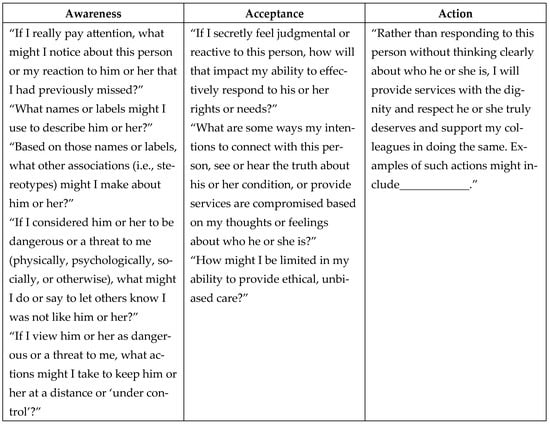
To ensure credibility, it was important to include only students or practice teachers in their respective groups, and to have strict ground rules on confidentiality and mutual respect. This allowed participants to feel safe and to share authentic views without fear or judgement. Participants were informed that the purpose of the research was to reflect on their thoughts and feelings regarding the delivery of social services to persons whose sectarian identities may be different from their own. In line with ethical approval, participants were informed that participation was voluntary and all responses would be confidential. They consented to focus groups being digitally audio-recorded for transcription purposes and advised that the results would help identify themes for SW education and practice. Each session opened with the lead author introducing mindfulness and stigma theories as applied to circumstances during and following the Troubles. Participants were guided to silently imagine someone whose sectarian identity differed from their own and to reflect on thoughts and feelings about delivering social services to them. In this context, foundational notions of looking deeply and listening well (Figure 1) were reinforced as elements facilitating critical reflection. The range of open questions posed to participants during focus group meetings is outlined in Figure 2. During individual responses and group discussions, the researchers remained neutral. Dependability and credibility are outlined in the data analysis.
Figure 2.
Questions posed to participants.
2.1. Researcher Positionality
This study was conducted by an insider/outsider research team, blending localised, lived experience of the Northern Irish conflict with external theoretical analysis. The first author provides an “outsider” perspective as a male, qualitative researcher from the United States, who developed the theoretical AAAM used in this paper. His previous work in HIV/AIDS service delivery, focused on the impact of stigma and discrimination on the quality and content of care, informed the translational use of the model here. While his engagement with Northern Ireland began post-conflict, his understanding of the region’s historical trauma has been shaped by more than a decade of interaction with individuals, groups, and organisations directly affected by political violence in Northern Irish social service, academic, and practice learning communities. Conversely, the second author identifies as a female, Protestant researcher who grew up in Northern Ireland during the Troubles and practised as a social worker before and after the Good Friday Agreement. Her biography offers an “insider” understanding of the historical, structural, and sectarian dynamics influencing cross-community relations. Given the transparency required by Braun and Clarke’s reflexive thematic analysis, the authors used their divergent positionalities as a tool for reflexivity. The first author used his theoretical framework to challenge implicit assumptions being made by the second author, to ensure her deep familiarity did not obscure nuanced participant meanings. Through regular peer debriefing, the authors systematically cross-examined their interpretations, ensuring the final themes balance experiential authenticity with rigorous theoretical abstraction.
2.2. Data Analysis and Interpretation
To promote dependability (Lincoln and Guba 1985), only verbatim transcripts of the audio-recorded sessions were used for thematic analysis. Braun and Clarke’s (2006) six principles of thematic analysis were used: becoming familiar with the data, generating initial codes, searching for themes, reviewing themes, defining and naming themes, and producing the report. To promote confirmability (Lincoln and Guba 1985), the authors initially worked independently to code transcripts beginning with a deductive analysis of awareness, acceptance, and action, supported by raw, verbatim quotes. The purpose was to determine whether these concepts from the AAAM could meaningfully represent participants’ core responses. This process was supported by regular meetings to compare interpretations and resolve individual blind spots generated by insider/outsider status.
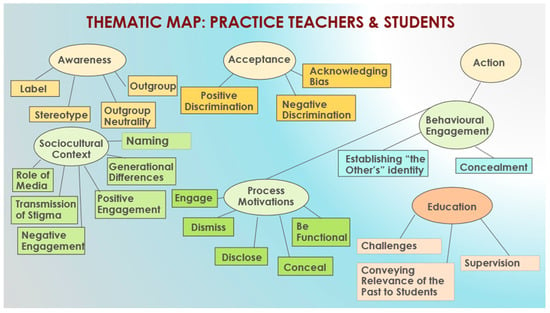
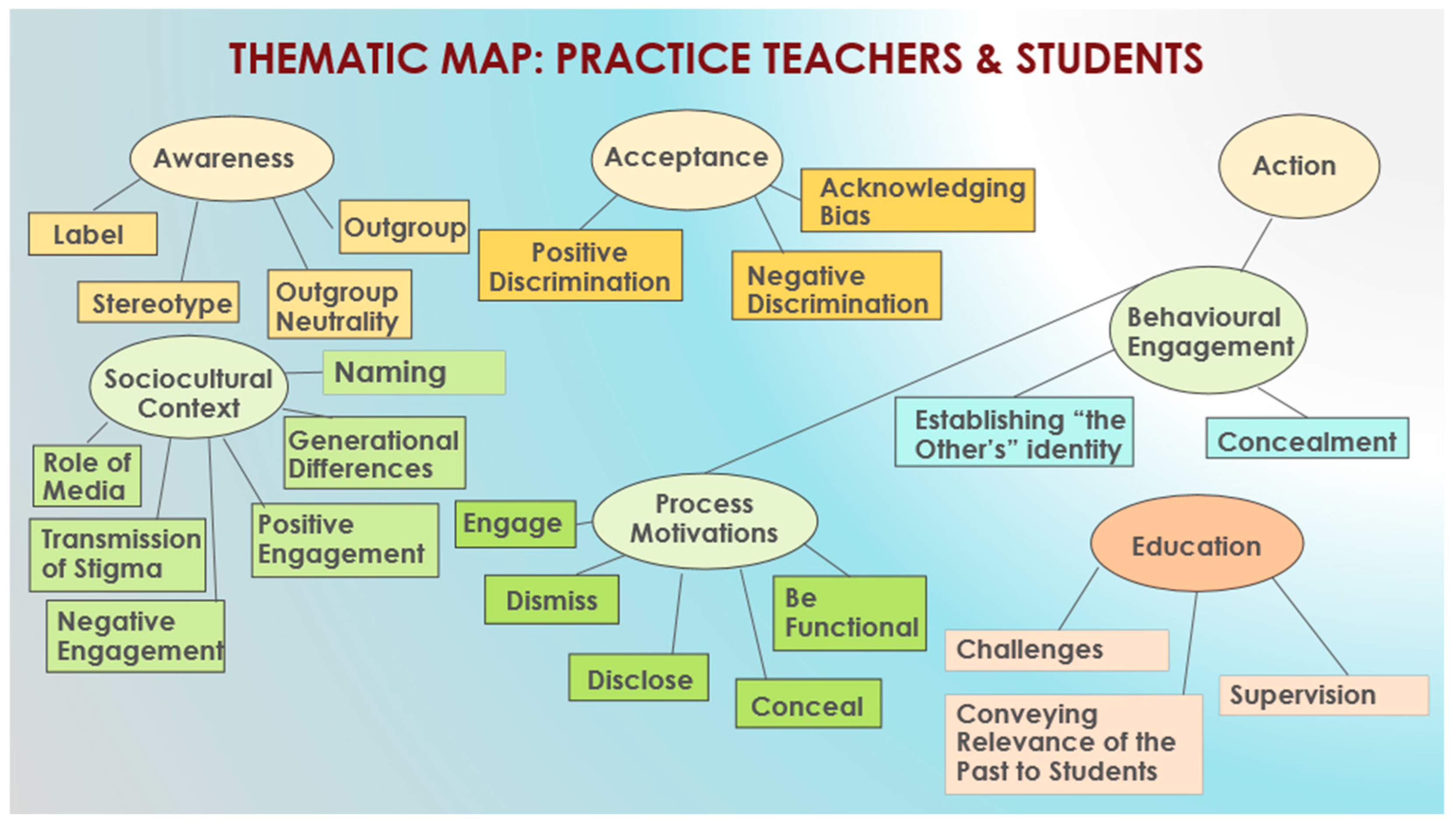
Although the data supported the AAAM framework, an inductive thematic analysis was applied to capture the localised nuances within these broad themes. In this iterative process, raw data were coded to reveal context-specific sub-themes unique to Northern Ireland. For example, the socio-cultural subtheme illustrated the role of the media, the transmission of stigma, and types of engagement (positive and negative). As a subtheme of the AAAM Action component, process motivations emerged as strategies for behavioural engagement. Respondents revealed tendencies to deny or conceal one’s sectarian identity, for instance, in ways that had not appeared in previous applications with HIV/AIDS service providers. Authors critiqued and refined the emergent codes and themes in an iterative process, identifying quotes from both PTs and students that best expressed the nature and context of their experiences. An audit trail of coding decisions was maintained by authors before reaching consensus on the final version, which is compiled as a thematic map (Figure 3). This map identifies key concepts emerging from the deductive and inductive analyses and organises them in a visual image representing their range and relations to each other. Selected excerpts from respondents in student (SFG) and PT (PTFG) focus groups are provided below.
Figure 3.
Thematic map.
2.3. Application of Learning to Teaching Social Work Students
After analysis, natural opportunities to share the AAAM and further explore its applicability to the Troubles included lectures and tutorials with social work students at the participating university. In October 2017, students attended a Practice Development Day workshop that consisted of lectures and small group tutorials. The visualisation exercises enabled students to be more aware of their biases and prejudices towards “the other” and to consider their acceptance and intentional actions through ‘listening deeply.’ Students indicated that their visualisation and small-group discussion were more powerful than applying a theoretical model to a case study. Written and verbal student feedback led to a recommendation to include the AAAM in the social work degree curriculum. Therefore, in October–November 2018, lectures and tutorials in academic modules completed by 280 final-year students across two universities in Northern Ireland were used to deliver the AAAM. Module evaluations confirmed that students found this learning useful given the intergenerational trauma impact of the Troubles and their anticipated engagement with victims and survivors regardless of their final placement or future employment. In October 2018, the AAAM and research findings were also shared with PTs at the Annual Review of Practice Learning, which enabled them to use the model during supervision in placements. Given the impact of the COVID-19 pandemic on travel and personal issues, it was Autumn 2024 before the AAAM teaching was delivered again in Northern Ireland. The Introduction to Social Work module with first-year social work students was selected, as it contains teaching on the Troubles by WAVE Trauma—a cross-community charity in Northern Ireland that provides care and support to anyone bereaved, injured, or traumatised by the Troubles. Student and tutor feedback following both sessions confirmed its ongoing relevance and importance for personal and professional reflexivity.
3. Results
Four focus groups were convened, two with practice teachers and two with students. A total of 11 practice teachers participated (3 male, 8 female) with practice experience ranging from 6–25 years. A total of 18 students participated (4 male, 14 female). Ten students did not report any prior social work or human service experience, but 8 reported working 2 to 30 years in social and health care fields. In this paper, our analyses focus primarily on deductive evidence regarding the expression of core components of the AAAM (Figure 1). The authors acknowledge emergent themes associated with practice teachers’ observations on teaching and supervision, depicted as a thematic map (Figure 3).
3.1. Awareness
Once the students and practice teachers in the focus groups established a reasonable degree of comfort with disclosure, several expressions did “pop out”. This is consistent with stigma theory, as participants revealed labels used (internally or overtly) to distinguish “us” from “them” when contemplating “the other” (see Table 1).
Table 1.
Labels attributed to Catholics and Protestants.
The practice teachers, who represented various sectarian backgrounds, were more reserved than student participants and indicated that they never risked such conversations before. They feared that colleagues from different backgrounds might be offended to hear honest revelations of their internalised biases. Most had assumed that the best policy was to be silent or withhold expressions that might be regarded as insensitive or hurtful.
“You know…we sort of manage things and then something happens, there’s a trigger, and all of this stuff comes to the surface, and then we bottle it all up again, and we go along for another period of stability and then something happens and it pops out, and…I suppose there is a fear…that once you unleash it…people might look at me in a different way, not as the professional”(PTFG1, R2)
In the context of religion and football in Northern Ireland, “hun” is an offensive and sectarian slur used to insult protestants. “Fenian” and “Taig” are the direct, offensive counterparts to “hun”. They are used as a derogatory slur or as hate speech against Catholics and Irish nationalists. “Blanket man” was used for Republican prisoners who had been involved in different actions. Someone would have said, “Oh, here’s a ‘blanket man’, and you thought okay, so he’s Republican and he’s a ‘hard man’, and…there’s a sense of how that impacts on how you are with that person and your awareness of that…in terms of the provision (of services).” (PTG2, R4).
In stigma theory, stereotypes follow from labelling, crystallising prior assumptions into hardened characteristics. Protestants were described as vulgar, unaccepting, sick, irritating, “likely to shoot himself in the foot, narrow minded, little travelled, no global knowledge” (SFG1, R7), “eyes too far apart or too far together…Catholics’ are together, and Protestants’ are too far apart. That’s how stupid it gets to; it’s your anatomy” (SFG2, R16). Some are referred to as posturing to display strength, with a “habit of walking like they have 2 microwaves under each arm” (SFG1, R7). “My mum used to say the last boyfriend I had got too built and (she) said ‘you look like you should be in the UDA (Ulster Defence Association). It might be assumed that Catholics “had crazy rituals”, were “suspicious”, or that men who “served time in prison for Republican offences, for terrorist offences, that they were more extreme…” (PTFG2, R4).
“I was just a bit worried what if I do pick an area, and the first minute I walk in and (say ‘Hello’ and my name) they’re just like ‘spot the Fenian with her tricolour (Republic of Ireland flag) draping from her.’ And then assume that I am also nationalist…and automatically make all those assumptions about me. So that can be a danger”(SFG2, R3).
Stereotypes were described as automatic, seemingly necessary means of determining who “the other” was, guiding safe or wise ways to interact. “How they speak, football teams they support, tattoos they have…football shirts (and) the jewellery they wear…the haircuts young people have. There are lots of obvious and more subtle ways of identifying [others]. We’re very good at it” (PTFG1, R2).
Because of the dangers associated with being recognised as different from those a social worker may encounter in practice, the stigma component of out-grouping, striving to project an identity one assumes will be protective, is common. One manifestation is the direct declaration of one’s identity. Student social workers might say where they grew up, what school they went to (SFG1, R3) or pronounce letters of the alphabet and place names in a manner revealing a particular accent. PT participants were more likely to mask their identity:
“I would never share where I came from. My first name is (XX), and my second name is James…a lot of people I worked with; they knew me as James because (XX) very clearly told them what my identity was. I was very careful to avoid the subject of politics and, in fact, be sympathetic to a loyalist/unionist position”(PTFG1, R2).
Another participant identifying as a Protestant stated:
“I’ve never had my head shaved, and I’ve never bought a bomber jacket for that very reason…I would almost be wearing that uniform. No matter what community I think I went into, people would instantly be thinking this guy is, you know, obviously looking for the red hand (Protestant slur) tattoo”(SFG2, R6).
Out-grouping neutrality (Figure 3) was an emergent theme, illustrating attempts to downplay a distinct identity. A Catholic student, born after the first IRA ceasefire, identified as a “peace baby”:
“One of (my family’s) main motives not to name me with an Irish name…was so…I would grow up not being easily identified. But I was thinking about it in my placement whenever I was in contact with the service user who…talked a lot about his history with the British army…If I had a nationalist name, would he have reacted differently? It really made me reflect upon how that sort of neutral stance almost gave me more power to build rapport with him”(SFG1, R9).
The awareness findings suggest a contrast in reflexive openness between the two groups. Students engaged more readily in exploring labelling, identity and othering, compared to PTs, who described containing judgements despite recognising their emergence. Both groups acknowledged the role of appearance, anatomy and names in shaping assumptions about identity, highlighting their shared awareness of the implicit bias (Brownstein 2016) through which social categorisation operates in society and professional practice.
3.2. Acceptance
The second element of the AAAM (Figure 1) regards acknowledging how our preconceptions, thoughts, and feelings may undermine our intentions to honour our ethical obligations or overcompensate to avoid allegations of being sectarian or racist. As Figure 3 depicts, participants could see that the importance of acknowledging bias, defined here as pre-existing characterisations expressed by or directed towards oneself, could affect one’s engagement with “the other” while not necessarily resulting in overt discrimination. For example:
“It can be quite intimidating…if you’re honest with yourself…maybe going back to what happened as a child…trying to distance yourself from those fears and perceptions to do what you’re there to do, which is a social work intervention…that’s the non-judgmental approach…the anti-discriminatory practice. Not bringing in stuff that happened to you over your lifetime…I think that is the challenge every day”(PTFG2, R6).
As one student, who reflected on an interaction in supervision with their PT, said that coming to grips with their preconceptions can also trigger resistance. For example, when the PT asked the student to write down their biases, the following occurred:
“I went, ‘What?! I don’t have any bias. How dare you?’ I flipped out at him, which didn’t go down very well. But he was right. You do come with this stuff, and it is about self-awareness, and…there’s stuff I’m still working out about myself”(SFG2, R6).
The mindfulness principles underpinning the AAAM emphasise the importance of compassion for self at these moments of recognition. If our only recourse is self-negation, possibilities for real growth are stymied. Looking more deeply at the origins of our judgmental positions may lighten the burden and pave the way for change. Participants revealed that the personal baggage they had to accept could lead to negative or positive discrimination in practice. One student stated the following:
“I suppose if you have a preconceived idea that Mr Bomber Jacket is going to be hostile or misogynistic, you’re maybe more likely to see his actions within those frameworks, whether they are or aren’t. I mean…you’re more inclined to a negative perception of him before you’ve even started talking to him”(SFG2, R6).
One PT indicated that underlying fears about “the other” can lead to social work interventions being completed “in a quicker time, then that case is no longer yours, and you can close it…so any fear that you had…is gone” (PTFG1, R7). Another PT shared insight into how they overcompensated and went the extra mile in the following:
“I may have overcompensated with some service users and some students who have been different from me because I don’t want to be accused of being biased, which comes back to…just because I’m different from you doesn’t mean I’m really bad. I’m actually really good, so I’m going to go the extra mile for you. And I think sometimes the fear of being accused of being sectarian or sexist or racist maybe makes us… It certainly has made me maybe be positively biased”(PTFG1, R2).
When comparing the participant groups, both PTs and students recognised the embedded negative perceptions they have of “the other”. PTs had developed these over a lifetime, whereas most students made assumptions based on intergenerational narratives. PTs acknowledged that fears of “the other” making allegations to undermine their professionalism distorted professional judgement in opposing directions, leading to overcompensatory practices or defensive under-engagement. Students welcomed opportunities to explore their self-awareness of triggers and bias in supervision.
3.3. Action
Action is defined as compassionate and intentional interaction with “the other” rather than negative reactions based on bias and assumptions. Participants were invited to brainstorm examples of engagement that were explicitly anti-oppressive and consistent with our professional ethical standards. Beyond empathy, genuineness, and unconditional positive regard, some proposed challenging themselves in new ways. In relation to the supervisory role of PTs with students on placement, one highlighted the importance of creating a safe space where students can share how their assumptions or prejudices towards service users may influence action:
“I think we need to be better in social work training at giving students permission to have prejudice and to have assumptions, whether that be on a sectarian basis or be about ethnicity or difference…You do get practice teachers who are very good and will spend a lot of time in supervision getting them [students] to unpack that. But we’re trying to do that within an assessment process, getting them to do work, ticking a lot of boxes in a very short period of time, and they are focused on saying the right thing to pass…”(PTFG2, R1).
One student realised the importance of seeing the person and staying focused on their role as a social work student: “See the person, see the individual and remember that’s what you’re there to do” (SFG1, R4). Another indicated that visualising “the other” and using the AAAM prompted them to challenge assumptions: “It encourages me to try to go to areas that are kind of different from my own, to challenge my assumptions and to challenge everything I might have assumed in the past” (SFG1, R3). Another stated: “just be aware of alternative views and ways of being in the world that wouldn’t necessarily match my own, and dealing with situations…that (I) might (not) be…very good at” (SFG2, R8).
Most recommendations for compassionate action involved creating a context for respectful interactions. According to one PT participant:
“So, if you can…create a ‘safe’ environment, whether it’s a home visit or…whatever, to start that conversation…you can really get going somewhere with that. To agree to be quite brave and agree on what commonality was in the work…away from our differences to actually what the focus (was)”(PTFG1, R13).
The PTs talked about the importance of creating safe spaces for students to own their biases and assumptions about “the other” and explore commonalities rather than differences with “the other”. Students recognised the importance of challenging their assumptions about “the other”, seeing the person and being respectful in their interactions.
3.4. Sociocultural Context and Interactional Processes
Inductive analyses (Figure 3) yielded a wealth of insights regarding the sociocultural context in which these issues emerge, ways SWs may attempt to manage the presentation of their identities in a challenging environment, and the range of motivations students and PTs navigate as they attempt to keep themselves safe, live up to professional standards, and provide the services people deserve. For example, one PT reflected on a Catholic student who expressed his fears about visiting a service user in a loyalist home. But when he raised his fears with the training team, “they didn’t really see it as an issue. They were almost surprised because they said, ‘…you don’t have to worry about that.’ So, I don’t think we can be complacent. There are still things playing out, and I think we need to at least have conversations about [it], but there may be times when it is better not to stir the pot” (PTFG1, R9).
While full elaboration is beyond the scope of this paper, it is important to acknowledge the potential generational differences between PTs and their students. Owing to their youth, many students do not have lived experience of the Troubles, but they need insight into the profound effect on service users who continue to live in fear for their safety and dignity (Coulter and Duffy 2023). Looking deeply encourages discovering the underlying biases for reactivity and assumptions whose origins are intergenerational. One student shared their insight into how disrespectful it can be to people with direct experience, including victims, to expect them to move on:
“I totally do get the whole thing about moving on, but I also really think it’s disrespectful… I have a lot of respect for people who were badly affected by the Troubles and know how disrespectful it is to expect them to move on when there’s still no justice for them, no justice for their families. It’s okay for me at 26 years of age who wasn’t really affected—I can remember parts of the Troubles, but for the likes of my mum’s generation, my granny’s generation…if I said, you know, ‘mum, don’t think like that’—that’s doing a disservice to her, because I didn’t go through the experiences she went through”(SFG2, R2).
Participants described negotiating the tensions between personal safety, professional identity, and ethical responsibility, while recognising that the legacy of the Troubles continues to shape service users’ experiences and students’ and practitioners’ assumptions. Students and PTs also acknowledged the importance of intergenerational perspectives, emphasising that meaningful reflexivity requires an appreciation of how historical experiences continue to inform fears, identities, and professional encounters.
4. Discussion
4.1. Contribution to and Beyond Existing Models
Crenshaw’s (1989, 2019) intersectionality and Thompson’s (1993, 2016) PCS model provide frameworks for reflective practice that encourage individuals to identify the origins of their personal beliefs, attitudes, and assumptions and acknowledge how they impact professional behaviours and decision-making. However, it has been suggested that Thompson’s PCS model may oversimplify the complexity of identity, and Crenshaw’s intersectionality may not transfer easily into the historical and cultural context of the Troubles in Northern Ireland (Yuval-Davis 2006). Although Tedam’s (2021) 4D2P model helps students and practitioners to shift beyond identifying assumptions, prejudice or discrimination, into making changes, it may be unrealistic and unethical to expect social work students or practitioners to deconstruct traumatic experiences in professional supervision with someone in a position of power and authority. It is also important to recognise that to be effective, the process requires a skilled supervisor, an emotionally honest social work student or practitioner, and a psychologically safe environment.
Although originally developed within the context of HIV/AIDS (Rutledge and Abell 2005), this research supports the application of the AAAM to the post-conflict context of Northern Ireland. The AAAM integrates theoretical perspectives of stigma (Link and Phelan 2001) and mindfulness (Hanh 1998; Kabat-Zinn 1990) into a sequential, iterative model of reflexivity. The model uniquely applies mindfulness techniques to visualise “the other” before critically reflecting on the culturally sensitive origins of their beliefs, fears, and assumptions about them. In terms of stigma theory, findings demonstrate that labelling, stereotyping, and fear operate beneath professional social work identities (Link and Phelan 2001). Quotes illustrate ongoing identity management to conceal culture and origin in anticipation of stigma or being categorised according to sectarian identity (Todd 2018). With the incomplete application of the remaining pillars of transitional justice and unresolved historical trauma in communities across Northern Ireland (Bryson and McEvoy 2023), it is not surprising that social work students and practitioners feel stigma well beyond the (UK Government and Irish Government 1998). Although stigma theory (Link and Phelan 2001) helps to explain prejudice, and mindfulness (Hanh 1998) explains the transition into awareness, neither explains what happens when social work students or practitioners discover uncomfortable truths about themselves. Our participants described their embarrassment, defensiveness, overcompensation and positive discrimination when confronted with their own assumptions, before compassionately accepting these as an integral part of their sociocultural histories. Mindfulness-informed compassion seems to have allowed participants to acknowledge their bias without being paralysed by guilt, shame or defensiveness. We share Coulter and Duffy’s (2023) appreciation that, as challenging as these efforts may be, when presented with humility and care, they “generate opportunities for positive growth in the learner” (p. 425). Participant quotes illustrated how participants shifted from reactive thoughts and behaviours to acceptance and intentional action by challenging themselves, in line with ethical practice and professional social work standards (NISCC 2015).
4.2. Study Limitations
These findings offer rich qualitative insights into how social work students and practice teachers reflect on sectarian bias in Northern Ireland. However, the small purposive sample (n = 29), single-site design, and the time span between empirical data collection in 2016 and the present may limit the transferability of the findings. The use of focus groups may also have introduced social desirability bias, with participants potentially moderating their responses when discussing sensitive issues. Despite reflexivity and peer debriefing, the insider/outsider positionality of the research team may have influenced data interpretation. The authors acknowledge that module evaluations capturing student and tutor feedback are not equivalent to empirical research data obtained in the original study (2016).
4.3. Implications for Education, Policy, Practice, and Research
Social work as a profession has consistently advanced arguments for ethical, rights-based practice. Aspirations to deliver services free of oppression and discrimination must be met with guidance and commitments to reducing their potential for harm. It is evident that even in a post-conflict era, significant biases often lie just below the surface. This dynamic is often referred to as “The Sleeping Bear” in Northern Ireland, with the implication that it dares not be disturbed, as through reckless probing of the wounds and tensions it covers. Our findings illustrate that these deeply layered wounds (in victims and by intergenerational transmission) are suppressed at our peril. The AAAM offers a new approach to anti-oppressive practice distinguished by its emphasis on naming and exploring the suffering, judgement, and distress students, practice teachers, and academics routinely carry into their lives as social workers. Using formal environments to pull back the covers could be the foundation for easing persistent cultural and community tensions and furthering the maturation of a fully functional rights-based society. The following recommendations are made for education, policy, practice and research:
4.3.1. Education
Given the legacy of the Troubles, our findings confirm the need for ongoing social work education that creates opportunities for social work and practice teaching students to hear firsthand narratives from victims and survivors and encourage them to explore their own lived experience of implicit bias, identity management, power dynamics and the importance of compassion towards themselves and others.
4.3.2. Policy
Individual or peer-group social work supervision should offer a psychologically safe space for emotional honesty to avoid unethical practice or decision-making that is underpinned by professional standards. Policies guiding supervision for students and practitioners should incorporate awareness, acceptance, and action and explore the impact of candid disclosure of their biases, prejudices, and fears on the conduct of professional and educational relationships. Ongoing revision and reinforcement of ethical standards for professional social work practice is essential to this aim.
4.3.3. Practice
Employers should recognise that practitioner wellbeing and service delivery may be impacted by identity management as staff navigate their personal safety, professional credibility and working relationships. The AAAM emphasises reflexive processes designed to minimise reactive responses and maximise intentional engagement when working through the difficulties of acknowledging one’s own judgements and biases. Cultivating compassion for themselves and others offers a new pathway to minimise the impact of post-conflict tensions on the delivery of services, while promoting professional development and personal growth.
4.3.4. Research
It is widely known that high levels of stress and burnout in social work lead to high staff turnover and a lack of continuity of care for service users. We need research that explores the impact of using the AAAM in social work supervision on relevant professional outcomes. For example, research could compare the experiences of stress, burnout and wellbeing among social workers in children’s or adult services who receive peer group supervision using the AAAM in addition to traditional professional supervision with social workers who only receive traditional supervision.
5. Conclusions
Social Work students and practitioners, in a post-conflict environment like Northern Ireland, need to actively manage their identities daily because stigma affects observers and those being observed (Todd 2018). Awareness and acceptance, underpinned by compassion, are critical processes to enable behavioural change. Regardless of perceived political progress since the Good Friday (Belfast) Agreement in 1998, and professional commitments to anti-oppressive practice, othering remains embedded within the everyday thinking of people directly and indirectly impacted by the Troubles. Students and practitioners need supervision that moves beyond case management and allows them to explore assumptions without fear of moral judgement. Listening well to the experiences of others and nurturing a culture of compassionate awareness and acceptance of our biases may cultivate intentional interactions that are effective, respectful and ethical.
Author Contributions
Conceptualization, N.A. and A.R.; Methodology, N.A. and A.R.; Software, N.A.; Validation, N.A. and A.R.; Formal analysis, N.A. and A.R.; Investigation, N.A. and A.R.; Resources, N.A. and A.R.; Data curation, N.A.; Writing—original draft, N.A. and A.R.; Writing—review & editing, N.A. and A.R.; Visualization, N.A.; Supervision, N.A. and A.R.; Project administration, N.A. and A.R. All authors have read and agreed to the published version of the manuscript.
Funding
This research received no external funding.
Institutional Review Board Statement
The study was conducted in accordance with the Declaration of Helsinki and approved by the Human Subjects of Florida State University (IRB00000446) (7 August 2016).
Informed Consent Statement
Informed consent was obtained from all subjects involved in the study.
Data Availability Statement
Raw data are unavailable due to privacy and ethical restrictions.
Acknowledgments
The authors would like to express their gratitude to the social work students, academic staff, and practice teachers, who participated in this research, attended workshops and supported the delivery of subsequent lectures and tutorials. Both authors have reviewed and edited the output and take full responsibility for the content of this publication.
Conflicts of Interest
The authors declare no conflicts of interest.
Abbreviations
The following abbreviations are used in this manuscript:
| AAAM | Awareness, Acceptance, Action Model |
| COVID-19 | Coronavirus Disease discovered in 2019 |
| HIV/AIDS | Human Immunodeficiency Virus/Acquired Immune Deficiency Syndrome |
| IFSW | International Federation of Social Workers |
| IRA | Irish Republican Army |
| NI | Northern Ireland |
| NISCC | Northern Ireland Social Care Council |
| PT | Practice Teacher |
| PTFG | Practice Teacher Focus Group |
| SFG | Student Focus Group |
| UDA | Ulster Defence Army |
References
- Belfast Interface Project. 2012. Belfast Interfaces: Security, Barriers and Defensive Use of Space. Belfast: Belfast Interface Project. [Google Scholar]
- Braun, Victoria, and Virginia Clarke. 2006. Using thematic analysis in psychology. Qualitative Research in Psychology 3: 77–101. [Google Scholar] [CrossRef] [Scilit]
- Brownstein, Michael. 2016. Context and the ethics of implicit bias. In Implicit Bias and Philosophy. Edited by Michael Brownstein and Jennifer Saul. New York: Oxford University Press, vol. 2, pp. 215–34. [Google Scholar]
- Bryson, Anna, and Kieran McEvoy. 2023. Human rights activism and transitional justice advocacy in Northern Ireland. International Journal of Transitional Justice 17: 453–69. [Google Scholar] [CrossRef] [Scilit]
- Campbell, Jim, Joe Duffy, Carole Tosone, and David Falls. 2021. Just get on with it: A qualitative of study of social workers’ experiences during the political conflict in Northern Ireland. The British Journal of Social Work 51: 1314–31. [Google Scholar] [CrossRef] [Scilit]
- Chodron, Pema. 2019. Living Beautifully with Uncertainty and Change. Boulder: Shambala Publications. [Google Scholar]
- Commission International Association of Schools of Social Work International Federation of Social Workers (CIASSW/IFSW)—Interim Education. 2020. Global Standards for Social Work Education and Training. Available online: https://www.iassw-aiets.org/wp-content/uploads/2020/11/IASSW-Global_Standards_Final.pdf (accessed on 29 May 2026).
- Cosstick, Vicky. 2015. Belfast: Toward a City Without Walls. Newtownards: Colourpoint. [Google Scholar]
- Coulter, Joe, and Joe Duffy. 2023. Living Through It, Living After It: Personal Reflections on ‘The Troubles’ in Northern Ireland. Peace Review: A Journal of Social Justice 35: 422–32. [Google Scholar] [CrossRef] [Scilit]
- Crenshaw, Kimberle. 1989. Demarginalizing the intersection of race and sex: A Black feminist critique of antidiscrimination doctrine, feminist theory and antiracist politics. University of Chicago Legal Forum 1: 139–68. [Google Scholar]
- Crenshaw, Kimberle. 2019. On Intersectionality: The Essential Writings. New York: The New Press. [Google Scholar]
- Fook, Jan. 2016. Social Work: A Critical Approach to Practice, 3rd ed. Thousand Oaks: SAGE Publications. [Google Scholar]
- Hanh, Thich Nhat. 1991. The Miracle of Mindfulness: The Classic Guide to Meditations by the World’s Most Revered Master. London: Rider and Company. [Google Scholar]
- Hanh, Thich Nhat. 1998. The Heart of the Buddha’s Teaching: Transforming Suffering into Peace, Joy, and Liberation. New York: Broadway Books. [Google Scholar]
- Hanh, Thich Nhat. 2001. Transformation at the Base: Fifty Verses on the Nature of Consciousness. Berkeley: Parallax Press. [Google Scholar]
- Hayward, Katy, and Cathal McManus. 2020. Northern Ireland: Society and Culture. In The Routledge Handbook of British Politics and Society, 1st ed. Edited by Mark Garnett. Abingdon: Routledge, Taylor and Francis Group. [Google Scholar]
- Herek, Gregory M. 2002. Thinking about AIDS and stigma: A psychologist’s perspective. Journal of Law, Medicine, and Ethics 30: 594–607. [Google Scholar] [CrossRef] [Scilit] [PubMed]
- Houston, Stan. 2015. Enabling others in social work: Reflexivity and the theory of social domains. Critical and Radical Social Work 3: 245–60. [Google Scholar] [CrossRef] [Scilit]
- International Federation of Social Workers (IFSW). 2018. Global Social Work Statement of Ethical Principles. Available online: https://www.ifsw.org/global-social-work-statement-of-ethical-principles/ (accessed on 28 May 2026).
- Kabat-Zinn, Jon. 1990. Full Catastrophe Living: Using the Wisdom of Your Body and Mind to Face Stress, Pain and Illness. New York: Delacorte. [Google Scholar]
- Lincoln, Yvonna S., and Egon G. Guba. 1985. Naturalistic Inquiry. Thousand Oaks: SAGE Publications. [Google Scholar]
- Link, Bruce G., and Jo C. Phelan. 2001. Conceptualizing stigma. Annual Review of Sociology 27: 363–85. [Google Scholar] [CrossRef] [Scilit]
- Link, Bruce G., and Jo C. Phelan. 2013. Labeling and stigma. In Handbook of the Sociology of Mental Health, 2nd ed. Edited by Teresa L. Schield and Tony N. Brown. Cambridge: Cambridge University Press, pp. 525–41. [Google Scholar]
- McKittrick, David, Seamus Kelters, Brian Feeney, and Chris Thornton. 1999. Lost Lives: The Stories of Men, Women and Children Who Died as a Result of the Northern Ireland Troubles. Edinburgh: Mainstream Publishing Company. [Google Scholar]
- Northern Ireland Social Care Council (NISCC). 2015. Standards of Conduct and Practice for Social Workers. Available online: https://niscc.info/app/uploads/2026/01/Standards-for-Social-Workers.pdf (accessed on 28 May 2026).
- Northern Ireland Social Care Council (NISCC). 2020. The Standards for Practice Learning for the Degree in Social Work. Available online: https://learningzone.niscc.info/app/uploads/2022/08/Standards-of-Practice-Learning-for-the-D-in-SW-Dec-2020.pdf (accessed on 17 July 2026).
- Rowan, Diana, Susan H. Lynch, Ethan Randall, and Heather Johnson. 2015. Deconstructing Burnout in HIV Service Providers. Journal of HIV/AIDS and Social Services 14: 58–73. [Google Scholar] [CrossRef] [Scilit]
- Rutledge, Scott E., and Neil Abell. 2005. Awareness, acceptance, and action: An emerging framework for understanding AIDS stigmatizing attitudes among community leaders in Barbados. AIDS Patient Care and STDS 19: 186–99. [Google Scholar] [CrossRef] [Scilit] [PubMed]
- Rutledge, Scott E., James Whyte, Neil Abell, Kirstin M. Brown, and Nicole I. Cesnales. 2011. Measuring stigma among health care and social service providers: The HIV/AIDS Provider Stigma Inventory. AIDS Patient Care STDS 25: 673–82. [Google Scholar] [CrossRef] [Scilit] [PubMed]
- Sewpaul, Vishanthie. 2013. Inscribed in our blood: Challenging the ideology of sexism and racism. Affilia 28: 116–25. [Google Scholar] [CrossRef] [Scilit]
- Sewpaul, Vishanthie, and Mark Henrickson. 2019. The (r)evolution and decolonization of social work ethics: The Global Social Work Statement of Ethical Principles. International Social Work 62: 1469–81. [Google Scholar] [CrossRef] [Scilit]
- Tedam, Prospera. 2021. Anti-Oppressive Social Work Practice. London: Learning Matters. [Google Scholar]
- Thompson, Neil. 1993. Anti-Discriminatory Practice. London: Palgrave Macmillan. [Google Scholar]
- Thompson, Neil. 2016. Anti-discriminatory practice. In Equality, Diversity and Social Justice, 6th ed. London: Palgrave Macmillan. [Google Scholar]
- Todd, Jennifer. 2018. Understanding Identity Change: Conditions, Context, Concepts. In Identity Change After Conflict. Palgrave Studies in Compromise After Conflict. Cham: Palgrave Macmillan. [Google Scholar] [CrossRef] [Scilit]
- UK Government and Irish Government. 1998. The Belfast Agreement: An Agreement Reached at the Multi-Party Talks on Northern Ireland; Agreement reached in the multi-party negotiations on Northern Ireland (Cm. 3883). London: Her Majesty’s Stationery Office.
- Yuval-Davis, Nira. 2006. Intersectionality and Feminist Politics. European Journal of Women’s Studies 13: 193–209. [Google Scholar] [CrossRef] [Scilit]

Disclaimer/Publisher’s Note: The statements, opinions and data contained in all publications are solely those of the individual author(s) and contributor(s) and not of MDPI and/or the editor(s). MDPI and/or the editor(s) disclaim responsibility for any injury to people or property resulting from any ideas, methods, instructions or products referred to in the content. |
© 2026 by the authors. Licensee MDPI, Basel, Switzerland. This article is an open access article distributed under the terms and conditions of the Creative Commons Attribution (CC BY) license.