
Review

Loneliness, Isolation, and Well-Being Among Older Adults in Arab Countries: A Bibliometric Analysis and Systematic Review


by
Rudy S. Younes
1,2,
Charbel Ziade
1,2,
Clara Moukarzel
1,2 and
Mirna Abboud Mzawak
1,2,*
1
IDEES Multidisciplinary Research Group, Faculty of Arts and Sciences, Holy Spirit University of Kaslik (USEK), Mount Lebanon, Jounieh P.O. Box 446, Lebanon
2
Department of Psychology and Social Sciences, Faculty of Arts and Sciences, Holy Spirit University of Kaslik (USEK), Mount Lebanon, Jounieh P.O. Box 446, Lebanon
*
Author to whom correspondence should be addressed.
Soc. Sci. 2026, 15(8), 497; https://doi.org/10.3390/socsci15080497
Submission received: 11 June 2026 / Revised: 15 July 2026 / Accepted: 20 July 2026 / Published: 24 July 2026

Abstract

Population aging is increasing across Arab countries. As a result, loneliness and social isolation among older adults have become important public health concerns due to their impact on well-being. This review aimed to examine research trends on loneliness, isolation, and well-being among older adults in Arab countries; synthesize evidence on their associations with well-being; and identify gaps and priorities for future research. A combined bibliometric analysis and systematic review was conducted. The findings indicate that research on this topic has grown substantially since 2020 but remains limited and concentrated in a small number of countries. Research on the mental health consequences of loneliness dominates the literature. Across studies, loneliness and social isolation were consistently associated with poorer mental health, lower quality of life, greater psychological distress, and adverse physical and nutritional outcomes. However, the literature largely appears to conceptualize loneliness and social isolation as individual or clinical problems, with limited attention paid to their broader social and structural determinants. Research also remains predominantly descriptive, with comparatively little focus on interventions, prevention strategies, or solution-oriented responses. This review makes suggestions for future research, including attention to social and structural factors, protective factors, and intervention-oriented approaches to loneliness and isolation in later life.

1. Introduction

The world’s population has now reached historically high levels and is still growing. According to the United Nations (2017), the age category including people aged 60 or older includes about 962 million people; it is also expected that by the year 2050, that number is estimated to increase by four times. It is also thought that there will be more adults aged 60 and older than teenagers and young adults aged 10 to 24 (United Nations 2017).
The well-being and mental health of older people are under significant stress as a result of this population’s rising aging numbers and the unique problems they encounter (Reynolds et al. 2022). Older adults present a higher chance of experiencing depression, anxiety, and dementia than younger generations due to multimorbidity and decreased independence (Du et al. 2025).
One of the most prominent challenges that older people face is loneliness and isolation (National Academies of Sciences, Engineering, and Medicine 2020; Salari et al. 2025). As individuals age, their social circles often shrink due to life changes like retirement or the loss of peers, leaving them without the meaningful connections needed for psychological well-being (Cornwell and Waite 2009). Loneliness and isolation are vulnerabilities that affect a substantial proportion of older people in many societies (Salari et al. 2025; Southerland et al. 2024). Importantly, studies have consistently associated loneliness with poor mental health amongst older adults, including higher levels of depression and anxiety, and lower life satisfaction (Cacioppo et al. 2010; Cornwell and Waite 2009; Williams-Farrelly et al. 2024; Mombeini and Bereyhe Bereyhi 2022). Moreover, an increased risk of premature mortality is linked to social isolation in later life (Blazer 2020; Perissinotto et al. 2012; Steptoe et al. 2013). In this sense, loneliness and isolation represent major components of the quality of life of older people (Dahlberg et al. 2022; Mzawak et al. 2025; Marliana et al. 2022).
Most gerontology and aging research has been done in Western countries. However, when loneliness is studied in non-Western contexts, loneliness is also a predictor of worse mental health and reduced quality of life among Arab populations (Abdel Aziz et al. 2026; Yazeedi and Shin 2025). In some studies, loneliness also appeared to be the primary contributor to psychological distress (Abu Khait et al. 2024; Abdel Aziz et al. 2026).
Socioculturally, most Arab societies have strong familial ties, close community networks, and a common sense of identity and religiosity (Digard 2003). Arab nations are different from other nations and have shared identity components, as they have a strong regional identity that they seem to share because of their similar cultures, languages, and histories (Behrens-Abouseif 1999; Harb 2016; Rabasa 2004).
Arab culture has always valued aging and taking care of and respecting older people (Manor 2019; Joseph 1996); older individuals are seen as sources of knowledge and life (Manor 2019). Also, people think of these people as the heads of their families or groups of relatives (Rosenthal and Marshall 1986; Joseph 1996). The paternal or clan-based family structure, which is the foundation of Arab society, was very important to this picture of the older people (Digard 2003; Joseph 1996).
However, the recent literature suggests this reality in Arab societies may be changing (Manor 2019; Hövermann and Messner 2023). For instance, research suggests that the level of ageism or prejudice against older people is relatively high among Arab people, especially in low- or middle-income countries (Younes and Mzawak 2026; Younes and Rajha 2025). Such a shift may be associated with a declining focus on the social welfare of elderly individuals. Neglecting a major social issue like this, when there is a growing need for quality care for older people, leaves older individuals increasingly vulnerable.
The growing population of older people in Arab countries, the seemingly growing need for care for older people, and the well-known effects loneliness has on mental health and quality of life, make it necessary to understand the social phenomenon of loneliness in aging in the Arab region. This review takes on the ambitious aim to provide a comprehensive synthesis of the state of the art of the current understanding of loneliness, isolation, and well-being of older people in Arab countries. It also seeks to pave the way for future quality and socially impactful research needed to advance the work on the social issue of loneliness and isolation. Overall, this review has three objectives:
(1)
To explore the current research trends and research gaps in the study of loneliness, isolation, and well-being among older people in Arab countries;
(2)
To understand the associations between loneliness, isolation, and various aspects of well-being among older people in Arab countries;
(3)
To suggest future research directions that can help develop culturally sensitive social programs and public policies that effectively combat loneliness and isolation in Arab aging populations.

2. Materials and Methods

2.1. Study Design

This paper employs a dual-methodological approach. It incorporates both a bibliometric analysis and a systematic integrative review (Marzi et al. 2025).
First, a bibliometric analysis was conducted to map the landscape of the field. Bibliometric analysis is a quantitative method used to analyze large volumes of scientific studies through statistical tools to map the structural and evolutionary trends of a specific research field. This method was used to explore current research trends, publication patterns, and existing gaps in the literature on loneliness, isolation, and well-being of older adults in Arab Countries.
Second, a systematic integrative review was conducted to investigate the associations between loneliness, isolation, and various aspects of well-being among older people in Arab countries. As a specific type of literature review, the integrative approach synthesizes findings from diverse methodologies and study designs, including both quantitative and qualitative research, to provide a comprehensive understanding of a complex phenomenon (Toronto and Remington 2020). To this end, opting for this method allows for a comprehensive panorama of existing findings on the associations between loneliness, isolation, and well-being, which can lay the groundwork for evidence-based practices (Whittemore and Knafl 2005).

2.2. Literature Search and Screening

The systematic search was conducted using SCOPUS, as it is the largest academic database for the social and health sciences. The search strategy employed a combination of three key sets of terms: keywords related to the core phenomena of loneliness or isolation (“loneliness” and “isolation”), and keywords related to the target population (“older adults”, “elder”, “elderly”, “older people”, “geriatric”, etc.). To ensure the relevance and currency of the findings, filters were applied to include only papers published between 2000 and 2026, restricted to Arab countries, and to exclude any retracted publications. The database search was done in February 2026. The full search query is provided in the Supplementary Materials.
The initial search yielded a total of 981 articles. A screening process was then conducted in several stages to select only relevant studies. First, a title screening was performed by one researcher to exclude clearly unrelated papers. Subsequently, the abstracts of the remaining articles were screened independently by two researchers to ensure they specifically explored loneliness, isolation, and well-being among older people within the Arab context. During this stage, any disagreements between the two researchers were settled through direct discussion. While a senior supervisor was available to mediate if a consensus could not be reached, this was ultimately unnecessary as all discrepancies were resolved through dialogue. Following this process, 90 articles met the criteria and were retained for the bibliometric analysis.
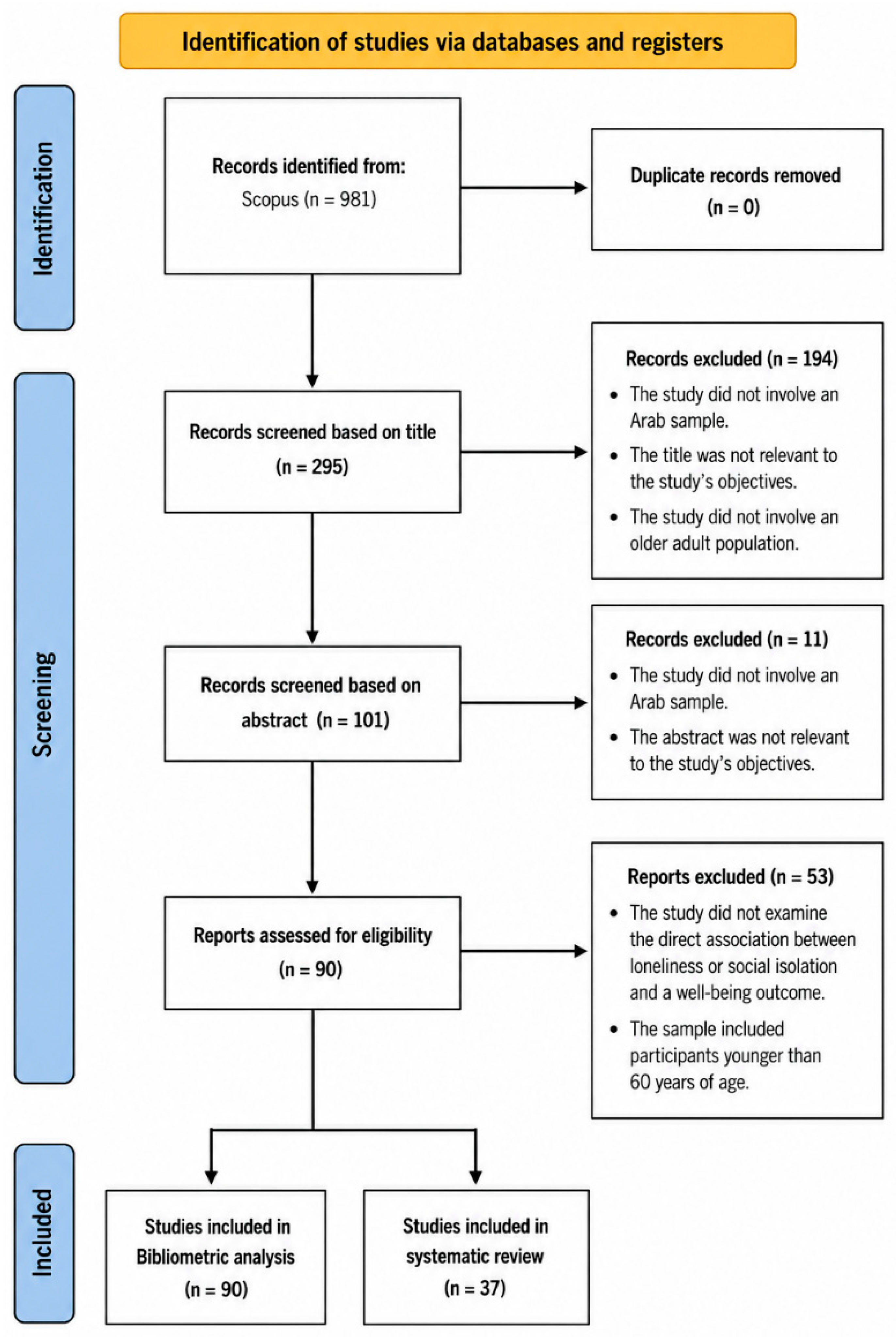
For the integrative review synthesis, an additional, more rigorous full-text screening was conducted by the two researchers. This stage aimed to identify studies specifically investigating the associations between loneliness, isolation, and various aspects of well-being. Consequently, non-empirical studies, such as theoretical papers or reviews, were excluded to ensure that only those providing primary data on these specific associations were selected. Studies were included if all involved participants were aged 60+ years or targeted older adults aged 60+. Studies were included if they examined loneliness or social isolation, either directly or indirectly through closely related indicators, namely social support, marital status, or living arrangements. As with the previous stage, the researchers resolved all differences in opinion via discussion without requiring external intervention. It is important to note that in this process, several articles had restricted access, so the corresponding authors were contacted to request the complete manuscripts. The majority of authors provided the full texts for assessment; however, four did not respond, meaning that these articles were excluded from the final selection. Ultimately, 37 studies were included for synthesis in the integrative review portion of this paper. The entire selection and screening process is illustrated in the flow diagram (Page et al. 2021) (Figure 1).

2.3. Data Analysis

The data analysis was conducted in two distinct phases to align with the dual-methodological design of this study. For the bibliometric analysis, a CSV file containing the 90 identified articles was exported from Scopus, including comprehensive metadata such as authors, journals, volume and issue numbers, author keywords, keywords plus, references, and funding information, among others. This unedited file was then processed using Biblioshiny version 5.0, a web-based interface for the Bibliometrix R-package (Aria and Cuccurullo 2017). This tool was utilized to assess productivity over the years, identify the most productive countries, and determine the commonly explored themes based on keyword frequency and thematic mapping. Additionally, co-occurrence network visualization was conducted using VOSviewer version 1.6.20 to map relationships between the most frequent author keywords and identify major thematic clusters within the literature (Van Eck and Waltman 2010).
For the integrative review of the 37 selected articles, the key findings from each were extracted and inserted into an Excel spreadsheet in the form of a review matrix (Garrard 2017). Then, thematic and content analyses were employed to synthesize the data. During the content analysis, researchers carefully reviewed each article to establish codes that captured core findings and primary ideas, following the procedures described by Cameron et al. (2011). This systematic coding process involved stages of grouping, categorization, and abstraction to allow for rigorous comparisons across the literature (Elo and Kyngäs 2008). Building upon these initial codes, a thematic analysis was conducted to identify recurrent patterns and commonalities across multiple sources. This iterative process led to the establishment of prominent themes that encapsulate the key dimensions of the social phenomena under study (Popay et al. 2006).
Additionally, the 37 studies included in this integrative review underwent a quality assessment to evaluate methodological rigor and identify common limitations within the current body of research (Kesonen et al. 2024; Younes et al. 2024). This assessment was performed using the Joanna Briggs Institute (2017) (JBI) Critical Appraisal Tools.

3. Results

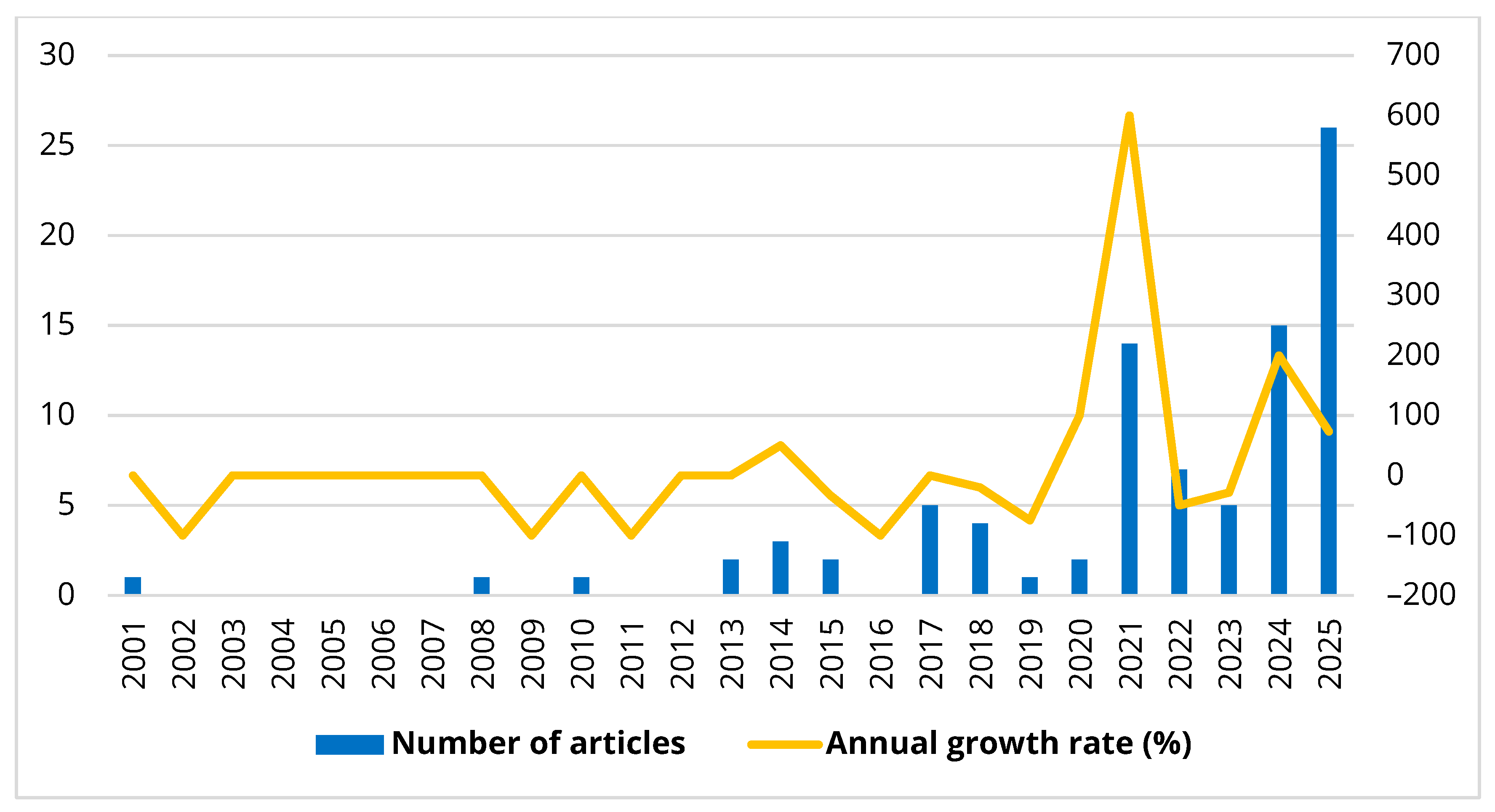
The search retrieved a total of 90 publications related to loneliness, isolation, and well-being among older adults in Arab countries, published from 2001 through February 2026. Scientific production in this field remained limited and relatively stable during the first decade and a half, with fewer than five articles per year recorded before 2014. A gradual upward trend became apparent from 2016 onward, accelerating sharply in 2020 and 2021, likely reflecting the global surge in research attention prompted by the COVID-19 pandemic and its disproportionate impact on older populations. The highest annual output was observed in the most recent years of the study period, reflecting the growing recognition of this research area across Arab institutions (Figure 2).
Table 1 presents the distribution of publications across Arab countries. Egypt led scientific output with 54 publications, followed by Saudi Arabia, with 52, and Jordan, with 45. Lebanon ranked fourth, with 39 publications, while Qatar with 28 and the United Arab Emirates with 25 represented additional significant contributors. Remaining contributions came from Tunisia, with 19; Oman, with 14; and Morocco, with 11, while Iraq, Libya, Algeria, Bahrain, Sudan, and Yemen each contributed fewer than five publications (Table 1). This distribution highlights a notable concentration of research output among a small number of higher-income Arab nations, with many countries in the region remaining significantly underrepresented in the peer-reviewed literature.
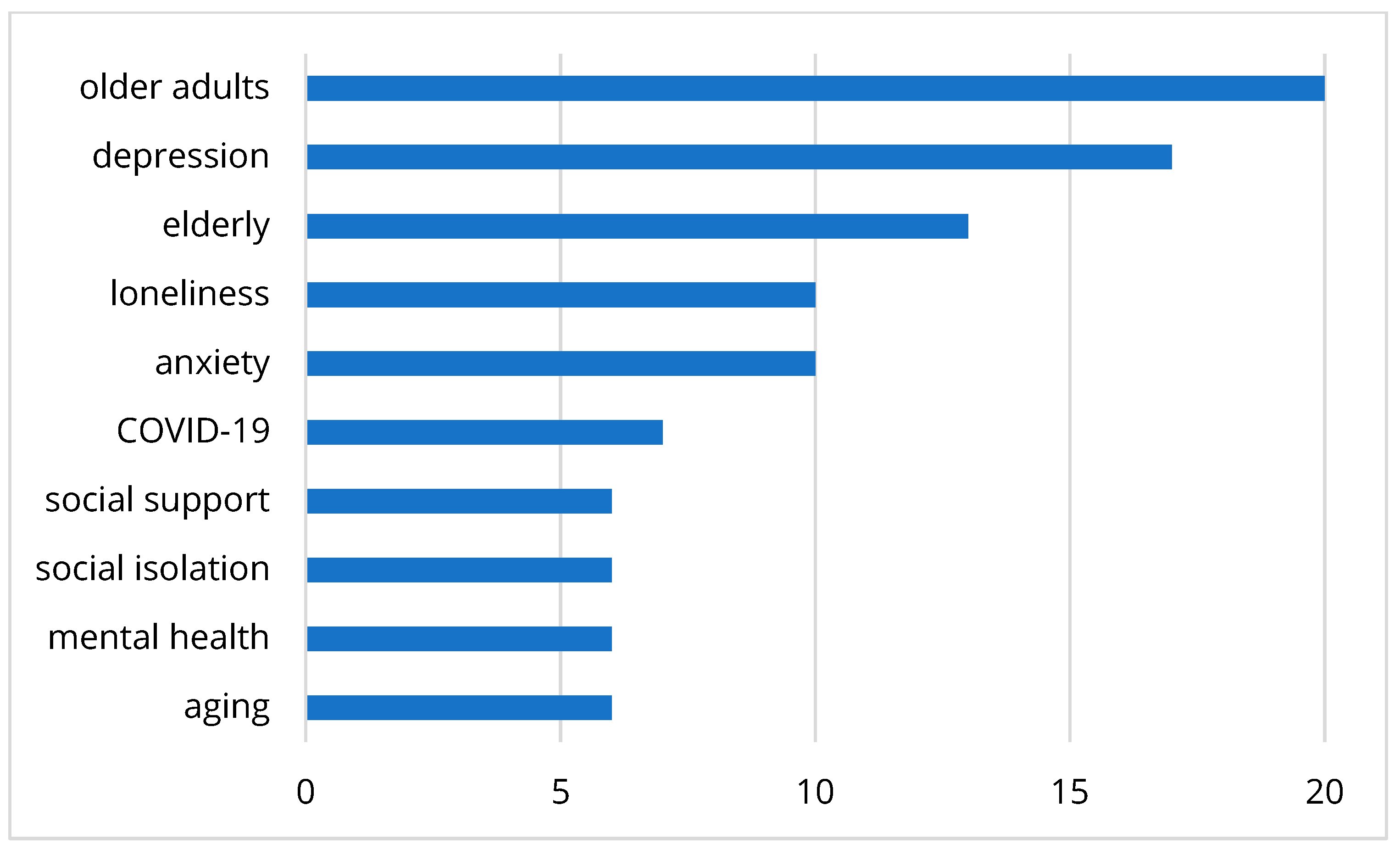
In the 90 published studies, the most frequently occurring author keyword was “older adults” (n = 20), followed by “depression” (n = 17), “elderly” (n = 13), “anxiety” (n = 10), and “loneliness” (n = 10). “COVID-19” appeared seven times, while “aging”, “mental health”, “social isolation”, and “social support” all appeared six times. Other frequently used author keywords included “stress” (n = 5), “malnutrition” (n = 4), “nutritional status” (n = 4), and “well-being” (n = 3). Keywords related to other prominent subjects were used several times, namely “frailty”, “psychological distress”, “psychological well-being”, “quality of life”, “resilience”, “spirituality”, and “risk factors” (all n = 3) (Figure 3). Overall, most frequent keywords were tied to the focus of the included literature. Moreover, keywords related to mental health were prominent throughout the dataset, which shows the emphasis on the psychological effects of loneliness and isolation among older adults in Arab research. Also, the frequent appearance of COVID-19 suggests that the pandemic was as an important catalyst for research in this area, likely due to the isolation during this period.
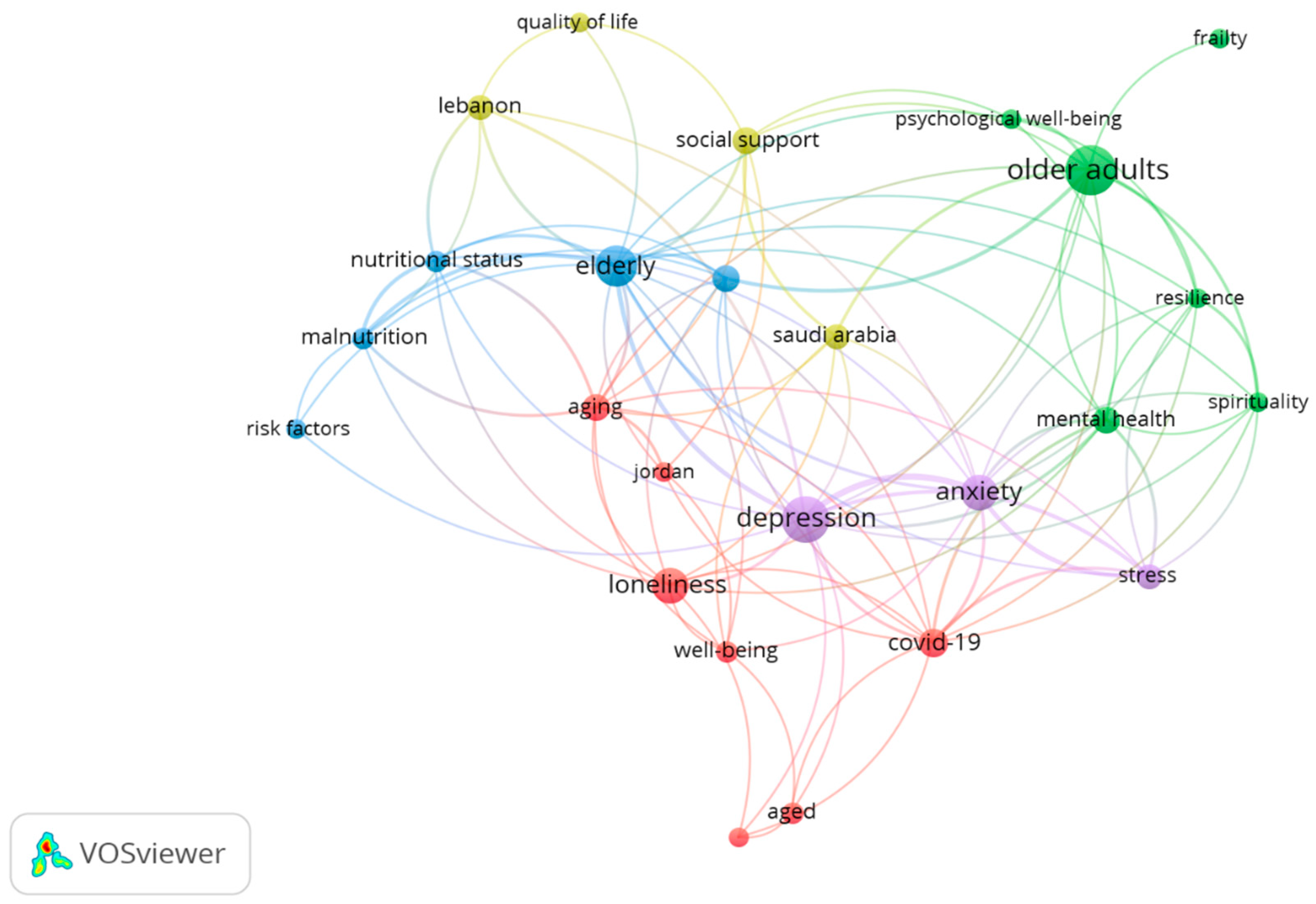
Figure 4 presents the co-occurrence map of author keywords with a minimum of three occurrences, yielding five thematic clusters. The Blue Cluster grouped nutrition-related terms, reflecting research on dietary patterns and their relationship with cognitive and physical health in older populations. The Red Cluster centered on loneliness and COVID-19, highlighting the pandemic’s role in amplifying social isolation research. The Purple Cluster encompassed mental health, depression, stress, and anxiety, the most dominant thematic area in the corpus. The Green Cluster aggregated keywords related to psychological well-being and resilience, while the Yellow Cluster brought together social support and quality of life. The prominence of depression and anxiety-related keywords, alongside emerging attention to loneliness and social isolation, reflects a field increasingly attuned to both clinical and social determinants of mental health in older Arab adults.
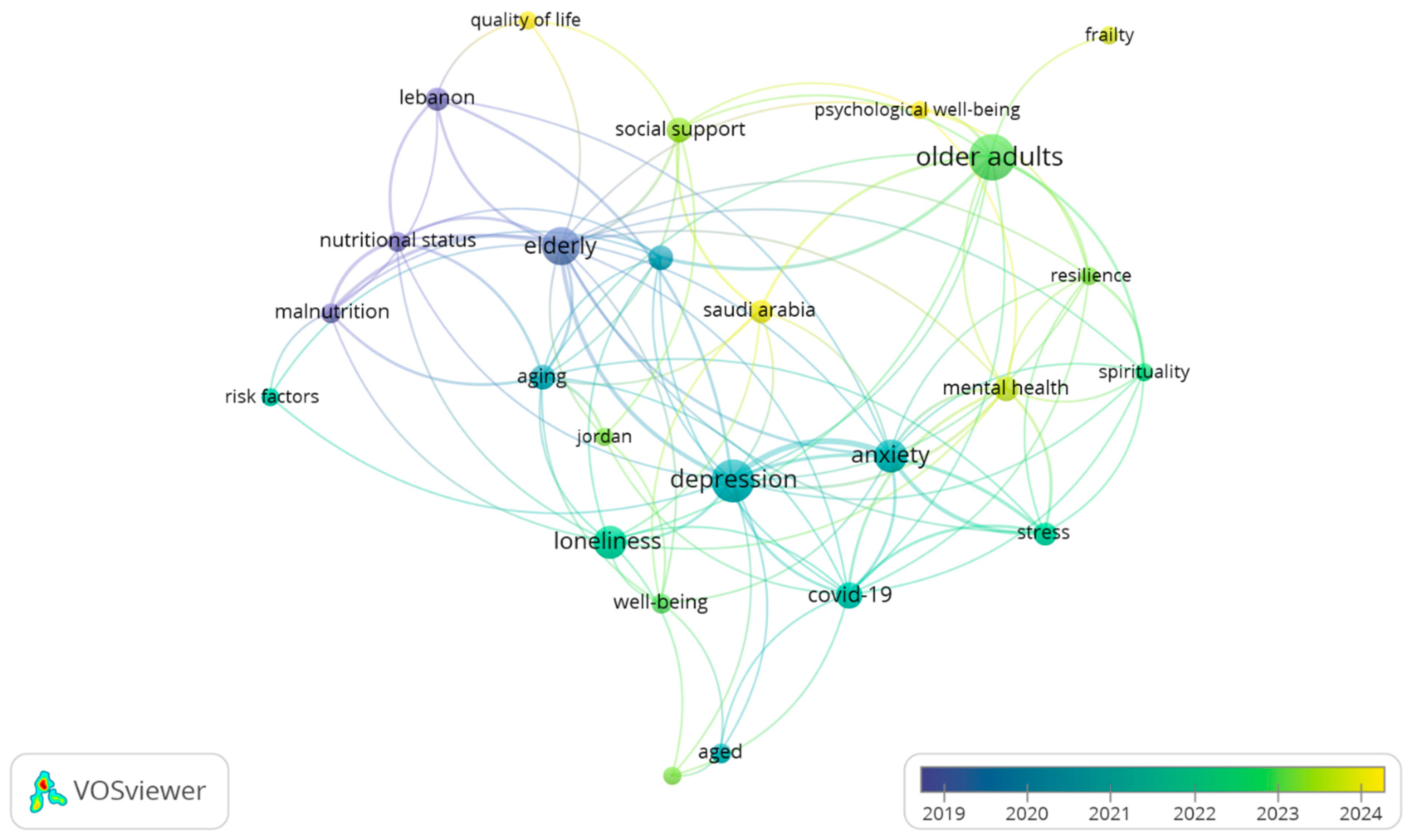
Figure 5 illustrates the temporal evolution of keywords across the study period. Keywords appearing in 2019–2020, predating or coinciding with the early phase of the COVID-19 pandemic, were predominantly nutrition-related. From 2021 to 2023, a marked shift toward mental health-related keywords was observed, with terms such as “depression,” “anxiety,” “loneliness,” and “social isolation” gaining prominence. This shift seems to align with the well-documented psychological impact of the pandemic on elderly populations worldwide, and mirrors comparable temporal transitions observed in the global bibliometric literature on aging. From 2024 onward, quality of life and psychological well-being emerged as the most recent thematic frontier, suggesting a maturing research agenda moving beyond symptom-focused inquiry toward broader positive health constructs and holistic well-being frameworks.
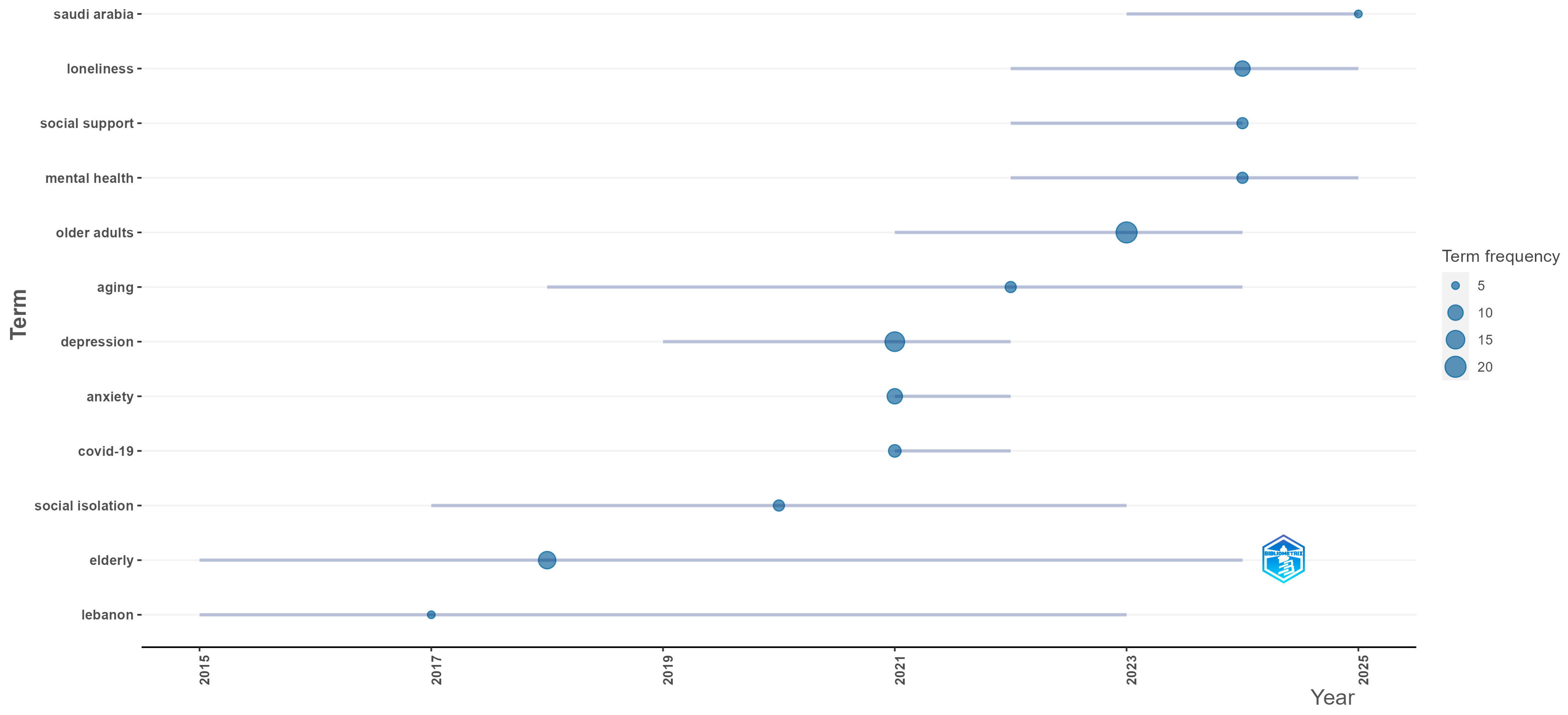
Using a larger timespan, the trend topics analysis revealed a similar pattern to that observed in the keyword co-occurrence and temporal evolution analyses (Figure 6). Some keywords like “elderly”, “social isolation”, and “aging” remained consistently present over time, which is expected given that they constitute the foundational keywords of this research field. Notably, Lebanon was as a recurrent keyword across multiple years, which reflects the sustained research output of this country on loneliness, social isolation, and well-being among older adults. Keywords like “mental health”, “anxiety”, and “depression” appeared prominently and coincided with a relatively close timeline with the keyword “COVID-19”. This suggests that much of the research conducted during these years focused on the psychological consequences of social restrictions and isolation among older populations. In more recent years, “Saudi Arabia” has emerged as an increasingly frequent keyword, which may reflect the growing volume of research being conducted in the country in this field of study.
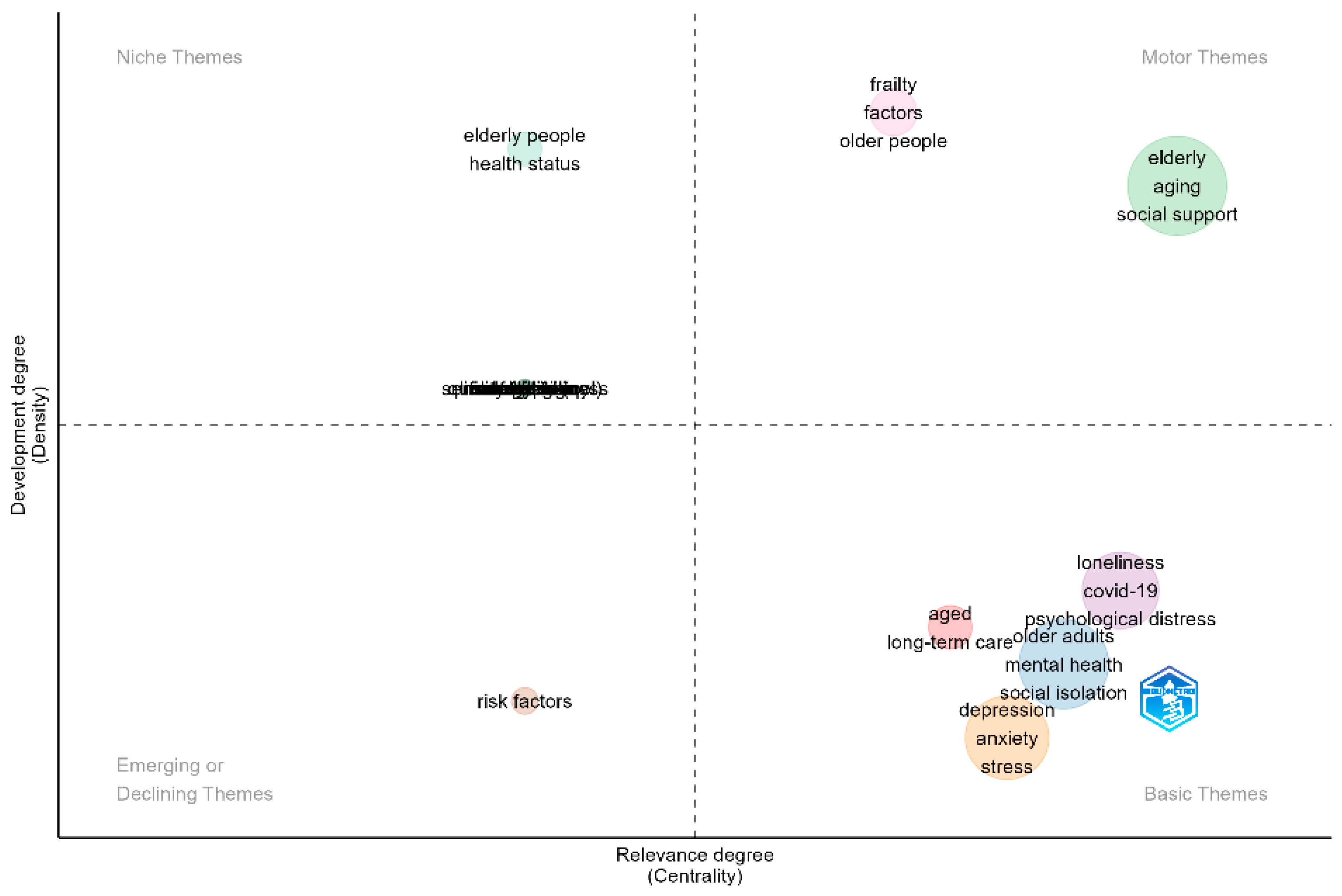
A thematic mapping was conducted to visually analyze the conceptual structure of the field. In the top-right quadrant, motor themes such as elderly, aging, social support, as well as frailty factors and older people represent well-developed, core areas driving forward the domain of loneliness and isolation among older adults in Arab countries. The bottom-right quadrant contains basic and transversal themes, which are highly relevant across research but are not developed in depth in and of themselves; this area is dominated by clusters such as loneliness, COVID-19, psychological distress, older adults, mental health, social isolation, depression, anxiety, and stress. Conversely, the top-left quadrant encompasses niche themes like health status, indicating specialized, internally cohesive research that remains peripheral to the broader field. Finally, the bottom-left quadrant illustrates the seemingly declining theme of general risk factors (Figure 7).
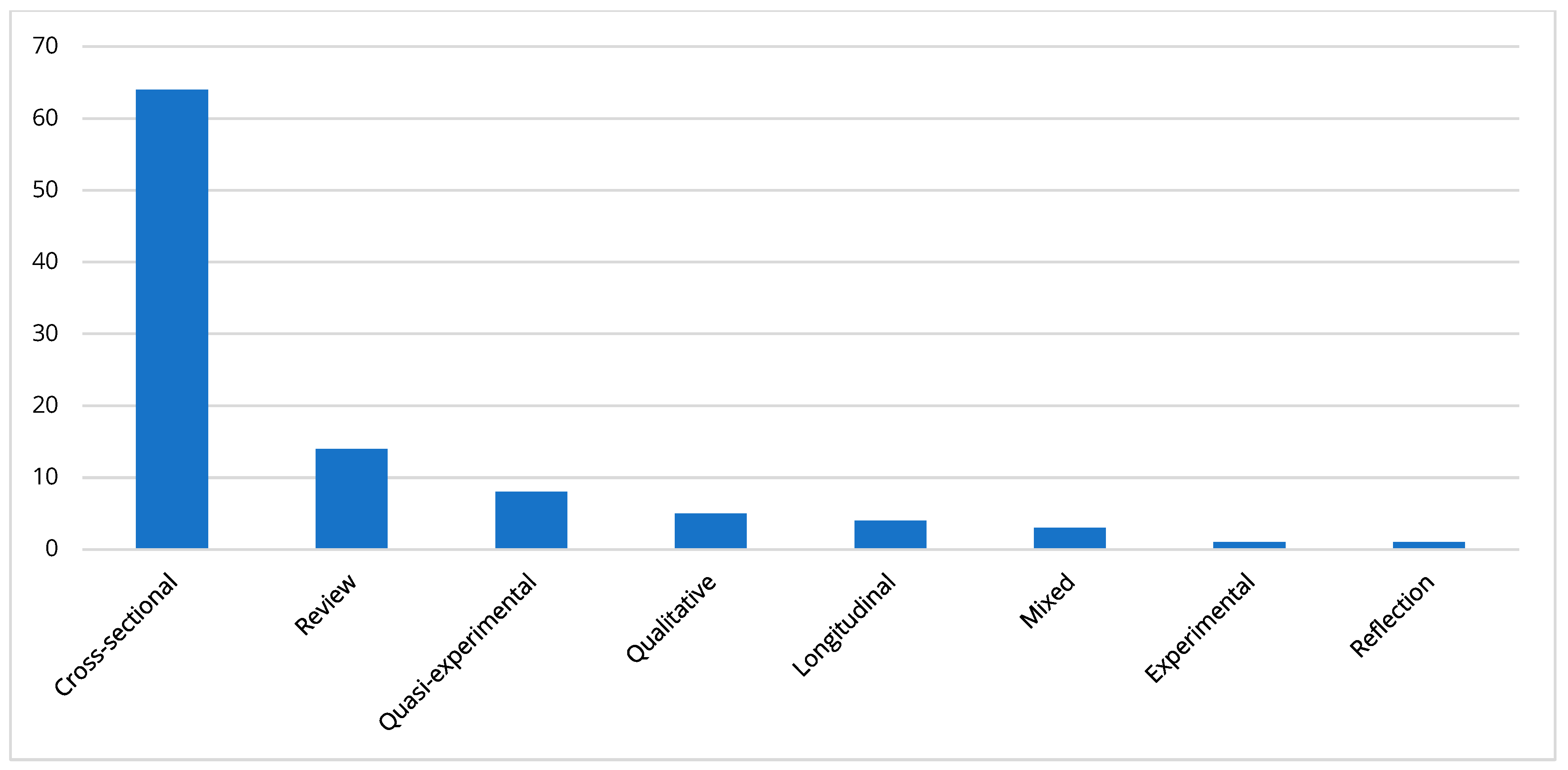
When it comes to the methodology used in this research, the vast majority of studies used a cross-sectional design (n = 64; 71.11%), followed by reviews (n = 14; 15.56%) and quasi-experimental designs (n = 8; 8.89%). Qualitative methods were employed in a minority of the studies (n = 5; 5.56%). Longitudinal (n = 4; 4.44%) and mixed-methods (n = 3; 3.33%) approaches were also rarely used. Finally, experimental designs (n = 1; 1.11%) and reflection/opinion articles (n = 1; 1.11%) represented the smallest portion of the dataset (Figure 8).

4. Associations Between Loneliness, Isolation, and Well-Being

4.1. Characteristics of the Included Studies

The vast majority of included studies adopted a cross-sectional design (n = 28). Others were qualitative (n = 3), mixed-methods (n = 3), randomized controlled trial (n = 1), or quasi-experimental (n = 1) studies. There was one included article that was a reflection/theoretical article (n = 1).
Concerning the countries in which these studies were conducted, a significant portion of the studies were done in Jordan (n = 9), followed by Saudi Arabia (n = 8), Lebanon (n = 8), and Egypt (n = 6). Other studies were done in Oman (n = 2), Qatar (n = 1), and the United Arab Emirates (n = 1). Two studies were done across various Arab countries (n = 2).
These studies underwent a quality appraisal, which assessed their methodological rigor. The quality appraisal sought to assess the rigor of the selected studies, though none were excluded for quality issues. The Joanna Briggs Institute (2017) Critical Appraisal Tools were used for this purpose. The scoring in these tools comprises the options of “yes”, “no”, “unclear”, and “not applicable” for each criterion. Similarly to previous integrative reviews (Kesonen et al. 2024; Mzawak et al. 2025), solely “yes” answers, meaning that the criterion is definitely suitable for a study, were equivalent to a point. Each study design has its specific checklist. A higher score reflects better study quality, while a lower score suggests limitations in the study. Lastly, it should be noted that the quality appraisal did not extend to the reflection/theoretical article included in this review, as it was not applicable.
The overall methodological quality was sound, although two methodological limitations were observed a handful of times among cross-sectional studies. First, some studies did not use validated instruments to measure at least one variable (n = 8), which may affect the robustness of the findings (Ahmed and Ishtiaq 2021). Second, several studies did not adopt strategies to identify or control for potential confounding factors (n = 7), which can limit the extent to which the observed associations can be attributed solely to the examined variables. These limitations should be considered when interpreting the general findings of cross-sectional studies. The study characteristics and quality appraisal scores are provided in Table 2.
Following the content and thematic analyses of each study’s findings, four common themes emerged from the data: (1) mental health; (2) physical and nutritional health; (3) quality of life; and (4) family and marital status.

4.2. Mental Health

Several studies explored the link between loneliness, social isolation, and mental health outcomes: out of thirty eight studies, 23 explored the latter, and out of the 23 studies, 11 linked loneliness and social isolation to depression; the majority of these studies found loneliness and social isolation to be linked to higher levels of depression (Aman 2024; Abu Khait et al. 2024; Alhalaseh et al. 2022; Ashour 2022; El Hayek et al. 2020; Hayajneh et al. 2021; Boulos and Salameh 2021; Boulos et al. 2017; Ahmed et al. 2014; Abolfotouh et al. 2001), while a study found that duration of quarantine (isolation) was not associated with depression (Ouanes et al. 2021).
One study found that the duration of quarantine (isolation) was not associated with stress (Ouanes et al. 2021), while another study found that distress from isolation in quarantine was a mental health concern for the elderly in Morocco (El Hayek et al. 2020).
Four of the twenty-three studies exploring mental health explored the link of loneliness and social isolation with anxiety. One study found that the duration of quarantine isolation was not associated with anxiety (Ouanes et al. 2021), while three other studies (Strong et al. 2015; Ahmed et al. 2014; Ashour 2022) found loneliness and social isolation to be linked with anxiety. One study found that loneliness and lack of social isolation is positively associated with death anxiety (Hassan et al. 2025).
Ten studies explored the relationship between loneliness, social isolation, and psychological well-being; three studies linked loneliness and social isolation to worse psychological well-being (Badawy and Shaban 2025; Badawy et al. 2024; Aman 2024); and seven studies linked social support to better psychological well-being (Al-Jadidi et al. 2024; Albarqi 2024; Amin et al. 2025; El Keshky et al. 2023; Khalaf et al. 2023; Khataybeh 2022; Mostafa et al. 2025).
Four studies explored the relationship between loneliness, social isolation, and coping and resilience. One of these studies found that social support is linked to resilience building and resilience improvement, and living alone was linked to lower resilience building (Badawy et al. 2024); another study found that resilience was significantly higher in elderly subjects under COVID-19 quarantine (Ouanes et al. 2021). Two studies also linked social support to better coping and resilience (Badawy and Shaban 2026; Hassan et al. 2025).

4.3. Physical and Nutritional Health

A total of 8 out of 37 studies explored the relationship between loneliness, social isolation, and physical health. Out of these eight studies, three explored the association between loneliness, social isolation, and malnutrition or nutritional status. One study found social support to be linked with better nutritional status and linked social engagement to nutritional well-being (Khalaf et al. 2023), while two other studies linked loneliness and social isolation to a higher risk of malnutrition (El Zoghbi et al. 2014; Boulos et al. 2017).
One study found that living alone was not significantly associated with frailty status among older adults (Chaouacha et al. 2022). One study found that social support predicts better physical functioning (Albarqi 2024), while another one found marriage to be a protective factor for functional health (Shideed et al. 2013).
One study linked marital status to better cognitive status (Boulos et al. 2013). A study found that older individuals who are not married present a higher level of sensory impairment compared to those who are (Shideed et al. 2013). Marital status was also found to be linked to chronic diseases, with unmarried older individuals presenting a higher level of prevalence of chronic diseases compared to married individuals (Shideed et al. 2013). Another study found that chronic health issues can negatively affect the older individual’s ability to engage in social activities (Badawy and Shaban 2026).

4.4. Quality of Life

In total, 6 out of 38 studies explored the relationship between loneliness, social isolation, and quality of life. One study linked social support to less burdensomeness (Amin et al. 2025). Two studies linked social, friendship, community, and professional support to better quality of life (Abu-Saad Huijer et al. 2023; Albarqi 2024), while another one linked loneliness to a worse quality of life (Strong et al. 2015). A study linked loneliness to worse general well-being and social support to better general well-being, while also connecting social support to better life satisfaction (El Keshky et al. 2023). Another study found that participation in community geriatric clubs is linked to better social support and community engagement (Khalaf et al. 2023).

4.5. Family and Marital Status

A total of 16 out of 37 studies linked loneliness and social isolation to well-being from the perspective of family. More specifically, family status and marital status were linked to many variables related to well-being. Eight studies explored mental health within the family and relational context. One study found that family type had a negative association with psychological well-being (Amin et al. 2025), while three other studies (Hejase et al. 2024; Malak and Khalifeh 2025; Hayajneh et al. 2021) found family and marital status to be significantly associated with depression, presenting married older adults with the lowest mean depression score and widowed adults with the highest depression score.
One study linked being divorced to increased anxiety scores compared to being single (Hallit et al. 2017), and another study also linked being divorced to an increased depression score (Ahmed et al. 2014). A study found that unmarried geriatric subjects had higher depression scores than married ones (Abolfotouh et al. 2001); another one found that strong family relationships between older and younger generations help older individuals feel more resilient and emotionally supported (Badawy and Shaban 2026). One study did not find a significant relationship with depression but also reported that widowed individuals presented the highest scores of loneliness (Abu Khait et al. 2024).
Five of these sixteen studies explored loneliness; social isolation from the perspective of family; family status; and marital status, linking this relationship to quality of life. A study linked older women relying only on family for support with increased social isolation (Al Kuwari 2025). Another study linked being married to the highest mean quality of life scores in marital status, while also presenting the widowed as having the lowest quality of life scores; also, older adults with a family caregiver reported better quality of life scores than those without one (Malak and Khalifeh 2025). A study linked being married, widowed, and having strong family support to higher scores of quality of life, while also linking marital and family ties to higher scores of well-being (Albarqi 2024). Another study found married older adults to have higher life satisfaction scores than unmarried individuals, while also linking living with family to higher levels of life satisfaction (El Keshky et al. 2023).
Two studies explored this relationship with the physical and nutritional health variables, one study linked living alone to higher malnutrition levels for both males and females, and for widowed individuals, men presented a higher risk of malnutrition; living alone was also linked to a higher risk of malnutrition for both men and women, while widowed men presented the highest levels of risk of facing malnutrition (Ghabashi and Azzeh 2024). The other one linked marital status to nutritional appetite (Khalaf et al. 2023).

5. Discussion

This review set out to provide a comprehensive synthesis of the current state of knowledge on loneliness, social isolation, and well-being among older adults in Arab countries. By combining a bibliometric analysis with a systematic review approach, this study aimed to explore research trends and gaps, and examine what is currently known about the associations between loneliness, isolation, and various aspects of well-being.
Overall, the findings indicate that while the field is gaining increasing attention in Arab countries, it remains relatively underdeveloped. At the same time, there is a substantial body of empirical evidence demonstrating that loneliness and social isolation are consistently associated with poorer mental, physical, and social outcomes among older adults in Arab contexts.

5.1. Research Trends and Gaps

For starters, given the relatively small number of studies identified in the bibliometric analysis, it is evident that the field of loneliness and isolation among older adults in Arab countries remains an understudied area of research. Nevertheless, the field appears to be emerging, as reflected by the noticeable increase in publications since 2020.
This surge in research can be partially attributed to the impact of the COVID-19 pandemic (Rousseau et al. 2023). On the one hand, the pandemic seems to have increased scholarly attention to loneliness, social isolation, and mental health among older adults, which likely stimulated a wave of research focusing on the interplay between these variables. On the other hand, the overall increase in scientific production and the surge of number of publications across all disciplines in recent years may also explain part of this upward trend (Whitaker et al. 2025).
There was also an uneven geographical distribution of research across the Arab region. Scientific production is concentrated in a relatively small number of countries, particularly Egypt, Saudi Arabia, Jordan, Lebanon, Qatar, and the United Arab Emirates. In contrast, several Arab countries contributed only a handful of publications, and some were entirely absent from the literature. Although Arab countries share cultural characteristics (Harb 2016), they differ in many aspects of aging experiences (Younes and Mzawak 2026). Thus, findings from a small number of relatively well-studied countries should not be assumed to represent the experiences of older adults across the entire Arab region.
Beyond publication trends, the bibliometric findings also provide insight into the thematic focus of the field. The thematic clusters identified in the co-occurrence analysis highlight that existing research has primarily focused on mental health and, to a certain extent, physical and nutritional health. Among these, mental health outcomes, particularly depression and anxiety, dominate the literature. While these areas are undeniably important, this concentration may suggest that loneliness and isolation are more frequently examined through psychological and clinical perspectives than through broader social or structural lenses (Bettache 2026; Schirmer and Michailakis 2016).
Consequently, the findings suggest that several potentially important areas remain comparatively underexplored within the existing literature. Notably, the relative absence of prominent keywords related to macrosocial and structural determinants may indicate limited attention paid to broader social dimensions of loneliness within the identified literature (Schirmer and Michailakis 2016). Loneliness and social isolation in later life are inherently multifaceted phenomena, involving not only individual-level factors but also societal aspects (Schirmer and Michailakis 2016; Greš et al. 2025; Costello 1999). In this sense, loneliness and social isolation may be understood as phenomena influenced by both individual and broader social factors. However, relatively few studies in the present review directly examined these broader social influences within Arab contexts (Schirmer and Michailakis 2016). Despite this, based on the studies identified in this review, relatively little research appears to have examined how such macrosocial dynamics or common experiences at this developmental stage contribute to loneliness among older adults in Arab societies, which is a significant research gap. Indeed, the literature identified in this review predominantly examines loneliness and isolation in relation to individual-level psychological and health outcomes, while comparatively fewer studies explore broader social or structural influences. Most studies focus on the individual consequences of loneliness and isolation, while fewer attempt to address the broader social determinants or identify potential solutions, especially at the community or policy level.
Furthermore, the literature devoted considerably less attention to protective factors such as resilience, meaning in life, social engagement, and successful aging. Greater examination of these factors may contribute to a better understanding of the mechanisms that protect older adults from loneliness and its consequences (Aspinwall and Tedeschi 2010; Jeste et al. 2020; Tornstam 2005). It should also be noted that, with regard to negative or psychopathological outcomes, it was apparent from the thematic mapping that domains related to the mental health consequences of loneliness and isolation, namely depression, anxiety, and stress, operated mostly as transversal themes and were not examined in depth in the literature (Alkhammash 2023).
In terms of methodologies, the dominance of cross-sectional designs represents another noteworthy limitation. While such studies are useful for identifying associations, they usually do not allow for causal inferences or an understanding of changes over time (Wang and Cheng 2020). Also, several of these cross-sectional studies had methodological limitations; some used non-validated measures for certain variables and others made insufficient consideration of potential confounding factors. These limitations should be considered when interpreting the reported associations.
Moreover, the limited use of qualitative approaches further restricts understanding of how loneliness is perceived and experienced within specific cultural contexts (Pyo et al. 2023; Tenny et al. 2026). Additionally, the scarcity of interventional studies suggests that the field remains largely descriptive, with little attention paid to the development and evaluation of strategies aimed at reducing loneliness and improving well-being (Ferreira Rola et al. 2025).

5.2. Synthesis of Current Empirical Findings

While the previous Section 5.1 highlighted important research gaps, this review nevertheless reveals a relatively consistent body of empirical findings regarding loneliness, social isolation, and well-being. First, in terms of mental health, the findings strongly indicate that loneliness and social isolation are associated with higher levels of depression, anxiety, and psychological distress among older adults in Arab countries. These results are consistent with a large body of international studies, which has repeatedly identified loneliness as a significant risk factor for poor mental health outcomes in later life (Donovan and Blazer 2020; Salari et al. 2025). The presence of a few inconsistent findings, particularly in the context of COVID-19 quarantine, most likely reflects a difference in measurement, as isolation was measured in the number of days in quarantine (Ouanes et al. 2021). However, there is generally a consistent and robust pattern with these associations in Arab countries.
Second, regarding physical and nutritional health, the evidence suggests that loneliness and social isolation are linked to adverse outcomes, such as malnutrition, reduced physical functioning, and poorer overall health status. Social support, in contrast, appears to play a protective role, contributing to better nutritional and functional outcomes. These findings align with global research (Salari et al. 2025; Ong et al. 2016). This relationship can be seen as bidirectional. Loneliness and isolation can lead to deteriorating physical well-being and self-care (Salari et al. 2025), which results in outcomes like malnutrition. Conversely, poorer physical health may lead to frailty and physical disability (Kojima et al. 2022), meaning less time spent out, reduced participation, and fewer chances to interact with people socially.
Third, in relation to quality of life, the research consistently shows that loneliness is associated with lower levels of life satisfaction and overall well-being, while social support and engagement are linked to improved quality of life. This finding is consistent with the view that loneliness is closely associated with subjective well-being in later life (Adib and Sabharwal 2023).
Finally, the role of family and marital relationships emerged as a particularly salient theme within the Arab context. Strong family ties and marital relationships are generally associated with better mental health, higher quality of life, and greater resilience, while living alone, being widowed, or lacking family support are associated with increased vulnerability to loneliness and its negative consequences. The prominence of family when it comes to the loneliness and isolation of older people can be explained by the cultural centrality of family structures in many Arab societies, where family solidarity is valued in the culture and where older adults have traditionally relied on intergenerational support (Digard 2003; Joseph 1996).

5.3. Future Research Directions

Building on these findings, several directions for future research can be identified. First, future research may benefit from expanding beyond individual-level psychological outcomes and further examining social, cultural, and structural factors associated with loneliness and isolation in later life. Future studies should examine how macrosocial factors, such as demographic factors, migration, social policies, and changing family structures, shape experiences of loneliness and isolation in later life.
Second, future research should focus more on including positive and protective factors, such as resilience, social participation, spirituality, and meaning in life. Shifting toward a more balanced perspective that incorporates both risk and protective factors can help inform more holistic approaches to aging and well-being.
Third, future research could further explore community-level and structural factors associated with loneliness and isolation among older adults, particularly through intervention and evaluation studies. Given the limited number of intervention and evaluation studies identified in this review, future research could examine how social programs, community initiatives, and broader support mechanisms can influence loneliness and well-being among older adults.
Fourth, qualitative research is needed to better understand the lived experiences of older adults, providing deeper insight into how loneliness is understood and experienced within specific cultural and social contexts. Such approaches can complement quantitative findings and contribute to a more nuanced understanding of the phenomenon.
Finally, researchers are encouraged to adopt stronger and more complex methodological designs. Longitudinal studies are needed to better understand causal relationships and trajectories over time, while experimental and interventional studies are essential to identify effective strategies for reducing loneliness and improving well-being. Expanding the use of longitudinal, experimental, and intervention designs may strengthen the evidence base and provide a deeper understanding of loneliness and isolation in later life.

5.4. Limitations of the Review

Some limitations should be considered in this review. First, the relatively limited number of articles included in the bibliometric analysis reflects the emerging nature of the field. While this highlights the importance of the topic and the need for further research, it also restricts the extent to which exhaustive conclusions can be drawn regarding research trends and thematic developments across the region.
Furthermore, the literature search was limited to the Scopus database. Although Scopus is one of the largest and most comprehensive academic databases, relying on a single source may have resulted in the exclusion of relevant studies indexed in other databases or published in non-indexed regional journals. This limitation is noteworthy in the Arab region, where a portion of research is disseminated through local journals or regional databases that may not be fully represented in Scopus (Hanafi 2011). Some studies examining loneliness, social isolation, and well-being among older adults may not have been captured by the chosen database. Thus, the findings presented in this review should be interpreted as reflecting a significant proportion of the literature rather than the entirety of research conducted on this topic across Arab countries.
Finally, the scope of this review is inherently constrained by the selected search strategy and keywords. Despite efforts to ensure a comprehensive search, it is possible that some relevant studies were not captured due to variations in terminology or indexing practices. As noted in previous research, search strategies can influence the scope and outcomes of systematic reviews, potentially leading to the omission of pertinent studies (Salvador-Oliván et al. 2019).

6. Conclusions

In summary, this review provides a comprehensive synthesis of the current state of research on loneliness, social isolation, and well-being among older adults in Arab countries. The findings indicate that this field is still emerging, with a growing but limited body of literature that consistently highlights the negative impact of loneliness and isolation on mental, physical, and social outcomes. At the same time, the existing research remains largely focused on individual-level and clinically oriented perspectives. Most studies in Arab countries conceptualize loneliness and isolation among older adults solely as an individual issue, rather than a social issue that impacts individual well-being. There is currently insufficient attention paid to the broader social and structural factors related to loneliness in later life.
Researchers in Arab countries are encouraged to shift toward a more holistic approach that considers the societal dimensions of aging, community dynamics, and policy environments in the region. Future research should expand into underexplored areas while also adopting more diverse methodological designs. Such efforts may contribute to the development of evidence-informed interventions and support strategies aimed at addressing loneliness and enhancing well-being in later life.

Supplementary Materials

The following supporting information can be downloaded at https://www.mdpi.com/article/10.3390/socsci15080497/s1, File S1: Scopus Search Query and Filters.

Author Contributions

Conceptualization, R.S.Y. and M.A.M.; methodology, R.S.Y.; validation, M.A.M. and C.M.; formal analysis, R.S.Y., C.Z. and C.M.; investigation, R.S.Y.; data curation, C.Z. and R.S.Y.; writing—original draft preparation, R.S.Y. and C.Z.; writing—review and editing, M.A.M. and C.M.; visualization, R.S.Y.; supervision, M.A.M.; project administration, M.A.M. and R.S.Y.; funding acquisition, M.A.M. All authors have read and agreed to the published version of the manuscript.

Funding

This research received no funding.

Institutional Review Board Statement

Not applicable.

Informed Consent Statement

Not applicable.

Data Availability Statement

The data and its analysis are openly available in Open Science Framework (OSF) at https://doi.org/10.17605/OSF.IO/3NBQC.

Acknowledgments

During the preparation of this work, the authors used Open AI’s ChatGPT-4o to refine the grammar and flow of certain sentences. The tool was strictly used for stylistic refinement; no ideas were generated using it. Google’s Gemini 3.1 Flash-Lite was used to refine the visual quality and proportions of Figure 1 and Figure 7. The authors reviewed and edited all content as needed and take full responsibility for the content of the publication.

Conflicts of Interest

The authors declare no conflicts of interest.

References

  1. Abdel Aziz, Hassanat Ramadan, Ayman Mohamed El-Ashry, Ateya Megahed Ibrahim, and Safia Gomaa Mohammed. 2026. Determinants of Loneliness and Quality of Life among Rural Community-Dwelling Older Adults in Egypt: A Cross-Sectional Descriptive Study. Belitung Nursing Journal 12: 30–39. [Google Scholar] [CrossRef] [PubMed]
  2. Abolfotouh, Mostafa A., Asim A. Daffallah, Muhammad Y. Khan, M. S. Khattab, and I. Abdulmoneim. 2001. Psychosocial Assessment of Geriatric Subjects in Abha City, Saudi Arabia. Eastern Mediterranean Health Journal 7: 481–91. [Google Scholar] [CrossRef]
  3. Abu Khait, Abdallah, Austin Menger, Mohammad Rababa, Theodora Moldovan, Mark Lazenby, and Juliette Shellman. 2024. The Mediating Role of Religion and Loneliness on the Association between Reminiscence Functions and Depression: A Call to Advance Older Adults’ Mental Health. Psychogeriatrics 24: 58–71. [Google Scholar] [CrossRef]
  4. Abu-Saad Huijer, Huda, Silva Dakessian Sailian, Souha Fares, and Joelle Bassila. 2023. Predictors of Quality of Life in Older Adult Patients in Lebanon: A Cross Sectional Study. Annals of Palliative Medicine 12: 356–64. [Google Scholar] [CrossRef] [PubMed]
  5. Adib, Nuryn Aqidah Binte Mohammad, and Jagdeep Kaur Sabharwal. 2023. Experience of Loneliness on Well-being Among Young Individuals: A Systematic Scoping Review. Current Psychology 43: 1965–85. [Google Scholar] [CrossRef] [PubMed]
  6. Ahmed, Dalia, Inas Helmi El Shair, Eman Taher, and Fadia Zyada. 2014. Prevalence and Predictors of Depression and Anxiety among the Elderly Population Living in Geriatric Homes in Cairo, Egypt. Journal of the Egyptian Public Health Association 89: 127–35. [Google Scholar] [CrossRef] [PubMed]
  7. Ahmed, Ishtiaq, and Sundas Ishtiaq. 2021. Reliability and Validity: Importance in Medical Research. Journal of the Pakistan Medical Association 71: 2401–6. [Google Scholar] [CrossRef] [PubMed]
  8. Albarqi, Mohammed Nasser. 2024. Assessing the Impact of Multidisciplinary Collaboration on Quality of Life in Older Patients Receiving Primary Care: Cross Sectional Study. Healthcare 12: 1258. [Google Scholar] [CrossRef] [PubMed]
  9. Alhalaseh, Lana, Farah Kasasbeh, Mariam Al-Bayati, Lubna Haikal, Kinan Obeidat, Abdallah Abuleil, and Iain Wilkinson. 2022. Loneliness and Depression among Community Older Adults during the COVID-19 Pandemic: A Cross-sectional Study. Psychogeriatrics 22: 493–501. [Google Scholar] [CrossRef] [PubMed]
  10. Al-Jadidi, Saleha, Maryam Alharrasi, Ahmed Al-Shukaili, Ali Alkalbani, and Akila Muthukrishnan. 2024. Psychological Symptoms of COVID-19 Pandemic Among Community-Dwelling Older People in Oman and Associated Risk Factors. SAGE Open Nursing 10: 1–8. [Google Scholar] [CrossRef] [PubMed]
  11. Alkhammash, Reem. 2023. Bibliometric, Network, and Thematic Mapping Analyses of Metaphor and Discourse in COVID-19 Publications from 2020 to 2022. Frontiers in Psychology 13: 1062943. [Google Scholar] [CrossRef] [PubMed]
  12. Al Kuwari, Ghada. 2025. Aging and Family in the Gulf: Trends and Patterns of Aging in the GCC States. In Handbook of Families in the Arab Gulf States. Edited by Md Mizanur Rahman, Kaltham Al-Ghanim, Ziarat Hossain and Sharique Umar. Gulf Studies. Singapore: Springer Nature, vol. 19. [Google Scholar] [CrossRef]
  13. Aman, Haya Khaled. 2024. The Impact of Sense of Loneliness on Geriatric Depression: The Mediating Role of Sense of Mattering and Psychological Adjustment. Middle East Current Psychiatry 31: 70. [Google Scholar] [CrossRef]
  14. Amin, Shaimaa Mohamed, Mahmoud Abdelwahab Khedr, Ahmed Farghaly Tawfik, Mohamed Gamal Noaman Malek, and Ayman Mohamed El-Ashry. 2025. The Mediating and Moderating Role of Social Support on the Relationship between Psychological Well-Being and Burdensomeness among Elderly with Chronic Illness: Community Nursing Perspective. BMC Nursing 24: 156. [Google Scholar] [CrossRef] [PubMed]
  15. Aria, Massimo, and Corrado Cuccurullo. 2017. Bibliometrix: An R-Tool for Comprehensive Science Mapping Analysis. Journal of Informetrics 11: 959–75. [Google Scholar] [CrossRef]
  16. Ashour, Lina Mahmoud. 2022. Levels and Predictors of COVID-19-Related Anxiety in Older Adults. Open Access Macedonian Journal of Medical Sciences B 10: 18–25. [Google Scholar] [CrossRef]
  17. Aspinwall, Lisa G., and Richard G. Tedeschi. 2010. The Value of Positive Psychology for Health Psychology: Progress and Pitfalls in Examining the Relation of Positive Phenomena to Health. Annals of Behavioral Medicine 39: 4–15. [Google Scholar] [CrossRef] [PubMed]
  18. Badawy, Walaa, and Mostafa Shaban. 2025. The Lonely Swipe: Psychiatric Nurses’ Experiences with Technology-Mediated Social Isolation in Older Adults with Depression. Archives of Psychiatric Nursing 59: 151987. [Google Scholar] [CrossRef] [PubMed]
  19. Badawy, Walaa, and Mostafa Shaban. 2026. Intergenerational Relationships and Their Impact on Social Resilience Amongst Arab Society Elderly Populations: A Qualitative Exploration. Journal of Clinical Nursing 35: 2388–99. [Google Scholar] [CrossRef] [PubMed]
  20. Badawy, Walaa Badawy Mohamed, Amal Hashem Mohamed, and Mostafa Shaban. 2024. Effectiveness of a Resilience-Building Nursing Intervention on Psychological Well-Being in Arab Community-Dwelling Older Adults. Geriatric Nursing 60: 338–47. [Google Scholar] [CrossRef] [PubMed]
  21. Badri, Masood, Mugheer Alkhaili, Hamad Aldhaheri, Guang Yang, Muna Albahar, and Asma Alrashdi. 2025. Unequal Minds and Hidden Struggles: Exploring Mental Health Disparities Across Demographic and Social Stratifiers in Abu Dhabi. Journal of Cultural Analysis and Social Change 10: 1761–72. [Google Scholar] [CrossRef]
  22. Behrens-Abouseif, Doris. 1999. Beauty in Arabic Culture, 1st American ed. Princeton Series on the Middle East; Princeton: Markus Wiener Publishers. [Google Scholar]
  23. Bettache, Karim. 2026. The Crisis We Are Not Naming: The Psychology of Capitalism. British Journal of Social Psychology 65: e70044. [Google Scholar] [CrossRef] [PubMed]
  24. Blazer, Dan. 2020. Social Isolation and Loneliness in Older Adults—A Mental Health/Public Health Challenge. JAMA Psychiatry 77: 990. [Google Scholar] [CrossRef] [PubMed]
  25. Boulos, Christa, and Pascale Salameh. 2021. Gender-specific Factors Associated with Risk of Depression among Lebanese Older Adults. Psychogeriatrics 21: 577–85. [Google Scholar] [CrossRef] [PubMed]
  26. Boulos, Christa, Pascale Salameh, and Pascale Barberger-Gateau. 2013. The AMEL Study, a Cross Sectional Population-Based Survey on Aging and Malnutrition in 1200 Elderly Lebanese Living in Rural Settings: Protocol and Sample Characteristics. BMC Public Health 13: 573. [Google Scholar] [CrossRef] [PubMed]
  27. Boulos, Christa, Pascale Salameh, and Pascale Barberger-Gateau. 2017. Social Isolation and Risk for Malnutrition among Older People. Geriatrics & Gerontology International 17: 286–94. [Google Scholar] [CrossRef] [PubMed]
  28. Cacioppo, John T., Louise C. Hawkley, and Ronald A. Thisted. 2010. Perceived Social Isolation Makes Me Sad: 5-year Cross-lagged Analyses of Loneliness and Depressive Symptomatology in the Chicago Health, Aging, and Social Relations Study. Psychology and Aging 25: 453–63. [Google Scholar] [CrossRef] [PubMed]
  29. Cameron, Joan, Michelle Roxburgh, Julie Taylor, and William Lauder. 2011. An Integrative Literature Review of Student Retention in Programmes of Nursing and Midwifery Education: Why Do Students Stay? Journal of Clinical Nursing 20: 1372–82. [Google Scholar] [CrossRef] [PubMed]
  30. Chaouacha, Chefi Ben, Buthaina Al Zaabi, Yahya Al Farsi, and Nazish Memon Aftab. 2022. Frailty Profile of Geriatric Patients According to the Multidimensional Prognostic Index: A Cross-Sectional Study in Primary Care in the Sultanate of Oman. Aging Medicine and Healthcare 13: 184–92. [Google Scholar] [CrossRef]
  31. Cornwell, Erin York, and Linda J. Waite. 2009. Social Disconnectedness, Perceived Isolation, and Health Among Older Adults. Journal of Health and Social Behavior 50: 31–48. [Google Scholar] [CrossRef] [PubMed]
  32. Costello, John. 1999. ‘Filling the Void’: Grief and Loneliness in Older Adults. Illness, Crisis & Loss 7: 218–32. [Google Scholar] [CrossRef]
  33. Dahlberg, Lena, Kevin J. McKee, Amanda Frank, and Mahwish Naseer. 2022. A Systematic Review of Longitudinal Risk Factors for Loneliness in Older Adults. Aging & Mental Health 26: 225–49. [Google Scholar] [CrossRef] [PubMed]
  34. Digard, Jean-Pierre. 2003. Tribus, Maisons, États: Modernité de La Parenté Arabe. L’Homme 166: 185–92. [Google Scholar] [CrossRef]
  35. Donovan, Nancy J., and Dan Blazer. 2020. Social Isolation and Loneliness in Older Adults: Review and Commentary of a National Academies Report. American Journal of Geriatric Psychiatry 28: 1233–44. [Google Scholar] [CrossRef] [PubMed]
  36. Du, Qianqian, Menghan Yao, Wei Wang, Junyu Wang, Sheng Li, Kai Lu, Chen Li, Yuxin Wei, Tao Zhang, Fei Yin, and et al. 2025. Association Between Multimorbidity and Depression in Older Adults: Evidence from Six Large Longitudinal Cohorts. The American Journal of Geriatric Psychiatry 33: 702–15. [Google Scholar] [CrossRef] [PubMed]
  37. El Hayek, Samer, Mohamad Ali Cheaito, Marwa Nofal, Doaa Abdelrahman, Ali Adra, Siham Al Shamli, Mansour AlHarthi, Nawaf AlNuaimi, Chaimaa Aroui, Lynda Bensid, and et al. 2020. Geriatric Mental Health and COVID-19: An Eye-Opener to the Situation of the Arab Countries in the Middle East and North Africa Region. The American Journal of Geriatric Psychiatry 28: 1058–69. [Google Scholar] [CrossRef] [PubMed]
  38. El Keshky, Mogeda El Sayed, Shatha Jamil Khusaifan, and Feng Kong. 2023. Gratitude and Life Satisfaction among Older Adults in Saudi Arabia: Social Support and Enjoyment of Life as Mediators. Behavioral Sciences 13: 527. [Google Scholar] [CrossRef] [PubMed]
  39. Elo, Satu, and Helvi Kyngäs. 2008. The Qualitative Content Analysis Process. Journal of Advanced Nursing 62: 107–15. [Google Scholar] [CrossRef] [PubMed]
  40. El Zoghbi, Mohamad, Christa Boulos, Sanaa Awada, Samar Rachidi, Amal Al Hajje, Wafaa Bawab, Nadine Saleh, and Pascale Salameh. 2014. Prevalence of Malnutrition and Its Correlates in Older Adults Living in Long Stay Institutions Situated in Beirut, Lebanon. Journal of Research in Health Sciences 14: 11–17. [Google Scholar] [PubMed]
  41. Ferreira Rola, Renata Cristina, Tatiana Rivera Ramirez, and Axel Kroeger. 2025. From Intervention Studies to National Programs, What Are the Favoring and Hindering Factors? A Scoping Review. BMC Public Health 25: 3623. [Google Scholar] [CrossRef] [PubMed]
  42. Garrard, Judith. 2017. Health Sciences Literature Review Made Easy: The Matrix Method, 5th ed. Burlington: Jones & Bartlett Learning. [Google Scholar]
  43. Ghabashi, Mai Adil, and Firas Sultan Azzeh. 2024. Factors Influencing Malnutrition Among Older Adult Residents in the Western Region of Saudi Arabia: Sex Differential Study. JMIR Aging 7: e55572. [Google Scholar] [CrossRef] [PubMed]
  44. Greš, Alen, Nika Spasic, and Dijana Staver. 2025. Loneliness in Retirement. Medeniyet Medical Journal 40: 53–60. [Google Scholar] [CrossRef] [PubMed]
  45. Hallit, Souheil, Rabih Hallit, Diana Hachem, Marie-Claude Daher Nasra, Nadine Kheir, and Pascale Salameh. 2017. Validation of the Arabic Version of the Geriatric Anxiety Scale Among Lebanese Population of Older Adults. Journal of Psychopathology 23: 16–23. [Google Scholar]
  46. Hamdan-Mansour, Ayman M., Imad N. Thultheen, Hamza Alduraidi, Shaher H. Hamaideh, Manar BaniHani, and Renad A. Hamdan-Mansour. 2022. Relationship Among Depression, Psychological Distress, and Sleep Disturbances Among Older Persons With Chronic Illness. Aging Medicine and Healthcare 13: 125–31. [Google Scholar] [CrossRef]
  47. Hanafi, Sari. 2011. University Systems in the Arab East: Publish Globally and Perish Locally Vs Publish Locally and Perish Globally. Current Sociology 59: 291–309. [Google Scholar] [CrossRef]
  48. Harb, Charles. 2016. The Arab Region: Cultures, Values, and Identities. In Handbook of Arab American Psychology. London: Routledge. [Google Scholar]
  49. Hassan, Eman Arafa, Shimmaa Mohamed Elsayed, Heba Hashem Monged, and Basma Taher Abdelwahab. 2025. Frailty and Fear of Death among Geriatric Patients in Critical Care Units: A Mixed Methods Study. Nursing in Critical Care 30: e13219. [Google Scholar] [CrossRef] [PubMed]
  50. Hayajneh, Audai A., Mohammad Rababa, Esraa A. Al-Nusour, and Eman S. Alsatari. 2021. Predictors of Depression amongst Older Adults with Acute Coronary Syndrome Seeking Emergency Care. International Journal of Clinical Practice 75: e14203. [Google Scholar] [CrossRef] [PubMed]
  51. Hejase, Rami, Ahmad Saleh, Hassanat Abdel-Aziz, Arule Vellaiyan, Ahmad Al Omari, and Abrar Al Omari. 2024. Analyzing Depressive Symptoms Among Elderly Cancer Patients: A Comprehensive Examination of Demographic and Medical Correlates. Asian Pacific Journal of Cancer Prevention 25: 1271–76. [Google Scholar] [CrossRef] [PubMed]
  52. Hövermann, Andreas, and Steven F. Messner. 2023. Explaining When Older Persons Are Perceived as a Burden: A Cross-National Analysis of Ageism. International Journal of Comparative Sociology 64: 3–21. [Google Scholar] [CrossRef]
  53. Jeste, Dilip V., Ellen E. Lee, and Stephanie Cacioppo. 2020. Battling the Modern Behavioral Epidemic of Loneliness: Suggestions for Research and Interventions. JAMA Psychiatry 77: 553. [Google Scholar] [CrossRef] [PubMed]
  54. Joanna Briggs Institute. 2017. Critical Appraisal Tools. Available online: https://jbi.global/critical-appraisal-tools (accessed on 11 June 2026).
  55. Joseph, Suad. 1996. Patriarchy and Development in the Arab World. Gender and Development 4: 14–19. [Google Scholar] [CrossRef] [PubMed]
  56. Kesonen, Pauliina, Leena Salminen, Johanna Kero, Johanna Aappola, and Elina Haavisto. 2024. An Integrative Review of Interprofessional Teamwork and Required Competence in Specialized Palliative Care. OMEGA—Journal of Death and Dying 89: 1047–73. [Google Scholar] [CrossRef] [PubMed]
  57. Khalaf, Shimaa A., Gellan K. Ahmed, Saleh O. Abdullah, and Martha M. Labieb. 2023. Correlation between Community Participation, Nutritional Appetite and Psychological Distress among Comorbid Older Persons. The Egyptian Journal of Neurology, Psychiatry and Neurosurgery 59: 111. [Google Scholar] [CrossRef]
  58. Khataybeh, Yousef Damen. 2022. Effects of Corona Virus Disease 2019 (COVID-19) on Older People: A Comparative Study to the Disparities of Care Aspects in Nursing Homes in Jordan. African Journal of Social Work 11: 362–70. [Google Scholar] [CrossRef]
  59. Kojima, Gotaro, Yu Taniguchi, Reijiro Aoyama, and Marianne Tanabe. 2022. Associations between Loneliness and Physical Frailty in Community-Dwelling Older Adults: A Systematic Review and Meta-Analysis. Ageing Research Reviews 81: 101705. [Google Scholar] [CrossRef] [PubMed]
  60. Malak, Malakeh Z., and Anas H. Khalifeh. 2025. The Relationship Between Quality of Life and Depressive Symptoms Among Jordanian Community-Dwelling Older Adults. Experimental Aging Research 51: 19–34. [Google Scholar] [CrossRef] [PubMed]
  61. Manor, Shlomit. 2019. Ageing, Ageism, and Lost Honor: Narratives of Arab Elders in Israel. International Journal of Ageing and Later Life 14: 67–90. [Google Scholar] [CrossRef]
  62. Marliana, Thika, Budi Anna Keliat, and Kurniawan Kurniawan. 2022. Mental Health and Psychosocial Support Online-Based Services to Improve Elderly Integrity and Reduce Loneliness During the Pandemic COVID-19. Malaysian Journal of Medicine and Health Sciences 18: 1–6. [Google Scholar]
  63. Marzi, Giacomo, Marco Balzano, Andrea Caputo, and Massimiliano M. Pellegrini. 2025. Guidelines for Bibliometric-Systematic Literature Reviews: 10 Steps to Combine Analysis, Synthesis and Theory Development. International Journal of Management Reviews 27: 81–103. [Google Scholar] [CrossRef]
  64. Mombeini, Iman, and Heyfa Bereyhe Bereyhi. 2022. Life Satisfaction in the Elderly: The Role of Mental Health and Loneliness. Aging Psychology 8: 287–98. [Google Scholar]
  65. Mostafa, Naglaa Alsaied, Mohamed Saied Harfoush, Mohamed Hussein Ramadan Atta, Rasha Ahmed Fouad, and Safaa Mabrouk El Garhy. 2025. The Impact of a Student-Led Intergenerational Support Program on Life Satisfaction, Loneliness, and Psychological Well-Being of Institutionalized Older Adults. Geriatric Nursing 62: 157–67. [Google Scholar] [CrossRef] [PubMed]
  66. Mzawak, M. Abboud, Rudy S. Younes, and Clara Moukarzel. 2025. The Importance of Promoting Self-Actualization among Older Adults: Key Determinants of Mental Health and Clinical Implications. NPG Neurologie-Psychiatrie-Gériatrie 25: 61–72. [Google Scholar] [CrossRef]
  67. National Academies of Sciences, Engineering, and Medicine. 2020. Social Isolation and Loneliness in Older Adults: Opportunities for the Health Care System. Washington: The National Academies Press. [Google Scholar]
  68. Ong, Anthony D., Bert N. Uchino, and Elaine Wethington. 2016. Loneliness and Health in Older Adults: A Mini-Review and Synthesis. Gerontology 62: 443–49. [Google Scholar] [CrossRef] [PubMed]
  69. Ouanes, Sami, Rajeev Kumar, Esraa Saleh Idriss Doleh, Malek Smida, Abdulaziz Al-Kaabi, Ahmad Medawi Al-Shahrani, Ghassan Ahmed Mohamedsalih, Nagi Eltagi Ahmed, Ahmed Assar, Mohamed Adil Shah Khoodoruth, and et al. 2021. Mental Health, Resilience, and Religiosity in the Elderly under COVID-19 Quarantine in Qatar. Archives of Gerontology and Geriatrics 96: 104457. [Google Scholar] [CrossRef] [PubMed]
  70. Page, Matthew J., Joanne E. McKenzie, Patrick M. Bossuyt, Isabelle Boutron, Tammy C. Hoffmann, Cynthia D. Mulrow, Larissa Shamseer, Jennifer M. Tetzlaff, Elie A. Akl, Sue E. Brennan, and et al. 2021. The PRISMA 2020 Statement: An Updated Guideline for Reporting Systematic Reviews. BMJ 372: n71. [Google Scholar] [CrossRef] [PubMed]
  71. Perissinotto, Carla M., Irena Stijacic Cenzer, and Kenneth E. Covinsky. 2012. Loneliness in Older Persons. Archives of Internal Medicine 172: 1078–83. [Google Scholar] [CrossRef] [PubMed]
  72. Popay, Jennie, Helen Roberts, Amanda Sowden, Mark Petticrew, Lisa Arai, Mark Rodgers, and Nicky Britten. 2006. Chapter 3, Guidance on Narrative Synthesis: An Overview. In Guidance on the Conduct of Narrative Synthesis in Systematic Reviews: A Product from the ESRC Methods Programme. Swindon: ESRC. [Google Scholar]
  73. Pyo, Jeehee, Won Lee, Eun Young Choi, Seung Gyeong Jang, and Minsu Ock. 2023. Qualitative Research in Healthcare: Necessity and Characteristics. Journal of Preventive Medicine and Public Health 56: 12–20. [Google Scholar] [CrossRef] [PubMed]
  74. Rababa, Mohammad, Nahla Al Ali, and Ayat Alshaman. 2021. Health Promoting Behaviors, Health Needs and Associated Factors Among Older Adults in Jordan: A Cross-Sectional Study. PubMed 9: 106–16. [Google Scholar] [CrossRef] [PubMed]
  75. Rabasa, Angel, ed. 2004. The Muslim World After 9/11. Santa Monica: RAND. [Google Scholar]
  76. Reynolds, Charles F., Dilip V. Jeste, Perminder S. Sachdev, and Dan G. Blazer. 2022. Mental Health Care for Older Adults: Recent Advances and New Directions in Clinical Practice and Research. World Psychiatry 21: 336–63. [Google Scholar] [CrossRef] [PubMed]
  77. Rosenthal, Carolyn J., and Victor W. Marshall. 1986. The Head of the Family: Social Meaning and Structural Variability. Canadian Journal of Sociology/Cahiers Canadiens de Sociologie 11: 183–98. [Google Scholar] [CrossRef]
  78. Rousseau, Ronald, Carlos Garcia-Zorita, and Elías Sanz-Casado. 2023. Publications during COVID-19 Times: An Unexpected Overall Increase. Journal of Informetrics 17: 101461. [Google Scholar] [CrossRef]
  79. Salari, Nader, Hadi Najafi, Shabnam Rasoulpoor, Zara Canbary, Pegah Heidarian, and Masoud Mohammadi. 2025. The Global Prevalence and Associated Factors of Loneliness in Older Adults: A Systematic Review and Meta-Analysis. Humanities and Social Sciences Communications 12: 985. [Google Scholar] [CrossRef]
  80. Salvador-Oliván, José Antonio, Gonzalo Marco-Cuenca, and Rosario Arquero-Avilés. 2019. Errors in Search Strategies Used in Systematic Reviews and Their Effects on Information Retrieval. Journal of the Medical Library Association 107: 210–21. [Google Scholar] [CrossRef] [PubMed]
  81. Schirmer, Werner, and Dimitris Michailakis. 2016. Loneliness among Older People as a Social Problem: The Perspectives of Medicine, Religion and Economy. Ageing and Society 36: 1559–79. [Google Scholar] [CrossRef]
  82. Shdaifat, Emad, Areej Alotaibi, Amira Alshowkan, Anwar AlKhunaizi, and Firas Abu-Sneineh. 2025. Understanding the Effects of Volunteering on Well-being: Subjective, Psychological, and Social Well-being, Gratitude, and Loneliness. BMC Public Health 25: 4051. [Google Scholar] [CrossRef] [PubMed]
  83. Shideed, Olla, Abla Sibai, and Rania Tohme. 2013. Living Arrangements of Older Adults in Lebanon: Correlates of Living with Married Children. Eastern Mediterranean Health Journal 19: 1026–34. [Google Scholar] [CrossRef]
  84. Southerland, Jodi L., Shimin Zheng, Kayla Dodson, Erin Mauck, Juanita-Dawne R. Bacsu, Monique J. Brown, Jeremy Holloway, Steffi M. Kim, Ayse Malatyali, and Matthew Lee Smith. 2024. Social Isolation and Loneliness Prevention among Rural Older Adults Aging-in-Place: A Needs Assessment. Frontiers in Public Health 12: 1404869. [Google Scholar] [CrossRef] [PubMed]
  85. Steptoe, Andrew, Aparna Shankar, Panayotes Demakakos, and Jane Wardle. 2013. Social Isolation, Loneliness, and All-cause Mortality in Older Men and Women. Proceedings of the National Academy of Sciences of the United States of America 110: 5797–801. [Google Scholar] [CrossRef] [PubMed]
  86. Strong, Jonathan, Christopher Varady, Najla Chahda, Shannon Doocy, and Gilbert Burnham. 2015. Health Status and Health Needs of Older Refugees from Syria in Lebanon. Conflict and Health 9: 12. [Google Scholar] [CrossRef] [PubMed]
  87. Tenny, Steven, Janelle M. Brannan, and Grace D. Brannan. 2026. Qualitative Study. In StatPearls; Treasure Island: StatPearls Publishing. Available online: http://www.ncbi.nlm.nih.gov/books/NBK470395/ (accessed on 11 June 2026).
  88. Tornstam, Lars. 2005. Gerotranscendence: A Developmental Theory of Positive Aging. Berlin/Heidelberg: Springer Publishing Co. [Google Scholar]
  89. Toronto, Coleen E., and Ruth Remington, eds. 2020. A Step-by-Step Guide to Conducting an Integrative Review. Cham: Springer International Publishing. [Google Scholar] [CrossRef]
  90. United Nations. 2017. World Population Ageing. Available online: https://www.un.org/development/desa/pd/sites/www.un.org.development.desa.pd/files/files/documents/2020/May/un_2017_worldpopulationageing_report.pdf (accessed on 11 June 2026).
  91. Van Eck, Nees Jan, and Ludo Waltman. 2010. Software Survey: VOSviewer, a Computer Program for Bibliometric Mapping. Scientometrics 84: 523–38. [Google Scholar] [CrossRef] [PubMed]
  92. Wang, Xiaofeng, and Zhenshun Cheng. 2020. Cross-Sectional Studies. Chest 158: S65–S71. [Google Scholar] [CrossRef] [PubMed]
  93. Whitaker, Matthew, Sabrina Rodrigues, Graham Cooke, Bérangère Virlon, Christl A. Donnelly, Helen Ward, Paul Elliott, and Marc Chadeau-Hyam. 2025. How COVID-19 Affected Academic Publishing: A 3-Year Study of 17 Million Research Papers. International Journal of Epidemiology 54: dyaf058. [Google Scholar] [CrossRef] [PubMed]
  94. Whittemore, Robin, and Kathleen Knafl. 2005. The Integrative Review: Updated Methodology. Journal of Advanced Nursing 52: 546–53. [Google Scholar] [CrossRef] [PubMed]
  95. Williams-Farrelly, Monica M., Matthew W. Schroeder, Claudia Li, Anthony J. Perkins, Tamilyn Bakas, Katharine J. Head, Malaz Boustani, and Nicole R. Fowler. 2024. Loneliness in Older Primary Care Patients and Its Relationship to Physical and Mental Health-related Quality of Life. Journal of the American Geriatrics Society 72: 811–21. [Google Scholar] [CrossRef] [PubMed]
  96. Yazeedi, Salma Al, and Chanam Shin. 2025. Loneliness and Health Status Among Omani Older Adults. Journal of Gerontological Nursing 51: 33–42. [Google Scholar] [CrossRef] [PubMed]
  97. Younes, Rudy S., and Ferial Rajha. 2025. Attitudes toward older adults among Arab healthcare professionals and students: A systematic review and recommendations for geriatric care. NPG Neurologie-Psychiatrie-Gériatrie 25: 211–20. [Google Scholar] [CrossRef]
  98. Younes, Rudy S., and Mirna Abboud Mzawak. 2026. Ageism and Attitudes Toward Older Adults in Arab Culture: A Systematic Integrative Review. Social Sciences 15: 80. [Google Scholar] [CrossRef]
  99. Younes, Rudy S., Elias Rahme, Ferial Rajha, and Mirna Abboud Mzawak. 2024. Exploring Death Anxiety Among Older Adults: An Integrative Review of Associated Factors and Interventions. OMEGA—Journal of Death and Dying 93: 1799–829. [Google Scholar] [CrossRef] [PubMed]
Figure 1. Literature search and screening.
Socsci 15 00497 g001
Figure 2. Annual scientific production of publications on loneliness, isolation, and well-being among older adults in Arab countries.
Socsci 15 00497 g002
Figure 3. Ten most frequently used author keywords.
Socsci 15 00497 g003
Figure 4. Co-occurrence map. Note. Co-occurrence map of most frequent author keywords (minimum 3 occurrences, meaning that keywords with less than 3 occurrences did not appear in the map). Node size is proportional to keyword frequency; line thickness represents the strength of co-occurrence. Five clusters are visible: nutrition-related (blue); loneliness and COVID-19 (red); mental health, depression, stress, and anxiety (purple); psychological well-being and resilience (green); and social support and quality of life (yellow).
Socsci 15 00497 g004
Figure 5. Temporal evolution of frequent author keywords. Note. Co-occurrence map with overlay visualization showing the temporal evolution of frequent author keywords (minimum 3 occurrences, meaning that keywords with less than 3 occurrences did not appear in the map). The color gradient from purple (earlier publications, 2019–2020) to green-yellow (more recent publications, 2024+) reflects the chronological shift in research focus.
Socsci 15 00497 g005
Figure 6. Trend topics over time.
Socsci 15 00497 g006
Figure 7. Thematic mapping.
Socsci 15 00497 g007
Figure 8. Study design frequencies.
Socsci 15 00497 g008
Table 1. Scientific production per Arab country.
CountryFrequency
Egypt54
Saudi Arabia52
Jordan45
Lebanon39
Qatar28
United Arab Emirates25
Tunisia19
Oman14
Morocco11
Iraq5
Libya4
Algeria2
Bahrain1
Sudan1
Yemen1
Table 2. Study characteristics and quality appraisal.
Authors (Year)Study DesignCountrySample SizePopulationMain FindingsJBI Score
Amin et al. (2025)Cross-sectionalEgypt311Geriatric outpatientsSocial support is associated with lower perceived burdensomeness and improved psychological well-being.8/8
Badawy and Shaban (2025)QualitativeSaudi Arabia18Geriatric mental health nursesTechnology presents new pathways for social connection among older adults but also introduces emotional, ethical, and operational challenges for nursing care.8/10
Shdaifat et al. (2025)Cross-sectionalSaudi Arabia523Population sampleVolunteering is more prevalent among certain demographic subgroups of older adults. Volunteering is significantly associated with psychological and social well-being, though no significant relationship is found between volunteering and subjective well-being or loneliness.8/8
Badri et al. (2025)Cross-sectionalUnited Arab Emirates6593Population sampleMental health among older adults reflects a multidimensional nature and is shaped by the influence of systemic inequalities on psychological well-being.7/8
Mostafa et al. (2025)Quasi-experimentalEgypt74Community-dwelling and institutionalized older adultsAn intergenerational support program is associated with improved life satisfaction and reduced feelings of loneliness and psychological distress among older adults.6/9
Al Kuwari (2025)ReviewVarious Arab countriesN/AN/AOlder adults in Gulf countries face unique challenges related to rapid modernization and changing social structures. Existing support systems and policy implications for managing population aging are identified and discussed.N/A
Malak and Khalifeh (2025)Cross-sectionalJordan602Community-dwelling older adultsMarital status is significantly associated with quality of life and depressive symptoms among older adults.8/8
Aman (2024)Cross-sectionalEgypt200Institutionalized older adultsLoneliness is significantly associated with depression among institutionalized older adults.7/8
Badawy et al. (2024)Randomized controlled trialSaudi Arabia84Community-dwelling older adultsA resilience-building nursing intervention is associated with enhanced psychological well-being among older adults. Living alone is associated with lower likelihood of resilience improvement, while community engagement is associated with greater odds of resilience gains.7/13
Albarqi (2024)Cross-sectionalSaudi Arabia200Primary healthcare center patientsSocial support is a significant predictor of better mental health outcomes among older adults.7/8
Al-Jadidi et al. (2024)Cross-sectionalOman193Community-dwelling older adultsLiving alone is the strongest significant predictor of psychological symptoms among community-dwelling older adults.6/8
Hejase et al. (2024)Cross-sectionalJordan50Elderly cancer patientsMarital status and living arrangement are significantly associated with depression among older adults.6/8
Ghabashi and Azzeh (2024)Cross-sectionalSaudi Arabia623Community-dwelling older adultsMarital status and living status are significantly associated with malnutrition risk among community-dwelling older adults.7/8
Khalaf et al. (2023)Cross-sectionalEgypt300Geriatric club members and regular hospital visitorsCommunity participation is significantly correlated with psychological well-being among older adults. Living conditions are significantly associated with both community participation and nutritional appetite.7/8
El Keshky et al. (2023)Cross-sectionalSaudi Arabia260Community-dwelling older adultsOlder adults living with family report higher life satisfaction compared to those living alone. Social support is associated with higher quality of life.6/8
Abu-Saad Huijer et al. (2023)Cross-sectionalLebanon203Hospitalized patients with palliative careSocial support and social functioning are significantly associated with quality of life among hospitalized patients receiving palliative care.8/8
Chaouacha et al. (2022)Cross-sectionalOman197Primary healthcare center patientsLiving alone is not significantly associated with frailty status among older adults attending primary healthcare centers.8/8
Alhalaseh et al. (2022)Cross-sectionalJordan456Community-dwelling older adultsLoneliness is significantly associated with unmarried status, previous unemployment, and functional dependence. Loneliness is also significantly associated with a higher likelihood of depression.7/8
Hamdan-Mansour et al. (2022)Cross-sectionalJordan820Older persons diagnosed with chronic illnessMarital status is not significantly associated with sleep disturbances among older adults with chronic illness.8/8
Ashour (2022)Cross-sectionalJordan620Community-dwelling older adultsExposure to emotional and physical abuse during self-isolation is associated with increased levels of anxiety and depression among older adults.5/8
Ouanes et al. (2021)Cross-sectionalQatar67Quarantined older adults (during COVID-19 pandemic)Duration of quarantine and isolation during the COVID-19 pandemic is not significantly associated with anxiety, depression, or stress among older adults.8/8
Hayajneh et al. (2021)Cross-sectionalJordan300Older adults with acute coronary syndrome seeking emergency careMarital status and living status are significantly associated with depression among older adults with acute coronary syndrome.8/8
Boulos and Salameh (2021)Cross-sectionalLebanon823Rural elderly peopleSocial isolation and living status are significantly associated with depression among rural older adults.8/8
Rababa et al. (2021)Cross-sectionalJordan220Hospital patientsMarital status is significantly associated with health-promoting lifestyle behaviors among hospitalized older adults.5/8
Khataybeh (2022)Mixed-methodsJordan68Nursing home residentsThe COVID-19 pandemic and associated social welfare restrictions are associated with a deterioration in the psychological well-being of older adults in nursing homes.8/18
El Hayek et al. (2020)QualitativeVarious Arab countries13Geriatric psychiatristsMental health interventions during the COVID-19 pandemic largely fail to address the specific needs of the geriatric population, as most are directed at the general population.5/10
Boulos et al. (2017)Cross-sectionalLebanon1200Rural elderly peopleLoneliness and social isolation are associated with higher rates of depression and malnutrition among rural older adults.8/8
Hallit et al. (2017)Cross-sectionalLebanon500Nursing home residentsMarital status is significantly associated with anxiety among nursing home residents.7/8
Strong et al. (2015)Mixed-methodsLebanon210Older refugees from SyriaLoneliness and reduced social network size are associated with feelings of anxiety among older refugees.16/18
Ahmed et al. (2014)Cross-sectionalEgypt240Nursing home residentsMarried status and loneliness are significant predictors of anxiety among nursing home residents.8/8
El Zoghbi et al. (2014)Cross-sectionalLebanon111Nursing home residentsLoneliness is significantly associated with malnutrition among nursing home residents.8/8
Boulos et al. (2013)Cross-sectionalLebanon1200Rural elderly peopleMarital status is significantly associated with cognitive status among older adults.7/8
Shideed et al. (2013)Cross-sectionalLebanon1774Community-dwelling older adultsMarital status and living arrangements are significantly associated with physical health outcomes among older adults.6/8
Abolfotouh et al. (2001)Cross-sectionalSaudi Arabia810Primary healthcare center patientsMarital status and living status are significantly associated with depression among older adults attending primary healthcare centers.7/8
Hassan et al. (2025)Mixed-methodsEgypt247Geriatric patients in critical careLack of social support is significantly associated with death anxiety among geriatric patients in critical care.16/18
Badawy and Shaban (2025)QualitativeSaudi Arabia12Community-dwelling older adultsStrong intergenerational ties are associated with enhanced social resilience, providing emotional support and a sense of security. Older adults in multigenerational households report more positive psychosocial outcomes compared to those with less frequent family contact.8/10
Abu Khait et al. (2024)Cross-sectionalJordan365Community-dwelling older adultsMarital status is significantly associated with both depression and loneliness among community-dwelling older adults.8/8
Disclaimer/Publisher’s Note: The statements, opinions and data contained in all publications are solely those of the individual author(s) and contributor(s) and not of MDPI and/or the editor(s). MDPI and/or the editor(s) disclaim responsibility for any injury to people or property resulting from any ideas, methods, instructions or products referred to in the content.