


Abstract
The well-being of university students is deteriorating, highlighting the need for accessible, non-stigmatizing supports beyond clinical care. Positive psychology (PP) interventions have shown strong potential for improving mental well-being, yet they remain largely underutilized in Nigerian universities. This pilot study evaluated the impact of an eight-week education and intervention incorporating acts of kindness, gratitude, positive reframing, and character strengths in improving subjective well-being among university students in Nigeria. Students were assigned randomly to an education + PP group or an education-only control group and assessed at baseline and post-intervention. Independent-samples t-tests were used to examine group differences in outcomes, while mixed-design ANOVA models assessed the effects of group and time. Compared with controls, the intervention group showed significantly higher mental well-being, positive affect, and resilience, with moderate to large effects. While significant main effects emerged across outcomes, time-by-group interactions were observed only for positive affect and resilience. Given rising psychological distress among Nigerian university students, these preliminary results showed that brief, strengths-based PP exercises can meaningfully improve students’ subjective well-being. They can serve as low-cost, non-stigmatizing additions to university mental health services and a scalable complement to traditional care in low-resource settings.
1. Introduction
The concern regarding the declining well-being of students at higher institutions is growing (Roberts et al. 2023), driven by the combined pressures of developmental transition, financial strain, social and health challenges, and academic demands, all of which are linked to poor mental health and the inability to do well in school (Roberts et al. 2023; Douwes et al. 2023; Porru et al. 2022). In Nigeria, these outcomes are intensified by poor stress management (Adedamola et al. 2022) and broader structural challenges, such as poverty, inadequate infrastructure, and security challenges (Jacob et al. 2020; Ukozor et al. 2022), which are widespread across different institutional and regional contexts. These additional challenges contribute to consistently high rates of stress ranging from 25 to 67% (Aluh et al. 2020; Ossai et al. 2019), anxiety at 14.9% to 41.9% (Adeleke et al. 2025), and depression ranging from 4% to over 70%, with a 26% overall rate (Cui et al. 2022) among Nigerian university students. There is also a report of students experiencing intense fear stemming from the national instability and anticipated career failure (Aghadi 2024).
Despite this burden, there is a low rate of mental health service use due to a lack of affordability, stigma, lack of awareness, and quality of services that are rendered, underscoring the need for accessible, preventive approaches (Kukoyi et al. 2022). There is evidence showing that positive psychology activities, including gratitude (Klibert et al. 2019), kindness (Majeed and Kamal 2023), character strengths (Green 2022; Smith et al. 2021), and positive reframing (Lopes and Nihei 2021), can improve student well-being (Putwain et al. 2019), better academic performance, mental health, and resilience (Green 2022; Fuller et al. 2025; Karris Bachik et al. 2021; Klibert et al. 2019). However, this evidence largely derives from single-component interventions and high-income contexts. There is sparse positive psychology research in low-income settings (Fadiji et al. 2024). There is also very limited evidence on the effects of multicomponent positive psychology interventions on enhancing well-being among Nigerian university students, despite evidence that such interventions can serve as valuable psychological resources that promote individuals’ overall well-being (Chen 2016; Chilver and Gatt 2022; Datu et al. 2022). This study addresses these gaps by evaluating the effectiveness of an eight-week multicomponent positive psychology exercise on students’ subjective well-being at a Nigerian university.
Globally, the present study will add to the growing evidence base supporting multicomponent, strengths-based interventions as practical tools for enhancing well-being in higher education settings. Within the Nigerian context, the findings will provide context-specific empirical evidence on a low-cost, non-stigmatizing intervention that can be feasibly implemented in resource-constrained university settings.
2. Literature Review
2.1. A Multi-Component Well-Being Intervention
In response to concerns about the declining well-being of Nigerian university students, the first author, a Nigerian residing in the United States and teaching at a university, developed a multi-component well-being program comprising activities such as practicing kind acts, expressing gratitude, positive reframing, and discovering and using one’s signature strengths. This eight-session, evidence-informed, multi-component intervention was designed to be delivered as an extracurricular activity. Its purpose was to help students build and practice personal strengths essential for managing life challenges. Drawing on the principles of positive psychology, the program was tailored to address specific challenges commonly encountered by Nigerian university students, including poor stress management (Adedamola et al. 2022), feelings of hopelessness (Aghadi 2024), and a tendency to give up when confronted with difficulties (Odulate-Ogunubi et al. 2024).
2.2. Positive Psychology (PP) Interventions
Researchers are slowly moving away from only focusing on negative mental health states to exploring how positive thinking affects individuals’ overall well-being (Taherkhani et al. 2023). Evidence across studies has highlighted the benefits of positive psychology exercises. In a meta-analysis conducted by Carr et al. (2021), the authors reported that individuals who participated in PP activities across different population samples experienced improved quality of life and better emotional and mental health. Different PP activities have been created to promote mental health and well-being. These interventions include practices like grateful expression (Sumari et al. 2025), practicing acts of kindness (Palacios-Delgado et al. 2025), discovering and applying one’s character strengths (Green 2022; Hendriks et al. 2025), and positive reframing of negative thoughts, feelings, and situations (Atif et al. 2025).
The first of these PP activities is gratitude. Gratitude is a feeling that arises when someone receives a personal benefit, not through their own efforts or deserving actions, but because of another person’s kindness or goodwill (Emmons et al. 2003). Expressing gratitude has been linked to lower stress levels (Meyer and Stutts 2024), enhanced positive emotions, and greater resilience (Klibert et al. 2019). Research indicates that gratitude can counter stress by reducing its negative impact on health (Deichert et al. 2021) and enhancing mental well-being, including among college students (Fuller et al. 2025). Even a ninety-minute workshop on gratitude delivered for university student-athletes was found to reduce distress and burnout (Gabana et al. 2019). These findings show that interventions aimed at fostering gratitude can successfully lessen stress and enhance individuals’ well-being.
Kindness is an intentional act that benefits another person who receives it (Hake and Post 2023). Showing kindness to others has been shown to enhance the well-being of both the giver and the recipient (Curry et al. 2018). Specifically, within an educational environment, both giving and receiving kindness can improve academic well-being for university students and other individuals in academia (Hosoda and Estrada 2024). Research on performing acts of kindness, especially toward individuals with whom participants had strained relationships, has been linked with improved subjective well-being of students in higher education (Majeed and Kamal 2023). In addition, doing random acts of kindness has been associated with improved subjective well-being and reduced social anxiety among university students (Cash et al. 2024). Shillington et al. (2021) found that performing acts of kindness improved adaptive coping and enhanced the emotional and mental well-being of study participants. These results suggest that kindness interventions can be a valuable tool for promoting students’ academic and mental well-being.
Character strengths are positive qualities of an individual that, when harnessed, can foster a person’s well-being and contribute to the common good (Niemiec 2018). These positive psychological qualities are considered foundational elements of human flourishing and goodness (Peterson and Seligman 2004). When harnessed, character strengths such as gratitude and positive reframing can promote greater emotional and mental well-being (Green 2022; Zhang and Chen 2018) and the overall well-being of college students (Smith et al. 2021).
Positive reframing is a form of adaptive coping that involves strategies explicitly aimed at upregulating positive emotion and the processes that lead to a more positive evaluation of negative situations (Kalisch et al. 2014). Evidence shows that positive reframing can influence individuals’ thought processes, and university students who use it find intimidating tasks more manageable (Teixeira et al. 2022). Other studies found that positive reframing improved positive affect among undergraduate students (Lopes and Nihei 2021) and explained the link between optimism and overall well-being (Prasath et al. 2021). Individuals who think positively develop self-efficacy, which enhances mental toughness when faced with life challenges (Fan et al. 2021). In Nigeria specifically, a review of medical students who struggled with a psychological disorder cited positive reframing as a coping skill that enhanced their overall well-being (Esan et al. 2019).
Overall, researchers have shown that PP interventions can promote an individual’s resilience, mental and emotional health (Carr et al. 2021; Hendriks et al. 2025; Schutte and Malouff 2019). Despite the beneficial role of PP interventions in students’ overall health and well-being, there is sparse research on the implementation of PP activities in Nigeria, including on university campuses (Fadiji et al. 2024). Therefore, it is necessary to examine whether PP interventions are an effective and applicable solution for promoting the well-being of Nigerian university students.
2.3. Theoretical Framework
This study, which evaluated the effects of gratitude, kindness, character strengths, and positive reframing on students’ well-being at a Nigerian university, was based on Lyubomirsky and Layous (2013) Positive Activity Model. This model posits that intentionally engaging in positive practices enhances well-being by fostering positive emotions, thoughts, and behaviors over time. In this study, we posit that participation in gratitude exercises will help individuals intentionally attend to and appreciate positive aspects of their daily experiences, promoting positive emotions (Klibert et al. 2019). Similarly, positive reframing will support a cognitive shift in how challenges are interpreted, promoting more adaptive, optimistic appraisals that enhance positive affect and resilience (Fan et al. 2021). Applying one’s character strengths and engaging in acts of kindness will further reinforce these processes by eliciting positive emotions and strengthening one’s overall subjective well-being (Green 2022; Smith et al. 2021). Integrating these components within a structured intervention is expected to produce measurable improvements in well-being from baseline to post-intervention, as participants repeatedly engage in and internalize these adaptive processes. The model also emphasizes that outcomes may vary depending on the fit between the activity, individual traits, and circumstances. For example, when activities feel irrelevant or poorly timed, students may lack motivation and disengage (Hammill et al. 2022). Motivation and effort are key factors in the success of PP interventions (Layous et al. 2013; Wang and Zhang 2025). There is evidence that intrinsically motivated participants who feel aligned with the purpose of the activities tend to benefit more and sustain improvements longer (Lyubomirsky et al. 2011). Iorio et al. (2024) provided evidence that temperament and individual differences can influence stress reactivity and emotional regulation. Hence, the outcome of the study could also be influenced by personality traits and individual differences.
The activities were implemented shortly before and during the examination period, a particularly stressful time for the participants, which could affect the effort and motivation participants put into completing them. To intrinsically motivate students, we provided a brief introductory lesson for each topic to offer persuasive insights into the value of the activities, potentially encouraging students to internalize their purpose and engage more fully in pursuit of enhanced well-being. We also kept in-session weekly activities to 1–2 h and limited homework to about 30 min per day. Finally, we incentivized participation with a stipend (extrinsic motivation).
2.4. The Present Study
The incorporation of positive psychology (PP) activities into research is growing, but such research has mainly been conducted with Western study populations (Cash et al. 2024; Gabana et al. 2019). Given the enormous economic hardships and poor mental well-being (Ambe et al. 2024), including other social ills experienced by Nigerian university students (Ukozor et al. 2022), there is a need to develop and implement interventions that increase students’ capacity to discover the inner strengths that enable them to overcome difficult life situations. In this study, students engaged in either weekly PP activities, which included gratitude, kind acts, using one’s character strengths, and positive reframing, or other activities unrelated to the intervention. With a strengths-based approach, the present study will bridge a gap in the Nigerian literature by evaluating the efficacy of an eight-week multi-component intervention in promoting the Nigerian university students’ well-being. Specifically, we hypothesized that:
Participants who engaged in gratitude, kindness, signature strengths, and positive reframing exercises will report significantly greater mental well-being, resilience, and positive affect and lower negative affect compared to participants in the control group.
There will be greater increases in mental well-being, resilience, and positive affect scores, and a significant decrease in negative affect, from pre-intervention (Time 1) to post-intervention (Time 2) for participants in the intervention group compared to the control group. We also asked participants in the intervention group to reflect and identify the PP exercise(s) they found most effective in promoting their well-being.
3. Materials and Methods
3.1. Study Setting
This randomized, controlled, pilot study was conducted at a university in Nigeria with about 1000 students. This university has fairly new teaching and electronic resources, as well as relatively new hostel accommodations. The university offers programs across several disciplines, including medical sciences, computing and applied sciences, law, engineering, and management and social sciences. All students live on campus and depend on meals served in the university cafeteria, as students are not allowed to prepare their own meals or go off campus to eat or socialize.
3.2. Sample
The study included 40 participants equally split into a control group and an intervention group. There were 10 females and 10 males in the intervention group, while the control group had 13 females and 7 males. The sample represented a diverse cross-section of the student body: First-year: 11 students; Second-year: 7 students; and Third and Fourth-year: 11 students, respectively. Participants were drawn from various academic backgrounds: law: 16 students; applied and computing sciences: 9 students; social sciences and management: 6 students; nursing science: 4 students; and civil and mechanical engineering: 5 students. Participants were, on average, 18.83 years old.
Our sample size of 40 is comparable to those used in several prior positive psychology intervention studies. For instance. Taylor et al. (2017) included 29 participants in their pilot study, with 16 assigned to the gratitude, acts of kindness, and optimism group and 13 to a waitlist control condition. Similarly, Kini et al. (2016) included 43 participants: 22 in the gratitude writing group and 21 in the psychotherapy group. Given that the present study is a pilot study, and the first to the best of our knowledge to be conducted at a Nigerian university, we believe that 40 participants were appropriate to test the feasibility of the intervention, with plans to use a larger sample to ensure greater external validity.
3.3. Procedure
Institutional Review Board (IRB) approvals were obtained from the first author’s institution and the host institution. The study was conducted towards the end of the first semester. Participants were randomly recruited through student listservs and flyers. The flyer included the first author’s contact information for anyone interested in participating in the study. Prior to the study, the first author contacted participants who expressed interest via email and informed them of the venue, date, and time for the first research session. The consent form was also emailed to participants 48 h prior to the first session for review. Eligibility for the study includes being 18 years or older, enrolled at the university, willingness to attend the research sessions, and the ability to complete the required exercises. Most freshmen students were 15–17 years old. To avoid excluding this group from the study, we first obtained consent from their parents and students’ assent. A reminder email was sent to potential participants twenty-four hours before the first day of the meeting. During the first session, participants were given the time to review and sign the consent/assent form. After completing the consent process, students were randomly assigned to either the intervention or control group via a ballot draw to reduce selection bias, ensuring that every participant had an equal opportunity to be in either group. During the ballot-based randomization, we gathered 40 index cards and wrote “Control group” on 20 and “Intervention group” on the remaining 20. Each card was folded to conceal the words from potential participants. The ballots were placed into a medium-sized container and shaken vigorously to ensure complete randomness. Participants were asked to pick one ballot at a time until all had picked one. We assigned participants to their groups based on the drawn ballot. The investigator and the trained research assistants recorded the names of participants in the intervention and control groups and later assigned them pseudonyms, such as intervention group participant 1 (IGP1) or control group participant 1 (CGP1). Twenty participants were assigned to the education-only (control) group, while the remaining 20 were assigned to the intervention (education plus positive psychology activity) group. All participants were exposed to the lessons on gratitude, kindness, character strengths, and positive reframing delivered in Weeks 1, 3, 5, and 7. These four positive psychology interventions (PPIs) were selected from a broader set based on evidence of effectiveness in university populations, feasibility for implementation in different contexts, and relevance to the core dimensions of well-being (mental well-being, positive affect, and resilience) (Chilver and Gatt 2022; Datu et al. 2022; Koydemir and Sun-Selışık 2015). After each lesson, participants engaged in mini-group discussions about the tasks they were assigned for the following week.
3.4. Education-Only Control Group (CG)
Control group participants were asked to complete alternative tasks unrelated to the intervention in Weeks 2, 4, 6, and 8. Following the mini-group discussion in Week 1, participants were asked in Week 2 to write about recent lessons they learned from at least seven people in their lives. In Week 4, we asked participants to track and write about their daily activities and how well they managed their time. In Week 6, they were asked to reflect and write about their early childhood and secondary school memories. In Week 8, they were assigned to identify and describe situations that were not going well for them and the emotions associated with them. To ensure the time commitment was consistent between both groups, control group participants were instructed to spend 30 min each day completing their assigned tasks. At the end of Weeks 2, 4, 6, and 8, students returned to their mini-groups and discussed and shared the activities they completed.
3.5. Education + Positive Psychology (PP) Intervention Group (IG)
Following the mini-group discussion in Week 1, participants were given a gratitude exercise to complete in Week 2 with the following instructions (Kumar and Epley 2018; Seligman et al. 2005): (1) Select 3–5 important people who have made a major positive difference in your life and to whom you have never fully expressed your thanks. (2) Spend 15 min per day for seven days writing a letter just long enough to cover a quarter to one page describing those experiences directly to that person. (3) Describe how the individual’s behavior has impacted your life and why you are thankful to them. (4) Visit the person, or if not possible, call the person via telephone and read the letter aloud to the individual, and do not tell the person the purpose of the visit or telephone call in advance. At the next research session, participants returned to their mini-group and were instructed to read one of their letters aloud and slowly to their other group members, with expression and eye contact, allowing time for the other group members to respond thoughtfully. The group was asked to reflect together on the specific events that have made each person so significant in their lives.
Weeks 3 and 4: Kind Acts. The directions for this activity follow the work of Curry et al. (2018). In the Week 3 session, students were asked to come up with good deeds they would do for others within the week. Specifically, they were asked to identify and perform new acts of kindness for someone they are typically kind to, or familiar ones for someone they are not usually kind to. After they identified the acts of kindness, students were directed to complete at least 5 acts within the week and to record what they completed before returning to the week 4 session. In the Week 4 session, students were asked to share the kind acts they performed, reflect on them, and discuss how they felt after each act.
Weeks 5 and 6: Identifying and nurturing your own strength: In the Week 5 session, we asked participants to focus on recognizing and applying their innate psychological assets. We distributed the Values in Action (VIA) Character Strengths Inventory and Classification Scheme worksheet developed by Peterson and Seligman (2004) to the participants. We asked them to circle at least 7 strengths that resonate with them, share the strengths they identified with their group, and discuss one or two strengths that help them navigate key aspects of college student life. Before the session concluded, students were tasked with a week-long activity reflective assignment. They were required to document specific instances in which their strengths played a critical role in overcoming personal and academic challenges, maintaining their health, and deepening interpersonal relationships. In the Week 6 session, students submitted their completed narratives. They were asked to discuss in their mini groups how they applied their strengths across the four assigned domains of their lives.
Weeks 7 and 8: Positive reframing. Positive reframing involves viewing a negative or challenging situation more positively (Riepenhausen et al. 2022). In the Week 7 session, students were placed in mini-groups and asked to identify a situation that was not going well or was making them upset, share and discuss these situations with their peers, and practice reframing the negative experience or thought into a positive one. Before session 7 ended, participants were given a reflection worksheet and asked to write at least 3 examples of negative thoughts or situations that are not going well for them during the week. They were to describe those negative experiences or situations, identify the negative thoughts and emotions associated with those situations, and replace each negative thought with a positive alternative (Putwain et al. 2019). In the Week 8 session, students were asked to share how reframing negative thoughts into positive ones has affected them and to discuss what they have learned from their peers about how they re-evaluated their stressful situations to feel less negative. Their completed reflection worksheet was collected before the session ended. Table 1 summarizes the topics covered, in-class exercises, and homework assignments.
Table 1.
Summary of the intervention.
To ensure intervention fidelity, the first author and two faculty facilitators developed a comprehensive action plan that provided clear directions, defining what needed to be done, by whom, and when. The team met weekly for an hour before each research session to ensure consistency in following the guidelines. The first author also emailed participants midweek to encourage them to complete their assigned homework throughout the study period. All participants completed their assigned activities.
3.6. Measures
Self-administered questionnaires were used to assess mental well-being, positive affect, negative affect, and resilience. These measures were selected because they have been validated in university samples and are widely used in university settings (Almanasef et al. 2024; Liu et al. 2021; Lkhamsuren and Lin 2025).
3.6.1. Mental Well-Being
We assessed mental well-being using the 14-item Warwick-Edinburgh Mental Well-being Scale (WEMWBS) by Tennant et al. (2007). Total scores on this scale range from 14 to 70. The WEMWBS is a validated tool for student populations, typically yielding a Cronbach’s alpha score of 0.89. In the current sample, the scale showed strong internal reliability (Cronbach’s alpha = 0.88).
3.6.2. Positive Affect and Negative Affect
We assessed the affective states using the 20-item Positive and Negative Affect Scale (PANAS) (Watson et al. 1988). The 20 items assess two distinct aspects of emotional experience (i.e., positive and negative). Participants rate each item on a 5-point Likert scale, ranging from 1 (very slightly) to 5 (extremely). The total score of each subscale ranges from 10 to 50. The current sample showed strong internal consistency for both scales, with positive affect = 0.89 and negative affect = 0.79, indicating good to excellent internal reliability.
3.6.3. Resilience
Resilience was measured with the Connor-Davidson Resilience Scale [CD-RISC 25] (Connor and Davidson 2003). The CD-RISC comprises 25 statements that assess how individuals have felt and reacted to situations over the past month. The total score ranges from 0 to 100. A higher score indicates increased psychological resilience. In the current sample, the CD-RISC-25 showed excellent internal reliability (Cronbach’s alpha = 0.90).
3.7. Data Analysis
We assessed normality using the Shapiro–Wilk test and homogeneity of variance between groups using Levene’s test (α > 0.05). The variance-covariance matrices were assessed with Box’s M test (α > 0.001). We used Chi-square tests to analyze categorical data, and independent-samples t-tests for continuous data. Internal consistency for all tools used was verified by calculating Cronbach’s alpha for the current sample.
To assess the effects of the intervention, we used a mixed-design analysis of variance (split-plot ANOVA) to determine within-group differences from baseline (T1) to post-test (T2) and between-group differences at T2. The between-subject factor, as the treatment had two levels, the control group (CG) and intervention group (IG), and a within-subject factor as the time of assessment, also with two levels, T1 and T2. We examined main effects to determine if there are significant pretest-to-post-test changes in the outcomes. To further isolate the impact of the intervention, we conducted within-subjects t-tests in the IG (using a split-file approach) to assess whether improvements were statistically significant independent of the CG. Following Field (2013), we interpreted the magnitude of the results using the following benchmarks: Cohen’s d (for t-tests): small = 0.20–0.49, moderate 0.50–0.79, large = above 0.80. We analyzed interaction effects for between-group differences at T2 (IG against CG) from the ANOVA models. The partial eta squared (ηp2) for ANOVA interaction effects was interpreted based on the following values: small = 0.01–0.05, medium = 0.06–0.13, large = > 0.14. SPSS Version 31 software was used to analyze the quantitative data.
4. Results
4.1. Baseline Analysis
There was no missing data in the study. All pre- and post-intervention surveys were successfully collected with the assistance of trained research assistants, ensuring complete data for the analyses. The Shapiro–Wilk test statistic was non-significant, indicating that the data were normally distributed. There was homogeneity of variance across groups (Levene’s test > 0.05), and variance-covariance matrices are also equal across groups (Box’s M test > 0.001). We found insignificant outliers. Statistical analysis confirmed no significant group differences in age (t = −0.66, p = 0.53), level of study [χ2 (3, N = 40) = 0.42, p = 0.94], program of study [χ2 (4, N = 40) = 4.58, p = 0.33] and gender [χ2 (1, N = 40) = 0.92, p = 0.34]. The t-test results presented in Table 2 showed no significant mean-score differences (p > 0.05) in mental well-being, positive affect, negative affect, and resilience between the education-only control group and the education + positive psychology (PP) intervention group at pretest (Time 1). The effect sizes of ≤0.20 further confirm the absence of significant mean score differences.
Table 2.
Mean score comparison of the education-only control group (CG) and education + PP intervention group (IG) at pretest and posttest for each outcome measure.
4.2. Confounders
The one-way ANCOVA analysis showed no statistically significant demographic (age, gender, level, and program of study) differences between the CG and the IG on each outcome measure post-intervention (Time 2). Since there were no statistically significant demographic differences in our outcome measures, none were considered in hypothesis testing.
4.3. Intervention Effects
Table 2 displays the means, standard deviations, t-test statistics, degrees of freedom (df), p-values, and effect sizes for each outcome variable across pretest and posttest for the education-only control group (CG) and the education + PP intervention group (IG).
4.4. Effect of the Intervention on Mental Well-Being
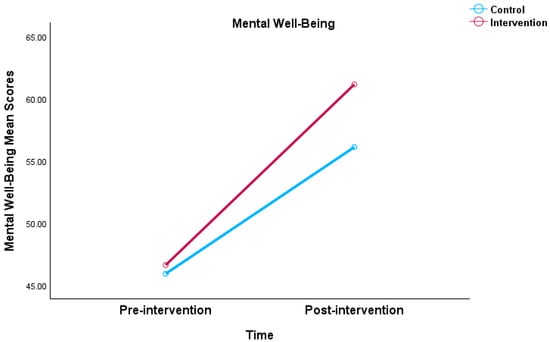
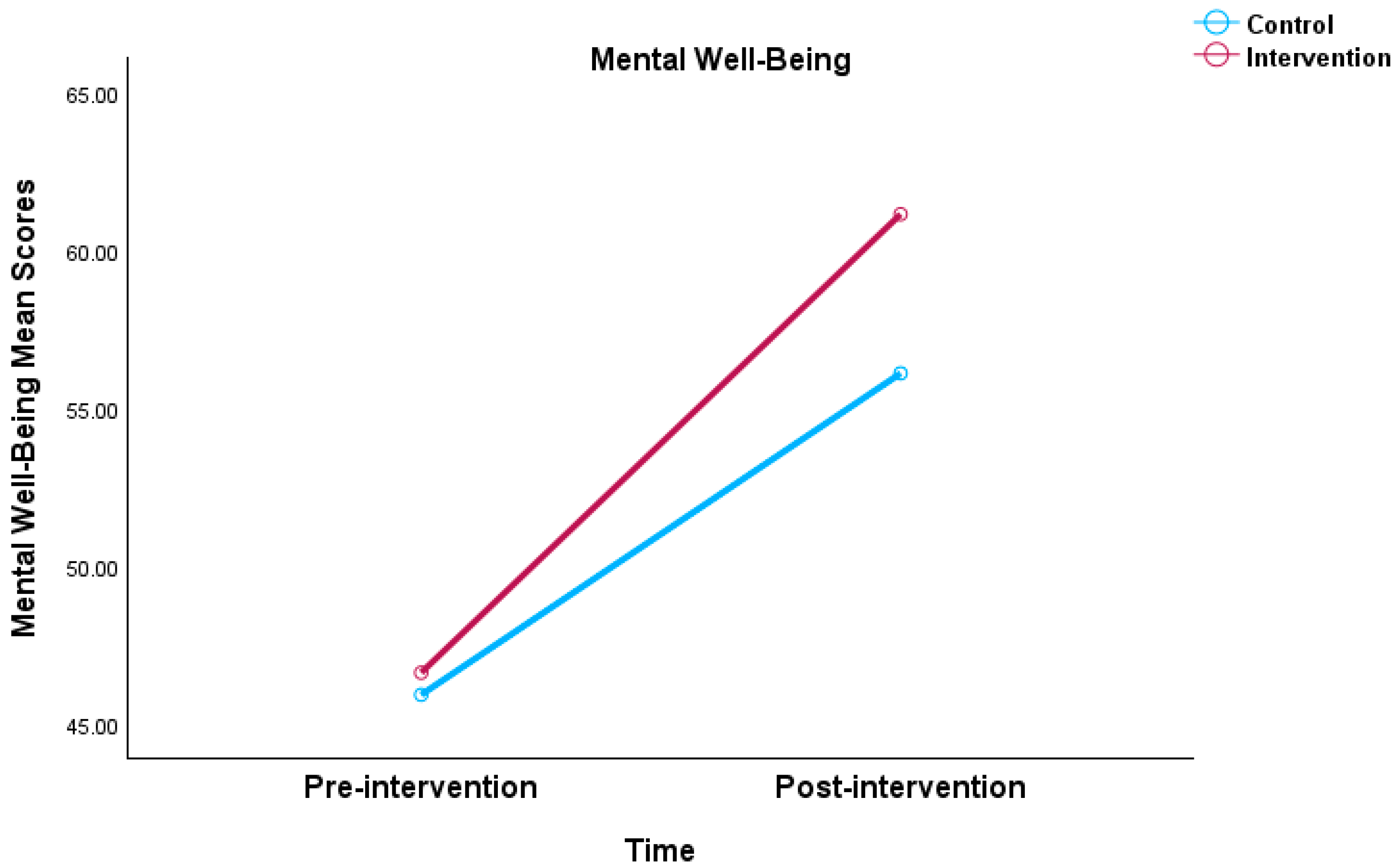
At posttest, the intervention group had higher mental well-being scores than the control group, with a mean score difference of 5.05 (M = 61.15 vs. 56.10), and a significant t-test (t(38) = 2.44, p = 0.01, d = 0.77; see Table 2). We found a main effect of time (F(1,38) = 65.79, p = <0.001, ηp2 = 0.63) and the mean difference from T1 to T2 was significant (p < 0.001, CI −15.464 to −9.286). In contrast, there was no significant interaction of time × group (F(1,38) = 2.03, p = 0.16, ηp2 = 0.05; see Figure 1). These findings suggest that the changes in mental well-being were not significantly different between the CG and IG over time.
Figure 1.
Interaction effects of time × group on mental well-being.
4.5. Effect of the Intervention on Positive Affect
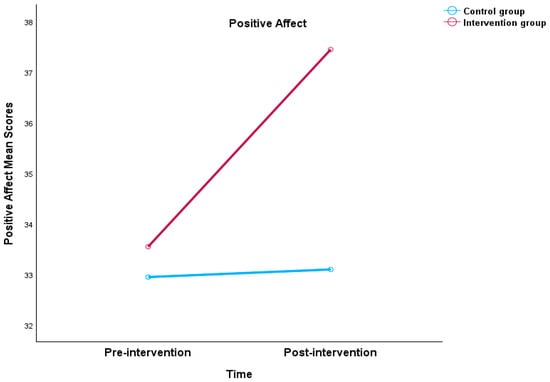
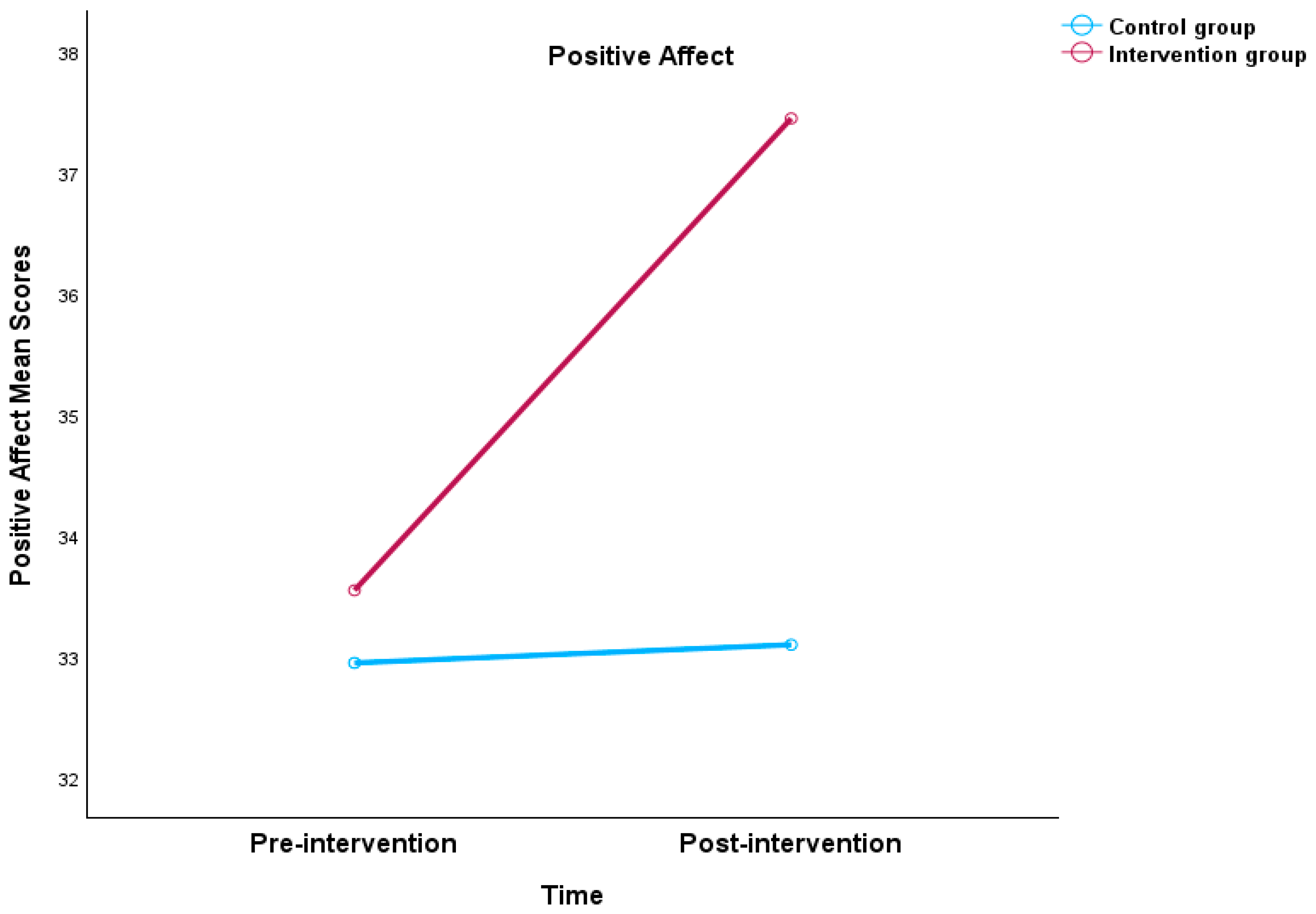
The intervention group had higher positive affect scores than the control group, with a mean difference of 4.35 (M = 37.45 vs. 33.10) at posttest, and a significant t-test (t(38) = 1.88, p = 0.03, d = 0.59; see Table 2). There was a significant main effect of time for positive affect (F(1,38) = 9.56, p = 0.004, ηp2 = 0.20), with a significant increase from pretest to posttest in the intervention group. The mean difference from Time 1 to Time 2 was statistically significant (p = 0.004, CI = −3.351 to −0.699). Further analysis showed a significant interaction effect of time × group (F(1,38) = 8.19, p = 0.007, ηp2 = 0.18; see Figure 2). This indicates that increases in positive affect over time were greater in the intervention group than in the control group, suggesting that the intervention was effective in enhancing positive affect over time.
Figure 2.
Interaction effect of time × group on positive affect.
4.6. Effect of the Intervention on Negative Affect
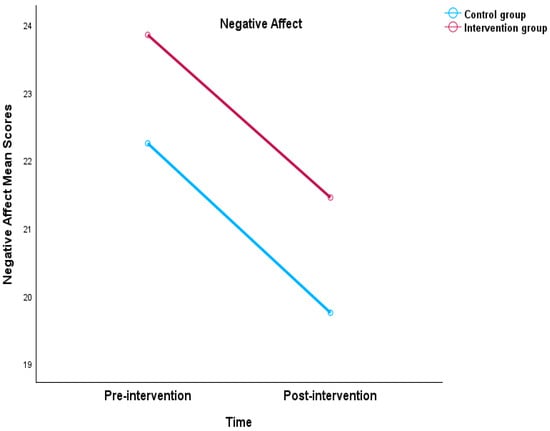
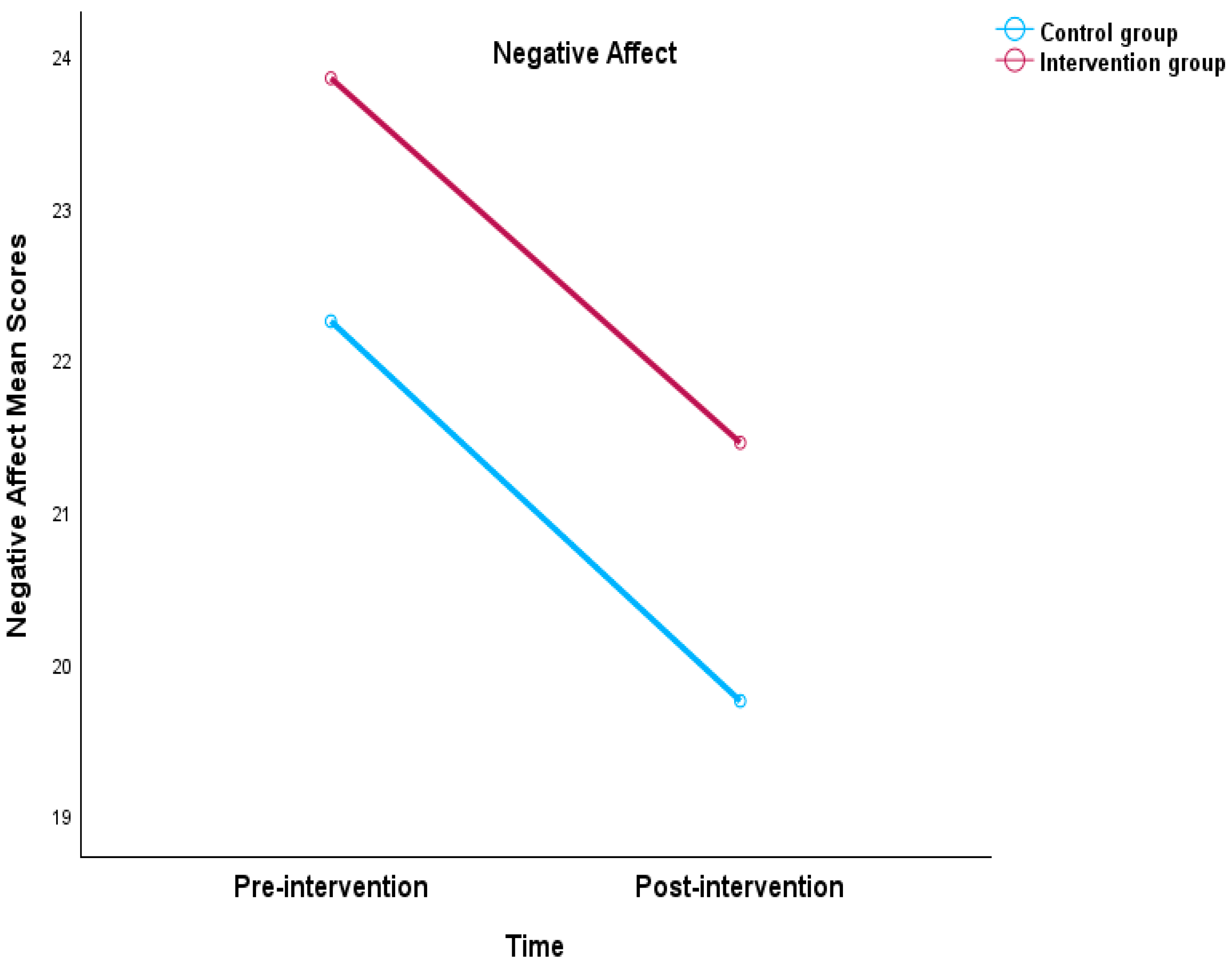
We did not find statistically significant group differences in negative affect mean scores. At posttest, the intervention group had a mean score difference of 1.7 compared to the control group (M = 21.45 vs. 19.75) and a non-significant t-test (t(38) = 0.90, p = 0.18, d = 0.28; see Table 2). There was a significant main effect of time on negative affect (F(1,38) = 5.84, p = 0.02, ηp2 = 0.13), but no significant interaction effect of time × group (F(1,38) = 0.00, p = 0.961, ηp2 = 0.00). This result showed that the change in negative affect was not significantly different between groups over time (Figure 3), suggesting that the intervention did not lower negative affect for all participants.
Figure 3.
Interaction effects of time × group on negative affect.
4.7. Effect of the Intervention on Resilience
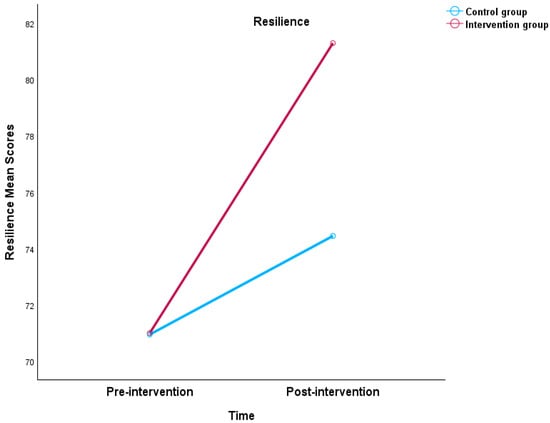
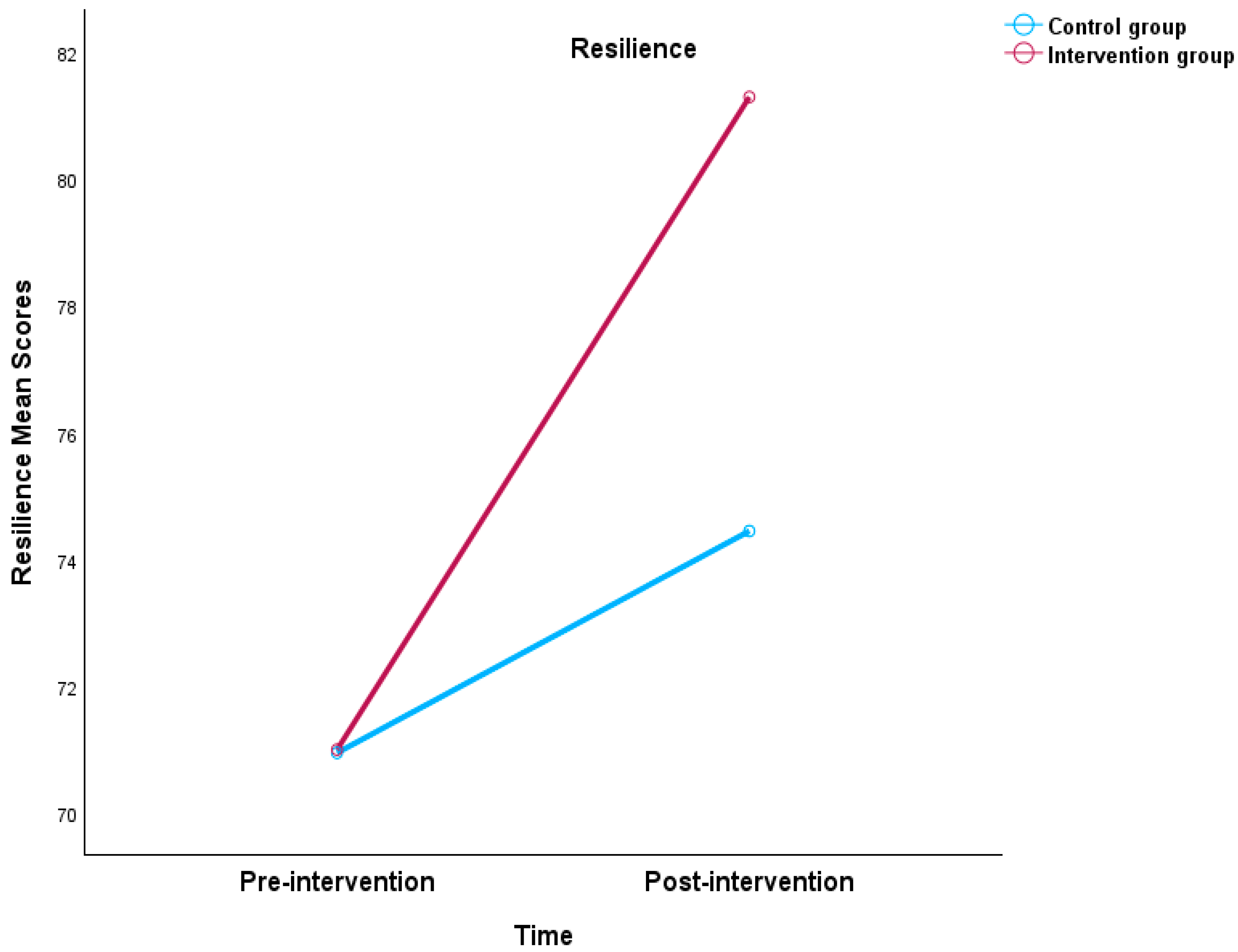
The intervention group had a higher resilience score than the control group at posttest, with a mean difference of 6.85 (M = 81.30 vs. 74.45) and a significant t-test (t(38) = 2.21, p = 0.01, d = 0.68; see Table 2). There was a significant main effect of time on resilience (F(1,38) = 30.65, p < 0.001, ηp2 = 0.45). Resilience score was higher posttest in the education + PP intervention group (IG), with a significant mean difference from pretest to posttest (p = <0.001, CI = −9.423 to −4.377). We obtained a significant interaction effect of time × group (F(1,38) = 7.44, p = 0.01, ηp2 = 0.16; see Figure 4). This demonstrates that increases in resilience over time were greater in the intervention than in the control group, suggesting that the intervention significantly improved resilience.
Figure 4.
Interaction effects of time × group for resilience.
4.8. Students’ Brief Reflections on the Effectiveness of the PP Exercises
Students in the intervention group were asked to reflect on and identify the positive psychology activity they found most beneficial for supporting their well-being. Most participants (n = 12) indicated that positive reframing was the most effective strategy for managing stress and regaining a sense of control during challenging situations. One participant noted:
The comment above reinforces the value of positive reframing as a strategy that promotes a mindset shift, strengthening emotional resilience and enhancing one’s overall well-being.“The exercise I found most helpful was positive reframing. It completely changed how I respond to stress. Instead of spiraling, I am learning to pause, rethink the situation, and focus on something constructive. It helped me feel more in control and less emotionally drained. Even when things don’t go my way, I now feel like I have the mindset to deal with it without falling apart.”
A small number of participants (n = 4) identified gratitude expression as the most beneficial activity for supporting their well-being, as illustrated by the following statement:
Participants’ reflection on the gratitude letter exercise reveals its interpersonal and emotional significance, as well as its potential to repair relationships and deepen personal insight.“The exercise I found most helpful was the gratitude letters. This is because the gratitude letters helped me fix some problems I had with people who thought I was not grateful. It really helped me because I was able to express my deep gratitude to people who helped me in the past. Without them, I would not be where I am today.”
Four participants identified the character strengths exercise as the most beneficial activity for enhancing their well-being, as reflected in the following participant’s response:
Reflections on the character strengths exercise highlight its empowering role in fostering self-awareness, confidence, and resilience. Their responses demonstrate that identifying and cultivating one’s strengths can meaningfully contribute to personal well-being and effective coping.“Identifying and nurturing my strengths reminded me of the qualities I already possess, like perseverance and adaptability. It gave me the confidence to trust myself during tough times and use my strengths more intentionally.”
Finally, none of the participants identified performing acts of kindness as critical to their overall well-being. However, we observed that some students utilized a combination of PP activities to navigate daily life challenges.
5. Discussion
This study appears to be the first to assess the efficacy of a multicomponent positive psychology (PP) intervention in improving students’ subjective well-being in a resource-constrained setting, as in a Nigerian university. We assigned participants randomly to either an education + intervention group or an education-only control group and assessed them at baseline (T1) and post-intervention (T2). At T2, the intervention group reported significantly higher mental well-being, positive affect, and resilience than the control group, with moderate effect sizes (d = 0.77, 0.59, and 0.68, respectively), indicating meaningful improvements in psychological functioning, positive emotions, and adaptive capacity. Our results are consistent with prior school-based positive psychology interventions (Datu et al. 2022; Koydemir and Sun-Selışık 2015; Putwain et al. 2019; Shoshani and Steinmetz 2014). No significant between-group differences were observed for negative affect, suggesting that the intervention primarily enhanced positive aspects of mental health rather than reducing distress (Karris Bachik et al. 2021). These findings provide partial support for Hypothesis 1.
Analysis of variance further indicated significant main effects across outcomes, suggesting that the combined educational and positive psychology components yielded measurable benefits. Effect sizes (η2p) were large for mental well-being (0.63), resilience (0.45), positive affect (0.20), and moderate for negative affect (0.13). These results indicate that the intervention accounted for substantial variance in key outcomes, particularly in enhancing well-being and resilience. While prior meta-analyses typically report small to moderate effects (Carr et al. 2021; Koydemir et al. 2021), the medium-to-large effects observed here are comparable to those found in similar university-based interventions (Green 2022; Chilver and Gatt 2022), supporting the effectiveness of structured programs in this context.
Regarding changes over time (Hypothesis 2), we observed significant time × group interactions for positive affect and resilience, indicating that participants in the intervention group showed greater improvements from T1 to T2 than those in the control group. In contrast, interaction effects for mental well-being and negative affect were not significant, suggesting that changes in these outcomes were either similar across groups or not strongly influenced by the intervention over time. These findings partially support Hypothesis 2 and align with prior research showing that gratitude, kindness practices, character strengths, and positive reframing enhance well-being through emotional and cognitive processes (Datu et al. 2022; Fuller et al. 2025; Green 2022; and Shillington et al. 2021). Consistent with previous literature, the intervention did not significantly reduce negative affect, reinforcing the view that positive psychology interventions primarily strengthen positive functioning (Fuller et al. 2025; Karris Bachik et al. 2021).
The observed effects may be attributed to the intervention’s multicomponent design and eight-week duration. There is evidence that interventions with multiple components tend to be more efficacious than single-component approaches (Schutte and Malouff 2019), and longer engagement is associated with greater improvements in well-being (Chilver and Gatt 2022). Our results support the inclusion of low-cost, scalable positive psychology interventions in higher education settings, particularly to enhance resilience and positive emotional functioning, which aligns with the work of Putwain et al. (2019).
Overall, the intervention produced meaningful improvements in mental well-being, positive affect, and resilience, with the strongest evidence for changes in positive affect and resilience over time. Effects on negative affect were limited, suggesting that the program is more effective at enhancing positive psychological functioning than reducing distress.
Participants’ brief reflections on the intervention activities highlight key mechanisms that underpin the efficacy of positive psychology activities. The positive reframing exercise, for example, enabled participants to reinterpret stressful experiences in more constructive ways, illustrating the role of cognitive reappraisal in promoting emotional resilience (Kalisch et al. 2014). Our findings align with research showing that reframing enhances self-efficacy and mental toughness, which are critical predictors of sustained well-being (Fan et al. 2021). Similarly, the gratitude letter exercise served not only as a tool for expressing emotion but also as a bridge for repairing and deepening relationships. Engaging in the activity allowed participants to articulate appreciation and reconnect with meaningful others, contributing to both intrapersonal and interpersonal well-being and highlighting the powerful role that structured gratitude practices can play in enhancing psychological health and fostering social harmony among university students, aligning with previous works (Fuller et al. 2025; Klibert et al. 2019).
Reflections on the character strengths exercise revealed how it can lead to a more empowered, resilient self-concept. By recognizing and intentionally using their personal strengths, participants may have gained confidence, a greater sense of empowerment, and the psychological tools to navigate life challenges more effectively, supporting previous studies (Ekwonye et al. 2025; Green 2022; Koydemir and Sun-Selışık 2015). Performing kind acts has been shown to improve givers’ subjective well-being (Curry et al. 2018), but it was surprising that participants’ reflections indicated that practicing kind acts did not contribute to their subjective well-being, which does not reflect the Nigerian culture of interdependence and collectivism (Agbo et al. 2012). It is possible that helping others, particularly during a highly stressful exam period, can lead to feeling overwhelmed, overtaxed, or even to compassion fatigue, which may have led participants to find that activity not helpful to their well-being.
5.1. Implications for Practice
The findings of the current study are especially relevant to universities in low- and middle-income countries that face limited access to traditional mental health services due to financial constraints, limited knowledge, and concerns about the quality of service (Kukoyi et al. 2022). Given the limited access to mental health resources, high academic pressure, and socio-economic stressors, scalable, low-cost interventions are particularly salient in Nigerian universities. Hence, offering structured, PP interventions alongside traditional educational content in well-being or extracurricular programs on Nigerian university campuses can provide low-cost, non-stigmatizing alternatives for students to enhance their psychological well-being, positive affect, and resilience. Providing such options for Nigerian students who are currently experiencing high levels of psychological distress (Aluh et al. 2020; Adeleke et al. 2025; Cui et al. 2022) will expand the mental health resources available to them.
The moderate to large improvements in mental well-being, positive emotions, and resilience demonstrated in our study should prompt university counselors to focus not only on reducing student stress or anxiety but also on proactively promoting psychological strengths and emotional resilience by integrating targeted PP activities into student support services (Putwain et al. 2019). In addition, the promising outcomes of the multi-component nature of the intervention compared with the smaller effects often reported in single-component PP interventions (Green 2022; Fekete and Deichert 2022) highlight the added value of integrating multiple positive psychology activities (Chilver and Gatt 2022). Mental health professionals and researchers designing mental health programs in higher education institutions in Nigeria should opt for diverse, synergistic activities rather than relying on isolated techniques to maximize impact.
The promising results we obtained may also be partially due to the intervention length (60 days) and session duration (55–120 min), which exceed the average dosage reported in the previous literature (Koydemir et al. 2021). Future studies should aim to maintain optimal duration and intensity to replicate these benefits. Additionally, the significant time-by-group interactions observed for positive affect and resilience suggest that these may be key targets for future PP intervention development and evaluation in Nigerian university settings. Overall, the findings emphasize the importance of offering a varied selection of PP activities and encouraging students to reflect on and personalize their use of these tools. We also thought that the reflective process itself may be a critical factor in maximizing the efficacy of positive psychology exercises among Nigerian university students.
5.2. Limitations and Opportunities for Future Research
The pilot study has some limitations. First, the total sample size was relatively small (n = 40), which limits statistical power and increases the likelihood of obtaining overestimated effect sizes (Button et al. 2013) and of generalizing findings across diverse populations and settings. We recognized that small sample sizes may reduce statistical power to detect real effects or differences (Quach et al. 2022), but they can be useful in pilot studies. We conducted a post hoc power analysis, which indicates that we need at least 120 participants to detect a moderate effect size. Hence, we suggest that future research aim to recruit over 100 participants to reduce random variation and obtain more reliable and valid results.
We also acknowledge the lack of blinding in this study, as it was not feasible given the behavioral nature of the intervention, which required active participant and facilitator engagement. We took steps to reduce the likelihood that expectancy effects alone accounted for the observed results, such as ensuring that the two groups received the same level of attention and contact time. We also used a standardized facilitation protocol and administered outcome measures uniformly.
We measured all outcomes at baseline and posttest, with no long-term follow-up. The lack of follow-up data limits our insight regarding the longevity of the observed effects, as Kazdin (2007) emphasizes that assessing long-term impact is critical in intervention research. Hence, we recommend that future research include longitudinal follow-ups (e.g., 3- or 6-month post-intervention assessments) in their design to assess the durability of intervention effects. We used self-reported surveys to measure the study outcomes, which may have introduced social desirability bias and subjective perceptions of emotional states and resilience (Podsakoff et al. 2003). Incorporating behavioral or physiological indicators could provide more robust validation.
Finally, although these preliminary findings show that embedding a structured, multi-component positive psychology program in educational settings can significantly improve university students’ mental well-being, positive emotions, and resilience, we also acknowledge that we could not attribute these effects to any one specific PP activity we implemented. It is important that any future study disentangle individual components of PP interventions to identify which specific activities are most impactful in improving students’ subjective well-being. Since this study was conducted at a single institution with participants from a homogeneous culture, our findings may not extend to other higher education institutions in Nigeria with more heterogeneous student samples. Despite these limitations, our study provides preliminary evidence and foundational insight into the promise of PP interventions in Nigerian higher education.
6. Conclusions
The present study evaluated the impact of an eight-week education plus positive psychology (PP) intervention on the well-being of Nigerian university students. Overall, the findings provide preliminary evidence that a structured, multicomponent, strengths-based approach can meaningfully enhance key aspects of students’ well-being, particularly positive affect and resilience. The findings add to the growing body of literature by demonstrating the feasibility and potential effectiveness of low-cost, non-stigmatizing interventions in resource-constrained higher education settings such as Nigerian universities. In practice, the results support integrating scalable PP activities into university mental health programs to promote adaptive functioning and emotional well-being. However, the findings of the current study should be interpreted with caution and considered preliminary until confirmed by studies employing more rigorous designs and larger samples.
Author Contributions
Conceptualization, design of the study, methodology, investigation, software, validation, data curation, formal analysis, original draft preparation, critical revision of the manuscript; and funding acquisition: A.U.E. Data curation; formal analysis; drafting of the paper; and critical revision of the manuscript: S.M.C. and L.H.E. All authors have read and agreed to the published version of the manuscript.
Funding
The first author received an award to support this research, but not the cost of publication.
Institutional Review Board Statement
We obtained ethical approvals from the Institutional Review Board of St. Catherine University, St. Paul, Minnesota, USA (IRB Protocol #2107, approval date: 24 August 2024) and the Research Ethics Committee of Topfaith University, Mkpatak, Akwa Ibom State, Nigeria (IRB Protocol ID: TUM24-RECNO-EX002, approval date: 13 September 2024).
Informed Consent Statement
All study participants provided informed consent/assent.
Data Availability Statement
The study data, which contains personal and sensitive details, will not be publicly available. The quantitative data will be available upon request from the corresponding author.
Acknowledgments
We express our deepest gratitude to Patrick James Ebewo, and Enoima Abraham of Topfaith University for their generous support with participant recruitment, space, and logistical arrangements. We also sincerely thank David O. IIoma and Nnanake-Abasi Offiong for their invaluable assistance in facilitating the study sessions. A heartfelt thank you goes to my dedicated research assistants at Topfaith University: Marylyn Ibem, Ezinne Tom-Ogwo, Samuel Martins, Abigail Francis, Utibe Obong, and Israel Abia for their committed efforts in coordinating and monitoring the research sessions. We are especially grateful to all the participants whose engagement and openness brought this study to life. Lastly, we thank St. Catherine University for granting the award that made this research possible.
Conflicts of Interest
No conflict of interest has been declared by the authors. The authors have no competing financial interests or personal relationships that could have influenced the work reported in this paper.
References
- Adedamola, Adekale Temitope, Oyebade Akin, and Adeleke Abisoye Abiola. 2022. Stress among university students in Osun State, Nigeria. International Journal of Health Sciences and Research 12: 8–24. [Google Scholar] [CrossRef] [Scilit]
- Adeleke, Olumide T., Oluwafunbi A. Opadola, Modupe M. Ojo, Yetunde A. Samuel-Ajayi, Oludamola V. Adeleke, and Afolabi S. Adedeji. 2025. A cross-sectional study of anxiety and depression in a cohort of Nigerian undergraduates. Annals of Health Research 11: 20–28. [Google Scholar]
- Agbo, Aaron A., Thaddeus C. Nzeadibe, and Chukwuedozie K. Ajaero. 2012. Happiness in Nigeria: A socio-cultural analysis. In Happiness Across Cultures: Views of Happiness and Quality of Life in Non-WESTERN Cultures. Dordrecht: Springer, pp. 293–310. [Google Scholar] [CrossRef] [Scilit]
- Aghadi, Ekene Emmanuel. 2024. Nigerian social challenges and relationship with personal functioning of youths in Eastern Nigeria. Journal of Psychology and Behavioural Disciplines 4: 140–73. [Google Scholar]
- Almanasef, Mona, Dalia Bajis, Asmaa Al-Haqan, Saja Alnahar, and Ian Bates. 2024. Assessing the psychometric properties of Connor-Davidson Resilience Scale 25 (CD-RISC 25) in pharmacy students and academics in the Eastern Mediterranean Region. Exploratory Research in Clinical and Social Pharmacy 16: 100515. [Google Scholar] [CrossRef] [Scilit]
- Aluh, Deborah Oyine, Abubakar Abba, and Afeez Babatunde Afosi. 2020. Prevalence and correlates of depression, anxiety and stress among undergraduate pharmacy students in Nigeria. Pharmacy Education 20: 236–48. [Google Scholar] [CrossRef] [Scilit]
- Ambe, Benjamin, Melvin Amalu, Achi Bekomson, Esther Bassey Arikpo, Cassidy Agbor, Mike Etan, Maria Ofie Sunday, Victoria Abanyam, Bella Olabisi, Mercy Isogon, and et al. 2024. Impact of familial and social stressors on university students’ learning outcomes, satisfaction, and academic achievements. The International Journal of Humanities Education 22: 61–84. [Google Scholar] [CrossRef] [Scilit]
- Atif, Saira, Nilofar Mustafa, and Sarah Ghafoor. 2025. Perceived stress and coping strategies used by undergraduate dental students: An observational study. PLoS ONE 20: e0318152. [Google Scholar] [CrossRef] [Scilit]
- Button, Katherine S., John P. A. Ioannidis, Claire Mokrysz, Brian A. Nosek, Jonathan Flint, Emma S. J. Robinson, and Marcus R. Munafò. 2013. Power failure: Why small sample size undermines the reliability of neuroscience. Nature Reviews Neuroscience 14: 365–76. [Google Scholar] [CrossRef] [Scilit]
- Carr, Alan, Katie Cullen, Cora Keeney, Ciaran Canning, Olwyn Mooney, Ellen Chinseallaigh, and Annie O’dowd. 2021. Effectiveness of positive psychology interventions: A systematic review and meta-analysis. The Journal of Positive Psychology 16: 749–69. [Google Scholar] [CrossRef] [Scilit]
- Cash, Tiara A., Lara B. Aknin, and Yuthika U. Girme. 2024. Everyday acts of kindness predict greater well-being during the transition to university. Social and Personality Psychology Compass 18: e12972. [Google Scholar] [CrossRef] [Scilit]
- Chen, Chen. 2016. The role of resilience and coping styles in subjective well-being among chinese university students. The Asia-Pacific Education Researcher 25: 377–87. [Google Scholar] [CrossRef] [Scilit]
- Chilver, Miranda R., and Justine M. Gatt. 2022. Six-week online multi-component positive psychology intervention improves subjective wellbeing in young adults. Journal of Happiness Studies 23: 1267–88. [Google Scholar] [CrossRef] [Scilit]
- Connor, Kathryn M., and Jonathan R. T. Davidson. 2003. Development of a new resilience scale: The connor-davidson resilience scale (CD-RISC). Depression and Anxiety 18: 76–82. [Google Scholar] [CrossRef] [Scilit] [PubMed]
- Cui, Sunny, Babatunde Ajayi, Esther Kim, and Remare Egonu. 2022. A systematic review and meta-analysis of depression prevalence amongst Nigerian students pursuing higher education. Journal of Behavioral and Brain Science 12: 589–98. [Google Scholar] [CrossRef]
- Curry, Oliver Scott, Lee A. Rowland, Caspar J. Van Lissa, Sally Zlotowitz, John McAlaney, and Harvey Whitehouse. 2018. Happy to help? A systematic review and meta-analysis of the effects of performing acts of kindness on the well-being of the actor. Journal of Experimental Social Psychology 76: 320–29. [Google Scholar] [CrossRef] [Scilit]
- Datu, Jesus Alfonso D., Jana Patricia M. Valdez, Dennis M. McInerney, and Ryan Francis Cayubit. 2022. The effects of gratitude and kindness on life satisfaction, positive emotions, negative emotions, and COVID-19 anxiety: An online pilot experimental study. Applied Psychology: Health and Well-Being 14: 347–61. [Google Scholar] [CrossRef] [Scilit]
- Deichert, Nathan T., Erin M. Fekete, and Michael Craven. 2021. Gratitude enhances the beneficial effects of social support on psychological well-being. The Journal of Positive Psychology 16: 168–77. [Google Scholar] [CrossRef] [Scilit]
- Douwes, Rynke, Janneke Metselaar, Gerdina Hendrika Maria Pijnenborg, and Nynke Boonstra. 2023. Well-being of students in higher education: The importance of a student perspective. Cogent Education 10. [Google Scholar] [CrossRef] [Scilit]
- Ekwonye, Angela U., Leila Hoeschen Ehrbright, and Sophi M. Cahalan. 2025. Navigating the College Experience: The Role of Character Strengths among Undergraduate Students at a University in Akwa Ibom State, Nigeria. International Journal of Applied Positive Psychology 10: 72. [Google Scholar] [CrossRef] [Scilit]
- Emmons, Robert A., Michael E. McCullough, and Jo-Ann Tsang. 2003. The assessment of gratitude. In Positive Psychological Assessment: A Handbook of Models and Measures. Washington, DC: American Psychological Association, pp. 327–41. [Google Scholar] [CrossRef] [Scilit]
- Esan, Oluyomi, Arinola Esan, Ayorinde Folasire, and Philip Oluwajulugbe. 2019. Mental health and wellbeing of medical students in Nigeria: A systematic review. International Review of Psychiatry 31: 661–72. [Google Scholar] [CrossRef] [Scilit] [PubMed]
- Fadiji, Angelina Wilson, Itumeleng P. Khumalo, Marié Philipina Wissing, and Richard Appiah. 2024. A bibliometric review of positive psychology and well-being research in Africa. Frontiers in Psychology 15: 1384362. [Google Scholar] [CrossRef] [Scilit]
- Fan, Song Ching, Hui-Chuan Shih, Hui-Chu Tseng, Kuei-Feng Chang, Wei-Chin Li, and An Shin Shia. 2021. Self-efficacy triggers psychological appraisal mechanism for mindset shift. International Journal of Mental Health Promotion 23: 57–73. [Google Scholar] [CrossRef] [Scilit]
- Fekete, Erin M., and Nathan T. Deichert. 2022. A brief gratitude writing intervention decreased stress and negative affect during the COVID-19 pandemic. Journal of Happiness Studies 23: 2427–48. [Google Scholar] [CrossRef] [Scilit]
- Field, Andy. 2013. Discovering Statistics Using IBM SPSS Statistics, 4th ed. London: Sage. [Google Scholar]
- Fuller, Chloë, Silvia Marin-Dragu, Ravishankar Subramani Iyer, and Sandra Melanie Meier. 2025. A mobile app–Based gratitude intervention’s effect on mental well-being in university students: Randomized controlled trial. JMIR mHealth and uHealth 13: e53850. [Google Scholar] [CrossRef] [Scilit] [PubMed]
- Gabana, Nicole T., Jesse Steinfeldt, Y. Joel Wong, Y. Barry Chung, and Dubravka Svetina. 2019. Attitude of gratitude: Exploring the implementation of a gratitude intervention with college athletes. Journal of Applied Sport Psychology 31: 273–84. [Google Scholar] [CrossRef] [Scilit]
- Green, Zane Asher. 2022. Character strengths intervention for nurturing well-being among Pakistan’s university students: A mixed-method study. Applied Psychology: Health and Well-Being 14: 252–77. [Google Scholar] [CrossRef] [Scilit] [PubMed]
- Hake, Austin B., and Stephen G. Post. 2023. Kindness: Definitions and a pilot study for the development of a kindness scale in healthcare. PLoS ONE 18: e0288766. [Google Scholar] [CrossRef] [Scilit]
- Hammill, Jackie, Thinh Nguyen, and Fiona Henderson. 2022. Student engagement: The impact of positive psychology interventions on students. Active Learning in Higher Education 23: 129–42. [Google Scholar] [CrossRef] [Scilit]
- Hendriks, Tom, Jorien van Treeck, Ranim Chaya, Joop T. V. M. de Jong, and Marianne van Woerkom. 2025. Character Strengths as Coping Strategies for Daily Challenges: A Qualitative Study Among Adult Refugees. International Journal of Applied Positive Psychology 10: 24. [Google Scholar] [CrossRef] [Scilit]
- Hosoda, K. Kanoho, and Mica Estrada. 2024. The influence of kindness on academics’ identity, well-being and stress. PLoS ONE 19: e0312269. [Google Scholar] [CrossRef] [Scilit]
- Iorio, Carla, Tommaso Barlattani, Francesca Pacitti, Paola Iorio, and Assunta Pompili. 2024. The role of affective temperaments as a factor of vulnerability to seasonal affective disorder. Journal of Affective Disorders 364: 96–103. [Google Scholar] [CrossRef] [Scilit]
- Jacob, Ogunode Niyi, Audu Elizabeth, Ahaotu, and Godwin Ndubuisi. 2020. Problems faced by students in public universities in Nigeria and the way forward. Jurnal Sinestesia 10: 105–16. [Google Scholar]
- Kalisch, Raffael, Marianne B. Müller, and Oliver Tüscher. 2014. A conceptual framework for the neurobiological study of resilience. Behavioral and Brain Sciences 38: e92. [Google Scholar] [CrossRef] [Scilit] [PubMed]
- Karris Bachik, M. Alexis, Gregory Carey, and W. Edward Craighead. 2021. VIA character strengths among US college students and their associations with happiness, well-being, resiliency, academic success and psychopathology. The Journal of Positive Psychology 16: 512–25. [Google Scholar] [CrossRef] [Scilit]
- Kazdin, Alan E. 2007. Mediators and Mechanisms of Change in Psychotherapy Research. Annual Review of Clinical Psychology 3: 1–27. [Google Scholar] [CrossRef] [Scilit] [PubMed]
- Kini, Prathik, Joel Wong, Sydney McInnis, Nicole Gabana, and Joshua W. Brown. 2016. The effects of gratitude expression on neural activity. NeuroImage 128: 1–10. [Google Scholar] [CrossRef] [Scilit]
- Klibert, Jeffrey, Haresh Rochani, Hani Samawi, Kayla Leleux-LaBarge, and Rebecca Ryan. 2019. The impact of an integrated gratitude intervention on positive affect and coping resources. International Journal of Applied Positive Psychology 3: 23–41. [Google Scholar] [CrossRef] [Scilit]
- Koydemir, Selda, and Z. Eda Sun-Selışık. 2015. Well-being on campus: Testing the effectiveness of an online strengths-based intervention for first year college students. British Journal of Guidance & Counselling 44: 434–46. [Google Scholar] [CrossRef] [Scilit]
- Koydemir, Selda, Aslı Bugay Sökmez, and Astrid Schütz. 2021. A meta-analysis of the effectiveness of randomized controlled positive psychological interventions on subjective and psychological well-being. Applied Research in Quality of Life 16: 1145–85. [Google Scholar] [CrossRef] [Scilit]
- Kukoyi, Olasumbo, Edidiong Orok, Funmilayo Oluwafemi, Tunrayo Oluwadare, Olawale Oni, Toba Bamitale, Boluwaji Jaiyesimi, Tolulope Ojo, and Hannah Eze. 2022. Factors affecting the utilization of mental health services among undergraduate students in a Nigerian University. Heliyon 8: e11476. [Google Scholar] [CrossRef] [Scilit]
- Kumar, Amit, and Nicholas Epley. 2018. Undervaluing Gratitude: Expressers Misunderstand the Consequences of Showing Appreciation. Psychological Science 29: 1423–35. [Google Scholar] [CrossRef] [Scilit]
- Layous, Kristin, S. Katherine Nelson, and Sonja Lyubomirsky. 2013. What is the optimal way to deliver a positive activity intervention? The case of writing about one’s best possible selves. Journal of Happiness Studies 14: 635–54. [Google Scholar] [CrossRef] [Scilit]
- Liu, Kunyan, Yunfei Duan, and Yilin Wang. 2021. The effectiveness of a web-based positive psychology intervention in enhancing college students’ mental well-being. Social Behavior and Personality: An International Journal 49: 1–13. [Google Scholar] [CrossRef] [Scilit]
- Lkhamsuren, Zuchi, and Kristine Lin. 2025. Validation of “Warwick-Edinburgh Mental Well-Being Scale” among mongolian undergraduate students: Pilot study. International Journal of Applied Positive Psychology 10: 33. [Google Scholar] [CrossRef] [Scilit]
- Lopes, Adriana Rezende, and Oscar Kenji Nihei. 2021. Depression, anxiety and stress symptoms in Brazilian university students during the COVID-19 pandemic: Predictors and association with life satisfaction, psychological well-being and coping strategies. PLoS ONE 16: e0258493. [Google Scholar] [CrossRef] [Scilit]
- Lyubomirsky, Sonja, and Kristin Layous. 2013. How do simple positive activities increase well-being? Current Directions in Psychological Science 22: 57–62. [Google Scholar] [CrossRef] [Scilit]
- Lyubomirsky, Sonja, Rene Dickerhoof, Julia K. Boehm, and Kennon M. Sheldon. 2011. Becoming happier takes both a will and a proper way: An experimental longitudinal intervention to boost well-being. Emotion 11: 391–402. [Google Scholar] [CrossRef] [Scilit] [PubMed]
- Majeed, Rukhshanda, and Anila Kamal. 2023. Impact of gratitude and kindness on self- esteem, subjective well-being and family relationships among university students. Human Nature Journal of Social Sciences 4: 102–20. [Google Scholar] [CrossRef] [Scilit]
- Meyer, Heidi H., and Lauren A. Stutts. 2024. The impact of single-session gratitude interventions on stress and affect. The Journal of Positive Psychology 19: 315–22. [Google Scholar] [CrossRef] [Scilit]
- Niemiec, Ryan M. 2018. Character Strengths Interventions: A Field Guide for Practitioners. Göttingen: Hogrefe Publishing GmbH. [Google Scholar] [CrossRef] [Scilit]
- Odulate-Ogunubi, B., A. Adelayo, and A. Coker. 2024. Perceived stress and coping strategies among undergraduate students in Lagos, Nigeria. Journal of Psychiatry Research & Reports 1: 1–4. [Google Scholar] [CrossRef] [Scilit]
- Ossai, Edmund Ndudi, Alo Tobechukwu Alo, Basil Chukwubuikem Onwe, Divinewill Onyinyechi Okoro, Ngozi Eucharia Ezeagu, and Lawrence Ulu Ogbonnaya. 2019. Prevalence and predictors of perceived stress: A Study among medical students of Ebonyi State University Abakaliki, Nigeria. Asian Journal of Advanced Research and Reports 3: 1–9. [Google Scholar] [CrossRef] [Scilit]
- Palacios-Delgado, Jorge, Marcos Ambriz-Flores, and Daniela Judith Cruz-Vargas. 2025. The effectiveness of kindness intervention for promoting positive emotions and reducing depressive symptoms in Mexican adults. Social Sciences 14: 61. [Google Scholar] [CrossRef] [Scilit]
- Peterson, Christopher, and Martin E. P. Seligman. 2004. Character Strengths and Virtues: A Handbook and Classification. Washington, DC: American Psychological Association and Oxford University Press. [Google Scholar]
- Podsakoff, Philip M., Scott B. MacKenzie, Jeong-Yeon Lee, and Nathan P. Podsakoff. 2003. Common method biases in behavioral research: A critical review of the literature and recommended remedies. Journal of Applied Psychology 88: 879–903. [Google Scholar] [CrossRef] [Scilit]
- Porru, Fabio, Merel Schuring, Ute Bültmann, Igor Portoghese, Alex Burdorf, and Suzan J. W. Robroek. 2022. Associations of university student life challenges with mental health and self-rated health: A longitudinal study with 6 months follow-up. Journal of Affective Disorders 296: 250–57. [Google Scholar] [CrossRef] [Scilit]
- Prasath, Priscilla Rose, Peter C. Mather, Christine Suniti Bhat, and Justine K. James. 2021. University student well-being during COVID-19: The role of psychological capital and coping strategies. The Professional Counselor 11: 46–60. [Google Scholar] [CrossRef] [Scilit]
- Putwain, David W., Diahann Gallard, and Joanna Beaumont. 2019. A multi-component wellbeing programme for upper secondary students: Effects on wellbeing, buoyancy, and adaptability. School Psychology International 40: 49–65. [Google Scholar] [CrossRef] [Scilit]
- Quach, Natalie E., Kun Yang, Ruohui Chen, Justin Tu, Manfei Xu, Xin M Tu, and Xinlian Zhang. 2022. Post-hoc power analysis: A conceptually valid approach for power based on observed study data. General Psychiatry 35: e100764. [Google Scholar] [CrossRef] [Scilit]
- Riepenhausen, Antje, Carolin Wackerhagen, Zala C. Reppmann, Hans-Christian Deter, Raffael Kalisch, Ilya M. Veer, and Henrik Walter. 2022. Positive Cognitive Reappraisal in Stress Resilience, Mental Health, and Well-Being: A Comprehensive Systematic Review. Emotion Review 14: 310–31. [Google Scholar] [CrossRef] [Scilit]
- Roberts, Charlie, Declan Ryan, Jackie Campbell, and Jack Hardwicke. 2023. Summary of the Student Health and Well-Being Project. Northampton: University of Northampton. [Google Scholar]
- Schutte, Nicola S., and John M. Malouff. 2019. The impact of signature character strengths interventions: A meta-analysis. Journal of Happiness Studies 20: 1179–96. [Google Scholar] [CrossRef] [Scilit]
- Seligman, Martin E. P., Tracy A. Steen, Nansook Park, and Christopher Peterson. 2005. Positive psychology progress: Empirical validation of interventions. American Psychologist 60: 410–21. [Google Scholar] [CrossRef] [Scilit]
- Shillington, Katie J., Andrew M. Johnson, Tara Mantler, Shauna M. Burke, and Jennifer D. Irwin. 2021. Kindness as an intervention for student social interaction anxiety, resilience, affect, and mood: The KISS of kindness study II. Journal of Happiness Studies: An Interdisciplinary Forum on Subjective Well-Being 22: 3631–61. [Google Scholar] [CrossRef] [Scilit]
- Shoshani, Anat, and Sarit Steinmetz. 2014. Positive psychology at school: A school-based intervention to promote adolescents’ mental health and well-being. Journal of Happiness Studies 15: 1289–311. [Google Scholar] [CrossRef] [Scilit]
- Smith, Bruce W., C. Graham Ford, Kelly Erickson, and Anne Guzman. 2021. The Effects of a character strength focused positive psychology course on undergraduate happiness and well-being. Journal of Happiness Studies 22: 343–62. [Google Scholar] [CrossRef] [Scilit]
- Sumari, Melati, Dini Farhana Baharudin, Amira Najiha Yahya, and Yusni Mohamad Yusop. 2025. Gratitude (shukr) group intervention for promoting college students’ well-being: A quasi-experimental study. Social Sciences & Humanities Open 11: 101294. [Google Scholar] [CrossRef] [Scilit]
- Taherkhani, Zahra, Mohammad Hossein Kaveh, Arash Mani, Leila Ghahremani, and Khadijeh Khademi. 2023. The effect of positive thinking on resilience and life satisfaction of older adults: A randomized controlled trial. Scientific Reports 13: 1–9. [Google Scholar] [CrossRef] [Scilit]
- Taylor, Charles T., Sonja Lyubomirsky, and Murray B. Stein. 2017. Upregulating the positive affect system in anxiety and depression: Outcomes of a positive activity intervention. Depression and Anxiety 34: 267–280. [Google Scholar] [CrossRef] [Scilit]
- Teixeira, Ricardo João, Tânia Brandão, and Artemisa Rocha Dores. 2022. Academic stress, coping, emotion regulation, affect and psychosomatic symptoms in higher education. Current Psychology 41: 7618–27. [Google Scholar] [CrossRef] [Scilit]
- Tennant, Ruth, Louise Hiller, Ruth Fishwick, Stephen Platt, Stephen Joseph, Scott Weich, Jane Parkinson, Jenny Secker, and Sarah Stewart-Brown. 2007. The Warwick-Edinburgh Mental Well-being Scale (WEMWBS): Development and UK validation. Health and Quality of Life Outcomes 5: 63. [Google Scholar] [CrossRef] [Scilit]
- Ukozor, Conrad Ugochukwu, Adamu Umar Mohammed, and Niyi Jacob Ogunode. 2022. Higher education in Nigeria: Problems and solutions. Central Asian Journal of Social Sciences and History 3: 243–52. [Google Scholar]
- Wang, Rui, and Hongshan Zhang. 2025. Integrating positive psychology principles in vocational education: A new approach to boosting student well-being and academic motivation. Acta Psychologica 254: 104834. [Google Scholar] [CrossRef] [Scilit]
- Watson, David, Lee Anna Clark, and Auke Tellegen. 1988. Development and validation of brief measures of positive and negative affect: The PANAS scales. Journal of Personality and Social Psychology 54: 1063–70. [Google Scholar] [CrossRef] [PubMed]
- Zhang, Yonghong, and Mengyan Chen. 2018. Character strengths, strengths use, future self-continuity and subjective well-being among chinese university students. Frontiers in Psychology 9: 1040. [Google Scholar] [CrossRef] [Scilit] [PubMed]

Disclaimer/Publisher’s Note: The statements, opinions and data contained in all publications are solely those of the individual author(s) and contributor(s) and not of MDPI and/or the editor(s). MDPI and/or the editor(s) disclaim responsibility for any injury to people or property resulting from any ideas, methods, instructions or products referred to in the content. |
© 2026 by the authors. Licensee MDPI, Basel, Switzerland. This article is an open access article distributed under the terms and conditions of the Creative Commons Attribution (CC BY) license.