


Abstract
In the context of the transformation of welfare systems, and following the impact of the COVID-19 pandemic, communication and social marketing have taken on a strategic role in community social services. This study aims to analyse communication and social marketing campaigns developed from 2020 to the present, in order to identify the social issues addressed, the communication objectives and the strategies employed, as well as their link to Community Social Services. A qualitative, exploratory and descriptive design is adopted based on analysing the content of a corpus of 60 campaigns selected through intentional sampling from international public sources. The results show a clear intensification of campaigns in the post-COVID-19 period, with a predominance of themes such as gender violence, mental health, unwanted loneliness and social exclusion. The communication strategies are characterised by the use of emotional narratives, storytelling, audiovisual formats and multi-channel dissemination, combining awareness-raising, prevention and guidance towards social resources. It is concluded that community social marketing is consolidating its position as a transformative tool that reinforces access to rights, social cohesion and the role of Community Social Services as active agents of social change.
1. Introduction
In the current context of welfare system transformation, institutional communication and social marketing have taken on an increasingly important role as strategic tools for addressing complex social issues and strengthening the relationship between citizens and public institutions (Nesi 2020; Stover et al. 2024). The profound social, technological and cultural changes in recent decades have generated new forms of interaction and participation, placing communication at the centre of social intervention processes (Ibarra et al. 2020). In this scenario, Community Social Services, traditionally focused on direct care and resource management, face the challenge of incorporating communication strategies that allow them not only to intervene, but also to inform, raise awareness and promote equitable access to social rights and services (Anuyah et al. 2023).
Although this article uses the term “community social services”, it refers to a model of primary social care that has been developed specifically within the Spanish welfare system (Castro-Spila et al. 2025). In Spain, community social services constitute the first level of the public social protection system and are mainly organised at the municipal level. They provide universal, local services focused on prevention, social inclusion, support for vulnerable individuals and families, and coordination with other welfare sectors, such as health, education and employment (Argüelles 2016).
While similar structures exist in other countries under different names, such as local social services, community social assistance, or primary social welfare services, the Spanish model is characterised by its strong territorial roots, its community orientation, and its explicit function as a gateway to the social protection system in general (Forns and Alegre-Agís 2024). In this article, the term is used in a broad and comparative sense to refer to local or community-based public social services that combine direct intervention, prevention, and community development functions.
Social marketing, understood as the application of marketing techniques and approaches for the purpose of collective well-being, has established itself as a tool with high potential for generating social awareness, changing attitudes and highlighting situations of vulnerability (Hermann 2021). Unlike traditional communication models, which focus on the one-way transmission of information, contemporary social communication strategies favour two-way, participatory approaches based on emotion, storytelling and identification with social issues (Bhrammanachote 2024). In this regard, Community Social Services have begun to appropriate these tools, recognising their ability to strengthen institutional trust, reduce social stigma and foster community co-responsibility (Andrade-Guzmán and Lombe 2022).
This evolution in the use of communication and social marketing is a response not only to a technological trend, but also to a structural need arising from growing social complexity (Azzaakiyyah 2023). Issues such as social exclusion, poverty, violence, mental health and unwanted loneliness require not only welfare responses, but also communication strategies that enable understanding of their social dimension, generate empathy and mobilise citizens (Gordon et al. 2022; Thangavel et al. 2022). In this context, communication is a cross-cutting dimension of community social intervention, capable of connecting available resources with the people who need them and contributing to the construction of more inclusive social narratives (Mitchuk et al. 2021).
The COVID-19 pandemic accelerated the use of digital communication channels by public institutions and social organisations, particularly during periods of restricted face-to-face contact (Fiorentino et al. 2022). During this time, social communication campaigns were widely used to disseminate information and maintain contact with citizens (Bela et al. 2021; Shah et al. 2020). However, this study does not assume that the pandemic created social marketing or transformed it into a fundamentally new practice, as social marketing has a long history of development linked to mass and digital media. The temporal focus of this study reflects the accessibility and comparability of recent campaigns rather than a rupture with previous practices.
Since 2020, a wide range of social communication and social marketing campaigns linked to Community Social Services have been publicly disseminated through digital channels (Roger et al. 2023). This study does not assume that the COVID-19 pandemic generated a new or fundamentally different form of social marketing, nor that it transformed its objectives or effects. Social marketing has a long tradition associated with mass media and, more recently, digital media (Wojczewski et al. 2023). The temporal focus of this study responds to the accessibility, visibility and comparability of recent campaigns available online, rather than to a presumed historical rupture with previous practices. Many earlier campaigns are not systematically archived or easily retrievable, which limits their inclusion in comparative qualitative analyses (Belso-Martínez et al. 2020).
However, despite this growing presence of social communication campaigns in the field of Community Social Services, scientific research has paid limited attention to the systematic analysis of these initiatives (Agonafer et al. 2021). Most studies focus on theoretical approaches or specific experiences, making it difficult to identify trends, communication models and predominant strategies in the post-COVID-19 period (Roger et al. 2023). This lack of comparative analysis limits our understanding of the real scope of community social marketing as a tool for innovation in social intervention (Baptista et al. 2020).
This study does not aim to represent all social marketing campaigns developed after COVID-19. The corpus analysed is a non-representative, exploratory sample, selected from publicly available online materials in Spanish and English. Its purpose is to analyse communication strategies within a limited set of accessible campaigns, not to describe their prevalence or effects.
In response to this gap, this article aims to analyse communication and social marketing campaigns developed from 2020 to the present, with a special emphasis on their link to Community Social Services. The objective is to identify the main social issues addressed, the communication strategies employed and the predominant narrative approaches, highlighting the role of community social marketing as an emerging tool for social intervention. Through this analysis, we aim to describe and interpret communication strategies and narrative approaches used in a selected corpus of campaigns, in order to explore how social marketing is articulated within community social intervention. Rather than making claims about all post-pandemic campaigns, this study contributes to understanding communicative patterns within a limited, exploratory sample.
2. Materials and Methods
2.1. Study Design
The study adopts a qualitative, exploratory and descriptive design (Creswell 2014), based on the analysis of contemporary social communication campaigns. This approach is appropriate for examining emerging and poorly systematised phenomena, such as the use of social marketing and communication strategies in the field of Community Social Services, allowing for the identification of patterns, trends and predominant communication approaches without attempting statistical generalisation.
The work is conceived as a multiple-case study with a comparative and international orientation, focusing on the cross-sectional analysis of campaigns developed in different territorial contexts (Yin 2018; Hantrais 2009), with the aim of identifying common elements and differences in relation to the social issues addressed, the driving actors and the communication strategies employed.
2.2. Campaign Search Strategy
Given that there are no standardised databases or specific academic repositories that systematically collect social communication campaigns linked to Community Social Services, a flexible search strategy was designed, adapted to the nature of the object of study (Flick 2018).
Campaigns were identified through open and publicly accessible sources, including: (1) institutional websites of public administrations and social services; (2) digital platforms and repositories of good practices in social communication; (3) websites of third-sector entities; and (4) audiovisual materials disseminated through social media and official digital channels.
The search was conducted iteratively between January and June 2024 using Google, YouTube, Instagram and institutional repositories. Searches were performed in Spanish and English. The main search terms were: “social marketing campaign”, “social communication campaign”, “community social services”, “social welfare campaign”, and “public awareness campaign”, combined with thematic terms such as “gender-based violence”, “mental health”, “loneliness”, and “social exclusion”.
The time frame was set between 2020 and the present in order to delimit a recent and digitally accessible corpus of campaigns. This temporal focus does not imply that social marketing initiatives did not exist or were less developed before this period (Lázaro-Rodríguez and Herrera-Viedma 2020). Although social marketing has a long tradition, many campaigns are not systematically archived online (Purkey et al. 2022). This study therefore does not claim novelty, but focuses on a recent, digitally accessible corpus.
2.3. Selection of Communication Campaigns
The corpus of analysis consists of a total of 60 social communication campaigns. The selection was made using non-probabilistic purposive sampling, which is appropriate for exploratory qualitative studies, aimed at identifying campaigns with social relevance and analytical potential.
The search and selection process was carried out in three stages. First, an open exploratory search was conducted to identify a broad set of potentially relevant campaigns. Second, each identified campaign was evaluated against the inclusion and exclusion criteria. Finally, the selected cases were reviewed comparatively to ensure thematic diversity, geographical representation, and variety of promoting entities. The final corpus of 60 campaigns was selected because it allowed thematic, institutional and territorial diversity, enabling comparative qualitative analysis of communication strategies within a manageable sample.
The following criteria were established for including a campaign in the study: (1) the campaign had an explicit social objective linked to raising awareness, prevention or promoting access to social resources; (2) it was promoted by public administrations, community social services, third-sector entities or mixed initiatives; (3) it had been developed wholly or partly since 2020; (4) it had publicly accessible communication materials (graphic, audiovisual or digital content); and (5) it addressed issues of interest for community social intervention.
In addition to the inclusion criteria, explicit exclusion criteria were also established. Campaigns were excluded when: (1) they had a purely commercial purpose without a clear social or public interest objective; (2) they were limited to internal institutional communication without public dissemination; (3) they lacked materials sufficiently accessible to the public for analysis; or (4) they focused exclusively on fundraising without a broader objective of awareness-raising, prevention, or community guidance. These criteria ensured the analytical consistency of the corpus and its alignment with the study’s focus on social marketing linked to community social services.
The incorporation of campaigns was completed when analytical saturation was reached, understood as the point at which the inclusion of new cases did not contribute any substantive variations in the categories of analysis or in the communication approaches identified.
2.4. Data Extraction and Systematisation
An Excel database was designed to organise, systematise and analyse the audiovisual campaigns under study so that the information corresponding to each case analysed could be structured and homogeneously recorded (Miles et al. 2014). This tool facilitated both cross-campaign comparisons and the subsequent development of qualitative analyses.
The database was structured around the following fields: country, year, campaign name, entity that promoted the campaign, main theme, objective, audiovisual campaign format, approximate duration (in seconds), main language, broadcast channels, main CTA (call to action), planned or reported KPIs, link to the audiovisual material, link to the official source, and methodological notes specifying the methodology used in each campaign when such information is available.
These fields enabled the systematic collection of key aspects, such as the territorial and temporal context of the campaign, the driving forces behind it, the social issues addressed, the communication objectives pursued, the narrative and dissemination strategies employed, and the indicators used to evaluate the communicative impact. Likewise, the notes section facilitated the inclusion of relevant qualitative observations, such as the degree of connection with Community Social Services or noteworthy methodological particularities.
Data were extracted by directly analysing publicly available communication materials, including audiovisual pieces, official descriptions, and associated institutional documentation. This procedure ensured consistency, comparability and homogeneity in the recording of information for all campaigns included in the study.
2.5. Content Analysis
The campaigns were analysed using the qualitative content analysis technique with a comparative orientation (Krippendorff 2013; Mayring 2014). This technique made it possible to systematically examine the messages, narratives and communication strategies present in the campaigns, as well as to identify recurring patterns and differentiating elements between contexts.
The analysis categories were constructed by combining a deductive approach, based on the scientific literature on social marketing, institutional communication and community social services, and an inductive approach, derived from the exploratory examination of the materials analysed. This procedure made it possible to adapt the category system to the specificities of the campaign corpus, while maintaining theoretical consistency.
Although frequency counts were used to describe the sample, these descriptive statistics do not constitute analytical findings. The main contribution lies in the qualitative interpretation of narratives, objectives and communicative strategies.
The analysis focused on identifying: (1) the priority social issues in the post-COVID-19 period; (2) the most frequently used communication strategies; and (3) the role assumed by Community Social Services as communicative actors.
A campaign was considered linked to Community Social Services when these services appeared explicitly as promoters, were referenced in calls to action or contact information, or constituted the institutional framework underlying the social issue addressed. Campaigns without explicit references were considered implicitly linked when they addressed issues central to the scope of Community Social Services, such as gender-based violence, social exclusion, mental health, unwanted loneliness or child protection.
3. Results
3.1. Description of the Sample
This section describes the main characteristics of the corpus analysed in order to contextualise the qualitative findings. These data do not constitute analytical results, but rather provide a descriptive overview of the sample.
The analysis corpus consists of a total of 60 social communication campaigns developed between 2020 and 2024, allowing for a systematic examination of the recent evolution of social marketing linked to Community Social Services in the post-COVID-19 period. The analysis of their general characteristics reveals temporal, territorial, institutional and communicative patterns that demonstrate the progressive consolidation of communication as a strategic tool for social intervention.
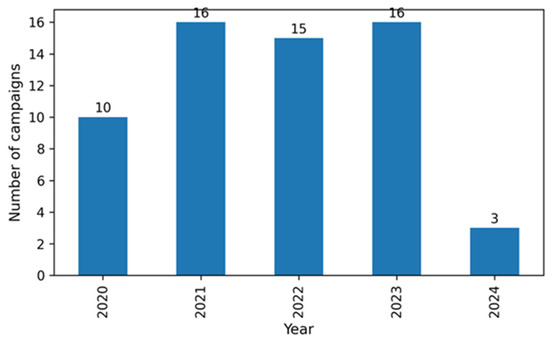
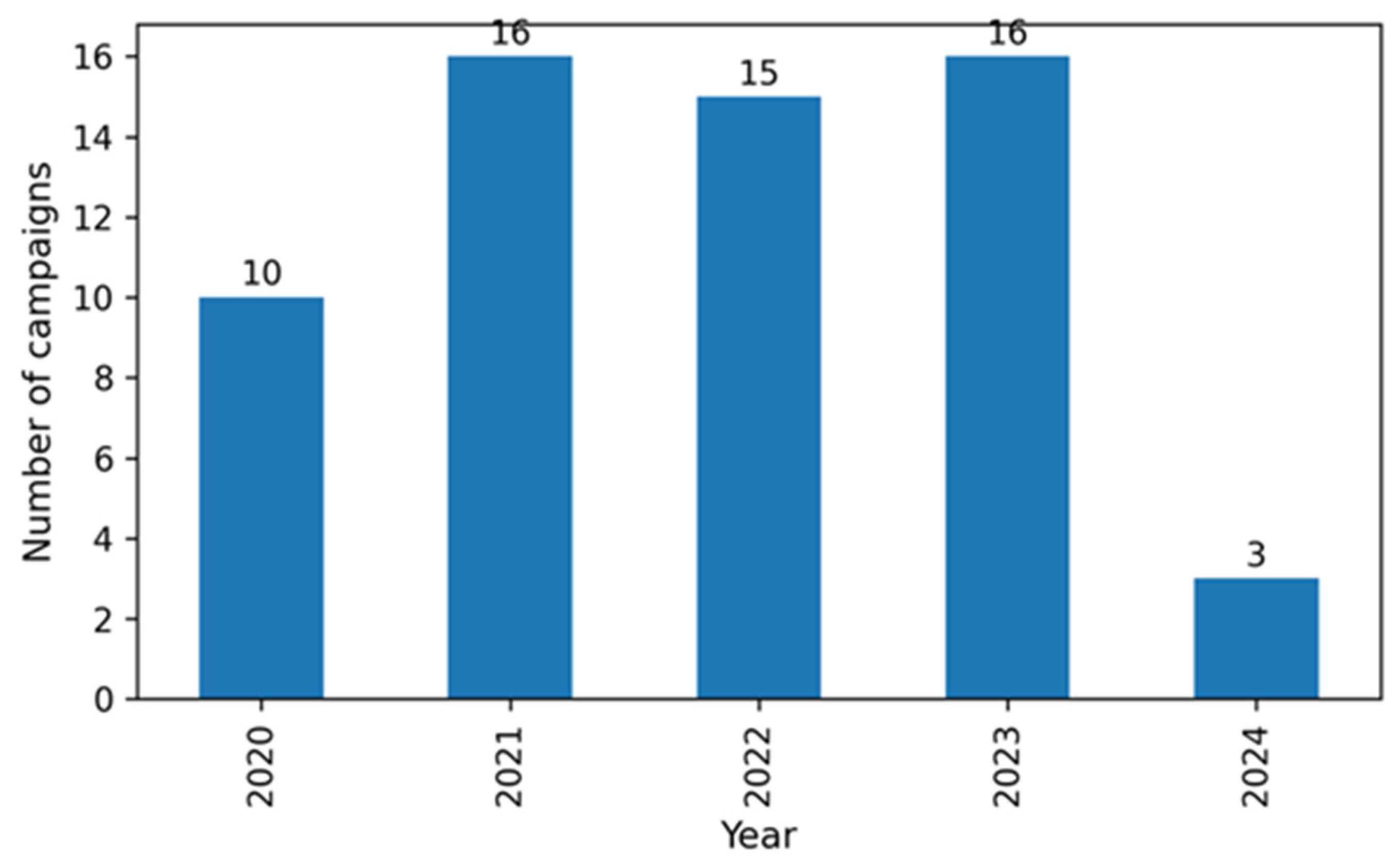
From a temporal perspective, the campaigns included in the corpus are distributed across the years following 2020. Specifically, 83.4% of the campaigns (n = 50) were carried out between 2021 and 2023, confirming the structural impact of COVID-19 on the intensified use of social communication by public services and social entities.
The years 2021 and 2023 account for the highest number of campaigns, with 16 initiatives each (26.7%), followed by 2022, with 15 campaigns (25.0%). The year 2020, marked by the initial phase of the health emergency, accounts for 10 campaigns (16.7%), while 2024 has a lower quantitative presence, with 3 campaigns (5.0%), which can be explained both by its proximity in time and by a possible shift towards more selective and strategic campaigns.
This temporal distribution describes how the campaigns included in the corpus are distributed over time. The temporal distribution of the campaigns analysed is summarised in Figure 1.
Figure 1.
Distribution of campaigns by year (2020–2024).
The territorial analysis reveals a marked international character of the campaigns analysed. Initiatives from more than 15 countries have been identified, which shows that the use of social marketing in the field of Community Social Services is a trend shared by different models of the welfare state.
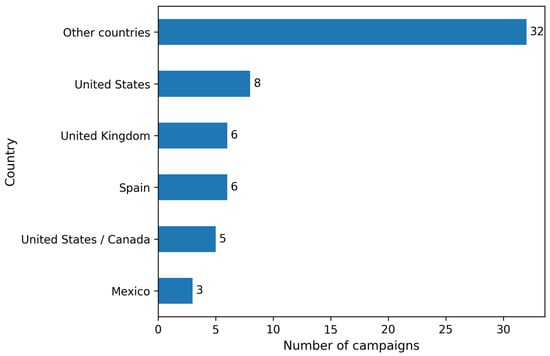
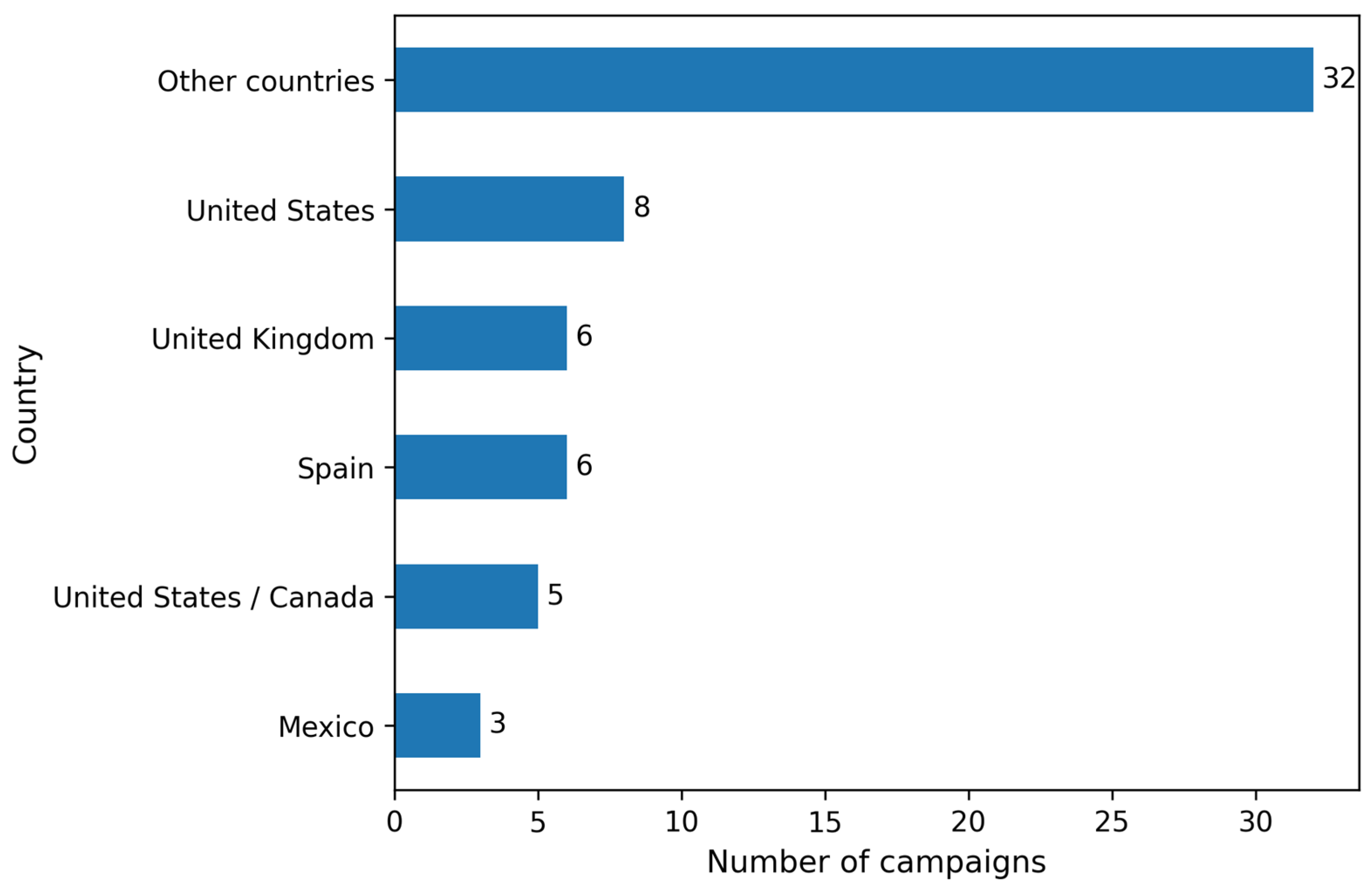
The United States has the highest number of campaigns, with 8 initiatives (13.3%), followed by Spain and the United Kingdom, with 6 campaigns each (10.0%). Also noteworthy is the presence of campaigns developed jointly by the United States and Canada (8.3%), as well as initiatives from Latin American countries such as Mexico (5.0%), Argentina, Chile and Brazil. This geographical diversity reflects both the cross-cutting nature of the social issues addressed and the adaptability of social marketing to different institutional and cultural contexts.
In terms of scope, campaigns at the national, regional and local levels were identified, with initiatives promoted at the municipal and community levels being particularly relevant, reinforcing the role of Community Social Services as key players in local social communication. The territorial diversity of the campaigns is shown in Figure 2.
Figure 2.
Distribution of campaigns by country.
The category “Other countries” shown in Figure 2 comprises a total of 32 campaigns. This grouped category includes the following territorial contexts and the number of campaigns identified in each of them: Australia (n = 2), Italy (n = 2), South Africa (n = 2), European Union (n = 2), global initiatives (n = 2), Portugal (n = 1), Canada (n = 1), Latin America and the Caribbean (n = 1), Peru (n = 1), Colombia (n = 1), India (n = 1), Bangladesh (n = 1), Ghana (n = 1), Norway (n = 1), Sweden (n = 1), Turkey (n = 1), France (n = 1), Chile (n = 1), Argentina (n = 1), New Zealand (n = 1), Uruguay (n = 1), Kenya (n = 1), Philippines (n = 1), Morocco (n = 1), Romania (n = 1), Netherlands (n = 1) and Ireland (n = 1). These countries and territorial categories were grouped together for visual clarity in the figure, as each individually represents a small proportion of the total sample.
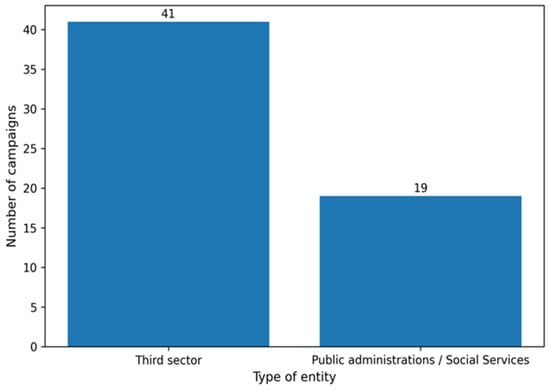
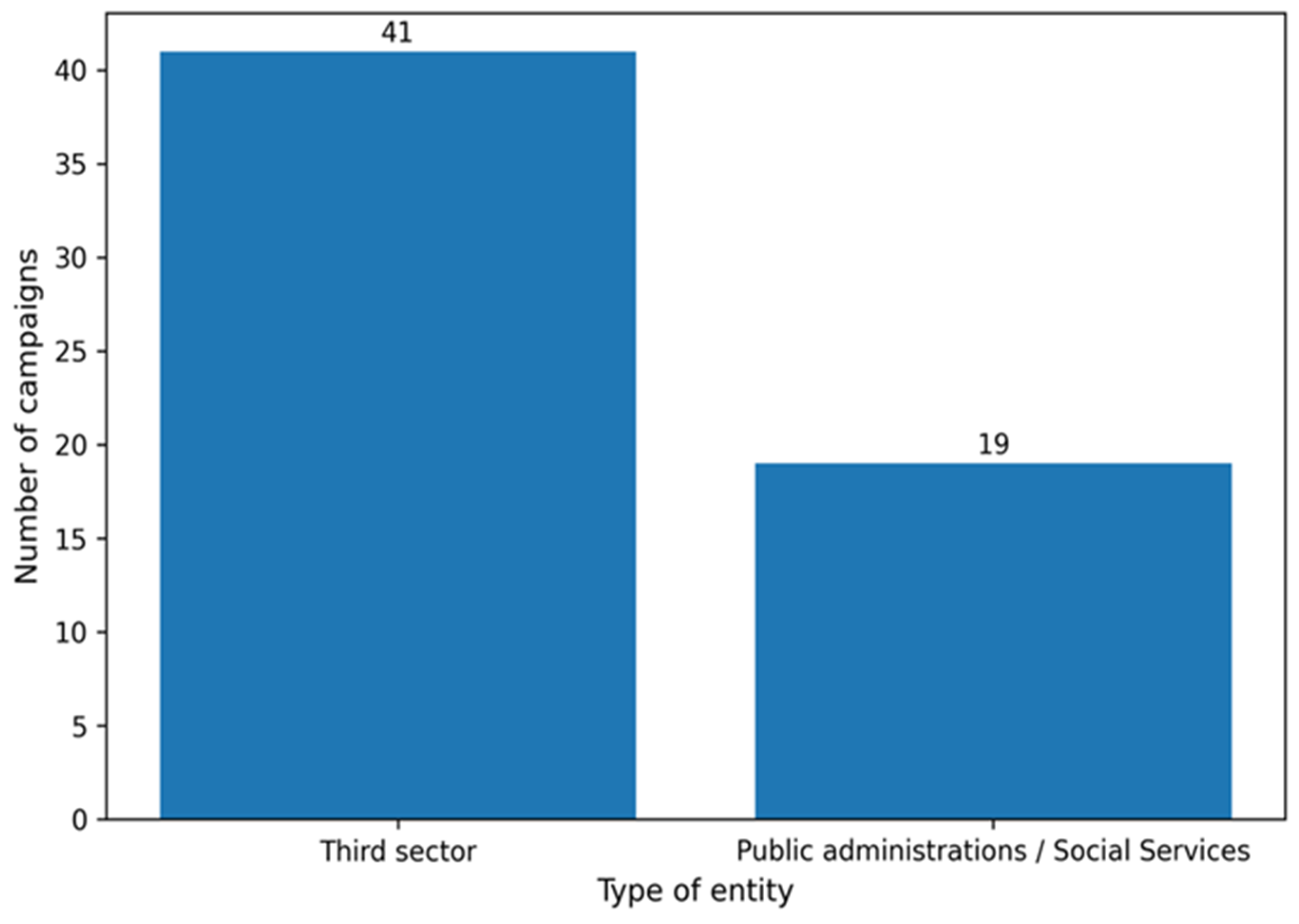
In terms of the driving forces behind these campaigns, the analysis shows a clear predominance of public administrations, ministries, regional governments and local councils, as well as local community social services. In addition, a significant proportion of the campaigns are driven by third-sector entities, foundations and specialised social organisations, in many cases in collaboration with public bodies.
This combination of actors demonstrates a logic of institutional and community co-responsibility, in which social communication is structured as a shared space between the public and the social spheres. The mixed campaigns also reflect the incorporation of more creative and innovative approaches, typical of the associative sphere, into the institutional discourse of social services. The types of promoting entities are shown in Figure 3.
Figure 3.
Type of entities promoting the campaigns.
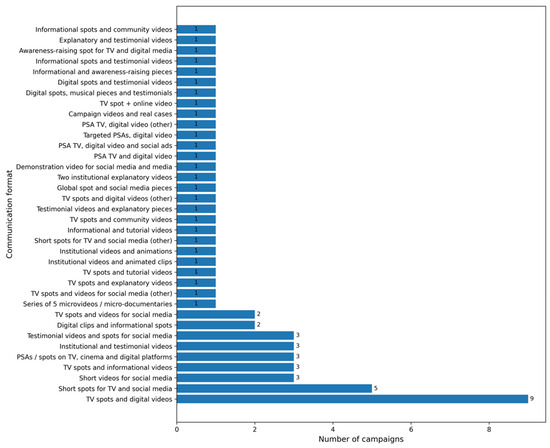
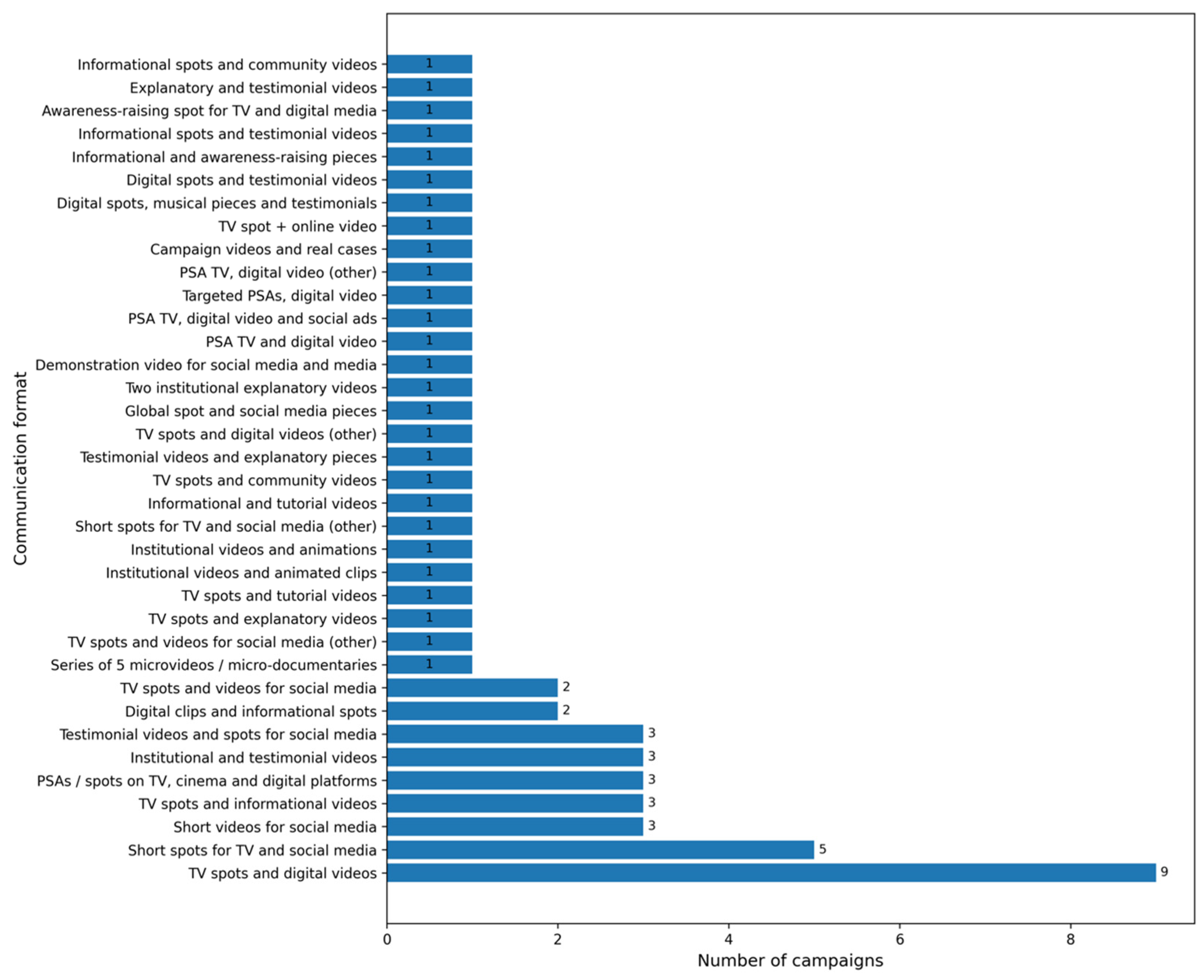
An analysis of the formats used reveals a clear predominance of audiovisual content, especially television commercials and digital videos, which account for 15.0% of all campaigns. In addition, there are short commercials adapted for television and social media (8.3%) and short videos specifically designed for social media (5.0%).
The commitment to audiovisual formats responds both to the need to capture attention in saturated digital environments and to the effectiveness of images and visual storytelling in generating emotional impact and facilitating identification with social issues. In most cases, campaigns combine these formats with multi-channel dissemination that integrates social media, institutional digital platforms and, to a lesser extent, traditional media, thus reinforcing their reach and visibility. The communication formats used are summarised in Figure 4.
Figure 4.
Communication formats used in the campaigns.
From a global perspective, the campaigns analysed show a clear focus on raising social awareness, highlighting social issues and promoting access to social resources and services. The repeated presence of explicit calls to action—such as requesting help, seeking information, reporting situations of violence or contacting social services—reinforces the instrumental and transformative nature of these initiatives.
The characteristics described above provide contextual information about the corpus analysed and serve as a descriptive framework for the qualitative analysis presented in the following sections, which focuses on narrative strategies, communication objectives and institutional linkages rather than on the distribution or prevalence of campaigns.
3.2. Social Issues Addressed in the Campaigns
The prominence of certain social issues within the analysed corpus reflects the thematic focus of the selected campaigns and the applied sampling criteria. It should not be interpreted as an indicator of the prevalence or relative importance of these issues across all social marketing initiatives developed in the same period.
The thematic analysis of the 60 social communication campaigns included in the study identifies a set of priority social issues that structure the communicative discourse of social marketing linked to Community Social Services in the post-COVID-19 period. The campaigns address social issues that have also been discussed during the pandemic period, although this study does not evaluate whether their prevalence increased as a result of COVID-19.
From a global perspective, the campaigns analysed directly address more than ten problem areas, although there is a clear thematic concentration on certain social issues. The most recurrent issues are gender-based violence and sexist violence, mental health, unwanted loneliness, social exclusion and poverty, vulnerable children and adolescents, and the promotion of access to social services, forming a map of priorities aligned with the main social challenges of the post-pandemic context.
3.2.1. Gender-Based Violence and Male Violence
Gender-based violence is the social issue most addressed in the campaigns analysed. A total of 18 campaigns (30.0%) focus their main message on the prevention, visibility and eradication of male violence, making this area an undisputed priority in institutional and community social marketing.
Most of these campaigns are developed in public institutional contexts and are closely linked to community social services, specialised services for women and emergency services. From a narrative point of view, the predominant approaches focus on social awareness, the identification of invisible situations of violence, and the promotion of support resources, such as telephone helplines, municipal services and comprehensive care facilities.
A distinctive feature of these campaigns is their use of emotional and testimonial narratives, which seek to generate empathy and break the social silence surrounding gender-based violence. There has also been a gradual shift from messages focused exclusively on victims to more community-based approaches that challenge the social environment and reinforce collective responsibility in detecting and preventing violence.
For instance, one campaign uses a first-person voice-over in which a woman describes everyday situations that gradually escalate into control and fear, without explicitly naming violence. The final frame displays contact information for local support services, reinforcing the link between awareness and access to help.
3.2.2. Mental Health and Emotional Well-Being
Mental health emerges as the second most recurrent issue, present in 12 campaigns (20.0% of the total). This notable thematic weight reflects the psychological and emotional impact of the pandemic, as well as the growing recognition of mental health as a central axis of social well-being.
Campaigns related to this area address issues such as anxiety, depression, stress, grief, suicide and emotional distress, and are aimed at both the general population and specific groups, especially young people, adolescents and the elderly. In many cases, the messages aim to normalise emotional distress, reduce the stigma associated with mental health problems and encourage people to seek help through social services and community resources.
From a communication perspective, these campaigns stand out for their use of accessible, destigmatising language and the incorporation of everyday stories that make it easier for the public to identify with them. Mental health is presented not only as an individual issue, but also as a social problem that requires collective responses and community support networks.
For example, one campaign portrays short scenes of young people experiencing anxiety in everyday contexts such as school or public transport, followed by messages normalising emotional distress and encouraging contact with community-based support resources.
3.2.3. Unwanted Loneliness and Social Isolation
Unwanted loneliness is another emerging issue that features prominently in the campaigns analysed, addressed in eight campaigns (13.3%). This issue is particularly relevant in the post-COVID-19 context, especially among older people, although campaigns targeting other population groups have also been identified.
Campaigns on unwanted loneliness emphasise the emotional, social and health consequences associated with isolation and focus on the need to strengthen community ties and social support networks. In this regard, Community Social Services are represented as key agents for detecting situations of isolation and activating community resources.
Narratively, these campaigns often use images and stories that convey everyday life, silence and the absence of bonds, appealing to empathy and the involvement of the social environment. Loneliness is narratively framed as a collective concern rather than an individual experience, reinforcing the community dimension through emotional storytelling and symbolic imagery.
For example, one campaign depicts an older person eating alone at a kitchen table in silence, while everyday sounds are amplified. The message concludes by inviting neighbours and family members to “be present” and to contact local social services if they identify situations of isolation.
3.2.4. Social Exclusion and Poverty
Social exclusion and poverty are present in 7 campaigns (11.7%), constituting a wide-ranging issue that, in many cases, is linked to other areas such as unemployment, homelessness, or economic insecurity.
These campaigns tend to focus on raising awareness of situations of economic vulnerability exacerbated by the pandemic, as well as on promoting access to benefits, social assistance and basic resources managed by Community Social Services. These campaigns narratively frame poverty and social exclusion by emphasising structural factors and rights-based discourses rather than individual responsibility.
In one campaign, a short video shows a family moving between temporary accommodations, interspersed with on-screen text stating that access to housing and basic income is a social right. The campaign concludes with information about how to contact local social services for support.
From a communication perspective, these campaigns tend to combine objective data with personal stories, seeking to balance social criticism with the promotion of available resources. There is also an explicit concern to avoid stigmatising representations of poverty, favouring more dignified and inclusive approaches.
3.2.5. Children and Adolescents in Vulnerable Situations
Children and adolescents are the focus of six campaigns (10.0%) in the corpus analysed. These initiatives address issues such as child abuse, neglect, child poverty, bullying and the emotional impact of the pandemic on children and adolescents.
Campaigns targeting this area stand out for their preventive nature and for directly appealing to the responsibility of adults, families, professionals and the community. In many cases, Community Social Services are presented as a reference point for the early detection of risk situations and the protection of children’s rights.
Narratively, visual and symbolic resources are used to emphasise vulnerability and the need for protection, combined with clear messages about the help and reporting channels available. These campaigns reinforce the rights-based approach and the centrality of children as a priority for social intervention.
3.2.6. Promoting Access to Social Services and Community Resources
A set of five campaigns (8.3%) focuses explicitly on promoting access to community social services, providing information on resources, benefits and services available to citizens. These campaigns are markedly institutional in nature and seek to reduce barriers to access, misinformation and stigmatisation associated with the use of social services.
In this area, communication is aimed at reinforcing the visibility of social services as a universal right and not as a residual resource. The messages tend to emphasise the proximity, accessibility and usefulness of these services, using clear language and formats adapted to different audiences.
This type of campaign is particularly relevant in crisis contexts, where demand for social care increases and it becomes necessary to ensure that citizens are aware of the resources available and how to access them.
3.2.7. Other Emerging Issues
Finally, a small number of campaigns address other social issues—such as disability, functional diversity, migration, LGTBIQ+ equality, substance use, and community coexistence—in a more specific or timely manner. Although these topics represent a smaller percentage of the corpus, their presence highlights the diversity of areas in which social marketing can contribute to raising awareness and social intervention.
These campaigns tend to take highly specialised approaches and are often driven by third-sector organisations in collaboration with public administrations, which reinforces their innovative nature and transformative potential.
Overall, the thematic analysis of the issues addressed shows that the social communication campaigns developed since 2020 reflect a clear alignment with the main social challenges of the post-COVID-19 context. The centrality of gender-based violence, mental health and unwanted loneliness highlights a broadening of the traditional focus of social services towards relational, emotional and community dimensions of well-being.
Likewise, the thematic diversity observed confirms the potential of community social marketing as a flexible and adaptable tool, capable of addressing both structural issues and emerging situations, contributing to the construction of social communication aimed at transformation, prevention and the guarantee of rights.
3.3. Communication Objectives and Strategies Used in the Campaigns
Analysis of the communication objectives and strategies of the 60 campaigns included in the study reveals consistent patterns in the communication goals pursued and the strategic approaches used in social marketing linked to Community Social Services.
From a global perspective, the communication objectives identified do not appear in isolation, but rather combine and overlap, depending on the social issue addressed, the target audience and the institutional context from which each campaign is promoted. However, content analysis allows them to be grouped into four broad categories of communication objectives, which recurrently structure the design and discourse of the campaigns analysed.
Firstly, the objective of raising social awareness and consciousness stands out across the board, present in most of the campaigns in the corpus. These initiatives seek to highlight complex or socially invisible social issues, generate empathy among citizens and question socially normalised norms, attitudes or beliefs. This objective is particularly relevant in campaigns focusing on gender-based violence, mental health, unwanted loneliness and social exclusion, areas in which communication is aimed at provoking an emotional and reflective response rather than conveying technical information. This approach coincides with the principles of critical social marketing, which emphasises the role of communication in transforming cultural and social frameworks related to collective well-being (Gordon et al. 2022).
A second recurring objective is the prevention and early detection of situations of social risk. In this case, campaigns aim to alert people to warning signs, facilitate the identification of problematic situations in the immediate environment, and reinforce community co-responsibility in protecting vulnerable individuals and groups. These types of objectives appear most strongly in campaigns linked to the prevention of gender-based violence, the protection of children and adolescents, and the promotion of emotional well-being. From this perspective, communication is configured as a preventive tool that complements the direct intervention of Community Social Services, helping to reduce the invisibility of social risk and promoting early action.
Thirdly, campaigns are identified whose main objective is to provide guidance on resources, services and social rights. These initiatives incorporate explicit calls to action aimed at providing information about benefits, care facilities, helplines, or available community services. The communicative emphasis is on reducing barriers to access, combating misinformation, and normalising the use of social services as a universal right, avoiding welfare-based or stigmatising approaches. These types of objectives are particularly common in campaigns promoted directly by local public administrations and social services, and are in line with research highlighting the importance of institutional communication in improving access to and integration of social services (Agonafer et al. 2021).
Finally, a smaller number of campaigns combine the above objectives with the explicit aim of community mobilisation and participation, promoting active citizen involvement, volunteering or collective action, as summarized in Table 1. These campaigns tend to adopt more participatory and collaborative approaches and are usually promoted by third sector entities in coordination with public administrations. Although quantitatively less frequent, these initiatives reflect a more advanced use of social marketing, aimed not only at raising awareness or informing, but also at activating community dynamics and processes of social co-responsibility.
Table 1.
Communication objectives and communication strategies identified in the campaigns analysed.
In relation to the communication strategies employed, content analysis reveals a clear predominance of narrative approaches based on emotion, storytelling and identification with everyday situations. Campaigns repeatedly resort to personal stories, scenes from everyday life and explicit or implicit testimonials that allow the public to recognise themselves in the situations depicted. For example, in one campaign addressing unwanted loneliness, the narrative centres on an older person performing everyday activities alone in silence, while ambient sounds are amplified to emphasise isolation. Rather than explicitly describing loneliness as an individual problem, the campaign frames it as a collective concern. The final message invites neighbours and relatives to remain attentive to similar situations and provides contact details for local social services, explicitly linking emotional awareness with community responsibility.
This type of strategy promotes emotional connection with the messages and facilitates understanding of complex social issues, in line with studies that highlight the effectiveness of storytelling in social and community communication (Belso-Martínez et al. 2020; Mitchuk et al. 2021).
Likewise, there is widespread use of familiar, accessible and destigmatising language, especially in campaigns related to mental health, poverty or access to social services. This approach helps to reduce symbolic barriers, normalise the demand for help and promote a more inclusive perception of social services, avoiding paternalistic or blaming representations of social vulnerability. Similarly, in a campaign focused on mental health, short scenes depict young people experiencing anxiety in ordinary contexts such as public transport or school. The narrative avoids clinical language and instead normalises emotional distress as part of everyday life. The campaign concludes with a direct call to seek support through community-based services, combining destigmatising storytelling with practical guidance on available resources.
In terms of formats, short audiovisual content adapted for multi-channel dissemination clearly predominates, combining television, social media and institutional digital platforms. This strategy responds both to the need to capture attention in saturated communication environments and to adapt messages to the media consumption habits of different population groups. The preference for audiovisual formats also reinforces the emotional impact of the messages and their potential for dissemination, as recent research on social communication in digital contexts indicates (Bhrammanachote 2024).
Calls to action (CTAs) are a central element of communication strategies, especially in campaigns aimed at prevention and access to resources. These calls are formulated in a clear and direct manner, inviting people to seek help, obtain information, report risky situations or contact Community Social Services. The systematic presence of calls to action positions communication as a bridge between social awareness and orientation towards available resources.
Overall, the results show significant consistency between communication objectives and the strategies employed. Awareness-raising campaigns prioritise emotional and symbolic narratives, while those focused on resource orientation adopt more informative and functional approaches.
3.4. Linking Campaigns to Community Social Services
An analysis of the 60 social communication campaigns reveals varying degrees of linkage with Community Social Services, depending on the role these services play in the design, content and calls to action of the campaigns. The results show that the linkage is not homogeneous, but it is systematic and takes recognisable forms that reflect a process of progressive integration of communication within community social intervention.
Most campaigns analysed were promoted by national or regional public institutions or large third-sector organisations. However, many of them explicitly referred to local or community-based services through their calls to action, helplines or resource information. In this study, the term “community” does not refer to the territorial scale of the campaigns, but to the functional role attributed to Community Social Services as points of access, proximity and coordination within the social protection system.
In 14 campaigns, Community Social Services act as the direct promoter, appearing to be explicitly identified as responsible for the initiative. These campaigns are mainly concentrated at the municipal and local level and are aimed at providing information on social resources, access procedures, basic social care services and community support mechanisms. In these cases, communication is used as an operational tool for social intervention, aimed at facilitating access to rights and reducing informational and symbolic barriers associated with the use of Social Services.
In 21 campaigns, the link with Community Social Services is established through explicit calls to action, even though the main promoting entity is a regional or state administration, or a third-sector organisation. These campaigns refer directly to resources managed by Social Services, such as municipal services, social care hotlines, emergency services or local community resources. The main function of communication in these cases is to guide citizens towards existing services, reinforcing the role of Social Services as a gateway to the social protection system.
A third group, comprising 25 campaigns, has an implicit link with Community Social Services. Although not directly mentioned in the messages, the campaigns address issues that are central to their scope of action, such as gender violence, mental health, social exclusion, unwanted loneliness and child protection. These initiatives focus on raising social awareness, highlighting situations of vulnerability and promoting attitudes of community support, creating a favourable framework for social intervention, although without direct referral to services.
From a comparative perspective, it can be observed that campaigns with a direct or explicit link tend to use informative and functional language, with clear messages about resources, rights and procedures, while campaigns with an implicit link prioritise emotional and symbolic narratives aimed at raising social awareness. This difference responds to different but complementary communication objectives within the overall social intervention strategy.
Overall, the results show that Community Social Services are structurally present in the ecosystem of campaigns analysed, either as promoters, as reference resources or as an underlying institutional framework. This presence is consistent with the use of communication and social marketing as integrated components of community action within the campaigns analysed, particularly in relation to access to information about services and social rights.
4. Discussion
This discussion interprets the qualitative patterns identified in the analysis of a selected corpus of social marketing campaigns developed since 2020. Rather than assessing the effects or prevalence of social marketing initiatives, the discussion focuses on how communication objectives, narrative strategies and institutional linkages are articulated within the campaigns analysed, and how these patterns relate to existing scholarship on social marketing and community social intervention.
Taken together, the analysis suggests that the campaigns examined narratively construct communication as more than a purely instrumental or informational practice. Instead, communication is articulated within the analysed campaigns as a strategic component of social intervention, without assessing its social effects. This interpretation is based on the recurring alignment between communication objectives and narrative strategies observed across the campaigns analysed, rather than on an assessment of their social effects.
The prioritisation of issues such as gender-based violence, mental health, unwanted loneliness, social exclusion and poverty reflects an expansion of the focus of social services towards the emotional, relational and community dimensions of well-being. This finding coincides with previous research highlighting how social communication can contribute to the transformation of norms, the prevention of risk situations and awareness-raising about structural vulnerabilities (Bhrammanachote 2024; Gordon et al. 2022).
An analysis of communication strategies shows a predominance of emotional narratives, storytelling and multi-channel audiovisual formats. These techniques facilitate audience identification with the social issues addressed, increase the effectiveness of messages and allow awareness-raising objectives to be combined with practical guidance towards social services (Belso-Martínez et al. 2020; Mitchuk et al. 2021). The distinction between campaigns with a direct or explicit link to social services—aimed at providing information on resources and procedures—and campaigns with an implicit link—focused on awareness and sensitisation—highlights the complementarity of communication objectives in social intervention.
In this regard, the results of the analysis allow us to identify clear patterns in relation to the communication objectives and strategies used in the campaigns analysed. Beyond the diversity of themes, the initiatives repeatedly combine objectives of social awareness and sensitisation, prevention and early detection of risk situations, and guidance towards social resources and services. This articulation between objectives and strategies discursively positions community social marketing as a practice oriented towards social awareness, prevention and guidance to resources.
Collaboration between public administrations and third-sector entities reinforces the model of institutional and community co-responsibility, consolidating Community Social Services as strategic actors of proximity and social cohesion. This finding highlights the need to strengthen inter-institutional links and harness the creativity of the third sector to improve the design and effectiveness of campaigns. However, the heterogeneity in the degrees of linkage and communication strategies highlights the absence of a systematic framework for campaign planning and evaluation, limiting the ability to measure their real impact and replicate good practices (Agonafer et al. 2021; Roger et al. 2023).
Although this study offers relevant findings, it has certain limitations that should be noted. The campaigns were selected based on their public availability, so some local or less widely publicised initiatives may not have been included. Furthermore, as this is a qualitative and exploratory approach, the results are not fully generalisable to all territorial or cultural contexts, especially given the international diversity of the cases analysed. Furthermore, the analysis focused on communication strategies and objectives without directly measuring the effects on citizens or the use of services, so it is not possible to establish direct causal relationships. Even so, these limitations open up opportunities for future studies that incorporate more systematic evaluations, longitudinal follow-up and comparisons between different contexts.
The results of the study have important implications for the practice and planning of Community Social Services. Integrating transformative communication and social marketing into institutional strategy can improve the visibility of services, facilitate access to resources, and reduce the stigma associated with their use. In addition, training in strategic communication for professionals and collaboration with third sector entities are essential to enhance the creativity and effectiveness of campaigns. Having clear impact indicators would make it possible to evaluate results, optimise resources and consolidate replicable good practices. Finally, the focus on both emerging and structural issues—from gender-based violence to mental health and social exclusion—underscores the need for inclusive communication policies capable of combining information, awareness-raising and community action in a coherent and effective manner.
Overall, the evidence suggests that post-COVID-19 community social marketing functions as a flexible and transformative tool, capable of addressing complex social issues, promoting rights, strengthening social cohesion, and consolidating Community Social Services as strategic actors of social change.
5. Conclusions
The analysis of the 60 social communication campaigns developed between 2020 and 2024 shows that social marketing and transformative communication are increasingly articulated as strategic components within the campaigns analysed. The analysis of the selected campaigns shows that communication is framed as more than a purely informative function within the examined corpus. This issue highlights the importance of structurally integrating communication into social service policies and practices, recognising its potential to generate social impact beyond the individual sphere.
The issues addressed in the campaigns reflect a broadening of the traditional focus of social services, incorporating relational, emotional and community dimensions of well-being. Gender-based violence, mental health, unwanted loneliness, social exclusion and poverty are strategic priorities, reflecting a comprehensive response to the structural and emerging vulnerabilities exacerbated by the pandemic. This pattern suggests that community social marketing not only fulfils a function of visibility and awareness-raising, but also acts as a catalyst for social intervention by mobilising citizens and strengthening trust in institutions. The study also highlights the existence of defined patterns of communication objectives and social marketing strategies, which reinforce the role of communication as a structural dimension of intervention in Community Social Services, beyond its purely informative function.
The study also shows that communication strategies based on emotional narratives, storytelling and multi-channel audiovisual formats are particularly effective in generating identification and empathy, allowing social awareness objectives to be balanced with a focus on specific resources managed by social services. The observed complementarity between awareness-oriented and resource-oriented strategies suggests the presence of a structured approach to social marketing within the campaigns analysed, in which different communicative logics coexist depending on objectives and institutional roles. Collaboration between public administrations and third-sector entities reinforces the creativity and innovation of campaigns, consolidating a model of institutional and community co-responsibility that strengthens social cohesion and the role of Community Social Services as strategic actors of proximity.
In short, post-COVID-19 social marketing campaigns are a flexible and transformative resource that expands the capacity of Community Social Services to address complex issues, promote rights and strengthen community action. This study does not assess the effects or effectiveness of social marketing campaigns. Its contribution lies in describing and interpreting communicative strategies and institutional narratives within a limited, exploratory corpus.
Author Contributions
Conceptualization, D.R.-O. and A.G.d.l.F.; Methodology, Y.M.d.l.F.R. and V.F.G.; Formal Analysis, A.G.d.l.F., D.R.-O., V.F.G. and Y.M.d.l.F.R.; Investigation, all authors; Writing—Original Draft Preparation, D.R.-O. and A.G.d.l.F.; Writing—Review & Editing: all authors; Supervision, Y.M.d.l.F.R. All authors have read and agreed to the published version of the manuscript.
Funding
This research received no external funding.
Institutional Review Board Statement
Not applicable.
Informed Consent Statement
Not applicable.
Data Availability Statement
The data supporting the results of this study are derived from publicly available sources. The coded dataset used for analysis is available from the authors upon reasonable request.
Conflicts of Interest
The authors declare no conflicts of interest.
Abbreviations
The following abbreviations are used in this manuscript:
| COVID-19 | Coronavirus Disease 2019 |
| CTA | Call to Action |
| KPIs | Key Performance Indicators |
| LGTBIQ+ | Lesbian, Gay, Bisexual, Transgender, Queer |
References
- Agonafer, Etsemaye P., Savanna L. Carson, Vanessa Nunez, Kelli Poole, Clemens S. Hong, Maria Morales, Jessica Jara, Sarmen Hakopian, Tiffany Kenison, Ish Bhalla, and et al. 2021. Community-based organizations’ perspectives on improving health and social service integration. BMC Public Health 21: 452. [Google Scholar] [CrossRef] [Scilit]
- Andrade-Guzmán, Carlos, and Margaret Lombe. 2022. Meanings and expressions of co-responsibility: A small qualitative study based on the reflections from Chilean social workers involved in public-private child welfare. Qualitative Social Work 22: 520–36. [Google Scholar] [CrossRef] [Scilit]
- Anuyah, Oghenemaro, Ann-Marie Conrado, Clinton Carlson, Hope Gilbride, and Ronald Metoyer. 2023. Exploring the barriers and potential opportunities of technology integration in Community-Based Social Service Organizations. ACM Journal on Computing and Sustainable Societies 1: 1–28. [Google Scholar] [CrossRef] [Scilit]
- Argüelles, María Antonia. 2016. La nueva ley de servicios sociales de Andalucía: Una presentación. FORO. Revista de Ciencias Jurídicas y Sociales Nueva Época 19: 313–34. [Google Scholar] [CrossRef] [Scilit]
- Azzaakiyyah, Hizbul Khootimah. 2023. The impact of social media use on social interaction in contemporary society. Technology and Society Perspectives (TACIT) 1: 1–9. [Google Scholar] [CrossRef] [Scilit]
- Baptista, Nuno, Helena Alves, and José Carlos Pinho. 2020. Uncovering the use of the social support concept in social marketing interventions for health. Journal of Nonprofit & Public Sector Marketing 34: 1–35. [Google Scholar] [CrossRef] [Scilit]
- Bela, Baiba, Anna Broka, Feliciana Rajevska, and Līga Rasnača. 2021. Transformative change in social service delivery and social work practice in Latvia during the COVID-19 pandemic. European Journal of Social Work 25: 816–28. [Google Scholar] [CrossRef] [Scilit]
- Belso-Martínez, José Antonio, Mariola Sánchez, and María José López-Sánchez. 2020. The COVID-19 response system and collective social service provision. Strategic network dimensions and proximity considerations. Service Business 14: 387–411. [Google Scholar] [CrossRef] [Scilit]
- Bhrammanachote, Winayaporn. 2024. Marketing communication through brand storytelling of the Communitique products in Phayao province. Parichart Journal 37: 377–97. [Google Scholar] [CrossRef] [Scilit]
- Castro-Spila, Javier, David Alonso González, Juan Brea-Iglesias, and Xanti Moriones García. 2025. Social Innovation and Social Care: Local solutions to Global challenges. Social Sciences 14: 479. [Google Scholar] [CrossRef] [Scilit]
- Creswell, John W. 2014. Research Design: Qualitative, Quantitative, and Mixed Methods Approaches, 4th ed. Thousand Oaks: Sage. [Google Scholar]
- Fiorentino, Vera, Marjo Romakkaniemi, Timo Harrikari, Sanna Saraniemi, and Laura Tiitinen. 2022. Towards digitally mediated social work—The impact of the COVID-19 pandemic on encountering clients in social work. Qualitative Social Work 22: 448–64. [Google Scholar] [CrossRef] [Scilit]
- Flick, Uwe. 2018. An Introduction to Qualitative Research, 5th ed. Thousand Oaks: Sage. [Google Scholar]
- Forns, Maria Victòria, and Elisa Alegre-Agís. 2024. The constitutional guarantee of the provision of local Social Services in Spain: A comparative regional study. Revista de Investigações Constitucionais 11: 232. [Google Scholar] [CrossRef] [Scilit]
- Gordon, Ross, Fiona Spotswood, and Sally Dibb. 2022. Critical social marketing: Towards emancipation? Journal of Marketing Management 38: 1043–71. [Google Scholar] [CrossRef] [Scilit]
- Hantrais, Linda. 2009. International Comparative Research: Theory, Methods and Practice. London: Palgrave Macmillan. [Google Scholar]
- Hermann, Erik. 2021. Leveraging Artificial Intelligence in Marketing for Social Good—An Ethical Perspective. Journal of Business Ethics 179: 43–61. [Google Scholar] [CrossRef] [Scilit]
- Ibarra, Francisco, Marcos Baez, Luca Cernuzzi, and Fabio Casati. 2020. A Systematic Review on Technology-Supported Interventions to Improve Old-Age Social Wellbeing: Loneliness, social isolation, and Connectedness. Journal of Healthcare Engineering 2020: 2036842. [Google Scholar] [CrossRef] [Scilit] [PubMed]
- Krippendorff, Klaus. 2013. Content Analysis: An Introduction to Its Methodology, 3rd ed. Thousand Oaks: Sage. [Google Scholar]
- Lázaro-Rodríguez, Pedro, and Enrique Herrera-Viedma. 2020. Noticias sobre COVID-19 y 2019-nCoV en medios de comunicación de España: El papel de los medios digitales en tiempos de confinamiento. El Profesional de la Informacion 29: 1–11. [Google Scholar] [CrossRef] [Scilit]
- Mayring, Philipp. 2014. Qualitative Content Analysis: Theoretical background and procedures. In Advances in Mathematics Education. Dordrecht: Springer, pp. 365–80. [Google Scholar] [CrossRef] [Scilit]
- Miles, Matthew B., Michael Huberman, and Johnny Saldaña. 2014. Qualitative Data Analysis: A Methods Sourcebook, 3rd ed. Thousand Oaks: Sage. [Google Scholar]
- Mitchuk, Olha, Inna Penchuk, Nataliia Podluzhna, Olena Malovichko, Olga Shirobokova, and Angelina Tregub. 2021. Changes in Social Communication as a Tool of Social Work under the Influence of Digitalization. Studies of Applied Economics 39: 1–11. [Google Scholar] [CrossRef] [Scilit]
- Nesi, Jacqueline. 2020. The impact of social media on youth mental health. North Carolina Medical Journal 81: 116–21. [Google Scholar] [CrossRef] [Scilit]
- Purkey, Eva, Imaan Bayoumi, Colleen M. Davison, and Autumn Watson. 2022. Directed content analysis: A life course approach to understanding the impacts of the COVID-19 pandemic with implications for public health and social service policy. PLoS ONE 17: e0278240. [Google Scholar] [CrossRef] [Scilit] [PubMed]
- Roger, Aude, Mikael Dourgoudian, Virginie Mergey, David Laplanche, Fiona Ecarnot, and Stéphane Sanchez. 2023. Effectiveness of prevention interventions using social marketing methods on behavioural change in the general population: A Systematic Review of the literature. International Journal of Environmental Research and Public Health 20: 4576. [Google Scholar] [CrossRef] [Scilit]
- Shah, Syed Ghulam Sarwar, David Nogueras, Hugo Cornelis van Woerden, and Vasiliki Kiparoglou. 2020. The COVID-19 pandemic: A pandemic of lockdown loneliness and the role of digital technology. Journal of Medical Internet Research 22: e22287. [Google Scholar] [CrossRef] [Scilit] [PubMed]
- Stover, Jesse, Laxmisupriya Avadhanula, and Suruchi Sood. 2024. A review of strategies and levels of community engagement in strengths-based and needs-based health communication interventions. Frontiers in Public Health 12: 1231827. [Google Scholar] [CrossRef] [Scilit] [PubMed]
- Thangavel, Gomathi, Mevludin Memedi, and Karin Hedström. 2022. Customized Information and Communication Technology for reducing social isolation and loneliness among Older adults: Scoping review. JMIR Mental Health 9: e34221. [Google Scholar] [CrossRef] [Scilit]
- Wojczewski, Silvia, Paul Grohma, and Ruth Kutalek. 2023. Risk communication and community engagement with vulnerable groups: Perceptions of social-services CSOs during COVID-19. International Journal of Disaster Risk Reduction 94: 103817. [Google Scholar] [CrossRef] [Scilit] [PubMed]
- Yin, Robert K. 2018. Case Study Research and Applications: Design and Methods, 6th ed. Thousand Oaks: Sage. [Google Scholar]

Disclaimer/Publisher’s Note: The statements, opinions and data contained in all publications are solely those of the individual author(s) and contributor(s) and not of MDPI and/or the editor(s). MDPI and/or the editor(s) disclaim responsibility for any injury to people or property resulting from any ideas, methods, instructions or products referred to in the content. |
© 2026 by the authors. Licensee MDPI, Basel, Switzerland. This article is an open access article distributed under the terms and conditions of the Creative Commons Attribution (CC BY) license.