


Abstract
Building on the expectation gradient, this research explores how national origin, occupied status, and stress exposure are related to depressive outcomes in immigrant youth. An already vulnerable population for deleterious mental health outcomes, these youth face unique societal stressors that serve as significant predictors for their well-being. Drawing on a cross-sectional analysis from the Children of Immigrants Longitudinal Study, 1991–2006, this study examines what occurs when the source of stress potentially originates within the home. Specifically, the research uses a Latinx sample to assess within-group heterogeneity and investigates discrepancies between parents’ and children’s educational attainment aspirations. Grounded in the stress process perspective—particularly Turner’s iteration of the Pearlin model—this study also considers the role social and personal resources play in mediating/moderating the relationship between stress exposure and depressive outcomes. Findings reveal that what is operationalized as an academic stressor could have protective properties, supporting a growing number of research findings on the subject matter. Support is observed for resources, as they mediate and moderate the relationship between stress exposure and depressive outcomes. Although cross-sectional in design and unable to be generalized, the findings further support the claim that ambitions have the potential to be protective, giving credence to Julien’s expectation gradient. The findings also show (for the case presented) the important role the family unit can play as a personal resource against depressive symptoms. Future research should continue reexamining the expectation gradient across distinct time periods and should move towards testing for causality through longitudinal designs.
Keywords:
stress process; family cohesion; depressive symptomatology; educational aspirations; parent–child aspiration discrepancy; educational attainment; academic achievement; immigrant youth; latinx; hispanic heterogeneity; personal resources; enabling resources; Mexico; Nicaragua; Cuba; occupied status; CILS; children of immigrants; social mobility; upward mobility 1. Introduction
Does a discrepancy between the educational attainment aspirations of immigrant parents and their children lead to stress and/or tension? Do those aspirations arise out of the family’s socioeconomic conditions? And finally, how does this process influence the psychological well-being of the child? These central questions guide this research investigating the association between educational attainment aspirations, academic achievement, and depressive outcomes in second-generation youth. Drawing on a cross-sectional analysis from the Children of Immigrants Longitudinal Study, 1991–2006, this study investigates whether discrepancies between a parent’s and child’s academic success aspirations contribute to a worsening of said child’s well-being. Grounded in the stress process perspective, this research revisits the expectation gradient discussed by Julien (2026) to better understand the interdisciplinary association between social standing, expected educational merits, and depressive symptoms in immigrant youth.
Past studies have suggested that among those who perform well in school, depressive symptomatology decreases (DeSocio and Hootman 2004). Other studies have also suggested that self-esteem and life satisfaction measures increase with improved academic performance (Awad 2007). This study seeks to investigate these associations as they apply to understudied immigrant youth populations and seeks to offer more insight into the role that parent aspirations and ambitions play in their children’s psychological well-being. Because of the cross-sectional nature of the analysis, findings should be interpreted with caution, as what is observed does not imply causality but instead demonstrates a time-limited application of Julien’s education gradient hypothesis (Julien 2026).
In summary, the purpose of this study is to examine the roles of family socioeconomic background, household educational aspirations, access to resources, and academic performance in relation to mental health outcomes among immigrant youth. Because depressive symptoms can serve as a predictor for suicidal ideation, obesity and other important comorbid conditions, these matters should not go unaddressed.
Aspirations, Strains and Demands
For immigrant adults, success or failure in American society is predicated on performance in the American labor markets (Portes and Rumbaut 2001). However, for the children of these individuals, the onus is given to their academic achievements. These achievements often represent a path toward the upward mobility of their families. Portes and Rumbaut (2001) write that with the second generation, key outcomes [are] linked to academic achievement (Portes and Rumbaut 2001, p. 234). This suggests that school performance influences the eventual positions those in the second generation (and their families) occupy in the United States. Bearing this in mind, one can surmise that an awareness and understanding of this—from either the parental or youth perspective—can potentially serve as a stressor. This stressor may be operationalized in the form of increased expectations and aspirations.
Adolescence is an intricate period in which the youth’s schema of their surrounding world is developing. Issues related to identity formation and role assumptions often serve as important indicators of self-esteem. For immigrant youth, these issues can serve as added stress, as dissonant or selective acculturation also takes place (Portes and Rumbaut 2001). Findings from Portes and Rumbaut (2001, p. 239) indicate that increased acculturation diminishes the achievement drive within second-generation youth. Because parents dictate the degree to which acculturation takes place, they may consciously combat this threat to achievement with decreased warmth and increased pressure and control.
Baumrind (1966) defines warmth as behaviors conveying support, affection, encouragement and acceptance (Baumrind 1966; Steinberg 2001). Control—the opposite of warmth in many regards—is defined by Baumrind as pressures and behaviors in which support and encouragement are not conveyed (Baumrind 1966; Steinberg 2001). Control and warmth play important roles in a family unit, and these two factors represent the degree of demandingness that exists in a household. Control and warmth often work in tandem to influence child outcomes.
Fan and Chen (2001) found that greater parental warmth was associated with better child academic performance and psychological functioning (Jeynes 2003). Meanwhile, a 2003 study by Wolfradt found mixed associations between parental pressure and child mental health outcomes. While warmth had negative associations with anxiety, the study also noted that parental demandingness had positive correlations with increased anxiety (Wolfradt et al. 2003). A similar French study in 2009 noted that children with greater parental pressure experienced greater anxiety than those whose parents were more understanding (Bois et al. 2009). These results suggest that warmth and support from parents buffer the stressors that children may face. But what happens when the parents/the parenting becomes the source of stress for the students? Meunier et al. (2012) note that while there are “numerous studies on parenting dimensions, there has been limited research on combined effects on children and adolescents of parent pressure and warmth, both within each parent and especially across parents”.
A study in 2000 by McNamara found that “sources of external stress in adolescents include normative stressors… and daily hassles [like] parent-child conflicts, and academic pressure” (McNamara 2000). Building on the ideas introduced in this research, Quach et al. (2015) write that it is common for accolades that students receive to be transferred to their families, and that failing might generate criticisms from the community as well as shame for both parents and children (Quach et al. 2015; Triandis et al. 1990). The implications here are that role strain may take place, as students struggle with fulfilling what is expected of them.
2. Review of the Literature and Theoretical Framework
The primary framework used to answer the central research questions is the stress process model. This model explicates the relationship among stress, social support and health, and posits that those exposed to more stressors and possessing the lowest number of resources are at greater risk for compromised health (Carr 2014). In this study, stress exposure is represented in the form of academic expectations and performance. Past studies have noted that both academic stressors and achievement orientations are positively associated with depressive symptoms (Little and Garber 2004). The resources in this study come in the form of self-esteem, family cohesion, family conflict, mastery, and mental health service use. An increase in self-esteem, mastery, and/or family cohesion serves as an important resource in buffering the negative elements of the stress process. Family conflict undermines social support and serves as a risk factor. Pearlin’s stress process model provides modifiable factors associated with increased and decreased risk in outcomes (Turner 2013). The Pearlin model argues that stress exposure arises out of contextual factors surrounding one’s circumstances and life (Pearlin 1989). Turner’s elaboration of the Pearlin model specifically addresses how the mentioned factors are associated with increased or decreased health risks across race and class designations (Turner 2013). The factors are represented in the form of social and/or personal resources. As resources, they mediate/moderate the connection between health-related outcomes and social stress (Turner 2013). For instance, it is shown that family cohesion helps families in times of stress and may alleviate depressive symptoms (Harris and Molock 2000). Family cohesion and/or conflict may be especially important in the Latinx culture (Céspedes and Huey 2008). As such, it is included in the model. The other resource tested is self-esteem, as it is known that this is especially important for youth at risk (Rumbaut 1994; Awad 2007).
2.1. Education’s Effect on Health
Education is recognized as a root cause of good health (Mirowsky and Ross 2017). This is in part because education gives people the resources to control and shape their lives. A sense of control over one’s life is important in that greater control activates effective agency and enables one to pursue goals and actions without constraints (Mirowsky and Ross 2007). Higher levels of education promote a higher sense of control, as an increase in education gives way to increased resources (Mirowsky and Ross 2007).
2.2. Immigrant Mental Health
Immigrant lives do not begin upon arrival to the United States (Takeuchi 2016). Each immigrant brings with them personal experiences, motivations, and pursuits. The context of the arrival is thus significant and worth consideration. The argument for contextualization, perhaps most prominently featured in the works of Link and Phelan (1995), stresses the importance of having a clear understanding of the process at hand. In short, context matters, and to best understand present and developing findings, an exploration of the past is needed, along with careful attention to current processes. In the subject area of immigrant health, some of these processes likely involve acculturation and assimilation. But the process differs among immigrants, as there is variation in the lived experiences of these subjects. The differences in experiences (past, present and future) thus contribute to different outcomes among this group.
Many immigrants are met with a stigmatized status in American society that makes them and their families especially vulnerable to mental health issues (Williams 2012; McCart et al. 2007; Self-Brown et al. 2006). Past experiences can exacerbate or compensate for the effects of this new status, but this is not to say that immigrant stories follow a single narrative. As noted, “many” but not all immigrants encounter a stigmatized status, suggesting that differential vulnerability exists in this matter. Differential exposure to stressors and hardships often occurs by social status (Turner et al. 1995), and some immigrant groups experience more direct exposures than others. The degree of exposure is perhaps influenced by the occupied status one holds in society. Portes and MacLeod (1996) describe some of these statuses, noting that immigrants will likely embody a relatively disadvantaged or advantaged status in society. Those experiencing the stigmatized status likely take on the noted disadvantaged status, while those who are not take on the advantaged status. The stigmatized status also serves as a motivation to succeed against the expectations of those in society.
2.3. Group Composition Controversy
An important issue that exists in the realm of immigrant health involves group compositions. Several researchers have highlighted that many immigrant groups are bundled together for convenience, although this masks existing variations. It is for this reason that this research explores heterogeneity in the Hispanic context. Much of the conversation about the Hispanic immigrant population in the U.S. focuses mainly on Mexicans (Dubowitz et al. 2010), and though Mexicans make up over 2/3 of the U.S. Hispanic population, important findings regarding other groups are not always discussed. From a policy standpoint, this creates a debate about prioritization and who gets left behind or bundled in through research. Efforts in reconciling these concerns argue for increasing the sample of ethnic subgroups within representative studies, as well as increasing research that details within-group ethnic heterogeneity (Zsembik and Fennell 2005).
2.4. Hypotheses
Based on a review of the literature and theoretical perspectives, comparison groups were built into the hypotheses formulated. The primary comparison group is immigrant children from disadvantaged socioeconomic backgrounds. The analysis conducted explores within-group differences and demonstrates the need to acknowledge Hispanic heterogeneity in research; Nicaragua is the reference group for this assessment. With this in mind, the following hypotheses related to depressive symptomatology and academic/educational stressors were posited for the data.
| Hypotheses—(Children of Immigrants Longitudinal Study Wave 2) |
| H1. Compared to their more disadvantaged counterparts, advantaged groups will experience and report lower depressive symptoms. |
| H2. Those whose parents have higher aspirations than their own (aspiration discrepancy: parent aspirations > child’s own) will experience and report greater depressive symptoms. |
| H3. Those who earn higher academic marks will experience and report lower depressive symptoms. |
| H4a. Self-esteem will mediate the relationship between stress exposure and depressive symptomatology outcomes. |
| H4b. Family cohesion will mediate the relationship between stress exposure and depressive symptomatology outcomes. |
| H5a. The effect of educational attainment aspirations on depressive symptoms will vary by family cohesion score. |
| H5b. The effect of educational expectations on depressive symptoms will vary by self-esteem score. |
| H6a. The effect of academic achievement on depressive symptoms will vary by family cohesion score. |
| H7. The effect of academic achievement on depressive symptoms will vary by social class. |
To test these hypotheses, a conceptual model (see Figure A1) is created. Drawing primarily from Turner’s interpretation of the stress process model, this model explores the social characteristics of immigrant families and notes how discrepancies in educational attainment levels and a child’s own aspirations serve as stressors on the pathway to mental health outcomes.
3. Research Design and Methods
The Children of Immigrants Longitudinal Study survey was administered in both public and private schools; the respondents came from metropolitan areas of Miami/Ft. Lauderdale, Florida and San Diego, California. The total sample size of the study was 5262, and respondents came from 77 different nations, with the sample only reflecting the largest immigrant nationalities of each metropolitan area. The age ranges of the respondents varied, as the first wave interviewed eighth- and ninth-grade students, at an average age of 14. Altogether, three waves of the study were conducted, and this analysis focuses on the data collected during the second wave in 1995 (average age of 17), as this marks the period in which the respondents are between childhood and adult age (Portes and Rumbaut 2008). The second wave retrieved 81.5% of the original sample size, with 4288 respondents returning. Surveys were administered to the respondents, and a parental survey was conducted as well. In this analysis, the focus is on Latinx samples. The nations of Mexico, Cuba, and Nicaragua are specifically analyzed. The final sample number for this analysis is 1454. The Cuban sample size is 775, the Mexican sample size is 466, and the Nicaraguan sample size is 213. The selection of these nations is predicated on the difference in occupied status each nation has in the United States. Occupied status refers to a place or position in society that an individual or groups of individuals hold (Julien and Drentea 2020). These differences likely influence the perception of education’s importance in the household.
This research uses both bivariate and multivariate analyses to test hypotheses. Formal tests for mediation and moderation are conducted (Baron and Kenny 1986). The primary statistical method for measuring the association between academic achievement and depressive symptomatology is linear regression with OLS estimation.
This research uses both descriptive and bivariate statistics for its analytic approach. Formal tests for mediation and moderation are conducted (Baron and Kenny 1986) (see Figure A2 for diagrams). The primary statistical method for measuring the association between academic achievement and depressive symptomatology is linear regression with OLS estimation. No weighting is required for the CILS data. Regression analysis is conducted using the STATA software package, version 15.
Measures
4. Outcome Variable
Depressive Symptomatology
The outcome being examined is depressive symptomatology. Depressive symptoms are measured via a score derived from the second wave in 1995. This score signifies the mental health outcome of the respondent and is arranged on a continuous scale of 1–4, with the larger numbers representing poorer mental health (Julien and Drentea 2020). The scale used was the four-item Center for Epidemiological Studies-Depression (CES-D) short form scale (Portes and Rumbaut 2001). The scale included four questions that ask how often in the past week the respondent has felt sad, could not get going, did not feel like eating, and felt depressed. Each of these questions has ordinal responses with (1) rarely, (2) some of the time, (3) occasionally, and (4) most of the time. The internal consistency (α) of this scale is 0.76, which is considered satisfactory.
5. Independent Variables
Important independent variables for this research include respondents’ perception of parents’ educational attainment preference, respondents’ own attainment preference, student academic performance, and resources (social and/or enabling/personal).
5.1. Discrepancy in Educational Aspirations
Building on the works of Guo et al. (2022) and Mossakowski (2011), a stressor variable is constructed to capture discrepancies between parent educational aspirations and the child’s own. The variables used to create this measure share an identical response scale that asks respondents to name the highest level of education that (1) they believe their parents want them to get and (2) they would like to get for themselves. The response scales range from (1) less than high school, (2) finish high school, (3) some college, (4) finish college, and (5) finish a graduate degree. From this, three mutually exclusive categories are formed from these options: (0) parental aspirations exceeding the adolescent’s own, (1) parental aspirations below the adolescent’s own, and (2) matching aspirations for the parent and child. The coding of this variable is consistent with the coding of other covariates, where the least-advantaged category (parental aspirations exceeding the adolescent’s own) serves as a reference group. This is reflective of stress theory and the findings of Guo et al. (2022), where this direction of discrepancy is associated with greater depressive symptoms. It is important to note that because the discrepancy measure only captures the relative position of parent and adolescent aspirations, it remains distinct from the adolescent aspiration variable, which will be used later in the analysis and is named “Youth Educational Attainment Aspirations”. An important limitation of this measure is that it does not constitute a direct assessment of demand/pressure and instead seeks to create a theoretically (from stress theory) viable assessment that mismatched aspirations contribute to strain and conflict (Qin 2008; Ma et al. 2018; Qin 2008; Ang and Huan 2006). Missing cases were excluded, and the distribution of the measure across national-origin groups is reported in Table 1.
Table 1.
Means and standard deviations for variables of interest. (Children of Immigrants Longitudinal Study Wave 2).
Table 2.
Descriptive statistics of the sample characteristics by ethnic background. (Children of Immigrants Longitudinal Study Wave 2).
5.2. Youth Educational Attainment Aspirations
Youth educational attainment aspirations are assessed by asking respondents to indicate the highest level of education that they would like to achieve: (1) less than high school, (2) finish high school, (3) finish some college, (4) finish college, and (5) finish a graduate degree. An important limitation of this measure is that it does not capture demand/pressure in a direct manner like the Ang and Huan (2006) Academic Expectations Stress Inventory scale does (α = 0.85). Despite this, the use of expectations as a proxy to capture demand and pressure—which are strongly associated with stress—is longstanding and established (Julien 2026; Almroth et al. 2018; Gallagher 2016; Ang and Huan 2006).
5.3. Academic Achievement Level
Academic achievement level is measured using grade point average, which ranges from 0.0 to 5.0. While the investigators of the data (Portes and Rumbaut 2008) have approached the study of academic performance continuously, this study categorizes achievement (0 = low-achieving to 2 = high-achieving). By categorizing grade point averages, this study simplifies our understanding of what happens when achievement levels rise. Category 0, representing low achievement, serves as the reference category and includes values from 0.0 to 1.99. Category 1, representing “average achievement”, ranges from 2.00 to 2.99. Category 2 represents “high achievement,” with scores ranging from 3.0 to 5.0.
6. Resources
6.1. Family Cohesion
Measures pertaining to social and personal resources are assessed through the self-esteem and family cohesion scales. Representing social support, the family cohesion scale comprises three questions. The questions ask how often: (1) the family likes to spend time together, (2) family members feel close, and (3) family togetherness is important. The response categories are coded from 1 to 5, where 1 represents “never”, 2 represents “once in a while”, 3 represents “sometimes”, 4 represents “often”, and 5 represents “always”. The scale is coded so that a higher number represents a more cohesive family unit. The internal consistency of this scale is 0.85, which is more than satisfactory.
6.2. Self-Esteem
Representing personal resources, the Rosenberg self-esteem scale is used. The scale is a 10-item measure of self-worth that captures positive and negative feelings one may have about themselves (Rosenberg 1965). The scale is unidimensional, and all items are answered using a four-point Likert scale that ranges from strongly agree to strongly disagree (Rosenberg 1965). The questions that comprise the scale ask the respondent to note the extent to which they agree or disagree with statements that read (1) I am satisfied with myself, (2) I think I am no good at all, (3) I have a number of good qualities, (4) I can do things as well as others, (5) I do not have much to be proud of, (6) I feel useless at times, (7) I am a person of worth, on an equal plane with others, (8) I want more respect for myself, (9) I feel I am a failure, and (10) I take a positive attitude toward myself. The internal consistency (α) of this scale is 0.77, which is very good.
7. Control Variables
In the data, socioeconomic and demographic control variables are present (as shown in Table 8). These variables include gender, age, income, and parental educational attainment. Female is coded “1”, and male is coded “0”. Age is the respondent’s number of years. The measure of perceived economic standing is used as an indicator of socioeconomic status. Perceived economic standing is derived from a question to respondents that asks, “What do you think your family’s economic situation is?” Five response categories are provided: (1) wealthy, (2) upper-middle class, (3) lower-middle class, (4) working class, and (5) poor. The items are reverse-coded so that a higher score corresponds to an increased social standing. The categories are then collapsed due to low frequencies, combining the working class and poor groups into one, and combining the wealthy and upper middle-class groups into one. The measure is coded so that “0” corresponds to working class, “1” corresponds to middle class, and “2” corresponds to upper class. These are all coded as sets of indicator (dummy) variables; reference categories are shown in parentheses.
8. Results
The summary of results begins with the descriptive findings of the final analytic sample (demographic characteristics, predictor, mediating, and outcome measures). This is followed by formal tests for mediation (Sobel), and finally, the results of the progressive adjustment regression models are presented, as well as the results of the interaction models.
8.1. Descriptive Findings
Table 2 displays the descriptive findings from the second wave of the Children of Immigrants Longitudinal Study. The mean and percentage of the sample characteristics are provided, along with their distribution by ethnic category.
The findings show relatively low depressive symptomatology scores for the respondents. The final sample had a mean score of 1.61 (wherein scores ranged from 1 to 4 Nicaraguan sample reported the highest CES-D score of the three ethnic groups, with a mean of 1.65, while the Mexican and Cuban samples reported scores of 1.64 and 1.58, respectively. In the analytic sample, the mean scores of the personal and social resources were as follows: self-esteem, 3.49 (wherein scores ranged from 1 to 4); and family cohesion, 3.74 (wherein scores ranged from 1 to 5 Cuban and Nicaraguan samples reported the highest self-esteem score of the three ethnic groups, with a mean of 3.53 each, while the Mexican sample reported the lowest self-esteem score, with a mean of 3.39. For the family cohesion scale, the Mexican sample reported the lowest score of the three ethnic groups, with a mean of 3.70, while the Nicaraguan sample reported the highest score, with a mean of 3.89.
For the Cuban youth sample, approximately 47% report being upper class—this is the largest representation of being upper class among the three ethnic groups. Seventeen percent of the Cuban respondents report being working class—this is the smallest representation of being working class among the three ethnic groups. For the Mexican youth sample, approximately 41% of respondents report being from a middle-class family—this is the largest representation of being middle class among the three ethnic groups. For the Nicaraguan youth sample, 29% of respondents report coming from a working-class family—this is the largest representation of being working class among the three ethnic groups. The total sample reports an asymmetric distribution of social class standing, with approximately 41% of the respondents reporting they come from upper-class backgrounds, 37% reporting they come from a middle-class background, and 21% reporting they come from a working-class background. Speaking to the parent–child aspiration discrepancy, the total sample reports that parents’ aspirations are less than their child’s own aspirations: 63% of the total sample reports that parent aspirations are less than their child’s, while 8.56% are greater than their child’s. More than 27% of the total sample reports that parent–child aspirations match each other.
Speaking directly to the educational aspirations of the children, the total sample reports high expectations, with 44% of students noting they would like to earn a graduate degree. Another 37% of the total sample would like to earn a college degree. In the analytic sample, the mean scores for each sample group’s educational expectations (wherein scores ranged from 1 to 5) were as follows: Total Sample (4.18); Cuban Youth (4.39); Mexican Youth (3.74); and Nicaraguan Youth (4.38). A score of 5 represents the aspiration of attaining a graduate school degree, and a score of 1 represents the expectation of not finishing high school.
Compared to low and high achievement, 42% of the total sample indicated earning average academic marks. Twenty-four percent of the total sample indicated earning high academic marks, while 33% reported earning low academic marks. In the analytic sample, the mean scores for each sample group’s academic achievement (wherein scores ranged from 0 to 2) were as follows: Total Sample (0.91); Cuban Youth (0.86); Mexican Youth (0.93); and Nicaraguan Youth (0.85). A score of 2 represents a high academic achievement level, and a score of 0 represents a low academic achievement level. Approximately half (50%) of the total sample report being female. The average age of the respondents is approximately 18 years old. Overall, these descriptive statistics seem to suggest that respondents in the sample have parents whose aspirations are lower than theirs, high educational aspirations for themselves, average academic achievement, and high self-esteem and family cohesion.
8.2. Regression Findings
Table 3 shows the regression models predicting the depressive symptomatology score of immigrant youth. The unstandardized regression coefficients are presented. Informed by the stress process model, a progressive adjustment approach is employed to test how stressors and resources are associated with mental health outcomes. The first model is the reduced model and shows the regression of depressive symptomatology by ethnicity, while controlling for age, gender, and social class. As seen in the first model, social class is associated with depressive outcomes. Compared to their peers who come from a working-class background, immigrant youth who are upper-class experience lower depressive outcomes by a factor of b = 0.088 (p < 0.05). This suggests that for the sample in question, being in the highest-class status could have a negative association with depressive symptoms. Concerning gender, the findings suggest that the females in the sample have higher depressive symptomatology rates than their male counterparts by a factor of (b = 0.179, p < 0.001).
Table 3.
Summary of hierarchical regression analysis for variables predicting immigrant youth depressive symptomatology. (CES-D) (N = 1454)—Children of Immigrants Longitudinal Study.
The second model introduces the stressors of parent–child aspiration discrepancy and youth educational attainment aspirations. The aspirations of youth yield significant associations. Compared to those who expect to not finish high school, those whose aspire to complete high school experience lower depressive symptomatology scores by a factor of b = 0.717 (p < 0.05). Similarly, those who aspire compared to those who expect to not finish high school, those who aspire to complete some college experience lower depressive symptomatology scores by a factor of b = 0.812 (p < 0.05). The trend continues for those who aspire to earn a college degree, as their depressive symptomatology scores decrease by a factor of b = 0.892 (p < 0.01). Finally, compared to those who expect not to finish high school, those who aspire to earn a graduate degree experience lower depressive symptomatology scores by a factor of b = 0.915 (p < 0.01). Though the findings are cross-sectional, these results suggest that for the sample in question, increased educational attainment aspirations could be protective against depressive symptoms.
Controlling for the stressor introduced in the analysis strengthened the relationship between gender and youth depressive symptoms. In Model 2, when adjusted for the stressors, the estimated association of being female and depressed increased to b = 0.191 (p < 0.001) from (b = 0.179) in Model 1 (Table 3), which reflects an increase of about 6.7 percent. This trend continues in Model 3, where the academic achievement level stressor is introduced. In this model, being female and depressed increased to b = 0.197 (p < 0.001) from (b = 0.191) in Model 2, which reflects an increase of 3.1%.
The introduction of academic achievement as a stressor in the third model maintains significant associations for the “youth educational aspirations” variable. The addition of that variable attenuates the relationship between youth educational aspirations and depressive symptoms. This is observed across the ascending aspiration levels.
The fourth model adds family cohesion as a social resource measure. The family cohesion scale is itself significant. For the total sample population, a unit increase in family cohesion decreases the depressive symptomatology score by a factor of 0.139 points (p < 0.001). This may suggest that for the sample in question, a more cohesive family could be negatively associated with depressive symptoms. The inclusion of this measure continues to attenuate the relationship between educational aspirations and youth depressive symptoms. In this model, when adjusted for family cohesion, the estimated association of expecting a high school diploma (compared to the reference group) and being depressed decreased to b = 0.627 (p < 0.001) from (b = −708) in Model 3 (Table 3), a decrease of about 11 percent. The same trend was observed across the ascending aspiration levels. For example, the estimated association of aspiring to complete some college (compared to the reference group) and being depressed decreased to (b = −0.726) from (b = −0.801) in Model 3, a decrease of about 9.3 percent. For those who expect to earn a college degree, the estimated association of completing the degree (compared to the reference group) and being depressed decreased to (b = −0.773) from (b = −0.874), a decrease of about 11%. Finally, for those who expect to earn a graduate degree, the estimated association of completing the degree (compared to the reference group) and being depressed decreased to (b = −0.764) from (b = −0.888), a decrease of 14 percent.
The inclusion of the family cohesion measure attenuated the relationship between gender and youth depressive symptoms. In Model 4, when adjusted for cohesion, the estimated association of being female and depressed decreased to b = 0.187 (p < 0.001) from 0.197 in Model 3, a decrease of about 5 percent.
The fifth model includes self-esteem as a personal resource measure. Self-esteem is significant. For the total sample population, a unit increase in self-esteem decreases the depressive symptomatology score by a factor of 0.562 points (p < 0.001). This suggests that among the sample in question, higher self-esteem could be negatively associated with depressive symptoms. The inclusion of this measure attenuates the relationship between gender and youth depressive symptoms. In Model 5, when adjusted for self-esteem, the estimated association of being female and depressed decreased to b = 0.161 (p < 0.001) from (b = 0.187) in Model 4, a decrease of about 13 percent. The youth educational aspiration stressor measure remains significant in this model, suggesting that, for this sample, the stressor has a direct association with depressive symptomatology that is not fully explained by self-esteem.
The sixth model includes all variables and shows all effects. In this model, the attenuation trend is shown across the ascending youth educational attainment variable.
8.3. Formal Mediation Test (Sobel)
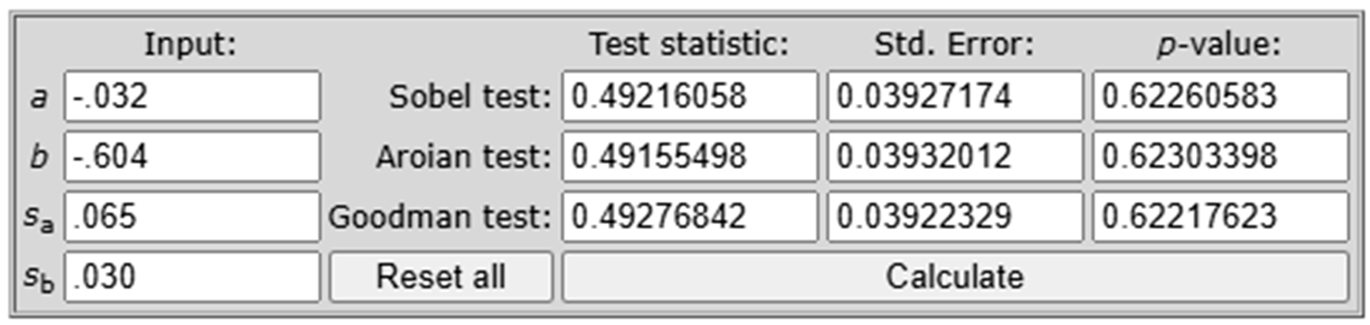
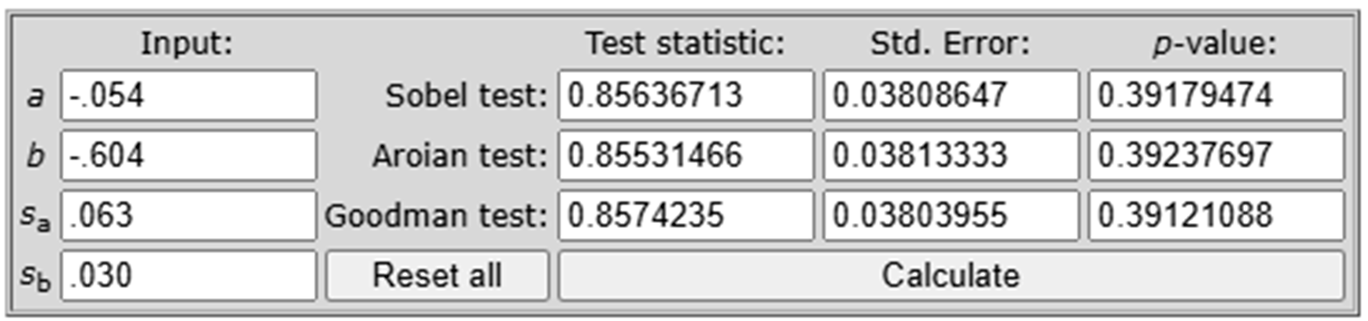
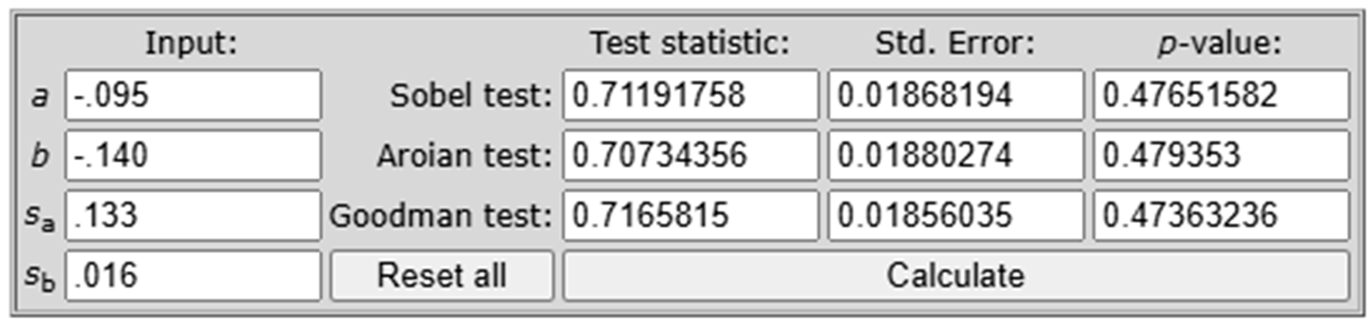
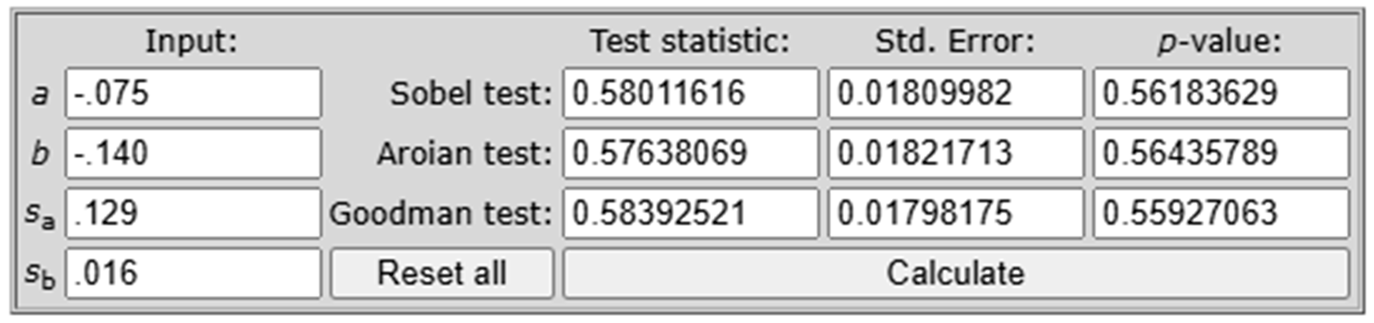
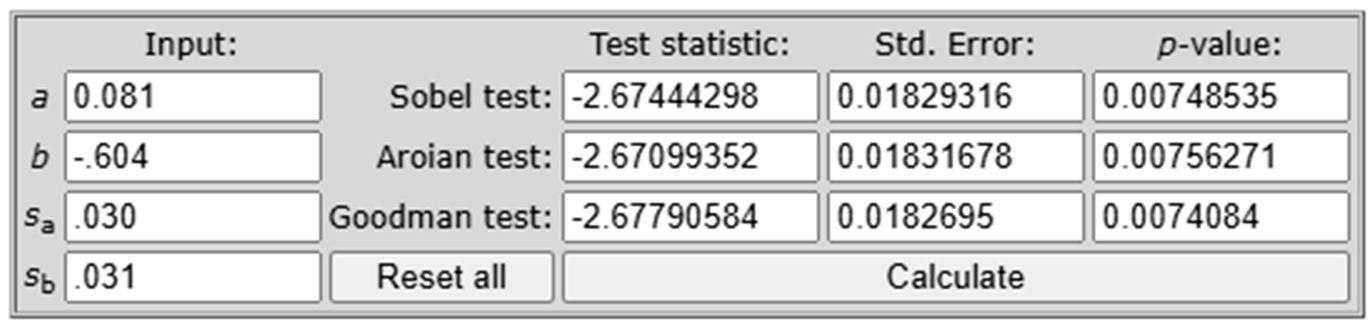
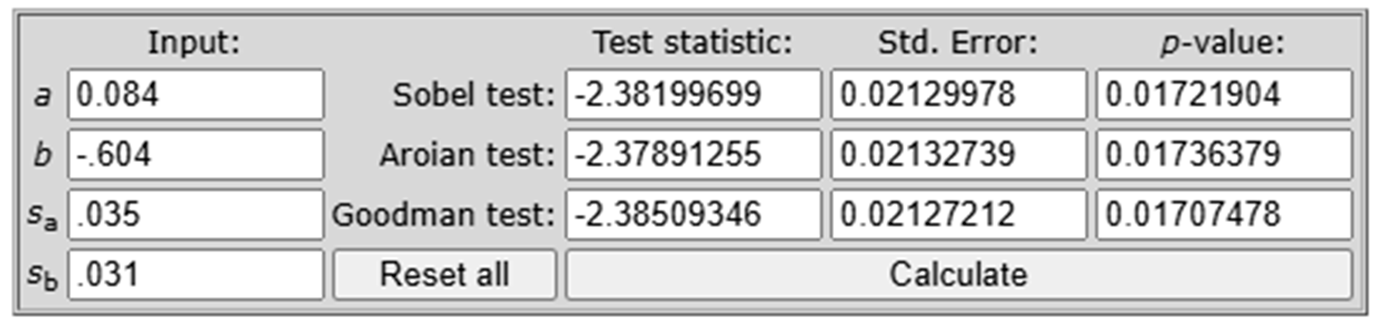
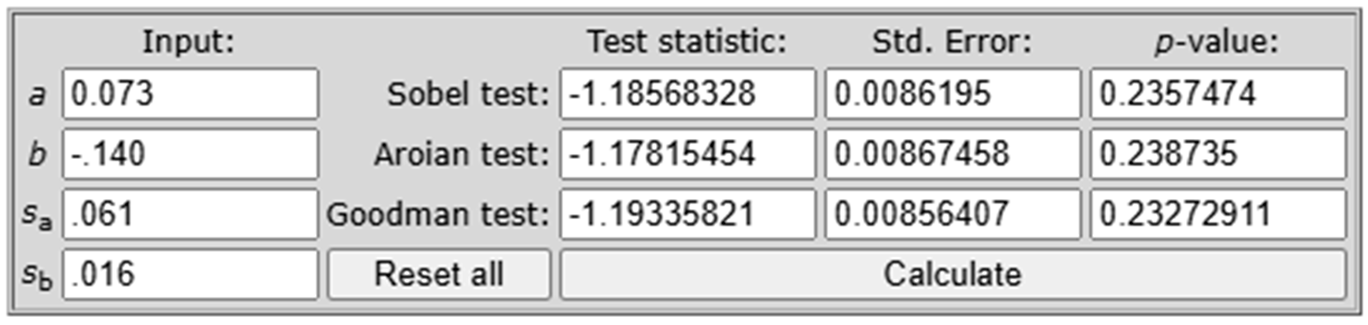
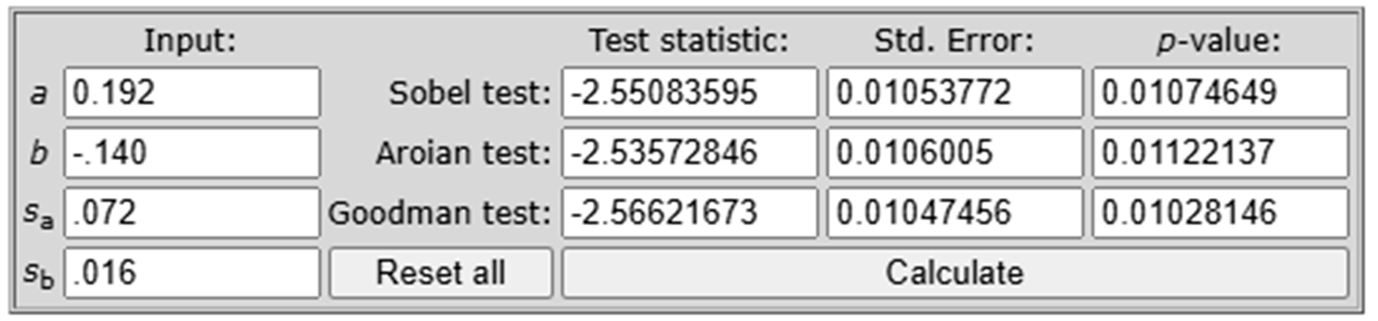
To formally test the mediation hypotheses, I use the Sobel test. The Sobel test investigates if a mediator carries the influence of a predictor variable to an outcome variable (Frazier et al. 2004; Sobel 1982). The diagrams that inform this test are found on pages 24 and 25. The findings for the Sobel tests are summarized in Table 10. The Sobel test is calculated through the equation a*b/√(b2*sa2 + a2*sb2); the quantpsy.org online calculator is used to complete the test (Preacher and Leonardelli 2010). The first mediation hypothesis (H4a) proposes that self-esteem will mediate the relationship between academic stressors and depressive symptoms. The Sobel test yields a significant result for this hypothesis (p < 0.01) (as shown in Table 10). This suggests that in this cross-sectional sample, self-esteem accounts for shared variance in the association between academic achievement (average) and depressive symptoms, though temporal ordering cannot be established; the findings also suggest self-esteem accounts for shared variance between academic achievement (high) and depressive symptoms, though temporal ordering cannot be established. The next mediation hypothesis (H4b) proposes that family cohesion will mediate the relationship between stress exposure and depressive symptoms. The Sobel test yields a significant result for this hypothesis (p < 0.05) (as shown in Table 10). This suggests that in this cross-sectional sample, family cohesion accounts for shared variance in the association between academic achievement (high) and depressive symptoms, though temporal ordering cannot be established.
8.4. Interactions
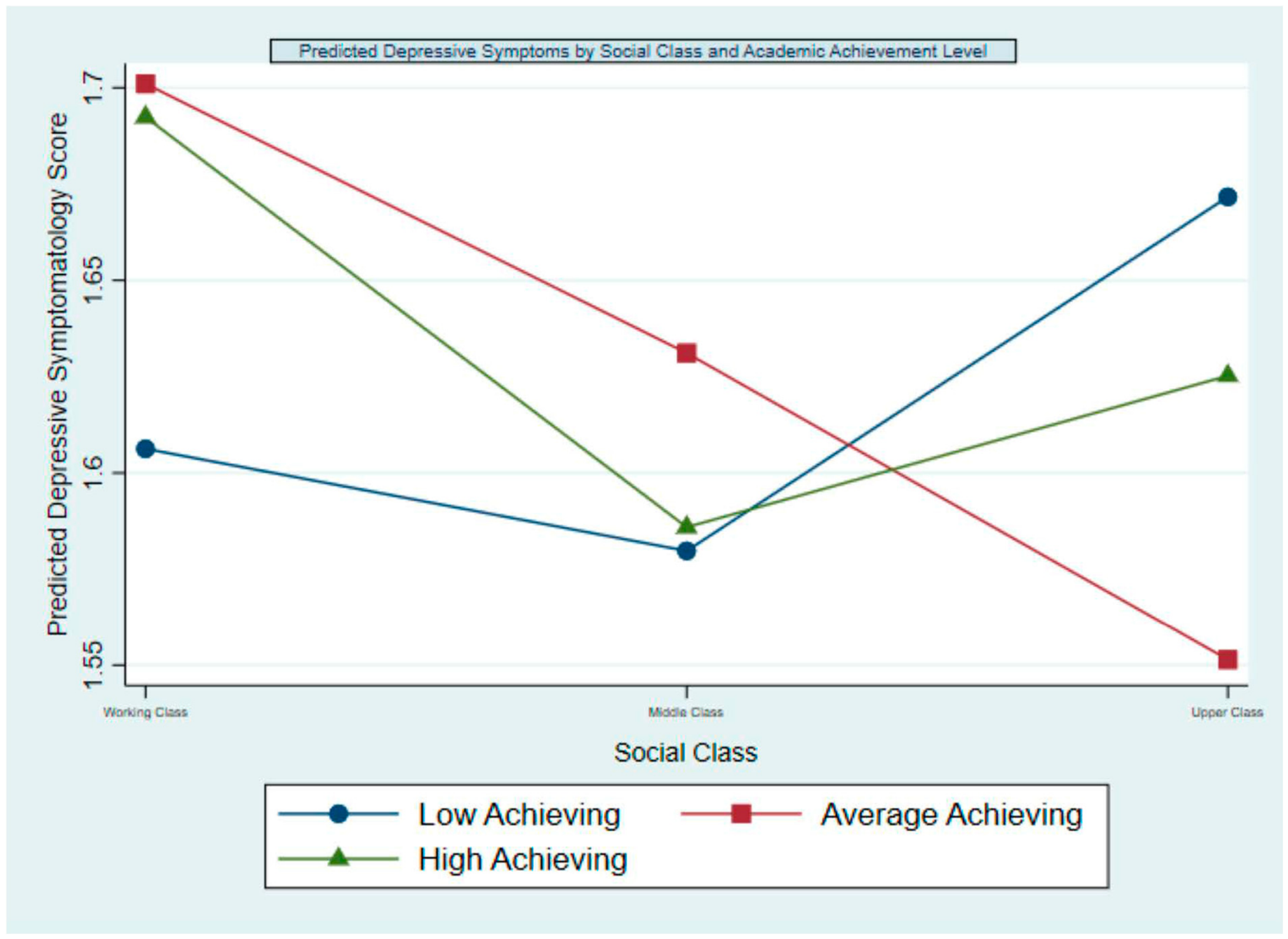
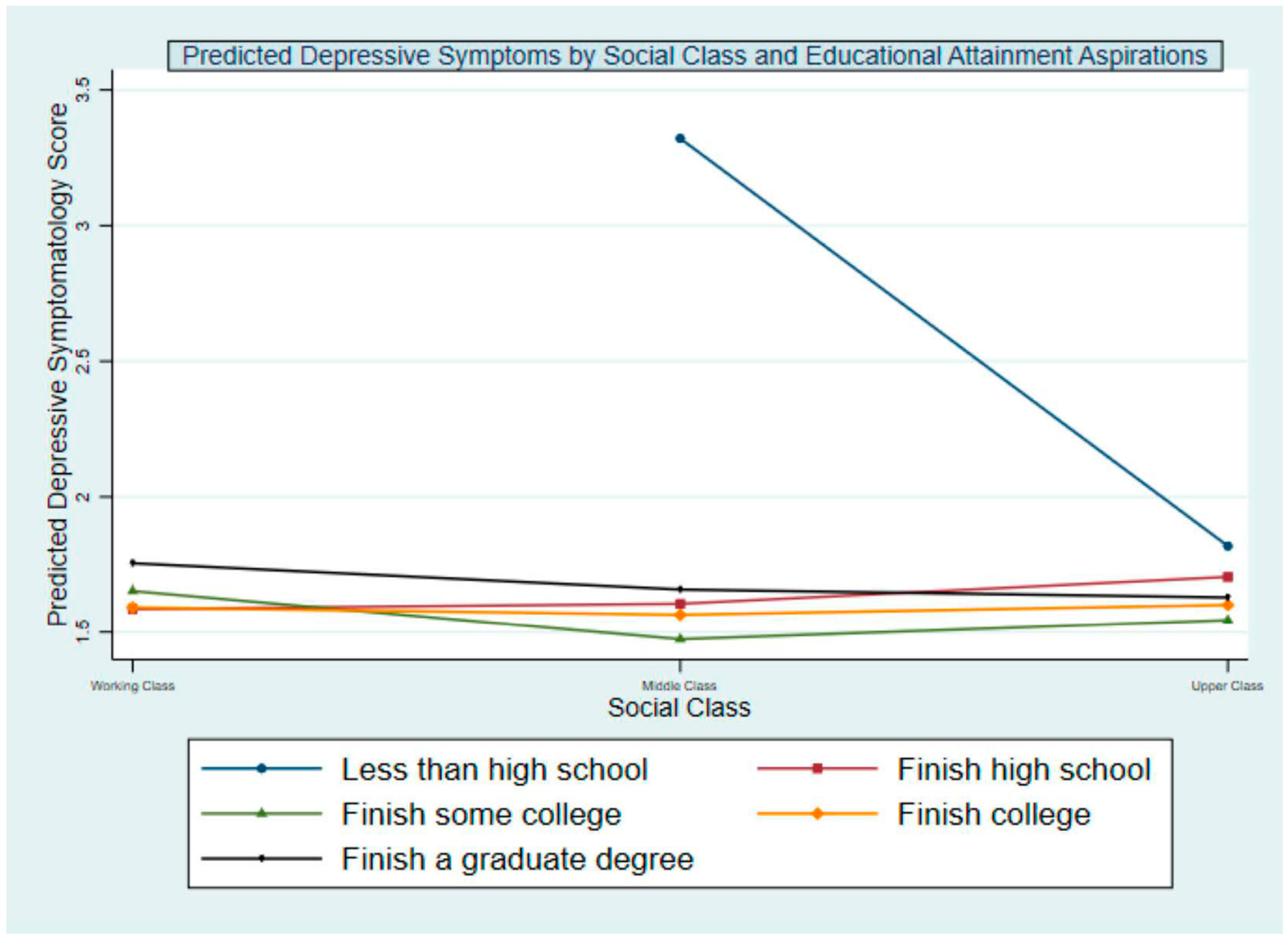
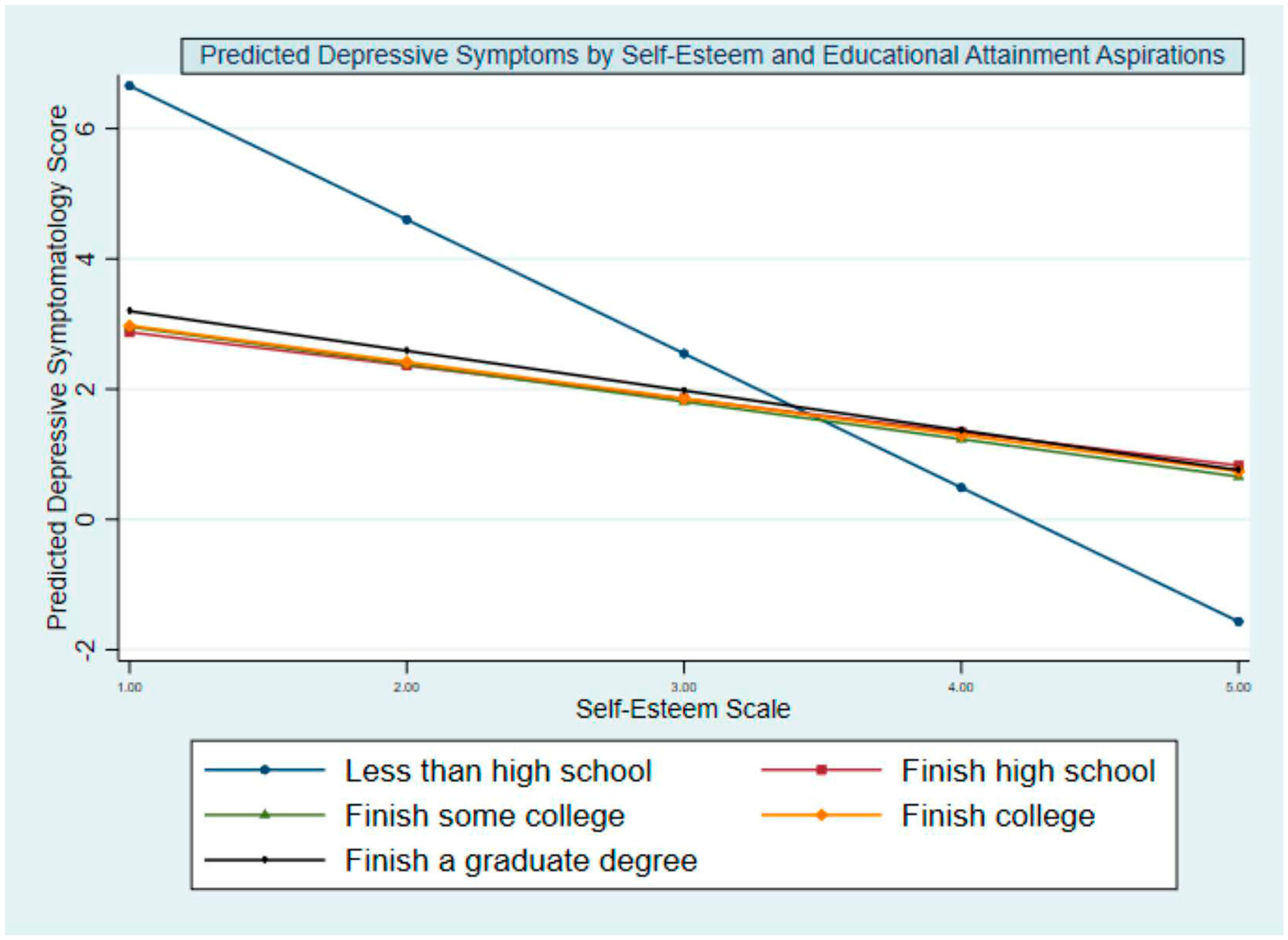
To further examine the relationships in the stress process model, a series of interaction terms are tested. Specifically, these interactions test if the relationship between stressors and depressive symptomatology is dependent on the values of a third variable. The summary of significant interaction findings is found in Table 4, and these interactions are graphically represented in Figure 1, Figure 2 and Figure 3. First, the interaction of academic achievement and social class is significant (see Figure 1). This suggests that for this particular case (with this sample population), the relationship between depressive symptomatology and academic achievement varies (in part) by social class. Specifically, at average levels of academic achievement, depressive symptoms decrease among those who are classified as Upper Class (see Figure 1).
Figure 1.
Adjusted predicted depressive symptomatology scores by social class and academic achievement level.
Figure 2.
Adjusted predicted depressive symptomatology scores by social class and educational attainment aspirations.
Figure 3.
Adjusted predicted depressive symptomatology scores by self-esteem and educational aspirations.
The interactions of social class and youth educational attainment aspirations are also significant. The difference in the depressive symptomatology score across social class for all aspiration groups remains rather stable (see Figure 2). The findings possibly suggest that for the sample, the association between educational aspirations and depressive symptoms does not depend greatly on family socioeconomic position.
Finally, the interaction of self-esteem with youth educational aspirations is significant (in part). The effect of educational aspirations on depressive symptomatology converges with increasing levels of self-esteem. At low levels of self-esteem, low educational attainment aspirations are associated with higher levels of depressive symptoms (see Figure 3). These findings suggest that the resource substitution hypothesis (Ross et al. 2012) may be relevant to consider for this sample.
Table 4.
Summary of statistical interactions between educational expectations, academic achievement, social class status, personal and social resources, country of origin (Children of Immigrants Longitudinal Study).
Table 5.
Nationalities represented in CILS data.
Table 6.
CILS Outcome Measure.
Table 7.
CILS independent variables.
Table 8.
CILS control variables.
9. Discussion and Conclusions
An important aim of this study is to examine if and how stressors influence mental health outcomes. Grounded in the stress process perspective, the analysis carried out explores the role stress and resources play in influencing depressive symptomatology. Findings suggest that within the sample, immigrant youth who come from underprivileged backgrounds experience greater depressive symptomatology scores than their more affluent counterparts. The gender differences in depressive outcomes are also pronounced, with female students reporting higher CES-D scores. Adolescent educational attainment aspirations reveal that for this sample, aspiring to more is associated with a reduction in depressive symptomatology scores. The addition of social resources (family cohesion) maintains this trend, as significance and a reduction in scores are observed with ascending attainment aspirations. The addition of personal resources (self-esteem), however, produces an interesting finding where the trend continues with ascending attainment aspirations; however, for those who aspire to earn a graduate degree, the depressive symptomatology score increases. Overall, these findings are indicative of resources mediating the relationship between academic stressors and depressive symptoms. The implication that follows is that it is not the academic standing or aspirations that influence lower depressive symptoms, but instead the family environment and the personal resources one has (Sheeber et al. 1997). Family cohesion and self-esteem have a negative relationship with depressive outcomes (see Table 3). These findings reflect that mitigating resources play an important role in shaping mental health outcomes. This finding is consistent with the stress process framework, as it argues that stressors are conditional on resources, which is why they do not have a consistent impact. The broader implications of this suggest that to make a difference and help stressed immigrant students, mental health workers and school counselors should focus on interventions related to family interactions and support; this may reduce the hardship of academic stressors.
A noteworthy contribution of this study is that while existing studies have demonstrated that academic stressors are consequential to the mental health of youth (Bois et al. 2009; Wolfradt et al. 2003), this analysis joins the conversation and presents a case where education-based stressors do not appear to be consequential to mental health outcomes. A growing number of studies continue to add to this important discussion about whether ambitions are consequential for mental health (Guo et al. 2022; Reynolds and Baird 2010).
Overall, there is mixed support for the hypotheses presented. A summary of these findings can be seen in Table 9. Some notable findings include that, against expectations, for the sample, educational attainment aspirations are negatively associated with depressive outcomes. This finding, though not generalizable, suggests that there are instances when what is operationalized as pressure and demand is not consequential to mental health outcomes. Having said this, it is important to acknowledge that holding higher aspirations could reflect the student’s abilities, and so that observed association may speak more to that.
Table 9.
CILS dataset hypothesis results.
Table 10.
Formal mediation tests.
Speaking to nationality, according to findings, the effect of national origin does not matter for the created Latinx sample. Having said this, differences are observed in depressive symptomatology outcomes among the three groups. This appears to support the hypothesis that the occupied status among the three groups should differ. The Cuban group who appears to be more advantaged by class, also report the lowest depressive symptomatology scores, though the observed differences imply this is not a distinguishing attribute. Hypotheses concerning resources were largely supported. The findings demonstrate that resources (personal or social) mediate and moderate the relationship between stress exposure and depressive symptomatology outcomes.
9.1. Research Implications
The research findings from this work have practical implications. Though the study demonstrates that for the sample in question, the operationalized stressors do not appear to be consequential to the psychological well-being of the subjects, this still does not eliminate the stigmatized status under which many immigrant youth live. The mentioned stigmatized status can still contribute to worsening psychological well-being (Williams 2012; McCart et al. 2007; Self-Brown et al. 2006), which in turn can serve as a predictor for suicidal ideation, obesity, and other important medical conditions. This research can also speak to the need to help families lower conflict and to increase cohesion. Ultimately, this raises discussion on why expanding culturally sensitive family counseling interventions is important (Roman et al. 2025). Finally, this reexamination of the expectation gradient proposed by Julien (2026) shows that there are growing instances where increased aspirations do not contribute to worsening depressive outcomes but instead show decreased depressive symptomatology scores (Wang 2024; Guo et al. 2022; Cohen et al. 2020; Almroth et al. 2018; Mossakowski 2011).
9.2. Limitations and Future Directions
There are several limitations to note. First, the data are cross-sectional, so it is only possible to infer associations and not causation. Although the CILS data are longitudinal in design, the scope of this research is to examine if specific stressors influence health outcomes at a single time point for a specific population. While definitive statements cannot be made regarding the stressors and resources as they relate to depressive outcomes, the results show that this is theoretically worthy of more investigation. Future research should explore the trajectory of outcomes in subjects over multiple time periods. This would more accurately determine the strength of association for the stressors. Another important limitation to note is that several proxy variables are used. Within the CILS data, economic class status is obtained from a direct question that asks respondents about their economic standing from Wave 1 of the dataset. Though the data for Wave 1 was collected 2 years before Wave 2, a repeated question of class status would have better served this analysis. Finally, there is a need for a mental health usage variable. A direct question about counseling services would have served the analysis. In addition to this, questions that speak to peer groups would have been informative to the analysis. The literature has shown that peer groups matter and influence adolescent mental health outcomes (Millings et al. 2012; La Greca and Harrison 2005). It is possible that peer groups serve a mediated moderation function between the direct relationship of stress exposure and resources. A final limitation to note concerning this study is that it does not test for the possible bidirectionality surrounding the relationship between depressive symptoms and resources. In truth, depressive symptoms may affect both personal and social resources. Adolescent depressive symptomatology has been documented to affect parent–child conflict (Rengasamy et al. 2013) and youth self-esteem (Rosenberg et al. 1989). Future research should address this, as it challenges the stress process perspective that argues resources are associated with depressive outcomes.
Funding
This research received no external funding.
Institutional Review Board Statement
Not applicable.
Informed Consent Statement
Not applicable.
Data Availability Statement
The data presented in this study are openly available in The Inter-university Consortium for Political and Social Research at [https://doi.org/10.3886/ICPSR20520.v3], reference number [20520].
Conflicts of Interest
The author declares no conflicts of interest.
Appendix A
Figure A1.
Conceptual Model for Children of Immigrants Longitudinal Study.
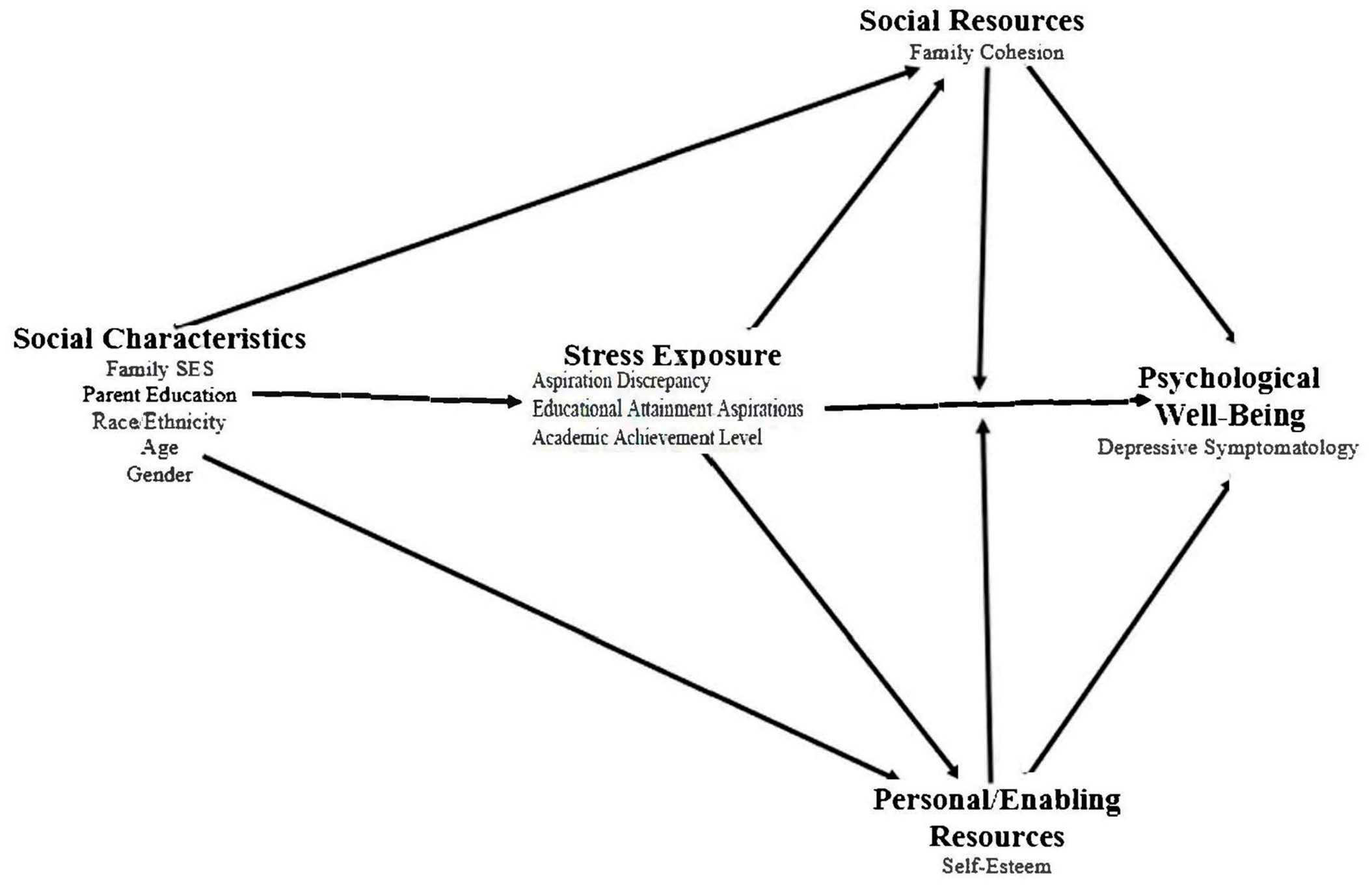
Figure A2.
Formal mediation and moderation test diagrams.
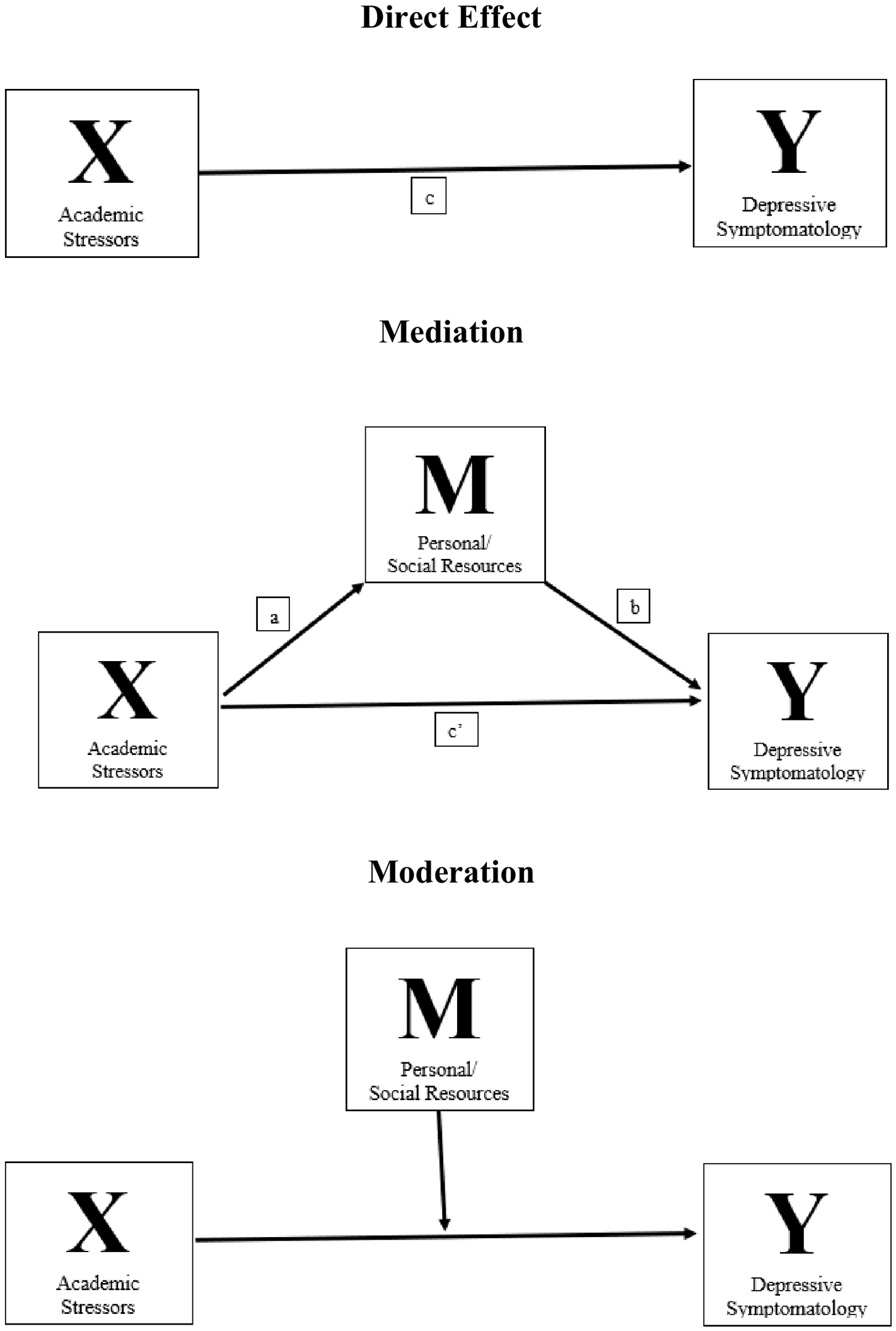
Table A1.
List of variables available in CILS.
References
- Almroth, Melody C., Krisztina D. László, Kyriaki Kosidou, and Maria R. Galanti. 2018. Association between adolescents’ academic aspirations and expectations and mental health: A one-year follow-up study. The European Journal of Public Health 28: 504–9. [Google Scholar] [CrossRef] [Scilit] [PubMed]
- Ang, Rebecca P., and Vivien S. Huan. 2006. Relationship between academic stress and suicidal ideation: Testing for depression as a mediator using multiple regression. Child Psychiatry and Human Development 37: 133–43. [Google Scholar] [CrossRef] [Scilit] [PubMed]
- Awad, Germine H. 2007. The role of racial identity, academic self-concept, and self-esteem in the prediction of academic outcomes for African American students. Journal of Black Psychology 33: 188–207. [Google Scholar] [CrossRef] [Scilit]
- Baron, Reuben M., and David A. Kenny. 1986. The moderator-mediator variable distinction in social psychological research: Conceptual, strategic, and statistical considerations. Journal of Personality and Social Psychology 51: 1173–82. [Google Scholar] [CrossRef] [Scilit] [PubMed]
- Baumrind, Diana. 1966. Effects of authoritative parental control on child behavior. Child Development 37: 887–907. [Google Scholar] [CrossRef] [Scilit]
- Bois, Julien E., Julien Lalanne, and Catherine Delforge. 2009. The influence of parenting practices and parental presence on children’s and adolescents’ pre-competitive anxiety. Journal of Sports Sciences 27: 995–1005. [Google Scholar] [CrossRef] [Scilit] [PubMed]
- Carr, Deborah. 2014. Worried Sick: How Stress Hurts Us and How to Bounce Back. New Brunswick: Rutgers University Press. [Google Scholar]
- Céspedes, Yolanda M., and Stanley J. Huey, Jr. 2008. Depression in Latino adolescents: A cultural discrepancy perspective. Cultural Diversity and Ethnic Minority Psychology 14: 168–72. [Google Scholar] [CrossRef] [Scilit] [PubMed]
- Cohen, Alison K., Juliet Nussbaum, Miranda L. Ritterman Weintraub, Chloe R. Nichols, and Irene H. Yen. 2020. Association of adult depression with educational attainment, aspirations, and expectations. Preventing Chronic Disease 17: E94. [Google Scholar] [CrossRef] [Scilit] [PubMed]
- DeSocio, Janiece, and Janis Hootman. 2004. Children’s mental health and school success. The Journal of School Nursing 20: 189–96. [Google Scholar] [CrossRef] [Scilit] [PubMed]
- Dubowitz, Tamara, Lisa M. Bates, and Dolores Acevedo-Garcia. 2010. The Latino health paradox: Looking at the intersection of sociology and health. In Handbook of Medical Sociology. Nashville: Vanderbilt University Press. [Google Scholar]
- Fan, Xitao, and Michael Chen. 2001. Parental involvement and students’ academic achievement: A meta-analysis. Educational Psychology Review 13: 1–22. [Google Scholar] [CrossRef] [Scilit]
- Frazier, Patricia A., Andrew P. Tix, and Kenneth E. Barron. 2004. Testing moderator and mediator effects in counseling psychology research. Journal of Counseling Psychology 51: 115–34. [Google Scholar] [CrossRef] [Scilit]
- Gallagher, Mary. 2016. Adolescent-parent college aspiration discrepancies and changes in pressive symptoms. Sociological Perspectives 59: 296–316. [Google Scholar] [CrossRef] [Scilit]
- Guo, Xiaolin, Huan Qin, Kexin Jiang, and Liang Luo. 2022. Parent-child discrepancy in educational aspirations and depressive symptoms in early adolescence: A longitudinal study. Journal of Youth and Adolescence 51: 1983–96. [Google Scholar] [CrossRef] [Scilit] [PubMed]
- Harris, Treniece Lewis, and Sherry Davis Molock. 2000. Cultural orientation, family cohesion, and family support in suicide ideation and depression among African American college students. Suicide and Life-Threatening Behavior 30: 341–53. [Google Scholar] [CrossRef] [Scilit]
- Jeynes, William H. 2003. A meta-analysis: The effects of parental involvement on minority children’s academic achievement. Education and Urban Society 35: 202–18. [Google Scholar]
- Julien, Fabrice S., and Patricia Drentea. 2020. Mental health disparities in children of Caribbean immigrants: How racial/ethnic self-identification informs the association between perceived discrimination and depressive symptomatology. Research in the Sociology of Health Care 38: 15–31. [Google Scholar] [CrossRef] [Scilit]
- Julien, Fabrice Stanley. 2026. Introducing the Expectation Gradient: How Family, Social and Personal Resources Influence Psychological Well-Being Outcomes in Children of Black Immigrants. Societies 16: 360. [Google Scholar] [CrossRef] [Scilit]
- La Greca, Annette M., and Hannah Moore Harrison. 2005. Adolescent peer relations, friendships, and romantic relationships: Do they predict social anxiety and depression? Journal of Clinical Child and Adolescent Psychology 34: 49–61. [Google Scholar] [CrossRef] [Scilit] [PubMed]
- Link, Bruce G., and Jo Phelan. 1995. Social Conditions As Fundamental Causes of Disease. Journal of Health and Social Behavior, 80–94. [Google Scholar] [CrossRef] [Scilit]
- Little, Stephanie A., and Judy Garber. 2004. Interpersonal and achievement orientations and specific stressors predict depressive and aggressive symptoms. Journal of Adolescent Research 19: 63–84. [Google Scholar] [CrossRef] [Scilit]
- Ma, Ying, Angela Siu, and Wai Shing Tse. 2018. The role of high parental expectations in adolescents’ academic performance and depression in Hong Kong. Journal of Family Issues 39: 2505–2522. [Google Scholar] [CrossRef] [Scilit]
- McCart, Michael R., Daniel W. Smith, Benjamin E. Saunders, Dean G. Kilpatrick, Heidi Resnick, and Kenneth J. Ruggiero. 2007. Do Urban Adolescents Become Desensitized to Community Violence? Data from a National Survey. American Journal of Orthopsychiatry 77: 434–42. [Google Scholar] [CrossRef] [Scilit] [PubMed]
- McNamara, Sarah. 2000. Stress in Young People: What’s New and What Can We Do? New York: Continuum. [Google Scholar]
- Meunier, Jean C., Rossana Bisceglia, and Jennifer Jenkins. 2012. Differential parenting and children’s behavioral problems: Curvilinear associations and mother–father combined effects. Developmental Psychology 48: 987–1002. [Google Scholar] [CrossRef] [Scilit] [PubMed]
- Millings, Abigail, Rhiannon Buck, Alan Montgomery, Melissa Spears, and Paul Stallard. 2012. School connectedness, peer attachment, and self-esteem as predictors of adolescent depression. Journal of Adolescence 35: 1061–67. [Google Scholar] [CrossRef] [Scilit] [PubMed]
- Mirowsky, John, and Catherine E. Ross. 2007. Life course trajectories of perceived control and their relationship to education. American Journal of Sociology 112: 1339–82. [Google Scholar] [CrossRef] [Scilit]
- Mirowsky, John, and Catherine Ross. 2017. Education, Social Status, and Health. New York: Routledge. [Google Scholar]
- Mossakowski, Krysia N. 2011. Unfulfilled expectations and symptoms of depression among young adults. Social Science & Medicine 73: 729–36. [Google Scholar] [CrossRef] [Scilit] [PubMed]
- Pearlin, Leonard I. 1989. The sociological study of stress. Journal of Health and Social Behavior 30: 241–56. [Google Scholar] [CrossRef] [Scilit]
- Portes, Alejandro, and Dag MacLeod. 1996. Educational progress of children of immigrants: The roles of class, ethnicity, and school context. Sociology of Education 69: 255–75. [Google Scholar] [CrossRef] [Scilit]
- Portes, Alejandro, and Rubén G. Rumbaut. 2001. Legacies: The Story of the Immigrant Second Generation. Oakland: University of California Press. [Google Scholar]
- Portes, Alejandro, and Rubén G. Rumbaut. 2008. Children of Immigrants Longitudinal Study (CILS). San Diego, California, Ft. Lauderdale and Miami, Florida, 1991–2006. Ann Arbor: Inter-University Consortium for Political and Social Research. [Google Scholar]
- Preacher, Kristopher, and Geoffrey Leonardelli. 2010. Calculation for the Sobel Test: An Interactive Calculation Tool for Mediation Tests. Quantpsy.org. Available online: http://www.quantpsy.org/sobel/sobel.htm (accessed on 17 November 2026).
- Qin, Desiree Baolian. 2008. Doing well vs. feeling well: Understanding family dynamics and the psychological adjustment of Chinese immigrant adolescents. Journal of Youth and Adolescence 37: 22–35. [Google Scholar] [CrossRef] [Scilit]
- Quach, Andrew S., Norman B. Epstein, Pamela J. Riley, Mariana K. Falconier, and Xiaoyi Fang. 2015. Effects of parental warmth and academic pressure on anxiety and depression symptoms in Chinese adolescents. Journal of Child and Family Studies 24: 106–16. [Google Scholar] [CrossRef] [Scilit]
- Rengasamy, Manivel, Brandon M. Mansoor, Robert Hilton, Giovanna Porta, Jiayan He, Graham J. Emslie, Taryn Mayes, Gregory N. Clarke, Karen Dineen Wagner, Martin B. Keller, and et al. 2013. The bi-directional relationship between parent–child conflict and treatment outcome in treatment-resistant adolescent depression. Journal of the American Academy of Child & Adolescent Psychiatry 52: 370–77. [Google Scholar] [CrossRef] [Scilit] [PubMed]
- Reynolds, John R., and Chardie L. Baird. 2010. Is there a downside to shooting for the stars? Unrealized educational expectations and symptoms of depression. American Sociological Review 75: 151–72. [Google Scholar] [CrossRef] [Scilit]
- Roman, Nicolette V., Tolulope V. Balogun, Letitia Butler-Kruger, Solomon D. Danga, Janine Therese de Lange, Anja Human-Hendricks, Fundiswa Thelma Khaile, Kezia R. October, and Olaniyi J. Olabiyi. 2025. Strengthening family bonds: A systematic review of factors and interventions that enhance family cohesion. Social Sciences 14: 371. [Google Scholar] [CrossRef] [Scilit]
- Rosenberg, Morris. 1965. Rosenberg self-esteem scale (RSE). Acceptance and Commitment Therapy. Measures Package 61: 18. [Google Scholar]
- Rosenberg, Morris, Carmi Schooler, and Carrie Schoenbach. 1989. Self-esteem and adolescent problems: Modeling reciprocal effects. American Sociological Review 54: 1004–18. [Google Scholar] [CrossRef] [Scilit] [PubMed]
- Ross, Catherine E., Ryan K. Masters, and Robert A. Hummer. 2012. Education and the gender gaps in health and mortality. Demography 49: 1157–83. [Google Scholar] [CrossRef] [Scilit] [PubMed]
- Rumbaut, Ruben G. 1994. The Crucible within: Ethnic Identity, Self-esteem, and Segmented Assimilation among Children of Immigrants. International Migration Review 28: 748–94. [Google Scholar] [CrossRef] [Scilit]
- Self-Brown, Shannon R., Monique LeBlanc, Mary Lou Kelley, and Rochelle Hanson. 2006. Effects of Community Violence Exposure and Parental Mental Health on the Internalizing Problems of Urban Adolescents. Violence & Victims 21: 183–98. [Google Scholar] [CrossRef] [Scilit]
- Sheeber, Lisa, Hyman Hops, Anthony Alpert, Betsy Davis, and Judy Andrews. 1997. Family support and conflict: Prospective relations to adolescent depression. Journal of Abnormal Child Psychology 25: 333–44. [Google Scholar] [CrossRef] [Scilit] [PubMed]
- Sobel, Michael E. 1982. Asymptotic intervals for indirect effects in structural equations models. S. Leinhart. Sociological Methodology 13: 290–312. [Google Scholar] [CrossRef] [Scilit]
- Steinberg, Laurence. 2001. We know some things: Parent–adolescent relationships in retrospect and prospect. Journal of Research on Adolescence 11: 1–19. [Google Scholar] [CrossRef] [Scilit]
- Takeuchi, David T. 2016. Vintage Wine in New Bottles: Infusing Select Ideas into the Study of Immigration, Immigrants, and Mental Health. Journal of Health and Social Behavior 57: 423–35. [Google Scholar] [PubMed]
- Triandis, Harry C., McCusker Christopher, and Hui C. Harry. 1990. Multimethod probes of individualism and collectivism. Journal of Personality and Social Psychology 59: 1006–20. [Google Scholar] [CrossRef] [Scilit]
- Turner, R. Jay. 2013. Understanding health disparities: The relevance of the stress process model. Society and Mental Health 3: 170–86. [Google Scholar]
- Turner, R. Jay, Blair Wheaton, and Donald A. Lloyd. 1995. The epidemiology of social stress. American Sociological Review 60: 104–25. [Google Scholar] [CrossRef] [Scilit] [PubMed]
- Wang, Zhonghao. 2024. Mismatch of educational expectations, unequal friendships, and depression symptoms of adolescents. Society and Mental Health 14: 182–97. [Google Scholar] [CrossRef] [Scilit]
- Williams, David R. 2012. Miles to go before we sleep: Racial inequities in health. Journal of Health and Social Behavior 53: 279–95. [Google Scholar] [PubMed]
- Wolfradt, Uwe, Susanne Hempel, and Jeremy N. V. Miles. 2003. Perceived Parenting Styles, Depersonalisation, Anxiety and Coping Behaviour in Adolescents. Personality and Individual Differences 34: 521–32. [Google Scholar] [CrossRef] [Scilit]
- Zsembik, Barbara A., and Dana Fennell. 2005. Ethnic variation in health and the determinants of health among Latinos. Social science & Medicine 61: 53–63. [Google Scholar] [CrossRef] [Scilit] [PubMed]

Disclaimer/Publisher’s Note: The statements, opinions and data contained in all publications are solely those of the individual author(s) and contributor(s) and not of MDPI and/or the editor(s). MDPI and/or the editor(s) disclaim responsibility for any injury to people or property resulting from any ideas, methods, instructions or products referred to in the content. |
© 2026 by the author. Licensee MDPI, Basel, Switzerland. This article is an open access article distributed under the terms and conditions of the Creative Commons Attribution (CC BY) license.