


Abstract
This study examines the factors that affect the willingness to share within online music communities, drawing on community building and media expectancy theories. The study clarifies two dimensions of music genre preference and their associations with sense of belonging and perceived community diversity. The findings reconfirmed the relationships of sense of belonging and perceived community diversity with online music community affinity. Attention to visual presentation of music was a significant predictor of sense of belonging, perceived community diversity and willingness to share. In addition, loneliness and empathy in music were tested as moderators in the association between online music community affinity and willingness to share. Only the effect of loneliness was confirmed. The practical and theoretical implications, as well as the study limitations, were discussed.
1. Introduction
In the digital age, online communities have become central to human interaction, complementing or replacing face-to-face communication (Kindsmüller et al. 2009). Mobile devices and smart technologies have expanded opportunities for participation in online platforms through a wide range of applications (Wang et al. 2012), including music apps and related digital tools. Early developments in computer technology led to the creation of public platforms and community services, such as Bulletin Board Systems (BBS), which enabled individuals to connect and exchange information (Li 2011; Shih 2008). Today, participation in online communities extends beyond computers to a wide range of mobile devices, allowing people to find others with similar interests and hobbies. The COVID-19 pandemic further accelerated this trend, with platforms like Zoom and Teams becoming common for meetings and social interaction. Consequently, online communities now serve as vital spaces where individuals contribute unique perspectives and share aspects of everyday life in cyberspace (Massa 2017).
Listening to music is a vital aspect of online life. In the early digital era, music applications and platforms primarily functioned as channels for listening. Over time, however, corporations behind these platforms introduced comment sections and social features, enabling listeners to discuss music with others. As a result, music applications evolved into hybrid spaces that combine streaming with social interaction, resembling social media platforms centred on music (Wang and Majeed 2023). For instance, YouTube Music Premium and China’s NetEase Cloud Music are widely used platforms that integrate these functions. Listening to music thus carries significant psychosocial implications, reflecting environments where individuals express themselves, construct their self-image, and foster social development (Clark and Giacomantonio 2015).
Contributing information to online communities is largely a matter of personal discretion (Li 2011), particularly in societies with partial democratic structures (Shen and Liang 2015). Sharing stories about music represents one form of contribution. Unlike information-sharing activities that may yield financial rewards, music-related storytelling is highly individual and often demands time and effort from contributors without substantial compensation. Few studies have examined the factors influencing individuals’ willingness to share information across different online communities (Li 2011). Understanding the mechanisms through which these factors shape communication processes is therefore crucial (Cress et al. 2006). This study explores music platforms as online communities that extend beyond the sole purpose of listening. Specifically, it investigates the relationships between music genre preference, attention to visual presentation, sense of belonging, and affinity for online music community, while also examining potential moderators that affect users’ willingness to share within these spaces.
2. Literature Review
2.1. Theoretical Framework
This study is informed by the theoretical framework that comprises community building and media expectancy theories. The literature on what influences people’s affinity for online music community provides a foundation for developing hypotheses regarding the willingness to share within online music communities.
Online community building. Community building has been examined across multiple dimensions for decades (Ren et al. 2012). Early studies focused on traditional communities and their defining characteristics (e.g., McNeely 1999; Fulbright-Anderson and Auspos 2006), with social capital identified as a key component in sustaining community ties (DeFilippis 2001). With the advent of internet-based communication, individuals gained the ability to interact without the constraints of time or location (Fulk and DeSanctis 1995; Massa 2017). These technological developments, including computers, mobile devices, and online platforms, challenge traditional insights into community building by reshaping how connections are formed and maintained. For instance, Meyer (2019) analysed how the Portland Art Museum, as a dynamic organisation, engages in community building while adapting to everyday social changes. Conversely, some established communities face declining membership as individuals lose attachment or migrate elsewhere. Thomson (2018) documented this trend in the National Press Photographers Association (NPPA), whose membership shrank dramatically due to shifting environments. Community building theory therefore remains essential for explaining which factors continue to underpin community formation, and which aspects gain prominence in the digital age. Specifically, some online communities which depend on distinctive interests and hobbies, without profit-oriented goals, need to address problems such as building new relationships among communities and individuals, using interests as bonds.
Expectancy theory. Expectancy theory attempts to explain how motivation for making choices and taking certain actions depends on individuals’ need for reward (Vroom 1964). According to this theory, people appraise (a) the likelihood that they can attain rewards from certain outcomes, (b) the likelihood that performance leads to outcomes, (c) the value of the possible rewards from outcomes (Isaac et al. 2001; Li 2011). Expectancy theory has been applied widely in different spheres. Park and Kim (2017) used this theory as a framework to investigate what factors influence the perception of work unit performance on job satisfaction and gave guidance to organisations on improving the management and performance of employees. Most studies using expectancy theory deal with problems in organisational settings and media situations. In the online communities’ context, Li (2011) investigated which factors affect the willingness to contribute information to online communities, and his study distinguished the differences between organisational settings and online settings. Cress et al. (2006)’s study also revealed that a use-related bonus system could positively predict people’s behaviours to contribute useful information. In this study, expectancy theory helps explain why individuals are willing to share information within online music communities and what expectancy-related factors may influence this communication process.
Prior studies have examined participation, community engagement, and information sharing within online music communities (e.g., Wang et al. 2026; Zhang and Ni 2026). However, limited attention has been paid to how visual presentation of music contributes to these processes when music-listening activities become more complex to fulfil various needs. Integrating community building and media expectancy theories helps explain the factors influencing individuals’ choices of music apps and platforms for participation in online communities. Community building theory provides a basis for examining components that shape online music communities, while media expectancy theory provides a theoretical lens for understanding motivations for information sharing in online music communities. Together, the two theories articulate the reciprocal relationship between music social media and individuals in fostering the development of online music communities.
2.2. Effects of Music Genre Preference and Attention to Visual Presentation on Sense of Belonging and Perceived Community Diversity
Music genre preference. Music is complicated for categorisation (Lee and Robinson 2018). The identification of different music types is ambiguous depending on the school of thought. However, there are still many music tags that help people find specific types of music, such as rock, pop music, classical music, and other genres. Interest bridges the linkage between a person and a content or topic (Ainley 2006). According to a large amount of research on interest, interest is a factor involving the process of affecting attitudes, behaviours and motivation behind taking a certain action (Kahu 2014; Patall 2013; Hidi and Renninger 2006). Listening to music, therefore, functions as an interest that fosters social connections. Differences in genre preference create segmentations among listeners in online and offline communities. For instance, jazz enthusiasts may overlook pop music clubs to focus on interactions with those who share similar tastes. They also do not pay more attention to other types of music because they do not want to lose opportunities to interact with the people who have similar tastes in music. Different music genres lead to distinct interests in listening to music, and the interests also have associations with sense of belonging; various studies discussed the interplay between these elements (Master et al. 2016; Murphy et al. 2007). In addition, preferences may also centre on specific musicians or songwriters, with fans often following shifts in their artistic focus. In this sense, the choice of people selecting music to listen to is influenced by what music genres the musicians or songwriters focus on. If the preferred musicians or songwriters change their music focus, that group of people would incline to their new tastes alike. Music genre preference is more comprehensive in a community context in which this study will not only pay attention to the music types provided in communities in general, but also probe into the interplay between music genre preference and it being a reflection of individuals’ personality traits as well as societal features (Ferrer et al. 2013).
Attention to visual presentation of music. Visual communication is inseparable from an individual’s daily life, and it helps people express themselves in unique ways (Thomson 2019). The visual presentation and design of content affect users’ perceptions (Li 2002). Music is a substantial entity, even though it is challenged by the tendency of the majority of music publishers to, for now, offer online versions or soft copies rather than hard copies. CDs as music carriers are gradually disappearing in the digital age. The picture/design of a CD cover/booklet is one of the elements that attract people to buy (North and Oishi 2006), and one study elucidated that the types of background music exert significant effects on the change in consumers’ attitudes towards advertisements (Park et al. 2014). Indeed, the visual presentation of music is increasingly important to discourse on music in many fields. While not directly tied to listening, it plays a crucial role in representing music using related subjects (Mitchell and MacDonald 2016; Kim et al. 2009). Along with the development of technology, music can be interpreted by diverse visual presentation formats, such as printing relevant images/pictures in newspapers/magazines, making creative music videos, posters, and visual components of live music performances (Platz and Kopiez 2012; Balteș and Miu 2014), etc. These modalities capture attention and draw audiences toward the music itself (Schutz 2008). Music thus provides both auditory and visual experiences, shaping genre preferences and participation in related activities. Although album covers, music videos, photographs, posters and stage design provide different forms of visual experiences, they share a common function of presenting and interpreting music through visual communication. This study therefore conceptualises the attention to visual presentation of music as individuals’ overall attention to music-related visual experiences. Consequently, the degree to which individuals attend to visual presentation warrants further study, as it is integral to the interpretation of music.
Sense of belonging. Sense of belonging is an essential need for communities (Abdollahi and Noltemeyer 2018). Belonging, regarded as a basic human need essential to psychological well-being, reflects the extent to which individuals recognise their role within a system, community, or organisation (Hagerty et al. 1992). It can be understood through two dimensions: (a) the value of involvement and (b) the perception of one’s engagement within the environment (Hagerty et al. 1992). Interest also influences the sense of belonging under certain circumstances (Nieckarz 2005). For instance, people from diverse backgrounds may join online or offline communities based on shared interests, such as motorbikes. In this study, music genre preference serves as a catalyst for belonging. Listening to different genres reflects varied interests, however, shared tastes foster communication, encourage song sharing and create warmth, allowing individuals to feel as valued members of a group, which are the key features of belonging.
Perceived community diversity. Community diversity refers to the choice of channels and the extent to which activities organised by diverse sub-groups meet audience needs (Kordus 2014). Studies have demonstrated content diversity at different levels of analysis, depending on the categories of programming, the variety of knowledge that media can provide, and the range of population distribution of users, etc. Meanwhile, studies in heterogeneous fields pay special attention to identifying the degree of certain diversity, such as in business, education, news, etc. (Garcia Pires 2014; Castellanos and Cole 2015; Kordus 2014). For instance, with the incremental development of internet marketing, of the two main strategies of corporations, one is operating a large platform or application with sufficient activities for users, with the aim of attracting more people to access the media and stimulate people’s interactions with one another in an open square, such as YouTube. The other one relies on tactics aiming to provide special-interest channels for target audiences, such as Vero Social (a social media platform for photographers). People may perceive and evaluate the diversity on account of those, if they can search for the contents or activities they want. Even if the categories of activities and related information are limited, people can still find particular activities and contents, which is the benefit given by the User Generated Content (UGC) model (Berthon et al. 2008; Roma and Aloini 2019). Moreover, because of concentration on specific activities and content, music communities might have more abundant resources in explicit areas than general communities, which needs further exploration.
From a community-building perspective, shared interests and forms of engagement serve as important foundations for fostering connections within communities (Brown 2001). Music genre preference reflects common interests among members, whereas attention to visual presentation of music represents a form of engagement with music-related content. Both factors may contribute to individuals’ perceptions of belonging and community diversity. Based on the discussion about music genre preference and attention to visual presentation of music, both of which may be associated with sense of belonging and perceived community diversity, the following hypotheses are therefore proposed:
H1.
Music genre preference is related to sense of belonging and perceived community diversity.
H2.
Attention to visual presentation of music is related to sense of belonging and perceived community diversity.
2.3. Affinity for Online Music Community and Willingness to Share
Affinity for online music community. Online communities differ from traditional ones primarily due to geographic factors (Nieckarz 2005). Members in online communities maintain relationships through shared interests, which serve as the central bond (Baker and Ward 2002). Earlier conceptions distinguished “true” communities from virtual ones by emphasising face-to-face interaction (Warner 2016). However, contemporary online communities exhibit many of the same characteristics as face-to-face communities: supportive relationships facilitated by social apps such as MS Teams and Zoom, diverse social ties, reciprocity, and established social mechanisms (Wellman and Gulia 1999; Nieckarz 2005). Given these features, online communities built around common interests play a vital role in fostering engagement (Li 2011). This study examines affinity for online music community, with “music” as the shared interest, focusing on three aspects: (1) perceived community diversity as a factor influencing engagement, (2) common interests as catalysts for belonging, and (3) the combined effects of perceived community diversity and belonging on affinity for music community. Community affinity and sense of belonging are related concepts, but they reflect different aspects of community experience. Sense of belonging concerns perceptions of acceptance, value, and fit within a community, whereas community affinity reflects the closeness of one’s connection to a community (Li 2011). While sense of belonging emphasises identification with a community, affinity emphasises connection to a community. In this regard, sense of belonging may serve as an antecedent to community affinity, as individuals are more likely to develop stronger connections with a community when they perceive themselves as accepted, valued, and fitting within it. From a community-building perspective, stronger perceptions of belonging and community diversity may facilitate the development of affinity towards a community. Based on the sense of belonging and perceived community diversity to online community, the following hypothesis is proposed:
H3.
Sense of belonging and perceived community diversity positively predict affinity for online music community.
Willingness to share. Willingness to share is an attitude that may influence actual behaviours (Bock et al. 2005). Various factors across different contexts explain why individuals are willing to share. In retail environments, satisfaction, perceived value, and loyalty drive information sharing (Leppäniemi et al. 2017). Zaheer and Trkman (2017) confirmed that trust, reciprocity, and commitment are central to sharing behaviours. O’Brien et al. (2014) highlighted social utility as a motivation for news selection, with information sharing playing a key role in accessing specific content and initiating conversations. Engaging with interesting topics allows individuals to strengthen relationships or form new ones based on shared interests. Beyond the individual level, organisations share information for commercial purposes, such as advertising with emotional content to attract attention and enhance brand image (Okazaki et al. 2013). Governments also disseminate propaganda to bolster international reputation, framing it as a form of public diplomacy (Tago 2017; Asaba et al. 2020). These examples illustrate that heterogeneous contributors pursue different rewards through sharing, which in turn shapes the degree of willingness to share information.
Although affinity for online music community may not constitute an explicit reward, it strengthens the members’ bonds with both the community and one another. In this sense, community affinity can be understood as a form of “cannot leave” commitment (Li 2011), requiring continued participation rather than withdrawal or estrangement. From a media expectancy perspective, such commitment may increase individuals’ willingness to share music-related information within the communities. Based on this reasoning, the following hypothesis is proposed:
H4.
Affinity for online music community positively predicts willingness to share.
Beyond musical entities themselves, prior research has emphasised the strong influence of visual elements on decision-making (Park et al. 2014). Such elements may encourage individuals to share stories about music, as nowadays, songs often employ distinctive visual presentations to convey the meaning of melodies and lyrics. Although music and visual design have traditionally been viewed as separate domains, increasing numbers of musicians now integrate visual elements to enhance emotional expression and audience appeal, such as stage lighting and elaborate stage design. Accordingly, this study proposes the following research question:
RQ1. To what degree is attention to visual presentation of music associated with willingness to share?
2.4. Factors as Moderators in Relationship
Loneliness. Loneliness is a kind of feeling in which individuals perceive their deficiencies of social connection, or it is a subjective sentiment of a lack of understanding from others (Weiss 1973; Snyder and Newman 2019). People repeating daily routines in cities may increase their feelings of loneliness or may have to face unexpected challenges that happen in life. One of the surveys conducted by Cigna (2020) asking over 10,000 people, shows that more than three in five Americans are lonely. Tso and Park (2020) investigated that the level of loneliness was very high as reported by Hong Kong residents during the period of COVID-19. Loneliness has become a vital predictor of individuals’ mental health and even consequences of behaviours (Satici 2019). A study examined that the loneliness negatively predicts negative self-disclosure when people use Facebook, which means the lonelier they are, the fewer negative messages they disclose (Lee and Webb 2020). Additionally, some studies also tested the link between loneliness and self-disclosure in the online space (Lee et al. 2013). Self-disclosure seems to be a consequence in which individuals share their personal information, feelings, and attitudes toward what they have seen, and so forth. In this study, willingness to share is the first step prior to actual sharing behaviours. The reason people in communities intend to join social activities where they communicate with others is because they may be attempting to reduce the feeling of loneliness (Cohen-Mansfield and Perach 2015). The perception of loneliness reflects the degree of psychological health. If individuals find they are lonely and they need ways to cure such situations, certain aspects in communities would provide effective opportunities to influence the feelings of loneliness. Contrastingly, loneliness might also affect the willingness to engage in communities’ activities, especially with the purpose of sharing music-related information within online music communities.
Empathy in music. Music is regarded as a catalyst that has the capacity to bring emotions from memory and lead to reminiscence of past times (Scherer and Zentner 2001; Vuoskoski and Eerola 2012). Empathy as an emotional component is complex to identify. Davis (1983) illustrated two dimensions of empathy: its cognitive and affective components. Other studies investigated the associations between empathy and music (e.g., Wöllner 2012). Different music might be associated with varied emotional responses of listeners (Scherer and Zentner 2001). Emotional factors can be expressed as a result of people getting involved in music (Clarke et al. 2015; Schubert 2007). In addition, the circumstances and situations of listening to music also influence individuals’ feelings and affection. Studies compared the differences in listening to music between individuals and groups; the latter showed that group cohesion and affiliation can be facilitated by certain types of music (Cross and Morley 2009). Evidence has confirmed that music can evoke psychological responses, including empathy. Hence, whether this process of accumulating emotional ingredients could influence interaction with others or fulfilment of the needs of self-disclosure is a necessary question to answer. In this study, willingness to share is divided into two dimensions: (1) intention to share music-related information with others; (2) intention to share information perceived as useful, interesting or meaningful. They are both pertinent to community affinity when listening to music. Thus, the processes of individuals interacting with others or attempting to express themselves in music communities are presumably influenced by the loneliness and empathy in music. The study therefore proposes the following research questions:
RQ2. To what degree is the effect of affinity for online music community on willingness to share moderated by loneliness?
RQ3. To what degree is the effect of affinity for online music community on willingness to share moderated by empathy in music?
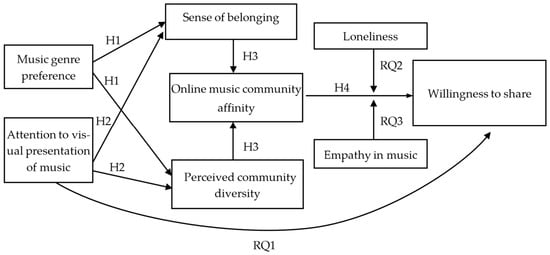
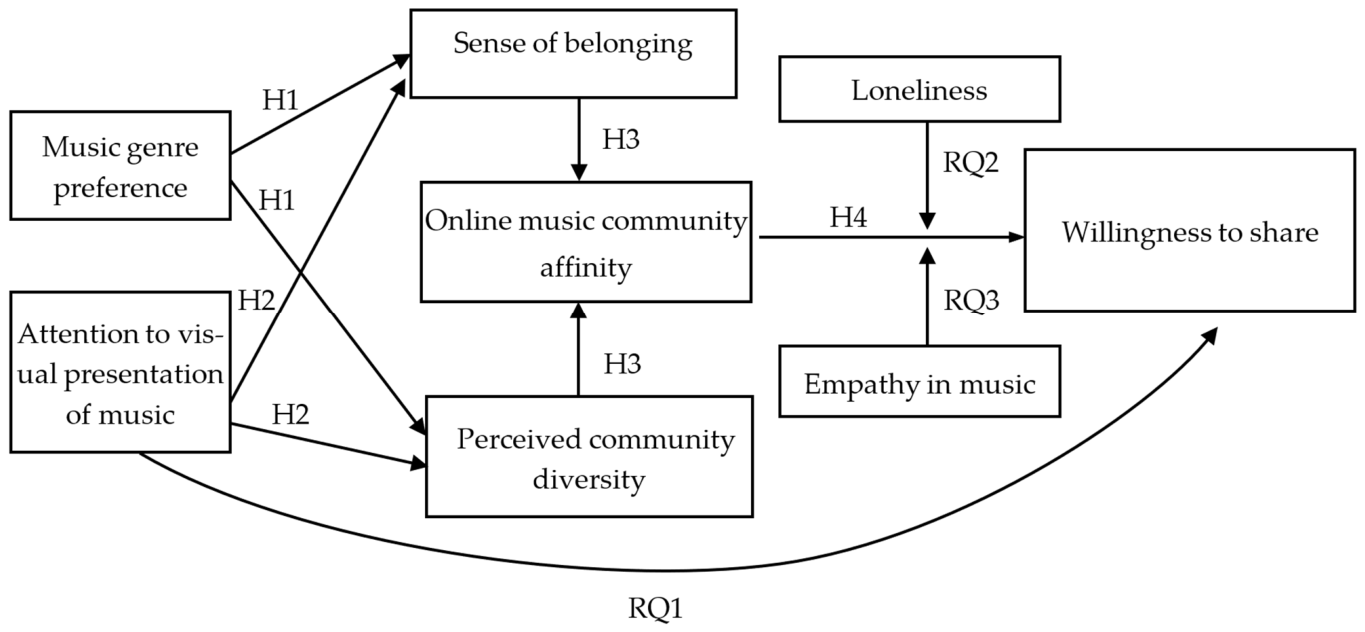
Although previous studies have examined music genre preference, visual presentation, community participation, and information sharing in online environments, less is known about how individual preferences, visual experiences, and community-related perceptions jointly contribute to willingness to share within online music communities. In particular, limited research has explored how attention to visual presentation, sense of belonging, perceived community diversity, and community affinity interact in shaping music-related sharing intentions. To address these gaps, this study develops and tests an integrated framework that brings together individual, visual, and community-related factors to explain willingness to share within online music communities. (See Figure 1).
Figure 1.
A model of music involvement and willingness to share within online music communities.
3. Method
A survey was conducted online and offline to test the hypotheses and research questions, in Hong Kong, from 7 October 2020 to 2 November 2020. The study was reviewed under senior academic supervision at the time. All participants provided informed consent, and information obtained during the study was anonymised from the outset. All participants had the right to withdraw at any time. Formal ethics approval was subsequently obtained from the Human and Artefacts Ethics Sub-Committee of City University of Hong Kong in 2026 (No. HU-STA-00002599). Further details are provided in the Institutional Review Board Statement.
Microsoft Forms and WJX.com (main focus for mainland Chinese users) were utilised as platforms to recruit participants through social media posts. Emails were also sent for recruitment. For offline recruitment, flyers were distributed to reach potential participants. The Chinese and English versions of the questionnaire were finalised after being checked by two bilingual senior researchers.
Because music listening is central to this study, the main participants are the people who utilise music platforms and devices to listen to music, as well as people who have had experiences of browsing or sharing information in places that provide comments and social features for users, such as SoundCloud, YouTube music channels and NetEase Cloud Music (it is popular in the Chinese context). The population includes respondents who are from Hong Kong, India, mainland China, the United State and Canada, etc., based on an open-ended question about geographic location. Screening questions were included in the questionnaire to ask whether participants use music platforms with social features, and only those who answered “yes” were further considered.
This study also designed a multiple-choice question related to job types in order to distinguish the people whose jobs are relevant to music from the general public. Those who create music or work in the industry may have distinct motivations for sharing music-related content (e.g., promoting original songs or seeking collaboration). Although they represent a smaller proportion of the sample, these are still platform users whom this study would like to consider. The multiple-choice question includes: (1) musician or someone whose job is related to music, (2) ordinary music listener; respondents need to choose only one for further questions. The questionnaire comprised 37 items across three pages.
As a convenience sample was employed, the study is not able to make strong inferences about the general population. Participation was restricted to individuals aged 18 and older. Following the data screening process to exclude ineligible or invalid responses (e.g., those failing the attention check), a final sample of 807 valid responses was obtained. Among the respondents, 358 (44.4%) were male, 445 (55.1%) were female, and 4 (0.5%) identified with another gender. The percentages of the respondents who ranked the rest of the devices as their first preferred equipment to listen to music were: 6.3% for computer, 86% for mobile devices, 5.6% for professional devices, and 2.1% for others. For the question asking whether their job is related to music, 7.4% of the participants said they were working as practitioners related to music and 92.6% were ordinary music listeners. Their ages ranged from 18 to 82, based on self-reported responses to the optional question.
Data Relevance. The data were collected in 2020 during the COVID-19 pandemic, prior to the subsequent AI developments in online music platforms and technologies. However, this study focuses on broader psychological and community-related constructs. These constructs reflect enduring aspects of online community participation rather than platform-specific features. While online music platforms and technologies have continued to evolve, the underlying psychological and community-related mechanisms are expected to remain relevant. The data therefore provide a useful baseline for understanding these enduring processes (Su and Li 2026).
Measurement of Key Variables
Music genre preference. Music genre refers to styles of interpretation of music content. Although the definition of music genre is ambiguous, the mainstreaming of different music styles is observed on several platforms; this study offers as many music genres as possible for participants to choose from: jazz, folk, rock, classical music, rap music, funk music, etc. For some specific styles that may not be comprised, an open-ended question is also listed in the questionnaire for respondents who can write down their own answers for the exclusive music genre. This variable was measured in the first question: (1) Please choose your favourite music genre below (e.g., jazz, rock). And other revised items stem from the Schäfer and Sedlmeier (2010) and Schäfer et al.’s (2012) studies: (2) I am a passionate listener of this music, (3) I am enthusiastic in collecting such music, (4) My favourite music activates me, (5) The pleasure I get from listening to such music never declines. Rather than merely identifying a preferred music genre, this study conceptualises music genre preference as both the selection of a preferred genre and the intensity of preference towards that genre. Specifically, the study investigates how this variable acted in music communities and redesigns different dimensions to examine it other than simply listing genres. A five-point Likert scale was applied to the latter four items (M = 3.66, SD = 0.60, α = 0.82).
Attention to visual presentation of music. Visual elements help interpret music. The first association to visual presentation related to music may be CD covers. The design or picture of a CD cover can initially catch someone’s eye. In addition, booklets about music, singers’ photos, video recordings/MVs of songs, live concert performances, live music programmes on music platforms and so forth, refer to visual presentation of music. Attention to visual presentation of music refers to the extent to which one particularly focuses on the visual presentation of music, covering different aspects to draw individuals’ attention. The variable adapted from Li (2014) was measured using three items: (1) I pay close attention to visual presentation of music, such as CD covers, MVs, videos and images related to music. (2) I closely follow a variety of visual presentations of music. (3) I regularly spend time looking at visual presentations related to music (M = 3.33, SD = 0.72, α = 0.82).
Sense of belonging. Sense of belonging refers to three dominant components to psychometrically test people’s self-reports: (1) valued involvement; (2) fit and (3) antecedents (Hagerty and Patusky 1995). Consistent with previous studies about sense of belonging to institutions or community (e.g., McLaren et al. 2015; St-Amand et al. 2017), a revised scale is conducted depended on the Sense of Belonging Instrument (SOBI). Each item was rated on a five-point Likert scale from 1 (strongly disagree) to 5 (strongly agree) with the following statements: (1) I think it is worthwhile to participate in various activities in the music community; (2) Listening to music and reading posts about music make me feel immersed into the music community; (3) I think I am valued in the music community; (4) I feel that I really fit into the music community (M = 3.53, SD = 0.69, α = 0.88).
Perceived community diversity. Perceived community diversity measures the degree to which a person thinks they may acquire multifariously sufficient activities that they prefer to participate in. This variable was measured with four items based on music genre, music activities with groups and the form of music interpretation (e.g., video, vlog): (1) This music community provides adequate types of music for me to choose from; (2) The music community has various music activities held by different groups that attract me; (3) The music community presents diverse perspectives on music; (4) The community offers various social functions for members to bond over (M = 3.59, SD = 0.65, α = 0.88).
Affinity for online music community. Community affinity refers to the degree of attachment in which engaging in various community activities is perceived as an indispensable need. The scale of four items, which included elements of habitual community use, was utilised to examine this variable: (1) reluctance to be away from listening to music in this community for long; (2) feeling lost without accessing the content about music in the community; (3) a need for connection with friends/members in the community; (4) everyday involvement in the online music community (M = 3.11, SD = 0.85, α = 0.91).
Loneliness. The revised version derived from the UCLA Loneliness Scale (Russell 1996) and the study (Snyder and Newman 2019) was used to measure the perception of loneliness in the special period of time when people suffered from COVID-19. Respondents were asked questions using four statements: (1) I feel left out, (2) I am no longer close to anyone, (3) I am not able to share my interests and ideas with the people around me, (4) I feel isolated because there are not many intimate relationships in my life (M = 2.53, SD = 0.84, α = 0.87).
Empathy in music. Empathy manifests heterogeneous features on account of different cues in specific situations. Considering the correlation of empathy with music, this study measures empathy in music in three dimensions: to myself; to others; and to the stories in the music itself. As emotional involvement represents one important manifestation of empathy in music-related contexts, the empathy items mainly capture aspects related to emotional involvement. The following three statements were conducted to test this variable: (1) I am drawn into the scene when I listen to music; (2) I respond emotionally when I read posts about music from others; (3) I am often involved in melodies or lyrics when appreciating music (M = 3.68, SD = 0.63, α = 0.78). A Pearson correlation analysis further showed that empathy was positively associated with music genre preference (r = 0.53, p < 0.001), suggesting that the two constructs are related yet conceptually distinct.
Willingness to share. Willingness to share refers to positive attitudes towards sharing useful, interesting or meaningful music-related information within online music communities. Four items used tested this variable: I am willing to share it with others (1) when I read something enlightening about music; (2) when I come across a touching music story; (3) when I find something interesting about music; (4) when I find helpful information about music (M = 3.79, SD = 0.63, α = 0.89). (See Table 1).
Table 1.
Means, standard deviations and correlations among key variables (N = 807).
4. Results
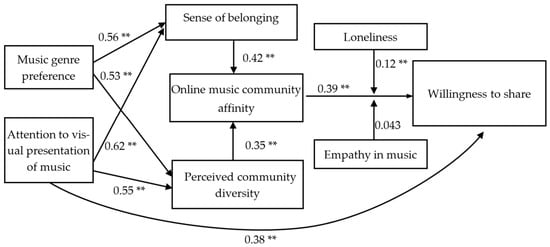
Hypothesis 1 predicted that music genre preference is related to sense of belonging and perceived community diversity. Music genre preference was conceptualised in two dimensions: preferred music genre and the extent of preference for the selected genre. First, a one-way ANOVA was conducted to examine whether sense of belonging, and perceived community diversity differed across preferred music genre categories. No significant differences were found in sense of belonging, F(8, 798) = 0.80, p > 0.05, or perceived community diversity, F(8, 798) = 0.84, p > 0.05. Second, regression analyses showed that the extent of music genre preference was positively related to both sense of belonging (β = 0.56, p < 0.01) and perceived community diversity (β = 0.53, p < 0.01). Therefore, Hypothesis 1 was partially supported.
Hypothesis 2 stating that attention to visual presentation of music is related to sense of belonging and perceived community diversity, was supported. The regression analysis statistically showed that attention to visual presentation was a significant predictor of sense of belonging (β = 0.62, p < 0.01) and perceived community diversity (β = 0.55, p < 0.01).
Hypothesis 3 stating that sense of belonging and perceived community diversity positively predict affinity for online music community, was supported. Multiple regression analysis showed that both sense of belonging (β = 0.42, p < 0.01) and perceived community diversity (β = 0.35, p < 0.01) were significant predictors of affinity for online music community. The overall model was statistically significant (R2 = 0.52, p < 0.01).
Hypothesis 4, that affinity for online music community positively predicts willingness to share, was supported. The linear regression was used to test the hypothesis, which indicated that affinity for online music community (β = 0.39, p < 0.01) was a significant predictor of willingness to share within online music communities (R2 = 0.15, p < 0.01). (See Figure 2).
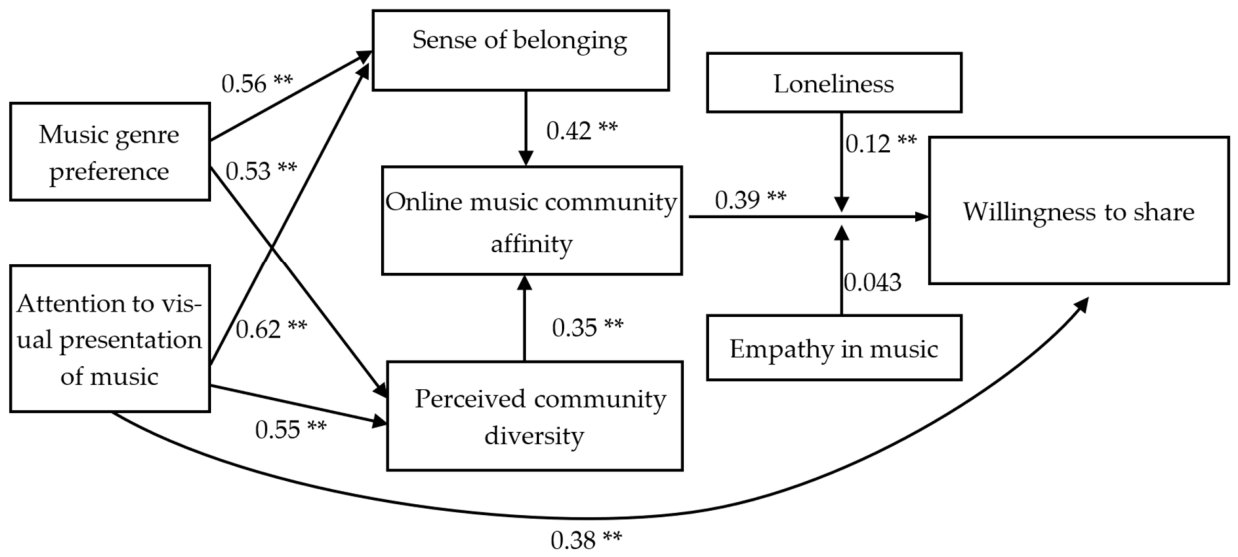
Figure 2.
Summary of factors associated with willingness to share within online music communities. Note: ** p < 0.01. Figure 2 presents a conceptual summary of the findings and should not be interpreted as a single tested structural model.
To answer research question 1, “to what degree is attention to visual presentation of music associated with willingness to share?”, a regression analysis was conducted. The result statistically revealed that attention to visual presentation of music was positively associated with willingness to share within online music communities (β = 0.38, p < 0.01, R2 = 0.14). (See Table 2).
Table 2.
Results of regression analyses among key variables (N = 807).
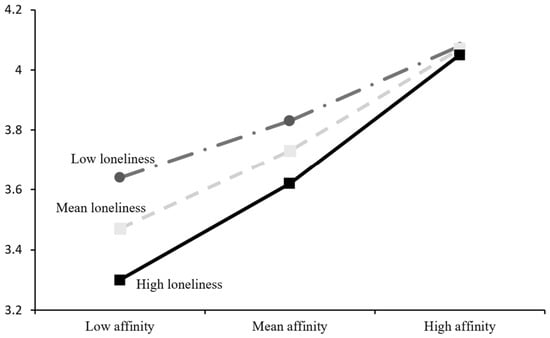
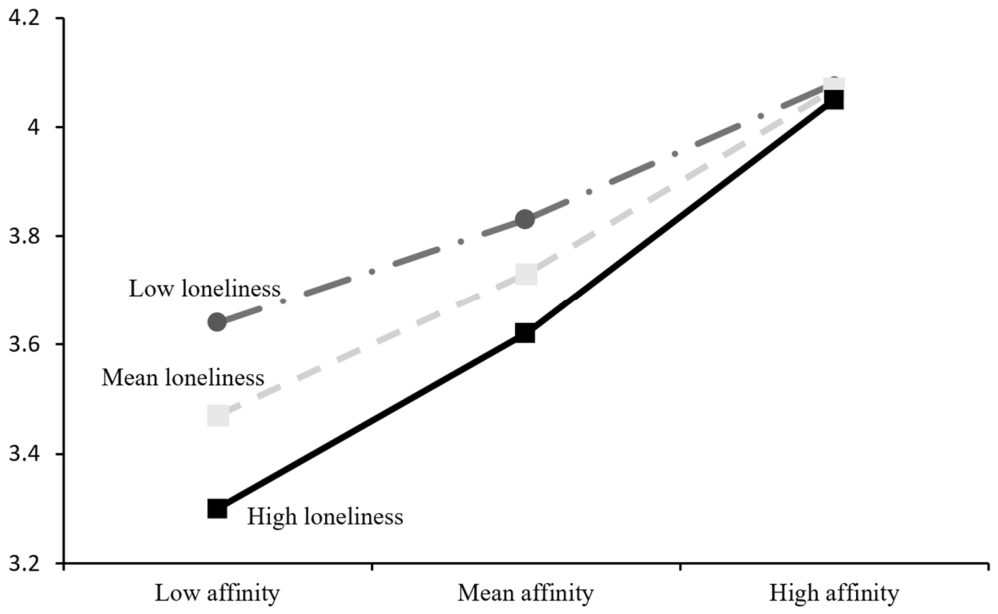
To answer research question 2 and 3, “to what degree is the effect of affinity for online music community on willingness to share moderated by loneliness?” and “to what degree is the effect of affinity for online music community on willingness to share moderated by empathy in music?”, the PROCESS macro for SPSS Statistics 25 (Hayes 2013) was employed. The results indicated a significant interaction effect between affinity for online music community and loneliness on willingness to share (β = 0.12, SE = 0.023, p < 0.01, 95% CI [0.07, 0.16]). Analyses indicated that the positive relationship between community affinity and willingness to share became stronger as loneliness increased. Specifically, the effect of community affinity on willingness to share was weaker at low levels of loneliness (β = 0.25, SE = 0.028, p < 0.01, 95% CI [0.20, 0.31]), moderate at average levels of loneliness (β = 0.34, p < 0.01, SE = 0.025, 95% CI [0.29, 0.39]), and strongest at high levels of loneliness (β = 0.43, SE = 0.032, p < 0.01, 95% CI [0.36, 0.49]). These findings suggest that loneliness amplifies the positive association between community affinity and willingness to share. However, the interaction effect between affinity for online music community and empathy in music was not significant (β = 0.043, SE = 0.025, p > 0.05, 95% CI [−0.01, 0.09]), suggesting that empathy in music did not moderate the relationship between community affinity and willingness to share. (See Figure 3).
Figure 3.
The moderating effect of loneliness on the relationship between community affinity and willingness to share. Note: The y-axis represents predicted willingness to share. Low, mean, and high loneliness correspond to values one standard deviation below the mean (−1 SD), at the mean, and one standard deviation above the mean (+1 SD), respectively.
5. Discussion
This study examined music genre preference and the role of attention to visual presentation of music within today’s online environment, as well as the effects of online community-related factors on willingness to share. The study identified two approaches to measuring music genre preference and revealed that these dimensions of preference interact differently with other factors. Even though the findings showed that there were no significant differences between genres, this does not mean that genre is unimportant. This study also investigated the moderating roles of loneliness and empathy in music in the relationship between affinity for online music community and willingness to share. Overall, the findings advance our understanding of online music community building and the factors that encourage user engagement in contemporary online communication.
First, this study challenged the stereotype that online music communities exist in simple and homogeneous forms by demonstrating that they rely on diverse modalities of interaction. Based on community building theory, this study suggests that factors, such as sense of belonging and perceived community diversity, continue to play essential roles in online music communities. The media expectancy theory provides a supplementary framework for interpreting these findings. The findings challenged the existing perspectives of online communities centred around specific interests. Previous research has explored the importance of shared interests and hobbies in fostering bonds among community members (Kahu 2014; Murphy et al. 2007). However, the present findings suggest that the strength of an individual’s preference may be more important than the specific object of interest itself. While people may share similar interests, the extent of their preference appears to influence their level of engagement, communication and willingness to share. Individuals with lower levels of preference may be more likely to remain passive participants or lurkers. Music genres were not found to differentially influence the relationships examined in the model. However, further research is needed to examine whether similar patterns can be observed in online communities centred around other interests. Consequently, this study extends the community building theory and employs the media expectancy theory as an additional framework within the context of internet communication. This study also offers insights that are applicable not only to online music communities but also to interest-based online communities more broadly in the digital age.
Second, the findings showed that loneliness, but not empathy in music, moderated the relationship between affinity for online music community and willingness to share. The moderating effect of loneliness suggests that community affinity may be especially influential for individuals experiencing higher levels of loneliness. Stronger feelings of community affinity were linked to a greater increase in sharing willingness among respondents with higher levels of loneliness. Whether individuals experiencing loneliness place direct value on community connections, making community affinity a particularly important factor in encouraging music-related information sharing, requires further investigation. At the same time, empathy in music was not found to have a significant moderating effect in this study. One possible explanation is that empathy in music reflects emotional resonance with music. As willingness to share was examined within a community context, community-related perceptions may be more closely associated with the relationship between community affinity and sharing willingness than emotional responses to music itself.
This study conceptualised different factors within the context of online music communities, rather than examining these factors in isolation. In doing so, the interpretation of the findings provides insights into the mechanisms among factors affecting willingness to share within online music communities and emphasises the importance of considering factors, such as sense of belonging, perceived community diversity and community affinity, which play different roles in influencing how individuals want to engage and communicate with online music communities. However, the associations between these factors may vary across different contexts.
Third, from a practical perspective, the results further elucidated the factors that were influenced by attention to visual presentation of music, and the results highlighted attention to visual presentation of music as an important predictor of willingness to share music-related information within online music communities. Attention to visual presentation of music influenced sense of belonging, perceived community diversity, and willingness to share. Music is associated with auditory experiences, with musicians using diverse melodies and rhythms to convey meaning. In contrast, relatively few studies have examined the role of visual presentation in music interpretation or its influence on audience engagement. The findings suggest that visual presentation has become an integral component of how people experience and remember music. Individuals and organisations involved in music communication increasingly rely on visual formats to convey stories and meanings associated with music. From an industry perspective, greater attention might be given to the development of visual elements that attract audiences and enhance engagement. Individuals who pay greater attention to the visual presentation of music may be more willing to share music-related information within online music communities. Such engagement can promote interaction among members, facilitate community building, and strengthen affinity for online music communities. Moreover, community managers may benefit from incorporating diverse visual elements into music-related content to encourage information exchange and discussion among members. Therefore, online music communities need consider enhancing the visual presentation of music as a means of strengthening connections between individuals and their communities.
The current study needs to be treated with caution due to its limitations. First, this study investigated the factors affecting affinity and willingness to share in a specific music field. But how other latent components also play a role in the communication process in online music communities, and whether these correlative variables can apply to different online communities beyond music, call for further study. For example, greater willingness to share may reflect higher levels of musical enthusiasm, regular platform use, or stronger existing participation in online communities. As these factors were not directly examined in the study, their potential influence requires further investigation. The most integral factors will be clearer and may continue to exert an impact on the relationships between the aspects of online community building, while some others may fade away as time passes. Second, this study did not elaborate the effect of discrepancies in music device use. People selecting different music devices for listening to music might indicate some attitude changes or lifestyles differences, which reflects the perceptions of online music communities and to what degree they are willing to make an effort to keep communities alive. Further research could create room for testing to what degree those items were treated differently and other demographic factors influencing the process. For instance, in some online photography communities, camera use could predict willingness to share or self-disclosure because of exclusive metaphor for cameras such as Leica. Third, the underlying mediating moderation relationships or moderating mediation interplays could be examined in the future. Because of an increasingly complex world and the fragmentation of society, some communities broke up and some may reunite again. Studies may include these kinds of considerations to accommodate the dynamics. Fourth, the findings should also be interpreted in light of the timing of data collection. The survey was conducted during the COVID-19 pandemic, a period that may have influenced experiences of loneliness and online participation. Although the study examines broader psychological and community-related mechanisms, online music platforms have continued to evolve since 2020. Future research is therefore recommended to examine current online music communities. Finally, although this study conceptualised attention to visual presentation of music as a unified construct, different forms of visual presentation, such as album covers, music videos, photographs, posters, and stage design, may exert different influences on individuals’ perceptions of music and engagement. Future research could examine the effects of specific visual formats separately and explore whether certain forms of visual presentation are differently associated with music community participation and information sharing. In addition, this study focused on individuals’ attention to visual presentation rather than the quality of visual presentation itself. Visual design quality is also an essential factor affecting individuals’ attitudes and behaviours (Negm and Tantawi 2015). Future studies may investigate how the visual design quality of music influences individuals’ perceptions and participation in music communities.
6. Conclusions
This study demonstrated the associations of several variables with willingness to share within online music communities. In particular, attention to visual presentation of music was found to be linked to sense of belonging, perceived community diversity, and willingness to share. Drawing on community building theory and employing media expectancy theory as a supplementary interpretive framework, this study contributes to understanding the interactions between individuals and online music communities. The findings should be interpreted in light of the study’s limitations, including its cross-sectional design and the specific context of online music communities. Future research may continue to explore additional factors that contribute to communication processes in online communities in the post-COVID-19 era, and shape not only individual perceptions and attitudes but also actual behaviours across cultural and temporal contexts.
Funding
This research received no external funding.
Institutional Review Board Statement
The initial phase of this study was conducted in 2020 as a low-risk pilot study. All participants provided informed consent, and information obtained during the study was fully anonymised from the outset. The project was subsequently suspended and remained unpublished for several years. When the study was later resumed for publication, formal ethics approval was obtained from the Human and Artefacts Ethics Sub-Committee of City University of Hong Kong in 2026 (No. HU-STA-00002599) to ensure compliance with current institutional requirements and international publication standards.
Informed Consent Statement
Informed consent was obtained from all subjects involved in the study.
Data Availability Statement
The data are available upon reasonable request from the author.
Acknowledgments
The author acknowledges the use of Microsoft Copilot (GPT-5 chat model), a generative AI tool, for proofreading, paraphrasing, and enhancing clarity in the preparation of this manuscript. The author retains full responsibility for the accuracy, originality, and academic integrity of the content. The author thanks the editor and anonymous reviewers for their insightful comments and constructive suggestions. The author also thanks Xigen Li, his academic advisor, for his guidance and support.
Conflicts of Interest
The author declares no conflict of interest.
References
- Abdollahi, Abbas, and Amity Noltemeyer. 2018. Academic Hardiness: Mediator between Sense of Belonging to School and Academic Achievement? The Journal of Educational Research 111: 345–51. [Google Scholar] [CrossRef] [Scilit]
- Ainley, Mary. 2006. Connecting with Learning: Motivation, Affect and Cognition in Interest Processes. Educational Psychology Review 18: 391–405. [Google Scholar] [CrossRef] [Scilit]
- Asaba, Yuki, Kyu S. Hahn, Seulgi Jang, Tetsuro Kobayashi, and Atsushi Tago. 2020. 38 seconds above the 38th parallel: How short video clips produced by the US military can promote alignment despite antagonism between Japan and Korea. International Relations of the Asia-Pacific 20: 253–73. [Google Scholar] [CrossRef] [Scilit]
- Baker, Paul M. A., and Andrew C. Ward. 2002. Bridging temporal and spatial “gaps”: The role of information and communication technologies in defining communities. Information, Communication & Society 5: 207–24. [Google Scholar] [CrossRef] [Scilit]
- Balteș, Felicia Rodica, and Andrei C. Miu. 2014. Emotions during live music performance: Links with individual differences in empathy, visual imagery, and mood. Psychomusicology: Music, Mind, and Brain 24: 58–65. [Google Scholar] [CrossRef] [Scilit]
- Berthon, Pierre, Leyland Pitt, and Colin Campbell. 2008. Ad lib: When customers create the ad. California Management Review 50: 6–30. [Google Scholar] [CrossRef] [Scilit]
- Bock, Gee-Woo, Robert W. Zmud, Young-Gul Kim, and Jae-Nam Lee. 2005. Behavioral intention formation in knowledge sharing: Examining the roles of extrinsic motivators, social-psychological forces, and organizational climate. MIS Quarterly 29: 87–111. [Google Scholar] [CrossRef] [Scilit]
- Brown, Ruth E. 2001. The process of community-building in distance learning classes. Online Learning 5: 18–35. [Google Scholar] [CrossRef] [Scilit]
- Castellanos, Michelle, and Darnell Cole. 2015. Disentangling the impact of diversity courses: Examining the influence of diversity course content on students’ civic engagement. Journal of College Student Development 56: 794–811. [Google Scholar] [CrossRef] [Scilit]
- Cigna. 2020. LONELINESS AND THE WORKPLACE: 2020 U.S. REPORT. Available online: https://www.cigna.com/static/www-cigna-com/docs/about-us/newsroom/studies-and-reports/combatting-loneliness/cigna-2020-loneliness-report.pdf (accessed on 26 November 2025).
- Clark, Shannon Scott, and S. Giac Giacomantonio. 2015. Toward predicting prosocial behavior: Music preference and empathy differences between adolescents and adults. Empirical Musicology Review 10: 50–65. [Google Scholar] [CrossRef] [Scilit]
- Clarke, Eric, Tia DeNora, and Jonna Vuoskoski. 2015. Music, empathy and cultural understanding. Physics of Life Reviews 15: 61–88. [Google Scholar] [CrossRef] [Scilit]
- Cohen-Mansfield, Jiska, and Rotem Perach. 2015. Interventions for Alleviating Loneliness among Older Persons: A Critical Review. American Journal of Health Promotion 29: e109–25. [Google Scholar] [CrossRef] [Scilit]
- Cress, Ulrike, Joachim Kimmerle, and Friedrich W. Hesse. 2006. Information exchange with shared databases as a social dilemma: The effect of metaknowledge, bonus systems, and costs. Communication Research 33: 370–90. [Google Scholar] [CrossRef] [Scilit]
- Cross, Ian, and Iain Morley. 2009. The Evolution of Music: Theories, Definitions and the Nature of the Evidence. In Communicative Musicality: Exploring the Basis of Human Companionship. Edited by Stephen Malloch and Colwyn Trevarthen. Oxford: Oxford University Press, pp. 61–81. [Google Scholar]
- Davis, Mark H. 1983. Measuring Individual Differences in Empathy: Evidence for a Multidimensional Approach. Journal of Personality and Social Psychology 44: 113–26. [Google Scholar] [CrossRef]
- DeFilippis, James. 2001. The myth of social capital in community development. Housing Policy Debate 12: 781–806. [Google Scholar] [CrossRef] [Scilit]
- Ferrer, Rafael, Tuomas Eerola, and Jonna K. Vuoskoski. 2013. Enhancing genre-based measures of music preference by user-defined liking and social tags. Psychology of Music 41: 499–518. [Google Scholar] [CrossRef] [Scilit]
- Fulbright-Anderson, Karen, and Patricia Auspos, eds. 2006. Community Change: Theories, Practice, and Evidence. Washington, DC: Aspen Institute. [Google Scholar]
- Fulk, Janet, and Gerardine DeSanctis. 1995. Electronic communication and changing organizational forms. Organization Science 6: 337–49. [Google Scholar] [CrossRef] [Scilit]
- Garcia Pires, Armando J. 2014. Media diversity, advertising, and adaptation of news to readers’ political preferences. Information Economics and Policy 28: 28–38. [Google Scholar] [CrossRef] [Scilit]
- Hagerty, Bonnie M. K., and Kathleen Patusky. 1995. Developing a measure of sense of belonging. Nursing Research 44: 9–13. [Google Scholar] [CrossRef] [Scilit]
- Hagerty, Bonnie M. K., Judith Lynch-Sauer, Kathleen L. Patusky, Maria Bouwsema, and Peggy Collier. 1992. Sense of belonging: A vital mental health concept. Archives of Psychiatric Nursing 6: 172–77. [Google Scholar] [CrossRef] [Scilit]
- Hayes, Andrew F. 2013. Introduction to Mediation, Moderation, and Conditional Process Analysis: A Regression-Based Approach. New York: Guilford Press. [Google Scholar]
- Hidi, Suzanne, and K. Ann Renninger. 2006. The four-phase model of interest development. Educational Psychologist 41: 111–27. [Google Scholar] [CrossRef] [Scilit]
- Isaac, Robert G., Wilfred J. Zerbe, and Douglas C. Pitt. 2001. Leadership and motivation: The effective application of expectancy theory. Journal of Managerial Issues 13: 212–26. [Google Scholar]
- Kahu, Ella. 2014. Increasing the emotional engagement of first year mature-aged distance students: Interest and belonging. International Journal of the First Year in Higher Education 5: 45–55. [Google Scholar] [CrossRef] [Scilit]
- Kim, Jung-Hwan, Minjeong Kim, and Sharron J. Lennon. 2009. Effects of web site atmospherics on consumer responses: Music and product presentation. Direct Marketing: An International Journal 3: 4–19. [Google Scholar] [CrossRef] [Scilit]
- Kindsmüller, Martin Christof, André Melzer, and Tilo Mentler. 2009. Online communities and online community building. In Encyclopedia of Information Science and Technology, 2nd ed. Edited by Mehdi Khosrow-Pour. Hershey: IGI Global/Information Science Reference, pp. 2899–905. [Google Scholar] [CrossRef] [Scilit]
- Kordus, David. 2014. What’s on (digital) TV? Assessing the digital television broadcasting system, its potential and its performance in increasing media content diversity. Communication Law and Policy 19: 55–86. [Google Scholar] [CrossRef] [Scilit]
- Lee, Deborah, and Lyn Robinson. 2018. The heart of music classification: Toward a model of classifying musical medium. Journal of Documentation 74: 258–77. [Google Scholar] [CrossRef] [Scilit]
- Lee, Fung Yin, and Lynne M. Webb. 2020. Loneliness, disclosure, and Facebook usage: Results from a Hong Kong survey. In Recent Advances in Digital Media Impacts on Identity, Sexuality, and Relationships. Edited by Michelle F. Wright. Hershey: IGI Global, pp. 170–89. [Google Scholar] [CrossRef] [Scilit]
- Lee, Kyung-Tag, Mi-Jin Noh, and Dong-Mo Koo. 2013. Lonely people are no longer lonely on social networking sites: The mediating role of self-disclosure and social support. Cyberpsychology, Behavior, and Social Networking 16: 413–18. [Google Scholar] [CrossRef] [Scilit]
- Leppäniemi, Matti, Heikki Karjaluoto, and Hannu Saarijärvi. 2017. Customer perceived value, satisfaction, and loyalty: The role of willingness to share information. The International Review of Retail, Distribution and Consumer Research 27: 164–88. [Google Scholar] [CrossRef] [Scilit]
- Li, Xigen. 2002. Web Page Design Affects News Retrieval Efficiency. Newspaper Research Journal 23: 38–49. [Google Scholar] [CrossRef] [Scilit]
- Li, Xigen. 2011. Factors influencing the willingness to contribute information to online communities. New Media & Society 13: 279–96. [Google Scholar] [CrossRef] [Scilit]
- Li, Xigen. 2014. Perceived channel efficiency and motivation and orientation of information seeking as predictors of media dependency. Telematics and Informatics 31: 628–39. [Google Scholar] [CrossRef] [Scilit]
- Massa, Felipe G. 2017. Guardians of the Internet: Building and sustaining the anonymous online community. Organization Studies 38: 959–88. [Google Scholar] [CrossRef] [Scilit]
- Master, Allison, Sapna Cheryan, and Andrew N. Meltzoff. 2016. Computing whether she belongs: Stereotypes undermine girls’ interest and sense of belonging in computer science. Journal of Educational Psychology 108: 424–37. [Google Scholar] [CrossRef] [Scilit]
- McLaren, Suzanne, Jacqueline Schurmann, and Megan Jenkins. 2015. The relationships between sense of belonging to a community GLB youth group; school, teacher, and peer connectedness; and depressive symptoms: Testing of a path model. Journal of Homosexuality 62: 1688–702. [Google Scholar] [CrossRef] [Scilit]
- McNeely, Joseph. 1999. Community building. Journal of Community Psychology 27: 741–50. [Google Scholar] [CrossRef]
- Meyer, Justin Reeves. 2019. From Egyptian mummies to the art of beer: A case study of the Portland Art Museum’s engagement strategies, community building, and connection to urban policy, 1994–2014. Cities 88: 59–65. [Google Scholar] [CrossRef] [Scilit]
- Mitchell, Helen F., and Raymond A. R. MacDonald. 2016. What you see is what you hear: The importance of visual priming in music performer identification. Psychology of Music 44: 1361–71. [Google Scholar] [CrossRef] [Scilit]
- Murphy, Mary C., Claude M. Steele, and James J. Gross. 2007. Signaling threat: How situational cues affect women in math, science, and engineering settings. Psychological Science 18: 879–85. [Google Scholar] [CrossRef] [Scilit]
- Negm, Eiman, and Passent Tantawi. 2015. Investigating the impact of visual design on consumers’ perceptions towards advertising. International Journal of Scientific and Research Publications 5: 1–9. [Google Scholar]
- Nieckarz, Peter P., Jr. 2005. Community in cyberspace?: The role of the Internet in facilitating and maintaining a community of live music collecting and trading. City & Community 4: 403–23. [Google Scholar] [CrossRef] [Scilit]
- North, Adrian C., and Atsuko Oishi. 2006. Music CD purchase decisions. Journal of Applied Social Psychology 36: 3043–84. [Google Scholar] [CrossRef] [Scilit]
- O’Brien, Heather, Luanne Freund, and Stina Westman. 2014. What motivates the online news browser? News item selection in a social information seeking scenario. Information Research 19: 634. Available online: http://InformationR.net/ir/19-3/paper634.html (accessed on 18 August 2026).
- Okazaki, Shintaro, Barbara Mueller, and Sandra Diehl. 2013. A multi-country examination of hard-sell and soft-sell advertising: Comparing global consumer positioning in holistic- and analytic-thinking cultures. Journal of Advertising Research 53: 258–72. [Google Scholar] [CrossRef] [Scilit]
- Park, Hyun Hee, Jai Kwan Park, and Jung Ok Jeon. 2014. Attributes of background music and consumers’ responses to TV commercials: The moderating effect of consumer involvement. International Journal of Advertising 33: 767–84. [Google Scholar] [CrossRef] [Scilit]
- Park, Soyoung, and Sungchan Kim. 2017. The linkage between work unit performance perceptions of US federal employees and their job satisfaction: An expectancy theory. Transylvanian Review of Administrative Sciences 13: 77–93. [Google Scholar] [CrossRef] [Scilit]
- Patall, Erika A. 2013. Constructing motivation through choice, interest, and interestingness. Journal of Educational Psychology 105: 522–34. [Google Scholar] [CrossRef] [Scilit]
- Platz, Friedrich, and Reinhard Kopiez. 2012. When the eye listens: A meta-analysis of how audio-visual presentation enhances the appreciation of music performance. Music Perception: An Interdisciplinary Journal 30: 71–83. [Google Scholar] [CrossRef] [Scilit]
- Ren, Yuqing, F. Maxwell Harper, Sara Drenner, Loren Terveen, Sara Kiesler, John Riedl, and Robert E. Kraut. 2012. Building member attachment in online communities: Applying theories of group identity and interpersonal bonds. MIS Quarterly 36: 841–63. [Google Scholar] [CrossRef] [Scilit]
- Roma, Paolo, and Davide Aloini. 2019. How does brand-related user-generated content differ across social media? Evidence reloaded. Journal of Business Research 96: 322–39. [Google Scholar] [CrossRef] [Scilit]
- Russell, Daniel W. 1996. UCLA Loneliness Scale (Version 3): Reliability, Validity, and Factor Structure. Journal of Personality Assessment 66: 20–40. [Google Scholar] [CrossRef] [Scilit]
- Satici, Seydi Ahmet. 2019. Facebook addiction and subjective well-being: A study of the mediating role of shyness and loneliness. International Journal of Mental Health and Addiction 17: 41–55. [Google Scholar] [CrossRef] [Scilit]
- Schäfer, Thomas, and Peter Sedlmeier. 2010. What makes us like music? Determinants of music preference. Psychology of Aesthetics, Creativity, and the Arts 4: 223–34. [Google Scholar] [CrossRef] [Scilit]
- Schäfer, Thomas, Arun Tipandjan, and Peter Sedlmeier. 2012. The functions of music and their relationship to music preference in India and Germany. International Journal of Psychology 47: 370–80. [Google Scholar] [CrossRef] [Scilit]
- Scherer, Klaus R., and Marcel R. Zentner. 2001. Emotional effects of music: Production rules. In Music and Emotion: Theory and Research. Edited by Patrik N. Juslin and John A. Sloboda. Oxford: Oxford University Press, pp. 361–92. [Google Scholar]
- Schubert, Emery. 2007. The influence of emotion, locus of emotion and familiarity upon preference in music. Psychology of Music 35: 499–515. [Google Scholar] [CrossRef] [Scilit]
- Schutz, Michael. 2008. Seeing music? What musicians need to know about vision. Empirical Musicology Review 3: 83–108. [Google Scholar] [CrossRef] [Scilit]
- Shen, Fei, and Hai Liang. 2015. Cultural difference, social values, or political systems? Predicting willingness to engage in online political discussion in 75 societies. International Journal of Public Opinion Research 27: 111–24. [Google Scholar] [CrossRef] [Scilit]
- Shih, Hung-Pin. 2008. Continued use of a Chinese online portal: An empirical study. Behaviour & Information Technology 27: 201–9. [Google Scholar] [CrossRef] [Scilit]
- Snyder, Deirdre G., and Kevin P. Newman. 2019. Reducing consumer loneliness through brand communities. Journal of Consumer Marketing 36: 337–47. [Google Scholar] [CrossRef] [Scilit]
- St-Amand, Jerome, Stéphanie Girard, and Jonathan Smith. 2017. Sense of belonging at school: Defining attributes, determinants, and sustaining strategies. IAFOR Journal of Education 5: 105–19. [Google Scholar] [CrossRef] [Scilit]
- Su, Linsen, and Xigen Li. 2026. The paradox of belonging and distinction: The influence of social face on utilitarian and hedonic smartphone use in China. Communication and the Public. Advance online publication. [Google Scholar] [CrossRef] [Scilit]
- Tago, Atsushi. 2017. Public diplomacy and foreign policy. In Oxford Research Encyclopedia of Politics. Edited by Erin Hannah. Oxford: Oxford University Press. [Google Scholar] [CrossRef] [Scilit]
- Thomson, T. J. 2018. Freelance Photojournalists and Photo Editors: Learning and Adapting in a (Mostly Faceless) Virtual World. Journalism Studies 19: 803–23. [Google Scholar] [CrossRef] [Scilit]
- Thomson, T. J. 2019. To See and Be Seen: The Environments, Interactions and Identities Behind News Images. London: Bloomsbury Academic. [Google Scholar]
- Tso, Ivy F., and Sohee Park. 2020. Alarming levels of psychiatric symptoms and the role of loneliness during the COVID-19 epidemic: A case study of Hong Kong. Psychiatry Research 293: 113423. [Google Scholar] [CrossRef] [Scilit]
- Vroom, Victor Harold. 1964. Work and Motivation. New York: Wiley. [Google Scholar]
- Vuoskoski, Jonna K., and Tuomas Eerola. 2012. Can sad music really make you sad? Indirect measures of affective states induced by music and autobiographical memories. Psychology of Aesthetics, Creativity, and the Arts 6: 204–13. [Google Scholar] [CrossRef] [Scilit]
- Wang, Hua, Jae Eun Chung, Namkee Park, Margaret L. McLaughlin, and Janet Fulk. 2012. Understanding online community participation: A technology acceptance perspective. Communication Research 39: 781–801. [Google Scholar] [CrossRef] [Scilit]
- Wang, Yao, and Abdul Majeed. 2023. How do users’ feedback influence creators’ contributions: An empirical study of an online music community. Behaviour & Information Technology 42: 1357–73. [Google Scholar] [CrossRef] [Scilit]
- Wang, Yichen, Shih-Diing Liu, and Yan Tan. 2026. The platformization of affective spaces: NetEase Cloud Music’s appropriation and governance of users’ emotions. Media International Australia. Advance online publication. [Google Scholar] [CrossRef] [Scilit]
- Warner, Alfred G. 2016. Developing a community of inquiry in a face-to-face class: How an online learning framework can enrich traditional classroom practice. Journal of Management Education 40: 432–52. [Google Scholar] [CrossRef] [Scilit]
- Weiss, Robert S. 1973. Loneliness: The Experience of Emotional and Social Isolation. Cambridge: MIT Press. [Google Scholar]
- Wellman, Barry, and Milena Gulia. 1999. Net-Surfers Don’t Ride Alone: Virtual Communities as Communities. In Networks in the Global Village: Life in Contemporary Communities. Edited by Barry Wellman. Boulder: Westview Press, pp. 331–66. [Google Scholar]
- Wöllner, Clemens. 2012. Is empathy related to the perception of emotional expression in music? A multimodal time-series analysis. Psychology of Aesthetics, Creativity, and the Arts 6: 214–24. [Google Scholar] [CrossRef] [Scilit]
- Zaheer, Nadia, and Peter Trkman. 2017. An information sharing theory perspective on willingness to share information in supply chains. The International Journal of Logistics Management 28: 417–43. [Google Scholar] [CrossRef] [Scilit]
- Zhang, Kun, and Miao Ni. 2026. From emotional expression to group classification: Construction and characteristic study of user emotional portraits in online music communities. International Journal of Human–Computer Interaction 42: 16421–43. [Google Scholar] [CrossRef] [Scilit]

Disclaimer/Publisher’s Note: The statements, opinions and data contained in all publications are solely those of the individual author(s) and contributor(s) and not of MDPI and/or the editor(s). MDPI and/or the editor(s) disclaim responsibility for any injury to people or property resulting from any ideas, methods, instructions or products referred to in the content. |
© 2026 by the author. Licensee MDPI, Basel, Switzerland. This article is an open access article distributed under the terms and conditions of the Creative Commons Attribution (CC BY) license.