


Abstract
Eco-health challenges in the Global South increasingly require integrating endogenous and academic knowledge into sustainable development. This study examines an inclusive forum-debate in Senegal that used the frieze method to decentralize and diversify stakeholder perspectives by connecting knowledge with practice. A national forum brought together academics and practitioners of traditional resilience techniques to explore links between technological innovation and eco-sanitation practices. The frieze method supported collective reflection on ecosystem management, environmental health, and the empowerment of women and youth, while data were complemented by qualitative interviews and direct observations. The findings show both the potential and limits of practical knowledge and identify gaps that academics can help address. Group discussions revealed interconnected stakeholder networks that contrast with siloed approaches, which can restrict the contribution of local initiatives to broader development. The frieze methodology offers a simple and effective way to map practical knowledge, assess its heuristic value, and bridge epistemic gaps between academic institutions and communities in African contexts.
1. Introduction
In colonized Sub-Saharan Africa countries, endogenous knowledge remains undervalued in national development agendas (Arowosegbe 2016). The literature review reveals three key moments in the semantic trajectory of endogenous knowledge, each coinciding with a period of socio-political development in countries previously under colonial rule. The first phase, which can be described as ‘discriminatory’, refers to the colonial period during which the knowledge and skills of the dominated were to disappear in favour of those of the ‘dominant’. This period of tension was characterised by an exclusive bipolarization of these two forms of knowledge.
The second phase saw a period of ‘empowerment’ and domestication of knowledge. It coincided with people gaining independence, which was accompanied by an affirmation of cultural, religious, political, social and economic identities. Through the popularization of ‘cultural relativism’, ‘the other’ is no longer qualified to define, characterize and classify the practices of others. African intellectuals certainly recognised a reality between old and new knowledge (Foé 2025) but refused to devalue the cognitive values inherited from their ancestors. This wave of sovereignty later gave rise to the intellectual decolonization movement, better known as post-colonial studies (Hountondji 2001; Mbembe et al. 2006).
The third phase, that of ‘affirmation’, opens the way for the redefinition of scientific validity criteria, this time considering the thought patterns of endogenous populations. This academic activism, or ‘epistemology of the South,’ seeks to criticise the repercussions of cultural assimilation (De Sousa Santos and Meneses 2019; De Sousa Santos 2011; De Sousa Santos et al. 2022), with the risk of going too far and reducing largely fabricated identities to their most basic elements.
However, this initiative in favour of cultural and scientific emancipation does not sufficiently integrate other social sources of knowledge that exist outside the formal education system. Here, we refer to this source as non-academic endogenous knowledge (NAEK) to distinguish it from endogenous academic knowledge. NAEK is characterised by non-written social sources of knowledge, orally transmitted, but structure popular beliefs through their restorative/curative power. We are thus witnessing a syncretism of knowledge that shapes the customs and practices of populations formerly under colonial rule (Appadurai and Bouillot 2005).
The selective promotion of NAEK comes up against an elitist system of knowledge governance rooted in the organisational model and class system inherited from colonization and neocolonialism (De Sousa Santos 2011; Gaussens and Makaran 2024). Two endogenous knowledge production systems face each other: academic and non-academic, lower and upper class. They differ mainly in their level of codification and integration into development policies (Gautier et al. 2022; Mboa Nkoudou 2015). Unlike academic knowledge, non-academic knowledge is little or not at all codified and lacks mechanisms for transmission and promotion that guarantee its continuity (Connell 2014, 2020). The scientific community tends to further recognize the contribution of NAEK in local development (IPCC 2023; Ogar et al. 2020; Rwabyoma 2012).
We assume that the status of NAEK in Africa is a determining factor in the resilience of the region’s NAEK systems and the recognition they receive in everyday life and socio-economic development (Faye and Sow 2025). Various studies have attempted to understand the processes of generation (Gwandure and Lukhele-Olorunju 2023; Odora Hoppers 2002), classification (Agrawal 2002), updating (Connell 2014), promotion (Gautier et al. 2022; Mboa Nkoudou 2015), and dissemination (Ogar et al. 2020) of NAEK. However, scientific development in the South and academic convergence between North and South within the scientific community have not prevented the gap between academic and non-academic knowledge from persisting, just as social inequalities and divisions are generally becoming more pronounced in the South, in the North, and between the North and the South alike. It is both a social and cognitive gap. This gap is particularly consequential in Senegal, where the twin challenges of land salinization affecting 1.7 million hectares and the growing risk of zoonotic disease emergence in degraded ecosystems impose an urgent need for hybrid forms of knowledge that combine local ecological literacy with formal scientific frameworks (Faye and Sow 2025, 2026). The country’s National Health Digital Strategy (2018–2023) explicitly recognizes the contribution of community actors in epidemiological surveillance, yet the epistemological conditions under which their knowledge is validated and integrated into digital surveillance architectures remain poorly theorized.
How can these two spheres be reconciled sustainably, equitably, and effectively? The frieze methodology offers a rare empirical window onto these conditions, making it not only a tool of knowledge cartography but a socio-analytical device for understanding the governance of eco-sanitary knowledge in the Global South. The objective of this article is to show that this gap is not only linked to unequal institutional recognition of knowledge, but also to the lack of spaces for translation and dialogue between lived experiences, local practices, and academic frameworks. This methodological article, which includes a significant empirical component, highlights the key elements of the process of conducting an in-depth case study based on a participatory approach. Participatory mediation mechanisms thus emerge as tools capable of bringing to visibility knowledge that is often scattered, fragmented, or marginalized in public policy. From this perspective, the frieze methodology is not only a means of collecting information but also a space for dialogue that connects temporalities, actors, practices, and narratives surrounding contemporary health issues.
2. Materials and Methods
We used qualitative and community-centred co-design methods (Andersson 2017; Benz et al. 2024; Qasim et al. 2023). This involves prioritizing the collection of primary data through qualitative research conducted in the form of interviews and direct observations during repeated, extended field stays (a total of six weeks in the North, four weeks in the Center, and three weeks in the South). On this basis, it was possible to organize a participatory event and foster stakeholder engagement, in line with the frieze methodology, to establish a framework for co-learning.
2.1. Study Design
Based on the frieze technique developed by our partner Atelier 21, the community centred design or paleo-energy methodology offers an innovative approach that draws on the dialogue between “new” and “ancestral” knowledge to imagine an equitable future that is resilient to climate change (Carles et al. 2024). The frugal, sustainable, and resilient lifestyles developed by communities over the centuries provide useful precedents for addressing future environmental challenges and inspiring eco-health actions, in line with the recommendations of the Intergovernmental Panel on Climate Change (IPCC) on the importance of sociocultural heritage in the fight against health issues from climate change hazards.
The simplicity of the frieze’s design is also an important factor in its collective adoption. Unlike certain more complex academic protocols, it allows non-specialists to contribute directly to the production and organization of knowledge, while maintaining a strong reflective dimension (cf. infra). The process of visually narrating experiences also fosters mutual recognition among participants. Certain local initiatives, often undervalued in institutional settings, thus gain new visibility through their integration into a collective narrative of eco-sanitary adaptations.
For two days, social and academic stakeholders presented their respective experiences in mobilizing resources, means, and innovative techniques to build a shield against environmental and health degradation (see Table 1). The researchers presented the “paleo-energetic” methodology to the audience, along with expectations for participants regarding the completion of the friezes installed at the entrance to the conference room. The research team presented the co-produced results to the assembly, emphasizing the priority interventions implemented in each sector: health, water management, and agriculture. This presentation was followed by a plenary session to discuss the feasibility criteria for the selected research and interventions. During this plenary, each stakeholder identified the activities to be replicated, the necessary resources to be mobilized, and the relevant actors to be involved. Informed consent was obtained from all participants prior to data collection. Individual respondent identities are not disclosed in this article; quotations are attributed only by broad role category and organization type.
Table 1.
Summary of participants.
2.2. Frieze Process
The methodology of friezes refers to key steps for their effective creation and use. In general, a frieze is a visual representation of data or events organised in chronological order or according to a repeating pattern. It involves selecting a theme, defining a scale or pattern, arranging the elements in a logical order to design an individual poster for each experience, and using visual cues to facilitate understanding and interpretation. The use of this methodology in this research envisages the use of both paper media for archiving and digital media (video recording) for dissemination. Its inclusive characteristics, particularly its ease of use by non-academics, enable participatory social change. We will also implement participatory media collection approaches (photo-voice, video collection, digital stories workshops) to capture experiences and perspectives through visual storytelling.
Collecting the posters that make up the frieze requires a certain level of technical skill. In addition to the formal elements of the presentation (title, illustration, reference), the creation of a poster must follow a standard structure that addresses the following questions:
- -
- What? The general idea of the experiment presented in the frieze.
- -
- Why? Its place in the social context.
- -
- How? Its methodology/approach.
- -
- What is its social utility? Its importance in local practices.
- -
- What results were observed? The problem(s) it helped solve.
- -
- What limitations were identified? In terms of resources and technology.
Thus, we have compiled a total of thirty-two (32) experiments presented at the university in the frieze so that the process of filling it out can continue, as well as raising public awareness (refers to Supplementary Information).
2.3. Data Collection
The data were collected using an approach focused on the participants’ activities and specializations. Group discussions and individual interviews made it possible to document their associative experiences and academic research, in particular by means of chronological friezes. The survey took place from November 2025 to May 2026. A forum debate, organized on 5 and 6 May, promoted co-creation of knowledge. The study focuses mainly on three geographical areas—the North, the Centre and the South—exposed to different climatic hazards, including heat waves, soil salinization, the advance of the sea and the disappearance of mangroves. The Cheikh Anta Diop University in Dakar is also a space for meeting and dialogue integrating knowledge.
A total of 29 people participated in the study. Participants from the communities were selected by purposive sampling according to the following criteria:
- Inclusion criteria: be an association that has been legally constituted for at least five years, have between 50 and 100 members and intervene in at least one area related to the fight against the effects of climate change.
- Exclusion criteria: be an informal association created less than five years ago, have fewer than 50 members or not carry out any activities aimed at combating the effects of climate change.
Eleven associations responded to the call for participation. We selected seven—between two and three from each geographical area—using the same contrasting criteria across all areas to facilitate comparison. These criteria included gender and social composition (young people, men, women, and persons with disabilities), field of intervention, and acceptance of the conditions for participation in the study.
For academic and institutional actors, letters of invitation have been sent to their respective faculties and services to solicit the participation of the resource person involved in the eco-health issues under study.
The study was conducted in accordance with the Declaration of Helsinki, and the protocol was approved by the Ethics Committee of Senegal (N°0000070/MSAS/CNERS/SP). Informed consent was obtained from all participants prior to the collection of discursive and visual data. The identities of the interviewees are not disclosed in this article; however, quotations from the frieze bites are attributed to the actual individuals who provided the information, to comply with community copyright laws.
2.4. Analytic Framework and Process
The frieze workshop was conducted after stakeholder mapping involved in health, environment and civil society sectors, including young and woman associations. The codesign process followed four steps as we see on Figure 1.
Figure 1.
Overview of frieze process.
The frieze methodology leads to a constructive use of the university to serve local stakeholders. Indeed, the first step in integrating scholarly and lay knowledge took place at Cheikh Anta Diop University (UCAD) in Dakar, not through academic lectures for local stakeholders, but rather so that researchers could immerse themselves in the practices of these stakeholders. They expressed their appreciation at seeing their practices highlighted in such a prestigious setting of formal knowledge. Conversely, academic knowledge was integrated into local initiatives: indeed, it is not uncommon for a particular leader to have completed a degree program. However, these initiatives are not guided in their on-site implementation by an academic framework and instead illustrate the improvisational and organizational capabilities of local actors facing eco-health threats.
For us, the substantial academic work consisted of organizing this data without compromising its spirit. We present it here in two parts: (i) a comprehensive cross-cutting analysis of the results; (ii) a highlighting of the contrasts between the experiences through the presentation of three cases in localities distributed along a north/center/south axis in Senegal.
3. Results
The discussion forum brought together social actors already engaged in the fight against real threats affecting people’s quality of life. It provides a platform for sharing best practices among stakeholders and for collaborating with academics to bridge knowledge gaps. It enables the rediscovery of forgotten ingenious techniques or the invention of new ones to overcome the difficulties of daily life in the Global South.
The group discussions also revealed that many local practices were perceived by their practitioners as isolated or marginal before being highlighted in the frieze. Bringing together experiences from different regions has revealed common approaches to adaptation, solidarity, and resilience, despite contrasting geographical and cultural contexts. The frieze thus serves as a symbolic network connecting local initiatives, revealing continuities between practices that had previously neither been documented together nor considered part of a single set of eco-sanitation solutions.
Based on data collected in the field and in the participatory frieze (see Table 2), four types of eco-sanitation actions integrating knowledge and practices emerge. These types are identifying inductively and may overlap within the same action or, conversely, be distributed across different zones and sectors.
Table 2.
Classification of Practices for Sustainable Social Change.
3.1. A Typology of Sustainable Practices
This discussion focuses on the relationship between actors and actions: the “who does what?” The typology of these actions should not be understood as a compartmentalized framework. While different profiles may be identified, each type of action is likely to have a snowball effect, leading to related actions that remain true to the spirit of the cause but diverge from the initial project. For example, the development of an ecological farm could provide an opportunity to house a woman in need following a divorce.
3.1.1. Preventive Communication
Preventive communication involves collaborative efforts among a diverse range of stakeholders, from experts to residents. Platforms and apps (such as ClimatSud and AI4DECLIC-SN) are developed by experts and made available for free so that local officials can access reliable information on climate variability, health emergencies, and extreme weather events, with the aim of raising public awareness. We have identified associations of migrants or semi-professionals acting as social entrepreneurs to launch prevention campaigns designed to help livestock farmers manage their herds or to raise parents’ awareness about outbreaks of climate-sensitive diseases.
These digital health prevention systems bridge two domains that typically struggle to align: formal epidemiological alerts and community knowledge regarding disease warning signs. Recent work in Senegal on mpox surveillance shows that AI-based detection systems systematically underrepresent rural areas and underreport cases in the most vulnerable communities (Faye et al. 2026), highlighting that the quality of algorithms depends on the diversity of the endogenous data that feeds them (Faye et al. 2025). The frieze reveals a productive paradox here: community actors who operate early warning systems possess detailed knowledge of local early warning signs (atypical animal behavior, unusual livestock deaths)—precisely the data currently missing from AI models. The frieze methodology provides a framework for formalizing and making this tacit knowledge transferable, thereby helping to reduce the underrepresentation bias that Faye et al. (2023) document in digital health platforms in Senegal.
3.1.2. Local Economic Solidarity
Local economic solidarity is based on sustainable initiatives that rely on the mobilization of domestic funds to establish small-scale infrastructure projects designed to solve problems in a pragmatic way. These include solidarity funds for women or migrants, road-filling projects using traditional techniques (such as using laterite instead of tar), the installation of small-scale solar power stations, and alternative approaches to human resource management—such as organizing young people to protect their land from land grabs—in order to preserve their heritage and ensure the continuity of agricultural activities.
3.1.3. The Process of Economic and Social Empowerment
The process of economic and social empowerment focuses on young people, particularly women, and is driven by local and national authorities or by the actors themselves. In response to challenges in accessing sexual and reproductive health care, several initiatives have been launched to empower women and young people against social stigma. Faced with the psychosocial effects of judgemental attitudes (social isolation, depression), as well as the stigma surrounding unwanted pregnancies, victims find local social assistance. Following the same logic of empowerment, young girls from impoverished families receive free sanitary pads or are enlisted in the fight against female genital mutilation. Furthermore, young people most affected by the phenomenon of illegal emigration are supported by emigrant funds to work in agroforestry. Having sufficient income allows them to stay in their home villages and avoid the tragedies of emigration by canoe.
3.1.4. Integrated Cumulative Actions
Integrated cumulative actions result from a local systemic approach, in which coordinated actions are implemented over time and space by various on-the-ground actors (livestock farmers, vegetable growers, seafood processors) and supporting actors (NGOs, local authorities, community leaders), linking different health and ecological dimensions. The vital nature of water makes actions related to its management strategic. To combat the consequences of coastal erosion and the encroachment of saltwater, wastewater filtration systems and retention ponds are being established by communities. This practice is integrated into mangrove management, which acts as a shield against the encroachment of the sea and the salinization of arable land. By drawing on local knowledge, communities also recycle waste and reuse animal or human urine as fertilizer to enrich the soil.
These practices are part of a circular fertilization approach documented in other Sahelian contexts: studies conducted in Niger have shown that human urine used as fertilizer can increase cereal yields by approximately 30% on depleted soils (EcoSanRes Programme 2011; Rodhe et al. 2004). These findings are directly reflected in the practices identified during the forum, where the reuse of excreta constitutes a pragmatic response to soil degradation, predating any scientific formalization. In Senegal, salinization affects nearly 1.7 million hectares of agricultural land, with a particularly high concentration in the Saloum Delta and Lower Casamance (Fall et al. 2021; Sene et al. 2024)—precisely the areas covered by the experiments documented in the frieze. Composted organic matter—cow dung, peanut shells, oyster shells—constitutes proven local solutions that farmers combine with scientific insights illustrating a hybridization of knowledge that the frieze methodology specifically captures.
3.2. Regional Configuration
While actions and actors are, by definition, cross-cutting in a typology, when it comes to social and eco-health issues, it is important to highlight their local context. We have chosen to present here three cases from Senegal that are representative of the challenges associated with climate change, characterized by their geographic location and local environment (eco-political and socio-cultural): in the North, near the Sahara Desert and heavily affected by health issues; in the Center, mobilized both for the mangroves and against patriarchy; in the South, facing the degradation of ecosystems from which populations derive their primary resources for survival. The sociocultural challenge takes different forms, ranging from a hindrance to a driving force for local mobilization.
3.2.1. Preserving Health in the North
The area’s proximity to the Sahara Desert means that temperatures peak at up to 47 degrees every year for eight months (from March to October). Beyond these extreme weather conditions, climate hazards (drought, dust storms, flooding) and poverty drive the outflow of healthcare professionals, who prefer to move to coastal areas with a climate considered milder and offering greater financial opportunities. The region has alarming health statistics, notably a high maternal mortality rate, reaching 252 deaths per 100,000 live births in 2024, compared to a national average of approximately 153. Faced with this situation, communities are investing in prevention to avoid the onset of diseases and ensure proper care for women and children (see Box 1).
Box 1. Climate Action and Child Health in Matam.
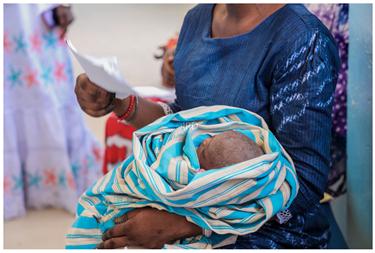 Exhumed by Aïssata Ndiaye, Mariame Ndiaye, and Daouda Dieng | This initiative highlights the direct and indirect effects of climate change on children’s health, particularly in the Matam region. Prolonged exposure to extreme heat can cause digestive problems such as diarrhoea, with increased risks of dehydration, malnutrition, and hospitalizations, especially among the youngest children. Community health workers, in collaboration with NGOs such as Save the Children, Action Against Hunger, and others, are proposing the implementation of targeted preventive measures: awareness campaigns on heat management, access to safe drinking water, improved ventilation in homes and schools, and adjustments to school schedules. By taking proactive measures, the initiative aims to strengthen children’s resilience to extreme heat events, which are expected to become more frequent. |
From a sociocultural perspective, prevention efforts are rooted in the Pulaar community’s values of solidarity. This movement transcends borders: while supported by NGOs, it is also—and above all—driven by the “give back to the community” ethos of migrants who have settled in the north and enjoy a higher standard of living.
3.2.2. Raising Awareness in the Centre
Once known as the country’s economic heartland, the central region of Senegal saw farmers settle there to cultivate peanuts and extract salt, while paying reverence to their religious leaders, whose homes were also located in this area. Salinization has affected agricultural activities, while the school enrolment rate is among the lowest in the country (28.8% completion rate compared to a national average of nearly 90%). Hence the need to assist communities with their administrative procedures—an activity in which the GIE PRAC engages by using local imagery and techniques to facilitate understanding of the processes (see Box 2).
Box 2. Preservation of the Saloum Delta.
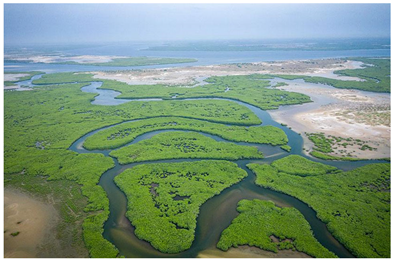 Exhumed by Boubacar Bathily | Based in the Saloum Delta, the PRAC/DS Economic Interest Group (EIG) (Community Liaison Hub) is a dynamic community-based organization that acts as a facilitator between village groups, NGOs, and government authorities. Its mission is twofold: to support non-governmental organizations in conducting surveys, studies, and fieldwork, and to assist local groups with administrative procedures, income-generating activities, and the monitoring and evaluation of their projects. The EIG also works to raise public awareness about ecosystem protection, particularly in Community Nature Reserves (CNRs), in connection with the preservation of biodiversity and natural resources. By promoting participatory local governance, this organization strengthens social and environmental resilience in an area particularly vulnerable to the effects of climate change. |
The struggle has a socio-cultural dimension. The preservation of ecosystems—against the overexploitation of salt pans and climate change—is underpinned by a traditional governance model designed to include young people, women, and elders on an equal footing with men.
3.2.3. Life Balance in the South
More prosperous than the other two regions, the southern region serves as the country’s green lung, providing the nation’s main food products (fruits, honey, palm oil, rice, etc.) and fisheries. However, sea level rise driven by climate change threatens both ecosystems and fishing activities. The initiative by the Naatal Alàme and CAREM associations aims to mobilize communities to work toward a sustainable way of life, particularly by restoring the mangrove forests (see Box 3).
Box 3. Mangrove Restoration and Climate Resilience in Casamance.
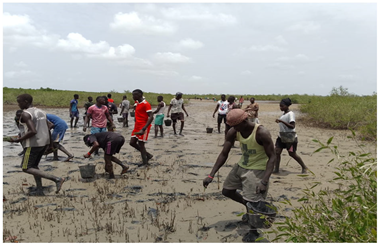 Exhumed by Diène Diokh | The associations Naatal Alàme and CAREEM are working to restore ecosystems, particularly the Rhizophora and Avicennia species, which are essential to the resilience of coastal areas. Led by women’s groups and local associations, this initiative is based on a comprehensive approach that includes reforestation, awareness-raising, local capacity-building, and income-generating activities. By replanting degraded mangroves, the project addresses multiple challenges: it reduces coastal erosion, protects biodiversity, and restores conditions conducive to the reproduction of aquatic species (fish, shrimp, oysters), thereby strengthening local food and economic security. Naatal Alàme and CAREM are part of an approach based on community involvement and the promotion of natural ecosystems as a lever for adaptation to climate change. |
Rather than a help or a hindrance, the sociocultural dimension acts here as a filter. The preservation and enhancement of natural ecosystems depend on respect for popular beliefs about nature and its invisible beings, which are often revered as guardian spirits of the forest or the sea and honored through initiation rites (Lël, sacred woods, etc.).
4. Discussion
We have examined the sociocultural conditions that shape these actions. How does the exchange of knowledge also fit into hierarchical social relationships? Empirically, we can distinguish two relationships: with public authorities and with academic knowledge, before examining the literature and questioning the validity of the frieze methodological approach.
4.1. Developing Relationships Between Local Actors and Public Authorities Around Prevention and Ecosystems
In many African societies, there is a growing awareness of the environment’s fragility, rooted in a relationship with it that draws on cosmogonic references to the beings and elements that constitute it. They ensure its protection and preservation through age-old practices (Sawadogo 2012), sometimes supported by national political actors or non-governmental organizations (NGOs), and at other times left to their own devices, relying solely on the commitment, determination, and “moral economy” (Thompson 1971) of the affected communities. It is well known that political biases are common, particularly due to mechanisms of electoral manipulation, clientelism, or, conversely, the distance from institutional power.
The typology and contextualization of local experiences provide a deeper understanding of the relationship between local and political actors. From this perspective, the four types of practices identified (prevention, solidarity, empowerment, and ecosystem) are not equivalent but follow a dividing line between asymmetry and symmetry depending on the degree of integration of social and political actors. On the asymmetric side, solidarity and empowerment practices give prominence to actors on the ground, whereas, on the symmetric side, prevention and ecosystem practices highlight greater synergy among socio-political actors in these two areas particularly suited to symmetric collaboration.
Prevention—whether health-related, security-related, environmental, or political—emerges as a major strategic lever for accelerating sustainable development in Africa (UNISDR 2013). Investing in preparedness helps protect social and economic gains, reduce vulnerability to crises, and foster stable growth (UNESCO 2026). While protest movements may express a desire for change (Chazel 2003, 2020), preventive practices are being implemented in “low-profile” mobilizations, in both the North and the South (Diallo and Sainsaulieu 2022; Sainsaulieu 2012, 2023; Sainsaulieu and Talpin 2023).
The ecosystem represents the most successful model of stakeholder integration. Not only does it stimulate, mobilize, and coordinate numerous local stakeholders, but it also secures the support of NGOs or public authorities, as in the case of mangrove conservation. The literature documents other symmetrical ecosystem-based collaborations, such as the cooperative agreement between authorities and communities around Lake Guier (Tall et al. 2025) or the involvement of agro-livestock farmers in the development of research protocols by researchers (Habanabakize et al. 2022).
This dynamic of symmetry between local and institutional actors regarding ecosystems deserves to be contextualized within the specific eco-epidemiological framework of the affected areas. Senegal’s National Development Plan (2020) explicitly identifies coastal erosion, soil salinization, and biodiversity loss as the most direct drivers of vulnerability affecting the 60% of the population whose livelihoods depend on natural resources. These same territories—the Saloum Delta and the Casamance coastal zone—are also those where the One Health approach identifies the highest risks of zoonotic transmission (Faye et al. 2025). There is a structural convergence here between the principles of ecosystem integration described in the frieze and the challenges of environmental and health governance that extend beyond the scope of local actors. Mangrove conservation in the Saloum Islands, based on endogenous, multi-stakeholder governance, is thus more than just an ecological response: it serves as a mechanism for indirectly monitoring local eco-epidemiological conditions, the loss of which undermines both biodiversity and the health of coastal communities (Sylla et al. 2025).
4.2. “The Fields in the University”? How the Findings Relate to the Literature on Knowledge Exchange
The literature also highlights well-known asymmetrical relationships in the field of knowledge sharing. In Senegal, the literature reveals a contrast: one strand highlights the value of relevant traditional knowledge that has long been overlooked, such as fallowing, composting, and organic manure (Dieng et al. 2019). The use of microbial inoculants is exemplary in this regard. The Joint Microbiology Laboratory at UCAD (IRD/ISRA/UCAD) has demonstrated that locally produced mycorrhizal fungi (AMF) significantly improve the fertility of degraded soils in the Peanut Belt, paving the way for a supply chain of inoculants adapted to Senegalese conditions (Nadieline et al. 2024). However, research conducted as part of the BiomicNET project (UCAD/UCLouvain) highlights that producers’ adoption of these biotechnological tools is mediated by sociocultural factors and prior innovation trajectories, reminding us that the symbolic compatibility described by Rogers (2003) is not sufficient on its own to account for the dynamics of acceptability in an African context. The frieze specifically provides a space to highlight these cognitive intermediaries between researchers’ microbial knowledge and the empirical trust that farmers place in the soil’s “living matter”—a trust that precedes and conditions any large-scale dissemination.
One area lags behind, particularly in the field of health, which is divided between medical and endogenous knowledge (Ampomah et al. 2020), except for the subfield of mental health, which takes local knowledge into account. Ethnopsychiatry in Fann thus seeks to integrate local cultural factors into modern psychiatry, such as beliefs in “rab” spirits (Ndoye et al. 2022). Another example is the exchange between the contributions of indigenous active ingredients, known to “traditional therapists,” and pharmacists’ expertise in pharmacotherapeutic dosing, which offers a strategic complementarity for public health (Davis and Choisy 2024). This partnership aims to combine the recognized efficacy of medicinal plants with the safety of modern drugs (Salmerón-Manzano et al. 2020; FMPO 2021; Zeggwagh et al. 2013). Data ownership is often a sensitive issue. The phenomenon of “extractivism” involves plundering endogenous knowledge for academic gain (Olivier De Sardan 1995). The problem does not reside in the normal data collection work carried out by researchers, but in the sharing of ownership, whether it is claimed by local stakeholders. To ensure greater equity, the relationship between academics and local actors can be guided by a commitment to recognizing the latter’s intellectual property rights (Diallo 2025; FMPO 2021; Okorafor 2019).
The frieze methodology allows us to shift away from traditional forms of knowledge validation. In this framework, the legitimacy of a practice does not rest solely on its level of scientific formalization, but also on its ability to provide concrete responses to local situations of vulnerability. This approach does not aim to pit academic knowledge against popular knowledge, but rather to create conditions for exchange between different knowledge systems, while maintaining a critical eye on power dynamics and the risks of appropriation or oversimplification of the documented practices. Initiatives that link traditional knowledge with new technologies open opportunities for co-production. The participatory digitization of traditional knowledge can create tensions. For example, although it is a powerful tool for the preservation and accessibility of local data, digitization can expose communities to risks of expropriation if it is not integrated into clear intellectual property frameworks (Okorafor 2019; Tsvuura and Ngulube 2021).
Digitization projects in Southern Africa demonstrate both the potential for expanding community archives and the dangers of decontextualization, if knowledge that is private or restricted in access becomes available to the public without the community’s consent (Tsvuura and Ngulube 2021). Any approach to digitizing knowledge requires joint design with the custodians and an explicit definition of what is shared, how, and under what protections. Researchers therefore emphasize the need to integrate intellectual property management methods into these initiatives (Balogun 2023; Ndlovu-Gatsheni 2025).
In the case of Senegal, this issue takes on urgency with the rise in digital epidemiological surveillance systems. The algorithms deployed as part of the AI4DECLIC-SN project incorporate socio-anthropological parameters derived from community-based research (Faye et al. 2023), but their deployment raises, in a novel way, the question of who owns the knowledge encoded in the model. Producers of mycorrhizal biofertilizers present a similar case: farmers’ tacit knowledge regarding optimal inoculation conditions, accumulated over generations, constitutes collective intellectual property whose digitization can either empower or disempower its holders (Nadieline et al. 2024). The frieze, in its participatory dimension, offers an interface where these negotiations can take place before technical systems set them in stone.
4.3. Strengths and Limitations
The frieze methodology facilitates interaction between academic and local stakeholders, enabling academics to better take local practices into account. It also allows for the formalization and democratization of knowledge, since the frieze is directly accessible to participating stakeholders, who can reuse it elsewhere. On the ground, it has undoubtedly helped change how people view one another, and the value of this connection can set a precedent, remain in people’s memories, and inspire others to follow suit. In this sense, the frieze is not just a methodological tool but also a mechanism for cultural and scientific mediation. It facilitates the emergence of a common language among stakeholders with different frames of reference, timeframes, and forms of legitimacy. Its visual and narrative nature also promotes forms of knowledge transfer that are more accessible than traditional academic formats, particularly in contexts where inequalities in access to literacy, higher education, or scientific publications remain significant. Finally, the device’s reproducible and lightweight nature allows for it to be adapted to various geographical and thematic contexts, extending beyond mere eco-health issues.
Although this temporary synergy may be memorable, it does not ensure sustained collaboration beyond a shared commitment. While we remain attentive to this challenge—and have already planned a follow-up to the forum-debate—the continuity of collaboration will depend on each party’s constraints and opportunities. Its durability also requires varied forms of publication. This article therefore aims to demonstrate to academic and administrative audiences the value of grassroots initiatives and to encourage them to take such initiatives seriously. More locally oriented outreach also requires academics to translate these experiences into accessible formats. We therefore plan to produce podcasts and videos in local languages that respect cultural codes—such as theatrical expression, humour, local vocabulary, and familiar idioms—and to use widely accessible platforms, including TikTok, Instagram, and Snapchat, to highlight and disseminate field-based experiences.
5. Conclusions
Can the integration of knowledge be interpreted as the integration of power? In other words, does the growing collaboration between universities and field practitioners constitute a phenomenon comparable to the challenge of collaboration between local and national actors, or between social and political actors? This question highlights the future of eco-sanitation solutions and the differences in timeframes between local, political, and academic actors. Ideally, academics serve as mediators between experimental knowledge and public policy. Endogenous knowledge is developed upstream through a pragmatic response to emergencies, while public policy is developed downstream to meet needs.
In practice, contradictions between interests and friction between worldviews remain. Examples cited include electoral clientelism, the popular moral economy versus the market economy, and virtuous local knowledge versus patriarchal discrimination. Conflicts aside, a systemic risk persists in the uncoordinated development of knowledge and practices. It is important, while taking into account spatio-temporal constraints, to find bridges that—far from falling from the sky or imposing themselves—require a step back, particularly on the part of dominant academic and political actors, who are often less directly threatened by eco-health emergencies than the populations on the ground.
Supplementary Materials
The following supporting information can be downloaded at: https://www.mdpi.com/article/10.3390/socsci15110765/s1. File S1: PPT of 32 frieze collected during forum-debate in UCAD, May 2026.
Author Contributions
Conceptualization, A.M.D., I.S. and C.C.; Methodology, A.M.D., I.S. and C.C.; Software, A.M.D., S.S. and A.M.L.N.; Validation, A.M.D., I.S., I.D. and T.N.; Formal analysis, A.M.D., I.S., S.S. and A.M.L.N.; Investigation, A.M.D., S.S. and A.M.L.N.; Resources, A.M.D., I.S., I.D., C.C. and T.N.; Data curation, A.M.D., S.S., L.R. and A.M.L.N.; Writing—original draft, A.M.D. and I.S.; Writing—review & editing, A.M.D., I.S., I.D., E.S., C.C., S.S., L.R., A.M.L.N. and T.N.; Visualization, A.M.D., C.C. and L.R.; Supervision, A.M.D., I.S., I.D. and T.N.; Project administration, A.M.D., I.S., I.D., C.C., L.R. and T.N.; Funding acquisition, A.M.D., I.S. and C.C. All authors have read and agreed to the published version of the manuscript.
Funding
This research is funded by the West Africa Regional Office (WARO) of the African Population and Health Research Center (APHRC) and Institut Universitaire de France (IUF) through a partnership with University Cheikh Anta Diop (UCAD), Department of Sociology, Faculté des Lettres et Sciences Humaines (FLSH).
Institutional Review Board Statement
The project as a whole has been approved by the Senegalese’s ethics committee since 2023 (see attached document). However, this specific part of the project did not require approval. “Research ethics: The study was conducted in accordance with the Declaration of Helsinki, and the protocol was approved by the Ethics Committee of Senegal (N°0000070/MSAS/CNERS/SP, of 5 April 2023). This project component interviewed association members speaking about their endogenous resilience practices to tackle climate change hazard, rather than collecting sensitive personal or health-related data from individuals or vulnerable subjects.
Informed Consent Statement
Informed consent obtained from all participants prior to data collection. Individual respondent identities are not disclosed in this article; quotations are attributed only by broad role category and organization type.
Data Availability Statement
All data is used in the main text et added as supplementary files. The data presented in this study are available on request from the corresponding author.
Acknowledgments
The authors would like to thank all participants in the forum-debate workshops for their commitment and valuable contributions. They would also like to thank Mor Ndao, director of the ETHOS doctoral school, and Sidia Diaouma Badiane, lecturer Department of Geography, for his collaboration and support in organizing the forum-debate, as well as for his dedication throughout the activities.
Conflicts of Interest
The authors declare no conflict of interest.
References
- Agrawal, Arun. 2002. Classification des savoirs autochtones: La dimension politique. Revue Internationale des Sciences Sociales 173: 325. [Google Scholar] [CrossRef] [Scilit]
- Ampomah, Irene G., Bunmi S. Malau-Aduli, Aduli E. O. Malau-Aduli, and Theophilus I. Emeto. 2020. Effectiveness of Integrated Health Systems in Africa: A Systematic Review. Medicina 56: 271. [Google Scholar] [CrossRef] [Scilit] [PubMed]
- Andersson, Neil. 2017. Community-led trials: Intervention co-design in a cluster randomised controlled trial. BMC Public Health 17: 397. [Google Scholar] [CrossRef] [Scilit] [PubMed]
- Appadurai, Arjun, and Frappat Bouillot. 2005. Après le Colonialisme: Les Conséquences Culturelles de la Globalisation. Paris: Payot & Rivages. [Google Scholar]
- Arowosegbe, Jeremiah O. 2016. Endogenous knowledge and the development question in Africa. Cambridge Review of International Affairs 29: 611–35. [Google Scholar] [CrossRef] [Scilit]
- Balogun, Tolulope. 2023. Digitization of Indigenous knowledge systems in Africa: The case of South Africa’s National Recorded System (NRS). Records Management Journal 33: 88–102. [Google Scholar] [CrossRef] [Scilit]
- Benz, Cloe, Will Scott-Jeffs, K. A. McKercher, Mai Welsh, Richard Norman, Delia Hendrie, Matthew Locantro, and Suzanne Robinson. 2024. Community-based participatory-research through co-design: Supporting collaboration from all sides of disability. Research Involvement and Engagement 10: 47. [Google Scholar] [CrossRef] [Scilit] [PubMed]
- Carles, Cédric, Thomas Ortiz, and Eric Dussert. 2024. Rétrofutur. Une Autre Histoire des Innovations énergétiques. Paris: Buchet Chastel. [Google Scholar]
- Chazel, François. 2003. Du Pouvoir à la Contestation. Paris: LGDJ. [Google Scholar]
- Chazel, François. 2020. Dictionnaire des Mouvements Sociaux. Paris: Presses de Sciences Po, pp. 398–403. [Google Scholar] [CrossRef] [Scilit]
- Connell, Raewyn. 2014. Using southern theory: Decolonizing social thought in theory, research and application. Planning Theory 13: 210–23. [Google Scholar] [CrossRef] [Scilit]
- Connell, Raewyn. 2020. Southern Theory: The Global Dynamics of Knowledge in Social Science, 1st ed. London: Routledge. [Google Scholar] [CrossRef] [Scilit]
- Davis, Charles C., and Patrick Choisy. 2024. Medicinal plants meet modern biodiversity science. Current Biology 34: R158–73. [Google Scholar] [CrossRef] [Scilit] [PubMed]
- De Sousa Santos, Boaventura. 2011. Épistémologies du Sud (M. Watteaux, Trans.). Études Rurales 187: 21–50. [Google Scholar] [CrossRef] [Scilit]
- De Sousa Santos, Boaventura, and Maria Meneses, eds. 2019. Knowledges Born in the Struggle: Constructing the Epistemologies of the Global South, 1st ed. London: Routledge. [Google Scholar] [CrossRef] [Scilit]
- De Sousa Santos, Boaventura, João Arriscado Nunes, Maria Paula Meneses, and Isabelle Mullet-Blandin. 2022. Ouvrir le canon du savoir et reconnaître la différence. Participations 32: 51–91. [Google Scholar] [CrossRef] [Scilit]
- Diallo, Abdoulaye Moussa. 2025. La posture de « chercheur apprivoisé ». Enquêter sur la professionnalisation des acteurs communautaires de santé au Sénégal. Cahiers d’études Africaines 258: 519–43. [Google Scholar] [CrossRef] [Scilit]
- Diallo, Abdoulaye Moussa, and Ivan Sainsaulieu. 2022. «Les agents de santé communautaire au Sénégal. Unité et segmentation d’un groupe semi-professionnel en milieu rural et péri-urbain», avec Abdoulaye Moussa Diallo, Sciences sociales et santé, vol. 40, n°3. pp. 5–28. Available online: https://www.cairn.info/revue-sciences-sociales-et-sante-2022-3-page-5.htm (accessed on 27 March 2026).
- Dieng, Modou, Anna Sow Diedhiou, and Falilou Mbacké Sambe. 2019. Valorisation par compostage des déchets solides fermentescibles collectés à l’Ecole Supérieure Polytechnique de l’Université Cheikh Anta Diop de Dakar: Etude de l’effet phytotoxique sur des plants de maïs et d’arachide. International Journal of Biological and Chemical Sciences 13: 1693–704. [Google Scholar] [CrossRef] [Scilit]
- EcoSanRes Programme. 2011. Pratiques d’utilisation de l’urine humaine en agriculture. Conseils pra tiques pour une utilisation de la fertilisation à l’urine au niveau adapté au climat et aux cultures. Stockholm Environment Institute/CREPA. Available online: https://www.leesu.fr/ocapi/wp-content/uploads/2018/12/EcoSanRes_Urine_Guide_FRENCH_111026.pdf (accessed on 27 March 2026).
- Fall, Aïdara Chérif Amadou Lamine, J. B. Biaye, and Yancouba Sané. 2021. Salinisation-acidification des sols et riziculture dans la commune de Mlomp, Oussouye (Basse Casamance, Sénégal). Agronomie Africaine 33: 1–12. [Google Scholar]
- Faye, S. L., M. L. Ba, and N. Dia. 2023. Intelligence artificielle et modélisation hybride pour la détection communautaire précoce des maladies zoonotiques dans le contexte du changement climatique au Sénégal (AI4DECLIC-SN) [Protocole de recherche.]. LASAP/UCAD; York University AI4PEP/IDRC. Available online: https://www.linkedin.com/company/ai4declic-senegal/ (accessed on 27 March 2026).
- Faye, Sylvain L., and Georgette H. Sow. 2025. Reclaiming voices, rethinking change: A decolonial and knowledge-ecological analysis of SBCC nutrition interventions in Senegal. Frontiers in Nutrition 12: 1609237. [Google Scholar] [CrossRef] [Scilit] [PubMed]
- Faye, Sylvain Landry Birane, and Georgette Hélène Sow. 2026. Savoirs en Dialogue Méthodologies Décoloniales en Sciences Sociales en Afrique. Paris: L’Harmattan. [Google Scholar]
- Faye, Sylvain Landry Birane, Denis Nkweteyim, Georgette Helene Coumba Sow, Boly Diop, Fatoumata Bintou Diongue, Birane Cisse, Nsagha Dickson, Ndiaye Dia, Kingsley Badu, Gelan Ayana, and et al. 2025. Reimagining Artificial Intelligence for zoonotic disease detection in Africa: A decolonial approach rooted in community engagement and local knowledge. AI and Ethics 5: 5327–54. [Google Scholar] [CrossRef] [Scilit]
- Faye, Sylvain L. B., Fatoumata B. Diongue, Abdourakhmane Ndao, and Boly Diop. 2026. Advancing epidemic intelligence: Evaluating Senegal mpox surveillance system and readiness for AI-driven predictive modelling. BMC Public Health. [preprint/in review]. [Google Scholar] [CrossRef] [Scilit] [PubMed]
- FMPO. 2021. Conférence: “Protection des connaissances traditionnelles sur les plantes médicinales” [Livret de la conférence]. Institut des Sciences du Médicament [ISMED], Université Cheikh Anta Diop de Dakar [UCAD], p. 18. Available online: https://ismed.ucad.sn (accessed on 27 March 2026).
- Foé, Nkolo. 2025. Paulin J. Hountondji et la boîte de Pandore des savoirs endogènes. Diogène 283–284: 212–23. [Google Scholar] [CrossRef] [Scilit]
- Gaussens, Pierre, and Gaya Makaran. 2024. Critique de la Raison Décoloniale: Sur une Contre-Révolution Intel Lectuelle. Paris: l’Échappée. [Google Scholar]
- Gautier, Lara, Youssouf Karambé, Jean-Paul Dossou, and Oumar Mallé Samb. 2022. Rethinking development interventions through the lens of decoloniality in sub-Saharan Africa: The case of global health. Global Public Health 17: 180–93. [Google Scholar] [CrossRef] [Scilit] [PubMed]
- Gwandure, Calvin, and Phindile Lukhele-Olorunju. 2023. Women’s use of indigenous knowledge in Africa. Social Sciences & Humanities Open 8: 100741. [Google Scholar] [CrossRef] [Scilit]
- Habanabakize, Ernest, Koki Ba, Christian Corniaux, Patrick Cortbaoui, and Elsa Vasseur. 2022. A typology of smallholder livestock production systems reflecting the impact of the development of a local milk collection industry: Case study of Fatick region, Senegal. Pastoralism 12: 22. [Google Scholar] [CrossRef] [Scilit]
- Hountondji, Paulin J. 2001. Le savoir mondialisé: Déséquilibres et enjeux actuels. Dans La mondialisation vue d’Afrique. Université de Nantes/Maison des Sciences de l’Homme Guépin. Available online: http://mshafrique.free.fr/afrique/charpar/cfpaulin.pdf (accessed on 27 March 2026).
- IPCC, ed. 2023. Climate Change 2022—Mitigation of Climate Change: Working Group III Contribution to the Sixth Assessment Report of the Intergovernmental Panel on Climate Change, 1st ed. Cambridge: Cambridge University Press. [Google Scholar] [CrossRef] [Scilit]
- Mbembe, Achille, Olivier Mongin, Nathalie Lempereur, and Jean-Louis Schlegel. 2006. What is postcolonial thinking?: An interview with Achille Mbembe. Esprit 12: 117–33. [Google Scholar] [CrossRef] [Scilit]
- Mboa Nkoudou, Thomas Hervé. 2015. Stratégies de valorisation des savoirs locaux africains: Questions et enjeux liés à l’usage du numérique au Cameroun. Éthique Publique, [Online] 17, n°2. Online since 6 May 2016, connection on 30 October 2026. [Google Scholar] [CrossRef] [Scilit]
- Nadieline, Christian Valentin, Antoine Le Quere, Cheikh Ndiaye, Amadou Abib Diène, Francis Do Rego, Oumar Sadio, Yoro Idrissa Thioye, Marc Neyra, Cheikh Mouhamed Fadel Kébé, and Tatiana Krasova Wade. 2024. Development of on-farm AMF inoculum production for sustainable agriculture in Senegal. Frontiers in Plant Science. PLoS ONE 19: e0310065. [Google Scholar] [CrossRef] [Scilit] [PubMed]
- Ndlovu-Gatsheni, Sabelo J. 2025. Intellectual imperialism and decolonisation in African studies. Third World Quarterly 46: 2467–84. [Google Scholar] [CrossRef] [Scilit]
- Ndoye, Fatou, Aida Sylla, Mouhamed Moustapha Dieye, and Bocar Samba Ly. 2022. La prise en charge psychiatrique au Sénégal: D’une ethnopsychiatrie à une psychiatrie clinique. L’Autre 23: 138–48. [Google Scholar] [CrossRef] [Scilit]
- Odora Hoppers, Catherine Alum, ed. 2002. Indigenous Knowledge and the Integration of Knowledge Systems: Towards a Philosophy of Articulation. Claremont: New Africa Books. [Google Scholar]
- Ogar, Edwin, Gretta Pecl, and Tero Mustonen. 2020. Science Must Embrace Traditional and Indigenous Knowledge to Solve Our Biodiversity Crisis. One Earth 3: 162–65. [Google Scholar] [CrossRef] [Scilit]
- Okorafor, N. 2019. Intellectual Property Rights, Traditional Knowledge, and Equity in Academic-Local Partnerships. Journal of Intellectual Property and Ethical Research 14: 115–132. [Google Scholar]
- Olivier De Sardan, Jean-Pierre. 1995. Anthropologie et Développement: Essai en Socio-Anthropologie du Changement Social. Paris: KARTHALA Editions. [Google Scholar]
- Qasim, Rubina, Waqas Ahmed Farooqui, Atiya Rahman, Rukhsana Haroon, Madiha Saleem, Muhammad Rafique, Fiza Noor, Afifa Ghani, Muhammad Yaqoob, Uday Narayan Yadav, and et al. 2023. Community centred co-design methodology for designing and implementing socio-behavioural interventions to counter COVID-19 related misinformation among marginalized population living in the squatter settlements of Karachi, Pakistan: A methodology paper. BMC Proceedings 17: 15. [Google Scholar] [CrossRef] [Scilit] [PubMed]
- Rodhe, L., S. Steineck, M. Susic, and S. Karlsson. 2004. Urine Source-Separation for Nitrogen Recovery—Field Study. In Ecological Engineering and Environmental Protection. EcoSanRes Publications Series. Stockholm: Stockholm Environment Institute. [Google Scholar]
- Rogers, E. M. 2003. Diffusion of Innovations, 5th ed. New York: Free Press. [Google Scholar]
- Rwabyoma, Asasira Simon. 2012. Cultural Diversity, Endogenous Knowledge Systems and Learning for African. Ci. & Tróp. Recife 36: 73–92. [Google Scholar]
- Sainsaulieu, Ivan. 2012. «Collective Mobilization in Hospitals: Confrontational or Consensual ?», Revue française de sociologie (English). 53-3, pp. 316–46. Available online: https://www.cairn-int.info/article-E_RFS_533_0461--collective-mobilization-in-hospitals-con.htm (accessed on 27 March 2026). [CrossRef] [Scilit]
- Sainsaulieu, Ivan. 2023. Care Staff Mobilisation in the Hospital. Fight or Cooperate? Paris: Palgrave Macmillan, Pivot. Available online: https://link.springer.com/book/10.1007/978-981-19-9354-1 (accessed on 27 March 2026).
- Sainsaulieu, Ivan, and Julien Talpin. 2023. Discreet Mobilizations of Working Classes and Subaltern Groups. European Journal of Cultural and Political Sociology 10-1: 1–20. [Google Scholar] [CrossRef] [Scilit]
- Salmerón-Manzano, Esther, Jose Antonio Garrido-Cardenas, and Francisco Manzano-Agugliaro. 2020. Worldwide Research Trends on Medicinal Plants. International Journal of Environmental Research and Public Health 17: 3376. [Google Scholar] [CrossRef] [Scilit] [PubMed]
- Sawadogo, Ram Christophe. 2012. Connaissance des Pratiques Traditionnelles de Gestion de l’environnement: Préalable et Base Sociologique de l’efficacité des Stratégies Actuelles de sa Conservation. In La Grande Muraille Verte. Edited by A. Dia and R. Duponnois. Montpellier: IRD Éditions, pp. 61–82. [Google Scholar] [CrossRef] [Scilit]
- Sene, François Ngor, Aïdara C. A. Lamine Fall, and Yancouba Sane. 2024. Dégradation des terres agricoles par salinisation dans la vallée fossile du Sine: Cas de la commune de Niakhar (région de Fatick). European Scientific Journal 20: 142. [Google Scholar] [CrossRef] [Scilit]
- Sylla, M., Cheikh A. Jellani Mané, Marius Niaga, and A. Biaye. 2025. Connaissances endogènes dans les deltas du Saloum et de la Casamance (Sénégal): Patrimoine culturel et gestion des mangroves dans les aires marines protégées (AMP) et les aires et territoires du patrimoine communautaire (APAC). UICN. Available online: https://portals.iucn.org/library/sites/library/files/documents/2025-029-Fr.pdf (accessed on 27 March 2026).
- Tall, Youssoupha, Veronica Mitroi, José-Frédéric Deroubaix, and Ibrahima Dia. 2025. Qualité de l’eau, conflits fonciers et arrangements locaux autour du lac de Guiers (Sénégal). Espaces et Sociétés 195: 83–100. [Google Scholar] [CrossRef] [Scilit]
- Thompson, Edward P. 1971. The moral economy of the English crowd in the eighteenth century. Past and Present 50: 76–136. [Google Scholar] [CrossRef] [Scilit]
- Tsvuura, Godfrey, and Patrick Ngulube. 2021. A framework for the digitisation of records and archives at selected state universities in Zimbabwe. SA Journal of Information Management 23: a1312. [Google Scholar] [CrossRef] [Scilit]
- UNESCO. 2026. La Paix, Levier Indispensable du Développement en Afrique. In Forum Panafricain Sources et Ressources pour une Culture de la paix. Paris: UNESCO. Available online: https://www.unesco.org/fr/articles/la-paix-levier-indispensable-du-developpement-en-afrique (accessed on 27 March 2026).
- UNISDR. 2013. Rapport de la 4ème Plate-Forme Régionale Africaine pour la Prévention des Risques de Catastrophe Protéger les Acquis de Développement et Rendre les Nations Africaines Résilientes face aux Catastrophes. Geneva: UNISDR. [Google Scholar]
- Zeggwagh, Ali Amine, Younes Lahlou, and Yassir Bousliman. 2013. Enquete sur les aspects toxicologiques de la phytotherapie utilisee par un herboriste à Fes, Maroc. Pan African Medical Journal 14: 125. [Google Scholar] [CrossRef] [Scilit] [PubMed]



Disclaimer/Publisher’s Note: The statements, opinions and data contained in all publications are solely those of the individual author(s) and contributor(s) and not of MDPI and/or the editor(s). MDPI and/or the editor(s) disclaim responsibility for any injury to people or property resulting from any ideas, methods, instructions or products referred to in the content. |
© 2026 by the authors. Licensee MDPI, Basel, Switzerland. This article is an open access article distributed under the terms and conditions of the Creative Commons Attribution (CC BY) license.