


Abstract
Student-athletes are individuals who are simultaneously involved in sports and academic activities—a dual career. In order to support their parallel career paths, public support policies are necessary, including those related to athletic grants. This article aimed to analyze institutional athletic grant programs for student-athletes affiliated with Brazilian federal universities. This is a quantitative, cross-sectional, exploratory, and documentary study based on the analysis of public calls for athletic grants. The sample consisted of 69 Brazilian federal universities, of which 68 responded to the survey, but only 11 reported having implemented an athletic grant program for athletes in 2023. Only 16% of Brazilian federal universities offer institutional athletic grants. The results indicate a median of 32 athletic grants advertised, with a median amount of R$ 400.00 (four hundred reais), to be paid for a median of 8.5 months. The maximum amounts advertised were 72 athletic grants, R$ 700.00 (seven hundred reais), and 12 months. The minimum amount was 1 athletic grant, R$ 195.00 (one hundred ninety-five reais), and five months. It can be concluded that the policy of awarding athletic grants in Brazilian federal universities is in an early stage of development, predominantly located in regions that do not have sports clubs, with appropriate amounts that are funded for only a limited number of months.
1. Introduction
On the international stage, scholarship models for athletes vary in terms of structure and funding. In the United States, the National Collegiate Athletic Association (NCAA) system offers full and partial scholarships, which cover tuition and other additional expenses, with strong support from private sponsors. In the United Kingdom, the Talented Athlete Scholarship Scheme provides academic flexibility and funding for training. In Europe, universities in Germany, Spain, Denmark, and Finland often establish partnerships with sports clubs to provide financial support (Nogueira 2022).
In Brazil, financial support for college athletes varies depending on the university’s legal status, whether it is privately administered (private law) or publicly administered (public law). Private universities, managed by individuals or legal entities governed by private law (private, community-based, religious, or philanthropic) (Cavalcante 2000), derive their primary source of revenue from enrollment fees and tuition charged for the services they provide.
Private universities pioneered the implementation of athletic scholarships in Brazil in the 1980s (Rubio 2015). In the late 20th and early 21st centuries, the awarding of scholarships for institutional representation was the primary mechanism of financial support (Toledo 2006), which boosted the universities’ athletic performance and expanded athletes’ opportunities for academic and professional development in higher education (Mandarino et al. 2013). In the early 2000s, private universities began partnering with sports clubs, providing funding for food, housing, medical care, gym memberships, scholarships, and living allowances (Andres and Goellner 2018).
In contrast, Brazilian federal universities, rooted in public administration, present a different scenario (Cavalcante 2000). In light of specialized functional administrative decentralization (Marrara 2024), federal universities are considered autonomous agencies or foundations (Caetano and Campos 2019), responsible for providing public educational services and receiving financial transfers from taxes collected by the federal government (Brasil 1988). These funds are used to pay administrative staff and faculty, as well as to maintain the infrastructure.
At these institutions, athletes did not gain access to financial support until 2010. In contrast to the model in place at private universities, admission to Brazilian federal universities occurs through a public selection process, with no enrollment fees or tuition charges, in accordance with the constitutional provision guaranteeing free public education, including higher education (Brasil 1988).
The Federal University of Ceará was a pioneer in implementing institutional programs aimed at providing financial support to athletes at federal universities across the country. In 2010, the Sports Incentive Athletic Grant Program was launched (Universidade Federal do Ceará 2010). Thus, the first initiative in this area occurred thirty years after the introduction of scholarships in private higher education. As noted by Albuquerque et al. (2023), this situation was a consequence of the creation of the federal Athletic Grant Program in 2004, which established a legal framework for the use of federal funds for this purpose.
Therefore, unlike at private universities, where scholarships are used to provide full or partial exemptions from enrollment and tuition fees (Mateo-Orcajada et al. 2022; Miró et al. 2018), the athletic grant program implemented at federal universities consists of providing monthly money to athletes selected through a public process. This initiative is important because it provides athletes—especially those over 20—with better conditions to pursue their athletic and academic careers in a balanced manner, since the student category of the federal athletic grant limits eligibility to athletes 20 years of age or younger (Silva 2024), thereby excluding a considerable number of athletes participating in Brazilian University Games, Brazil’s premier collegiate competition. According to Quinaud et al. (2020), the average age of competition participants is 22.18 years, while the maximum age established by the Confederação Brasileira de Desporto Universitário (Confederação Brasileira de Desporto Universitário 2024) is 25 years.
Despite the importance of implementing specific programs to support dual-career athletes at Brazilian federal universities, there is little information on the scope, distribution, scale, and continuity of these institutional programs in the Brazilian context. The scarcity of studies on the topic, as well as the limitation of existing studies to specific universities—such as the University of Brasília (Costa et al. 2022; Miranda et al. 2020) and the Federal University of Mato Grosso do Sul (Albuquerque et al. 2023; Silva 2024)—is one of the factors contributing to the limited knowledge on the subject. Therefore, there is a lack of information on athletic grant programs for athletes at Brazilian federal universities.
In light of the above, this article aimed to analyze institutional athletic grant programs for student-athletes affiliated with Brazilian federal universities. Specifically, it sought to identify the scope (universities that offer institutional athletic grant programs), the distribution (universities and regions covered), the magnitude (the advertised monthly amounts), and the duration (expected duration of the funding).
In addition to its scientific significance in producing original data on the athletic grant programs for dual careers at all Brazilian federal universities, this study has policy implications. The data presented here may contribute to advising the Technical Group on Transition and Dual Sports Careers, created by the Ministry of Sports (Ministério do Esporte 2024) to discuss transition and dual-career policy in Brazil. According to Howlett et al. (2013), scientific data are relevant sources for informing the formulation of public policies, especially during the assessment phase, in which data and evidence from research reports are consulted.
- Dual careers, transitions, and athletic grant programs
The normative transition consists of predictable changes that occur throughout an athlete’s career, such as the transition from the junior to the senior category, which requires adaptation to significant changes and presents considerable challenges. This transition is especially challenging for athletes who are unable to adapt adequately to the new demands (Stambulova et al. 2021).
In this context, higher education emerges as a means of preparing for retirement (Van Rens et al. 2019). This mechanism is important because it allows athletes to transition out of sports voluntarily, with proper planning and the support of social resources (Pallarés et al. 2011). Despite the importance of academic education during an athletic career, athletes’ involvement in both sports and studies can result in a dual career (Maquiaveli et al. 2021), a situation that is highly complex and influenced by various factors that act as barriers.
The demands that cut across athletes’ academic, athletic, and personal lives create a scenario of “multiple careers” (Figueiredo and Scremin 2023), which calls for interpretations grounded in broad and integrative approaches, such as the holistic ecological perspective. From a holistic ecological perspective, the athlete is understood as an individual whose development is shaped by the environment in which they are embedded, influenced by factors stemming from both the sports and academic domains. This influence occurs at different levels—micro and macro—and throughout the athlete’s entire life course, taking into account past experiences, present conditions, and future projections (Henriksen et al. 2010). Thus, it is recognized that the athletic, academic, and personal contexts are continuously intertwined, directly affecting the athlete’s developmental path (Henriksen et al. 2010, 2020), which reinforces the need for adequate support structures to sustain this process.
To overcome the barriers they face and ensure the successful development of their dual careers, athletes need personal resources (dual-career skills) and conditions/support that allow them to balance their athletic, academic, and personal lives in a well-rounded manner (Stambulova et al. 2021). Among the necessary forms of support are academic supports, which include academic flexibility in admission requirements, an extended academic term, individualized study schedules, alternative access to coursework, and individualized or small-group instruction. Sports-related supports include scholarships, professional support services, elite sports infrastructure, and elite sports development programs. Post-athletic-career support, meanwhile, includes scholarships, the introduction of new programs tailored to athletes who are retiring, and lifestyle management services (Aquilina and Henry 2010).
With regard to financial resources—the focus of this study—along with human and material resources, they constitute prerequisites for success in dual-career environments (Henriksen et al. 2010; Henriksen et al. 2020). Studies have shown that financial resources are a key factor in environmental success, since access to athletic grants alleviates financial concerns (Lagos Cortés 2014), reducing financial pressure and thereby creating the right conditions for athletes to focus on their studies and training (Guirola Gómez et al. 2018). Financial support promotes academic retention (Andres and Goellner 2018) and continued participation in sports (Silva and Albuquerque 2024), which contributes to a dual-career trajectory (Pallarés et al. 2011). On the other hand, the absence of such support can result in academic dropout (Pedroza Júnior et al. 2020; Álvarez Pérez and López Aguilar 2012) or withdrawal from sports (Conde et al. 2021; Andres and Goellner 2018; Álvarez Pérez and López Aguilar 2012), potentially leading to a linear professional trajectory (Pallarés et al. 2011).
2. Materials and Methods
This is an exploratory study, which, according to Gil (2010), allows for a better understanding of the problem under analysis in order to formulate hypotheses. Regarding information sources, the study falls under the documentary category, as it analyzed primary, written, and retrospective sources, as well as electronic public records derived from administrative publications (Marconi and Lakatos 2002) that have not yet been analyzed.
The research method used was that suggested by Gil (2010), structured in five stages: problem formulation; development of a work plan; identification of sources; locating sources of information; and analysis and interpretation. The problem was formulated during the development of the research project, when the guiding assumptions and timeline were established. The sources were identified through an analysis of public administration documents (public calls for applications) related to the concessions.
The sources were identified and located through electronic contact with the administrators of Brazilian federal universities, using the federal information access platform (Fala.Br). The institutions were asked whether they offered athletic grants to athletes. At that time, the following question was posed: Was there a public call for applications for athletic grants for student-athletes in 2023? If so, what are the links to access the calls for applications for the selection process for these athletic grants and the announcement of the results? The requests for information were made in October and November 2023, and (a) public calls for applications for athletic grants published by Brazilian federal universities in 2023 between January and October were included. The following were excluded: (b) public calls for applications not directed at athletes in higher education and (c) public calls for applications for one-time financial aid intended exclusively for participation in competitions.
Of the 69 federal universities surveyed, 11 reported having implementation calls for applications for athletic grants between January and October 2023. Fifty-seven reported not having such calls implemented and one did not respond. This methodology allowed us to identify the document corpus for the document analysis, as shown in the table below (Table 1).
Table 1.
Calls for applications for athletic grants at Brazilian federal universities—2023.
The technique used to analyze the documents was categorical, and it was structured in three stages: pre-analysis, exploration of the material, and processing and interpretation of the results. All procedures were carried out in accordance with the guidelines and methodological requirements established by Bardin (2016).
The pre-analysis phase corresponded to the preparatory stage of the analysis, prior to the organization of the collected empirical data. The researchers conducted a cursory review of the calls for proposals, defined the hypotheses and objectives of the analysis, selected the units of record (numerical data), and defined the categories. Based on the outlined objectives and grounded in the holistic ecological model, in particular, in the theory of environmental success factors (Henriksen et al. 2010, 2020), an exploratory analysis was followed by the development of indicators designed to guide the understanding and interpretation of the material (Minayo 2006). This initial phase represented an approach to the corpus in preparation for its subsequent operationalization. The analysis focused on funding for athletic grants intended for athletes. The indicators analyzed were (a) universities with institutional athletic grant programs; (b) number of positions advertised; (c) stipulated monthly amounts; and (d) expected duration of the athletic grants.
In the intermediate stage, we extracted the data from the documents and organized it into a spreadsheet to facilitate further analysis. We categorized the data according to the universities with institutional athletic grant programs; (a) number of positions advertised; (b) stipulated monthly amounts; and (c) expected duration in the athletic grants. Authors 1 and 2 independently conducted the literature review, extracted the units of record and context, and performed the categorization and coding. After the analysis, they compared their conclusions. Any discrepancies were resolved by a third evaluator reviewing the documents.
Processing and interpretation of the results followed a quantitative content analysis approach: the figures were interpreted as expressions of institutional decisions, candidates’ behaviors, and public policy outcomes, allowing inferences about the number of athletic grants, number of months, and amounts paid. The data were presented using illustrations in figures and tables.
In accordance with National Health Council Resolution No. 510/2016, the study was not submitted to the Research Ethics Committee for review, as it is exempt from ethical review because it is a document-based analysis of publicly available information that does not contain identifiable data.
3. Results
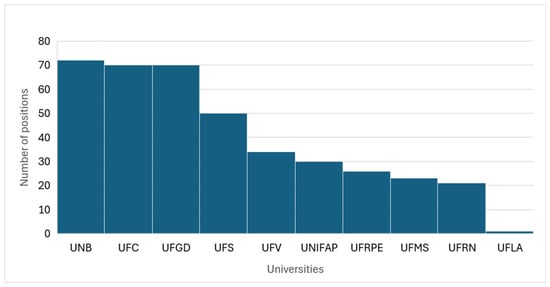
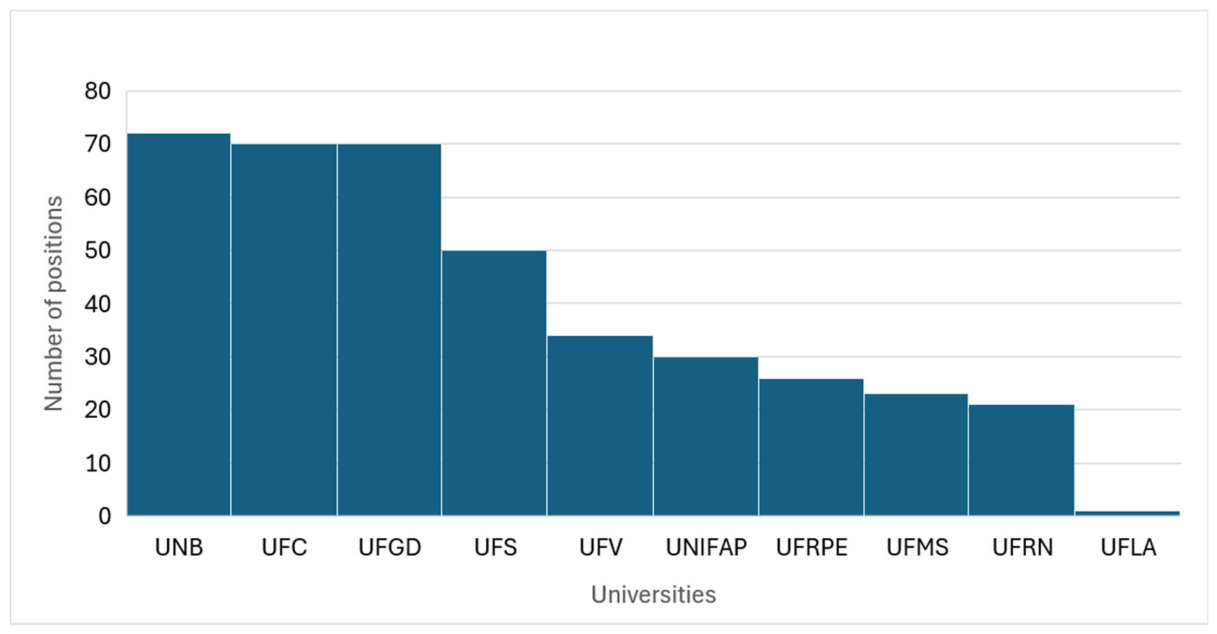
During the period under review, of the 69 Brazilian federal universities analyzed, only 11 (15.94%) had institutional programs that awarded athletic grants to athletes in 2023 (Figure 1). For the universities that did not respond, information regarding athletic grant announcements is unknown. The median number of athletic grants advertised was 32, with a maximum of 72 and a minimum of 1.
Figure 1.
Number of positions advertised for athletic grants by Brazilian federal universities—2023. Source: Compiled by the author.
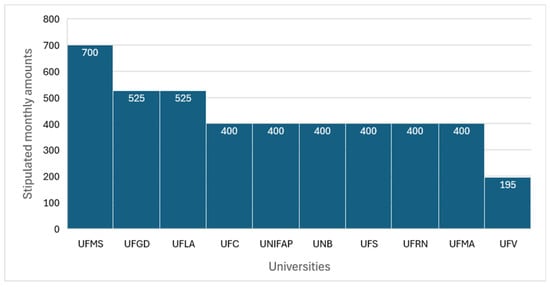
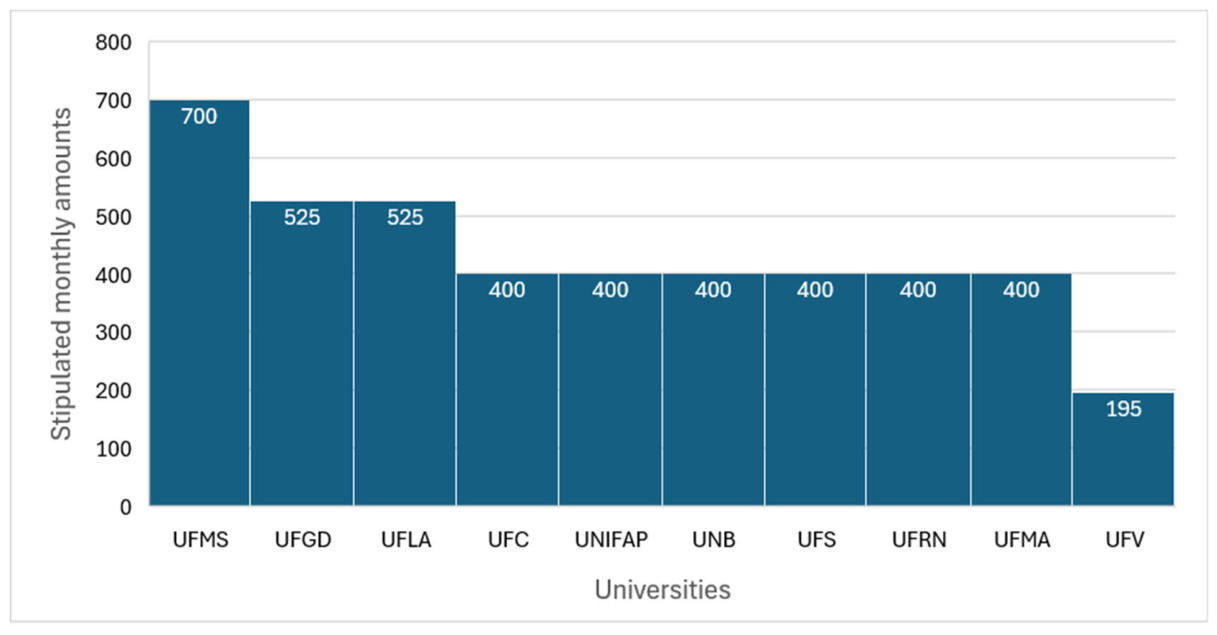
The median athletic grant amount advertised was R$ 400.00 (four hundred reais), with a maximum of R$ 700.00 (seven hundred reais) and a minimum of R$ 195.00 (Figure 2).
Figure 2.
Stipulated monthly amounts of the athletic grants offered by Brazilian federal universities—2023. Source: Compiled by the author.
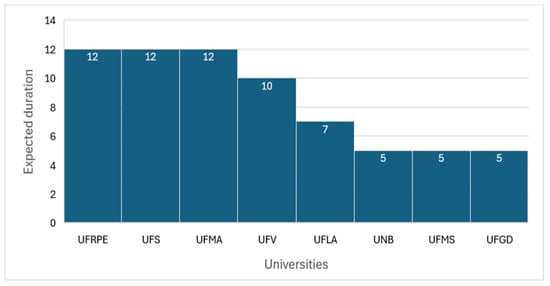
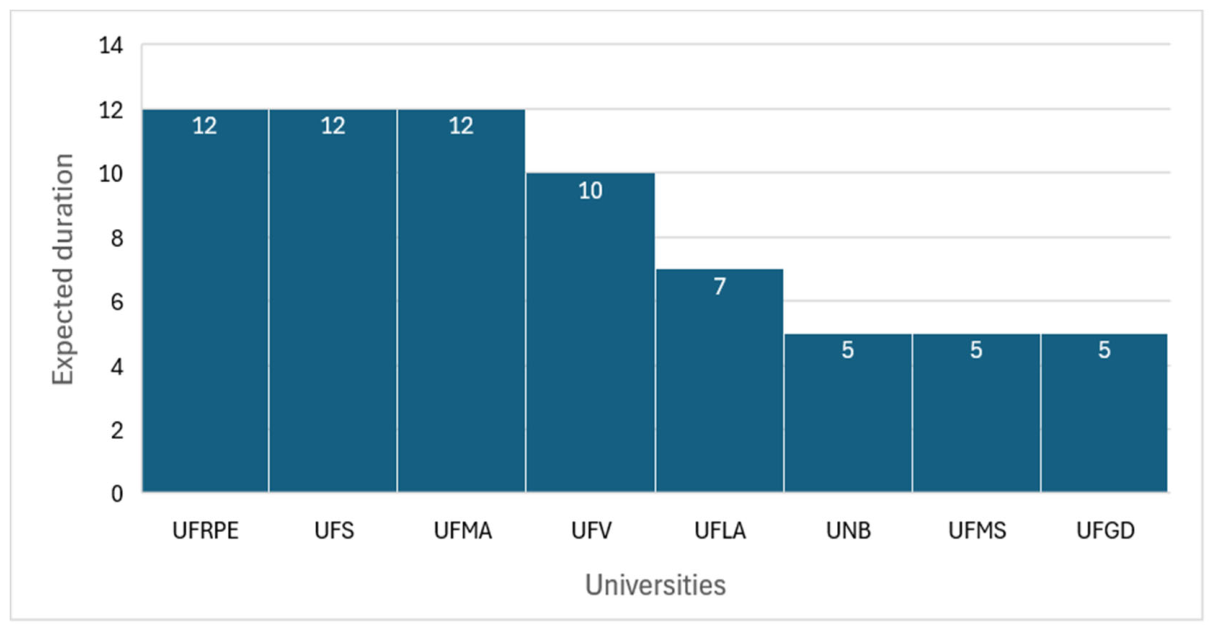
It was found that the expected duration of the athletic grant advertised was a median of 8.5 months, ranging from a maximum of 12 months to a minimum of five months (Figure 3).
Figure 3.
Expected duration of the athletic grants paid by Brazilian federal universities—2023. Source: Compiled by the author.
In terms of location, the institutions that issued public notices in 2023 were primarily from the Northeast (UFC, UFMA, UFRN, UFRPE, UFS) and the Midwest (UnB, UFGD, UFMS), accounting for 72.72% (Table 2). UnB was the university that had the highest number of positions advertised (72), followed by the Federal University of Ceará and the Federal University of Grande Dourados, which had 70 athletes (Figure 1). However, the amount of R$ 400.00 represented the median and most frequent value, appearing in six universities (UFC, UNIFAP, UNB, UFS, UFRN and UFMA). As for the expected duration of the athletic grants, the maximum was 12 months at UFMA, UFRPE and UFS, while the minimum was five months at UNB, UFMS and UFGD.
Table 2.
Number of athletic grants, monthly amounts, and duration stipulated in the notices at Brazilian federal universities—2023.
4. Discussion
In light of the above, this article aimed to analyze institutional athletic grant programs for student-athletes affiliated with Brazilian federal universities. Specifically, it sought to identify the scope (universities that offer institutional athletic grant programs), the distribution (universities and regions covered), the magnitude (the advertised monthly amounts), and the duration (expected duration of the funding). To analyze and discuss the data, it was organized into five topics.
4.1. Scope of Institutional Athletic Grant Programs for Athletes at Brazilian Federal Universities: The National Laissez-Faire Approach and University Autonomy
The data showed that, in 2023, only 16% of federal universities had institutional athletic grant programs for athletes. In Italy, only 13% of universities offered tuition waivers (Bastianon and Greco 2018). In contrast, more favorable results were observed at public and private universities in Colombia, where financial aid was provided in 74.4% of cases (Lagos Cortés 2014), and at Spanish universities in 34.8% of cases (López de Subijana et al. 2014). This may be associated with the dual-career policy model currently in place, which, in Spain, is centrally regulated by the state. In Italy (Aquilina and Henry 2010) and Brazil (Albuquerque et al. 2023), however, there is a laissez-faire approach. Laissez-faire refers to the absence of laws or regulations governing dual careers, such that support is tailored on a case-by-case basis through personal agreements between the parties involved (Aquilina and Henry 2010).
In Brazil, the dual career is not regulated at the national level, either by laws or decrees related to education or sports. The terms “dual career” and “student-athletes” do not even appear in the legislation that established the rules for national sports in 1998 (Brasil 1998). It was not until 2023 that the reconciliation of education and sports training was included in the general Brazilian sports law as a mechanism for career transition (Brasil 2023b), and in 2024, a Technical Group on Transition and Dual Sports Careers was established to discuss guidelines for transition and dual careers in the country (Ministério do Esporte 2024), though no concrete actions have yet been taken.
In the absence of national legislation regulating dual careers in Brazil, the 11 Brazilian federal universities that established their own programs did so based on the constitutional prerogative of university autonomy. As established in the Brazilian Federal Constitution (Brasil 1988), universities enjoy academic and scientific autonomy, as well as administrative and financial autonomy and autonomy over their assets.
In the absence of a federal law regulating the implementation of athletic grants at federal universities, this type of policy ends up being left to the discretion of university administrators, a situation that may be contributing to their low prevalence at the universities analyzed, given that in the Brazilian federal context there is no specific source of funding for this purpose, which would require using funds from programs such as the National Student Assistance Program or funds from source 20GK, earmarked for teaching and extension scholarships.
The lack of federal regulations governing federal athletic grant programs may contribute to the discontinuity in programs at universities if the groups responsible for these programs leave the institutions’ senior leadership. The discontinuation of institutional programs intended to provide athletic grant programs across different administrations at Brazilian federal universities can be illustrated by the Fluminense Federal University and the Federal Rural University of the Amazon, which, respectively, awarded athletic grants in 2012 and 2017 but not in 2023.
4.2. Distribution of Institutional Athletic Grant Programs for Athletes at Federal Universities
The results indicated that athletic grants are more common at federal universities in the Northeast and Midwest regions. Brazil has a sports culture rooted in schools and universities (Brasil 2015). The Southeast and South regions are exceptions to this rule because, from 2014 to 2023, 72.52% of the youth development clubs that received funding from the Federal Lottery in Brazil were located in the Southeast and South regions, and 72.20% of Brazilian Olympic athletes who benefited from the federal athletic grant program were from cities located in those same regions (Instituto de Pesquisa Inteligência Esportiva 2025). Of the 280 athletes who represented Brazil at the 2024 Olympic Games, 61.8% were born in the Southeast region (Comitê Olímpico Brasileiro 2024).
It may be that, in the absence of a club-based sports culture in regions such as the Northeast and Midwest, the athletic grants developed by federal universities located there can be understood as a local/regional mechanism for strengthening and creating favorable conditions so that athletes who have not yet turned professional—and, consequently, have not secured sponsorships or salaries from clubs—can remain in the sport during their higher education. These athletes may also participate in recreational sports in local competitions affiliated with state collegiate federations or academic sports associations.
Creating conditions conducive to the development of a parallel or convergent career—such as an athletic grant program—is necessary for a dual career because, according to the assumptions of holistic ecological theory (Henriksen et al. 2020), financial resources are prerequisites for an environment conducive to success. Obtaining athletic grants alleviates financial concerns (Lagos Cortés 2014), thereby creating the right conditions for athletes to focus on their studies and training (Guirola Gómez et al. 2018). In addition, it contributes to academic retention (Andres and Goellner 2018) and continued participation in sports (Silva and Albuquerque 2024).
It is important to view athletic grants as a political and administrative commitment grounded in social justice, with the goal of encouraging athletes to remain in a parallel sports career. The lack of a club structure that fosters professional competitive sports, limited personal financial resources, and the absence of financial support through public policies can force athletes to take on a third job outside of sports. In the short term, there is an increased likelihood of dropping out of college due to the need to work to pay for their athletic careers. In the long term, this can lead to retirement from sports without preparation for life after their careers, since, according to Van Rens et al. (2019), earning a college degree is one of the main ways to prepare for retirement. The absence of such support can result in academic dropout (Pedroza Júnior et al. 2020; Álvarez Pérez and López Aguilar 2012) or withdrawal from sports (Conde et al. 2021; Andres and Goellner 2018; Álvarez Pérez and López Aguilar 2012), potentially leading to a linear professional trajectory (Pallarés et al. 2011).
4.3. Expected Duration of the Funding in the Athletic Grant Programs for Athletes at Brazilian Federal Universities
With regard to the expected duration of the funding in the athletic grant, it was observed that most universities have a low rate. Only at UFRPE, UFS, and UFMA are the athletic grants for athletes scheduled to be paid throughout the year. In the United States, NCAA-linked scholarships are awarded throughout the academic year and may be extended to the summer, covering both academic and personal expenses (Weiis 2012). In Canada, the assistance lasts an average of eight to twelve months and is limited to the amount of tuition fees, and may be supplemented by institutional funds (Beaubier 2004). In the United Kingdom, these programs range from nine to twelve months and are managed directly by the universities, often accompanied by technical and multidisciplinary support (Ryan et al. 2017). In general, the countries analyzed demonstrate a more significant integration of sports and education, with more prominent, consistent, and predictable funding in their institutional policies; this may be related to the fact that dual-career programs are already well established in those countries.
The fluctuation in the expected duration of the funding annually at Brazilian federal universities that offer institutional financial athletic grant programs for athletes may be related to incremental funding, in which resources are allocated based on the previous year’s budget, which is the primary form of funding for the public policies implemented (Fávero and Bechi 2017).
The continued payment of athletic grants can help maintain athletic performance and academic standing, as well as ensure the athlete’s dignity and meet their basic needs. Irregular payments can increase the risk of athletes dropping out of sports and educational programs, since, in addition to causing uncertainty, they make it difficult to plan training sessions, competitions, and academic commitments that take place throughout the year.
Consistent financial support over the course of twelve months can help maintain athletic performance, given that high-performance athletes—whether amateur or professional—require an annual training program (macrocycle) structured in phases. According to Bompa and Haff (2009), these phases are preparatory (two to four months), competitive (depending on the competitive calendar for each discipline), and transitional (two to four weeks). Proper organization and conditions for following the annual macrocycle are essential for achieving objectives and goals, as neuromuscular and cardiorespiratory improvements result from long-term progressive training (Bompa 2002).
4.4. The Stipulated Monthly Amounts by Institutional Athletic Grant Programs for Athletes at Brazilian Federal Universities
The stipulated monthly amounts at most universities are higher than those provided by the federal athletic grant program, which awards R$ 325.00 to student-athletes (Brasil 2023a). This aspect is a significant factor in the pursuit of a dual career; this can be explained by comparing the athletic grants offered by institutional programs, which support a smaller number of athletes, with the federal athletic grant program, which serves a national rather than local population.
The predominant amount of R$ 400.00 may be linked to the fact that the scientific initiation fellowships from the National Council for Scientific and Technological Development—which form the basis for other undergraduate fellowships in the country (Albuquerque et al. 2023)—were capped at this amount through March 2023. In April 2023, there was an increase in the value of CNPq grants, which rose to R$ 700.00 (Brasil 2023a), explaining why one of the universities (UFMS) had already been using this amount as of July of that same year. Although these amounts are not sufficient to support a sports career, financial support through institutional athletic grant programs—funded by the few Brazilian federal universities that have an athletic grant—is a key factor in retaining athletes pursuing academic studies.
It is important to take into account the diversity of athletic careers, which may include student-athletes—with an average age of 19—who compete in junior categories, where the athletic career is the primary goal; athletes pursuing dual careers, with an average age of 20, who are athletically talented in junior categories, where the emphasis is on both the athletic career and professional training; and student-athletes, with an average age of 27, at a more advanced stage of their athletic careers and in senior categories, where professional training is the primary goal (Cartigny et al. 2021). Therefore, even though the amounts are modest, given the complex and substantial investment required by competitive and elite athletic careers, the athletic grants can contribute to the parallel and harmonious pursuit of academic, vocational and training activities. This measure is relevant, as there is scientific evidence that, in Brazil, the family is primarily responsible for investing in an athletic career. Consequently, this context favors individuals from higher socioeconomic backgrounds, who have greater and better opportunities to achieve athletic success than those from families with lower incomes.
4.5. Limitations of Public Policies on Athletic Grants for Athletes at Brazilian Federal Universities and Prospects for the Future
Public policies are formulated through highly selective processes. Based on differences in opinion, norms, interests, perceptions, and cognitive judgments (Menicucci 2006), political actors linked to specific sectors and issues seek to draw the attention of decision-makers (senior managers or those in positions of trust) (Isayama and Linhales 2006) in order to be included in the agenda-setting process.
Given limited resources, the definition of areas and content is often guided by a process of prioritizing needs (Camargo 2004), in which education, health, and safety are recognized as essential, while sports are treated as secondary (Isayama and Linhales 2006). The attention paid by policymakers—prompted by the inclusion of sports on the institutional agenda and the search for solutions to the problem (Howlett et al. 2013)—also stems from the political will of governments or pressure exerted by society (Camargo 2004).
Given the wide range of needs in Brazilian higher education, the athletic grant programs for athletes have attracted the attention of only a small number of university presidents, as evidenced by their limitation to 11 Brazilian federal universities. One possible explanation for this may lie in the fact that students enrolled at Brazilian federal universities are exempt from paying tuition or monthly fees. Higher education in Brazil is one of the services provided by the federal government and is supported by federal universities—entities of the Indirect Administration established as autonomous agencies or public-law foundations (Caetano and Campos 2019)—whose budgetary expenses are funded almost exclusively by federal public funds derived from taxes (Fávero and Bechi 2017).
There is no doubt that the tuition-free policy at Brazilian federal universities is an advantage for athletes, compared to athletes training at private universities, who must pay enrollment fees and tuition if they do not receive scholarships. Therefore, while at private universities, support through scholarships facilitates a parallel athletic career (Pallarés et al. 2011; Paz et al. 2018); at federal universities, this is already ensured by the tuition-free system.
Although there are similarities regarding the opportunities to continue participating in sports and the academic training provided by athletic scholarships in Europe (Mateo-Orcajada et al. 2022) and the United States (Miró et al. 2018), with regard to access to higher education and tuition-free enrollment at Brazilian federal universities, we understand that providing athletic grants in the form of monthly cash transfers constitutes an additional, relevant, and necessary mechanism. This is because free higher education does not eliminate concerns or expenses related to food, housing, nutritional supplements, and transportation. Athletes incur high expenses for supplements, nutritionists, exercise equipment, and athletic apparel (Paz et al. 2018).
It is important to note that scholarships in the United States are not limited to tuition and annual fees. In addition, they cover housing, meals, and course-related books, with funding coming primarily from the NCAA (Aly and Elmahdy 2024), estimated at $3222 per player per year—equivalent to one-third of the federal poverty line (Huma and Staurowsky 2012). Contrary to what is argued regarding the U.S. context (Aly and Elmahdy 2024), we do not advocate for college athletes to generate profits through the use of federal public funds. We advocate for intentional action by public officials through the creation of alternatives to resolve issues of public interest, as this is the function of public policy. Furthermore, national sports concern not only athletes but also the country’s identity.
The need for financial resources beyond tuition payments was highlighted by Lagos Cortés (2014) among Colombian college students. It is no coincidence that research demonstrates the importance of athletic grants in helping athletes balance their athletic and academic careers and alleviate financial concerns. With less financial pressure, they can devote themselves more fully to their studies and training, knowing they have support that makes it easier to continue both (Guirola Gómez et al. 2018).
In the context of pursuing both a sports career and a degree at Brazilian federal universities, it would be important for athletes to be integrated into plans and programs to facilitate academic training for athletes transitioning from high school to higher education (and from the junior to the senior level) and for those who are concluding their athletic careers, as a right that allows them to pursue a parallel athletic career (Pallarés et al. 2011). This helps ensure that they are not pressured to choose between sports and education, as is often observed when these paths diverge (Torregrossa et al. 2020).
Therefore, the lack of such support at a significant number of Brazilian federal universities should be a cause for critical reflection, given that tuition-free higher education alone is insufficient to ensure that athletes remain engaged in both sports and academics. Among the most skeptical arguments regarding the government’s role in public policies aimed at providing athletic grants for dual athletic careers is the claim that sports do not fall within the remit of Brazilian federal universities, which are responsible for academic education.
From our perspective, it is precisely this lack of mandatory requirements for federal universities regarding intercollegiate athletics that must be addressed by public policies—especially regulatory ones—since the absence of a national policy on intercollegiate athletics and its exclusion from the National Sports System result in insufficient institutional public policies. These, in turn, translate into a gap in national policy aimed at athletes who are at the most critical stage of their athletic careers.
This athletic grant should not be considered a privilege, but rather a recognition of the unique challenges athletes face starting in high school (and in junior categories), which are exacerbated by the transition to college (and in senior categories). A country that is truly committed to athletes who have dedicated part of their lives to this pursuit must have support mechanisms in place.
It is important to note that, with regard to public policies aimed at dual careers, Brazil has been moving in the opposite direction of the global trend. This is because, in Europe, the holistic development of athletes is a priority of sports policies (Izzicupo et al. 2025). Several international programs have been created, such as the European Community Action Scheme for Mobility of University Students (ERASMUS+ Sport), aimed at university sports in the 27 member states of the European Union (Capranica et al. 2022). Furthermore, Italy, Romania, Serbia, Slovenia, and Spain have the FIND-ME program (Izzicupo et al. 2025); Canada has the Canadian Game Plan; Australia has the Australian Elite Athlete Transition to the Next Stages of Their Lives (Varmus et al. 2025); the United States has the Career Assistance Program for Athletes; and the Netherlands has the Retired Athlete program (Stambulova et al. 2009).
Therefore, it would be important for the Ministry of Education or the Ministry of Sports (but above all both, through an intersectoral policy) to take action to create financial mechanisms that provide athletes with adequate conditions to pursue their activities harmoniously in this complex dual-career process, especially those who are socioeconomically vulnerable.
It is important to emphasize that the creation of an adequate financial framework for dual careers is only one of several mechanisms necessary for a holistic dual-career policy; other elements not addressed in this article—such as those suggested by Aquilina and Henry (2010) and highlighted by Izzicupo et al. (2025) in European Union countries—must also be implemented. The financial support provided by the athletic grants advocated here is not intended for all athletes, but only for those who are enrolled in higher education, who have no professional ties to clubs, who do not receive salaries or financial sponsorships, and whose per capita family income falls within the income tax exemption brackets.
5. Conclusions
Public policy regarding athletic grants for athletes at Brazilian federal universities is in place at only a few institutions, providing for payment in most cases for less than ten months—a situation that hinders adequate preparation for competitions, given the need for year-round training. The amounts awarded at most universities were higher than those offered by the federal program, which is significant because, although students at Brazilian federal universities do not pay tuition or fees, the costs associated with balancing sports and academic activities are high.
As for universities that offer athletic grant programs, they are primarily located in the Northeast and Midwest. This situation may be relevant to college sports in these regions and may provide athletes with greater opportunities to continue their athletic careers while pursuing their academic studies, given that these regions have a low concentration of sports clubs.
Institutional policies that award athletic grants are important initiatives for transforming college sports into an environment conducive to dual careers, given that they can foster better conditions for a parallel athletic career. However, these policies have limitations in terms of the number of months of payment and the number of available spots at most universities.
It can be concluded that this study represents an important contribution to the mapping of Brazilian federal universities that offered athletic grants in 2023, providing information on the number planned, the duration, and the respective amounts. Furthermore, as the first scientific initiative in the country to map the existence of athletic grant programs at federal universities, its scope is remarkable. Its originality and novelty may contribute to broadening the international discussion on the specific characteristics of athletic grant programs in macrosystems shaped by different policies and cultures and, at the microsystem level, by the influence that each university’s internal policies may exert. Furthermore, it contributes to the discussion on the development of policies to support dual careers in Brazil, a country that is still in the early stages of this process.
However, since this is a documentary analysis of calls for applications and results, the study has limitations, such as the lack of verification regarding the number of grants, the number of months, and the amounts actually paid. Furthermore, it does not allow for an understanding of the program’s importance to the beneficiary athletes. The limitation of the data to 2023 alone also results in a limited understanding of athletic grant programs at Brazilian federal universities, as in subsequent years new universities may have implemented such programs, while others that had previously offered them may have discontinued them.
Therefore, it is suggested that future research conduct comparative analyses of the number of athletic grants, their duration in months, the amounts specified in the selection notices, and what was actually implemented. Studies covering a longer time period—for example, from 2023 to 2026—would also be useful in providing a broader perspective on the topic. Finally, conducting studies directly with the athlete recipients would provide insight into their perceptions regarding the program’s importance to their continued participation in academic and athletic environments.
Author Contributions
Conceptualization, J.V.P.d.S.; methodology, J.V.P.d.S.; formal analysis, J.V.P.d.S.; investigation, G.A.G.; resources, G.A.G.; data curation, J.V.P.d.S.; writing—original draft preparation, J.V.P.d.S.; writing—review and editing, G.A.G.; visual-ization, J.V.P.d.S.; supervision, J.V.P.d.S.; project administration, J.V.P.d.S. All authors have read and agreed to the published version of the manuscript.
Funding
This study was conducted with support from the Coordination for the Improvement of Higher Education Personnel–Brazil (Capes)–Funding Code 001.
Institutional Review Board Statement
Not applicable.
Informed Consent Statement
Not applicable.
Data Availability Statement
The data will be made available upon request to the authors. In addition, the notices specify what information and which entities are mentioned.
Acknowledgments
We would like to thank the Federal University of Mato Grosso do Sul for its financial support in covering the publication fee. This manuscript won an award in the scientific article contest held by the Sports Commission of the Brazilian Federal Chamber of Deputies. Upon receiving the award, the text was published in a printed book in Portuguese (Sports and Knowledge: 8th Scientific Article Contest of the Sports Commission, ISSN 2966-487X), with all copyrights to the work belonging to Edições Câmara. However, given the study’s relevance and its original contributions—which can be further disseminated through international circulation in another language—Câmara Editions has granted the authors permission to publish it in English in a journal, the organization to which we extend our thanks for its authorization.
Conflicts of Interest
The authors declare no conflicts of interest.
References
- Albuquerque, Alex Caiçara, Emannuele Vasconcelos Costa, and Junior Vagner Pereira Silva. 2023. University sport and scholarship funding for student-athletes: Possibilities and limitations to sports performance. Revista Brasileira de Ciências do Esporte 45: e20230022. [Google Scholar] [CrossRef] [Scilit]
- Aly, Ezzeldin, and Sherin Elmahdy. 2024. The Opportunity for Profit to College Student-Athletes-Analysis Study. European Scientific Journal 20: 37–65. [Google Scholar] [CrossRef] [Scilit]
- Andres, Suélen de Souza, and Silvana Vilodre Goellner. 2018. Trajetórias esportivas de jogadoras de handebol e suas narrativas sobre ser profissional da modalidade. Movimento 24: 527–38. [Google Scholar] [CrossRef] [Scilit]
- Aquilina, Dawn, and Ian Henry. 2010. Elite athletes and university education in Europe: A review of policy and practice in higher education in the European Union Member States. International Journal of Sport Policy and Politics 2: 25–47. [Google Scholar] [CrossRef] [Scilit]
- Álvarez Pérez, Pedro, and David López Aguilar. 2012. Armonización entre proceso de aprendizaje y práctica deportiva en universitarios deportistas de alto nivel. Cultura Ciencia y Deporte 21: 201. [Google Scholar] [CrossRef] [Scilit]
- Bardin, Laurence. 2016. Análise de conteúdo. São Paulo: Edições 70. [Google Scholar]
- Bastianon, Stefano, and Ginevra Greco. 2018. The Italian approach to the dual careers of university student-athletes. Kinesiologia Slovenica 24: 5–18. [Google Scholar] [CrossRef] [Scilit]
- Beaubier, Dean. 2004. Athletic gender equity policy in Canadian Universities: Issues and possibilities. Canadian Journal of Educational Administration and Policy 34: 1–10. Available online: https://journalhosting.ucalgary.ca/index.php/cjeap/article/view/42714 (accessed on 14 January 2026).
- Bompa, Tudor. 2002. Annual planning, periodisation and its variations. In The FISA Coaching Development Programme: Handbook—Level III. Edited by Thor Nilsen, Ted Daigneault and Matt Smith. Lausanne: The International Rowing Federation, pp. 161–204. [Google Scholar]
- Bompa, Tudor, and Carlo Haff. 2009. Periodization, Theory and Methodoly of Training, 5th ed. Champaign: Human Kinetics. [Google Scholar]
- Brasil. 1988. Constituição da República Federativa do Brasil de 1988. Brasília: Presidência da República. [Google Scholar]
- Brasil. 1998. Lei n° 9.615, de 24 de março de 1998. Institui Normas Gerais Sobre Desporto e dá Outras Providências. Available online: https://www.planalto.gov.br/ccivil_03/leis/l9615consol.htm (accessed on 16 January 2026).
- Brasil. 2015. Diagnóstico Nacional do Esporte. Brasília: MESP. [Google Scholar]
- Brasil. 2023a. Governo Federal anuncia reajuste de bolsas do CNPq e da CAPES; Brasília: MCTI. Available online: https://www.gov.br/cnpq/pt-br/assuntos/noticias/cnpq-em-acao/governo-federal-anuncia-reajuste-de-bolsas-do-cnpq-e-da-capes (accessed on 16 January 2026).
- Brasil. 2023b. Lei n° 14.597, de 14 de Julho de 2023. Institui a Lei Geral de Esportes. Brasília: Presidência da República. Available online: https://www.planalto.gov.br/ccivil_03/_Ato2023-2026/2023/Lei/L14597.htm#art217 (accessed on 16 January 2026).
- Caetano, Eduardo Ferreira da Silva, and Ivete Maria Barbosa Madeira Campos. 2019. A autonomia das universidades federais na execução das receitas próprias. Revista Brasileira de Educação 24: e240043. [Google Scholar] [CrossRef] [Scilit]
- Camargo, José Márcio. 2004. Política social no Brasil: Prioridades erradas, incentivos perversos. São Paulo em Perspectiva 18: 68–77. [Google Scholar] [CrossRef] [Scilit]
- Capranica, Laura, Flavia Guidotti, Carlos Gonçalves, Laurence Blondel, Matteo Bovis, Rute Costa, Nadine Debois, Antonio Figueiredo, Ciaran MacDonncha, Viktorija Pecnikar-Oblak, and et al. 2022. Development of an online multilingual educational programme for parents of dual-career athletes: A participatory design. Frontiers Psychology 13: 855531. [Google Scholar] [CrossRef] [Scilit]
- Cartigny, Emily, David Fletcher, Christine Coupland, and Guy Taylor. 2021. Mind the gap: A grounded theory of dual career pathways in sport. Journal of Applied Sport Psychology 33: 280–301. [Google Scholar] [CrossRef] [Scilit]
- Cavalcante, Joseneide Franklin. 2000. Educação superior: Conceitos, definições e classificações. Textos para Discussão 8: 57–57. [Google Scholar]
- Comitê Olímpico Brasileiro. 2024. Guia Time Brasil—Paris 2024. Rio de Janeiro: Comitê Olímpico Brasileiro. Available online: https://admin.cob.org.br/uploads/CO_Bmedia_guide_2024_V3_3dc8bfb475.pdf (accessed on 9 January 2026).
- Conde, Elena, Lourdes Meroño, José Luís Arias-Estero, Alejandro Leiva-Arcas, Francisco José Cánovas-Álvarez, Emanuele Isidori, and Antonio Sánchez-Pato. 2021. Percepción de la influencia del modelo Estport en la carrera dual de los estudiantes-deportistas en universidades de España e Italia. Cultura Ciencia y Deporte 16: 31–37. [Google Scholar] [CrossRef] [Scilit]
- Confederação Brasileira de Desporto Universitário. 2024. Regulamento Geral. JUBS Brasília. Brasília: CBDU. [Google Scholar]
- Costa, Felipe Rodrigues, Hugo Paula Almeida Rocha, Felipe Nunes Serpa Viana, Iuri Scremin Miranda, and Americo Pierangeli Costa. 2022. Conciliação da rotina de estudo e treinamento: O caso do cheerleading na Universidade de Brasília. Retos 46: 896–905. [Google Scholar] [CrossRef] [Scilit]
- Fávero, Altair Alberto, and Diego Bechi. 2017. O financiamento da educação superior no limiar do século XXI: O caminho da mercantilização da educação. Revista Internacional de Educação Superior 3: 90–113. [Google Scholar] [CrossRef] [Scilit][Green Version]
- Figueiredo, Antonio, and Iuri Scremin. 2023. A exigência do esporte de alta-competição e o desenvolvimento pleno dos atletas: A necessidade de uma relação simbiótica. Revista Brasileira de Ciências do Esporte 45: e20230079. [Google Scholar] [CrossRef] [Scilit]
- Gil, Antonio Carlos. 2010. Métodos e Técnicas de Pesquisa Social. São Paulo: Atlas. [Google Scholar]
- Guirola Gómez, Ivan, Miquel Torregrosa, Yago Ramis, and José Carlos Jaenes. 2018. Remando contracorriente: Facilitadores y barreras para compaginar el deporte y los estudios. Revista Andaluza de Medicina Del Deporte 11: 12–17. [Google Scholar] [CrossRef] [Scilit][Green Version]
- Henriksen, Kristoffer, Louise Kamuk Storm, Andreas Kuettel, Lukas Linnér, and Natalia Stambulova. 2020. A holistic ecological approach to sport and study: The case of an athlete friendly university in Denmark. Psychology of Sport and Exercise 47: 101637. [Google Scholar] [CrossRef] [Scilit]
- Henriksen, Kristoffer, Natalia Stambulova, and Kirsten Kaya Roessler. 2010. Holistic approach to athletic talent development environments: A successful sailing milieu. Psychology of Sport and Exercise 11: 212–22. [Google Scholar] [CrossRef] [Scilit]
- Howlett, Michael, M. Ramesh, and Anthony Perl. 2013. Política Pública: Seus Ciclos e Subsistemas: Uma Abordagem Integral. Rio de Janeiro: Elsevier. [Google Scholar]
- Huma, Ramogi, and Ellen Staurowsky. 2012. The $6 Billion Heist: Robbing College Athletes Under the Guise of Amateurism. A report collaboratively produced by the National College Players Association and Drexel University Sport Management. Riverside: NCPA. [Google Scholar]
- Instituto de Pesquisa Inteligência Esportiva. 2025. Bolsas Atleta na Categoria Etária Principal (2010 a 2023). Curitiba: IPIE. [Google Scholar]
- Isayama, Hélder Ferreira, and Meyli Assbú. A. Linhales. 2006. Apresentação. In Sobre Lazer e Política Maneiras de ver, Maneiras de Fazer. Edited by Hélder Ferreira Isayama and Meily Assbú Linhales. Belo Horizonte: A. Editora UFMG, pp. 7–15. [Google Scholar][Green Version]
- Izzicupo, Pascal, Sofia Serafini, Iris Prestanti, Andrea Fusco, Beatrice-Aurelia Abalasei, Tara Alonso del Hierro, Burak Caliskan, Angela Di Baldassarre, Háron Ege, Antonio Figueiredo, and et al. 2025. A study on the implementation of dual career at European higher education institutions: The student-athletes’ and experts’ views. Frontiers in Sports and Active Living 7: e1507951. [Google Scholar] [CrossRef] [Scilit]
- Lagos Cortés, Diógenes. 2014. Estrategias de las universidades colombianas para favorecer el acceso, permanencia y finalización de estudios en deportistas de alto rendimiento. Lúdica Pedagógica 19: 77–89. [Google Scholar] [CrossRef] [Scilit]
- López de Subijana, Christina Hernández, Francisco Mascaró Ruiz, and Elena Conde Pascual. 2014. Los servicios de asesoramiento a los deportistas de élite en las universidades españolas. Kronos: Revista Universitária de la Actividad Física y el Deporte 13: 56–64. [Google Scholar] [CrossRef] [Scilit]
- Mandarino, João Domingos Bezerra, Carlos Alberto Figueiredo Silva, José Mauírcio Capinussú, and Carlos Henrique de Vasconcellos Ribeiro. 2013. Esporte e marketing nas IES: O caso dos gestores participantes das olimpíadas universitárias. Salusvita 32: 63–85. [Google Scholar]
- Maquiaveli, Giulia, Guilherme Fernandes Coelho, Lucas Vicentini, Flávia Volta Cortes Oliveira, Christiano Streb Ricci, and Renato Francisco Rodrigues Marques. 2021. O desafio da dupla carreira: Análise sobre os graus acadêmicos de atletas de elite do futsal feminino brasileiro. Revista da ALESDE 13: 54–80. [Google Scholar] [CrossRef] [Scilit]
- Marconi, Maria Andrade, and Eva Maria Lakatos. 2002. Técnicas de Pesquisa. São Paulo: Atlas. [Google Scholar]
- Marrara, Thiago. 2024. Manual de Direito Administrativo: Fundamentos, Fontes, Princípios, Organização e Agentes, 4th ed. Indaiatuba: Foco. [Google Scholar]
- Mateo-Orcajada, Adrián, Alejandro Leiva-Arcas, Raquel Vaquero-Cristóbal, Lucia Abenza-Cano, Juan Alfonso Garcia-Roca, Lourdes Meroño, Emanuele Isidori, and Antonio Sánches-Pato. 2022. Spanish pre-olympic athletes’ motivations and barriers to pursuing dual career as a function of sociodemographic, sport and academic variables. Frontiers in Psychology 13: 850614. [Google Scholar] [CrossRef] [Scilit]
- Menicucci, Telma Maria. 2006. Políticas públicas de lazer: Questões analíticas e desafios políticos. In Sobre Lazer e Política: Maneiras de ver, Maneiras de Fazer. Edited by Hélder Ferreira Isayama and Meily Assbú Linhales. Belo Horizonte: Editora UFMG, pp. 136–64. [Google Scholar]
- Minayo, Maria Cecilia de Souza. 2006. O Desafio do Conhecimento: Pesquisa Qualitativa em Saúde. São Paulo: Hucitec. [Google Scholar]
- Ministério do Esporte. 2024. Portaria MESP n° 114, de 27 de novembro de 2024. Criação do Grupo Técnico sobre Transição e Dupla Carreira Esportiva. Diário Oficial da União, Edição 229, Seção 2, página 25. Brasília. Available online: https://www.in.gov.br/web/dou/-/portaria-mesp-n-114-de-27-de-novembro-de-2024-598276437 (accessed on 9 January 2026).
- Miranda, Iuri Scremin, Leonardo Tavares Corado Loreno, and Felipe Rodrigues Costa. 2020. A dupla jornada do atleta universitário: Perspectivas para a conciliação entre estudos e treinos na Universidade de Brasília. Movimento 26: e26059. [Google Scholar] [CrossRef] [Scilit]
- Miró, Salvador, Andrea Perez-Rivases, Yago Ramis, and Miquel Torregrossa. 2018. ¿Compaginar o elegir?: La transición del bachillerato a la universidad de deportistas de alto rendimiento. Revista de Psicología del Deporte 27: 59–68. [Google Scholar]
- Nogueira, Maressa D’Paula Gonçalves Rosa. 2022. Transição Pós-Carreira Atlética de Maratonistas Aquáticos Brasileiros: Elementos para a Elaboração de Programa. Ph.D. dissertation, Universidade de São Paulo, São Paulo, Brazil. [Google Scholar]
- Pallarés, Susana, Fernando Azócar, Miquel Torregrosa, Clara Selva, and Yago Ramis. 2011. Modelos de trayectoria deportiva en waterpolo y su implicación en la transición hacia una carrera profesional alternativa. Cultura, Ciencia y Deporte 6: 93–1103. [Google Scholar] [CrossRef] [Scilit]
- Paz, Bruna, Caroline Ruivo Costa, Márcia Regina Aversani Lourenço, Fernando Augusto Starepravo, and Ieda Parra Barbosa Rinaldi. 2018. A influência do programa bolsa-atleta na trajetória profissional e pessoal de atletas de ginástica rítmica. Motrivivência 30: 127–42. [Google Scholar] [CrossRef] [Scilit][Green Version]
- Pedroza Júnior, Edvaldo Torres, Marcos Andre Nunes Costa, Vilde Gomes Menezes, Henrique Gerson Kohl, and Esdras Henrique Rangel Melo. 2020. História de vida de ex-jogadores profissionais de futebol em Pernambuco: Formação acadêmica versus formação esportiva. Movimento 26: e26067. [Google Scholar] [CrossRef] [Scilit]
- Quinaud, Ricardo Teixeira, Kauana Possamai, Carlos Gonçalves, Laura Capranica, and Humberto Moreira Carvalho. 2020. Variação da identidade do estudante-atleta de elite: Análise nos Jogos Universitários Brasileiro. Revista Brasileira de Psicologia do Esporte 10: 431–48. [Google Scholar] [CrossRef] [Scilit]
- Rubio, Katia. 2015. Atletas Olímpicos Brasileiros. São Paulo: SESI-SP. [Google Scholar]
- Ryan, Christina, Holly Thorpe, and Clive Pope. 2017. The policy and practice of implementing a student–athlete support network: A case study. International Journal of Sport Policy and Politics 9: 415–30. [Google Scholar] [CrossRef] [Scilit]
- Silva, Junior Vagner Pereira. 2024. Dual career policy at federal universities in Brazil: Analysis of academic and sporting support. Frontiers in Sports and Active Living 6: e1453749. [Google Scholar] [CrossRef] [Scilit]
- Silva, Junior Vagner Pereira, and Alex Caiçara Albuquerque. 2024. Políticas públicas e concessões financeiras à estudantes-atletas na Universidade Federal de Mato Grosso do Sul. Retos 59: 444–54. [Google Scholar] [CrossRef] [Scilit]
- Stambulova, Natalia, Dorothee Alfermann, Traci Statler, and Jean Côté. 2009. ISSP position stand: Career development and transitions of athletes. International Journal of Sport and Exercise Psychology 7: 395–412. [Google Scholar] [CrossRef] [Scilit]
- Stambulova, Natalia, Tatiana Ryba, and Kristoffer Henriksen. 2021. Career development and transitions of athletes: The International Society of Sport Psychology Position Stand Revisited. International Journal os Sport and Exercise Psychology 19: 524–50. [Google Scholar] [CrossRef] [Scilit]
- Toledo, Roberto. 2006. Gestão do Esporte Universitário: Uma Importante Estratégia de Marketing para as Universidades. São Paulo: Aleph. [Google Scholar]
- Torregrossa, Miquel, José Chamorro, Luana Prato, and Yago Ramis. 2020. Grupos, entornos y carrera deportiva. In Sports Groups Management. Edited by Tomás García Calvo, Francisco Leo and Eduardo Cervelló. Barcelona: Editorial Tirant lo Blanch, pp. 18–29. [Google Scholar]
- Universidade Federal do Ceará. 2010. Edital de Bolsa de Incentivo ao Esporte. Fortaleza: Universidade Federal do Ceará. [Google Scholar]
- Van Rens, Fleur, Rebecca Ashley, and Andrea Steele. 2019. Well-being and performance in dual careers: The role of academic and athletic identities. Sport Psychologist 33: 42–51. [Google Scholar] [CrossRef] [Scilit]
- Varmus, Michal, Martin Miciak, Dominika Toman, Michal Jastraban, and Matej Kuljovsky. 2025. Athletes’ education for their successful future career after sports—Perspective of former athletes and potential employers. Administrative Sciences 15: 46. [Google Scholar] [CrossRef] [Scilit]
- Weiis, Sandy. 2012. Athletic Aspirations: NCAA Scholarships and Canadian Athletes. In Race and Sport in Canada. Intersecting Inequalities. Edited by Janelle Joseph, Simon Darnell and Yuka Nakamura. Toronto: Canadian Scholars’ Press, pp. 265–89. [Google Scholar]

Disclaimer/Publisher’s Note: The statements, opinions and data contained in all publications are solely those of the individual author(s) and contributor(s) and not of MDPI and/or the editor(s). MDPI and/or the editor(s) disclaim responsibility for any injury to people or property resulting from any ideas, methods, instructions or products referred to in the content. |
© 2026 by the authors. Licensee MDPI, Basel, Switzerland. This article is an open access article distributed under the terms and conditions of the Creative Commons Attribution (CC BY) license.