


Abstract
At present, government-led research and other scientific institutions continue to face challenges in meaningfully weaving Indigenous Knowledge in research, thereby reinforcing the inequalities and exclusion faced by Indigenous Peoples. We found that, among other reasons, these challenges stem in part from a lack of tools and resources to guide researchers in engaging Indigenous partners ethically and respectfully throughout the research design, practice, and reporting phases, rather than to a lack of awareness or motivation. In response to this need, we developed an Inclusive Science Self-assessment Tool (ISSAT), an online questionnaire-based toolkit designed to support weaving Indigenous Knowledge Systems (IKS) in scientific research. ISSAT was developed for IKS through a three-year process that combined evidence synthesis with dynamic Indigenous rights-holder and stakeholder engagement. The evidence synthesis comprised a systematic review of ten years of relevant literature and a case analysis of how 215 federal scientists weave IKS in their research. Through the dynamic stakeholder approach, we engaged a cross-section of participants and experts across government, academia, and civil society whose input informed the development and validation of the tool. ISSAT users complete the questionnaire and receive tailored feedback with practical strategies for fostering inclusivity in scientific research, prompting self-reflection through an inclusive and relational research ethics lens. At the institutional level, the tool enables institutions to identify areas of need and prioritize limited resources to drive the institutional change needed for an inclusive, equitable, and diverse scientific enterprise.
1. Introduction
The current social climate, emphasizing Indigenous reconciliation and the decolonization of institutions, has prompted the need to critically examine the colonial influences within the mainstream “Western” sciences. Despite ongoing commitments to broaden representation, Indigenous Knowledge’s (IK) systemic and persistent exclusion from the scientific enterprise remains a reality (Stein et al. 2024; Antwi et al. 2025). As Laurelyn Whitt puts it, “The oppressive relations of power that have historically structured dominant–Indigenous interactions are not somehow magically suspended when scientific research is planned and executed” (Whitt 2009).
For Indigenous Peoples, the push to dismantle colonial domination extends beyond political oversight and unequal economic opportunities to education, research, and scientific endeavors (Held 2023). The diversity and application of Indigenous Knowledge Systems in areas such as health, education, environmental stewardship, and the protection of sacred places have been underrecognized within mainstream research and policy. The inequalities faced by Indigenous Peoples are deeply rooted in a historical context where Western scientific paradigms, long perceived as a universal and objective source of knowledge, have dominated, often marginalizing or dismissing Indigenous and other ways of knowing (Held 2023; Stein et al. 2024; Marsden et al. 2020). Internationally, adopting the United Nations Declaration on the Rights of Indigenous Peoples affirms Indigenous Peoples’ sovereign right to “maintain, control, protect and develop their … traditional knowledge … as well as the manifestations of their sciences, technologies, and cultures” (United Nations 2007, p. 22).
In Canada, efforts are underway to weave Indigenous Knowledge Systems with scientific research through collaborative approaches that combine Indigenous and Western ways of knowing. For example, in Upper Nicola (British Columbia) and the Peace-Athabasca Delta in northern Alberta, Indigenous-led climate monitoring programs use traditional observations alongside hydrometric stations, wildlife monitoring, and environmental measurements to track changes in water, vegetation, wildlife, and ice conditions (Indigenous Climate Hub 2024). In Nunavut, Inuit Knowledge has been combined with meteorological data to improve understanding of changing wind and sea-ice conditions (Gearheard et al. 2010). In British Columbia and Alberta, Indigenous cultural burning practices are informing wildfire science and forest management, helping reduce wildfire risk and enhance ecosystem resilience (Hoffman et al. 2022).
Similarly, policy directions in Canadian research have evolved in alignment with this paradigm shift. Several federal departments, agencies, and funding bodies, such as the Tri-Council, the major source of research funding for post-secondary institutions across Canada, have enacted policies to advance reconciliation and relational research ethics (Government of Canada 2023; Canadian Food Inspection Agency 2024; Environment and Climate Change Canada 2022; Henri et al. 2021; Government of Canada 2019). The Tri-Council Policy Statement, Ethical Conduct for Research Involving Humans (TCPS2), includes an entire chapter on guidelines for conducting ethical research involving First Nations, Inuit, and Métis Peoples of Canada (Government of Canada 2023). Departments such as Natural Resources Canada (NRCan) have also created a Draft Policy on Ethics for Research Involving Indigenous Peoples and Territories to support their employees in maintaining the highest standards of ethical conduct when working with Indigenous people or on Indigenous territories (NRCan 2025).
While these policy advances and research integration are valuable first steps towards creating autonomous spaces for Indigenous Peoples, challenges still remain, including knowledge loss resulting from colonial policies and barriers to intergenerational knowledge transmission (Truth and Reconciliation Commission of Canada 2015; UNESCO 2017). The complete embedding of Indigenous Knowledge and science across the Western scientific research sphere is necessary for systemic change that advances reconciliation. The weaving of Indigenous Knowledge with Western research varies systematically across academic disciplines, falsely suggesting robust Indigenous Knowledge participation and integration (Lauter 2023).
Despite the growing recognition of the value of Indigenous Knowledge (IK) in research, present scientific enterprises continue to struggle to fully weave Indigenous Knowledge in the research design, practice, and reporting stages, due to limited cultural competency and insufficient understanding of how to engage respectfully and collaboratively with Indigenous nations and communities (ARCUS 2022; Antwi et al. 2025). These factors contribute to the decontextualization of Indigenous Knowledge and affect meaningful collaboration with Indigenous nations and communities.
Several validated self-assessment tools, such as the Cultural Capability Measurement Tool and Reciprocity, Externalities, Access, and Partnership (REAP) Self-Assessment Toolkit, exist to assess the cultural competency of the healthcare workforce (University of Calgary n.d.). Self-assessment tools can help scientists recognize their strengths in weaving Indigenous Knowledge while identifying areas of research that need improvement to enhance overall outcomes (Ritchie and Dale 2000). In this context, weaving Indigenous knowledge refers to applying a two-eyed seeing and relational ethic lens in planning and doing research in a Western scientific manner (Bartlett et al. 2012). That notwithstanding, examining the current literature reveals a significant gap in the availability of tools to assist research scientists in considering and weaving Indigenous Knowledge across all phases of their research, hence the need for the Inclusive Science Self-assessment Tool (ISSAT). The development of the tool represents an important contribution to ongoing efforts to strengthen researchers’ capacity to respectfully and meaningfully weave Indigenous Knowledge into science.
This paper aims to identify gaps in the weaving of Indigenous Knowledge in science and to present the ISSAT, highlighting its importance and the methodology used in its development as a means of equipping research scientists with the knowledge and a reflective framework needed to meaningfully weave Indigenous Knowledge into their research.
The Inclusive Science Self-assessment Tool (ISSAT) for Weaving Indigenous Knowledge Systems (IKS) in Western science is a product of Natural Resources Canada’s (NRCan) Inclusive Science Research Study (see the methodology for more information). As a predominantly science-based department with significant resources allocated to its activities, NRCan has more than 50% of its staff engaged in science-based natural resources activities, often in the traditional territories of Indigenous peoples.
The ISSAT was developed to guide researchers in self-reflecting and improving their research work through an inclusive science and relational research ethics lens. An inclusive approach to science involves an appreciation and respect for all forms of diversity, diverse knowledge systems, contributions of people from different backgrounds, and a reflection on unconscious biases that impact research processes and outcomes (Cobian et al. 2024).
This validated, self-administered, self-reflection, and anonymous questionnaire is structured around research design, practice, and reporting and provides respondents with resources and new insights into building reciprocal relationships with Indigenous partners. When used appropriately, the tool can increase individual researchers’ cultural competence, which can facilitate evidence-based knowledge uptake by decision-making bodies, ultimately influencing policy and practice towards broad institutional cultural change.
In the subsequent sections of the paper, we provide details of the evidence synthesis and dynamic stakeholder engagement approaches that informed the development of the ISSAT for IKS. First, we outline the conceptual and methodological frameworks and how they guided the development of the tool. Then, we present the structure of the ISSAT for IKS, providing details of and justification for the issues identified and addressed in the tool. The Feedback Report is discussed, which provides respondents access to information, resources, and training on weaving Indigenous knowledge systems and maintaining a respectful, reciprocal, and mutually beneficial relationship with Indigenous peoples, nations, communities, and partners.
2. Materials and Methods
The non-Indigenous scholars of this paper recognize the importance of respectful engagement with Indigenous Nations and knowledge holders. We approach this project with humility, understanding the limitations of our perspectives and the need to uphold principles of relational accountability. We are deeply aware of the need for continuous learning and adaptation in this process, respecting the depth and diversity of Indigenous knowledge systems. With this, the ISRS team, with experience working with and currently maintaining a respectful and mutually beneficial relationship with Indigenous Nations, engaged closely with Nòkwewashk (Indigenous Affairs sector) to develop the self-assessment tool and the feedback report. Nòkwewashk is the Indigenous sector at NRCan dedicated to guiding how the department and its employees interact with Indigenous Nations, partners, and knowledge systems, and establishing and sustaining mutually beneficial and respectful relationships. The ISRS team acknowledges that engaging with Nòkwewashk will incorporate broad overarching Indigenous engagement principles and recognizes that researchers will have distinct interactions with individual Indigenous communities, nations, and groups, and through collaboration and trust-building will develop unique engagement approaches. Further to information derived from published literature and engagements, the views shared in this research study are those of Indigenous scholars, the Indigenous sector, and reviewers. These scholars co-designed the study, contributed to the drafting and revision of the manuscript, and are recognized in this paper as co-authors. This tool is aimed at aiding researchers in beginning or strengthening Indigenous engagement through self-reflection and system feedback to foster greater institutional cultural competency within our research community.
2.1. Evidence Synthesis Towards the Development of the ISSAT for IKS
The ISSAT for IKS is part of the Inclusive Science Research Study (ISRS) output. The study was commissioned in September 2022 in response to the Clerk’s Call to Action on Anti-racism, Equity, and Inclusion in the Federal Public Service (Government of Canada 2021). The Clerk of the Privy Council, the professional head of the Public Service of Canada who advises the Prime Minister and elected Government officials in managing the country, made the call in recognition of the “unjust treatment of Black people, other racialized groups, and Indigenous peoples in our society” (Government of Canada 2024a). The ISRS is a Canadian Forest Service (CFS)-led initiative supported by the Office of Inclusion, Diversity, Equity, and Accessibility (O-IDEA), the Office of the Chief Scientist (OCS), and Nòkwewashk (Indigenous Affairs sector).
To ensure multiple perspectives inform the ISRS and contribute substantially to the department’s Inclusive Science (IS) objectives, the study established an Inclusive Science Cross-Sectoral Working Group comprising 15 members from NRCan science-based sectors such as the Canadian Forest Service (CFS), Energy Efficiency and Technology Sector (EETS), Lands and Minerals Sector (LMS), Nòkwewashk (Indigenous Affairs sector), and the Office of the Chief Scientist (OCS). One of the initiatives the Working Group has supported is developing the ISSAT for IKS. This is one of two self-assessment tools developed under the ISRS. The ISSAT for IKS was developed following:
- A case analysis of how scientists are weaving IKS into their research activities.
- A scoping literature review on the state-of-the-art knowledge on inclusion, diversity, equity, and accessibility in science.
- Dynamic stakeholder engagements.
2.1.1. Setting the Baseline: Case Analysis of Ongoing Inclusive Science Initiatives
The case analysis was conducted to obtain baseline information on ongoing inclusive science initiatives within the department and identify areas that require efforts and resources to advance in inclusive science. The analysis, coupled with the scoping review, informed the priorities for developing the ISSAT.
Approximately 215 scientists from NRCan responded to a survey on integrating IKS with their research activities. Using the Tri-Council framework and recommendations found in the Guidelines for the Merit Review of Research, the Chapter 9 of the Tri-Council Policy Statement (Research Involving the First Nations, Inuit, and Métis Peoples of Canada), the Ethical Conduct for Research Involving Humans, as well as the Indigenous research principles enshrined under OCAP® (ownership, control, access, and possession), for embedding Indigenous issues in research practice and design, we conducted an analysis, using the NVivo software (version 14), of the 215 case examples. Specifically, scientists were asked to explain how they embed Indigenous Peoples’ perspectives, knowledge systems, and engagement in their research.
We developed themes from the Tri-Council framework and guidelines for IKS. After thoroughly reviewing scientists’ responses, we categorized the responses according to themes generated by Tri-Council guidelines. Additional themes outside the Tri-Council themes that emerged from the scientists’ responses were recorded, and corresponding feedback was attached. Some themes include approaches used in engaging Indigenous partners and sharing research outcomes, reasons for not engaging Indigenous partners, forms of Indigenous representation on research projects, and the benefits to Indigenous partners (see Appendix A).
We presented the results in quantitative and qualitative formats to identify the frequencies or number of projects. In addition, we also provided a nuanced understanding of how participants intended to operationalize the principles and guidelines in their research activities. The analysis outcomes revealed varying degrees of commitment to Indigenous engagement based on prior relationships and the project’s stage. While there is much interest, Indigenous engagement and weaving of Indigenous knowledge systems in research design and practice were low due to reasons such as the perception that the location of the project research site is on non-Indigenous territories, the research focuses on highly technical issues, the research uses pre-existing data and is at its concluding phase. The analysis also found that little attention was given to weaving Indigenous knowledge systems into research reporting and knowledge mobilization in both the Tri-Council guidelines and the responses received from scientists. Research reporting and knowledge mobilization identify how the research outcome is managed, communicated, and implemented and what its implications are for diverse populations (Social Sciences and Humanities Research Council 2025; Cooper et al. 2018).
2.1.2. Scoping Review
To review over ten years of inclusive science literature, we used keywords to identify over 14,231 relevant studies published in major scientific databases such as Web of Science, Scopus, and Google Scholar (see Table 1).
Table 1.
Concept category and search string used to identify the articles for review.
Our search was limited to peer-reviewed articles in the fields of conservation, sustainability, and environmental science from 2010 to 2023. Articles were limited to publications in English to accommodate the researchers’ language limitations. A total of 16,037 records were identified, and duplicate records were removed, leaving 14,231 records. Using the Preferred Reporting Items for Systematic Reviews and Meta-Analysis (PRISMA) guidelines (Moher et al. 2009), the remaining 14,231 records were first screened by the titles, abstracts, and keywords. We then conducted a second screening of the 1245 remaining records by reviewing their full text. Records were removed if they were review papers, theses, opinions, or commentaries, or if they focused on science communication and open science exclusively.
This process resulted in 250 records being retained for analysis. Using the NVivo software (version 14), we identified Indigenous issues in science and research and the various strategies to address them. The issues include the underrepresentation and exclusion of Indigenous scientists, power imbalance and dominance of Western scientific knowledge in academia and research, and exclusion of Indigenous knowledge and science systems and practices from Western research (see Appendix B). This informed a better understanding of Indigenous issues that must be addressed when designing, practicing, and reporting on Western scientific research, which we capture in ISSAT for IKS.
2.2. Developing the ISSAT for IKS: Dynamic Stakeholder Engagement
The Inclusive Science Special Session organized at the 2023 Canadian Science Policy Conference provided significant input on the approaches, lessons, and gaps in knowledge in advancing IDEA and GBA plus in the scientific enterprise. As part of the session, the audience responded to an 8-question survey (see Appendix C) that explored their experience and involvement in policies and practices that advance inclusive science, the benefits and barriers to inclusive science, and the role of policy and institutional change to advance a diverse scientific community. These inputs informed the focus and content of the tool.
Following the case analysis, scoping review, and conference session, the inclusive science research study team developed questions under the research design, practice, and reporting categories. These categories were chosen because they encompass the full scope of research activities that allow us to expand on the department’s inclusive science approach, which has primarily focused on team composition. By going beyond team composition to consider elements within the entire scientific research cycle, GBA plus can ensure it conducts its research activities through an IS and relational research ethics lens while building the department’s capacity to recognize, address, and dismantle systemic discrimination and exclusion.
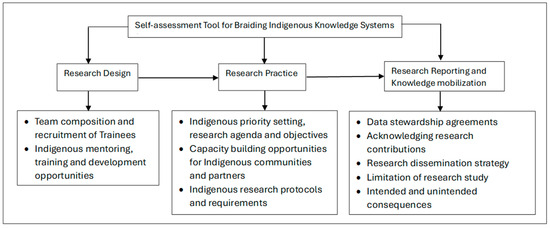
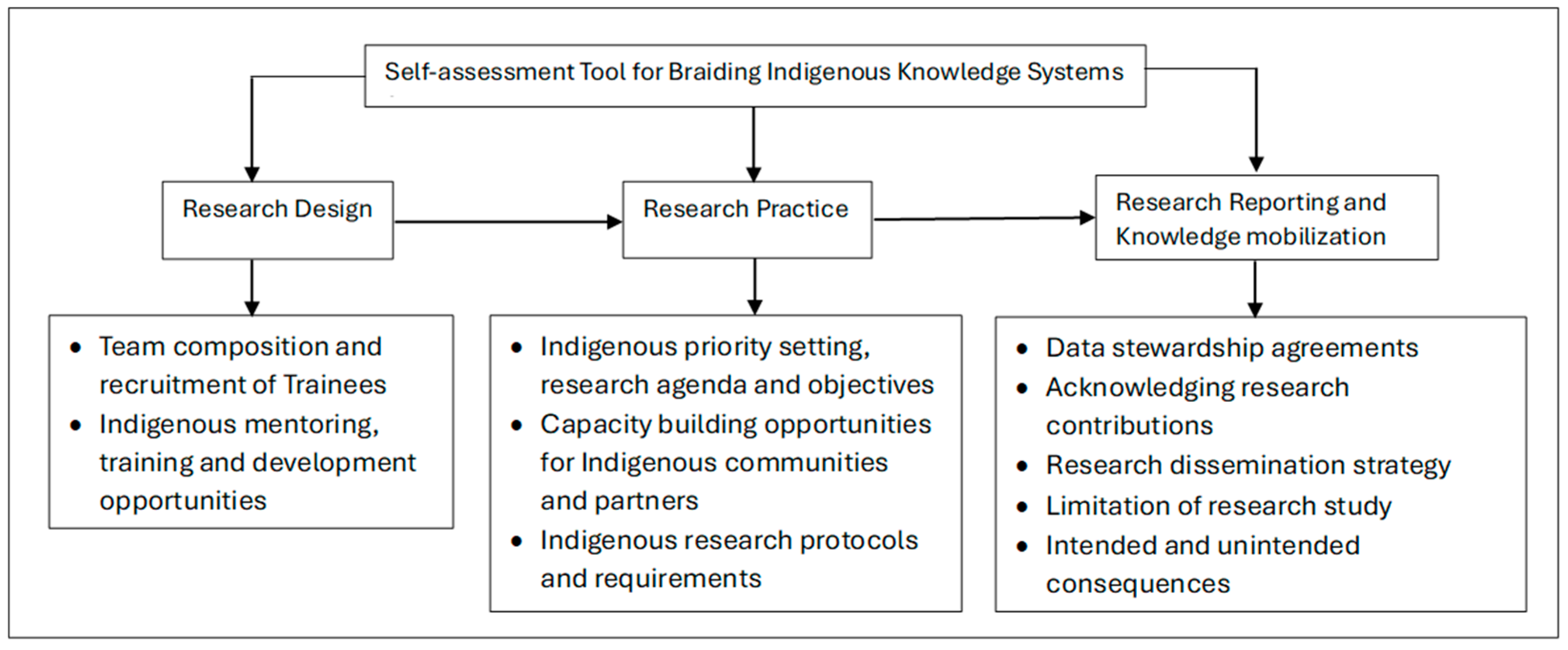
The tool considered team composition and recruitment of trainees, Indigenous mentoring, and training and development opportunities under research practice. For research design, we considered how Indigenous nations/communities, knowledge systems, and practices informed the research priorities, agenda, and objectives, opportunities for building capacity within Indigenous nations/communities, and how research complies with Indigenous protocols and research requirements. Under research reporting and knowledge mobilization, we focused on data ownership, stewardship, access, and management agreements and compliance, verification of data, acknowledgment of Indigenous contributions to the research, Indigenous involvement in communicating and disseminating research findings, limitations of a research study, identifying and addressing intended and unintended consequences of research on Indigenous partners and nations/and obtaining feedback to improve the research (Figure 1). The ISSAT for IKS is intended for scientists, science program directors, and managers working on Indigenous priorities with Indigenous peoples and partners or on Indigenous territories.
Figure 1.
Structure of the ISSAT for IKS.
The draft tool was presented to the Inclusive Science Cross-Sectoral Working Group. During several working sessions and engagements, the working group provided substantial input, which refined the draft questionnaire substantially. For instance, the working group recommended expanding some categories and options provided for specific questions, streamlining some questions to eliminate overlaps, reducing ambiguity in how some of the questions are asked, and assessing the appropriateness of asking self-identifying questions.
After an iterative process of receiving and addressing feedback from the Working Group, we sought direct input from Nòkwewashk, who recommended using Indigenous-appropriate language in phrasing the questions, adding more questions to fully capture issues unique to Indigenous peoples, such as data sovereignty and collaborative agreements, and assessing the length of the tool to reduce the time burden on respondents.
Following this, we engaged the NRCan’s Communications Portfolio Sector (CPS) team to help program the ISSAT for IKS and make it available online. During our several interactions with the CPS team, we introduced screening questions to ensure that the tool was accessed and used by scientists, those with oversight of research teams and laboratory groups, and those responsible for scientific research. We also refined the structure of some questions to make the tool more compatible with the SurveyMonkey platform that was to be used. We split some questions to avoid double-barreled questions and ensured confidentiality and anonymity in the questionnaire. In addition, through consultation with individuals in academia with expert knowledge on developing healthcare assessments used in over 35 countries, we refined the ISSAT for IKS to ensure that, in the absence of data, we used expert consensus, best practices, the literature, and other techniques to develop the predictive aspect of the tool, which we call ‘The Feedback.’ Additionally, we obtained input from the AccessAbility Network co-chair at NRCan, who made substantive recommendations such as changing the font size of the text, defining some key terms used, expanding the scope of the tool’s target population, and rephrasing some questions.
Following these stakeholder consultations, the ISSAT for IKS was presented to different NRCan management groups to solicit their input, obtain their support, and promote the use of the tool in the department. While doing this, we involved representatives from Human Resources (HR), Access to Information and Privacy (ATIP), Legal and Science Integrity Policy, and Value & Ethics to ensure that the ISSAT for IKS does not ignore or violate scientific integrity and privacy regulations. This was done to ensure the tool has content validity and internal consistency. The drafting of the questionnaire and stakeholder engagement and consultation process happened over 1 year, from October 2023 to November 2024.
2.3. Development of Feedback Logic and Report
In addition to self-reflecting on their research activities through a relational research ethics lens, the ISSAT for IKS was developed to provide feedback tailored to the needs of scientists, science program managers, and directors. Unlike mandatory administrative approaches that achieve superficial uptake and forced compliance, this self-reflective process, coupled with the constructive feedback report, promotes ownership of and personal commitment to inclusive science initiatives among scientists and drives improved productivity and performance.
The Feedback, which is generated based on responses to questions in the tool, recognizes the inclusive science efforts and initiatives of users, and provides them with links and guides to available resources in the form of online training modules, curricula, and useful links and contact information that can support them in their effort to make their research design, practice, and reporting inclusive.
The Feedback report was developed through an extensive examination of the literature to establish recommended best practices and guidelines, a review of NRCan’s available resources to guide inclusive research practices within the department, and consultation with academia and Indigenous experts (an Indigenous person with expertise related to the project). Through expert consultations, we refined the language in the Feedback document and provided more resources to help our target population in their inclusive science journey. See Appendix D for an example of a typical Feedback to a question.
2.4. Validation and Knowledge Sharing Sessions of the ISSAT for IKS
The ISSAT was tested among working group members, science program managers, and policy analysts to ensure that it is consistent with Indigenous Knowledge considerations, is functional, is structured and logically ordered, and can be completed within a reasonable amount of time. The test was done between 4 April 2024 and 10 July 2024.
Over 6 months, we organized several knowledge-sharing sessions with scientists, science program managers and directors, and NRCan sector staff to socialize the ISSAT for IKS. In all, about 600 individuals participated in these information-sharing sessions. The ISSAT for IKS was successfully launched by the NRCan Deputy Minister (DM) and Assistant Deputy Ministers (ADMs) on 9 December 2024.
3. Results and Discussion
The ISSAT for IKS focuses on the three broad categories of scientific research: research design, research practice, and reporting and knowledge mobilization.
3.1. Weaving Indigenous Knowledge Systems in Research Design (RD)
Under the research design category, the tool identified these focal areas: team composition, recruitment of trainees and research work environment, and Indigenous mentoring, training, and development opportunities.
Under team composition, recruitment of trainees, and research work environment, the ISSAT for IKS enquires about Indigenous representation (people or partners) on internal or external research teams. Within the tool, the internal research team is defined as the core research team employed within an organization. These could include the principal or co-investigator, as well as those employed to support the research activities, such as research assistants, postdoctoral fellows, and technicians. The external research team consists of members outside the key institution, such as collaborators or partners, who are actively involved in the design of the research work.
As proposed by ISSAT, Indigenous representation on research teams must not be a checkbox exercise or a tokenistic gesture but must be genuine. The Government of Canada recommends that representation within the public service reflect workforce availability, which estimates “the level of each designated group’s (women, Indigenous peoples, persons with disabilities, members of visible minorities) representation (that would characterize today’s public service workforce) in the absence of historical employment equity barriers (Blackett 2023; Treasury Board of Canada Secretariat 2024).
According to the 2016 census, Indigenous Peoples constitute 3.8% of the workforce availability (Treasury Board of Canada Secretariat 2024). While workforce availability provides a standardized way to determine representation levels, it lacks consideration of historical discrimination, inequalities, and exclusion, and it also neglects the key component of Canada’s foundation- treaties and the nation-to-nation relationship-which impact who is available in the workforce and at what levels. Indigenous Peoples in Canada have faced years of discrimination, systemic racism, and exclusion through the residential school system and acts of colonization and assimilation (MacDonald and Steenbeek 2015). Years of generational trauma, allocation of positions that could benefit from an Indigenous person in the role often given to a non-Indigenous person, and efforts to assert self-determination (Government of Canada 2024b; O’Neill et al. 2018) limit their qualifications and participation in the workforce.
The ISSAT for IKS explores various strategies and barriers to Indigenous representation on internal and external teams. Setting specific goals for weaving Indigenous knowledge systems (IKS) into research projects and using inclusive job advertisement approaches, such as engaging Indigenous recruiting agencies and Indigenous liaison officers, implementing preferential hiring of Indigenous applicants in pools of qualified applicants, and posting job opportunities on platforms with high traffic of Indigenous Peoples, is known to increase representation (Locke and Latham 2015; Ogbeiwi 2021).
Nonetheless, among other factors, limited cross-cultural competence, researcher assumptions and biases, tight project timelines, and the lack of established networks among Indigenous partners continue to hinder meaningful engagement with Indigenous peoples. There is therefore a need to establish clear research objectives, encourage open communication, allow flexibility in research design and implementation, and provide formal and informal training opportunities for all team members.
Irrespective of whether a research focus is outside the priorities or territories of Indigenous peoples, the ISSAT encourages Indigenous involvement and feedback, as Indigenous Peoples have significant knowledge and experience to bring to research (Government of Canada 2017). The Feedback proposes that using targeted recruitment strategies, such as established Indigenous inventories and platforms, and drawing on existing relationships and connections, is a good way to start building one’s networks to actively engage Indigenous partners.
Research has established that individuals from equity-deserving groups often find themselves in temporary positions, are paid less than their colleagues, and experience significant job insecurity and precarity (Marshall and Kumar 2023). In line with job insecurity and earning disparities, the ISSAT for IKS recognizes issues of decision-making within research teams. Often, casual and temporary employees or team members serving in support roles, such as students and technicians, have little to no decision-making authority. Thus, if Indigenous peoples and partners are concentrated within these roles, their ability to make choices, reach conclusions, and shape how the research is conducted is limited.
By providing opportunities for all team members to co-develop research and funding applications, contribute to decisions regarding the functioning of the research team, occupy decision-making roles, and constantly seek guidance from elders in residence to enrich existing engagements, Indigenous involvement in decision-making can be promoted. For example, in Clyde River, Nunavut, Inuit knowledge holders collaborated with researchers to define research questions, methodologies, and interpretations related to changing wind patterns, ensuring that the research reflected community priorities and knowledge systems (Gearheard et al. 2010). The ISSAT for IKS queries the process for compensation or funding, as compensation is a key consideration in research involving Indigenous partners. The Tri-Council Agency of Canada notes that Indigenous peoples, knowledge systems, and practices have been exploited for research purposes, resulting in no direct benefit but rather harm to them (Tri-Council Agency of Canada 2022). They recommend that projects/research involving Indigenous partners establish a funding arrangement that fairly compensates Indigenous peoples for their time and contribution.
Under Indigenous mentoring, training, and development opportunities, the ISSAT for IKS explores issues regarding members of a research team who have access to available mental health resources and capacity-building resources related to Indigenous issues, how team leads ensure equitable access to capacity-building opportunities, particularly for Indigenous team members, and the measures adopted to ensure personal assumptions and biases in the team do not impact how the research is conducted and its outcomes. According to Locke et al. (2023) and Povey et al. (2022), Indigenous peoples in research and academia are often underfunded, overworked, and lack career support, opportunities for advancement, and mentorship.
The ISSAT for IKS seeks to promote a collaborative approach for researchers and scientists to promote equitable access to development opportunities and mental health resources by enhancing communication about available opportunities. This includes establishing clear guidelines for accessing opportunities and developing a training plan to build capacity for Indigenous trainees, enabling them to write research papers, build networks, and advance their careers.
Constantly evaluating research approaches using quantitative and qualitative methods can help researchers adapt their resources and efforts to areas that enhance inclusive science and mutually beneficial relationships with Indigenous partners.
3.2. Weaving Indigenous Knowledge Systems in Research Practice (RP)
Involving Indigenous partners from the very onset of research planning and implementation ensures that harmful research practices that exploit Indigenous peoples, their knowledge systems, and worldviews, and lead to policy decisions that disadvantage them, are avoided (Perrault et al. 2025). The ISSAT for IKS explores ongoing research practices around Indigenous engagement and encourages researchers, scientists, and science program managers and directors to identify and apply Indigenous methodologies, perspectives, and data, and actively involve Indigenous Peoples, particularly when the research is on Indigenous priorities or being conducted in Indigenous territories.
This can ensure that Indigenous community outcomes are achieved and that Indigenous self-determination, leadership, and research capacity are strengthened (Natural Sciences and Engineering Research Council of Canada (NSERC) n.d.; Social Sciences and Humanities Research Council (SSHRC) n.d.; University of British Columbia (UBC) n.d.).
The Canadian Institute of Health Research (CIHR) and the Tri-Council recommend that Indigenous peoples, partners, and nations/communities be active decision-makers in determining what aspects of their lives are investigated, how and by whom their data is used, managed, and made available to the public (CIHR 2013; Tri-Council Agency of Canada 2022). Their involvement at every stage of a research design, such as identifying the research focus and questions, theories, perspectives, and methods to gather and analyze data, including validating and reporting the research findings, can minimize the repetition of historical patterns of exploitation and marginalization of Indigenous knowledge systems (Battiste 2002; Fuentes 2017; Gwynne et al. 2023; Love and Hall 2020; Antwi et al. 2026). Genomics research has long been used to collect and appropriate Indigenous biological data (Gwynne et al. 2023), while pharmaceutical companies and multinationals use Indigenous knowledge for commercial benefit without adequate compensation or recognition (Battiste 2002; Battiste, 2013).
Given this history of exploitation, the ISSAT recommends adopting comprehensive engagement strategies that ensure Indigenous nations, communities, or peoples are involved at every stage of the research, benefit from, and have control over research processes. Some strategies to encourage Indigenous involvement include workshop engagement sessions, direct communication, consultation with Indigenous partners, engagement with existing institutional Indigenous networks, establishment of an Indigenous advisory committee, collaboration with colleagues with experience working with Indigenous peoples, and participation in Indigenous events, ceremonies, and activities. These approaches, when applied appropriately and actively, have been proven to effectively contribute to Indigenous sovereignty, self-determination, and empowerment (see Beveridge et al. 2021).
Understanding the barriers to not involving Indigenous nations/communities is the first step in developing targeted engagement strategies. Consequently, the ISSAT asked researchers, scientists, science managers, and directors why their research activities do not engage Indigenous partners, methodologies, data, or perspectives. Barriers identified include:
- Research does not intersect with Indigenous priorities, or that is conducted on land perceived as non-Indigenous traditional territory.
- Ongoing project that did not initially involve Indigenous partners and perspectives.
- Large-scale analyses with no direct linkages to Indigenous individuals or nations/communities.
- Project’s timeline did not allow for the inclusion of Indigenous partners.
- Computer modeling with limited or no opportunities for meaningful engagement with Indigenous nations/communities.
- Engagement challenges with Indigenous nations/communities due to issues beyond the department’s control (e.g., COVID-19 restrictions).
- Insufficient support to engage with Indigenous nations/communities and knowledge systems (e.g., travel caps, limited travel capacity, and lack of participatory funding).
- Constraints arising from ongoing treaty negotiations or other legal issues.
Research that does not address Indigenous priorities or involve Indigenous partners from the outset, and whose terms and conditions for participation are not culturally appropriate, cannot attract meaningful engagement and contributions from Indigenous Peoples and partners, even though this may be an unconscious bias. The categorization of land as non-Indigenous in Canada demonstrates a lack of understanding of Indigenous rights and territories. As identified in the ISSAT, researchers with little to no experience working with Indigenous peoples and nations/communities, and those lacking the knowledge and skills to respectfully engage Indigenous partners, must endeavor to undertake relevant Indigenous Knowledge, cultural competency, and data management trainings, information sessions on Indigenous history, and involve Indigenous Champions and networks in their institutions to review their research activities and provide guidance on including Indigenous perspectives.
Additionally, the ISSAT advances that researchers must be aware of and adhere to established protocols and ethical guidelines when engaging with Indigenous nations/communities. These protocols and guidelines are often found in research collaboration agreements, which may require researchers to obtain research licenses to work with Indigenous peoples and partners. This ensures that research duly acknowledges and respects the languages, cultures, knowledge systems, perspectives, and standards Indigenous peoples and partners use to communicate knowledge.
Building upon the foundational understanding of ethical protocols, it is equally crucial to maintain a mutually respectful and ethical relationship with Indigenous peoples. The ISSAT for IKS identifies whether and how research projects maintain relationships with their Indigenous partners and the approaches established to effectively resolve disputes. Dispute resolution processes must be objective, unbiased, and must be clearly and effectively communicated to all research partners (Government of Canada 2021). How often a research project engages with Indigenous partners depends on the working relationship and existing engagement arrangements. However, for any relationship to last, trust must be fostered through constant communication, respect, openness, and accountability (Nikolakis and Nelson 2019; Jackson 2019).
In addition to building and sustaining relationships with Indigenous peoples, research project managers are encouraged to also build their Indigenous employees’ or partners’ capacity by offering opportunities for training related to the research activities, travel opportunities to conferences to present their work, and ensuring they establish networks with researchers doing similar or related research. Such opportunities identified in the ISSAT for IKS include co-authorship in reports and peer-reviewed papers, youth mentorship, and training on:
- Data collection techniques
- Fieldwork and sample collection
- Knowledge mobilization and research reporting techniques
- Project management.
3.3. Weaving Indigenous Knowledge Systems in Research Reporting and Knowledge Mobilization
Every research project will benefit from considering how Indigenous data is collected, handled, and managed. This is because, if not handled well, Indigenous data can be and has been used for the wrong purpose. Canada’s Truth and Reconciliation Commission found that Canada has a history of appropriating Indigenous information from Indigenous nations/communities instead of using the information to uplift and support Indigenous nations/communities (Laboucan 2024). Other researchers have documented a dark history of misinformation and inhumane research on Indigenous peoples, including nutrition experiments on Indigenous children in residential schools, skin grafting experiments on Inuit people, and the sterilization of Indigenous women (Stote 2015; Mosby 2013; Emberley 2008). This is why Indigenous data stewardship agreements have become mandatory for research on Indigenous territories, and that involves Indigenous priorities. The OCAP principle, Inuit Nunangat Policy, and Metis document on Ownership, Control, Access, and Stewardship are available to guide research projects.
The ISSAT for IKS acknowledges the importance of establishing and complying with data stewardship agreements and intellectual property protocols with Indigenous partners (see Williamson et al. 2023). It further assesses whether a knowledge-sharing agreement and data management strategy exist between research projects and Indigenous partners and if the research project has received consent to use or publish pre-existing or newly collected Indigenous data. By encouraging open communication on data sovereignty, intellectual property ownership, and compliance with research agreements and protocols in the feedback report, the ISSAT ensures that researchers are mindful of and equipped to implement well-designed projects that promote transparency and accountability and support mutually beneficial relationships with Indigenous partners. This shifts the inherent power imbalance characteristic of research involving equity-deserving groups.
After verifying the collected data and the research findings, respondents are asked whether they provided opportunities for their Indigenous partners to verify the data and, if not, to provide reasons. CIHR notes that research involving Indigenous Peoples is “susceptible to misinterpretation or misrepresentation when information about the group is analyzed without sufficient consideration of other cultural characteristics that make the group distinct” (CIHR 2013). Verifying the data and research findings enables Indigenous partners to ensure that errors, misrepresentations, and misinterpretations are corrected before wider dissemination and that confidential cultural information is not divulged to the public.
Research activities will have little impact if the findings are not effectively communicated to the appropriate audience and do not inform policy and programs. To promote Indigenous interests and sovereignty and enhance accountability, co-operation, and knowledge sharing, researchers, scientists, science program managers, and directors, in consultation with their Indigenous partners, must explore appropriate mediums for sharing and acting on research findings (Tri-Council Agency of Canada 2022).
All research projects have limitations and may have unintended positive and negative impacts that could potentially affect the research outcome. It is imperative that these limitations and unintended consequences be transparent to the research team and communicated to the research audience. Limitations can manifest at different research points, such as sample size determination and data collection, and through different mediums, such as biases, the researchers’ positionality, and time constraints. Ross and Zaidi (2019) argue that study limitations and unintended consequences can be meaningfully presented by describing them and their implications for the study, while recommending alternative approaches and steps to reduce the limitations and negative consequences and enhance the positive unintended outcomes. This ensures that research findings are placed within their proper context and advance accurate interpretation and application to policy and practice. The tool recognizes these and asks respondents to effectively communicate the limitations of their research through appropriate mediums, as this has implications for how the analysis is used in decision-making and policymaking. It also recommends that negative unintended consequences can be reduced by working with affected Indigenous partners and relevant stakeholders to identify solutions, implement alternative strategies to address unintended outcomes, and provide recommendations for identifying and addressing them.
4. Evaluation of the ISSAT and Proposed Future Improvements
After the development and implementation of the ISSAT, the study conducted a user feedback analysis to measure the importance of the ISSAT in fostering inclusive science. An information session among scientists and science employees, policy makers including Indigenous and non-Indigenous users who work in the government but were not part of the design of the tool was organized. Participants who attended the ISSAT information session were positive and highlighted both the perceived value of the tool and opportunities to strengthen future engagement activities.
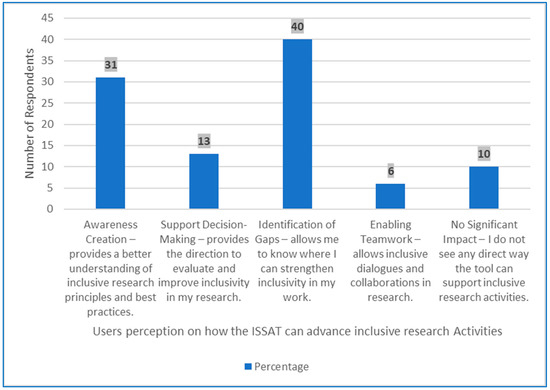
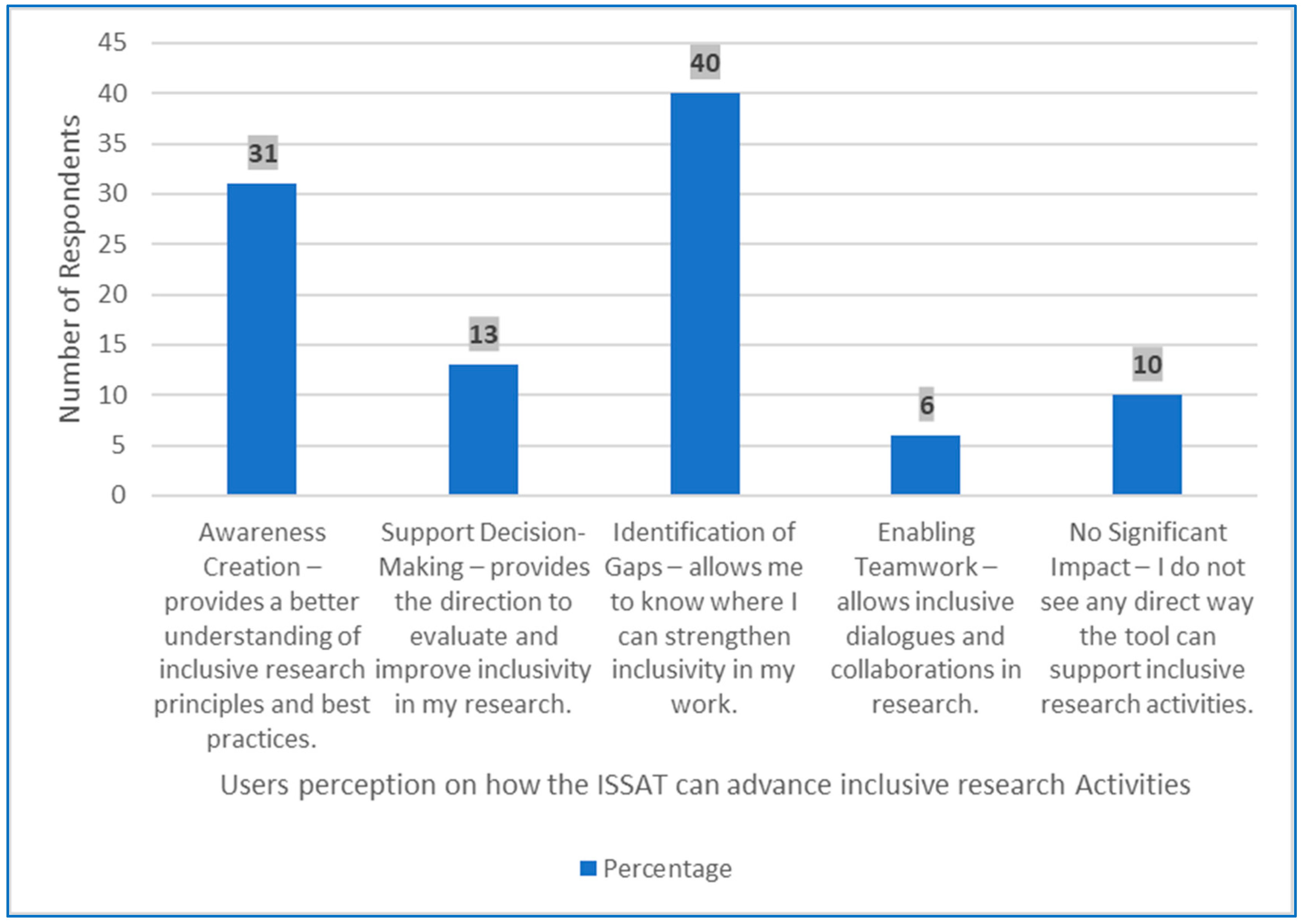
Analysis of the evaluation responses revealed that respondents perceive the ISSAT primarily as a tool for identifying inclusivity gaps (40 respondents, see Figure 2).
Figure 2.
Showing responses from a user-feedback survey on the use of the ISSAT.
According to the respondents, the tool provided an avenue to identify gaps and areas for improvement in their work. This was one of the objectives for developing the tool: a self-reflective model for scientists and science employees. 31 respondents also indicated that the ISSAT helped increase their awareness of inclusive science principles and best practices. Fewer participants highlighted support for decision-making (13 respondents) and teamwork (6 respondents). As expected, the tool’s usefulness in supporting teamwork and decision-making requires interpreting the results for policymaking and dissemination among senior leaders. Only 10 respondents reported no significant impact, suggesting generally strong confidence in the ISSAT’s potential to advance inclusive research activities.
To support the continuous improvement of the ISSAT, the evaluation study further asked participants to identify areas for improvement while using the tool. The most frequently identified area for improvement was the need for more explicit instructions on how to use the tool effectively, accounting for 46% of all responses. Since then, additional information has been provided on the ISSAT in response to this feedback.
A second set of recommendations focused on increasing user support and practical engagement opportunities. Additional hands-on sessions incorporating interactive activities and case examples were suggested by 15% of respondents. In comparison, another 15% recommended including user support mechanisms, such as video tutorials, guidance materials, or other forms of ongoing assistance. Furthermore, 11% of participants recommended providing extended hands-on sessions, including follow-up workshops or more in-depth discussions of specific sections of the ISSAT. Finally, 13% of respondents reported being satisfied with the information session and indicated no recommendations for improvement, reflecting a generally positive reception of both ISSAT and the accompanying engagement approach. Multiple information sessions have been organized, and a video tutorial has been developed to support participants in navigating and applying the ISSAT in their research and organizational contexts.
Overall, the feedback demonstrates strong interest in and support for the ISSAT, while also identifying areas that could enhance its implementation and uptake.
5. Limitations of the Study
There were a few limitations regarding the study. Some of the authors were involved in the development and implementation of ISSAT. Though this may have the potential to limit complete analytical independence and introduce positive bias in its value and application, the team actively engaged other co-authors who were not part of the development, as well as science policy experts across the Government of Canada, to offer a critical review to mitigate the loss of analytical independence and biased interpretation of its application.
The tool is subject to the limitations of self-reported approaches, e.g., normative responses, variability in criterion interpretation, and participant engagement levels. The team ensured consistency in the application of assessment criteria and recommends knowledge-sharing and capacity-building sessions for respondents to ensure that assessment outcomes reflect actual organizational practices.
The tool supports self-reflection, learning, and steady improvement in weaving Indigenous knowledge with science. Notwithstanding, completing the assessment alone does not guarantee accountability or institutional cultural shift. To achieve measurable change in policy and organizational culture, we recommend periodic assessments to allow organizations to set goals, measure progress, and ensure consequential accountability in weaving Indigenous knowledge systems into research design, research practice, and knowledge mobilization/reporting.
6. Conclusions
Maintaining a respectful and mutually beneficial relationship with Indigenous Peoples cannot be attained without carefully considering research activities and practices. Indigenous engagement and collaboration are key at the onset of every sustainable project conducted on Indigenous priorities or within Indigenous territories. Additionally, weaving Indigenous knowledge systems with Western ways of knowing ensures they are respected and guarantees better research outcomes for all.
Scientific research over the years has excluded other ways of knowing, often arguing that they cannot be verified, replicated, or trusted. Calls to ensure that diverse knowledge systems are accounted for in the knowledge produced and applied have led to recognition that the scientific ecosystem needs relevant tools and techniques. This is to avoid replicating the mistakes of overgeneralization and overlooking the distinctiveness of Indigenous knowledge systems, the detachment of Indigenous knowledge systems from their cultural and place-based contexts, selective engagement with Indigenous peoples and knowledge systems based on Western science expectations and assumptions, or the tokenistic involvement of Indigenous peoples and their ways of knowing.
Attempts have been made to address the gap in tools and techniques. However, these attempts are often limited to the healthcare sector, where a plethora of toolkits, assessment tools, cultural awareness, and safety scales and models exist. While these resources bridge a critical gap in knowledge and practice, they are limited in their application and do not guide weaving Indigenous engagement and knowledge systems throughout the research design, practice, and reporting processes.
The NRCan Inclusive Science Research Study builds on the government’s commitment to advance reconciliation with Indigenous peoples and to address systemic issues of exclusion and marginalization. Additionally, it responds to the need for tools and resources, among other initiatives, to practically weave Indigenous knowledge systems within the Western scientific enterprise through a supportive solution based on self-reflection and feedback rather than solely mandatory training, as this is more likely to succeed in our corporate environment. The study developed the ISSAT for IKS through extensive evidence synthesis and stakeholder engagements to fill this need. The tool presented in this paper is unique in that it provides researchers, scientists, science program managers, and directors with a comprehensive set of questions that allows them to pause and reflect on their research activities using an inclusive and relational research ethics lens. This enables users to identify gaps in their knowledge and capacity and obtain the institutional support needed to weave Indigenous knowledge systems effectively. It also provides users with new insights, resources, and training relevant to their inclusive science journey while allowing them to measure and report on their progress. Institutions can also identify areas of need and prioritize limited resources to optimize outcomes towards their goals of anti-racism, equity, diversity, and accessibility while supporting cultural change.
Author Contributions
E.K.A., P.T.Y., J.B.-D., M.B. and T.W. conceptualized the idea for the study. E.K.A., P.T.Y., J.B.-D., M.B., T.W., J.-J.B., C.M. (Curtis Mckinney), A.M., S.L., P.R., K.J., N.D., A.K. and B.B. provided input into the drafting of the self-assessment tool and feedback report. E.K.A., P.T.Y., A.N.D., D.Y., D.C., S.B., K.Z. and C.M. (Crenda Marfo) produced the first draft of the article. All authors have read and agreed to the published version of the manuscript.
Funding
This research was funded by the Canadian Forest Service of Natural Resources Canada. The APC was funded by the Canadian Forest Service of Natural Resources Canada.
Institutional Review Board Statement
The study was conducted in accordance with NRCan’s ethical standards for research involving humans, and the data collected was confidential and used solely for research purposes. Personal identifiers were anonymized to ensure survey participants’ privacy. The study’s design ensured that no physical, emotional, or psychological harm was caused to participants at any stage of the research. The study was approved by the Office of the Chief Scientist, Natural Resources Canada (27 November 2023).
Informed Consent Statement
Informed consent was sought from all participants in accordance with Natural Resources Canada (NRCan) ethical standards.
Data Availability Statement
All data generated or analyzed during this study are included in this published article.
Acknowledgments
We dedicate this work to Michael Vandergriftt (NRCan), Jeff Labonté (NRCan), and Glenn Hargrove (NRCan-CFS). Their support for the Inclusive Science Research Study (ISRS), through hosting the inaugural Deputy Minister Inclusive Science Panel Discussion and launching the Inclusive Science Self-assessment Tool (ISSAT), has been instrumental in promoting inclusivity within NRCan, across federal science-based departments and agencies, and the broader Canadian scientific community. We also want to express our profound gratitude to Kimberly Lavoie (NRCan-Nòkwewashk), Lorraine McKenzie-Presley (NRCan-Communication Portfolio Sector), Ranjana Sharma (NRCan-Office of the Chief Scientist), Tracey Cooke (NRCan-CFS), Katalijn MacAfee (NRCan-CFS), Brenda Dogbe (Privy Council Office), Sharon Vien (NRCan-O-IDEA) and Michelle Seymor (NRCan-O-IDEA) and all NRCan sector ADMs for their valuable input in the ISRS. Trudy Samuel (CIHR) and Danny Galarneau (NRCan-CFS) helped conceptualize and support the implementation of the ISRS and ISSAT. Rob Thorpe, James Montgomery, Karl St-Pierre, and Malak Seoudi helped program the ISSAT on SurveyMonkey. The following NRCan groups and individuals contributed to different aspects of the ISSAT: the NRCan Cross-sectoral Inclusive Science Working Group, NRCan sector executives, scientists, science program managers, directors, Erica Kaneza, Marcela Popowich, Sam Alpay, Aileen Duncan, and Kasia Tolwinski.
Conflicts of Interest
The authors declare that the research was conducted without competing commercial, financial, or personal relationships that could be construed as potential conflicts of interest and influence the work reported in this paper.
Abbreviations
The following abbreviations are used in this manuscript:
| ATIP | Access to Information and Privacy |
| CFS | Canadian Forest Service |
| CIHR | Canadian Institute for Health Research |
| CPS | Communications Portfolio Sector |
| DG | Director General |
| EETS | Energy Efficiency and Technology Sector |
| GBA plus | Gender-based Analysis Plus |
| HR | Human Resources |
| IK | Indigenous Knowledge’s |
| IKS | Indigenous Knowledge Systems |
| IS | Inclusive Science |
| ISRS | Inclusive Science Research Study |
| ISSAT | Inclusive Science Self-assessment Tool |
| Nòkwewashk | NRCan Indigenous Affairs sector |
| NRCan | Natural Resources Canada |
| NSERC | Natural Sciences and Engineering Research Council of Canada |
| OCAP® | ownership, control, access, and possession |
| OCS | Office of the Chief Scientist |
| O-IDEA | Office of Inclusion, Diversity, Equity, and Accessibility |
| PRISMA | Preferred Reporting Items for Systematic Reviews and Meta-Analysis |
| RD | Research Design |
| REAP | Reciprocity, Externalities, Access, and Partnership |
| SSHRC | Social Sciences and Humanities Research Council |
| TCPS | Tri-Council Policy Statement |
Appendix A
Table A1.
Themes generated and sample quotes from responses of scientists.
Appendix B
Table A2.
Examples of research-specific Indigenous issues and recommended strategies identified through scoping literature review.
Appendix C
Engagement Survey Questions for the 2023 CSPC Inclusive Science Special Session.
- How familiar are you with the concept of “inclusive science”?
- Very familiar
- Somewhat familiar
- Neutral
- Somewhat unfamiliar
- Very unfamiliar
- Have you experienced or encountered any barriers to inclusivity in science within your professional environment?
- Yes
- No
- In your opinion, how well is the scientific community currently promoting inclusivity into its practices and paradigms?
- Excellent
- Good
- Fair
- Poor
- Very Poor
- Are you currently involved either directly or indirectly in any initiative to promote inclusive science in your organization or work?
- Yes, I am directly involved.
- Yes, I am indirectly involved.
- No, not involved in any initiative directly or indirectly.
- Please select from the following benefits of inclusive science the one that is of most importance to you.
- Diverse perspectives leading to innovative solutions.
- Greater public trust in scientific outcomes
- Enhanced interdisciplinary collaboration.
- More comprehensive research results
- More diverse workforce
- Who has the greatest burden to effectively promote inclusive science?
- Individual researchers
- Policy makers including executive senior management.
- Academic institutions
- Government policy
- Funding organizations
- Which strategy do you believe is most essential for advancing inclusivity in science?
- Curriculum reform in educational institutions.
- Policy changes at institutional and government levels.
- Grassroots initiatives and community engagements.
- More funding and grants targeting underrepresented groups.
- Mentorship and training programs focused on inclusivity.
- More purposeful hiring of scientists from underrepresented groups.
- Building the capacity of scientists and science employees.
- Support and amplify underrepresented voices.
- Envision the scientific community in 2030. What is the most important thing you hope to see in terms of inclusivity, innovation, and sustainability?
- A diverse scientific community where everyone is involved in setting research agendas.
- A diversity of perspectives leading to innovative solutions.
- Recognition and appreciation of the efforts of everyone involved in the scientific enterprise.
- Enhanced interdisciplinary collaboration leading to greater public trust in scientific outcomes.
- A fair allocation of resources and scientific opportunities to promote the work of scientists of diverse backgrounds.
Appendix D
Table A3.
Example of feedback respondents received based on their responses to questions in the self-assessment tool.
References
- Antwi, Effah Kwabena, John Boakye-Danquah, Denyse Donna Mary Nadon, Maurice Joseph Kistabish, Tanya Matthews, Akua Nyamekye Darko, Priscilla Toloo Yohuno, and Felicitas Egunyu. 2025. Socioeconomic framework and indicators for assessing cumulative effects of resource development on indigenous nations. The Extractive Industries and Society 24: 101735. [Google Scholar] [CrossRef] [Scilit]
- Antwi, Effah Kwabena, Robert S. Rempel, Matthew Carlson, Akua Nyamekye Darko, and Priscilla Toloo Yohuno. 2026. An assessment of mitigation strategies for maintaining a balanced moose-wolf-caribou system in Ontario’s ring of fire region. Frontiers in Forests and Global Change 9: 1774480. [Google Scholar] [CrossRef] [Scilit]
- ARCUS. 2022. ARCUS Interdisciplinary Research Committee Report: Understanding and Overcoming Collaborative Arctic Research Challenges. Available online: https://www.arcus.org/publications/33258 (accessed on 21 March 2023).
- Bartlett, Cheryl, Murdena Marshall, and Albert Marshall. 2012. Two-Eyed Seeing and Other Lessons Learned within a Co-Learning Journey of Bringing Together Indigenous and Main/-*-*stream Knowledges and Ways of Knowing. Journal of Environmental Studies and Sciences 2: 331–40. [Google Scholar] [CrossRef] [Scilit]
- Battiste, Marie. 2002. Indigenous Knowledge and Pedagogy in First Nations Education: A Literature Review with Recommendations. San Francisco: Academia.edu. [Google Scholar]
- Battiste, Marie. 2013. Decolonizing Education: Nourishing the Learning Spirit. Saskatoon, SK: Purich Publishing. [Google Scholar]
- Beveridge, Rachelle, Megan F. Moody, Bernie Pauly, Grant Murray, and Chris T. Darimont. 2021. Applying Community-Based and Indigenous Research Methodologies: Lessons Learned from the Nuxalk Sputc Project. Ecology & Society 26: 21. [Google Scholar] [CrossRef] [Scilit]
- Blackett, Adelle. 2023. A Transformative Framework to Achieve and Sustain Employment Equity. Available online: https://www.canada.ca/content/dam/esdc-edsc/documents/corporate/portfolio/labour/programs/employment-equity/reports/act-review-task-force/EEA-Review-Task-Force-Report-2023-v2.pdf (accessed on 4 May 2023).
- Canadian Food Inspection Agency. 2024. Advancing the Inclusion and Recognition of Indigenous Science at the CFIA. Ottawa: Innovation, Science and Economic Development Canada, July 4, Available online: https://inspection.canada.ca/en/inspect-and-protect/science-and-innovation/advancing-inclusion-and-recognition-indigenous-science-cfia (accessed on 15 November 2024).
- Canadian Institutes of Health Research (CIHR). 2013. CIHR Guidelines for Health Research Involving Aboriginal People (2007–2010). Available online: https://cihr-irsc.gc.ca/e/29134.html (accessed on 5 August 2025).
- Cobian, Krystle P, Sylvia Hurtado, Ana L Romero, and Justin A Gutzwa. 2024. Enacting Inclusive Science: Culturally Responsive Higher Education Practices in Science, Technology, Engineering, Mathematics, and Medicine (STEMM). PLoS ONE 19: e0293953. [Google Scholar] [CrossRef] [Scilit] [PubMed]
- Cooper, Amanda, Joelle Rodway, and Robyn Read. 2018. Knowledge Mobilization Practices of Educational Researchers across Canada. Canadian Journal of Higher Education 48: 1–21. [Google Scholar] [CrossRef] [Scilit]
- Emberley, Julia. 2008. Skin: An Assemblage on the Wounds of Knowledge, the Scars of Truth, and the Limits of Power. ESC: English Studies in Canada 34: 1–9. [Google Scholar] [CrossRef] [Scilit]
- Environment and Climate Change Canada. 2022. Environment and Climate Change Canada’s Indigenous Science Division. Program Descriptions. Available online: https://www.canada.ca/en/environment-climate-change/services/science-technology/indigenous-science.html (accessed on 10 December 2024).
- Fuentes, Alejandro. 2017. Protection of Indigenous Peoples’ Traditional Lands and Exploitation of Natural Resources: The Inter-American Court of Human Rights’ Safeguards. International Journal on Minority and Group Rights 24: 229–53. [Google Scholar] [CrossRef] [Scilit]
- Gearheard, Shari, Matthew Pocernich, Ronald Stewart, Joelie Sanguya, and Henry P. Huntington. 2010. Linking Inuit Knowledge and Meteorological Station Observations to Understand Changing Wind Patterns at Clyde River, Nunavut. Climatic Change 100: 267–94. [Google Scholar] [CrossRef] [Scilit]
- Government of Canada. 2017. Many Voices One Mind: A Pathway to Reconciliation. Available online: https://www.canada.ca/en/government/publicservice/wellness-inclusion-diversity-public-service/diversity-inclusion-public-service/knowledge-circle/many-voices.html (accessed on 6 April 2025).
- Government of Canada. 2019. Canadian Environmental Protection Act, 1999: Annual Report to Parliament for April 2018 to March 2019. Available online: https://www.canada.ca/content/dam/eccc/documents/pdf/cepa/CEPAAnnualReport2019-eng.pdf (accessed on 16 July 2025).
- Government of Canada. 2021. Call to Action on Anti-Racism, Equity, and Inclusion in the Federal Public Service. Available online: https://www.canada.ca/en/privy-council/corporate/clerk/call-to-action-anti-racism-equity-inclusion-federal-public-service.html (accessed on 15 March 2025).
- Government of Canada. 2024a. Driving Accountability on the Forward Direction of the Call to Action on Anti-Racism, Equity, and Inclusion in the Federal Public Service-Progress Report. Available online: https://www.canada.ca/en/privy-council/corporate/about-call-action/driving-accountability-forward-direction-call-action-anti-racism-equity-inclusion-federal-public-service.html (accessed on 5 May 2025).
- Government of Canada. 2024b. Overrepresentation of Indigenous People in the Canadian Criminal Justice System: Causes and Responses. Available online: https://www.justice.gc.ca/eng/rp-pr/jr/oip-cjs/p4.html (accessed on 5 November 2024).
- Government of Canada, and Interagency Advisory Panel on Research Ethics. 2023. Tri-Council Policy Statement: Ethical Conduct for Research Involving Humans: TCPS 2 (2022), Chapter 9: Research Involving the First Nations, Inuit, and Métis Peoples of Canada, January 11. Available online: https://ethics.gc.ca/eng/tcps2-eptc2_2022_chapter9-chapitre9.html#b (accessed on 6 October 2025).
- Gwynne, Kylie, Shirley Jiang, Robertson Venema, Vita Christie, Tiffany Boughtwood, Marida Ritha, John Skinner, Nyesa Ali, Boe Rambaldini, Tom Calma, and et al. 2023. Genomics and Inclusion of Indigenous Peoples in High-Income Countries. Human Genetics 142: 1407–16. [Google Scholar] [CrossRef] [Scilit] [PubMed]
- Held, Mirjam B. E. 2023. Decolonizing Science: Undoing the Colonial and Racist Hegemony of Western Science. Journal of Multidisciplinary Evaluation 19: 88–101. [Google Scholar] [CrossRef] [Scilit]
- Henri, Dominique A., Jennifer F. Provencher, Ella Bowles, Jessica J. Taylor, Jade Steel, Carmen Chelick, Jesse N. Popp, Steven J. Cooke, Trina Rytwinski, Deborah McGregor, and et al. 2021. Weaving Indigenous Knowledge Systems and Western Sciences in Terrestrial Research, Monitoring and Management in Canada: A Protocol for a Systematic Map. Ecological Solutions and Evidence 2: e12057. [Google Scholar] [CrossRef] [Scilit]
- Hoffman, Kira M., Amy Cardinal Christianson, Sarah Dickson-Hoyle, Kelsey Copes-Gerbitz, William Nikolakis, David A. Diabo, Robin McLeod, Herman J. Michell, Abdullah Al Mamun, Alex Zahara, and et al. 2022. The Right to Burn: Barriers and Opportunities for Indigenous-Led Fire Stewardship in Canada. Facets 7: 464–81. [Google Scholar] [CrossRef] [Scilit]
- Indigenous Climate Hub. 2024. Indigenous Community-Based Climate Monitoring Program. Available online: https://indigenousclimatehub.ca/indigenous-community-based-climate-monitoring-program/ (accessed on 16 December 2025).
- Jackson, Jane. 2019. Introducing Language and Intercultural Communication. Abingdon: Routledge. [Google Scholar]
- Laboucan, A. 2024. What Is Indigenous Data Sovereignty, and Why Does It Matter? Available online: https://magazine.alumni.ubc.ca/2024/humanities/what-indigenous-data-sovereignty-and-why-does-it-matter (accessed on 3 March 2025).
- Lauter, O. 2023. Challenges in Combining Indigenous and Scientific Knowledge in the Arctic. Polar Geography 46: 62–74. [Google Scholar] [CrossRef] [Scilit]
- Locke, E. A., and G. P. Latham. 2015. Breaking the Rules: A Historical Overview of Goal-Setting Theory. In Advances in Motivation Science. Amsterdam: Elsevier, vol. 2, pp. 99–126. [Google Scholar]
- Locke, Michelle Lea, Michelle Trudgett, and Susan Page. 2023. Indigenous Early Career Researchers: Creating Pearls in the Academy. The Australian Educational Researcher 50: 237–53. [Google Scholar] [CrossRef] [Scilit] [PubMed]
- Love, Tyron R., and C. Michael Hall. 2020. Understanding Indigenous Exploitation through Performance-Based Research Funding Reviews in Colonial States. Frontiers in Research Metrics and Analytics 5: 563330. [Google Scholar] [CrossRef] [Scilit] [PubMed]
- MacDonald, C., and A. Steenbeek. 2015. The Impact of Colonization and Western Assimilation on Health and Wellbeing of Canadian Aboriginal People. International Journal of Regional and Local History 10: 32–46. [Google Scholar] [CrossRef] [Scilit]
- Marsden, Namaste, Leona Star, and Janet Smylie. 2020. Nothing about Us without Us in Writing: Aligning the Editorial Policies of the Canadian Journal of Public Health with the Inherent Rights of Indigenous Peoples. Canadian Journal of Public Health 111: 822–25. [Google Scholar] [CrossRef] [Scilit] [PubMed]
- Marshall, Tristan, and Mohan B. Kumar. 2023. Serious Problems or Disputes Experienced by First Nations People Living Off Reserve, Métis, and Inuit Living in the Provinces. Available online: https://www150.statcan.gc.ca/n1/pub/41-20-0002/412000022023003-eng.htm (accessed on 19 June 2024).
- Moher, D., A. Liberati, J. Tetzlaff, and D. G. Altman. 2009. Reprint: Preferred Reporting Items for Systematic Reviews and Meta-Analyses: The PRISMA Statement. Physical Therapy 89: 873–80. [Google Scholar] [CrossRef] [Scilit]
- Mosby, I. 2013. Administering Colonial Science: Nutrition Research and Human Biomedical Experimentation in Aboriginal Communities and Residential Schools, 1942–1952. Social History 46: 145–72. [Google Scholar] [CrossRef] [Scilit]
- Natural Resources Canada (NRCan). 2025. Natural Resources Canada’s Policy on Ethics for S&T Activities Involving Indigenous Peoples and Territories. Available online: https://natural-resources.canada.ca/natural-resources-indigenous-peoples/nrcas-draft-policy-ethics-research-involving-indigenous-peoples-territories (accessed on 14 November 2025).
- Natural Sciences and Engineering Research Council of Canada (NSERC). n.d.CCI Guide for Research Involving Indigenous Peoples and Communities. Available online: https://www.nserc-crsng.gc.ca/Colleges-Colleges/Resources-Ressources/Indigenous-Autochtones_eng.asp (accessed on 3 February 2025).
- Nikolakis, William, and Harry Nelson. 2019. Trust, Institutions, and Indigenous Self-Governance: An Exploratory Study. Governance 32: 331–47. [Google Scholar] [CrossRef] [Scilit]
- Ogbeiwi, Osahon. 2021. General Concepts of Goals and Goal-Setting in Healthcare: A Narrative Review. Journal of Management & Organization 27: 324–41. [Google Scholar] [CrossRef] [Scilit]
- O’Neill, Linda, Tina Fraser, Andrew Kitchenham, and Verna McDonald. 2018. Hidden Burdens: A Review of Intergenerational, Historical and Complex Trauma, Implications for Indigenous Families. Journal of Child & Adolescent Trauma 11: 173–86. [Google Scholar] [CrossRef] [Scilit] [PubMed]
- Perrault, Kerry, Effah Kwabena Antwi, David Young, Aaron Jones, and Stephanie Seymour. 2025. Addressing the legacy of past mining in the Garden River First Nation Community: Perspectives and pathways to improve community engagement. The Extractive Industries and Society 22: 101630. [Google Scholar] [CrossRef] [Scilit]
- Povey, Rhonda, Michelle Trudgett, Susan Page, and Stacey Kim Coates. 2022. Where We’re Going, Not Where We’ve Been: Indigenous Leadership in Canadian Higher Education. Race, Ethnicity and Education 25: 38–54. [Google Scholar] [CrossRef] [Scilit]
- Ritchie, L., and Barrie G. Dale. 2000. Self-Assessment Using the Business Excellence Model: A Study of Practice and Process. International Journal of Production Economics 66: 241–54. [Google Scholar] [CrossRef] [Scilit]
- Ross, Paula T., and N. L. Bibler Zaidi. 2019. Limited by Our Limitations. Perspectives on Medical Education 8: 261–64. [Google Scholar] [PubMed]
- Social Sciences and Humanities Research Council. 2025. Knowledge Mobilization. In Social Sciences and Humanities Research in Action. Ottawa: Social Sciences and Humanities Research Council. [Google Scholar]
- Social Sciences and Humanities Research Council. n.d.Indigenous Research. Available online: https://sshrc-crsh.canada.ca/en/about-sshrc/programs-priorities-initiatives/indigenous-research.aspx (accessed on 25 September 2025).
- Stein, Sharon, Cash Ahenakew, Will Valley, Pasang Y. Sherpa, Eva Crowson, Tabitha Robin, Wilson Mendes, and Steve Evans. 2024. Toward More Ethical Engagements between Western and Indigenous Sciences. Facets 9: 1–14. [Google Scholar] [CrossRef] [Scilit]
- Stote, Karen. 2015. An Act of Genocide: Colonialism and the Sterilization of Aboriginal Women. Winnipeg: Fernwood. [Google Scholar]
- Treasury Board of Canada Secretariat. 2024. Employment Equity in the Public Service of Canada for Fiscal Year 2018 to 2019. Available online: https://publications.gc.ca/site/archivee-archived.html?url=https%3A%2F%2Fpublications.gc.ca%2Fcollections%2Fcollection_2020%2Fsct-tbs%2FBT1-28-2019-eng.pdf (accessed on 6 October 2025).
- Tri-Council Agency of Canada. 2022. Tri-Council Policy Statement: Ethical Conduct for Research Involving Humans (TCPS 2, 2022). Available online: https://ethics.gc.ca/eng/policy-politique_tcps2-eptc2_2022.html (accessed on 9 November 2025).
- Truth and Reconciliation Commission of Canada. 2015. Honouring the Truth, Reconciling for the Future: Summary of the Final Report of the Truth and Reconciliation Commission of Canada. Ottawa: Truth and Reconciliation Commission of Canada. [Google Scholar]
- UNESCO. 2017. Local and Indigenous Knowledge Systems (LINKS) Programme. Paris: UNESCO. [Google Scholar]
- United Nations. 2007. United Nations Declaration on the Rights of Indigenous Peoples. Available online: https://www.un.org/development/desa/indigenouspeoples/wp-content/uploads/sites/19/2018/11/UNDRIP_E_web.pdf (accessed on 8 December 2024).
- University of British Columbia. n.d.Principles in Indigenous Research. Available online: https://earlylearning.ubc.ca/about/privacy-and-ethics/principles-in-indigenous-research/ (accessed on 10 November 2025).
- University of Calgary. n.d.“REAP Self-Assessment Model.” Knowledge Engagement Impact Assessment Toolkit. Available online: https://research.ucalgary.ca/engage-research/knowledge-engagement/ke-toolkit (accessed on 24 July 2024).
- Whitt, Laurelyn. 2009. Science, Colonialism, and Indigenous Peoples: The Cultural Politics of Law and Knowledge. Cambridge: Cambridge University Press. [Google Scholar]
- Williamson, Bhiamie, Sam Provost, and Cassandra Price. 2023. Operationalising Indigenous Data Sovereignty in Environmental Research and Governance. Available online: https://journals.sagepub.com/doi/full/10.1177/26349825221125496 (accessed on 5 June 2024).

Disclaimer/Publisher’s Note: The statements, opinions and data contained in all publications are solely those of the individual author(s) and contributor(s) and not of MDPI and/or the editor(s). MDPI and/or the editor(s) disclaim responsibility for any injury to people or property resulting from any ideas, methods, instructions or products referred to in the content. |
© 2026 by the authors. Licensee MDPI, Basel, Switzerland. This article is an open access article distributed under the terms and conditions of the Creative Commons Attribution (CC BY) license.