


Abstract
This experimental study examines how character type and misinformation exposure influence narrative effects on promoting COVID-19 vaccination for children on social media. A 2 (misinformation exposure: present vs. absent) × 2 (character type: positive vs. transitional) between-subjects experiment was conducted with 374 parents of children aged 5–11. Results showed that the transitional character elicited greater identification overall but had no main effect on persuasion outcomes. Its persuasive advantage was conditional. Among participants with recent misinformation exposure, the transitional character elicited more favorable vaccine attitudes. When misinformation exposure was absent, character type did not significantly influence persuasion outcomes. This conditional advantage was associated with self-persuasion and positive affect generated during narrative exposure. Theoretical implications for narrative and misinformation correction research as well as practical implications are discussed.
1. Introduction
Vaccination is among the most effective public health measures for protecting children against preventable diseases, yet parents’ willingness to vaccinate their children cannot be taken for granted (Li et al. 2021). The Centers for Disease Control and Prevention (2025) has reported declining vaccine coverage among kindergartners across all reported vaccines, along with an increasing number of exemptions in recent years. A national survey found that although most parents remained confident in long-standing vaccines such as the MMR vaccine, a sizable and growing group expressed distrust or uncertainty about vaccine safety, especially regarding the annual flu and COVID-19 vaccines (Kearney et al. 2025). The survey also documented an increase in parents delaying or skipping children’s immunization, a pattern closely associated with exposure to vaccine misinformation. Newer vaccines are particularly vulnerable to misinformation because they have a more limited track record and may rely on novel technologies that are unfamiliar to publics. The rollout of COVID-19 vaccines for young children exemplifies this challenge. When mRNA vaccines were authorized and officially recommended for children 5–11 years old in November 2021, parents faced a consequential decision about a novel vaccine amid widespread misinformation, including false claims that vaccination presented greater risks than COVID-19 infection and was unsafe for children (de Albuquerque et al. 2022). Vaccine uptake lagged well behind public health goals, and vaccine-hesitant parents proved difficult to reach with standard pro-vaccine messages (Kaufman et al. 2023). Although the acute stage of the pandemic has passed, misinformation continues to fuel parents’ concerns about childhood vaccines. Effective ways to reach vaccine-hesitant parents are still urgently needed.
Scholars have been interested in narratives as a way of combating health misinformation (Sangalang et al. 2019; Wang and Huang 2021; Zhang 2026). Defined as messages structured around story components such as plots and characters, narratives are known to elicit emotional responses and reduce resistance through storytelling (Green and Brock 2000). As misinformation exposure often biases how individuals process subsequent correction messages and fosters motivated reasoning (Ecker et al. 2014), narratives may be a powerful tool for misinformation correction as they usually evoke less critical evaluation and fewer defensive responses (Dal Cin et al. 2004). Empirical evidence of their corrective advantage, however, has been mixed and bounded by message features or placement conditions (Ecker et al. 2020; Huang and Wang 2022; Xiao et al. 2023). Identifying design strategies that enhance narrative correction therefore remains an important task.
Incorporating transitional characters into narratives presents a promising direction. Entertainment-education researchers define transitional characters as role models who initially hold negative beliefs but later convert to supporters of a recommended behavior (Singhal and Rogers 2001). Different from positive characters who have favorable attitudes toward the issue from the beginning, transitional characters may have greater potential to elicit identification and persuade because they disclose the characters’ internal views in detail (Oschatz et al. 2019), create suspense through the message structure (Bezdek and Gerrig 2017), and involve emotional tension (Nabi and Green 2015). The appeal of transitional characters may be particularly pronounced for audiences who have encountered conflicting misinformation. By voicing their doubt and then resolving it, transitional characters acknowledge the opposition presented in misinformation rather than ignoring or dismissing it (DiPaolo 2021). They also model a reasoning process that prepares hesitant audiences to generate issue-relevant, positive cognitions of their own (Huang and Green 2023).
Integrating the research streams on narrative persuasion and misinformation correction, this experimental study addresses an overarching question: whether, when, and why featuring a transitional character rather than a positive character strengthens a narrative’s capacity to combat vaccine misinformation. We pursue this question through three goals. First, we compare the persuasive effects of transitional and positive characters among parents of children aged 5–11 in the context of a campaign promoting COVID-19 vaccination for children. Second, we examine whether the advantage of transitional characters is conditional on recent misinformation exposure. Third, we identify the psychological mechanisms underlying the effects of transitional characters in misinformation correction. Together, these goals move the question beyond whether character type matters to the conditions under which it matters and the processes through which it operates.
2. Literature Review
2.1. Narratives and Misinformation Correction
During the COVID-19 pandemic, the World Health Organization (WHO) brought renewed attention to the concept of an “infodemic,” warning that the global public health response was accompanied by an overwhelming volume of information, including false and misleading claims, that posed significant challenges to public health (Jin et al. 2024). Although the term infodemic was not new, the proliferation of misinformation has been facilitated by the increasingly decentralized health information environment. Digital platforms, particularly social media, have enabled non-experts to become influential sources of health information, challenging the traditional gatekeeping role of health institutions and professionals. Anecdotal claims shared by celebrities and social media influencers may further undermine public confidence in vaccines and complicate public health communication efforts (Wang and Huang 2024). Moreover, algorithmic curation can amplify exposure to emotionally charged and attention-grabbing misinformation by shaping the information users encounter based on their prior information engagement behaviors. These dynamics may interact with users’ existing beliefs, reinforcing selective exposure and potentially contributing to polarization amid declining public trust in health institutions and science (Allington et al. 2023; McLoughlin and Brady 2024).
Narratives have been extensively studied for their potential to shape attitudes and beliefs, and to correct misinformation. By presenting story events in a temporal sequence that suggests causes and consequences, narratives can convey behavioral recommendations in a relatively implicit manner and may therefore be less likely to trigger audience resistance (Dal Cin et al. 2004). Moreover, narratives persuade through psychological processes that differ from argument-based reasoning. Rather than relying primarily on explicit evidence, narratives immerse audiences in a story world, allowing them to vicariously experience characters’ cognitions, emotions, and behaviors (Slater and Rouner 2002; Green and Brock 2000). Audiences may consequently develop identification with the characters, which refers to the imaginative response audiences generate toward a story character (J. Cohen 2001). According to J. Cohen (2001), identification is a multi-dimensional construct including an affective component, empathy with the character’s emotions, and a cognitive component, adopting the character’s perspective and understanding their goals and motives. Identification can draw audiences into the story and reduce their tendency to counterargue against its message (Ratcliff and Sun 2020). This makes narratives particularly well suited to misinformation correction, where defensive processing and negative responses to corrective messages often present major barriers to persuasion (Sangalang et al. 2019).
Another narrative advantage lies in what it offers after misinformation is challenged. Misbeliefs are rarely held as isolated facts. Instead, they are usually embedded in a coherent explanatory account, a mental model that tells audiences what happened and why it makes sense (Ecker et al. 2022). When correction messages simply label misinformation as false, they may undermine a misbelief itself but leave the underlying mental model largely intact. Without a plausible alternative to replace it, audiences may quietly fall back on the mental model again. Researchers consider this a primary cause of the continued influence of misinformation, which persists in shaping judgments even after people have been corrected (Walter and Tukachinsky 2020). Through plot and character development, a narrative can supply a competing, causally coherent explanation that is easy to understand, easy to remember, and easily activated when audiences encounter the topic again (Hamby et al. 2020). Narrative correction may thus be able to provide audiences with a better explanation to hold onto, addressing the explanatory gap that refutation alone leaves open.
Despite their potential, the evidence that narratives outperform non-narrative correction is mixed. A meta-analysis indicates that narratives are generally more effective in reducing audience resistance compared to non-narrative messages, though the effect is modest and moderated by narrative characteristics (Ratcliff and Sun 2020). Across three experiments, Ecker et al. (2020) found that whether a correction was delivered in narrative or non-narrative form had no effect on misinformation belief or inferential reasoning. A systematic review of narrative interventions against anti-vaccination misinformation reached similar conclusions (Lazić and Žeželj 2021). When narratives do help, their advantage tends to be conditional. Non-narrative corrections worked better when endorsed by social contacts, whereas narrative corrections had merit mainly when prompted by algorithms with explicit endorsement (Huang and Wang 2022). Another study found that a narrative corrective outperformed a non-narrative corrective among counter-attitudinal audiences when it included a positive, relief-eliciting ending (Lillie et al. 2024). These findings suggest that whether a narrative can better correct misinformation depends less on the narrative format itself than on specific design features. In this study, we focus on how the type of story characters influences the effectiveness of narrative correction.
2.2. Persuasive Benefits of Transitional Characters
Drawing on principles of social cognitive theory that individuals learn from observing others’ behaviors and the resulting consequences (Bandura 2001), entertainment-education researchers have suggested using transitional characters in storytelling to promote health attitudes and behavior change (Singhal and Rogers 2001). Unlike positive characters that support recommended behaviors without any reservation, transitional characters are those who initially hold ambivalent attitudes but gradually adopt socially desirable behaviors (Rajendram et al. 2021). Narratives may be more persuasive by depicting how transitional characters make changes and convert to a healthier path (Huang and Green 2023). DiPaolo (2021) echoed this idea with the term converts and argued that converts may be better advocates for changing opinions than non-converts. Specifically, these characters may elicit less derogation and more acceptance from resistant audiences, who perceive them as information sources with stronger credentials, as less influenced by confirmation bias and wishful thinking, and as having a better understanding of the opposition.
In addition to the source perspective, the persuasive benefits of transitional characters may be explained by their potential to amplify the experience of identification. Identification refers to the imaginative responses individuals generate toward story characters by understanding their life conditions, recognizing their perspectives and behaviors, and experiencing their emotions (J. Cohen 2001). As this process hinges on the extent to which individuals understand and sympathize with the characters’ viewpoints, narratives containing more personal information that reveals the internal view of the characters may be more advantageous in fostering identification (Oschatz et al. 2019; Semmler et al. 2015). By portraying how transitional characters persuade themselves through careful consideration, narratives may better stimulate individuals to identify with the characters. Supporting this prediction, participants in a qualitative study (Lovell et al. 2007) indicated greater identification with the transitional role model in an HIV prevention program. Similarly, in a campaign reducing COVID-19 vaccine hesitancy among African Americans, Huang and Green (2023) documented that participants generated stronger empathetic responses toward a transitional character than a positive character, leading to more favorable vaccine beliefs and vaccination intentions. Thus, we propose:
H1.
A transitional character will lead to greater identification than a positive character.
Beyond identification, transitional characters may also heighten the chance for individuals to engage in self-persuasion (Huang and Green 2023), a process through which individuals generate their own arguments for taking a recommended position (Aronson 1999). While identification concerns how fully audiences enter a character’s experience, self-persuasion concerns whether audiences generate arguments of their own. This concept originated from research on role-playing and improvisation, which argues that generating arguments for a position changes attitudes more than passively receiving the same content from another party (Zimbardo 1965). Aronson (1999) attributed this advantage to reduced psychological reactance on the grounds that change attributed to the self does not provoke the resistance that persuasion from an external source tends to trigger. Arguments generated by oneself are also considered more relevant to one’s own concerns and processed more favorably (Baldwin et al. 2013). These advantages make self-persuasion a promising means of counter-attitudinal persuasion, such as combating vaccine hesitancy. A field study, for example, found that a tablet application that guided parents to generate their own reasons increased vaccination intentions among parents of unvaccinated adolescents (Baldwin et al. 2017).
One approach to self-persuasion asks individuals to advocate a position and generate the supporting arguments themselves, often after receiving guidance on what to consider. Orosz and colleagues (Orosz et al. 2023), for example, had participants review six strategies for recognizing fake news and then write letters advising their relatives, which improved their own accuracy in judging news and reduced their bullshit receptivity. In an intervention for countering ethnic stereotypes (Cicirelli et al. 2026), adolescent participants were given five prescribed strategies and then composed counter-speech responses to hate messages. The depth of their elaboration predicted reduced stereotyping. Although in both cases participants were given guidance for the self-persuasion task, the arguments generated relied primarily on their own reasoning. A second approach instead models the reasoning process, following the observational learning tradition (Bandura 2001). Paciello and colleagues (Paciello et al. 2026), for example, countered misinformation by pairing participants with a prosocial conversational agent who modeled how to evaluate misinformation received from friends and how to cope with common pitfalls in misinformation acceptance. Participants were then asked to generate arguments to help a second agent, applying what they had learned. Both approaches have so far been primarily tested with adolescents and young adults and on topics other than vaccination, but they shed light on how anti-vaccine misinformation may be countered through audiences’ self-persuasion.
Narratives are a natural tool for enabling this latter observational-learning process. By transporting audiences into a story world and prompting them to process events through the characters’ perspectives, narratives often elicit self-referencing thoughts and message-consistent inferences (Escalas 2007; Green and Brock 2000). Narratives also tend to imply the persuasive message through the structure of story events, allowing audiences to draw the conclusions for themselves (E. L. Cohen 2016). Transitional characters may amplify this process because they portray self-persuasion in action. After expressing initial doubts, they encounter reasons to reevaluate their judgments and articulate why they want to change. This sequence models the reasoning process and allows audiences to develop message-consistent arguments alongside the character. Unlike positive characters, who present audiences with an already settled position and may offer little reasoning to internalize, transitional characters provide both the material and a template for audiences to generate arguments themselves. A template, however, does not necessarily determine the content of what audiences generate. Self-referencing is prompted by a story but draws on audiences’ own circumstances, so the arguments they produce may extend beyond, or diverge from, the reasoning a character voices (Escalas 2007). Narrative-elicited self-persuasion may therefore reflect both the reasoning modeled by the character and thoughts audiences supply from their own experience. Consistent with this prediction, an experiment found that narratives featuring a character who talked herself into a pro-vaccine position increased audiences’ self-referencing thoughts compared with narratives that did not feature this process of change (Huang and Green 2023). Therefore, we predict:
H2.
A transitional character will lead to greater self-persuasion than a positive character.
H3.
A transitional character will lead to more favorable (a) vaccine attitudes and (b) vaccination intentions than a positive character.
2.3. Misinformation Exposure as a Boundary Condition
False vaccine information that circulated during and after the pandemic may include both misinformation and disinformation. Misinformation is false information shared without intent to deceive or cause harm, whereas disinformation is false information deliberately created or shared to deceive or cause harm (Ecker et al. 2022; Wardle and Derakhshan 2017). This study focuses on misinformation for two reasons. First, the processes we examine concern how audiences respond to false content rather than why it was produced. A false claim may make an opposing position accessible and shape responses to a later correction regardless of the sharer’s intent. Second, the intent behind a social media post is rarely visible to its audience. The same claim may be posted by someone who seeks to deceive or by someone who believes it. Because this study did not assess intent, we use misinformation as an umbrella term for false information regardless of intent (Ecker et al. 2022). Following Vraga and Bode (2020), we treat a claim as false when it contradicts the best available evidence from relevant experts at the time. In this study, misinformation refers to false and misleading social media claims that downplayed the severity of COVID-19 in children and exaggerated the risks of vaccinating them, contrary to public health guidance at the time (Centers for Disease Control and Prevention 2021).
It is possible that narratives featuring transitional characters hold particular appeal when individuals have recently been exposed to misinformation. Research has shown that misinformation can instill doubt about vaccines and substantially reduce vaccination intentions (Betsch et al. 2010; Loomba et al. 2021). Such effects can persist not only among individuals with limited knowledge but also among those who are highly knowledgeable (Fazio et al. 2015). Even a single exposure may linger in memory, making subsequent accurate content feel less trustworthy and biasing how it is processed (Pennycook et al. 2018). Importantly, this does not require that individuals accept the misinformation or develop doubt because of it. The sheer presence of a competing claim in one’s information environment can make the opposing position accessible, shaping how a subsequent corrective message is received (Huang and Wang 2022). In the vaccine context, exposure to misinformation has been linked to greater resistance to subsequent pro-vaccine messages (Featherstone and Zhang 2020; Sun and Lu 2023). Under these conditions, transitional characters may be more persuasive than positive characters for the reasons explained below.
When exposure to vaccine misinformation has made a conflicting claim salient, audiences may perceive positive characters with firmly pro-vaccine attitudes as detached from the contested information environment they have just encountered, and therefore as less similar to themselves. This perceived lack of similarity may make those characters less relatable and more difficult to identify with (Chen et al. 2024). In contrast, transitional characters can help bridge this gap by presenting a path from doubt to acceptance. By acknowledging and then resolving conflicting information, transitional characters may encourage audiences to perceive greater similarity, a documented antecedent of identification in narrative persuasion (Chen et al. 2024; Huang et al. 2024; Igartua et al. 2024). Although the effect of transitional characters on identification and persuasion has not been empirically tested in the context of misinformation exposure, past research provides preliminary support. For instance, individuals reported more positive perceptions and empathetic responses to characters who acknowledged doubts about vaccination, particularly among those who were more vaccine-hesitant (Conlin et al. 2023a, 2023b), or who expressed lower trust in science (Huang and Green 2023). These responses, in turn, translated into improved vaccine attitudes and intentions. Based on this reasoning, we propose the following hypotheses:
H4.
Misinformation exposure will moderate the effect of character type on (a) vaccine attitudes and (b) intentions, such that the persuasive effects of a transitional character will be stronger among individuals who have recent misinformation exposure.
H5.
The interaction effects between character type and misinformation exposure on (a) vaccine attitudes and (b) intentions will be mediated by identification with the character.
With misinformation exposure, self-persuasion amplified by transitional characters may also be more consequential for persuasion. Because misinformation exposure can make vaccine skepticism and counterarguments more accessible (Loomba et al. 2021), a subsequent pro-vaccine narrative is likely to be processed against those ideas. A positive character offers a clear pro-vaccine conclusion but provides limited information to directly overcome the conflicting information. In contrast, a transitional character acknowledges the opposing claim that misinformation may have activated and provides reasons that audiences can apply to their own reasoning. For audiences recently exposed to misinformation, the character’s movement from contested ideas to acceptance mirrors the problem they face and models a way to reconcile an accessible concern with pro-vaccine information. This correspondence may make the character’s experience more relevant and more likely to prompt self-persuasion. Without recent misinformation exposure, however, audiences may have little salient conflicting information to resolve, and the pro-vaccine narrative may simply be affirmed. Under these conditions, the character’s transition and the self-persuasion it elicits may matter less. Although this specific boundary condition has not been tested, prior research suggests that self-persuasion is particularly persuasive when it supports a counter-attitudinal position (Briñol et al. 2012). Misinformation exposure may create a comparable condition by making a competing claim accessible, even when audiences have not accepted it. Accordingly, we predict:
H6.
The interaction effects between character type and misinformation exposure on (a) vaccine attitudes and (b) intentions will be mediated by self-persuasion.
Self-persuasion may also have affective consequences that further facilitate persuasion. For audiences who have encountered vaccine misinformation, a subsequent pro-vaccine narrative may bring competing ideas into focus, including concerns about vaccine risks and information supporting vaccination. This may lead to cognitive dissonance, a negative affective state resulting from cognitive inconsistency (Harmon-Jones 2000). Individuals are motivated to reduce this tension by changing their views or developing additional thoughts that support one side of the conflict (Festinger 1957).
Self-persuasion may provide a route from conflict to resolution. When audiences think through their own reasons for vaccination, they may move from uncertainty toward a sense that vaccination is understandable and manageable. Research suggests that resolving cognitive inconsistency is associated with reduced negative affect and more positive affect, such as feeling relieved, pleased, and confident (Cancino-Montecinos et al. 2018; Losch and Cacioppo 1990). Self-generated pro-vaccine reasoning may therefore lead audiences to feel more relieved and confident, which should help translate self-persuasion into more favorable vaccine attitudes and intentions.
Narratives featuring transitional characters may be especially effective in eliciting this process. Though not directly tested, the literature provides indirect evidence that a corrective narrative eliciting relief reduced misinformation belief more effectively, and relief mediated its effects on behavioral intentions among more resistant audiences (Lillie et al. 2024). More broadly, researchers argue that the emotional flow within a story can shape its persuasive impact (Nabi and Green 2015). Because this affective process depends on the resolution of cognitive conflict, it should be most likely to occur among audiences who have encountered misinformation and then read a narrative featuring a transitional character. Therefore, we predict:
H7.
The interaction effects between character type and misinformation exposure on (a) vaccine attitudes and (b) intentions will be mediated by self-persuasion and positive affect in sequence.
3. Method
A 2 (misinformation exposure: absent vs. present) × 2 (positive character vs. transitional character) between-subjects online experiment was conducted. Participants were recruited through Qualtrics panels between December 1 and 9, 2021, approximately one month after the CDC officially recommended Pfizer’s COVID-19 vaccine, the first authorized vaccine for children aged 5–11. Participants were pre-screened to ensure they met the following criteria: having at least one child aged 5–11 who had not contracted COVID-19 and had not yet been vaccinated against COVID-19. Additionally, two attention checks were embedded in the questionnaire, instructing participants to select a specific response (e.g., Please select “strongly agree” to indicate that you are paying attention). Participants’ sessions were terminated if they failed one of the attention checks.
3.1. Participants
Of the 2277 Qualtrics panelists who initiated the study, 1302 were screened out because they did not have a child aged 5 to 11, 280 were screened out because their child had already received at least one dose of the COVID-19 vaccine, 133 had their sessions terminated for failing an attention check, and 188 did not complete the session. This yielded a final sample of 374 (Mage = 36.88, SDage = 8.38; 84.8% females). Response requirements were enabled for all closed-ended items as part of the panel provider’s standard configuration. Thus, the final sample contained no missing values on any variable used in the analyses.
Participants were recruited from a non-probability opt-in online panel. The sample was therefore not designed to be representative of U.S. parents. In the sample, most participants identified themselves as Caucasians (77.5%), followed by African Americans (12.8%), Hispanics (5.1%), Asians and Pacific Islanders (1.9%), and others (2.7%). The sample was slightly more conservative in political orientation (from 1 = extremely liberal to 7 = extremely conservative; M = 4.18, SD = 1.58). Within the sample, 24.9% of participants held a bachelor’s degree or higher, 40.4% had some college education or an associate degree, and the remaining 34.7% had not attended college. The median household income fell within the $25,000–$49,999 range.
3.2. Experimental Manipulations
The experiment included two parts, presented to participants as separate and unrelated tasks. The first was a social media rating task in which the misinformation manipulation was embedded to ensure more natural exposure and prevent participants from becoming overly aware of the study’s purpose. Participants evaluated four fictitious social media posts in random order, with one serving as the misinformation manipulation (or control) and the other three as filler posts with content on lifestyle, productivity, and food.
The misinformation post was developed to reflect widely circulated myths about COVID-19 and COVID-19 vaccination among children and adolescents. Specifically, we selected claims that health organizations identified as common myths during the vaccine rollout for children, that could affect parents’ vaccination decisions, and that contradicted expert guidance at the time. These myths involved two related themes: downplaying the severity of COVID-19 among children and adolescents and exaggerating the risks of COVID-19 vaccination. Common claims were that children did not need COVID-19 vaccines or were unlikely to be seriously affected by COVID-19 (Howland 2021), and that the vaccines were unsafe, could cause severe side effects, or could lead to fertility and other reproductive problems (Centers for Disease Control and Prevention 2021). Our misinformation post reflected both themes, stating that COVID-19 vaccines posed risks without providing benefits for children and that children and adolescents rarely experienced severe illness or death from COVID-19. The post was attributed to a fictitious individual user and did not present information about the poster’s motives or affiliations. The no-misinformation control post focused on heart health, encouraging individuals to walk for an average of 30 min or more per day. Both messages were presented against the same stethoscope background image, a visual commonly used in social media posts to signal health information or recommendations.
The other three posts addressed healthy lifestyle, workspace organization for improved productivity, and healthy versus unhealthy food choices. The images used in these posts were obtained from actual social media posts. The topics of all four posts were selected to maintain a broadly consistent health and wellness context, encompassing lifestyle and prevention-focused choices for health. The heart health message was selected for the no-misinformation condition to preserve this thematic consistency without introducing vaccine-related misinformation.
All social media posts, including the manipulated post, were standardized in terms of their visual design and interface features. Each post displayed a fictitious user’s profile picture and name in the upper-left corner, along with a similar posting date. All posts included like, comment, and share buttons at the bottom. However, engagement counts (i.e., the number of likes, comments, and shares) were omitted to prevent potential bandwagon effects arising from perceived social endorsement (see Supplementary Materials for the posts).
In the second part, participants read one of two versions of a narrative post about COVID-19 vaccination for children, which varied based on the featured character type. Both versions described Bethany Johnson’s decision to vaccinate her 7-year-old child. In the transitional character version, Bethany initially expressed uncertainty about the mRNA vaccine, given its recent development and limited long-term data. After learning from her cousin, a pediatrician, about the scientific evidence and cases of children who had experienced severe complications from COVID-19, as well as hearing about her daughter’s close friend, who had been an athlete before the infection but suffered a stroke after contracting COVID-19, required brain surgery, and had to relearn how to walk, she changed her mind. This version emphasized her initial hesitance and subsequent shift. In the positive character version, Bethany was supportive of vaccination from the outset, and her initial stance remained unchanged. To keep the informational content comparable, it also included the scientific information that she learned from her cousin and the story of a boy who suffered a stroke and required brain surgery after a COVID-19 infection, whom her cousin had cared for. Both versions held constant the narrator, her 7-year-old daughter, the posting source, and the format. They contained nearly identical information from the pediatrician cousin about the development and safety evaluation of the mRNA vaccines and the timing of side effects, similar information about the delta variant and pediatric hospitalizations and deaths, and the same clinical details of the boy’s illness. Beyond the character’s initial position and change of mind, the versions differed in two respects. First, the boy was an unnamed patient of the cousin in the positive version but was one of the daughter’s closest friends in the transitional version. Second, the positive version closed with arguments comparing the risks of COVID-19 and vaccination, whereas the transitional version closed by acknowledging the uncertainty of parental decisions. These differences were deliberate. A change of mind is more plausible when it is prompted by a personally meaningful event. The transitional character’s conversion might have seemed abrupt had it rested only on information relayed. Likewise, each ending was written to fit the character’s trajectory: confident reasoning for a character who never doubted, and an acknowledgment of uncertainty for one who did. Keeping these elements identical would have increased experimental control at the cost of narrative realism. Because they were not manipulated independently of character type, however, their contribution cannot be separated from that of the character’s trajectory. The narrative post was presented as if it had been shared by a fictitious user named “Youth Health Insider” and used the same interface design as the four social media posts participants had previously encountered (see Supplementary Material for full texts).
3.3. Pretest of Character-Type Manipulation
A pretest was conducted with 41 participants recruited from Qualtrics panels. After reading one of the two narrative stimuli, participants rated their agreement with the following statements: The author “talked about how she changed her attitude toward COVID-19 vaccination for kids,” “was initially hesitant but finally decided to get her daughter vaccinated,” and “did not struggle at all with her decision to get her daughter vaccinated” (reverse-coded) (M = 4.26, SD = 2.46, Cronbach’s α = 0.94). Analyses confirmed the effectiveness of the manipulation. Participants who read the narrative with a transitional character were significantly more likely to perceive the character as undergoing a conversion process (M = 6.38, SD = 0.83) than their counterparts who read the narrative with a positive character (M = 2.03, SD = 1.35), t (39) = 12.48, p < 0.001. Participants also evaluated the narratives on key message perceptions. No significant differences were found in terms of perceived credibility (t (39) = 0.83, p = 0.41), informativeness (t (39) = 0.56, p = 0.58), and lengthiness (t (39) = 0.57, p = 0.57). Given the small pretest sample, these nonsignificant differences indicate only that no large differences were detected on these perceptions. They do not establish that the narratives were equivalent on attributes that were not measured.
3.4. Procedure
After providing consent, participants were randomly assigned to one of four experimental conditions and informed they would complete two unrelated tasks: a social media rating task and a narrative reading task. In the first task, they rated four fictitious social media posts, including either the misinformation or control post, along with three filler posts in random order. Upon completion, they were directed to the second task, where they read a narrative featuring either a transitional or positive character, depending on their condition. Participants then answered questions measuring variables of interest, as well as control and demographic variables. Finally, they were debriefed and compensated. The study took about 10–15 min.
3.5. Measures
Vaccine Attitudes were measured using six semantic differential items on a seven-point scale (Huang and Wang 2022). Participants indicated the extent to which they believed getting children aged 5–11 vaccinated against COVID-19 was “harmful/beneficial,” “foolish/wise,” “bad/good,” “unfavorable/favorable,” “undesirable/desirable,” “dangerous/safe” (α = 0.97, M = 3.62, SD = 2.09).
Vaccination Intentions were measured by asking participants to rate their level of agreement with three statements (Huang and Wang 2022) on a seven-point Likert scale: “I intend to get my child vaccinated against COVID-19 in the near future;” “I plan to get my child vaccinated against COVID-19 soon;” and “I am going to make an effort to vaccinate my child against COVID-19” (α = 0.98, M = 3.47, SD = 2.12).
Identification with the character. Participants rated their level of agreement on a seven-point Likert scale with statements from J. Cohen’s (2001) identification scale, such as “I could feel the emotions of the person mentioned in the message,” and “I felt I knew exactly what the person mentioned in the message was going through” (α = 0.91, M = 4.12, SD = 1.55).
Self-persuasion. Following Gordijn and colleagues (Gordijn et al. 2001), four statements were developed to capture the degree of self-persuasion during narrative exposure. Participants rated their level of agreement on a seven-point Likert scale with four statements: While reading the message, I thought about “why it is necessary to vaccinate my child against COVID-19,” “the reasons to vaccinate my child against COVID-19,” “the benefits of getting my child vaccinated,” and “plans to get my child vaccinated” (α = 0.95, M = 4.00, SD = 1.87).
Positive affect was measured on a seven-point scale from 1 = none of this feeling to 7 = a great deal of this feeling. Participants rated how strongly they experienced three emotions (Huang and Yang 2020): pleased, relieved, and confident (α = 0.93, M = 3.18, SD = 2.18).
Potential Control Variable. Participants were also asked about their COVID-19 vaccination status. Results showed that 36.9% had received at least one dose at the time of the study, while the remaining participants had not.
AI Use: OpenAI GPT-5.6 was used to proofread the manuscript draft for grammar, spelling, and readability.
4. Results
4.1. Randomization Checks, Control Variables, and Assumption Checks
Randomization checks indicated no significant differences across experimental conditions in the distribution of gender, χ2(6, N = 374) = 9.98, p = 0.13, Cramer’s V = 0.12, race, χ2(12, N = 374) = 12.17, p = 0.43, Cramer’s V = 0.10, education, χ2(9, N = 374) = 15.46, p = 0.08, Cramer’s V = 0.12, household income, χ2(15, N = 374) = 19.94, p = 0.17, Cramer’s V = 0.13, or their COVID-19 vaccination status, χ2(3, N = 374) = 5.60, p = 0.13, Cramer’s V = 0.12. However, significant differences across conditions were found in the distribution of age, F (3, 370) = 3.28, p = 0.02, ηp2 = 0.03, and political orientation, F (3, 370) = 3.58, p = 0.01, ηp2 = 0.03. Therefore, we controlled for these two variables in the analyses.
We also examined the statistical assumptions of parametric testing. Independence of observations was satisfied by design. The assumption of homogeneity of error variance was supported for all outcome variables. Cell sizes were approximately equal and no influential outliers were present. Residuals departed from normality, but in the form of negative kurtosis, to which the F test is robust under balanced designs. Values of kurtosis and skewness for model residuals were within the conventionally acceptable range (±2). Full details are reported in the Supplementary Materials.
4.2. Hypothesis Testing
H1 predicted that the transitional character would lead to greater identification than the positive character. A two-way ANCOVA revealed that character type had a significant main effect on identification, F (1, 368) = 3.88, p = 0.049, ηp2 = 0.01, such that participants who read the narrative with a transitional character experienced greater levels of identification with the character (Munadjusted = 4.27, SD = 1.49; Mestimated_marginal = 4.28, SE = 0.11) than their counterparts who read the narrative with a positive character (Munadjusted = 3.98, SD = 1.60; Mestimated_marginal = 3.97, SE = 0.11). Therefore, H1 was supported.
H2–3 predicted that the transitional character would lead to greater self-persuasion and more favorable vaccine attitudes and intentions than the positive character. Two-way ANCOVAs indicated that the main effect of character type was nonsignificant on self-persuasion, F (1, 368) = 0.66, p = 0.42, vaccine attitudes, F (1, 368) = 0.67, p = 0.41, or intentions, F (1, 368) = 0.14, p = 0.71. Therefore, H2–3 were not supported.
H4 predicted that misinformation exposure would moderate the effects of character type on (a) vaccine attitudes and (b) intentions. Two-way ANCOVAs indicated that the interaction effect between character type and misinformation exposure was significant on vaccine attitudes, F (1, 368) = 4.04, p = 0.045, ηp2 = 0.01, and vaccination intentions, F (1, 368) = 4.09, p = 0.044, ηp2 = 0.01. Unadjusted cell means for all outcome variables are reported in Table 1. Pairwise comparisons of the estimated marginal means using Sidak adjustment revealed that among participants with recent misinformation exposure, the transitional character elicited more favorable vaccine attitudes (M = 3.73, SE = 0.21) than the positive character (M = 3.13, SE = 0.21, p = 0.046); among participants with no recent misinformation exposure, vaccine attitudes did not differ significantly between the transitional-character condition (M = 3.68, SE = 0.22) and the positive-character condition (M = 3.93, SE = 0.21, p = 0.40). Similarly, among participants with recent misinformation exposure, the difference in vaccination intentions was in the same direction but did not reach significance (transitional character: M = 3.56, SE = 0.22; positive character: M = 3.05, SE = 0.22, p = 0.09); among participants with no recent misinformation exposure, vaccination intentions did not differ significantly between the transitional-character condition (M = 3.45, SE = 0.22) and the positive-character condition (M = 3.81, SE = 0.21, p = 0.24). Additionally, the estimated marginal means of the misinformation and no-misinformation conditions were compared within each character-type condition. Among participants who read the narrative featuring a positive character, exposure to misinformation resulted in significantly less favorable vaccine attitudes (p = 0.008) and intentions (p = 0.013) compared to those not exposed to misinformation. For participants who read the narrative featuring a transitional character, exposure to misinformation did not elicit significant differences in vaccine attitudes (p = 0.88) and intentions (p = 0.71). See Figure 1 for patterns of the interactions. Therefore, H4a was supported. H4b was not fully supported: the interaction was significant, but the difference between character conditions among participants with recent misinformation exposure was not.
Table 1.
Unadjusted Means and Standard Deviations of Outcome Variables by Experimental Condition.
Figure 1.
Interaction Effects Between Character Type and Misinformation Exposure. Note. Bars represent estimated marginal means (covariates: age, political orientation) with ±1 SE error bars.
H5 proposed that the interaction effects between character type and misinformation exposure on (a) vaccine attitudes and (b) intentions would be mediated by identification with the character. Indirect-effect analyses (Model 8) were conducted using Hayes (2018) PROCESS Macro with 5000 bootstrap samples and 95% confidence intervals. Results indicated that the index of moderated mediation through identification was nonsignificant on vaccine attitudes, B = 0.37, SE = 0.30, 95% CI [−0.225, 0.935], or on intentions, B = 0.38, SE = 0.31, 95% CI [−0.241, 0.972]. Therefore, H5a–b were not supported.
H6 and H7 proposed that the interaction effects between character type and misinformation exposure on (a) vaccine attitudes and (b) intentions would be mediated by self-persuasion alone (H6) and by self-persuasion and positive affect in sequence (H7). Hayes (2018) indirect-effect analyses with Model 85 were conducted. The statistical diagram is presented in Figure 2. Results revealed that the index of moderated mediation through self-persuasion alone, independent of positive affect, was significant for vaccine attitudes, B = 0.44, SE = 0.20, 95% CI [0.053, 0.854], and intentions, B = 0.44, SE = 0.20, 95% CI [0.042, 0.835]. Specifically, among participants who viewed the misinformation post before the narrative, the transitional character elicited greater self-persuasion than the positive character, which was associated with more favorable vaccine attitudes, B = 0.30, SE = 0.14, 95% CI [0.040, 0.586], and intentions, B = 0.30, SE = 0.14, 95% CI [0.031, 0.593]. However, for participants who had no recent misinformation exposure, self-persuasion was not a significant mediator for vaccine attitudes, B = −0.14, SE = 0.15, 95% CI [−0.432, 0.156], or intentions, B = −0.14, SE = 0.15, 95% CI [−0.422, 0.155]. Therefore, H6a–b were supported.
Figure 2.
Statistical Diagrams of Moderated Serial Mediation Effects. Notes: The transitional-character condition was coded as 1, and the positive-character condition was coded as 0. Path coefficients for the misinformation condition are displayed outside of the parentheses; those for the no-misinformation condition are displayed in the parentheses. Unstandardized coefficients from PROCESS Model 85 (covariates: age, political orientation). Solid lines represent statistically significant paths, and dotted lines represent nonsignificant paths. * p < 0.05; *** p < 0.001.
Moreover, the index of moderated mediation through self-persuasion and then positive affect was significant for vaccine attitudes, B = 0.31, SE = 0.15, 95% CI [0.035, 0.618], and intentions, B = 0.32, SE = 0.16, 95% CI [0.027, 0.644]. Among participants who had recent misinformation exposure, the transitional character triggered greater self-persuasion, which was in turn associated with greater positive affect and with more favorable vaccine attitudes, B = 0.21, SE = 0.10, 95% CI [0.026, 0.412], and intentions, B = 0.22, SE = 0.11, 95% CI [0.020, 0.436]. Among participants who had no recent misinformation exposure, the sequential indirect path was nonsignificant on vaccine attitudes, B = −0.10, SE = 0.11, 95% CI [−0.313, 0.102], or intentions, B = −0.10, SE = 0.11, 95% CI [−0.320, 0.109]. Therefore, H7a–b were supported. Because the mediators were measured rather than manipulated, and they were assessed concurrently with the outcome variables, these indirect effects should be interpreted with the caution detailed in the limitations section.
4.3. Robustness Check of the Serial Mediation Model
Conditional process analyses were chosen to test H5–7 for the following reasons. First, the hypotheses concern whether specific psychological mechanisms operate and under what conditions, so inference centers on individual mediation paths rather than on the global fit of a structural model. Second, this approach estimates conditional effects directly and accommodates covariates within each equation. This makes the pattern of results interpretable at the level at which the hypotheses were stated. Third, given the number of parameters a fully latent specification would require, an observed-variable approach was better suited to the available statistical power.
However, as vaccine attitudes and vaccination intentions are conceptually linked and share substantial variance, we additionally estimated a unified path model as a robustness check, in which the two outcomes were predicted simultaneously and their residuals were allowed to covary. Direct paths from character type, misinformation exposure, and their interaction to both outcomes were fixed to zero. This specification differs from the PROCESS model estimated above, which is saturated and therefore yields no fit statistics. The model was estimated by maximum likelihood using the lavaan package (Rosseel 2012) in R and is presented in Figure 3. The model fits the data well: χ2(6) = 9.08, p = 0.17, CFI = 0.998, TLI = 0.993, RMSEA = 0.037, 90% CI [0.000, 0.083], SRMR = 0.014. The model accounted for 74% of the variance in vaccine attitudes and 76% in vaccination intentions. It also reproduced the mediation structure observed in the conditional process analyses. Model estimates are reported in Table 2, along with indices of moderated mediation and conditional indirect effects based on 5000 bootstrap samples with 95% confidence intervals (Table 3).
Figure 3.
Unified Path Model of the Moderated Serial Mediation Effects. Note: * p < 0.05; *** p < 0.001. Path coefficients are unstandardized. Curved arrows indicate correlations: those among transitional character, misinformation exposure, and the interaction term are correlations among the exogenous variables, and the one between vaccine attitudes and vaccination intentions is the residual correlation. The transitional-character condition was coded as 1 and the positive-character condition as 0. The misinformation-exposure condition was coded as 1 and the no-exposure condition as 0. The interaction term was constructed as the product of transitional character and misinformation exposure and was therefore correlated with these two exogenous variables by construction. Age and political orientation were included as covariates but are omitted from the figure for clarity. Direct paths from transitional character, misinformation exposure, and their interaction to both outcomes were fixed to zero. Solid lines indicate significant paths; dashed lines indicate nonsignificant paths. Model fit: χ2(6) = 9.08, p = 0.17, CFI = 0.998, TLI = 0.993, RMSEA = 0.037, 90% CI [0.000, 0.083], SRMR = 0.014.
Table 2.
Unified Path Model Estimates.
Table 3.
Indices of moderated mediation and conditional indirect effects from the unified path model.
5. Discussion
This study examined the utility of narratives with transitional characters in promoting COVID-19 vaccines for children and in counteracting the influence of misinformation exposure. The findings suggest that transitional characters do not hold a general advantage over positive characters. Although the transitional character elicited greater identification overall, character type did not have a main effect on self-persuasion, vaccine attitudes, or vaccination intentions. Instead, its persuasive advantage depended on whether audiences had encountered misinformation before reading the narrative. Among parents exposed to misinformation, the transitional character produced more favorable vaccine attitudes than the positive character. Moreover, the advantage of the transitional character among misinformation-exposed audiences was associated with self-persuasion and positive affect. Together, these findings suggest that transitional characters may be especially useful when audiences need help working through conflicting information that misinformation has made salient.
In entertainment-education research, the psychological power of transitional characters over positive characters has often been explained through the principles of social cognitive theory (Singhal and Rogers 2001; Slater and Rouner 2002) but has rarely been empirically tested and quantified. Contributing to the literature, the study documents that different types of story characters can affect the process of identification (J. Cohen 2001). Possibly, through a detailed portrayal of how a story character overcomes negative thoughts about a health issue and converts to a more socially desirable path, individuals may feel better connected to the character, leading to a stronger experience of identification with the character.
It is important to note that the appeal of transitional characters is not universal but conditional. Extending the test to the context of misinformation correction, our findings suggest that the advantage of transitional characters emerged only among individuals recently exposed to related misinformation. These patterns provide empirical support for the proposition of using converts for better persuasion outcomes in a divided information environment (DiPaolo 2021). Consistent with prior research (Huang and Green 2023), our findings suggest that narratives with transitional characters may offset the influence of recent vaccine misinformation exposure on vaccine attitudes. This may provide a possible explanation of the mixed findings regarding narrative effects in misinformation correction (Ecker et al. 2020; Lazić and Žeželj 2021). A narrative may be less effective when it merely presents a correct conclusion, particularly for audiences who have recently encountered information that presents opposing claims about that conclusion. Showcasing a character who raises and resolves conflicting ideas appears more beneficial in this context. For narrative research, these findings highlight that the effects of character type should be considered in conjunction with the state of the audience. Broadly speaking, message effects may be strongest when they converge with the opinions, values, and status of audiences’ social and information environment (Valkenburg and Peter 2013).
Our findings also highlight the different roles of identification and self-persuasion in narrative persuasion. The transitional character increased identification regardless of misinformation exposure, supporting the idea that a character who reveals internal doubts and eventual change is easier to understand and empathize with than a character who presents a settled position (Oschatz et al. 2019; Semmler et al. 2015). However, identification did not mediate the interaction between character type and misinformation exposure. This result suggests that identification alone may not explain why transitional characters can elicit more favorable vaccine attitudes after misinformation exposure.
Identification and self-persuasion represent related but distinct ways of engaging with a narrative. Identification is primarily an other-focused and experiential process. Audiences temporarily adopt the character’s perspective, understand the character’s thoughts and emotions, and experience story events through the character (J. Cohen 2001). Self-persuasion, in contrast, is a self-focused reflective process. It occurs when audiences relate the story to their own circumstances and generate reasons for their own decision. The distinction is consistent with research that separates identification from other self-related forms of narrative processing. Zhou and Shapiro (2020), for example, distinguish identification with a character from egocentric projection onto a character, showing that the two constructs are theoretically and empirically distinct. Although self-persuasion should not be equated with egocentric projection, this distinction is useful because it highlights the difference between experiencing the story through the character and using one’s own thoughts to interpret a story. Identification may help audiences enter the transitional character’s experience, but self-persuasion may be what connects that experience to more favorable vaccine attitudes. The main effect of character type on identification therefore may reflect a general experiential benefit of transitional characters. The conditional effects on self-persuasion and persuasive outcomes may reflect a more targeted process that becomes consequential when misinformation has made conflicting information salient.
This suggests that self-persuasion may be a distinct psychological pathway through which narratives foster more favorable vaccine attitudes after misinformation exposure. In this context, the obstacle may be not a lack of engagement with the message or character but resistance to a conclusion the audience did not reach for themselves. Psychological reactance theory offers an explanation of why this obstacle would intensify after misinformation exposure. Reactance is the motivational state aroused when a message is perceived to threaten one’s freedom to hold a position (Brehm 1966; Dillard and Shen 2005). Once misinformation has made a competing claim accessible, audiences may view the vaccine issue as less settled. Under these conditions, a narrative advocating a settled pro-vaccine position may be perceived as a direct influence attempt. It may therefore be more likely to arouse reactance. A transitional character may mitigate reactance in two ways. By acknowledging the opposing claim rather than dismissing it, it may reduce the sense that a position is being imposed. More importantly, it supplies reasoning the audience can work through rather than a conclusion to accept, so the resulting position may be attributed to the self rather than to an external source. It is important to note that reactance was not measured in this study. This explanation therefore remains a theoretical interpretation rather than an empirically demonstrated process.
The findings also shed light on how narrative-elicited self-persuasion should be understood. It may be a process in which audiences retrace the reasoning of a transitional character. However, had that been the whole story, self-persuasion and identification would be expected to function similarly, since identification reflects the degree to which audiences adopt the character’s perspective. Instead, the transitional character raised identification without a corresponding main effect on persuasion, whereas self-persuasion was associated with the conditional pattern in persuasive outcomes. The findings therefore suggest that self-persuasion may not be reducible to adopting a character’s perspective.
Another interesting finding is the affective extension of the self-persuasion pathway. The serial indirect effect suggests that the benefits of transitional characters are not exclusively cognitive. For audiences exposed to misinformation, self-persuasion may help them work through the conflicting information that the misinformation has activated and move toward a more affectively rewarding sense of resolution. Positive affect, particularly relief and confidence, may reflect this shift and was associated with more favorable persuasive outcomes. In this way, positive affect appears to provide an additional pathway linking self-persuasion and persuasion outcomes. This interpretation is consistent with research on emotional resolution in narratives (Lillie et al. 2024; Nabi and Green 2015), while extending it by suggesting that positive affect may be linked not only to a story’s ending but also to audiences’ self-persuasion. The significant indirect effects through self-persuasion alone and through self-persuasion followed by positive affect further suggest that cognitive and affective responses are closely intertwined in the persuasion process.
Practical Implications
The findings also offer insights for health communicators confronting vaccine misinformation. Among parents who had encountered misinformation, the transitional character elicited more favorable vaccine attitudes. Such narratives may therefore be particularly useful for improving immediate vaccine attitudes in the face of misinformation threats. Their value may depend on acknowledging plausible concerns without endorsing misinformation and showing how those concerns can be addressed through accurate information. For audiences who have encountered misinformation, effective correction may depend less on maximizing audiences’ identification with a likable character than on crafting stories that allow audiences to reason toward the recommended conclusion themselves and arrive at a sense of relief in doing so. The goal is not simply to include opposing claims in a message. It is to model a credible and constructive process of reconsideration. Transitional characters should not be treated as a default choice, however. When audiences have no recent misinformation exposure, the transitional character showed no advantage over the positive character, so the narrative form should be matched to what the audience has already encountered.
The findings suggest that, at least in the short term, correction may benefit from narratives that portray a credible process of reconsideration rather than simply presenting characters who display unwavering confidence in adopting the recommended health behaviors. In practice, this applies to campaigns addressing vaccines and other health recommendations, where distrust in health institutions and widespread misinformation deeply shape how audiences respond. Such campaigns might develop stories in which characters engage with concerns, encounter corrective information, and revise their initial positions.
This implication is particularly relevant in the contemporary misinformation environment, where audiences may be repeatedly exposed to misinformation through algorithmically curated content, peer communication, and other digital channels. Because health communicators have limited control over when and how often such exposure occurs, transitional narratives may serve as a useful response strategy by modeling how misinformation can be reconsidered in light of corrective information and supporting more favorable immediate attitudinal responses. Although exposure to such narratives cannot be guaranteed, communicators may increase its likelihood by incorporating them into repeated campaign efforts, misinformation-response toolkits for local organizations, health professionals, and digital influencers, guidance for use in peer-to-peer communication, and strategic placements in digital environments where misinformation-related concerns are likely to arise.
At the same time, the present study did not test whether transitional characters produce lasting effects, stabilize attitudes over time, or ultimately influence actual behavior. The immediate attitudinal revisions observed here may continue to interact with subsequent exposure to both misinformation and accurate information, and repeated exposure to similar transitional narratives may potentially reinforce these revisions. However, these possibilities are beyond the scope of the present study and require further empirical testing.
6. Limitations and Future Directions
Several limitations should be considered. First, the study was conducted in the specific context of COVID-19 mRNA vaccination for children aged 5–11, when parents were deciding about a relatively new vaccine amid substantial uncertainty and misinformation. The effects of transitional characters may differ for more familiar childhood vaccines or for vaccine decisions that carry different concerns. Future research should examine whether the findings replicate in other pediatric vaccine contexts, such as annual influenza vaccination and routine childhood immunizations. Moreover, the sample was drawn from an opt-in online panel and was not representative, with the majority being female and White. Participants were also restricted to parents who had at least one child aged 5–11 who had not yet received a COVID-19 vaccine dose. These were deliberate design choices. Our interest was in the effects of the experimental treatments rather than in estimating population parameters. We therefore prioritized the relevance and timeliness of the message stimuli to the sample. Conducting the study while the vaccination decision remained unresolved was necessary for the stimuli to be consequential for participants. A probability-based sample would have delayed collection beyond that window. However, these choices limit the generalizability of the findings. They should not be read as estimates that would hold for parents in general, for other national contexts, or for routine vaccine decisions.
Second, although participants were randomly assigned to different experimental treatment conditions, the mediators and outcomes were measured concurrently after misinformation and narrative exposure. The mediators were not experimentally manipulated. This design supports causal inference about the effects of misinformation exposure and character type on self-persuasion, but not about the sequential path from self-persuasion to positive affect and from positive affect to vaccine attitudes and vaccination intentions. These paths rely on observed covariation among concurrently measured variables. Estimates of such indirect effects are biased when mediators and outcomes share unmeasured causes (Hayes 2018). The temporal ordering we specify is derived from theory, rather than established by the study design. Therefore, the serial path should be read as a theoretically informed explanation consistent with the observed pattern, not as a confirmed causal sequence. Future research may focus on establishing this causal chain by experimentally prompting self-generated reasoning directly after exposure to a transitional narrative and testing whether this manipulation subsequently increases positive affect and persuasion.
Third, our manipulation induced recent exposure to a single misinformation message rather than the accumulated exposure through which vaccine misbeliefs typically form. To prevent participants from making connections between the social media rating task, in which the misinformation manipulation was embedded, and the subsequent narrative, and to preserve the relatively covert persuasive intent on which narrative influence depends (Dal Cin et al. 2004; Green and Brock 2000), we did not assess whether participants accepted the misinformation claim or the extent to which it generated doubt. Accordingly, the findings speak to the effectiveness of narrative correction when conflicting misinformation is present in the information environment, rather than to the correction of deeply rooted or long-held misbeliefs. In addition, self-persuasion was assessed with closed-ended items, which capture participants’ reported engagement in generating reasons for vaccination. This may not capture the actual content and depth of the cognitive process. Open-ended thought listing with subsequent coding would provide a more behavioral index of self-persuasion, allowing future research to capture how many arguments participants generated, what those arguments contained, and how closely they tracked the reasoning the character voiced. Future research may explore whether character type matters for counteracting more entrenched vaccine misbeliefs or skepticism.
Fourth, the control post introduced a different health topic (i.e., physical exercise and cardiovascular health) that may constitute a confound. The alternatives, however, all carried some cost: a vaccine-relevant control without misinformation would have functioned as a pro-vaccine message, and a control outside the health domain would have altered the amount of health content participants received and differed in emotional valence. We therefore selected health-related but non-vaccine content, matched on format, visuals, placement, and tone. Our design nonetheless cannot separate the effect of misinformation exposure from features unique to the topic of the control post. Future research may vary the content of the control post across topics to rule out this possibility.
Fifth, to make the transitional character’s change of mind plausible, the two narrative versions differed in more than the character’s initial position. In the transitional version, the child who suffered severe complications was one of the daughter’s closest friends, whereas in the positive version he was an unnamed patient of the character’s cousin. This closer personal connection may have heightened identification or emotional responses independently of the character’s trajectory. Future research could hold the character’s relationship to such anecdotes constant, or vary it independently, to separate the effects of these features.
Finally, in this experiment, misinformation was presented as a static social media post rather than being encountered through a naturally occurring social media feed. We recognize that this approach involves a trade-off between experimental control and ecological validity, as real-world exposure to vaccine misinformation is often shaped by algorithmic curation, users’ prior exposure, beliefs, ideological orientations, and engagement behaviors. While our approach allows us to control message variation across participants, it cannot fully replicate how individuals encounter misinformation in naturalistic social media environments. Moreover, as the post did not reveal the poster’s intent, our findings concern false claims of unknown intent. They may extend to disinformation, since the same claims can circulate with or without intent to deceive. However, audiences who recognize a message as a deliberate attempt to mislead may discount it as manipulative, weakening its influence and changing the conditions under which transitional characters are advantageous. Future research could manipulate cues to source intent to test this possibility.
7. Conclusions
Overall, our findings suggest that the effect of character type on narrative persuasion depends on recent misinformation exposure. Among audiences recently exposed to misinformation that presents conflicting claims, transitional characters appear to hold an advantage over positive characters in eliciting more favorable vaccine attitudes. By modeling how such conflicts are resolved, they may prompt audiences to engage in self-persuasion and to experience greater positive affect as they work through the conflicting information. Transitional characters are valuable not because they simply make audiences feel closer to a story character, but because they may help audiences turn a character’s change of mind into a process of self-persuasion.
Supplementary Materials
The following supporting information can be downloaded at: https://www.mdpi.com/article/10.3390/socsci15100676/s1, Figure S1: Stimuli Used for Misinformation Exposure Manipulation, Figure S2: Filler Posts Used in Misinformation Exposure Manipulation, Figure S3: Narrative Featuring a Positive Character, Figure S4: Narrative Featuring a Transitional Character; Table S1: Cell Sizes by Experimental Condition, Table S2: Levene’s Tests of Equality of Error Variances, Table S3: Distributional Properties of Model Residuals, Table S4: Outlier and Influence Diagnostics, Table S5: Homogeneity of Regression Slopes.
Author Contributions
Conceptualization, Y.H. and W.W.; Methodology, Y.H. and W.W.; Formal analysis, Y.H.; Writing—original draft, Y.H. and W.W.; Writing—review & editing, Y.H. and W.W.; Project administration, Y.H. All authors have read and agreed to the published version of the manuscript.
Funding
This research received no external funding.
Institutional Review Board Statement
The study was conducted in accordance with the Declaration of Helsinki, and approved by the University of Houston Institutional Review Board (protocol code STUDY00003053 and date of approval: 27 June 2021).
Informed Consent Statement
Informed consent was obtained from all subjects involved in the study.
Data Availability Statement
The data presented in this study are available on request from the corresponding author.
Acknowledgments
During the preparation of this manuscript, the authors used OpenAI GPT-5.6 for a final proofreading check of the draft for grammar, spelling, and readability. The authors take full responsibility for the content of this publication.
Conflicts of Interest
The authors declare no conflicts of interest.
References
- Allington, Daniel, Siobhan McAndrew, Vanessa Moxham-Hall, and Bobby Duffy. 2023. Coronavirus Conspiracy Suspicions, General Vaccine Attitudes, Trust and Coronavirus Information Source as Predictors of Vaccine Hesitancy among UK Residents during the COVID-19 Pandemic. Psychological Medicine 53: 236–47. [Google Scholar] [CrossRef] [Scilit] [PubMed]
- Aronson, E. 1999. The Power of Self-Persuasion. American Psychologist 54: 875–84. [Google Scholar] [CrossRef] [Scilit]
- Baldwin, Austin S., Alexander J. Rothman, Mark W. Vander Weg, and Alan J. Christensen. 2013. Examining Causal Components and a Mediating Process Underlying Self-Generated Health Arguments for Exercise and Smoking Cessation. Health Psychology: Official Journal of the Division of Health Psychology, American Psychological Association 32: 1209–17. [Google Scholar] [CrossRef] [Scilit] [PubMed]
- Baldwin, Austin S., Deanna C. Denman, Margarita Sala, Emily G. Marks, L. Aubree Shay, Sobha Fuller, Donna Persaud, Simon Craddock Lee, Celette Sugg Skinner, Deborah J. Wiebe, and et al. 2017. Translating Self-Persuasion into an Adolescent HPV Vaccine Promotion Intervention for Parents Attending Safety-Net Clinics. Patient Education and Counseling 100: 736–41. [Google Scholar] [CrossRef] [Scilit] [PubMed]
- Bandura, Albert. 2001. Social Cognitive Theory of Mass Communication. Media Psychology 3: 265–99. [Google Scholar] [CrossRef] [Scilit] [PubMed]
- Betsch, Cornelia, Frank Renkewitz, Tilmann Betsch, and Corina Ulshöfer. 2010. The Influence of Vaccine-Critical Websites on Perceiving Vaccination Risks. Journal of Health Psychology 15: 446–55. [Google Scholar] [CrossRef] [Scilit] [PubMed]
- Bezdek, Matthew A., and Richard J. Gerrig. 2017. When Narrative Transportation Narrows Attention: Changes in Attentional Focus during Suspenseful Film Viewing. Media Psychology 20: 60–89. [Google Scholar] [CrossRef] [Scilit]
- Brehm, Jack W. 1966. A Theory of Psychological Reactance. New York: Academic Press. [Google Scholar]
- Briñol, Pablo, Michael J. McCaslin, and Richard E. Petty. 2012. Self-Generated Persuasion: Effects of the Target and Direction of Arguments. Journal of Personality and Social Psychology 102: 925–40. [Google Scholar] [CrossRef] [Scilit] [PubMed]
- Cancino-Montecinos, Sebastian, Fredrik Björklund, and Torun Lindholm. 2018. Dissonance Reduction as Emotion Regulation: Attitude Change Is Related to Positive Emotions in the Induced Compliance Paradigm. PLoS ONE 13: e0209012. [Google Scholar] [CrossRef] [Scilit] [PubMed]
- Centers for Disease Control and Prevention. 2021. Myths and Facts About COVID-19 Vaccines for Children. Updated November 22, 2021. Available online: https://stacks.cdc.gov/view/cdc/111959/cdc_111959_DS1.pdf (accessed on 25 November 2021).
- Centers for Disease Control and Prevention. 2025. Vaccination Coverage and Exemptions Among Kindergartners. 31 July 2025. Available online: https://www.cdc.gov/schoolvaxview/data/index.html (accessed on 4 May 2026).
- Chen, Meng, Yujie Dong, and Jilong Wang. 2024. A Meta-Analysis Examining the Role of Character-Recipient Similarity in Narrative Persuasion. Communication Research 51: 56–82. [Google Scholar] [CrossRef] [Scilit]
- Cicirelli, Paolo Giovanni, Carmela Sportelli, Marinella Paciello, Sebastian Wachs, and Francesca D’Errico. 2026. Counter-Speech Elaboration Matters: Using Conversational Technology to Challenge Ethnic Stereotypes and Moral Disengagement in Adolescents. Social Psychology of Education 29: 58. [Google Scholar] [CrossRef] [Scilit]
- Cohen, Elizabeth L. 2016. Exploring Subtext Processing in Narrative Persuasion: The Role of Eudaimonic Entertainment-Use Motivation and a Supplemental Conclusion Scene. Communication Quarterly 64: 273–97. [Google Scholar] [CrossRef] [Scilit]
- Cohen, Jonathan. 2001. Defining Identification: A Theoretical Look at the Identification of Audiences with Media Characters. Mass Communication & Society 4: 245–64. [Google Scholar] [CrossRef] [Scilit] [PubMed]
- Conlin, Jeff, Michelle Baker, Bingbing Zhang, Heather Shoenberger, and Fuyuan Shen. 2023a. Facing the Strain: The Persuasive Effects of Conversion Messages on COVID-19 Vaccination Attitudes and Behavioral Intentions. Health Communication 38: 2302–12. [Google Scholar] [CrossRef] [Scilit] [PubMed]
- Conlin, Jeff, Sushma Kumble, Michelle Baker, and Fuyuan Shen. 2023b. Re-Routing Persuasion: How Conversion Messages Boost Attitudes and Reduce Resistance among Holdouts Unvaccinated for COVID-19. Health Communication 39: 2834–49. [Google Scholar] [CrossRef] [Scilit] [PubMed]
- Dal Cin, Sonya, Mark P. Zanna, and Geoffrey T. Fong. 2004. Narrative Persuasion and Overcoming Resistance. In Resistance and Persuasion. Edited by Eric S. Knowles and Jay A. Linn. Mahwah: Lawrence Erlbaum Associates, Inc., pp. 175–91. [Google Scholar]
- de Albuquerque, Thaís Rodrigues, Luis Fernando Reis Macedo, Erika Galvão de Oliveira, Modesto Leite Rolim Neto, and Irwin Rose Alencar de Menezes. 2022. Vaccination for COVID-19 in Children: Denialism or Misinformation? Journal of Pediatric Nursing 64: 141–42. [Google Scholar] [CrossRef] [Scilit] [PubMed]
- Dillard, James Price, and Lijiang Shen. 2005. On the Nature of Reactance and Its Role in Persuasive Health Communication. Communication Monographs 72: 144–68. [Google Scholar] [CrossRef] [Scilit]
- DiPaolo, Joshua. 2021. The Word of a Reluctant Convert. Synthese 198: 557–82. [Google Scholar] [CrossRef] [Scilit]
- Ecker, Ullrich K. H., Lucy H. Butler, and Anne Hamby. 2020. You Don’t Have to Tell a Story! A Registered Report Testing the Effectiveness of Narrative versus Non-narrative Misinformation Corrections. Cognitive Research: Principles and Implications 5: 1–26. [Google Scholar] [CrossRef] [Scilit] [PubMed]
- Ecker, Ullrich K. H., Stephan Lewandowsky, John Cook, Philipp Schmid, Lisa K. Fazio, Nadia Brashier, Panayiota Kendeou, Emily K. Vraga, and Michelle A. Amazeen. 2022. The Psychological Drivers of Misinformation Belief and Its Resistance to Correction. Nature Reviews Psychology 1: 13–29. [Google Scholar] [CrossRef] [Scilit]
- Ecker, Ullrich K. H., Stephan Lewandowsky, Olivia Fenton, and Kelsey Martin. 2014. Do People Keep Believing Because They Want to? Preexisting Attitudes and the Continued Influence of Misinformation. Memory and Cognition 42: 292–304. [Google Scholar] [CrossRef] [Scilit] [PubMed]
- Escalas, Jennifer Edson. 2007. Self-referencing and Persuasion: Narrative Transportation versus Analytical Elaboration. The Journal of Consumer Research 33: 421–29. [Google Scholar] [CrossRef] [Scilit]
- Fazio, Lisa K., Nadia M. Brashier, B. Keith Payne, and Elizabeth J. Marsh. 2015. Knowledge Does Not Protect against Illusory Truth. Journal of Experimental Psychology: General 144: 993–1002. [Google Scholar] [CrossRef] [Scilit] [PubMed]
- Featherstone, Jieyu Ding, and Jingwen Zhang. 2020. Feeling Angry: The Effects of Vaccine Misinformation and Refutational Messages on Negative Emotions and Vaccination Attitude. Journal of Health Communication 25: 692–702. [Google Scholar] [CrossRef] [Scilit] [PubMed]
- Festinger, Leon. 1957. A Theory of Cognitive Dissonance. Redwood: Stanford University Press. [Google Scholar]
- Gordijn, Ernestine H., Tom Postmes, and Nanne K. De Vries. 2001. Devil’s Advocate or Advocate of Oneself: Effects of Numerical Support on pro-and Counterattitudinal Self-Persuasion. Personality & Social Psychology Bulletin 27: 395–407. [Google Scholar] [CrossRef] [Scilit]
- Green, Melanie C., and Timothy C. Brock. 2000. The Role of Transportation in the Persuasiveness of Public Narratives. Journal of Personality and Social Psychology 79: 701–21. [Google Scholar] [CrossRef] [Scilit] [PubMed]
- Hamby, Anne, Ullrich Ecker, and David Brinberg. 2020. How Stories in Memory Perpetuate the Continued Influence of False Information. Journal of Consumer Psychology 30: 240–59. [Google Scholar] [CrossRef] [Scilit]
- Harmon-Jones, Eddie. 2000. Cognitive Dissonance and Experienced Negative Affect: Evidence That Dissonance Increases Experienced Negative Affect Even in the Absence of Aversive Consequences. Personality & Social Psychology Bulletin 26: 1490–501. [Google Scholar] [CrossRef] [Scilit]
- Hayes, Andrew F. 2018. Introduction to Mediation, Moderation, and Conditional Process Analysis: A Regression-Based Approach, 2nd ed. New York: Guilford Press. [Google Scholar]
- Howland, Jason. 2021. Debunking Myths about COVID-19 Vaccinations and Kids. Mayo Clinic News Network. November 4. Available online: https://newsnetwork.mayoclinic.org/discussion/11-4-debunking-myths-about-covid-19-vaccinations-and-kids/ (accessed on 25 November 2021).
- Huang, Kate Y., Helene H. Fung, and Peifeng Sun. 2024. The Effect of Audience-Character Similarity on Identification with Narrative Characters: A Meta-Analysis. Current Psychology 43: 7026–43. [Google Scholar] [CrossRef] [Scilit]
- Huang, Yan, and Chun Yang. 2020. A Metacognitive Approach to Reconsidering Risk Perceptions and Uncertainty: Understand Information Seeking during COVID-19. Science Communication 42: 616–42. [Google Scholar] [CrossRef] [Scilit]
- Huang, Yan, and Melanie C. Green. 2023. Reducing COVID-19 Vaccine Hesitancy among African Americans: The Effects of Narratives, Character’s Self-Persuasion, and Trust in Science. Journal of Behavioral Medicine 46: 290–302. [Google Scholar] [CrossRef] [Scilit] [PubMed]
- Huang, Yan, and Weirui Wang. 2022. When a Story Contradicts: Correcting Health Misinformation on Social Media through Different Message Formats and Mechanisms. Information, Communication and Society 25: 1192–209. [Google Scholar] [CrossRef] [Scilit]
- Igartua, Juan-José, Alejandro González-Vázquez, and Carlos Arcila-Calderón. 2024. The Effect of Similarity to a Transitional Role Model of an Entertainment–Education Narrative Designed to Improve Attitudes toward Immigrants: Evidence from Three European Countries. Media Psychology 27: 211–42. [Google Scholar] [CrossRef] [Scilit]
- Jin, Sabrina L., Jessica Kolis, Jessica Parker, Dylan A. Proctor, Dimitri Prybylski, Claire Wardle, Neetu Abad, Kathryn A. Brookmeyer, Christopher Voegeli, and Howard Chiou. 2024. Social Histories of Public Health Misinformation and Infodemics: Case Studies of Four Pandemics. The Lancet Infectious Diseases 24: e638–46. [Google Scholar] [CrossRef] [Scilit] [PubMed]
- Kaufman, Jessica, Maryke S. Steffens, Monsurul Hoq, Catherine King, Mathew D. Marques, Kevin Mao, Bianca Bullivant, and Margie Danchin. 2023. Effect of Persuasive Messaging about COVID-19 Vaccines for 5- to 11-Year-Old Children on Parent Intention to Vaccinate. Journal of Paediatrics and Child Health 59: 686–93. [Google Scholar] [CrossRef] [Scilit] [PubMed]
- Kearney, Audrey, Alex Montero, Isabelle Valdes, Liz Hamel, and Ashley Kirzinger. 2025. KFF/The Washington Post Survey of Parents. Available online: https://www.kff.org/public-opinion/kff-the-washington-post-survey-of-parents/ (accessed on 4 May 2026).
- Lazić, Aleksandra, and Iris Žeželj. 2021. A Systematic Review of Narrative Interventions: Lessons for Countering Anti-Vaccination Conspiracy Theories and Misinformation. Public Understanding of Science 30: 644–70. [Google Scholar] [CrossRef] [Scilit] [PubMed]
- Li, Jo-Yun, Taylor Jing Wen, Robert McKeever, and Joon Kyoung Kim. 2021. Uncertainty and Negative Emotions in Parental Decision-Making on Childhood Vaccinations: Extending the Theory of Planned Behavior to the Context of Conflicting Health Information. Journal of Health Communication 26: 215–24. [Google Scholar] [CrossRef] [Scilit] [PubMed]
- Lillie, Helen M., Chelsea L. Ratcliff, Andy J. King, Manusheela Pokharel, and Jakob D. Jensen. 2024. Using Narratives to Correct Politically Charged Health Misinformation and Address Affective Belief Echoes. Journal of Public Health 46: 430–36. [Google Scholar] [CrossRef] [Scilit] [PubMed]
- Loomba, Sahil, Alexandre de Figueiredo, Simon J. Piatek, Kristen de Graaf, and Heidi J. Larson. 2021. Measuring the Impact of COVID-19 Vaccine Misinformation on Vaccination Intent in the UK and USA. Nature Human Behaviour 5: 337–48, Correction in 2021, Nature Human Behaviour 5: 960. https://doi.org/10.1038/s41562-021-01172-y. [Google Scholar] [CrossRef] [Scilit] [PubMed]
- Losch, Mary E., and John T. Cacioppo. 1990. Cognitive Dissonance May Enhance Sympathetic Tonus, but Attitudes Are Changed to Reduce Negative Affect Rather than Arousal. Journal of Experimental Social Psychology 26: 289–304. [Google Scholar] [CrossRef] [Scilit]
- Lovell, Camille Collins, Katina A. Pappas-Deluca, Anne K. Sebert Kuhlmann, Todd Koppenhaver, Sandra Kong, Maungo Mooki, and Christine Galavotti. 2007. ‘One Day I Might Find Myself HIV-Positive like Her’: Audience Involvement and Identification with Role Models in an Entertainment-Education Radio Drama in Botswana. International Quarterly of Community Health Education 28: 181–200. [Google Scholar] [CrossRef] [Scilit] [PubMed]
- McLoughlin, Killian L., and William J. Brady. 2024. Human-Algorithm Interactions Help Explain the Spread of Misinformation. Current Opinion in Psychology 56: 101770. [Google Scholar] [CrossRef] [Scilit] [PubMed]
- Nabi, Robin L., and Melanie C. Green. 2015. The Role of a Narrative’s Emotional Flow in Promoting Persuasive Outcomes. Media Psychology 18: 137–62. [Google Scholar] [CrossRef] [Scilit]
- Orosz, Gábor, Benedek Paskuj, Laura Faragó, and Péter Krekó. 2023. A Prosocial Fake News Intervention with Durable Effects. Scientific Reports 13: 3958. [Google Scholar] [CrossRef] [Scilit] [PubMed]
- Oschatz, Corinna, Katharina Emde-Lachmund, and Christoph Klimmt. 2019. The Persuasive Effect of Journalistic Storytelling: Experiments on the Portrayal of Exemplars in the News. Journalism & Mass Communication Quarterly 98: 407–27. [Google Scholar] [CrossRef] [Scilit]
- Paciello, Marinella, Giuseppe Corbelli, Carmela Sportelli, Paolo Giovanni Cicirelli, and Francesca D’Errico. 2026. Countering Dis/Misinformation Sharing by Hindering Moral Disengagement in Adolescence: The Role of Prosocial Conversational Modeling. Humanities & Social Sciences Communications, 1–17. [Google Scholar] [CrossRef] [Scilit]
- Pennycook, Gordon, Tyrone D. Cannon, and David G. Rand. 2018. Prior Exposure Increases Perceived Accuracy of Fake News. Journal of Experimental Psychology: General 147: 1865–80. [Google Scholar] [CrossRef] [Scilit] [PubMed]
- Rajendram, Priyanka, Sabrina Yasmin Rafael, Kriss Barker, and Amy Henderson Riley. 2021. Towards a Framework for the Sabido Methodology for Social Media (TSM4SM): Lessons Learned from Girlsplained, an Entertainment-Education Programme in the United Kingdom. The Journal of Development Communication 32: 33–41. [Google Scholar]
- Ratcliff, Chelsea L., and Ye Sun. 2020. Overcoming Resistance through Narratives: Findings from a Meta-Analytic Review. Human Communication Research 46: 412–43. [Google Scholar] [CrossRef] [Scilit]
- Rosseel, Yves. 2012. lavaan: An R Package for Structural Equation Modeling. Journal of Statistical Software 48: 1–36. [Google Scholar] [CrossRef] [Scilit]
- Sangalang, Angeline, Yotam Ophir, and Joseph N. Cappella. 2019. The Potential for Narrative Correctives to Combat Misinformation. Journal of Communication 69: 298–319. [Google Scholar] [CrossRef] [Scilit] [PubMed]
- Semmler, Shane M., Travis Loof, and Collin Berke. 2015. The Influence of Audio-Only Character Narration on Character and Narrative Engagement. Communication Research Reports: CRR 32: 63–72. [Google Scholar] [CrossRef] [Scilit]
- Singhal, Arvind, and Everett M. Rogers. 2001. The Entertainment-Education Strategy in Communication Campaigns. Public Communication Campaigns 3: 343–56. [Google Scholar] [CrossRef] [Scilit]
- Slater, Michael D., and Donna Rouner. 2002. Entertainment-Education and Elaboration Likelihood: Understanding the Processing of Narrative Persuasion. Communication Theory: CT: A Journal of the International Communication Association 12: 173–91. [Google Scholar] [CrossRef] [Scilit]
- Sun, Yanqing, and Fangcao Lu. 2023. How Misinformation and Rebuttals in Online Comments Affect People’s Intention to Receive COVID-19 Vaccines: The Roles of Psychological Reactance and Misperceptions. Journalism & Mass Communication Quarterly 100: 145–71. [Google Scholar] [CrossRef] [Scilit] [PubMed]
- Valkenburg, Patti M., and Jochen Peter. 2013. The Differential Susceptibility to Media Effects Model: Differential Susceptibility to Media Effects Model. Journal of Communication 63: 221–43. [Google Scholar] [CrossRef] [Scilit]
- Vraga, Emily K., and Leticia Bode. 2020. Defining Misinformation and Understanding Its Bounded Nature: Using Expertise and Evidence for Describing Misinformation. Political Communication 37: 136–44. [Google Scholar] [CrossRef] [Scilit]
- Walter, Nathan, and Riva Tukachinsky. 2020. A Meta-Analytic Examination of the Continued Influence of Misinformation in the Face of Correction: How Powerful Is It, Why Does It Happen, and How to Stop It? Communication Research 47: 155–77. [Google Scholar] [CrossRef] [Scilit]
- Wang, Weirui, and Yan Huang. 2021. Countering the ‘Harmless e-Cigarette’ Myth: The Interplay of Message Format, Message Sidedness, and Prior Experience with e-Cigarette Use in Misinformation Correction. Science Communication 43: 170–98. [Google Scholar] [CrossRef] [Scilit]
- Wang, Weirui, and Yan Huang. 2024. Misinformation about Health in Popular Culture. In The Routledge Handbook of Health Communication and Popular Culture. Edited by Christina S. Beck. New York: Routledge, pp. 143–57. [Google Scholar]
- Wardle, Claire, and Hossein Derakhshan. 2017. Information Disorder: Toward an Interdisciplinary Framework for Research and Policy Making. Strasbourg: Council of Europe. [Google Scholar]
- Xiao, Xizhu, Porismita Borah, Danielle Ka Lai Lee, Yan Su, and Sojung Kim. 2023. A Story Is Better Told with Collective Interests: An Experimental Examination of Misinformation Correction During the COVID-19 Pandemic. American Journal of Health Promotion: AJHP 37: 915–23. [Google Scholar] [CrossRef] [Scilit] [PubMed]
- Zhang, Bingbing. 2026. When Narrative Correction Is Delivered by AI: Testing the Effects of Narrative Correction and AI Fact-Checking on Debunking Health Misinformation. Journal of Health Communication, 1–11. [Google Scholar] [CrossRef] [Scilit] [PubMed]
- Zhou, Shuo, and Michael A. Shapiro. 2020. Effects of Egocentric Projection and Identification on Narrative Persuasion in Foodborne Illness Messages. Journal of Health Communication 25: 931–42. [Google Scholar] [CrossRef] [Scilit] [PubMed]
- Zimbardo, Philip G. 1965. The Effect of Effort and Improvisation on Self-Persuasion Produced by Role-Playing. Journal of Experimental Social Psychology 1: 103–20. [Google Scholar] [CrossRef] [Scilit]
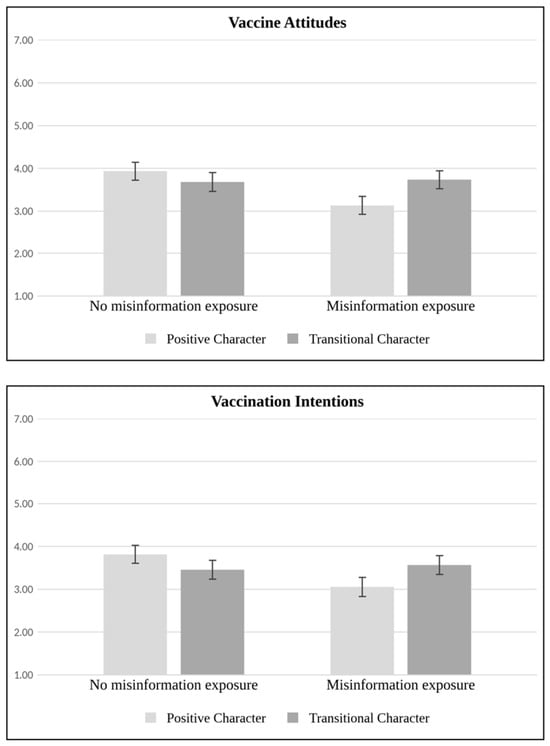
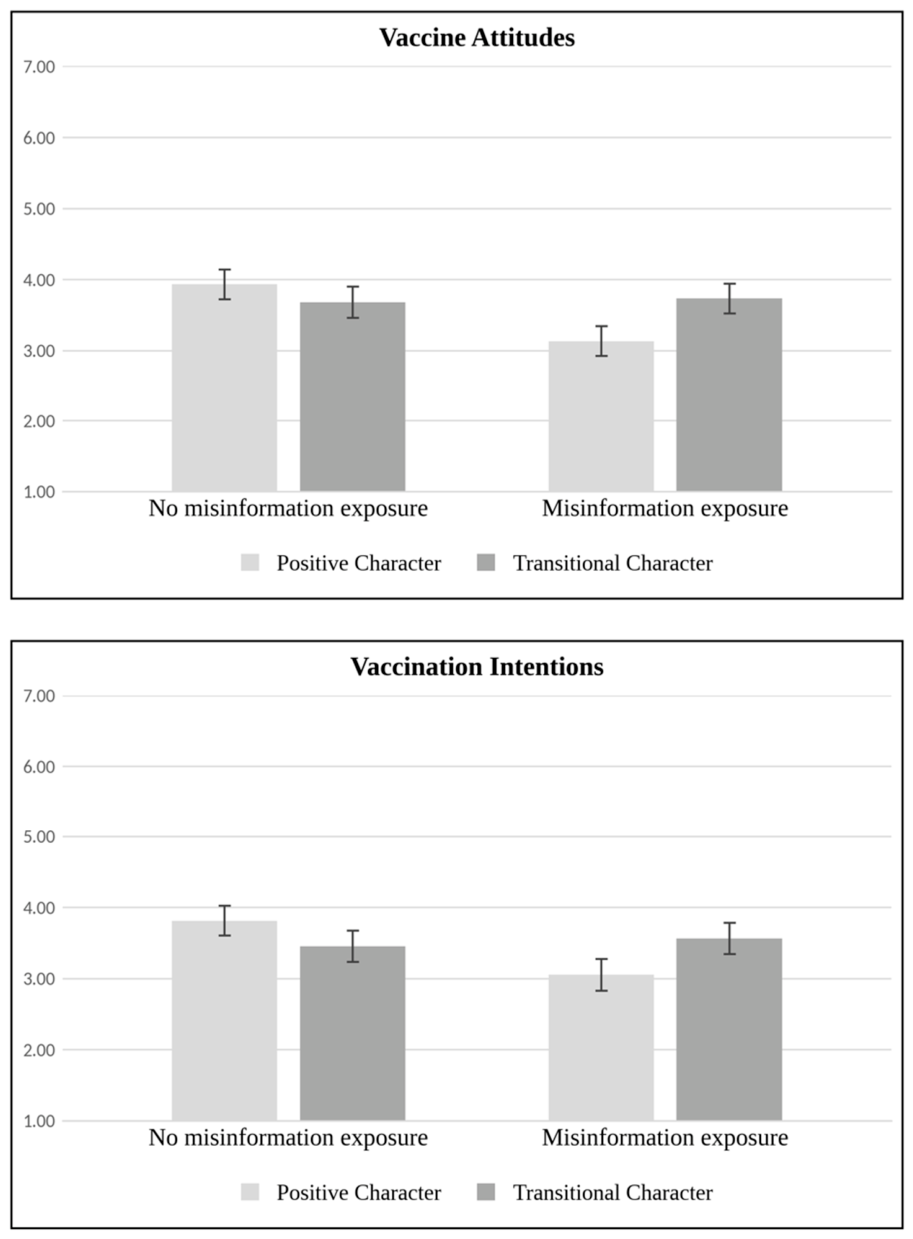
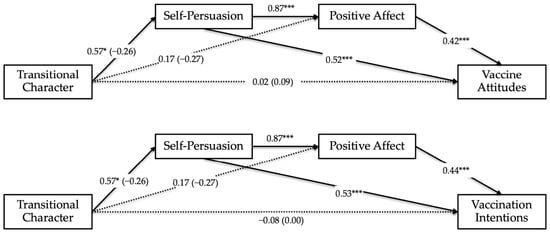
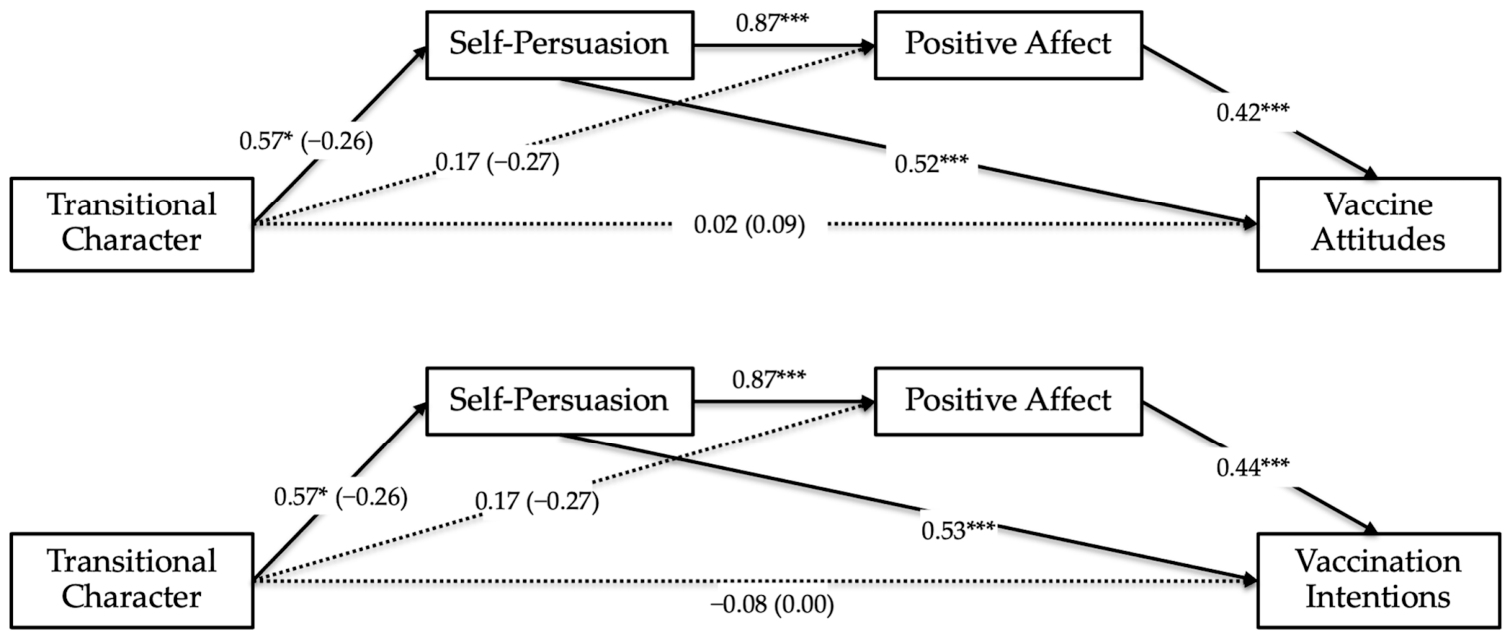
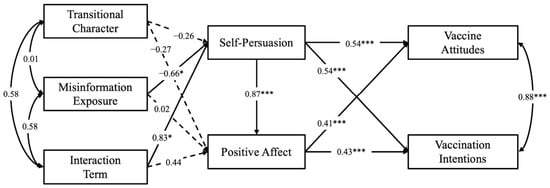
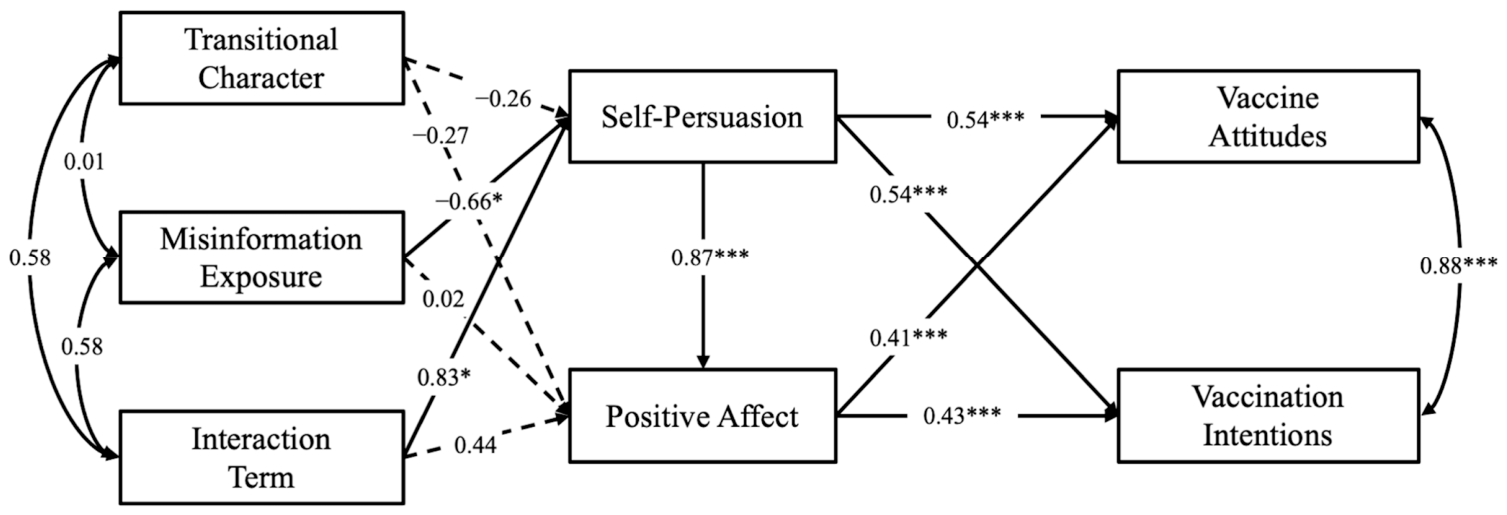

Disclaimer/Publisher’s Note: The statements, opinions and data contained in all publications are solely those of the individual author(s) and contributor(s) and not of MDPI and/or the editor(s). MDPI and/or the editor(s) disclaim responsibility for any injury to people or property resulting from any ideas, methods, instructions or products referred to in the content. |
© 2026 by the authors. Licensee MDPI, Basel, Switzerland. This article is an open access article distributed under the terms and conditions of the Creative Commons Attribution (CC BY) license.