


Abstract
This study examines how early Soviet culture sought to render time perceptible, governable, and politically productive by translating Futurist “chrontology” into socialist “chronization.” Taking Aleksandr Kusikov’s 1922 polemic on the Berlin journal Veshch (Thing)—edited by Ilya Ehrenburg and El Lissitzky—as its point of departure, it reconstructs a “third-way” Futurism shaped by postrevolutionary transit and exile, in which anticipatory futurity was inseparable from an intensified orientation toward materiality, technique, and constructive making. Against the backdrop of modern heterochrony—where “times” proliferate and synchronization remains contested—the essay traces how Soviet actors devised new units, comparisons, and pedagogies for living in a temporally unstable present. Two case studies anchor the argument. First, the League of Time (1923–1925) promoted multiscalar time-management practices through campaigns, memos, and didactic graphics that treated clocks, routines, and efficiency as instruments of socialist subject-formation. Second, illustrated children’s books translated variegated temporal sensibilities into a pedagogy of images, making futurity legible via “thingful” traces that recoded the past as a catalogue of obsolete objects. Chronization thus appears as an ambitious cultural technology for producing a planned, dynamic, and productive socialist way of being. By foregrounding work, visualization, and material comparison, these projects converted temporal uncertainty into actionable, collective everyday socialist practice.
| – Has it really died? Is Futurism dead? Are you serious about that?... – Yes! As a distinct group, Futurism has passed away. However, you have all been immersed in it, as if it were a deluge. |
| Vladimir Mayakovsky, A Drop of Tar, 1915.1 |
| We have a heavy task ahead of us: to serve as switchmen on the railroad tracks where the Past meets the Future. |
| Velimir Khlebnikov and Grigorii Petnikov, An Appeal by the Presidents of Planet Earth, 1917. |
| The work of Futurism is parallel to and identical with the work of Communism. Without the Futurists’ fight for the dynamic organization of the self, no advancement toward the commune will be possible…. In its struggle to organize the world, Communism … will inevitably absorb and assimilate Futurism… by turning it into the Communist perception of the world. |
| Sergei Tretiakov, From Where to Where? (Prospects of Futurism), 1923. |
Despite its hostile tone, Kusikov’s review perceptively detected several themes and locations that have remained largely overlooked in studies of early Soviet intellectual and cultural development. Arguably, the poet was one of the very first critics to establish an important genealogical connection between, on the one hand, pre-revolutionary Futurism,2 with its radical rejection of the past, and, on the other, various artistic movements in “the First Russia” that foregrounded the importance of materiality, technique, and technology for creating a new world. Just as important is the spatial dimension of this artistic kinship that Kusikov also identified. Linking post-World War I Russophone Futurism with the massive exodus from Russia to Europe, the poet shrewdly detected the ambiguous and transitory positionality of the movement, in which Futurists’ own unsettled being-in-transit somewhat paralleled and undoubtedly amplified Futurism’s constitutive prospective orientation. I will call this combination Futurist chrontology to highlight a persistent inclination to use the “future indefinite” for demarcating and measuring one’s volatile existence in the present.Recently, a new magazine was published in Berlin, in Russian Berlin, in the so-called “Third Russia.” Edited by Ilya Ehrenburg and El Lissitzky, it is titled Veshch, and it is designed for the First Russia—the real one, that is. Please, notice the place and the date of this publication: “Third Russia,” the year 1922.(Kusikov 1922, p. 5)
Of course, the connection between (Cubo–)Futurism and the construction of Soviet socialism is not a new observation, While Kusikov was penning his review in Berlin, Boris Arvatov, an influential art theorist, was addressing a similar issue on the pages of the journal Pechat’ i revoliutsiia (Press and Revolution) in Moscow:
By 1927, Osip Brik, a prominent Formalist and kulturträger in the “First Russia,” no longer needed to explain why Futurism and socialism had joined forces. The reasons were clear; or so it seemed, at least. His highly affirmative and categorical proclamation left no room for doubt (or choice): “My—futuristy,” that is, “Futurists Are Us” (Brik 1927, pp. 48–52).Much has been written about the dominance (zasil’e) of Futurism during the first years of the Revolution. This phenomenon was explained in various ways. Some argued that Soviet authorities had no choice but to make a “lefty mésalliance,” as Futurists were the only ones who supported the October revolution. Others pointed out an emotional affinity between the left in art and the left in politics. Many more different views were expressed, too, including some doubts about young artists’ independence(Arvatov 1922, p. 20).
It would be illuminating to explicate the connections between Soviet socialism and Futurism in terms of political pragmatism, emotional affinities, and aesthetic analogies. However, this is not the path that I will take in this essay. I will keep issues of poetics and politics in the background, while focusing on the emergence of “a new feeling of time” that Futurism brought into stark relief (cf. Punin 1923, p. 43). I will reconstruct the various ways through which Futurist chrontology was adopted, appropriated, transposed, and repurposed by different political and cultural actors in early Soviet Russia. As I will argue, the quick (if fleeting) “normalization” of Futurism in the “First Russia” did little to undermine the specific ontological and artistic trajectory that Third Russia Futurism successfully articulated and embodied. I will demonstrate, in particular, how the Futurists’ ideas about dynamic time and the dynamic organization of the self provided a solid foundation for the multidirectional campaign for the “chronization of life” (khronizatsiia zhizni), as it was called by Alexei Gastev, a modernist poet and a crucial Soviet proponent of the scientific organization of labor (Gastev 1923d, p. 7).
Attempts to reconfigure time (and the self) were not unique to Soviet Russia. The “chronization of life” was a global trend. As Peter Galison reminds us, “time awareness” in the West was becoming “acute” for a while, generating a palpable desire for the “world-embracing synchronization” of modern time with the help of “the technology of simultaneity” (Galison 2003, pp. 95, 38, 198). In this respect, it is no coincidence that the new political regime in Russia was quick to associate itself with a new(er) calendar.3
There was a social or, rather, sociological dimension of this overwhelming chronization of life, too—the emergence of a broad spectrum of organizations and individuals deeply interested in exploring new ways to make time meaningful and useful (cf. Bear 2014). Given the institutional divergence of these chronists, as I will call them, it became increasingly difficult to streamline and homogenize locally envisioned time-segments, time-frames, or time-pieces. The distributed authorship of modern chronopolitics successfully neutralized the default temptation to attribute any major effort to restructure time to a single center or institution. The homogenization and centralization of time-related activities had yet to occur.
This is where Futurist chrontology, with its built-in privileging of dynamism, is particularly helpful for my discussion. As I will document, the Soviets managed to maintain two seemingly incompatible orientations at once. While being deeply invested in approaching time as a key tool of organization, rationality, and efficiency, they similarly insisted on experiencing Russia’s “modernism of underdevelopment” (Berman 1982) as “a dense complexity of heterochronia in which different temporal registers co-existed” without undermining or canceling each other (Ssorin-Chaikov 2006, p. 359).
This heterochronic attitude vigorously foregrounded local contexts—i.e., distinct daily worlds and everyday activities—that stimulated particularistic ways of seeing time. The two case studies that I present in this essay examine two different local settings in which the heterochrony of being was elaborated, managed, instrumentalized, and, finally, scaled up. My first case study reconstructs the history of Liga Vremia (The League of Time), a short-lived yet impactful grassroots organization that existed in the Soviet Union from 1923 to 1925. The League promoted a diverse and multiscalar perception of time, encouraging various practices and methods of chronization. Through its campaigns and publications, the League emphasized the organizational and constructivist dimensions of chrontology. Proper time management was supposed to result in a more meaningful life. I supplement my discursive analysis of the League’s programs, memos, and projects with a discussion of the visual materials that often accompanied these texts. Given the relatively low literacy rate among Soviet workers of the era, the importance of nontextual media was significant. Images were sometimes more effective than words.4
The visual dimension of chronization would become even more prominent in my second case study, which looks at illustrated books produced in the 1920s for the “new” young Soviet reader. I show how variegated temporal sensibilities were translated into a specific pedagogy of images, offering a paradigmatic example of rendering time as highly perceptible matter. These books blended the visual and the textural, the abstract and the material, the technological and the human. Time sequencing was achieved by actively seeking out thingful (predmetnye) traces of the discontinuity between “yesterday” and “today.” Futurity was inseparable from retrospection. A new—modern—present was established through constituting the past as a catalogue of outdated things.
What makes these early Soviet efforts at the chronization of life especially instructive is their comprehensive ambitions. For early Soviet chronists, raising awareness about time was paramount; so was learning the basics of effective time management. However, better managing one’s own life was even more pertinent, and chronization was both a promise and a tool for creating a new, socialist way of being—planned and dynamic, purposive and productive.
Before I proceed to these concrete examples, I will spend a bit more time with Kusikov and his review. In the next section, I parse and contextualize his diagnosis in order to highlight critical Futurist terms and trends that would eventually be repatriated to and reappropriated in Soviet Russia. As I suggest, it is this third-way Futurism and its unique temporal awareness that dramatically shaped the early Soviet understanding of time, work, and technological innovation.
1. Third-Way Futurism: Between Third Russia and the Third International
| Of course, the socialistic nature of Futurism does not lie in its ability to create easily accessible art for every worker. Rather, socialism will eventually have to work out for itself the same range of aesthetic assumptions that Futurist art has already expressed and established. |
| Nikolai Punin, From a letter to Anna Arens, 1916 |
In his polemical review of Veshch, Kusikov did not rush to clarify his tripartite cartography of Russia. Helpfully, however, Anatoly Lunacharsky, the Soviet Commissar of Enlightenment, provided some details a few months later. Summarizing the generally positive reception of the First Russian Art Exhibition (Erste Russische Kunstausstellung Berlin), which took place in Berlin in autumn 1922, the Commissar firmly distinguished between the two main modalities of presenting Russian art at the time.5 One of these representational regimes was “Russia No. 2.” Monopolized by the émigré community (aka “White Russians”), this regime was deeply steeped in a quasi-Orientalist version of Russian art, “packaged for export” by Sergei Diaghilev, Leon Bakst, and the like (emigrantskoe iskusstvo na vyvoz). The second was “real” (nastoiashchaia), that is, Soviet Russia (No. 1), represented by a panoply of visual styles at the Berlin show—from figurative and narrative painters such as Viktor Vasnetsov, Boris Kustodiev, and Konstantin Korovin to abstract and non-objectivist artists such as Vassily Kandinsky, El Lissitzky, Kazimir Malevich, Olga Rozanova, and Aleksandr Rodchenko, to name just a few (Lunacharsky 1922, p. 2). (Figure 1) This binary vision quickly took on its classical shape, with “Soviet Russia” (No. 1) opposed to “Russia Abroad” (No. 2).6
Figure 1.
Exhibiting “Russia No. 1.” El Lissitzky, design for the program of the First Russian Art Exhibition, Berlin, 1922.
“Discovered” by Kusikov, the “Third Russia” occupied—in a non-linear kind of way—an uncertain position that partially overlapped with both “Russia No. 1” and “Russia No. 2.” Neither firmly Soviet nor truly anti-Soviet, neither fully abroad nor completely inside Russia, it was a hybrid “third space” with an ambiguous location, an unclear center, blurred outlines, and contradictory orientations.7 It was “an interlacement of inversions” (spletenie obratnostei), as Kusikov phrased it—a proverbial embodiment of all things to all people. The poet succinctly captured the key quality and orientation of this phenomenon in his untranslatable neologism “nashevashenskii,” an adjective that literally describes the capacity “to–be–for–us–and–for–them” at the same time, i.e., a dialectical (non-binary?) knack for embodying opposites (Kusikov 1922, p. 5).8
While this diagnosis may be politically reductive, it is not structurally incorrect. Building on Kusikov’s definition of the (con)fused—nashevashenskii—positionality of Veshch and the movement it symbolized, I will significantly expand its scope to map out a much broader range of post-revolutionary cultural trends and cultural producers associated with various visions of the futura. However, I do not necessarily view the “interlacement of inversions” as a structural or aesthetic flaw. Quite the opposite. I consider it to be a valuable reflection of a specific condition of possibility that gave rise to various “projects for the affirmation of the new,” to borrow Lissitzky’s name Prouns (proekty utverzhdeniia novogo) for his dynamic visual compositions that simultaneously deployed conventions of both flat painting and volumetric architecture (e.g., Lissitzky 1922; Lissitzky and Arp 1925, p. XI) (Figure 2).
Figure 2.
Creating a third space: El Lissitzky, A Proun Room, 1923 (reconstruction 1965; Stedelijk Van Abbemuseum, Eindhoven, The Netherlands).
Unable (and often unwilling) to conform to the constraints of the “Russia No. 1”–“Russia No. 2” binary, these nashevashenskii projects deployed nonlinear trajectories and stylistic amalgams, presenting themselves not as half–hearted poputchiki (fellow travelers) of dominant trends, but as their active posredniki—i.e., as their mediators, interpreters, and, ultimately, modifiers. These intercultural posredniki share more than several features with various Soviet tricksters that Mark Lipovetsky (2011) painstakingly catalogued and analyzed. Here, I am less concerned with the proficiency of such mediators in collapsing, transforming, or subverting opposites. Following Lissitzky, I will focus on their power to maintain discordance and misalignment in a state of productive spatio-temporal tension (see Oushakine 2003).
When viewed in this manner, the nashevashenskii quality of these projects and strategies transcends the familiar realm of background tactics—creative accommodation, tacit resistance, and pragmatic self-adjustment to circumstances beyond one’s control (see de Certeau 1984; Scott 1992; Lipovetsky et al. 2024). Instead, it becomes an important sign of social and aesthetic awareness of the inherent heterogeneity of the available historical context and of that context’s positional affordances, artistic potentialities, and anticipated transformations. To emphasize, the goal of such interlacements was not to keep the status quo intact (nor to subvert it), but to imagine the future differently. To rephrase Kusikov slightly, the “interlacement of inversions” emerges, then, as the second edition of Futurism, which might have been envisioned and even produced in the “Third Russia,” but which was undoubtedly intended for “Russia No. 1.”
To a degree, my approach shares the logic of Viktor Shklovsky, a Russian Formalist, who offered a good example of appropriating and recontextualizing the nashevashenskii orientation of post-revolutionary Futurism for very different purposes and effects. In 1923, Shklovsky was living (temporarily) in Berlin, where he put together a collection of articles called Knight’s Move. This petite volume included essays that had been published in Russia between 1919 and 1921, but which were, to use the author’s own words, written for “Russians living abroad” (Shklovsky 1923a, p. 10). A delayed message from “Russia No. 1” to the inhabitants of “Russia No. 2” printed in “Russia No. 3,” the book openly revealed the instability of its situatedness on the cover; the place of publication was indicated as a split unit—“Moscow/Berlin” (Figure 3).
Figure 3.
Proceeding indirectly: the cover of Viktor Shklovsky’s Knight’s Move with an enlarged fragment that traces the knight’s move. (Shklovsky 1923a). The artist is not indicated.
In his preface, Shklovsky clarified that this hybrid topography was not an expression of sloppiness or a matter of convenience, but the deliberate, albeit complicated, position of “a man who carries the yellow flag of the Futurists under his jacket” (Shklovsky 1923a, p. 144). As the writer reminded his audience, in chess the knight is constrained in the direction of its actions: “it moves sideways because it is forbidden to take the direct route” (Shklovsky 1923a, p. 9). In other words, the knight’s avoidance of “direct” confrontation is not “the move of a coward,” but it is a rule of the game (Shklovsky 1923a, p. 11). Different bodies and different positions enable different trajectories.
It would be a major historical oversimplification to dismiss this consciously staged “interlacement of inversions”—with its overlapping places of belonging, indirect trajectories, and integral nonlinearity—as a Potemkin village fantasy, as a discursive cover hiding political opportunism, or, at the very least, as the inability to make the right political choice. In the 1920s, concrete historical and biographical circumstances made the troika of Russias more than an exercise in creative geopolitical numerology. The concept of three Russias was a living, palpable reality. For instance, it is not by chance that Ehrenburg, Kusikov, Lissitzky, and Shklovsky shared the same fundamental predicament despite their significant political, social, and aesthetic differences. All four men arrived in Berlin in 1922, following hundreds of thousands of other expatriates from Russia displaced by the Revolution, the Civil War, and the Allied Intervention.9
We do not know the exact size of the “Russian Berlin” these men joined. However, we have some anecdotal estimates. In the epistolary novel Zoo, written during his period of exile in Berlin from 1922 to 1923, Shklovsky remarked that “three hundred thousand Russians of various nationalities” resided then in the capital, accounting for about ten percent of the city’s total population (Shklovsky 1923a, p. 136). Roman Utkin’s study of “Russian Berlin” scrupulously identified the unique confluence of economic, infrastructural, and political factors that made the German capital so attractive in the early 1920s. The city was quite affordable and was connected to Russia by a well-developed railway network. Major diplomatic changes in 1922 increased Berlin’s appeal even more. The Treaty of Rapallo, signed by Germany and Russia in April 1922, effectively put an end to the diplomatic isolation imposed on Russia following the Revolution. These resumed diplomatic and consular relations made the West accessible to many Russian citizens again—mostly through Berlin (Utkin 2023, pp. 8–11).
Some of these newly arrived “Russians of various nationalities” viewed the city as a promising launchpad for their new—decidedly post-Russian—lives and careers. Yet many others resided there only provisionally, hoping to return home quickly after the expected collapse of the Bolshevik government. Uncertain about staying in the “Third Russia” for too long and unsure about the emerging order in “Russia No. 1,” they treated the German capital as a convenient transfer train station on the journey to permanent exile—or, maybe, away from it.
This “trial emigration” (Utkin 2023, p. 20), enabled by particular socio-political circumstances, produced a heightened perception of the state of in-betweenness. Itinerant existence, partial belonging, delayed decisions, and postponed choices constituted the core of the post-war and post-revolutionary way of life in the “Third Russia.” This being-in-transfer paralleled (or even shaped?) the much more general artistic sensibility of many of the writers and painters who had been dislocated by major political events. Lissitzky (while actively traveling in Europe) symptomatically insisted on approaching his Prouns as an “interchange station” (peresadochnaia stantsiia), that is, as a transit hub, where one could move from one form of art to another (e.g., Lissitzky 1928, p. 325).
For many of these post-revolutionary nomads, their spatial transition was also a transition in time. The past was presenting itself as increasingly meaningless and unreliable, precipitating a search for new paths and new points of reference. Futurism—with its unwavering affirmation of new configurations of life, sociality, politics, and aesthetics—appeared again as a logical solution to the state of permanent becoming, “a form of historical time which valorize[d] the new as the product of a constantly self-negating temporal dynamic” (Osborne 1995, p. xii). In his Theory of the Avant-Garde from 1968, Renato Poggioli singled out the idea and experience of life-in-transit as a key feature of the European “avant-garde Futurism.” For the pre-war Italian Futurists—just as for the Futurists of the “Third Russia”—spatial unsettledness brought to the fore a new form of chrontology that resolutely distanced itself from traditional promises of the possibility of the “fullness of time” (Poggioli 1968, pp. 72–73). Being and time had become perpetually out of sync.
Despite the generic similarity, in each of the two cases temporal asynchrony had a distinctive “genealogy.” As Poggioli and many other scholars have pointed out, kinetic velocity and the experience of vehicular motion formed the backbone of the new temporal awareness articulated by European Futurism. The speed, dynamism, and accelerated rhythm associated with new technologies produced “spatial displacement over time” (Mather 2020, p. 1). In turn, rapid changes in the material and social worlds normalized “excitement, danger, improvisation, and violence,” generating a new “sense of conditional time” (Mather 2020, p. 201). Giacomo Balla (among others) successfully translated this sensibility into a new pictorial language. His repetitive depictions of humans and things in motion sought to capture their diachronic dynamism through a sequence of spatial displacements. Figures and body parts dissolved in space in the process of their movement (Figure 4 and Figure 5). Rapidly, though, these series of self-decomposing figures completely dematerialized. Losing their referential quality, they evolved into abstract, superimposed synchronic patterns and vortical structures, into non-objective swirls of pure dynamism (see Mather 2020, pp. 101–2; Poggi 2019; Perloff 1986) (Figure 6 and Figure 7).
Figure 4.
Decomposing humans–1. Giacomo Balla, The Hand of the Violinist (1912).
Figure 5.
Decomposing humans–2. Giacomo Balla, Girl on a Balcony (1912).
Figure 6.
Abstracting the material–1. Giacomo Balla, Speed of a Motorcycle, 1913.
Figure 7.
Abstracting the material–2. Giacomo Balla, Mercury Passing Before the Sun, 1914.
The spatial displacement and anticipatory futurity of Third Russia’s Futurism grew out of different sources and experiences, resulting in a different sensibility. The nashevashenskii positionality of this edition of “avant-garde Futurism” convincingly demonstrates that the impossibility to be fully situated in time was a direct consequence of the impossibility to fully ground oneself in space. Though still foundational, mobility and velocity for post-revolutionary Futurism in Russia were defined neither by the “dynamic principle of modernity” nor by the “beauty of speed” (Tasteven 1914, p. 36). Rather, they were activated by the political necessity of exile.10
Perhaps the experience of the deprivation and dispossession of exile shaped another distinctive feature of Russia’s post-revolutionary Futurism: its sustained “orientation towards materiality” (ustanovka na material) (Shklovsky 1928, p. 123; Radlov 1923, pp. 25–26).11 Sociospatial dislocation and temporal disorientation made the stabilizing function of material anchors of everyday life all the more palpable. As a result, in the Russian context, the fragmenting and dematerializing impulse of European Futurism was tempered significantly by a deep, determined, and unwavering attachment to the constructive and textural qualities of the thing.
The finale of Shklovsky’s Zoo exemplifies this artistic and social trend well. In the novel’s last letter, the usual flow of stories about love and exile suddenly takes a sharp turn. Stepping out of the shadow of his epistolary persona, the Formalist formally petitions the Soviet government for permission to end his exile and return to Russia. The request poignantly interlaces several genres: a plea for forgiveness, a declaration of surrender, and a self-ironic autobiography. Importantly, though, to offset the bitter pathos of his letter, Shklovsky resorts to the pedantic cataloguing of his material possessions. Merging the high and the low, the mundane and the extraordinary, he creates his own “museum of unconditional surrender,” filling it with the things that had served as his companions, his silent observers, and the tangible symbols of his exile in the Third Russia:
Let into Russia me and my guileless luggage: six shirts (three at home, three at the laundry), a pair of tan boots accidentally polished with black wax, some old blue trousers in which I vainly attempted to make a crease.And a necktie which was given to me.But the trousers I’m wearing have a crease. It was made when I was flattened into a pancake.(Shklovsky 1971, p. 104)12
The formative importance of exile should not be overstated; though essential, it was hardly exhaustive. Having emerged in the process of exilic dislocation, the Russophone Futurism of the 1920s quickly transcended the limits of “Russian Berlin.” Shklovsky, again, is useful here. In 1926, already back in Russia, the Formalist would re-examine the topographic dimension of his artistic life and refine the earlier metaphor of the knight’s move. In his Third Factory, he decoupled the knight’s indirect trajectory from the constraints of the diasporic life-in-transit and turned creases and folds produced by life into his general professional landscape. Thus, a circumstantial solution—a form of subjectivation, really—grew into a vision of time and space, of literature and literary authority.
No more a state of temporal and spatial deadlock between “Russia No. 1” and “Russia No. 2,” the “Third Russia” modality reemerged as a third-way, heterotopic option—unfeasible and therefore all the more necessary: “The political struggle [was] to see from both perspectives at once because each reveals both dominations and possibilities unimaginable from the other vantage point” (Haraway 1991, p. 154). Triangulating available dominations and possibilities, Shklovsky explains:
Third Russia. Third space. Third Factory. Third way. Shklovsky establishes his domain of (relative) freedom and (uncertain) futurity by firmly defending his right not to accept the available (binary) vision of the present. Avoiding reality or merely recording it are not adequate options. He rejects the tactic of “internal emigration” and the practice of self-erasure for the sake of some “correct view of the world” and forges an unusual third path. This path is driven by an interest in the material and is structured by the rhythm of laborious transformation. Like Balla’s paintings, Shklovsky’s path is highly repetitive. However, it is the process of change that is repeated—an incessant process of self-alteration through evolving interactions with the material of daily life and literary production.Currently, there are two paths forward. One is to fade out, to dig oneself into the ground, to earn a living outside of literature, while writing for oneself quietly—at home.The other is to wholeheartedly embrace the new order of things (byt) together with the correct view of the world, and start reporting life as it is.There is no third way. Yet this is precisely the one we must choose. Artists should not make their lives by following the tracks of a streetcar.The third way means working daily in newspapers and journals. It means caring about work, not oneself. It means altering and hybridizing oneself (skreshchivat’sia) with the material. Then—self-altering and hybridizing with the material even more. And more reworking of the material, as well. Literature will emerge after that.(Shklovsky 1926, pp. 51–52)
Shklovsky’s recursivity, in other words, is neither a serial act of mechanical reproduction nor an extended performance of mimetic duplication. The periodic cycle of change that he proposes is made up of dynamic repetitions that themselves generate difference. The type of becoming that he outlines is no longer itinerant but profoundly iterative. His “third way” is a process of working and reworking; it is a recurring act of creating a new dynamic self and a new dynamic literature.
In the socialist context of post-revolutionary Futurism, the prominence of work is expected. Less obvious is the impact of this labor-oriented becoming on the long-standing modernist fascination with technology in general and with its vehicular forms in particular (e.g., cars, trains, boats, airplanes), a fascination renewed and sharpened by the recent experience of emigration. The irreverent plan of the pre-war Russian Futurists to throw the “old masters” overboard from “the ship of modernity” seemed to have been accomplished by the 1920s.13 The Bastille had been stormed, so to speak, and the “ship” itself had become the main site for new political, narrative, and aesthetic investments—a new “material” to hybridize with. Commenting on Shklovsky’s Zoo, Julia Vaingurt helpfully generalized the changing conditions that Russophone avant-garde artists confronted in the 1920s. It was technology that provided them with “a new cultural framework wherein [they] could redefine knowledge, art, and self, and find new ways of seeing the world and [their] art in it” (Vaingurt 2013, p. 4).
Some, however, begged to differ. For people like Kusikov, the post-revolutionary revival of interest in technology—the bold comeback of the “ship,” the “machine,” and the “locomotive”—was nothing but a reactionary gesture of necro–aesthetics, a retro-active replica, a derivative futuriatina, unnecessary and inexcusable in 1922. In his critique of Veshch, he maintained:
Obviously, the poet was missing the point. The post-revolutionary re-engagement with the machine, industrial aesthetics, and other “ships of modernity” was not simply an imitative replay of the Cubo-Futurists’ earlier obsession with “the chaos of the streets, the dynamism of the city, the roar of harbors and train stations” (Shershenevich 1916, p. 37), nor was it a neo-nihilist attempt to envisage an improved version of the Futurist “express train” that could transport its passengers away from their old habits and lifestyles with no sense whatsoever of their new destination (Shershenevich 1916, p. 52).14Everything looks exactly like it did twelve years ago… After reading the journal, one is left stupefied. There is nothing but machines, machines, machines, mechanisms, dynamism, and urbanism. This is Futurism, loud and clear. What’s the point of denying it?(Kusikov 1922, p. 6).
The first generation of Futurists—the “demolition men,” or dinamitchiki (dynamite throwers), as the literary critic and major children’s poet Kornei Chukovsky called them in 1922—were successful in destroying the traditions and cultural conventions of the previous era, thereby creating an open space for new forms to emerge (Chukovsky 1922, p. 59).15 But in the early 1920s, this open space was seen as an invitation for purposeful construction rather than a case for celebrating non-objectivity.16 The original Futurist hatred for everything “old” was to be reworked rather than repeated: “October [of 1917] cleaned things up, shaped them, and reorganized them. Futurism became the left front of art” (Aseev et al. 1923, p. 4). Lissitzky perceptively rendered this transition from destructive negation to reparative constructivism in ontological terms. In his letter (from Switzerland) to Kazimir Malevich in 1924 he wrote:
Sergei Tretiakov, a Futurist and Formalist theoretician of the Soviet avant-garde, thought in the same direction, focusing on post-revolutionary pragmatics. Revisiting the legacy of Futurism in the first volume of the journal LEF in 1923, he unequivocally titled his programmatic article Otkuda i kuda? (From Where to Where?). The piece charts a clear change in direction, from the resolute, though disorganized pre-revolutionary Cubo-Futurist attacks on the “fortress of philistine taste” (tsitadel’ meshanskogo vkusa) to the Communist Futurists’ “steady reorganization of the human psyche towards the commune’s goals” in the 1920s (Tretiakov 1923, pp. 193, 199). Mayakovsky and Khlebnikov, the theorist insisted, were brought back not to refresh the picture of socialist modernity with some aesthetic (Futurist) frills and fireworks. Rather, they were deployed as “a sharpening stone” for honing independent, self-sufficient methods of post-revolutionary work (Tretiakov 1923, p. 193). As if undertaking their own knight’s move, the post-revolutionary cohort of Futurists bracketed off the earlier “machinic interpretation of Futurism” (Mather 2020, p. 3) and its fascination with the roaring engines of modernity in order to advance their new fundamental interest in the “highest level of engineering of all forms of life” (LEF 1923, p. 10).You and I have our centers of gravity in different locations. …I have no interest in being a prophet of some “Ism.” …yet I value your prophecies. …You are an anti-materialist… Maybe you are a nihilist (there is only nothingness, and nothing can be proved…). But I believe that there is more than this NO… These days, it is only the YES that interests me.(Malevich 2003, p. 300)
Veshch was one of the earliest and most striking symbols of this fundamental transition from watching, imagining, or depicting modern things to actually making them, or at least learning from them. Ehrenburg and Lissitzky, “temporary Berliners” themselves, saw the end of Russia’s diplomatic blockade as the beginning of their commitment to art as a transnational phenomenon. In response to the Treaty of Rapallo, they co-authored a manifesto-style editorial, “The Blockade of Russia Is About to End,” which opened the inaugural issue of Veshch—Objet—Gegenstand: An International Review of Contemporary Art (as the magazine officially branded itself). Published in three parallel columns (in German, French, and Russian), the manifesto presented Veshch as an attempt to create a decidedly cosmopolitan platform to counteract several years of “disconnected existence.” The periodical aimed to overcome “differences engendered by psychology, everyday routines, and economic conditions” in order to link “Russia, with its experience of the most sweeping revolution, and the West, with its miserable, post-war Black Monday mood” (Ehrenburg and Lissitzky 1922a, p. 1; 1922b, p. 340). And link them it did. The first (double) issue featured contributions by key figures of European and Russian modernism—Albert Gleizes and Fernand Léger; Theo van Doesburg and Le Corbusier; Jules Romains and Viktor Shklovsky; Gino Severini and Vladimir Mayakovsky (to name but a few).17
In their manifesto printed at the front of the volume, Ehrenburg and Lissitzky did not hide their indebtedness to pre-revolutionary Futurism, but they did so by resolutely historicizing its legacy (and clearly overestimating the rhetorical power of Caps Lock): “We’ve passed the stage when we had to destroy, besiege, and undermine. … It is the RIGHT TIME to use the cleared land for CONSTRUCTING…. In this day and age, it is laughable and naive to still call for ‘throwing Pushkin overboard.’ …We can learn a thing or two from Pushkin and Poussin—certainly not how to revive already ossified forms, but how to implement inviolable laws of CLARITY, EFFICIENCY, and RATIONALITY (iasnost’, economika, zakonomernost’)” (Ehrenburg and Lissitzky 1922a, p. 2).
Both editors saw Veshch as channeling a new vision for art and social life—interdisciplinary, intermedial, and international. With passion and conviction, they offered their multilingual audience several new orientations—towards the world of things, towards the constructive method, and towards an organizing art:
To eliminate all doubts regarding their aesthetic and material commitments, the editors supplied their manifesto with a graphic black-and-white photograph of a “real, weighty, and voluminous” thing: a large ship (of modernity?), parked in a dry dock with propellers exposed. The “nashevashenskii” caption underneath the photo transcended all meaningful distinctions between animate and inanimate, artistic and industrial, sacred and utilitarian, assuring the reader that the ship was “The Parthenon and the Apollo of the 20th Century.”18 Meanwhile, a textbox on the left made transparent the pedagogical use-value of both the image and the thing. The ship was depicted not as an object to be passively admired but as a model to actively learn from: “Neither rose nor machine should be a theme for poetry or painting. They are teaching aids for learning structure and creativity.” In the next, third, issue of Veshch, the editor would continue this train of thought. The opening page of the magazine displayed a photo of yet another canonical Futurist vehicle: a steam locomotive sporting a snowplow on its front. The caption below the image highlighted the same propaedeutic role of technology while radically downplaying the significance of mimetic realist painting:The PUBLICATION of“THING”is an indication of the fact that the exchange of experience, achievements, and things between young Russian and West European masters has begun. Seven years of separate existence have shown that there is nothing accidental, nothing dogmatic, nothing vogueish about the tasks and aims of art that are similarly shared in different countries. Rather, this unity is an inescapable quality of humankind, which is growing wiser. Today, art is INTERNATIONAL, despite all the local features and symptoms. …We consider the TRIUMPH OF THE CONSTRUCTIVE METHOD to be the key feature of modernity. We can discover it in the new economy, in the development of industry, in the psychology of our contemporaries, and in arts.“THING”advances constructive art, the art that does not merely embellish life but organizes it. …“THING”is a practical publication; it is a herald of technology; it is a PRICE LIST of new THINGS, and a blueprint of things to be created.From the sultry gloom of a Russia that is squeezed dry and from a Europe grown fat and drowsy, the same battle cry rings out:ENOUGH OF DECLARATIONS. ENOUGH OF REFUTATIONS. MAKETHINGS!(Ehrenburg and Lissitzky 1922a, pp. 1, 4)
Two works by Malevich—a “little square,” and a “little circle,” as Kusikov would derisively call them—were placed next to the photo of the steam locomotive to underscore the ubiquity of the “constructive method” in different fields of human activity. Nearby, a diagrammatic equation spelled out the common logic of rationalism and productivity that united this visual juxtaposition of technology and art: A Technical Thing = Efficiency = A Suprematist Thing.Painting a machine is equal to painting a nude.A human being is not the rational creator of their body.The machine is a lesson of clarity and efficiency (Figure 8).Figure 8. Things to learn from: the locomotive of progress. The opening page of the third issue of Veshch. Berlin, May 1922.
These emblematic illustrations (and their framing) of third-way Futurism nicely trace a major shift from the “negative” poetic fascination with technology to its “positive” and pragmatic treatment. Foregrounding issues of organization, rationality, and economy, they acted as effective interchange stations of sorts, transporting the reader from an affective entrapment by industry (“machines, machines, machines”) to a highly materialist understanding of the past, present, and future—to “thingful time,” as Shklovsky would describe it much later (Shklovsky 1970, p. 103). What seems to be lost in these static images, though, is the earlier dynamism—the kinetic velocity, the speed, and the rhythm—that so powerfully defined the Futurism of the 1910s. To re-unite technology, materiality, and temporal dynamism, I cite one last example from Veshch.
In the first issue of the magazine, alongside an essay on contemporary architecture by Le Corbusier and reports on new theater productions in Paris, there is a brief note by Nikolai Punin, a prominent art critic from Petrograd. Punin follows the overall—constructivist—orientation of Veshch in introducing the reader to the Tour de Tatlin (Tatlin’s Tower), which had been conceived and prototyped a couple of years earlier, though never built. Tatlin is praised for his ability to “organically synthesize principles of architecture, sculpture, and painting”, in so doing creating “a new type” of monumental construction, where “a purely creative form is combined with a utilitarian one” (Punin 1922b, p. 22). Three major architectural volumes—a cube, a pyramid, and a cylinder—were to be constructed out of glass and encased by a rhythmic lacework of iron. At 350 m tall (fifty more than the Eiffel Tower), Tatlin’s construction would provide ample office space for the workers of the Third International (Figure 9).
Figure 9.
A monument to the third path? A page from Veshch (No. 1–2, 1922) with a note by Nikolai Punin and a photo of Vladimir Tatlin’s model of the Monument to the Third International (Tatlin’s Tower).
Punin’s short piece was apparently instrumental in drawing international attention to Tatlin’s Monument.19 In the intervening century, the Tower generated a vast body of literature underlining its dynamic construction and Futurist outlook.20 However, unlike many subsequent critics, Punin did not really focus on the monument’s gravity-defining spiral in his initial publication.21 Most of his commentary addressed the intricate temporal choreography that the Tower was supposed to demonstrate—“a new feeling of time,” as he would define it elsewhere (Punin 1922a, p. 161; 1923, p. 43). The three “spaces,” stacked one on top of the other, were to perform independent kinetic activities, with each rotating around its own axis at a different speed (Figure 10). The cube at the bottom (A) was designed to house the legislative part of the International (with its congresses and assemblies) and was intended to complete one full circle annually. The pyramid in the middle (B) was created for the administrative and executive branches of the International and was meant to rotate once per month. Finally, the cylinder at the top (C) was to be occupied by mass media services and press organizations and would turn daily (Punin 1922b, p. 22).22
Figure 10.
Three spaces and three temporalities (A–B–C). Drawing of the Tower by Vladimir Tatlin. From Nikolai Punin, Pamiatnik III Internatsionaly. Peterburg, 1920 (Punin 1920).
Shklovsky, with his deeply ingrained “orientation towards the material,” concluded a review of Tatlin’s Tower (in Knight’s Move) by stating that “the monument is made out of iron, glass, and revolution” (1923, p. 111). The “revolution” in the sentence could be interpreted as a gesture towards the obvious historical event. But one can also read it in the original sense of the term—as a reference to the perpetual rotation of (celestial) bodies, as an incarnation of repetitive cycles, as a manifestation of recurrent changes and periodic events, or as a technology of temporal reoccurrence. Objectified in three kinetic volumes, the temporality of the Tower was conceived as a decidedly heterochronic swirl. Three different regimes of velocity were to provide three autonomous yet coordinated experiences of movement in space as movement in time. Hardwired into the monument, temporality was to become a palpable part of the working environment, its fourth dimension, while the Tower itself acted as an interchange station for moving from one regime of kinetic chronization to another.
A vortex of heterochronic temporality, Tatlin’s Tower never made a single spin, of course. It was not even built. The models of the Tower assembled by Tatlin did not survive the Civil War. Veshch ceased to exist after its third issue.
Fleeting and ephemeral as these artefacts may be, they crystallized important ideas that would reverberate in other projects. Embodying the cultural logic of the third space and third path, they offered a template—simultaneously utilitarian and creative—for interlacing inversions and combining opposites. The third way that these artifacts and artists mapped out was far from straightforward, but it promised an unbroken repetition of change through ongoing transformation of the self and the material world.
The rest of this essay will continue the discussion of the temporal awareness offered by third-way Futurism, but I will shift my primary context from the neo-Futurist circles of Russia No. 3 to the fields of public politics and children’s literature in Russia No 1. To some extent, the structure of this essay mirrors the constructive logic of Tatlin’s Tower. Using my discussion of third-way Futurism as the foundation, I build upon it two additional “levels.” Like the Tower’s “spaces,” these three cases have different “outlines,” and they “rotate” at different speeds, providing distinctive experiences of temporality. Yet when brought together, they offer a dynamic multidimensional picture of the early Soviet chronization of life.
My main motivation for this exercise in thematic concatenation is epistemic. The Futurists successfully demonstrated how “a new feeling of time” could be envisioned, as well as the directions in which a new temporal awareness could be developed. It was much less clear how this feeling and this awareness could be transmitted, developed, and popularized beyond the borders of this artistic community. In 1923, while LEF was busy revising and reappropriating Futurism for the needs of the Left Front of Art, the poet and theorist of scientific management Aleksei Gastev bitterly complained that no one in the country was taking time seriously; the “objective orientation toward time (ob’ektivnaia ustanovka na vremia) could barely be felt” (Gastev 1923d, p. 315; 1923c; 1924). To this end, I will zoom in on a few specific processes and settings to examine how Futurist chrontology was “absorbed and assimilated” (pogloshchen i usvoen) by Communism, as Tretiakov had postulated (Tretiakov 1923, p. 203).
Tretiakov’s From Where to Where cites Gastev’s work as a potential model for a new, Communist Futurism. In fact, Gastev is the only person mentioned by Tretiakov in this context (1923, p. 202).23 For Gastev, the chronization of life requires “measures of subjective impact” (mery sub’ektivnogo vozdeistviia), which include various techniques of personal persuasion such as educational interventions, cultural campaigns, and individual and group trainings (Gastev 1923d, p. 317). Taking Gastev’s observation as my guide, I explore the transformation of Futurist chrontology into the early Soviet chronization of life by focusing on two distinctive “measures of subjective impact” that effectively changed people’s temporal awareness.
The settings and processes that I explore were not directly connected to Futurist circles, but they were not entirely removed from them either. Crucially, they shared the same basic interest in bringing the future into today. Like the Futurists, these instances of chronization also took technology and art as vital instruments for reorganizing the life and the self in a rational, efficient, and timely manner.
2. Time Is Everything
| Remember: time is everything; time is progress; time is communism; |
| time is life and happiness. |
| The Ten Commandments for Members of the League of Time, |
| Pravda, 22 August 1923. |
On the evening of 30 July 1923, it was next to impossible to get inside The Red Lighthouse club (Krasnyi Maiak) in downtown Moscow. This little-known institution of print workers had all of a sudden become the place to be. By 7 p.m., more than 400 people had gathered in the club’s largest room; many more were trying to get in (Pervye shagi 1923, p. 3; Ivanov 1923, pp. 51–52; Kerzhentsev 1966, p. 366). Unlike most nights, the scheduled entertainment was not a popular cabaret, or a major singer, or a touring dancer from Europe. In fact, the “show” that was set to take place—the inaugural meeting of a new non-governmental and non-partisan organization—ostensibly promised to be quite boring. No one expected a large turnout on that Monday evening, and the club was not even the original venue. Anticipating only a few dozen people, the organizers had initially booked a conference room at the editorial office of Pravda, the country’s main newspaper, which a day earlier had featured the event with a headline promising a new kind of fight—the “fight for time” (Bor’ba za vremia 1923, p. 3). Everyone interested in better managing their time was invited to attend the very first meeting of the League of Time. The organizers grossly underestimated both the level of interest and the influence of the newspaper.
The League’s main goal—turning time into a valuable resource and educational tool—obviously struck a chord with a wide variety of people. Platon Kerzhentsev, a prominent Communist leader, scholar of theater, and the main driving force behind the campaign for socialist time management, recalled his sheer astonishment when large groups of soldiers, workers, trade union activists, government experts, old Bolsheviks, and young people crowded at the door.24 The incoming flow of bodies was endless, unlike the available space; the nearby club had to be promptly rented to accommodate the influx (Kerzhentsev 1966, p. 366).
The creation of the League followed a short but effective media blitz for “saving time” (ekonomia vremeni) undertaken by several Moscow newspapers over the course of a couple of weeks. It had begun rather spontaneously. In mid-July, Pravda published a short commentary by Kerzhentsev titled “The Airplanes Built by Time” on its frontpage. Despite the enigmatic title, the article underlined a point that was hardly controversial: there was a need “to value time and to work accurately” (Kerzhentsev 1923g, p. 1). Kerzhentsev’s op-ed sparked a stream of animated responses. In one, the author expanded Kerzhentsev’s initial idea. Pointing out that “time can build more than airplanes,” he proposed two things: to start a nationwide discussion about time management and to begin preparatory work for a grassroots movement united around the slogan “Time Builds Our Future” (Vaks 1923, p. 1). With no time lost, his proposals were accepted. On 28 July 1923, just ten days after his initial publication, Kerzhentsev announced in Pravda the plan for the first meeting of the League, the organization that would become the main engine of the chronization of early Soviet life for the next few years (Kerzhentsev 1923b; Man’kovetskii 1923).
As unexpected as it was, the public excitement surrounding the inaugural meeting of the League generated long-lasting and long-distance consequences. Within a few months, the League became a mass organization. Already in September 1923, Kerzhentsev enthusiastically reported (perhaps exaggerating somewhat) that there was “no single large city, or a large workers’ settlement in the country without a cell of the League” (Kerzhentsev 1923h, p. 1).25 By February 1924, only seven months from its inception, the organization had apparently succeeded in enlisting more than 20,000 members “covering the whole territory of the USSR—from the Black Sea to the White Sea, and from the Polish border to Vladivostok” (Vasil’ev 1924, p. 7).26
Studies of early Soviet history tend to overlook the short-lived movement of these chronists. When discussed, the League is often mentioned only in passing—as part of the “cult of Ford and Taylor,” or an example of the early Soviet obsession with US-style business management (e.g., Stites 1989, pp. 146–49). I aim to bring these articulations of time and temporality out of the historical shadows. My goal is to reconstruct the techniques and models of chronization that captured the divergent understandings and discontinuous experiences of time and materiality in 1920s Russia. In this context, futurity was not about some abstract velocity or whimsical representations of speed. It had a concrete goal and plan of action: to organize life, not to embellish it.
In their numerous publications, Kerzhentsev and Gastev made it absolutely clear that the goal of early Soviet chronization was “to cultivate a feeling for time” (chuvstvo vremeni) by encouraging people to “learn more about their own time, which largely remains unexamined” (Kerzhentsev 1923a, p. 3; Gastev 1923d, p. 11). Significantly, this feeling was expected to emerge during the process of learning; the affective and the epistemic were first bridged by and then intertwined with time. It is hard not to see these statements as reverberations of similar concerns in the writings of the pre-revolutionary Futurists. For instance, Velimir Khlebnikov, arguably the leading Futurist poet both before and after the revolution, expressed a similar idea—albeit in a more poetic fashion—in his Time is the Measure of the Universe:
Kerzhentsev and Gastev, for their part, located the solution to this problem in organizational and administrative “measures”; instead of poetic devices, they preferred physical things.Generally speaking, since people were brave enough to settle on this planet, they ought to study the conditions of their existence there. But until now, time has been relegated to the status of a servant, burdened with performing various errands for the experimental sciences.(Khlebnikov 1916, p. 9)
As is often the case with practices of temporalization, these Soviet versions were not immune to the influence of evolutionism. Proper handling of time was firmly associated here, as elsewhere, with the logic of modernization and progress, (cf. Fabian 2014, p. 23). However, early Soviet chronists largely escaped the pernicious habit of evolutionists to fuse time, space, and people so as to measure the uneven distribution of sociocultural skills and qualities against an allegedly “universal” scale of civilizational development. Instead, they chose to treat “feelings for time” and “knowledge of time” as commonly available and therefore inherently transferable behavioral scripts that could be adapted to specific local conditions and needs. The hierarchical logic of “evolutionary development” was demolished from within. Resolutely bracketing off the evolutionists’ concerns with the origin of qualities and abilities, chronists foregrounded modifications and adjustments (“alteration and hybridization”) that took place during the creative appropriation of concepts, scripts, and practices. Like Veshch’s vision of truly modern art, chronization was also supposed to be thoroughly international and constructivist.
Helpfully, Kerzhentsev historicized the process of chronization, clarifying that it could be redundant for some people and some cultures. The “average American,” for instance, had already been “well trained in using time efficiently. Therefore, he always knows what he will be doing tomorrow at 10:45 a.m. or what he was doing two days ago at 3:15 p.m. We [Soviets] have yet to be properly schooled to do that” (Kerzhentsev 1923f, p. 4) (Figure 11). In this context, time efficiency was not culture-bound or place-specific; rather, it was an instrumentalizable set of actions and orientations: a crease to develop, a material to explore, a method to master, a type of literacy to acquire. Thus, the popularization of basic time-reckoning techniques—especially those to track and measure time—was very much on the agenda of early Soviet chronists, (cf. Munn 1992, pp. 102–3). Predictably, clocks and watches—the primary “instruments of time” (Kerzhentsev 1923a, p. 3)—became essential accessories and symbols of the movement.
Figure 11.
Soviet Americanism: “We will make labor as precise as the chronometer by taking the USSR’s revolutionary storm and combining it with America’s pulse of life.” This illustration by Iosif Shpinel (a member of the League) appeared in Alexei Gastev’s Iunost, idi! (Gastev 1923a, p. 7).
At one point, Kerzhentsev went so far as to demand that all members of the League purchase personal wristwatches to improve their time management skills (Kerzhentsev 1923a, p. 3). There was a major problem with this idea, however. In the 1920s, Russia did not produce wristwatches, or any watches, for that matter (Zhirnov 2004). Only in 1926 did the country manage to launch the production of elementary alarm clocks, with governmental approval for a program to develop domestic production of timepieces following a year later (see Pol’ 1928).
Initial plans to collaborate with Switzerland’s Zenith failed, and the Soviet watch industry was ultimately born with the help of two US companies. After prolonged negotiations, the Dueber Hampden Watch Company and Ansonia Clock Company provided equipment and experts to the Soviets in 1930. In 1931, the First Watch Factory in Moscow delivered the first shipment of 42,000 pocket watches to market. In a special 1932 issue on import substitution, Ogonek, a major Soviet illustrated magazine, proudly displayed images of alarm clocks and pocket watches that were “made by our hands, from our materials, on our machines”27 (Figure 12). Modernity came in both small- and large-form factors. To highlight the spectrum of changes, a photo displaying rows of newly produced alarm-clocks was placed next to a photo of Jean Jaurès, a steamship, which had been recently completed at a Leningrad dry dock (Figure 13).
Figure 12.
“Machines, machines, and machines”: the orientation towards one’s own materials. On its front cover, this special issue Ogonek lists an extensive variety of homegrown Soviet technological products that had successfully replaced imported analogues (from arithmometers and automobiles to electric irons, locomotives, motors, printing presses, tractors, and turbines). The cover for Ogonek No. 1, 1932.
Figure 13.
Tools of modernity: alarm-clocks, produced by the Second Watch Factory in Moscow arranged next to a photo of the steamship Jean Jaurès, built “entirely from Soviet materials.” Ogonek No. 1, 1932.
Mass production of wristwatches, however, would have to wait until 1940 (Romanov 1981, p. 53; Promyshlennost SSSR 1957, p. 362). For the time being, Gastev and Kerzhentsev instructed their readers to develop “an instinctual sense of time” so that they could always guess their current “temporal sequence” (vremennoi promezhutok)—without the help of a watch (Kerzhentsev 1923e, p. 18). Again, the sense of time was supposed to come not so much from a gadget, but from the careful reading of environmental time-signals. Time was indeed everything, and it was everywhere, as well:
Soviet publishers responded happily to the growing awareness of time. In the second half of the 1920s, several books on time and time-telling were made available to different categories of readers in large print runs. These books covered a wide range of topics, from popular astronomy for peasant youth (The Sun and Time, Arel’skii 1926), to an entertaining history of clocks and watches for teenagers (What Time Is It?, Il’in 1927), to manuals on creating DIY timepieces (Galynker and Shervinskii 1929) (Figure 14 and Figure 15).If you don’t own a watch, pay attention to a wall clock. If there isn’t one, observe the sun. Learn to tell time by its position. If the sun is hidden by clouds, learn to tell time by the street traffic or other local signs found on city streets or in country fields. This habit will be very helpful in your life.(Gastev 1923b, p. 11)28
Figure 14.
Handmade timepieces–1. A page from Lina Neiman’s The Sundial, a story about peasant kids who build a sundial on the roof of a shed. Illustration by K. Zotov (Neiman 1930).
Figure 15.
Handmade timepieces–2. An illustration from How To Do It Yourself, a book of advice for children on how to build models of cars, microscopes, telephones, and clocks by Galynker and Shervinskii (1929).
One of these manuals provided instructions for creating helpful tools, as well as for “basic ways of telling time with the sun, the moon, and the stars” (Sharonov 1929). It taught readers how to “make” time with their hands, literally. Using the shadow cast by the left index finger onto the right, they could create a time-telling device of sorts. This improvised measurement was supposed to show how many hours had passed since sunrise (before midday) or how many hours were left before sunset (after midday). The chronization of life went hand in hand with the chronization of the body (Figure 16).
Figure 16.
“Use Your Hands as Your Watch.” An illustration from Vsevolod Sharonov’s What Time Is It? (Sharonov 1929, p. 9).
Such publications in no way suggested that clocks and watches were unimportant for the chronists. Quite the opposite, in fact. In the absence of a local watch industry, growing demand was met through imports, and the League lobbied the government to increase the supply of foreign watches and clocks. In 1924, the League’s monthly journal, Vremia, even ran an advertisement for Swiss watches by H. Moser & Cie.29 Designed by the avant-garde artist Aleksander Rodchenko, the advertising poster showed an anthropomorphic (hybrid?) figure composed of Moser clocks and watches that could be purchased at GUM, a major department store in Moscow. The ad’s text, which was written by the renowned Futurist poet and editor of LEF Vladimir Mayakovsky, concisely expressed the basic temporal anticipation of the period: “a person—only with a watch.” (Figure 17).
Figure 17.
Hybrid timepieces–1: a poster ad published in the League’s journal. Artist: Aleksander Rodchenko; text by Vladimir Mayakovsky. The slogan reads: A person—only with a watch. A watch—only by Moser. Moser watches—only at GUM. (Vremia, 1924, Vol. 5).
Kerzhentsev himself became the object of a similar graphic chronization. In 1923, the Soviet illustrated magazine Prozhektor published a humorous collective portrait of leading Moscow journalists, in which he was “hybridized” with a cuckoo clock (the most common type of clock at the time). In the cartoon, an angelic Anatoly Lunacharsky, the country’s Commissar of Enlightenment, was depicted flying nearby, perhaps to further ridicule the lofty ideas professed by both men (Figure 18).
Figure 18.
Hybrid timepieces–2: Kerzhentsev the Clock-man (with Anatoly Lunacharsky to his left). A fragment from “A Plenary Meeting of Moscow Journalists,” by Boris Efimov, created for the illustrated magazine Prozhektor (1923, Vol. 22).
Grotesque or ridiculous as these hybrid chrono-human constructions may be, they are nonetheless a good indicator of a particular ontological—or, rather, chrontological—disposition articulated and popularized in Russia in the 1920s. Being was defined by an orientation towards time and timepieces. However, time-measurements and clocks themselves were not that important. It was the actions and practices of time-making that mattered (cf. Bourdieu 2000, p. 206; Munn 1992, p. 94; Severi 2021, p. 190). The cultivation of a proper feeling for time (through its examination) was concomitant with the cultivation of a new sensibility for the working process, and vice versa. Feeling and knowledge, time and labor came together here, intensifying each other, feeding off each other, and hybridizing with each other.
Another illustration from Vremia, the photomontage “Tracking Time Saves Labor” by Sergei Lopatin, interestingly reflects this interconnectedness in its presentation of chronization as a continuous process of alteration and hybridization uniting human and non-human actors. Moving through the image from top to bottom, tracking and disciplining instruments (a chart and a clock) merge with a stream of employees, who then perform the mechanical process of recording and converting a worker’s physical labor at the bench (middle section) into an accountant’s paperwork (bottom of the page), which, presumably, is ultimately used to supply the data for the chart (at the top), completing the loop and beginning the cycle anew (Figure 19). Tracking time = organizing people.
Figure 19.
Converting labor into graphs: “By Tracking Time, You Save Labor,” photomontage by Sergei Lopatin for the journal Vremia (1923, Vol. 1).
Again, the primacy of labor in this circular network should not obscure the chronists’ larger goal. Productivist to its core, early Soviet chrontology was decidedly not limited to efforts aimed at restoring industry and optimizing work processes, which had been completely wrecked by several years of political and economic chaos. The task at hand was not managerial but socio-ontological: to accomplish the chronization of life in its entirety and bring the anticipated future into the present. As a Pravda article phrased it in July 1923, “In England, they say: ‘Time is Money.’ Here [in the USSR], we should be saying: ‘Time is Socialism.’ …Right now, time is still our great enemy, but we must work hard to make it our closest friend and an ally of our socialist construction” (Vremia—Sotsialism 1923).
3. Multi-Timing Chrontology
| My goal was to discover the key to humanity’s clock, to become its watchmaker and to lay the foundations for predicting the future. |
| Velimir Khlebnikov, |
| A Word about the Number. And Vice Versa, 1920–1922. |
For the chronists, fighting for time was the first step in a long journey. As Kerzhentsev framed it, “The fight for time was the fight against organizational illiteracy” (Kerzhentsev 1923f, p. 5). Clearly, the functional importance of this literacy went far beyond simply learning the characters of a new alphabet. It was meant to enable speaking, reading, and writing in a new language. Similar to other modes of temporalization, early Soviet/Futurist chrontology helped “tell time”; it asked “when” something would happen, or it informed “how long” it would last (Munn 1992, p. 102). But it significantly exceeded the usual limits of time-reckoning procedures and operations. The chronization of Soviet life sought to tell chronists what kind of people they should be and what sort of things they should be doing. Inevitably, this new literacy led to a much more complicated fight for “the complete reorganization of life on a Communist basis” (Kerzhentsev 1923f, p. 5; 1966, p. 52).
Developing a concrete, positive vision of this futurity amid post-war disorder was not easy, and a “constructive” message was often conveyed negatively—as a solution to newly formulated chronic problems. Consequently, the chronization of life was often practiced as the continuous discovery of flawed routines, irrational habits, and inefficient objects and arrangements. An announcement posted on a bulletin board in the hallway of Pravda’s editorial office in the fall of 1923 did precisely this (Figure 20).
Figure 20.
Do not live your life in the old way. Poster recruiting members for the League of Time. Originally reproduced in Vremia (1923, Vol. 2).
It successfully demarcated the “old”—i.e., usual—way of life as a combination of multiple lacks and deficiencies that could be overcome with the help of the League’s novel chrontological foundations:
ALL OF YOU,who are fed up with livingthe old way:
- −
- −
- −
A distinctive epistemic component accompanied the emergence of early Soviet chrontology, with its promise of an improved—accurate, exact, and chronometered—life. Kerzhentsev and Gastev imagined the process of chronization as a modified version of the nashevashenskii orientation, which could correlate in a systematic way two competing temporal orientations: the minor everyday occurrence and the broader temporal sequence. The goal was to see from both perspectives at the same time in order to reveal/detect “in small time the presence of big time” (v malom vremeni dat’ bol’shoe vremia) (Gastev 1923b, p. 22). While this might sound like yet another attempt to test the rhetorical capacities of synecdochic scaling, chrontology could not be more removed from such a basic, pars pro toto function. “Small” and “big” were linked analogically—through their affinity, not their contiguity. Heterochronization of life was practiced as a search for a third (meta?) space that could host multiple modes of rendering time, a search that treated these modes not only as simultaneous but also as essentially coeval (cf. Fabian 2014, p. 31).
The diagrammatic logo of Pravda’s “Fight for Time” campaign visualizes this early Soviet divergent-yet-connected orientation towards time well (Figure 22). In the logo, a small dial is superimposed onto the lower half of a larger dial. The dual clock-face somewhat resembles the standard Moser pocket watch, which featured a chronograph sub-dial. There are some important distinctions, though. The large dial and the smaller dial are strangely misaligned, creating a sense of imbalance. Combined but not homogenized, the two dials indicate two distinctive time locations. Though (spatially) related, they pursue their own cyclic trajectories: a small one and a big one.
Figure 22.
A flat monument to heterochronic sensibility. Pravda’s logo for the media campaign Fight for Time that ran in the summer of 1923. Pravda, 31 July 1923. The artist was not identified.
The cyclical model of time is displaced and contrasted by the other dual model in the logo, which represents time linearly. The arrow above the word Vremia (Time) is paired with its zigzagging echo below. Unlike the arrow at the top, which points towards some blank future, the zigzag has a clear aim. Crossing into the temporal domain of the large dial, it brings the linear and circular modes of time together and ends its journey by situating its point on yet another segment of the clock-face. To prevent any semiotic confusion, Vremia is squeezed between the two arrow and frames all these geometric figurations of divergent times in a unifying yet heterogenous regime of chronization. This is what time conceived as a third space was supposed to look like: linear, circular, and zigzagged all at once.
I want to stress the multiple parallelisms that the Pravda logo skillfully presented. In chronist publications, the actual forms of this heterochrony constantly evolved, but the basic cultural investment in retaining concomitant configurations of time remained. Shklovsky reminds us that parallelism and other devices of formal doubling are used to heighten the significance of the idea that is being repeated (in text, film, etc.). Parallelism slows the pace of reading, modifying the reception of the text and intensifying the reader’s perception of the multiplied object. Paradoxically, such dynamic repetitions single out the object by putting it on display—recursively (Shklovsky 1923b, p. 52).
Consider one more illustration from Vremia: an offprint made by the timestamp machine (chasy–khronotip) used by members of a League branch who worked in the Executive Department of the Moscow Soviet of Workers’ and Peasants’ Deputies. Vremia introduced and popularized the machine as an efficient way of tracking time. Yet just like the Pravda logo, the tracking here happens on several levels and in several forms. The cyclic and the linear models of time co-exist; the two dials (hour/minute) are supplemented by two horizontal lines indicating the date (1 October) and the year (1923) (Figure 23).
Figure 23.
Diagramming heterochrony. An offprint of a timestamp machine (chasy–khronotip) from the office of the League cell at the Executive Department of the Moscow Soviet of Workers’ and Peasants’ Deputies. Dials indicate hours (left) and minutes (right); the day is marked in the middle (1 October) and the year (1923) below the dials. The top line lists the name of the Department; the bottom line says, “A Cell of The League of Time.” Originally reproduced in Vremia (1923, Vol. 1).
The early Soviet insistence on visually capturing the dual structure of time (hours/minutes; digits/words) as two autonomous spheres might seem somewhat obsessive, if not fetishistic. However, it should not be taken as such. For instance, the minute as a meaningful tool for sequencing time had yet to be integrated into the vocabulary of organizing tools and perceptive capacities of the working masses. Kerzhentsev and Gastev tirelessly explained to their readers how to be precise, using minutes as an indicator of a higher level of care and attention. Kerzhentsev insisted on policing language: “Instead of saying ‘at some point,’ say: ‘at 20:35 on October 15’” (Kerzhentsev 1923e, p. 6). Gastev was more comprehensive, appealing to psychology: “Learn to always indicate—in the American way—the hour and the minute [of your action]…. Eventually, your diary will become a psychological record of your life. A tiny detail will help you reconstruct” the larger picture of your work (Gastev 1923b, p. 11).
The heterochronic orientation was brought to relief especially clearly by its critics. Vremia occasionally published proposals advocating for the radical homogenization of representational models of time (in the name of efficiency, naturally). For instance, one chronist suggested switching entirely to the decimal transcription of dates and time. The standard (i.e., mixed) combination of digits and words (e.g., 14 h, 37 min, 24 September 1923) or the widespread alternation of Roman and Arabic numerals (e.g., 24/IX–23, 14 h. 37 m., or 19 23 14.37) had to go. The new proposal suggested rendering times and dates linearly and numerically (e.g., 2409 1437): “the first two digits indicate the day; the second pair of digits—the month; the next two digits—the hour, and the last two—the minutes” (Tsorn 1923, p. 94). At the time, the proposal did not gain much traction, but it did indicate the latent desire for representational streamlining that would prevail in the 1930s with the advancement of Stalinism.
Most likely, this heterochronic sensibility had multiple roots. One was certainly the general Futurist predisposition to pay attention to multiple perspectives at once. There may have been a linguistic influence as well. In Russian, “clock” and “watch” are always rendered as the plural noun chasy, which literally means “hours.” There was a more concrete and historically specific source too: an analogical model that Kerzhentsev graphically outlined at the very beginning of the Fight for Time campaign. In his initial publication in Pravda, he offered a double-entry accounting framework of sorts that deployed overlapping temporalities to signify time in different ways. For Kerzhentsev, formal dimensions—e.g., geometric or digital—were less crucial (albeit not irrelevant). Instead, to convey the greater significance of minor events, the chronist played with scaling and materiality.
The success of his original commentary is telling in this respect. In “The Airplanes Built by Time,” Kerzhentsev passionately expressed his profound concern about “the economically ruinous recklessness” (gibel’nost’ nashei raskhliabannosti) that had spread throughout Russia. He bemoaned the time he wasted due to constant delays in various official meetings, congresses, and assemblies. Citing the latest and the most egregious instance, in which 3500 people had waited two hours for a meeting to begin, Kerzhentsev offered a striking (“big time”) parallel for this “small-time” event. He noted that the seven thousand “labor hours” that had been lost while waiting would be enough to build one, or perhaps, even two, airplanes. “We should learn how to represent our endless tardiness in terms of meaningful values—the airplanes of our Air Fleet might be a good place to start” (Kerzhentsev 1923g, p. 1).
The creation of an aviation industry was a major sociopolitical concern in the 1920s. As a trustee of the recently formed Society of Friends of the Air Fleet (ODVF), Kerzhentsev was familiar with the subject firsthand. Thinking practically, he suggested that the society design a special lapel pin called Time to raise more funds for new airplanes (eventually, the League planned to fund the construction of its own airplane, appropriately named “Vremia”).
The quick conversion of time into things and then into money in Kerzhentsev’s suggestion is dramatic. However, he knew—perhaps, more than many—that “time is worth more than money,” as his own journal Vremia would proclaim a bit later (1924, vol. 4, p. 89). Time was socialism. Therefore, by bringing “big” and “small” timescales together, Kerzhentsev managed to foreground the “secular ethics associated with modern time” (Bear 2016, pp. 127–28). He blended time and (air)space, materiality (of the pin) and immateriality (of ethics), insisting that the pin should be more than a simple token of membership. It was an active agent of the chronization of life, a declaration of actionable beliefs and a symbol of perpetual self-alteration. Those who would display it on their chests ought to adhere to a particular set of basic everyday rules: “Arrive on time; start your shift according to the schedule; save time; fight sloppiness and slovenliness.” The Time pin, he concluded, “should organize the individual” (Kerzhentsev 1923g, p. 1).30
By the fall of 1923, the button had become the League’s official pin, which all members were required to wear (Figure 24a).31 Chronists might not be able to purchase their own wristwatches yet, but they could have a temporary substitute that looked somewhat similar. The official emblem was simultaneously “unitary and unifying” (Gell [1992] 2020, p. 315). In addition to displaying multiple timeframes (with hands indicating “hours,” “minutes,” and “seconds”), it incorporated “edgy” graphic references to cogwheels to highlight the importance of industrial work. The two half-arrows circumscribing the button’s top right and bottom left quadrants draw attention to its dynamism. Compensating for the lack of movement of the static hands, the divergent segments of the Time pin (differently sized, textured, and framed) strengthen the effect of dynamism even more, as does the deliberate unevenness of the button’s overall contour.32 With its numerous cycles of rotation and the array of codes and references that these cycles were called upon to indicate, the Time-pin acted as a Proun of sorts, resolutely affirming the new and enabling access to different semiotic platforms and fields (Figure 24b).
Figure 24.
(a) A button to organize people: the League’s Member Pin from 1923 to 1924. (b) Cycles of rotation. El Lissitzky, Proun. Preliminary drawing for a project commemorating Rosa Luxemburg, 1919–1920.
The League emphasized the same commitment to multiple temporalities in its Charter as well. Claiming to be mostly an educational association, it promised to mobilize chronists to “fight for the rational and efficient use of time in all spheres of public and private life” (Ustav ligi 1923, p. 3; italics added). And they seemed to cover them all under the guidance of Kerzhentsev, the League’s elected leader.33
In October 1923, the League launched Vremia, a monthly periodical (edited by Kerzhentsev) that published important theoretical and instructional materials. More crucially, it compiled an impressive archive of the chronists’ diverse activities. Apparently, nothing was too small (or too big) for their organizing and ordering gaze. Mediated through “things to be done,” time congealed as a sign of loss and recovery simultaneously. In their reports, chronists described their struggles with deeply ingrained habits of time-wasting, such as tardiness, miscommunication, or disorganization. In turn, their practical proposals outlined a wide variety of “how-to-make-it-rational” projects (predlozheniia po ratsionalizatsii): templates for creating bulletin boards; considerations for organizing Soviet trade; charts for document flows; plans for optimizing warehouses; protocols for cataloging files; guidelines for drafting speeches; designs for arranging office furniture; suggestions for standardizing office lunch breaks; rules for abbreviating long institutional names; formulas for rendering dates; and scenarios for conducting business meetings (to name just a few).
Chronists also responded to the invitation to trace “in small time the presence of big time” by translating the dictum into their own graspable, familiar idioms, which often merged distinct regimes of significance or modes of signification. For instance, in a letter to the League, a certain comrade Pugachevskii suggested producing a series of motivational slogans to be placed above the desk of every League member; he even offered one of his own creation: “To Waste a Minute Is to Delay the Victory of the World Revolution for Many Days!” (Blizhaishie zadachi 1923, p. 4). A minute could hardly get any bigger than that.
Of course, the League’s actual—that is, official—slogans were rather different. Initially, Kerzhentsev triangulated the mission of the League in three short words: Time–System–Energy (Kerzhentsev 1923c, p. 3). As he explained later, “Time,” predictably, emphasized precision and punctuality (“Do things on time. To the minute.”). It also advanced a somewhat new demand for temporal intensity: “Condense time.” “System” was supposed to highlight the prearranged, prefigured, and measured aspects of behavior and work (“Have a system for everything”). And, finally, “Energy” encouraged the chronists not to give up (“Pursue your goal, despite everything”) (Kerzhentsev 1923e, pp. 44–45; 1923d, p. 38) (Figure 25).
Figure 25.
The League in slogans: Time–System–Energy (bottom half). At the top, another slogan warns, “To Be Late Is to STEAL the People’s Wealth.” Originally published in Vremia (1923, Vol. 1).
Kerzhentsev’s laconic, pithy, and quotable definitions proved quite popular. The short article from 1923, in which he unpacked the meaning of his slogans (in 27 brief sentences), underwent a remarkable transmedial transformation (Kerzhentsev 1923d, p. 38). Vasilii Serezhnikov, an actor and pedagogue, included the text in his anthology of materials for public declamation (a widespread leisure activity at the time). Serezhnikov left the text largely intact, yet to intensify the impact, he broke up Kerzhentsev’s prose into short rhythmical sequences comprised mostly of trisyllabic words. To maintain the rhythm, he also introduced multiple repetitions. The final text was divided among basses, tenors, altos, and sopranos. As a result, slogans were turned into a polyphonic recursive performance, a chanting ritual inspired by time and vocalized collectively in space: “Time… Do every-thing on-time. Precisely… Precisely … System… All goes according to plan… All is system…. Energy… Full force ahead… Pursue your goal! Pursue your goal! Pursue your goal!…” (Serezhnikov 1926, pp. 524–27) (Figure 26).
Figure 26.
Chanting about time, system, and energy. The first four lines of the script read, “1. Time (all together). 2. Do everything on-time (alto). 3. Precisely—precisely (bass). 4. To the minute, to the minute (bass and alto).” A page from Vasilii Serezhnikov’s Chtets (1926, pp. 524–27); based on Platon Kerzhentsev’s Lozungi Ligi “Vremia,” (1923h, p. 38).
The League’s slogans were performative in yet another way: they made a knight’s move by offering a certain teleology of non-evolutionary development—“from time to system,” as Kerzhentsev described it (Kerzhentsev 1923f, p. 5). However, determining exactly what Kerzhentsev’s “system” actually consisted of is not easy. Despite his insistence on precision, “the system” remained fluid—a perfect example of the third-way combination of alteration and hybridization, sketched by Shklovsky. The system’s scope ranged from the Scientific Organization of Labor at the narrow side of the continuum to the construction of “new humans (novyi chelovek), worthy of our transition to Communism,” or even to Communism itself, on its broader end (see, e.g., Kerzhentsev 1923f).
Kerzhentsev sometimes glossed over the comprehensive chronization of life as “Communist Americanism” (kommunistecheskii amerikanism) to emphasize its American-style optimism, practicality, efficiency, and futurity (e.g., Kerzhentsev 1923e, p. 45).34 He was, however, careful enough to point out the mass, vernacular, and grassroots aspects of the chronist movement in the USSR that would have been unthinkable in the context of privately owned American plants and factories (e.g., Kerzhentsev 1966, pp. 296–306).
Kerzhentsev’s most capacious and productive definition of the movement was borrowed from a letter written by a group of chronists from Tula, a town not far from Moscow. For them, “fighting for time was fighting for culture.” Taking this as the point of departure, Kerzhentsev performed his classical move of scaling things up; the League’s activity, he insisted, “will be successful only if…it does not cease to look for larger tasks to associate itself with” (Kerzhentsev 1923h, p. 1).
Unfortunately, the League of Time would not have the opportunity to be associated with “larger tasks” for very long. Having activated a widespread grassroots movement for the chronization of life throughout the country, the League dissolved into this substrate and merged with trade unions at the end of 1925.35 Like many other Futurist projects, however, the League’s importance lay in its impact rather than its actual longevity. The movement left behind a fascinating intellectual archive and a series of highly creative ideas that significantly shaped early Soviet life.
Indeed, the League was ahead of its time—synchronous but not quite coeval with its political context. Approached retrospectively, the cultivation of a feeling for time promoted by the chronists foreshadowed ideas that would only be expressed much later by European and American social scientists. Furthermore, they explored a “relation to time,” in which agents “temporalize themselves” through practical actions rather than “thinking consciousness,”—not as beings in time but as beings who make time by creating and following a schedule, or, inversely, by acting slovenly (Bourdieu 2000, pp. 206, 208, 213). In both cases, time is perceived as “the product of an act of construction,” as the work of “disposition and practice,” and as a set of “things to be done” (Bourdieu 2000, pp. 208, 213).
In the final part of this essay, I examine such dispositions, practices, and objectalization of time identified by Bourdieu. Informed and inspired by the similarity of the Futurists’ and the chronists’ orientation towards the material, I explore the production of thingful time through a close reading of a few paradigmatic books for Soviet children from the 1920s. My goal remains the same: to trace the ways that a heterochronic sensibility was articulated and popularized in Russia after the revolution. Children’s literature allows me to demonstrate especially clearly how early Soviet society instrumentalized the chronists’ overall message; fighting for time was indeed fighting for a new culture.
4. Thinking in Things
| … the usefulness of the biography of the thing largely depends on its ability to rein in the self, which has been inflated in novels of all kinds. |
| Sergei Tretiakov, The Biography of the Thing, 1929. |
The League of Time mainly targeted the revolutionary-era cohort of workers, party activists, administrators, and office clerks. Yet many chronists and their followers were also mindful of the first truly Soviet generation—new, young, and in need of its own methods for learning about time. Throughout the 1920s, Pravda regularly published “practical pages,” inviting teachers and educators to share their experiences of cultivating “a feeling for time” and an “orientation towards time” among children. In 1923, one excitedly reported: “We can now say with full confidence that very soon textbooks for studying time will be just as common as the textbooks for studying arithmetic are today… ‘Lessons in Time’ will be mandatory in all primary schools of the country” (Stranichka praktiki 1923, p. 4) (Figure 27).
Figure 27.
Developing an “objective orientation towards time.” A page from Elizaveta Polonskaia’s The Clock, a picture book for children, illustrated by Nikolai Lapshin (Polonskaia 1925).
These plans for textbooks on time never materialized. Time lessons did not pan out, either. Moreover, this whole idea of the chronization of life seemed hardly possible, given the young audience’s age and level of literacy. Successful ways of linking time and socialism for these readers had yet to be elaborated. Similarly, the focus on labor, which was so crucial for the League’s publications, had some obvious thematic limitations in this context. There were major representational problems as well. Calendars, time maps, schedules, chrono-tables, and even the slogans popularized by chronists were bad narrative devices. From the didactic point of view, the dilemma was clear: time had to be configured differently, and the chronization of life had to be achieved by different means.
Here, the experience of life-in-transit shared by the Futurists of “Russia No. 3” and the chronists of “Russia No. 1” turned out to be especially instructive. As I have tried to show, the origins of the two groups’ temporal awareness was largely the same; it was often triggered by the experience of dislocation, i.e., by the disruption of the habitual and sustained “capacity to anticipate, in the very practical mode, forth-comings,” as Bourdieu would describe it much later (Bourdieu 2000, pp. 209, 213). Simply put, for time to become tangible, it first had to be thrown out of joint. Contributors to early Soviet children’s literature successfully appropriated this rule by making a radical adjustment; they turned it inside out. To develop a temporal awareness in young readers, they systematically introduced this audience to various (literary) experiences of unsettling discrepancy. The interlacement of inversions was deployed as a purposeful narrative device and stylistic convention. Thanks to its poetics of dissonance and the aesthetics of confusion, children’s literature of the 1920s became a true third space: a large-scale project for the affirmation of the new, a transit hub that provided access to narrative non-correspondences and competing temporalities.
Consequently, in this context, heterochronization of life took the shape of historicization of the present. The future had already arrived—or was about to—and it was the immediate past that needed to be identified, outlined, and disposed of. Young chronists-in-training gradually learned to discern palpable chrontological fissures between the modern “Russia No. 1” and the retrograde “Russia No. 2” within a seemingly continuous socio-temporal domain. Interestingly, this child-friendly iteration of heterochrony was achieved through the intense hybridization of children’s literature with the tangible materiality of daily life.
Recollecting his work in cinema in the 1920s–1930s, Shklovsky singled out one particular lesson. When faced with the necessity to represent time and space on screen, the Formalist explained, “we had to rely on things; there was no other way to do it” (Shklovsky 1970, p. 214). Time was a thingful substance. But, as Shklovsky clarified, it was not enough to simply “cite things,” as one could cite poetry (Shklovsky 1985, p. 94). To be effective, the display of a thing must reveal a particular authorial attitude to it: the authorial position from which these things are seen, or a “semantic motion” that they activate (Shklovsky 1985, pp. 112, 131). In the field of children’s literature, this understanding developed gradually. First, its poetics of dissonance was extended to the world of daily things. Then, the newly “discovered” domain of vibrant matter and agentive objects went through a temporal re-ordering, during which things and time were fused in a new way. There were two poets who significantly influenced this process: Kornei Chukovsky and Samuil Marshak.
The two men had a lot in common. Both had experience working as a correspondent for mass media; both spent time in the UK; and both admired English-language literature, each producing a series of important translations. More crucially for my discussion, both men were instrumental in establishing the very foundations of Soviet literature for children, becoming its living incarnations (see Petrovskii 1962; Sarnov 1968; Galanov et al. 1975; Luk’ianova 2007).
Remarkably, Chukovsky and Marshak each built their literary reputation and success with readers through stories where things, humans, and non-humans were often out of sync with their original places, times, routines, and identities. Chukovsky’s highly popular Putanitsa (Confusion, or Muddle), published with illustrations by Vladimir Konashevich (Chukovsky 1925), nicely represents this trend. This small book depicts a major identity crisis and ontological chaos performed en masse by a group of animals. Completely unprovoked, goats suddenly decide to sing and fly like birds; fish go for a walk in a field; toads glide in the sky; mice catch and imprison a cat; and foxes daringly set the sea on fire—all just to have some fun (Figure 28). The confusion is sorted out on the last page of the book, where the initial order of things is restored, and usual performative scripts are re-enacted. Yet throughout the book, the story consistently (and mischievously) undermines the routine perception of objects and their properties. The reader’s automatized “capacity to anticipate” is playfully unmoored and destabilized, if only for a short period.
Figure 28.
Normalizing confusion: a page from Kornei Chukovsky’s Confusion, illustrated by Vladimir Konashevich (Chukovsky 1925).
Moidodyr (Wash ’Em All, or, literally, “scrub it until holes appear”), Chukovsky’s earlier and perhaps most famous tale, deploys the same aesthetics of confusion and poetics of inversion, creatively foregrounding another—thingful—dimension of the child’s world (Chukovsky 1923). This picture book was written in 1921, a year before Chukovsky published a short collection of caustic essays on Futurism, where he proclaimed that “in their revolt against the order of things that we’ve built over centuries, [the Futurists] spare nothing.” (Chukovsky 1922, p. 30). Despite his hypercritical stance, Chukovsky studiously absorbed and reproduced one of the most common Futurist plots in his tale—the revolt of things (vosstanie veshchei), which the Futurists frequently evoked to demonstrate the agentive capacity of daily objects to pursue (albeit temporarily) a life of their own (Ivanov-Razumnik 1921; see also Lunts 1923).
Moidodyr loosely recycled passages from Mayakovsky’s Cubo-Futurist Tragedy (Mayakovsky 1914) and Chelovek. Veshch. (A Human. A Thing., Mayakovsky (1918)) to tell a story of abandonment.36 One morning, a nameless boy who hates washing himself wakes up in his nursery and learns an unpleasant lesson. Annoyed by his permanent sloppiness, every object from the boy’s daily life runs away at incredible speed. As they depart, the boy (inadvertently) realizes the extent of and the nomenclature for his world of things, and familiarizes himself with their new affordances.
| Oдeялo Убeжaлo Улeтeлa пpocтыня. И пoдyшкa, Kaк лягyшкa, Уcкaкaлa oт мeня. Я зa cвeчкy, Cвeчкa в пeчкy! Я зa книжкy, Ta—бeжaть… И впpипpыжкy Пoд кpoвaть!… Чтo тaкoe? Чтo cлyчилocь? Oтчeгo жe Bcë кpyгoм Зaвepтeлocь, Зaкpyжилocь И пoмчaлocь кoлecoм? | From my bed The blanket fled. And the sheet refused to stay, And the pillow, Like a billow, Gathered up and flew away. I got up to reach the light, But it also took to flight. I decided I would look At my colored picture-book— In a twinkling it had fled, Hiding underneath the bed. … What has happened? What’s the matter? What’s the reason For this rout? What a tumult. What a clatter! Has the world turned inside out? 37 |
In an attempt to stop the exodus of his belongings, the boy encounters Moidodyr, the “crooked-legged washstand from Mommy’s bedroom.” It is this anthropomorphic man–machine cyborg that finally delivers the message of the necessity of a basic daily hygiene routine: otherwise, “even trousers—even your own trousers!—will run away from you.” (Figure 29).
Figure 29.
Learning lessons from a thing. An illustration for the first edition of Kornei Chukovsky’s Moidodyr by Yuri Annenkov (Chukovsky 1923).
Yuri Annenkov, the modernist artist responsible for the tale’s visuals, portrayed the speedy departure of things as a whirlpool of matter—as a materialization of the Futurist vortex. Their eventual return was organized in the same circular way, minus the velocity. Restoring the pacifying calm of the boy’s private space, things envelop him, thus constituting the core of his material environment: “even the trousers—trousers!—jumped straight into [his] hand.” (Figure 30 and Figure 31).
Figure 30.
A vortex of materiality–1: the swirl of things. An illustration for the first edition of Kornei Chukovsky’s Moidodyr by Yuri Annenkov (Chukovsky 1923).
Figure 31.
A vortex of materiality–2: enveloped by things. An illustration for the first edition of Kornei Chukovsky’s Moidodyr by Yuri Annenkov (Chukovsky 1923).
A couple of years later, Chukovsky returned to this same theme in another tale—perhaps to emphasize his point and to highlight his method. In Fedorino gore (Fedora’s Misery), things similarly revolt and abandon their owner—for exactly the same reason (Chukovsky 1926). In this tale, however, the owner’s age and gender are different. Instead of a child, the protagonist is an adult woman. But the lesson the audience was expected to learn remained the same: a lack of everyday hygiene is intolerable—even to “inanimate” things (Figure 32).
Figure 32.
Agentive things: “We’d prefer to perish in a field than to stay with Fedora.” A two-page spread from Kornei Chukovsky’s Fedora’s Misery, illustrated by Vladislav Tvardovskii (Chukovsky 1926).
In his (multiple) articles and commentaries on children’s literature, Chukovsky, predictably, avoided any suggestion of potential affinity with Futurist “revolts of things.” But he did provide his own version of thing–theory to explane the importance of materiality. Arguing against the use of complicated metaphors in texts for young readers, he insisted that “adults think in words, as it were, relying on verbal formulas; little kids think in things—in ‘objects of the objective world’” (Chukovsky 2012, vol. 2, p. 53).
Be that as it may, Chukovsky’s successful adaptation of this canonical Futurist trope paved the way for others to follow. Within a few years, the Raduga press (a private publishing company established in Leningrad by a friend of Chukovsky) had basically created from nothing a new subgenre of inexpensive, yet colorful and well-designed books that (re)discovered the diverse and vibrant world of Soviet materiality (Rothenstein and Budashevskaya 2013; Oushakine 2020a). Thanks to Chukovsky’s intervention, the previously neglected world of mundane household stuff was suddenly transformed into something adventurous and unpredictable. Byt, the everyday routine, became reenchanted.
Nikolai Agnivtsev, a popular author of attractive books about things, nicely captured this de-automatizing turn towards the material in the 1926 story Znakomye neznakomtsy (Familiar Strangers). One of the earlier examples of so called “productivist books,” Familiar Strangers unveiled the history of familiar objects such as matches, galoshes, and lemons. The text began with a stanza that would not have been out of place in Ehrenburg and Lissitzky’s Veshch. On the opening page of the book, a trio of things complains:
| Пoчeмy вceгдa в cтиxax Пишyт тoлькo o цвeтax Heбecax, Гopax, Mopяx, Bcякиx лaндышax в cнeгy, — A o нac—пpocтыx вeщax— Hи гy-гy? Пo-чe-мy? | Why is poetry Always about flowers, Clouds, Mountains, Seas, And snowdrops of all kinds? Why there is never even a word about us— Simple things? Why? |
To rectify this situation, the rest of the book outlines in detail the biographies of the complaining commodities, depicting the various forms of their existence. Interestingly, the book completely ignores linear temporality. Different stages of transformation (e.g., from trees to matches) are presented synchronically—all at once on the same page. The potential for temporal dynamics is further enhanced by axonometric renderings of rectangular volumes (boxes, houses, etc.) that avoid the stabilization of the viewer’s gaze typically provided by linear perspective and its vanishing point (see Bois 1988, pp. 172–74). To put it differently, the heterochronic sensibility was the default; “proper” (linear and perspectival) time sequencing had yet to become the norm (Figure 33).
Figure 33.
Making the familiar strange: the cover and two pages that trace the production of matches and harvesting of lemons, from Nikolai Agnivtsev’s Familiar Strangers, illustrated by Pavel Pastukhov (Agnivtsev 1926).
Productivist books brought technology into the world of children, revealing the complex infrastructures and convoluted webs of relations hidden behind ordinary things. At the same time, a different subgenre of books worked to destabilize the young reader’s point of view by presenting familiar objects from an unusual angle in a narrative or visual riddle. The innovative album of photo-riddles Chto eto takoe? (What Is This?), produced by the avant-garde photographer Vladimir Griuntal, is a classic example of this trend. Through close-ups and sharp angles, Griuntal effectively defamiliarizes the mundane, forcing the viewer to closely examine the shapes, volumes, and textures of commonplace objects. To further complicate the task, the book provides visual and digital forms of coding; each photo is accompanied by a basic arithmetic equation. The answer to the visual riddle “what is this thing?” can be discovered by solving the equation and finding the correct solution at the end of the book, which leads the reader to a photo of the thing presented in its usual context (Figure 34).38
Figure 34.
Portraying things: a closeup image of a box of matches (left) and matches in their usual habitat (right). A collage of two pages from What Is This? by Griuntal and Iablonovskii (1932).
Marshak joined this radical turn towards the thing almost from the outset. One of his first books closely followed the trajectory already outlined by Chukovsky. His story Priklucheniia stola i stula (The Adventures of Table and Chair) appeared one year after Moidodyr; the book traces the travails of two pieces of furniture after they decide to leave the house where they have lived for years and go on a trip to the city’s downtown (Marshak 1924).
It is hard to tell what would have happened if Marshak were to have remained within the confines of the anthropomorphic reversals popularized by Chukovsky, but he did not. Less comedic and more innovative in his vision, he dismissed Chukovsky’s flat ontology and his restorative desire for the initial state of order, focusing instead on the inherent heterogeneity of the social world. More crucially, Marshak turned things into metaphors. Like Kerzhentsev’s airplanes and pins, Marshak’s things indexed and embodied multiple codes. But perhaps his most important addition was his effort to treat “objects of the objective world” not only biographically, but also historically. Retaining Chukovsky’s interest in inverting the usual order of the “objective” world, Marshak situated this world of daily things in highly subjective temporalities. With Marshak’s intervention, children’s literature became a critical contributor to the chronization of children’s life: fighting for a new culture and fighting for time finally came together.
5. Instruments of Time
| Electricity, cinema, and even running water cannot fail to be our allies. |
| Viktor Shklovsky, Larisa Reisner, 1926a. |
Yesterday and Today, written by Marshak and illustrated by the avant-garde artist Vladimir Lebedev, was one of the most successful early Soviet attempts to educate young readers about time with the help of things. Boris Bukhshtab, a Formalist literary scholar, praised the book as “a hymn to the culture of technology” (Bukhshtab 1930, p. 19). Implicitly and explicitly, the book incorporates many ideas discussed by the chronists. It reveals “in small time the presence of big time” by focusing on concrete objects. And just like the chronists, it enthusiastically merges chronology and ontology, showing that behind temporally specific events there are equally temporalized humans (see Platt 2021, pp. 400–1; Golubev 2021, pp. 468–69).
In the book, the chronization of Soviet and pre-Soviet life largely follows the same basic model that I discussed earlier, except that here the chronists’ usual logic is reversed. Rather than searching for a third space in which temporality could be measured on different scales, the heterochrony of modern time is associated with the discovery of different timeframes within the same continuum. Through effective verbal and visual techniques, the book articulates and visualizes a new perception of ongoing changes (“today”), while simultaneously repositioning some aspects of the present as things of the past (“yesterday”). This conversion is vividly depicted on the book’s cover, where the title is translated into two parallel sequences of human figures that display the major discontinuity between “then” and “now.” (Figure 35).
Figure 35.
Synchronous but not coeval: the cover of Marshak’s Yesterday and Today by Vladimir Lebedev (Marshak 1925).
The upper half of the cover shows stooping people (rendered in black and white) limping alongside the obsolete objects of their daily life (into oblivion?). The bottom half presents a chain of young, vibrant, colorful humans with modern tools in hand, ready to replace the old generation (while walking in the same direction). Temporal distinctions are depicted as sociocultural differences, while temporalization is achieved “by producing the old as remorselessly as it produces the new” (Osborne 1995, p. xii).
I find it significant that Marshak and Lebedev created a feeling for (modern) time dialectically—by contrasting the two sets of human and non-human actors whose synchronicity (their presence on the same page) is exposed as being devoid of any hint of coevalness (i.e., same page—different worlds). Simultaneity turned out to be heterochronic, too. Later, Lidiya Ginzburg, a Formalist literary scholar, described the internal mechanism of this approach in her important 1931 article on historical novels for children:
In other words, estrangement (via the tools of historization) plays a paradoxical dual role here: it makes a new (“uncommon”) perceptive reality available while keeping it beyond reach. “Signs of the period” must be present asymptotically—as some vanishing phenomena. Historicization is predicated on the introduction of temporal breaks, the discovery of semantic gaps, and the positing of functional discontinuities. This modality was extended into the future, too. Anna Grinberg (1882–?), a mercurial educator and indefatigable polemicist in Moscow, actively employed it to describe the inevitable forth-coming of qualitatively different books for young Soviet readers: “So far, these readers have been waiting in vain for a new type of children’ books: real, hot, solid, talented, and Soviet. But they cannot not appear” (Grinberg [1926] 2013, p. 11).In historical novels, historicism performs two main tasks. First, it introduces readers to conditions that seem strange, uncommon, and disconnected from today’s perspective. Second, it presents these conditions as reasonable, despite their strangeness. The “signs of the period” (e.g., terms, things, or actions) are interpreted as features of a system that cannot be recreated anymore.(Ginzburg 1931, p. 166)
Grinberg was one of the most vocal participants in the heated debates about the “new children’s book” that took place in the mid-1920s. Yesterday and Today was a clear response to these debates, and the date of the book’s publication—1925—is quite significant. Throughout that year, Pechat’ i revoliutsiia (Press and Revolution), an influential monthly journal of the Bolshevik party dedicated to the sociology and theory of mass media, ran a series of highly polemical articles about the state of children’s literature. Not unlike early Futurist happenings and provocations, these discussions also attempted to establish the border between the old and the new, the past and the present, the present and the future. Against the backdrop of these debates, Marshak and Lebedev offered a new, coherent, and rather distinct model that could be emulated.39 The book’s theme and design marked a radical departure from the endless children’s stories about “a silly little mousie,” a cute but cowardly hare, or some circus extravaganzas located in a timeless and unidentifiable space. Yesterday and Today firmly situated the reader within an undoubtedly Soviet—that is, unmistakingly modern—context. Lebedev’s design further amplified this thematic shift. The antiquated, mannerist vignettes and curls of Marshak’s earlier books were replaced with a bold, minimalist portrayal of the material symbols of modern daily life (byt).40 Lebedev’s new visual paradigm would mark a significant change in the design of Marshak’s books going forward. From this point on, they would be much more in tune with the constructivist language of the period (Figure 36 and Figure 37).
Figure 36.
“Books of yesterday”: the book cover designed for Marshak’s The Adventures of Table and Chair by Boris Kustodiev (Marshak 1924).
Figure 37.
“Books of today”: a book cover designed for Marshak’s The Adventures of Table and Chair by Mikhail Tsekhanovsky (Marshak 1928).
The book’s emphatically contemporary orientation and its pronounced temporal awareness would have hardly been possible without the larger debates on the state of children’s literature. Without going into too much detail, I will mention a few points that are helpful for understanding the importance of the interventions made by Marshak and Lebedev. I will draw on Grinberg’s comments, using them as a foil for the discussion, which was much more diverse and nuanced than what I have time and space to present here.41
In the style of a good (pre-revolutionary) Futurist, Grinberg undertook the task of throwing outdated things and conventions, writers, and practices overboard from the steamship of modern children’s literature. Tirelessly and selflessly, she was absolutely determined to overhaul this literary field in the name of the right future. In her first major publication in Pechat’ i revoliutsiia from the spring of 1925, she forcefully advanced the idea of the ideological deficiency of this corner of the literary field: “Books that have appeared in the last seven years [since the Revolution] are less than useless for our new little readers.” Unlike the early Futurists, Grinberg was primarily bothered by the class erasure performed by and in this “traditional” literature, not, as one might assume, by its aesthetic shortcomings. She insisted that the available Soviet literature ignored children from working- and peasant-class backgrounds. In fact, as she put it, there was “an abyss separating the proletarian reader and those who delivered the literary product (literaturno obsluzhivaet)” (Grinberg 1925b, pp. 124–25).
The roots of this condition were (inevitably) discovered in the class origin of the writers themselves. More precisely, in the representational strategies that their class belonging could afford. For Grinberg, the problem with the “pretentious intellectualism” (intelligentshchina) of children’s writers was its inability to adequately capture “the most pertinent events and facts of our contemporary situation.” The “now” only appears in their works as a “loud empty abstraction” (znonkaia otvlechennost’); the dynamism of the present was straightjacketed by representational regimes rooted in the past (Grinberg 1925a, pp. 127, 131). She elaborated on this idea, explaining that the authors who came of age before WWI continued to write for their original audience—children from well-to-do families. This had to stop. Fighting for the new meant fighting against the old feeling of time:
Grinberg’s comments here signal two historicizing strategies through which she performs her own version of chronization. The “new present” is spatialized. It is viewed as a location that must be entered and dealt with; it is a set of things and people to relate to and an array of practices to engage with. In contrast, she radically flattens the past, reducing it entirely to discursive devices—a collection of plots, styles, and tastes to dispense with.Such authors avoid the present. They remain within the confines of their traditional tastes and styles, and their former literary contexts. They defend their right to stick to old devices and proven plots. If, for some bizarre reason, they decide to add to their list of characters a Pioneer [Soviet Boy Scout] or an Octobrist [Soviet Cub Scout], they treat them as some exotic fixtures or a new stylistic trick. To them, Pioneers and Octobrists are the Soviet equivalents of the talking kangaroos and crocodiles of earlier children’s books.(Grinberg [1926] 2013, p. 11)
In her later article, also published in Pechat’ i revoliutsiia in the fall of 1925, Grinberg expanded this approach, crossing all her t’s and dotting all her i’s. The title—Former Books and Future Books—was unambiguous about the disposition of the forces at play and the location of the frontline. Of course, her heterochronic temporal orientation included more than books. The chronization of early Soviet life, as I have been suggesting, was also a chrontology; time and being were closely intertwined. Grinberg’s thought was no exception in this regard, and her typology of “former” and “future” books was paralleled by a similar typology of readers. The chronological difference that distinguished the “former” reader from the “new” one, as Grinberg defined them (Grinberg 1925a, p. 245), was understood as an important index of their topological and intellectual differences. Thus, the “former reader” was portrayed mostly metonymically—as an organic continuation and reflection of their material, social, and spatial environment, like the nameless boy from Moidodyr. This reader
The “new reader” was as different as could be. Instead of having their “own nursery,” they attended kindergarten, where they had no time to be bored and capricious. Books were a source of information, not an instrument of escape. For them, ongoing changes were more interesting than ducks wearing hats:…had his own nursery—with a blue elephant and a fluffy monkey in it. The most exciting part of his lifeworld was a live cat and a real dog. He was often bored and capricious. His nanny, his mother, and children’s book authors went above and beyond to keep him happy. Writers and poets entertained him with books about his favorite pets…. To make it even more interesting, they wrote about things that never happened, and described things that did happen in strange ways: animals talked like people. Mammy was a goat. Bears threw birthday parties. Ducks wore hats. And a crocodile walked down the main street of the city with a walking stick.(Grinberg 1925a, p. 245)42
By now, Grinberg’s typology should look rather familiar. The “new reader” (from Russia No. 1) and the “former reader” (from Russia No. 2) exemplify the two poles of the literary field: two opposite timeframes, lifestyles, and ideologies. Her binary topography of early Soviet life was, without doubt, simplistic, if not crude. As with any historical “break,” the discontinuity she insisted on “should in no way be regarded as a given. Like cropping photographs, carving conventional ‘periods’ out of their historical surroundings is an artificial act and, as such, far from inevitable” (Zerubavel 2003, p. 95). However, the arbitrariness and reductionism of Grinberg’s “past” and “future” did not make it any less effective. Grinberg’s interventions occurred at the time when the field of children’s literature was just beginning to develop, and her black-and-white temporal taxonomy and social stratification provided basic axes of orientation (see Oushakine 2016). Temporality became a literary factor and a narrative instrument that writers could no longer ignore.The unhappy little inhabitant of the individual nursery loved his dog and bunny and often sought consolation from his blue elephant for the misery of his childhood. But things have changed. There is a new child in town—from a working- and peasant-class background. He will take a book, point to its cover, and ask, “Is this about the USSR?” When told that it is about a strange walking, talking washstand, he’ll just shrug his six-year-old shoulders in disappointment.(Grinberg 1925a, p. 247)
There is yet another important aspect to this narrative that concerns Marshak more directly. In 1925, the Soviet government organized a special division of its State Publishing House (Gosizdat) in Leningrad to oversee the production of state-funded children’s books. Marshak was a key figure in this major division; from his position at the administrative core, he would maintain close control over children’s publishing throughout the following decades (see Gankina 1963, p. 108; Marshak 1968; Hellman 2008). Despite his important status, Grinberg continuously, publicly, and vehemently placed Marshak within the domain of the “old”—a typical writer of “former” books for “former” readers (Grinberg 1925a, p. 249). In her telling, Marshak largely “neglected the present of the Soviet childhood,” evoking it only to make “a frolicsome matter of it” (Grinberg 1925a, p. 247).
Yesterday and Today might (or might not) have been Marshak’s attempt to disarm Grinberg’s harsh critique. Regardless, it was an incredibly significant book that vigorously challenged “loud empty abstractions” with tangible images of the new way of life. It was clearly aimed at the “new reader,” too. The book became iconic, shaping the visual and intellectual perception of the first Soviet generation of children. In 1925, it was published in two editions of 10,000 copies each. By its sixth edition in 1935, the print run had ballooned to 100,000 copies.
Obviously, the heterochronization of post-revolutionary material life did not start with Yesterday and Today. Versions of the same approach can easily be traced throughout the field of literature for children, as well as adults. For example, the popular anthology Igra i trud (Play and Work) presented the flow of time in a similarly thingful manner, that is, by highlighting radical alterations in the functional affordances of an individual material object (Figure 38).
Figure 38.
Then and Now: an illustration from Kirill Sokolov’s anthology for middle school students Play and Work (Sokolov 1924, pp. 18–20). No artist is indicated.
The anthology positioned temporal changes as spatial. Old dwellings were transformed and repurposed. A worker’s gloomy basement became a sunlit room; a nobleman’s mansion was converted into a school; and a wealthy entrepreneur’s castle was turned into a kindergarten. In this case, “yesterday and today” were replaced with “formerly and nowadays” (prezhde i teper’), but the chrontological reading of people and things remained (Sokolov 1924). There was a critical difference, too. When presenting images of the new, sunlit, and collectivized “today,” Play and Work carefully erased all signs of the “former people.” Things of the past were reappropriated as pure forms, which could be filled with any content.
Yesterday and Today was less radical (or more nuanced) in this respect. Resolute erasures of the past (and its dwellers) were neither its goal nor its method. In its own way, the book, in fact, replicated the third-way strategy discovered by Shklovsky. Situating itself between the alternatives demarcated by Grinberg, the book managed to avoid both, delivering a creative “nashevashinskii” solution to the concerns raised during the debates about new books for children. Yesterday and Today was Marshak and Lebedev’s own interlacement of inversions that kept the opposites together, without creating a hierarchy or an alternative.
The book’s iconotext offered an example of heterochronization that succeeded in placing the “old” at a distance without erasing it; the “before” was not quite yet superseded by its “after.” Historicization was achieved through a decisive “deregulation of original economies of meaning” (Hamilton 1996, p. 4), widening the gap—the in-betweenness—so that some parts of the “present” could be associated with the domain of the “former,” while some elements of the anticipated “future” could be incorporate as integral components of the “now.”
Linear history and successive progression of material, social, and intellectual development were subjected to the persistent operations of differentiation and fragmentation. Yet the separation of yesterday and today was just as important as their connectedness; hence, linearity was re-established as a form of parallelism. The default structure of “temporal asymmetry” (past/present) was transformed into a network of “temporal complementarity” (Zerubavel 1985, p. 38). Shklovsky, in his later work, explained this condition well: sometimes “old” things are needed to keep new stuff in; but at other times we evoke old things only to demarcate our distance from them (Shklovsky 1970, p. 320) (Figure 39). Of course, literature did not have a monopoly on this device. Other fields of culture followed a similar pattern. For instance, two major cinematic productions of the late 1920s, Esfir’ Shub’s The Fall of the Romanov Dynasty (1927) and Sergei Eistenstein’s The Old and the New (1929), used the same bifocal model that instrumentalized the past so as to amplify the newness of the present.
Figure 39.
Temporal asymmetry as temporal complementarity. A book cover of Tatiana Bogdanovich’s Old and New City presents a story of progress through the montage of the city’s past and present. Illustration by S. Pavlov (Bogdanovich 1930).
Marshak and Lebedev were well aware of this temporal game; they were also skillful players of it. However, their main accomplishment in Yesterday and Today was the book’s ability to demonstrate how to situate the “old” in the first place. To naturalize or, rather, to socialize the gaps and distances between contiguous periods, practices, and fields of activity, Yesterday and Today split the material world into different thing-systems, which were subsequently disconnected from each other. The graspable forms of mundane things were used as instruments of time to materialize fleeting temporal sequences (cf. Coupaye 2021, p. 48).43 Humans were (almost entirely) erased from the story, and the chronization of their life was achieved by producing “artifactual systems,” in which things “assign a spatial measure to temporal flows” (Fortis and Küchler 2021, p. 2). This did not mean that things themselves had some inherent temporal attributes. Rather, their material features were made temporally (ir)relevant by the activities and contexts in which these things were forcefully (re)situated (cf. Gell [1992] 2020, p. 162). Put otherwise, in Yesterday and Today, the chronization of new Soviet life was performed as an inventory of its material affordances.
The page that follows the book’s cover vividly materializes this approach; there is no longer any room for the initial assemblage of human and non-human actors featured on the cover. Nor are there anthropocentric vortical structures which could envelop “former” or “future” people in a dynamic swirl. Instead, the page takes the reader to a completely dehumanized community of things where time stands still—to a kerosene lamp, a stearin wax candle, a shoulder-yoke with a bucket, and an inkwell with a pen (Figure 40).
Figure 40.
A group portrait of things. A page from Samuil Marshak’s Yesterday and Today, illustrated by Vladimir Lebedev (Marshak 1925).
In the rest of the book, this estranging shift continues to unfold in a series of monologues delivered by various things. One after another, “former” things share a similar chain of complains about the sudden and seemingly irreversible depreciation of their value in the new (Soviet) conditions. These litanies about the loss of agentive capacities and non-actualized affordances eventually morph into grievances about the loss of practical relevance and, ultimately, overall meaning. For instance, the fate of the oil lamp is narrated thus:
| Лaмпa плaкaлa в yглy Зa дpoвaми нa пoлy: – Я гoлoднaя, Я xoлoднaя. Bыcыxaeт мoй φитиль. Ha cтeклe гycтaя пыль. Пoчeмy— Я нe пoймy— He нyжнa я никoмy. | Behind some firewood, out of sight, A kerosine lamp bewailed her plight: – I am hungry, I am cold. My shade is thick with dust, My wick is all dried up. The reason why No one needs me, I Can’t explain, however I try.44 |
In their life-stories, “former” things intertwine their feelings of existential abandonment and social desubjectivation with their recognition of a profound epistemic paralysis; the current state of their being is beyond their comprehension. The “former” is re-coded not as a temporal problem but as an epistemic one. A lack of coevalness is caused by a lack of meaning.
To balance these traumatic stories of despair, obsolescence, and semiotic vacuity, Marshak and Lebedev created their own version of the nashevashenskii world. Litanies of the “former” things are intertwined with a sequence of optimistic cases that depict the steady advancement of technological progress. An electric bulb, a typewriter, and a centralized water supply system promise new affordances, new forms of connectivity, and new patterns of inclusion. For example, the idiosyncratic and convoluted calligraphy of the dip pen is placed in an implicit dialogue with the concise, efficient, and highly regularized predictability of typescript. Or, in turn, the murky, individualistic isolation of the kerosene lamp is contrasted with the electric bulb’s enlightening immersion in a wide network of distributed power-relations.
Lebedev’s contrapuntal illustrations reiterate the fundamental material, social, ontological, and epistemic discrepancies articulated in the stories of “former” and “future” things in yet another way. The stylistic asynchrony that he introduces highlights the heterogeneity of the visual organizations of “yesterday” and “today.” But, also, it demonstrates the absence of any visual (or narrative) mechanisms that could successfully mediate between the two timeframes. Spatially adjacent but temporally and epistemically distant, the two artefactual systems coexist side by side (literally!), materializing a lack of temporal coevalness and a palpable sense of a technological gap. Time is not in the gadgets. Time is in the interlude between them (Figure 41).
Figure 41.
The Former vs. The New. A dip pen gripes: “I am old, I am rusty; I have been dismissed. … Our owner has new pens now—…they write as fiercely as artillery shots.” A two-page book spread from Samuil Marshak’s Yesterday and Today, illustrated by Vladimir Lebedev (Marshak 1925).
The significance of this cultural investment in the heterochronization of life in the 1920s becomes especially clear when the 1925 edition of the book is read next to its later versions. For instance, in a late Soviet edition from 1973, illustrated by Mikhail Skobelev, the agonistic dialogue between two visual and temporal regimes (of 1925) is significantly toned down. In fact, the visual presence of “yesterday” is radically minimized. Black-and-white images of “former” things are situated on the margins of the page, completely dwarfed by impressive full-scale portrayals of the bright present. The “past” is sidelined, shrunken, and discolored. A memento mori of sorts, it is essential, nonetheless, to provide an important scale of comparison for the large, colorful, stylistically coherent, and increasingly anthropocentric representation of “today.” (Figure 42 and Figure 43).
Figure 42.
Marginalizing the past–1: a dialogue between an isolated candle and a bulb connected to a large industrial assemblage. A two-page book spread from Samuil Marshak’s Yesterday and Today, illustrated by Mikhail Skobelev (Marshak 1973).
Figure 43.
Marginalizing the past–2: the contrast between the dip pen and the typewriter is mediated by the centrally positioned poet—Marshak himself. A two-page book spread from Samuil Marshak’s Yesterday and Today, illustrated by Mikhail Skobelev (Marshak 1973).
No doubt, the crucial role of things in Yesterday and Today for carrying out the heterochronization of life was influenced by the overall materialist orientation of Soviet Marxism. So too, the dual temporal orientation of the period—with its emphasis on parallelism and discontinuity—was meant to emphasize the irreversibility of the split from the old, pre-revolutionary order of things (parallels do not cross each other, after all). But I think it would be wrong to reduce the importance of thingful time to a simple politicized desire to marginalize the world of old habits and old things.45 In the early 1980s, Fredric Jameson pointed out that “the historicizing operation” is usually limited to two distinct options that nonetheless converge. One could follow “the path of the object” to examine “the historical origins of the things themselves.” Or, alternatively, one could pursue “the path of the subject,” and explore the “intangible historicity of the concepts and categories by which we attempt to understand those things” (Jameson 1981, p. ix).
In its own, third way, Yesterday and Today collapsed both paths into one. Biographies of “former” and “new” things change their directionality in the concluding part of the book. The temporal ordering of these things acquires the familiar logic of chrontology; historicism as the production of period pieces mutates into the process of historicizing humans. Adopting a dominant (contrastive) approach, the book frames its positive message in negative terms, expecting readers to perform the necessary epistemic reversal in order “to get things right.”
It takes one of the most primitive tools—the shoulder-yoke (koromyslo)—to portray the “bright” pre-Soviet past. Connecting things, contexts, byt, people, their physical condition, and their moral attitudes into an unbroken chain, the shoulder-yoke produces a negative ethnography of the present.
| Hиктo пo вoдy нe xoдит, Kopoмыcлo нe бepeт. Cтaли жить пo нoвoй мoдe. Зaвeли вoдoпpoвoд. Paзлeнилиcь нынчe бaбы, Aли плeчи cтaли cлaбы? Peчкa cпятилa c yмa— Пo дoмaм пoшлa caмa. A бывaлo к нeй c пoклoнoм Шли дeвицы c пepeзвoнoм, Шли дeвицы зa вoдoй Пo yлицe мocтoвoй. | With a backet who goes running For water anymore? Since they installed the plumbing Life’s different from before. Have all the wives and daughters Lately grown soft and weak? The river now brings the water The girls once went to seek. But once the women would go To the river and kneel down low, And as they set off to bring The water, they used to sing. |
This new—inverted—order of things is logically extended towards its users. The object-oriented ontology of the past transforms itself into a negative biopolitics of the present.
| A тeпepь инoй нeвeжa Зaxoтeл вoдицы cвeжeй— Шeвeльнyл oднoй pyкoй, И вoдa бeжит peкoй. | But today fresh water can Belong to anyone— You simply turn your hand, The water starts to run.46 |
Moral decay (of various nevezhas, nitwits) and physical feebleness (“soft and weak”) have resulted in people’s inability to handle things properly—i.e., in the traditional way. The former collectivity highlighted by the illustration is pushed out by individualism, enhanced by technology. Time, things, and people are out of joint. This temporalization, in turn, leads to the overall—systemic—conclusion, as pronounced by “formerly useful” things. Things (of the past) are much better than the people (of the present). The initial message of the book is turned upside down; the functional obsolescence of “former” things (“nobody needs me”) is caused not by their “personal” properties. It stems from the limited capacities of the “new nitwits” to deal with “former” formats of usability (Figure 44).
Figure 44.
People of the past vs. things of the present: “People make little sense today, If shoulder-yokes are left to waste away.” An illustration by Vladimir Lebedev for Samuil Marshak’s Vchera i segodnia (Marshak 1925).
On the level of his narrative, Marshak distanced himself from any straightforward didacticism. The verdict pronounced by things is never questioned directly, but it is undermined tacitly throughout the book. This conflict and non-correspondence between the said and the implied is brought forward as a structural dissonance at the very end of Yesterday and Today. The comic nature of the tragic perception of technological innovation by the “former” things is intensified by the breakdown in poetic meter. Providing no overall conclusion, Marshak ended his poem with an unfinished two-line stanza (as opposed to the usual four) welding time, humans, and things in a (negative) chrontological unit.
| Hынчe в людяx мaлo cмыcлa— Пpoпaдaeт кopoмыcлo | People make little sense today, If shoulder-yokes are left to waste away. |
Despite its ambivalent, nashevashinskii message, the heterochronic vision of thingful time that Marshak and Lebedev outlined in their book turned out to be quite successful—technically and ideologically. By assigning the “former” and the “new” (things, people, feelings, or affordances) to distinct temporal domains, this version of chronization managed to normalize the haphazard and heterogeneous assemblage of early Soviet social practices, modes of understanding, and methods of symbolization. After all, the book figured a move from time (associated with objects) to a larger socio-cultural system, as Kerzhentsev had envisioned it. By splitting the “former” from the “new,” and by consolidating them in spatially opposing locations, the authors managed to generate a powerful effect of misalignment, if not rupture, between “yesterday” and “today.” In this context, the “former” was set up to evolve from being old into being outdated, and, eventually, into being finished—that is, into a sign of a period that was done, closed, and passed, and thus could not be reconstructed. Time was in every thing, of course. But some things were more time-full than others.
In 1925, this disconnection of the two historical periods was only just beginning to be shaped, though. The pre-revolutionary past (Russia No. 2?) was not quite gone, and the socialist future (Russia No 1?) had not fully arrived, either. Over the next few years, the model developed by Marshak and Lebedev would be multiplied in a series of picture books that presented diverse “yesterdays” and somewhat predictable “todays.” (Figure 45).
Figure 45.
Compare and contrast Sadko and vodolaz (diver): fairy tales vs. reality. Two pages from Vladimir Mazurkevich’s Kover–samolet (Flying Carpet), illustrated by K. Azarov (Mazurkevich 1930).
Technology remained the center of these efforts. Mundane things of daily life, which Chukovsky, Annenkov, Marshak, and Lebedev (among others) had brought so forcefully into children’s literature, eventually evolved into much more sophisticated and advanced examples of industrial innovation (Figure 46). Different as these representations were, nevertheless, they did reproduce the heterochronic logic pioneered in Yesterday and Today. Small and big, simple and complicated, handicraft and technological were presented as palpable instruments of time and temporalization.
Figure 46.
Compare and contrast: workers vs. machines. A two-page book spread from Evgeny Rachev’s Stalnye ruki (The Hands of Steel), (Kultura: Kiev, 1930).
However, time moved fast in the USSR. By the 1930s, with the first five-year plan (piatiletka) and the country’s radical industrialization on the way, things began to take on a different shape and look. In 1930, a new reworking of Yesterday and Today was published by Molodaia gvardiia, a major press specializing in books for teenagers. The author of this new version, Pavel Lopatin, was also fascinated by the promises of industrial modernity, just like Marshak and Lebedev five years prior. But his book had a single, specific focus: the Turksib. Exploring the construction of this major railroad that was supposed to link Siberia and Central Asia, Lopatin traced the emergence of “something new and almost entirely unfamiliar… in Kazakhstan: electric power” (Lopatin 1930, p. 39).
Here, electric power would perform a very different form of chronization. Lopatin’s story about the “awakening of Asia” was framed as a counterargument to the complaints of some nameless Pioneers cited in the book’s opening pages. The revolutionary struggle was over, the Pioneers concluded pessimistically. Life had become too stable and too predictable, “without struggle, without danger, without heroic attacks, victories, and defeats” (Lopatin 1930, p. 6). The “today” of these Pioneers was increasingly perceived as a radical departure from the revolutionary “yesterday” of their parents. What was vanishing in 1930 was not the old granny with her oil lamp, but the intensity of change unleashed in 1917.
Lopatin completely disagreed with this revisionist version of chronization, maintaining that the revolution was not fading away. In fact, the “heroic yesterday” and the “predictable today” were not all that different. As if transposing the logic of the connectedness embodied by electric grids and railroads onto the past and present, he resolutely abandoned the early Soviet heterochronic sensibility, with its insistence on productive contradictions and discontinuities. This radical shift was emphasized in several ways by the book’s cover. The title itself linked yesterday and today in a single formation. Rendered ambiguously as Vchera segodnia, it erased the “and” between the two words and the two timeframes. Readers were invited to think of yesterday as today, to see yesterday in today, or to embrace yesterday’s today. Though, this ambiguity was straightened out inside the book (the title page presents it as Yesterday and Today), the overall message was clear: it was temporal continuity rather than temporal ruptures that mattered the most. There were new slogans, too. The old fight for time was replaced by something different: at the top of the cover, the line invited readers “to fight for polytechnicism” now (Figure 47).
Figure 47.
Bringing yesterday in today: the cover of Yesterday and Today by Pavel Lopatin. No artist is indicated. (Lopatin 1930).
The visual component of the cover—a locomotive crossing a bridge—articulated the same idea in yet another, thingful, way. Historical gaps and disruptions were not to be deepened anymore, they were to be overcome—by bridges. Underscoring this new sensibility, the opening page of the book offered one more image of the train: a long chain of uniform carts followed the locomotive that nearly merged with the horizon (Figure 48).
Figure 48.
The steam locomotive of modernity. This image (with no caption) opens Pavel Lopatin’s Yesterday and Today. No photographer is indicated. (Lopatin 1930).
By flattening history, Lopatin transformed the heterochrony of early Soviet life into a single socio-temporal continuum, as straight and even as the railroad he was describing. The revolution of “yesterday” and the industrialization of “today” might not be contemporaneous, but they were certainly profoundly coeval:
Lopatin’s yesterday, then, was supposed to be nearly identical to his today, but not in a static sense, of course. The two were identical in that they pursued the same idea, goal, or schedule. There was no need for an interchange station anymore, or, for that matter, for a life-in-transit.Our gigantic industrial construction today is just as enthralling as our fight with the enemy was ten years ago…This is why we glorify the revolutionary fighter with a rifle… exactly in the same way as we glorify the current fighters with spades and railroad spikes from the Turksib construction site(Lopatin 1930, p. 46).
He was not entirely wrong. The organizing complexity of early Soviet chronization seemed to have fulfilled its function by the 1930s. In 1928, the country embraced a new regime of temporalization with the five-year plan as a key chronometer of life (see Platt 2021). Social, political, and industrial processes were becoming less spontaneous and more organized, at least on paper. Time did not seem to be out of joint anymore, yet the feeling of time was almost impossible to escape.
Life was moving forward—towards new fights, and towards new futures.
*****
It would be very tempting to end my story of the postrevolutionary afterlife of the prerevolutionary Futurist sensibility and imagination right here—with the return of the proverbial locomotive of modernity in Lopatin’s book. Like everywhere else, trains of modernity (and the infrastructure that they required) gradually replaced the heterochrony of being with long-distance simultaneity (Galison 2003, pp. 312–13). As Mayakovsky predicted, the Futurist deluge was overcome and worked through. It was “inevitably” absorbed and assimilated by socialism—just as Tretiakov wanted. At last, the Past met the Future at the railroad tracks (including the Turksib’s), as if following Khlebnikov’s prophetic vision. Indeed, it would be very convenient—narratively, logically, and historically—to finish with the gesture of closure, marking the ultimate death of Futurist chrontology. By the end of the 1920s, it was finally over. The case was closed. There is no third way anymore. The end of history.
Yet I find the draw of this convenience deceptive. To follow the tracks of this locomotive will be misleading. The first piatiletka did change the country, paving the way for the rapidly increasing centralization and administration of life in the USSR (among many other things). But, notably, it did little to tone down the heterochronic sensibility. In fact, it bolstered it in unpredictable ways. Time still had to be reckoned with—in multiple settings and on multiple scales. Chronists of all kinds and at all levels continued questioning available timeframes.
For instance, even the general shift from linear to cyclical time that was so powerfully introduced by the piatietka was swiftly revised and corrected. As it turned out, the five-year sequence was actually meant to consist of four years. Time and its instruments were clearly out of synch. Yet this time-compression did not make the very idea of the five-year plan obsolete. The actual number of years in the five-year plan was not set in stone but open to discussion (Figure 49).
Figure 49.
Counting time differently: “Let’s fulfill the five-year plan in four years.” (Daesh piatiletku v chetyre goda) by Konstantin Rotov, 1932.
Even more striking was the effort to change the meaning and duration of the week that the first piatiletka unleashed. During the summer of 1929, the country was immersed in lively debates about the uninterrupted working week or nepreryvka (i.e., the “gapless one”) to maximize the continuous usage of the industrial equipment by eliminating weekends. In various projects and suggestions, the length of the new—uninterrupted—week was envisioned to be anywhere between four and ten days long (see Kakova 1929, p. 3). Ultimately, the government opted for a five-day week, comprising four working days and one day of rest (O rabochem 1929, p. 3; Postanovlenie 1929). This new arrangement completely reconfigured the flow of the year, which now included seventy-two working weeks (instead of fifty-two), with 360 working days in total (Tolstopiatov 1929, p. 3). It also fundamentally altered the daily lives of workers around the country by introducing multiple simultaneous time-cycles. Strikingly, the gapless week brought with it manifold temporal discontinuities.
The depth and scope of the public discussion that accompanied the nepreryvka reforms show that rumors about the death of Futurist temporality in the end of the 1920s were quite exaggerated. In fact, its presence could be seen in many other reforms and experiments.47 The case was far from being closed. I conclude, then, with one final document that captures the idea of heterochrony that I have been exploring here especially well. As a part of the nepreryvka reform, the country was flooded with various timetables (aka the Uninterrupted Work Week calendars) designed to help workers navigate time (and space). Today, they could be seen as a portrait of the early Soviet chronization of life: dizzying yet impressive evidence of the complex temporalities that workers were expected to handle on a daily basis. (Figure 50).
Figure 50.
Thingful time. This “table-calendar” was produced for workers of the Sverdlovsk region in 1929. It shows the cyclical arrangement of five weekly shifts for workers, each of which is represented by a particular object. The calendar displays only the rest days for each shift, inviting workers to navigate multiple axes of coordination at once.
Some timetables featured color-coded maps, prompting workers to associate their rest day with a specific color (e.g., yellow for day one, peach for day two, red for day three, purple for day four, and green for day five). Others relied on objectification, using things (e.g., a book, an airplane, a flag, a hammer, or a sickle) as mnemonic anchors. Multidirectional, multisensorial, and decidedly heterochronic, these calendars brought together time and table, labor and rest, color and things, cyclicity and linearity. Time did not stand still there. Time was everything, and it was everywhere. Time was socialism.
Funding
This research received no external funding.
Data Availability Statement
Data sharing is not applicable. No new data were created or analyzed in this study.
Acknowledgments
This essay benefited greatly from the critiques and suggestions of my colleagues. I am grateful to Marina Balina, Oksana Bulgakowa, Tatiana Efremova, Alexey Golubev, Mark Lipovetsky, Amirkhan Saifullin, Irina Sandomirskaja, Roman Utkin, Ilya Vinitsky, and the anonymous reviewers of Arts for their intellectual generosity.
Conflicts of Interest
The author declares no conflict of interest.
Notes
| 1 | All translations from Russian are mine, unless indicated otherwise. |
| 2 | As is well known, Russian Futurism was a loose association of diverse groups and movements. While they all firmly rejected available artistic conventions and ontological assumptions, they differed in their visions of the future. In this essay, I will use “Futurism” rather narrowly—to refer to Cubo-Futurism, the “leftiest” wing of the movement. See Kruchenykh ([1932] 1996), Markov (1968), Barooshian (1976) for more detail. |
| 3 | To harmonize Russia’s calendar with European countries, in 1918, the Soviet government switched from the “old style” (Julian) calendar to new (Gregorian) calendar. On 25 January 1918, citizens were informed that “the day following 31 January should be counted as 14 February, not as 1 February; the day after that—as 15 February; and so on” (Dekret 1918, p. 3). |
| 4 | I explore in detail this early Soviet turn to the optical in my book (Oushakine 2020b). |
| 5 | See Pevzner (2023a; 2023b) for an extensive discussion of the show; for the larger political context, see Berard (2021). |
| 6 | For a brief discussion of this binary, see Fleishman (2006). |
| 7 | Following Pavel Miluikov, Roman Utkin uses the term “Russia No. 2 ½” to describe Berlin as “a space…that bridges the rigid opposition of Soviet Russia and Russia Abroad” (Utkin 2023, pp. 13–16; Fleishman 2006, p. 104). I retain Kusikov’s “Third Russia” to refer to this transitional space. For a subsequent discussion of epistemic and identificatory affordances of the third space that “eludes the politics of polarity” and enables “the negotiation of incommensurable differences,” see Bhabha ([1994] 2004, pp. 56, 312, passim). |
| 8 | Nakanune, the newspaper where Kusikov published his review, was itself a part of this “nashevashinskii” trend. The newspaper was an emigrant Russophone outlet, which was, nonetheless, “loyal to Moscow.” It was published in Berlin from 26 March 1922 to 15 June 1924 in a reformed Russian language. The weekly literary supplement was edited by Aleksei Tolstoy. Nakanune was the only German newspaper that had its own representatives in Russia, where it could freely circulate. For more detail, see Lysenko (2000, pp. 151–61). |
| 9 | Lissitzky and Shklovsky would quickly return to Russia, Ehrenburg would continue shuttling between Europe and Russia, and Kusikov (Kussikoff) would stay in Europe until his death in 1977. |
| 10 | For a detailed discussion of the link between migration and theorizing, see Tihanov (2021). |
| 11 | Ustanovka is hard to render adequately in English. It is equivalent to the German Einstellung, which means setting or attitude. Russophone authors of the early 20th century made it a bit more dynamic. In addition to the objective setting/installation and the subjective attitude, ustanovka also implies a highly focused guiding orientation, if not direct interactive engagement. Russian ustanovka is both conceptual and practical. The ustanovka na material, i.e. the orientation towards the material, actively used by Russian Formalists, was supposed to highlight the dialogical relation between the narrative/analytical framing (plot) and the actual material (facts and faktura) that these tools are meant to organize. |
| 12 | For more discussion of the early Soviet material turn, see Oushakine (2019). The “museum of unconditional surrender” is a reference to Dubravka Ugrešić’s exile novel that begins in Berlin’s zoo, like Shklovsky’s book (Ugrešić 2002). |
| 13 | For such Futurists’ statements, see, e.g., Burliuk et al. (1912); Mayakovsky (1915); Futuristy (1914); Tereokhina and Zimenkov (1999); and Lawton and Eagle (1988). |
| 14 | As Shershenevich put it, “For the Futurists, the goal is not to arrive ‘at’ but to flee ‘from’” (Shershenevich 1916, p. 52). |
| 15 | For the history of the movement, see Radlov (1923); Markov (1968); Barooshian (1976). |
| 16 | For a detailed analysis of nonobjective trends in Russophone Futurism, see Harte (2009). |
| 17 | For more on the magazine, see Nachtgäller and Gassner (1994); Frezinskii (1992); and Dhooge (2015). |
| 18 | The reference to Apollo was also an intertextual echo of the art journal with the same name published in St. Petersburg from 1909 to 1917. Some Futurists ridiculed Apollo for its artistic conservatism and the “obscurantist aestheticism” of its authors (“mrakobesnyi estetizm apollonovtsev”) (Kruchenykh [1932] 1996, p. 50; for a collection of views, see, e.g., Tereokhina and Zimenkov 1999). |
| 19 | The other major text that helped popularize the Tower in the West was Ehrenburg’s book A vse-taki ona vertitsia (And Yet It Spins!), published in Berlin in 1922 and dedicated to all artists “who build new things in Russia” (Ehrenburg 1922). For more details, see Punin (1994, pp. 111–12). For Punin’s more extended treatment of the Tower, see his booklet (1920). See also Frank Trommler’s comparative analysis of the reception of Tatlin’s tower and Eiffel’s tower (Trommler 1995). |
| 20 | For reviews of Tatlin’s work and Tatlin scholarship, see, e.g., Zhadova (1988); Strigalev and Harten (1993); Vaingurt (2016); and Strel’tsova et al. (2025). |
| 21 | See, e.g., Boym (2017); Perloff (1986, pp. 235–36). For a detailed analysis, see Lynton (2009). |
| 22 | Around the same time, perhaps under the influence of the Tower, Khlebnikov offered his own conceptualization of cycles and speeds of rotation. In The Tables of Destiny, he interwove time, ontology, and etymology to point out that the word sutki (meaning “24-h”) shares a root with sut’ (“essence”) and suchshestovanie (“existence”), while god (“year”) is also present in godnyi (“useful”) and ugodnyi (“pleasing”). As the poet concluded, “the thought of the abstract thinker is built as a rotation around its own axis” (Khlebnikov 2006, p. 63). |
| 23 | For a useful review of Gastev and his ideas, see Zielinski’s chapter “The Economy of Time” (Zielinski 2006, pp. 223–355). For the political context of early Soviet labor management and Gastev’s Central Institute of Labor, see Beissinger (1988, pp. 59–90); for a collection of Gastev’s publications and an overview of his life and work, see Oushakine (2023b) and Golubev (2023, pp. 11–42), respectively. |
| 24 | For a biographical discussion of Kerzhentsev, see Aquilina (2014). |
| 25 | For more information about first months of the League, see (Vremia 1923, vol. 1, pp. 51–56). |
| 26 | For more detail, see Vasil’ev (1924, p. 6); Sochor (1981, pp. 255–46); Stites (1989, p. 157). |
| 27 | For a detailed history of this process, see Romanov (1981) and Zhirnov (2004). |
| 28 | Telling time by the sun was not as unusual as it might seem. Gudok, a daily newspaper for Soviet railroad workers, complained throughout the 1920s that many train stations had no clocks at all, and station workers had to rely on the sun, becoming “completely confused when the sun wasn’t out” (e.g., Net chasov 1925, p. 5). |
| 29 | Prior to the revolution the company had had an assembly plant and a network of stores in Russia. After 1917, they were nationalized; Soviet stores continued to sell Moser watches from the pre-revolutionary supplies (Romanov 1981). |
| 30 | For more detail, see “Ten Commandments” for members of the League of Time, published in Pravda in August 1923 (Desiat’ zapovedei el’vista 1923, p. 5). |
| 31 | There were heated debates about possible functions of the Time pin. Some chronists insisted that those who were especially persistent in their tardiness should be obliged to purchase the button at the highest possible rate—as a form of punishment (see, e.g., Samarin 1923; Vremia—Sotsialism 1923). |
| 32 | See I. S. (1924, p. 59) for more interpretation of the button. |
| 33 | Gastev was elected to the Board of the League together with the psychotechnician Isaak Spielrein (1891–1937), the avant-garde theater director Vsevolod Meyerhold (1874–1940), and several politicians. Vladimir Lenin and Leo Trotsky were named the League’s “honorary chairmen” (Pervye shagi 1923, p. 3). |
| 34 | For more discussion on the early Soviet fascination with Americanism, see Cohen (2020); Keenan (2021); Stites (1989, pp. 145–46). |
| 35 | For a brief history of the League, see Finarov (1970, p. 205); Pamilla and Chukovich (1973, pp. 34–36); Stoiukhina and Mironov (2024). |
| 36 | For a brief discussion of Mayakovsky’s versions of the riots and revolts of things, see Oushakine (2026). |
| 37 | Trans. by Eugene Felgenhauer (RuVerses, Korney Chukovsky, “Wash’em clean,” https://ruverses.com/korney-chukovsky/wash-em-clean/4155/ (accessed on 20 April 2026). |
| 38 | The Formalist nature of the book predictably caused some complaints in the Soviet press; for details, see Morozov (1932). |
| 39 | For a more detailed discussion of these debates, their consequences, and literary examples, see Oushakine (2023a, pp. 9–32). |
| 40 | For a detailed discussion of their cooperation, see Gankina (1963, pp. 102–3); for useful reviews of their careers, see Chetverikova (2017, pp. 279–86, 478–80). |
| 41 | See Oushakine (2016) and Balina and Oushakine (2021) for more context and detail. |
| 42 | In his short article on Chukovsky, Russian Formalist scholar Yuri Tynianov expanded on this topic, basically replicating Grinberg’s literary topography: “Pre-revolutionary poetry for children reduced the world to toy stores of the time, picking there the smallest objects and the tiniest features of nature: snowflakes or dewdrops. As if these children were doomed to spend the rest of their life incarcerated in their nursery, being able once in a while to look at the window, covered with snowflakes and dew, and other trifles of nature” (Tynianov 1939, p. 24). |
| 43 | For more discussion on thing-system and objectalization, see Oushakine (2014) and Oushakine (2010), respectively. |
| 44 | Trans. by Stephen Capus (Marshak and Lebedev 2013, n.p.). |
| 45 | For radically different examples of this approach, see an ethnographic collection Old and New Byt (Tan-Bogoraz 1924) and a collection of poems on the same topic by Dem’ian Bednyi (1928). |
| 46 | Trans. by Stephen Capus (Marshak and Lebedev 2013, n.p.). The translation softens the original quite a bit. In Marshak’s poem the river “goes crazy,” women “become lazy,” and fresh water is within reach of any “nitwit” (nevezha). |
| 47 | For an in-depth discussion of this experiment, see Zerubavel (1985, pp. 45–53); for ethnographic details, see Iushmanova (2019). |
References
- Agnivtsev, Nikolai. 1926. Znakomye Nezmakomtsy. Illustrated by Pavel Pastukhov. Leningrad: Raduga. [Google Scholar]
- Aquilina, Stefan. 2014. Platon Kerzhentsev and His Theories on Collective Creation. Journal of Dramatic Theory and Criticism 28: 29–48. [Google Scholar] [CrossRef] [Scilit]
- Arel’skii, Graal. 1926. Solntse i Vremia. Populiarnaia Astronomiia dlia Krest’ianskoi Molodezhi. Moscow and Leningrad: Gosizdat. [Google Scholar]
- Arvatov, Boris. 1922. Izobrazitel’nye iskusstva. Pechat’ i Revoluitsiia 7: 140–46. [Google Scholar]
- Aseev, Nikolai, Boris Arvatov, Osip Brik, Boris Kushner, Vladimir Mayakovsky, Sergei Tretyakov, and Nikolai Chuzhak. 1923. Za chto boretsia LEF? Lef 1: 3–7. [Google Scholar]
- Balina, Marina, and Serguei Oushakine, eds. 2021. The Pedagogy of Images: Depicting Communism for Children. Toronto: The University of Toronto Press. [Google Scholar]
- Barooshian, Vahan D. 1976. Russian Cubo-Futurism 1910–1930: A Study in Avant-Gardism. The Hague: Mouton. [Google Scholar]
- Bear, Laura. 2014. “Introduction,” Special Issue: Doubt, Conflict, Mediation: The Anthropology of Modern Time. Journal of the Royal Anthropological Institute 20: 3–30. [Google Scholar] [CrossRef] [Scilit]
- Bear, Laura. 2016. Afterword: For a New Materialist Analytics of Time. The Cambridge Journal of Anthropology 34: 125–29. [Google Scholar] [CrossRef] [Scilit]
- Bednyi, Dem’ian. 1928. Staroe i Novoe. (Iunoi Gvardii). Moscow and Leningrad: Zemlia i Fabrika. [Google Scholar]
- Beissinger, Mark R. 1988. Scientific Management, Socialist Discipline, and Soviet Power. Cambridge: Harvard University Press. [Google Scholar]
- Berard, Ewa. 2021. The ‘First Exhibition of Russian Art’ in Berlin: The Transnational Origins of Bolshevik Cultural Diplomacy, 1921–1922. Contemporary European History 30: 164–80. [Google Scholar] [CrossRef] [Scilit]
- Berman, Marshall. 1982. All That Is Solid Melts into Air: The Experience of Modernity. New York: Penguin Books. [Google Scholar]
- Bhabha, Homi. 2004. The Location of Culture. London: Routledge. First published 1994. [Google Scholar]
- Blizhaishie zadachi. 1923. Blizhaishie zadachi Ligi Vremia. Pravda, August 3, p. 4.
- Bogdanovich, Tatiana. 1930. Staryi i Novyi Gorod. Illustrated by S. Pavlov. Moscow: Gosizdat. [Google Scholar]
- Bois, Yve-Alain. 1988. El Lissitzky: Radical Reversibility. Art in America 76: 161–81. [Google Scholar]
- Bor’ba za vremia. 1923. Bor’ba za vremia. Pravda, July 29, p. 3.
- Bourdieu, Pierre. 2000. Pascalian Meditations. Translated by Richard Nice. Stanford: Stanford University Press. [Google Scholar]
- Boym, Svetlana. 2017. Off–Modern. New York: Bloomsbery Academic. [Google Scholar]
- Brik, Osip. 1927. My—Futuristy. Novyi LEF 8–9: 49–52. [Google Scholar]
- Bukhshtab, Boris. 1930. Poeziia Marshaka. Kniga Detiam 1: 16–20. [Google Scholar]
- Burliuk, David, Alexander Kruchenykh, Vladimir Mayakovsky, and Velimir Khlebnikov. 1912. Slap in the Face of Public Taste. In Russian Futurism Through Its Manifestoes. Edited and Translated by Anna Lawton, and Herbert Eagle. Ithaca: Cornell University Press, pp. 51–52. [Google Scholar]
- Chetverikova, Larisa, ed. 2017. Tvortsy Sovetskoi Detskoi Knigi: Prozaiki, Poety, Khudozhniki. Moscow: N. P. [Google Scholar]
- Chukovsky, Kornei. 1922. Futuristy. Petrograd: Poliarnaia Zvezda. [Google Scholar]
- Chukovsky, Kornei. 1923. Moidodyr. Illustrated by Yuri Annenkov. Leningrad: Raduga. [Google Scholar]
- Chukovsky, Kornei. 1925. Putanitsa. Iliustrated by Vladimir Konashevich. Leningrad: Raduga. [Google Scholar]
- Chukovsky, Kornei. 1926. Fedorino Gore. Illustrated by Vladislav Tvardovskii. Leningrad: Raduga. [Google Scholar]
- Chukovsky, Kornei. 2012. “Ot dvukh do piati,” K. Chukovksy. In Sobranie Sochinenii v 15 Tomakh. Moscow: Agentstvo FTM. Ltd., vol. 2, pp. 5–387. [Google Scholar]
- Cohen, Jean-Louis. 2020. Building a New New World: Amerikanizm in Russian Architecture. Translated by Luba Markovskaia. Montréal: Canadian Centre for Architecture. [Google Scholar]
- Coupaye, Ludovic. 2021. The Living Shape of Time: Time and Technics in the Case of Abulës-Speakers Yams. In Time and Its Object. Edited by Paolo Fortis and Susanne Küchler. London: Routledge, pp. 47–62. [Google Scholar]
- de Certeau, Michel. 1984. The Practice of Everyday Life. Translated by Steven Rendall. Berkeley: University of California Press, Vol. 1. [Google Scholar]
- Dekret. 1918. Dekret o vvedenii v Rossiiskoi respublike zapadno-evropeiskogo kalendaria. Izvestia, January 26, p. 3.
- Desiat’ zapovedei el’vista. 1923. Pravda, August 22, p. 5.
- Dhooge, Ben. 2015. Constructive art ‘à la Ehrenburg’: Vešč’–Gegenstand–Objet. Neohelicon 42: 493–527. [Google Scholar] [CrossRef] [Scilit]
- Ehrenburg, Ilya. 1922. A Vse-Taki Ona Vertitsia. Berlin: Gelikon. [Google Scholar]
- Ehrenburg, Ilya, and El Lissitzky. 1922a. Blokada Rossii konchaetsia. Veshch—Objet—Gegenstand 1–2: 1–4. Available online: https://bluemountain.princeton.edu/bluemtn/?a=d&d=bmtnaam192203-01&e=-------en-20--1--txt-txIN (accessed on 20 April 2026).
- Ehrenburg, Ilya, and El Lissitzky. 1922b. The Blockade of Russia Moves Towards Its End. In El Lissitzky. Life. Letters. Texts. Edited by Sophie Lissitzky-Küppers. London: Thames & Hudson, pp. 340–41. [Google Scholar]
- Fabian, Johannes. 2014. Time and the Other: How Anthropology Makes Its Object. New York: Columbia University Press. [Google Scholar]
- Finarov, Aleksandr. 1970. Liga ‘Vremia,’. Voprosy Istorii 7: 205–6. [Google Scholar]
- Fleishman, Lazar. 2006. Vysylka intelligentsii i russkii Berlin v 1922 g. In Russkii Berlin: 1922–1945. Edited by Lazar Fleishman. Moscow: Russkii put‘, pp. 92–106. [Google Scholar]
- Fortis, Paolo, and Susanne Küchler. 2021. Introduction. In Time and Its Object: A Perspective from Amerindian and Melanesian Societies on the Temporality of Images. Edited by Fortis Paolo and Susanne Küchler. London: Routledge. [Google Scholar]
- Frezinskii, Boris. 1992. Ehrenburg. ‘Veshch.’ Mayakovsky. Voprosy Literatury 3: 299–311. [Google Scholar]
- Futuristy. 1914. Futuristy. Pervui Zhurnal Russkikh Futuristov 1–2. Available online: https://catalog.hathitrust.org/Record/100242755 (accessed on 20 April 2026).
- Galanov, Boris, Immanuel Marshak, and Miron Petrovskii, eds. 1975. Zhizn i Tvorchestvo Samuila Marshaka. Moscow: Detskaia Literatura. [Google Scholar]
- Galison, Peter. 2003. Einstein’s Clocks and Poincaré’s Maps: Empires of Time. New York: W.W. Norton. [Google Scholar]
- Galynker, Iosif, and Sergei Shervinskii. 1929. Kak sdelat’ samomy. Moscow: Krest’ianskaia Gazeta. [Google Scholar]
- Gankina, Ella. 1963. Russkie Khudozhniki Detskoi Knigi. Moscow: Sovetskii khudozhnik. [Google Scholar]
- Gastev, Aleksei. 1923a. Iunost’, Idi! Moscow: VTsSPS. [Google Scholar]
- Gastev, Aleksei. 1923b. Snariazhenie Sovremennoi Kul’tury. N. P.: Gosizdat Ukrainy. [Google Scholar]
- Gastev, Aleksei. 1923c. Ustanovka na Vremia. Pravda, August 9, p. 3.
- Gastev, Aleksei. 1923d. Vremia. Opra-Biblioteka TsIT. Moscow: TsIT. [Google Scholar]
- Gastev, Aleksei. 1924. Organizatsiia–Ustanovka. Vestnik Truda 3: 100–9. [Google Scholar]
- Gell, Alfred. 2020. The Anthropology of Time: Cultural Constructions of Temporal Maps and Images. New York: Routledge. First published 1992. [Google Scholar]
- Ginzburg, Lidiya. 1931. Puti detskoi istoricheskoi povesti. In Detskaia Literatura. Kriticheskii Sbornik. Edited by Anatoly Lunacharsky. Moscow: Gosizdat, pp. 159–81. [Google Scholar]
- Golubev, Alexey. 2021. The Working Body and Its Prostheses: Imagining Class for Soviet Children. In The Pedagogy of Images: Depicting Communism for Children. Edited by Marina Balina and Serguei Oushakine. Toronto: The University of Toronto Press, pp. 467–87. [Google Scholar]
- Golubev, Alexey. 2023. Aleksei Gastev: Poetika proizvodstvennogo protsessa. In Formalnyi Metod. Edited by Serguei Oushakine. Ekaterinburg and Moscow: Kabinetnyi Uchenyi, vol. 4, pp. 11–42. [Google Scholar]
- Grinberg, Anna. 1925a. Knigi byvshie i knigi budushchie. Pechat’ i Revoluitsiia 5: 243–57. [Google Scholar]
- Grinberg, Anna. 1925b. O detskoi sovetskoi literature o detskom chitatele. Pechat’ i Revoluitsiia 3: 125–34. [Google Scholar]
- Grinberg, Anna. 2013. O novoi detskoi knige i ee chitatele. Narodnyi Uchitel’ 9: 96–99. Reprinted in Detskie Chtenia 3: 11–19. First published 1926. [Google Scholar]
- Griuntal, Vladimir, and G. Iablonovskii. 1932. Chto eto takoe? Moscow: Molodaia gvardiia. [Google Scholar]
- Hamilton, Paul. 1996. Historicism. London: Routledge. [Google Scholar]
- Haraway, Donna. 1991. A Cyborg Manifesto: Science, Technology, and Socialist-Feminism in the Late Twentieth Century. In Simians, Cyborgs, and Women: The Reinvention of Nature. London: Routledge, pp. 140–82. [Google Scholar]
- Harte, Tim. 2009. Fast Forward: The Aesthetics and Ideology of Speed in Russian Avant-Garde Culture, 1910–1930. Madison: The University of Wisconsin Press. [Google Scholar]
- Hellman, Ben. 2008. Samuil Marshak: Yesterday and Today. In Russian Children’s Literature and Culture. Edited by Marina Balina and Larissa Rudova. New York: Routledge, pp. 217–40. [Google Scholar]
- I., S. 1924. Chto oznachaet znachok LV. Vremia 4: 59. [Google Scholar]
- Il’in, Mikhail. 1927. Kotoryi Chas? (Rasskazy o Vremeni). Moscow: Gosizdat. [Google Scholar]
- Iushmanova, Maria. 2019. Nepreryvnaia rabochaia nedelia: Effekty deformatsii ritma sotsial’nogo vremeni. Etnograficheskoe Obozrenie 3: 8–26. [Google Scholar]
- Ivanov, A. 1923. Pervye shagi Ligi ‘Vremia,’. Vremia 1: 51–52. [Google Scholar]
- Ivanov-Razumnik, Razumnik. 1921. ‘Futirism’ i ‘Veshch’. Kniga i Revoliutsiia 8–9: 22–27. [Google Scholar]
- Jameson, Fredric. 1981. The Political Unconscious. Narrative as a Socially Symbolic Act. Ithaca: Cornell University Press. [Google Scholar]
- Kakova. 1929. Kakova dolzhna byt’ nedelia pri nepriryvnom proizvodstve. Izvestia, August 30, p. 3.
- Keenan, Thomas. 2021. Amerikanizm: The Brave New New World of Soviet Civilization. In The Pedagogy of Images. Edited by Marina Balina and Serguei A. Oushakine. Toronto: University of Toronto Press, pp. 489–523. [Google Scholar]
- Kerzhentsev, Pavel. 1923a. Chasy. Pravda, September 22, p. 3.
- Kerzhentsev, Pavel. 1923b. “Daesh’…vremia,”. Pravda, July 28, p. 2.
- Kerzhentsev, Pavel. 1923c. Liga ‘Vremia’ zarozhdaetsia. Pravda, July 29, p. 3.
- Kerzhentsev, Pavel. 1923d. Lozungi Ligi ‘Vremia,’. Vremia 1: 38. [Google Scholar]
- Kerzhentsev, Pavel. 1923e. Organizui Samogo Sebia. Bor’ba za Vremia. Moscow: Molodaia Gvardiia. [Google Scholar]
- Kerzhentsev, Pavel. 1923f. Vremia—NOT—Kommunizm. Vremia 1: 3–6. [Google Scholar]
- Kerzhentsev, Pavel. 1923g. Vremia stroit airplanes. Pravda, July 18, p. 1.
- Kerzhentsev, Pavel. 1923h. Vsesoiuznaiia Liga Vremeni. Pravda, September 11, p. 1.
- Kerzhentsev, Pavel. 1966. Prinstipy Organizatsii. Izbrannye Proizvedeniia. Moscow: Ekonomika. [Google Scholar]
- Khlebnikov, Velimir. 1916. Vremia Mera Mira. Petrograd: Tipografiia L. Ia. Gimzburga. [Google Scholar]
- Khlebnikov, Velimir. 2006. Doski sud’by. In Sobranie Sochinenii v Shesti Tomakh. Edited by Rudolf Duganov. Moscow: IMLI RAN, vol. 6, pp. 9–71. [Google Scholar]
- Kruchenykh, Aleksei. 1996. Nash Vykhod. K Istorii Russkogo Futurizma. Edited by Rudolf Duganov. Moscow: Ra, pp. 19–132. First published 1932. [Google Scholar]
- Kusikov, Aleksandr. 1922. Vsiakie sluchaiutsia veshchi. Nakanune, April 30, pp. 5–6.
- Lawton, Anna, and Herbert Eagle, ed. and trans. 1988. Russian Futurism Through Its Manifestoes, 1912–1928. Ithaca: Cornell University Press. [Google Scholar]
- LEF. 1923. Kogo predosteregaet LEF? LEF 1: 10–11. [Google Scholar]
- Lipovetsky, Mark. 2011. Charms of the Cynical Reason: The Trickster’s Transformations in Soviet and Post-Soviet Culture. Boston: Academic Studies Press. [Google Scholar]
- Lipovetsky, Mark, Maria Engström, Tomáš Glanc, Ilja Kukuj, and Klavdia Smola, eds. 2024. The Oxford Handbook of Soviet Underground Culture. Oxford: Oxford University Press. [Google Scholar]
- Lissitzky, El. 1922. PROUN: Not world visions, BUT—World reality. In El Lissitzky. Life. Letters. Texts. Edited by Sophie Lissitzky-Kuppers. London: Thames & Hudson, pp. 343–44. [Google Scholar]
- Lissitzky, El. 1928. The Film of El’s Life. In El Lissitzky. Life. Letters. Texts. Edited by Sophie Lissitzky-Kuppers. London: Thames & Hudson, pp. 325–26. [Google Scholar]
- Lissitzky, El, and Hans Arp. 1925. Kunstismus, 1914–1924 (The Isms of Art 1914–1924). Zurich, Munich and Leipzig: Eugen Rentsch. [Google Scholar]
- Lopatin, Pavel. 1930. Vchera i segodnia. Moscow: Molodaia gvardiia. [Google Scholar]
- Luk’ianova, Irina. 2007. Kornei Chukovskii. Moscow: Molodaia gvardiia. [Google Scholar]
- Lunacharsky, Anatoly. 1922. Russkaia vystavka v Berline. Izvestia, December 2, pp. 2–3.
- Lunts, Lev. 1923. Vosstanie veshchei. Novyi Zhurnal 79: 44–78. [Google Scholar]
- Lynton, Norbert. 2009. Tatlin’s Tower: Monument to Revolution. New Haven: Yale University Press. [Google Scholar]
- Lysenko, Artem. 2000. Golos Izgnaniia. Stanovlenie Gazet Russkogo Berlina i Ikh Evoluitsiia v 1919–1922 Godu. Moscow: Russkaia Kniga. [Google Scholar]
- Malevich, Kazimir. 2003. Perepiska K. Malevicha i El’ Lisitskogo (1922–1925). In Sobranie Sochinenii. Edited by Alexandra Shatskikh. Moscow: Gileia, vol. 4, pp. 294–318. [Google Scholar]
- Man’kovetskii, I. 1923. Sistema—Vremia berezhiot. Pravda, July 28, p. 2.
- Markov, Vladimir. 1968. Russian Futurism: A History. Berkeley: University of California Press. [Google Scholar]
- Marshak, Samuil. 1924. Prikluicheniia Stola i Stula. Illustrated by Boris Kustodiev. Leningrad: Raduga. [Google Scholar]
- Marshak, Samuil. 1925. Vchera i Segodnia. Illustrated by Vladimir Lebedev. Leningrad: Raduga. [Google Scholar]
- Marshak, Samuil. 1928. Prikluicheniia Stola i Stula. Illustrated by Mikhail Tsekhanovsky. Leningrad: Raduga. [Google Scholar]
- Marshak, Samuil. 1968. Dom, uvenchannyi globusom. Novyi Mir 9: 158–81. [Google Scholar]
- Marshak, Samuil. 1973. Vchera i Segodnia. Illustrated by Mikhail Skobelev. Moscow: Malysh. [Google Scholar]
- Marshak, Samuil, and Vladimir Lebedev. 2013. The Circus and Other Stories. Illustrated by Vladimir Lebedev. Translated by Stephen Capus. London: Tate Publishing. [Google Scholar]
- Mather, David. 2020. Futurist Conditions: Imagining Time in Italian Futurism. London: Bloomsbery Visual Arts. [Google Scholar]
- Mayakovsky, Vladimir. 1914. Vladimir Mayakovsky. Tragedia. Illustrated by Vladimir and David Burliuk. Moscow: Tipografiia I. N. Gryzunova. [Google Scholar]
- Mayakovsky, Vladimir. 1915. Kaplia degtia. Vzial. Baraban Futuristiv, December. p. 2.
- Mayakovsky, Vladimir. 1918. Chelovek. Veshch. Moscow: ASIS. [Google Scholar]
- Mazurkevich, Vladimir. 1930. Kover–samolet. Illustrated by K. Azarov. Leningrad: Raduga. [Google Scholar]
- Morozov, S. 1932. ‘Chot eto takoe?’ O detskoi fotoknige V. Griuntalia and V. Iablonovskogo. Proletarskoe Foto 10: 17–18. [Google Scholar]
- Munn, Nancy. 1992. The Cultural Anthropology of Time: A Critical Essay. Annual Review of Anthropology 21: 93–123. [Google Scholar] [CrossRef]
- Nachtgäller, Ronald, and Hubertus Gassner. 1994. 3 × 1 = 1. Vešč’ Objet Gegenstand. In Il’ja Ėrenburg/Ėl Lisickij, Vešč’ Objet Gegenstand. Commentary and Translations. Baden: Verlag Lars Müller, pp. 29–46. [Google Scholar]
- Neiman, Lina. 1930. Solnechnye chasy. Illustrated by K. Zotov. Moscow: Gosizdat. [Google Scholar]
- Net chasov. 1925. Gudok, March 5, p. 5.
- O rabochem. 1929. O rabochem vremeni i vremeni otdykha v predpriiatiiakh i uchrezhdeniiakh, perekhodiashchikh na nepreryvnuiiu rabochuiu nedeliu. Gudok, September 26, p. 3.
- Osborne, Peter. 1995. The Politics of Time: Modernity and Avant-Garde. London: Verso. [Google Scholar]
- Oushakine, Serguei Alex. 2003. Crimes of Substitution: Detection in Late Soviet Society. Public Culture 15: 426–51. [Google Scholar] [CrossRef] [Scilit]
- Oushakine, Serguei Alex. 2010. Totality Decomposed: Objectalizing Late Socialism in Post-Soviet Biochronicles. The Russian Review 69: 638–69. [Google Scholar] [CrossRef] [Scilit]
- Oushakine, Serguei Alex. 2014. ‘Against the Cult of Things:’ On Soviet Productivism, Storage Economy, and Commodities with No Destination. The Russian Review 73: 198–236. [Google Scholar] [CrossRef] [Scilit]
- Oushakine, Serguei Alex. 2016. Translating Communism for Children: Fables and Posters of the Revolution. Boundary 2 43: 159–219. [Google Scholar] [CrossRef] [Scilit]
- Oushakine, Serguei Alex. 2019. Shklovsky and Things, or Why Tolstoy’s Sofa Should Matter. In Viktor Shklovsky’s Heritage in Literature, Arts, and Philosophy. Edited by Slav N. Gratchev and Howard Mancing. Lanham: Lexington Books, pp. 93–108. [Google Scholar]
- Oushakine, Serguei Alex. 2020a. Machines, Nations, and Faciality: Cultivating Mental Eyes in Soviet Books for Children. In The Oxford Handbook of Communist Visual Cultures. Edited by Aga Skrodzka, Xiaoning Lu and Kasia Marciniak. Oxford: Oxford University Press, pp. 157–93. [Google Scholar]
- Oushakine, Serguei Alex. 2020b. Medium Dlia Mass—Soznanie Cherez Glaz: Fotomontazh i Opticheskii Povorot v Rannesovietskoi Rossii. Moscow: Garage Museum. [Google Scholar]
- Oushakine, Serguei Alex. 2023a. Vchera i segodnia: O literaturnoi obrabotke proshlogo. Detskie Chteniia 2: 9–33. [Google Scholar]
- Oushakine, Serguei Alex., ed. 2023b. Formal’nyi Metod: Antologiia Russkogo Modernizma. Vol. IV. Funkstiia. Book 2. Moscow and Ekaterinburg: Kabinetnyi Uchenyi. [Google Scholar]
- Oushakine, Serguei Alex. 2026. Reflection: Wordy Things, Thingly Signs. and Other Points of Transfer. In Soviet Materialities: Socialist Things, Environments, and Affects. Edited by Mollie Arbuthnot, Christianna Bonin and Gabriella A. Ferrari. Manchester: Manchester University Press, pp. 212–32. [Google Scholar]
- Pamilla, Leonid, and Vladimir Chukovich. 1973. NOT—Velenie Vremeni. Minsk: Belarus’. [Google Scholar]
- Perloff, Marjorie. 1986. The Futurist Moment: Avant-Garde, Avant Guerre, and the Language of Rupture. Chicago: The University of Chicago Press. [Google Scholar]
- Pervye shagi. 1923. Pervye shagi v bor’be za vremia. Pravda, July 31, p. 3.
- Petrovskii, Miron. 1962. Kornei Chukovskii. Kniga o Detskom Pisatele. Moscow: Detlit. [Google Scholar]
- Pevzner, Olga. 2023a. 1-ia Russkaia khudozhestvennaia vystvka v Berline. Iskusstvoznanie 2: 238–323. [Google Scholar]
- Pevzner, Olga. 2023b. 1-ia Russkaia khudozhestvennaia vystvka v Berline. Iskusstvoznanie 3: 206–47. [Google Scholar]
- Platt, Kevin M. F. 2021. Spatializing Revolutionary Temporality: From Montage and Dynamism to Map and Plan. In The Pedagogy of Images: Depicting Communism for Children. Edited by Marina Balina and Serguei Oushakine. Toronto: The University of Toronto Press, pp. 467–87. [Google Scholar]
- Poggi, Christine. 2019. Balla’s Vortex. RES: Anthropology and Aesthetics 71/72: 192–208. [Google Scholar] [CrossRef] [Scilit]
- Poggioli, Renato. 1968. The Theory of the Avant-Garde. Cambridge: The Belknap Press of Harvard University Press. [Google Scholar]
- Pol’, Anna. 1928. Khodiki. Ekran 34: 14–15. [Google Scholar]
- Polonskaia, Elizaveta. 1925. Chasy. Illustrated by Nikolai Lapshin. Leningrad: Gosizdat. [Google Scholar]
- Postanovlenie. 1929. O perekhode na nepreryvnoe proizvodstvo v predpriatiakh i uchrezhdeniiakh Soiuza SSR. Gudok, August 28, p. 2.
- Promyshlennost SSSR. 1957. Promyshlennost SSSR. Statisticheskii Sbornik. Moscow: GosStatIzdat. [Google Scholar]
- Punin, Nikolai. 1920. Pamiatnik III Internatsionala. Petersburg: Izdanie Otdela Izobrazitelnykh Iskusstv NKP. [Google Scholar]
- Punin, Nikolai. 1922a. Khlebnikov i gosudartsvo vremeni. Tezisy doklada. 10 sentiabria 1922. In Mir Velimira Khlebnikova. Stat’i. Issledovaniia (1911–1998). Edited by Aleksandr Parnis. Moscow: Iazyki Russkoi Kul’tury, pp. 150–74. [Google Scholar]
- Punin, Nikolai. 1922b. Tatlinova bashnia. Veshch 1–2: 22. [Google Scholar]
- Punin, Nikolai. 1923. Vykhody iz kubizma. In O Tatline. Arkhiv Russkogo Abangarda. Edited by Irina Punina and Vasilii Rakitin. Moscow: RA, pp. 42–52. [Google Scholar]
- Punin, Nikolai. 1994. O Tatline. Arkhiv Russkogo Abangarda. Edited by Irina Punina and Vasilii Rakitin. Moscow: RA. [Google Scholar]
- Radlov, Nikolai. 1923. O Futurizme. St. Petersburg: Akvilon. [Google Scholar]
- Romanov, P. 1981. Sovetskie chasy. Voprosy Istorii SSSR 3: 82–90. [Google Scholar]
- Rothenstein, Julian, and Olga Budashevskaya, eds. 2013. Inside the Rainbow: Russian Children’s Literarure, 1920–1935: Beautiful Books, Terrible Times. London: Redstone Press. [Google Scholar]
- Samarin, A. 1923. Eshche o vremeni i aroplanakh. Pravda, July 22, p. 1.
- Sarnov, Benedikt. 1968. Samuil Marshak: Ocherk Poezii. Moscow: Khudozhestvennaia Literatura. [Google Scholar]
- Scott, James C. 1992. Domination and the Arts of Resistance: Hidden Transcripts. New Haven: Yale University Press. [Google Scholar]
- Serezhnikov, Vasilii, ed. 1926. Chtets. Moscow and Leningrad: Gosizdat. [Google Scholar]
- Severi, Carlo. 2021. Epilogue: Images, Ritual Action, and Deep Time. In Time and Its Object. Edited by Paolo Fortis and Susanne Küchler. London: Routledge, pp. 189–96. [Google Scholar]
- Sharonov, Vsevolod. 1929. Kotoryi Chas? Prosteishie Sposoby Opredeleniia Vremeni po Solntsu, Lune i Zvezdam s Pomoshch’iu Samodel’nykh Priborov. Leningrad: Nauchnoe Knigoizdatel’stvo. [Google Scholar]
- Shershenevich, Vadim. 1916. Zelenaia Ulitsa. Stat’i i Zametki ob Iskusstve. Moscow: Pleiady. [Google Scholar]
- Shklovsky, Viktor. 1923a. Khod Konia. Moscow, Berlin: Gelikon. [Google Scholar]
- Shklovsky, Viktor. 1923b. Siuzhet v kino. In Literatura i Kinematograf. Berlin: Russkoe Universal’noe Uzdatel’stvo, pp. 33–52. [Google Scholar]
- Shklovsky, Viktor. 1926. Tret’ia Fabrika. Moscow: Krug. [Google Scholar]
- Shklovsky, Viktor. 1928. Gamburgskii Schot. Leningrad: Izdatel‘stvo Pisatelei. [Google Scholar]
- Shklovsky, Viktor. 1970. Tetiva: O Neskhodstve Skhodnogo. Moscow: Sovetskii Pisatel’. [Google Scholar]
- Shklovsky, Viktor. 1971. Zoo, or Letters Not About Love. Edited and Translated by Richard Sheldon. Ithaca: Cornell University Press. [Google Scholar]
- Shklovsky, Viktor. 1985. Za 60 Let. Raboty o Kino. Moscow: Iskusstvo. [Google Scholar]
- Sochor, Zenovia A. 1981. Soviet Taylorism Revisited. Soviet Studies 33: 246–64. [Google Scholar] [CrossRef] [Scilit]
- Sokolov, Kirill, ed. 1924. Igra i trud: Pervaia rabochaia kniga shkol’nika. Moscow: Rabotnik prosveshcheniia. [Google Scholar]
- Ssorin-Chaikov, Nikolai. 2006. On Heterochrony: Birthday Gifts to Stalin, 1949. Journal of the Royal Anthropological Institute 12: 355–75. [Google Scholar] [CrossRef] [Scilit]
- Stites, Richard. 1989. Revolutionary Dreams: Utopian Vision and Experimental Life in the Russian Revolution. Oxford: Oxford University Press. [Google Scholar]
- Stoiukhina, Natal’ia, and Denis Mironov. 2024. ‘Bor’ba za vremia’ na stranitsakh zhurnala ‘Vremia,’. In Sovremennoe Sostoianie i Perspektivy Razvitiia Psikhologii Truda i Organizatsionnoi Psikhologii. Edited by Aleksandr Grachev, Anatolii Zhuravlev, Aleksandr Makhnach, Anatolii Zankovskii and Iuliia Bessonova. Moscow: Institut Psikhologii RAN, pp. 178–96. [Google Scholar]
- Stranichka praktiki. 1923. Stranichka praktiki (opyt ucheta vremeni v detskom kollektive). Pravda, August 3, p. 4.
- Strel’tsova, Polina, Olga Muromtseva, and Andrei Sarab’ianov, eds. 2025. Tatlin. Konstruktsii Mira. Moscow: Tsentr Zotov. [Google Scholar]
- Strigalev, Anatolij, and Jürgen Harten, eds. 1993. Vladimir Tatlin, Retrospektive. Köln: DuMont. [Google Scholar]
- Tan-Bogoraz, Voldemar, ed. 1924. Staryi i Novyi Byt. Sbornik. Leningrad: Gosizdat. [Google Scholar]
- Tasteven, Genrikh. 1914. Futurizm (Na Puti k Novomu Simvolizmu). Moscow: N. P. [Google Scholar]
- Tereokhina, Vera, and Aleksei Zimenkov. 1999. Russkii Futurizm. Teoriia. Praktika. Kritika. Vospominaniia. Moscow: Nasledie. [Google Scholar]
- Tihanov, Galin. 2021. Exilic Inscriptions: Migration and the Resistance to (World) Theory. Differences 52(1): 126–149. [Google Scholar] [CrossRef] [Scilit]
- Tolstopiatov, Ivan. 1929. Perelozhit’ tiazhest’ truda s cheloveka na mashinu. Gudok, December 13, p. 2.
- Tretiakov, Sergei. 1923. Otkuda i kuda? (Perspektivy futurizma). LEF 1: 191–203, For an English version, see Lawton and Eagle, Russian Futurism, 204–16. [Google Scholar]
- Trommler, Frank. 1995. The Avant-Garde and Technology: Toward Technological Fundamentalism in Turn-of-the-Century Europe. Science in Context 8: 397–416. [Google Scholar] [CrossRef] [Scilit]
- Tsorn, A. 1923. Kak oboznachat’ vremia. Vremia 1: 94. [Google Scholar]
- Tynianov, Yuri. 1939. Kornei Chukovskii. Detskaia Literatura 4: 24–26. [Google Scholar] [CrossRef] [Scilit]
- Ugrešić, Dubravka. 2002. The Museum of Unconditional Surrender. Translated by Celia Hawkesworth. New York: New Directions. [Google Scholar]
- Ustav ligi. 1923. Ustav ligi ‘Vremia,’. Pravda, September 14, p. 3.
- Utkin, Roman. 2023. Charlottengrad: Russian Culture in Weimar Berlin. Maddison: The University of Wisconsin Press. [Google Scholar]
- Vaingurt, Julia. 2013. Wonderlands of the Avant-Garde: Technology and the Arts in Russia of the 1920s. Evanstown: Northwestern University Press. [Google Scholar]
- Vaingurt, Julia. 2016. Vladimir Tatlin: Kul’tura materiala. In Formal’nyi Metod: Antologiia Russkogo Modernizma. Edited by Serguei Alex. Oushakine. Ekaterinburg and Moscow: Kabinetnyi Uchenyi, Vol. III, pp. 853–74. [Google Scholar]
- Vaks, Bor. 1923. Vremia stroit nashe budushchee. Pravda, July 24, p. 1.
- Vasil’ev, I. 1924. God raboty. Vremia 10–11: 6–17. [Google Scholar]
- Vremia—Sotsialism. 1923. Pravda, July 29, p. 3.
- Zerubavel, Evitar. 1985. The Seven Day Circle: The History and Meaning of the Week. Chicago: The University of Chicago Press. [Google Scholar]
- Zerubavel, Evitar. 2003. Time Maps: Collective Memory and the Social Shape of the Past. Chicago: The University of Chicago Press. [Google Scholar]
- Zhadova, Larissa, ed. 1988. Tatlin. New York: Rizzoli International Publication. [Google Scholar]
- Zhirnov, Evgenii. 2004. Kak zakalialsia brend. Khronografy s vekovym zavodom. Kommersant–Den’gi 40: N. P. [Google Scholar]
- Zielinski, Siegfried. 2006. Deep Time of the Media: Toward an Archaeology of Hearing and Seeing by Technical Means. Translated by Gloria Custance. Cambridge: The MIT Press. [Google Scholar]
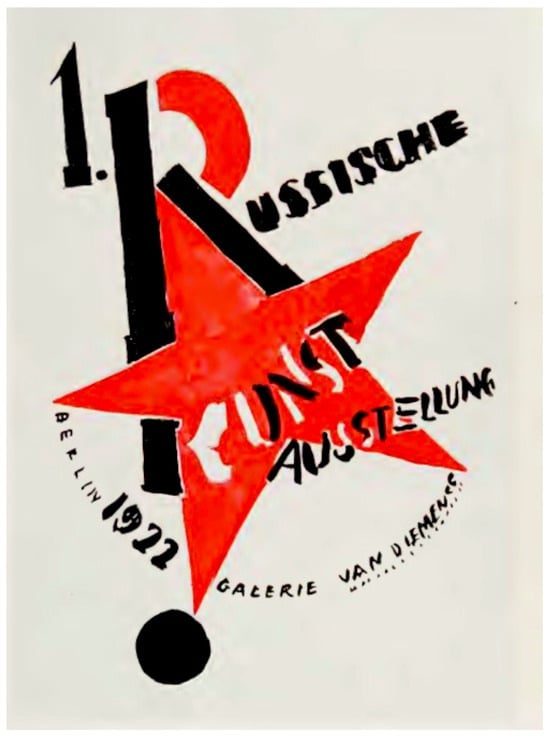
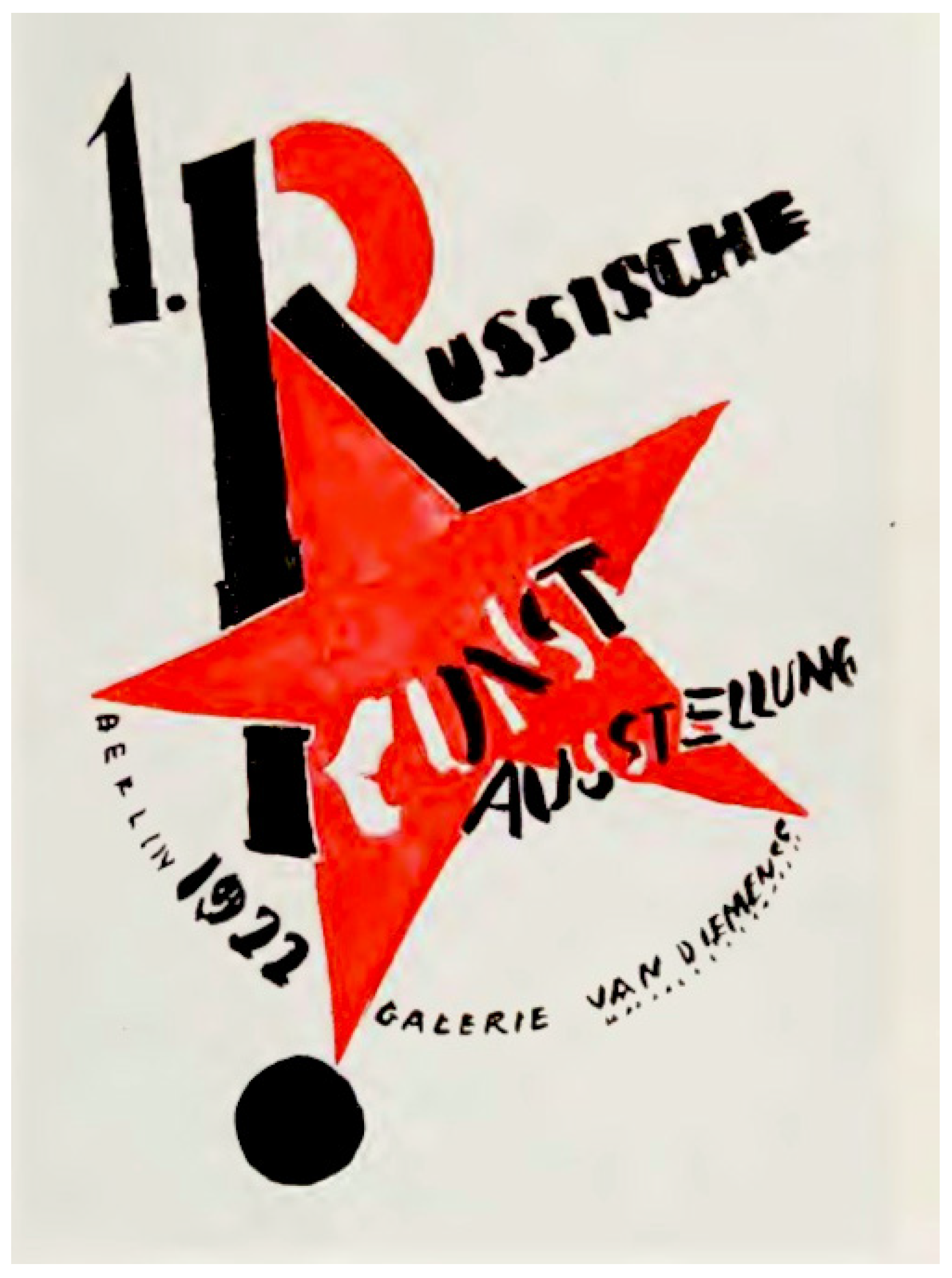
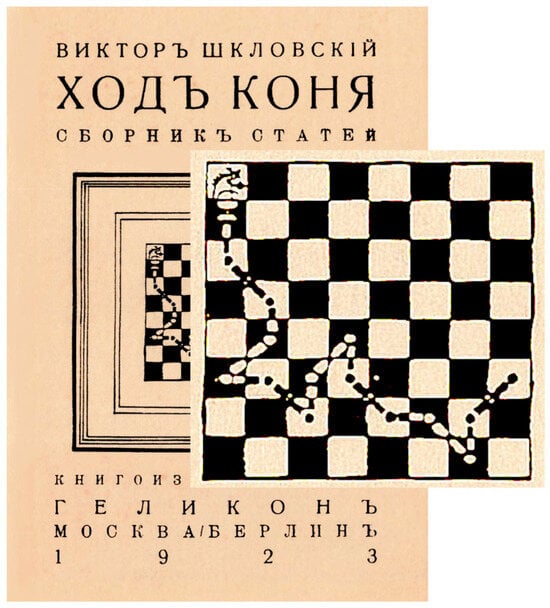
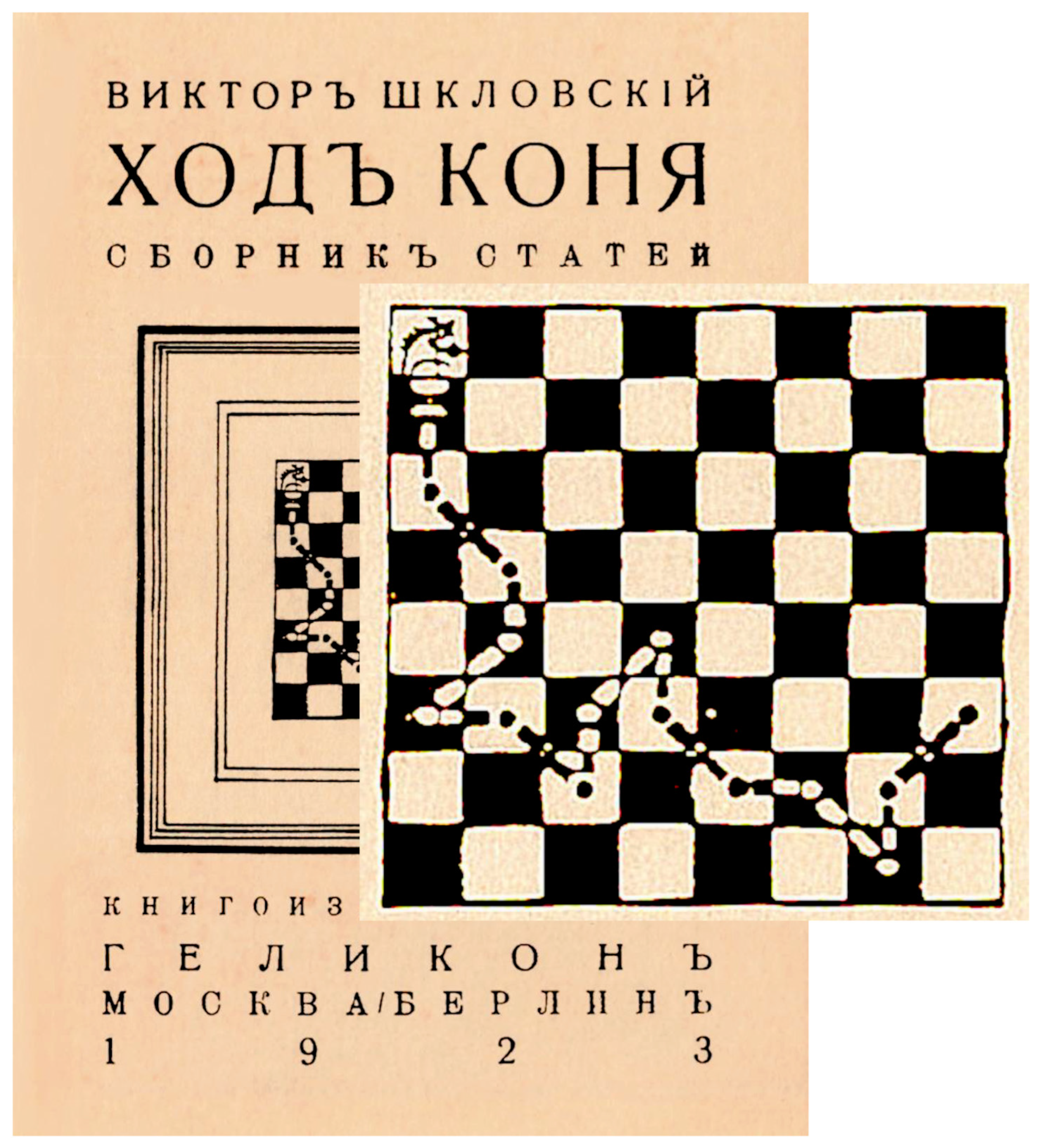
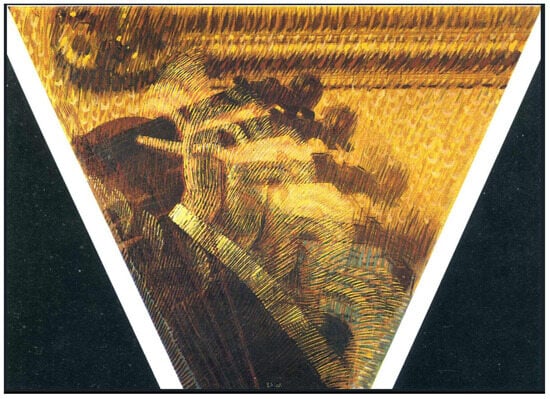
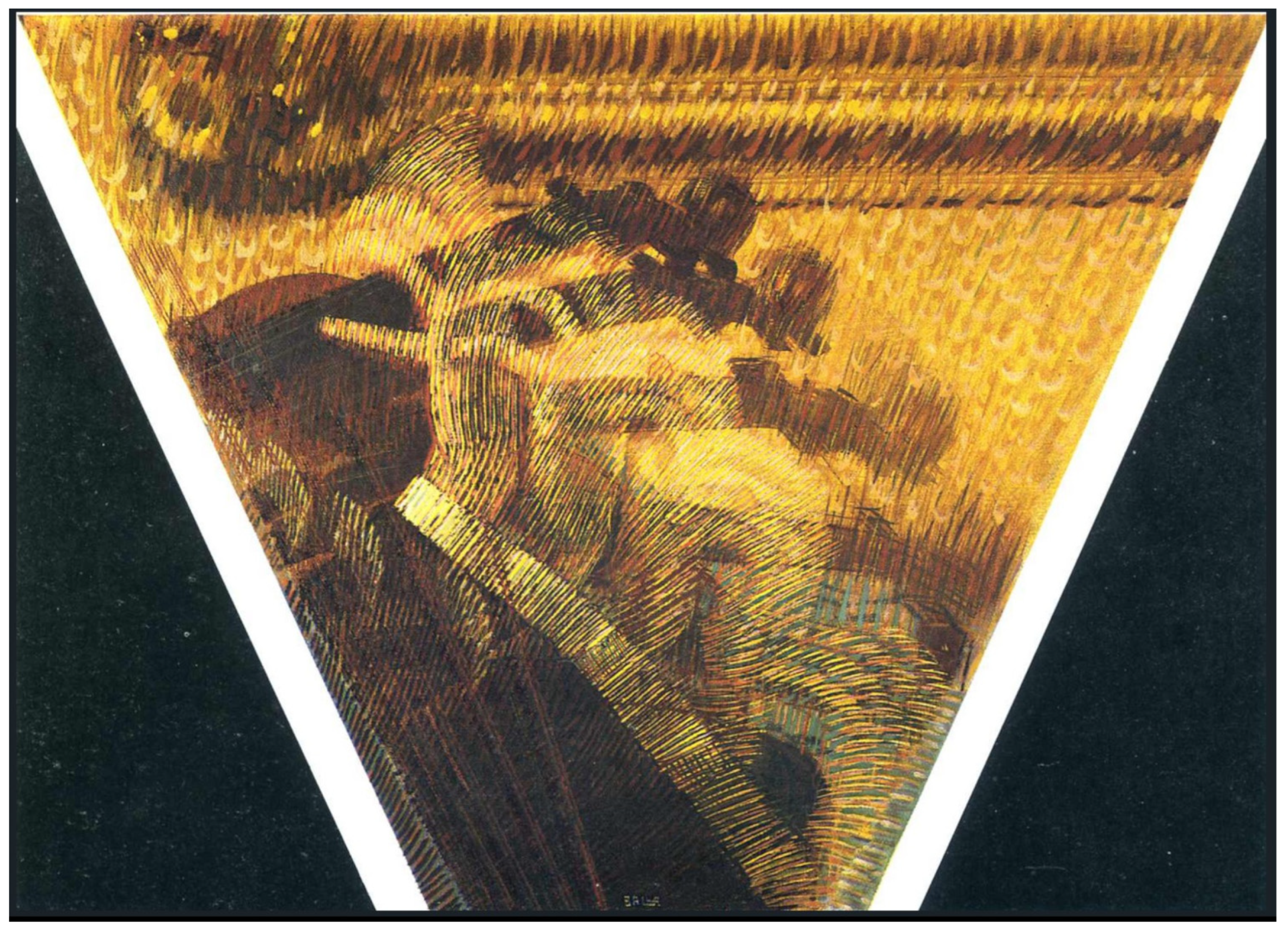
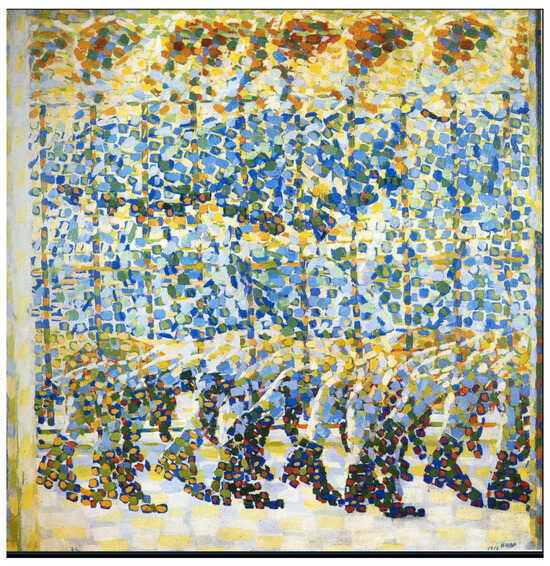
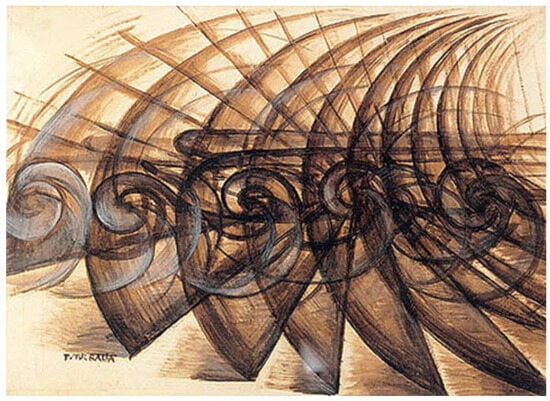
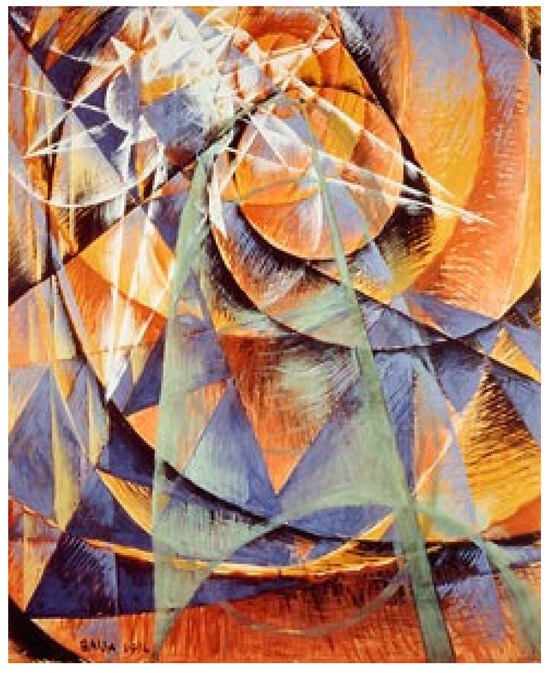
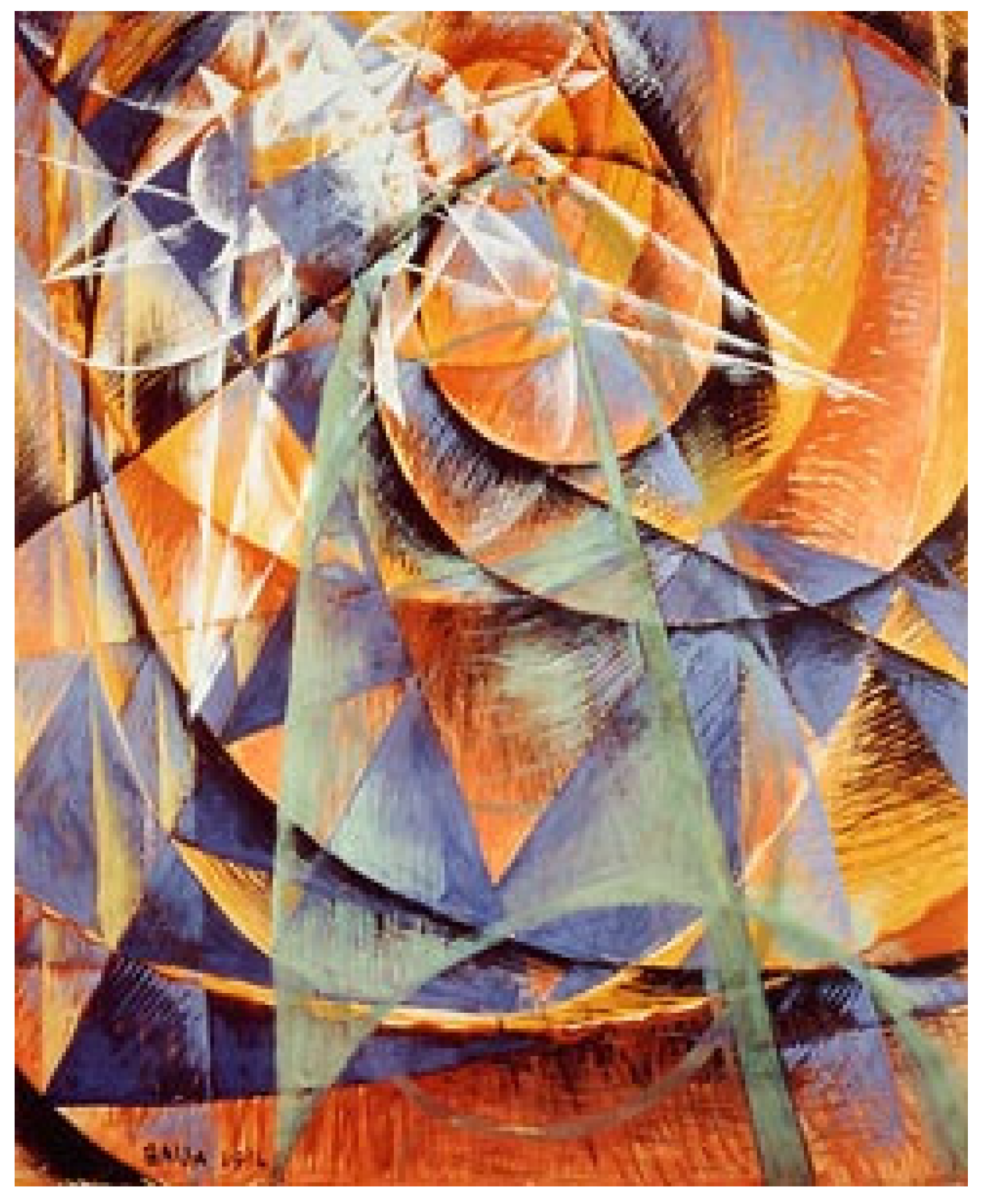
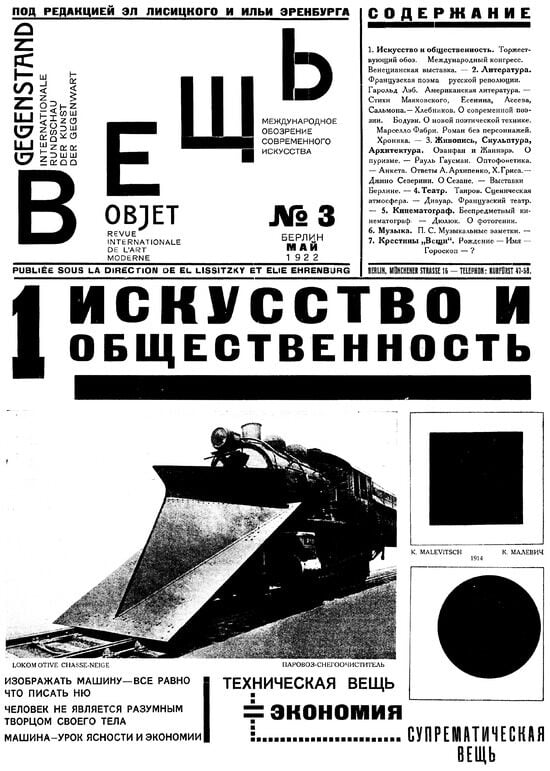
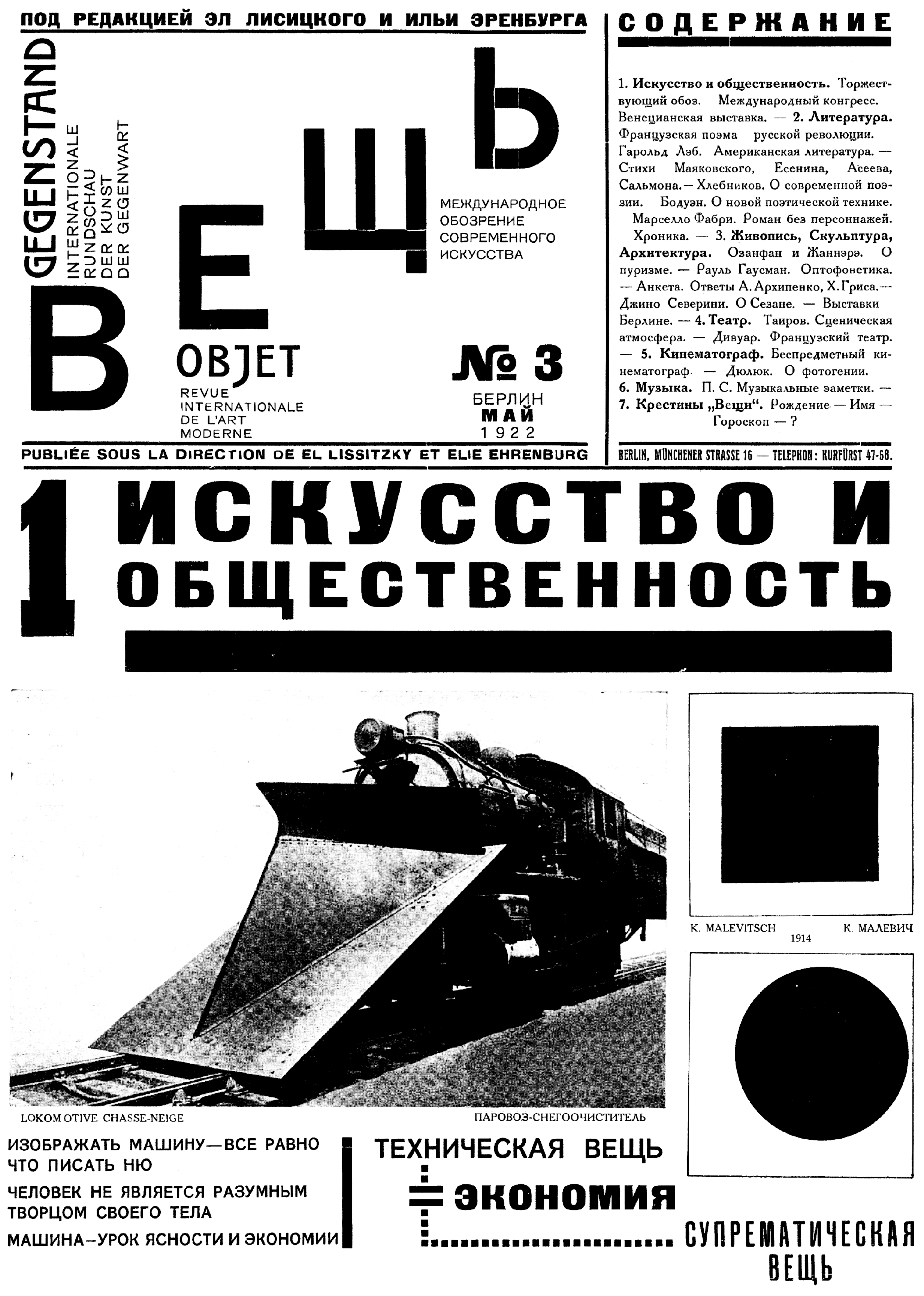
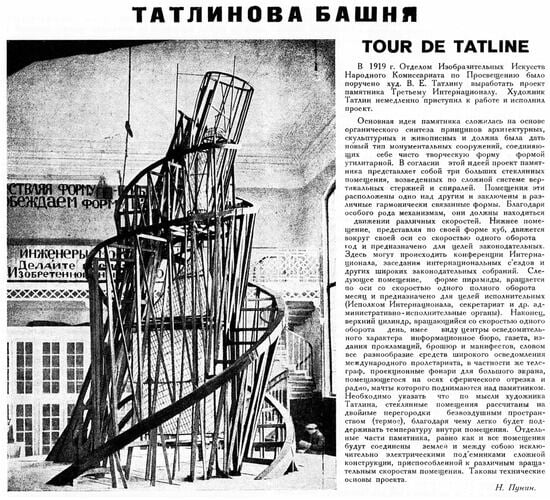
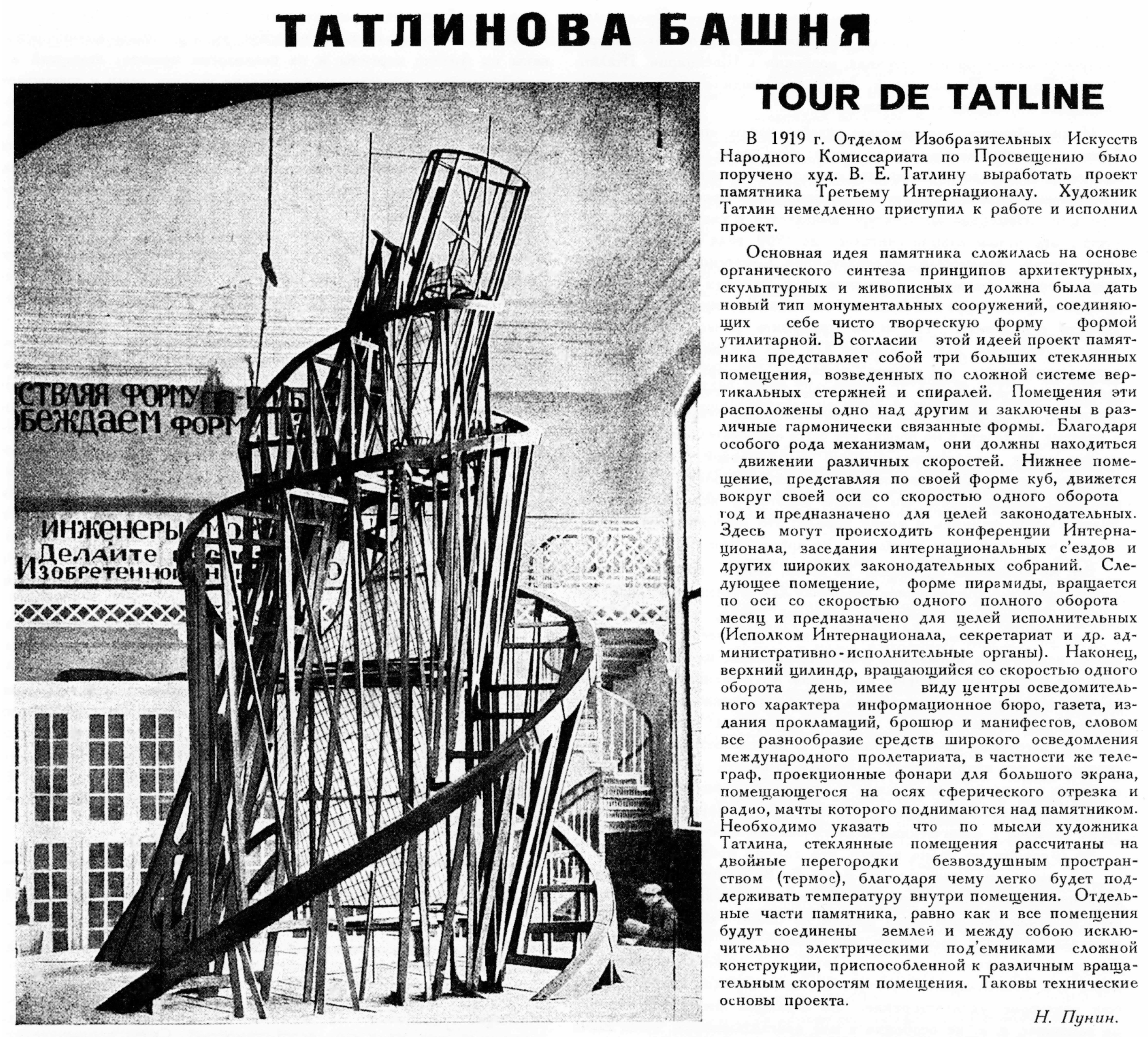
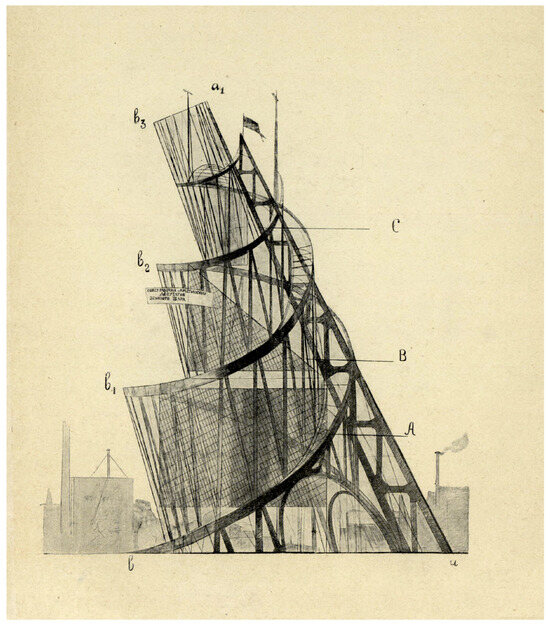
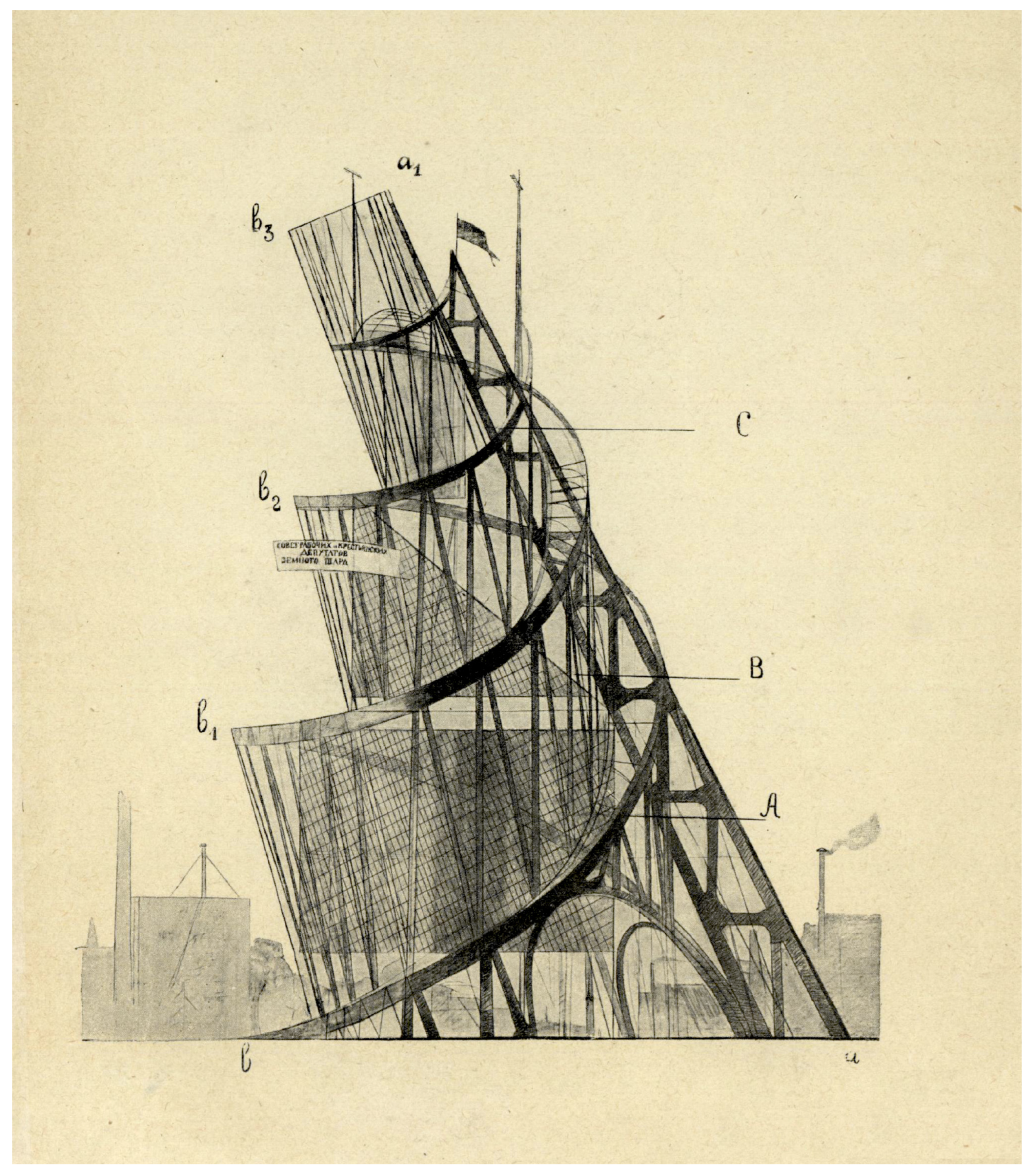
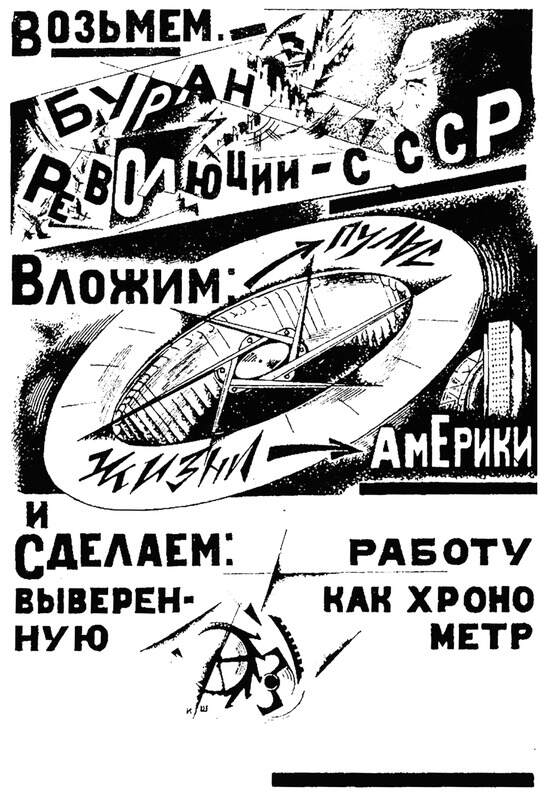
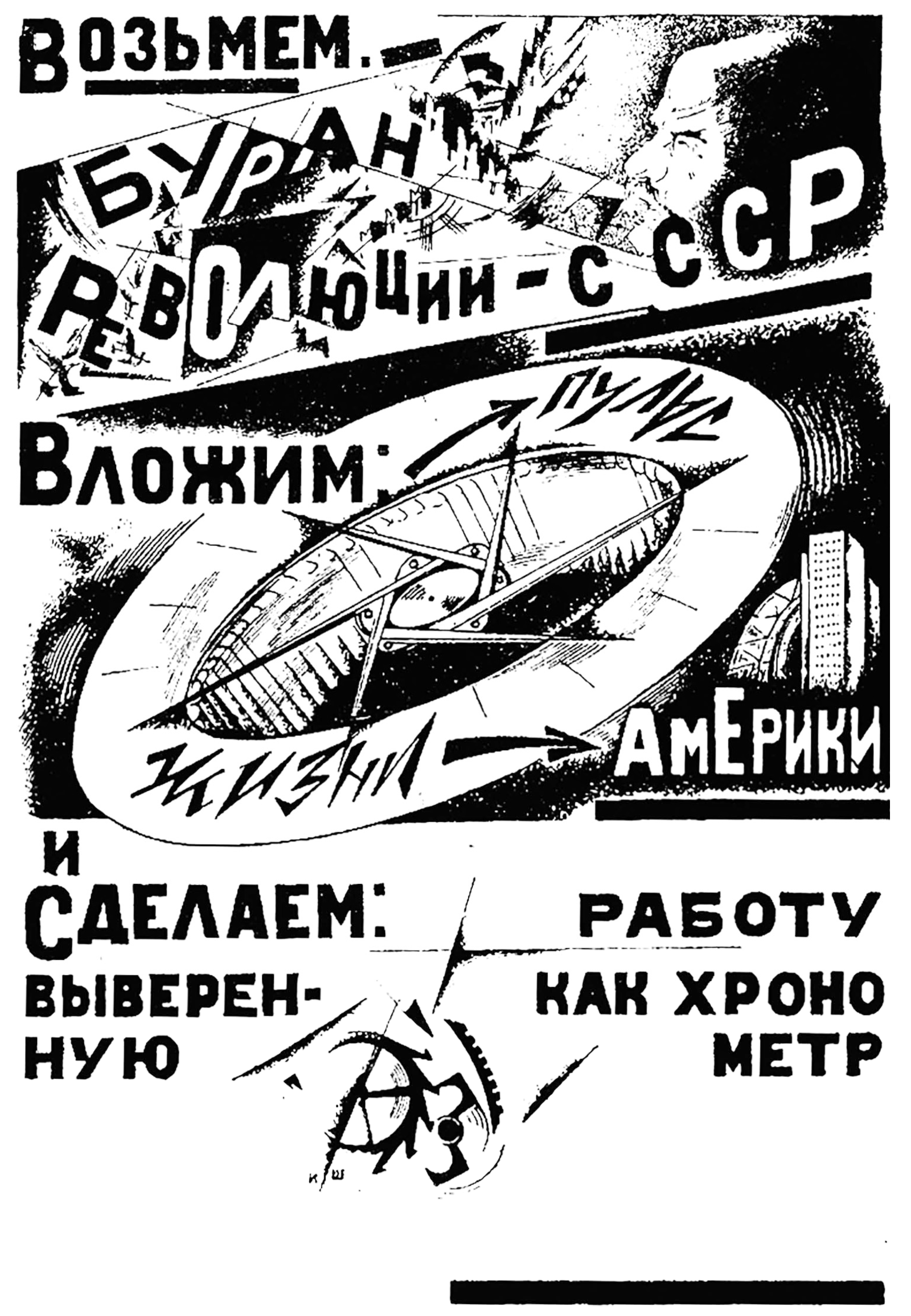
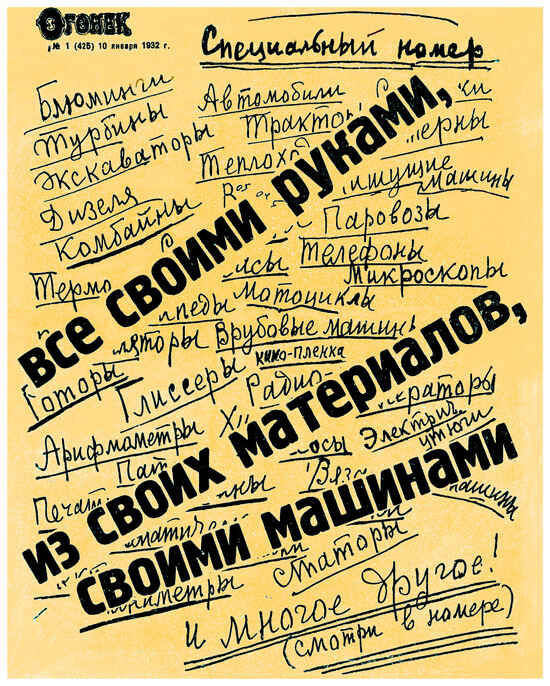
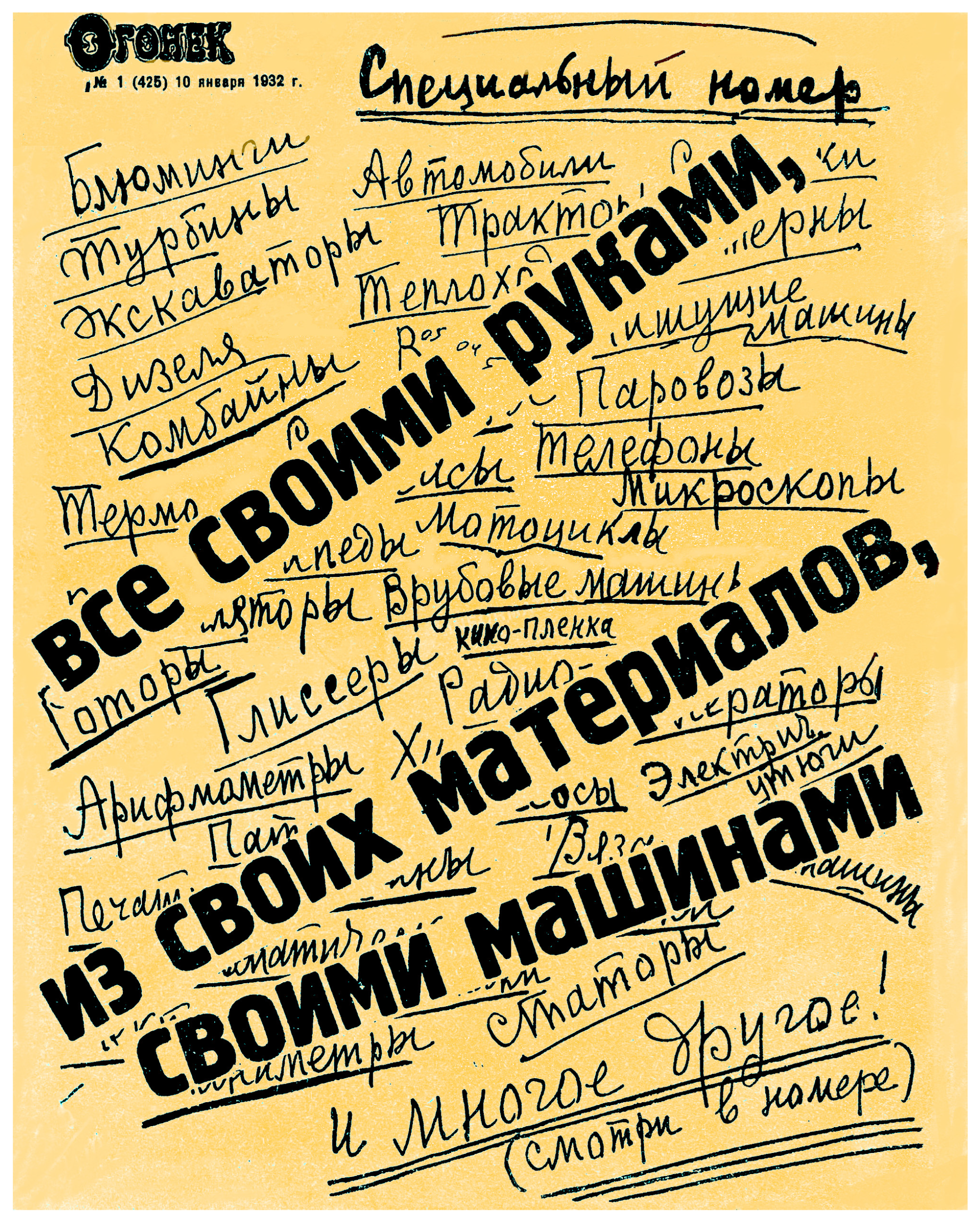
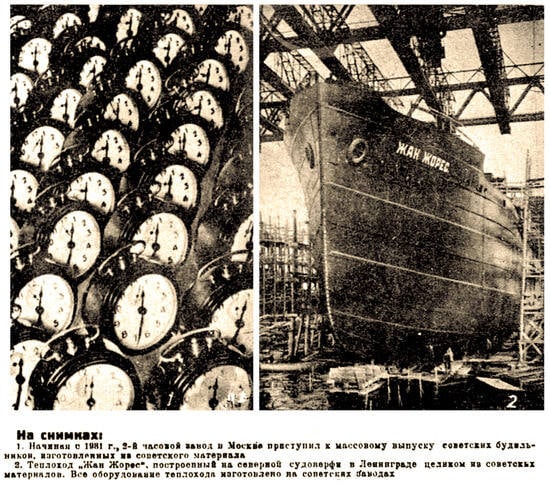
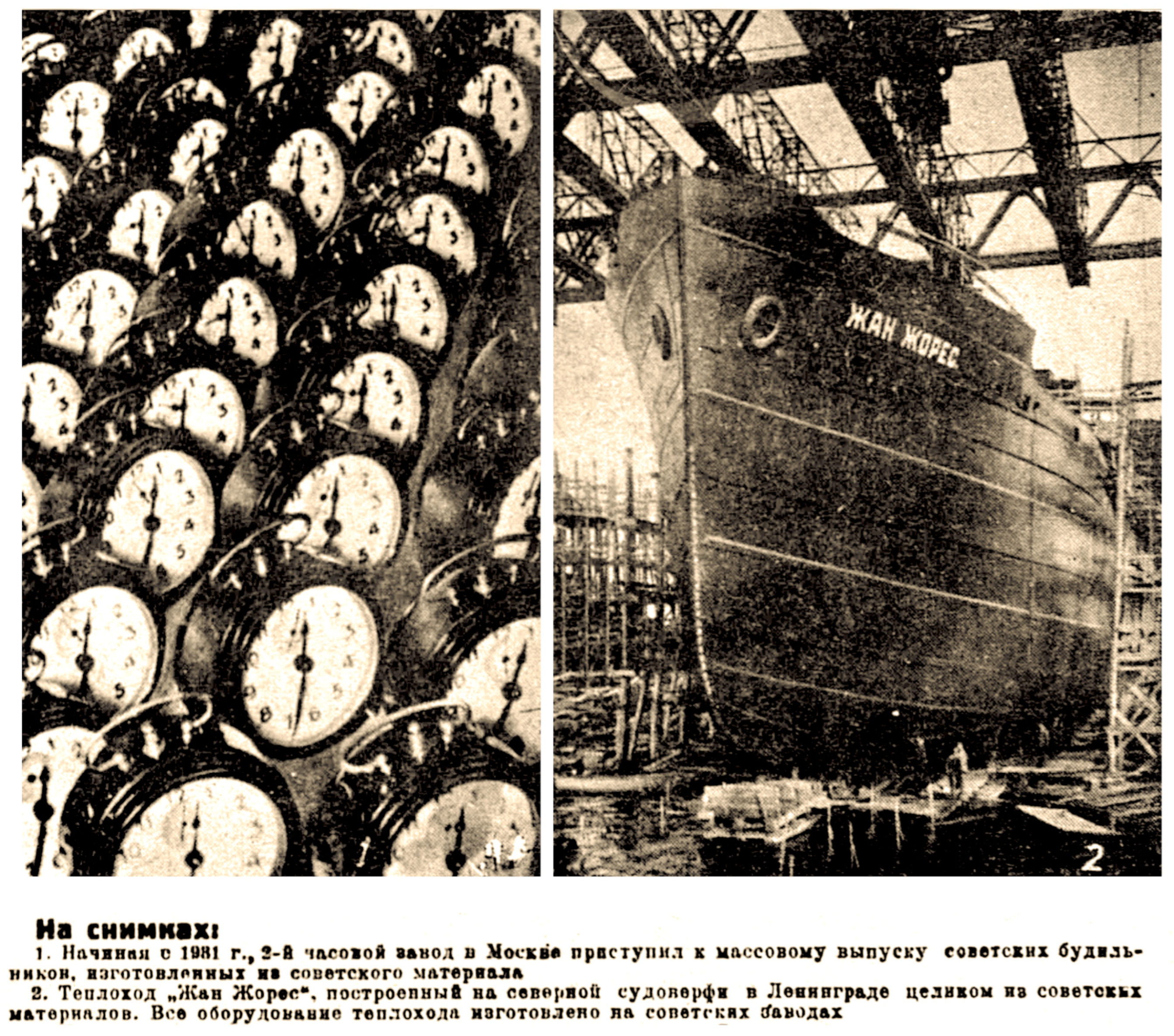
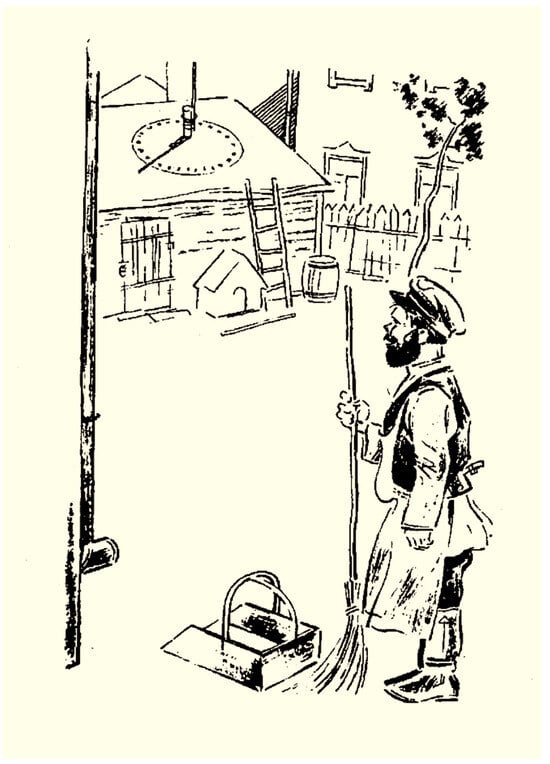
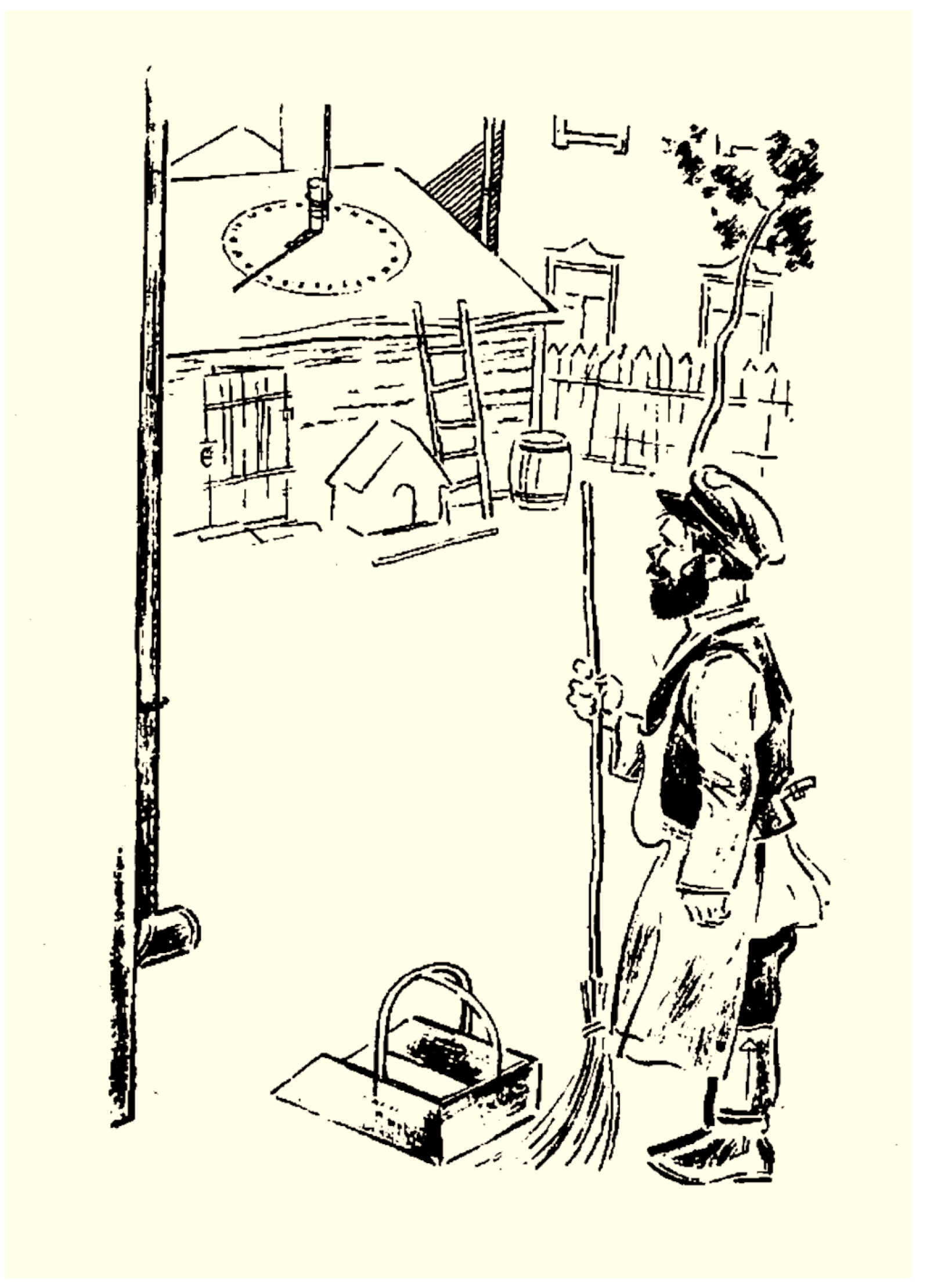
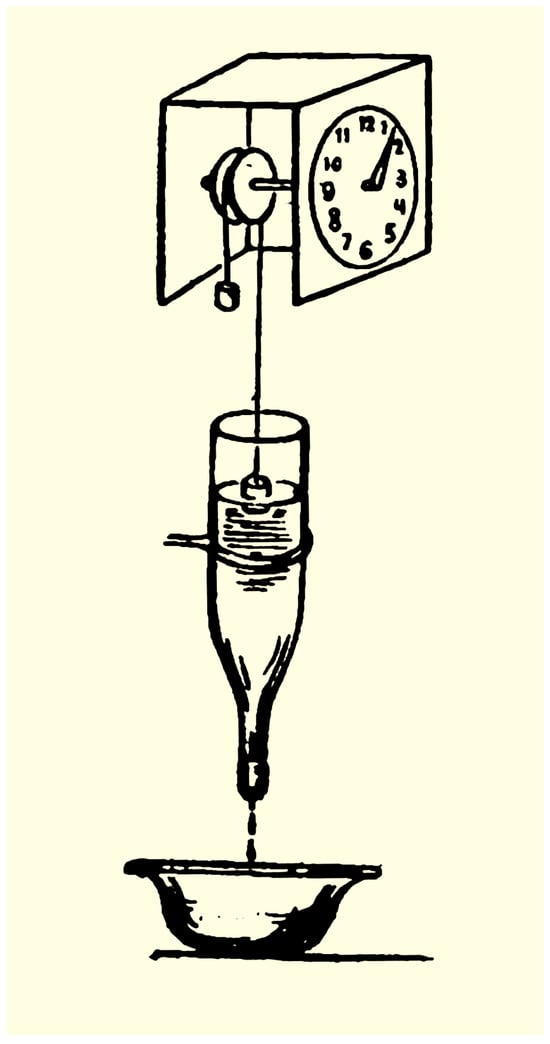
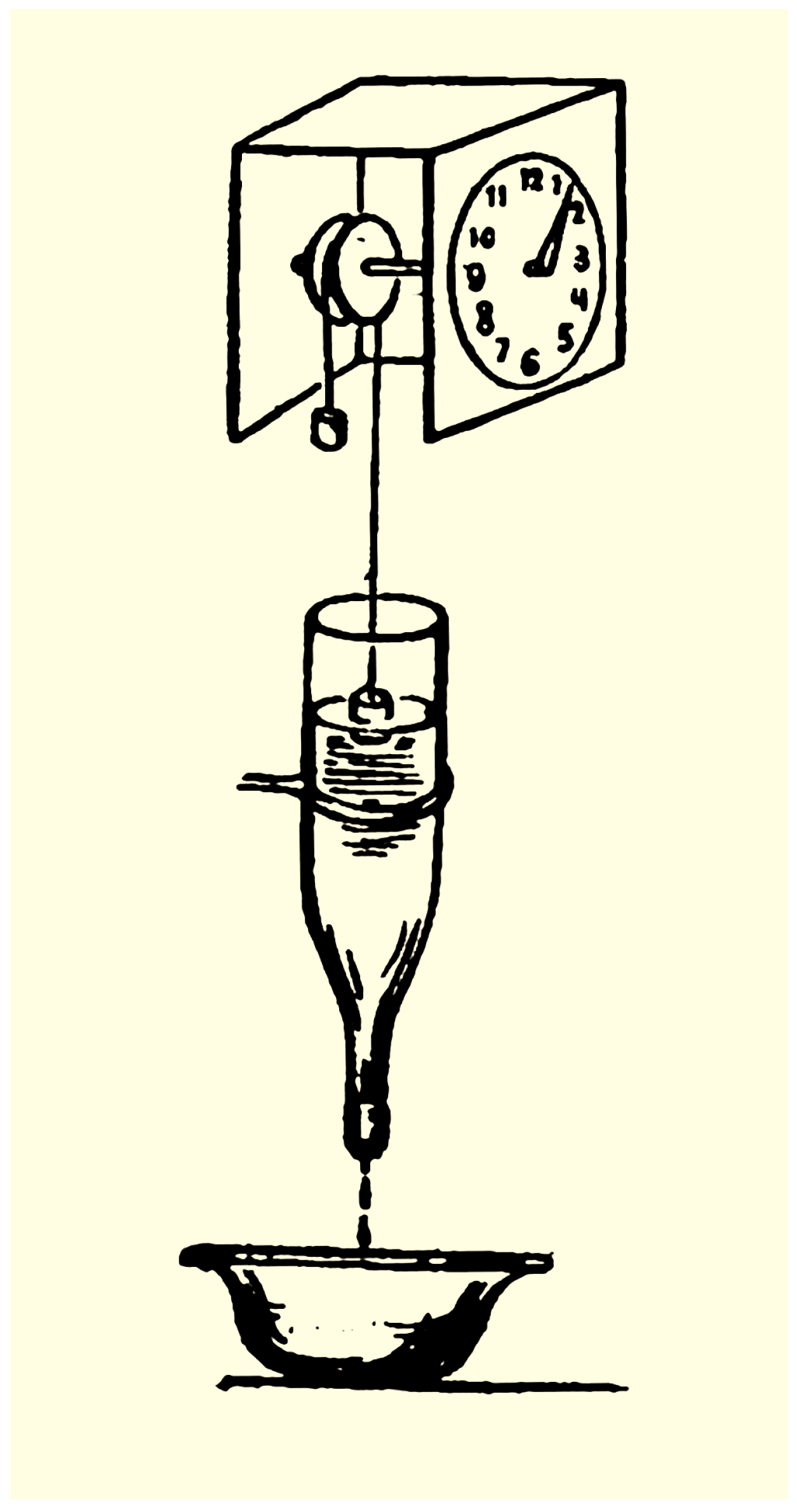
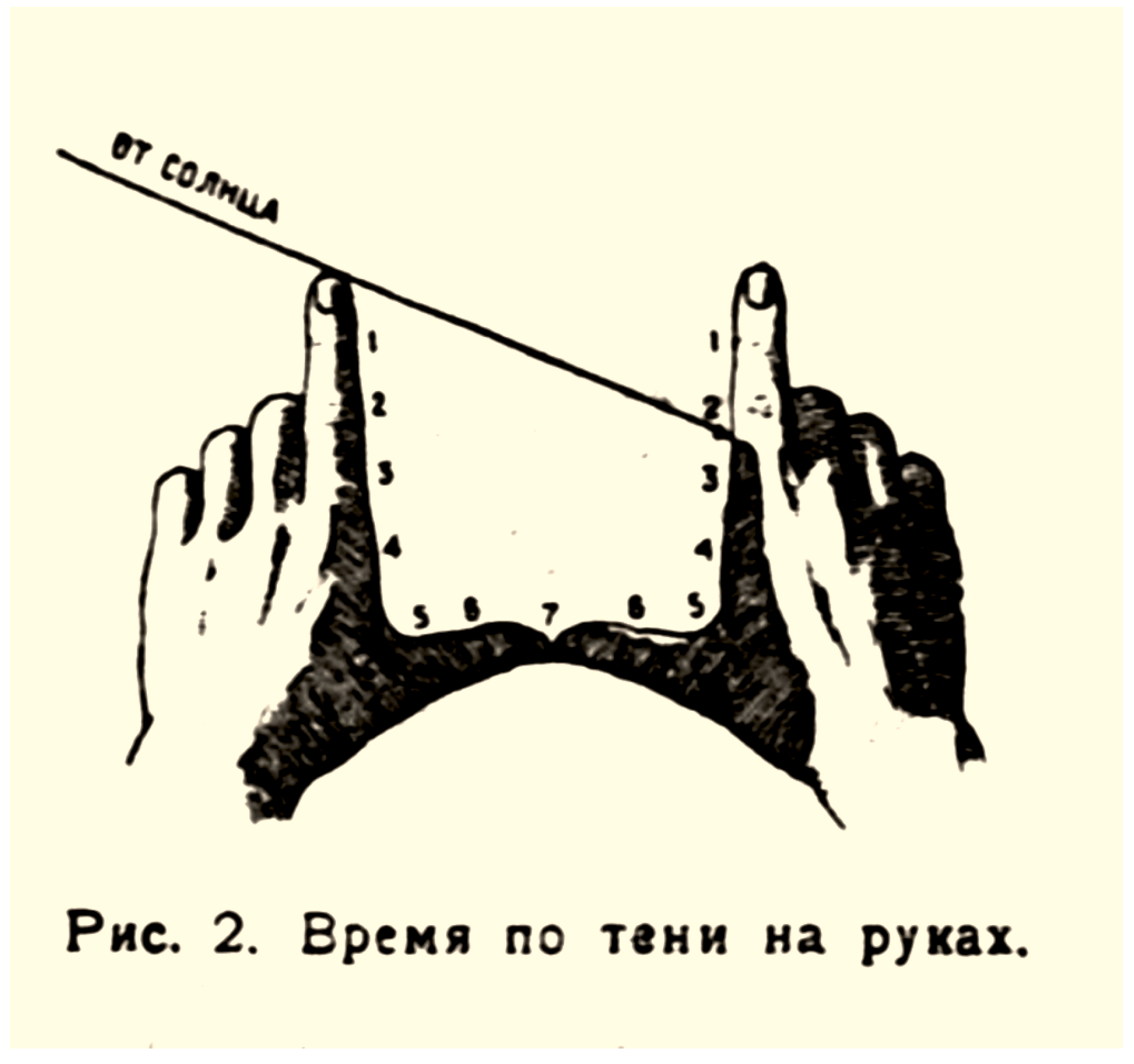
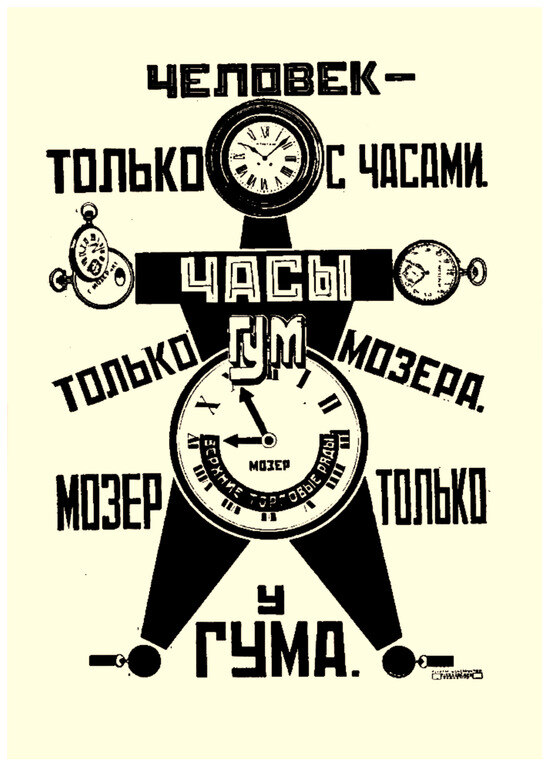
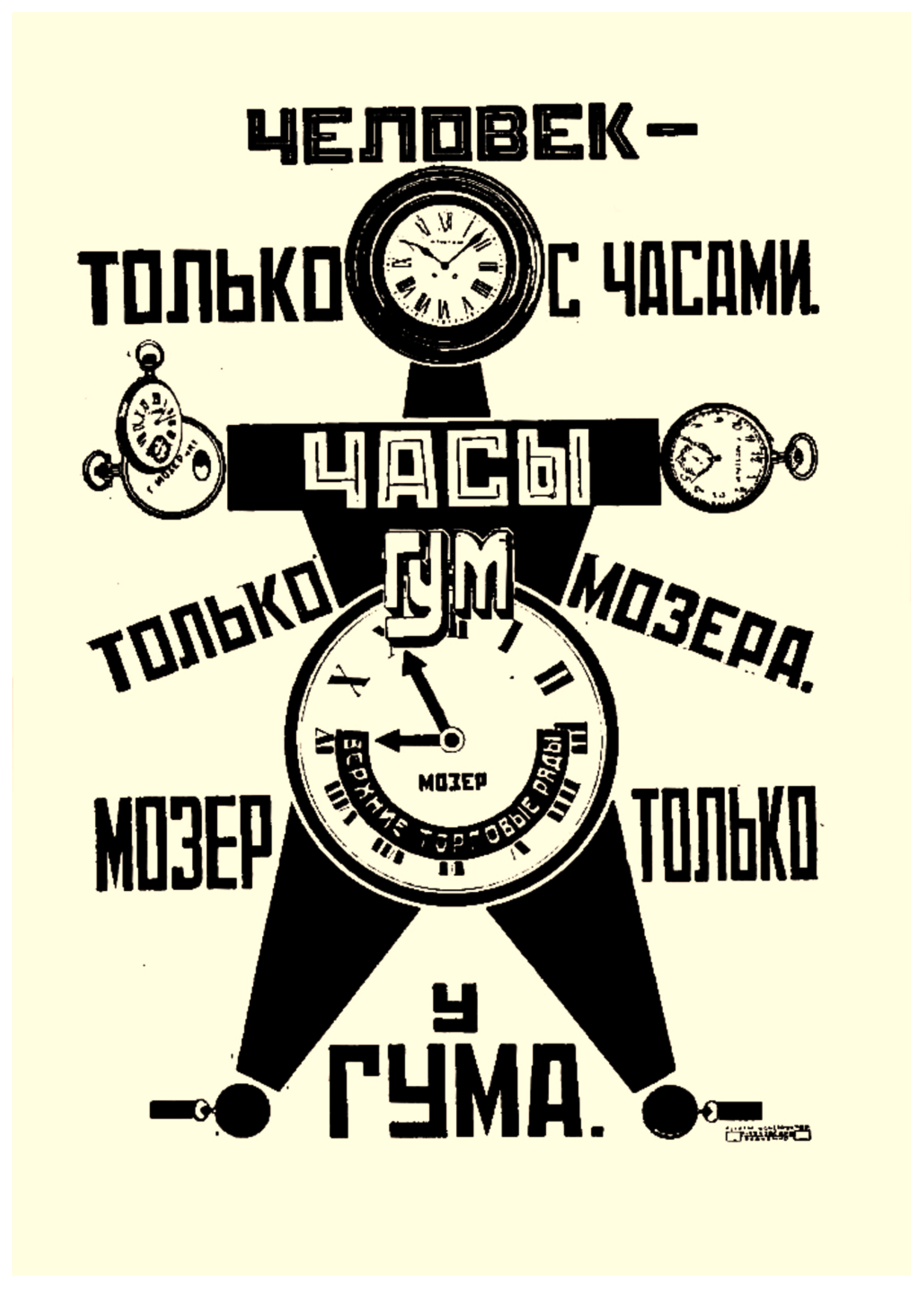
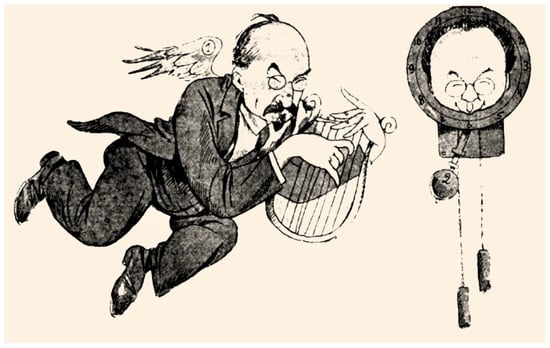
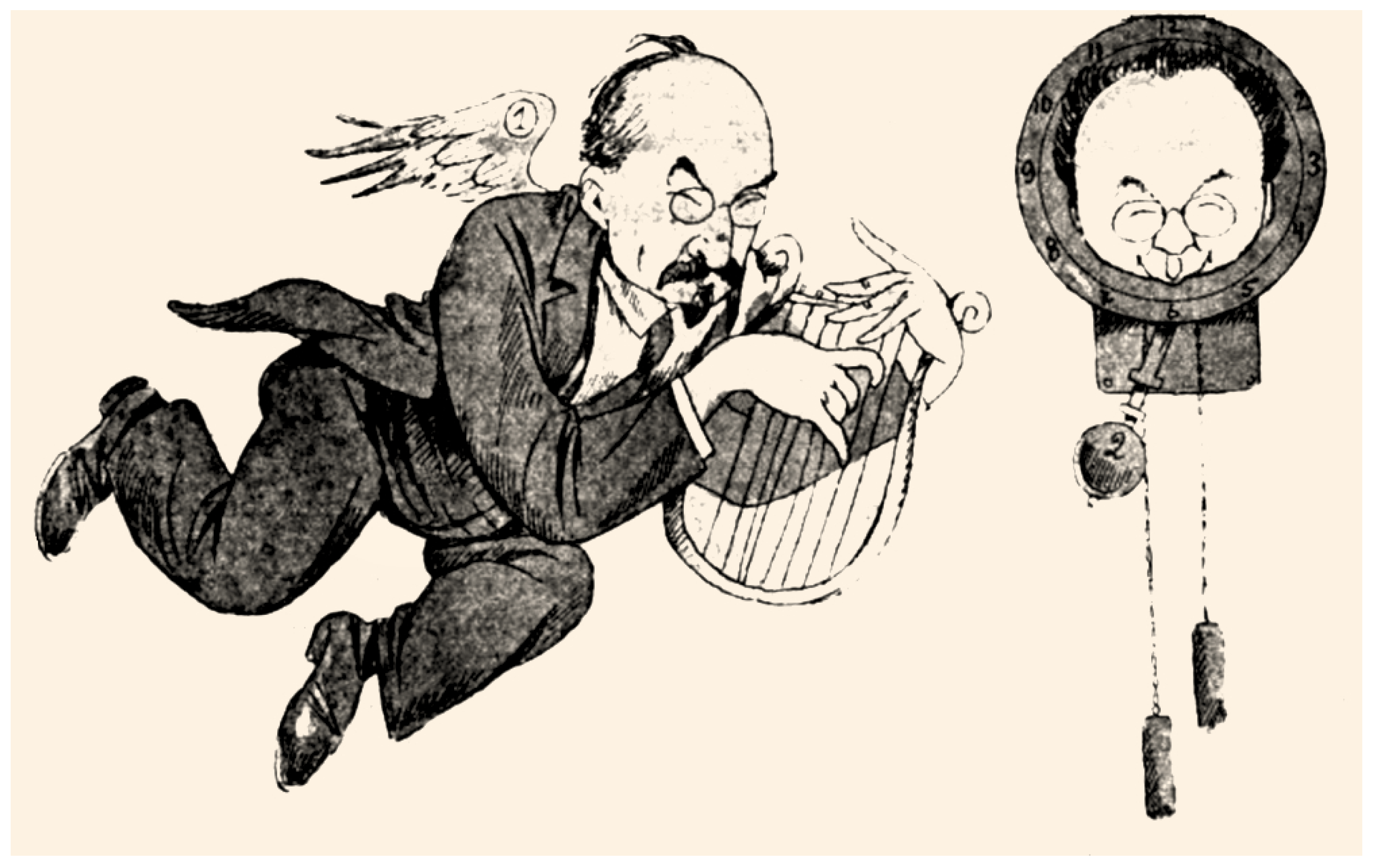
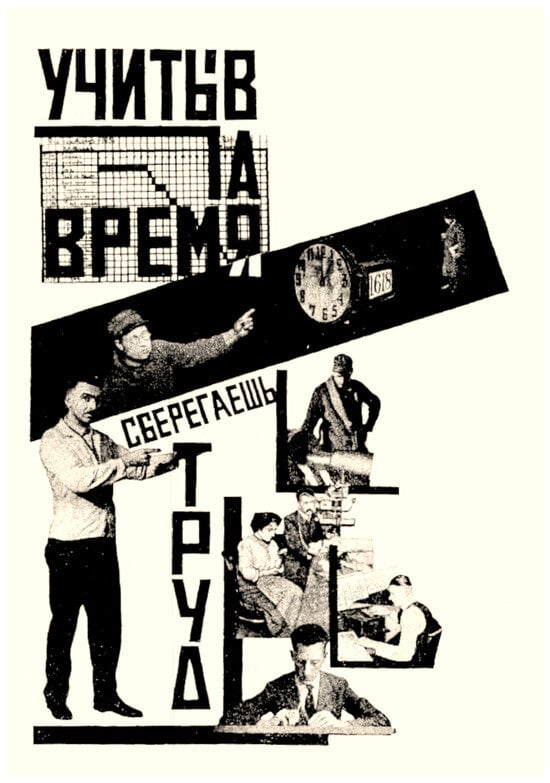
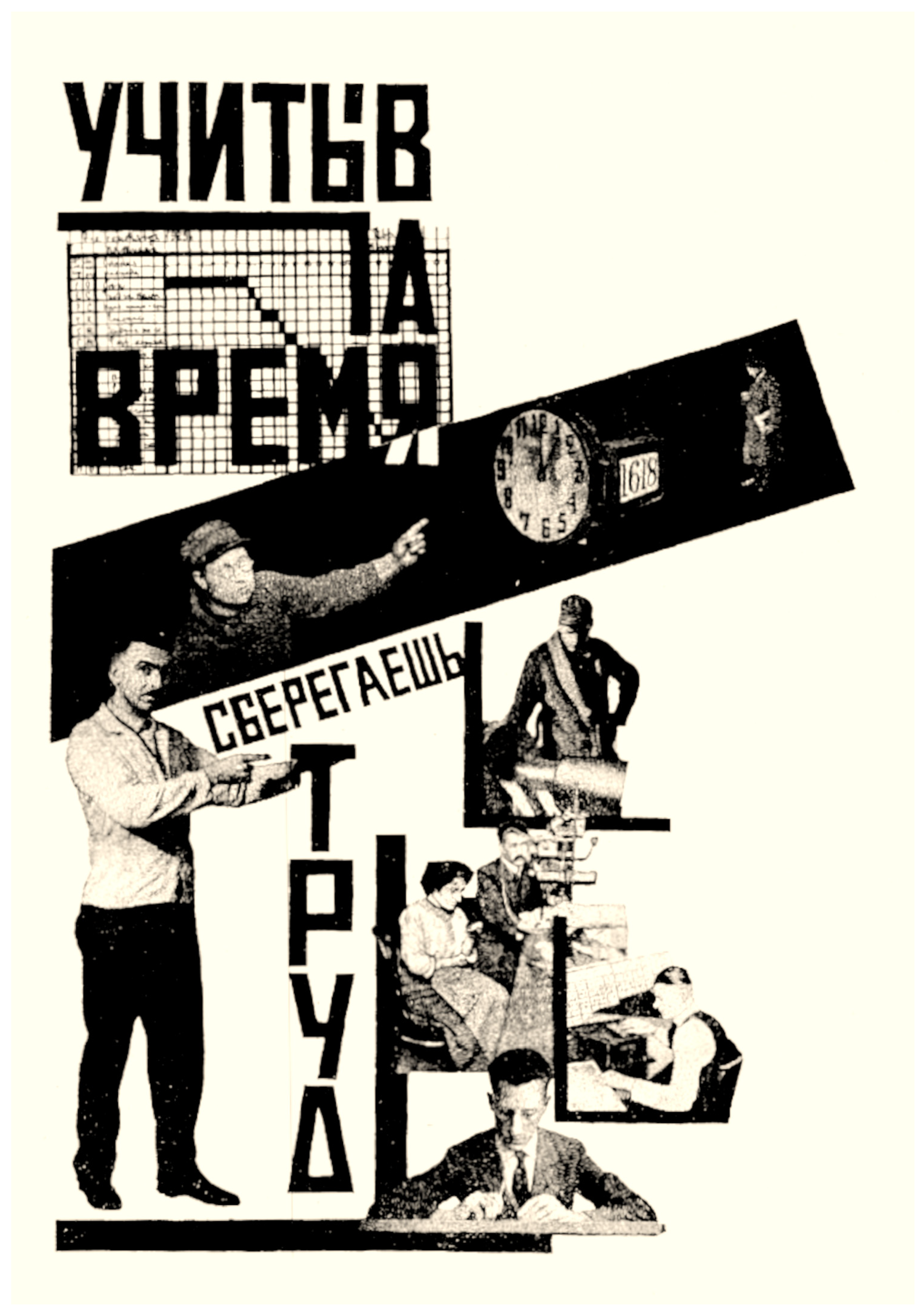
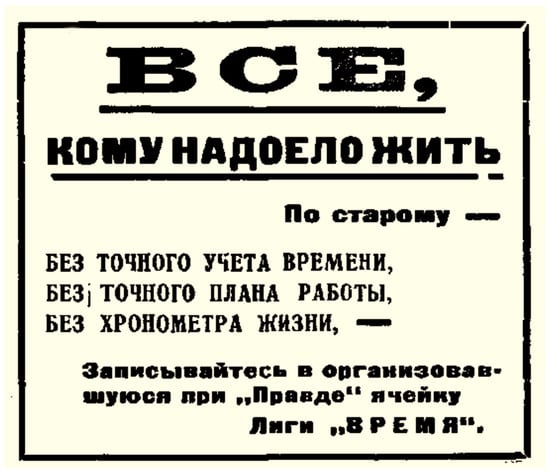
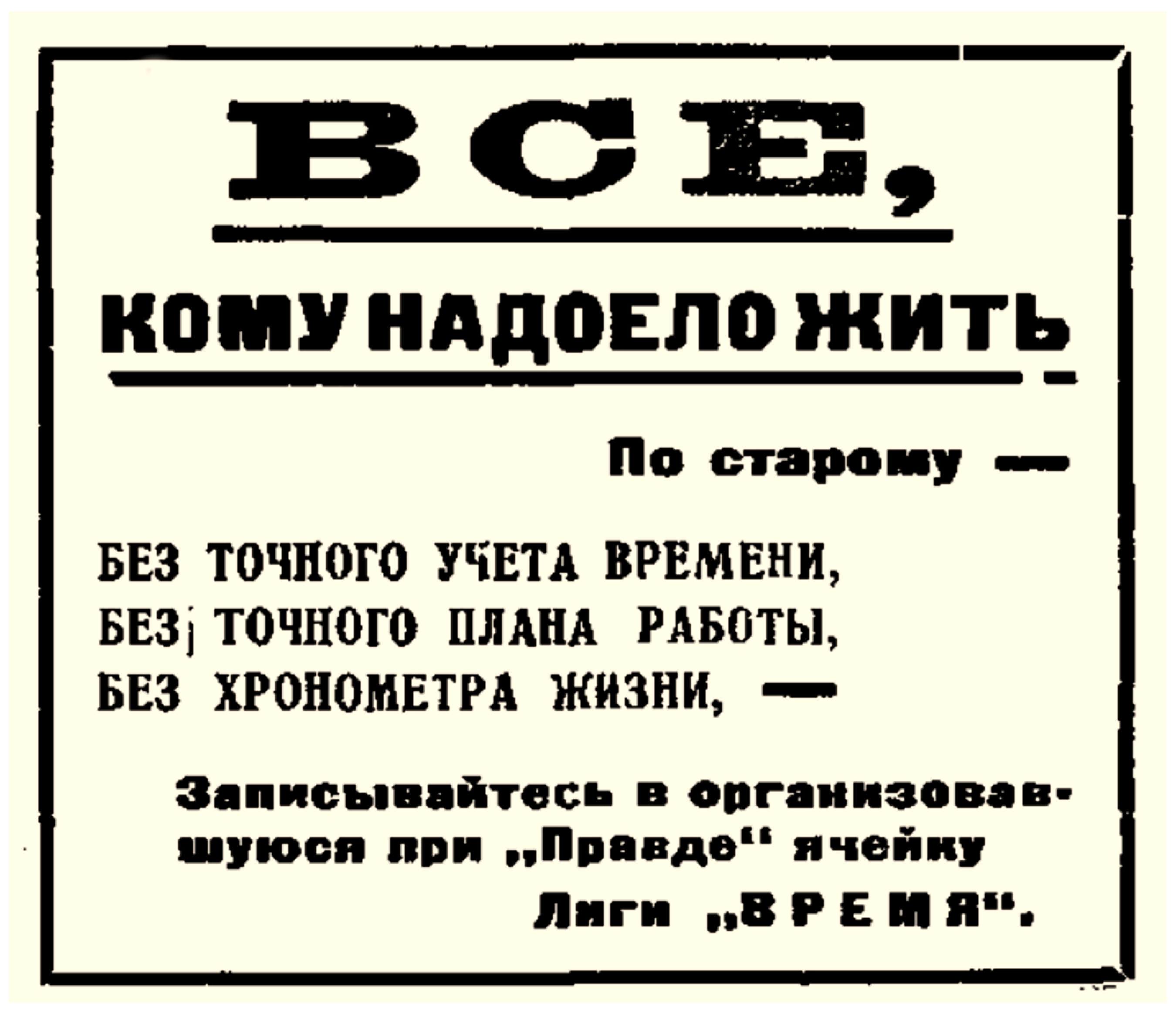
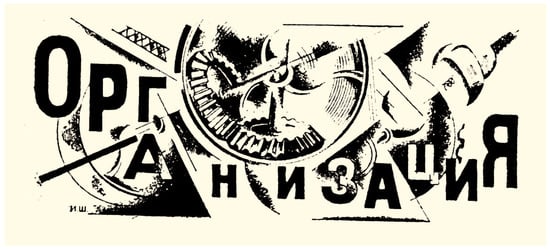
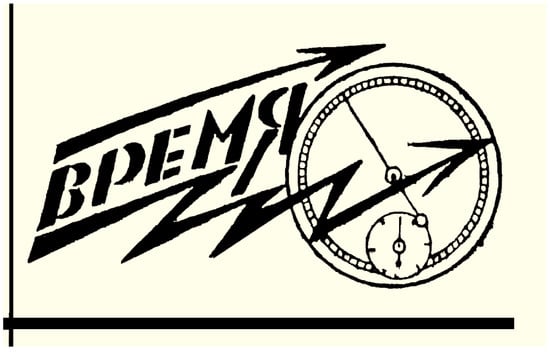
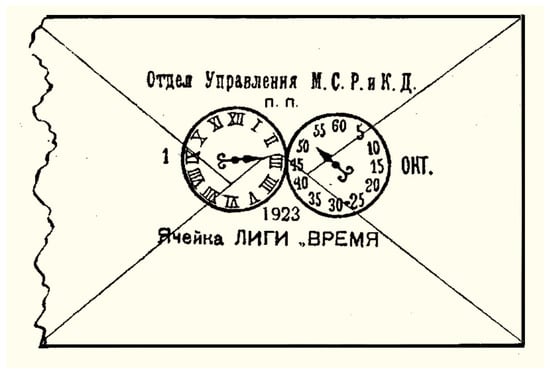
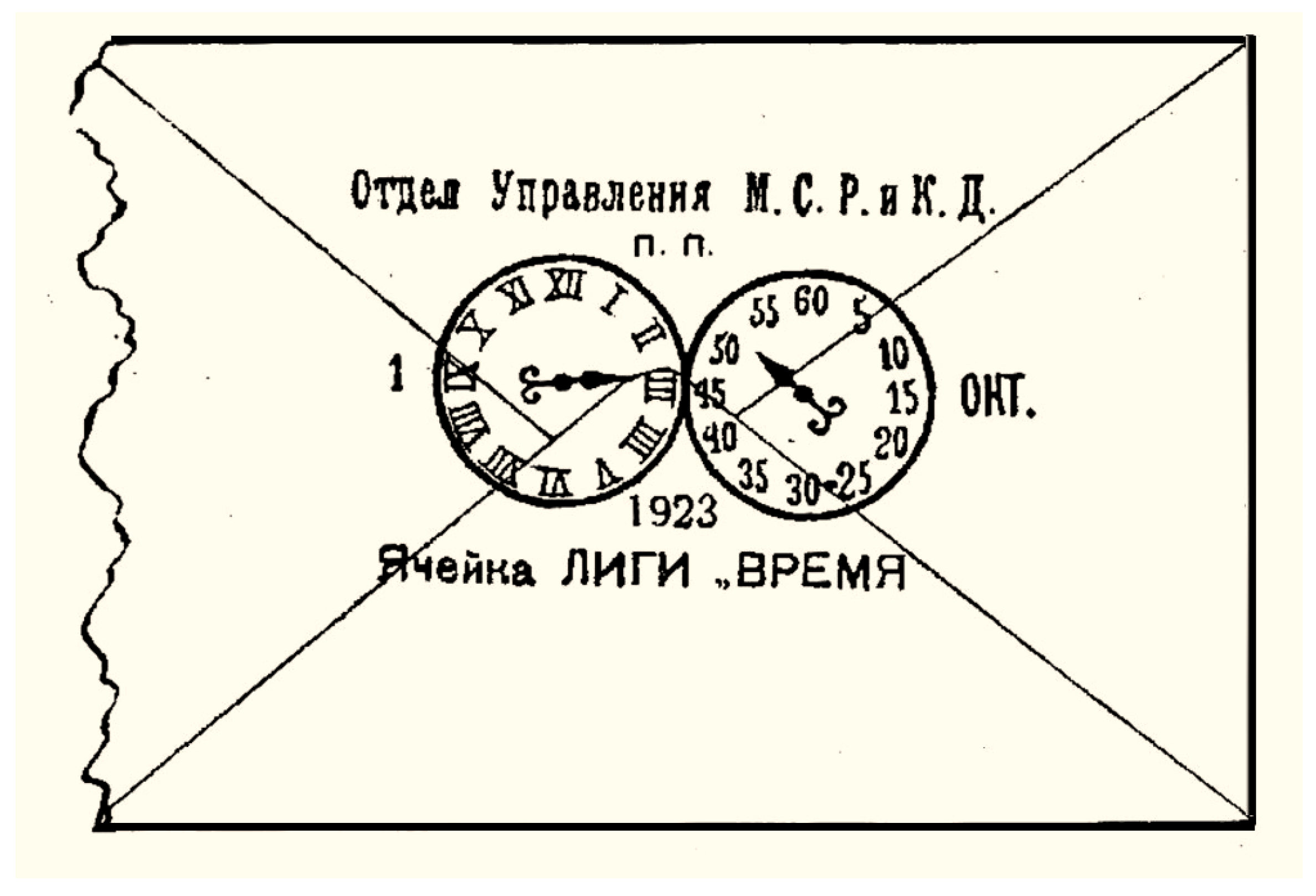
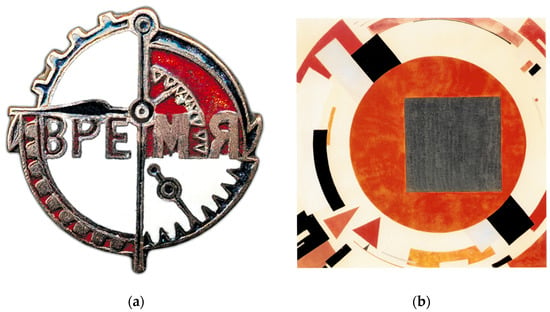
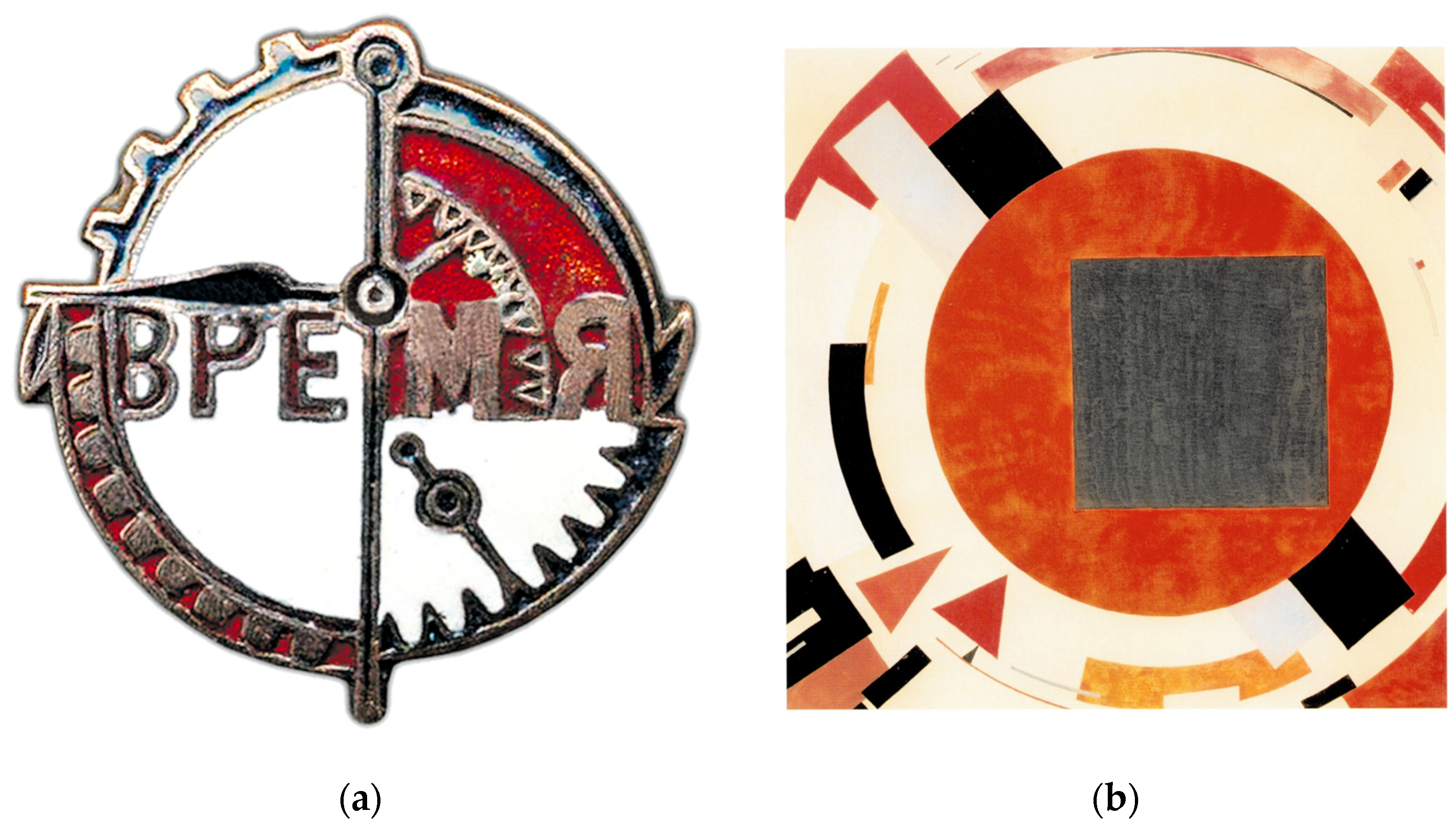
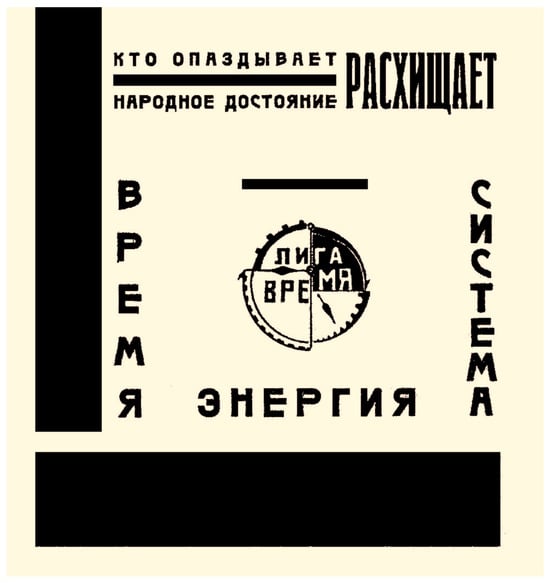
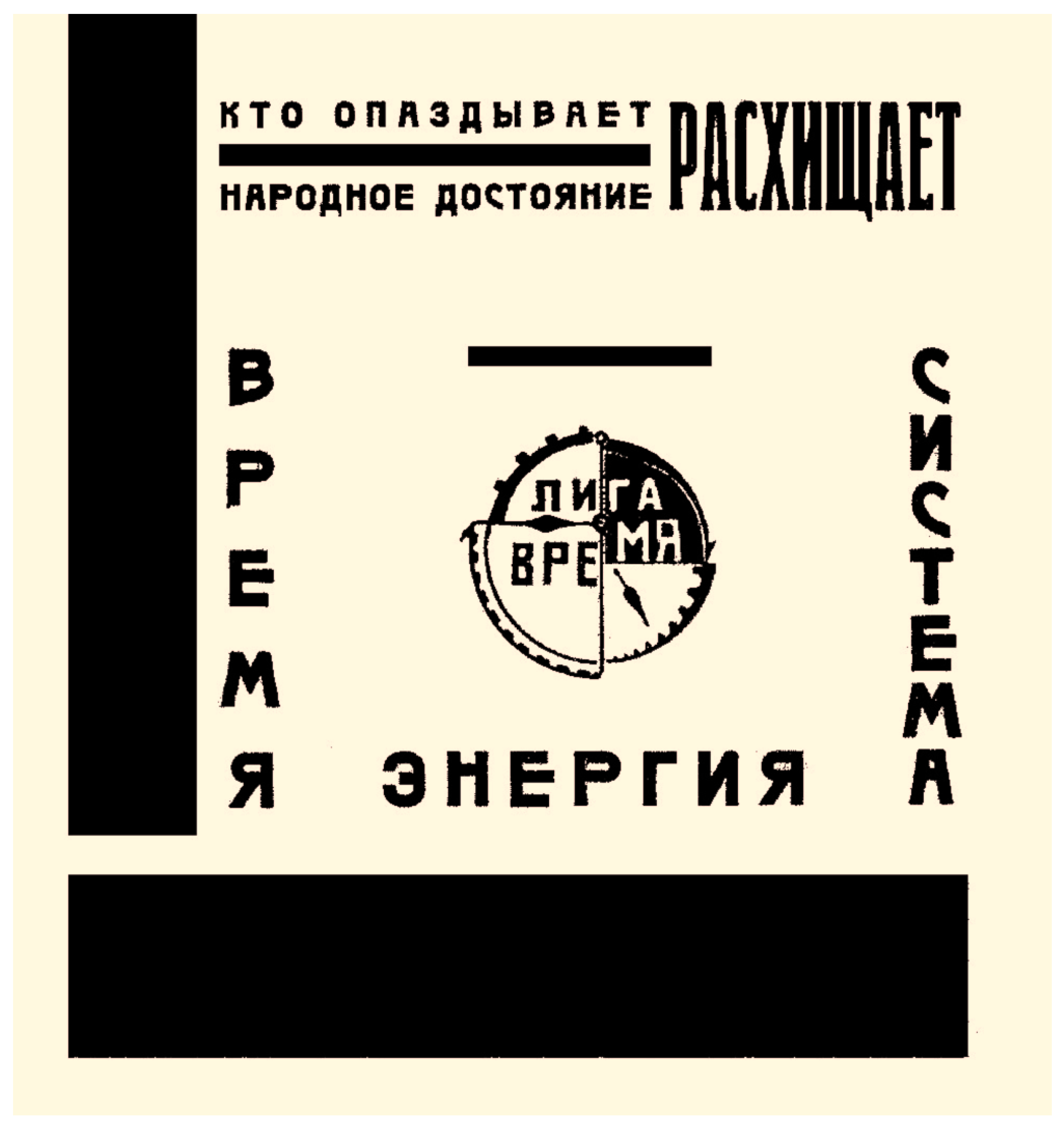
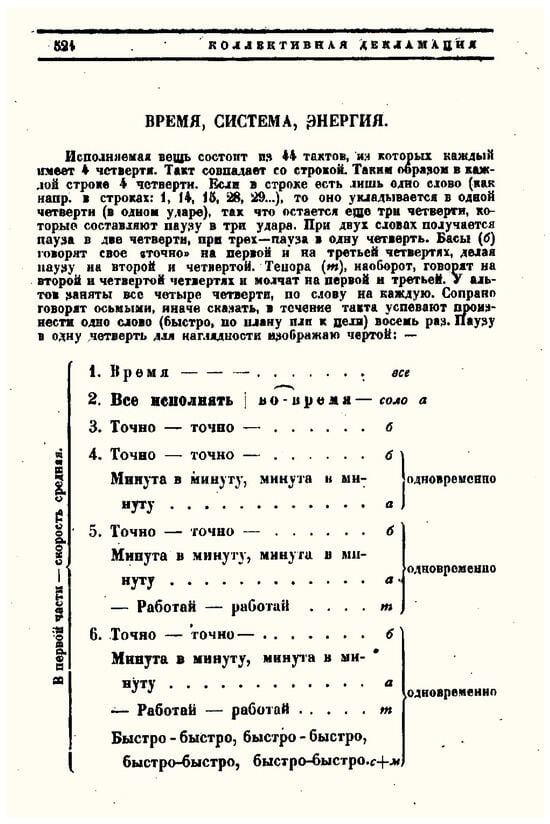
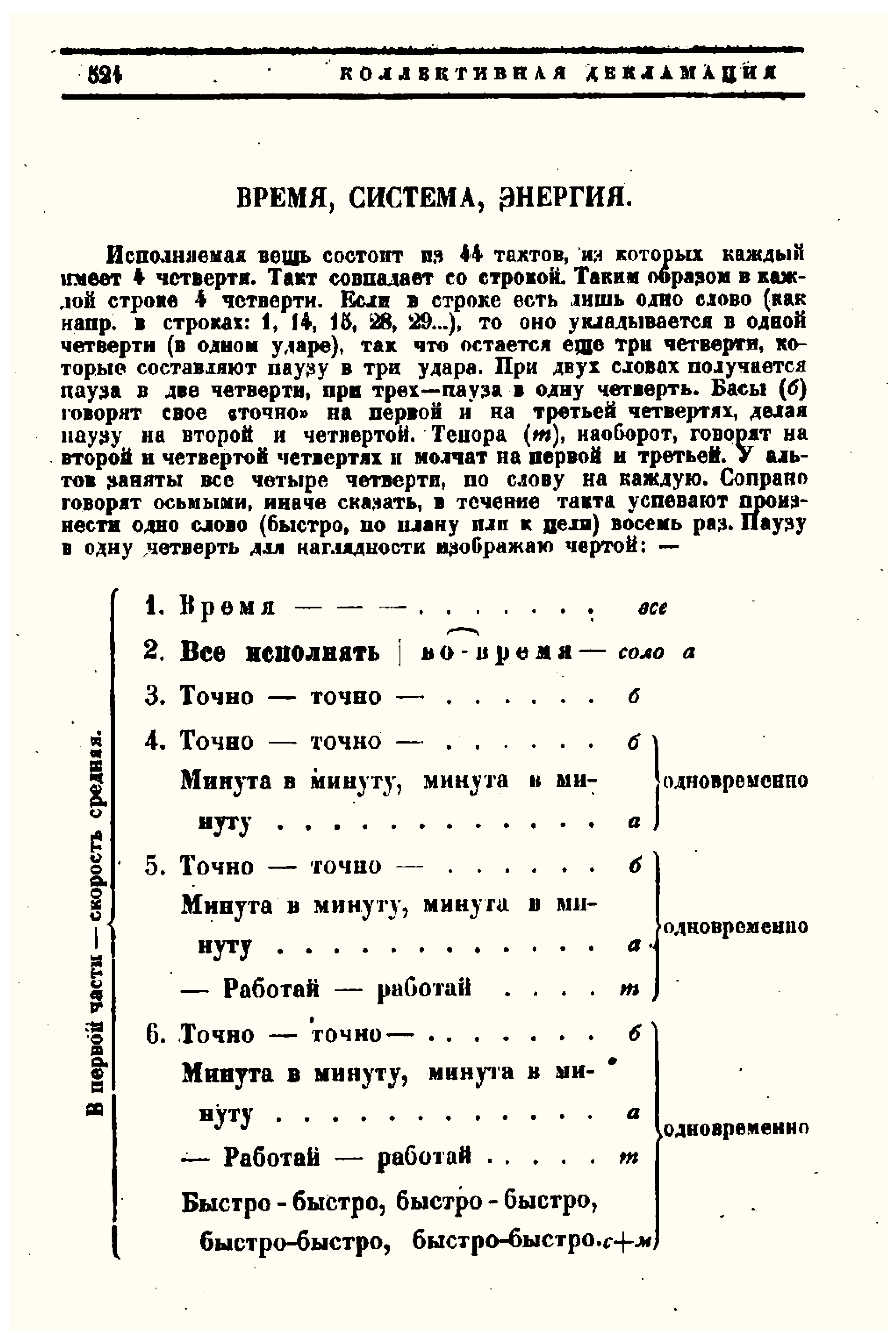
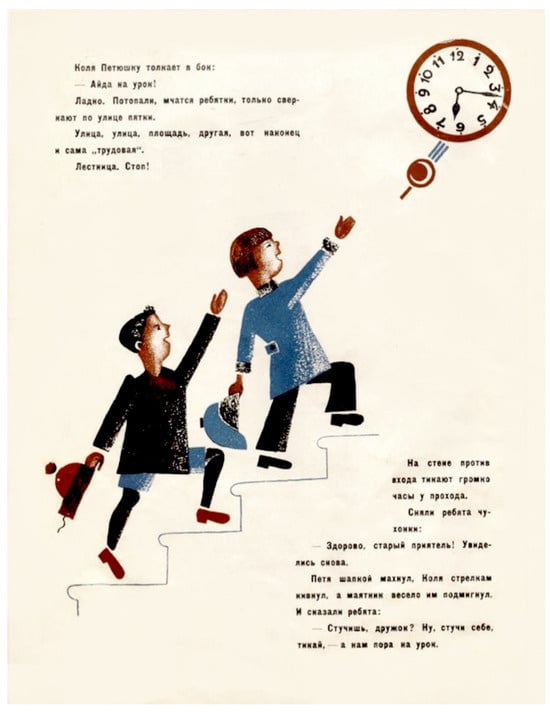
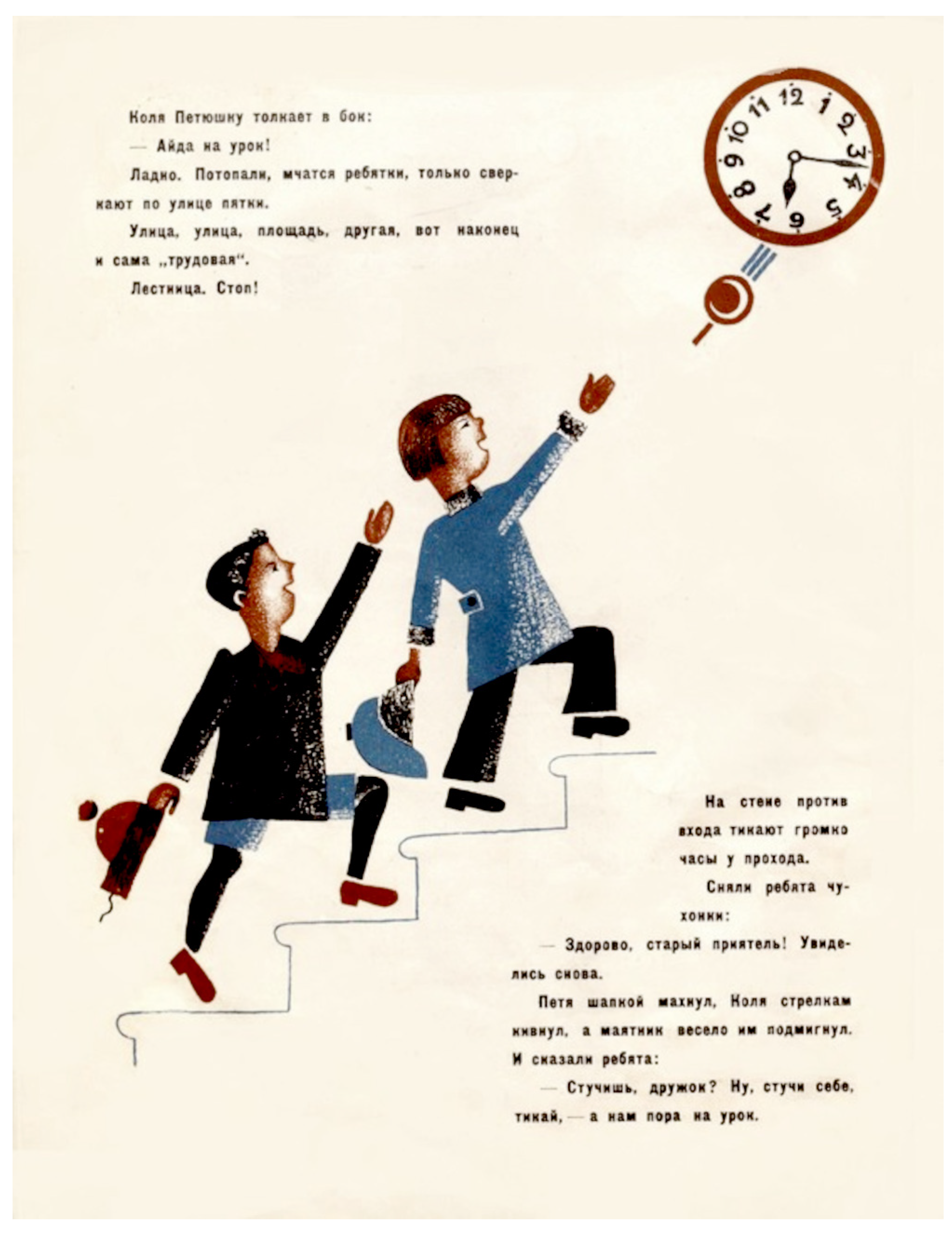
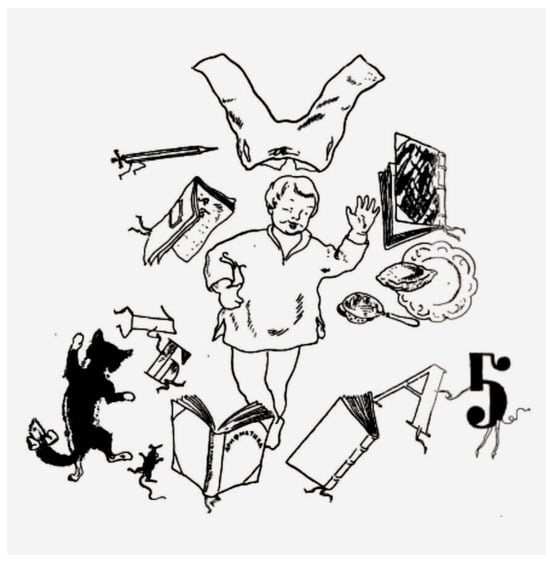
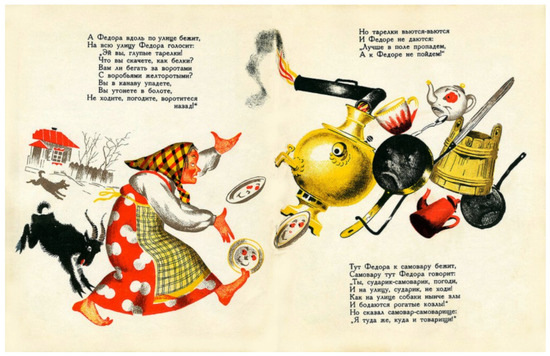
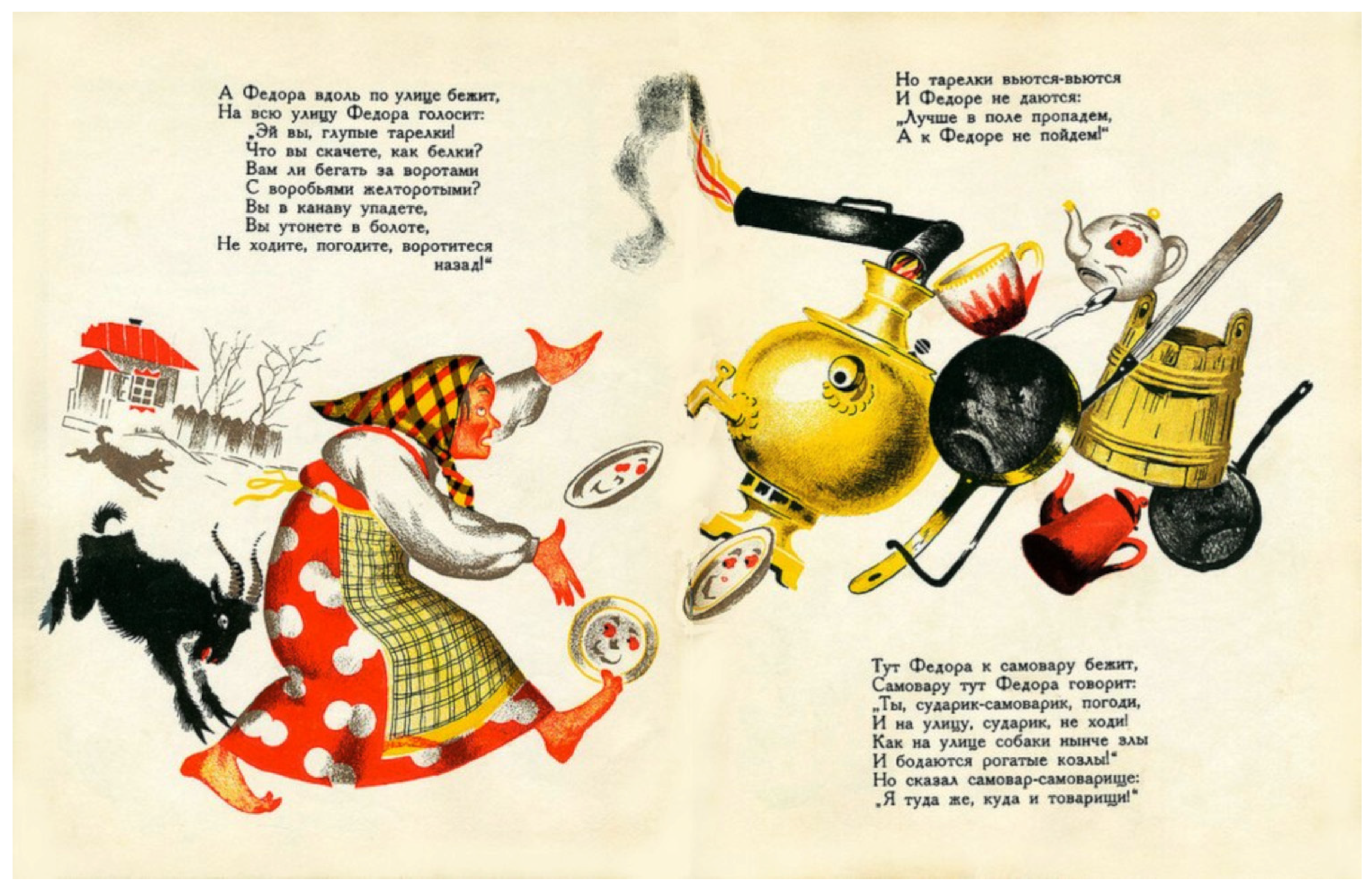


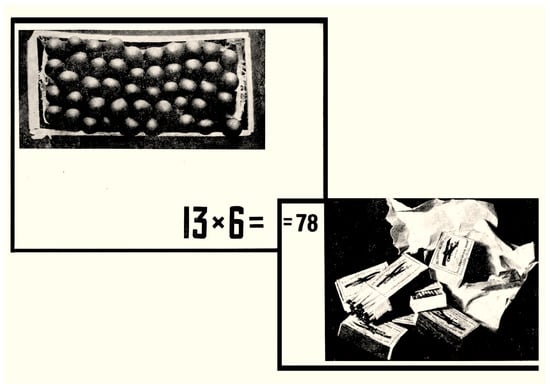
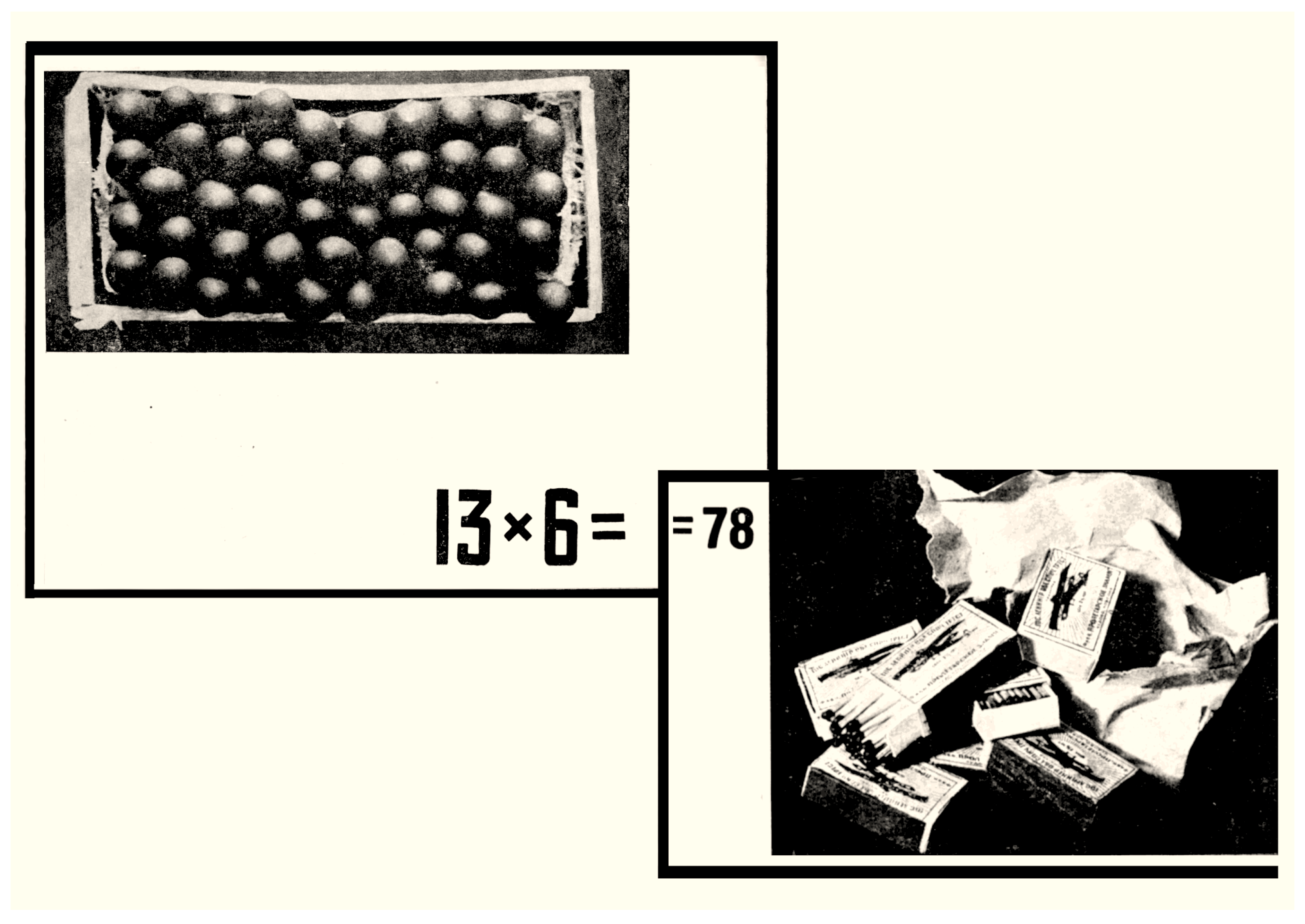
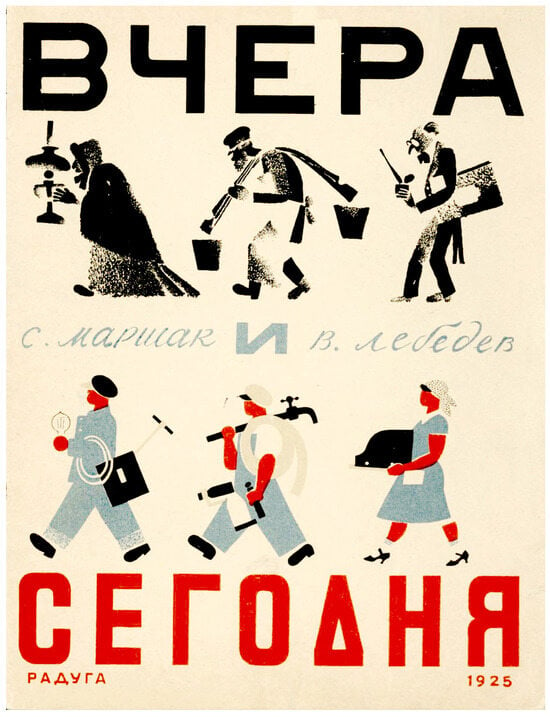
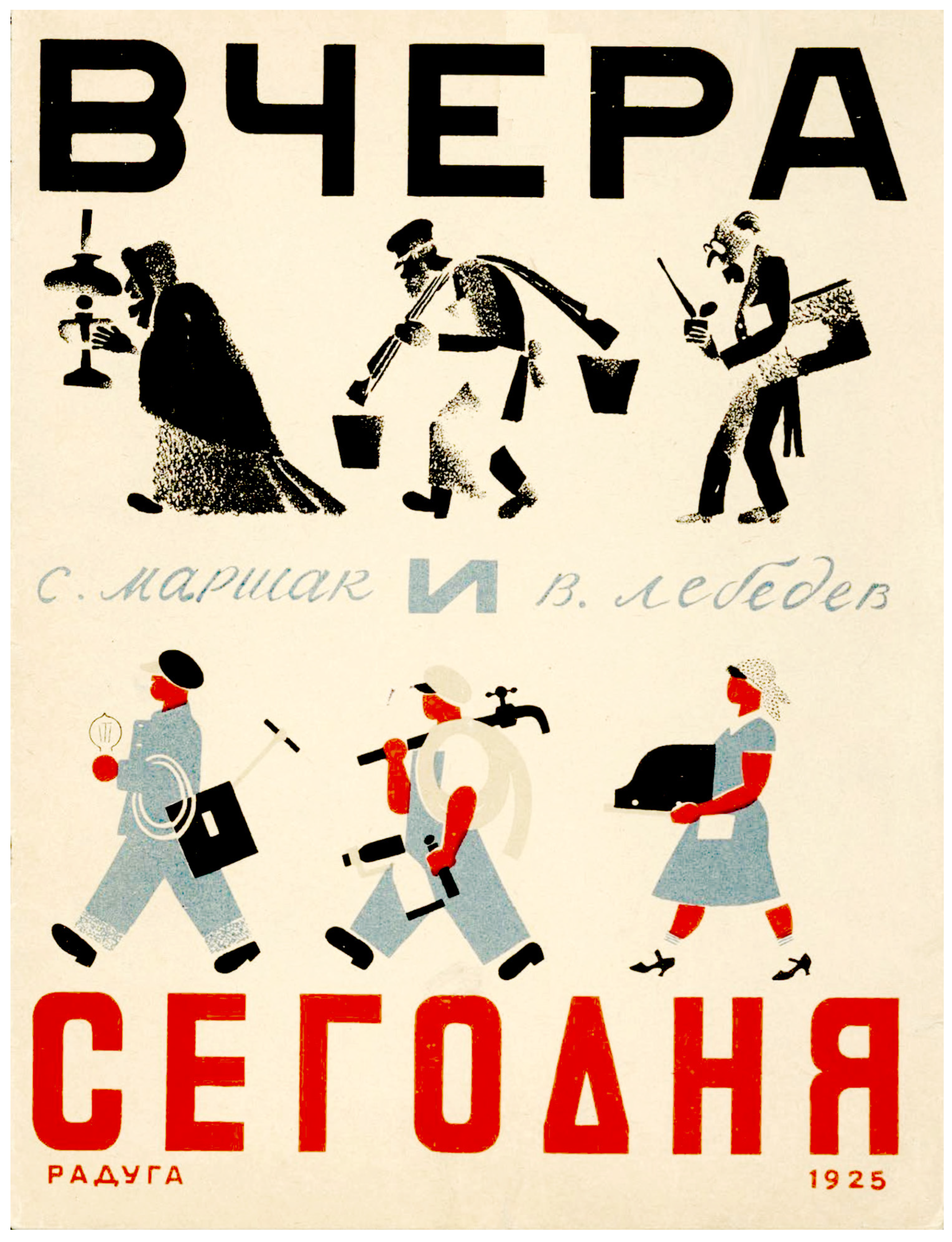
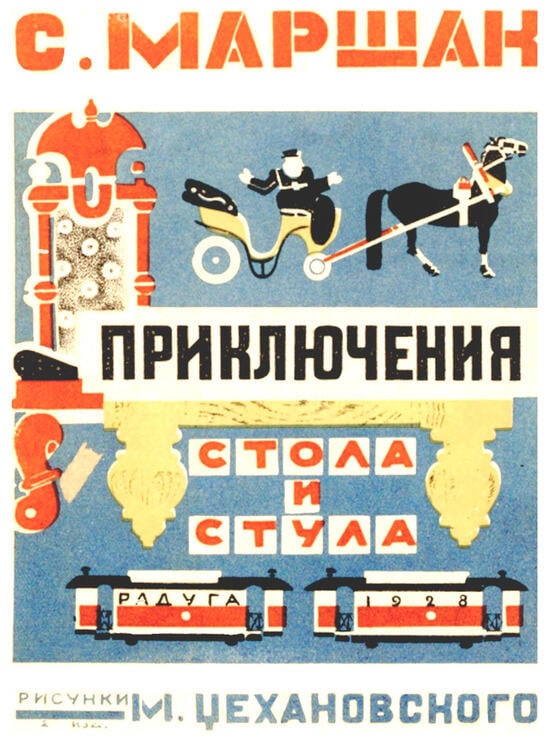
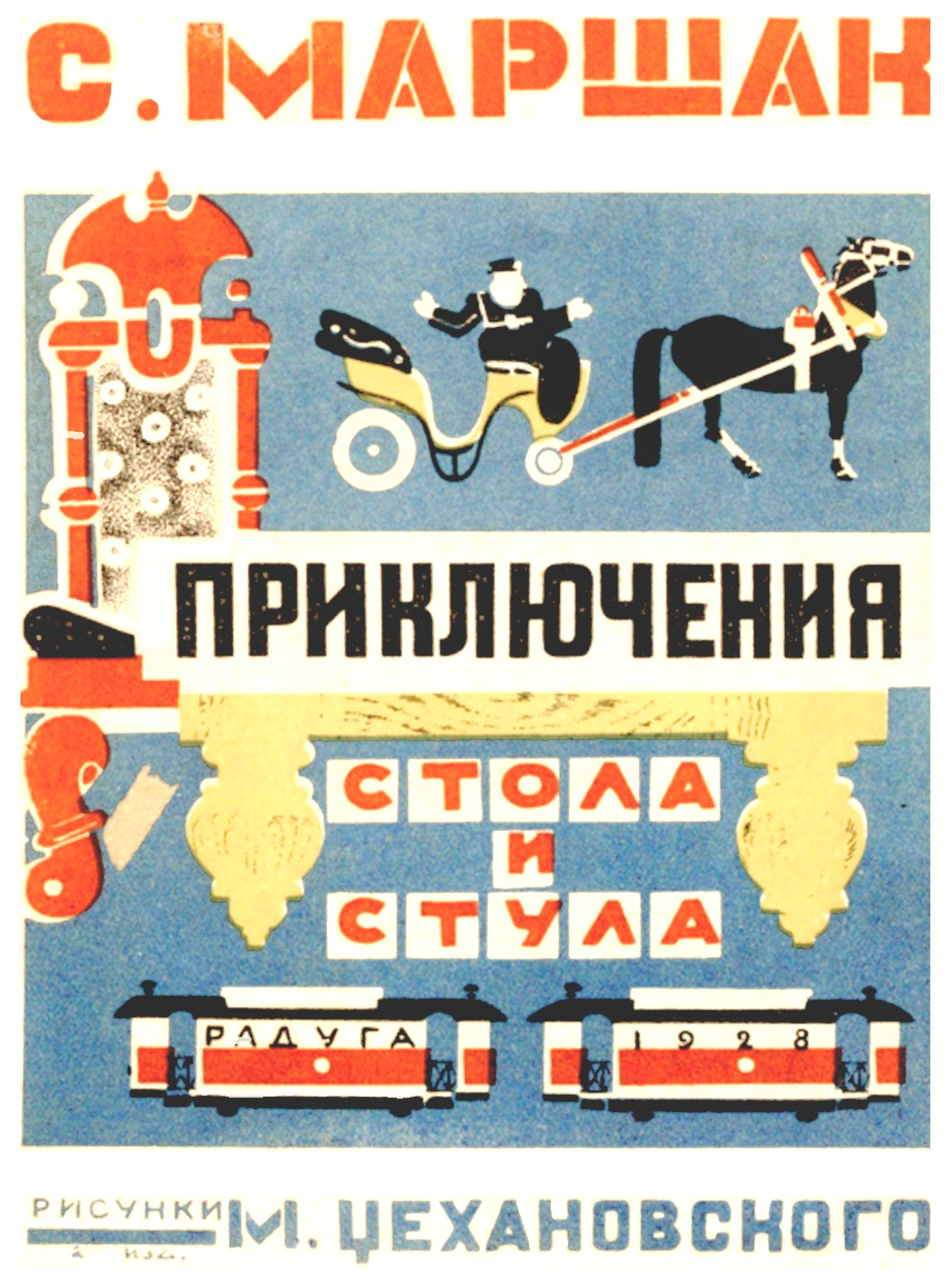
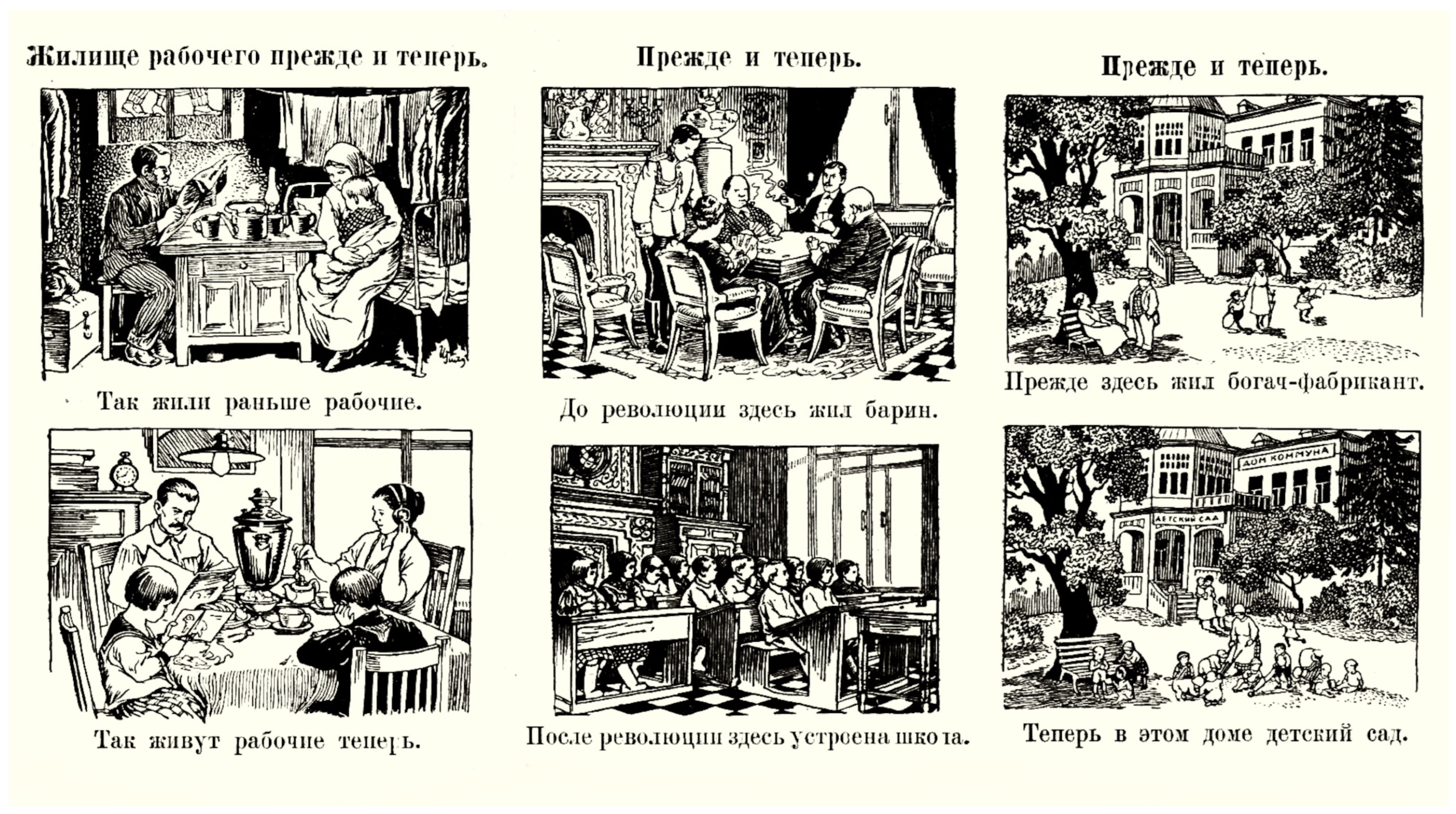
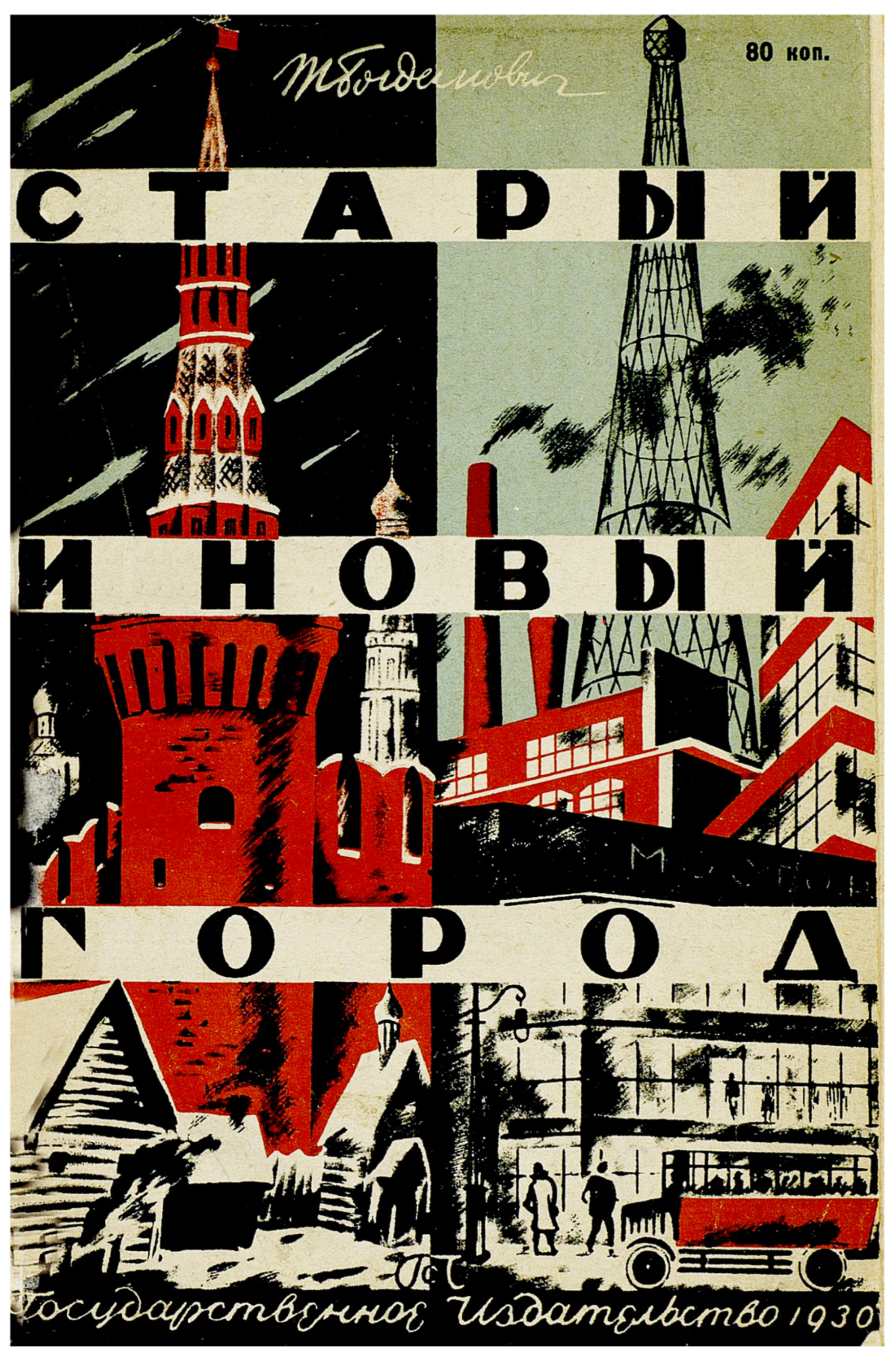
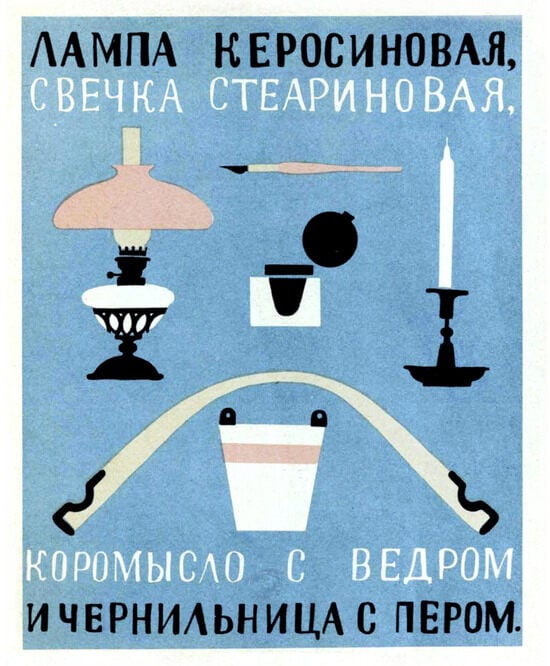
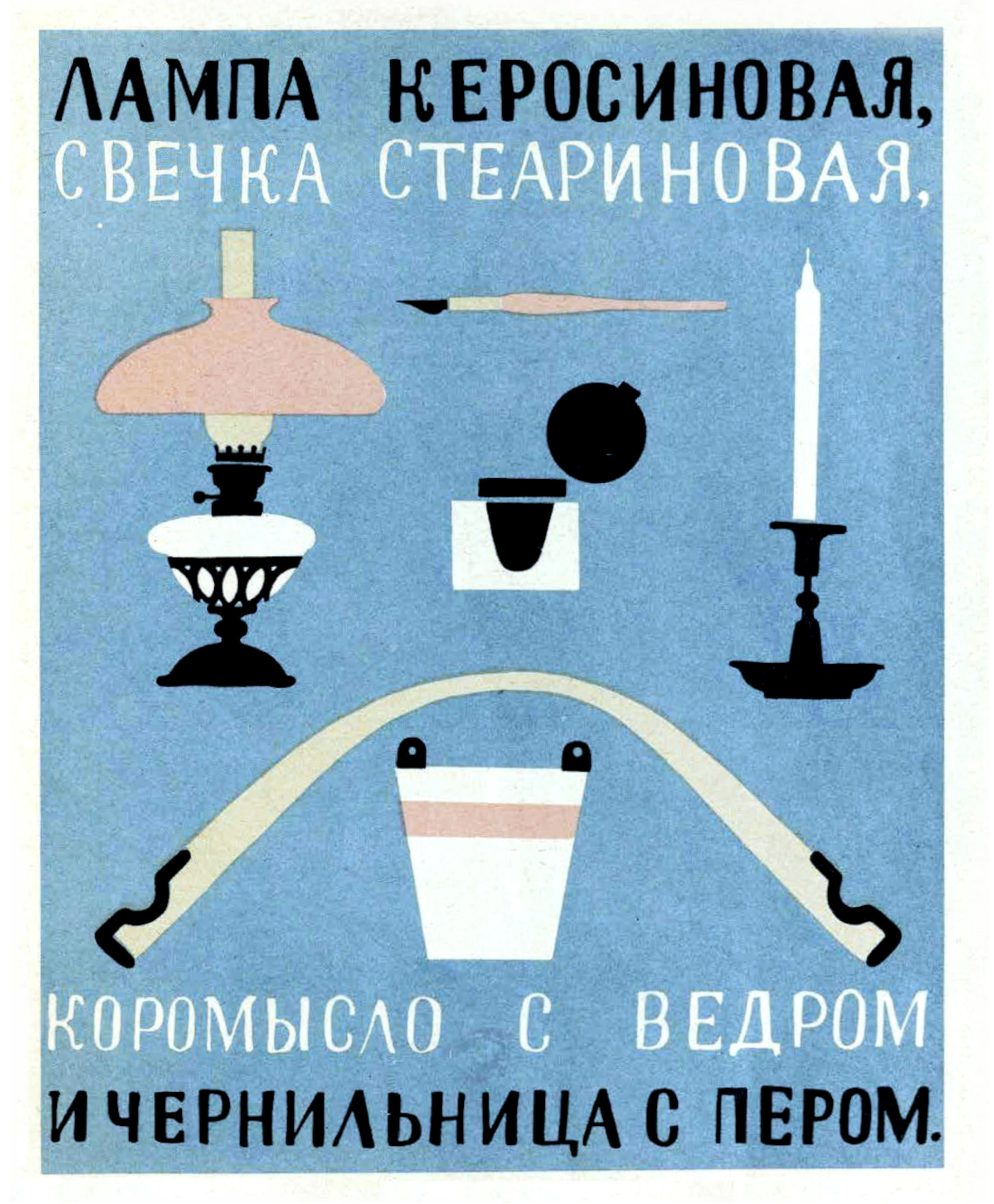
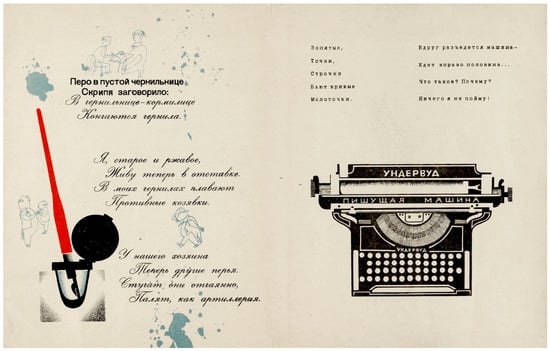
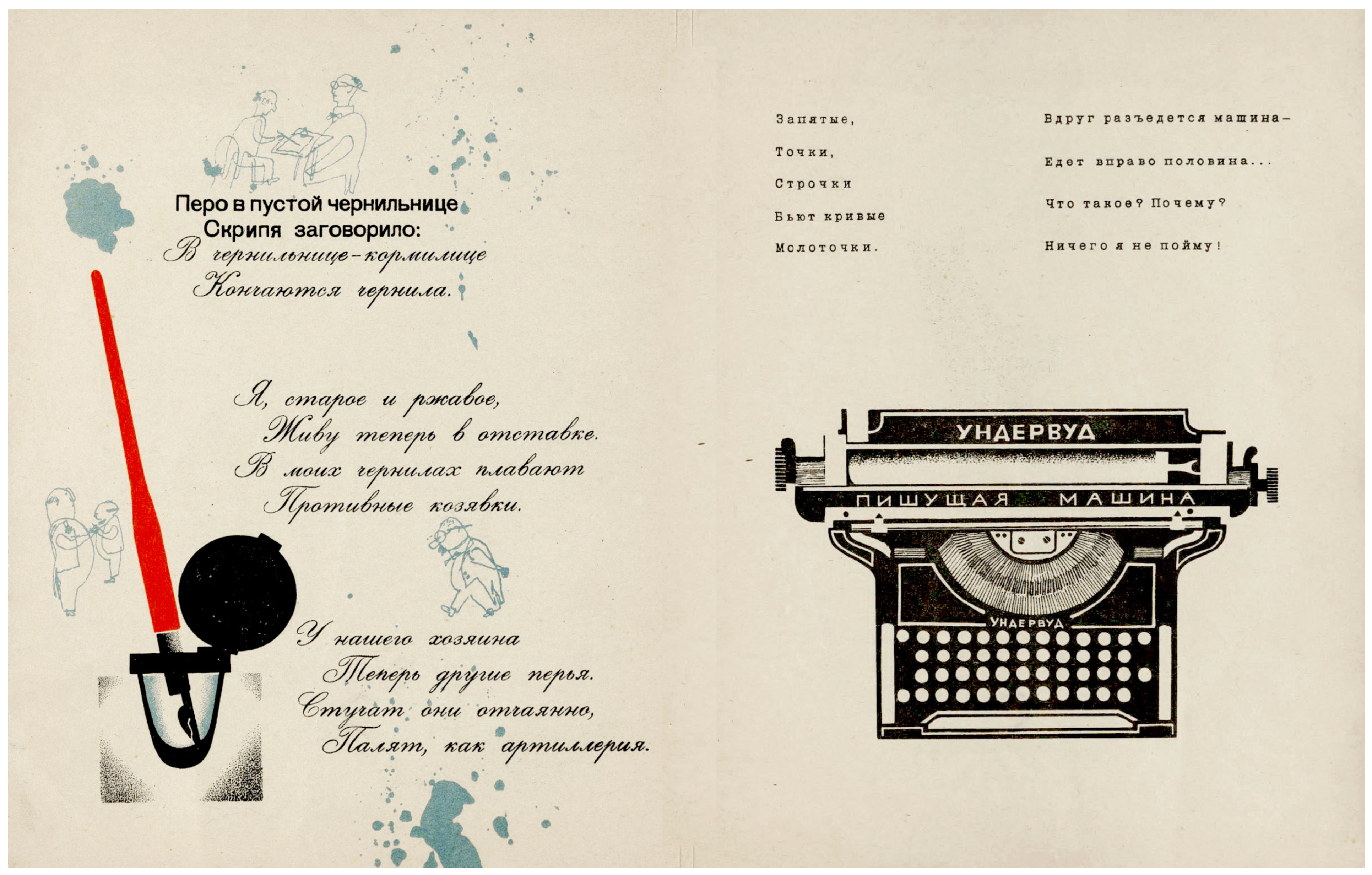
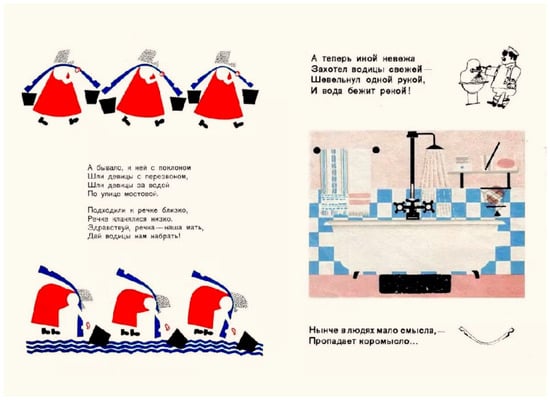
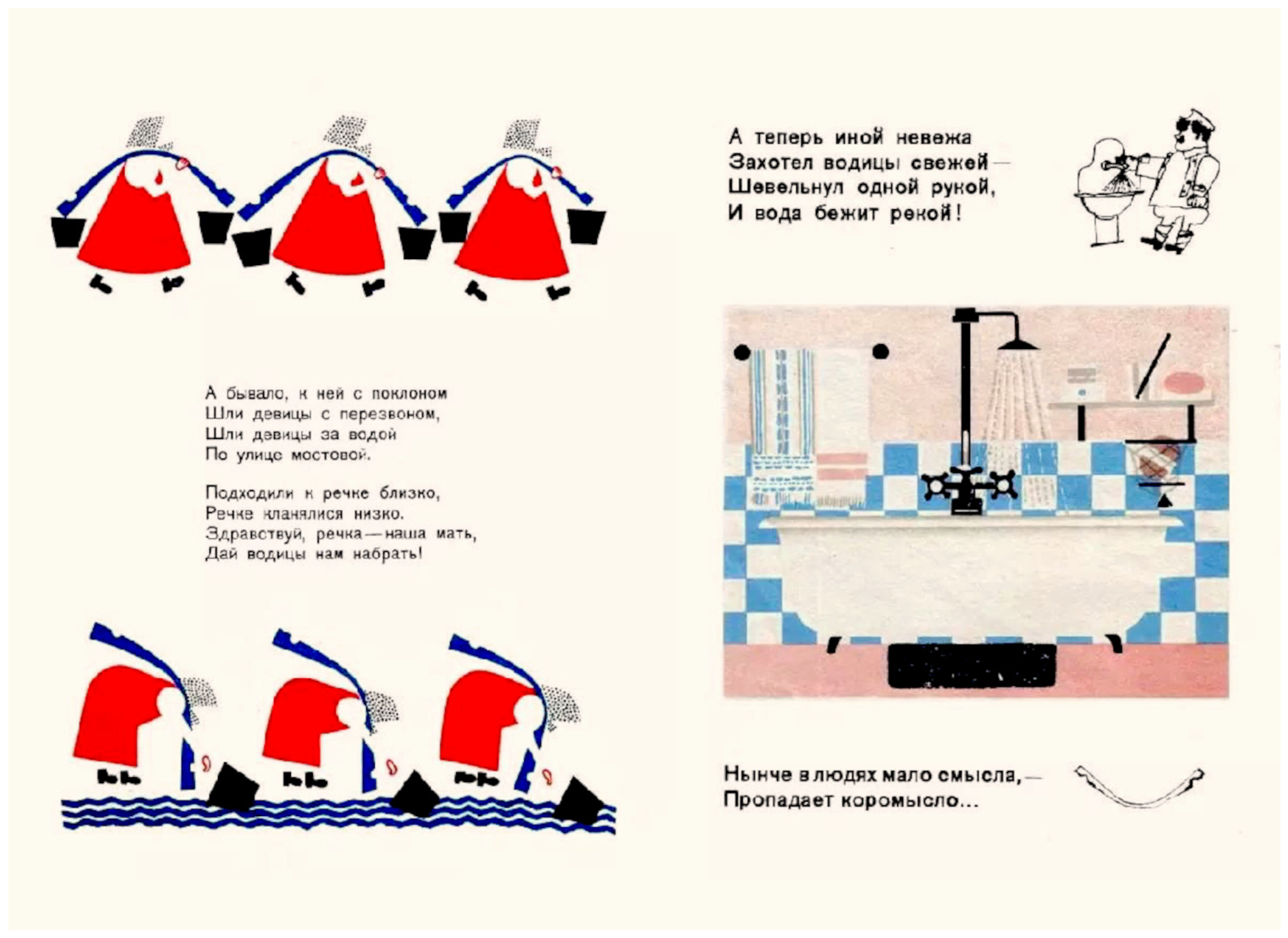
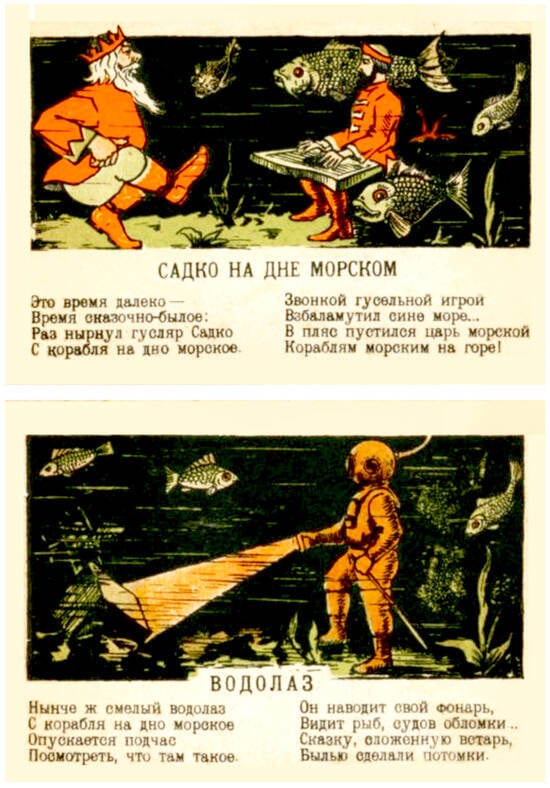
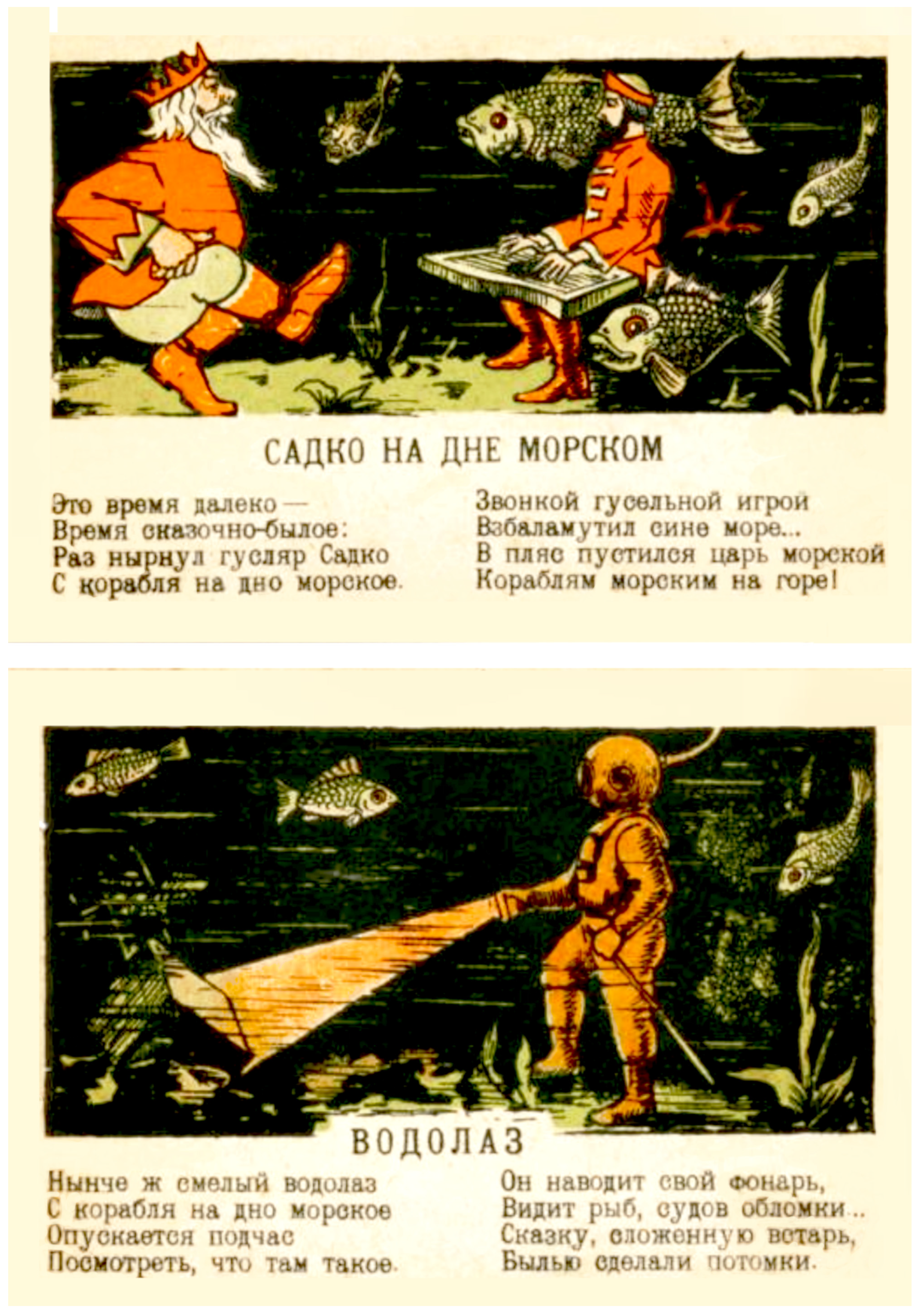
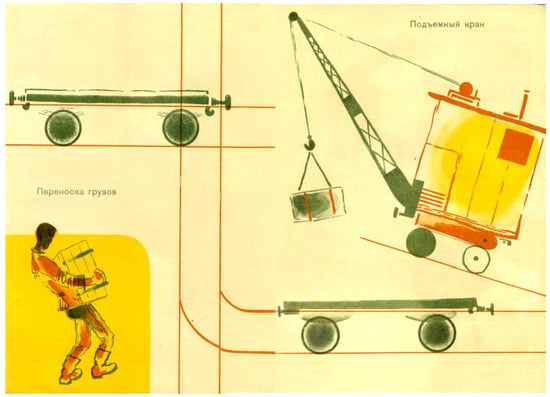
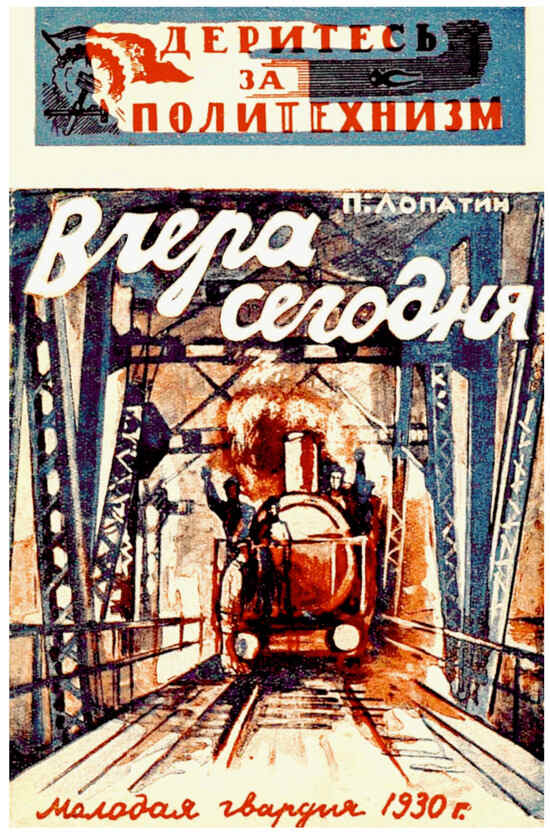
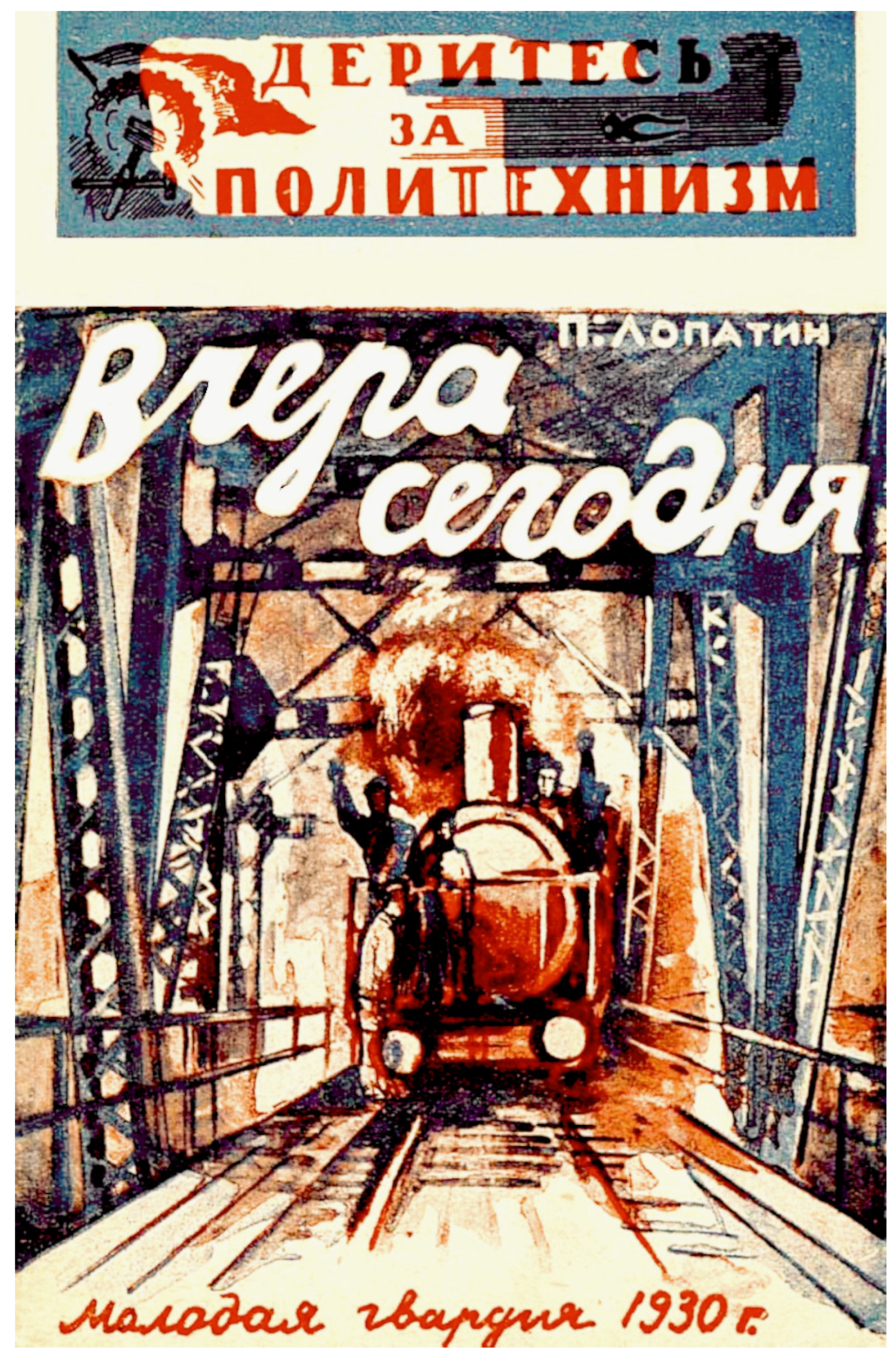
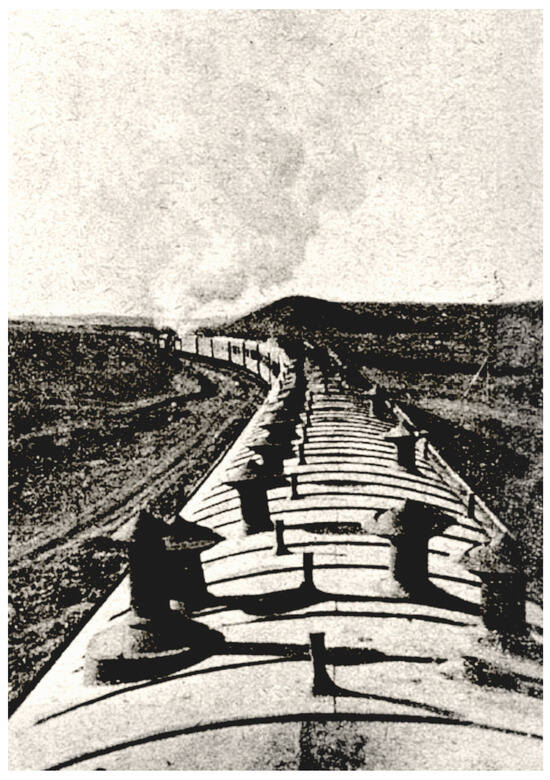
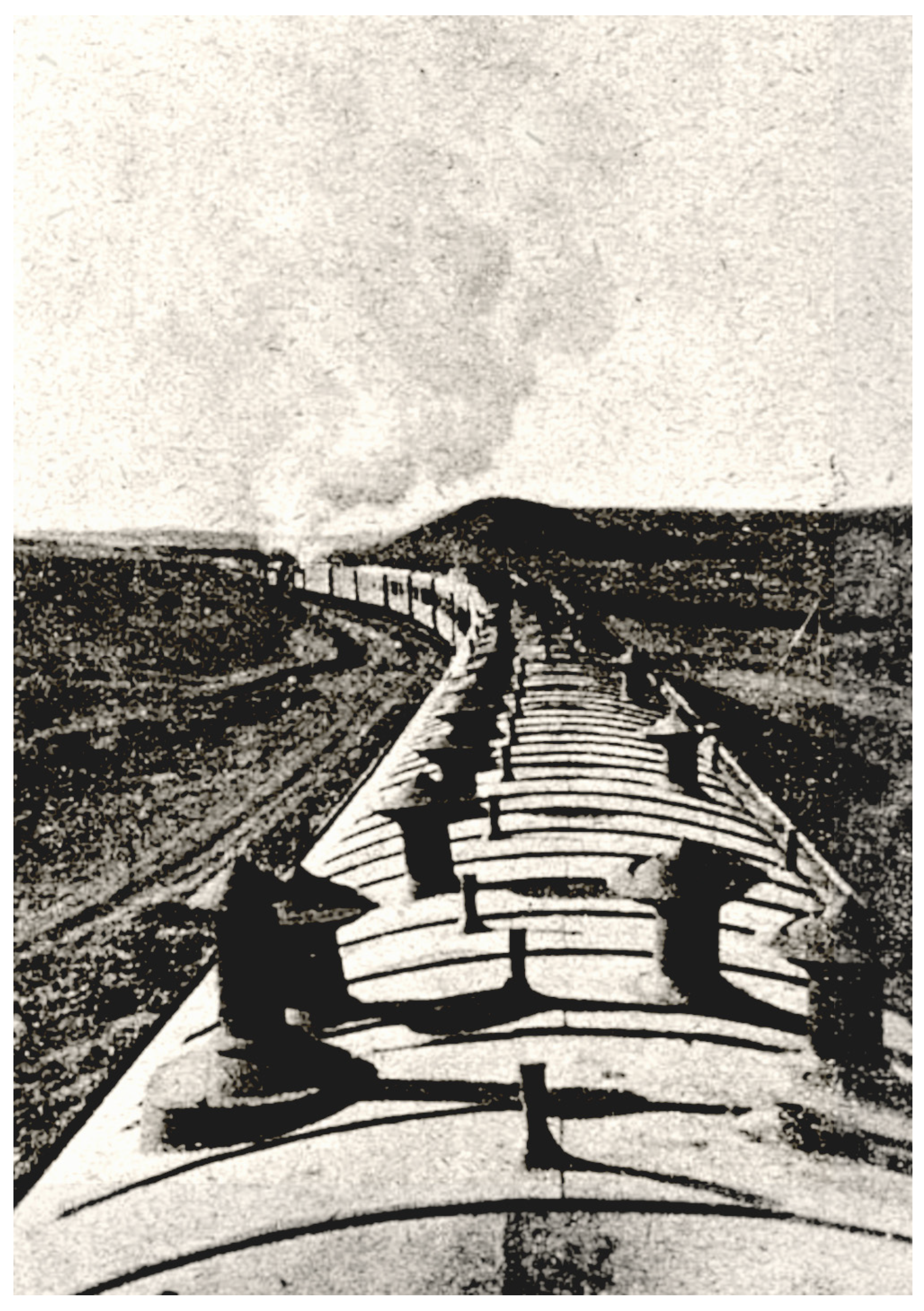
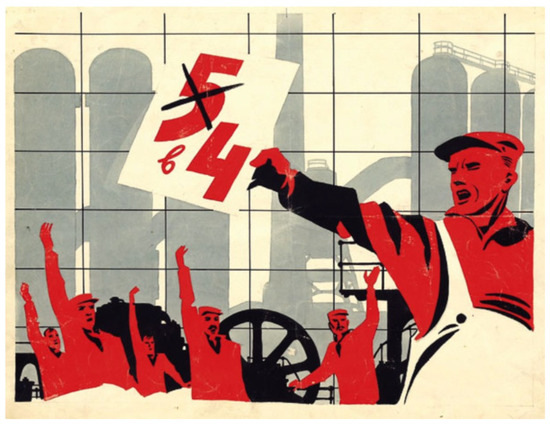
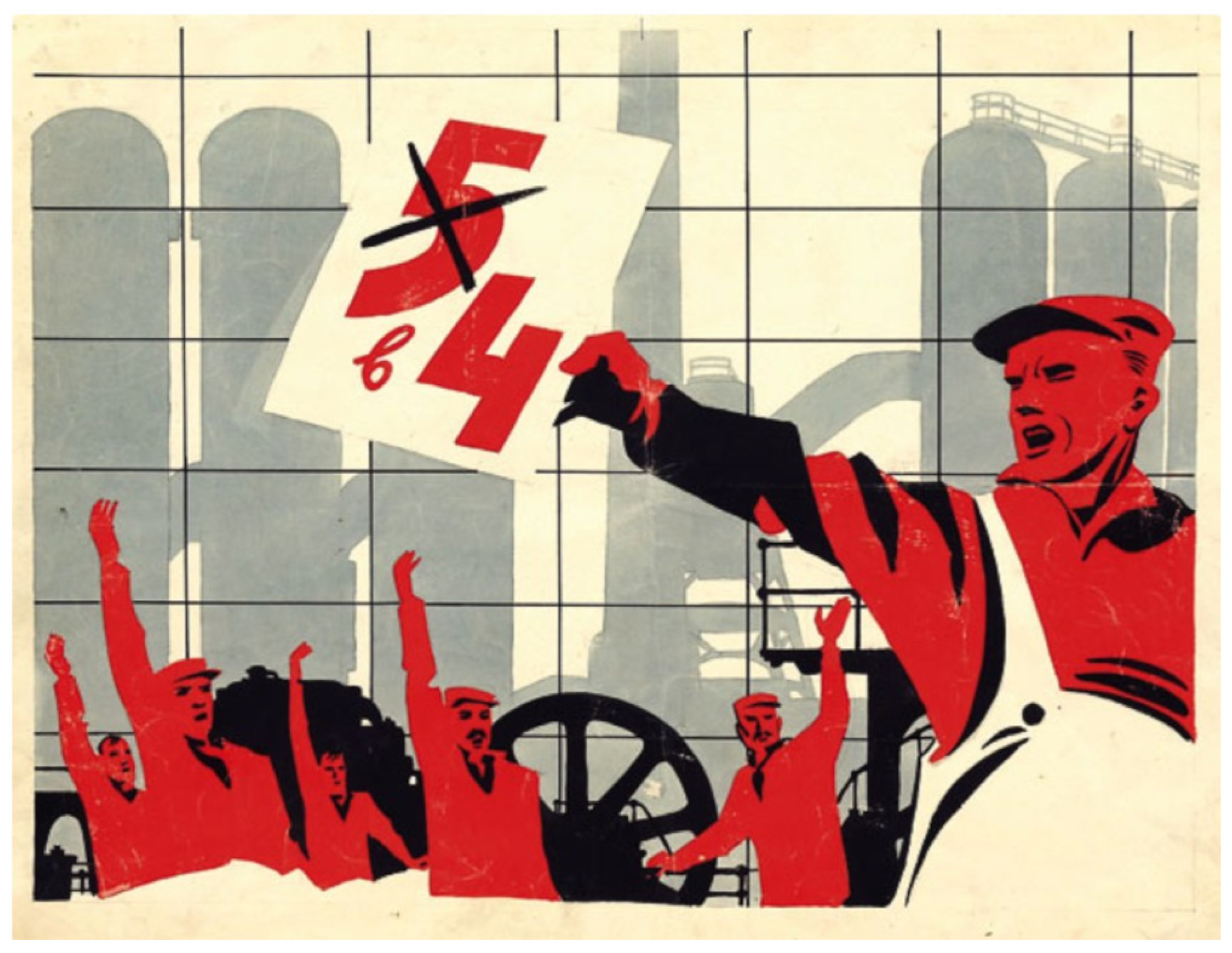
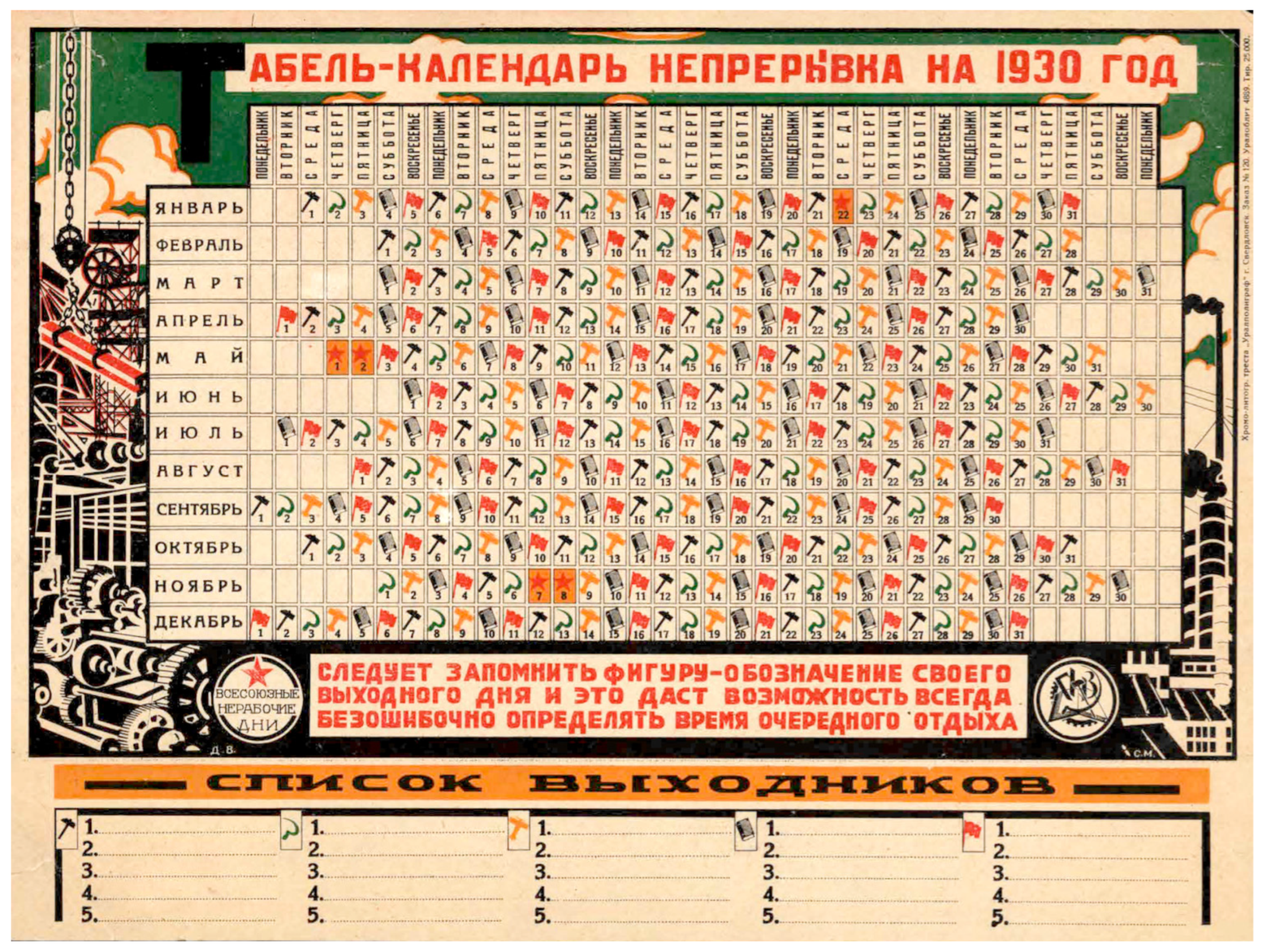
Disclaimer/Publisher’s Note: The statements, opinions and data contained in all publications are solely those of the individual author(s) and contributor(s) and not of MDPI and/or the editor(s). MDPI and/or the editor(s) disclaim responsibility for any injury to people or property resulting from any ideas, methods, instructions or products referred to in the content. |
© 2026 by the author. Licensee MDPI, Basel, Switzerland. This article is an open access article distributed under the terms and conditions of the Creative Commons Attribution (CC BY) license.