


Abstract
In this study, we compare Byzantine and Armenian church music, focusing on musical parameters such as notation systems, modal structure, rhythmic concepts, and liturgical practice. Both traditions, which took shape within the shared cultural heritage of Anatolia, share fundamental common characteristics such as the eight-mode (Octoechos/oot tzayn) system, a monophonic vocal-based structure, and a text-based rhythmic approach; however, they have developed distinct characteristics under the influence of historical, political, and cultural dynamics. Conducted using comparative historical research methods, this study involved a literature review based on primary and secondary sources. The findings reveal the following: while the Byzantine tradition followed an evolution from Ecphonetic to Neume to modern notation, the Armenian tradition developed the Khaz–Hampartsum notation system; the distinction between authentic and plagal modes exists in both traditions, yet the correspondences established with the Turkish makam system at the theoretical and microtonal (cent) levels are approximate; and regarding rhythmic structure, both traditions share a text-driven, free-flowing organization in which liturgical prosody takes precedence over fixed meter, with such variation as exists operating at the level of ornamentation and performance practice rather than underlying rhythmic principle. During the Ottoman period, both traditions experienced deep interaction with Turkish makam theory; the Chrysanthos reform in Byzantium and the Hampartsum notation in Armenian music is concrete evidence of this interaction.
1. Introduction
From the earliest centuries of Christianity, the traditions of church music that took root in Anatolia have served not only as religious practices but also as repositories of cultural memory. This memory bears the traces of the political, demographic, and cultural transformations that societies have undergone throughout history and tangibly reveals the reflections of these transformations in music. As defined by Wellesz (1961), Byzantine church music was not merely a product of religious rituals but a comprehensive cultural system reflecting the empire’s worldview and aesthetic sensibilities.
An examination of the origins of early Christian music reveals that Anatolia played a central geographical role. Situated at the intersection of Syriac, Greek, and Armenian cultural spheres, this region served as a crossroads where diverse musical traditions influenced, transformed, and enriched one another over the centuries. Strunk (1942) argues that while the modal structure of early Christian music is directly linked to ancient Greek theory, it underwent a unique transformation largely informed by the Syriac and Armenian traditions in Anatolia. This interaction demonstrates that both traditions were shaped within a deep syncretism. For the purposes of this study, “Armenian church music” refers to the tradition of the autocephalous Armenian Apostolic Church, the principal living continuator of the historical processes examined below; further denominational specification is provided in Section 3.4.
Both traditions have engaged in a deep and inevitable interaction with Turkish musical culture throughout their historical development. Particularly after 1453, the explanation of Byzantine music theory through the Turkish makam system (a mode-based melodic-modal system distinct in concept from Western tonal systems and Byzantine echoi, treated in detail in Section 3 below) highlights the extent of this interaction (Bardakçı 1992; Yekta 1899). In the Armenian tradition, the notation system developed by Hampartsum Limondjian between 1813 and 1815 additionally documented the Turkish musical repertoire, becoming a concrete testament to the bridge between the two cultures (Duygulu 2001), thus emphasizing that this mutual interaction was not a one-sided assimilation, but a complex process of adaptation and transformation involving power imbalances within the framework of the Ottoman Empire (Erol 2015). The cosmopolitan and multilingual musical environment of Constantinople (Istanbul) during the Ottoman period created a space of intense interaction—not only thematically but also technically—among different religious and cultural traditions. In this context, the widespread use of Armenian Hampartsum notation in court and urban music, the circulation of Turkish songbooks written in Armenian script, and the intersection of Greek church and secular music with the Turkish makam system demonstrate that different musical traditions were produced within a shared musical sphere (Korkmaz 2022; Durmuş 2021). This situation reveals that Byzantine and Armenian church music cannot be evaluated solely within a liturgical context; rather, they must be approached as dynamic and permeable structures open to mutual exchange within Ottoman musical culture (Gökpınar 2023). In this study, we aim to examine Byzantine church music and Armenian church music comparatively from this multi-layered perspective and to highlight the similarities and differences between the two traditions within an academic framework.
2. Problem Statement
The authors of existing studies on Byzantine and Armenian church music generally frame these two traditions as separate liturgical systems, with their mutual interaction and syncretic character within Ottoman musical culture remaining insufficiently examined. The central aim of this study is to determine within which methodological framework and through which parameters a comparative analysis of these two traditions can be conducted.
While Western musicology has produced foundational studies on each tradition separately—Wellesz (1961) on Byzantine music, Vardapet (1998) on Armenian music—these works do not systematically compare the structural relationships between the two traditions or their differential responses to common cultural pressures. In Turkish academic literature, this gap is even more pronounced: although Bardakçı (1992) and Öztürk (2018) address the Ottoman-Byzantine musical interaction, the parallel question for Armenian church music remains largely unanswered. The present study addresses this gap by examining both traditions within a unified comparative framework, analyzing notation, modal structure, rhythm, liturgical form, folk music relationship, and Ottoman–Turkish interaction as interconnected dimensions of a shared yet differentiated Anatolian musical heritage.
3. Theoretical Framework and Literature Review
Because the comparative framework of this study depends heavily on the encounter between the Byzantine and Armenian octoechos systems and the Turkish makam system, a brief introduction to the concept of makam is warranted at the outset of the theoretical discussion. In Turkish music, makam is not merely a scale or gamut, but a totality of specific interval arrangements (combinations of cins/tetrachords), characteristic melodic-progression rules (initial note, resting tones, dominant pitches, and final/karar pitch), and conventional melodic formulae (Signell 1977). In this respect, makam is conceptually distinct from Western modal systems and from the Byzantine echoi: it is a processual rather than a scalar category. In Byzantine–Turkish theoretical comparisons, however, the processual dimension of makam is often lost, and the system is reduced to its scalar layer alone. The present study takes the limits of this scalar reduction into account in its microtonal comparisons (Section 4.2).
The eight-mode system (Octoechos), observed in common in Byzantine, Armenian, and Syriac church music, is not merely a liturgical organizational tool but also a musical conceptual model that circulated across a wide geographical area. Just as the connections this system establishes with ancient Greek music theory are highlighted in the literature, so too are its points of intersection with Near Eastern modal traditions (makam culture) increasingly emphasized (Gökpınar 2023; Palackal 2024). In particular, the applications of the Syriac oktoechos tradition in different regions demonstrate that this octal system is a dynamic model that evolves through cultural interactions rather than a fixed structure (Palackal 2024).
3.1. Byzantine Church Music: An Overview
The Byzantine Empire was founded by Emperor Constantine in 330 AD. After adopting Christianity as the official religion through the Edict of Thessalonica in 380 AD, it represented the dominance of the Orthodox Church in the field of music until its fall in 1453. The Byzantine Church largely preserved its liturgical style from the 5th century onward; however, significant turning points—such as experiments with the organ in the 13th–14th centuries and the comprehensive reforms carried out by Chrysanthos in the 19th century—partially disrupted this continuity (Wellesz 1961). The most characteristic feature of Byzantine church music is its antiphonal (based on the alternating performance between two choirs, or between a soloist and a choir) and heterophonic (consisting of simultaneous variations in the same melody with different ornamentations) structure. Byzantine music is certainly not polyphonic; although experiments in polyphony were conducted through organs imported from Europe and known as “Ergamon,” there is no definitive historical evidence regarding the scope of these experiments.
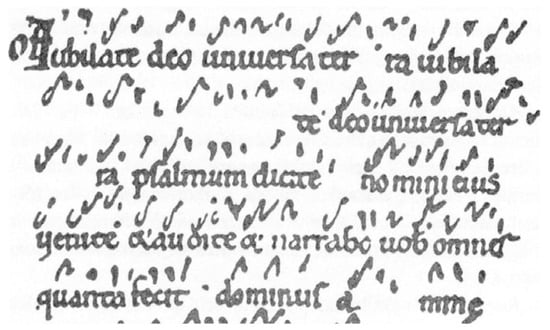
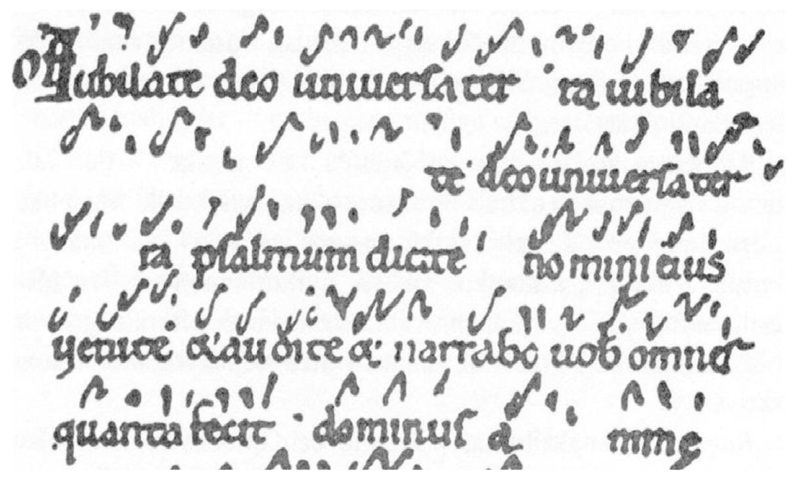
Each of the modal scales used in Byzantine music is called an “Echoi” (Voice). Byzantine church music is based on the eight-mode principle also found in Syriac music (Strunk 1942; Werner 1949; Olley 2017). While the Orthodox canonical tradition does not formally prohibit either secular vocal music outside the liturgy or the use of instruments within it—as evidenced by the experiments with the organ noted above and by the modern liturgical practice of certain Greek Orthodox communities—the prevailing liturgical custom has historically favored unaccompanied vocal performance, producing a sacred repertoire consisting almost entirely of vocal works. Information about Byzantine music prior to the 12th century is very limited, as, for the first 800 years from the empire’s founding, melodies were written using the “Neume” system (a notation employing graphic signs placed above the syllables of the text to indicate the direction, contour, and ornamentation of the melody rather than precise pitch); however, the inability to indicate pitch made decipherment impossible. A fully developed notation system began to emerge after the third quarter of the 12th century (Wellesz 1961) (Figure 1).
Figure 1.
Early Neume notation (Wellesz 1961).
3.2. The Ottoman/Turkish Influence on Byzantine Music After 1453
Greek Orthodox church music is one of the historically significant musical traditions found in both Byzantine and Ottoman imperial territories. When examining its transformations, this is the musical genre most influenced by the Turkish makam system from a theoretical perspective. This interaction, which took shape within the political and cultural hegemony of the Ottoman Empire, should be evaluated not as a dialog among equals, but rather as a complex process of harmony and transformation involving power imbalances (Erol 2015). Two communities that have made distinctive—though structurally different—contributions to Greek Orthodox musical culture under Ottoman rule are the Phanariots, a Greek-speaking Constantinopolitan elite engaged with patriarchal music, ecclesiastical theory, and Ottoman court music, and the Karamanlis, a Turkish-speaking Anatolian Orthodox population whose religious and devotional repertoire was transmitted in Karamanlıca (Turkish written in Greek script) (Bardakçı 1992). Cross-cultural interactions in modal theory between Greek Orthodox theorists and Ottoman musicians have been comprehensively documented through a comparative analysis of the works of Halaçoglu, Marmarinos, and Kiltzanidis from the 18th and 19th centuries (Öztürk 2018).
3.3. The Byzantine Church Music System
Three intertwined periods can be observed in the notation systems used in Byzantine church music. The Ecphonetic system (4th–15th centuries) relied on ancient Greek prosodic signs and focused on recording the stresses of the recited text rather than melodic notation; its signs—typically dots, dashes, and angular marks placed above the syllables—functioned as recitation cues rather than as pitch indicators. The neumatic system (9th–19th centuries) overlapped with the final centuries of the Ecphonetic system; the two served different liturgical functions. While Ecphonetic signs indicated the stresses in the reading of sacred texts, neumatic notation recorded the melodies of hymns. Therefore, these periods are functionally concurrent and complementary rather than sequential (Wellesz 1961). The modern Byzantine notation (19th century–present), which emerged from the reform of the older systems by Chrysanthos, represents the “New Greek” system. This tripartite framework, derived primarily from Wellesz (1961), is retained here for expository clarity, though more recent Byzantine paleographical scholarship has refined it into a finer-grained sequence of paleographical stages, with the Ecphonetic and neumatic systems increasingly understood not as successive periods but as parallel notational technologies serving distinct liturgical functions (Skoulios 2012).
The relevance of Syriac modal vocabulary to the present comparison rests on two grounds: first, the Octoechos framework was historically shared across Byzantine, Armenian, and Syriac liturgical traditions, so that intra-Christian modal terminology constitutes a single regional system rather than three isolated nomenclatures; second, the systematic mapping of Syriac modes onto Turkish makam categories within Ottoman musical pedagogy provides direct historical precedent for the very type of Byzantine–Turkish modal correspondence examined in this study. Byzantine church music, like Syriac music, was based on an eight-mode system. The Syriac modes and their Turkish makam equivalents represent 18th–19th-century Ottoman-era retrospective interpretations derived not from primary Syriac sources but from pedagogical approaches within the Ottoman musical discourse. The following should be considered approximate equivalents: Kadmoyo (Bayati/Uşşak), Trayono (Hüseyni), Tlithoyo (Segâh), Rbi’oyo (Rast), Hmishoyo (Hüzzam), Shtithoyo (Acem), Shbi’oyo (Saba), and Tminoyo (Hicaz). While such comparisons are useful in explaining the relationship between the Byzantine modal system and Turkish makam theory, the literature also emphasizes that the two systems are based on different theoretical foundations and therefore offer approximate equivalents rather than exact correspondences (Gökpınar 2023). Regarding modes, the term ‘Ihos’ is used as the equivalent of a makam, and modulation between makams is indicated by signs called ‘Ftora.’ Eight makams exist in total: four authentic and four plagal. Following the reforms of Petros and Chrysanthos, their Turkish scale equivalents are as follows: Protos–Uşşak, Plagios Protos–Hüseyni, Deuteros–Hüzzam, Plagios Deuteros–Hicaz, Tritos–Diatonic Çargâh, Plagios Tritos–Çargâh or Eviç, Tetartos–Neva/Segâh, and Plagios Tetartos–Rast (Strunk 1942).
3.4. Armenian Church Music: An Overview
Before proceeding, a denominational clarification is in order. The “Armenian Church” is not a monolithic ecclesiastical body but encompasses two principal communions whose musical practices, while sharing a common medieval inheritance, have diverged in significant respects since the early modern period. The Armenian Apostolic Church is an autocephalous Eastern Christian tradition with its Mother See at Etchmiadzin, extending through additional ancient sees including Cilicia, Constantinople, and Jerusalem. The Armenian Catholic Church, in full communion with Rome, has cultivated a partially distinct liturgical-musical practice particularly through the Mxit’arist congregation, whose diasporic communities—including those in Latin America—exhibit notable departures from the Apostolic norm. The present study addresses the Apostolic tradition, which is the principal continuator of the medieval modal system, the Khaz–Hampartsum notational lineage, and the post-Ottoman repertoire that constitute the core comparative object of this paper (Vardapet 1998). The historical processes examined herein—particularly the Hampartsum reform (Section 3.6) and the encounter with Ottoman musical pedagogy—are most fully audible today in the liturgical and devotional practice of the Apostolic communion, in Etchmiadzin, Istanbul, Jerusalem, and the larger Apostolic diaspora.
According to Armenian church tradition, the Armenian Church was founded through the preaching of the Apostles Thaddeus (Tateos) and Bartholomew (Bart’oghimeos). This tradition of having been founded by these apostles positions the Armenian Church as one of the ancient Eastern Orthodox churches; it should not be forgotten that the term “Orthodox” here refers to a denominational framework distinct from the Eastern Orthodox tradition. Armenian tradition dates the adoption of Christianity as the state religion to the reign of King Tiridates III and Saint Gregory the Illuminator in AD 301; however, this date, based on 5th-century Armenian church historians (particularly Agathangelos’ account), is disputed in modern historiography. Some historians argue for the year 314 CE or a later date. Accordingly, the Armenian Church is often regarded as one of the oldest national Christian churches.
Following the Christianization of Armenia in the 4th–5th centuries, a unique liturgical repertoire began to take shape in the form of monastic schools and is closely linked to the written culture of the era. Key figures of the Medieval Armenian Renaissance, Grigor Narekatsi and Nerses Shnorhali, expanded the liturgical repertoire, restructured the liturgy, and left a lasting impact on subsequent periods. In the Diaspora, liturgical hymns and music serve as one of the strongest bridges between faith and “Armenian identity”; they are a living expression of cultural heritage. Armenian church music is one of the world’s oldest and most continuous Christian musical traditions. It has evolved from simple monodic hymns into a rich, highly codified system of hymns, modes, and notation. Today, it plays a fundamental role both in worship services and in the daily lives of Armenian communities in the diaspora.
3.5. The Armenian Church Music System
The Armenian modal system uses eight modes (oot tzayn), named Ayp Tza (1st Voice), Ayp Gen (1st Side), Pen Tza (2nd Voice), Pen Gen (2nd Side), Keem Tza (3rd Voice), Keem Gen (3rd Side), Ta Tza (4th Voice), and Ta Gen (4th Side). This naming system is derived from letters of the Armenian alphabet (Ayp, Pen, Keem, Ta) and exhibits a unique structure independent of Byzantine Greek terminology and Turkish makam names. While the Tzayn (Voice) modes correspond to authentic modes, the Gen/Koghm (Side) modes correspond to plagal modes; however, as Atayan (2013) notes, Armenian Koghm modes are structurally distinct from Byzantine plagal modes and function as independent authentic modes. When this unique structure of the Armenian modal system is examined in comparison with Byzantine and Turkish musical systems, it demonstrates that different theoretical approaches have developed despite a shared octal organizational framework. This situation reveals that the oktoechos tradition has been reinterpreted in different cultural contexts, and that each musical tradition has developed a unique modal structure in accordance with its own internal dynamics (Palackal 2024). The tradition is relatively compact and primarily monophonic compared to Western church music. The main genres are as follows:
- Sharakan (canonical hymn): Forms the foundation of the liturgy.
- Avetis (annunciation hymn): Gospel hymns, sung particularly during feast days commemorating events from the life of Christ.
- Tagh (liturgical/poetic song): Developed particularly during the 10th–15th centuries.
Sharakans are organized within an eight-mode (octoechos/oot tzayn) system. Although this modal structure is related to the Byzantine and Latin modal systems, it is independent of them and constitutes one of the most important elements of Armenian musical thought (Aloyan 2022; Bodurian and Drăgulin 2021).
Armenian church music exhibits several distinctive features: a monophonic structure, an eight-mode system, and freedom from strict rhythmic rules. Rhythm is shaped more by word stresses and the flow of the text than by fixed meters (Vardapet 1998). In its rhythmic organization, Armenian chant is conceptually proximate to the cantus planus practice of Western Gregorian chant; as discussed in Section 4.3, this same text-driven rhythmic principle is also characteristic of post-medieval Byzantine chant.
3.6. Hampartsoum Notation
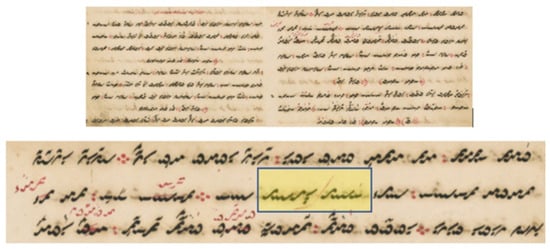
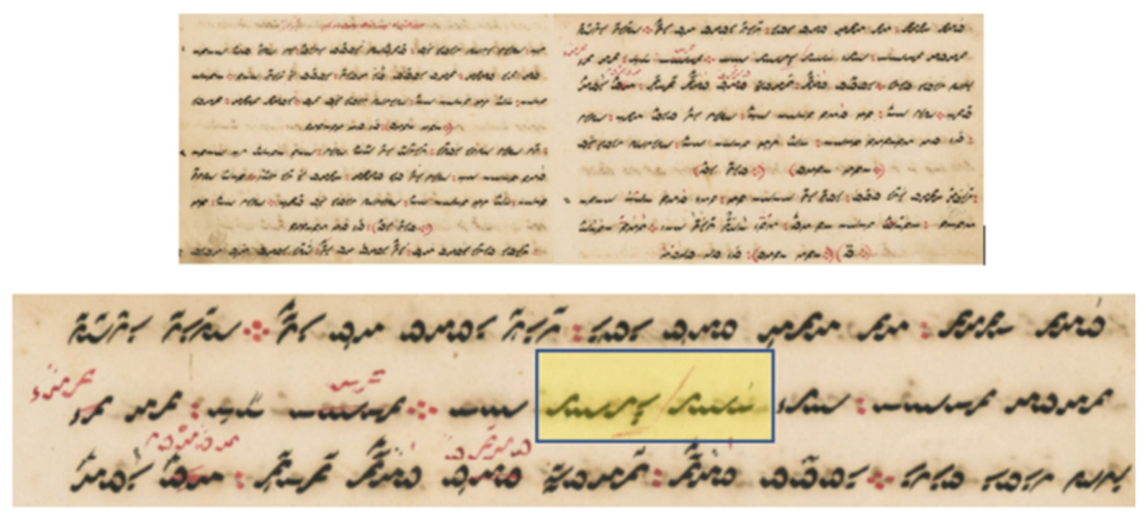
Hampartsoum Limondjian (1768–1839) was an Ottoman Armenian church cantor, composer, and music theorist.1 The notation system he developed between 1813 and 1815 (according to some sources, starting in 1812) is a modernized and European-scale-compatible form of the medieval Armenian church notation khaz. The system is based on seven basic symbols derived from khaz and includes a comprehensive set of symbols indicating pitches, sharps, flats, rests, repeats, and time signatures within a two-octave range (Figure 2). Limondjian developed this system specifically to preserve and standardize Armenian church music (sharakan and liturgical hymns), in response to the fact that khaz notation had become illegible over the centuries and church music had become entirely dependent on oral tradition. His work was carried out with the support of the Mxit’arist scholar Minas Pjşgyan and the Düzyan family, a prominent Armenian Catholic family in Istanbul. Later encouraged by Catholicos Kevork IV, the notation has continued to be used in the Armenian Apostolic Church to this day. The Hampartsoum notation was also widely used to transcribe Ottoman/Turkish classical music. Limondjian transcribed 18th-century Turkish classics into a total of six notebooks; four of these classics have not survived to the present day, while two still exist. The findings of recent studies have revealed that these notebooks constitute a “variant archive” and preserve different versions that provide important insights into the musical concepts underlying the oral tradition (Ekmekçioğlu 2023). This notation system marked a turning point in the transcription of traditional musical practices (Figure 2).
Figure 2.
An example of a manuscript written in Hampatrsum notation (Dimitriou and Pelen 2023, p. 36).
The Hampartsum notation served as a bridge in the notation of both Armenian church music and Turkish classical music during the 19th and 20th centuries (Kerovpyan and Altuğ 2010) and was also preferred by ethnomusicologists such as Komitas for recording folklore and church repertoires. It served as the primary notation system for Armenian and Ottoman music until the widespread adoption of the Western five-line staff system and remains a living legacy within the Armenian church tradition to this day.
4. Results
In this section, Byzantine church music and Armenian church music are systematically presented based on four parameters: notation system, modal structure, rhythmic approach, and liturgical practice. A comparative overview of these parameters is provided in Table 1.
Table 1.
A comparative overview of Byzantine and Armenian church music.
4.1. Notation System
Byzantine church music has undergone three primary notation periods. The Ecphonetic system served the intonations of liturgical text reading from the 4th to the 15th century. The Neume system, which emerged in the 9th century to record liturgical melodies, coexisted for six centuries in a functionally complementary relationship with the Ecphonetic system. From the 19th century onward, modern Byzantine notation represents Chrysanthos’ systematization. In the Armenian tradition, the Khaz notation system predated the new system developed by Hampartsum Limondjian between 1813 and 1815, which covered two octaves. This finding demonstrates that, although both traditions have experienced significant historical losses, the Byzantine notation tradition was structurally established earlier than the Armenian tradition.
4.2. Comparison of Modal Systems and Microtonal Intervals
In the comparisons that follow, modal intervals are expressed in cents, a logarithmic unit in which one equal-tempered semitone corresponds to 100 cents and a full octave to 1200 cents. The term “microtonal” refers to intervals smaller than a semitone—that is, to tonal distinctions that fall outside the twelve-tone equal-tempered framework of Western art music. Such intervals are characteristic of the Byzantine, Armenian, and Turkish modal traditions, each of which divides—or organizes—the octave into a denser tonal space than the Western chromatic scale: the Byzantine system into 72 moria units (approximately 16.67 cents each), and the Turkish Arel–Ezgi system into 53 Holderian commas (approximately 22.64 cents each). The Armenian tradition, while not codified through a comparable numerical grid, operates on its own distinctive theoretical foundation: a system of combined tetrachords—where the final pitch of one tetrachord serves as the initial pitch of the next, theoretically producing an open-ended scalar continuity (Vardapet 1998)—and a performance practice characterized by narrower microtonal inflections than those typical of Turkish classical music (Ohanian 2022). The absence of a Byzantine-style moria grid or a Turkish-style comma system in Armenian theory should therefore not be read as a theoretical deficit but as evidence of a different organizational logic grounded in melodic-relational rather than divisional principles. In the comparisons below, differences between tetrachords are measured by the cent deviation per step: the closer the cent values of two corresponding steps, the closer the theoretical correspondence between the two systems. It should be emphasized, however, that such theoretical proximity does not necessarily entail equivalence in melodic content, ornamentation practice, or performance realization, all of which may diverge substantially from the values predicted by scalar comparison.
Both traditions are built upon the eight-mode (Octoechos) system that forms the fundamental musical framework of Syriac church music (Werner 1949). However, when we examine the correspondences between the Byzantine and Turkish modal systems at a theoretical level, it becomes evident that this relationship goes beyond a simple equivalence because the two systems are based on different mathematical foundations. The Byzantine theory, standardized by the Patriarchal Music Committee (PMC) in 1881/1883, divides the octave into 72 equal moria units (1 morion ≈ 16.67 cents); in comparison, the Turkish Arel–Ezgi system uses 53 Holderian commas (1 comma ≈ 22.64 cents) (Skoulios 2012; Signell 1977). These two units cannot be directly converted using simple integer ratios (1 virgule = 1.358 moria); practical conversion therefore always requires fractional values.
The three principal Byzantine–Turkish modal pairings examined below are presented in order of increasing theoretical divergence, from the closest correspondence (Tritos/Çargâh) to the widest deviation (Plagios Deuteros/Hicaz), illustrating that no single pattern of correspondence holds across the modal system as a whole. In a mode-based comparison, the closest correspondence is observed in the Tritos/Çargâh pair: the Byzantine enharmonic mode at 200–200–100 cents and Çargâh at 203.8–203.8–90.6 cents, with differences of only 4–9 cents per step. In contrast, the Protos/Uşşak pair shows significant differences of 14–20 cents per step between the Byzantine diatonic tetrachord (166.7–133.3–200 cents) and the Uşşak tetrachord (181.1–113.2–203.8 cents). The greatest deviation is observed in the Plagios Deuteros/Hicaz comparison: between the Byzantine hard chromatic scale (100–333.3–66.7 cents) and the Hicaz tetrachord (113.2–271.7–113.2 cents), it reaches 61 cents in the augmented second (Zannos 1994; Delviniotis et al. 2008). Furthermore, the Byzantine soft chromatic mode of Deuteros (133.3–233.3–133.3 cents) has no direct equivalent in Turkish, thus constituting one of the strongest pieces of evidence indicating that the relationship between the two systems is not one of simple equivalence.
The Armenian mode system ranks third. Ohanian (2022) notes that Armenian modes can be expressed using Turkish makam terminology (the Buselik, Uşşak, Saba, and Hicaz tetrachords) but that the Armenian performance tradition exhibits narrower microtonal deviations compared to Turkish classical music. Furthermore, in contrast to Byzantine octave types and Turkish makam scales, the Armenian modal system is based on combined tetrachords where the final note of one tetrachord functions as the first note of the next, theoretically forming an “infinite scale” (Vardapet 1998). Panteli and Purwins (2013) found that Byzantine performers systematically deviated from theoretical values; for example, the 333.3-cent interval (20 moria) averages only 277 cents in practice. This finding indicates that the three traditions converge more closely in practice than the measurements indicated by theoretical calculations.
4.3. Rhythmic Structure
Both traditions share a fundamentally text-driven approach to rhythm, in which the prosody, syllable stress, and semantic flow of the liturgical text take precedence over fixed metrical schemes. While early Byzantine musicological scholarship, including Wellesz (1961), proposed regular metrical structures for the medieval Byzantine repertoire, the received tradition from at least the fifteenth century onward—encompassing the post-Byzantine, Chrysanthian, and modern liturgical practice that constitutes the principal historical horizon of the present comparison—exhibits the same free-flowing, text-based rhythmic organization that Vardapet (1998) identifies as characteristic of Armenian chant. Rather than a fundamental divergence, the rhythmic dimension thus reveals a deep structural commonality between the two traditions, with such differences as exist operating at the level of ornamental practice, performance tempo, and institutional transmission rather than at the level of the underlying rhythmic principle.
4.4. Liturgical Practices
Both traditions conduct their principal services in regular weekly liturgical cycles. In the Byzantine tradition, services were conducted solely with vocal music; the use of instruments was prohibited as a requirement of the Orthodox faith (Conomos 2012). In the Armenian tradition, however, instruments such as the pipe organ and bells have been incorporated into liturgical practices. It should be noted that the use of the Armenian pipe organ is not a historical liturgical practice but a 20th-century development initiated by Komitas; traditionally, Armenian worship, like Byzantine worship, consisted primarily of unaccompanied vocal music (Duygulu 2001).
5. Discussion
The most fundamental finding of this study is that these two traditions, despite sharing common elements such as the eight-mode system (Octoechos), a monophonic conception of sound, and early Christian liturgical practice, have developed distinct musical identities that are markedly different from one another. At the root of this divergence, non-musical factors—such as political structure, geographical location, and social dynamics—played decisive roles, not merely musical preferences.
The Byzantine tradition’s centralized imperial structure maintained music under institutional control, fostering both strong continuity and a certain rigidity. Wellesz (1961) and Conomos (2012) emphasize that this institutional structure was the primary reason Byzantine music was able to preserve its essence to a large extent over the centuries. However, following the empire’s collapse in 1453, this same structure significantly weakened the tradition’s capacity for transmission. The Armenian tradition, lacking strong state institutional support, developed a more flexible and resilient transmission mechanism thanks to its organic integration with folk music (Duygulu 2001; Vardapet 1998).
Both traditions experienced deep interactions with Ottoman–Turkish musical culture. However, the responses to this interaction differed significantly. This interaction, shaped within the political and cultural hegemony of the Ottoman Empire, should be evaluated not as a dialog among equals but as a complex process of adaptation involving power asymmetries (Erol 2015). In the Byzantine tradition, the Turkish makam system became a fundamental reference framework for church music theory through the Chrysanthos reform (Yekta 1899). This development exemplifies the phenomenon that Öztürk (2018) defines as cross-cultural influences in makam theory transmitted through Greek Orthodox theorists in the Ottoman Empire. In the Armenian tradition, Hampartsum’s notation system documented the Turkish repertoire and became a concrete testament to the cultural bridge between the two traditions (Say 2010).
The microtonal interval analysis presented in this study represents a comparative theoretical examination synthesizing established academic works rather than relying on original experimental measurements. The finding that Byzantine–Turkish modal correspondences range from near-equivalence (Tritos/Çargâh: 9 cents) to significant deviation (Plagios Deuteros/Hicaz: 61 cents) confirms that these correspondences constitute approximate scalar parallels rather than equivalence in melodic content or compositional practice. Performance practice data presented by Panteli and Purwins (2013) introduce additional complexity by revealing that performers deviate from theoretical values by ±15–56 cents, suggesting that practical convergence surpasses theoretical predictions.
6. Materials and Methods
This study was designed within the framework of the qualitative research paradigm, adopting a comparative historical research method. Comparative historical research is a research approach aimed at explaining, analyzing, and interpreting similarities and differences through the systematic comparison of various historical units (Erdoğdu 2021; Mahoney 2004). This method provides tools that enable the examination of broad historical phenomena and the transformation of cultural traditions over time (Mahoney and Rueschemeyer 2003) and is widely used, particularly in the fields of music history and musicology, for the comparative analysis of traditions (Duygulu 2013). Data were obtained through a comprehensive literature review comprising primary and secondary sources. Primary sources include notation documents, liturgical books, and original texts belonging to musicians of both traditions. In this context, Wellesz’s (1961) archive-based study on the Byzantine notation tradition and Vardapet’s (1998) compilation on Armenian music theory were utilized as primary sources. Secondary sources consist of academic books, articles, encyclopedia entries, and digital archive materials. The collected data underwent a two-stage analysis process. In the first stage, each tradition was examined within its own internal coherence from a historical perspective. In the second stage, the two traditions were subjected to a comparative analysis within the framework of defined musical parameters. This comparison enabled the systematic identification of similarities and differences. The parameters were selected based on the availability of documentary evidence in both traditions, their central importance in terms of liturgical function, comparative precedents in Byzantine–Eastern Christian musicology (Jeffery 2001), and accessibility criteria for inter-tradition structural comparison.
Limitations
This study has certain limitations that must be acknowledged. A significant portion of the early-period sources belonging to both traditions has either not survived to the present day or remains undeciphered. The insufficiently illuminated nature of notation in Byzantine music prior to the 12th century (Wellesz 1961) and, in the Armenian tradition, the loss of a vast repertoire due to the complexity of the Khaz notation system (Vardapet 1998) constitute concrete examples of this limitation. Lastly, given that both traditions are still alive and continue to evolve, it must be acknowledged that the static picture provided by comparative historical research alone may not fully reflect their contemporary dimensions.
7. Conclusions
The findings of this study demonstrate that Byzantine and Armenian church music, despite having been shaped under different historical conditions, essentially share the same cultural spirit and constitute inseparable parts of Anatolia’s multi-layered musical heritage. The historical analytical framework has enabled a systematic comparison of parameters such as notation, mode, rhythm, and liturgical practice, revealing both similarities and differences.
Placed within the broader framework of Mediterranean studies, the findings of this study speak directly to the ongoing scholarly debate about whether the medieval Mediterranean should be understood as a space of separate civilizational units or as an interconnected zone of cultural exchange. As Horden and Purcell’s (2000) influential thesis in The Corrupting Sea argues, the Mediterranean constitutes not a boundary between distinct cultural blocks but a “heterogeneous contact zone of cultures, ideas, and products” (Heath et al. 2021). Our analysis of what is conventionally termed “Byzantine” and Armenian sacred music strongly supports this intertwined reading. Indeed, the very term “Byzantine” is itself a historiographical construction that obscures this Mediterranean continuity. As recent scholarship has compellingly demonstrated, the inhabitants of this polity consistently identified themselves as Rhomaioi—Romans—and their territory as Romania; the label “Byzantine” was coined nearly a century after the empire’s demise by the sixteenth-century Augsburg humanist Hieronymus Wolf, who sought to sever the medieval eastern Roman empire from its classical Mediterranean roots in order to elevate Western Christianity as Rome’s sole legitimate successor (Neville 2025; Hoerder 2020). I. Stouraitis (2014) has shown that this Roman collective identity was not parsed along lines of language, ethnicity, or territory but constituted a fluid construct based on shared values and traditions—a fundamentally Mediterranean mode of belonging that defies modern national categories. Kaldellis (2019) further demonstrates that this Roman self-identification was pervasive across all social strata and regions of the empire, constituting an ethnic identity that transcended the political. Theodoropoulos (2021) examines how the term “Byzantine” functioned within the empire itself, finding that it served primarily as a geographic designation for individuals from Constantinople rather than as a self-identifying ethnonym, which remained consistently “Roman.” When we recognize that “Byzantine” church music is in fact the sacred music of the eastern Roman empire—a polity that understood itself as the unbroken continuation of Rome’s Mediterranean civilization—the tradition’s deep interconnection with Armenian, Syriac, and later Ottoman musical cultures ceases to appear anomalous and instead becomes the natural expression of a Mediterranean world that was never as fragmented as conventional periodization suggests (Krueger 2025; Y. Stouraitis 2017). The Octoechos system—shared across eastern Roman, Armenian, and Syriac traditions—demonstrates that the musical infrastructure of the eastern Mediterranean was not partitioned along confessional lines but transmitted through overlapping liturgical, pedagogical, and performance networks that crossed linguistic and ethnic boundaries. The post-1453 Ottoman period intensified this interconnection: the cosmopolitan musical environment of Constantinople created what Korkmaz (2022) describes as a “shared musical sphere,” where Greek cantors notated Turkish court music in Byzantine neumes, Armenian musicians preserved Ottoman repertoire through Hampartsum notation, and Syriac liturgical modes were retroactively mapped onto Turkish makam categories. The above are not instances of peripheral borrowing but evidence of a deeply interwoven Mediterranean artistic production system in which sacred and secular, Eastern and Western, Christian and Muslim musical practices circulated through the same urban spaces, the same performers, and sometimes the same manuscripts.
Nevertheless, our findings equally underscore that interconnection did not produce homogeneity. The persistent structural differences between Byzantine and Armenian church music—contrasting institutional transmission mechanisms, fundamentally different tetrachord architectures revealed through microtonal analysis, and divergent ornamental and notational practices—demonstrate that Mediterranean cultural contact generated distinctive local responses rather than uniform assimilation. The Byzantine tradition, shaped by centralized imperial institutions, and the Armenian tradition, sustained through distributed folk-integrated transmission, represent two radically different strategies for navigating the same cross-cultural Mediterranean environment. In this sense, the medieval Mediterranean as revealed through sacred music production was simultaneously intertwined and plural: a shared sea of modal systems, notational technologies, and performing bodies that nonetheless preserved—and indeed sharpened—the distinctiveness of each tradition through the very process of exchange. As Pohl (2014) argues, Roman identity after Rome was characterized by a paradoxical multiplicity—civic, regional, imperial, religious, cultural—that allowed Romanness to serve as a flexible matrix of Mediterranean belonging long after the western empire’s dissolution. The sacred music traditions examined herein are concrete artistic manifestations of this post-Roman Mediterranean Romanness. This conclusion aligns with the emerging consensus in Mediterranean art historical studies that rejects the binary of “separate versus connected” in favor of recognizing a productive tension between commonality and difference as the defining characteristic of Mediterranean cultural production (Metcalfe and Rosser-Owen 2013; Gómez-Morón et al. 2021).
In future research efforts, it is recommended that authors first conduct ethnomusicological studies encompassing the current living practices of both traditions, particularly through fieldwork carried out via active church communities in Istanbul, Jerusalem, and Echmiadzin. Second, comparative analyses incorporating Syriac church music as a third element will facilitate a more comprehensive understanding. Third, the microtonal correspondences presented herein should be systematically investigated through the acoustic analysis of performance recordings. Fourth, digital archiving and transcription projects could provide a foundation for the re-evaluation of early-period sources. Lastly, research on the approximately 4200 pages of secular music notated with Byzantine neumes, recently discovered by Kalaitzidis (2012), could significantly advance our understanding of shared musical practices from the Ottoman period.
Author Contributions
Conceptualization, K.A.T. and S.S.N.; methodology, K.A.T.; software, K.A.T. and S.S.N.; validation, K.A.T. and S.S.N.; formal analysis, K.A.T.; investigation, K.A.T. and S.S.N.; resources, K.A.T.; data curation, K.A.T.; writing—original draft preparation, K.A.T. and S.S.N.; writing—review and editing, K.A.T. All authors have read and agreed to the published version of the manuscript.
Funding
This research received no external funding.
Institutional Review Board Statement
Not applicable.
Informed Consent Statement
Not applicable.
Data Availability Statement
No new data were created or analyzed in this study. Data sharing is not applicable to this article.
Conflicts of Interest
The authors declare no conflicts of interest.
Note
| 1 | For foundational and continuing studies on the Armenian church music tradition and its notational lineage—including the modal system, the Khaz heritage, and the Hampartsum reform—see the seminal work of Vardapet (1998), the systematic neume-notation studies of Atayan (2013), and the broader corpus of twentieth-century Armenian musicological scholarship, including the work of Nikoghos Tahmizian within the post-Komitas tradition. |
References
- Aloyan, Erik Vardan. 2022. An Attempt at Modal Analysis of Sharakans. Yerevan: Musical Armenia. [Google Scholar]
- Atayan, Robert. 2013. Ermeni Neume Notasyon Sistemi: İnceleme ve Analiz. Londra: Routledge. [Google Scholar]
- Bardakçı, Murat. 1992. Fener Beyleri’ne Türk Şarkıları. İstanbul: Pan Kitabevi. [Google Scholar]
- Bodurian, Agota, and Stela Drăgulin. 2021. Armenian church music: Genres, modes, and notation issues. Bulletin of the Transilvania University of Braşov, Series VIII: Performing Arts 13: 35–46. [Google Scholar] [CrossRef] [Scilit]
- Conomos, Dimitri E. 2012. A Brief Survey of the History of Byzantine and Post-Byzantine Chant. New York: Archdiocesan School of Byzantine Music. [Google Scholar]
- Delviniotis, Dimitrios, Georgios Kouroupetroglou, and Sergios Theodoridis. 2008. Acoustic analysis of musical intervals in modern Byzantine chant intonation. The Journal of the Acoustical Society of America 124: 262–69. [Google Scholar] [CrossRef] [Scilit]
- Dimitriou, Marco, and Semih Pelen. 2023. An Archive of Variants—Hampartsum Notation and Variability in the Transmission of Ottoman Art Music. MSGSÜ Sosyal Bilimler 27: 30–48. [Google Scholar]
- Durmuş, Sadık Uğraş. 2021. Giriftzen Asım Bey’e ait Hicaz ve Ethem Bey’e ait Uşşak eserlerin, Callisto Guatelli tarafından yapılan armonizasyonlarının analizi; müzik tarihi ve müzik teorisi kapsamında değerlendirilmesi. Rast Müzikoloji Dergisi 9: 2633. [Google Scholar] [CrossRef] [Scilit]
- Duygulu, Melih. 2001. Anadolu Ermeni Müziğinde Bölgesel Etkileşimler. Kültür Sanat. Ankara: Ervak Publications. [Google Scholar]
- Duygulu, Melih. 2013. Yeryüzünün Müzik Kültürleri Ders Notları. İstanbul: T.C. Haliç Üniversitesi Konservatuvarı. [Google Scholar]
- Ekmekçioğlu, Nilgün. 2023. Bir Varyant Arşivi: Osmanlı Sanat Müziğinin Aktarımında Hampartsum Notasyonu ve Değişkenlik. MSGÜSÜ Sosyal Bilimler 1: 30–48. [Google Scholar]
- Erdoğdu, Teyfur. 2021. Karşılaştırmalı tarih yöntemi ve eleştirisi. İnsan ve Toplum 11: 157–99. [Google Scholar]
- Erol, Merih. 2015. Osmanlı İstanbul’unda Yunan Ortodoks Müziği: Reform Döneminde Ulus ve Topluluk. Bloomington: Indiana University Press. [Google Scholar]
- Gökpınar, Yannis. 2023. Musical Sources and Theories from Ancient Greece to the Ottoman Period. Oriens 51: 1–13. [Google Scholar] [CrossRef] [Scilit]
- Gómez-Morón, María Auxiliadora, Teresa Palomar, Luis Cerqueira Alves, Pilar Ortiz, Márcia Vilarigues, and Nadine Schibille. 2021. Christian-Muslim contacts across the Mediterranean: Byzantine glass mosaics in the Great Umayyad Mosque of Córdoba (Spain). Journal of Archaeological Science 125: 105273. [Google Scholar] [CrossRef] [Scilit]
- Heath, Christopher, Clemens Gantner, and Edoardo Manarini. 2021. Introduction: Movement and Mobility in the Medieval Mediterranean: Changing perspectives from Late Antiquity to the long-twelfth century. Medieval Worlds 13: 3–11. [Google Scholar] [CrossRef] [Scilit]
- Hoerder, Dirk. 2020. Introductory Essay: Migration—Travel—Commerce—Cultural Transfer. The Complex Connections Byzantium-Kiev-Novgorod-Varangian Lands, 6–14th Century. In Migration Histories of the Medieval Afroeurasian Transition Zone. Leiden: Brill, pp. 1–44. [Google Scholar]
- Horden, Peregrine, and Nicholas Purcell. 2000. The Corrupting Sea: A Study of Mediterranean History. Oxford: Blackwell. [Google Scholar]
- Jeffery, Peter, ed. 2001. The earliest oktoechoi: The role of Jerusalem and Palestine in the beginnings of modal ordering. In The Study of Medieval Chant: Paths and Bridges, East and West. Woodbridge: Boydell Press, pp. 147–209. [Google Scholar]
- Kalaitzidis, Kyriakos. 2012. Post-Byzantine Music Manuscripts as a Source for Oriental Secular Music (15th to Early 19th Century). Würzburg: Ergon-Verlag. [Google Scholar]
- Kaldellis, Anthony. 2019. Romanland: Ethnicity and Empire in Byzantium. Cambridge, MA: The Belknap Press of Harvard University Press. [Google Scholar]
- Kerovpyan, Aram, and Yılmaz Altuğ. 2010. Klasik Osmanlı Müziği ve Ermeniler. İstanbul: Surp Pırgiç Ermeni Hastanesi Vakfı Yayınları. [Google Scholar]
- Korkmaz, Harun. 2022. Texts About Music: Reflections on the Relations Between the Different Communities Living in 19th Century Istanbul. Art-Sanat 18: 243–61. [Google Scholar] [CrossRef] [Scilit]
- Krueger, Derek. 2025. Byzantium, or Rather, East Rome. Journal of Medieval History 51: 577–80. [Google Scholar] [CrossRef] [Scilit]
- Mahoney, James. 2004. Comparative-historical methodology. Annual Review of Sociology 30: 81–101. [Google Scholar] [CrossRef] [Scilit]
- Mahoney, James, and Dietrich Rueschemeyer. 2003. Comparative Historical Analysis in the Social Sciences. Cambridge: Cambridge University Press. [Google Scholar]
- Metcalfe, Alexander, and Mariam Rosser-Owen. 2013. Forgotten Connections? Medieval Material Culture and Exchange in the Central and Western Mediterranean. Al-Masāq 25: 1–8. [Google Scholar] [CrossRef] [Scilit]
- Neville, Leonora. 2025. Sailing Away from Byzantium: Toward East Roman History. Cambridge: Cambridge University Press. [Google Scholar]
- Ohanian, Vasken. 2022. The Problem of Armenian Cultural Identity in the Modal System of Armenian Music. Doctoral dissertation, University of California, Los Angeles, CA, USA. [Google Scholar]
- Olley, Jacob. 2017. Sacred Song in the Byzantine and Post-Byzantine World. London: Routledge. [Google Scholar]
- Öztürk, Okan Murat. 2018. Makam Teorisinde Kültürlerarası Etkiler: Osmanlı İmparatorluğu’ndaki Yunan Ortodoks Teorisyenler Örneği. Musicologist 2: 1–20. [Google Scholar]
- Palackal, Joseph. 2024. Oktoēchos of the Syrian Orthodox Churches. Ethnomusicology 48: 229–50. [Google Scholar]
- Panteli, Maria, and Hendrik Purwins. 2013. A quantitative comparison of Chrysanthine theory and scale tuning practices in Byzantine chant. Journal of New Music Research 42: 205–21. [Google Scholar] [CrossRef] [Scilit]
- Pohl, Walter. 2014. Romanness: A Multiple Identity and Its Changes. Early Medieval Europe 22: 406–18. [Google Scholar] [CrossRef] [Scilit]
- Say, Ahmet. 2010. Müzik Ansiklopedisi, Cilt 1. Ankara: Müzik Ansiklopedisi Yayınları. [Google Scholar]
- Signell, Karl L. 1977. Makam: Modal Practice in Turkish Art Music. Twickenham: Asian Music Publications. [Google Scholar]
- Skoulios, Markos. 2012. The modern theory and notation of the Byzantine chant tradition: A Near Eastern musicology perspective. In Proceedings of the 1st International Conference of the ASBMH, Pittsburgh, PA. Athens: ASBMH. [Google Scholar]
- Stouraitis, Ioannis. 2014. Roman Identity in Byzantium: A Critical Approach. Byzantinische Zeitschrift 107: 175–220. [Google Scholar] [CrossRef] [Scilit]
- Stouraitis, Yannis. 2017. Reinventing Roman Ethnicity in High and Late Medieval Byzantium. Medieval Worlds 5: 70–94. [Google Scholar] [CrossRef] [Scilit]
- Strunk, Oliver. 1942. The tonal system of Byzantine music. The Musical Quarterly 28: 190–204. [Google Scholar] [CrossRef] [Scilit]
- Theodoropoulos, Panagiotis. 2021. Did the Byzantines Call Themselves Byzantines? Elements of Eastern Roman Identity in the Imperial Discourse of the Seventh Century. Byzantine and Modern Greek Studies 45: 244–58. [Google Scholar] [CrossRef] [Scilit]
- Vardapet, Komitas. 1998. Ermeni Kutsal ve Halk Müziği. Çev. Edward Gulbekian. Edited by Vrej N. Nersessian. Richmond: Curzon Press. [Google Scholar]
- Wellesz, Egon. 1961. A History of Byzantine Music and Hymnography, 2nd ed. Oxford: Clarendon Press. [Google Scholar]
- Werner, Eric. 1949. The origin of the eight modes of music. Notes 6: 611–13. [Google Scholar] [CrossRef] [Scilit]
- Yekta, Rauf. 1899. Rum Kiliseleri’nde Musiki. Başakşehir: İkdam. [Google Scholar]
- Zannos, Ioannis. 1994. Ichos und Makam: Vergleichende Untersuchungen zum Tonsystem der Griechisch-Orthodoxen Kirchenmusik und der Türkischen Kunstmusik. Bonn: Orpheus-Verlag. [Google Scholar]

Disclaimer/Publisher’s Note: The statements, opinions and data contained in all publications are solely those of the individual author(s) and contributor(s) and not of MDPI and/or the editor(s). MDPI and/or the editor(s) disclaim responsibility for any injury to people or property resulting from any ideas, methods, instructions or products referred to in the content. |
© 2026 by the authors. Licensee MDPI, Basel, Switzerland. This article is an open access article distributed under the terms and conditions of the Creative Commons Attribution (CC BY) license.