


Abstract
Non-Fungible Tokens (NFTs) are unique digital assets stored on a blockchain that certify ownership of an item, giving rise to NFT art, where digital creations are tokenized to provide verifiable scarcity and provenance. To clarify the polarized debate surrounding this phenomenon, this paper conducts a systematic literature review of 18 academic articles (2020–2025) to synthesize the current state of research on its aesthetics. The review first maps the field’s methodological and typological landscape, and then presents three core thematic findings: the reconfiguration of value from intrinsic visual merit to social factors like community and identity; the evolution of the artist’s role from creator to system designer and community manager; and the adaptation of traditional art world frameworks. The study’s primary contribution is the articulation of a new theoretical framework, “decentralized aesthetics,” which posits that the value of NFT art is derived from the holistic, participatory experience it generates across perceptual, cognitive, emotional, and socio-cultural dimensions, rather than from its isolated visual properties. Finally, the paper identifies critical research gaps, such as a lack of longitudinal and cross-cultural studies, and proposes an agenda for future inquiry into digital creativity and ownership.
1. Introduction
Non-Fungible Tokens (NFTs) are unique digital assets, stored on a blockchain, that certify ownership of a digital or physical item (Wang et al. 2021). Unlike fungible cryptocurrencies such as Bitcoin, which are interchangeable, each NFT is non-interchangeable, possessing distinct characteristics that make it one-of-a-kind (Choudhary 2022). This technology has given rise to NFT art, a practice where digital creations are tokenized on a blockchain to provide verifiable ownership and scarcity for artistic works (Malik et al. 2023). This intersection of art and technology has not only created new possibilities for artists to monetize their creations but has also offered collectors unprecedented ownership opportunities in the digital space. The phenomenon captured global attention in 2021 with a series of high-profile, multi-million-dollar sales. This has highlighted a core issue within the NFT art space: the conflict between its perception as a transient, speculation-driven financial bubble and its potential as a durable and transformative paradigm shift in artistic practice (Summers and Fields 2024).
In response to this phenomenon, a nascent body of academic literature has begun to investigate the complex drivers of NFT value. Initial scholarly inquiry has largely concentrated on economic (Alshater et al. 2024) and social factors (Bao and Roubaud 2022). Economic analyses have identified quantifiable traits such as rarity, creator reputation, and historical sales data as significant price determinants, often applying traditional hedonic pricing models to this new asset class (Alsultan et al. 2024). Concurrently, other research has argued that value is primarily a social construct, demonstrating that factors like community engagement and perceived “social value” can often supersede an artwork’s intrinsic visual qualities in determining its market price (Hofstetter et al. 2024). While individual studies (M. Guan et al. 2025) and critical literature reviews (Lyubchenko 2022; Notaro 2022) have begun to explore these dynamics, there remains a significant gap in the literature: a systematic synthesis that comprehensively maps the aesthetic theories, research methodologies, and artistic typologies of this emerging field is currently lacking.
To address these gaps, this study conducts a systematic literature review to synthesize the academic discourse on NFT aesthetics, moving beyond isolated case studies toward a panoramic theoretical understanding. The review is guided by three primary research questions: (RQ1) What is the methodological and typological landscape of current NFT art research? (RQ2) How does the NFT phenomenon integrate with or adapt traditional art-historical and aesthetic theories? (RQ3) How is the value of NFT art constructed and the artist’s role evolving within this ecosystem? Following a description of the systematic methodology, the results are presented through a descriptive analysis and thematic synthesis, followed by a discussion of the decentralized aesthetic and conclusion.
2. Background
This section synthesizes the current academic background on NFT art to establish a theoretical foundation for the subsequent analysis. The section is organized into three parts. It begins by outlining the current state of research, framing the scholarly debate between technological optimism and socio-economic critique. It then delves into the specific discourses surrounding aesthetic value and user perception, highlighting the unresolved theoretical tension between computational formalism and the social construction of value. Finally, it identifies critical gaps within the existing literature, thereby positioning this systematic review as a necessary synthesis to reconcile these fragmented perspectives.
2.1. The Current State of NFT Art Research
The academic discourse surrounding NFT art is nascent yet rapidly expanding, characterized by its interdisciplinary nature. Existing literature has primarily approached the phenomenon from several distinct angles, often revealing a profound tension regarding the transformative potential of the medium. A significant body of work consists of critical reviews and conceptual analyses that situate NFT art within art-historical and technological narratives. These studies often explore how NFTs function as a symbiosis of modern digital art and blockchain technology, creating a new cultural practice (Tolmach et al. 2023).
However, this technological narrative is frequently contested by a growing stream of research that utilizes sociological and critical frameworks to analyze the structure of the NFT ecosystem. This includes questioning the extent to which NFTs have truly “revolutionized” the art world by examining issues of financialization, market centralization, and the persistent role of gatekeepers (Jenkins 2025; Radermecker and Ginsburgh 2023). This debate highlights a fundamental scholarly disagreement: while some view NFTs as a path toward democratic decentralization, others critique them as a radical acceleration of the commodification of digital culture. These theoretical approaches provide deep but often siloed perspectives on the NFT phenomenon, highlighting its role as a significant component of the contemporary cultural and artistic space (Poposki 2024). The growth in scholarly publications, particularly since 2022, underscores the topic’s increasing relevance as a field of study (Velazquez-Diaz et al. 2023).
Beyond formal academic inquiry, it is crucial to recognize that the aesthetic discourse of NFT art is deeply informed by grey literature, including art criticism, blog posts, and curator-led discussions, which often operates outside traditional peer-reviewed channels. Foundational insights into the historical trajectory of digital art have been established by scholars such as Paul (2023) and Prada (2015), who positioned NFT-based practices within the broader evolution of new media arts. Concurrently, practitioners and critics like Bailey (2018) provided early systematic definitions of CryptoArt aesthetics, emphasizing the shift toward verifiable digital provenance. Furthermore, the collaborative potential of blockchain as a medium for social coordination, rather than mere speculation, is a central theme explored by authors such as Catlow et al. (2017). Integrating these non-academic perspectives allows for a more nuanced understanding of the decentralized aesthetic, situating it within long-standing debates in digital culture.
2.2. Aesthetic Value and User Perception in NFT Art
Research into the aesthetic value and perception of NFT art reveals a binary opposition between intrinsic visual properties and socially constructed meaning. One line of inquiry adopts a formalist perspective, using computational methods to quantitatively measure aesthetic features. This approach, which seeks to identify objective visual drivers of value, builds upon the foundational work of (Nadini et al. 2021) which mapped the market by correlating visual features with price trends. By emphasizing computational aesthetics, these studies implicitly suggest that the value of digital art can be decoded through formal properties like color and complexity.
In contrast, a powerful counter-argument suggests that the value of NFT art is primarily constructed through user perception and social dynamics, rendering isolated visual metrics secondary. Netnographic studies of virtual communities reveal a spectrum of reactions, from viewing NFTs as a revolutionary step in digital art to dismissing them as purely speculative instruments (Aytas and Karaviran 2025). This aligns with findings that the high prices of NFTs are often attributed to a combination of rarity, distinctiveness, and the additional social or entertainment value they provide (Z. Chen et al. 2022). This paradigm shift argues that the community, rather than the artist or the object, is the ultimate arbiter of worth, as their collective beliefs and interactions are what ultimately confer value upon the digital assets (Kanat 2023). This suggests that the value of NFT art often lies not in the object itself, but in the social and psychological functions it performs for the user and the community.
2.3. Identified Research Gaps and the Purpose of This Study
Despite these valuable contributions, the persistence of these siloed debates reveals several critical research gaps. Methodologically, the literature is heavily skewed towards qualitative analysis and case studies (Z. Chen et al. 2022), with a notable lack of longitudinal studies that track the evolution of NFT art and its communities through market cycles. Furthermore, as NFT adoption varies significantly across regions (Díaz et al. 2023), there is a scarcity of cross-cultural analysis examining how aesthetic preferences and value perceptions may differ.
Theoretically, while some studies touch upon the changing practices of artists, there is insufficient focus on the systemic evolution of the artist’s role from a solitary creator to a “system designer” and collaborator with Artificial Intelligence (AI) (Arikan and Aram 2022). More importantly, the literature lacks a native aesthetic framework that can bridge the aforementioned tension between formalist analysis and social constructivism. While many studies apply existing theories, few synthesize the unique characteristics of NFT art, such as interactivity, co-creation, and algorithm-as-art, to propose a new, native aesthetic paradigm. Finally, the relationship between platform mechanisms and the formation of aesthetic trends remains under-analyzed. Although platforms are acknowledged as new gatekeepers, how their specific curatorial and algorithmic strategies shape and potentially manipulate aesthetic tastes is not yet fully understood (Boiko and Maksymov 2023).
This study is a systematic review conducted to fill these gaps by providing a comprehensive synthesis that positions NFT aesthetics within a unified decentralized theoretical framework. The next section will detail the methods employed to systematically identify, screen, and synthesize the relevant literature.
3. Methods
This study employed a systematic literature review methodology, following the Preferred Reporting Items for Systematic Reviews (Kitchenham et al. 2004) and Meta-Analyses (PRISMA) guidelines (Takkouche and Norman 2011). The approach was designed to systematically identify, screen, and synthesize the existing academic literature concerning the aesthetic properties of NFT art.
3.1. Search Strategy
A comprehensive search was conducted across five major academic databases: Web of Science (WOS). The final search was completed on 24 November 2025, and was limited to research articles within the last five years (2020–2025) to ensure the review focuses on the most current research in this rapidly evolving field.
The rationale for selecting these databases was to ensure a broad and interdisciplinary coverage of the topic. WOS and Scopus were chosen for their extensive, rigorously indexed collections of high-impact research across sciences, social sciences, and humanities. ProQuest and EBSCOhost were included for their strong holdings in the arts, humanities, and social sciences, which are critical for capturing discussions on aesthetics and art theory. Finally, the ACM Digital Library was essential for identifying foundational and technical papers in computer science and human–computer interaction, given that NFT art is intrinsically linked to computational technologies like generative and algorithmic art.
The search was performed using the following Boolean search string across the title, abstract, and keywords of the articles: (“NFT art” OR “crypto art” OR “cryptoart” OR “generative art” OR “algorithmic art” OR “on-chain art” OR (“Non-Fungible Token” AND art)). This combination of terms was designed to capture the breadth of discourse around blockchain-based and algorithmically mediated artistic practices.
3.2. Eligibility Criteria
To be included in the review, articles had to meet a specific set of eligibility criteria designed to select the most relevant body of research. The detailed inclusion and exclusion criteria are summarized in Figure 1.
Figure 1.
Summary of Inclusion and Exclusion Criteria.
Publications were included if they (1) addressed the aesthetic, artistic, or theoretical dimensions of NFT art, including aspects of valuation, perception, or critique from an art-historical or philosophical perspective; (2) examined the role of human creativity, artistic agency, or authorial intent, particularly within generative or algorithmic art practices; (3) were peer-reviewed research articles published in academic journals or refereed conference proceedings; (4) were written in English; and (5) were published between 2020 and 2025.
Studies were excluded if their primary focus was purely technical—such as blockchain protocols, smart contract implementation—or if they discussed fully automated AI outputs without artist intervention (e.g., GAN-generated images without curatorial input). Articles centered on financial, legal, or market dynamics of NFTs without substantive engagement with art theory were also omitted. Grey literature, including editorials, book reviews, theses, and other non-peer-reviewed materials, as well as non-English publications, were excluded from the review.
3.3. Screening and Data Extraction
The screening process was conducted in two main phases, guided by the established eligibility criteria. Initially, two authors independently reviewed the titles and abstracts of all unique records identified through the database search. Articles that were clearly irrelevant were excluded. Any records that appeared to meet the inclusion criteria, or where there was uncertainty, were advanced to the next stage. Discrepancies or uncertainties between the two reviewers were resolved through weekly meetings until a consensus was reached.
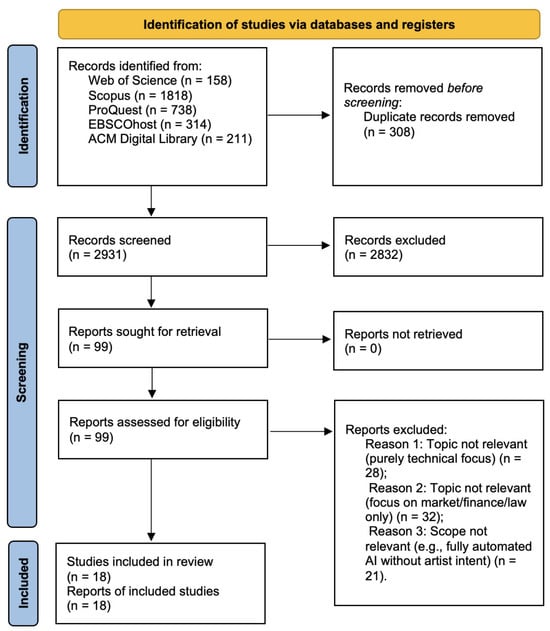
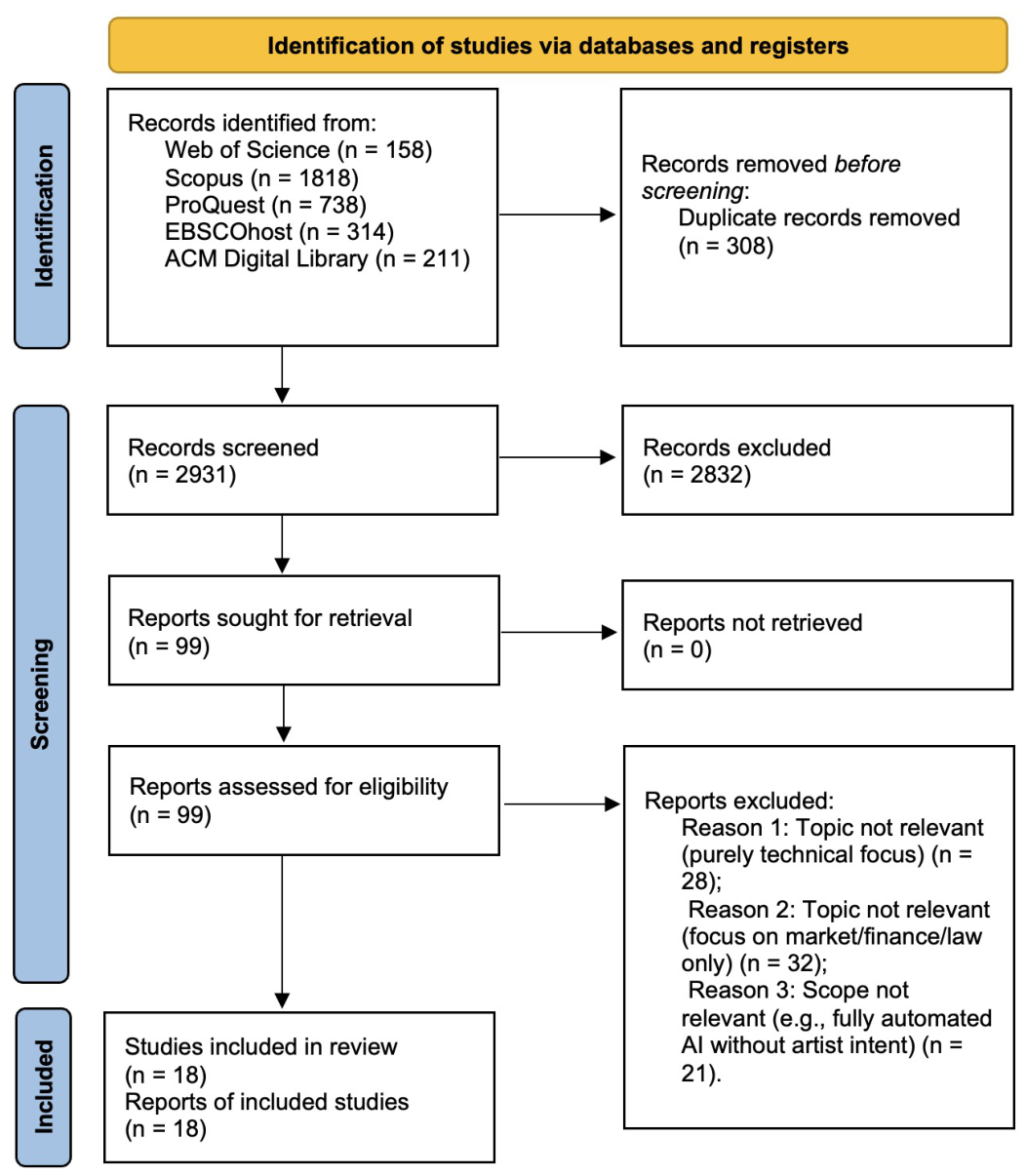
The initial search yielded a total of 3239 records (WOS: 158; Scopus: 1818; EBSCO: 314; ProQuest: 738; ACM: 211). After the removal of 308 duplicates, 2931 unique records remained for screening. Based on the title and abstract review, 2832 records were excluded as they did not meet the eligibility criteria. The high exclusion rate during the initial screening reflects the significant interdisciplinary noise within the current NFT discourse. Although a vast number of publications are indexed under the NFT Art tag, the majority of these records focus predominantly on cryptocurrency market trends, speculative financial volatility, or pure technical infrastructure (e.g., blockchain protocols). These studies were excluded as they lack substantive engagement with the aesthetic essence or the theoretical reconfiguration of art, which is the primary focus of this synthesis. This resulted in 99 articles being selected for full-text assessment.
In the second phase, the two authors conducted a detailed review of the full texts of these 99 articles. Following this in-depth analysis, a further 81 articles were excluded for not fully meeting the inclusion criteria. This left a final set of 18 studies for inclusion in the qualitative synthesis. The entire selection process is visually summarized in the PRISMA (Takkouche and Norman 2011) flow diagram (Figure 2).
Figure 2.
PRISMA 2020 flow diagram detailing the study identification and selection process.
4. Result
The results of this review first provide a descriptive analysis of the field’s research methods and a typology of NFT art, which is categorized into digitally native, interactive, and cross-media forms. The subsequent thematic analysis reveals three core findings: the extensive application of traditional art theory to the NFT context; the construction of value through social factors such as community and identity, which often supersede visual aesthetics; and the evolution of the artist’s role from a solitary creator to a designer of systems who collaborates with both AI and their community.
4.1. RQ1: The Methodological and Typological Landscape of NFT Art Research
4.1.1. Research Methods
The systematic review of the 18 articles reveals a diverse application of research methods (Table 1). The studies can be broadly categorized into qualitative, quantitative, and mixed methods approaches. Qualitative studies, which form the largest group, predominantly rely on conceptual analysis, literature reviews, and interviews. Quantitative studies frequently employ computational analysis of image datasets, surveys, and various statistical modeling techniques. A smaller subset of papers utilizes a mixed-methods approach, combining techniques such as interviews and quantitative data analysis to provide a more comprehensive perspective.
Table 1.
Research Method Summary of Reviewed Studies.
Qualitative Studies. A majority of the studies in this review (9 out of 18) employed qualitative methodologies. These studies predominantly utilized conceptual, theoretical, and philosophical analyses to define and contextualize NFT art. For instance, several papers focused on establishing the criteria for what constitutes NFT art and its place within art theory, often through deep conceptual and philosophical inquiry (Hon 2023; Šarović and Popović 2023). This approach was frequently augmented by critical literature reviews and art historical analysis to situate NFTs within broader artistic and technological trajectories (Lyubchenko 2022; Notaro 2022). Some researchers applied specific theoretical frameworks, such as semiotics and psychoanalysis, to deconstruct the perception and valuation of NFT art (Poposki 2024). Other qualitative approaches included multi-perspective position papers drawing on the viewpoints of various ecosystem actors (Franceschet et al. 2021) and technical analyses of blockchain’s preservation capabilities (Rivero Moreno 2024). Furthermore, in-depth, semi-structured interviews with artists and creators were a key method for understanding the development of creative communities and cooperative practices within the NFT art world (Almeda and Hartmann 2023; Coppelli 2022).
Quantitative Studies. 6 of the reviewed articles adopted a quantitative approach, primarily focusing on the empirical analysis of aesthetic features and their impact on NFT pricing. A common methodology involved the use of computational techniques to extract visual and aesthetic features from large datasets of NFT images. These features—such as color, complexity, saturation, and composition—were then analyzed using statistical models to identify correlations with market prices (Y. Chen et al. 2023; C. Guan et al. 2024). For example, some studies employed hedonic pricing models to quantify the market value of specific aesthetic measures (Alsultan et al. 2024), while others used panel regression to predict aesthetic appeal based on time-varying image features in dynamic generative art (Meng et al. 2023). In addition to computational analysis, quantitative methods also included surveys and questionnaires to gather data on audience perception and aesthetic preferences, which were then analyzed using statistical techniques like multi-dimensional scaling (Y. Chen et al. 2023). Another approach combined the analysis of secondary market data with controlled experimental studies to test hypotheses about the influence of social value and scarcity on pricing (Hofstetter et al. 2024).
Mixed Methods. A smaller cohort of 3 studies utilized a mixed-methods approach, combining qualitative and quantitative techniques to achieve a more comprehensive analysis. This integrative strategy allowed researchers to triangulate findings and explore phenomena from multiple angles. For example, studies combined semi-structured interviews with artists and creators to gather rich, contextual insights, which were then complemented by the statistical analysis of large-scale market transaction data to identify broader market behaviors and trends (M. Guan et al. 2025). Another common pairing was the use of questionnaires, often including both closed-ended (quantitative) and open-ended (qualitative) questions, to assess public perception alongside observational and literature-based methods (Ardianti and Widharta 2022). Similarly, researchers integrated survey data with semi-structured interviews to investigate how factors like rarity influence users’ aesthetic appreciation and personality perception of 3D NFT avatars (Jing and Wang 2022). This blending of methods provides a nuanced understanding that connects individual experiences with overarching market dynamics.
4.1.2. Typology of NFT Art
An analysis of the reviewed literature reveals a diverse and evolving landscape of NFT art forms (Table 2). While early discourse was dominated by specific formats, the field has expanded to include a wide spectrum of artistic production. Based on the works examined, these varied types can be broadly organized into three main categories: (1) Digitally Native Art, which constitutes the most prevalent and foundational forms; (2) Interactive and Experiential Art, which leverages the digital medium to move beyond static imagery; and (3) Cross-Media and Functional NFTs, which challenge traditional boundaries between the physical, virtual, and conceptual realms.
Table 2.
A Typology of NFT Art.
Digitally Native Art. The most dominant typology discussed is Digitally Native Art, which encompasses the foundational forms of creative expression tokenized on the blockchain. A critical technical distinction underpinning this typology is the storage model employed: On-chain versus Off-chain NFTs. While the majority of PFP and image-based NFTs analyzed rely on off-chain storage (e.g., IPFS), certain Generative and Algorithmic Art forms are stored entirely on-chain, where the code itself resides within the smart contract. This category includes Static and Animated Images, representing the tokenization of traditional digital media such as illustrations, photographs (Coppelli 2022; Lyubchenko 2022), and motion-based works like GIFs and videos (Franceschet et al. 2021; C. Guan et al. 2024). Alongside these are PFP (Profile Picture) and Collectibles, a major sub-category consisting of large series of character-based images designed for use as online avatars. The value in PFP projects is often derived from identity signaling, community access, and the rarity of specific traits (Almeda and Hartmann 2023; Y. Chen et al. 2023; Jing and Wang 2022; Notaro 2022). A third crucial form is Generative and Algorithmic Art, where works are created by algorithms coded by the artist. These pieces are often generated at the moment of minting, emphasizing process-based aesthetics such as seriality and variability (Y. Chen et al. 2023; Meng et al. 2023; Notaro 2022). This on-chain nature is aesthetically significant, as it ensures an immutable aesthetic where the artwork’s existence is inextricably tied to the blockchain’s permanence rather than vulnerable external links.
Interactive and Experiential Art. Moving beyond passive viewing, this category includes works that require active engagement from the audience. User-Input Interactive art is a key example, where the artwork’s audio-visual output changes based on direct user input, such as keyboard or mouse actions (C. Guan et al. 2024). This interactivity is extended in Gamified NFTs, which function as assets within a game’s ecosystem, often tied to “Play-to-Earn” mechanics (Almeda and Hartmann 2023; Hon 2023). The category also includes Immersive Experiences designed for Virtual Reality (VR) or Augmented Reality (AR). These works create three-dimensional spaces for viewers to explore, offering a more embodied and immersive engagement with the digital art object (Franceschet et al. 2021; Hon 2023). Together, these forms transform the artwork from a static object into a dynamic and participatory system.
Cross-Media and Functional NFTs. The third major category involves NFTs that blur the lines between different media and serve functions beyond pure aesthetics. Physical–Digital Hybrids are a prominent example, where an NFT is linked to a physical artwork, serving as its certificate of ownership and authenticity. This process sometimes involves the conceptual act of destroying the physical original to ensure the NFT’s uniqueness (Coppelli 2022; Notaro 2022; Šarović and Popović 2023). The application of NFT technology also extends to other creative fields in Cross-Disciplinary Applications, such as tokenized music royalties or digital fashion in the form of virtual garments (Hon 2023). Finally, Conceptual and Functional NFTs derive their value primarily from the idea, data, or utility they represent. This includes “intelligent NFTs” (iNFTs) powered by AI and works whose value is tied to social experiments or real-world events, shifting the focus from visual representation to the underlying concept and function (Notaro 2022; Šarović and Popović 2023).
4.2. RQ2: Integration and Adaptation of Traditional Art Theories
Integration with Traditional Art Theory
A significant finding from the systematic literature review is the extensive reliance on traditional art theory and art history to frame, analyze, and critique the NFT phenomenon. Rather than treating NFT art as a completely isolated field, the reviewed articles frequently situate it within established theoretical discourses (Table 3). These connections can be grouped into three primary areas of engagement: (1) sociological and institutional frameworks; (2) art-historical analyses; (3) aesthetic and perceptual theories; and (4) the reconfiguration of operational frameworks.
Table 3.
Analysis of Connections to Traditional Art Theory in NFT Literature.
Sociological and Institutional Frameworks. Several studies employ sociological and institutional theories of art to deconstruct the NFT ecosystem. Howard Becker’s “Art Worlds” theory, for example, is used as a foundational framework to analyze the networks of creation, distribution, and evaluation within the NFT space (Almeda and Hartmann 2023). However, a critical tension exists regarding the efficacy of these frameworks; while some scholars argue that blockchain replicates traditional institutional gatekeeping through curated platforms (Radermecker and Ginsburgh 2023), others posit that the Institutional Theory of Art is fundamentally reconfigured when consensus shifts from curators to distributed holders (Lyubchenko 2022; Šarović and Popović 2023). Critical theories from Berger and Rancière are also applied to examine how the NFT market functions as an “aesthetic regime” that reinforces the commodification of art (Hon 2023).
Art-Historical and Movement-Based Analysis. The central scholarly debate revolves around the concept of the “aura” derived from Walter Benjamin. Scholars like (Coppelli 2022) argue that NFTs restore a digital aura through verifiable provenance, whereas critics suggest that hyper-financialization accelerates the loss of aura by reducing art to a speculative asset class (Notaro 2022). Conceptual Art is a frequent point of reference for the dematerialization of the art object (Franceschet et al. 2021), yet this connection is scrutinized as a theoretical paradox where the rejection of the object is replaced by the hyper-ownership of the token (Notaro 2022).
Aesthetic and Perceptual Theories. A recurring theoretical conflict arises between Computational Formalism, which seeks objective visual drivers of value (Meng et al. 2023), and Contextualism, which argues that visual merit is secondary to social signaling (Y. Chen et al. 2023). Philosophical aesthetics, particularly Kant’s work on judgment, is used to build models for NFT avatars (Y. Chen et al. 2023), yet this application remains contestable as it attempts to reconcile Kantian “disinterestedness” with the inherently interested and speculative nature of crypto-patronage (Hon 2023).
The Adaptation of Traditional Art Frameworks. The literature reveals a strategic institutional mimicry where the NFT world emulates the prestige of its predecessor to establish legitimacy. For instance, curated marketplaces like SuperRare function as new digital-native galleries (Almeda and Hartmann 2023). This adaptation is often critiqued as a re-centralization of power that contradicts the egalitarian promises of Web3 (Radermecker and Ginsburgh 2023). Blockchain’s immutable ledger is described as a new method for provenance (Šarović and Popović 2023), fostering new forms of connoisseurship among whales or CryptoPatrons (Franceschet et al. 2021; Lyubchenko 2022).
4.3. RQ3: The Construction of Value and the Evolving Role of the Artist
4.3.1. User Perception and the Construction of Value
The reviewed literature indicates that the value of NFT art is actively constructed through complex processes of user perception.
Aesthetic Experience and Personality Projection. The debate centers on whether PFP avatars function as a digital self or a speculative mask. While users “read” traits to infer personality (Y. Chen et al. 2023; Jing and Wang 2022), this projection is increasingly viewed through Lacanian psychoanalysis, where the NFT becomes an unattainable object of desire used to signal idealized status rather than an authentic self (Poposki 2024).
The Shift from Intrinsic to Social Value. A significant scholarly consensus is emerging that traditional markers of skill are being superseded by social capital. This finding introduces a value inversion: as demonstrated by (Hofstetter et al. 2024), extreme scarcity can negatively impact price if it hinders community formation, thereby challenging traditional economic models equat rarity with value. The act of collecting is reframed as a desire for membership in an exclusive club (Almeda and Hartmann 2023; Franceschet et al. 2021).
4.3.2. The Creation Process and the Evolving Role of the Artist
The Artist as System Designer and Coder. This shift fundamentally reconfigures the ontology of artistic labor. Recasting the artist as a system designer merges intent with computational logic (C. Guan et al. 2024). This shift challenges the Romantic notion of the solitary genius, replacing it with a model of Distributed Authorship where the smart contract acts as an autonomous agent (Meng et al. 2023; Notaro 2022).
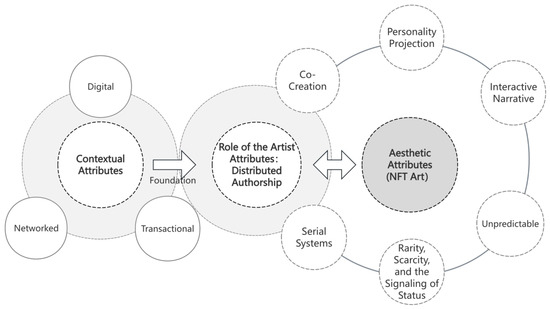
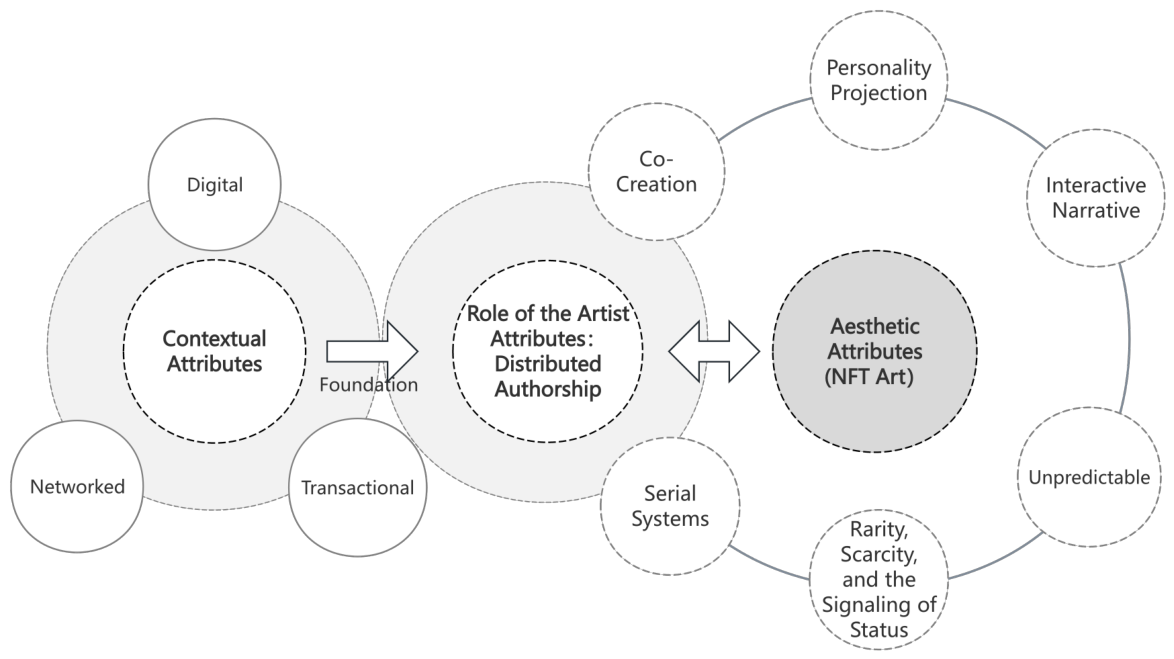
The Rise of Co-Creation: AI and Community Collaboration. The literature identifies a paradigm shift toward participatory creativity. AI-driven art complicates the notion of authorship (Notaro 2022). This model is positioned within the debate of decentralized agency: does community feedback empower the artist, or turn them into a service provider for speculative interests (Almeda and Hartmann 2023; C. Guan et al. 2024) (Figure 3)?
Figure 3.
Main Aesthetic Aesthetic Attributes of NFT Art from the Reviewed Literature.
5. Discussion
This discussion synthesizes the preceding findings to argue that NFT art represents a significant paradigm shift in digital creative practice. This shift is first articulated through the emergence of a new “decentralized aesthetic,” which reorients value from the static art object towards dynamic, system-based, and socially embedded experiences. Rather than serving as a mere medium for tokenization, the decentralized aesthetic functions as a critical intervention that challenges the foundational tenets of Western aesthetic theory, such as the autonomy of the art object and the disinterestedness of the spectator. This new aesthetic framework necessitates a corresponding evolution in the artist’s role, recasting them as a hybrid system designer and community manager. Building on this analysis, the discussion concludes by identifying critical gaps in the current literature and proposing a forward-looking agenda for future research to address the methodological, theoretical, and practical challenges in this nascent field.
5.1. Towards a New Aesthetic System for NFT Art
A central question arising from this review is whether NFT art is merely a new medium for existing artistic paradigms or if it is fostering a fundamentally new aesthetic system. The findings indicate that while many studies effectively use traditional art theories as an analytical lens (Lyubchenko 2022; Notaro 2022), the unique characteristics of NFT art frequently challenge, transform, and even transcend these frameworks. Specifically, the traditional formalist emphasis on the intrinsic visual merit of a self-contained object fails to account for the systemic complexity of NFTs. Furthermore, while traditional art history relies on centralized institutions to confer aura and legitimacy, the NFT ecosystem introduces a distributed aura mediated by blockchain provenance, directly challenging Walter Benjamin’s assumption that mechanical reproduction inevitably erodes a work’s unique presence. The limitations of applying object-centric theories like Formalism (Schauer 1987) to dynamic, system-based works, or the transformation of Conceptual Art’s market critique into a market-integrated mechanism (Franceschet et al. 2021), suggest the emergence of a new paradigm. This review proposes that a “decentralized aesthetic” is indeed taking shape, one that prioritizes process, system, experience, and social context over the static, contemplative art object.
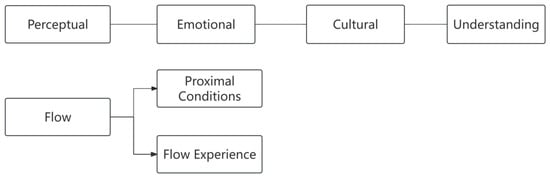
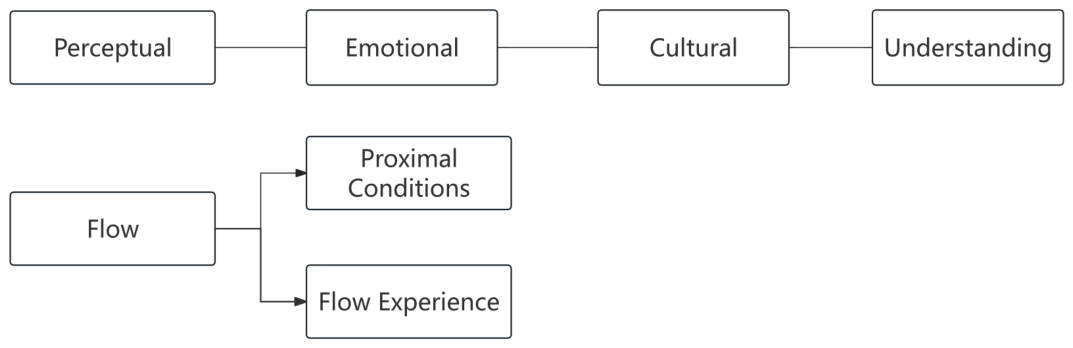
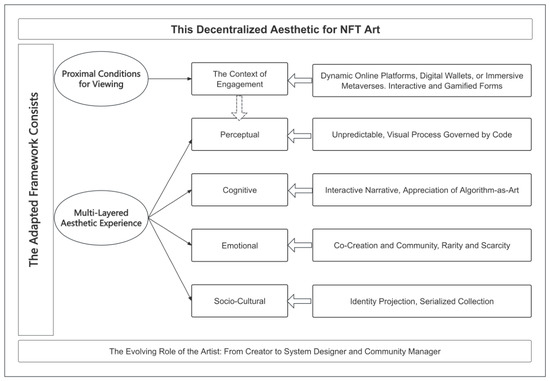
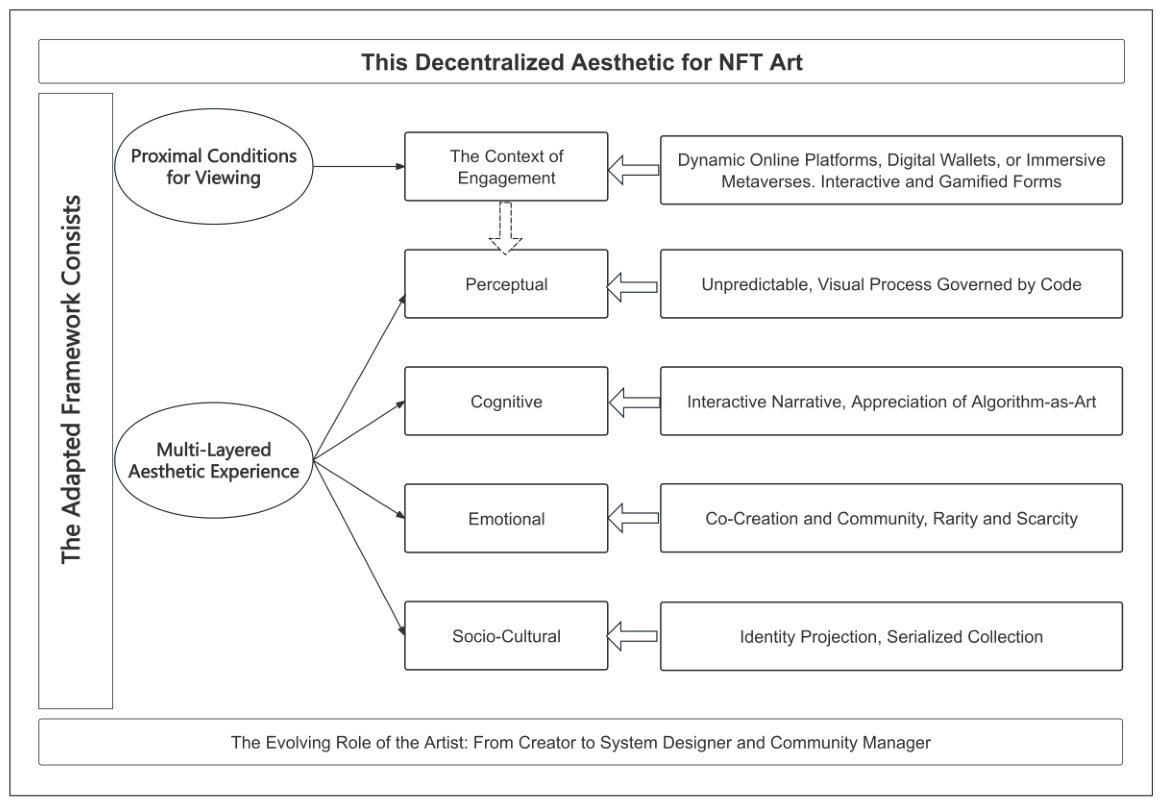
To articulate this new model, we adapted a multi-component model of aesthetic experience, drawing from established research in aesthetic psychology. Specifically, our framework is built upon the model proposed by Wanzer et al. (Wanzer et al. 2020), which deconstructs aesthetic engagement into its foundational components (Figure 4). This model provides the structural skeleton for our analysis. By integrating our findings into the foundational framework, we can construct a new, holistic model tailored to the NFT art phenomenon (Figure 5). This adapted framework, presented next, consists of the Proximal Conditions for viewing and the multi-layered Aesthetic Experience itself (Perceptual, Cognitive, Emotional, and Socio-Cultural).
Figure 4.
The theoretical framework of aesthetic experience, adapted from (Wanzer et al. 2020).
Figure 5.
A Proposed Model for the Decentralized Aesthetic, Synthesizing the Reviewed Aesthetic Attributes into an Adapted Framework of Experience.
5.1.1. Proximal Conditions: The Context of Engagement
The aesthetic experience of NFT art is initiated under conditions vastly different from a traditional museum or gallery. The context is inherently digital, networked, and transactional, establishing a unique set of proximal conditions for engagement. Art is encountered not in a quiet gallery but within dynamic online platforms, digital wallets, or immersive metaverses, creating a decentralized context that serves as the foundational stage for the experience (Hon 2023). Within this environment, the literature highlights that many NFT artworks, particularly Interactive and Gamified forms, are explicitly designed to induce a state of “flow”, a deep and effortless immersion that is central to the user’s engagement and enjoyment. This environmental shift replaces institutional isolation with a hyper-connected marketplace where financial transactions are inextricable from aesthetic encounters. Consequently, the NFT paradigm challenges the Kantian notion of disinterestedness by positing that transactional participation and economic agency can function as intrinsic components of the aesthetic core rather than external distractions (Y. Chen et al. 2023).
5.1.2. The Aesthetic Experience: Mapping NFT Characteristics
The experience of NFT art can be deconstructed into four interconnected layers, each activated by specific features identified in the literature.
The Perceptual Layer involves the viewer’s sensory engagement, which in NFT art often means perceiving a process rather than a static form. This is driven by Generative and Algorithmic Art, where the aesthetic pleasure comes from witnessing an unfolding, often unpredictable, visual process governed by code (Meng et al. 2023). In this layer, the work is no longer the final image but the generative logic itself, shifting the perceptual focus from ontological stability to algorithmic flux. This shift echoes the foundational principles of Net Art since the mid-1990s, where the aesthetic focus moved from the stable digital object to the fluid, networked process (Paul 2023). This is further intensified in Interactive Art, where perception is directly tied to action, as the user’s input actively changes the visual and auditory output, making them a co-creator of the sensory experience (M. Guan et al. 2025).
The Cognitive and Interpretive Layer involves understanding and making sense of the artwork, which for NFTs often requires interpreting the underlying system or concept. Appreciation of Algorithm-as-Art requires a cognitive understanding that the code itself is a central part of the artwork, embodying the artist’s conceptual vision (M. Guan et al. 2025). Similarly, Conceptual and Hybrid Forms demand that the viewer engage with the underlying idea, such as the performative act of burning a physical artwork to give the NFT its unique value; the meaning resides in the entire conceptual framework, not just the image (Coppelli 2022; Notaro 2022). This requires a systemic literacy where interpreting the smart contract becomes as crucial as interpreting iconography. This interpretive shift moves NFT art closer to a computational connoisseurship, where the viewer’s intellectual engagement is directed toward the transparency and elegance of the underlying system architecture. By re-embedding these practices into a blockchain-mediated infrastructure, NFT art re-actualizes the 1990s discourse on software-as-culture, shifting the focus from open-access protocols to the programmable scarcity of Web3 (Prada 2015).
The Emotional Layer concerns the feelings and affect evoked by the artwork. The literature points to Co-creation and Community as a powerful driver of emotional connection, fostering a sense of ownership and collective pride among participants (Almeda and Hartmann 2023). This shared affect decentralizes emotional labor, moving beyond private response toward collective euphoria. Concurrently, the mechanisms of Rarity and Scarcity and the speculative dynamics of the market generate powerful emotional responses, ranging from the thrill of acquiring a rare item to the anxiety of market volatility (Hofstetter et al. 2024; Jing and Wang 2022).
The Socio-Cultural Layer is arguably the most defining feature of the new NFT aesthetic system, where art becomes a primary vehicle for social signaling. PFP and Avatars function as tools for identity projection in the digital world, with ownership signaling membership in a “tribe” or subculture and aligning the owner with its perceived values (Y. Chen et al. 2023; Jing and Wang 2022). Being part of a large, Serialized collection reinforces a sense of collective belonging and shared identity (M. Guan et al. 2025). Furthermore, for many participants, the act of engaging with NFTs is a way to participate in the broader techno-political ideology of Web3 and Decentralization, making art ownership a form of cultural and political statement (Franceschet et al. 2021). By shifting the evaluative authority from institutional gatekeepers to decentralized networks, this layer represents a fundamental reconfiguration of the Institutional Theory of Art, where value is ratified by communal consensus rather than curatorial decree (Lyubchenko 2022). This reconfiguration is not a radical rupture but a technological realization of the long-standing efforts in digital culture to bypass traditional art-world intermediaries through networked distribution.
In conclusion, the findings suggest that NFT art is indeed forming a new aesthetic paradigm. This “decentralized aesthetic” shifts the focus from the static, self-contained art object of formalism to a dynamic, participatory, and socially embedded system. Its value is no longer a fixed property of visual excellence but a fluid construct negotiated through a multi-layered experience. By decentering the object, this new paradigm forces a re-evaluation of what constitutes the work in the age of programmable scarcity. Its value is judged less on its isolated visual merit and more on the quality and depth of the experience it generates across perceptual, cognitive, emotional, and socio-cultural layers (Figure 5).
5.2. The Evolving Role of the Artist: From Creator to System Designer and Community Manager
The analysis of the reviewed literature reveals a significant transformation in the role of the contemporary artist within the NFT ecosystem. Unlike traditional paradigms, where the artist is primarily understood as a creator of discrete visual objects (Goodfellow 2024), NFT art demands a broader and more complex skill set. In particular, the emergence of generative and interactive art practices has redefined the artist as a system designer—one who codes the rules, parameters, and aesthetic logic that govern the creation of works (M. Guan et al. 2025; Meng et al. 2023). This transition echoes the software art movements of the late 20th century, where the artist’s labor shifted from manual execution to the architectural design of algorithmic processes (Paul 2023). The algorithm, in this context, is not merely a tool but a central medium of artistic expression, encoding both the artist’s vision and a generative logic capable of producing thousands of unique outputs.
Moreover, due to the decentralized nature of NFT markets and the increasingly critical role of online communities in shaping value, artists must also function as community managers. As one study emphasizes, the perceived worth of NFT art is closely tied to social dynamics such as visibility, endorsement, and belonging (Almeda and Hartmann 2023). This necessitates sustained interaction with collectors and audiences via platforms like Twitter, Discord, and Instagram, where the artist curates not just their artworks, but also their identity, ethos, and network. This community-building function is an evolution of the social orchestration practiced in 1990s Net Art, where the creation of networked relationships was as vital as the digital file itself (Catlow et al. 2017). Community-building becomes a performative and strategic act—one that influences both the aesthetic reception and the financial success of the artwork.
This dual function—as system architect and social orchestrator—has profound implications for the identity of the digital artist. By contextualizing these roles within the history of digital culture since the mid-1990s, it becomes clear that NFT art re-actualizes the long-standing concept of distributed authorship, where the work is co-constituted by code, audience interaction, and social narrative (Stalder 2018). It challenges the romantic notion of solitary artistic genius and instead promotes a model where the artist manages a complex ecosystem of technical and social agents. This evolution also raises new questions for art education and institutional training: should artists be taught to code? To manage social platforms? To build communities as part of their practice? The NFT art space thus not only expands the tools available to artists but reconfigures the very ontology of artistic labor in the 21st century by integrating smart contracts into a pre-existing tradition of algorithmic and networked creation.
Research Gaps and Future Directions
While the existing literature provides a solid foundation for understanding the NFT art phenomenon, this systematic review also reveals several gaps in the current research and points toward directions for future academic inquiry. These gaps can be identified across three main areas: methodology, theory, and practical application.
Methodologically, a notable limitation is the predominance of qualitative-focused research. As the statistical analysis of methods shows, a majority of the literature employs conceptual analysis, case studies, and interviews (Almeda and Hartmann 2023; Coppelli 2022). While these studies offer deep insights for theory-building, they often lack empirical validation on a larger scale. Secondly, most of the existing research is focused on the market peak of 2021–2022, resulting in a lack of longitudinal data analysis. The NFT market has experienced dramatic boom-and-bust cycles; future research should adopt a longitudinal approach to track the long-term evolution of specific projects or communities across different market conditions to obtain more dynamic and resilient conclusions. Finally, the current body of research has geographical and cultural limitations, necessitating future cross-cultural analysis to explore whether user perceptions of NFT aesthetics, value, and community differ across various cultural contexts.
Theoretically, this review finds that while many studies successfully apply traditional art theories, they often do so directly, revealing a lack of “intermediary theories” that can effectively connect the unique attributes of NFTs. Future theoretical work should aim to build new analytical frameworks that better integrate the three core drivers of NFT value: economic mechanisms (such as programmed scarcity and speculative dynamics (Hofstetter et al. 2024), visual symbols (such as the identity codes carried by avatars (Jing and Wang 2022; Poposki 2024), and social identity (such as the sense of belonging and cultural capital (Almeda and Hartmann 2023). Such an integrated theoretical model could more comprehensively explain why certain works, which may seem unremarkable from a traditional formalist aesthetic perspective, can achieve extremely high value within specific communities.
In terms of practical application, future research could focus more deeply on the influence of platform curation mechanisms on aesthetic trends. Studies have already identified that platform mechanisms, such as the algorithmic recommendations on OpenSea and the manual curation on SuperRare, are acting as the new “gatekeepers” of the era (Almeda and Hartmann 2023). However, there is currently a lack of detailed empirical research on how these platforms actively shape or even manipulate aesthetic trends through their interface design, algorithmic sorting, and promotional strategies. Future work, using methods like digital ethnography, platform data analysis, or comparative platform studies, could reveal the specific role of curation mechanisms in guiding artists’ creative directions and influencing market aesthetic preferences (Hon 2023). This would be significant for understanding the future trajectory of the NFT art ecosystem and exploring its potential risks of centralization.
6. Conclusions
This systematic literature review has synthesized the nascent but rapidly evolving academic discourse on NFT art, revealing a complex interplay between technology, aesthetics, and social dynamics. By systematically mapping the field’s research methodologies, establishing a new typology of NFT art forms, and conducting an in-depth thematic analysis, this study has addressed its core research questions concerning the nature, value, and creative ecosystem of NFT art.
The findings confirm that the NFT phenomenon is far more than a transient market trend; it represents a significant evolution in digital creative practice. Three key conclusions emerge from the analysis. First, the value of NFT art is fundamentally reconfigured, shifting from an emphasis on intrinsic visual merit towards a model where worth is primarily constructed through social factors such as community belonging, identity projection, and shared cultural capital. Second, this shift has precipitated a profound evolution in the role of the artist, who now functions not only as a creator of content but as a designer of generative systems and a manager of online communities. Third, the NFT ecosystem actively adapts and reconfigures core frameworks from the traditional art world, such as curation, provenance, and patronage, creating a hybrid space that both challenges and emulates its predecessor.
The primary original contribution of this paper is the articulation of the decentralized aesthetic framework, which establishes a novel theoretical lens that transcends traditional object-centric formalism. By integrating the unique, technologically driven characteristics of NFT art—such as interactivity, generativity, and co-creation—with an established multi-layered model of aesthetic experience, this study proposes the concept of a decentralized aesthetic. This framework redefines the digital art work not as a static file, but as a dynamic, participatory, and socially embedded system. This framework demonstrates that the value of NFT art is judged less on its isolated visual properties and more on the holistic, participatory experience it generates across perceptual, cognitive, emotional, and socio-cultural dimensions. This provides a novel theoretical lens to understand why and how value is created in this new paradigm.
While this review provides a comprehensive snapshot of the current state of research, it also highlights the field’s limitations, including a reliance on qualitative methods and a lack of longitudinal and cross-cultural studies. Beyond expanding empirical methodologies, this research provides a strategic roadmap for future scholarship to navigate the systemic complexities of the NFT ecosystem. Future research should aim to address these gaps to build a more robust and empirically grounded understanding of the long-term impact of NFTs. Specifically, there is a critical need for future inquiry to investigate the algorithmic gatekeeping of platforms and the cross-cultural variations in aesthetic perception to challenge current Western-centric biases. As the digital and physical worlds continue to converge, NFT art will undoubtedly remain a critical site for understanding the future of creativity, ownership, and cultural value in the 21st century.
Author Contributions
Conceptualization, X.K. and R.M.T.; methodology, X.K.; writing—original draft preparation, X.K.; writing—review and editing, X.K. and R.M.T.; supervision, R.M.T. All authors have read and agreed to the published version of the manuscript.
Funding
This research received no external funding.
Institutional Review Board Statement
Not applicable.
Informed Consent Statement
Not applicable.
Data Availability Statement
No new data were created or analysed in this study. Data sharing is not applicable to this article.
Conflicts of Interest
The authors declare no conflict of interest.
References
- Almeda, Shm Garanganao, and Bjoern Hartmann. 2023. NFT art world: The influence of decentralized systems on the development of novel online creative communities and cooperative practices. In Proceedings of the 2023 ACM Designing Interactive Systems Conference. New York: Association for Computing Machinery, pp. 353–70. [Google Scholar]
- Alshater, Muneer M., Nohade Nasrallah, Rim Khoury, and Mayank Joshipura. 2024. Deciphering the world of NFTs: A scholarly review of trends, challenges, and opportunities. Electronic Commerce Research 25: 4193–249. [Google Scholar] [CrossRef] [Scilit]
- Alsultan, Sarah, Apostolos Kourtis, and Raphael N. Markellos. 2024. Can we price beauty? aesthetics and digital art markets. Economics Letters 235: 111572. [Google Scholar] [CrossRef] [Scilit]
- Ardianti, Ruth, and Ely Andra Widharta. 2022. Aesthetic analysis and public perceptions of popular artworks in NFT opensea marketplace. In Sixth International Conference on Language, Literature, Culture, and Education (ICOLLITE 2022). Dordrecht: Atlantis Press, pp. 507–16. [Google Scholar]
- Arikan, Emine, and Siamak Aram. 2022. Qualitative study of text-to-image ai generators and their relationship with NFTs. In 2022 International Conference on Computational Science and Computational Intelligence (CSCI). Piscataway: IEEE, pp. 240–45. [Google Scholar]
- Aytas, Murat, and Ceren Karaviran. 2025. Looking at NFT art through the eyes of virtual communities: A netnographic analysis. SAGE Open 15: 21582440241311348. [Google Scholar] [CrossRef] [Scilit]
- Bailey, Jason. 2018. What Is Cryptoart? Artnome. Available online: https://www.artnome.com/news/2018/1/14/what-is-cryptoart (accessed on 25 April 2025).
- Bao, Hong, and David Roubaud. 2022. Non-fungible token: A systematic review and research agenda. Journal of Risk and Financial Management 15: 215. [Google Scholar] [CrossRef] [Scilit]
- Boiko, Viacheslav, and Stepan Maksymov. 2023. NFT as leading tool of art in representation of visual environment. National Academy of Managerial Staff of Culture and Arts Herald: Science Journal 1: 152–56. [Google Scholar]
- Catlow, Ruth, Marc Garrett, Nathan Jones, and Sam Skinner. 2017. Artists Re-Thinking the Blockchain. Cambridge and Liverpool: Liverpool University Press. [Google Scholar]
- Chen, Yihan, Yilin Ye, and Wei Zeng. 2023. The rich, the poor, and the ugly: An aesthetic-perspective assessment of NFT values. In Proceedings of the 16th International Symposium on Visual Information Communication and Interaction. New York: Association for Computing Machinery, pp. 1–8. [Google Scholar]
- Chen, Zihui, Yuanyuan Guo, and Zihui Wang. 2022. The future trends of NFT: Evidence from art and brand industries. BCP Business & Management 28: 58–67. [Google Scholar] [CrossRef] [Scilit]
- Choudhary, Vicky V. 2022. Non Fungible Token (NFT): Delve Into the World of NFTs Crypto Collectibles and How It Might Change Everything? Sarangpur: Vicky Choudhary, vol. 2, Self-published. [Google Scholar]
- Coppelli, Laura. 2022. Crypto-Art and NFTs: A Technical and Aesthetic Analysis. Master’s thesis, Università 659 Ca’ Foscari Venezia, Venezia, Italy. [Google Scholar]
- Díaz, Marliz Acela Velázquez, Diana Barrón Villaverde, Paul Sanmartin Mendoza, and Jonathan David Aguirre Bello. 2023. Exploring the fusion of technology and art: Unveiling the historical landscape of art NFTs in technology and engineering management. In 2023 IEEE Colombian Caribbean Conference (C3). Piscataway: IEEE, pp. 1–5. [Google Scholar]
- Franceschet, Massimo, Giovanni Colavizza, T’ai Smith, Blake Finucane, Martin Lukas Ostachowski, Sergio Scalet, Jonathan Perkins, James Morgan, and Sebastian Hernandez. 2021. Crypto art: A decentralized view. Leonardo 54: 402–5. [Google Scholar] [CrossRef] [Scilit]
- Goodfellow, Paul. 2024. The distributed authorship of art in the age of AI. Arts 13: 149. [Google Scholar] [CrossRef] [Scilit]
- Guan, Chong, Ding Ding, Jing Ren, and Jiancang Guo. 2024. Unveiling the aesthetic “wow factor”: The role of aesthetic incongruity and image quality in NFT art valuation with computer vision. Electronic Markets 34: 38. [Google Scholar] [CrossRef] [Scilit]
- Guan, Maggie Yongqi, Jiliang Li, Junjie Hu, Zhenqing Gu, Yuyi Wang, Zhicong Lu, and Kanye Ye Wang. 2025. From digital art to crypto art: The evolution of art brought by NFT. International Journal of Human–Computer Interaction 41: 7384–403. [Google Scholar] [CrossRef] [Scilit]
- Hofstetter, Reto, Martin P. Fritze, and Cait Lamberton. 2024. Beyond scarcity: A social value-based lens for NFT pricing. Journal of Consumer Research 51: 140–50. [Google Scholar] [CrossRef] [Scilit]
- Hon, Hang Kwan. 2023. The Affection of NFT Product in Modern Aesthetics. Master’s thesis, Film and TV School, Academy of Performing Arts in Prague, Prague, Czech Republic. [Google Scholar]
- Jenkins, Barbara. 2025. NFTs and the financialization of art. Cultural Studies 39: 626–55. [Google Scholar] [CrossRef] [Scilit]
- Jing, Tianhua, and Luo Wang. 2022. How the rarity influences aesthetic experience of 3d profile picture NFTs. In Proceedings of the Tenth International Symposium of Chinese CHI. New York: Association for Computing Machinery, pp. 151–60. [Google Scholar]
- Kanat, Sevtap. 2023. The rules are rewritten: NFT/crypto art. Dumlupınar Üniversitesi Sosyal Bilimler Dergisi 75: 13–23. [Google Scholar] [CrossRef] [Scilit]
- Kitchenham, Barbara. 2004. Procedures for performing systematic reviews. Keele, UK, Keele University 33: 1–26. [Google Scholar]
- Lyubchenko, Irina. 2022. What is art? NFTs, beeple, and art connoisseurship in the 21st century. Interactive Film & Media Journal 2: 174–90. [Google Scholar]
- Malik, Nikhil, Gil Appel, and Lan Luo. 2023. Blockchain technology for creative industries: Current state and research opportunities. International Journal of Research in Marketing 40: 38–48. [Google Scholar] [CrossRef] [Scilit]
- Meng, Pu, Xin Meng, Rui Hu, and Liqun Zhang. 2023. Predicting the aesthetics of dynamic generative artwork based on statistical image features: A time-dependent model. PLoS ONE 18: e0291647. [Google Scholar] [CrossRef] [Scilit] [PubMed]
- Nadini, Matthieu, Laura Alessandretti, Flavio Di Giacinto, Mauro Martino, Luca Maria Aiello, and Andrea Baronchelli. 2021. Mapping the NFT revolution: Market trends, trade networks, and visual features. Scientific Reports 11: 20902. [Google Scholar] [CrossRef] [Scilit]
- Notaro, Anna. 2022. All that is solid melts in the ethereum: The brave new (art) world of NFTs. Journal of Visual Art Practice 21: 359–82. [Google Scholar] [CrossRef] [Scilit]
- Paul, Christiane. 2023. Digital Art. London: Thames & Hudson. [Google Scholar]
- Poposki, Zoran. 2024. Valuing the virtual: A semiotic-psychoanalytic investigation of NFT art value and perception. Cogent Arts & Humanities 11: 2430897. [Google Scholar] [CrossRef] [Scilit]
- Prada, Juan Martín. 2015. The different fields of the “aesthetic of the digital”. Paper presented at 21st 698 International Symposium on Electronic Art (ISEA 2015), Vancouver, BC, Canada, August 14–18. [Google Scholar]
- Radermecker, Anne-Sophie V., and Victor Ginsburgh. 2023. Questioning the NFT “revolution” within the art ecosystem. Arts 12: 25. [Google Scholar] [CrossRef] [Scilit]
- Rivero Moreno, Luis D. 2024. Art on the chain? on the possibilities of new media art preservation on the web3. Digital Creativity 35: 221–33. [Google Scholar] [CrossRef] [Scilit]
- Schauer, Frederick. 1987. Formalism. Yale Lj 97: 509. [Google Scholar] [CrossRef] [Scilit]
- Stalder, Felix. 2018. The Digital Condition. Cambridge: Polity Press. [Google Scholar]
- Summers, Brandi T., and Desiree Fields. 2024. Speculative urban worldmaking: Meeting financial violence with a politics of collective care. Antipode 56: 821–40. [Google Scholar] [CrossRef] [Scilit]
- Šarović, Srđan, and Una Popović. 2023. On what (there) is and is not NFT art. Synthesis Philosophica 38: 255–73. [Google Scholar] [CrossRef] [Scilit]
- Takkouche, Bahi, and Guy Norman. 2011. Prisma statement. Epidemiology 22: 128. [Google Scholar] [CrossRef] [Scilit]
- Tolmach, Maryna, Viktoriia Volynets, Yuliia Trach, Olena Chaikovska, Svitlana Khrushch, Kateryna Kotsiubivska, Renata Danielienė, and Paulius Danielius. 2023. NFT and digital art: Ukrainian experience of using cryptoart. In International Congress on Information and Communication Technology. Berlin/Heidelberg: Springer, pp. 995–1006. [Google Scholar]
- Velazquez-Diaz, Daniel, Juan E. Arco, Andres Ortiz, Verónica Pérez-Cabezas, David Lucena-Anton, Jose A. Moral-Munoz, and Alejandro Galán-Mercant. 2023. Use of artificial intelligence in the identification and diagnosis of frailty syndrome in older adults: Scoping review. Journal of Medical Internet Research 25: e47346. [Google Scholar] [CrossRef] [Scilit] [PubMed]
- Wang, Qin, Rujia Li, Qi Wang, and Shiping Chen. 2021. Non-fungible token (NFT): Overview, evaluation, opportunities and challenges. arXiv arXiv:2105.07447. [Google Scholar] [CrossRef] [Scilit]
- Wanzer, Dana Linnell, Kelsey Procter Finley, Steven Zarian, and Noreen Cortez. 2020. Experiencing flow while viewing art: Development of the aesthetic experience questionnaire. Psychology of Aesthetics, Creativity, and the Arts 14: 113. [Google Scholar] [CrossRef] [Scilit]



Disclaimer/Publisher’s Note: The statements, opinions and data contained in all publications are solely those of the individual author(s) and contributor(s) and not of MDPI and/or the editor(s). MDPI and/or the editor(s) disclaim responsibility for any injury to people or property resulting from any ideas, methods, instructions or products referred to in the content. |
© 2026 by the authors. Licensee MDPI, Basel, Switzerland. This article is an open access article distributed under the terms and conditions of the Creative Commons Attribution (CC BY) license.