


Abstract
This study examines how immersive narrative resources, whether technological–sensory, narrative–structural, or contextual, are deployed in contemporary blockbuster cinema and to what extent audiences recognize and value them in their evaluations. Using Avatar: Fire and Ash as a case study, the research follows a sequential mixed-methods design. In the first phase, a qualitative film analysis identifies eight types of cognitive immersion, drawing on established theoretical frameworks of narrative immersion. The second phase is quantitative and involves the computational analysis of 1133 valid reviews from Internet Movie Database (IMDb) through Natural Language Processing (NLP) techniques, including n-gram frequency analysis, Latent Dirichlet Allocation (LDA) topic modeling with 3 topics after perplexity minimization, and sentiment polarity analysis. The LDA model reveals three discursive clusters, experiential and emotional, technical and comparative, and critical, with the latter concentrated mostly in low-rated reviews. Text sentiment and numeric ratings show a moderate positive correlation (r = 0.53, p < 0.001), pointing to a general but imperfect alignment between the two modes of evaluation. Markers of content fatigue (nothing new, predictable, boring) appear in 25.1% of the reviews, yet a third of those are still rated 8 or higher. When cross-tabulating the immersion categories with audience language, phenomenological and affective dimensions such as Emotional Engagement (59.8%) and Haptic/Sensory Experience (59.1%) emerge as the most frequently discussed, while cinematographic techniques like Bracketing (2.6%) are barely mentioned. Taken together, the findings suggest that the franchise sustains its appeal through a form of embodied sensory engagement that operates largely independent of narrative novelty.
1. Introduction
Film has always been related to technology as a means of transforming the human process of thinking and understanding the world (Pardo 2015). One way of achieving this is by increasing the sense of immersion in a narrative through imagination and emotional activation, which in turn supports attention (Atencia-Linares and Sebastián 2023). In this sense, the use of technology entails a new understanding of film that differs from the conventional one, in which the interest remains centred on the narrative content but with a greater degree of experiential immersion (Cabello Bàrzanas et al. 2025).
In the field of film studies, immersion has been theorized as relating to either diegetic immersion, immersion in story and character, or to perceptual immersion, immersion in the sights and sounds of a film, enhanced by formal audio-visual qualities (Galloway 2006; Murray 1997). Despite relatively traditional narrative modes of storytelling, the Avatar franchise has always focused on perceptual immersion (Prince 2012; Purse 2013). In the case of Fire and Ash, however, it is time to consider whether an immersive audio-visual experience can continue to compensate for a lack of diegetic immersion, particularly in a media culture in which quality is high, viewer expectations are higher, and the long-term viability of spectacle is in doubt (Cubitt 2004; Darley 2000).
In response, this paper adopts a data mining approach to examine the content of audience evaluations directly and addresses two specific questions: Does the hyper-realistic visual quality of a film now represent a principal reason for going to the cinema? In what way does the possible contradiction between spectacle and narrative manifest itself in cinema audience reviews? These are important questions for the Avatar franchise, but also for the wider future of digital filmmaking.
This issue is relevant not only to box office sales. With the growing need to attract financing for big-budget films, organize special effects production, and prepare for distribution, the study of audience reactions has become increasingly relevant in both industry and academic contexts (Holt and Perren 2009). This analysis adopts a mixed-methods research design, using computational techniques to complement qualitative film criticism in examining the relationship between spectacle and content.
In the literature, immersion is also conceptualised as a multidimensional construct. For Brown (2013), it includes both “engagement immersion” (emotional commitment to character and plot) and “engrossment immersion” (sensory capture by image and sound). The Avatar cycle certainly evokes the latter, while not abandoning the story, within the projection conditions of cinema. According to Murray (1997), immersion is the feeling of being enclosed elsewhere. Aspects of this environment that contribute to immersion include the darkness of the theatre and the size of the screen. All these elements are pushed to their limits in Cameron’s films. However, according to Murray, these environmental elements are not enough: “the sensation of immersion in an artificially created environment is also dependent on our active creation of belief.” In other words, immersion is not created by the senses alone.
The term spectacle has also been linked to the idea of the “cinema of attractions”, a term coined by Gunning (1986) to describe a form of cinema that privileges display over diegetic immersion. In this context, spectacle addresses the viewer directly, interrupting the narrative with (semi-)discrete moments of awe. Purse suggests that the digital franchise has revived this model of cinema, although it strives to integrate wonder into continuous diegetic relations, resulting in what might be termed “spectacular narratives”. This combination also serves an industrial agenda: the need to combine the recognizable with the (sensually) new (Johnson 2013).
Such a dichotomy is particularly evident in Avatar, a franchise that has frequently been associated with cutting-edge visual developments and, at the same time, with the recurring criticism that its plot is conventional (Bordwell 2013), relies on repetitive narrative archetypes (Martínez Falquina 2014), reproduces familiar philosophical and ideological archetypes (Pop 2009), and even contains repeated military frontier rhetoric across all three films (Mirón-Florido 2025). The fact that these criticisms have emerged in different scientific contexts supports the view that conventional narrative is part of the very fabric of the series, rather than merely anecdotal commentary.
As Elsaesser (2013) mentions, digital cinema is at the same time a convergence and a contradiction that, on the one hand, foregrounds the cinéma d’auteur and on the other, blurs the aesthetic boundaries between image, narrative and spectacle.
While “franchise fatigue” suggests that overexposure leads to diminishing returns (Flanagan et al. 2016), it can also be comforting, even ritualistic (Hills 2002). The central problem with Avatar is that most of its emotional appeal operates at the level of Pandora, not at the level of serial character narratives. The crucial issue for this franchise, then, is whether a pleasurable environmental destination, unsupported by rich serial character stories, will be enough to lure viewers for the next instalment. Ndalianis (2004) usefully supplements this perspective, positioning the seriality of recent franchise films within a neo-baroque lineage that prizes spectacularity, sensory overload, and labyrinthine narrative designs that favor awe over resolution.
For the purposes of this paper, cinematic immersion denotes a form of engagement characterized by high levels of attention, reduced awareness of one’s immediate surroundings, and a feeling of presence within a medially represented environment (Hyder 2008; Turkle 1997). The combination of spatial extension, temporal duration, and narrative code makes cinema a medium uniquely apt to evoke this state (Pérez-Gómez and Expósito-Barea 2023). Immersion thus entails a double consciousness on the part of the viewer, who acknowledges both the real physical space of viewing and the semi-transparent artifice of the screen (Ryan 2015).
Immersion can further be divided into two subtypes: cognitive immersion describes the feelings of immersion and presence resulting from narrative and technological stimuli, whereas physical immersion describes the experience of immersion through direct sensory or physical simulation (Ryan 2015). On the other hand, in the movie experience, there is a maintenance of the state of cognitive immersion through a variety of visual and sound effects (depth of field, lighting, camera movement, framing, screen scale, sound, the screen being the mediating surface par excellence) (Cortés-Selva 2015).
Other theories are also available: Chen and Tsao’s (2023) immersive narrative theory (spatial, temporal, spatiotemporal and emotional) and diegetic immersion, which occurs when a spectator is affectively engaged by a narrative in a diegetic world and thus able to be immersed in that world (Barrett et al. 2025). In this research, immersive narrative refers to the effects of a story that include the spatiotemporal context, behavior of characters and emotional reactions (Chen and Tsao 2023). It is an industry phenomenon, a shift towards user-oriented experience, or “narrative engagement” (Szita et al. 2024), which affects perception in three ways: technologically–sensorially, narratively–structurally and contextually.
Stereoscopic 3D has been, throughout history, a key technology in the theatricalization of the medium (Pérez-Gómez and Expósito-Barea 2023) and, after a relative eclipse during the mid-century, has returned strongly through digital fiction and reality effects (Sun 2022; Cortés-Selva 2015). In addition, the interplay between theatrical and home exhibition contributes to this immersive dynamic, since, as Klinger (2006) points out, cinema’s relocation to the domestic sphere alters both the circumstances and the purposes of film viewing, while the theatrical consumption of technologies such as Image Maximum (IMAX) or 3D becomes, more than ever, an active choice. Although there have been significant advancements in 3D technologies, consumer experience and story integration remain a relatively neglected area of research.
To bridge that knowledge gap, this paper examines the fictional and receptional immersion in Avatar: Fire and Ash (Cameron 2025), a first commercial reference. Cameron’s film illustrates the director’s status as “technological auteur”, a position that enables a technical mastery that results in maximum immersion (Massuet 2022). That film, successful at the box office and positively received by critics, possesses an imagery and narrative framework intended to place the viewer within a fictional world, as noted in press coverage of its box-office performance (Zamora 2026).
Accordingly, Avatar constitutes a fitting example to address the postulates of the immersion hypothesis. The film uses audio-visual language that places the viewer at the center of a diegesis whose principles defy the laws of reason, and immersion is used as a strategy to validate the impossible (Massuet 2022). Nevertheless, there is a lack of scientific works focused on the relationship between specific audio-visual language and the reaction of the viewer, and even less work bringing together immersion, presence, and emotion evoked by a narrative (Pizzolante et al. 2023).
Following the conceptual frameworks discussed above, this article draws a working distinction between two aspects of immersion: on the one hand, we understand cognitive immersion as the spectator’s attentional and emotional immersion in the film’s world (Atencia-Linares and Sebastián 2023; Brown 2013); on the other hand, we define perceptual immersion as the spectator’s sensory immersion resulting from the use of technologies such as Stereoscopic 3D, HFR and Large Format exhibition (Cortés-Selva 2015; Pérez-Gómez and Expósito-Barea 2023).
The qualitative part of this article explores the film in terms of cognitive immersion, while the computational part focuses on cognitive and perceptual immersion from the spectator’s discourse. The eight categories were developed via deductive analysis through the spatio-temporal model of attentional engagement by Atencia-Linares and Sebastián (2023) in addition to the concepts of time-space in Chen and Tsao (2023) and the engagement-immersion in Brown (2013). Each category serves as a coding scheme for cinematographic elements identified in Avatar: Fire and Ash.
The categories correspond to the full range of theoretically grounded dimensions traceable to the input models. No category lacks a basis in the literature, and no theoretically relevant dimension has been omitted, so the framework covers the entire scope of cognitive and perceptual immersion mechanisms pertinent to recent 3D cinema. This study is guided by the following question: how are immersive narrative resources, whether technological–sensory, narrative–structural, or contextual, used in contemporary blockbuster cinema, and to what extent are they recognized and valued in audience discourse? From this, the study tests the hypothesis that the sustained use of these immersive resources is associated with deeper and more lasting forms of audience engagement.
This study follows a sequential mixed-methods design. The first phase employs qualitative narrative analysis guided by the eight immersion categories. The second phase applies Natural Language Processing (NLP) techniques to analyze viewer discourse. The remainder of the paper proceeds as follows: Section 2 describes the methodology; Section 3 reports the results of the film and NLP analyses; Section 4 discusses the findings in light of the literature; and Section 5 presents the conclusions, limitations, and directions for future research.
2. Methodology
The purpose of this case study is to explore the immersive mechanisms and viewer responses associated with Avatar: Fire and Ash using a sequential mixed-methods approach. The first stage consists of a qualitative film analysis, in which the film techniques used to generate cognitive immersion are identified and classified. The second stage involves the use of NLP tools to analyze a dataset of user reviews gathered from Internet Movie Database (IMDb), allowing for a computational analysis of how audiences describe their experience. The sequential design ensures that the theoretical categories derived from the close reading provide the conceptual framework through which the computational results are interpreted.
For the qualitative part, the theoretical framework of cognitive immersion is provided through the classification established by Atencia-Linares and Sebastián (2023) at the level of emotional and behavioral immersion. Although their classification is designed for listening to audio and fiction texts, it can be applied to film immersion because of the elements of attention and duration of immersion discussed by the authors. It is also important that immersion is not perceived as an either-or condition, but as a scale that fluctuates in degree and intensity during the act of viewing.
The model is multidimensional and consists of a set of interconnected components. Transportation involves a mental shift in the viewer to a different space and time, resulting in a sense of sustained attention and decreased awareness of the surroundings. Presentness is the feeling of being present in the mediated environment, a sense of being there triggered by sights and sounds. Emotional engagement is the emotional response evoked by the story that the viewer perceives as his or her own emotional state, rather than as something happening to someone else. Graduality suggests that immersion is not an all-or-nothing condition, but rather a gradual process that may wax and wane throughout the narrative. The final four categories (Generality and Specificity, Non-fiction and Fiction, Bracketing, and Haptic/Sensory Experience) concern the tension between diegetic narrative and physical immersion, the negation of the extra-diegetic, and the embodied nature of film, respectively. These categories comprise the theoretical framework through which the film’s strategies will later be discussed.
In fact, the reception of visual effects has itself been the subject of academic research (Pierson 2002), which contextualizes the emergence of the “effects enthusiast” within a longer tradition, from nineteenth-century stage magic to the contemporary CGI blockbuster. Moreover, it shows that “a fascination with technological display” constitutes a type of cinematic spectatorship, but one that need not necessarily conflict with “a spectatorship grounded in the pleasure of narrative”. The need to balance data quantity and data quality guided a mixed computational approach to the analysis of review discourse.
Web Scraping and NLP Process
A Selenium WebDriver web scraping tool was used to collect ratings from the IMDb website. The tool simulated continuous human activity on the site’s “infinite scroll” page by recursively sending requests to load new pages of content. This made it possible to collect all available ratings at the time of data collection, although the dataset remains subject to the potential biases inherent in self-selecting data collection platforms.
This methodology allowed us to collect the full text of all reviews available at the time of the study. After removing entries with fewer than ten characters or no rating, 1133 valid reviews remained. The data collection window was designed to capture both immediate reactions and more considered responses over time, which helps mitigate temporal skew. Nonetheless, the corpus remains subject to the self-selection biases inherent in user-generated review platforms: contributors tend to hold stronger opinions than the average viewer, and IMDb’s demographic profile does not mirror the general cinema-going population. These limitations are discussed further in Section 5.
The web scraper was implemented in Python 3.14 and executed in multiple batches to circumvent rate limits while maximizing data collection. Each review contains the review text, a rating (1–10), the date posted, and the username (which will be anonymized for this study). Non-English reviews were filtered out to ensure consistency in the analysis. All remaining English reviews will be referred to as the scraped data.
All data used in this paper were scraped from the publicly accessible review pages on IMDb. We did not scrape any private, password-protected, or otherwise secured information. Usernames were removed from the data prior to analysis and will not be included here or elsewhere. We considered only the text of each review, the associated rating, and the date of posting. A delay between requests was used to minimize the burden of scraping on the server. Since this paper involves the automated analysis of publicly available online discussions rather than a human subjects experiment, the work does not require human subjects ethics approval, as is standard in digital humanities and computational social science research.
We then pre-processed the texts according to common NLP standards (Bird et al. 2009), by lowercasing all text, removing nontextual elements such as URLs and HTML artifacts, tokenizing text with the word tokenizer from the Natural Language Toolkit (NLTK) package, removing English stopwords and specific words such as “movie”, “film” or “avatar”, removing punctuation and digits if necessary, and finally lemmatizing words to their base form. The full title “Avatar: Fire and Ash” was also normalized in order to avoid artificially inflating word frequency counts. Temporal expressions (e.g., references to runtime) were deliberately preserved in their original form rather than normalized, in order to maintain the integrity of user-generated phrasing and to capture variation in how audiences recall and discuss duration.
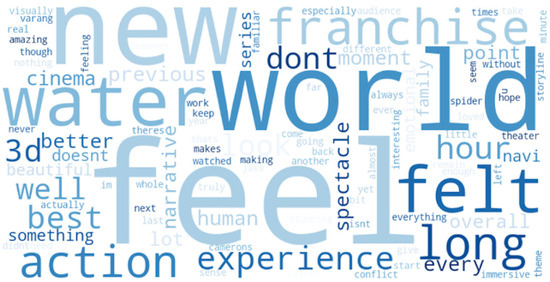
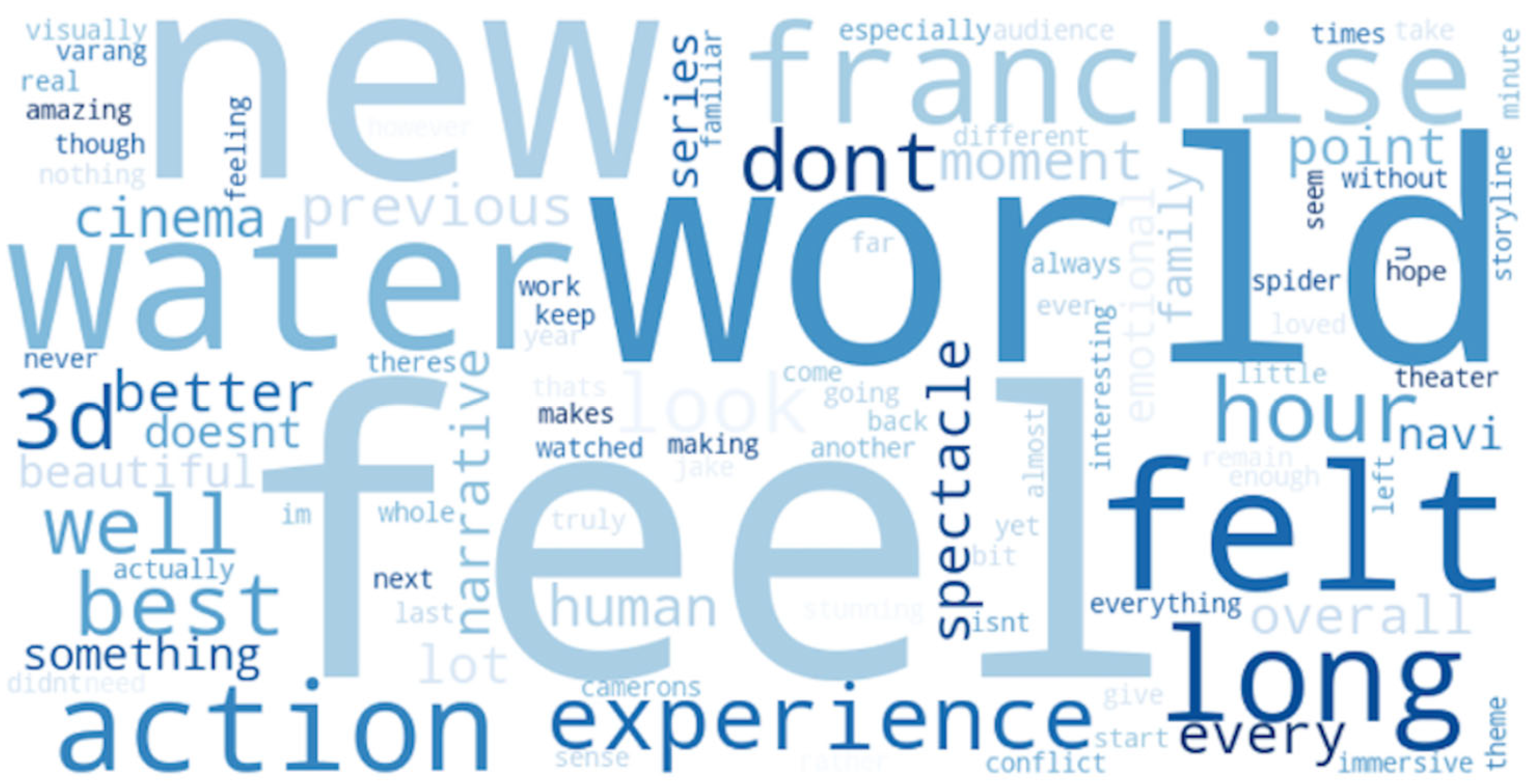
The analysis of bigrams and trigrams was also cleaned lexically and applied to the preprocessed corpus. It enabled us to identify more complex semantic units such as “story” (neutral) vs. “same old story” (evaluative), and hence to move from the analysis of individual words to complex semantic units (see Figure 1).
Figure 1.
Word cloud visualization of cleaned review corpus. Word size corresponds to frequency of occurrence. Prominent terms include visual descriptors (“stunning,” “beautiful,” “spectacle”) and experiential language (“feel,” “experience,” “immersive”), reflecting the dominance of perceptual evaluation in audience discourse.
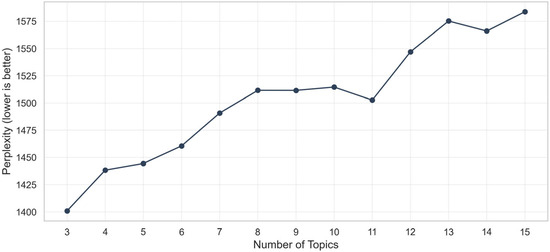
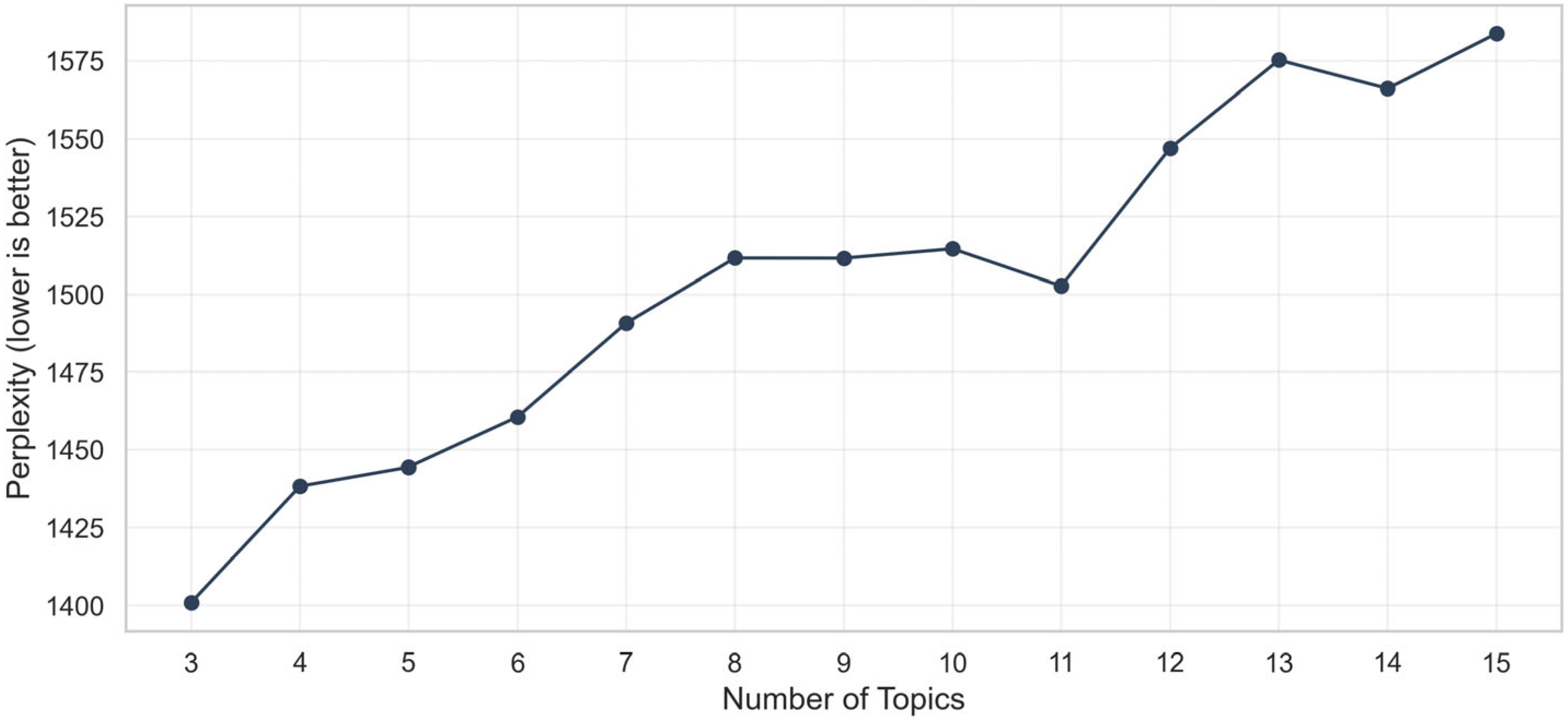
We performed topic modeling using Latent Dirichlet Allocation (LDA) as implemented in scikit-learn. The number of topics was tuned by calculating perplexity across a grid of topics (3–15). The number of topics with the lowest perplexity (1400.53) was 3, which was used for the final model (Figure 2).
Figure 2.
LDA Model Selection: Perplexity by Number of Topics.
Three hyperparameters were set for the model. The document-topic prior (alpha = 0.1) regulates the number of topics in each review. Setting this parameter to less than the number of topics (1/k) will lead to a sparser assignment of topics per review, with most of the weight going to a single topic. The topic-word prior (beta = 0.01) regulates the sparsity of words in a topic. Lower values lead to topics with a few words with very high weights. Online Variational Bayes was used as the inference algorithm. This allows the model to accept chunks of the corpus at a time. The iterations parameter was set to 50. Online inference is relatively fast, offering a balance between computational efficiency and convergence stability. This setting was chosen because it offers a good compromise between processing time and stability for corpora of this size. To find the number of topics we use perplexity scores for each solution for 3–15 candidate topics.
Perplexity, which captures the model’s capacity to fit new, unseen data (with smaller values signifying better fit), was smallest at 3 topics (1400.53) and increased for all higher numbers of topics, suggesting diminishing returns and greater topical repetition. Table 1 reports the three-topic solution, as well as the top ten keywords for each cluster.
Table 1.
Summary of dataset metrics and LDA parameters.
3. Results
This section reports the outcomes of both analytical stages: the qualitative immersion analysis of the film and the computational discourse analysis of the audience. We begin by outlining the specific techniques employed in Avatar: Fire and Ash to create a cognitively immersive text, arranged by their function (see Table 2).
Table 2.
An eight-category model of immersion of Avatar: Fire and Ash.
In addition to this model, the haptic visuality approach, as proposed by Marks and Polan (2000), highlights the physical aspects of filmic spectatorship that involve the body as the locus of knowledge before narrative interpretation.
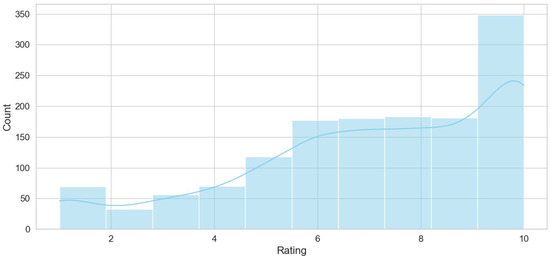
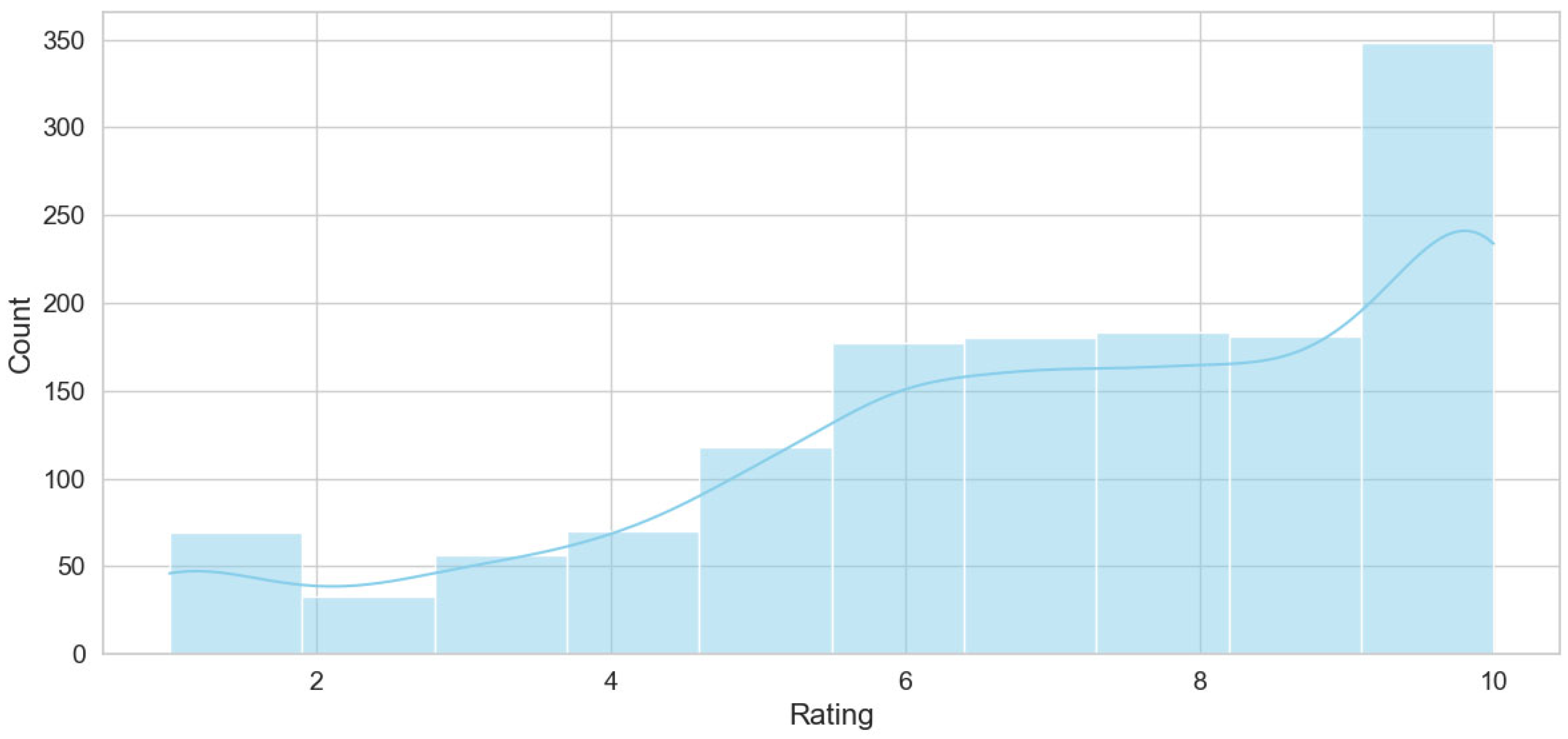
As it becomes evident, the dichotomy in the user experience along the two dimensions theoretically identified as perceptual and diegetic immersion is present. After using topic modeling and frequency analysis, the results suggest that the primary value identified by reviewers centers on the film’s ability to provide an immersive sensory experience (Figure 3).
Figure 3.
Distribution of user ratings (N = 1133). Histogram shows a positively skewed distribution with mode at 10, generally positive. Density plot shows the density of ratings between 6 and 10, and a second cluster between 1 and 2, which includes those who rated the movie as a very bad one.
3.1. N-Grams Results
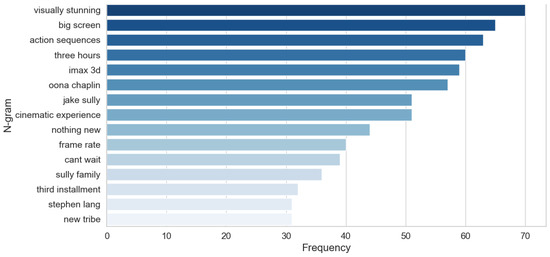
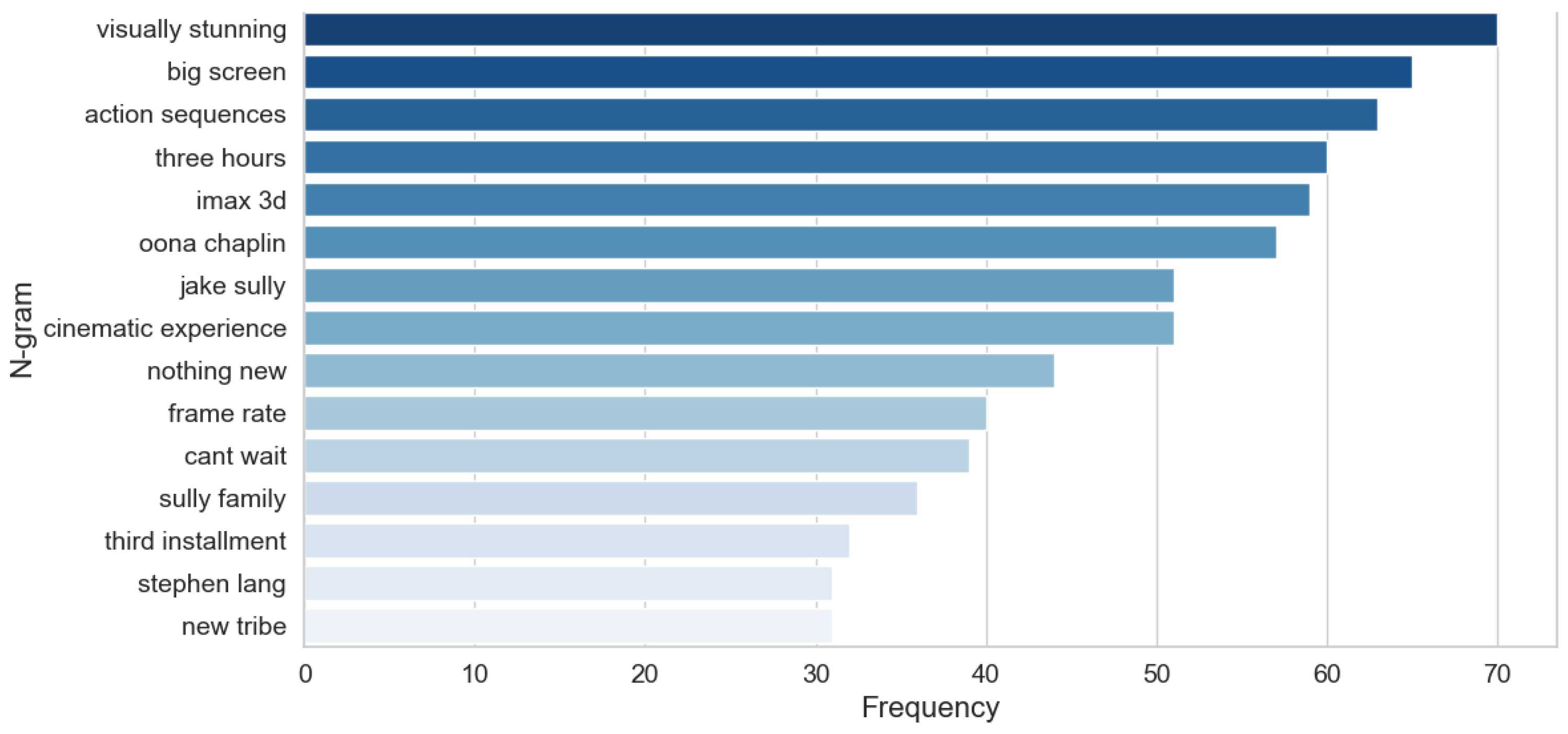
The most common bigrams were closely related to the visuality of the film. Phrases like “visually stunning” (70 reviews), and “cinematic experience” (51 reviews), were highly correlated with 9 and 10 ratings. They were frequently used as concluding remarks, particularly towards the end of the reviews, where the raters seemed to provide some justification for a favorable rating despite the script not being one of the film’s most memorable aspects (Figure 4).
Figure 4.
Top 15 bigrams (two-word phrases) by frequency. Excluding the dominance of “fire ash” (the film’s subtitle), most of the bigrams were related to visuality (“visually stunning,” “big screen,” “action sequences”) or to the way the film was watched (“IMAX 3D,” “frame rate”), suggesting the importance of the perceptual dimension in the raters’ reviews.
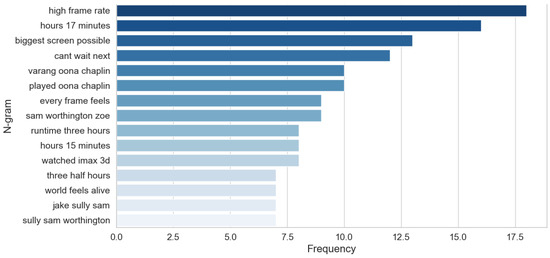
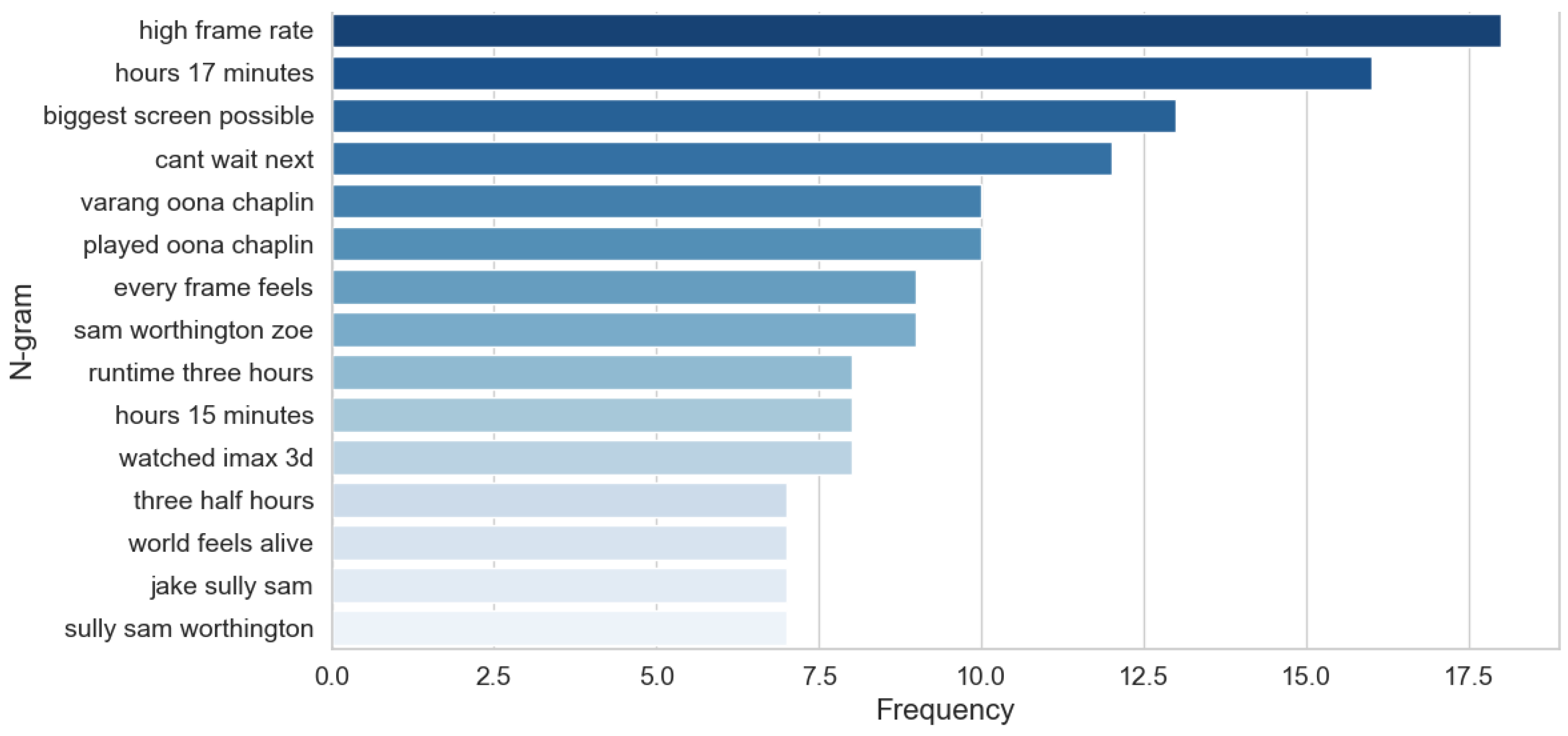
The appearance of technologically oriented terms like high frame rate (18 times) and IMAX 3D (59 times, as a bigram) also implies that the film was received not just as a narrative, but as a technological spectacle. In this case, the medium becomes the message in a fairly direct sense: immersion is further underscored by the medium of the projector itself. Several critics made a point of suggesting that the film should be seen on the biggest screen available, and particularly in IMAX, which points to the mode of reception as an intrinsic, rather than extrinsic, aspect of the cinematic text.
Lastly, Figure 5 shows a clear trend: these trigrams that emphasize the visual spectacle, also repeatedly employ a language of touch and embodiment: “felt like I was there,” “transported to another world,” or “most immersive experience.” In that sense, Cameron’s cinema seems to indeed deliver the kind of carnal thought that Sobchack (2004) positions as a primarily embodied engagement with cinema, before it is specifically an engagement with narrative.
Figure 5.
Top 15 trigrams (three-word phrases) by frequency. Phrases combining the film title with evaluative terms (“overall fire ash,” “fire ash feels,” “fire ash delivers”) predominate, alongside technical specifications (“high frame rate,” “hours 17 min”) and viewing recommendations (“biggest screen possible”). Note: Both “hours 17 min” and “hours 15 min” appear as distinct trigrams. The former corresponds to the actual runtime of Fire and Ash (3 h 17 min), while the latter may reference other instalments in the franchise or approximate recall. Their co-occurrence illustrates the salience of runtime as a topic of audience discussion and was therefore retained without normalization.
Whereas the visual aspects of the film were celebrated, a careful lexical analysis revealed recurring complaints about the plot. Expressions conveying the idea of a recycled story were notably frequent. “Nothing new” appeared 44 times, and phrases such as “same old story,” “predictable plot,” and “plot was weak” reinforced this perception. These terms were not confined to the lowest-rated reviews; they also appeared in reviews rated 8, 9, or even 10. The co-occurrence of narrative complaint markers and high ratings suggests that, for a substantial subset of reviewers, the perceptual experience may have compensated for perceived limitations in the screenplay.
The trigrams associated with time (“three hours”, “hours 17 min”) tend to co-occur with lower sentiment scores, which suggests that perceived over-length may have been a contributing factor in the difficulty of sustaining immersion for some viewers. The longer the film, the more a dialogue-driven or non-action scene risks reducing visual immersion. In such cases, the running time becomes conspicuous. Several respondents reported feeling immersed during the action sequences but restless during expository scenes.
3.2. LDA Modelling and Sentiment Analysis
The LDA topic model reveals three underlying topical clusters in the corpus (Table 3). Topic 1 combines words that describe the film as an experience or emotional response (feels, world, emotional, spectacle, narrative, visually), which are characteristic of reviews that primarily rate the film as a visceral, experiential success. Topic 2 aggregates terms about the technology or comparison to other films in the franchise (3D, water, hours, action, best), which are prevalent in reviews that assess the film on the basis of technological effects and comparisons to other films in the franchise. Topic 3 aggregates words about hating the film (nothing, boring, predictable, writing, script), which comprise language pertinent to disappointment with the film’s narrative. It is also interesting to look at the distribution of the most prominent topics across rating categories: Topic 2 is clearly prominent in all three rating categories (N = 731), while Topic 3 is notably over-represented in the lower rated reviews (30 low, 27 medium, and only 15 high), which further supports the claim that negative narrative evaluation is a particular discourse mode that is not dispersed throughout the dataset.
Table 3.
LDA Topics and rating.
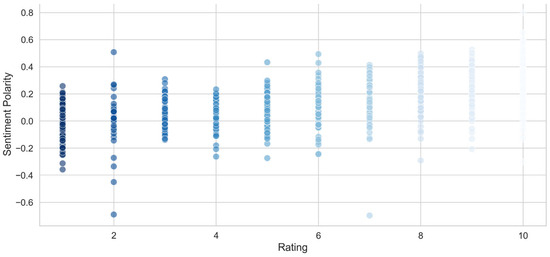
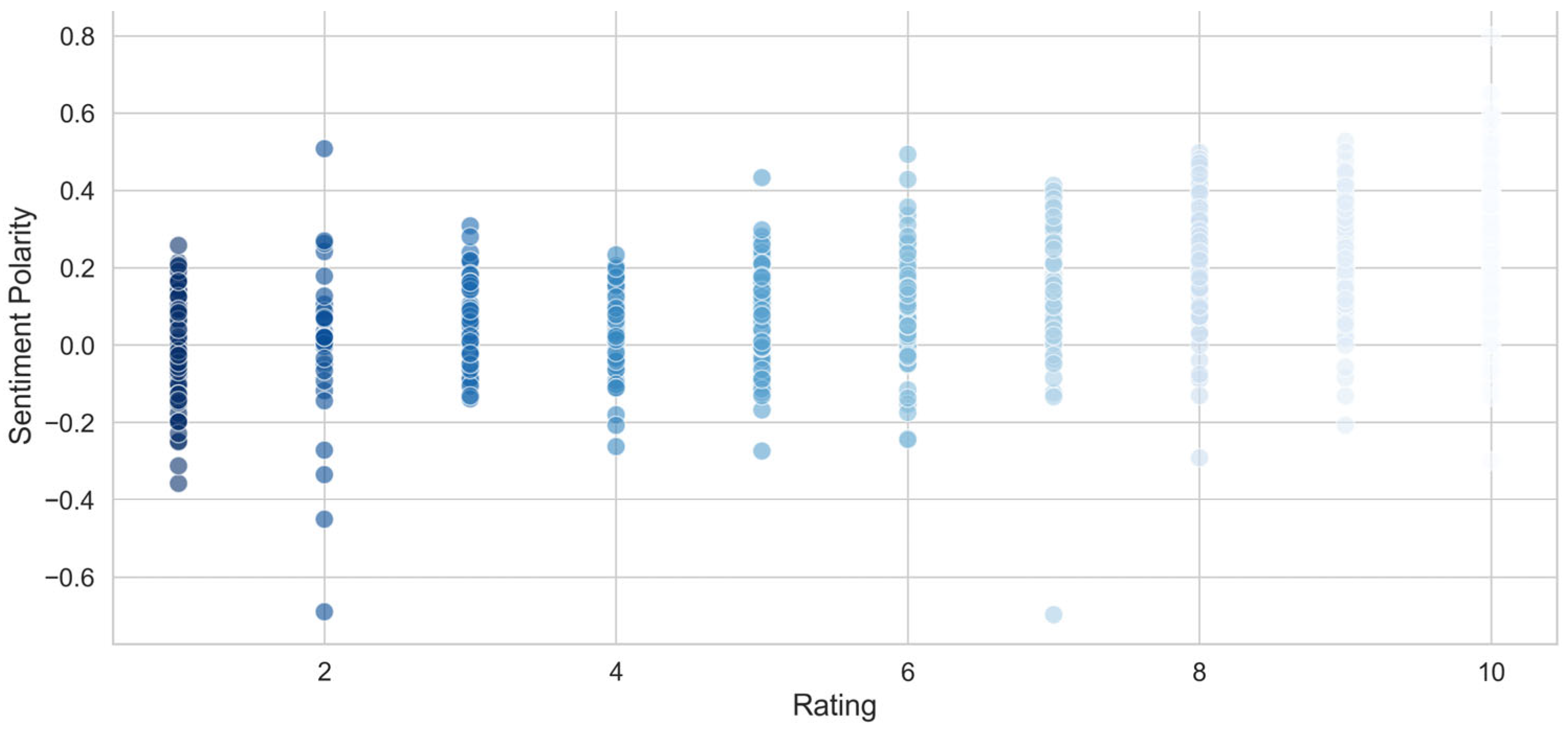
The most notable finding in this regard is the divergence between textual sentiment and numeric ratings. The average sentiment score was 0.164 (SD = 0.153), which is positive but moderately so, whereas the average star rating was 7.17 (SD = 2.68), placing the film comfortably in positive territory. There is a modest positive correlation between the two (Pearson’s r = 0.53, p < 0.001): reviews with more positive language tend to assign higher scores. Yet, as Figure 6 illustrates, there is considerable variation around that trend. Many reviews rated 9 or 10 display only neutral or moderately positive sentiment, while some low-scoring reviews contain relatively positive language. This moderate association suggests that text-based and numeric evaluations are related but not interchangeable modes of assessment: the numeric score appears to capture a general impression, while the text can accommodate both praise and criticism within the same review (Figure 6).
Figure 6.
Scatter plot of sentiment polarity score and rating. We observe a moderate positive correlation (r = 0.53, p < 0.001), suggesting that sentiment in text and rating are generally in line. However, the dispersion for each rating suggests a high level of heterogeneity. We can see that a significant proportion of the ratings with the highest values (9 or 10) correspond to text with neutral (values around 0) or moderately positive sentiment polarity, which may imply that text register contains information that is lost in the rating.
3.3. Cross-Mapping Between Immersion Categories and Audience Discourse
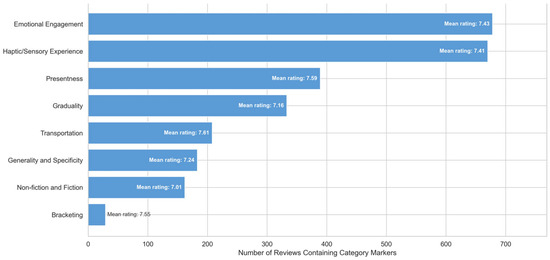
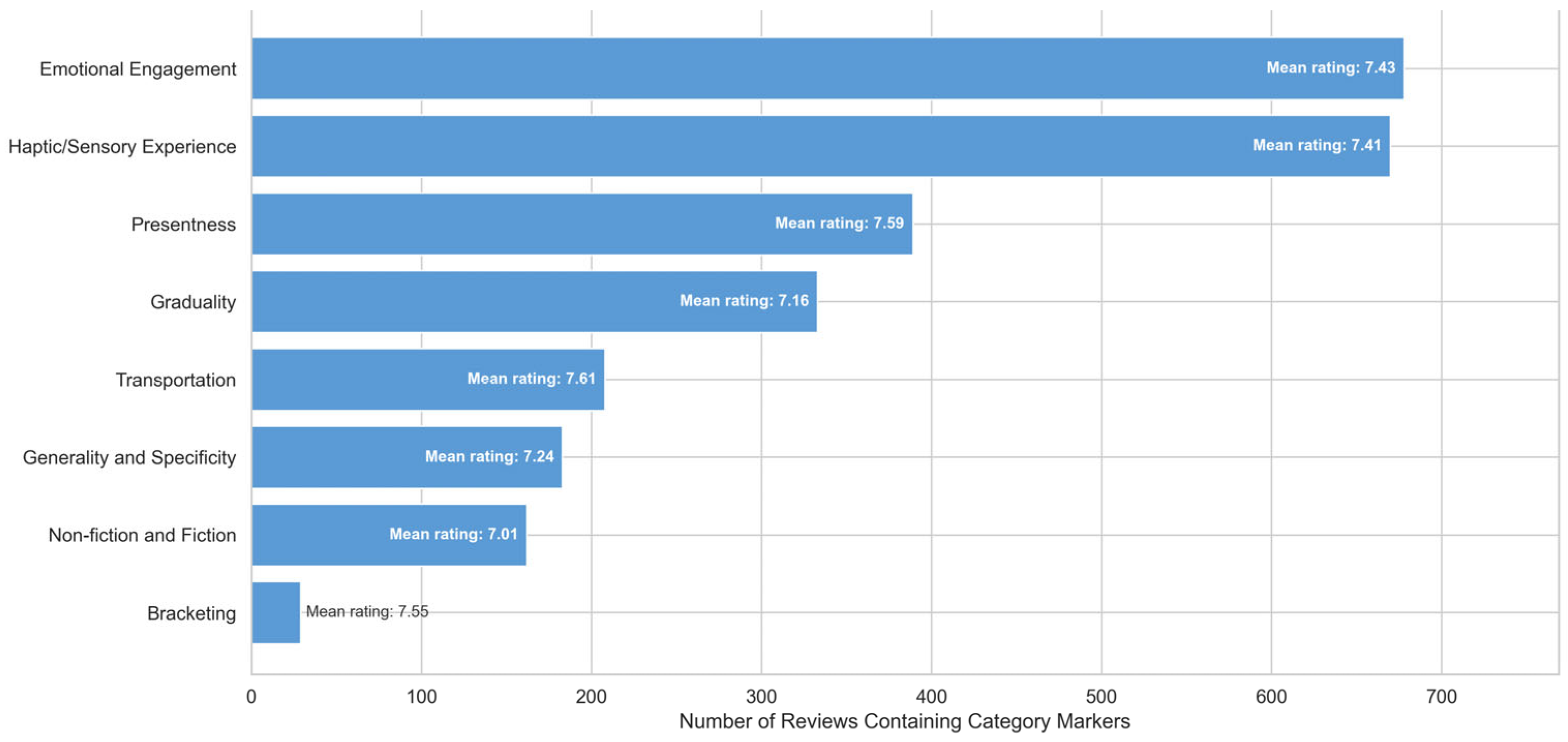
To bridge the qualitative and quantitative analyses, a targeted content analysis measured how often each of the eight immersion categories appeared in the review corpus (Figure 7). The dimensions corresponding to subjective and emotional experience were the most prevalent. Emotional Engagement was the most frequently mentioned (59.8%, N = 678, mean rating = 7.43), represented by keywords such as feel (488), emotional (270), and feeling (100). Haptic/Sensory Experience followed closely (59.1%, N = 670, mean rating = 7.41), with keywords including experience (279), 3D (209), screen (201), spectacle (178), and IMAX (112). Presentness appeared in 34.3% of reviews (N = 389, mean rating = 7.59), marked by keywords such as stunning (211), breathtaking (101), and spectacular (60). Figure 7. Presence of immersion categories in audience discourse.
Figure 7.
Presence of immersion categories in audience discourse.
Pacing and the temporal flow of scenes, labelled Graduality in the codebook, appeared in 29.4% of the reviews (N = 333, mean rating = 7.16), coded through expressions such as “building” (99), “pacing” (82), “pace” (67), and “too long” (63). This category illustrates how the temporality of long-format films can be experienced as both positive (building) and negative (too long).
In contrast, technologically oriented cinematographic categories received far fewer mentions. Bracketing appeared in only 2.6% of reviews (N = 29), despite being a prominent technique in the film analysis. This mismatch suggests that although film-induced suspension of real-world awareness is an empirically verifiable effect, it operates below the threshold of conscious recognition. The absence of audience terminology for certain immersion categories does not invalidate those categories; rather, it indicates that some aspects of cognitive immersion resist explicit verbal representation, which supports Sobchack’s (2004) theorization of embodied cinematic engagement (Table 4).
Table 4.
Cross map immersion.
4. Discussion
In a broader context, Avatar: Fire and Ash, as the third installment in one of the most commercially successful film franchises, offers a telling case for examining whether the deployment of cognitive immersive resources can intensify deep and sustained forms of audience involvement. The response pattern discussed above suggests that spectacle can be perceived in a somewhat detached way, with visual and technical intensity repeatedly compensating for the screenplay’s perceived limitations.
Before proceeding, it is worth noting what the method can and cannot do. Lexical frequency analysis is useful for identifying recurring patterns in how audiences talk about a film, but it cannot by itself establish causal relationships or account for the full complexity of individual viewing experiences. The observations that follow should therefore be understood as plausible inferences based on what the data consistently show, rather than as definitive claims about how audiences think or feel.
Time and again, the story is called dull, formulaic and stereotypical, but in many of these very same reviews, the movie receives a high rating, as if the experience of presence offered by the audio-visual spectacle compensates, at least in part, for the predictability of the script. The data is consistent with the interpretation that spectacle functions as a kind of experiential pay-off: it may counterbalance negative narrative evaluations and help maintain a viewer’s engagement even when the script’s limitations are acknowledged. The quantitative data bears this out: 25.1% of the reviews (N = 284) include words like “nothing new,” “predictable,” or “boring,” and their mean rating is 6.12, noticeably below the corpus average. Yet even within that group, 94 reviews (33.1%) still rate the film 8 or higher, confirming that for a substantial portion of viewers, the sensory experience outweighs narrative dissatisfaction.
The valuing strategy aligns with Plantinga’s (2009) ideas about affective override, but our results take the argument a step further: the effect does not end when the screening is over, as it persists into the written evaluation itself. What the corpus reveals is not a passive spectator content to trade narrative complexity for spectacular visuals, but rather a self-conscious one who weighs the value of spectacle against the cost of narrative recycling. Weakness in the story can be recognized and still forgiven, as long as the viewing experience remains visceral enough to justify it.
Spectacle, on the other hand, tends to generate admiration, which is more of a cognitive emotion, whereas narrative is expected to generate emotional investment. The words in the crossmap (Table 4, Figure 7) bear out this interpretation: 59.8% of the corpus contains at least one Emotional Engagement term (N = 678), but most of these terms relate to sensory response (feel, feeling) rather than emotional attachment to characters. In contrast, the LDA indicates that Topic 3, the critical discourse cluster (nothing, boring, predictable, script), is disproportionately represented in low- and medium-rated reviews (30 low, 27 medium, 15 high), which confirms that narrative dissatisfaction constitutes a discrete evaluative mode rather than a generalized tendency. The films that marry technical achievement to emotional resonance (such as Cameron’s Titanic and the Lord of the Rings trilogy) yield conversations characterized by a deeper sense of character identification and emotion terms tied to particular storyworld entities, both of which are relatively lacking in the Avatar corpus. The evidence thus suggests that while Cameron has achieved a remarkable level of technical mastery in rendering a photorealistic Pandora, the challenge of creating an enduring emotional connection between audiences and its characters remains an open one.
Chaplin’s name comes up often in reviews that favor the storytelling. Her character, Varang, is one of the few new elements that appears to have resonated with audiences, and reviews mentioning her tend to be more positive overall. New characters offer a way to break the narrative deadlock, and acting still has a role to play in a digital world. Pandora provides the spectacle, but the actor, visible even under motion capture, gives it the heart that makes it cinema rather than a theme park. Deepening the character work may be the key to keeping the franchise vital going forward, even as it continues to look the same.
The combination of qualitative close reading with the quantitative audience data reveals a noteworthy pattern. The most prominent techniques for immersion from the director’s perspective are not the ones that audiences articulate. Bracketing, the most prominent strategy identified in the film analysis, appears in only 2.6% of the reviews (N = 29), making it the least frequent of all the categories. A similar pattern holds for Non-fiction and Fiction, which concerns referential accuracy and reaches only 14.3% (N = 162) with the lowest mean rating (7.01) of all categories. This pattern is consistent with Sobchack’s (2004) notion of carnal thought, suggesting that audiences may experience these techniques at a pre-reflective level that resists explicit verbal articulation. The practical implication is that the impact of these techniques cannot be measured through self-reported data alone; a complementary approach like ours, in which formal film analysis and automated discourse analysis each capture different dimensions of immersion, is therefore needed.
These findings have implications for the ongoing discussion of the impact of visual spectacle on contemporary film storytelling. They do not suggest a binary antagonism, as posited by critics such as Stork (2013), but rather a compromise: the balance between spectacle and story is subject to each viewer’s negotiation, and the language of evaluation shifts accordingly. This is also borne out by the mapping between categories: the categories most closely associated with the sensory properties of the film, Haptic/Sensory Experience (59.1% of reviews) and Presentness (34.3%) generate the highest mean ratings of all the categories, while Graduality (29.4%), which collapses positive reactions to pace and negative reactions to length, registers the second lowest mean rating (7.16). This would indicate that temporality is a site of narrative contention where immediate gratification and narrative attrition are in direct conflict. For producers, the picture is mixed: the economic viability of a recognizable product paired with a striking technological aesthetic is clear, but a strategy of aesthetic improvement without equal attention to character and story development risks a rapid depletion of the franchise’s artistic capital.
Although the box office returns are not yet on par with previous installments (the film is still in theatrical release at the time of writing), the script may be one factor affecting audience predisposition. As noted earlier, new characters have been better received, partly because the audience has already adjusted to the universe. Surprising plot developments strengthen the story, but by now, the viewers are accustomed to the impossible becoming possible on Pandora. As a result, devices such as the handheld camera, which places the spectator within the surroundings as though contemplating a virtual world through a prism (Massuet 2022), risk becoming redundant after having been employed since the first installment.
The franchise now faces an audience that already knows its universe, and the films have grown progressively longer, from 183 min (Avatar, 2009) to 192 (The Way of Water) and 197 (Fire and Ash). The review data suggests that the sense of presence and experiential intensity can still be achieved through positive emotional arousal (Pizzolante et al. 2023), but that these effects lose traction when the narrative offers little in the way of surprise. Spectacle may still evoke wonder, yet if the story does not move beyond what audiences have already seen, holding their attention becomes considerably harder.
Surprise is another important component of narrative immersion, as it alters the expected response and refreshes attention. Animal POV shots and diegetic subtitles draw spectators closer to the characters’ experience (Atencia-Linares and Sebastián 2023). Diegetic subtitles for the Na’vi or creatures’ language allow the narrative to maintain its flow without relying on an interpreter figure, while also quickening the emotional tempo of the drama so that action and linguistic comprehension develop in tandem. Together with the visual dynamism, these strategies prevent viewers from feeling a time lapse in the film.
Audience reactions also attest to the appeal of the Pandora universe, where the internal logic of the film makes the extraordinary feel ordinary. Long shots, rapid editing, and stereoscopic three-dimensionality combine to produce a sustained kinetic experience that, according to the review data, temporarily displaces the viewer’s awareness of their physical surroundings. Such displacement is reinforced by the representation of hallucinatory and fantastical worlds in which the boundaries between the real and the virtual are continuously blurred. The 3D film genre, which emerged in the 1950s as a strategy to enhance cinematic immersion (Cortés-Selva 2015), finds a contemporary justification in precisely this kind of sensory engagement.
5. Conclusions
The Avatar case study has shown that immersive devices continue to elicit emotional bonding and sustain viewers’ attention. The narrative and audiovisual techniques employed throughout the film promote cognitive immersion, illustrating what three-dimensionality brings to the spectator’s engagement with both form and content. Immersion here is sustained by the combination of spectacle and a broader sensorial experience that reinforces the spectator’s connection to the narrative.
The success of the film in terms of box office and cultural relevance depends on the balance between technological and narrative strategies. Binocular disparity articulates three-dimensional space, fostering the illusion of a real world and helping viewers gradually enter it. The large-screen format and 3D glasses direct attention and create the conditions for full immersion, which in turn enables narrative strategies such as Steadicam-style camera movements, subjective animal perspectives, breathtaking utopian vistas, and carefully edited subtitled sequences. The rhythmic alternation between dramatic intensity and spectacle-heavy scenes further supports emotional engagement, creating the connection between viewer and narrative that a more integrated viewing experience requires.
While the gap between installments (2009, 2022, and 2025) has shortened, the films have grown longer. This may encourage the recycling of proven formulas and the addition of new subplots intended to enrich the saga, which nonetheless fail to preserve the element of surprise factor for viewers already desensitized by previous entries.
Overall, the results of the computational analysis of these 1133 viewer responses demonstrate that, on the one hand, the Avatar franchise still delivers an outstanding perceptual spectacle, yet, on the other hand, it appears to face growing narrative exhaustion. The findings suggest that, for the Avatar franchise, as well as for spectacle-driven cinema more broadly, immersion may be subject to diminishing returns. As audiences grow accustomed to the visual spectacle, the desire for more substantial narrative engagement returns.
The main contribution of this paper lies in empirically demonstrating and measuring what we term detached spectacularity: the way in which spectacle compensates for a perceived lack in the narrative. This is not merely a theoretical construct. The frequency of narrative complaints (25.1% of the sample), the mean score of those reviews (6.12), the proportion of complaint-bearing reviews that nonetheless scored 8 or higher (33.1%), and the dominance of Emotional Engagement (59.8%) and Haptic/Sensory Experience (59.1%) as the most frequently evoked categories provide empirical support for the idea that the kind of spectacularity discussed above may work, for a considerable share of audiences, as a way of compensating for perceived weaknesses in the narrative. What emerges from the data is a form of spectatorship that depends heavily on spectacle, a model whose long-term viability will only become clear as the series continues.
There are some caveats to these results. First, the film was analyzed in the cinema, which meant that it could only be watched three times, and the accuracy of frame times and decoupage analysis is limited for a film of 197 min. Second, all reviews were obtained from a single platform (IMDb), whose contributors likely represent a skewed sample of filmgoers with particularly strong opinions, while the far larger number of viewers who wrote no review remains unaccounted for. Third, the sentiment analysis relied on a general-purpose package (TextBlob) that has not been optimized for the language of film criticism.
A dictionary derived from critical discourse would allow more nuanced distinctions between positive and negative language. Second, the cross-sectional design captures audience evaluations at a single point in time and therefore cannot track changes across subsequent sequels. A longitudinal panel design surveying the same audience members over several releases would permit a more precise measurement of franchise fatigue. Finally, the corpus includes only English-language reviews, leaving out the majority of the global audience. Future work should extend the analysis to other languages and cultural contexts to determine whether the trade-off between spectacle and narrative coherence is a general evaluation pattern or a culturally specific one.
Future studies should collect larger and more systematically organized audience response data to support a richer understanding of the viewing experience. The idea of observing audiences directly is not new: as early as the 1920s, D.W. Griffith reportedly watched audiences from the back of the theater to test different versions of scenes (Levin and Baker 2017). In addition, the present findings should be compared with analyses of other 3D films to test their generalizability, and ideally with data from physically immersive productions, which represent the next frontier of immersive media.
Author Contributions
Conceptualization, R.S.-F. and A.L.J.-P.; Methodology, R.S.-F. and A.L.J.-P.; Software, R.S.-F.; Validation, R.S.-F. and R.M.-F.; Formal analysis, R.S.-F.; Investigation, R.S.-F. and R.M.-F.; Resources, R.M.-F.; Data curation, R.M.-F. and A.L.J.-P.; Writing—original draft, R.S.-F. and A.L.J.-P.; Writing—review & editing, R.S.-F., R.M.-F. and A.L.J.-P.; Visualization, A.L.J.-P.; Supervision, R.M.-F. and A.L.J.-P.; Project administration, R.S.-F. All authors have read and agreed to the published version of the manuscript.
Funding
This research received no external funding.
Institutional Review Board Statement
Not applicable.
Informed Consent Statement
This study analyzes only publicly available, anonymized user comments from IMDb. No personal identifiers were collected or used. The research focuses on aggregate linguistic trends from data users have willingly made public. Accordingly, our institution’s ethics committee has classified this work as “Not Human Subjects Research,” as it involves no interaction with individuals and uses existing, non-identifiable public data.
Data Availability Statement
The raw data supporting the conclusions of this article will be made available by the authors on request.
Conflicts of Interest
The authors declare no conflict of interest.
Abbreviations
The following abbreviations are used in this manuscript:
| IMDb | Internet Movie Database |
| NLP | Natural Language Processing |
| IMAX | Image Maximum |
| NLTK | Natural Language Toolkit |
References
- Atencia-Linares, Paloma, and Miguel Ángel Sebastián. 2023. Narrative Immersion as an Attentional Phenomenon. Inquiry 69: 1235–59. [Google Scholar] [CrossRef] [Scilit]
- Barrett, Adam, Naiqi Zhang, and Shangshang Wei. 2025. The Virtual Reality in Your Head: How Immersion and Mental Imagery Are Connected to Knowledge Retention. Educational Psychology Review 37: 9. [Google Scholar] [CrossRef] [Scilit]
- Bird, Steven, Ewan Klein, and Edward Loper. 2009. Natural Language Processing with Python. Sebastopol: O’Reilly Media. [Google Scholar]
- Bordwell, David. 2013. The Viewer’s Share: Models of Mind in Explaining Film. In Psychocinematics: Exploring Cognition at the Movies. Edited by Arthur P. Shimamura. Oxford: Oxford University Press, pp. 29–52. [Google Scholar]
- Brown, Emily. 2013. Immersion and Presence. In The Oxford Handbook of Sound and Image in Digital Media. Edited by Carol Vernallis, Amy Herzog and John Richardson. Oxford: Oxford University Press, pp. 281–96. [Google Scholar]
- Cabello Bàrzanas, José M., Carles Sora Domenjó, and Rafael Pedraza Jiménez. 2025. El montaje en el cine inmersivo: Estructuras narrativas y expresivas en la Realidad Virtual Cinemática. Hipertext.net 30: 79–88. [Google Scholar] [CrossRef] [Scilit]
- Cameron, James, dir. 2025. Avatar: Fire and Ash. Burbank: Walt Disney Pictures. [Google Scholar]
- Chen, Hsin-Hsiang, and Hsiao-Yun Tsao. 2023. A Framework for Presence Maintenance: Evoking Synesthesia and Empathy in Cinematic Virtual Reality. In Proceedings of the 2023 IEEE Gaming, Entertainment, and Media Conference (GEM). New York: IEEE, pp. 1–4. [Google Scholar] [CrossRef] [Scilit]
- Cortés-Selva, Laura. 2015. Viaje al centro de la inmersión cinematográfica. Del cine primitivo al vrcinema. Opción 31: 352–71. [Google Scholar]
- Cubitt, Sean. 2004. The Cinema Effect. Cambridge: MIT Press. [Google Scholar]
- Darley, Andrew. 2000. Visual Digital Culture: Surface Play and Spectacle in New Media Genres. London: Routledge. [Google Scholar]
- Elsaesser, Thomas. 2013. Digital Cinema: Convergence or Contradiction? In The Oxford Handbook of Sound and Image in Digital Media. Edited by Carol Vernallis, Amy Herzog and John Richardson. Oxford: Oxford University Press, pp. 13–40. [Google Scholar] [CrossRef] [Scilit]
- Flanagan, Martin, Andrew McKenny, and Mike Livingstone. 2016. The Marvel Studios Phenomenon: Inside a Transmedia Universe. New York: Bloomsbury Academic. [Google Scholar]
- Galloway, Alexander R. 2006. Gaming: Essays on Algorithmic Culture. Minneapolis: University of Minnesota Press. [Google Scholar]
- Gunning, Tom. 1986. The Cinema of Attraction: Early Film, Its Spectator and the Avant-Garde. Wide Angle 8: 63–70. [Google Scholar]
- Hills, Matt. 2002. Fan Cultures. London: Routledge. [Google Scholar]
- Holt, Jennifer, and Alisa Perren, eds. 2009. Media Industries: History, Theory, and Method. Malden: Wiley-Blackwell. [Google Scholar]
- Hyder, James. 2008. What Is “Immersive”? LFexaminer. Available online: https://lfexaminer.com/2009/05/what-is-immersive/ (accessed on 15 May 2025).
- Johnson, Derek. 2013. Media Franchising: Creative License and Collaboration in the Culture Industries. New York: New York University Press. [Google Scholar]
- Klinger, Barbara. 2006. Beyond the Multiplex: Cinema, New Technologies, and the Home. Berkeley: University of California Press. [Google Scholar] [CrossRef] [Scilit]
- Levin, Daniel T., and Lester J. Baker. 2017. Bridging Views in Cinema: A Review of the Art and Science of View Integration. WIREs Cognitive Science 8: e1436. [Google Scholar] [CrossRef] [Scilit] [PubMed]
- Marks, Laura U., and Dana Polan. 2000. The Skin of the Film: Intercultural Cinema, Embodiment, and the Senses. Durham: Duke University Press. [Google Scholar] [CrossRef] [Scilit]
- Martínez Falquina, Silvia. 2014. The Pandora Effect: James Cameron’s Avatar and a Trauma Studies Perspective. Atlantis 36: 115–131. [Google Scholar]
- Massuet, Jean-Baptiste. 2022. Caméra portée et images de synthèse: Vers une « portabilité augmentée »? Le cas de la SimulCam d’Avatar de James Cameron. Cinémas: Revue d’études cinématographiques 30: 107. [Google Scholar] [CrossRef] [Scilit]
- Mirón-Florido, Nuria. 2025. Freeing Pandora: Militarism, Frontier-Making and US Identity in James Cameron’s Avatar Franchise. REDEN Revista Española de Estudios Norteamericanos 7: 106–20. [Google Scholar] [CrossRef] [Scilit]
- Murray, Janet H. 1997. Hamlet on the Holodeck: The Future of Narrative in Cyberspace. Cambridge: MIT Press. [Google Scholar]
- Ndalianis, Angela. 2004. Neo-Baroque Aesthetics and Contemporary Entertainment. Cambridge: MIT Press. [Google Scholar] [CrossRef] [Scilit]
- Pardo, Alejandro. 2015. Cinema and Technology: From Painting to Photography and Cinema, up to Digital Motion Pictures in Theatres and on the Net. In Communication and Technology. Edited by Lorenzo Cantoni and James A. Danowski. Berlin: De Gruyter, pp. 57–78. [Google Scholar] [CrossRef] [Scilit]
- Pérez-Gómez, Miguel Ángel, and Milagrosa Expósito-Barea. 2023. Inmersión cinematográfica de bajo presupuesto: Análisis de contenido del ciclo gimmick de William Castle. Palabra Clave 26: 1–26. [Google Scholar] [CrossRef] [Scilit]
- Pierson, Michele. 2002. Special Effects: Still in Search of Wonder. New York: Columbia University Press. [Google Scholar] [CrossRef] [Scilit]
- Pizzolante, Marta, Emanuela Dorotea Sarcinella, Francesca Borghesi, Stefano Bartolotta, Andrea Gaggioli, and Alice Chirico. 2023. “Being Immersed in Aesthetic Emotions”: Comparing Immersive vs. Non Immersive VR in Aesthetic Emotions Elicitation. Annual Review of Cybertherapy and Telemedicine 21: 117–23. [Google Scholar]
- Plantinga, Carl. 2009. Moving Viewers: American Film and the Spectator’s Experience. Berkeley: University of California Press. [Google Scholar]
- Pop, Doru. 2009. The “Double Mirror” in James Cameron’s Avatar: Philosophy, Ecology, Ideology and Ontology on Pandora. Ekphrasis 1: 23–51. [Google Scholar]
- Prince, Stephen. 2012. Digital Visual Effects in Cinema: The Seduction of Reality. New Brunswick: Rutgers University Press. [Google Scholar]
- Purse, Lisa. 2013. Digital Imaging in Popular Cinema. Edinburgh: Edinburgh University Press. [Google Scholar]
- Ryan, Marie-Laure. 2015. Narrative as Virtual Reality 2: Revisiting Immersion and Interactivity in Literature and Electronic Media. Baltimore: Johns Hopkins University Press. [Google Scholar] [CrossRef] [Scilit]
- Sobchack, Vivian. 2004. Carnal Thoughts: Embodiment and Moving Image Culture. Berkeley: University of California Press. [Google Scholar]
- Stork, Matthias. 2013. Chaos Cinema: The Decline and Fall of Action Filmmaking. IndieWire, August 22.
- Sun, Lin. 2022. Research on the Application of 3D Animation Special Effects in Animated Films: Taking the Film Avatar as an Example. Scientific Programming 2022: 1928660. [Google Scholar] [CrossRef] [Scilit]
- Szita, Klára, Wyatt Moss-Wellington, Xin Sun, and Eugene Ch’ng. 2024. Going to the Movies in VR: Virtual Reality Cinemas as Alternatives to In-Person Co-Viewing. International Journal of Human-Computer Studies 181: 103150. [Google Scholar] [CrossRef] [Scilit]
- Turkle, Sherry. 1997. Life on the Screen: Identity in the Age of the Internet (Book Review). Journalism & Mass Communication Quarterly 73: 490. [Google Scholar]
- Zamora, Adrián. 2026. «Avatar 3» Acaba de Cambiar la Lista de las Películas más Taquilleras de 2025: En 6 Años No Había Vuelto a Pasar Esto. Sensacine. Available online: https://www.sensacine.com/noticias/cine/noticia-1000183587/ (accessed on 15 May 2025).

Disclaimer/Publisher’s Note: The statements, opinions and data contained in all publications are solely those of the individual author(s) and contributor(s) and not of MDPI and/or the editor(s). MDPI and/or the editor(s) disclaim responsibility for any injury to people or property resulting from any ideas, methods, instructions or products referred to in the content. |
© 2026 by the authors. Licensee MDPI, Basel, Switzerland. This article is an open access article distributed under the terms and conditions of the Creative Commons Attribution (CC BY) license.