


Abstract
This article explores the critical role of women in establishing the infrastructure that has allowed Ghana’s art scene to flourish into an art ecosystem. Using Ghana as a case study, this article will examine why new models of art markets and scenes are necessary for considering global contemporary art. It will also put forward some preliminary tenets to define such an ecosystem, compelled by the need to expand our art histories to recognize institution builders. By suggesting that art historians must work toward a rigorous and specific definition of ecosystem, this article makes space to acknowledge the work of Ghanaian women in the 1990s and early 2000s as undergirding the scene’s explosive rise in the 2010s and into the 2020s. It argues that the extant infrastructure they built was necessary for Ghana to become a sustainable art ecosystem and, thus, that the work of women has been integral, if less visible, to the scene’s success.
1. Introduction
In the poem “Whom Do We Thank for Women’s Conferences?” Ama Ata Aidoo penned the lines:
- We were
- only ourselves:
- each alone as when we were born, and
- shall be, when
- we died.
- But
- living and together,
- a true power thing that
- searches
- researches
- solving
- resolving…
(ellipses in original, Aidoo 2017, lines 43–54)
This article explores the work of Ghanaian women gallerists and institution builders through select examples drawn mostly from the 1990s and early 2000s, an era in which Ghana received far less media and scholarly attention for its contemporary arts than comparable West African nations like Nigeria. It posits that without their labor and risk-taking, the nation’s art scene would not have been able to achieve the global heights it did in the 2010s and ’20s as the art-world media began to take note.1 The article will approach this argument through the framework of the art ecosystem.
While the term “art ecosystem” has entered widespread use in popular press and casual conversation, I argue here that the field of art history should push for a more rigorous definition of a phrase increasingly invoked as a gold standard toward which governments, patrons, institutions, and nonprofits should work. The art ecosystem promises more equitable, resilient art scenes in more places outside the West’s traditional capital-rich art centers. Premised on postcolonial theories of relationships, the ecosystem presents an alternative model that makes space for more diffuse success rather than concentrating that success among a select few artists and collectors operating within a select, marketable style. Without a specific definition, the art ecosystem will become another buzzword rather than a tangible model.
Introducing the art ecosystem and outlining its shape is useful because it allows for the acknowledgement of Ghanaian women creatives who are not primarily or exclusively artists but who nonetheless have been essential to the rapid ascension in both regard and market value of contemporary art from Ghana. Long-standing structural inequalities and cultural gender norms have meant the majority of the nation’s recent crop of world-renowned artists have been male. Only by widening the aperture to consider the entire ecosystem can we see how integral women have been to this story. This allows us to see how women were keystone figures in building the infrastructure—in terms of institutions and of relationships—that made it possible for Ghanaian artists to reach the heights they have. Ghana could not have seeded a sustainable art ecosystem without the work of women.
2. Literature Review and Methodology
2.1. Feminism and Postcolonialism in African Art History
Since Linda Nochlin posed her infamous provocation, “Why have there been no great women artists?” in 1971, art historians have responded by revising and expanding the canon (Nochlin [1971] 2021). Feminist art history has made space to acknowledge the practices of female artists who were integral to the development of art in their own times but whose stories had been erased by patriarchal negligence alongside the practices of those women who did not fit easily into the teleological narrative suggested by my own use of “development” (Pollock 1983; Gouma-Peterson and Mathews 1987).
Those two approaches to identifying the “great women artists” have, at times, been at odds. But these debates have made the field more resilient, and there is no denying that the feminist intervention into art history has made strides in rectifying the gender imbalance of who is taught and studied (Clark et al. 2005). Internal debates located critical weaknesses in the feminism of the 1970s, perhaps most saliently that they did little to disrupt hierarchies of race, class, and nationality (Buchholz 2022, p. xvii). Even as more women artists were included in textbooks and entered museum collections, those women tended to be white, from the middle or upper economic classes, and from the United States or Western Europe. Black women artists in particular were initially overlooked by feminist art history. Their labor did not map neatly onto traditional models; over the heroic individual, the success of the collective was often valued. This has also been a trope of African art history, often leaving African women creatives were in a double bind when receiving recognition and historicization.
When legal scholar Kimberlé Crenshaw coined her idea of “intersectionality” in 1989, she opened new avenues to discuss these multiple vectors of oppression and discrimination and posited why their multiplicity acted to erase Black women from theoretical frameworks like feminism (Crenshaw 1989). Crenshaw and those who built on her work emphasized the need to resist “single-axis frameworks” to avoid further marginalization (Crenshaw 1989, p. 140). Indeed, many non-white women scholars have grappled with whether their concerns could be addressed by feminism or if its blind spots rendered it moot for women outside the white, wealthy West (Walker [1983] 2011, pp. 10–11).2
Gayatri Chakravorty Spivak posed another provocation in 1988: “Can the subaltern speak?” (Spivak 1988). Coming from a scholar of postcolonial literature, this was a landmark moment in postcolonialism’s interrogation of where it did, and did not, intersect with mainstream feminism. Spivak was thinking through the position of poor, low-caste women from the Global South and whether it was possible for the elite academy, even one expanded by feminist and other postmodern theories, to ever truly represent these women as subjects. She answered with a decisive “no” (Spivak 1988, p. 309), but the question has become a watchword for postcolonial theory and its attempts to integrate the postcolonial subject into academic disciplines—or its attempts to remake the colonial academy itself. Spivak’s work, and the larger project of postcolonialism, reinforces that African women’s practices must be considered through an interdisciplinary and intersectional framework.
Ama Ata Aidoo, whose gently sardonic words opened this article, definitively answered if she considered herself a feminist in a 1992 essay: “I not only answer yes, but I go on to insist that every woman and every man should be a feminist—especially if they believe that Africans should take charge of our land, its wealth, our lives, and the burden of our own development. Because it is not possible to advocate independence for our continent without also believing that African women must have the best that the environment can offer. For some of us, this is the crucial element in our feminism,” (Aidoo 1992). Aidoo insists that feminism for African women should be wielded in a “bifocal mode” (Aidoo 1992). This lens allows for researchers to see simultaneously the patriarchal imbalance that continues to define the interpersonal relationships of many contemporary African women and the ways African women are still often better off than those “in the self-congratulatory West,” (Aidoo 1992).
Projects like the 2021 thematic volume of African Arts on “The Contemporary Art World, Africa, and the Women Who Have Brought About Change,” edited by Karen Milbourne, have begun to recognize the contributions to the visual arts of women navigating beyond the West’s presumed gender hierarchies to make, research, curate, and support African art (Milbourne 2021). This volume underscored the outsized impact of women like Bisi Silva and Koyo Kouoh, along with many others. This special issue of Arts on “Active Women in the Art Market: 1950–2020. Mapping Gallerists, Collectors, Maecenas, Auctioneers, Curators in Emerging Markets,” edited by Adelaide Duarte and Marta Pérez-Ibáñez, is picking up that mantle on a broader scale (Duarte and Pérez-Ibáñez 2026). Such initiatives utilize a “bifocal mode” to map the understudied areas where women have found and made room for themselves and others in ways that do not always conform to expectations of what it looks like to perform feminism.
This article is guided by postcolonial literary critic Édouard Glissant. His conception of a hybrid, multivalent “poetics of relation” undergirds the art ecosystem as I propose it here by resisting Crenshaw’s perilous “single axis” and, instead, encouraging the observer to see bifocally and imagine rhizomatically (Glissant 2010). This line of postcolonial thinking allows me to avoid binaries when answering questions of whether there “have been” or “can be” African women artists. It allows for an art history that includes not just artists but also the figures who create institutions to nurture those artists.
2.2. Conversation, Social Media, and “Thick Description” as Method
The scholarly fields of feminism and postcolonialism, and their challenges to traditional academia, have structured my approach to studying contemporary art in Ghana. The most useful of those provocations for this examination draw on those specific to African art history, which initially grew out of anthropology. From its beginnings as a standalone field in the 1950s, African art history was inflected by ethnography as a method (Kasfir 1984), defined as close, personal observation over an extended period of a clearly demarcated group that uses descriptive writing and reportage to explain that group’s cultural understandings of things like religion, symbolic orders, money, gender roles, et cetera.
Anthropology, of course, did not escape postcolonial critique. The field’s roots as a colonial handmaiden, used to construct and justify racial and ethnic hierarchies that propped up the Western imperial project, made it an essential literature in which to intervene. Globalization (and its theoretical cousin, postmodernism) further increased the need for a reconsideration of ethnography’s claims to immutable truths. Scholars like Arjun Appadurai have investigated whether ethnography as a method can still provide the intimacy it promised in a postcolonial, globalized world (Appadurai 1996, 1997). Appadurai and those he inspired, like Jean and John Comaroff, interrogated the ability of ethnography to “discover” discrete, unchanging beliefs within closed in-groups as it became ever easier for communication, people, and goods to “flow” rapidly and at scale across the entire globe (Comaroff and Comaroff 2003, pp. 164–70).
Ultimately, these anthropologists concluded that ethnography remains an essential tool in the cultural analyst’s toolkit—though they updated the method to be more responsive, more expansive, more discursive, and more self-aware of itself and its pitfalls. Ethnography today should avoid neat answers: according to the Comaroffs, “Surely, neat antinomies between the local and the global, between field and context, between ethnography and metanarrative, beg the very questions that we should be asking,” (Comaroff and Comaroff 2003, p. 157).
A recent example of updating classic anthropological rules in response to those questions includes the exhibition and its attendant catalogue, New African Masquerades: Artistic Innovations and Collaborations. In it, curator Amanda Maples puts forward excellent, thought-provoking “methodology recommendations” for careful, ethical ways of undertaking fieldwork on African artists performing contemporary masquerade. These recommendations range from the critical, like respecting gender and hospitality norms, to the extremely practical, like being aware of the availability of women’s bathrooms (Fenton et al. 2025, pp. 127–28). Maples and her collaborators’ focus on care and respect undergirds my own approach to fieldwork on contemporary African art.
This article, however, does not aim to be an in-depth ethnography. Instead, it utilizes a case-study model to gesture toward the abundance of examples of women-founded or -led institutions at the core of Ghana’s art ecosystem. Each of the institutions discussed below could sustain an individualized ethnographic study. I believe this is a rich vein of future research.
My understanding of Ghana’s art ecosystem emerged during research trips in 2019 and 2022. While there, I relied on methods proposed in art historian Joanna Grabski’s book Art World City: The Creative Economy of Artists and Urban Life in Dakar (2017). The author mapped the arts topography of Dakar, Senegal, through participant observation of art events, combined with visual analysis of artworks and display techniques. This allowed Grabski to outline the complex infrastructure of “art world cities,” which she defined as urban art scenes that nurture creativity at many levels, from the local to the global (Grabski 2017, p. 262).
Some of these interactions took the shape of formal sit-down interviews. Many more, however, relied on casual conversation with Ghanaian artists, scholars, and creatives. Because of the networked (but accessible) nature of the ecosystem, showing up for talks, openings, awards ceremonies, performances, and parties meant that I was able to become acquainted with those who consistently attended. This method was informed by art historian Cynthia Becker’s formulation of the power and potential of casual conversation in African art historical research (Becker 2020, p. 20). Becker points toward the reformulation of “small talk” by anthropologists Henk Driessen and Willy Jansen as both a skill and data-gathering technique (Driessen and Jansen 2013).
While most initial conversations happened in person, they have continued in digital spaces, including Zoom and social media. These digital spaces play an important role in my research. Instagram is an essential tool to locate facilitators and artists to contact and then to stay in touch. Following the posts and stories of Ghanaian creatives, who are active in reposting the work of their peers, is one of the best ways to stay in the know. Conceiving of the platform as an “archival space,” in cultural anthropologist Joseph Oduro-Frimpong’s terminology, Instagram has allowed me access to the archives of grassroots Ghanaian institutions, which tend to extensively document all events through professional photography (Oduro-Frimpong 2022).
This approach also allowed me to gain a “thick” sense of Ghana’s contemporary art scene. Sociologist Tressie McMillan Cottom has described “thick description” as scholarly writing that includes holistic descriptions of sites and spaces as well as the nuanced web of social relationships that inform how we experience something just as much as sight, sound, smell, and feel (Cottom 2019). Her definition is another example of updating modernist anthropology; it expands on the seminal work of anthropologist Clifford Geertz, who proposed “thick description” as a mode of analysis that conceived of culture as “semiotic” (Geertz 1973, p. 5). Geertz argued that a culture’s symbolic meanings can therefore be deconstructed—though with the caveat that the person doing the deconstructing can never entirely divorce from the preexisting symbolic web of meaning they themselves exist within and so must be aware of how their own culture impacts how they understand other cultures (Geertz 1973, pp. 5, 6).3
In her expansion of Geertz’s notion, Cottom explains, “I take very seriously the idea of social locations,” (Cottom 2019, p. 26). The scholar thus argues not just for responsive, thorough descriptions of place, relationships, and the interactions thereof, but for descriptions that do not erase the presence of the writer themselves and their social location. My use of “I” language throughout this article is, in part, a way to insist on my own presence as a white woman academic in these observations and interactions.
2.3. History of the Terminology “Art Ecosystem”
In 1935, British botanist Arthur Tansley coined the term “ecosystem” when he proposed that “the more fundamental conception is…the whole system…including not only the organism-complex, but also the whole complex of physical factors forming what we call the environment of the biome—the habitat factors in the widest sense,” (Tansley 1935, p. 299). Tansley’s neologism was meant to convey a more expansive view of our environment that was restricted in scope to organisms and the tangible aspects of the world they inhabited. As he explained, “Though the organisms may claim our primary interest, when we are trying to think fundamentally we cannot separate [organisms] from their special environment, with which they form one physical system,” (Tansley 1935, p. 299).
What affects one part affects the whole: The idea has proven so resonant that, while it was once limited to discussing plants and animals in relationship with their natural surroundings, its invocation has become ubiquitous in a wide swathe of fields.4 The term was formally introduced into business studies in the early 1990s by James Moore’s book The Death of Competition: Leadership and Strategy in the Age of Business Ecosystems. Moore used “ecosystem” to conceptualize the increasingly globalized systems within which companies made, shipped, and sold goods to diverse audiences, who were also part of these ecosystems. This linguistic shift introduced another layer of metaphor, whereby businesses were also “organisms” akin to the people that worked for them or paid for their services (Moore 1993, p. 23).
It was perhaps inevitable, then, that this usage would enter the visual arts; the distance between art and money has never been far. As it crept into wider usage during the 2000s and 2010s, “art ecosystem” tended to retain associations with globalized economies in ways that echoed its business coinage. The metaphor was especially employed to characterize cities and countries outside traditional artistic centers. This reflected the art market’s (belated) recognition of contemporary art from makers living outside large urbanities in Europe and the United States. “Ecosystem” and what it evoked became useful for comprehending those suddenly spotlighted, though long germinating, scenes.5 For example, in an article detailing the rapid market ascension of contemporary art from China in the 2000s, art historian Shuchen Wang labeled a diagram illustrating the cyclical nature of the market for art as “The ecosystem of art industry in a market economy,” (Wang 2021, p. 4). “Ecosystem” offered a handy metaphor to comprehend a crop of artists and galleries entering the market at a critical juncture of contemporary art becoming global.
2.4. “Art Ecosystem” and Its Intersection with African Art Market Studies
This association with the market and its distorting effects meant that investigations in similar veins tended to offer caveats when extolling the virtues of African art entering the globalized art market. For example, Silvia Forni and Christopher Steiner, both art historians, coined “ego-system” to describe the market for contemporary African art. They suggested that Western consumers with access to the dollar, pound, and Euro dictated the prevalent themes and genres in contemporary African art because what sold was, iteratively, what continued to be produced (Forni and Steiner 2018, p. 1). According to the scholars, “the rising value of modern and contemporary African art during the past decade has…been described as a process of Western ‘acceptance’ rather than a process of African ‘resistance’,” (Forni and Steiner 2018, p. 6).
Art historian Chika Okeke-Agulu made related arguments, including on the occasion of a splashy “first”—Sotheby’s first auction of exclusively modern and contemporary African art—suggesting that genres had been “gentrified” by “investors” (Okeke-Agulu 2017). He equated the process with the predatory and often criminal acquisition of African art by Western colonizers in the nineteenth and twentieth centuries, drawing undeniable parallels between today’s neoliberal art market and imperialism. Meanwhile, journalist Mary Corrigall tracked the patterns of contemporary African artists alongside African-born curators to point out how, even when an exhibition’s authoritative voice is African, it is still mediated by predominantly Western institutions. Corrigall found that this can encourage African artists who want to be included in such shows to address international trends over local concerns (Corrigall 2023).
These critical analyses from Forni, Steiner, Okeke-Agulu, Corrigall, and others spotlight the extractive nature of the global art market by centering the market and its ramifications for working artists. However, as colloquial use of “art ecosystem” has expanded, usage has moved away from critique and toward rosier invocations of grassroots systems.6 It has become a catch-all descriptor for localized art scenes, often positioned as an ideal end goal to work toward, and used to describe things as distinct as Boston’s art scene by its mayor Michelle Wu or the coterie of institutions founded by American artist Theaster Gates on the South Side of Chicago. I do not want to suggest here that this shift is inherently negative: the elevation of “ecosystem” signals a positive change whereby creatives, promoters, and their funders have begun prioritizing locally responsive, resilient art scenes over catering to external forces. Actions taken toward making art scenes (and, in turn, markets) more equitable should be uplifted.
But without a more rigorous definition, “art ecosystem” can and will be used to describe and obfuscate actions that reinforce existing dynamics in the contemporary art market—dynamics that are understood to reinforce white supremacy and racialized economic injustice. These dynamics manifest in a hierarchy wherein a select few tastemakers control the narratives while a majority of cultural workers struggle to make ends meet. This hierarchy leaves those workers vulnerable to the instability of a market driven by the opinions and affiliations of select individuals. To avoid this outcome, art history must define “art ecosystem.” If used uncritically, “ecosystem” devolves into convenient shorthand. We must instead draft tangible, actionable blueprints for resilient local art scenes that withstand market whims.
3. Visualizing an Art Ecosystem
3.1. Locating a New Model of Arts Support and Markets
A place to start this work is identifying alternative spatial frameworks to replace that of an art market oriented exclusively toward capital: the straight line of producer pleasing consumer, or demand to supply and back again. We see that presumed straight line at work in Forni and Steiner’s ego-system framework. It outlines a system where, when the Western market turns its gaze to contemporary African art, artists begin making work that explicitly caters to that gaze and Western collectors’ and institutions’ outsize capture of funds. It is essential not to erase or ignore the realities of money for artists, but this framework confines our ability to locate creative agency. It also privileges exclusively artists and collectors. As we will see, this often means that other voices are left out of the narrative recounting how, when, and by which metrics an art scene succeeds. Particularly in a patriarchal art market still dominated by male artists, this can blinker our recognition of the diversity of contributors.
This is a double quandary for those living and working in the Global South. Many artists from outside Western art centers have been forced to rely on big collectors with big money parachuting in to “discover” artists in order to gain global attention—and skyrocketing price tags. While the constant churn to find the “hot new thing” can open doors, it can also make that attention contingent on a volatile market driven by collectors purchasing with an eye toward value appreciation. This creates the perfect conditions for an ego-system that “derives its modes of stratification from power inequalities rooted in the legacies of colonialism, from differential access to wealth, resources, and education, and from control of the means of cultural invention and reproduction that create and replicate cultural taste…” (Forni and Steiner 2018, p. 1). Such stratification means market demand is driven by those who already have access to power, which typically means wealthy, white, and North American or Western European buyers. Relying on an ego-system puts artists at risk of a fickle, fluctuating market; British-Ghanaian curator Osei Bonsu has discussed how art markets are “temporary structures that are built to dissipate,” (Mensah and Randeria 2023, p. 83).
This is not a sustainable model. It yokes artists outside of traditional centers to the whims of the wealthy and powerful from those traditional centers. The individualized choices of collectors to spend on the oeuvre of an artist or group of artists are almost never spurred solely by admiration. This is not to discredit collectors or their intentions—certainly, many buy works because they like them. Rarely, however, is this the sole impetus. Collectors and the gallerists who rely on their business look for good investment bets. To attract speculative eyes, then, an art scene molded from outside in will aim itself toward audiences who live away rather than nearby. A sudden economic influx can shift regional art scenes toward the gaze of Western collectors, retrofitting them to a hierarchy more in line with an ego-system.
Of course, the business of collecting contemporary art is a business. This is a necessary, realistic acknowledgement of how the art market works. To ignore these realities is not only naïve—it also does a disservice to the artists operating within these systems. The trope of the starving artists is as tired as it is harmful. Any new models will have to address money, and they will have to make space for artists to succeed at scales both large and small to make this a viable career path.
3.2. Proposed New Spatial Models
Different spatial imaginaries can point us toward realistic, but also sustainable, models. What shapes could a new model take? Several scholars have put forward suggestions inspired by the specifics of the Ghanaian scene. In 2018, art historians Rebecca Martin Nagy and Alissa Marie Jordan published a visualization of the flourishing interconnections between individuals and institutions in an African Arts article. To do so, the scholars mapped the digital footprints of Ghanaian “artists, academics, curators, works of art, public roadways, digital sites, institutional imperatives, guerrilla exhibitions, and other such complex energies,” (Nagy and Jordan 2018, p. 6). The result illustrates in a “mind map” format how an ecosystem metaphor can credit relationships, formal and informal, as the scaffolding for an art scene that is connected to, but not centered on, international nodes. Such a model renders visible interpersonal, as well as transactional, interactions.
Artist and curator Robin Riskin has more recently taken on this task and produced a similar, though distinct, image of Ghana’s ecosystem. Riskin earned an MFA and a PhD at Kwame Nkrumah University of Science and Technology (an arts incubator discussed at length below) in Curating Studies. Her research focused on locating new ways to curate art from Africa, particularly as a white person from the West. This mirrors Riskin’s own biography as well as her broader interest in disrupting the top-down hierarchies that dominate contemporary-art curating.
Riskin has described her process as “curating like fungi” and visualized this process through a digital “map-as-method” that takes inspiration from fungal networks that belie the impression that fungi are independent beings (Riskin (@riskinitall) 2024). In fact, they are often networked underground. This resulting visualization traces various flows over years between subjects, sites, and thematic engagements that have been generative for Riskin’s own practice and for the broader Ghanaian art scene. What falls under the umbrella of “generative” is broadly construed; Riskin has explained that she is as invested in the process itself as in the final product. Nor do these processes move only forward. Rather, in depicting flows, Riskin is interested in showing the connections throughout time and space without linking it to progressivism.
Riskin’s title of the visualization reinforces this idea: “My Journey through Mycorrhizal Curating” (Riskin (@riskinitall) 2024). “Mycorrhizal” references the idea of symbiosis, or the mutually beneficial relationship that can form between living organisms, whereby fungi help plant roots absorb water and nutrients in exchange for the plants’ carbohydrates. Here lies another example of how to depict the Comaroffs’ “flows” in a way that rejects the local and the global as antinomies (Comaroff and Comaroff 2003, p. 157).
3.3. Glissant’s Rhizomatic Spatial Model
These representations are important steps to begin to image new directions an art scene can move, one that includes flows (of money, of time, of criticism, of art objects, of relationships) that can move fluidly and multi-directionally. But there are still gaps in the maps that need to be answered: How would such a model enact its values day-to-day? How would it recognize monetarily successful artists from the Global South without flattening their practices for easy consumption? Is there a way to concede that artists need to make a living while still urging practitioners to make work that resists economic hierarchies? By refusing binary answers, I suggest we can locate a different ethos by which to read the work of contemporary African artists, one that acknowledges their agency in navigating global markets.
In this, I am guided by theorist Édouard Glissant. His “poetics of relation” configured our postcolonial world as boundlessly entangled (Glissant 2010). This rethinking of relationality proposed that we are constantly constituted, and reconstituted, through our interactions with those around us.7 To make his argument, the literary critic used another ecological metaphor: that of the rhizome, over the root. “Identity as root” is cast as singular, penetrating deeply to take up all available nutrients, compared to identity as rhizome, wherein the rhizome moves horizontally underground to form interconnected nodes and thus create a hidden network nurtured by shared resources (Glissant 2010, pp. 142–44). This rhizomatic way of thinking, and its ecological origin, offered new ways to envision relations in contemporaneity.8 It made space to imagine the world working differently than it does right now.
Glissant’s turn to the ecological to characterize a complex, contemporary world marked by cross-cultural exchange has had ripple effects, particularly in fields grappling with postcolonial theory and politics. The “ecosystem” metaphor is an offshoot of this rethinking. The scholar’s undeniable influence has supported the popularity of “ecosystem” as an ecological metaphor for discussing art scenes outside traditional centers. Glissant’s proposal imagines a more expansive, flexible shape by which to evaluate, critique, and encourage scenes that nurture art and artists at all levels rather than operating as survival-of-the-fittest, where the big become bigger and the small cease to exist.
Glissant’s rhizomatic thinking posits a spatial model with distinct possibilities, but it remains an idealistic, theoretical proposition. If we are to understand art ecosystems well enough to replicate them, it is critical to seek out tangible models subject to the stressors of the real world. I suggest that Ghana and its art scene offer a vital vantage point from which to examine these questions.
4. Ghana as a Case Study
4.1. A Brief History of Ghana and Arts Funding
Ghana is in West Africa, its southern border defined by the Atlantic Ocean’s Gulf of Guinea. This littoral location has shaped the country, which loosely follows the boundaries of the British colonial territory known as the Gold Coast. Trans-Saharan trade routes had linked the region with global exchange for millennia before Europeans began to arrive in the fourteenth century. These traders were attracted, first, by the area’s gold and other natural resources. This was quickly supplanted by the economic incentives of the transatlantic slave trade. The effect of the rapacious European trade in kidnapped humans was to destabilize and depopulate wide swathes of West and Central Africa. This opened the door to European colonizers intent on politically claiming the region for direct resource extraction. Despite economic exploitation and military aggression, Great Britain was unable to gain control of the complete area of the Gold Coast until 1902, after they had defeated the mighty Asante Kingdom in 1900 (Tetteh and Tuafo 2018).
This history of resistance and independence compelled local agitation against the British throughout their rule. This came to a head after World War II veterans did not receive promised benefits. By 1957, Ghana officially won its independence from Great Britain, becoming the first sub-Saharan African nation to do so since the aegis of European colonialism in the late nineteenth century. That legacy made Ghana a beacon of hope not just throughout Africa but throughout the entire Global South and, particularly, among countries with large Black populations who traced their roots through the African diaspora. Post-independence, Ghana was a model example of sovereign African countries, forcefully and gracefully led by politician Kwame Nkrumah (Winterhalter 2015, pp. 26–27).
Nkrumah was unflagging in his support of Ghana specifically and Africa more broadly. The leader’s approach to Cold War-era diplomacy reflected this ardent belief in Africa’s new nations and their material, intellectual, and cultural resources—but also his understanding that these nations were strapped for cash after being locked out of international monetary circuits by their colonizers. Nkrumah looked for ways to reorient those circuits without letting American or Soviet origins dictate their use. He embraced “nonalignment” as an ideology that allowed the young nation to play the United States and its allies against the Soviets and keep the funds flowing to develop Ghana (Yeebo 2023).
Robust arts funding was one offshoot of Nkrumah’s laser focus on economic development (Fuller 2015, p. 41). Above all, he encouraged state-funded and -run industries and production (including in cultural realms) as means both to rapidly industrialize and to more equitably distribute wealth. However, as his regime stretched from the late 1950s into the mid-’60s, these policies and beliefs brought Nkrumah increasingly into conflict with the United States at the same moment as growing unrest among Ghanaians made space for political interference. Nkrumah’s move toward increasingly restrictive, reactive politics—and the American Cold War strategy of covert meddling in the affairs of sovereign nations—led to his removal by coup in 1966 (Rooney 2007, pp. 342–44).
After Nkrumah was deposed, federal funding for the arts all but dried up. The constriction of funding left its mark through the underdevelopment of Ghana’s scene, despite its promising start. This lack opened a void that was keenly felt by many Ghanaians who had come of age in a new republic that explicitly valued the arts and that promoted a vibrant state-supported cultural sector as required for a modern nation (Fosu 1993, p. 13). As will be discussed further, it was committed individuals who stepped into the gap throughout Ghana’s politically and economically unstable 1970s, ‘80s, and ’90s.
After the ignominious end of his rule, many of Nkrumah’s most cherished policy positions and propositions suffered in the public consciousness. Meanwhile, as nonalignment policies ended and debts mounted, outside forces became increasingly influential inside the country. Ghana looked to supranational economic bodies like the International Monetary Fund (IMF), which encouraged austerity measures. The country began privatizing previously state-funded institutions and eroding government-supported safety nets (Obeng-Odoom 2011, pp. 389–90). Such efforts, coupled with policy shifts toward liberalizing the economy and opening it up to foreign investment, led to a distinct decrease in income and quality of life for the majority of Ghanaians over these decades (Grant and Yankson 2003, pp. 69–70).
An uptick in multinational business entities investing in Ghana in the 1980s did, however, make Ghana one of the most upwardly mobile African economies—even if the benefits tended to accrue to the previously politically and economically elite (Naidoo and Wallace 2019; Obeng-Odoom 2011, pp. 388–89). This growth was stoked by the stabilization of Ghana’s political situation after Jerry Rawlings returned the country to a system of participatory democracy in 1993 after several generations of military rule interrupted by periodic coups (Yeebo 2023).9
These conditions reflect the particularities of Ghana as a relatively young republic but also the broader trends of globalization. Today, Ghana is one of the most stable democracies in West Africa and Africa in general, making it an appealing place to invest for businesses seeking expansion into the African market. Of course, that has left the country vulnerable to instability in the global economy: rapid inflation since 2021 has stoked unrest among the middle and lower classes and reinforced preexisting class fault lines (Kwakye et al. 2023).
While challenges continue, Ghana has nevertheless managed to maintain its commitment to democracy and its promising economy. Worldwide inflation post-COVID-19 dented the value of the Ghanaian cedi, but there remain upper- and middle-class people with disposable income, able and willing to support the arts. But, critically, that belief in the arts as a civic good routes back even further, to Nkrumah’s conviction that art is necessary for a modern African nation. As will be discussed below, accessible art for all was an axiom instilled in Ghana at its founding and returned to by creative citizens who refused to let it become an exclusive, elite hobby when economic conditions made that a probability.
4.2. An Emergent Art Ecosystem
As Ghana found firm political and economic footing in the 2000s, conditions laid the groundwork for contemporary arts to flourish. Those conditions then allowed for visual art to reach new heights in visibility and auction prices in the 2010s and into the 2020s. This timeline runs roughly parallel to that of Nigeria in the 1980s and South Africa in the 1990s, African nations whose contemporary art scenes were similarly boosted by stabilizing political situations and, in turn, economic situations. (Also, as in Ghana, the benefits of these shifts accrued to the upper echelons and contributed to troubling wealth disparities).
Not only does the scene feature many of the hallmarks of a functioning, functional art ecosystem, but Ghanaian creative workers are actively engaged in the project of building a contemporary scene that functions differently from other marketplaces. Indeed, how the arts in Ghana are supported, who has access to them, and who benefits from their wins are questions core to the ethos of almost every creative worker in Ghana with whom I spoke. Throughout these interactions, I noted the regularity with which Ghanaians invoke the term “ecosystem” to describe how the scene functions and why they think it is special.
The trend goes beyond the colloquial; usage by gallerists and academics in prominent publications has signposted the descriptor to the international art world, where it has settled into conventional wisdom. Notable examples include Joseph Awuah-Darko, the controversial but very visible founder of the now-defunct Noldor Residency. Through his access to major news outlets and his adeptness with public relations, Awuah-Darko has firmly connected Ghana’s arts with the idea of an “ecosystem” through his frequent references to it in the press (WM 2021). Osei Bonsu discussed the grassroots institutions springing up around the continent as “shaping Africa’s artistic ecosystem,” (Bonsu 2022, p. 10). By invoking this terminology in African Art Now, a recent major Tate publication that has since had a second publishing run in the United States, Bonsu enshrined its applicability and importance. These select examples (two among many) demonstrate how the metaphor emerged from the inside, rather than being imposed from the outside.
Ghanaian creatives use “ecosystem” because it invokes a scene in which it is feasible for cultural workers at a variety of levels to flourish. It goes beyond metaphor, though, with many taking active steps to make that happen. For many Ghanaian artists, scholars, and gallerists, these are not theoretical questions but ones they intentionally think through and make choices based on. It is a guiding principle behind many of the institution-builders we will meet later in this discussion.
These values have been stress-tested by a major shift throughout the mid-2010s, as Ghanaian contemporary art was supercharged in terms of both attention and financial investment from international buyers. Creatives, though, responded to this shift in ways intended to insulate themselves and their friends from a boom-bust cycle. Osei Bonsu again noted how it was critical for Ghana’s creatives to shore up the local artistic infrastructure while international financing and attention were available, because it would eventually shine its spotlight elsewhere (Mensah and Randeria 2023). Many have heeded this warning, though Bonsu has insisted the work must continue. Throughout this process, the broad usage of “ecosystem” by Ghanaian operators has signposted the descriptor to the international art world, where it has settled into conventional wisdom. But what, exactly, are these artists, writers, and gallerists talking about?
4.3. New Theoretical Frameworks in Ghana
The importance placed by many Ghanaian artists on accessibility, breaking down hierarchies, and recirculating capital within local circuits has been philosophically undergirded by the artist and scholar kąrî’kạchä seid’ou. seid’ou started as an MFA student at the Kwame Nkrumah University of Science and Technology, KNUST, in 1993. (The school is also referred to as Tech.) From the start of his education, he felt constrained by the Department of Painting and Sculpture’s curriculum, which was unchanged from a colonial model imposed by European instructors in the 1920s. That model stressed craft and free expression to surface themes deemed appropriately “African,” at the expense of training in technique and art history (seid’ou 2014, p. 7). Almost no theory was taught, and conceptual work was sublimated in favor of the finished aesthetic object. There was a focus on marketability based on presumptions of what would appeal to the Western tourist. Sometimes referred to as “hotel art” due to where it was shown and sold, this genre encourages African artists to work in palatable, colorful motifs like curvy market women, baobab trees, and charismatic wildlife. The underlying presumption, of course, is that the audience for contemporary art in Africa is limited to visitors from outside.
Despite this frustration, seid’ou did find like-minded cohort members and sympathetic faculty at KNUST who were open to his deskilled and de-objectified approach, making it possible for him to initiate his “silent revolution” (seid’ou et al. 2015, p. 131).10 In its early stages, this revolution took the form of performative interventions outside standard gallery spaces and in public space. seid’ou welcomed critiques from everyday people passing by. These performances, which the artist has referred to as “culture-jamming,” subtly destabilized received hierarchies. For example, in one of his earliest performances, seid’ou “culture-jammed” the twenty-eighth Annual Congregation Ceremony of KNUST in 1994. There, he processed through the festivities and solemnly shook the hands of his “unsolicited coperformers” to call into question the authority of the degree-granting university (Bodjawah et al. 2021, pp. 24, 28). These performances remain resistant to commodification, as they were minimally documented and were wholly contingent on context (seid’ou and Silverman 2022, p. 197). They were the first step in seid’ou’s long-term project to transform art from a commodity into a gift.
When he was hired as a KNUST professor in 2003, seid’ou began to actively revise curricula. He worked with aligned faculty to develop what he has termed “Emancipatory Art Teaching” around display and audience.11 Emancipatory Art Teaching asks artists to anchor their practices in granular specifics of location, history, and culture while bringing art into public space for increased accessibility (seid’ou et al. 2015, p. 134). Students are encouraged to “go to town,” a slogan drawn from a speech by the first Ghanaian president Kwame Nkrumah: “Are we really sure that our students are in touch with the life of the nation? That they and their teachers fully appreciate what is going on in our society? The time has come for the gown to come to town,” (Nkrumah 1963, p. 7). This model engages with the theoretical frameworks of global contemporary art—ideas of the artist as archivist, relational aesthetics, and institutional critique—yet translates those thematic preoccupations in ways that respond to specifically Ghanaian concerns and cultures. Today, KNUST is the nation’s top art program and one of the world’s most innovative art schools.
4.4. Frameworks in Practice
Many of KNUST’s most famous graduates have honored these tenets through their careers. Perhaps most notably, KNUST BFA, MFA, and PhD graduate Ibrahim Mahama has gone on to become a global art superstar. The artist, known for draping massive jute-sack tapestries on civic buildings, has been included on ArtReview’s list of “Power 100” most influential figures in art every year since 2021—including being named #1 for 2025 (ArtReview editorial board 2025). He has taken the substantial profits he has earned from the international art market and reinvested them in institutions in Tamale, his hometown in northern Ghana (see Figure 1).
Figure 1.
Savannah Centre for Contemporary Art (SCCA), one of three arts organizations founded by Ibrahim Mahama in Tamale, Ghana; photo by author, October 2022.
The impulses behind Emancipatory Art Teaching have broken containment beyond the KNUST system and have been adopted by artists who were never seid’ou’s students. This ethos shift has been welcomed, rather than jealously guarded. A lack of proprietary feeling and the encouragement of friendly collaboration that is shared among artists, big and small, are also outgrowths of the rhizomatic shape of Ghana’s ecosystem. Serge Attukwei Clottey, for example, graduated from a now-closed Ghanaian art school, Ghanatta College of Art & Design. But like Mahama, Clottey makes it a point to locate his studio in the neighborhood where he grew up, the Accra suburb of Labadi. He similarly purchases his materials for a fair price from local residents and hires those residents as studio assistants. Both are examples of artists who have turned the extractive contemporary art market on its head, taking profits from arguably overheated prices and reinvesting them in their communities.
Mahama and Clottey also both reference the inequities faced by Ghanaian women in their practices. Clottey’s signature material is plastic yellow jerrycans cut up into small squares that are then linked into huge tapestries. Like Mahama’s jute sacks, Clottey sees this medium as a metonym for a globally interlinked economic system of exchange and trade. But he also uses them to reference the water shortages that continue to afflict some Ghanaian communities, shortages often remedied by women walking long distances to fill jerrycans with clean water and transport it home. This time- and energy-sapping duty is almost always shouldered by the female members of a household.
Mahama noticed similar patterns among the women reusing jute sacks to sell at market. The long hours, narrow margins, and inflationary instability endemic to the trade are born because it is often one of the few opportunities for financial security open to lower-middle- and working-class women. And at the 2026 Venice Biennale, Mahama displayed a new body of work that paired clay vessels used by Ghanaian women to store grains and other goods with recreations of their forms made by the (typically male) world-renowned Murano glassmakers (Galleria Barovier&Toso 2026). Their juxtaposition called into question what types of creative labor we uplift and what types we overlook.
These shared themes are a reminder of the inequities faced by women in Ghana at all socioeconomic levels. It is admirable when major artists use their platform to call attention to these inequities and, via projects that approach their scaled economic intersections with care, make a tangible difference by fairly paying women for their material, time, and labor. The economic microcosms underscored by the art of Mahama, Clottey, and their cohort reflect a macrocosm in Ghana and throughout the field of contemporary African art: Women have fewer opportunities for arts education and, thus, for the global visibility enjoyed by their male counterparts.12
4.5. Preexisting Structures
seid’ou, in partnership with aligned artists and scholars, has developed a theoretical framework to buttress a true art ecosystem. In turn, Ghana has seen numerous contemporary artists succeed at the highest levels of the global market while earning accolades for their conceptual practices. This includes Mahama and Clottey but also figures like Amoako Boafo and Kwame Akoto Bamfo. As I write this in 2026, Ghanaian artists are robustly represented at the Venice Biennale, with axiomatic collective blaxTARLINES anchoring a section dedicated to artist-run arts organizations (ArtReview 2026).
Events like Venice attract new eyes (and new checkbooks) to Ghana’s arts. But evaluating Ghana’s art ecosystem only by recent, splashy news-making elides the multiple generations who have made this moment possible. Indeed, Ghanaian artists themselves have criticized the use of the word “emerging” to describe Ghana’s art scene (Mensah and Randeria 2023). Their success is undeniable, global—and an outward-facing manifestation of something that has been gestating internally since at least the early 1990s.
When discussing the Ghanaian art scene, Emancipatory Art Teaching devotees frequently invoke a “void” to describe the vantage from which they operate. This metaphor is, in some ways, empowering: the void is “a democratic space out of which a multiplicity of forms and nonforms could emerge,” (Bodjawah et al. 2021, p. 26). In other ways, it is reflective of a shared sentiment that artists were abandoned by the government after President Nkrumah was deposed in a coup in 1966. Nkrumah was an ardent pan-Africanist who saw state support for the arts as integral to a modern Ghana. He instilled in many Ghanaians a belief that the federal government has a responsibility to tangibly support the arts. In the decades that followed, as instability and neoliberalism shook Ghana’s fledgling economy, that funding all but dried up. In another layer to the metaphor, KNUST scholars and students also see the void as representative of the lack of engagement with cutting-edge conceptual trends that dominated the school’s curricula post-Nkrumah (Akoi-Jackson et al. 2021, p. 13).
I argue that Ghana was not, in fact, a void up until the 2010s and 2020s. Nor was it a void until seid’ou’s KNUST tenure, something the scholar himself has acknowledged, saying that the work of “past generations…is silently present in these resurrected revolutions,” (seid’ou et al. 2015, p. 135). Since independence, there have been Ghanaian individuals invested in radical art practices, even if the lack of institutional support meant they never gained the recognition they deserved. Where the government had stepped back and abdicated responsibility, other artists and creatives had stepped in to fill that void and establish an arts infrastructure on their own terms.
Institutions from these older generations did not always encourage the same sort of avant-garde art that KNUST has championed, in part because the income required to fund capital-intensive ventures with no recourse to external or governmental funders meant they had to appeal to the commercial art market. They did not have the luxury of appealing exclusively on accessibility and access. These pioneers did, however, establish a template for the sort of collaborative and convivial art scene that has set Ghana apart.
seid’ou’s teachings found fertile ground in which they could thrive. The nation was ready thanks to stakeholders who had continued to support the arts throughout the difficult 1970s, ‘80s, and ’90s. This investment ensured that, as KNUST’s students graduated, there were institutions able to support them and their conceptual (and therefore often uncommercial) practices. These organizations were diverse in their aims and in their scaffolding, encompassing everything from traditional commercial galleries to boundary-crossing multidisciplinary initiatives. Scrappy residencies, started by artists who had found financial artworld footholds, offered support to fellow creatives, particularly those whose practices or identities made it difficult for them to access standard funding structures. Collectively, the founders and stewards of these initiatives ensured there was a preexisting infrastructure for young artists to plug into. They proved viability and encouraged other galleries, including blue-chip ADA\ and Gallery 1957, to open. In turn, KNUST ensured that there were enough working artists that those galleries could feasibly represent majority-Ghanaian talent.
This plethora, and its diversity—of approach, of funding structures, of scale—is what makes Ghana an art ecosystem. It is also what will allow that ecosystem to persist beyond the success or failure of any one institution or market trend. An ecosystem is resilient because of its plurality and its relationality. By operating rhizomatically, Ghana’s scene can escape the boom-bust cycle inherent to the ego-system framework and continue to nurture deep roots and new growth.
5. Women Within Ghana’s Art Ecosystem
5.1. Toward a Historiography Including Institution-Building
The creation of such a system did not happen organically. This is sometimes missed in discussing the ecosystem: the metaphor is organic, but its creation is not. To grow and maintain a true art ecosystem requires labor, innovation, and grit. In Ghana, that work happened with almost no support from governmental systems. And while there has been a broad cross-section of people who took on this mission—after all, the sheer number of innovative institutions is one aspect of the scene’s notoriety—a striking number of those with staying power and enduring impact have been founded, co-founded, or maintained by women.
This stands in stark contrast to the image of Ghanaian modern and contemporary art—much of Ghana’s art history has been defined by male artists. For example, there are no female artists included in the catalogue for Pioneers of Contemporary Ghanaian Art and only a handful in the continent-wide 20th Century Art of Africa (Glover 2009; Fosu 1993). There is, of course, important scholarship underway to rectify this, but much remains to be done.13 Meanwhile, the majority of Ghanaian artists to gain recent worldwide attention have been male. This has been, at least in part, due to a gender imbalance among students at KNUST. In his role at the time as dean of the Department of Painting and Sculpture, seid’ou acknowledged this problem to me and noted that the school was taking active measures to rectify it. Pipeline issues, though, take time. As young Ghanaian artist Mimi Adu-Serwaah, who holds a doctorate from KNUST—but in pharmaceutical sciences rather than art—stated, “… I wish there would be more female artists, because on my personal journey I wasn’t encouraged,” (Mensah and Randeria 2023, p. 31).
Taken together, these realities obscure that Ghanaian women have been present at every stage of molding the contemporary scene into today’s powerhouse. Their work has often been behind-the-scenes, focused on institution-building. These institutions include The Loom (founded by Frances Ademola in 1969), Berj Gallery (founded by Joyce Quarshie in 1996), ANO Institute of Arts and Knowledge (founded by Nana Oforiatta Ayim in 2002), Nubuke Foundation (founded by Odile Tevie in 2006), Foundation for Contemporary Art–Ghana (FCA) (founded by Virginia Ryan alongside Joe Nkrumah in 2004), and perfocraZe International Artist Residency (founded by Va-Bene Elikem Fiatsi, who also goes by crazinisT artisT, in 2019).
I have selected six examples as case studies based on their impact and visibility, both in Ghana and internationally. Each has hosted the exhibitions or residencies of major names in contemporary art at early career stages. Each has engaged in outreach to communities within Ghana as well as external, often international, interest groups through on-site programming, digital marketing, and educational initiatives. And each has demonstrated longevity; while several are no longer operational, all have managed to survive and thrive in the harsh and economically precarious Ghanaian art scene. (Causes and results of this precarity are elaborated on within the case studies.)
The following are by no means intended to be exhaustive of all female institution-builders within Ghana. I have maintained the focus on the fine visual arts, eliding the rich tradition of Ghanaian women working in craft, theater, the performing arts, and literature. To maintain the condition of longevity, initiatives founded after the COVID-19 pandemic are not discussed, such as Rita Mawuena Benissan’s Si Hene Foundation or Compound House, co-helmed by Tracy Naa Koshie Thompson.
Finally, these examples were selected because they exemplify certain tenets of a rhizomatic ecosystem model. My evaluation of their exemplification is based on recent scholarship, unpacked below, that has begun to build out toolkits to assess the success, resiliency, and impact of arts institutions operating within art ecosystems.
5.2. Some Preliminary Tenets to Define the Ecosystem and Evaluate Its Nodes
As I have demonstrated, art history is still at the beginning of rigorously defining the art ecosystem. In her recent work to characterize Black women’s art ecosystems, scholar Tanisha M. Jackson has set out some initial guiding tenets. Jackson understands these ecosystems of personal relationships as operating within larger ones, though as “sites of wellness and self-care” that can override the harsh and cutthroat nature of those overarching systems. Within them, Jackson suggests that Black women have carved out spaces where they are able to care for one another and their own wellness, in a way that points toward better models of art-making and markets (Jackson 2025).
According to Jackson, these alternative ecosystems can be recognized by features they have in common with the natural ecologies that inspired the metaphor. These features are: (1) Biodiversity and Intersectionality; (2) Interconnectedness and Collaboration; (3) Adaptability and Resilience; (4) the Cyclical Nature of Creativity; (5) Cultural Conservation and Preservation; and (6) Environmental Justice and Representation (Jackson 2025, pp. 11–12).14 This outline offers watchwords by which we can start to evaluate the success and failure of our art ecosystems, as well as the methods with which we encourage their growth.
A less linear, more relational framework allows histories to include the names of those whose oeuvres extend beyond artwork that can be institutionalized and instead are the institutions themselves. This makes it essential to adopt the ecosystem model when constituting scenes and markets like Ghana’s and its players. The following examples are by no means exhaustive. But they are influential and quintessential examples of institution-building in Ghana over the last several decades. Each fulfills a majority of Jackson’s proposed tenets of Black women’s art ecosystems as they build toward more caring sites that still operate within global art markets. By writing these organizations into the historiography of Ghana’s art ecosystem, we can begin to acknowledge the contributions of more people and groups—and types of people and groups—than in the past.
5.3. The Loom
The Loom was founded just three years after the coup that ousted Nkrumah, making it an example drawn from a much earlier period than those that follow, which are from the 1990s and 2000s when the Ghanaian political and economic situation was stabilized. Including it here grounds this story in the fact that women have always been present in Ghanaian arts and have always been an active force in shaping them. Indeed, when Frances Ademola founded the Loom in 1969, it earned its byline of “Ghana’s First Contemporary Art Gallery.”
Ademola was a radio broadcaster in the United Kingdom, Ghana, and Nigeria. She often used her platform to uplift the literary arts and shine a spotlight on West African writers (Ademola 1962; Ademola et al. 2018). A writer herself, Ademola’s interest in the arts was parlayed into her vision for the Loom, which is widely understood to have been the first privately owned art gallery in the country. By tapping into this market structure, Ademola picked up the slack for supporting modern and contemporary art at the very moment when that support was falling away in Ghana.
The Loom’s inventory was a mixture of fine arts and objects more often considered “craft.” The inclusion of textiles and pottery allowed for a wider range of price points to be offered and, thus, a wider and more steady income stream. Later galleries, like artist Ablade Glover’s Artists Alliance Gallery, continue to mimic this structure. It allows for galleries to thrive even in uncertain and smaller markets while building up art-buying publics. Alongside such categories, the Loom also included work from some of modern Ghanaian art’s biggest names, like El Anatsui, Ato Delaquis, Kofi Setordji, and Ablade Glover himself (Arthur 2025). Ademola continues to engage with current trends in Ghana’s arts.
It is unclear today if the Loom still operates regular hours or if it now operates more on an appointment-only basis as Ademola ages into her nineties. Regardless, the Loom’s durable and insistent presence on Ghana’s art scene has served as a bridge between the optimistic Independence Era and the present day. Ademola’s leap of faith proved the viability of a professional, private gallery model in Ghana at a moment of great uncertainty. It also paved the way for later galleries by proving there was a market for art outside of “hotel art” in lobbies and building up the art-buying muscle among Ghanaian audiences.
5.4. Berj Art Gallery
After the coup that deposed Nkrumah, political destabilization persisted throughout the 1970s and ’80s. The economy suffered in turn, forcing leaders on shaky footing to look for funding from supranational economic bodies like the International Monetary Fund (IMF). These bodies, directed by Western political and economic currents, encouraged austerity measures and massive cuts to state funding; Ghana began privatizing previously state-funded institutions. This, coupled with policy shifts toward liberalizing the economy and opening it up more to foreign investment, led to a decrease in income and quality of life for most Ghanaians (Grant and Yankson 2003, pp. 69–70).
Destabilization and privatization resulted in a dearth of art spaces in the era, with the Loom’s admirable persistence being the exception that proves the rule. It was not until President J.J. Rawlings (himself responsible for multiple coups) lifted emergency military rule and allowed free elections that Ghana returned to the stable democracy it has remained since.
As the political situation was improving in the 1990s, Joyce Quarshie took a bet on a returning appetite for fine arts. She founded Berj Art Gallery in 1996, and it quickly became a critical space for counteracting the difficulties faced by Ghanaian artists in finding representation and exhibition space. Quarshie began as a collector herself before working as an arts dealer in Nigeria (Berj Art Gallery n.d.). She took those lessons when she returned to Ghana and pivoted to gallerist. Quarshie has said she did so after seeing the flourishing market and passion among art lovers in Nigeria, with the explicit goal of encouraging that same investment among Ghanaians (AsaaseTVOfficial 2021).
Berj follows a relatively traditional profit and sales model, though unlike the Loom, it focuses almost exclusively on high-end fine art. Thus, the gallery has intersected with the careers of many of Ghana’s renowned modern and contemporary artists, including Betty Acquah, El Anatsui, Owusu Ankomah, Ato Delaquis, and Ablade Glover (Berj Art Gallery n.d.). Most of these artists represent a middle generation between those who emerged during the Independence Era and today’s newer crop. To this end, the works on view and for sale are generally paintings or sculptures, the latter often in bronze, and rarely experimental in the vein of that from more recent KNUST graduates. Nevertheless, Berj has never been a tourist-focused endeavor, even as it is commercially minded. Its lifespan from the 1990s until now is a poignant reminder of the untruth that art was dormant in Ghana until the mid-2000s.
Quarshie sadly died in 2024, when she was mourned by people from all sectors, many of whom eulogized her with grace and love. She was revered for her abilities as a connector and her tireless advocacy for Ghanaian art. Her family’s next generation, meanwhile, plans to continue operating Berj. This commitment demonstrated the possibility of longevity and resiliency for arts institutions in Ghana, key for the scene as it grows its capacity. In conversations with Ghanaian artists and creatives, some voiced dismay at how often galleries or foundations are started only to be quickly shuttered. This makes the example of Berj, which has even expanded in 2025 to also include an artist residency in oceanside surfer village Busua, all the more poignant. Beyond geographic expansion, this addition allows for a different crop of artists to be represented by Berj, notably younger artists and those residing outside the economically dominant capital of Accra. It also allows for more women to be represented; the “Empowerment of Women Creatives and Socio-Political Artists” is named as one of Berj Busua’s core objectives (Prinz 2025).
5.5. ANO Institute of Arts and Knowledge
By the turn of the millennium, there was growing interest in non-commercial, accessible cultural institutions in Ghana as signaled by the shifting curricula at KNUST. Cultural instigators responded to this new crop of scholars and students by ideating institutions that could host their out-of-the-box oeuvres. ANO Institute of Arts and Knowledge, founded in 2002, was pitched as a mobile and flexible cultural research institute, not bound to one place or even one centralized mission. The platform is intentionally limber to meet many different needs in a nation with minimal extant arts infrastructure.
ANO was started by writer and curator Nana Oforiatta Ayim. Ayim was predominantly raised in Germany and completed her studies in the United Kingdom, but after completing a degree in African art history at SOAS in London, she discerned she wanted to focus on supporting arts on the continent itself, where she felt she could have a bigger impact (Roux 2019).
ANO has taken on projects as diverse as collating the Cultural Encyclopaedia via an open-source digital platform to make accessible research about Africa’s arts and cultures (Mitic 2017); curating the first exhibitions of emerging figures like Clottey and Mahama as well as overlooked studio photographers like James Barnor and Felicia Abban (whose images ANO began to digitize) (Best 2017); and working directly with the Ghana Museum and Monuments Board to publish a report on the current state of government-funded cultural institutions and how to improve in the future (ANO Institute of Arts & Knowledge 2021). Ayim has also curated shows and events for numerous international fairs and biennials under the banner of ANO, including the Liverpool Biennial, Africa 05, Dak’Art, and the Venice Biennale.
ANO’s stated goals were and are lofty, and not all of them have come to fruition at the time of writing. Indeed, while it did briefly inhabit a permanent physical location in Accra, tipped in international press as a multipurpose “major new arts space” and headquarters, it seems to have lasted only roughly from 2017 to 2019 (Abrams 2017).15 This is reflective of previously discussed uncertainty that plagues many arts institutions in Ghana, especially those in its capital. Even beyond the lack of a government or non-profit funding safety net, institutions looking to claim a permanent address have to deal with rapid gentrification in cities like Accra.
ANO has turned this struggle into strength through their innovative Mobile Museums. The platform shifts the idea of what a museum is or can be. Each instance of the Mobile Museum looks a little different and includes reference materials distinct to the local area and audience. Typically, though, it appears as a small, open-air platform made from plastic tubing, mesh-metal siding, or wood with a collection of objects curated to draw in resident communities. This is almost always coupled with programming to invite more people into the space (ANO Institute of Arts and Knowledge n.d.).
The inspiration behind the Mobile Museum was the ubiquitous kiosks that appear throughout Ghana, often with plywood walls and metal roofing, erected to sell small goods or lottery tickets. Ayim was inspired by these portable, semi-permanent structures and how they responded to their unique urban context in ways that sterile, white-walled gallery spaces, imported from Western cities, did not (Jansen 2016). While there have been no iterations of the Mobile Museum since 2020, its limber structure and presentation model suggest that it could be revived much more easily than traditional gallery structures (ANO Institute of Arts and Knowledge n.d.).
5.6. Foundation for Contemporary Art–Ghana (FCA)
Almost concurrent with ANO, the Foundation for Contemporary Art–Ghana (FCA) was founded in 2004 in response to a parallel set of issues. FCA, however, began not as a formal institution or physical space, but rather as a loose network of artists and creatives.
The idea was first floated by Joe Nkrumah, the late anthropologist and curator, and Virginia Ryan, an artist and writer from Australia and Italy but based in Ghana, after long conversations about how to improve the Ghanaian art scene (Foundation for Contemporary Art–Ghana (FCA) n.d.). They and like-minded peers bemoaned the scene’s disconnectedness as well as its lack of criticality (a common complaint about African contemporary scenes). This, Nkrumah and Ryan suggested, was reflective of the dire visual arts funding situation in the country as well as a tendency among art-school curricula to focus on commercial success and regressive ideas about African realistic painting.
These concerns obviously echoed those of KNUST’s progressive faculty, voiced at the same time. This is not coincidental, but rather reflective of the close ties that existed and still exist between KNUST and FCA, with a consistent flow of those involved at one moving or collaborating with colleagues at the other. As such, FCA as an organization also closely adheres to many of the values that seid’ou and comrades profess. It began as a non-profit, membership-based group of artists and academics united by their desire to mutually support and uplift the work of their peers. At its founding, it consisted of about twenty-three artists, academics, gallerists, and other creatives, as well as financially supportive patrons (Foundation for Contemporary Art–Ghana (FCA) n.d.). The group has since expanded to sponsor experimental exhibitions throughout Ghana and to host visiting scholars and artists and internships for young Ghanaians looking to learn the ropes of working in cultural fields.
FCA’s early days and vision reveal how collaboration has always been at its heart—and how women have always been integral to those collaborations. Beyond Ryan, the organization is today co-directed by Ato Annan and Adwoa Amoah. Working alongside Annan, Amoah has adeptly guided FCA to greater stability and relevance through an adept ability to leverage nonprofit status into partnerships with international funders (Annan and Amoah 2022). This has expanded the FCA’s reach and sustained it through difficult financial straits. It also allowed the group to find a permanent home on the grounds of the W. E. B. DuBois Memorial Centre for Pan-African Culture. A permanent home allowed FCA to host exhibitions as well as plan them; sponsor residencies with nearby housing; and store a growing collection of books on African art, culture, and philosophy. Official members and drop-in visitors alike are given access to the latest writing in contemporary art and exhibitions and to accessible, fast WiFi services.
The constellated structure of FCA, whereby they host their own shows but remain involved in and offer support to almost all major Ghanaian art events (both visual and in other disciplines), has been remarkably successful. By drawing from sei’dou’s influence (and students), FCA mirrored and reinforced what makes Ghana’s larger art ecosystem so special. For example, the organization emphasizes conversation as a means to forge real relationships. Their lecture series Art & Thought Conversations (AnTC) always features interesting guests and a thoughtful moderator but also always shifts toward true discussion during the Q&A.
Skillful navigation of the global non-profit funding landscape by Amoah with Annan makes possible many ambitious projects. But those projects might never have been conceived of without equal weight that FCA puts toward nurturing constructive, collaborative relationships.
5.7. Nubuke Foundation
ANO and FCA joining the Ghanaian scene in the 2000s reflected new visions of arts institutions that were distinct from, but also complementary to, the commercial-gallery models pioneered by Ademola and Quarshie as well as the art-school paradigm being strengthened at KNUST. When Nubuke Foundation was started in 2006 by Odile Tevie and partners, it brought these notions together into one cohesive organization.
Tevie made her mark as a businessperson able to balance the commercial and the creative. Upon seeing a gap in the arts landscape, she used her unique background that combined information technology, banking, and galleries to start Nubuke with Kofi Tutu Agyare, an investment banker and member of the Tate Modern’s African Acquisition Committee, and Kofi Setordji, a sculptor (Abrams 2023). The latter remain involved in advisory roles, but Tevie is Nubuke’s creative director and public face, the driving force behind its centrality in Ghana’s arts.
This is exemplified by Nubuke’s unflagging ambition, which has altered the shape of the foundation over time. In its first decade, Nubuke operated primarily as a sponsor for exhibitions throughout the Greater Accra Metropolitan Area. In 2015, it moved to a permanent location in East Legon, a leafy neighborhood known for its proximity to Ghana’s largest university, the University of Ghana, Legon. Nubuke continued to sponsor shows but also hosted its own featuring almost exclusively African artists. In the summer of 2019, it opened a stunning expansion to continue its mission of offering challenging art exhibitions. Many of these now directly engage with the architecture of the new building (see Figure 2). The organization balances these more conceptual offerings with others of greater commercial appeal. It remains a critical funder of creative projects beyond its own walls as well as a tastemaker promoting up-and-coming artists. Like FCA, Nubuke encourages substantive and formative conversations by offering robust academic, arts, and children’s programming—always all for free.
Figure 2.
New building, designed by Baerbel Mueller with Juergen Strohmayer, on Nubuke’s campus in East Legon; photo by author, September 2022.
Under Tevie’s leadership, Nubuke has consistently extended its reach and impact. In 2016, they opened the Nubuke Centre for Textiles and Clay (Nubuke Foundation 2026). This center is located near Wa, the capital of the Upper West Region, an area severely underserved by the government and by arts groups. The notion grew out of a 2011 partnership with the Wa School for the Deaf and the Wa Methodist School for the Blind, a partnership that continues to this day through workshops in design and craftsmanship.
Nubuke has further expanded its investment in this region by establishing the Woori Festival in 2021. The festival works with weavers to showcase the area’s vibrant textile traditions alongside contemporary textile art (Nubuke Centre for Textiles and Clay 2026). While Woori draws participants from diverse backgrounds, at its core it has been a partnership with local women’s weaving associations who are sometimes left out of the story around Ghanaian textiles. (Kente, for example, is one of Ghana’s most well-known exports but has also been an art form traditionally practiced by men.) Woori gives Wa-area women a chance to educate visitors about a wider world of Ghanaian textiles in which women are integrally involved, as well as a chance to sell their wares to expanded markets.
The extension of Nubuke to corners and communities beyond those in the capital has cemented its influence. Through its specific mix of art, craft, design, and educational programming, Nubuke has demonstrated how the arts can be a plausible career path for more than just MFAs.
5.8. PerfocraZe International Artist Residency (pIAR)
From the Loom’s spark in the wilderness of post-Nkrumah Ghana to the enduring commercial viability of Berj capitalizing on the 1990s economy to the innovation of hybrid models like ANO and Nubuke in the 2000s, these lynchpins and the women behind them laid the groundwork for the 2010s climb of Ghanaian contemporary art to record-setting auction prices and widespread international recognition. It would have been easy for the growth to crest there, for the return of the Western art market boom-bust cycle grounded in the ego-system.
This outcome felt especially perilous at the midpoint of the 2020s, as headlines blared “How the Black Portraiture Boom Went Bust.” Journalist Rachel Corbett’s article for Vulture chronicled how low interest rates, coupled with an imperative for Western museums to improve on racial diversity, drove up prices for contemporary works by and of Black subjects. Individual collectors, meanwhile, saw an opportunity to cash in—buy now in anticipation of institutional stamps of approval that would drive up resale values. When the cash-rich market and cultural sentiment did not survive the transition to the second Trump term, many of those collectors could no longer sell at the levels they anticipated. Corbett described how this rush saddled artists’ reputations with underserved baggage (Corbett 2025). All of her illustrative examples were artists from Ghana: Amoako Boafo, Kwesi Botchway, Serge Attukwei Clottey, and Isshaq Ismail.
In a rebuttal, Ghanaian art historian Elikem Logan discussed his frustration with easy narratives that claim to analyze the art world, but an art world that excludes all but the narrow sliver of galleries and buyers in Western metropoles. While Logan agreed that price records did indicate a contraction, he refuted the idea that growth in Black and African art was nothing more than a trend. He argued that the real issue lies with the fickleness of the white, Western art infrastructure. “The path forward,” Logan stated, “lies in building locally grounded, globally engaged, self-sustaining systems of validation”—or, phrased differently, an art ecosystem (Logan 2025). The question then becomes: how to sustainably grow that self-sustaining system by tapping into underserved markets and audiences whose interest in Black, African art is not grafted but organic?
Logan’s characterization was likely inspired by his expertise in the Ghanaian scene, which is surviving and even thriving in the face of market contraction. This is in large part due to the proactive institution-building undertaken by those artists who saw direct benefit from the boom but sought to forestall the bust for those not as lucky. As discussed, Ibrahim Mahama is the foremost example, but every one of the artists in Corbett’s piece has done the same and reinvested their profits in new organizations intended to support young artists and emerging art-going publics.
Of course, Corbett’s roster still reflects the gender imbalance among internationally known Ghanaian artists. But that does not mean that women artists have been passive in buttressing this infrastructure and ensuring it serves the needs of Ghana’s wide-ranging creative cohort. In this, the example of perfocraZe International Artist Residency (pIAR) points the way forward.
pIAR was founded in 2019 by Va-Bene Elikem Fiatsi, who goes by crazinisT artisT in her radical practice as a performance artist and trans-activist.16 The organization hosts artists from around the world in Fiatsi’s home in central Ghana for at least four weeks, where they are encouraged to make work for a final showcase but also to build long-lasting friendships through community and conversation. It concludes with an annual Love fEAST, a free communal dinner that brings together the residents and other artists but also the Ghanaian queer community and the residents of the neighborhood (crazinisT artisT n.d.).
Fiatsi, a KNUST BFA and MFA graduate, leveraged her rising prominence as a bombastic performance artist in Ghana and abroad to open pIAR. She continued to do so via crowdfunding mechanisms like GoFundMe that can transform social media attention into financing. Fiatsi’s focus on establishing and maintaining relationships, alongside her ability to capture attention, is necessary because pIAR serves those who make art in the same vein as Fiatsi, which is to say, stridently non-commercial, challenging, and often occurring in public space with minimal professional documentation—in other words, the very sort of work encouraged by Emancipatory Art Teaching.
As the only openly queer space of its type in Ghana, pIAR has been a beacon not just for performance artists who struggle to find institutions willing to support their difficult work. It has also been vital for representation and community in a country where many in the highest echelons of religious and political power promote rabidly homophobic views; Ghana passed a controversial set of draconian anti-gay laws in 2026. This bill criminalized not only gay individuals but also anyone who is aware an acquaintance is gay and does not report it. The cruelty of this bill has ripple effects: Queer Ghanaians are worried that even progressives will refuse to hire, serve, rent to, start relationships, or befriend those they know are gay for fear of retribution. Queer people must live on constant alert to the threat of betrayal from even those they trust under the bill’s “duty to report” requirement (Sekulich and Naadi 2026).
Fiatsi has faced intense consequences from being a highly visible queer person in Ghana. She has been the target of homophobic attacks and vitriol as well as the subject of less ill-intentioned but equally exhausting requests to be a focus in the campaign against the bill. After years of activism, she has recently announced a “sick leave” and asked that requests for service cease, at least for a while, as she rests and recovers. In the meantime, pIAR continues to operate despite these pressures and financial difficulties, with an open call announced for 2026 residents (perfocraZe International Artist Residency (pIAR) (@perfocraze_international) 2026).
6. Conclusions
The energy in the room was electric. A panel of recognizable and influential judges, made up of art-world figures from Ghana and beyond, was about to announce the winner of the second Yaa Asantewaa Art Prize (see Figure 3). Named for the indomitable queen mother who defied British attempts to colonize the Asante Kingdom, the prize was established in 2021 by Gallery 1957, one of Ghana’s most prominent high-end galleries. Its intent is to support Ghanaian women artists in a market where they face more roadblocks regionally and abroad. (Recently, the prize has expanded to honor a co-winner from Senegal, with stated plans to expand the purview to the whole continent in recognition of the unique hurdles African women artists face (Gallery 1957 n.d.)).
Figure 3.
Katherine Finerty (left) and 2021 Asantewaa Prize-winner Araba Opoku (right) at the opening of Opoku’s exhibition Whispers Down the Lane with Gallery 1957, curated by Finerty, photo by the author, September 2022.
At stake was more than recognition; the winner would also receive studio space and support for a year in the luxury hotel complex where Gallery 1957 is located, as well as a solo exhibition with the gallery at the end of the year (Gallery 1957 n.d.). That year’s winner, Priscilla Kennedy, is known for her exquisitely beaded textiles. The body of work she would go on to present, curated by artist Tracy Naa Koshie Thompson, featured female bodies entangled across cotton strip-woven fabric in lush explorations of gendered labor and our assumptions of who does it.
By hosting and supporting the Asantewaa Prize, Gallery 1957 acknowledges that there remains an opportunity gap between male and female artists in Ghana. A speech from construction magnate and gallery founder Marwen Zakhem made that clear. The prize goes further than acknowledgment, however. In the spirit of the Ghanaian contemporary art ecosystem, it intervenes through tangible frameworks of support: money, time, space, and publicity.
Even if such initiatives are shrinking the gap, this should not satisfy us. Efforts like the Asantewaa Prize will improve disparities in the future, but we also need to address them in the present and past, in our uneven historiographies. Even if there are (fewer) “great women artists” due to structural inequalities, art history also has foundational structural inequalities in who it historicizes.
This has never felt more critical than as I am writing this, as the 61st Venice Biennale—the first to be organized by an African woman and a Black woman—is underway. Its curator, Koyo Kouoh, was born in Cameroon but became known for founding the artist residency and exhibition space RAW Material Company in Dakar, Senegal, in 2008. Kouoh died at 57, months before her vision for the Biennale opened. Her chosen theme of In Minor Keys acknowledged the quieter aspects of art, life, and art-as-life.
It also allowed Kouoh to acknowledge the collaborative contributions of creatives like her friend Bisi Silva, the Nigerian founder of Centre for Contemporary Art Lagos (CCA Lagos) in 2007 and the center’s Àsìkò Art School program in 2010. Silva died in 2019, also from cancer, at 56. Her legacy lives on, if not through a catalogue raisonné, then through those of the artists whose lives she supported with the innovative, cross-disciplinary support structures she created. Both women were and still are repeatedly cited by Ghanaian creatives as inspirations as well as generous friends willing to share expertise and advice.
For Kouoh, the minor keys were “the small islands, worlds amid oceans with distinct and endlessly rich ecosystems, social lives that are articulated, for better and worse, within much larger political forms and ecological stakes. Here, the evocation of the key and the island extends to an archipelago of oases: gardens, courtyards, compounds, lofts, dance floors—the other worlds that artists make, the intimate and convivial universes that refresh and sustain even in terrible times; indeed, especially in terrible times,” (Kouoh 2025). This is a call to action, if a quiet one: We must begin evaluating art scenes through a shape that can spotlight more than the makers and the consumers, that can honor “intimate and convivial universes,” and that can credit conveners and carers like Kouoh and Silva. When we write the stories, we cannot lose their legacies. The ecosystem offers one such opportunity to do so.
Ghanaian creatives have much to teach us about how to tend art ecosystems. Rather than an imported hierarchical model, they have grown one in their own image—convivial, collaborative, and kind. Reading Ghana’s art scene as an ecosystem does not erase the realities of art and money under neoliberal globalization. But it can alter our perception of the possible.
Funding
This research received no external funding.
Institutional Review Board Statement
Not applicable.
Informed Consent Statement
Not applicable.
Data Availability Statement
The original contributions presented in this study are included in the article material. Further inquiries can be directed to the corresponding author.
Conflicts of Interest
The author declares no conflicts of interest.
Notes
| 1 | The reader will notice that this media is integrated throughout the narrative and sourcing of this article. This reflects the tremendous amount of it that has appeared over the last fifteen years, as well as the reality that there has been far less academic writing about contemporary art in Ghana than there has been popular press. That press is an important recent and contemporaneous source for this article. |
| 2 | Since Crenshaw’s initial formulation, many other axes have been identified that also require consideration. These include queerness and disability. |
| 3 | While Geertz popularized the term in anthropology, Geertz constructed the notion based on philosopher Gilbert Ryle’s initial delineation between “thin” and “thick” description in describing human behavior (Ryle [1968] 1971). |
| 4 | The Oxford English Dictionary suggests the term “ecosystem,” after entering English usage in the 1930s, grew steadily and rapidly through the 1960s, ’70s, and ’80s before reaching a plateau of usage at about twelve times per million words throughout the 1990s and in the early 2000s (Oxford English Dictionary 2026). |
| 5 | These spotlights were only sudden for those observing from the outside. The participating artists and institutions that supported them were rarely “overnight successes” and more commonly represented generations of hard work at the local level. |
| 6 | The Oxford English Dictionary reflects a sharp tick upward in usage from 2017 to 2025, rising from the previously discussed twelve times to forty-five times per million words (Oxford English Dictionary 2026). |
| 7 | I am using “postcolonial” here mostly as a time marker, with all the caveats of how colonialism haunts our present globe economically, politically, and culturally. Certainly, the power hierarchies of colonialism have remained intact even after many (though by no means all) colonized nations have won their independence. |
| 8 | In his conception of how the “poetics of relation” functions rhizomatically, Glissant builds on the work of fellow theorists Gilles Deleuze and Felix Guattari (Glissant 2010, p. 11). |
| 9 | Rawlings has a complicated legacy. While he is often given credit for establishing Ghana’s Fourth Republic and thus returning it to a voting democracy, he himself came to power in 1979 via a violent coup and returned to it in 1981 via another military coup. The corruption and (often deadly) persecution of political enemies under his tenure remain some of the worst in Ghana’s history as a nation (Yeebo 2023). |
| 10 | These collaborators included fellow students Kwamivi Zewuze Adzraku, Emmanuel Vincent Essel (Papa Essel), and Caterina Niklaus, as well as faculty like the famed modernist painter Atta Kwami. |
| 11 | Faculty members George Ampratwum and Kwaku Boafo Kissiedu were especially critical to helping seid’ou reimagine and revise curricula. They have remained equally active in teaching and promoting Emancipatory Art Teaching. |
| 12 | The acknowledgement of these difficulties and disparities is not intended to discount the many African and diaspora female and nonbinary artists who have conquered the global art world. A very limited list might feature Julie Mehretu, Zanele Muholi, and Wangechi Mutu. Nor is this assertion meant to overlook those Ghanaian female artists who are both integral contributors to the scene and have made international names for themselves, such as Theresah Ankomah, Lois Arde Arquah, Rita Mawuena Benissan, Araba Opoku, Zohra Opoku, and Tracey Naa Koshie Thompson. |
| 13 | For one important repository of research underway, see the nonprofit AWARE (Archives of Women Artists, Research & Exhibitions), founded in 2014 by director and co-founder art historian Camille Morineau, hosted under the aegis of the Centre Pompidou. Its index, searchable by continent and country, catalogues female artists born between 1664 and 1974. Also, AWARE, in collaboration with the Njabala Foundation, hosted the symposium “Tracing a Decade: Women Artists of the 1960s in Africa” (AWARE: Archives of Women Artists, Research & Exhibitions n.d.). |
| 14 | Jackson’s discussion of ecosystems gives careful consideration to the term as drawn from the natural world, locating parallels to how our care for the environments translates into how we care for one another. Here, I have kept the discussion focused more on “ecosystem” as metaphorical language and given less attention to its origins. Jackson’s thoughtful integration offers an important valence to the discussion in its insistence that ecological justice cannot be divorced from these conversations. |
| 15 | The closure date of ANO’s permanent exhibition space is difficult to nail down. It had had previous locations, though this location was the only one to open with plentiful media coverage. Further, while there appears to have been no “official” announcement of the space’s closure, it has been listed as “temporarily closed” for at least five years, and there are almost no Google reviews newer than six years old. I also base the 2019 date on a trip to Ghana in August 2019 when I was unsuccessful in locating ANO. |
| 16 | Fiatsi’s “biopolitical pronouns” are sHe/it, an outgrowth of how she thinks about her daily embodied life as ritual and her body as her essential art production (Prah and Akoi-Jackson 2024, p. 152). In writing, Fiatsi most commonly refers to herself with she/her pronouns. |
References
- Abrams, Amah-Rose. 2017. Accra to Get New Major Art Space Spearheaded by ANO. ArtNet News. January 26. Available online: https://news.artnet.com/art-world/accra-new-major-art-space-ano-831956 (accessed on 14 October 2026).
- Abrams, Amah-Rose. 2023. Nubuke Foundation’s Cultural Nous. Freize. August 23. Available online: http://www.frieze.com/article/ghana-nubuke-foundation-236 (accessed on 14 October 2026).
- Ademola, Frances, ed. 1962. Reflections: Nigerian Prose & Verse. Lagos: African Universities Press. [Google Scholar]
- Ademola, Frances, Helen Odamtten, and Audrey Gadzekpo. 2018. Frances Ademola in Conversation with Helen Odamtten (2017) & Audrey Gadzekpo (2018). Obsidian 44: 98–105. [Google Scholar]
- Aidoo, Ama Ata. 1992. The African Woman Today. Dissent Magazine. Available online: https://dissentmagazine.org/article/the-african-woman-today/ (accessed on 14 October 2026).
- Aidoo, Ama Ata. 2017. Whom Do We Thank for Women’s Conferences? Poetry Foundation. Available online: https://www.poetryfoundation.org/poems/143817/whom-do-we-thank-for-women39s-conferences (accessed on 19 June 2026).
- Akoi-Jackson, Bernard, Ibrahim Mahama, Kwasi Ohene-Ayeh, Tracy Naa Koshie Thompson, and kąri’kạchä seid’ou. 2021. Talking, Stuttering, Speaking Whilst Listening Intently for a Promise of Egalitarian Regeneration: A Five-Way Conversation. African Arts 54: 12–21. [Google Scholar] [CrossRef] [Scilit]
- Annan, Ato, and Adwoa Amoah. 2022. Interview with Author. Personal interview. Foundation for Contemporary Art—Ghana (FCA), Accra, Ghana. September 13.
- ANO Institute of Arts & Knowledge. 2021. A New Chapter: Ghana’s Museums & Cultural Heritage. Accra: Presidential Committee on Ghana’s Museums & Cultural Heritage. Available online: https://ghana-heritage-future.s3.eu-west-2.amazonaws.com/Museum+Report+(v.3).pdf (accessed on 22 June 2025).
- ANO Institute of Arts and Knowledge. n.d. Afahye: New Institutional Models: Mobile Museums. Available online: https://www.anoghana.org/mobile-museums (accessed on 22 June 2026).
- Appadurai, Arjun. 1996. Modernity at Large: The Cultural Dimensions of Globalization. Minneapolis: University of Minnesota Press. [Google Scholar]
- Appadurai, Arjun. 1997. Discussion: Fieldwork in the Era of Globalization. Anthropology and Humanism 22: 115–18. [Google Scholar] [CrossRef] [Scilit]
- Arthur, Benson. 2025. Distinguished Patrons of the Arts Honoured with Bartimeus Prize. B&FT Online. May 10. Available online: https://thebftonline.com/2025/05/10/distinguished-patrons-of-the-arts-honoured-with-bartimeus-prize/ (accessed on 14 October 2026).
- ArtReview. 2026. Artists Announced for the 61st Venice Biennale. February 25. Available online: https://artreview.com/artists-announced-for-the-61st-venice-biennale/ (accessed on 14 October 2026).
- ArtReview editorial board. 2025. Power 100: Ibrahim Mahama. ArtReview. December 3. Available online: https://artreview.com/artist/ibrahim-mahama/?year=2025 (accessed on 14 October 2026).
- AsaaseTVOfficial. 2021. Ghanaians Must See the Value of Art and Invest in It, Says Joyce Quarshie. YouTube. October 25 Video, 1:09:13. Available online: https://youtu.be/bCT03rvJiJM?si=13ILmsjjlPeVBZON (accessed on 14 October 2026).
- AWARE: Archives of Women Artists, Research & Exhibitions. n.d. Index. Available online: https://awarewomenartists.com/artistes_femmes/ (accessed on 18 May 2026).
- Becker, Cynthia. 2020. Blackness in Morocco: Gnawa Identity Through Music and Visual Culture. Minneapolis: University of Minnesota Press. [Google Scholar]
- Berj Art Gallery. n.d. Joyce Quarshie. Available online: https://website-artlogicwebsite1034.artlogic.net/joyce-quarshie/ (accessed on 26 September 2025).
- Best, Tamara. 2017. Portraits by Ghana’s First Woman Photographer. New York Times. March 7. Available online: https://archive.nytimes.com/lens.blogs.nytimes.com/2017/03/07/in-ghana-a-changing-portrait-of-accra/ (accessed on 14 October 2026).
- Bodjawah, Edwin, Kwaku Boafo Kissiedu (Castro), George Ampratwum (Buma), Kwasi Ohene-Ayeh, Dorothy Amenuke, Michael Adashie, Ibrahim Mahama, Adjo Kisser, Billie McTernan, Bernard Akoi-Jackson, and et al. 2021. Transforming Art from Commodity to Gift: Kąrî’kạchä seid’ou’s Silent Revolution in the Kumasi College of Art. African Arts 54: 22–35. [Google Scholar] [CrossRef] [Scilit]
- Bonsu, Osei. 2022. African Art Now: 50 Pioneers Defining African Art for the Twenty-First Century. London: Octopus Publishing Group. [Google Scholar]
- Buchholz, Larissa. 2022. The Global Rules of Art: The Emergence and Divisions of a Cultural World Economy. Princeton: Princeton University Press. [Google Scholar]
- Clark, Roger, Ashley R. Folgo, and Jane Pichette. 2005. Have There Now Been Any Great Women Artists? An Investigation of the Visibility of Women Artists in Recent Art History Textbooks. Art Education 58: 6–13. [Google Scholar] [CrossRef] [Scilit]
- Comaroff, Jean, and John Comaroff. 2003. Ethnography on an Awkward Scale: Postcolonial Anthropology and the Violence of Abstraction. Ethnography 4: 147–79. [Google Scholar]
- Corbett, Rachel. 2025. How the Black Portraiture Boom Went Bust. Vulture. May 8. Available online: https://www.vulture.com/article/art-market-black-portraiture-boom-burst.html (accessed on 14 October 2026).
- Corrigall, Mary. 2023. Tracing the Impact of Western-Centric Validation on Curatorial Practices and the Development of the Art-Ecosystems on the African Continent. In The Art Market and the Global South. Edited by Adelaide Duarte and Marta Pérez-Ibañez. Leiden: Brill. [Google Scholar] [CrossRef] [Scilit]
- Cottom, Tressie McMillan. 2019. Thick: And Other Essays. New York: The New Press. [Google Scholar]
- crazinisT artisT. n.d. Welcome to the Official Website of crazinisT artisT studiO (Va-Bene Elikem K. Fiatsi). Available online: https://www.crazinistartist.com (accessed on 26 June 2026).
- Crenshaw, Kimberlé. 1989. Demarginalizing the Intersection of Race and Sex: A Black Feminist Critique of Antidiscrimination Doctrine, Feminist Theory and Antiracist Politics. University of Chicago Legal Forum 1: 139–67. Available online: http://chicagounbound.uchicago.edu/uclf/vol1989/iss1/8 (accessed on 14 October 2026).
- Driessen, Henk, and Willy Jansen. 2013. The Hard Work of Small Talk in Ethnographic Fieldwork. Journal of Anthropological Research 69: 249–63. [Google Scholar] [CrossRef] [Scilit]
- Duarte, Adelaide, and Marta Pérez-Ibáñez. 2026. Active Women in the Art Market: 1950–2020. Mapping Gallerists, Collectors, Maecenas, Auctioneers, Curators in Emerging Markets. Arts. Available online: https://www.mdpi.com/journal/arts/special_issues/J4KZB0SHK8 (accessed on 14 October 2026).
- Fenton, Jordan A., Lisa Homann, Amanda M. Maples, and Hervé Youmbi. 2025. New African Masquerades: Artistic Innovations and Collaborations. New Haven and London: Yale University Press. [Google Scholar]
- Forni, Silvia, and Christopher B. Steiner. 2018. The African Art Market as Ego-System. Critical Interventions 12: 1–7. [Google Scholar] [CrossRef] [Scilit]
- Fosu, Kojo. 1993. 20th Century Art of Africa, rev. ed. Accra: Artists Alliance Gallery. [Google Scholar]
- Foundation for Contemporary Art–Ghana (FCA). n.d. About. Available online: https://fcaghana.org/about/ (accessed on 22 June 2026).
- Fuller, Harcourt. 2015. Father of the Nation: Ghanaian Nationalism, Internationalism and the Political Iconography of Kwame Nkrumah, 1957–2010. African Studies Quarterly 16: 33–70. [Google Scholar]
- Galleria Barovier&Toso. 2026. Ibrahim Mahama: A Shea Garden: A Collaboration Between Galleria Barovier&Toso and APALAZZOGALLERY 4 May–18 July 2026. Available online: https://galleriabarovier.com/exhibitions/12-ibrahim-mahama-a-shea-garden-a-collaboration-between-galleria-barovier-toso-and-apalazzogallery/ (accessed on 28 May 2026).
- Gallery 1957. n.d. Yaa Asantewaa Art Prize. Available online: https://www.gallery1957.com/the-yaa-asantewaa-art-prize/ (accessed on 22 June 2026).
- Geertz, Clifford. 1973. Thick Description: Toward an Interpretive Theory of Culture. In The Interpretation of Cultures: Selected Essays. New York: Basic Books, pp. 3–30. [Google Scholar]
- Glissant, Édouard. 2010. Poetics of Relation. Translated by Betsy Wing. Ann Arbor: The University of Michigan Press. [Google Scholar]
- Glover, Ablade, ed. 2009. Pioneers of Contemporary African Art Exhibition. Accra: Artists Alliance Gallery. [Google Scholar]
- Gouma-Peterson, Thalia, and Patricia Mathews. 1987. The Feminist Critique of Art History. The Art Bulletin 69: 326–57. [Google Scholar] [CrossRef] [Scilit]
- Grabski, Joanna. 2017. Art World City: The Creative Economy of Artists and Urban Life in Dakar. Bloomington: Indiana University Press. [Google Scholar]
- Grant, Richard, and Paul Yankson. 2003. City profile: Accra. Cities 20: 65–74. [Google Scholar] [CrossRef] [Scilit]
- Jackson, Tanisha M. 2025. Black Women’s Art Ecosystems: Sites of Wellness and Self-Care. Urbana: University of Illinois Press. [Google Scholar]
- Jansen, Charlotte. 2016. Ghana’s First Travelling Museum Ready to Hit the Road. The Guardian. November 6. Available online: https://www.theguardian.com/world/2016/nov/08/ghanas-first-travelling-museum-ready-to-hit-the-road-kiosk (accessed on 14 October 2026).
- Kasfir, Sidney Littlefield. 1984. One Tribe, One Style? Paradigms in the Historiography of African Art. History in Africa 11: 163–93. [Google Scholar] [CrossRef] [Scilit]
- Kouoh, Koyo. 2025. In Minor Keys: Part I. La Biennale di Venezia 61st International Art Exhibition. Available online: https://www.labiennale.org/en/art/2026/introduction-koyo-kouoh-koyo’s-team (accessed on 25 June 2026).
- Kwakye, Kwabena Gyan, Paul Andres Corral Rodas, David Elmaleh, and Ashwini Rekha Sebastian. 2023. 7th Ghana Economic Update: Price Surge: Unraveling Inflation’s Toll on Poverty and Food Security. Washington: World Bank Group. [Google Scholar]
- Logan, Elikem. 2025. Dignity Under Duress: Black Figuration Beyond the Global Art Market. Contemporary And. July 9. Available online: https://contemporaryand.com/magazines/dignity-under-duress-black-figuration-beyond-the-global-art-market/ (accessed on 14 October 2026).
- Mensah, Richard Orlando, and Shiraz Randeria, eds. 2023. Voices: Ghana’s Artists in Their Own Words. Accra: MANJU Studio. London: Twentyfour Thirtysix Ltd. [Google Scholar]
- Milbourne, Karen E. 2021. The Contemporary Art World, Africa, and the Women Who Have Brought About Change. African Arts 54: 1–5. [Google Scholar] [CrossRef] [Scilit]
- Mitic, Ginanne Brownell. 2017. How Diverse Is African Art? A 54-Volume Encyclopedia Will Try for an Answer. New York Times. March 11. Available online: https://www.nytimes.com/2017/03/11/arts/africa-cultural-encyclopedia.html (accessed on 14 October 2026).
- Moore, James F. 1993. The Death of Competition: Leadership and Strategy in the Age of Business Ecosystems. New York: HarperCollins. [Google Scholar]
- Nagy, Rebecca Martin, and Alissa Marie Jordan. 2018. Cutting Edge of the Contemporary: KNUST, Accra, and the Ghanaian Contemporary Art Movement. African Arts 51: 1–8. [Google Scholar] [CrossRef] [Scilit]
- Naidoo, Prinesha, and Paul Wallace. 2019. Ghana Is the Star in IMF’s 2019 Economic Growth Forecast. Bloomberg. April 10. Available online: https://www.bloomberg.com/news/articles/2019-04-10/ghana-is-the-star-in-imf-s-2019-economic-growth-forecast-chart (accessed on 14 October 2026).
- Nkrumah, Kwame. 1963. The African Genius: Speech Delivered by Osagyefo Dr. Kwame Nkrumah, President of the Republic of Ghana, at the Opening of the Institute of African Studies on 25 October 1963. Accra: Ghana Ministry of Information and Broadcasting. [Google Scholar]
- Nochlin, Linda. 2021. Why Have There Been No Great Women Artists? New York: Thames & Hudson. First published 1971. [Google Scholar]
- Nubuke Centre for Textiles and Clay. 2026. Woori Festival. Nubuke Foundation. Available online: https://wa.nubukefoundation.com/festival-overview (accessed on 14 October 2026).
- Nubuke Foundation. 2026. Wa Centre For Clay and Textiles. Available online: https://nubukefoundation.com/overview (accessed on 22 June 2026).
- Obeng-Odoom, Franklin. 2011. Developing Accra for All? The Story Behind Africa’s Largest Millennium City. Development 54: 384–92. [Google Scholar] [CrossRef] [Scilit]
- Oduro-Frimpong, Joseph. 2022. Interview with Author. Personal interview. Ashesi University, Berekuso, Ghana. September 27.
- Okeke-Agulu, Chika. 2017. Modern African Art Is Being Gentrified. The New York Times. May 20. Available online: https://www.nytimes.com/2017/05/20/opinion/sunday/modern-african-art-sothebys.html (accessed on 14 October 2026).
- Oxford English Dictionary. 2026. Ecosystem (n.). Available online: https://www.oed.com/dictionary/ecosystem_n (accessed on 14 October 2026).
- perfocraZe International Artist Residency (pIAR) (@perfocraze_international). 2026. Slide ↔↔ Va-Bene Elikem Fiatsi—Sick Leave and Care Support Communication. Instagram. May 30. Available online: https://www.instagram.com/p/DY9aSxmDRAm/?utm_source%20=ig_%20web_copy_link&igsh=MzRlODBiNWFlZA== (accessed on 14 October 2026).
- Pollock, Griselda. 1983. Women, Art and Ideology: Questions for Feminist Art Historians. Woman’s Art Journal 4: 39–47. [Google Scholar] [CrossRef] [Scilit]
- Prah, Elisabeth, and Bernard Akoi-Jackson, eds. 2024. New Perspectives: Contemporary Art from Ghana. London: Nuvo Publishing. [Google Scholar]
- Prinz, Marlene. 2025. Berj Busua Artist Residency. Berj Art Gallery. Available online: https://www.berjartgallery.com/blog/32-berj-busua-artist-residency/ (accessed on 14 October 2026).
- Riskin, Robin (@riskinitall). 2024. “Curating Like Fungi”, (-2021-23-) 2024. Map-as-Method/Document as (Anti)Monument. Instagram. January 10. Available online: https://www.instagram.com/p/C17RsT8tw_1/?utm_source=ig_web_copy_link&stkn=MzRlODBiNWFlZA== (accessed on 14 October 2026).
- Rooney, David. 2007. Kwame Nkrumah: Vision and Tragedy. Accra: Sub-Saharan Publishers. [Google Scholar]
- Roux, Caroline. 2019. Ghana arrives at the Venice Biennale, bringing new narratives with it. Financial Times. May 3. Available online: https://www.ft.com/content/c610b3f0-66b0-11e9-b809-6f0d2f5705f6 (accessed on 14 October 2026).
- Ryle, Gilbert. 1971. Collected Papers Volume 2. New York: Barnes & Noble. First published in 1968. [Google Scholar]
- seid’ou, kąrî’kạchä. 2014. Adaptive Art Education in Achimota College: G. A. Stevens, H. V. Meyerowitz and Colonial False Dichotomies. CASS Journal of Art and Humanities 3: 1–28. [Google Scholar]
- seid’ou, kąrî’kạchä, and Raymond Silverman. 2022. Contemporary Art in Ghana: A Conversation with kąrî’kạchä seid’ou. Ghana Studies 25: 194–206. [Google Scholar]
- seid’ou, kąrî’kạchä, George Ampratwum, Kwaku Boafo Kissiedu, and Robin Riskin. 2015. Silent Ruptures: Emergent Art of the Kumasi College of Art. International Journal of Humanities and Social Science 5: 131–37. [Google Scholar]
- Sekulich, Harry, and Thomas Naadi. 2026. Ghana’s Parliament Passes Anti-LGBTQ+ bill. BBC. May 29. Available online: https://www.bbc.com/news/articles/c5yedendprko (accessed on 14 October 2026).
- Spivak, Gayatri Chakravorty. 1988. Can the Subaltern Speak? In Marxism and the Interpretation of Culture. Edited by Cary Nelson and Lawrence Grossberg. Urbana and Chicago: University of Illinois Press, pp. 271–313. [Google Scholar]
- Tansley, Arthur G. 1935. The Use and Abuse of Vegetational Concepts and Terms. Ecology 16: 284–307. [Google Scholar] [CrossRef] [Scilit]
- Tetteh, D. A., and K. Y. Tuafo. 2018. James Town, British Accra: A Brief History, Luminaries & Landmarks. Accra: African Stories Press. [Google Scholar]
- Walker, Alice. 2011. In Search of Our Mothers’ Gardens: Womanist Prose. New York: Open Road Media. First published 1983. [Google Scholar]
- Wang, Shuchen. 2021. Foreign (In)Direct Investment in Chinese Contemporary Art Game: The Case Studies of Uli Sigg, Guy Ullens and Beyond, 1989–2013. The Journal of Arts Management, Law, and Society 51: 291–306. [Google Scholar] [CrossRef] [Scilit]
- Winterhalter, Shannon Marie. 2015. Building a New Nation: The Modern Architecture of Ghana. University of Georgia Theses and Dissertations Database. Master’s dissertation, University of Georgia, Athens, GA, USA. [Google Scholar]
- WM. 2021. Noldor is Ghana’s First Independent Artist Residency. Whitehot Magazine. March. Available online: https://whitehotmagazine.com/articles/s-first-independent-artist-residency/4905 (accessed on 14 October 2026).
- Yeebo, Yepoka. 2023. Anansi’s Gold: The Man Who Looted the West, Outfoxed Washington, and Swindled the World. New York: Bloomsbury Publishing. [Google Scholar]
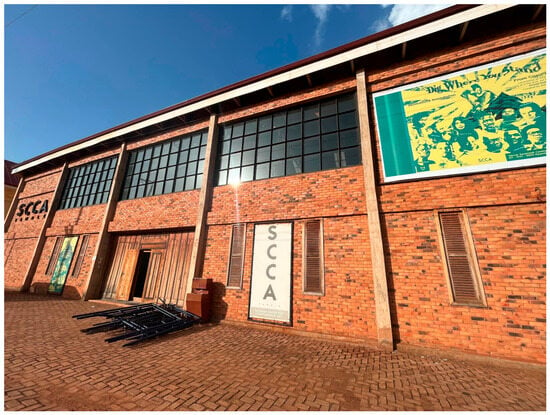
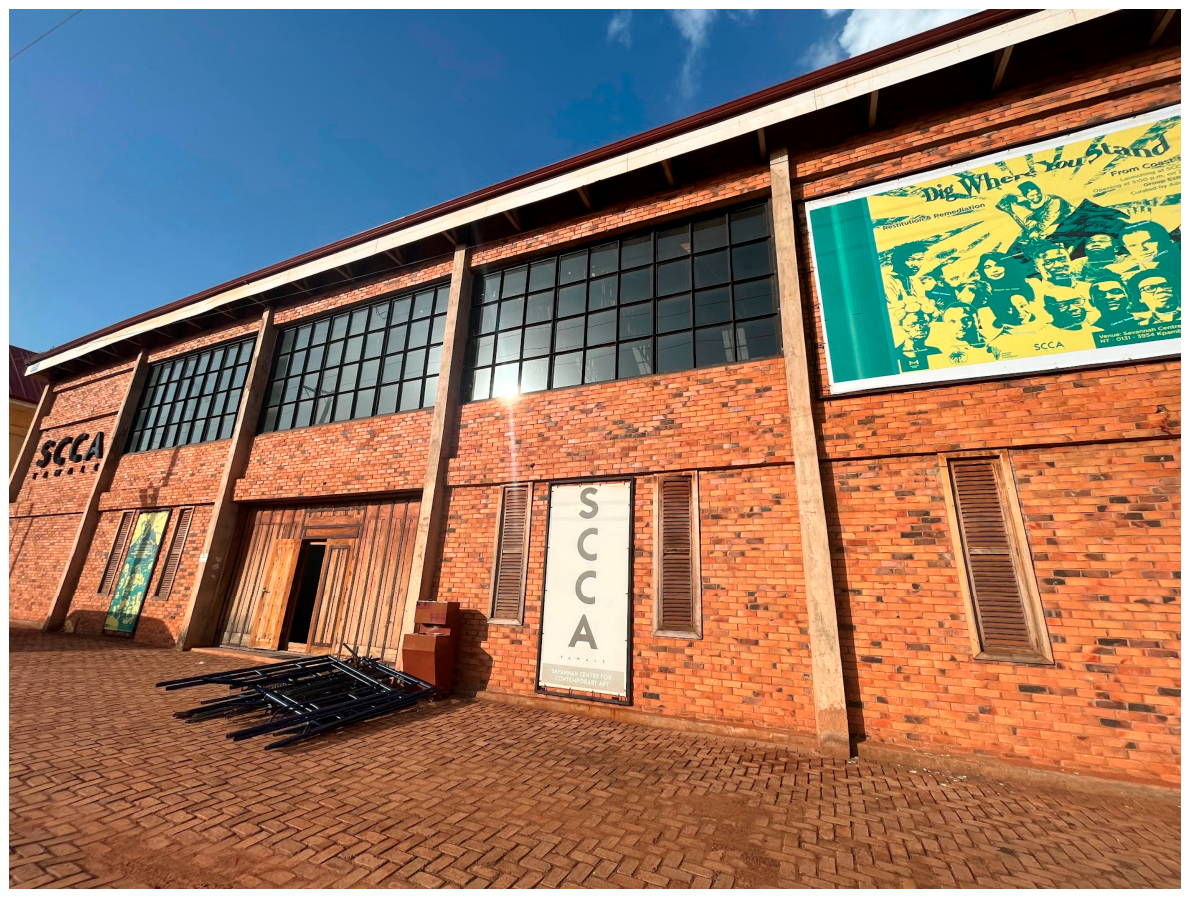
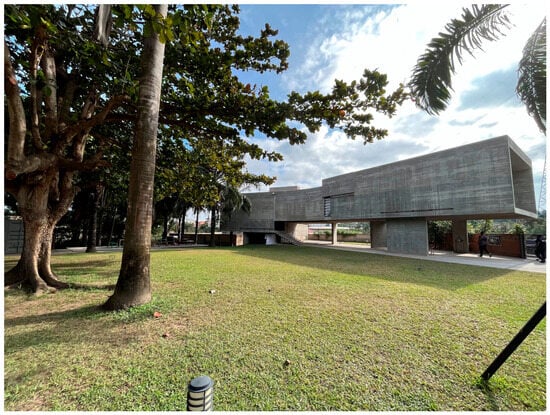
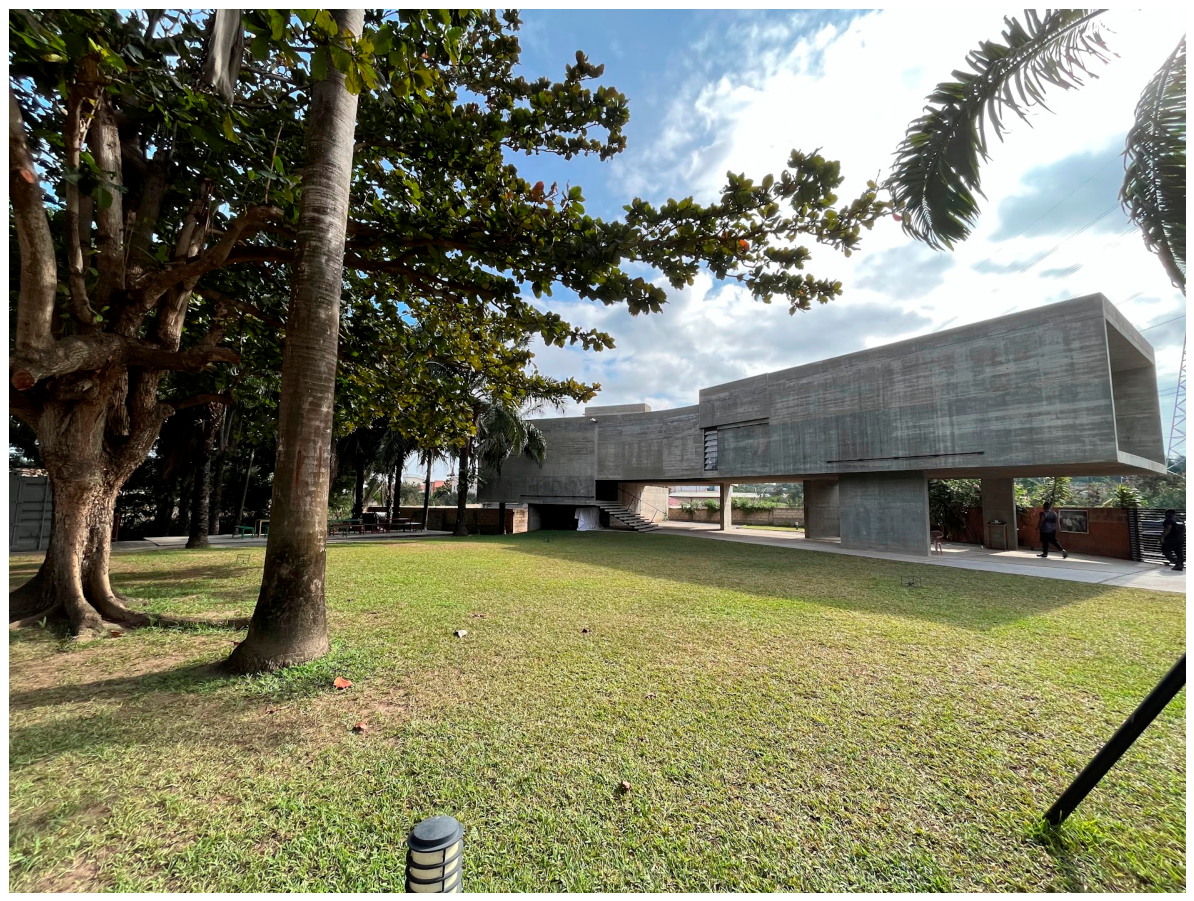
Disclaimer/Publisher’s Note: The statements, opinions and data contained in all publications are solely those of the individual author(s) and contributor(s) and not of MDPI and/or the editor(s). MDPI and/or the editor(s) disclaim responsibility for any injury to people or property resulting from any ideas, methods, instructions or products referred to in the content. |
© 2026 by the author. Licensee MDPI, Basel, Switzerland. This article is an open access article distributed under the terms and conditions of the Creative Commons Attribution (CC BY) license.