


Abstract
Drawing on 964 field observations from typical community parks in Changsha, this study utilizes the System for Observing Play and Recreation in Communities (SOPARC) alongside Kernel Density Estimation (KDE) to quantitatively dissect the intrinsic associations between older adults’ outdoor activity patterns and micro-spatial characteristics. The findings reveal a pronounced demographic differentiation in spatial utilization. Specifically, female-dominated collective activities, such as square dancing, exhibit a profound reliance on central plazas with unobstructed sightlines to cultivate a sense of social security. Conversely, male users demonstrate a distinct preference for static social interactions, including playing chess or cards, within semi-enclosed and shaded spaces beneath a tree canopy. Beyond gender distinctions, age-related spatial anchoring is also evident. Intergenerational caregiving activities among the younger old cohort (aged 55 to 74) are exclusively concentrated around children’s playgrounds, whereas older old individuals and those with impaired mobility rely heavily on densely distributed micro-scale resting amenities. Driven by these empirical insights, this research contends that age-friendly park design must transcend generic accessibility standards, advocating instead for a “categorized spatial provision” strategy. By meticulously balancing open exhibition plazas, semi-private shaded units, and composite caregiving zones within a single park ecosystem, this approach can effectively accommodate the multifaceted health and social requirements of various older adult subgroups.
1. Introduction
Green spaces such as parks hold significant potential for promoting healthy aging [1,2]. With advancing age, the physiological functions of human organs and tissues, including the respiratory, circulatory, immune, and digestive systems, gradually decline, making older adults more susceptible to various diseases [3,4]. A large body of empirical research indicates that park-based activities play a crucial role in promoting physical activity, walking exercise, social interaction, interpersonal relationships, quality of life, and the physical and mental health of older adults [5,6,7,8]. For instance, park-based activities can effectively promote physical activity among older adults, reducing the incidence and mortality of cardiovascular diseases [9]; they help control blood glucose levels and reduce the incidence of diabetes [10]; and through moderate exercise, they can alleviate joint burden and relieve arthritis symptoms [11]. Furthermore, park-based activities can enhance the social and cognitive abilities of older adults, contributing to the prevention of dementia onset [12]. Therefore, greater exposure to green spaces is associated with better overall health-related quality of life [13]. In the pursuit of healthy aging, China has promulgated policies such as the “Healthy China 2030” Planning Outline, emphasizing the development of age-friendly environments [14]. Distinct from the Western concept of “neighborhood,” a “community” in the Chinese context typically refers to an area with defined administrative boundaries and serves as a fundamental component of urban structure. While current guidelines, including the “Standard for Planning and Design of Urban Residential Areas,” offer macro-level direction, practical insights into the micro-scale construction of age-appropriate community parks remain scarce [15]. Despite the significant health benefits associated with community parks, existing research consistently indicates that older adults constitute a disproportionately low percentage of park users [16,17]. This low level of participation suggests a potential misalignment between contemporary park design and the actual requirements and preferences of the elderly [18]. Identifying and comprehending the spatial behavior logic of this specific demographic has therefore become a critical issue in park planning and age-friendly design. To address this gap, the present study aims to explore the correlations between the outdoor activities of older adults and the spatial characteristics of community parks through empirical data and analysis, particularly within the context of densely populated and highly built-up Chinese cities, thereby providing evidence-based support for age-friendly park construction.
1.1. Older Adults’ Park Activities
Research examining the outdoor activities of older adults conventionally categorizes them into two distinct typologies: static and dynamic activities. Characterized by autonomous selection and intrinsic motivation, static activities are guided by psychological principles and often involve a rich degree of imagination [19,20]. This activity type serves not merely as physical rest but rather acts as a vital process for psychological energy restoration. Building upon this foundational classification, several studies further subdivide the static behaviors of older adults into restorative activities (such as sightseeing or quiet contemplation), cognitive social activities (including playing chess or cards), and perceptual activities (such as observing others perform or practice) [21,22,23]. Being highly sensitive to the quality of the micro-environment, participants in these activities consistently gravitate toward specific spatial nodes, such as shaded areas or benches, that offer elevated levels of comfort and security. Conversely, dynamic activities are generally defined as behaviors driven by explicit physiological health objectives or functional purposes, encompassing exercises like brisk walking, jogging, and the use of fitness equipment [24]. Within the Chinese urban context, these dynamic activities concurrently exhibit pronounced cultural and commercial attributes. Older adults frequently engage with commercial services or temporary stalls surrounding parks. Classified as commercial and dining activities, these engagements indirectly prolong outdoor dwell times by incentivizing older populations to leave their residences [25]. Furthermore, domestic research highlights a unique phenomenon associated with intergenerational dynamics, identifying grandparents as the primary companions for children’s outdoor play [26].
1.2. SOPARC and Other Observation Tools
Past research evaluating physical activity among older adults has predominantly relied on two categories of assessment tools: subjective evaluations, such as self-reported questionnaires like the Physical Activity Scale for the Elderly (PASE), and objective measurements, including accelerometers, heart rate monitors, and GPS tracking [27,28,29]. While questionnaire surveys are capable of capturing activity frequencies across large-scale samples, they are frequently susceptible to recall bias [30,31,32]. Conversely, wearable devices such as accelerometers provide precise records of activity intensity but struggle to capture the specific environmental contexts and social interaction dynamics in which these activities take place [33,34].
Direct observation tools are widely applied in the assessment of physical activity within public spaces such as parks. Among various observational frameworks, the System for Observing Play and Recreation in Communities (SOPARC) is widely recognized as a highly representative instrument. Its primary advantage lies in its specialized design for monitoring physical activities and recreational behaviors within outdoor community environments, including parks, playgrounds, and leisure areas, enabling the simultaneous recording of physical activity levels, environmental characteristics, and the sociodemographic attributes of users [16].
Seeking to comprehensively explore the park utilization patterns of older adults within the Chinese urban context, the current study adopts a localized SOPARC observational protocol. Beyond retaining standard records of physical activity intensity, this adapted protocol systematically incorporates the capture of older adults’ mobility status, group size, and precise location data, ultimately aiming to construct a multidimensional behavioral database.
1.3. The Geographic Imbalance in Research on Older Adults’ Park Utilization and Spatial Characteristics
A review of the literature concerning the environmental behaviors of older adults reveals that geographic evidence supporting the global “Age-Friendly Cities” movement is disproportionately concentrated in developed Western nations. Although these studies broadly substantiate the central role of parks in promoting individual physical activity, their conclusions are predominantly grounded in low-density urban morphologies, rendering them difficult to extrapolate directly to the highly dense urban environments of China. Within the Chinese context, while previous research has identified path width, vegetation coverage, and facility adequacy as critical factors influencing the intensity of older adults’ participation, a significant bottleneck remains [35,36]. Current explorations frequently emphasize macro-level accessibility assessments or single-dimension functional quantification, thereby neglecting the internal heterogeneity of older adults’ activity systems and their interactive logic with micro-spatial morphologies. Specifically, empirical studies presently lack a refined analysis of the spatiotemporal distribution patterns among older cohorts with varying physical capabilities and social attributes. Additionally, few investigations have successfully translated complex behavioral logic into intuitive spatial morphological language through quantitative methodologies. Furthermore, for inland hub cities experiencing rapid demographic aging, such as Changsha, a systematic and evidence-based interpretation of the environment–behavior interaction mechanisms within high-density community settings is still notably absent.
1.4. Research Aim and Questions
To bridge this identified gap, the current study employs large-scale field observations alongside spatial analysis to uncover the profound connections between the multifaceted activity requirements of older adults and the spatial morphological systems of parks. Undertaking this approach yields robust empirical evidence to inform precise age-friendly design interventions. By systematically analyzing the spatiotemporal distribution patterns of this demographic, the research further investigates the critical spatial characteristics of parks that dictate their outdoor engagements. These efforts ultimately serve to enrich the international literature with urgently needed evidence derived from the Chinese urban context. Consequently, this investigation seeks to address the following two research questions:
- (1)
- What are the intrinsic associations between the activity typologies of older adults and diverse community park spaces?
- (2)
- How can suitable and age-appropriate activity zones be effectively provisioned for the elderly across varying types of community parks?
2. Method
2.1. Study Area
As a core city in central China, Changsha has actively responded to national strategic plans for the development of aging programs in recent years, committing to the construction of an age-friendly city. By the end of 2022, the resident population of Changsha reached 10.42 million, marked by a significantly accelerated aging process. Initially, this study conducted a comprehensive retrieval within the main urban area of Changsha using “community park” as the keyword on the Baidu Maps open platform, yielding a total of 119 relevant points of interest (POIs). Subsequently, the research team subjected these retrieval results to two rigorous rounds of screening:
- (1)
- Preliminary filtering (reducing the count from 119 to 62): By examining detail pages and conducting street-view cross-references, locations that did not align with the research objectives were excluded. These exclusions comprised: (a) private green spaces within residential areas managed by property companies; (b) protective street greenbelts or traffic islands lacking activity facilities (devoid of social functions); and (c) excessively large comprehensive urban parks (inconsistent with the spatial characteristics of community-level parks).
- (2)
- In-depth screening (reducing the count from 62 to 13): To ensure the external validity of the data, the sample was further narrowed based on the following criteria: (a) exclusion of parks situated in areas undergoing administrative boundary changes or large-scale peripheral construction; (b) exclusion of sites with singular functionality, such as those possessing only greening functions without hard-surfaced plazas; and (c) ensuring that the selected parks were located at the core of high-density residential areas, maintaining a stable 15 min walking service radius.
Following the completion of the aforementioned screening process, the research team conducted sequential on-site visits to the remaining 13 candidate community parks. Ultimately, based on the typicality of their spatial layouts and their functional complementarity, Hongxing, Hepan, and Yuedao Community Parks were selected as the case studies for this research (Table 1). Notably, constrained by land planning regulations and administrative allocations, Hepan Community Park and Yuedao Community Park are registered as two independent units in statutory planning, yet they present a highly integrated state in their physical space. In practical utilization, these two parks collectively fulfill the age-friendly activity demands of the area through functional complementarity, with the Hepan side tending toward dynamic exercise, while the Yuedao side caters more to static leisure and performance. This composite model, characterized by administrative independence, spatial amalgamation, and functional complementarity, holds profound typical significance within the context of high-density urban renewal in Changsha.
Table 1.
Environmental Attributes of Parks.
The SOPARC method is based on the momentary time sampling technique, which involves the systematic and periodic scanning of individuals and their associated factors within predefined target areas. Although this method provides only a snapshot of users at a specific moment and may repeatedly count individuals who remain for extended periods, its validity has been widely demonstrated; therefore, the results should be interpreted as spatial-temporal occupancy intensity rather than the number of unique park visitors. Previous research has indicated that conducting 12 to 16 observations per week, ensuring the inclusion of at least one weekend day, can yield sufficiently robust estimates of park use and physical activity levels, with results that are highly consistent with up to 96 h of continuous measurement [37]. This finding provides strong theoretical support for the sampling protocol of this study. We assessed these outdoor spaces by observing the physical evidence of residents’ park use.
2.2. Variables
The use of community parks by older adults is not an isolated phenomenon but is instead a complex process influenced by the interplay of multi-level factors [38,39]. This study establishes the age threshold for observation subjects at 55 years and older. Driven by China’s statutory retirement age (50 or 55 years for women and 60 years for men), individuals aged 55 and above constitute the predominant demographic engaging in daytime activities within community parks. Seeking a more comprehensive understanding of the behavioral and spatial characteristics inherent to this population, the research employs a stratified classification system, categorizing participants into “younger old” (aged 55 to 74) and “older old” (aged 75 and above) cohorts [40]. Gender is often associated with specific activity types (e.g., men preferring board games and women preferring dancing) and social patterns [41]. Furthermore, an individual’s mobility directly determines their accessible range within the park and the breadth of their activity participation, making it a key indicator of the inclusivity of park design [42,43]. Therefore, to integrate these theoretical insights with objective behavioral data, this SOPARC (System for Observing Play and Recreation in Communities) observational study focused on capturing the core variables related to these key dimensions. This was achieved through the systematic recording and analysis of the age group, gender, mobility, activity type, group size, and spatiotemporal distribution of older adult users (Table 2).
Table 2.
Variables and Their Analytical Roles in the SOPARC Observational Study.
Furthermore, to systematically capture the behavioral characteristics of older adults within high-density urban parks, this study established a pre-defined activity classification framework. Prior to the formal investigation, this framework was initially delineated through a comprehensive review of classic environmental behavior theories, including Gehl’s classification of public space activities, and integrated with a pilot study conducted in Changsha’s community parks. The underlying logic of this classification aims to distinguish the diverse socio-functional demands that older adults place on spatial utilization. Complex behaviors were subsequently synthesized into four dominant forms: Performance Form, Exercise Form, Static Activities, and Interactive activities. To eliminate subjectivity, stringent coding rules were formulated. As illustrated in Table 3, each category possesses explicit physical manifestation characteristics and determination criteria.
Table 3.
Classification and Coding Rules for Older Adults’ Activities in Community Parks.
During the framework testing phase, two observers were assigned to conduct independent double-blind coding of the pilot data. Through deliberations on disputed codes, the Dominant Behavior Rule was established to address activities with blurred boundaries. For instance, when older adults converse while briskly walking, the behavior is uniformly coded as the “Exercise Form” because its primary spatial occupation characteristic involves movement. In contrast, if two individuals converse while seated on a bench, the behavior is coded as “Interactive”.
2.3. SOPARC Procedure
The data collection process strictly adhered to the SOPARC protocol to ensure data accuracy. Prior to the formal data collection, the researchers undertook a rigorous process of self-training and a pilot study to achieve a high level of intra-rater reliability. First, the researchers gained a comprehensive understanding of the tool’s theoretical foundations, coding protocols, and operational procedures by systematically studying the original SOPARC training materials provided on the official Active Living Research website. Subsequently, they engaged in repeated coding exercises using official instructional videos and image samples, self-calibrating through comparisons with standard examples until their judgment of each variable reached a high degree of stability. Finally, on-site pilot observations were conducted in two of the case study parks. It should be noted that the individual attributes of the older adults in this study, such as age, gender, and mobility, were assessed on-site by trained observers based on their physical appearance and behavioral characteristics. To maximize the consistency of these assessments, all observers underwent collaborative calibration training before the study commenced, standardizing the evaluation criteria through cross-checking and discussion. During the actual observations, in cases that were difficult to judge, observers would verify the information through brief conversations (Figure 1).
Figure 1.
On-site observation photos of community parks.
Subsequently, to systematically capture the temporal rhythms of older adults’ activities, this study established a rigorous time-sampling schedule. Field observations were conducted from April to May 2024. This period was selected because the climate in Changsha City during these months is mild and pleasant, encouraging a high frequency of outdoor activities, and the relatively low rainfall is conducive to consistent and repeatable observations. The observation schedule was designed to cover weekdays, weekends, and a public holiday (International Workers’ Day on 1 May) to facilitate a comprehensive comparison of park usage patterns and intensity across different day types. To capture diurnal variations, each day was divided into five observation periods, each lasting approximately three hours: early morning (6:00–8:00), morning (8:00–11:00), midday (11:00–14:00), afternoon (14:00–17:00), and evening (18:00–21:30).
2.3.1. Observation Schedule and Sampling
Field observations were conducted during the period from April to May 2024. To effectively capture behavioral patterns across varying timeframes, four full observation days were scheduled for each case study park, encompassing two weekdays, one weekend day, and one statutory holiday. Daily monitoring was divided into five standard temporal segments: early morning (06:00–08:00), mid-morning (08:00–11:00), midday (11:00–14:00), afternoon (14:00–17:00), and evening (18:00–21:30). This finding provides strong theoretical support for the sampling protocol of this study. Based on the environmental characteristics of Hongxing Community Park, Yuedao Community Park, and Hepan Community Park, we divided them into 22 distinct areas or sites (Figure 2 and Figure 3). Within each designated time slot, two observers executed a systematic clockwise scan across 22 pre-defined target zones within the park, thereby ensuring the consistency of the observational sequence. Lasting approximately 3 to 5 min per zone, each individual scan was carefully timed to guarantee the accurate recording of the instantaneous state of all older adults present. In the event of extreme weather conditions, such as heavy precipitation or sudden temperature drops, data collection was systematically postponed to the subsequent corresponding date featuring similar weather, thus maintaining the stability of the environmental variables.
Figure 2.
The 22 observation sites in Hongxing Community Park, Changsha, China. (H1–H8 represent the SOPARC observation points in Hongxing Community Park.)
Figure 3.
The 22 observation sites in He Pan & Yue Dao Community Park, Changsha, China. (Y1–Y7, P1–P7 represent the SOPARC observation points in He Pan & Yue Dao Community Park.)
2.3.2. Standardized Modifications and Validation
Building upon the foundational SOPARC coding framework, the present study introduced three standardized extensions specifically tailored to the behavioral characteristics of older adults navigating high-density urban environments:
Attribute inference and validation: Observers categorized age brackets (ranging from 55 to 74 years or 75 years and older) alongside mobility status by relying on visual cues, including skin condition, posture, and attire. To substantiate the accuracy of these deductions without interrupting ongoing activities, observers conducted brief, randomized conversational verifications with approximately 10% of the sample (Figure 1), yielding an accuracy rate that exceeded 90%.
Precise spatial mapping: Through the integration of GPS devices, documented activity points were instantaneously anchored to high-resolution satellite basemaps. This methodological enhancement effectively elevated conventional zonal statistics to a more rigorous, coordinate-based spatial distribution analysis.
Mobility classification: The parameter of “mobility” was systematically expanded to encompass unassisted movement, assisted movement relying on aids such as canes, and wheelchair utilization. Implementing this nuanced categorization facilitated a thorough assessment of how environmental affordances accommodate older adults with varying physical capabilities.
2.3.3. Observer Training and Inter-Rater Reliability
To mitigate potential biases arising from subjective judgment, the research team underwent a rigorous one-week intensive training program prior to the formal investigation. This preparatory phase encompassed the comprehensive study of official SOPARC instructional videos alongside on-site pilot calibration exercises. During the subsequent pilot phase, two observers independently coded 50 randomized samples, allowing for the calculation of Cohen’s Kappa (κ) coefficients to accurately evaluate inter-rater reliability. The analytical results demonstrated exceptionally high reliability across all assessed variables, including gender (κ = 0.96), age group (κ = 0.84), activity type (κ = 0.88), and mobility status (κ = 0.82). These values substantially exceeded the universally recognized excellence threshold of 0.75.
2.3.4. Ethical Considerations and Privacy
This study rigorously adhered to academic ethical guidelines and obtained ethical review approval from the relevant academic institutions. Given that the research primarily employed non-participant observation methodologies conducted within public open spaces, it imposed no physiological or psychological interventions on the subjects. During the data validation process, the occasional brief conversations undertaken were exclusively for verifying demographic background information, such as age; they involved no personal privacy or sensitive data, and the duration of each interaction was strictly limited to 30 s to guarantee their non-intrusive nature. To safeguard participant privacy effectively, all photographs captured on-site (Figure 1) and geospatial data are utilized solely for the purpose of academic analysis. Furthermore, at the investigation sites, all observers wore conspicuous identification badges, proactively explained the research intent, and secured the verbal consent of the older adults prior to initiating any brief dialogue.
2.4. Data Analysis
The data analysis in this study was a multi-stage, integrated process aimed at extracting meaningful behavioral patterns and spatial insights from the collected SOPARC observation points. The analysis was conducted primarily using Microsoft Excel 2021 (Microsoft Corporation, Redmond, WA, USA) for data management, SPSS 26.0 for statistical analysis, and QGIS 3.40 for spatial analysis. The entire analytical strategy can be divided into three interconnected steps. Prior to the analysis, all SOPARC observation data, which were manually recorded in the field, were first systematically entered into Microsoft Excel spreadsheets. Subsequently, the organized attribute data table (containing information such as age group, gender, and activity type) was matched with the geographical coordinates recorded via GPS. This process culminated in the generation of a complete spatial point data layer (Shapefile) in QGIS, containing all attribute information.
Chi-square tests were employed to examine the associations between elderly individuals’ physical activity types and their demographic characteristics (gender and age group). For 2 × 2 or 2 × 3 contingency tables where more than 20% of the cells had expected counts less than 5, Fisher’s exact test or Yate’s continuity correction was applied to ensure the accuracy of the p-values. Furthermore, to address the practical significance of the findings, effect sizes for all significant chi-square associations were calculated using Cramér’s V. The strength of the association was interpreted according to Cohen’s established statistical guidelines: V values between 0.10 and 0.29 indicate a small effect, values between 0.30 and 0.49 indicate a medium effect, and values of 0.50 or greater represent a large effect [44].
Kernel Density Estimation (KDE), a non-parametric statistical method, is widely used to transform discrete point data into a smooth, continuous density surface, thereby intuitively revealing the spatial clustering intensity and distributional variations in events within a study area [45]. The application of this method is well-established in the fields of geography and urban planning [46,47] and is increasingly being used to analyze the relationship between the neighborhood built environment and residents’ physical activity [48]. Particularly in research focusing on older adults, KDE has been demonstrated to be an effective tool that provides reliable and stable estimation results across different spatial scales [49]. By efficiently identifying “hotspots” in spatial distributions, KDE can clearly quantify and visualize the usage density of specific populations (e.g., older adults in this study) in different spaces. Its computational principle is based on the following formula:
where X1, X2, …, Xi are the n observation points, K (•) is the kernel function with a bandwidth of h, and its input is the distance between x and one of the observation points [50]. In this study, the KDE was performed using QGIS 3.40 software. Procedural details:
- (1)
- Bandwidth Selection: The search radius (bandwidth) was determined based on Silverman’s Rule of Thumb to automatically optimize the smoothing effect according to the spatial distribution of activity points, preventing arbitrary bias in hotspot identification.
- (2)
- Kernel Function: A Quartic kernel function was selected to ensure a smooth transition of density values across the park space.
- (3)
- Spatial Resolution: The output cell size was set to 5 m, ensuring a high-resolution representation of micro-scale activity hotspots within the community parks.
- (4)
- Coordinate System: All spatial data were projected into the WGS 1984 UTM Zone 49N system to ensure accurate Euclidean distance calculations in meters.
- (5)
- Edge Effects: To mitigate edge effects, a spatial buffer was applied around the park boundaries during calculation, and the final results were clipped to the precise administrative limits of each park.
3. Results
3.1. Descriptive Statistics
This section presents a descriptive statistical analysis of the 964 data points on the valid observation samples, which were systematically collected using the SOPARC observation method. The analysis aims to systematically reveal the demographic composition, key behavioral patterns, spatial usage characteristics, and social interaction modes of the study sample through quantitative methods, thereby establishing a comprehensive empirical baseline for an in-depth understanding of the activity landscape of older adults within the case study parks in Changsha.
Of the total sample (N = 964), 389 observations (40.4%) were recorded in Hongxing Community Park, while 575 (59.6%) were recorded in Yuedao and Hepan Community Parks. In terms of gender composition, male older adults constituted 62.4% of the sample (n = 602), while female older adults accounted for 37.6% (n = 362). With respect to the age structure, the young old group (55–74 years) was the predominant user group, accounting for 86.1% of the observations (n = 830). The oldest old group (≥75 years) comprised the remaining 13.9% (n = 134). Furthermore, data on mobility indicated that the vast majority of older adults (94.9%, n = 915) moved without assistance, while 4.9% (n = 49) of the sample exhibited some form of mobility limitation.
3.1.1. Activity Composition and Variations Among Older Adult Park Users
The socio-ecological model framework posits that the park-based activities of older adults are influenced by multi-level factors [51]. The SOPARC observational data provide objective behavioral evidence for understanding these influences at the individual and socio-cultural levels. Table 4 reveals the overall landscape of the activity composition among older adults. The data indicate that among the more than 30 types of activities observed, three dominant patterns emerged, each corresponding to a distinct core need in the lives of older adults. Walking, as the most prevalent activity (accounting for 23.3% of total observations). This was followed by playing cards (11.5%) and accompanying children (9.1%).
Table 4.
Statistics of the number of people participating Activity frequency.
In addition to these dominant activities, a series of low-frequency yet distinct niche activities also warrant attention, as they collectively constitute the rich ecosystem of park activities. For example, unstructured sedentary activities such as sitting (7.1%), standing (5.9%), and talking (6.4%), while not as goal-oriented as playing cards or dancing, collectively account for nearly 20% of observations. Furthermore, activities such as machine exercise (2.8%), Tai Chi (2.4%), and Qigong (2.6%), while individually accounting for small percentages, collectively form an activity cluster centered on traditional Chinese wellness culture.
The findings reveal that gender constitutes one of the prominent determinants shaping physical activity choices, with effect size analysis (Cramér’s V) uncovering a distinct hierarchy of behavioral divergence. Specifically, female participants display an exceptional propensity to aggregate in square dancing, which exhibits the most robust gender association in the dataset (V = 0.245, p < 0.001). Other dynamic activities, such as aerobics (V = 0.118) and walking (V = 0.108), also demonstrate significant but weaker gender effects. By contrast, male individuals command a majority in traditional competitive and sedentary social pursuits. However, while activities like playing cards (p = 0.025) and playing chess (p = 0.003) are male-dominated, their effect sizes remain relatively small (V = 0.072 and V = 0.094, respectively). This indicates that while male static socialization is prevalent, it does not dictate the overall gendered spatial distribution of the park as powerfully as female-driven performative activities. Meanwhile, behaviors including standing and practicing Tai Chi exhibit no statistically significant differences across the gender dimension (p > 0.05), thereby demonstrating a substantial degree of gender inclusivity (Table 5).
Table 5.
Distribution of older adults’ physical activity types by gender and age group.
The transition from the younger old (aged 55–74) to the older old (aged 75+) cohort is accompanied by shifting spatial requirements, corroborated by distinct effect sizes. The pronounced age-related divergences are observed in camping/gathering (V = 0.168, p < 0.001) and playing chess (V = 0.152, p < 0.001), highlighting the older old cohort’s heightened reliance on static, community-oriented nodes. Conversely, childcare engagements are almost exclusively concentrated within the younger-old demographic (98.6%). Although the overall effect size for childcare is modest (V = 0.103, p = 0.001) due to the specific subgroup size, this extreme compositional asymmetry exposes a profound functional lock-in, powerfully reflecting their central role in providing intergenerational family support. Beyond these age-specific trends, fundamental activities like walking do not exhibit significant variance between the two cohorts (p = 0.819), a consistency that highlights the universal appeal of basic mobility exercises across all stages of later life.
Of the 389 activity observations recorded in this park, “playing cards” accounted for an overwhelming 28.5%, far exceeding all other activities. A time series analysis further reinforces this finding (see Table 6): the activity of playing cards was not only frequent but also demonstrated strong daily stability, occurring at a high frequency on all observation days (Mean daily frequency M = 23.8, SD = 8.7) without significant cyclical fluctuations.
Table 6.
Number of people observed to be active daily.
In stark contrast, Yuedao and Hepan Community Parks exhibit functional generalization, with a polycentric activity structure. Among the 575 activity observations in these parks, no single activity was absolutely dominant; the most prevalent activity, “walking” (23.3%), along with several others such as “accompanying children” (10.3%) and “sitting” (7.1%), collectively formed a diverse and balanced activity ecosystem. In terms of temporal dynamics, these parks displayed a heterogeneous pattern characterized by both foundational stability and cyclical fluctuations. Foundational activities (e.g., “walking”) maintained a stable, high frequency across all observation days. However, certain group activities (e.g., “choir,” “soft gymnastics”) demonstrated strong episodic characteristics, with participation numbers showing a pulse-like surge primarily on weekends and public holidays.
3.1.2. Temporal Dynamics and Gendered Analysis of Social Interaction Modes
An in-depth examination of social interaction modes not only reveals the diurnal rhythms of the parks’ social functions but also elucidates how individual attributes (such as gender) and the socio-cultural environment jointly regulate the use of public space. Figure 4 quantitatively illustrates the significant temporal differentiation among three social modes, individual, small group, and large group, and their distinct socially gendered characteristics. First, the individual activity mode (Single) exhibits a significant bimodal distribution, with peaks in frequency occurring in the early morning (06:00–08:00) and evening (17:00–21:30) periods. The data show that during these two activity windows, which are primarily composed of individualized physical exercise, the participation frequency of males was statistically higher than that of females. The small group activity mode dominated the non-peak daytime hours, forming two other frequency peaks in the morning (08:00–11:00) and afternoon (14:00–17:00). In terms of gender composition, male participation remained higher than that of females during most of these periods. This finding is consistent with the male-dominated characteristic of card-playing activities identified in the preceding activity type analysis, further corroborating the importance of specific interest-oriented activities in the construction of male peer social networks. The large group activity mode presented markedly different temporal and gender distribution characteristics compared to the other modes. Its activity frequency was highly concentrated in the evening period, during which the gender composition of participants underwent a significant reversal, with female participation frequency far exceeding that of males.
Figure 4.
Analysis of time and gender dimensions of different social patterns.
3.2. Spatial Analysis of Older Adults’ Activity Types
This study employed Kernel Density Estimation (KDE) to spatialize 964 valid observation samples, aiming to identify the spatial clustering characteristics of varying activity typologies within the context of high-density cities. Grounded in the classification framework delineated in Section 2.2, this research categorized the activity systems of older adults into four dominant forms. The specific activity contents, spatial preferences, and social characteristics inherent to each type are detailed in Table 7. The results of the KDE analysis indicate that the spatial behaviors of older adults within community parks manifest a pronounced non-randomness, exhibiting distinct clustering patterns that are contingent upon their functional requirements (Figure 5 and Figure 6).
Table 7.
Types of activities for the older adults.
Figure 5.
Spatial distribution of outdoor activities for older adults in Yuedao & Hepan community parks. (1. Overall activities; 2. Performance activities; 3. Exercise activities; 4. Sedentary activities; 5. Interactive activities.)
Figure 6.
Spatial distribution of outdoor activities for older adults in Hongxing community parks in Changsha, China. (1. Performance activities; 2. Exercise activities; 3. Sedentary activities; 4. Interactive activities; 5. Overall activities.)
3.2.1. Functional Clustering in Hepan & Yuedao Park
As illustrated in the KDE mapping (Figure 5), the observational data for older adults’ activities within Hepan and Yuedao Community Parks demonstrate highly pronounced functional clustering. For performance-based activities, observation frequencies are intensely concentrated in the eastern entrance plaza and the central activity area (Figure 5, Boxes 1 and 2), thereby verifying the profound reliance of such collective activities on expansive, hard-surfaced planar spaces. Exercise-oriented engagements reveal a distinctively linear pattern of spatial occupation. These activity hotspots are predominantly distributed along the main park roads and lakeside trails, while forming localized secondary peaks within the dedicated fitness equipment zones (Figure 5, Box 3), a distribution that clearly highlights the guiding role of pathway connectivity. Static activities present a dispersed, point-like distribution. Their high-intensity occupation zones are densely clustered around shaded areas along the river, benches, and pavilions (Figure 5, Box 4), reflecting a heightened sensitivity to micro-environmental comfort. Interactive activities manifest an extreme phenomenon of functional lock-in, with activity hotspots being almost entirely drawn to the children’s play facilities on the western side (Figure 5, Box 5). This concentration vividly illustrates the profound dependence of intergenerational caregiving behaviors on specific amenities.
3.2.2. Morphological Logic in Hongxing Park
Diverging from the linear structure of the former, the loop-based layout of Hongxing Community Park demonstrates an alternative and highly efficient model of spatial organization. An examination of the KDE analysis (Figure 6) clearly identifies a behavioral distribution logic grounded in surface, line, and point geometric typologies. Serving as a highly integrated physical center, the northwestern entrance plaza acts as the principal host for performance-based activities (Figure 6, Box 1), thereby providing the requisite spatial conditions to function as a large-scale social stage. Exercise-oriented activities align seamlessly with the lakeside loop trail (Figure 6, Box 2), where the core natural landscape, specifically the lake view, significantly amplifies the motivational capacity of the pathway as a conduit for physical exertion. Observational frequencies for static activities are densely concentrated at resting nodes along this loop, including waterfront pavilions and shaded benches (Figure 6, Box 3), effectively cultivating a micro-spatial network that sustains spontaneous social interaction and recuperation. Regarding the phenomenon of functional lock-in, consistent with previous case studies, interactive engagements once again demonstrate a profound spatial binding to specific amenities, such as caregiving vantage points situated adjacent to fitness equipment zones (Figure 6, Box 4).
4. Discussion
4.1. Contributions to and Reflections on Existing Knowledge
Taking typical community parks in Changsha as case studies, this research comprehensively employs multiple quantitative analytical methods, including SOPARC, KDE, and Chi-square tests, to conduct field investigations. This methodological approach aims to systematically collect and analyze the physical activity data of older adults alongside their spatial distribution characteristics. Diverging from previous literature that predominantly focuses on the qualitative description of activity preferences among the elderly, the current investigation identifies the significant impacts of gender and age on their activity selections. Guided by these demographic influences, complex physical behaviors are scientifically categorized into four core patterns. By integrating quantitative analysis with this systematic classification, the study enables a more precise identification of the differentiated environmental demands exhibited by various subgroups of older adults. Such distinct spatial requirements encompass the carrying capacity of central plaza spaces for collective dynamic activities, the appeal of enclosed under-canopy spaces for static socialization patterns, and the crucial spatial supporting role of auxiliary facility sites in intergenerational caregiving and functional rehabilitation engagements.
While older adults have specific requirements for physical environments that support outdoor activities, their internal expectations for social participation and needs for spatial security may frequently act as deeper factors influencing their activity choices [52]. Our observational findings indicate that older adults’ outdoor activity trajectories are not randomly distributed but exhibit significant spatial clustering, which might reflect selective preferences for specific environmental features to some extent. The high-intensity activity hotspots identified through KDE analysis (as detailed in Table 7) correspond well with the socio-demographic statistical associations found in this study. For instance, square dancing groups exhibit a significant gender association (V = 0.245, p < 0.001) and are concentrated in central plaza areas with open sightlines (Box 1 in Figure 5). This phenomenon could potentially be explained by the fact that open spatial forms provide the necessary visual permeability for collective activities, thereby better supporting interaction and observation among members. Although existing literature frequently mentions the social benefits of informal spaces, older adults in this study still showed a tendency to gather in central areas with higher pedestrian density and clear visibility; combined with previous research, this might partially stem from their potential concerns regarding fall risks or social isolation [53]. Similarly, the age-related binding observed in childcare activities (V = 0.103, p = 0.001) aligns with the hotspot distribution around children’s play facilities, reflecting a potential functional spatial lock-in. Based on these observed associations between behavior and spatial characteristics, we suggest that future park design could benefit from a more nuanced consideration of older adults’ internal needs for mutual assistance and passive observation. To attempt to balance the psychological demands for spatial security with the desire for social participation in public spaces, planning practices might consider providing appropriate open hardscape nodes supplemented by well-designed visual corridors.
In addition, regarding the impact of enclosed spaces beneath the tree canopy on the physical activities of older adults, the existing literature presents contradictory conclusions. Some studies contend that open spaces with high visibility are more conducive to promoting social participation among the elderly, whereas heavily enclosed areas beneath tree canopies are frequently perceived as negative spaces due to potential safety hazards [54]. Conversely, other investigations have failed to identify a significant negative correlation between spatial enclosure and the activity levels of older adults [55]. The findings of this study contribute a quantitative perspective to this debate, suggesting that the physical characteristics of enclosed spaces beneath tree canopies may act as critical environmental affordances that attract specific subgroups to engage in static socialization patterns. As demonstrated by the data analysis, the activity of playing chess exhibits a significant age-related dependency (V = 0.152, p < 0.001) and consistently clusters spatially within semi-enclosed micro-environments equipped with seating and natural shading. This spatial mapping appears to align with previous research, indicating that semi-enclosed spaces—by providing natural shade and a distinct sense of boundary, might significantly enhance the willingness of older adults to partake in prolonged, territorial social interactions [56].
Similar research within Chinese communities has identified a unique “informality” in how older adults utilize public spaces. Even in the absence of standardized sports facilities, shaded areas beneath trees and corners with a defined sense of boundary remain the “preferred sites” for high-density social activities, including playing cards and performing traditional opera [57]. The KDE spatial mapping in this study appears to align with this observed phenomenon of informal spatial appropriation. From a socio-ecological perspective, this pattern might be associated with the specific Chinese cultural context, where socialization among older adults often demonstrates strong collective and group-oriented attributes. Semi-enclosed spaces under the tree canopy not only provide physiological comfort by offering protection from sun and wind but also potentially provide essential environmental affordances. These spatial characteristics may help foster a perceived sense of territoriality that minimizes external distractions, which could potentially facilitate higher-quality social interactions [58,59]. Furthermore, our observations suggest that the placement and density of resting amenities (e.g., benches) within these shaded nodes could serve as critical environmental affordances influencing the duration of outdoor stays. This observation aligns with Chen et al. (2023) [60], who proposed that a high density of resting facilities can significantly foster opportunities for spontaneous socialization. Given the varying physical capacities of older adults—particularly the oldest-old and mobility-impaired cohorts observed in our study—future seating configurations might need to be more abundant and ergonomically diverse to inclusively accommodate users of all functional levels [61].
Utilizing fitness equipment is regarded as one of the most common physical activities for older adults within parks, as they frequently engage in functional exercise in zones equipped with stationary facilities [62]. In Malaysia, well-planned open-air fitness areas and linear trails within community parks are identified as significant factors in attracting older adults and extending their outdoor stay [63]. A similar trend is observed in China, where auxiliary facility spaces indirectly increase the total duration of outdoor activity by drawing older adults into daily exercise and childcare routines [64]. These findings align with the conclusions of our study, which indicate that the accessibility and functional diversity of auxiliary facility spaces significantly influence spatial utilization rates among the elderly. Consequently, establishing integrated fitness and recreational hubs within the core areas of parks has the potential to elevate physical activity levels, addressing the dual challenges of social isolation and physical inactivity that scholars have identified as critical issues in contemporary aging societies [65,66,67].
4.2. Implications for Future Community Park Design Practice and Research
Our findings suggest that as older adults age, their activity patterns demonstrate a noticeable shift toward “sedentarization” and spatial withdrawal, characterized by a heightened reliance on micro-spaces equipped with supportive affordances such as seating and shade. Statistical evidence corroborates this trend, showing that the older-old cohort (aged 75+) has significantly higher participation in static social activities, including playing chess (V = 0.152, p < 0.001) and camping/gathering (V = 0.168, p < 0.001). This behavioral preference is precisely mapped onto the KDE hotspots identified at resting nodes, such as waterfront pavilions and shaded benches (Box 4 in Figure 5; Box 3 in Figure 6). These correlations imply that future age-friendly park design might benefit from prioritizing the high-density integration of fragmented rest nodes within path systems, such as ergonomic seating every 50 m, rather than focusing exclusively on large assembly plazas or long-distance fitness trails. Such micro-spatial provisions could potentially better accommodate individuals using wheelchairs or walking aids, thereby supporting observed low-consumption activities like sitting, watching, and playing cards. While previous studies emphasized the role of continuous barrier-free trails in promoting dynamic exercise [68], the extreme reliance on localized micro-environments observed in this study suggests that large-scale connected spaces without adequate rest intervals might potentially present accessibility challenges for functionally limited seniors. Consequently, future research could further examine how seasonal micro-climatic factors influence the spatial choices and duration of stay for these site-dependent, sedentary groups across diverse urban green spaces.
Encouraging older adults to spontaneously extend their outdoor stays is a vital precursor to fostering active physical engagement and informal social interaction. Our findings suggest that key environmental indicators, such as spatial visual accessibility and the sense of enclosure in under-canopy spaces, may exert differentiating influences on the outdoor behavioral preferences of various gender groups. While existing frameworks, such as the Law on the Construction of a Barrier-Free Environment, provide macro-level guidance, this study further proposes that community parks could benefit from the concept of spatial folding to establish a multi-layered, categorized provision of activity venues. Specifically, for female-dominated collective activities (e.g., square dancing), which exhibited a robust gender association (V = 0.245, p < 0.001) and clustered heavily in open plazas (Box 1 in Figure 5), design interventions might focus on providing unobstructed, level, and highly visible performative spaces. Conversely, to accommodate the selective preference of male participants for static socialization like cards and chess (V = 0.072 to 0.094, Table 5), planners might consider provisioning semi-enclosed units equipped with weather-protective canopies at the high-density shaded nodes identified by KDE analysis (Box 4 in Figure 5). Integrating age-friendly fitness equipment within these functional zones could potentially encourage more diversified physical engagements. Furthermore, while introducing sensory landscapes around these areas holds potential for psychological restoration, future research is needed to more precisely investigate micro-preferences, such as specific equipment types and seating arrangements, to provide a more rigorous evidence-based foundation for precision design interventions.
Our quantitative analysis, alongside KDE spatial mapping, highlights a robust association between children’s play facilities and the outdoor trajectories of the younger-old cohort (aged 55–74). As descriptive data indicates, this demographic accounts for nearly all intergenerational caregiving observations (98.6%, p = 0.001, V = 0.103), representing a functional lock-in that physically manifests as extreme spatial clustering around children’s activity zones (Box 5 in Figure 5). Based on these observations, children’s play areas could be reconceptualized as implicit intergenerational composite spaces. Consequently, design practices might benefit from addressing caregivers’ spatial affordance needs for visual supervision and intermittent physical recovery, rather than solely focusing on children’s play equipment. Instead of isolating age-specific zones, planners might consider strategically integrating ergonomic seating, shaded pavilions, and low-intensity flexibility equipment, such as Tai Chi wheels, within the safe visual catchment of play structures. Such a composite spatial provision could potentially ensure comprehensive sightlines for caregiving while simultaneously affording opportunities for fragmented, light physical activity and peer socialization during caregiving intervals. While previous literature suggests that the prevalent Chinese “intergenerational caregiving” model and concerns for grandchildren’s safety frequently coincide with reduced moderate-to-vigorous physical activity among older adults [69,70], the exact mechanisms by which micro-environmental improvements (e.g., optimizing visual corridors and seating orientations) might mitigate this functional conflict require further investigation. Future research exploring these targeted spatial interventions could be instrumental in achieving a synergistic effect between children’s free play and active health maintenance for the elderly.
Current Chinese policy frameworks, such as the “Healthy China 2030” Planning Outline and various urban renewal policies, explicitly advocate for the creation of health-supportive natural ecological environments for older adults. The Kernel Density Estimation (KDE) results of this study indicate that areas performing well in terms of natural ecological shading and micro-environmental richness exert a significant attraction for static socialization and prolonged stays among older adults, particularly the male demographic. This aligns with previous Chinese research on age-friendly landscapes, which suggests that seniors prefer engaging in informal social interaction and daily rest within green spaces characterized by high vegetation coverage, favorable microclimates, and abundant natural elements [71]. Beyond meeting the demand for hard-surfaced activity areas, community park planning should incorporate diverse and psychologically soothing natural environmental elements to provide older adults with increased opportunities for nature contact and mental restoration. Furthermore, aromatic plants, seasonally changing tree species, shallow water features, and resting facilities made of natural wood should be introduced around social spaces frequently used by the elderly to enhance the greening quality of community parks and create a more therapeutic wellness environment. These natural elements not only effectively improve local thermal comfort but also help alleviate loneliness, reduce mental stress, and maintain cognitive health through multi-sensory natural stimulation [72,73,74]. Future quantitative empirical research is needed to deeply explore the micro-preferences of different age groups and functional limitation levels among the elderly toward specific natural sensory elements (such as visual color, olfactory scent, and material texture), in order to formulate more detailed practical guidance for the design of therapeutic age-friendly community parks.
5. Limitations and Future Research
This study collected 964 SOPARC observation samples within typical community parks in Changsha, aiming to quantitatively reveal the correlations between the physical activity patterns of older adults and micro-spatial characteristics. In practice, through systematic instantaneous scan mapping and descriptive spatial analysis (such as KDE), we successfully constructed behavioral hotspot maps of existing users within a specific season. However, constrained by the inherent attributes of cross-sectional field observations, this methodology fundamentally relies on observer-based visual judgments to categorize critical demographic variables such as age groups and mobility status. Although rigorous measures, including a one-week intensive observer training program and on-site brief verifications for ambiguous cases, were implemented alongside a 10% conversational validation to mitigate gross misclassifications, we critically acknowledge that these measures cannot ensure absolute accuracy. The inherent subjective bias of visual estimation cannot be completely resolved; factors such as individual variations in physiological aging, seasonal clothing choices, or concealed mobility constraints could inevitably lead to categorization errors, particularly at the boundary threshold between the younger old (55–74) and older old (75+) cohorts. Consequently, the findings regarding age-specific and mobility-specific spatial preferences in this study should be interpreted with caution, serving as observational correlational trends rather than definitive demographic facts; meanwhile, the practice of merging data from multiple parks to extract common regularities may obscure local spatial heterogeneity, and purely objective observation cannot reach the internal behavioral motivations of users or the demand barriers of non-user groups. Consequently, future research urgently needs to integrate questionnaire surveys or in-depth interviews to obtain direct subjective driving force data, and attempt to conduct cross-regional comparative tracking analyses, thereby providing more comprehensive and profound theoretical support for design interventions in all-age/age-friendly public spaces.
6. Conclusions
This study employs research methodologies such as SOPARC and KDE to explore the associations between physical activity patterns of older adults and micro-spatial environmental characteristics within typical community parks in Changsha, China. Grounded in field behavior observations within a specific climatic and regional cultural context, this research highlights potential physical environmental elements that may influence the outdoor activities of different elderly sub-populations. The findings suggest that high-frequency space utilization appears to be closely associated with the demographic characteristics of the users. First, the visual accessibility and openness of central plazas emerge as important factors associated with hosting female-dominated collective activities (such as square dancing), whereas the semi-enclosure and natural shading of under-canopy spaces are significant characteristics linked to male seniors engaging in static socialization (such as playing cards and chess). Second, the data indicates that areas surrounding children’s play facilities are closely linked to high-frequency intergenerational caregiving activities among the younger old (aged 55–74). Furthermore, high-density configurations of micro-supportive spaces, such as resting benches, are suggested to be important correlates for the activity boundaries and duration of stay for the older old (aged 75 and above) and those with functional limitations.
Based on these observational findings, this study provides an empirical foundation for the refined planning and spatial optimization of future age-friendly community parks. By considering the “classified spatial provision” strategies discussed in this study, urban planners and landscape architects may more effectively balance the allocation of barrier-free open display plazas, semi-private under-canopy social units, and composite intergenerational caregiving spaces within park systems. Such spatial intervention strategies, grounded in observed behavioral patterns, can potentially respond to and support the diversified outdoor activity needs of various elderly groups, contributing to the construction of more inclusive and vibrant healthy-aging communities.
Author Contributions
T.Z.: Conceptualization, Methodology, Software, Formal analysis, Investigation, Data curation, Writing—original draft, Visualization. S.M.: Conceptualization, Resources, Writing—review & editing, Supervision, Project administration. M.F.S.: Methodology, Validation, Writing—review & editing. X.Y.: Resources, Funding acquisition, Supervision, Writing—review & editing. All authors have read and agreed to the published version of the manuscript.
Funding
This research is funded by the National Natural Science Foundation of China (31671628), the Strategic Priority Research Program of the Chinese Academy of Sciences (XDA13020602, XDA13020503), and the Hunan Provincial Natural Science Foundation of China (2020JJ4294).
Data Availability Statement
The data underlying this study are not publicly available due to privacy. De-identified data may be made available upon reasonable request to the corresponding author, but their dissemination is subject to a data use agreement and institutional approval.
Acknowledgments
The authors express their heartful gratitude to Sreetheran Maruthaveeran for his invaluable guidance on the revision and linguistic refinement of this paper. We also extend our special thanks to Xiang Yanci for the generous support in editorial work and funding. Additionally, we appreciate Mohd Fairuz Shahidan for his constructive suggestions throughout the modification process.
Conflicts of Interest
The authors declare no conflicts of interest.
References
- Ali, M.J.; Rahaman, M.; Hossain, S.I. Urban Green Spaces for Elderly Human Health: A Planning Model for Healthy City Living. Land Use Policy 2022, 114, 105970. [Google Scholar] [CrossRef] [Scilit]
- de Keijzer, C.; Bauwelinck, M.; Dadvand, P. Long-Term Exposure to Residential Greenspace and Healthy Ageing: A Systematic Review. Curr. Environ. Health Rep. 2020, 7, 65–88. [Google Scholar] [CrossRef] [Scilit]
- Guo, S.; Zheng, X.-Y. New Evidence of Trends in Cognitive Function among Middle-Aged and Older Adults in China, 2011-2018: An Age-Period-Cohort Analysis. BMC Geriatr. 2023, 23, 498. [Google Scholar] [CrossRef] [Scilit] [PubMed]
- Hazeldine, J.; Lord, J.M. The Impact of Ageing on Natural Killer Cell Function and Potential Consequences for Health in Older Adults. Ageing Res. Rev. 2013, 12, 1069–1078. [Google Scholar] [CrossRef] [Scilit] [PubMed]
- Gagliardi, C.; Pillemer, K.; Gambella, E.; Piccinini, F.; Fabbietti, P. Benefits for Older People Engaged in Environmental Volunteering and Socializing Activities in City Parks: Preliminary Results of a Program in Italy. Int. J. Environ. Res. Public Health 2020, 17, 3772. [Google Scholar] [CrossRef] [Scilit] [PubMed]
- Khazaee-Pool, M.; Sadeghi, R.; Majlessi, F.; Rahimi Foroushani, A. Effects of Physical Exercise Programme on Happiness among Older People. J. Psychiatr. Ment. Health Nurs. 2015, 22, 47–57. [Google Scholar] [CrossRef] [Scilit]
- Levy-Storms, L.; Chen, L.; Loukaitou-Sideris, A. Older Adults’ Needs and Preferences for Open Space and Physical Activity in and Near Parks: A Systematic Review. J. Aging Phys. Act. 2018, 26, 682–696. [Google Scholar] [CrossRef] [Scilit]
- Sasidharan, V.; Payne, L.; Orsega-Smith, E.; Godbey, G. Older Adults’ Physical Activity Participation and Perceptions of Wellbeing: Examining the Role of Social Support for Leisure. Manag. Leis. 2006, 11, 164–185. [Google Scholar] [CrossRef] [Scilit]
- Grazuleviciene, R.; Vencloviene, J.; Kubilius, R.; Grizas, V.; Dedele, A.; Grazulevicius, T.; Ceponiene, I.; Tamuleviciute-Prasciene, E.; Nieuwenhuijsen, M.J.; Jones, M.; et al. The Effect of Park and Urban Environments on Coronary Artery Disease Patients: A Randomized Trial. Biomed Res. Int. 2015, 2015, 403012. [Google Scholar] [CrossRef] [Scilit] [PubMed]
- Frank, L.D.; Adhikari, B.; White, K.R.; Dummer, T.; Sandhu, J.; Demlow, E.; Hu, Y.; Hong, A.; Van den Bosch, M. Chronic Disease and Where You Live: Built and Natural Environment Relationships with Physical Activity, Obesity, and Diabetes. Environ. Int. 2022, 158, 106959. [Google Scholar] [CrossRef] [Scilit]
- Skou, S.T.; Pedersen, B.K.; Abbott, J.H.; Patterson, B.; Barton, C. Physical Activity and Exercise Therapy Benefit More than Just Symptoms and Impairments in People with Hip and Knee Osteoarthritis. J. Orthop. Sports Phys. Ther. 2018, 48, 439–447. [Google Scholar] [CrossRef] [Scilit]
- Ruthirakuhan, M.; Luedke, A.C.; Tam, A.; Goel, A.; Kurji, A.; Garcia, A. Use of Physical and Intellectual Activities and Socialization in the Management of Cognitive Decline of Aging and in Dementia: A Review. J. Aging Res. 2012, 2012, 384875. [Google Scholar] [CrossRef] [Scilit]
- Petersen, E.; Schoen, G.; Liedtke, G.; Zech, A. Relevance of Urban Green Space for Physical Activity and Health-Related Quality of Life in Older Adults. Qual. Ageing Older Adults 2018, 19, 158–166. [Google Scholar] [CrossRef] [Scilit]
- Jia, Y.; Lee, S.; Kanda, M.; Park, P.; Edwards, S.J.; Gao, J.; Zhou, W.; Ji, J.S. Sustainable Age-Friendly Cities and Communities in China: A Scoping Review and Narrative Assessment of National Policies. Lancet Reg. Health West. Pac. 2025, 64, 101723. [Google Scholar] [CrossRef] [Scilit]
- Ministry of Housing and Urban-Rural Development Announcement Standard for Urban Residential Area Planning and Design. Available online: https://www.codeofchina.com/standard/GB50180-2018.html (accessed on 4 April 2026).
- Evenson, K.R.; Williamson, S.; Han, B.; McKenzie, T.L.; Cohen, D.A. United States’ Neighborhood Park Use and Physical Activity over Two Years: The National Study of Neighborhood Parks. Prev. Med. 2019, 123, 117–122. [Google Scholar] [CrossRef] [Scilit]
- Van Hecke, L.; Van Cauwenberg, J.; Clarys, P.; Van Dyck, D.; Veitch, J.; Deforche, B. Active Use of Parks in Flanders (Belgium): An Exploratory Observational Study. Int. J. Environ. Res. Public Health 2017, 14, 35. [Google Scholar] [CrossRef] [Scilit]
- Zhongjun, T.; Maruthaveeran, S.; Shahidan, M.F.; Yanci, X. Older Adults’ Experiences, Needs, and Preferences for Community Park Design in China: A Reflexive Thematic Analysis. Urban For. Urban Green. 2025, 112, 128977. [Google Scholar] [CrossRef] [Scilit]
- Ni, Q.; Fan, Z.; Zhang, L.; Nugent, C.D.; Cleland, I.; Zhang, Y.; Zhou, N. Leveraging Wearable Sensors for Human Daily Activity Recognition with Stacked Denoising Autoencoders. Sensors 2020, 20, 5114. [Google Scholar] [CrossRef] [Scilit]
- Thottempudi, P.; Acharya, B.; Moreira, F. High-Performance Real-Time Human Activity Recognition Using Machine Learning. Mathematics 2024, 12, 3622. [Google Scholar] [CrossRef] [Scilit]
- Jansen, D.A.; von Sadovszky, V. Restorative Activities of Community-Dwelling Elders. West. J. Nurs. Res. 2004, 26, 381–399. [Google Scholar] [CrossRef] [Scilit]
- Hong, S.-I.; Chokkanathan, S.; Rozario, P.A. Activity Patterns Associated with Health Status in Later Life Among Singaporeans. J. Appl. Gerontol. 2020, 39, 311–322. [Google Scholar] [CrossRef] [Scilit]
- Lee, S.H.; Kim, Y.B. Which Type of Social Activities May Reduce Cognitive Decline in the Elderly?: A Longitudinal Population-Based Study. BMC Geriatr. 2016, 16, 165. [Google Scholar] [CrossRef] [Scilit]
- Miyachi, M. Antiaging Checkup: Evaluation of Physical Activity. In Anti-Aging Medicine; Yamada, H., Naito, Y., Eds.; Springer Nature: Singapore, 2024; pp. 589–591. ISBN 978-981-97-8513-1. [Google Scholar]
- Nakagawa, K.; Kawachi, I. What Types of Activities Increase Participation in Community “Salons”? Soc. Sci. Med. 2019, 238, 112484. [Google Scholar] [CrossRef] [Scilit]
- Tang, P.; Yang, D.; Dong, N. The Effect of Intergenerational Parenting Mode on Children’s Outdoor Activities: A Case Study of Downtown Shanghai Communities. Sustainability 2023, 15, 14658. [Google Scholar] [CrossRef] [Scilit]
- Richard, A.W. Assessment of Physical Activity in Older Adults. Res. Q. Exerc. Sport 2015, 71, 79–87. [Google Scholar]
- Ueno, D.T.; Sebastião, É.; Corazza, D.I.; Gobbi, S. Methods for Assessing Physical Activity: A Systematic Review Focused on Older Adults. Rev. Bras. Cineantropom. Desempenho Hum. 2013, 15, 256–265. [Google Scholar] [CrossRef] [Scilit]
- Taj-Eldin, M.; Ryan, C.; O’Flynn, B.; Galvin, P. A Review of Wearable Solutions for Physiological and Emotional. Sensors 2018, 18, 4271. [Google Scholar] [CrossRef] [Scilit]
- Soumaré, A.; Fezeu, L.K.; Bouchan, J.; Delestre, F.; Bellicha, A.; Cardon, G.; Donnelly, A.; Hebestreit, A.; Touvier, M.; Oppert, J.-M.; et al. Three Body-Worn Accelerometers in the French NutriNet-Santé Cohort: Feasibility and Acceptability Study. JMIR Form. Res. 2025, 9, e76167. [Google Scholar] [CrossRef] [Scilit]
- Sabia, S.; Cogranne, P.; van Hees, V.T.; Bell, J.A.; Elbaz, A.; Kivimaki, M.; Singh-Manoux, A. Physical Activity and Adiposity Markers at Older Ages: Accelerometer Vs Questionnaire Data. J. Am. Med. Dir. Assoc. 2015, 16, 438.e7–438.e13. [Google Scholar] [CrossRef] [Scilit]
- Arumugam, A.; Alsaafin, N.; Shalash, R.J.; Qadah, R.M.; Al-Sharman, A.; Moustafa, I.M.; Shousha, T.M.; Kumaran, S.D.; Migliorini, F.; Maffulli, N. Concurrent Validity between Self-Reported International Physical Activity Questionnaire Short Form and Fibion Accelerometer Data among Young Adults in the UAE. Eur. J. Med. Res. 2024, 29, 426. [Google Scholar] [CrossRef] [Scilit] [PubMed]
- Davies, A.; Allman-Farinelli, M.; Owen, K.; Signal, L.; Hosking, C.; Wang, L.; Bauman, A. Feasibility Study Comparing Physical Activity Classifications from Accelerometers with Wearable Camera Data. Int. J. Environ. Res. Public Health 2020, 17, 9323. [Google Scholar] [CrossRef] [Scilit]
- Kraakman, R.; Kompier, M.; Luiten, A.; Toepoel, V. The Feasibility of Using Consumer-Level Activity Trackers in Population Monitoring of Physical Activity. In Proceedings of the Survey Research Methods; European Survey Research Association: Bergen, Norway, 2023; Volume 17, pp. 429–445. [Google Scholar]
- Zang, P.; Qiu, H.; Xian, F.; Yang, L.; Qiu, Y.; Guo, H. Nonlinear Effects of the Built Environment on Light Physical Activity among Older Adults: The Case of Lanzhou, China. Int. J. Environ. Res. Public Health 2022, 19, 8848. [Google Scholar] [CrossRef] [Scilit]
- Yuan, Q.; Zhang, Y.; Leng, H. The Impact of Urban Park Accessibility in Cold Regions on Leisure-Time Physical Activity Levels of Older Adults during the Winter. Int. Rev. Spat. Plan. Sustain. Dev. 2022, 10, 16–32. [Google Scholar] [CrossRef] [Scilit]
- Cohen, D.A.; Setodji, C.; Evenson, K.R.; Ward, P.; Lapham, S.; Hillier, A.; McKenzie, T.L. How Much Observation Is Enough? Refining the Administration of SOPARC. J. Phys. Act. Health 2011, 8, 1117–1123. [Google Scholar] [CrossRef] [Scilit]
- Barnett, D.W.; Barnett, A.; Nathan, A.; Van Cauwenberg, J.; Cerin, E.; on behalf of the Council on Environment and Physical Activity (CEPA)—Older Adults Working Group. Built Environmental Correlates of Older Adults’ Total Physical Activity and Walking: A Systematic Review and Meta-Analysis. Int. J. Behav. Nutr. Phys. Act. 2017, 14, 103. [Google Scholar] [CrossRef] [Scilit]
- Sallis, J.F.; Owen, N.; Fisher, E. Ecological Models of Health Behavior. In Health Behavior: Theory, Research, and Practice, 5th ed.; Jossey-Bass/Wiley: San Francisco, CA, USA, 2015. [Google Scholar]
- Laslett, P. The Third Age and the Disappearance of Old Age. In Preparation for Aging; Heikkinen, E., Kuusinen, J., Ruoppila, I., Eds.; Springer: Boston, MA, USA, 1995; pp. 9–16. ISBN 978-1-4615-1979-9. [Google Scholar]
- Gobster, P.H. Managing Urban Parks for a Racially and Ethnically Diverse Clientele. Leis. Sci. 2002, 24, 143–159. [Google Scholar] [CrossRef] [Scilit]
- Horak, J.; Kukuliac, P.; Koktava, N.; Orlikova, L.; Maresova, P. Impact of Street-Level Barriers on Walking Accessibility for Persons with Declining Mobility: Comparison of Two Cities. Cities 2025, 166, 106220. [Google Scholar] [CrossRef] [Scilit]
- Kerr, J.; Rosenberg, D.; Frank, L. The Role of the Built Environment in Healthy Aging: Community Design, Physical Activity, and Health among Older Adults. J. Plan. Lit. 2012, 27, 43–60. [Google Scholar] [CrossRef] [Scilit]
- Cohen, J. Statistical Power Analysis for the Behavioral Sciences; Rev. Ed.; Lawrence Erlbaum Associates, Inc.: Hillsdale, NJ, USA, 1977; pp. xv, 474. ISBN 978-0-12-179060-8. [Google Scholar]
- Borruso, G. Network Density Estimation: A GIS Approach for Analysing Point Patterns in a Network Space. Trans. GIS 2008, 12, 377–402. [Google Scholar] [CrossRef] [Scilit]
- Cai, X.; Wu, Z.; Cheng, J. Using Kernel Density Estimation to Assess the Spatial Pattern of Road Density and Its Impact on Landscape Fragmentation. Int. J. Geogr. Inf. Sci. 2013, 27, 222–230. [Google Scholar] [CrossRef] [Scilit]
- Roux, A.V.D.; Evenson, K.R.; McGinn, A.P.; Brown, D.G.; Moore, L.; Brines, S.; David, R.; Jacobs, J. Availability of Recreational Resources and Physical Activity in Adults. Am. J. Public Health 2011, 97, 391–575. [Google Scholar] [CrossRef] [Scilit]
- King, T.L.; Thornton, L.E.; Bentley, R.J.; Kavanagh, A.M. The Use of Kernel Density Estimation to Examine Associations between Neighborhood Destination Intensity and Walking and Physical Activity. PLoS ONE 2015, 10, e0137402. [Google Scholar] [CrossRef] [Scilit]
- Widener, M.J.; Metcalf, S.S.; Northridge, M.E.; Chakraborty, B.; Marshall, S.M.; Lamster, I.B. Exploring the Role of Peer Density in the Self-Reported Oral Health Outcomes of Older Adults: A Kernel Density Based Approach. Health Place 2012, 18, 782–788. [Google Scholar] [CrossRef] [Scilit]
- Silverman, B.W. Density Estimation for Statistics and Data Analysis; Routledge: London, UK, 2018. [Google Scholar]
- Bronfenbrenner, U. The Ecology of Human Development: Experiments by Nature and Design; Harvard University Press: Cambridge, MA, USA, 1979; ISBN 978-0-674-22457-5. [Google Scholar]
- Spaltenstein, J.; Bula, C.; Santos-Eggimann, B.; Krief, H.; Seematter-Bagnoud, L. Factors Associated with Going Outdoors Frequently: A Cross-Sectional Study among Swiss Community-Dwelling Older Adults. BMJ Open 2020, 10, e034248. [Google Scholar] [CrossRef] [Scilit]
- Trinidad Garcia-Valdez, M.; Sanchez-Gonzalez, D.; Roman-Perez, R.; Pozo-Menendez, E. Problems of Accessibility of Public Space and Social Isolation of Older People with Disabilities in Hermosillo, Mexico. Rev. De Geogr. Norte Gd. 2023, 85, 1–27. [Google Scholar]
- Chen, F.; Zhao, H.; Zhao, W.; Zhao, F. Social Interaction Activities of Older Adults: A Study Based on the Outdoor Space of Old Apartment Complexes in Tianjin, China. J. Asian Archit. Build. Eng. 2026, 1–22. [Google Scholar] [CrossRef] [Scilit]
- Luo, W.; Chen, C.; Li, H.; Hou, Y. How Do Residential Open Spaces Influence the Older Adults’ Emotions: A Field Experiment Using Wearable Sensors. Landsc. Urban Plan. 2024, 251, 105152. [Google Scholar] [CrossRef] [Scilit]
- Cerruti, M.S.; Shepley, M.M. The Effects of Spatial Enclosure on Social Interaction Between Older Adults with Dementia and Young Children. HERD 2016, 9, 63–81. [Google Scholar] [CrossRef] [Scilit]
- Wang, M.; Sulaiman, M.K.A.M.; Mohammad, N.; Abd Samad, N.A. Environmental Attributes, Perceived Well-Being, and Social Interaction: A Space Syntax Analysis of Chengdu’s Neighborhood Parks for the Elderly. Health Leadersh. Qual. Life 2025, 4, 634. [Google Scholar] [CrossRef] [Scilit]
- Lai, Y.; Wang, P. Evaluating the Experiential Value of Public Spaces in Resettlement Communities from the Perspective of Older Adults: A Case Study of Fuzhou, China. Buildings 2025, 15, 1495. [Google Scholar] [CrossRef] [Scilit]
- Meng, S.; Zhang, J.; Lin, K.; Tzeng, G.-H. Using Multi-Attribute Decision Analysis to Examine the Impact of Social Fitness of Shaded Public Space on Older Persons’ Depression. Sustainability 2026, 18, 539. [Google Scholar] [CrossRef] [Scilit]
- Chen, Z.; Jin, M.; Xue, Y.; Luo, J. Identification and Analysis of Community Built Environment Factors Affecting Physical Activity Levels of the Elderly Based on GIS: A Case Study of Taiyuan City Communities. In Proceedings of the 2023 3rd International Conference on Digital Society and Intelligent Systems (DSInS), Chengdu, China, 10–12 November 2023; pp. 23–27. [Google Scholar]
- Shorkar, M.A.N.; Rahman, K.M.A.; Alam, M.B.; Uddin, B. Urban Green Space and Social Inclusion: Focused on Public Park’s Contribution to Elderly Population. Sage Open 2026, 16, 21582440251412792. [Google Scholar] [CrossRef] [Scilit]
- Chow, H. Outdoor Fitness Equipment in Parks: A Qualitative Study from Older Adults’ Perceptions. BMC Public Health 2013, 13, 1216. [Google Scholar] [CrossRef] [Scilit]
- Wei, T.K.; Rahman, M.A. Affordances of Urban Housing Estate Mini-Park towards Physical and Social Activities of Senior Citizens at Taman Midah, Cheras. Univers. J. Public Health 2023, 11, 50–56. [Google Scholar] [CrossRef] [Scilit]
- Miao, R.; Yang, X.; Zhang, D. Older Adults’ Demands for Sports Parks: A Kano Model Study Based on Sports Parks in Shandong Province of China. Front. Public Health 2025, 13, 1703037. [Google Scholar] [CrossRef] [Scilit]
- Reed, S.B.; Crespo, C.J.; Harvey, W.; Andersen, R.E. Social Isolation and Physical Inactivity in Older US Adults: Results from the Third National Health and Nutrition Examination Survey. Eur. J. Sport Sci. 2011, 11, 347–353. [Google Scholar] [CrossRef] [Scilit]
- Delerue Matos, A.; Barbosa, F.; Cunha, C.; Voss, G.; Correia, F. Social Isolation, Physical Inactivity and Inadequate Diet among European Middle-Aged and Older Adults. BMC Public Health 2021, 21, 924. [Google Scholar] [CrossRef] [Scilit]
- Dogra, S.; Dunstan, D.W.; Sugiyama, T.; Stathi, A.; Gardiner, P.A.; Owen, N. Active Aging and Public Health: Evidence, Implications, and Opportunities. Annu. Rev. Public Health 2022, 43, 439–459. [Google Scholar] [CrossRef] [Scilit]
- Mitchell, C. Pedestrian Mobility and Safety: A Key to Independence for Older People. Top. Geriatr. Rehabil. 2006, 22, 45. [Google Scholar] [CrossRef] [Scilit]
- Ellaway, A.; Morris, G.; Curtice, J.; Robertson, C.; Allardice, G.; Robertson, R. Associations between Health and Different Types of Environmental Incivility: A Scotland-Wide Study. Public Health 2009, 123, 708–713. [Google Scholar] [CrossRef] [Scilit]
- Yu, Y.; Min, H.; Pan, W.; Chen, P.; Zhang, X.; Sun, X. Network Analysis of the Relationships between Depressive Symptoms and Social Participation Activities among Chinese Older Adults and Its Implications for Nursing. Int. J. Nurs. Sci. 2024, 11, 465–472. [Google Scholar] [CrossRef] [Scilit] [PubMed]
- Veitch, J.; Flowers, E.; Ball, K.; Deforche, B.; Timperio, A. Designing Parks for Older Adults: A Qualitative Study Using Walk-along Interviews. Urban For. Urban Green. 2020, 54, 126768. [Google Scholar] [CrossRef] [Scilit]
- Xu, M.; Gong, X.; Xu, L.; Si, R.; Xu, F. More Senses, Greater Benefits? Evaluating the Restorative Effects of Plant Exposure on Older Adults in Thermoneutral Indoor Environments. Build. Environ. 2026, 289, 114083. [Google Scholar] [CrossRef] [Scilit]
- Pasanen, T.P.; White, M.P.; Elliott, L.R.; van den Bosch, M.; Bratman, G.N.; Ojala, A.; Korpela, K.; Fleming, L.E. Urban Green Space and Mental Health among People Living Alone: The Mediating Roles of Relational and Collective Restoration in an 18-Country Sample. Environ. Res. 2023, 232, 116324. [Google Scholar] [CrossRef] [Scilit]
- Wang, W.; Li, L.; Lawson, G.; Li, Y.; Kong, H.; Yang, L.; Chen, L. Psychological and Thermal Responses to Urban Green Space Exposure among Elderly: A Comparative Study of Chronic and Non-Chronic Disease Populations. Int. J. Biometeorol. 2025, 69, 3013–3034. [Google Scholar] [CrossRef] [Scilit]
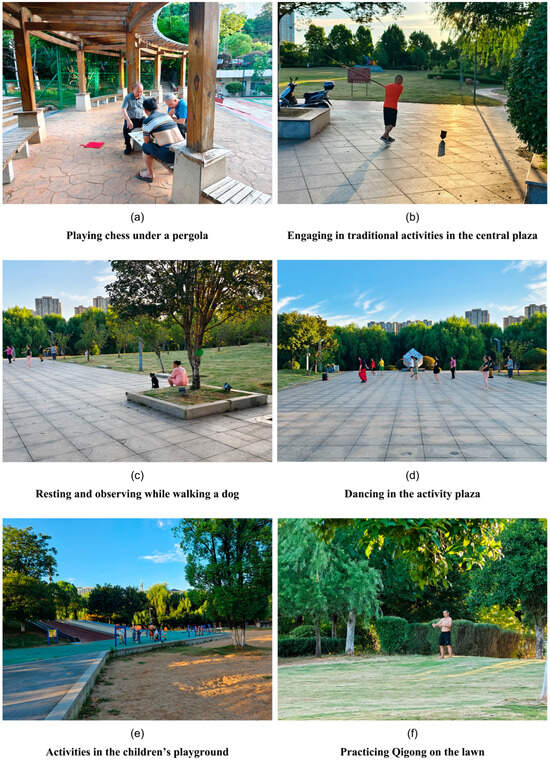
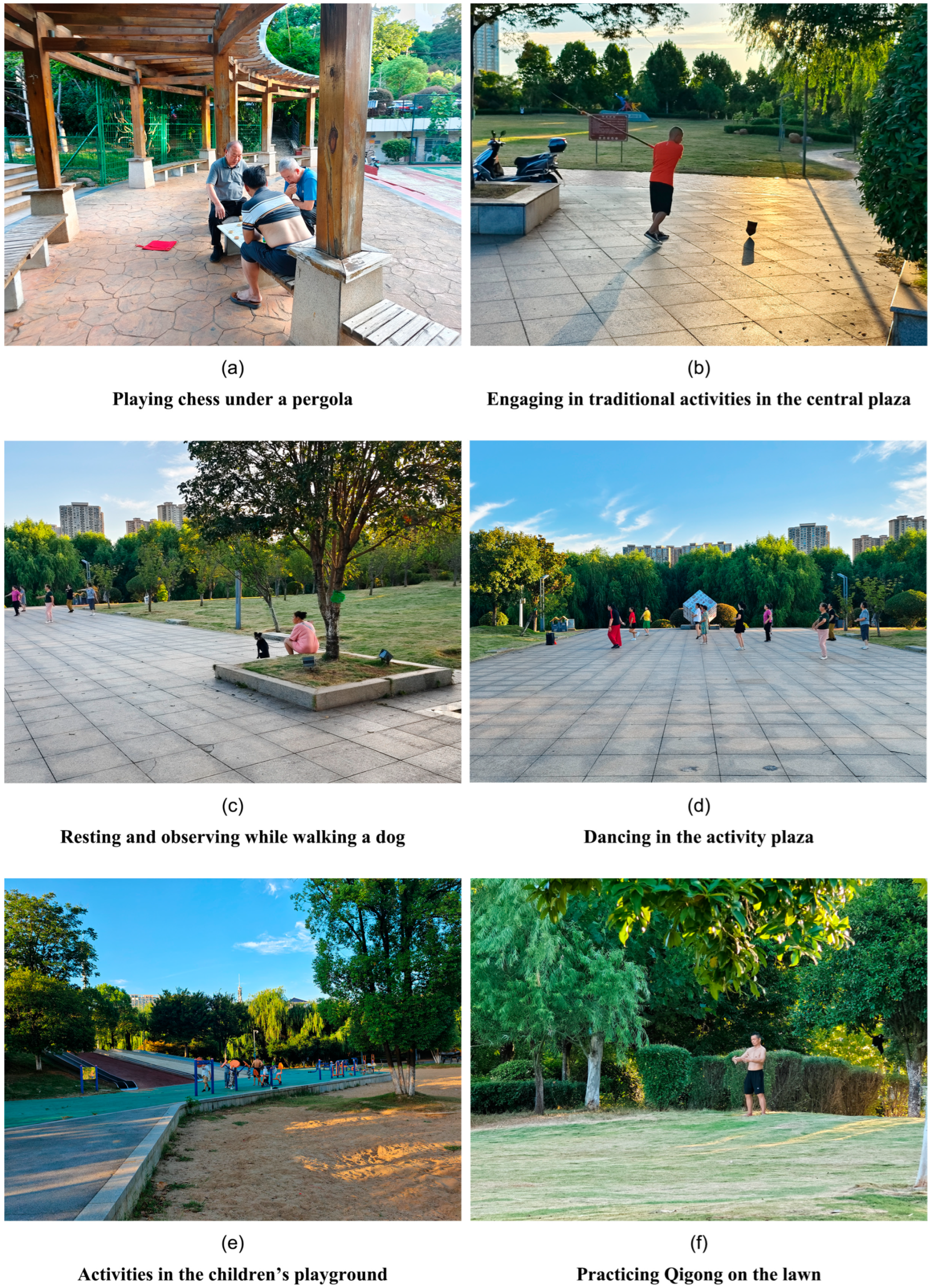
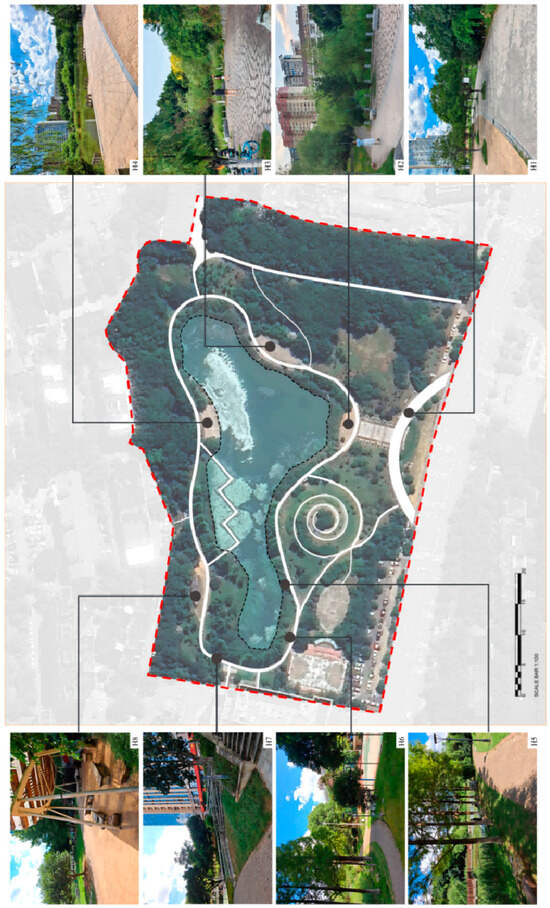
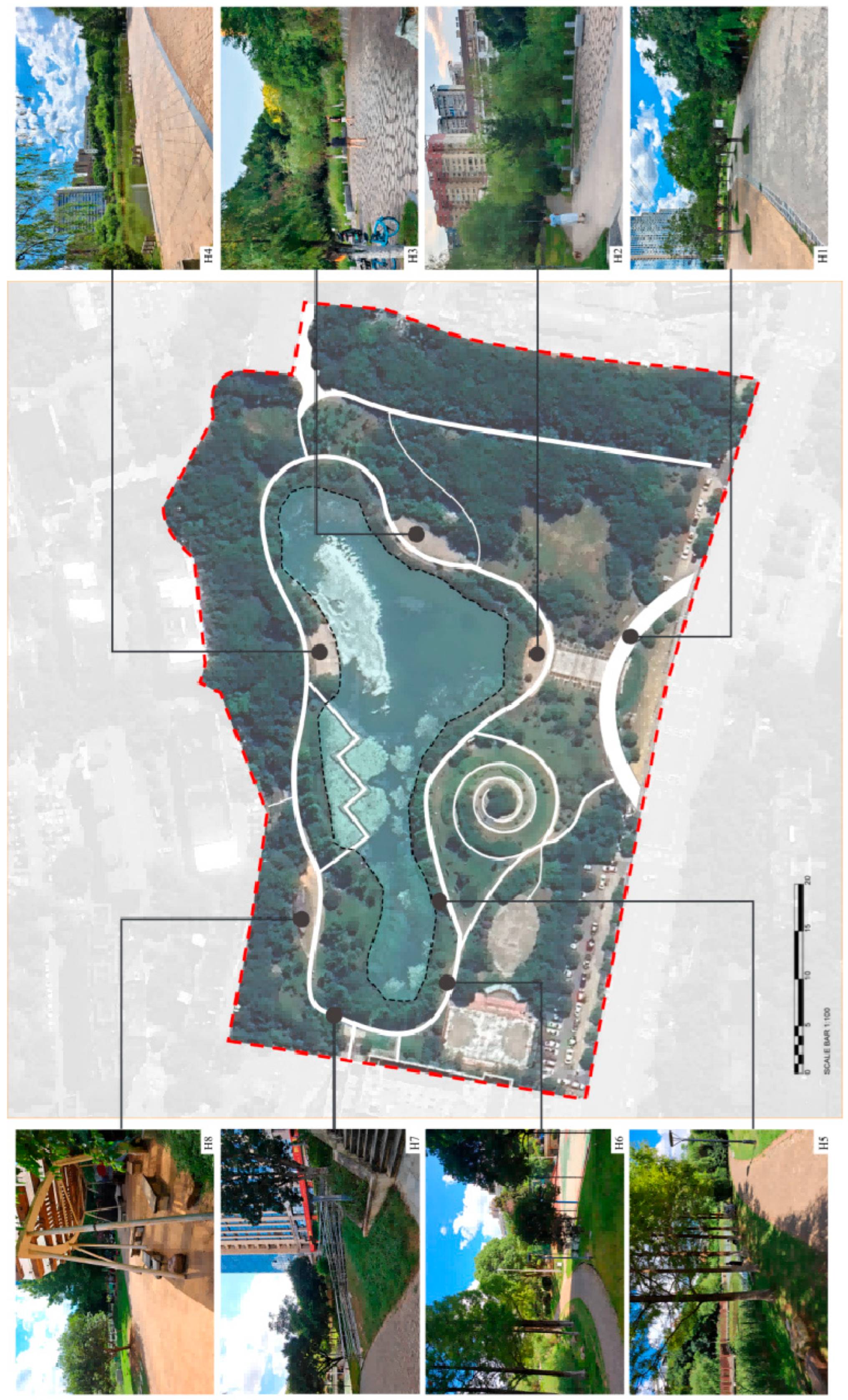
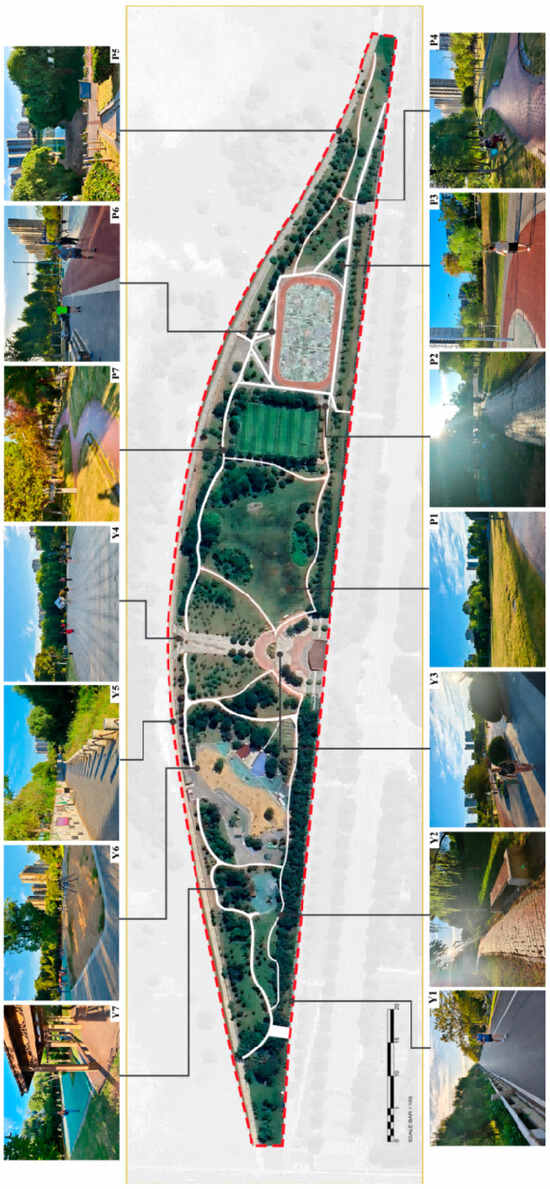
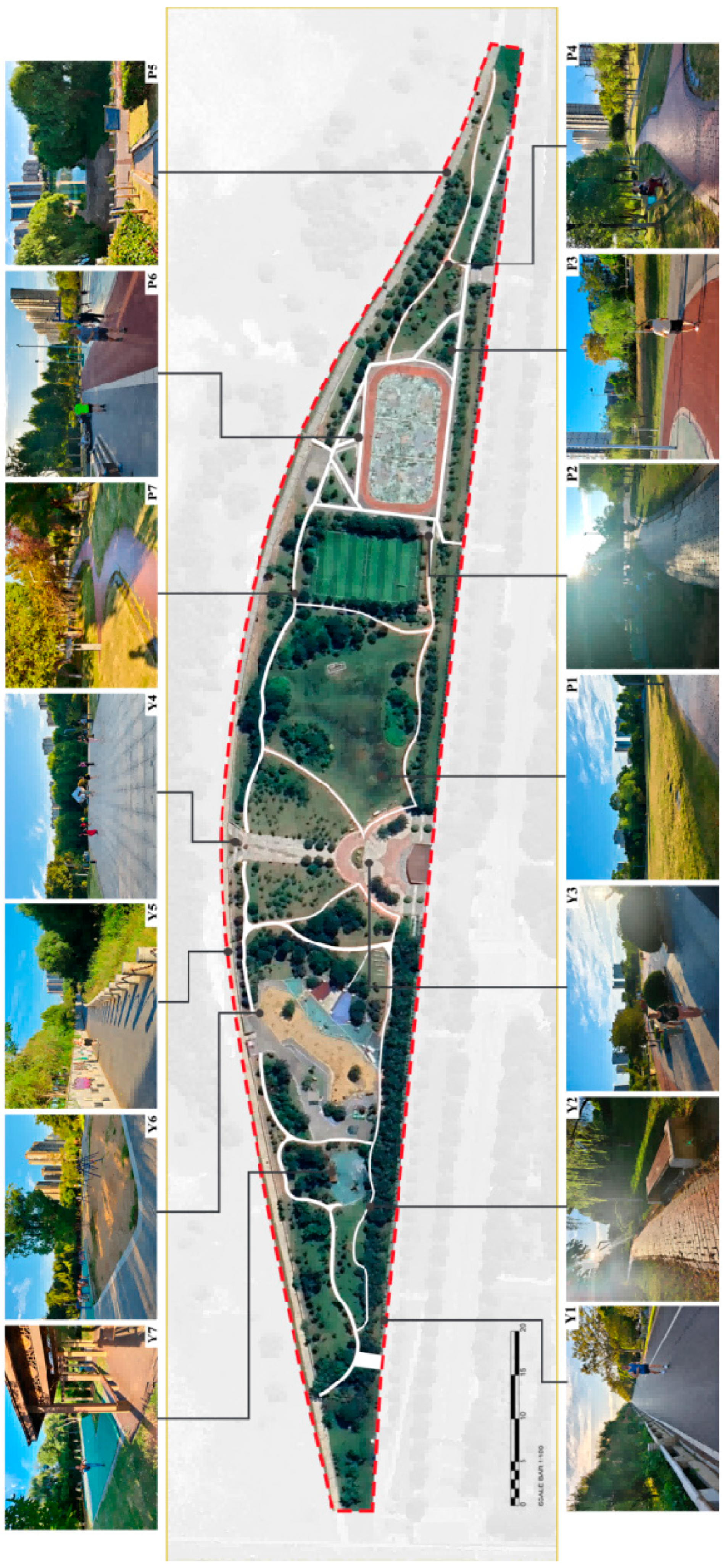
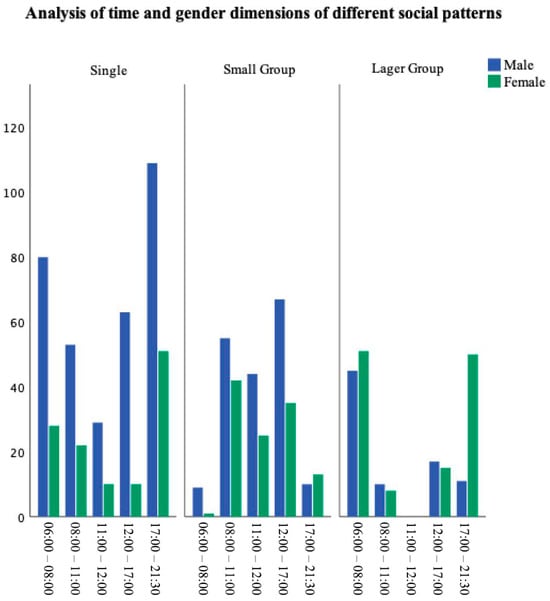
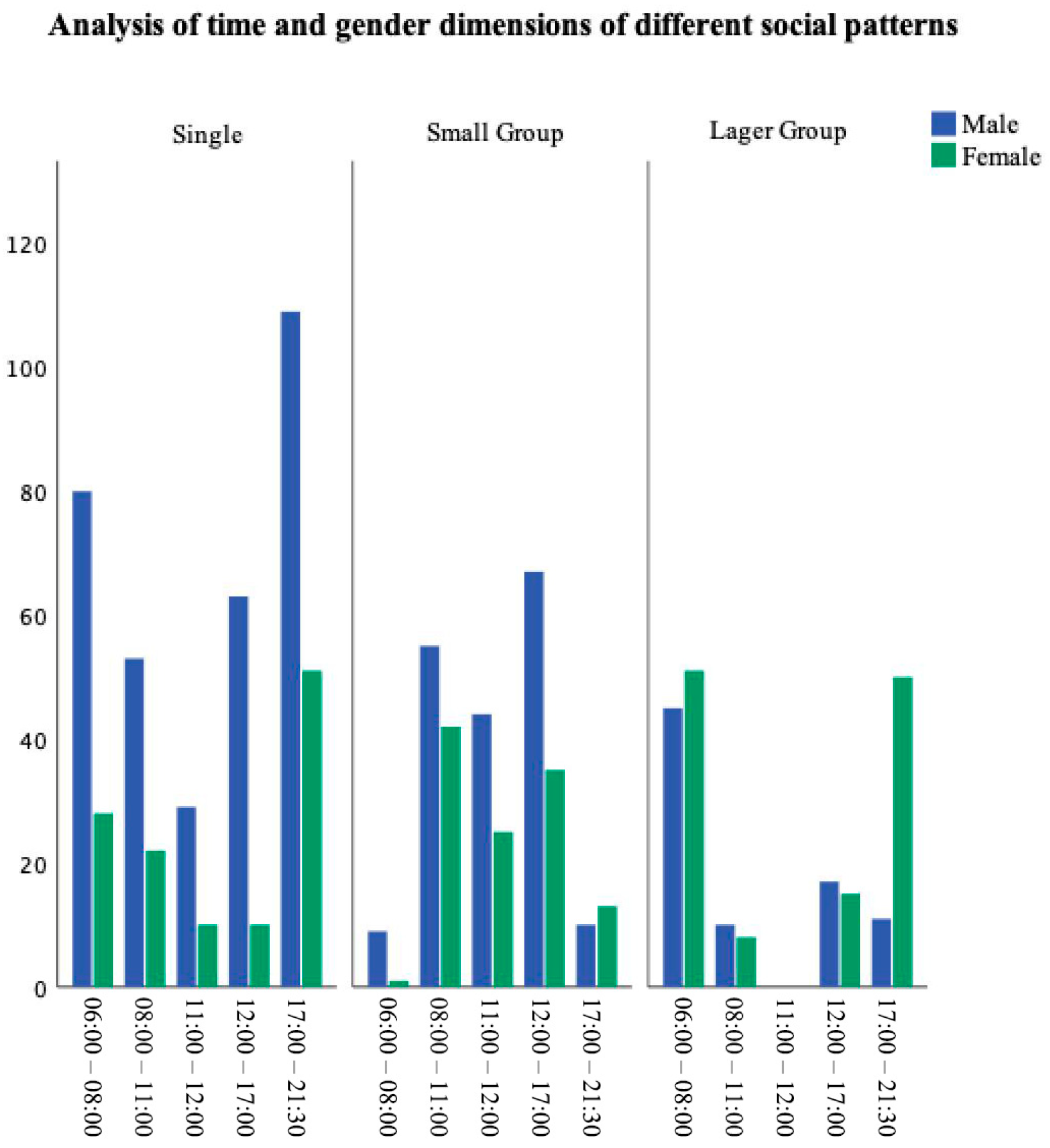
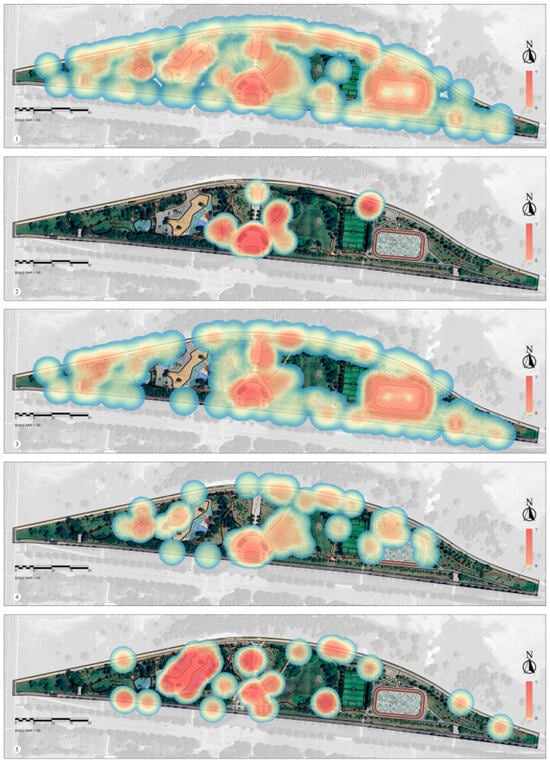
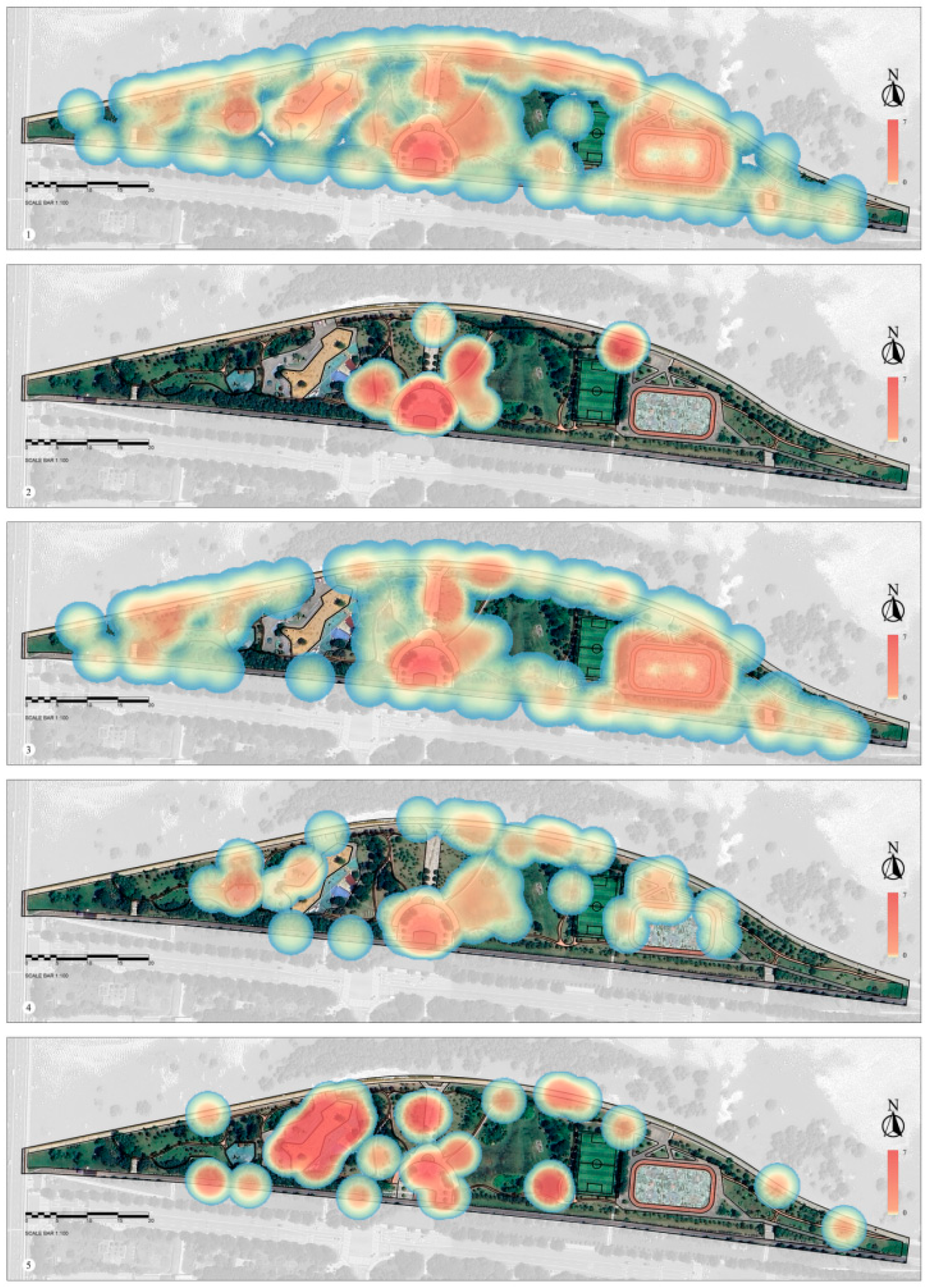
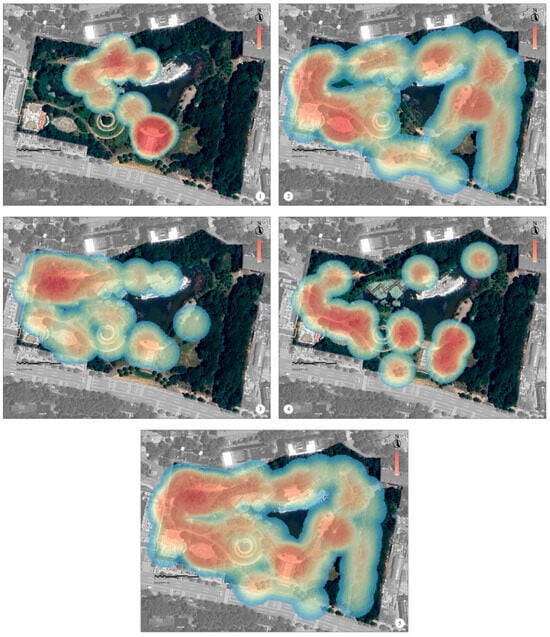
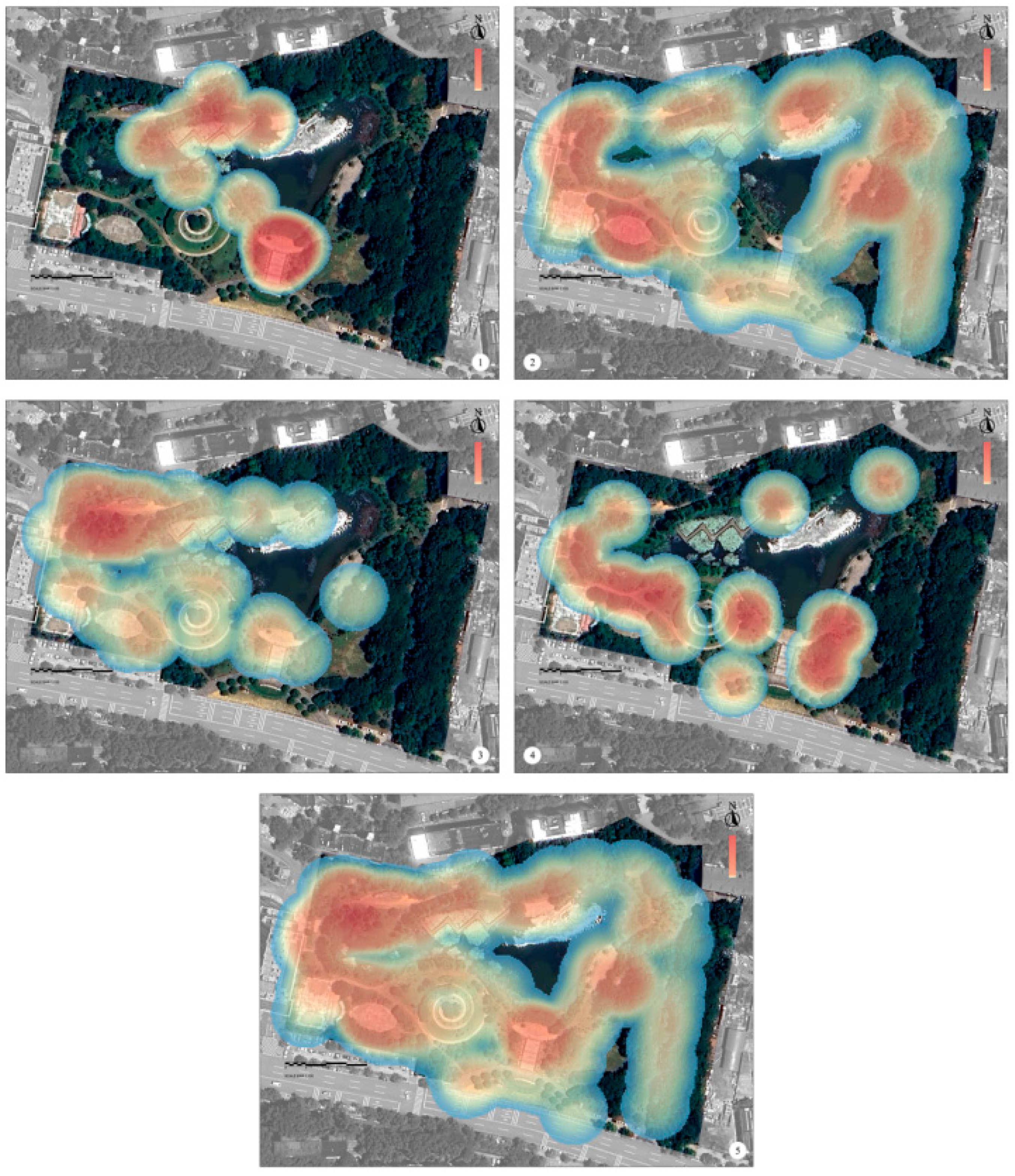

Disclaimer/Publisher’s Note: The statements, opinions and data contained in all publications are solely those of the individual author(s) and contributor(s) and not of MDPI and/or the editor(s). MDPI and/or the editor(s) disclaim responsibility for any injury to people or property resulting from any ideas, methods, instructions or products referred to in the content. |
© 2026 by the authors. Licensee MDPI, Basel, Switzerland. This article is an open access article distributed under the terms and conditions of the Creative Commons Attribution (CC BY) license.