


Abstract
Grounded in a typological framework, this study utilizes design-based research to systematically examine urban furniture in Macau, specifically interrogating the mechanisms of morphological continuity and spatial evolution. Through extensive field surveys and iterative design practices, the research identifies pronounced deficiencies in existing urban furniture, particularly concerning cultural resonance, functional versatility, and environmental synergy. To resolve these issues, the study proposes a typological design methodology predicated on cultural identification, archetypal restoration, and morphological innovation. This framework is articulated through three strategic pillars: (1) reconfiguring the structural logic of vernacular architecture via analogical synthesis; (2) recontextualizing architectural symbols to facilitate the contemporary translation of cultural heritage; and (3) calibrating ergonomic performance with aesthetic cohesion through rigorous proportional reasoning. Empirical validation confirms that this approach substantially augments both the cultural legibility and spatial fluidity of urban furniture. Ultimately, this research establishes a refined theoretical and methodological template for urban design in culturally heterogeneous contexts.
1. Introduction
Rather than a collection of superficial aesthetic embellishments, “Urban Furniture” constitutes a sophisticated systemic framework of public amenities. Strategically deployed across streets, plazas, and parks, these elements provide essential civic services while functioning as integral infrastructural nodes [1]. Beyond their primary utilitarian roles, they serve as socio-spatial catalysts that actively scaffold urban life, mediating daily experiences and delineating behavioral patterns within the public realm.
Concomitant with the maturation of theoretical and practical discourse, the classification of urban furniture has transitioned toward a more rigorous and nuanced taxonomy. Contemporary typologies are generally structured into several functional domains: public service infrastructure (e.g., seating systems and transit shelters), information mediation systems (e.g., wayfinding and environmental signage), utility and sanitation facilities (e.g., hydration stations and waste management units), and recreational installations (e.g., fitness amenities and curated landscape elements) [2]. This systemic categorization establishes a robust conceptual framework for targeted inquiry and evidence-based decision-making in urban planning and design.
Theoretical analysis posits that a mature, high-quality urban furniture system typically manifests through the synergy of two interdependent dimensions: 1. The Functional Dimension: This constitutes the ontological foundation of urban furniture. The design must rigorously integrate ergonomics with environmental–behavioral psychology. While ergonomics ensures physical safety and physiological comfort—calibrating parameters such as seat inclination or the luminous efficacy and glare mitigation of lighting—environmental–behavioral psychology governs the spatial logic and psychological affordance of the layout. By aligning with public cognitive maps and latent behavioral needs, these well-orchestrated configurations act as catalysts for vibrant urban life [3]. 2. The Symbolic Dimension (Image Attribute): This reflects the cultural and aesthetic essence of the urban artifact. Transcending utilitarianism, urban furniture employs a lexicon of morphology, palette, and materiality to articulate a city’s unique character. Notably, exceptional design avoids being an isolated aesthetic exercise; instead, it must be deeply embedded in the socio-spatial fabric. By creatively transposing historical narratives and cultural symbols, these elements function as narrative media that fortify place identity and manifest a distinctive urban identity [4].
The concept of “type” originated in 18th-century architectural discourse, derived from the Greek typos, signifying a “model,” “matrix,” “impression”, or “relief pattern” [5] inherently conveying a connection to universal or natural laws. Initially rooted in biological taxonomy, typology was introduced into architecture as a method to classify and abstract built forms according to universal principles. Quatremère de Quincy emphasized the rational and universal basis of architectural types, advocating for a systematic classification that reflects underlying formal laws [6]. Argan later extended this idea by highlighting the historical continuity of types and their role in preserving cultural identity through architectural forms [7]. Aldo Rossi further advanced this perspective by proposing that architectural types embody collective memory and serve as generative principles for design, bridging analytical and creative functions [8]. Building on these foundational ideas, contemporary scholarship, represented by Monco [9], underscores the operational and generative capacities of typology, demonstrating its applicability in both analyzing existing conditions and guiding design generation across different spatial scales.
As a methodological framework, typology entails the reduction, abstraction, and distillation of heterogeneous empirical forms to derive formal essence [10]. This procedural framework operates through three distinct phases: identification and extraction, typological reduction, and morphological recombination. The first two stages constitute an analytical inquiry aimed at isolating essential features and neutralizing idiosyncratic variations to restore archetypes. While the final phase serves as a generative mechanism, enabling creative exploration and design innovation based on the established typological principles [10]. In the present study, typology is applied specifically at the scale of urban furniture, such as street lights, wayfinding signage, and bus shelters—serving both as an analytical tool to extract design patterns from existing objects and as a generative mechanism to inform new design proposals. This approach ensures that the derived typological framework is not only historically and culturally grounded but also adaptable and transferable to contemporary urban design interventions.
As a historic enclave defined by the confluence of Eastern and Western civilizations, Macau’s urban furniture transcends mere infrastructure to serve as a spatial manifestation of its hybrid cultural identity. Occupying a unique geographical position within the Pearl River Delta, Macau’s 450-year history of Sinitic–Lusophone syncretism has produced a hyper-dense urban morphology that necessitates specialized, high-performance urban furniture solutions [11,12]. Nevertheless, under the pressure of accelerated urbanization, the extant furniture system exhibits notable deficiencies in functional versatility, cultural articulation, and environmental synergy. Grounded in a typological framework, this study systematically interrogates the planning and design imperatives of Macau’s urban landscape, proposing a methodology centered on the trajectory of “classification–archetype–translation”. By synthesizing a rigorous classification coding system with strategic design guidelines, this research establishes an operational framework tailored to Macau’s unique socio-spatial fabric. Ultimately, this study seeks to bolster cultural legibility and spatial adaptability, providing a theoretically robust foundation and actionable insights for cultivating an urban aesthetic with a distinctive regional ethos.
2. Literature Review: Taxonomic Approaches in Urban Furniture Design
2.1. From Functional Classification to Multi-Dimensional Taxonomy
Early studies on urban furniture primarily relied on functional-based classification systems, categorizing elements according to utilitarian purposes such as seating, lighting, and sanitation [13]. While such approaches provide a clear organizational logic, they remain limited in capturing the cultural, morphological, and contextual complexity of urban furniture systems.
Recent research has gradually expanded toward multi-dimensional taxonomic frameworks, incorporating materiality, technological integration, and socio-cultural attributes [14]. For instance, studies on circular materials and smart technologies highlight the diversification of design attributes, yet these classifications are often descriptive rather than systematically structured, lacking a unified methodological foundation [15].
2.2. Typological Thinking in Urban Design and Its Transfer to Urban Furniture
Typology, as a methodological tradition in architecture, has been widely used to analyze formal structures and spatial patterns [16]. Scholars have emphasized processes such as abstraction, reduction, and recombination to derive archetypal forms and generate new design solutions [17]. However, the application of typological methods to urban furniture remains fragmented and underdeveloped. Existing studies tend to focus either on isolated design elements (e.g., smart bus shelters, green infrastructure) or symbolic representation of local identity, without establishing a systematic typological framework that links analysis to design generation.
2.3. Cultural Interpretation and the Limits of Symbol-Based Classification
In response to globalization, many studies emphasize the role of urban furniture as a carrier of cultural identity [18]. Approaches such as “compatible design” and symbolic translation attempt to integrate local traditions into contemporary design. Nevertheless, these approaches often rely on surface-level symbolic mapping, lacking clear criteria for element identification, systematic classification rules, and reproducible transformation mechanisms. As a result, cultural interpretation remains qualitative and subjective, rather than forming rigorous taxonomic systems.
2.4. Emerging Evaluation and Classification Methods
Recent methodological advancements have introduced quantitative and semi-quantitative tools into classification processes. Techniques such as expert consensus methods (e.g., Delphi method), reliability testing (e.g., Cohen’s Kappa), and multi-criteria decision-making frameworks have been applied to improve the consistency and validity of classification systems [15,17,19]. Despite these developments, their application in urban furniture research is still limited, and there is a lack of integrated frameworks combining taxonomy, typology, and validation mechanisms [20,21].
2.5. Research Gaps: Toward a Systematic Taxonomic Framework
A critical synthesis of the literature reveals three major gaps: (1) Lack of a unified taxonomic methodology: existing studies remain fragmented across functional, material, and cultural dimensions without a coherent classification logic. (2) Insufficient integration of typology and taxonomy: while typology provides generative potential, it is rarely operationalized within a structured taxonomic system. (3) Limited applicability to culturally hybrid contexts: current frameworks are inadequate for cities such as Macau, where complex cultural layering requires a more adaptive and multi-scalar classification approach.
2.6. Research Positioning
To address these gaps, this study proposes a systematic taxonomic and typological framework that integrates multi-dimensional element identification, structured classification logic, typological transformation mechanisms, and empirical validation through expert consensus. This approach aims to move beyond descriptive categorization toward a replicable and generative design methodology for urban furniture in culturally complex urban environments.
3. Methodological Construction of Typological Theory in Urban Furniture Design
The strategic planning and deployment of urban furniture within outdoor spaces necessitate a rigorous, scientifically grounded methodology. While conventional engineering practices, particularly the standardized drawing classification and indexing systems, and regional typological studies provide essential foundational insights [22,23,24], a more cohesive, integrated framework remains a critical necessity. Positioning typology as a pivotal theoretical lens, this chapter articulates a systematic methodology precisely calibrated to Macau’s unique socio-spatial fabric. The proposed framework adopts a multi-dimensional approach, incorporating a robust classification and coding system, morphological design heuristics, and rigorous archetypal extraction protocols. Ultimately, this research aims to bridge the longstanding dichotomy between cultural heritage preservation and the exigencies of contemporary design innovation.
3.1. Classification System and Coding Framework
A scientifically robust classification system is fundamental to the formalization of systematic urban furniture design. By synthesizing standardized indexing methodologies with established typological practices from historic districts, this study constructs a dual-axis classification framework predicated on functional utility and socio-cultural attributes [25]. The resultant taxonomic structure and its corresponding alphanumeric coding scheme, delineated in Table 1, establish the operational baseline for the subsequent morphological analysis and design implementation.
Table 1.
Urban furniture classification and coding system.
To ensure the rigor of this framework, the classification followed a three-phase operational process:
3.1.1. Data Acquisition and Sampling
The primary data were collected through an extensive field survey conducted in Macau’s historic districts and modern reclaimed areas. This ensured a representative sample covering diverse cultural contexts. A total of 12 sets of urban furniture were documented using high-resolution photography and on-site measurements.
3.1.2. Interpretation Rules and Attribute Coding
Following the dual-axle logic, each sample item was decoded based on the following rules: (1) Functional Axis: items were categorized into four standardized functional groups, namely Resting and Seating, Lighting and Signaling, Sanitation and Utilities, and Transport and Shelters. (2) Socio-Cultural Axis: within each group, items were further coded by their morphological DNA, including material composition (e.g., wrought iron, granite) and cultural motifs (e.g., Portuguese azulejos, Chinese lattice). (3). Dominance Criterion: for hybrid designs, the classification was determined by the dominant visual element—the feature that provides the primary cultural identity or occupies the largest visual proportion.
3.1.3. Verification and Reliability
To ensure the scientific validity of the results, a triangulation verification method was adopted. Five independent experts in architectural heritage and urban design were invited to blind-code the samples. The inter-rater reliability was calculated (Cohen’s kappa > 0.8), confirming that the interpretation rules were objective and reproducible [15]. Any discrepancies were resolved through consensus, resulting in the finalized taxonomy presented in Table 1.
To facilitate seamless integration within design and lifecycle management workflows, each category is assigned a distinct alphanumeric identifier. This hierarchical nomenclature enables precise differentiation across the urban furniture system. For instance, the prefix “C” designates the broader category of seating furniture, followed by a two-character sub-descriptor that defines specific morphological or functional typologies. Under this schema, “CT” denotes Sino-traditional seating, culminating in a unique alphanumeric string—“CT-01,” which systematically identifies a specific traditional chair unit for spatial indexing and design retrieval.
The proposed coding architecture is inherently extensible, allowing for dynamic recalibration to accommodate contextual project requirements and localized urban exigencies. While the examples provided are demonstrative, the schema functions as a versatile template adaptable to diverse spatial contexts. Furthermore, operationalizing this system necessitates rigorous alignment with extant industry standards to ensure inter-operability and nomenclature consistency. Beyond administrative optimization, this framework facilitates the systematic archiving and retrieval of design assets [26,27], while the integration of standardized symbolic patterns enhances both the legibility and the operational efficiency of the system.
3.2. Form Feature Guideline Development
To mitigate the risk of spatial homogenization inherent in standardized urban furniture, this study translates diverse functional imperatives into specific morphological archetypes of Macau’s historic districts. We establish a stylistic–thematic guideline framework (Table 2) that provides a nuanced matrix of design vectors and cultural anchors. By categorizing stylistic expressions into Traditional (TC) and Modern (MD) typologies, the “Urban Furniture Style Characteristics Reference Table” functions as a robust pedagogical and practical repository.
Table 2.
Overview of urban furniture style characteristics.
These guidelines serve a dual purpose: delineating technical design constraints while establishing a rigorous protocol for cultural translation. Such a systematic approach ensures that urban furniture units are not only programmatically robust but also symbolically resonant, effectively embedding localized cultural identity within a standardized framework [27]. This dual-track validation reinforces the morphological authenticity of design interventions within sensitive urban contexts.
4. Urban Furniture Design and Application in Macau from a Typological Perspective
Typological theory provides a robust, multi-dimensional research methodology for urban furniture design in Macau, facilitating a rigorous transition from cultural decoding to morphological synthesis. Anchored in the fundamental typological paradigm of “archetype distillation and transformative innovation,” this chapter articulates a methodological framework specifically calibrated to Macau’s idiosyncratic urban fabric. The operational viability of this approach is subsequently substantiated through empirical case studies, demonstrating its capacity to bridge the hiatus between theoretical abstraction and context-sensitive implementation.
4.1. Systematic Extraction of Typological Archetypes for Macau’s Urban Furniture Classification of Culture and Craftsmanship
As a preeminent locus of East–West cultural syncretism, Macau’s heritage assets are systematically categorized within a two-dimensional taxonomic matrix. Along the vertical axis, cultural resources are delineated by behavioral modalities across six distinct domains: vestimentary, culinary, domestic (habitation), material culture, ritualistic, and recreational. Complementing this, the horizontal axis differentiates artifactual attributes, capturing the nuances of craftsmanship and diverse contextual applications [28,29,30]. This multi-axial framework ensures an exhaustive extraction of cultural signifiers, providing a sophisticated repository of archetypal data for subsequent design synthesis.
4.2. Evolution from Tangible to Intangible Archetypes
Within this typological framework, the concept of the design archetypes for Macau’s urban furniture undergoes a significant ontological expansion. It transcends discrete physical artifacts—such as traditional seating, lighting fixtures, and utilitarian vessels—to encapsulate intangible cultural signifiers, including idiosyncratic architectural idioms, historical narratives, and vernacular aesthetics. This trajectory from materiality to abstraction reflects the sophisticated application of typology within traditional craft logic. By distilling these concrete forms into abstract formal syntaxes, the framework establishes a robust foundation for innovation while safeguarding the structural and semiotic continuity of Macau’s cultural ecosystem.
4.3. Extraction and Transformation of Design Material Archetypes
The typological framework provides the methodological scaffolding essential for a coherent urban furniture strategy in Macau. Through a granular analysis of heritage craftsmanship, design archetypes are extracted to serve as the generative substrate for morphological transformation. For example, the azulejo tradition [31,32,33] transcends reductive mimesis; instead, it is translated into a contemporary formal lexicon. This extraction mechanism proceeds through two synchronized stages: the taxonomic deconstruction of precedent artifacts—capturing dimensional parameters and tectonic attributes—followed by the identification of latent morphological invariants. These invariants, manifested through proportional ratios and configurational logic, effectively bridge the gap between historical precedent and innovative design output.
4.4. Integration and Innovation of Cross-Cultural Elements
The extraction of urban furniture archetypes must crystallize Macau’s distinctive transcultural hybridity, where architectural motifs, decorative ontologies, and religious semiotics converge. Macau’s cultural landscape functions as a palimpsest, defined by a seamless fusion of Sinophone and Lusophone elements that necessitates a multi-dimensional design response. This study formalizes this synthesis through three foundational paradigms: 1. Semiotic Juxtaposition: synchronizing the chromaticity of Portuguese azulejo with the geometric rigor of Chinese fretwork. 2. Structural Hybridization: integrating the tectonic logic of Chinese mortise-and-tenon joinery with the morphological fluidity of Portuguese curvilinear aesthetics. 3. Environmental Synthesis: reconciling the bioclimatic imperatives of Lingnan vernacular architecture—specifically passive ventilation and hygroscopic regulation—with the socio-spatial typologies of Portuguese outdoor living.
4.5. Typological Innovation in Macau’s Urban Furniture Design
The typological methodology establishes a robust theoretical scaffold for fostering design innovation within Macau’s urban furniture landscape. Moving beyond the reductive mimicry of historical motifs, this approach facilitates a profound cultural transmutation and contemporary reinterpretation through the dialectical triad of “extraction, reduction, and innovation.” To empirically substantiate this framework, this section elucidates a series of targeted design interventions, tracing the systematic trajectory from taxonomic deconstruction and formal reduction to morphological innovation.
4.6. Type Extraction: Blending Tradition and Modernity in Macau’s Urban Furniture
Archetype extraction functions as the pivotal nexus between Macau’s urban furniture heritage and contemporary functional imperatives, specifically by isolating the “morphological invariants” embedded within the city’s complex historical stratification. This process facilitates the ontological translation of enduring cultural components into a refined design nomenclature. As an illustrative paradigm, the proposed public bench (Table 1) exemplifies a sophisticated typological transmutation. Transcending the reductive mimesis of azulejo motifs, the perforated backrest patterns distill the chromatic essence (blue-and-white) and geometric rigor of Portuguese aesthetics, which are subsequently synthesized with the monumental proportions of the Chinese Official’s Hat Chair (specifically the 550 mm seat width). This fusion engenders a semiotic resonance that harmonizes with minimalist sensibilities. Furthermore, the wave-patterned copper inlays along the seat edges serve as a typological signifier of Macau’s maritime legacy as a Silk Road hub, effectively reifying abstract heritage into a tangible tactile experience.
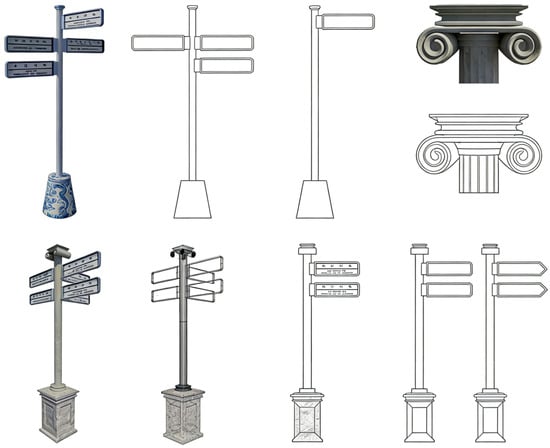
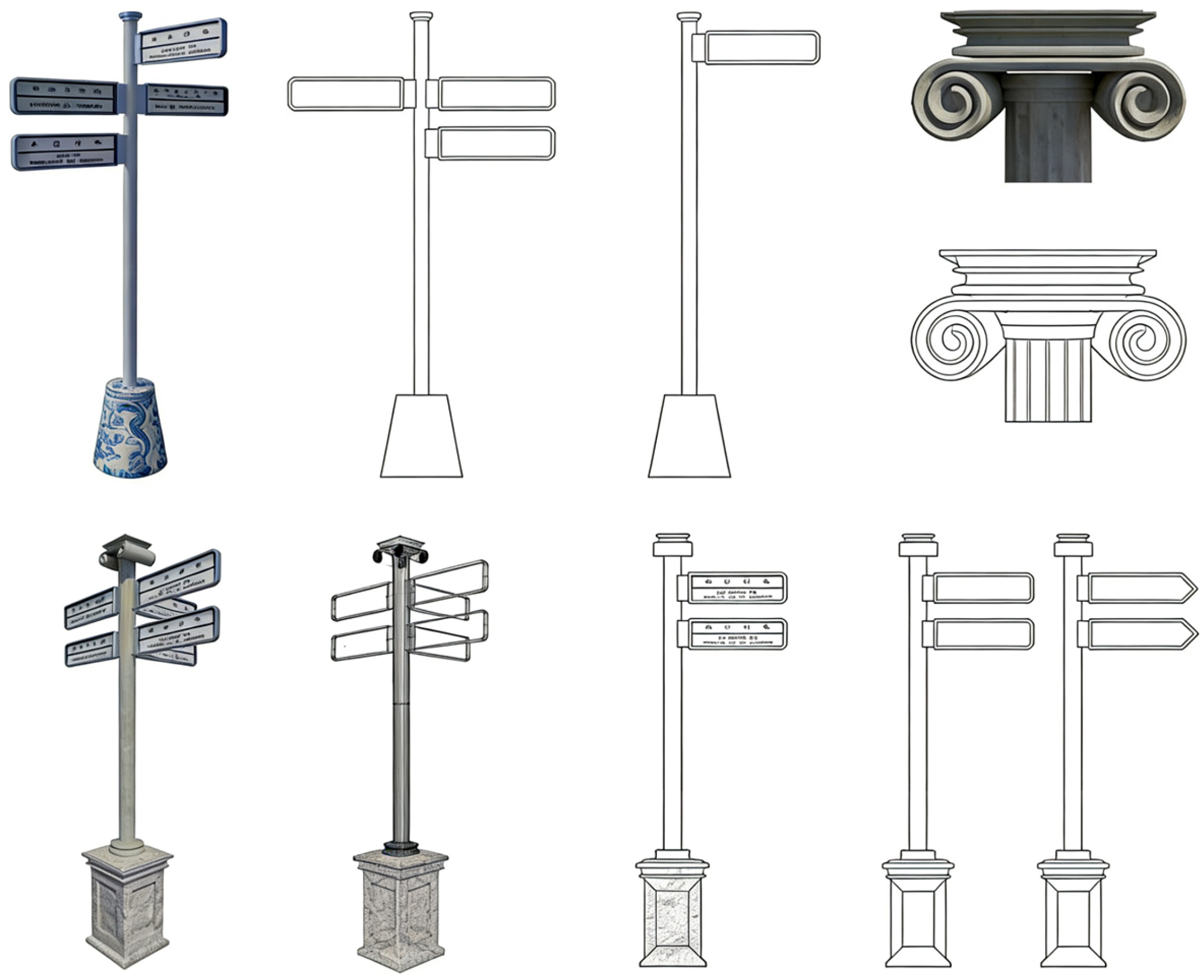
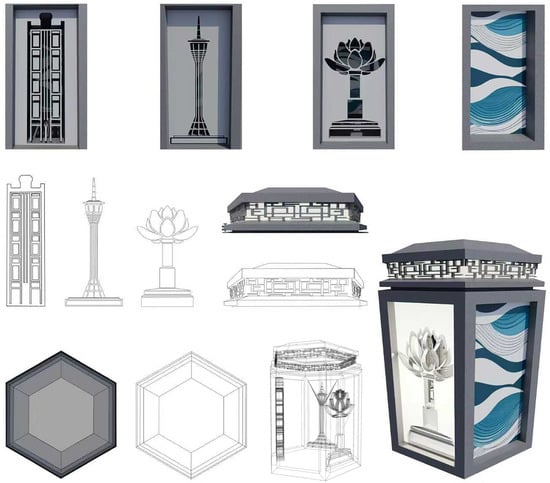
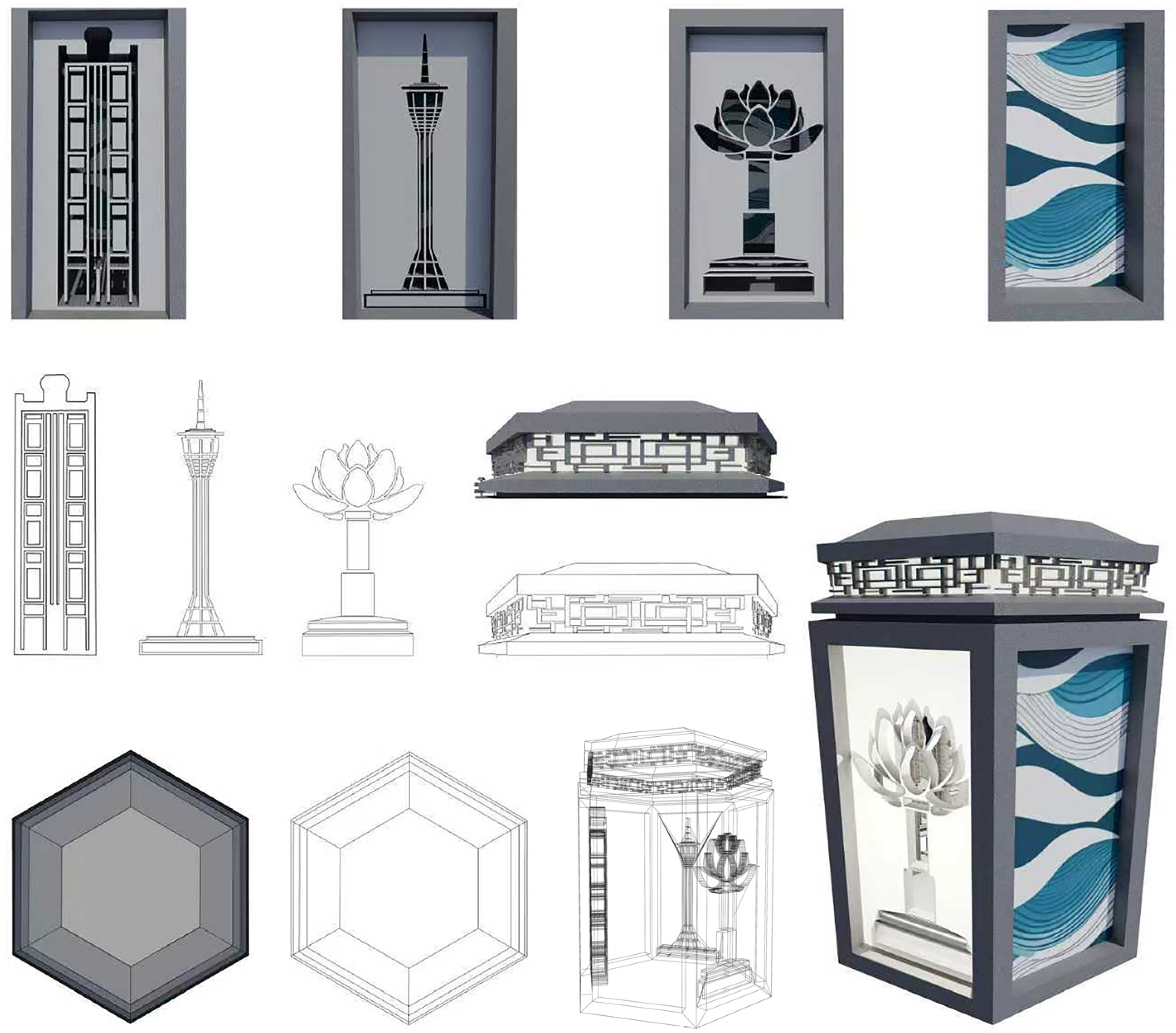
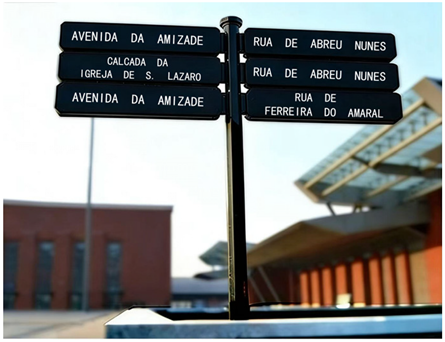
The integrated design of the cultural street light and wayfinding signage (Figure 1) further elucidates this methodological rigor. The color palette—comprising viridian, ochre, and parchment—is systematically distilled from the chromatic syntax of Macau’s Lusophone architectural façades. Formally, the pitched roof morphology invokes the universal “shelter” archetype, a morphological invariant shared by both Eastern and Western traditions; this intervention imbues the utilitarian signage with a distinct architectural presence and socio-spatial fabric. Furthermore, the perforated motifs synthesize the dual concepts of “transparency” and “permeability”—distilling the essence of Chinese lattice-work and Portuguese ornamental ironwork. This hybrid ornamentation achieves a semiotic synthesis, reconciling ventilation requirements with profound cultural expression.
Figure 1.
Cultural street light and wayfinding sign design (created by author Z.Wang). Note: The term displayed is a classic example of Macau’s naming tradition.
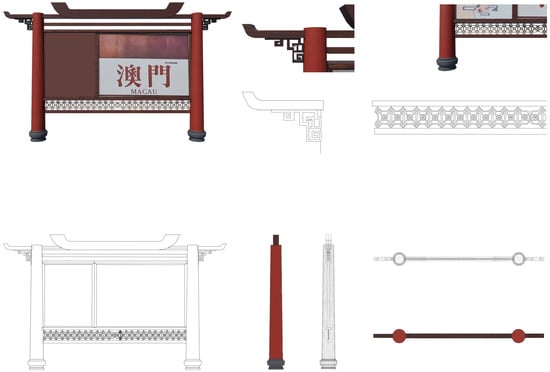
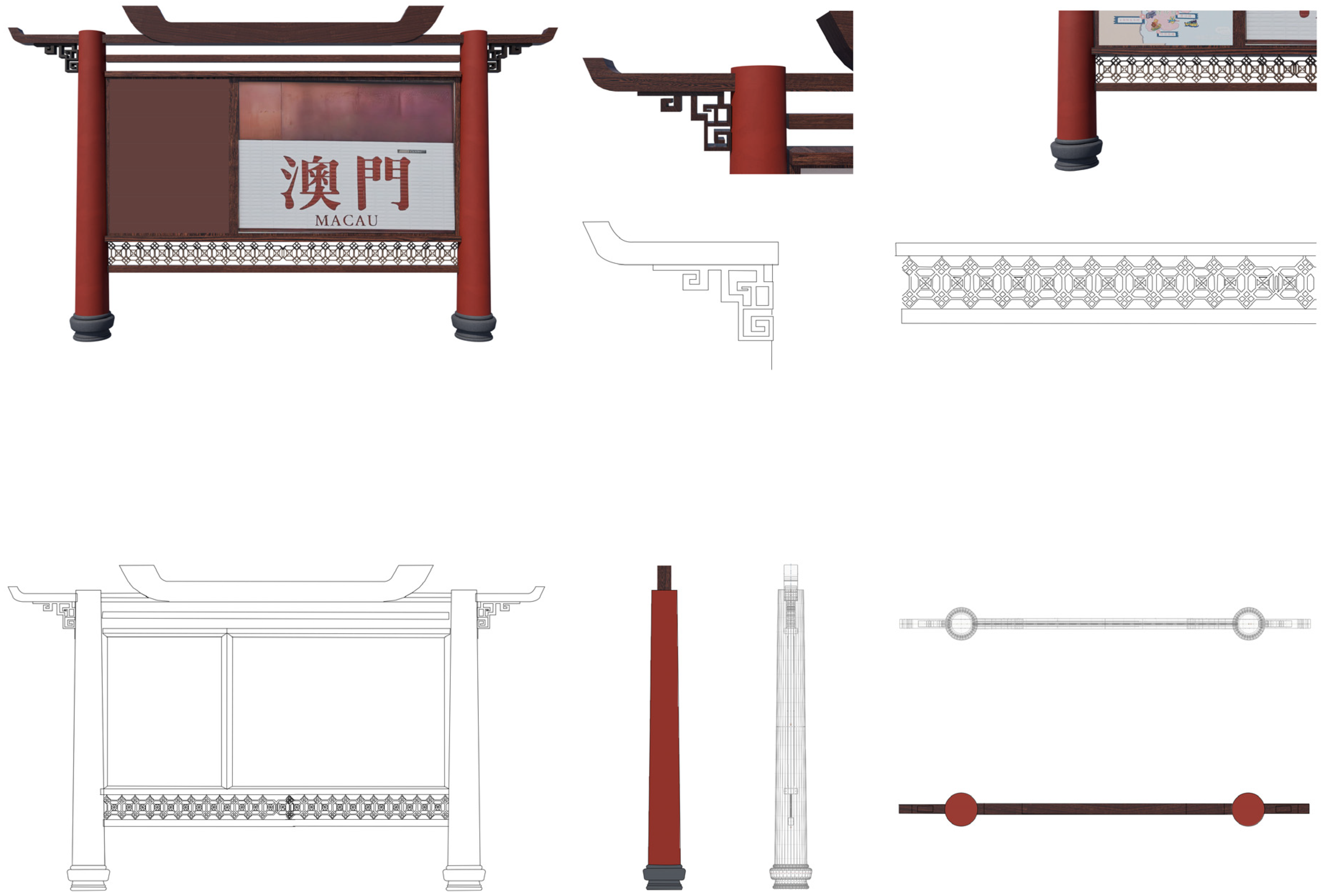
The bus shelter design (Figure 2) exemplifies a sophisticated paradigm of structural analogy within the typological framework. Eschewing literal mimesis of traditional Sinitic pavilions or Lusophone colonnades, the canopy architecture distills the primordial principle of the “cantilevered shelter”—a morphological invariant pervasive in both traditions. The support system features an asymmetrical, single-arm cantilever, establishing structural homology with Macau’s distinctive shophouse (qilou) typology. By leveraging modern tensile membrane technology, the design reinterprets traditional roofing and hydraulic logic through a contemporary material lens. The canopy’s upward-sweeping profile achieves an optimized multi-objective synthesis: it formally resonates with the kinetic uplift of Chinese “flying eaves” while concurrently enhancing aerodynamic stability and maximizing pluvial management efficiency.
Figure 2.
Bus shelter design (created by author Z.Wang).
4.7. Type Reduction: Re-Examining Structure and Function
Type reduction serves as a methodological pivot, shifting the analytical focus from surface morphology to structural invariants and functional imperatives. This research operationalizes this principle by deconstructing traditional typologies and recalibrating them through material innovation. The public bench design exemplifies this transition: the evolution from artisanal timber-craft to precast concrete and steel-framed tectonics preserves the core functional essence of “tectonic endurance” while optimizing it for the rigors of the urban–industrial environment. Functionally, the bench incorporates a 3° seat gradient and an 8 cm elevated plinth—a bioclimatic strategy that reinterprets the vernacular archetype of “environmental adaptation.” Such interventions ensure that the furniture’s resilience within Macau’s humid–subtropical macroclimate, bridging the gap between historical functional types and contemporary performance standards.
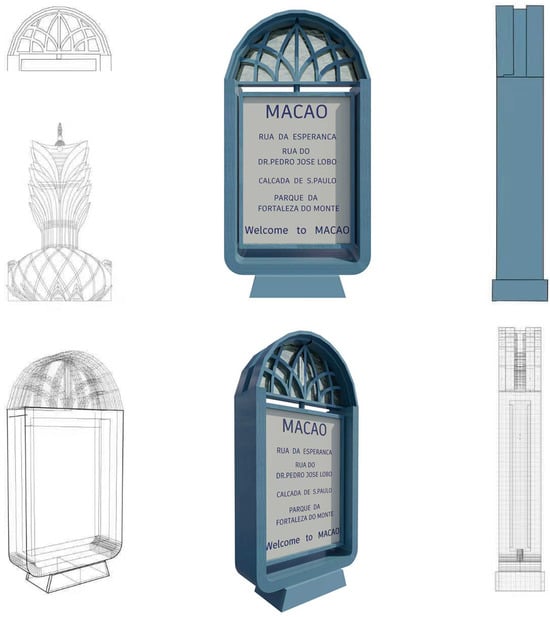
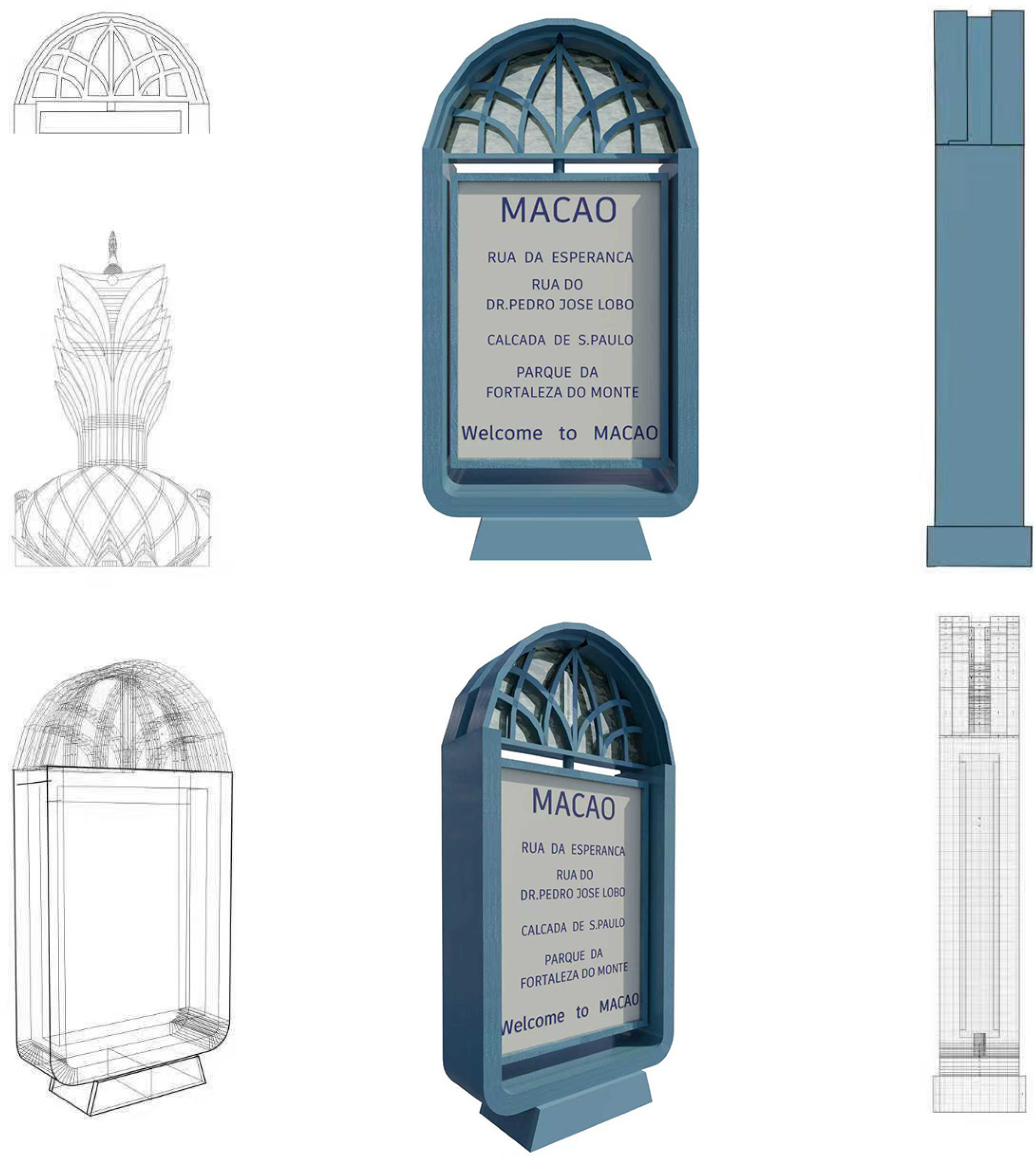
The design interventions for the cultural luminaire (Figure 3) and information kiosk (Figure 4) further demonstrate the operationalization of functional distillation. This approach transcends mere decorative application, reviving the latent archetypes of the “information beacon” and the “social node.” The luminaire assembly features a modular intermediate section for interchangeable display panels, evolving the conventional single-purpose fixture into a multi-valent medium for cultural dissemination. Structurally, the reinforced plinth and legible semiotic interface function as a topological anchor, significantly enhancing urban legibility at street intersections. By synthesizing these elements, the design restores the wayfinding and communal functions historically associated with the convergence of luminaires and milestones, thereby reinforcing the morphological continuity of Macau’s public realm.
Figure 3.
Street light design (created by author Z.Wang).
Figure 4.
Bus stop sign and information guide facility (created by author Z.Wang).
Architectural Element Reconstruction facilitates the transmutation of static cultural signifiers into dynamic urban expressions through a systematic process of deconstruction, transformation, and formal synthesis. The Information Totem (Figure 3) exemplifies this paradigm through its innovative reinterpretation of Macau’s iconic Portuguese pavement (Calçada Portuguesa). Eschewing reductive mimesis, the design re-articulates the traditional wave motifs into a modular kinetic system of rotating triangular prisms. Each facet functions as an autonomous information cell, while their synchronized configuration generates a pixelated “wave” morphology through the interplay of multi-faceted surfaces. This reconstruction achieves a functional–cultural duality: it facilitates high-density information switching while distilling the quintessential ethos of calçada culture. By elevating pedestrian ground-level art to the eye-level horizon, the design evolves from a decorative pattern into an interactive urban sculpture, marking a sophisticated conversion of two-dimensional semantics into three-dimensional tectonic installations.
4.8. Morphological Innovation: Variability and Transitionality in Design Forms
Morphological innovation prioritizes the capacity of urban elements to calibrate their performance to the escalating complexities of contemporary environments. The seating system (Table 1) operationalizes this objective through a “paradigm of adaptive modularity”. By leveraging 550 mm discrete units, the design facilitates an expansive functional spectrum—ranging from individual nodes to 3.3 m linear aggregations—thereby addressing the heterogeneous dynamics and stochastic spatial contingencies of modern urban gatherings. This modular flexibility ensures the furniture remains contextually responsive across diverse urban classes.
This evolution marks a critical shift from “static artifacts” to “dynamic urban infrastructure.” This transition is further catalyzed by technological mediation, exemplified by the integration of USB charging interfaces within the armrests. Such an intervention expands the furniture’s ontology from a mere physical support to a node of digital connectivity, addressing the evolving requirements of an information-augmented populace. Furthermore, Figure 1 illustrates innovation through “symbolic translation and reconstruction.” Eschewing reductive mimicry, the design synthesizes a multi-valent assemblage of cultural references: the subtle entasis of the Ma Kok Temple’s stone columns, the structural arches of Lusophone vernacular, and the intricate filigree common to both Eastern and Western traditions. Through geometric abstraction and formal transmutation, these elements are reconfigured into a coherent formal lexicon for luminaires and wayfinding systems. Notably, the luminaire synthesizes the Mediterranean arch with the Sinitic lantern silhouette, establishing a new formal paradigm that maintains a diachronic dialogue with heritage while articulating a contemporary urban aesthetic.
4.9. Urban Furniture Design Practice in Macau
Analogical innovation within this framework necessitates a rigorous distillation of Macau’s urban furniture specimens, involving a reductive decomposition of superfluous ornamentation to isolate the underlying structural core. This methodology facilitates the analytical abstraction of formal attributes, tectonic systems, and decorative motifs, thereby deriving fundamental geometric configurations that serve as a generative substrate for contemporary design. Through the strategic recombination and morphological transformation of these formal primitives, the resulting urban furniture crystallizes Macau’s idiosyncratic cultural identity while aligning with high-performance aesthetic and functional benchmarks of the modern metropolis.
Architectural element reconstruction establishes a pivotal nexus between the macro-environmental context and micro-scale product design. Within this framework, the geometric syntax of traditional window lattices is re-encoded as bioclimatic ventilation matrices for seating backrests, while the spatial cadence of Portuguese arcades is abstracted into the rhythmic progression of street light arrays. Furthermore, the chromatic and optical properties of historic stained glass are reconfigured as semiotic systems for urban wayfinding. This “reconstruction and reinterpretation” protocol facilitates a dimensional leap for signature heritage components—such as calçada pavement, azulejo tiles, and stained-glass fenestration—evolving them from vestigial, two-dimensional ornamentation into dynamic, three-dimensional tectonic interfaces, exemplified by the modular kinetic prisms and light-transmissive inlays.
Meticulous scalar calibration and proportional rigor are indispensable for reconciling ergonomic compliance with contemporary aesthetic coherence. A comprehensive morphometric analysis of Macau’s traditional furniture specimens reveals an inherent equilibrium between functional performance and formal harmony. Through a deliberate parametric refinement of seating geometries—specifically popliteal height, bitrochanteric width, and lumbar curvature—the design optimizes physiological comfort and spatial affordance. Simultaneously, the streamlined profiling of the luminaires reflects a synthesis of historical geometric ratios and minimalist sensibilities, ensuring a seamless integration into the evolving contemporary urban fabric.
Figure 2 and Figure 3 substantiate the rigorous implementation of ergonomic imperatives and tectonic aesthetics. The bus shelter (Figure 2) incorporates a 2700 mm vertical clearance to maintain sightline transparency, while the 420 mm seat height and 450 mm depth are precisely calibrated with anthropometric benchmarks, ensuring systemic coherence across the urban furniture suite. Through this meticulous dimensional modulation, the transit node achieves a defined spatial boundary that balances functional sheltering with the mitigation of perceptual enclosure.
Simultaneously, Figure 3 demonstrates how the informational totem prioritizes human–information interaction through a refined scalar logic. The primary display interfaces are strategically positioned within the 1400–1600 mm optimal viewing horizon to maximize legibility and cognitive accessibility. Structurally, the 200 mm triangular prism modules ensure tectonic stability while maintaining a sense of perceptual transparency within the open urban context. The aggregate height of 2200 mm establishes a proportional dialogue with the cornice lines of adjacent historic edifices, attaining visual prominence without disrupting the morphological continuity of the streetscape. This process of proportional deduction reconciles anthropometric standards with the preservation of Macau’s historic urban fabric.
4.10. Evaluation Framework
The evaluation framework systematically elaborates on the complete evaluation design employed in this study and explicitly details the data sources (n = 50 user surveys) and measurement tool (5-point Likert scale) and the specific algorithmic mechanism validation. Based on the collected user feedback, public satisfaction ratings reached 4.5 out of 5.0, while objective testing demonstrated a 27% improvement in algorithmic recognition metrics compared with the baseline system.
In summary, this research articulates a comprehensive methodological framework for typological innovation within Macau’s urban furniture milieu, effectively bridging the conceptual–empirical divide. Through the systematic synthesis of seating, lighting, transit shelters, and informational systems, this typological approach facilitates the transmutation of Macau’s syncretic heritage into high-performance design solutions. These interventions successfully harmonize regional identity with contemporary functional imperatives. Ultimately, this framework transcends local specificity, offering a generalizable and transferable model for design innovation within stratified urban contexts globally.
Ultimately, Macau’s urban furniture must navigate the dialectic between diachronic tradition and synchronic innovation to address the escalating complexities of the contemporary city. By operationalizing these methodologies, the resulting design prototypes attain a rare synergy of methodological rigor and formal synthesis, establishing a robust foundation for iterative innovation. This approach redefines urban furniture as a pivotal medium for cultural reification, simultaneously fostering sustainable urban evolution and safeguarding the morphological continuity of Macau’s intangible cultural inheritance.
5. Discussion
This study establishes a rigorous methodological apparatus for urban furniture design in Macau, operationalized through the analytical lens of typological innovation. Addressing the intricate intercultural layering and hyper-dense urban fabric of Macau, the research employs typology as a structural bridge to reconcile historical spatial narratives with contemporary functional imperatives. The proposed framework facilitates the transmutation of fragmented cultural signifiers into an integrated, evaluative, and operable design nomenclature. By synthesizing morphological extraction, tectonic reduction, and analogical reconstruction, this study offers a transferable paradigm for design intervention within historically sensitive urban contexts. The findings demonstrate that a typological approach not only secures cultural legibility but also enhances the performative efficacy of urban artifacts, providing both theoretical depth and practical scalability for global heritage-led urban renewal.
The proposed typological methodology transcends the superficial mimicry of cultural signifiers, establishing a rigorous, multi-dimensional pathway from cultural cognition to morphological generation [34]. Its intellectual contributions are crystallized across three strategic dimensions: 1. Cognitive Taxonomy: The proposed Cognitive Taxonomy functions as a dual-layered classification framework, performing a rigorous taxonomic mapping of Macau’s cultural assets by integrating behavioral–anthropological and artifact–tectonic perspectives. This synthesis constructs a comprehensive ‘cultural-genetic’ identification system, ensuring that urban interventions remain rooted in the city’s historical essence. Building upon this systemic foundation, the framework transcends purely morphological derivation by establishing a rigorous typological principles that integrates historical continuity with contemporary demands. 2. Procedural Standardization: we present a standardized prototyping workflow—comprising systemic sampling, structural deconstruction, feature extraction, and typological induction—that operationalizes abstract heritage into a replicable methodological instrument for design practice. 3. Transcultural Synthesis: a suite of integrative design strategies, characterized by symbolic juxtaposition, structural translation, and functional hybridization, provides a scalable and context-aware paradigm for innovation within complex, multi-cultural urban topographies.
This methodological approach aligns with the “local symbols” paradigm proposed by Grabiec et al. [20], while significantly advancing the discourse by operationalizing concrete protocols for symbolic extraction and morphological transformation. In contrast to the “compatibility design” framework advocated by Köksaldı and Turkan [25], this study prioritizes the tectonic integration of traditional typologies with emergent technologies, transcending superficial aesthetic alignment. Furthermore, within the domain of gerontological design, this research extends the “smart furniture” conceptualization of Zhou et al. [29] by embedding biometric health monitoring capabilities into public seating—a proactive intervention directly calibrated to the acute socioeconomic imperatives of Macau’s aging demographic.
The proposed methodology has been empirically validated through the Iao Hon (Youhan) District renovation project, demonstrating extensive cross-scalar applicability [17]. Within this context, urban furniture units are conceptualized as ubiquitous IoT nodes, seamlessly integrating environmental telemetry and bidirectional data exchange. Furthermore, the strategic deployment of integrated photovoltaics and circular material economies using recycled substrates facilitates an ecological recalibration of Macau’s public realm infrastructure. By leveraging dynamic responsive systems, these prototypes evolve into climate-adaptive smart installations, significantly augmenting urban resilience against environmental volatility. Collectively, these interventions not only advance Macau’s strategic mandate as a “World Centre of Tourism and Leisure” but also establish a transformative paradigm for urban regeneration in hyper-dense metropolises, effectively reconciling historical continuity with high-performance functionality.
6. Conclusions
This study establishes a systematic typological framework specifically calibrated for Macau, effectively addressing a critical methodological deficit in culturally integrated urban furniture design. By operationalizing the triadic trajectory of “cultural identification → typological restoration → morphological innovation,” the research furnishes a robust methodological apparatus for the regeneration of historically stratified urban environments. The proposed framework provides an actionable design syntax that facilitates the creative transmutation of Sino-Western cultural archetypes, thereby circumventing the fallacies of superficial mimicry and cultural fragmentation. Ultimately, this methodology offers a transformative pathway for the modern evolution of urban artifacts—one that seamlessly integrates inherited cultural ontologies with high-performance contemporary functionality, ensuring that Macau’s urban identity remains resilient and legible within a globalized landscape.
The quintessential findings of this research are synthesized across three strategic dimensions: 1. Methodological and Theoretical Contribution: A tripartite generative framework—“Cultural Identification → Typological Translation → Technological Integration”—was established to transcend the semantic mimicry of cultural symbols. This framework operationalizes a progressive logic: distilling ancestral archetypes, translating them into contemporary morphologies through typological deduction, and calibrating them via advanced technical interfaces. Empirical validation demonstrates that this methodology significantly enhances cultural legibility and user resonance. This establishes a robust, generalizable paradigm for design innovation in historically stratified urban contexts. 2. Design Praxis and Morphological Innovation: The study formulates a systematic suite of typological strategies: analogical innovation reinterprets traditional structural logic, reconstructive deduction elevates the semiotic value of architectural elements, and proportional extrapolation ensures scalar harmony with the existing urban morphology. These strategies facilitate a diachronic continuity between Macau’s heritage fabric and its contemporary urban interventions. 3. Technological Synergies and Sustainability: The research substantiates the feasibility of a syncretic integration of smart and ecological solutions. Rather than functioning as peripheral appendages, the modular component libraries, autonomous sensing luminaires, and embedded interactive interfaces (e.g., IoT connectivity and information guidance) serve as critical tectonic supports. Furthermore, the utilization of circular material palettes—including recycled aggregate concrete and high-performance UV-resistant coatings—aligns cultural preservation with environmental stewardship. These integrated technologies provide the essential infrastructure for Macau’s evolution as a “World Centre of Tourism and Leisure,” fulfilling the rigorous dual requirements of cultural resilience and functional modernization.
Notwithstanding its methodological contributions, this study acknowledges certain limitations that warrant further scholarly attention. Primarily, the diachronic analysis of typological evolution across Macau’s distinct historical epochs remains preliminary; consequently, the fluid trajectory and evolutionary dynamics of specific cultural signifiers have not yet been comprehensively mapped. To address these lacunae, future research will be directed toward the following trajectories: (1) Spatiotemporal Database Construction: establishing a multi-dimensional repository to systematically document the morphological transformations of urban artifacts across diverse temporal and multi-scalar spatialities. (2) Parametric Typology Systems: developing a computational typology library to facilitate the algorithmic generation and rigorous, performance-based evaluation of adaptive design solutions. (3) AI-Driven Innovation Mechanisms: exploring the integration of Generative Artificial Intelligence (GAI) and machine learning protocols for automated typology recognition and semantic innovation, thereby augmenting both the analytical depth and procedural efficiency of culturally responsive design research.
Author Contributions
Formal analysis, investigation, and writing—original draft preparation, Z.W.; project administration, funding acquisition, and writing—review and editing, H.Y. and J.W.; software, Z.Z.; conceptualization, methodology, and writing—review and editing, C.S. All authors have read and agreed to the published version of the manuscript.
Funding
This research was funded by the Humanities and Social Sciences Fund of the Ministry of Education of China (Grant Number: 24YJAZH144) and the Natural Science Foundation of Hunan Province (Grant Number: 2024JJ5158).
Data Availability Statement
Not applicable.
Conflicts of Interest
The authors declare no conflicts of interest.
References
- Yang, Z. Street Furniture and Urban Aesthetics; Artist Publishing House: Taiwan, China, 2005; pp. 6–63. [Google Scholar]
- Bao, S.; Song, S.; Wang, Y.; Yang, M. Guidelines for Urban Furniture Construction; China Architecture & Building Press: Beijing, China, 2019. [Google Scholar]
- Rinaldi, A.; Viviani, S.; Busciantella-Ricci, D. Urban Furniture Design Strategies to Build Healthy and Inclusive Neighborhoods. Sustainability 2025, 17, 859. [Google Scholar] [CrossRef] [Scilit]
- Mozas-Calvache, A.T. Analysis of behaviour of vehicles using VGI data. Int. J. Geogr. Inf. Sci. 2016, 30, 2486–2505. [Google Scholar] [CrossRef] [Scilit]
- Jiao, L.; Wu, Y.; Fang, K.; Liu, X. Typo-Morphological Approaches for Maintaining the Sustainability of Local Traditional Culture: A Case Study of the Damazhan and Xiaomazhan Historical Area in Guangzhou. Buildings 2023, 13, 2351. [Google Scholar] [CrossRef] [Scilit]
- Quatremère de Quincy, A.C. The Encyclopedic Dictionary of Architecture. (Selected translations by Vidler, A.). In Oppositions Reader; Princeton Architectural Press: New York, NY, USA, 1998. [Google Scholar]
- Argan, G.C. On the Typology of Architecture. Archit. Des. 1962, 33, 564–565. [Google Scholar]
- Rossi, A. The Architecture of the City; MIT Press: Cambridge, MA, USA, 1984. [Google Scholar]
- Moneo, R. On Typology. Oppositions 1978, 13, 22–45. [Google Scholar]
- Qi, X. A Preliminary Study on Aldo Rossi’s Typology. Master’s Thesis, South China University of Technology, Guangzhou, China, 2019. [Google Scholar]
- Yang, Y.; Hsieh, C.M.; Wu, X. How the urban morphology affects the suitable solar energy techniques and performance: A block-scale study based on the typological method in Macau. Solar Energy 2024, 275, 112620. [Google Scholar] [CrossRef] [Scilit]
- Zhang, L.; Wang, P.; Zhou, J.; Zhao, Y. Exploring the Spatial Distribution Mechanisms of Restaurants Across Different Urban Morphologies: A Macau Case Study Using Space Syntax and Big Data. Land 2025, 14, 541. [Google Scholar] [CrossRef] [Scilit]
- Wang, K.; Shmelova-Nesterenko, O. Research on Interactive Design of Urban Furniture from the Perspective of Smart City. In Cross-Cultural Design; Lecture Notes in Computer Science (Including Subseries Lecture Notes in Artificial Intelligence and Lecture Notes in Bioinformatics); Springer: Cham, Switzerland, 2024; Volume 14699, pp. 341–353. [Google Scholar]
- Fang, Z.; Jin, Y.; Zheng, S.; Zhao, L.; Yang, T. UrbanClassifier: A deep learning-based model for automated typology and temporal analysis of urban fabric across multiple spatial scales and viewpoints. Comput. Environ. Urban Syst. 2024, 111, 102132. [Google Scholar] [CrossRef] [Scilit]
- Zhang, Z.; Sun, Q. Integrated Design Methods for Sustainable Public Seating in Urban Communities—A Shanghai Case Study. Sustainability 2024, 16, 9096. [Google Scholar] [CrossRef] [Scilit]
- Malcolm, M. Digital Ground: Architecture, Pervasive Computing, and Environmental Knowing; MIT Press: Cambridge, MA, USA, 2004; pp. 253–254. [Google Scholar]
- Wang, Z.; Han, C.; Yu, B.; Wei, K.; Li, Y.; Jin, S.; Bai, P. The Emotional Design of Street Furniture Based on Kano Modeling. Buildings 2024, 14, 3896. [Google Scholar] [CrossRef] [Scilit]
- Li, X.; Chen, J.; Feng, H.; Brown, R.; Zhu, R. Development and Application of a Street Furniture Design Evaluation Framework: Empirical Evidence from the Yangzhou Ecological Science and Technology New Town. Buildings 2025, 15, 2973. [Google Scholar] [CrossRef] [Scilit]
- Alotaibi, B.S.; Khalifa, K.R.M.; Abuhussain, M.A.; Dodo, Y.A.; Alshenaifi, M.; Yahuza, M.S.; Algamadi, M.; Al-Tamimi, N.; Maghrabi, A.; Abba, S.I. Integrating Renewable-Based Solar Energy into Sustainable and Resilient Urban Furniture Coupled with a Logical Multi-Comparison Study of Cyprus and Saudi Arabia. Processes 2023, 11, 2887. [Google Scholar] [CrossRef] [Scilit]
- Grabiec, A.M.; Łacka, A.; Wiza, W. Material, Functional, and Aesthetic Solutions for Urban Furniture in Public Spaces. Sustainability 2022, 14, 16211. [Google Scholar] [CrossRef] [Scilit]
- Smith, J.; Brown, T.; Green, L. Vertical Green Streetlights: Synergizing Urban Furniture with Biodiversity Enhancement. Ecol. Eng. 2023, 176, 106532. [Google Scholar]
- Cai, Y. Remain the Unchanged in the Changes: Education on Architecture Faced to Future. Contemp. Archit. 2020, 3, 126–128. [Google Scholar]
- Brown, T. Change by Design: How Design Thinking Transforms Organizations and Inspires Innovation; HarperBusiness: New York, NY, USA, 2019. [Google Scholar]
- Cai, Y. From Building Typologies to Space Typologies: Urban Space as the Carrier of History Inheritance. Herit. Archit. 2020, 3, 1–9. [Google Scholar]
- Köksaldı, E.; Turkan, Z. Urban Furniture in Sustainable Historical Urban Texture Landscapes: Historical Squares in the Walled City of Nicosia. Sustainability 2023, 15, 9236. [Google Scholar] [CrossRef] [Scilit]
- Zhang, Z. Macau Through the Historical Prism: A Study of Urban Culture, History, and Creative Industries; Higher Education Press: Beijing, China, 2022. [Google Scholar]
- Zhang, Y.; Wang, L.; Chen, X. Translating Traditional Chinese Garden Aesthetics into Modern Urban Furniture: A Case Study of Suzhou. J. Urban Des. 2023, 28, 245–263. [Google Scholar]
- Liu, J.; Kamarudin, K.M.; Liu, Y.; Zou, J. Developing Pandemic Prevention and Control by ANP-QFD Approach: A Case Study on Urban Furniture Design in China Communities. Int. J. Environ. Res. Public Health 2021, 18, 2653. [Google Scholar] [CrossRef] [Scilit]
- Zhou, C.; Huang, T.; Luo, X.; Kaner, J.; Fu, X. Recognition and Analysis of an Age-Friendly Intelligent Sofa Design Based on Skeletal Key-Points. Int. J. Environ. Res. Public Health 2022, 19, 11522. [Google Scholar] [CrossRef] [Scilit]
- Aghera, I.; Anagal, V. Investigating the Relationship Between Street Design and Urban Vitality Through ‘Smart-City Initinative’ Case of Pune, Maharashtra, India. ShodhKosh J. Vis. Perform. Arts 2024, 4, 128–141. [Google Scholar]
- Wang, Z.; Deng, C.; Zhao, Y.; Liu, Q.; Tang, R. Analysis of Spatial Form and Study on Preservation and Renewal of Historical Districts in Macao. Hunan Packag. 2024, 4, 138–140. [Google Scholar]
- Alpak, E.M.; Duzenli, T.; Mumcu, S. Raising awareness of seating furniture design in landscape architecture education: Physical, activity-use and meaning dimensions. Int. J. Technol. Des. Ed. 2020, 30, 587–611. [Google Scholar] [CrossRef] [Scilit]
- Li, M.; Liu, Q.; Zhang, R. Health-Monitoring Benches for Age-Friendly Communities: Integrating IoT and Wearable Technologies. Smart Health 2024, 19, 100312. [Google Scholar]
- Peng, Z.; Zhang, Y.; Lu, W.; Li, X. Data-driven generative contextual design model for building morphology in dense metropolitan areas. Autom. Constr. 2024, 168, 105820. [Google Scholar] [CrossRef] [Scilit]

Disclaimer/Publisher’s Note: The statements, opinions and data contained in all publications are solely those of the individual author(s) and contributor(s) and not of MDPI and/or the editor(s). MDPI and/or the editor(s) disclaim responsibility for any injury to people or property resulting from any ideas, methods, instructions or products referred to in the content. |
© 2026 by the authors. Licensee MDPI, Basel, Switzerland. This article is an open access article distributed under the terms and conditions of the Creative Commons Attribution (CC BY) license.