


Abstract
Although EPC mode has been widely applied in construction projects, few studies quantitatively explore its value-added driving factors and systematic-innovation framework. It is of great significance to innovate the traditional EPC project-trading mode to realize the construction-project goal and improve the project value. Based on the analysis of the logical structure of contract, contract type, owner management, and project procurement in EPC project-transaction mode, combined with questionnaire survey and structural equation model, the value increment of the project is based on the value of the project. Finally, during analysis of the EPC project-transaction mode, the innovative design flow of the EPC project-transaction mode is formed, and a conceptual framework for estimating project progress and cost increments is proposed, with numerical calibration and case validation left for future research. The results suggest that value-added demand is a key driver of EPC transaction-model development, while path dependence on traditional modes tends to hinder its innovation. This work provides decision-making reference for optimizing EPC-transaction schemes. It is expected that through the decision analysis of the EPC project-transaction mode and the optimization research of innovation design process, the value increment of the project will be achieved.
1. Introduction
The “project-transaction model” encompasses a combination of transaction methods, contract types, and owner-management approaches [1]. In recent years, international academic research has increasingly focused on the Project Delivery System (PDS) perspective, which aligns closely with the concept of a transaction model [2]. Numerous empirical studies have demonstrated differences in project cost and schedule performance among traditional delivery methods, including design-bid-build (DBB), construction management/construction management (CM/CMR), and design-build (DB) [3]. For a construction project, the choice of engineering transaction mode not only determines the number of contractors, but also determines the management mode and organizational structure of the project [4]. The rights, responsibilities, and task assignments of the contract parties are also based on this. In a nutshell, the choice of the project-transaction model is a strategic issue of the project, which has a decisive impact on the implementation of the entire construction project. For this reason, it is of scientific significance to integrate the transaction method, contract type, and owner-management method into the same framework for overall optimization design. Therefore, in assessing how much value the EPC transaction model actually adds, internal efficiency alone is not enough; the model also needs to be viewed within the broader policy and regulatory context in which projects operate.
Compared with existing studies on EPC delivery-mode selection and value-added assessment, this paper differs mainly in three ways. First, we do not simply compare the performance of different delivery systems; we put the influencing factors of the EPC transaction model, matrix-based model discrimination, and quantitative value-added estimation into a single framework and link them into one complete decision path. Second, we test this conceptual model empirically with a questionnaire survey and structural equation modeling, and use the data to show how value-added demand, the institutional environment, and market competition drive the development of the EPC transaction model. Third, the design flow we propose is, in essence, a conceptual decision procedure that links model selection to value-added estimation. Its numerical calibration and validation against real project data are left for future work. Earlier studies, by contrast, mostly treat model selection and value-added assessment as separate tasks.
This paper addresses three questions within one integrated research framework: what are the key value-added driving factors of the EPC transaction model, how can the applicability of the EPC and DBB transaction modes be determined, and how can the value added of the selected mode be quantified? These three questions are not treated separately; they are linked into a single decision framework that covers influencing-factor analysis, matrix-based model discrimination, and value-added estimation.
2. Literature Review
2.1. Project-Transaction Model System
In traditional project-transaction models, design-Tender-Build (DBB), Construction Management (CM/CMR), Design-Build (DB), and EPC models each have their applicable scenarios. A large number of empirical studies have shown that the DB and EPC models are generally superior to CMR and DBB in terms of cost and schedule control, and have developed into a mature “single responsibility” delivery system. With the increase in engineering complexity and the advancement of digital transformation, the EPC model, by integrating the design, procurement, and construction stages and having a single contractor fully responsible for project management, has significantly enhanced the overall efficiency of project execution [5]. Zhong et al. [4] pointed out that the EPC model, due to its integration of responsibilities, control of costs, and construction periods, is particularly suitable for projects with high complexity, clear owner requirements, and the pursuit of efficient execution. Pauna et al. [6] proposed a new project-transaction model—the Engineering Procurement and Construction Consortium (EPCA). Through a collaborative mechanism featuring early participation of key parties, shared risks, and benefits, the integration and collaborative efficiency of project delivery can be systematically enhanced. Wu et al. [7] pointed out that for developers with limited experience, adopting the EPC general-contracting model can effectively reduce transaction costs and further optimize risk and cost allocation through unit-price contracts and collaboration with high-quality general contractors. Some scholars have focused on EPC projects and explored the crucial role of partnerships in project performance. Research shows that an effective partnership strategy can enhance cost, quality, and schedule performance, providing an important basis for optimizing the project delivery system [8,9].
2.2. Project-Transaction Model Decision-Making Method
In terms of trading model selection and decision-making, scholars have gradually shifted their research focus to contextual adaptability and value orientation in recent years. Foreign research emphasizes the analysis of performance differences among various models based on transaction-cost theory under conditions of information asymmetry, contract incompleteness, and risk sharing [10,11]. Brahmi et al. [12] explored how to systematically address the complex contradiction between sustainable design and heritage protection through the synergy of Integrated Project Delivery (IPD) strategies, and BIM technology. Rankohi et al. [13] focused on the transaction model of IPD projects and explored how it optimizes decision-making methods through collaborative mechanisms such as multi-party contracts, risk sharing, and early participation. Meanwhile, the decision-making research on the EPC model is also continuously deepening. Based on the theory of incomplete contracts, relevant literature has proposed a dynamic risk-allocation mechanism and applied it to large-scale infrastructure projects [14]. It is notable that with the increasing adoption of BIM and collaborative platforms, a growing number of studies are integrating transactional model decision-making methodologies with digital tools. BIM collaborative applications not only enhance communication and information transparency within the EPC model but also provide new governance tools for owners when selecting project-delivery models [15].
2.3. Trading Model Selection and Innovation Path
In terms of transaction model selection and innovation, recent research has mainly focused on how to introduce the concept of synergy within the framework of traditional models such as EPC to achieve value-added and governance optimization [15]. Lai et al. [16] proposed an integrated BIM-based platform to address the challenge of multi-disciplinary data exchange in collaborative design, aiming to support collaborative decision-making and management under the project-transaction model and provide smooth and efficient data exchange and decision support for multiple participants. Marinho et al. [17] found that the collaboration between RC and BIM can significantly promote information sharing and trust building, optimize the multi-party decision-making process, and suggested that the government incorporate this model into public contract regulations to systematically enhance project transparency and cooperation efficiency. Rashidian et al. [18] constructed a comprehensive BIM-IPD-LC maturity model to break down the barriers between different initiatives and maximize the synergy benefits.
Aside from the usual BIM-based collaboration, the literature also discusses newer digital environments—immersive and virtual forms of participation—as ways of making multi-party communication more thorough and bringing stakeholders further into the process. Research in virtual environments has found that what an avatar looks like, and how closely it resembles the user, affects emotional engagement and virtual consumption [19]. That evidence, however, comes mainly from consumer and VR settings and has little to do with EPC project delivery, so we do not treat it as evidence about EPC collaboration. We therefore do not present digital infrastructure as a capability that is ready to use, but as a governance direction that may be valuable for EPC collaboration in the future.
Beyond BIM-based collaboration, the question of value-added can be looked at in a wider setting, namely performance management and digital technologies in construction and infrastructure projects. Performance indicators such as cost, schedule, quality and sustainability can measure how well a project is delivered from several angles, while digital twins can monitor infrastructure performance in real time and also make predictions ahead of time. Together with smart sensors used for structural health monitoring, this kind of technology-assisted assessment can improve asset management and also provide a reference for estimating the value added across the project lifecycle [20].
As the review above shows, most existing studies stop at two things: either comparing the performance of different delivery systems or proposing a conceptual framework for selection. Few studies actually look quantitatively at what drives the value added of the EPC transaction model, and not many link factor analysis, model discrimination and value-added estimation into one complete innovation path. To fill this gap, this paper builds an empirically grounded model of EPC transaction-model development and proposes an integrated innovation design flow.
3. Analysis of the Logical Structure and Value-Added Factors of EPC Project-Transaction Models
3.1. The Logical Structure of the EPC Project-Transaction Model
3.1.1. Transaction Method
Compared with the traditional DBB trading model, the EPC model is characterized by the integration of design and construction and contracting to a contractor. In this way, the optimization technology (including engineering and management optimization technology) can be applied to the maximum, and the overall optimization of design and construction can be carried out to achieve the purpose of shortening the construction period and reducing the cost, thereby promoting the value added of the project. However, this does not mean that the EPC model can add value to all engineering projects. For specific engineering projects, whether to adopt the EPC model and whether to optimize and innovate the traditional EPC model, it is necessary to make scientific analysis based on the specific conditions of the project. For a specific project, the matching and rationality of the transaction method, contract type, and owner management method greatly influence the project implementation efficiency and project objectives.
3.1.2. Contract Type
Traditionally, EPC-engineering projects have been associated with fixed-price contracts and are considered to be applicable only to less uncertain projects, such as the FIDIC-woven “Conditions of Contract for EPC/Turnkey Projects” description. Nowadays, more and more engineering projects tend to have more uncertain factors, which are not satisfied with the combination of the essential characteristics of the EPC project under the traditional definition and the fixed total-price contract; however, after the integration of design, construction, procurement, and the promotion project, the construction is more economical and reliable, and achieves the goal of value-added projects.
3.1.3. Contract Relationship and Risk Allocation
In this section, contract type refers to the pricing and payment structure of the contract (e.g., fixed-price contracts), contract relationship refers to the rights, responsibilities, risk allocation, and trust mechanisms between the owner and the general contractor, and procurement method refers to how the contract is awarded. These three dimensions together constitute the transaction model.
In the EPC project, the owner establishes a contractual relationship through the function bidding and the general contractor, transferring most of the risks to the general contractor of the project [21]. Under this model, the owner bears less responsibility and risk, but is fully responsible for the overall functionality of the project. The general contractor needs to conduct unified planning, coordination, and implementation of design, construction, and procurement, forming a complete project responsibility system, which is conducive to the owner’s control over the project goals. For the owner, objectively, it is necessary to propose an optimized distribution plan for the value added of the transaction, which can fully mobilize the enthusiasm of the contractor to optimize the project or the corresponding project risk, and can reduce its own payment as much as possible, that is, through the reasonable distribution of the value-added of the transaction [22]. Realize the “win-win” between the contracting parties. In short, the value added of the transaction is the result of the game of the contractor project. In order to achieve a “win-win” for the contractor, it is objectively necessary to rationally allocate the value of the transaction.
In EPC projects, power asymmetry, contract integrity, and trust level have a decisive impact on project performance. Specifically, it is manifested as:
- Power structure: It is reflected in the degree to which the owner controls decision-making and approval.
- Trust mechanism: It helps to reduce transaction costs and promote early problem-solving;
- Collaborative governance: Reduce claims and frictions through early intervention, risk-sharing provisions, and multilateral joint decision-making mechanisms.
3.1.4. Project Procurement Method
The procurement methods commonly used in China include open tendering, invitation to tender, competitive negotiation, inquiry, single-source procurement, and other procurement. As a common method, tendering has been widely used. For the selection of the procurement method of engineering subcontracting (except temporary valuation) in the process of project general-contracting contract fulfillment, it is the operation-autonomous behavior of the general contractor of the project. You can choose bidding or non-tendering. If you choose bidding, it is also a voluntary bidding project.
3.2. Analysis of Value-Added Factors in EPC Project-Transaction Models
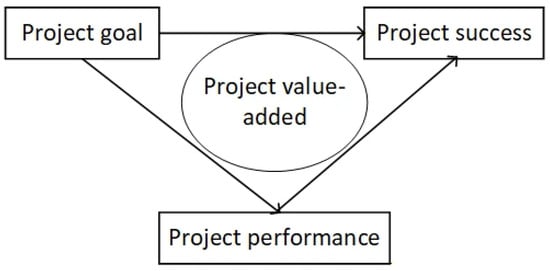
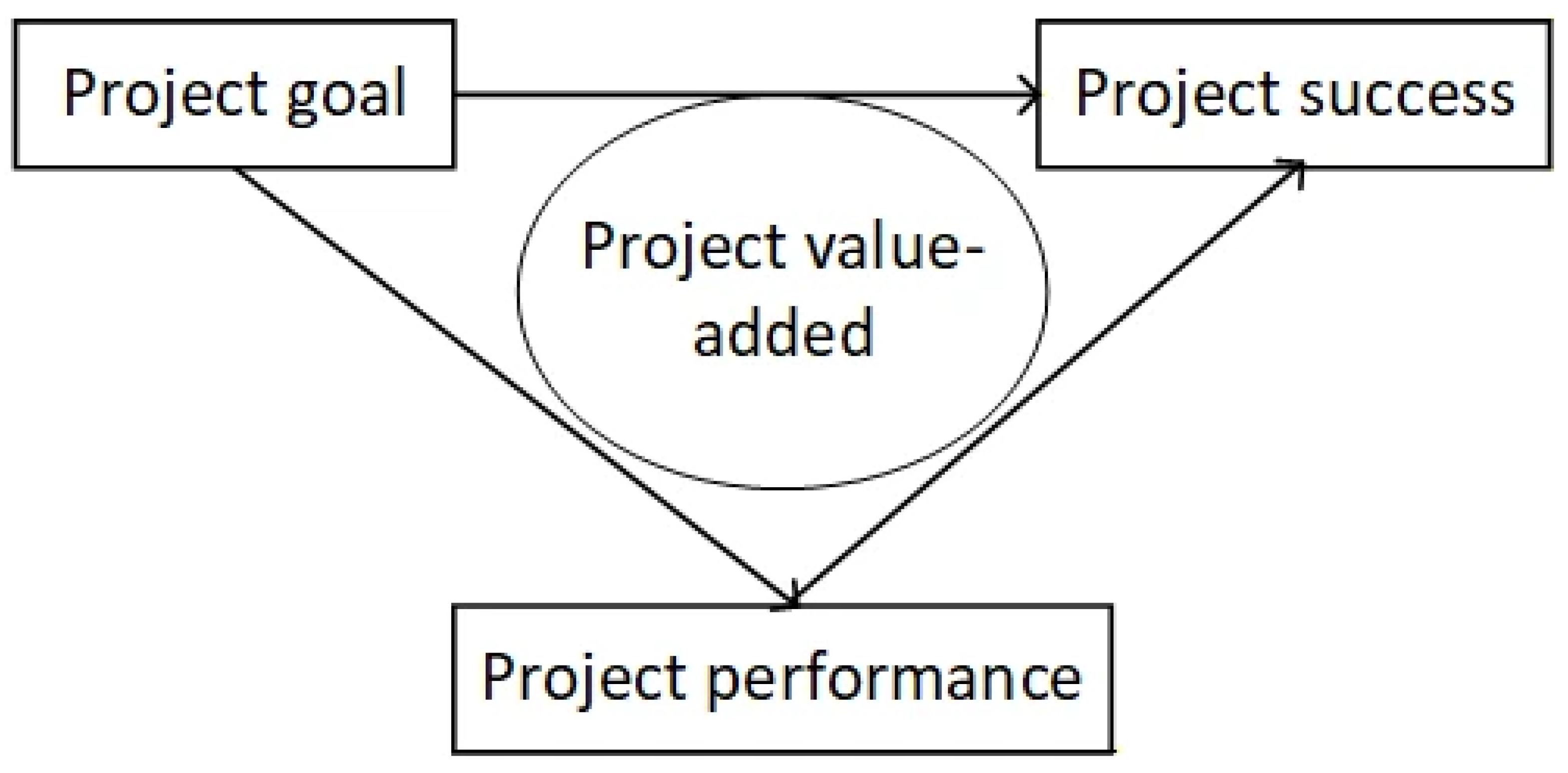
Traditionally, the project goal is to refer to the “iron triangle”, including duration, cost, and quality. These three goals are interrelated. In making changes to any of the goals, you must consider the impact on the other two goals. In the optimization of the target, you also need to consider the system optimization of the target in order to achieve the most successful state of the project as a whole. The project value-added refers to the value-added under the condition that the quality requirements are the same, that is, this paper mainly considers the two goals of progress and cost. Therefore, from this perspective, the overall goal of the project can be attributed to “project value-added”. The EPC project-transaction model is to achieve the project goal-added value and achieve project success [23]. Concepts such as project objectives, project success, and project performance can be linked through project value-added, as shown in Figure 1.
Figure 1.
Relationship between project objectives, project performance, project value-added, and project success.
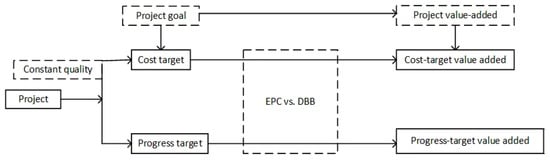
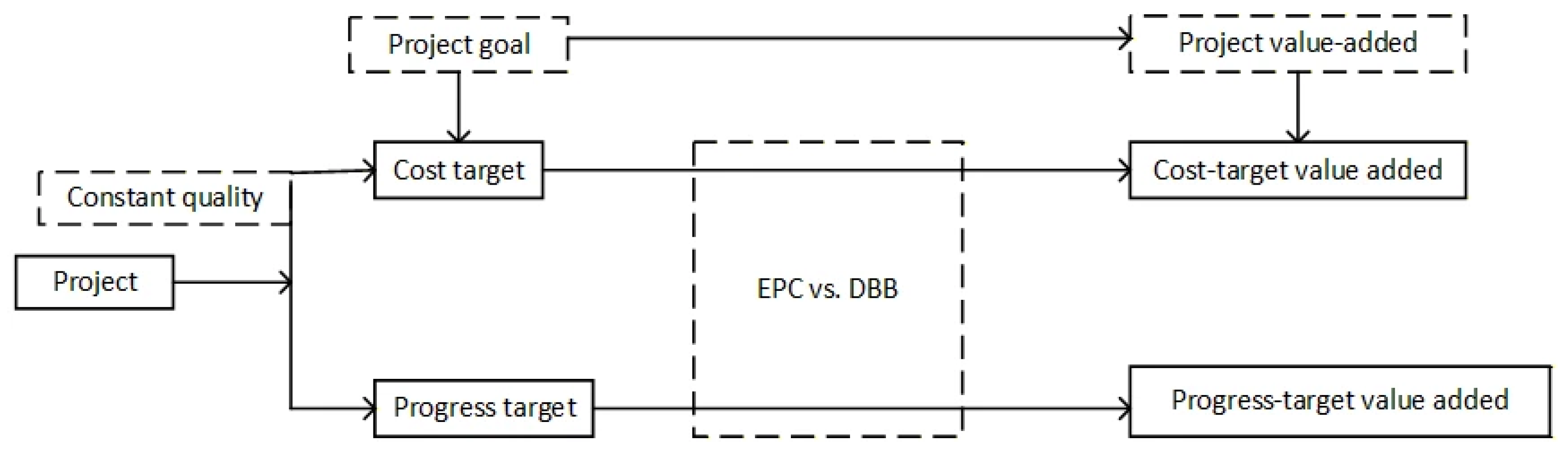
The main participants of the project using the EPC transaction model are the owner, the general contractor, the design, procurement, construction subcontracting unit, supervision management, etc., involving multiple stakeholders. These stakeholders need to participate in the management of engineering projects to varying degrees. Different participants have different project-management objectives and responsibility orientations, and the general contractor is at the core of project management because of its maximum responsibility and obligation. Therefore, based on the project value-added perspective, the value added caused by the implementation of the EPC project-transaction model can be decomposed into the cost target-value increase and the progress target-value increase, as shown in Figure 2. Therefore, the potential advantages of the EPC and DBB methods can be analyzed from the perspective of cost and progress, and the value-added approach can be identified. In addition to cost and schedule, project value-added can be assessed along several additional dimensions such as quality, sustainability, and stakeholder satisfaction. Quality reflects the extent to which engineering outputs meet required technical specifications and minimize rework; sustainability focuses on energy and resource efficiency as well as carbon performance; stakeholder satisfaction covers the perceived fairness and collaboration among owners, contractors, and end-users. Although this study mainly focuses on value measurement related to cost and schedule, the conceptual model and innovation path constructed also have the potential to expand to other dimensions.
Figure 2.
Decomposition of engineering-project value added.
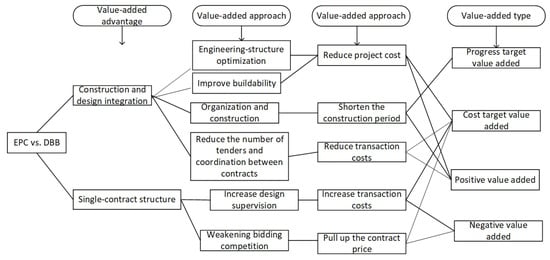
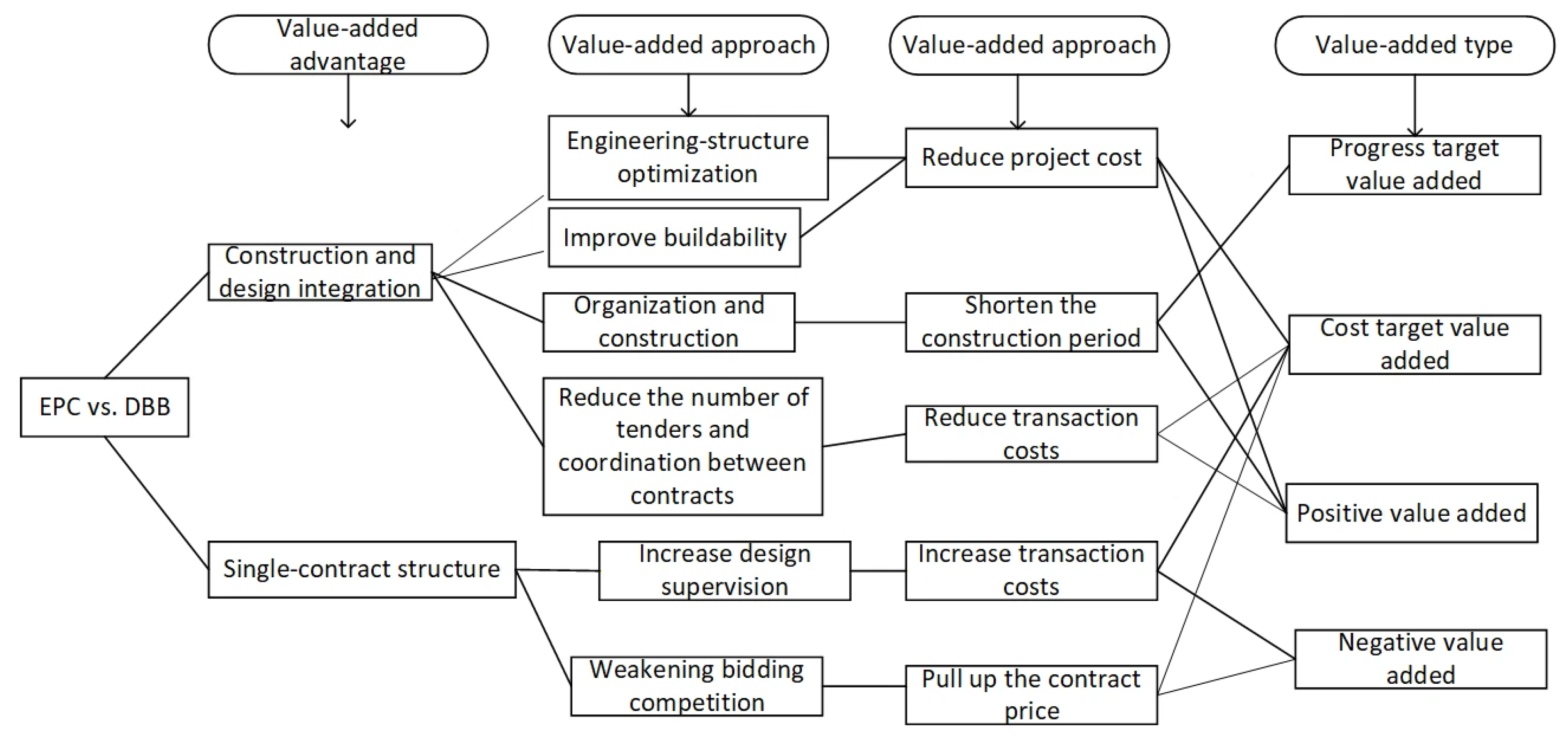
The distinctive features of the EPC project-transaction mode and DBB transaction mode include two aspects: one is the integration of design and construction; the other is the unity of contractual relationship; that is, the project only has the general contract signed by the owner and the general contractor of engineering design and construction. The potential value-added advantages of these two aspects can further extend the main advantages of the EPC project-transaction model relative to the DBB transaction model: design and construction are provided by a general contractor, which reduces the risk of design and construction and makes it difficult to distinguish the increased owner risk. The integration of design and construction also helps to speed up the overall progress of the project; the value engineering concept can be incorporated earlier in the design process, and the design cost is lower through coordination and cooperation; the claims and changes are significantly reduced. The research also shows that the EPC project-transaction model also has its shortcomings: the integration of design and construction will reduce the owner’s control over the project, and the final output will have a gap with the owner’s expectations; it is not easy to carry out competitive bidding and increase the difficulty of bid evaluation. Expected lack of certainty in performance; reduced flexibility for changes to owners.
The value-added value of the EPC project-transaction model is DBB-based value-added. The influencing factors are the main elements of the project-transaction model: transaction subject, transaction object, transaction contract, and transaction management. Combined with institutional economics and literature review, the potential value-added ways and effects of the EPC project-transaction model are summarized in Figure 3.
Figure 3.
Potential value-added pathways and their effects.
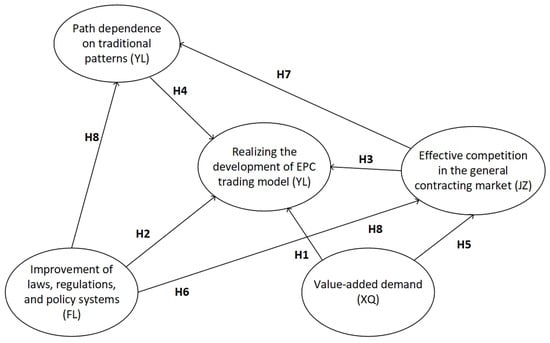
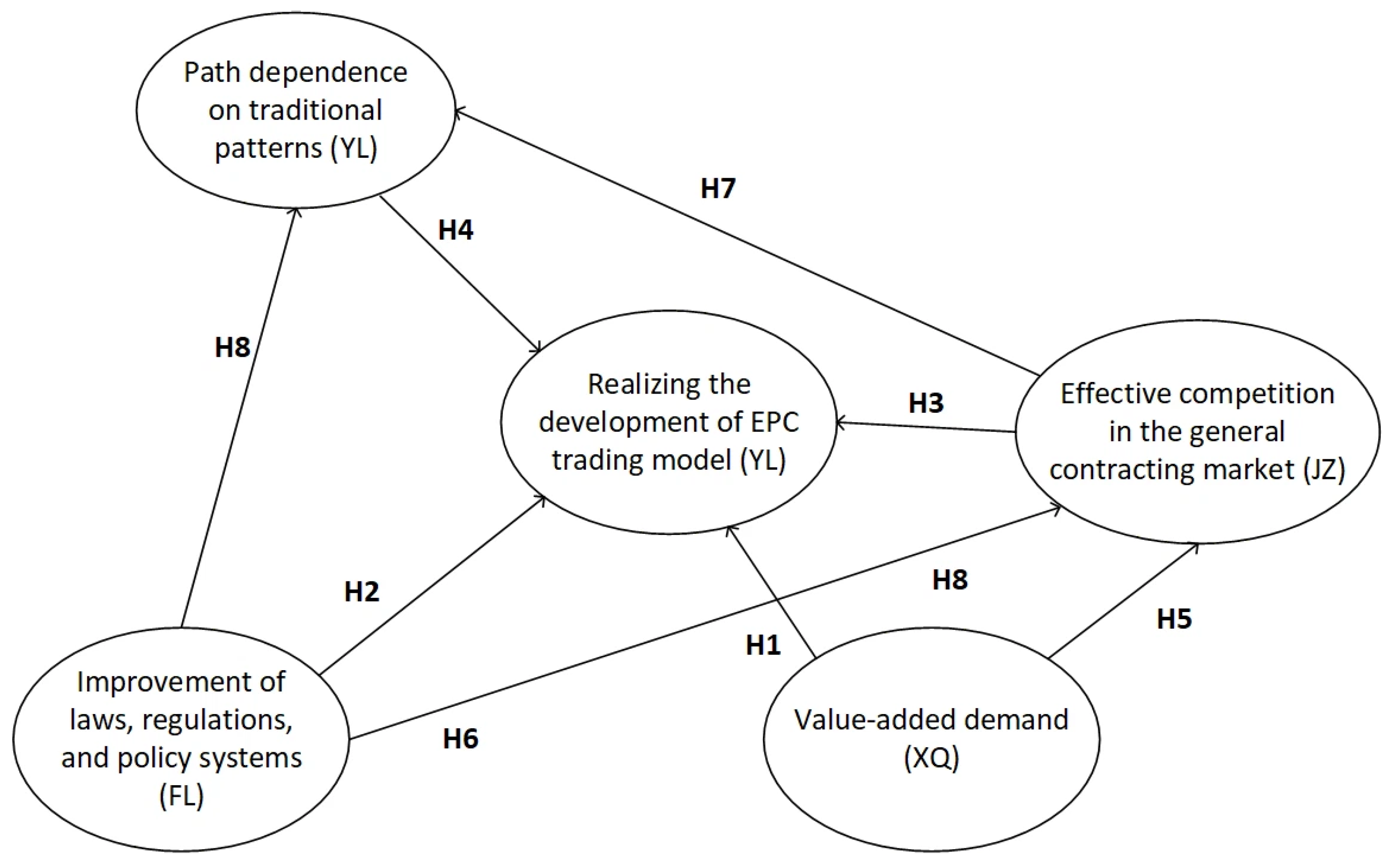
Through the analysis and induction of the impact of the main influencing factors on value appreciation, the conceptual model for constructing the development momentum of the EPC-engineering project-transaction model is shown in Figure 4.
Figure 4.
Development dynamic-concept model.
A questionnaire survey on the factors affecting the design of EPC-engineering transaction model based on value added, this survey summarizes the influencing factors of the project-transaction model into three aspects: project characteristics, owner characteristics, and engineering construction environment. The survey respondents were nine owners of construction, supervision, and research units for water conservancy, construction, and transportation. The respondents were professionals directly involved in EPC projects. A purposeful, stratified sampling method was adopted to ensure sufficient representativeness among stakeholder types and geographical regions. Invitations are distributed through industry associations, professional networks, and chain recommendations (snowball sampling). The questionnaire survey mainly adopts closed type, and the answer is divided into five dimensions: very non-conformity, a little non-conformity, basic conformity, comparative conformity, and very consistent. The questionnaire was designed on the basis of the influencing-factor analysis in Section 3.2 and was also pre-tested with experts. It measures five latent variables: value-added demand (XQ), improvement of laws, regulations and the policy system (FL), effective competition in the general-contracting market (JZ), path dependence on traditional patterns (YL), and development of the EPC-engineering project-transaction model (FZ). All items were rated on a five-point Likert scale, and reliability and validity were tested with Cronbach’s alpha, variance extracted, and factor loadings; the results are shown in Table 1. Firstly, through the pre-test of the questionnaire survey, experts and scholars were invited to evaluate the items and propose amendments to their additions and subtractions. Based on the comprehensive pre-test results and the opinions of experts and scholars, the questionnaire survey was revised to form the final questionnaire. A total of 105 questionnaires were distributed in this survey, and 105 questionnaires were collected. Some of the questionnaires were missing information, and detailed statistics could not be performed. Therefore, 90 valid questionnaires were used, accounting for 85.71% of the total questionnaires.
Table 1.
Questionnaire data reliability and validity-analysis results.
Recent quasi-experimental evidence also supports the view that institutional and policy transitions reshape economic behavior. In the e-CNY pilot, a study using a staggered difference-in-differences design with prefectural-city data found that the pilot expanded consumption scale, improved consumption structure, and raised consumption quality [24]. That study examines a consumer setting rather than a project-based one, but its basic argument carries over: when policy changes the rules of exchange, the volume, composition, and quality of transactions may shift accordingly. In the present model, effects of this kind are captured by the latent variable “improvement of laws, regulations and the policy system” (FL), which reflects the extent to which the institutional environment enables or constrains EPC transaction decisions and their value-added mechanisms.
These 90 valid questionnaires were all filled in by people who had directly taken part in EPC projects. They came from owners, general contractors, supervision/consulting firms, and research institutions, and the projects were spread across construction, water conservancy, and transport in several regions. For sampling we used purposive stratified sampling, mainly because we wanted the sample to be reasonably representative across stakeholder types and regions. The questionnaires were sent out mainly through industry associations and professional networks, and snowball sampling was used as well. Although a detailed breakdown by stakeholder group is not tabulated, the sampling was deliberately set up to cover the main stakeholder groups and project types in EPC practice; the limitations of purposive sampling itself are discussed in Section 3.4.
By analyzing the Cronbach’s Alpha of the variables, each coefficient is greater than 0.8, the factor load is 0.64, and the VE is greater than 0.6, indicating that the selected items are representative of the latent variables in the questionnaire, and the reliability and validity analysis results, as shown in Table 1.
A covariance-based structural equation modeling (CB-SEM) approach was adopted, and the conceptual model was estimated in AMOS. In Table 2, standard errors refer to unstandardized estimates, and p-values were obtained from critical ratios (CR = unstandardized estimate/S.E.) tested as z-statistics. Most structural paths are significant at the 0.05 level. The path from value-added demand to the development of the EPC transaction model (FZ ← XQ) is not statistically supported at this level (p = 0.114). This result is reported as a non-significant path and is not interpreted as evidence that the direct effect is small or absent. For value-added demand, the total effect on EPC development is 0.83, with a direct component of 0.51 and an indirect component of 0.32; because the indirect component has not been evaluated with bootstrap confidence intervals, no claim of mediation is made. The model was retained in its initial specification, and the effects of the dynamic factors on the development of the EPC transaction model are reported in Table 3.
Table 2.
Standardized path-coefficient estimates of the structural model.
Table 3.
Direct, indirect, and total effects of dynamic factors on the development of the EPC project-transaction model.
The goodness-of-fit statistics indicate an acceptable overall model fit (CMIN/DF = 1.219, GFI = 0.914, RMSEA = 0.046, NFI = 0.912). Although the comparative fit index (CFI = 0.891) falls marginally below the conventional 0.90 threshold, the low RMSEA, the favorable CMIN/DF ratio, and the high GFI together suggest that this shortfall is of limited practical significance, and the model can be regarded as acceptable. To strengthen the theoretical foundation of the proposed model, we drew on relational governance principles from the construction management literature. Prior studies show that trust and relational norms foster inter-organizational knowledge collaboration, and that such collaboration in turn improves collaborative performance in construction projects [25]. Accordingly, our model incorporates the mechanisms through which inter-organizational collaboration and network connectivity drive value creation in EPC transactions.
Beyond collaboration that rests on trust, network ties also shape innovation through the knowledge they carry. Wu et al. [26] found that strong and weak ties affect business model innovation differently, with knowledge sharing acting as a mediator and knowledge integration acting as a moderator. In EPC terms, the closer the links among owners, general contractors, and supervisors, the more easily project knowledge moves between them; however, whether that knowledge becomes value-added innovation depends less on whether it is acquired than on how it is integrated once it has been acquired.
According to the calculation results of the dynamic model of the EPC project-transaction model, the effects of dynamic factors and their development with the EPC trading model are shown in Table 3. In Table 3, the direct effect is simply the standardized path coefficient between two constructs, the indirect effect is obtained by multiplying the standardized path coefficients along each indirect route, and the total effect is the sum of the two. For example, the total effect of value-added demand on the development of the EPC transaction model is 0.83, which is exactly the direct effect of 0.51 plus the indirect effect of 0.32.
As shown in Table 3, path dependence on traditional patterns was negatively associated with the development of the EPC transaction model, with a direct effect of −0.23. In addition, the direct effect of the legal and regulatory policy system on path dependence was −0.56, suggesting that path dependence may be reduced by improving laws and regulations. At the same time, the total effect of value-added demand on the development of the EPC transaction model reached 0.83, of which the direct effect was 0.51, indicating that analyzing the EPC transaction model from a value-added perspective is conducive to its development.
3.3. Description of Data Nature and Sample Applicability
The data collected in this study are subjective perceptual survey data that reflect industry practitioners’ empirical judgements on the importance of various influencing factors in EPC practice. Since it is difficult to obtain practitioners with hands-on EPC project experience through simple random sampling, purposive stratified-snowball sampling is suitable for this research context. This sampling strategy can effectively screen qualified respondents covering multiple stakeholders from the engineering sector, such as owners, contractors, supervisors, and research institutions. However, it cannot guarantee the full representativeness of the sample for the total population.
3.4. Sample Limitations
In structural equation modeling, whether the sample is large enough is usually judged by the ratio of sample size to the number of estimated parameters (N:q). Our model estimates 13 parameters, and with N = 90 the N:q ratio is 6.92, above the 5:1 line often cited in the SEM literature. In other words, for the complexity of the model examined here, the sample size is adequate.
The 90 valid samples satisfy the basic computational requirements for structural equation modeling. However, cross-sectional survey questionnaires cannot rigorously deduce causal relationships among variables. Although the sample size (N = 90) satisfies the minimum requirements for covariance-based SEM, with an N-to-estimated-parameter ratio of 6.92, the purposive–snowball sampling strategy and the limited sample size imply that some uncertainty remains in the path estimates. We therefore assessed the stability of these estimates using the available evidence rather than treating the issue as resolved: the asymptotic standard errors in Table 2 are small relative to the corresponding standardized coefficients, and the reliability and convergent validity indices in Table 1 all exceed the conventional thresholds. No re-specification of the model was undertaken; the reported estimates were evaluated against these diagnostics. Bootstrap resampling with bias-corrected confidence intervals, together with simulation-based tests of the kind recommended for finite-sample structural models [27], is identified as a priority for future work.
Because the model uses self-reported questionnaire data, respondents’ judgements inevitably carry evaluation biases attached to their roles. One consumer study offers a useful analogy: Li et al. [28] found that people’s evaluation of a consumption object depends on whether they regard it as “theirs”, so the same object is rated differently by people in different positions. This is not to say that the mechanism can be moved into engineering settings unchanged; it is only an analogy. What can be borrowed is not the concept of ownership itself but the more general point that where people stand affects how they evaluate. In EPC projects, owners, contractors, and supervisors stand in different positions with different stakes, and are therefore likely to score the same influencing factor differently. For this reason, the path coefficients are read as associations rather than causal relationships.
4. EPC Project-Transaction Model Path-Innovation Design
4.1. Overall Design Process
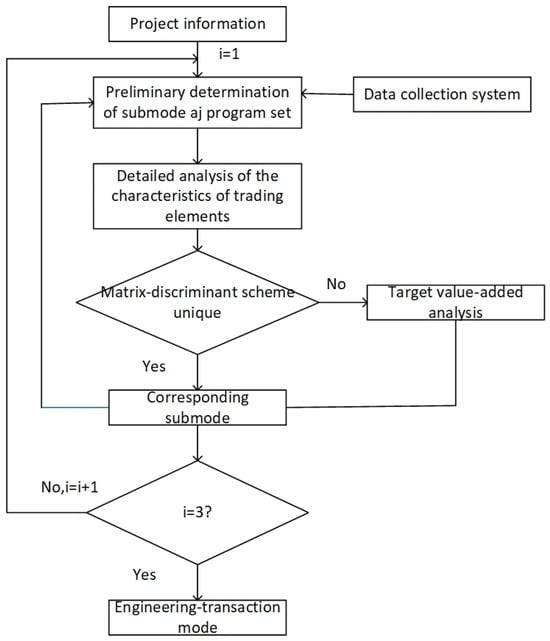
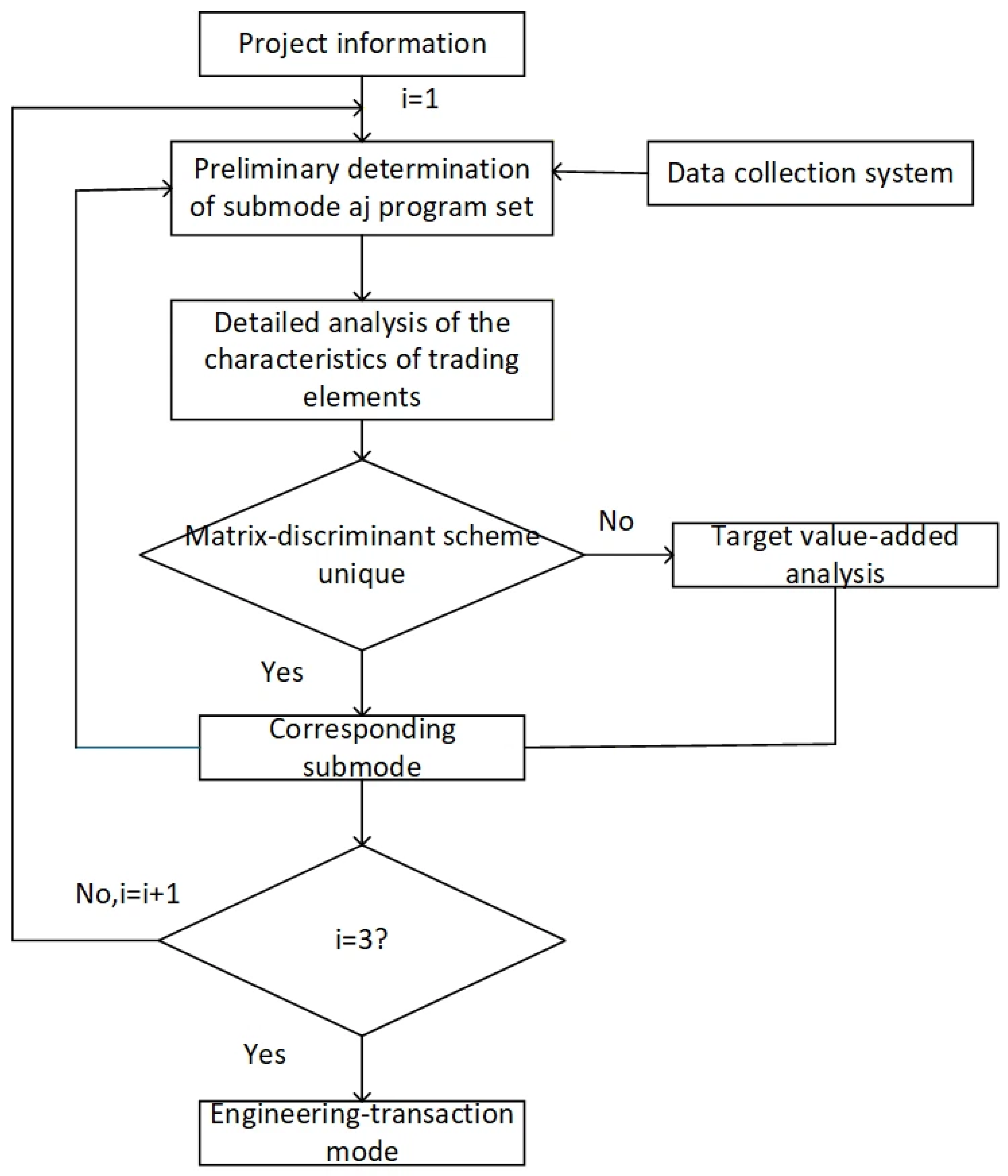
Based on the two basic transaction modes of EPC and DBB, this paper analyzes the influencing factors of EPC-engineering project-transaction mode-path innovation. The overall innovation design process is shown in Figure 5.
Figure 5.
Overall design process.
Step 1: to collect specific information of the project through the EPC and DBB engineering projects, and initially determine the sub-model of the transaction mode of the project through historical data;
Step 2: to analyze and design the characteristics of the transaction elements of each sub-model;
Step 3: to use the matrix-discriminant method to discriminate and analyze the sub-pattern;
Step 4: if the discriminating result shows that the scheme is unique, the transaction mode is determined; otherwise, the target-value increment analysis is performed;
Step 5: the determined transaction sub-mode is returned to the program set, and the analysis continues with the next sub-mode;
Step 6: when three sub-modes are determined, the process ends.
4.2. Matrix-Discriminant Analysis
The value added discussed in this paper refers to the value added compared with DBB, but the premise of value added is the applicability of the project. Therefore, the applicability of the project can be analyzed by the matrix-discriminant method and then the value added of the project can be added. Therefore, the matrix-discriminant analysis of the EPC transaction mode and the DBB transaction mode is shown in Table 4.
Table 4.
Applicability matrix of EPC and DBB transaction models.
Whether a factor in Table 4 applies has to be checked against the project’s features and the characteristics of the two transaction modes. If the structural features of a mode can accommodate the project condition, the factor is marked as applicable to that mode. Conversely, if the project shows a condition marked inapplicable to a mode (for example, the local construction market is not mature enough for EPC), that mode is ruled out. If a factor applies to both modes, we leave it for now and settle it in the value-added analysis in Section 4.3, choosing the mode with the larger estimated value added. In this way, the matrix-discriminant analysis gives model selection a rule-based procedure that can also be checked afterwards.
4.3. Value-Added Analysis
The value-added analysis is carried out under the premise of completing the quality requirements of the project, so the main objectives of progress and cost are mainly considered here. Cost targets are primarily achieved by optimizing transaction patterns to reduce transaction costs and production costs. The progress goal is to reduce the contract time of the project by optimizing the trading mode. For example, the EPC project-transaction mode can be integrated with design, procurement, and construction. Compared with DBB, it has the goal of increasing the progress. In addition, the EPC project-transaction model also saves bidding time compared to DBB. Therefore, the influencing factors are summarized into five aspects: transaction object, transaction subject, transaction management, transaction contract, and trading environment. The 14 influencing factors of Table 4 are analyzed, and the influencing factors and value-added effects of the project-transaction mode are analyzed. The value-added matrix is shown in Table 5.
Table 5.
Value-added matrix of influencing factors on cost and schedule objectives (ΔC1, ΔC2, ΔT1, ΔT2).
where ai,j = 0 means relevant; ai,j = 1 means irrelevant.
Table 5 presents the value-added matrix in symbolic form: each entry ai,j indicates whether influencing factor i is relevant (1) or irrelevant (0) to value-added objective j. The matrix is intended as a conceptual framework linking the influencing factors to the value-added objectives; the numerical determination of these entries requires expert judgement, questionnaire responses or project-specific case data, and the calibration of these entries—together with the parameters of Equations (1)–(4)—is left for future applications with real project data.
5. Value-Added Estimates
5.1. Estimation of Production-Cost Reduction ΔC1
In the formula, ΔC1 is reduced production costs.
Production expenses mainly include expenditures on labor, materials, machinery, and other expenses. The relevant factors in this part include the basic characteristics of the project and the contractor.
- (1)
- The impact of the basic characteristics of the project on production costs. The basic characteristics include engineering maturity and engineering complexity. The higher the maturity, the lower the production cost can be achieved through optimization engineering; the higher the engineering complexity, the larger the optimization project is, the higher the production cost will be.
- (2)
- The impact of the contractor on production costs. The contractor’s mastery of engineering-related information such as engineering quantity and engineering difficulty affects its decision-making on labor, materials, and machinery. Practice has shown that the finer the control of the project by the contractor, the more favorable it is for the reduction of production costs.
5.2. Estimation of Transaction-Cost Reduction ΔC2
In the formula, ΔC2 is reduced transaction costs.
Transaction costs include two major parts of the transaction cost before and after the contract. The transaction costs before the contract are mainly affected by objective factors such as the basic characteristics of the project. The transaction cost after the contract is mainly the supervision fee for the owner in the EPC exit transaction mode. Therefore, the reduction of transaction costs is mainly reflected in the supervision organization of the owners, that is, X9 and X10.
5.3. Estimation of Contract-Period Reduction ΔT1
In the formula, ΔT1 is reduced contract period.
The determination of the contract period is related to the basic characteristics of the project, the owner’s preference for the progress, etc., which are concentrated in X1, X2, X3, and X6 in Table 5. The more mature a project, the less uncertain its contractual duration. On the surface of practice, the owner’s preference for progress also has a greater impact on the contract period. By shortening the contract period and achieving the project value-added faster.
5.4. Project-Preparation-Time Reduction ΔT2 Estimate
In the formula, ΔT2 is reduced project preparation time.
Before the project plan is put into practice, it must take some time and effort to promote, persuade, and mobilize the project team and related personnel, including project sponsors and owners. Create an atmosphere and environment that is conducive to the implementation of the project plan. That is, prepare for project implementation. This is related to the coordination between land acquisition and resettlement, subcontractors, and the policies and regulations of the project site. At the same time, the basic characteristics of the project also have a certain impact on the preparation time. The complexity of the project, the large scale, and the preparation time of the project will also increase. In addition, the imperfections of the general-contracting projects by policies and regulations will also increase the preparation time of the project. This part is concentrated in X1, X2, X3, X4, X12, and X13 in Table 5.
Equations (1)–(4) show how the value added of the EPC transaction model can be quantified conceptually, through reductions in production cost (ΔC1), transaction cost (ΔC2), contract period (ΔT1) and project preparation time (ΔT2). These equations are meant as a conceptual framework, not an empirically calibrated model. Their functional forms are based on the theoretical relationships among the influencing factors in Table 5, but the parameters have not yet been calibrated against empirical data. Calibrating these parameters with questionnaire responses, expert judgements or real project data, and then validating the resulting estimates, is an important direction for future research.
For illustration, consider a representative project, referred to here as Project A, with a construction cost of CNY 100 million. Assume that the matrix yields ΔC1 = −3.0%, ΔC2 = −2.0%, ΔT1 = −5%, and ΔT2 = −4% for this project; these coefficients imply a production-cost saving of about CNY 3.0 million and a transaction-cost saving of about CNY 2.0 million, together with a schedule shortening of about 5%. A sensitivity check in which ΔC1 varies from −4% to −2% yields savings between CNY 2.0 million and CNY 4.0 million, showing that the arithmetic of the framework produces interpretable outputs once the coefficients are supplied. Calibration against real project data is left for future work.
6. Conclusions
Based on the questionnaire evidence from 90 EPC practitioners, the following conclusions are drawn. Given the cross-sectional and self-reported nature of the data, these findings should be interpreted as indicative rather than causal. Through the analysis of the trading mode of the EPC-engineering project, the basic logical structure and the relationship with value added are defined. The value added of this paper is based on the value added under the traditional trading mode represented by DBB, mainly based on the guarantee-quality research on cost targets and progress targets. Through the questionnaire survey, the influencing factors of the development of the EPC project-transaction model are analyzed. The process is designed, and the purchase-value appreciation matrix is used to link the influencing factors to the cost and progress objectives as a conceptual basis for value-added estimation, and the following conclusions are obtained.
- (1)
- The legal and regulatory system is not perfect. The basic characteristics of the EPC project-transaction model is the integration of design, procurement, and construction. However, China’s current project management including project approval, planning permission, reporting, and construction is based on the DBB traditional trading model. The links between the various links are closely linked, and the design and construction are strictly divided, which is not conducive to the implementation of the EPC project-transaction model. Therefore, it is necessary to adjust the current project-management procedures in China to adapt to the development needs of the EPC project-transaction model. Secondly, the FIDIC clause on the owner’s rights in the EPC project-transaction model makes the establishment of the establishment system unclear. The relationship, positioning, and accusation of the supervision and EPC project-transaction model need to be improved. In addition, the current project-bidding model has certain limitations on the promotion of the EPC project-transaction model. The design documents provided by the bidding are insufficient, the current budget quota mechanism should be redesigned, and the bidding model should be encouraged.
It is therefore necessary to reform project-management procedures and procurement mechanisms, introducing phased approvals, integrated evaluation methods, and flexible budgeting systems. Establishing demonstration projects with transparent performance data on cost, schedule, and sustainability can further promote institutional adaptation and industry learning. At the same time, a comprehensive risk governance framework should be developed to enable systematic risk identification, quantification, and dynamic response through structured risk registers and probability–impact analysis. Ultimately, strengthening institutional frameworks, digital infrastructure, and stakeholder capabilities will be fundamental to realizing the full value-added potential of EPC project delivery.
- (2)
- Insufficient capacity of participants in the EPC project-transaction model. Practitioners in China’s construction projects have little knowledge of the EPC project-transaction model, and the gap between different industries is large. The limitations of the project owner’s knowledge have led to decisions in the traditional trading model in practice. The capacity of the general-contracting enterprise showed many shortcomings, did not pay enough attention to the informatization construction, the composite talents were less, the management model was rigid, and there was no modern project-management system based on the general-contracting transaction model.
To address these gaps, owners should adopt multi-dimensional performance indicators that incorporate cost, schedule, quality, and sustainability objectives, and align them with joint incentive mechanisms. Contractors should strengthen early collaboration with owners, clarify risk-sharing, and change management procedures, and invest in BIM-based digital platforms that support real-time data sharing and process integration. The adoption of advanced 5D systems can significantly improve coordination, reduce rework, and enhance cost transparency.
The value-added orientation of EPC governance also aligns with broader sustainable-infrastructure goals, at least in terms of aims. At the material level, emerging low-carbon materials such as geopolymer concrete offer prospects for reducing the environmental footprint of delivered assets [29]. This is consistent with the present model’s emphasis on value-added outcomes rather than cost reduction alone, although the evidence in [29] concerns the environmental potential of materials rather than the sustainability performance of EPC governance itself.
- (3)
- Insufficient ability to consult a company. In the face of this new type of engineering project-transaction model, consulting companies, especially the supervision units, are often marginalized and less able to participate in the decision-making stage. Therefore, it is possible to learn from the practices of the United States, the United Kingdom, and other countries to issue targeted guidance documents to assist and standardize the behavior of owners, consulting companies to carry out planning, decision-making, and implementation.
The cross-sectional survey design constrains causal inference, and the purposive sampling of 90 respondents limits the generalizability of the results. Moreover, reliance on self-reported data may introduce common-method bias, although steps such as anonymity, pre-testing, and reliability validation were implemented to mitigate this risk. Future research should employ larger and more diverse samples, integrate quantitative and qualitative approaches, and adopt longitudinal designs to strengthen causal interpretation. In addition, extending the analytical framework to incorporate indicators of quality, sustainability, and stakeholder trust would enhance the explanatory power of the value-added model, as well as examining how emerging technologies reshape EPC governance and value creation. Comparative studies across different regulatory and cultural contexts are also recommended to examine the adaptability and robustness of EPC governance structures. In addition, future research could try the framework out on real project cases, looking at how a transaction mode is chosen through matrix discriminant analysis and how the value-added benefits are estimated, and in this way test whether it really works in practice.
Author Contributions
Writing—original draft, J.J.; writing—review and editing, Z.W. and S.T.; supervision and project administration, W.L.; formal analysis, J.J.; investigation, Z.W. and S.T. All authors have read and agreed to the published version of the manuscript.
Funding
This research received no external funding.
Data Availability Statement
The original contributions presented in this study are included in the article. Further inquiries can be directed to the corresponding author.
Conflicts of Interest
The authors declare no conflicts of interest.
References
- Franz, B.; Molenaar, K.R.; Roberts, B.A.M. Revisiting project delivery system performance from 1998 to 2018. J. Constr. Eng. Manag. 2020, 146, 04020100. [Google Scholar] [CrossRef] [Scilit]
- Chen, S.; Liu, X. Key factors affecting project delivery system selection in the Chinese construction industry. Heliyon 2024, 10, e39201. [Google Scholar] [CrossRef] [Scilit] [PubMed]
- Khalef, R.; El-Adaway, I.H. Advancing airport project delivery: A comparison of design-build and traditional methods in terms of schedule and cost performance. J. Manag. Eng. 2023, 39, 04023041. [Google Scholar] [CrossRef] [Scilit]
- Zhong, Q.; Tang, H.; Chen, C.; Igor, M. A comprehensive appraisal of the factors impacting construction project delivery method selection: A systematic analysis. J. Asian Archit. Build. Eng. 2023, 22, 802–820. [Google Scholar] [CrossRef] [Scilit]
- Hashem, M.; Mehany, M.S.; Bashettiyavar, G.; Esmaeili, B.; Gad, G. Claims and project performance between traditional and alternative project delivery methods. J. Leg. Aff. Disput. Resol Eng. Constr. 2018, 10, 04518017. [Google Scholar] [CrossRef] [Scilit]
- Pauna, T.; Kujala, J.; Aaltonen, K. A collaborative delivery model with multi-party contract for industrial engineering projects. Int. J. Proj. Organ Manag. 2024, 16, 309–341. [Google Scholar] [CrossRef] [Scilit]
- Wu, H.; Qian, Q.K.; Straub, A.; Visscher, H.; Zhuang, T. How do developers influence the transaction costs of China’s prefabricated housing development process? An investigation through the Bayesian belief network approach. Systems 2024, 12, 147. [Google Scholar] [CrossRef] [Scilit]
- Liu, Y.; Tang, W.; Duffield, C.F.; Hui, F.K.P.; Zhang, L.; Zhang, X.; Kang, Y. Improving design by partnering in engineering-procurement-construction (EPC) hydropower projects: A case study of a large-scale hydropower project in China. Water 2021, 13, 3410. [Google Scholar] [CrossRef] [Scilit]
- Sari, E.M.; Irawan, A.P.; Wibowo, M.A.; Siregar, J.P.; Praja, A.K. Project delivery systems: The partnering concept in integrated and non-integrated construction projects. Sustainability 2023, 15, 86. [Google Scholar] [CrossRef] [Scilit]
- He, H.; Gan, X.; Liu, L.; Zhang, X. Adaptability analysis of integrated project delivery method in large- and medium-sized engineering projects: A FAHP-based modeling solution. Buildings 2024, 14, 1999. [Google Scholar] [CrossRef] [Scilit]
- Parsamehr, M.; Perera, U.S.; Dodanwala, T.C.; Perera, P.; Ruparathna, R. A review of construction management challenges and BIM-based solutions: Perspectives from the schedule, cost, quality, and safety management. Asian J. Civ. Eng. 2023, 24, 353–389. [Google Scholar] [CrossRef] [Scilit]
- Brahmi, B.F.; Sassi Boudemagh, S.; Kitouni, I.; Kamari, A. IPD and BIM-focused methodology in renovation of heritage buildings. Constr. Manag Econ. 2022, 40, 186–206. [Google Scholar] [CrossRef] [Scilit]
- Rankohi, S.; Bourgault, M.; Iordanova, I. The interplay of BIM, and reality capture technologies in IPD projects. Transform. Constr. Off-Site Methods Technol. 2022. [Google Scholar]
- Huang, J.; Fu, X.; Chen, X.; Wen, X. Supply chain management for the engineering procurement and construction (EPC) model: A review and bibliometric analysis. Sustainability 2024, 16, 9748. [Google Scholar] [CrossRef] [Scilit]
- Wan, S.; Liu, Y.; Ding, G.; Runeson, G.; Er, M. Risk allocation for energy performance contract from the perspective of incomplete contract: A study of commercial buildings in China. Int. J. Clim. Change Strat Manag. 2023, 15, 457–478. [Google Scholar] [CrossRef] [Scilit]
- Lai, H.; Deng, X.; Chang, T.-Y.P. BIM-based platform for collaborative building design and project management. J. Comput Civ. Eng. 2019, 33, 05019001. [Google Scholar] [CrossRef] [Scilit]
- Marinho, A.; Couto, J.; Teixeira, J. Relational contracting and its combination with the BIM methodology in mitigating asymmetric information problems in construction projects. J. Civ. Eng. Manag. 2021, 27, 217–229. [Google Scholar] [CrossRef] [Scilit]
- Rashidian, S.; Drogemuller, R.; Omrani, S. The compatibility of existing BIM maturity models with lean construction and integrated project delivery. J. Inf. Technol. Constr. 2022, 27, 496–511. [Google Scholar] [CrossRef] [Scilit]
- Huang, Y.; Hu, X.; Tian, Y.; Song, Y.; Pan, Y. Self-shape congruency in the metaverse: How avatar geometry modulates emotional engagement and virtual consumption. Comput Hum. Behav. 2025, 173, 108788. [Google Scholar] [CrossRef] [Scilit]
- Preethichandra, D.M.G.; Suntharavadivel, T.G.; Kalutara, P.; Piyathilaka, L.; Izhar, U. Influence of Smart Sensors on Structural Health Monitoring Systems and Future Asset Management Practices. Sensors 2023, 23, 8279. [Google Scholar] [CrossRef] [Scilit] [PubMed]
- Wang, S.; Liu, X. Development of EPC model in Chinese public projects: Evolutionary game among stakeholders. J. Asian Archit. Build. Eng. 2022, 21, 2095–2113. [Google Scholar] [CrossRef] [Scilit]
- Hu, J.; Tang, S.; Yang, M. Simulation of EPC consortium partnership stability and data based on prospect theory. Int. J. Manuf. Tech Manag. 2024, 38, 406–425. [Google Scholar] [CrossRef] [Scilit]
- Huang, J.; Li, S.M. Data-driven analysis of supply chain integration’s impact on procurement performance in international EPC projects. Sustainability 2024, 16, 10729. [Google Scholar] [CrossRef] [Scilit]
- Jiang, S.; Yuan, X. Does the e-CNY pilot boost consumption upgrading? Evidence fromChina’s city-level quasi-experiment. Appl. Econ. Lett. 2026, 1–5. [Google Scholar] [CrossRef] [Scilit]
- Cheng, J.; Huang, L.; Jiang, L.; Chen, J.; Chen, W.; He, Y. Fostering Knowledge Collaboration in Construction Projects: The Role of BIM Application. Buildings 2023, 13, 812. [Google Scholar] [CrossRef] [Scilit]
- Wu, S.; Cheng, P.; Wang, J. The impact of strong and weak ties on business model innovation in China: The mediating role of knowledge sharing and the moderating role of knowledge integration. Asia Pac. Bus. Rev. 2026, 1–41. [Google Scholar] [CrossRef] [Scilit]
- Huo, J. Finite-difference solution ansatz approach in least-squares Monte Carlo. J. Comput Financ. 2025, 29, 67–121. [Google Scholar]
- Li, X.; Jin, J.; Pan, Y. Ownership attribution and consumption objects evaluative bias:The role of female intrasexual competition in consumer evaluation. J. Retail Consum Serv. 2027, 94, 104979. [Google Scholar] [CrossRef] [Scilit]
- Hassan, A.; Zhang, C. Dynamic and static behaviour of geopolymer concrete for sustainable infrastructure development: Prospects, challenges, and performance review. Compos Struct. 2025, 359, 118984. [Google Scholar] [CrossRef] [Scilit]

Disclaimer/Publisher’s Note: The statements, opinions and data contained in all publications are solely those of the individual author(s) and contributor(s) and not of MDPI and/or the editor(s). MDPI and/or the editor(s) disclaim responsibility for any injury to people or property resulting from any ideas, methods, instructions or products referred to in the content. |
© 2026 by the authors. Licensee MDPI, Basel, Switzerland. This article is an open access article distributed under the terms and conditions of the Creative Commons Attribution (CC BY) license.