


Abstract
Professional assessments and public surveys address different questions in historic urban landscape (HUL) conservation. Using Zhengding Ancient City as a case study, we developed a 15-indicator framework covering Historical Layering Value, Heritage Attributes and Landscape Integrity Value, and Heritage Vitality Value. We derived professional value weights from eight experts’ judgments using the analytic hierarchy process (AHP) and analyzed ratings from 197 valid questionnaires. We assessed weighted perceived performance by dimension and compared each indicator’s weight with its mean public rating. Ratings of current conditions were generally favorable. Of the item ratings, 66.0% were between 7 and 9. Weighted perceived performance was similar across the three dimensions. Completeness of Historical Information and Recreational Relevance had relatively high weights and ratings, whereas Historical Significance had a relatively high weight but a lower public rating. The contrast suggests a need to preserve historic sites and better convey their history to the public. Professional weights emphasized heritage features and contemporary use, while favorable public ratings also highlighted ecological conditions and connections with everyday life. The assessment identifies where professional priorities and favorable public ratings coincide and where they differ, informing conservation and renewal in Zhengding.
1. Introduction
Historic urban landscapes are shaped by urban memory, spatial patterns, local identity, and everyday practices [1,2]. These landscapes derive value from historic buildings and urban form and can contribute to urban renewal, community identity, and sustainable development [3]. In cities undergoing change, built cultural heritage can connect historical resources with social needs and future development [3,4]. Where rapid urbanization, changing urban functions, and tourism development create pressure for renewal, assessing historic urban landscapes can help identify conservation priorities and reconcile the need for renewal with the preservation of heritage.
International approaches to conservation have gradually broadened beyond the protection of individual buildings and monuments to encompass their relationship with their surroundings and the management of wider landscapes [5]. UNESCO’s 2011 Recommendation on the Historic Urban Landscape (HUL) places historic areas within a wider urban, natural, and socioeconomic context, emphasizing historical layering, spatial relationships, social practices, and local values [6]. Research on historical layering, spatial relationships, and change over time has broadened understanding of what conservation entails in historic cities [7,8]. Managing these landscapes requires an understanding of which aspects of heritage professionals consider important and how the public perceives their current condition. In conservation, professional judgments of cultural significance, including historical and aesthetic value, inform decisions about what to protect [2,9]. Public ratings of current conditions reflect respondents’ perceptions of the heritage and its surroundings. Examining where these perspectives converge and what each emphasizes can help set conservation objectives that address both heritage preservation and the public’s experience of historic places in everyday use.
In Zhengding Ancient City, we combine professional value weights, derived from expert judgments, with public ratings of current conditions to assess the perceived performance of the historic urban landscape. We ask three questions:
- With professional value weights applied, what is the overall pattern of public perceived performance in Zhengding Ancient City, and how do the three HUL dimensions compare?
- Within each dimension, how do the indicators compare in terms of public perceived performance?
- How do professional value weights correspond to public perceived performance across indicators?
The case shows how comparing these two perspectives can inform decisions about heritage interpretation, the conservation of traditional character, and the everyday use of historic areas.
2. Literature Review
2.1. Historic City Conservation: From Individual Monuments to Living Landscapes
Historic city conservation has gradually shifted from protecting individual sites treated as static objects to managing living landscapes. The Venice Charter sets out conservation principles concerned with the authenticity and integrity of historic buildings and monuments [10]. As urbanization accelerates, historic areas face competing uses, declining community vitality, pressure from tourism development, and the weakening of intangible cultural heritage [11,12,13]. Protecting individual buildings or historic centers alone cannot adequately address the relationships that give historic cities coherence or the ways in which they continue to change.
This shift is also evident in international conservation frameworks. The European Landscape Convention treats landscape as part of people’s everyday surroundings and links its protection with management and planning [14]. The Burra Charter places cultural significance at the center of conservation and connects the assessment of a place’s values with decisions about its management [15]. UNESCO introduced the HUL concept in the Vienna Memorandum [16] and issued the Recommendation on the Historic Urban Landscape in 2011 [6], placing historic areas in their wider urban, natural, and socioeconomic context.
The HUL approach views historic cities as cultural landscapes that continue to evolve. It connects the authenticity of their physical fabric and the integrity of their form with historical layering, the natural environment, spatial networks, social practices, and local identity [1,17]. This framework makes it possible to consider the value of historic cities at multiple scales, treating heritage and urban life as parts of the same landscape [18].
2.2. Dimensions and Applications of the HUL Approach
Identifying heritage values is central to conservation policy and management under the HUL approach [6]. The HUL approach considers historical layering, the built and natural environments, and sociocultural practices together in conservation [6,8]. Drawing on this approach and the characteristics of the study area, we organize the assessment into three dimensions: Historical Layering Value, Heritage Attributes and Landscape Integrity Value, and Heritage Vitality Value. Historical Layering Value concerns how historical information and its meanings accumulate and persist across periods [1,19,20]. Heritage Attributes and Landscape Integrity Value encompasses the cultural and artistic attributes of heritage itself, as well as the spatial patterns, environmental relationships, and traditional character of historic areas [4,6]. Heritage Vitality Value concerns how historic areas continue to figure in everyday life, recreation, and people’s experience of the local environment [18,21,22]. The relationships among paths, edges, districts, nodes, and landmarks offer a way to understand how people perceive urban space in historic cities [23].
The HUL approach has informed historic area management, heritage-led urban change, public participation, and the characterization of urban landscapes [24,25]. Studies of heritage-led change in Pingyao, online narratives, and participatory planning illustrate its use in urban transformation and stakeholder engagement [26,27,28]. Research in China has examined historic urban landscapes through historical layering and spatial relationships [7,29], studied how public spaces are connected and how their heritage values can be identified [30], and assessed historic districts on the basis of historic landscape characterization [31].
2.3. Methods for Assessing Historic Landscape Values
The HUL approach emphasizes identifying heritage values, involving communities, and working with stakeholders [8]. Conservation decisions involve allocating resources, weighing competing values, and engaging the public. Assessment methods can inform these decisions by making different dimensions of heritage value comparable [4,32,33]. Studies have identified values through professional judgment or through participatory and case-based research. Others have used quantitative approaches, including multicriteria assessment with the analytic hierarchy process (AHP) or multi-attribute value theory (MAVT), and spatial assessment with geographic information systems (GIS) [34].
Community input can complement field surveys and mapping in documenting heritage values, as Rey-Pérez and Siguencia Ávila (2017) showed in Cuenca [35]. Digital sources can serve different purposes. Ginzarly, Pereira Roders, and Teller (2019) used social media images to identify local HUL values and differences in perception [36], whereas Lu et al. (2022) combined urban big data and machine learning to characterize urban landscapes [37]. To examine how people experience historic settings, Deng et al. (2021) used cognitive and affective mapping in Guangzhou’s historic center [38]. In a study of historic waterfronts, Chen et al. (2026) used questionnaires and statistical analysis to assess landscape quality and propose improvements [39].
In China, researchers have developed frameworks for assessing urban cultural heritage values using methods such as the Delphi method and ecological factor assessment [40,41]. Lei et al. (2021) combined AHP and GIS to quantify the spatial value of Taiyuan’s historic urban landscape [42]. Cao and Li (2023) developed a framework for understanding heritage values in terms of historical layering, relationships across the landscape, and diverse perceptions [43]. These studies informed the choice of methods for the assessment of Zhengding Ancient City.
Multicriteria and spatial analyses provide ways to assess and map heritage values [34,42]. Cognitive and affective assessments describe how people experience historic environments [38], and survey analysis can inform proposals for landscape improvement [39]. These approaches address different questions. Comparing professional value weights and public ratings for the same indicators links what professionals consider important with how respondents perceive current conditions.
3. Methods
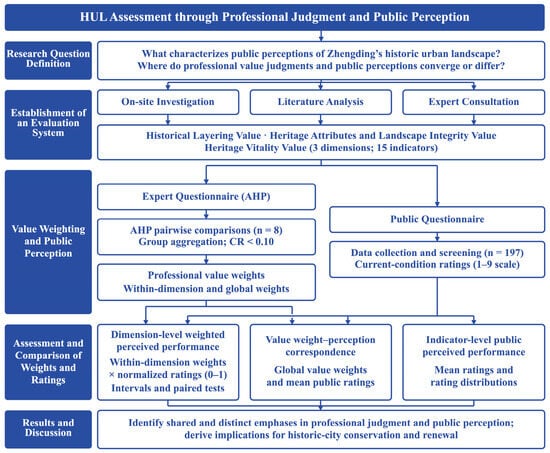
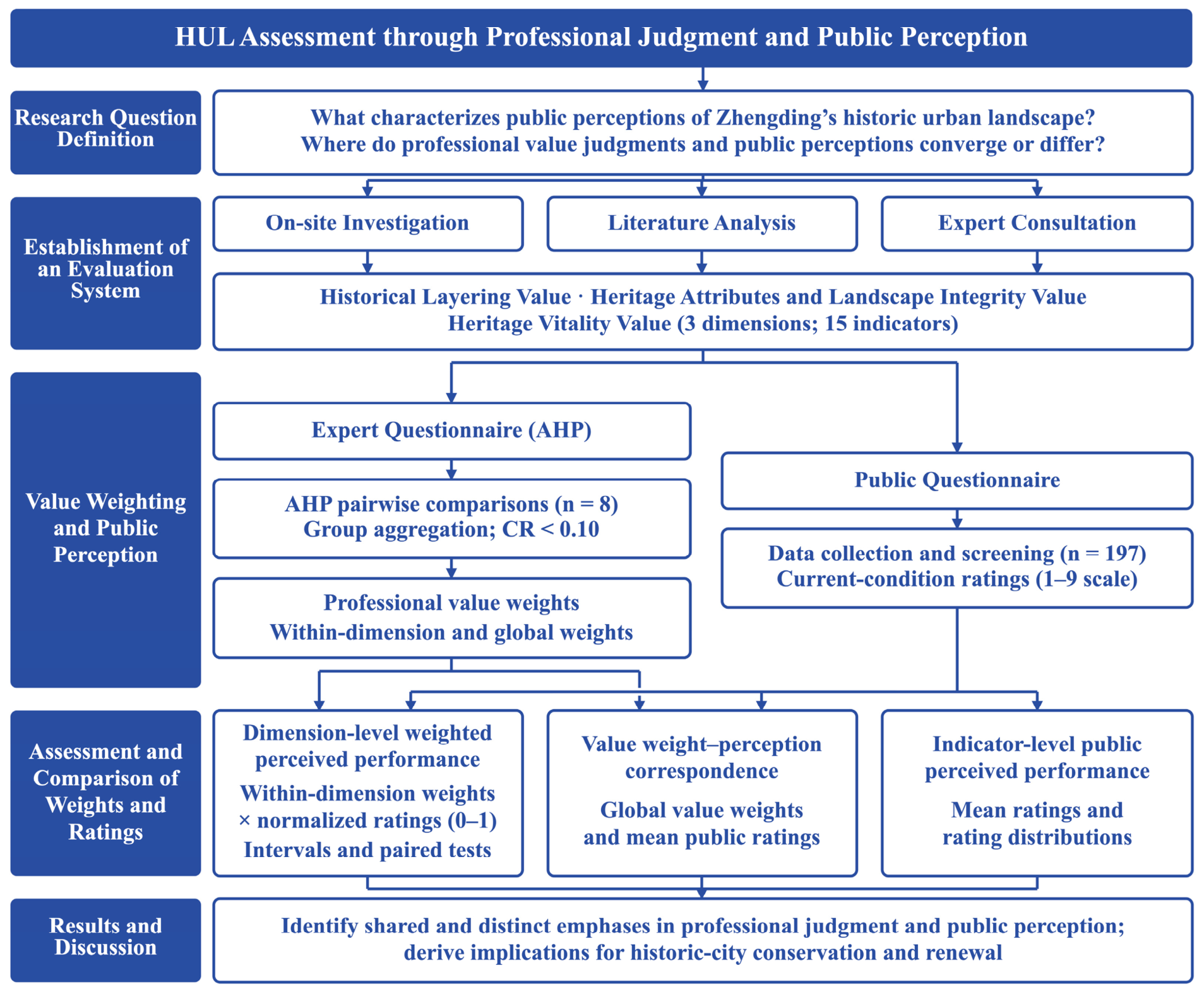
The indicators draw on HUL theory and the characteristics of Zhengding Ancient City. We used the analytic hierarchy process (AHP) to derive professional value weights from experts’ judgments of relative indicator importance. Respondents rated statements about current conditions. We assessed weighted perceived performance across dimensions, compared item ratings within each dimension, and examined how the ratings corresponded to the professional weights. Figure 1 summarizes the research workflow.
Figure 1.
Research workflow.
3.1. Study Area
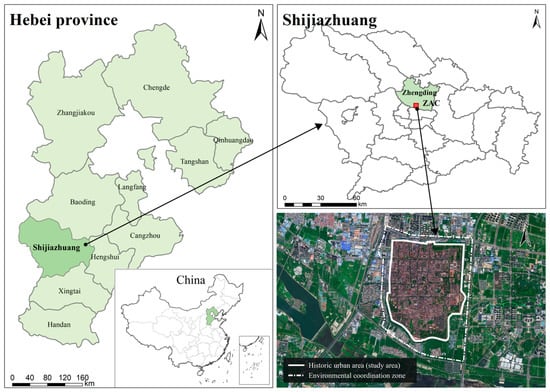
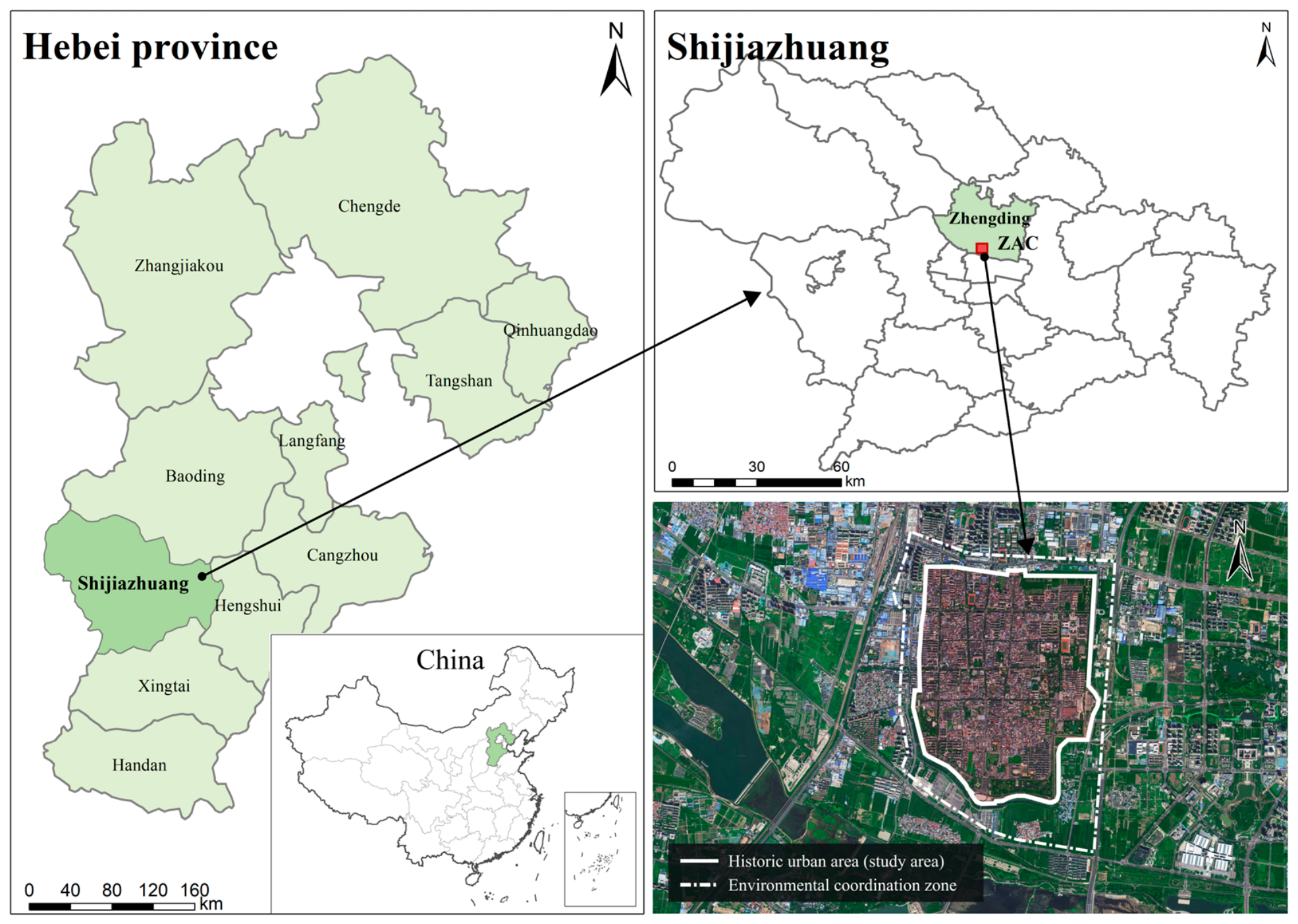
Zhengding Ancient City is located in the northern part of Shijiazhuang, Hebei Province (Figure 2). It is one of the better-preserved historic prefectural seats in northern China and was designated a National Historic and Cultural City in 1994. The historic urban area shown in Figure 2 covers 7.7 km2, as delineated in the Conservation Plan for the Historic City of Zhengding (2019–2035). From the Northern Zhou onward, successive expansions and repairs, including those in the Tang, Song, Ming, and Qing dynasties, shaped a historic urban landscape that retains layers from different periods within a coherent spatial layout.
Figure 2.
Location of the study area.
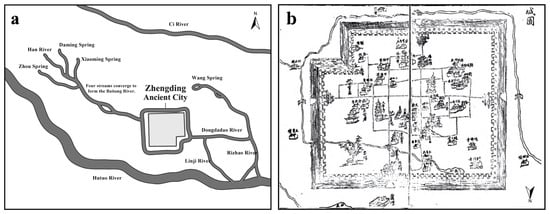
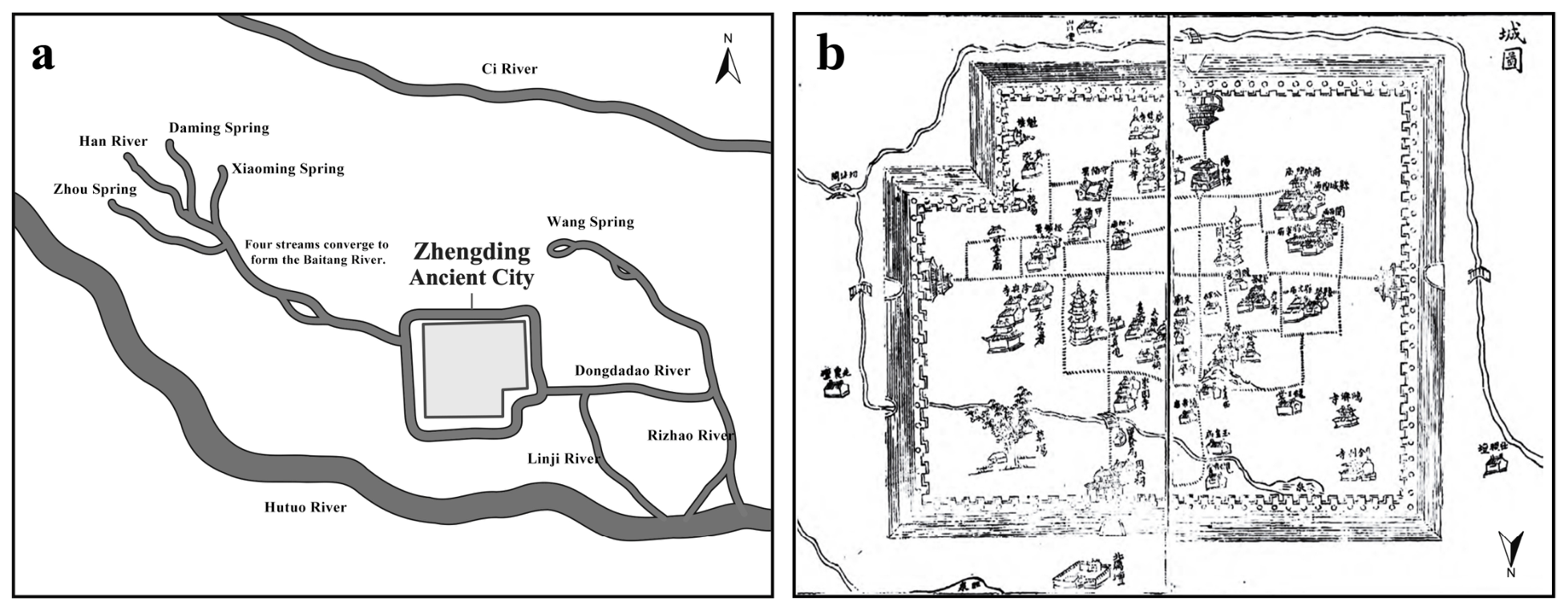
The city’s historical layers are visible in its spatial layout. A cross-shaped street pattern took shape during the Tang dynasty, and Zhengding became a regional administrative center during the Song dynasty. In the Ming dynasty, it expanded into a city enclosed by brick walls, with a double-cross street network (Figure 3b). The form of the walls has remained largely unchanged since the Qing dynasty [44]. The plan lists ten nationally protected heritage sites within this area, including Longxing Temple, Kaiyuan Temple, and the Hua Pagoda at Guanghui Temple, as well as several sites protected at the provincial and county levels. Together, these sites reflect Zhengding’s Buddhist heritage, military defenses, and vernacular residential architecture.
Figure 3.
Historical maps of Zhengding Ancient City. (a) Schematic of the historical waterways around Zhengding Ancient City [45]. (b) Nineteenth-century map of Zhengding; source: Zhengding County Gazetteer: Guangxu First Year [46]. The original map bears the Chinese title 城圖 (“City Map”).
Zhengding’s historic layout reflects its setting near the Taihang Mountains and the Hutuo River. Figure 3a shows the city’s relationship to its historical water system. Zhengding’s heritage attributes and landscape integrity are evident at the scales of individual heritage assets and the urban fabric. The construction techniques, artistic features, and formal protection status of historic buildings reflect the attributes of individual assets. The spatial extent, street layout, and traditional character of the historic areas contribute to the integrity of the wider landscape. The double-cross street network, landmarks such as Yanghe Tower and the four pagodas, and traditional courtyards and lanes together define the city’s spatial structure and historic character. Heritage vitality can be seen in the links between conservation, changes in use, and cultural activities. Temple fairs, markets showcasing intangible cultural heritage, and displays of cultural and creative products bring the spaces around the South Gate, Yanghe Tower, and Longxing Temple into everyday use and give the public opportunities to engage with the city’s heritage. The surviving features from different periods, the heritage assets and urban layout, and the continuing everyday and recreational uses of the historic areas make Zhengding a suitable case for examining Historical Layering Value, Heritage Attributes and Landscape Integrity Value, and Heritage Vitality Value.
3.2. Assessment Framework, Indicators, and Data Collection
3.2.1. Assessment Framework and Indicators
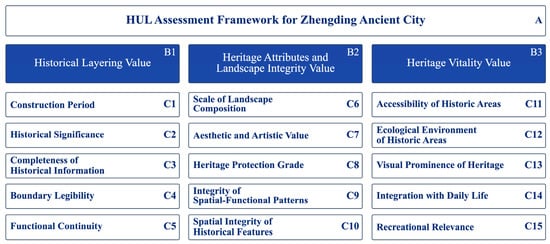
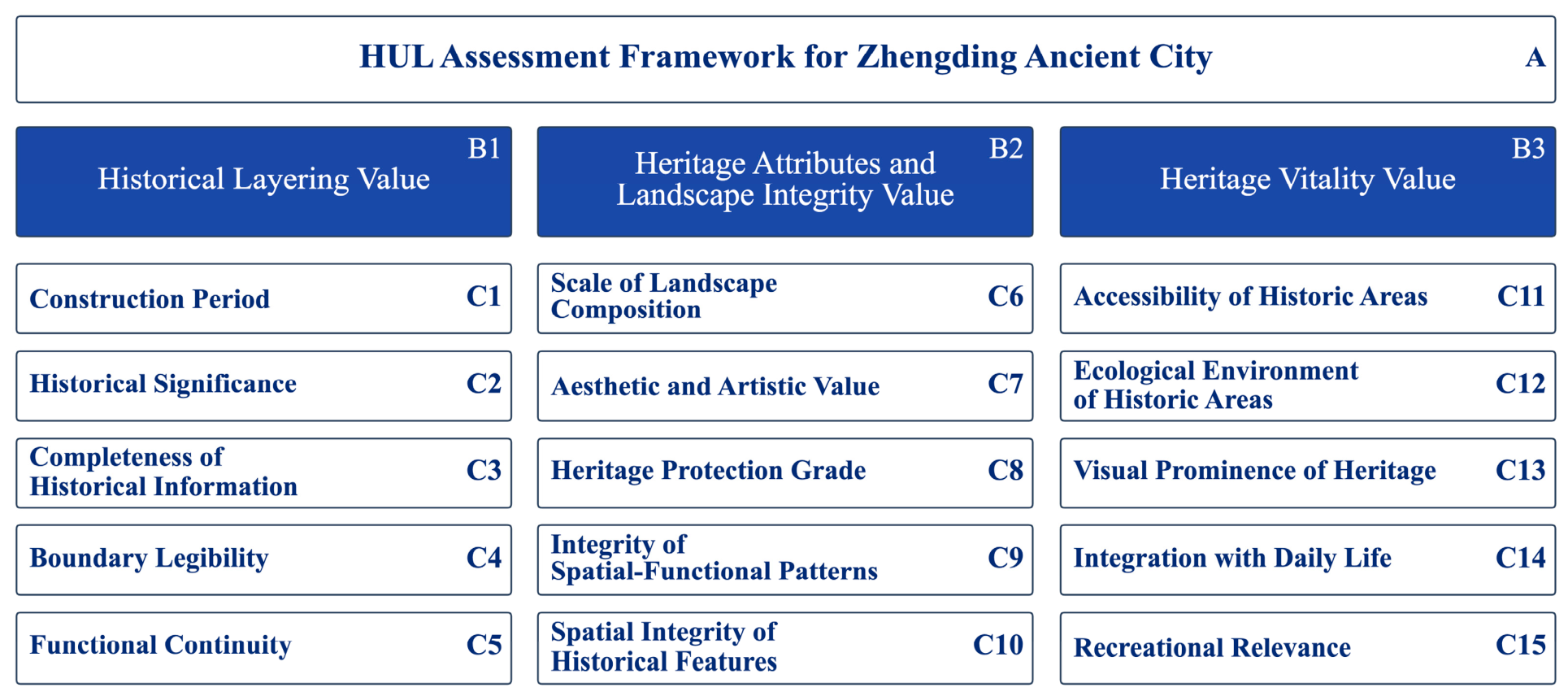
The HUL approach considers historical layering, the built and natural environments, and social and cultural practices together [6]. Drawing on this approach, previous research, field surveys, and expert consultation, we organized the assessment into three dimensions and 15 indicators (Table 1 and Figure 4). Historical Layering Value (B1) concerns the time depth, historical significance, and continuity of the city’s heritage. Heritage Attributes and Landscape Integrity Value (B2) covers the artistic attributes and formal recognition of heritage assets, along with the spatial extent, layout, and character of historic areas. Heritage Vitality Value (B3) concerns how people access and experience historic areas, including their environmental perceptions, ability to recognize heritage visually, and use of these areas in daily life and recreation. The three dimensions are assessment categories organized according to the theoretical framework and the content of the indicators.
Table 1.
Assessment dimensions, indicator descriptions, and supporting references.
Figure 4.
HUL assessment framework for Zhengding Ancient City. A denotes the overall assessment, B1–B3 denote the three assessment dimensions, and C1–C15 denote the 15 indicators.
3.2.2. Expert Questionnaire
We recruited experts through academic and professional contacts, peer recommendations, and similar channels. Selection took into account relevant research or practical experience and diversity in institutional backgrounds. The eight experts had research, teaching, or practical experience in areas including historic city conservation, conservation of historic buildings, landscape architecture, and heritage conservation (Table 2). In the expert questionnaire, they used AHP pairwise comparisons to judge the relative importance of the three dimensions and, separately, of the five indicators within each dimension (Supplementary Material S3).
Table 2.
Expert panel characteristics.
3.2.3. Public Questionnaire
We developed and distributed an online questionnaire through Tencent Questionnaire to collect data on public perception. We used non-probability convenience sampling. IP-based geographic restrictions allowed submissions only from Shijiazhuang and Baoding, and only respondents who had previously visited Zhengding Ancient City were eligible for inclusion. We received 205 questionnaires and excluded 8 from respondents who reported no prior visit, leaving 197 valid questionnaires.
The public questionnaire (Supplementary Material S2) included statements corresponding to the 15 indicators and used a 1–9 rating scale. A rating of 1 meant that the statement did not match current conditions at all, and a rating of 9 meant that it matched current conditions very well. The expert questionnaire was used to determine professional value weights, whereas public respondents drew on their visits to rate how closely each statement matched conditions in the ancient city as they perceived them. The expert definition of C15 covers both willingness to visit for recreation and visit frequency. The public item asked respondents how closely a statement about residents’ and nearby tourists’ willingness to visit historic areas for recreation matched current conditions. The anonymous data do not include demographic characteristics, information on whether respondents were residents or tourists, or visit frequency.
3.3. AHP Weighting
AHP uses a hierarchical structure and a 1–9 pairwise comparison scale to translate experts’ judgments of relative indicator importance into professional value weights. Each expert completed one judgment matrix at the criterion level and one for each group of indicators. The experts reviewed and confirmed their final judgments before analysis. All 32 individual judgment matrices included in the analysis had a consistency ratio (CR) below the threshold of 0.10. The individual judgment matrices and consistency test results are reported in Tables S4–S8 (Supplementary Material S1).
The eight experts were weighted equally in the group aggregation. We took the geometric mean of the experts’ judgments for each pairwise comparison to form one group judgment matrix at the criterion level and three at the indicator level. We then used the row geometric mean method to derive weights at each level, taking the geometric mean of the entries in each row and normalizing the resulting values. For each group judgment matrix, we calculated the maximum eigenvalue, consistency index (CI), and CR to check consistency. For a matrix of order d with maximum eigenvalue λmax, CI = (λmax − d)/(d − 1) and CR = CI/RI. The random index (RI) was 0.52 for matrices of order 3 and 1.12 for matrices of order 5. Table 3 presents the group judgment matrices and their consistency test results.
Table 3.
Group judgment matrices and consistency tests by level.
Let qb denote the criterion weight and the within-dimension value weight of an indicator. Its global value weight is , where indicator j belongs to dimension b. The three criterion weights sum to 1, as do the indicator weights within each dimension and the 15 global value weights. The within-dimension value weights are used to calculate perceived performance for each dimension. The global value weights are used to calculate each indicator’s contribution to the overall weighted score.
3.4. Public Ratings and Weighted Assessment
The ratings of the 15 indicators by 197 respondents form the original rating matrix X = (xij)197×15, where i indexes respondents and j indexes indicators. For each indicator, we describe public perceived performance using the mean public rating Meanj and the distribution of the original ratings. For the weighted assessment, we normalized each respondent’s ratings to the 0–1 range using the fixed endpoints of the original scale:
Here, pij is the normalized rating for an individual respondent, and Pj is the indicator’s normalized public perceived performance. Let Jb be the set of five indicators in dimension b. We calculate each respondent’s weighted perceived performance score for that dimension as follows:
is the mean perceived performance score for a dimension. It ranges from 0 to 100 and is used to compare the three dimensions. Within each dimension, indicator performance is described using the means and distributions of the original item ratings.
Indicator contributions and the overall weighted score are calculated as follows:
Vj is the number of points an indicator contributes to the overall score, and S is the overall weighted score on a 0–100 scale. A dimension’s contribution in points is the sum of its indicator contributions, given by . The overall weighted score and contribution points serve as supplementary summaries of overall performance and how the score is composed.
3.5. Rating Distributions, Paired Comparisons, and Weight–Rating Relationships
We used item-level rating frequencies, means, and a Spearman rank correlation matrix to describe the distribution of public ratings and how they varied together across items. For each of the 10,000 bootstrap samples, we drew 197 respondents with replacement. Each respondent’s ratings were kept together, and the AHP weights were held fixed. We calculated pointwise 95% bias-corrected and accelerated (BCa) confidence intervals for indicator means, dimension-level weighted perceived performance, and the overall weighted score. To compare dimensions, we calculated paired mean score differences and applied a Bonferroni adjustment across the three comparisons, with a nominal family-wise confidence level of 95%. Comparisons among indicators within each dimension were descriptive. Statistical analyses were conducted using R (version 4.5.2), with the boot package (version 1.3.32) used to calculate bootstrap confidence intervals.
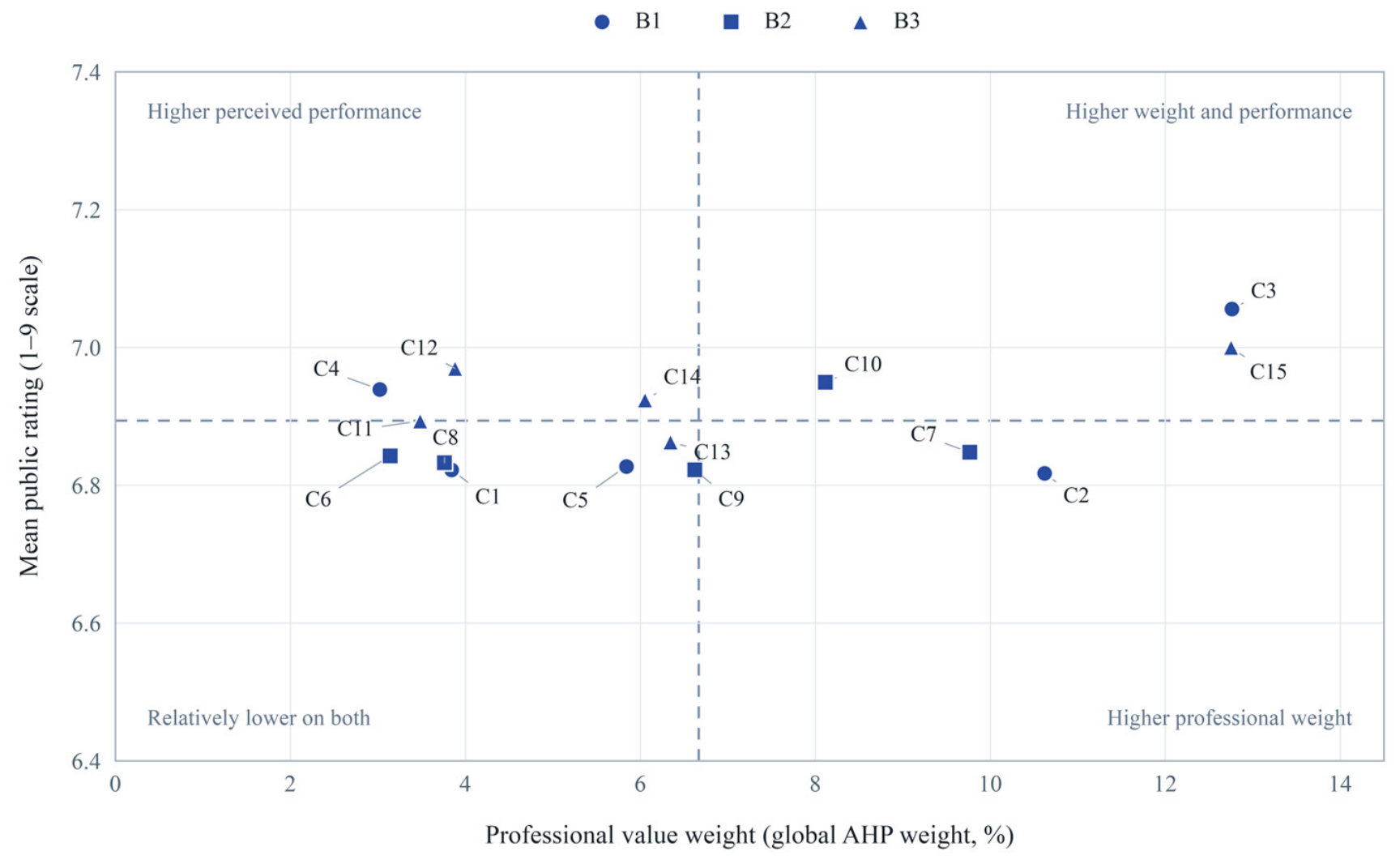
To examine the correspondence between professional value judgments and public perception, we presented the global AHP value weight and mean public rating for each of the 15 indicators side by side and plotted them in a scatterplot. The horizontal axis shows the professional value weight of each indicator, and the vertical axis shows its mean public rating. We used the equal-weight reference value (1/15) for the weights and the average of the 15 indicator means for the ratings to distinguish relatively high and low values.
4. Results
4.1. Professional Value Weights
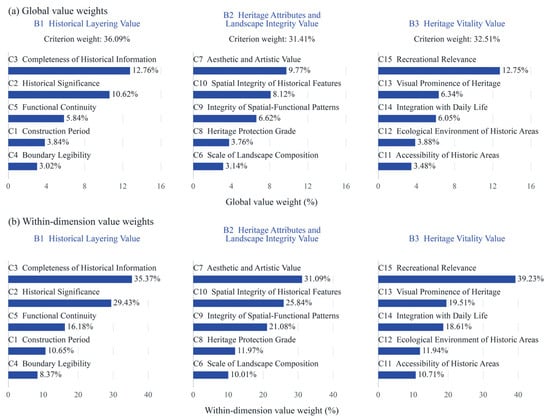
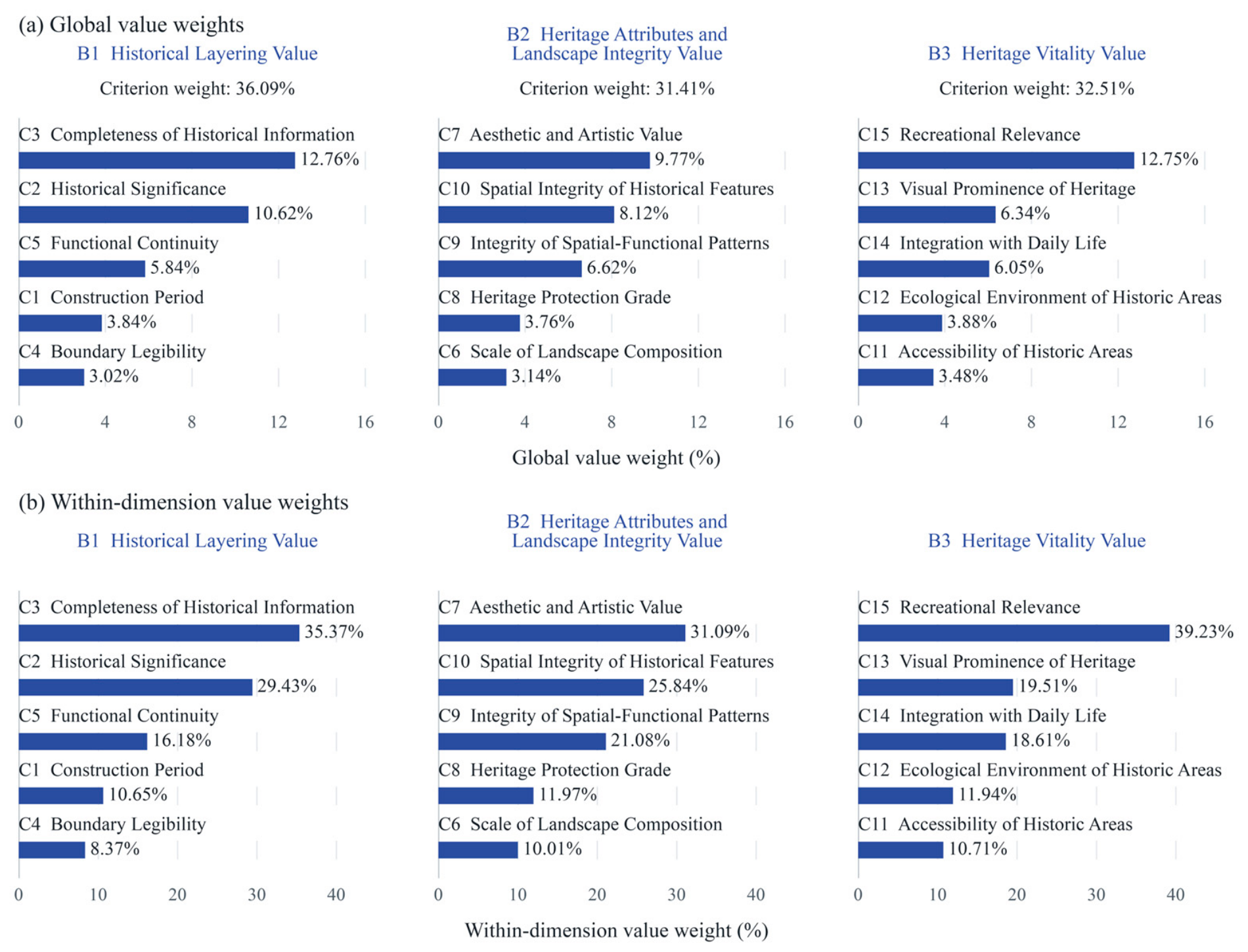
Completeness of Historical Information (C3) and Recreational Relevance (C15) had the highest global AHP value weights, at 12.76% and 12.75%, respectively (Figure 5a). At the criterion level, Historical Layering Value (B1) received a weight of 36.09%, Heritage Vitality Value (B3) 32.51%, and Heritage Attributes and Landscape Integrity Value (B2) 31.41%. This distribution reflects the experts’ emphasis on preserving historical information and on the contemporary recreational use of historic areas.
Figure 5.
AHP value weights from a professional perspective.
The experts emphasized different attributes within each dimension. In B1, Completeness of Historical Information (C3) and Historical Significance (C2) together accounted for 64.8% of the within-dimension weight. In B2, Aesthetic and Artistic Value (C7) and Spatial Integrity of Historical Features (C10) together accounted for 56.9%. In B3, Recreational Relevance (C15) accounted for 39.2% (Figure 5b). The three dimensions thus emphasized, respectively, the preservation of historical information and the meanings it conveys, the artistic qualities of heritage and the traditional character of historic areas, and recreational use.
4.2. Public Rating Distributions and Indicator Performance
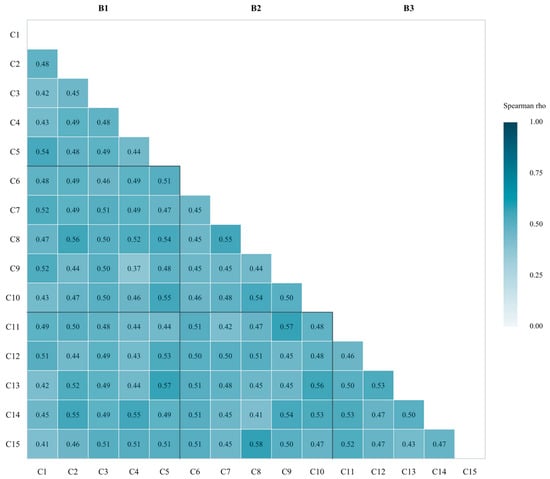
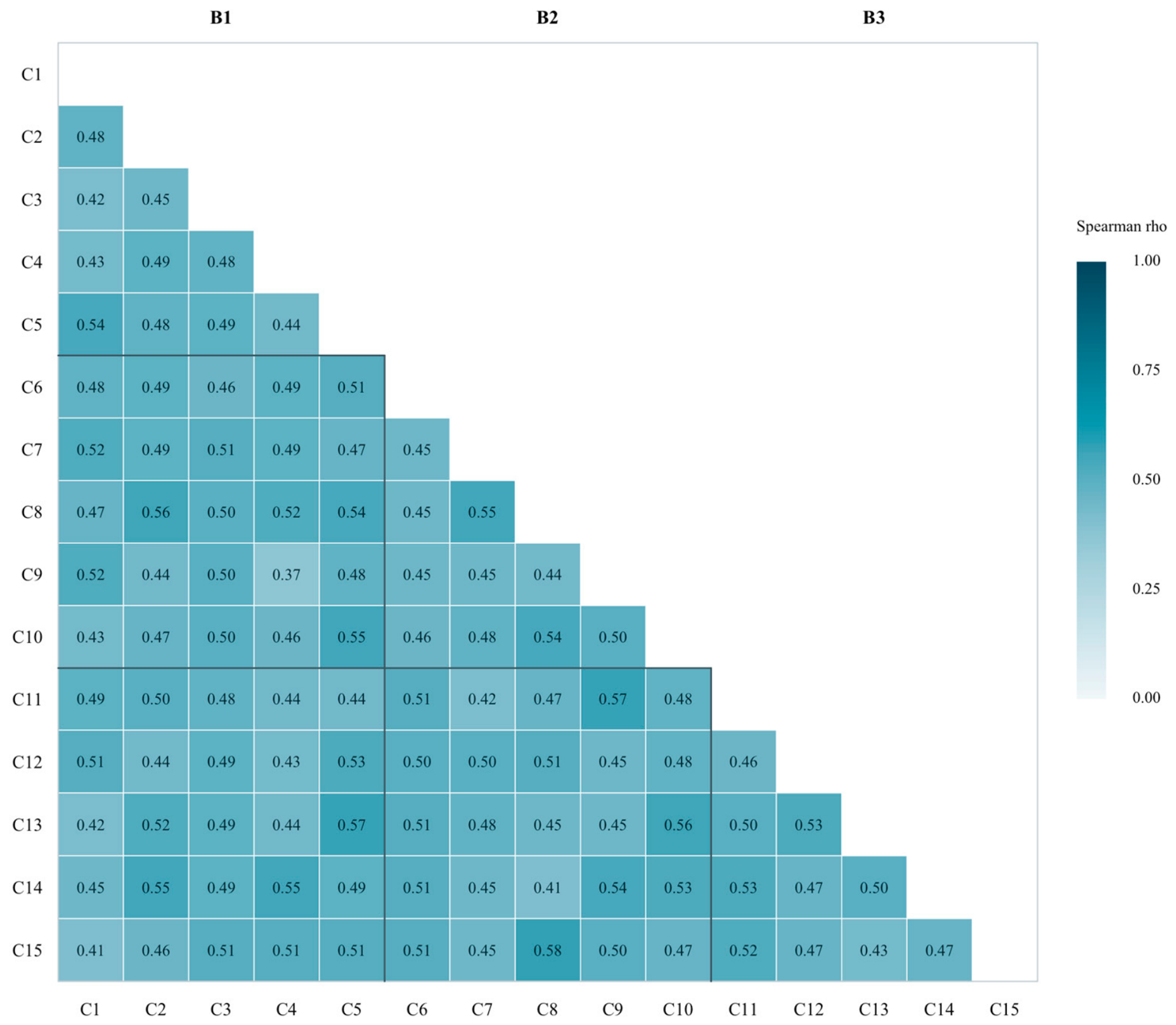
Respondents generally rated the statements toward the upper end of the scale. The 197 questionnaires yielded 2955 item ratings, of which 66.0% were between 7 and 9. Mean ratings were generally similar across indicators. Completeness of Historical Information (C3), Recreational Relevance (C15), and Ecological Environment of Historic Areas (C12) received relatively high ratings, while Historical Significance (C2) was rated lower (Table 4). Respondents gave comparatively favorable ratings to the preservation of historical information and to recreation and environmental conditions in historic areas. The pairwise Spearman correlations among the 15 items were all positive, ranging from 0.365 to 0.583. Respondents who rated one aspect of the city’s current conditions more favorably tended to give higher ratings to other aspects as well (Figure 6). The 95% confidence intervals for the indicator means are reported in Table S1 (Supplementary Material S1).
Table 4.
Mean public ratings by indicator.
Figure 6.
Spearman rank correlation matrix for the public rating items.
4.3. Weighted Perceived Performance Across the Three Dimensions
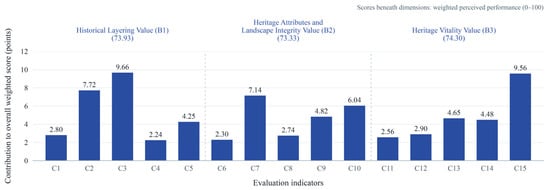
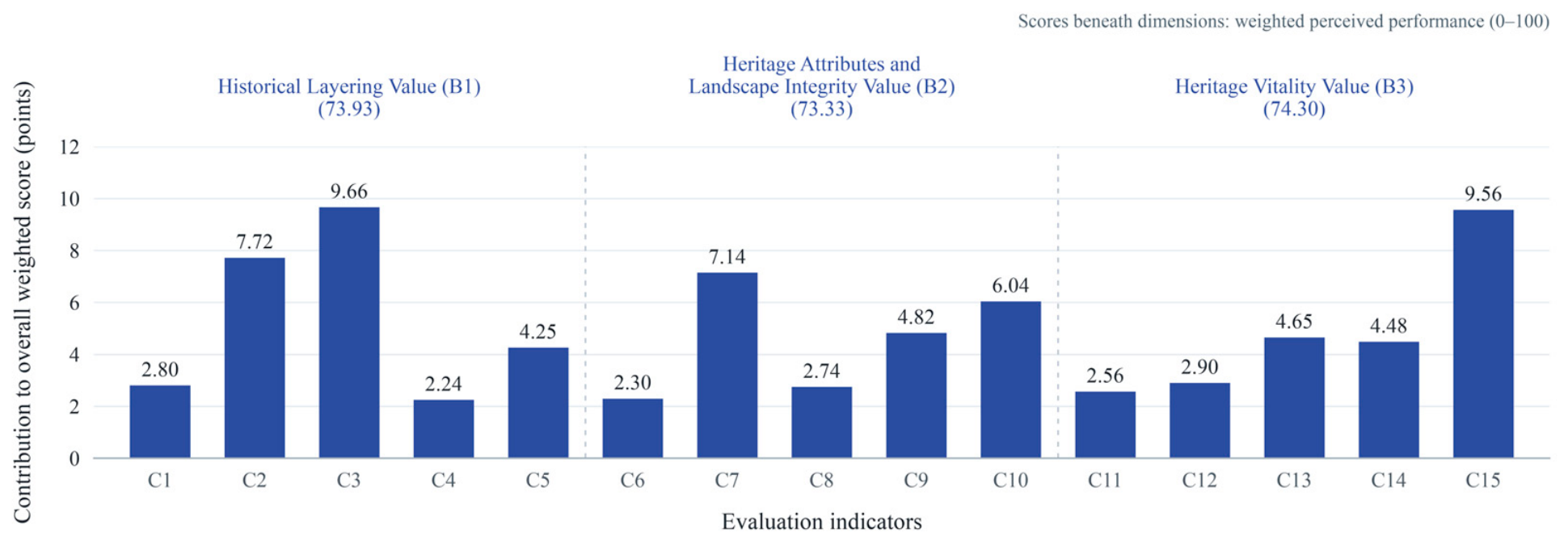
The overall weighted score was 73.86 on a 0–100 scale (Figure 7; Supplementary Material S1, Table S2). Weighted perceived performance was similar across the three dimensions (Supplementary Material S1, Table S3).
Figure 7.
Indicator contributions and dimension-level weighted perceived performance.
4.4. Professional Value Weights and Public Perceived Performance
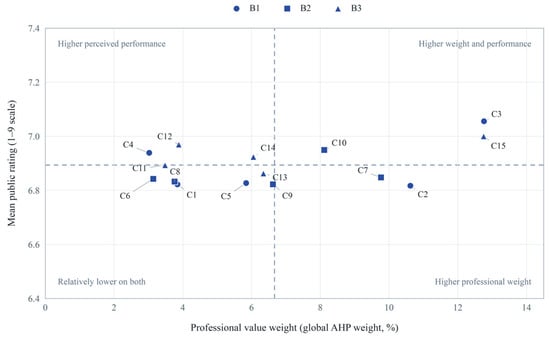
Completeness of Historical Information (C3), Spatial Integrity of Historical Features (C10), and Recreational Relevance (C15) fell in the “Higher weight and performance” quadrant, with weights and mean ratings above their respective reference values (Figure 8). The rating for C15 reflects respondents’ views on the willingness of residents and nearby tourists to visit historic areas for recreation.
Figure 8.
Professional value weights versus mean public ratings for the 15 indicators.
Historical Significance (C2) and Aesthetic and Artistic Value (C7) fell in the “Higher professional weight” quadrant. Their weights exceeded the equal-weight reference, but their mean ratings were below the average across indicators. Although the weights for C3 and C2 both exceeded the equal-weight reference, the mean rating was higher for the item on the preservation of historical traces than for the item on associated historical events and their significance.
Boundary Legibility (C4), Ecological Environment of Historic Areas (C12), and Integration with Daily Life (C14) fell in the “Higher perceived performance” quadrant. Their mean ratings were above the average across indicators, while their weights were below the equal-weight reference.
5. Discussion
5.1. Public Recognition of Historical Continuity and Contemporary Use
Respondents gave relatively high ratings to the items on the preservation of historical traces and traditional character. The item on willingness to visit historic areas for recreation also had a relatively high mean rating (Table 4). The HUL approach considers the built and natural environments together with sociocultural practices and recognizes that historic cities change over time [6]. In Zhengding, this means considering how people experience and use historic areas alongside the preservation of the historic fabric.
5.2. Professional Value Judgments and Public Appreciation of Place
Professional weights emphasized heritage features and their contemporary use. Public ratings overlapped with that emphasis on the preservation of historical traces, traditional character, and recreation. Respondents gave relatively high ratings to ecological conditions and links with daily life, while both items carried professional weights below the equal-weight reference (Figure 8).
Ma et al. likewise found that users’ evaluations of historic conservation areas in Foshan reflected both historic character and the amenities that shape their experience [60]. Research on heritage conservation emphasizes maintaining people’s ties to places over time [57], and work on the social value of built heritage shows how interpretations of value depend on the people involved and the circumstances of their lives [58]. The Zhengding ratings suggest that environmental quality and everyday use should be explicit concerns when setting objectives for conservation and renewal.
Although Completeness of Historical Information (C3) and Historical Significance (C2) both received relatively high professional value weights, the item on preserved historical traces received the higher mean public rating. The HUL Recommendation calls for understanding what historical layers mean to communities and for presenting those layers to visitors in context [6]. In Zhengding, the comparison suggests examining how existing interpretation connects surviving sites and structures with historical events and explains the city’s development over time.
5.3. Conservation Implications for Heritage Features and the Experience of Place
Heritage interpretation should connect individual sites across the city. Given the relatively high professional value weight and lower public rating for Historical Significance (C2), an account of the city’s development by historical period could link its gates, temples, and historic streets and explain what role each site played and which events were associated with it at different times. Historical maps, themed walking tours, and digital interpretation should reinforce this shared narrative to help people understand the historical relationships among sites and support public involvement in conservation [15].
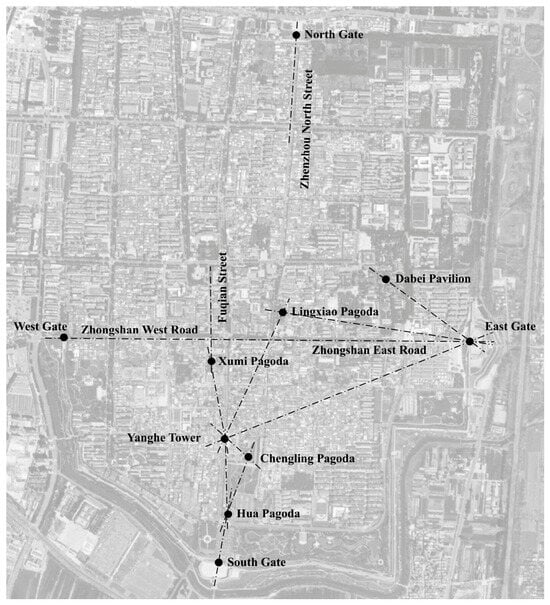
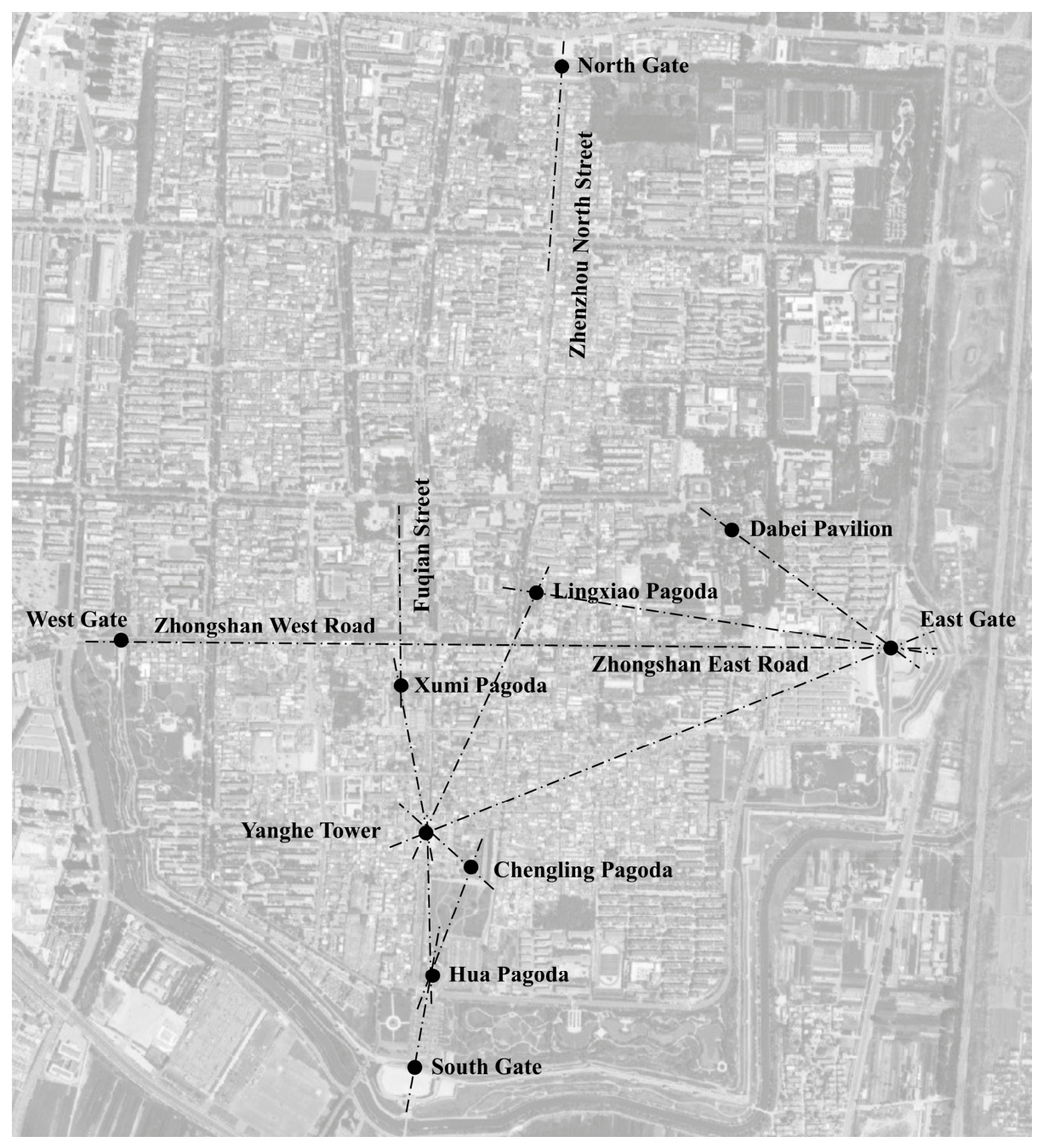
Conserving traditional character requires attention to heritage sites across the city and the historic streets that connect them. The professional weight and mean public rating for Spatial Integrity of Historical Features (C10) both exceeded the reference values shown in Figure 8, making the continuity of traditional character a shared concern. The landscape corridors emphasized in the Conservation Plan for the Historic City of Zhengding (2019–2035) are concentrated around sites in the southern part of the city, including Yanghe Tower, the four pagodas, and the East Gate. In the north, the mapped corridors show primarily the connection along Zhenzhou North Street to the North Gate (Figure 9). This concentration points to a need to consider north–south connections in conservation planning for the city as a whole. Alongside maintaining the links among heritage sites in the south, conservation management should reinforce continuity between the north and south by coordinating the treatment of street frontages, preserving the scale of historic streets and lanes, and keeping landmarks recognizable.
Figure 9.
Landscape corridors in Zhengding Ancient City, as depicted by the authors based on the conservation plan. Source: Authors’ drawing based on the Conservation Plan for the Historic City of Zhengding (2019–2035) [61].
Favorable public ratings of ecological conditions, connections to everyday life, and recreation should inform how public spaces in historic areas are renewed and managed. Around Yanghe Tower and along streets connecting heritage sites, project briefs and routine management reviews could address everyday access, places to rest, and upkeep of the public realm. The placement of amenities and the scheduling of activities should accommodate both community use and recreation. Reviews after implementation should seek public feedback on ease of access, the experience of spending time in these spaces, and whether everyday activities can continue. These reviews would help keep environmental quality and everyday use in view after renewal projects are completed.
5.4. Limitations and Future Research
The assessment linked professional conservation priorities and the aspects respondents rated favorably to specific issues: interpreting historical significance, maintaining traditional character, and supporting the use of historic places. Other historic cities could use the same assessment procedure, adapting the indicators and survey design to their heritage features, patterns of use, and conservation needs.
The professional value weights depend on the composition of the expert panel, and the confidence intervals reflect sampling variability with the weights held fixed. The public survey used geographically restricted non-probability convenience sampling. The anonymous dataset did not include demographics, resident or visitor status, or visit frequency. The findings describe the perceptions of the respondents in this sample. Future studies could draw on a wider range of professional backgrounds, broaden the coverage of the public sample, and collect information on respondents’ backgrounds to compare assessments across groups.
This study examined a single case, Zhengding Ancient City. Further comparative research is needed to establish whether the overall weighted score is comparable across historic cities. Public ratings were generally clustered, with small differences between some indicator means. The ordering of those indicators describes relative perceptions within this sample. Broader sampling and repeated surveys could test whether the relative ordering of similarly rated indicators persists across samples and survey waves, while interviews could help explain how perceptions vary across aspects of heritage. Comparisons across historic cities could use a common set of core indicators, weighting methods, and rating criteria, alongside historical sources and field records to help interpret public ratings of heritage significance and contemporary use.
6. Conclusions
In Zhengding Ancient City, professional weights emphasized heritage features and their contemporary use, while public ratings also drew attention to ecological conditions and everyday life. The item on preserving historical traces received a higher mean rating than the item on associated historical events and their significance. This contrast identifies heritage interpretation as an area for attention alongside preservation. Conservation and renewal in Zhengding should also maintain the continuity of traditional character between heritage sites and connecting streets, while attending to environmental quality and everyday use. Comparing professional weights with public ratings identifies where conservation priorities and public experience overlap and where they point to different management needs in Zhengding.
Supplementary Materials
The following supporting information can be downloaded at: https://www.mdpi.com/article/10.3390/buildings16234659/s1, Supplementary Material S1: Supplementary Results and AHP Matrices; Supplementary Material S2: Perception-Based Survey on the Historic Landscape of Zhengding Ancient City (Public Survey); Supplementary Material S3: Weighting Questionnaire for the Historic Urban Landscape (HUL) Evaluation Index System (Professional Survey).
Author Contributions
Z.Z. (Zehuan Zhang): Conceptualization, Methodology, Investigation, Formal analysis, Writing—original draft. Z.Z. (Zhengnan Zhong): Investigation, Data curation, Formal analysis, Writing—review & editing. B.S.: Investigation, Resources, Visualization, Writing—review & editing. Y.Z.: Conceptualization, Methodology, Supervision, Writing—review & editing. All authors have read and agreed to the published version of the manuscript.
Funding
This research was supported by the National Social Science Fund of China under the Key Project “Value Research and Digital Representation of the Great Wall National Cultural Park” (Grant No. 21AZD055).
Institutional Review Board Statement
The study was conducted in accordance with the Declaration of Helsinki and applicable institutional research ethics requirements. The Human Research Ethics Committee for Non-Clinical Faculties at City University of Macau reviewed and approved the study and the use of anonymous survey data on 19 November 2025 (approval no. RE-IUSD-25006).
Informed Consent Statement
Before completing the questionnaire, all public survey respondents were informed of the study’s academic purpose, how their responses would be used without identifying them, and their right to withdraw. All respondents provided electronic informed consent to participate. Participation was voluntary and anonymous, and the survey collected no personally identifiable information or sensitive personal data.
Data Availability Statement
The data presented in this study are available on request from the corresponding author.
Conflicts of Interest
The authors declare no conflict of interest.
References
- Taylor, K. The Historic Urban Landscape paradigm and cities as cultural landscapes. Challenging orthodoxy in urban conservation. Landsc. Res. 2016, 41, 471–480. [Google Scholar] [CrossRef] [Scilit]
- Jones, S. Wrestling with the Social Value of Heritage: Problems, Dilemmas and Opportunities. J. Community Archaeol. Herit. 2017, 4, 21–37. [Google Scholar] [CrossRef] [Scilit]
- Tweed, C.; Sutherland, M. Built cultural heritage and sustainable urban development. Landsc. Urban Plan. 2007, 83, 62–69. [Google Scholar] [CrossRef] [Scilit]
- Mason, R. Assessing values in conservation planning: Methodological issues and choices. In Assessing the Values of Cultural Heritage: Research Report; de la Torre, M., Ed.; Getty Conservation Institute: Los Angeles, CA, USA, 2002; pp. 5–30. Available online: https://www.getty.edu/publications-reports/item/2K7KZQ (accessed on 17 November 2026).
- Araoz, G. Conservation Philosophy and its Development: Changing Understandings of Authenticity and Significance. Herit. Soc. 2013, 6, 144–154. [Google Scholar] [CrossRef] [Scilit]
- UNESCO. Recommendation on the Historic Urban Landscape, Including a Glossary of Definitions; UNESCO: Paris, France, 2011; Available online: https://www.unesco.org/en/legal-affairs/recommendation-historic-urban-landscape-including-glossary-definitions (accessed on 17 November 2026).
- Cao, Y.; Li, H. Diachrony and synchronism in the protection of historical towns: Enlightenment and thought of “Historic Urban Landscape”. Urban Dev. Stud. 2019, 26, 13–20. (In Chinese) [Google Scholar]
- Ginzarly, M.; Houbart, C.; Teller, J. The Historic Urban Landscape approach to urban management: A systematic review. Int. J. Herit. Stud. 2019, 25, 999–1019. [Google Scholar] [CrossRef] [Scilit]
- Pendlebury, J. Conservation values, the authorised heritage discourse and the conservation-planning assemblage. Int. J. Herit. Stud. 2013, 19, 709–727. [Google Scholar] [CrossRef] [Scilit]
- ICOMOS. International Charter for the Conservation and Restoration of Monuments and Sites (The Venice Charter); ICOMOS: Paris, France, 1964; Available online: https://www.icomos.org/images/DOCUMENTS/Charters/venice_e.pdf (accessed on 17 November 2026).
- Ismail, N.; Masron, T.; Ahmad, A. Cultural Heritage Tourism in Malaysia: Issues and Challenges. SHS Web Conf. 2014, 12, 01059. [Google Scholar] [CrossRef] [Scilit]
- Timothy, D.J. Contemporary Cultural Heritage and Tourism: Development Issues and Emerging Trends. Public Archaeol. 2014, 13, 30–47. [Google Scholar] [CrossRef] [Scilit]
- Barthel-Bouchier, D. Cultural Heritage and the Challenge of Sustainability; Routledge: New York, NY, USA, 2016. [Google Scholar] [CrossRef] [Scilit]
- Council of Europe. European Landscape Convention (ETS No. 176); Council of Europe: Florence, Italy, 2000; Available online: https://www.coe.int/en/web/conventions/full-list?module=treaty-detail&treatynum=176 (accessed on 17 November 2026).
- Australia ICOMOS. The Burra Charter: The Australia ICOMOS Charter for Places of Cultural Significance, 2013; Australia ICOMOS: Burwood, VIC, Australia, 2013; Available online: https://australia.icomos.org/wp-content/uploads/The-Burra-Charter-2013-Adopted-31.10.2013.pdf (accessed on 17 November 2026).
- UNESCO. Vienna Memorandum on “World Heritage and Contemporary Architecture—Managing the Historic Urban Landscape”; UNESCO: Paris, France, 2005; Available online: https://whc.unesco.org/archive/2005/whc05-15ga-inf7e.pdf (accessed on 17 November 2026).
- Veldpaus, L.; Pereira Roders, A.R.; Colenbrander, B.J.F. Urban Heritage: Putting the Past into the Future. Hist. Environ. Policy Pract. 2013, 4, 3–18. [Google Scholar] [CrossRef] [Scilit]
- Bandarin, F.; van Oers, R. The Historic Urban Landscape: Managing Heritage in an Urban Century; Wiley-Blackwell: Chichester, UK, 2012. [Google Scholar]
- UNESCO. New Life for Historic Cities: The Historic Urban Landscape Approach Explained; UNESCO: Paris, France, 2013; Available online: https://whc.unesco.org/en/activities/727/ (accessed on 17 November 2026).
- Jiang, J.; Zhou, T.; Han, Y.; Ikebe, K. Urban Heritage Conservation and Modern Urban Development from the Perspective of the Historic Urban Landscape Approach: A Case Study of Suzhou. Land 2022, 11, 1251. [Google Scholar] [CrossRef] [Scilit]
- Mubaideen, S.; Al Kurdi, N. Heritage conservation and urban development: A supporting management model for the effective incorporation of archaeological sites in the planning process. J. Cult. Herit. 2017, 28, 117–128. [Google Scholar] [CrossRef] [Scilit]
- Guzmán, P.C.; Roders, A.R.P.; Colenbrander, B.J.F. Measuring links between cultural heritage management and sustainable urban development: An overview of global monitoring tools. Cities 2017, 60, 192–201. [Google Scholar] [CrossRef] [Scilit]
- Lynch, K. The Image of the City; MIT Press: Cambridge, MA, USA, 1960; Available online: https://mitpress.mit.edu/9780262620017/the-image-of-the-city/ (accessed on 17 November 2026).
- Rey-Pérez, J.; Pereira Roders, A. Historic urban landscape: A systematic review, eight years after the adoption of the HUL approach. J. Cult. Herit. Manag. Sustain. Dev. 2020, 10, 233–258. [Google Scholar] [CrossRef] [Scilit]
- Rong, W. Research hotspots and trends in the Historic Urban Landscape: A bibliometric perspective. J. Asian Archit. Build. Eng. 2026, 25, 3853–3873. [Google Scholar] [CrossRef] [Scilit]
- Wang, S.; Gu, K. Pingyao: The historic urban landscape and planning for heritage-led urban changes. Cities 2020, 97, 102489. [Google Scholar] [CrossRef] [Scilit]
- van der Hoeven, A. Historic urban landscapes on social media: The contributions of online narrative practices to urban heritage conservation. City Cult. Soc. 2019, 17, 61–68. [Google Scholar] [CrossRef] [Scilit]
- Kırmızı, Ö.; Karaman, A. A participatory planning model in the context of Historic Urban Landscape: The case of Kyrenia’s Historic Port Area. Land Use Policy 2021, 102, 105130. [Google Scholar] [CrossRef] [Scilit]
- Liu, Y. The Anchoring-Layering Theory: For a Better Understanding and Conservation of Historic Urban Landscape. Doctoral Dissertation, Tsinghua University, Beijing, China, 2014. (In Chinese) [Google Scholar]
- Chen, J.; Liu, T.; Yue, J.; Guo, J. Constructing actor-network in historic urban landscape: A study of banyan tree open space on Gulangyu Island. Chin. Landsc. Archit. 2025, 41, 13–20. (In Chinese) [Google Scholar] [CrossRef]
- Yang, X.; Shen, J. Integrating historic landscape characterization for historic district assessment through multi-source data: A case study from Hangzhou, China. npj Herit. Sci. 2025, 13, 33. [Google Scholar] [CrossRef] [Scilit]
- Ashrafi, B.; Kloos, M.; Neugebauer, C. Heritage Impact Assessment, beyond an Assessment Tool: A comparative analysis of urban development impact on visual integrity in four UNESCO World Heritage Properties. J. Cult. Herit. 2021, 47, 199–207. [Google Scholar] [CrossRef] [Scilit]
- Cucco, P.; Maselli, G.; Nesticò, A.; Ribera, F. An evaluation model for adaptive reuse of cultural heritage in accordance with 2030 SDGs and European Quality Principles. J. Cult. Herit. 2023, 59, 202–216. [Google Scholar] [CrossRef] [Scilit]
- Ferretti, V.; Bottero, M.; Mondini, G. Decision making and cultural heritage: An application of the Multi-Attribute Value Theory for the reuse of historical buildings. J. Cult. Herit. 2014, 15, 644–655. [Google Scholar] [CrossRef] [Scilit]
- Rey-Pérez, J.; Siguencia Ávila, M.E. Historic urban landscape: An approach for sustainable management in Cuenca (Ecuador). J. Cult. Herit. Manag. Sustain. Dev. 2017, 7, 308–327. [Google Scholar] [CrossRef] [Scilit]
- Ginzarly, M.; Roders, A.P.; Teller, J. Mapping historic urban landscape values through social media. J. Cult. Herit. 2019, 36, 1–11. [Google Scholar] [CrossRef] [Scilit]
- Lu, Y.; Xu, S.; Liu, S.; Wu, J. An approach to urban landscape character assessment: Linking urban big data and machine learning. Sustain. Cities Soc. 2022, 83, 103983. [Google Scholar] [CrossRef] [Scilit]
- Deng, Z.; Chen, D.; Qin, X.; Wang, S. Comprehensive assessment to residents’ perceptions to historic urban center in megacity: A case study of Yuexiu District, Guangzhou, China. J. Asian Archit. Build. Eng. 2021, 20, 566–580. [Google Scholar] [CrossRef] [Scilit]
- Chen, X.; Chen, H.; Liu, J.; Zhao, Y. Landscape evaluation and optimization of urban historic waterfront spaces. J. Asian Archit. Build. Eng. 2026, 1–19. [Google Scholar] [CrossRef] [Scilit]
- Zhu, Q. Industrial Heritage Corridor Construction of the Jiangnan Part of the Great Canal. Doctoral Dissertation, Peking University, Beijing, China, 2007. (In Chinese) [Google Scholar]
- Zhang, Y.; Xia, J. Evaluation of the city industrial heritage. J. Suzhou Univ. Sci. Technol. (Eng. Technol. Ed.) 2008, 21, 41–44. (In Chinese) [Google Scholar]
- Lei, Z.; Luo, J.; Cao, L. Quantitative research on historic city landscape value assessment based on AHP-GIS: Taking Taiyuan, a historic and cultural city, as an example. J. Taiyuan Univ. Technol. 2021, 52, 630–637. (In Chinese) [Google Scholar]
- Cao, Y.; Li, H. Construction of heritage value cognitive framework from the perspective of historic urban landscape. Urban Dev. Stud. 2023, 30, 80–87. (In Chinese) [Google Scholar]
- Zhao, X. Reconstructing the plan of Zhengding Ancient City. J. Natl. Mus. China 2017, 6–22. Available online: https://www.chnmuseum.cn/yj/xscg/xslw/201812/t20181224_36605.shtml (accessed on 17 November 2026). (In Chinese)
- Zhengding County CPPCC Literature and History Committee. Millennial Zhengding City; People’s Daily Press: Beijing, China, 2014. (In Chinese) [Google Scholar]
- Zhao, W. (Compiler) Zhengding County Gazetteer: Guangxu First Year; Hebei People’s Publishing House: Shijiazhuang, China, 2008. (In Chinese) [Google Scholar]
- Riegl, A. Der Moderne Denkmalkultus: Sein Wesen und Seine Entstehung; W. Braumüller: Vienna, Austria, 1903; Available online: https://diglib.tugraz.at/der-moderne-denkmalkultus-1903 (accessed on 17 November 2026).
- Holtorf, C. Perceiving the Past: From Age Value to Pastness. Int. J. Cult. Prop. 2017, 24, 497–515. [Google Scholar] [CrossRef] [Scilit]
- Mendes Zancheti, S.; Piccolo Loretto, R. Dynamic integrity: A concept to historic urban landscape. J. Cult. Herit. Manag. Sustain. Dev. 2015, 5, 82–94. [Google Scholar] [CrossRef] [Scilit]
- Bullen, P.A.; Love, P.E.D. Adaptive reuse of heritage buildings. Struct. Surv. 2011, 29, 411–421. [Google Scholar] [CrossRef] [Scilit]
- Cheng, Y.; Mao, H.; Ho, P.; Wu, Y.; Zhang, C.; Xiao, T. A fusion framework to bridge expert and public perception gaps in cultural heritage conservation. npj Herit. Sci. 2026, 14, 46. [Google Scholar] [CrossRef] [Scilit]
- Whitehand, J. Urban morphology and historic urban landscapes. In Managing Historic Cities; van Oers, R., Haraguchi, S., Eds.; World Heritage Papers 27; UNESCO World Heritage Centre: Paris, France, 2010; pp. 35–43. Available online: https://whc.unesco.org/documents/publi_wh_papers_27_en.pdf (accessed on 17 November 2026).
- Jokilehto, J. Reflection on historic urban landscapes as a tool for conservation. In Managing Historic Cities; van Oers, R., Haraguchi, S., Eds.; World Heritage Papers 27; UNESCO World Heritage Centre: Paris, France, 2010; pp. 53–63. Available online: https://whc.unesco.org/documents/publi_wh_papers_27_en.pdf (accessed on 17 November 2026).
- Zhang, Y.; Han, Y. Vitality evaluation of historical and cultural districts based on the values dimension: Districts in Beijing City, China. Herit. Sci. 2022, 10, 137. [Google Scholar] [CrossRef] [Scilit]
- Huang, J.; Hu, X.; Wang, J.; Lu, A. How Diversity and Accessibility Affect Street Vitality in Historic Districts? Land 2023, 12, 219. [Google Scholar] [CrossRef] [Scilit]
- Kang, N.; Liu, C. Assessment of visual quality and social perception of cultural landscapes: Application to Anyi traditional villages, China. Herit. Sci. 2024, 12, 235. [Google Scholar] [CrossRef] [Scilit]
- Chen, Y.; Wang, Y.-W. Approaches to sustaining people–place bonds in conservation planning: From value-based, living heritage, to the glocal community. Built Herit. 2024, 8, 10. [Google Scholar] [CrossRef] [Scilit]
- Rossitti, M.; Oteri, A.M.; Torrieri, F. The social value of built heritage: An interdisciplinary discourse. Built Herit. 2025, 9, 5. [Google Scholar] [CrossRef] [Scilit]
- Du, J.; Wang, Y. The influence of perceived landscape value on tourists’ behavioral intentions in historical and cultural blocks. PLoS ONE 2025, 20, e0312491. [Google Scholar] [CrossRef] [Scilit] [PubMed]
- Ma, Y.; Wang, S.; Wang, Z.; Chen, G. Contemporary Demands of Scenes in Urban Historic Conservation Areas: A Case Study of Subjective Evaluations from Foshan, China. Buildings 2024, 14, 2837. [Google Scholar] [CrossRef] [Scilit]
- Zhengding County Bureau of Natural Resources and Planning; Shanghai Tongji Urban Planning & Design Institute. Conservation Plan for the Historic City of Zhengding (2019–2035); [Drawings released for public consultation]; Zhengding County Bureau of Natural Resources and Planning: Shijiazhuang, China, 2020. Available online: https://www.zd.gov.cn/columns/387fd0e9-9f02-4ccc-ac12-d3b36f9e95fa/202112/13/c823b345-df9a-4f6f-818d-8d642cb375c1.html (accessed on 17 November 2026). (In Chinese)

Disclaimer/Publisher’s Note: The statements, opinions and data contained in all publications are solely those of the individual author(s) and contributor(s) and not of MDPI and/or the editor(s). MDPI and/or the editor(s) disclaim responsibility for any injury to people or property resulting from any ideas, methods, instructions or products referred to in the content. |
© 2026 by the authors. Licensee MDPI, Basel, Switzerland. This article is an open access article distributed under the terms and conditions of the Creative Commons Attribution (CC BY) license.