


Abstract
The rapid transformation of the construction industry driven by digitalization, sustainability requirements, and evolving project delivery methods has increased the need for civil engineering curricula that are responsive to industry demands. This study evaluated the alignment between civil engineering education and construction-industry requirements by comparing the perspectives of civil engineering graduates and industry practitioners. A cross-sectional descriptive-comparative research design was employed involving 127 respondents, consisting of 79 civil engineering graduates with less than three years of professional experience and 48 industry practitioners with more than three years of construction-related experience. Data were collected using a researcher-developed questionnaire covering four dimensions: curriculum relevance and adequacy, observed competency deficiencies, preparedness for emerging technologies and practices, and recommended curricular reforms. Descriptive statistics, reliability analysis, Mann–Whitney U tests, weighted ranking analysis, and thematic analysis were performed. The instrument demonstrated excellent reliability, with Cronbach’s alpha values ranging from 0.914 to 0.959. Results indicated that both graduates and industry practitioners perceived the current curriculum as insufficiently aligned with contemporary construction-industry needs and identified competency gaps primarily related to construction software proficiency, planning and scheduling, contract administration, and site supervision. Although respondents considered the curriculum to provide moderate preparation for emerging technologies, substantial gaps remained in areas such as Building Information Modeling (BIM), digital construction tools, artificial intelligence, data analytics, and reality-capture technologies. No statistically significant differences were observed between graduates and industry practitioners across the four assessment dimensions (p > 0.05), indicating a strong consensus regarding curriculum strengths, deficiencies, and future priorities. Internship and industry immersion programs, construction planning and scheduling, industry-based case studies, software training, and BIM education emerged as the highest-priority curricular reforms. The findings highlight the need for a more industry-responsive and technology-oriented civil engineering curriculum that strengthens experiential learning, digital competencies, and industry engagement to better prepare graduates for the evolving demands of the construction sector.
1. Introduction
The construction industry continues to be an essential source of national development as it provides the physical infrastructure needed for transportation, homes, utilities, business, disaster protection, and public services [1,2]. It is a significant sector in the Philippines for economic activity and employment, but it still suffers from long-term problems of project delays, cost overruns, rework, quality problems, poor coordination, construction waste, safety problems, and low technology adoption [3]. The recurring challenges demonstrate that construction performance is not only dependent on the bodies of technical engineering knowledge, but also the ability of civil engineering graduates to apply those bodies of knowledge in real construction projects that need to handle time, cost, quality, safety, sustainability, communication, documentation and coordination of stakeholders simultaneously [4,5].
In the Philippines, the Bachelor of Science in Civil Engineering program is guided by the policies, standards and guidelines of the Commission on Higher Education as detailed in CMO No. 92, series of 2017 [6]. The BSCE program is prescribed to develop graduates who have the skills and knowledge needed to plan, design, construct, operate, and maintain infrastructure systems using mathematics, natural sciences, engineering principles, and specialized knowledge in civil engineering [7,8]. The same policy identifies outcomes for the program as solutions to complex civil engineering problems, engineering systems designed within reasonable constraints, application of modern engineering tools, effective communication, functioning within a multidisciplinary team, understanding of ethical responsibility, recognition of contemporary issues, lifelong learning, and application of engineering management principles [6,9]. These requirements set the baseline of the formal curriculum but the extent to which the curriculum is seen as being adequate for genuine construction industry practice is an empirical issue.
Thus, curriculum development in civil engineering education is therefore becoming an important concern to address whether there is alignment between the needs of the construction industry and the needs of civil engineering education [10,11]. Walewski and Kim noted that the skills needed by professionals in construction are constantly changing and the question for universities is whether their graduates are equipped to meet changing demands of construction, such as BIM, collaborative project management, globalization and sustainability [12,13]. This concern is especially important for civil engineering as the traditional technical fundamentals like structural analysis, geotechnical engineering, transportation engineering, hydraulics, surveying, construction materials and construction methods are still considered as essential but not sufficient. These principles are now being expected to be applied in construction functions including the ability to interpret plans and specifications, provide estimates, track schedules, coordinate work packages, oversee project activities in the field, record project information, ensure adherence to quality and safety requirements, and make decisions under realistic project constraints [5,14].
A recurring theme in the literature is the need for civil engineering and construction graduates to develop professional and managerial skills in addition to technical skills [15,16]. Planning and scheduling, procurement, risk management, site administration, decision making, leadership, ethics and professionalism are identified in the construction field as necessary skills for entry-level civil engineering graduates to enter into construction practice [17,18].
Systematic reviews of construction project manager competencies further confirm that technical expertise alone is insufficient; personal attributes, leadership, and communication consistently rank among the most critical determinants of construction project success [19]. Empirical comparative studies across industry and academic stakeholders similarly indicate that graduates are often underprepared in commercial awareness, quantity take-off, contract administration, and financial management—competencies that receive limited emphasis in traditional engineering curricula [20,21].
From the perspective of the Philippine labor-market context, curriculum relevance has been correlated with authentic practical work experiences, as well as aligning graduate competencies with the graduate expectations of employers [22]. Even when students’ overall internship performance is rated high, engineering employability research also suggests the continued need for developing students’ system thinking, critical thinking, interpersonal skills, and competencies for the workplace [23]. Likewise, research on civil engineering graduates and employers has identified that while graduates might have the necessary technical knowledge, they may not be sufficiently prepared to deal with project management, communication, teamworking, responsibility, professional judgment or transferable workplace skills [24].
To situate these observations within an internationally recognized framework, the IPMA Individual Competence Baseline (ICB) offers a structured taxonomy of project management competencies organized across three domains: Perspective, People, and Practice [25]. The Practice domain encompasses methodical and technical competencies such as planning, scheduling, risk management, and quality control; the People domain covers behavioral competencies including communication, leadership, teamwork, and conflict management; and the Perspective domain addresses contextual and strategic competencies such as governance, stakeholder alignment, and organizational awareness [26]. Mapping the competency expectations of civil engineering graduates against this framework reveals a systematic pattern: engineering curricula tend to address Practice competencies (technical knowledge) while substantially underrepresenting People and Perspective competencies—precisely the areas in which employers most frequently report deficiencies [27]. The ICB has therefore been proposed in the literature as a useful benchmarking reference for curriculum design, enabling more explicit alignment between programme learning outcomes, professional certification requirements, and industry expectations [26].
Other research on university–market alignment also shows that civil engineering programs need to communicate more effectively with industry and/or business because of a lack of employability skills [28] and that construction management programs should address and improve communication, business management, and practical readiness in construction management [29]. These studies collectively indicate that the commitment to curriculum adequacy should include more than just technical coverage, but it should also include the graduate’s ability to function responsibly, clearly, effectively, and professionally in construction situations.
There is also recent evidence to add to the worry about transitioning from education to construction work smoothly. Bhattarai et al. found that soft skills, professional competency, general technical skills and trade-specific skills were still areas of discrepancy between employers’ perceptions and graduates’ self-assessment in the construction industry [30]. Their findings also show the importance of institutional infrastructure and on-the-job training in strengthening graduate readiness [30]. This is relevant to the present study because Civil Engineering graduates are not hired into construction projects to solve individual technical problems; they join project systems in which their competence to understand information, communicate with people, record work, manage constraints, and apply learning from feedback in the workplace have an impact on project performance. Therefore, internship, field exposure and industry immersion should not be seen as an add-on to the curriculum, but rather as a vital connection between preparation and practice in the construction industry [31,32].
Meanwhile, the way projects are delivered is quickly changing in the modern era due to safety demands, digital solutions, and sustainability goals [33,34]. The issue of construction safety is still one of the most important concerns, as graduates seeking entry into construction-related activities need to understand hazard identification, risk assessment, safety procedures, regulatory responsibilities, and how to apply construction safety knowledge in real construction work environments [35]. In addition to safety, the civil engineering field is experiencing a growing impact from Industry 4.0, digitalization, Building Information Modelling (BIM), data analysis and automation, smart construction and other technological advancements that demand a continuous development of skills [36]. Kamaruzaman et al. also confirmed that 4IR requires civil engineers to acquire communication, problem-solving, leadership, emotional intelligence, creativity, critical thinking, adaptability, digital, and management skills at an entry level to stay relevant in a changing job market [37]. Even in the Philippines, BIM is known as a potential solution for productivity and coordination issues in the construction sector, however, it is not widely adopted as many practitioners are not aware of it and there is a lack of integration in undergraduate engineering and architecture courses [3]. In addition, sustainability stretches the competencies that are expected of civil engineers, as they must now take resource efficiency, life cycle thinking, environmental impacts, energy performance, waste reduction, and social responsibility into account when making project choices [38]. These changes demonstrate that alignment with the curriculum needs to include aspects of current construction work as well as the new technologies, sustainable practice and modern approaches to project delivery.
The Philippine context also highlights the need for improved industry–academe relationship. Poso and Tana observed that industry–academia collaboration in Philippine civil engineering is affected by barriers such as limited time, limited resources, institutional misalignment, administrative constraints, and differences between academic and industry priorities [39]. However, it is still essential to continue this collaboration since the industry can keep programs relevant to construction project management, technology advances, infrastructure sustainability and professional development [40,41]. In the field of civil engineering education, this implies that the curriculum should not just be improved in accordance with internal academic review but should also incorporate the feedback from graduates who have undergone the curriculum and from practitioners who observe the performance of graduates in real construction projects [42,43].
Despite the existence of a CHED-prescribed BSCE curriculum and the growing body of literature on employability, construction competencies, internship performance, safety education, BIM adoption, sustainability, 4IR skills, and industry–academe collaboration, a specific gap remains. Several studies address only graduate perceptions, others focus on employer expectations, and others address curriculum reform in general without specifically comparing graduate and industry perspectives on the same issues involving curriculum concerns associated with the construction industry [44,45]. Besides, research conducted in the Philippines regarding curriculum relevance, if any, is generally broad and is not specifically geared toward the preparation of civil engineering graduates from Philippine higher education institutions for work in the construction industry. Therefore, a focused study is still needed to determine whether the present Philippine civil engineering curriculum, as experienced by the graduates and as observed by the practitioners, is considered relevant, adequate and responsive to current and emerging needs of the construction industry.
This study aims to evaluate the alignment between civil engineering education and the competency requirements of the Philippine construction industry through a comparative assessment of civil engineering graduates and industry practitioners. Specifically, the study seeks to: (1) assess the perceived relevance and adequacy of the current civil engineering curriculum in preparing graduates for construction-industry practice; (2) identify the technical and professional competency deficiencies commonly observed among civil engineering graduates entering the construction sector; (3) evaluate the extent to which the curriculum prepares graduates for emerging construction technologies, sustainability initiatives, and modern industry practices; (4) compare the perceptions of graduates and industry practitioners regarding curriculum adequacy, competency gaps, emerging industry needs, and recommended curricular reforms; and (5) determine the priority curricular improvements, learning experiences, and industry-oriented interventions that may strengthen curriculum–industry alignment and improve graduate preparedness for future workforce demands. Through these objectives, curriculum alignment is examined not merely as compliance with academic requirements but as the extent to which academic preparation, graduate competencies, and industry expectations converge to support successful professional practice in the construction sector.
The concept of curriculum-industry alignment in this study is defined as the relationship between curriculum preparation, graduate competencies and the demands of the construction industry. Technical courses, professional courses, laboratory work, field exposure, internship or OJT, safety training, sustainability courses and technology related courses are part of the curriculum preparation. Graduate competencies are the knowledge, skills, attitudes, and professional behaviors exhibited by civil engineering graduates during the transition to construction [31,46]. Construction industry demands are the technical, managerial, technological, sustainability, and project delivery skills or knowledge contractors, consultants, project managers, site engineers, cost engineers, safety workers, and other construction practitioners require in order to perform their duties [5]. Alignment can be defined as when all three components reinforce each other, and misalignment can be defined as when graduates’ preparation is not sufficiently aligned with current or future workplace needs.
This study only covers the perceptions of the respondents who finished their civil engineering course in the Philippines. These respondents may be currently practicing either in the Philippines or outside the Philippines, provided that they graduated from a Philippine civil engineering program and have sufficient experience to assess the relevance of their academic preparation to construction-industry work. This study concentrates on the construction-related work such as planning, estimating, construction project controls, construction implementation on site, quality and safety management, design coordination, construction sustainability, digital construction and modern project delivery. It does not assess national civil engineering education system, compliance of institutions to accreditation requirements, examination result of licensure or the productivity of graduates directly. Instead, it relies on the perception of civil engineering graduates and civil engineering practitioners who are educated in the Philippines as a basis for the degree of alignment of the curriculum to the industry, due to their direct exposure to assess how well the curriculum is aligned to industry and practice in construction.
The value of this research work can be seen in its ability to contribute in the enhancement of the civil engineering curriculum, in the preparation of graduates for their future jobs, and in industry–academic collaboration. The results may be used as evidence-based input for higher education institutions to enhance construction-related education, design internships, laboratory/field-based learning, exposure to BIM and digital construction, safety education, sustainability integration, and project management applications. For curriculum developers and faculty members, the results could provide information about which technical and professional skills need to be placed on a greater focus in the curriculum. The research offers a framework for construction practitioners and companies to use as a guide for verbalizing the skills that should be expected from an entry-level civil engineer. Learners and graduates can use the findings to gain a deeper understanding of the skills that are required to develop their employability and their performance from the outset of their career. In general, the study will contribute towards the development of civil engineering graduates from Philippine higher education institutions that are technically competent, professionally prepared, technologically aware, and sustainability minded and responsive to the current and emerging demands of the building industry.
2. Research Methodology
2.1. Research Design
This study employed a cross-sectional descriptive-comparative research design to evaluate the alignment between civil engineering education and the competency requirements of the construction industry. A mixed-methods approach was adopted by integrating quantitative survey responses and qualitative feedback. The quantitative component assessed curriculum relevance and adequacy, competency deficiencies, emerging technologies and practices, and recommended curricular reforms, while the qualitative component explored emerging construction technologies, methods, and industry practices that should receive greater emphasis within the civil engineering curriculum.
The study specifically compared the perceptions of civil engineering graduates and industry practitioners regarding the preparedness of graduates for construction-industry practice and the curricular improvements necessary to address current and future industry demands.
2.2. Participants, Sampling, and Data Collection
The study targeted two stakeholder groups. The first group consisted of civil engineering graduates with less than three years of professional experience after graduation. This criterion was adopted to capture the perspectives of early-career engineers who had recently transitioned from academic preparation to professional practice. The second group consisted of industry practitioners with more than three years of professional experience in the construction industry, enabling them to provide informed assessments of graduate preparedness, industry requirements, and curriculum relevance.
A purposive sampling technique was employed to recruit respondents with sufficient academic and professional experience to evaluate the alignment between civil engineering education and contemporary construction practice. The survey was administered online through a web-based questionnaire distributed through alumni networks, professional organizations, construction-industry contacts, and social media platforms. Participation was voluntary, and respondents were informed of the objectives of the study before completing the survey. Confidentiality and anonymity were maintained throughout the data collection process.
A total of 127 respondents participated in the study, consisting of 79 civil engineering graduates and 48 industry practitioners. The demographic and professional characteristics of the respondents are summarized in Table 1.
Table 1.
Demographic and Professional Profile of Respondents (N = 127).
2.3. Research Instrument
A researcher-developed questionnaire was constructed following a systematic, literature-driven item generation process. The initial item pool was drawn from an extensive review of international and Philippine-specific studies covering engineering education, construction management competencies, graduate employability, internship effectiveness, Building Information Modeling (BIM), Industry 4.0 technologies, sustainability, and curriculum–industry alignment. The review was deliberately international in scope to capture globally recognized competency benchmarks, while Philippine-specific studies and regulatory frameworks (e.g., CHED Memorandum Orders governing civil engineering curricula) were incorporated to ensure contextual relevance to the local construction industry. Candidate items were identified primarily based on the frequency with which specific competencies, technology domains, and curricular deficiencies recurred across independent studies; items that appeared consistently across multiple sources were retained and operationalized as questionnaire items, whereas competencies mentioned only in isolated studies were excluded unless they were of particular relevance to the Philippine construction context.
The four assessment dimensions of the instrument were each grounded in corresponding bodies of literature. Dimension 1 (Curriculum Relevance and Adequacy) drew from studies that assessed perceived coverage and adequacy of engineering curricula relative to industry expectations [47,48]. Dimension 2 (Observed Competency Deficiencies) was informed by empirical comparative studies identifying gaps between graduate competencies and employer requirements in construction and civil engineering [20,21,25,27], as well as by the IPMA Individual Competence Baseline (ICB), which provided a structured taxonomy of Practice, People, and Perspective competences used to organize and validate item content [25,26]. Dimension 3 (Preparedness for Emerging Technologies and Practices) was anchored in studies specifically measuring graduate and curriculum readiness for BIM [49,50,51], Industry 4.0 [52], and sustainability-integrated design [53]. Dimension 4 (Recommended Curricular Reforms) was developed from syntheses and reform proposals in the broader engineering education literature, including studies calling for work-integrated learning, industry-partnered curricula, and digital tool integration [19,27,47].
Following item generation, the draft instrument was subjected to expert content validation by a panel of civil engineering educators and construction industry practitioners, who assessed item clarity, content coverage, and relevance to the Philippine professional context. Items were retained, revised, or removed based on panel feedback. A pilot administration was subsequently conducted to assess internal consistency, with items demonstrating low corrected item-total correlations removed prior to the final survey. The final instrument comprised 56 structured items across the four dimensions, each rated on a five-point Likert scale. The full instrument demonstrated excellent reliability in the main study, with Cronbach’s alpha values ranging from 0.914 to 0.959, confirming adequate internal consistency across all dimensions.
The instrument consisted of four assessment dimensions containing a total of 56 structured items. Responses were measured using five response categories. Sections A, C, and D utilized a five-point agreement scale ranging from 1 (Strongly Disagree) to 5 (Strongly Agree). In contrast, Section B employed a five-category competency deficiency scale ranging from 4 (Constantly Deficient) to 1 (Rarely Deficient), with an additional “Not Observed” option available for competencies that respondents had not directly observed.
The first dimension assessed curriculum relevance and adequacy by examining respondents’ perceptions regarding foundational engineering knowledge, practical preparation, industry alignment, and internship experiences. The second dimension evaluated competency deficiencies commonly encountered in construction practice, including technical, managerial, communication, and professional competencies. The third dimension examined the perceived importance of emerging technologies and contemporary construction practices, while the fourth dimension assessed priorities for future curricular reforms aimed at improving graduate preparedness for the construction industry. Table 2 presents the questionnaire structure and operationalization of variables used in the study. A Literature column is also included in Table 2 to identify the key references that underpinned each item’s formulation, thereby enhancing the transparency and traceability of the instrument development process. This allows readers to trace each variable directly to its supporting evidence in the literature, strengthening the theoretical justification of the research instrument.
Table 2.
Questionnaire Structure and Operationalization of Variables Across the Four Assessment Dimensions.
In addition to the structured questionnaire, respondents were asked an open-ended question regarding emerging construction technologies, methods, and industry practices that should be introduced or given greater emphasis within the civil engineering curriculum.
2.4. Instrument Reliability and Internal Consistency
The internal consistency of the survey instrument was evaluated using Cronbach’s alpha coefficient as shown in Equation (1), where α is Cronbach’s alpha coefficient; k is the number of items; is variance of item i, and = variance of the total score [56].
Corrected Item-Total Correlation (CITC) values were also examined to assess the contribution of individual items to their respective constructs. Cronbach’s alpha values greater than 0.70 and CITC values greater than 0.30 were considered indicative of acceptable reliability and item discrimination. The detailed reliability results, including Cronbach’s alpha, CITC, and Cronbach’s alpha if item deleted, are presented in the Results and Discussion section.
2.5. Data Analysis
2.5.1. Descriptive Statistics
Mean and standard deviation were computed to summarize the perceptions of civil engineering graduates and industry practitioners regarding curriculum relevance and adequacy, competency deficiencies, emerging technologies and practices, and recommended curricular reforms.
For Sections A, C, and D, mean scores were interpreted using the descriptive rating scales presented in Table 3. Higher mean scores indicate stronger agreement regarding curriculum relevance and adequacy (Section A), greater perceived preparedness for emerging construction technologies and industry practices (Section C), and higher priority assigned to proposed curricular reforms (Section D).
Table 3.
Interpretation of Mean Scores for Sections A, C, and D.
Section B employed a competency-deficiency scale, where respondents rated the extent to which specific technical and professional competency deficiencies were observed among civil engineering graduates. Consequently, mean scores for Section B were interpreted using a separate deficiency-based rating scale, as shown in Table 4. Higher mean scores indicate greater observed deficiencies. Radar charts were used to visually compare the responses of graduates and industry practitioners across the four assessment dimensions.
Table 4.
Interpretation of Mean Scores for Observed Competency Deficiencies (Section B).
2.5.2. Comparative Analysis
Differences between graduates and industry practitioners were examined using the Mann–Whitney U test following Equation (2) where U = Mann–Whitney U statistic, n1 = sample size of Group 1, n2 = sample size of Group 2 and R1 = sum of ranks for Group 1 [57]. The Mann–Whitney U test was selected because the survey responses were measured using ordinal Likert-scale data and did not require the assumption of normality. Statistical significance was evaluated at a significance level of α = 0.05. For statistically significant results, effect size was computed using Equation (3) where r = effect size, Z = standardized test statistic, and N = total sample size [58]. Effect sizes were interpreted as small (0.10–0.29), medium (0.30–0.49), and large (≥0.50).
2.5.3. Ranking Analysis
The ranking questions concerning competency deficiencies and recommended curricular reforms were analyzed using Equation (4), where Wi = weighted score of item i, fj = frequency of rank j, and rj = assigned rank weight, as derived by the authors. The weighted scores were subsequently converted into percentages using Equation (5) (formulated by the authors), where Pi = percentage contribution of item i, and = total weighted score across all items. The resulting percentages were used to rank competency deficiencies and curricular reforms according to their perceived importance. The findings were presented using ranked horizontal bar charts.
2.5.4. Qualitative Analysis
Responses to the open-ended question concerning emerging construction technologies, methods, and industry practices were analyzed using thematic analysis. The analysis followed a systematic process involving familiarization with the responses, initial coding, theme development, theme refinement, and interpretation.
Themes were identified separately for graduates and industry practitioners and subsequently synthesized to determine common priorities regarding future curriculum development, digital transformation, sustainability, and workforce preparedness. The qualitative findings were used to complement and contextualize the quantitative results.
3. Results and Discussion
3.1. Respondent Profile, Reliability, and Validity of the Instrument
A total of 127 respondents participated in the study, consisting of 79 civil engineering graduates (62.2%) and 48 industry practitioners (37.8%). For the purposes of this study, graduates were defined as civil engineers with less than three years of professional experience after graduation, while industry practitioners were defined as professionals with more than three years of construction-related experience. As shown in Table 1, the respondent pool was relatively balanced in terms of sex, with females slightly outnumbering males among both graduates (53.2% female, 46.8% male) and industry practitioners (56.3% female, 41.7% male). More than half of the graduates (50.6%) and a larger proportion of industry practitioners (72.9%) were employed directly in the construction industry, while the remaining respondents were distributed across other civil engineering-related fields, government agencies, academia, consulting firms, and real estate development organizations. Most respondents also reported having construction-related internship or on-the-job training (OJT) experience, accounting for 78.5% of graduates and 79.2% of industry practitioners. In terms of professional experience, the graduate group was evenly distributed between those with less than one year of experience (49.4%) and those with one to three years of experience (50.6%), whereas the industry practitioner group was predominantly composed of respondents with four to six years of experience (52.0%), followed by those with seven to ten years (29.2%) and more than ten years of experience (18.8%). These characteristics indicate that the sample successfully captured perspectives from both early-career civil engineers and experienced construction professionals, thereby providing a comprehensive basis for evaluating curriculum relevance, competency gaps, emerging industry needs, and potential curricular reforms.
The reliability of the survey instrument was assessed using Cronbach’s alpha coefficient. As shown in Table 5, all questionnaire dimensions demonstrated excellent internal consistency, with Cronbach’s alpha values ranging from 0.914 to 0.959. Among the four dimensions, Emerging Technologies and Practices (Section C) exhibited the highest reliability (α = 0.959), followed by Recommended Curricular Reforms (Section D; α = 0.950) and Competency Deficiencies (Section B; α = 0.947). The Curriculum Relevance and Adequacy dimension (Section A) also achieved excellent reliability (α = 0.914). All values substantially exceeded the recommended threshold of 0.70, indicating that the items within each construct consistently measured the intended dimensions and that the instrument was highly reliable for assessing stakeholder perceptions regarding curriculum enhancement.
Table 5.
Reliability Analysis of the Survey Instrument.
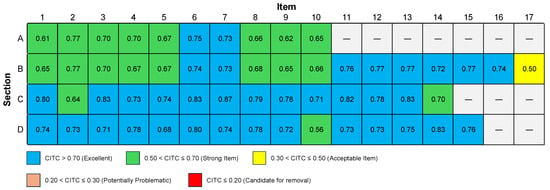
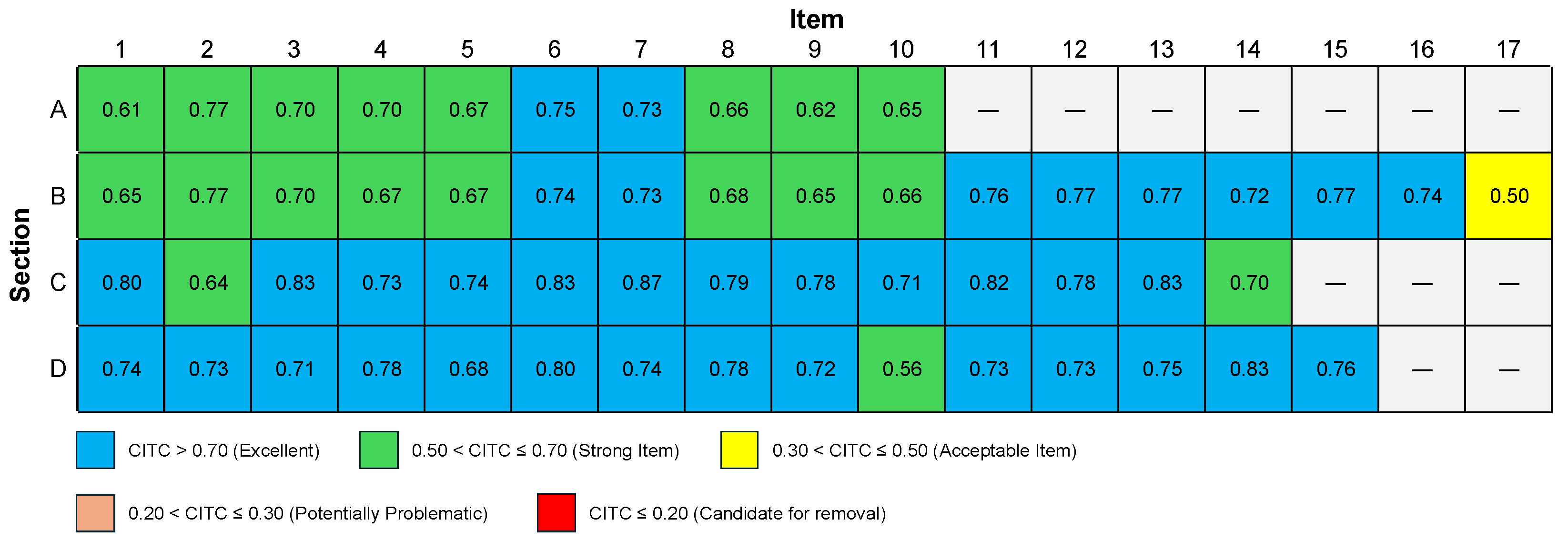
To further evaluate item-level validity, Corrected Item–Total Correlation (CITC) values were examined. The results are summarized in Figure 1. CITC values ranged from 0.50 to 0.87, exceeding the commonly accepted minimum threshold of 0.30 for all questionnaire items. The majority of items demonstrated strong to excellent correlations with their respective scales, with most values exceeding 0.70. The highest CITC value was observed for Item C7 (0.87), while the lowest value was observed for Item B17 (0.50). Nevertheless, even the lowest value remained above the acceptable threshold, indicating that all items contributed meaningfully to the measurement of their respective constructs. These findings provide evidence of satisfactory construct validity and suggest that the questionnaire items were appropriately aligned with the dimensions they were intended to assess.
Figure 1.
Heatmap of Corrected Item–Total Correlation (CITC) Values for the Survey Instrument.
The stability of the instrument was further evaluated through the Cronbach’s alpha if item deleted analysis, the results of which are presented in Table 6. Across all dimensions, the alpha values obtained when individual items were removed remained consistently high, ranging from 0.901 to 0.910 for Section A, 0.943 to 0.949 for Section B, 0.954 to 0.959 for Section C, and 0.945 to 0.951 for Section D. Importantly, none of the item-deleted alpha values produced a meaningful improvement over the original reliability coefficients reported in Table 5. For example, deleting Item B17 resulted in the highest alpha value within Section B (α = 0.949), but this increase was negligible relative to the original coefficient (α = 0.947). Similarly, deleting Item D10 yielded the highest alpha value in Section D (α = 0.951), representing only a marginal improvement over the original reliability estimate (α = 0.950). These findings indicate that each item contributed appropriately to its corresponding construct and that the removal of any item would not substantially improve the overall reliability of the instrument. Consequently, all questionnaire items were retained for subsequent analyses.
Table 6.
Cronbach’s Alpha if Item Deleted for Individual Survey Items.
Overall, the respondent profile and the reliability and validity assessments provide strong support for the quality of the collected data. The combination of excellent Cronbach’s alpha coefficients (0.914–0.959), satisfactory CITC values (0.50–0.87), and stable alpha-if-item-deleted results confirms that the instrument possessed robust psychometric properties. Therefore, the dataset was considered suitable for the descriptive, comparative, ranking, and thematic analyses presented in the succeeding sections.
3.2. Descriptive Assessment of Curriculum Relevance, Competency Deficiencies, Emerging Technologies, and Recommended Curricular Reforms
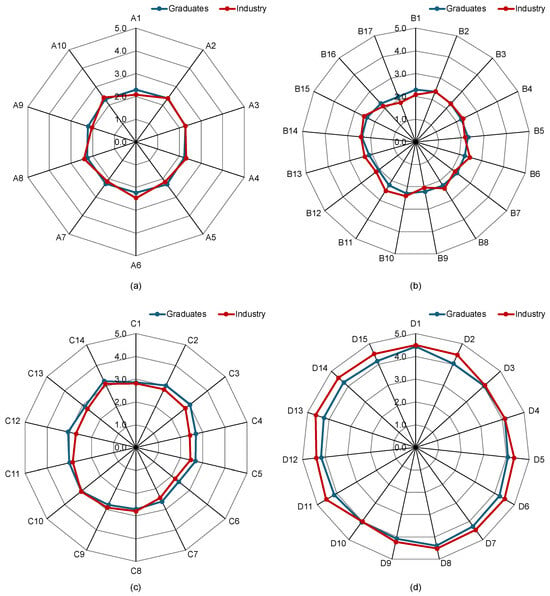
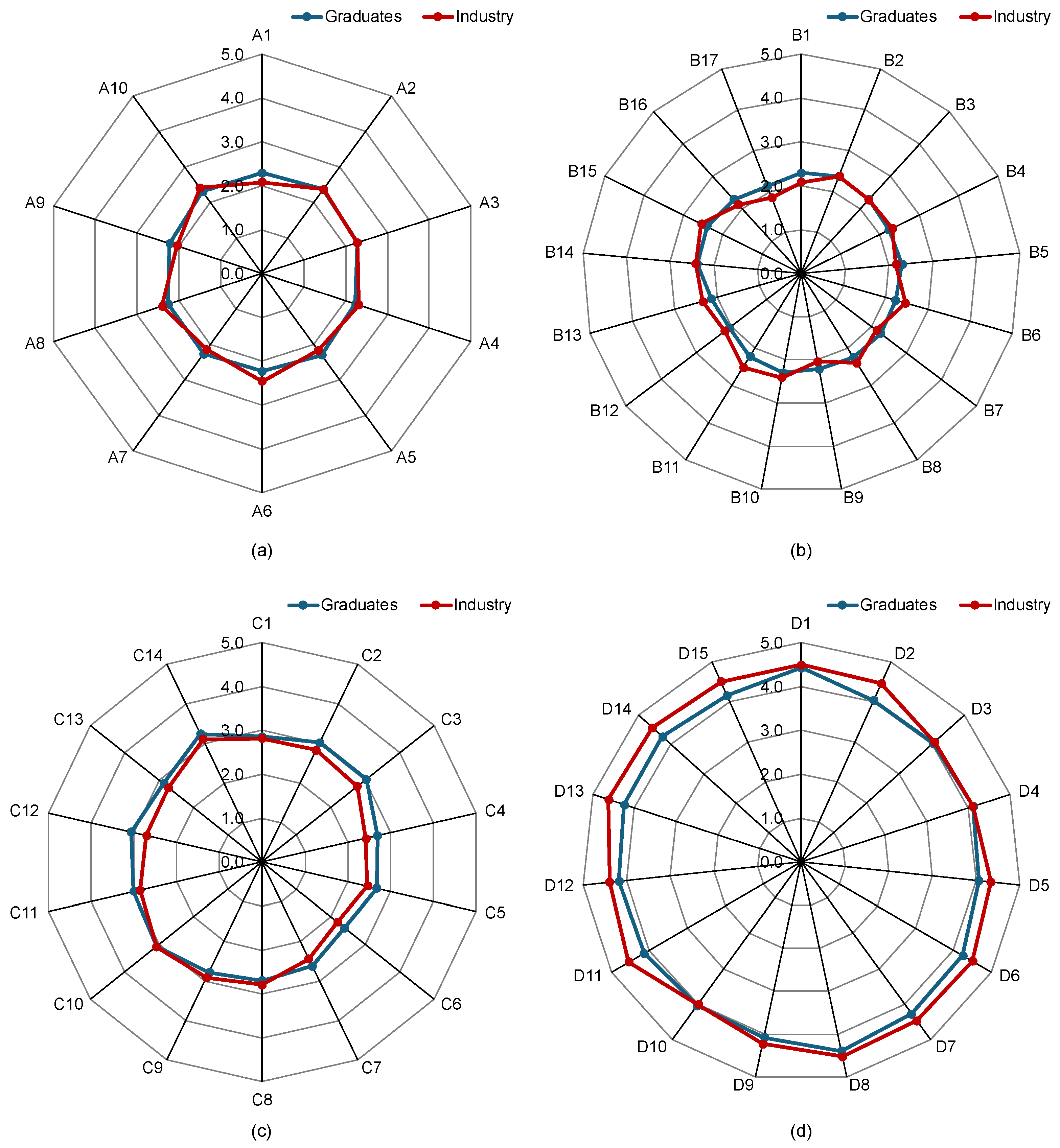
Figure 2 presents the mean ratings of graduates and industry practitioners across the four curriculum assessment dimensions. Overall, both groups exhibited similar response patterns, indicating a general agreement regarding the strengths, limitations, and future directions of the civil engineering curriculum. For Curriculum Relevance and Adequacy (Section A), graduates and industry practitioners reported nearly identical average ratings of 2.273 and 2.267, respectively. These values fall under the Disagree category, suggesting that respondents generally perceived the current curriculum as insufficiently relevant and adequate for contemporary construction-industry practice. This finding indicates a need to strengthen the alignment between academic preparation and industry expectations.
Figure 2.
Comparison of Mean Ratings Between Graduates and Industry Practitioners Across the Four Curriculum Assessment Dimensions.
For Competency Deficiencies (Section B), the average ratings were 2.255 for graduates and 2.273 for industry practitioners, corresponding to Occasionally Deficient. The results suggest that while graduates generally possess the necessary competencies for entry-level practice, certain deficiencies remain evident, particularly in areas requiring analytical, managerial, and decision-making skills. In Emerging Technologies and Practices (Section C), graduates and industry practitioners reported average ratings of 3.006 and 2.899, respectively, which correspond to Somewhat Adequately. These findings indicate that the curriculum provides moderate exposure to emerging technologies but may not sufficiently prepare students for rapidly evolving Construction 4.0 practices such as digital construction, automation, artificial intelligence, and advanced project delivery methods.
The highest ratings were observed in Recommended Curricular Reforms (Section D), with graduates reporting an average of 4.195 (High Priority) and industry practitioners reporting 4.528 (Very High Priority). The strong consensus across both groups highlights the perceived urgency of curriculum enhancement, particularly through greater industry engagement, experiential learning opportunities, technology integration, and practical training.
Overall, the results suggest that while the current curriculum provides a foundational preparation for civil engineering practice, significant opportunities exist to improve industry relevance, strengthen professional competencies, increase exposure to emerging technologies, and implement curriculum reforms that better address the needs of the modern construction sector.
3.3. Comparison of Perceptions Between Graduates and Industry Practitioners
To determine whether significant differences existed between the perceptions of civil engineering graduates and industry practitioners, the Mann–Whitney U test was performed for each of the four curriculum assessment dimensions. The results are presented in Table 7.
Table 7.
Comparison of Mean Ratings and Mann–Whitney U Test Results Between Graduates and Industry Practitioners Across the Four Curriculum Assessment Dimensions.
The results indicate that no statistically significant differences were observed between graduates and industry practitioners across the four assessment dimensions. The p-values for Curriculum Relevance and Adequacy (Section A; p = 0.705), Competency Deficiencies (Section B; p = 0.386), Emerging Technologies and Practices (Section C; p = 0.307), and Recommended Curricular Reforms (Section D; p = 0.112) were all greater than the significance level of 0.05. These findings suggest that both stakeholder groups generally shared similar perceptions regarding the adequacy of the current curriculum, the competency gaps observed among graduates, the preparedness of graduates for emerging industry trends, and the curricular reforms needed to improve graduate readiness for construction-industry practice.
The close agreement between the two groups is also reflected in the similarity of the mean scores reported in Table 7. For example, both graduates (M = 2.273) and industry practitioners (M = 2.267) expressed comparable perceptions regarding curriculum relevance and adequacy. Similarly, both groups reported nearly identical assessments of competency deficiencies (M = 2.255 and M = 2.273, respectively) and emerging technologies and practices (M = 3.006 and M = 2.899, respectively). Although industry practitioners assigned slightly higher ratings to recommended curricular reforms (M = 4.528) than graduates (M = 4.195), the difference was not statistically significant. Despite the absence of significant differences at the section level, item-level analysis revealed several statistically significant differences within the Recommended Curricular Reforms dimension. The results are presented in Table 8.
Table 8.
Statistically Significant Differences Between Graduates and Industry Practitioners on Recommended Curricular Reforms.
Significant differences were identified for Interdisciplinary Project-Based Learning (D11), Evidence-Based Curriculum Review (D13), and Industry-Based Capstone Projects (D15), with p-values ranging from 0.011 to 0.029. However, the corresponding effect sizes were relatively small (r = 0.193–0.227), indicating that the practical magnitude of these differences was limited. Among the three items, Evidence-Based Curriculum Review (D13) exhibited the strongest difference between groups (U = 1381.5, p = 0.011, r = 0.227), although the effect remained within the small-effect range.
The presence of significant differences in these items suggests that industry practitioners may place slightly greater emphasis on curriculum review processes, interdisciplinary learning experiences, and industry-based capstone projects than recent graduates. Nevertheless, the small effect sizes indicate that the differences are more reflective of variations in degree rather than fundamentally opposing viewpoints. Overall, the findings demonstrate a strong level of consensus between graduates and industry practitioners regarding the current state of civil engineering education and the priorities for curriculum enhancement. This convergence strengthens the credibility of the study’s recommendations, as both stakeholder groups generally identify similar areas requiring improvement and modernization.
3.4. Priority Competency Deficiencies and Curricular Reforms
The weighted percentage analysis was performed to identify the competency areas perceived as most deficient among civil engineering graduates and the curricular reforms considered most important for strengthening construction-oriented civil engineering education.
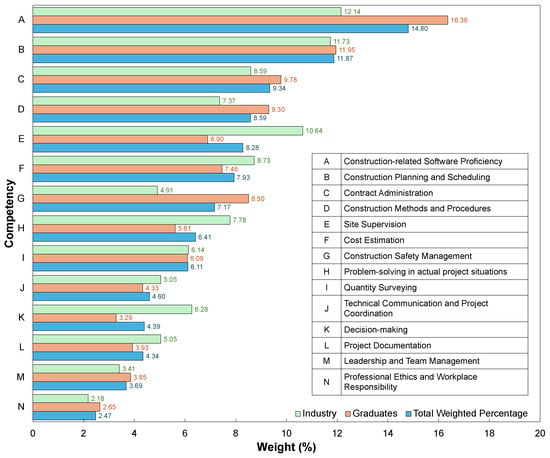
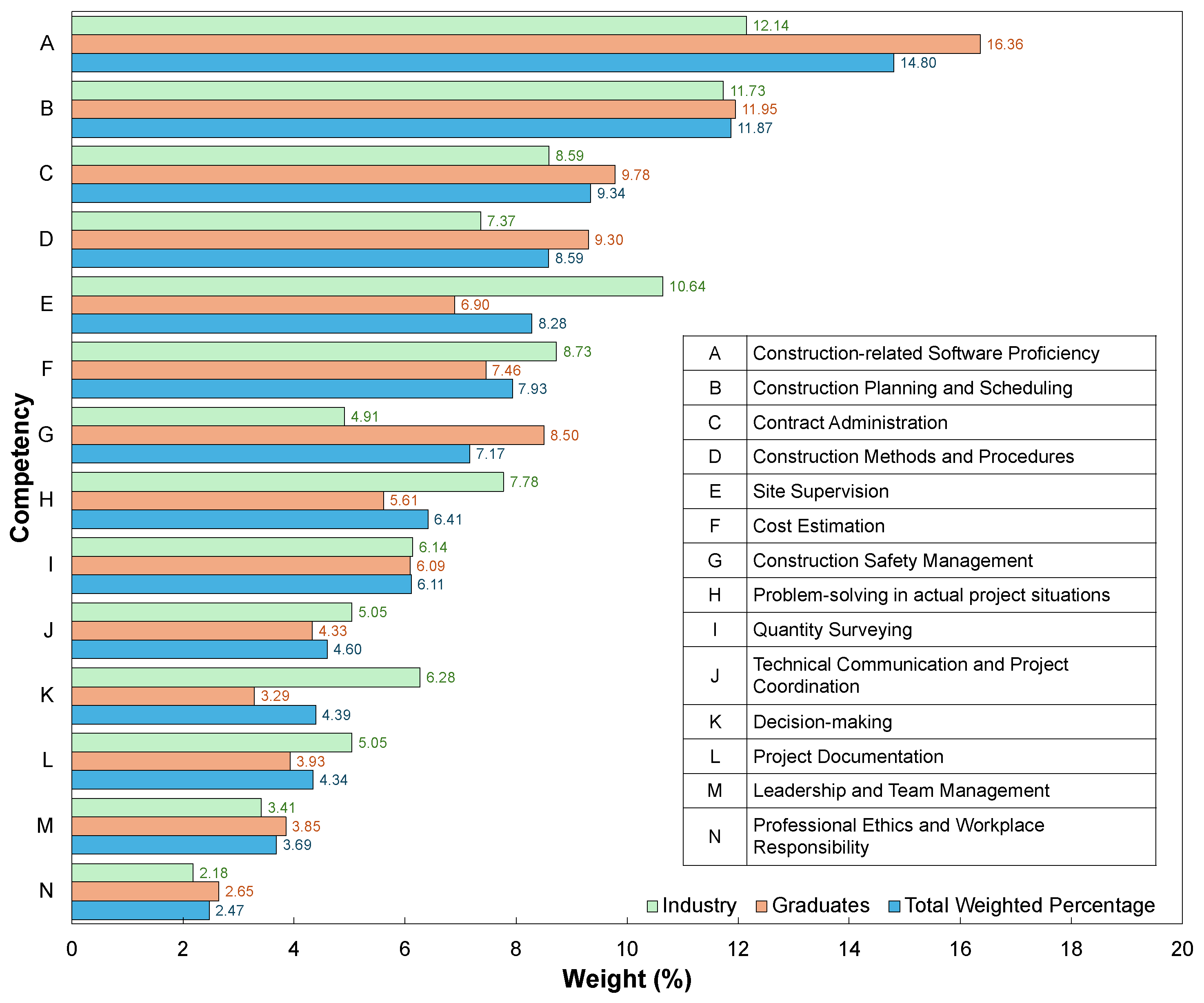
Figure 3 shows the ranking of observed competency deficiencies. Both graduates and industry practitioners generally exhibited similar perceptions regarding the competencies requiring the greatest attention. Based on the combined weighted percentages, the highest-ranked deficiency was Construction-related Software Proficiency (14.80%), followed by Construction Planning and Scheduling (11.87%) and Contract Administration (9.34%). Other highly ranked competency gaps included Construction Methods and Procedures (8.59%), Site Supervision (8.28%), and Cost Estimation (7.93%). These findings suggest that the most critical deficiencies are concentrated in construction management and project execution functions rather than in traditional engineering fundamentals. Conversely, Professional Ethics and Workplace Responsibility (2.47%), Leadership and Team Management (3.69%), and Project Documentation (4.34%) received the lowest weighted percentages, indicating that these areas were perceived as relatively less problematic.
Figure 3.
Relative Importance of Competency Deficiencies Identified by Respondents.
The rankings also reveal notable differences in emphasis between respondent groups. Graduates assigned the highest weight to Construction-related Software Proficiency (16.36%), reflecting the challenges encountered when transitioning from academic environments to increasingly digitalized workplaces. Industry practitioners likewise identified software proficiency as the most significant deficiency (12.14%) but placed greater emphasis on Site Supervision (10.64%) and Construction Methods and Procedures (10.97%), highlighting the importance of field-based competencies in actual project environments. These results suggest that while both groups recognize technological skills as a major gap, industry practitioners place additional importance on competencies directly associated with construction operations and project implementation.
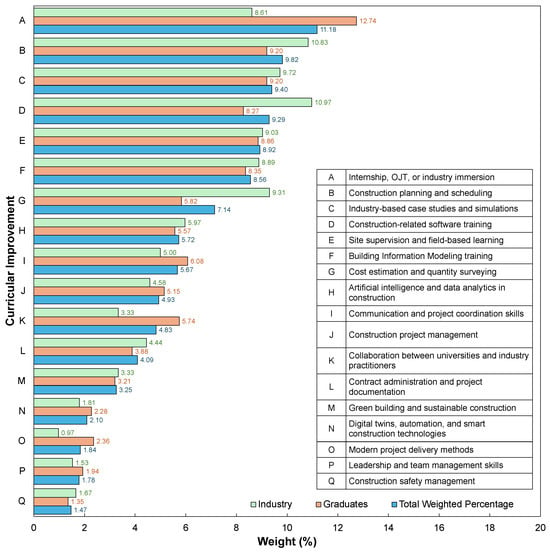
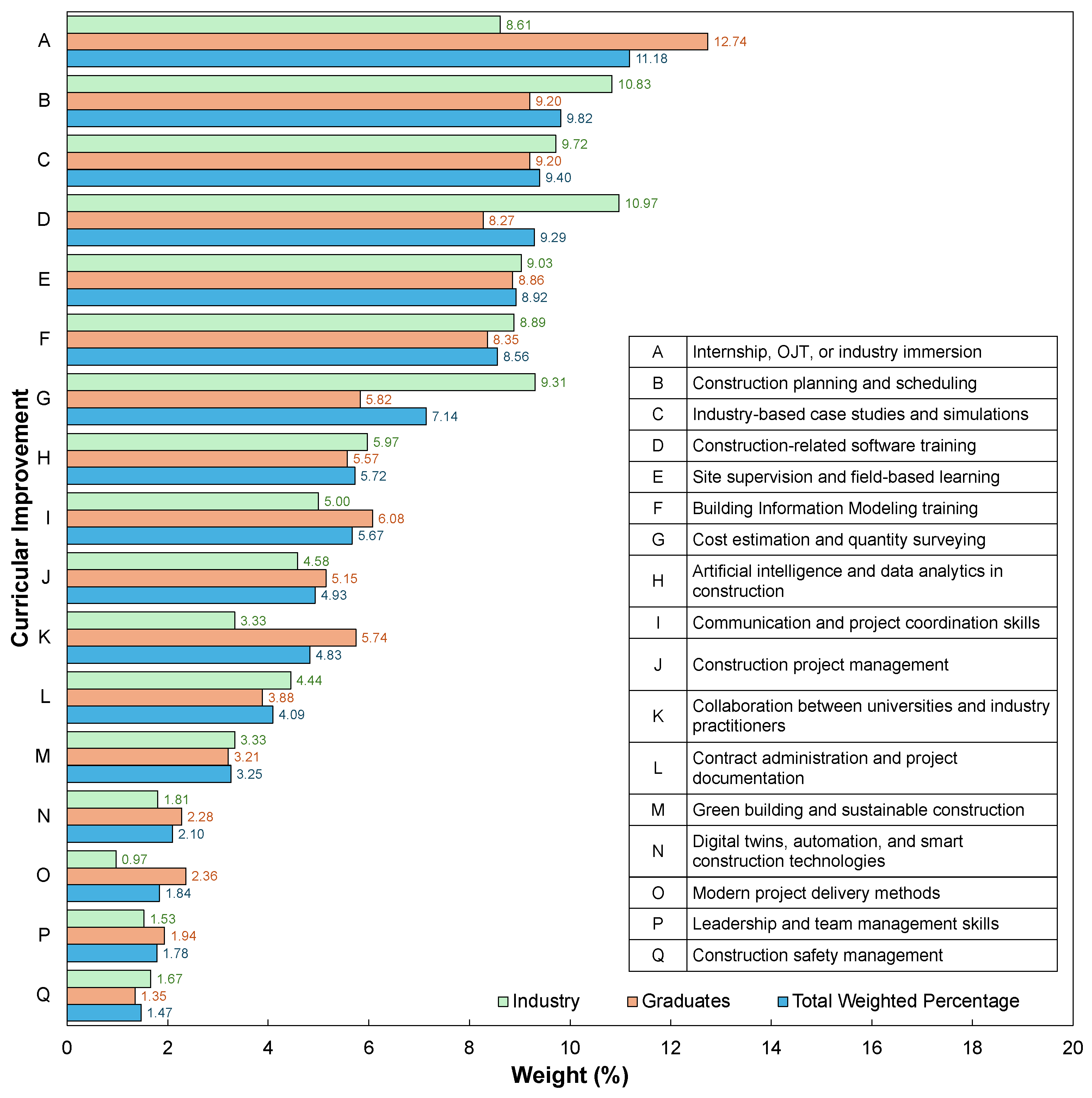
The weighted ranking of recommended curricular reforms is presented in Figure 4. The results indicate strong agreement between graduates and industry practitioners regarding the reforms that should be prioritized. The highest-ranked recommendation was Internship, On-the-Job Training (OJT), or Industry Immersion (11.18%), followed by Construction Planning and Scheduling (9.92%), Industry-Based Case Studies and Simulations (9.40%), and Construction-related Software Training (9.29%). Other highly prioritized reforms included Site Supervision and Field-Based Learning (8.92%), Building Information Modeling (BIM) Training (8.66%), and Cost Estimation and Quantity Surveying (7.14%).
Figure 4.
Priority Ranking of Recommended Curricular Reforms Based on Weighted Percentage Scores.
Notably, the highest-ranked reforms correspond closely with the competency deficiencies identified in Figure 3. For example, deficiencies in software proficiency, planning and scheduling, site supervision, and contract administration were matched by strong support for software training, industry immersion, field-based learning, and practical construction management instruction. This alignment suggests that respondents were not only able to identify existing competency gaps but also to propose targeted curricular interventions to address them.
Overall, the findings indicate that stakeholders perceive the need for a more practice-oriented and industry-responsive curriculum. Greater emphasis on experiential learning, industry immersion, construction management competencies, digital technologies, and BIM-related training may help bridge the gap between academic preparation and the evolving demands of the construction industry. These priorities provide a clear direction for curriculum enhancement initiatives aimed at improving graduate readiness and professional competence in construction-related careers.
3.5. Emerging Construction Technologies and Industry Practices
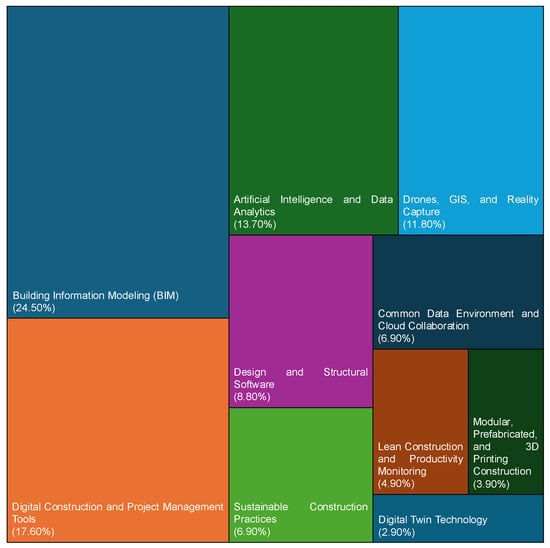
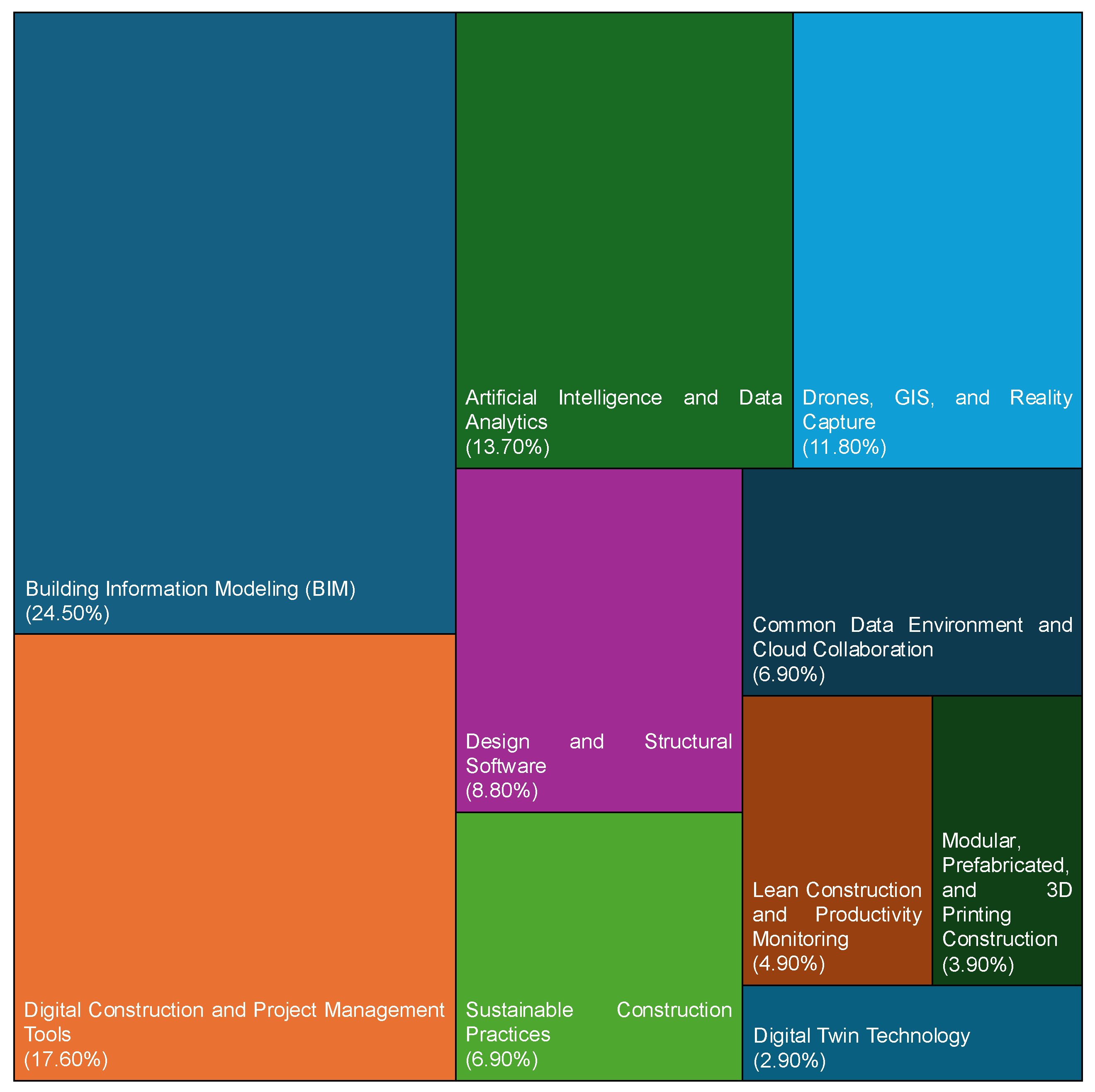
To identify emerging technologies and industry practices that should receive greater emphasis in civil engineering education, respondents were asked an open-ended question regarding technologies, methods, and industry trends that they believe are becoming increasingly important in contemporary construction practice. Responses were coded, categorized, and grouped into common themes. The resulting distribution is presented in Figure 5.
Figure 5.
Distribution of Emerging Construction Technologies and Industry Practices Identified from Open-Ended Responses. Percentages represent the proportion of total mentions attributed to each theme.
Figure 5 visually illustrates the relative importance of the emerging technologies and practices identified by respondents. The size of each rectangle corresponds to the percentage of total mentions attributed to a particular theme, allowing direct comparison of their perceived importance. Larger rectangles indicate technologies that respondents believe should receive greater emphasis within the civil engineering curriculum, while smaller rectangles represent emerging areas that, although less frequently cited, remain relevant to future construction practice. The figure clearly highlights the dominance of digital technologies and data-driven approaches, reflecting the ongoing digital transformation of the construction industry.
As shown in Figure 5, Building Information Modeling (BIM) emerged as the most frequently identified technology, accounting for 24.5% of all responses. This was followed by Digital Construction and Project Management Tools (17.6%), Artificial Intelligence and Data Analytics (13.7%), and Drones, GIS, and Reality Capture Technologies (11.8%). Together, these four themes accounted for approximately two-thirds of all responses, indicating a strong emphasis on digitalization, automation, and technology-enabled project delivery. Other emerging areas identified by respondents included Design and Structural Software (8.8%), Sustainable Construction Practices (6.9%), Common Data Environment and Cloud Collaboration (6.9%), Lean Construction and Productivity Monitoring (4.9%), Modular and 3D Printing Construction (3.9%), and Digital Twin Technology (2.9%).
The findings reveal a clear shift toward digitalization and technology-enabled project delivery within the construction sector. Notably, these results are consistent with the findings presented in Section 3.4, where Construction-related Software Proficiency was identified as the highest-ranked competency deficiency among graduates. The prominence of BIM, digital construction platforms, artificial intelligence, and other software-intensive technologies suggests that graduates may not be receiving sufficient exposure to industry-standard digital tools during their undergraduate education. Likewise, the emphasis on these technologies supports the respondents’ identification of Internship, OJT, and Industry Immersion as the highest-priority curricular reform. Since many of these technologies are most effectively learned and applied in actual project environments, strengthening industry immersion opportunities may provide students with practical exposure to digital workflows, BIM-based collaboration, project management platforms, and emerging Construction 4.0 technologies. Collectively, these findings suggest that integrating technology-oriented learning experiences with enhanced industry exposure may be essential for addressing current competency gaps and improving graduate preparedness for the evolving demands of the construction industry.
The relatively high frequency and emphasis of Building Information Modeling (BIM), digital construction tools, artificial intelligence, and technologies like drones and GIS from the results may indicate a significant digital transformation in the construction industry. These innovations are not standalone; they thrive within integrated ecosystems that require teamwork and collaboration across various disciplines.
This need for an interdisciplinary approach is highlighted in Section 3.3, where industry professionals emphasized the importance of interdisciplinary project-based learning and industry-driven capstone projects more than recent graduates did. This suggests a clear preference for educational approaches that mirror the collaborative nature of modern engineering, despite the small effect sizes.
To truly enhance education, curricula should not just focus on individual digital tools. Instead, they should nurture systems thinking and encourage real-world problem-solving through hands-on projects. Studies show that BIM and similar technologies have the most lasting educational impact when they are woven into multidisciplinary capstone projects and collaborative design experiences. This approach reflects the realities of professional practice, making learning more relevant and effective [54,55]. Overall, integrating digital tools into collaborative and experiential learning environments is vital for preparing students for the interconnected world of today’s engineering practice [59].
Overall, the qualitative findings reinforce the results obtained from the quantitative analyses. The technologies most frequently identified by respondents correspond closely with the competency gaps and curricular priorities highlighted in previous sections, indicating a strong alignment between industry expectations and educational improvement needs. This convergence suggests that future curriculum enhancement efforts should focus not only on strengthening traditional engineering competencies but also on equipping students with the digital skills, technological literacy, and practical industry experience required to succeed in an increasingly technology-driven construction environment.
4. Conclusions
This study found that both civil engineering graduates and industry practitioners share a common perception that the current civil engineering curriculum provides an adequate theoretical foundation but requires significant enhancement to better address the practical, technological, and managerial demands of the modern construction industry. As the construction sector continues to evolve with the integration of digital tools and collaborative project delivery approaches, these findings suggest that curriculum enhancement should extend beyond strengthening individual technical competencies to preparing graduates for a future where technology play a central role in professional practice. The results highlight the need for a more industry-responsive curriculum that strengthens digital competencies, construction management skills, experiential learning opportunities, and exposure to emerging construction technologies through authentic project-based learning experiences that reflect modern engineering practice. Such an approach is expected to strengthen not only graduates’ technical proficiency but also their systems thinking, interdisciplinary collaboration, and adaptability to the rapidly changing demands of the construction industry Specific conclusions are as follows:
- The current curriculum was perceived as insufficiently aligned with contemporary construction-industry requirements. Both graduates and industry practitioners reported low ratings for curriculum relevance and adequacy, indicating a need to strengthen the connection between academic learning and industry expectations.
- Several construction management-related competencies were identified as recurring areas of deficiency among graduates. Construction-related software proficiency, planning and scheduling, contract administration, site supervision, and cost estimation emerged as the most significant competency gaps requiring curricular attention.
- The curriculum was perceived to provide only moderate preparation for emerging technologies and practices. Respondents highlighted the growing importance of Building Information Modeling (BIM), digital construction tools, artificial intelligence, data analytics, drones, GIS, reality-capture technologies, and other Construction 4.0 applications, suggesting the need for greater technology integration within the curriculum.
- Graduates and industry practitioners demonstrated a high level of agreement regarding curriculum strengths, competency deficiencies, emerging technology needs, and curricular priorities. No statistically significant differences were observed between the two groups across the four assessment dimensions, indicating a shared understanding of the improvements needed in civil engineering education.
- Experiential and industry-based learning opportunities were identified as the most important curricular reforms. Internship, OJT, and industry immersion programs received the highest priority rankings, followed by construction planning and scheduling, industry-based case studies, software training, BIM education, and field-based learning. These findings suggest that stronger industry engagement and practical learning experiences may be effective strategies for addressing the competency gaps and emerging technology needs identified in this study.
Author Contributions
Conceptualization, K.P.V.R., J.A.L.-O. and J.S.S.; methodology, J.A.L.-O. and J.S.S.; validation, K.P.V.R., C.E.F.M. and G.T.L.; formal analysis, J.A.L.-O. and J.S.S.; investigation, J.A.L.-O. and J.S.S.; resources, K.P.V.R., C.E.F.M. and G.T.L.; writing—original draft preparation, K.P.V.R., J.A.L.-O. and J.S.S.; writing—review and editing, K.P.V.R., C.E.F.M. and G.T.L.; visualization, J.A.L.-O. and J.S.S.; supervision, K.P.V.R., C.E.F.M. and G.T.L. All authors have read and agreed to the published version of the manuscript.
Funding
This research received no external funding.
Institutional Review Board Statement
The study employed a non-interventional, cross-sectional descriptive-comparative design to examine participants’ educational and professional perspectives on curriculum relevance, competency gaps, emerging technologies, and workforce preparation. Data collection involved questionnaire responses rather than experimental trials, clinical procedures, or changes to participants’ educational or employment conditions. The questionnaire addressed curriculum and professional competency assessments, and the anticipated risks principally concerned the confidentiality of respondents’ views. As described in the manuscript, participation was voluntary, respondents were informed of the study objectives before completing the questionnaire, and confidentiality and anonymity were maintained throughout data collection. Findings were presented as aggregated statistical results and thematic summaries without identifying individual respondents. These features provide the methodological and participant-protection rationale supporting the exemption.
Informed Consent Statement
Participation was voluntary, and respondents were informed of the objectives of the study before completing the survey. Confidentiality and anonymity were maintained throughout the data collection process.
Data Availability Statement
Data are contained within the article. But the data presented in this study are also available on request from the corresponding authors.
Conflicts of Interest
The authors declare no conflicts of interest.
References
- Fulford, R.G. The Implications of the Construction Industry to National Wealth. Eng. Constr. Archit. Manag. 2019, 26, 779–793. [Google Scholar] [CrossRef] [Scilit]
- Dang, G.; Sui Pheng, L. Construction and Economic Development. In Infrastructure Investments in Developing Economies; Springer: Singapore, 2015; pp. 27–51. [Google Scholar] [CrossRef] [Scilit]
- Dimaculangan, E. Issues and Challenges in the Philippine Construction Industry: An Opportunity for BIM Adoption. Bitlis Eren Univ. J. Sci. Technol. 2023, 13, 93–119. [Google Scholar] [CrossRef] [Scilit]
- Asthana, H.K. The Integration of Soft Skills in Civil Engineering: Enhancing Professional Competence and Project Success. Int. J. Sci. Res. Eng. Manag. 2024, 8, 1–5. [Google Scholar] [CrossRef] [Scilit]
- Tatum, C.B. Core Elements of Construction Engineering Knowledge for Project and Career Success. J. Constr. Eng. Manag. 2011, 137, 745–750. [Google Scholar] [CrossRef] [Scilit]
- Commission on Higher Education. CHED Memorandum Order No. 92, Series of 2017. Available online: https://www.ustp.edu.ph/wp-content/uploads/2023/07/BS-CE_CMO-92-s.-2017-BS-Civil-Engineering.pdf (accessed on 18 July 2026).
- Iqbal Khan, M.; Mourad, S.M.; Zahid, W.M. Developing and Qualifying Civil Engineering Programs for ABET Accreditation. J. King Saud Univ.-Eng. Sci. 2016, 28, 1–11. [Google Scholar] [CrossRef] [Scilit]
- Mutalib, A.A.; Rahmat, R.A.A.; Rashid, A.K.A.; Suja, F.; Sahril, S. Measurement and Evaluation of Program Outcomes in the Civil Engineering Courses. Procedia Soc. Behav. Sci. 2012, 60, 333–342. [Google Scholar] [CrossRef] [Scilit]
- Robles, K.P.V.; Monjardin, C.E.F. Assessment and Monitoring of Groundwater Contaminants in Heavily Urbanized Areas: A Review of Methods and Applications for Philippines. Water 2025, 17, 1903. [Google Scholar] [CrossRef] [Scilit]
- Grigg, N.S.; Criswell, M.E.; Fontane, D.G.; Siller, T.J. Information Technology in Civil Engineering Curriculum. J. Prof. Issues Eng. Educ. Pract. 2005, 131, 26–31. [Google Scholar] [CrossRef] [Scilit]
- Turnbull, B. An Industry-Inspired Civil Engineering Curriculum. Proc. Inst. Civ. Eng. Civ. Eng. 2019, 173, 91–95. [Google Scholar] [CrossRef] [Scilit]
- Walewski, J.; Kim, A. Tomorrow’s University Graduate: Construction Industry Needs and Curriculum Enhancement. In Proceedings of the 2011 ASEE Annual Conference & Exposition, Vancouver, BC, Canada, 26–29 June 2011; pp. 22.1532.1–22.1532.7. [Google Scholar] [CrossRef] [Scilit]
- Robles, K.P.V.; Yee, J.J.; Gucunski, N.; Kee, S.H. Calibrating Electrical Resistivity Measurements in Reinforced Concrete with Rebar Effects and Practical Guidelines. Measurement 2025, 244, 116542. [Google Scholar] [CrossRef] [Scilit]
- Shaaban, K. Practical Teaching and Its Importance in Teaching Civil Engineering. Qsci. Proc. 2013, 2013, 4. [Google Scholar] [CrossRef] [Scilit]
- Leathem, T.; Burt, R. What 21st Century CM Graduates Need to Know and Be Able to Do: Results of a Needs Assessment Study Using Industry Focus Groups. In Proceedings of the 60th Annual Associated Schools, Auburn, AL, USA, 2–5 April 2024; Volume 5, pp. 30–38. [Google Scholar] [CrossRef] [Scilit]
- Dai, M.; Zhang, S.; Xu, Q.; Zhou, H. Promoting the Competency of Construction Management Postgraduates: A Literature Review. In International Symposium on Advancement of Construction Management and Real Estate; Lecture Notes in Operations Research; Springer: Singapore, 2023; pp. 440–451. [Google Scholar] [CrossRef] [Scilit]
- Rajput, B.; Kore, S.; Agarwal, A. Competencies of Civil Engineering Graduates: Indian Construction Professionals’ Perspective. Int. J. Constr. Manag. 2024, 24, 1240–1248. [Google Scholar] [CrossRef] [Scilit]
- Robles, K.P.V.; Monjardin, C.E.F. Forecasting Climate Change Impacts on Water Security Using HEC-HMS: A Case Study of Angat Dam in the Philippines. Water 2025, 17, 2085. [Google Scholar] [CrossRef] [Scilit]
- Oliveros, J.; Vaz-Serra, P. Construction Project Manager Skills: A Systematic Literature Review. In Proceedings of the Engaging Architectural Science: Meeting the Challenges of Higher Density: 52nd International Conference of the Architectural Science Association 2018; The Architectural Science Association and RMIT University: Melbourne, Australia, 2018; pp. 185–192. [Google Scholar]
- Ameh, O.J.; Odusami, K.T. Nigerian Construction Professional’s Education and Deficiencies in the Area of Project Management. J. Constr. Dev. Ctries. 2014, 19, 1–14. [Google Scholar]
- Farooqui, R.U.; Ahmed, S.M. Key Skills for Graduating Construction Management Students—A Comparative Study of Industry and Academic Perspectives. In Proceedings of the Construction Research Congress 2009; American Society of Civil Engineers: Reston, VA, USA, 2009; pp. 1439–1448. [Google Scholar]
- Toquero, C.M.D.; Ulanday, D.M.P. University Graduates’ Assessment of the Relevance of the Curriculum to the Labor Market in the Philippines. Int. Res. Educ. 2021, 9, 19. [Google Scholar] [CrossRef] [Scilit]
- Laguador, J.M.; Chavez-Prinsipe, N.H.; De Castro, E.L. Employability Skill Development Needs of Engineering Students and Employers’ Feedback on Their Internship Performance. Univers. J. Educ. Res. 2020, 8, 3097–3108. [Google Scholar] [CrossRef] [Scilit]
- AlMunifi, A.A.; Aleryani, A.Y. Knowledge and Skills Level of Graduate Civil Engineers Employers and Graduates’ Perceptions. Int. J. Eng. Pedagog. 2019, 9, 84–101. [Google Scholar] [CrossRef] [Scilit]
- Kuster, J.; Bachmann, C.; Hubmann, M.; Lippmann, R.; Schneider, P. Reference List for the Individual Competence Baseline (ICB) from IPMA (International Project Management Association). In Project Management Handbook: Agile–Traditional–Hybrid; Springer: Berlin/Heidelberg, Germany, 2023; pp. 457–465. [Google Scholar]
- Varajão, J.; Cruz-Cunha, M.M. Using AHP and the IPMA Competence Baseline in the Project Managers Selection Process. Int. J. Prod. Res. 2013, 51, 3342–3354. [Google Scholar] [CrossRef] [Scilit]
- Kamaruzzaman, S. Bridging the Skill Gap: An Industry-Academia Training for Civil Engineering Students in Malaysian Polytechnics. Quantum J. Eng. Sci. Technol. 2025, 6, 1–6. [Google Scholar] [CrossRef] [Scilit]
- Anastasiu, L.; Anastasiu, A.; Dumitran, M.; Crizboi, C.; Holmaghi, A.; Roman, M.N. How to Align the University Curricula with the Market Demands by Developing Employability Skills in the Civil Engineering Sector. Educ. Sci. 2017, 7, 74. [Google Scholar] [CrossRef] [Scilit]
- Torres-Machí, C.; Carrión, A.; Yepes, V.; Pellicer, E. Employability of Graduate Students in Construction Management. J. Prof. Issues Eng. Educ. Pract. 2013, 139, 163–170. [Google Scholar] [CrossRef] [Scilit]
- Bhattarai, P.C.; Parajuli, M.N.; Gautam, S.; Paudel, P.K.; Bhurtel, A.; Sharma, A. Education–Work Transition: Skill Gaps in the Construction Industry. Front. Built Environ. 2025, 11, 1623609. [Google Scholar] [CrossRef] [Scilit]
- Lau, T.L.; Goh, B.H.; Liew, C.L.; Choong, W.K. Benchmarking the Industrial Expectations of Civil Engineering Students through Internship Placements. Appl. Mech. Mater. 2013, 423–426, 2913–2917. [Google Scholar] [CrossRef] [Scilit]
- Hardie, M.; Love, P. The Role of Industry Based Learning in a Construction Management Program. Australas. J. Constr. Econ. Build.-Conf. Ser. 2013, 1, 12. [Google Scholar] [CrossRef] [Scilit]
- Ahmed, S.; El-Sayegh, S. Critical Review of the Evolution of Project Delivery Methods in the Construction Industry. Buildings 2021, 11, 11. [Google Scholar] [CrossRef] [Scilit]
- Szentes, H.; Eriksson, P.E. Societal Changes and New Conditions for the Management of Large Construction Projects. Open Constr. Build. Technol. J. 2013, 7, 182–192. [Google Scholar] [CrossRef] [Scilit]
- Capuyan, D. Preparing Civil Technology Students for a Future-Ready Workforce: A Case Study of Safety Hazards in Construction at a Public University in Cebu City, Philippines. J. Technol. Sci. Educ. 2025, 15, 256–268. [Google Scholar] [CrossRef] [Scilit]
- Akyazi, T.; Alvarez, I.; Alberdi, E.; Oyarbide-Zubillaga, A.; Goti, A.; Bayon, F. Skills Needs of the Civil Engineering Sector in the European Union Countries: Current Situation and Future Trends. Appl. Sci. 2020, 10, 7226. [Google Scholar] [CrossRef] [Scilit]
- Kamaruzaman, F.M.; Hamid, R.; Mutalib, A.A.; Rasul, M.S.; Omar, M.; Zaid, M.F.A.M. Exploration and Verification of Fourth Industrial Revolution Generic Skills Attributes for Entry-Level Civil Engineers. Int. J. Eval. Res. Educ. 2023, 12, 121–130. [Google Scholar] [CrossRef] [Scilit]
- Valdés, H.; Correa, C.; Mellado, F. Proposed Model of Sustainable Construction Skills for Engineers in Chile. Sustainability 2018, 10, 3093. [Google Scholar] [CrossRef] [Scilit]
- Poso, F.D., Jr.; Tana, K.B.M. Enhancing Industry-Academia Research Collaboration in Philippine Civil Engineering: An Online Survey Exploration. Int. J. Res. Sci. Innov. 2026, 13, 1503–1513. [Google Scholar] [CrossRef] [Scilit]
- Leicht, R.M.; Franz, B.; Molenaar, K.R. Successful University Research Programs with Extensive Industry Involvement. Pract. Period. Struct. Des. Constr. 2014, 19, 57–62. [Google Scholar] [CrossRef] [Scilit]
- Witt, E.; Lill, I.; Malalgoda, C.; Siriwardena, M.; Thayaparan, M.; Amaratunga, D.; Kaklauskas, A. Towards a Framework for Closer University-Industry Collaboration in Educating Built Environment Professionals. Int. J. Strateg. Prop. Manag. 2013, 17, 114–132. [Google Scholar] [CrossRef] [Scilit]
- Franco Duran, D.M. Developing Context and Practice-Based Curricula in Construction Engineering and Management. In Construction Research Congress 2022: Health and Safety, Workforce, and Education; American Society of Civil Engineers (ASCE): Reston, VA, USA, 2022; pp. 10–20. [Google Scholar] [CrossRef] [Scilit]
- Tener, R.K. Industry-University Partnerships for Construction Engineering Education. J. Prof. Issues Eng. Educ. Pract. 1996, 122, 156–162. [Google Scholar] [CrossRef] [Scilit]
- Waller, L.; Foust, D.; Panthi, K. Academic Satisfaction and Career Preparedness: An Exploratory Study on the Perceptions of Construction Management Graduates. In Collaboration and Integration in Construction, Engineering, Management and Technology; Advances in Science, Technology and Innovation; Springer: Cham, Switzerland, 2020; pp. 619–623. [Google Scholar] [CrossRef] [Scilit]
- Bhattacharjee, S.; Ghosh, S.; Young-Corbett, D.E.; Fiori, C.M. Comparison of Industry Expectations and Student Perceptions of Knowledge and Skills Required for Construction Career Success. Int. J. Constr. Educ. Res. 2013, 9, 19–38. [Google Scholar] [CrossRef] [Scilit]
- Kumar, R.U.; Karthikeyan, P. Career Advancement of Civil Graduates in Construction Projects: Learning Beyond Institutions. Asian J. Res. Soc. Sci. Humanit. 2016, 6, 1017. [Google Scholar] [CrossRef] [Scilit]
- Ayalp, G.G.; Öcal, M.E. Determining Construction Management Education Qualifications and the Effects of Construction Management Education Deficiencies on Turkish Construction. Creat. Educ. 2016, 7, 254–268. [Google Scholar] [CrossRef]
- Alsulamy, S.; Alshayeb, M. Bridging Disciplines, Building Competencies: Innovating Architecture and Civil Engineering Education through Integrated Project Management and Spatial Science in Saudi Arabia. Front. Eng. Built Environ. 2026, 6, 1–26. [Google Scholar] [CrossRef] [Scilit]
- Ng, T.W.; Choong, W.Y.; Wang, L. Benchmarking BIM Graduate Readiness Using a Competency Gap Index: Evidence from a Mixed-Methods Study. Built Environ. Proj. Asset Manag. 2026, 16, 1191–1210. [Google Scholar] [CrossRef] [Scilit]
- Papuraj, X.; Izadyar, N.; Vrcelj, Z. Integrating Building Information Modelling into Construction Project Management Education in Australia: A Comprehensive Review of Industry Needs and Academic Gaps. Buildings 2025, 15, 130. [Google Scholar] [CrossRef] [Scilit]
- Hock Seng, N.; Chiew Teng, N.; Mohd, S.; Ahmad Shah, M.S.; Teck Wei, N.; Mei Sin, T. Next-Generation BIM Competency: Curriculum Integration to Equip UTM Civil Engineering Graduates for Industry Demands. Int. J. Built Environ. Sustain. 2025, 12, 49–64. [Google Scholar] [CrossRef] [Scilit]
- Jaiswal, S.V.; Hunt, D.V.L.; Davies, R.J. Construction 4.0: Understanding and Awareness for Master’s Level Students. Sustainability 2025, 18, 293. [Google Scholar] [CrossRef] [Scilit]
- Nguyen, T.D.; Adhikari, S. Bridging the Gap: Enhancing BIM Education for Sustainable Design Through Integrated Curriculum and Student Perception Analysis. Computers 2025, 14, 463. [Google Scholar] [CrossRef] [Scilit]
- Zhang, J.; Zhang, Z.; Philbin, S.P.; Huijser, H.; Wang, Q.; Jin, R. Toward Next-Generation Engineering Education: A Case Study of an Engineering Capstone Project Based on BIM Technology in MEP Systems. Comput. Appl. Eng. Educ. 2022, 30, 146–162. [Google Scholar] [CrossRef] [Scilit]
- Wang, Z.; Leicht, R.; Solnosky, R. Importance of Interdisciplinary Learning in Achieving AEC Industry Success. J. Civ. Eng. Educ. 2025, 151, 04024004. [Google Scholar] [CrossRef] [Scilit]
- Cronbach, L.J. Coefficient Alpha and the Internal Structure of Tests. Psychometrika 1951, 16, 297–334. [Google Scholar] [CrossRef] [Scilit]
- Mann, H.B.; Whitney, D.R. On a Test of Whether One of Two Random Variables Is Stochastically Larger than the Other. Ann. Math. Stat. 1947, 18, 50–60. [Google Scholar] [CrossRef] [Scilit]
- Field, A. Discovering Statistics Using IBM SPSS Statistics; Sage: London, UK, 2013. [Google Scholar]
- Marchiori, R.; Song, S.; Moon, J.; Awoyemi, D.; Ghooreian, A.; Ramenzapour, E. A Systematic Review of Technology-Enhanced Learning Approaches to Foster Construction Engineering and Management Competencies. Comput. Appl. Eng. Educ. 2025, 33, e70074. Correction in Comput. Appl. Eng. Educ. 2025, 33, e70104. https://doi.org/10.1002/cae.70104. [CrossRef] [Scilit]

Disclaimer/Publisher’s Note: The statements, opinions and data contained in all publications are solely those of the individual author(s) and contributor(s) and not of MDPI and/or the editor(s). MDPI and/or the editor(s) disclaim responsibility for any injury to people or property resulting from any ideas, methods, instructions or products referred to in the content. |
© 2026 by the authors. Licensee MDPI, Basel, Switzerland. This article is an open access article distributed under the terms and conditions of the Creative Commons Attribution (CC BY) license.