


Abstract
Audit collaboration in major public construction projects in China involves government audit institutions, internal audit functions, and contracted audit service providers. How they collaborate within established responsibilities and engagement relationships to support project assurance remains insufficiently understood. Drawing on collaborative governance, this study combined Latent Dirichlet Allocation of 117 Chinese texts with subsequent expert consultation and research team review, identifying 19 collaboration-related factors across five dimensions. Evaluations from nine experts informed fuzzy decision-making trial and evaluation laboratory (Fuzzy-DEMATEL) analysis. The same panel reviewed candidate relationships for directness and polarity, retaining 23 expert-endorsed positive direct links. Factor rankings were stable overall, while selection of individual relationships was sensitive to a fixed numerical cutoff. In the expert-derived total-relation structure, the adequacy of policies and regulations and project complexity ranked first and second in net influence, while coordination mechanism adequacy had the highest prominence. The retained network linked audit implementation collaboration and resource sharing among audit actors to risk identification effectiveness. Follow-up on audit-related corrective actions and feedback on audit collaboration were linked to the closure of audit-related corrective actions. These expert-based findings distinguish the structural positions of contextual conditions and coordination arrangements and link different audit outcomes to specific collaborative activities, informing project assurance and audit coordination.
1. Introduction
Major public construction projects are characterized by large investment scales, long construction periods, and complex technical systems. Their various stages are also interrelated [1,2], while project information and governance responsibilities are distributed across multiple participating organizations [3,4]. Meanwhile, the public nature of these projects requires attention to both implementation efficiency and the use of public resources and the fulfillment of responsibilities [5,6]. In the Chinese context, the public-investment and audit-oversight framework provides an institutional basis for considering the scope of such projects: the Audit Law covers government-invested construction projects and other major public works involving national or public interests, while the Regulation on Government Investment identifies public infrastructure and public-service sectors as priority areas of government investment [7,8]. Internationally, approaches to project assurance vary: the United Kingdom employs independent assurance reviews for major government projects, while U.S. Government Accountability Office guidance provides frameworks for assessing project cost estimates and schedules [9,10,11]. These examples offer points of comparison for project oversight without implying that the institutional mandates of audit actors are identical across countries. In major public construction projects in China, government audit institutions (GAIs), internal audit functions (IAFs), and contracted audit service providers (ASPs) may contribute to project oversight [12,13]. The three types of audit actors differ in their responsibilities and authority, professional capabilities, and sources of information, creating potential for complementarity [12]. Their collaboration requires arrangements for allocating tasks, sharing information, using audit results, and following up on corrective actions [13,14].
Research on project assurance has examined how independent professional review supports project governance [15], while studies of collaboration in audit oversight have addressed the division of responsibilities, information sharing, and the use of audit results among different audit actors [13]. Research specifically concerned with construction-project auditing has also examined a different but related issue: Yang et al. [16] investigated the drivers and development of audit risk in Chinese national construction projects, drawing on audit documents and grounded-theory analysis. Whereas this work helps explain why audit risks arise, it does not directly address how collaboration-related conditions, coordination arrangements, and audit activities may influence one another when government audit institutions (GAIs), internal audit functions (IAFs), and contracted audit service providers (ASPs) participate under different responsibilities and engagement relationships. This motivates an examination of how coordination arrangements and collaborative activities connect with distinct audit outcomes when the three types of audit actors participate under different mandates and engagement arrangements. Collaborative governance focuses on institutional arrangements, actor relationships, and processes of joint action, providing a theoretical perspective for understanding the formation and operation of interorganizational collaboration [17,18]. Accordingly, from a collaborative governance perspective, this study addresses two research questions: (1) Which key factors are associated with the formation, operation, and outcomes of collaboration among the three types of audit actors in major public construction projects? (2) What directional influence structure and relationship network characteristics do these factors exhibit under expert judgments?
To address these questions, this study combines latent Dirichlet allocation (LDA), expert consultation, Fuzzy-DEMATEL, and expert review of relationships to identify collaboration-related factors and examine their directional influence structure. By considering the three types of audit actors within a common analytical framework while recognizing differences in their mandates, organizational positions, and modes of participation, the study connects coordination arrangements and collaborative activities with audit outcomes through expert-assessed relationships. This provides a structured basis for understanding how audit activities may be aligned across organizational boundaries within established responsibilities and engagement relationships, rather than treating the factors as isolated determinants.
The remainder of this paper is structured as follows. Section 2 reviews the relevant literature and develops the analytical framework. Section 3 sets out the research methodology. Section 4 reports the empirical results, while Section 5 provides a detailed discussion of the findings and their theoretical and practical implications. Section 6 concludes the paper by summarizing the principal findings, contributions, and directions for future research.
2. Literature Review and Analytical Framework
2.1. Governance and Project Assurance in Major Public Construction Projects
The governance of major public construction projects concerns not only cost, schedule, and quality, but also the use of public resources and the fulfillment of public responsibilities. These demands call for oversight arrangements that combine project-level management information with independent scrutiny and professional review [19,20]. Within this broader project assurance setting, this study focuses on the oversight and support functions performed through audit activities [21]. The three types of audit actors contribute to project assurance by gathering and evaluating evidence, assessing risks and controls, reviewing relevant activities, communicating findings, and following up on corrective actions, although the scope of each contribution depends on the actor’s authority or engagement [22,23,24]. Research on the United Kingdom’s major government project portfolio likewise highlights the importance of interpreting assurance findings, formulating recommendations, and monitoring follow-up actions [25]. Within China’s public-investment and audit-oversight framework [8], this study focuses on public infrastructure and public-service construction involving public funds or public assets. Drawing on research on large-scale project delivery and organizational coordination [1,2], the term “major” is characterized here through the investment scale and coordination requirements documented in the project materials, including multiple delivery stages and participating organizations.
Project assurance should therefore be distinguished from audit collaboration. The former concerns the broader arrangements through which project risks, delivery information, and accountability are scrutinized; the latter concerns how audit actors align their tasks, information, and use of findings within those arrangements. International guidance on cooperation between supreme audit institutions and internal auditors recognizes opportunities for coordinated work while preserving their distinct mandates and professional requirements [22]. This distinction provides the basis for identifying the participating audit actors and their relationships in the following sections.
2.2. Three Types of Audit Actors and the Collaborative Governance Perspective
This study considers three types of audit actors involved in major public construction projects in China. Government audit institutions (GAIs), such as the National Audit Office and provincial or municipal audit institutions, exercise statutory audit oversight of public resources, public responsibilities, and relevant project performance to promote the lawful and effective use of public funds [8]. Internal audit functions (IAFs), such as the internal audit departments of project-owning public entities or state-owned enterprises, operate within the organizations responsible for the projects and provide independent and objective assurance and advice on organizational governance, risk management, and control, with the aim of improving governance and supporting organizational objectives, subject to their organizational mandates [26,27]. Contracted audit service providers (ASPs) are external professional organizations engaged to perform specified audit-related services; their responsibilities are determined by applicable rules and the terms of engagement [14,23]. These actors may examine overlapping project activities, but their legal authority, reporting relationships, access to information, and accountability are not interchangeable.
In this study, interorganizational collaboration among the three types of audit actors refers to the alignment of audit tasks, information, professional resources, and use of audit results around shared oversight objectives, subject to the actors’ respective responsibilities and engagement scopes. The bilateral arrangements for GAI–IAF, GAI–ASP, and IAF–ASP collaboration are summarized in Table 1 according to authorization, work implementation, review, and follow-up responsibilities. Cooperation does not transfer statutory audit authority to a contractor or relieve any actor of responsibility for its own judgments and outputs [14,22,26]. This interpretation is consistent with collaborative governance, which emphasizes institutional arrangements, actor relationships, and collaborative actions while recognizing that participants bring different roles and resources to joint work [18,28].
Table 1.
Roles and bilateral collaboration arrangements among the three types of audit actors.
2.3. Formation and Operation of Interorganizational Audit Collaboration
Policies and regulations, organizational authorizations, and terms of engagement clearly define the responsibilities and task scopes of different audit actors, providing an institutional foundation for the alignment of audit activities [23,30]. At the same time, audit actors need corresponding professional capabilities and resource support to carry out collaborative activities [31,32]. Research on interorganizational projects further indicates that shared goals, clear boundaries of responsibilities and authority, and trust among actors contribute to the establishment and maintenance of cooperative relationships [33,34].
The professional work and results provided by ASPs are reviewed under the applicable engagement procedures, with responsibility for their use retained by the engaging audit actor [23,24].
Aligned work procedures and applicable technical tools support the three types of audit actors in coordinating task arrangements and using audit results [12,35]. During the planning and implementation phases, each audit actor aligns audit content, schedules, and review priorities within the scope of its responsibilities and engagement scope, and shares necessary information and professional resources [13,36]. When an audit actor intends to use the work of another audit actor, it evaluates the professional competence and objectivity of the provider of that work, as well as the quality of the relevant work, in accordance with applicable standards and specific task requirements [37,38].
Such collaborative activities help integrate information and professional resources from different audit actors, providing support for risk identification, supervisory coverage, and remediation implementation. Audit collaboration also extends to follow-up stages such as follow-up on audit-related corrective actions and information feedback [39,40]. Follow-up on audit-related corrective actions and review activities are aligned within the actors’ respective responsibilities and engagement scopes to assess the effectiveness of remediation measures [41]. At the same time, issues identified and experience accumulated during the collaboration process can be fed back into subsequent oversight, providing a basis for adjusting oversight priorities and task arrangements [42].
2.4. Research Gap
Existing studies explain several aspects of audit coordination. Li and Liu [12] developed a multilevel coordination framework encompassing government, internal, and certified public accountant auditing. Xu et al. [14] examined government–internal audit collaboration in planning, implementation, resource use, result application, and rectification. Raweh and Abdullah [29] investigated outsourced internal audit and client-specific expertise in relation to audit report timeliness, while Chui et al. [36] examined external auditors’ coordination with and reliance on internal auditors. Building on these institutional and behavioral explanations, a remaining question concerns how coordination arrangements connect with collaborative implementation, and how implementation and follow-up relate to risk identification and corrective-action closure in major public construction projects. The present study examines these connections within a common directional structure, interpreted under the distinct responsibilities and engagement arrangements of GAIs, IAFs, and ASPs.
To address this gap, this study examines the interdependencies among the conditions, coordination arrangements, collaborative activities, and outcomes of interorganizational audit collaboration in major public construction projects. Collaborative governance provides an analytical lens for interpreting these connections, with attention to institutional arrangements, actor relationships, joint capacity, and accountability [18,43,44]. The analysis is situated within the distinct statutory mandates, organizational responsibilities, and engagement scopes of GAIs, IAFs, and ASPs. Text analysis and expert consultation identify the relevant factors, and Fuzzy-DEMATEL and subsequent expert review assess their perceived directional influence structure.
3. Materials and Methods
3.1. Research Design
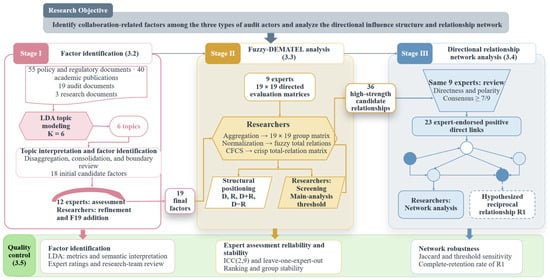
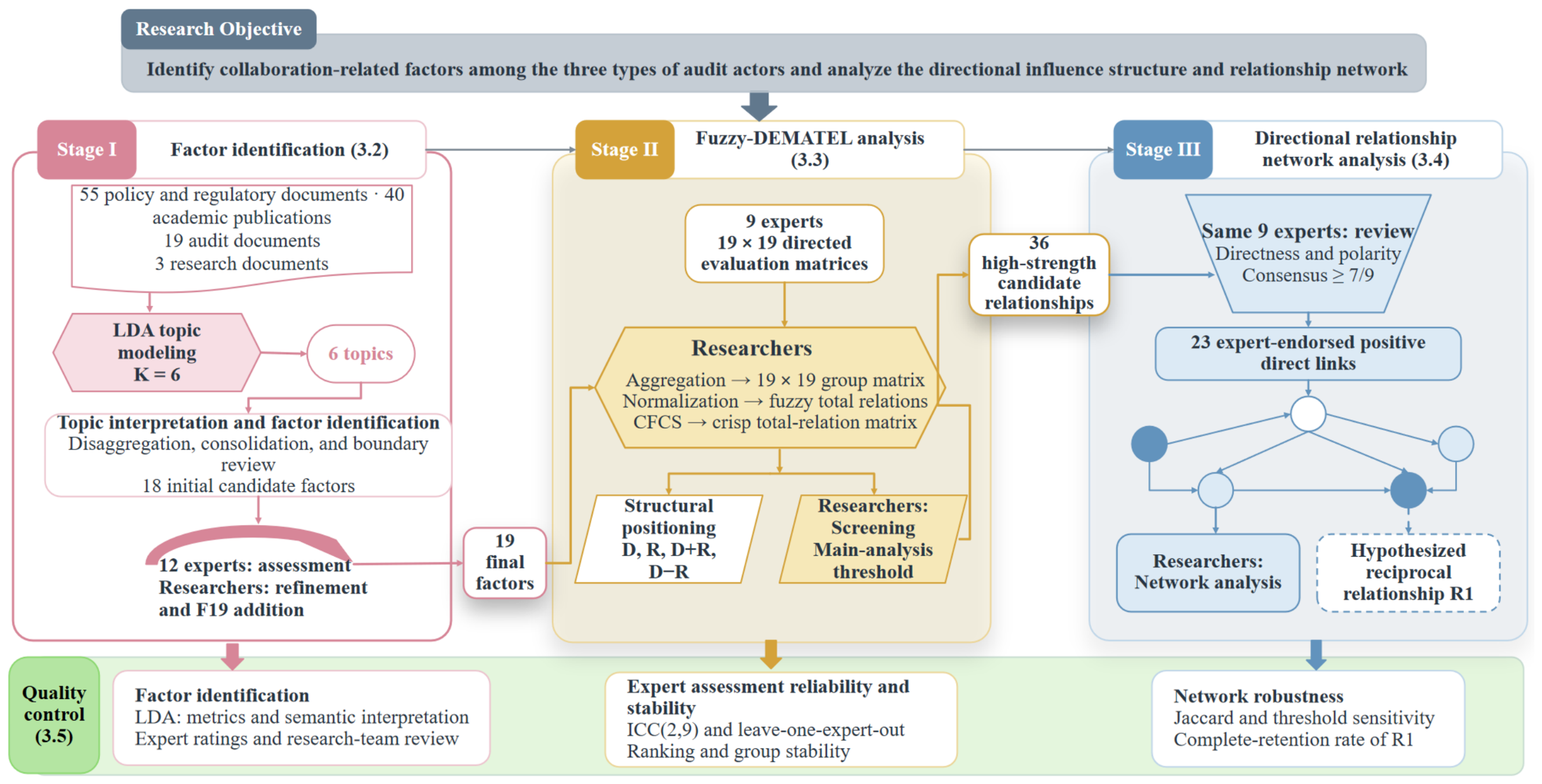
This study consists of three phases: factor identification, Fuzzy-DEMATEL analysis, and expert review and network analysis, as shown in Figure 1. Relationship evaluation and review are conducted by the same group of nine experts who participated in the factor consultation.
Figure 1.
Research framework of the study.
3.2. Data Sources and Factor Identification
This study constructed a multi-source corpus comprising 117 Chinese-language texts, including 55 policy and regulatory documents, 40 academic publications, 19 audit documents, and three research documents. The audit materials cover airports, roads, urban rail, public health and sports facilities, public-investment oversight, and private industrial construction in China. They include records of project and audit-related activities during 2013–2025. Restricted audit and research materials were used with permission, and sensitive project and personnel information was de-identified.
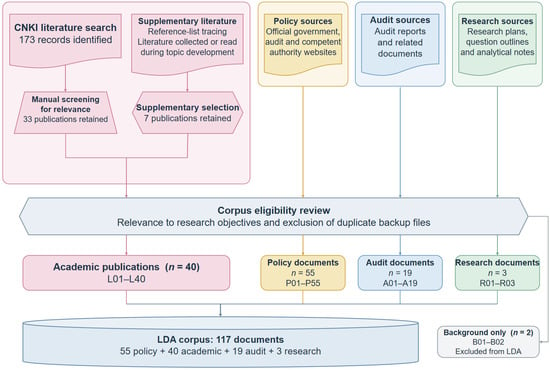
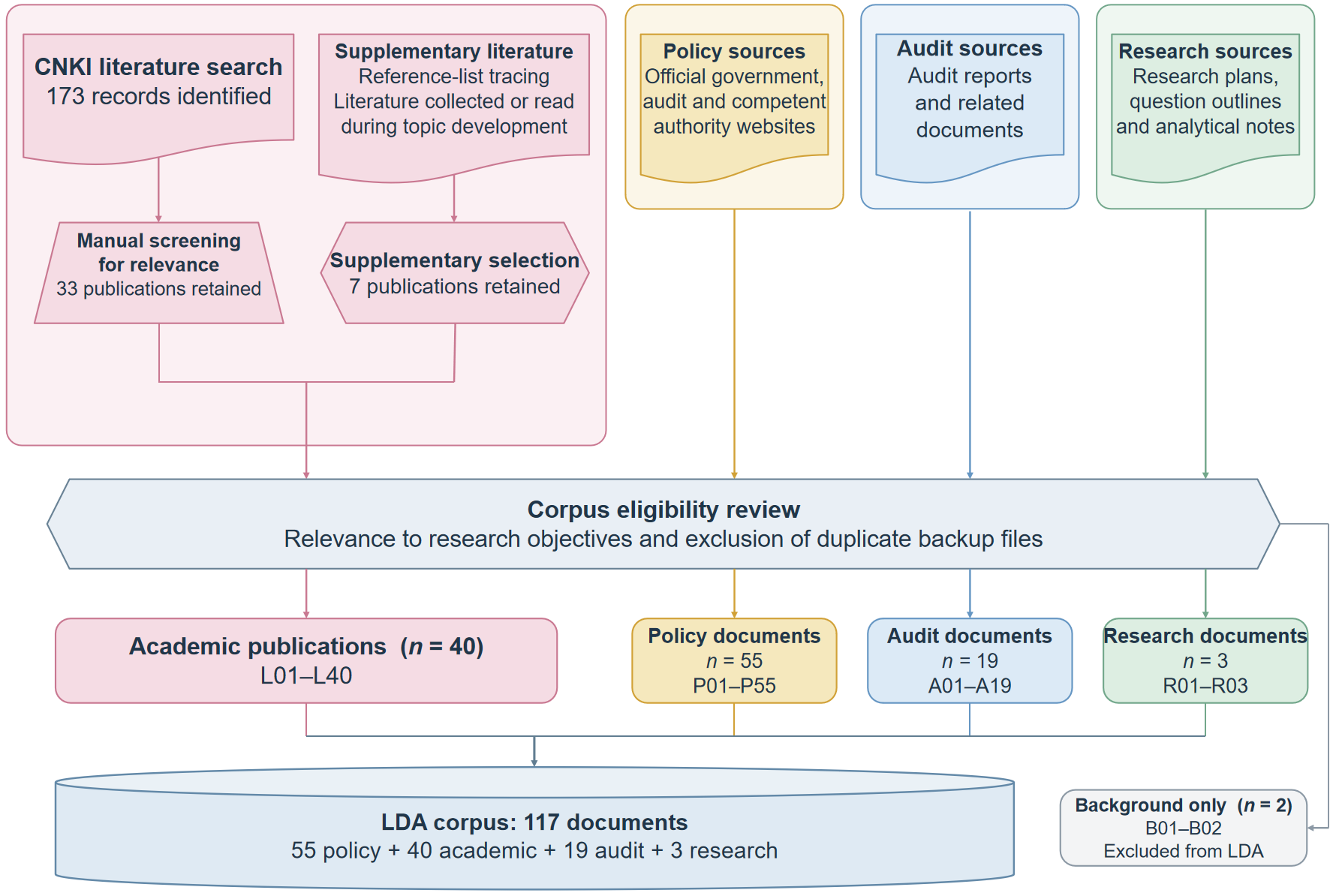
The policy and regulatory documents were primarily retrieved from the official websites of the central government, audit institutions, and relevant competent authorities. The academic publications were selected for their relevance to the research objectives. A Chinese-language search was conducted in CNKI in June 2026 for publications dated from September 2019 to June 2026. The search query (English translation) was TI = “audit collaboration” AND (KY = “state audit” OR KY = “government audit” OR KY = “internal audit” OR KY = “social audit”), where TI denotes title and KY denotes keywords. In this Chinese auditing context, “social audit” refers to auditing by independent professional service providers. The search yielded 173 records. Following manual screening for relevance to the research objectives, 33 publications directly related to audit collaboration were retained. To broaden the corpus’s coverage of relevant audit contexts and analytical methods, seven additional publications were selected through reference-list tracing and a review of closely related literature previously collected or read during topic development. The final academic corpus comprised 40 publications.
Materials were eligible for inclusion when full texts were available for analysis and their content was relevant to audit oversight, project management, interorganizational collaboration, digital auditing, or related analytical methods. During corpus construction, duplicate backup files were excluded, and each retained source file was treated as one document in the LDA analysis. A13 and A14 cover different stages of the same airport expansion project, also addressed in R01–R03 and the airport-related section of A05. The regional public-investment section of A05 partly overlaps with the portfolio covered by A12. Other audit documents cover individual projects, project portfolios, or broader public-investment oversight. Two project proposal documents, B01 and B02, were retained solely as background references and excluded from the LDA corpus. The composition of the corpus and the roles of the materials in factor identification are presented in Table 2. Table A1 in Appendix A summarizes the source categories, identifiers, and their inclusion in the LDA corpus. Figure 2 illustrates the source identification and screening process.
Table 2.
Composition and analytical roles of the research corpus.
Figure 2.
Source identification, screening and inclusion in the LDA corpus.
All materials were converted to UTF-8-encoded plain text, with tables of contents, headers and footers, references, and irrelevant symbols removed. Chinese word segmentation was performed using Jieba version 0.42.1, supplemented by a custom dictionary containing 741 distinct terms covering auditing, construction project management, and interorganizational collaboration. A stop-word list containing 1762 distinct entries was applied. Single-character tokens, numeric-only tokens, and alphabetic Latin tokens shorter than three characters were removed. Document-frequency filtering excluded 9245 word types occurring in only one document and 67 occurring in more than 60% of the documents, leaving a vocabulary of 8830 terms. The 60% ceiling was used as a heuristic to limit vocabulary shared across much of the corpus.
To identify the underlying thematic structure of the collected texts, this study employed latent Dirichlet allocation (LDA), a probabilistic topic modeling approach that represents each document as a mixture of latent topics and each topic as a probability distribution over words [45]. The 117-document corpus was analyzed using LDA before expert consultation. Following text preprocessing, each material was treated as a single document, and the model was implemented using Gensim LdaModel (version 4.4.0) in Python 3.12.14, with NumPy 2.3.5 and SciPy 1.17.0. The random seed was set to 42, with 20 passes and 500 iterations, while alpha and eta were estimated automatically by the model. The number of topics, K, was varied from 4 to 10, with a separate model estimated for each value. A supplementary interpretability comparison considered semantic agreement between high-probability keywords and representative source documents, separation of distinct audit contexts, and parsimony in thematic organization. K = 6 was retained as a compact working specification for corpus interpretation, with the quantitative diagnostics and representative comparisons reported in Table A2 in Appendix A.
To examine the influence of document length and source composition, the retained-token contribution and document-length distribution were calculated for each source category. Sensitivity analyses were conducted at K = 6 by balancing the number of documents across the three major sources, limiting document length, and excluding one source category at a time. The balanced corpus contained 19 policy and regulatory documents, 19 academic publications, 19 audit documents, and three research documents. For the length-limited analysis, 1426 retained tokens were randomly sampled without replacement from documents exceeding this length, while shorter documents were retained in full. Additional sensitivity analyses combined the two audit documents concerning the same airport project into one document or retained only one of the two documents at a time.
Each of these analyses was repeated using ten random seeds and a fixed baseline vocabulary. Topics were matched to the corresponding full-corpus model with the same random seed by minimizing the total Jensen–Shannon distance between topic–word distributions. Similarity was measured using the Jaccard index of the 20 highest-probability keywords, averaged across the six matched topics and then across runs. Random-initialization variability was assessed by comparing nine additional full-corpus models with the seed 42 model.
Sensitivity to vocabulary filtering was assessed using document-frequency ceilings of 50%, 70%, 80%, and no upper ceiling, while retaining the minimum document frequency of two. The vocabulary was rebuilt for each setting, and models were estimated using the same ten random seeds. Topic matching used probability distributions aligned to the union of the compared vocabularies, with zero probabilities assigned to absent terms.
Three researchers independently interpreted the six LDA topics using their high-probability keywords, representative texts, and the contexts of the original passages, and identified candidate concepts. Their interpretations were compared, and disagreements were resolved through discussion. Content addressing different objects or functions within a topic was separated, while conceptually equivalent expressions were consolidated. The resulting concepts were reviewed for naming and conceptual boundaries, yielding 18 initial candidate factors. The backgrounds and participation of the experts in the subsequent consultation and influence-assessment stages are summarized in Table A3 in Appendix A. Table A4 in Appendix A retrospectively documents the source passages and coding rationale for each initial factor, including the separation of composite concepts and consolidation of related expressions. Topic codes identify the dominant topic of the cited document, while factor distinctions follow the passage content. The 18 candidate factors were assessed through a structured consultation with 12 experts selected for their research or practical experience in auditing or engineering management. Experts indicated retention preferences and rated importance and wording accuracy on a five-point scale. Retention support was calculated as the percentage of the 12 experts selecting “retain” or “retain after revision”. Merge suggestions were recorded separately. Importance and wording-accuracy ratings were summarized using medians and interquartile ranges [46]. Based on the ratings and comments, the three-member research team refined the factor names and definitions and added audit oversight coverage (F19) through qualitative review, yielding 19 factors. Nine of the 12 experts subsequently completed the influence assessment and relationship review, with responses linked through anonymized expert identifiers.
3.3. Fuzzy-DEMATEL Analysis Procedure
To examine the directional influence structure among the identified factors, this study employed the Fuzzy-DEMATEL method. DEMATEL represents the direct and indirect influences among interrelated factors through the direct-relation matrix and the total-relation matrix, while its fuzzy extension incorporates uncertainty in experts’ linguistic judgments. Triangular fuzzy numbers, characterized by lower, modal, and upper values, were adopted as a parsimonious representation of the five-level linguistic influence judgments, consistent with the scale adapted from Lin and Wu [47].
Nine of the 12 factor-consultation participants subsequently completed the influence assessment and relationship review. The remaining three factor-consultation participants were not invited to this stage. The experts had relevant expertise in areas including audit research and practice, engineering management, and digital auditing. Each expert completed the influence ratings independently. The Excel-based questionnaire provided standardized conceptual descriptions of the 19 factors and asked each expert to assess the degree of direct influence of factor Fi on factor Fj. Each expert thus produced a 19 × 19 directed evaluation matrix, with all diagonal elements fixed at zero. The remaining 342 directional relationships were evaluated using the five-level linguistic scale presented in Table 3. Prior to the formal survey, the questionnaire was pretested to assess the clarity and comprehensibility of the factor descriptions and assessment instructions. During the formal survey, the directional relationship items were presented in a randomized order to reduce potential order effects. The questionnaire did not include separate “unable to judge” or “not applicable” response options; supplementary oral guidance was provided regarding such factor pairs. All nine questionnaires were complete upon initial submission, and no missing-data imputation was required.
Table 3.
Linguistic scale and corresponding triangular fuzzy numbers.
Let n = 19 denote the number of factors and H = 9 the number of experts. The assessment of the direct influence of Fi → Fj by expert h was converted into a triangular fuzzy number . In the absence of a separately established basis for differential weighting, the nine experts’ judgments were aggregated with equal weights (1/9 per expert) to obtain the fuzzy direct-relation matrix :
The fuzzy direct-relation matrix was then normalized using the larger of the maximum row sum and the maximum column sum of the upper-bound matrix as the normalization factor:
where is the upper bound of , and is the normalized fuzzy direct-relation matrix. The normalization factor was 16.0833, and the maximum row (column) sums of the normalized lower, middle, and upper component matrices were 0.4940 (0.4991), 0.7634 (0.7789), and 0.9775 (1.0000), respectively. The spectral radii of the three component matrices were 0.376, 0.643, and 0.886, respectively, all below 1, thereby satisfying the convergence condition for the total-relation matrix [48].
The total relation matrices corresponding to the lower, middle, and upper components were calculated as follows:
where I is the n × n identity matrix. The fuzzy total-relation matrix captures both the direct influences among factors and the indirect influences transmitted through other factors. To facilitate the subsequent calculation and comparison of structural indicators, the fuzzy total-relation matrix was converted into a crisp matrix using the Converting Fuzzy Data into Crisp Scores (CFCS) method [49]. Following computation of the three component total-relation matrices, this defuzzification procedure transforms fuzzy values into comparable crisp scores through normalization and the synthesis of left and right normalized values. Specifically, min–max normalization used the global minimum lower bound and maximum upper bound across all entries of the fuzzy total-relation matrix, including its diagonal. The subsequent synthesis of left and right normalized scores and rescaling were applied to all entries to obtain the crisp total-relation matrix .
Based on matrix T, the total influence exerted and total influence received by each factor were calculated as:
Here, Di and Ri denote the total influence exerted and received by factor Fi, respectively. Both sums include the diagonal entry tii, which represents indirect self-return effects. Di + Ri represents prominence, indicating the extent to which a factor participates in the overall influence structure, whereas Di − Ri represents net influence, indicating the difference between the overall influence a factor exerts on other factors and the influence it receives from them. A factor with Di − Ri > 0 is classified into the net-influencing group, whereas a factor with Di − Ri < 0 is classified into the net-influenced group. All of these measures are interpreted as directional structural indicators derived from expert judgments. The complete CFCS expressions and a worked numerical example for F8 → F16 are provided in Table A5 in Appendix B.
3.4. Directional Relationship Network Analysis
Building on the Fuzzy-DEMATEL analysis, high-strength candidate relationships were screened, and the relationships retained following expert review were used to construct the relationship network. The variable nodes consisted of the 19 factors described above. All variables were interpreted in the direction of an increase in the attributes they represent. For example, “project complexity” represents an increase in complexity. Drawing on the conventions of causal loop diagrams for representing relationship direction, polarity, and closed paths, this study structurally interpreted the relationship network derived from expert judgments.
Candidate relationships were screened based on the crisp total-relation matrix obtained through CFCS defuzzification. The mean and standard deviation of the off-diagonal elements of the matrix were μT and σT, respectively. The main-analysis threshold and the candidate relationship set were defined as:
The rule was selected before inspecting the thresholded candidate network as a distribution-based screen for relatively high total influence. It uses both the mean and dispersion of the observed values without fixing a candidate proportion or requiring an expert-defined cutoff. The total-relation screen prioritizes aggregate direct and propagated influence. Experts subsequently assess the directness of relationships meeting this cutoff. Relationships reaching the main-analysis threshold were included in the candidate set. Because the total-relation matrix contains both direct and indirect influences, the research team first reviewed the direction and specific meaning of each candidate relationship with reference to the group direct-relation matrix and the original expert ratings. The same 9 experts who participated in the Fuzzy-DEMATEL relationship assessment then independently reviewed the directness of all 36 candidate relationships. The influence-strength assessment was conducted on 14 June 2026, and responses to the subsequent review were collected around 18 June. The experts completed the review without discussion and were not shown their earlier influence ratings, group-level influence values, or network diagrams.
The arrows in the relationship network represent expert-endorsed directional relationships judged to be direct, while positive and negative polarities indicate the direction in which an increase in the preceding factor influences the subsequent factor [50]. Accordingly, a direct relationship was defined in this study as one in which, within the research boundary, experts judged that the preceding factor could directly influence the subsequent factor without the influence being transmitted through other factors in the model. Before the questionnaire was administered, agreement by at least 7 of the 9 experts was prespecified as the criterion for directness consensus. Polarity was requested from experts who identified a candidate relationship as direct. With other conditions held constant, a relationship was assigned a positive polarity (“+”) when an increase in the preceding factor increased the subsequent factor, and a negative polarity (“−”) when an increase in the preceding factor decreased the subsequent factor. For polarity, the denominator was the full panel of nine experts, and consensus required at least seven votes for the same polarity. Only recorded positive or negative responses counted as support for the corresponding polarity.
The program automatically identified simple directed closed paths in the initial directed network formed by the candidate relationships. Except for the starting and ending node being the same, no other factor was repeated along a path. For cycles consisting of the same relationships but differing only in their starting node, only one representative loop was retained. A closed path was retained for structural interpretation when all of its constituent relationships reached both directness and polarity consensus.
For a loop L, with the polarity of each relationship denoted by pij, the net polarity of the loop was determined by the product of the polarities of its constituent relationships:
Equation (6) describes the net polarity of a closed path based on expert-assessed relationship signs.
3.5. Reliability and Robustness Checks
To evaluate the reliability of the aggregated expert assessments, this study employed the intraclass correlation coefficient (ICC), which quantifies the degree of agreement or consistency among ratings under a specified statistical model [51]. The 342 directional relationships among the 19 factors were treated as assessment objects, with the nine experts serving as raters. The analysis used the experts’ original 0–4 ratings of relationship influence strength, assuming approximately equal spacing between adjacent categories and excluding diagonal elements fixed at zero. A two-way random-effects model with an absolute-agreement definition was adopted to calculate the average-measures ICC(2,9) under a working assumption of variability among similarly qualified experts, although the nine raters were purposively selected. The ICC and its 95% confidence interval were independently recalculated using Python (version 3.12.13; NumPy version 2.3.5; SciPy version 1.17.0), with the interval estimated from two-way ANOVA mean squares using an F-distribution-based procedure [52]. Whereas ICC (2,1) reflects the reliability of an individual rating, ICC (2,9) evaluates the reliability of the average ratings from nine experts [51]. Because the 342 directional relationships share factors, the conventional confidence interval does not account for potential dependence among these assessment objects. The ICC evaluates aggregation reliability, while the network relationships were examined separately through the expert review of directness and polarity described in Section 3.4.
To examine whether the results were disproportionately influenced by any individual expert, a leave-one-expert-out sensitivity analysis was conducted. Each expert was excluded in turn, and the Fuzzy-DEMATEL calculations were repeated using the remaining eight experts. Spearman’s rank correlation coefficient was used to compare the factor rankings of prominence (D + R) and net influence (D − R) obtained from each recalculation with those derived from the full sample. Changes in the classification of factors between the net-influencing and net-influenced groups were also recorded.
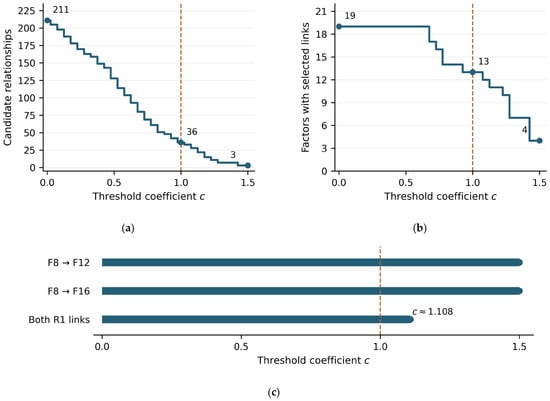
The stability of the high-strength candidate relationships was assessed using the Jaccard coefficient by comparing the candidate relationship set from each leave-one-expert-out recalculation with that from the full sample. For the dynamic threshold, μT + σT was recalculated for each leave-one-expert-out model, whereas the fixed threshold retained the μT + σT value from the full sample. Threshold sensitivity was examined using λ = μT + cσT, with c ranging from 0 to 1.5 in increments of 0.05, tracking candidate-network size, factor coverage, and the selection of key relationships. Directness and polarity were assessed using the full panel of nine experts, with the consensus criteria described in Section 3.4. The leave-one-expert-out analysis focused on the influence-strength ratings, and the Jaccard coefficients compared the resulting candidate relationship sets with the full-sample candidate set. To assess sensitivity to upper-bound normalization, the baseline normalization factor was increased by 1%, while the expert ratings and linguistic scale remained unchanged. The resulting D−R values and factor classifications were compared with those of the baseline model. A supplementary comparison screened the CFCS-defuzzified group direct-relation matrix using the mean plus population standard deviation of its 342 off-diagonal entries.
For each factor, the minimum and maximum ranks of prominence and net influence across the nine recalculations were recorded. We also recorded selection frequencies for the 36 baseline candidates and the survival of the original 23 expert-endorsed links, holding the original review decisions fixed. A further diagnostic aligned each recalculation’s off-diagonal mean with the baseline mean before reapplying the fixed cutoff.
4. Results
4.1. Factor Identification Results
The six-topic model had a log-perplexity of −7.5103 and a Cv coherence of 0.4937. At K = 5, procurement terms occurred alongside public-works audit terms in Topic 2; K = 6 represented these contexts separately in Topics 6 and 2. K = 8 separated digital-auditing content from audit-actor collaboration, while K = 9–10 further distinguished institutional/internal-audit oversight from inter-actor collaboration. K = 6 was retained for this more compact thematic organization. Based on the topic–term distributions and representative texts, the research team labeled the six topics as administrative accountability and organizational conduct; public works performance and whole-process audit supervision; collaboration among audit actors and digital auditing; construction contracts and PPP project implementation; public budgeting and asset management; and government procurement and market regulation. The quantitative diagnostics and representative topic comparisons for K = 4–10 are reported in Table A2 in Appendix A.
After preprocessing and vocabulary filtering, the corpus contained 214,602 retained tokens. Policy and regulatory documents, academic publications, audit documents, and research documents contributed 83,902 (39.10%), 101,818 (47.45%), 26,473 (12.34%), and 2409 (1.12%) tokens, respectively. Their median document lengths [Q1, Q3] were 1239 [934.5, 1773.5], 1726.5 [1331.75, 2543.75], 1364 [873.5, 1813], and 904 [686.5, 970] tokens, respectively. The 12 longest documents contributed 32.14% of the retained tokens.
Under balanced numbers of documents from the three major sources, the mean Jaccard index of matched top-20 keyword sets was 0.3334. The corresponding mean was 0.5769 after document-length capping. When policy and regulatory documents, academic publications, audit documents, and research documents were excluded in turn, the respective means were 0.3540, 0.3213, 0.6759, and 0.9521. The mean for the nine additional random-initialization comparisons was 0.3103 (SD = 0.0588; range: 0.2315–0.4098). These results show that topic keywords varied with document length, source composition, and model initialization. When the two airport project documents were combined, the mean top-20 keyword Jaccard index was 0.9937. The corresponding values were 0.9258 and 0.9233 when only the early-stage report and the subsequent report were retained, respectively. Under document-frequency ceilings of 50%, 70%, 80%, and no upper ceiling, the mean matched top-20 keyword Jaccard indices were 0.2636, 0.2913, 0.2335, and 0.1785, respectively. These comparisons indicate that topic keywords are sensitive to analytical settings, supporting an exploratory interpretation of the six-topic solution. The factor framework also draws on source-text interpretation and expert review; its robustness across alternative topic solutions warrants further assessment.
Interpretation of the six LDA topics yielded 18 initial candidate factors. Following structured expert consultation and review by the three-member research team, these factors were refined and audit oversight coverage (F19) was added, yielding 19 factors. The research team then grouped the final factors into five analytical dimensions according to their primary functions. The dimensions provide a qualitative organization of the framework, while the subsequent influence assessments use the 19 individual factors.
At the factor level, coordination mechanism adequacy (F8) concerns arrangements that organize cross-actor interaction, such as regular coordination meetings. Institutional alignment (F9) concerns the compatibility of audit standards and procedures, including evidence-review requirements. Planning collaboration aligns audit priorities and schedules (F11), and implementation collaboration coordinates field verification and evidence checks (F12). Resource sharing makes data, working papers, and professional expertise available across actors (F13); reliance on audit work involves using another actor’s findings in one’s own audit judgments following appropriate review (F14). Table 4 presents the dimensions and their constituent factors.
Table 4.
Final factors of interorganizational collaboration among the three types of audit actors.
4.2. Directional Influence Structure
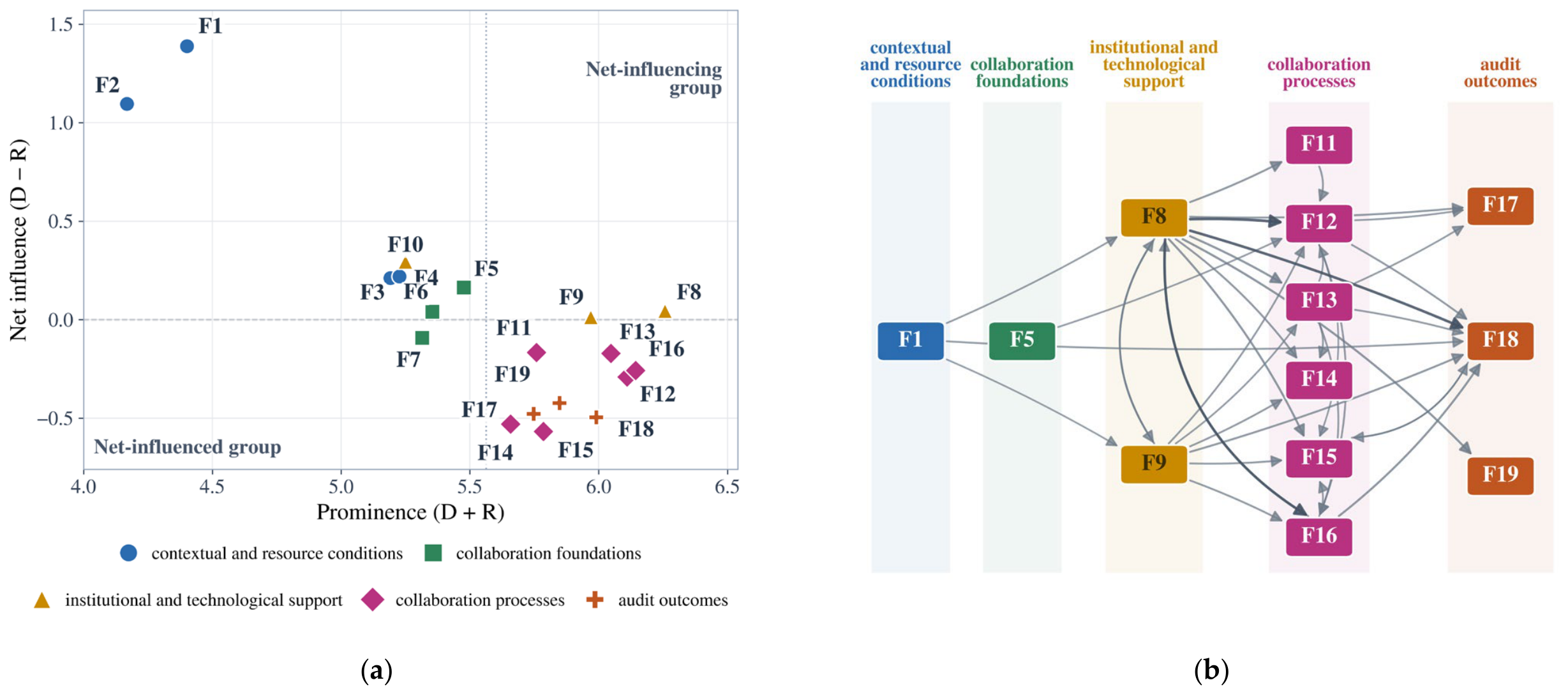
The Fuzzy-DEMATEL results were calculated from the nine experts’ influence ratings collected on 14 June 2026 using the finalized 19-factor questionnaire. As shown in Table 5, in the full-panel baseline model, F1–F6 and F8–F10 were classified into the net-influencing group, whereas F7 and F11–F19 were classified into the net-influenced group, based on the sign of D−R. In terms of the distribution across dimensions, all four factors in the contextual and resource conditions dimension had positive net influence values, whereas all nine factors in the collaboration processes and audit outcomes dimensions had negative net influence values. F1 (adequacy of policies and regulations) and F2 (project complexity) ranked first and second in net influence, with values of 1.389 and 1.096, respectively.
Table 5.
Structural indicators of the identified factors.
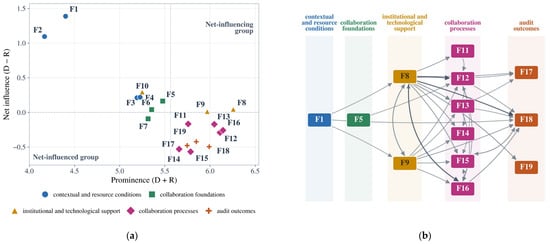
In terms of prominence, F8 (coordination mechanism adequacy) had the highest value (6.257), with relatively high levels of both total influence exerted and total influence received, indicating a relatively strong overall association with the other factors. F1 (adequacy of policies and regulations) and F2 (project complexity) ranked 18th and 19th in prominence, respectively. For both factors, the total influence exerted exceeded the total influence received, while their participation in the overall structure was relatively limited. The distributions of prominence and net influence across the factors are shown in Figure 3a.
Figure 3.
Fuzzy-DEMATEL structural positioning and high-strength candidate relationship network. (a) Prominence–net influence map for the full-panel baseline model. The horizontal dashed line indicates D − R = 0, and the vertical dashed line indicates the mean D + R value (5.563). (b) High-strength candidate relationship network. Arrows indicate candidate total-relation links reaching the main-analysis threshold.
At the main-analysis threshold , 36 high-strength candidate relationships involving 13 factors were screened from the crisp total-relation matrix, as shown in Figure 3b. F8 had 10 candidate outgoing relationships, while F18 received 7 candidate relationships. The three relationships with the highest total-relation values were F8 → F12 (0.197), F8 → F16 (0.195), and F8 → F18 (0.194). The total-relation weights and descending ranks of all 36 candidate relationships are reported in Table A6 (Appendix C). F2, F3, F4, F6, F7 and F10 had no incoming or outgoing relationships reaching the main-analysis threshold and were therefore absent from the candidate network. Because the total-relation matrix contains both direct and indirect influences, the 36 relationships constituted the candidate set for expert review, with their directness and polarity to be determined in the subsequent stage.
4.3. Directional Relationship Network
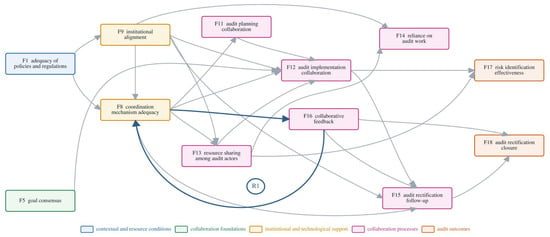
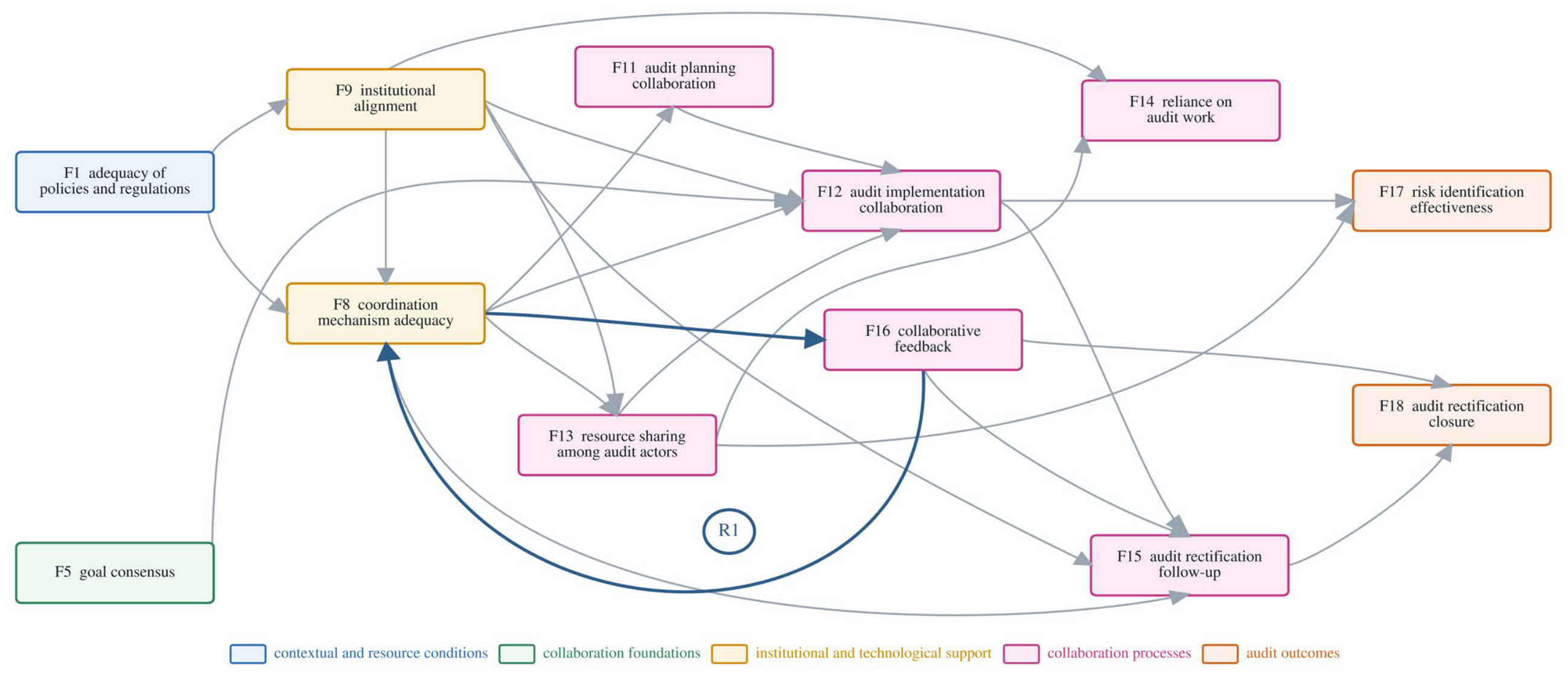
Within the screened subset of 36 candidates, 23 relationships met both the directness and polarity consensus criteria and were retained as expert-endorsed positive direct links. As reported in Appendix C, no negative polarity votes were recorded for any of the 36 candidates, and the remaining 13 relationships were excluded because fewer than seven experts judged them direct. The initial 0–4 ratings assessed unsigned influence strength. The total-relation threshold identified 36 candidates, which were subsequently reviewed for directness. Experts who judged a relationship direct were asked to indicate whether its polarity was positive or negative. Several factor labels emphasizing adequacy or collaborative performance (e.g., F1 and F8) may have focused experts’ attention on enabling relationships. F19 (audit oversight coverage) was absent from the retained network because its only candidate relationship, F8 → F19, received two directness votes out of nine. The 23 retained relationships therefore involved 12 factors, as shown in Figure 4.
Figure 4.
Expert-endorsed direct relationships within the screened subset. Note: Dark arrows highlight the hypothesized reciprocal relationship R1 (F8 ↔ F16); gray arrows show the other retained relationships.
Overall, the direction of influence extended from upstream factors, through institutional and technological support and the collaboration process, to audit outcomes. The initial network formed by the 36 candidate relationships contained 11 simple directed closed paths. Following the review of directness and polarity, only F8 → F16 → F8 had all of its constituent relationships simultaneously meet the prespecified consensus criteria. The positive reciprocal pair F8 ↔ F16 is interpreted as a hypothesized reciprocal relationship (R1) based on expert judgments. Each of the other 10 candidate closed paths contained at least one constituent relationship that did not meet the retention criteria.
4.4. Robustness Checks
Table 6 shows that the average of nine experts’ ratings had higher reliability (ICC(2,9) = 0.849) than an individual rating (ICC(2,1) = 0.385), while the factor rankings and the high-prominence position of F8 were relatively stable in the leave-one-expert-out analysis. Across the nine leave-one-expert-out recalculations, D−R ranged from −0.016 to 0.113 for F6, −0.002 to 0.117 for F8, and −0.040 to 0.097 for F9. These sign changes indicate closely balanced outgoing and incoming total influence for F6, F8 and F9, with group assignments sensitive to expert composition. F9’s classification also varied with the coding of “no influence”. F8’s high prominence reflects its overall involvement in the influence structure. The candidate relationship set was also sensitive to the fixed threshold. Joint retention of the two candidate links forming R1 varied with the threshold. R1 is interpreted as a hypothesized reciprocal relationship.
Table 6.
Reliability and robustness check results.
After aligning the off-diagonal means, the mean fixed-threshold Jaccard coefficient increased from 0.480 (minimum 0.111) to 0.875 (minimum 0.702). The Spearman correlation of the 342 edge-weight rankings with the baseline averaged 0.993 (minimum 0.988). These results suggest that shifts in overall relation strength contributed substantially to the weaker fixed-threshold overlap. Across the nine recalculations, the prominence ranks were 1–2 for F8 and 1–3 for F16. Of the original 23 expert-endorsed links, 19–23 passed the dynamic screen in each recalculation, compared with 3–23 under the fixed screen. Fifteen links survived all nine dynamic screens, compared with three under the fixed screen. Individual edge selection was therefore fragile under the fixed cutoff despite comparatively stable factor rankings. The mean-alignment comparison serves as a diagnostic of overall score shifts.
As shown in Figure 5a and Figure 5b, candidate relationships decreased from 211 to 3 and factor coverage from 19 to 4, respectively, across the examined threshold range. Figure 5c shows that F8 → F12 and F8 → F16 remained selected throughout, whereas both relationships forming R1 remained candidates only up to c ≈ 1.108.
Figure 5.
Threshold sensitivity of the candidate network: (a) candidate relationships; (b) factor coverage; (c) selection ranges of key relationships. Dashed lines mark the main-analysis cutoff (c = 1).
When the normalization factor was increased by 1%, the D−R rankings and sign classifications remained unchanged for all 19 factors. For F6, F8, and F9, whose baseline D−R values were close to zero, the values changed from 0.040, 0.045, and 0.013 to 0.038, 0.044, and 0.012, respectively. An additional sensitivity analysis was conducted by replacing the triangular fuzzy number for “no influence” from (0, 0, 0.25) with (0, 0, 0), while keeping the other linguistic scales and expert ratings unchanged. The mean (maximum) absolute differences in the upper components of the normalized direct-relation and fuzzy total-relation matrices were 0.000667 (0.008636) and 0.044116 (0.069574), respectively, while their lower and middle components remained unchanged. The corresponding difference in the CFCS-defuzzified total-relation matrix was 0.008421 (0.013265). Spearman’s rank correlations were 1.000 for prominence and 0.998 for net influence. For F6, F8, and F9, the D−R values changed from 0.040, 0.045, and 0.013 to 0.027, 0.029, and −0.005, respectively; only F9 changed from the net-influencing to the net-influenced group. At the recalculated threshold, the candidate relationships decreased from 36 to 34 (Jaccard coefficient = 0.944), with F12 → F15 and F18 → F15 falling below the threshold, while both relationships forming R1 remained in the candidate set.
The supplementary direct-matrix screen yielded 59 candidates at a threshold of 0.7212, with 30 overlapping the 36 total-relation candidates (Jaccard coefficient = 0.462). Twenty-one of the 23 expert-endorsed relationships also passed the direct-matrix screen. The direct-matrix candidates covered 18 factors, compared with 13 under the total-relation screen. Expert review covered only the total-relation candidates, leaving the 29 additional pairs unreviewed. Reviewing these pairs could add factors and links to the retained network and change its closed paths. The factor indicators and rankings were calculated from the full matrix and are unaffected by this screening choice.
5. Discussion
Policy and regulatory adequacy (F1) and project complexity (F2) ranked first and second in net influence, respectively, but 18th and 19th in prominence. Their strong net influence partly reflects the relatively low influence they receive from other factors, as D−R describes the balance between outgoing and incoming influence in the unsigned total-relation system. Evaluating the benefits of specific interventions requires project-level performance evidence. As contextual conditions, policy and regulatory adequacy frames collaboration requirements, while project complexity creates demands for integrating dispersed information and expertise. Their low prominence indicates relatively limited overall involvement in the modeled system. Coordination mechanism adequacy (F8) had the highest prominence, with relatively high levels of both influence exerted and influence received, reflecting its involvement across multiple collaboration processes.
Existing research emphasizes the role of formal coordination arrangements in interorganizational collaboration and also considers the influence of trust among actors and resource complementarity [53,55,57]. In international construction projects undertaken by Chinese contractors, Zhang et al. [58] found that contractual coordination and trust were important in configurations associated with high project performance. Their analysis also linked strict contract enforcement under low trust to poor performance. In ten Finnish innovation collaborations, Valkokari et al. [55] found that formal contracts and relational agreements could conflict with actual governance practices. The prominence of F8 is consistent with the importance of coordination reported in these studies; their findings also emphasize the roles of trust and implementation practices.
In the network retained following expert review, F8 points to audit planning collaboration, audit implementation collaboration, resource sharing among audit actors, and feedback on audit collaboration. In this audit context, the oversight requirements of GAIs, the information on organizational operations held by IAFs, and the professional results provided by ASPs need to be aligned through such activities as task arrangements, provision of materials, and use of audit results. These relationships help illustrate how formal coordination arrangements align the dispersed oversight requirements, organizational information, and professional results of the three types of audit actors with specific audit activities.
The network result shows that different audit outcomes are linked to different aspects of the collaboration process. Audit implementation collaboration and resource sharing among audit actors both point to risk identification effectiveness, whereas follow-up on audit-related corrective actions and feedback on audit collaboration point to closure of audit-related corrective actions. In practical terms, IAFs may share authorized project information and ASPs may provide analysis within their engagements to support risk identification by GAIs or IAFs. To support corrective-action closure, GAIs and IAFs may follow up findings within their mandates, with ASPs providing contracted support, while audited entities and responsible departments implement the corrective measures. The network links coordination mechanism adequacy with audit implementation collaboration, audit implementation collaboration with risk identification, and follow-up with corrective-action closure. These outcome-specific relationships provide propositions for subsequent project-level examination across different audit arrangements. Yang et al. [16] identified management capability as a central audit-risk driver in five national public audit projects in China. Our expert-elicited model complements this account by distinguishing the collaborative processes associated with risk identification from those associated with corrective-action closure.
Furthermore, the hypothesized reciprocal relationship R1 between coordination mechanism adequacy (F8) and feedback on audit collaboration (F16) suggests that feedback may inform subsequent coordination arrangements. Longitudinal project observations could examine the temporal sequence and response delays of these influences across audit phases. Factor rankings were comparatively stable, while individual edge selection was fragile under the fixed cutoff. Interpretation of the 23 expert-endorsed links therefore remains conditional on the baseline panel and screening rule.
6. Conclusions and Implications
This study contributes to audit-collaboration research by specifying how coordination arrangements and collaborative activities relate to distinct audit objectives in major public construction projects in China. The expert-elicited framework distinguishes the integration of information and professional expertise associated with risk identification from the follow-up and feedback associated with corrective-action closure. This distinction refines the application of collaborative governance to project audit by connecting the organization of joint work with the particular oversight purposes it serves. The framework provides relational propositions for subsequent examination using independent project evidence, with attention to the separate mandates and engagement scopes of participating audit actors.
F8 → F12 and F8 → F16 remained candidates across the examined threshold range (0 ≤ c ≤ 1.5), informing the priority given to implementation coordination and feedback. The coordination register, its fields and procedures, and safeguards for independent judgment are professional implementation recommendations. Before fieldwork or following a scope change, GAIs and IAFs may record task owners, information requirements and deadlines in a coordination register. Each actor may approve its own assignments and refer unresolved overlaps to its audit lead. ASPs may provide professional analysis and supporting materials within their engagement and authorization scopes. Shared records should identify their sources, methods and limitations, and the receiving actor should determine whether the work is suitable for use or requires additional examination. Each audit actor should maintain the objectivity and independence of its professional judgment and remain responsible for its own conclusions.
F15 → F18 and F16 → F18 inform corrective-action follow-up, with selection sensitive to the threshold; the follow-up register is a professional implementation recommendation. For each notified finding, the responsible GAI or IAF may record the action owner, deadline, supporting evidence and coordination issues in a follow-up register, verify closure and refer overdue or insufficiently supported actions to the relevant responsible department. ASPs may provide professional review support within their engagement scope, while remediation measures are implemented by the audited entities and relevant responsible departments. The recorded coordination issues may inform subsequent task arrangements and working procedures within the relevant actors’ responsibilities.
The proposed performance indicators are general professional recommendations for assessing F17–F19. These include the proportion of independently verified material risks detected (F17), median time from finding notification to verified closure and the verified closure rate among actions due (F18), and the proportion of approved-scope items completed with supporting evidence (F19). Application of the registers and indicators requires predefined assessment periods and project-level validation.
The factor framework draws on interpretation of the six LDA topics, structured expert consultation, and research team refinement; influence estimates derive from equally weighted expert ratings, and the retained network follows threshold screening and review by the same panel. Replication using different corpora, expert panels, or analytical specifications could assess the robustness of factor definitions and coverage. It could also examine differences across professional backgrounds and experience levels. Such work could build on the observed sensitivity of topic extraction and relationship selection under a fixed numerical threshold. Independent relationship review could assess possible dependence between the two assessment stages. Future expert assessments could compare alternative factor wordings and explicitly examine both enabling and adverse effects across a wider set of relationships. Completion times were not recorded and fatigue was not measured or specifically controlled; future surveys could monitor response burden. Longitudinal project evidence could test the proposed relationships and evaluate management effects and feedback across project phases.
Author Contributions
Conceptualization, L.X. and Q.W.; methodology, L.X. and Y.L.; formal analysis, L.X.; investigation, Y.L.; data curation, Y.L.; writing—original draft preparation, L.X. and Y.L.; writing—review and editing, L.X., Y.L., Q.W. and X.W.; supervision, Q.W. All authors have read and agreed to the published version of the manuscript.
Funding
This research was funded by Jinan International Airport Construction Co., Ltd. through the research project “Study on the Development Path of a Full-Process Tracking AI-Assisted Audit Technology Platform for the Phase II Expansion and Renovation of Jinan Yaoqiang Airport” (Project No. SDHH-2025-03004).
Institutional Review Board Statement
Ethical approval for this study was granted by the Hunan Engineering Management Society (HNEMS) (approval number: HNEMS-2026-017; approval date: 18 May 2026), prior to the commencement of the expert questionnaire survey.
Informed Consent Statement
All participants were informed of the research purpose and voluntarily agreed to participate in the study.
Data Availability Statement
Supporting source information and aggregate analytical results are supplied confidentially for editorial review. De-identified individual expert rating matrices, detailed model outputs, analysis code and restricted source records can be provided to the editors upon request, subject to the agreed permissions and participant consent. Individual expert ratings and restricted source records are not publicly available.
Conflicts of Interest
The authors have no employment relationship with the funder. The funder supplied the 19 audit documents and participated in preliminary research discussions. Three funder-linked participants (E07–E09), including two auditing specialists (E08 and E09), took part in the factor consultation, influence assessment, and subsequent directness and polarity review. The authors received and retained the individual ratings. The funder viewed the individual ratings and reviewed the data and findings before submission, but did not request changes to the ratings or conclusions. The authors remained responsible for the analysis and interpretation and retained the final submission decision.
Appendix A. Data Sources and Methodological Details
Table A1.
Summary of source categories, identifiers, and inclusion in the LDA corpus.
Table A2.
Log-perplexity and Cv coherence for K = 4–10.
Table A3.
Expert backgrounds and participation across study stages.
Table A4.
Source evidence and derivation of the 18 initial candidate factors.
Appendix B. Worked Numerical Example of the Fuzzy-DEMATEL Calculation
Table A5.
Worked numerical example of the Fuzzy-DEMATEL calculation for F8 → F16.
Appendix C. Expert Review of Candidate Relationships
Table A6.
Total-relation weights, ranks, and expert assessments of the 36 candidate relationships.
References
- Denicol, J.; Davies, A.; Krystallis, I. What are the causes and cures of poor megaproject performance? A systematic literature review and research agenda. Proj. Manag. J. 2020, 51, 328–345. [Google Scholar] [CrossRef] [Scilit]
- Zani, C.M.; Denicol, J.; Broyd, T. The four coordination roles of clients when designing megaproject organizations. Proj. Manag. J. 2024, 55, 558–579. [Google Scholar] [CrossRef] [Scilit]
- Wang, L.; Wang, X.; Liu, X. Project governance and governance of interorganizational project networks: Toward understanding their relationships and future research agenda. Proj. Manag. J. 2025, 56, 31–40. [Google Scholar] [CrossRef] [Scilit]
- Wang, Q.e.; Guo, Z.; Pan, L.; Li, Y. Technological innovation cooperation in mega construction projects: A conceptual framework. Buildings 2024, 14, 189. [Google Scholar] [CrossRef] [Scilit]
- Brunet, M.; Choinière, O. Governance framework trajectory for major public projects: The case of Canada. Proj. Manag. J. 2025, 56, 74–89. [Google Scholar] [CrossRef] [Scilit]
- Ika, L.A.; Casady, C.B.; Osborne, S.P. Making societal impact matter: Reconciling project and public value. Int. J. Proj. Manag. 2026, 44, 102849. [Google Scholar] [CrossRef] [Scilit]
- State Council of the People’s Republic of China. Regulation on Government Investment; State Council of the People’s Republic of China: Beijing, China, 2019.
- Standing Committee of the National People’s Congress. Audit Law of the People’s Republic of China (2021 Amendment). Available online: https://www.audit.gov.cn/n10018889/n10137162/n10137201/c10191187/content.html (accessed on 10 November 2026).
- Infrastructure and Projects Authority. Assurance Review Toolkit; Infrastructure and Projects Authority: London, UK, 2021.
- U.S. Government Accountability Office. Cost Estimating and Assessment Guide: Best Practices for Developing and Managing Program Costs; U.S. Government Accountability Office: Washington, DC, USA, 2020.
- U.S. Government Accountability Office. GAO Schedule Assessment Guide: Best Practices for Project Schedules; U.S. Government Accountability Office: Washington, DC, USA, 2015.
- Li, M.; Liu, X. Collaborative mechanism of audit supervision: Meaning and construction. J. Southeast Univ. (Philos. Soc. Sci.) 2024, 26, 81–93. [Google Scholar] [CrossRef]
- Xu, R.; Huang, X.; Liu, Q. Integration and development of audit resources in large cities in the context of supply-side structural reform: An analysis based on the integration of government, internal and independent audits. Chin. Certif. Public Account. 2018, 65–68. [Google Scholar] [CrossRef]
- Xu, W.; Ren, M.; Mu, P.; Li, W. Collaboration between government audit and internal audit: Current status, problems and suggestions. Audit. Res. 2025, 15–21. [Google Scholar]
- Berg, H.; Nyhus, O.H. External quality assurance of cost estimates in major public projects: Empirical evidence on cost performance. Int. J. Manag. Proj. Bus. 2024, 17, 455–475. [Google Scholar] [CrossRef] [Scilit]
- Yang, M.; Hui, Q.; Yang, Q.; Fan, M.; Li, X. A study on the key drivers of national construction project audit risk and evolvement mechanism. Eng. Constr. Archit. Manag. 2025, 32, 427–453. [Google Scholar] [CrossRef] [Scilit]
- Brunet, M.; Petit, M.-C.; Romero-Torres, A. Interorganizational design for collaborative governance in co-owned major projects: An engaged scholarship approach. Proj. Manag. J. 2024, 55, 580–598. [Google Scholar] [CrossRef] [Scilit]
- Ansell, C.; Gash, A. Collaborative governance in theory and practice. J. Public Adm. Res. Theory 2008, 18, 543–571. [Google Scholar] [CrossRef] [Scilit]
- Brunet, M.; Aubry, M. The three dimensions of a governance framework for major public projects. Int. J. Proj. Manag. 2016, 34, 1596–1607. [Google Scholar] [CrossRef] [Scilit]
- Bourne, M.; Bosch-Rekveldt, M.; Pesämaa, O. Moving goals and governance in megaprojects. Int. J. Proj. Manag. 2023, 41, 102486. [Google Scholar] [CrossRef] [Scilit]
- Volden, G.H.; Klakegg, O.J. Governance of public projects—Missing out on learning opportunities. Proj. Manag. J. 2025, 56, 57–73. [Google Scholar] [CrossRef] [Scilit]
- INTOSAI Internal Control Standards Subcommittee. Guidance on Cooperation with Internal Auditors; ICS Guidance 2024-04; International Organization of Supreme Audit Institutions (INTOSAI): Vienna, Austria, 2024. [Google Scholar]
- National Audit Office of the People’s Republic of China. National Auditing Standards of the People’s Republic of China; National Audit Office Order No. 8; National Audit Office of the People’s Republic of China: Beijing, China, 2010.
- National Audit Office of the People’s Republic of China. Provisions of the National Audit Office on Internal Audit Work (Audit Office Order No. 11). Available online: https://www.audit.gov.cn/n6/n36/n10083973/c10211899/content.html (accessed on 10 November 2026).
- Vo, H.; Kirkham, R.J.; Williams, T.M.; Howells, A.; Forster, R.; Cooke-Davies, T. An empirical study of assurance in the UK government major projects portfolio: From data to recommendations, to action or inaction. Int. J. Manag. Proj. Bus. 2021, 14, 865–897. [Google Scholar] [CrossRef] [Scilit]
- Eklöv Alander, G. Internal auditor independence as a situated practice: Four archetypes. Account. Audit. Account. J. 2023, 36, 108–134. [Google Scholar] [CrossRef] [Scilit]
- The Institute of Internal Auditors. The IIA’s Three Lines Model: An Update of the Three Lines of Defense; The Institute of Internal Auditors: Lake Mary, FL, USA, 2020. [Google Scholar]
- Ansell, C.; Doberstein, C.; Henderson, H.; Siddiki, S.; ’t Hart, P. Understanding inclusion in collaborative governance: A mixed methods approach. Policy Soc. 2020, 39, 570–591. [Google Scholar] [CrossRef] [Scilit]
- Raweh, N.A.M.; Abdullah, A.A.H. Outsourced internal audit function and audit report timeliness in an emerging economy: The moderating effect of client-specific expertise. Cogent Bus. Manag. 2023, 10, 2278834. [Google Scholar] [CrossRef] [Scilit]
- Rouyre, A.; Fernandez, A.s.; Estrada, I. Co-evolution of governance mechanisms and coopetition in public-private projects. J. Oper. Manag. 2024, 70, 50–79. [Google Scholar] [CrossRef] [Scilit]
- Chang, Y.-T.; Chen, H.; Cheng, R.K.; Chi, W. The impact of internal audit attributes on the effectiveness of internal control over operations and compliance. J. Contemp. Account. Econ. 2019, 15, 1–19. [Google Scholar] [CrossRef] [Scilit]
- Volodina, T.; Grossi, G. Digital transformation in public sector auditing: Between hope and fear. Public Manag. Rev. 2025, 27, 1444–1468. [Google Scholar] [CrossRef] [Scilit]
- Yan, Y.; Xiao, L.; Ibrahim, A.S.; Luo, X.; Deng, X. Does proximity foster collaboration? Exploring the role of proximity in shaping relationship quality and knowledge flow in inter-organizational projects. Int. J. Proj. Manag. 2026, 44, 102791. [Google Scholar] [CrossRef] [Scilit]
- Galvin, P.; Tywoniak, S.; Sutherland, J. Collaboration and opportunism in megaproject alliance contracts: The interplay between governance, trust and culture. Int. J. Proj. Manag. 2021, 39, 394–405. [Google Scholar] [CrossRef] [Scilit]
- Xu, R.; Zhu, J.; Dai, X. Big data audit: Theoretical framework, research progress and future prospects. Foreign Econ. Manag. 2024, 46, 122–137. [Google Scholar] [CrossRef]
- Chui, L.; Pike, B.J.; Martin, K. External auditor’s reliance decision on the internal audit function: A qualitative analysis on the coordination process. J. Risk Financ. Manag. 2024, 17, 265. [Google Scholar] [CrossRef] [Scilit]
- Barr-Pulliam, D.; Eulerich, M.; Ratzinger-Sakel, N. The effect of the internal audit function’s perceived assurance versus advisory purpose on the external auditor’s reliance decision. Manag. Audit. J. 2024, 39, 138–165. [Google Scholar] [CrossRef] [Scilit]
- Gold, A.; Kadous, K.; Leiby, J. Does status equal substance? The effects of specialist social status on auditor assessments of complex estimates. Account. Rev. 2024, 99, 197–222. [Google Scholar] [CrossRef] [Scilit]
- Qin, R. Further deepening reform and promoting the improvement and development of China’s internal audit system. J. Audit. Econ. 2025, 40, 1–8. [Google Scholar]
- Hutchinson, B.; Dekker, S.; Rae, A. Audit masquerade: How audits provide comfort rather than treatment for serious safety problems. Saf. Sci. 2024, 169, 106348. [Google Scholar] [CrossRef] [Scilit]
- Cordery, C.J.; Rana, T. Building public sector cyber-resilience through performance audit: Responses to cybersecurity risks. Account. Audit. Account. J. 2026; Epub ahead of printing. [CrossRef] [Scilit]
- Tucker, B.P.; Alewine, H.C. Resilience through performance auditing? Lessons from NASA’s Faster, Better, Cheaper era. Account. Audit. Account. J. 2026; Epub ahead of printing. [CrossRef] [Scilit]
- Emerson, K.; Nabatchi, T.; Balogh, S. An integrative framework for collaborative governance. J. Public Adm. Res. Theory 2012, 22, 1–29. [Google Scholar] [CrossRef] [Scilit]
- Lee, S.; Ospina, S.M. A framework for assessing accountability in collaborative governance: A process-based approach. Perspect. Public Manag. Gov. 2022, 5, 63–75. [Google Scholar] [CrossRef] [Scilit]
- Blei, D.M.; Ng, A.Y.; Jordan, M.I. Latent dirichlet allocation. J. Mach. Learn. Res. 2003, 3, 993–1022. [Google Scholar]
- Hsu, C.-C.; Sandford, B.A. The Delphi Technique: Making sense of consensus. Pract. Assess. Res. Eval. 2007, 12, 10. [Google Scholar] [CrossRef]
- Lin, C.-J.; Wu, W.-W. A causal analytical method for group decision-making under fuzzy environment. Expert Syst. Appl. 2008, 34, 205–213. [Google Scholar] [CrossRef] [Scilit]
- Radulescu, C.Z.; Radulescu, M. Criteria analysis for the selection of a generative artificial intelligence tool for academic research based on an improved group DEMATEL method. Appl. Sci. 2025, 15, 5416. [Google Scholar] [CrossRef] [Scilit]
- Opricovic, S.; Tzeng, G.-H. Defuzzification within a multicriteria decision model. Int. J. Uncertain. Fuzziness Knowl.-Based Syst. 2003, 11, 635–652. [Google Scholar] [CrossRef] [Scilit]
- Ford, D.N. A system dynamics glossary. Syst. Dyn. Rev. 2019, 35, 369–379. [Google Scholar] [CrossRef] [Scilit]
- Koo, T.K.; Li, M.Y. A guideline of selecting and reporting intraclass correlation coefficients for reliability research. J. Chiropr. Med. 2016, 15, 155–163. [Google Scholar] [CrossRef] [Scilit]
- McGraw, K.O.; Wong, S.P. Forming inferences about some intraclass correlation coefficients. Psychol. Methods 1996, 1, 30–46. [Google Scholar] [CrossRef]
- Roehrich, J.K.; Davies, A.; Tyler, B.B.; Mishra, A.; Bendoly, E. Large interorganizational projects (LIPs): Toward an integrative perspective and research agenda on interorganizational governance. J. Oper. Manag. 2024, 70, 4–21. [Google Scholar] [CrossRef] [Scilit]
- Douglas, S.; Berthod, O.; Groenleer, M.; Nederhand, J. Pathways to collaborative performance: Examining the different combinations of conditions under which collaborations are successful. Policy Soc. 2020, 39, 638–658. [Google Scholar] [CrossRef] [Scilit]
- Valkokari, K.; Paasi, J.; Nysten-Haarala, S.; Nuottila, J.; Hurmerinta-Haanpää, A. Governance mechanisms and practices in project-based interorganisational collaboration for innovation. Int. J. Proj. Manag. 2024, 42, 102652. [Google Scholar] [CrossRef] [Scilit]
- Rana, T.; Steccolini, I.; Bracci, E.; Mihret, D.G. Performance auditing in the public sector: A systematic literature review and future research avenues. Financ. Account. Manag. 2022, 38, 337–359. [Google Scholar] [CrossRef] [Scilit]
- Guo, Z.; Wang, Q.; Jing, H.; Gao, Q. How to promote the technological innovation cooperation in mega construction projects at the project level? Eng. Constr. Archit. Manag. 2026, 33, 3657–3681. [Google Scholar] [CrossRef] [Scilit]
- Zhang, L.; Fu, Y.; Lai, J.; Chen, Y. Complements or substitutes? Recipes of contract design, contract enforcement, and trust for enhanced project performance. Int. J. Proj. Manag. 2024, 42, 102587. [Google Scholar] [CrossRef] [Scilit]

Disclaimer/Publisher’s Note: The statements, opinions and data contained in all publications are solely those of the individual author(s) and contributor(s) and not of MDPI and/or the editor(s). MDPI and/or the editor(s) disclaim responsibility for any injury to people or property resulting from any ideas, methods, instructions or products referred to in the content. |
© 2026 by the authors. Licensee MDPI, Basel, Switzerland. This article is an open access article distributed under the terms and conditions of the Creative Commons Attribution (CC BY) license.