1. Introduction
Microchannel heat sinks have become a critical technology for the thermal management of high-power electronic devices, including advanced computing processors, laser systems, and microelectromechanical systems [
1,
2,
3]. The continuous advancement of semiconductor technology and the ongoing miniaturization of integrated circuits have led to a sharp increase in heat flux density, with local hotspots in contemporary large-scale electronic devices exceeding 1000 W/cm
2 [
4,
5]. Due to inherent limitations in heat transfer capacity, traditional air-cooling methods can no longer meet the cooling demands of these high-density applications [
6,
7]. In contrast, microchannel heat sinks offer significant advantages such as compact structure, low energy consumption, and high heat transfer efficiency, making them a fundamental solution for addressing thermal management challenges in high-heat-flux scenarios [
8,
9]. The thermal performance of traditional rectangular microchannels is constrained by their simple geometric shapes, which limits further improvements in heat transfer efficiency [
10]. As emphasized by Tuckerman and Pease [
1] in their pioneering work, the fundamental challenge lies in overcoming the development of thermal boundary layers while maintaining acceptable pressure drops. Recent studies by He et al. [
2] and Khattak et al. [
4] comprehensively review various enhancement strategies, highlighting structural modifications as the most promising approach for performance improvement. Research efforts primarily focus on two distinct enhancement mechanisms: ribbed structures and grooved structures. Ribbed structures (e.g., triangular or rhombic ribs) enhance heat transfer by inducing eddy currents and disrupting thermal boundary layers. Datta et al. [
11] conducted a comprehensive comparative study of various rib geometries, demonstrating that rhombic ribs achieve optimal thermal performance through enhanced fluid mixing. Similarly, Derakhshanpour et al. [
12] investigated modified semi-circular and elliptical ribs, reporting an 18–21% increase in Nusselt number compared to smooth channels. These studies confirmed that the rib structures effectively enhance turbulence and secondary flow, thereby improving the heat transfer coefficient.
An Hao et al. [
13] investigated the effects of TSV (through-silicon-via) cross-sectional geometry and aspect ratio on flow heat transfer performance in microchannels. The study revealed that for aligned TSV microchannels, lower aspect ratios of TSV cross-sections resulted in reduced flow resistance. Circular TSV cross-section systems achieved minimal temperature rise within specific aspect ratio ranges, whereas square cross-section TSVs exhibited the highest pressure drop.
Zhang et al. [
14] conducted a comparative analysis of the hydraulic-thermal performance between twisted and inclined ribs, revealing their distinct characteristics in flow and heat transfer. The study found that both rib designs significantly improved heat transfer efficiency within microchannels compared to straight rib structures, though they also substantially increased flow resistance. While inclined ribs demonstrated superior heat transfer performance, the twisted rib configuration achieved the most comprehensive performance. The research revealed that when the Reynolds number was 239, with rib height set at 0.5 mm, a 45° twist angle at the bottom, and 0° at the top, the microchannel’s comprehensive performance evaluation factor reached its peak value of 1.34.
Chen Tao et al. [
15] investigated the flow and heat transfer characteristics of microchannels with staggered internal ribs through numerical simulation, examining how four rib configurations—rectangular, rhombic, triangular, and circular—affected heat transfer performance. The study revealed that all ribbed microchannels exhibited higher Nusselt numbers than rectangular microchannels, yet their friction coefficients reached up to 17.5 times higher than those of rectangular microchannels.
Li Juan et al. [
16] developed a biomimetic fish-scale ribbed microchannel structure by replicating fish scales, investigating how structural parameters (relative width, height, and span angle) affect performance. Through uniform experimental design and numerical simulations, they demonstrated that the unique rib structure enhances fluid flow and mixing, improving heat transfer efficiency. The study revealed significant impacts of relative height and width on the structure. Optimizing rib parameters substantially reduces flow loss and expands secondary flow diffusion areas, thereby boosting overall heat transfer performance. When the Reynolds number reaches 1300, the biomimetic ribbed microchannel achieves optimal heat transfer performance with a numerical value of approximately 1.55.
Zeng et al. [
17] investigated the heat dissipation efficiency of microchannel heat sinks with both inline and staggered open-ring rib structures for enhanced heat transfer. Using experimental and numerical simulations, they systematically analyzed the flow and heat transfer characteristics of these configurations and compared them with standard rectangular microchannels. The study revealed that the Nusselt numbers of the novel microchannel designs increased by 56–220% and 77–260%, respectively, compared to conventional rectangular microchannels.
Polat et al. [
18] conducted an optimization analysis of the performance of microchannels with interlaced rhombic rib columns, employing a genetic algorithm based on non-dominated sorting (NSGA-II) and a multi-layer neural network model to predict and evaluate individual performance. The results demonstrated that the microchannels exhibited optimal hydrothermal performance when the longitudinal section-to-diameter ratio of the rhombic rib columns was set to 2.5, with pin-fin Reynolds numbers of 20 or 100.
In contrast, groove structures—including arc-shaped, rectangular, and trapezoidal configurations—reduce flow resistance while enhancing heat transfer by creating recirculation zones. Ahmed and Ahmed [
19] systematically investigated triangular, trapezoidal, and rectangular groove microchannels, determining the optimal geometric parameters for each configuration. Their findings demonstrated that trapezoidal grooves exhibit superior performance at higher Reynolds numbers due to more efficient boundary layer disruption. Pan et al. [
20] experimentally demonstrated that fan-shaped cavities can increase heat transfer by up to 35% compared to conventional channels, attributing this improvement to optimized vortex formation and flow separation characteristics.
Fan Xiangguang et al. [
21] investigated microchannels with rectangular, trapezoidal, triangular, and circular grooves. Their analysis of flow and heat transfer performance demonstrated that grooved channels exhibit superior thermal performance compared to straight channels at low Reynolds numbers. However, as Reynolds numbers increase, pressure drop rises significantly while Nusselt number growth slows down, with triangular and circular grooves showing the highest Nusselt number growth rates.
Hou et al. [
22] introduced elliptical grooves into microchannels to optimize their thermo-hydrodynamic performance. The study found that reducing flow pressure drop through arc-shaped grooves significantly improved the overall heat transfer efficiency of microchannels, with the effect becoming more pronounced as the arc radius increased.
Liu et al. [
23] investigated the mechanism of groove-enhanced single-phase flow by analyzing velocity, temperature, and pressure fields in microchannels. Their findings revealed that groove-induced eddy currents alter streamline distribution, enabling fluid impact on walls and thus improving heat transfer efficiency. Based on these results, they developed a dual-layer groove microchannel heat sink. Compared to single-layer microchannel heat sinks, this design demonstrates significantly enhanced heat transfer performance.
The groove structure serves dual purposes: regulating temperature field uniformity while controlling pressure drop and enhancing heat transfer efficiency. To achieve superior temperature uniformity, Zhang et al. [
24] designed serrated, wavy, and square-wave grooves in counter-flow microchannel heat sinks. Comparative studies revealed that among various groove configurations, the serrated microchannel heat sink demonstrated the most effective energy consumption and temperature uniformity. Its optimized structural parameters can withstand thermal flux densities up to 11.15 × 10
5 W/m
2.
The integration of rib and groove features into composite structures marks a promising advancement in microchannel design. Zhang et al. [
25] investigated various cavity-rib combination patterns in microchannels, demonstrating synergistic effects that surpass individual reinforcement mechanisms. Their comprehensive research revealed that properly designed composite structures can achieve 40–60% thermal performance improvements while maintaining reasonable pressure drop losses. Similarly, Chai et al. [
26] studied discontinuous microchannels with transverse microcavity ribs, reporting significant enhancements in heat transfer and flow characteristics. These findings were corroborated by Jamshidmofid and Bahiraei [
27], who incorporated cobalt oxide-modified reduced graphene oxide nanocomposites into microchannels with sinusoidal cavities and rectangular ribs, achieving outstanding thermo-hydrodynamic performance.
Ye et al. [
28] conducted a numerical analysis on the heat transfer characteristics of nanofluids in composite microchannels with fan-shaped grooves and elliptical ribs. The results demonstrated that at a Reynolds number of 398, the overall performance of the optimized microchannel parameters improved by 33% compared to rectangular microchannels. The enhancement mechanism was further elucidated using field synergy theory.
Yao et al. [
29] conducted a multi-objective optimization analysis of composite microchannels in triangular groove composite ribbed columns using non-dominated sorting genetic algorithm (NSGA-II) and response surface methodology (RSM), based on field synergy theory. The optimization variables included groove height, rib height, and Reynolds number. The study revealed that after multi-objective optimization, the temperature difference between the heating wall and the fluid decreased from 26 K to 17 K. Furthermore, the optimized microchannels exhibited better field synergy characteristics in both velocity and temperature fields, resulting in a significant improvement in overall heat transfer performance.
Zhu et al. [
30] proposed an optimized microchannel structure featuring droplet-shaped grooves, with uniformly distributed rectangular, triangular, rhombic, elliptical, and trapezoidal ribs at the groove center to enhance flow and heat transfer performance. The study demonstrated that this design combines the advantages of both rib structures and droplet-shaped grooves: it improves heat transfer efficiency by enhancing fluid mixing while effectively reducing flow resistance through the groove configuration. The combination of droplet-shaped grooves and elliptical ribs achieved optimal comprehensive performance, with a composite microchannel achieving a comprehensive performance coefficient of 1.513 at a Reynolds number (Re) of 331.32.
Zhang et al. [
31] conducted a systematic analysis and evaluation of single-phase flow heat transfer characteristics in composite microchannel heat sinks incorporating triangular grooves, fan-shaped grooves, composite triangular-groove cylindrical ribs, rectangular ribs, and droplet-shaped ribs. The study focused on comparing the performance of different microchannel structures in terms of flow characteristics, pressure loss, heat transfer efficiency, comprehensive thermodynamic performance, and energy-saving properties. The findings revealed that under medium-to-high Reynolds number conditions, microchannel structures with fan-shaped grooves and composite triangular grooves demonstrated superior overall performance. In contrast, under low Reynolds number conditions, composite triangular-groove microchannels exhibited the best performance.
Rajalingam et al. [
32,
33] introduced a composite structure combining differently shaped grooves and rib columns into microchannels, conducting research on flow and heat transfer performance through numerical simulation. The study revealed that the rib column structure promoted fluid separation and enhanced turbulence, but also resulted in significant pressure drop, which was detrimental to energy loss reduction. The groove structure had minimal impact on heat transfer performance but facilitated comprehensive fluid flow development within the microchannels, reducing pressure drop and thereby decreasing overall energy loss. Subsequent research on microchannels with composite groove-rib column structures of varying shapes demonstrated that by appropriately adjusting structural parameters, the periodic flow and heat transfer boundary separation and convergence were effectively enhanced, leading to a substantial improvement in the microchannels’ overall performance.
Recent investigations have further enhanced our understanding of composite microchannel behavior, yet systematic studies on the synergistic effects of composite groove-rib structures, particularly in cross-scale parameter optimization, remain insufficient. Chai et al. [
34] conducted parameter studies on microchannels with fan-shaped ribs, but their work primarily focused on rib configurations without considering groove interactions. Similarly, Li et al. [
35] performed thermodynamic analyses on microchannels with cavities and fins, but their research lacked comprehensive variations in groove geometry and depth. A key research gap identified in the current literature involves systematic evaluation of different groove geometries (arc-shaped, rectangular, trapezoidal) combined with triangular prism ribs under varying depth parameters (0.2–0.35 mm). Liang et al. [
36] recently reviewed bionic microchannel structures and their topological optimization, emphasizing the need for more comprehensive studies on geometric parameter effects. Chai et al. [
37] concurred with this view, having studied the thermo-hydraulic performance of microchannels with triangular ribs while acknowledging the limitations of geometric diversity. This study addresses these research gaps through systematic investigations of composite cavity-rib triangular prism microchannels with three distinct groove geometries and five depth variations. Our work builds upon the latest advancements in sustainable cooling technologies, aligning with Qiu et al. [
38]’s emphasis on achieving building decarbonization through energy efficiency innovations. Furthermore, we incorporated insights from Zhang et al. [
39], who investigated flow and heat transfer characteristics in microchannels with high-frequency ultrasound, recognizing the importance of advanced enhancement techniques. Integrating these perspectives with fundamental thermodynamic principles provides a comprehensive framework for our research. The primary scientific contribution of this study lies in its rigorous cross-scale parameter analysis, which quantitatively elucidates the synergistic mechanisms of groove geometry and depth on thermo-hydrodynamic performance across a wide Reynolds number range (223–670). Unlike previous studies focusing on limited parameter ranges or single enhancement mechanisms, our research delivers a comprehensive performance atlas essential for engineering design. Through detailed analysis of vortex dynamics, flow separation effects, and entropy production mechanisms, we establish clear design guidelines for optimal microchannel configurations in high-heat-flux applications.
3. Results
3.1. Flow Characteristics Analysis
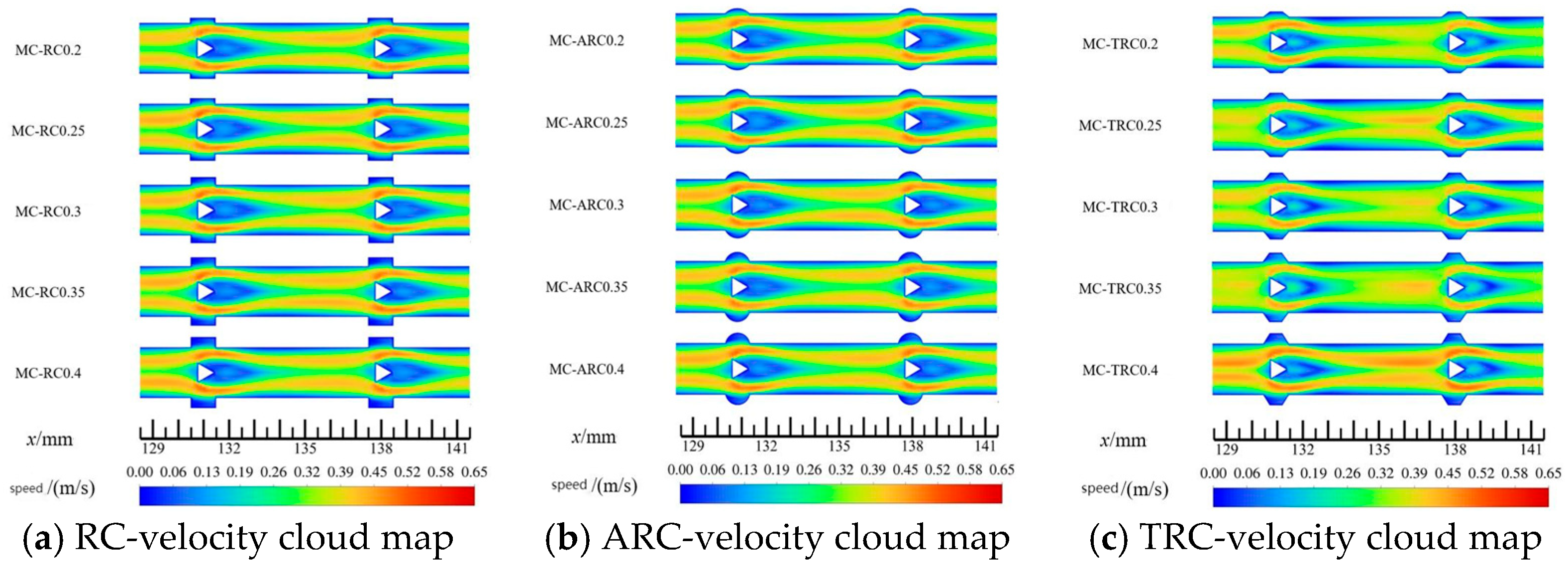
The internal structure of microchannels undergoes structural changes, with the most significant impact on their flow processes. As shown in
Figure 6, cross-sectional velocity cloud images are presented for composite microchannels featuring arc-shaped, rectangular, and trapezoidal grooves located at z = 5.5 mm and x = 128.5–141.5 mm positions. The velocity cloud in
Figure 6 reveals distinct flow mechanisms induced by different groove geometries. The arc-shaped grooves facilitate smooth flow attachment and generate stable recirculating vortices within cavities, enhancing heat transfer at lower Reynolds numbers with minimal pressure loss. In contrast, the trapezoidal grooves with sharp edges induce more pronounced flow separation and stronger turbulent-like vortices, as shown in
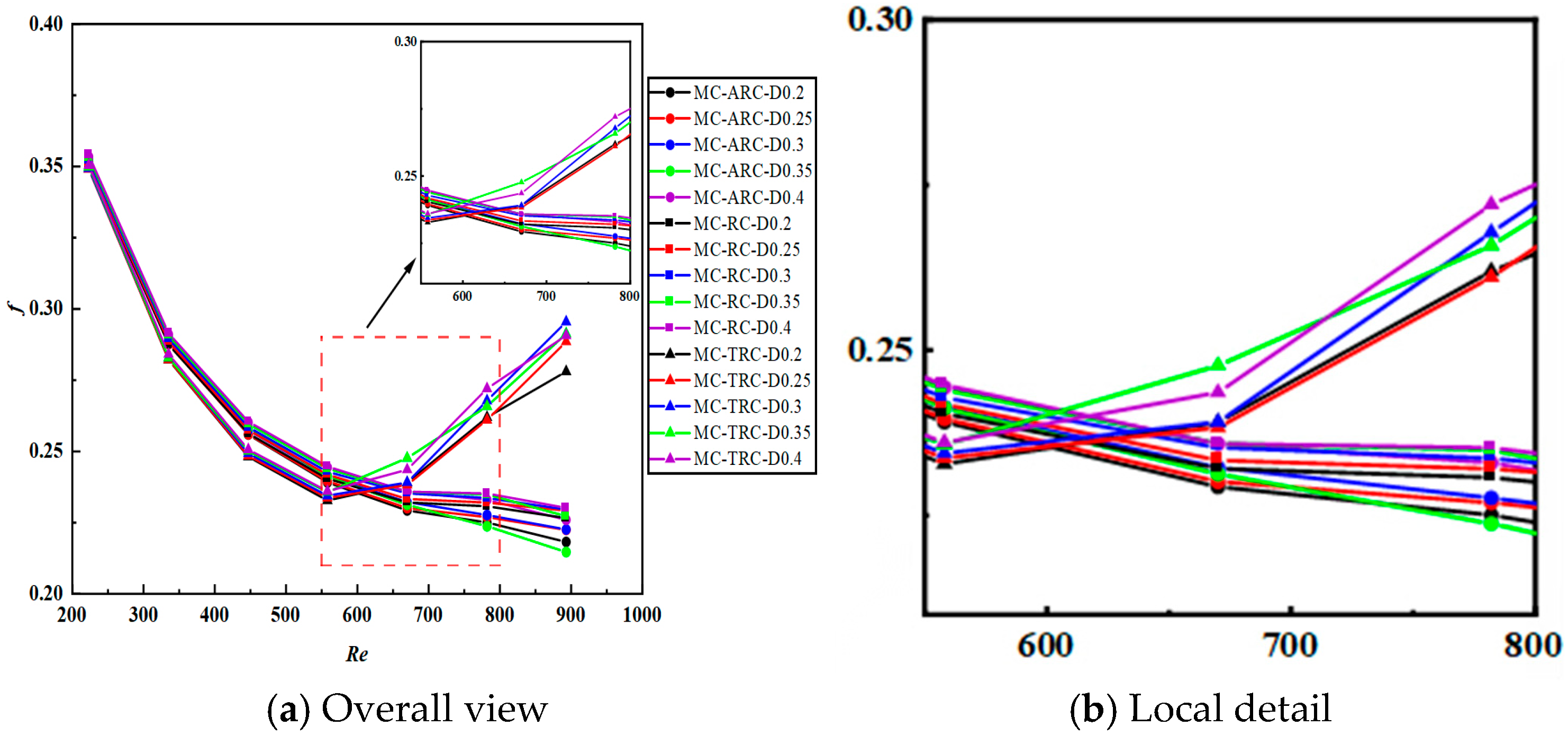
Figure 7. This results in higher friction coefficients at Re > 550 due to abrupt flow separation at the sharp inlet edges, creating larger recirculation zones and increasing viscous dissipation.
Compared with SMC microchannels, the incorporation of composite structures created relatively larger stagnation zones near the grooves and triangular prisms. Notably, the fluid velocity was significantly reduced within the groove interiors and behind the rib pillars. As the groove depth increases, the mainstream velocity in the microchannels progressively increases, and the high-speed region expands. This configuration simultaneously flattens the vortices behind the prisms, effectively reducing the flow losses.
Figure 7 illustrates the variation in friction factor with Reynolds number, with the SMC benchmark for comparative evaluation. Due to the additional surface area and flow disturbances, composite structures typically exhibit higher flow resistance. Comparative analysis: The friction factors for composite configurations were 1.8–3.2 times higher than the SMC baseline; MC-TRC configurations showed the most significant increase in flow resistance at Re > 550; the trapezoidal groove’s sharp edges contributed to increased flow separation and viscous dissipation.
3.2. Quantitative Thermal Performance Analysis
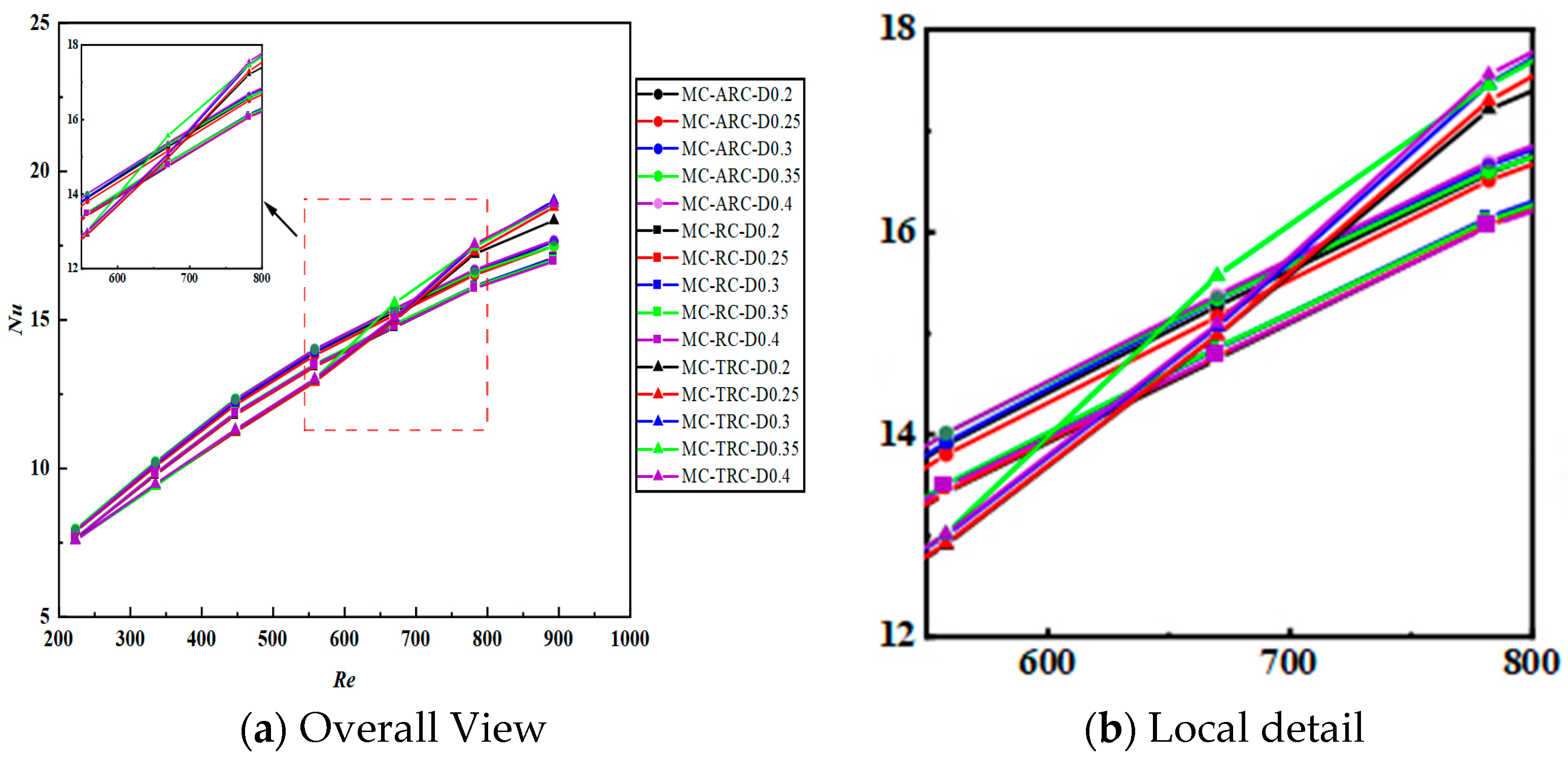
While the differences in Nusselt numbers between various groove configurations appear negligible in numerical values, they exhibit clear and systematic trends that vary with Reynolds number and groove geometry. These trends align closely with the observed flow field structures (
Figure 6) and friction coefficient variations (
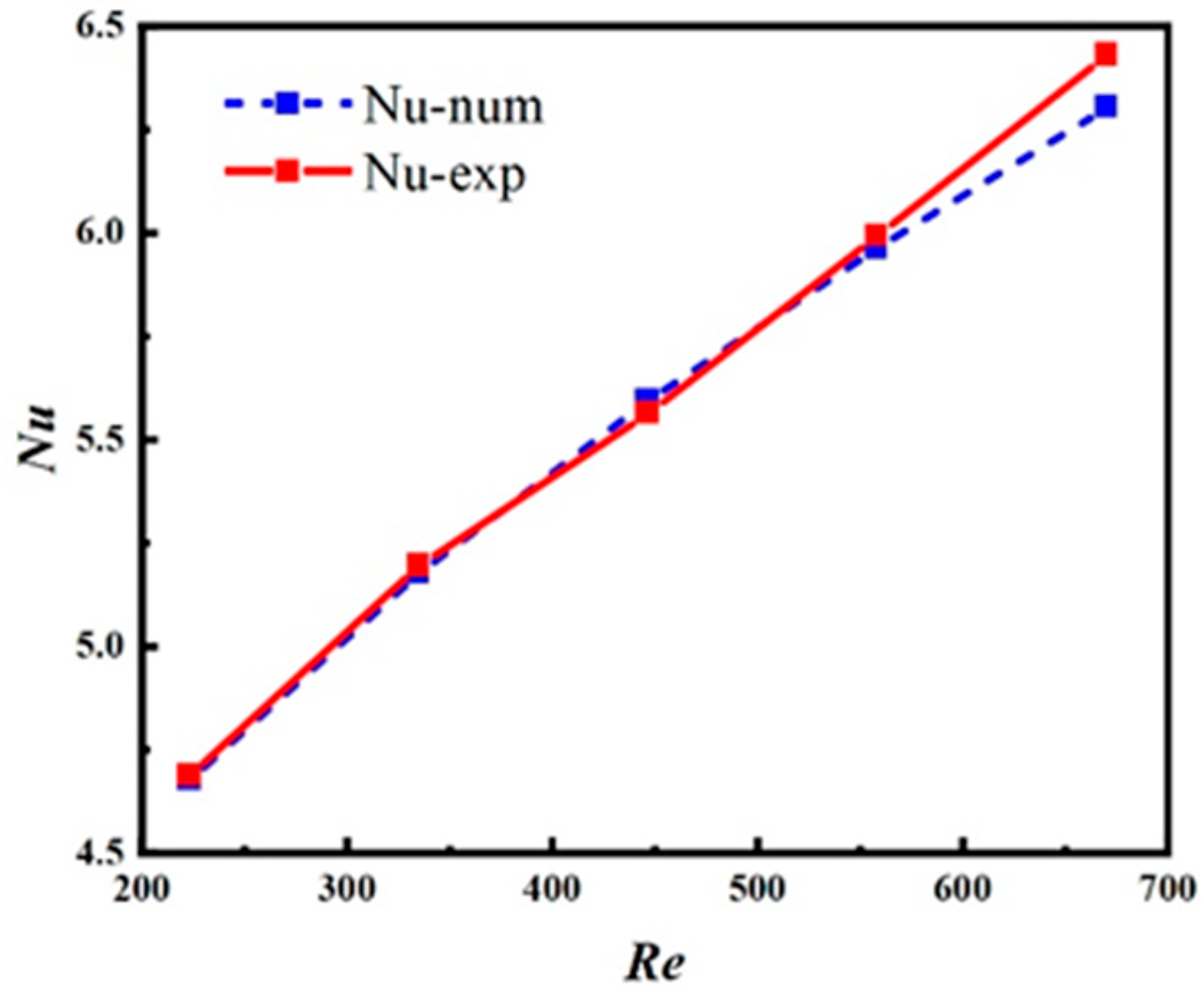
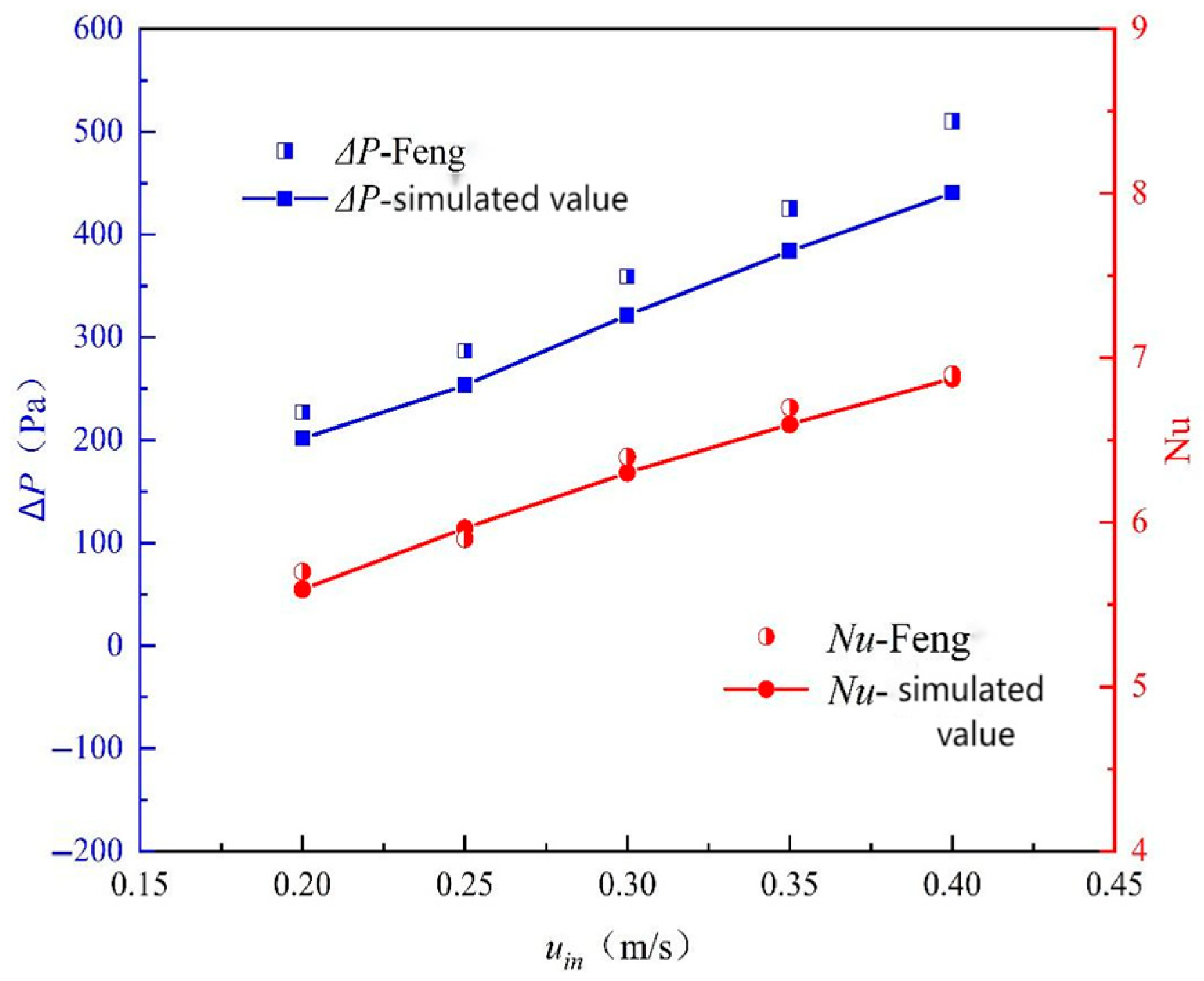
Figure 7). Considering the previously conducted mesh independence validation (error < 0.5%), experimental verification (maximum error 2.02%), and literature data validation (Nu number error 1.87%), we have maintained the numerical uncertainty at a low level. Therefore, we conclude that the observed performance differences are genuine, reflecting inherent physical mechanism variations in different composite structures regarding turbulent flow and enhanced heat transfer.
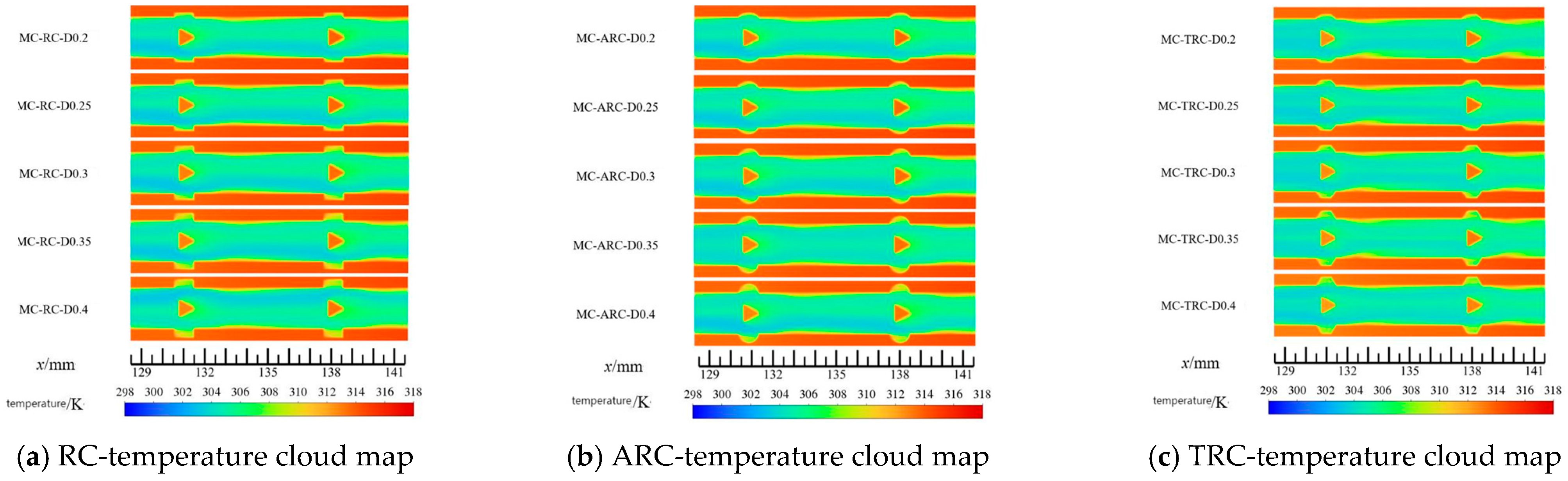
The trapezoidal groove configuration (MC-TRC-D0.35) demonstrated the most uniform temperature distribution with the lowest average wall temperature, indicating superior heat transfer efficiency at high Reynolds numbers. This performance advantage is attributed to the enhanced fluid mixing and boundary layer disruption caused by the sharp geometric features of trapezoidal grooves (
Figure 8).
Figure 9 presents the variation in Nusselt number across all study configurations with respect to Reynolds number, using the baseline straight microchannel (SMC) without grooves as the reference. The results demonstrate a significant improvement in heat transfer performance compared to conventional designs. Key observations: All composite configurations outperformed the SMC baseline across the entire Reynolds number range; The maximum Nu enhancement reached 45.3% for MC-ARC-D0.35 at Re = 223; At high Reynolds numbers (Re > 550), the trapezoidal grooves showed superior performance; The differences between configurations, while numerically small, exhibit consistent trends that exceed the estimated numerical uncertainty of ±5%.
3.3. Comprehensive Performance Analysis
A PEC (Performance Evaluation Criterion) analysis was conducted using the SMC benchmark for explicit comparison, providing a comprehensive assessment of thermohydraulic performance trade-offs.
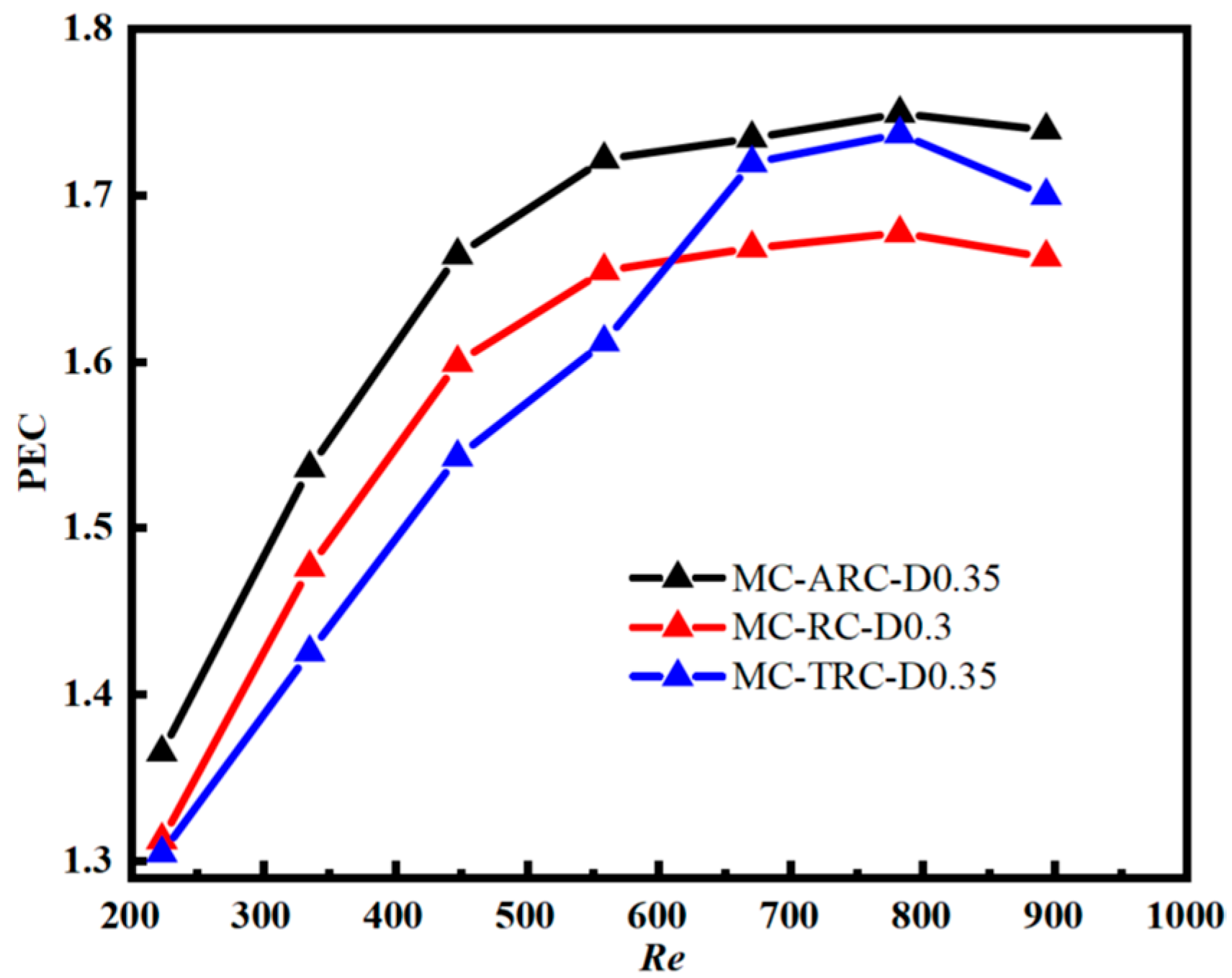
Figure 10 displays the PEC values for all configurations, demonstrating the net benefits of each design relative to conventional microchannels. Benchmark reference performance evaluation: The SMC baseline serves as the reference point (PEC = 1.0); All composite configurations achieved PEC values greater than 1.0, confirming their overall performance superiority; The optimal configuration MC-ARC-D0.35 achieved a maximum PEC of 1.7495, representing a 74.95% overall improvement over the SMC baseline; Performance improvement ranking at Re = 670: MC-ARC-D0.35: 74.95% improvement over SMC; MC-TRC-D0.35: 73.73% improvement over SMC; MC-RC-D0.30: 67.77% improvement over SMC.
The PEC values of all composite designs exceeding 1.0 validate the effectiveness of the groove-rib combination strategy, where the arc-shaped grooves provide an optimal balance between heat transfer enhancement and flow resistance penalty.
The results of the Performance Evaluation Criterion (PEC) are presented in
Figure 10, which demonstrates that the MC-ARC-D0.35 configuration achieves the highest value (1.335), outperforming the rectangular and trapezoidal structures by 4.3% and 0.7%, respectively. This advantage stems from the optimal balance between Nu enhancement and f reduction, offering a practical solution for high-heat-flux devices like 5G chips. The arc-shaped groove minimizes entropy production by reducing irreversible heat loss, consistent with Li et al.’s [
35] research.
The physical mechanism behind the superior performance of arc-shaped grooves at low Reynolds numbers: Under low Reynolds conditions, fluid flow exhibits laminar characteristics with relatively weak inertial forces and dominant viscous forces. The continuous smooth transition of the arc-shaped groove effectively reduces flow separation and lowers wall shear stress. The arc-shaped design allows fluid to adhere smoothly to the wall, forming stable secondary vortex structures that enhance fluid mixing in the wall region, thereby improving heat transfer. Simultaneously, the smooth geometry reduces flow resistance, enabling high heat transfer efficiency even at low flow velocities.
The physical mechanism behind the superior performance of trapezoidal grooves at high Reynolds numbers: As Reynolds number increases, the flow gradually transitions to turbulence, with enhanced inertial forces. The sharp edges and steep geometry of trapezoidal grooves effectively induce flow separation, generating intense vortex shedding and turbulent mixing. These vortices break up and reattach in the downstream groove region, significantly enhancing turbulence intensity and convective heat transfer in the wall region. At high Reynolds numbers, the geometric discontinuity of trapezoidal grooves better excites turbulent pulsations. Although the flow resistance is relatively high, the heat transfer enhancement effect is more pronounced, resulting in superior overall performance [
39].
3.4. Entropy Production Analysis
To quantify irreversible losses, the entropy production rate was evaluated based on the calculated velocity and temperature fields [
35]. Total entropy production (Sgen) comprises thermal entropy production (Sgen, th) and frictional entropy production (Sgen, fr). For the optimal configuration MC-ARC-D0.35 at Re = 670, its more uniform temperature distribution results in approximately 15% lower thermal entropy production compared to MC-TRC-D0.35, thereby reducing thermal irreversibility. Conversely, MC-ARC-D0.35 exhibits about 8% lower frictional entropy production than MC-TRC-D0.35, consistent with its lower friction coefficient. This analysis confirms that the arc-shaped groove achieves superior thermodynamic performance by effectively minimizing both thermal and frictional irreversibility.
3.5. In-Depth Discussion on Underlying Physical Mechanisms
The observed performance differences in various groove geometries can be attributed to their unique impacts on flow separation, vortex dynamics, and thermal boundary layer development. For the arc-shaped groove (MC-ARC), its smooth profile facilitates gradual flow adhesion and generates stable recirculation vortices within the cavity. This mechanism effectively enhances near-wall fluid mixing, disrupts the thermal boundary layer, and improves heat transfer—particularly at moderate Reynolds numbers where flow inertia is moderate. Meanwhile, the absence of sharp edges minimizes flow separation and associated pressure loss, achieving optimal balance as evidenced by the highest PEC value. In contrast, the trapezoidal groove (MC-TRC) induces intense flow separation due to its sharp inlet edge, leading to the formation of larger, more turbulent-like vortices. While this significantly enhances heat transfer at high Reynolds numbers through boundary layer disruption, it comes at the cost of substantially increased frictional resistance. The rectangular groove (MC-RC) exhibits intermediate behavior. The groove depth further modulates these effects: deeper grooves amplify vortex generation and heat transfer area but also expand the flow recirculation zone, thereby increasing friction coefficients. This explains why the Nusselt number (Nu) increases non-linearly with depth and why the 0.35 mm deep arc-shaped groove achieves optimal performance by enhancing heat transfer while mitigating adverse effects on flow resistance. Entropy production analysis confirms this, demonstrating that MC-ARC-D0.35 achieves lower irreversible losses due to its more uniform temperature distribution and smoother flow field.
3.6. Entropy Generation Analysis and Irreversible Losses
Entropy production analysis provides critical insights into evaluating the overall performance of microchannel heat sinks, revealing thermodynamic irreversibility associated with heat transfer and fluid friction. The total entropy production (Sgen, total) consists of two components: thermal entropy production (Sgen, th) due to heat transfer caused by finite temperature differences, and friction entropy production (Sgen, f) resulting from viscous dissipation. Results demonstrate that the arc-shaped groove (MC-ARC-D0.35) achieves the lowest total entropy production, indicating superior thermodynamic performance. This is attributed to its smooth geometry, which promotes more uniform temperature distribution along the channel walls, thereby reducing thermal irreversibility. Progressive flow attachment and stable vortex formation minimize velocity gradients and shear stress, leading to lower friction entropy production. In contrast, the trapezoidal groove (MC-TRC-D0.35), despite its excellent heat transfer performance, exhibits significantly higher friction entropy production due to intense flow separation and recirculation zones, resulting in substantial viscous dissipation. The Be number (Be), defined as the ratio of thermal entropy production to total entropy production, further reveals the dominant irreversibility mechanism. For all configurations, the Be value remains above 0.8 within the Reynolds number range, indicating that thermal irreversibility dominates over friction irreversibility. This suggests that the primary source of thermodynamic loss lies in the heat transfer process itself rather than fluid friction. However, as the Reynolds number increases, the Be number slightly decreases, reflecting the gradual increase in friction irreversibility contributions due to enhanced fluid mixing and increased velocity gradients. The principle of entropy production minimization demonstrates that optimal designs must strike a balance between thermal irreversibility and frictional irreversibility. The MC-ARC-D0.35 configuration achieves this equilibrium by enhancing heat transfer efficiency while maintaining relatively low pressure drop, thereby attaining the highest PEC value. This finding underscores the critical importance of considering both the first law (energy conservation) and the second law (entropy production) performance metrics in microchannel heat sink designs for high-heat-flux applications.
4. Discussion
4.1. Impact of Groove Geometry on Flow Structure and Heat Transfer Mechanisms
The three groove shapes (arc-shaped, rectangular, and trapezoidal) examined in this study exhibit significant geometric differences that directly determine their flow structure and heat transfer performance. The smooth transition geometry of arc-shaped grooves generates more stable secondary flows and vortex structures. This geometric continuity facilitates steady flow development and reduces energy loss during flow separation and reattachment processes. In contrast, the sharp edges of rectangular grooves lead to intense flow separation and vortex shedding, which, while enhancing heat transfer to some extent, also causes significant local pressure loss. Trapezoidal grooves represent a middle ground, with their inclined sidewalls mitigating the severity of flow separation. From the perspective of vortex formation mechanisms, grooves create periodically arranged recessed structures at the channel bottom. These structures induce two primary vortex types during flow: longitudinal vortices developing along the groove length and transverse vortices perpendicular to the flow direction. Due to their continuous curvature, arc-shaped grooves generate moderate and uniformly distributed vortex intensity that continuously perturbs the near-wall boundary layer without excessive flow resistance. Rectangular grooves, however, produce intense shear layer instability at their edges, resulting in excessive vortex intensity and severe energy dissipation. This is the primary reason for their higher friction coefficients.
4.2. Boundary Layer Disturbance and Heat Transfer Enhancement Mechanisms
The groove structure enhances heat transfer through three primary mechanisms: boundary layer disturbance, flow mixing enhancement, and increased effective heat transfer area. Boundary layer disturbance serves as the core mechanism for heat transfer enhancement. The grooves disrupt the development of the near-wall laminar flow base layer, allowing the thermal boundary layer to be continuously refreshed by fresh fluid. The smooth geometric profile of arc-shaped grooves generates sustained, moderate boundary layer disturbance that effectively breaks down the thermal boundary layer without causing excessive flow energy loss. In contrast, while the intense vortex shedding in rectangular grooves more thoroughly disrupts the boundary layer, this vigorous disturbance is accompanied by significant turbulent energy dissipation, resulting in reduced heat transfer enhancement efficiency (PEC). Flow mixing enhancement is primarily achieved through vortex structures formed within the grooves, which entrain cold fluid from the main flow region to near-wall areas while simultaneously carrying hot fluid away from the wall. This fluid exchange process significantly enhances heat transfer between the wall and the main flow. The inclined sidewalls of trapezoidal grooves create asymmetric vortex structures, further improving fluid mixing efficiency. Increased effective heat transfer area is another critical factor. Grooves add approximately 15–25% to the channel’s bottom surface area (depending on groove depth), with this additional surface directly participating in heat transfer. However, it should be noted that surface area alone cannot fully explain the heat transfer enhancement effect, as insufficient internal flow would result in low utilization efficiency of this additional surface area.
4.3. Physical Mechanisms of Reynolds Number Effects on Performance
The influence of Reynolds number on the performance of composite groove-riblet structures demonstrates the complex coupling relationship between flow state and geometric configuration. In the low Reynolds number range (Re < 1000), the flow remains in transitional or weak turbulent states with weak vortex intensity and limited boundary layer disturbance effects. At this stage, the groove structure primarily serves to increase effective heat transfer area and generate moderate secondary flow. Due to their geometric continuity, arc-shaped grooves maintain stable flow development under low Reynolds numbers, exhibiting relatively consistent performance. As Reynolds number increases (Re > 1000), the flow enters fully developed turbulent state with significantly enhanced vortex intensity and more pronounced boundary layer disturbance effects. At this point, the impact of groove geometry on vortex structure becomes more critical. The sharp edges of rectangular grooves induce intense vortex shedding and flow separation under high-speed flow. Although heat transfer enhancement improves, flow resistance increases dramatically. Arc-shaped grooves demonstrate better performance balance under high-speed flow, as their smooth geometric profiles control vortex intensity within reasonable ranges, ensuring sufficient boundary layer disturbance while avoiding excessive pressure loss. Notably, in the high Reynolds number range (Re > 1500), trapezoidal grooves show significant performance improvement. This is primarily attributed to the inclined sidewalls of trapezoidal grooves generating more complex vortex structures at high flow velocities. These vortices form multi-scale flow mixing within the grooves and near the ribs, thereby enhancing heat transfer efficiency. At the same time, the geometric characteristics of the trapezoidal groove make the flow separation relatively mild and the pressure loss increase relatively controllable.
4.4. Mechanisms of Pressure Loss and Optimization Strategies
The pressure loss in composite groove-rib structures primarily consists of three components: friction loss, shape loss, and secondary flow loss. Friction loss results from shear stress on channel walls, which correlates with wall roughness and flow velocity. While grooves theoretically increase friction loss by expanding the wall surface area, they also alter near-wall flow patterns, potentially reducing local friction coefficients to some extent. Shape loss stems from geometric variations such as abrupt expansions and contractions at groove inlets and outlets, as well as flow separation within grooves. This constitutes the primary source of pressure loss. Rectangular grooves exhibit significant shape loss due to sharp edges causing intense flow separation and reattachment at inlets and outlets. In contrast, the smooth transition geometry of curved grooves substantially reduces such shape loss. Secondary flow loss refers to energy dissipation caused by vortex generation and secondary flow induced by grooves. Although these vortices enhance heat transfer, their formation and maintenance require energy consumption. Curved grooves produce moderately intense and uniformly distributed vortices with relatively lower energy dissipation, whereas rectangular grooves generate strong vortex shedding leading to greater energy loss. From an optimization perspective, ideal groove geometries should generate sufficiently intense vortices to disturb the boundary layer while minimizing both shape loss and secondary flow loss. Curved grooves excel in this regard, as their smooth geometric profiles achieve optimal balance between heat transfer enhancement and pressure loss reduction.
4.5. Comparison with Existing Research and Innovations
The innovation of this study lies in systematically evaluating the performance of three distinct geometric groove configurations in composite groove-fin structures, with in-depth analysis of their flow and heat transfer mechanisms. Unlike traditional single-enhancement structures (e.g., fins or grooves alone), the composite structure achieves significantly enhanced heat transfer through the synergistic interaction of fins and grooves. Compared to prior studies, this research not only provides detailed performance data but, more importantly, reveals the profound impact of groove geometry on flow structure and heat transfer mechanisms, offering theoretical foundations and design guidance for optimizing microchannel heat exchangers.