


Abstract
This study proposes a high-strength bottom-bar interlocking and anchorage precast beam–column joint (HSRU-PBCJ), which utilizes high-strength longitudinal reinforcement combined with U-shaped anchorage at the beam bottom. Low-cycle reversed loading tests were conducted on two precast specimens and one cast-in-place specimen to evaluate their seismic performance. Based on these results, parametric analyses were conducted through numerical simulations to investigate the effects of axial compression ratio, concrete strength, beam-end longitudinal reinforcement strength, and beam-end longitudinal reinforcement ratio on the seismic performance. The results indicate that the proposed joint exhibits stable and full hysteresis loops, cumulative energy dissipation comparable to that of the cast-in-place joint, and a 23.94–26.39% increase in equivalent viscous damping after yielding, achieving a displacement ductility coefficient of 4.14, which confirms its substantially improved seismic performance. The parametric study shows that maintaining a moderate axial compression ratio (≤0.6) enhances both load-bearing capacity and energy dissipation, whereas excessive values result in strength reduction. Increasing the beam-end longitudinal reinforcement strength significantly improves load-bearing capacity but may reduce energy dissipation. In addition, improving concrete strength and appropriately increasing the reinforcement ratio can further enhance both load-bearing capacity and energy dissipation, although a balance between seismic performance and economic considerations is recommended.
1. Introduction
Precast buildings have been increasingly utilized due to their high degree of industrialization, reduced on-site dust generation, rapid construction speed, and efficient labor utilization [1,2,3,4,5]. However, precast reinforced concrete (RC) frame structures, as one of the major structural systems, still encounter several challenges [6,7,8,9,10,11,12,13]. Conventional steel reinforcement often results in reinforcement congestion within the prefabricated beam–column joints (PBCJs), insufficient bond performance of the longitudinal beam reinforcement exacerbates bond–slip behavior, inadequate concrete confinement in the joint core region leads to reduced shear resistance.
The use of conventional steel reinforcement commonly causes difficulties in reinforcement placement and proper concrete casting and compaction during construction. The use of high-strength reinforcement has been recognized as an effective approach to mitigate reinforcement congestion; however, its influence on seismic performance requires further investigation. Yu et al. [14,15] reported that replacing conventional reinforcement with high-strength reinforcement in columns did not significantly affect the peak load capacity or ultimate displacement. Similarly, Zhang et al. [16,17] found that the application of HRB600 reinforcement had only a minor effect on both initial stiffness and load-bearing capacity. These findings suggest that the incorporation of high-strength reinforcement exerts a limited impact on the overall seismic response of structural members.
The bond–slip behavior of the longitudinal beam reinforcement in PBCJs often results in reduced hysteretic energy dissipation under seismic loading. Ding et al. [18,19] reported that the pronounced bond–slip of longitudinal beam reinforcement significantly compromises both energy dissipation capacity and deformation capacity in PBCJs. Alavi-Dehkordi et al. [20] indicated that when the bond–slip of steel reinforcement was reduced, the energy dissipation capacity and deformation capacity of PBCJs were essentially comparable to those of cast-in-place beam–column joints (CBCJs). Based on tests of PBCJs using different anchorage configurations for longitudinal beam reinforcement, Yan et al. [21,22,23,24] observed a reduction in the yielding engagement length of the longitudinal reinforcement along the beam and found that the overall seismic performance of the proposed PBCJs was similar to that of CBCJs. These studies collectively indicate that increased bond–slip in longitudinal reinforcement reduces the energy dissipation capacity of PBCJs, whereas modifying the anchorage configuration can mitigate bond–slip and consequently enhance the joint’s energy dissipation performance.
Inadequate concrete confinement in PBCJs frequently leads to brittle shear failure under seismic loading. Tavallali et al. [25,26] reported that a reduced concrete contribution to shear strength resulted in the occurrence of shear failure in PBCJs. Based on tests of PBCJs with reduced stirrup spacing, West et al. [27,28] observed that enhancing the confinement of concrete in the core region increased both the maximum strength and deformability of the joint, and also improved the ultimate strain capacity of the concrete. Kim and LaFave [29] examined the effect of stirrup ratio in the core region and found that increasing concrete confinement significantly reduced damage in the joint panel. Similarly, Alaee and Li [30] noted that greater concrete confinement in the core region can mitigate the risk of shear failure in PBCJs, while an increased stirrup ratio simultaneously improved the flexural performance of the precast member. Overall, these studies indicate that increasing concrete confinement in the joint core region enhances the concrete contribution to shear resistance and effectively prevents sudden shear failure.
In addition to grouting sleeve-connected precast columns, partially precast column systems with permanent formwork have also attracted increasing attention in recent years. In particular, semi-precast steel reinforced concrete (SRC) composite columns with stay-in-place ECC jackets have been reported to exhibit excellent axial and eccentric compressive performance, enhanced confinement, and improved crack control. Lai et al. [31,32] observed that ECC–SRC columns exhibit improved compressive capacity and ductility compared with conventional SRC columns, and further experimental investigations confirmed the beneficial effects of ECC jackets on load-carrying capacity and damage performance. Yang et al. [33] demonstrated that concrete columns encased with modular ultra-high-performance concrete (UHPC) permanent formwork also exhibited favorable compressive performance, further highlighting the potential advantages of advanced permanent formwork systems. In addition to conventional experimental approaches, data-driven methods such as machine learning (ML) have recently emerged as powerful tools for seismic performance assessment of structural components. For instance, Lai et al. [34] applied various ML models to cyclic test data of SRC columns and demonstrated that Random Forest and XGBoost can effectively predict failure modes and bearing capacities. Such ML-based approaches offer complementary insights to traditional experimental studies, enabling faster and more comprehensive evaluation of seismic behavior.
Existing studies have primarily focused on the use of high-strength steel reinforcement in columns, while few experimental investigations have addressed PBCJs incorporating high-strength steel reinforcement. This study proposes the use of U-shaped high-strength steel reinforcement as a replacement for conventional reinforcement, aiming to improve the anchorage of longitudinal steel bars and enhance concrete confinement in the joint core. Two PBCJs assembled with U-shaped longitudinal reinforcement were tested under cyclic loading, and their vibrational responses were compared with those of a cast-in-place beam–column joint (CBCJ) employing straight longitudinal reinforcement. The effectiveness of the proposed PBCJ model was further verified through numerical simulations, and parametric analyses were conducted to examine the influence of axial compression ratio, concrete strength, beam-end longitudinal reinforcement strength and beam-end longitudinal reinforcement ratio on seismic performance.
2. Materials and Methods
2.1. Design and Fabrication of HSRU-PBCJ
2.1.1. Configuration of the HSRU-PBCJ
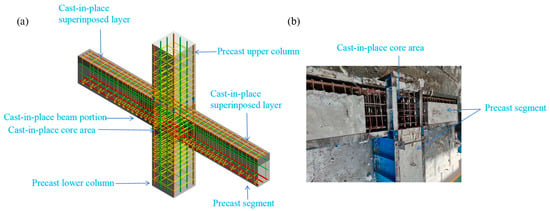
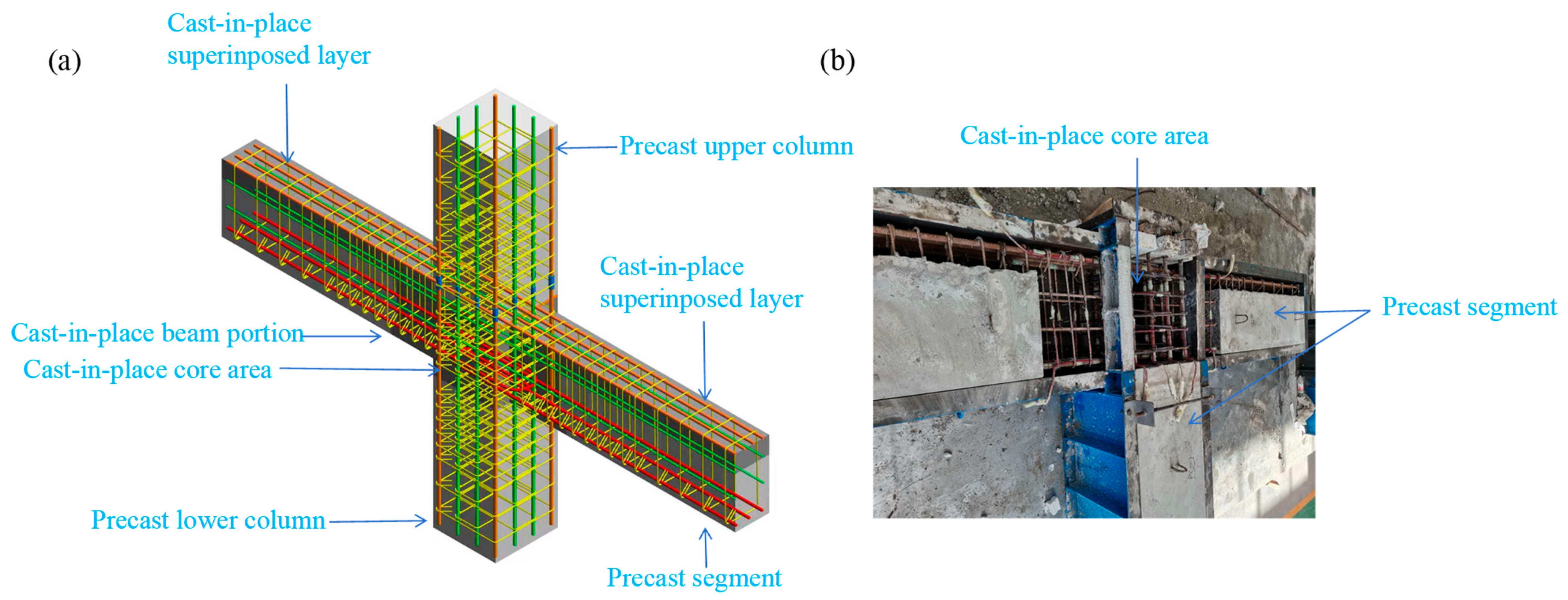
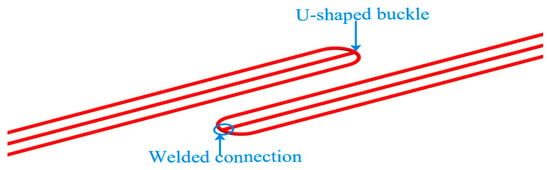
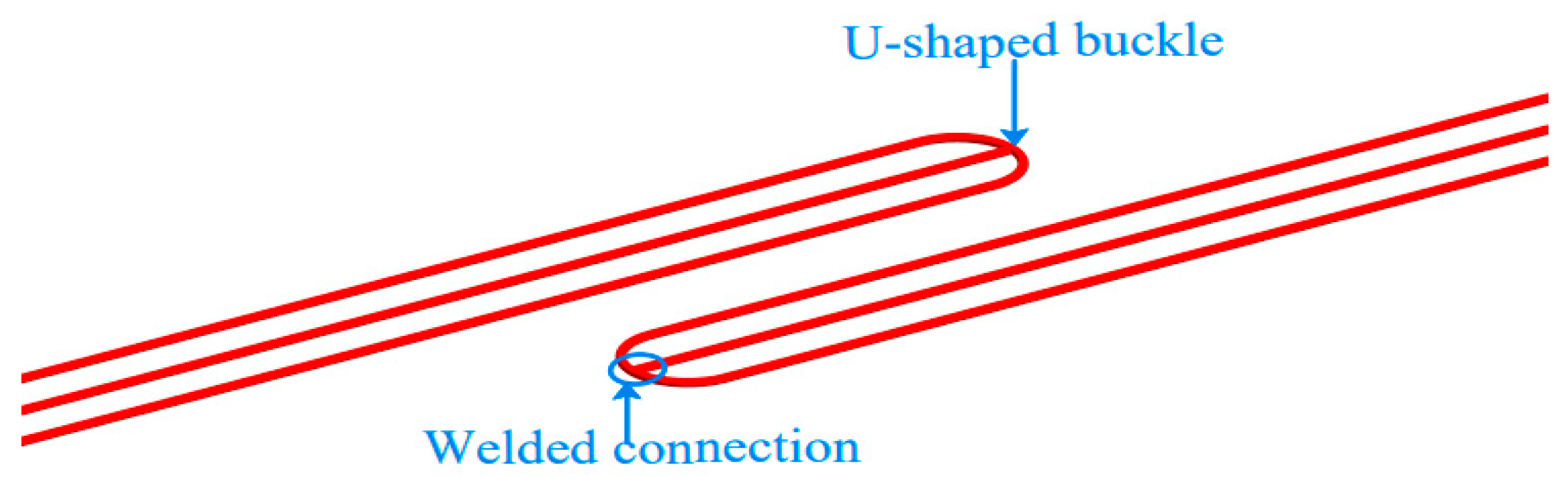
Figure 1 illustrates the configuration of the proposed beam–column connection, which integrates upper and lower precast columns, a superimposed beam, and an in situ cast core region. The superimposed beam consists of precast segments and an in situ cast layer forming both the superimposed portion and the beam portion. Surface texturing is applied at all concrete interfaces to enhance the bond between fresh and existing concrete. The vertical reinforcements of the precast columns are connected using grouting sleeves. To ensure robust anchorage to the core region, the precast beam employs U-shaped high-strength reinforcement at its base, while the top reinforcements extend through the core. Details of the U-shaped steel reinforcement are shown in Figure 2. In this arrangement, two conventional horizontal reinforcements are replaced by a single U-buckled bar, to which the central horizontal bar is welded, ensuring structural integrity. Compared with conventional anchorage methods for high-strength reinforcement, the proposed U-shaped bottom anchorage provides both geometric anchorage and mechanical interlocking with the column longitudinal reinforcement. This configuration effectively shortens the required development length of high-strength bars and suppresses bond–slip under cyclic loading. In addition, the U-shaped reinforcement enhances the confinement of concrete in the joint core region, thereby improving the concrete contribution to shear resistance and delaying stiffness degradation. Unlike mechanical anchorage systems, the proposed method does not require additional anchorage devices, which simplifies prefabrication, reduces construction cost, and improves on-site assembly efficiency.
Figure 1.
Details of the proposed connection: (a) Schematic diagram of the joint; (b) on-site photograph.
Figure 2.
Details of the U-shaped reinforcement.
2.1.2. Specimen Design
Three full-scale specimens were fabricated and tested under reversed cyclic loading. Two were prefabricated beam–column joints (PBCJs), designated PC1 and PC2, and one was a cast-in-place beam–column joint (CBCJ), designated XJ. All specimens had identical overall dimensions, with a total length of 4550 mm and a height of 3100 mm. The beams and columns were designed with the same cross-sectional dimensions and concrete cover thickness. The reinforced concrete beam section measured 300 mm × 600 mm, with a 25 mm concrete cover protecting the longitudinal reinforcement. For the superimposed beams, the precast portion was 450 mm thick, while the cast-in-place topping layer was 150 mm thick. Adjacent to the PBCJ core region, an in situ cast segment with a length of 450 mm was incorporated to ensure proper force transfer. The column cross-section measured 550 mm × 550 mm, and a 20 mm grouting sleeve joint was reserved at the bottom of the prefabricated upper column. Specimen design followed the provisions of GB 50010-2015 [35], and the reinforcement and stirrup ratios of all specimens met the corresponding structural requirements. The flexural capacity of the superimposed beam, the shear capacity at the interface between new and existing concrete, and the shear capacity of the joint core region were checked to comply with GB 50010-2015 [35] and JGJ 1-2014 [36]. The specimens were configured to examine the influence of key design parameters, including the strength grade of longitudinal reinforcement and the anchorage form used at the beam end. The design of the beam–column joints and the selection of material strengths in this study were guided by ACI 318-19 [37]. For detailing and continuity of reinforcement in the joint region, recommendations from ACI 352R-02 [38] were followed. It should be noted that straight anchorage was adopted for the bottom longitudinal reinforcement at the far end of the beam. Straight anchorage satisfying the code-specified development length is sufficient to ensure reliable force transfer [37]. Moreover, adopting straight anchorage at the beam far end helps maintain a clear and conventional load path, reduces reinforcement complexity, and improves constructability without adversely affecting the global seismic performance of the specimen.
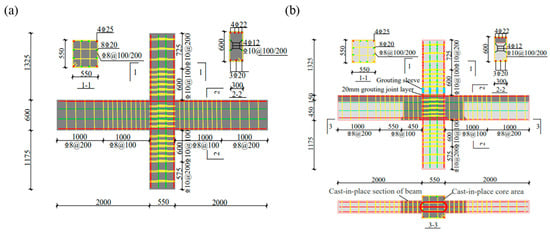
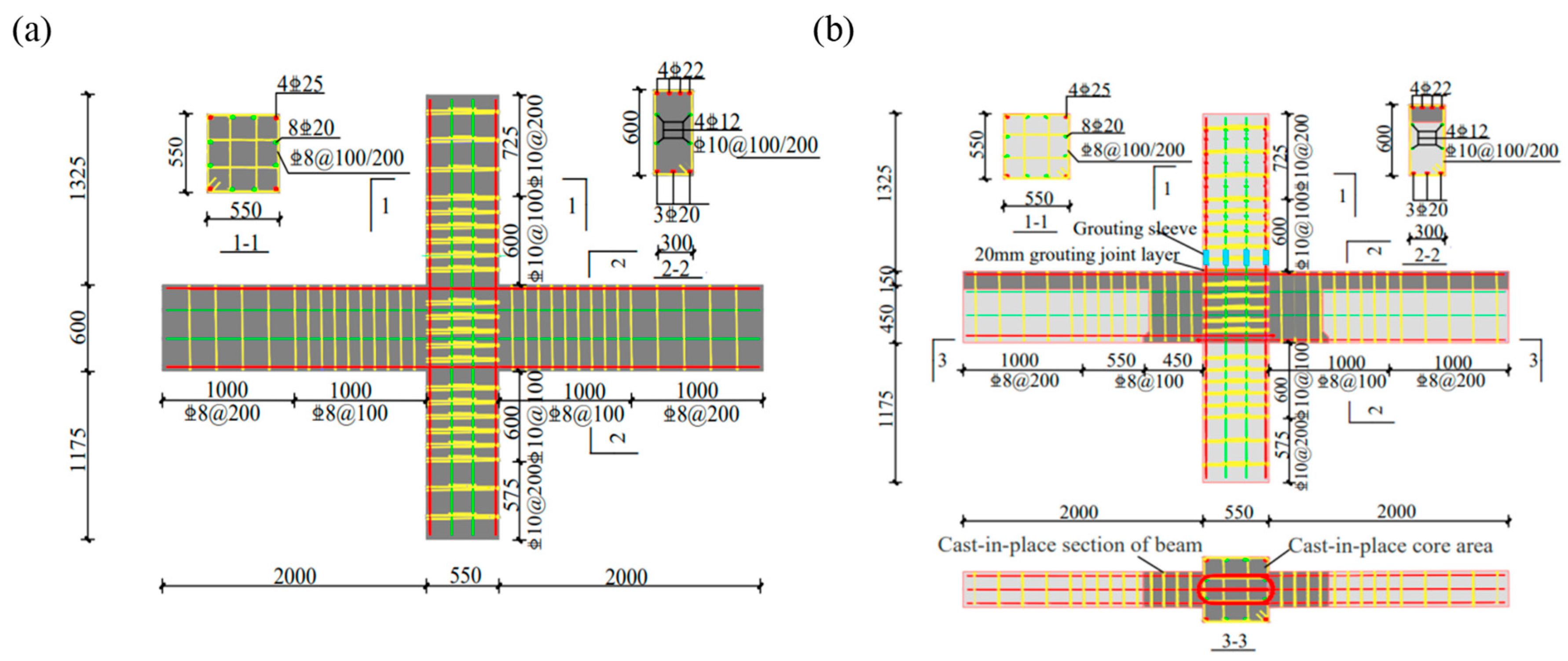
The reinforcement details of all specimens are shown in Figure 3. Specimens XJ and PC1 adopt Grade 400 longitudinal bars, using 22 mm and 20 mm diameters for the top and bottom reinforcement, respectively. Specimen PC2 differs only in the bottom longitudinal reinforcement, which consists of 20 mm Grade 500 bars. All specimens utilize straight top longitudinal reinforcement. For the bottom reinforcement, specimen XJ also uses straight bars, whereas specimens PC1 and PC2 employ U-shaped bars. The columns are reinforced with Grade 400 longitudinal bars of 25 mm and 20 mm diameters. Transverse reinforcement consists of 8 mm stirrups in the beams and 10 mm stirrups in both the columns and the joint core region, with spacing adjusted according to design requirements. The key structural variables for the test specimens are summarized in Table 1.
Figure 3.
Reinforcement details for specimens: (a) XJ; (b) PC1 joint.
Table 1.
Details of the test specimens.
2.1.3. Material Characteristics
The concrete was designed with a compressive strength of 40 MPa. For the cast-in-place specimen, concrete was cast and cured in a single uninterrupted process. For the precast specimens, concrete was produced in two stages: the precast batch and the post-cast batch. According to GB/T 50081-2019 [39], three concrete cubes with dimensions of 100 mm × 100 mm × 100 mm were cast and cured for 28 days to determine their axial compressive strength. Concurrently, three concrete prisms measuring 150 mm × 150 mm × 300 mm were cast. After the same curing procedure as the specimens, the prisms were tested for compressive strength and elastic modulus. The test results are summarized in Table 2.
Table 2.
Concrete properties.
According to GB/T 228.1-2021 [40], the yield strength and ultimate strength of the reinforcement were determined under direct tension. The elongation at fracture was also calculated. The physical properties of the steel reinforcement are summarized in Table 3.
Table 3.
Material behaviors of reinforcement.
According to GB/T 17671-2021 [41], the grouting material was used to cast test specimens measuring 40 mm × 40 mm × 160 mm. After standard curing, the workability, compressive strength, and flexural strength were measured. The mechanical properties of the grouting material are summarized in Table 4.
Table 4.
Material behaviors of grouting material.
2.1.4. Beam–Column Joint Assembly
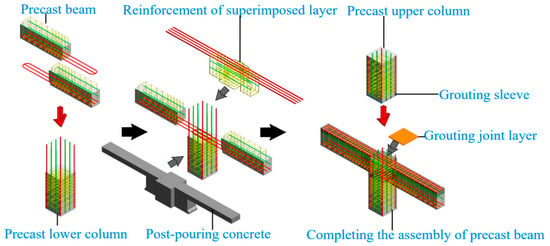
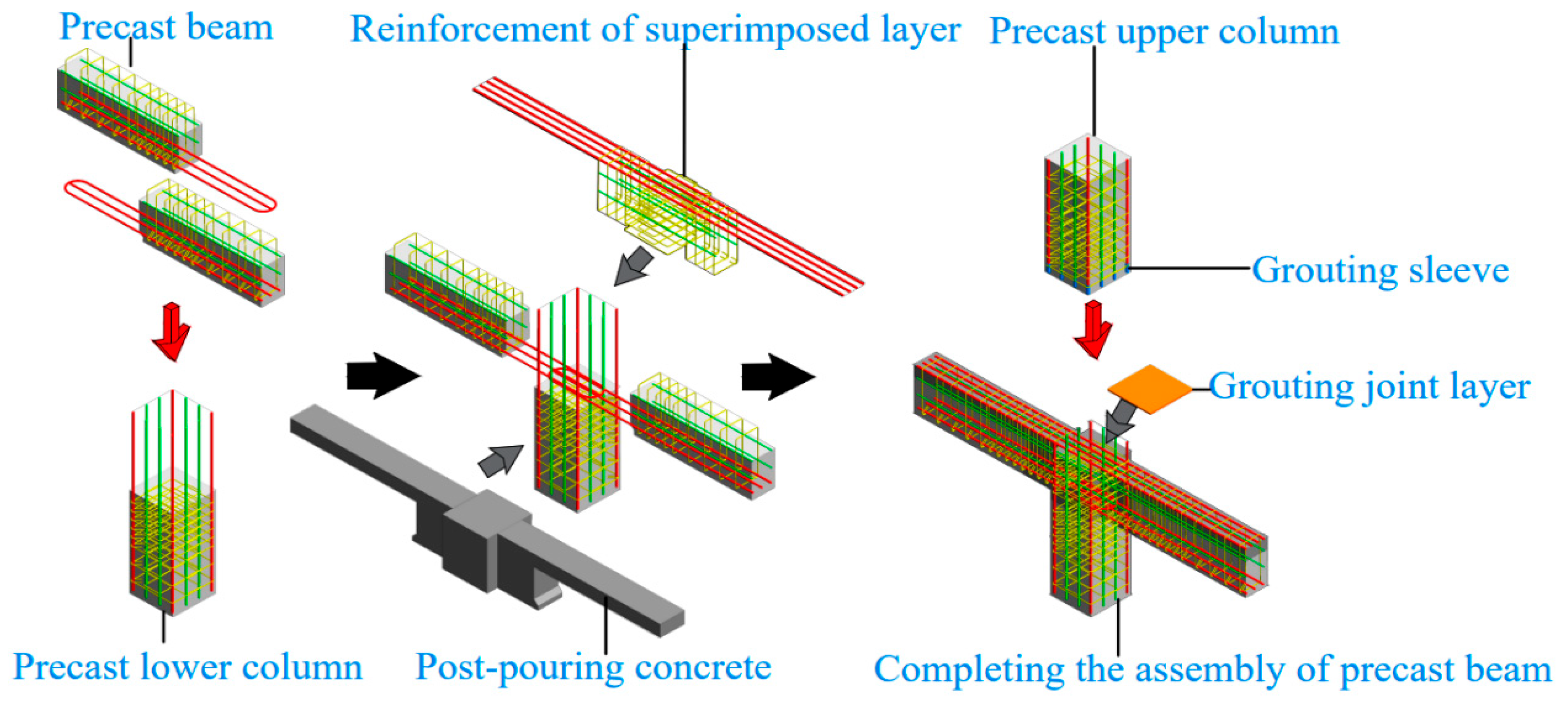
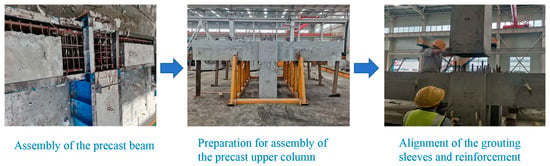
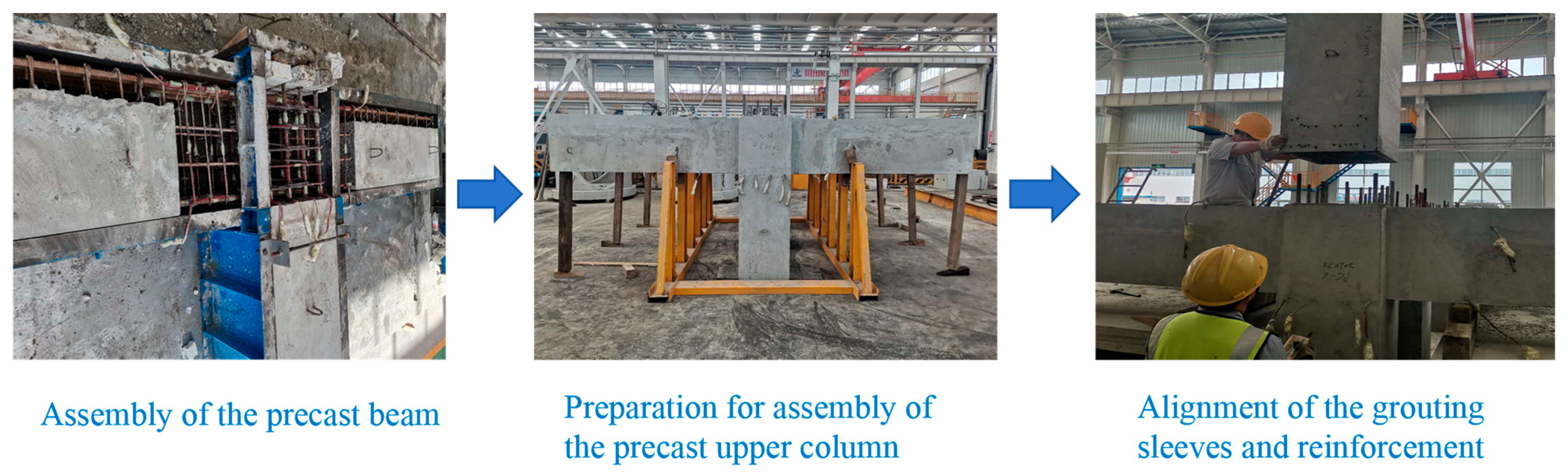
The proposed beam–column connection offers the advantages of straightforward factory modular construction and efficient on-site assembly. Figure 4 illustrates the manufacturing and assembly process. Both the precast columns and beams were produced in a controlled factory environment. After erecting the precast lower column, two precast beams were connected to its extended reinforcement. Subsequently, the reinforcement for the superimposed layer was installed, followed by casting of concrete in the post-casting zone. The grouting sleeves on the upper column were then connected to the extended reinforcement of the assembled structure. Finally, the grouting interface was filled and sealed. Figure 5 shows the manufacturing and installation of the specimens.
Figure 4.
Construction process of the joint.
Figure 5.
Manufacturing and installation of the joint.
2.2. Seismic Performance Test
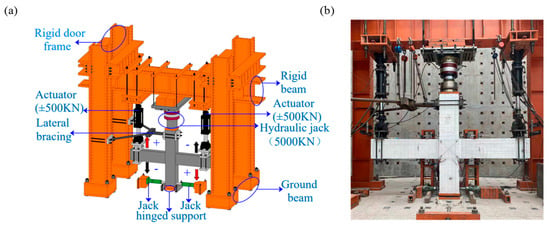
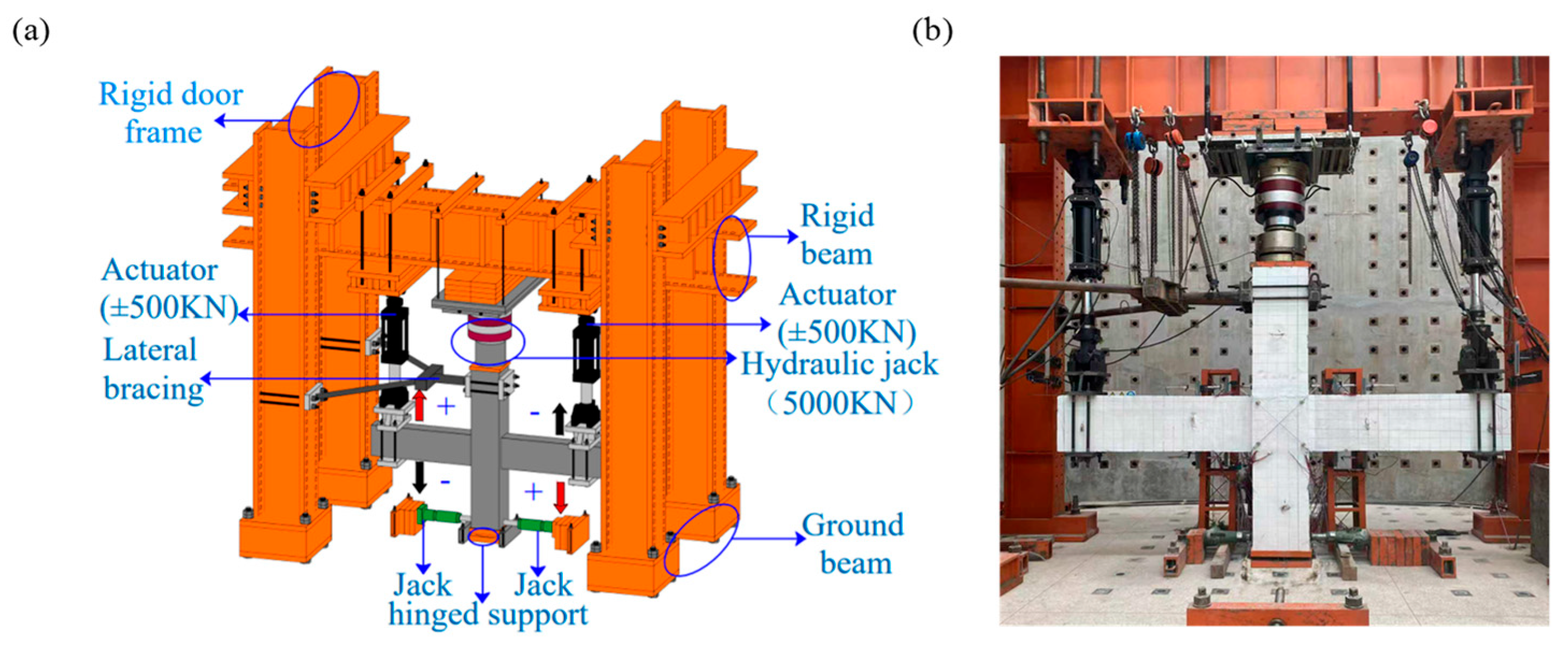
Figure 6 illustrates the experimental setup used for testing the specimens. Prior to testing, a comprehensive hinge support was installed at the base of the column, and the column was anchored to the rigid foundation using ground anchor bolts. To simulate a fixed articulation boundary condition, two jacks were placed on either side of the column and tightened in opposite directions. A transverse support was employed to restrain the lateral movement of the specimen. A constant vertical load of 1603 kN was applied at the top of the column using a hydraulic jack, corresponding to an actual axial compression ratio of 0.2 calculated based on the measured concrete compressive strength and the column cross-sectional area. This axial load was maintained constant throughout the entire cyclic loading test. To apply reversed cyclic loading to the beam, two actuators with a ±500 kN capacity were used.
Figure 6.
(a) Schematic test setup; (b) the on-site loading equipment.
The test measurements included the constant axial load applied by the column hydraulic jack, the load and displacement of the actuators, and the development of cracks. The load from the hydraulic jack was monitored using an oil pressure gauge. An MTS integrated load–displacement sensor automatically recorded both the applied force and actuator displacement. Prior to the test, white paste was applied on both sides of the beam to create a grid pattern. During testing, a magnifying glass was used to identify and mark the cracks.
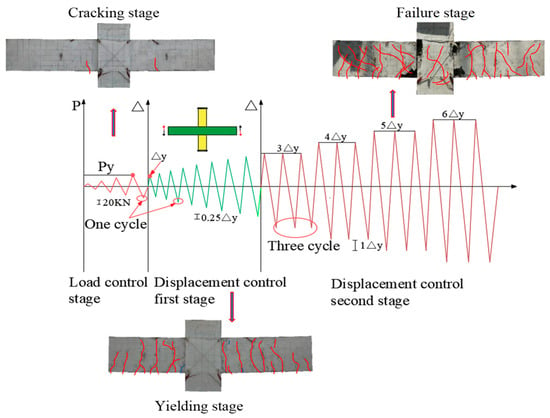
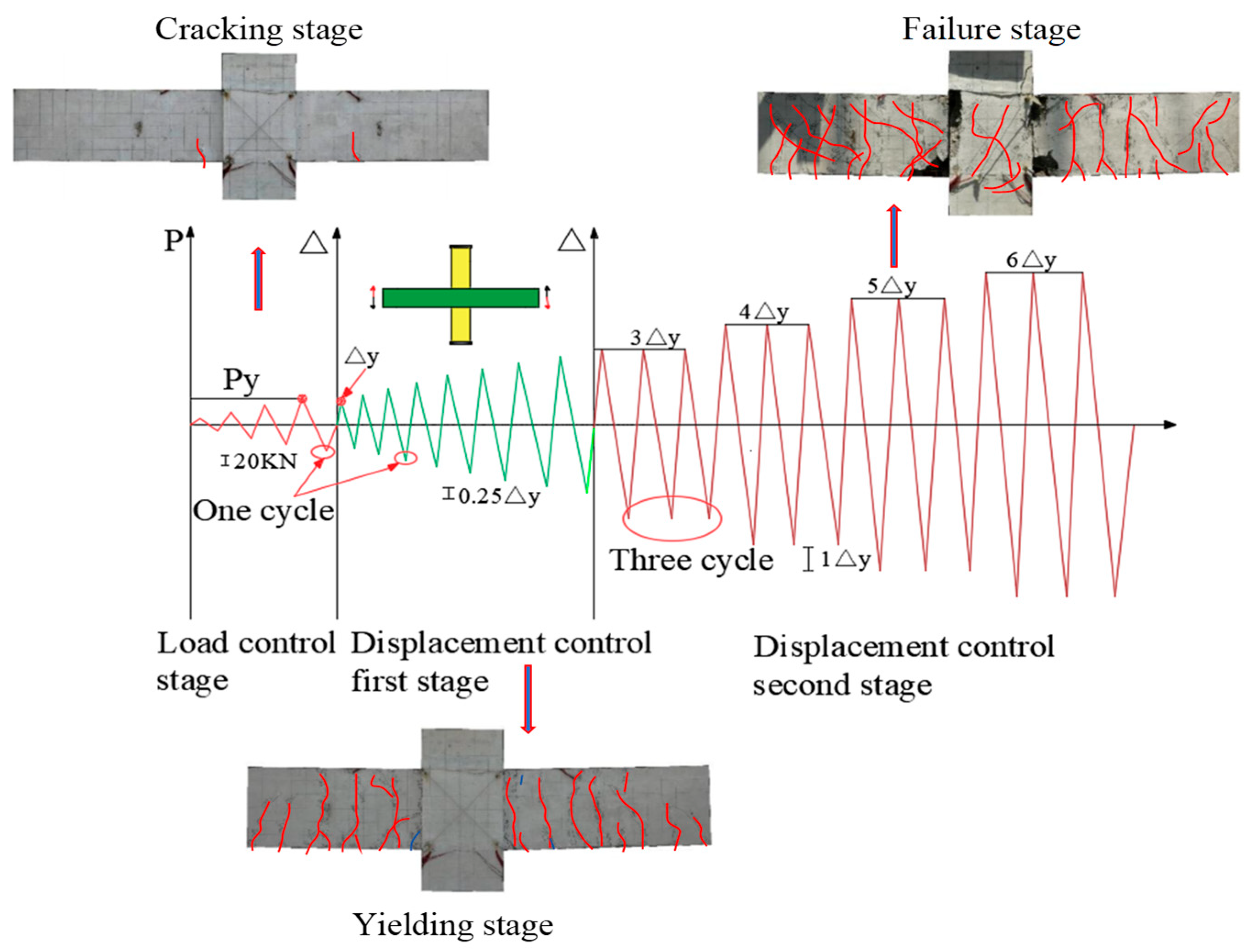
Figure 7 illustrates the cyclic loading procedure applied to the specimens. According to JGJ/T 101-2015 [42], the procedure consisted of an initial load-control phase followed by two displacement-control phases. In the initial phase, load control was adopted due to the asymmetry in the beam’s steel reinforcement. This mode was maintained until yielding occurred in the bottom longitudinal steel of the beam. Before crack initiation, the load increment at each level was 5 kN. After crack formation, the increment was increased to 20 kN per level, with each load level applied only once. Upon reaching the yielding force, the protocol shifted to displacement-control mode. Since the top steel reinforcement of the beam had not yet yielded, the deformation increment was set to 0.25 times the yielding deformation (Δy). This continued until the beam deformation reached three times Δy, with each deformation level subjected to one complete cycle. Thereafter, the deformation increment was adjusted to an integer multiple of Δy, with each level repeated three times. The specimen was considered to have failed, and the loading was terminated when the maximum load dropped below 85% of the peak load. A three-stage loading protocol was adopted in this study to comprehensively evaluate the seismic performance of the specimens. In the first stage, load-controlled cyclic loading was applied to ensure stable loading conditions and to identify the initial cracking and elastic response of the joint. In the second and third stages, displacement-controlled cyclic loading was employed with gradually increasing displacement amplitudes to simulate increasing seismic demand, allowing for the observation of stiffness degradation, strength deterioration, energy dissipation, and failure mechanisms.
Figure 7.
Cyclic loading protocol.
2.3. Experimental Measurements
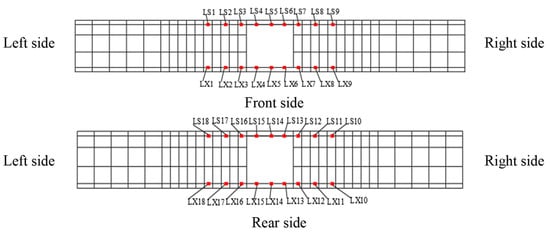
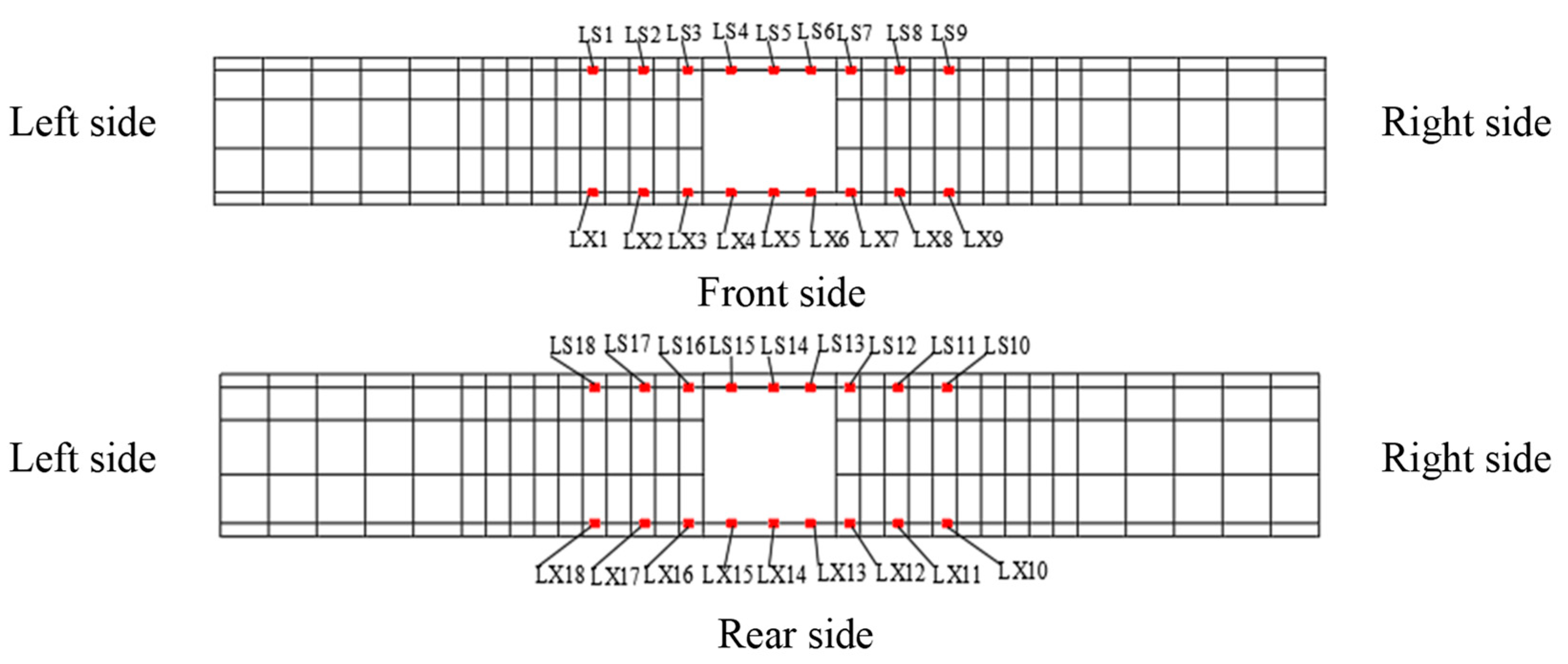
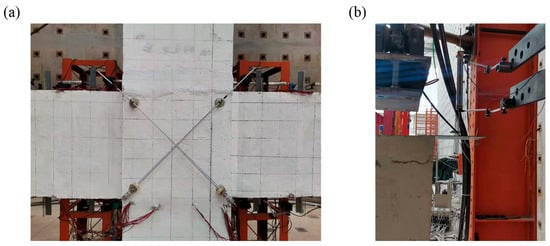
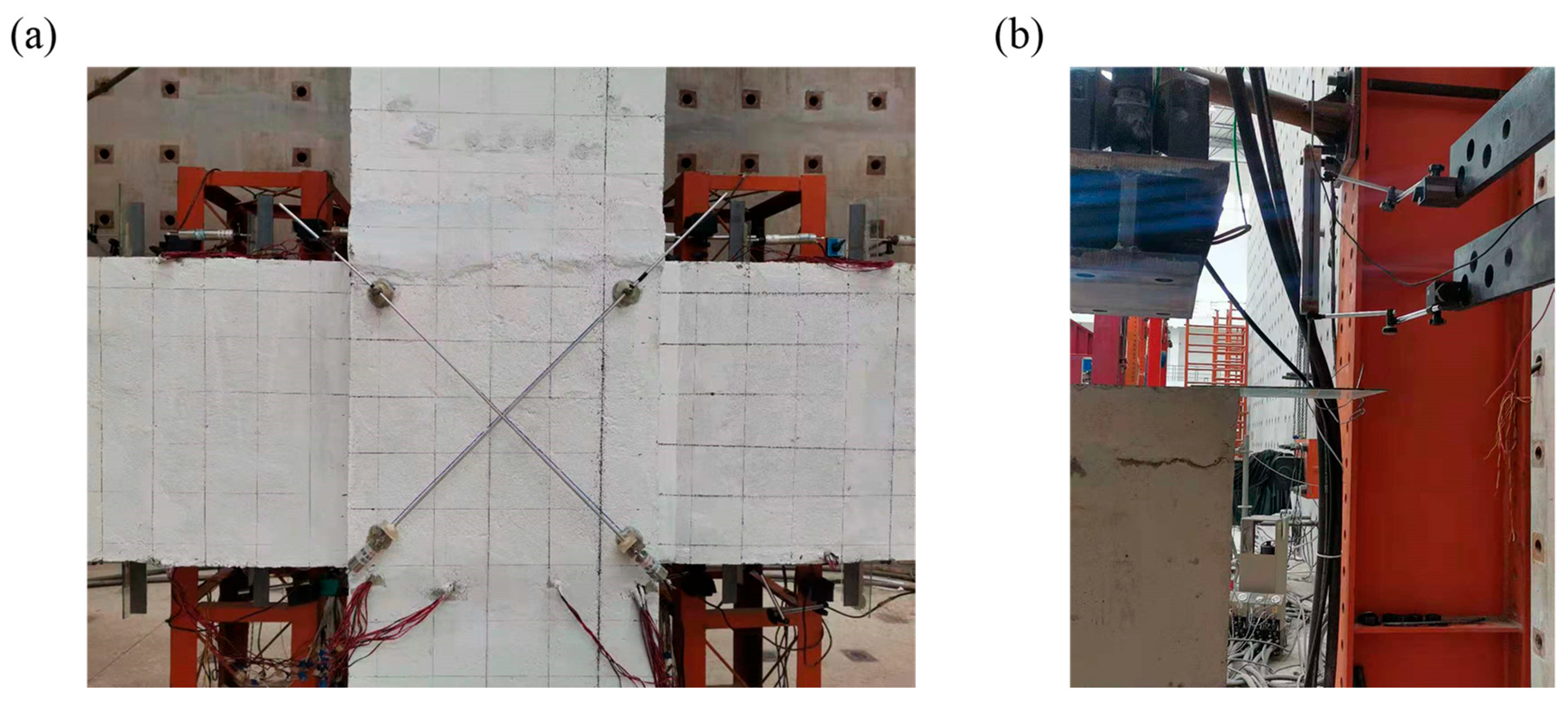
The test adopted a symmetric layout, and each strain gauge installed on the reinforcement was coded. LS denotes the longitudinal reinforcement at the top of the beam, while LX denotes the longitudinal reinforcement at the bottom of the beam. The locations of the measurement points are shown in Figure 8. To verify and compare the beam-end displacement automatically recorded by the MTS system, two displacement transducers with a measuring range of 300 mm were installed at the beam end and fixed to the loading frame. As shown in Figure 9, the rotation of the beam-end plastic hinge can be represented by the section rotation θ of the beam within the plastic hinge length. For beam ends, the plastic hinge length is generally about 1.0–1.5 times the beam depth. Therefore, twelve displacement transducers with a measuring range of 100 mm were arranged in the core region, and the rotation of the beam-end plastic hinge was obtained through geometric calculation.
Figure 8.
Layout of strain gauges on beam reinforcement in the joint core region.
Figure 9.
(a) Photograph of displacement transducers in the joint core region; (b) Photograph of displacement transducers at the beam end.
3. Results
3.1. Failure Modes
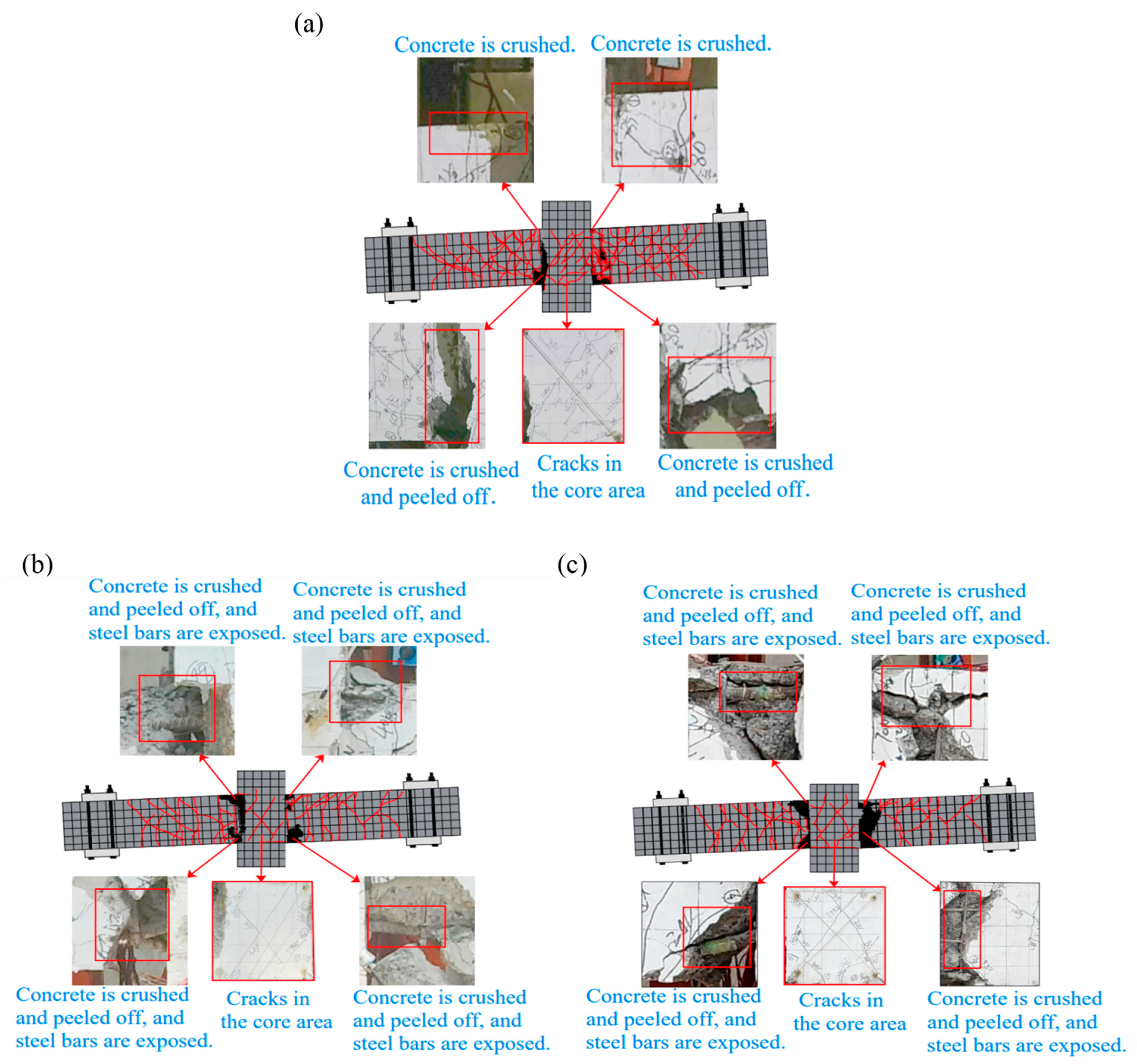
The defect development of the specimens comprised three stages: initial cracking, crack propagation, and ultimate failure. The cracks were primarily concentrated in the beam. The main causes of the specimens’ loss of load-bearing capacity were the bending of longitudinal steel bars and the spalling of concrete. The failure mode corresponded to typical flexural failure. Although cracks were observed in the central region, no shear failure occurred, which is consistent with the design concept of strong joints and comparatively weaker members.
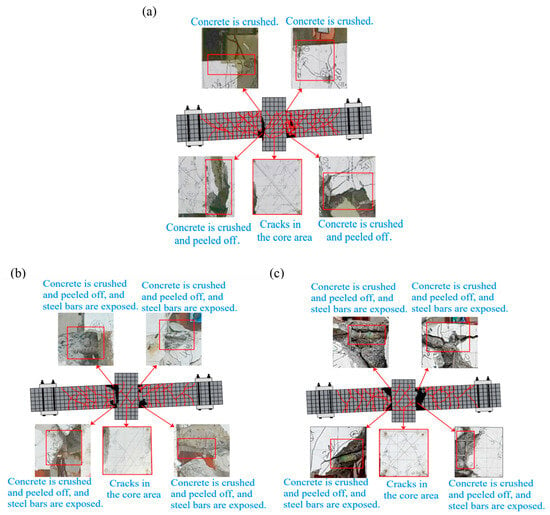
As shown in Figure 10, for specimen XJ, the beams exhibited initial cracking under a load of 5 kN. When the load reached 110 kN, vertical cracks in the beam intensified and extended along the entire beam segment. At a load of 140 kN, transverse and inclined cracks developed in the central region, with multiple oblique cracks appearing on both the left and right beams. The longitudinal steel reinforcements at the bottom of the right beam yielded at this stage, prompting a switch to displacement-controlled loading. As the displacement increased, both the number and width of cracks in the core area grew. Significant crushing and spalling of concrete occurred in the lower section of the beam, indicating the formation of plastic hinge regions at locations away from the beam–column joints.
Figure 10.
Conclusive failure modes and complete crack profiles observed in the (a) XJ; (b) PC1; and (c) PC2.
The failure mechanisms of specimens PC1 and PC2 were similar. Under a load of 5 kN, vertical cracks appeared at the interface between fresh and existing concrete, likely due to inherent joints within the assembled connections. When the load increased to 100 kN, the cracks penetrated the beam section, and the longitudinal steel reinforcement at the bottom of the beam yielded, prompting a switch to displacement-controlled loading. When the deformation reached approximately 1Δy~2Δy (Δy = 16 mm), diagonal and horizontal cracks became evident in the core region. Subsequently, significant crushing and spalling of concrete occurred in the lower section of the beam, resulting from the exposure and bending of the main steel reinforcement. Compared with specimen XJ, the precast specimens PC1 and PC2 exhibited substantially fewer diagonal cracks. This reduction was primarily attributed to the U-shaped longitudinal reinforcement, which enhanced the mechanical anchorage of the steel and integrated it with the longitudinal reinforcement of the column, thereby improving anchorage performance. Furthermore, the use of U-shaped longitudinal steel reinforcements increased the confinement of concrete in the core region, improving the concrete’s contribution to shear strength. During the ultimate failure stage, concrete spalling occurred at the beam–column interface, consistent with typical flexural failure. Specimen PC2 showed more extensive concrete spalling than specimens PC1 and XJ, mainly because the use of high-strength steel reinforcements led to greater reinforcement deformation, reducing the coordinated deformation capacity between the concrete and steel. Although direct strain measurements of the U-shaped bottom reinforcement were not available in this study, its stress state at the final failure stage can be inferred from the observed damage characteristics and global response of the specimens. During the entire loading process, no signs of anchorage pull-out or premature bond failure of the U-shaped reinforcement were observed. Instead, extensive flexural cracking developed at the beam end, followed by concrete crushing and spalling in the compression zone, as well as visible bending deformation of the longitudinal reinforcement. Meanwhile, the hysteresis curves exhibited stable and full shapes before strength degradation, indicating effective force transfer and sufficient anchorage performance. These observations suggest that the U-shaped reinforcement was fully engaged in resisting cyclic bending moments and did not govern the failure process. Therefore, the final failure of the specimens can be reasonably identified as a flexural failure dominated by beam-end plastic hinge development, consistent with the intended “strong joint–weak member” design philosophy.
3.2. Hysteresis Performance
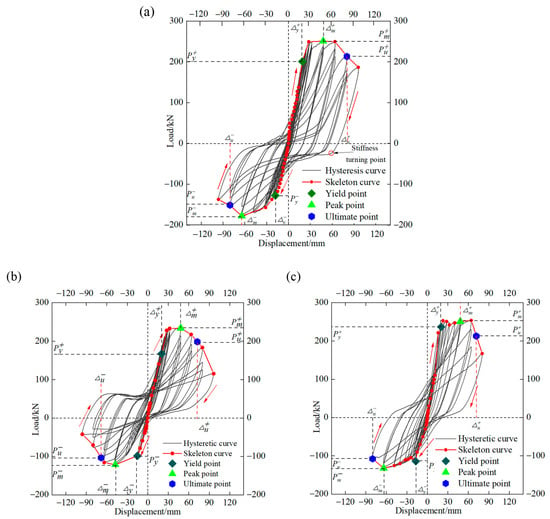
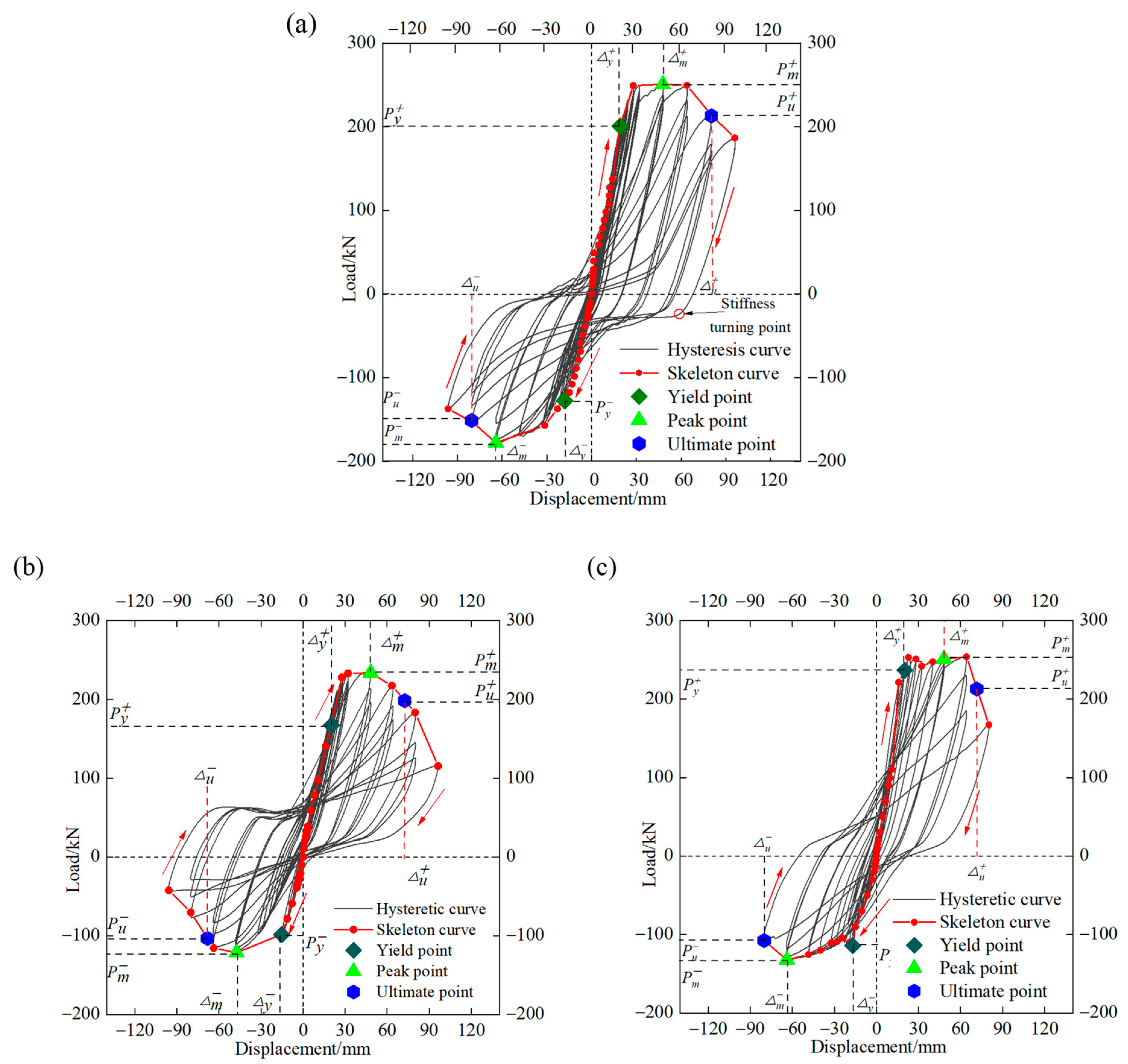
The load-reversal hysteresis curves of force-deformation under repeated cyclic loading are presented in Figure 11. The symbols , , , , , and denote yielding displacement, peak displacement, yielding load, peak load, rupture load, and rupture displacement, respectively, with positive and negative directions indicated by + and –. The values of force and displacement were obtained from the average of the two actuators in the same loading direction. In the initial loading stages, the hysteresis loops exhibited a predominantly linear pattern, indicating that the deformation was primarily elastic. During the transition from the cracking to yielding stage, the hysteresis response assumed a distinct spindle shape, with most of the specimen deformation remaining recoverable. After yielding, the gradient of the skeleton curve began to decrease, while plastic deformation gradually increased. This was mainly caused by the sliding of the longitudinal steel reinforcements under repeated tension and compression, with cumulative damage of the components. Upon reaching the peak load, the residual deformation increased, and the slope of the skeleton curve further decreased, primarily due to cracking of the concrete at the beam–column interface. During loading to the rupture stage, the accumulated damage became severe, resulting in a substantial reduction in bearing capacity in the final loading cycles.
Figure 11.
Load–displacement hysteresis curves for the (a) XJ; (b) PC1; (c) PC2 joint.
For specimen XJ, the hysteresis loops were primarily anti-S-shaped and Z-shaped, whereas the precast specimens predominantly exhibited bow-shaped and anti-S-shaped loops. The hysteretic response of specimen PC2 showed greater fullness, indicating superior hysteretic performance and enhanced energy dissipation capacity. This was mainly because the connection configuration of the high-strength steel reinforcements effectively reduced slip of the longitudinal bars. In specimen XJ, a distinct turning point in the unloading stiffness was apparent, while the transition in unloading stiffness of the precast specimens was less pronounced. This difference can be attributed to the contribution of the grouting sleeves in enhancing the overall stiffness of the precast joints. Additionally, asymmetry in the hysteresis loops was observed due to the asymmetrical distribution of reinforcement in the beams. The loading sequence also influenced this behavior, as concrete damage occurred on the side loaded first.
3.3. Skeleton Response and Deformation Capacity
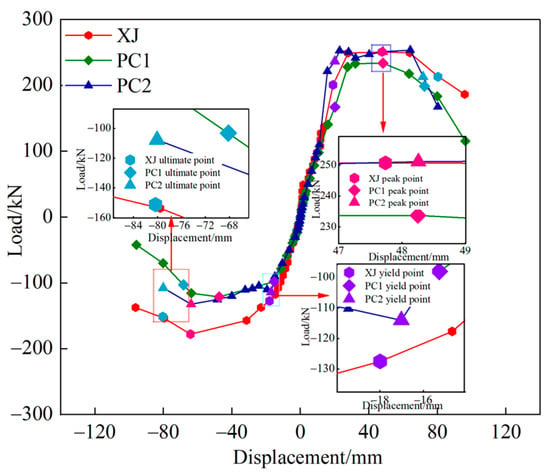
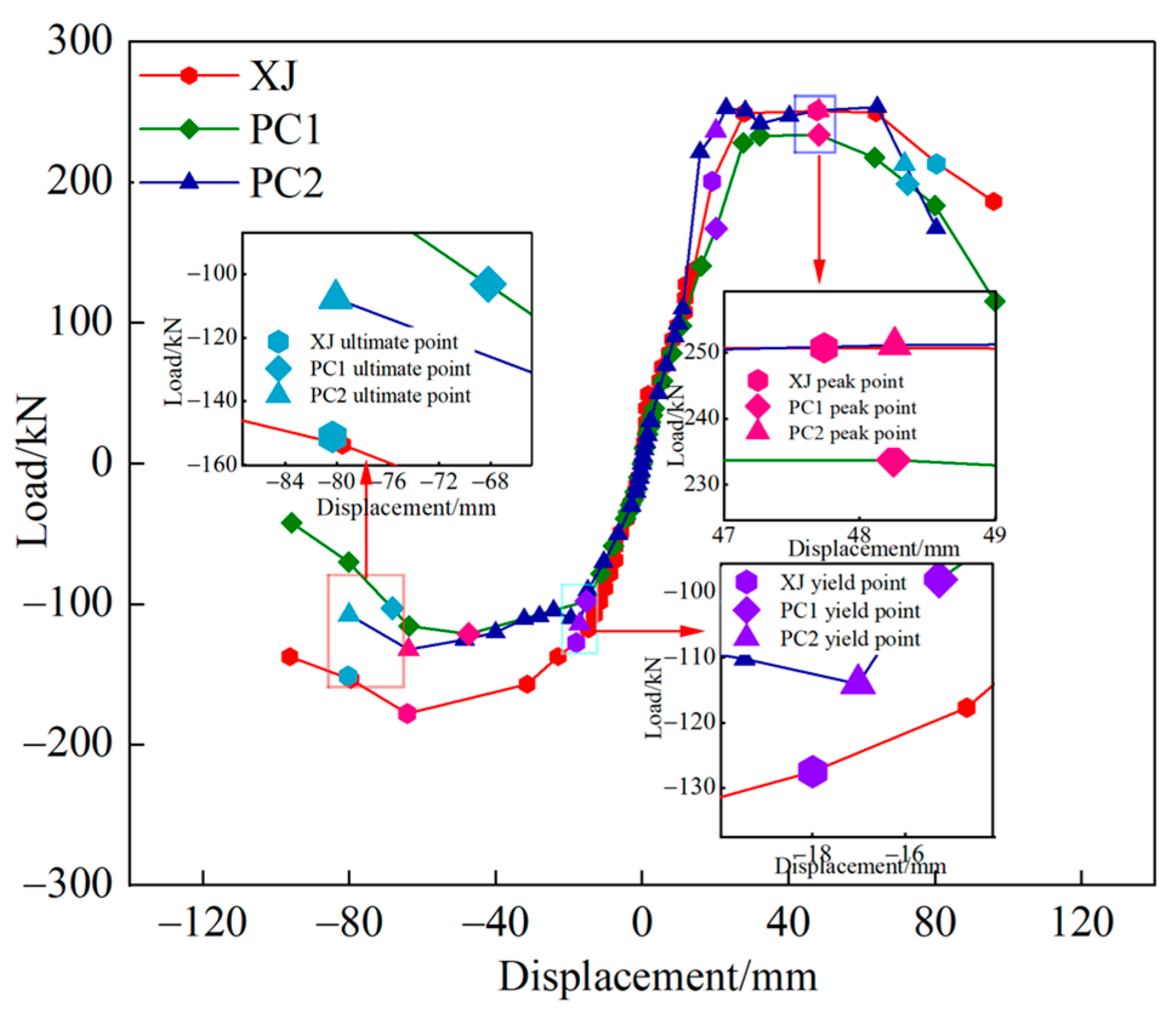
Figure 12 presents the skeleton curves of the beam–column joints. In the initial loading stage, the three specimens exhibited similar behavior, as they were predominantly in the elastic range. As the number of cycles increased, the specimens entered the yielding stage, characterized by a distinct inflection point on the skeleton curve and a decrease in curve steepness. Subsequently, the bearing capacity stabilized and did not increase significantly, while the displacement continued to grow, indicating a stable bearing stage. During the final loading stage, the rate of reduction in the positive force exceeded that in the negative force, primarily due to the difference in reinforcement ratios between the upper and lower portions of the beam.
Figure 12.
Skeleton curves.
Table 5 lists the yielding loading , yielding displacement , peak loading , peak displacement , rupture loading , rupture displacement , positive and negative displacement ductility ratio , and the average of displacement ductility ratio of the tested beam–column joints. In comparison to the specimen XJ, the positive and of the specimen PC1 were reduced by 16.67% and 29.04%, respectively. Similarly, the negative and decreased by 23.08% and 31.79%, respectively. The reduced load-bearing ability of specimen.
Table 5.
Test results.
PC1 can be attributed to the lack of full cooperation between the prefabricated and cast concrete, leading to a decreased effective height of the beam section. Since the load-bearing capacity of joint was largely dictated by the load-bearing ability of beam, this reduction was significant. In contrast to the specimen XJ, specimen PC2 exhibited an increase of 17.89% in the positive and a marginal 0.14% rise in the positive . However, the negative and were reduced by 10.53% and 25.59%,, respectively. The bearing capacity of specimen PC2 decreased under negative loading, whereas it increased under positive loading. This variation can be attributed to the enhanced restraint on concrete when U-shaped high-strength steel reinforcements were used, resulting in an improved capacity of reinforcement and concrete to bear load together. Specimen PC2 demonstrated a notable increase of 41.49% in the positive and a 7.44% rise in the when compared to specimen PC1, and the negative and increased by 16.31% and 9.10% respectively. This observation implies a superior load-carrying capacity for PC2 in comparison to PC1, demonstrating that U-shaped high-strength steel reinforcements enhanced the constraint on concrete.
The deformation capacity was expressed as the ratio of to . The average of displacement ductility ratio of the three specimens all exceed 4, indicating good deformation ability in the joints. However, the prefabricated sample displayed a ductility coefficient lower than that of the cast-in situ experimental sample. This difference was attributed to the presence of flat joints in the concrete of the precast specimen, which compromised its integrity. The premature crushing of concrete and a reduction in the deformation capacity of the specimen resulted from the utilization of enhanced-strength steel reinforcements. The table revealed that the under negative loading exceeded that under positive loading, providing further evidence of this observation.
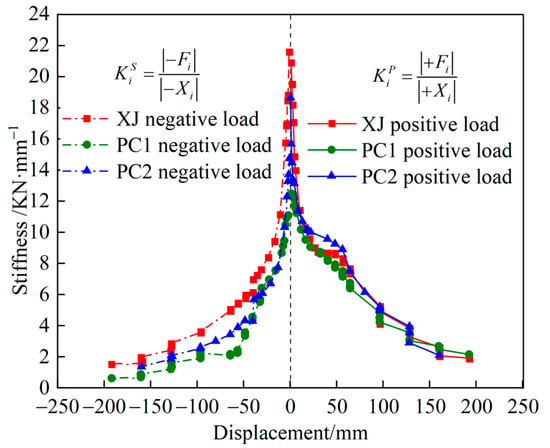
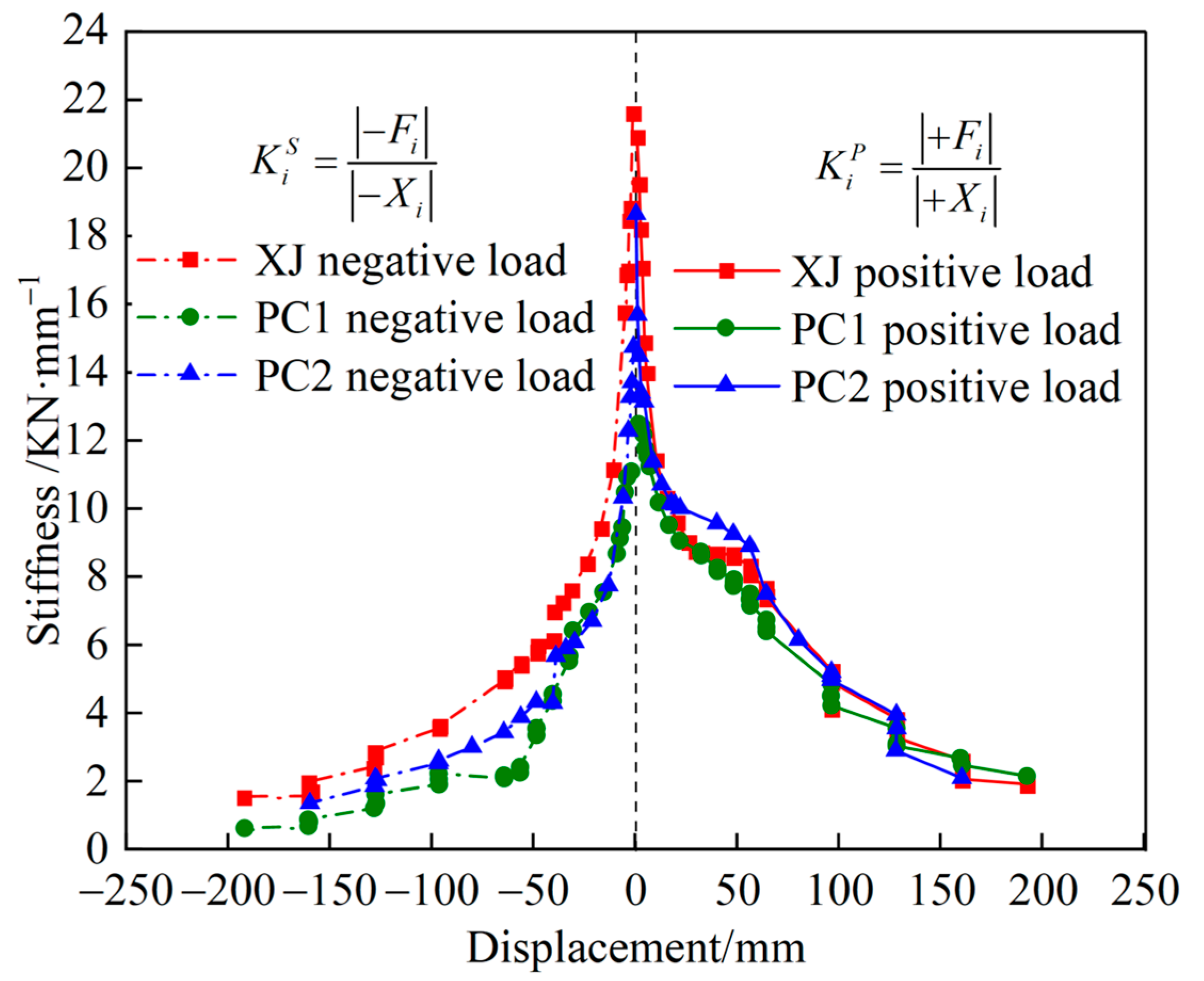
3.4. Stiffness Deterioration
Figure 13 illustrates the relationship between secant stiffness and displacement for each loading cycle. Among the three specimens, the CBCJ exhibited the highest initial stiffness, primarily because the PBCJ contained flat joints and its overall structural integrity was relatively weaker. During the load-controlled stage, stiffness degradation occurred rapidly, and the degradation trends were similar across all specimens, mainly due to concrete cracking and reinforcement yielding within this stage. When the loading displacement reached approximately 28 mm, all specimens began to yield, and the rate of stiffness degradation slowed thereafter. Under positive loading, specimen PC2 exhibited a lower rate of stiffness deterioration compared with the other specimens, indicating that the use of enhanced-strength steel reinforcement can effectively delay stiffness degradation. Conversely, under negative loading, specimen XJ displayed the lowest rate of stiffness deterioration, which can be attributed to substantial deformation in the lower portion of the precast beam, resulting in inefficient load transfer between the concrete and the steel reinforcement. In the later stage of loading, the degradation rates of both positive and negative stiffness were nearly identical among all specimens and continued until failure occurred.
Figure 13.
Stiffness degradation curves.
The positive and negative stiffness of the specimens were nearly identical during the initial loading stage, as both the reinforcement and the concrete underwent minimal deformation and jointly resisted the applied load. After yielding occurred, the positive stiffness exceeded the negative stiffness at equivalent displacement levels. This phenomenon can be attributed to the partial loss of load-bearing capacity of the concrete in the compression zone during negative loading, leading to a reduction in negative stiffness. In the failure stage, the positive and negative stiffness gradually converged, indicating the overall degradation of both materials and the loss of load-bearing capacity.
3.5. Energy Dissipation Capacity
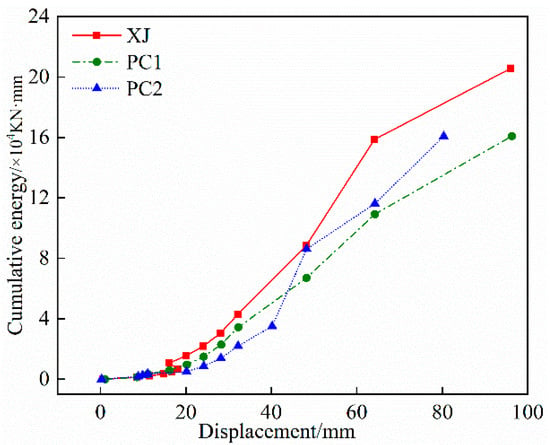
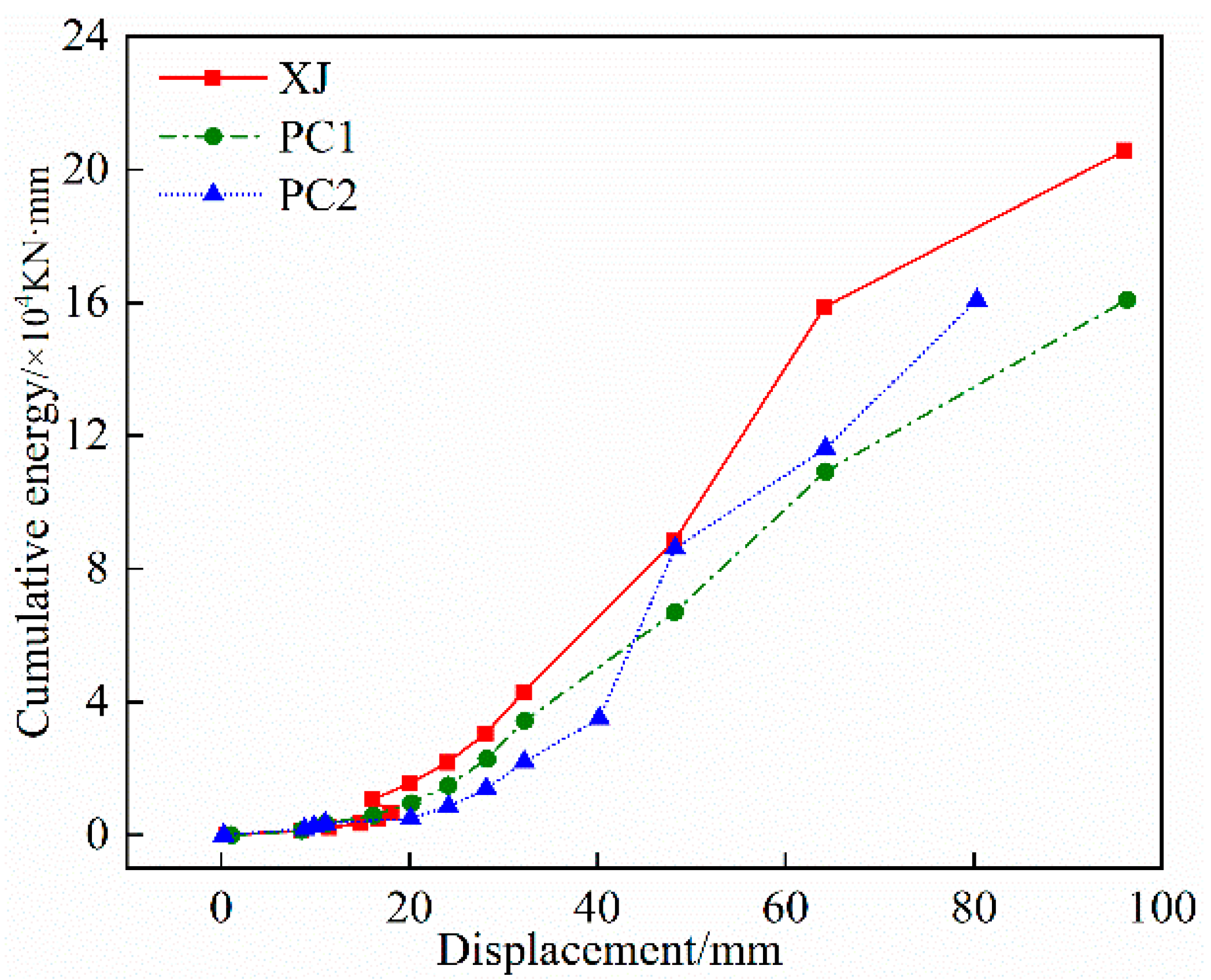
The energy dissipation capacity of joints is a crucial metric for assessing their structural response to earthquakes. In this paper, the assessment of the energy dissipation capacity involved the utilization of cumulative energy dissipation () and the equivalent viscous damping coefficient (). The cumulative energy consumption curves of all specimen are depicted in Figure 14.
Figure 14.
Cumulative energy dissipation.
Specimen XJ exhibited higher cumulative energy consumption compared to precast specimens PC1 and PC2 over the entire loading duration. because the precast specimens had natural joints and their integrity was not as robust as that of the cast-in-place specimens. Moreover, the yield of high-strength reinforcement was not fully utilized, leading to suboptimal energy dissipation capacity. During the initial loading phase, the concrete initiated cracking, and the energy consumption of all samples increased slowly. Prior to yielding of the components, the of all specimens was relatively similar. In the intermediate loading phase, the of specimen PC2 surpassed that of specimen PC1. This is attributed to the use of U-shaped enhanced-strength steel reinforcements, which enhanced the confinement of concrete in the core region and improved the anchorage performance of longitudinal steel reinforcements. When the components were damaged, the of test samples PC1 and PC2 represented 78.21% and 78.12%, respectively, in comparison to the experimental specimen XJ. The slight difference between PC1 and PC2 was due to the smaller destruction displacement and fewer loading times of specimen PC2. At a displacement of 80 mm, the of specimen PC2 exceeded that of PC1 by 14.61% when comparing their total energy consumption. Specimens PC1 and PC2 demonstrated energy consumption levels at 73.75% and 88.36%, respectively, in comparison to the specimen XJ. These findings indicated that the new type of joint performed well in terms of energy consumption.
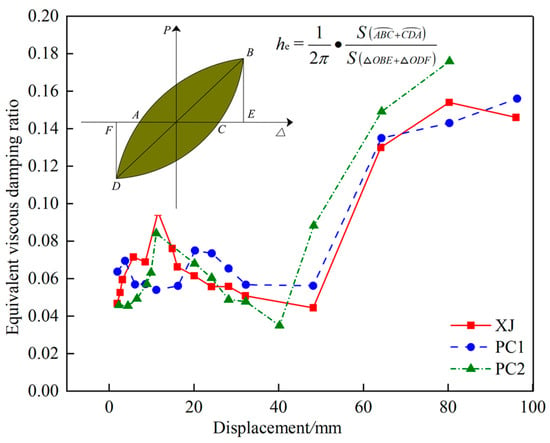
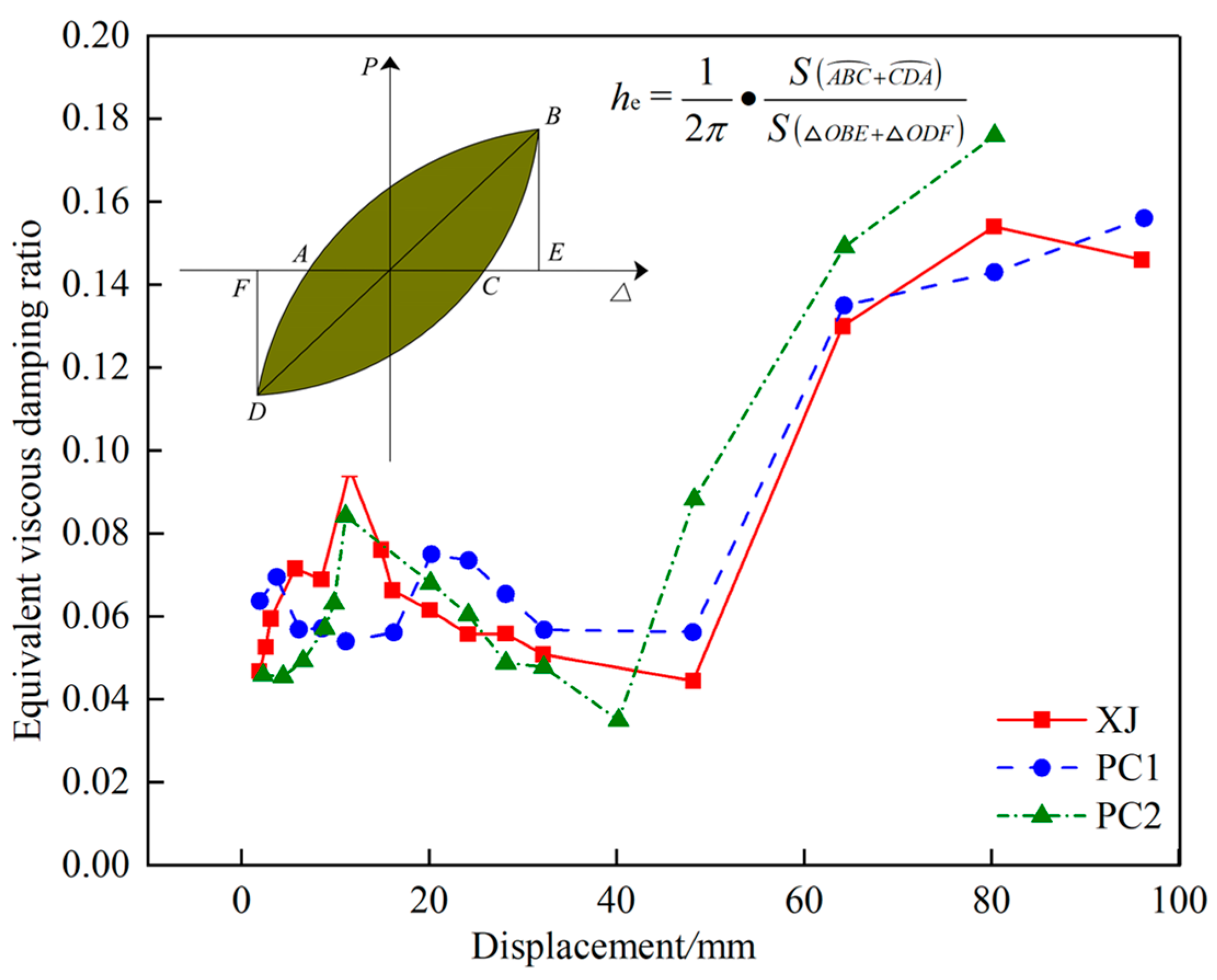
The calculation formula and results of are shown in Figure 15. Before the component was yielded, the equivalent viscous damping ratio of each specimen was basically the same. However, the of all specimens showed a significant decreasing tendency after yielding. It can be summarized as the steel reinforcements slipped in the core region, which caused the hysteresis curve to become narrower and elongate. When the loading displacement was between and , the of all trial pieces exhibited a noticeable increase. This rise occurred as the test subjects entered the phase of plastic deformation, where plastic deformation absorbed more seismic energy, thereby enhancing the energy absorption capacity of the trial pieces. During this stage, the of specimen PC2 demonstrated a significant elevation in comparison to the remaining two specimens.
Figure 15.
Equivalent viscous damping ratio.
To offer a more detailed analysis of the issue, the average calculation of the for each loading stage was presented in Table 6. Before the specimen was yielded, the of all trial pieces were essentially identical. During this phase, the specimens were within the elastic range, and the hysteresis loop exhibited nearly a linear configuration. During the transition from the yield stage to the peak stage, the average of specimen PC2 surpassed that of specimens PC1 and XJ by 21.33% and 26.39%, respectively. From the peak stage to the failure stage, the average of specimen PC2 exceeded that of PC1 and XJ by 21.37% and 23.94%, respectively. This is because the new joint form effectively suppressed the seepage of longitudinal reinforcement yielding to the core area and improved the hysteresis performance of the hysteresis curve. This observation highlights the superior performance of the new joint form in seismic energy consumption.
Table 6.
The mean value of in each stage.
Although cast-in-place joints generally exhibit slightly higher ultimate load and energy dissipation capacity, precast beam–column joints still offer substantial practical advantages in RC structures. Precasting allows precise control of reinforcement placement, concrete quality, and curing conditions, reducing variability and construction defects. On-site installation is faster, less weather-dependent, and reduces labor intensity and safety risks. Moreover, modular precast systems enable standardization, repetition, and potential long-term cost savings in large-scale projects. Therefore, the use of precast joints can improve overall construction efficiency, reliability, and sustainability, despite slightly lower mechanical performance compared with cast-in-place joints.
4. Discussion
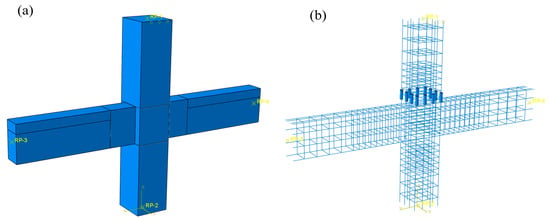
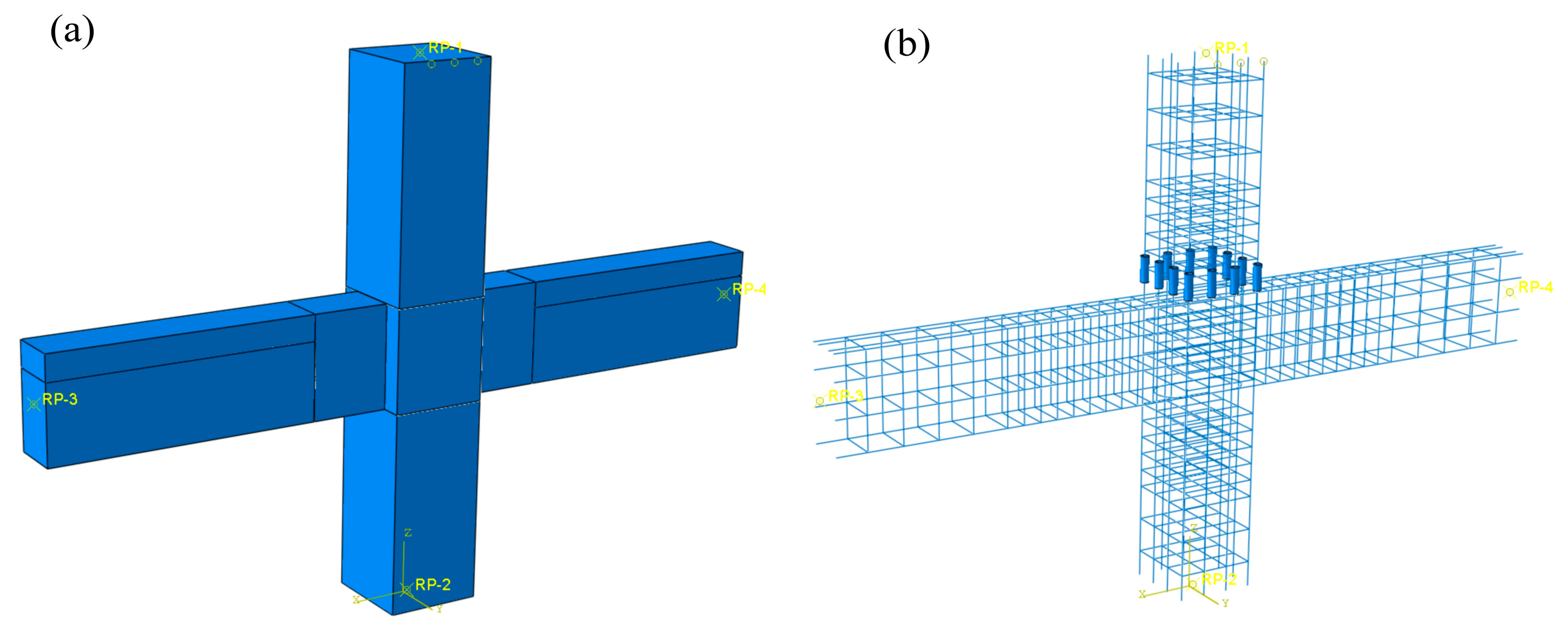
The seismic performance of beam–column joints is closely related to axial compression ratio, concrete strength, beam-end longitudinal reinforcement strength and beam-end longitudinal reinforcement ratio, but these effects on seismic performance are difficult to be comprehensively investigated just by the experimentally methods. Moreover, the high cost and complexity of full-scale cyclic loading tests further limit the scope of experimental studies. To address these constraints, a finite element (FE) model of the beam–column joints was developed, the joint model is shown in Figure 16.
Figure 16.
(a) Assembled unit; (b) Reinforcement cage.
In the finite element model, the concrete and grouted sleeves were modeled using C3D8R solid elements, while the reinforcement—mainly subjected to cyclic axial tension and compression—was represented with T3D2 truss elements. A mesh size of 50 mm was used for the concrete, sleeves, and most reinforcement, whereas the beam-end longitudinal bars were refined to 20 mm. The concrete elements are shown in Figure 16a, while the reinforcement elements are shown in Figure 16b.
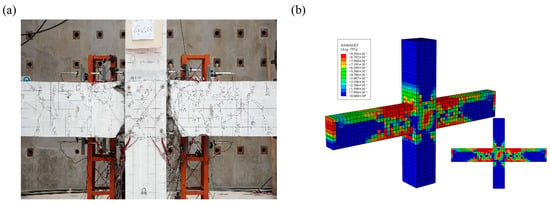
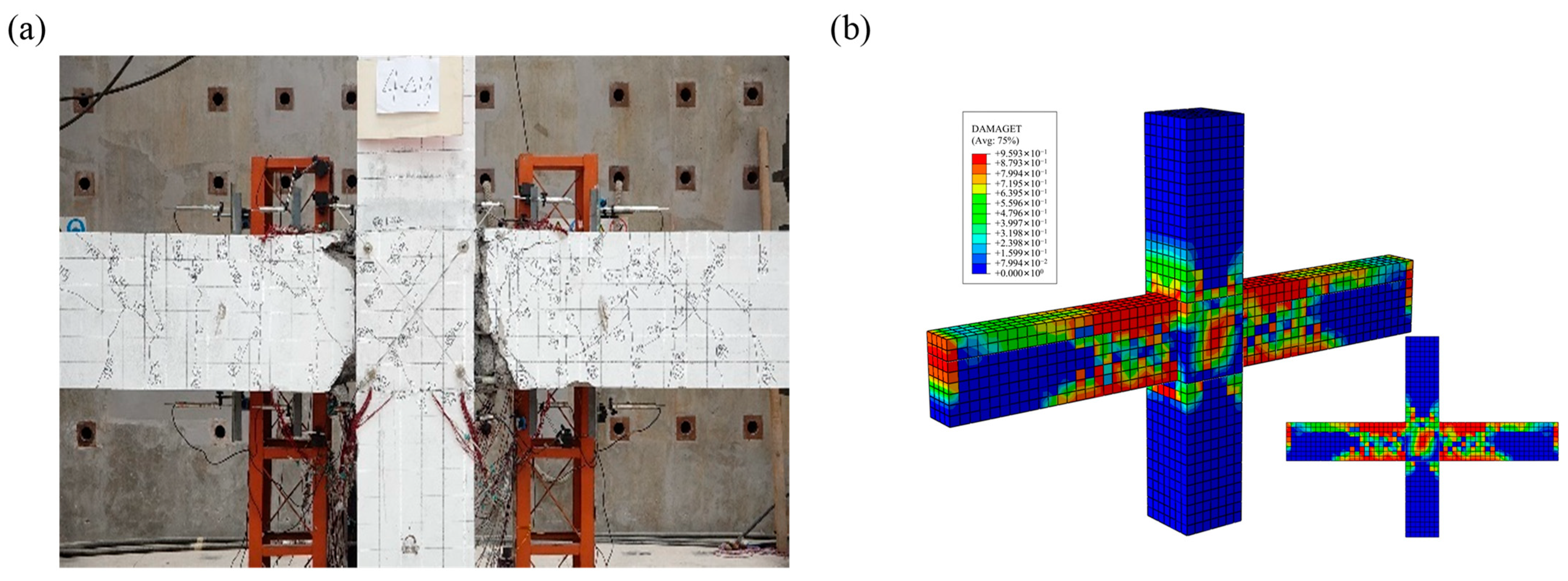
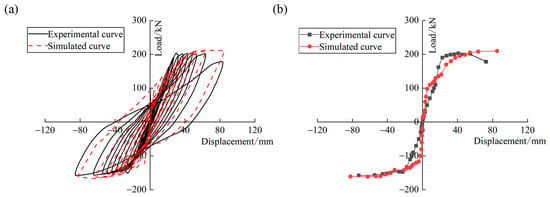
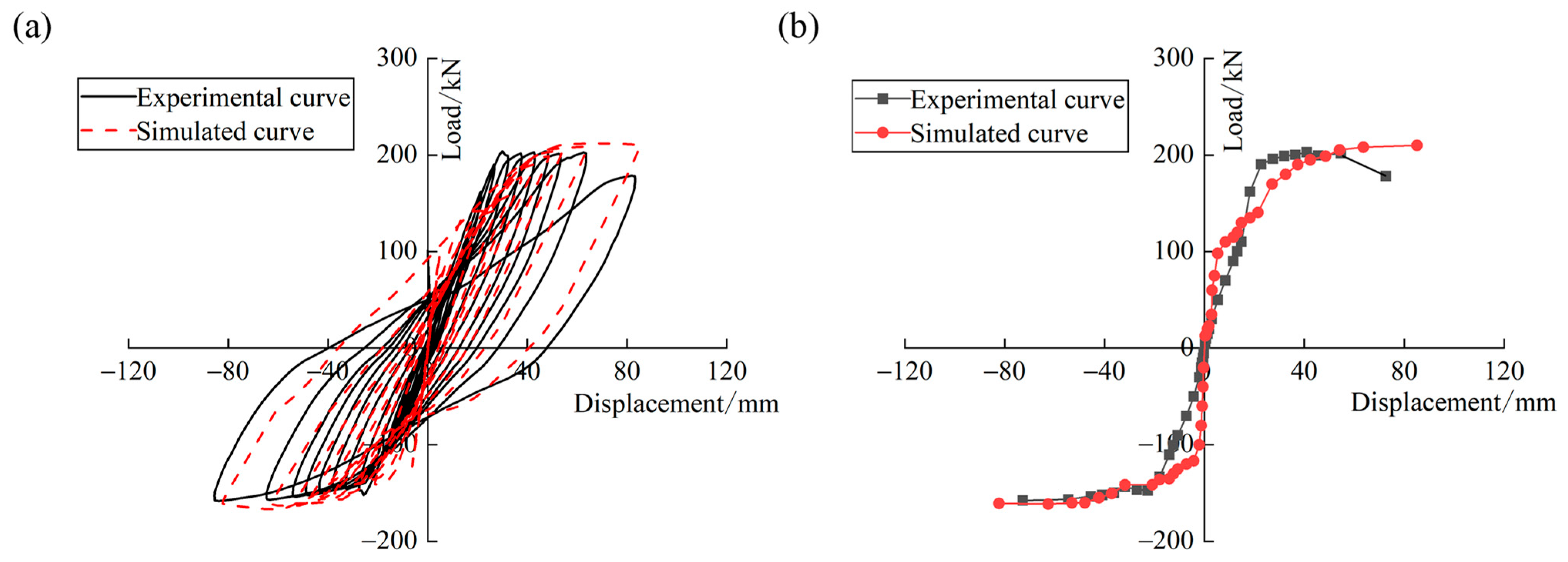
The model was validated by comparing its simulated responses with the corresponding experimental results. As shown in Figure 17, the simulated crack initiation and propagation patterns agree well with experimental results. Figure 18 shows that the simulated skeleton curve aligns well with the experimental trend. It can be accurately used to conduct an extended parametric analysis to evaluate the influence of key parameters on the seismic performance of the joints.
Figure 17.
Comparison of finite element simulation and test damage modes:(a) Damage of joint in the test; (b) Tensile damage contour of concrete at the failure stage.
Figure 18.
Comparison of curves for PC specimen: (a) Hysteresis curve; (b) Skeleton curve.
The axial compression ratios were 0.2, 0.4, 0.6, and 0.7; the concrete strengths were C30, C40, and C50; and the reinforcement strengths were HRB400, HRB500, and HRB600. The longitudinal reinforcement ratios of 0.91%, 1.12%, and 1.39% were obtained by varying the bar diameter. The baseline model corresponding to specimen PC is denoted as J1, and the parametric models are labeled J2-J10. The detailed parameters are summarized in Table 7.
Table 7.
Design parameters of each specimen.
4.1. Analysis of the Impact of the Axial Compression Ratio
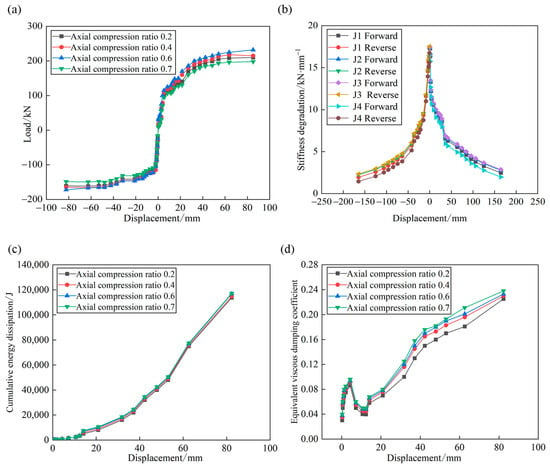
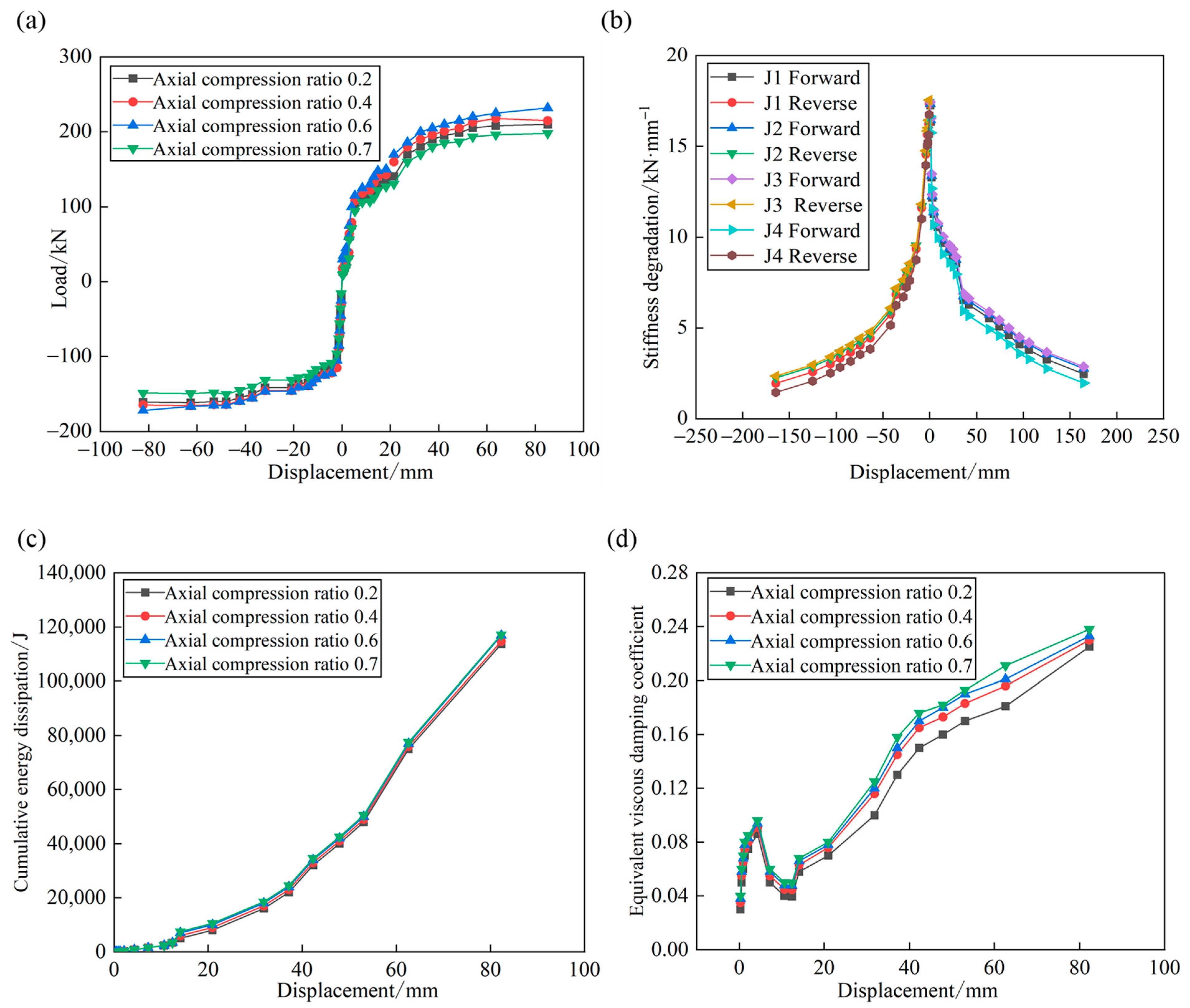
A parametric study was conducted using the PC model to investigate the effect of axial compression ratio on seismic resistance. Concrete strength, beam-end longitudinal reinforcement strength, and reinforcement ratio were held constant, while the axial compression ratio was varied by adjusting the top-column load to 0.4, 0.6, and 0.7 for specimens J2, J3, and J4, respectively. As shown in Figure 19a, skeleton curves indicate that load-bearing capacity generally increases with the axial compression ratio. In the initial loading stage, all curves overlap, suggesting minimal influence before plastic deformation. Compared with J1, increasing the ratio from 0.2 to 0.4 raises J2’s capacity by 2.38%, further increasing it to 0.6 boosts J3 by 10.48%, whereas a ratio of 0.7 reduces J4’s capacity by 5.71%, indicating that excessive axial compression may diminish joint strength.
Figure 19.
Comparison of the finite element simulation and experimental curves for different axial compression ratio: (a) Comparison of skeleton curve; (b) Comparison of stiffness degradation; (c) Comparison of cumulative energy dissipation; (d) Comparison of equivalent viscous damping coefficients.
As shown in Figure 19b, the axial compression ratio influences stiffness degradation. During the force-controlled stage, stiffness decreases rapidly, then stabilizes under displacement-controlled loading. Increasing the ratio from 0.2 to 0.6 slightly raises stiffness in each cycle, whereas a ratio of 0.7 slightly reduces stiffness and accelerates degradation, indicating that excessively high axial compression adversely affects joint stiffness.
As shown in Figure 19c, increasing the axial compression ratio from 0.2 to 0.7 leads to gradual increases in cumulative energy dissipation for specimens J2, J3, and J4 by 0.88%, 2.76%, and 3.07%, respectively. Figure 19d shows that after yielding, the equivalent viscous damping coefficient also rises slightly with higher axial compression ratios, though the variation is minor. In the later loading stage, the equivalent viscous damping coefficient values for all specimens converge, indicating that increasing the axial compression ratio moderately enhances the joint’s energy absorption capacity under seismic loading.
In summary, the axial compression ratio has a limited effect on stiffness degradation. A moderate increase enhances both load-bearing and energy dissipation capacities, whereas excessively high ratios can cause premature core concrete failure and reduced capacity. Thus, it is recommended that the axial compression ratio of the proposed precast joint not exceed 0.6.
4.2. Analysis of the Impact of Beam-End Longitudinal Reinforcement Strength
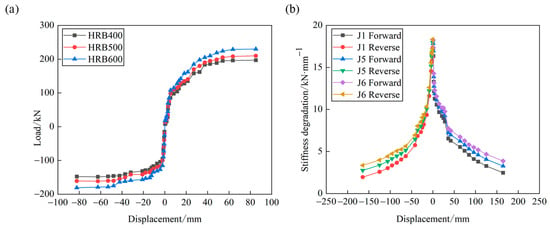
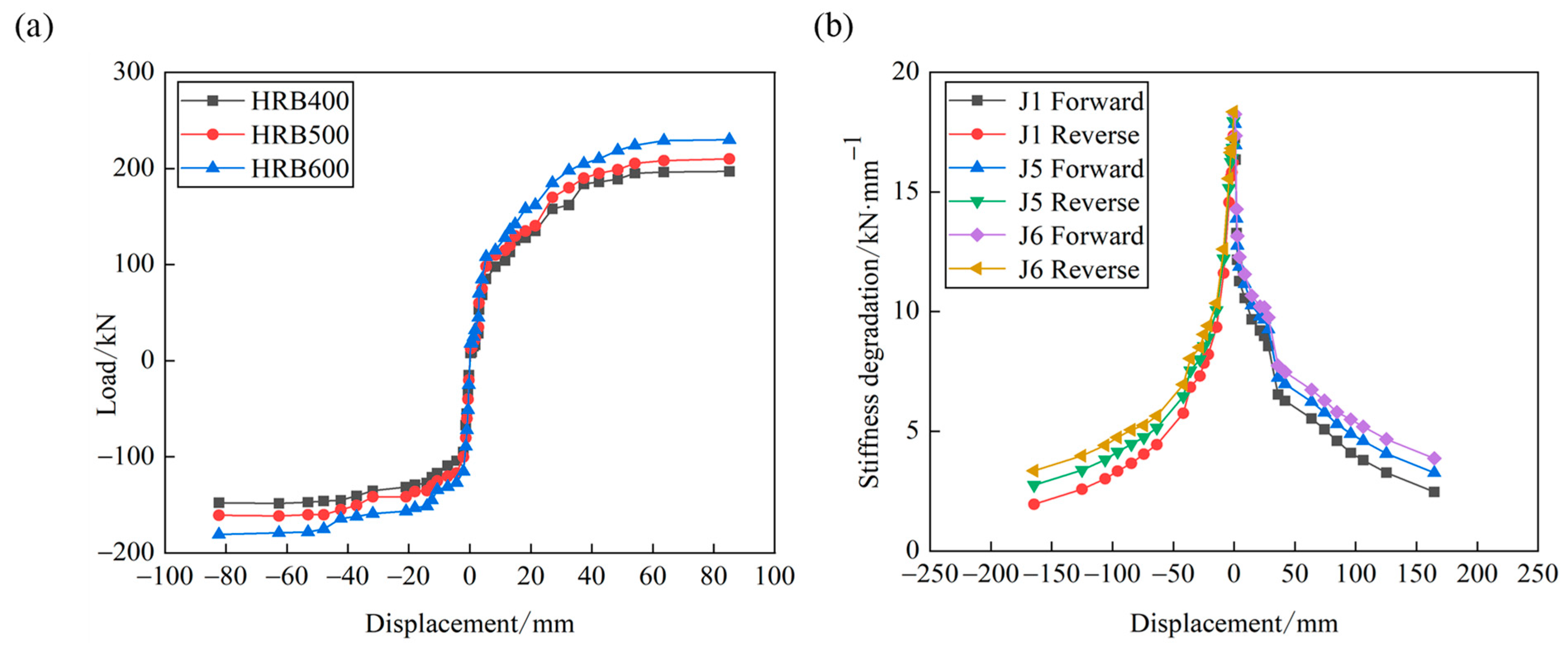
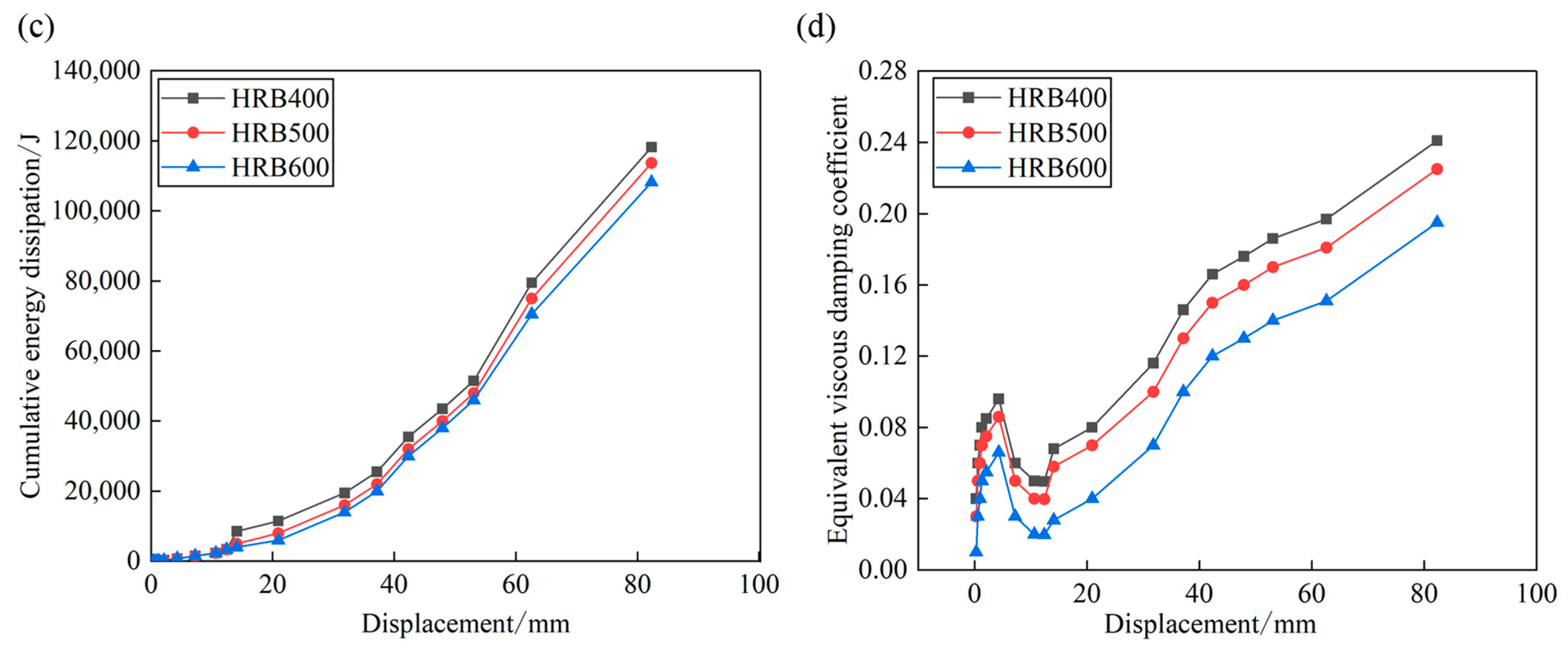
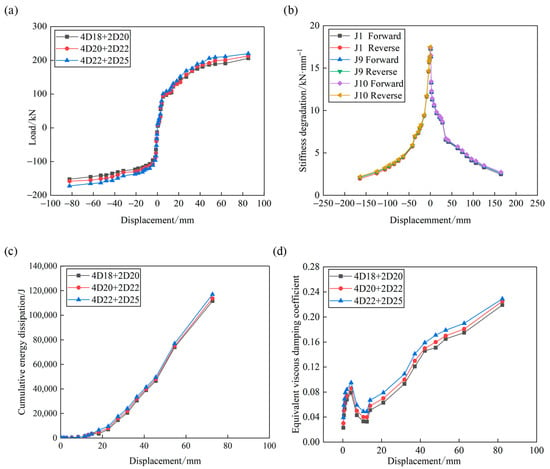
To examine the effect of reinforcement strength on seismic performance, numerical simulations were conducted on specimens J5 and J6. The axial compression ratio, concrete strength, and beam-end reinforcement ratio were kept constant, while the longitudinal reinforcement was changed to HRB400 and HRB600. As shown in Figure 20a, skeleton curves are similar in the early loading stage, but load-carrying capacity increases noticeably with higher reinforcement strength in the mid-to-late stages. Compared with J5 (HRB400), specimens J1 (HRB500) and J6 (HRB600) show capacity increases of 6.59% and 16.75%, respectively, indicating a significant influence of reinforcement strength. Thus, reinforcement grade should be selected to balance structural performance and cost.
Figure 20.
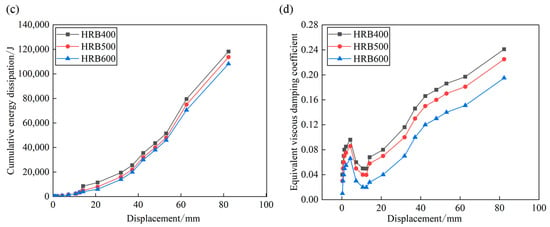
Comparison of the finite element simulation and experimental curves for different beam-end longitudinal reinforcement strength: (a) Comparison of skeleton curve; (b) Comparison of stiffness degradation; (c) Comparison of cumulative energy dissipation; (d) Comparison of equivalent viscous damping coefficients.
As shown in Figure 20b, the beam-end longitudinal reinforcement strength markedly influences stiffness degradation. Stiffness decreases rapidly during force-controlled loading but stabilizes in the displacement-controlled stage. After yielding, higher reinforcement strength leads to noticeably greater stiffness in each cycle, indicating that increasing beam-end reinforcement effectively delays stiffness degradation.
As shown in Figure 20c, the cumulative energy dissipation of the specimens is similar in the early loading stage. In the mid-to-late stages, higher beam-end reinforcement strength reduces cumulative energy dissipation. Compared with J5 (HRB400), specimens J1 (HRB500) and J6 (HRB600) show decreases of 3.81% and 8.46%, respectively. Figure 20d shows that reinforcement strength has little effect on the equivalent viscous damping coefficient before yielding, but after yielding, higher reinforcement grades cause a more pronounced reduction. Compared with J5, the equivalent viscous damping coefficients of J1 and J6 decrease by 6.63% and 12.58%, indicating that increasing beam-end reinforcement strength reduces the joint’s energy dissipation capacity.
In summary, the beam-end longitudinal reinforcement strength has a significant influence on the seismic performance of the joint. Increasing the beam-end longitudinal reinforcement strength enhances the load-carrying capacity and reduces the stiffness degradation rate of the specimen; however, it also weakens the energy dissipation capacity of the joint. Therefore, an appropriate beam-end longitudinal reinforcement strength should be selected in design.
4.3. Analysis of the Impact of Concrete Strength
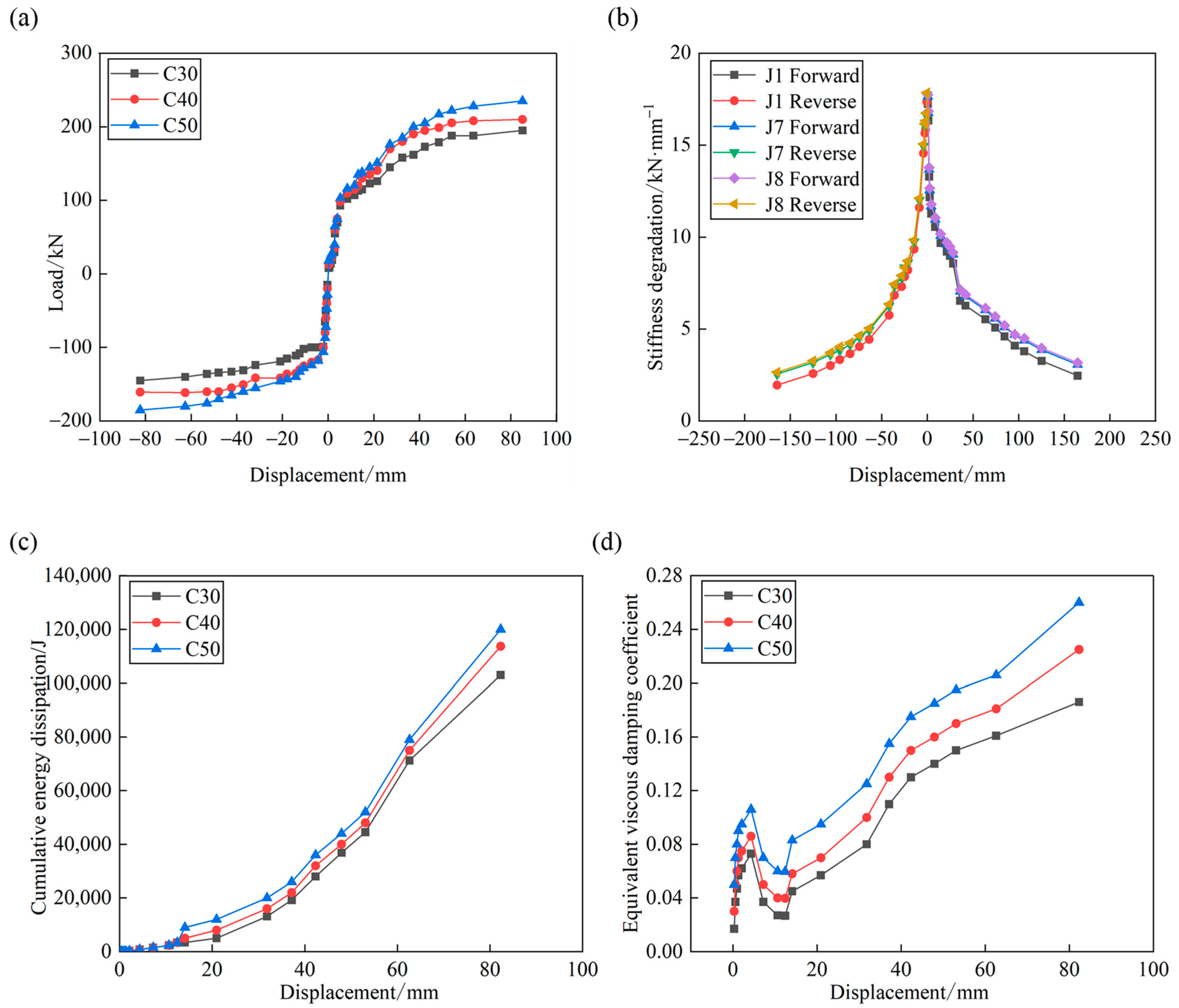
Based on the simulation of specimen PC, concrete strength was varied to C30 and C50 while keeping the axial compression ratio, beam-end reinforcement strength, and reinforcement ratio unchanged. Numerical simulations for specimens J7 and J8 show nearly identical skeleton curves during the early loading stage (Figure 21a). Beyond yielding, bearing capacity increases with concrete strength: compared with J7 (C30), specimens J1 (C40) and J8 (C50) show increases of 7.69% and 20.51%, respectively. Experimental and numerical results indicate that horizontal and diagonal cracks develop in the core zone under large beam-end displacements. Higher concrete strength reduces core cracking, maintains integrity, and mitigates crushing and spalling at the beam–column intersection, thereby enhancing the specimen’s overall bearing capacity. The damage evolution of the finite element specimens indicates that increasing concrete strength does not alter the fundamental failure mechanism of the joint within the investigated range. Although higher concrete strength enhances the effective utilization of high-strength reinforcement, it does not adversely affect the desired “strong joint–weak beam” failure mode within the studied parameter range.
Figure 21.
Comparison of the finite element simulation and experimental curves for different concrete strength: (a) Comparison of skeleton curve; (b) Comparison of stiffness degradation; (c) Comparison of cumulative energy dissipation; (d) Comparison of equivalent viscous damping coefficients.
As shown in Figure 21b, concrete strength noticeably affects stiffness degradation. During force-controlled loading, stiffness decreases rapidly, then stabilizes under displacement-controlled loading. Increasing concrete strength from C30 to C50 slightly raises stiffness in each cycle, indicating that higher concrete strength can moderately slow joint stiffness degradation.
As shown in Figure 21c, seismic energy dissipation among specimens is similar during early loading, as deformations are largely recoverable. In the inelastic stage, cumulative energy dissipation increases with concrete strength, with specimens J1 (C40) and J8 (C50) showing 10.38% and 16.51% higher than J7 (C30). Figure 21d shows that the equivalent viscous damping coefficients also rises with concrete strength after yielding, increasing by 15.28% and 23.65% from C30 to C50, indicating that higher concrete strength substantially enhances the joint’s energy dissipation capacity.
In summary, concrete strength has limited impact on stiffness degradation but significantly affects both load-bearing capacity and seismic energy dissipation of the joints. Increasing concrete strength enhances these performance metrics, though practical selection should balance structural benefits with economic efficiency.
4.4. Analysis of the Impact of Beam-End Longitudinal Reinforcement Ratio
Based on the numerical simulation of specimen PC, the axial compression ratio, concrete strength, and beam-end longitudinal reinforcement strength were kept constant, while the reinforcement ratio was varied by adjusting bar diameters for specimens J9 and J10. As shown in Figure 22a, the skeleton curves exhibit minor differences in the early stage. In the inelastic stage, bearing capacity increases slightly with the reinforcement ratio, with ultimate capacities of J1 and J10 rising by 3.39% and 6.79% compared with J9 (0.91%). This suggests that, while meeting seismic performance requirements, the beam-end reinforcement ratio can be optimized for material efficiency.
Figure 22.
Comparison of the finite element simulation and experimental curves for different beam-end longitudinal reinforcement ratio: (a) Comparison of skeleton curve; (b) Comparison of stiffness degradation; (c) Comparison of cumulative energy dissipation; (d) Comparison of equivalent viscous damping coefficients.
As shown in Figure 22b, the beam-end longitudinal reinforcement ratio has a limited effect on stiffness degradation. Stiffness decreases rapidly during the force-controlled stage, then stabilizes in the displacement-controlled stage. Increasing the reinforcement ratio yields only slight improvements in cyclic stiffness, indicating a minor influence on the joint’s stiffness degradation.
As shown in Figure 22c, the cumulative energy dissipation of the PC joint increases with the beam-end longitudinal reinforcement ratio. Prior to yielding, differences among specimens are negligible; after yielding, higher reinforcement ratios result in faster energy dissipation. Compared with specimen J9 (0.91%), the cumulative energy of specimens J1 and J10 (1.12% and 1.39%) increases by 1.97% and 4.93%, respectively, highlighting the contribution of yielding reinforcement to seismic energy dissipation. Figure 22d shows that the reinforcement ratio has a minor effect on the equivalent viscous damping coefficient, which increases slightly after yielding and converges in the later loading stage, indicating only a modest improvement in energy dissipation.
In summary, the beam-end longitudinal reinforcement ratio has limited influence on stiffness degradation and only modestly improves load-bearing capacity and cumulative energy dissipation. While higher ratios slightly enhance seismic performance, the effect is minor; thus, the reinforcement ratio should balance structural safety with economic efficiency.
5. Conclusions
This paper presents a novel high-strength bottom-bar interlocking and anchorage prefabricated beam–column joint (HSRU-PBCJ) and evaluates its performance through experimental tests and finite element analyses. Further investigations examined the effects of the axial compression ratio, concrete strength, beam-end longitudinal reinforcement strength and beam-end longitudinal reinforcement ratio on the seismic behavior of the joints. The key conclusions drawn from the combined experimental and numerical results are summarized as follows:
(1) The failure mode of the HSRU-PBCJ is bending failure. Well-developed plastic hinge zones form in the beams, with cracks primarily concentrated around them. Compared with the CBCJ, the presence of U-shaped longitudinal reinforcement in the beam restrains the concrete in the central region, resulting in fewer transverse and horizontal cracks in the core area, which aligns with the design principle of robust joints and relatively weaker members.
(2) The use of HRB500 reinforcement simplifies the joint configuration. The bottom-beam steel arrangement reduces reinforcement slippage within the core region and enhances the concrete’s contribution to shear strength. However, in the later stages of loading, severe concrete crushing occurs, leading to a rapid decline in load-bearing capacity.
(3) The degradation of stiffness in the three test samples exhibits comparable trends, and the incorporation of enhanced-strength steel reinforcements slows down the rate of stiffness degradation, implying minimal damage accumulation in specimen PC2. The of the sample PC2 reaches 4.34, which is far greater than the requirement of ductility coefficient greater than 3 specified in the code, suggesting that the novel joint exhibits commendable deformability.
(4) The cumulative energy consumption of specimen PC2 with a displacement of 80 mm is 88.36% of that of specimen XJ, which is 14.61% higher than that of PC1. During the whole loading process, the of specimen PC2 consistently exceeds that of the other specimens, and the hysteretic curve demonstrates fullness, highlighting the commendable energy absorption capacity of the novel joint.
(5) A moderate increase in the axial compression ratio can enhance the load-carrying capacity and energy dissipation of the member, whereas excessively high values may lead to premature concrete failure; therefore, the axial compression ratio should be limited to no more than 0.6. Higher beam-end longitudinal reinforcement strength increases load capacity and delays stiffness degradation but reduces energy dissipation.
(6) Concrete strength has little effect on stiffness degradation while significantly improving load-bearing capacity and seismic energy dissipation. By contrast, the beam-end longitudinal reinforcement ratio has only a minor impact on stiffness degradation and provides limited enhancement in load capacity and cumulative energy dissipation, highlighting the need to balance seismic performance and economic efficiency in design.
Author Contributions
Conceptualization, G.Z. and Y.S.; methodology, Z.X.; software, Z.W.; validation, W.M. and Y.S.; formal analysis, Z.W.; investigation, L.L.; resources, Q.L. and X.L.; data curation, W.C.; writing—original draft preparation, Z.W.; writing—review and editing, G.Z. and Y.S.; visualization, W.C.; supervision, Q.L. and Z.X.; project administration, W.M.; funding acquisition, L.L. and X.L. All authors have read and agreed to the published version of the manuscript.
Funding
This research was funded by the National Natural Science Foundation of China (No. 52279129), the Science and Technology Research Project of Henan Province (Grant Nos. 252102231073 and 252102321148), and the Water Science and Technology Research Program of Henan Province (Grant No. 64, Yu Shui Ke [2021] No. 2).
Data Availability Statement
The original contributions presented in this study are included in the article. Further inquiries can be directed to the corresponding author.
Acknowledgments
The authors would like to acknowledge Henan Modern Construction Technology Co., Ltd. in terms of prefabricated specimen preparation.
Conflicts of Interest
Author Luming Li was employed by Henan Provincial Water Conservancy Technology Application Center. Author Wen Cheng was employed by the company PowerChina Henan Engineering Co., Ltd. Author Xun Li was employed by China Construction Design and Research Institute Co., Ltd. The remaining authors declare that the research was conducted in the absence of any commercial or financial relationships that could be construed as a potential conflict of interest.
References
- Ghayeb, H.H.; Razak, H.A.; Sulong, N.H.R. Development and testing of hybrid precast concrete beam-to-column connections under cyclic loading. Constr. Build. Mater. 2017, 151, 258–278. [Google Scholar] [CrossRef] [Scilit]
- Han, W.; Zhao, Z.; Qian, J.; Cui, Y.; Liu, S. Seismic behavior of precast columns with large-spacing and high-strength longitudinal rebars spliced by epoxy mortar-filled threaded couplers. Eng. Struct. 2018, 176, 349–360. [Google Scholar] [CrossRef] [Scilit]
- Khaloo, A.; Doost, R.B. Seismic performance of precast RC column to steel beam connections with variable joint configurations. Eng. Struct. 2018, 160, 408–418. [Google Scholar] [CrossRef] [Scilit]
- Liu, W.; Zhang, H.; Wang, Q.; Hua, T.; Xue, H. A review and scientometric analysis of global research on prefabricated buildings. Adv. Civ. Eng. 2021, 2021, 8869315. [Google Scholar] [CrossRef] [Scilit]
- Yu, S.; Liu, Y.; Wang, D.; Bahaj, A.S.; Wu, Y.; Liu, J. Review of thermal and environmental performance of prefabricated buildings: Implications to emission reductions in China. Renew. Sust. Energ. Rev. 2021, 137, 110472. [Google Scholar] [CrossRef] [Scilit]
- Zhang, W.; Lee, D.; Kim, S.-H.; Ju, H.; Lee, C.-J. Seismic performance of precast wide beam-column connections with asymmetrical anchorage reinforcement details. Eng. Struct. 2023, 275, 115237. [Google Scholar] [CrossRef] [Scilit]
- Nie, X.; Huang, D.; Zhuang, L.; Fan, J.; Deng, N. Precast concrete connections for alleviating reinforcement congestion: A state-of-the-art review. Eng. Struct. 2025, 331, 119985. [Google Scholar] [CrossRef] [Scilit]
- Zhang, X.; Zhao, Y.; Zhao, A.; Li, X. Generalized cyclic bond-slip model of rebar embedded in concrete under lateral pressure: Parameter calibration and numerical implementation. Structures 2023, 49, 402–414. [Google Scholar] [CrossRef] [Scilit]
- Xia, Y.; Yu, J.; Jiang, C. Cyclic behavior of precast beam-to-column connections with locally reactive powder concrete: An experimental and numerical investigation. Struct. Concrete 2025. [Google Scholar] [CrossRef] [Scilit]
- Kim, S.; Shin, J.; Kim, W. Assessing the seismic performance of exterior precast concrete joints with ultra-high-performance fiber-reinforced concrete. Int. J. Concr. Struct. Mater. 2024, 18, 10. [Google Scholar] [CrossRef] [Scilit]
- Savoia, M.; Buratti, N.; Vincenzi, L. Damage and collapses in industrial precast buildings after the 2012 Emilia earthquake. Eng. Struct. 2017, 137, 162–180. [Google Scholar] [CrossRef] [Scilit]
- Xu, F.; Wang, K.; Wang, S.; Li, W.; Liu, W.; Du, D. Experimental bond behavior of deformed rebars in half-grouted sleeve connections with insufficient grouting defect. Constr. Build. Mater. 2018, 185, 264–274. [Google Scholar] [CrossRef] [Scilit]
- Tan, K.H. Progressive collapse behaviour of advanced precast reinforced concrete joints with headed bars and plastic hinge relocation. Eng. Struct. 2023, 293, 116603. [Google Scholar] [CrossRef] [Scilit]
- Yu, J.; Zhang, E.; Xu, Z.; Guo, Z. Seismic performance of precast concrete frame beam-column connections with high-strength bars. Materials 2022, 15, 7127. [Google Scholar] [CrossRef] [Scilit]
- Moreira, G.; Marreiros, R.; Marchão, C.; Reguengo, R. Evaluation of the rotational stiffness of precast reinforced concrete beam-column connections. Eng. Struct. 2024, 308, 117933. [Google Scholar] [CrossRef] [Scilit]
- Zhang, J.; Liu, X.; Liu, J.; Zhang, M.; Cao, W. Seismic performance and reparability assessment of recycled aggregate concrete columns with ultra-high-strength steel bars. Eng. Struct. 2023, 277, 115426. [Google Scholar] [CrossRef] [Scilit]
- Yang, H.; Su, X.; Geng, N. Experimental research on seismic behaviors of RC columns considering buckling of HRB600 longitudinal steel bars. Eng. Struct. 2023, 277, 115384. [Google Scholar] [CrossRef] [Scilit]
- Ding, Y.; Liu, J.-P.; Yao, G.; Wei, W.; Mao, W.-H. Cyclic bond behavior and bond stress-slip constitutive model of rebar embedded in hybrid fiber reinforced strain-hardening cementitious composites. Constr. Build. Mater. 2023, 369, 130582. [Google Scholar] [CrossRef] [Scilit]
- Feng, J.; Wang, S.; Meloni, M.; Zhang, Q.; Yang, J.; Cai, J. Seismic behavior of RC beam column joints with 600 MPa high strength steel bars. Appl. Sci. 2020, 10, 4684. [Google Scholar] [CrossRef] [Scilit]
- Alavi-Dehkordi, S.; Mostofinejad, D.; Alaee, P. Effects of high-strength reinforcing bars and concrete on seismic behavior of RC beam-column joints. Eng. Struct. 2019, 183, 702–719. [Google Scholar] [CrossRef] [Scilit]
- Yan, Q.; Chen, T.; Xie, Z. Seismic experimental study on a precast concrete beam-column connection with grout sleeves. Eng. Struct. 2018, 155, 330–344. [Google Scholar] [CrossRef] [Scilit]
- Ma, C.; Jiang, H.; Wang, Z. Experimental investigation of precast RC interior beam-column-slab joints with grouted spiral-confined lap connection. Eng. Struct. 2019, 196, 109317. [Google Scholar] [CrossRef] [Scilit]
- Zhang, Z.-Y.; Ding, R.; Nie, X.; Fan, J.-S. Seismic performance of a novel interior precast concrete beam-column joint using ultra-high performance concrete. Eng. Struct. 2020, 222, 111145. [Google Scholar] [CrossRef] [Scilit]
- Araújo, D.d.L.; Prado, L.P.; da Silva, E.B.; El Debs, M.K. Temporary beam-to-column connection for precast concrete frame assembly. Eng. Struct. 2018, 171, 529–544. [Google Scholar] [CrossRef] [Scilit]
- Tavallali, H.; Lepage, A.; Rautenberg, J.M.; Pujol, S. Concrete Beams Reinforced with High-Strength Steel Subjected to Displacement Reversals. ACI Struct. J. 2014, 111, 1037–1047. [Google Scholar] [CrossRef] [Scilit]
- Cao, Y.; Yang, Z. Seismic damage evaluation of beam-column joints in monolithic precast concrete frame structures. Materials 2022, 15, 6038. [Google Scholar] [CrossRef] [Scilit]
- West, J.; Ibrahim, A.; Hindi, R. Analytical compressive stress–strain model for high-strength concrete confined with cross-spirals. Eng. Struct. 2016, 113, 362–370. [Google Scholar] [CrossRef] [Scilit]
- Mander, J.B.; Priestley, M.J.N.; Park, R. Theoretical stress-strain model for confined concrete. J. Struct. Eng. 1988, 114, 1804–1826. [Google Scholar] [CrossRef] [Scilit]
- Kim, J.; LaFave, J.M. Key influence parameters for the joint shear behaviour of reinforced concrete (RC) beam–column connections. Eng. Struct. 2007, 29, 2523–2539. [Google Scholar] [CrossRef] [Scilit]
- Alaee, P.; Li, B. High-strength concrete exterior beam-column joints with high-yield strength steel reinforcements. Eng. Struct. 2017, 145, 305–321. [Google Scholar] [CrossRef] [Scilit]
- Lai, B.-L.; Zhang, M.-Y.; Chen, Z.-P.; Liew, J.R.; Zheng, Y.-Y. Axial compressive behavior and design of semi-precast steel reinforced concrete composite columns with permanent ECC formwork. Structures 2023, 57, 105130. [Google Scholar] [CrossRef] [Scilit]
- Lai, B.-L.; Zhang, M.-Y.; Zheng, X.-F.; Chen, Z.-P.; Zheng, Y.-Y. Experimental study on the axial compressive behaviour of steel reinforced concrete composite columns with stay-in-place ECC jacket. J. Build. Eng. 2023, 68, 106174. [Google Scholar] [CrossRef] [Scilit]
- Yang, Y.; Chen, B.; Chen, Y.; Zhou, H.; Liu, F.; Xie, X.; Chen, J.; Guo, W.; Wang, H. Performances of concrete columns with modular UHPC permanent formworks under axial load. Int. J. Concr. Struct. and Mater. 2023, 17, 38. [Google Scholar] [CrossRef] [Scilit]
- Lai, B.-L.; Bao, R.-L.; Zheng, X.-F.; Vasdravellis, G.; Mensinger, M. Machine-learning assisted analysis on the seismic performance of steel reinforced concrete composite columns. Structures 2024, 68, 107065. [Google Scholar] [CrossRef] [Scilit]
- GB 50010-2015; Code for Seismic Design of Buildings. China Architecture & Building Press: Beijing, China, 2015.
- JGJ1-2014; Technical Specification for Precast Concrete Structures. China Architecture & Building Press: Beijing, China, 2014.
- American Concrete Institute (ACI). Building Code Requirements for Structural Concrete (ACI 318-19) and Commentary; ACI: Farmington Hills, MI, USA, 2019. [Google Scholar]
- American Concrete Institute (ACI). Recommendations for the Design of Beam-Column Connections in Monolithic Reinforced Concrete Structures (ACI 352R-02); ACI: Farmington Hills, MI, USA, 2002. [Google Scholar]
- GB/T 50081-2019; Standard for Test Methods of Concrete Physical and Mechanical Properties. China Architecture & Building Press: Beijing, China, 2019.
- GB/T228.1-2021; Metallic Materials: Tensile Testing: Part 1: Method of Test at Room Temperature. China Standards Press: Beijing, China, 2021.
- GB/T17671-2021; Test Method of Cement Mortar Strength (ISO Method). China Standards Press: Beijing, China, 2021.
- JGJ/T-101; Specification for Seismic Test of Buildings. China Architecture & Building Press: Beijing, China, 2015.

Disclaimer/Publisher’s Note: The statements, opinions and data contained in all publications are solely those of the individual author(s) and contributor(s) and not of MDPI and/or the editor(s). MDPI and/or the editor(s) disclaim responsibility for any injury to people or property resulting from any ideas, methods, instructions or products referred to in the content. |
© 2026 by the authors. Licensee MDPI, Basel, Switzerland. This article is an open access article distributed under the terms and conditions of the Creative Commons Attribution (CC BY) license.