


Abstract
Residential buildings are emerging as candidate spaces for the adoption of smart technologies, yet their specific needs and constraints remain underexplored compared to commercial settings. This review critically examines technologies that have already been successfully implemented or show strong potential for integration into residential environments. It highlights control strategies such as rule-based control, model predictive control, and reinforcement learning and their interplay with cutting-edge tools like the Internet of Things, smart sensors and virtual sensing in home environments. This paper uniquely focuses on the challenges and opportunities specific to residential applications, providing actionable insights into overcoming these barriers, and unlike prior work that emphasizes broader sustainability goals, it prioritizes the practical implications and feasibility of deploying these technologies in homes, offering a structured framework for understanding how these innovations can meet the nuanced demands of such spaces. Our review shows sustained growth in this literature since 2016, a predominance of experimental studies complemented by simulation-based and hybrid approaches, and relatively little work leveraging open public datasets. Activity is geographically concentrated in the United States, with strong contributions from East Asia and Europe. Across the residential context, the most persistent challenges are affordability and scalability, privacy and interoperability, and the limited generalizability of case-study deployments in occupied homes. Looking forward, the most promising directions combine occupant-centric MPC/RL with IoT-enabled infrastructures, alongside standardized evaluation protocols, shared datasets, and clearer evidence on costs to support scalable adoption.
1. Introduction
Residential buildings play a crucial role in global carbon emissions, with heating, ventilation, and air conditioning (HVAC) and lighting systems accounting for a significant portion of energy usage. Residential electricity usage constitutes 37% of the total consumption in the United States [1]. In the context of rapid urbanization and growing concerns around climate change, it is essential to develop sustainable and resilient residential environments that minimize energy demands and contribute to the well-being of residents. As opposed to the commercial sector, research on and deployment of smart infrastructure in residential buildings have been hindered by occupants’ privacy concerns, high expenses for renovations, retrofitting, and volatile energy consumption and behavior patterns, which vary widely across households. These variations, which are driven by differences in occupancy schedules, appliance usage, comfort expectations, and socioeconomic conditions, limit the scalability and reproducibility of research findings. Consequently, many residential studies remain context-dependent, highlighting the need for adaptive and occupant-aware control frameworks that can generalize across diverse real-world conditions [2]. On the other hand, as electrical demand rises, power utilities are increasingly motivated to lower peak demand and maximize the use of existing electricity infrastructure, while residential buildings have great potential to support this by using sensors, automation, and real-time control to adjust household loads in response to grid conditions while maintaining occupant comfort. Thus, it is imperative to tackle these problems with feasible applications, making way for smart and responsive homes for people. The transition to sustainable urban environments depends on integrating advanced technologies into residential buildings, transforming them into adaptive, energy-efficient systems. Emerging technologies such as the Internet of Things (IoT), artificial intelligence (AI), and machine learning (ML) drive this paradigm shift. However, the existing literature on these technologies remains fragmented across individual subsystems and methods, and an integrated, residential-specific synthesis of how they can be combined and deployed in homes is still lacking.
This review addresses this gap by providing an integrated assessment of intelligent building operation technologies in residential settings. Several review papers have examined important but more specialized parts of this topic. Early smart-home surveys reviewed ambient-intelligence sensing modalities, such as vision-, audio-, and multimodal-based activity recognition, and applications including eldercare, security, childcare, and energy efficiency [3]. A second group of reviews focused on home energy management systems (HEMSs), demand-side management (DSM), and demand response (DR), emphasizing appliance scheduling, smart-grid interaction, renewable and storage integration, communication infrastructure, intelligent controllers, and optimization algorithms [4,5,6,7]. Other residential-oriented reviews examined the energy-saving potential of building automation and control systems (BACSs) for functions such as heating, domestic hot water, lighting, and shading [8] or focused specifically on intelligent HVAC control using model predictive control (MPC), deep reinforcement learning (DRL), neural-network prediction, and hybrid AI-based control strategies [9,10,11,12]. While these studies provide valuable foundations, they generally focus on a specific subsystem, application domain, or methodological family. Therefore, they do not fully synthesize the end-to-end residential operation chain, in contrast to this review, which synthesizes how smart sensing, IoT, and virtual sensing can support advanced control and enable home-level applications such as HVAC, lighting, and shading automation. In line with this goal, the review also examines key residential implementation challenges, including cost, privacy and cybersecurity, interoperability, scalability, user acceptance, and the limited generalizability of existing case studies. By positioning these technologies as part of an integrated pipeline for intelligent residential operation, this paper complements broader smart home reviews.
Figure 1 provides a conceptual structure of the technological ecosystems discussed in this work. The diagram distinguishes three functional layers, (i) sensing and monitoring, (ii) control, and (iii) home-level operation, with columns representing related groups of methods and subsystems. This comprehensive review on smart residential environments synthesizes recent developments in advanced control and intelligent sensing technologies, aiming to identify and contextualize the current lack of scalable and generalizable research in this field given that the vast majority of existing homes suffer from obsolete systems, excessive energy waste and discomfort in occupants’ living environments. Accordingly, the contribution of this review lies in three main aspects:
Figure 1.
Three-layer architecture for intelligent residential building systems.
- End-to-end residential-specific synthesis.
- Systematic, quantitative evidence base.
- Feasibility and deployment-oriented lens.
The remainder of this paper is structured as follows. Section 2 outlines the research methodology and statistical overview of the selected studies, describing the data sources, selection criteria, and trends in publication years, research approaches, and geographical distribution. Section 3 discusses applications of IoT and smart sensing in residential buildings, while Section 4 focuses on virtual sensing technologies. Section 5 examines control strategies for residential environments, including HVAC, lighting, and shading automation. Finally, Section 6 synthesizes the main findings, discusses opportunities and limitations, and highlights potential future research directions toward more intelligent and sustainable residential environments.
2. Methodology and Statistics
A comprehensive search of the scholarly databases IEEE Xplore and Scopus has been conducted, focusing on residential buildings with varying levels of smart infrastructure. Google Scholar was used as a supplementary search source to identify potentially relevant publications beyond those retrieved through the primary databases. All retrieved records were combined, and duplicates were removed before title and abstract screening. The same predefined inclusion and exclusion criteria were applied to records from all three sources to ensure consistency and minimize potential bias from non-peer-reviewed literature.
The search terms were organized into six concept groups: residential setting (“residential building”, “smart home”, “housing”), HVAC and energy management (“HVAC control”, “building control”, “energy management”), IoT and smart sensing (“IoT”, “Internet of Things”, “smart sensor”, “wireless sensor network”), control methods (“model predictive control”, “MPC”, “reinforcement learning”, “rule-based control”), virtual sensing (“virtual sensing”, “soft sensor”, “occupancy estimation”) and lighting and shading (“lighting control”, “shading control”). The search strategy combined residential-setting terminology with terms from the relevant technological domains to identify publications addressing intelligent building operation in residential environments. The literature search covered publications from 2010 to 2026, with eligibility restricted to English-language, peer-reviewed journal articles and conference papers. The search expressions combined synonyms within each concept group using OR operators and linked the residential-setting group to the relevant technological domains using AND operators. The searches were conducted using the title, abstract, and keyword fields in Scopus and the title and abstract fields in IEEE Xplore.
To ensure relevance and consistency, studies were selected based on the following inclusion and exclusion criteria:
Inclusion Criteria:
- Peer-reviewed journal articles and conference papers;
- Studies explicitly focused on residential buildings (including single-family homes and multi-unit residential buildings);
- Research addressing at least one of the following:
- ○
- HVAC or energy control strategies;
- ○
- IoT and smart sensing technologies;
- ○
- Virtual sensing applications;
- ○
- Lighting or shading automation;
- Studies published in English;
- Experimental, simulation-based, or hybrid methodologies.
Exclusion Criteria:
- Studies focused exclusively on commercial or industrial buildings;
- Purely theoretical works without application to building systems;
- Non-peer-reviewed sources (editorials, blogs, short abstracts).
Following the eligibility assessment, the included studies were reviewed and categorized according to their technological focus, applied methods, residential building context, research methodology, and reported outcomes. The extracted information included the investigated technology or control strategy, study objective, building type, experimental or simulation-based approach, geographical location where reported, and key performance findings, including energy or cost savings where available. Additional methodological information, such as the data source, validation approach, and baseline used for performance comparison, was considered when reported and relevant to interpreting the study outcomes. The thematic classification followed the technological framework of this review, grouping studies into IoT and smart sensing, virtual sensing, HVAC control, and lighting and shading automation. Studies addressing multiple technological domains were discussed according to their relevant contributions, while the synthesis tables were organized to highlight the methods, applications, and findings most pertinent to each domain. This classification provided a consistent basis for the structured comparison of the selected studies and the identification of research gaps and future opportunities.
The literature selection process followed a workflow informed by the Preferred Reporting Items for Systematic Reviews and Meta-Analyses (PRISMA) guidelines, as illustrated in Figure 2. A total of 1168 records were initially identified, comprising 1120 records from database searches and 48 additional records identified through supplementary citation tracking. After removing 234 duplicate records, 934 records remained for title and abstract screening. Of these, 656 were excluded due to lack of relevance to intelligent residential building operation technologies. The remaining 278 full-text articles were assessed for eligibility against the predefined inclusion and exclusion criteria. After full-text review, 161 articles were excluded, primarily because they focused on non-residential buildings, fell outside the review scope, or lacked sufficient methodological detail. While the manuscript cites 205 references in total, 117 studies met the predefined screening criteria and were included in the structured review dataset and tabulated synthesis.
Figure 2.
PRISMA-based flow diagram of the literature selection process.
As shown in Figure 3, the literature shows a clear growth trend after 2010, with a more noticeable rise after 2016 as research moved toward more practical, data-driven, and intelligent building operation studies. The literature considered for this figure comprises 148 studies that include residential buildings within their scope, whereas the 117 studies identified by PRISMA exclusively focused on residential buildings and were selected for the detailed synthesis and tabulation. The annual publication counts reached their highest level in 2023, followed by lower annual counts in subsequent years. Overall, the trend indicates an active and expanding research area.
Figure 3.
Annual and cumulative number of studies by year of publication.
Figure 4 summarizes the methodological and geographic distribution of the reviewed studies. Methodologically, the field is mainly shaped by controlled experimental work, which accounts for nearly half of the reviewed papers, followed by simulation-based studies and studies combining both approaches. This pattern shows that residential intelligent operation research relies on both real-world validation and simulation-based testing, while the limited use of public datasets suggests that benchmarking and reproducibility remain constrained by the scarcity of shared residential data.
Figure 4.
(a) Research approach distribution of 117 identified residential studies; (b) geographical distribution of the 70 studies with identifiable location, by country/region.
For the geographical analysis, studies were attributed according to the country of the investigated residential building or modeled residential setting, where identifiable, rather than the institutional affiliations of the authors. Each study was counted once in the geographical distribution to avoid duplicate counting of internationally coauthored publications. The United States contributes the largest share of studies, followed by China, South Korea, and Italy. This distribution is important because residential building operation is strongly location-dependent: climate, energy accessibility, dominant energy sources, sensor and communication infrastructure, construction quality, and cultural expectations of comfort can all influence how intelligent control strategies perform in real homes. Therefore, although the field is becoming increasingly international, the uneven geographic distribution as illustrated in Figure 5 suggests that more studies across diverse climates, housing types, energy systems, and occupant lifestyles are needed to improve the generalizability of residential intelligent operation strategies.
Figure 5.
Choropleth map showing the geographic distribution, by country/region, of the 70 reviewed studies with identifiable geographical information by color intensity.
3. IoT and Smart Sensing Applications in Residential Buildings
IoT and smart sensing technologies form the data acquisition and communication (DAQ) layer of intelligent residential building operation. They enable residents to monitor, control, and manage home appliances, HVAC systems, lighting, shading, security devices, and indoor environmental conditions through smart control systems [13]. In residential buildings, these technologies support a wide range of functions such as energy management, security, environmental monitoring, occupancy detection, health monitoring, and remote device control, thereby improving occupant convenience, safety, comfort, and quality of life [14,15]. However, IoT applications in homes differ substantially in their maturity. Some technologies, such as smart thermostats, smart meters, lighting controls, security cameras, and smoke and gas detectors, are already commercially available. Others, including predictive HVAC control, blockchain-based security, fog and edge computing, advanced health monitoring, and IoT-enabled Digital Twin (DT) integration, remain more research-oriented or are only partially implemented in residential practice. Therefore, this section organizes IoT and smart sensing applications based on their current maturity, functional role, advantages, limitations, and relevance to future intelligent residential operation.
3.1. Commercially Available IoT and Smart Home Technologies
Many commercially available IoT technologies in residential buildings focus on automation, remote access, safety, comfort, and basic energy management. These systems are often equipped with wireless sensors and actuators that allow residents to communicate with and control home devices through web applications, smartphones, or voice assistants [16]. The integration of IoT with cloud computing further improves convenience and remote accessibility by allowing users to control appliances and environmental systems from outside the home, contributing to safer and more comfortable indoor environments [13]. In addition, dual-mode operation, including both manual and automatic control, provides flexibility and allows residents to select control modes based on their preferences, routines, and technological familiarity.
Common commercial applications typically include smart thermostats, smart plugs, appliance control systems, smart lighting, automated or semi-automated shading, smoke detectors, carbon monoxide sensors, natural gas sensors, motion sensors, security cameras, and smart locks. These technologies support basic automation by turning off lights or appliances when not needed, adjusting temperature settings, detecting hazards, and notifying occupants of abnormal events. IoT applications can also contribute to residential energy optimization by using thermal models and demand-response energy systems to adjust energy use dynamically [17,18]. Home safety and security are among the most mature residential IoT applications. Smart locks, security cameras, and motion sensors provide real-time monitoring and alerts [19]. The integration of carbon monoxide, natural gas, and smoke sensors further enhances safety by detecting leaks or fires and triggering automated responses, such as notifying occupants, activating visual or audible alarms, or coordinating with other systems to support safe evacuation [20]. These technologies can provide peace of mind for homeowners and may also contribute to reduced insurance costs [21,22,23]. Overall, commercially available IoT systems represent the most accessible layer of smart residential operation because they are modular, relatively low-cost, and easier to install than fully integrated building automation systems.
3.2. Emerging and Research-Oriented IoT Applications
Beyond commercially available smart home devices, several IoT applications remain primarily in the research stage or in early-stage deployment in residential buildings. These include predictive HVAC control, advanced energy management, and health monitoring. In HVAC control, IoT technologies can enable real-time monitoring, predictive maintenance, and control optimization through distributed sensors and communication platforms. For example, Ruano et al. [24] described an IoT platform for HVAC monitoring and control that supported sensors and actuators, integrated predictive algorithms, and used Model-Based Predictive Control (MBPC) to anticipate changes in environmental conditions and occupancy patterns. Such systems demonstrate the potential of IoT to reduce energy consumption while maintaining indoor comfort, but their wider residential deployment remains limited by modeling, software, interoperability, and implementation requirements. Specifically, such platforms require a building-specific predictive model that must be identified and kept current; a software stack of data pipelines, edge/cloud services, and control application programming interfaces (APIs) that is rarely available off the shelf for homes; integration across devices that often use incompatible protocols and data formats; and the added sensing, connectivity, and commissioning effort needed to run reliably in an occupied dwelling. These requirements, rather than algorithmic performance, are what currently keep such systems largely in the research domain.
IoT-based energy management systems represent another important emerging direction in residential building operation. For example, the system developed in [25] combined a mobile application, an energy management module, and an electronic control system to monitor and manage household energy flows. It incorporated room geometry, thermal properties, occupancy schedules, holiday modes, time, and user-defined temperature settings to support energy-related decisions. A related development is the use of energy-analytics platforms that convert smart-meter data into appliance-level energy information [26]. Rather than simply reporting total household electricity consumption, these platforms use load-disaggregation algorithms and consumption analytics to estimate how individual appliances or end uses contribute to the overall load. Commercial examples of this emerging trend include Bidgely (Bidgely Inc., Mountain View, CA, USA), which extracts appliance-level insights from utility smart-meter data; Origami Energy (Origami Energy Ltd., Cambridge, UK), which supports the coordination of distributed energy resources for flexibility and grid services; and Loop (https://loop.homes, UK), which provides household-level energy feedback and usage insights. Their distinguishing feature is the ability to translate high-volume electricity data into actionable information for both residents and energy providers. At the household level, this can help occupants identify inefficient appliances, modify consumption behavior, or respond to time-varying electricity prices. At a larger scale, aggregated data from many homes can support demand response, load forecasting, peak-load reduction, and the coordination of distributed energy resources. Although such platforms are commercially available, they are typically deployed through utilities rather than integrated into home-level control; nonetheless, they illustrate a potential transition from isolated home monitoring toward connected, data-driven residential energy management that can contribute to neighborhood-scale and smart-city energy optimization.
Layered smart-home architectures have been proposed to improve the integration of sensing, communication, monitoring, and control functions. Mao et al. [27] developed a low-cost IoT-based smart-home control system that implemented the commonly used perception–network–application architecture. The perception layer consisted of a ZigBee wireless sensor network; the network layer used a Linux-based cloud server for data transmission, storage, and analytics; and the application layer enabled residents to access system information and control functions through mobile clients and personal computers, with an embedded home gateway connecting these layers. The main contribution of this study was not the introduction of an entirely new architectural concept, but the practical implementation of the three-layer structure as an integrated, low-cost smart-home prototype. This architecture can be considered a useful baseline for residential smart-home systems and a reference point for evaluating more advanced solutions that incorporate edge computing, artificial intelligence, or DT capabilities. Although the prototype itself should not be interpreted as a ready-to-deploy commercial product, its modular structure is relevant to future commercial development because it illustrates how low-cost sensing, gateway-based integration, cloud services, and user-facing applications can be organized within a scalable residential platform.
Health monitoring and assisted living represent an important future direction for IoT-enabled residential buildings, particularly as populations age and more people seek to live independently at home. IoT-enabled smart homes can use ambient sensors to monitor indicators of occupant safety and well-being and communicate critical information to caregivers or family members during emergencies [28]. For example, pressure sensors can support fall detection or identify unusual inactivity patterns, enabling earlier intervention without requiring residents to wear devices continuously. Additionally, sensors can continuously track indoor pollutants, including cooking-related emissions, and automatically activate ventilation or air-cleaning systems to reduce occupant exposure [29]. Such integration could provide personalized and preventive indoor environment management, especially for older adults, individuals with disabilities, or occupants with increased sensitivity to poor air quality. However, this capability remains underexplored in residential building research. Most current studies focus on energy, thermal comfort, or individual sensing applications, while relatively few investigate how health monitoring, indoor air quality (IAQ) management, and building control can be integrated into a reliable and privacy-preserving residential platform. Key research needs include multi-sensor data fusion, robust detection of abnormal events, coordination between health-related sensing and HVAC control, protection of sensitive occupant data, and long-term validation in occupied homes.
3.3. Energy Management, Occupancy, and Service-Level Applications
IoT has a wide range of residential applications, including task allocation, appliance control, occupancy detection, security, and health monitoring, as summarized in more detail in Table 1 [30,31,32]. Task allocation is important for optimizing energy consumption and managing system resources. In this context, task-level management involves generating tasks from energy management services and deploying them in an optimal order using predictive optimization techniques [33]. Appliance control is another common application and can be supported by wireless sensor and actuator networks, allowing occupants to monitor, control, and manage appliances locally and remotely [34].
Occupancy detection is also central to intelligent residential operation because many control decisions depend on whether, when, and how spaces are occupied. IoT-based occupancy detection can use environmental sensing, including particulate matter concentration, to infer human presence and activity patterns while providing real-time visualization and analysis [35]. Such sensing approaches can support HVAC, lighting, shading, and appliance control by allowing systems to respond to actual occupancy rather than fixed schedules.
At a broader scale, IoT-based solutions can support energy efficiency policies and smart-grid integration. Policy is also a significant non-technical driver of adoption. The European Union, for instance, has promoted these technologies through instruments such as the Energy Efficiency Directive (EED) [36] and the Energy Performance of Buildings Directive (EPBD) [37], which mandate or incentivize smart meters and nearly zero-energy buildings [38]. Such mandates matter here because they create market pull and standardization pressure that accelerate residential deployment of the IoT and smart-sensing technologies discussed above, beyond what voluntary uptake alone would achieve. Research has also shown that IoT-based solutions modeled using Contiki OS [39], an open-source operating system for memory- and power-constrained IoT devices, and the Cooja network simulator [40], which emulates wireless sensor-network behavior in software before physical deployment, can support energy-efficient and smart buildings through inexpensive, low-power devices [38]. Furthermore, fog and edge computing can improve smart home energy performance by reducing unnecessary data transmission between devices and enabling more local processing. These approaches align with demand-side management strategies that help maintain power balance in energy systems.
Table 1.
IoT and smart sensing studies in residential buildings.
3.4. Advantages and Limitations of Residential IoT Systems
The main advantages of IoT and smart sensing technologies in residential buildings include improved energy efficiency, comfort, safety, convenience, flexibility, and system awareness. By collecting real-time data on occupancy, temperature, lighting, air quality, appliance use, and outdoor conditions, IoT systems can support more adaptive and occupant-centered control. These advantages are reinforced by the modularity of commercially available systems: because devices such as smart thermostats, plugs, lighting, and sensors can be installed independently, homeowners can begin with a few and expand incrementally, which is particularly important where full-scale automation is too expensive or complex.
However, several limitations restrict wider adoption. Privacy and cybersecurity are major concerns because smart home systems collect sensitive data related to occupancy patterns, user behavior, appliance use, and daily routines [65]. These risks follow directly from the architectures described earlier. The cloud connectivity and remote access that make commercial systems convenient also expose data in transit and storage, while the distributed wireless sensor networks of layered designs such as Mao et al.’s ZigBee-based system [27] multiply the number of low-resource endpoints to secure. As a result, unauthorized access threatens both integrity and privacy. Traditional security methods may also be too resource-intensive for some IoT devices, while blockchain-based approaches have been proposed as decentralized solutions to improve privacy, integrity, and data availability in smart homes [53].
Interoperability is another major limitation. Integrating devices from different manufacturers can create compatibility issues because systems may rely on different communication protocols, data structures, and control platforms. This limitation follows directly from the heterogeneity of the systems discussed, as they relied on a mix of protocols and platforms like ZigBee in Mao et al.’s perception layer [27], message queuing telemetry transport (MQTT) for messaging [25], and Wi-Fi-based commercial devices [16], which tend to be provided by different manufacturers with incompatible data structures. Integrating them therefore creates compatibility problems, making standardized architectures necessary for seamless data exchange and long-term performance [16]. In addition, many IoT systems depend on continuous connectivity, cloud services, software updates, and manufacturer support. These dependencies can affect reliability, especially when devices become obsolete or are no longer supported.
Finally, beyond these operational concerns, the life-cycle environmental impact of residential IoT is an emerging dimension that the device-level examples above do not directly capture but that warrants greater attention. The growing deployment of IoT devices can contribute to electronic waste, creating a need for more sustainable design, manufacturing, and disposal practices. Future research should therefore focus on energy-efficient IoT devices and environmentally responsible materials. For example, biopolymers such as cellulose, silk fibroin, and polylactic acid have been used because of their biodegradability and renewability, enabling low-cost and flexible electronic devices through processes such as sol–gel coating and ink-printing [66]. These developments suggest that future smart home technologies should be evaluated not only by their operational energy savings but also by their life-cycle environmental impacts.
4. Virtual and Soft Sensing in Residential Buildings
Virtual sensing refers to the use of computational models and algorithms to estimate physical quantities that are difficult, costly or intrusive to measure directly. In buildings, virtual sensors have been used for fault detection, diagnostics, structural health monitoring, indoor positioning, occupancy inference, energy monitoring, and indoor environmental assessment [67,68,69]. In residential environments, their value is particularly important because homes usually have fewer sensors, lower levels of system integration, stronger privacy concerns, and tighter cost constraints than commercial buildings. From a modeling perspective, residential virtual sensing approaches can be organized into three main groups: data-driven models, physics-informed models, and calibration-based or in situ virtual sensing models. Data-driven models rely mainly on measured data and statistical or machine-learning algorithms. Physics-informed models use physical relationships, simulation outputs, gray-box structures, or engineering knowledge to constrain or guide the estimation process. Calibration-based and in situ virtual sensing methods focus on adapting virtual sensors to actual operating conditions through verification, validation, and continuous calibration. Figure 6 summarizes this taxonomy together with the estimation targets and operational functions of virtual sensors. The white-, gray-, and black-box labels indicate the model structure typically associated with each group, whereas calibration-based methods can be applied to any of them. The studies reviewed in this section are summarized in Table 2.
Figure 6.
Virtual sensing taxonomy for intelligent residential building operation. Bracketed labels indicate the associated model structure.
4.1. Data-Driven Virtual Sensing Models
Data-driven virtual sensing models are commonly used when sufficient measured data are available and the target variable is difficult to measure directly. These approaches span a few distinct statistical and regression models that map measured inputs to a target variable, including probabilistic methods such as Bayesian inference, that also quantify estimation uncertainty and deep sequence models such as Long Short-Term Memory (LSTM) networks that capture temporal patterns in environmental data [70]. Transfer learning is typically layered on top of these as a data-efficiency strategy rather than a model class of its own [71]. Their main advantage is their ability to capture complex and nonlinear relationships without requiring detailed physical modeling. However, they often depend on the quality, quantity, and representativeness of training data, which can limit their transferability across different homes [67].
One major residential application is occupancy inference. Occupancy status can be inferred by analyzing changes in indoor environmental variables such as CO2 concentration, temperature, and humidity. These signals fluctuate in response to occupant metabolic heat, emissions, and activities and can be combined with data-driven methods to estimate occupancy patterns without relying on additional motion sensors [72]. This approach is especially valuable in residential buildings because it can reduce hardware costs and preserve privacy while supporting real-time adaptive control.
Smart meter data have also been used for virtual occupancy sensing by analyzing electricity consumption patterns to infer human presence and support applications such as automated zonal temperature control and indoor air quality regulation [71]. Transfer learning can further improve occupancy detection in homes with limited data by transferring knowledge from similar households with larger datasets [71]. These methods are promising for residential applications because they can use already available data streams, although their performance may be affected by differences in household routines and occupant behavior.
Data-driven virtual sensing is also relevant to activity recognition and assisted living. In household environments, data from accelerometers, gyroscopes, infrared sensors, and other ambient sensors can be used to identify occupant activities [42]. In healthcare and assisted-living applications, such systems can detect behavioral changes or abnormal conditions, such as reduced activity levels or the presence of harmful gases, and trigger responses such as alerting caregivers or adjusting indoor settings [43]. When integrated with IoT and machine-learning technologies, virtual sensing can enhance Ambient Assisted Living (AAL) systems, which are technology-enabled residential environments designed to support older or vulnerable occupants in living independently while remaining connected and safe [43].
Another important application is indoor air quality monitoring. Physical air pollutant sensors can suffer from measurement drift, maintenance requirements, and high deployment costs. To address these limitations, virtual sensors can estimate pollutants such as particulate matter, volatile organic compounds, and CO2 using data-driven models. For example, Gabriel and Auer [70] developed an LSTM-based virtual sensing model trained on long-term measurement data, building management system (BMS) data, and external environmental factors to estimate indoor air pollutant levels. This approach addresses the high spatiotemporal variability of indoor pollutants and reduces reliance on dense networks of physical sensors [70].
4.2. Physics-Informed Virtual Sensing Models
Physics-informed virtual sensing models combine measured data with physical relationships and engineering knowledge. In contrast to purely data-driven methods, these models are guided by known physical processes such as heat/mass transfer, airflow, or pressure–flow relationships. This makes them useful when available data are limited, when interpretability is important, or when the model must remain physically reasonable under changing operating conditions.
In residential energy systems, physics-informed virtual sensing can support estimation of energy use, thermal behavior, airflow, and system performance. For example, a gray-box virtual sensor for district-heating (DH) energy consumption in multi-unit residential buildings remained robust across diverse operating conditions, avoiding the data bias that limits purely data-driven estimators and supporting continuous commissioning, monitoring, and fault detection [73].
Physics-informed methods are especially well suited to airflow and infiltration problems, because these phenomena are governed by well-understood conservation laws (mass, momentum, pressure–flow, and buoyancy relationships) yet are spatially distributed and effectively impossible to measure at every point. Embedding this physics does more than reduce sensor count. It keeps estimates physically consistent and lets them extrapolate to operating conditions absent from any training data, which purely data-driven models cannot reliably do given how strongly airflow depends on these boundary conditions. For instance, virtual sensing has estimated dwelling infiltration rates in multi-unit residential buildings by combining mathematical airflow models with a few physical input sensors, enabling real-time monitoring while accounting for outdoor air quality, interzonal airflow, and environmental conditions [74]. In a simulation-assisted variant, Edtmayer et al. [75] coupled building energy simulation with computational fluid dynamics (CFD) in a DT workflow to produce fast, accurate virtual sensors, reconstructing spatially resolved fields—local thermal comfort, airflow distribution and pollutant dispersion—that would otherwise require dense and intrusive physical sensing.
4.3. Model Calibration and In Situ Virtual Sensing
Model calibration is essential for virtual sensing because residential buildings are highly heterogeneous. Even when a model performs well in one home or under one operating condition, its accuracy may degrade when transferred to another dwelling or when the building changes over time. Bayesian inference and model calibration approaches have been used to refine virtual sensors from building performance data, estimate uncertain design parameters, and validate simulation models [76]. In residential buildings, this is especially valuable because construction details, infiltration rates, equipment performance, and occupant behavior are often uncertain or poorly documented.
Recent studies on in situ virtual sensing provide a useful framework for explaining how virtual sensors can be implemented under realistic building operation constraints [77,78]. In contrast to built-in virtual sensors, which are often developed under controlled laboratory or manufacturing environments, in situ virtual sensors are developed, verified, validated, and calibrated using field conditions and operational data [77,78]. This distinction is important for residential buildings because dense sensing networks, controlled testing environments, and complete target measurements are rarely available. In situ observation virtual sensors are particularly relevant because they estimate variables that are not directly measured by physical sensors. For example, an in situ observation virtual sensor was developed to estimate the return water temperature of a real DH system without using target observations during model development. Indirect calibration improved the initial model performance and demonstrated the feasibility of extending sensing coverage without installing additional physical sensors [78].
Calibration can be direct or indirect, depending on whether a physical benchmark exists. Backup and validation virtual sensors can often be calibrated directly because they have physical counterparts [77]. In contrast, observation and virtualization/replacement virtual sensors often lack direct physical benchmarks and therefore require indirect calibration using related variables or validation virtual sensors [78].
More recent work extends this discussion by showing that calibration should consider both physical and virtual sensors simultaneously [79]. In DT-enabled building operation, virtual sensors depend on physical sensor inputs, while physical sensor faults can propagate into the virtual layer. At the same time, virtual sensor errors can reduce the accuracy of physical sensor calibration. Simultaneous in situ calibration therefore aims to calibrate multiple physical and virtual sensors together, including backup, validation, observation, and virtualization/replacement virtual sensors [79]. This approach is important for future residential DTs because it supports synchronization between the physical home and its digital representation, helping maintain reliable sensing, diagnostics, prediction, and control over long-term operation.
Table 2.
Summary of studies with applications of virtual and soft sensors.
5. Control and Automation in Residential Buildings
5.1. HVAC Control
Although there have been significant advancements in the field of HVAC control, residential buildings have not been part of this paradigm shift and are predominantly based on rule-based control (RBC) methods, if any. Despite its advantages for maintaining acceptable comfort under steady conditions, this method tends to prove inadequate in dynamic residential environments, as its predefined rules are not readily adjustable to time-varying occupancy, external disturbances, or evolving user preferences, hindering its ability to ensure consistent occupant comfort. Recent developments in computational technologies have introduced more sophisticated strategies like MPC and RL, which optimize for energy costs and thermal comfort while handling time-varying constraints [100]. In the majority of residential environments, the baseline control is actually driven by the occupants themselves rather than by automated RBC. People usually are inclined to change thermostat setpoints, open or close blinds, or switch lights on and off according to their own comfort preferences and daily routines. This behavior is in contrast with what happens in advanced commercial buildings, where environmental systems are usually automated or centrally managed. Such manual adjustments that are not driven by routine make residential control more dynamic but also more challenging for automation frameworks, highlighting the need for adaptive systems that can learn from and respond to occupant behavior over time. The future of HVAC control in residential buildings lies in the integration of scalable HEMS and cloud-based services, moving beyond RBC to more intelligent systems like MPC and RL. In the following subsections, the main control strategies are discussed, and the key contributions from the literature are analyzed. The contributions and reported savings of the related studies are summarized in Table 3.
5.1.1. Rule-Based Control
RBC is one of the most common and practical control strategies for residential HVAC systems because it is simple, transparent, low-cost, and easy to implement using predefined logic. In residential applications, RBC typically operates through fixed schedules, temperature setbacks, occupancy-based rules, electricity price thresholds, or simple IF–THEN conditions that adjust HVAC setpoints or equipment operation to improve energy efficiency while maintaining comfort. It is particularly suitable for homes or apartments with relatively simple HVAC systems, predictable occupancy schedules, limited storage capacity, and low thermal inertia, where simple rules can reduce unnecessary heating or cooling without requiring detailed building models. However, its performance depends strongly on the baseline control strategy, climate, vacancy duration, building thermal response, and occupant behavior. This sensitivity is evident in occupancy-aware HVAC control, for which reported savings range from approximately 5% to 23% depending on climate, building vintage, and occupant behavior [101].
Integrating AI or prediction methods with RBC can further improve performance while keeping implementation costs relatively low. Dorokhova et al. [102] kept the controller itself rule-based but replaced fixed schedules that had a learned occupancy forecast with supervised and unsupervised models predicting occupancy from low-frequency electricity and environmental data, and those predictions drove the HVAC scheduling rules. The value of this design is that the predictive layer lets simple, transparent rules act proactively by pre-empting occupancy rather than reacting to it without the modeling burden of full MPC. Predictive rule-based control (PRBC) has also been investigated for improving residential energy flexibility. Clauß et al. [103] showed that PRBC was effective for managing direct electric heating during peak hours in a Norwegian household, particularly in lightweight timber buildings where the thermal response is relatively fast and simple predictive rules can shift heating operation without causing major comfort violations.
Despite these advantages, RBC is less effective when thermal or electrical inertia is high and exogenous input uncertainty is significant. This limitation is especially relevant in homes with high thermal mass, hydronic radiant floors, highly insulated envelopes, storage, heat pumps, photovoltaic (PV) battery systems, dynamic tariffs, or demand-response objectives, where control actions may affect temperature, storage state, or energy cost hours later. Rules based on current temperature, PV output, fixed schedules, or simple thresholds can therefore trigger heating, cooling, or battery operation too late; cause rebound peaks; or make suboptimal use of surplus PV. For example, on–off control in hydronic radiant floor systems can cause overheating, underheating, and discomfort due to delayed heat transfer through slabs and building materials, while well-insulated homes may continue warming after heating stops because of solar and internal gains [104]. Similarly, PV-battery and heat pump operation require anticipation of irradiance, demand, prices, battery state of charge, outdoor temperature, part-load behavior, and building thermal response [103,105]. Thus, RBC’s main limitation is its lack of predictive optimization under delayed dynamics, uncertain disturbances, and coupled energy flows.
5.1.2. Model Predictive Control
MPC has emerged as a promising approach for improving energy efficiency, cost savings, comfort, and demand flexibility in residential buildings. It utilizes a building system thermal dynamic model to predict future system conditions and incorporate exogenous disturbances such as occupancy, weather, and utility prices and then optimizes control inputs over a prediction horizon to minimize a control objective (e.g., energy consumption/cost), while being subject to certain constraints (e.g., comfort, system capacity). In contrast to RBC, its predictive capability is especially valuable because heating and cooling decisions are strongly affected by time-varying weather, solar gains, occupancy patterns, electricity prices, and the thermal inertia of the building envelope. By explicitly accounting for these future disturbances and constraints, MPC can pre-condition a building before unfavorable conditions occur, shift heating or cooling loads to lower-cost periods, and maintain indoor comfort more systematically than reactive control strategies [106,107,108,109].
MPC could use reduced-order and data-driven modeling approaches. They have become important especially for residential applications, where detailed building models may be unavailable or too costly to develop. For example, model reduction has been combined with nonlinear MPC so that a compact, control-oriented representation of the building, rather than a detailed simulation model, is used within the optimization [108]. Such approaches indicate that the practical success of MPC depends less on the level of model detail than on whether the model is accurate enough for the control objective, computationally efficient, and adaptable to the available sensor and building data.
In residential buildings, MPC is typically implemented as a supervisory controller that determines optimal setpoints or operating schedules for HVAC equipment, heating systems, thermal storage, batteries, or other controllable devices. Several studies have demonstrated the potential of MPC for residential HVAC and heating control, such as [110,111,112,113]. Other work has demonstrated the feasibility of scenario-based and stochastic MPC approaches that incorporate weather forecasts and uncertainty into HVAC control decisions [106,113,114]. MPC is also increasingly relevant for residential demand flexibility and grid-interactive buildings, as it is a valuable tool in peak shaving within residential settings [115,116,117,118,119], due to its capability to provide a systematic way to determine when and how residential loads should respond.
Despite its benefits, broader adoption faces challenges. First, MPC performance depends strongly on model quality. Residential buildings are highly heterogeneous, making it difficult to develop a scalable modeling approach that works reliably across different buildings. Also, MPC requires forecasts of weather, occupancy, internal gains, and sometimes energy prices, errors in which can reduce performance significantly. Stochastic MPC can partly address uncertainty, but it also increases implementation complexity [113,114]. Computationally, although simplified and convex formulations can reduce computational time and cost [115], real-time optimization may still be challenging for low-cost residential controllers, especially when multiple devices, long prediction horizons, or uncertainty are included. Last but not least, occupant acceptance remains a major concern. Residential control systems must be understandable, minimally intrusive, and reliable; otherwise, occupants may override control actions, disable advanced features, or reject demand response participation [120].
5.1.3. Reinforcement Learning Control Strategy
Reinforcement learning (RL) interprets the building control problem as a sequential decision-making process in which an agent observes the current state of the environment, such as indoor temperature, occupancy, weather, battery state of charge, and electricity price, and selects actions such as thermostat or HVAC setpoint adjustments. A reward signal quantifies the trade-off between energy consumption, cost, and occupant comfort, and the agent learns a policy that maximizes the expected cumulative reward over a long horizon. Compared to RBC, RL requires no manual encoding of operational heuristics and adapts as occupant behavior and pricing evolve. Compared to MPC, model-free RL requires no explicitly calibrated building system model, which is a significant practical advantage since residential buildings rarely have the detailed envelope specifications or time-series data that the process models in MPC require.
Despite this promise, deploying RL in residential buildings is substantially more challenging than in commercial buildings. Most residential buildings have no BMS infrastructure. Some of them are equipped with only a smart thermostat, a utility meter, and a few heterogeneous IoT devices, often without zone-level sensing, sub-metered circuits, or a calibrated thermal model. Without a richer state representation, RL agents operate on a coarse view of the system, limiting control quality and complicating reward computation [121]. Smart home ecosystems are also fragmented across competing platforms and proprietary HVAC protocols, with limited standardized APIs for control. Battery storage, PV inverters, and electric vehicle (EV) chargers often come with vendor-specific interfaces. This fragmentation is largely invisible in simulation studies but immediately apparent in real-world integration attempts. A review paper identifies data security and scalable interoperability with IoT frameworks as unresolved challenges and calls for greater emphasis on real applications to bridge the gap between theoretical models and practical implementations [122]. RL controls require granular data about occupancy patterns, daily routines, and appliance usage, which are types of information that residential occupants may be reluctant to share with cloud platforms they do not control. Cybersecurity risks compound these concerns: a compromised RL agent could manipulate setpoints in ways that compromise comfort or privacy. Federated learning is a machine learning approach in which multiple devices from cloud to edge collaboratively train a shared model while keeping their raw data local, thereby improving privacy and reducing the need to centralize sensitive data (e.g., occupant arrival and departure patterns). This approach can support RL control by allowing each building to train a local RL agent using its own HVAC, occupancy, comfort, and energy data, while sharing only model updates (e.g., gradients) rather than raw data. These updates are aggregated to improve a shared or personalized control policy, helping improve learning speed, generalization, scalability, and privacy across diverse buildings [123,124,125,126,127]. Affordability and technical accessibility present additional barriers. RL in its current research form requires cloud and capable edge infrastructure, sensor integration, and ongoing maintenance, which may not align with ordinary homeowner capabilities. From a methodological perspective, as part of the learning process, an RL agent must explore, meaning that it sometimes tries control actions that are not known to be optimal to observe their effects and improve its future controls over time. The exploratory actions in occupied residential buildings may involve testing unfamiliar temperature setpoints, equipment schedules, or demand response actions, which can risk occupant discomfort and reduce occupant trust in the control system [128].
Model-free RL requires vast numbers of environment interactions, often tens of thousands to millions of time steps, that cannot be collected from a single occupied home. A review of RL for intelligent building HVAC control found that real-building RL deployment accounts for only approximately 23% of published studies, attributing this to training environments configured as stationary Markov decision processes that fail to reflect the diversity and unexpected changes real occupied buildings exhibit, thereby necessitating repeated, computationally expensive retraining [129]. Accordingly, a large share of residential RL results in the literature remains simulation-based, and the savings reported in such studies should therefore be interpreted as upper bounds on what can be expected in occupied homes.
Within these caveats, the literature still reports a consistent pattern of promising results. Across different studies, RL has been applied to thermostat setpoint control, multi-zone HVAC operation, occupancy-aware demand response, PV-battery coordination, smart appliance scheduling, and heat pump control [130,131,132,133,134,135,136,137,138]. Across these applications, most studies report simulation-based savings of approximately 5–30%, although several report reductions above 40%, often relative to fixed-setpoint or other learning-based baselines rather than RBC.
Other than federated learning, several research priorities follow directly from the feasibility barriers described above. Offline, or batch, RL, which learns from pre-collected historical thermostat logs without live interaction, is particularly well-suited to residential buildings where online exploration is difficult to tolerate, as such methods can produce controllers that outperform the default from the first day of deployment without requiring any real-time experimentation [128]. Meta-RL, which trains an agent across a wide range of building tasks so it can adapt rapidly to a new one, is identified as a promising direction for scalable residential deployment [129]. Hybrid MPC-RL architectures, where MPC enforces hard safety and physical constraints while RL refines the policy within a safe operating envelope, warrant systematic residential investigation. Occupant-centric reward design and explainability, which enable occupants to understand and adjust control decisions without technical expertise, are prerequisites for user acceptance that the current literature has not adequately addressed. Real-world field validation across diverse residential archetypes, climates, and occupant demographics over extended periods, with honest reporting of override rates and comfort violations alongside energy metrics, remains the most critical gap for moving RL from a simulation-demonstrated technique to a practically deployable residential technology.
5.1.4. Deployment Feasibility and Cost Considerations for HVAC Control
The three control families reviewed above differ less in their theoretical savings potential than in the hardware, modeling, commissioning, and supervision effort they require in an occupied home, and these requirements largely determine how readily each can be deployed. RBC and its predictive variants can run on the smart thermostats or home energy management hardware that many households already own or can purchase at low cost: automated setpoint variation alone yielded median simulated heating savings of approximately 21–26%, particularly in older buildings and in households with longer vacancy periods [120], and predictive rule-based schemes add anticipatory behavior using only occupancy forecasts or peak-period operating rules rather than a calibrated building model [102,103]. The limited cost evidence available for this tier is favorable. A smart-thermostat retrofit combining optimized temperature sensing with predictive algorithms reduced heating and cooling energy use by 7–23% and shortened the payback period from approximately four years to between 2.5 years and less than one year under optimal conditions [139].
MPC shifts the cost burden from hardware to engineering effort. Each dwelling requires a control-oriented model, forecasts of weather and occupancy, and a reliable interface to the HVAC equipment, and these site-specific tasks add sensing, communication, data management, and integration costs [101]. As a result, MPC has not yet become mainstream practice in building operation, even though field implementations report average savings of roughly 25–30% in energy use and energy costs [12]. Residential field studies indicate that this engineering effort can be contained: black-box economic MPC and adaptive MPC reduced heating costs by 22.5% and energy use by 28%, respectively, in occupied single-family houses [112,113], and physics-informed linear models proved competitive with more complex machine-learning models [140]. This suggests that automated model identification is the main lever for making MPC affordable at scale. RL removes the explicit modeling step but replaces it with data, training-environment, and supervision requirements. In a direct comparison for residential HVAC demand response, model-free RL based on deep Q-learning achieved approximately 62% of the daily cost savings of MPC while avoiding model development [141], whereas a residential study in Morocco that reported up to 26.3% savings over a PI controller in simulation but 8.8% over rule-based control in the real-world trial (albeit against different baselines) [142] illustrates that sim-to-real transfer remains a hidden deployment cost. Offline RL trained on existing thermostat logs [128] and federated training across many homes [123,124,125,126,127] are therefore relevant not only as algorithmic advances but also as ways of lowering the per-home cost of deployment. Overall, the evidence supports a staged adoption path in which low-cost RBC and PRBC retrofits deliver near-term payback, while MPC and RL become economically attractive once modeling, commissioning, and training can be automated and shared across homes. Notably, the studies summarized in Table 3 report energy or cost savings but rarely report installation, commissioning, or maintenance costs, which currently prevents a like-for-like cost-effectiveness comparison across control families.
Table 3.
Summary of recent HVAC control studies in residential buildings.
5.2. Lighting and Shading Automation
5.2.1. Shading Automation
Lighting and shading play a crucial role in enhancing energy efficiency, comfort, and overall well-being in residential buildings. Shading devices, such as fixed external shades, venetian blinds (VBs), and roller shades, are essential for controlling solar radiation, reducing glare, and preventing overheating, which in turn lowers energy consumption [159,160,161]. For instance, studies have shown that VBs can achieve up to 30% energy savings when optimally positioned and adjusted in hot arid climates like Riyadh, Cairo, and Arizona [160]. Automated lighting and shading systems facilitate dynamic response to daylight availability and occupant behavior, contributing to both energy savings and improved visual comfort. The effectiveness of shading devices also extends to traditional architectural elements, such as those found in the Aegean region, which have been proven to maintain daylighting balance in temperate climates [162]. Firlag et al. [163] evaluated control algorithms for dynamic windows in residential buildings, highlighting their potential to reduce energy consumption, optimize daylight exposure, and enhance shading system operations. Automated shading achieved significant energy savings, with annual reductions of 15% compared to fixed systems, reaching 30–60% in winter owing to better use of solar gains and 10–20% in summer [164]. However, challenges such as limitations in simulation tools (e.g., EnergyPlus), time delays, shade oscillation, and variability in U-values and SHGC (Solar Heat Gain Coefficient) complicated evaluations. Practical barriers, including the need for integrated sensors and the operational energy of shading systems, further hinder adoption.
Advanced control algorithms, such as those integrating fuzzy logic and PID controllers, have been developed to manage the dynamic nature of daylight and artificial lighting [165]. In a study exploring the use of fuzzy logic for daylight illuminance control [166] through automated shading, a control was developed that could maintain indoor illuminance levels within a ±20 lux range, also suggesting that using ML techniques, such as genetic algorithms, can improve system efficiency and adaptability. However, the effectiveness of a shading control strategy depends strongly on the building context and on the performance objective it is meant to serve. A study evaluating solar control technologies, external Venetian blinds, integrated Venetian blinds, and electrochromic (EC) glazing highlighted the importance of control strategies on key performance indicators (KPIs) such as adaptive overheating, useful daylight illuminance, and heating demand [167]. In that study, occupancy-based controls were particularly effective in reducing overheating, whereas the performance of irradiance-sensor-based control depended on building orientation. Control selection for residential shading should therefore be based on the orientation of the façade, the occupancy pattern, and the dominant performance objective, rather than on algorithmic sophistication alone.
However, shading systems in residential buildings also face several limitations; fixed shading devices, while effective in controlling heat gain and glare, lack the flexibility to adapt to changing external conditions and can obstruct outdoor views and potentially beneficial solar gains at certain times and in certain climates [168]. Dynamic shading systems often rely heavily on simulation studies rather than full-scale testing, which raises concerns about their real-world performance and occupant satisfaction [169]. Additionally, their integration with daylight-linked lighting controls has shown potential in reducing artificial lighting energy, but the focus has predominantly been on commercial buildings, with limited research on residential applications [169]. Occupancy-based and daylight-linked control systems in residential settings have demonstrated significant energy savings, yet these studies often simplify real-world conditions, neglecting factors such as daylight presence [8]. Moreover, the performance of shading systems varies significantly with climatic conditions; for instance, in tropical climates, dynamic shading can positively impact both visual and thermal performance throughout the year, whereas in temperate climates, it may lead to conflicting heating and cooling loads depending on the season [170]. The use of advanced shading devices like kinetic overhangs has shown promise in simulations, achieving substantial reductions in cooling and heating demands while maintaining optimal daylight levels, but these results have yet to be confirmed in full-scale installations [170]. In conclusion, while both passive and active shading systems offer significant benefits, their limitations in adaptability and real-world performance validation need to be addressed through comprehensive research and development to optimize their application in residential buildings.
5.2.2. Lighting Automation
Lighting control in smart homes offers convenience, energy efficiency, and personalization. Integrated lighting systems within broader home automation networks can adjust lighting levels and color temperatures, and use DT technology to adapt to user preferences and environmental conditions [171]. In energy-efficient residential buildings, indoor environmental quality (IEQ) assessments form the foundation for lighting system design, ensuring adequate illuminance levels, color temperature, and visual comfort in compliance with building standards like SEEBA, which outlines the requirements for indoor environments, including lighting, ventilation, and pollutant concentration [172]. Implementing smart lighting solutions in line with these standards can contribute to energy efficiency and occupant comfort and also makes way for utilizing AI for automation, enhancing security and predicting user actions [173]. The integration of IoT technologies in smart homes enables the development of advanced lighting control systems. These systems can be remotely accessed and managed through mobile applications, providing users with control over lighting, temperature, security, and electronic devices [174]. Moreover, the use of IoT and big data analytics can optimize energy consumption in smart homes by incorporating lighting sensors, solar panels, and automated processes.
Lighting automation in residential buildings can potentially contribute to reduced electricity consumption by integrating advanced technologies such as Smart Lighting Systems (SLS) and BACS [175]. These systems utilize sensors and wireless networks to optimize lighting based on occupancy and daylight availability. For instance, the implementation of SLS, which includes Smart LED (Light-emitting Diode) and occupancy sensors, can decrease electric lighting consumption by up to 53% for single-member households and 58% for multi-member households [175]. Moreover, smart lighting systems that replace traditional CFLs (Compact Fluorescent Lamp) with LEDs and Smart-LEDs can achieve electricity savings of 34% and an additional 14%, respectively, when manual daylight control is replaced with automated systems [176]. However, the savings due to the application of smart LEDs lead to mixed results, highlighting the need for more comprehensive studies that focus mostly on the role of smart control rather than the type of luminaire. In addition, the integration of motion sensors and daylight harvesting strategies further enhances efficiency, with potential savings ranging from 40% to 70% in various settings [177]. However, the effectiveness of these systems can be influenced by factors such as system configuration, commissioning, and user behavior, which can sometimes lead to suboptimal performance if not properly managed [178].
Successfully implementing automated lighting control systems in residential buildings requires a combination of technical and infrastructure elements. Firstly, it requires the integration of hardware and software, including the use of single-chip microcomputers, sensors (such as photoresistors and infrared sensors), and communication technologies to enable real-time control based on ambient light and occupancy [179,180]. Automated systems should also incorporate dimmable LED lamps, which are more energy-efficient and offer more flexible control over light intensity compared to traditional lighting sources [181]. Additionally, the use of IoT technologies can enhance remote control and monitoring capabilities, allowing users to adjust settings via mobile devices or computers [182]. Automated systems should also be designed to account for factors such as daylight availability and occupant behavior, with occupancy-controlled and daylighting-dimmed systems being able to reduce energy demand by up to 38.4% in some cases [183]. The infrastructure must support reliable communication channels between the control center, lighting control boards, and lighting devices, with options including wired connections, radio networks, and Programmable Logic Controller (PLC) technology, each with its own advantages and challenges. Wired connections, such as Ethernet and RS-485, are integral to automated lighting systems due to their reliability and speed, enabling real-time data transmission for instantaneous lighting adjustments. Ethernet systems, for instance, are known for their strong communication capabilities and adaptability to complex conditions [184]. RS-485 systems, on the other hand, are valued for their ability to manage data communication in environments with poor power conditions and electromagnetic interference [185]. However, because every controlled device must be reached by a cable, wired systems restrict where sensors and luminaires can be placed. Radio networks, such as Zigbee and Wi-Fi, offer a flexible alternative to wired connections, allowing for easier installation and expansion of lighting systems [186]. Their main drawbacks, however, are signal interference and security concerns, which must be addressed to ensure system integrity. PLCs provide another solution for managing automated lighting systems, offering high reliability and the ability to execute complex control algorithms [187].
Furthermore, the system should be capable of recognizing specific situations and adjusting settings accordingly, which is a key feature of smart buildings that unify various subsystems into a single controlled complex. BACS are crucial in this context, although simplified estimation methods like the BAC factor method may not always provide accurate predictions due to variations in building design, occupant behavior, and climate [8]. For instance, using PLCs to maintain illuminance levels and uniformity can result in up to a 75% reduction in lighting power consumption [188], while the implementation of real-time control systems using fuzzy logic can further enhance the performance of automated lighting systems in smart homes [189]. The combination of various energy-saving strategies has been explored in [190], where daylight control was identified as the most effective individual energy-saving measure. The superior energy-saving potential of pre-construction technologies compared to post-construction technologies such as window blinds and efficient window glass is notably underscored by the research. Another notable combination of daylight control can be deployed by integrating IoT functionalities into building façades, transforming them into smart, interactive components [191]. The study demonstrates the feasibility of these façade modules in modern architectural practices and building management systems. A key outcome is the successful development and preliminary testing of the Smart-IoT façade concept, which transforms façade modules into interactive IoT devices through a data acquisition (DAQ) system capable of interfacing with various sensors and external systems via wireless connections. All this shows the promise of integrating automated lighting control systems in residential buildings, contributing to both energy savings and sustainability of modern living environments. For a comprehensive breakdown, please refer to Table 4.
5.2.3. Deployment Feasibility and Cost Considerations for Lighting and Shading Automation
Lighting and shading automation offers some of the most accessible entry points for residential deployment, because much of the required hardware is inexpensive and modular and can be retrofitted without structural work. The available economic evidence, although limited, is consistent with this. A wireless lighting control installation combining occupancy sensing and daylight harvesting saved approximately US$207 per year for an installed cost of US$516, corresponding to a simple payback of roughly 2.3 years [192]. Occupancy-based control with astronomical relays and motion sensors has likewise been shown to achieve substantial savings in the irregularly occupied stairwells of multistory residential buildings, where its economic efficiency was also assessed [177]. Wireless protocols such as ZigBee and Wi-Fi avoid the labor-intensive cabling of wired lighting networks in existing dwellings [186], and ZigBee-based control that automated on/off switching according to user presence achieved approximately 11.81% lighting energy savings in an apartment [193].
For shading, motorizing existing low-cost roller shades or blinds offers a low-cost route to automated shading [170], and the findings that simpler control strategies often matched or outperformed more complex alternatives, and that straightforward radiation-based positioning of external shutters alone significantly reduced thermal energy demand [167,194], imply that affordable controllers without dense sensor networks can capture a large share of the achievable benefit. Conversely, PV-integrated shading carries high initial and maintenance costs and is affected by dust accumulation and overheating [168], while kinetic shading systems remain complex and their long-term cost-effectiveness has yet to be validated [170]. In addition, savings estimates for occupancy-based and daylight-linked controls in homes often neglect the energy consumed by the sensors themselves [8], which can matter in dwellings where lighting loads are small. Future residential studies should therefore report installed cost, the operating energy of the control hardware, and payback alongside energy and comfort outcomes, which few of the studies summarized in Table 4 currently do.
Table 4.
Overview of research on automated lighting and shading systems in residential settings.
6. Conclusions and Discussion
The integration of smart HVAC and lighting and shading automation systems, along with IoT and virtual sensing technologies, represents a significant leap forward in the optimization of residential building environments. These advancements enable a more intelligent, responsive, and efficient approach to managing the thermal and visual indoor environment. By leveraging real-time data from a network of interconnected devices, these systems can dynamically adjust to changing conditions and user preferences. The synergy between these technologies and the growing trend towards smart homes underscores their potential to revolutionize the residential building sector. However, the widespread adoption and effective implementation of these systems are accompanied by several opportunities and limitations that need to be carefully considered.
6.1. Opportunities and Limitations
Smart HVAC, shading and lighting systems, powered by IoT and virtual sensors, may offer significant opportunities for enhancing energy efficiency, comfort, and convenience in residential settings [8]. These systems leverage real-time data such as occupancy, temperature, light levels, and weather conditions to optimize energy use, resulting in substantial utility savings and promoting comfort and sustainability [72]. The customization capabilities of these technologies allow residents to tailor indoor conditions to their preferences, with the added convenience of remote control via smartphones and voice assistants. The data generated by these systems may also provide valuable insights for predictive maintenance, fault detection, and ongoing system optimization. The modular, low-cost, and scalable nature of IoT technologies enables homeowners to begin with basic systems and gradually expand or upgrade them as needed, ensuring adaptability to more technological advancements. This incremental upgrade approach eliminates the need for full-scale implementation of advanced systems, which can be costly and discourage adoption and instead allows users to progressively experience and understand the comfort and energy benefits while adapting to new technologies at their own pace. Despite these benefits, there are some challenges to consider. The first is upfront cost: although large-scale cost assessments of intelligent technologies in residential environments remain rare, the few available residential case studies indicate that low-cost thermostat and lighting-control retrofits can reach payback within about 2.5 years or less, suggesting that their higher upfront costs can be offset relatively quickly through measurable energy savings.
Moreover, because the cost of deep physical retrofits (e.g., envelope upgrades or replacement of HVAC equipment) tends to be considerably higher than that of even the most advanced smart control systems, upgrading the sensing and controls of existing residential systems is often the least expensive route to a more efficient building. Also, the costs can be mitigated significantly by resorting to simpler tools compared to their commercialized counterparts, reflecting the more straightforward requirements of residential settings and the reduced number of configurable settings in residential HVAC systems. Data privacy and security are critical concerns, as the interconnected nature of these systems requires robust protections against potential cyber threats. The complexity of smart systems may pose difficulties for some users, necessitating user-friendly interfaces and adequate training to ensure effective use. Interoperability issues can also arise when integrating devices from different manufacturers, potentially leading to compatibility problems and suboptimal performance. Lastly, the reliability of smart systems is dependent on continuous connectivity, but with regular maintenance, timely updates, and prompt technical support, these challenges can be effectively managed. It is also noteworthy to mention that while residential environments possess unique attributes, namely stronger occupant behavioral influence, lower system integration levels, and highly variable operational patterns, the complexities associated with advanced control and virtual sensing are largely shared with other building types. Many challenges, including model uncertainty, data availability, and real-time adaptability, remain universal across sectors. Moreover, most existing residential implementations have been conducted as isolated case studies rather than as generalizable or scalable solutions applicable to diverse housing conditions. This highlights the need for more rigorous, large-scale, and reproducible research to strengthen the evidence base for intelligent residential building operation. The statistical analysis presented in this manuscript further supports this observation, showing that studies in these areas have emerged only recently, indicating a developing body of literature focused specifically on residential contexts.
6.2. Future Directions
The future development of intelligent residential building operation calls for different kinds of research effort depending on the maturity of each approach and the requirements for its deployment. The directions identified in this review therefore fall into three interconnected levels: near-term implementation with accessible technologies, mid-term validation across diverse residential conditions, and long-term standardization for scalable adoption, which are consolidated into an actionable research roadmap in Table 5. The discussion below concentrates on what distinguishes each level, the nature of the obstacles currently limiting progress and the types of evidence most needed to overcome them and move beyond isolated demonstrations toward reliable residential practice.
Table 5.
Future research roadmap for intelligent residential building operation.
6.2.1. Near-Term Directions Implementable with Existing Low-Cost Technology
At the near-term level, the defining feature is that the technological foundations are largely available. The relevant approaches can be implemented or demonstrated using commercially available hardware and accessible computing platforms, although deployment complexity varies with the existing residential infrastructure. Their modular and incremental implementation can allow households to adopt selected measures without committing to comprehensive whole-home automation. The principal research gap is therefore the limited availability of comparable, long-term field evidence demonstrating their practical benefits, cost-effectiveness, and occupant acceptance under actual residential operating conditions. For more advanced implementations, integration, commissioning, and maintenance requirements remain additional barriers that must be evaluated alongside technological performance.
Consequently, the evidence most needed at this level is in situ demonstration in occupied homes, which means energy and comfort outcomes measured against the baselines households actually use, reported together with transparent installation, maintenance, and payback figures and occupant-acceptance measures such as override rates and comfort complaints. Simulation remains useful for preliminary design, but the decisive step is reproducible field evidence that accessible technologies deliver measurable benefits under actual, rather than idealized, operating conditions.
6.2.2. Mid-Term Approaches Requiring Validation Across Diverse Real-World Conditions
At the mid-term level, the central research challenge shifts from demonstrating feasibility to establishing reliability and generalizability. The approaches here, including more capable learning-based and hybrid control, richer and better-integrated sensing, and digital-twin methods, have shown promise in simulation or individual case studies, but their performance across the diversity of real housing remains insufficiently established. Performance obtained in one building, climate, or occupancy pattern does not necessarily transfer to another. The heterogeneity of residential buildings, occupant behavior, and installed systems therefore presents a significant challenge to the broader application of these technologies.
The evidence most needed at this level is systematic validation rather than further isolated demonstrations: multi-home, multi-climate, and longitudinal studies that quantify the gap between simulated and real-world performance, report comfort violations and occupant override rates alongside energy savings, benchmark against clearly defined baselines, and characterize uncertainty, model drift, and generalizability. The importance of realistic operating conditions can be easily underestimated. For example, energy savings attributed to occupancy-based lighting control may be overestimated when daylight availability is neglected [177], highlighting the need to evaluate coupled occupancy and daylight conditions rather than relying on idealized assumptions. Such evidence is essential for determining whether these approaches can maintain reliable performance beyond the settings in which they were initially demonstrated.
6.2.3. Long-Term Standardization and Ecosystem-Level Enablers
The long-term level differs from the preceding two in that its directions concern not individual technologies but the shared infrastructure and coordinated efforts on which scalable residential operation depends. These include interoperability among heterogeneous devices from different manufacturers, protection of sensitive household data, reliability of interconnected services as systems scale, management of the environmental footprint of pervasive sensing, and policy mechanisms that support wider adoption. These challenges cannot be resolved through individual deployments alone as they require coordination among manufacturers, researchers, policymakers, and other stakeholders.
The evidence most needed at this level is correspondingly community-level rather than project-level. It includes shared, open residential datasets and common benchmarks to address the scarcity of public data identified in Section 2, standardized evaluation and reporting protocols to improve the comparability and reproducibility of research findings, and population-scale evidence on cost, reliability, occupant acceptance, and scalability. Agreed evaluation and reporting protocols for residential shading and lighting would, in particular, improve the comparability of future studies and facilitate more robust meta-analyses and generalizable conclusions as the residential evidence base expands.
Author Contributions
Conceptualization, M.A.E.M. and I.K.; methodology, M.A.E.M., I.K. and J.B.; formal analysis, M.A.E.M.; investigation, M.A.E.M. and J.B.; resources, I.K. and X.L.; writing original draft preparation, M.A.E.M. and J.B.; writing review and editing, I.K. and X.L.; visualization, M.A.E.M.; supervision, I.K. and X.L.; funding acquisition, I.K. and X.L. All authors have read and agreed to the published version of the manuscript.
Funding
This research was funded by the National Science Foundation, award number 2516668, and the UNL Durham School’s Future of the Building Industry (FoBI) Seed grant. The APC was funded by the National Science Foundation.
Data Availability Statement
No new data were created or analyzed in this study. Data sharing is not applicable to this article.
Acknowledgments
During the preparation of this manuscript, the authors used ChatGPT (GPT-5, OpenAI) for grammatical and language editing and for assistance in creating the graphical abstract. The authors reviewed and edited the outputs and take full responsibility for the content of the publication.
Conflicts of Interest
The authors declare no conflict of interest.
Abbreviations
The following abbreviations are used in this manuscript:
| Abbreviation | Description |
| AAL | Ambient Assisted Living |
| AI | Artificial Intelligence |
| ANN | Artificial Neural Network |
| API | Application Programming Interface |
| ATCN | Attention-based Temporal Convolutional Network |
| BAC / BACS | Building Automation (and Control) System(s) |
| BAC factor method | Building Automation and Control factor estimation method |
| BIM | Building Information Modeling |
| BMS | Building Management System |
| CFD | Computational Fluid Dynamics |
| CFL | Compact Fluorescent Lamp |
| CO2 | Carbon Dioxide |
| COP | Coefficient of Performance |
| DAQ | Data Acquisition |
| DDPG | Deep Deterministic Policy Gradient |
| DH | District Heating |
| DQN | Deep Q-Network |
| DR | Demand Response |
| DRL | Deep reinforcement learning |
| DSM | Demand-Side Management |
| DT | Digital Twin |
| EED | Energy Efficiency Directive (European Union) |
| E-MPC / EMPC | Economic Model Predictive Control |
| EPBD | Energy Performance of Buildings Directive (European Union) |
| EV | Electric Vehicle |
| HEMS | Home Energy Management Systems |
| HVAC | Heating, Ventilation, and Air Conditioning |
| IAQ | Indoor Air Quality |
| ICT | Information and Communication Technology |
| IoT | Internet of Things |
| KPI | Key Performance Indicator |
| LED | Light-emitting Diode |
| LSTM | Long Short-Term Memory |
| MBPC | Model-Based Predictive Control |
| ML | Machine Learning |
| MPC | Model Predictive Control |
| MQTT | Message Queuing Telemetry Transport |
| nZEB/NZEB | Nearly / Net Zero Energy Building |
| PCT | Programmable Communicating Thermostat |
| PI | Proportional Integral |
| PID | Proportional–Integral–Derivative (controller) |
| PM | Particulate Matter |
| PPG | Phasic Policy Gradient |
| PPO | Proximal Policy Optimization |
| PRBC | Predictive Rule-Based Control |
| PRISMA | Preferred Reporting Items for Systematic Reviews and Meta-Analyses |
| PV | Photovoltaic |
| RBC | Rule-Based Control |
| RC | Resistance–Capacitance (network) |
| RL | Reinforcement Learning |
| SAC | Soft Actor-Critic |
| SEEBA | Chinese Standard for Energy-Efficient Buildings Assessment |
| SHGC | Solar Heat Gain Coefficient |
| SLS | Smart Lighting System |
| TOU | Time-of-Use (pricing) |
| VB | Venetian Blind |
| XR | Extended Reality |
References
- US EPA. Electricity Customers. Available online: https://www.epa.gov/energy/electricity-customers (accessed on 7 July 2024).
- Shafie-Khah, M.; Siano, P. A stochastic home energy management system considering satisfaction cost and response fatigue. IEEE Trans. Ind. Inform. 2018, 14, 629–638. [Google Scholar] [CrossRef] [Scilit]
- De Silva, L.C.; Morikawa, C.; Petra, I.M. State of the art of smart homes. Eng. Appl. Artif. Intell. 2012, 25, 1313–1321. [Google Scholar] [CrossRef] [Scilit]
- Zhou, B.; Li, W.; Chan, K.W.; Cao, Y.; Kuang, Y.; Liu, X.; Wang, X. Smart home energy management systems: Concept, configurations, and scheduling strategies. Renew. Sustain. Energy Rev. 2016, 61, 30–40. [Google Scholar] [CrossRef] [Scilit]
- Shareef, H.; Ahmed, M.S.; Mohamed, A.; Al Hassan, E. Review on Home Energy Management System Considering Demand Responses, Smart Technologies, and Intelligent Controllers. IEEE Access 2018, 6, 24498–24509. [Google Scholar] [CrossRef] [Scilit]
- Iqbal, S.; Sarfraz, M.; Ayyub, M.; Tariq, M.; Chakrabortty, R.K.; Ryan, M.J.; Alamri, B. A Comprehensive Review on Residential Demand Side Management Strategies in Smart Grid Environment. Sustainability 2021, 13, 7170. [Google Scholar] [CrossRef] [Scilit]
- Han, B.; Zahraoui, Y.; Mubin, M.; Mekhilef, S.; Seyedmahmoudian, M.; Stojcevski, A. Home Energy Management Systems: A Review of the Concept, Architecture, and Scheduling Strategies. IEEE Access 2023, 11, 19999–20025. [Google Scholar] [CrossRef] [Scilit]
- Van Thillo, L.; Verbeke, S.; Audenaert, A. The potential of building automation and control systems to lower the energy demand in residential buildings: A review of their performance and influencing parameters. Renew. Sustain. Energy Rev. 2022, 158, 112099. [Google Scholar] [CrossRef] [Scilit]
- Felez, R.; Felez, J. Intelligent HVAC Control in Residential Buildings: A Review of Advanced Techniques and AI Applications. Appl. Sci. 2026, 16, 2006. [Google Scholar] [CrossRef] [Scilit]
- Stopps, H.; Huchuk, B.; Touchie, M.F.; O’Brien, W. Is anyone home? A critical review of occupant-centric smart HVAC controls implementations in residential buildings. Build. Environ. 2021, 187, 107369. [Google Scholar] [CrossRef] [Scilit]
- Khabbazi, A.J.; Pergantis, E.N.; Reyes Premer, L.D.; Papageorgiou, P.; Lee, A.H.; Braun, J.E.; Henze, G.P.; Kircher, K.J. Lessons learned from field demonstrations of model predictive control and reinforcement learning for residential and commercial HVAC: A review. Appl. Energy 2025, 399, 126459. [Google Scholar] [CrossRef] [Scilit]
- Saloux, E.; Candanedo, J.A.; Vallianos, C.; Morovat, N.; Zhang, K. From theory to practice: A critical review of model predictive control field implementations in the built environment. Appl. Energy 2025, 393, 126091. [Google Scholar] [CrossRef] [Scilit]
- Gubbi, J.; Buyya, R.; Marusic, S.; Palaniswami, M. Internet of Things (IoT): A vision, architectural elements, and future directions. Future Gener. Comput. Syst. 2013, 29, 1645–1660. [Google Scholar] [CrossRef] [Scilit]
- Chaudhari, P.; Xiao, Y.; Cheng, M.M.C.; Li, T. Fundamentals, Algorithms, and Technologies of Occupancy Detection for Smart Buildings Using IoT Sensors. Sensors 2024, 24, 2123. [Google Scholar] [CrossRef] [Scilit] [PubMed]
- Chen, Y.Y.; Chen, M.H.; Chang, C.M.; Chang, F.S.; Lin, Y.H. A Smart Home Energy Management System Using Two-Stage Non-Intrusive Appliance Load Monitoring over Fog-Cloud Analytics Based on Tridium’s Niagara Framework for Residential Demand-Side Management. Sensors 2021, 21, 2883. [Google Scholar] [CrossRef] [Scilit] [PubMed]
- Sidhu, B.; Singh, H.; Chhabra, A. Emerging wireless standards-wifi, zigbee and wimax. World Acad. Sci. Eng. Technol. 2007, 25, 308–313. [Google Scholar]
- Khan, Z.A.; Hussain, T.; Ullah, A.; Rho, S.; Lee, M.; Baik, S.W. Towards Efficient Electricity Forecasting in Residential and Commercial Buildings: A Novel Hybrid CNN with a LSTM-AE based Framework. Sensors 2020, 20, 1399. [Google Scholar] [CrossRef] [Scilit] [PubMed]
- Sethi, P.; Sarangi, S.R. Internet of Things: Architectures, Protocols, and Applications. J. Electr. Comput. Eng. 2017, 2017, 9324035. [Google Scholar] [CrossRef] [Scilit]
- Chen, Y.; Zhang, H.; Zhong, S. Design and implementation of smart home system based on IoT. Results Eng. 2024, 24, 103410. [Google Scholar] [CrossRef] [Scilit]
- Maksimović, M.; Vujović, V.; Perišić, B.; Milošević, V. Developing a fuzzy logic based system for monitoring and early detection of residential fire based on thermistor sensors. Comput. Sci. Inf. Syst. 2015, 12, 63–89. [Google Scholar] [CrossRef] [Scilit]
- Ahmad, S.; Saxena, C. Internet of Things and Blockchain Technologies in the Insurance Sector. In Proceedings of the ICAN 2022—3rd International Conference on Computing, Analytics and Networks, Rajpura, India, 18–19 November 2022. [Google Scholar] [CrossRef] [Scilit]
- Fereira, R. A Communication and Computation Converged Framework for Sustainable IoT Applications. In Proceedings of the 2024 IEEE International Conference on Pervasive Computing and Communications Workshops and other Affiliated Events, PerCom Workshops 2024, Biarritz, France, 11–15 March 2024; pp. 366–367. [Google Scholar] [CrossRef] [Scilit]
- Rahman, H.U.; Habib, M.A.; Sarwar, S.; Ahmad, A.; Paul, A.; Alkhrijah, Y.; Obidallah, W.J. Al-based energy aware parent selection mechanism to enhance security and energy efficiency for smart homes in Internet of Things. Expert Syst. 2024, 42, e13647. [Google Scholar] [CrossRef] [Scilit]
- Ruano, A.; Silva, S.; Duarte, H.; Ferreira, P.M. Wireless Sensors and IoT Platform for Intelligent HVAC Control. Appl. Sci. 2018, 8, 370. [Google Scholar] [CrossRef] [Scilit]
- Stoev, I.; Zaharieva, S.; Borodzhieva, A. Internet of Things (IoT) Application for Temperature Control in Residential Premises. In Proceedings of the 2022 21st International Symposium INFOTEH-JAHORINA, INFOTEH 2022, East Sarajevo, Bosnia and Herzegovina, 16–18 March 2022. [Google Scholar] [CrossRef] [Scilit]
- Marinakis, V.; Doukas, H. An Advanced IoT-based System for Intelligent Energy Management in Buildings. Sensors 2018, 18, 610. [Google Scholar] [CrossRef] [Scilit] [PubMed]
- Mao, X.; Li, K.; Zhang, Z.; Liang, J. Design and implementation of a new smart home control system based on internet of things. In Proceedings of the 2017 International Smart Cities Conference, ISC2 2017, Wuxi, China, 14–17 September 2017. [Google Scholar] [CrossRef] [Scilit]
- Lentzas, A.; Vrakas, D. Non-intrusive human activity recognition and abnormal behavior detection on elderly people: A review. Artif. Intell. Rev. 2020, 53, 1975–2021. [Google Scholar] [CrossRef] [Scilit]
- Pantelic, J.; Son, Y.J.; Staven, B.; Liu, Q. Cooking emission control with IoT sensors and connected air quality interventions for smart and healthy homes: Evaluation of effectiveness and energy consumption. Energy Build. 2023, 286, 112932. [Google Scholar] [CrossRef] [Scilit]
- Imran; Ahmad, S.; Kim, D.H. Design and Implementation of Thermal Comfort System based on Tasks Allocation Mechanism in Smart Homes. Sustainability 2019, 11, 5849. [Google Scholar] [CrossRef] [Scilit]
- Sivaraman, V.; Gharakheili, H.H.; Vishwanath, A.; Boreli, R.; Mehani, O. Network-level security and privacy control for smart-home IoT devices. In Proceedings of the 2015 IEEE 11th International Conference on Wireless and Mobile Computing, Networking and Communications, WiMob 2015, Abu Dhabi, United Arab Emirates, 19–21 October 2015; pp. 163–167. [Google Scholar] [CrossRef] [Scilit]
- Yuan, M.-Q.; Green, J.R.; Goubran, R. Thermal Imaging for Assisted Living at Home: Improving Kitchen Safety. J. Med. Biol. Eng. 2013, 33, 380–387. [Google Scholar]
- Imran; Iqbal, N.; Kim, D.H. IoT Task Management Mechanism Based on Predictive Optimization for Efficient Energy Consumption in Smart Residential Buildings. Energy Build. 2022, 257, 111762. [Google Scholar] [CrossRef] [Scilit]
- Wang, M.; Zhang, G.; Zhang, C.; Zhang, J.; Li, C. An IoT-based appliance control system for smart homes. In Proceedings of the 2013 International Conference on Intelligent Control and Information Processing, ICICIP 2013, Beijing, China, 9–11 June 2013; pp. 744–747. [Google Scholar] [CrossRef] [Scilit]
- Jeon, Y.; Cho, C.; Seo, J.; Kwon, K.; Park, H.; Oh, S.; Chung, I.J. IoT-based occupancy detection system in indoor residential environments. Build. Environ. 2018, 132, 181–204. [Google Scholar] [CrossRef] [Scilit]
- European Commission. Energy Efficiency Directive. Available online: https://energy.ec.europa.eu/topics/energy-efficiency/energy-efficiency-targets-directive-and-rules/energy-efficiency-directive_en (accessed on 26 September 2026).
- European Commission. Energy Performance of Buildings Directive. Available online: https://energy.ec.europa.eu/topics/energy-efficiency/energy-efficient-buildings/energy-performance-buildings-directive_en (accessed on 26 September 2026).
- Tanasiev, V.; Pătru, G.C.; Rosner, D.; Sava, G.; Necula, H.; Badea, A. Enhancing environmental and energy monitoring of residential buildings through IoT. Autom. Constr. 2021, 126, 103662. [Google Scholar] [CrossRef] [Scilit]
- GitHub—Contiki-Os/Contiki: The Official Git Repository for Contiki, the Open Source OS for the Internet of Things. Available online: https://github.com/contiki-os/contiki (accessed on 26 September 2026).
- Contiki Cooja Simulator: Specially Designed Wireless Sensor Networks. Available online: https://ns3simulation.com/contiki-cooja-simulator/ (accessed on 26 September 2026).
- Hasibuan, A.A.; Arini; Fahrianto, F. Consumer’s Activity Prediction in Household Water Consumption Based-IoT (Internet of Things). In Proceedings of the 2019 7th International Conference on Cyber and IT Service Management, CITSM 2019, Jakarta, Indonesia, 6–8 November 2019. [Google Scholar] [CrossRef] [Scilit]
- Naik, K.; Pandit, T.; Naik, N.; Shah, P. Activity Recognition in Residential Spaces with Internet of Things Devices and Thermal Imaging. Sensors 2021, 21, 988. [Google Scholar] [CrossRef] [Scilit] [PubMed]
- Cahill, J.; Portales, R.; McLoughin, S.; Nagan, N.; Henrichs, B.; Wetherall, S. IoT/Sensor-Based Infrastructures Promoting a Sense of Home, Independent Living, Comfort and Wellness. Sensors 2019, 19, 485. [Google Scholar] [CrossRef] [Scilit] [PubMed]
- AlGhamdi, R.; Sharma, S.K. IoT-Based Smart Water Management Systems for Residential Buildings in Saudi Arabia. Processes 2022, 10, 2462. [Google Scholar] [CrossRef] [Scilit]
- Chakraborty, T.; Datta, S.K. Home automation using edge computing and internet of things. In Proceedings of the International Symposium on Consumer Electronics, ISCE, Kuala Lumpur, Malaysia, 14–15 November 2017; pp. 47–49. [Google Scholar] [CrossRef] [Scilit]
- Mia, S.; Kumer Podder, A.; Manoj Kumar, N.; Bhatt, A.; Kumar, K. Experimental verification of a dynamic programming and IoT-based simultaneous load-sharing controller for residential homes powered with grid and onsite solar photovoltaic electricity. Sustain. Energy Technol. Assess. 2023, 55, 102964. [Google Scholar] [CrossRef] [Scilit]
- Yan, L.; Liu, M. A simplified prediction model for energy use of air conditioner in residential buildings based on monitoring data from the cloud platform. Sustain. Cities Soc. 2020, 60, 102194. [Google Scholar] [CrossRef] [Scilit]
- Gu, X.; Liu, M.; Li, Z.; Liu, H.; Chen, X.; Dai, L. Dynamic thermal demand analysis of residential buildings based on IoT air conditioner. Build. Environ. 2023, 243, 110593. [Google Scholar] [CrossRef] [Scilit]
- Yassine, A.; Singh, S.; Hossain, M.S.; Muhammad, G. IoT big data analytics for smart homes with fog and cloud computing. Future Gener. Comput. Syst. 2019, 91, 563–573. [Google Scholar] [CrossRef] [Scilit]
- Mandula, K.; Parupalli, R.; Murty, C.H.A.S.; Magesh, E.; Lunagariya, R. Mobile based home automation using Internet of Things (IoT). In Proceedings of the 2015 International Conference on Control Instrumentation Communication and Computational Technologies, ICCICCT 2015, Kumaracoil, India, 18–19 December 2015; pp. 340–343. [Google Scholar] [CrossRef] [Scilit]
- Govindraj, V.; Sathiyanarayanan, M.; Abubakar, B. Customary homes to smart homes using Internet of Things (IoT) and mobile application. In Proceedings of the 2017 International Conference On Smart Technology for Smart Nation, SmartTechCon 2017, Bengaluru, India, 17–19 August 2017; pp. 1059–1063. [Google Scholar] [CrossRef] [Scilit]
- Soliman, M.; Abiodun, T.; Hamouda, T.; Zhou, J.; Lung, C.H. Smart home: Integrating internet of things with web services and cloud computing. In Proceedings of the International Conference on Cloud Computing Technology and Science, CloudCom, Bristol, UK, 2–5 December 2013; pp. 317–320. [Google Scholar] [CrossRef] [Scilit]
- Dorri, A.; Kanhere, S.S.; Jurdak, R.; Gauravaram, P. Blockchain for IoT security and privacy: The case study of a smart home. In Proceedings of the 2017 IEEE International Conference on Pervasive Computing and Communications Workshops, PerCom Workshops 2017, Kona, HI, USA, 13–17 March 2017; pp. 618–623. [Google Scholar] [CrossRef] [Scilit]
- Oprea, S.V.; Bara, A. Machine Learning Algorithms for Short-Term Load Forecast in Residential Buildings Using Smart Meters, Sensors and Big Data Solutions. IEEE Access 2019, 7, 177874–177889. [Google Scholar] [CrossRef] [Scilit]
- Keshtkar, A.; Arzanpour, S.; Keshtkar, F.; Ahmadi, P. Smart residential load reduction via fuzzy logic, wireless sensors, and smart grid incentives. Energy Build. 2015, 104, 165–180. [Google Scholar] [CrossRef] [Scilit]
- Duman, A.C.; Erden, H.S.; Gönül, Ö.; Güler, Ö. A home energy management system with an integrated smart thermostat for demand response in smart grids. Sustain. Cities Soc. 2021, 65, 102639. [Google Scholar] [CrossRef] [Scilit]
- Razavi, R.; Gharipour, A.; Fleury, M.; Akpan, I.J. Occupancy detection of residential buildings using smart meter data: A large-scale study. Energy Build. 2019, 183, 195–208. [Google Scholar] [CrossRef] [Scilit]
- Zhao, D.; Niu, T.; Song, B.; Du, X. Service-Oriented Resource Allocation and Task Scheduling for Wi-Fi and Bluetooth Coexistence in Smart Home IoT Systems. ACM Trans. Internet Things 2025, 6, 24. [Google Scholar] [CrossRef] [Scilit]
- Mladenov, V.; Sabit, H. Artifical Intelligence-Based Smart Security System Using Internet of Things for Smart Home Applications. Electronics 2025, 14, 608. [Google Scholar] [CrossRef] [Scilit]
- Netinant, P.; Utsanok, T.; Rukhiran, M.; Klongdee, S. Development and Assessment of Internet of Things-Driven Smart Home Security and Automation with Voice Commands. IoT 2024, 5, 79–99. [Google Scholar] [CrossRef] [Scilit]
- Abdullahi, U.I.; Zhang, W.; Cao, Y.; Irankunda, G. Integrating IoT Technology for Fire Risk Monitoring and Assessment in Residential Building Design. Buildings 2025, 15, 1346. [Google Scholar] [CrossRef] [Scilit]
- Cristian Marin, M.; Cerutti, M.; Batista, S.; Brambilla, M. A Multi-Protocol IoT Platform for Enhanced Interoperability and Standardization in Smart Home. In Proceedings of the IEEE Consumer Communications and Networking Conference, CCNC, Las Vegas, NV, USA, 6–9 January 2024. [Google Scholar] [CrossRef] [Scilit]
- Pathare, A.A.; Sethi, D. Development of IoT-enabled solutions for renewable energy generation and net-metering control for efficient smart home. Discov. Internet Things 2024, 4, 11. [Google Scholar] [CrossRef] [Scilit]
- Bhakhar, R.; Chhillar, R.S. Dynamic multi-criteria scheduling algorithm for smart home tasks in fog-cloud IoT systems. Sci. Rep. 2024, 14, 29957. [Google Scholar] [CrossRef] [Scilit] [PubMed]
- Abomhara, M.; Køien, G.M. Cyber Security and the Internet of Things: Vulnerabilities, Threats, Intruders and Attacks. J. Cyber Secur. Mobil. 2015, 4, 65–88. [Google Scholar] [CrossRef] [Scilit]
- Lebedev, V.; Lebedeva, K.; Petrushenko, S.; Kharkiv, V.N.K.; Fedonenko, A.; Klochko, N. Biopolymer-based sustainable Internet of Things for smart homes. Discov. Civ. Eng. 2024, 1, 20. [Google Scholar] [CrossRef] [Scilit] [PubMed]
- Polanski, D.M.; Angelopoulos, C.M. Modelling Virtual Sensors for Indoor Environments with Machine Learning. In Proceedings of the 18th Annual International Conference on Distributed Computing in Sensor Systems, DCOSS 2022, Los Angeles, CA, USA, 30 May–1 June 2022; pp. 222–228. [Google Scholar] [CrossRef] [Scilit]
- Gao, L.; Li, D.; Li, D.; Yao, L.; Liang, L.; Gao, Y. A Novel Chiller Sensors Fault Diagnosis Method Based on Virtual Sensors. Sensors 2019, 19, 3013. [Google Scholar] [CrossRef] [Scilit] [PubMed]
- Desogus, G.; Frau, C.; Quaquero, E.; Rubiu, G. From Building Information Model to Digital Twin: A Framework for Building Thermal Comfort Monitoring, Visualizing, and Assessment. Buildings 2023, 13, 1971. [Google Scholar] [CrossRef] [Scilit]
- Gabriel, M.; Auer, T. LSTM Deep Learning Models for Virtual Sensing of Indoor Air Pollutants: A Feasible Alternative to Physical Sensors. Buildings 2023, 13, 1684. [Google Scholar] [CrossRef] [Scilit]
- Jin, M.; Jia, R.; Spanos, C.J. Virtual Occupancy Sensing: Using Smart Meters to Indicate Your Presence. IEEE Trans. Mob. Comput. 2017, 16, 3264–3277. [Google Scholar] [CrossRef] [Scilit]
- Dong, B.; Prakash, V.; Feng, F.; O’Neill, Z. A review of smart building sensing system for better indoor environment control. Energy Build. 2019, 199, 29–46. [Google Scholar] [CrossRef] [Scilit]
- Yoon, S.; Choi, Y.; Koo, J.; Hong, Y.; Kim, R.; Kim, J. Virtual Sensors for Estimating District Heating Energy Consumption under Sensor Absences in a Residential Building. Energies 2020, 13, 6013. [Google Scholar] [CrossRef] [Scilit]
- Kim, J.; Yoon, S.; Koo, J.; Bak, J.; Lim, J. In situ virtual sensing for dwelling infiltration rates in multi-unit residential buildings. J. Build. Eng. 2023, 69, 106225. [Google Scholar] [CrossRef] [Scilit]
- Edtmayer, H.; Brandl, D.; Mach, T.; Schlager, E.; Gursch, H.; Lugmair, M.; Hochenauer, C. Modelling virtual sensors for real-time indoor comfort control. J. Build. Eng. 2023, 67, 106040. [Google Scholar] [CrossRef] [Scilit]
- Tahmasebi, F.; Mahdavi, A. A two-staged simulation model calibration approach to virtual sensors for building performance data. In Proceedings of the 13th International Conference of the International Building Performance Simulation Association, Chambery, France, 25–28 August 2013. [Google Scholar]
- Yoon, S.; Choi, Y.; Koo, J. In situ virtual sensors in building digital twins: Framework and methodology. J. Ind. Inf. Integr. 2023, 36, 100532. [Google Scholar] [CrossRef] [Scilit]
- Choi, Y.; Yoon, S. In-situ observation virtual sensor in building systems toward virtual sensing-enabled digital twins. Energy Build. 2023, 281, 112766. [Google Scholar] [CrossRef] [Scilit]
- Koo, J.; Yoon, S. Simultaneous in-situ calibration for physical and virtual sensors towards digital twin-enabled building operations. Adv. Eng. Inform. 2024, 59, 102239. [Google Scholar] [CrossRef] [Scilit]
- Sun, Z.; Wang, S. A CFD-based test method for control of indoor environment and space ventilation. Build. Environ. 2010, 45, 1441–1447. [Google Scholar] [CrossRef] [Scilit]
- Pereira, P.F.; Ramos, N.M.M.; Almeida, R.M.S.F.; Simões, M.L. Methodology for detection of occupant actions in residential buildings using indoor environment monitoring systems. Build. Environ. 2018, 146, 107–118. [Google Scholar] [CrossRef] [Scilit]
- Tan, S.Y.; Jacoby, M.; Saha, H.; Florita, A.; Henze, G.; Sarkar, S. Multimodal sensor fusion framework for residential building occupancy detection. Energy Build. 2022, 258, 111828. [Google Scholar] [CrossRef] [Scilit]
- Kampezidou, S.I.; Ray, A.T.; Duncan, S.; Balchanos, M.G.; Mavris, D.N. Real-time occupancy detection with physics-informed pattern-recognition machines based on limited CO2 and temperature sensors. Energy Build. 2021, 242, 110863. [Google Scholar] [CrossRef] [Scilit]
- Agostinelli, S.; Cumo, F.; Guidi, G.; Tomazzoli, C. Cyber-Physical Systems Improving Building Energy Management: Digital Twin and Artificial Intelligence. Energies 2021, 14, 2338. [Google Scholar] [CrossRef] [Scilit]
- Porsani, G.B.; de Lersundi, K.D.V.; Gutiérrez, A.S.O.; Bandera, C.F. Interoperability between Building Information Modelling (BIM) and Building Energy Model (BEM). Appl. Sci. 2021, 11, 2167. [Google Scholar] [CrossRef] [Scilit]
- Gnecco, V.M.; Vittori, F.; Pisello, A.L. Digital twins for decoding human-building interaction in multi-domain test-rooms for environmental comfort and energy saving via graph representation. Energy Build. 2023, 279, 112652. [Google Scholar] [CrossRef] [Scilit]
- Tariq, R.; Torres-Aguilar, C.E.; Sheikh, N.A.; Ahmad, T.; Xamán, J.; Bassam, A. Data engineering for digital twining and optimization of naturally ventilated solar façade with phase changing material under global projection scenarios. Renew. Energy 2022, 187, 1184–1203. [Google Scholar] [CrossRef] [Scilit]
- Kaewunruen, S.; Sresakoolchai, J.; Kerinnonta, L. Potential Reconstruction Design of an Existing Townhouse in Washington DC for Approaching Net Zero Energy Building Goal. Sustainability 2019, 11, 6631. [Google Scholar] [CrossRef] [Scilit]
- Zhao, L.; Zhang, H.; Wang, Q.; Wang, H. Digital-Twin-Based Evaluation of Nearly Zero-Energy Building for Existing Buildings Based on Scan-to-BIM. Adv. Civ. Eng. 2021, 2021, 6638897. [Google Scholar] [CrossRef] [Scilit]
- Vering, C.; Mehrfeld, P.; Nürenberg, M.; Coakley, D.; Lauster, M.; Müller, D. Unlocking Potentials of Building Energy Systems’ Operational Efficiency: Application of Digital Twin Design for HVAC systems. In Proceedings of the 16th International Conference of the International Building Performance Simulation Association (IBPSA), Rome, Italy, 2–4 September 2019. [Google Scholar] [CrossRef] [Scilit]
- Zhang, C.; Li, Y.; Luo, D.; Yuan, S.; Liu, Z.; Li, Q.; Zhang, Y. Intelligent HVAC System Control Method Based on Digital Twin. In Proceedings of the 2023 China Automation Congress, CAC 2023, Chongqing, China, 17–19 November 2023; pp. 3000–3005. [Google Scholar] [CrossRef] [Scilit]
- Kaewunruen, S.; Rungskunroch, P.; Welsh, J. A Digital-Twin Evaluation of Net Zero Energy Building for Existing Buildings. Sustainability 2018, 11, 159. [Google Scholar] [CrossRef] [Scilit]
- Fathy, Y.; Jaber, M.; Nadeem, Z. Digital Twin-Driven Decision Making and Planning for Energy Consumption. J. Sens. Actuator Netw. 2021, 10, 37. [Google Scholar] [CrossRef] [Scilit]
- Gong, H.; Rooney, T.; Akeyo, O.M.; Branecky, B.T.; Ionel, D.M. Equivalent Electric and Heat-Pump Water Heater Models for Aggregated Community-Level Demand Response Virtual Power Plant Controls. IEEE Access 2021, 9, 141233–141244. [Google Scholar] [CrossRef] [Scilit]
- Vering, C.; Borges, S.; Coakley, D.; Krützfeldt, H.; Mehrfeld, P.; Müller, D. Digital Twin Design with on-line calibration for HVAC systems in buildings. In Proceedings of the 17th International Conference of the International Building Performance Simulation Association, Bruges, Belgium, 1–3 September 2021; pp. 2938–2945. [Google Scholar] [CrossRef] [Scilit]
- Karatzas, S.; Merino, J.; Puchkova, A.; Mountzouris, C.; Protopsaltis, G.; Gialelis, J.; Parlikad, A.K. A virtual sensing approach to enhancing personalized strategies for indoor environmental quality and residential energy management. Build. Environ. 2024, 261, 111684. [Google Scholar] [CrossRef] [Scilit]
- Rai, S.; Fox, A.; Smith, D.; Williamson, J. Building Occupancy Estimation Using Multilayer Perceptron. In Proceedings of the 2024 IEEE World Forum on Public Safety Technology, WFPST 2024, Herndon, VA, USA, 14–15 May 2024; pp. 163–168. [Google Scholar] [CrossRef] [Scilit]
- Ambat, A.; Sahoo, J. Explainable AI-Driven Occupancy Detection for Real-Time Smart Home Security Monitoring. In Proceedings of the 2026 1st International Conference on Advancing Sustainable Solutions through Technologies (ICASST), Gurugram, India, 5–6 February 2026; pp. 1–6. [Google Scholar] [CrossRef] [Scilit]
- Cheng, J.C.P.; Zhang, J.; Kwok, H.H.L.; Tong, J.C.K. Thermal performance improvement for residential heritage building preservation based on digital twins. J. Build. Eng. 2024, 82, 108283. [Google Scholar] [CrossRef] [Scilit]
- Vivian, J.; Prataviera, E.; Gastaldello, N.; Zarrella, A. A comparison between grey-box models and neural networks for indoor air temperature prediction in buildings. J. Build. Eng. 2024, 84, 108583. [Google Scholar] [CrossRef] [Scilit]
- Turley, C.; Jacoby, M.; Pavlak, G.; Henze, G. Development and Evaluation of Occupancy-Aware HVAC Control for Residential Building Energy Efficiency and Occupant Comfort. Energies 2020, 13, 5396. [Google Scholar] [CrossRef] [Scilit]
- Dorokhova, M.; Ballif, C.; Wyrsch, N. Rule-based scheduling of air conditioning using occupancy forecasting. Energy AI 2020, 2, 100022. [Google Scholar] [CrossRef] [Scilit]
- Clauß, J.; Stinner, S.; Sartori, I.; Georges, L. Predictive rule-based control to activate the energy flexibility of Norwegian residential buildings: Case of an air-source heat pump and direct electric heating. Appl. Energy 2019, 237, 500–518. [Google Scholar] [CrossRef] [Scilit]
- Kang, C.S.; Hyun, C.H.; Park, M. Fuzzy logic-based advanced on–off control for thermal comfort in residential buildings. Appl. Energy 2015, 155, 270–283. [Google Scholar] [CrossRef] [Scilit]
- Salpakari, J.; Lund, P. Optimal and rule-based control strategies for energy flexibility in buildings with PV. Appl. Energy 2016, 161, 425–436. [Google Scholar] [CrossRef] [Scilit]
- Parisio, A.; Varagnolo, D.; Molinari, M.; Pattarello, G.; Fabietti, L.; Johansson, K.H. Implementation of a Scenario-based MPC for HVAC Systems: An Experimental Case Study. IFAC Proc. Vol. 2014, 47, 599–605. [Google Scholar] [CrossRef] [Scilit]
- Nygard Ferguson, A.M. Predictive Thermal Control of Building Systems. Ph.D. Thesis, EPFL, Lausanne, Switzerland, 1990. [Google Scholar] [CrossRef] [Scilit]
- Touretzky, C.R.; Baldea, M. Model reduction and nonlinear MPC for energy management in buildings. In Proceedings of the American Control Conference, Washington, DC, USA, 17–19 June 2013; pp. 461–466. [Google Scholar] [CrossRef] [Scilit]
- Oldewurtel, F.; Parisio, A.; Jones, C.N.; Gyalistras, D.; Gwerder, M.; Stauch, V.; Lehmann, B.; Morari, M. Use of model predictive control and weather forecasts for energy efficient building climate control. Energy Build. 2012, 45, 15–27. [Google Scholar] [CrossRef] [Scilit]
- Avci, M.; Erkoc, M.; Rahmani, A.; Asfour, S. Model predictive HVAC load control in buildings using real-time electricity pricing. Energy Build. 2013, 60, 199–209. [Google Scholar] [CrossRef] [Scilit]
- Afram, A.; Janabi-Sharifi, F. Supervisory model predictive controller (MPC) for residential HVAC systems: Implementation and experimentation on archetype sustainable house in Toronto. Energy Build. 2017, 154, 268–282. [Google Scholar] [CrossRef] [Scilit]
- Knudsen, M.D.; Georges, L.; Skeie, K.S.; Petersen, S. Experimental test of a black-box economic model predictive control for residential space heating. Appl. Energy 2021, 298, 117227. [Google Scholar] [CrossRef] [Scilit]
- Lindelöf, D.; Afshari, H.; Alisafaee, M.; Biswas, J.; Caban, M.; Mocellin, X.; Viaene, J. Field tests of an adaptive, model-predictive heating controller for residential buildings. Energy Build. 2015, 99, 292–302. [Google Scholar] [CrossRef] [Scilit]
- Liu, X.; Paritosh, P.; Awalgaonkar, N.M.; Bilionis, I.; Karava, P. Model predictive control under forecast uncertainty for optimal operation of buildings with integrated solar systems. Sol. Energy 2018, 171, 953–970. [Google Scholar] [CrossRef] [Scilit]
- Sehar, F.; Pipattanasomporn, M.; Rahman, S. An energy management model to study energy and peak power savings from PV and storage in demand responsive buildings. Appl. Energy 2016, 173, 406–417. [Google Scholar] [CrossRef] [Scilit]
- Hu, M.; Xiao, F.; Jørgensen, J.B.; Li, R. Price-responsive model predictive control of floor heating systems for demand response using building thermal mass. Appl. Therm. Eng. 2019, 153, 316–329. [Google Scholar] [CrossRef] [Scilit]
- Ferracuti, F.; Fonti, A.; Ciabattoni, L.; Pizzuti, S.; Arteconi, A.; Helsen, L.; Comodi, G. Data-driven models for short-term thermal behaviour prediction in real buildings. Appl. Energy 2017, 204, 1375–1387. [Google Scholar] [CrossRef] [Scilit]
- Mirakhorli, A.; Dong, B. Model predictive control for building loads connected with a residential distribution grid. Appl. Energy 2018, 230, 627–642. [Google Scholar] [CrossRef] [Scilit]
- Finck, C.; Li, R.; Zeiler, W. Optimal control of demand flexibility under real-time pricing for heating systems in buildings: A real-life demonstration. Appl. Energy 2020, 263, 114671. [Google Scholar] [CrossRef] [Scilit]
- Nägele, F.; Kasper, T.; Girod, B. Turning up the heat on obsolete thermostats: A simulation-based comparison of intelligent control approaches for residential heating systems. Renew. Sustain. Energy Rev. 2017, 75, 1254–1268. [Google Scholar] [CrossRef] [Scilit]
- Sierla, S.; Ihasalo, H.; Vyatkin, V. A Review of Reinforcement Learning Applications to Control of Heating, Ventilation and Air Conditioning Systems. Energies 2022, 15, 3526. [Google Scholar] [CrossRef] [Scilit]
- Latoń, D.; Grela, J.; Ożadowicz, A. Applications of Deep Reinforcement Learning for Home Energy Management Systems: A Review. Energies 2024, 17, 6420. [Google Scholar] [CrossRef] [Scilit]
- Hagström, F.; Garg, V.; Oliveira, F. Employing federated learning for training autonomous HVAC systems. Energy Build. 2025, 340, 115761. [Google Scholar] [CrossRef] [Scilit]
- Sumayli, M.; Anubi, O.M. Federated Reinforcement Learning for Peak Demand Mitigation in Residential Energy Systems with Dynamic Comfort Preferences. IEEE Access 2026, 14, 8174–8187. [Google Scholar] [CrossRef] [Scilit]
- Gao, J.; Wang, W.; Nikseresht, F.; Rajan, V.G.; Campbell, B. PFDRL: Personalized Federated Deep Reinforcement Learning for Residential Energy Management. In Proceedings of the 52nd International Conference on Parallel Processing, Salt Lake City, UT, USA, 7–10 August 2023. [Google Scholar] [CrossRef] [Scilit]
- Zhao, S.; Zhang, X. Hierarchical Edge-Computing Framework for Grid-Responsive Building HVAC: A Privacy-Preserving Reinforcement Learning Approach. In Proceedings of the 2025 4th International Symposium on New Energy Technology Innovation and Low Carbon Development, NET-LC 2025, Hangzhou, China, 9–11 May 2025. [Google Scholar] [CrossRef] [Scilit]
- Ghane, S.; Jacobs, S.; Elmaz, F.; Huybrechts, T.; Verhaert, I.; Mercelis, S. Federated proximal policy optimization with action masking: Application in collective heating systems. Energy AI 2025, 20, 100506. [Google Scholar] [CrossRef] [Scilit]
- Liu, H.Y.; Balaji, B.; Gao, S.; Gupta, R.; Hong, D. Safe HVAC Control via Batch Reinforcement Learning. In Proceedings of the 13th ACM/IEEE International Conference on Cyber-Physical Systems, ICCPS 2022, Milano, Italy, 4–6 May 2022; pp. 181–192. [Google Scholar] [CrossRef] [Scilit]
- Al Sayed, K.; Boodi, A.; Sadeghian Broujeny, R.; Beddiar, K. Reinforcement learning for HVAC control in intelligent buildings: A technical and conceptual review. J. Build. Eng. 2024, 95, 110085. [Google Scholar] [CrossRef] [Scilit]
- McKee, E.; Du, Y.; Li, F.; Munk, J.; Johnston, T.; Kurte, K.; Kotevska, O.; Amasyali, K.; Zandi, H. Deep reinforcement learning for residential hvac control with consideration of human occupancy. In Proceedings of the 2020 IEEE Power & Energy Society General Meeting (PESGM), Montreal, QC, Canada, 2–6 August 2020. [Google Scholar] [CrossRef] [Scilit]
- Ding, Z.; Fu, Q.; Chen, J.; Wu, H.; Lu, Y.; Hu, F. Multi-zone Residential HVAC Control with Satisfying Occupants’ Thermal Comfort Requirements and Saving Energy via Reinforcement Learning. In International Conference on Parallel and Distributed Computing: Applications and Technologies; Lecture Notes in Computer Science (Including Subseries Lecture Notes in Artificial Intelligence and Lecture Notes in Bioinformatics); Springer: Cham, Switzerland, 2022. [Google Scholar] [CrossRef] [Scilit]
- Gabrielski, J.; Salazar, E.J.; Rehtanz, C. Deep Reinforcement Learning for Occupancy-Based Energy Management in Residential Demand Response. In Proceedings of the 2025 IEEE Kiel PowerTech, Kiel, Germany, 29 June–3 July 2025. [Google Scholar] [CrossRef] [Scilit]
- Wei, G.; Chi, M.; Liu, Z.W.; Ge, M.; Li, C.; Liu, X. Deep Reinforcement Learning for Real-Time Energy Management in Smart Home. IEEE Syst. J. 2023, 17, 2489–2499. [Google Scholar] [CrossRef] [Scilit]
- Lissa, P.; Deane, C.; Schukat, M.; Seri, F.; Keane, M.; Barrett, E. Deep reinforcement learning for home energy management system control. Energy AI 2021, 3, 100043. [Google Scholar] [CrossRef] [Scilit]
- Kamaraju Babu, P.S.; Marimuthu, P.; Baskaran, S.; Kumar, R. Residential Building HVAC Load Energy Management using Reinforced Learning and Soft Actor-Critic Algorithm. In Proceedings of the 2025 IEEE Silchar Subsection Conference (SILCON), Chumukedima, India, 6–8 November 2025. [Google Scholar] [CrossRef] [Scilit]
- Shantanu, K.; Choudhary, N.K.; Singh, N.; Kumar, K. Demand response for residential appliances using multi-agent reinforcement learning with price and solar power uncertainty. Energy Rep. 2025, 14, 3725–3737. [Google Scholar] [CrossRef] [Scilit]
- Demirel, G.; Ekin, Ö.; Liu, J.; Spatafora, L.; Förderer, K.; Hagenmeyer, V. Advanced Deep Reinforcement Learning for Heat Pump Control in Residential Buildings. In Proceedings of the 2025 IEEE PES Innovative Smart Grid Technologies Conference Europe (ISGT Europe), Valletta, Malta, 20–23 October 2025. [Google Scholar] [CrossRef] [Scilit]
- Seyfi, M.; Levikari, S.; Nykyri, M.; Mohammadi-Ivatloo, B.; Honkapuro, S. Deep Reinforcement Learning-Based Real-Time Controller for Energy-Efficient Buildings. IET Gener. Transm. Distrib. 2025, 19, e70103. [Google Scholar] [CrossRef] [Scilit]
- Seri, F.; Arnesano, M.; Keane, M.M.; Revel, G.M. Temperature sensing optimization for home thermostat retrofit. Sensors 2021, 21, 3685. [Google Scholar] [CrossRef] [Scilit] [PubMed]
- Bünning, F.; Huber, B.; Schalbetter, A.; Aboudonia, A.; Hudoba de Badyn, M.; Heer, P.; Smith, R.S.; Lygeros, J. Physics-informed linear regression is competitive with two Machine Learning methods in residential building MPC. Appl. Energy 2022, 310, 118491. [Google Scholar] [CrossRef] [Scilit]
- Kurte, K.; Amasyali, K.; Munk, J.; Zandi, H. Comparative analysis of model-free and model-based HVAC control for residential demand response. In Proceedings of the 2021 ACM International Conference on Systems for Energy-Efficient Built Environments, Coimbra, Portugal, 17–18 November 2021. [Google Scholar] [CrossRef] [Scilit]
- Boutahri, Y.; Tilioua, A. Reinforcement learning for HVAC control and energy efficiency in residential buildings with BOPTEST simulations and real-case validation. Discov. Comput. 2025, 28, 45. [Google Scholar] [CrossRef] [Scilit]
- Fiorentini, M.; Wall, J.; Ma, Z.; Braslavsky, J.H.; Cooper, P. Hybrid model predictive control of a residential HVAC system with on-site thermal energy generation and storage. Appl. Energy 2017, 187, 465–479. [Google Scholar] [CrossRef] [Scilit]
- Yu, X.; Ren, Z.; Liu, P.; Imsland, L.; Georges, L. Comparison of time-invariant and adaptive linear grey-box models for model predictive control of residential buildings. Build. Environ. 2024, 254, 111391. [Google Scholar] [CrossRef] [Scilit]
- Bünning, F.; Huber, B.; Heer, P.; Aboudonia, A.; Lygeros, J. Experimental demonstration of data predictive control for energy optimization and thermal comfort in buildings. Energy Build. 2020, 211, 109792. [Google Scholar] [CrossRef] [Scilit]
- Felez, R.; Felez, J. Advanced Energy Management for Residential Buildings Optimizing Costs and Efficiency Through Thermal Energy Storage and Predictive Control. Appl. Sci. 2025, 15, 880. [Google Scholar] [CrossRef] [Scilit]
- Dhruva, J.; Silvestri, S. Surrogate Assisted Adaptive Evolutionary Algorithm for Efficient HVAC Control in Home Energy Management Systems. IEEE Access 2026, 14, 56010–56025. [Google Scholar] [CrossRef] [Scilit]
- Dhruva, J.; Silvestri, S. Efficient HVAC Control using Machine Learning and Adaptive Differential Evolution. In Proceedings of the 2025 IEEE 22nd International Conference on Mobile Ad-Hoc and Smart Systems, MASS 2025, Chicago, IL, USA, 6–8 October 2025; pp. 221–229. [Google Scholar] [CrossRef] [Scilit]
- Nguyen, A.T.; Pham, D.H.; Oo, B.L.; Santamouris, M.; Ahn, Y.; Lim, B.T.H. Modelling building HVAC control strategies using a deep reinforcement learning approach. Energy Build. 2024, 310, 114065. [Google Scholar] [CrossRef] [Scilit]
- Wang, M.; Lin, B. MF^2: Model-free reinforcement learning for modeling-free building HVAC control with data-driven environment construction in a residential building. Build. Environ. 2023, 244, 110816. [Google Scholar] [CrossRef] [Scilit]
- Esrafilian-Najafabadi, M.; Haghighat, F. Towards self-learning control of HVAC systems with the consideration of dynamic occupancy patterns: Application of model-free deep reinforcement learning. Build. Environ. 2022, 226, 109747. [Google Scholar] [CrossRef] [Scilit]
- Kurte, K.; Munk, J.; Kotevska, O.; Amasyali, K.; Smith, R.; McKee, E.; Du, Y.; Cui, B.; Kuruganti, T.; Zandi, H. Evaluating the Adaptability of Reinforcement Learning Based HVAC Control for Residential Houses. Sustainability 2020, 12, 7727. [Google Scholar] [CrossRef] [Scilit]
- Esrafilian-Najafabadi, M.; Haghighat, F. Transfer learning for occupancy-based HVAC control: A data-driven approach using unsupervised learning of occupancy profiles and deep reinforcement learning. Energy Build. 2023, 300, 113637. [Google Scholar] [CrossRef] [Scilit]
- Qin, H.; Yu, Z.; Li, T.; Liu, X.; Li, L. Energy-efficient heating control for nearly zero energy residential buildings with deep reinforcement learning. Energy 2023, 264, 126209. [Google Scholar] [CrossRef] [Scilit]
- Ding, Z.; Fu, Q.; Chen, J.; Lu, Y.; Wu, H.; Fang, N.; Xing, B. MAQMC: Multi-Agent Deep Q-Network for Multi-Zone Residential HVAC Control. Comput. Model. Eng. Sci. 2023, 136, 2759–2785. [Google Scholar] [CrossRef] [Scilit]
- Nengroo, S.H.; Har, D.; Jeong, H.; Heo, T.; Lee, S. Continuous variable quantum reinforcement learning for HVAC control and power management in residential building. Energy AI 2025, 21, 100541. [Google Scholar] [CrossRef] [Scilit]
- Lazaridis, C.R.; Michailidis, I.; Karatzinis, G.; Michailidis, P.; Kosmatopoulos, E. Evaluating Reinforcement Learning Algorithms in Residential Energy Saving and Comfort Management. Energies 2024, 17, 581. [Google Scholar] [CrossRef] [Scilit]
- Wang, M.; Lin, B.; Yang, Z. Energy-Efficient HVAC Control based on Reinforcement Learning and Transfer Learning in a Residential Building. In Proceedings of the IEEE International Conference on Industrial Technology, Bristol, UK, 25–27 March 2024. [Google Scholar] [CrossRef] [Scilit]
- Heidari, A.; Taghipour, M.; Yarmahmoodi, Z. The Effect of Fixed External Shading Devices on Daylighting and Thermal Comfort in Residential Building. J. Daylighting 2021, 8, 165–180. [Google Scholar] [CrossRef] [Scilit]
- El-Deeb, K. Energy performance assessment of venetian blinds in south-oriented residential spaces in hot arid desert climates. Constr. Innov. 2024, 24, 1460–1482. [Google Scholar] [CrossRef] [Scilit]
- Li, S.; Deng, L. A Review of Automated Control Strategies of Blinds Considering Glare Prevention and Energy Saving. In Proceedings of the 24th International Symposium on Advancement of Construction Management and Real Estate, Chongqing, China, 29 November–2 December 2019; pp. 1667–1682. [Google Scholar] [CrossRef] [Scilit]
- Cavka, B.T.; Feruz, A. The impact of passive solar shading elements in traditional residential buildings of Aegean region. Light Eng. 2022, 30, 97–105. [Google Scholar] [CrossRef] [Scilit] [PubMed]
- Firląg, S.; Yazdanian, M.; Curcija, C.; Kohler, C.; Vidanovic, S.; Hart, R.; Czarnecki, S. Control algorithms for dynamic windows for residential buildings. Energy Build. 2015, 109, 157–173. [Google Scholar] [CrossRef] [Scilit]
- Nicoletti, F.; Carpino, C.; Cucumo, M.A.; Arcuri, N. The Control of Venetian Blinds: A Solution for Reduction of Energy Consumption Preserving Visual Comfort. Energies 2020, 13, 1731. [Google Scholar] [CrossRef] [Scilit]
- Alfian, E.; Ma’arif, A.; Chotikunnan, P.; Abougarair, A.J. Optimizing Light Intensity with PID Control. Control Syst. Optim. Lett. 2023, 1, 124–131. [Google Scholar] [CrossRef] [Scilit]
- Trobec Lah, M.; Zupančič, B.; Peternelj, J.; Krainer, A. Daylight illuminance control with fuzzy logic. Sol. Energy 2006, 80, 307–321. [Google Scholar] [CrossRef] [Scilit]
- Roberts, J.A.; De Michele, G.; Pernigotto, G.; Gasparella, A.; Avesani, S. Impact of active façade control parameters and sensor network complexity on comfort and efficiency: A residential Italian case-study. Energy Build. 2022, 255, 111650. [Google Scholar] [CrossRef] [Scilit]
- Al Dakheel, J.; Aoul, K.T. Building Applications, Opportunities and Challenges of Active Shading Systems: A State-of-the-Art Review. Energies 2017, 10, 1672. [Google Scholar] [CrossRef] [Scilit]
- Kunwar, N.; Cetin, K.S.; Passe, U. Dynamic Shading in Buildings: A Review of Testing Methods and Recent Research Findings. Curr. Sustain./Renew. Energy Rep. 2018, 5, 93–100. [Google Scholar] [CrossRef] [Scilit]
- Al-Masrani, S.M.; Al-Obaidi, K.M. Dynamic shading systems: A review of design parameters, platforms and evaluation strategies. Autom. Constr. 2019, 102, 195–216. [Google Scholar] [CrossRef] [Scilit]
- Khalifa, A.A.; Sadek, R.A. IoT-Network Automation System Design and Implementation Simulation for Smart Home Applications. J. Commun. Sci. Inf. Technol. 2023, 2, 1–11. [Google Scholar] [CrossRef] [Scilit]
- Li, G.Z.; Wang, Q.Q.; Wang, J.L. Chinese standard requirements on indoor environmental quality for assessment of energy-efficient buildings. Indoor Built Environ. 2013, 23, 194–200. [Google Scholar] [CrossRef] [Scilit]
- Pala, Z.; Özkan, O. Artificial Intelligence Helps Protect Smart Homes against Thieves. Dicle Üniversitesi Mühendis. Fakültesi Mühendis. Derg. 2020, 11, 945–952. [Google Scholar] [CrossRef] [Scilit]
- Heri, D.; Nst, A.; Sutopo, J. Development of AR Android Application for Disability and Elderly-Friendly Smart Home Control. Int. J. Inf. Technol. Comput. Eng. (IJITC) 2023, 4, 32–42. [Google Scholar] [CrossRef] [Scilit]
- Soheilian, M.; Moadab, N.H.; Fischl, G.; Aries, M.B.C. Comparison of simulated energy consumption by smart and conventional lighting systems in a residential setting. J. Phys. Conf. Ser. 2019, 1343, 012155. [Google Scholar] [CrossRef] [Scilit]
- Hafezparast Moadab, N.; Olsson, T.; Fischl, G.; Aries, M. Smart versus conventional lighting in apartments—Electric lighting energy consumption simulation for three different households. Energy Build. 2021, 244, 111009. [Google Scholar] [CrossRef] [Scilit]
- Burmaka, V.; Tarasenko, M.; Kozak, K.; Khomyshyn, V.; Sabat, N. Economic and energy efficiency of artificial lighting control systems for stairwells of multistory residential buildings. J. Daylighting 2020, 7, 93–106. [Google Scholar] [CrossRef] [Scilit]
- Bonomolo, M.; Beccali, M.; Lo Brano, V.; Zizzo, G. A set of indices to assess the real performance of daylight-linked control systems. Energy Build. 2017, 149, 235–245. [Google Scholar] [CrossRef] [Scilit]
- Guo, H.; Zhuang, C.; Wang, B.; Wang, Y.; Sun, Q. Design of Automatic Control System for Indoor Lighting. In Proceedings of the 12th International Conference on Computer Engineering and Networks; Lecture Notes in Electrical Engineering; Springer: Singapore., 2022; Volume 961, pp. 1142–1149. [Google Scholar] [CrossRef] [Scilit]
- Zhang, J.; Qun, Y.; Ji, G. Residential Lighting System. In Proceedings of the 2018 IEEE 3rd Advanced Information Technology, Electronic and Automation Control Conference, IAEAC 2018, Chongqing, China, 12–14 October 2018; pp. 1931–1934. [Google Scholar] [CrossRef] [Scilit]
- Kopytov, S.M.; Ulyanov, A.V. Development of Structural Diagrams of Energy-Efficient Led Lighting Systems with Command Transmission Via a Single-Phase Power Supply Line. In Proceedings of the 2020 International Multi-Conference on Industrial Engineering and Modern Technologies, FarEastCon 2020, Vladivostok, Russia, 6–9 October 2020. [Google Scholar] [CrossRef] [Scilit]
- Putri, M.; Syahruddin, M.; Zainul Haq, M. An Implementation of Lighting Control Systems Buildings with Time Based Mapping and AC Light Dimmer Integrated IoT. Int. J. Res. Rev. 2024, 11, 1. [Google Scholar] [CrossRef] [Scilit]
- Van Thillo, L.; Verbeke, S.; Audenaert, A. Occupant behaviour and the potential of automating lighting control in terms of energy consumption—Is there a link for residential buildings? J. Phys. Conf. Ser. 2023, 2654, 012065. [Google Scholar] [CrossRef] [Scilit]
- Seong, J.Y.; Ranjan, R.; Kye, J.; Lee, S.; Lee, S. Enhancing Industrial Communication with Ethernet/Internet Protocol: A Study and Analysis of Real-Time Cooperative Robot Communication and Automation via Transmission Control Protocol/Internet Protocol. Sensors 2023, 23, 8580. [Google Scholar] [CrossRef] [Scilit] [PubMed]
- Mlcak, T.; Hrbac, R.; Demel, L. Control of Outdoor Lighting Systems with Long-Distance Communication. In Proceedings of the 2024 24th International Scientific Conference on Electric Power Engineering, EPE 2024, Kouty nad Desnou, Czech Republic, 15–17 May 2024. [Google Scholar] [CrossRef] [Scilit]
- Pandharipande, A.; Caicedo, D.; Wang, X. Sensor-driven wireless lighting control: System solutions and services for intelligent buildings. IEEE Sens. J. 2014, 14, 4207–4215. [Google Scholar] [CrossRef] [Scilit]
- Fakhrudin, M.N.; Siswojo, B.; Radmahwati, R. Utilization of Programmable Logic Controller (PLC) with System Control Lights On Large Buildings. Tech. Rom. J. Appl. Sci. Technol. 2024, 22, 64–70. [Google Scholar] [CrossRef] [Scilit]
- Al Ka’Bi, A. Management of electrical lighting system using programmable logic controllers. In Proceedings of the 2021 2nd International Conference on Smart Computing and Electronic Enterprise: Ubiquitous, Adaptive, and Sustainable Computing Solutions for New Normal, ICSCEE 2021, Cameron Highlands, Malaysia, 15–17 June 2021. [Google Scholar] [CrossRef] [Scilit]
- Budianto, D.; Nurmaini, S.; Tutuko, B.; Raflesia, S.P. Real-Time Lighting Control System with Fuzzy-Mamdani for Smart Home Application. Comput. Eng. Appl. J. 2018, 7, 191–203. [Google Scholar] [CrossRef] [Scilit]
- Hester, N.; Li, K.; Schramski, J.R.; Crittenden, J. Dynamic modeling of potentially conflicting energy reduction strategies for residential structures in semi-arid climates. J. Environ. Manag. 2012, 97, 148–153. [Google Scholar] [CrossRef] [Scilit] [PubMed]
- Arnesano, M.; Bueno, B.; Pracucci, A.; Magnagni, S.; Casadei, O.; Revel, G.M. Sensors and control solutions for Smart-IoT façade modules. In Proceedings of the 2019 IEEE International Symposium on Measurements and Networking, M and N 2019, Catania, Italy, 8–10 July 2019. [Google Scholar] [CrossRef] [Scilit]
- Azad, M.A.K.; Ali, M.H.; Rahman, M.O. Cost Analysis of Smart Lighting Control for Residential Buildings. Int. Res. J. Eng. Technol. 2022, 9, 965–968. [Google Scholar]
- Lee, J.S.; Chung, M.J.; Sun, Y.H. Development of residential lighting control systems using ZigBee wireless technology. In Proceedings of the 2017 12th IEEE Conference on Industrial Electronics and Applications, ICIEA 2017, Siem Reap, Cambodia, 18–20 June 2017. [Google Scholar] [CrossRef] [Scilit]
- San Martin, J.P.; Garcia-Alegre, M.C.; Guinea, D. Reducing thermal energy demand in residential buildings under Spanish climatic conditions: Qualitative control strategies for massive shutter positioning. Build. Simul. 2017, 10, 643–661. [Google Scholar] [CrossRef] [Scilit]
- Ahmed, M.M.S.; Abdel-Rahman, A.K.; Bady, M.; Mahrous, E. The Thermal Performance of Residential Building Integrated with Adaptive Kinetic Shading System. Int. Energy J. 2016, 16, 97–106. [Google Scholar]
- Ahmed, M.M.S.; Abdel-Rahman, A.K.; Bady, M.; Mahrous, E.K.; Suzuki, M. Optimum energy consumption by using kinetic shading system for residential buildings in hot arid areas. Int. J. Smart Grid Clean Energy 2016, 5, 121–128. [Google Scholar] [CrossRef] [Scilit]
- Zuhri, S.; Firdauzy, K. Optimizing Smart Shading System in the Unit Residential Housing in Surabaya. IJISET-Int. J. Innov. Sci. Eng. Technol. 2020, 7, 140–146. [Google Scholar]
- Dabbagh, M.; Krarti, M. Energy performance of switchable window insulated shades for US residential buildings. J. Build. Eng. 2021, 43, 102584. [Google Scholar] [CrossRef] [Scilit]
- Zhong, X.; Zhang, Z.; Wu, W.; Ridley, I. Comprehensive evaluation of energy and indoor-PM2.5-exposure performance of residential window and roller blind control strategies. Energy Build. 2020, 223, 110206. [Google Scholar] [CrossRef] [Scilit]
- Dabbagh, M.; Krarti, M. Optimal Control Strategies for Switchable Transparent Insulation Systems Applied to Smart Windows for US Residential Buildings. Energies 2021, 14, 2917. [Google Scholar] [CrossRef] [Scilit]
- Yao, J. An investigation into the impact of movable solar shades on energy, indoor thermal and visual comfort improvements. Build. Environ. 2014, 71, 24–32. [Google Scholar] [CrossRef] [Scilit]
- Albatayneh, A.; Albadaineh, R.; Juaidi, A.; Abdallah, R.; Montoya, M.D.G.; Manzano-Agugliaro, F. Rooftop photovoltaic system as a shading device for uninsulated buildings. Energy Rep. 2022, 8, 4223–4232. [Google Scholar] [CrossRef] [Scilit]
- Wang, M.; Jia, Z.; Xiang, C. Machine learning-based adaptive control of PV shading for residential energy and visual comfort optimization. Build. Environ. 2025, 283, 113359. [Google Scholar] [CrossRef] [Scilit]
- Saadaoui, F.; Elhsoumi, A.; Assem, T. ANFIS-Based Lighting Control for Smart Homes: Daylight Exploitation for Energy Optimization Via Roller Shutter. In Proceedings of the 2025 IEEE International Multi-Conference on Smart Systems and Green Process, IMC-SSGP 2025, Hammamet, Tunisia, 30 October–2 November 2025. [Google Scholar] [CrossRef] [Scilit]
- Hewakapuge, M.M.; Gamage, W.G.T.; Surendra, D.M.B.G.D.; Thejan, K.G.T.; Rajapaksha, S.; Rajendran, K. Intelligent Adaptive Lighting Control: Reinforcement Learning-Based Optimization for Smart Home Energy Efficiency. In Proceedings of the 2025 IEEE 15th International Conference on Electronics Information and Emergency Communication, Kuala Lumpur, Malaysia, 21–22 June 2025; pp. 56–61. [Google Scholar] [CrossRef] [Scilit]
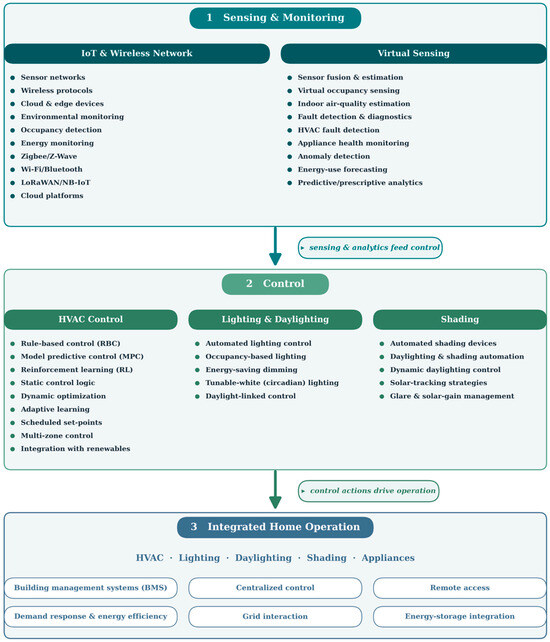
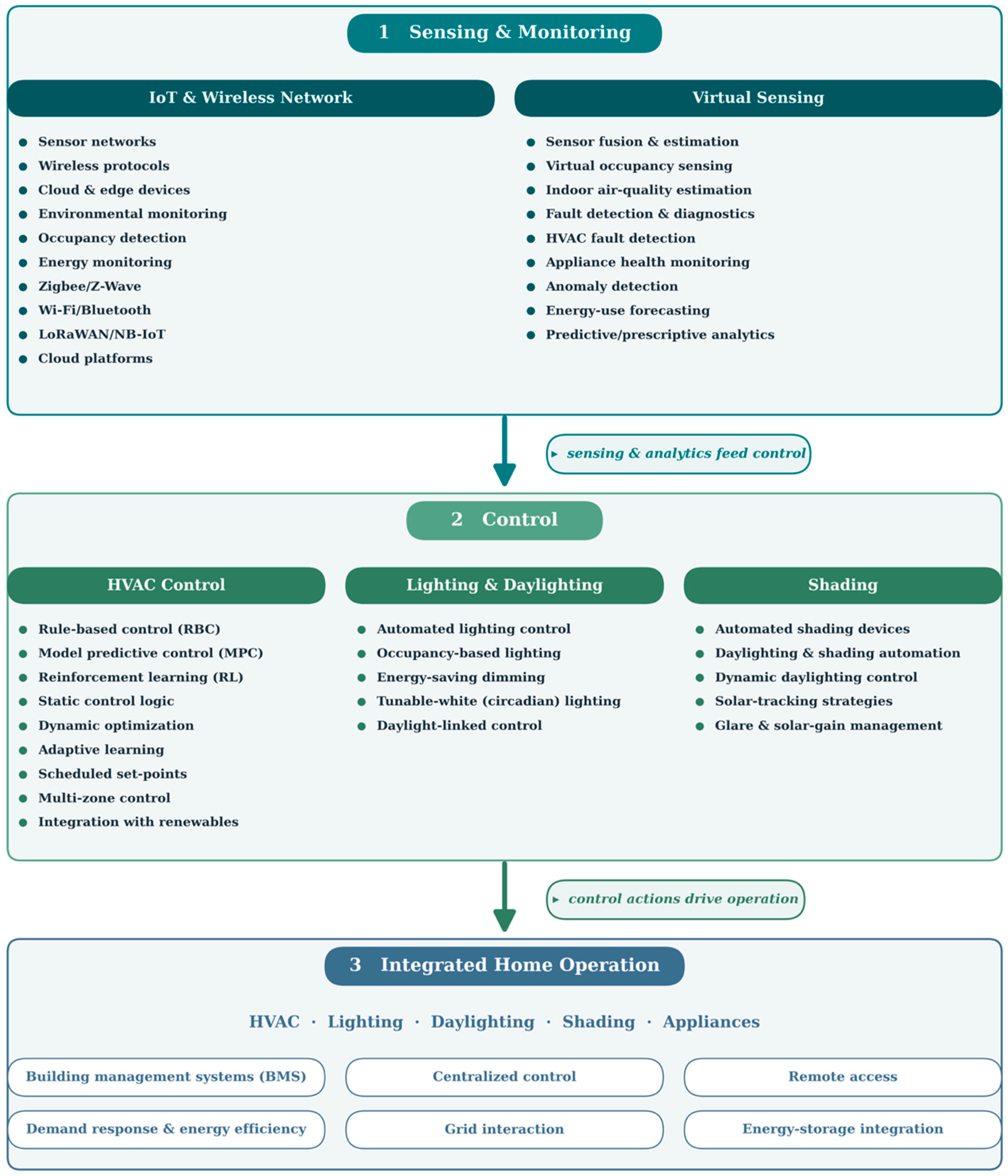
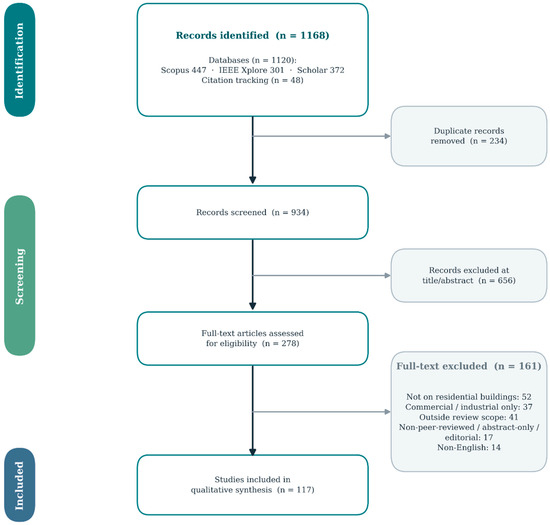
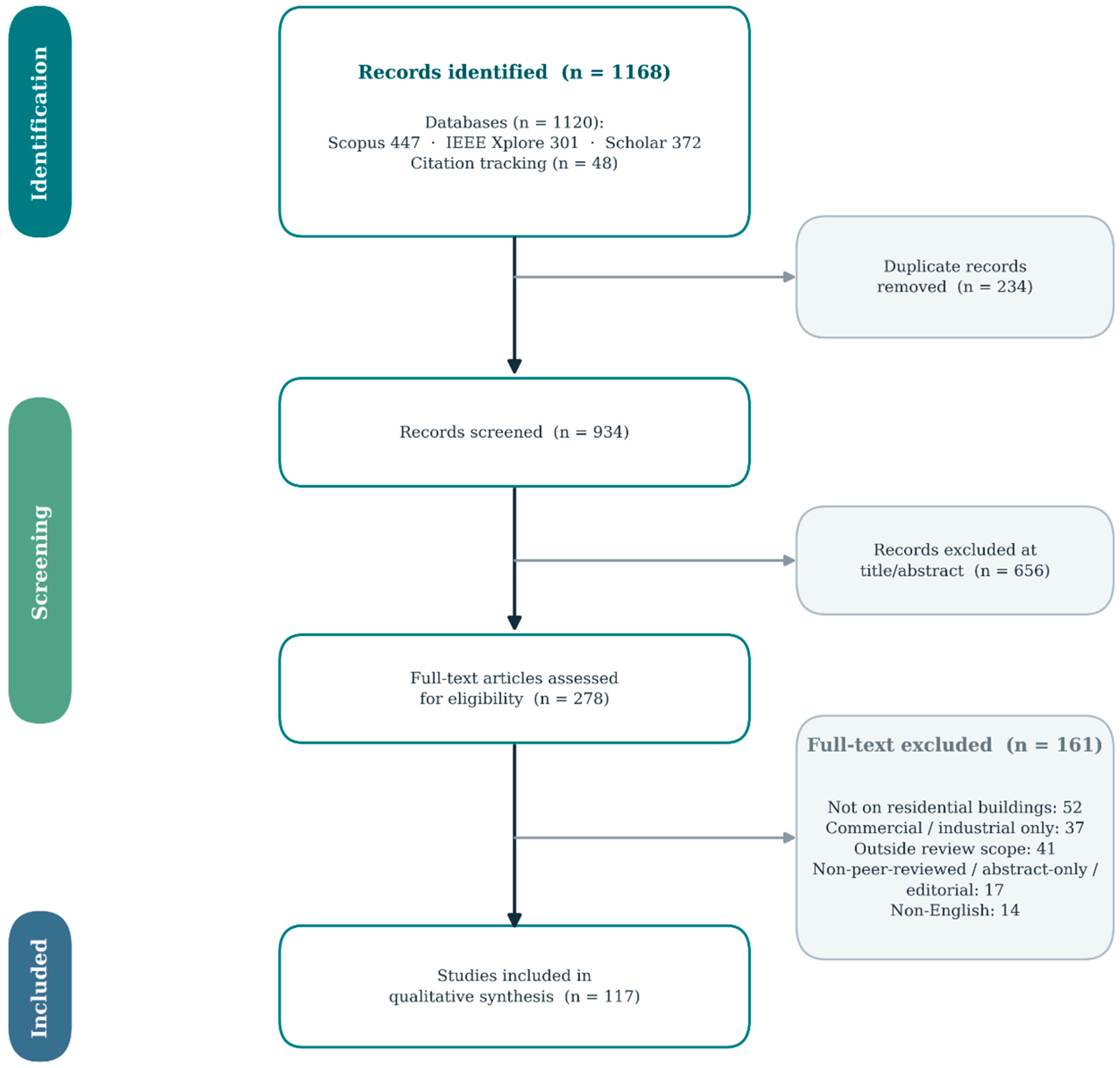
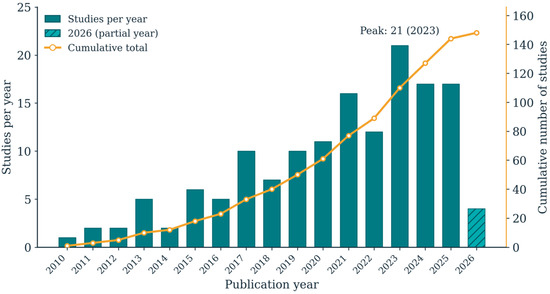
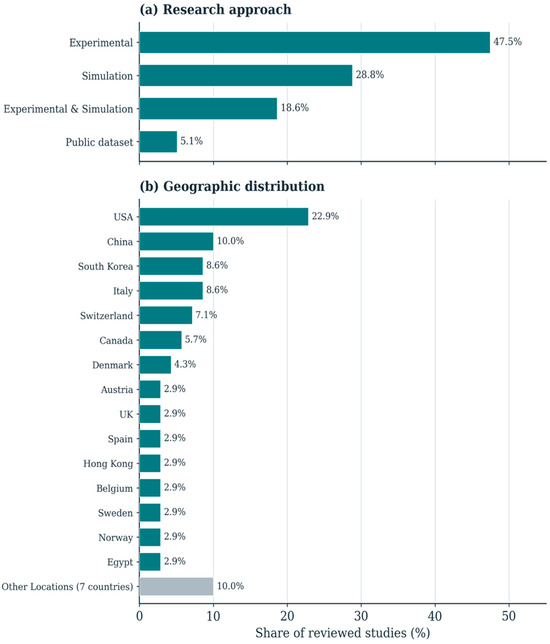
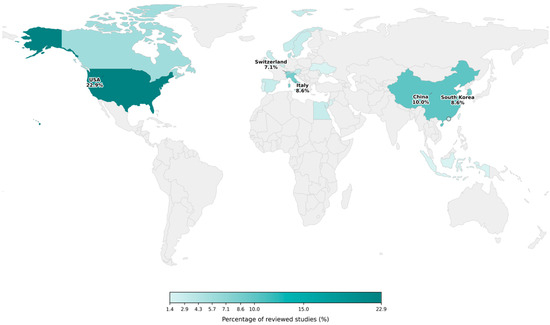
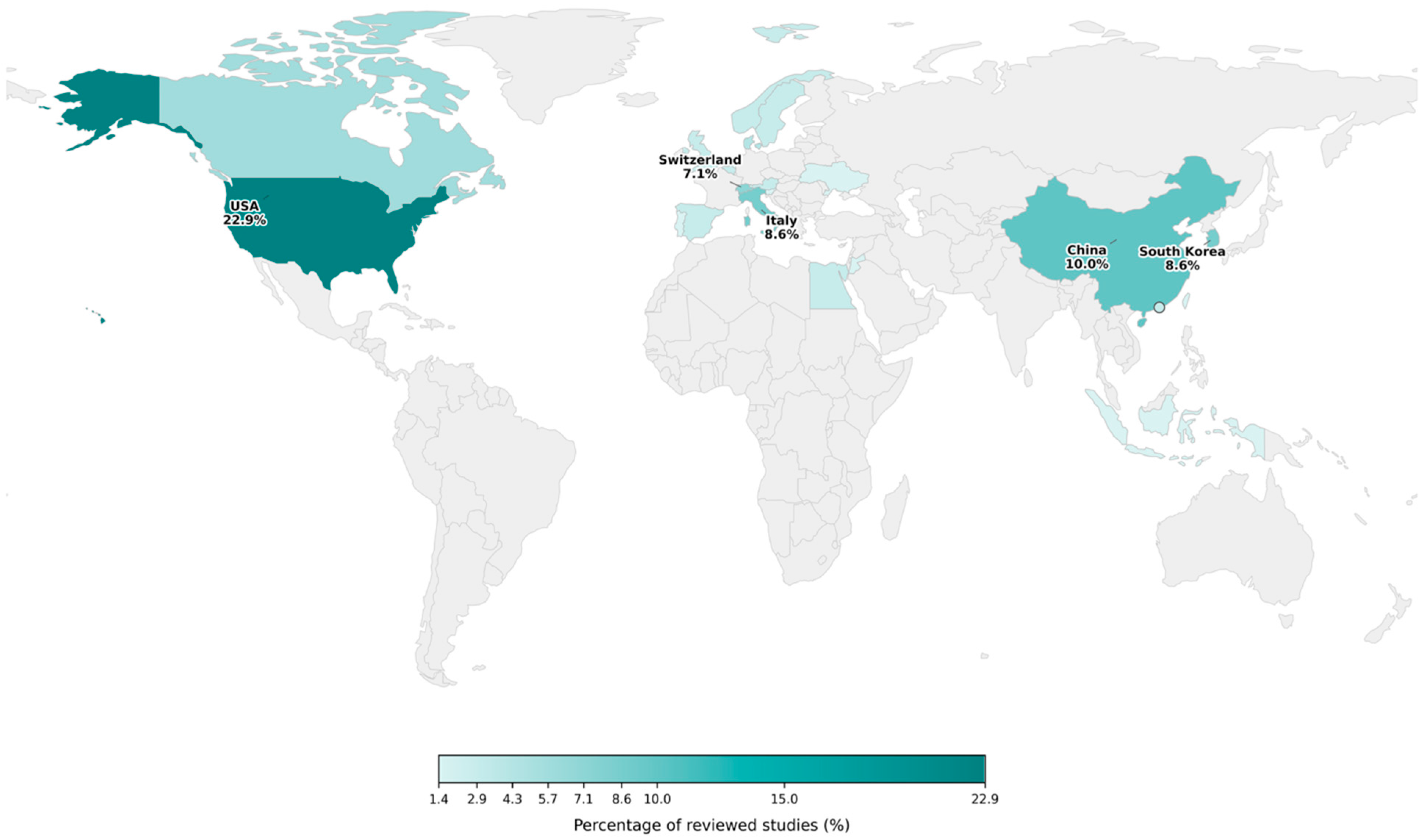
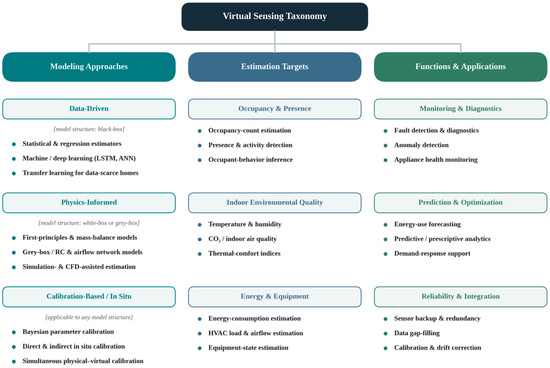
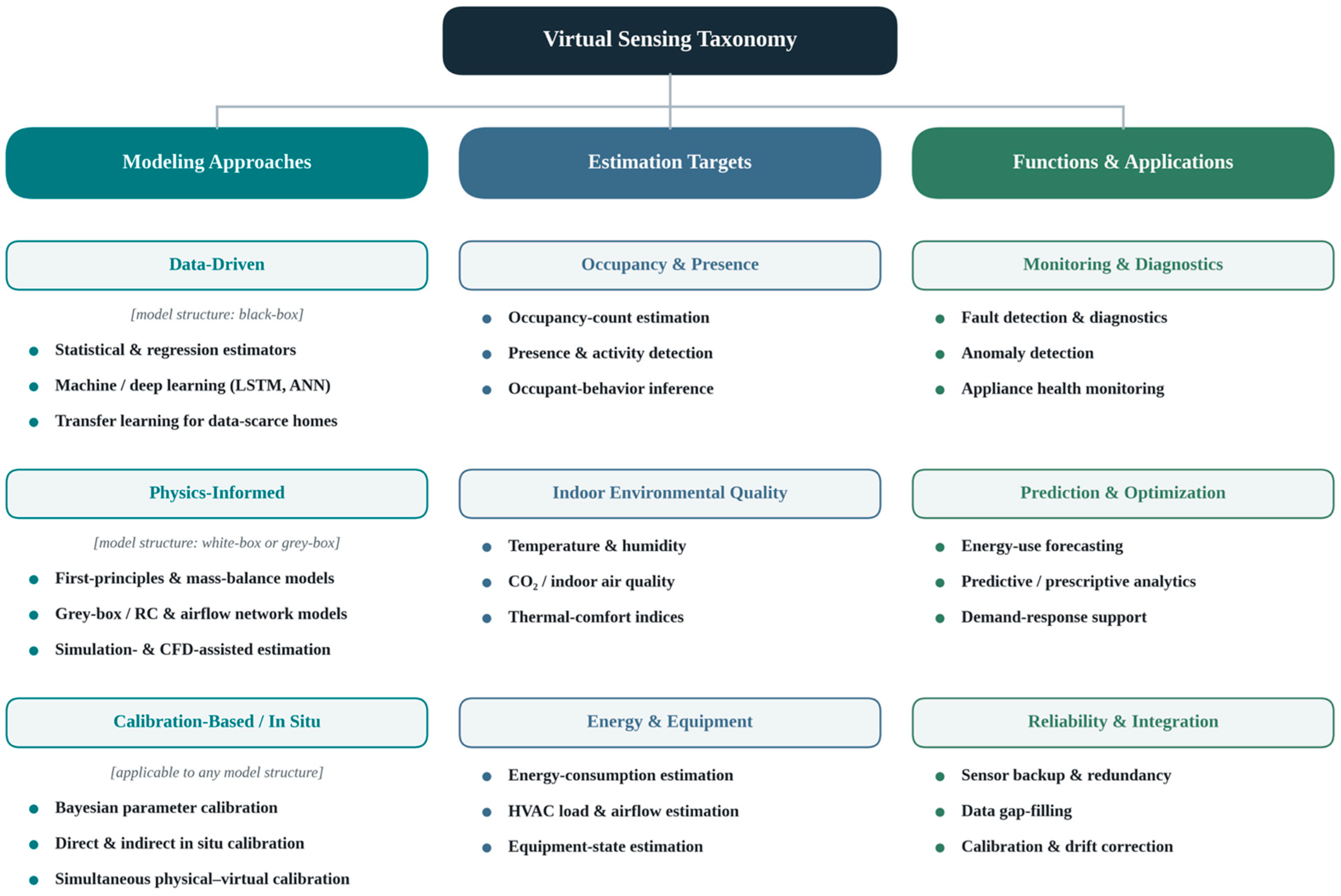
Disclaimer/Publisher’s Note: The statements, opinions and data contained in all publications are solely those of the individual author(s) and contributor(s) and not of MDPI and/or the editor(s). MDPI and/or the editor(s) disclaim responsibility for any injury to people or property resulting from any ideas, methods, instructions or products referred to in the content. |
© 2026 by the authors. Licensee MDPI, Basel, Switzerland. This article is an open access article distributed under the terms and conditions of the Creative Commons Attribution (CC BY) license.