


Abstract
Saudi Arabia’s expanding construction sector and increasing generation of construction and demolition (C&D) waste create a need to explore higher-value architectural applications for recovered materials while supporting culturally responsive and climate-adapted design. In this context, this study maps evidence on recycled C&D materials and screens selected material pathways for suitability, architectural applicability, and implementation readiness, using environmental and technical indicators to inform the future development of a circular Mashrabiya as a contemporary reinterpretation of the Saudi Rowshan. The study does not propose a detailed fabrication route or component design. It combines a PRISMA 2020 systematic literature review with an exploratory comparative assessment of primary and recycled material pathways. The review identified 1254 records, screened 1107 unique records, and included 51 studies in the final qualitative synthesis. No high-confidence study directly validates a recycled-content Mashrabiya; therefore, we interpret the material recommendations as research-readiness priorities rather than demonstrated optimal solutions. Based predominantly on moderate/transferable evidence, recycled aluminum emerges as the highest-priority pathway for future prototype testing in lightweight and geometrically complex applications. Recycled steel remains a viable alternative where greater structural contribution is required, although weight and corrosion protection remain constraints. Recycled aggregates remain relevant for C&D waste diversion and hybrid or more massive façade applications, despite more limited advantages for intricate screens. Comparable Saudi component-level fabrication and procurement cost data were insufficient to derive a defensible percentage cost saving; therefore, no cost-effectiveness advantage is claimed, and component-level life-cycle costing is identified as a priority for the subsequent prototype phase. The findings support a heritage-informed decision framework integrating environmental performance, fabrication feasibility, climatic resilience, material circularity, and Saudi implementation readiness.
1. Introduction
Extensive literature identifies the mashrabiya as a consistent and fundamental element of historical Islamic Architecture. Scholars highlight its importance in terms of bioclimatic and social roles within Islamic culture [1,2,3,4,5]. In particular, Hassan Fathy, in his work “Natural Energy and Vernacular Architecture,” [6] described the mashrabiya as a multifunctional device that regulates light, airflow, and thermal comfort while also ensuring privacy, a critical socio-cultural requirement in domestic architecture [6,7,8].
While mashrabiya is the most common term used, this element takes on a distinct identity within the Kingdom of Saudi Arabia, where it is known as the Rowshan (plural: Rawashin) [9]. Primarily associated with the architectural heritage of the Hejaz region and the historic center of Jeddah, the term Rowshan seems to be a localized adaptation of the Persian word roshandan, meaning “a source of light” [10,11,12].
The decline of the mashrabiya/Rowshan coincided with the rise of electricity and the adoption of mechanical cooling devices [13].
As air conditioning became a standard domestic feature in Saudi Arabia, the timber screen’s environmental necessity diminished, leading to the abandonment of traditional vernacular designs.
This paper addresses three critical challenges facing Saudi Arabia: the urgent need for environmental preservation, the need to respond to demanding climatic conditions, and the integration of cultural heritage with technologically advanced, efficient solutions. Saudi Arabia ranks among the region’s largest waste generators, with construction and demolition activities accounting for nearly one-third of the country’s total waste production, posing a serious environmental risk. Riyadh’s hot, arid climate necessitates effective passive cooling strategies, enhanced microclimatic shading, and measures to reduce solar heat gain. The study of the mashrabiya, an iconic element of Islamic architecture, then focuses on its environmental performance, circularity potential, and the suitability of various materials, both recycled and non-recycled, for its design and construction.
This shift forms the starting point for the present research, which aims to further highlight the sustainable potential of these modern mashrabiya interpretations. To do so, the research proposes investigating the current availability of recycled materials in the Saudi Arabian market (ranging from industrial polymers to recycled wood composites) and exploring viable methods for using them to fabricate contemporary mashrabiya.
In particular, this study proposes a comprehensive survey of construction and demolition-derived recycled materials currently available in the Saudi Arabian market, aiming to identify gaps and potential areas for further study.
This repositioning aligns with Saudi Arabia’s broader sustainability agenda and the national shift toward circular economy principles in resource management. Under the Waste Management Law (Royal Decree No. M/3 of 2021), recycling and resource recovery are explicitly prioritized above disposal, and waste-related activities require licensing and compliance under the national regulator.
According to data released by government agencies, Construction and Demolition Waste accumulates in considerable amounts. In 2024, Saudi Arabia’s construction and demolition activities generated 32.2 million tons of waste [14], with most of this waste ending up in landfills. This practice causes soil degradation, consumes land near expanding urban hubs, and drives significant waste disposal costs.
While designing a circular mashrabiya is separate from the broader issues of Construction and Demolition Waste accumulation, establishing the circular credentials of this iconic Islamic architectural element can help reframe public and industry perceptions. Rather than viewing secondary materials as inferior, this approach highlights their supply chain, economic, and environmental benefits, promoting their adoption across wider architectural applications. Rather than viewing construction waste as an environmental burden, the circular mashrabiya turns debris into a high-value building component.
However, standardized technical and regulatory guidance is critical to enabling circular material innovation.
Before implementing a comprehensive regulatory framework for collecting and sorting construction and demolition (C&D) waste, scholars at leading Saudi universities had already conducted extensive research and published numerous articles on the subject.
These studies anticipated what would later become the regulatory benchmarks of the Saudi National Center for Waste Management (MWAN). A significant portion of this research focused on defining the true scale of the problem, specifically the actual volume of waste generated, and emphasizing the urgent need to transform this environmental burden into a valuable resource.
MWAN’s Technical Guidelines for C&D Waste Management introduced definitions of C&D waste categories, planning requirements (including pre-demolition audits and waste management plans), and the principles of segregation and material profiling needed for higher-quality recycling outputs [14]. Building on this policy scenario, the present research proposes a shift from “high-tech mashrabiya” to “circular-tech mashrabiya.”
Contemporary Mashrabiya increasingly use materials such as GRC/GFRC, aluminum, and synthetic resins because they offer durability, reduced maintenance needs, fire resistance, and compatibility with complex parametric geometries. However, these applications generally prioritize environmental control, structural performance, and architectural expression rather than material circularity. The contemporary Saudi examples identified in the reviewed evidence likewise do not document the intentional integration of recycled-content materials. This creates a specific research gap between the technological advancement of contemporary Mashrabiya and the emerging availability of secondary materials from Saudi Arabia’s C&D recovery sector.
In this study, the Rowshan is not viewed as a passive element in the environment but rather as a component of architectural design that enshrines heritage, where the intersection of climate adaptability, craftsmanship, and social meaning generates meaning. Therefore, this transition from a linear mashrabiya to a circular one should be viewed as a heritage-informed reinterpretation rather than a technically driven material replacement. The key issue is whether recycled materials can be used in modern mashrabiya configurations without severing their connection to the environmental logic and cultural meaning of the traditional Saudi Rowshan.
Accordingly, this study does not seek to demonstrate an experimentally validated recycled Mashrabiya prototype. Instead, it establishes the evidence base required before undertaking such prototyping. Its contribution is threefold: first, to systematically map the currently fragmented evidence connecting Mashrabiya performance, heritage reinterpretation, recycled materials, and Saudi C&D circularity; second, to critically assess the strength and transferability of this evidence; and third, to develop a comparative decision framework identifying the recycled-material pathways that warrant subsequent component-level testing and life-cycle assessment.
Ultimately, it is important to state that while this work aims to establish the physical, environmental, and mechanical baseline at the material level, we recognize that any mashrabiya system requires further analysis and design validation (wind load, thermal movement, fatigue, fire, and environmental exposure).
Research Question
This study aims to assess the evidence supporting the potential use of recycled resources from Saudi Arabia’s C&D waste streams in the future development of circular mashrabiya systems. Rather than proposing a fully engineered or fabricated component, the research evaluates the environmental, technical, architectural, and implementation readiness of selected recycled-material pathways. The overarching research question is therefore: What does the current evidence indicate about the suitability and research readiness of recycled C&D material pathways for the future development of circular mashrabiya in Saudi Arabia? To address this research question, the systematic literature review was structured around three subsidiary research questions:
SLR-RQ1—Material suitability for circular Mashrabiya: What evidence exists regarding the environmental, technical, fabrication, and architectural suitability of recycled aluminum, recycled steel, and recycled-mineral materials for contemporary Mashrabiya or closely related façade/screen applications in Saudi Arabia and comparable contexts?
SLR-RQ2—Heritage-informed reinterpretation: How can contemporary Mashrabiya and perforated façade systems incorporate new materials and fabrication technologies while retaining or meaningfully reinterpreting the climatic, social, cultural, and architectural principles of traditional Mashrabiya and Saudi Rowshan?
SLR-RQ3—Saudi circular-economy context: To what extent does the Saudi C&D waste-management, recycling, regulatory, and secondary-material context support the development of recycled-content Mashrabiya and façade systems?
These questions are especially relevant because Saudi Arabia is rapidly scaling C&D waste recovery capacity.
This study’s analytical framework is structured around three complementary dimensions: architectural performance, material suitability, and implementation readiness. Architectural performance refers to an element or design solution’s ability to meet functional, environmental, and cultural objectives. In contrast, material suitability refers to a material’s adequacy based on its technical, environmental, and economic characteristics. Lastly, implementation readiness relates to the feasibility of adopting a solution, considering market availability, regulations, and construction practices. Together, these distinct parameters enable a comprehensive assessment of the circular mashrabiya’s environmental, technical, and practical potential for implementation within the Saudi Arabian context.
This study contributes to the literature by shifting the mashrabiya’s conceptual framework beyond its historical, climatic, or artistic connotations to its role as a circular architectural form. However, while extensive research examines the environmental, social, and artistic roles of mashrabiya, little focuses on its material circularity in contemporary re-appropriations. This issue is particularly significant in Saudi Arabia, which is currently witnessing a strong emphasis on architectural innovation, expansion of its construction industry, and development of its national recycling and resource-recovery infrastructure. Two modern problems remain: the increasing use of construction and demolition waste in Saudi Arabia, driven by rapid development and large-scale construction, and the need to define a clear path to integrate the mashrabiya into a circular economy.
Recent research increasingly frames circular construction as a whole-life resource-management approach that considers material selection, waste prevention, reuse, secondary-material recovery, life-cycle assessment, and end-of-life strategies together. Reviews of circular-economy applications in the built environment further show that implementation requires coordination across design, construction, deconstruction, material recovery, and secondary-material supply chains, rather than relying on theoretical recyclability alone [15,16,17,18,19,20,21,22,23,24].
This study’s innovative contribution is its connection of vernacular architectural logic with material circularity, as well as its evaluation of the possibility of recycling resources developed in Saudi Arabia to support a new generation of mashrabiya systems that are culturally embedded, environmentally responsive, and materially sustainable (Figure 1).
Figure 1.
Conceptual framework of the circular mashrabiya study in Saudi Arabia.
2. Saudi C&D Circular-Economy and Material-Recovery Context
SIRC (Saudi Investment Recycling Company, Riyadh, Saudi Arabia accessed on 7 August 2026) (https://sirc.com.sa/en/about accessed on 7 August 2026), a wholly owned subsidiary of the Public Investment Fund (PIF), has the primary mandate in Saudi Arabia to drive the circular economy and meet the goals of Saudi Vision 2030. SIRC operates through several specialized subsidiaries, each focusing on a specific waste stream or environmental service. Among these subsidiaries, AKAM specializes in waste management solutions for construction and demolition materials, transforming rubble and debris from the Kingdom’s giga-projects into high-quality, reusable building materials. Established in 2020 and headquartered in Riyadh, AKAM operates across three sites and manages an impressive fleet of trucks daily. SIRC’s C&D recycling initiatives in Riyadh (e.g., Al Khair district facilities) process C&D waste and produce multiple sizes of recycled aggregate for reuse in construction and infrastructure.
SIRC aims to expand into new sites in different regions of the country and, to do so, is investing in new technologies to modernize industrial waste processing.
Moreover, practical procurement channels are emerging: SIRC operates a trading/marketplace platform where licensed buyers can access recyclable materials listed by type, quantity, and location, illustrating how secondary materials can be commercially valued rather than treated solely as municipal waste outputs.
Importantly, Saudi Arabia has begun demonstrating performance-tested use of recycled C&D materials in infrastructure Projects. The Roads General Authority (RGA), in collaboration with MWAN and municipal partners, reported successfully implementing roads constructed with recycled C&D waste incorporated into asphalt mixtures, demonstrating institutional acceptance and technical validation of recycled aggregates and supporting the sustainability rationale for shifting attention from architectural products to alternative recycled solutions (Appendix A, Table A1).
2.1. Origin and Composition of C&D Waste
Before analyzing the recycling materials produced in the Kingdom of Saudi Arabia, to which this study is confined, it is important to examine the origin of C&D waste and, in particular, how the construction sector has generated such large quantities of waste. This phenomenon is posing a challenge to economic and environmental sustainability.
Several factors drive the accumulation of C&D waste, including surplus and errors, changes in new construction, debris from renovations and dismantling, excavation during land clearance, and the accumulation of packaging materials (timber, cardboard, and plastics). C&D waste is becoming one of the most serious environmental problems [25].
Construction Waste is generated when new buildings and civil engineering structures (e.g., bridges, dams, piers, highways, streets, and utility plants) are built and generally refers to waste generated during construction by workers’ errors, defective materials, packaging waste used for transporting and storing materials, and waste from dismantled temporary Construction. Demolition Waste (DW) refers to waste generated when existing buildings and civil engineering structures are renovated [26], demolished, or deconstructed [27,28]. The broader C&D-waste literature identifies source segregation, selective demolition, material-quality control, certification, stakeholder coordination, secondary-material markets, and policy enforcement as recurrent conditions for moving from disposal and low-value recovery toward higher-value circular use [29,30,31,32,33,34,35,36,37,38]. These international findings complement the Saudi-specific evidence discussed in the following sections concerning waste recovery, recycling infrastructure, regulation, and implementation.
2.2. Recycled Construction and Demolition Materials in Saudi Arabia
While Saudi Arabia’s C&D waste recycling sector is still in its early stages, it is growing rapidly, making a comprehensive mapping of all market participants a complex task. For this research, a desk study was conducted, primarily using the official platforms of the institutional bodies governing the recycling sector. Before investigating recyclable materials currently available on the market post-processing, it is worth distinguishing between generic secondary materials, recycled materials, and architectural-grade materials recovered from C&D waste streams.
Generic secondary materials refer to a broad construction and demolition waste stream that has undergone basic recovery or recycling, using broad industry defaults and datasets rather than verified, batch-specific technical specifications.
Recycled materials currently available in Saudi Arabia comprise raw C&DW-derived feedstocks recovered by local operators, including SIRC and local crushing facilities. These materials are generally produced through basic mechanical sorting and crushing. However, they typically exhibit considerable batch-to-batch variation and may contain minor impurities, such as gypsum, soil, and mixed masonry.
Finally, architectural-grade materials are highly processed, quality-controlled materials derived from local KSA waste streams intended for architectural components. They usually undergo specialized chemical and physical treatment (washing, magnetic separation, fine milling, melting, purification, solidification…) and meet precise mechanical (compressive/flexural strength), aesthetic, and durability code requirements.
The study further demonstrates that government and semi-government entities continue to play the leading role, although private initiatives are increasingly entering the market. While this analysis focuses specifically on C&D waste, a separate discussion is warranted for waste materials of different origins that, once recycled, could be successfully repurposed or reintegrated into the construction industry.
At this stage, the present study does not aim to provide an exhaustive inventory of all recycled materials circulating in the Saudi market. Instead, it adopts a focused screening approach oriented toward architectural applicability to mashrabiya fabrication. For this reason, the review prioritizes materials that satisfy at least one of the following conditions: documented presence within Saudi recycling channels, relevance to C&D waste streams, and potential compatibility with façade or screen applications in terms of fabrication, durability, and environmental performance. This delimitation is important because it clarifies that the selected material categories are not intended to represent the entire recycling sector, but rather the subset of materials most relevant to the research question and most promising for subsequent comparative evaluation.
2.2.1. Recycled Concrete Aggregates (RCAs)
Recycled concrete aggregates are the most extensively studied and commercially deployed C&D recycled material in Saudi Arabia. Concrete waste originating from demolished buildings, pavements, and foundations is crushed and processed into coarse and fine aggregates [39].
Life-cycle assessment studies across seventeen Saudi municipalities demonstrate that concrete recycling significantly reduces non-renewable energy use and global warming potential compared to landfilling, particularly in highly populated regions such as Riyadh and Jeddah.
In practice, RCA is primarily used in road base and sub-base layers, embankments, and backfilling, with limited use in non-structural concrete due to variability in mechanical performance.
2.2.2. Recycled Asphalt Pavement (RAP)
Recycled asphalt pavement (RAP) is an emerging but rapidly expanding recycling stream in Saudi Arabia. RAP is produced from milled asphalt surfaces and reincorporated into new asphalt mixtures.
In 2024–2025, the Roads General Authority (RGA) successfully implemented the Kingdom’s first roads incorporating recycled C&D materials in asphalt and gravel layers, following extensive laboratory and field performance testing. These pilot projects successfully demonstrate that RAP can meet functional and durability requirements when properly processed and blended, supporting its broader adoption in road infrastructure [40].
2.2.3. Mixed Masonry and Secondary Aggregates
Mixed C&D waste. including bricks, blocks, tiles, and composite demolition debris, are commonly processed into secondary aggregates. Research on hydraulically bound mixtures (HBM) incorporating recycled aggregates indicates that while recycled materials typically exhibit reduced compressive strength compared to natural aggregates, they remain suitable for non-structural applications such as road bases and embankments.
However, inconsistent material composition and contamination continue to limit higher-value applications, underscoring the importance of improved segregation and selective demolition practices [14].
2.2.4. Recycled Metals
Metals, particularly steel and aluminum, represent the most mature and economically viable C&D recycling streams in Saudi Arabia. Steel and other metals represent established recycling streams in Saudi Arabia, supported by specialized recycling, processing, and resource-recovery activities within the national waste-management sector.
The established recycling infrastructure, including SIRC-operated C&D facilities that process concrete, metals, and other construction-derived materials, demonstrates an increasingly developed recovery pathway for metal waste in Saudi Arabia [41].
2.2.5. Wood, Gypsum, and Plastics
In contrast, materials such as timber, gypsum board, and construction plastics remain at low levels of recycling maturity in Saudi Arabia. MWAN technical guidelines identify these materials as part of the C&D waste; however, recycling is constrained by contamination, limited volumes, and a lack of specialized processing facilities [14].
Plastics from construction sites are often managed within broader municipal or industrial waste systems rather than dedicated C&D recycling streams, reducing recovery efficiency [41].
2.3. Procurement Channels for Recycled C&D Materials
When sourcing recycled Construction and Demolition (C&D) materials in Saudi Arabia, the landscape is primarily defined by government-led and semi-public entities. The most prominent figure in this sector is the Saudi Investment Recycling Company (SIRC). As a subsidiary of the Public Investment Fund (PIF), SIRC acts as the Kingdom’s authoritative supplier. Its flagship facility, the Al-Khair C&D Recycling Plant in Riyadh, is instrumental in transforming waste into high-quality recycled aggregates, particularly for roadwork and large-scale infrastructure. While its current operations are centered in the Riyadh region, SIRC is prepared for nationwide expansion through the MWAN cluster strategy, which will bring these resources to other major urban centers. Procurement pathways for recycled C&D materials vary according to material type, project scale, operator, and regulatory requirements. Government-linked recycling facilities, municipal waste-management systems, specialized contractors, and private processors represent the principal channels identified in the reviewed institutional and market sources. Because procurement requirements can vary by operator and project, this study does not generalize specific licensing or registration procedures beyond those explicitly documented by the relevant source.
2.4. The Private and Commercial Market for Recycled Materials
In the private sector, Recycled Concrete Aggregates (RCAs) are available through specialized recycling and contracting firms, primarily for backfill, sub-base, landscaping, and other non-structural applications. Procurement commonly occurs through project-specific quotations and direct commercial supply arrangements.
The market for Reclaimed Asphalt Pavement (RAP) follows a more restricted, project-specific logic. RAP is generally not sold through open retail channels; instead, specialized road contractors and asphalt plants manage its use. The Roads General Authority (RGA) regulates this sector and, following pilot projects conducted between 2024 and 2025, has formally approved the use of recycled C&D aggregates in asphalt layers within RGA-supervised infrastructure projects.
Procurement of recycled metals (steel and aluminum) occurs through private scrap processors and industrial recycling firms. The reviewed market sources confirm private-sector metal-recycling and trading activities in Saudi Arabia, with procurement generally occurring through direct industrial or commercial arrangements rather than conventional retail channels.
Recycled plastics represent an emerging but specialized niche. These materials are often diverted from industrial waste streams rather than sourced exclusively from C&D waste. They are primarily processed into pellets for manufacturing, although their use in construction is increasing. Compared to metals or mineral aggregates, however, the supply chain for recycled plastics remains less standardized and not yet fully mature for structural applications (Table 1).
Table 1.
Saudi C&D material streams and relevance to circular Mashrabiya development. Sources for the Saudi recovery and implementation context summarized in Table 1 include MWAN technical guidance [14] Saudi C&D and recycling studies [39,42,43,44,45], Saudi Press Agency/RGA reporting [40], and documented industry-context sources [41]. Market-readiness descriptions are used as contextual evidence and do not constitute verification of architectural-grade material availability.
The Saudi context therefore does not present equal readiness across all recycled C&D streams. Recycled metals align most closely with the fabrication requirements of contemporary Mashrabiya, while recycled-mineral materials benefit from stronger C&D recovery infrastructure but face greater geometric and weight limitations. Other material streams remain less mature for direct architectural application. This differentiation informed the subsequent selection of aluminum, steel, and recycled-mineral pathways for comparative assessment.
Overall, the Saudi context does not present equal readiness across all recycled C&D material streams. Recycled metals currently align most closely with the fabrication requirements of contemporary mashrabiya, while recycled mineral aggregates benefit from stronger recovery infrastructure but face geometric and weight constraints. Other streams remain less mature for direct architectural application. This differentiation informed the selection of aluminium, steel, and recycled mineral pathways for the comparative assessment presented in this study.
3. Methodology
3.1. Research Design: Recycled Materials for Mashrabiya Fabrication in Saudi Arabia
The study used a two-phase, evidence-based research design that combined a systematic literature review with an exploratory comparative material assessment. In Phase 1, a systematic literature review followed PRISMA 2020 to establish the evidence base on Mashrabiya and Rowshan environmental performance, contemporary façade reinterpretation, recycled construction materials, digital fabrication, and circularity in Saudi construction and demolition waste. In Phase 2, the evidence emerging from the review was integrated with Saudi regulatory, technical, and market documentation to comparatively assess recycled aluminum, recycled steel, and recycled-mineral materials as potential pathways for contemporary circular Mashrabiya fabrication.
The systematic literature review was complemented by an institutional and market-context review of official Saudi regulatory, technical, and procurement sources. These sources were not counted among the 51 academic studies included in the PRISMA synthesis but were used to assess local material availability, regulatory readiness, and procurement feasibility. The institutional and market review prioritized official Saudi governmental, regulatory, and government-linked sources, followed by identifiable technical and commercial sources where official information was unavailable. Claims concerning material availability, procurement pathways, recycling activities, and regulatory requirements were retained only when they could be traced to an identifiable source. Market information was treated as contextual implementation evidence and was not assigned the same evidential weight as peer-reviewed material-performance studies. For transparency, the organization, document or webpage title, source type, access date, and the specific claim supported were recorded for the institutional and market sources used in the analysis and are documented in Appendix A, Table A1. Because the present research is structured as a systematic review and comparative evidence assessment, primary laboratory testing and prototype fabrication fall outside its methodological scope. Accordingly, the study distinguishes between evidence-supported material potential and experimentally validated component performance. The review treats identifying the testing requirements needed to close this gap as one of its outputs.
3.2. Systematic Literature Review
The systematic review followed seven sequential phases, from research-question definition and record identification to final inclusion and evidence synthesis, as summarized in Appendix B, Table A2. These phases incorporated the principal PRISMA 2020 stages of identification, screening, eligibility, and inclusion. During the identification stage, Scopus and Web of Science were used as the principal bibliographic databases, supplemented by searches through ResearchGate, Google Scholar, PubMed, and Google to broaden retrieval and support bibliographic and full-text verification. The search covered all available publication years, and the master dataset was closed on 7 August 2026. The complete list of databases and supplementary sources is provided in Appendix C, Table A3. A total of 33 documented search and cross-check actions were undertaken, structured around Mashrabiya/Rowshan heritage and contemporary reinterpretation, recycled materials and circular economy, environmental and technical performance, Saudi Arabia and comparable hot–arid contexts, and C&D waste management. Four of these actions consisted of additional cross-checks of the combined Scopus/Web of Science record set and returned no additional relevant records. Full-text eligibility assessment was completed on 8 August 2026 using the same master dataset and introduced no additional studies.
Search results retrieved from the different sources were consolidated into a single master dataset before screening. Duplicate records were identified and removed automatically during this record-combination stage. The deduplication step removed 147 repeated records from the 1254 records initially identified, leaving 1107 unique records for title/abstract screening. The retained search documentation records this as an automated deduplication step but does not preserve the specific bibliographic matching fields used; therefore, no claim is made that duplicate detection relied exclusively on DOI, title, author name, or any single matching field. Deduplication was a technical preprocessing step and separate from human eligibility-screening decisions.
3.2.1. Search Query Themes
Total Queries Executed: 33 queries across all databases. Search queries were structured around five thematic clusters:
- Mashrabiya Heritage and Contemporary Reinterpretation: Traditional mashrabiya, Saudi Rowshan/Rawashin, vernacular architecture, heritage preservation, cultural identity, parametric design, digital fabrication, climate-responsive façade technologies.
- Recycled Materials and Circular Economy: Recycled aluminum, recycled steel, recycled concrete aggregates, recycled-mineral composites, C&D waste, secondary materials, circular economy principles, life cycle assessment, embodied energy, carbon footprint.
- Environmental and Technical Performance: Thermal comfort, energy efficiency, solar shading, daylighting autonomy, glare management, climatic resilience, durability, corrosion resistance, hot–arid climate performance.
- Geographic and Climatic Context: Saudi Arabia, GCC, Middle East, hot–arid regions, desert climates, regional policies, Saudi Vision 2030, Mostadam.
- C&D Waste Management: C&D waste management, recycling infrastructure, secondary-material markets, regulations, procurement, circular economy policies in Saudi Arabia and the GCC.
The 33 documented search and cross-check actions included targeted thematic searches, full-text searches, citation and reference expansion, database cross-checks, and supplementary searches. Search terms were combined using Boolean operators (AND/OR), with syntax adapted as needed to individual databases and sources. Searches were deliberately varied in breadth because the relevant evidence is distributed across architectural heritage, façade engineering, material science, environmental assessment, digital fabrication, and Saudi waste-management literature.
Representative search queries included (one example of Boolean strings used):
- “(mashrabiya OR rowshan OR rawashin) AND (recycled OR ‘circular economy’ OR ‘construction demolition waste’ OR ‘secondary materials’) AND (façade OR facade OR envelope OR shading) AND (‘Saudi Arabia’ OR GCC OR ‘hot-arid’ OR ‘Middle East’).”
3.2.2. Eligibility Logic and Inclusion/Exclusion Criteria
Eligibility was based on substantive contribution to at least one research question and membership in at least one predefined evidence stream. A paper did not need to contain the terms Mashrabiya, recycled material, and Saudi Arabia simultaneously. This decision prevents the review from excluding necessary materials science, façade technology, and Saudi circular-economy evidence simply because these literatures are published in separate disciplinary venues. Eligible source types included peer-reviewed journal articles, conference/proceedings papers, book chapters, theses/dissertations, and sufficiently documented repository records where full text and adequate methodological information were available. Non-peer-reviewed sources were not treated as equivalent to peer-reviewed experimental evidence; their methodological strength and application directness were evaluated through the same evidence-confidence framework.
Twelve screening criteria (6 inclusion, 6 exclusion) were developed based on research questions and applied consistently throughout the screening process.
Inclusion Criteria:
- Mashrabiya and Rowshan Relevance: Include studies addressing traditional mashrabiya, Saudi Rowshan/Rawashin, mashrabiya-inspired façades, or contemporary climate-responsive perforated façade and shading systems.
- Recycled Materials and Circularity: Include studies examining recycled aluminum, recycled steel, recycled concrete aggregates, recycled-mineral or cementitious composites, or other C&D-derived materials relevant to façade, screen, lattice, or shading applications.
- Environmental and Technical Performance: Include studies providing evidence on carbon footprint, embodied energy, circularity, recyclability, workability, weight, durability, corrosion resistance, climatic resilience, structural performance, or fabrication potential of the selected materials.
- Hot–Arid and Saudi Arabian Context: Include architectural and climatic studies from Saudi Arabia, the GCC, the Middle East, or comparable hot–arid climates. International studies may also be included when they provide transferable evidence on material performance, recycling, life-cycle assessment, or fabrication.
- Heritage and Contemporary Reinterpretation: Include studies examining the cultural, climatic, social, or architectural significance of mashrabiya/Rowshan and its contemporary reinterpretation through new materials, technologies, parametric design, or digital fabrication.
- C&D Waste and Saudi Circular-Economy Context: Include studies or authoritative documents addressing C&D waste management, recycling infrastructure, secondary-material availability, regulations, procurement, or circular-economy policies relevant to Saudi Arabia and the selected materials.
Exclusion Criteria:
Reports were excluded when the full text showed that the apparent relevance was only incidental, when the tested application was not sufficiently transferable to façade/screen components, when the climatic/contextual evidence did not support the hot–arid/GCC questions, when methodological or technical evidence was insufficient, or when an overlapping publication duplicated a study already retained.
- Architecturally Unrelated Applications: Exclude studies focused exclusively on foundations, slabs, roads, pavements, or other applications with no relevant connection to façade, screening, shading, lattice, or mashrabiya systems.
- Unrelated Materials or Waste Streams: Exclude studies concerning recycled materials or waste streams with no plausible relevance to aluminum, steel, recycled mineral materials, cementitious composites, C&D waste, or architectural façade applications.
- Virgin Materials without Relevant Comparison: Exclude studies dealing exclusively with virgin materials when they provide no useful baseline or comparison concerning environmental performance, technical properties, fabrication, durability, or circularity.
- Climatically Irrelevant Façade Studies: Exclude studies focused exclusively on climate-specific façade performance in cold, temperate, or tropical regions when their findings cannot reasonably inform hot–arid conditions. Do not exclude transferable material, LCA, recycling, or fabrication studies solely because they originate from another climatic region.
- Purely Decorative Façade Studies: Exclude studies examining perforated or patterned façades solely for visual or decorative purposes when they provide no evidence concerning climatic performance, material technology, fabrication, circularity, or heritage interpretation.
- Unreliable or Insufficiently Documented Sources: Exclude duplicate publications, purely promotional material, unsupported commercial claims, and sources lacking identifiable authorship, methodology, material definition, or sufficient evidence to support the research questions.
3.2.3. Study Screening, Deduplication and Final Full-Text Eligibility
The study selection and eligibility process followed the PRISMA 2020 framework [46]. Two researchers conducted screening and eligibility assessment in two rounds. In Round 1, the two researchers independently reviewed the titles, abstracts, and available bibliographic metadata of the 1107 unique records against the same six inclusion and six exclusion criteria described in Section 3.2.2. Each reviewer recorded decisions separately in the screening workbook. In Round 2, reviewers compared the two sets of decisions and re-examined discrepant records against the predefined eligibility criteria. All 62 candidate reports were reviewed at the final eligibility stage. Publisher pages, journal full-text pages, and institutional or author repositories were used to verify bibliographic records and retrieve reports where available. Web retrieval was used only to verify records already present in the supplied candidate set; it did not introduce additional studies. Two of the 62 reports could not be reliably retrieved and were classified as not retrieved rather than excluded. Nine of the 60 assessed reports were excluded after full-text/source verification for lack of substantive RQ relevance, architecturally unrelated application, insufficient transferability or evidence, or overlapping publication. The final corpus includes 51 studies (Figure 2 and Table 2), with the complete included-study corpus reported in Appendix D, Table A4; Appendix E, Table A6 documents the reasons for the nine full-text exclusions and the two non-retrieved reports.
Figure 2.
Final PRISMA 2020 flow chart for the 62-report full-text eligibility assessment.
Table 2.
Eligibility assessment.
3.2.4. Data Extraction, Evidence Weighting, and Confidence Assessment
For each included study, the final synthesis retained bibliographic metadata, evidence stream, geographic/climatic context, material or façade system, method, quantitative or technical findings where available, RQ contribution, and a concise eligibility rationale. Direct Saudi Mashrabiya/Rowshan evidence and studies with component-level material/performance data were given greater interpretive weight than general contextual studies. Contextual studies were retained to define cultural, regional, or policy conditions but were not used to make material-performance claims that they did not test.
To make the interpretation of the heterogeneous evidence base more transparent, an author-developed evidence-confidence framework was applied during synthesis. The framework was not intended as a statistical meta-analysis or as a substitute for formal risk-of-bias instruments developed for clinical research. Instead, it distinguished the strength and transferability of evidence relevant to architectural-material decision-making. Each retained study was considered across three dimensions: methodological strength, application directness, and geographic/climatic relevance (Table 3).
Table 3.
Evidence-confidence framework used for analytical synthesis.
For each included study, evidence confidence was assigned separately for each research question to which the study contributed. The three dimensions were combined using a predefined hierarchical rule. High-confidence evidence required a methodological-strength score of 3, an application-directness score of 3 for the relevant research question, and a geographic/climatic relevance score of at least 2. Moderate/transferable evidence required methodological strength and application directness of at least 2 but did not meet all conditions for the high-confidence category. Evidence was classified as contextual when either methodological strength or application directness was scored 1, irrespective of geographic relevance. Studies classified as having no contribution to a specific research question were not assigned a confidence category for that research question and were excluded from its confidence distribution. Geographic relevance therefore strengthened the assessment but could not compensate for weak methodological evidence or indirect application relevance. The individual scores and resulting RQ-specific confidence classifications for all included studies are reported in Appendix D (Table A5).
3.3. Comparative Material Assessment Framework
3.3.1. Material Selection
While the recycling sector has made significant progress recently, particularly in Construction and Demolition (C&D) waste, the process still offers substantial room for improvement. This growth must focus on better source segregation to unlock greater recycling opportunities. A comprehensive assessment of the current recycled material market in the Arabian Peninsula reveals that, within the C&D waste sector, the recovery and recycling of ferrous materials (iron and steel) have reached a much higher level of maturity than other materials, which still have high potential for improvement.
In relation to the research question, the study initially screened recycled materials available on the Saudi market, specifically evaluating their suitability for mashrabiya applications. This selection led the study to focus on three key material categories: aluminum, steel, and aggregates. To enable a rigorous comparison between primary materials and their recycled equivalents, the study established five parameters to define technical performance and sustainability profiles.
In Phase 2, the study employed an exploratory comparative desk study. In this respect, the study drew together results from peer-reviewed academic literature, technical and official reports, and publicly available market data to assess primary and recycled materials in a comparable context applicable to Saudi Arabia. Rather than producing laboratory-style performance data, the study aimed to develop a decision-support tool to identify which recycled material streams have reached a level of maturity and technical viability for mashrabiya construction. In this respect, the study served as a first-level evaluation between overarching policy ambitions and potential material-specific experimental validation.
For Phase 2, the comparative evaluation drew on four categories:
- scholarly publications based on the performance and architectural heritage of mashrabiya;
- Saudi Arabian policy and regulatory documents on waste management and recycling;
- technical and industry documents on recycled materials and fabrication;
- architectural references based on projects relevant to the contemporary use of mashrabiya.
The materials were selected based on three considerations: their availability in the Saudi Arabian recycling context, their potential for fabricating mashrabiya, and their suitability for the evaluation parameters set for the analysis.
3.3.2. Evaluation Parameters
This study’s methodological framework is based on a comparative performance assessment of primary (virgin) and recycled materials. The analysis is structured around five parameters.
The core sustainability objectives drove parameter selection. The first parameter is carbon footprint, which is used in this study as a key production-stage environmental indicator rather than as a complete measure of Mashrabiya-system sustainability. In many contexts, calculating the CO2 savings from transitioning from primary to recycled materials has become a mandatory verification step in material procurement. Another critical parameter is embodied energy, which quantifies the total energy consumed throughout a material’s production lifecycle; in particular, it measures the energy required to extract, process, transport, and manufacture a material into its final product. Lower embodied-energy values indicate a lower production-stage energy burden; however, overall material suitability depends on the wider environmental, circularity, technical, fabrication, and climatic criteria considered in the comparative framework. A further evaluation criterion is Recyclability and Local Availability. A frequently overlooked factor is the volume of CO2 emissions generated during material transport; therefore, locally sourced materials represent a more sustainable option. Circularity was considered more broadly than theoretical recyclability alone. The assessment considered available evidence concerning recycled content, documented recovery pathways, potential for material retention and reuse, compatibility with design for disassembly, risks of downcycling, and end-of-life recovery. Because several of these indicators remain poorly documented for architectural-grade recycled materials in Saudi Arabia, the study distinguishes theoretical material recyclability from demonstrated local circular supply chains and avoids treating the two as equivalent.
The materials were also compared based on their Workability and Weight. This parameter assesses the ease of “modeling” the material and its subsequent self-weight relative to the building’s structure. Because this study focuses on fabricating the mashrabiya, we also considered durability and Climatic Resilience. This evaluates how a material reacts to stresses induced by extreme weather conditions. Inland regions such as Riyadh experience significant temperature fluctuations, while coastal climates are characterized by high humidity coupled with the corrosive effects of salinity. These five parameters are best understood as an integrated evaluation framework rather than as separate metrics. Carbon footprint and embodied energy values, even when calculated at an international level, capture each material’s environmental impact. At the same time, recyclability and local availability reflect their practical value within Saudi Arabia’s resource-recovery landscape. Workability and weight relate to how feasible each material is for fabricating mashrabiya forms. Durability and climatic resilience indicate how well each material performs over time under the Kingdom’s environmental conditions. As a result, the comparison is designed to identify not simply the material with the lowest environmental impact, but the one that delivers the most well-rounded performance across sustainability, manufacturability, and climatic suitability.
4. Results
4.1. Systematic Literature Review Results
The definitive corpus contains 51 studies. Appendix A and Appendix B provide the complete included-study matrix and the full-text exclusion and retrieval log, respectively. The final screening workbook identifies 33 journal articles, with additional book chapters, conference papers, two master’s theses, and other repository/source records. Publication activity is strongest from 2020 onward; 2025 contributes 13 included studies, reflecting increasing attention to adaptive façades, digital fabrication, and circular construction (Figure 3).
Figure 3.
Publication-year distribution of the final included corpus (n = 51).
4.1.1. Evidence Streams
The largest evidence clusters concern Mashrabiya environmental performance and contemporary parametric/fabrication reinterpretation, while fewer studies directly address recycled façade materials and Saudi C&D circularity. This distribution demonstrates that the relevant knowledge exists across separate disciplinary literatures rather than as an integrated body of circular-Mashrabiya research (Figure 4).
Figure 4.
Evidence-stream composition of the final included corpus.
Beyond the evidence-stream classification, the final screening matrix also reveals the distribution of evidence across three cross-cutting dimensions (Figure 5). Environmental and technical evidence is the most strongly represented, with 45 of the 51 included studies classified as providing direct evidence and three providing partial evidence. Heritage and design evidence is also substantial, with 36 studies classified as direct and four as partial. In contrast, Saudi C&D and circularity evidence remains comparatively limited, with only five studies providing direct evidence and nine providing partial evidence. This distribution further confirms that the principal research gap lies not in the absence of environmental, heritage, or circularity knowledge individually, but in their limited integration within a single circular-Mashrabiya research framework.
Figure 5.
Cross-cutting evidence dimensions across the final included systematic literature review corpus (n = 51), based on full-text screening classifications (Yes, Partial, and No).
Figure 6 shows that the strongest direct evidence in the final corpus supports SLR-RQ2 (heritage-informed reinterpretation), with 32 studies making a direct contribution. By contrast, SLR-RQ1 (material suitability) is supported mainly by transferable rather than direct evidence, with 36 studies offering potential or transferable relevance, 5 providing a direct contribution, and 10 providing no contribution. SLR-RQ3 (Saudi circular-economy context) remains the least directly developed evidence area, with only 5 studies contributing directly and 37 making no direct contribution. Overall, the figure confirms that the literature is strongest in heritage and design reinterpretation, while material circularity and Saudi implementation pathways remain less integrated and require further targeted research.
Figure 6.
Contribution of the final included studies (n = 51) to the three systematic literature review research questions, classified as direct contribution, potential/transferable contribution, or no contribution.
The literature-review framework distinguishes methodological strength, application directness, geographic/climatic relevance, and contribution to the research questions. Table 4 shows the resulting distribution, with RQ2 containing the strongest high-confidence evidence. At the same time, RQ1 relies overwhelmingly on transferable evidence because the reviewed recycled-material studies concern façade/envelope components rather than an experimentally tested recycled Mashrabiya. RQ3 has a much smaller evidence base, although it contains one particularly strong Saudi LCA study. This reinforces the research gap found in the literature review. The literature-review framework distinguishes methodological strength, RQ-specific application directness, geographic/climatic relevance, and contribution to the research questions. The confidence distributions in Table 4 were obtained by aggregating the per-study classifications reported in Appendix D, Table A5.
Table 4.
Evidence-confidence distribution across RQ1–RQ3.
Figure 7 presents the evidence-confidence distribution across the three systematic literature review research questions. High-confidence evidence represents direct RQ contributions supported by strong experimental, field, prototype, component-testing, or LCA evidence in a relevant Saudi/GCC or comparable climatic context; moderate/transferable evidence comprises simulation, optimization, technical assessment, or strong evidence requiring application or geographic transfer; contextual evidence principally supports conceptual, heritage, regulatory, market, or broader circular-economy interpretation. Only studies contributing directly or potentially to each RQ are represented; therefore, totals differ across RQ1–RQ3. Source: authors’ synthesis based on the final 51-study screening matrix.
Figure 7.
Evidence-confidence distribution across RQ1–RQ3, derived from the per-study scoring and RQ-specific confidence classifications reported in Appendix D, Table A5.
The confidence assessment adds an important distinction to the numerical contribution analysis presented in Figure 6. Forty-one relevant studies support RQ1; however, none reaches the high-confidence category because the strongest recycled-material evidence concerns transferable façade or envelope components rather than recycled Mashrabiya systems validated within a Saudi or directly comparable context. Most RQ1 evidence is therefore classified as moderate/transferable (n = 33), with eight studies providing primarily contextual support. RQ2 presents the strongest evidence profile, including six high-confidence studies, 25 moderate/transferable studies, and 12 contextual studies, reflecting the comparatively mature empirical and performance-based literature on Mashrabiya/Rowshan and related shading systems. RQ3 has a substantially smaller evidence base (n = 14), comprising one high-confidence study, eight moderate/transferable studies, and five contextual studies. Overall, the distribution confirms that heritage-informed environmental performance is comparatively well established, whereas direct experimental evidence connecting recycled C&D materials with Mashrabiya fabrication and Saudi implementation remains limited.
4.1.2. Material Suitability for Circular Mashrabiya—SLR-RQ1
The final review identifies credible material pathways, but these remain separate from direct Mashrabiya fabrication studies. Recycled-mineral evidence is strongest at façade-component level: prefabricated façade panels incorporating recycled C&D aggregates and recycled crushed-clay-brick aggregates demonstrate that secondary mineral feedstocks can be formed into envelope components when mechanical, durability, and hygrothermal requirements are explicitly tested [47,48]. Additional Gulf research on concrete incorporating recycled aggregate and recycled wastewater further supports the technical feasibility of recycled-mineral pathways, although it does not concern Mashrabiya specifically [49]. Structural assessment of perforated façade panels also provides component-level evidence relevant to the future technical development of screen and Mashrabiya systems [50,51].
Recycled steel is represented by additive-manufactured façade-component research using recovered construction-steel scrap [52], demonstrating a pathway from secondary metal feedstock to geometrically optimized envelope components. Recycled aluminum is represented by prefabricated metal retrofit-module research that combines recycled aluminum with modularity, design for disassembly, and envelope-performance criteria [53]. Digital-fabrication research using recycled demolition materials further demonstrates the potential to manufacture complex building-envelope modules from recovered feedstock [54]. A smart green Mashrabiya shutter developed using palm-derived waste provides another example of how resource circularity can be combined with heritage-informed screening systems [55]. The study is therefore retained as evidence of responsive Mashrabiya design rather than as evidence of recycled-bioplastic integration (Table 5).
Table 5.
Evidence contribution.
4.1.3. Heritage-Informed Reinterpretation—SLR-RQ2
Saudi-specific evidence establishes the non-negotiable functions of a heritage-informed Mashrabiya. Taki and Kumari [7] reported approximately a 14% reduction in operative temperature, a 77.8% reduction in peak solar gain, a 5.7% reduction in monthly cooling load, and a 35.5% improvement in daylight factor for the tested Saudi configuration. Alshabanat and Omer [56] similarly demonstrated the contribution of Mashrabiya-based passive design to residential energy conservation in Saudi Arabia, while Alrashed et al. [57] identified measurable reductions in annual electricity demand and peak power across different Saudi climatic zones. Field measurements undertaken by Bagasi et al. [8] in Old Jeddah showed that opening the Mashrabiya increased airflow and reduced indoor temperature by up to 2.4 °C [58,59].
These quantitative findings are reinforced by studies of traditional architectural identity in Madinah [60]. Saudi vernacular design principles [61], traditional housing in Jeddah [62], the environmental performance of vernacular systems in Jeddah [63] and the climate of Historic Jeddah [10]. Studies of Rawshan and related vernacular shading systems further demonstrate the importance of solar control, daylight, ventilation, and culturally embedded façade design. [64,65]. Gulf and Middle Eastern evidence [66] likewise confirms the relationship between material expression, climatic moderation, and regional architectural identity [65,67,68,69,70,71,72,73,74,75,76]. Collectively, this literature confirms that privacy, filtered daylight, ventilation, solar control, façade depth, and cultural identity should be treated as performance criteria rather than as decorative attributes.
Contemporary studies demonstrate several reinterpretation routes: additive manufacturing of Mashrabiya screens, parametric optimization of lattice geometry, kinetic/adaptive façade systems, robotic fabrication, smart daylight-responsive screens, and shape-variable Mashrabiya [69,71,72,74,77,78,79,80,81,82,83,84,85]. The 2026 Discover Education version-of-record adds a Saudi/GCC design-build case in which Mashrabiya-inspired kinetic prototypes combined traditional functions with digital controls and reported up to a 93% reduction in solar penetration while maintaining visual connectivity.
The literature therefore supports ‘compatible innovation’ rather than literal reproduction: the heritage logic can be preserved through measurable climatic and social functions while geometry, actuation, material and fabrication evolve. This creates an appropriate platform for testing recycled aluminum, steel and mineral pathways without reducing Mashrabiya to a surface pattern.
4.1.4. Saudi Circular-Economy Context—SLR-RQ3
Several included studies directly define the Saudi circular-economy context [44,86]. Haider et al. [42] used life-cycle assessment to examine alternative C&D waste-management scenarios in Riyadh and demonstrate their environmental implications. Ouda et al. [43] documented construction-waste recycling and reuse practices and associated implementation barriers in Saudi Arabia. At a broader national scale, Alsaud et al. [45] examined the development of circular-economy practices and identified policy, implementation, and sector-transition conditions within the Kingdom. Together, these studies support the strategic relevance of C&D recovery as a Saudi research and implementation domain. Still, they do not demonstrate an architectural-grade secondary-material supply chain specifically developed for Mashrabiya components.
Accordingly, RQ3 is answered as ‘supportive but not yet component-ready’. Saudi policy and waste-management evidence justify the circular-Mashrabiya research direction, while unresolved questions remain around material grading, contamination, certified suppliers, recycled-content specifications, procurement, quality assurance, and stable feedstock volumes for architectural façade manufacture (Table 6).
Table 6.
Technical evidence.
4.2. Comparative Material Performance and Research-Readiness Assessment
4.2.1. Primary Aluminum Versus Recycled Aluminum
The analysis of the comparative data, derived from different sources and summarized in the table below (Table 7), demonstrates that there is no substantial difference in material performance between primary and recycled aluminum. However, the most significant finding is that primary aluminum production consumes far more energy than recycling. Consequently, the resulting carbon footprints differ drastically, showing a clear environmental advantage for recycled material.
Table 7.
Comprehensive summary table: Primary aluminum versus recycled aluminum. Recycled aluminum, for workability and weight, is potentially comparable to primary aluminum when an appropriate architectural alloy, surface treatment, and quality-controlled recycled feedstock are used; performance should be verified for the selected recycled-content grade and exposure conditions. Durability and climatic resistance are potentially comparable to primary aluminum when an appropriate architectural alloy, surface treatment, and quality-controlled recycled feedstock are used; performance should be verified for the selected recycled-content grade and exposure conditions.
In the Saudi Arabian context, available evidence suggests that recycled aluminum is a promising material pathway because of its substantially lower production energy demand relative to primary aluminum, combined with its recyclability, lightweight characteristics, workability, and compatibility with contemporary fabrication techniques. These characteristics align with the broader resource-efficiency and circular-economy objectives of Saudi Vision 2030.
Furthermore, aluminum’s lightweight nature and superior workability facilitate the creation of complex parametric forms typical of contemporary Saudi architecture. Finally, its natural corrosion resistance ensures long-term durability in the Kingdom’s challenging and diversified climatic conditions (Table 7).
The approximately 90% energy saving reported for recycled aluminum refers to a comparison between secondary and primary aluminum production in the cited international dataset. It should not be interpreted as a 90% reduction in the complete life-cycle carbon footprint of a finished mashrabiya component.
4.2.2. Primary Steel Versus Recycled Steel
Comparative literature indicates that recycled-steel production routes can substantially reduce production-energy demand and greenhouse-gas emissions relative to conventional primary-steel routes. However, the magnitude of this advantage varies by steelmaking route, recycled content, electricity mix, and geographic context; therefore, the values reported in Table 8 should be interpreted as generic comparative indicators rather than Saudi-specific component-level results (Table 8). Although local KSA production routes, recycled content, market conditions, and electricity-grid characteristics may alter the magnitude of the reported benefits, recycled steel remains a potentially advantageous pathway, and its Saudi-specific environmental performance should be validated using local production-route and EPD data.
Table 8.
Comprehensive summary table: Primary steel vs. recycled steel. Recycled steel, for Workability and Weight, is potentially comparable for fabrication when the required steel grade and feedstock quality are maintained; mechanical and fabrication performance depend on scrap sorting, steelmaking route, and final grade specification. Durability and Climatic Resistance are potentially comparable when the required steel grade and corrosion-protection system are maintained; durability remains dependent on exposure conditions, surface protection, maintenance, and recycled-feedstock quality.
Although studies demonstrate steel’s exceptional ductility, its high specific weight makes it less suitable for large-scale parametric mashrabiya. However, it is recommended when the mashrabiya itself serves a structural role. Finally, steel requires specialized treatment to ensure adequate corrosion protection.
Values are literature-based generic production indicators. Actual embodied energy and carbon emissions vary according to steelmaking route, recycled content, electricity mix, geographic context, transport, and system boundaries; they are not Saudi-specific EPD or mashrabiya component results.
4.2.3. Virgin Aggregates Versus Recycled Aggregates
Table 9 illustrates that carbon footprint values are already relatively low for primary products, with only a modest reduction observed in their recycled counterparts. In this case, the benefit of using recycled materials lies mainly in reducing virgin resource extraction and substantially lowering C&D waste volumes. Compared with aluminum and steel, the embodied energy of both virgin and recycled aggregates is relatively low. In the source used for Table 9, however, recycled aggregate shows a higher processing-energy value (0.25 MJ/kg) than virgin aggregate (0.10 MJ/kg), indicating that recycling does not automatically reduce energy demand at the aggregate-processing stage. Its main environmental advantages instead come from reduced virgin-material extraction, C&D waste diversion, and avoided landfill, with the net environmental benefit depending on transport distances, processing requirements, and system boundaries. Recyclability depends on the waste stream’s purity and homogeneity. Although the material is workable, it presents limitations due to its specific weight and the difficulty of achieving very thin sections. Furthermore, while durability is excellent, the material exhibits low elasticity under mechanical stress.
Table 9.
Comprehensive summary table: Virgin aggregates versus recycled aggregates (GRC).
The values reported in Table 7, Table 8 and Table 9 are literature-based comparative indicators and are not Saudi-specific Environmental Product Declaration (EPD) results or component-level life-cycle assessment results for mashrabiya systems. The primary-material baselines come from international literature and should therefore not be interpreted as representative of current Saudi aluminum or steel production routes. Actual Saudi values may differ according to recycled content, electricity mix, production technology, transport, processing, and system boundaries. Consequently, the comparison identifies relative material trends and research priorities rather than quantifying the exact environmental advantage achievable in Saudi Arabia. Saudi-specific EPD and production-route data should be incorporated during the subsequent prototype and component-level LCA phase. Because the reported values originate from studies conducted under different experimental conditions, geographical contexts, production routes, data sources, and system boundaries, interpret the numerical differences as indicative comparative trends rather than strictly comparable engineering measurements. For recycled aggregates specifically, the source used in Table 9 reports lower carbon emissions but higher processing-energy demand than for virgin aggregates.
4.2.4. Cross-Material Comparison
Carbon Footprint: Comparative literature indicates that recycled aluminum has the strongest potential to reduce production-stage greenhouse-gas emissions among the assessed material pathways, followed by recycled steel. However, the magnitude of these reductions depends on production route, recycled content, electricity mix, geographic context, transportation, and system boundaries. The values reported in Table 7 and Table 8 should therefore be interpreted as literature-based production indicators rather than as component-level carbon-footprint reductions for a Saudi mashrabiya. Recycled aggregates show a more modest reduction in reported carbon emissions but remain important for reducing virgin-material extraction and diverting C&D waste from landfill.
Embodied Energy: Among the materials analyzed, recycled aluminum shows the largest reduction in production energy demand relative to primary aluminum in the cited literature. At the same time, recycled steel also presents substantially lower embodied-energy values than primary steel in the generic datasets considered. Unlike aluminum and steel, recycled aggregate does not necessarily provide lower energy demand at the aggregate-processing stage: the source used in Table 9 reports 8 MJ/kg for recycled aggregate compared with 12 MJ/kg for virgin aggregate. Its principal environmental benefits may instead derive from avoided virgin-resource extraction, C&D waste diversion, and reduced landfill demand, depending on system boundaries and transport distances. Recyclability: The study highlights that Aluminum is one of the most recyclable materials, followed by steel, which also maintains a high recyclability rate. Conversely, while aggregates can be recycled, the process itself is not closed-loop. Virgin materials can be recycled into RCAs (Recycled Concrete Aggregates), while recycled ones are mainly repurposed for sub-bases or non-structural concrete. This process constitutes downcycling rather than perfect recycling.
Workability and Weight: In terms of workability, aluminum (both virgin and recycled) appears particularly suitable for lightweight and geometrically complex contemporary mashrabiya applications because it is easy to cut and shape. Steel is a viable but more demanding alternative, while aggregates are restricted to massive forms. In terms of weight, aluminum is the lightest and most versatile option; steel, while significantly heavier, offers high structural strength. Aggregates used in the form of GRC may be suitable only for certain mashrabiya designs where element dimensions are not a constraint.
Durability and Climatic Resistance: Aluminum and steel (both virgin and recycled) offer excellent long-term performance, with aluminum requiring minimal maintenance and steel needing protective coatings. Aggregates remain highly durable but are not suitable for all mashrabiya types. Aluminum performs well under high-temperature conditions and offers good corrosion resistance; however, application-specific validation of surface durability under sand-abrasion exposure is still needed. Steel has high-temperature tolerance but requires appropriate anti-corrosion protection, particularly in humid and coastal environments. Aggregates are very stable under heat, but sensitive to thermal cracking.
4.2.5. Material Performance and Implementation Readiness
Table 10 presents the cross-material performance and evidence-readiness synthesis. For this table, a functional unit of 1000 × 1000 mm has been applied to all material typologies, using the minimum specific thickness consistent with each material’s properties and a 50% perforation ratio, evaluated under the hot–arid climatic conditions of Riyadh, Saudi Arabia, over a 30-year service life. The carbon-footprint and embodied-energy values reported in Table 10 are therefore expressed per functional unit rather than per kilogram of material. They were obtained by applying the literature-based production indicators reported in Table 7, Table 8 and Table 9 to the material mass associated with each assumed panel configuration. Interpret these values as harmonized comparative indicators rather than Saudi-specific EPD results or full component-level life-cycle assessments. Transport, fabrication losses, maintenance, replacement, end-of-life processing, recycled-content variability, and electricity-mix effects are not uniformly represented in the underlying studies and are therefore treated as sources of uncertainty rather than as fully harmonized LCA parameters. The synthesis shows that no material can currently be identified as a universally superior or experimentally validated solution for achieving a circular mashrabiya, especially considering that material choice represents only one component of the overall circularity process. Recycled aluminum best aligns with lightweight fabrication, geometric flexibility, recyclability, and production-stage environmental benefits, and therefore emerges as the highest-priority pathway for subsequent prototype testing. Recycled steel offers greater structural capacity but introduces penalties related to weight and corrosion protection.
Table 10.
Cross-material performance and evidence-readiness synthesis for the defined functional façade unit. Functional Unit: 1000 × 1000 with minimum thickness varying in accordance with the material characteristics.
The aluminum carbon-footprint and embodied-energy indicators were derived from the European Aluminum Environmental Profile Report 2018 life-cycle inventory. Primary-aluminum values represent cradle-to-gate production, while recycled-aluminum values represent the production of wrought ingot from scrap on a gate-to-gate basis. Accordingly, these figures are used as literature-based production-stage indicators rather than directly equivalent Saudi-specific EPD values.
Below, the Functional Unit is defined for various materials, where the Minimum thickness assumed to provide the required rigidity is adopted as the illustrative thickness for comparative normalization; this value is not a structurally validated minimum and requires component-level engineering verification.
- (1)
- Functional Unit: 1000 × 1000 × 4 mm Aluminium panel, perforation ratio 50%. Minimum thickness assumed to grant the required rigidity
- (2)
- Functional Unit: 1000 × 1000 × 4 mm Steel panel, perforation ratio 50%. Minimum thickness assumed to grant the required rigidity
- (3)
- Functional Unit: 1000 × 1000 × 20 mm GRC panel, perforation ratio 50%. Minimum thickness assumed to grant the required rigidity
Durability over a 30-year service life was assessed by considering the material’s resistance to Riyadh’s harsh climatic conditions, including prolonged exposure to high temperatures, intense solar and UV radiation, airborne dust and sand abrasion, low humidity, and significant daily temperature cycling.
Recycled-mineral materials provide a direct connection with Saudi C&D waste diversion but are less compatible with lightweight, intricate lattice geometries. The appropriate pathway is therefore application-dependent rather than based on environmental indicators alone (Figure 8).
5. Discussion
5.1. Heritage-Informed Reinterpretation of the Circular Mashrabiya
The final 51-study synthesis demonstrates that the relevant evidence base is substantial within individual research streams but remains weakly integrated. Research demonstrates substantial evidence concerning Mashrabiya/Rowshan environmental performance and heritage significance [10,56,57,60,61,62,64,65,68,70,92]. Contemporary parametric, adaptive and digitally fabricated reinterpretations [10,65,67,69,71,72,73,74,76,79,81,82,83,93,94,95], recycled-material façade and component applications [47,48,49,50,52,53,54,55] and Saudi construction circularity [42,43,45]. However, these evidence streams remain weakly integrated, and no study in the final corpus demonstrates a single validated pathway connecting all of these dimensions.
The defensible gap is therefore not that recycled materials [47,48,49,52,53,54,55] advanced Mashrabiya systems [10,65,67,69,71,72,73,74,76,79,81,82,83,93,94,95] or Saudi construction circularity [42,43,45] are individually unstudied. Rather, no included study combines these evidence domains in a Saudi Mashrabiya/Rowshan component fabricated from recycled aluminum, recycled steel, or recycled-mineral C&D feedstock while simultaneously evaluating life-cycle impact, technical durability, fabrication feasibility, hot–arid environmental performance, and heritage compatibility.
The results show that assessing the prospective circular mashrabiya design should not be based on environmental parameters alone. However, reducing carbon footprint and energy consumption remains crucial. From a heritage perspective, substituting materials raises concerns about continuity, authenticity, and the legibility of the architecture itself. The traditional Rowshan was not simply a neutral element; it was rather a culturally specific device that facilitated the interplay between privacy, climatic conditions, urban identity, and the expression of artisans. Therefore, applying recycled materials in contemporary mashrabiya design should not simply mimic the visual expression, but reinterpret the element’s environmental and social rationale. In this respect, the benefits of using recycled aluminum and recycled steel lie not only in the environmental benefits they provide over virgin materials, but also in the support they can provide to contemporary production technologies and the environmental and spatial functions the mashrabiya has historically provided. The benefits of using recycled aggregates do not seem as significant for producing intricate latticeworks. However, they could matter in reinterpretations that prioritize circularity and waste management over achieving intricate patterns and forms. This matters because it shows that applying circular and heritage rationales does not prescribe a single solution for the mashrabiya’s material composition; instead, it offers multiple responses that depend on the scale and expression desired in the final design.
5.2. Critical Material Trade-Offs and Research Readiness
The comparative assessment shows that the three recycled-material pathways are not interchangeable alternatives. Recycled aluminum provides the strongest convergence between production-stage environmental benefit and architectural manufacturability. The large reduction in production energy demand associated with secondary aluminum is matched by low weight, corrosion resistance, and compatibility with CNC machining, extrusion, laser cutting, and other processes relevant to contemporary parametric screens. Nevertheless, the reviewed evidence does not yet demonstrate a Saudi Mashrabiya manufactured from a verified recycled-aluminum feedstock and subjected simultaneously to thermal, structural, durability, and life-cycle assessment. Recycled aluminum should therefore be interpreted as the leading candidate for experimental validation, rather than as an already validated optimal solution.
Recycled steel presents a different performance profile. Its principal advantages concern structural capacity, mature recycling pathways, and compatibility with advanced fabrication. However, its greater mass and need for corrosion protection reduce its suitability for extensive lightweight façade screens, particularly where the Mashrabiya functions primarily as a secondary environmental skin rather than as a structural element. Its strongest potential may therefore lie in applications where the screen contributes structurally or where thinner high-strength members compensate for its greater material density.
Recycled-mineral materials provide the strongest conceptual connection with C&D waste diversion but the weakest compatibility with highly articulated lightweight lattice systems. Their environmental value should not be reduced to carbon comparison alone: the reviewed evidence shows that recycled aggregate can require greater processing energy than virgin aggregate while still generating benefits through avoided extraction, landfill diversion, and local waste recovery. This pathway may therefore be more appropriate for prefabricated perforated panels, hybrid Mashrabiya systems, solid shading elements, or architectural components where mass is not a primary constraint.
These differences demonstrate that a circular Mashrabiya should not be defined through a single preferred material. Instead, material selection should respond to the intended architectural function, geometry, structural contribution, climatic exposure, fabrication method, recycled-feedstock quality, and required level of heritage interpretation. The principal scientific outcome of this review is therefore a hierarchy of research readiness rather than a definitive material prescription.
5.3. Heritage, Performance, and Contemporary Architectural Benchmarks
The material assessment must be interpreted in relation to the heritage and environmental functions that define the Mashrabiya as an architectural system. For this reason, the following comparison combines built architectural references with empirical evidence of Saudi Rowshan performance. To illustrate this transformation, two brief cases are provided below. Bayt Noorwali in Historic Jeddah represents the traditional Rowshan as a culturally embedded, climate-responsive element of historical Saudi architecture within the Red Sea urban landscape.
King Abdullah Financial District Metro Station is a contemporary technological and environmental benchmark for patterned, climate-responsive façade design rather than a literal example of mashrabiya architecture. Bayt Noorwali in Historic Jeddah provides the primary heritage benchmark, while the KAFD Metro Station illustrates contemporary geometric, fabrication, and environmental-envelope capabilities. Overall, these two cases position the circular Mashrabiya as an evolution in efforts to bring together heritage continuity, environmental performance, and material circularity. These architectural references are triangulated with Saudi Rowshan performance studies already included in the systematic review, preventing the case comparison from remaining purely visual or descriptive.
5.3.1. Heritage Benchmark and Supporting Saudi Rowshan Performance Evidence: Bayt Noorwali, Historic Jeddah
Bayt Noorwali is located within Historic Jeddah, the UNESCO World Heritage-listed urban landscape, and exemplifies the Rowshan tower-house typology that characterizes the area (Figure 9a). Bayt Noorwali reflects the original integration of ventilation, natural light control, privacy, and façade craftsmanship within the Hijazi urban landscape, and it offers valuable insights into the conceptual elements to preserve for a circular reinterpretation of the Mashrabiya façade system.
Figure 9.
Bayt Noorwali, Historic Jeddah: (a) overall façade composition; (b) detailed Rowshan configuration illustrating façade depth, repetitive timber lattice, shading, privacy, and ventilation characteristics. (Source: authors).
The heritage interpretation represented by Bayt Noorwali is reinforced by direct Saudi performance studies included in the systematic review. Mezaien and Baltazar [58] investigated Rowshan implementation in Jeddah and provided quantitative evidence concerning thermal, ventilation, and comfort performance. Alelwani et al. [59] subsequently examined Rawshan configurations through energy and daylighting optimization, demonstrating that vernacular geometry can be evaluated through measurable environmental criteria rather than treated exclusively as an aesthetic reference. Together with earlier Saudi field and simulation studies, these findings establish solar control, filtered daylight, ventilation, indoor thermal moderation, and visual privacy as performance requirements that should inform the design of any circular reinterpretation.
5.3.2. Contemporary Fabrication Benchmark: KAFD Metro Station
The King Abdullah Financial District Metro Station in Riyadh is selected as an illustrative contemporary reference because its envelope demonstrates how environmental control, geometric patterning, and regional architectural identity can be integrated through advanced digital design and fabrication (Figure 10). Designed as a major interchange within the Riyadh Metro network, the station connects the Blue, Yellow, and Purple Lines. It integrates park-and-ride facilities with the wider pedestrian and transport infrastructure of the King Abdullah Financial District.
Figure 10.
KAFD Metro Station, Riyadh: (a) overall building envelope; (b) detailed three-dimensional patterned façade demonstrating contemporary geometric design, prefabrication, solar filtering, and regional architectural expression (Source: authors).
The building envelope is formed by a three-dimensional lattice based on opposing sine waves. Its geometric perforations reduce solar gain, filter daylight, and establish a distinctive architectural identity. Although the project should not be identified as a literal mashrabiya, the façade may be interpreted as a contemporary development of regional vernacular principles associated with shading, filtered light, environmental sheltering, and patterned enclosure.
In this research, the KAFD Metro Station is not presented as an example of circular material sourcing (Figure 10). The façade is constructed using ultra-high-performance concrete panels, and its recycled content has not been documented. Instead, the station serves as a technological and environmental benchmark, demonstrating the potential of advanced geometric design, prefabrication, climatic control, and regional architectural expression. The proposed circular mashrabiya concept extends this trajectory by asking whether comparable climatic and cultural functions could be achieved using recycled aluminum, recycled steel, or appropriately designed recycled-mineral composites derived from Saudi Arabia’s material-recovery systems.
Table 11 presents a qualitative comparison of the two illustrative architectural references using nine interpretive criteria derived from the heritage, environmental, fabrication, and circularity framework developed in this study. The comparison illustrates the evolution from the traditional Rowshan as a façade system in historical Saudi architecture in Historic Jeddah to the contemporary mashrabiya as a façade system in modern Saudi architecture. The nine parameters are based on the methodological framework established in this research.
Table 11.
Interpretive comparison between the traditional Rowshan and a contemporary climate-responsive perforated envelope.
The comparison also clarifies the originality of the present study relative to the reviewed literature. Previous studies have established the environmental and cultural performance of traditional Mashrabiya/Rowshan systems [7,8,56,57,58,59]. While other research has demonstrated the potential of parametric geometry, adaptive façades, digital fabrication, and contemporary perforated-envelope systems [69,70,71,80,84,85], a separate body of work has examined recycled materials and circular façade components [47,48,52,53,54]. The present study does not reproduce these findings independently; instead, it integrates these previously separate evidence streams into a single heritage-informed material-readiness framework for recycled-content Mashrabiya development in Saudi Arabia. This integration identifies where evidence is mature enough to support prototype development and where direct component-level validation remains absent. From a construction perspective, the proposed framework helps translate the reviewed evidence into practical material options for future mashrabiya development. Recycled aluminum is better suited to lightweight and digitally fabricated screens; recycled steel may be considered where greater structural strength is required, while recycled mineral materials are more appropriate for hybrid or heavier components. For the construction industry, the framework offers a practical sequence of steps, starting from material selection and availability, followed by prototype testing, procurement checks, Saudi-specific life-cycle assessment, durability testing, and evaluation of heritage and environmental performance. This provides a clearer path from recycled material recovery to developing real architectural components.
In this regard, the greatest potential of recycled aluminum or recycled steel lies not only in minimizing ecological impacts compared to virgin materials but also in supporting modern fabrication techniques while maintaining the climatic and spatial qualities traditionally associated with mashrabiya systems. In contrast, recycled aggregates seem less suitable for precise lattice construction but remain relevant in hybrid or more substantial forms where recyclability and waste management take priority over aesthetic intricacy. This distinction matters because it shows that a heritage-informed, more circular strategy does not advocate a single material solution. Rather, it advocates a range of strategies suited to the scale, construction logic, and architectural expression sought.
Recycled steel remains a viable alternative for structural mashrabiya, while recycled aggregates offer significant benefits, primarily in Construction and Demolition (C&D) waste management. Figure 11 synthesizes these findings as a research-readiness framework rather than as a definitive material ranking. It identifies recycled aluminum as the priority pathway for lightweight prototype validation, recycled steel as a secondary pathway where structural contribution is required, and recycled-mineral materials as a pathway more suited to hybrid or massive components. Each pathway remains conditional on subsequent material characterization, component testing, Saudi-specific LCA, durability assessment, and heritage-performance validation.
Figure 11.
Circular mashrabiya decision diagram: environmental, economic, architectural, and material-performance synthesis.
6. Conclusions
The main findings of the systematic review and comparative assessment can be summarized as follows:
1. Evidence integration and research gap. The systematic review identified 1254 records, screened 1107 unique records, and retained 51 studies for qualitative synthesis. Evidence is strongest for heritage-informed Mashrabiya performance and contemporary façade reinterpretation, whereas direct evidence linking recycled C&D materials to a Saudi Mashrabiya component remains limited.
2. Material suitability. RQ1 contains no high-confidence study directly validating a recycled-content Mashrabiya. Recycled aluminum nevertheless presents the strongest current research readiness for lightweight and geometrically complex applications. In contrast, recycled steel is more relevant where structural contribution is required, and recycled-mineral materials are better suited to hybrid or massive façade applications.
3. Functional-unit comparison. For the illustrative 1 m2, 50-percent-perforated functional unit over a 30-year service life adopted in this study, the literature-derived production indicators are 46.4 versus 1.8 kg CO2e per functional unit for primary and recycled aluminium, respectively, and 45.37 versus 7.38 kg CO2e per functional unit for primary and recycled steel, respectively. These values indicate substantial production-stage differences but are not Saudi-specific EPD results and should not be interpreted as full Mashrabiya-system LCAs.
4. Engineering validation remains necessary. No material pathway has yet been validated through an integrated Saudi recycled-content Mashrabiya prototype. Wind loading, thermal movement, connections, fatigue, fire performance, corrosion, climatic exposure, fabrication feasibility, maintenance, and component-level life-cycle performance therefore remain essential conditions for subsequent validation.
5. Contribution to circular construction. This study contributes a heritage-informed evidence and decision framework that connects previously separate bodies of knowledge on Rowshan performance, contemporary façade fabrication, recycled materials, and Saudi C&D recovery. The resulting pathways should be interpreted as research priorities rather than as final engineering prescriptions.
7. Limitations and Future Research
This study has some limitations that should be acknowledged. First, the analysis is based on secondary data and desk-based market mapping rather than direct laboratory testing or full-scale prototype fabrication. Second, the availability and quality of recycled materials in Saudi Arabia are evolving rapidly, meaning that market maturity may differ across regions and over time. Third, although the comparative framework identifies promising material pathways, the actual suitability of recycled materials for mashrabiya production will also depend on design detailing, fabrication technology, finishing systems, and compliance with project-specific structural and fire-safety requirements.
These limitations do not invalidate the comparative assessment but define the boundary between evidence-based material screening and engineering validation; the latter constitutes the necessary next research stage. For these reasons, future research should extend this work through material testing, prototyping, component-scale life cycle assessment, and case-study applications comparing the thermal and environmental performance of circular mashrabiya systems in real buildings.
The final literature corpus is heterogeneous, combining journal articles, conference/proceedings studies, chapters, theses, and contextual sources; evidence strength therefore varies according to method and directness.
Two candidate reports could not be reliably retrieved or independently verified from the supplied metadata and were not used in the final synthesis.
The final eligibility phase added no new studies; consequently, relevant papers missing from the original 1107-record master dataset remain outside the review.
Supplementary Materials
The following supporting information can be downloaded at: https://www.mdpi.com/article/10.3390/buildings16193903/s1, PRISMA_2020_ Checklist.
Author Contributions
Conceptualization, S.N.; methodology, S.N. and S.M.; formal analysis, S.N. and S.M.; investigation, S.N. and S.M.; Resources, S.N. and S.M.; Project supervision, S.M.; writing—original draft preparation, S.N.; writing—review and editing, S.N. and S.M.; All authors have read and agreed to the published version of the manuscript.
Funding
The authors gratefully acknowledge Prince Sultan University, Research Initiative Center, for covering the APC charges and providing financial incentives.
Data Availability Statement
The study-selection data, included-study matrix, exclusion log, evidence-confidence classifications, and documented search strategy supporting this systematic review are provided in the article and Supplementary Materials. Additional clarification regarding the screening records may be requested from the corresponding author.
Acknowledgments
The authors gratefully acknowledge Prince Sultan University, Research Initiative Center, for covering the APC charges, providing financial incentives, and supporting research collaboration at SALab Sustainable Architecture Laboratory, College of Architecture and Design.
Conflicts of Interest
The authors declare no conflicts of interest.
Appendix A
Table A1.
Institutional and market-context sources used in the Saudi implementation assessment.
Appendix B
Table A2.
Description of the selection phases followed during the systematic review process.
Appendix C
Table A3.
All databases/sources and the date when each source was last searched or consulted.
Appendix D
Table A4.
Complete 51-study systematic literature review corpus included in the final qualitative synthesis.
Table A5.
Per-study evidence-confidence scoring matrix for the final 51-study systematic review corpus. Scoring key: Methodological strength (M): 3 = experimental testing, field measurement, component testing, or validated LCA; 2 = simulation, optimization, comparative modeling, or technical assessment; 1 = conceptual, descriptive, policy, or contextual evidence. Geographic/climatic relevance (G): 3 = Saudi Arabia; 2 = GCC or comparable hot–arid/hot–humid context; 1 = international transferable evidence. Application directness (A): 3 = direct contribution to the relevant RQ; 2 = transferable contribution; 1 = contextual/indirect contribution; — = no contribution to that RQ. Confidence classification: High = M3 + A3 + G ≥ 2; Moderate/transferable = M ≥ 2 + A ≥ 2 without meeting all High conditions; Contextual = M1 or A1.
Appendix E
Table A6.
Full-text exclusion and retrieval log after the second round.
References
- Mazzetto, S.; Noca, S. The Mashrabiya in Islamic Public Architecture: A Comparative Analysis of Forms and Meanings Across Different Contexts. Heritage 2025, 8, 355. [Google Scholar] [CrossRef] [Scilit]
- Moscatelli, M. Rethinking the Heritage through a Modern and Contemporary Reinterpretation of Traditional Najd Architecture, Cultural Continuity in Riyadh. Buildings 2023, 13, 1471. [Google Scholar] [CrossRef] [Scilit]
- Dwidar, S.; Sirror, H.; Derbali, A.; Abdelgawad, D.; Abdelsattar, A. Importance If Internal Courtyards in Designing Historical and Contemporary Masjid. J. Islam. Archit. 2022, 7, 356–363. [Google Scholar] [CrossRef] [Scilit]
- Mazzetto, S. Heritage Restoration as a Tool to Promote Architectural Identity in the Gulf Regions. Preserv. Digit. Technol. Cult. 2018, 47, 3–11. [Google Scholar] [CrossRef] [Scilit]
- Sirror, H. Lessons Learned from the Past: Tracing Sustainable Strategies in the Architecture of Al-Ula Heritage Village. Sustainability 2024, 16, 5463. [Google Scholar] [CrossRef] [Scilit]
- Fathy, H. Natural Energy and Vernacular Architecture: Principles and Examples with Reference to Hot Arid Climates; University of Chicago Press: Chicago, IL, USA, 1986. [Google Scholar]
- Taki, A.; Kumari, H. Examining Mashrabiya’s Impact on Energy Efficiency and Cultural Aspects in Saudi Arabia. Sustainability 2023, 15, 10131. [Google Scholar] [CrossRef] [Scilit]
- Bagasi, A.A.; Calautit, J.K.; Karban, A.S. Evaluation of the Integration of the Traditional Architectural Element Mashrabiya into the Ventilation Strategy for Buildings in Hot Climates. Energies 2021, 14, 530. [Google Scholar] [CrossRef] [Scilit]
- Abdelkader, R.; Park, J.-H. Sustainable Building Façades: Modern Usages of the Traditional Mashrabiya. Open House Int. 2018, 43, 69–76. [Google Scholar] [CrossRef] [Scilit]
- Kamal, M.A. The Morphology of Traditional Architecture of Jeddah: Climatic Design and Environmental Sustainability. Glob. Built Environ. Rev. 2014, 9, 4–26. [Google Scholar]
- Salloum, A. El Rawashin of Jeddah, Saudi Arabia. In Passive and Low Energy Architecture; Pergamon Press: Oxford, UK, 1983; pp. 245–252. [Google Scholar]
- Aljofi, E. The Potentiality of Reflected Sunlight through Rawshan Screens. In Proceedings of the International Conference Passive and Low Energy Cooling for the Built Environment, Santorini, Greece, 19–21 May 2005; pp. 817–822. [Google Scholar]
- Özsavaş Akçay, A.; Alotman, H. A Theoretical Framework for the Evaluation from the Traditional Mashrabiya to Modern Mashrabiya. J. Hist. Cult. Art Res. 2017, 6, 107. [Google Scholar] [CrossRef] [Scilit]
- National Center for Waste Management (MWAN). Technical Guidelines for Construction and Demolition Waste Management—Construction and Demolition Waste Management Plan; National Center for Waste Management (MWAN): Riyadh, Saudi Arabia, 2023.
- Pomponi, F.; Moncaster, A. Circular Economy for the Built Environment: A Research Framework. J. Clean. Prod. 2017, 143, 710–718. [Google Scholar] [CrossRef] [Scilit]
- Benachio, G.L.F.; Freitas, M.d.C.D.; Tavares, S.F. Circular Economy in the Construction Industry: A Systematic Literature Review. J. Clean. Prod. 2020, 260, 121046. [Google Scholar] [CrossRef] [Scilit]
- Munaro, M.R.; Tavares, S.F.; Bragança, L. Towards Circular and More Sustainable Buildings: A Systematic Literature Review on the Circular Economy in the Built Environment. J. Clean. Prod. 2020, 260, 121134. [Google Scholar] [CrossRef] [Scilit]
- Çimen, Ö. Construction and Built Environment in Circular Economy: A Comprehensive Literature Review. J. Clean. Prod. 2021, 305, 127180. [Google Scholar] [CrossRef] [Scilit]
- Norouzi, M.; Chàfer, M.; Cabeza, L.F.; Jiménez, L.; Boer, D. Circular Economy in the Building and Construction Sector: A Scientific Evolution Analysis. J. Build. Eng. 2021, 44, 102704. [Google Scholar] [CrossRef] [Scilit]
- Guerra, B.C.; Shahi, S.; Mollaei, A.; Skaf, N.; Weber, O.; Leite, F.; Haas, C. Circular Economy Applications in the Construction Industry: A Global Scan of Trends and Opportunities. J. Clean. Prod. 2021, 324, 129125. [Google Scholar] [CrossRef] [Scilit]
- Gallego-Schmid, A.; Chen, H.-M.; Sharmina, M.; Mendoza, J.M.F. Links between Circular Economy and Climate Change Mitigation in the Built Environment. J. Clean. Prod. 2020, 260, 121115. [Google Scholar] [CrossRef] [Scilit]
- Oluleye, B.I.; Chan, D.W.M.; Saka, A.B.; Olawumi, T.O. Circular Economy Research on Building Construction and Demolition Waste: A Review of Current Trends and Future Research Directions. J. Clean. Prod. 2022, 357, 131927. [Google Scholar] [CrossRef] [Scilit]
- López Ruiz, L.A.; Roca Ramón, X.; Gassó Domingo, S. The Circular Economy in the Construction and Demolition Waste Sector—A Review and an Integrative Model Approach. J. Clean. Prod. 2020, 248, 119238. [Google Scholar] [CrossRef] [Scilit]
- Ossio, F.; Salinas, C.; Hernández, H. Circular Economy in the Built Environment: A Systematic Literature Review and Definition of the Circular Construction Concept. J. Clean. Prod. 2023, 414, 137738. [Google Scholar] [CrossRef] [Scilit]
- Polat, G.; Damci, A.; Turkoglu, H.; Gurgun, A.P. Identification of Root Causes of Construction and Demolition (C&D) Waste: The Case of Turkey. Procedia Eng. 2017, 196, 948–955. [Google Scholar] [CrossRef] [Scilit]
- Kabirifar, K.; Mojtahedi, M.; Wang, C.; Tam, V.W.Y. Construction and Demolition Waste Management Contributing Factors Coupled with Reduce, Reuse, and Recycle Strategies for Effective Waste Management: A Review. J. Clean. Prod. 2020, 263, 121265. [Google Scholar] [CrossRef] [Scilit]
- Breedveld, L.; Lafleur, M.; Blonk, H. A Framework for Actualising Normalisation Data in LCA: Experiences in the Netherlands. Int. J. Life Cycle Assess. 1999, 4, 213–220. [Google Scholar] [CrossRef] [Scilit]
- Mercante, I.T.; Bovea, M.D.; Ibáñez-Forés, V.; Arena, A.P. Life Cycle Assessment of Construction and Demolition Waste Management Systems: A Spanish Case Study. Int. J. Life Cycle Assess. 2012, 17, 232–241. [Google Scholar] [CrossRef] [Scilit]
- Ginga, C.P.; Ongpeng, J.M.C.; Daly, M.K.M. Circular Economy on Construction and Demolition Waste: A Literature Review on Material Recovery and Production. Materials 2020, 13, 2970. [Google Scholar] [CrossRef] [Scilit] [PubMed]
- Kabirifar, K.; Mojtahedi, M.; Wang, C.; Tam, V.W.Y. Effective Construction and Demolition Waste Management Assessment through Waste Management Hierarchy: A Case of Australian Large Construction Companies. J. Clean. Prod. 2021, 312, 127790. [Google Scholar] [CrossRef] [Scilit]
- Wu, H.; Zuo, J.; Zillante, G.; Wang, J.; Yuan, H. Status Quo and Future Directions of Construction and Demolition Waste Research: A Critical Review. J. Clean. Prod. 2019, 240, 118163. [Google Scholar] [CrossRef] [Scilit]
- Menegaki, M.; Damigos, D. A Review on Current Situation and Challenges of Construction and Demolition Waste Management. Curr. Opin. Green Sustain. Chem. 2018, 13, 8–15. [Google Scholar] [CrossRef] [Scilit]
- Bao, Z.; Lu, W. Developing Efficient Circularity for Construction and Demolition Waste Management in Fast Emerging Economies: Lessons Learned from Shenzhen, China. Sci. Total Environ. 2020, 724, 138264. [Google Scholar] [CrossRef] [Scilit] [PubMed]
- Ghisellini, P.; Ji, X.; Liu, G.; Ulgiati, S. Evaluating the Transition towards Cleaner Production in the Construction and Demolition Sector of China: A Review. J. Clean. Prod. 2018, 195, 418–434. [Google Scholar] [CrossRef] [Scilit]
- Silva, R.V.; de Brito, J.; Dhir, R.K. Availability and Processing of Recycled Aggregates within the Construction and Demolition Supply Chain: A Review. J. Clean. Prod. 2017, 143, 598–614. [Google Scholar] [CrossRef] [Scilit]
- Wang, B.; Yan, L.; Fu, Q.; Kasal, B. A Comprehensive Review on Recycled Aggregate and Recycled Aggregate Concrete. Resour. Conserv. Recycl. 2021, 171, 105565. [Google Scholar] [CrossRef] [Scilit]
- Whittaker, M.J.; Grigoriadis, K.; Soutsos, M.; Sha, W.; Klinge, A.; Paganoni, S.; Casado, M.; Brander, L.; Mousavi, M.; Scullin, M.; et al. Novel Construction and Demolition Waste (CDW) Treatment and Uses to Maximize Reuse and Recycling. Adv. Build. Energy Res. 2021, 15, 253–269. [Google Scholar] [CrossRef] [Scilit]
- Ghanbari, M.; Abbasi, A.M.; Ravanshadnia, M. Production of Natural and Recycled Aggregates: The Environmental Impacts of Energy Consumption and CO2 Emissions. J. Mater. Cycles Waste Manag. 2018, 20, 810–822. [Google Scholar] [CrossRef] [Scilit]
- Kanwal, Q.; Xu, G.; Gari, Z.; Alhusainan, R.S.; Al-Ghamdi, S.G. Attributional Life Cycle Assessment of Recycling and Disposal Strategies for Construction and Demolition Waste. Clean. Environ. Syst. 2025, 18, 100283. [Google Scholar] [CrossRef] [Scilit]
- Saudi Press Agency. Saudi Arabia Paves the Way for Sustainable Roads with Recycled Construction Waste; Saudi Press Agency: Riyadh, Saudi Arabia, 2025.
- Waste & Recycling Middle East and Africa. Waste & Recycling Industry at the Forefront of Saudi’s Sustainability Efforts. 29 October 2024. Available online: https://www.wasterecyclingmea.com/news/waste-recycling-industry-at-the-forefront-of-saudi-s-sustainability-efforts (accessed on 7 August 2026).
- Haider, H.; AlMarshod, S.Y.; AlSaleem, S.S.; Ali, A.A.M.; Alinizzi, M.; Alresheedi, M.T.; Shafiquzzaman, M. Life Cycle Assessment of Construction and Demolition Waste Management in Riyadh, Saudi Arabia. Int. J. Environ. Res. Public Health 2022, 19, 7382. [Google Scholar] [CrossRef] [Scilit] [PubMed]
- Ouda, O.K.; Peterson, H.P.; Rehan, M.; Sadef, Y.; Alghazo, J.M.; Nizami, A.S. A Case Study of Sustainable Construction Waste Management in Saudi Arabia. Waste Biomass Valorization 2018, 9, 2541–2555. [Google Scholar] [CrossRef] [Scilit]
- Alotaibi, S.; Martinez-Vazquez, P.; Baniotopoulos, C. Advancing Circular Economy in Construction Mega-Projects: Awareness, Key Enablers, and Benefits—Case Study of the Kingdom of Saudi Arabia. Buildings 2024, 14, 2215. [Google Scholar] [CrossRef] [Scilit]
- Alsaud, K.; Assad, F.; Patsavellas, J.; Salonitis, K. A Comparative Analysis of Circular Economy Practices in Saudi Arabia. Sustainability 2025, 17, 3281. [Google Scholar] [CrossRef] [Scilit]
- Page, M.J.; McKenzie, J.E.; Bossuyt, P.M.; Boutron, I.; Hoffmann, T.C.; Mulrow, C.D.; Shamseer, L.; Tetzlaff, J.M.; Akl, E.A.; Brennan, S.E.; et al. The PRISMA 2020 Statement: An Updated Guideline for Reporting Systematic Reviews. BMJ 2021, 372, n71. [Google Scholar] [CrossRef] [Scilit] [PubMed]
- Pečur, I.B.; Bagarić, M.; Milovanović, B. Development and Application of a Prefabricated Façade Panel Containing Recycled Construction and Demolition Waste. J. Facade Des. Eng. 2020, 8, 101–126. [Google Scholar]
- Vojnovic-Calic, T.; Jevtić, D.; Krstic-Furundzic, A. The Use of Recycled Crushed Clay Brick Aggregate for the Purpose of Forming a Prefabricated Façade Panel. Facta Univ.-Ser. Archit. Civ. Eng. 2017, 15, 59–72. [Google Scholar] [CrossRef] [Scilit]
- Elchalakani, M.; Elgaali, E. Sustainable Concrete Made of Construction and Demolition Wastes Using Recycled Wastewater in the UAE. J. Adv. Concr. Technol. 2012, 10, 110–125. [Google Scholar] [CrossRef] [Scilit]
- Naqash, M.T. A Note on the Structural Assessment of Perforated Panels Used in Façade. J. Eng. Res. Rep. 2021, 20, 123–128. [Google Scholar] [CrossRef] [Scilit]
- Paris-Viviana, O.; Martin-Goñi, P.; Corominas, A.; Pons-Valladares, O. Experimental Characterisation of Translucent High-Performance Concrete Tiles Incorporating Recycled Glass for Architectural Envelopes. Buildings 2026, 16, 1163. [Google Scholar] [CrossRef] [Scilit]
- Kuhnhenne, M.; Vontein, M.; Lüdecke, M.; Feldmann, M.; Voelkel, J.; Bernsmann, J.; Schulte, J.; Schleifenbaum, J.H.; Bemm, M.; Kamrath, P. Additiv Gefertigte Fassadenhalter Für Gebäudehüllen Aus Metall. Stahlbau 2025, 94, 771–783. [Google Scholar] [CrossRef] [Scilit]
- da Silva, P.C.P.; de Almeida, M.G. Retrofit Module Design Guide: Part D: Prefabricated Metal Panel Retrofit Modules; Swiss Federal Laboratories for Materials Science and Technology (Empa): Dübendorf, Switzerland, 2011. [Google Scholar]
- ElGohary, A.S.; ElBadrawy, H.M.; Elsamanoudi, A. Building Enveloperetrofitting Innovation: Recycled Materials Role in Digital Fabrication and 3D Printing. HBRC J. 2025, 22, 21. [Google Scholar] [CrossRef] [Scilit]
- Mohamed, N.A.G.; El-Rahman, E.H.A.; Sadek, M. A Smart Green Mashrabiyya-Shutter Design for Residential Applications in Egypt. HBRC J. 2023, 19, 229–252. [Google Scholar] [CrossRef] [Scilit]
- Alshabanat, A.; Omer, S. The Potential of Green Engineering Solutions for Energy Conservation in Residential Buildings Towards Sustainability: A Case Study of Saudi Arabia. Architecture 2023, 3, 39. [Google Scholar] [CrossRef] [Scilit]
- Alrashed, F.; Asif, M.; Burek, S. The Role of Vernacular Construction Techniques and Materials for Developing Zero-Energy Homes in Various Desert Climates. Buildings 2017, 7, 17. [Google Scholar] [CrossRef] [Scilit]
- Mezaien, A.A.; Baltazar, J.-C. Potential Regenerative Impact of Implementation of Cultural Vernacular Elements (Rowshan) in Jeddah, Saudi Arabia. Energies 2024, 17, 1995. [Google Scholar] [CrossRef] [Scilit]
- Alelwani, R.; Ahmad, M.W.; Rezgui, Y.; Alshammari, K. Optimising Energy Efficiency and Daylighting Performance for Designing Vernacular Architecture—A Case Study of Rawshan. Sustainability 2025, 17, 315. [Google Scholar] [CrossRef] [Scilit]
- Ashour, R. In Search of the Traditional Architectural Identity: The Case of Madinah, Saudi Arabia. J. Islam. Archit. 2020, 6, 58. [Google Scholar] [CrossRef] [Scilit]
- Binzagr, S.M.-O.S. Vernacular Saudi Arabian Architectural Techniques: Revival to Modern Saudi. WIT Trans. Built Environ. 2020, 197, 99–111. [Google Scholar] [CrossRef] [Scilit]
- Attia, M. Sustainability Features of Jeddah Traditional Housing. In Sustainable Housing; IntechOpen: London, UK, 2021. [Google Scholar]
- Mohamed, M.; Mohammed, F.M. Mohammed Investigating the Environmental Performance of the Wind Catcher in Jeddah. WIT Trans. Built Environ. 2018, 177, 15–26. [Google Scholar] [CrossRef] [Scilit]
- Alelwani, R.; Ahmad, M.W.; Rezgui, Y.; Rawshan, A.K. Environmental Impact of a Vernacular Shading Building Element in Hot Humid Climates. In Proceedings of the IEEE International Conference on Engineering and Technology, Valbonne Sophia-Antipolis, France, 17–19 June 2019. [Google Scholar]
- Aljawder, H.M.; El-Wakeel, H. Evaluating the Performance of a Daylighting Traditional Device, the Mashrabiya, in Clear Sky Conditions: Case Study of a Traditional Bahraini House. Struct. Stud. Repairs Maint. Herit. Archit. XVI 2019, 191, 395. [Google Scholar] [CrossRef] [Scilit]
- Chaudhary, D.R.; Sharmin, T. Evaluating the Impact of Jaali Façades on Building Energy Demand in Jaipur’s Hot Semi-Arid Climate. Sustainability 2026, 18, 3876. [Google Scholar] [CrossRef] [Scilit]
- Wilson, W. Reimagining Eco-Friendly Housing with Traditional Architectural Elements in Oman. Int. J. Multidiscip. Res. 2025, 7, 49185. [Google Scholar] [CrossRef]
- Rashid, M.; Ara, D. Tectonics in the Gulf Architecture: ’Modernity of Tradition’ in Buildings. In Building in Hot and Humid Regions: Historical Perspective and Technological Advances; Springer: Singapore, 2020. [Google Scholar]
- Karamata, B.; Giovannini, L.; Lo Verso, V.R.M.; Andersen, M. Concept, Design and Performance of a Shape Variable Mashrabiya as a Shading and Daylighting System for Arid Climates. In Proceedings of the 30th International Passive and Low Energy Architecture Conference (PLEA 2014): Sustainable Habitat for Developing Societies; CEPT University Ahmedabad: Ahmedabad, India, 2014; pp. 344–351. [Google Scholar]
- Bande, L.; Ahmad, A.B.; Al Mansoori, S.; Ahmed, W.; Shibeika, A.; Anbrine, S.; Rauf, A. Energy Consumption Analysis of Using Mashrabiya as a Retrofit Solution for a Residential Apartment in Al Ain Square, Al Ain, UAE. Buildings 2025, 15, 2532. [Google Scholar] [CrossRef] [Scilit]
- Almerbati, N.; Ford, P.B.; Taki, A.; Dean, L.T. From Vernacular to Personalised and Sustainable. The Value of Additively Manufactured Window Screens in Middle Eastern Dwellings. In Proceedings of the 48th International Conference of the Architectural Science Association, Genoa, Italy, 10–13 December 2014. [Google Scholar]
- Salkini, H.; Swaid, B.; Greco, L.; Lucente, R. Emerging an Adaptive Kinetic Mashrabia for Reviving the Environmental Responsive in the Traditional Courtyard House of Aleppo. In Proceedings of the ShoCK! Sharing Computational Knowledge!—Proceedings of the 35th eCAADe Conference; Sapienza University of Rome: Rome, Italy, 2017; Volume 1, pp. 299–308. [Google Scholar]
- Baarimah, A.O. Redefining the Traditional Mashrabiya Improving Daylight Performance, Privacy, and Radiant Heating Utilizing Adaptive Diffused Shading in Hot Arid Climate; University of Arizona: Tucson, Arizona, 2019. [Google Scholar]
- Fahmy, M.K.; Elsoudany, M.; Gaber, B. Parametric Mashrabiya as a Shading System for Optimized Daylighting in Egypt. Eng. Res. J. 2023, 177, 212–230. [Google Scholar] [CrossRef] [Scilit]
- Ali, W.H.; Mohamed, N.A.G. Green Architecture Assessment System in Egypt with an Application on Zeinab Khatoun House. Dev. Ctry. Stud. 2013, 3, 56–78. [Google Scholar]
- Mohamed, M.; Bande, L. Parametric Study and Comparative Efficiency of Islamic Geometric Patterns as a Retrofit Strategy in Mid-Rise Buildings of al Ain City, Abu Dhabi, Uae. Ecol. Environ. 2022, 258, 317–327. [Google Scholar] [CrossRef] [Scilit]
- Madan, B.S.; Saxena, S. Islamic Architectural Heritage: Mashrabiya, from Tradition to Innovation. Res. Rev. J. Archit. Des. 2021, 3, 1–13. [Google Scholar]
- Al-Rqaibat, S.; Al-Khdairat, M.; Hamad, L. Evaluating Daylighting Performance of Parametric Mashrabiya in Mediterranean Climate: A Simulation-Based Approach. J. Daylighting 2025, 12, 397–419. [Google Scholar] [CrossRef] [Scilit]
- Fardous, I.; Bennadji, A. Integrating Dynamic Façade Design into Architectural Education and Practice through Mashrabiya-Inspired Kinetic Systems. Discov. Educ. 2026, 5, 278. [Google Scholar] [CrossRef] [Scilit]
- Ergün, R. Innovative Facade Solutions for Energy Efficiency in Contemporary Architecture: Inspired by Traditional Elements. Vitruvio 2025, 10, e23711. [Google Scholar] [CrossRef] [Scilit]
- Ji, S.J.; Park, J.-H.; Jeong, S.J.; Jeon, Y.S. Adaptive and Variable Building Envelops: Formal Methods and Robotic Fabrication. In ICSCEA 2019: Proceedings of the International Conference on Sustainable Civil Engineering and Architecture; Springer: Singapore, 2020. [Google Scholar]
- Gad, A.M.; Dewer, H.; Madkour, M.W. The Role of Smart Mashrabiya to Provide Daylighting in Office Buildings. J. Artic. 2023, 48, 13. [Google Scholar] [CrossRef] [Scilit]
- El Semary, Y.; Attalla, H.; Gawad, I. Modern Mashrabiyas with High-Tech Daylight Responsive Systems. Arch.-SR 2017, 1, 1–11. [Google Scholar] [CrossRef] [Scilit]
- Gaber, B.; Zhan, C.; Han, X.; Omar, M.; Li, G. Enhancing Daylight and Energy Efficiency in Hot Climate Regions with a Perforated Shading System Using a Hybrid Approach Considering Different Case Studies. Buildings 2025, 15, 988. [Google Scholar] [CrossRef] [Scilit]
- Ismail, T.I.; Agbo, G.O.; Asfour, O.S.; Abd El Fattah, A.; Ashour, Z. Retrofitting for Energy Efficiency Improvement Using Kinetic Façades in Residential Buildings: A Case Study from Saudi Arabia. Eng 2025, 6, 292. [Google Scholar] [CrossRef] [Scilit]
- Alsheddi, W.N.; Aljayan, S.E.; Alshehri, A.Z.; Alenzi, M.F.; Alnaim, N.M.; Alshammari, M.M.; AL-Saleem, N.K.; Almulhim, A.I. Green Ground: Construction and Demolition Waste Prediction Using a Deep Learning Algorithm. Technologies 2025, 13, 247. [Google Scholar] [CrossRef] [Scilit]
- European Aluminium. Environmental Profile Report: Life-Cycle Inventory Data for Aluminium Production and Transformation Processes in Europe; European Aluminium: Brussels, Belgium, 2018. [Google Scholar]
- Hammond, G.P.; Jones, C.I. Inventory of Carbon & Energy (ICE); Version 2.0; Sustainable Energy Research Team (SERT), Department of Mechanical Engineering, University of Bath: Bath, UK, 2011. [Google Scholar]
- World Steel Association. World Steel in Figures 2025; World Steel Association: Brussels, Belgium, 2025. [Google Scholar]
- Bampanis, I.; Vasilatos, C. Recycling Concrete to Aggregates. Implications on CO2 Footprint. Mater. Proc. 2023, 15, 28. [Google Scholar] [CrossRef] [Scilit]
- Sabău, M.; Bompa, D.V.; Silva, L.F.O. Comparative Carbon Emission Assessments of Recycled and Natural Aggregate Concrete: Environmental Influence of Cement Content. Geosci. Front. 2021, 12, 101235. [Google Scholar] [CrossRef] [Scilit]
- Mohamed, N.A.G.; Ali, W.H. Traditional Residential Architecture in Cairo from a Green Architecture Perspective. Arts Des. Stud. 2014, 16, 6–26. [Google Scholar] [CrossRef] [Scilit]
- Ashour, A.F. Islamic Architectural Heritage: From Tradition to Innovation. WIT Trans. Built Environ. 2018, 177, 245–253. [Google Scholar]
- Jetto, B.A.; Yıldırım, S.G. Revitalizing a Vernacular Architectural Element Through Sustainability: Contemporary Applications of Mashrabiya. Artic. Sanat Ve Tasar. Derg. 2025, 5, 15–36. [Google Scholar] [CrossRef] [Scilit]
- Manu, S.; Rysanek, A. Multi-Objective Optimization of a Simplified “Jaali” Screen for Daylight Performance. In Proceedings of the Building Simulation 2021: 17th Conference of IBPSA; International Building Performance Simulation Association (IBPSA): Bruges, Belgium, 2021; pp. 2546–2553. [Google Scholar]
- Ameen, M. Parametric Design of Geometrically Optimized Building Skin for Enhanced Thermal Comfort in Hot and Arid Climates; Politecnico di Milano (POLITesi): Milan, Italy, 2025. [Google Scholar]
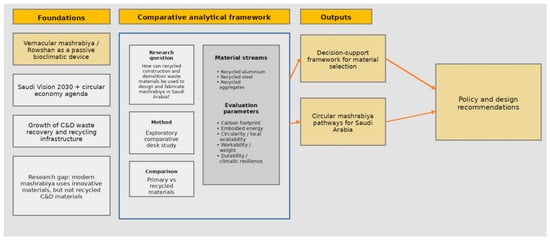
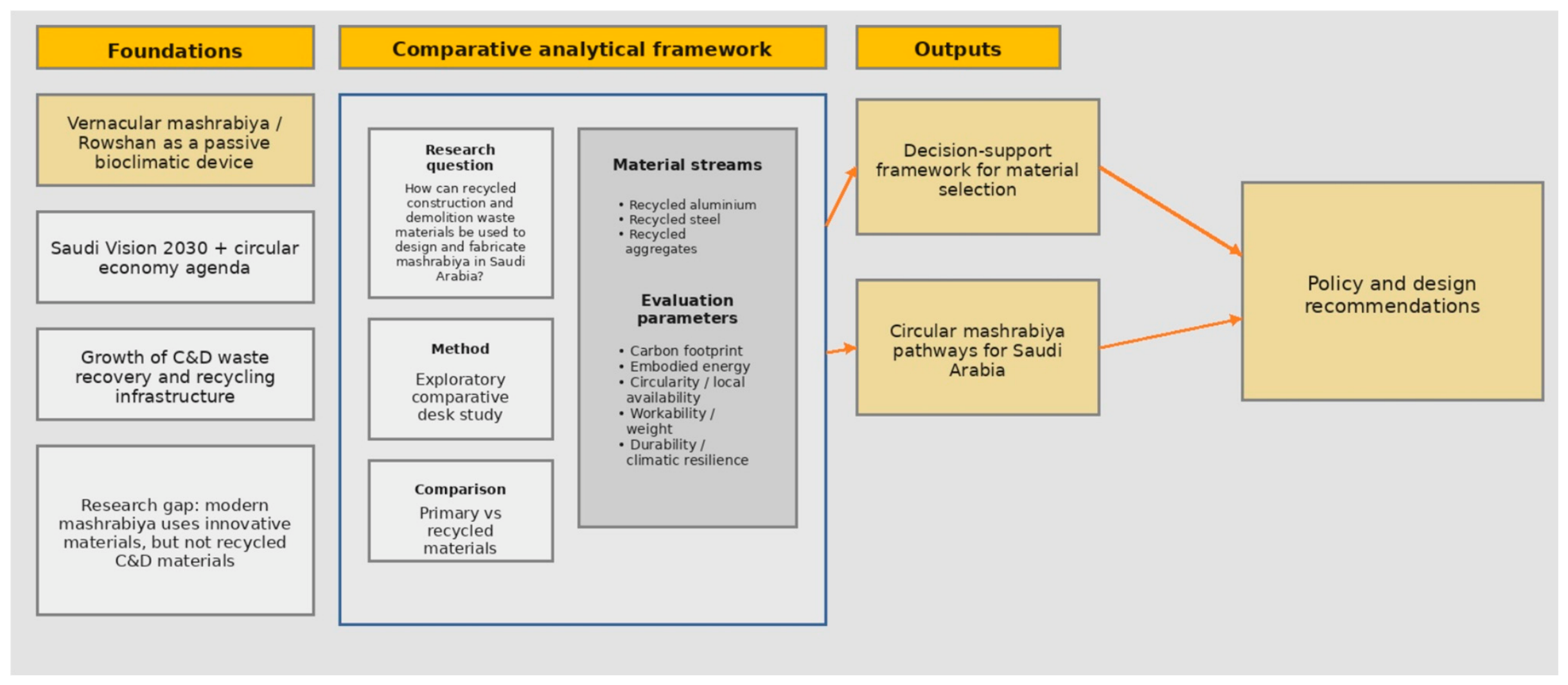
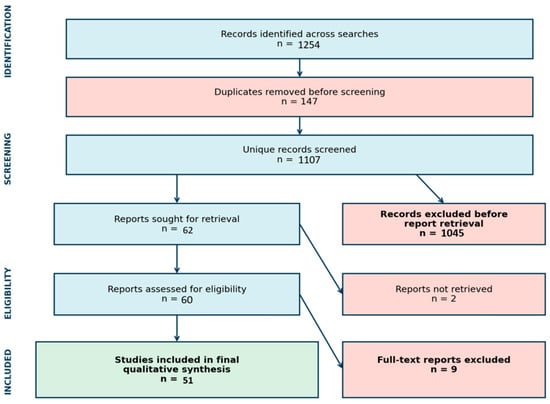
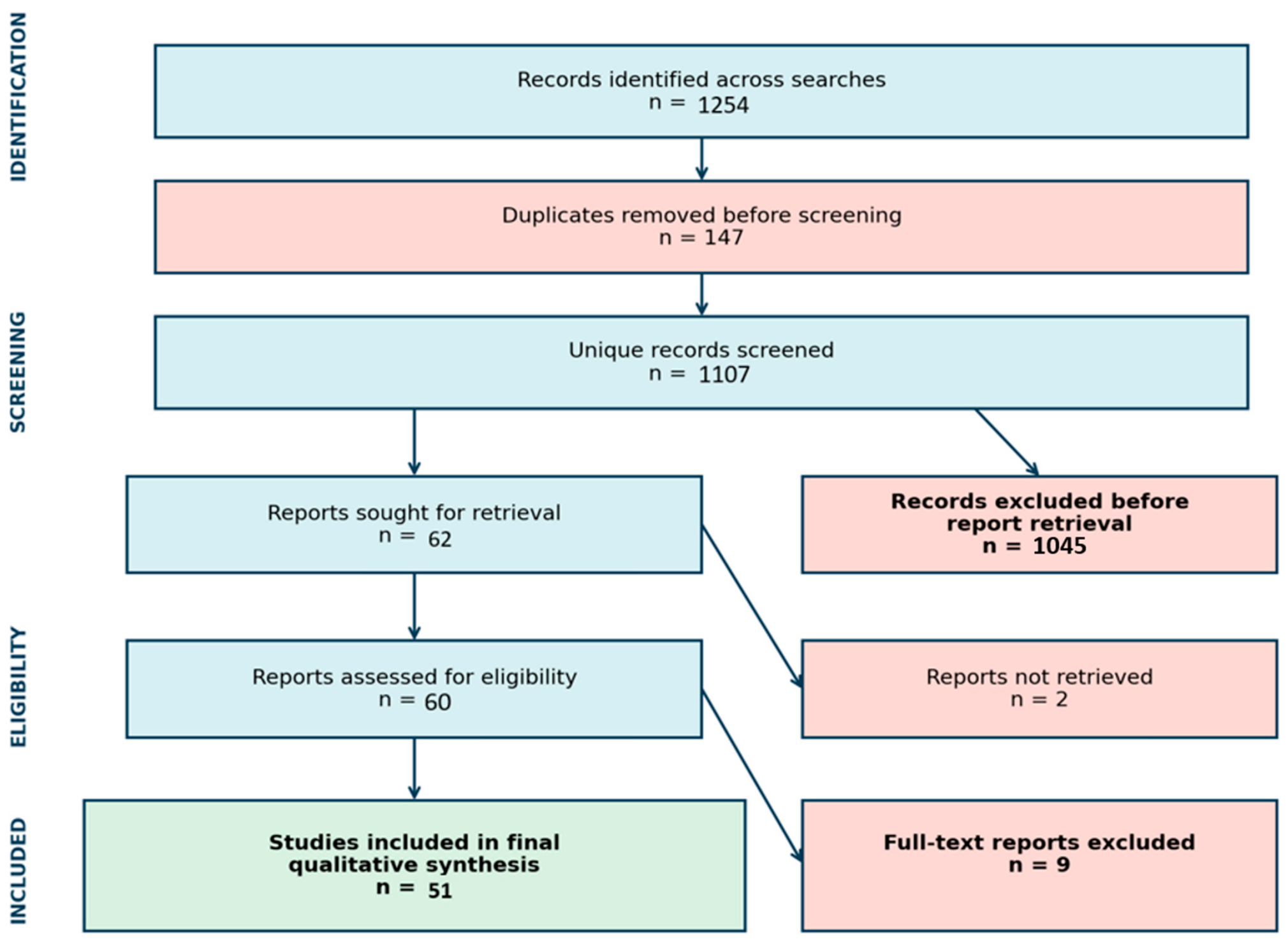
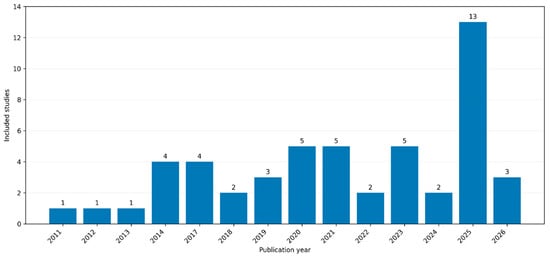
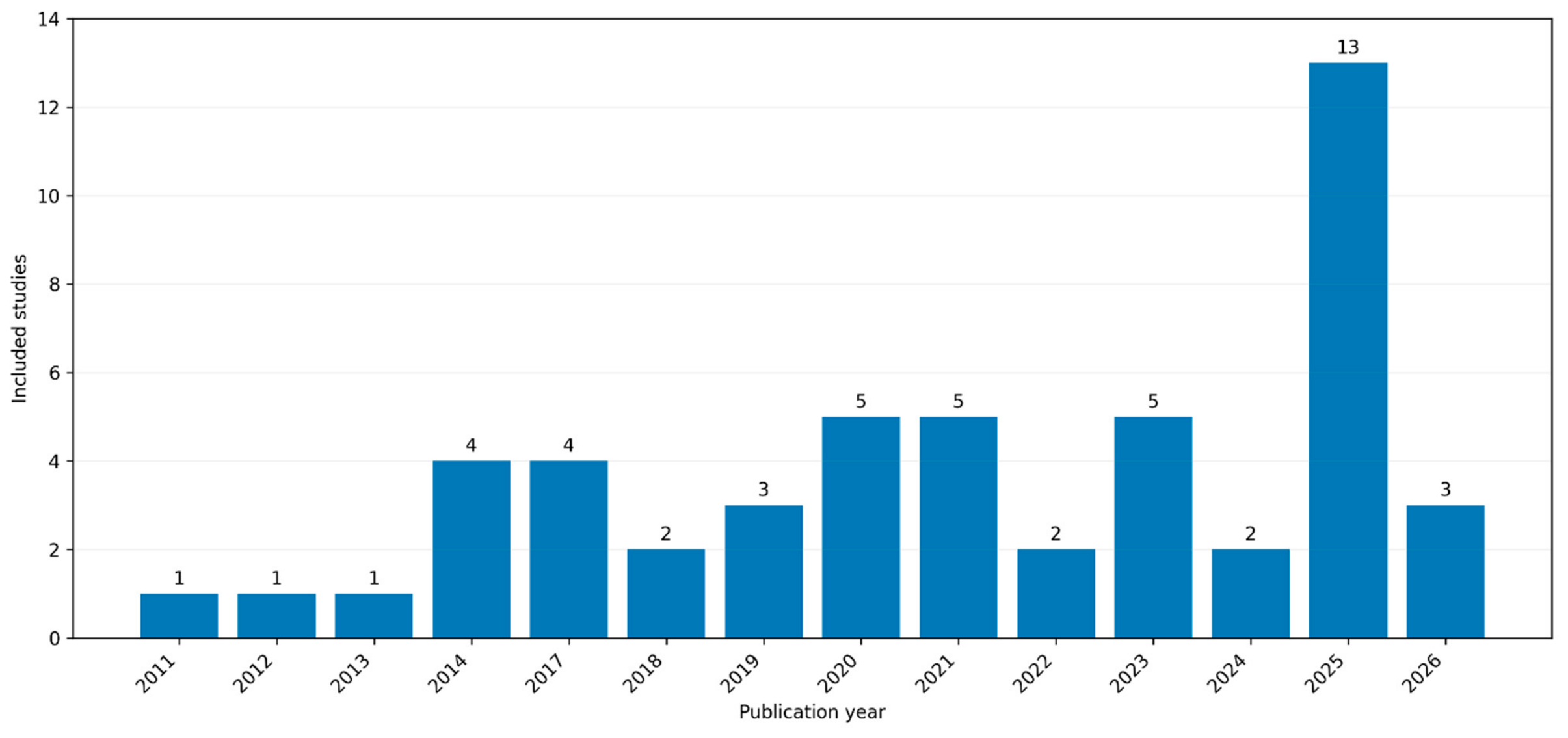
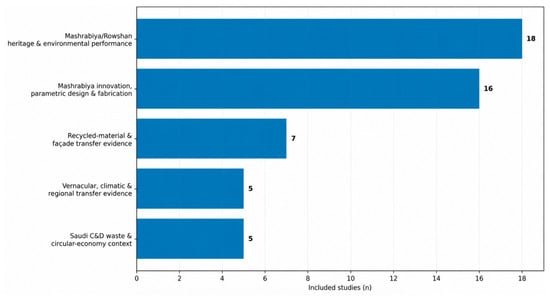
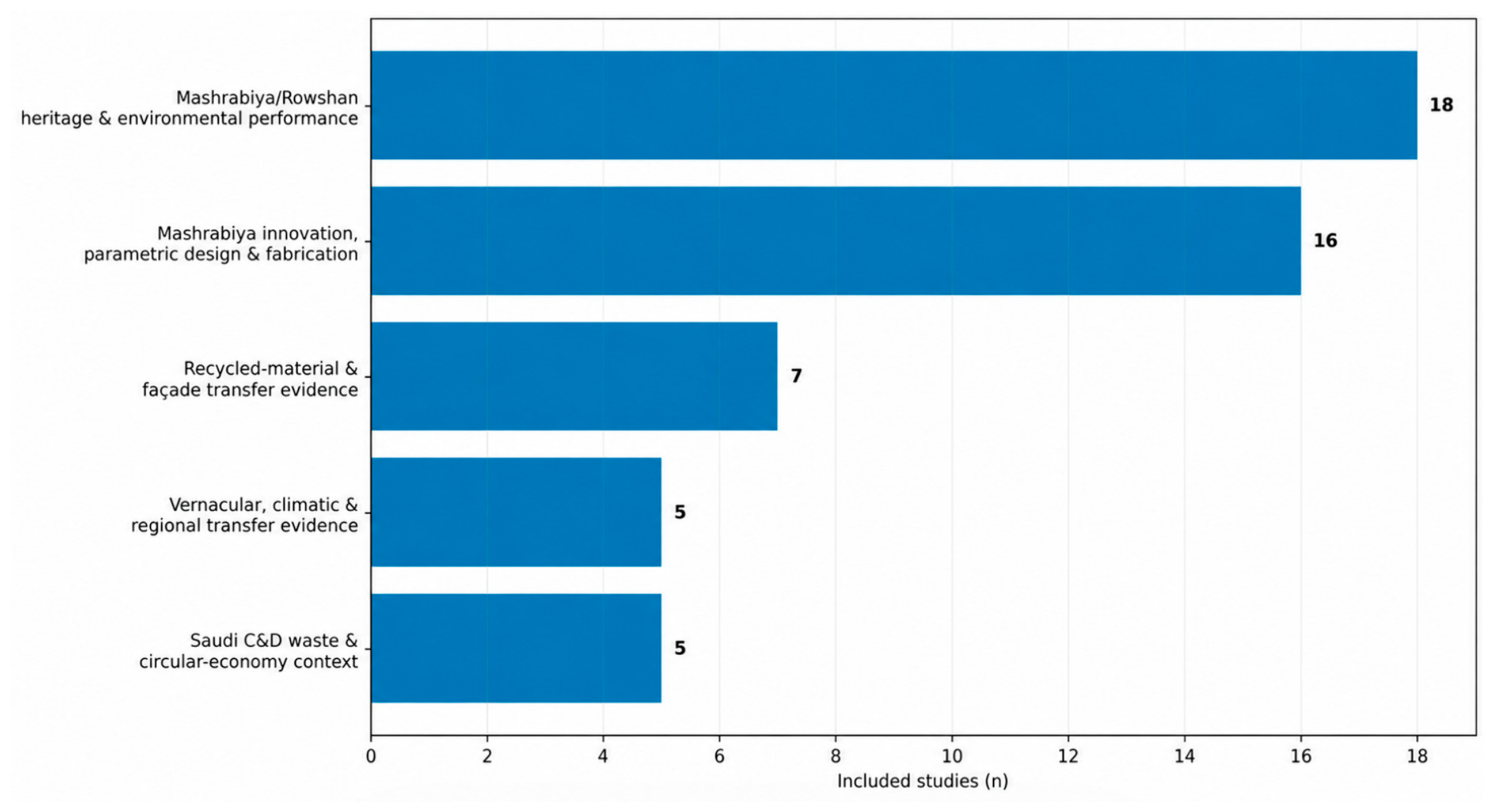
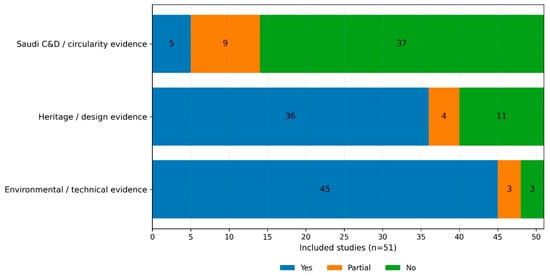
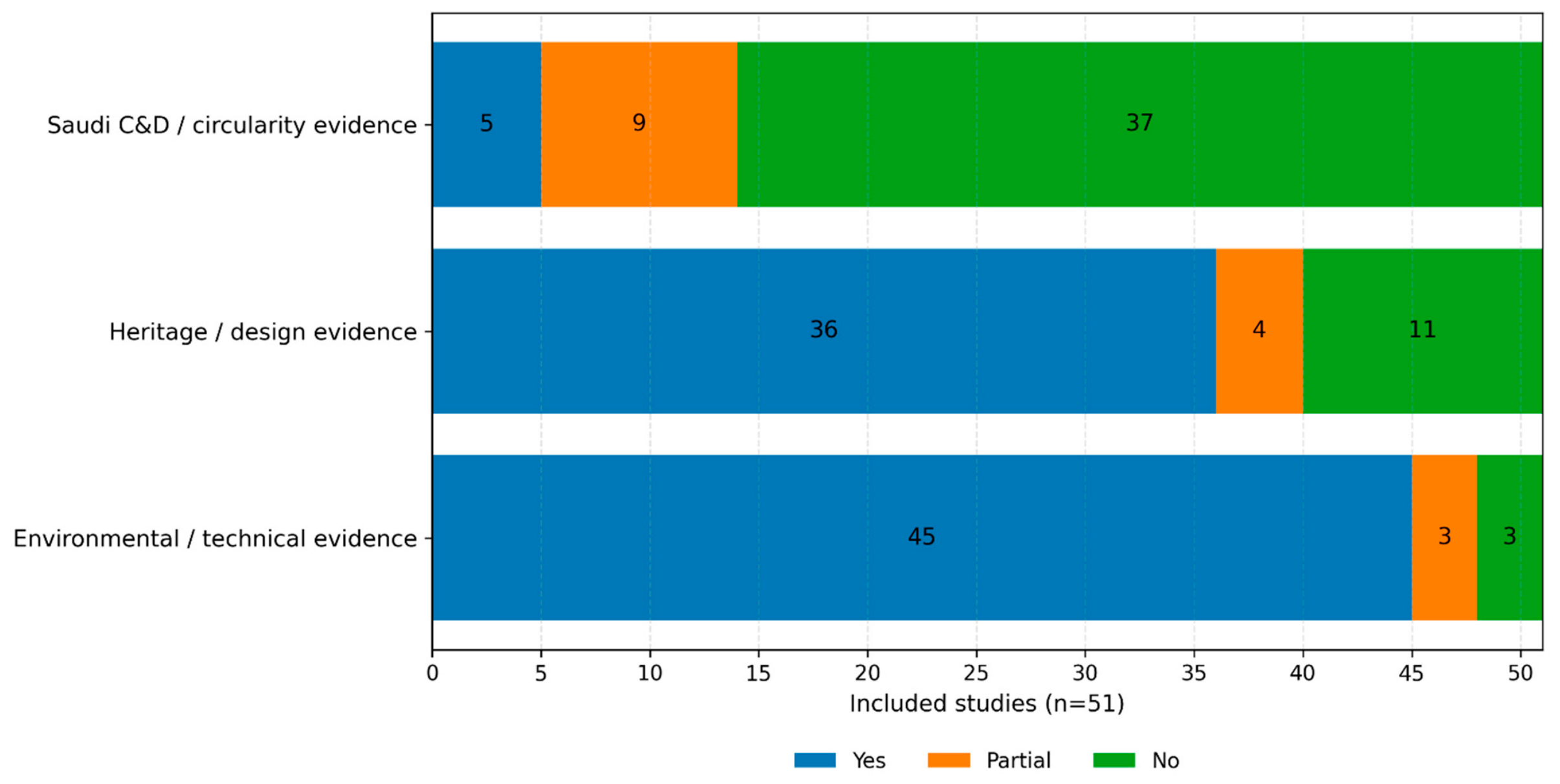
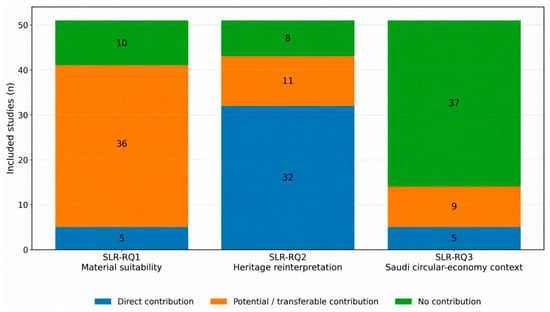
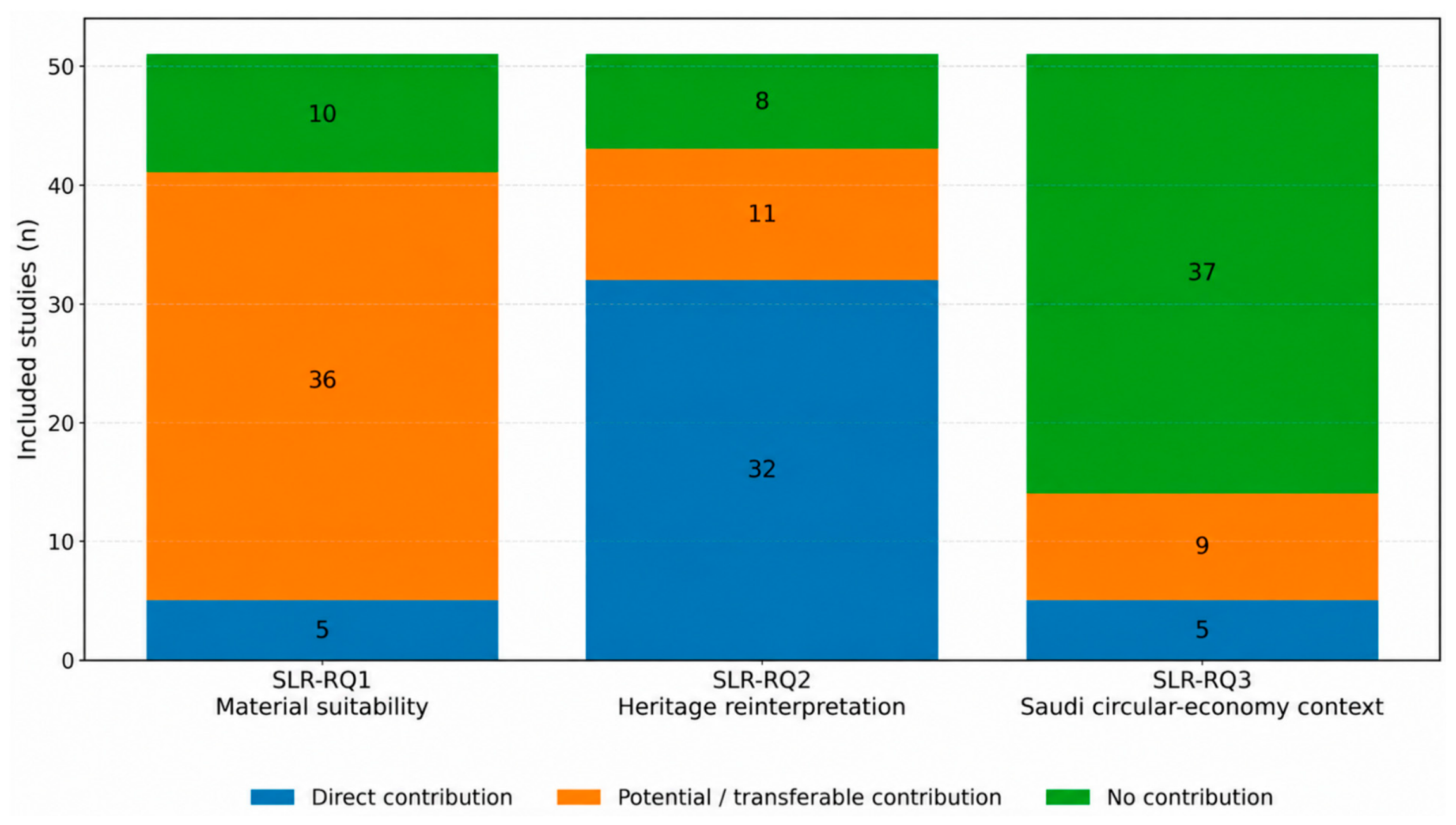
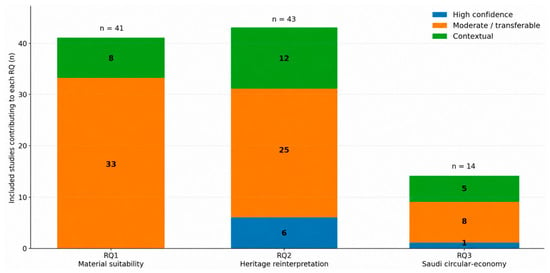
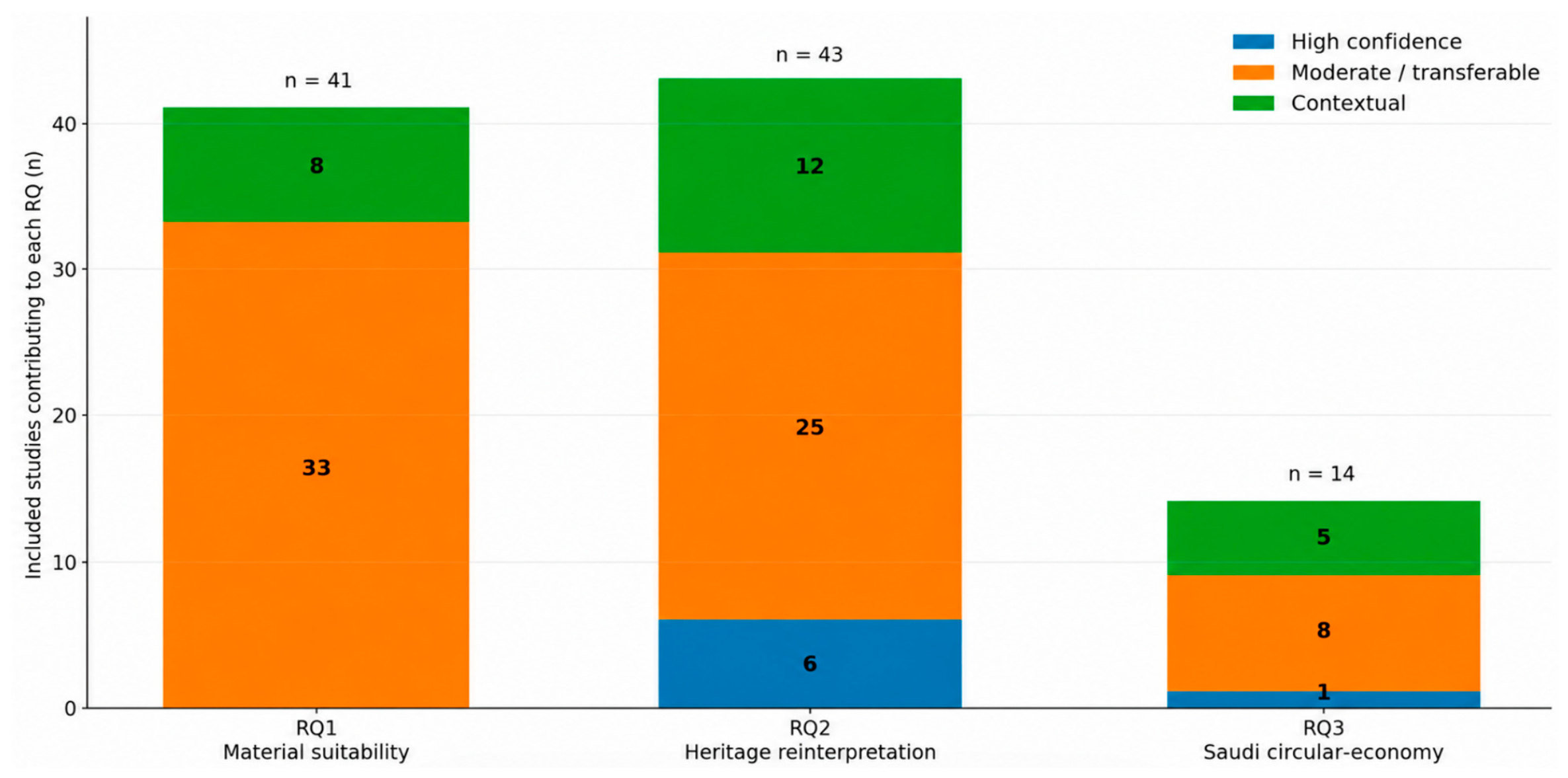
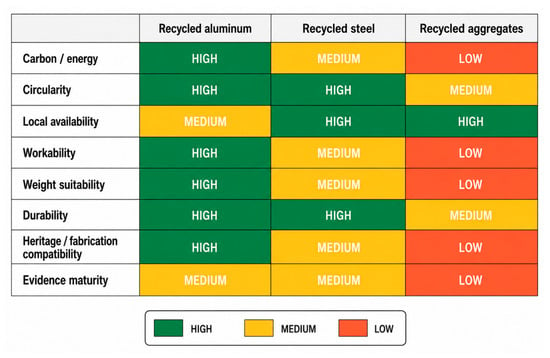
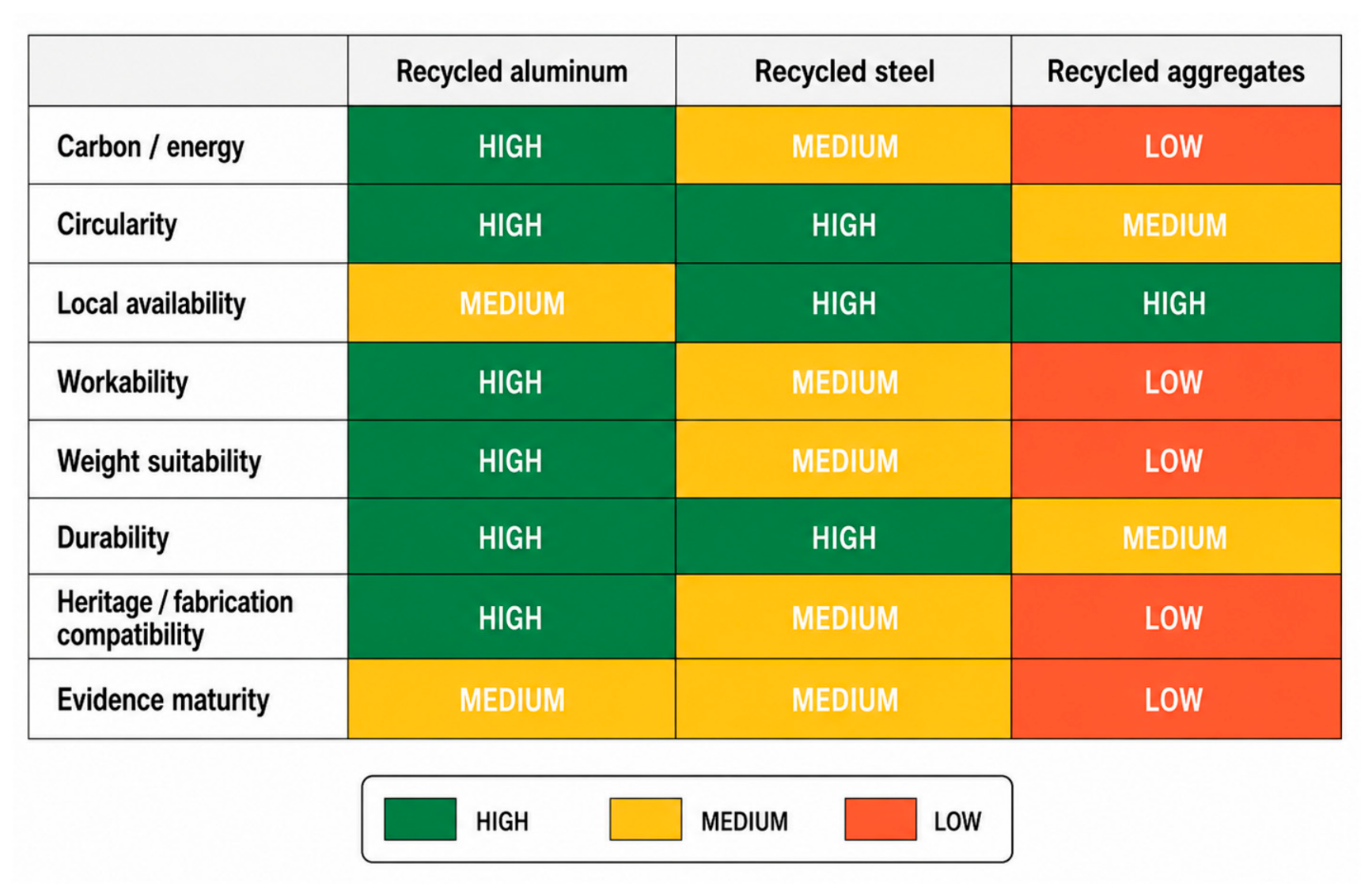
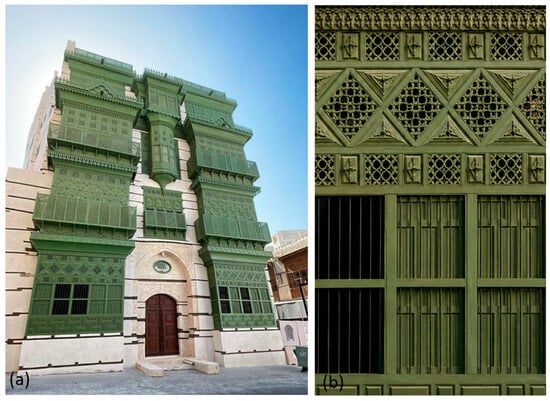
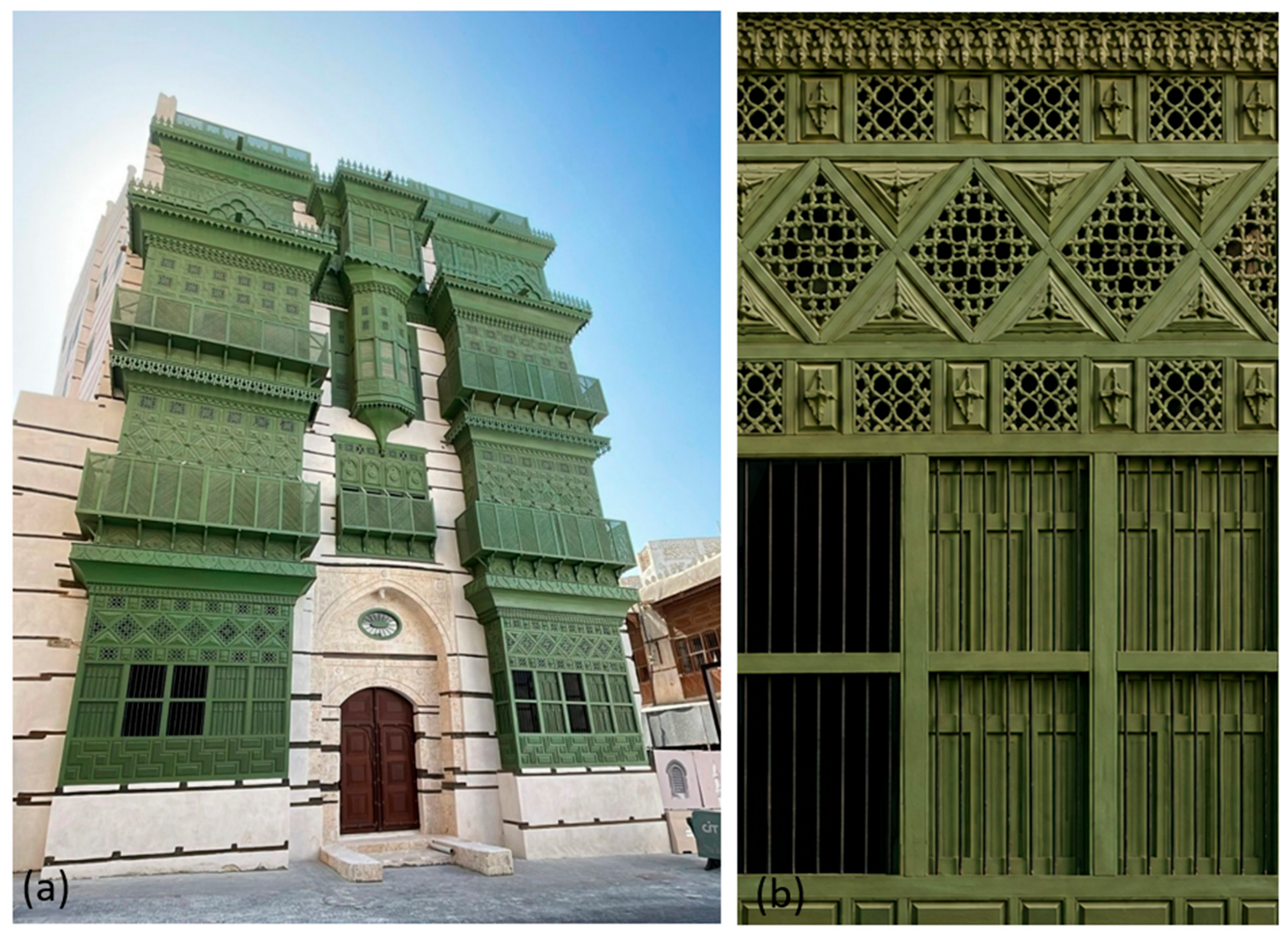
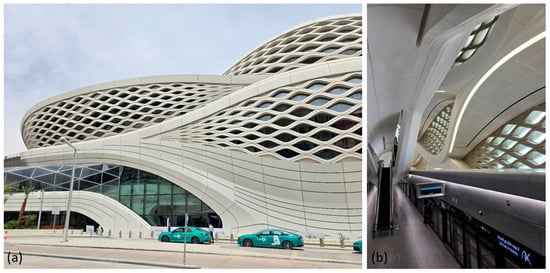
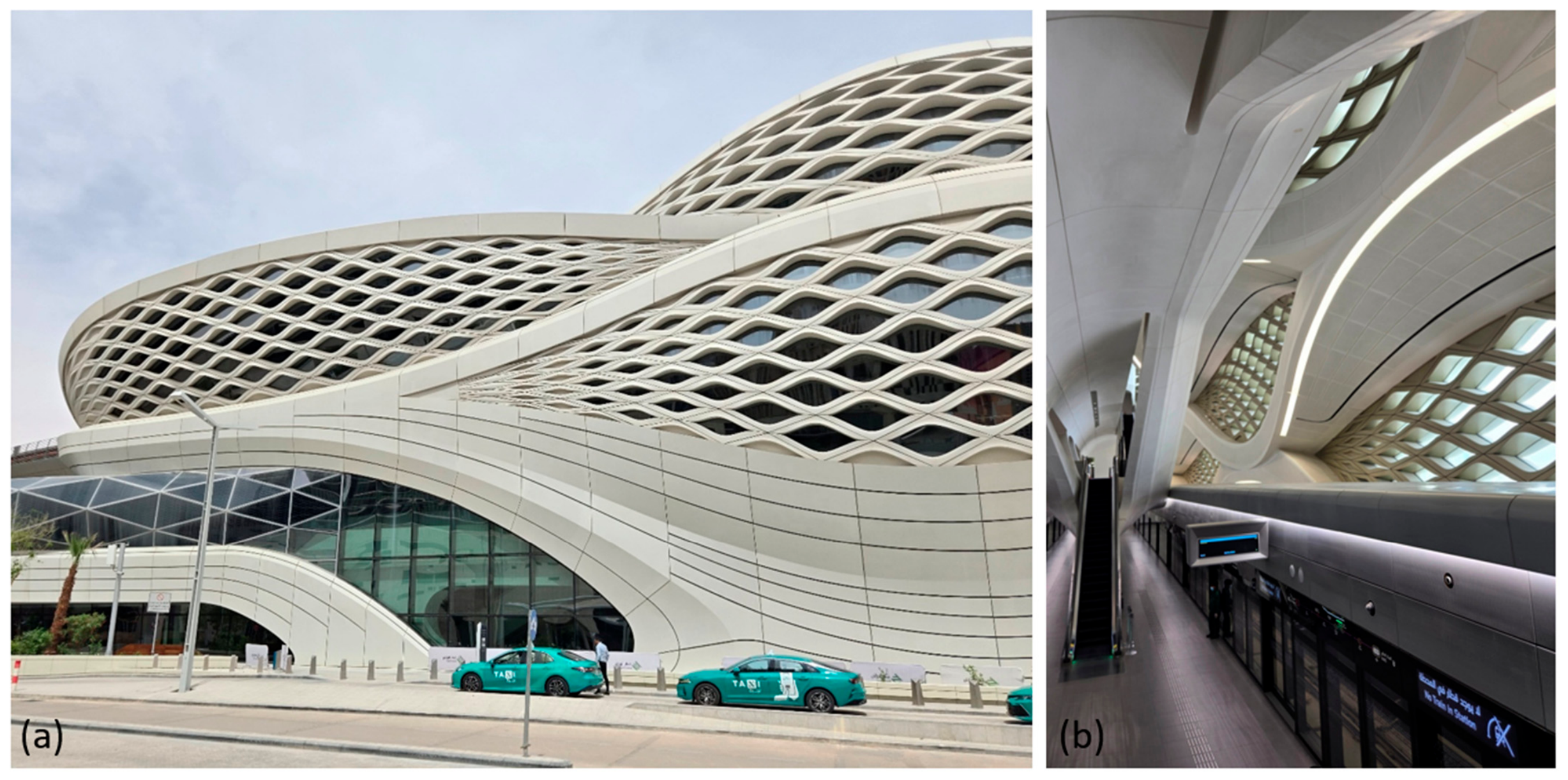
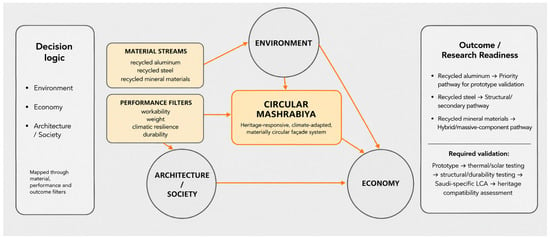
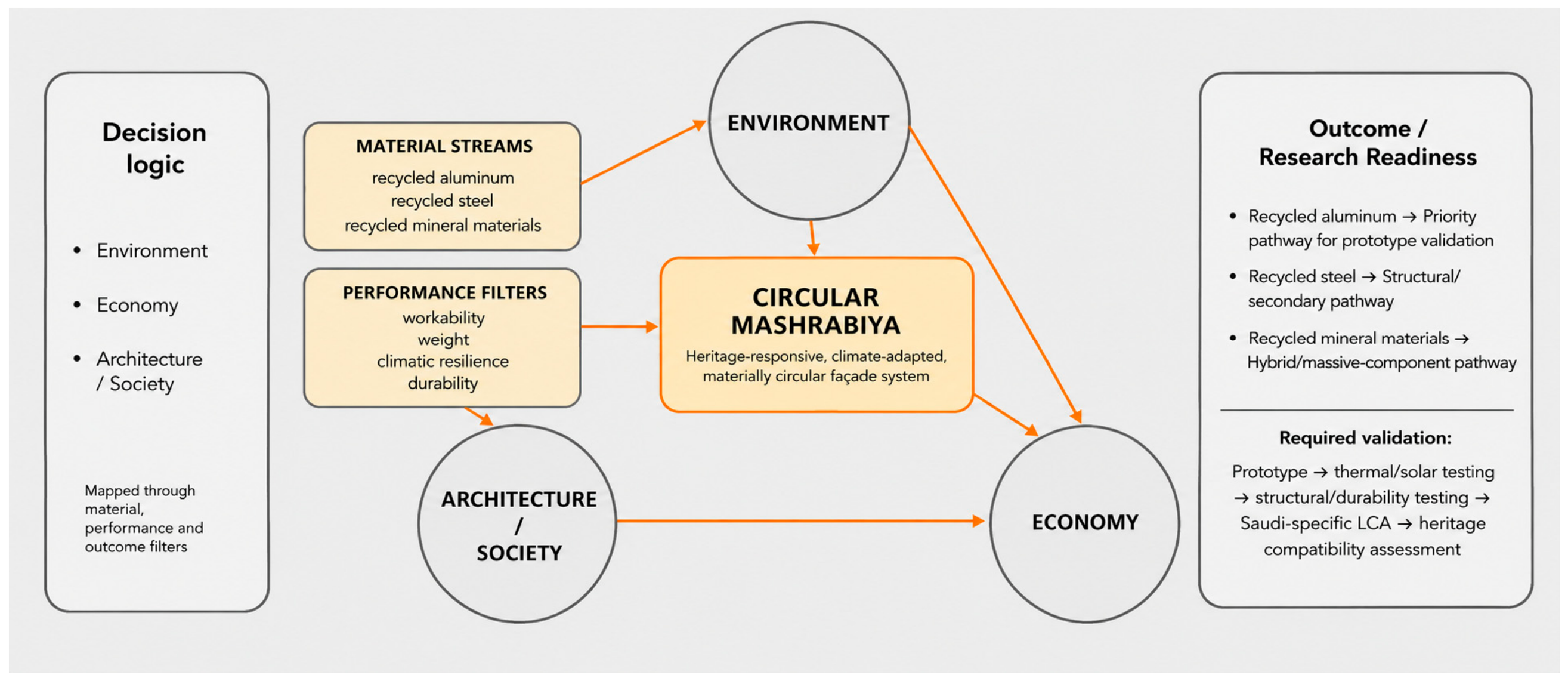

Disclaimer/Publisher’s Note: The statements, opinions and data contained in all publications are solely those of the individual author(s) and contributor(s) and not of MDPI and/or the editor(s). MDPI and/or the editor(s) disclaim responsibility for any injury to people or property resulting from any ideas, methods, instructions or products referred to in the content. |
© 2026 by the authors. Licensee MDPI, Basel, Switzerland. This article is an open access article distributed under the terms and conditions of the Creative Commons Attribution (CC BY) license.