


Abstract
Construction companies need both planning/control and flexibility, but practical readiness for hybrid project management is still unclear. This study analyzes readiness for hybrid project management adoption in a small Romanian construction-company context using two questionnaire datasets: a hybrid project management questionnaire with 26 valid responses and an Agile questionnaire with 31 valid responses. The analysis used descriptive statistics, simple categorical tests, binary coding for multiple-response items, and thematic interpretation of open-ended answers. The results show that readiness is mainly partial. Overall, 57.7% of respondents did not know the concept of hybrid project management, while 72.0% evaluated organizational readiness as partial and 70.8% evaluated team readiness as partial. The main barrier was lack of knowledge about Agile or hybrid methodologies (84.0%), and the strongest support need was training and certifications (84.6%). The Agile questionnaire showed strong contextual conditions, such as openness to change, client feedback integration, and collaborative culture, but formal Agile implementation experience was low (33.3%). The study suggests that adoption should start gradually, through awareness, training, simple procedures, pilot projects, and better communication between teams.
1. Introduction
Time, money, quality, safety, contracts, and coordinating with several parties all put significant strain on construction project managers. Collaboration among designers, engineers, contractors, suppliers, customers, and government agencies is essential, and it is not uncommon for there to be tight documentation requirements and set timelines. Planning, control, approval, and risk limitation are all advantages of traditional project management, which is why it remains relevant in the construction industry.
At the same time, construction projects are not fully predictable. Design changes, client requests, site problems, resource shortages, delays, digital coordination issues, and regulation changes can affect the initial plan. In this context, a purely traditional approach may become too rigid. Agile project management can offer faster feedback, stronger collaboration, and better adaptation, but it was mainly developed in software projects and cannot be copied directly into construction. Therefore, hybrid project management has become a practical alternative because it combines traditional control with Agile flexibility.
In this study, hybrid project management is understood as the practical combination of predictive/traditional project management practices and adaptive/Agile-related practices within the same project or organizational context. In construction, the traditional part can support contracts, approvals, budgets, documentation, safety requirements, procurement, risk control, and milestone planning. The adaptive part can support coordination during design changes, client feedback, interdisciplinary communication, site constraints, short-term replanning, and responses to unexpected events. Therefore, hybrid project management is not considered a simple replacement for traditional project management, but a way to combine control and flexibility when project conditions change [1,2,3,4,5,6]. This interpretation is also connected with previous construction-related studies on hybrid, Agile, BIM, digital transformation, and implementation barriers [7,8,9,10,11,12,13,14,15,16].
From a thematic perspective, the study therefore treats hybrid project management as a construction-management readiness issue. The central theme is not only the selection of a project management method, but the capacity of construction companies to combine formal control, adaptive coordination, digital support, communication routines, and training before implementation.
At the beginning of this study, the possible framework methodologies are therefore clarified as methodological components that may be combined in a hybrid approach, not as a single fixed model. The predictive component may include baseline planning, milestone control, budgeting, procurement planning, risk registers, contract documentation, approvals, and safety-related documentation. The adaptive component may include Agile-related practices such as short coordination cycles, iterative feedback, Kanban-style task visualization, Scrum-inspired meetings, rapid reprioritization, and Lean–Agile routines. In construction projects, these components may also be supported by BIM-related coordination, common data environments, dashboards, and collaborative digital tools. Therefore, the framework considered in this paper is based on the possible combination of predictive control, adaptive coordination, Lean–Agile routines, and digital support.
In hybrid project management, different approaches work together rather than against each other. This necessitates matching the appropriate management logic with the appropriate project phase. Stable activities with low uncertainty may benefit from formal planning, approvals, documentation, and risk management. Activities with greater uncertainty may benefit from quick feedback loops, team meetings, open communication, and adaptive planning. This sort of flexible combination is becoming more common in project management practice, according to recent studies. This is particularly true in environments that are complex and subject to change [1,2,3,4,5,6].
1.1. Research Gap
Although hybrid project management has been increasingly discussed in recent literature, its practical adoption in construction companies is still not fully understood. Existing studies usually focus on general project success, hybrid project management models, Agile adoption, BIM (Building Information Modeling) implementation, digital transformation, or barriers to new technologies in construction [7,8,9,10,11,12,13,14,15,16].
However, fewer studies analyze whether construction professionals and their organizations are actually ready to apply hybrid project management in daily work. This is important since there are other factors outside the approach itself that influence acceptance. Knowledge, leadership buy-in, team communication, digital resources, internal processes, and change aversion are other factors. While it is true that many construction companies adopt Agile-like practices on an informal basis, it does not always indicate that they have a formalized hybrid project management style.
There is also a literature gap regarding the Romanian construction context. The incorporation of Agile and traditional methodologies into construction projects has been the subject of recent research [17], but there is a lack of empirical data on the perceived readiness, obstacles, and support needs of construction industry professionals.
1.2. Problem Statement
Construction companies require both stability and adaptability. On the one hand, they have a responsibility to adhere to all official approvals, budgets, safety regulations, contracts, and technical documents. Conversely, they need to be ready to respond rapidly in case the project changes. This causes friction in management, as Agile approaches allow for change while conventional techniques provide control.
The issue is that a lot of businesses may not understand how to practically integrate these strategies. Despite having access to digital resources, some businesses may be lacking in training. Some may have seasoned project managers, yet their teams fail to effectively communicate with one another. Hybrid management may seem like more red tape to certain organizations, while others are more receptive to change. So, it is important to know how prepared construction businesses are for hybrid project management before suggesting its use.
The premise upon which this research is based is that new software or a shift in vocabulary will not be enough to bring about hybrid project management. It calls for a prepared organization, well-defined procedures, consistent communication, backing from upper management, and hands-on training.
1.3. Related Works
Recent project management studies have compared traditional, Agile, and hybrid approaches and have shown that hybrid project management can be useful when project conditions are complex and uncertain [1,2,3,4,5,6]. Other studies have focused on adoption drivers, success factors, and implementation difficulties in Agile or hybrid projects [18,19,20].
In the construction field, Lalmi et al. (2021) [8] proposed a conceptual hybrid project management model for construction projects by combining traditional, Agile, and Lean practices. Lalmi et al. (2022) [10] also showed that the relationship between traditional, Agile, and Lean approaches is becoming more visible in construction project management research. Ozorhon et al. (2022) [11] investigated the Agile hybrid approach in construction, while Chathuranga et al. (2023) [12] studied Agile practices in the design stage of building construction projects. More recent works analyzed Agile project management in pre-construction, sustainable residential construction, and implementation barriers for Agile practices in construction projects [14,21,22].
A related research direction concerns digital transformation and organizational agility. Construction companies increasingly use BIM, digital platforms, and collaborative tools, but adoption is often limited by weak standards, lack of skilled people, fragmented stakeholders, low management support, and resistance to change [7,9,13,15,16,23,24,25,26,27]. These barriers are similar to those expected in hybrid project management adoption, because both digital transformation and hybrid management require changes in people, processes, tools, and organizational culture.
Previous studies also show that organizational change depends on communication, leadership, training, stakeholder involvement, and clear monitoring mechanisms [28,29,30,31]. In this sense, hybrid project management should not be studied only as a technical method. It should also be studied as an organizational capability. Exploratory survey studies can support this type of analysis because they show how professionals perceive readiness, barriers, trust, governance, and implementation needs [32,33].
Recent studies also reinforce the idea that Agile and hybrid approaches in construction depend on more than selecting a project management method. Agile and Lean–Agile hybrid approaches are discussed as ways to improve flexibility, coordination, stakeholder feedback, and adaptation in complex construction projects [34,35]. Digital transformation studies also show that project management optimization depends on organizational agility, knowledge management, technological readiness, and organizational capacity, not only on software availability [36,37]. For construction SMEs, organizational readiness and managerial capabilities are important conditions for digital transformation [38]. Other recent studies on BIM and BIM–AI adoption show that implementation barriers include lack of skilled personnel, lack of awareness, communication problems, organizational culture, resistance to change, standardization issues, and training gaps [39,40]. These findings support the present study’s focus on perceived readiness, knowledge, communication, digital support, and training needs before hybrid project management adoption. In this way, the study is positioned within the broader construction management literature, where methodological change, digital transformation, organizational readiness, and practical implementation barriers are often treated as connected challenges rather than isolated issues.
1.4. Objective
This research aims to assess the level of preparedness among Romanian construction firms to implement hybrid project management. Experts’ knowledge of hybrid project management, their expectations for organizational preparedness, the help they get from digital and IT resources, the effect they believe it will have on project performance, and the kind of support that will be required for future implementation are the main areas of attention in this research.
The study is exploratory. It is not intended to show that the hybrid project management inherently enhances the building projects. Instead, it seeks to assess the perceived preparedness of construction businesses and the practical requirements that need to be enhanced before the implementation of a hybrid model.
The study is guided by the following research questions:
RQ1. What is the level of familiarity with hybrid project management among professionals from Romanian construction companies?
RQ2. What organizational and technological factors are perceived as relevant for hybrid project management readiness?
RQ3. What are the main perceived barriers to implementing hybrid project management in construction companies?
RQ4. What type of support do professionals consider necessary for future implementation?
1.5. Novelty and Contribution
The originality of this research is represented by the approach of hybrid project management preparedness in Romanian construction enterprises. While numerous studies examine agile, conventional or hybrid project management in general, few articles assess the actual preparedness of construction businesses from the viewpoint of professionals working within these enterprises.
The contribution of the paper is threefold. First, it provides exploratory empirical evidence from a Romanian construction context, which is still underrepresented in the hybrid project management literature. Second, it connects hybrid project management with organizational readiness, training needs, communication, digital support, and perceived implementation barriers. Third, it identifies the main readiness factors, perceived barriers, and support needs that should be considered before Romanian construction companies attempt to adopt a hybrid project management approach.
Therefore, the contribution should be understood as exploratory and contextual. The study does not provide statistically representative conclusions for the Romanian construction sector, but it offers a structured preliminary mapping of perceived readiness, barriers, support needs, and agile-related contextual practices in an underrepresented Romanian construction setting.
The rest of the paper is organized as follows. Section 2 presents the theoretical framework and the main constructs used in the study. Section 3 describes the participants, company context, questionnaire design, and analytical procedure. Section 4 presents the survey results. Section 5 discusses the findings, limitations, and future work. Section 6 concludes the paper.
2. Theoretical Framework
The present study is built on the idea that hybrid project management adoption is not only a methodological choice, but also an organizational readiness problem. A company may know traditional project management and may also use some Agile practices, but this does not automatically mean that it is ready to implement a coherent hybrid model. For this reason, the theoretical framework connects five main concepts: hybrid project management, organizational readiness, digital and IT support, perceived barriers, and implementation support.
2.1. Hybrid Project Management
Hybrid project management refers to the combination of predictive and adaptive project management practices within the same project or organization. Predictive practices are useful when tasks, deadlines, responsibilities, approvals, and risks can be clearly planned in advance. Adaptive practices are useful when project conditions change and the team needs fast communication, feedback, and correction. In this study, hybrid project management is understood as a practical balance between traditional control and Agile flexibility.
In this context, Agile-related methodologies and practices may include Scrum-inspired short coordination cycles, Kanban-style task visualization, Lean–Agile routines, iterative feedback, adaptive planning, daily or weekly coordination meetings, and rapid reprioritization of tasks. In construction projects, these practices cannot replace contracts, approvals, procurement, safety documentation, cost control, and milestone planning. However, they may support adaptive coordination when design changes, client feedback, site constraints, interdisciplinary clashes, or unexpected resource problems appear.
Previous studies show that hybrid project management can be useful in complex projects, but it should not be applied as a fixed recipe. Instead, it must be adapted to the project type, organizational context, team maturity, and uncertainty level [1,3,4,6,19]. In construction, this is especially important because projects need formal control, but also practical adaptation when design, site, client, or resource conditions change [8,11,14].
At reference level, Gemino et al. [1] support the comparison between Agile, traditional, and hybrid approaches, while Ciric Lalic et al. [2] connect project management approach with project success. Reiff and Schlegel [3], Krupa and Hájek [4], and Székely et al. [6] support the conceptual framing of hybrid project management as a combination of predictive and adaptive logic. Dong et al. [5] help clarify the Agile-related component of the framework, while Mirzaei et al. [19] support the need to customize hybrid project management to the project and organizational context.
2.2. Organizational Readiness
Organizational readiness describes the extent to which a company is prepared to adopt a new way of working. In the context of hybrid project management, readiness includes knowledge of the method, leadership support, team openness, internal procedures, communication habits, and practical capacity to manage change. Readiness is important because a hybrid model cannot be implemented only by introducing new terminology or software tools.
Change management studies show that implementation success depends on clear vision, leadership involvement, communication, training, stakeholder engagement, and monitoring mechanisms [28,29,31]. Therefore, this study treats organizational readiness as a key condition for hybrid project management adoption. If teams do not understand the model, if managers do not support the transition, or if internal procedures remain unclear, hybrid project management may be perceived as additional bureaucracy rather than as a useful management approach.
For this construct, Errida and Lotfi [28] support the role of leadership, communication, training, and monitoring in organizational change. Troise et al. [29] connect agility with organizational adaptation in uncertain environments. Sadikoglu and Ozorhon [30] provide support from the AEC context, while Kussl et al. [31] show that digital transformation in construction depends on internal organizational change.
2.3. Digital and IT Support
Digital and IT support represents another important element of the framework. Hybrid project management often requires transparent communication, task tracking, document sharing, progress monitoring, and fast feedback. These activities can be supported by digital tools such as project management platforms, collaborative software, BIM-related tools, or visual planning systems.
In practical terms, several types of tools may support a hybrid project management approach in construction. Predictive planning tools can support schedules, milestones, costs, resources, and baseline control. BIM-related tools and common data environments can support design coordination, document sharing, clash detection, and information transparency. Collaborative platforms, Kanban-style task boards, dashboards, and communication tools can support short-term coordination, progress reporting, issue tracking, feedback, and adaptive replanning. However, these tools do not create hybrid project management by themselves. They become useful only when they are connected with clear procedures, trained teams, communication routines, and managerial support.
A practical construction example can clarify this connection. In a building project, the contract, budget, safety documentation, procurement deadlines, and main milestones may remain managed through a predictive plan. However, during execution, a design change requested by the client or a clash identified between architectural and installation works may require rapid coordination. In this case, BIM-related coordination and a common data environment can support document control and technical clarification, while a dashboard or task board can support issue tracking, responsibility assignment, short-term replanning, and feedback between designers, engineers, contractors, and the client. This example shows how digital tools may bridge traditional control and adaptive coordination in a hybrid project management approach.
However, digital tools are not enough by themselves. Studies on digital transformation and BIM adoption show that technology adoption is influenced by organizational culture, skills, leadership, standards, project fragmentation, and resistance to change [7,9,13,15,16,26]. For this reason, the present study considers IT support as an enabling factor, not as a guarantee of hybrid project management readiness.
For digital and IT support, Van Tam et al. [7] and Chowdhury et al. [13] support the relevance of BIM adoption factors and digital coordination. Wuni et al. [15] and Nyqvist et al. [16] show that digital implementation in construction depends on more than technology availability. Naji et al. [26] support the readiness perspective by connecting digital transformation with organizational preparedness.
2.4. Perceived Barriers
The adoption of hybrid project management may be limited by several barriers. These can include lack of knowledge, resistance to change, insufficient training, weak communication between teams, limited management support, unclear procedures, and inadequate digital infrastructure. In construction companies, these barriers may be stronger because project work is often fragmented between office activities, site activities, subcontractors, designers, beneficiaries, and public authorities.
Recent studies on Agile and hybrid practices in construction show that implementation barriers are not only technical. They are also related to people, culture, coordination, training, and organizational structure [12,21,22]. Therefore, this study analyzes perceived barriers as a central part of readiness. Understanding these barriers is necessary before making practical adoption recommendations.
For perceived barriers, Chathuranga et al. [12] support the analysis of Agile adoption practices in construction design activities. Kineber et al. [21] connect Agile adoption with success factors in construction, while Elseknidy et al. [22] directly support the identification of Agile implementation barriers in sustainable residential construction projects.
2.5. Support Needs for Future Adoption
The steps that respondents think are essential to implement hybrid project management are called implementation support. Training, certifications, external consultancy, digital technologies, more transparent processes, weekly meetings, better communication, and organizational structure changes are all potential forms of help in this research.
Readiness is both a present condition and a direction for development, which is why this idea is significant. If professionals identify training, communication, and procedure clarification as necessary forms of support, then hybrid project management adoption should begin with these practical steps. In this sense, the theoretical structure helps interpret the survey results and identify future support needs.
For implementation support, Lalmi et al. [8] support the need for a construction-specific hybrid project management model. Ozorhon et al. [11] support the relevance of Agile-hybrid approaches in construction, while Moreno et al. [14] supports the practical use of Agile project management in the pre-construction stage. These references justify the focus on training, communication, digital tools, and gradual implementation support.
2.6. Conceptual Logic of the Study
Based on the concepts above, the study assumes that hybrid project management readiness is influenced by four connected dimensions: familiarity with the concept, organizational readiness, digital and IT support, and perceived implementation barriers. These dimensions shape how professionals evaluate the potential impact of hybrid project management and what type of support they consider necessary.
To clarify this conceptual logic in practical terms, two construction-related examples can be considered. First, activities such as permits, contracts, procurement, safety documentation, cost baselines, and milestone approvals normally require predictive control. However, design changes, client feedback, clashes between disciplines, site constraints, or unexpected resource problems may require adaptive coordination through short meetings, rapid decisions, and updated task priorities. A hybrid approach would not remove the formal plan, but would add adaptive routines around the parts of the project where uncertainty appears.
Second, if a company has project management software but its teams do not understand Agile or hybrid working practices, the adoption problem is not only technical. The practical problem becomes one of training, communication, leadership support, and clear internal procedures. This is why the present study connects hybrid project management with organizational readiness, IT support, perceived barriers, and support needs.
These dimensions also formed the basis for the empirical part of the study. Familiarity with hybrid project management was used to address RQ1. Organizational readiness, project team readiness, and digital and IT support were used to address RQ2. Perceived challenges and implementation barriers were used to address RQ3. Transition support and essential success aspects were used to address RQ4. The Agile questionnaire was used only as contextual support, because Agile-related openness, communication, feedback, and adaptation can help interpret whether the surveyed context includes conditions that may support future hybrid project management adoption. Therefore, Section 2.6 connects the theoretical constructs with the questionnaire dimensions and with the interpretation of the results.
This conceptual logic is also supported by the reference-level mapping presented in Table 1. The hybrid project management construct is supported by studies that compare traditional, Agile, and hybrid approaches and describe hybrid project management as a contextual combination of predictive and adaptive logic [1,3,4,6,19]. The construction-specific framing is supported by studies on hybrid, Agile, and Lean–Agile approaches in construction projects [8,11,14]. The readiness and support dimensions are connected with studies on organizational change, agility, leadership, communication, training, and internal transformation [28,29,31]. The digital and IT dimension is connected with BIM adoption, digital transformation, and digital-readiness studies in construction [7,13,15,16,26]. Finally, the barrier-related dimensions are supported by studies that identify Agile, BIM, and digital implementation barriers in construction contexts [12,21,22]. Therefore, the questionnaire dimensions were not selected independently from the literature, but were derived from the theoretical constructs and reference-level contributions summarized in Table 1.
Table 1.
Reference-level mapping of the theoretical constructs used in the study.
To make the conceptual logic more transparent, Table 1 provides a reference-level mapping of the theoretical constructs used in this study. Each reference is linked with its meaning in the present study, its survey and practical relevance, and its specific contribution to the theoretical framework. This mapping also shows that the questionnaire dimensions were derived from the literature-supported constructs, not selected independently from the theoretical background.
3. Materials and Methods
3.1. Participants and Context
The study involved professionals connected to Romanian construction companies and construction project activities. The respondents included construction engineers, project managers, architects, design engineers, procurement-related staff, managers, and administrative staff. This variety of roles was useful because hybrid project management adoption does not depend only on project managers, but also on the wider project team.
The respondents were connected to different types of construction projects, including civil projects, industrial projects, infrastructure projects, medical or healthcare-related projects, commercial projects, and mixed project portfolios. This context is relevant because construction projects often require both formal control and practical adaptation during execution.
The empirical analysis was based on two questionnaire datasets. The first dataset focused on Agile project management practices and included 31 valid responses. The second dataset focused on hybrid project management readiness and included 26 valid responses. The Agile questionnaire was used as contextual support, while the hybrid project management questionnaire represented the main dataset of the study.
The questionnaires were distributed to seven Romanian construction-related companies selected through professional networks, known companies, and collaborators. The participating companies were located in Bucharest and Ilfov, while their projects were carried out both in Bucharest and in other regions of Romania. The Agile questionnaire received responses from all seven companies, while the hybrid project management questionnaire received responses from five of them.
Geographical information was collected at a company and project-context level, not at an individual residence level, in order to preserve respondent anonymity. Therefore, the study reports the location of the participating companies and the general project context, but it does not analyze individual respondent location.
The companies included different construction-related profiles, such as design, execution, general contracting, consulting, civil construction, industrial construction, infrastructure, and mixed activities. The company group included four large companies, one medium company, one small company, and one micro company.
These company-size categories are reported only to describe the empirical context. They were not used for company-size comparison, because the sample was small and unevenly distributed. Therefore, the study does not claim representativeness for large, medium, small, or micro construction companies separately.
For confidentiality reasons, the companies are described using anonymized codes. The response distribution was uneven across these companies. In the Agile questionnaire, the distribution was: Company A = 1 response, Company B = 24 responses, Company C = 1 response, Company D = 1 response, Company E = 2 responses, Company F = 1 response, and Company G = 1 response. In the hybrid project management questionnaire, the distribution was: Company A = 1 response, Company B = 22 responses, Company C = 1 response, Company D = 1 response, and Company E = 1 response, while Companies F and G did not provide valid responses for this questionnaire. This distribution is important because Company B contributed most responses in both datasets. Therefore, the results are interpreted as respondent-level exploratory evidence and not as a comparison between company contexts.
Respondents were selected mainly because of their professional connection with construction project activities. The questionnaire was distributed especially to project managers, engineers, and architects, although a small number of administrative staff also answered.
Because the number of responses differed between companies, the unit of analysis is the individual respondent’s perception, not the company as a whole. The study does not compare companies and does not treat the participating companies as statistically representative cases.
The data were collected through online questionnaires. Participation was voluntary. The questionnaires did not collect sensitive personal information about individual respondents. Although organization names were requested for contextual classification, these names were not used in the statistical analysis and were removed before preparing the anonymized dataset for reporting or sharing. All results were analyzed at aggregate level. The study did not aim to evaluate individual respondents or specific companies. The survey aimed to learn how construction-related organizations generally feel about Agile practices, the readiness of hybrid project management, the obstacles they see, and the support they need.
The questionnaires were distributed online using Google Forms, and the access links were sent to employees from the participating companies. Before distribution, the questionnaires were pilot tested with five coworkers in order to check clarity and structure.
Due to the limited sample size and the uneven response distribution across companies, the study is framed as exploratory. The findings should not be generalized to all Romanian construction companies. Instead, they provide preliminary respondent-level evidence about perceived readiness for hybrid project management in a small Romanian construction-company context.
3.2. Survey Design and Procedure
Two questionnaires were used in this study. The first questionnaire focused on Agile project management practices, while the second questionnaire focused on hybrid project management readiness. The two instruments were developed as exploratory survey instruments, based on the theoretical constructs presented in Section 2 and on concepts identified in the literature on Agile project management, hybrid project management, organizational readiness, implementation barriers, digital support, and transition support. The two instruments were used together because Agile awareness and Agile-related practices can influence how professionals understand and accept a hybrid project management approach.
To make the questionnaire development process clearer, the items were developed in four steps. First, the main constructs were identified from the theoretical framework and from the reference-level mapping presented in Table 1. Second, these constructs were translated into questionnaire dimensions, such as familiarity with hybrid project management, organizational readiness, digital and IT support, perceived advantages, perceived barriers, support needs, and Agile-related organizational practices. Third, the construction-management context was used to adapt the items to practical project realities, including planning, milestones, procurement, documentation, safety requirements, design changes, site constraints, interdisciplinary coordination, client feedback, digital tools, BIM-related coordination, reporting, and short-term replanning. Fourth, the questionnaires were pilot tested with five coworkers in order to check clarity, wording, structure, and practical understanding before distribution.
The documentary support for the study was also clarified. The Supplementary Materials include the two questionnaires, the anonymized reorganized response datasets, a Supplementary README File, and a variable codebook. The questionnaires document the original item structure and wording. The anonymized datasets document the empirical responses used in the analysis. The codebook explains the renamed variables, the meaning of each item, and the interpretation of recoded indicators. The README file explains the structure of the Supplementary Files and how they are connected with the analyses reported in the manuscript. This documentation was provided to improve transparency and to help readers understand the link between questionnaire content, dataset preparation, and reported results.
The Agile questionnaire included items related to organizational openness to change, management support for Agile practices, collaborative culture, team autonomy, communication flow, stakeholder feedback, use of Agile methodologies, project plan flexibility, Agile project management tools, digital-tool readiness, real-time reporting, adaptation to unexpected changes, risk management strategies, client feedback integration, observed Agile benefits, and overall Agile implementation success.
The hybrid project management questionnaire was more directly connected to the aim of the study. It included items related to hybrid project management familiarity, known hybrid methodology components, perceived advantages, expected challenges, organizational readiness, perceived implementation barriers, project team readiness, required transition support, IT resource readiness, perceived performance impact, essential success aspects, previous experience with hybrid project management, implementation measures, and additional suggestions.
The two questionnaires were developed independently and were distributed during the same data collection period. The content of the hybrid project management questionnaire was not dependent on the results of the Agile questionnaire. Because no common respondent identifier was used, the answers were not linked at individual level. Therefore, the study does not assume that the same professionals answered both questionnaires. The Agile questionnaire is interpreted only as contextual support, while the hybrid project management questionnaire remains the main dataset for the readiness analysis.
The questionnaires were designed as exploratory survey instruments, not as validated psychometric scales. Their purpose was to collect practical perceptions about readiness, barriers, support needs, and Agile-related organizational context. For this reason, the analysis focused on frequency distributions, counts, percentages, and thematic interpretation, rather than on scale validation.
The main structure of the two questionnaires is presented in Table 2.
Table 2.
Structure of the questionnaire datasets used in the study.
The questionnaires included both closed-ended and open-ended questions. Closed-ended questions were used to obtain comparable answers across respondents. Some items used ordinal response categories, such as low, partial, or full readiness. Other items allowed respondents to select several options, such as barriers, support needs, perceived advantages, and essential success aspects. Open-ended questions allowed respondents to explain their answers and provide additional suggestions.
Before analysis, the datasets were checked and prepared for use in JASP. The questionnaire columns were renamed using short and clear English variable names. Long question texts were replaced with compact labels, while the meaning of each item was preserved in a separate codebook. Multiple-response items were prepared separately because one respondent could select more than one answer category.
3.3. Analytical Strategy and Statistical Procedures
The study used an exploratory survey strategy with quantitative descriptive analysis and qualitative thematic support. The quantitative part was conducted in JASP and focused on descriptive statistics, frequency distributions, and simple categorical tests. The qualitative part was based on thematic interpretation of open-ended answers.
Given the exploratory aim, the small number of valid responses, and the uneven distribution across companies, the analysis was not designed as a statistically representative national survey. The purpose was to obtain preliminary respondent-level evidence about perceived readiness, barriers, and support needs. For this reason, descriptive statistics, frequency distributions, multiple-response coding, simple categorical tests, and thematic interpretation were considered appropriate and transparent for the available dataset.
The first quantitative analysis focused on five key readiness indicators from the hybrid project management questionnaire: familiarity with hybrid project management, organizational readiness, project team readiness, IT resource readiness, and perceived performance impact. The study’s theoretical framework and research topics informed the selection of these variables.
Numbers and percentages of occurrences were computed for these five variables. To check whether the observed responses differed from an equal distribution across the available response categories, multinomial tests were used with equal expected proportions. No evidence for causal relationships, population-level effects, or robust statistical validation was drawn from the resulting p-values. The multinomial tests were used only as supplementary descriptive checks to support the interpretation of the dominant response patterns.
A second quantitative study used the hybrid project management survey’s multiple-response questions. These included perceived advantages, expected challenges, implementation barriers, required transition support, and essential success aspects. Because these items allowed more than one answer, each option was transformed into a separate binary indicator. The results were reported using counts and percentages.
The Agile questionnaire was used as a contextual dataset. Its results helped explain whether the surveyed organizations already showed signs of Agile-related practices, such as openness to change, collaborative culture, flexible planning, digital-tool use, real-time reporting, and client feedback integration. These results were not used to claim Agile implementation maturity. They were used only to support the interpretation of the hybrid project management readiness results.
Because several Agile questionnaire items included open or semi-open answers, selected answers were recoded into simple binary indicators. A value of 1 was assigned when the answer clearly indicated the presence of the analyzed Agile-related practice, and a value of 0 was assigned when the answer did not indicate that practice. Unclear or missing answers were excluded only from the specific analysis where they could not be used. This coding was used only for contextual interpretation and not for measuring Agile maturity.
Open-ended answers were analyzed through thematic interpretation. The main themes identified from the responses included training needs, communication problems, digital tools, resistance to change, internal procedures, management support, and adaptation to project changes. These themes were used to add context to the quantitative findings.
Because the sample size was limited, advanced statistical models were not applied. Regression analysis, factor analysis, structural equation modeling, and clustering were avoided because they would not be appropriate for the available number of respondents. The analysis remained focused on simple, transparent, and reproducible results.
All results are reported using valid responses for each item. Missing or unclear answers were not replaced. They were excluded only from the specific analysis where the answer was not usable.
4. Results
Figure 1, Figure 2, Figure 3, Figure 4 and Figure 5 are retained only as compact visual summaries of the corresponding tables. They do not introduce additional variables, additional statistical results, or independent empirical evidence. Their role is to help readers identify the dominant response patterns more quickly, especially for familiarity, readiness, barriers, support needs, and Agile-related contextual practices. The interpretation is based on the numerical values reported in the tables and on the explanatory text that follows each table and figure.
Figure 1.
Dominant response categories for the initial readiness indicators.
Figure 2.
Visual summary of the expected challenges reported for hybrid project management adoption.
Figure 3.
Visual summary of the distribution of selected implementation barriers reported by respondents.
Figure 4.
Support needs and essential success aspects for hybrid project management adoption: (A) support needs; (B) essential success aspects.
Figure 5.
Visual summary of selected Agile-related practices and digital-readiness indicators reported in the contextual questionnaire.
4.1. Initial Readiness Indicators for Hybrid Project Management Adoption
The first analysis examined five main indicators related to hybrid project management readiness. These indicators were analyzed using frequency counts, percentages, and multinomial tests. The multinomial tests were used only to check whether the answers were evenly distributed across the available response categories. The results are presented in Table 3 and visually summarized in Figure 1.
Table 3.
Response distribution for the initial hybrid project management readiness indicators.
The results show that familiarity with hybrid project management was low among the surveyed professionals. Out of 26 valid answers, 15 respondents (57.7%) stated that they did not know the concept. Only 2 respondents (7.7%) reported being very familiarized with hybrid project management. The multinomial test showed that the answers were not evenly distributed across the four categories, χ2(3) = 15.538, p = 0.001. This result suggests that hybrid project management is still not well known among the surveyed construction professionals.
Organizational readiness was mainly evaluated as partial. Out of 25 valid answers, 18 respondents (72.0%) stated that their organization was partially prepared, 4 respondents (16.0%) considered the organization very prepared, and 3 respondents (12.0%) stated that the organization was not prepared. The multinomial test showed an uneven distribution of answers, χ2(2) = 16.000, p < 0.001. This result suggests that most respondents do not reject the idea of hybrid project management, but they also do not see their organizations as fully ready.
A similar pattern was observed for project team readiness. Out of 24 valid answers, 17 respondents (70.8%) stated that their project team was partially ready, 6 respondents (25.0%) considered the team fully ready, and only 1 respondent (4.2%) stated that the team was not ready. The multinomial test again showed an uneven distribution, χ2(2) = 16.750, p < 0.001. This indicates that team-level readiness exists, but it is still mainly partial.
The results for IT resource readiness were more balanced. Out of 26 valid answers, 15 respondents (57.7%) stated that IT resources were fully available, while 11 respondents (42.3%) selected partial readiness. The multinomial test was not significant, χ2(1) = 0.615, p = 0.433. This means that the answers were relatively balanced between partial and full IT readiness. Therefore, IT resources do not appear to be the weakest adoption factor, although they are not fully available in all cases.
Regarding perceived performance impact, most respondents expected hybrid project management to have a positive effect. Out of 24 valid answers, 14 respondents (58.3%) believed that hybrid project management could improve project performance to a great extent, 7 respondents (29.2%) selected a small extent, and 3 respondents (12.5%) believed that it would not have a significant impact. The multinomial test showed an uneven response distribution, χ2(2) = 7.750, p = 0.021. This result suggests that, even though familiarity with hybrid project management is low, many respondents still perceive it as potentially useful for construction project performance.
There is an obvious readiness gap in the first set of results. The majority of respondents think hybrid project management might be helpful, and a sizeable minority believe that some level of availability exists among IT resources. Nevertheless, there is a lack of understanding of the concept and there is a noticeable lack of preparedness on both the organizational and team levels. This indicates that instead of starting with direct implementation, subsequent adoption efforts should focus on raising awareness, providing training, clarifying processes, and improving internal communication.
4.2. Perceived Advantages and Expected Challenges
The second analysis focused on the perceived advantages and expected challenges of hybrid project management. These items allowed multiple answers, so each response option was coded as a binary variable, where 1 means that the option was selected and 0 means that it was not selected. The results are reported using counts and percentages from the valid answers. Because multiple options could be selected by the same respondent, percentages do not add up to 100%.
Table 4 presents the perceived advantages and expected challenges associated with hybrid project management adoption, and Figure 2 visually summarizes the selected response options.
Table 4.
Perceived advantages and expected challenges of hybrid project management adoption.
The most frequently selected advantage was adaptability to changes during the project, selected by 17 respondents (70.8%). This suggests that respondents mainly associate hybrid project management with the ability to react better when project conditions change. Closer collaboration between interdisciplinary teams was selected by 13 respondents (54.2%), while more efficient management of deadlines and costs was selected by 11 respondents (45.8%). Increased transparency and accountability within the team was selected by 9 respondents (37.5%). Only 5 respondents (20.8%) indicated no clear opinion regarding the advantages.
The most frequently selected challenge was the need for additional team training, selected by 14 respondents (58.3%). This result is important because it shows that respondents do not see hybrid project management only as a technical change, but also as a learning and organizational change process. Increased complexity in project management was selected by 11 respondents (45.8%), while difficulties in integrating Waterfall and Agile stages were selected by 8 respondents (33.3%). The need for advanced technological infrastructure was selected by 6 respondents (25.0%). Only 4 respondents (16.7%) indicated no clear opinion regarding the expected challenges.
Overall, the results show a balanced perception. Respondents see hybrid project management as useful mainly because it can improve adaptability and collaboration. At the same time, they expect practical difficulties, especially related to training and increased management complexity. This supports the idea that hybrid project management adoption should be prepared gradually, with clear training, simple procedures, and practical guidance for project teams.
4.3. Implementation Barriers
The third analysis focused on the main barriers that could limit the adoption of hybrid project management in construction companies. As in the previous section, this item allowed multiple answers. Therefore, each barrier was coded as a binary variable, where 1 means that the barrier was selected and 0 means that it was not selected. The results are reported using counts and percentages from the valid answers.
Table 5 presents the main perceived barriers to hybrid project management adoption, and Figure 3 provides a compact visual summary of these barriers.
Table 5.
Perceived implementation barriers for hybrid project management adoption.
The most frequently selected barrier was lack of knowledge about Agile or hybrid methodologies, selected by 21 respondents (84.0%). This is the clearest result in this section and shows that knowledge and understanding represent the main perceived obstacle to hybrid project management adoption. Communication problems between teams were selected by 10 respondents (40.0%), while team resistance to change was selected by 7 respondents (28.0%). These results suggest that the main barriers are related more to people, communication, and organizational culture than to technology.
Management support was selected as a barrier by 4 respondents (16.0%), while inadequate IT infrastructure was selected by only 2 respondents (8.0%). This result is consistent with the previous readiness findings, where IT resources did not appear to be the weakest adoption factor. Only 1 respondent (4.0%) indicated no clear opinion.
Overall, the results show that hybrid project management adoption should not start mainly from software acquisition or technical infrastructure. Instead, the first priority should be increasing knowledge, explaining the hybrid approach clearly, improving team communication, and reducing resistance to change through practical training and internal guidance.
4.4. Support Needs and Essential Success Aspects
The fourth analysis focused on the support needed for future hybrid project management adoption and on the aspects considered essential for successful implementation. Both items allowed multiple answers. Therefore, each response option was coded as a binary variable, where 1 means that the option was selected and 0 means that it was not selected. The results are reported using counts and percentages from the valid answers. Because multiple options could be selected by the same respondent, percentages do not add up to 100%.
Table 6 presents the support needs and essential success aspects identified by the respondents, and Figure 4 visually summarizes both dimensions.
Table 6.
Support needs and essential success aspects for hybrid project management adoption.
The most frequently selected support need was training and certifications for the team in hybrid project management, selected by 22 respondents (84.6%). This result confirms the previous finding that lack of knowledge is the main perceived barrier to adoption. Updating or implementing new software systems was selected by 14 respondents (53.8%), while hiring external consultants was selected by 9 respondents (34.6%). Creating formal change-management processes was selected by 8 respondents (30.8%), and structural changes in the organization were selected by 5 respondents (19.2%).
Regarding essential success aspects, the most frequently selected option was open communication and collaboration between teams, selected by 18 respondents (72.0%). Flexible planning, continuous progress monitoring and evaluation, and rapid adaptation to environmental or regulatory changes were each selected by 15 respondents (60.0%). The use of technology for transparency and control was selected by 12 respondents (48.0%). Only 1 respondent (4.0%) indicated no clear opinion.
Overall, the results show that respondents consider hybrid project management adoption to depend mainly on people, training, communication, and practical coordination. Although technology is still important, it is now seen more as a necessary but secondary element in the adoption process. These findings lend credence to the notion that future implementations should prioritize training, improved communication, and straightforward processes before attempting more extensive structural modifications.
4.5. Agile-Related Organizational Context
The fifth analysis used the Agile questionnaire as a contextual dataset. The aim was not to measure full Agile maturity, but to identify whether the surveyed organizations already show signs of Agile-related practices that may support future hybrid project management adoption. Because several Agile questionnaire items included open or semi-open answers, the responses were recoded into binary indicators, where 1 means that the answer showed the presence of the analyzed Agile-related aspect and 0 means that it did not. The results are reported using counts and percentages from the valid answers.
Table 7 presents the Agile-related organizational context identified from the contextual questionnaire, and Figure 5 visually summarizes the same contextual indicators.
Table 7.
Agile-related organizational context identified from the Agile questionnaire.
The results show that several Agile-related conditions are already present in the surveyed organizational context. Openness to change and innovation was identified in 31 valid responses (100.0%), while client feedback integration was identified in 30 valid responses (100.0%). Collaborative culture and feedback were also identified in all valid answers for that item, with 26 responses (100.0%). Communication flow was present in 29 out of 30 valid responses (96.7%), and adaptation to unexpected changes was present in 27 out of 30 valid responses (90.0%).
Project plan flexibility was identified in 24 out of 27 valid responses (88.9%), while leadership support for Agile-related practices was identified in 24 out of 30 valid responses (80.0%). Real-time reporting was present in 22 out of 29 valid responses (75.9%). Digital-tool readiness was more moderate, being identified in 17 out of 29 valid responses (58.6%). Formal Agile implementation experience was the weakest contextual indicator, being identified in only 7 out of 21 valid responses (33.3%).
Overall, these results suggest that the surveyed organizations already show several Agile-related practices, especially openness to change, communication, collaboration, client feedback integration, and adaptation to unexpected changes. However, this does not mean that the organizations have fully implemented Agile project management. The lower value for formal Agile implementation experience suggests that many practices may be informal or partial. This supports the interpretation of the hybrid questionnaire results: hybrid project management adoption may be possible, but it should be built gradually on existing collaborative and adaptive practices, while also improving formal knowledge, training, and digital readiness.
4.6. Open-Ended Response Themes
The final part of the results section focused on the open-ended answers from the hybrid and Agile questionnaires. These answers were not analyzed statistically, because the number and length of responses varied between respondents. Instead, they were grouped thematically in order to identify the main ideas mentioned by respondents.
Table 8 presents the main themes identified from the open-ended responses.
Table 8.
Main themes identified from the open-ended responses.
The open-ended responses show that training and knowledge development were frequently mentioned as necessary conditions for future adoption. Respondents referred to courses, certifications, learning time, and explanations of the hybrid project management approach.
Communication and coordination also appeared as important themes. Several responses mentioned the need for better communication between teams, regular meetings, brainstorming, transparency, and clearer coordination responsibilities.
Another theme was gradual adoption. Some respondents suggested that hybrid project management should not be introduced in the same way for all projects, but should be adapted to the project type, team capacity, and organizational context.
Digital tools and monitoring were also mentioned in the open-ended answers. Respondents referred to software systems, technological resources, project tracking, monitoring, and reporting as useful elements for managing projects more clearly.
The answers also included references to internal procedures and change management. These responses mentioned clearer work processes, formal procedures, organizational changes, and structured support for transition.
Finally, some responses indicated limited formal experience with hybrid project management or uncertainty regarding the concept. At the same time, other responses associated hybrid or Agile-related practices with practical benefits such as better adaptation, improved efficiency, clearer progress, and better team performance.
4.7. Synthesis of Results in Relation to the Research Questions
Because this study uses exploratory research questions rather than formal hypotheses, the results should not be interpreted as statistical validation of the research questions. Instead, each research question is addressed through descriptive evidence from the hybrid project management questionnaire and, where relevant, through contextual evidence from the Agile questionnaire and open-ended answers. Table 9 summarizes this connection.
Table 9.
Mapping of research questions to empirical evidence and exploratory answers.
Overall, the research questions are addressed descriptively and exploratorily. The results do not provide confirmatory validation, but they clarify the perceived readiness, barriers, and support needs in the surveyed construction-company context.
Taken together, the results show three connected patterns. First, hybrid project management is perceived as potentially useful, but the concept is still weakly understood by many respondents. Second, readiness is mainly partial, which means that direct full implementation is not supported by the data. Third, the main obstacles are related more to knowledge, training, communication, and organizational preparation than to basic IT availability. These patterns explain why the study does not recommend immediate implementation, but gradual adoption through awareness, training, simple procedures, pilot projects, and improved communication.
5. Discussion
The results show that hybrid project management adoption in the surveyed Romanian construction companies is still at an early stage. The clearest problem is the low familiarity with the concept. Out of 26 valid answers, 15 respondents (57.7%) stated that they did not know hybrid project management, while only 2 respondents (7.7%) reported being very familiar with it. This means that hybrid project management is not yet a common and clearly understood approach in the analyzed context. This finding is consistent with recent studies showing that hybrid and Agile-related approaches in construction are still difficult to transfer from general project management theory into daily construction practice. Previous works describe hybrid project management as useful in complex and uncertain environments, but also show that it must be adapted to the project type, organizational context, and team maturity [1,3,4,6,19]. In construction, similar difficulties are reported for Agile, Lean–Agile, and hybrid approaches, where implementation depends on coordination, stakeholder feedback, flexibility, and practical adaptation [8,11,14,34,35].
At the same time, the results do not show a complete lack of readiness. Organizational readiness was mostly evaluated as partial, with 18 out of 25 respondents (72.0%) choosing this option. Project team readiness showed a similar result, with 17 out of 24 respondents (70.8%) considering their team partially ready. These values suggest that companies are not fully prepared, but they are also not completely closed to change. The main situation is partial readiness, not full readiness.
The IT-related results show a different pattern. IT resource readiness was more balanced, with 15 out of 26 respondents (57.7%) reporting full IT readiness and 11 respondents (42.3%) reporting partial readiness. Therefore, IT resources do not appear to be the weakest adoption factor in the surveyed context. Rather than relating to fundamental IT architecture, the issue seems to be more associated with people, information, processes, and communication. This interpretation is also supported by studies on digital transformation and BIM adoption in construction. These studies show that the availability of digital tools is not enough for successful adoption, because implementation also depends on skills, standards, leadership, organizational culture, stakeholder coordination, and resistance to change [7,9,13,15,16,26,36,37,39,40].
The perceived barriers support this interpretation. In particular, twenty-one out of twenty-five respondents (84.0%) said that they were unfamiliar with Agile or hybrid methodology. This was much higher than communication problems, selected by 10 respondents (40.0%), team resistance to change, selected by 7 respondents (28.0%), and inadequate IT infrastructure, selected by only 2 respondents (8.0%). Therefore, the main barrier is not technical. It is mainly educational and organizational.
The support needs confirm the same idea. Training and certifications were selected by 22 out of 26 respondents (84.6%), making this the strongest support need. Software systems were selected by 14 respondents (53.8%), while external consultants were selected by 9 respondents (34.6%). This shows that respondents do not reject digital tools, but they place training first. For this reason, future adoption should start with awareness, training, and clear explanations of how hybrid project management works in construction projects. This convergence with the literature is important because organizational change studies also emphasize leadership involvement, communication, training, stakeholder engagement, and monitoring mechanisms as key adoption conditions [28,29,31]. Therefore, the present results support the view that hybrid project management readiness should be treated as an organizational capability, not only as a methodological or software-related issue.
The perceived advantages also show why hybrid project management may be relevant for construction. Adaptability to changes during the project was selected by 17 out of 24 respondents (70.8%). Collaboration between interdisciplinary teams was selected by 13 respondents (54.2%), and better management of deadlines and costs was selected by 11 respondents (45.8%). These results fit the construction context, where projects often face design changes, site problems, resource issues, client requests, and regulatory constraints.
However, respondents also expect difficulties. The need for additional team training was selected as the strongest challenge, by 14 out of 24 respondents (58.3%). Increased complexity was selected by 11 respondents (45.8%), and difficulties in integrating Waterfall and Agile stages were selected by 8 respondents (33.3%). This means that respondents see hybrid project management as useful, but not easy to apply without preparation.
The Agile questionnaire gives useful context. Several Agile-related conditions were strong: openness to change and innovation reached 100.0%, client feedback integration reached 100.0%, collaborative culture and feedback reached 100.0%, communication flow reached 96.7%, and adaptation to unexpected changes reached 90.0%. These results suggest that several behaviors relevant for hybrid project management may already be present in the surveyed context.
A much smaller percentage of respondents (7 out of 21; 33.3% total) have formal experience with Agile. This result is important for the interpretation of the study. These results suggest that many organizations may already be using practices similar to Agile, such as communication, collaboration, adaptation, and client feedback, but they may not have a formal model for Agile or hybrid project management. This supports the central interpretation of the study: while there are good foundations in the context, there is still a lack of formal knowledge and organized adoption.
The findings indicate that hybrid project management should be implemented gradually. Immediate full implementation is not supported by the data. A more realistic approach would start with training, pilot projects, simple internal procedures, better communication routines, and practical guidance for project teams. This is consistent with previous research showing that hybrid project management must be adapted to the project context and should not be applied as a fixed recipe [1,3,4,6,19]. It is also consistent with construction-related studies that emphasize the role of Agile practices, digital readiness, implementation barriers, and organizational preparedness in construction project management [12,21,22,34,35,36,37,38,39,40].
These empirical patterns are consistent with the bibliographic framework used in the study. The low familiarity with hybrid project management and the need for contextual adaptation are consistent with studies showing that hybrid project management should be adapted to project type, organizational context, and team maturity [1,3,4,6,19]. The importance of training, communication, leadership support, and internal procedures is consistent with studies on organizational change and organizational readiness [28,29,31]. The finding that digital tools are not sufficient by themselves is consistent with BIM and digital transformation studies, which show that adoption also depends on skills, standards, coordination, organizational culture, and resistance to change [7,13,15,16,26]. Finally, the emphasis on knowledge gaps, communication problems, and resistance to change is consistent with studies on Agile and hybrid implementation barriers in construction [12,21,22]. Therefore, the results are interpreted as exploratory evidence that is aligned with the literature, not as confirmatory proof of causal effects.
5.1. Limitations
This study has several limitations. First, the sample size was limited. The hybrid project management questionnaire included 26 valid responses, while the Agile questionnaire included 31 valid responses. For this reason, the results should be interpreted as exploratory and should not be generalized to all Romanian construction companies. No sample-size calculation or statistical power analysis was conducted, because the study was based on an accessibility sample and aimed to provide preliminary exploratory evidence rather than population-level estimates.
Second, the questionnaires were distributed to seven Romanian construction-related companies, but the hybrid project management questionnaire received responses from five of them. The participating companies were located in Bucharest and Ilfov, although their projects were also carried out in other regions of Romania. Therefore, the findings reflect a limited organizational and geographical context and should not be interpreted as representative for the entire Romanian construction sector.
Another geographical limitation is that the individual residence or work location of each respondent was not analyzed separately. The geographical interpretation is therefore limited to the company location and project-context information described in Section 3.1.
Third, the results are based on self-reported perceptions. Respondents expressed their views about readiness, barriers, support needs, and Agile-related practices. These answers are useful for understanding professional perceptions, but they do not measure actual organizational performance or project outcomes.
Fourth, the study did not evaluate an implemented hybrid project management system in a specific company. The analysis focused on perceived readiness, perceived barriers, and support needs. Therefore, the results do not demonstrate that hybrid project management improves project performance. They only show that respondents perceive potential benefits and identify several conditions that should be addressed before adoption.
Fifth, several survey questions allowed respondents to select more than one answer. These answers provided useful context, but they had to be recoded into binary indicators for analysis. This recoding made the results easier to report, but it may have reduced some detail from the original answers.
Sixth, the Agile questionnaire was used only as supplementary contextual information. The study does not claim that the analyzed companies have reached full Agile maturity. The low level of formal Agile implementation experience suggests that Agile-related practices may be informal, partial, or uneven across the surveyed context.
Another limitation concerns the uneven distribution of responses across the participating companies. One company contributed most responses in both questionnaire datasets. Therefore, the findings may reflect more strongly the perceptions of professionals from that organizational context. This limits company-level interpretation, prevents meaningful comparison between companies, and reinforces the exploratory nature of the study.
Additional methodological limitations should also be mentioned. The companies and respondents were selected through professional networks, known companies, and collaborators. Therefore, the sample was based on professional accessibility and cannot be considered random. The questionnaires were exploratory survey instruments and were not validated psychometric scales. Also, because no common respondent identifier was used, the Agile and hybrid project management datasets could not be linked at individual level. Finally, the small sample did not allow comparisons by respondent role, company size, project type, or region, and the thematic interpretation of open-ended answers was not supported by formal inter-coder reliability analysis.
5.2. Future Work
Future studies should use a larger and more representative sample of construction professionals and companies. A larger dataset would allow more detailed statistical analyses and comparisons based on company size, project type, respondent role, professional experience, geographical context, and digital readiness.
Another possible direction is to focus on one company-size category, such as large construction companies, and to include a more systematic selection of companies from that category. This would allow a more homogeneous analysis and stronger conclusions for that specific segment.
Future studies should also include interviews with project managers, engineers, and company decision-makers. Interviews could provide a deeper understanding of why some organizations are only partially ready and what difficulties appear when traditional and Agile-related practices are combined in real construction projects.
Another future research direction is the practical testing of hybrid project management in pilot construction projects. Such pilot studies could follow several projects over time and evaluate the effects of hybrid practices on planning, communication, change response, team coordination, delays, and client feedback.
Future work should also develop and test a simple readiness assessment tool for construction companies. Such a tool could include dimensions such as knowledge, leadership support, communication, digital resources, team readiness, internal procedures, and resistance to change. This would help companies understand their current situation before attempting to implement hybrid project management.
Finally, future studies should compare Romanian construction companies with companies from other countries. This comparison would help determine whether the readiness problems identified in this study are specific to the Romanian context or are common in the wider construction industry.
Two complementary research paths are therefore proposed. The first path is a larger quantitative survey with a more balanced and statistically representative sample of construction companies. The second path is a qualitative multiple-case study based on deeper company-level data, interviews, internal documents, and project observations. Such a design would allow future research to compare companies more directly and to understand how organizational context, geographical location, company size, project type, and management culture influence hybrid project management readiness.
5.3. Practical Recommendations for Gradual Adoption
Based on the exploratory findings, several practical recommendations can be proposed for construction companies that intend to move toward hybrid project management. These recommendations should not be interpreted as a validated implementation model, but as practical guidance derived from the surveyed context.
First, companies should begin with awareness and training. The results showed that lack of knowledge about Agile or hybrid methodologies was the strongest perceived barrier. Therefore, basic explanations, short internal workshops, and practical examples should be introduced before any formal implementation attempt.
Second, companies should assess their internal readiness before adopting hybrid project management. This assessment should consider team knowledge, leadership support, communication routines, digital-tool readiness, internal procedures, and resistance to change. Such a diagnosis can help companies identify whether the main problem is methodological, organizational, technical, or cultural.
Third, companies should not replace traditional project management completely. A more realistic approach is to identify which project activities require predictive control and which activities require adaptive coordination. Contracts, approvals, procurement, safety documentation, budgets, and milestones can remain under traditional control, while design changes, client feedback, interdisciplinary coordination, and short-term replanning can be supported through adaptive routines.
Fourth, implementation should start with small pilot projects or pilot project phases. These pilots can test simple hybrid routines, such as short coordination meetings, updated task priorities, progress dashboards, issue tracking, and structured feedback loops. The results of these pilots should be reviewed before extending the approach to larger projects.
Fifth, digital tools should support the process, but should not be treated as the main solution. Project management platforms, BIM-related tools, shared dashboards, task boards, and communication tools are useful only when teams understand the procedures and use them consistently. For this reason, digital adoption should be connected with training, clear responsibilities, and communication rules.
Finally, companies should monitor adoption gradually. Readiness should be reviewed after training sessions, pilot projects, and internal procedure changes. This would allow managers to adjust the hybrid approach to the company context instead of applying a fixed model.
6. Conclusions
The study analyzed perceived readiness for hybrid project management in a small Romanian construction-company context using two questionnaire datasets. The hybrid project management questionnaire was the main dataset, while the Agile questionnaire was used as contextual support. The results do not validate a full implementation model, but they provide exploratory evidence about familiarity, organizational readiness, perceived barriers, support needs, and Agile-related contextual practices.
The main finding is that hybrid project management is not yet well understood by many respondents. More than half of the respondents did not know the concept, and lack of knowledge about Agile or hybrid methodologies was the strongest perceived barrier. At the same time, most respondents did not reject the idea of hybrid project management. Organizational readiness and project team readiness were mostly evaluated as partial, which means that companies may have some starting conditions, but not enough preparation for full adoption. These conclusions are consistent with the literature discussed in the paper. Previous studies show that hybrid project management should be adapted to project type, organizational context, team maturity, and uncertainty level [1,3,4,6,19]. Construction-related studies also show that Agile, Lean–Agile, BIM, digital transformation, and hybrid implementation depend on coordination, stakeholder feedback, digital readiness, organizational culture, training, and gradual adaptation [8,11,12,14,21,22,34,35,36,37,38,39,40]. Therefore, the present findings support the idea that hybrid project management readiness is not only a methodological issue, but also an organizational and learning-related issue.
The results also show that the main adoption problem is not technology. IT resources were evaluated as fully or partially available by the respondents, while inadequate IT infrastructure was selected by only a small number of respondents as a barrier. Instead, the main needs are training, better communication, clearer procedures, and practical guidance for project teams.
The Agile questionnaire showed that several useful Agile-related practices already exist in the surveyed organizations, such as openness to change, client feedback integration, collaboration, communication, and adaptation to unexpected changes. However, formal Agile implementation experience was much lower. This suggests that many organizations may already use adaptive practices informally, but they do not yet have a clear Agile or hybrid project management model.
Overall, the study suggests that future hybrid project management adoption in the surveyed context should be gradual. A realistic transition should start with awareness, training, pilot projects, simple procedures, improved communication between teams, and suitable digital support. Future research should test these findings on larger and more balanced samples and through practical pilot implementations in real construction projects.
Supplementary Materials
The following supporting information can be downloaded at: https://www.mdpi.com/article/10.3390/buildings16193877/s1, File S1: Agile project management questionnaire; File S2: Hybrid project management readiness questionnaire; File S3: Anonymized reorganized Agile questionnaire response dataset; File S4: Anonymized reorganized hybrid project management response dataset; File S5: Supplementary README file; File S6: Variable codebook.
Author Contributions
Conceptualization, M.-V.D. and D.O.Ș.; methodology, M.-V.D. and D.O.Ș.; software, M.-V.D., C.A.C. and D.O.Ș.; validation, D.O.Ș., L.F.B. and A.M.; formal analysis, C.A.C. and D.O.Ș.; investigation, D.O.Ș.; resources, A.M.; data curation, L.F.B. and C.A.C.; writing—original draft preparation, M.-V.D. and D.O.Ș.; writing—review and editing, M.-V.D.; visualization, A.M.; supervision, A.M.; project administration, A.M.; funding acquisition, A.M. All authors have read and agreed to the published version of the manuscript.
Funding
This research was funded by the National University of Science and Technology POLITEHNICA Bucharest through the PubArt programme.
Institutional Review Board Statement
Ethical review and approval were waived for this study because it involved a voluntary survey of adults, did not collect sensitive personal data, and posed no potential risk to participants. Organization names, where provided for contextual classification, were removed from the anonymized dataset.
Informed Consent Statement
Participation in this study was voluntary and anonymous. Completing the questionnaire was considered as providing informed consent.
Data Availability Statement
The anonymized datasets, questionnaires, Supplementary README File, and variable codebook are provided as Supplementary Materials. Further inquiries can be directed to the corresponding author.
Conflicts of Interest
The authors declare no conflicts of interest.
References
- Gemino, A.; Horner Reich, B.; Serrador, P.M. Agile, traditional, and hybrid approaches to project success: Is hybrid a poor second choice? Proj. Manag. J. 2021, 52, 161–175. [Google Scholar] [CrossRef] [Scilit]
- Ciric Lalic, D.; Lalic, B.; Delić, M.; Gracanin, D.; Stefanovic, D. How project management approach impact project success? From traditional to agile. Int. J. Manag. Proj. Bus. 2022, 15, 494–521. [Google Scholar] [CrossRef] [Scilit]
- Reiff, J.; Schlegel, D. Hybrid project management—A systematic literature review. Int. J. Inf. Syst. Proj. Manag. 2022, 10, 45–63. [Google Scholar] [CrossRef] [Scilit]
- Krupa, M.; Hájek, J. Hybrid project management models: A systematic literature review. Int. J. Proj. Organ. Manag. 2024, 16, 233–261. [Google Scholar] [CrossRef] [Scilit]
- Dong, H.; Dacre, N.; Baxter, D.; Ceylan, S. What is agile project management? Developing a new definition following a systematic literature review. Proj. Manag. J. 2024, 55, 668–688. [Google Scholar] [CrossRef] [Scilit]
- Székely, B.; Késmárki-Gally, S.E.; Lakner, Z. Hybrid project management: Scoping review. Proj. Leadersh. Soc. 2025, 6, 100182. [Google Scholar] [CrossRef] [Scilit]
- Van Tam, N.; Diep, T.N.; Quoc Toan, N.; Le Dinh Quy, N. Factors affecting adoption of building information modeling in construction projects: A case of Vietnam. Cogent Bus. Manag. 2021, 8, 1918848. [Google Scholar] [CrossRef] [Scilit]
- Lalmi, A.; Fernandes, G.; Souad, S.B. A conceptual hybrid project management model for construction projects. Procedia Comput. Sci. 2021, 181, 921–930. [Google Scholar] [CrossRef] [Scilit]
- Arrotéia, A.V.; Freitas, R.C.; Melhado, S.B. Barriers to BIM adoption in Brazil. Front. Built Environ. 2021, 7, 520154. [Google Scholar] [CrossRef] [Scilit]
- Lalmi, A.; Fernandes, G.; Boudemagh, S.S. Synergy between Traditional, Agile and Lean management approaches in construction projects: Bibliometric analysis. Procedia Comput. Sci. 2022, 196, 732–739. [Google Scholar] [CrossRef] [Scilit]
- Ozorhon, B.; Cardak, F.; Caglayan, S. Investigating the agile hybrid approach in construction. J. Manag. Eng. 2022, 38, 04022022. [Google Scholar] [CrossRef] [Scilit]
- Chathuranga, S.; Jayasinghe, S.; Antucheviciene, J.; Wickramarachchi, R.; Udayanga, N.; Weerakkody, W.S. Practices driving the adoption of agile project management methodologies in the design stage of building construction projects. Buildings 2023, 13, 1079. [Google Scholar] [CrossRef] [Scilit]
- Chowdhury, M.; Hosseini, M.R.; Edwards, D.J.; Martek, I.; Shuchi, S. Comprehensive analysis of BIM adoption: From narrow focus to holistic understanding. Autom. Constr. 2024, 160, 105301. [Google Scholar] [CrossRef] [Scilit]
- Moreno, F.; Forcael, E.; Romo, R.; Orozco, F.; Moroni, G.; Baesler, F. Agile project management in the pre-construction stage: Facing the challenges of projectification in the construction industry. Buildings 2024, 14, 3551. [Google Scholar] [CrossRef] [Scilit]
- Wuni, I.Y.; Abankwa, D.A.; Koc, K.; Adukpo, S.E.; Antwi-Afari, M.F. Critical barriers to the adoption of integrated digital delivery in the construction industry. J. Build. Eng. 2024, 83, 108474. [Google Scholar] [CrossRef] [Scilit]
- Nyqvist, R.; Peltokorpi, A.; Lavikka, R.; Ainamo, A. Building the digital age: Management of digital transformation in the construction industry. Constr. Manag. Econ. 2025, 43, 262–283. [Google Scholar] [CrossRef] [Scilit]
- Serban, D.O.; Ghiță, C.V.; Marin, A.; Boanță, L.F. Hybrid Management in Construction Projects–Integrating Agile and Traditional Methodologies. Int. Conf. Manag. Ind. Eng. 2025, 12, 353–360. [Google Scholar] [CrossRef] [Scilit]
- Sithambaram, J.; Nasir, M.H.N.B.M.; Ahmad, R. Issues and challenges impacting the successful management of agile-hybrid projects: A grounded theory approach. Int. J. Proj. Manag. 2021, 39, 474–495. [Google Scholar] [CrossRef] [Scilit]
- Mirzaei, M.; Mabin, V.J.; Zwikael, O. Customising Hybrid project management methodologies. Prod. Plan. Control 2025, 36, 1188–1205. [Google Scholar] [CrossRef] [Scilit]
- Khan, U.A.; Qaiser, M. Hybrid project management and its effects on project performance. Int. J. Organ. Theory Behav. 2025, ahead-of-print. 1–18. [Google Scholar] [CrossRef] [Scilit]
- Kineber, A.F.; Oke, A.E.; Elshaboury, N.; Abunada, Z.; Elseknidy, M.; Zamil, A.; Alhusban, M.; Ilori, S.A. Agile project management for sustainable residential construction: A study of critical success factors. Front. Built Environ. 2024, 10, 1442184. [Google Scholar] [CrossRef] [Scilit]
- Elseknidy, M.; Kineber, A.F.; Oke, A.E.; Elshaboury, N.; Abunada, Z.; Zamil, A.; Alhusban, M.; Ilori, S.A. Identifying the agile project management implementation barriers for sustainable residential buildings. Int. J. Eng. Bus. Manag. 2024, 16, 18479790241299634. [Google Scholar] [CrossRef] [Scilit]
- Verhoef, P.C.; Broekhuizen, T.; Bart, Y.; Bhattacharya, A.; Dong, J.Q.; Fabian, N.; Haenlein, M. Digital transformation: A multidisciplinary reflection and research agenda. J. Bus. Res. 2021, 122, 889–901. [Google Scholar] [CrossRef] [Scilit]
- Ciampi, F.; Faraoni, M.; Ballerini, J.; Meli, F. The co-evolutionary relationship between digitalization and organizational agility: Ongoing debates, theoretical developments and future research perspectives. Technol. Forecast. Soc. Change 2022, 176, 121383. [Google Scholar] [CrossRef] [Scilit]
- Hassan, A.M.; Negash, Y.T.; Hanum, F. An assessment of barriers to digital transformation in circular construction: An application of stakeholder theory. Ain Shams Eng. J. 2024, 15, 102787. [Google Scholar] [CrossRef] [Scilit]
- Naji, K.K.; Gunduz, M.; Alhenzab, F.; Al-Hababi, H.; Al-Qahtani, A. Assessing the digital transformation readiness of the construction industry utilizing the Delphi Method. Buildings 2024, 14, 601. [Google Scholar] [CrossRef] [Scilit]
- Thirumal, S.; Udawatta, N.; Karunasena, G.; Al-Ameri, R. Barriers to adopting digital technologies to implement circular economy practices in the construction industry: A systematic literature review. Sustainability 2024, 16, 3185. [Google Scholar] [CrossRef] [Scilit]
- Errida, A.; Lotfi, B. The determinants of organizational change management success: Literature review and case study. Int. J. Eng. Bus. Manag. 2021, 13, 18479790211016273. [Google Scholar] [CrossRef] [Scilit]
- Troise, C.; Corvello, V.; Ghobadian, A.; O’Regan, N. How can SMEs successfully navigate VUCA environment: The role of agility in the digital transformation era. Technol. Forecast. Soc. Change 2022, 174, 121227. [Google Scholar] [CrossRef] [Scilit]
- Sadikoglu, E.; Ozorhon, B. Modeling the organizational agility in the architecture, engineering, and construction (AEC) industry. IEEE Trans. Eng. Manag. 2022, 71, 3906–3919. [Google Scholar] [CrossRef] [Scilit]
- Kussl, S.; Wald, A.; Flak, L.S. Change must come from within: Study of digital transformation in construction client organizations. J. Constr. Eng. Manag. 2025, 151, 05024017. [Google Scholar] [CrossRef] [Scilit]
- Younas, A.; Fàbregues, S.; Munce, S.; Creswell, J.W. Framework for types of metainferences in mixed methods research. BMC Med. Res. Methodol. 2025, 25, 18. [Google Scholar] [CrossRef] [Scilit] [PubMed]
- Drăgoi, M.V.; Puiu, R.A.; Petrea, G.; Cristoiu, C.A.; Dumitrescu, C.I. Willingness to Allow Educational Data Use for Learning Analytics in Higher Education: Trust and Governance Predictors: An Exploratory Study. Educ. Sci. 2026, 16, 637. [Google Scholar] [CrossRef] [Scilit]
- Masoumi, A.; Bazgir, R.; Shooshtari, Z. Delving into Agile methods in construction projects through a meta-synthesis approach. Discov. Civ. Eng. 2026, 3, 129. [Google Scholar] [CrossRef] [Scilit]
- Yang, H.; Wang, D. Application of Lean—Agile hybrid methods in complex construction project management. Buildings 2025, 15, 2349. [Google Scholar] [CrossRef] [Scilit]
- Hsieh, T.Y.; Yang, Y.M.; Tai, H.W.; Cheng, K.T. The interplay of digital transformation, organizational agility, and knowledge management in optimizing construction project management. Buildings 2025, 15, 3884. [Google Scholar] [CrossRef] [Scilit]
- Qadir, S.; Alawag, A.M.; Baarimah, A.O.; Zia, N.; Alajmi, M.; Almujibah, H.R.; Alyami, H. The role of digital technologies in enhancing construction project management. Sci. Rep. 2025, 16, 1486. [Google Scholar] [CrossRef] [Scilit] [PubMed]
- Wang, K.; Xu, X.; Mao, P.; Deng, X.; Cao, D. Digital transformation and organizational readiness: Evidence from Chinese construction SMEs with a dynamic managerial capabilities lens. Eng. Constr. Archit. Manag. 2026, 33, 5783–5819. [Google Scholar] [CrossRef] [Scilit]
- Alshibani, A.; Aldossary, M.S.; Hassanain, M.A.; Hamida, H.; Aldabbagh, H.; Ouis, D. Investigation of the driving power of the barriers affecting BIM adoption in construction management through ISM. Results Eng. 2024, 24, 102987. [Google Scholar] [CrossRef] [Scilit]
- Wang, L.; Jia, Y.; Xu, Y.; Cheng, M.; Lee, C.Y. Analyzing Barriers to BIM and AI Integration in Construction Management: A Mixed-Methods Approach. Buildings 2026, 16, 2607. [Google Scholar] [CrossRef] [Scilit]
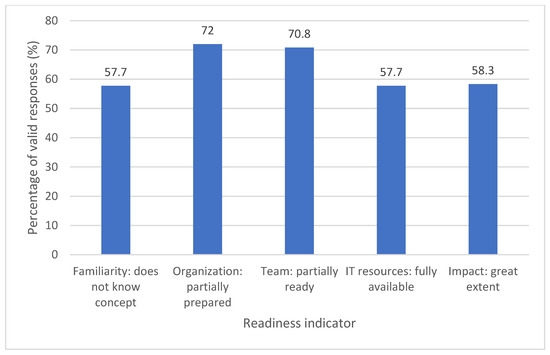
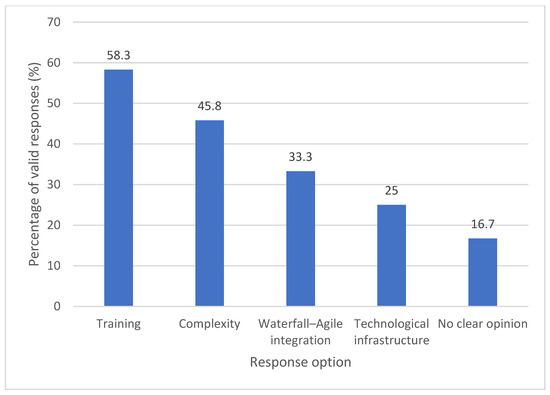
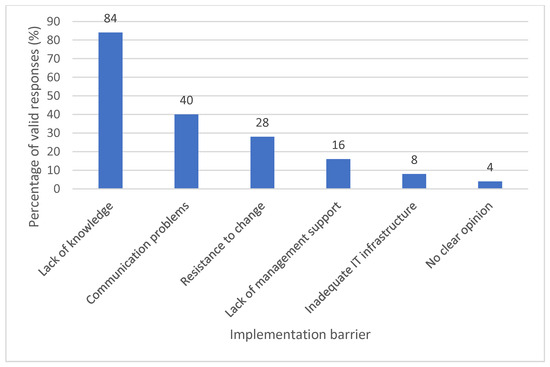
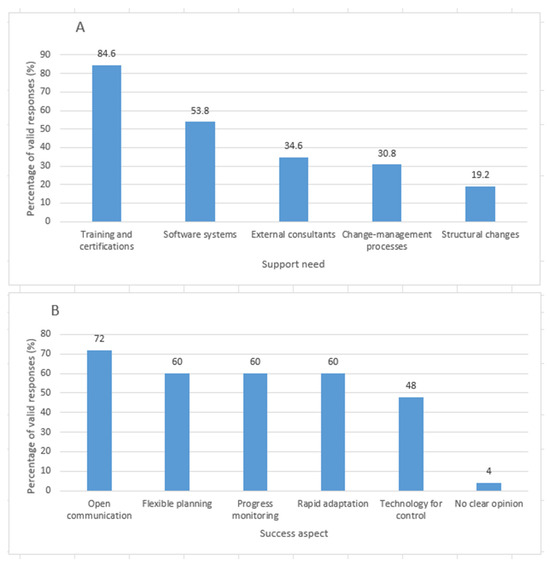
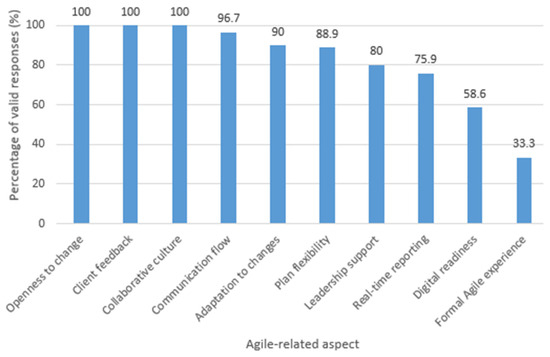
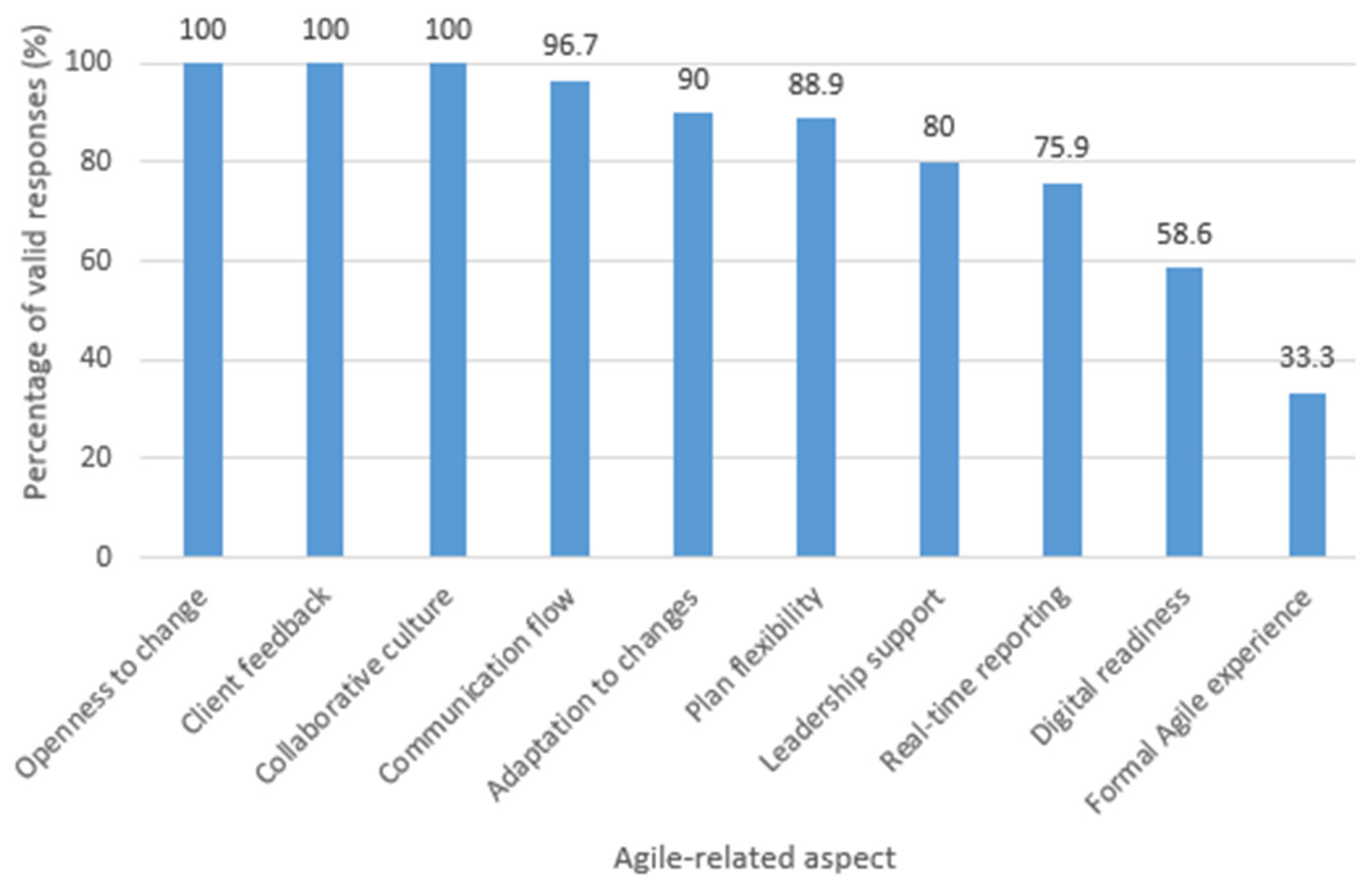

Disclaimer/Publisher’s Note: The statements, opinions and data contained in all publications are solely those of the individual author(s) and contributor(s) and not of MDPI and/or the editor(s). MDPI and/or the editor(s) disclaim responsibility for any injury to people or property resulting from any ideas, methods, instructions or products referred to in the content. |
© 2026 by the authors. Licensee MDPI, Basel, Switzerland. This article is an open access article distributed under the terms and conditions of the Creative Commons Attribution (CC BY) license.