


Abstract
Migrant architecture reflects selective continuity and reconfiguration across social contexts, but visual form alone cannot establish cultural origin or adaptation. This study develops an auditable human–AI framework for cross-domain architectural-component analysis and demonstrates it on Chinese diaspora buildings in Myanmar. A source corpus of 410 Minnan images with 5110 oriented bounding boxes supported source-only model development, while the target corpus contained 233 photographs from nine Myanmar sites. On a frozen 35-image, 271-component unseen-photo holdout from seven overlapping sites, YOLO11m-P2+C2PSA achieved 45.1% precision, 32.1% recall and 37.5% F1, whereas YOLO26m-P2+C2PSA achieved 56.3%, 18.1% and 27.4%, respectively. A prediction-blind second-reader check on seven selected images yielded 92.8% agreement F1 and median matched IoU of 0.774. Human verification and image-plane analysis identified selective continuity and contrasting component configurations; documentary evidence supported social–institutional embedding more strongly than Myanmar-derived material–morphological adaptation. The framework provides a traceable evidence chain in which detector outputs guide inspection without replacing human verification or independent historical evidence. The Myanmar application is an exploratory case study rather than a population-level estimate.
1. Introduction
This section moves from the international problem of migrant-heritage interpretation to the limits of digital methods, then explains the deliberately partial Minnan-to-Myanmar source–target design and states the study aim and questions.
1.1. Migrant Architectural Heritage as a Cross-Context Evidence Problem
Buildings produced through processes of migration are not passive containers of an intact culture carried from one territory to another. They are material records of selection, reconstruction and negotiation: communities retain some religious and architectural signs, reorganise others under new institutions, and repeatedly modify places as resources, regulations and social roles change. Theories of cultural hybridity, diasporic identity and collective memory accordingly treat identity as produced through continuing relations rather than preserved as a fixed essence [1,2,3]. Heritage research further shows that building meanings are socially authorised and continually renegotiated [4,5]. Migration-heritage studies describe transnational corridors [6], material practices and diasporic home-making [7,8,9], contested qiaoxiang (侨乡, an emigrant home region or hometown associated with overseas Chinese communities) heritage [10], and the corridor as a wider analytical framework [11].
Chinese diaspora buildings in Southeast Asia make this problem especially visible. Studies across Medan, Indonesia, Malaysia, Singapore and Vietnam show that diaspora urban form, temple networks, religious hybridisation and house design are reconfigured in host contexts [12,13,14,15]. Temples, native-place associations, clan halls, schools and charitable premises may occupy the same compound or succeed one another through rebuilding. Their cultural significance, therefore, lies not only in stylistic resemblance to a presumed place of origin, but also in the way architectural components, inscriptions, ritual practices and public functions are recombined in a host society. This is consequential for conservation: describing a building simply as ‘Chinese’, ‘Myanmar’, or a visually mixed style can flatten the historical choices and institutional relationships that produced its present form. A more defensible account must distinguish at least three processes: selective continuity of inherited signs, formal reconfiguration of visible components, and local adaptation in social, material or constructional practice.
Comparative studies have examined hybrid built heritage through whole-building style classification and historical architectural hybridity [16,17], while regional settlement research shows how transnational Chinese heritage is reshaped across host contexts [18]. These approaches do not necessarily preserve a traceable component-level evidence chain.
Myanmar is an important yet difficult setting for such an account. Research on Chinese communities in colonial and contemporary Myanmar documents migration and urban association life [19,20,21,22], religious localisation [23,24], voluntary associations and public commemoration [25], and the spatial and civic history of Chinese Yangon [26,27]. Studies of Yangon locate temples and associations within the port city’s spatial and civic life [21,26], while work on Buddhism and voluntary associations traces change in a Theravada-majority and politically shifting environment [23,24,25]. Yet this historical and institutional literature is only loosely connected to reproducible, component-level observations of the surviving buildings. Conversely, photographs may show roofs, bracket components, plaques, lanterns, window/door and pendant columns, but visual presence alone cannot establish their date, regional origin, symbolic meaning or relation to Myanmar materials and craftspeople. The research problem is, thus, not merely to identify visible objects. It is to construct a traceable chain from component evidence to spatial description and then to historically bounded cultural interpretation.
This study, therefore, treats migrant architectural heritage as an evidence-bounded category rather than a fixed stylistic identity. Selective continuity refers to the retention or renewed display of particular components, inscriptions, rituals or institutional identities; formal reconfiguration refers to differences in their position, density, combination or hierarchy. Social–institutional embedding can be supported by historical records of association, education, charity and public service, whereas material–morphological adaptation requires independent evidence of materials, craftspeople, climatic construction, regulation or Myanmar-derived forms. The distinction is grounded in work on cultural identity and memory [1,2,3], socially constituted heritage [4,5], transnational migration heritage [6,11], and regional settlement evidence [18].
1.2. Digital Heritage Documentation, Computer Vision, and Evidence Boundaries
Digital recording and computer vision can help organise large photographic corpora. Photogrammetry and heritage information modelling support geometric and semantic documentation [28,29], while machine-learning surveys and facade studies address component detection and segmentation [30,31,32]. Graph- and topology-aware approaches extend this work into relation-sensitive component analysis [33,34,35,36,37]. However, technical convenience does not remove the evidential problem. Dataset-bias and distribution-shift studies show that performance may deteriorate under changes in architecture, viewpoint, image quality and acquisition context [38,39,40,41,42,43]. Oriented object detection is potentially useful for architectural components because eaves, plaques and oblique facade elements are not always well represented by horizontal boxes [44,45,46]. A detector trained on Minnan buildings and applied directly to Chinese diaspora buildings in Myanmar must, therefore, be evaluated as a domain-transfer claim, not presumed to provide an accurate inventory.
Photogrammetry and HBIM provide strong geometric and semantic documentation [28,29], while facade recognition and topology-aware models scale component description [31,32,33,34,35,36,37]. Spatial-gene research can quantify morphology when a stronger spatial representation is available [47], and recent AI-assisted heritage work shows the practical value of automated identification within conservation workflows [48]. These adjacent methods do not by themselves guarantee a traceable inference from machine output to cultural meaning. The present framework, therefore, records each transition from candidate to verified observation, projected configuration and independently supported interpretation.
1.3. Why a Minnan Source Domain and a Myanmar Target Domain?
Minnan architecture is relevant as a deliberately partial historical reference for Fujian-linked institutions in the Myanmar corpus. It also offers a documented source vocabulary for roofs, openings, bracket components, lanterns, plaques and pendant columns. The target set is, nevertheless, multi-source: Fujian/Minnan, Cantonese, Yunnan-linked and clan networks coexist in Yangon and Mandalay [26,49,50,51,52,53,54,55,56,57,58,59,60,61,62,63,64].
Minnan architecture is used as a historically informed but deliberately partial source domain, not as a provenance classifier for the Myanmar buildings. The mismatch is analytically useful because it tests what remains machine-recognisable across a domain shift and identifies what must instead be verified by people and contextualised with historical records.
1.4. Research Gap, Primary Aim, Research Questions, and Contributions
The primary aim of this study is to develop and evaluate an auditable human–AI evidence-chain framework for cross-domain architectural-component analysis and to examine its exploratory application to Chinese diaspora buildings in Myanmar. The framework preserves the provenance and limits of each inference rather than treating detector performance, visual description and cultural interpretation as interchangeable outputs.
The study asks:
- RQ1. To what extent do the pre-specified recall-first and precision-first operating roles persist under frozen evaluation on unseen target-domain photographs from overlapping Myanmar sites?
- RQ2. How does frozen target-domain detection performance vary across component classes, sites and apparent component sizes, and what limitations are associated with viewpoint and sampling?
- RQ3. Which component configurations remain after complete human verification, and what evidence-bounded interpretations of selective continuity, formal reconfiguration and cultural adaptation can be supported when these configurations are combined with historical and institutional records?
The contribution is threefold. Methodologically, the study formalises an auditable four-level evidence chain and evaluates its detector component through a controlled source-domain ablation that exposes accuracy–recall–compute trade-offs rather than assuming uniform architectural gains. Empirically, it provides human-verified component and projected-configuration evidence for nine Myanmar sites without claiming a population estimate. Theoretically, it separates visible continuity and formal reconfiguration from social–institutional embedding and from unestablished material–morphological adaptation.
Existing methods improve documentation, recognition or geometric representation. The present contribution instead establishes explicit rules for each stage of inference: when a machine prediction becomes a verified observation, when that observation supports only projected facade configuration, and when an external documentary source is required before a cultural claim is permitted.
The remainder of this paper is organised as follows: Section 2 presents the general methodological framework, including data separation, controlled detector evaluation, human verification, image-plane analysis and evidence-grading rules. Section 3 introduces the Myanmar exploratory case study, datasets and sampling boundaries. Section 4 reports the controlled source-domain experiments, frozen target-domain evaluation, verification results and projected facade analyses. Section 5 discusses the three research questions, methodological transferability, cultural interpretation and conservation implications. Section 6 summarises the main findings, limitations and directions for future research.
2. General Methodological Framework
The framework is reusable beyond the present case only when it preserves data separation, complete visual verification, limits on image-plane geometry and cultural interpretation constrained by graded documentary evidence. This section defines those transferable rules before the Myanmar demonstration.
2.1. Human–AI Evidence Chain and Inferential Levels
The framework contains four inferential levels. Level 1 generates oriented-bounding-box candidates with source-trained detectors. Level 2 establishes visible component presence through complete human inspection and correction. Level 3 describes co-occurrence, alignment, proximity and rectified layout only within submitted image planes. Level 4 combines verified observations with graded historical or institutional records to support bounded cultural interpretation. No level may be bypassed.
The source domain is the labelled corpus used for source-only model development; the target domain is the Myanmar photographic corpus used for human-audited transfer assessment. An oriented bounding box (OBB) is a rotated quadrilateral used to delimit a visible component. A retrospective audit is a reused target benchmark for model-role comparison, whereas the frozen holdout of unseen photographs is an image-disjoint post-selection evaluation at overlapping sites.
Figure 1 summarises the overall cross-domain research methodology and evidence flow. The detection-and-evaluation branch separates controlled source-domain development, retrospective Myanmar auditing and frozen unseen-photo evaluation, whereas the verified-analysis branch proceeds from complete human verification to projected image-plane analysis, evidence grading and bounded cultural interpretation. Human-verified reference standards support both retrospective and frozen evaluation, while historical and institutional evidence enters only at the claim-grading stage. The resulting inferential sequence is candidates → verified visibility → projected configuration → bounded interpretation.
Figure 1.
Cross-domain research methodology and evidence flow from source-domain detection to human-verified and evidence-bounded cultural interpretation. Solid arrows show workflow progression; dashed arrows show the human-verified reference used for evaluation.
2.2. Source–Target Domain Design and Data Separation Rules
The source corpus contained 410 images and 5110 OBBs from eight Minnan buildings. The image-level split contained 325 training images with 4102 OBBs, 36 validation images with 420 OBBs and 49 test images with 588 OBBs. All eight buildings occurred across the three splits, so the source test is image-held-out rather than building-held-out.
No Myanmar image was used for source-only weight optimisation. The 62-image retrospective audit was used for target candidate comparison and operating-role assignment; then, the selected configurations and thresholds were frozen. The 35-image holdout excluded audit and adaptation-branch photographs and was never used to tune the controlled ablation.
The retrospective audit, frozen unseen-photo holdout, adaptation branch and burden record had disjointed image roles. Holdout photographs were image-disjoint but shared seven sites with the retrospective audit; they, therefore, test unseen photographs, not unseen buildings or sites.
A recall-first operating role prioritises reducing missed candidates before complete inspection; a precision-first role prioritises reducing false candidates when review capacity is constrained. These roles are benchmark-specific and do not constitute a universal model ranking.
The legacy 21-run development record is retained only as descriptive provenance because architectures, resolutions, initialisations, schedules and augmentation histories differed. It is not used to infer causal module effects.
Causal configuration claims are restricted to the new controlled source-domain experiment in Section 2.4 and its held-out image-level source-test results in Section 4.1; these results are distinct from both the retrospective Myanmar audit and the frozen site-overlapping Myanmar holdout.
2.3. Component Ontology and Analytical Role
The operational six-class ontology records visible components that can be recognised consistently in both source and target photographs and that remain useful for projected facade reading after human verification. It is neither an exhaustive architectural taxonomy nor a classifier of regional origin, identity, age or cultural meaning. Its analytical role is, therefore, to support auditable observation and comparison, not to define the full vocabulary of Myanmar Chinese architecture (Table 1).
Table 1.
Operational six-class visible-component ontology and interpretive boundaries.
2.4. Model Configurations and Controlled Ablation Protocol
The retained candidate family included standard and P2-augmented YOLO11m/YOLO26m OBB configurations and C2PSA variants. These historical runs document model development but do not isolate individual modules.
Representative images from the source-training, image-held-out source-test, and retrospective Myanmar audit roles are shown in Figure 2. The confirmatory source-domain experiment used one YOLO11m-OBB backbone family and varied only the P2 high-resolution detection branch and the layer-10 C2PSA block in a 2 × 2 design at 1280-pixel input (Figure 3). A resolution series then evaluated the full P2+C2PSA configuration at 640, 960 and 1280 pixels. All six runs used the same 325/36/49 source image split, 200-epoch budget, batch size of 2, deterministic seed of 42, AdamW settings and augmentation policy.
Figure 2.
Image atlas across distinct evidence roles. Rows depict (a) source-training examples, (b) image-held-out source-test examples from the same eight source buildings, and (c) retrospective Myanmar human-audit examples; none of the Myanmar audit images entered the controlled source-domain ablation.
Figure 3.
Controlled YOLO11m-OBB architecture matrix. A0–A3 vary P2 status and the layer-10 C2PSA block while retaining shared layers and a fixed training contract; parameters and GFLOPs report capacity and compute explicitly.
The best checkpoint for each run was selected solely by source-validation fitness and evaluated on the held-out 49-image source test set. Source-snapshot verification checked 410 image files, 410 corresponding label files and one dataset-configuration file, with no missing, extra or mismatched image–label pairs. The Myanmar retrospective audit and frozen holdout were not accessed for architecture, resolution, hyperparameter, threshold, epoch or checkpoint selection. Because each configuration was trained with one seed, the contrasts are descriptive and do not estimate run-to-run variability.
Training and evaluation used Python 3.14.3, Ultralytics 8.4.36 [65] and PyTorch 2.11.0+cu126 on an NVIDIA GeForce RTX 4080 Laptop GPU. Architecture files, run manifests, fixed hyperparameters, environment records, checkpoints and per-split metrics were retained as reproducibility records. Detailed layer-level architectures of the retained YOLO11m-P2+C2PSA and YOLO26m-P2+C2PSA models are provided in Supplementary Figure S2.
2.5. Target-Domain Matching and Evaluation
All candidate models were evaluated with the same deployed setting: 1280-pixel input, confidence threshold of 0.10 and non-maximum-suppression IoU of 0.70. Predictions were candidate locations for review rather than final component inventories. A missing prediction was not interpreted as the absence of an architectural component or cultural tradition.
The 62-image benchmark used evenly spaced within-site sampling across all nine sites and contained 493 completely human-verified OBBs. It was not used for source-only weight optimisation, but its labels were reused to compare candidate models and operating roles. It is, therefore, reported as a retrospective human-audited benchmark used for workflow and model selection, not as an untouched external test.
After source-only candidate development, the 62 audit photographs were used for retrospective candidate comparison and operating-role selection. The selected recall-first and precision-first models and their deployed settings were then checksummed and frozen. The 62 audit photographs and the 36 photographs used in the exploratory Myanmar-adaptation branch were excluded from the holdout sampling frame derived from the 233-image target corpus. Of the nine sites, seven retained at least five eligible photographs after these exclusions; five photographs evenly spaced in filename order were selected within each eligible site (thirty-five photographs). The reconciled flow ledger contains 62 retrospective-audit, 36 adaptation-branch, 35 frozen-holdout, 7 blank manual-burden, 7 candidate-assisted-burden and 86 unused legacy photographs; all 147 active images have one recorded role and no cross-role overlap. A pHash/dHash screen generated two within-role similarity candidates and zero alerts crossing into the frozen holdout. This is a leakage screen, not a claim that all photographs are visually independent. LabelMe holdout tasks contained neither predictions nor pre-existing boxes. Audit and holdout photographs are image-disjoint but remain site-overlapping; this is an unseen-photo holdout rather than site-disjoint or unseen-building validation.
Within each image, all same-class prediction–reference pairs were ranked by OBB IoU in descending order. Greedy one-to-one matching accepted the highest-IoU eligible pair when neither member had previously been matched and the IoU was at least 0.50. Micro precision, recall and F1 were calculated from pooled true-positive, false-positive and false-negative counts. In a retrospective sensitivity analysis restricted to the 62-image audit, archived predictions were rescored at confidence thresholds from 0.10 to 0.95 to characterise precision–recall trajectories and candidate-review burden. This analysis did not access the frozen holdout or any new-site image, and it cannot convert the reused audit into an independent test.
For the frozen 35-image holdout, the pre-specified recall-first YOLO11m-P2+C2PSA model and the pre-specified precision-first YOLO26m-P2+C2PSA comparator were each run once at the frozen setting. On the retrospective audit, a paired 10,000-replicate site-cluster bootstrap found that YOLO11m minus YOLO26m was −19.3 percentage points in precision (95% CI −24.3 to −14.5), +11.6 points in recall (95% CI +8.5 to +14.1), and +0.2 points in F1 (95% CI −3.8 to +4.3). Thus, the audit supports complementary retrieval roles but not an F1 winner. At the available 273-candidate YOLO26m workload, YOLO11m at confidence 0.45 produced 269 candidates and an F1 of 44.4%; the converse 518-candidate comparison cannot be reconstructed because the archived YOLO26m snapshot begins at confidence 0.10. No extrapolation or re-inference below that frozen output threshold was performed. Seven sites were sampled with replacement in each bootstrap replicate for the photo-level holdout; all photographs and component outcomes belonging to a sampled site were retained together, pooled TP/FP/FN counts were recomputed, and F1 was recalculated. The estimates remain photo-level evidence because site overlap with the earlier audit is retained.
For each frozen-holdout model, precision, recall and F1 were tabulated by the six component classes and by overlapping site. To describe the association between visible target-component scale and recovery, the 271 verified OBBs were divided into global quartiles of normalised OBB area, and recall was calculated within each quartile. This descriptive stratification is not an ablation of the P2 module or a causal size-effect test. Three holdout photographs were pre-specified for the main qualitative plate to make contrasting visual burdens visible; the complete five-case audit is retained as Supplementary Figure S1. These are labelled examples rather than a population-wide error-cause code. Apparent OBB area is confounded with component class, viewpoint, crop scale and site composition; size-stratified recall is, therefore, descriptive and cannot be attributed causally to P2 or image resolution.
2.6. Human Verification and Independent Reliability Protocol
Reader A inspected each audit and holdout photograph beyond the detector-provided boxes, corrected labels and OBB geometry, removed false candidates and added missed visible instances under the six-class manual. Reader B independently annotated one median-ID holdout photograph per eligible site from blank tasks and saw neither predictions nor Reader-A boxes. Same-class OBBs were greedily matched at IoU ≥ 0.50 for the reliability estimate. This seven-image exercise measured inter-reader agreement rather than annotation accuracy. Disagreements were recorded without adjudication, and the frozen primary reference was not changed after comparison. The retained project record does not separately document the readers’ prior annotation experience or a formal calibration exercise (Table 2).
Table 2.
Human-verification and independent-reliability protocol.
The written manual required the tightest visible quadrilateral, visible-extent treatment of occlusion, separation of repeated instances when boundaries were discernible, explicit uncertainty notes and a full-image missed-instance search. The seven-image result remains a limited independent reliability check covering one selected photograph per eligible site.
This exercise was designed to describe candidate correction burden rather than to test annotation-speed improvement. One reviewer completed seven blank-image manual tasks and seven candidate-assisted tasks on different photographs paired by site. The candidate-assisted tasks used frozen YOLO11m-P2+C2PSA outputs at the fixed setting. Because the task images differed between conditions, the record is descriptive and cannot establish a causal time-saving effect; full timing and correction counts are reported in Supplementary Table S2.
2.7. Image-Plane Configuration Analysis
Verified OBB coordinates were normalised to the 0–1 range of each image. For each component, the horizontal and vertical pixel-space OBB centre coordinates were divided by image width and height to obtain the normalised centre coordinates defined below.
All coordinate, distance, adjacency, alignment and mirror measures describe projected relationships in submitted or analyst-rectified image planes. They are not metric 3D measurements and should not be interpreted as building dimensions, construction modules, physical adjacency or surveyed facade proportions.
Normalised OBB area was defined as shown below, where the numerator is the OBB polygon area and W and H are the image width and height.
For each OBB, the axis-aligned envelope was defined by its normalised coordinate limits. For each component pair, the horizontal and vertical envelope gaps, centre distance and edge distance were calculated as shown below. Envelope gaps were calculated from axis-aligned envelopes of the OBB polygons, not from exact oriented edges.
A horizontal-coordinate difference, |xi − xj| ≤ 0.05, marked vertical axial alignment; centre distance of at most 0.15 marked proximity, and edge distance of at most 0.05 marked adjacency. The screen-space mirror score rewarded same-height positions reflected about the image centreline. These heuristic thresholds provided a consistent descriptive screening rule and were not fitted to maximise any cultural or model-performance outcome.
Same-class pairs with a mirror score of at least 0.50 were retained as mirror candidates. These rules generated 5401 within-image component pairs from 493 components. The thresholds described submitted image frames only and were not converted into physical dimensions, construction modules, or surveyed facade proportions.
2.8. Evidence Hierarchy and Cultural-Interpretation Rules
Cultural interpretation combined verified components, image-space organisation, rectified views, site histories, institutional records, scholarly literature and documented source conflicts. Direct project visual evidence was distinguished from peer-reviewed scholarship, institutional or government documentation, contextual local history and weaker guide-style sources. Institutional and government webpages were used only for contemporary affiliation, activity, reconstruction or public-service records; local-history pages were treated as local narratives, and Chinatownology or architectural-guide pages were contextual sources rather than sole support for decisive historical or cultural claims. Conflicting dates and institutional continuities were preserved as conflicts rather than resolved by preference (Table 3).
Table 3.
Qualitative evidence hierarchy for cultural interpretation.
Selective continuity referred to the documented retention of selected components, religious practices, inscriptions, or institutional identities. Formal reconfiguration referred to visible differences in component position, density, combination, or hierarchy and was treated as tentative evidence unless diachronic records were available. Cultural adaptation was divided into social–institutional embedding and material–morphological adaptation. The latter required direct information on Myanmar materials, craftspeople, climatic construction, religious forms, or building regulation; it was not inferred from visual co-occurrence alone. Four comparable main cases were analysed across these dimensions, and Longshan Hall was used to expose the boundary of oblique partial imagery. For the cultural-adaptation synthesis, ‘Supported’ required convergence between human-verified visual observations and external scholarly or institutional evidence. ‘Contextual/partial’ indicated incomplete convergence, unresolved source conflict, or evidence restricted to part of the building. ‘Not established’ indicated that the relevant claim lacked direct supporting evidence. ‘Not assessable’ indicated that the available image or documentation did not permit evaluation of that dimension. A supported Level-4 claim requires verified visual evidence plus a relevant E1/E2 source or convergent independent sources with their limits stated. E3/E4-only evidence is labelled contextual or partial. Conflicts are retained rather than silently reconciled, and the analytical dimensions are not building types.
3. Myanmar Exploratory Case Study and Data
The Myanmar application is an exploratory case study rather than a population-level estimate of Chinese diaspora architecture. This section defines the geographic and historical context, the source-domain relevance and mismatch, the photographic subsets and the purposive case-selection boundary.
3.1. Historical and Geographic Context
Chinese communities in Yangon and Mandalay developed through colonial and postcolonial migration, religious localisation, voluntary association, education and public commemoration [19,20,21,22,23,24,25,26,27]. The target corpus records six project-coded sites in Mandalay and three in Yangon. City-level locators are shown in Figure 4; individual building coordinates are not inferred where they were not independently verified.
Figure 4.
Geographic context of the Myanmar study areas. Locations of Mandalay and Yangon are shown with enlarged views of the corresponding study areas and administrative boundaries.
3.2. Source-Domain Relevance and Target-Domain Heterogeneity
Fujian and Minnan connections are relevant to Qingfu Temple, Fuqing Guild Hall and part of the wider migration network, but they do not define the entire target corpus. Cantonese institutional history, Yunnan-linked migration memory and clan-based networks are also represented [26,49,50,51,52,53,54,55,56,57,58,59,60,61,62,63,64]. The source corpus is consequently a deliberately partial reference vocabulary under domain shift, not a claim that every Myanmar building derives from Minnan.
3.3. Datasets, Sampling Units, and Holdout Construction
The Myanmar corpus contains 233 field photographs from nine sites. Its mutually exclusive active roles comprise 62 retrospective-audit images, 36 adaptation-branch images, 35 frozen-holdout images, 7 blank-manual burden images and 7 candidate-assisted burden images; 86 images were unused. The frozen holdout contains five images from each of seven eligible sites and 271 verified OBBs (Table 4).
Table 4.
Study datasets, sampling units and evidential roles.
A file-level metadata audit recorded the original filename, SHA-256 checksum, pixel dimensions, capture timestamp, camera make and camera model from core EXIF fields for all 233 legacy Myanmar photographs. The corresponding flow ledger records image-to-site assignment, legacy role and metadata completeness. All photographs reproduced in the main text were taken by the first author during field investigations; no third-party photographs are used. The corpus includes frontal, oblique and local-detail views; all image-plane analyses, therefore, refer to the submitted photographs and do not infer physical geometry.
Seven eligible holdout sites each contributed five photographs: MDL_DMGYS, MDL_FQG_FJHG, MDL_JDY, MDL_XSS, YG_GYGM, YG_LST and YG_QFG. These codes are project identifiers rather than architectural abbreviations: the prefixes MDL and YG denote Mandalay and Yangon, respectively, while the remaining characters identify individual surveyed sites. A terminal number, when present (e.g., MDL_FQG_FJHG_02), identifies a specific photograph within that site. The holdout remains photo-level and site-overlapping rather than site-disjoint.
3.4. Case-Selection Criteria and Selection-Bias Boundary
Five cases were purposively selected for closer visual interpretation after verification. Main-case eligibility required an approximately frontal facade plane, adequate visible coverage, sufficient annotation completeness, an interpretable component configuration and available site-level historical evidence. Four approximately frontal views were retained as the main comparative cases: Jinduoyan (MDL_JDY_20), Qingfu Temple (YG_QFG_01), Guanyin Ancient Temple (YG_GYGM_15) and Fuqing Guild Hall (MDL_FQG_FJHG_02). Longshan Hall (YG_LST_26) was retained only as a strongly oblique qualitative boundary case and excluded from quantitative comparison. Selection was based on analytical legibility and documentary support, not on detector performance or the cultural conclusion subsequently assigned to a case.
This purposive rule favours frontal, visible, information-rich and better-documented facades; it may underrepresent altered, poorly preserved, inaccessible or weakly documented buildings. The four main cases cannot estimate prevalence across nine sites or the wider diaspora. Longshan Hall is retained as a boundary case showing how strong obliquity and limited visible coverage can prevent quantitative cross-case comparison.
4. Results
Results are reported in the order of the research questions: the controlled source-domain study design and retrospective operating roles, frozen overall performance and heterogeneity, independent reliability, review burden, verified projected configurations and bounded cultural synthesis.
4.1. Controlled Source-Domain Ablation Results
All six pre-specified runs completed 200 epochs and passed checkpoint, source-snapshot and metric verification. The comparisons below use the held-out 49-image source test set, with mAP50–95 as the primary aggregate metric (Table 5). They isolate within-family source-domain configuration effects and cannot establish a target-domain benefit.
Table 5.
Controlled source-domain ablation of P2, C2PSA and input resolution.
At 1280 pixels, A2, which retained C2PSA but omitted P2, achieved the highest source-test mAP50–95 among the six runs (59.2%). Adding P2 reduced mAP50–95 by 4.1 percentage points without C2PSA (58.9% to 54.8%) and by 2.3 points with C2PSA (59.2% to 56.9%). Conversely, adding C2PSA changed mAP50–95 by +0.3 points without P2 and +2.1 points with P2. In this single-seed comparison, C2PSA was associated with modest mAP50–95 gains, whereas P2 did not improve aggregate source-test mAP50–95.
Within the C2PSA pair, adding P2 increased recall from 76.5% to 80.3% but reduced precision from 90.8% to 80.8%, resulting in lower F1 and mAP50–95. It increased the preflight theoretical computation from 287.6 to 369.4 GFLOPs (+28.4%), while the parameter count increased only from 20.91 to 21.00 million. The full P2+C2PSA configuration is, therefore, interpreted as a recall-oriented candidate generator rather than the source-domain accuracy optimum.
For the full P2+C2PSA configuration, source-test mAP50–95 increased from 53.6% at 640 pixels to 56.9% at 960 pixels and remained 56.9% at 1280 pixels. The 960-pixel run matched the 1280-pixel primary metric to one decimal place while corresponding to 207.8 rather than 369.4 GFLOPs, a 43.8% reduction in theoretical computation. This source-domain plateau does not justify post hoc retuning of the frozen Myanmar workflow.
The legacy training curves in Figure 5 document the retained operational checkpoints and model-development history. They are descriptive provenance and are not used to infer the isolated effect of P2, C2PSA or input resolution.
Figure 5.
Source-domain validation trajectories across retained training stages for (a) YOLO11m-P2+C2PSA and (b) YOLO26m-P2+C2PSA. Faint traces show logged epochs, solid lines show seven-epoch rolling means and the dashed line marks transfer from 960- to 1280-pixel training.
4.2. Retrospective Comparison of Target-Domain Candidate Models
At the fixed operating point, YOLO11m-P2+C2PSA had higher recall than YOLO26m-P2+C2PSA, whereas the latter had higher precision; their F1 values differed by only 0.2 percentage points. YOLO11m matched 232 of 493 verified components, with 286 false positives and 261 false negatives (precision: 44.8%, recall: 47.1%, and F1: 45.9%). The precision-first YOLO26m-P2+C2PSA configuration matched 175 components, generated 98 false positives and left 318 false negatives (64.1%, 35.5%, and 45.7%). YOLO11m recovered 57 additional verified components, whereas YOLO26m reduced false positives by 188. These outputs corresponded to 518 and 273 candidate locations for review, respectively.
Historical candidate configurations are retained as development provenance in Supplementary Table S1. They are excluded from the simplified main comparison because their architectures and training histories differ and they do not constitute controlled contrasts.
The results support two benchmark-specific deployment roles. The paired site-bootstrap confidence interval for the F1 difference (YOLO11m minus YOLO26m: −3.8 to +4.3 percentage points) crosses zero, whereas the precision and recall differences retain their expected directions. YOLO11m-P2+C2PSA is, therefore, a recall-first main candidate model when the priority is to minimise missed components before complete human verification. YOLO26m-P2+C2PSA is a precision-first auxiliary model when the review capacity is constrained and false candidates should be reduced. These are task-dependent operational recommendations, not evidence that one architecture is universally superior. Figure 6 summarises the retrospective fixed-threshold operating points and corresponding candidate volumes. Historical candidate configurations and the descriptive candidate-review burden record are reported in Supplementary Tables S1 and S2, respectively.
Figure 6.
Retrospective comparison of the two retained operational models on the Myanmar human-audit benchmark: (a) precision–recall operating points; (b) candidate volume for review (TP + FP) and verified components recovered (TP).
4.3. Frozen Unseen-Photo Holdout: Overall Performance
On the frozen 35-image, 271-component photo-level holdout, the recall-first YOLO11m-P2+C2PSA model produced 87 true positives, 106 false positives and 184 false negatives (precision: 45.1%, recall: 32.1%, and F1: 37.5%; site-cluster bootstrap F1 95% CI 27.5–44.2%). The precision-first YOLO26m-P2+C2PSA comparator produced 49 true positives, 38 false positives and 222 false negatives (56.3%, 18.1%, and 27.4%; F1 CI 18.2–34.9%). The bootstrap intervals overlap; the holdout, therefore, supports the persistence of the operational precision–recall contrast rather than a claim of statistically established superiority in F1. Performance was lower on previously unseen target photographs, and the holdout was not used for retuning or site-disjoint generalisation claims.
4.4. Frozen-Holdout Heterogeneity
Class-level recall varied substantially. YOLO11m-P2+C2PSA recovered 19.2% of bracket components (19/99), 34.5% of roofs (19/55) and 63.6% of pendant columns (14/22); YOLO26m-P2+C2PSA recovered 7.1%, 16.4% and 63.6%, respectively. Class-level estimates, particularly for lantern and pendant-column categories, should be interpreted descriptively because class support is limited. Across the seven overlapping sites, YOLO11m had a descriptively higher F1 at six of the seven sites, whereas YOLO26m was higher only at MDL_XSS. Recall increased across several normalised-area quartiles, but this descriptive association cannot isolate the effect of a particular architectural module. Figure 7 presents the class- and site-stratified results and pooled TP/FP/FN composition.
Figure 7.
Frozen Myanmar photo-level holdout performance by class and overlapping site: (a) counts and true positives; (b) class metrics; (c) site F1; (d) pooled TP, FP and FN.
The qualitative audit in Figure 8 complements the class-, site- and apparent-size summaries with three pre-specified visual-burden cases: dense repeated components, broad facade and apparent-scale variation, and a detailed entrance with complementary false-positive and false-negative patterns. The examples were selected to make contrasting error burdens visible, not by best model score. The complete five-case plate is retained as Supplementary Figure S1.
Figure 8.
Qualitative error audit on three representative frozen-holdout photographs. Rows show the original image, human-verified reference and outputs from the two frozen models. Cases span dense repeated components, broad facade and apparent-scale variation, and a detailed entrance with complementary false-positive and false-negative patterns; they were not selected by best model score. The complete five-case plate is provided in Supplementary Figure S1. An enlarged high-resolution version is provided in Appendix A (Figure A1).
4.5. Independent Human-Verification Reliability
A limited independent second-reader check was completed after the primary annotator reference was frozen. An independent second reader annotated seven selected photos, one per holdout site, without access to model predictions or primary-annotator boxes. At a class-consistent OBB IoU of at least 0.50, 64 components matched; 6 components were identified only by the primary annotator and 4 only by the independent second reader (primary annotator = 70; independent second reader = 68). This produced a 94.1% precision, 91.4% recall and 92.8% F1 agreement, with a matched OBB median IoU of 0.774.
This reliability result is not an estimate of annotation accuracy or population-wide inter-rater agreement because it covers seven selected images only. It documents limited, prediction-blind reproducibility for the frozen reference workflow. The frozen primary reference standard was retained for all reported holdout model evaluations (Table 6).
Table 6.
Target-domain candidate-model comparison and reference-standard reproducibility.
4.6. Candidate-Review Burden Record
The workload record describes correction burden rather than annotation-speed improvement. Manual and candidate-assisted conditions used different photographs, so no causal efficiency or general time-saving claim is made; aggregate timing and edit counts are reported in Supplementary Table S2.
4.7. Human-Verified Component Coverage and Image-Plane Configuration
Roof was the most broadly represented class, occurring in 48/62 images (77.4%), followed by window/door in 31 (50.0%), plaque in 28 (45.2%), bracket component in 18 (29.0%), lantern in 10 (16.1%) and pendant column in 8 (12.9%) (Figure 9a; Table 7). Bracket components had the largest instance count (175), but their narrower image coverage indicates that the total was driven by repeated units in local eave views rather than broad building-level prevalence.
Figure 9.
Human-verified component coverage and viewpoint-dependent image-plane configuration: (a) class coverage; (b) image-level co-occurrence; (c) selected projected relation rates. These descriptors are not surveyed geometry.
Table 7.
Human-verified component coverage and selected image-plane relations.
At image level, roof–plaque co-occurrence appeared in 23 images (37.1%), roof–window/door in 22 (35.5%), bracket–roof in 16 (25.8%) and plaque–lantern in 10 (16.1%) (Figure 9b). Under the heuristic screening rules, 43.0% of roof–plaque pairs and 49.3% of bracket–roof pairs met the adjacency threshold; plaque–lantern pairs had a 30.0% proximity rate and 76.7% vertical-alignment rate in the submitted image frames (Figure 9c). These instance-weighted, viewpoint-dependent relations describe joint visibility rather than physical connection, surveyed geometry, construction sequence or cultural causation.
Among 37 images containing both roof and non-roof components, the roof centroid was higher by an average of 0.193 in normalised image coordinates (median: 0.210), with a positive difference in 33 images. Of 2124 same-class pairs, 208 (9.79%) met the screen-space mirror-candidate criterion across 25 images. Viewpoint, cropping and perspective affect both measures. They were, therefore, used to screen visible organisation and to select cases for closer reading, not as substitutes for surveyed facade proportions or architectural symmetry.
4.8. Comparative Rectified Facade Cases
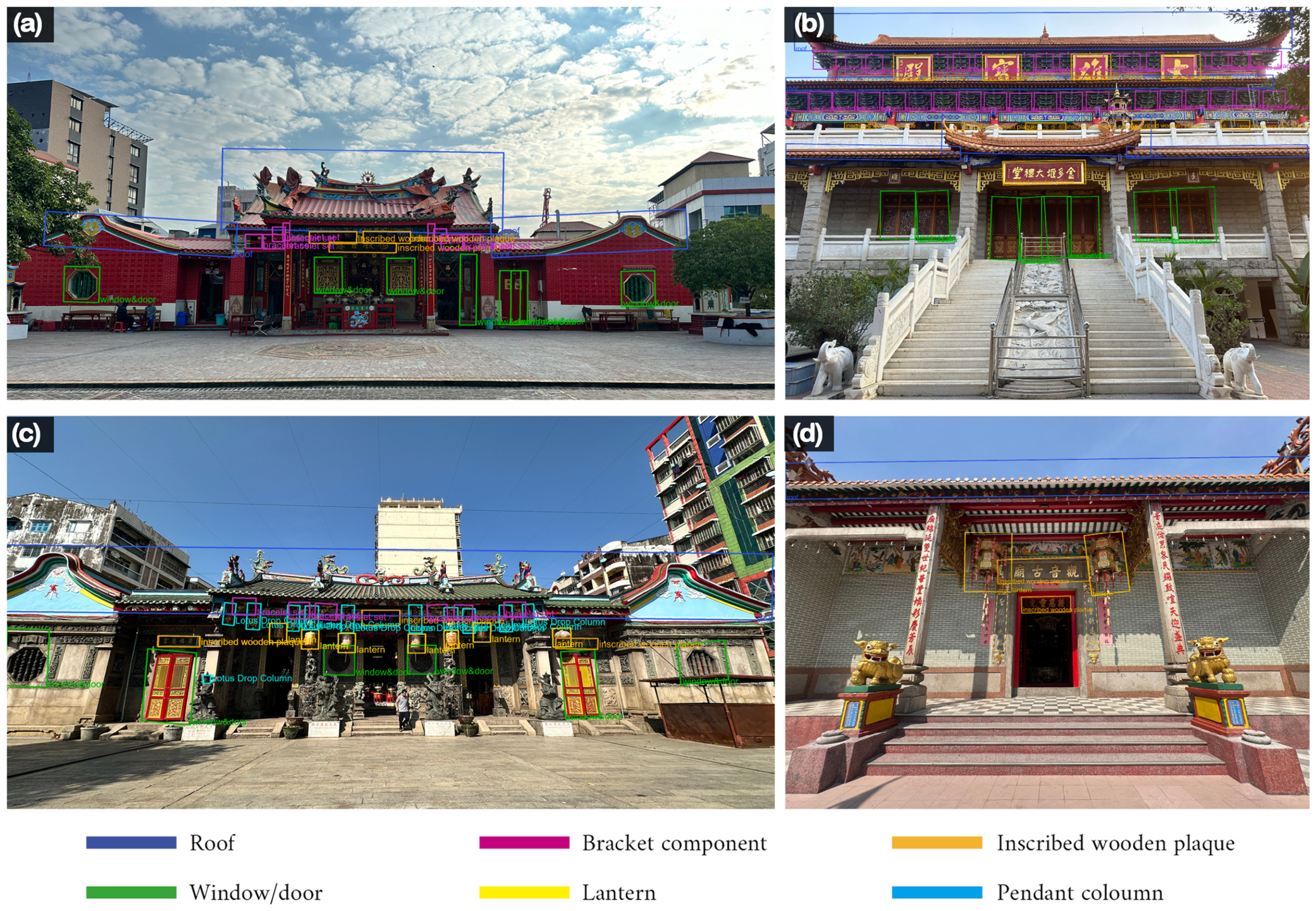
Four purposively selected approximately frontal cases met the main-case criteria of visible facade coverage, annotation completeness, interpretable component configuration and available site-level historical evidence (Figure 10). They are interpretive examples, not a frequency-representative sample or a statistical style classification. Jinduoyan contained 58 verified components: 35 bracket components, 10 plaques, eight window/door units and five roof units. Repeated eave elements, plaques and window/door formed the densest and most vertically layered configuration among the four cases. Qingfu Temple contained 35 components across all six classes, including 11 pendant columns, seven lanterns, six window/door units, six bracket components, four plaques and one roof unit. It, therefore, represented a multi-class entrance facade rather than a facade dominated by one repeated component.
Figure 10.
Four human-verified rectified planar facade approximations: (a) Fuqing Guild Hall; (b) Jinduoyan; (c) Qingfu Temple; and (d) Guanyin Ancient Temple. Rectification is analyst-estimated and not metric survey geometry. An enlarged high-resolution version is provided in Appendix A (Figure A2).
Guanyin Ancient Temple contained one roof, two plaques and two lanterns within a legible entrance unit. The selected view, therefore, represented a compact roof–inscription–lantern configuration. The Fuqing Guild Hall case contained 21 components: eight bracket components, seven window/door units, three roofs and three plaques. These were arranged as a relatively complete roof-eave–opening–inscription sequence. The four cases describe different visible organisations; they were selected interpretive cases, not clusters produced by a statistical style-classification model.
All four images were rectified using analyst-estimated facade planes. Curved eaves, roof depth and non-coplanar side elements violate a single-plane assumption, and no result was converted into real dimensions. The Fuqing Guild Hall interpretation is, therefore, limited to the selected Fuqing Guild Hall view and its visible component organisation.
4.9. Projected Facade-Organisation Analysis
Figure 11 extends the four-case plate by placing all 119 human-verified components from the selected main facades in a common analytical facade coordinate system. It retains the images as analyst-rectified image planes and does not convert them into surveyed elevations.
Figure 11.
Projected facade organisation in four analyst-rectified image planes: (a) normalised vertical positions for 119 verified components; (b) case-specific profiles. The figure does not establish metric dimensions, whole-building inventories, provenance or cultural causation.
The coordinate distributions make the visible organisation more legible without converting the photos into metric elevations. They show a broad bracket distribution across the selected facades, a compact pendant-column distribution concentrated in Qingfu Temple, and window/door centre positions that are generally lower than the roof and bracket groups. Curved eaves, depth-bearing elements and analyst-estimated rectification planes remain substantive limits. The patterns, thus, support case-level architectural description, not physical proportions, construction sequence, regional provenance or cultural causation.
4.10. Evidence-Bounded Cultural-Adaptation Synthesis
The architectural observations became culturally interpretable only when linked to site histories; Table 8 summarises the converging evidence and claim boundary for each case. At Jinduoyan, a local authored history connects the site to Yunnan–Myanmar migration memory and records a multi-regional reconstruction committee established in 1962, with participation extending beyond a single native-place group [49]. A consular record independently documents the site’s continuing public religious role but repeats rather than verifies its early foundation narrative [50]. Its dense roof–bracket–plaque configuration can, therefore, be described as a current visual index of selectively retained religious and inscriptional elements within a reorganised association setting. However, the frequently repeated 1517 foundation date remains a local tradition rather than a verified construction date, and the present facade is substantially confounded by twentieth-century reconstruction.
Table 8.
Comparative case evidence matrix for cultural-adaptation interpretation.
Qingfu Temple has stronger evidence linking architecture, religion and association life. Historical scholarship identifies it as a central place of belonging for the Fujian community in Rangoon, while architectural records trace a wooden temple in 1861, a permanent building completed in 1903 and later renovation [26,51,52]. The six-class entrance configuration is consistent with the visible maintenance of Chinese religious and association symbols. Its integration into a port city and its combined worship, meeting and learning functions provide evidence of institutional embedding in Yangon; they do not by themselves prove Myanmar-derived construction forms.
Guanyin Ancient Temple provides the clearest evidence of functional adaptation. Historical sources place a Cantonese Guanyin temple before 1824 and describe the later combination of temple, Cantonese association and school functions [53,54,55,56]. The addition of conversational English teaching in response to employment conditions in the colonial city is direct evidence of social–functional adaptation. The present roof–plaque–lantern entrance unit makes Cantonese religious and textual identity visible, but only five components were recorded in the selected view. Conflicting dates for nineteenth-century post-fire reconstruction and later major repair prevent the current facade from being read as an unchanged early form.
At Fuqing Guild Hall, the near-frontal roof–bracket–opening–plaque sequence provides evidence of continuing traditional component language, whereas institutional sources connect the site with the Fujian association, Chinese education and post-earthquake heritage repair [57,58,59,60,61]. These sources support an interpretation of ongoing organisational and educational reconfiguration. They do not establish the hall’s foundation date, the age of individual components or continuity between the school reported in the 1920s and the institution founded in 1993.
Across the cases, the strongest common finding was consequently not a visually measurable ‘hybrid style’. Multiple sources supported the co-location or historical linkage of religious practice, native-place or clan organisation, education, charity and public affairs. The images supported selective continuity of component language and suggested differences in component arrangement, but direct records of Myanmar materials, local craftspeople, climatic construction responses or specific Theravada architectural forms were unavailable. Within the limits of the present evidence, social and institutional adaptation was, therefore, better supported than material and morphological adaptation.
Figure 12 summarises this asymmetry. Selective component continuity and social–institutional embedding were supported in the four main cases; evidence for formal reconfiguration was partial, while direct evidence of Myanmar-derived material–morphological adaptation was absent. The oblique Longshan Hall view supported only contextual claims and did not permit assessment of formal or material–morphological adaptation.
Figure 12.
Evidence-bounded synthesis of cultural adaptation across the selected Myanmar cases.
The strongly oblique view of Longshan Hall contained only one bracket component, one plaque and one window/door unit. Historical evidence links the hall to the Zeng and Qiu clans, ancestor worship and displays of educational achievement, although its foundation is variously dated to 1875 and 1877 [62,63,64]. The historical material supports a discussion of clan memory and expanded social functions, but the image does not support whole-building counts, proportions, symmetry or cross-case quantitative comparison. The case was, therefore, retained as a qualitative counterexample rather than removed to make the main comparison appear more uniform.
5. Discussion
Section 5.1, Section 5.2 and Section 5.3 answer RQ1–RQ3, respectively. Section 5.4, Section 5.5, Section 5.6 and Section 5.7 then position the evidence chain against conventional heritage methods, develop the asymmetric adaptation interpretation within explicit evidence limits, state conservation implications and define transfer conditions.
5.1. RQ1—What Persists Under Frozen Cross-Domain Transfer?
The comparatively high pendant-column recall should be interpreted cautiously because the class contained only 22 holdout instances and may be affected by site concentration and visual distinctiveness. Conversely, the poor bracket-component recall despite 99 reference instances indicates that that instance count alone did not explain transfer performance; dense repetition, appearance variation and localisation difficulty are plausible, untested contributors.
Even the higher-coverage frozen configuration missed 67.9% of the verified holdout components. The model, therefore, supports candidate retrieval, not autonomous inventory generation, and complete blank-image inspection remained necessary for inventory-oriented documentation.
The evidence, therefore, replaces the notion of a single best model with task-specific operating roles. The 62-image audit assigned those roles retrospectively, while the frozen 35-image holdout checked their persistence on unseen photographs. YOLO11m-P2+C2PSA remains the recall-first candidate model when missed components dominate review cost; YOLO26m-P2+C2PSA remains a precision-first auxiliary model when false candidate locations must be restrained.
The source-domain ablation qualifies the operational interpretation of the retained Myanmar models. A2 (C2PSA without P2) achieved the highest aggregate source-test mAP50–95, while the full P2+C2PSA configuration traded lower precision, lower mAP and higher computation for higher recall within the C2PSA pair. The ablation, therefore, supports an accuracy–recall–compute trade-off rather than a claim that P2 is universally beneficial. It did not select or rank the Myanmar workflow models: the retrospective audit assigned the pre-specified recall-first and precision-first roles, and the frozen holdout checked whether those roles persisted on unseen photographs. The controlled experiment provides configuration-specific evidence under one deterministic training seed and should not be interpreted as a stable population-level estimate of module effect. The source-only contrast does not explain Myanmar performance.
5.2. RQ2—How Heterogeneous Is Target-Domain Performance?
Taken together, analyses by class, site, apparent component size, and image show heterogeneous transfer rather than uniformly weak detector performance. Dense repeated brackets were poorly recovered despite high support; pendant columns were more recoverable but rare and site-concentrated; site-level F1 varied widely; and quartiles of apparent component size remained confounded with class, viewpoint, crop scale, and site composition. The three-case qualitative audit makes these failure modes visible, while the seven-image second-reader result addresses reference reproducibility rather than model robustness.
Accordingly, the lower F1 on the frozen holdout is consistent with limited source-to-target robustness, target-image heterogeneity, sampling variability and retrospective selection effects. The design does not isolate a single cause, and no holdout-driven retuning was performed.
The practical contribution remains candidate retrieval followed by complete human verification. Higher recall increases the number of candidate locations available for review; it does not establish age, provenance or cultural identity. The independent second-reader check strengthens reference traceability, while projected facade and historical analyses remain valid only because they use human-verified components and evidence-specific claim boundaries.
5.3. RQ3—What Do Human-Confirmed Configurations Permit Us to Interpret?
The four main cases do not support a model of wholesale replication of hometown architectural styles. Instead, they show selective continuity: inscriptions, roof elements, brackets, lanterns, pendant columns and association-related entrance forms were retained in different subsets and arrangements. Historical evidence anchors these observations in Fujian, Cantonese, Yunnan-linked and clan networks, but the six component classes do not exhaust those regional traditions. The Minnan source domain is consequently a reference layer for comparable observation, not a classifier of whole-building provenance.
Evidence for formal reconfiguration is more limited and should be interpreted cautiously. Jinduoyan’s dense, multi-level eave and inscription system, Qingfu Temple’s six-class entrance, Guanyin Ancient Temple’s compact plaque–lantern unit and Fuqing Guild Hall’s roof–opening sequence differ visibly in density and hierarchy. Yet reconstruction, fire, major repair, earthquake damage, photographic framing and the absence of diachronic surveys can also generate these differences. The cases, therefore, provide tentative spatial evidence of reconfiguration, not a demonstrated historical transformation from a known original form.
The selective retention of plaques, bracket components, lanterns and entrance elements is consistent with migration-heritage research that understands continuity as transnational, material and institutional reconstruction rather than complete material replication [6,7,8,9,10,11]. The present cases extend this argument by retaining component-level visual traceability while avoiding the classification of entire buildings as fixed regional styles. As synthesised in Figure 12, evidence for continuity is stronger than evidence for a historically demonstrated transformation of whole-building form.
Across the four main cases and the Longshan boundary case, historical and institutional records support an asymmetry between two evidence dimensions. Sources [49,50,51,52,53,54,55,56,57,58,59,60,61,62,63,64] document temple, native-place or clan, educational, charitable and public-service functions and, in the Guanyin case, English-language teaching linked to colonial employment. These records support social–institutional embedding in Myanmar cities; they do not establish Myanmar-derived materials, craftspeople or morphology.
By contrast, the present evidence does not identify which roof, bracket, window or door opening, or decorative form was produced by Myanmar material availability, local craft practice, climatic response or Theravada architectural exchange. The absence of direct material–morphological evidence is analytically meaningful because it prevents institutional localisation from being misrepresented as architectural hybridity. Social–institutional adaptation and material–morphological adaptation must, therefore, remain separate analytical dimensions; the study supports culturally integrated use and institutional life more strongly than a visually defined Myanmar–Chinese hybrid morphology.
Previous studies document colonial migration and urban association life in Myanmar [19,20,21,22,26,27], religious localisation [23,24], and public commemoration through voluntary associations [25]. The present findings provide a building-level visual layer for those institutional histories, while also showing that institutional embedding does not automatically demonstrate Myanmar-derived architectural morphology. Figure 12 makes this asymmetry explicit: material–morphological adaptation was not established for the four main cases and was not assessable from the present Longshan Hall image.
5.4. Human–AI Evidence Chains Compared with Conventional Heritage Methods
The methodological contribution is an evidence chain with explicit inferential separation: the detector proposes where to inspect, human verification determines what is visibly present, projected image-plane analysis records how those components are organised, and historical evidence constrains what those observations can mean culturally. The contribution is not a new detector architecture. Low recall and incomplete imagery are informative because they show where automated, visual and documentary inference must stop (Table 9).
Table 9.
Complementary roles and limits of the proposed workflow and conventional heritage methods.
This approach may be useful for small, heterogeneous heritage corpora in which training a target-domain model would blur the distinction between learned target appearance and cross-domain recognisability. To reuse the workflow in another context, researchers should freeze the evaluated model, document annotation provenance, sample at the site level, grade documentary sources, and state the limits of each claim. It should not be generalised as evidence that the same six-class ontology is sufficient for other migrant-building traditions.
AI contributes scalable candidate retrieval; architectural survey, typological expertise, photogrammetry and HBIM contribute geometry, condition, provenance context and conservation documentation. These methods are complementary rather than substitutes. The present contribution lies in preserving the inferential separation among machine candidates, verified architectural observations and historical claims.
5.5. Migrant Architecture, Cultural Hybridity, and Asymmetric Adaptation
The cases support cultural hybridity as an uneven process rather than a count of mixed stylistic motifs. Selective continuity preserves chosen components and inscriptions; formal reconfiguration changes their projected combination or hierarchy; social–institutional embedding links buildings to worship, association, schooling, charity and public service. Material–morphological adaptation is a separate dimension that requires direct evidence of materials, craftspeople, climate, regulation or Myanmar-derived forms. These dimensions can coexist and should not be collapsed into a single hybrid-style label.
Diasporic identity is treated here as socially and institutionally negotiated rather than visually encoded in individual architectural components [1,2,3,4,5]. Continued religious practice, native-place and clan association, education, commemoration and public service show how architectural settings participate in identity construction, whereas the visible component record documents only the material settings within which these practices occur [3,4,5,8,9,10,11]. Architectural continuity and cultural identity are, therefore, related but analytically distinct.
5.6. Context-Sensitive Conservation Implications
The workflow can support conservation by linking verified component condition and projected facade organisation to reconstruction phases and institutional histories. It does not replace measured survey, condition diagnosis, typological analysis, HBIM or photogrammetry. AI scales candidate screening, while these methods establish geometry, condition, provenance context and conservation evidence.
Before interventions are proposed, documentation should combine dated photographs, component-level condition mapping, inscription transcription, measured survey and institutional or repair records.
5.7. Limitations, Transferability, and Next Evidential Steps
First, the 62-image benchmark was used retrospectively for candidate-model comparison and operating-role selection and, therefore, cannot estimate untouched target-domain generalisation. The 35-image holdout excludes audit and exploratory-adaptation images and was annotated without model boxes, but its seven sites overlap the audit. It tests unseen photographs, not unseen sites or buildings. The source train, validation and test sets likewise share the same eight buildings. Each controlled source-domain configuration was trained with one deterministic seed, so the reported contrasts are descriptive and do not estimate run-to-run variability.
Second, the agreement check covers seven selected photographs only. Its 92.8% agreement F1 indicates limited reproducibility between two prediction-blind annotation records, not annotation accuracy or population-wide inter-rater reliability. Neither this check nor the frozen holdout may be used for post hoc optimisation.
Third, the six-class ontology records selected visible components rather than complete regional or Myanmar-local vocabularies. Image-plane and rectified-facade analyses are not survey geometry. Historical evidence supports social–institutional embedding more strongly than material, craft, climatic or morphological adaptation. Transfer to another context requires local ontology review, prospective site-disjoint sampling, complete human verification and local documentary grounding.
Because case selection favoured frontal, information-rich and better-documented facades, it may underrepresent altered, poorly preserved, inaccessible or weakly documented buildings. The case synthesis, therefore, identifies contrasts within a purposive analytical set and cannot estimate the prevalence of adaptation patterns across the nine sites or the wider diaspora.
Finally, the exploratory workload record involved one reviewer and seven pairs of site-matched but non-identical photographs used for the manual and assisted conditions. It records review burden and correction requirements in this study, not an independent from-scratch timing baseline on the same images; it, therefore, cannot establish a general efficiency or time-saving effect.
6. Conclusions
For RQ1, the same recall–precision contrast was observed on the frozen 35-image unseen-photo holdout, although overall performance remained low. YOLO11m-P2+C2PSA reached 45.1% precision, 32.1% recall and 37.5% F1; YOLO26m-P2+C2PSA reached 56.3%, 18.1% and 27.4%. Neither result supports autonomous inventory generation or a universal model ranking.
For RQ2, target performance varied across classes, sites and apparent component sizes, while viewpoint and sampling differences remained confounded. A seven-image prediction-blind second-reader subset achieved 92.8% agreement F1 and median matched IoU 0.774, documenting limited reproducibility rather than annotation accuracy.
For RQ3, complete human inspection confirmed component configurations that support selective continuity and contrasting present-day projected organisation. Cultural adaptation was supported most clearly through religious, associational, educational and public functions; Myanmar-derived material, craft and morphological adaptation remained unestablished without direct evidence.
The controlled source-domain ablation further clarifies what can be claimed about the detector. The C2PSA-only A2 variant achieved the highest aggregate source-test mAP50–95 (59.2%); adding P2 to that pair increased recall but reduced precision and mAP while increasing computation. The full configuration reached the same 56.9% mAP50–95 at 960 and 1280 pixels. These results, therefore, support using YOLO11m-P2+C2PSA only as the pre-specified recall-first candidate generator in the human-verified Myanmar workflow, not as the source-domain accuracy optimum.
The heritage-theoretical contribution is the separation of selective continuity, formal reconfiguration, social–institutional embedding and material–morphological adaptation. This avoids reducing migrant architecture to a fixed identity or a visually inferred hybrid style and directs conservation records toward both component condition and institutional history.
The Myanmar application remains an exploratory case study rather than a population-level assessment. Future work should evaluate prospectively sampled site-disjoint and cross-country datasets, test domain-adaptation strategies without holdout leakage, expand independent reliability assessment, and validate projected patterns through measured survey, calibrated photogrammetry or laser scanning, material and craft coding, inscription transcription and dated reconstruction records.
Supplementary Materials
The following supporting information can be downloaded at: https://www.mdpi.com/article/10.3390/buildings16193856/s1, Table S1: Historical candidate configurations; Table S2: Descriptive candidate-review burden record; Table S3: Controlled-ablation training contract and fixed hyperparameters; Figure S1: Complete five-case qualitative error audit on the frozen Myanmar holdout; Figure S2: Detailed architectures of the two retained cross-domain OBB detectors.
Author Contributions
Conceptualisation, K.H.S., J.Z. and N.S.Y.T.; methodology, K.H.S., J.Z. and N.S.Y.T.; software, K.H.S., N.S.Y.T. and A.L.; validation, K.H.S. and N.S.Y.T.; formal analysis, K.H.S. and N.S.Y.T.; investigation, K.H.S. and N.S.Y.T.; resources, K.H.S. and N.S.Y.T.; data curation, K.H.S. and N.S.Y.T.; writing—original draft preparation, K.H.S.; writing—review and editing, K.H.S., J.Z. and N.S.Y.T.; visualisation, N.S.Y.T. and A.L.; supervision, K.H.S. and J.Z.; project administration, J.Z.; funding acquisition, J.Z. All authors have read and agreed to the published version of the manuscript.
Funding
This work was supported by the National Natural Science Foundation of China [grant number: 52578022], the Fujian Provincial Natural Science Foundation Project [grant number: 2025J01163] and the Huaqiao University’s Academic Project Supported by the Fundamental Research Funds for the Central Universities.
Data Availability Statement
Model configurations and supporting source code are publicly available at https://github.com/Aunglinn141/Cross_Domain_Architecture_Component_Detection (accessed on 12 September 2026). Human-verified annotations, evaluation records and original field photographs are available from the corresponding author upon reasonable request, subject to applicable access and publication permissions.
Acknowledgments
The authors gratefully acknowledge the School of Architecture, Huaqiao University, and the Key Laboratory of Urban and Rural Architectural Heritage Protection Technology of Fujian Province for their research support and survey facilities. We also thank the local residents in Myanmar and the administrators of the surveyed buildings for their assistance during the field investigations.
Conflicts of Interest
The authors declare no conflicts of interest.
Abbreviations
| Abbreviation | Full Form/Definition |
| AI | Artificial Intelligence |
| C2PSA | C2-Based Block with Position-Sensitive Attention |
| CI | Confidence Interval |
| EXIF | Exchangeable Image File Format |
| F1 | F1 Score |
| FN | False Negative |
| FP | False Positive |
| GFLOPs | Giga Floating-Point Operations |
| GPU | Graphics Processing Unit |
| HBIM | Historic Building Information Modelling |
| IoU | Intersection over Union |
| IQR | Interquartile Range |
| mAP | Mean Average Precision |
| mAP50 | Mean Average Precision at an IoU Threshold of 0.50 |
| mAP50–95 | Mean Average Precision Averaged Over IoU Thresholds from 0.50 to 0.95 |
| OBB | Oriented Bounding Box |
| P | Precision |
| P2 | Pyramid Level 2 High-Resolution Feature Scale |
| P5 | Pyramid Level 5 Feature Scale |
| R | Recall |
| RQ | Research Question |
| TP | True Positive |
| YOLO | You Only Look Once |
Appendix A. Enlarged Figures
Figure A1.
Enlarged high-resolution version of Figure 8. Qualitative error audit on three representative frozen-holdout photographs. Rows show the original image, human-verified reference and outputs from the two frozen models.
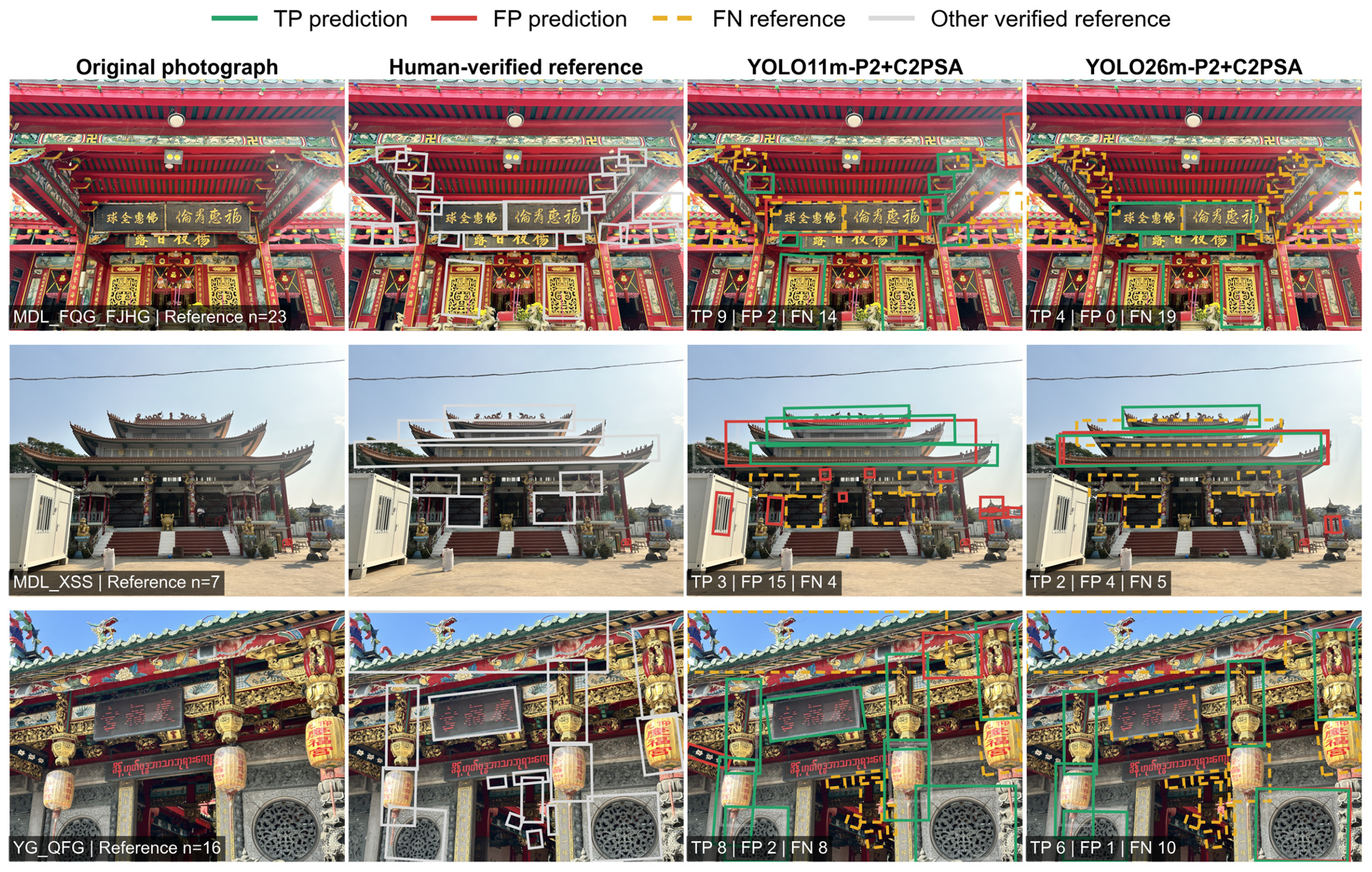
Figure A2.
Enlarged high-resolution version of Figure 10. Four human-verified rectified planar facade approximations: (a) Fuqing Guild Hall; (b) Jinduoyan; (c) Qingfu Temple; and (d) Guanyin Ancient Temple. Rectification is analyst-estimated and not metric survey geometry.
References
- Bhabha, H.K. The Location of Culture; Routledge: London, UK, 1994. [Google Scholar]
- Hall, S. Cultural identity and diaspora. In Identity: Community, Culture, Difference; Rutherford, J., Ed.; Lawrence & Wishart: London, UK, 1990; pp. 222–237. [Google Scholar]
- Assmann, J.; Czaplicka, J. Collective Memory and Cultural Identity. New Ger. Crit. 1995, 65, 125–133. [Google Scholar] [CrossRef] [Scilit] [PubMed]
- Smith, L. Uses of Heritage; Routledge: London, UK, 2006. [Google Scholar] [CrossRef] [Scilit]
- Harrison, R. Heritage; Routledge: London, UK, 2012. [Google Scholar] [CrossRef] [Scilit]
- Byrne, D. Heritage corridors: Transnational flows and the built environment of migration. J. Ethn. Migr. Stud. 2016, 42, 2360–2378. [Google Scholar] [CrossRef] [Scilit]
- Wang, C. Introduction: The ‘Material Turn’ in Migration Studies; Modern Languages Open: Merseyside, UK, 2016; pp. 1–11. [Google Scholar] [CrossRef]
- Voss, B.L.; Kennedy, J.R.; Tan, J.; Ng, L.W. The Archaeology of Home: Qiaoxiang and Nonstate Actors in the Archaeology of the Chinese Diaspora. Am. Antiq. 2018, 83, 407–426. [Google Scholar] [CrossRef] [Scilit]
- Chan, H.L.; Cheng, C. Building homeland heritage: Multiple homes among the Chinese diaspora and the politics on heritage management in China. Int. J. Herit. Stud. 2016, 22, 1–13. [Google Scholar] [CrossRef] [Scilit]
- Jiang, T. A conceptual framework for understanding the intrinsic contestation of cultural heritage tourism in Chinese qiaoxiang. Built Herit. 2022, 6, 28. [Google Scholar] [CrossRef] [Scilit]
- Byrne, D. The migration heritage corridor: Transnationalism, modernity and race. Int. J. Herit. Stud. 2023, 29, 329–345. [Google Scholar] [CrossRef] [Scilit]
- Xie, Y.; Achmadi, A. Beyond Chinatown: Chinese diaspora, the transition of power, and the planning of the City of Medan in Dutch East Indies. Plan. Perspect. 2025, 40, 375–403. [Google Scholar] [CrossRef] [Scilit]
- Hertzman, E.Z. An international turn: Rebuilding Chinese temple networks in Indonesia 20 years after the Suharto era. Glob. Netw. 2023, 23, 616–632. [Google Scholar] [CrossRef] [Scilit]
- Goh, D. Chinese Religion and the Challenge of Modernity in Malaysia and Singapore: Syncretism, Hybridisation and Transfiguration. Asian J. Soc. Sci. 2009, 37, 107–137. [Google Scholar] [CrossRef] [Scilit]
- Vuong, Q.H.; Bui, Q.K.; La, V.P.; Vuong, T.T.; Ho, M.T.; Nguyen, H.K.T.; Nguyen, H.N.; Nghiem, K.C.P.; Ho, M.T. Cultural evolution in Vietnam’s early 20th century: A Bayesian networks analysis of Hanoi Franco-Chinese house designs. Soc. Sci. Humanit. Open 2019, 1, 100001. [Google Scholar] [CrossRef] [Scilit]
- Artopoulos, G.; Maslioukova, M.I.; Zavou, C.; Loizou, M.; Deligiorgi, M.; Averkiou, M. An artificial neural network framework for classifying the style of Cypriot hybrid examples of built heritage in 3D. J. Cult. Herit. 2023, 63, 135–147. [Google Scholar] [CrossRef] [Scilit]
- Seo, M.; Kim, S. David Hyun and architectural hybridity: First architect in the history of Korean immigration to America. J. Asian Archit. Build. Eng. 2025, 24, 2282–2299. [Google Scholar] [CrossRef] [Scilit]
- Tu, X.; Chen, Z.; Zhang, J.; Wei, Q.; Shi, Z.; Guan, X. Spatiotemporal evolution and influencing factors of traditional overseas Chinese settlement heritage in Peninsular Malaysia (1600s–1950s). npj Herit. Sci. 2026, 14, 219. [Google Scholar] [CrossRef] [Scilit]
- Li, Y. Chinese in Colonial Burma; Palgrave Macmillan US: New York, NY, USA, 2017. [Google Scholar] [CrossRef] [Scilit]
- Li, Y. The Chinese in Colonial Myanmar; Oxford Research Encyclopedia of Asian History: Oxford, UK, 2024. [Google Scholar] [CrossRef] [Scilit]
- Xiang, Y.; Yamane, S. A consideration on the distribution and its transformation of Chinese associations in downtown Yangon, Myanmar. J. Archit. Plan. 2022, 87, 2179–2190. [Google Scholar] [CrossRef] [Scilit]
- Xie, J.; Dai, Y. Cultural memory of Myanmar Chinese communities from a spatiotemporal perspective. Chin. Cult. Forum 2024, 4, 145–153. (In Chinese) [Google Scholar]
- Chiu, T.L. From Marginalization to Localization: Chinese Mahāyāna Buddhism’s Adaptive Strategies in Theravāda Myanmar. Religions 2025, 16, 1390. [Google Scholar] [CrossRef] [Scilit]
- Chia, J.M.T. Monks in Motion; Oxford University Press: New York, NY, USA, 2020. [Google Scholar] [CrossRef] [Scilit]
- Lin, J.Z. Performative filiality and Chinese voluntary associations in transnational commemoration of the Second World War. Ethn. Racial Stud. 2024, 47, 3625–3647. [Google Scholar] [CrossRef] [Scilit]
- Roberts, J.L. Mapping Chinese Rangoon: Place and Nation Among the Sino-Burmese; University of Washington Press: Seattle, WA, USA, 2016; ISBN 9780295996677. [Google Scholar]
- Lewis, S.L. Cities in Motion: Urban Life and Cosmopolitanism in Southeast Asia, 1920–1940; Cambridge University Press: Cambridge, UK, 2016. [Google Scholar] [CrossRef] [Scilit]
- Remondino, F. Heritage Recording and 3D Modeling with Photogrammetry and 3D Scanning. Remote Sens. 2011, 3, 1104–1138. [Google Scholar] [CrossRef] [Scilit]
- Pocobelli, D.P.; Boehm, J.; Bryan, P.; Still, J.; Grau-Bové, J. BIM for heritage science: A review. Herit. Sci. 2018, 6, 30. [Google Scholar] [CrossRef] [Scilit]
- Fiorucci, M.; Khoroshiltseva, M.; Pontil, M.; Traviglia, A.; Del Bue, A.; James, S. Machine Learning for Cultural Heritage: A Survey. Pattern Recognit. Lett. 2020, 133, 102–108. [Google Scholar] [CrossRef] [Scilit]
- Zhang, G.; Pan, Y.; Zhang, L. Deep learning for detecting building façade elements from images considering prior knowledge. Autom. Constr. 2022, 133, 104016. [Google Scholar] [CrossRef] [Scilit]
- Dai, M.; Ward, W.O.C.; Meyers, G.; Densley Tingley, D.; Mayfield, M. Residential building facade segmentation in the urban environment. Build. Environ. 2021, 199, 107921. [Google Scholar] [CrossRef] [Scilit]
- Hu, Y.; Wei, J.; Zhang, S.; Liu, S. FDIE: A graph-based framework for extracting design information from annotated building facade images. J. Asian Archit. Build. Eng. 2025, 24, 2530–2553. [Google Scholar] [CrossRef] [Scilit]
- Zang, Y.; Xu, L.; Cui, Z.; Xiao, X.; Guan, H.; Yang, B. FTG-Net: A facade topology-aware graph network for class imbalance structural segmentation of building facades. ISPRS J. Photogramm. Remote Sens. 2025, 228, 179–207. [Google Scholar] [CrossRef] [Scilit]
- Pang, B.; Yang, J.; Xia, T.; Zhang, A.; Zhang, K.; Xu, Q.; Wang, F. Automated heritage building component recognition and modelling based on local features. J. Cult. Herit. 2025, 71, 252–264. [Google Scholar] [CrossRef] [Scilit]
- Deng, Y.; Li, Q.; Guo, S.; Cai, L. Intelligent HBIM modeling of traditional timber architectural heritage, integrating machine vision and architectural expertise. npj Herit. Sci. 2025, 13, 582. [Google Scholar] [CrossRef] [Scilit]
- Zhou, L.; Li, R.; Liu, D.; Pang, T. An integrated framework to quantify tour-view experience in classical gardens using computer vision and spatial analysis. npj Herit. Sci. 2026, 14, 119. [Google Scholar] [CrossRef] [Scilit]
- Paolanti, M.; Frontoni, E.; Pierdicca, R. Towards trustworthy AI in cultural heritage. npj Herit. Sci. 2026, 14, 131. [Google Scholar] [CrossRef] [Scilit]
- Torralba, A.; Efros, A.A. Unbiased look at dataset bias. In Proceedings of the 2011 IEEE Conference on Computer Vision and Pattern Recognition (CVPR), Colorado Springs, CO, USA, 20–25 June 2011; pp. 1521–1528. [Google Scholar] [CrossRef] [Scilit]
- Recht, B.; Roelofs, R.; Schmidt, L.; Shankar, V. Do ImageNet Classifiers Generalize to ImageNet? In Proceedings of the 36th International Conference on Machine Learning, Long Beach, CA, USA, 9–15 June 2019; PMLR: 2019. Volume 97, pp. 5389–5400. [Google Scholar]
- Ovadia, Y.; Fertig, E.; Ren, J.; Nado, Z.; Sculley, D.; Nowozin, S.; Dillon, J.V.; Lakshminarayanan, B.; Snoek, J. Can You Trust Your Model’s Uncertainty? Evaluating Predictive Uncertainty under Dataset Shift. Adv. Neural Inf. Process. Syst. 2019, 32, 13991–14002. [Google Scholar]
- Koh, P.W.; Sagawa, S.; Marklund, H.; Xie, S.M.; Zhang, M.; Balsubramani, A.; Hu, W.; Yasunaga, M.; Phillips, R.L.; Gao, I.; et al. WILDS: A Benchmark of in-the-Wild Distribution Shifts. In Proceedings of the 38th International Conference on Machine Learning, Virtual, 18–24 July 2021; PMLR: Westminster, UK, 2021; Volume 139, pp. 5637–5664. [Google Scholar]
- Varoquaux, G. Cross-validation failure: Small sample sizes lead to large error bars. NeuroImage 2018, 180, 68–77. [Google Scholar] [CrossRef] [Scilit] [PubMed]
- Redmon, J.; Divvala, S.; Girshick, R.; Farhadi, A. You Only Look Once: Unified, Real-Time Object Detection. In Proceedings of the 2016 IEEE Conference on Computer Vision and Pattern Recognition (CVPR), Las Vegas, NV, USA, 27–30 June 2016; pp. 779–788. [Google Scholar] [CrossRef] [Scilit]
- Xie, X.; Cheng, G.; Wang, J.; Yao, X.; Han, J. Oriented R-CNN for Object Detection. In Proceedings of the 2021 IEEE/CVF International Conference on Computer Vision (ICCV), Montreal, QC, Canada, 10–17 October 2021; pp. 3500–3509. [Google Scholar] [CrossRef] [Scilit]
- Ding, J.; Xue, N.; Long, Y.; Xia, G.S.; Lu, Q. Learning RoI Transformer for Oriented Object Detection in Aerial Images. In Proceedings of the 2019 IEEE/CVF Conference on Computer Vision and Pattern Recognition (CVPR), Long Beach, CA, USA, 15–20 June 2019; pp. 2844–2853. [Google Scholar] [CrossRef] [Scilit]
- Huang, Y.; Ye, Z.; Zhang, Q.; Chen, Y.; Wu, W. Space Gene Quantification and Mapping of Traditional Settlements in Jiangnan Water Town: Evidence from Yubei Village in the Nanxi River Basin. Buildings 2025, 15, 2571. [Google Scholar] [CrossRef] [Scilit]
- Yang, S.; Zheng, L.; Chen, Y.; Huang, Y.; Huang, Y. Artificial intelligence assists the identification and application of rural heritage wall surface damage in Zhejiang. npj Herit. Sci. 2025, 13, 143. [Google Scholar] [CrossRef] [Scilit]
- Wang, S. Historical Overview of Jinduoyan Tudi Temple in Mandalay. Mianhua Net. 2013. Available online: https://www.mhwmm.com/mianhuashetuan/2123.html (accessed on 26 July 2026). (In Chinese)
- Consulate-General of the People’s Republic of China in Mandalay. Consul Wu Yi Attends the Consecration Ceremony of Jinduoyan’s Mahavira Hall in Mandalay. 2021. Available online: https://mandalay.china-consulate.gov.cn/zlgxw/202111/t20211104_10443402.htm (accessed on 26 July 2026). (In Chinese)
- Architectural Guide: Yangon. n.d. Kheng Hock Keong Temple. Available online: https://www.yangongui.de/kheng-hock-keong-temple/ (accessed on 26 July 2026).
- Chinatownology. n.d. Kheng Hock Keong. Available online: https://chinatownology.com/kheng_hock_keong.html (accessed on 26 July 2026).
- Chen, R. A Brief History of the Cantonese Company (Guanyin Ancient Temple) in Yangon. Mianhua Net. 2013. Available online: https://www.mhwmm.com/index.php/mianhuashetuan/1994.html (accessed on 26 July 2026). (In Chinese)
- Shi, C. The roles and functions of overseas Chinese temples from the perspectives of ethnic and cultural identity. Stud. World Relig. 2025, 4, 78–92. Available online: https://ims.sdu.edu.cn/__local/B/CD/DA/57F102E6793E842E258625189EA_6580F1DF_199405.pdf (accessed on 26 July 2026). (In Chinese)
- Chinatownology. n.d. Cantonese Kwan Yin Temple. Available online: https://chinatownology.com/cantonese_guanyin_temple.html (accessed on 26 July 2026).
- SOAS China Institute. Myanmar Chinese Library and the Post-War Sino-Burmese Cultural Activities. 2025. Available online: https://blogs.soas.ac.uk/china-institute/2025/04/22/myanmar-chinese-library-and-the-post-war-sino-burmese-cultural-activities/ (accessed on 26 July 2026).
- College of Architecture, Huaqiao University. Mandalay Fujian Association Discusses Post-Earthquake Restoration of Fuqing Guild Hall. 2025. Available online: https://news.hqu.edu.cn/info/1023/410472.htm (accessed on 26 July 2026). (In Chinese)
- University City Art Museum, Guangzhou Academy of Fine Arts. Artist Interview for “Across Mountains and Seas: Lau Pok Chi’s Photographs of Chinese Culture in Myanmar”. Part 1. 2022. Available online: https://www.trueart.com/news/485627.html (accessed on 26 July 2026). (In Chinese)
- The Golden Phoenix. History and Current Development of Chinese Education in Myanmar. Part 1. 2023. Available online: https://www.mmgpmedia.com/static/content/WNL/2023-08-09/1138859399826653184.html (accessed on 26 July 2026). (In Chinese)
- Introduction to Fuqing School in Mandalay, Myanmar. Sohu. 2022. Available online: https://www.sohu.com/a/521487743_121124715 (accessed on 26 July 2026). (In Chinese)
- Ministry of Foreign Affairs of the People’s Republic of China. Interview with Li Zuqing, Principal of Fuqing Chinese School in Mandalay: China Has Provided Solutions for Eliminating Poverty. 2022. Available online: https://www.mfa.gov.cn/ziliao_674904/zt_674979/dnzt_674981/qtzt/ddzggcd/gtfy/202207/t20220715_10722104.shtml (accessed on 26 July 2026). (In Chinese)
- The Golden Phoenix. Yangon Zeng-Qiu Longshan Hall Holds a Winter-Solstice Gathering. 2025. Available online: https://www.mmgpmedia.com/static/content/MH/2025-12-23/1453063356437004288.html (accessed on 26 July 2026). (In Chinese)
- Thaw Kaung, U. Preliminary Survey of Penang-Myanmar Relations from the Mid-19th to Mid-20th Centuries. 2003. Available online: https://www.uclmyanmar.org/wp-content/uploads/2016/01/7-Preliminary-Survey-of-Penang-Myanmar-Relations-from-mid-19th-to-mid-20th-Centuries.pdf (accessed on 26 July 2026).
- Chinatownology. n.d. Long Shan Tang. Available online: https://www.chinatownology.com/long_shan_tang.html (accessed on 26 July 2026).
- Jocher, G.; Chaurasia, A.; Qiu, J. Ultralytics YOLO, Version 8.4.36; Computer Software. Available online: https://github.com/ultralytics/ultralytics (accessed on 9 August 2026).
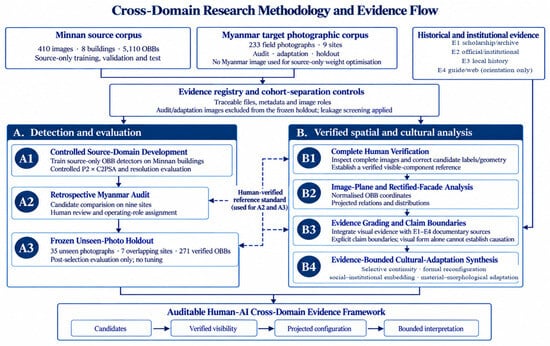
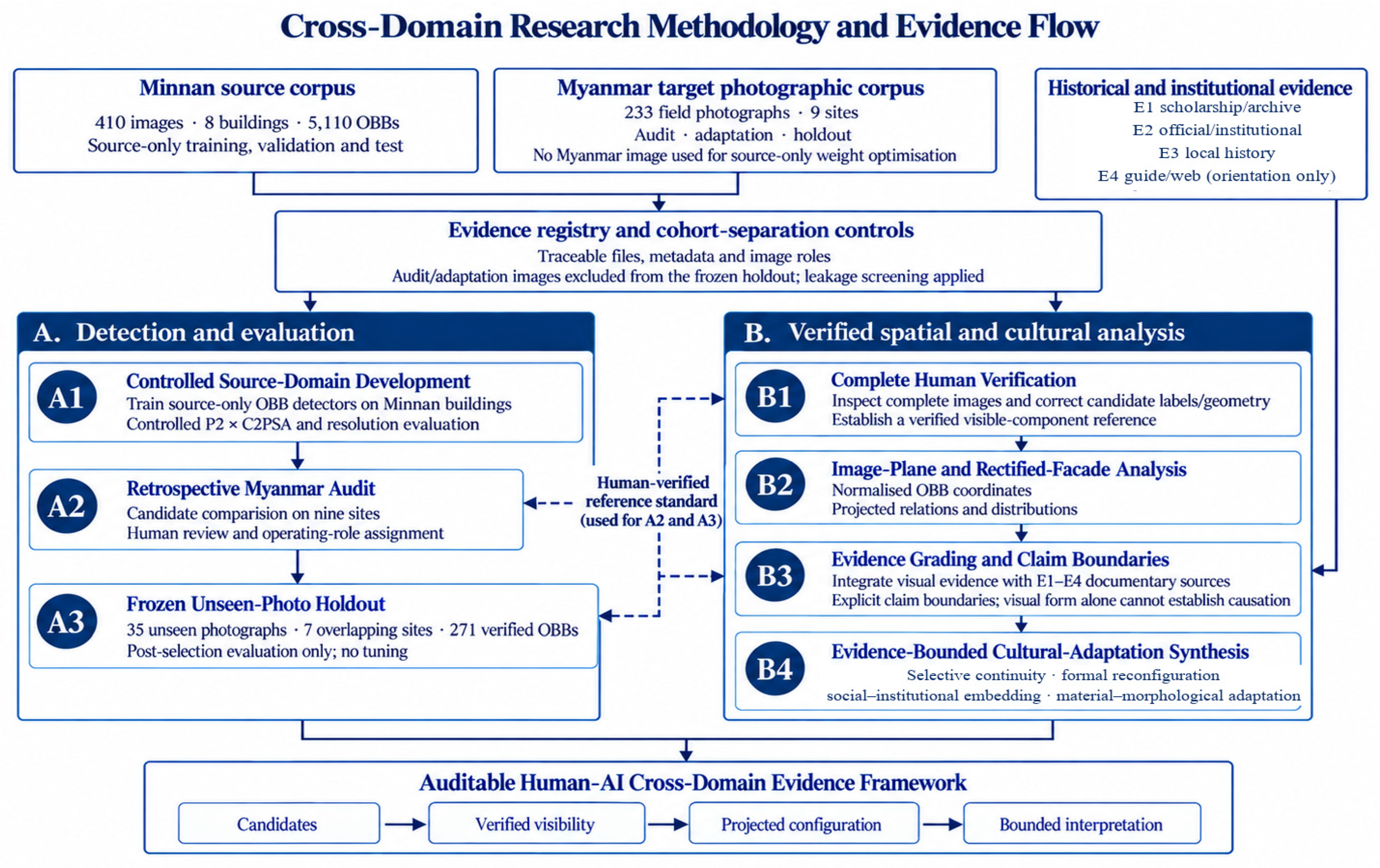
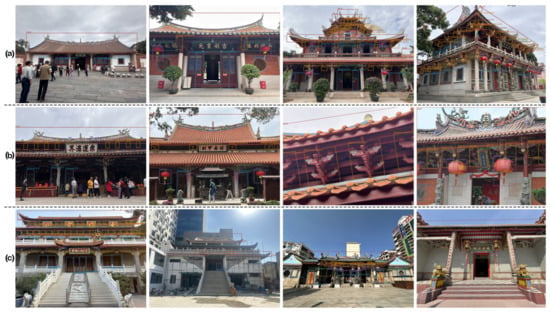
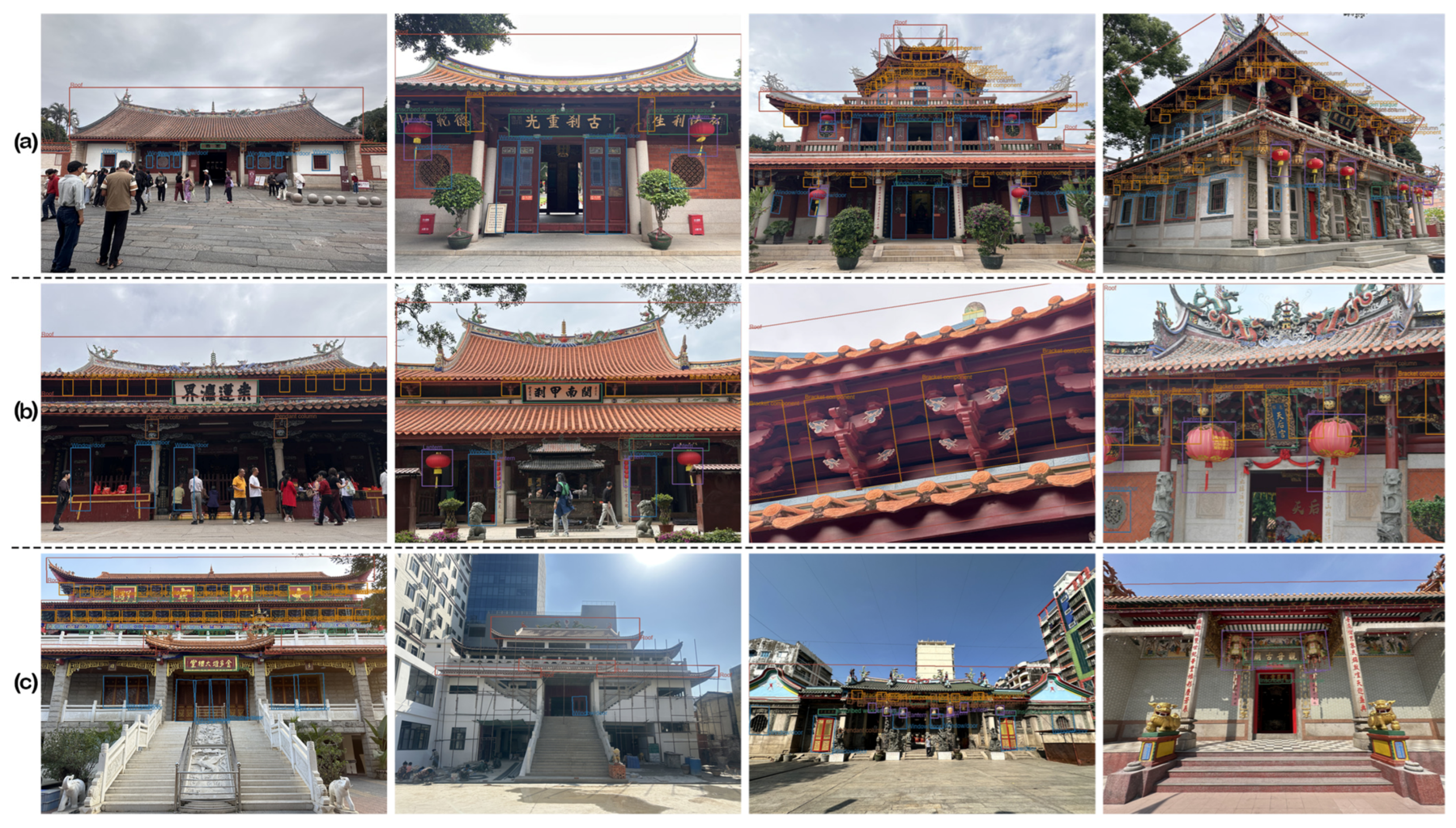
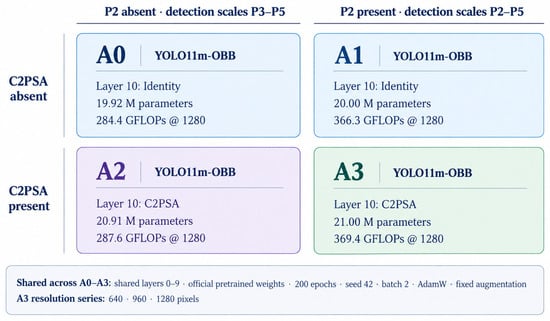
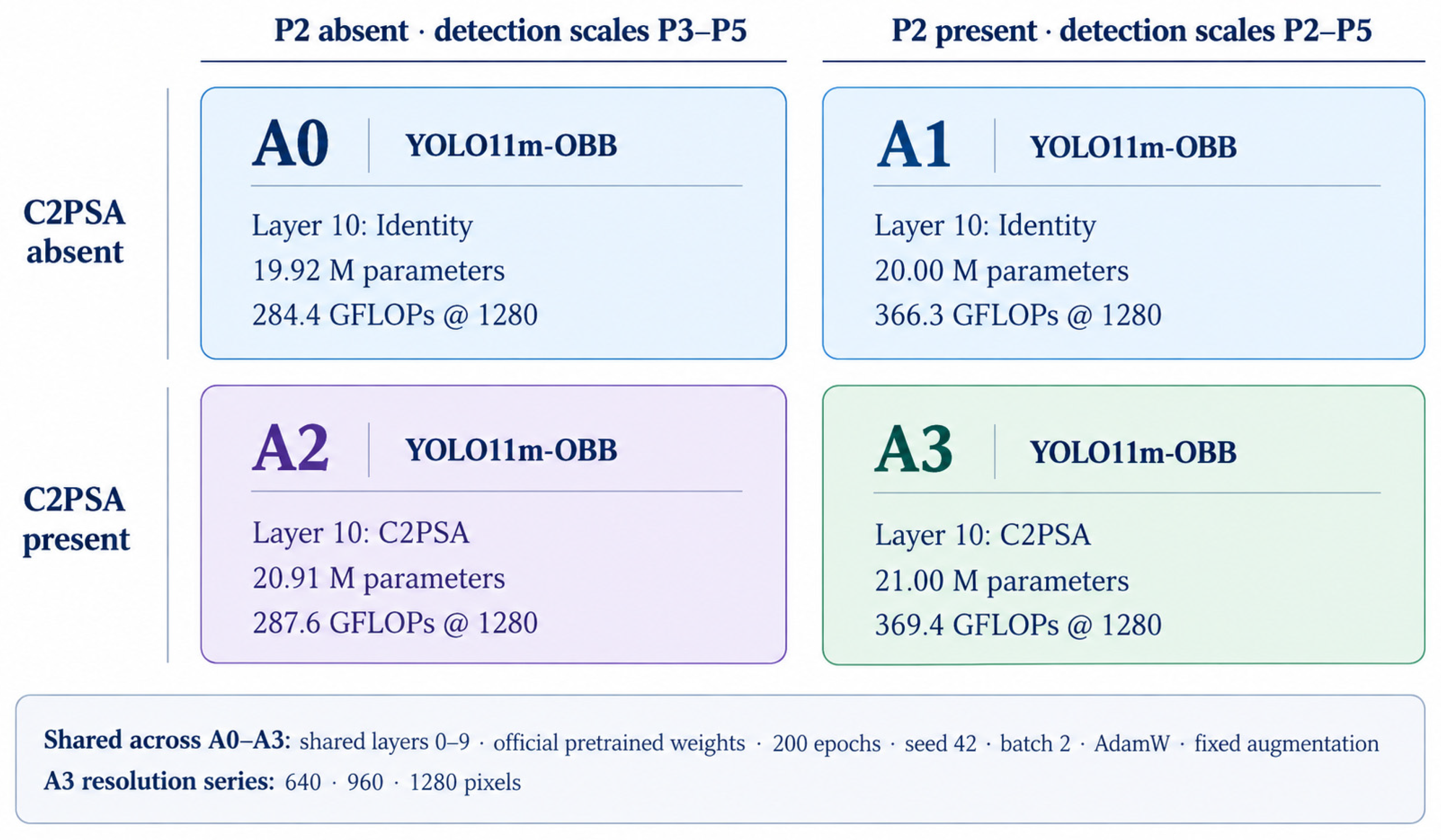
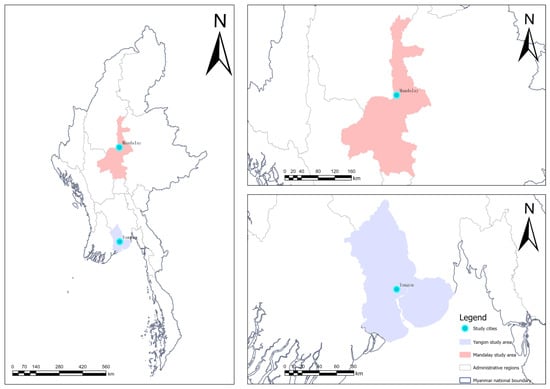
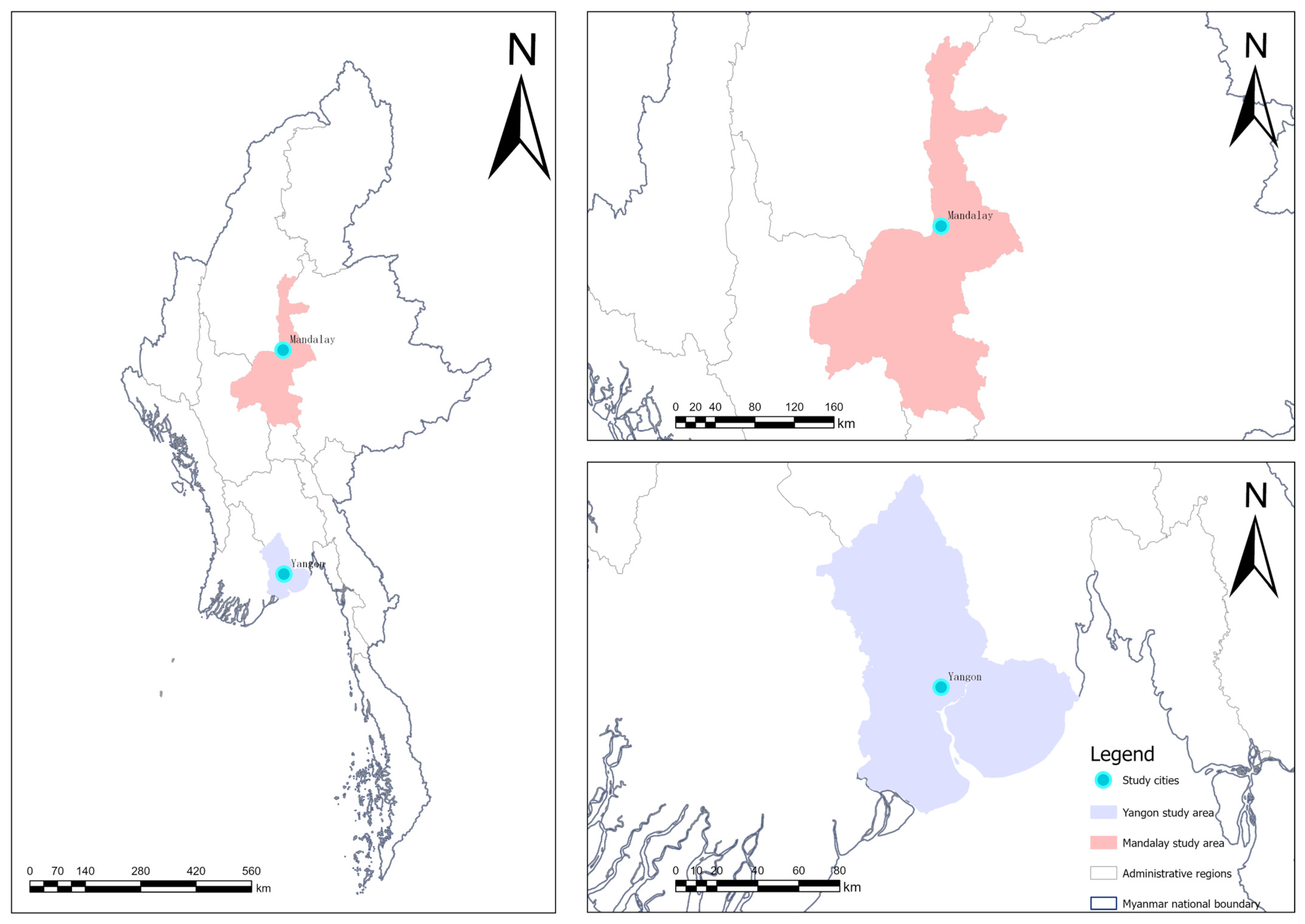
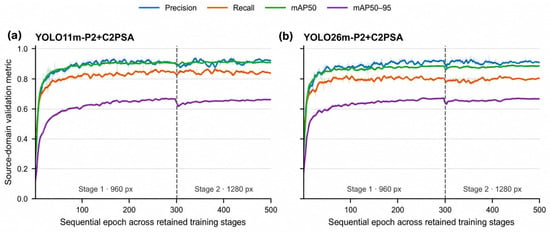
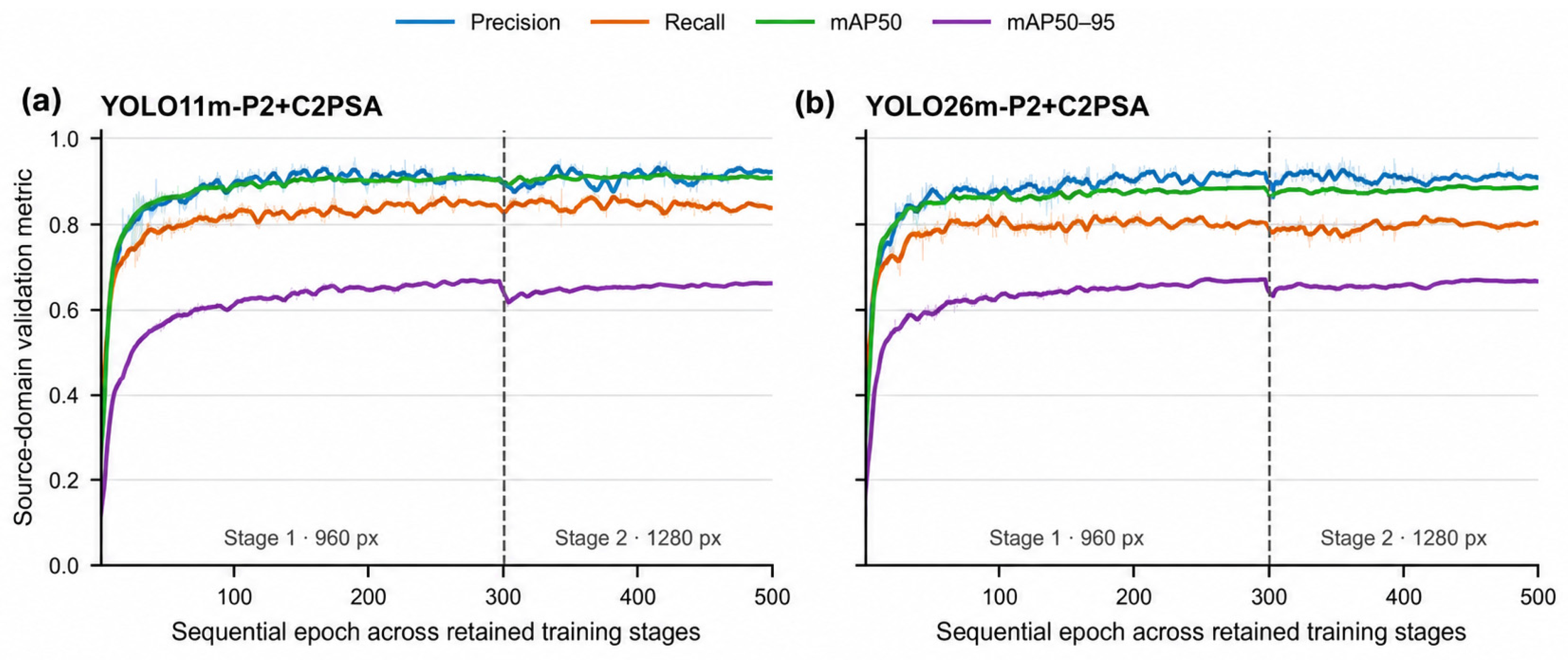
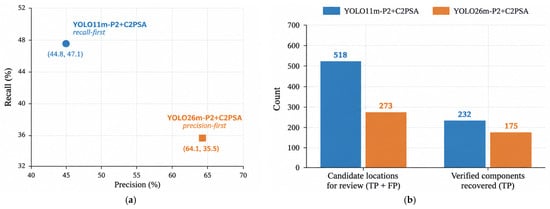
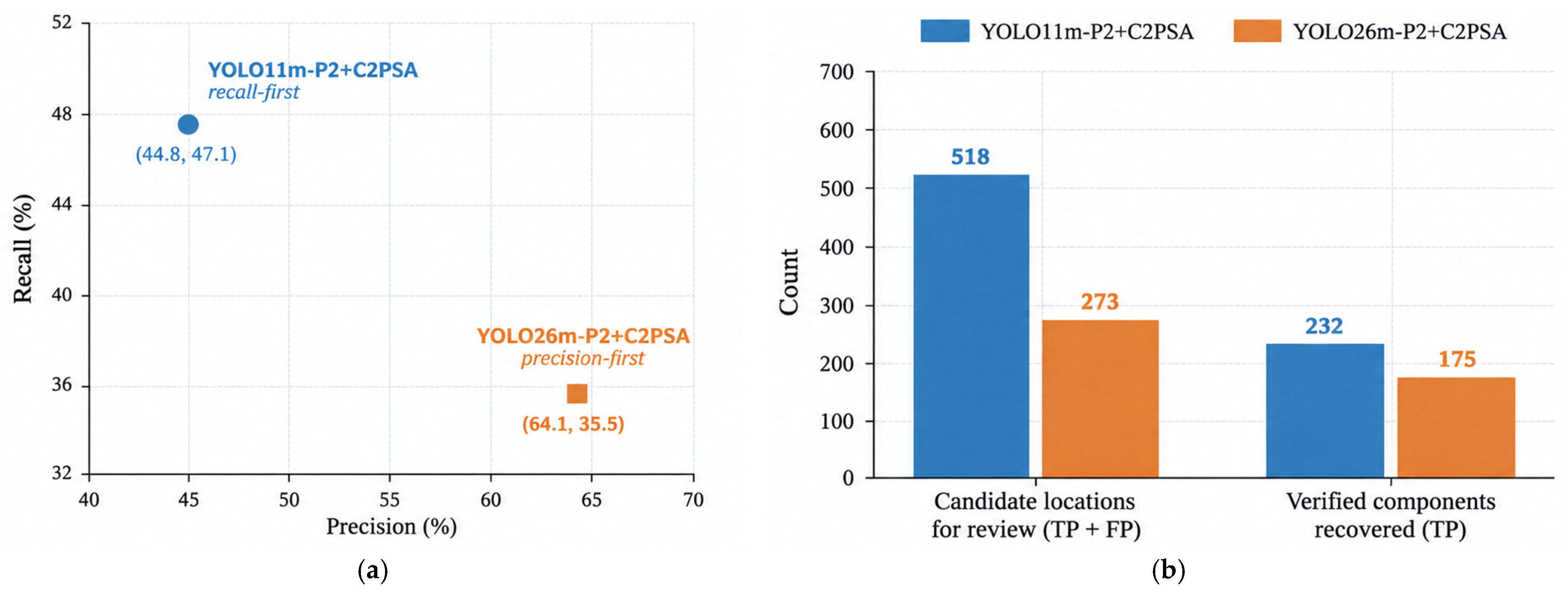
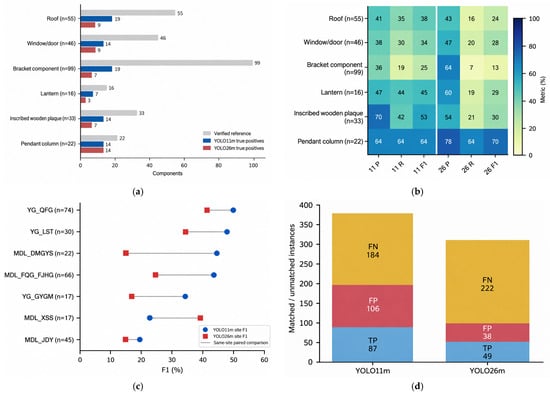
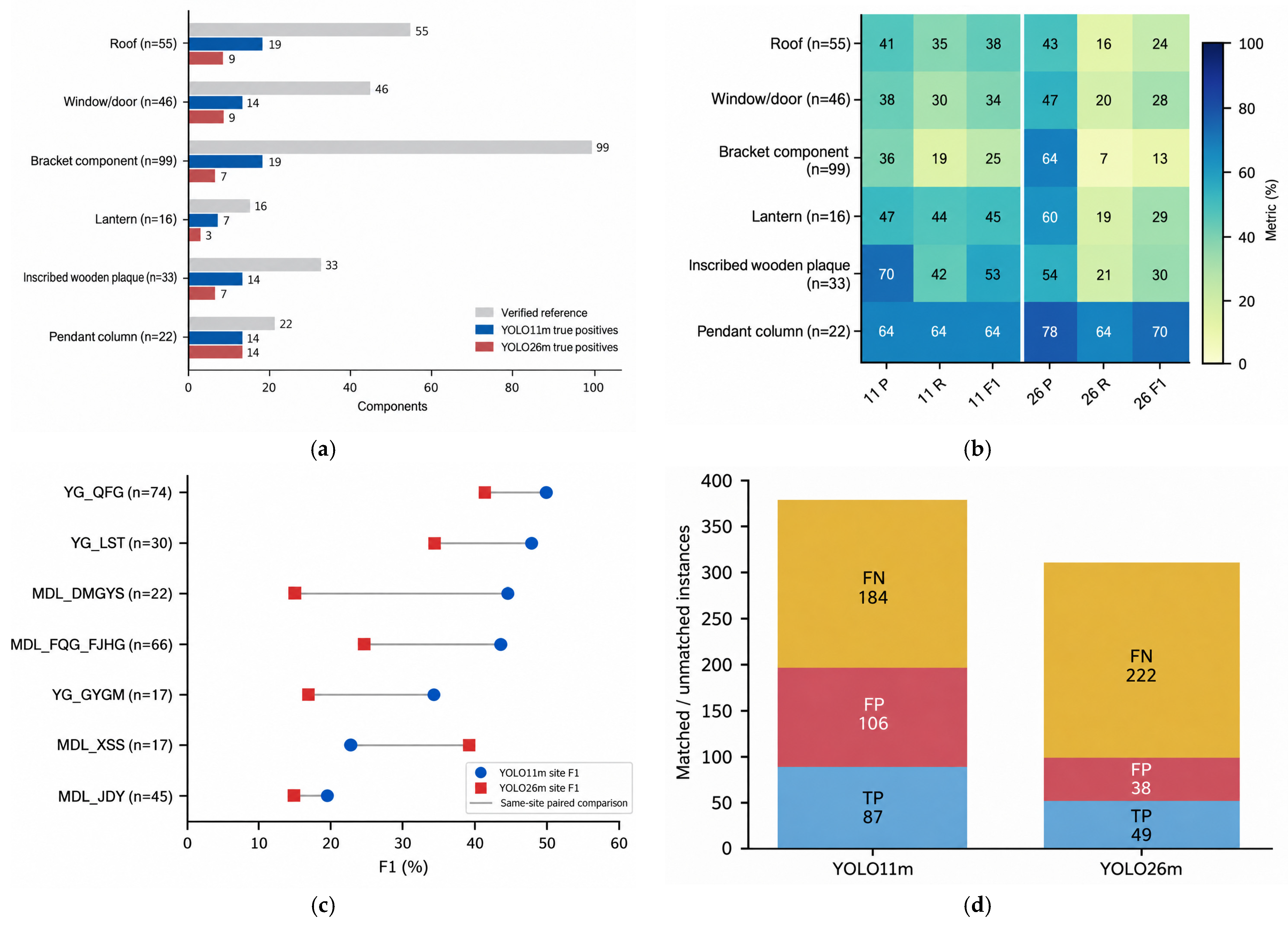
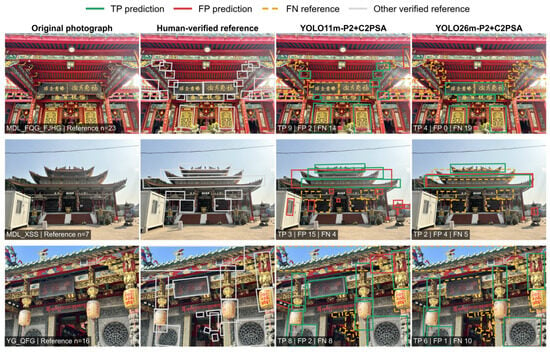
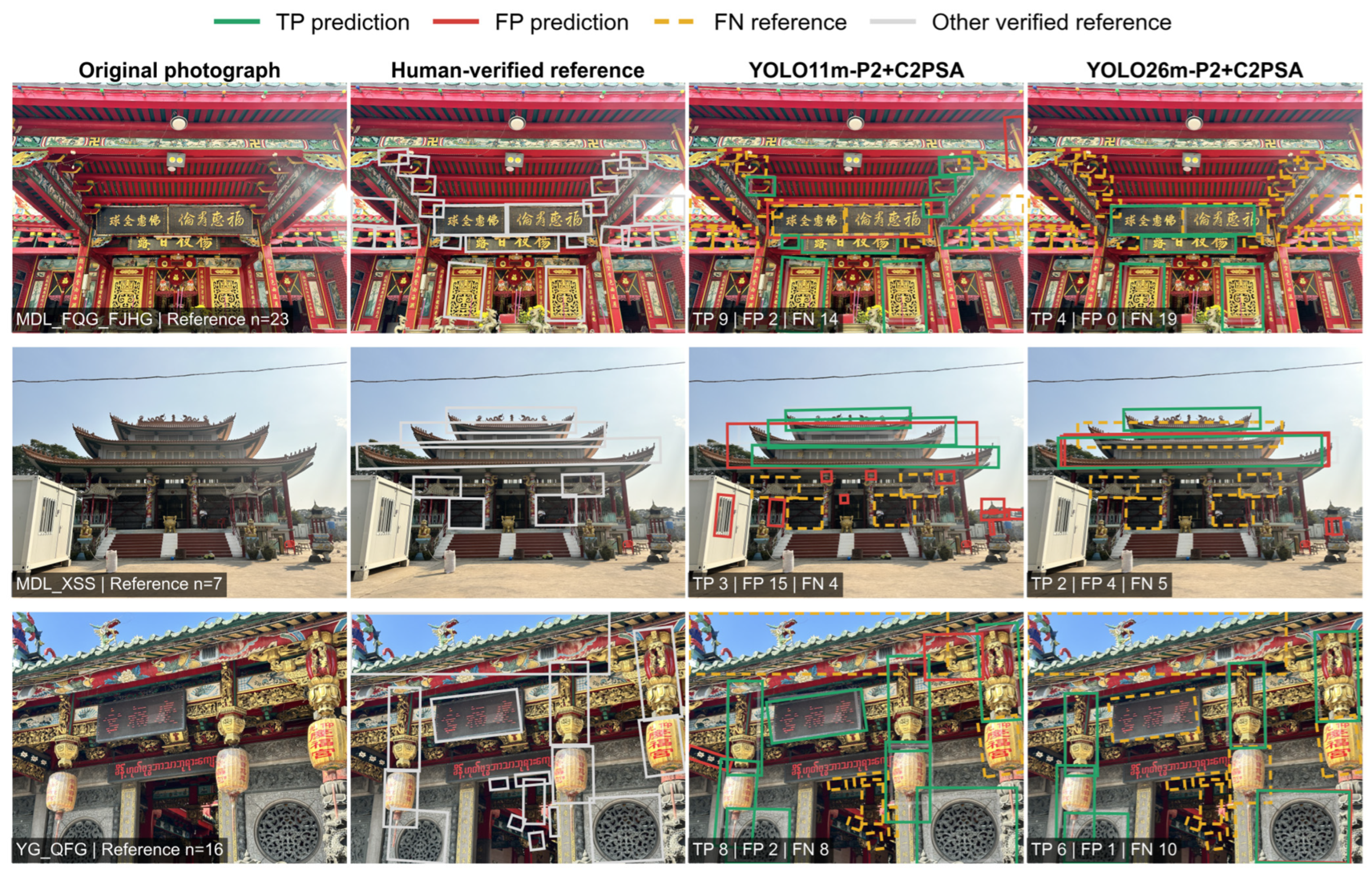
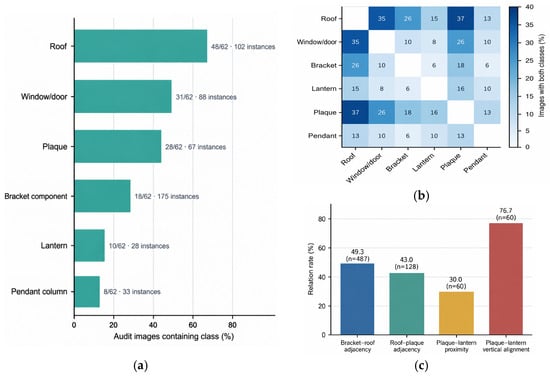
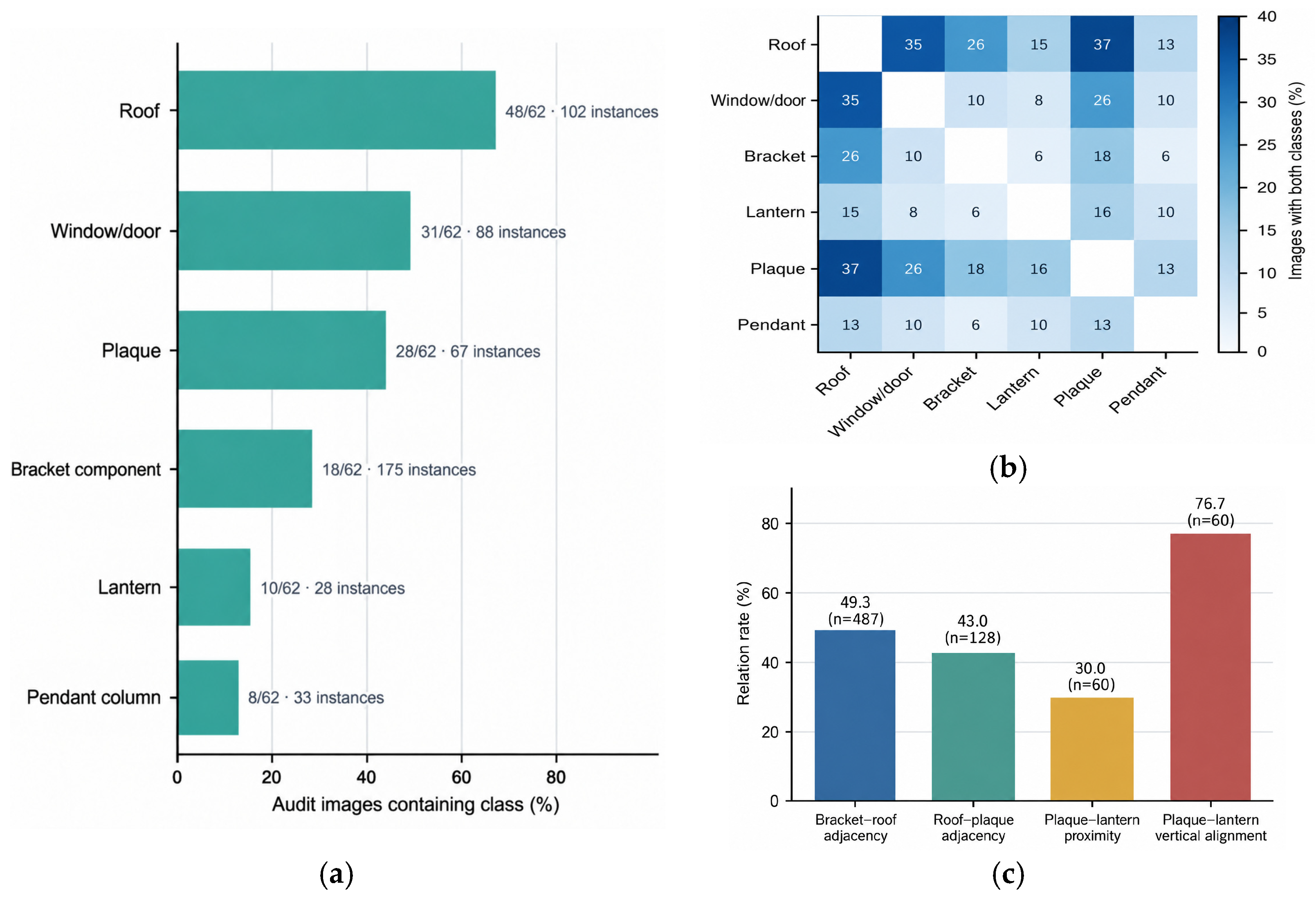
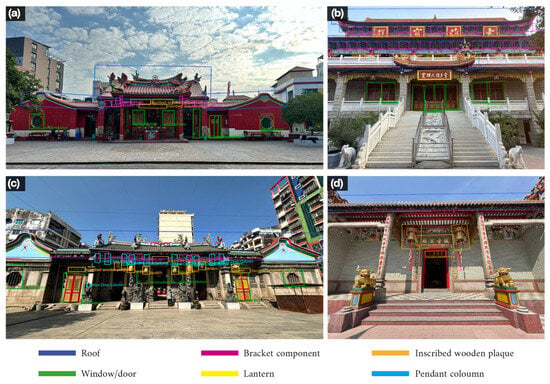
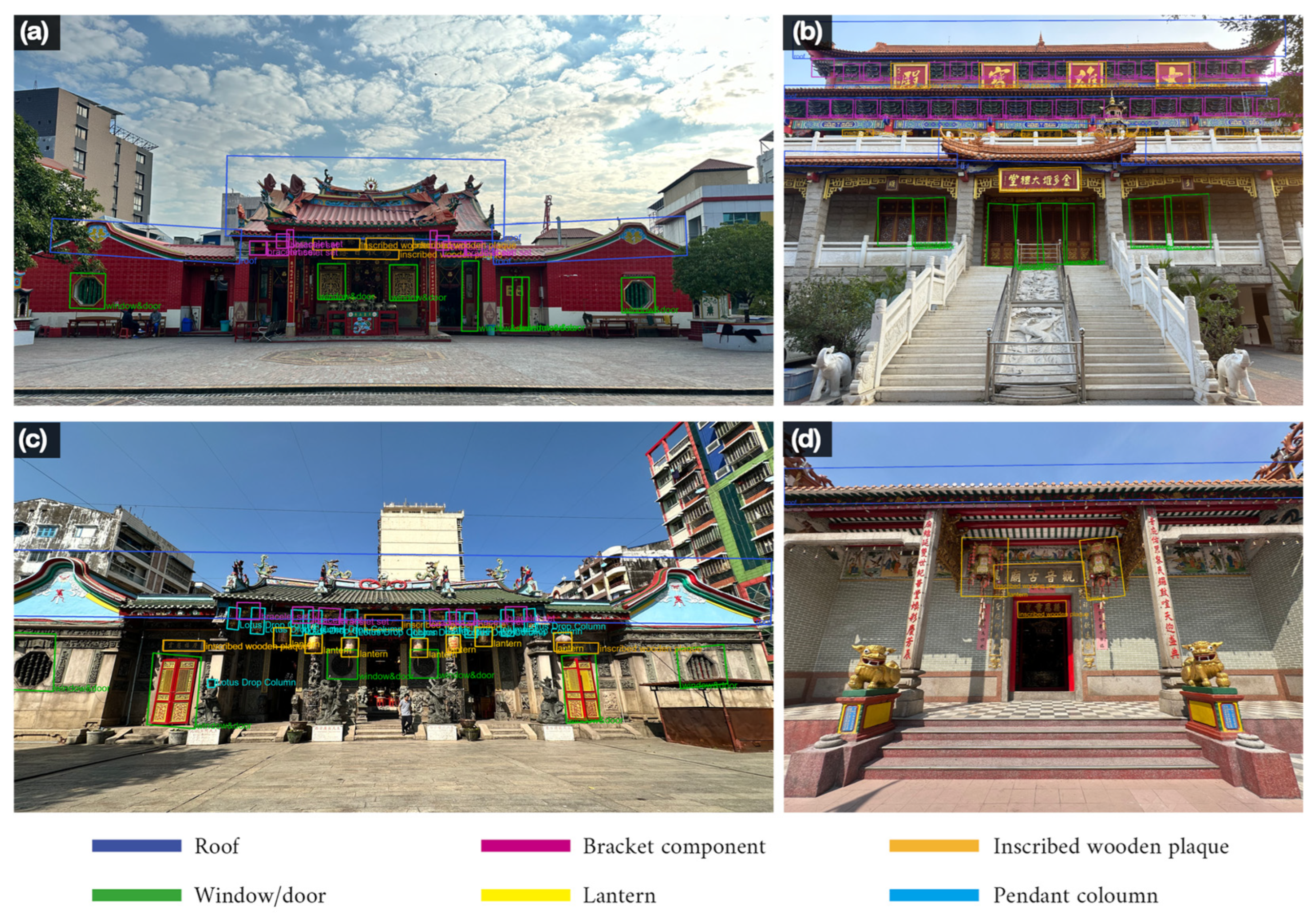
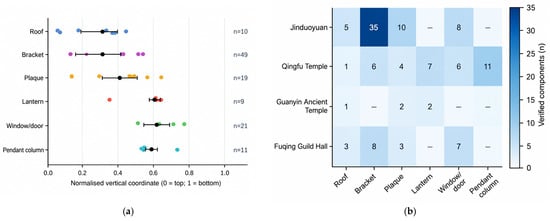
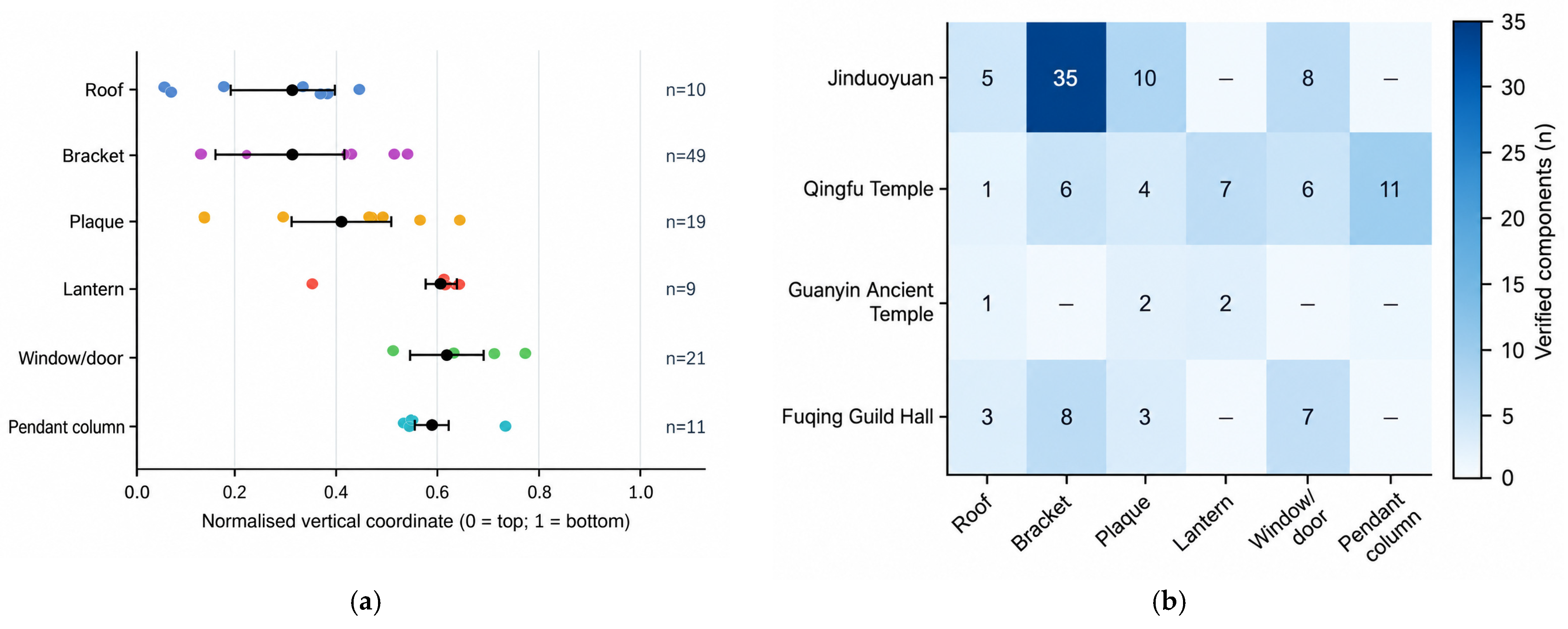
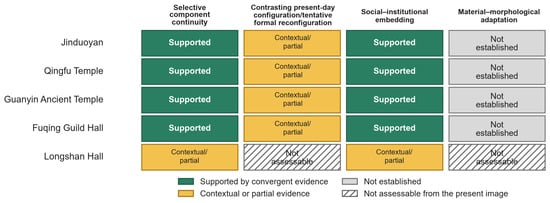
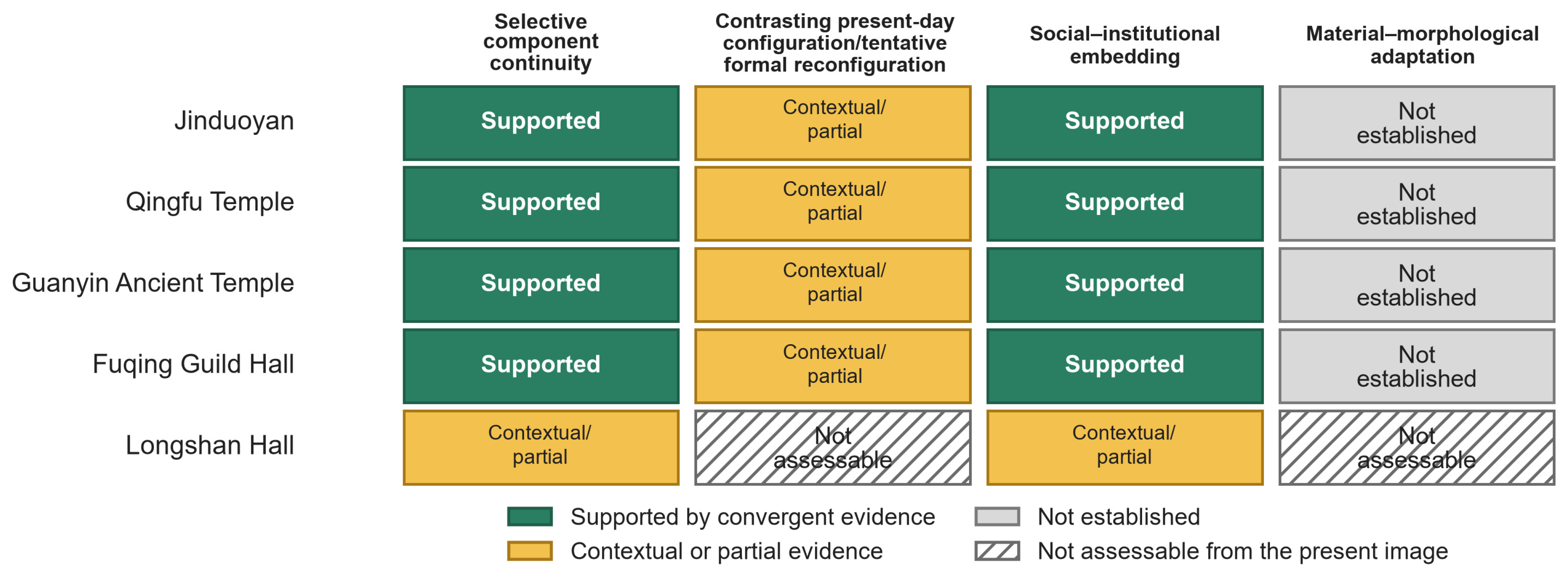

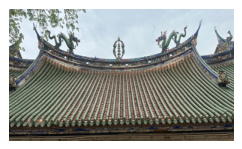
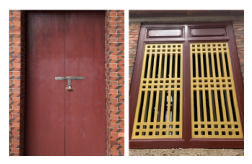
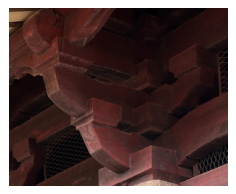
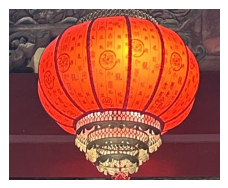

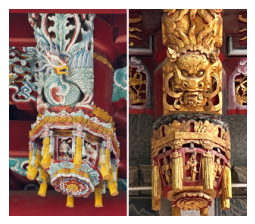
Disclaimer/Publisher’s Note: The statements, opinions and data contained in all publications are solely those of the individual author(s) and contributor(s) and not of MDPI and/or the editor(s). MDPI and/or the editor(s) disclaim responsibility for any injury to people or property resulting from any ideas, methods, instructions or products referred to in the content. |
© 2026 by the authors. Licensee MDPI, Basel, Switzerland. This article is an open access article distributed under the terms and conditions of the Creative Commons Attribution (CC BY) license.