


Abstract
The relationship between campus built environments and university student health has received considerable attention; however, this issue remains systematically underexplored in the context of cold-climate cities, particularly during winter, and the mediating roles of daily leisure physical activity and the perceived built environment remain unclear. Taking four universities in Harbin, China, as examples, this study analyzed self-reported questionnaire data from 1232 students using structural equation modeling. The built environment was differentiated into two dimensions: the physical built environment, referring to self-reported physical and functional characteristics, and the perceived built environment, referring to students’ subjective evaluations. The study further examined the direct, indirect, and sequential pathways through which these two dimensions, together with daily leisure physical activity, were associated with student health. The results showed that the physical built environment, perceived built environment, and daily leisure physical activity were all significantly and positively associated with student health, and that the direct association between the perceived built environment and health was stronger than that of the physical built environment. Daily leisure physical activity also functioned as a partial mediator in the relevant pathways. Given the cross-sectional self-reported design, these findings should be interpreted as associative pathways within a theory-based model rather than as established causal effects. The findings provide empirical support for health-oriented campus design in cold-climate cities: the physical built environment serves as a foundational factor for health, but its influence is largely transmitted indirectly through the perceived environment and daily leisure physical activity. The results further suggest that cold-climate campuses should prioritize investment in environmental qualities that can be meaningfully perceived by students and ensure that improvements to the physical environment are translated into perceptible experiential benefits, thereby providing transferable evidence for health-oriented design in campuses under similar climatic conditions.
1. Introduction
Physical activity has increasingly been acknowledged as a pivotal strategy for the prevention and management of chronic diseases. A substantial body of evidence suggests that regular engagement in moderate-to-vigorous physical activity not only reduces the onset risk of various chronic conditions [1,2]. Beyond its physical benefits, exercise is equally essential for mental health, with well-documented effects in alleviating anxiety and depressive symptoms, thereby enhancing overall quality of life [3].
Concurrently, university campuses have gained increasing attention as critical environments for shaping students’ health behaviors. A growing number of studies underscore the importance of outdoor campus environments—such as green spaces, physical activity facilities, curricular organization, and spaces for social interaction—in mitigating psychological stress and supporting healthier lifestyle choices [4,5,6,7,8,9,10]. Against this backdrop, scholars have begun to explore how environmental effects on student health may vary across climatic contexts. In China, the concept of “Health-Promoting Schools” was introduced into higher education in 1995, aiming to foster institutional-level health education and campus health promotion [11]. However, in cold-climate regions, university campus planning and development often remain oriented toward rapid construction and functional priorities, frequently at the cost of spatial quality and environmental diversity [12,13]. As a result, campuses in many northern Chinese cities are typified by insufficient spatial hierarchy, lack of micro-topography, and traffic disarray stemming from mixed pedestrian–vehicle circulation [12,13]. Students at universities in cold-climate cities are particularly vulnerable to health risks associated with sedentary lifestyles. Their physical activity is also subject to pronounced seasonal constraints. A survey of nine university campuses in Northeast China found that both the frequency and total amount of students’ physical activity were lower during the winter months than during non-winter months, while ratings of cold-weather protection, walkability, traffic safety, and winter activity safety were also relatively low [13]. Insufficient physical activity remains a prominent issue among Chinese university students. A systematic review of studies on physical activity among Chinese university students from 2017 to 2022 found substantial variation in the proportion of students who regularly engaged in physical activity, with lack of time due to academic pressure, limitations in sports facilities, and insufficient professional guidance identified as important factors affecting physical activity [14]. These constraints are even more pronounced in high-latitude and high-altitude regions, where snow accumulation and sub-zero temperatures severely restrict outdoor activity [15].
To scientifically assess the health status of university students under specific environmental conditions, it is first necessary to clarify the conceptual meaning of “health.” Modern understandings of health are no longer limited to the absence of disease or pain but regard health as a multidimensional construct encompassing physical health, psychological stability, and social adaptability [16]. In empirical research, structured instruments such as the 36-Item Short Form Health Survey (SF-36), the World Health Organization Quality of Life (WHOQOL), and the Cornell Medical Index (CMI) have been widely used to comprehensively assess individual health status and have demonstrated good applicability, reliability, and validity.
A synthesis of the existing literature reveals three major research gaps. First, there is insufficient geographical and contextual coverage. A substantial body of research on the relationships among the built environment, physical activity, and health has focused primarily on urban or community settings and on general adult populations [17,18,19]. In comparison, relatively few studies have specifically examined the relationship between higher education campus environments and student health [10], and empirical research addressing the relationship between university campus built environments and student health under cold-climate or winter conditions is even more limited. Further investigation is therefore needed to understand the relationships among campus environments, student behaviors, and health under severe cold-climate conditions. Winter cities are, in fact, widely distributed across Northern Europe, Canada, Russia, the northern United States, and high-latitude regions of East Asia, where snow cover, limited sunlight, and extremely low temperatures impose common constraints on outdoor campus activities and health across different countries [15]. Understanding the health-supportive mechanisms of campus environments in cold-climate cities is therefore relevant not only to northern China but also to the planning and design of universities in other cold-climate regions worldwide.
Second, there is a mismatch between the scale of existing research and the specific context under investigation. Existing studies on health and the environment have largely focused on the urban scale, particularly on the accessibility of neighborhood green spaces and parks, while paying insufficient attention to the distinctive health-supportive mechanisms of university campus environments.
Third, the underlying mechanisms remain insufficiently understood. In high-latitude cold climates, students’ daily lifestyles, physical activity, and patterns of space use may be substantially affected by extremely low temperatures, snowfall, and icy surfaces, thereby generating distinctive health risks [20]. However, the suitability of outdoor spaces on cold-climate university campuses and their potential regulatory role in supporting student health have not yet been systematically investigated.
At the application level, university campus outdoor spaces across different climate zones have accumulated a range of cases that provide useful references, although their potentials and challenges vary by climatic context. Campuses in temperate and Mediterranean climates, such as those at some universities in the United Kingdom and Italy, commonly employ open lawns and tree-lined pedestrian systems, offering high year-round usability and relatively low maintenance costs. However, these approaches cannot be directly transferred to cold-climate campuses exposed to snow accumulation and low-temperature stress. The tradition of “Winter Cities Design” in Northern Europe and Canada provides more targeted references for cold-climate campuses [21,22]. Universities in Finland, such as the Helsinki University of Technology campus, use underground passageways to connect major building clusters, thereby maintaining pedestrian accessibility between buildings during severe cold weather. Winter city planning practices in Canada widely incorporate windbreaks, climate-protected pedestrian spaces, and warm-color design strategies to reduce wind-chill effects and improve the usability of outdoor environments in winter [23]. These cases share two major challenges. First, climate-buffering facilities often involve high construction and maintenance costs, making their large-scale implementation difficult for universities with limited resources. Second, although indoor connection systems can ensure mobility during severe weather, they may reduce students’ outdoor exposure and contact with nature, and their net effects on physical and mental health remain subject to debate.
Compared with the case studies and existing empirical literature discussed above, the originality of this study is reflected in three aspects. First, previous research on cold-climate campuses has largely consisted of design-oriented case descriptions or qualitative summaries of practical experience, with limited quantitative examination of the “built environment–perception–behavior–health” pathway. This study uses structural equation modeling to systematically identify this multilevel association pathway and distinguishes between sequential and parallel mediation pathways. Second, existing cross-climate comparative studies have mainly been conducted at the urban or community scale, focusing on issues such as neighborhood green space and park accessibility. In contrast, this study specifically anchors the analysis at the campus scale, a clearly bounded meso-level spatial unit characterized by intensive daily use, thereby addressing the mismatch between research scale and study context identified in previous studies. Third, this study simultaneously incorporates both the physical built environment and the perceived built environment and examines their sequential mediation mechanisms, distinguishing it from previous research that has focused on only one type of environmental attribute, either physical or perceptual.
It should be noted that the term “cold climate” in this study is based on explicit classification criteria rather than being used as a generalized description. According to the Design Code for Thermal Engineering of Civil Buildings (GB 50176-2016), Harbin, where the sample universities are located, is classified as a severe cold region, specifically Severe Cold Zone B (1B). Under the Köppen climate classification, Harbin has a Dwb climate, characterized by cold, dry winters and warm, humid summers. Accordingly, this study does not use “cold climate” in a broad or ambiguous sense but defines the climatic context according to the national climatic zoning criteria specified in GB 50176. The standard uses the mean temperature of the coldest month as a principal classification indicator: areas with a mean temperature below −10 °C in the coldest month are classified as severe cold regions, whereas those with a mean temperature between −10 °C and 0 °C are classified as cold regions [24]. In Harbin, the mean temperature of the coldest month, January, is approximately −18 °C to −20 °C, well below the −10 °C threshold for severe cold regions. Harbin is therefore explicitly defined in this study as a severe cold-climate city. As a supplementary indicator, heating degree days based on a reference temperature of 18 °C (HDD18) are also commonly used in climatic zoning. In studies of heating energy consumption and climatic regionalization in China, HDD18 has been widely applied to distinguish severe cold regions from cold regions [25]. Harbin has a substantially higher HDD18 value than most Chinese cities, further confirming its severe cold climatic characteristics.
According to the climatic normals for the Harbin meteorological station of the China Meteorological Administration, station No. 50953, for the period 1971–2000 [26], the station is located at an elevation of approximately 142 m. The mean temperature in January is about −18.3 °C, the extreme minimum temperature in January can reach −37.7 °C, and the historical extreme minimum temperature has reached −42.6 °C. During winter, Harbin is strongly influenced by the Siberian high-pressure system and is dominated by westerly winds. The mean wind speed in January is approximately 3.1 m/s, compared with an annual mean of about 3.6 m/s. Relative humidity is approximately 72% in January and about 65% on an annual basis, while winter conditions are comparatively dry because of low temperatures and limited precipitation. Snowfall is concentrated mainly between November and March of the following year, and persistent low temperatures inhibit snowmelt, allowing snow cover to remain on the ground throughout much of the winter.
Together, these climatic conditions impose multiple physical constraints on outdoor activities on university campuses. Low temperatures reduce students’ willingness to remain outdoors, strong winds intensify perceived cold through wind-chill effects, snow accumulation and icy surfaces increase mobility and safety risks, and shorter winter daylight duration may affect mood and circadian rhythms. The outdoor-space design responses adopted by the sample universities primarily include covered or heated pedestrian systems connecting major building clusters, wind-protection strategies combining shelterbelts with building layouts, slip-resistant paving suitable for winter conditions, warm-colored and high-contrast environmental signage, and multifunctional activity spaces that can be flexibly adapted to seasonal changes.
In addition, the health-oriented design elements proposed in this study have potential links with internationally recognized environmental certification systems and may provide a basis for future translation into assessment standards. First, they correspond to relevant provisions under the Sustainable Sites category of LEED, particularly those concerning site design, stormwater management, and the quality of outdoor spaces. Second, they are more directly related to the Movement and Comfort concepts of the WELL Building Standard, especially provisions concerning outdoor thermal comfort and active design. Future research could explore how the cold-climate campus design elements identified in this study, such as climate-buffering facilities, winter safety measures, and specific thresholds for perceived environmental quality, can be translated into assessment criteria within these certification systems. This would help advance health-oriented design for cold-climate campuses from academic findings toward actionable industry standards.
In this study, the term “environment” is primarily conceptualized as the built environment of university campuses. From a social science perspective, the built environment encompasses all man-made spaces designed to support human activity. In the field of public health, the scope of the built environment has been further expanded to include access to healthy food, mental health settings, and walkable infrastructure [27]. Synthesizing these views, this study distinguishes two interconnected components: the physical built environment, referring to physical infrastructure, spatial features, and functional layouts that facilitate activity, and the perceived built environment, which reflects individuals’ subjective appraisals of their surroundings, including perceptions of safety, aesthetics, comfort, and sense of identity. In cold climates, natural factors such as snow accumulation, limited sunlight, and extreme cold can affect or disrupt both environmental perceptions and physical conditions, thereby altering the physical and perceived attributes of the environment.
It should be noted that the term “health” in this study follows the multidimensional definition of the World Health Organization, encompassing physical, psychological, and social adaptation dimensions [16]. The instruments used in this study, including the College Student Health Status Rating Scale and the measure of daily leisure physical activity, primarily assess health in terms of physical, psychological, and social adaptation. Accordingly, the term “health” is used consistently throughout the paper to refer to the construct actually measured in this study.
The international applicability of the findings also requires clarification. The sample was drawn exclusively from four universities in Harbin, a severe cold-climate city in China, and the research design, questionnaire items, and survey context were all embedded within the Chinese higher education and sociocultural context. Although the “physical environment–perception–behavior–health” pathway identified in this study may theoretically be applicable to other cold-climate cities, as discussed in the section on the replicability of the findings in the Conclusions, it has not yet been empirically tested using cross-national or cross-cultural samples. Therefore, its international generalizability remains hypothetical rather than empirically validated. This issue is explicitly acknowledged as a limitation in the Discussion section.
Promoting health through physical activity-oriented campus design thus holds both theoretical and practical significance. First, as the principal living and learning environment for university students, campus spatial attributes are closely associated with student health and health-related behaviors. Second, physical settings can exert long-term influence on behavioral patterns, thereby offering sustainable channels for health intervention. Third, seamlessly integrating physical activity into daily routines—without requiring extra time or conscious effort—is particularly advantageous for students constrained by academic workload or lacking health awareness. For universities in cold-climate cities, optimizing campus space for winter use is not only a strategy for mitigating climatic barriers but also a response to the broader research gap regarding context-sensitive health promotion. Accordingly, this study develops a conceptual framework that distinguishes between the physical and perceived dimensions of the built environment (Figure 1). Student health is measured across three dimensions: physical, psychological, and social adaptation. Daily leisure physical activity is introduced as a mediating variable, and structural equation modeling (SEM) is used to examine the direct and indirect relationships among the core constructs. Based on this framework, the following research hypotheses are proposed:
Figure 1.
Conceptual framework of the study. Source: Authors.
H1.
The physical built environment of university campuses in severe cold-climate regions is positively associated with student health. The physical built environment includes spatial layout and functional organization, pedestrian and transportation systems, facility conditions, and winter climate adaptation, such as protection from severe weather and the integration and utilization of winter climatic resources.
H2.
The perceived built environment is positively associated with student health. The perceived built environment includes perceived safety, such as safety during winter activities, public security, and traffic safety; perceived environmental aesthetics and nature, such as color perception and perceived greening; and perceived activity atmosphere.
H3.
Daily leisure physical activity mediates the relationship between the physical built environment and student health.
H4.
Daily leisure physical activity mediates the relationship between the perceived built environment and student health.
H5.
The perceived built environment and daily leisure physical activity jointly form a sequential (chain) mediation pathway between the physical built environment and student health.
2. Materials and Methods
2.1. Study Area and Sample
This study selected Harbin, China, as the study area (Figure 2). Figure 2 was prepared by the authors using WPS Office V12.1.26046. Harbin is the capital of Heilongjiang Province and one of the most representative severe cold-climate cities in China, where winter climatic conditions significantly affect residents’ daily lives and physical activity patterns. As of January 2025, Harbin had 49 higher education institutions, including 28 undergraduate institutions and 21 higher vocational colleges. To enhance sample diversity and representativeness within Harbin, four universities—Heilongjiang University, Harbin Engineering University, Northeast Agricultural University, and Northeast Forestry University—were selected for the empirical survey in December 2024, and cluster random sampling was used for questionnaire administration.
Figure 2.
Study area showing the location of Harbin, China. Source: Authors.
Heilongjiang University is a comprehensive university with a campus area of approximately 1.74 million m2 and a total building area of approximately 1.14 million m2, serving more than 35,000 students. The campus is divided into three sections, A, B, and C. Each section has a relatively regular spatial layout, with green spaces and plazas surrounding teaching buildings and student dormitories, although the green spaces are somewhat fragmented (Figure 3a).
Figure 3.
Site plans and outdoor-space classification of the four sample universities (a–d). The colored numbered markers correspond to the six outdoor-space categories shown in the legend; the blue areas in the site plans indicate water bodies.
Northeast Agricultural University is an agriculture-oriented university covering approximately 5.015 million m2, with 33,534 enrolled students. The campus has an approximately rectangular plan, extending mainly in the north–south direction. The terrain is relatively flat and contains no natural water bodies, while the overall landscape presents a formal and restrained character (Figure 3b).
Harbin Engineering University is an engineering-oriented university with a campus area of approximately 1.4005 million m2 and a total building area of approximately 736,000 m2, serving more than 36,000 students. Its green-space planning responds to local site conditions, with topography, water features, and vegetation integrated into the campus landscape. Green spaces account for more than 40% of the campus area, and the landscape exhibits distinctive seasonal characteristics throughout spring, summer, autumn, and winter (Figure 3c).
Northeast Forestry University is a forestry-oriented university covering approximately 1.36 million m2 and serving more than 30,000 full-time students. The campus is divided into eastern, western, southern, and central areas and contains an approximately 290,000 m2 on-campus forest. Native vegetation species characteristic of Northeast China, including Fraxinus mandshurica, Juglans mandshurica, and Pinus sylvestris var. mongolica, are widely planted. The campus is therefore characterized by abundant vegetation and natural landscape resources and has one of the largest green-space areas among universities in urban Harbin (Figure 3d).
2.2. Research Instruments
In this study, a structured questionnaire survey was employed to systematically collect data on the health status of university students in cold-climate regions and the influence of campus environments on their health-related behaviors. The questionnaire focused on students’ use of outdoor campus spaces, perceived environmental constraints, physical health, and activity patterns. To address the research objectives, the questionnaire comprised two main measurement modules. First, student health was assessed using the College Student Health Status Rating Scale developed by Guo et al. [28]. The instrument comprises 62 items across 16 dimensions, covering physical health, psychological health, and social adaptation. Each item is rated on a five-point Likert scale, with response options ranging from “never” to “always” or using comparable ordinal categories to quantify health status. In the original scoring system, higher total scores indicate more health problems; therefore, the original scoring direction was retained for descriptive analyses. To facilitate the interpretation of positive coefficients in the structural model, the three health dimensions—physical health, psychological health, and social adaptation—were reverse-coded and standardized before entering the SEM, such that higher HS scores indicated better health status. The scale has demonstrated high reliability and validity, with its total score significantly correlated with self-reported health evaluations [28].
Second, to evaluate the characteristics of campus environment use and physical activity levels under cold climatic conditions, the study developed and administered the Campus Use, Constraints, and Student Activity Questionnaire. This tool was adapted from two established instruments: the Neighborhood Environment Walkability Scale–Abbreviated (NEWS-A), which is widely used to assess perceived walkability and has demonstrated high reliability (over 92% of items with KAPPA coefficients above 0.7) [29,30]; and the University Campus Walkability Tool (WebWalk Tool), which offers a structured framework for evaluating the walkability of campus outdoor spaces. This questionnaire included 37 items covering both physical and perceived environmental attributes, as well as additional items that measured students’ weekly frequency and duration of leisure-time physical activity (Appendix A).
2.3. Data Collection
Formal data collection began in December 2024 and continued for approximately five months. All participant data included in the present analysis were collected after ethical approval had been obtained, and all participants provided electronic informed consent before completing the questionnaire. The same structured questionnaire comprised a health assessment module and a campus environment/physical activity module and was distributed simultaneously through two widely used online survey platforms in China, Wenjuanxing and Tencent Questionnaire. Both platforms administered the same self-completed Chinese-language online questionnaire. A total of 1247 questionnaires were collected. After excluding invalid or incomplete responses, 1232 valid questionnaires were retained for analysis. The final sample covered four universities and their main campuses in Harbin, comprising 401 respondents from Heilongjiang University (32.55%), 323 from Northeast Forestry University (26.22%), 233 from Northeast Agricultural University (18.91%), and 275 from Harbin Engineering University (22.32%).
To further examine whether the regional climatic background of students’ places of origin might influence their behavior and health, this study referred to the Qinling–Huaihe geographical boundary, which is widely used in Chinese geographical research, and classified students’ places of origin into northern and southern groups [31]. The Qinling–Huaihe region is an important transitional zone between northern and southern China, and its location broadly corresponds to the 0 °C January isotherm. Accordingly, the sample was divided into a northern group and a southern group. Based on this classification, 674 participants (54.71%) were from northern China and 558 (45.29%) were from southern China. The sample covered temperate, subtropical, and tropical climate zones, with relatively high proportions of participants originating from Heilongjiang, Hebei, Shandong, and Anhui provinces. In terms of demographic characteristics, 690 participants were male (56.01%) and 542 were female (43.99%). Participants ranged in age from 18 to 28 years and included both undergraduate and postgraduate students. Regarding disciplinary distribution, humanities accounted for 25.9% of the sample, engineering 22.8%, natural sciences 17.9%, agricultural sciences 13.4%, forestry 14.6%, and other disciplines 5.4% (Figure 4).
Figure 4.
Sample Characteristics. Source: Authors, based on survey data.
2.4. Statistical Analysis and Structural Equation Modeling
Data were analyzed using a multistep statistical approach. First, descriptive statistics were used to examine the main demographic characteristics of the sample, including gender, age, place of origin, university campus, and academic discipline. To examine differences in health status across groups, independent-samples t-tests and one-way analysis of variance (ANOVA) were conducted for gender, regional background, university, and academic discipline, as appropriate. Subsequently, because the 16 questionnaire dimensions were based on an a priori theoretical structure adapted from the NEWS-A and WebWalk instruments, exploratory factor analysis and eigenvalue-based criteria were not used to determine the number of factors. Instead, reliability was first assessed for each dimension. Cronbach’s α was reported for dimensions containing three or more items, while the Spearman–Brown coefficient or inter-item correlation was used for two-item dimensions, and single-item dimensions were treated as single indicators. Dimension scores were then calculated according to the 16 predefined dimensions by averaging the items within each dimension. Confirmatory factor analysis (CFA) was subsequently conducted to examine the measurement structure and convergent validity using average variance extracted (AVE) and composite reliability (CR). Because all variables were obtained from the same anonymous self-report questionnaire, common method bias was assessed using Harman’s single-factor test and the common latent factor method.
On this basis, a Structural Equation Model (SEM) was constructed to examine the path relationships among latent variables. SEM is a multivariate analytical technique used to model structural relationships among latent constructs, with the advantage of incorporating measurement error into the estimation process, thereby enhancing theoretical modeling accuracy [32]. Compared to traditional regression analysis, SEM enables the modeling of mediating variables, decomposing total effects into direct and indirect effects, while also accounting for the influence of measurement error.
The measurement model included both exogenous and endogenous latent variables. The physical built environment was specified as an exogenous latent variable, while the perceived built environment and student health were specified as endogenous latent variables, each measured by multiple observed indicators. Because only the weekly activity frequency indicator was ultimately retained for daily leisure physical activity (DLA), DLA was entered directly into the structural model as an observed mediating variable rather than being estimated as a latent variable. Demographic variables were included as control variables, and a path analysis framework was used to estimate the structural relationships among the constructs.
The general form of the structural model is:
η = β · η + Γ · ξ + ζ
η denotes the vector of unobserved endogenous latent variables, including the perceived built environment and student health; ξ denotes the vector of unobserved exogenous latent variables, representing the physical built environment; ζ denotes the vector of structural disturbances; and β and Γ denote the structural coefficient matrices to be estimated. Daily leisure physical activity (DLA) enters the structural equation directly as an observed mediating variable. The measurement model is represented by the following two equations:
x = Λx · ξ + δ
y = Λy · η + ε
x and y are the observed variables for exogenous and endogenous constructs, respectively. Λx and Λγ are the parameter matrices that describe the relationships between the observed variables and their corresponding latent constructs, respectively. δ and ε represent the residual terms of the exogenous and endogenous observed variables. The relationships among the latent variables were estimated using AMOS 26.0 to test the proposed theoretical model.
3. Results
3.1. Descriptive Analysis of Sample Characteristics and Health Status
In this study, student health was evaluated across three dimensions: physical health, psychological health, and social adaptation. The physical health dimension assessed symptoms such as fatigue, digestive issues, immune dysfunction, and physical pain. The psychological health dimension covered anxiety, depression, and attention-related problems. The social adaptation dimension included perceived stress, life satisfaction, and the quality of social interactions.
The results showed that the overall health-problem score was M = 167.80 (SD = 29.34), with observed scores ranging from 63 to 292, and higher scores indicating more health problems. Because the scale consists of 62 items rated on a five-point scale, the theoretical score range is 62–310, with a theoretical midpoint of 186.0. The mean score of the sample was below the theoretical midpoint, suggesting a relatively favorable overall health status, although varying degrees of physical, psychological, and social adaptation problems were still present (Table 1). Specifically, commonly reported physical problems included fatigue, indigestion, and fluctuations in immune function. At the psychological level, symptoms of anxiety and depression were relatively common. In terms of social adaptation, some students reported higher perceived stress, lower life satisfaction, and less social participation.
Table 1.
Total Health Scores and Average Scores of Three Dimensions in the Sample. Source: Authors, based on survey data.
Further subgroup analyses showed that male students had lower overall health-problem scores than female students, indicating generally better health status among male students (Table 2). Students from northern China also had lower overall health-problem scores than those from southern China (Table 3). Independent-samples t-tests showed that both the gender and regional differences were statistically significant.
Table 2.
Comparison of Total Scores and Three Dimensional Scores Among University Students by Gender. Source: Authors, based on survey data.
Table 3.
Comparison of Total Scores and Three Dimensional Scores Among University Students from Different Regions. Source: Authors, based on survey data.
3.2. Reliability and Validation of the Campus Environment Measurement Structure
To understand the effects of the campus environment on university student health, it is necessary to clarify the measurement structure of the campus environmental variables. The questionnaire was adapted from the abbreviated Neighborhood Environment Walkability Scale (NEWS-A) and the University Campus Walkability Tool (WebWalk Tool). Its 37 items were organized into 16 a priori dimensions, including six dimensions of the perceived built environment and ten dimensions of the physical built environment. Because these dimensions were derived from the theoretical structure of the original instruments rather than from data-driven exploration, the number of factors was determined by the predefined scale structure. Therefore, exploratory factor analysis and eigenvalue-based criteria were not used to determine the number of factors. Instead, dimension scores were calculated for all 16 dimensions by averaging the items within each dimension, and confirmatory factor analysis (see Section 3.3) was used to examine the measurement structure.
The overall scale demonstrated good internal consistency (Cronbach’s α = 0.826). At the dimensional level, Cronbach’s α was reported for the five dimensions containing three or more items, namely climate characteristics (5 items), traffic safety (4 items), winter activity safety (3 items), facility availability and quality (3 items), and integration and utilization of winter climatic resources (3 items), with α values ranging from 0.736 to 0.852. For the eight dimensions containing two items—activity atmosphere, public security, color perception, perceived greening, spatial-functional integration, quality of the pedestrian and transportation system, diversity of transportation modes, and signage facilities—the Spearman–Brown coefficients ranged from 0.710 to 0.824. The three single-item dimensions, namely the effectiveness of severe-weather protection design, rationality of campus spatial layout, and campus location and external accessibility, were treated as single observed indicators. Internal consistency could not be calculated for these dimensions, and the resulting limitation in measurement reliability is discussed in Section 6.
The scores for these 16 dimensions were then used as observed indicators of two higher-order constructs. The perceived built environment was represented by six dimensional indicators: winter activity safety, activity atmosphere, public security, traffic safety, color perception, and perceived greening. The physical built environment was represented by ten dimensional indicators: climate characteristics, facility availability and quality, spatial-functional integration, effectiveness of severe-weather protection design, quality of the pedestrian and transportation system, rationality of campus spatial layout, integration and utilization of winter climatic resources, campus location and external accessibility, diversity of transportation modes, and signage facilities. The convergent validity and measurement fit of this 16-dimensional structure were further examined using confirmatory factor analysis in Section 3.3.
3.3. SEM Model Results and Model Fit
Based on the measurement structure established using the 16 a priori dimensions, the study further employed confirmatory factor analysis (CFA) to assess the convergent validity of the measurement model. The results indicated that the Average Variance Extracted (AVE) values for the latent constructs of perceived built environment and physical built environment were both above 0.50, and their Composite Reliability (CR) values reached 0.842 and 0.891, respectively—suggesting satisfactory convergent validity. Based on the proposed conceptual framework, a Structural Equation Model (SEM) was constructed using AMOS 26.0, and the overall model fit was evaluated. Model adequacy was assessed using a combination of absolute and incremental fit indices (Table 4). The chi-square statistic (χ2) was inflated due to the large sample size, resulting in a χ2/df of approximately 4.3, which falls within the acceptable range of 3–5. Considering the well-documented sensitivity of the chi-square test under large samples, this deviation was deemed acceptable and had negligible impact on the model’s overall evaluation. Other fit indices confirmed a satisfactory model fit: the Root Mean Square Error of Approximation (RMSEA) fell within the acceptable range, while the Goodness-of-Fit Index (GFI), Adjusted Goodness-of-Fit Index (AGFI), Normed Fit Index (NFI), Comparative Fit Index (CFI), and Incremental Fit Index (IFI) all exceeded the recommended threshold of 0.90. Taken together, these results indicate that the model demonstrates good overall fit and provides a reliable foundation for subsequent path analysis and hypothesis testing.
Table 4.
Structural Equation Model Fit Indices and Evaluation. Source: Authors, based on SEM analysis.
To assess common method bias, Harman’s single-factor test was first conducted by entering all observed indicators into an unrotated factor analysis. The first factor accounted for 34.2% of the total variance, which was below the commonly used threshold of 50%. A common latent factor loading on all indicators was then introduced into the CFA model. After including this factor, changes in the standardized loadings of all indicators were less than 0.20, and the common method variance was approximately 14.0%. In addition, the correlations among all latent variables were below 0.90. Taken together, these results indicate that common method bias was unlikely to pose a substantial threat to the conclusions of this study.
3.4. Mediation Effect Analysis
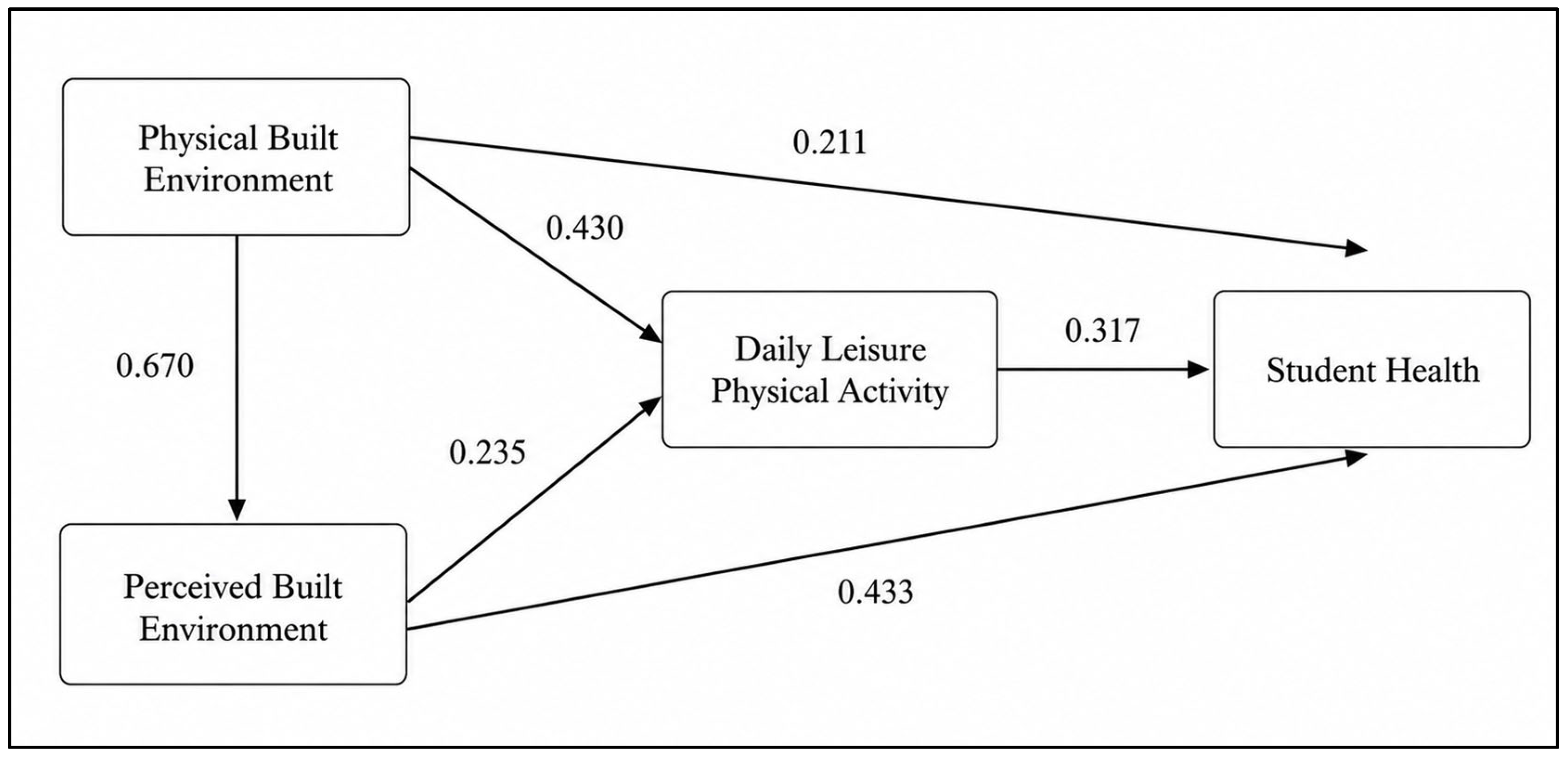
This study examined the pathways linking the university campus environment to student health, based on the conceptual framework presented in Figure 1 and the corresponding structural equation model shown in Figure 5. The model comprises three latent constructs—the physical built environment, the perceived built environment, and student health—and one observed mediating variable, namely the frequency of daily leisure physical activity. In the measurement model, the perceived built environment is represented by six observed indicators. In descending order of factor loadings, these are winter activity safety, activity atmosphere, perceived public security, traffic safety, color perception, and perceived greening. The physical built environment is represented by ten observed indicators, ranked by factor loadings as follows: climatic characteristics, facility availability and quality, spatial-functional integration, effectiveness of severe-weather protection design, quality of the pedestrian and transportation system, rationality of campus spatial layout, integration and utilization of winter climatic resources, campus location and external accessibility, diversity of transportation modes, and signage facilities.
Figure 5.
Path Analysis of the Physical Built Environment, Perceived Built Environment, Daily Leisure Physical Activity, and Student Health. Source: Authors, based on the SEM results.
The student health latent variable was measured by three observed indicators: physical health, psychological health, and social adaptation. In the measurement model, physical health had a higher factor loading than psychological health and social adaptation, indicating that it contributed more strongly to the representation of overall student health. The original questionnaire for daily leisure physical activity recorded both weekly frequency and duration; however, two indicators were insufficient to reliably identify a separate latent variable. Therefore, the weekly frequency of daily leisure physical activity was included directly in the structural model as the observed DLA variable, while activity duration was used only for descriptive analysis and was not included in the SEM path estimation.
3.4.1. Direct Effects of Key Variables on Health Status
Structural equation model parameters were estimated using the maximum likelihood method in AMOS 26.0. All path coefficients were tested using two-tailed tests at a significance level of 0.05, with detailed results presented in Table 5. The direct path analysis showed that the physical built environment (BE), perceived built environment (PE), and daily leisure physical activity (DLA) were all significantly and positively associated with student health (HS) (all p < 0.001). Specifically, the standardized direct effect of DLA on HS was β = 0.317 (95% CI: 0.227–0.407), indicating that a higher frequency of daily leisure physical activity was associated with better overall health. The direct effect of PE on HS was β = 0.433, which was greater than the direct effect of BE on HS (β = 0.211). Thus, within the model, perceived environmental quality showed a stronger direct association with student health than the physical built environment.
Table 5.
Path Coefficients of the Structural Model. Source: Authors, based on SEM analysis.
As shown in Figure 5 and Table 5, both the physical built environment and the perceived built environment were significantly and positively associated with university students’ daily leisure physical activity. The standardized path coefficient from the physical built environment to daily leisure physical activity was 0.430 (p < 0.001), indicating that a higher overall evaluation of the physical built environment was associated with a higher frequency of daily leisure physical activity. In light of the theoretical framework and previous studies, this association may be related to conditions such as campus accessibility, comfort, spatial efficiency, and winter climate protection. For example, well-connected pedestrian networks, spaces that provide shelter from snow, rain, and cold winds, and the appropriate use of winter climatic resources may all support students’ continued participation in outdoor activities.
In addition, the standardized path coefficient between the physical built environment and the perceived built environment was 0.670 (p < 0.001), indicating a strong positive association between better physical environmental conditions and more positive subjective evaluations of the environment. The perceived built environment was also significantly and positively associated with daily leisure physical activity, with a standardized path coefficient of 0.235 (p < 0.001). Thus, within the present model, a higher overall evaluation of the perceived built environment was associated with a higher frequency of daily leisure physical activity. This finding should not be interpreted as evidence that each individual environmental indicator has an independent statistical effect on activity frequency.
3.4.2. Mediation Analysis of Daily Leisure Physical Activity
It should be noted that the following mediation analysis is based on cross-sectional data. The decomposition of effects is used to characterize the pattern of associations among variables within the model, and any causal interpretation requires further confirmation through longitudinal or experimental research. The mediation model distinguishes among direct effects, specific indirect effects, total indirect effects, and total effects. When both the direct and indirect effects are significant, the relationship can be interpreted as partial mediation [33]. Based on the current structural model, four specific indirect pathways were examined:
- (1)
- Physical Built Environment → Daily Leisure Physical Activity → Student Health.
- (2)
- Perceived Built Environment → Daily Leisure Physical Activity → Student Health.
- (3)
- Physical Built Environment → Perceived Built Environment → Student Health.
- (4)
- Physical Built Environment → Perceived Built Environment → Daily Leisure Physical Activity → Student Health.
Table 6 presents the four specific indirect effects and the decomposition of the overall effects. The 95% confidence intervals for all specific indirect effects did not include zero, indicating that the corresponding indirect associations were statistically significant. Meanwhile, the direct effects of BE on HS and PE on HS remained significant, indicating partial mediation overall.
Table 6.
Direct and Indirect Effects of the Built Environment on Student Health. Source: Authors, based on SEM analysis.
The direct effect of the physical built environment on student health was 0.211. Its specific indirect effect through daily leisure physical activity was 0.136, while the specific indirect effect through the perceived built environment was 0.290. The sequential indirect effect through the pathway “Perceived Built Environment → Daily Leisure Physical Activity” was 0.050. Together, these three indirect pathways yielded a total indirect effect of 0.476 and a total effect of 0.687. These results indicate that the physical built environment was not only directly associated with student health but was also indirectly associated with health through environmental perception and daily leisure physical activity. Among the three specific indirect pathways, the pathway “Physical Built Environment → Perceived Built Environment → Student Health” showed the largest indirect effect.
The model results indicate that more favorable environmental conditions and perceptions were associated with a higher frequency of students’ daily leisure physical activity and, through the specified indirect pathways, with better outcomes across three measured dimensions: physical health, psychological health, and social adaptation. However, given the cross-sectional design, these pathways should be interpreted as statistical associations within the proposed model rather than as evidence of causal effects or accumulated health benefits attributable to the built environment.
The direct effect of the perceived built environment on student health was 0.433, while the specific indirect effect through daily leisure physical activity was 0.074, yielding a total effect of 0.507. Because the direct effect was substantially larger than the indirect effect through leisure physical activity, the association between the perceived built environment and student health was primarily direct, with daily leisure physical activity playing a supplementary partial mediating role. Notably, the direct effect of the perceived built environment on student health was greater than that of the physical built environment, highlighting the importance of perceptible environmental qualities such as safety, aesthetics, greening, and activity atmosphere. Perceived winter activity safety showed a particularly important association in this relationship. However, because no moderation analysis was conducted in this study, it is not interpreted as a statistical moderator.
3.4.3. Pathways Linking the Built Environment to College Students’ Health
The standardized path coefficient from the physical built environment to the perceived built environment was 0.670, indicating a strong positive association between the two constructs. Based on the full structural model, the indirect associations between the physical built environment and student health can be decomposed into three components: the specific indirect effect through daily leisure physical activity was 0.136; the specific indirect effect through the perceived built environment and then directly to student health was 0.290; and the sequential indirect effect through the pathway “Perceived Built Environment → Daily Leisure Physical Activity” was 0.050. Together, these three indirect effects yielded a total indirect effect of 0.476. When combined with the direct effect of 0.211, the total effect of the physical built environment on student health was 0.687. This decomposition avoids reporting multiple “total effects” for the same independent variable on the same dependent variable and indicates that environmental perception may link the physical environment to health both directly and, further, through a sequential pathway involving daily leisure physical activity.
Overall, distinguishing the built environment into physical and perceived dimensions shows that both are directly associated with student health and may also be indirectly associated with health through daily leisure physical activity. In addition, the physical built environment may be associated with health outcomes by shaping students’ perceptions of the environment, either directly through perceived environmental quality or further through leisure-related behavior. As shown in Figure 6, this study identified six major structural pathways linking the campus built environment to student health:
- (1)
- Physical Built Environment → Student Health (direct pathway)
- (2)
- Perceived Built Environment → Student Health (direct pathway)
- (3)
- Physical Built Environment → Daily Leisure Physical Activity → Student Health (indirect pathway)
- (4)
- Perceived Built Environment → Daily Leisure Physical Activity → Student Health (indirect pathway)
- (5)
- Physical Built Environment → Perceived Built Environment → Student Health (indirect pathway)
- (6)
- Physical Built Environment → Perceived Built Environment → Daily Leisure Physical Activity → Student Health (sequential mediation pathway)
Figure 6.
Structural pathways linking campus built environment and college student health in cold-climate cities via daily physical activity. Source: Authors, based on the SEM results.
4. Discussion
The significance of the present findings lies not only in confirming the statistical significance of the identified pathways, but also in revealing the distinct mechanisms through which the two types of built environment influence health, thereby indicating clear priorities for design intervention. In terms of the effect structure, approximately 85% (0.433/0.507) of the total effect of the perceived built environment on health (0.507) was attributable to its direct effect, whereas approximately 69% (0.476/0.687) of the total effect of the physical built environment on health (0.687) was realized indirectly through the perceived built environment and daily leisure-time physical activity, with the direct effect accounting for only approximately 31%. This contrast suggests that the physical built environment functions more as an “upstream foundational condition” for health, and that its health benefits depend to a large extent on whether physical improvements are genuinely perceived by students as creating spaces that are safer, more aesthetically appealing, and more supportive of physical activity. In other words, in cold-region university campuses, simply increasing the number of facilities may yield limited marginal health benefits unless such improvements are translated into perceptible environmental quality. To make these findings more intuitive and facilitate their translation into design practice, this study further integrates the questionnaire measurement dimensions, key empirical findings, corresponding design responses, and transferable design guidelines into Figure 7. This integrated framework, extending from measurement to design guidance, may provide a useful reference for health-oriented design in other university campuses located in similar cold-climate contexts.
Figure 7.
Integrated Framework from Measurement to Design Guidance for Cold-Region Campus Built Environment and Student Health. The star symbol indicates the core finding and does not denote statistical significance.
4.1. Associations Among the Physical Built Environment, Daily Leisure Physical Activity, and Health
This study identifies an indirect pathway whereby the physical built environment is associated with university student health through increased opportunities for participation in daily leisure physical activity. Structural features of the campus environment, including green spaces, sports facilities, pedestrian networks, and spatial connectivity, provide the basic conditions that encourage students to engage in outdoor activities. These physical attributes may increase activity frequency and extend the duration of outdoor stays, thereby contributing to more favorable health outcomes.
A growing body of empirical research supports this mechanism. For example, Azeez et al. [34] conducted a meta-analysis of 10 studies on physical activity in university settings and highlighted the importance of active design and physical activity in creating health-supportive campus built environments. A survey of 822 undergraduate students by Peachey and Baller [35] further found that students living on campus reported higher levels of active transportation, leisure-time physical activity, and overall physical activity, while perceived built-environment attributes such as land-use mix, aesthetic features, and street connectivity were associated with students’ physical activity levels. A GIS-based study conducted by Lu et al. [36] at four universities in Xi’an (n = 1498) further demonstrated significant associations between campus built-environment characteristics and indicators of university students’ physical fitness. Several studies in China have reported similar findings, showing that green-space configuration and pedestrian systems on university campuses are positively associated with students’ levels of leisure activity [37,38,39]. In a study of walkable environments around universities in developing countries, Said et al. [40] used structural equation modeling to examine satisfaction with the walking environment and found that environmental attributes such as safety, comfort, and convenience significantly influenced evaluations of walkability. In addition, multifunctional spatial layouts can facilitate informal activities and social interaction. These findings are highly consistent with the concept of the “15-min campus,” which emphasizes supporting students’ overall daily life through a compact and convenient campus environment [41].
Studies have shown that continuous sheltered pedestrian systems, semi-outdoor transitional spaces, climate-buffering spaces, and climate-responsive shading facilities can improve pedestrian thermal comfort under adverse weather conditions and enhance both the accessibility and willingness to use walking environments [42,43]. A field experiment in Singapore found that pedestrians exhibited a clear preference for shaded routes during route choice. Compared with shaded conditions, sun-exposed routes of the same distance were perceived as involving higher walking costs, indicating that buildings and artificial shading facilities can significantly influence pedestrian route-choice behavior [42]. Therefore, incorporating microclimate regulation, shading, greening, and spatial connectivity into a climate-responsive landscape design framework is important for improving the year-round usability of campus outdoor spaces [43].
At the same time, transforming winter climatic constraints into seasonal activity resources and locally distinctive features has become an important direction in public-space design in cold regions. Previous research on winter cities has shown that providing appropriate spaces for walking, cycling, skiing, skating, and other seasonal activities can improve outdoor activity conditions during the cold season and enhance the vitality of public spaces throughout the year [44]. A large-scale data study of ice-and-snow tourism in Harbin further indicated that ice-and-snow activities, winter resources, the urban environment, and cultural experiences are important factors contributing to the attractiveness of winter destinations. This suggests that ice-and-snow resources can be transformed from climatic constraints into spatial and activity resources with distinctive local characteristics [45].
4.2. Associations Among the Perceived Built Environment, Daily Leisure Physical Activity, and Health
The stronger association of the perceived built environment with health can be interpreted from the perspective of environmental psychology. On university campuses in cold-climate regions, students’ subjective perceptions of safety, including public security, traffic safety, and winter activity safety, as well as activity atmosphere, color, and greening, are closely associated with their emotional states, willingness to participate in activities, and self-rated health. Accordingly, the perceived built environment showed a stronger direct association with student health in the model (β = 0.433). In comparison, the physical built environment (β = 0.211) was more strongly linked to health through indirect pathways involving environmental perception and daily leisure physical activity. Physical spaces can support health-related behaviors, for example, through sheltered walkways that maintain pedestrian access during snow and strong winds; guide activity through features such as conveniently located stairways; and regulate environmental exposure through measures such as thermal insulation that reduces cold stress. However, these functions are largely associated first with students’ subjective perceptions of the environment and subsequently with their behavior and health. This “physical environment → perceived environment → daily activity → health” pathway is consistent with the sequential mediation results of this study and suggests that, on cold-climate campuses, perceived environmental quality may show a stronger direct association with health than physical environmental conditions alone.
Compared with the structural conditions provided by the physical built environment, subjective perceptions of environmental attributes such as safety, aesthetics, and accessibility may be more directly associated with behavioral decisions. Students’ emotional responses to the perceived campus environment may influence their willingness to engage in outdoor and leisure activities and, in turn, be associated with health outcomes. This pathway highlights the role of environmental perception in linking environmental conditions with leisure participation through psychological and motivational processes.
Previous research provides further support for this interpretation. During the COVID-19 pandemic, university students’ perceptions of the built environment were found to be significantly associated with walking attitudes, walking behavior, and physical and psychological health [37]. A nationwide survey further demonstrated a significant association between campus green space and university students’ mental health [39]. Visual exposure to green landscapes from high-rise residential environments has also been shown to promote relaxation and improve subjective well-being [46]. Collectively, these findings suggest that subjective perceptions of environmental quality may be associated with health outcomes through both behavioral engagement and psychological responses.
In addition, the visual characteristics of the campus environment and the configuration of green spaces may promote outdoor activity by improving environmental perceptions and supporting psychological restoration. Previous research has shown that greater tree canopy coverage is associated with stronger stress-recovery effects, with some differences observed between male and female participants [47]. These findings suggest that integrating greening, shading, color, and spaces for seasonal activities into campus landscape design may help create outdoor environments that are more comfortable, restorative, and supportive of physical activity. A review of previous studies further indicated that environmental attributes such as aesthetics, convenience, and accessibility are associated with participation in physical activity [48].
4.3. Mechanisms Linking the Physical Built Environment to Health Through Environmental Perception and Daily Leisure Physical Activity
This study further identified a sequential indirect pathway, indicating that the physical built environment is associated with health not only by increasing opportunities for leisure activity, but also by shaping individuals’ subjective perceptions of the environment. More positive environmental perceptions may, in turn, encourage participation in leisure activities and thereby contribute to additional health benefits through an indirect pathway. These findings reveal a multilevel association linking the physical environment, environmental perception, behavior, and health.
Existing research provides empirical support for this mechanism. A campus study conducted in Xi’an, China, found that perceived solar exposure was closely associated with outdoor thermal comfort, particularly in winter, when appropriate exposure to sunlight could improve users’ thermal comfort [49]. Perceived safety has also been identified as an important factor associated with the use of urban parks. A survey conducted in four U.S. cities showed that residents who perceived parks as safe or very safe were significantly more likely to use them; the number of park facilities, environmental maintenance, and organized activities were also associated with park use [50]. Further evidence suggests that public open spaces with higher levels of perceived safety can attract a broader range of users and are associated with higher levels of physical activity [51]. These findings indicate that enhancing perceived safety through appropriate spatial organization, good visibility, lighting, environmental maintenance, and the provision of activity facilities may be important for promoting outdoor activity.
Under cold-climate conditions, low temperatures, snow and ice, and seasonal environmental changes may further influence perceived safety, comfort, and willingness to use outdoor spaces. Winter-space design therefore needs to consider factors such as slip resistance, snow management, lighting, solar exposure, and the continuity of pedestrian routes. Research on community parks in cold regions has shown that multilayered vegetation with greater coverage can significantly enhance perceived restorative potential, while seasonal visual changes in plant landscapes may further strengthen restorative effects [52]. Winter streetscape experiments have also demonstrated that winter vegetation can facilitate recovery from mental fatigue, suggesting that appropriately configured vegetation and other natural landscape elements retain important psychological restorative value even during the cold season [53]. Evidence from campus-based physical activity interventions further indicates that structured activity support can benefit student health. For example, the MoveU.HappyU program at the University of Toronto provided students with six weeks of individualized physical activity training and behavior-change guidance. Participants subsequently showed significant reductions in anxiety, depression, and psychological distress, indicating that campus-based physical activity support may serve as an effective approach to promoting students’ mental health [54].
Beyond behavioral interventions, the campus built environment itself is also associated with physical activity and health outcomes. A path analysis involving 1384 students across 13 universities found that the quality of campus walking and cycling environments was positively associated with students’ walking activity and was also related to lower BMI, suggesting that greater campus walkability and cycling convenience may support physical activity and associated health benefits [55]. More importantly, the physical environment may not be linked to behavior and health entirely through direct pathways; part of its association may operate through individuals’ subjective perceptions of the environment. Previous research has shown that perceived physical activity environments, safety, aesthetic quality, and social cohesion significantly mediated the relationship between objectively measured built-environment characteristics and walking behavior [56]. Accordingly, improvements to the physical campus environment may be more effectively translated into health-related behaviors and outcomes when accompanied by more positive perceptions of environmental comfort, safety, convenience, and attractiveness.
5. Conclusions
This study examined the relationships between university campus environments and student health in a cold-climate city. A theoretical framework incorporating the physical built environment, perceived built environment, daily leisure physical activity, and health outcomes was developed, and five research hypotheses (H1–H5) were proposed. Daily leisure physical activity was treated as a key mediating variable to further examine the mechanisms linking the physical environment, perceived environment, and student health. Based on structural equation modeling of 1232 questionnaires collected from four universities in Harbin, all five hypotheses were supported by the empirical data. Specifically:
- (1)
- The physical built environment (H1) and the perceived built environment (H2) were both significantly and positively associated with student health.
- (2)
- Daily leisure physical activity constituted a significant indirect pathway between each of the two environmental dimensions and student health (H3 and H4).
- (3)
- In addition, the physical built environment was associated with student health through a sequential indirect pathway involving the perceived built environment and daily leisure physical activity (H5).
On this basis, several major conclusions can be drawn. First, the overall health-problem scores of university students in Harbin were below the theoretical midpoint of the scale, indicating a relatively favorable overall health status, although problems such as fatigue, digestive disorders, anxiety, depression, and social stress were still present. Male students had significantly lower health-problem scores than female students, and students from northern China also had significantly lower scores than those from southern China. Second, the physical built environment, perceived built environment, and daily leisure physical activity were all significantly and positively associated with student health, with the perceived built environment showing a relatively stronger direct association with health. In addition, higher overall evaluations of both the physical and perceived built environments were significantly associated with a higher frequency of daily leisure physical activity. Third, the campus built environment was associated with student health through four specific indirect pathways: Physical Built Environment → Daily Leisure Physical Activity → Student Health; Perceived Built Environment → Daily Leisure Physical Activity → Student Health; Physical Built Environment → Perceived Built Environment → Student Health; and Physical Built Environment → Perceived Built Environment → Daily Leisure Physical Activity → Student Health. The total indirect effect of the physical built environment on student health was 0.476, with a total effect of 0.687, while the total effect of the perceived built environment on student health was 0.507. These findings suggest that the physical built environment serves as an upstream foundation within this system and is associated with health primarily through environmental perception and behavior. Although the perceived built environment showed the strongest direct association with health, much of its role is also shaped by the physical environment. Therefore, improvements in perceived environmental quality should be coordinated with improvements in physical environmental quality, rather than treating the two as substitutes.
Accordingly, this study proposes an operational and transferable principle for prioritizing investment in health-oriented campus design in cold-climate regions. Given that the association between the perceived built environment and health is primarily direct, whereas that of the physical built environment is primarily indirect, campuses with limited land and budget resources should prioritize environmental qualities that can be directly perceived by students, including winter activity safety, perceived greenery and color, and activity atmosphere. At the same time, each improvement to the physical environment should be implemented in a way that can be meaningfully perceived and experienced by students, rather than treating physical and perceived environmental improvements as substitutes or simply pursuing a larger scale of facilities. Because this principle does not depend on a specific list of facilities, it may provide a transferable reference for health-oriented campus design in other regions with similar cold-climate conditions.
The extent to which these findings can be generalized to other contexts requires careful consideration when interpreting and applying the results. In terms of climate and campus characteristics, the sequential pathway identified in this study—Physical Environment → Perceived Environment → Daily Leisure Physical Activity → Health—may theoretically be transferable to universities with similar climatic and spatial characteristics. Potentially comparable contexts include small- and medium-sized public universities in Northern Europe, such as Finland and Sweden; Canada; Russia; the northern United States; and high-latitude regions of East Asia, such as other cities in Northeast China, Hokkaido in Japan, and northern regions of South Korea. These areas commonly experience prolonged periods of snow cover, limited winter daylight, and low temperatures that constrain outdoor activity, while many university campuses are relatively self-contained and clearly bounded, making their spatial structures broadly comparable to those examined in this study. However, generalization to large metropolitan universities, institutions without clearly defined campus boundaries, or universities located in milder climatic regions should be approached with caution and requires further empirical validation.
In addition, this study treated the university campus as a relatively self-contained analytical unit and did not systematically incorporate elements of the urban built environment beyond the campus boundary. However, students’ daily activities and health outcomes are likely to be influenced simultaneously by surrounding urban conditions, such as the connectivity and walking distance between the campus and nearby urban green spaces or public transit stops; environmental safety and winter maintenance along commuting routes, including the responsiveness of municipal snow removal; and the extent to which land-use mix around the campus complements or substitutes for students’ off-campus activity choices. These external factors may reinforce or offset the effects of the internal campus environment. Because such influences were not captured in the present study, they should be considered important variables in future research. Subsequent studies are therefore encouraged to adopt a multiscale built-environment measurement framework spanning the campus, neighborhood, and city levels, combined with GIS-based network analysis to characterize the connectivity between university campuses and surrounding urban systems.
Within the campus itself, the findings point to several design investment priorities that warrant further empirical validation. First, climate-buffering infrastructure may include covered or heated pedestrian systems connecting major building clusters, underground passageways, and seasonally adaptive shading facilities to maintain pedestrian accessibility under varying weather conditions. Second, winter-safety measures may include slip-resistant paving, snow management, and appropriate nighttime lighting. Third, design interventions aimed at improving perceived environmental quality may include tree planting that provides effective shading and seasonal adaptability, highly visible visual signage that contrasts clearly with winter surroundings, and activity spaces characterized by both aesthetic quality and perceived safety. Fourth, multifunctional indoor or semi-indoor spaces may help compensate for seasonal reductions in outdoor activity opportunities while supporting the continuity of informal social interaction and leisure activities. Given that the direct path coefficient between the perceived built environment and health (β = 0.433) was higher than that between the physical built environment and health (β = 0.211), these design recommendations should be interpreted as planning implications derived from the model results rather than as technical thresholds directly established by this study.
Taken together, the discussion of transferable contexts, urban factors beyond the campus boundary, and potential on-campus design investments provides a reference framework for developing health-oriented campus design guidelines for universities with similar climatic and spatial characteristics. It also represents an important direction for translating the findings of this study into planning and design practice.
Overall, university campuses are not only places for academic learning but also important settings in which students’ daily lives and health-related behaviors take place. Focusing on universities in a cold-climate city, this study systematically examined the relationships among the built environment, environmental perception, behavioral participation, and health outcomes, revealing a complex multilevel mechanism and providing empirical support for health-oriented campus planning. As emphasized in the Ottawa Charter for Health Promotion, health is created and maintained within the settings of everyday life, including places where people learn, work, engage in leisure, and develop social and emotional relationships [57]. The physical configuration and psychosocial atmosphere of university campuses therefore jointly constitute an important setting for shaping the health of young adults.
This study extends the theoretical perspective of health geography in cold-climate cities and contributes empirical evidence to the understanding of health-related behaviors under extreme weather conditions. Methodologically, structural equation modeling (SEM) was used to identify and model relatively weak pathways linking low-frequency behaviors with built-environment factors, providing a climate-adaptive analytical approach for examining these relationships. In addition, the study directly responds to the strategic objectives of “building healthy environments” and “promoting healthy lifestyles” outlined in the Healthy China 2030 Planning Outline [58] and provides empirical evidence on the links among campus spatial optimization, behavioral promotion, and student health outcomes in cold-climate cities.
6. Limitations and Future Research
This study used questionnaire data to examine the relationships among the physical built environment, perceived built environment, daily leisure physical activity, and student health on university campuses, providing empirical evidence for understanding how campus environments are associated with health. Nevertheless, several limitations warrant careful consideration. All survey data were collected through self-administered online questionnaires. Although the sample included both undergraduate and postgraduate students from four universities and thus provided a certain degree of representativeness, self-report bias may still have occurred [59], particularly in participants’ subjective assessments of their health status and frequency of leisure physical activity. In addition, some respondents may already have had greater awareness of or more positive attitudes toward the built environment of their campuses, potentially introducing selective participation bias into perception-based measures.
Formal data collection began in December 2024 and continued for approximately five months, covering mainly the winter and the following spring. Although this period captured cold-season conditions, it did not encompass all four seasons and therefore could not fully reveal seasonal variations in behavioral patterns and environmental response mechanisms. Future research should conduct longitudinal studies across multiple seasons to capture these spatiotemporal dynamics more comprehensively. The present study also relied primarily on questionnaire data and quantitative methods, limiting the depth of understanding of students’ lived experiences and subjective perceptions. Future studies could integrate in-depth interviews, focus group discussions, GPS tracking, mobile signaling data, or wearable devices to obtain richer information on behavioral patterns and environmental exposure.
This study employed a cross-sectional design, with all variables collected through questionnaires at the same time point; therefore, the temporal ordering and causal direction among the variables cannot be established. The terms “mediation effect” and “direct/indirect effect” used throughout this study refer to statistical interpretations based on the proposed theoretical model and describe the structure of associations among variables rather than empirically established causal relationships. The directional pathway “Physical Built Environment → Perceived Built Environment → Daily Leisure Physical Activity → Health” was specified on the basis of theoretical assumptions, and the same cross-sectional data could, in principle, also be compatible with models specifying alternative directional relationships. Longitudinal follow-up studies or quasi-experimental/intervention designs are therefore required to further establish the causality and directionality of these pathways.
In addition, all constructs in this study were derived from a single source of self-reported data. Although the statistical tests did not indicate serious common method bias, the observed associations may still be affected to some extent by common method variance. Future studies should therefore incorporate objective measures, such as GIS-based indicators, on-site environmental audits, and physical activity data recorded by wearable devices, to reduce this potential source of bias.
It should also be noted that the empirical evidence in this study was derived from four universities in a single cold-climate city in China, Harbin. Although the underlying “Built Environment → Perception → Daily Activity → Health” framework may have potential applicability across countries, differences in institutional, cultural, and specific climatic contexts may limit the direct generalizability of the findings to other countries and regions. Further comparative validation across countries and climate zones is therefore needed.
Author Contributions
Conceptualization, C.L. and S.M.; methodology, C.L. and S.M.; software, C.L.; validation, J.L., H.Z. and S.M.; formal analysis, C.L.; investigation, C.L., J.L. and H.Z.; resources, C.L., J.L. and H.Z.; data curation, C.L.; writing—original draft preparation, C.L.; writing—review and editing, C.L., J.L., H.Z. and S.M.; visualization, C.L. and H.Z.; supervision, S.M.; project administration, C.L. and J.L. All authors have read and agreed to the published version of the manuscript.
Funding
This research was supported by the 2025 Heilongjiang Province Graduate Excellent Course Construction Project, Landscape Art Research and Practice (Project No. 2025119), and the 2026 Heilongjiang Art Planning Project, Research on Pathways for Balancing Visual Attractiveness and Ecological Resilience in Cold-Region Tourist Attractions (Project No. 2026B024).
Institutional Review Board Statement
The study was conducted in accordance with the Declaration of Helsinki and approved by the Ethics Committee for Research Involving Human Subjects, Universiti Putra Malaysia (JKEUPM) (reference number JKEUPM-2024-778; approval date: 11 November 2024).
Informed Consent Statement
Electronic informed consent was obtained from all participants involved in the study before they completed the online questionnaires.
Data Availability Statement
The anonymized data supporting the findings of this study are available from the corresponding author upon reasonable request, subject to applicable ethical and participant privacy requirements. The data are not publicly available because they contain potentially sensitive information relating to student health and environmental perceptions.
Acknowledgments
The authors sincerely thank all students from Heilongjiang University, Northeast Forestry University, Northeast Agricultural University, and Harbin Engineering University who participated in the questionnaire survey. During the preparation of this manuscript, the authors used ChatGPT (OpenAI, GPT-5.6 Thinking, accessed on 20 July 2026) for English-language editing, reference-format conversion, and manuscript-formatting assistance. The authors have reviewed and edited the output and take full responsibility for the content of this publication.
Conflicts of Interest
The authors declare no conflicts of interest.
Appendix A. Cold City College Campus Usage and Constraints Questionnaire
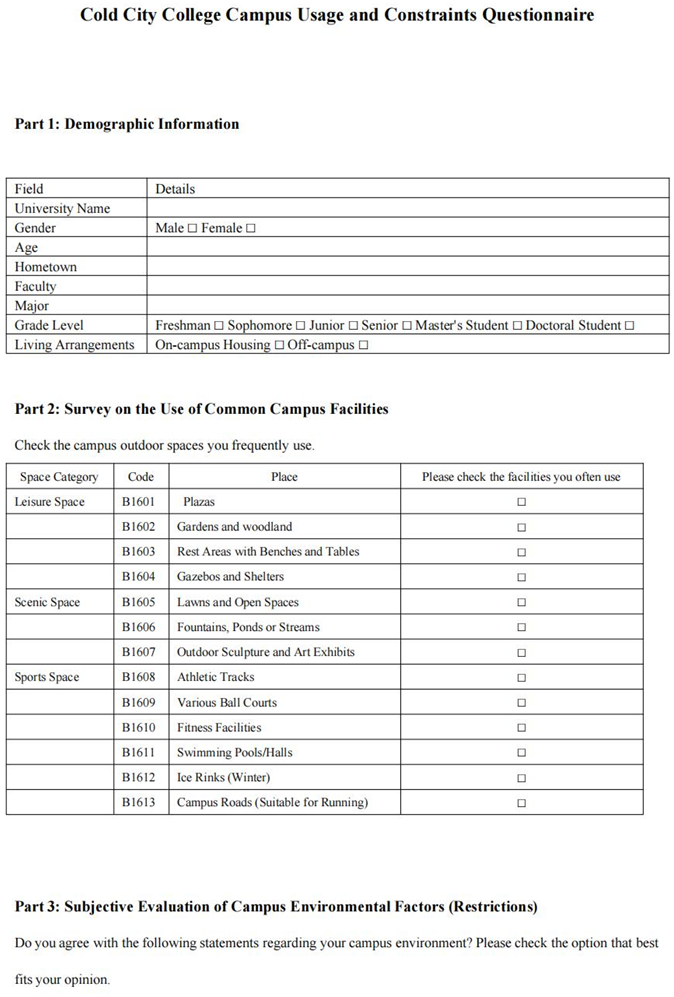
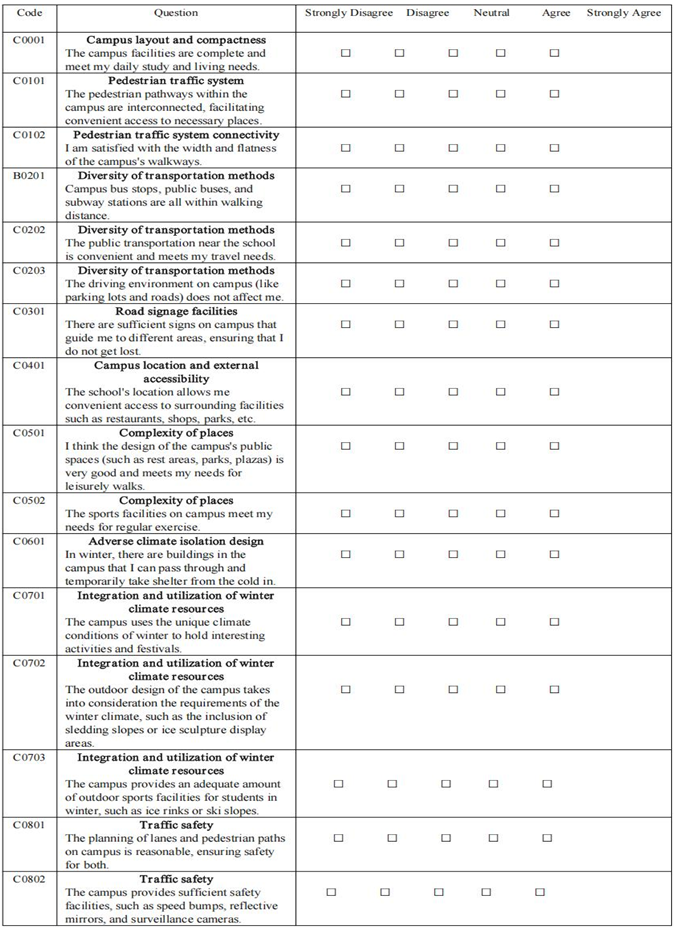
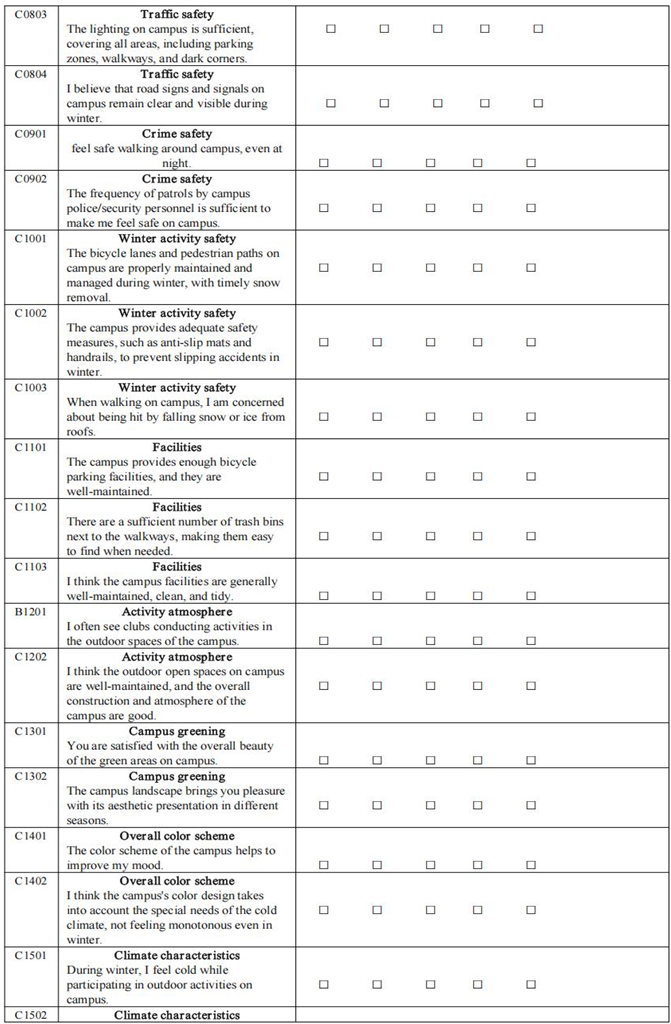
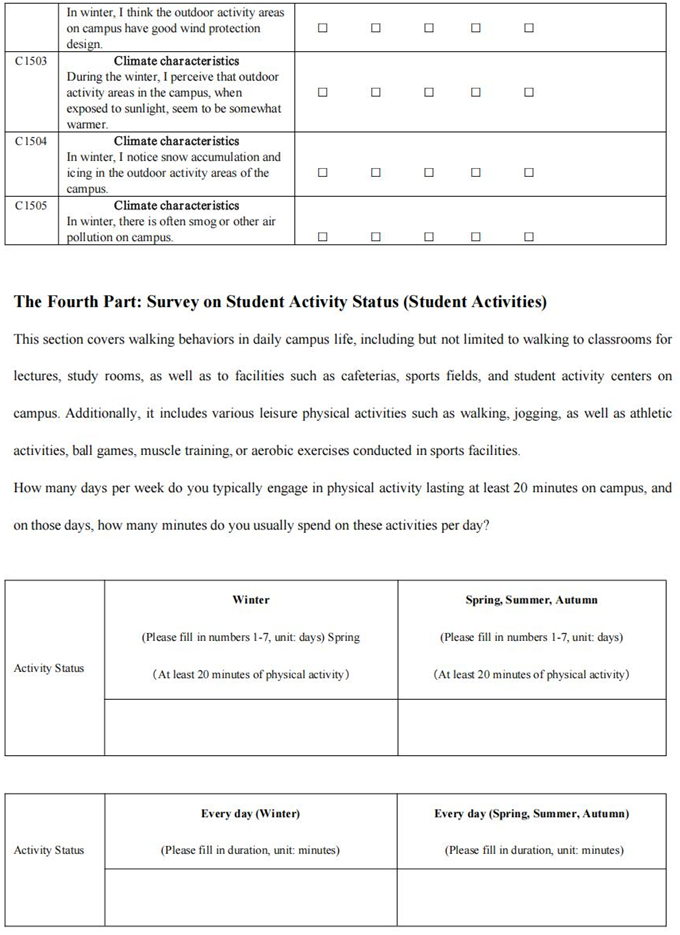
References
- Ng, K.S.; Lian, J.; Huang, F.; Yu, Y.; Vardhanabhuti, V. Association between moderate-to-vigorous physical activity and chronic disease risk in adults and elderly: Insights from the UK Biobank study. Front. Physiol. 2024, 15, 1465168. [Google Scholar] [CrossRef] [Scilit] [PubMed]
- Reiner, M.; Niermann, C.; Jekauc, D.; Woll, A. Long-term health benefits of physical activity—A systematic review of longitudinal studies. BMC Public Health 2013, 13, 813. [Google Scholar] [CrossRef] [Scilit] [PubMed]
- Noetel, M.; Sanders, T.; Gallardo-Gómez, D.; Taylor, P.; del Pozo Cruz, B.; van den Hoek, D.; Smith, J.J.; Mahoney, J.; Spathis, J.; Moresi, M.; et al. Effect of exercise for depression: Systematic review and network meta-analysis of randomised controlled trials. BMJ 2024, 384, e075847. [Google Scholar] [CrossRef] [Scilit] [PubMed]
- Yi, Y.K. Restorative effects of natural landscape on university students’ stress reduction and cognitive enhancement. J. Korean Inst. Landsc. Archit. 2015, 43, 127–137. [Google Scholar] [CrossRef] [Scilit]
- Hansmann, R.; Hug, S.M.; Seeland, K. Restoration and stress relief through physical activities in forests and parks. Urban For. Urban Green. 2007, 6, 213–225. [Google Scholar] [CrossRef] [Scilit]
- Liprini, R.M. Students’ Perceptions of Green Space on a University Campus: An Attention Restoration Theory Perspective. Master's Thesis, University of Pretoria, Pretoria, South Africa, 2014. [Google Scholar]
- Paddle, E.; Gilliland, J. Orange is the new green: Exploring the restorative capacity of seasonal foliage in schoolyard trees. Int. J. Environ. Res. Public Health 2016, 13, 497. [Google Scholar] [CrossRef] [Scilit] [PubMed]
- Chandrashekar, R. Landscape Design Criteria for Creating a Restorative Environment in Outdoor Areas of Ikenberry Commons Residence Halls. Master’s Thesis, University of Illinois at Urbana–Champaign, Urbana, IL, USA, 2015. Available online: https://hdl.handle.net/2142/78553 (accessed on 20 July 2026).
- Bratman, G.N.; Hamilton, J.P.; Daily, G.C. The impacts of nature experience on human cognitive function and mental health. Ann. N. Y. Acad. Sci. 2012, 1249, 118–136. [Google Scholar] [CrossRef] [Scilit] [PubMed]
- Ding, Y.; Lee, C.; Chen, X.; Song, Y.; Newman, G.; Lee, R.; Lee, S.; Li, D.; Sohn, W. Exploring the association between campus environment of higher education and student health: A systematic review of findings and measures. Urban For. Urban Green. 2024, 91, 128168. [Google Scholar] [CrossRef] [Scilit] [PubMed]
- World Health Organization; United Nations Educational, Scientific and Cultural Organization. Making Every School a Health-Promoting School: Global Standards and Indicators; World Health Organization: Geneva, Switzerland; UNESCO: Paris, France, 2021; Available online: https://www.who.int/publications/i/item/9789240025059 (accessed on 20 July 2026).
- Chen, S. Design Research on Improving the Quality of Cold-Region University Campuses Based on Swarm Intelligence. Ph.D. Thesis, Harbin Institute of Technology, Harbin, China, 2020. (In Chinese) [Google Scholar]
- Wang, M.; Mei, H. Correlation between university campus environment elements and winter physical activity in cold climates. J. Harbin Inst. Technol. 2018, 50, 168–174. [Google Scholar] [CrossRef]
- Pan, M.; Ying, B.; Lai, Y.; Kuan, G. Status and influencing factors of physical exercise among college students in China: A systematic review. Int. J. Environ. Res. Public Health 2022, 19, 13465. [Google Scholar] [CrossRef] [Scilit] [PubMed]
- Atkin, A.J.; Sharp, S.J.; Harrison, F.; Brage, S.; van Sluijs, E.M.F. Seasonal variation in children’s physical activity and sedentary time. Med. Sci. Sports Exerc. 2016, 48, 449–456. [Google Scholar] [CrossRef] [Scilit] [PubMed]
- Huber, M.; Knottnerus, J.A.; Green, L.; van der Horst, H.; Jadad, A.R.; Kromhout, D.; Leonard, B.; Lorig, K.; Loureiro, M.I.; van der Meer, J.W.M.; et al. How should we define health? BMJ 2011, 343, d4163. [Google Scholar] [CrossRef] [Scilit] [PubMed]
- Kärmeniemi, M.; Lankila, T.; Ikäheimo, T.M.; Koivumaa-Honkanen, H.; Korpelainen, R. The built environment as a determinant of physical activity: A systematic review of longitudinal studies and natural experiments. Ann. Behav. Med. 2018, 52, 239–251. [Google Scholar] [CrossRef] [Scilit] [PubMed]
- Sallis, J.F.; Cerin, E.; Conway, T.L.; Adams, M.A.; Frank, L.D.; Pratt, M.; Salvo, D.; Schipperijn, J.; Smith, G.; Cain, K.L.; et al. Physical activity in relation to urban environments in 14 cities worldwide: A cross-sectional study. Lancet 2016, 387, 2207–2217. [Google Scholar] [CrossRef] [Scilit] [PubMed]
- Van Holle, V.; Deforche, B.; Van Cauwenberg, J.; Goubert, L.; Maes, L.; Van de Weghe, N.; De Bourdeaudhuij, I. Relationship between the physical environment and different domains of physical activity in European adults: A systematic review. BMC Public Health 2012, 12, 807. [Google Scholar] [CrossRef] [Scilit] [PubMed]
- Bélanger, M.; Gray-Donald, K.; O’Loughlin, J.; Paradis, G.; Hanley, J. Influence of weather conditions and season on physical activity in adolescents. Ann. Epidemiol. 2009, 19, 180–186. [Google Scholar] [CrossRef] [Scilit] [PubMed]
- Pressman, N. Northern Cityscape: Linking Design to Climate; Winter Cities Association: Yellowknife, NT, Canada, 1995. [Google Scholar]
- Pressman, N. Shaping Cities for Winter: Climate Comfort and Sustainable Design; Winter Cities Association: Prince George, BC, Canada, 2004. [Google Scholar]
- Chapman, D.; Nilsson, K.L.; Rizzo, A.; Larsson, A. Updating Winter: The Importance of Climate-Sensitive Urban Design for Winter Settlements. In Arctic Yearbook 2018; Northern Research Forum: Akureyri, Iceland, 2018. [Google Scholar]
- GB 50176-2016; Code for Thermal Design of Civil Building. China Architecture & Building Press: Beijing, China, 2016. (In Chinese)
- Song, Y.; Du, A.; Cui, T. Using the Degree-Day Method to Analyze Central Heating Energy Consumption in Cities of Northern China. Sustainability 2024, 16, 1008. [Google Scholar] [CrossRef] [Scilit]
- China Meteorological Administration. Climatological Standard Normals of Harbin Station (Station No. 50953), 1971–2000; China Meteorological Data Service Centre: Beijing, China, (In Chinese). Available online: https://data.cma.cn (accessed on 6 August 2026).
- Roof, K.; Oleru, N. Public health: Seattle and King County’s push for the built environment. J. Environ. Health 2008, 71, 24–27. [Google Scholar] [PubMed]
- Guo, Y.; Ni, H.; Fang, S.; Xu, L.; He, Y. Research on item screening of the College Students’ Health Status Assessment Form. Chin. Health Stat. 2014, 31, 678–681. (In Chinese) [Google Scholar]
- Cerin, E.; Conway, T.L.; Saelens, B.E.; Frank, L.D.; Sallis, J.F.; Chapman, J.E.; Glanz, K.; Cain, K.L. Cross-validation of the factorial structure of the Neighborhood Environment Walkability Scale (NEWS) and its abbreviated form (NEWS-A). Int. J. Behav. Nutr. Phys. Act. 2009, 6, 32. [Google Scholar] [CrossRef] [Scilit] [PubMed]
- Zimring, C.M. Walking on Campus: Correlates and Web Tools; Georgia Institute of Technology: Atlanta, GA, USA, 2008. [Google Scholar]
- Lan, X.; Li, W.; Tang, J.; Shakoor, A.; Zhao, F.; Fan, J. Spatiotemporal variation of climate of different flanks and elevations of the Qinling–Daba mountains in China during 1969–2018. Sci. Rep. 2022, 12, 6952. [Google Scholar] [CrossRef] [Scilit] [PubMed]
- Kline, R.B. Principles and Practice of Structural Equation Modeling, 4th ed.; Guilford Press: New York, NY, USA, 2016. [Google Scholar]
- Wen, Z.; Chang, L.; Hau, K.-T.; Liu, H. Testing and application of the mediating effects. Acta Psychol. Sin. 2004, 36, 614–620. (In Chinese) [Google Scholar]
- Azeez, S.A.; Mustafa, F.A.; Ahmed, R.M. A Meta-Analysis of Evidence Synthesis for a Healthy Campus Built Environment by Adopting Active Design Approaches to Promote Physical Activity. Buildings 2023, 13, 1224. [Google Scholar] [CrossRef] [Scilit]
- Peachey, A.A.; Baller, S.L. Perceived Built Environment Characteristics of On-Campus and Off-Campus Neighborhoods Associated with Physical Activity of College Students. J. Am. Coll. Health 2015, 63, 337–342. [Google Scholar] [CrossRef] [Scilit] [PubMed]
- Lu, Z.; Li, Z.; Mao, C.; Tan, Y.; Zhang, X.; Zhang, L.; Zhu, W.; Sun, Y. Correlation between Campus-Built Environment and Physical Fitness in College Students in Xi’an—A GIS Approach. Int. J. Environ. Res. Public Health 2022, 19, 7948. [Google Scholar] [CrossRef] [Scilit] [PubMed]
- Liu, M.; Zhao, S.; Li, J. Associations among perceived built environment, attitudes, walking behavior, and physical and mental state of college students during COVID-19. Travel Behav. Soc. 2022, 28, 170–180. [Google Scholar] [CrossRef] [Scilit] [PubMed]
- Liao, B.; Xu, Y.; Li, X.; Li, J. Association between campus walkability and affective walking experience, and the mediating role of walking attitude. Int. J. Environ. Res. Public Health 2022, 19, 14519. [Google Scholar] [CrossRef] [Scilit] [PubMed]
- Liu, W.; Sun, N.; Guo, J.; Zheng, Z. Campus green spaces, academic achievement and mental health of college students: Evidence from a nationwide survey in China. Int. J. Environ. Res. Public Health 2022, 19, 8618. [Google Scholar] [CrossRef] [Scilit] [PubMed]
- Said, M.; Abou-Zeid, M.; Kaysi, I. Modeling satisfaction with the walking environment: The case of an urban university neighborhood in a developing country. J. Urban Plan. Dev. 2017, 143, 04017021. [Google Scholar] [CrossRef] [Scilit]
- Moreno, C.; Allam, Z.; Chabaud, D.; Gall, C.; Pratlong, F. Introducing the “15-minute city”: Sustainability, resilience and place identity in future post-pandemic cities. Smart Cities 2021, 4, 93–111. [Google Scholar] [CrossRef] [Scilit]
- Melnikov, V.R.; Christopoulos, G.I.; Krzhizhanovskaya, V.V.; Lees, M.H.; Sloot, P.M.A. Behavioural thermal regulation explains pedestrian path choices in hot urban environments. Sci. Rep. 2022, 12, 2441. [Google Scholar] [CrossRef] [Scilit] [PubMed]
- Lenzholzer, S.; Brown, R.D. Climate-responsive landscape architecture design education. J. Clean. Prod. 2013, 61, 89–99. [Google Scholar] [CrossRef] [Scilit]
- Chapman, D.; Nilsson, K.L.; Rizzo, A.; Larsson, A. Winter City Urbanism: Enabling All Year Connectivity for Soft Mobility. Int. J. Environ. Res. Public Health 2019, 16, 1820. [Google Scholar] [CrossRef] [Scilit] [PubMed]
- Jiang, B.; Zhang, C.; Cui, Y.; Zhu, J.; Liu, Z. Enhancement of Harbin ice and snow tourism destination competitiveness: A large-scale data study based on sentiment analysis and Latent Dirichlet Allocation. PLoS ONE 2025, 20, e0319435. [Google Scholar] [CrossRef] [Scilit] [PubMed]
- Elsadek, M.; Liu, B.; Xie, J. Window view and relaxation: Viewing green space from a high-rise estate improves urban dwellers’ well-being. Urban For. Urban Green. 2020, 55, 126846. [Google Scholar] [CrossRef] [Scilit]
- Jiang, B.; Chang, C.-Y.; Sullivan, W.C. A dose of nature: Tree cover, stress reduction, and gender differences. Landsc. Urban Plan. 2014, 132, 26–36. [Google Scholar] [CrossRef] [Scilit]
- Humpel, N.; Owen, N.; Leslie, E. Environmental factors associated with adults’ participation in physical activity: A review. Am. J. Prev. Med. 2002, 22, 188–199. [Google Scholar] [CrossRef] [Scilit] [PubMed]
- Ning, S.; Jing, W.; Ge, Z. Sunlight perception and outdoor thermal comfort in college campuses: A new perspective. Sci. Rep. 2023, 13, 16112. [Google Scholar] [CrossRef] [Scilit] [PubMed]
- Lapham, S.C.; Cohen, D.A.; Han, B.; Williamson, S.; Evenson, K.R.; McKenzie, T.L.; Hillier, A.; Ward, P. How important is perception of safety to park use? A four-city survey. Urban Stud. 2016, 53, 2624–2636. [Google Scholar] [CrossRef] [Scilit] [PubMed]
- Pérez-Tejera, F.; Anguera, M.T.; Guàrdia-Olmos, J.; Dalmau-Bueno, A.; Valera, S. Examining perceived safety and park use in public open spaces: The case of Barcelona. J. Environ. Psychol. 2022, 81, 101823. [Google Scholar] [CrossRef] [Scilit]
- Zhu, X.; Zhang, Y.; Luo, Y.Y.; Zhao, W. Natural or artificial? Exploring perceived restoration potential of community parks in winter city. Urban For. Urban Green. 2023, 79, 127808. [Google Scholar] [CrossRef] [Scilit]
- Hidalgo, A.K. Mental health in winter cities: The effect of vegetation on streets. Urban For. Urban Green. 2021, 63, 127226. [Google Scholar] [CrossRef] [Scilit]
- de Jonge, M.L.; Jain, S.; Faulkner, G.E.; Sabiston, C.M. On campus physical activity programming for post-secondary student mental health: Examining effectiveness and acceptability. Ment. Health Phys. Act. 2021, 20, 100391. [Google Scholar] [CrossRef] [Scilit]
- Horacek, T.M.; Dede Yildirim, E.; Kattelmann, K.; Brown, O.; Byrd-Bredbenner, C.; Colby, S.; Greene, G.; Hoerr, S.; Kidd, T.; Koenings, M.M.; et al. Path analysis of campus walkability/bikeability and college students’ physical activity attitudes, behaviors, and body mass index. Am. J. Health Promot. 2018, 32, 578–586. [Google Scholar] [CrossRef] [Scilit] [PubMed]
- Van Dyck, D.; Veitch, J.; De Bourdeaudhuij, I.; Thornton, L.; Ball, K. Environmental perceptions as mediators of the relationship between the objective built environment and walking among socio-economically disadvantaged women. Int. J. Behav. Nutr. Phys. Act. 2013, 10, 108. [Google Scholar] [CrossRef] [Scilit] [PubMed]
- World Health Organization. Ottawa Charter for Health Promotion; World Health Organization: Geneva, Switzerland, 1986; Available online: https://www.who.int/publications/i/item/ottawa-charter-for-health-promotion (accessed on 20 July 2026).
- State Council of the People’s Republic of China. Healthy China 2030 Planning Outline; State Council of China: Beijing, China, 2016; (In Chinese). Available online: http://www.gov.cn/zhengce/2016-10/25/content_5124174.htm (accessed on 20 July 2026).
- Althubaiti, A. Information bias in health research: Definition, pitfalls, and adjustment methods. J. Multidiscip. Healthc. 2016, 9, 211–217. [Google Scholar] [CrossRef] [Scilit] [PubMed]
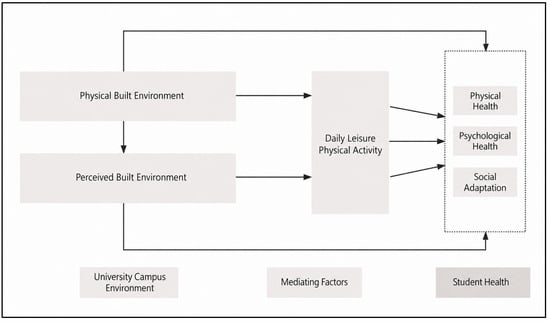
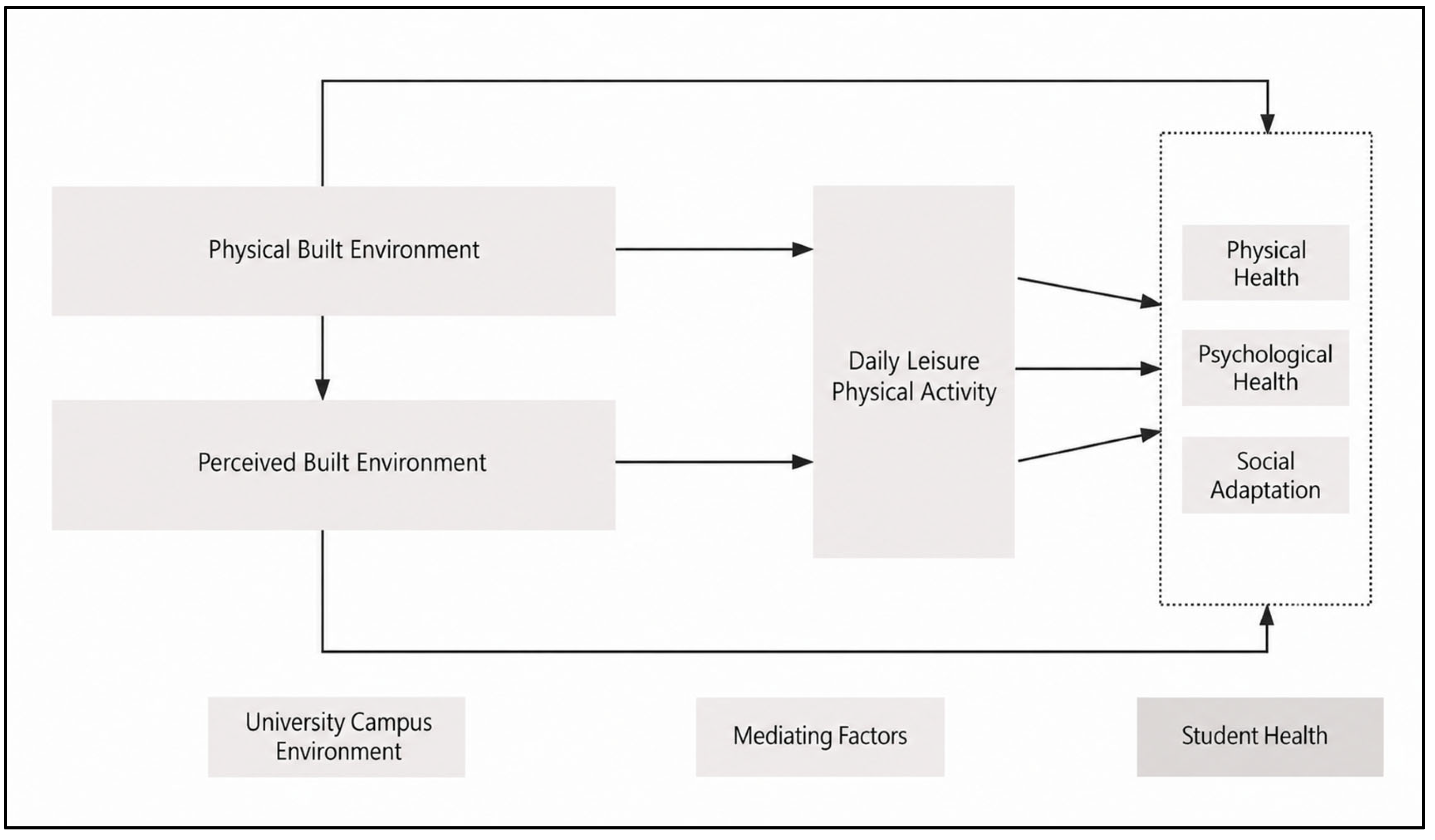
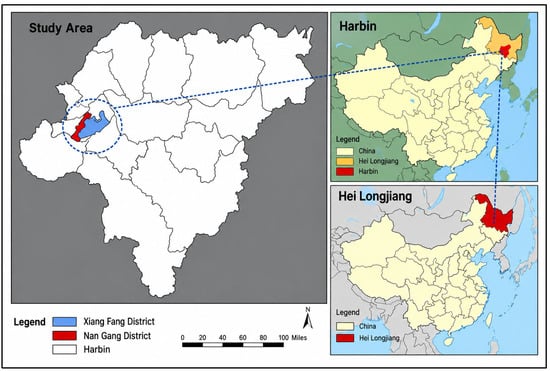
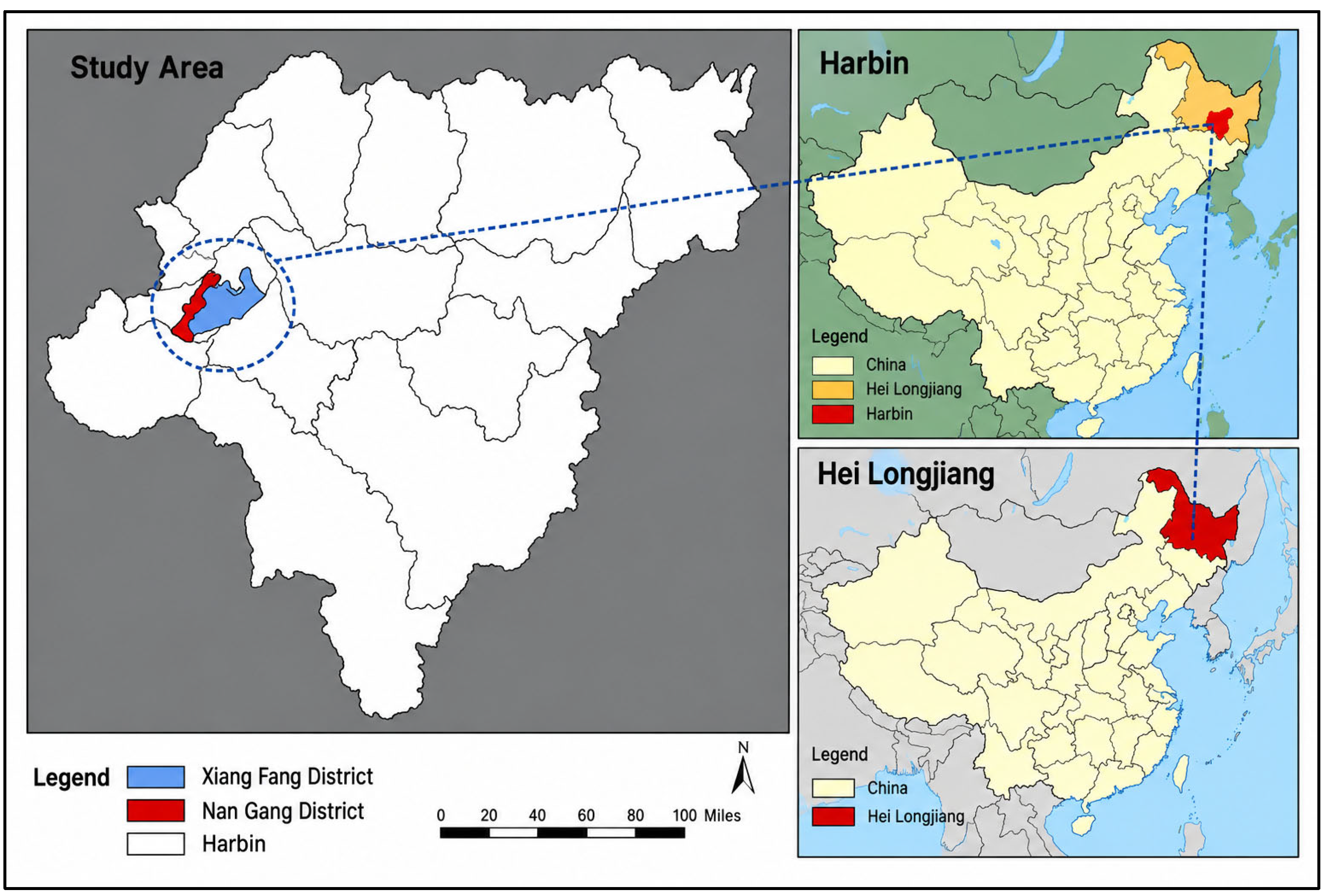
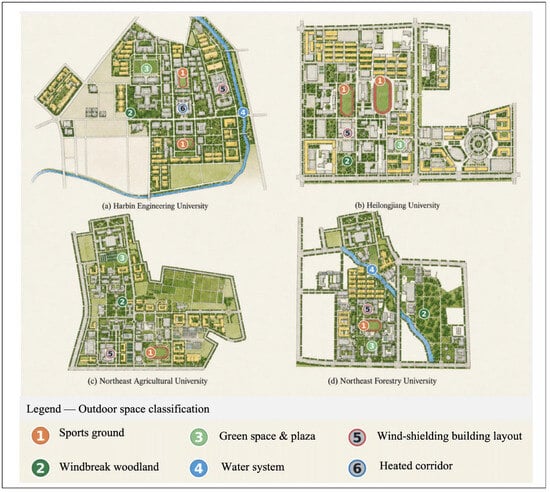
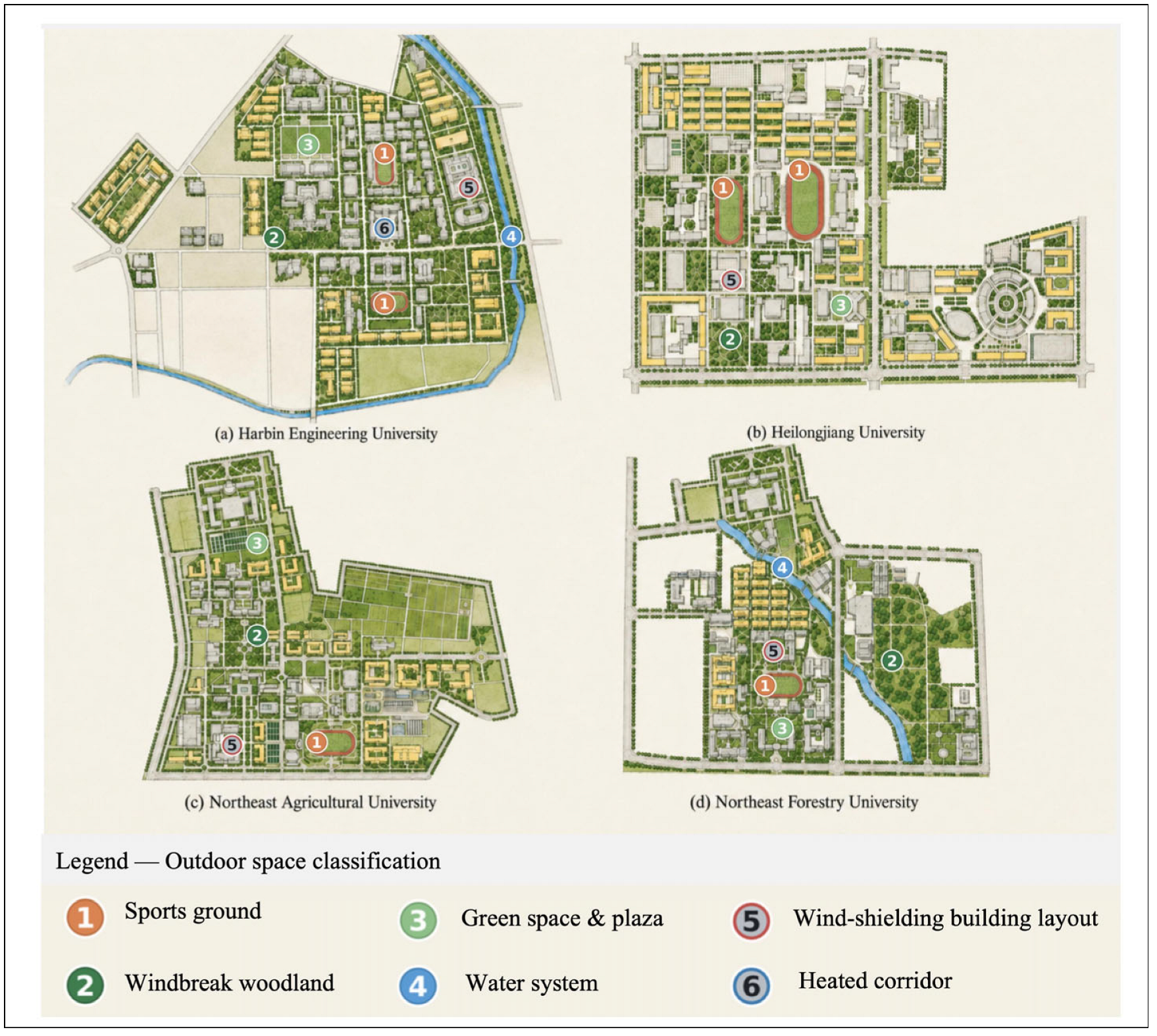
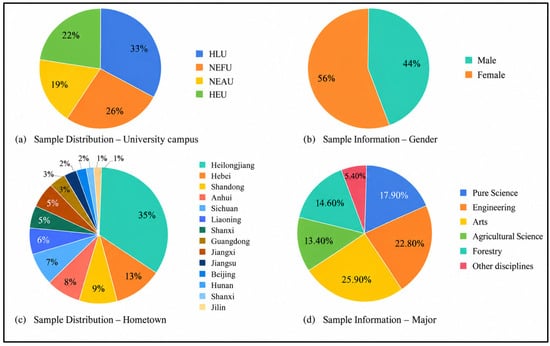
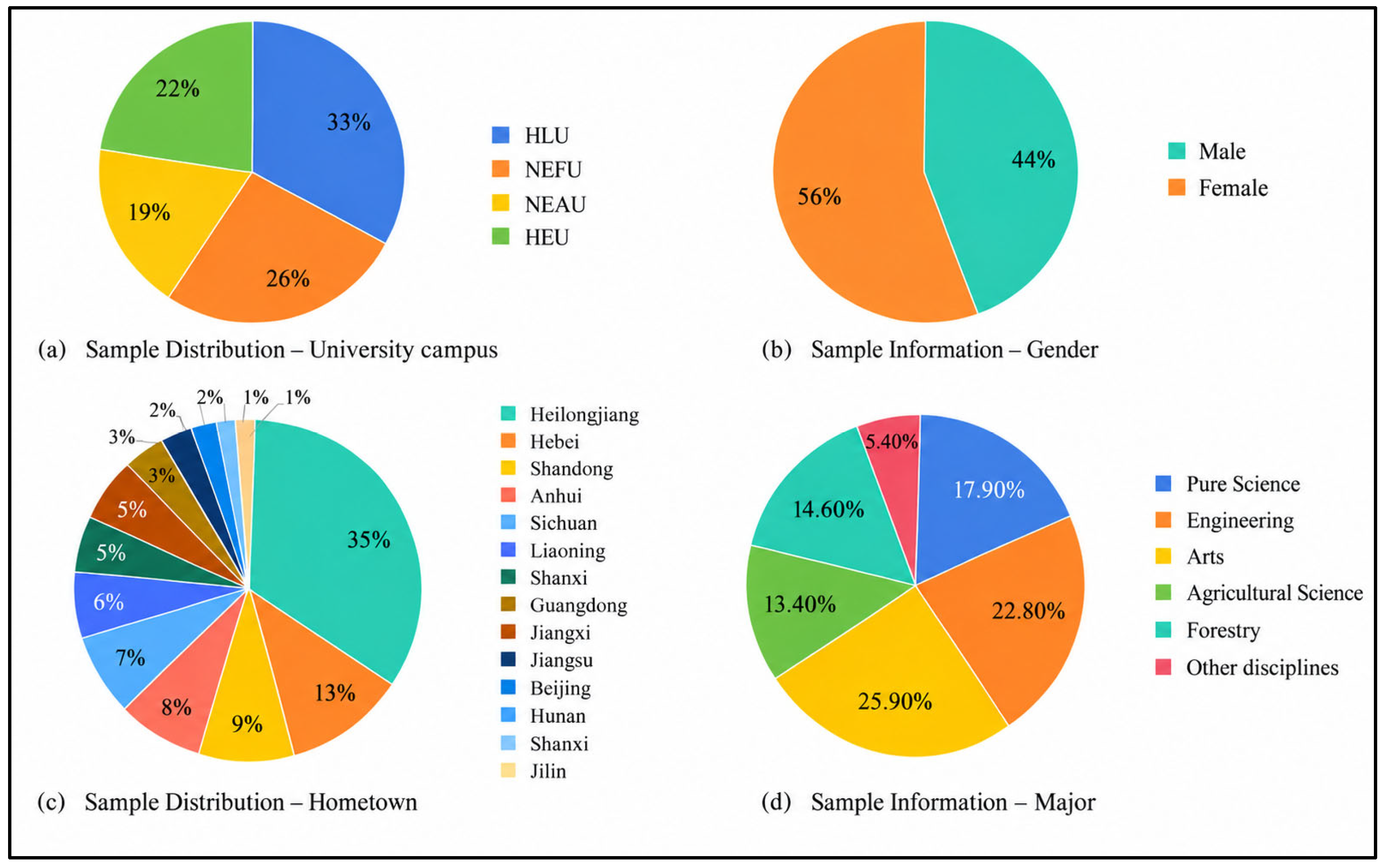
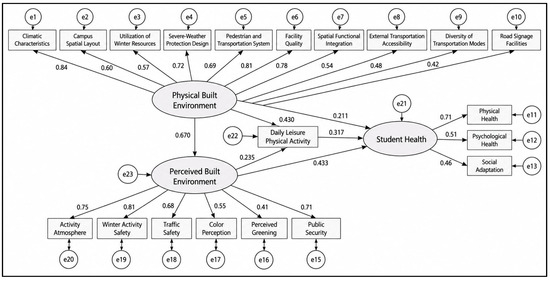
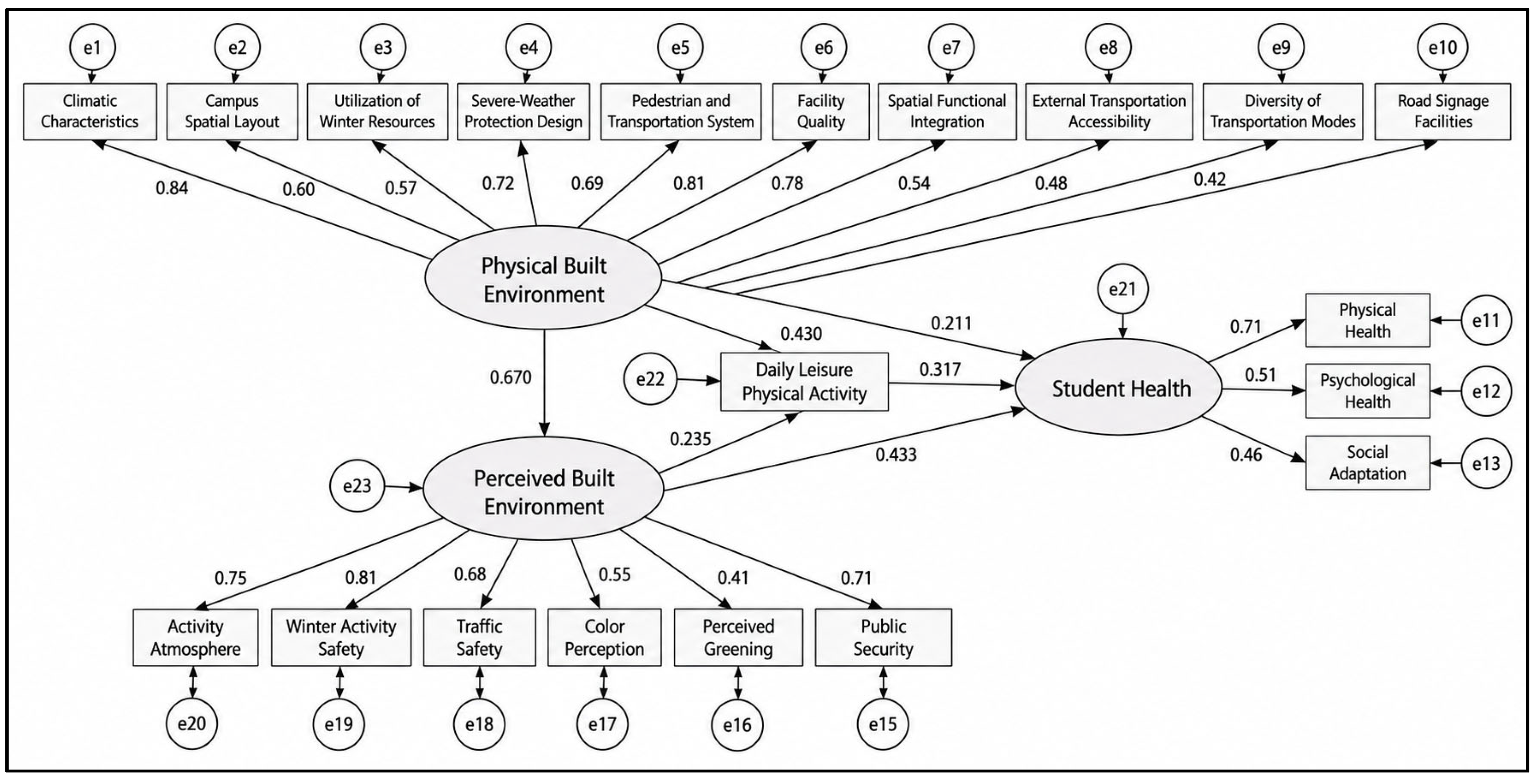
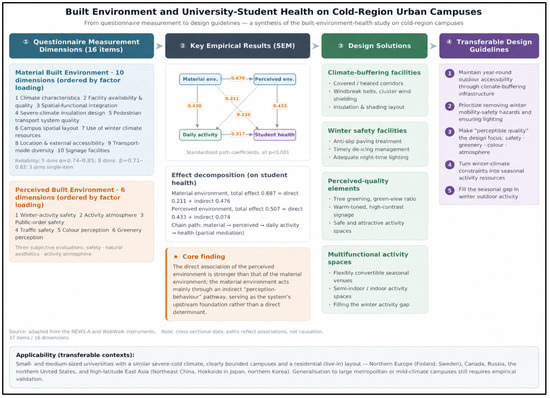
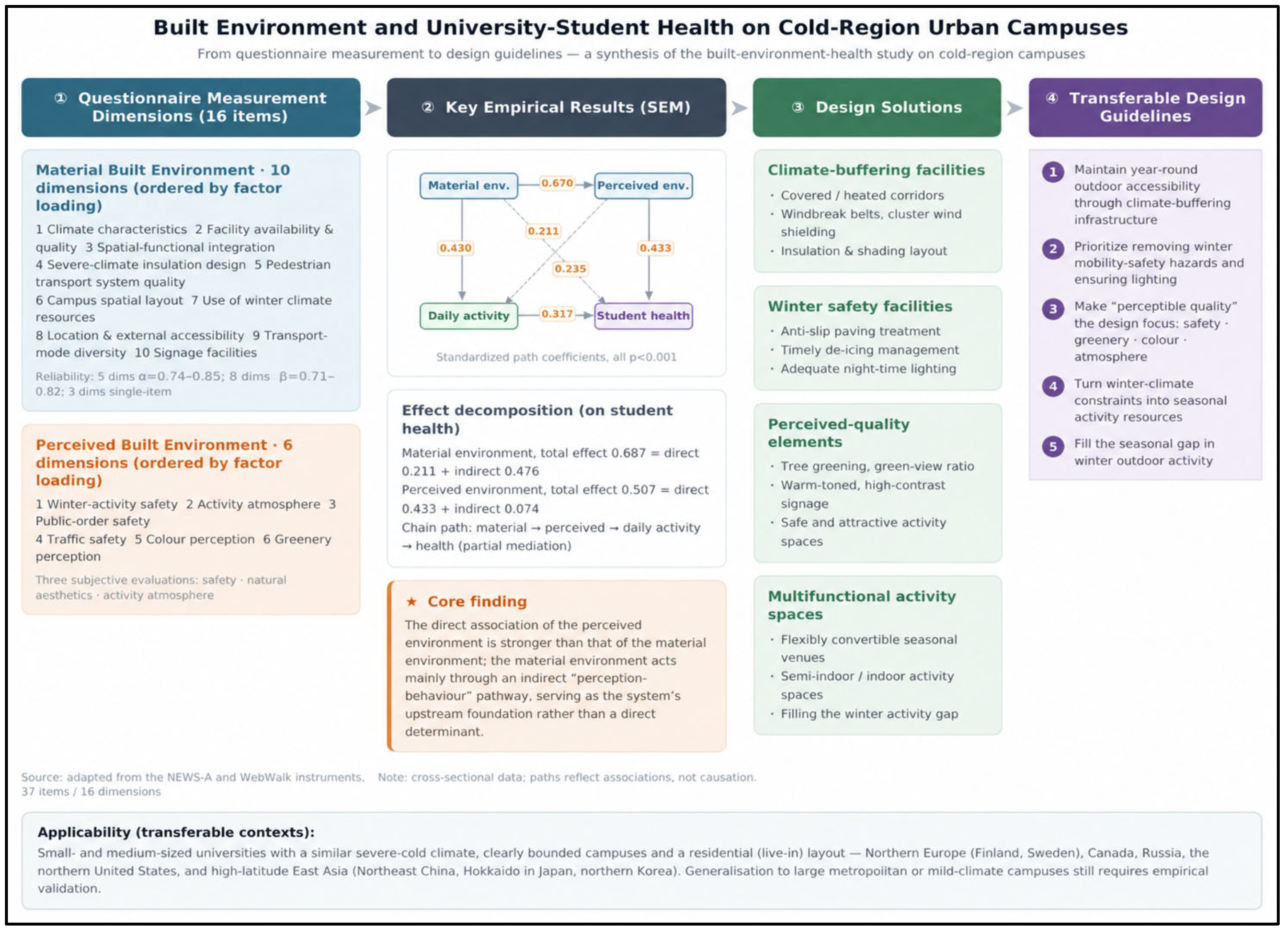

Disclaimer/Publisher’s Note: The statements, opinions and data contained in all publications are solely those of the individual author(s) and contributor(s) and not of MDPI and/or the editor(s). MDPI and/or the editor(s) disclaim responsibility for any injury to people or property resulting from any ideas, methods, instructions or products referred to in the content. |
© 2026 by the authors. Licensee MDPI, Basel, Switzerland. This article is an open access article distributed under the terms and conditions of the Creative Commons Attribution (CC BY) license.