Design and Vibration Response Analysis of a Novel Lightweight Temporary Steel Platform


Abstract
1. Introduction
- (1)
- A construction method for lightweight steel platforms based on the collaborative utilization of permanent and temporary structures was proposed, which effectively reduced the amount of temporary works and improved resource utilization efficiency;
- (2)
- Through field dynamic testing, the vibration response characteristics of the lightweight steel platform under various working conditions were systematically investigated, providing an experimental basis for evaluating the dynamic performance of similar structures;
- (3)
- Based on the experimental results, corresponding construction control recommendations were proposed to provide a reference for engineering practice.
2. Design and Construction Techniques for Lightweight Temporary Steel Platform
2.1. Design of Temporary Steel Platform
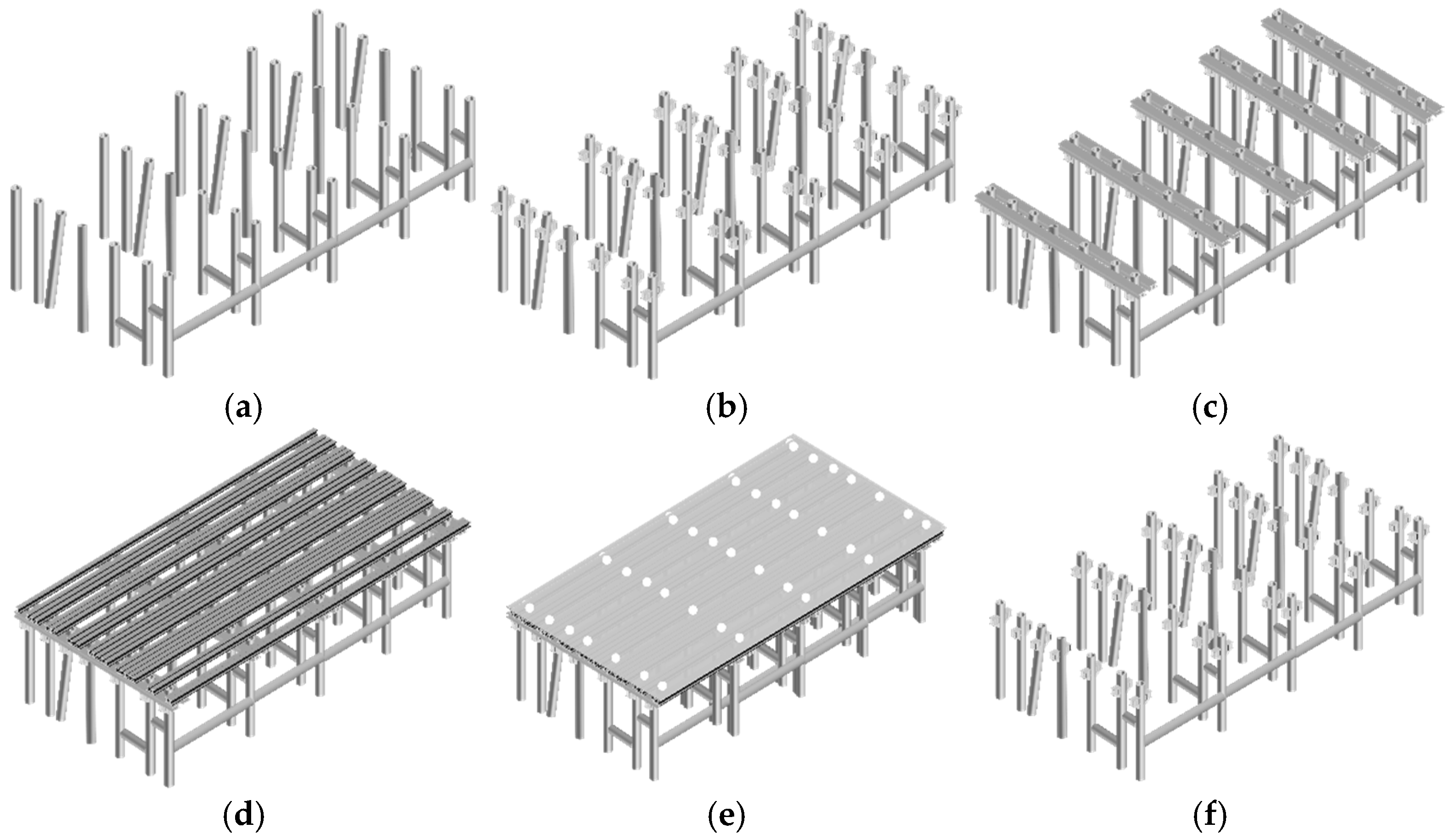
2.2. Construction Procedure for Temporary Steel Platform
- (1)
- Site acceptance inspections were conducted for structural steel sections, steel plates, welding equipment, and hoisting equipment to ensure the smooth implementation of subsequent construction activities.
- (2)
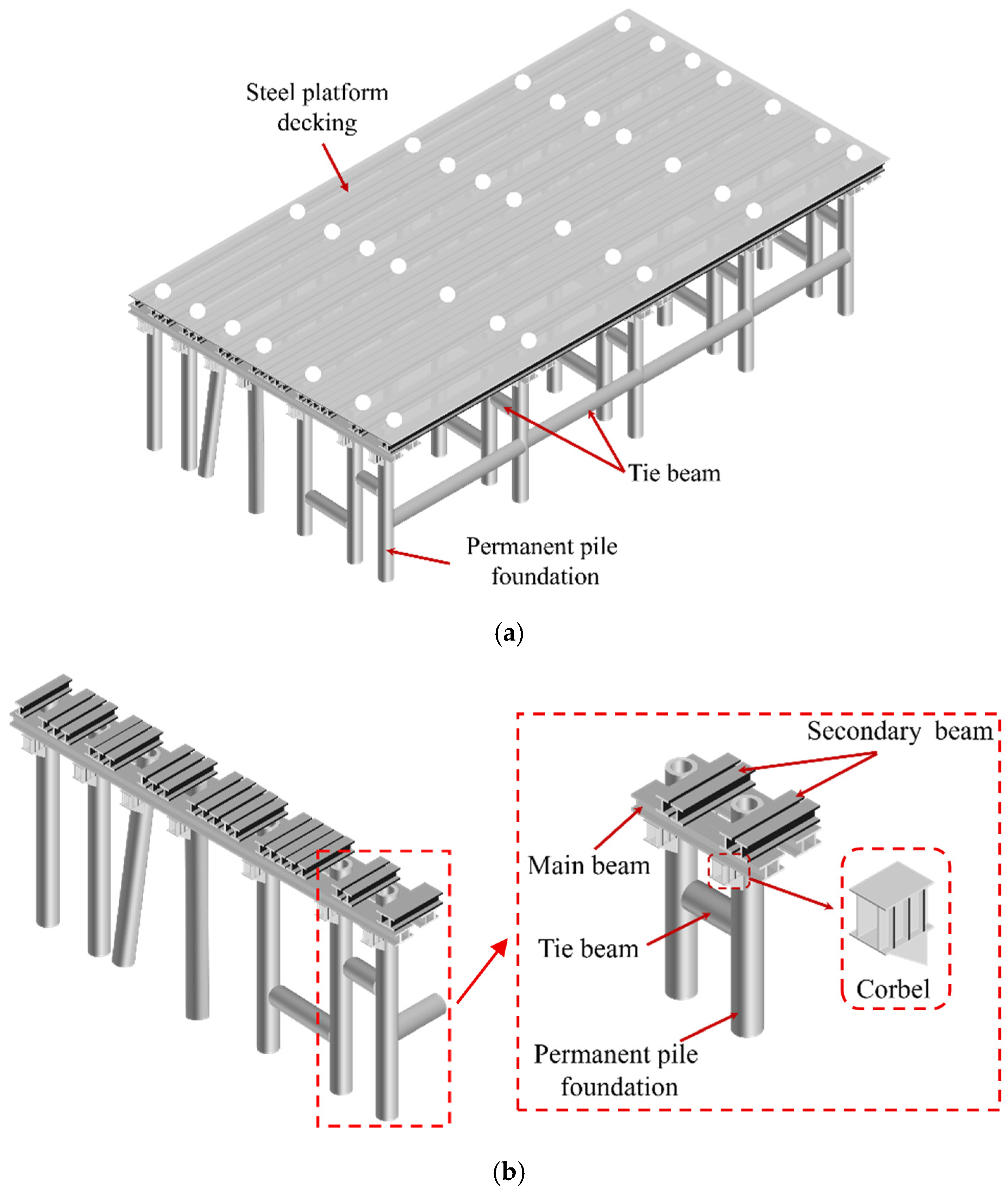
- Lateral bracing was welded between the permanent steel pipe piles to improve the overall stiffness and stability of the platform.
- (3)
- The support corbels were positioned and welded.
- (4)
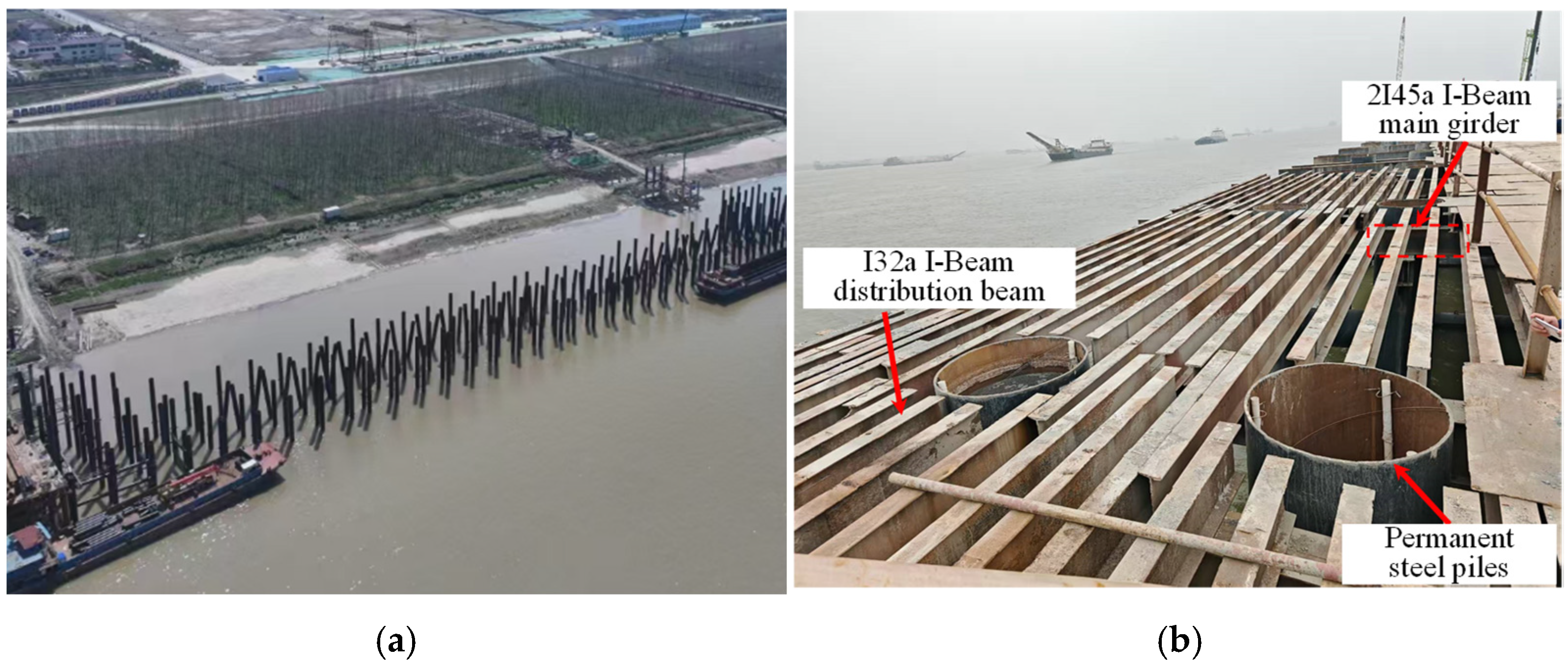
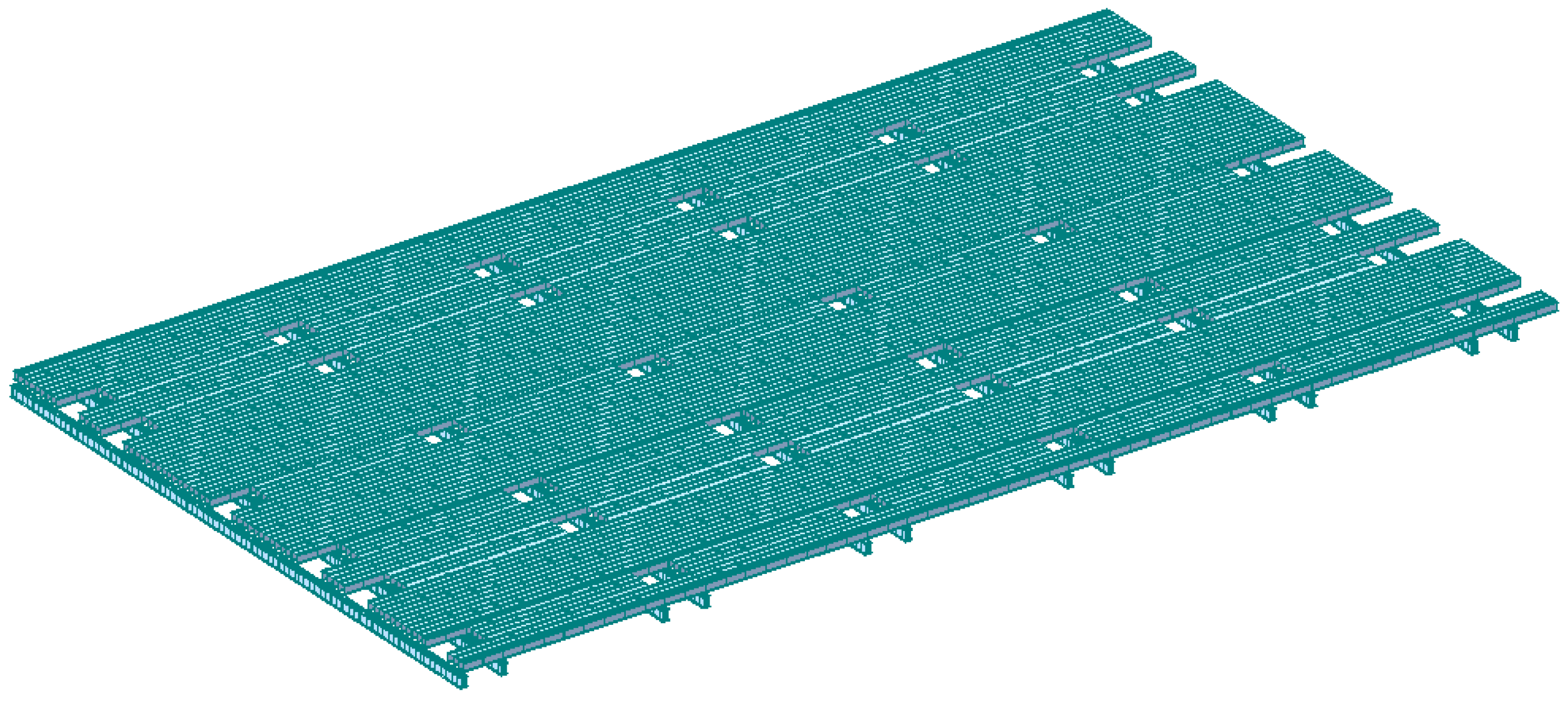
- I45a steel I-beam main girders were installed on top of the corbels.
- (5)
- I32a steel I-beam distribution girders were installed above the main girders.
- (6)
- An 8 mm-thick checkered steel plate decking was laid above the distribution girders.
- (7)
- Safety protection systems, including platform guardrails and warning signage, were installed.
- (8)
- Structural force and deformation monitoring was carried out throughout the construction stage of the steel platform.
2.3. Calculations of Strength and Deformation Under Load
3. Vibration Testing of Lightweight Temporary Steel Platform
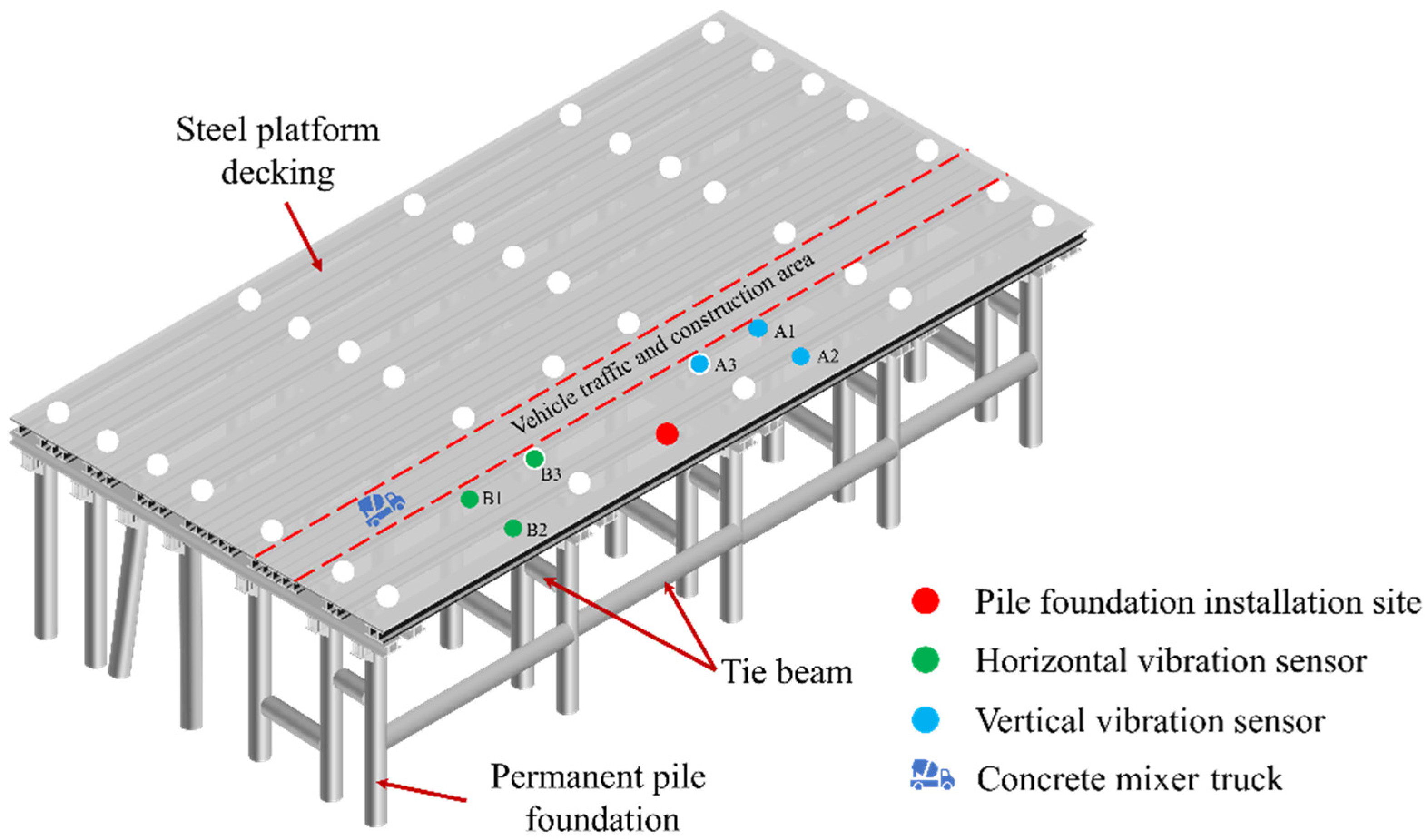
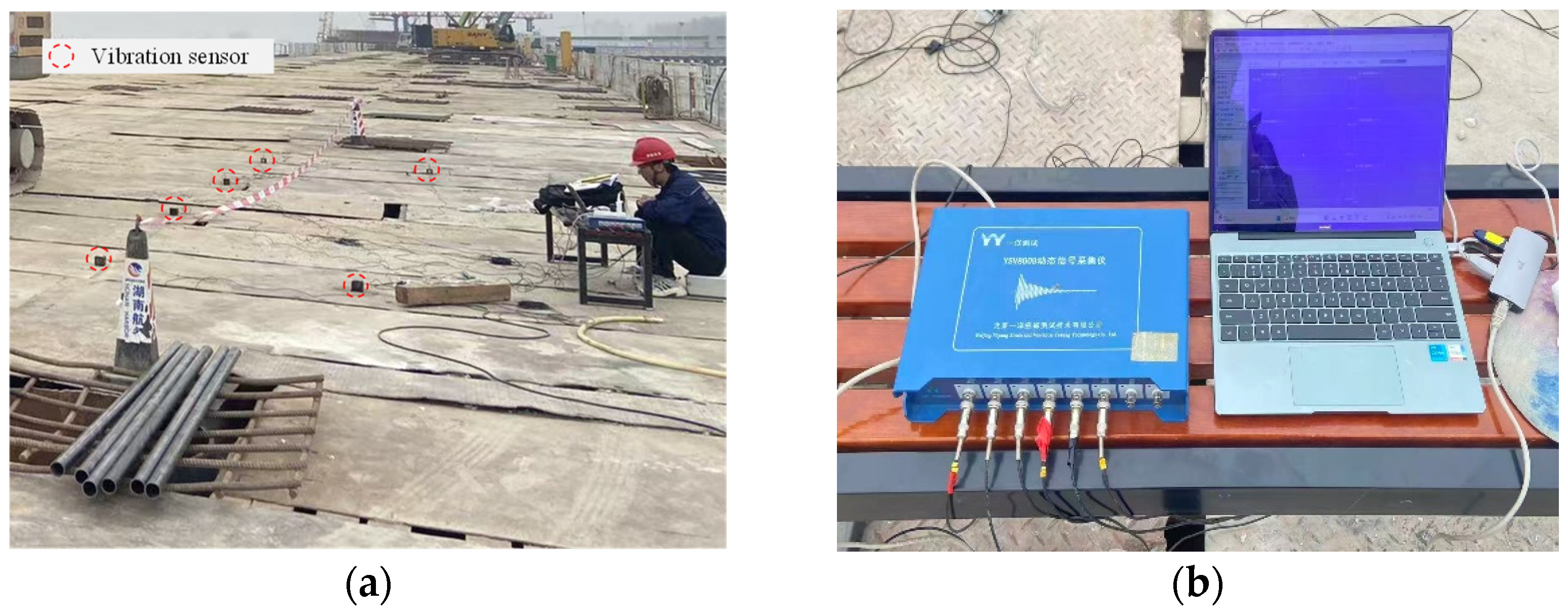
3.1. Instrument Layout and Installation
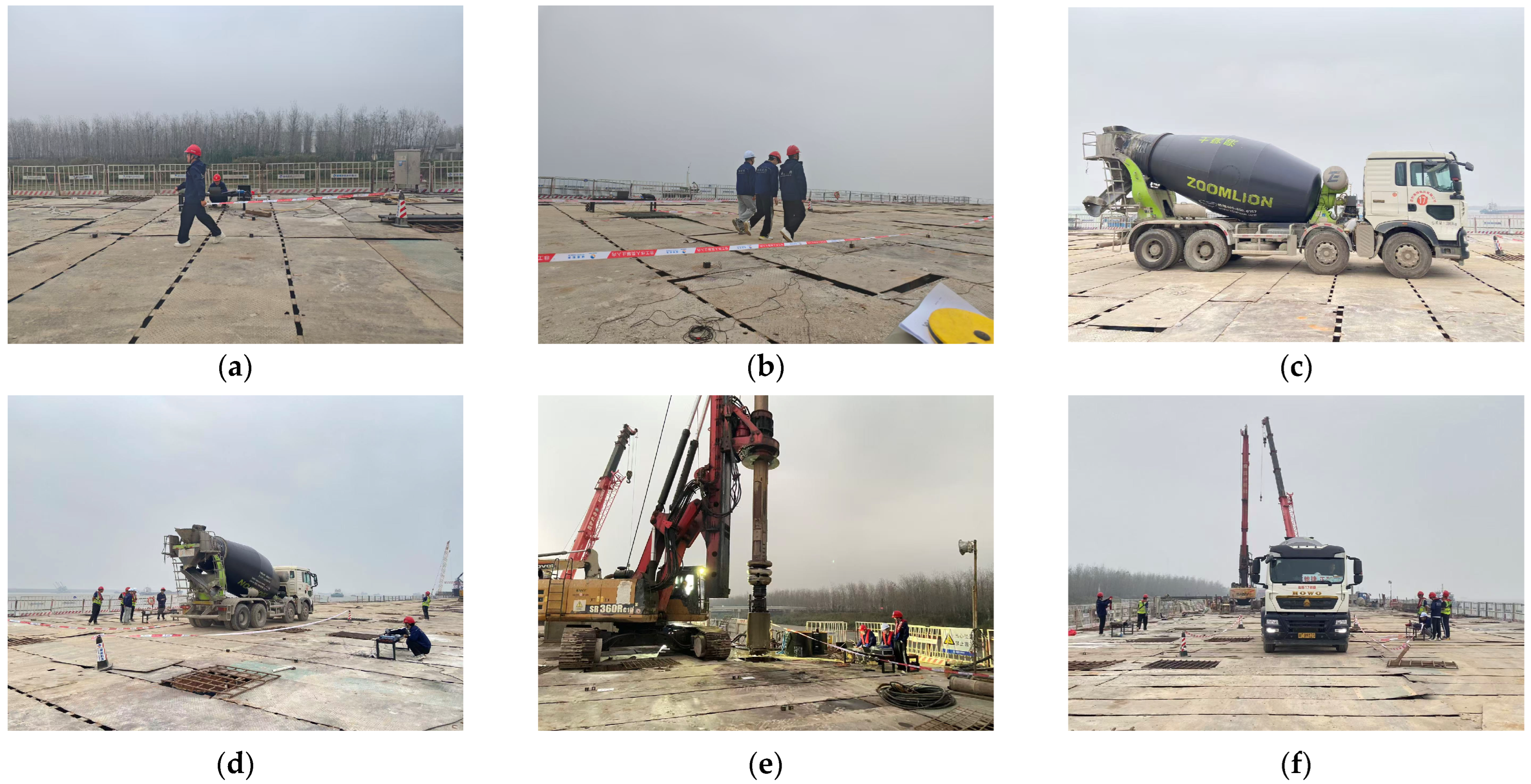
3.2. Test Condition Design
4. Discussion and Analysis
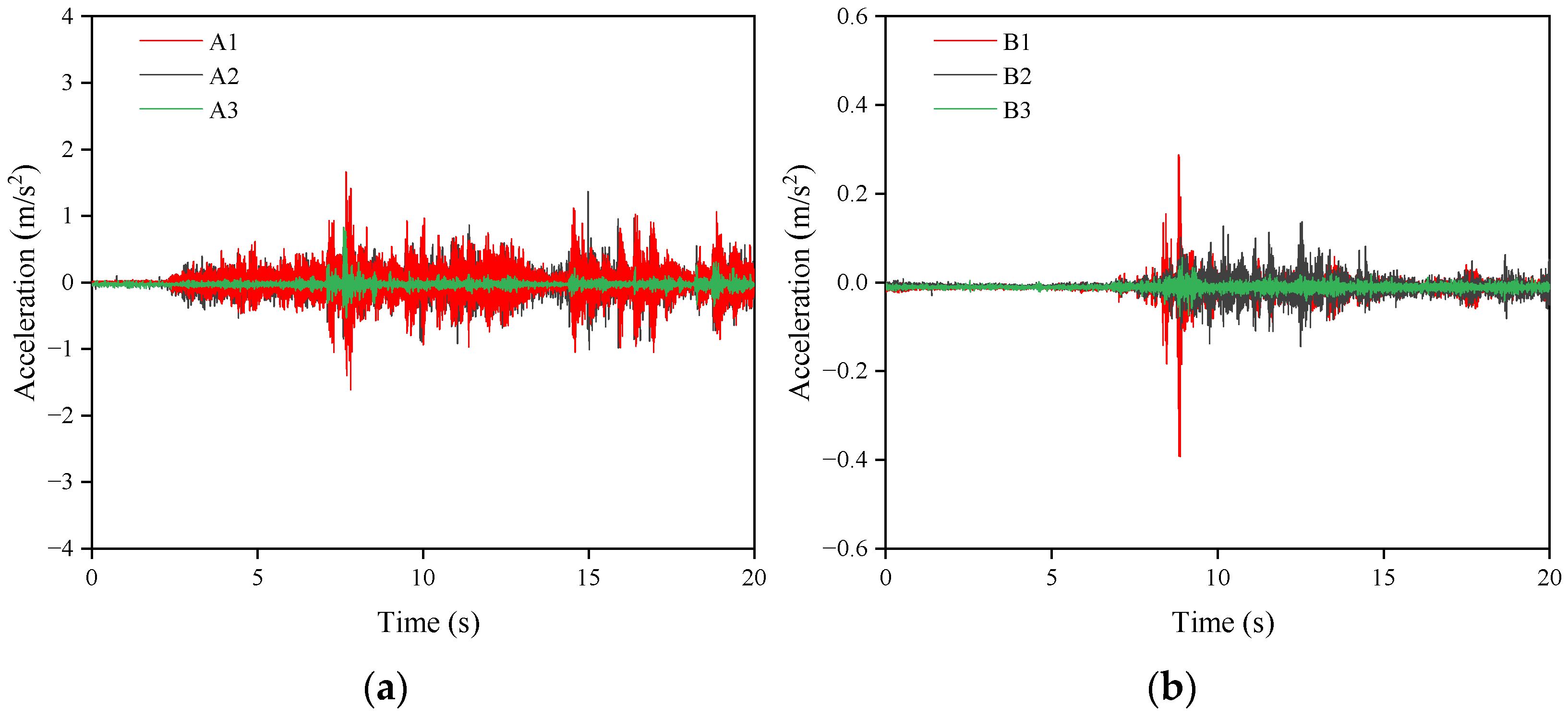
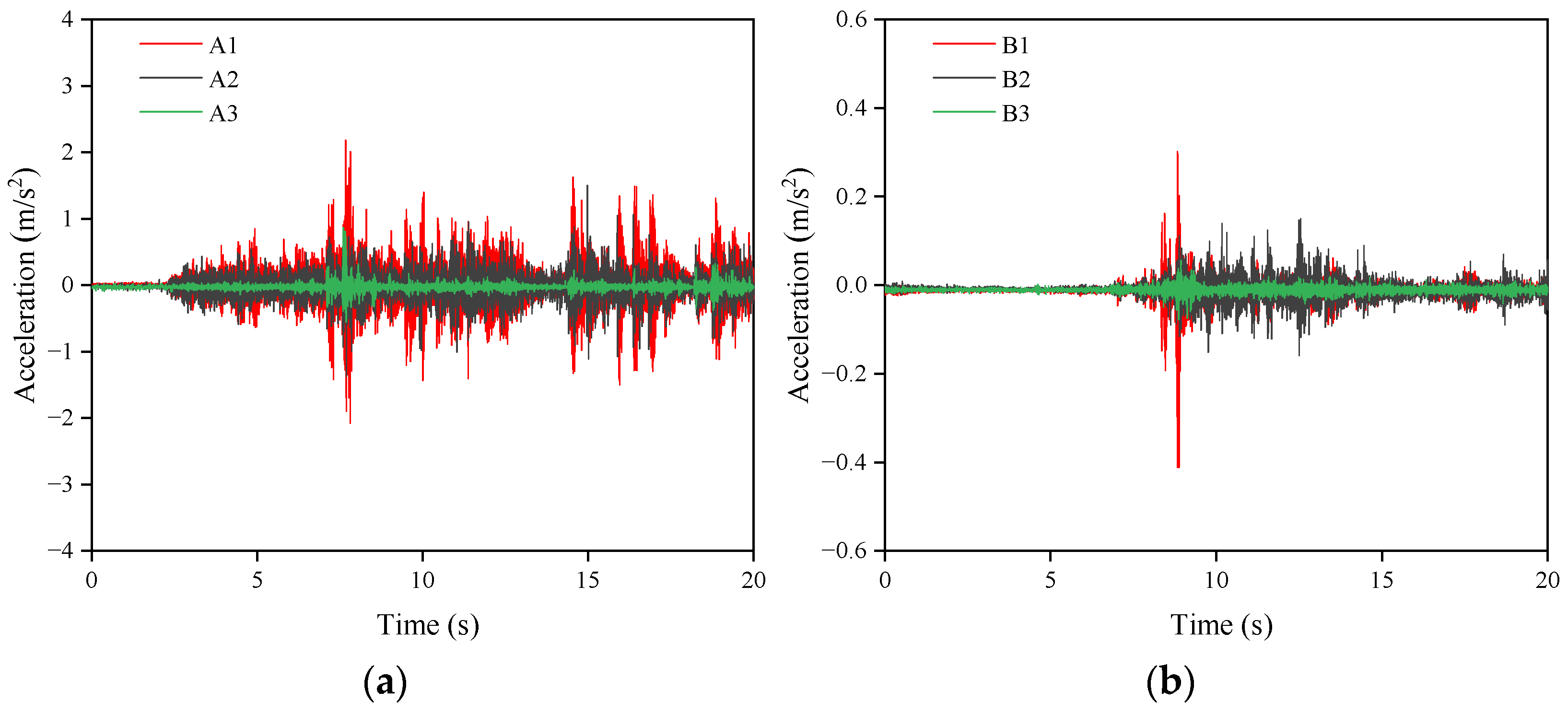
4.1. Effect of Ambient Environmental Excitation
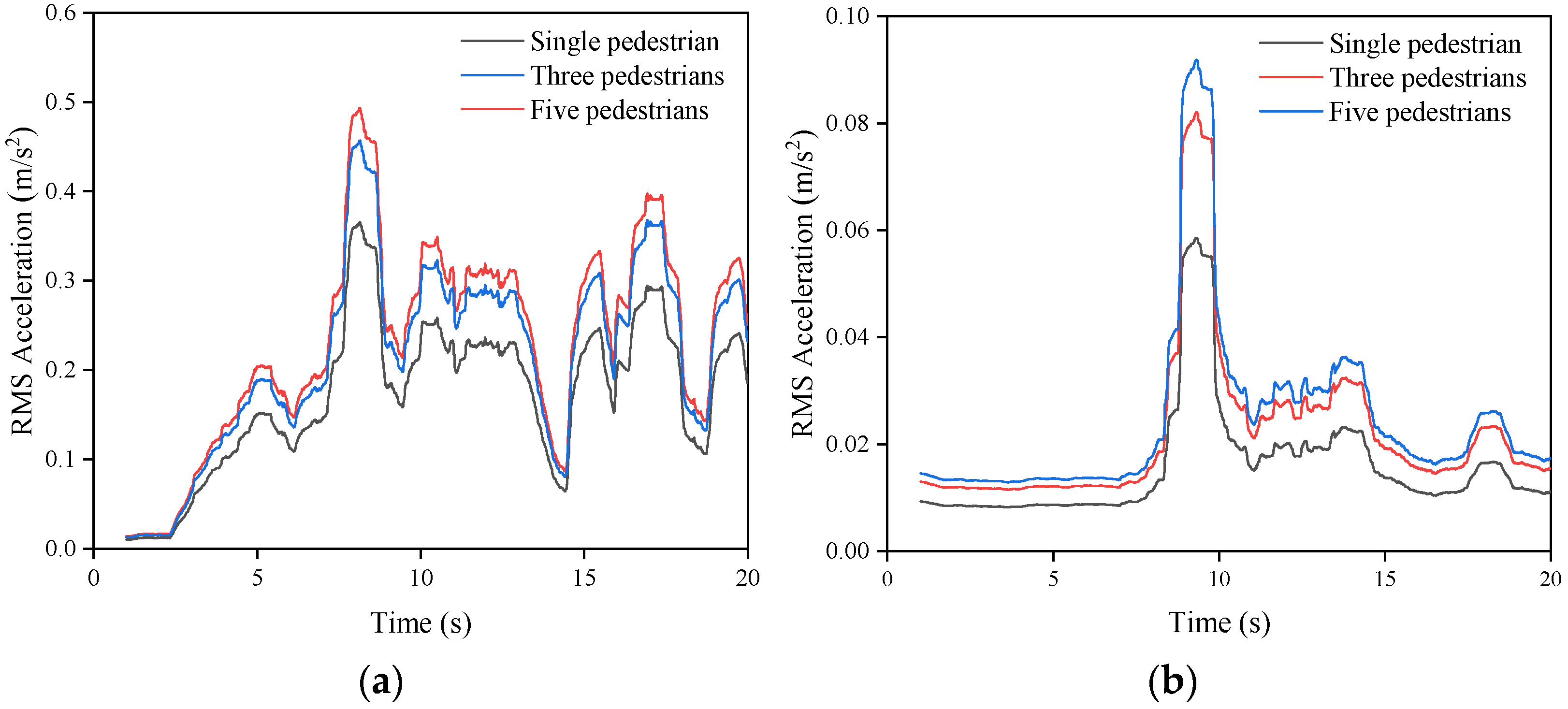
4.2. Pedestrian-Induced Vibration
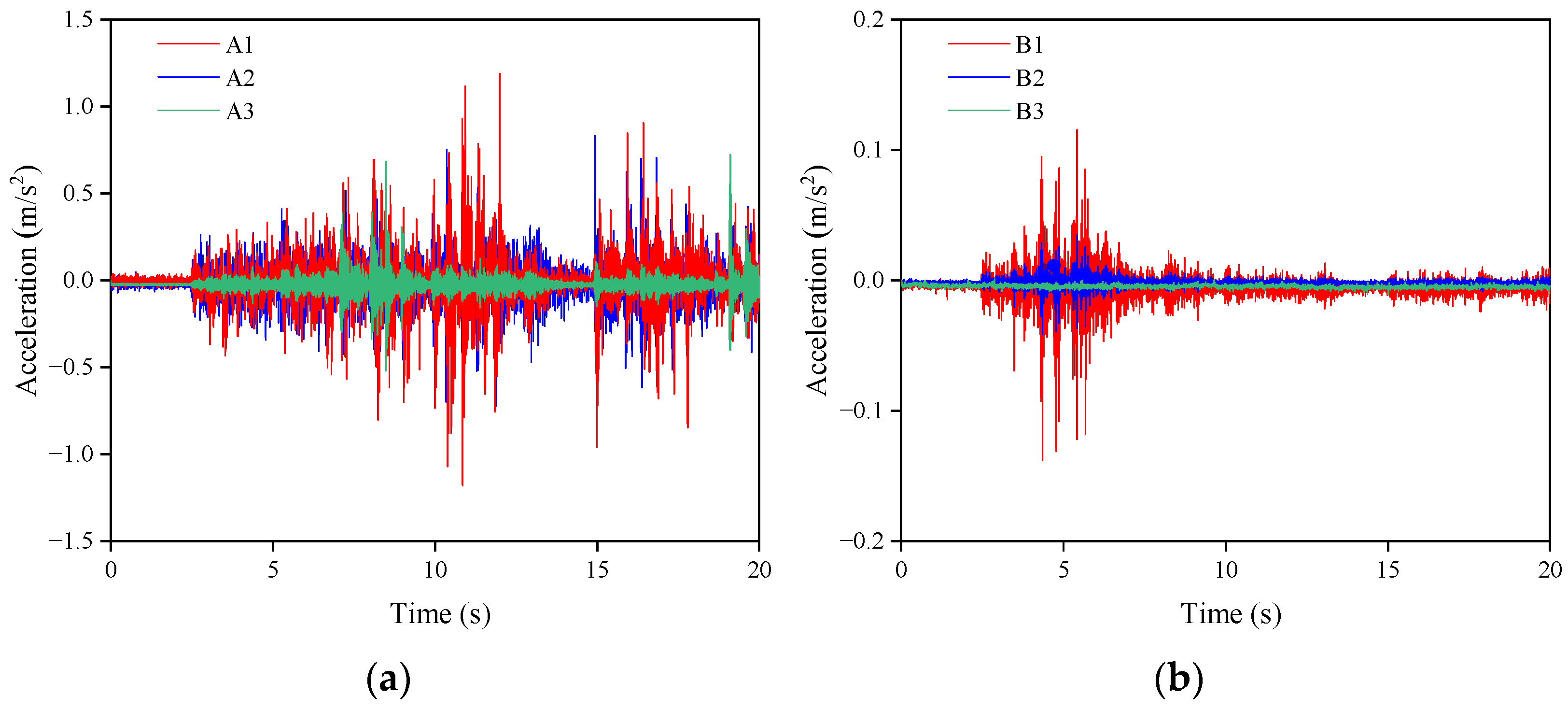
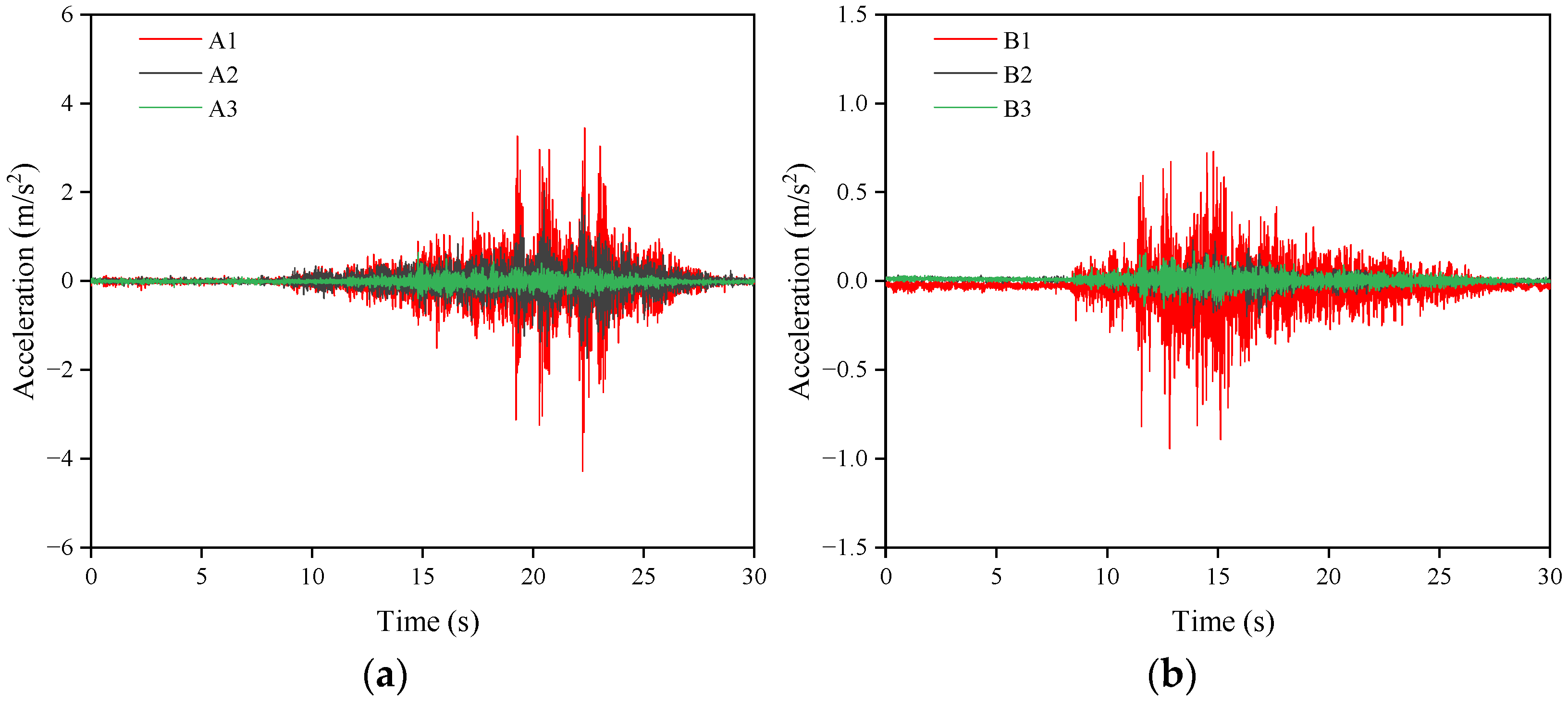
4.3. Driving-Induced Vibration
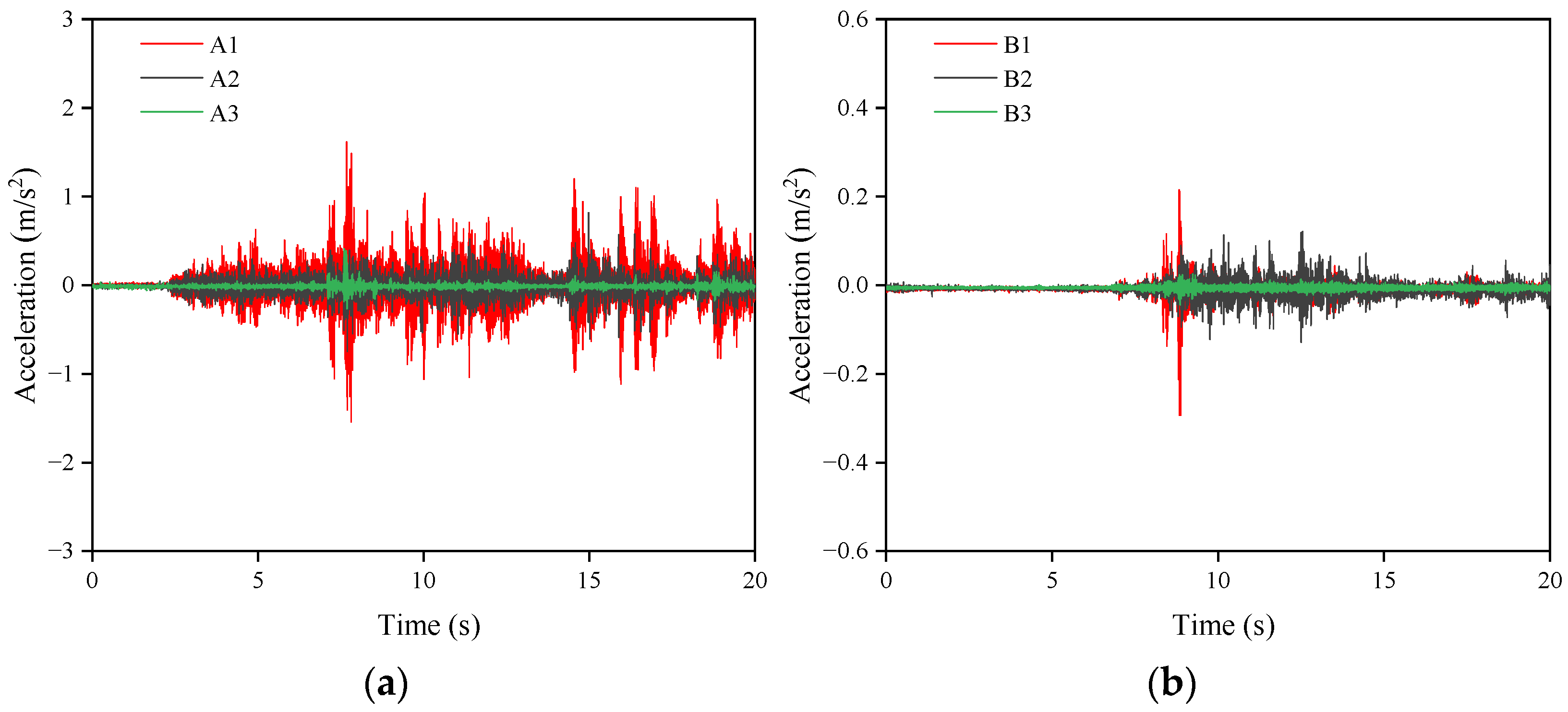
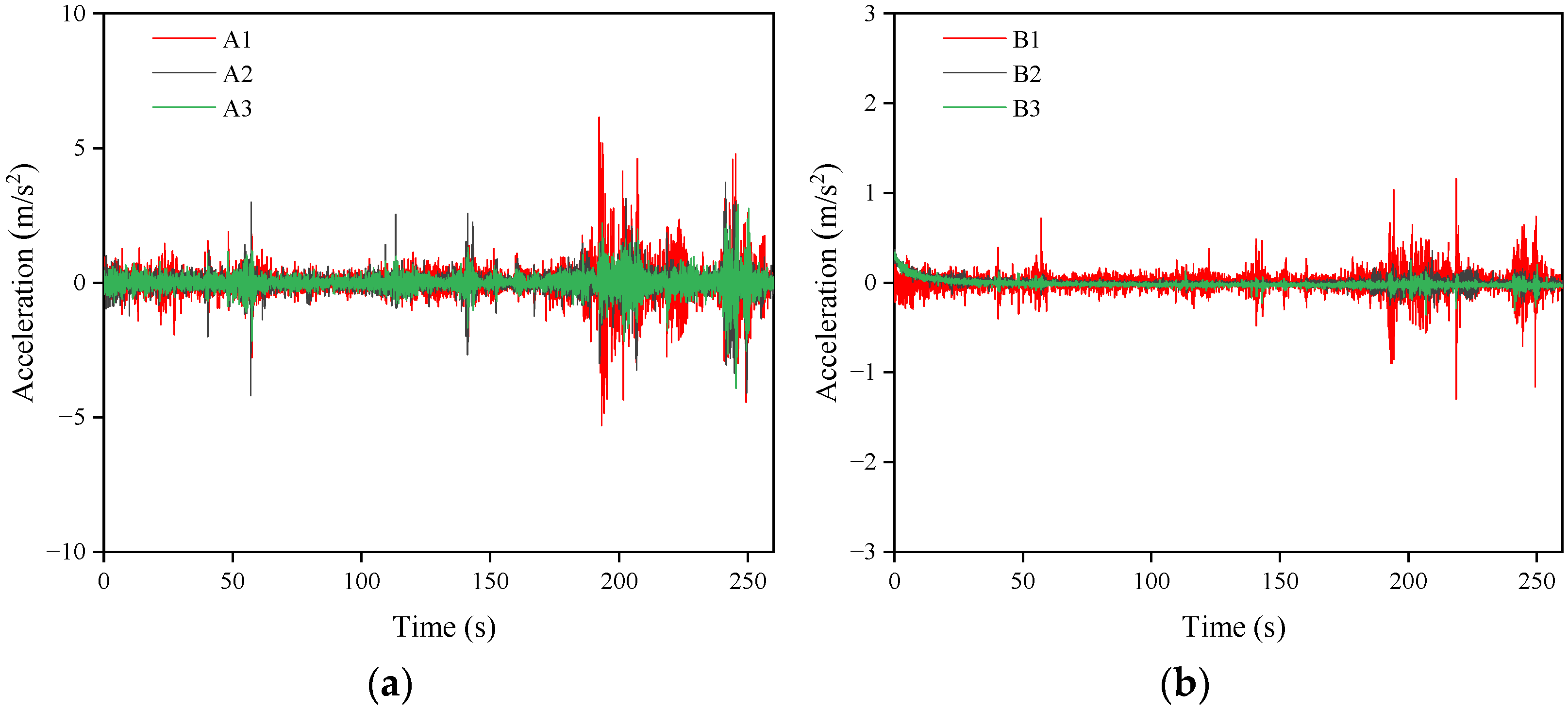
4.4. Construction-Induced Vibration
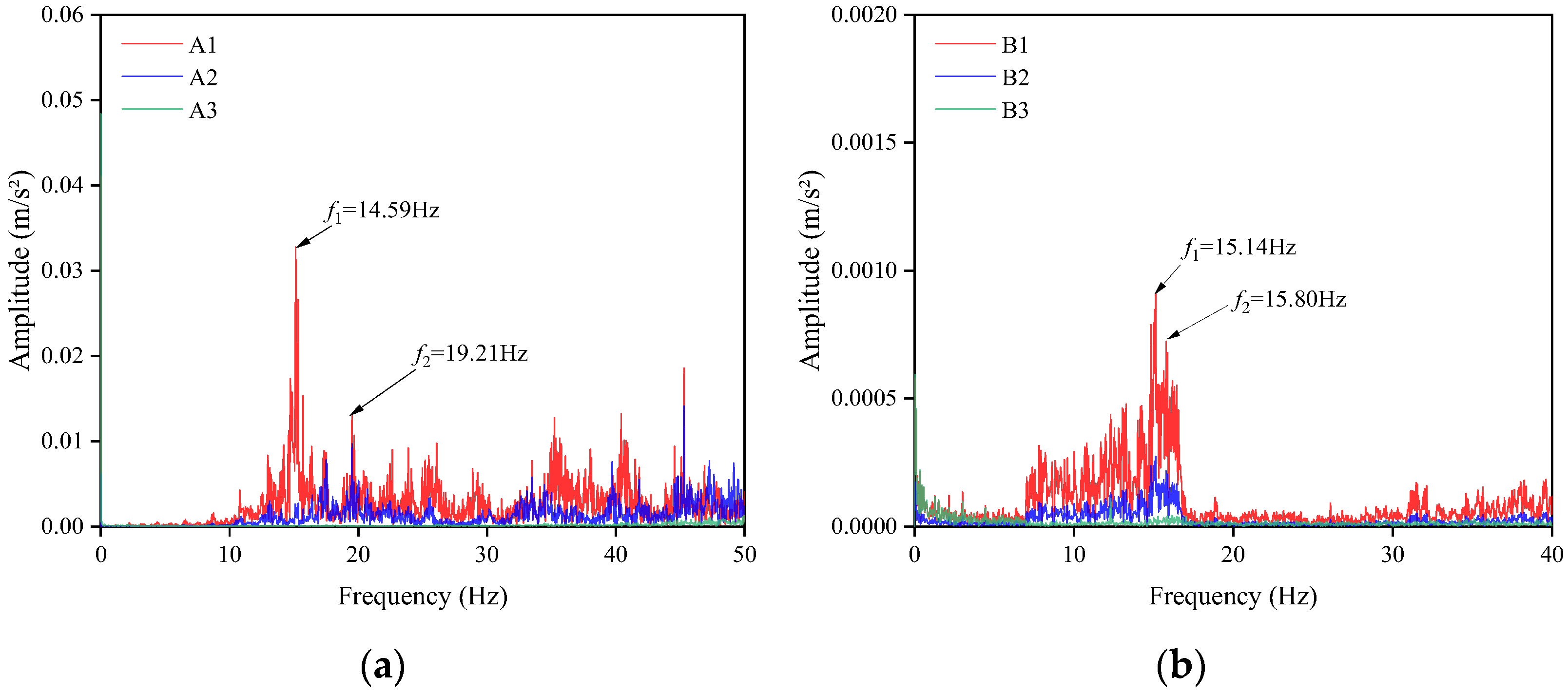
4.5. Frequency-Domain Analysis
5. Conclusions
- (1)
- By utilizing the permanent rock-socketed steel pipe piles of the wharf structure as the load-bearing foundation, a lightweight composite structural system consisting of steel pipe piles, welded corbels, twin I-beam main girders, I-beam distribution girders, and checkered steel plate decking was developed.
- (2)
- A construction methodology based on the collaborative utilization of permanent and temporary structures was proposed. By directly employing the permanent pile foundation as the platform support system, the amount of temporary works was significantly reduced, resulting in improved material utilization, construction efficiency, and economic performance.
- (3)
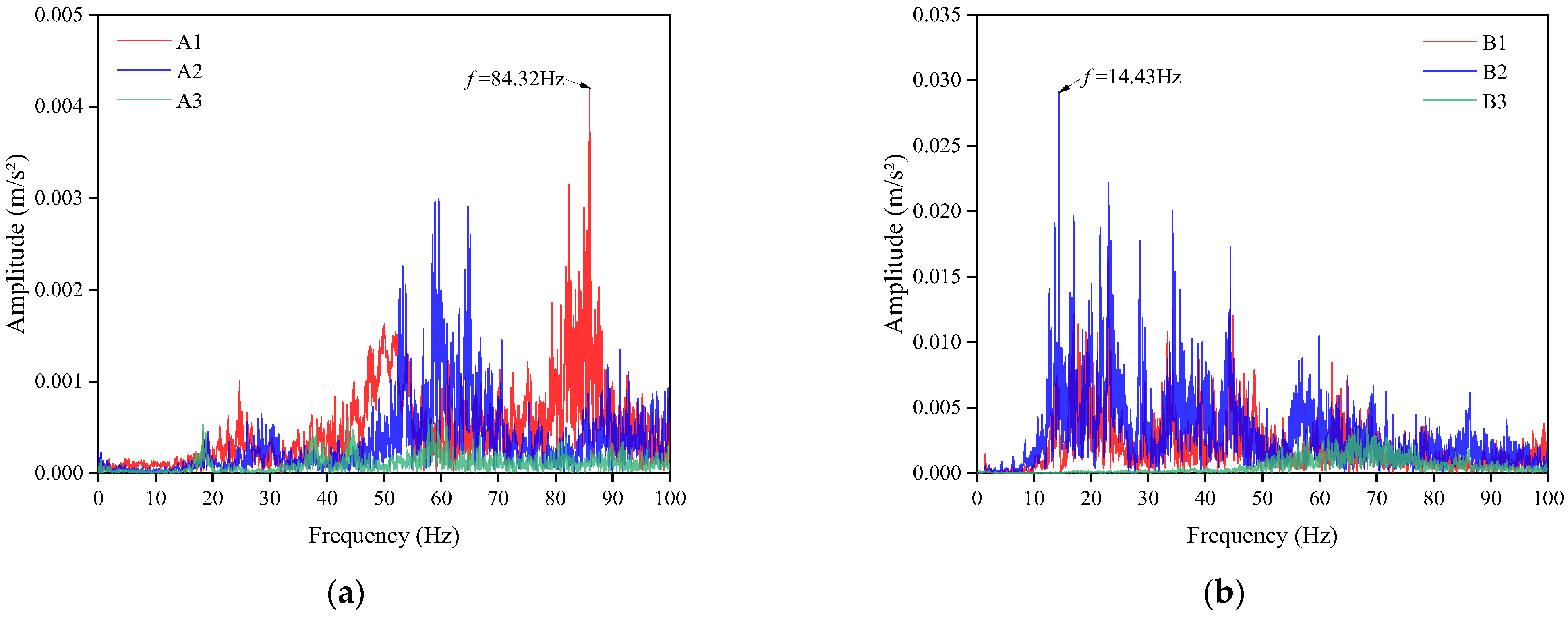
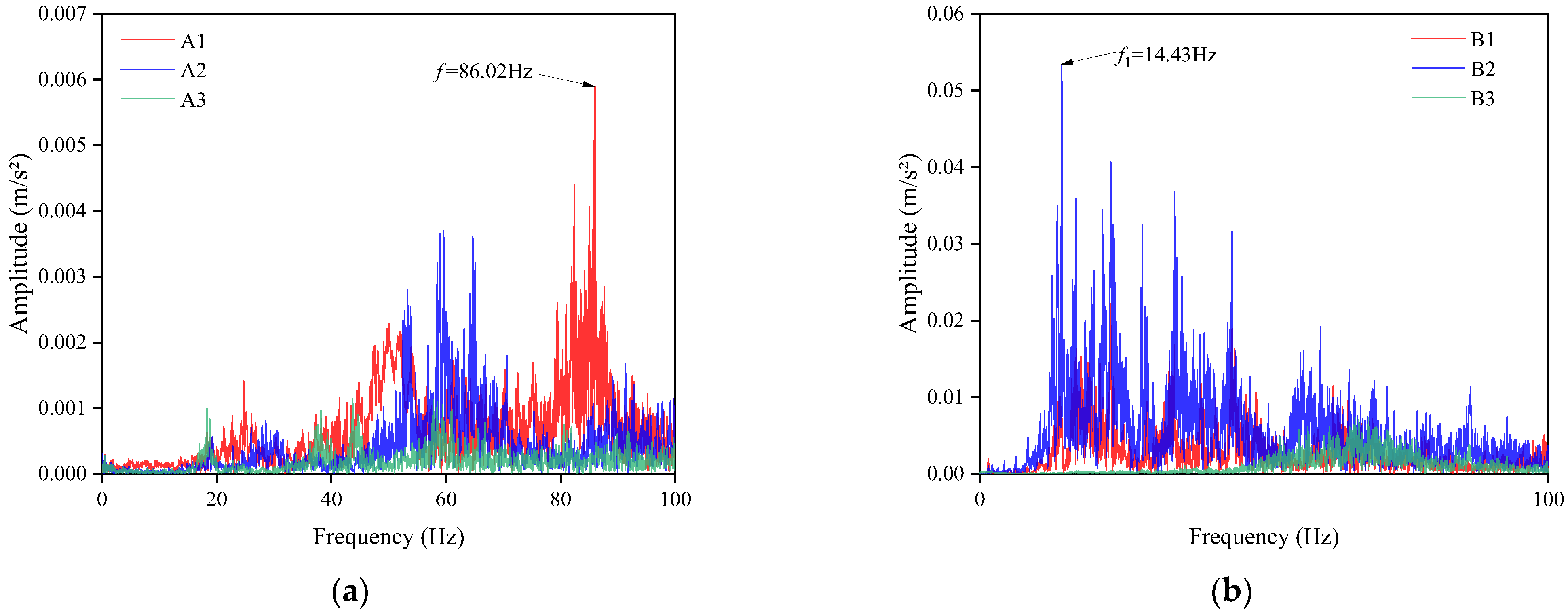
- The LTSP exhibited relatively high natural frequencies, with all identified fundamental frequencies exceeding 14 Hz. The natural frequencies within the same vibration direction were well separated, indicating a low likelihood of resonance with human-induced excitation. In addition, the platform demonstrated greater lateral stiffness than vertical stiffness.
- (4)
- Pedestrian-induced vibrations were primarily localized near the excitation region, whereas vehicle-induced vibrations were distributed more uniformly throughout the platform. The permanent steel pipe piles provided effective local restraint and stiffness enhancement, thereby reducing vibration responses in adjacent areas.
- (5)
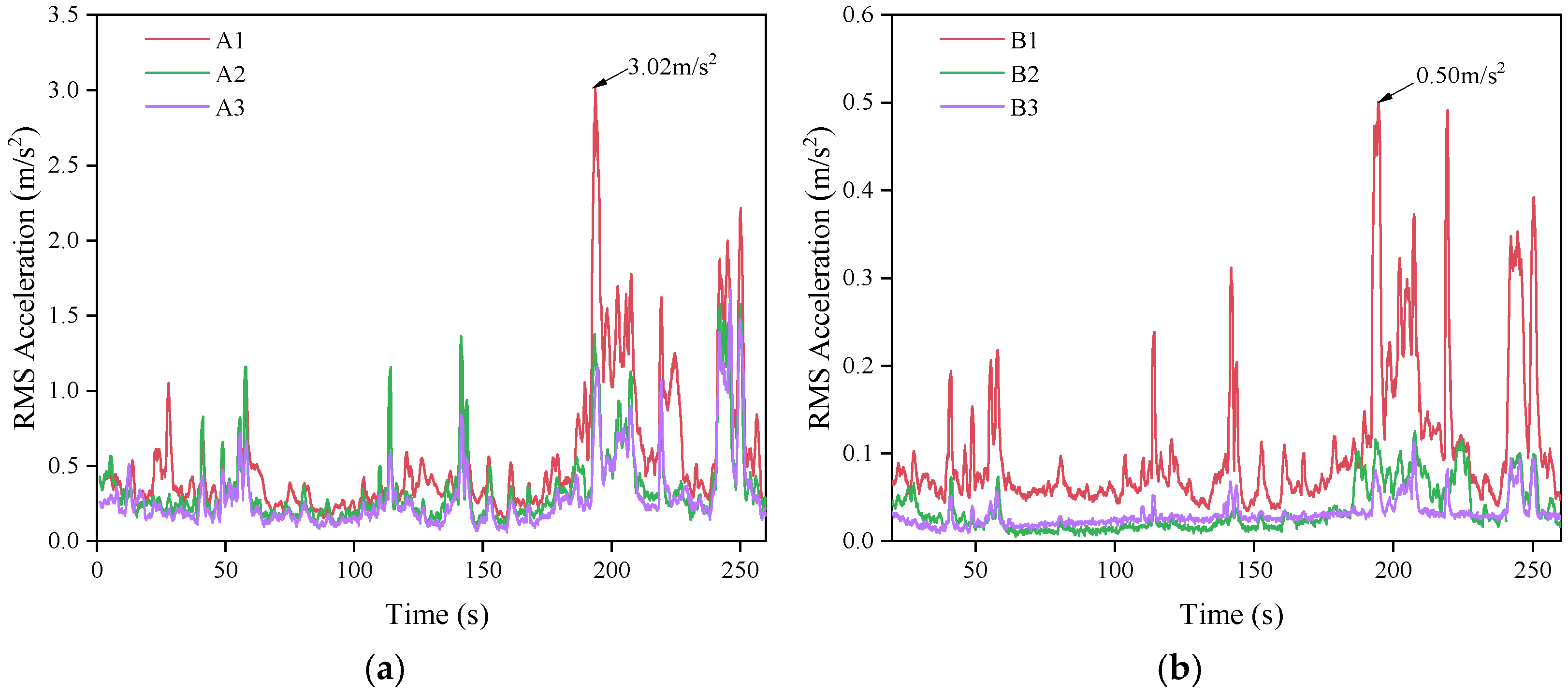
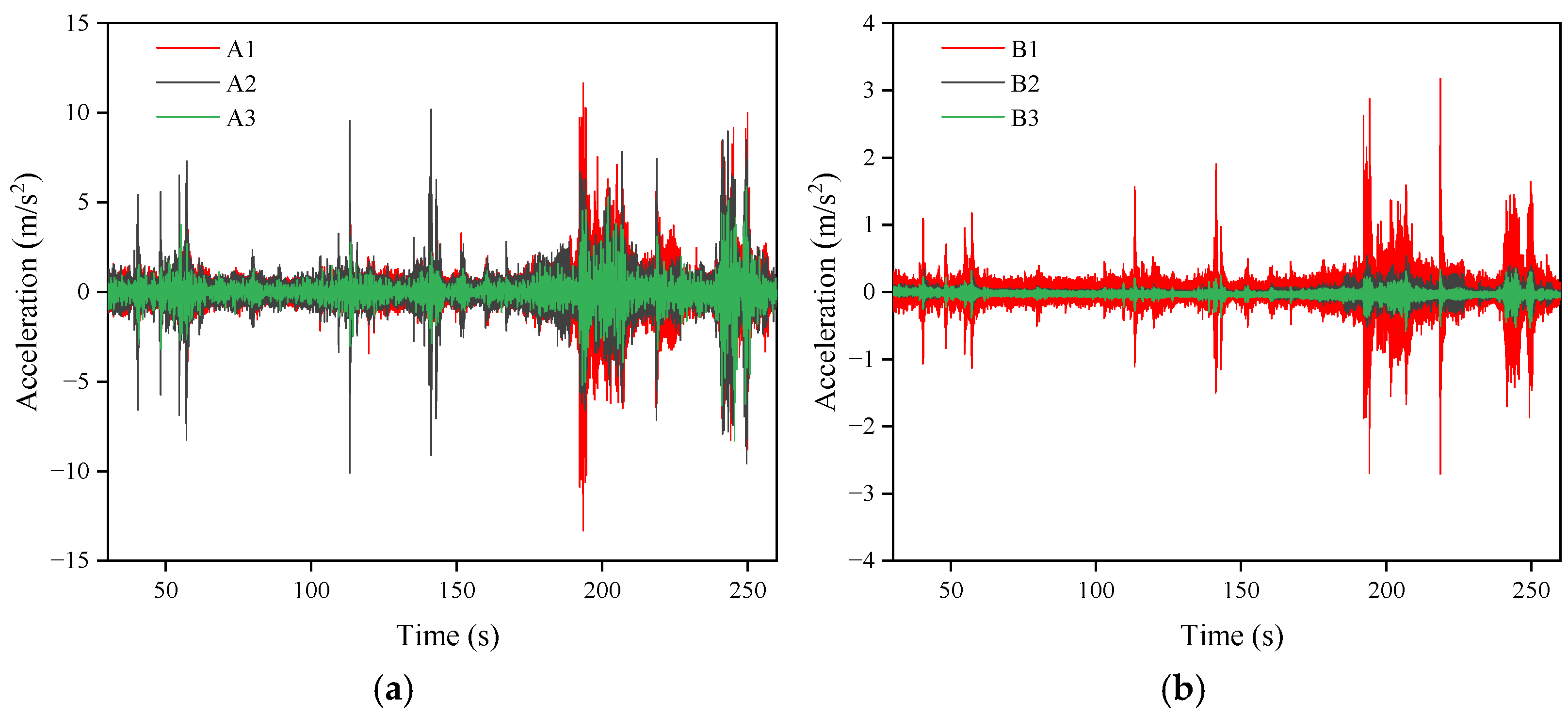
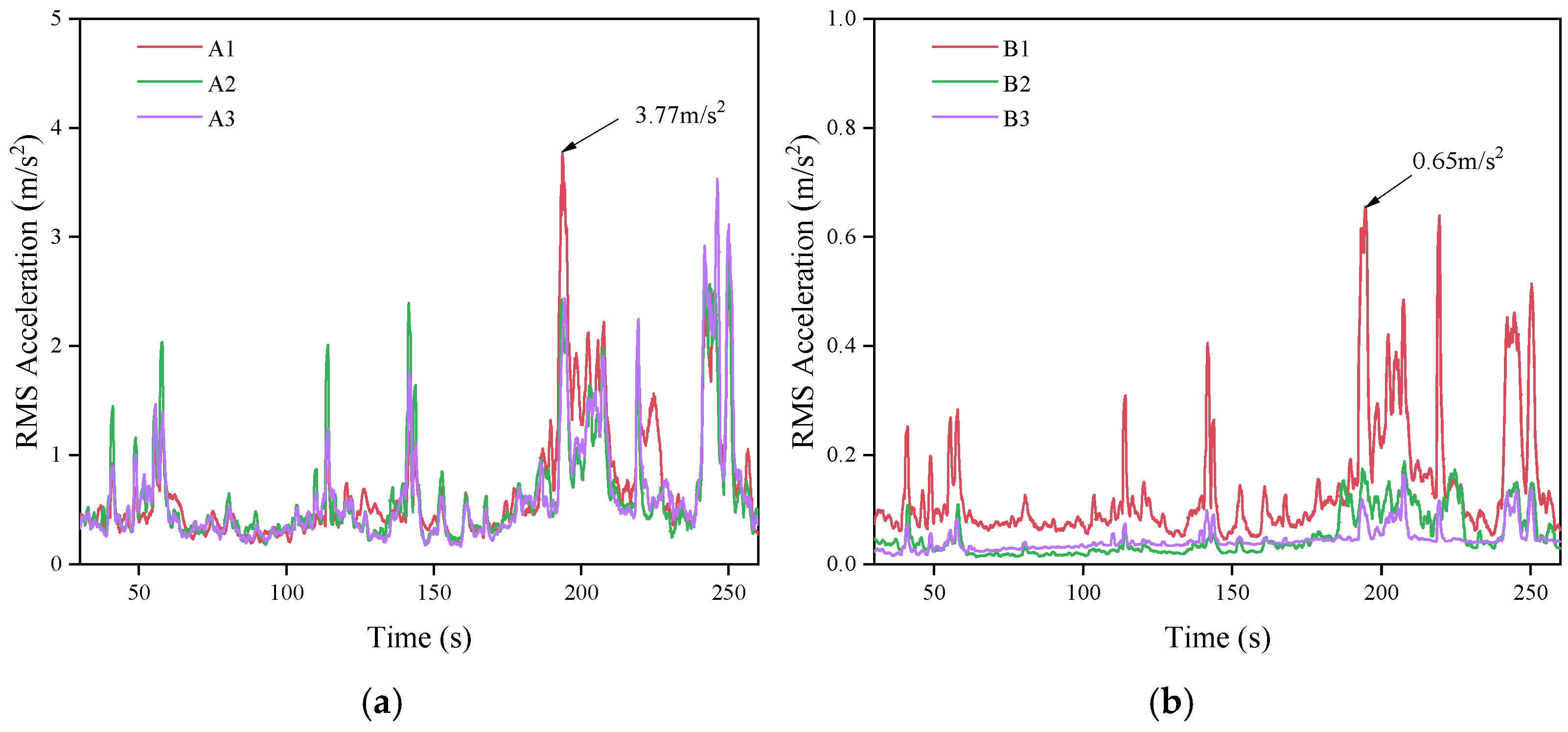
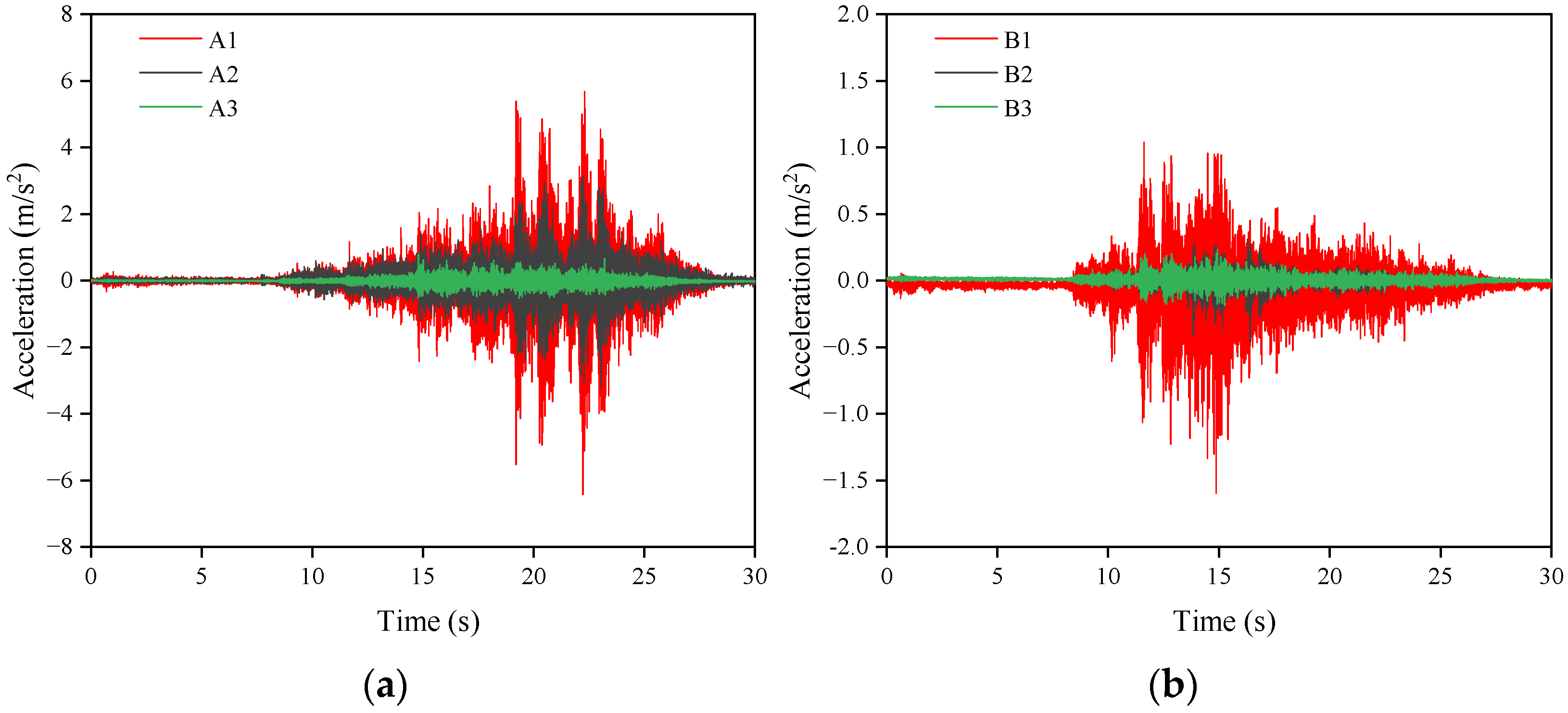
- Construction machinery generated the most significant vibration responses, particularly under combined operation conditions involving multiple pieces of equipment. The peak vibration levels recorded during combined construction activities were substantially higher than those induced by pedestrian or vehicular loading. Therefore, during the construction of this temporary steel platform, the simultaneous operation of multiple heavy construction machines—specifically, the coordinated use of rotary drilling rigs, fully loaded tanker trucks, and truck cranes under the test conditions described herein—should be minimized as much as possible to ensure the platform’s safety and serviceability.
Author Contributions
Funding
Data Availability Statement
Conflicts of Interest
References
- Wu, J. Technical discussion of cross-river steel trestle and steel platforms. China Highw. 2022, 16, 95–97. (In Chinese) [Google Scholar]
- Wang, Z. 50000 tons of crude oil pier construction steel platform design and construction in Meizhou Bay Port District. Sci. Technol. Consult. 2014, 9, 29–101. (In Chinese) [Google Scholar]
- Dai, L.; Liao, B. The research and application of innovative high efficient construction technologies in super high rise steel structure building. Int. J. High-Rise Build. 2014, 3, 205–214. [Google Scholar]
- Ashurovna, X.; Mirzayev, S. Innovative Technical Solutions in the Design of Modulle Residential Buildings. Cent. Asian J. Arts Des. 2022, 3, 1–2. [Google Scholar]
- Szolomicki, J.; Golasz-Szolomicka, H. Technological advances and trends in modern high-rise buildings. Buildings 2019, 9, 193. [Google Scholar] [CrossRef] [Scilit]
- Jiang, S.; Zhu, D.; Liu, Y.; Ma, L.; Gao, Z. Design of a New Plate Frame Steel Type Patform and Its Dynamic Response Analysis Under Wind-Wave-Current Coupling Effect. South China J. Seismol. 2024, 44, 151–158. (In Chinese) [Google Scholar]
- Guo, L.; Jia, M.; Li, R. Hysteretic analysis of thin steel plate shear walls. Int. J. Steel Struct. 2013, 13, 163–174. [Google Scholar] [CrossRef] [Scilit]
- Jiang, Y.; Meng, X. Characteristics of Steel Structures in High-Rise Buildings and Their Development and Prospects in my country. Build. Sci. Res. Sichuan 2003, 29, 31–32. (In Chinese) [Google Scholar]
- Du, W. Study on Structural Analysis and Construction Technology about the Large Temporary Steel Platform. Master’s Thesis, Chongqing University, Chongqing, China, 2016. [Google Scholar]
- Wen, Y.; Qi, H. Discussion on shield rectification technology in soft ground and hard ground. J. Shanxi Archit. 2018, 44, 181–182. (In Chinese) [Google Scholar]
- Wang, A.; Zhang, K. Structure Design of Steel Casing Platform for Construction of Pile Foundation in Water. Road Mach. Constr. Mech. 2018, 35, 63–67. [Google Scholar]
- Rhee, J.; Nguyen, H.; Kim, M.; Lim, Y.; Kim, G. An integrated machine-learning platform for assessing various dynamic responses of steel beams. Structures 2024, 61, 106125. [Google Scholar] [CrossRef] [Scilit]
- Mazaheri, P.; Asgarian, B.; Gholami, H. Assessment of strengthening, modification, and repair techniques for aging fixed offshore steel platforms. Appl. Ocean Res. 2021, 110, 102612. [Google Scholar] [CrossRef] [Scilit]
- Xiang, G. Research on the Safety Status Assessment Method of Dock Steel Platform Structure Based on Machine Vision. Master’s Thesis, Chongqing Jiaotong University, Chongqing, China, 2025. [Google Scholar]
- Ruan, Z. Strength and Stability Calculation of Drilled Steel Platform for High—Piled Wharf. Technol. Highw. Transp. 2017, 33, 52–54. [Google Scholar]
- JTS 167-2018; Wharf Structure Design Code. China Communications Press: Beijing, China, 2018. (In Chinese)
- JGJ 7-2010; Technical Specification for Space Grid Structure, Industrial Standard of the People’s Republic of China. Architecture and Building Press: Beijing, China, 2010. (In Chinese)
- Yu, Y.; Nie, X.; Liu, J.; Wang, X.; Hu, S. Vibration serviceability of light weight steel modular floor: Experimental test and assessment. Eng. Struct. 2025, 343, 121253. [Google Scholar] [CrossRef] [Scilit]
- Lacey, A.; Chen, W.; Hao, H.; Bi, K. Structural response of modular buildings—An overview. J. Build. Eng. 2018, 16, 45–56. [Google Scholar] [CrossRef] [Scilit]
- Genser, A.; Spielhofer, R.; Nitsche, P.; Kouvelas, A. Ride comfort assessment for automated vehicles utilizing a road surface model and Monte Carlo simulations. Comput.-Aided Civ. Infrastruct. Eng. 2022, 37, 1316–1334. [Google Scholar] [CrossRef] [Scilit]
- ISO2631-1:1997; Mechanical Vibration and Shock-Evaluation of Human Exposure to Whole-Body Vibration Part 1: General Requirements. International Organization for Standardization: Geneva, Switzerland, 1997.
- López-Cuervo, A.S.; García-Macías, E.; Chiachío, J. Full-scale validation of operational modal analysis using strain gauges in steel civil structures with optimized sensor layouts. Measurement 2026, 281, 121916. [Google Scholar] [CrossRef] [Scilit]
- Zhao, J.; Sun, F.; Yang, S.; Yin, W.; Xu, Z.; He, S. Modal characteristics of vertical vibration in typical steel frame structures under road traffic loads: Actual measurements and finite element model update. J. Build. Eng. 2025, 111, 113346. [Google Scholar] [CrossRef] [Scilit]













| Steel Platform Types | Structural Composition | Limitations of Wharf Construction |
|---|---|---|
| Assembled Bailey truss steel platform | A structural system comprising steel pipe piles, corbels, main beams, Bailey trusses, and distribution beams. | The system features complex construction, numerous connection nodes, relatively high self-weight, and stringent requirements for construction organization. |
| Integrated steel trestle and steel platform system | Steel trestle bridge: the substructure consists of load-bearing beams, and the superstructure is formed by assembled Bailey truss units. Steel platform: composed of steel pipe piles, connection components and bracing systems, corbels, steel transverse beams, Bailey trusses, distribution beams, and steel deck plates. | The platform exhibits limited structural stiffness, imposes constraints on the deployment of heavy-duty equipment, and demonstrates insufficient long-term stability. |
| Simple steel pipe pile support platform | Steel pipe piles, main beams, distribution beams, and steel plate decking. | Limited load-bearing capacity; overall stability depends on dense pile arrangements; relatively poor scour resistance. |
| Platform with traditional steel pipe piles and structural steel beam system | Steel pipe pile supports, lateral steel members, longitudinal steel members, thick timber planks, and guardrails; the steel pipe piles are interconnected through transverse members and diagonal bracing. | High dependency on geological conditions, high construction costs and resource wastage, and room for improvement in borehole formation precision. |
| Type of Steel Used | Quantity | Unit Weight/kg | Steel Grade | Elastic Modulus/GPa | Yield Strength/MPa | Poisson’s Ratio |
|---|---|---|---|---|---|---|
| Steel Corbel | 1332 | 168 | Q235B | 206 | 235 | 0.3 |
| 2I45a × 31,000 | 10 | 4964.34 | ||||
| 2I45a × 27,000 | 188 | 4323.78 | ||||
| 2I45a × 13,200 | 8 | 2113.85 | ||||
| 2I45a × 25,500 | 4 | 4083.57 | ||||
| 2I45a × 20,000 | 2 | 3202.80 | ||||
| 2I45a × 34,500 | 8 | 5524.83 | ||||
| 2I45a × 24,000 | 4 | 3843.36 | ||||
| 2I45a × 22,000 | 4 | 3523.08 | ||||
| 2I45a × 15,500 | 2 | 2482.17 | ||||
| I32a × 758,000 | 81 | 39,926.51 | ||||
| I32a × 35,550 | 14 | 1872.54 | ||||
| I32a × 6800 | 1916 | 358.18 | ||||
| I32a × 3700 | 216 | 194.89 | ||||
| I32a × 25,000 | 39 | 1316.84 | ||||
| I32a × 5900 | 33 | 310.77 |
| Component | Main Beam | Secondary Beam | Corbel | Checkered Steel Plate | Permanent Pile Foundations | |
|---|---|---|---|---|---|---|
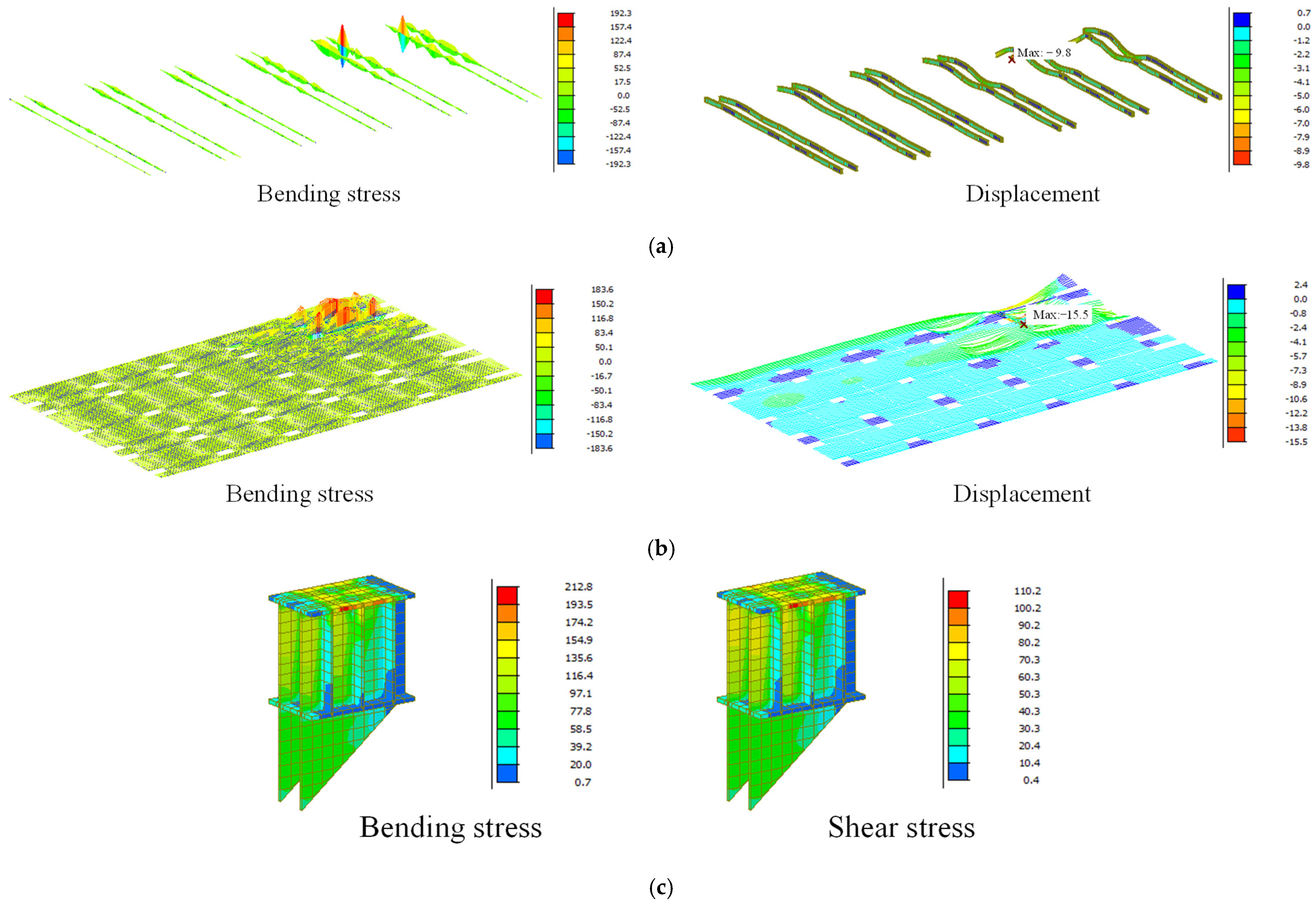
| Bending stress/MPa | Calculated value | 192.3 | 183.6 | 212.8 | 140.6 | Pile foundation stability: 0.191 < 1; Single-pile bearing capacity: 2646 kN > 1097 kN |
| Permissible value | 215 | 215 | 215 | 215 | ||
| Shear stress/MPa | Calculated value | 71 | 49 | 110.2 | 5.6 | |
| Permissible value | 125 | 125 | 125 | 125 | ||
| Displacement/mm | Calculated value | 9.8 | 15.5 | / | / | |
| Permissible value | L/200 | L/400 | / | / | ||
| Weld stress/MPa | Calculated value | / | / | 60 | / | |
| Permissible value | / | / | 195.2 | / | ||
| Number | Operating Conditions | Specific | Vehicle Weight (kg) |
|---|---|---|---|
| 1 | Ambient excitation | / | / |
| 2 | Human-induced walking conditions | Single pedestrian | 70 |
| 3 | Three pedestrians | 210 | |
| 4 | Five pedestrians | 350 | |
| 5 | Driving conditions | Empty tanker | 31,000 |
| 6 | Fully loaded tanker | 45,000 | |
| 7 | Construction conditions | Rotary drilling operation condition | 400,000 |
| 8 | Collaborative construction | / |
| Operating Conditions | Specific | Number | Peak RMS Acceleration Values (m/s2) | Mean Results | Standard Deviation | |||
|---|---|---|---|---|---|---|---|---|
| A1 | B1 | A1 | B1 | A1 | B1 | |||
| Human-induced walking conditions | Single pedestrian | 1 | 0.332 | 0.054 | 0.364 | 0.059 | 0.032 | 0.006 |
| 2 | 0.396 | 0.065 | ||||||
| 3 | 0.364 | 0.058 | ||||||
| Three pedestrians | 1 | 0.447 | 0.094 | 0.454 | 0.081 | 0.060 | 0.012 | |
| 2 | 0.517 | 0.070 | ||||||
| 3 | 0.398 | 0.079 | ||||||
| Five pedestrians | 1 | 0.382 | 0.090 | 0.493 | 0.092 | 0.113 | 0.022 | |
| 2 | 0.608 | 0.071 | ||||||
| 3 | 0.489 | 0.115 | ||||||
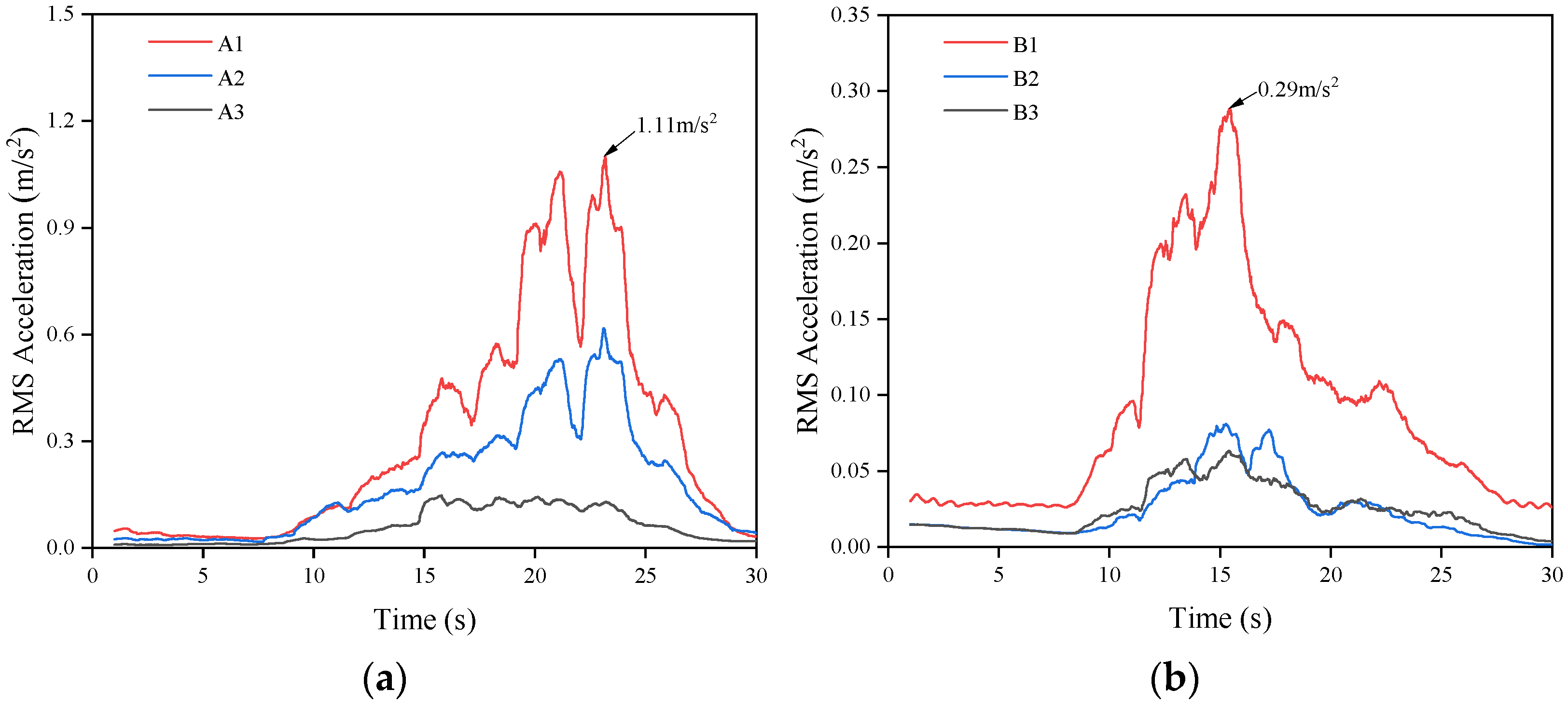
| Driving conditions | Empty tanker | 1 | 1.045 | 0.315 | 1.110 | 0.290 | 0.066 | 0.025 |
| 2 | 1.177 | 0.289 | ||||||
| 3 | 1.108 | 0.266 | ||||||
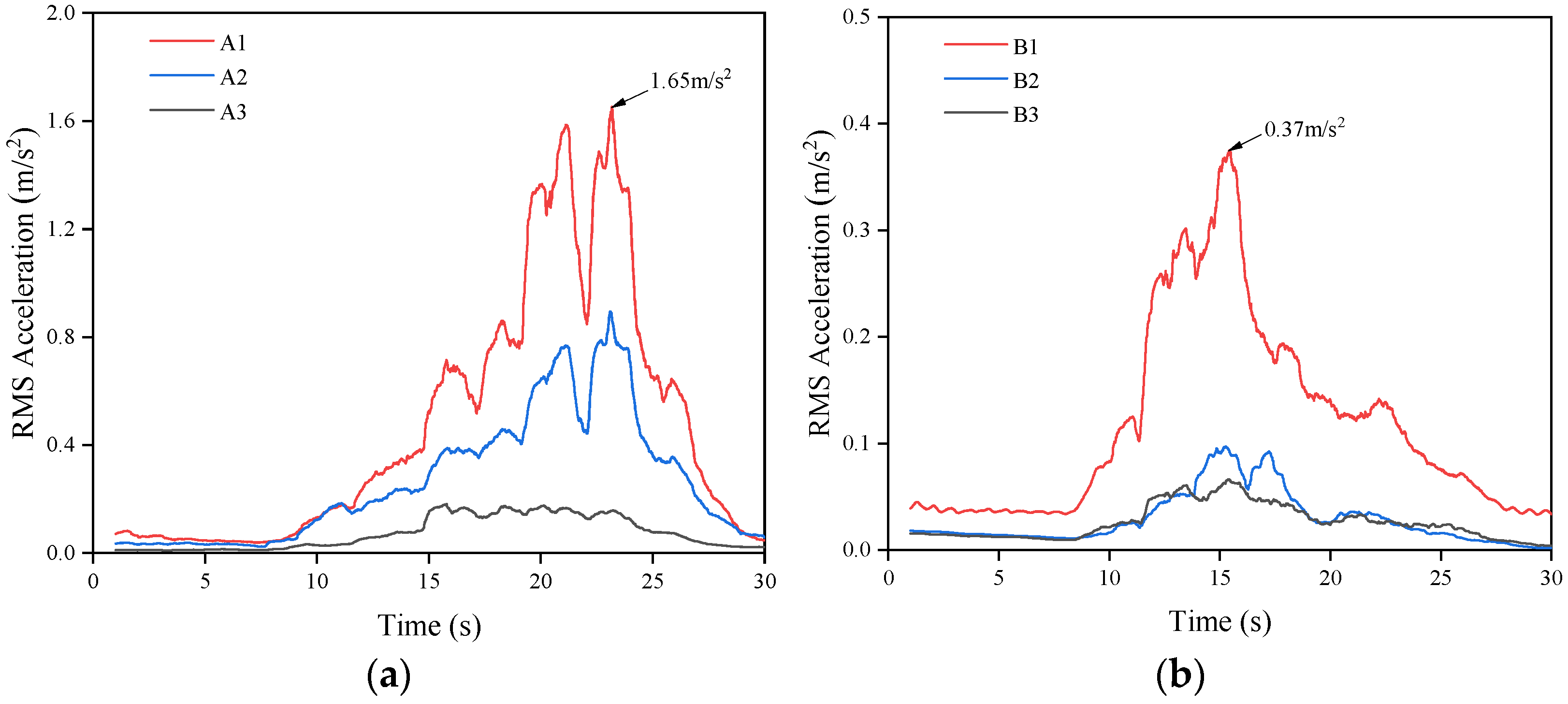
| Fully loaded tanker | 1 | 1.505 | 0.369 | 1.650 | 0.370 | 0.146 | 0.051 | |
| 2 | 1.648 | 0.421 | ||||||
| 3 | 1.797 | 0.320 | ||||||
| Construction conditions | Rotary drilling operation condition | 1 | 2.650 | 0.500 | 3.023 | 0.504 | 0.377 | 0.076 |
| 2 | 3.404 | 0.430 | ||||||
| 3 | 3.015 | 0.582 | ||||||
| Collaborative construction | 1 | 4.582 | 0.515 | 3.774 | 0.651 | 0.801 | 0.138 | |
| 2 | 2.980 | 0.790 | ||||||
| 3 | 3.760 | 0.648 | ||||||
Disclaimer/Publisher’s Note: The statements, opinions and data contained in all publications are solely those of the individual author(s) and contributor(s) and not of MDPI and/or the editor(s). MDPI and/or the editor(s) disclaim responsibility for any injury to people or property resulting from any ideas, methods, instructions or products referred to in the content. |
© 2026 by the authors. Licensee MDPI, Basel, Switzerland. This article is an open access article distributed under the terms and conditions of the Creative Commons Attribution (CC BY) license.
Share and Cite
Long, Q.; Deng, X.; Fang, H.; Guo, F.; Liu, Y.; Dai, H.; Peng, F.; Wang, Y.; Ke, X.; Zhou, Y. Design and Vibration Response Analysis of a Novel Lightweight Temporary Steel Platform. Buildings 2026, 16, 3528. https://doi.org/10.3390/buildings16173528
Long Q, Deng X, Fang H, Guo F, Liu Y, Dai H, Peng F, Wang Y, Ke X, Zhou Y. Design and Vibration Response Analysis of a Novel Lightweight Temporary Steel Platform. Buildings. 2026; 16(17):3528. https://doi.org/10.3390/buildings16173528
Chicago/Turabian StyleLong, Qiuliang, Xiaolin Deng, Hongneng Fang, Fengqi Guo, Yuzhao Liu, Huiyun Dai, Feng Peng, Yuanhang Wang, Xiaolong Ke, and Yi Zhou. 2026. "Design and Vibration Response Analysis of a Novel Lightweight Temporary Steel Platform" Buildings 16, no. 17: 3528. https://doi.org/10.3390/buildings16173528
APA StyleLong, Q., Deng, X., Fang, H., Guo, F., Liu, Y., Dai, H., Peng, F., Wang, Y., Ke, X., & Zhou, Y. (2026). Design and Vibration Response Analysis of a Novel Lightweight Temporary Steel Platform. Buildings, 16(17), 3528. https://doi.org/10.3390/buildings16173528