


Abstract
The increasing availability of construction data and advances in artificial intelligence (AI) have accelerated the adoption of time series forecasting across construction management. However, a comprehensive understanding of the field’s knowledge structure, methodological evolution, and future directions remains limited. To address this gap, a scientometric and qualitative review was conducted on 192 journal articles published between 2010 and December 2025 and retrieved from the Web of Science Core Collection and Scopus databases, following the Preferred Reporting Items for Systematic Reviews and Meta-Analyses (PRISMA) framework. VOSviewer was employed to visualize the knowledge structure, collaboration networks, and research themes. The results indicate sustained growth in research activity since 2010, accompanied by increasing international collaboration. Six major research streams were identified: cost estimation and forecasting, safety and risk management, schedule and performance monitoring, productivity and resource management, sustainability and waste management, and emerging methods and future technological directions. The findings reveal a clear transition from traditional statistical approaches, including AutoRegressive Integrated Moving Average (ARIMA) and vector error correction (VEC) models, toward machine learning, deep learning, and hybrid forecasting frameworks. At the same time, traditional methods remain important because of their interpretability and practical applicability. Three persistent challenges were identified: data quality and availability, model interpretability, and practical implementation. Future research is expected to focus on lightweight real-time forecasting, multimodal data fusion, explainable AI, and physics-informed forecasting models. This review provides an integrated understanding of the field and a research agenda for future methodological and practical development. For practitioners, it further highlights that the value of forecasting models depends not only on predictive accuracy but also on interpretability, computational efficiency, data requirements, and practical deployability in construction decision-making.
1. Introduction
The construction industry, as a fundamental driver of global economic development, continues to face multidimensional uncertainties related to cost, schedule, safety, and quality throughout project delivery [1]. These uncertainties arise from the dynamic interaction of internal and external factors across the project lifecycle. They are reflected in large-scale, heterogeneous, and highly time-dependent data, including fluctuating material prices [2,3], real-time equipment operation data [4], continuous structural deformation measurements [5], and labor productivity variations during construction [6]. Under these conditions, traditional decision-making approaches based on experience or static analyses are increasingly inadequate for managing complex and rapidly changing engineering environments. Consequently, the demand for data-driven forecasting methods and advanced decision-support tools has grown substantially. Accurate forecasting of key performance indicators has therefore become essential for lean project management, proactive risk control, and dynamic resource optimization.
Time series analysis provides a natural framework for addressing these challenges by extracting temporal characteristics, including trends, seasonality, and nonlinear patterns, from sequential observations to predict future states [7]. Many core construction indicators, such as cost indices, material prices, waste generation, productivity, and structural monitoring data, are inherently time series, providing a strong foundation for forecasting applications. Time series methods have evolved considerably over the past decades. Early studies relied primarily on classical statistical models that capture linear temporal relationships, such as AutoRegressive Integrated Moving Average (ARIMA) [8]. These were subsequently extended to multivariate approaches, including vector error correction (VEC) models that represent both long-term equilibrium relationships and short-term dynamic adjustments among variables [9]. More recently, machine learning and deep learning techniques, including gated recurrent units (GRUs) and long short-term memory (LSTMs), have demonstrated strong capabilities for modeling complex, nonlinear, and noisy sequences [10,11]. The continued expansion of forecasting methodologies and the integration of statistical and artificial intelligence (AI) approaches have substantially improved the accuracy and robustness of predictions for nonstationary construction-related time series [12].
Time series forecasting has consequently become an integral component of construction management across multiple application domains. In cost and market management, forecasts of material prices and cost indices, such as the Construction Cost Index (CCI) and Hybrid Construction Cost Index (HCCI), support bidding and financial planning [13,14,15]. In safety and risk management, forecasting methods contribute to early warning systems for accident trends [16], construction safety accidents [17], tunnel collapses [18], and hazardous gas concentrations [19]. In project performance management, predictions of tunnel boring machine (TBM) operating parameters [20], structural deformation [5], and concrete performance [21] improve construction quality and operational efficiency. In resource management, labor demand forecasting and worker activity recognition support more effective resource allocation and site management [22,23]. From a sustainability perspective, forecasting construction waste generation provides quantitative support for waste management and environmental planning [8]. Collectively, these applications demonstrate the growing role of time series forecasting in enhancing the intelligence, resilience, and sustainability of construction management.
Despite the rapid expansion of research and applications, a comprehensive understanding of time series forecasting in the construction industry remains limited. Existing studies have demonstrated the effectiveness of forecasting methods across cost estimation, safety monitoring, productivity assessment, and waste prediction. However, the literature remains fragmented across application domains, making it difficult to obtain an integrated understanding of the field’s development, methodological evolution, and emerging research priorities. Although several reviews have examined specific construction subdomains from scientometric perspectives [24], a comprehensive synthesis of intellectual structures, collaboration patterns, and research trends in construction time series forecasting remains limited. AlTalhoni et al. [25] focused on Construction Cost Index forecasting, while Mansoor et al. [26] reviewed deep learning applications in construction based on 423 publications. The former is limited to a single forecasting domain and does not provide a cross-domain synthesis of other construction management areas. The latter concentrates on a specific methodological approach and does not systematically link methodological evolution to application contexts.
Consequently, several important questions remain unresolved. Limited evidence exists regarding how research themes have evolved; how knowledge has been distributed across countries, institutions, and research groups; and how forecasting techniques have progressed from traditional statistical methods to machine learning, deep learning, and hybrid models [27,28]. In addition, practitioners and researchers lack consolidated guidance regarding the advantages, limitations, and appropriate application contexts of different forecasting approaches. These gaps highlight the need for a comprehensive review that combines scientometric analysis with qualitative synthesis to provide both a macro-level understanding of the research landscape and a detailed assessment of methodological developments.
To address these gaps, this paper presents a comprehensive review of time series forecasting research in the construction industry, integrating scientometric mapping with qualitative analysis. Based on 192 journal articles retrieved from the Web of Science and Scopus databases and published between 2010 and December 2025, VOSviewer was used to examine publication trends, collaboration networks, and thematic structures, while the qualitative review synthesized the evolution and application of forecasting methodologies across construction-management domains. This approach provides a systematic assessment of the field’s intellectual structure, methodological evolution, application characteristics, and future research agenda.
The contributions of this study are threefold.
First, the knowledge structure of time series forecasting research in the construction industry is systematically mapped. Through integrated bibliometric and scientometric analyses, publication trends, collaboration networks, thematic clusters, and research evolution are identified, providing a comprehensive overview of the field’s development and current research landscape.
Second, the methodological evolution of time series forecasting research is examined across six major research streams: cost estimation and forecasting, safety and risk management, schedule and performance monitoring, productivity and resource management, sustainability and waste management, and emerging methods and future technological directions. Across these domains, the progression from traditional statistical models to machine learning, deep learning, and hybrid forecasting frameworks is synthesized, and the strengths, limitations, and application characteristics of representative methods are critically reviewed.
Third, a future research agenda is proposed. Based on the combined scientometric and qualitative analyses, key challenges facing the field—including data quality, model interpretability, and practical implementation—are identified. Future directions involving lightweight real-time forecasting, multimodal data integration, physics-informed data-driven models, explainable AI, and interdisciplinary collaboration are discussed to support both academic research and industry practice.
It should be noted that the scientometric–qualitative review framework itself is not methodologically novel. Similar structures have previously been applied to specific topics in construction and the built environment, including technology adoption, construction company insolvency, and construction accident causation [29,30,31]. The novelty of the present study therefore does not reside in proposing a new review framework. Rather, it lies in adapting this established approach to time series forecasting as a cross-cutting domain in construction management. Unlike earlier topic-specific reviews, this study integrates six major application streams and links the evolution of forecasting methods to their application contexts, moving beyond descriptive mapping toward an integrated interpretation of methodological development.
The remainder of this paper is organized as follows: Section 2 describes the research methodology, including the literature search strategy, screening process, and bibliometric and systematic review methods. Section 3 presents the results of the bibliometric analysis and visualizes the knowledge networks and research trends. Section 4 provides a systematic qualitative review of time series forecasting methods across different application domains. Section 5 concludes by summarizing the main findings and discussing current challenges and future research agenda.
2. Research Methods
Scientometric analysis enables the identification of structural characteristics and evolutionary patterns within a research field by integrating bibliographic data with visualization techniques [32,33]. Compared with conventional bibliometric approaches that primarily describe publication outputs, scientometric methods facilitate the systematic analysis of research networks, knowledge structures, collaboration patterns, and thematic evolution. Accordingly, a widely adopted three-stage research framework was employed in this study [29,30,34,35,36], as illustrated in Figure 1. Although the three-stage framework has been used in previous scientometric and qualitative reviews, this study does not apply it as a fixed template. Instead, the framework is adapted to the specific features and research goals of time series forecasting in construction, with both the analytical focus and the synthesis approach adjusted accordingly.
Figure 1.
Research framework of the scientometric analysis.
Unlike conventional bibliometric reviews, which are largely descriptive, this study integrates scientometric mapping with qualitative synthesis. Although scientometric analysis effectively reveals publication trends, collaboration networks, and thematic structures, it provides limited insight into methodological characteristics, practical applications, and contextual differences among individual studies. To overcome this limitation, the quantitative findings were complemented by a qualitative review of representative studies. This integrated approach links knowledge structures with methodological developments and practical applications, providing a more comprehensive understanding of the evolution and future direction of time series forecasting research in construction.
First, a structured literature retrieval strategy was used to identify studies on time series forecasting in the construction industry from the Web of Science Core Collection and Scopus databases. Second, Microsoft Excel was used for data management and descriptive statistical analysis, while VOSviewer (Version 1.6.20) was employed to construct and visualize collaboration, and keyword networks. Finally, the scientometric findings were integrated with the qualitative review to identify research trends, knowledge structures, methodological developments, and emerging research directions. This framework provides a robust basis for understanding both the intellectual development and the practical application of time series forecasting in construction.
2.1. Literature Retrieval and Data Acquisition
A systematic literature retrieval strategy was developed using the Web of Science Core Collection and Scopus databases, which were selected as the primary data sources. The search was limited to peer-reviewed journal articles published in English. To maximize dataset completeness and representativeness, predefined keywords were applied simultaneously to the title, abstract, and keyword fields.
The review followed the Preferred Reporting Items for Systematic Reviews and Meta-Analyses (PRISMA) framework to ensure a transparent and reproducible search and screening process. A Boolean search string was developed based on the research topic:
- (“time series” OR “time series analysis” OR “time series forecasting” OR “time series prediction” OR “ARIMA” OR “autoregressive” OR “LSTM” OR “long short-term memory” OR “forecasting” OR “prediction” OR “forecast”) AND (“construction industry” OR “construction engineering” OR “construction management” OR “construction”)
The search covered English-language journal articles published from 2010 to December 2025. The year 2010 was selected to capture the contemporary development of construction time series forecasting and the subsequent methodological transition from conventional statistical approaches to machine learning, deep learning, and hybrid forecasting frameworks. A total of 2088 records were initially identified, including 1267 from the Web of Science Core Collection and 821 from Scopus. The substantial difference in the number of records retrieved from the two databases is expected and arises from differences in their journal coverage, indexing policies, and search algorithms. Web of Science and Scopus index partially overlapping but non-identical sets of journals and document types. The search terms were intentionally focused on “time series” concepts to ensure the review captured studies whose primary methodological focus was time series modeling and forecasting within the construction domain.
During the screening stage, records from the two databases were merged and duplicate publications were removed using a reference management tool. Duplicate identification was primarily based on DOI, supplemented by comparison of normalized article titles and bibliographic metadata, including authors, publication year, and journal. A total of 678 duplicate records were removed from the 2088 initial records, leaving 1410 articles for initial screening. Titles, abstracts, and keywords were examined to assess relevance, and studies unrelated to the construction industry were excluded, leaving 760 articles for full-text assessment. Full-text screening evaluated whether each study applied time series methods to construction-related problems, including construction costs, project progress, productivity, and safety risks. Following this assessment, 432 studies unrelated to time series methods and 136 unrelated to the construction industry were excluded. The final dataset comprised 192 articles that satisfied the inclusion criteria. The complete screening process is illustrated in Figure 2.
Figure 2.
PRISMA flow diagram.
As a major sector of the global economy, the construction industry encompasses diverse research domains, including cost estimation and forecasting, productivity and resource management, safety and risk management, and project scheduling. Data generated in these domains are inherently dynamic and influenced by economic conditions, technological advances, and policy changes, resulting in pronounced temporal characteristics. Accordingly, the selected studies span multiple application areas, enabling a systematic examination of the methodological development and practical application of time series forecasting across construction management. This broad perspective supports a deeper understanding of forecasting applications and provides a foundation for engineering decision-making and risk management [37].
Following the stratified screening procedure, the bibliographic information and reference data of the 192 selected journal articles were compiled and analyzed using VOSviewer. Network analyses were subsequently conducted to identify publication trends, research themes, collaboration patterns, knowledge structures, and methodological developments, thereby providing a quantitative foundation for the subsequent qualitative synthesis.
Because time series forecasting has been applied across diverse construction domains—including cost estimation, safety management, schedule control, productivity analysis, and sustainability assessment—the reviewed studies involve a wide range of data sources and preprocessing strategies [38,39,40]. Figure 3 presents a conceptual overview of the relationships between time series data and other supporting data types used in construction research, illustrating the central role of temporal data and the increasing integration of multiple data sources for forecasting and decision-making.
Figure 3.
The distribution of data types in the themes of architectural research.
2.2. Analysis Tools and Visualization Processes
In the second stage of the study, scientometric analysis and visualization techniques were applied to examine the selected literature systematically. By transforming bibliographic data into intuitive visual representations, scientometric analysis facilitates the identification of research patterns, knowledge structures, and evolutionary characteristics. This approach supports the identification of research hotspots, emerging topics, and long-term development trends while providing useful reference information for researchers, institutions, and policymakers [41].
Microsoft Excel and VOSviewer (Version 1.6.20) [42,43] were used for complementary analytical purposes. Microsoft Excel was employed for data management, descriptive statistical analysis, and visualization of annual publication trends. VOSviewer was used to construct bibliometric networks, including co-authorship, country and institutional collaboration and keyword co-occurrence networks. Network construction in VOSviewer applied the following inclusion thresholds: a minimum of two publications for authors, countries, and institutions in the co-authorship networks, and a minimum of three occurrences for keywords in the co-occurrence network. These thresholds were chosen to emphasize sustained contributions while maintaining network readability. Visualization of these networks provides intuitive insights into collaboration patterns, research themes, and the intellectual structure of the field.
For the qualitative synthesis, the full texts of all 192 included articles were reviewed. Studies were then organized into six application domains based on their primary research objectives, data characteristics, and methodological focus. Within each domain, representative studies were selected for detailed comparison according to methodological diversity, relevance to construction management practice, and contribution to understanding the evolution of forecasting methods. This process enabled a structured synthesis of strengths, limitations, and application contexts across the identified domains.
3. Analysis and Findings
The scientometric results were subsequently analyzed qualitatively, with particular emphasis on publication trends, academic collaboration networks, and keyword co-occurrence patterns. This integrated analysis provides a systematic understanding of the accumulation and evolution of knowledge in time series forecasting research in the construction industry.
Combined with a detailed review of the selected studies, the analysis further examines the application of time series forecasting methods across key construction domains, including cost forecasting, schedule management, safety risk early warning, and structural monitoring. Integrating these quantitative and qualitative findings enables the identification of major research themes, collaboration structures, methodological developments, and emerging trends, providing a comprehensive overview of the current state and future direction of time series forecasting research in construction.
3.1. Publication Outputs
Figure 4 illustrates the temporal evolution of publications on time series analysis in the construction industry from 2010 to 2025. During the initial development stage (2010–2015), annual publication output remained low, generally ranging from two to six papers, with fewer than twenty-five studies published in total. This indicates that the field was still in an exploratory phase, with research focusing primarily on traditional topics such as cost index forecasting and basic productivity modeling.
Figure 4.
Publication output over the period 2010–2025.
From 2016 onward, publication output increased steadily. By around 2020, the cumulative number of publications exceeded 50, reflecting growing research interest and expanding application areas. During 2021–2025, research activity accelerated markedly, with annual publication output reaching a peak of approximately 35 papers in 2025 and the cumulative total rising to 192. Overall, the publication trend exhibits near-exponential growth, indicating that the field has entered a stage of rapid expansion and increasing methodological maturity.
The publication statistics demonstrate sustained growth throughout the study period, with no significant decline in annual output. As shown in Figure 4, the cumulative publication curve reflects continuously increasing research activity, suggesting that scholarly interest is likely to remain strong beyond 2025. This growth indicates that time series forecasting has evolved from a specialized analytical technique into an important component of digital construction and data-driven construction management. The acceleration observed after 2020 also coincides with the widespread adoption of machine learning, deep learning, and hybrid forecasting methods across diverse construction applications. These developments reflect not only increasing research volume but also greater methodological diversity and practical relevance, underscoring the expanding role of time series forecasting in the digital transformation of the construction industry.
To identify the most influential contributions within the dataset, the top 10 most cited publications were examined as shown in Figure 5. These publications primarily address building energy forecasting, deep learning applications, and construction safety or sustainability topics, reflecting key early and mid-period research focuses in the field.
Figure 5.
Top 10 most cited publications in the dataset [44,45,46,47,48,49,50,51,52,53].
To further examine research activity at the domain level, the most productive authors within each of the six application domains were identified, as shown in Figure 6. The results show that research productivity is relatively distributed across domains. Ashuri, B. leads the cost forecasting domain with four publications, whereas productivity is more evenly distributed among researchers in the safety, schedule, productivity, and sustainability domains. The emerging domain also shows contributions from several active researchers, including Rashidi, K.M.; Shahandashti, S.M.; and Zhang, L. Overall, the results indicate that research leadership varies across domains rather than being concentrated among a few scholars.
Figure 6.
Most productive authors in each research domain.
3.2. Co-Authorship Network Analysis
Analysis of academic collaboration provides insight into the mechanisms of knowledge production, dissemination, and integration within a research field. Co-authorship network analysis has been widely used to identify disciplinary structures, leading contributors, and knowledge exchange pathways. Accordingly, this section examines the collaborative landscape of time series forecasting research in the construction industry from the perspectives of individual researchers, countries, and institutions. The analysis identifies major contributors, leading research organizations, and collaboration patterns while revealing the geographical distribution and organizational structure of research activities.
3.2.1. Co-Authorship Among Researchers
Based on the 192 selected articles, an author co-authorship network was constructed using VOSviewer. To emphasize sustained research contributions, a minimum threshold of two publications per author was required. Of the 623 identified authors, 43 met this criterion and were included in the analysis. As shown in Figure 7, nodes represent individual authors, node size reflects publication output, line thickness indicates collaboration strength, and node color represents the average publication year.
Figure 7.
Co-authorship network for researchers.
The collaboration network exhibits a multicore structure with relatively weak centralization, indicating that research has largely been conducted within small collaborative groups rather than a single dominant network. Early contributions were led by authors such as Ashuri, Shahandashti, and Wu Yuwei, whose research focused primarily on cost forecasting and economic analysis and exhibited relatively stable, yet localized, collaboration patterns. More recently, a closely connected research cluster centered on Liu Xiang, Li Jingru, and Li Xingwei has emerged, reflecting increasing research activity in productivity analysis and predictive modeling. In addition, authors such as Martin Skitmore and Albert P. C. Chan function as bridging nodes connecting different research clusters, indicating increasing cross-institutional and international collaboration. Overall, the collaboration network suggests a gradual transition from fragmented exploratory research to more cohesive, thematically specialized collaboration.
Despite this progress, collaboration remains relatively fragmented, with several semi-independent research clusters. Strengthening interdisciplinary and international collaboration could facilitate knowledge exchange, accelerate methodological innovation, and promote the broader adoption and standardization of time series forecasting methods across the construction industry.
3.2.2. Co-Authorship Countries
Analysis of international collaboration reveals the geographical distribution of research activity and the major contributors to time series forecasting research in the construction industry. A country-level collaboration network was constructed using VOSviewer. To ensure meaningful representation, only countries with at least two publications were included. Of the 43 countries identified in the dataset, 21 satisfied this criterion and are visualized in Figure 8. In the network, nodes represent countries, connecting lines denote co-authored publications, and line thickness reflects collaboration intensity.
Figure 8.
Co-authorship network for countries.
China occupies a central position in the collaboration network, maintaining strong ties with the United States, Australia, the United Kingdom, New Zealand, and Singapore, underscoring its leading role in this research area. The United States serves as a secondary collaboration hub, actively participating in international partnerships and contributing substantially to the field’s development. Other countries, including Australia, Saudi Arabia, Thailand, and Iran, exhibit more regionally concentrated collaboration patterns. The distribution of node colors further indicates that participation by emerging research countries has increased in recent years, accompanied by progressively stronger international collaboration. Overall, the results demonstrate an increasingly global research network led primarily by China and the United States, with growing contributions from the Asia-Pacific region.
Although the international collaboration network has expanded considerably, research activity remains concentrated within a relatively small number of leading countries. Broader participation from additional regions would improve the generalizability of forecasting methods, encourage methodological diversity, and facilitate the wider dissemination of best practices across different construction contexts.
3.2.3. Co-Authorship Among Organizations
Figure 9 presents the institutional collaboration network generated using VOSviewer. Among the 254 identified institutions, 43 organizations with at least 2 publications were included in the analysis. Nodes represent institutions, node size corresponds to publication output, line thickness reflects collaboration intensity, and node color indicates relative research activity over time.
Figure 9.
Co-authorship network for organizations.
Hong Kong Polytechnic University occupies the central position within the network, demonstrating both high publication output and extensive collaborative connections. Strong partnerships are evident with institutions such as Tsinghua University and Huazhong University of Science and Technology. In contrast, North American universities, including the Georgia Institute of Technology and the University of Texas at Arlington, form relatively independent collaboration clusters. Meanwhile, institutions such as Beijing Jiaotong University and the National University of Singapore have increasingly strengthened cross-regional collaborations, reflecting the growing internationalization of construction research. The distribution of node colors indicates continued growth in institutional participation during recent years, although research activity remains concentrated among a relatively small number of core universities.
The institutional collaboration network, therefore, exhibits both increasing connectivity and persistent fragmentation. While leading universities continue to drive methodological development and research output, stronger collaboration among institutions would facilitate data sharing, methodological standardization, and the broader development and application of time series forecasting techniques within the construction industry.
3.3. Keyword Co-Occurrence Analysis
Keywords provide a concise representation of research content and reflect the core topics and conceptual focus of academic publications. Systematic analysis of keyword co-occurrence can therefore identify research hotspots, thematic structures, and their evolution over time [54]. In this study, a keyword co-occurrence network was constructed using VOSviewer, including keywords that appeared at least three times in the selected literature. A total of 98 high-frequency keywords met this threshold and were visualized in Figure 8. In the network, nodes represent keywords, connecting lines indicate co-occurrence relationships within the same publications, line thickness reflects co-occurrence strength, and node size and color represent keyword frequency and cluster affiliation.
Based on the keyword co-occurrence network shown in Figure 10, research on time series analysis in the construction industry can be classified into six major thematic clusters, revealing a well-defined knowledge structure that reflects the integration of forecasting methodologies with diverse construction applications.
Figure 10.
Co-occurrence network for keywords.
Cluster 1, shown in red and comprising 22 keywords, includes terms such as construction, safety, system, and behavior. This cluster primarily focuses on construction safety management, worker behavior monitoring, and intelligent site management, representing one of the most active application areas for time series analysis.
Cluster 2, depicted in green and consisting of 18 keywords, includes time series, time series analysis, demand, market, and index. Research in this cluster primarily applies statistical time series methods to forecast construction cost indices, market demand, and price fluctuations, reflecting the continued importance of traditional forecasting applications.
Cluster 3, shown in blue and comprising 15 keywords, is characterized by terms such as management, performance, construction planning, and construction site. This cluster emphasizes project management, productivity, and operational performance, highlighting the application of time series methods for project control and decision support.
Cluster 4, depicted in yellow and consisting of 15 keywords, centers on forecasting, prediction, neural networks, and regression. It represents research on forecasting construction progress, cost fluctuations, productivity, and related performance indicators, reflecting the broad application of predictive modeling in construction management.
Cluster 5, shown in purple and comprising 11 keywords, includes labor productivity, construction costs, impact, and projects. This cluster examines broader industry development from the perspectives of labor productivity, cost dynamics, and project performance, reflecting the application of time series analysis to strategic and macro-level construction issues.
Cluster 6, shown in light blue and comprising 9 keywords, focuses on machine learning, artificial intelligence (AI), decomposition, and related concepts. This cluster represents the rapid integration of AI, machine learning, and advanced forecasting techniques into construction management, highlighting an important direction of methodological innovation.
Cluster 7 shown in orange and comprising 8 keywords centers on complex network, deformation, and excavation. It focuses on modeling nonlinear, time-varying construction processes. Complex network theory, neural networks are used to capture interdependencies and improve prediction for risk assessment and decision-making.
Although the six thematic clusters are clearly distinguishable, they are closely interconnected rather than isolated. Numerous links among clusters indicate substantial overlap between research topics and demonstrate that advances in forecasting methods are increasingly shared across multiple construction application domains. This interconnected structure reflects the multidirectional integration of research themes and the growing convergence of analytical techniques within the field.
Taken together, the six thematic clusters indicate that time series forecasting research has evolved along two complementary trajectories. The first is application-driven development, encompassing cost forecasting, safety and risk management, project performance, productivity, resource management, and sustainability. The second is methodology-driven innovation, characterized by the increasing adoption of machine learning, AI, deep learning, decomposition techniques, and advanced forecasting models. The close interconnections among the clusters suggest that methodological advances are increasingly motivated by practical construction challenges, while application requirements continue to stimulate the development of more sophisticated forecasting approaches. Collectively, these findings demonstrate the convergence of construction domain knowledge with advanced analytical technologies, highlighting the growing role of time series forecasting as a core enabling capability for digital construction and intelligent project management.
The temporal evolution of research themes can be divided into three stages, as shown in Figure 11. In the early period (2010–2018), studies mainly focused on classical time-series methods and cost-related forecasting, with frequent keywords such as time-series analysis, construction cost index, cointegration, prices, and market. During the middle period (2018–2022), research expanded toward neural networks, prediction accuracy, safety, and system-level applications, reflecting the growing adoption of machine learning techniques. In the most recent period (2022–2025), keywords related to deep learning, LSTM, Transformer, sensors, BIM, activity recognition, and surface settlement have become prominent, indicating a clear shift toward advanced data-driven, real-time, and multi-source forecasting approaches in construction management.
Figure 11.
Temporal evolution of keywords in the co-occurrence network.
From a geographical perspective, research on cost-index forecasting has been more established in North America and East Asia, while recent applications of deep learning for real-time safety and equipment monitoring show stronger activity in China and collaborative networks involving Australia and Europe. Temporally, statistical approaches dominated the early period, with hybrid and deep learning methods accelerating after 2020.
4. Qualitative Discussion
The scientometric analysis presented in the previous section identified the overall development trajectory and knowledge structure of time series forecasting research in the construction industry from a quantitative perspective. To further interpret these findings and clarify their academic significance, this section adopts a qualitative approach to examine the major research themes emerging from the literature. Whereas the scientometric analysis emphasizes publication patterns, collaboration networks, and keyword structures, the qualitative discussion focuses on the underlying theoretical foundations, methodological developments, and practical applications of time series forecasting in areas such as construction cost analysis, price fluctuation modeling, resource allocation, and risk prediction. By integrating the quantitative findings with an in-depth review of representative studies, a more comprehensive understanding of research priorities, methodological evolution, and future development directions is provided.
Building on the scientometric results, this section synthesizes the application of time series forecasting techniques across six major research domains: cost estimation and forecasting, safety and risk management, schedule and performance monitoring, productivity and resource management, sustainability and waste management, and emerging methods and future technological directions. These domains were derived through qualitative synthesis of the full-text content of the 192 articles, taking into account the primary application context, research objectives, and methodological focus of each study. The six qualitative domains were informed by, but not identical to, the keyword co-occurrence clusters. Clusters related to safety, forecasting techniques, project performance, cost indices, machine learning, and productivity provided the thematic foundation, which was then reorganized according to construction-management application contexts to support a more practice-oriented methodological comparison. This application-oriented classification enables a clearer comparison of methodological evolution, strengths, and limitations across different practical contexts.
4.1. Cost Estimation and Forecasting
Cost estimation and forecasting are fundamental components of construction project management, providing essential support for decision-making, budgeting, and resource allocation. Time series forecasting methods are particularly well suited to capturing the temporal evolution of construction costs and therefore play an important role in cost control and financial planning [55]. Accurate forecasts enable project stakeholders to identify potential cost deviations early, supporting timely adjustments to financial strategies and risk mitigation measures. However, construction costs remain highly sensitive to market volatility, economic uncertainty, and variations across project phases, making reliable forecasting inherently challenging [9]. Against this background, this subsection reviews recent advances in time-series-based approaches to construction cost estimation and forecasting.
Table 1 summarizes representative studies on construction cost estimation and forecasting using time series methods, comparing methodological categories, model characteristics, advantages, and limitations. The literature demonstrates a clear methodological progression from traditional statistical models to machine learning, deep learning, and hybrid forecasting frameworks. Conventional models, including ARIMA and VEC, remain widely applied because of their transparency, relatively low computational requirements, and strong explanatory capability for CCI forecasting [9,13,56]. However, their ability to represent nonlinear relationships and complex temporal interactions is limited. Machine learning approaches, particularly artificial neural network (ANN)-based models, improve forecasting performance under moderately nonlinear conditions but often struggle to capture long-term temporal dependencies [57,58]. Deep learning models, especially LSTM- and GRU-based frameworks, provide substantial improvements in modeling highly nonlinear and volatile cost sequences. At the same time, hybrid approaches such as Variational Mode Decomposition (VMD)-LSTM-GRU have demonstrated superior predictive performance under conditions of high uncertainty [10]. Beyond cost indices and material prices, machine learning approaches have also been applied to predict other cost-related outcomes. For example, machine-learning models have been used to predict engineering service cost overruns in high-rise residential projects by capturing nonlinear relationships among project characteristics [59]. More recently, Erdis et al. integrated hybrid feature selection with machine learning to analyse AEC dispute costs, extending predictive analytics to dispute-related financial outcomes [60].
Table 1.
A literature review on cost estimation and forecasting.
Overall, the literature reveals a consistent trade-off between interpretability and predictive performance. Traditional statistical models provide greater transparency and explanatory capability but are less flexible in representing complex temporal behavior. In contrast, deep learning and hybrid approaches generally achieve higher forecasting accuracy at the expense of model transparency and explainability. Balancing predictive performance with model interpretability, therefore, remains one of the principal methodological challenges in construction cost forecasting and, more broadly, across time series forecasting research in the construction industry.
4.2. Safety and Risk Management
Safety and risk management are essential for improving construction quality and supporting the sustainable development of the industry. Time series forecasting provides an effective means of identifying evolving risk patterns, evaluating changes in safety conditions, and supporting proactive early warning systems. By modeling historical accident records, construction process monitoring data, and environmental variables as temporal sequences, researchers can capture the dynamic evolution of safety risks and provide quantitative support for risk control, resource allocation, and management decision-making [95]. Recent advances in sensing technologies, data acquisition, and AI have accelerated the transition from retrospective safety analysis to real-time prediction and proactive intervention, a defining trend in this research area.
Table 2 summarizes representative applications of time series forecasting in construction safety and risk management, comparing major methodological categories, representative techniques, advantages, and limitations. Four principal methodological paradigms can be identified, although machine learning and predictive approaches have become increasingly dominant since 2020. Qualitative and experience-based methods, including Construction Job Safety Analysis (CJSA) and Building Information Modeling integrated with 4D scheduling (BIM + 4D), offer strong practical adaptability for on-site safety management but have limited capacity to model temporal dynamics [44,96]. Statistical and probabilistic models, such as Copula and Markov approaches, are particularly effective for quantifying uncertainty in tunnel maintenance accident frequencies [97,98]. Network- and systems-based analyses provide valuable insights into causal mechanisms underlying subway and tower crane accidents [37,99]. More recently, Hidden Markov models and deep learning approaches, including polynomial regression and deep neural networks, have demonstrated superior performance for real-time worker trajectory prediction and accident early warning, outperforming conventional methods in both forecasting accuracy and response speed [16,45,100]. Consequently, deep learning approaches are generally better suited to highly dynamic construction environments, whereas probabilistic models remain advantageous for more structured maintenance and infrastructure management applications.
Table 2.
A literature review on safety and risk management.
Empirical studies have addressed a broad range of safety-related applications, including accident frequency prediction, safety risk early warning, and analysis of temporal changes in construction site hazards. Most studies report that time series forecasting methods outperform conventional analytical approaches in capturing the evolution of safety risks and in identifying potential hazards before incidents occur. These methods consistently demonstrate improvements in forecasting accuracy, robustness, and practical applicability, highlighting their growing importance for proactive construction safety management.
Compared with cost forecasting, safety and risk management places greater emphasis on continuous monitoring, real-time prediction, and sensor-driven decision support. Consequently, forecasting models must balance predictive accuracy with computational efficiency, responsiveness, and interpretability. These practical requirements have accelerated the adoption of machine learning, deep learning, and hybrid forecasting frameworks capable of processing continuous site data streams and supporting timely safety interventions.
4.3. Schedule and Performance Monitoring
Schedule and performance monitoring are fundamental to ensuring effective project delivery and improving construction efficiency. Time series analysis provides an effective framework for representing the dynamic evolution of construction activities, evaluating project performance, and enabling continuous monitoring and forecasting. By modeling temporal data such as construction progress records, equipment operating parameters, and labor activity sequences, researchers can identify patterns in project execution and provide data-driven support for schedule control, resource allocation, and management decision-making [113]. Advances in sensing technologies and data analytics have further accelerated the transition from static performance assessment to dynamic prediction and real-time feedback, making time series forecasting an increasingly important component of construction management.
Table 3 summarizes representative studies on time-series-based scheduling and performance monitoring, comparing methodological categories, modeling techniques, advantages, and limitations. Deep learning models, including recurrent neural networks (RNNs), GRUs, and Transformers, have become the dominant approaches for predicting TBM performance during excavation, thanks to their ability to capture complex temporal patterns with high accuracy [20,114,115]. Vision-based approaches using uncrewed aerial vehicles (UAVs) provide intuitive large-scale monitoring but remain sensitive to environmental conditions [116]. Conventional statistical models, including ARIMA and vector autoregression (VAR), remain valuable for macro-level schedule analysis due to their simplicity and interpretability [117,118]. In addition, hybrid forecasting frameworks integrating multiple machine learning algorithms have demonstrated superior performance to individual models in construction energy demand forecasting across a range of application scenarios [119]. Overall, deep learning models are generally preferable for equipment performance prediction and dynamic process monitoring, whereas statistical models remain practical for macro-level planning and schedule analysis.
Table 3.
A literature review on progress and performance monitoring.
Despite these advances, several challenges remain. The absence of standardized model selection and evaluation criteria limits meaningful comparison among forecasting methods. At the same time, inconsistent reporting of data preprocessing and feature engineering reduces the reproducibility and reliability of published results. Although deep learning models frequently achieve high predictive accuracy, their limited interpretability constrains practical implementation. Furthermore, validation under real-world project conditions remains relatively limited, and issues related to data security and privacy require increasing attention. Future research should therefore emphasize standardized evaluation frameworks, improved model transparency and robustness, and stronger interdisciplinary collaboration to enhance practical applicability.
Compared with the preceding application domains, schedule and performance monitoring demonstrates the strongest integration between forecasting models and sensing technologies. The increasing availability of UAV imagery, computer vision systems, intelligent compaction data, structural health monitoring systems, and equipment operation records has enabled forecasting models to be embedded directly within project monitoring processes. Consequently, methodological advances in this area have been closely coupled with developments in data acquisition technologies, resulting in increasingly data-intensive forecasting environments.
4.4. Productivity and Resource Management
As construction projects become larger and more complex, productivity and resource allocation have become increasingly important determinants of project performance. Time series forecasting supports this area by analyzing continuous data streams, including labor inputs, equipment utilization, and production outputs, to characterize temporal variations in productivity and identify potential management risks. These insights facilitate more efficient resource scheduling, reduce idle time and waste, and help mitigate schedule delays and productivity losses arising from inefficient resource allocation. Advances in sensing technologies, digital information platforms, and data analytics have further strengthened the role of time series forecasting as a key tool for improving construction productivity and supporting data-driven management decisions.
Table 4 summarizes representative studies on productivity and resource management, comparing methodological categories, modeling techniques, advantages, and limitations. Statistical and econometric approaches, including VAR and exponential smoothing, provide strong interpretability and low computational cost for short-term labor demand forecasting but perform less effectively in complex nonlinear applications [6,143,144]. Machine learning models, particularly ANNs, improve forecasting accuracy by capturing nonlinear relationships and generally outperform ARIMA models in predicting construction output, although interpretability remains limited [145]. Sensor-based approaches, including ultra-wideband (UWB) positioning systems and wearable inertial measurement units (IMUs), enable high-resolution tracking of resource movement and worker fatigue, providing valuable support for real-time productivity and safety monitoring despite their sensitivity to measurement noise [146,147]. Conceptual approaches, including learning curve models and modular construction toolkits, have also demonstrated substantial improvements in labor productivity by supporting more efficient production organization [148]. Overall, sensor-based methods are particularly advantageous for dynamic resource scheduling and on-site monitoring, whereas statistical models remain appropriate for industry-level trend analysis and labor demand forecasting.
Table 4.
A literature review on productivity and resource management.
Although substantial progress has been achieved, important challenges remain. Data standardization, system interoperability, implementation cost, and practical deployment continue to limit wider adoption. Ensuring data quality and security, integrating heterogeneous data sources, and improving model interpretability are particularly important for supporting management decision-making. Incorporating perspectives from sustainable construction and data governance may further improve resource allocation efficiency, transparency, and long-term operational performance. Addressing these challenges will be essential to the broader implementation of time series forecasting in construction practice.
4.5. Sustainability and Waste Management
As construction activities continue to expand, sustainability and waste management have become central priorities for the long-term development of the construction industry. Resource consumption and construction and demolition (C&D) waste generation increase environmental pressures and affect project economic and social performance. Time series forecasting provides an effective means of characterizing the temporal evolution of waste generation and resource utilization, enabling the identification of critical stages and supporting proactive management decisions [8]. By analyzing long-term and project-specific datasets, these approaches contribute to improved resource efficiency, reduced environmental impacts, and the sustainable transformation of construction practices.
Table 5 summarizes representative studies on sustainability and waste management across four methodological categories: data-driven forecasting, mechanism and behavioral analysis, system and framework modeling, and case-based investigations. Statistical and data-driven approaches—including regression analysis, Gene Expression Programming (GEP), and spatiotemporal modelling—have demonstrated strong performance in forecasting construction waste generation [8,24,164]. Among these, GEP has consistently achieved higher predictive accuracy for C&D waste generation than conventional regression models, with substantially lower forecasting errors [164]. Mechanism- and behavior-based approaches, including Markov chains and VAR models, provide valuable insights into the policy and institutional drivers of green innovation within construction enterprises but are less effective for direct forecasting because they rely on theoretical assumptions [165,166]. Conceptual frameworks and system-level approaches, including blockchain-based solutions, support strategic planning and digital transformation but currently lack sufficient quantitative validation [47,167]. Empirical case studies identify key drivers of waste generation through questionnaire surveys and statistical analyses [168]. Overall, GEP and regression models currently provide the strongest performance for waste forecasting, whereas VAR models remain particularly valuable for analyzing policy-driven green innovation.
Table 5.
A literature review on sustainability and waste management.
Despite their considerable potential, time series applications in sustainability and waste management continue to face significant challenges. Data completeness, information sharing, and regulatory compliance influence the reliability of analytical results. At the same time, the transferability of complex forecasting models across different project types and geographical regions requires further validation using long-term field data. Additional barriers remain in integrating forecasting models into existing management systems and implementing them at scale within practical cost constraints. Future research should therefore emphasize improved model robustness, broader validation, and closer alignment between methodological development, sustainability objectives, and industry implementation.
4.6. Emerging Methods and Enabling Technologies
Emerging forecasting methods and enabling digital technologies are increasingly shaping the future development of time series forecasting in construction. By analyzing continuously collected temporal data, these approaches facilitate the detection of system changes, characterization of process evolution, and support for engineering management and decision-making. Consequently, they have been applied extensively to construction process monitoring, equipment performance analysis, and dynamic market and resource assessment, providing important support for intelligent construction management and operational optimization.
Table 6 summarizes representative time series methods and their applications in construction research, organized by methodological category, implementation approach, advantages, and limitations. Statistical, probabilistic, and reliability-based methods, including queuing theory and time-varying reliability models, provide strong theoretical foundations and high interpretability for construction process simulation and schedule reliability assessment but are less effective in representing complex nonlinear relationships [183,184]. Machine learning approaches, including ANN and support vector machine (SVM) models, have been widely applied to construction output forecasting and recycled aggregate concrete (RAC) performance prediction because of their ability to model structured datasets effectively [185,186]. Deep learning methods, particularly LSTM and Transformer architectures, have demonstrated outstanding performance in equipment activity recognition and structural response prediction. Multi-source data fusion combined with intelligent sensing technologies, including UAVs and integrated sensor networks, enables high-resolution real-time monitoring for construction quality management [49,187]. In parallel, integrated BIM–AI frameworks and knowledge-driven approaches are providing comprehensive support for intelligent planning, while large-language-model-assisted methods are emerging as promising tools for long-term parameter forecasting [31,188]. Recent reviews further show that LLM applications in the AEC domain are expanding into construction scheduling, risk assessment, contract analysis, operations and maintenance, and other information-intensive tasks [189]. Digital twins are increasingly explored as an enabling infrastructure for data-driven forecasting in construction. Broader reviews in civil engineering have similarly highlighted their potential to connect physical assets with continuously updated digital representations across the project lifecycle [190].
Table 6.
A literature review on general methods and applications.
Despite their broad applicability, practical implementation remains challenging. Reliable real-time data acquisition, model robustness under varying operational conditions, and balancing algorithmic complexity with implementation cost remain important concerns. In addition, data security, heterogeneous data integration, and model interpretability continue to constrain large-scale deployment. Addressing these issues will be essential to realizing the full potential of time series forecasting to improve construction efficiency, strengthen risk management, and support informed decision-making.
5. Future Research
Based on the qualitative synthesis of the six research domains discussed in Section 4.1, Section 4.2, Section 4.3, Section 4.4, Section 4.5 and Section 4.6, this section first identifies the main current research problems, then summarizes the corresponding research gaps, and finally proposes a future research agenda for time series forecasting in construction management. Table 7 presents this problem–gap–agenda structure.
Table 7.
Current research problems, research gaps, and future research agenda.
As shown in Table 7, the future research agenda extends beyond the use of advanced forecasting algorithms and emphasizes interpretability, robustness, data integration, real-world validation, and practical deployment. Multimodal data fusion and BIM–AI integration can facilitate the integration of heterogeneous construction data [188,223,224], while digital twins offer a means of connecting sensing, data analytics, and dynamic project representations [225,226]. Physics-informed machine learning can incorporate physical principles into data-driven forecasting to improve physical consistency and generalization [227,228], while knowledge-driven approaches can integrate domain knowledge, rules, and knowledge graphs into construction analytics [229]. Collectively, these developments support more integrated and practically deployable forecasting frameworks, with their value assessed based on data readiness, workflow compatibility, computational feasibility, and decision-support needs.
Based on the identified gaps, the research agenda is focused on four interrelated priorities: (1) interpretable hybrid models that balance forecasting accuracy with transparency; (2) lightweight and adaptive systems suitable for real-time on-site use; (3) multimodal and knowledge-enhanced approaches that integrate sensor, visual, and domain information; and (4) standardized benchmarks and cross-project validation protocols to improve reproducibility and transferability. Together, these priorities aim to advance construction time series forecasting from isolated research prototypes toward reliable, transferable, and practically deployable decision-support tools.
6. Conclusions
This study presents a comprehensive scientometric and qualitative review of time series forecasting research in the construction industry. Based on an analysis of 192 journal articles, the knowledge structure, collaboration patterns, research themes, and methodological evolution of the field were systematically examined. Building on the qualitative synthesis in Section 4.1, Section 4.2, Section 4.3, Section 4.4, Section 4.5 and Section 4.6, Section 5 further identifies the main current research problems and research gaps and proposes a future research agenda, as summarized in Table 7. By integrating scientometric mapping with qualitative synthesis, the review provides a comprehensive understanding of the development of time series forecasting and its applications across diverse construction domains.
Three principal findings emerged.
First, while traditional statistical models retain value for their interpretability and low data requirements, the field’s rapid methodological diversification has been driven primarily by the need to handle non-stationary, high-dimensional, and multi-source construction data. Hybrid frameworks that combine decomposition techniques with deep learning currently offer the strongest performance–robustness balance, yet their practical adoption remains constrained by limited transparency and high computational cost. This tension between predictive power and operational usability cuts across all six application domains.
Second, time series forecasting has evolved from a specialized tool for cost-index and productivity analysis into a cross-cutting capability supporting safety early-warning, real-time performance monitoring, resource allocation, and sustainability assessment. The scientometric evidence shows that this expansion has been accompanied by increasingly interconnected research clusters, yet collaboration remains concentrated among a relatively small number of institutions and countries. The result is a field that is thematically broad but still fragmented in terms of shared datasets, evaluation standards, and transferable methods.
Third, the most persistent barriers are no longer purely algorithmic. Across cost, safety, schedule, productivity, and waste applications, the decisive constraints are data quality and interoperability, model interpretability under real-world uncertainty, and the difficulty of embedding forecasting outputs into existing project decision workflows. Addressing these issues requires moving beyond isolated model comparisons toward standardized benchmarks, multimodal and physics-informed approaches, and closer integration with digital construction platforms.
Taken together, the findings indicate that time series forecasting research has evolved along two complementary trajectories: application-driven development and methodology-driven innovation. Practical construction challenges continue to drive demand for more accurate and reliable forecasting methods, while advances in AI, deep learning, intelligent sensing, and data fusion expand the capabilities and application potential of forecasting technologies. These complementary trends are accelerating the integration of time series forecasting into digital construction and intelligent project management.
Several priorities for future research were identified. Particular attention should be directed toward explainable AI, lightweight real-time forecasting systems, online learning, adaptive model updating, multimodal data fusion, physics-informed forecasting frameworks, and tighter integration between forecasting models and digital construction platforms. Advancing these areas is expected to improve forecasting accuracy, model robustness, and practical applicability while strengthening confidence in data-driven decision-making.
This study has several limitations. The review was limited to English-language journal articles retrieved from the Scopus and Web of Science databases using predefined search terms. Consequently, relevant studies published in other databases, industry reports, conference proceedings, or non-English sources may not have been included. In addition, although scientometric analysis provides valuable insights into knowledge structures and research evolution, it is less effective for evaluating causal relationships and comparative model performance. Future reviews could broaden database coverage, incorporate gray literature, and adopt complementary analytical approaches to provide a more comprehensive assessment of methodological effectiveness and industry implementation. The findings should also be interpreted in the context of the rapid evolution of AI and forecasting technologies, which are likely to generate new research directions beyond those represented in the present dataset.
Despite these limitations, this review makes two concrete contributions. For the research community, it organizes construction time series forecasting research into six major application domains and develops a problem–gap–agenda framework (Table 7) that links key challenges in each domain to specific research priorities. For practitioners, the comparative tables in Section 4.1, Section 4.2, Section 4.3, Section 4.4, Section 4.5 and Section 4.6 summarize the strengths, limitations, and typical applications of statistical, machine learning, deep learning, and hybrid methods, helping them select appropriate forecasting approaches based on data characteristics, interpretability requirements, and practical deployment needs.
Overall, this review demonstrates that time series forecasting has become an important analytical capability for modern construction research and practice. By mapping the field’s intellectual structure, synthesizing methodological developments across major application domains, and identifying future research priorities, this study provides a foundation for future academic research and a practical reference for the continued development and implementation of forecasting technologies in the construction industry.
Author Contributions
Conceptualization, J.W. and R.Z.; methodology, J.W., Q.G., M.S. and N.C.; software, J.W. and R.Z.; validation, J.W., M.S., N.C. and H.L.; formal analysis, J.W., R.Z. and Q.G.; investigation, J.W., R.Z., Q.G., Z.Q., Z.W. and X.W.; resources, J.W.; data curation, J.W., R.Z., Q.G., Z.Q., Z.W. and X.W.; writing, original draft preparation, J.W. and R.Z.; writing, review and editing, Q.G., M.S., N.C., Z.Q., Z.W., X.W. and H.L.; visualization, J.W. and R.Z.; supervision, M.S., N.C.; project administration, J.W.; funding acquisition, J.W. All authors have read and agreed to the published version of the manuscript.
Funding
This research was funded by Shandong Province Natural Science Foundation, grant number ZR2023QG168.
Data Availability Statement
No new data were created or analyzed in this study. Data sharing is not applicable to this article.
Conflicts of Interest
Author Hongxiang Liu was employed by the company Shandong Panheng Construction Engineering Co., Ltd. The remaining authors declare that the research was conducted in the absence of any commercial or financial relationships that could be construed as a potential conflict of interest.
References
- Assaf, S.A.; Al-Hejji, S. Causes of delay in large construction projects. Int. J. Proj. Manag. 2006, 24, 349–357. [Google Scholar] [CrossRef] [Scilit]
- Liu, Q.; He, P.; Peng, S.; Wang, T.; Ma, J. A survey of data-driven construction materials price forecasting. Buildings 2024, 14, 3156. [Google Scholar] [CrossRef] [Scilit]
- Dai, X.; Gao, P.; Ma, S. Cost forecasting for building rebar under uncertainty conditions: Methodology and practice. Buildings 2024, 14, 1900. [Google Scholar] [CrossRef] [Scilit]
- Wang, B.; Fan, S.; Jiang, P.; Chen, Y.; Zhu, H.; Xiong, T. Cutting state estimation and time series prediction using deep learning for Cutter Suction Dredger. Appl. Ocean Res. 2023, 134, 103515. [Google Scholar] [CrossRef] [Scilit]
- Jiang, B.; Wei, H.; Wei, D.; Ma, Z.; Wang, F. Interlayer soil settlement prediction in the construction of under-crossing existing structures based on multi-parameter time series model. Undergr. Space 2025, 24, 335–351. [Google Scholar] [CrossRef] [Scilit]
- Hwang, S.; Liu, L.Y. Contemporaneous time series and forecasting methodologies for predicting short-term productivity. J. Constr. Eng. Manag. 2010, 136, 1047–1055. [Google Scholar] [CrossRef] [Scilit]
- Hyndman, R.J.; Athanasopoulos, G. Forecasting: Principles and Practice, 2nd ed.; OTexts: Melbourne, Australia, 2018. [Google Scholar]
- Hu, Q.; Liu, R.; Su, P.; Huang, J.; Peng, Y. Construction and demolition waste generation prediction and spatiotemporal analysis: A case study in Sichuan, China. Environ. Sci. Pollut. Res. 2023, 30, 41623–41643. [Google Scholar] [CrossRef] [Scilit] [PubMed]
- Shahandashti, S.M.; Ashuri, B. Forecasting Engineering News-Record construction cost index using multivariate time series models. J. Constr. Eng. Manag. 2013, 139, 1237–1243. [Google Scholar] [CrossRef] [Scilit]
- Wang, J.; Qu, Z.; Lee, C.-Y.; Skitmore, M. Highway construction cost index forecasting: A hybrid VMD–LSTM–GRU method. Constr. Manag. Econ. 2025, 43, 849–863. [Google Scholar] [CrossRef] [Scilit]
- Wang, J.; Qu, Z.; Zang, H.; Bai, K.; Tian, L.; Zhang, R. VMD-BiGRU-ATT architecture for aviation failure events prediction based on the grey wolf optimization algorithm. Reliab. Eng. Syst. Saf. 2026, 267, 111934. [Google Scholar] [CrossRef] [Scilit]
- Lim, B.; Zohren, S. Time-series forecasting with deep learning: A survey. Philos. Trans. R. Soc. A Math. Phys. Eng. Sci. 2021, 379, 20200209. [Google Scholar] [CrossRef] [Scilit] [PubMed]
- Ashuri, B.; Lu, J. Time series analysis of ENR construction cost index. J. Constr. Eng. Manag. 2010, 136, 1227–1237. [Google Scholar] [CrossRef] [Scilit]
- Zhang, Q.; Liu, D.; Wang, X.; Ye, Z.; Jiang, H.; Wei, W. Research on the improved combinatorial prediction model of steel price based on time series. Teh. Vjesn. 2023, 30, 2018–2025. [Google Scholar] [CrossRef] [Scilit]
- Wang, J.; Qu, Z.; Zhang, R.; Chileshe, N.; Ji, Z. Forecasting the architecture billings index using a variational mode decomposition–bidirectional gated recurrent unit framework based on grey wolf optimizer. Eng. Constr. Archit. Manag. 2026. ahead-of-print. [Google Scholar] [CrossRef] [Scilit]
- Alsulami, B.T.; Khattak, A. Integrated OVMD-BiGRU-SMAC framework for forecasting construction accidents in the Kingdom of Saudi Arabia. IEEE Access 2025, 13, 124543–124555. [Google Scholar] [CrossRef] [Scilit]
- Wang, J.; Qu, Z.; Zhang, R.; Skitmore, M. Predicting construction safety accidents using VMD-BiGRU architecture with improved snake optimization algorithm. Eng. Constr. Archit. Manag. 2026. ahead-of-print. [Google Scholar] [CrossRef] [Scilit]
- Chen, Z.; Zhang, Y.; Li, J.; Li, X.; Jing, L. Diagnosing tunnel collapse sections based on TBM tunneling big data and deep learning: A case study on the Yinsong Project, China. Tunn. Undergr. Space Technol. 2021, 108, 103700. [Google Scholar] [CrossRef] [Scilit]
- Lu, G.; Chen, Y.; Nie, B.; Chen, S.; Jin, L. Intelligent time series prediction of harmful gas concentrations during underground cavern construction: Integrated construction and geological factors. J. Comput. Civ. Eng. 2025, 39, 05025006. [Google Scholar] [CrossRef] [Scilit]
- Shan, F.; He, X.; Armaghani, D.J.; Zhang, P.; Sheng, D. Success and challenges in predicting TBM penetration rate using recurrent neural networks. Tunn. Undergr. Space Technol. 2022, 130, 104728. [Google Scholar] [CrossRef] [Scilit]
- Ghosh, A.; Abawajy, J.H.; Chowdhury, M. Real-time monitoring and prediction of water content in concrete members through time series modeling. Expert Syst. Appl. 2025, 268, 126211. [Google Scholar] [CrossRef] [Scilit]
- Jacobsen, E.L.; Teizer, J.; Wandahl, S. Work estimation of construction workers for productivity monitoring using kinematic data and deep learning. Autom. Constr. 2023, 152, 104932. [Google Scholar] [CrossRef] [Scilit]
- Golabchi, H.; Hammad, A. Estimating labor resource requirements in construction projects using machine learning. Constr. Innov. 2024, 24, 1048–1065. [Google Scholar] [CrossRef] [Scilit]
- Huang, H.; Su, S.; Li, L. Advancing timber construction: Historical growth, research frontiers, and time series forecasting. J. Asian Archit. Build. Eng. 2025, 24, 2479–2508. [Google Scholar] [CrossRef] [Scilit]
- AlTalhoni, A.; Liu, H.; Abudayyeh, O. Forecasting construction cost indices: Methods, trends, and influential factors. Buildings 2024, 14, 3272. [Google Scholar] [CrossRef] [Scilit]
- Mansoor, A.; Liu, S.; Ali, G.M.; Bouferguene, A.; Al-Hussein, M. Scientometric analysis and critical review on the application of deep learning in the construction industry. Can. J. Civ. Eng. 2023, 50, 253–269. [Google Scholar] [CrossRef] [Scilit]
- Zhao, Y.; Wang, Z.; Mir, M. An evolutionary framework for fair influence maximization in overlapping communities with multi-transformation optimization. Eng. Appl. Artif. Intell. 2026, 164, 113239. [Google Scholar] [CrossRef] [Scilit]
- Wang, Z.; Ala, A.; Simic, V.; Pamucar, D.; Aydin, N. Enhancing optimization models for multi-commodity sustainable supply chain networks and managing environmental challenges. Oper. Res. 2026, 26, 20. [Google Scholar] [CrossRef] [Scilit]
- Fu, C.; Wang, J.; Qu, Z.; Skitmore, M.; Yi, J.; Sun, Z.; Chen, J. Structural equation modeling in technology adoption and use in the construction industry: A scientometric analysis and qualitative review. Sustainability 2024, 16, 3824. [Google Scholar] [CrossRef] [Scilit]
- Wang, J.; Li, M.; Skitmore, M.; Chen, J. Predicting construction company insolvent failure: A scientometric analysis and qualitative review of research trends. Sustainability 2024, 16, 2290. [Google Scholar] [CrossRef] [Scilit]
- Zang, H.; Li, M.; Jin, Z.; Huang, J. Unveiling construction accident causation: A scientometric analysis and qualitative review of research trends. Front. Built Environ. 2025, 11, 1602297. [Google Scholar] [CrossRef] [Scilit]
- Chen, C. Science mapping: A systematic review of the literature. J. Data Inf. Sci. 2017, 2, 1–40. [Google Scholar] [CrossRef] [Scilit]
- Cobo, M.J.; López-Herrera, A.G.; Herrera-Viedma, E.; Herrera, F. Science mapping software tools: Review, analysis, and cooperative study among tools. J. Am. Soc. Inf. Sci. Technol. 2011, 62, 1382–1402. [Google Scholar] [CrossRef] [Scilit]
- Wang, J.; Chen, J.; Hu, Y. A science mapping approach based review of model predictive control for smart building operation management. J. Civ. Eng. Manag. 2022, 28, 661–679. [Google Scholar] [CrossRef] [Scilit]
- Zhang, J.; Wang, J.; Zang, H.; Ma, N.; Skitmore, M.; Qu, Z.; Skulmoski, G.; Chen, J. The application of machine learning and deep learning in intelligent transportation: A scientometric analysis and qualitative review of research trends. Sustainability 2024, 16, 5879. [Google Scholar] [CrossRef] [Scilit]
- Zhang, F.; Wei, Q.; Wu, Z.; Cao, J.; Jian, D.; Xiang, L. Recursive time series prediction modeling of long-term trends in surface settlement during railway tunnel construction. CivilEng 2025, 6, 19. [Google Scholar] [CrossRef] [Scilit]
- Zhou, C.; Ding, L.; Skibniewski, M.J.; Luo, H.; Jiang, S. Characterizing time series of near-miss accidents in metro construction via complex network theory. Saf. Sci. 2017, 98, 145–158. [Google Scholar] [CrossRef] [Scilit]
- Zhou, X.; Wang, Z.; Yin, S.; Huang, J.; Wang, Z. Energy-centric demand evolution and preference forecasting for new energy vehicles: An EEMD–Attention–BiGRU framework based on user-generated content. Energy Explor. Exploit. 2026, 44, 206–235. [Google Scholar] [CrossRef] [Scilit]
- Wang, Z.; Ala, A.; Qin, L.; Kong, F.; Zhao, Q.; Simic, V.; Dhiman, G. An adaptive equilibrium optimizer with information enhancement for global optimization. Clust. Comput. 2025, 28, 673. [Google Scholar] [CrossRef] [Scilit]
- Liu, Z.; Chen, P.; Wang, Z.; Ala, A.; Pethuraj, M.S. OpHSS: Optimized pH sensing synergy alignment in IoT backbone networks for precision farming. IEEE Sens. J. 2024, 24, 42127–42137. [Google Scholar] [CrossRef] [Scilit]
- Wang, Z.S.; Li, S.J.; Ding, H.W.; Dhiman, G.; Hou, P.; Li, A.S.; Hu, P.; Yang, Z.J.; Wang, J. Elite-guided equilibrium optimiser based on information enhancement: Algorithm and mobile edge computing applications. CAAI Trans. Intell. Technol. 2024, 9, 1126–1171. [Google Scholar] [CrossRef] [Scilit]
- Van Eck, N.J.; Waltman, L. Software survey: VOSviewer, a computer program for bibliometric mapping. Scientometrics 2010, 84, 523–538. [Google Scholar] [CrossRef] [Scilit] [PubMed]
- Waltman, L.; Van Eck, N.J.; Noyons, E.C.M. A unified approach to mapping and clustering of bibliometric networks. J. Informetr. 2010, 4, 629–635. [Google Scholar] [CrossRef] [Scilit]
- Rozenfeld, O.; Sacks, R.; Rosenfeld, Y.; Baum, H. Construction job safety analysis. Saf. Sci. 2010, 48, 491–498. [Google Scholar] [CrossRef] [Scilit]
- Rashid, K.M.; Behzadan, A.H. Risk behavior-based trajectory prediction for construction site safety monitoring. J. Constr. Eng. Manag. 2018, 144, 04017106. [Google Scholar] [CrossRef] [Scilit]
- Yu, Y.; Guo, H.; Ding, Q.; Li, H.; Skitmore, M. An experimental study of real-time identification of construction workers’ unsafe behaviors. Autom. Constr. 2017, 82, 193–206. [Google Scholar] [CrossRef] [Scilit]
- Valdes-Vasquez, R.; Klotz, L.E. Social sustainability considerations during planning and design: Framework of processes for construction projects. J. Constr. Eng. Manag. 2013, 139, 80–89. [Google Scholar] [CrossRef] [Scilit]
- Li, J.; Greenwood, D.; Kassem, M. Blockchain in the built environment and construction industry: A systematic review, conceptual models and practical use cases. Autom. Constr. 2019, 102, 288–307. [Google Scholar] [CrossRef] [Scilit]
- Asadi, K.; Suresh, A.K.; Ender, A.; Gotad, S.; Maniyar, S.; Anand, S.; Noghabaei, M.; Han, K.; Lobaton, E.; Wu, T. An integrated UGV-UAV system for construction site data collection. Autom. Constr. 2020, 112, 103068. [Google Scholar] [CrossRef] [Scilit]
- Kuster, C.; Rezgui, Y.; Mourshed, M. Electrical load forecasting models: A critical systematic review. Sustain. Cities Soc. 2017, 35, 257–270. [Google Scholar] [CrossRef] [Scilit]
- Zhou, C.; Xu, H.; Ding, L.; Wei, L.; Zhou, Y. Dynamic prediction for attitude and position in shield tunneling: A deep learning method. Autom. Constr. 2019, 105, 102840. [Google Scholar] [CrossRef] [Scilit]
- Bourdeau, M.; Zhai, X.Q.; Nefzaoui, E.; Guo, X.; Chatellier, P. Modeling and forecasting building energy consumption: A review of data-driven techniques. Sustain. Cities Soc. 2019, 48, 101533. [Google Scholar] [CrossRef] [Scilit]
- Pan, Y.; Zhang, L. A BIM-data mining integrated digital twin framework for advanced project management. Autom. Constr. 2021, 124, 103564. [Google Scholar] [CrossRef] [Scilit]
- Zhai, Z.; Shan, M.; Darko, A.; Le, Y. Visualizing the knowledge domain of project governance: A scientometric review. Adv. Civ. Eng. 2020, 2020, 6813043. [Google Scholar] [CrossRef] [Scilit]
- Hwang, S. Time series models for forecasting construction costs using time series indexes. J. Constr. Eng. Manag. 2011, 137, 656–662. [Google Scholar] [CrossRef] [Scilit]
- Jiang, H.; Xu, Y.; Liu, C. Construction price prediction using vector error correction models. J. Constr. Eng. Manag. 2013, 139, 04013022. [Google Scholar] [CrossRef] [Scilit]
- Swei, O. Long-run construction cost trends: Baumol’s cost disease and a disaggregate look at building material price dynamics. J. Constr. Eng. Manag. 2018, 144, 04018058. [Google Scholar] [CrossRef] [Scilit]
- Jezzini, Y.; Assaad, R.H.; El-Adaway, I.H. Modeling framework to quantify and gauge project cost risks due to construction material price volatilities using predictive probabilistic deep-learning algorithms and stochastic risk modeling. J. Constr. Eng. Manag. 2025, 151, 04025071. [Google Scholar] [CrossRef] [Scilit]
- Shoar, S.; Chileshe, N.; Edwards, J.D. Machine learning-aided engineering services’ cost overruns prediction in high-rise residential building projects: Application of random forest regression. J. Build. Eng. 2022, 50, 104102. [Google Scholar] [CrossRef] [Scilit]
- Erdis, E.; Un, B.; Genc, O. Development of an analytical framework for AEC dispute cost analysis with hybrid feature selection and machine learning. J. Asian Archit. Build. Eng. 2026; early access. [CrossRef] [Scilit]
- Hwang, S.; Park, M.; Lee, H.-S.; Kim, H. Automated time-series cost forecasting system for construction materials. J. Constr. Eng. Manag. 2012, 138, 1259–1269. [Google Scholar] [CrossRef] [Scilit]
- Park, J.; Ham, S.; Hong, T. Construction business cycle analysis using the regime switching model. J. Manag. Eng. 2012, 28, 362–371. [Google Scholar] [CrossRef] [Scilit]
- Yorucu, V. Construction in an open economy: Autoregressive distributed lag modeling approach and causality analysis—Case of North Cyprus. J. Constr. Eng. Manag. 2013, 139, 1199–1210. [Google Scholar] [CrossRef] [Scilit]
- Shahandashti, S.M.; Ashuri, B. Highway construction cost forecasting using vector error correction models. J. Manag. Eng. 2016, 32, 04015040. [Google Scholar] [CrossRef] [Scilit]
- Joukar, A.; Nahmens, I. Volatility forecast of construction cost index using general autoregressive conditional heteroskedastic method. J. Constr. Eng. Manag. 2016, 142, 04015051. [Google Scholar] [CrossRef] [Scilit]
- Moon, S.; Chi, S.; Kim, D.Y. Predicting construction cost index using the autoregressive fractionally integrated moving average model. J. Manag. Eng. 2018, 34, 04017063. [Google Scholar] [CrossRef] [Scilit]
- Marzoughi, F.; Arthanari, T.; Askarany, D. A decision support framework for estimating project duration under the impact of weather. Autom. Constr. 2018, 87, 287–296. [Google Scholar] [CrossRef] [Scilit]
- Lee, C.; Won, J.; Lee, E.-B. Method for predicting raw material prices for product production over long periods. J. Constr. Eng. Manag. 2019, 145, 05018017. [Google Scholar] [CrossRef] [Scilit]
- Swei, O. Forecasting infidelity: Why current methods for predicting costs miss the mark. J. Constr. Eng. Manag. 2020, 146, 04019100. [Google Scholar] [CrossRef] [Scilit]
- Wong, E.; Swei, O. New construction cost indices to improve highway management. J. Manag. Eng. 2021, 37, 04021030. [Google Scholar] [CrossRef] [Scilit]
- Banaś, J.; Utnik-Banaś, K. Evaluating a seasonal autoregressive moving average model with an exogenous variable for short-term timber price forecasting. For. Policy Econ. 2021, 131, 102564. [Google Scholar] [CrossRef] [Scilit]
- Maqsoom, A.; Prasittisopin, L.; Musarat, M.A.; Ullah, F.; Alqahtani, F.K. Construction price index prediction through ARMA with inflation effect: Case of Thailand construction industry. Buildings 2024, 14, 1243. [Google Scholar] [CrossRef] [Scilit]
- Bechtel, B.; Zakšek, K.; Oßenbrügge, J.; Kaveckis, G.; Böhner, J. Towards a satellite-based monitoring of urban air temperatures. Sustain. Cities Soc. 2017, 34, 22–31. [Google Scholar] [CrossRef] [Scilit]
- Ali, R.; Bakhsh, K.; Yasin, M.A. Impact of urbanization on CO2 emissions in emerging economy: Evidence from Pakistan. Sustain. Cities Soc. 2019, 48, 101553. [Google Scholar] [CrossRef] [Scilit]
- Bayane, I.; Leander, J.; Karoumi, R. Taxonomic framework for neural network-based anomaly detection in bridge monitoring. Autom. Constr. 2025, 173, 106113. [Google Scholar] [CrossRef] [Scilit]
- Moon, T.; Shin, D.H. Forecasting construction cost index using interrupted time-series. KSCE J. Civ. Eng. 2018, 22, 1626–1633. [Google Scholar] [CrossRef] [Scilit]
- Cheng, M.-Y.; Hoang, N.-D.; Roy, A.F.V.; Wu, Y.-W. A novel time-depended evolutionary fuzzy SVM inference model for estimating construction project at completion. Eng. Appl. Artif. Intell. 2012, 25, 744–752. [Google Scholar] [CrossRef] [Scilit]
- Yip, H.-L.; Fan, H.; Chiang, Y.-H. Predicting the maintenance cost of construction equipment: Comparison between general regression neural network and Box–Jenkins time series models. Autom. Constr. 2014, 38, 30–38. [Google Scholar] [CrossRef] [Scilit]
- Cheng, M.-Y.; Hoang, N.-D.; Wu, Y.-W. Cash flow prediction for construction project using a novel adaptive time-dependent least squares support vector machine inference model. J. Civ. Eng. Manag. 2015, 21, 679–688. [Google Scholar] [CrossRef] [Scilit]
- Elfahham, Y. Estimation and prediction of construction cost index using neural networks, time series, and regression. Alex. Eng. J. 2019, 58, 499–506. [Google Scholar] [CrossRef] [Scilit]
- Bhattacharyya, A.; Yoon, S.; Weidner, T.J.; Hastak, M. Purdue index for construction analytics: Prediction and forecasting model development. J. Manag. Eng. 2021, 37, 04021052. [Google Scholar] [CrossRef] [Scilit]
- Aydinli, S. Impact of unexpected conditions on construction cost forecasting performance: Evidence from Europe. Constr. Manag. Econ. 2024, 42, 787–801. [Google Scholar] [CrossRef] [Scilit]
- Wang, J.; Ashuri, B. Predicting ENR construction cost index using machine-learning algorithms. Int. J. Constr. Educ. Res. 2017, 13, 47–63. [Google Scholar] [CrossRef] [Scilit]
- Wang, J.; Ashuri, B. Predicting ENR’s construction cost index using the modified K nearest neighbors (KNN) algorithm. In Construction Research Congress 2016; American Society of Civil Engineers: Reston, VA, USA, 2016; pp. 2502–2509. [Google Scholar] [CrossRef] [Scilit]
- Ma, M.; Tam, V.W.Y.; Le, K.N.; Osei-Kyei, R. A systematic literature review on price forecasting models in construction industry. Int. J. Constr. Manag. 2024, 24, 1191–1200. [Google Scholar] [CrossRef] [Scilit]
- Zhang, R.; Ashuri, B.; Shyr, Y.; Deng, Y. Forecasting construction cost index based on visibility graph: A network approach. Phys. A Stat. Mech. Its Appl. 2018, 493, 239–252. [Google Scholar] [CrossRef] [Scilit]
- Cao, Y.; Ashuri, B. Predicting the volatility of highway construction cost index using long short-term memory. J. Manag. Eng. 2020, 36, 04020020. [Google Scholar] [CrossRef] [Scilit]
- Moon, T.; Shin, D.H. Forecasting model of construction cost index based on VECM with search query. KSCE J. Civ. Eng. 2018, 22, 2726–2734. [Google Scholar] [CrossRef] [Scilit]
- Guo, Z.; Luo, Y.; Yi, T.; Jing, X.; Ma, J. Harnessing the power of improved deep learning for precise building material price predictions. Buildings 2025, 15, 873. [Google Scholar] [CrossRef] [Scilit]
- Myrvang, R.; Liu, C.-Y.A. Beyond traditional methods: Enhancing cost escalation forecasting in commercial construction amid economic turbulence. J. Constr. Eng. Manag. 2025, 151, 04024201. [Google Scholar] [CrossRef] [Scilit]
- Dairi, A.; Cheng, T.; Harrou, F.; Sun, Y.; Leiknes, T. Deep learning approach for sustainable WWTP operation: A case study on data-driven influent conditions monitoring. Sustain. Cities Soc. 2019, 50, 101670. [Google Scholar] [CrossRef] [Scilit]
- Ghaffari, A.; Shahbazi, Y.; Mokhtari Kashavar, M.; Fotouhi, M.; Pedrammehr, S. Advanced predictive structural health monitoring in high-rise buildings using recurrent neural networks. Buildings 2024, 14, 3261. [Google Scholar] [CrossRef] [Scilit]
- Yung, P.; Saka, A.B.; Caborn, S.E. A macroeconomic analysis of insolvency in the UK construction industry. Eng. Constr. Archit. Manag. 2026, 33, 3457–3484. [Google Scholar] [CrossRef] [Scilit]
- Passek, M.; Nübel, K. Forecasting office construction price indices for cost planning in Germany using regularized VARX models. Buildings 2026, 16, 103. [Google Scholar] [CrossRef] [Scilit]
- Zhou, Z.; Goh, Y.M.; Li, Q. Overview and analysis of safety management studies in the construction industry. Saf. Sci. 2015, 72, 337–350. [Google Scholar] [CrossRef] [Scilit]
- Hu, Z.; Zhang, J. BIM- and 4D-based integrated solution of analysis and management for conflicts and structural safety problems during construction: 2. Development and site trials. Autom. Constr. 2011, 20, 167–180. [Google Scholar] [CrossRef] [Scilit]
- Jin, R.; Wang, F.; Liu, D. Dynamic probabilistic analysis of accidents in construction projects by combining precursor data and expert judgments. Adv. Eng. Inform. 2020, 44, 101062. [Google Scholar] [CrossRef] [Scilit]
- Liu, W.; Shao, Y.; Li, C.; Li, C.; Jiang, Z. Development of a non-Gaussian copula Bayesian network for safety assessment of metro tunnel maintenance. Reliab. Eng. Syst. Saf. 2023, 238, 109423. [Google Scholar] [CrossRef] [Scilit]
- Zhang, W.; Xue, N.; Zhang, J.; Zhang, X. Identification of critical causal factors and paths of tower-crane accidents in China through system thinking and complex networks. J. Constr. Eng. Manag. 2021, 147, 04021174. [Google Scholar] [CrossRef] [Scilit]
- Yang, X.; Han, X. Mann–Kendall-based concrete failure trend analysis and its implementation for dynamic building monitoring. Buildings 2022, 12, 1165. [Google Scholar] [CrossRef] [Scilit]
- Fang, Y.; Cho, Y.K. Effectiveness analysis from a cognitive perspective for a real-time safety assistance system for mobile crane lifting operations. J. Constr. Eng. Manag. 2017, 143, 05016025. [Google Scholar] [CrossRef] [Scilit]
- Hardison, D.; Hallowell, M.; Littlejohn, R. Does the format of design information affect hazard recognition performance in construction hazard prevention through design reviews? Saf. Sci. 2020, 121, 191–200. [Google Scholar] [CrossRef] [Scilit]
- Duan, P.; Goh, Y.M.; Zhou, J. The impact of the COVID-19 pandemic on construction safety in China and the U.S.: A comparative study. Saf. Sci. 2023, 161, 106076. [Google Scholar] [CrossRef] [Scilit] [PubMed]
- Chen, S.; Dong, F.; Demachi, K. Hybrid visual information analysis for on-site occupational hazards identification: A case study on stairway safety. Saf. Sci. 2023, 159, 106043. [Google Scholar] [CrossRef] [Scilit]
- Wang, X.; Pan, Y.; Chen, J.-J. Digital twin with uncertainty-informed deep learning for prompt quantitative risk assessment of deep excavation. Comput.-Aided Civ. Infrastruct. Eng. 2025, 40, 4226–4252. [Google Scholar] [CrossRef] [Scilit]
- Jung, H.; Choi, B.; Kang, S.; Kang, Y. Temporal analysis of the frequency of accidents associated with construction equipment. Saf. Sci. 2022, 153, 105817. [Google Scholar] [CrossRef] [Scilit]
- Stinner, F.; Llopis-Mengual, B.; Storek, T.; Kümpel, A.; Müller, D. Comparative study of supervised algorithms for topology detection of sensor networks in building energy systems. Autom. Constr. 2022, 138, 104248. [Google Scholar] [CrossRef] [Scilit]
- Kim, D.; Kim, S. Role and challenge of technology toward a smart sustainable city: Topic modeling, classification, and time series analysis using information and communication technology patent data. Sustain. Cities Soc. 2022, 82, 103888. [Google Scholar] [CrossRef] [Scilit]
- Xiao, T.; Xu, P.; Ding, R.; Chen, Z. An interpretable method for identifying mislabeled commercial building based on temporal feature extraction and ensemble classifier. Sustain. Cities Soc. 2022, 78, 103635. [Google Scholar] [CrossRef] [Scilit]
- Lu, P.; Liu, Z.; Zhang, T. A machine learning model to predict the seismic lifecycle behavior of a cross-sea cable-stayed bridge. Buildings 2024, 14, 1190. [Google Scholar] [CrossRef] [Scilit]
- Shao, B.; Meng, J.; Che, W. Long-term energy usage prediction in public buildings using aggregated modal decomposition and GRU. J. Constr. Eng. Manag. 2025, 151, 04025092. [Google Scholar] [CrossRef] [Scilit]
- Cao, Y.; Zhang, R.; Qu, Z.; Skitmore, M.; Ma, X.; Wang, J. Forecasting fatal construction accidents using an STL–BiGRU hybrid framework: A multi-scale time series approach. Buildings 2026, 16, 1539. [Google Scholar] [CrossRef] [Scilit]
- Golparvar-Fard, M.; Peña-Mora, F.; Savarese, S. Monitoring changes of 3D building elements from unordered photo collections for progress tracking. In Proceedings of the 2011 IEEE International Conference on Computer Vision Workshops (ICCV Workshops), Barcelona, Spain, 6–13 November 2011; IEEE: Piscataway, NJ, USA, 2011; pp. 249–256. [Google Scholar] [CrossRef] [Scilit]
- Wang, K.; Zhang, L.; Fu, X. Time series prediction of tunnel boring machine (TBM) performance during excavation using causal explainable artificial intelligence (CX-AI). Autom. Constr. 2023, 147, 104730. [Google Scholar] [CrossRef] [Scilit]
- Liu, M.; Liu, J.; Guo, W.; Liu, H.; Guo, X. Multi-patch attention Transformer for multivariate long-term time series forecasting of TBM excavation parameters. Undergr. Space 2025, 23, 285–306. [Google Scholar] [CrossRef] [Scilit]
- Han, D.; Lee, S.B.; Song, M.; Cho, J.S. Change detection in unmanned aerial vehicle images for progress monitoring of road construction. Buildings 2021, 11, 150. [Google Scholar] [CrossRef] [Scilit]
- Chih, Y.-Y.; Hsiao, C.Y.-L. Brace for another crisis: Empirical evidence from US construction industry and firm performance during and after the 2007–2009 global financial crisis. J. Manag. Eng. 2023, 39, 04022069. [Google Scholar] [CrossRef] [Scilit]
- Nguyen, T.Q.; Yeoh, J.K.-W.; Angelia, N. Predicting percent plan complete through time series analysis. J. Constr. Eng. Manag. 2023, 149, 04023038. [Google Scholar] [CrossRef] [Scilit]
- Cheng, M.-Y.; Chou, J.-S.; Roy, A.F.V.; Wu, Y.-W. High-performance concrete compressive strength prediction using time-weighted evolutionary fuzzy support vector machines inference model. Autom. Constr. 2012, 28, 106–115. [Google Scholar] [CrossRef] [Scilit]
- Zhang, J.; Jiang, H.; Wang, J.; Feng, J. A model based on neural network to predict surface settlement during subway station construction: A case study of the Dongba-Zhongjie Station in Beijing, China. Buildings 2025, 15, 1823. [Google Scholar] [CrossRef] [Scilit]
- Zhang, S.; Liu, C.; Feng, K.; Xia, C.; Wang, Y.; Wang, Q. Computer vision-based real-time monitoring for swivel construction of bridges: From laboratory study to a pilot application. Eng. Constr. Archit. Manag. 2025, 32, 3630–3658. [Google Scholar] [CrossRef] [Scilit]
- Wang, X.; Li, J.; Wang, R.; Zhang, J.; Ma, G. Automated evaluation and optimization of subgrade construction based on intelligent compaction. J. Constr. Eng. Manag. 2025, 151, 04025127. [Google Scholar] [CrossRef] [Scilit]
- Meng, Q.; Zhu, S. Construction activity classification based on vibration monitoring data: A supervised deep-learning approach with time series RandAugment. J. Constr. Eng. Manag. 2022, 148, 04022090. [Google Scholar] [CrossRef] [Scilit]
- Umer, W.; Mehmood, I.; Qarout, Y.; Antwi-Afari, M.F.; Anwer, S. Deep learning-based fatigue monitoring of construction workers using physiological signals. Autom. Constr. 2025, 177, 106356. [Google Scholar] [CrossRef] [Scilit]
- Iddianozie, C.; Palmes, P. Towards smart sustainable cities: Addressing semantic heterogeneity in building management systems using discriminative models. Sustain. Cities Soc. 2020, 62, 102367. [Google Scholar] [CrossRef] [Scilit]
- Gao, Y.; Li, R.; Zhou, C.; Jiang, S. Exploring spatio-temporal correlation and complexity of safety monitoring data by complex networks. Autom. Constr. 2022, 135, 104115. [Google Scholar] [CrossRef] [Scilit]
- Pan, Y.; Wu, M.; Zhang, L.; Chen, J. Time series clustering-enabled geological condition perception in tunnel boring machine excavation. Autom. Constr. 2023, 153, 104954. [Google Scholar] [CrossRef] [Scilit]
- Nettis, A.; Massimi, V.; Nutricato, R.; Nitti, D.O.; Samarelli, S.; Uva, G. Satellite-based interferometry for monitoring structural deformations of bridge portfolios. Autom. Constr. 2023, 147, 104707. [Google Scholar] [CrossRef] [Scilit]
- Gamil, Y.; Nilimaa, J.; Najeh, T.; Cwirzen, A. Formwork pressure prediction in cast-in-place self-compacting concrete using deep learning. Autom. Constr. 2023, 151, 104869. [Google Scholar] [CrossRef] [Scilit]
- Ren, Q.; Li, H.; Li, M.; Zhang, J.; Kong, T. Towards online monitoring of concrete dam displacement subject to time-varying environments: An improved sequential learning approach. Adv. Eng. Inform. 2023, 55, 101881. [Google Scholar] [CrossRef] [Scilit]
- Han, Z.; Wang, Y. Inertial measurement unit- and time series approach-based motion trajectory reconstruction of the safety rope fastening behaviour. Buildings 2024, 14, 219. [Google Scholar] [CrossRef] [Scilit]
- Jia, Y.; Pei, C.; Dai, M.; Che, X.; Zhang, P. Research on prediction of excavation parameters for deep buried tunnel boring machine based on convolutional neural network-long short-term memory model. Buildings 2024, 14, 2454. [Google Scholar] [CrossRef] [Scilit]
- Kim, S.; Makhmalbaf, A.; Shahandashti, M. Forecasting the Architecture Billings Index (ABI) using machine learning predictive models. Eng. Constr. Archit. Manag. 2025, 32, 5371–5393. [Google Scholar] [CrossRef] [Scilit]
- Cheng, M.-Y.; Soegiono, D.V.N.; Khitam, A.F.K. Automated fall risk classification for construction workers using wearable devices, BIM, and optimized hybrid deep learning. Autom. Constr. 2025, 172, 106072. [Google Scholar] [CrossRef] [Scilit]
- Eriksson, D.; Ghabcheloo, R. Comparison of machine learning methods for automatic bucket filling: An imitation learning approach. Autom. Constr. 2023, 150, 104843. [Google Scholar] [CrossRef] [Scilit]
- Tang, Y.; Zheng, B.; Yu, T. Crack identification method for prefabricated concrete pavement based on distributed strain monitoring. Buildings 2024, 14, 2520. [Google Scholar] [CrossRef] [Scilit]
- Zhang, W.; Wu, J.; Liu, J. A novel building flexibility potential assessment method based on hybrid CNN-GRU-CALDA framework considering consumer psychology. Sustain. Cities Soc. 2024, 104, 105298. [Google Scholar] [CrossRef] [Scilit]
- Xi, X.; Fu, B.; Li, A. Applying one fuzzy neural network model based on multivariate phase space reconstruction to predict deformation of deep foundation pit. Int. J. Adv. Comput. Technol. 2011, 3, 76–86. [Google Scholar] [CrossRef] [Scilit]
- Emami Javanmard, M.; Ghaderi, S.F. Energy demand forecasting in seven sectors by an optimization model based on machine learning algorithms. Sustain. Cities Soc. 2023, 95, 104623. [Google Scholar] [CrossRef] [Scilit]
- He, Y.; Jin, P.; Wang, X.; Shen, S.; Ma, J. Integrated wavelet-grey-neural network model for heritage structure settlement prediction. Buildings 2025, 15, 2240. [Google Scholar] [CrossRef] [Scilit]
- Telicko, J.; Krumins, A.; Nikitenko, A. Development and evaluation of neural network architectures for model predictive control of building thermal systems. Buildings 2025, 15, 2702. [Google Scholar] [CrossRef] [Scilit]
- Yin, Q.; Zhou, Y.; Rao, J. An intelligent prediction method for surface settlement of shield tunnel construction based on CNN-BiLSTM-SA. KSCE J. Civ. Eng. 2025, 29, 100061. [Google Scholar] [CrossRef] [Scilit]
- Wong, J.M.W.; Chan, A.P.C.; Chiang, Y.H. Modeling construction occupational demand: Case of Hong Kong. J. Constr. Eng. Manag. 2010, 136, 991–1002. [Google Scholar] [CrossRef] [Scilit]
- Hwang, S. Cross-validation of short-term productivity forecasting methodologies. J. Constr. Eng. Manag. 2010, 136, 1037–1046. [Google Scholar] [CrossRef] [Scilit]
- Lam, K.C.; Oshodi, O.S. Forecasting construction output: A comparison of artificial neural network and Box-Jenkins model. Eng. Constr. Archit. Manag. 2016, 23, 302–322. [Google Scholar] [CrossRef] [Scilit]
- Maalek, R.; Sadeghpour, F. Accuracy assessment of Ultra-Wide Band technology in tracking static resources in indoor construction scenarios. Autom. Constr. 2013, 30, 170–183. [Google Scholar] [CrossRef] [Scilit]
- Park, M.; Son, S.; Jeon, Y.; Ko, D.; Cho, M.; Park, S. Scaffolding worker IMU time-series dataset for deep learning-based construction site behavior recognition. Adv. Eng. Inform. 2025, 65, 103232. [Google Scholar] [CrossRef] [Scilit]
- Geiger, M.; Hock, D.; Nübel, K. Development of a novel production model for labour productivity: Modular construction toolkit design. Buildings 2023, 13, 2887. [Google Scholar] [CrossRef] [Scilit]
- Liu, J.; Love, P.E.D.; Sing, M.C.P.; Carey, B.; Matthews, J. Modeling Australia’s construction workforce demand: Empirical study with a global economic perspective. J. Constr. Eng. Manag. 2015, 141, 05014019. [Google Scholar] [CrossRef] [Scilit]
- Assaad, R.; El-Adaway, I.H. Impact of dynamic workforce and workplace variables on the productivity of the construction industry: New gross construction productivity indicator. J. Manag. Eng. 2021, 37, 04020092. [Google Scholar] [CrossRef] [Scilit]
- Rashidi, M.H.; Kashani, H. Bayesian modeling of labor earnings in construction. J. Constr. Eng. Manag. 2023, 149, 04022168. [Google Scholar] [CrossRef] [Scilit]
- Chammout, B.; El-Adaway, I.H. Understanding the underlying trends in US construction labor wages: A data-driven mixed-method computational approach. J. Manag. Eng. 2025, 41, 04024069. [Google Scholar] [CrossRef] [Scilit]
- Kwak, S.; Lee, S.; Kim, K.; Kim, J. Impact of business diversification on the business performance of construction firms in the Republic of Korea. Buildings 2025, 15, 1238. [Google Scholar] [CrossRef] [Scilit]
- Tsehayae, A.A.; Fayek, A.R. Developing and optimizing context-specific fuzzy inference system-based construction labor productivity models. J. Constr. Eng. Manag. 2016, 142, 04016017. [Google Scholar] [CrossRef] [Scilit]
- Hu, S.; Corry, E.; Curry, E.; Turner, W.J.N.; O’Donnell, J. Building performance optimisation: A hybrid architecture for the integration of contextual information and time-series data. Autom. Constr. 2016, 70, 51–61. [Google Scholar] [CrossRef] [Scilit]
- Montalbán Pozas, B.; Amigo Gamero, I.; Sánchez Domínguez, A.; Bustos García de Castro, P. A methodology to improve energy efficiency and comfort conditions with low-cost ICTs in rural public buildings. Sustain. Cities Soc. 2020, 60, 102156. [Google Scholar] [CrossRef] [Scilit]
- Jo, D.; Cho, G.Y.; Kang, K.-I.; Kim, H. Evaluation of worker fatigue during exoskeleton-assisted tasks with varying intensities. Buildings 2025, 15, 1503. [Google Scholar] [CrossRef] [Scilit]
- Li, J.; Li, H.; Wang, F.; Cheng, A.S.K.; Yang, X.; Wang, H. Proactive analysis of construction equipment operators’ hazard perception error based on cognitive modeling and a dynamic Bayesian network. Reliab. Eng. Syst. Saf. 2021, 205, 107203. [Google Scholar] [CrossRef] [Scilit]
- Seadon, J.; Tookey, J.E. Drivers for construction productivity. Eng. Constr. Archit. Manag. 2019, 26, 945–961. [Google Scholar] [CrossRef] [Scilit]
- Srour, F.J.; Kiomjian, D.; Srour, I.M. Learning curves in construction: A critical review and new model. J. Constr. Eng. Manag. 2016, 142, 06015004. [Google Scholar] [CrossRef] [Scilit]
- Ho, P.H.K. Forecasting construction manpower demand by gray model. J. Constr. Eng. Manag. 2010, 136, 1299–1305. [Google Scholar] [CrossRef] [Scilit]
- Kim, H.; Lee, H.-S.; Park, M.; Ahn, C.R.; Hwang, S. Productivity forecasting of newly added workers based on time-series analysis and site learning. J. Constr. Eng. Manag. 2015, 141, 05015008. [Google Scholar] [CrossRef] [Scilit]
- Zhao, Y.; Qi, K.; Chan, A.P.C.; Chiang, Y.H.; Siu, M.F.F. Manpower forecasting models in the construction industry: A systematic review. Eng. Constr. Archit. Manag. 2022, 29, 3137–3156. [Google Scholar] [CrossRef] [Scilit]
- Wu, Z.; Fan, H.; Liu, G. Forecasting construction and demolition waste using gene expression programming. J. Comput. Civ. Eng. 2015, 29, 04014059. [Google Scholar] [CrossRef] [Scilit]
- Li, X.; Huang, Y.; Li, J.; Liu, X.; He, J.; Dai, J. The mechanism of influencing green technology innovation behavior: Evidence from Chinese construction enterprises. Buildings 2022, 12, 237. [Google Scholar] [CrossRef] [Scilit]
- Li, X.; Liu, X.; Huang, Y.; Li, J.; He, J.; Dai, J. Evolutionary mechanism of green innovation behavior in construction enterprises: Evidence from the construction industry. Eng. Constr. Archit. Manag. 2024, 31, 159–178. [Google Scholar] [CrossRef] [Scilit]
- Quinn, C.; Zargar Shabestari, A.; Misic, T.; Gilani, S.; Litoiu, M.; McArthur, J.J. Building automation system–BIM integration using a linked data structure. Autom. Constr. 2020, 118, 103257. [Google Scholar] [CrossRef] [Scilit]
- Bajjou, M.S.; Chafi, A. Exploring the critical waste factors affecting construction projects. Eng. Constr. Archit. Manag. 2022, 29, 2268–2299. [Google Scholar] [CrossRef] [Scilit]
- Banaitienė, N.; Banaitis, A.; Laučys, M. Foreign direct investment and growth: Analysis of the construction sector in the Baltic States. J. Civ. Eng. Manag. 2015, 21, 813–826. [Google Scholar] [CrossRef] [Scilit]
- Eslamian, S.A.; Li, S.S.; Haghighat, F. A new multiple regression model for predictions of urban water use. Sustain. Cities Soc. 2016, 27, 419–429. [Google Scholar] [CrossRef] [Scilit]
- Jung, M.; Park, M.; Lee, H.-S.; Kim, H. Weather-delay simulation model based on vertical weather profile for high-rise building construction. J. Constr. Eng. Manag. 2016, 142, 04016007. [Google Scholar] [CrossRef] [Scilit]
- Saidi, K.; Rahman, M.M.; Amamri, M. The causal nexus between economic growth and energy consumption: New evidence from a global panel of 53 countries. Sustain. Cities Soc. 2017, 33, 45–56. [Google Scholar] [CrossRef] [Scilit]
- Zhu, H.; Wang, X.; Chen, X.; Zhang, L. Similarity search and performance prediction of shield tunnels in operation through time series data mining. Autom. Constr. 2020, 114, 103178. [Google Scholar] [CrossRef] [Scilit]
- Li, C.; Xiao, Y.; Xu, X.; Chen, Z.; Zheng, H.; Zhang, H. Intelligent forecast model for project cost in Guangdong Province based on GA-BP neural network. Buildings 2024, 14, 3668. [Google Scholar] [CrossRef] [Scilit]
- Almaleck, P.; Massucco, S.; Mosaico, G.; Saviozzi, M.; Serra, P.; Silvestro, F. Electrical consumption forecasting in sports venues: A proposed approach based on neural networks and ARIMAX models. Sustain. Cities Soc. 2024, 100, 105019. [Google Scholar] [CrossRef] [Scilit]
- Shiha, A.; Elazhary, M.; El-Adaway, I.H. Price adjustment clauses: Enhanced price volatility forecasting for construction materials. J. Constr. Eng. Manag. 2025, 151, 04025121. [Google Scholar] [CrossRef] [Scilit]
- Faghih, S.A.M.; Kashani, H. Forecasting construction material prices using vector error correction model. J. Constr. Eng. Manag. 2018, 144, 04018075. [Google Scholar] [CrossRef] [Scilit]
- Amici, C.; Rotilio, M.; De Berardinis, P.; Cucchiella, F. Framework for computerizing the processes of a job and automating the operational management on site—A case study of demolition and reconstruction construction site. Buildings 2022, 12, 800. [Google Scholar] [CrossRef] [Scilit]
- Tang, B.Q.; Han, J.; Guo, G.F.; Chen, Y.; Zhang, S. Building material prices forecasting based on least square support vector machine and improved particle swarm optimization. Archit. Eng. Des. Manag. 2019, 15, 196–212. [Google Scholar] [CrossRef] [Scilit]
- Koc, K.; Ekmekcioğlu, Ö.; Gurgun, A.P. Accident prediction in construction using hybrid wavelet-machine learning. Autom. Constr. 2022, 133, 103987. [Google Scholar] [CrossRef] [Scilit]
- Hong, J.; Tang, M.; Wu, Z.; Miao, Z.; Shen, G.Q. The evolution of patterns within embodied energy flows in the Chinese economy: A multi-regional-based complex network approach. Sustain. Cities Soc. 2019, 47, 101500. [Google Scholar] [CrossRef] [Scilit]
- Mishra, S.; Glaws, A.; Cutler, D.; Frank, S.; Azam, M.; Mohammadi, F.; Venne, J.-S. Unified architecture for data-driven metadata tagging of building automation systems. Autom. Constr. 2020, 120, 103411. [Google Scholar] [CrossRef] [Scilit]
- Akhavian, R.; Behzadan, A.H. Evaluation of queuing systems for knowledge-based simulation of construction processes. Autom. Constr. 2014, 47, 37–49. [Google Scholar] [CrossRef] [Scilit]
- Hosseinian, S.M.; Arjomand, A.; Li, C.Q.; Zhang, G. Developing a model for assessing project completion time reliability during construction using time-dependent reliability theory. J. Constr. Eng. Manag. 2022, 148, 04022006. [Google Scholar] [CrossRef] [Scilit]
- Li, M.; Baek, M.; Ashuri, B. Forecasting ratio of low bid to owner’s estimate for highway construction. J. Constr. Eng. Manag. 2021, 147, 04020157. [Google Scholar] [CrossRef] [Scilit]
- Kittinaraporn, W.; Tuprakay, S.; Prasittisopin, L. Effective modeling for construction activities of recycled aggregate concrete using artificial neural network. J. Constr. Eng. Manag. 2022, 148, 04021206. [Google Scholar] [CrossRef] [Scilit]
- Pillajo, E.; Mourgues, C.; González, V.A. Formalizing the information requirements for decision-making of field managers during indoor construction activities. Eng. Constr. Archit. Manag. 2024, 31, 4125–4145. [Google Scholar] [CrossRef] [Scilit]
- Du, S.; Hou, L.; Zhang, G.; Tan, Y.; Mao, P. BIM and IFC data readiness for AI integration in the construction industry: A review approach. Buildings 2024, 14, 3305. [Google Scholar] [CrossRef] [Scilit]
- Kampelopoulos, D.; Tsanousa, A.; Vrochidis, S.; Kompatsiaris, I. A review of LLMs and their applications in the architecture, engineering and construction industry. Artif. Intell. Rev. 2025, 58, 250. [Google Scholar] [CrossRef] [Scilit]
- Huang, J.; Wu, P.; Li, W.; Zhang, J.; Xu, Y. Exploring the applications of digital twin technology in enhancing sustainability in civil engineering: A review. Struct. Durab. Health Monit. 2024, 18, 577–598. [Google Scholar] [CrossRef] [Scilit]
- Love, P.E.D.; Tenekedjiev, K. Understanding near-miss count data on construction sites using Greedy D-vine Copula Marginal Regression: A comment. Reliab. Eng. Syst. Saf. 2022, 217, 108021. [Google Scholar] [CrossRef] [Scilit]
- Kim, S.; Makhmalbaf, A.; Shahandashti, M. Diagnosing and quantifying post-COVID-19 fluctuations in the architecture billings indices. Eng. Constr. Archit. Manag. 2024, 31, 681–695. [Google Scholar] [CrossRef] [Scilit]
- Zhang, X.; Wang, Y.; Xu, S.; Yang, E.; Meng, L. Forecasting total and type-specific non-residential building construction spending: The case study of the United States and lessons learned. Buildings 2024, 14, 1317. [Google Scholar] [CrossRef] [Scilit]
- Mousavi, V.; Rashidi, M.; Ghazimoghadam, S.; Mohammadi, M.; Samali, B.; Devitt, J. Transformer-based time-series GAN for data augmentation in bridge digital twins. Autom. Constr. 2025, 175, 106208. [Google Scholar] [CrossRef] [Scilit]
- Vergara-Perucich, F.; Aguirre-Nuñez, C. Inflation in real estate development: A time series analysis of incidental variables on construction costs in Chile. Rev. Ing. Constr. 2024, 39, 96–105. [Google Scholar] [CrossRef] [Scilit]
- Zhao, L.; Mbachu, J.; Liu, Z.; Zhang, H. Transfer function analysis: Modelling residential building costs in New Zealand by including the influences of house price and work volume. Buildings 2019, 9, 152. [Google Scholar] [CrossRef] [Scilit]
- Tan, Y.; Langston, C.; Wu, M.; Ochoa, J.J. Grey forecasting of construction demand in Hong Kong over the next ten years. Int. J. Constr. Manag. 2015, 15, 219–228. [Google Scholar] [CrossRef] [Scilit]
- Yu, Z.; Zheng, X.; Huang, F.; Guo, W.; Sun, L.; Yu, Z. A framework based on sparse representation model for time series prediction in smart city. Front. Comput. Sci. 2021, 15, 151305. [Google Scholar] [CrossRef] [Scilit]
- Gurina, E.; Klyuchnikov, N.; Antipova, K.; Zaytsev, A.; Orlov, Y.; Simon, I.; Makarov, V.; Burnaev, E. Forecasting the abnormal events at well drilling with machine learning. Appl. Intell. 2022, 52, 9980–9995. [Google Scholar] [CrossRef] [Scilit]
- Lei, M.; He, Y.; Wang, D.; He, D.; Feng, Y.; Cheng, L.; Qin, Z. Application of GSM-SVM for forecasting construction output: A case study of Hubei Province. Buildings 2023, 13, 48. [Google Scholar] [CrossRef] [Scilit]
- Danel, T.; Lafhaj, Z.; Puppala, A.; Lienard, S.; Richard, P. Proposal for tower crane productivity indicators based on data analysis in the era of Construction 4.0. Buildings 2021, 11, 21. [Google Scholar] [CrossRef] [Scilit]
- Parisi, F.; Mangini, A.M.; Fanti, M.P.; Adam, J.M. Automated location of steel truss bridge damage using machine learning and raw strain sensor data. Autom. Constr. 2022, 138, 104249. [Google Scholar] [CrossRef] [Scilit]
- Ashtab, M.; Ryoo, B.Y. Predicting construction workforce demand using a combination of feature selection and multivariate deep-learning Seq2seq models. J. Constr. Eng. Manag. 2022, 148, 04022136. [Google Scholar] [CrossRef] [Scilit]
- Rashid, K.M.; Louis, J. Times-series data augmentation and deep learning for construction equipment activity recognition. Adv. Eng. Inform. 2019, 42, 100944. [Google Scholar] [CrossRef] [Scilit]
- Du, B.; Liang, H.; Wang, Y.; Ye, J.; Tan, X.; Chen, W. ALSTNet: Autoencoder fused long- and short-term time-series network for the prediction of tunnel structure. Deep Undergr. Sci. Eng. 2025, 4, 72–82. [Google Scholar] [CrossRef] [Scilit]
- Xiao, H.; Yang, B.; Lu, Y.; Chen, W.; Lai, S.; Gao, B. Automated detection of complex construction scenes using a lightweight transformer-based method. Autom. Constr. 2025, 177, 106330. [Google Scholar] [CrossRef] [Scilit]
- Golazad, S.; Mohammadi, A.; Rashidi, A.; Ilbeigi, M. From raw to refined: Data preprocessing for construction machine learning (ML), deep learning (DL), and reinforcement learning (RL) models. Autom. Constr. 2024, 168, 105844. [Google Scholar] [CrossRef] [Scilit]
- Wang, X.; Xie, G.; Zhang, Y.; Liu, H.; Zhou, L.; Liu, W.; Gao, Y. The application of a BiGRU model with Transformer-based error correction in deformation prediction for bridge SHM. Buildings 2025, 15, 542. [Google Scholar] [CrossRef] [Scilit]
- Zhang, T.; Smith, A.; Zhai, H.; Lu, Y. LSTM+MA: A time-series model for predicting pavement IRI. Infrastructures 2025, 10, 10. [Google Scholar] [CrossRef] [Scilit]
- Cao, K.; Liu, D.; Tang, Y.; Zhang, W.; Jian, Y.; Chen, S. Failure node prediction study of in-service tunnel concrete for sulfate attack by PSO-LSTM based on Markov correction. Case Stud. Constr. Mater. 2024, 20, e03153. [Google Scholar] [CrossRef] [Scilit]
- Ortner, M.; Kromoser, B. Influence of different parameters on drilling forces in automated drilling of concrete with industrial robots. Autom. Constr. 2023, 150, 104814. [Google Scholar] [CrossRef] [Scilit]
- Chou, J.-S.; Ngo, N.-T. Smart grid data analytics framework for increasing energy savings in residential buildings. Autom. Constr. 2016, 72, 247–257. [Google Scholar] [CrossRef] [Scilit]
- Zhang, F.; Chan, A.P.C.; Darko, A.; Chen, Z.; Li, D. Integrated applications of building information modeling and artificial intelligence techniques in the AEC/FM industry. Autom. Constr. 2022, 139, 104289. [Google Scholar] [CrossRef] [Scilit]
- Tamari, M.; Isaac, S. Fully integrated construction planning. Autom. Constr. 2023, 154, 105027. [Google Scholar] [CrossRef] [Scilit]
- Wang, Y.; Zhao, J.; Gao, N.; Shen, F. A dynamic evaluation method for the development of intelligent construction technology in the construction field based on structural equation model–system dynamics model. Buildings 2024, 14, 417. [Google Scholar] [CrossRef] [Scilit]
- Rashid, K.M.; Louis, J. Activity identification in modular construction using audio signals and machine learning. Autom. Constr. 2020, 119, 103361. [Google Scholar] [CrossRef] [Scilit]
- Jayathissa, P.; Quintana, M.; Abdelrahman, M.; Miller, C. Humans-as-a-sensor for buildings—Intensive longitudinal indoor comfort models. Buildings 2020, 10, 174. [Google Scholar] [CrossRef] [Scilit]
- Bansal, N.; Defo, M.; Lacasse, M.A. Application of support vector regression to the prediction of the long-term impacts of climate change on the moisture performance of wood frame and massive timber walls. Buildings 2021, 11, 188. [Google Scholar] [CrossRef] [Scilit]
- Wen, S.; Tang, H.; Ying, F.; Wu, G. Exploring the global research trends of supply chain management of construction projects based on a bibliometric analysis: Current status and future prospects. Buildings 2023, 13, 373. [Google Scholar] [CrossRef] [Scilit]
- Sobieraj, J.; Fernández, M.; Metelski, D. A comparison of different machine learning algorithms in the classification of impervious surfaces: Case study of the Housing Estate Fort Bema in Warsaw (Poland). Buildings 2022, 12, 2115. [Google Scholar] [CrossRef] [Scilit]
- Chen, D.; Yin, S.; Long, W.; Zhang, K.; Liu, G. Heterogeneous information phase space reconstruction and stability prediction of filling body-surrounding rock combination. Int. J. Miner. Metall. Mater. 2024, 31, 1500–1511. [Google Scholar] [CrossRef] [Scilit]
- Abediniangerabi, B.; Shahandashti, S.M.; Ahmadi, N.; Ashuri, B. Empirical investigation of temporal association between Architecture Billings Index and construction spending using time-series methods. J. Constr. Eng. Manag. 2017, 143, 04017080. [Google Scholar] [CrossRef] [Scilit]
- Hakimi, O.; Liu, H.; Abudayyeh, O. Deep learning-driven multi-level data fusion framework for predictive maintenance and structural health monitoring of concrete bridge decks. Autom. Constr. 2025, 175, 106180. [Google Scholar] [CrossRef] [Scilit]
- Valdebenito, R.; Forcael, E. Integrating artificial intelligence and BIM in construction: Systematic review and quantitative comparative analysis. Appl. Sci. 2025, 15, 12470. [Google Scholar] [CrossRef] [Scilit]
- Long, W.; Bao, Z.; Chen, K.; Ng, S.T.; Wuni, I.Y. Developing an integrative framework for digital twin applications in the building construction industry: A systematic literature review. Adv. Eng. Inform. 2024, 59, 102346. [Google Scholar] [CrossRef] [Scilit]
- Saif, W.; RazaviAlavi, S.; Kassem, M. Construction digital twin: A taxonomy and analysis of the application-technology-data triad. Autom. Constr. 2024, 167, 105715. [Google Scholar] [CrossRef] [Scilit]
- Ma, Z.; Jiang, G.; Hu, Y.; Chen, J. A review of physics-informed machine learning for building energy modeling. Appl. Energy 2025, 381, 125169. [Google Scholar] [CrossRef] [Scilit]
- Jiang, Z.; Wang, X.; Li, H.; Hong, T.; You, F.; Drgoňa, J.; Vrabie, D.; Dong, B. Physics-informed machine learning for building performance simulation—A review of a nascent field. Adv. Appl. Energy 2025, 18, 100223. [Google Scholar] [CrossRef] [Scilit]
- Pandithawatta, S.; Ahn, S.; Rameezdeen, R.; Chow, C.W.K.; Gorjian, N. Systematic literature review on knowledge-driven approaches for construction safety analysis and accident prevention. Buildings 2024, 14, 3403. [Google Scholar] [CrossRef] [Scilit]
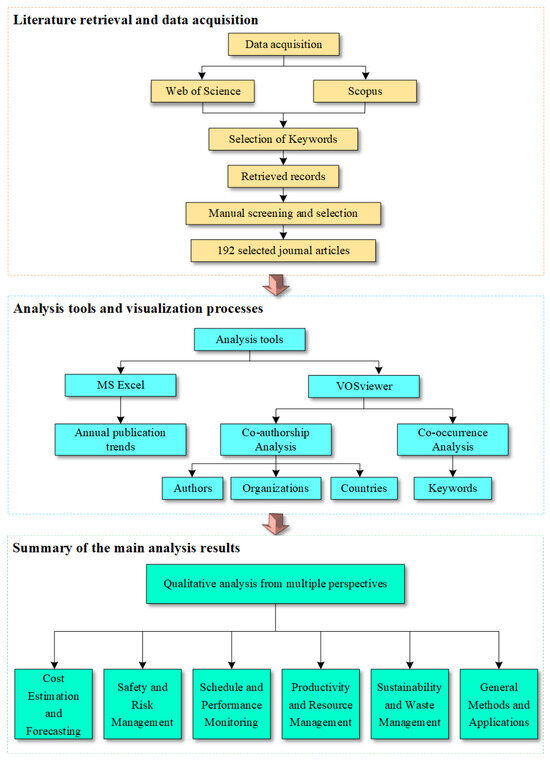
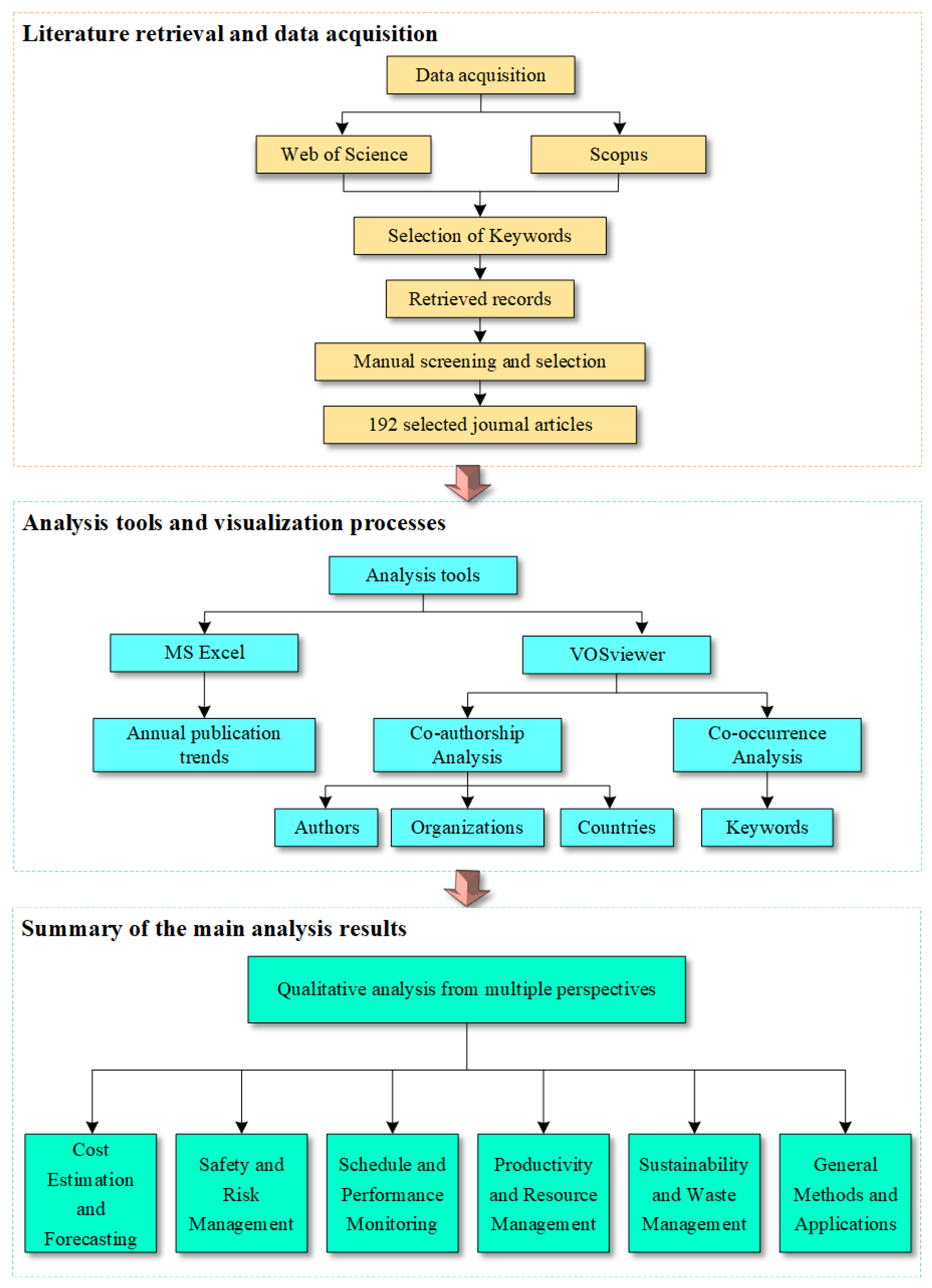
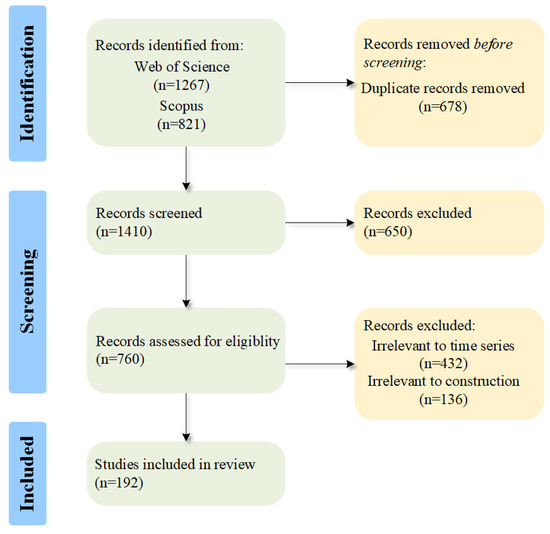
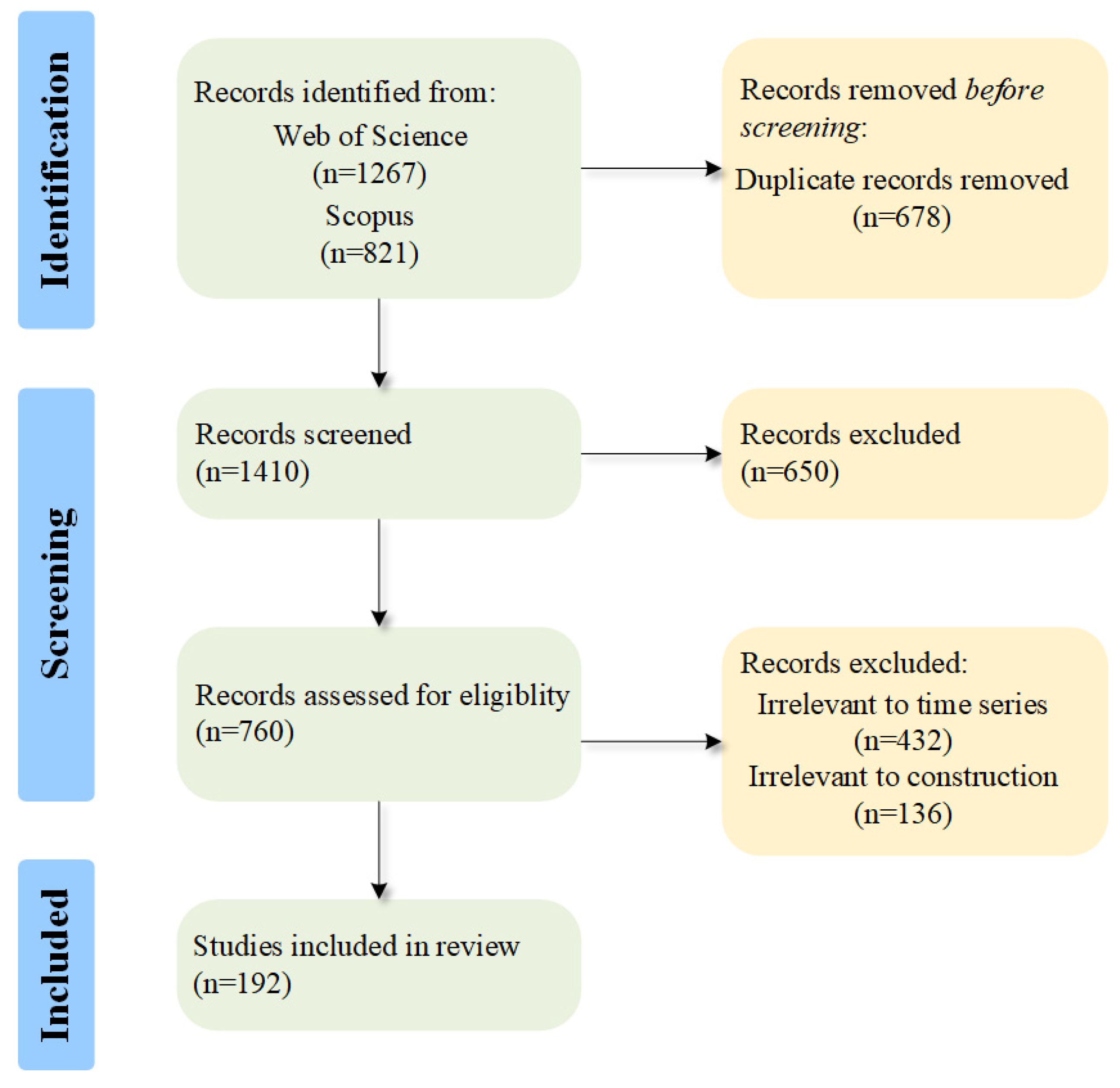
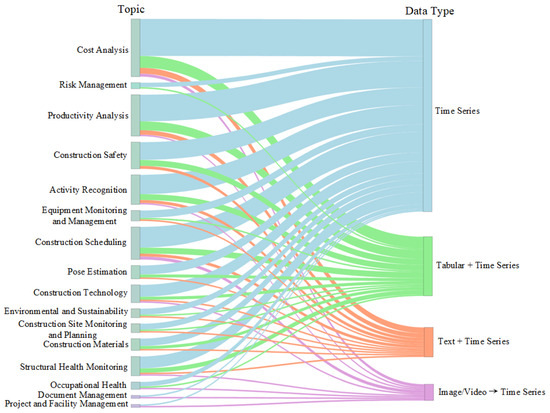
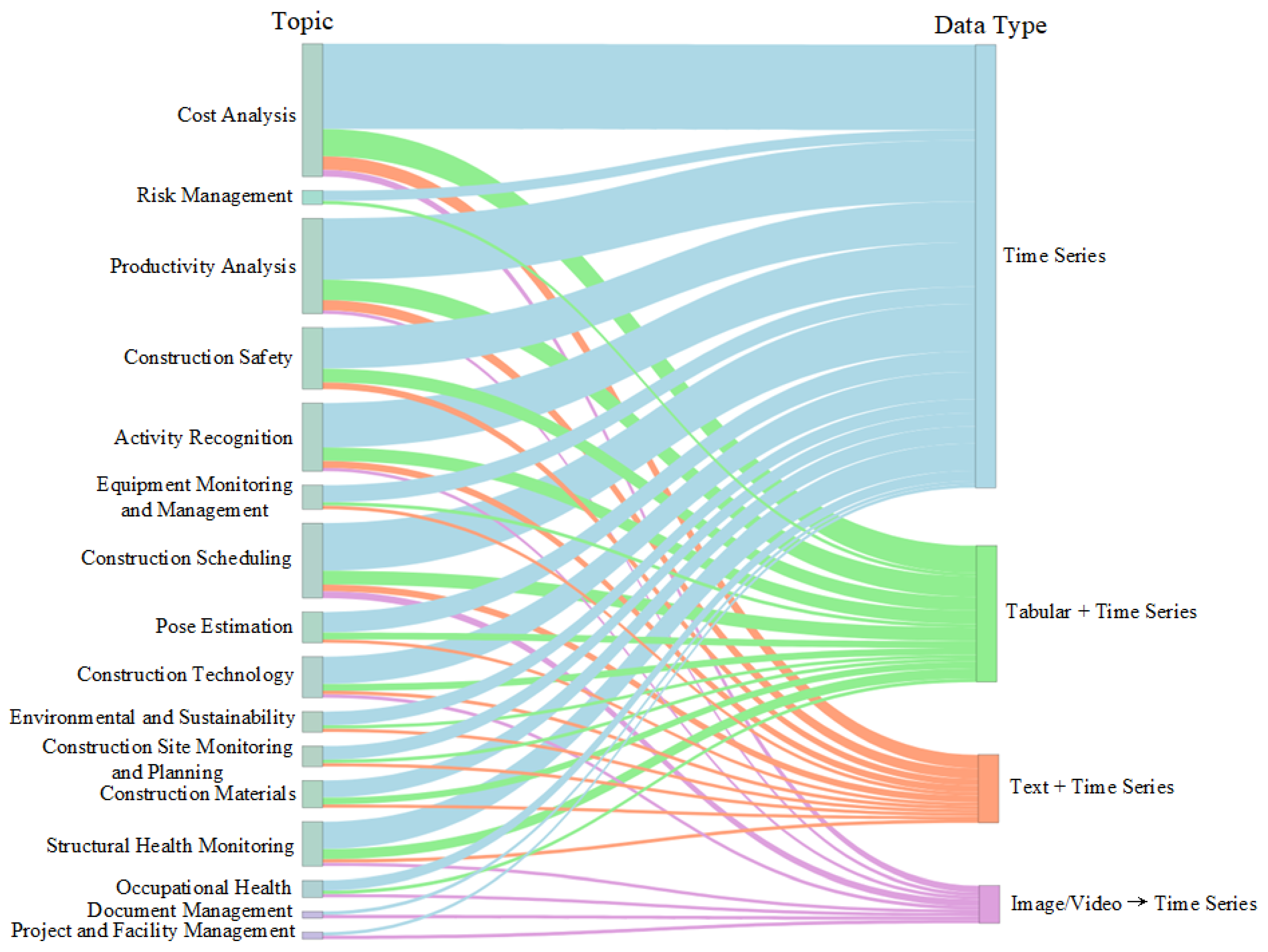
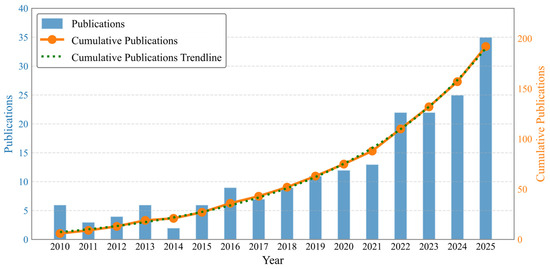
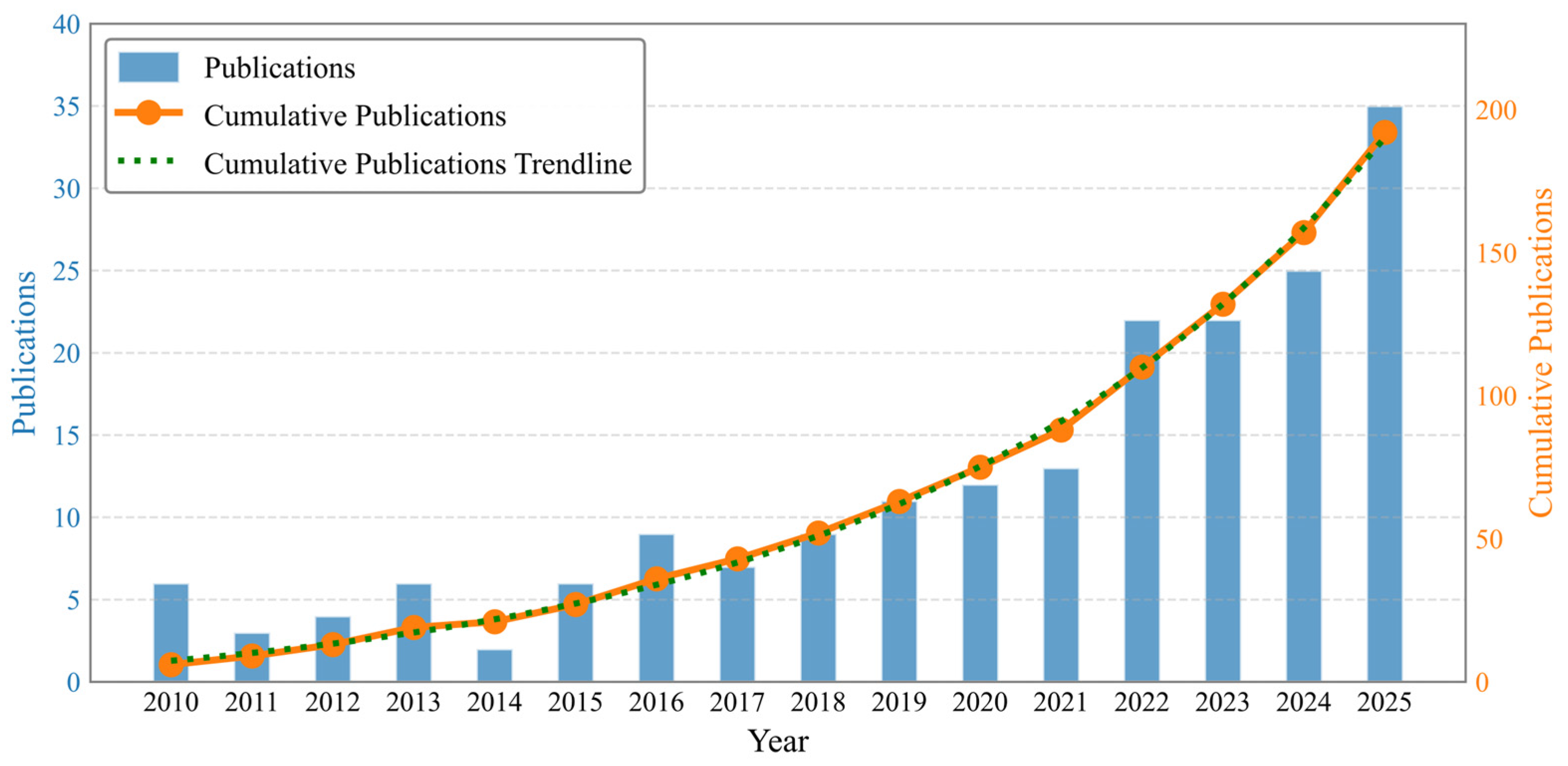
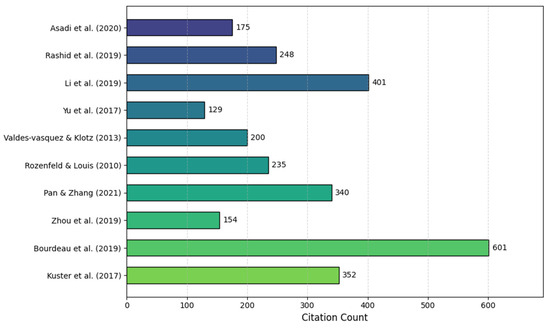
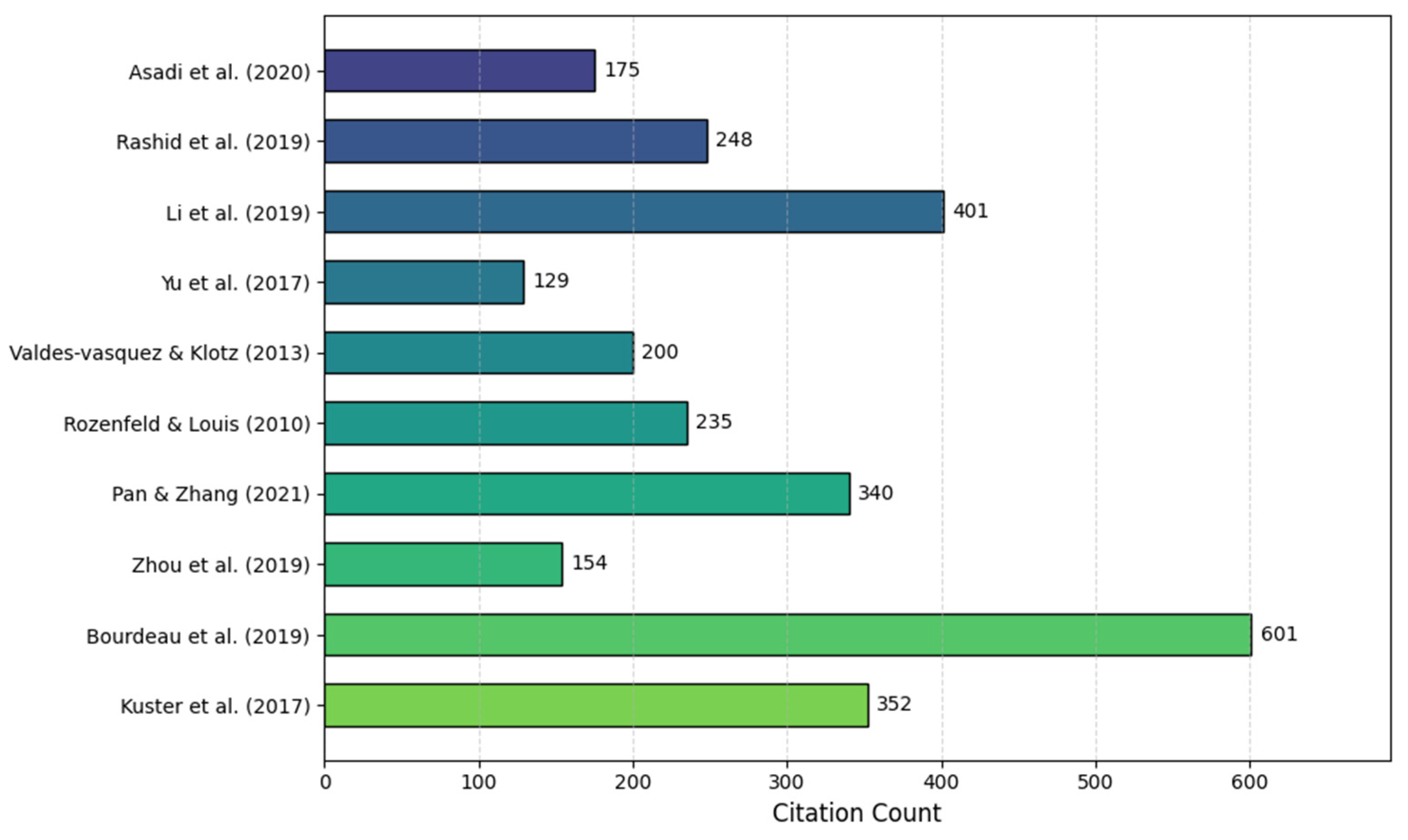
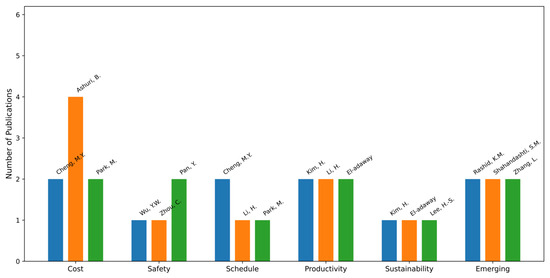
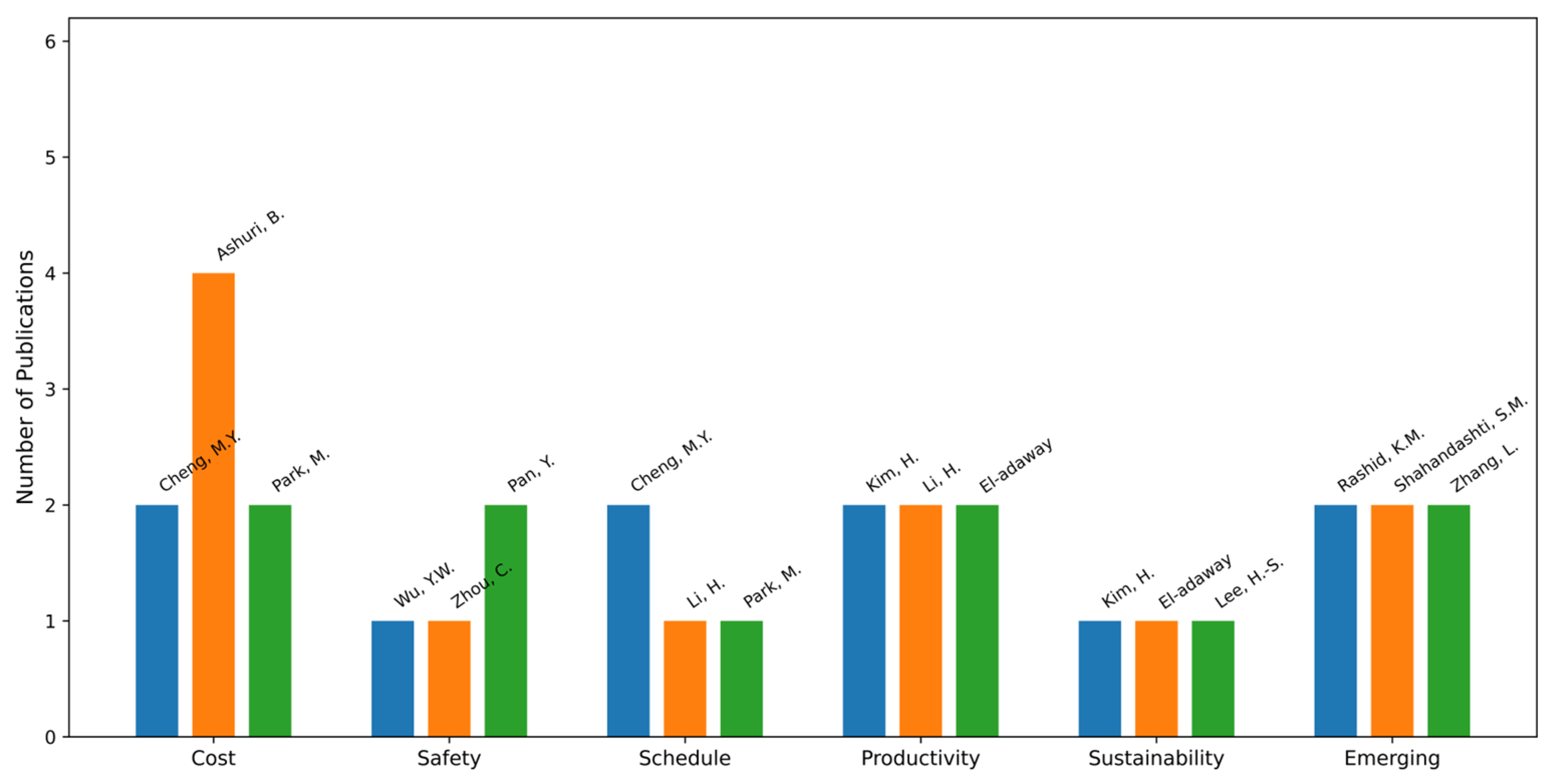
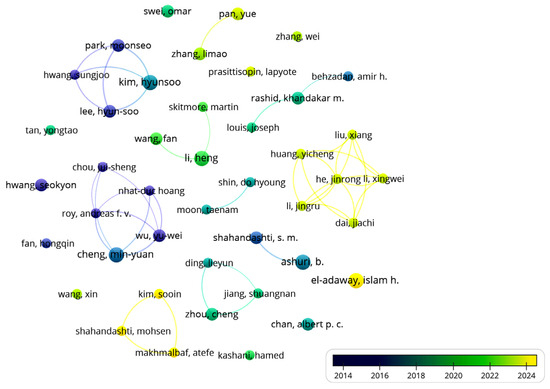
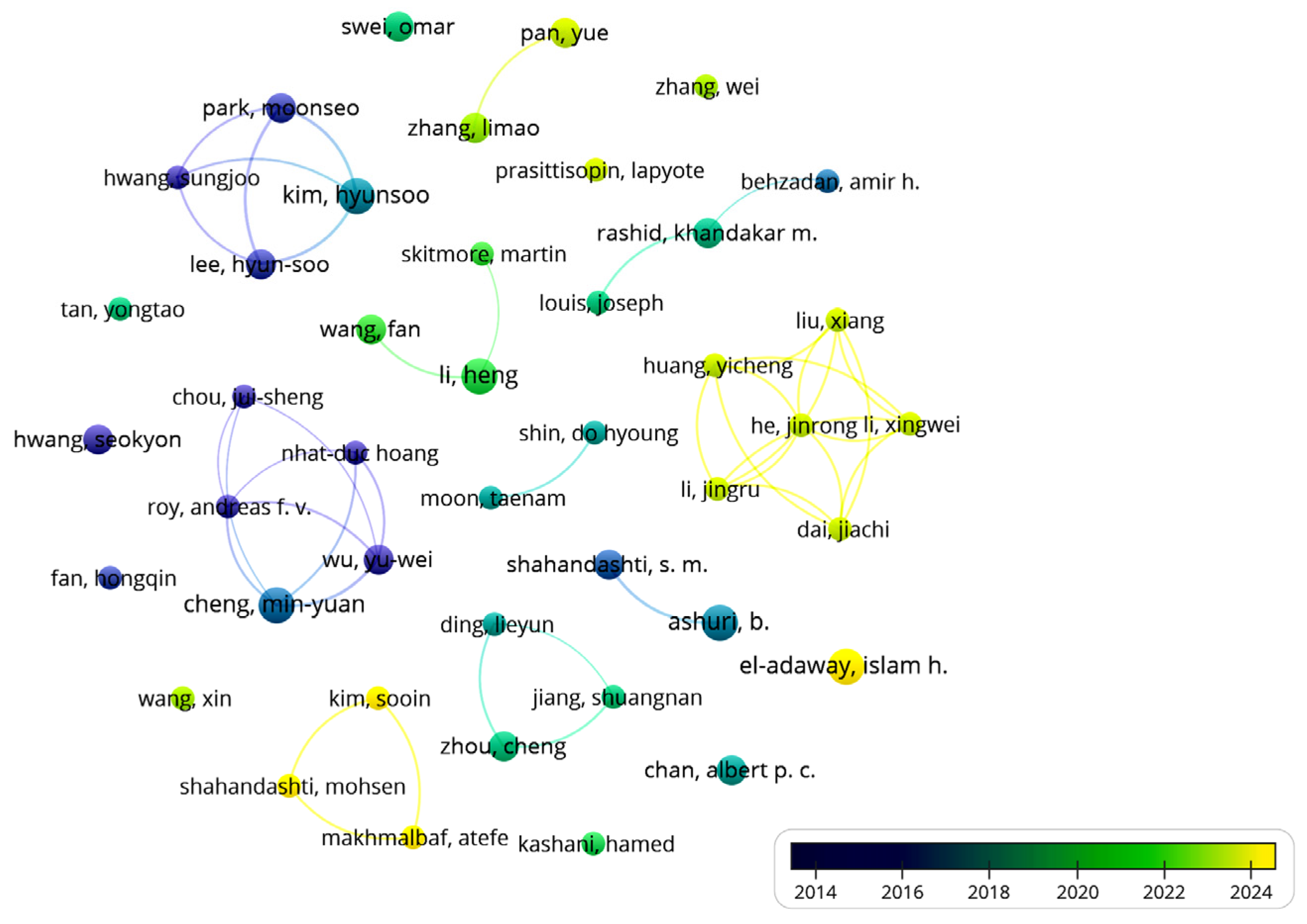
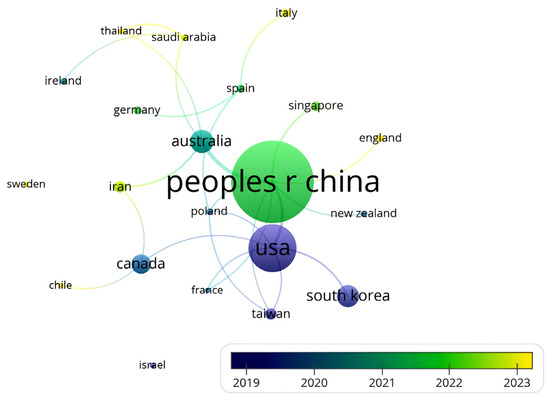
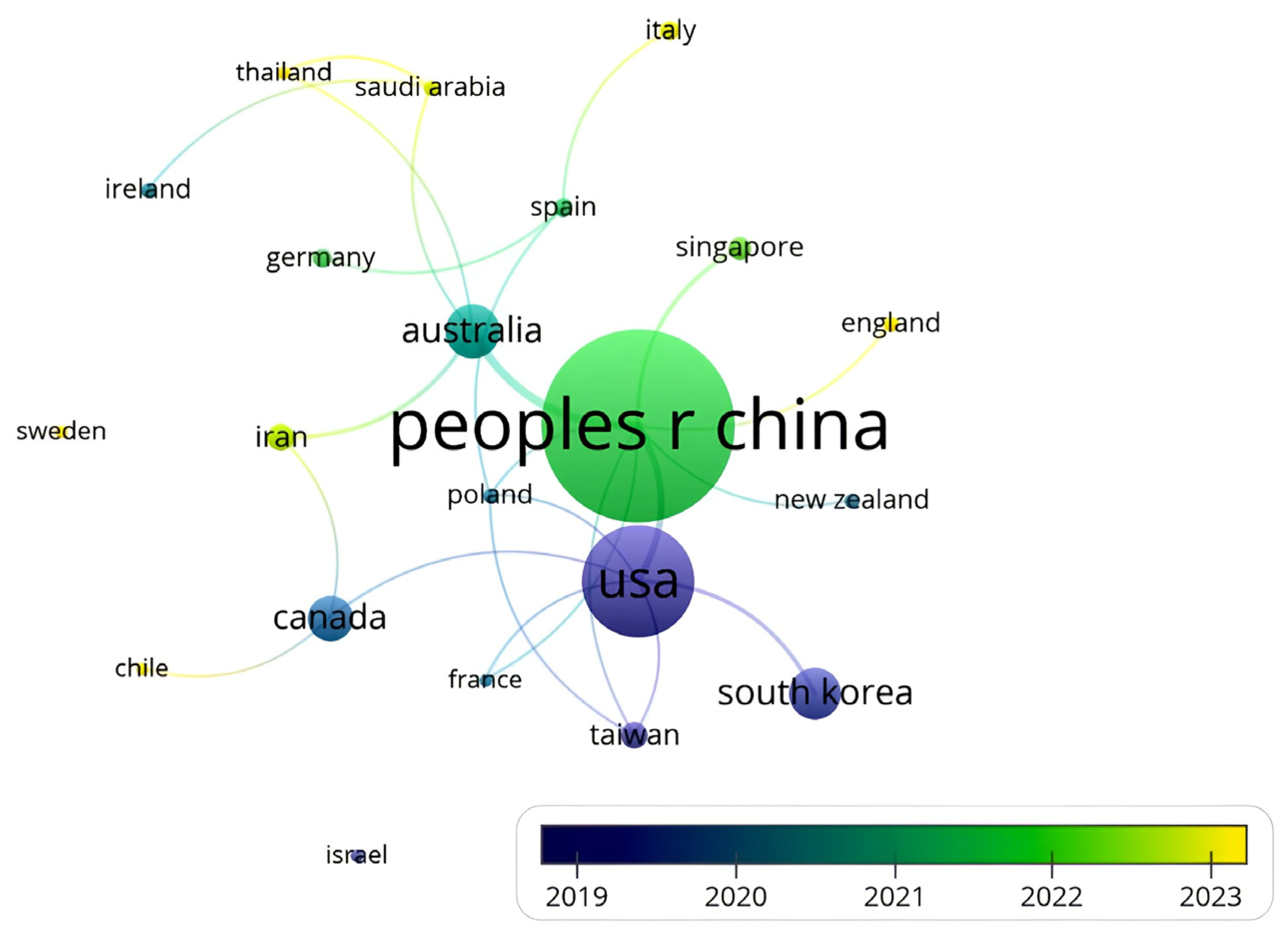
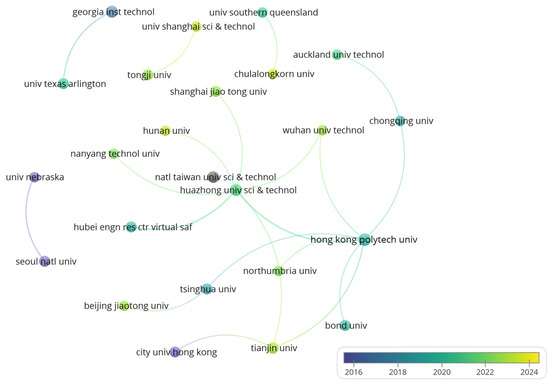
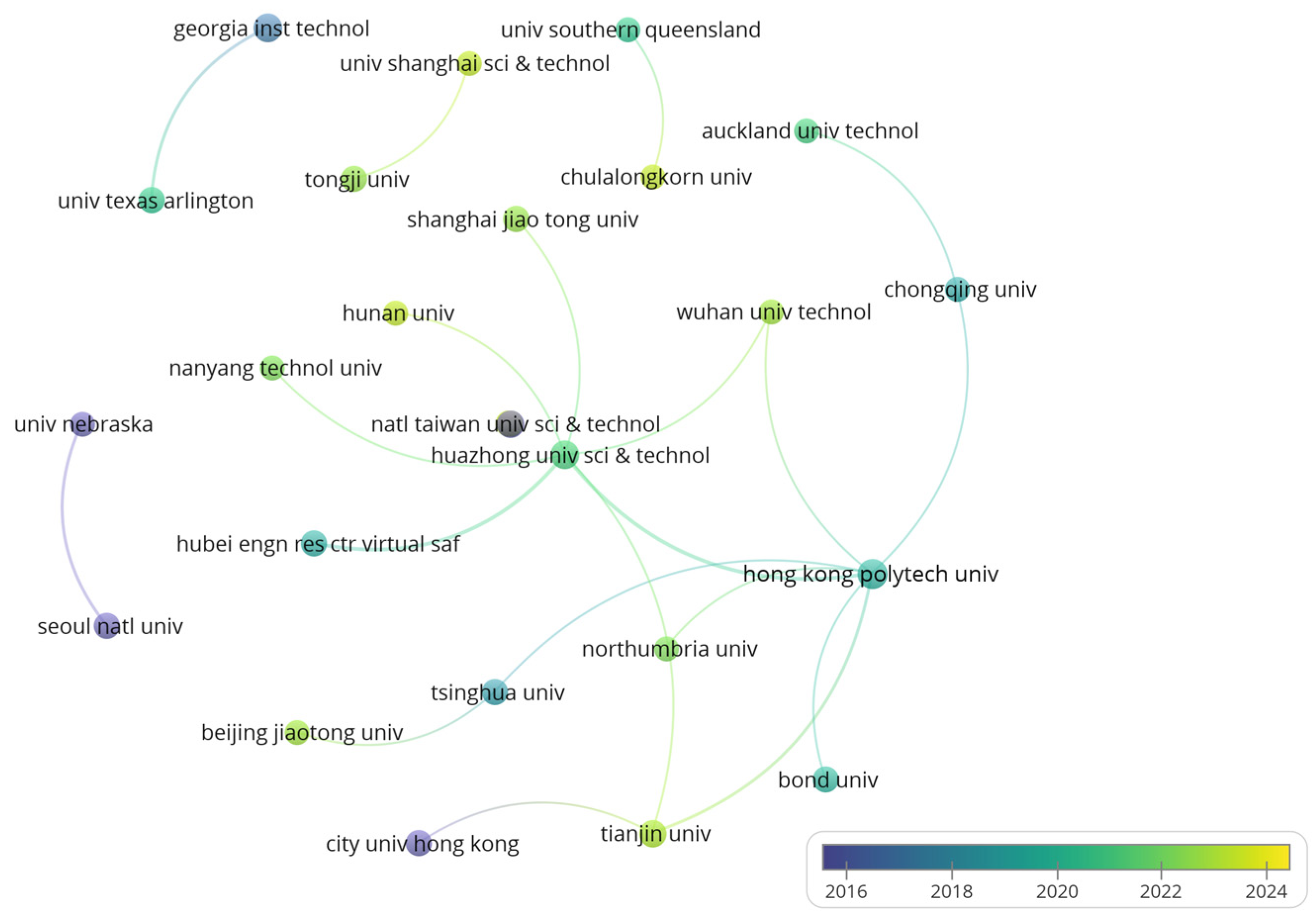
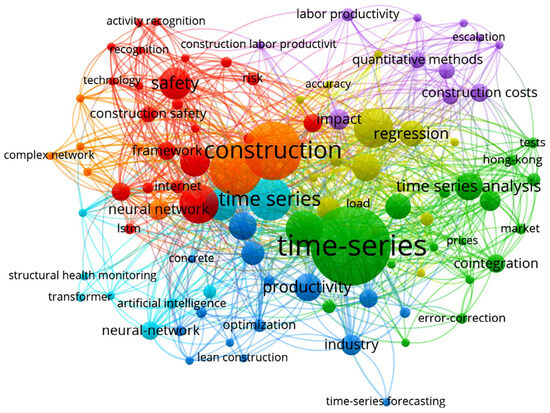
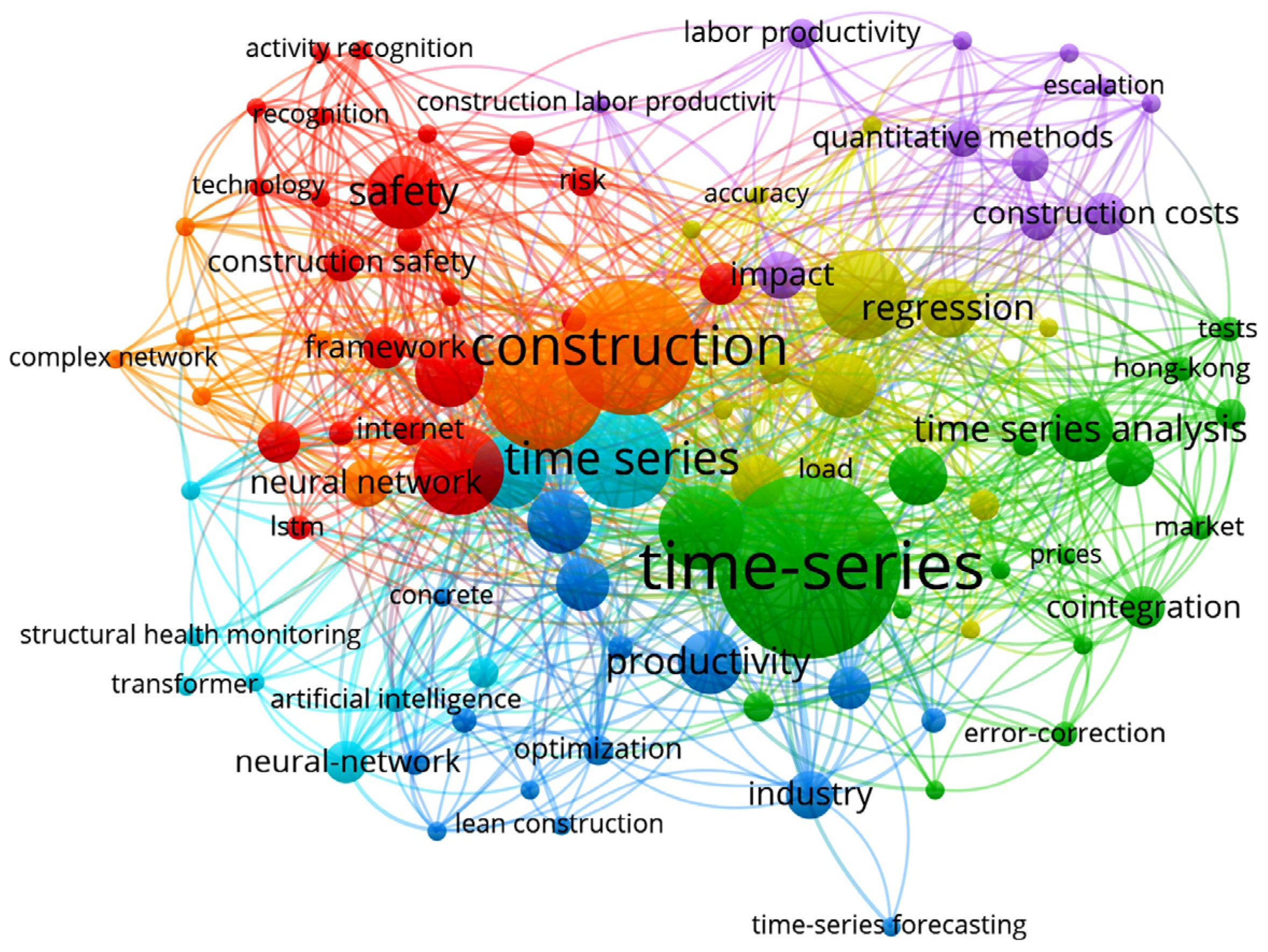
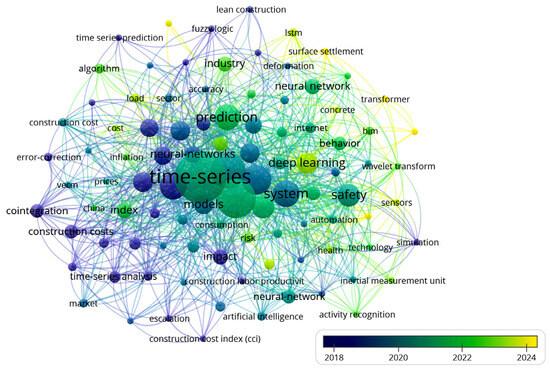
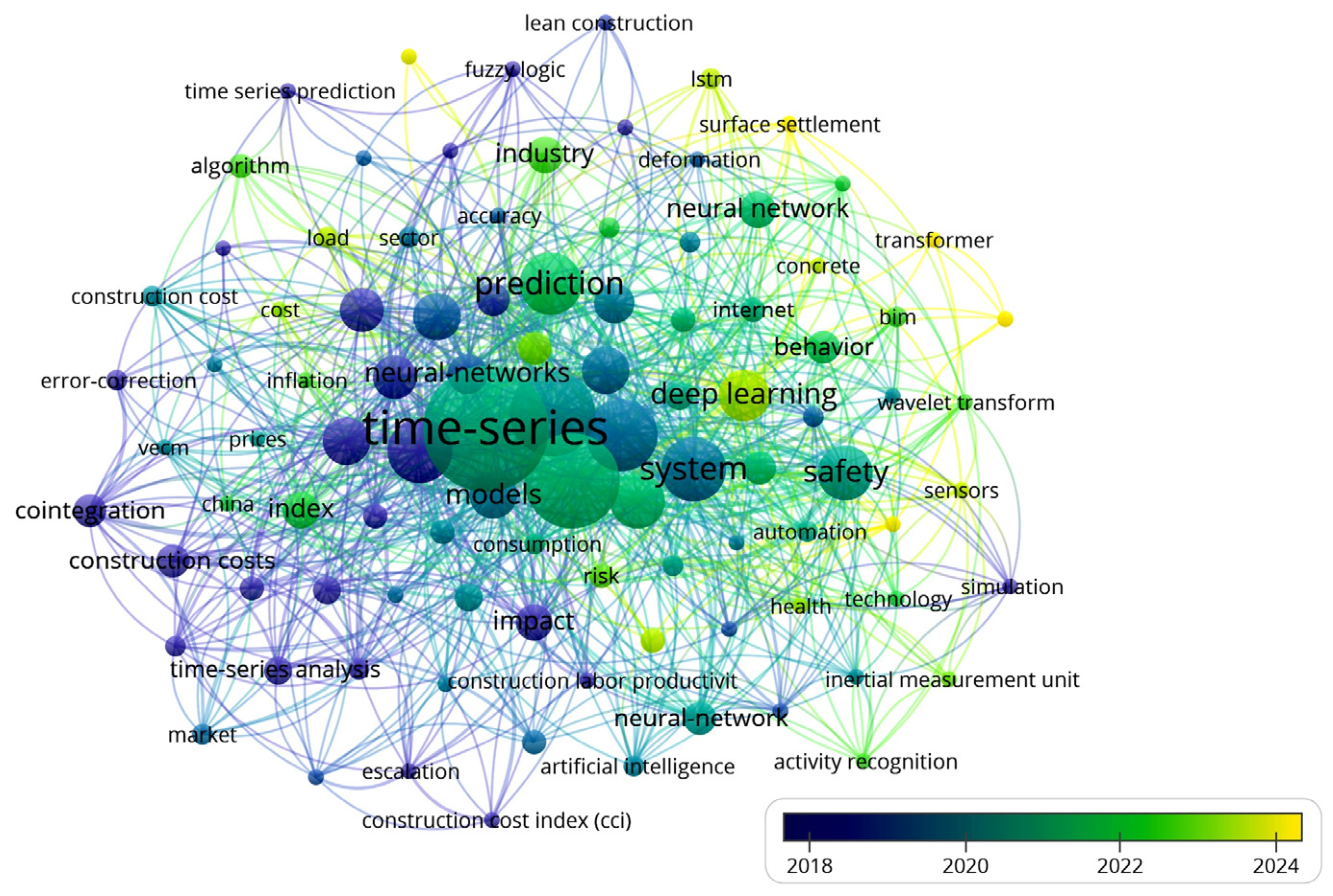

Disclaimer/Publisher’s Note: The statements, opinions and data contained in all publications are solely those of the individual author(s) and contributor(s) and not of MDPI and/or the editor(s). MDPI and/or the editor(s) disclaim responsibility for any injury to people or property resulting from any ideas, methods, instructions or products referred to in the content. |
© 2026 by the authors. Licensee MDPI, Basel, Switzerland. This article is an open access article distributed under the terms and conditions of the Creative Commons Attribution (CC BY) license.