


Abstract
With rapid population aging in China, the age-friendly upgrading of rural public spaces has become central to both rural revitalization and active aging. Existing evaluation frameworks are constrained by urban-oriented indicators, linear utility assumptions, and static assessments that overlook rural contextual needs. In response to these limitations, this study develops and validates a rural age-friendly public space evaluation system by coupling the Kano model with the Capability Maturity Model (CMM). Evaluation indicators were derived from in-depth interviews with rural older adults through three-level grounded-theory coding. The Kano model was then used to identify demand attributes and Better–Worse coefficients, while indicator weights were determined using an AHP–entropy method adjusted by Kano coefficients. Finally, a Kano–CMM correlation matrix was constructed to generate a five-level maturity evaluation model and applied to Xinan Village, Xiancun Town, Zengcheng District, Guangzhou. Results identify seven core dimensions: safety and protection; accessibility and mobility continuity; comfort and health friendliness; health and wellness support; social interaction and psychological belonging; environmental sanitation and quality; and maintenance, renewal, and durability. Rural older adults’ needs are dominated by must-be attributes, followed by attractive attributes, whereas one-dimensional attributes are comparatively less prominent. Safety- and accessibility-related indicators show the highest negative risk sensitivity, indicating that rural age-friendly design should prioritize risk reduction over experiential enhancement. The proposed framework moves beyond checklist-based assessment and provides an evidence-based, dynamic, and auditable tool for diagnosing and improving rural age-friendly public spaces.
1. Introduction
1.1. Research Background
China is currently undergoing the largest and fastest aging process in human history. According to data from the Seventh National Population Census by the National Bureau of Statistics, as of 2020, the population aged 60 and above in China has reached 264 million, accounting for 18.70% of the total population. Notably, the proportion of the population aged 60 and above in rural areas is 23.81%, significantly higher than the 15.82% in urban areas [1]. This “urban–rural inversion” of aging is superimposed with the process of rural hollowing-out; the continuous outflow of young and middle-aged labor leads to rural permanent residents being predominantly elderly individuals. This forms a rural elderly demographic characterized by “weaker mobility, small daily activity radius, and prominent needs for social interaction and health-care” [2].
Unlike urban elderly populations, rural elderly individuals’ public life is highly dependent on fragmented, small-scale, and proximate “low-threshold” public spaces [3]. Village squares, areas under large trees and by old wells, fitness trails and waterfront promenades, waiting areas around clinics, ancestral halls and ancient opera stages, alleys and street lanes, and eaves of houses collectively constitute the daily activity domains for rural elderly, characterized by being “close to home, walkable, with places to sit and rest, chat, and stroll.” These spaces can be broadly categorized into five types: daily leisure and social interaction, health and wellness activities, convenient daily services, cultural and spiritual solace, and transportation and home-surrounding areas, covering the complete life chain of rural elderly from daily living and commuting to social interaction and health-care [4]. As illustrated in Figure 1, these rural public space scenes are not isolated, but are embedded in a cyclical evaluation logic linking the aging population background, requirement identification, Kano classification, maturity assessment, and transformation path output. Typical spatial settings such as village entrance squares, village trails, alley streets, resting spots under trees, and areas around old wells serve as observable carrier spaces for elderly participation in activities and for identifying elderly-friendly needs.
Figure 1.
Technical roadmap for evaluating age-friendly public spaces in rural areas based on Kano-CMM (drawn by the author).
However, existing rural public spaces, under multiple constraints such as complex terrain conditions, limited infrastructure maintenance capacity, insufficient accessibility to care resources, and diverse temporal use patterns of space, struggle to spontaneously adapt to the real needs of the elderly. In this context, “age-friendly design” has gradually expanded from merely adding accessible facilities to a comprehensive spatial system encompassing continuous circulation, safety and protection, understandable wayfinding, comfortable lingering, and care integration [5]. Therefore, Figure 1 proposes a Kano–CMM coupled evaluation framework. The Kano model excels at classifying hierarchical demand attributes of the elderly yet cannot quantify the overall construction level of rural public spaces, while the CMM (Capability Maturity Model) can measure the maturity of space construction but fails to distinguish the priority of different elderly demands; the combination of the two theories can perfectly make up for their respective defects, realizing organic integration of demand classification and spatial status assessment. In this framework, elderly-friendly needs are first identified from rural public space scenes, then classified through Kano theory to distinguish basic, expected and attractive demands, assessed by the CMM maturity model to quantify the construction completeness of each space carrier, and finally translated into targeted phased renovation paths matched with demand priority and space maturity. How to construct an evaluation system that can both identify the true hierarchical needs of rural elderly and guide differentiated renovation pathways has become a critical issue at the intersection of rural revitalization and proactive aging strategies.
1.2. Literature Review
Existing research on the evaluation of age-friendly public spaces has explored three levels: norms and standards, indicator systems, and methodological tools.
At the level of norms and indicators, the World Health Organization (WHO) “Age-Friendly Cities” framework proposes eight dimensions, including outdoor spaces and buildings, transportation, and housing, providing a basis for macro-level evaluation [6]. Building upon this, domestic scholars have combined normative clauses from “Barrier-Free Design Specifications” and “Architectural Design Standards for Elderly Care Facilities” [7] to conduct extensive research on indicator system construction for urban parks, community public spaces, and elderly care institutions, covering elements such as safety, accessibility, comfort, and participation.
At the level of methodological tools, Analytic Hierarchy Process (AHP), fuzzy comprehensive evaluation, entropy method, System Dynamics (SD), Post-Occupancy Evaluation (POE), etc., have been widely used for weight determination and performance measurement in age-friendly space evaluation. In recent years, the Kano model, due to its ability to distinguish the asymmetrical utility structure of “Must-be, One-dimensional and Attractive” needs, has been introduced into demand identification research in product services and spatial design [8]. The CMM (Capability Maturity Model) has demonstrated explanatory power in graded evolution within engineering management, service design, and public governance [9].
At the rural context level, research on rural public spaces, rural elder care service systems, and rural human settlement environment improvement has been increasing in recent years, emphasizing the local, cultural, and small-scale characteristics of rural spaces, and preliminarily exploring pathways for rural age-friendly renovation.
Despite the accumulation of relevant research, there are still three notable deficiencies in evaluating and guiding the renovation of age-friendly public spaces to serve the reality of rural hollowing-out and aging. First, indicator construction shows a clear “urbanization” bias, lacking rural local relevance. Existing indicator systems are mostly derived from urban park or community contexts, making it difficult to reflect the usage logic of fragmented, small-scale public spaces unique to rural areas, such as village squares, areas under large trees, areas around ancestral halls, and alley eaves [10]. Moreover, indicators often remain at the level of normative clauses, lacking translation into “design-operable evidence,” making it difficult for evaluation results to inform specific renovation schemes. Second, demand identification is “flat,” lacking stratified explanation of user utility structures. Traditional evaluations often use equal weighting or expert experience-based weighting [11], treating all indicators as homogeneous elements. This fails to address the core issue of design priority—determining “which needs are non-negotiable baselines, which are key to satisfaction improvement, and which are sources of unexpected experiences”—making it difficult to guide trade-off decisions under resource constraints. Third, evaluation and governance are “disconnected,” lacking a graded evolutionary improvement path. Most existing research focuses on “one-time scoring,” while rural public space renovation actually faces continuous constraints such as insufficient maintenance capacity, variable construction quality, and limited funding and renewal cycles. This leads to “scoring and minor adjustments” without a sustainable, iterative maturity framework [12], making it difficult to translate evaluation results into phased, evidence-based, and auditable governance actions.
In summary, evaluation of rural age-friendly public spaces urgently needs an integrated method that can simultaneously achieve (1) modeling the user demand structure based on real rural scenarios, (2) quantifiable explanation of indicators, utility, and priorities, and (3) outputting graded improvement paths oriented towards rural capability constraints.
1.3. Research Objective and Contributions
Addressing the aforementioned gaps, this study, taking aging rural China as its real-world context and daily leisure and social interaction, health and wellness activities, convenient daily services, cultural and spiritual solace, and transportation and home-surrounding areas as the five types of rural public spaces under investigation, aims to construct and validate an evaluation system for rural age-friendly public space design based on Kano–CMM, achieving a complete closed loop including “demand identification, utility classification, weight quantification, maturity grading, and improvement path output.”
Around this objective, this study intends to answer the following four key questions:
RQ1: What is the user demand structure for rural age-friendly public spaces? How can it be refined into design-operable evaluation indicators?
RQ2: To which Kano utility type does each demand indicator belong? Does its classification vary with space type and usage context?
RQ3: How can a “demand-capability” mapping be constructed to form a five-level CMM maturity evaluation?
RQ4: Can this evaluation system identify the age-friendly maturity of typical rural public spaces and support bottleneck diagnosis and the formulation of improvement paths?
Correspondingly, the main contributions of this study are fourfold. First, a design-oriented indicator construction method. Based on the real-life scenarios of rural elderly, through grounded analysis of user experience corpora, age-friendly demands are translated into an observable, measurable, and evidence-based design indicator system, bridging the gap of urbanized indicators in rural contexts. Second, demand utility structure modeling. The Kano model is introduced to classify indicators into must-be, one-dimensional, attractive, indifferent, and reverse categories, explaining the differentiated contributions of various design elements to user satisfaction formation, providing a basis for design priority decisions under resource-constrained conditions. Third, capability maturity mapping. CMM is leveraged to transform “demand satisfaction levels” into five levels of service capability maturity [13], and provides evidence-based, graded renovation strategies, allowing evaluation results to be implemented in the practical context of rural governance and project management. Fourth, rural-implementable validation. Through multi-case empirical testing of the system’s discriminant validity and explanatory validity, a replicable and transferable template for improvement paths is formed, providing methodological reference for rural age-friendly public space renovation.
2. Methods
2.1. Study Design
This study adopts a sequential mixed-methods approach, specifically involving the following four stages.
- (1)
- Qualitative Construction Stage: Normative design requirements for rural age-friendly public spaces are extracted through policy and regulation review, and real user needs are obtained through semi-structured in-depth interviews with rural elderly residents. Based on these two types of textual materials, grounded theory is applied for open coding, axial coding, and selective coding to refine evaluation indicators.
- (2)
- Quantitative Identification Stage: A Kano questionnaire survey is conducted based on the constructed indicator system to identify the demand utility types of different indicators and calculate their Better–Worse coefficients.
- (3)
- Structural Modeling Stage: AHP and entropy weight methods are used for combined weighting, and the indicator weights are adjusted based on the Kano classification results. Furthermore, a demand-capability mapping matrix is constructed, and CMM is introduced to form a five-level maturity evaluation mechanism.
- (4)
- Case Validation Stage: Typical rural public space cases are selected for on-site scoring and consistency testing to verify the operability, diagnostic capability, and robustness of the evaluation system.
2.2. Overview of the Construction of the Evaluation System for Rural Age-Friendly Public Space Design
Rural age-friendly public spaces are crucial carriers for daily leisure, social interaction, health and wellness, and convenient travel for rural elderly. Their design quality directly impacts the daily life quality, physical and mental health, and residential satisfaction of rural elderly populations [14]. Constructing a scientific and reasonable evaluation indicator system is a vital foundation for accurately identifying shortcomings in rural public space age-friendliness, optimizing spatial design schemes, and promoting the construction of age-friendly rural living environments [15].
This study is based on the reality of deep aging of China’s rural population, the high proportion of older permanent residents, the weakening functions of public spaces, and the insufficient provision of age-friendly facilities. It adheres to the principles of scientific rigor, targeting specific needs, practical operability, localization, and a people-centered approach. It avoids direct adoption of urban public space age-friendly evaluation systems, focusing instead on rural regional features, the physiological and psychological characteristics of the elderly, and their daily activity habits.
The construction of the indicator system primarily relies on two core data sources: first, policies, regulations, and technical standards related to rural age-friendly public spaces, used to extract legal requirements, construction baselines, and configuration standards; second, semi-structured in-depth interview data from rural elderly residents, used to identify their spatial needs, perceived problems, and renovation intentions in real use contexts. On this basis, the grounded theory qualitative research method is applied to conduct open coding, axial coding, and selective coding of policy texts and interview texts. This process progressively refines core dimensions and detailed evaluation factors, ultimately forming an evaluation indicator system applicable to China’s rural reality and closely aligned with the actual usage needs of left-behind elderly in rural areas. This provides a standardized and professional basis for subsequent age-friendly status assessment, renovation design optimization, and planning management.
2.3. Extraction of Normative Clauses for Rural Age-Friendly Public Space Design Through Policy and Regulation Review
National and local policies, industry standards, and rural construction guidelines serve as important legal bases for planning, designing, and managing rural age-friendly public spaces, as well as foundations for ensuring the compliance and universality of the evaluation indicator system. The indicators must be anchored to the dual goals of the rural revitalization strategy and the national strategy for actively responding to population aging, aligning with policy requirements for rural human settlement environment improvement, age-friendly living environment construction, and public service facility enhancement.
This study’s policy and regulation review was conducted using the official websites of the Ministry of Civil Affairs, the Ministry of Housing and Urban-Rural Development, the Ministry of Agriculture and Rural Affairs’ rural revitalization special column, and relevant policy document libraries in Guangdong Province. The search focused on five major areas: rural public space construction, age-friendly living environments, rural age-friendly facility renovation, rural elderly care service systems, and human settlement environment improvement. Key normative documents, including national top-level designs, industry technical standards, and Guangdong Province and municipal/county implementation details, were screened within the time frame of 2015–2025. After deduplication and effectiveness screening, discarding obsolete documents and those containing only macro guidance without specific design clauses, a total of 16 effective policy and normative documents were retained (as shown in Table 1). Through detailed reading and clause deconstruction, mandatory norms and guiding clauses related to age-friendly safety design, accessible facility configuration, recreation and wellness venues, elderly activity space provisions, age-friendly renovation of traffic roads, etc., were extracted and compiled into a policy and normative clause extraction table, providing institutional basis for the subsequent establishment of evaluation indicators.
Table 1.
Policy and Regulation Names and Age-Friendly Service Related Clause Extraction Table (Partial Selection).
2.4. Investigating Actual Usage Needs of Rural Age-Friendly Public Spaces Through In-Depth Interviews with Rural Elderly Residents
Rural elderly residents are the core users of public spaces, and their user experience, activity habits, physiological needs, psychological demands, and pain points are crucial for ensuring the localization and practicality of the evaluation indicator system [16]. Unlike urban elderly populations, rural left-behind elderly typically have smaller activity radii and fixed activity scenarios. Their needs for proximate resting, health and wellness, and convenient travel are more prominent. Relying solely on the literature and policies cannot adequately capture their real demands. Therefore, this study established a participatory needs investigation mechanism, conducting face-to-face semi-structured in-depth interviews to explore rural elderly’s current usage, problems, and demands for age-friendly optimization of public spaces.
On-site interviews were conducted in December 2025 in typical aging rural areas of the Pearl River Delta near Guangzhou. The surveyed villages included both cultural tourism-oriented and ordinary agricultural types. Interview locations covered high-frequency activity areas such as village squares, riverside greenways, elderly fitness areas, resting spaces around Party-mass Service Centers, convenient markets, and traditional gathering spots under old trees (as shown in Figure 2). Interviewees were strictly limited to long-term permanent residents aged 60 and above, ensuring representation across different age groups (60–69, 70–79, 80+), mobility statuses (independent, semi-dependent), genders, and activity habits. Interviews continued until theoretical saturation was reached, i.e., no new concepts or categories emerged, resulting in 20 valid interview transcripts. With informed consent, audio recordings were kept, and real-time notes were taken for subsequent grounded theory coding. The semi-structured interview guide focused on public space usage frequency, perceptions of age-friendly facilities, safety hazards, resting and wellness needs, social interaction demands, and renovation suggestions.
Figure 2.
Partial Photographs of Rural Public Spaces from the Survey (Photos by the Author).
2.5. Three-Level Coding Process of Rural Elderly Interview Transcripts Based on Grounded Theory
This study conducted semi-structured in-depth interviews with rural elderly residents in typical aging villages in the Pearl River Delta region. The interview recordings were transcribed verbatim to form raw interview texts. Subsequently, the qualitative data was standardized and de-identified, removing irrelevant chatter, repetitive statements, and invalid semantic content. Valid original statements related to time-specific use of rural public spaces, activity frequency and participation, daily use peaks, social interaction peaks, leisure and rest periods, wellness and health-promoting activities, and nighttime safety needs were retained (As shown in Figure 3). Following the standard qualitative analysis procedure of grounded theory, open coding, axial coding, and selective coding were strictly performed in three successive levels of refinement [17]. This involved continuous comparison between data and concepts, aggregation of similar concepts, and clarification of logical relationships between concepts. Ultimately, core categories for the evaluation of rural age-friendly public space design were distilled, providing qualitative research support and empirical basis for subsequent dimension division and specific indicator selection for the evaluation system.
Figure 3.
Time–Activity Intensity Pattern of Rural Elderly Public Space Use (drawn by the author).
Open coding, as the first-level initial coding in grounded theory, primarily involves disassembling and labeling each sentence of the original elderly interview texts, shedding researchers’ subjective preconceptions. Initial concepts are extracted entirely from the real spoken words of rural elderly, transforming colloquial expressions into academic, standardized initial coding concepts. In this study, from the 20 valid samples, 42 initial open codes highly related to the rural age-friendly public space usage experience, existing problems, and renovation needs were ultimately refined and selected, objectively reflecting the most direct and real age-friendly usage demands and practical pain points of rural elderly concerning village public spaces.
Axial coding, as the second-level relational coding in grounded theory, primarily involves merging similar, converging, and functionally integrated initial disparate concepts extracted from open coding. These semantic and functional clusters are then summarized into corresponding sub-categories, which are further integrated and refined into main categories based on their functional attributes [18]. In this study, combining the core characteristics of age-friendly rural public spaces and the dual physiological and psychological needs of the elderly, all initial open codes were progressively categorized and integrated, resulting in 14 sub-categories and 6 core main categories, defining the core hierarchical structure of age-friendly needs in rural public spaces. As illustrated in Figure 4, this hierarchical coding process can be visually summarized as a structured pathway from initial concepts to sub-categories and then to the six main categories; namely, space safety and accessibility assurance, age-friendly resting support, health and wellness fitness facilities, social interaction scenarios, landscape environment experience, and convenient service provision.
Figure 4.
Three-Level Coding Results and Demand Structure of Rural Age-Friendly Public Spaces (drawn by the author).
Selective coding, as the third-level core coding in grounded theory, is the top-level core generalization stage of the coding system. Its core task is to extract a core category that unifies all main categories, clarify the internal relationships between the core category and each main category, and form a stable and clear core theoretical framework for age-friendly needs in rural public spaces [19]. Through continuous comparative analysis of the internal logical relationships among the main categories, this study identified “Overall Age-Friendly Adaptability of Rural Public Spaces” as the core category, comprehensively coordinating the six main categories: space safety and accessibility assurance, age-friendly resting support, health and wellness fitness facilities, social interaction scenarios, landscape environment experience, and convenient service provision. The three-level coding summary table for rural age-friendly public space interview data, as shown in Table 2, constructs an age-friendly public space demand logic system that aligns with the real needs of rural elderly, directly supporting the subsequent construction of the evaluation indicator system dimensions.
Table 2.
Selective, Axial, and Open Coding Results on the Livability Adaptability of Age-Friendly Public Spaces in Rural Areas.
Throughout the three-level coding process, this study employed a cross-validation method with two independent coders. Both researchers independently completed the initial label extraction for open coding and the categorization for axial coding. Inconsistent concepts were unified and corrected by repeatedly reviewing original interview transcripts and comparing interview contexts, ensuring that the coding content aligned with the research topic of rural age-friendly public spaces and that the coding results were objective and reliable. Simultaneously, new interview samples were continuously added for coding comparison until no new initial concepts or categories emerged, reaching theoretical data saturation. This ensured the completeness, stability, and suitability of the coding system for subsequent construction of the rural age-friendly public space design evaluation indicator system.
2.6. Hierarchical Analysis of Rural Public Space Age-Friendly Design Needs Based on the Kano Model
Although grounded theory, through in-depth interviews, extracted six core main categories (A1–A6) from the perspective of rural elderly residents, comprehensively reflecting user-driven core needs, to construct a more comprehensive, scientific, and operable age-friendly public space design evaluation system, this study further integrated the directive requirements from the initial policy and regulation analysis (Section 2.3) and expert consultation opinions when forming the first-level dimensions. For instance, policies and regulations often emphasize accessibility standards for facilities, safety management systems, and the construction of community support systems; these elements are fundamental to ensuring the effective realization of the six user needs.
Therefore, during the expert group’s discussion and validation of the six preliminary main categories derived from grounded theory, it was unanimously agreed that it was necessary to independent these important aspects, stemming from policy guidance and management requirements, into a new evaluation dimension. Ultimately, after multiple rounds of discussion, integration, and refinement, seven first-level evaluation dimensions (D1-D7) were formed, thus ensuring that the evaluation system is not only rooted in real user needs but also considers policy guidance, management implementation, and comprehensive future development. The impact of different indicators on elderly satisfaction varies, and it is difficult to further identify the priority and urgency of renovation for various needs solely through qualitative analysis. In the context of limited rural construction funds and renovation resources, it is urgent to clarify the sequence of age-friendly space design.
The Kano model is a commonly used tool for classifying user needs [20], which can categorize design elements into Must-be (M), One-dimensional (O), Attractive (A), Indifferent (I), and Reverse (R) based on users’ subjective perception of need fulfillment. Among these, Must-be needs are basic requirements, and their absence significantly reduces satisfaction; One-dimensional needs are positively correlated with satisfaction; Attractive needs are value-added contents that exceed expectations and can significantly enhance user experience; Indifferent needs have a weak impact on satisfaction; and Reverse needs may reduce willingness to use [21].
Based on this, this study introduces the Kano model to conduct a hierarchical analysis of rural public space age-friendly design needs, and calculates the Better–Worse index to measure the satisfaction gain and dissatisfaction loss of each indicator [22]. The research process includes: first, designing a Kano two-way questionnaire based on the existing indicator system; second, conducting on-site surveys and performing reliability and validity tests; third, classifying demand attributes for each indicator according to Kano judgment rules and the Better–Worse analysis method; finally, summarizing the distribution characteristics of different demand types and identifying the priorities for rural public space age-friendly renovation to provide a basis for subsequent design optimization.
2.6.1. Kano Survey Questionnaire Design
To enhance the standardization and applicability of the Kano model survey, this study designed the questionnaire using a standardized two-way questioning method. Considering the cognitive characteristics of rural elderly, the phrasing of questions was simplified, using plain and clear language to avoid misunderstandings caused by technical jargon.
The questionnaire consisted of two main parts. The first part collected basic information about the respondents, including age, gender, health status, years of residence, daily outdoor activity duration, and public space usage frequency. This part was used to understand sample characteristics and provide a basis for analyzing demand differences among different groups [23]. The second part comprised the core Kano evaluation content, with items corresponding to the second-level evaluation indicators of rural age-friendly public spaces constructed earlier. Each indicator included two scenario questions: “How do you feel when this design content is well-implemented?” and “How do you feel when this design content is missing?” All items used a five-point rating scale: “Very satisfied,” “It’s a given,” “Indifferent,” “Barely acceptable,” and “Very dissatisfied,” to facilitate subsequent demand attribute judgment and Better–Worse index calculation [24].
This study conducted a questionnaire survey on rural age-friendly public space demand analysis using the Kano model. To broaden sample coverage and improve data acquisition efficiency, the survey adopted a combination of online and offline methods, distributing a total of 345 questionnaires. After collecting the questionnaires, data quality control was performed based on academic survey data screening standards, specifically removing invalid questionnaires characterized by patterned responses, contradictory answers, excessively short completion times, missing key items, and clearly random filling. After processing, 47 invalid questionnaires were removed, resulting in 298 valid questionnaires, with an effective response rate of 86.38%.
Overall, the effective sample size meets the statistical analysis requirements for subsequent reliability and validity tests, Kano demand attribute classification, and Better–Worse index calculations, providing a solid foundation for further demand hierarchy analysis.
2.6.2. Overall Data Analysis Plan for the Survey Questionnaire
To ensure the reliability, stability, and validity of the Kano model questionnaire survey data, and to avoid random and systematic errors in survey data [25], thereby guaranteeing that the subsequent classification of rural public space age-friendly design demand attributes is scientifically accurate and research conclusions are truthful and reliable, this study conducted a systematic reliability and validity test on the 298 valid questionnaire samples before proceeding with Kano demand classification and index analysis. SPSS 26.0 was used to analyze the reliability (Cronbach’s α) and validity (KMO and Bartlett’s test of sphericity) of the Kano two-way questionnaire (16 positive items + 16 negative items, totaling 32 items). The results are shown in Table 3, Table 4 and Table 5.
Table 3.
Kano Questionnaire Reliability and Validity Test Results.
Table 4.
Kano Classification Results (n = 298).
Table 5.
Kano Classification Summary.
From the analysis above, Must-be type needs are concentrated in basic assurance indicators such as safety protection, continuous accessibility, nighttime visibility, and maintenance management, aligning with the age-friendly design logic of “eliminating risks first, then pursuing experience.” Attractive type needs are concentrated in value-added experience indicators such as comfortable lingering, social gathering, and health wellness fitness. The top three items with the largest absolute Worse values (Q6 = −0.61, Q7 = −0.61, Q8 = −0.61) represent the most non-negotiable “baseline demands” for rural elderly. For critical items in Kano classification, this study, based on the Better–Worse coefficient and the principle of prioritizing must-be attributes, combined with baseline demand constraints, classified Q10 as a Must-be demand. Additionally, the almost complete absence of Indifferent type needs and only one One-dimensional type need in rural age-friendly demands indicates a strong practical orientation of rural elderly’s needs regarding public space age-friendliness, suggesting that most indicators directly relate to their daily safety, convenience, and comfort experience, thus rarely exhibiting indifferent characteristics.
This study establishes an evaluation index system for age-friendly rural public spaces. A hybrid weighting method integrating AHP, entropy method, and Kano classification correction is adopted to overcome the deficiencies of single weighting approaches. Pure AHP suffers from excessive subjectivity and cannot fully reflect users’ actual needs, while the entropy method provides objective data results but ignores hierarchical demand priorities for the elderly. To address these limitations, this study develops a three-dimensional weighting framework that combines professional expert judgment (AHP), data-driven objective calibration (entropy method), and user demand differentiation (Kano model). The Kano coefficient further revises weight distribution by distinguishing must-be, one-dimensional, and attractive demands, ensuring that the final weights balance normative professionalism, data objectivity, and elderly-oriented demand priority. This coupled method effectively enhances the rationality and pertinence of the evaluation results. The detailed calculation procedures are as follows.
Public Space Age-Friendly Service Evaluation Indicator Weights
The method of AHP subjective weighting + entropy method objective weighting + linear combination weighting is adopted.
(1) Calculation Steps:
Step ①: AHP subjective weight
- Based on expert pairwise comparison matrix (CR = 0.038 < 0.10, passing consistency test), combined with Kano classification adjustment coefficients (M = 1.5, O = 1.2, A = 1.0).
Step ②: Entropy method objective weight
- Standardization:
- Information Entropy:
- Difference Coefficient:
- Objective Weight:
Step ③: Combined Weight: in this study, for equal balance between subjective and objective judgment).
(2) First-Level Dimension Weights (aggregated based on Kano types, as shown in Table 6).
Table 6.
First-Level Dimension Weights.
(3) Second-Level Indicator Weights, as shown in Table 7.
Table 7.
Second-Level Indicator Weights.
(4) Weight Ranking and Grading Results, as shown in Table 8.
Table 8.
Weight Ranking and Grading Results.
2.7. Age-Friendly Capability Level Evaluation System for Public Spaces Based on Kano-CMM
Introducing a maturity model into the evaluation of rural age-friendly public spaces is primarily because age-friendliness in public spaces is not a static result achieved once, but a dynamic process that continuously evolves with demand identification, facility improvement, service optimization, and governance enhancement. Traditional evaluation methods often focus on statically assessing whether spaces meet normative requirements [26] and whether facilities are fully equipped, which can reflect “compliance,” but struggle to reveal the developmental stage of age-friendly construction and which aspects should be prioritized for continuous improvement. In contrast, maturity models emphasize the staged evolutionary characteristics of an object’s capability [27], transforming evaluation results from “presence or absence” to “level of advancement,” “stage differences,” and “paths for improvement.” Thus, they are more suitable for analyzing the age-friendliness of rural public spaces, which is a complex system with continuous optimization attributes.
The “maturity” referred to in this study does not denote the physical maturity of the space itself or its construction age, but rather the comprehensive response capability, collaborative completeness, and continuous optimization level exhibited by rural public spaces in meeting the usage needs of the elderly [28]. Specifically, it includes the completeness of spatial facility configuration, safety of use, and accessibility convenience, as well as environmental comfort, activity support, social inclusivity, and the sustainability of subsequent maintenance and management. In other words, maturity reflects the evolutionary process of public spaces from “basic usability” to “high-level age-friendliness.”
Based on this understanding, this study integrates the demand attributes identified by the Kano model with CMM maturity levels [29] to construct an age-friendly capability level evaluation system for rural public spaces. This system can not only determine the impact type of each indicator on elderly satisfaction but also further identify the stage of public space age-friendly construction, providing layered and categorized improvement bases for subsequent optimization.
2.7.1. Specific Definitions of CMM Five-Level Maturity
CMM (Capability Maturity Model) was originally used to measure an organization’s or system’s capability development level in a certain process. Its core idea is to divide the development status of complex objects into several progressive levels to identify their current stage and directions for future improvement [30]. Combining the characteristics of rural age-friendly public spaces, this study divides them into five maturity levels: Initial, Repeatable, Defined, Managed, and Optimizing.
Specifically, L1 Initial level indicates that rural public spaces have not yet formed clear awareness of age-friendly construction, with fragmented facility configuration, lack of basic services, and many safety and accessibility barriers for elderly users [31]; L2 Repeatable level indicates that spaces have begun to pay attention to elderly usage needs, with some basic infrastructure and convenient facilities supplemented, but overall still in a passive repair stage, with relatively singular functions and lack of systematicness [32]; L3 Defined level indicates that public spaces have completed a relatively comprehensive age-friendly configuration according to certain standards. Basic safety, convenient accessibility, and basic lingering needs can be well met, but there is still room for improvement in spatial comfort, social interaction support, and environmental continuity; L4 Managed level indicates that public spaces are not only relatively complete at the facility level but also have established stable maintenance management mechanisms and usage response mechanisms, capable of continuously ensuring the safety and daily experience of elderly users; L5 Optimizing level indicates that public spaces have formed a dynamic optimization mechanism oriented towards elderly needs, capable of continuous iterative improvement based on elderly user feedback, demonstrating a high level in safety, comfort, social interaction, health support, and governance synergy, with strong demonstrative and sustainable characteristics.
This grading approach not only reflects the progressive logic of rural age-friendly public spaces from “presence” to “excellence” but also provides a theoretical basis for mapping specific indicators to different maturity stages.
2.7.2. Description of Kano-CMM Mapping Relationship
The Kano model is used to identify demand attributes, revealing the asymmetrical impact relationship of different indicators on elderly satisfaction. According to Kano classification results, indicators in rural age-friendly public spaces can be categorized into Must-be, One-dimensional, Attractive, Indifferent, and Reverse types [33]. Among these, Must-be needs correspond to the most basic and rigid usage requirements of the elderly for public spaces, such as smooth roads, anti-slip treatment, barrier-free access, and safe lighting; if these needs are not met, satisfaction will be significantly reduced, so they should serve as the main criteria for low-level stages in maturity evaluation. One-dimensional needs correspond to requirements that gradually increase satisfaction as facilities and services improve, such as seat comfort, reasonable layout of resting facilities, environmental tidiness, and spatial continuity; these needs are usually used to distinguish intermediate stages of maturity. Attractive needs, on the other hand, correspond to higher-level needs that can significantly enhance user experience and spatial attractiveness [34], such as health and wellness interaction spaces, neighborly interaction places, composite activity support, and landscape experience creation; these needs primarily reflect the value-added characteristics of the optimizing maturity state.
Therefore, the role of the Kano model in this study is not to replace maturity evaluation but to provide a demand attribute basis for maturity grading. In short, the Kano model answers “what characteristics do the elderly want in a space, and how do these characteristics affect satisfaction,” while CMM answers “to what extent are these characteristics met, and what developmental stage is the public space currently in.” The combination of the two enables a connection from “demand identification” to “stage determination,” enhancing the explanatory power and hierarchical nature of the evaluation system.
2.7.3. Capability Level Determination Logic
Based on the Kano-CMM capability level determination, this study follows the principle of “baseline priority, progressive improvement, and comprehensive judgment.” Firstly, Must-be needs are the basic threshold for age-friendliness in public spaces; their fulfillment directly relates to whether the space has basic usability, thus having priority in maturity determination. If Must-be indicators are generally missing, the overall maturity of public spaces can usually only be judged as initial or basic level [35]. Secondly, One-dimensional needs reflect the further development of spaces in functional completeness and experience optimization, serving as an important basis for distinguishing between defined and managed levels. When a space not only meets basic usage requirements but also continuously optimizes lingering comfort, social interaction convenience, and environmental continuity, its maturity can be further improved. Thirdly, Attractive needs represent higher-level age-friendly characteristics beyond basic expectations; their presence usually means that the public space has entered the optimizing stage, possessing strong demonstrative and sustainable improvement capabilities.
In the specific evaluation process, this study integrates the scores, weights, and Kano attributes of each indicator for judgment: on one hand, indicator scores reflect the actual construction level; on the other hand, demand attributes are used to determine their sensitivity and constraints on maturity levels. For Must-be indicators, even if other dimensions score high, if basic safety, accessibility, and circulation conditions are insufficient, the overall level cannot be rated at a higher maturity level. For One-dimensional and Attractive indicators, they are primarily used to distinguish refined differences within the same basic level. This forms a layered judgment logic of “first look at the baseline, then at improvement, finally at optimization”.
By cross-mapping the three Kano demand attributes with the five CMM capability stages (as shown in Table 9), the satisfaction levels and score ranges for different demand types at each level are clarified, serving as the logical basis for subsequent indicator measurement and comprehensive scoring.
Table 9.
Kano-CMM “Demand Capability” Mapping Matrix.
Matrix Interpretation Rules:
M-type indicators (Q6, Q7, Q8, Q9, Q10, Q12, Q14, Q18, Q20, Q21) must be fully met at the L3 stage, constituting a “gate-keeping threshold.”
The O-type indicator (Q19), as an One-dimensional need, achieves full satisfaction at L4, determining the “satisfaction slope.”
A-type indicators (Q11, Q13, Q15, Q16, Q17), as attractive needs, fully unleash their value only at L5, reflecting an “experience leap.”
Public Space Age-Friendly Service Capability Maturity Level Measurement Standards.
Based on the seven first-level dimensions (D1–D7) presented earlier, specific performance descriptions for each dimension at levels L1–L5 are developed as scoring benchmarks, as shown in Table 10.
Table 10.
Public Space Age-Friendly Service Capability Maturity Level Measurement Standards.
Measurement Rules: Each dimension is scored by evaluators (including elderly users, village cadres, and experts) against the L1-L5 descriptions. Integer scores (1, 2, 3, 4, 5) are used for subsequent weighted calculation; for dimensions with multiple second-level indicators, their arithmetic average is taken before being used in the dimension score [36], as shown in Table 11.
Table 11.
Age-Friendly Capability Maturity Level and Score Correspondence.
Based on the weighted calculation formula with combined weights, the comprehensive score S for public space age-friendly service capability maturity is derived:
where is the combined weight of the second-level indicator (see Table 11); Score is the 1–5 score obtained for that indicator according to the table.
3. Results
To validate the applicability and explanatory power of the Kano-CMM rural public space age-friendly capability level evaluation system constructed above, this study conducts an empirical analysis in Xinan Village, Xiancun Town, Zengcheng District, Guangzhou City, Guangdong Province. This case is used to test the operability, graded identification capability, and bottleneck diagnostic capability of the constructed model in evaluating rural age-friendly public spaces.
3.1. Case Overview
Xinan Village is located in the southeastern part of Zengcheng District, Guangzhou City, and is a national demonstration age-friendly community. The village has a permanent population of approximately 2860 people, among whom 612 individuals are aged 60 and above, accounting for 21.4% of the total, exhibiting typical characteristics of both high aging and population outflow. The village has already constructed various public spaces, including a village square for leisure, fitness trails, a cultural stage, an elderly canteen, and an elderly activity center, covering the five types of rural age-friendly scenarios summarized earlier. It possesses strong representativeness and case observability. Therefore, selecting Xinan Village as the empirical object can sufficiently test the evaluation system’s ability to identify the current status of rural age-friendly public spaces.
Although Xinan Village is not a purely remote rural settlement, but rather a peri-urban village with relatively better infrastructure and stronger demonstration-oriented development conditions, it remains a highly meaningful case for this study. First, as a national demonstration age-friendly community in a rapidly urbanizing region, Xinan Village represents a typical transitional rural context in China, where aging, population outflow, and spatial renewal coexist. Such villages are widely distributed in the Pearl River Delta and other economically developed regions, and they are important carriers for testing the feasibility of age-friendly rural governance tools. Second, the village includes a full set of common rural public space scenarios, such as village squares, fitness trails, cultural stages, elderly activity centers, and neighborhood gathering areas, which allows the proposed framework to be validated across multiple usage contexts. Third, the case is used here not to claim statistical representativeness of all Chinese rural settlements, but to test the framework’s diagnostic logic, classification capacity, and maturity-grading applicability in a typical high-aging rural setting. Therefore, the findings should be interpreted as an analytically generalizable reference for transitional and demonstration-oriented rural communities, rather than as a direct numerical extrapolation to all rural areas.
3.2. Scoring Organization and Data Collection
This study organized on-site scoring based on the “Public Space Age-Friendly Service Capability Maturity Level Measurement Standards” shown in Table 10. The scoring team consisted of 10 individuals, including elderly users, village administrators, and experts in relevant fields. Their ages ranged from 61 to 82 years, with an average age of 71.6 years, comprising 4 males and 6 females, all of whom had resided in the village for 20 years or more. Considering that the evaluation of rural age-friendly public spaces encompasses multiple attributes such as user experience, management implementation, and professional judgment, this study adopted a mixed scoring approach. The scoring team evaluated the maturity level of each second-level indicator based on its construction and operational performance in actual scenarios, assigning scores from 1 to 5, where 1 represents “Initial Level” and 5 represents “Optimizing Level.” This scoring method aims to reflect the actual development status of each indicator, providing basic data for subsequent comprehensive weighting and level determination.
3.3. Second-Level Indicator Scores and Weighted Calculation
At the second-level indicator dimension, first, the average score of each indicator was calculated based on the scoring results, and then weighted using the AHP-entropy combined weights to obtain the weighted score for each second-level indicator. The results are shown in Table 12.
Table 12.
Xinan Village Second-Level Indicator Scores and Weighted Calculation Results.
From Table 11, it can be seen that the average scores of the 16 second-level indicators range from 3.30 to 4.30, indicating that Xinan Village’s age-friendly public spaces are generally at a medium-to-high level of construction. Among them, Must-be (M) indicators generally have higher scores, suggesting that the village has largely met the elderly’s baseline requirements for safety, accessibility, and basic usage. Attractive (A) indicators have relatively lower scores, implying that there is still room for further improvement in terms of comfort, experience, and value-added spatial support. After comprehensive weighting, the total score for second-level indicators is 3.879, indicating a relatively high maturity level.
First-level Indicator Score Calculation. At the first-level dimension, based on the evaluation system constructed previously, the weighted scores of the second-level indicators belonging to each dimension are aggregated and normalized according to the dimension weights to calculate the maturity score and level determination for each first-level indicator [37], as shown in Table 13.
Table 13.
Xinan Village First-Level Indicator Scores and Maturity Levels.
The results show that six out of the seven first-level dimensions reached L4 “Managed Level,” with only D4 “Health and Wellness Support” being at L3 “Defined Level.” This indicates that Xinan Village’s age-friendly public spaces have generally formed a relatively complete basic infrastructure configuration and management and maintenance mechanisms, but there is still room for improvement in health support and health promotion functions. This result presents a clear structural characteristic of “strong basic assurance, relatively weak value-added support.”
3.4. Empirical Result Analysis
(1) Comprehensive Maturity Level
The comprehensive score for Xinan Village’s public space age-friendly capability is 3.879. According to the maturity level threshold division in Table 11, it falls within the L4 “Managed Level” range. This result indicates that Xinan Village’s age-friendly public space construction has moved beyond merely filling facility gaps and has established relatively stable configuration, maintenance, and usage response mechanisms, largely satisfying the basic usage needs of the elderly [38]. This level judgment is generally consistent with its external designation as a “National Demonstration Age-Friendly Community,” suggesting that the constructed evaluation system has good application consistency. As illustrated in Figure 5, this overall judgment serves as the starting point of a three-level diagnostic process, which is further extended to the dimension and indicator levels for structural identification and bottleneck localization.
Figure 5.
Three-Level Diagnostic Results of the Kano-CMM Evaluation for Xinan Village’s Age-Friendly Public Space (drawn by the author).
(2) Structural Characteristics at the Dimension Level
From the first-level dimension scores, D6 “Hygiene and Environmental Quality” (4.16) and D1 “Safety and Protection” (4.11) scored highest, indicating good performance in environmental tidiness, safety assurance, and infrastructure maintenance in Xinan Village. D5 “Social Interaction and Belonging” (3.91) also showed a high level, suggesting that the village’s public spaces have a certain foundation in promoting elderly interaction and sense of belonging. D2 “Accessibility and Continuous Flow,” D3 “Comfort and Health-Friendliness,” and D7 “Maintenance, Renewal and Durability” all consistently fall within the L4 range, reflecting a relatively balanced basic capability. In contrast, D4 “Health and Wellness Support” scored the lowest, at only 3.53, placing it at L3 “Defined Level.” This suggests that current spatial construction primarily focuses on safety, accessibility, and daily lingering functions, while being relatively weak in health promotion, light exercise support, and embedding health and wellness activities, not yet forming a higher-level age-friendly service capability.
(3) Score Differences under Kano Demand Attributes
Grouping and statistically analyzing second-level indicators based on their Kano attributes revealed that Must-be (M) indicators had an average score of 3.94, One-dimensional (O) indicators averaged 3.90, and Attractive (A) indicators averaged 3.60, showing a decreasing trend of M > O > A. This indicates that Xinan Village’s current age-friendly construction primarily prioritizes meeting baseline needs, with relatively insufficient investment in value-added needs that can significantly enhance experience and attractiveness. Furthermore, while M and O type indicators generally meet the L4 range threshold, A type indicators’ average score remains at L3 level. This suggests that the current renovation focus is still on “is it safe, is it accessible, is it usable,” with less attention paid to “is it more comfortable, is it more attractive, is it more supportive of health and wellness.” This finding is consistent with the Kano model’s theoretical expectation regarding the asymmetrical nature of demand attributes and demonstrates the CMM grading results’ ability to differentiate between different levels of needs.
(4) Identification of Bottleneck Indicators
According to the measurement standards in Table 11, there are 3 second-level indicators with scores not higher than 3.5: Q11 “Seats with backrests, armrests, appropriate hardness” (3.30), Q13 “Simple fitness equipment suitable for elderly” (3.40), and Q15 “Gentle, leisurely walking paths” (3.50). These three indicators all belong to the Attractive (A) type and are concentrated in dimensions D3 “Comfort and Health-Friendliness” and D4 “Health and Wellness Support.” This indicates that Xinan Village’s current shortcomings are not primarily in basic safety facilities but in experience optimization and health/wellness support functions.
Considering both weight and score, Q13 has the lowest score, while its weight among A-type indicators is relatively small; Q11’s score is slightly higher, but its weight is relatively large, indicating that this indicator still has a significant impact on overall maturity. Therefore, in subsequent optimization, priority should be given to improving the comfort of elderly resting facilities, configuring light fitness equipment, and ensuring the gentleness of slow walking paths.
(5) Diagnostic Effect of Kano-CMM Integrated Evaluation
The Kano-CMM evaluation system constructed in this study provided a three-level diagnostic output for the Xinan Village case: First, at the comprehensive level, it determined that the village’s public space age-friendly capability is at L4 “Managed Level.” Second, at the dimension level, it identified D4 “Health and Wellness Support” as a relatively weak area. Third, at the indicator level, it further pinpointed Q11, Q13, and Q15 as specific bottleneck indicators, and confirmed their classification as Attractive needs through the Kano model.
Thus, this evaluation system can not only provide an overall maturity judgment but also identify differences at the dimension and indicator levels, generating multi-level results including “overall judgment, structural identification and bottleneck positioning.” Compared to methods relying solely on single satisfaction scores or static compliance judgments, Kano-CMM integrated evaluation can better reveal the phased characteristics and priority improvement directions for rural age-friendly public spaces.
4. Discussion
4.1. Interpretation of Key Findings
Regarding the demand utility structure, rural elderly individuals show significantly higher attention to Must-be (M-type) needs than other types of needs. This characteristic is not coincidental but shaped by the confluence of rural daily life, environmental exposure conditions, and the current state of infrastructure provision. Firstly, compared to urban elderly, rural elderly typically have a smaller activity radius, but their daily routes are more dependent on open environments such as village roads, alleys between houses, field edges, and nodal public spaces. Therefore, although space use is characterized by high frequency and short distances, it simultaneously involves higher risk exposure [39]. Particularly in situations with uneven ground, lack of accessible facilities, poor lighting, and mixed traffic and pedestrian spaces, the elderly are more sensitive to issues like falls, bumps, and obstructed passage. This sensitivity reinforces their priority concern for safety, continuous accessibility, and basic protection. Secondly, rural public spaces have long faced problems of insufficient maintenance and delayed renewal. Some facilities are old and dilapidated, broken or incomplete, and lack proper management [40]. This makes elderly users more prone to safety anxiety and risk anticipation during space use. In this context, basic spatial elements that ensure “accessibility, passability, and ability to linger” are often first identified as Must-be needs, reflecting that rural age-friendly public space construction still prioritizes risk aversion and baseline assurance, rather than experience enhancement.
In contrast, Attractive (A-type) needs are primarily concentrated in areas such as resting, social interaction, and health wellness support. This indicates that rural elderly’s expectations for public spaces are not limited to “being usable” but are gradually shifting towards composite needs of “willingness to use,” “enjoyment of lingering,” and “ability to interact.” This tendency is closely related to the social organization of rural public life [41]. Rural society is still based on a network of familiar relationships, where daily interactions mainly involve neighborly interactions, encounters with acquaintances, and low-intensity daily activities. Therefore, the value of public spaces is not entirely reflected in high-intensity functional carrying capacity but rather in their ability to support daily lingering, emotional exchange, and social connection. For the elderly, informal but frequently used spatial nodes like areas under large trees at the village entrance, around ancestral halls, at the edges of open spaces, or under eaves, are often more appealing than standardized, centralized square spaces [42]. This is because such spaces can better accommodate their life rhythm of “short stays, casual conversations, and low-intensity activities.” At the same time, the elderly’s perception of space emphasizes comfort, accessibility, and psychological security. When resting facilities, social interaction venues, and light health wellness facilities are integrated into daily routes, space becomes not only a means of passage but also an important medium for maintaining social participation and physical and mental recovery. Therefore, the concentration of A-type needs in resting, social interaction, and health wellness is not merely a functional preference, but an active response by rural elderly within a familiar social structure to a “lingerable, interactive, and restorative” spatial environment.
It is worth noting that the D4 “Health and Wellness Support” dimension performed relatively weakly in the overall evaluation. This result indirectly reflects that current rural public space construction primarily remains at the stage of filling basic functional gaps, and has not yet fully transitioned to a health promotion orientation. From a practical construction logic perspective, rural public space renewal often prioritizes solving problems like “is it present,” “is it usable,” and “is it safe,” meaning basic tasks such as circulation repair, facility supplementation, and environmental remediation are completed first [43]. In contrast, functional configurations focused on chronic disease prevention, physical exercise, rehabilitation support, health monitoring, and social promotion are usually considered add-ons or optimizations, rather than rigid requirements in construction. This “first usable, then optimized” supply order makes health and wellness functions easily marginalized in spatial design, especially in rural contexts with limited funding, insufficient maintenance capabilities, and short-term effective construction goals. Furthermore, while the health needs of rural elderly objectively exist, their expression is often not as direct as basic demands like safety and accessibility, making them more easily overlooked during planning and implementation. Thus, the low score in the D4 dimension does not imply insufficient demand for health and wellness functions among rural elderly, but rather indicates that current rural age-friendly public spaces have not yet formed a complete logic of transition from “basic assurance” to “active health promotion.” Subsequent renovations should further strengthen the comprehensive service capabilities of public spaces in daily exercise support, light rehabilitation participation, and embedded health-related social interaction.
4.2. Comparison with Existing Studies
Compared to existing age-friendly evaluation research, the overall structure of this study’s findings shows some consistency with the WHO Age-Friendly Cities framework and domestic research on age-friendly urban parks and community environments, meaning that safety, accessibility, and comfort are universally emphasized as core foundations of age-friendly spaces [44]. However, compared to these studies, this study places greater emphasis on the fragmented nature of rural spaces, uneven facility provision, and the characteristics of dependence on daily life. Therefore, the indicator composition and explanatory logic have been adjusted to suit the local context.
On one hand, this study’s indicator system is derived from the original statements and life experiences of rural elderly, incorporating indicators more relevant to the rural context, such as “shade from large trees,” “fixed gathering places for informal chats,” and “timely repair/maintenance of public facilities,” into the evaluation framework [45]. This effectively addresses the urbanization and standardization limitations of previous research [46]. On the other hand, this study does not treat all indicators as homogeneous variables for linear weighting. Instead, it introduces the Kano model to identify the asymmetrical utility structure of needs, and then combines it with AHP-entropy weighting for comprehensive evaluation, creating a more reasonable correspondence between indicator weights and demand attributes. This approach better reflects the practical logic of “baseline priority, experience progression” in rural age-friendly construction.
Furthermore, unlike most studies that adopt static scoring and ranking outputs [47], this study further introduces CMM maturity grading, transforming evaluation results into capability levels with phased implications and providing progressive optimization paths. This means that evaluation is no longer just a one-time judgment of the current state, but can support phased renovation and continuous optimization. Overall, this study extends existing research in terms of indicator sources, demand modeling, level determination, and governance linkage in rural age-friendly evaluation.
4.3. Theoretical Contributions
From a theoretical perspective, this study primarily offers the following three insights.
Firstly, this study integrates three levels of analysis “user needs, utility mechanisms, and capability evolution” which were previously distinct research areas, into a single evaluation framework. This creates a multi-level analytical path from indicator extraction and demand classification to maturity mapping, providing an interpretive and operable evaluation paradigm for rural age-friendly research. Secondly, this study attempts to construct a coupling mechanism between Kano and CMM. By associating demand attributes with capability stages, different types of needs acquire relatively clear judgment logic at different maturity levels. Compared to traditional methods that rely solely on static weighted scores [48], this approach better reflects the staged evolution characteristics of public space age-friendly construction. Thirdly, this study provides a supplementary explanation of the experiential mechanisms of age-friendly spaces from a rural context [49]. The research findings indicate that the needs of rural elderly are not merely a pursuit of complete facilities but rather present a dual structure of “safety baseline” and “experience enhancement.” Thus, rural age-friendly design should not only remain at the level of facility supplementation but also gradually shift towards a comprehensive improvement encompassing social interaction support, health promotion, and psychological belonging.
This study also contributes to the international literature on age-friendly rural environments by providing a context-sensitive, mixed-method framework that links user-centered demand identification with staged capability assessment. Compared with conventional checklist-based evaluations, the Kano-CMM coupling approach is especially useful for rural territories where resources are limited and improvement must be prioritized in phases. The framework may therefore inform age-friendly rural planning in other countries, particularly where older adults rely on small-scale public spaces embedded in everyday village life.
4.4. Practical Implications
This study has certain practical reference significance for the design and implementation of rural age-friendly public spaces.
At the project implementation level, age-friendly design interventions should prioritize fulfilling Must-be baseline needs, focusing on continuous circulation, safety protection, and nighttime visibility, which affect the basic safety of elderly users. This avoids the problem of “advanced features preceding, basic shortcomings lagging” [50]. At the management level, the age-friendliness of rural public spaces depends not only on one-time construction but also on continuous maintenance and timely response. It is recommended to establish management mechanisms for infrastructure inspection, facility integrity rates, and repair response times, and incorporate them into village governance or relevant assessment systems to ensure the long-term effectiveness of age-friendly design outcomes [50]. At the policy level, relevant departments can use the evaluation system constructed in this study as a diagnostic tool and acceptance reference for the planning, design, and construction of age-friendly rural communities. This can promote the allocation of funds and resources to basic and baseline needs, while also providing differentiated renovation suggestions for villages at various stages of development [51]. At the demonstration and promotion level, the Xinan Village case shows that even demonstration communities may still have shortcomings in certain experiential and health-related indicators.
Therefore, future rural age-friendly construction should shift from a “compliance-oriented” to an “improvement-oriented” approach, further enhancing comfort, health support, and daily social interaction functions on the basis of safety and usability. In this sense, the findings provide a design-oriented reference for optimizing rural public space environments and advancing age-friendly spatial design toward more refined, responsive, and sustainable development.
4.5. Limitations and Future Research
Despite its valuable exploration in evaluating rural age-friendly public spaces, this study still has some limitations.
First, the representativeness of samples and cases is limited. Interview and questionnaire samples mainly came from peri-urban villages in the Pearl River Delta, Guangdong. Rural areas in northwestern, northeastern, and southwestern regions have significant differences in climate, culture, and spatial structure. Future research needs to further examine the applicability of the model through multi-regional, multi-case studies.
Second, the scoring process still involves some subjectivity. Although the scoring panel included elderly users, village cadres, and experts, which can reduce bias from a single perspective to some extent, maturity evaluation still relies on human judgment. Future work could consider incorporating more objective behavioral data, spatial accessibility data, or facility operational data for cross-validation.
Third, there is still room for further calibration of maturity thresholds. This study set five levels based on existing CMM research, but whether the exact same thresholds are suitable for rural age-friendly public spaces requires statistical correction with larger samples.
Fourth, this study is cross-sectional and has not tracked the dynamic changes in maturity before and after renovation. Future research could incorporate longitudinal study designs to further observe the adaptability and explanatory power of the evaluation system during the process of spatial renewal.
Accordingly, the external validity of this study is mainly conceptual and analytical rather than statistically universal. Future research should further test the framework in remote mountainous villages, ethnic minority villages, and economically less developed rural areas to examine whether the indicator system and maturity thresholds require contextual adjustment.
5. Conclusions
This study developed and validated a coupled evaluation framework for rural age-friendly public spaces by integrating grounded theory, the Kano model, AHP-entropy combined weighting, and the CMM maturity model. The framework demonstrates that rural public space evaluation should move beyond static compliance checks and instead assess age-friendliness as a staged capability-building process grounded in older adults’ lived experience.
The case of Xinan Village confirms the feasibility of the proposed approach in a typical transitional rural context. The Xinan Village case should therefore be understood as a typical transitional rural community with demonstration characteristics. Its value lies in validating the framework’s applicability in a high-aging, resource-constrained, yet relatively well-developed rural context, which offers a reference template for similar peri-urban and township-adjacent villages. The results indicate that even in villages with relatively advanced development conditions, age-friendly performance remains uneven across dimensions, with basic safety-related attributes carrying greater priority than comfort- or experience-oriented features. This pattern suggests that rural renewal should follow a phased logic in which risk reduction and accessibility serve as the foundation for further spatial quality improvement.
From a design perspective, the findings support a hierarchical renewal strategy for rural public spaces. Priority should be given to eliminating mobility hazards, improving circulation continuity, and strengthening barrier-free and maintenance-related conditions. Subsequent interventions can focus on enhancing rest comfort, microclimate protection, social interaction, and low-intensity wellness functions. In this way, age-friendly renovation can be translated into a practical sequence of spatial actions rather than remaining at the level of general policy intentions.
Overall, this study offers both an analytical tool and a planning reference for rural age-friendly construction. Its contribution lies in linking user demand identification with maturity-based evaluation, thereby providing a transferable framework for phased, context-sensitive public space renewal in aging rural communities.
Author Contributions
H.L.: Funding acquisition, Formal analysis, Writing—original draft, Writing—review and editing. F.W.: Methodology, Supervision, Project administration. J.G.: Investigation, Validation. C.J.: Software, Validation. All authors have read and agreed to the published version of the manuscript.
Funding
(1) 2025 Humanities and Social Sciences Planning Fund Project of Ministry of Education of the People’s Republic of China: “Evidence-Based Mechanisms and Design Intervention Strategies for Elderly Health Information Poverty from the Perspective of Digital Inclusion” (25YJAZH082) (2) 2024 Guangdong Provincial Key Discipline Construction Scientific Research Capacity Improvement Project “Research on the Intervention Mechanism of Health Information Poverty for the Elderly Based on Evidence-based Communication and Innovative Design” (2024ZDJS111) (3) 2025 Guangzhou Huashang College Leading Research Talent Project: ‘Evidence-Based Design Research on the Health Information Well-Being of the Elderly in the Context of Digital Inclusion and Healthy China’ (2025HSLJ1).
Institutional Review Board Statement
The study was conducted in accordance with the Declaration of Helsinki, and approved by the Ethics Committee of Guangzhou Huashang College (protocol code: 2025CY-12-03 and approval date: 3 December 2025).
Informed Consent Statement
Informed consent was obtained from all subjects involved in the study.
Data Availability Statement
The original contributions presented in this study are included in the article. Further inquiries can be directed to the corresponding authors.
Conflicts of Interest
The authors declare no conflicts of interest.
References
- National Bureau of Statistics of China. Fifth Communiqué of the Seventh National Population Census—Population Age Composition; National Bureau of Statistics of China: Beijing, China, 2021. Available online: https://www.stats.gov.cn/english/PressRelease/202105/t20210510_1817190.html (accessed on 22 December 2025).
- Rao, Y.; Wu, C.; He, Q. Uneven diffusion: A multi-scale analysis of rural settlement evolution and its driving forces in China from 2000–2020. Humanit. Soc. Sci. Commun. 2025, 12, 319. [Google Scholar] [CrossRef] [Scilit]
- Ding, F.; Zheng, Y.; Zhu, J.; Li, C. Sustainable Well-being of Rural Environment: Elderly-oriented evaluation of outdoor public space design in suburban villages—A case study of Beijing. J. Des. Serv. Soc. Innov. 2023, 1, 34–55. [Google Scholar] [CrossRef] [Scilit]
- Jiang, H.; Li, H.; Li, X.; Du, Q. Design optimization of health apps for rural older adults: Enhancing usability and health effects based on Kano model and SEM method. Front. Public Health 2026, 14, 1810287. [Google Scholar] [CrossRef] [Scilit]
- Wang, Y.; Gonzales, E.; Morrow-Howell, N. Applying WHO’s age-friendly communities framework to a national survey in China. J. Gerontol. Soc. Work 2017, 60, 215–231. [Google Scholar] [CrossRef] [Scilit] [PubMed]
- Sun, X.Y. Research on Age-Friendliness of Outdoor Small and Micro Public Spaces in Old Urban Areas Based on “Behavior-Perception” Measurement. Doctoral Dissertation, Tianjin University, Tianjin, China, 2021. (In Chinese) [Google Scholar]
- Zhang, J.; Kim, M.; Wong, X. A Study on the Barrier-Free Design of the Public Space in China. 2016. Available online: https://www.aodr.org/xml/06857/06857.pdf (accessed on 22 December 2025).
- Mikulić, J.; Prebežac, D. A critical review of techniques for classifying quality attributes in the Kano model. Manag. Serv. Qual. An. Int. J. 2011, 21, 46–66. [Google Scholar] [CrossRef] [Scilit]
- Curtis, B.; Hefley, W.E.; Miller, S.A. People Capability Maturity Model (P-CMM) Version 2.0; No. CMUSEI2001MM01. 2001. Available online: https://www.sei.cmu.edu/library/people-capability-maturity-model-p-cmm-version-20/ (accessed on 22 December 2025).
- Jia, Y.; Lee, S.; Kanda, M.; Park, P.; Edwards, S.J.; Gao, J.; Ji, J.S. Sustainable age-friendly cities and communities in China: A scoping review and narrative assessment of national policies. Lancet Reg. Health–West. Pac. 2025, 64, 101723. [Google Scholar] [CrossRef] [Scilit] [PubMed]
- Takona, J.P. Research design: Qualitative, quantitative, and mixed methods approaches/sixth edition. Qual. Quant. 2024, 58, 1011–1013. [Google Scholar] [CrossRef] [Scilit]
- Podvezko, V. Application of AHP technique. J. Bus. Econ. Manag. 2009, 10, 181–189. [Google Scholar] [CrossRef] [Scilit]
- Proença, D. Methods and techniques for maturity assessment. In 2016 11th Iberian Conference on Information Systems and Technologies (CISTI); IEEE: New York, NY, USA, 2016; pp. 1–4. [Google Scholar]
- Han, S. Design of urban and rural elderly care public areas integrating person-environment fit theory. Nonlinear Eng.—Model. Appl. 2025, 14, 20250096. [Google Scholar] [CrossRef] [Scilit]
- Zeng, Y.J.; Chen, B. Evaluation of Aging-Friendly Public Spaces in Old Urban Communities Based on IPA Method—A Case Study of Shouyi Community in Wuhan. Buildings 2024, 14, 2362. [Google Scholar] [CrossRef] [Scilit]
- Han, B.; Yu, J. Research on a novel evaluation criterion of rural public space environmental capacity based on ahp fuzzy method. Fresenius Environ. Bull. 2020, 29, 3818–3826. [Google Scholar]
- Thornberg, R.; Dunne, C. Literature review in grounded theory. SAGE Handb. Curr. Dev. Grounded Theory 2019, 2, 206–221. [Google Scholar] [CrossRef] [Scilit]
- Hutchinson, M. Grounded theory. In Qualitative Research Methods for Sport Studies; Routledge: London, UK, 1993; pp. 272–285. [Google Scholar]
- Tu, E.; Zhou, Y. A grounded theory based kano model to develop age-friendly housing retrofit strategies for older people in China. J. Asian Archit. Build. Eng. 2026, 25, 284–304. [Google Scholar]
- Zhou, P.; Yue, L.I. Aging-friendly communities and active aging: Theoretical framework and practical development. Sci. Technol. Rev. 2021, 39, 17–25. [Google Scholar]
- Lv, L. Research on the Aging-Friendly Interface Design Strategy of Smart Travel Apps from the Perspective of Digital Care. Available online: https://ingegneriasismica.com/articles/2026/IS-BJ063.pdf (accessed on 22 December 2025).
- Lee, Y.; Jang, M. Developing a Theory-Integrated VR Information Platform for Age-Friendly Housing Environments. Buildings 2025, 16, 63. [Google Scholar] [CrossRef] [Scilit]
- Chonody, J.; Teater, B. Livable and Age-Friendly Communities: A Scoping Review of Conceptual Frameworks. J. Aging Soc. Change 2020, 10, 35. [Google Scholar] [CrossRef] [Scilit]
- Li, X.; Wang, X.; Li, G. Aging-Friendly Design Research: Knowledge Graph Construction for Elderly Advantage Applications. Appl. Sci. 2025, 15, 2848. [Google Scholar] [CrossRef] [Scilit]
- Li, H.; Shi, L. Applied research on the design of protective clothing based on the Kano-QFD-PUGH method. PLoS ONE 2024, 19, e0312045. [Google Scholar] [CrossRef] [Scilit] [PubMed]
- Zhou, Z.; Wang, L.; Dong, Y. Research on innovative design of community mutual aid elderly care service platform based on Kano model. Heliyon 2023, 9, e15546. [Google Scholar] [CrossRef] [Scilit] [PubMed]
- Jintao, Z.; Weisong, G.; Ning, Z.; Lei, W. Specific design strategies for elderly-friendly residential spaces in nursing homes: An integrated model approach based on empathy map-KANO-AHP-PUGH. Front. Psychol. 2026, 17, 1824564. [Google Scholar] [CrossRef] [Scilit] [PubMed]
- Xie, K.; Zhang, Y.; Han, W. Architectural heritage preservation for rural revitalization: Typical case of traditional village Retrofitting in China. Sustainability 2024, 16, 681. [Google Scholar] [CrossRef] [Scilit]
- Paulk, M.C.; Curtis, B.; Chrissis, M.B.; Weber, C.V. Capability maturity model, version 1.1. IEEE Softw. 1993, 10, 18–27. [Google Scholar] [CrossRef] [Scilit]
- Haryanti, T.; Rakhmawati, N.A.; Subriadi, A.P. The extended digital maturity model. Big Data Cogn. Comput. 2023, 7, 17. [Google Scholar] [CrossRef] [Scilit]
- Uhlenkamp, J.F.; Hauge, J.B.; Broda, E.; Lütjen, M.; Freitag, M.; Thoben, K.D. Digital twins: A maturity model for their classification and evaluation. IEEE Access 2022, 10, 69605–69635. [Google Scholar] [CrossRef] [Scilit]
- Kırmızı, M.; Kocaoglu, B. Digital transformation maturity model development framework based on design science: Case studies in manufacturing industry. J. Manuf. Technol. Manag. 2022, 33, 1319–1346. [Google Scholar] [CrossRef] [Scilit]
- Lu, Y. Evaluation of the Common Needs and Preferences of Different Generations in Mixed-Age Community Public Spaces Based on the IPA-Kano Model. SAGE Open 2025, 15, 21582440251340130. [Google Scholar] [CrossRef] [Scilit]
- Kang, B.; Wang, B.; Yue, C.; Yu, X. Embedding place-based care in age-friendly design for rural public spaces. Buildings 2026, 16, 1806. [Google Scholar] [CrossRef] [Scilit]
- Zhang, Z.; Zhan, Z.; Li, Y. User–Designer Cognitive Synergy: Enhancing Age-Friendly Rural Public Space Design. Buildings 2025, 15, 3078. [Google Scholar] [CrossRef] [Scilit]
- Wong, Y.; Neo, X.S. Smart cities for aging populations: Future trends in age-friendly public health policies. J. Foresight Health Gov. 2025, 2, 11–20. [Google Scholar] [CrossRef] [Scilit]
- Sun, Y.; Buranaut, I. Age-friendly Rural Communities: A Multi-Case Study on Public Space Innovations for Active Aging. J. Community Dev. Res. (Humanit. Soc. Sci.) 2025, 18, 11–30. [Google Scholar] [CrossRef] [Scilit]
- Revellini, R. Age-friendly Public Spaces: How to Properly Assess them to Improve their Quality= Spazi pubblici age-friendly: Come valutarli adeguatamente per migliorarne la qualità. In Cluster Accessibilità Ambientale; SITdA: Rome, Italy, 2023; pp. 258–265. [Google Scholar]
- Dong, H.; Zhao, Z.; Xiong, Y.; Gao, X. A Study of Age-friendly Influences on Public Facilities in Open Spaces in Settlements from a Physical Activity Perspective. New Archit. 2023, 5, 126. [Google Scholar]
- Li, H.; Xing, Y.; Chen, Z.; Jiang, H. The impact of hydrological wellness design on the psychological health and social interaction of rural elderly people. Mar. Freshw. Res. 2025, 76, MF25073. [Google Scholar] [CrossRef]
- Wang, X.; Misni, A. Exploring the impact of ecological and cultural factors on public spaces: Case study on rural public spaces landscape for an age-friendly group in Huangchao Village, Jinan, China. Landsc. Ecol. Eng. 2026, 22, 225–244. [Google Scholar] [CrossRef] [Scilit]
- Fang, M.L.; Sixsmith, J.; Hamilton-Pryde, A.; Rogowsky, R.; Scrutton, P.; Pengelly, R.; Creaney, R. Co-creating inclusive spaces and places: Towards an intergenerational and age-friendly living ecosystem. Front. Public Health 2023, 10, 996520. [Google Scholar] [CrossRef] [Scilit] [PubMed]
- Lak, A.; Khodakarim, S.; Myint, P.K.; Baradaran, H.R. The influencing factors of elder-friendly public open spaces promoting older adults’ health in deprived urban neighborhoods: Partial Least Square Structural Equation Modeling approach. Front. Public Health 2023, 11, 1143289. [Google Scholar] [CrossRef] [Scilit] [PubMed]
- Chen, J.; Kim, N. Age-Friendly Public Spaces in Residential Communities: A Systematic Review of Spatial Design Strategies. Korean Inst. Inter. Des. J. 2025, 34, 67–81. [Google Scholar] [CrossRef] [Scilit]
- Madan, B.S. Age-friendly Public Parks in City Design Paradigm for Overall Wellness of Senior Citizens. Int. Res. J. Manag. Sci. Technol. 2024, 15, 28–35. [Google Scholar]
- Caronte-Veisz, A. Healthy Aging in Metropolitan Landscapes: Projects and Strategies to Promote the Quality of Life for Seniors. 2022. Available online: https://www.torrossa.com/it/resources/an/5143944 (accessed on 22 December 2025).
- Ghosh, M. Case Studies of Effective Age-Friendly Digital Initiatives. In India’s Silver Surfers: Transforming the Digital Inequalities/Diversities; Springer Nature: Cham, Switzerland, 2024; pp. 125–143. [Google Scholar]
- Sehrawat, S.; George, A.; Menon, B.G. Holistic age-friendly communities: A comprehensive literature review on factors affecting the elderly experience in built environments. In Proceedings of the Annual Conference on Infrastructure and Built Environment: Towards Sustainable and Resilient Societies, West Bengal, India, 2–4 February 2023; pp. 163–180. [Google Scholar]
- Cui, X.; Ma, L.; Tao, T.; Zhang, W. Do the supply of and demand for rural public service facilities match? Assessment based on the perspective of rural residents. Sustain. Cities Soc. 2022, 82, 103905. [Google Scholar] [CrossRef] [Scilit]
- Sharif, A.A. A Space for the Elderly: Inclusion Through Design. Buildings 2025, 15, 2596. [Google Scholar] [CrossRef] [Scilit]
- Gupta, A.; Yadav, M.; Nayak, B.K. A systematic literature review on inclusive public open spaces: Accessibility standards and universal design principles. Urban Sci. 2025, 9, 181. [Google Scholar] [CrossRef] [Scilit]
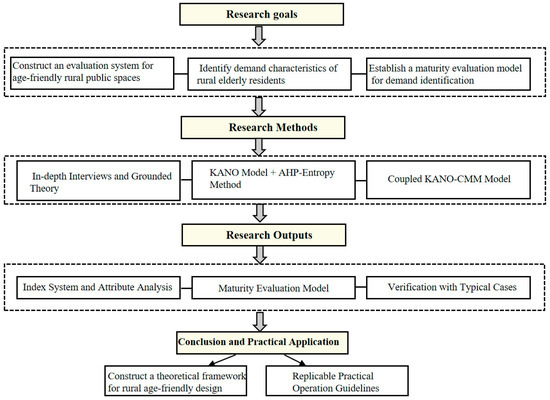
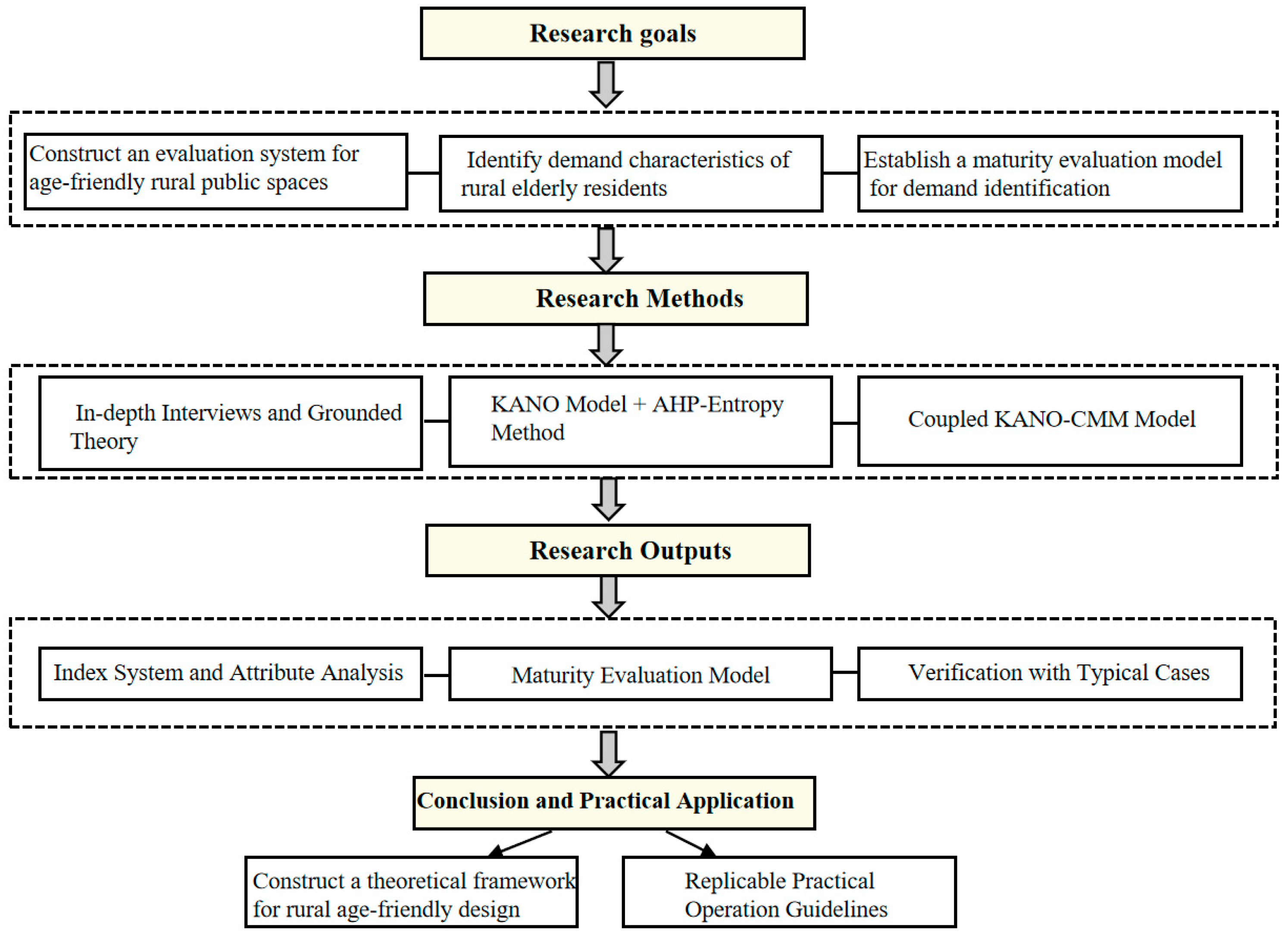
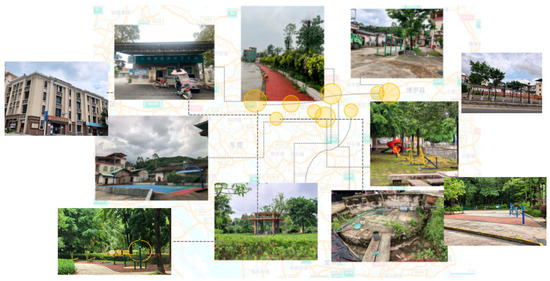
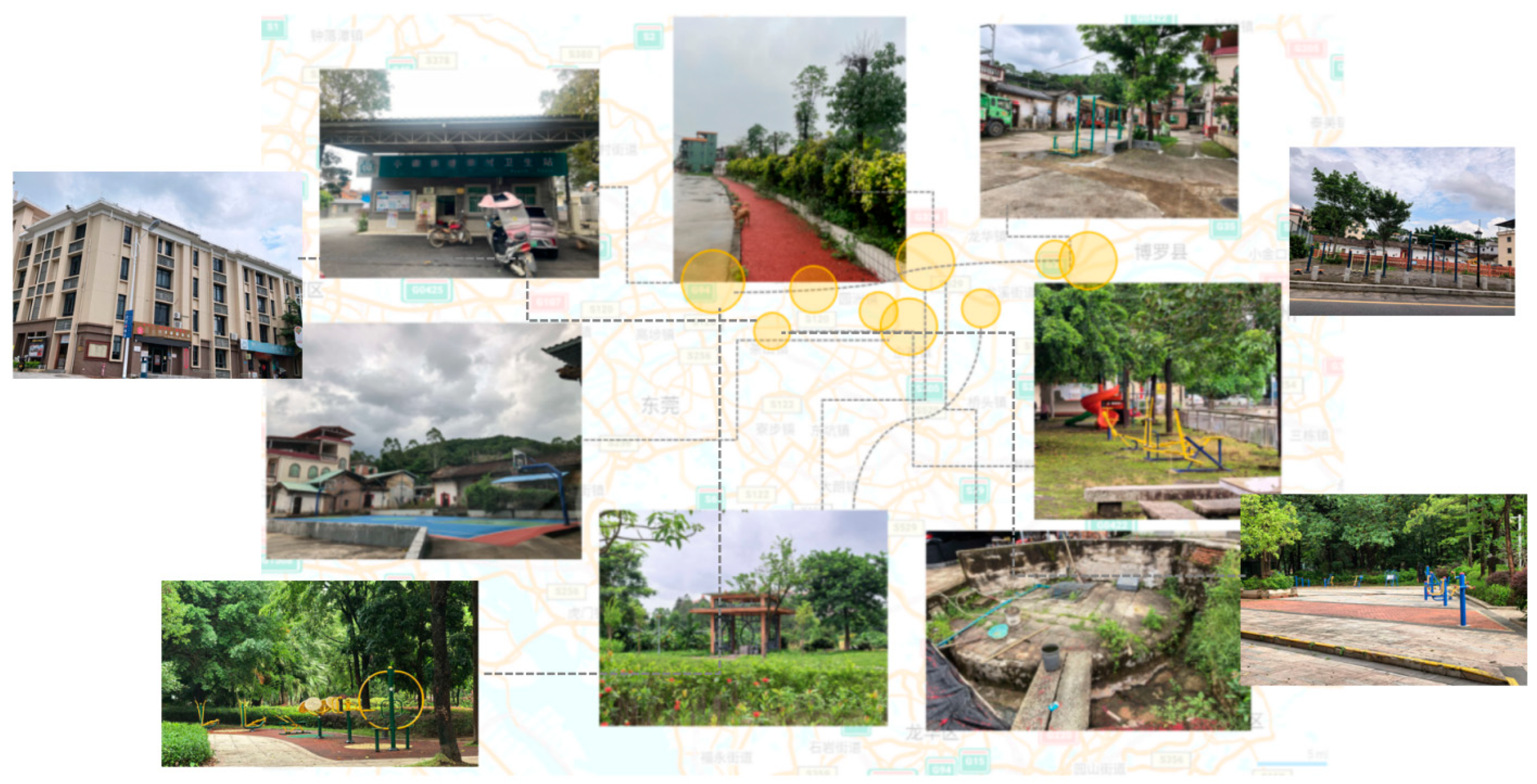
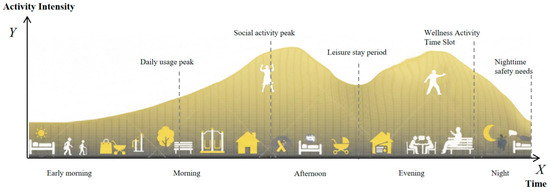
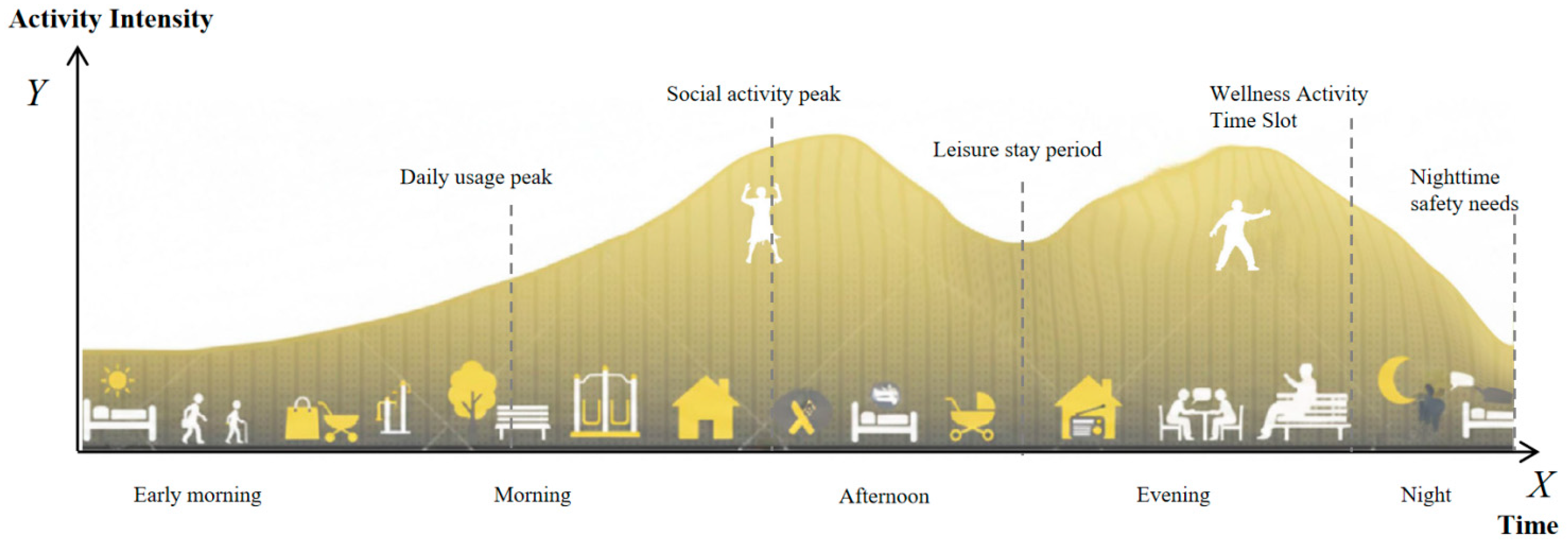
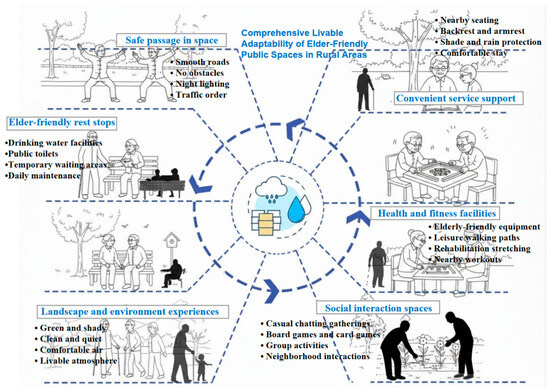
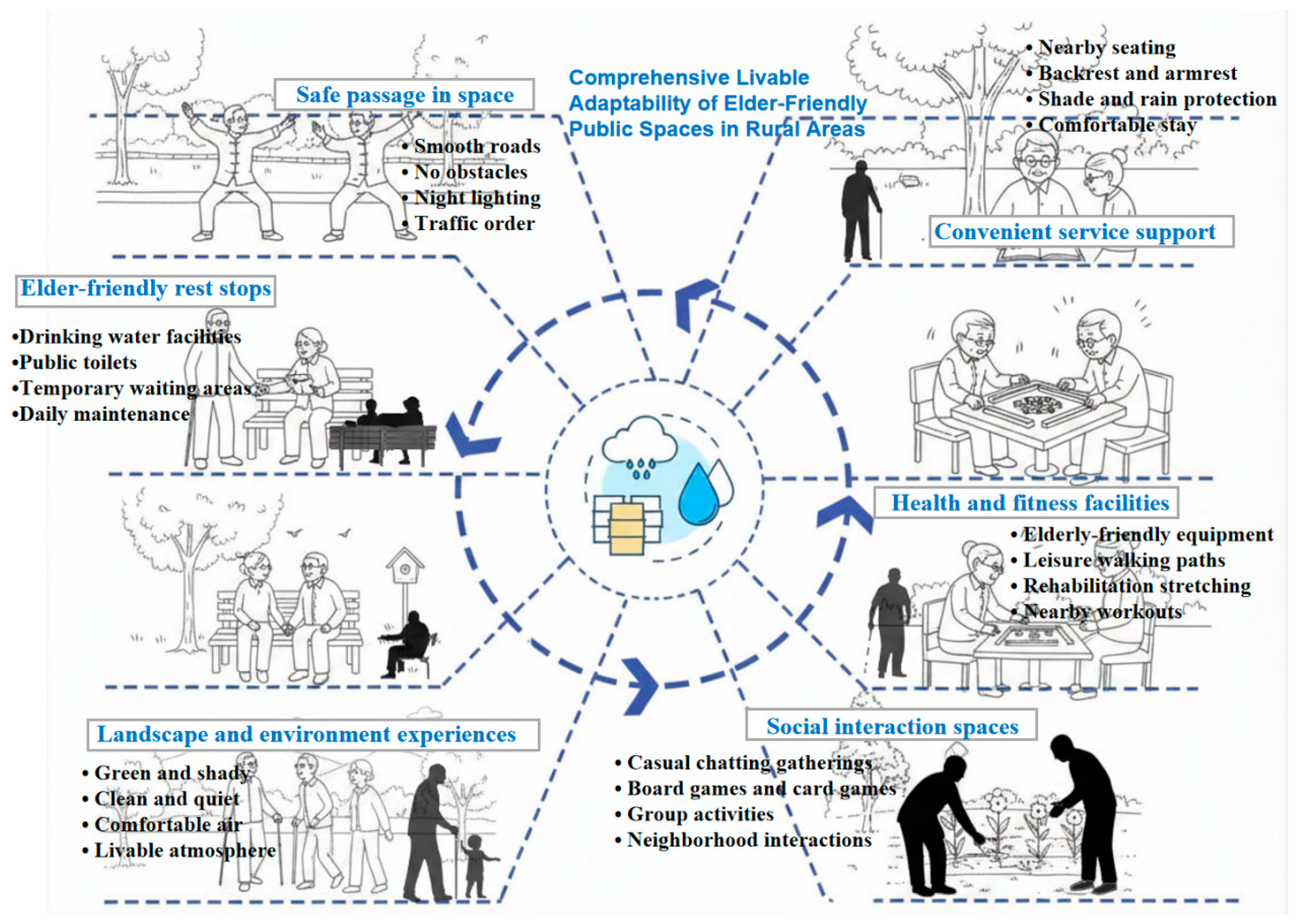
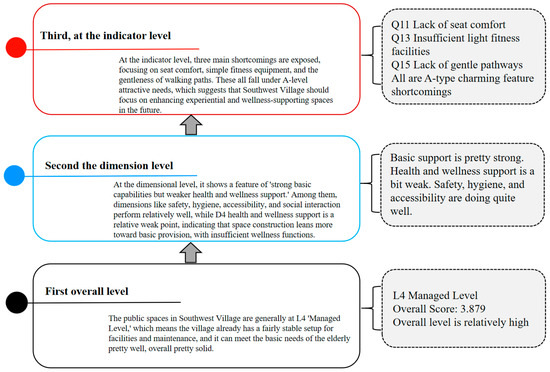
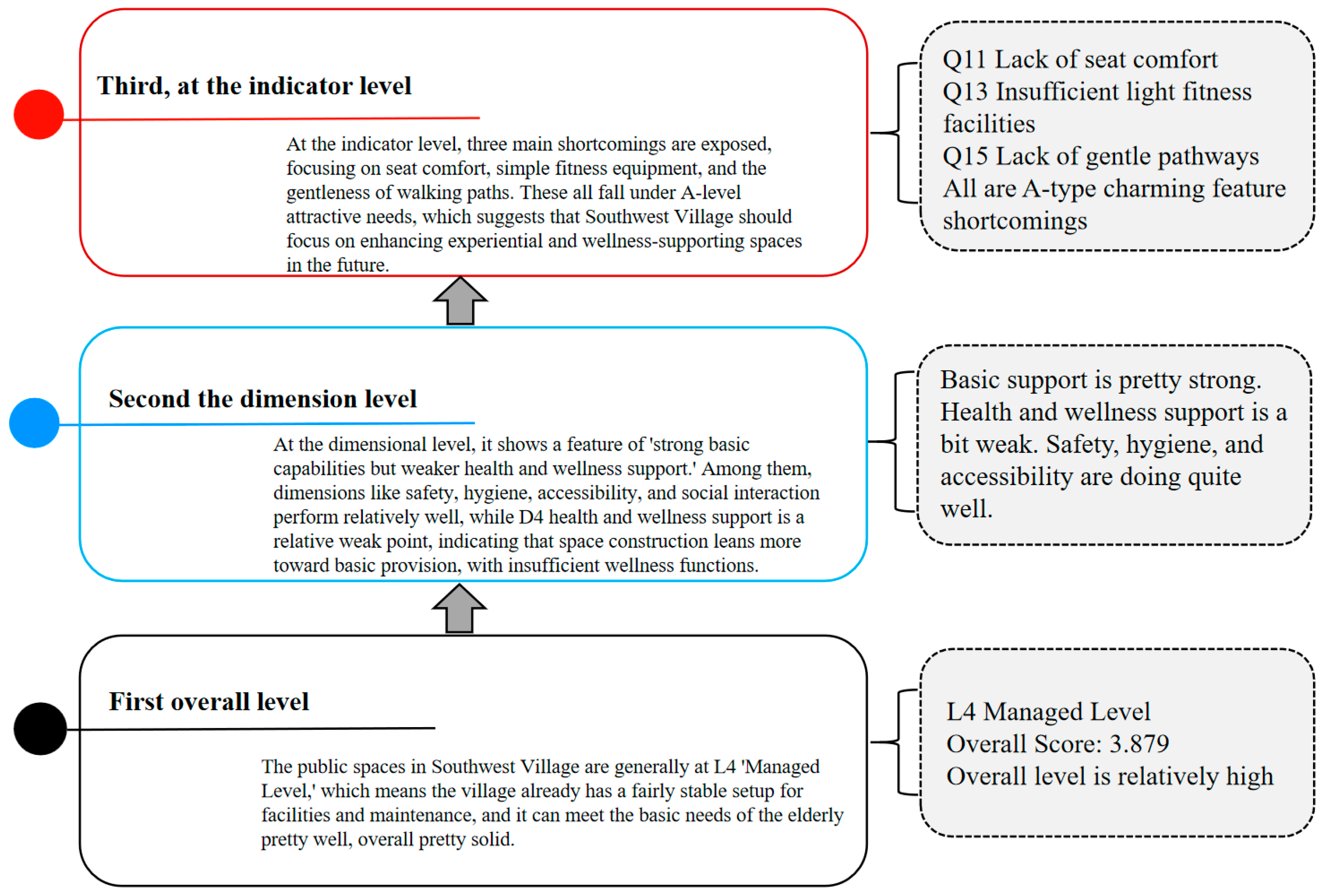

Disclaimer/Publisher’s Note: The statements, opinions and data contained in all publications are solely those of the individual author(s) and contributor(s) and not of MDPI and/or the editor(s). MDPI and/or the editor(s) disclaim responsibility for any injury to people or property resulting from any ideas, methods, instructions or products referred to in the content. |
© 2026 by the authors. Licensee MDPI, Basel, Switzerland. This article is an open access article distributed under the terms and conditions of the Creative Commons Attribution (CC BY) license.