


Abstract
Integrated Project Delivery (IPD) is promoted as a collaborative project delivery capable of reducing fragmentation, improving information exchange and supporting sustainable project outcomes. However, the practical implementation of IPD often falls short of the benefits stakeholders expect. This review examines the expectation–reality gap in IPD through a systematic literature review of 56 studies published between 2018 and 2025 and analysed using ATLAS.ti 9. The findings identify 11 expectation clusters and nine reality clusters. The expectation patterns are classified into three broader areas of collaborative practice, commercial and risk management, and governance and delivery, whereas the reality patterns relate to strategic and organisational issues, procedural and relational issues and, lastly, implementation and contractual issues. The discussion shows that IPD should be understood not only as a contractual arrangement but also as a socio-technical and institutional system that requires digital interoperability, trust, aligned objectives, legal readiness, and early stakeholder integration. The paper contributes a pattern–output matrix that links expectation clusters to reality barriers and translates the findings into future research directions for stakeholders.
1. Introduction
The construction industry is infamous for conflicts, low collaboration, and poor performance. These features hinder the sustainable development of the industry. Most, if not all, of these issues are related to the fundamental characteristics of how projects are organised. Winch [1] argued that project organisation is a problem of information. Two crucial issues in project conception and execution, if not throughout the entire lifecycle, are information unavailability and the willingness to share information. Construction projects rely on time-sensitive information to make informed decisions. The absence of such information creates a gap for decision-makers, adversely affecting their ability to make decisions. Unwillingness to share information, which is a broader concern, dates back to transaction cost economics and opportunistic behaviour [2]. Numerous papers have been published on this topic; it has been pointed out that the root cause of opportunistic behaviour is related to traditional procurement and delivery models in the construction industry. As projects become increasingly complex, traditional models of procurement and delivery are no longer suitable. While conventional delivery models may have their own merits, they are certainly not well-suited for information sharing, collaboration, and win–win situations. This has led the industry to look for more collaborative and integrated project delivery models.
Integrated Project Delivery (IPD), a so-called solution to all problems in the industry, has gained much attention. IPD emerged as a new form of relational contracting and can be defined as “the development of collaborative, integrated and productive project teams, where all parties involved in the project jointly agree on objectives and commit in taking decisions that are best for the project outcomes rather than focusing on individual goals” [3] (p. 290). IPD encompasses a more modern approach to project delivery through improved information sharing using building information modelling, which is a change in behaviours that highlights collaboration among stakeholders and improved project processes for efficient decision-making. Much of the work on IPD has been aimed at encouraging a win–win approach through formal or informal measures to drive change in the industry. Stakeholders view it as a better solution to improve processes and trigger a behavioural change through trust, collaboration, and teamwork in construction projects. However, IPD adoption has been varied across regions, likely due to differing understanding. IPD literature is also filled with prescriptive factors and approaches that inform a utopian ideal. Very few studies have critically analysed IPD to understand what is happening in reality. This paper aims to provide a clearer view of IPD in the construction industry. The objectives are to understand the difference between expectations (i.e., what stakeholders expect IPD to provide in the delivery model) and the reality in construction projects, identify future research directions, and offer suggestions to improve IPD practice in construction, ultimately achieving Sustainable Development Goals (SDG) 8, Decent Work and Economic Growth, and 9, Industry, Innovation and Infrastructure.
2. Research Methodology
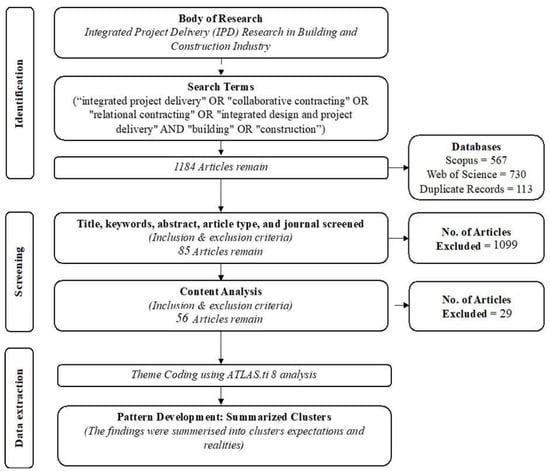
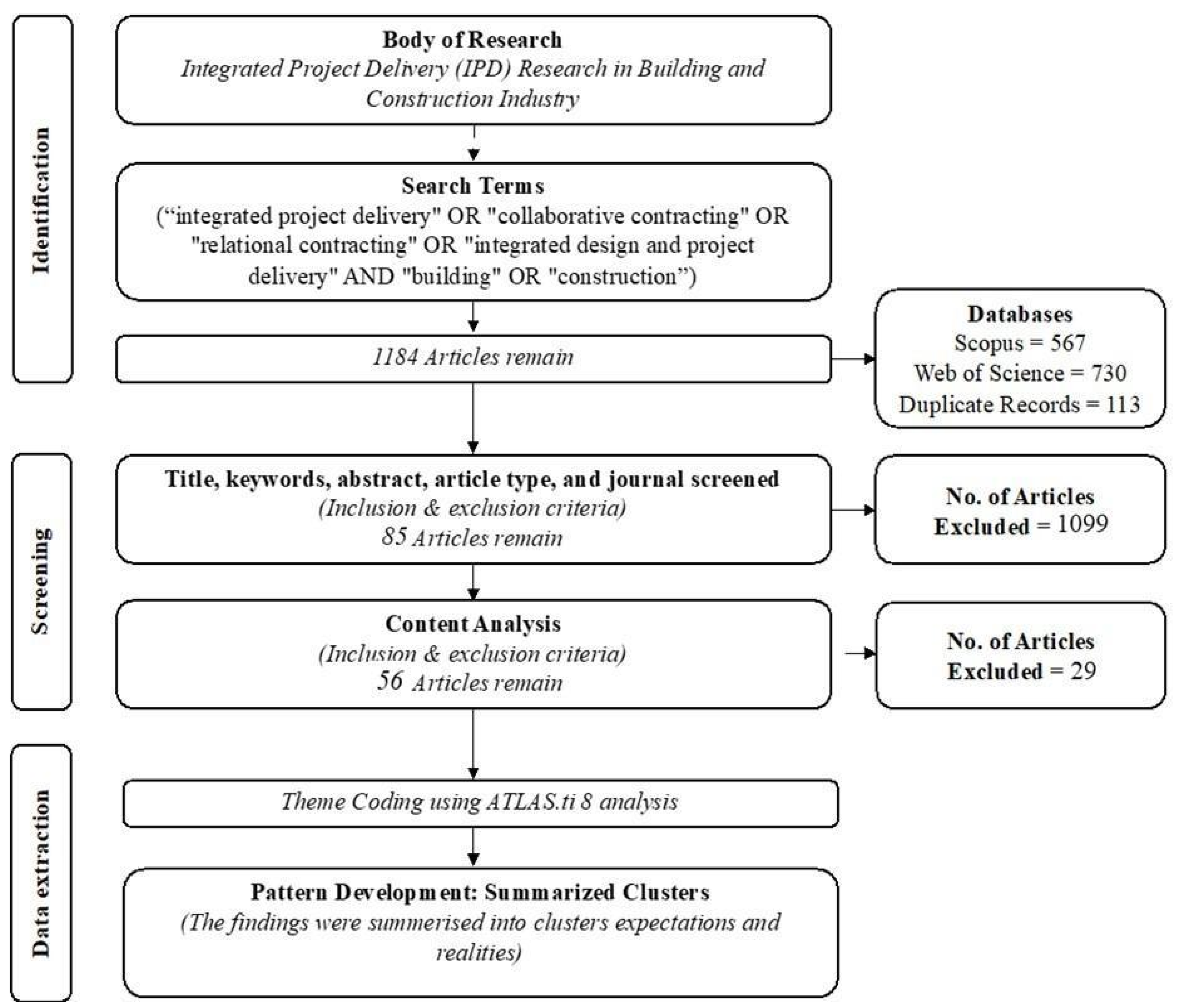
To achieve objectives, a systematic review was conducted using a step-by-step approach adapted from [4] to compare the expectations versus reality of IPD in the construction industry. The thematic literature review process consisted of three key stages: (1) identifying the relevant literature, (2) screening the selected literature, and (3) extracting data for analysis. The detailed process of the literature search is illustrated in Figure 1.
Figure 1.
Research methodology flowchart.
An electronic literature search was conducted in Web of Science and Scopus to investigate research on IPD in the construction industry. The search aimed to capture various aspects of IPD practices and adoption comprehensively, as presented in Figure 1. Articles were then screened by reviewing their titles and abstracts to determine suitability for the review. From the initial screening, only 85 articles were deemed relevant for this study. Articles offering insights into IPD in the construction industry were the primary criterion for inclusion, so the remaining articles were excluded. A detailed content analysis found that the review would be most appropriate to focus on for the period from 2018 to 2025, as these articles further develop the previous studies and make references to them, resulting in 56 retained articles as the basis for the review presented in Table 1.
As a next step, all articles were imported into the ATLAS.ti 9 software, following the approach outlined by [5]. ATLAS.ti 9 systematically organised articles into code groups, facilitating an orderly sorting of the data. During the first level of coding, an initial set of codes was generated and subsequently grouped into clusters to address the research objectives. ChatGPT-5 was used to remove unnecessary question mark icons from a few ATLAS.ti 9 outputs.
Table 1.
Articles reviewed in this study.
3. Findings and Discussion
3.1. Publication and Growth Trend
The analysis of publications reveals a variation in the number of articles published across different years. Table 1 highlights the key sources of the identified articles, which were published across various periodicals. A critical review of these articles provided valuable insights into the applications of IPD. As illustrated in Table 1, the publication trend demonstrates a substantial number of publications between 2021 and 2023. While substantial research on IPD exists in other domains, such as manufacturing, these studies were excluded from this review to maintain a specific focus on the building and construction industry, to prevent generalisations from being too broad.
3.2. Cluster Analysis
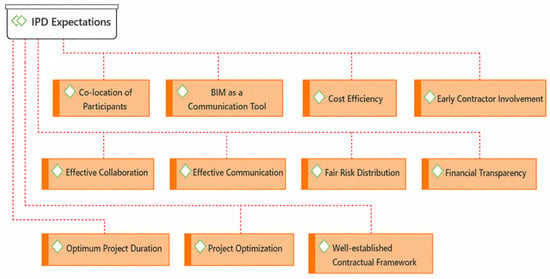
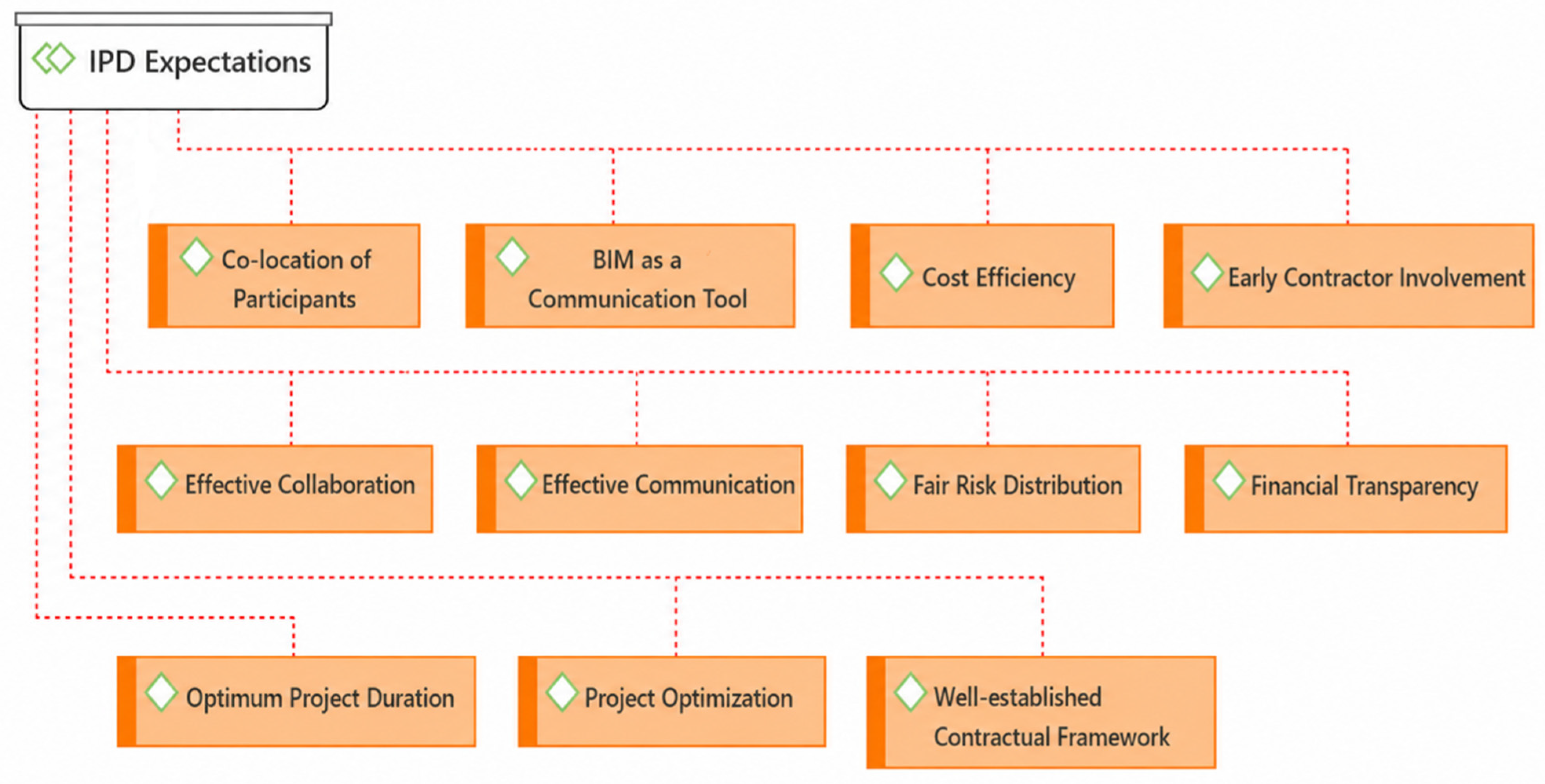
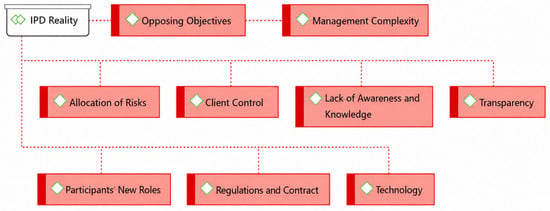
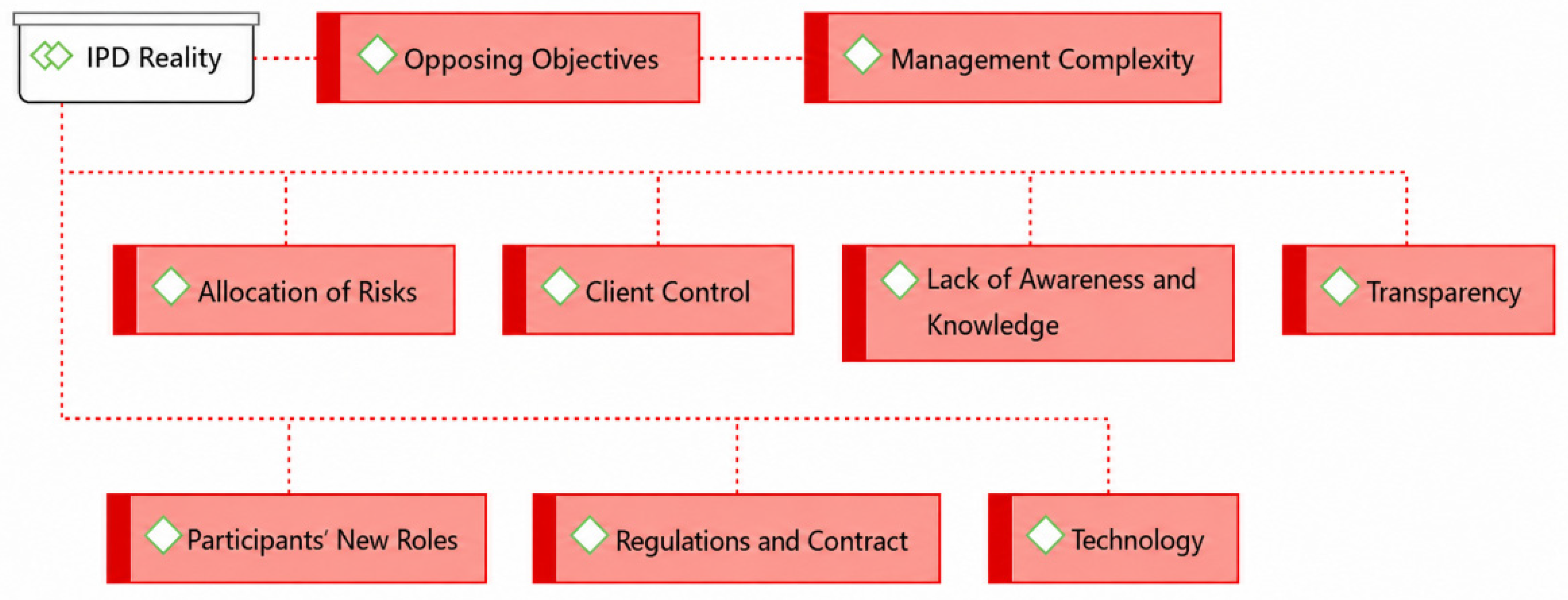
The findings are categorised into expectation and reality clusters, as depicted in Figure 2 and Figure 3, respectively. The clusters were coded using a deductive approach, derived from the thematic findings and organised into the ATLAS.ti 9 network. These clusters, represented as codings, are associated with the research questions and serve as inputs to the study’s discussions. Through an iterative and systematic coding process, consistency was ensured by comparing similarities and differences across the reviewed studies. The analysis yielded two distinct themes: the expectations and reality of IPD. The expectation theme comprises 11 clusters broadly classified into collaborative practice (co-location of participants, BIM as a communication tool, early contractor involvement, effective collaboration, and communication), commercial and risk management (cost efficiency, fair risk distribution and financial transparency), and governance and delivery (optimum project duration, project optimisation, and well-established contractual framework). Meanwhile, the reality theme comprises nine clusters broadly classified into strategic and organisational issues (differing objectives and management complexity), procedural and relational issues (uneven risk allocation, client’s control, lack of awareness and knowledge, and transparency), and the implementation and procedural issues (participants’ new roles, regulations and contract, and technology). This categorisation forms the basis for understanding the gap between IPD expectations and practical realities in the building and construction industry.
Figure 2.
IPD expectation clusters.
Figure 3.
IPD reality clusters.
3.3. Qualitative Findings and Discussions
This section focuses on six broader areas, including twenty clusters of expectations and reality to offer suggestions for stakeholders and future research directions. Stakeholders expect IPD to be a collaborative practice where there is fair commercial and risk management in the process and an established delivery and governance mechanism. On the contrary, stakeholders have expressed concerns regarding governance and organisational practices, which derive procedural and relational issues and implementation challenges. These perspectives from reality can be viewed as the current barriers to IPD practice, which are worth exploring for a detailed analysis of the situation. The network diagrams are included to offer more profound insights into IPD practice.
3.3.1. Expectation-Collaborative Practice
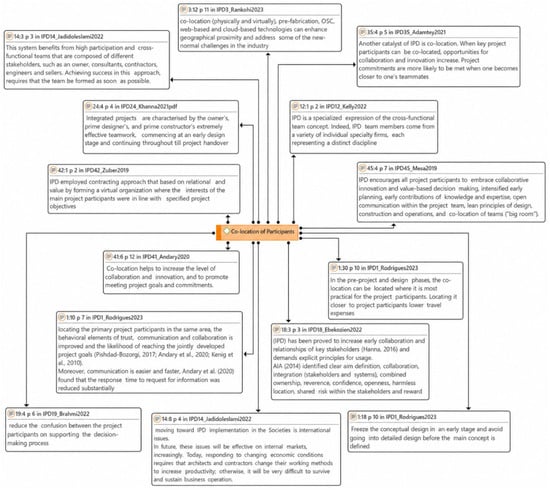
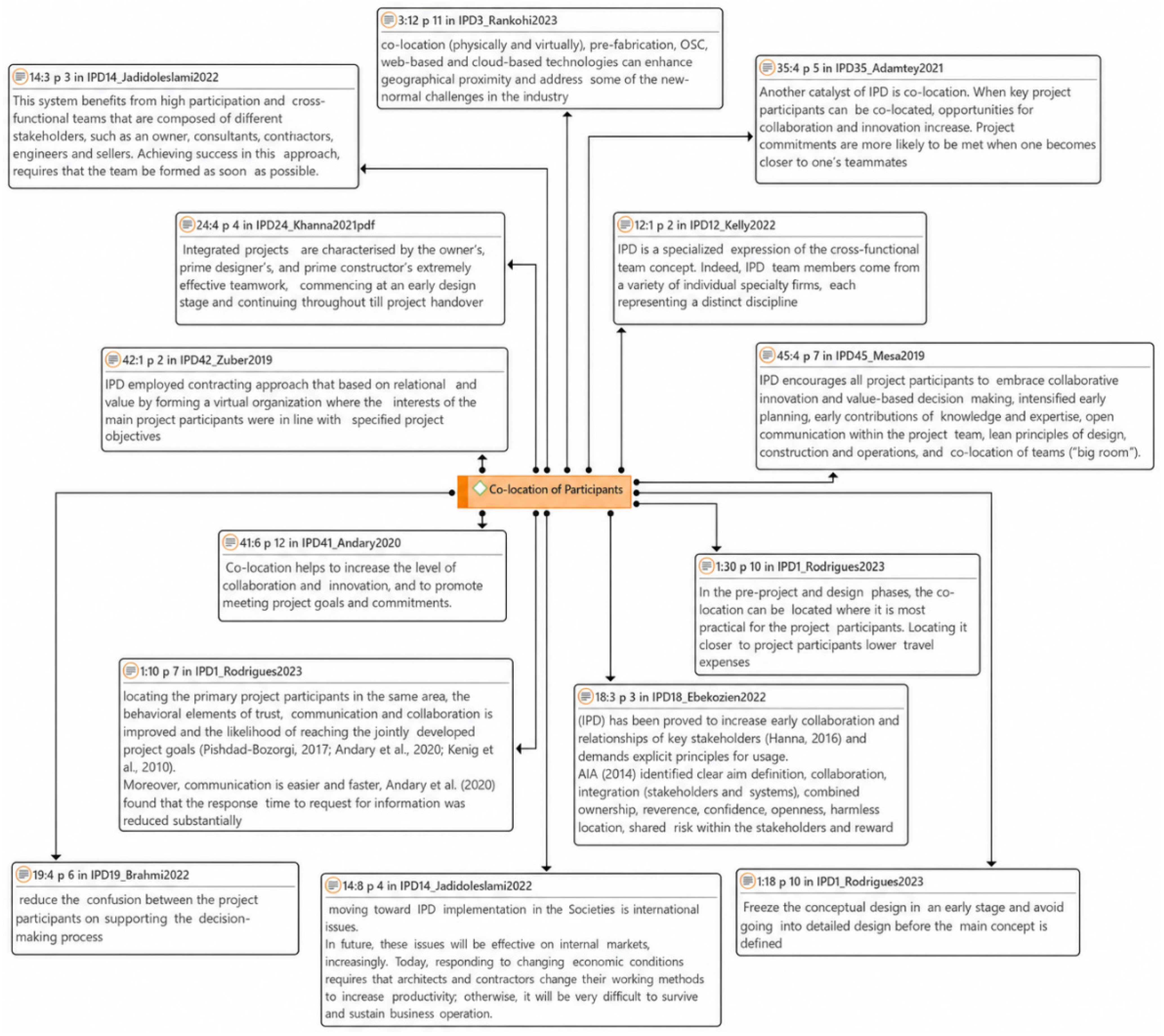
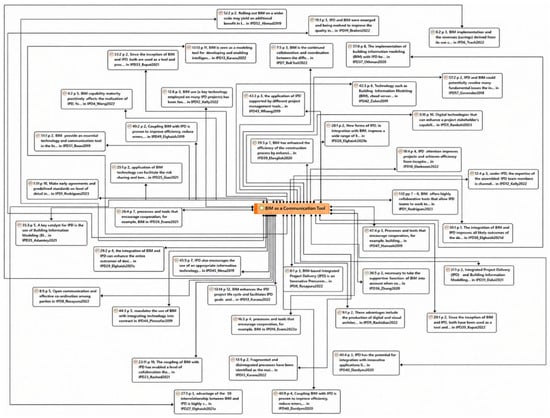
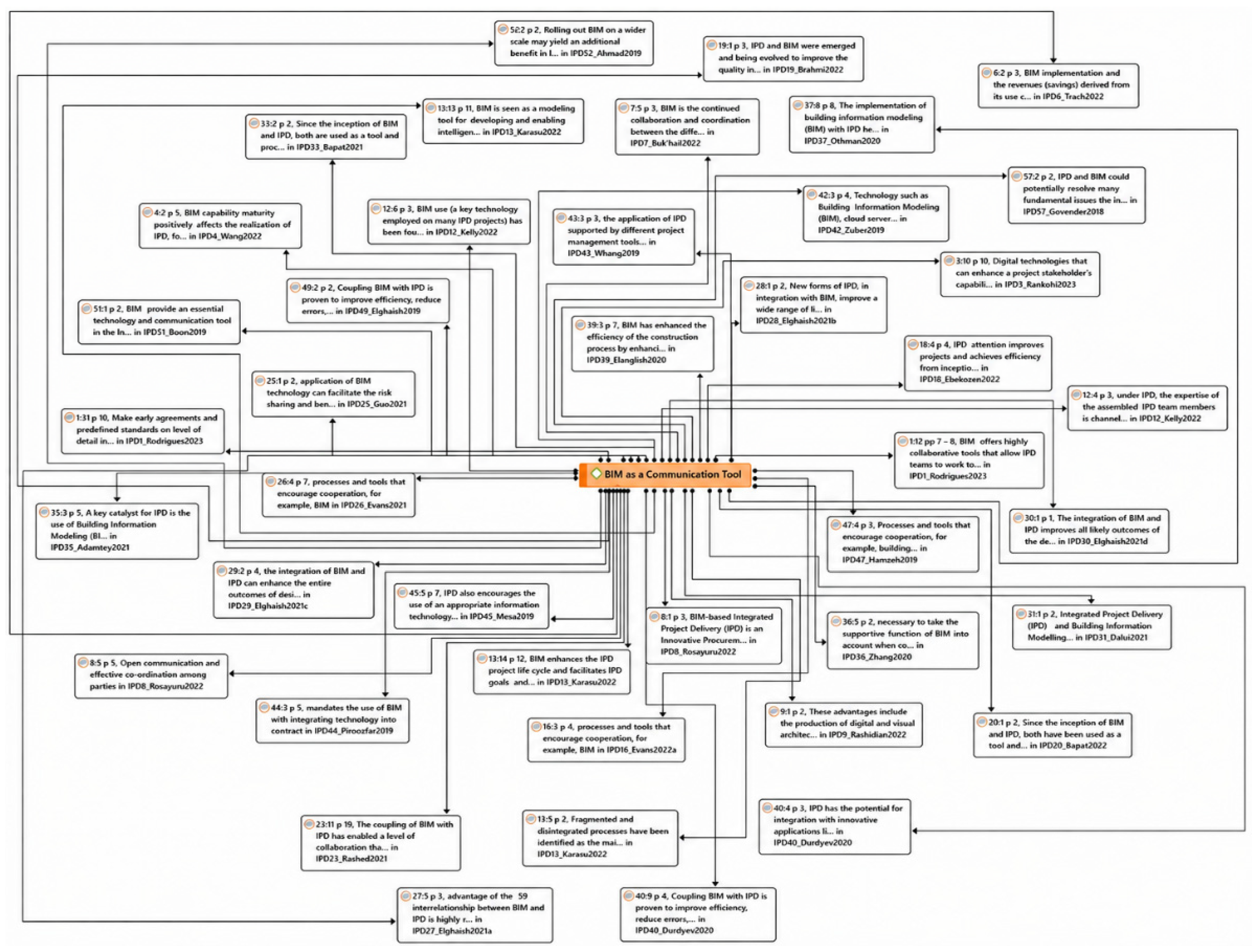
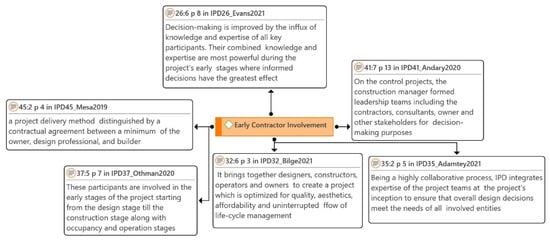
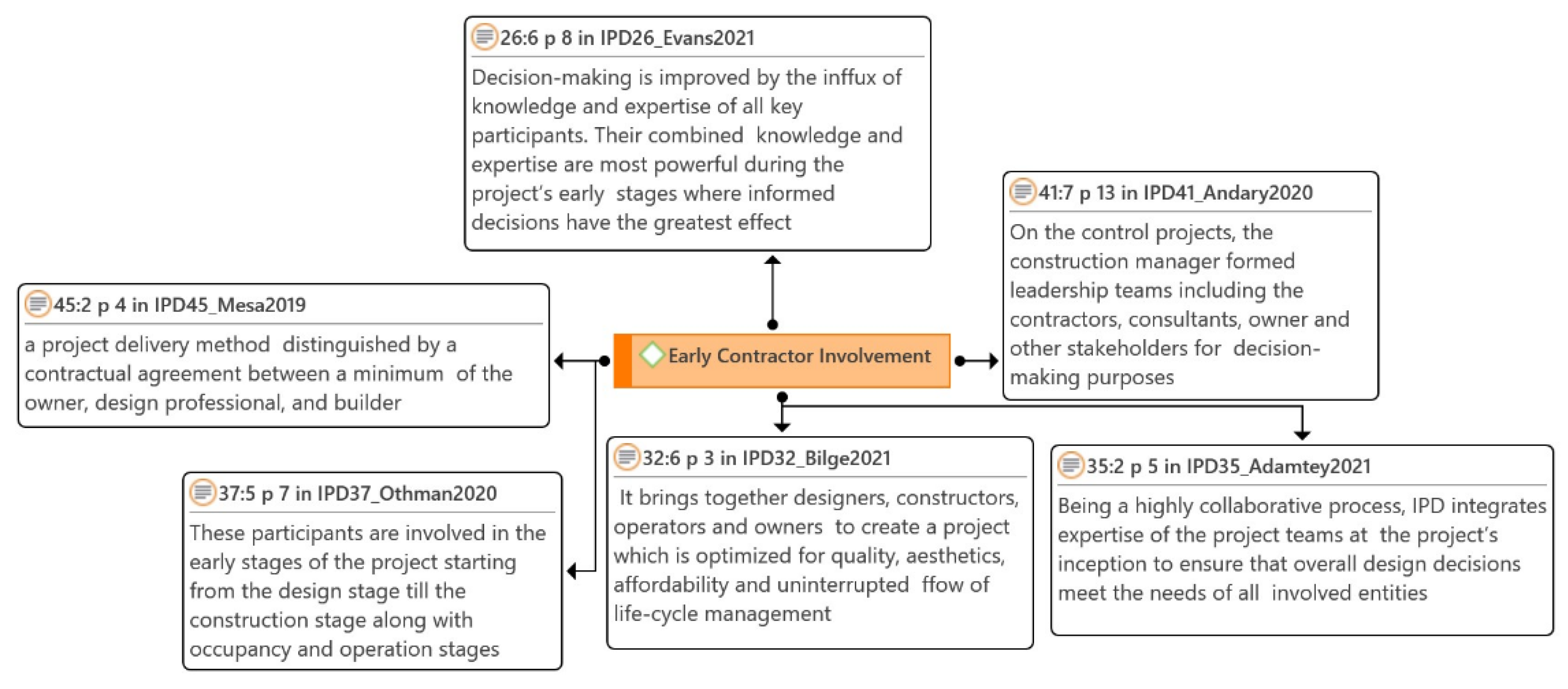
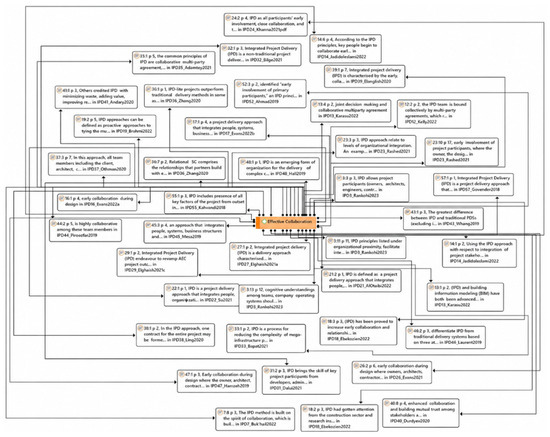
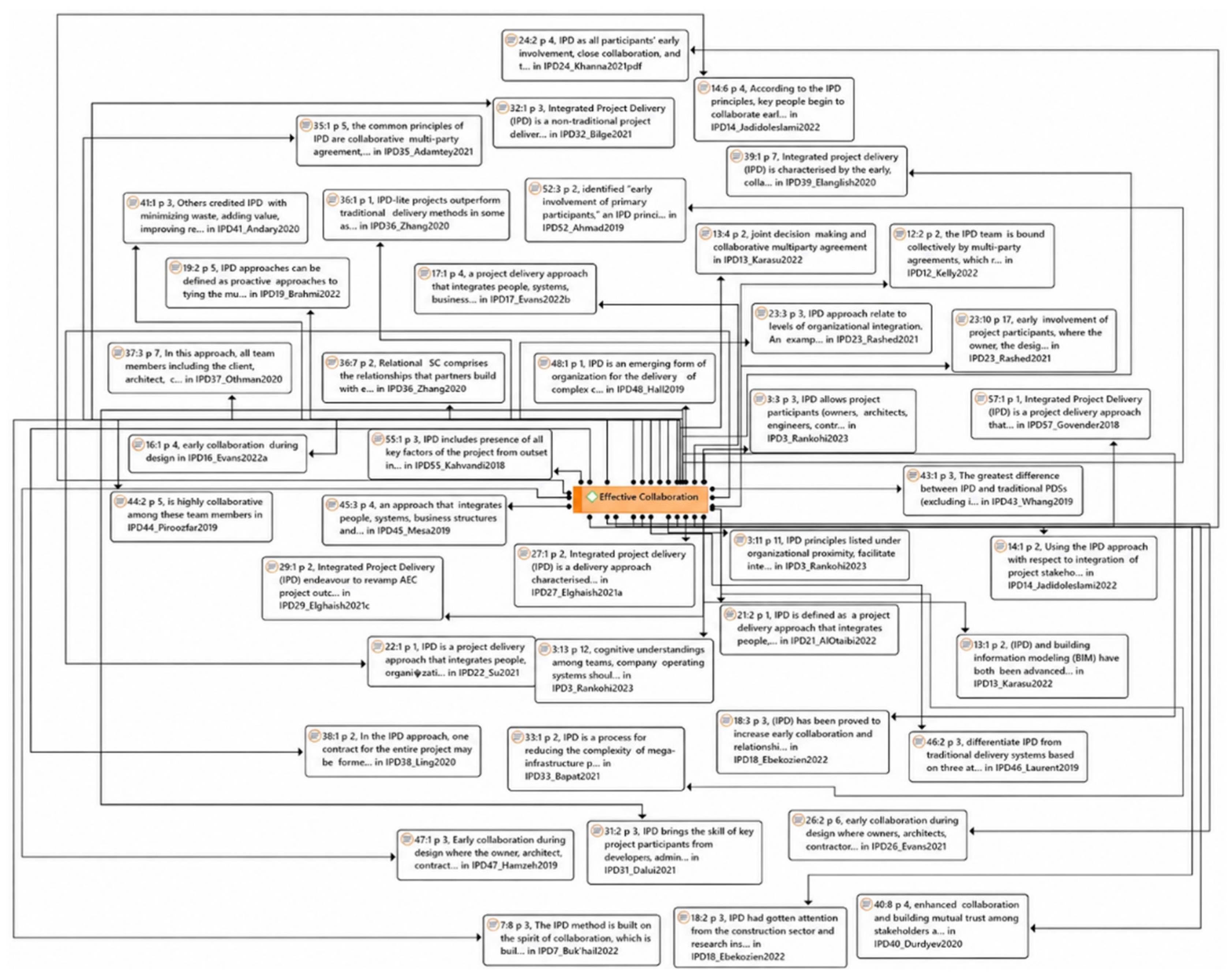
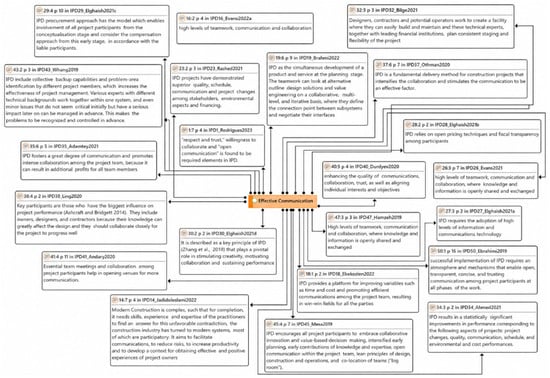
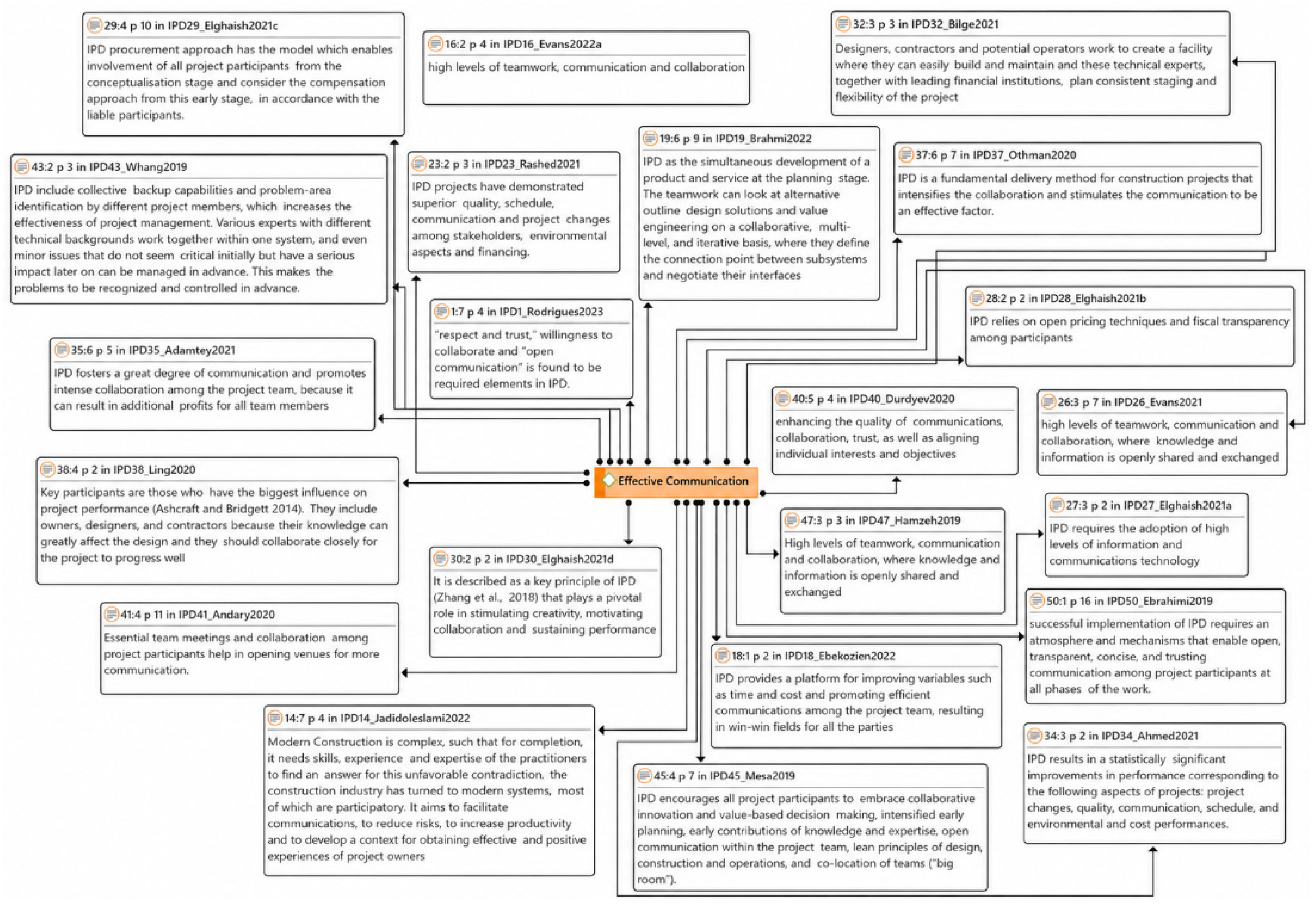
Stakeholders expect IPD to operate as a collaborative practice as depicted in the five clusters present in Figure 4, Figure 5, Figure 6, Figure 7 and Figure 8. IPD is not only a delivery method, but a relational working model that converts fragmented project roles into shared responsibility. By co-locating project stakeholders, physically or virtually, co-location is expected to improve interactions and support joint communication and commitment to project goals [3,10,26,27]. BIM strengthens this expectation by acting as a shared communication platform where design information, risks, changes, and coordination issues can be visualised earlier and discussed transparently [12,31,39]. Early contractor involvement further supports collaborative practice because construction knowledge is brought into the design stage, where decisions have the greatest influence on cost, quality, constructability, and lifecycle performance [13,27,45].
Figure 4.
Network view of literature evidence on the co-location of participants from ATLAS.ti.
Figure 5.
Network view of literature evidence on BIM as a communication tool from ATLAS.ti.
Figure 6.
Network view of literature evidence on early contractor involvement from ATLAS.ti.
Figure 7.
Network view of literature evidence on effective collaboration from ATLAS.ti.
Figure 8.
Network view of literature evidence on effective communication from ATLAS.ti.
However, the collaboration does not automatically happen through contract form or technology. Relational contracting studies argue that the collaborative behaviour of project stakeholders depends on relational attitudes and collaborative intentions [60]. Memon and Rowlinson [61] also highlight that project teams must develop positive attitudes and behaviours to meet performance expectations and avoid project problems. This is consistent with social interaction theory, which argues that successful relational contracting requires motivation, collaborative culture, and structured interactions between clients and contractors [62]. Therefore, stakeholders expect IPD to create a disciplined environment where communication, trust, early involvement, and shared decision-making become repeated project behaviours rather than occasional coordination efforts [63].
- (1)
- Co-location of Participants
The literature on IPD suggests co-location as a key for stakeholders. The findings also highlight key insights into how co-location facilitates collaboration, trust, and innovation among stakeholders. Co-location reduces response times, improving project commitments and supporting decision-making processes. Diverse studies emphasise the value of shared spaces (physical or virtual) in enhancing teamwork and project efficiency [10,17,37,39].
The network diagram in Figure 4 maps the co-location of participants as a core IPD expectation that strengthens collaborative practice. It shows that bringing owners, designers, contractors, consultants and other stakeholders together, physically or virtually, improves trust, communication speed, joint decision-making and commitment to shared project goals [3,10,26,27]. Co-location also supports early design freeze, reduces confusion, lowers travel-related barriers and enhances innovation through closer multidisciplinary interaction [17,34,37]. The pattern suggests that co-location is not merely a logistical arrangement; it functions as a relational mechanism that aligns interests, promotes teamwork and enables project stakeholders to respond collectively to complex project challenges [20,33,48].
- (2)
- BIM as a Communication Tool
The vital role of BIM as a communication tool is expected from IPD. The diagram highlights the interconnected themes and relationships that underscore BIM’s anticipated contribution to fostering effective communication and collaboration among stakeholders within the IPD framework.
Figure 5 positions BIM as IPD’s central communication tool, enabling shared information, visual coordination, reduced errors and improved decision-making across project stakeholders [3,12,39]. It highlights BIM’s role in integrating fragmented processes, supporting collaboration, managing risks, improving efficiency and strengthening project outcomes when combined with IPD-based governance and teamwork practices [23,25,31,44].
- (3)
- Early Contractor Involvement
The network diagram in Figure 6 highlights early contractor involvement as a mechanism that brings construction expertise into decision-making from project inception. It supports better design quality, constructability, affordability and lifecycle planning by integrating owners, designers, and builders early, allowing informed decisions to address stakeholder needs collectively before construction begins [9,14,26,28,37,46].
- (4)
- Effective Collaboration
Figure 7 illustrates effective collaboration as the dominant expectation of IPD, where project stakeholders are integrated early through multiparty agreements, shared objectives and joint decision-making [13,28,34]. With the amount of supporting evidence from the literature, collaboration shows IPD as a non-traditional delivery approach that connects owners, designers, contractors and consultants to reduce fragmentation, improve trust and coordinate complex project tasks [22,33,46]. The pattern suggests that collaboration is not informal teamwork, but a structured governance behaviour supported by early involvement, BIM-enabled information exchange, relational contracting and shared risk–reward principles [10,37,45,48]. Therefore, stakeholders expect IPD to convert separate professional interests into collective project value and improve delivery outcomes overall successfully [21,25].
- (5)
- Effective Communication
Figure 8 presents effective communication as a central IPD expectation that enables open information sharing and coordinated decision-making among project stakeholders [3,9,11,25]. It shows that IPD improves project performance by reducing communication barriers, confusion, changes, and interface problems while supporting collaborative planning, transparency, and timely problem recognition [17,26,46]. The figure also links communication to commercial value, showing that clear exchanges can improve cost, schedule, quality, and stakeholder outcomes [20,21,42]. Essentially, communication is framed not as routine reporting, but as a relational capability that aligns knowledge, responsibilities, and interests across project stakeholders [13,28,35,37].
3.3.2. Expectations—Commercial and Risk Management
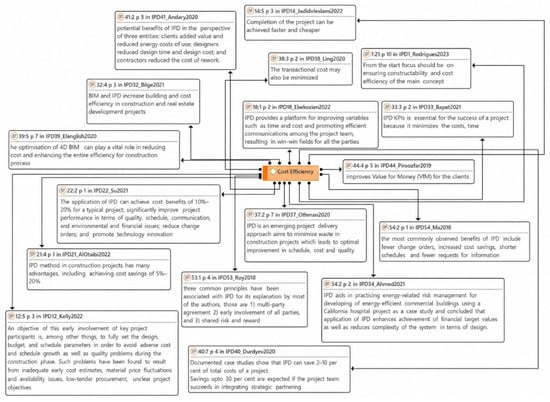
Stakeholders expect IPD to offer a stronger solution for commercial and risk management as depicted in the three clusters present in Figure 9, Figure 10 and Figure 11. IPD integrates cost efficiency, fair risk distribution, and financial transparency into one coordinated delivery system. Under cost efficiency, IPD is expected to reduce rework, waste, transaction costs, change orders, RFIs, and construction inefficiencies through early planning, constructability review, BIM optimisation, and collective decision-making [8,13,26,34,50]. This indicates that cost saving in IPD is not merely a post-construction outcome, but a preventive commercial strategy embedded from the early project stage.
Figure 9.
Network view of literature evidence on cost efficiency from ATLAS.ti.
Figure 10.
Network view of literature evidence on fair risk distribution from ATLAS.ti.
Figure 11.
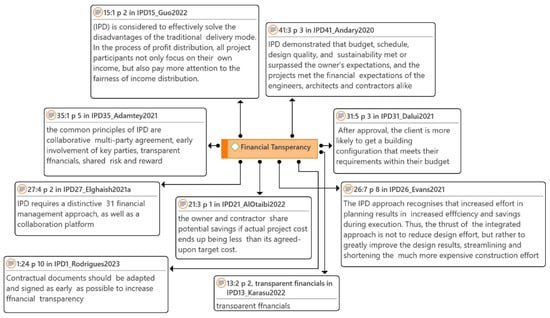
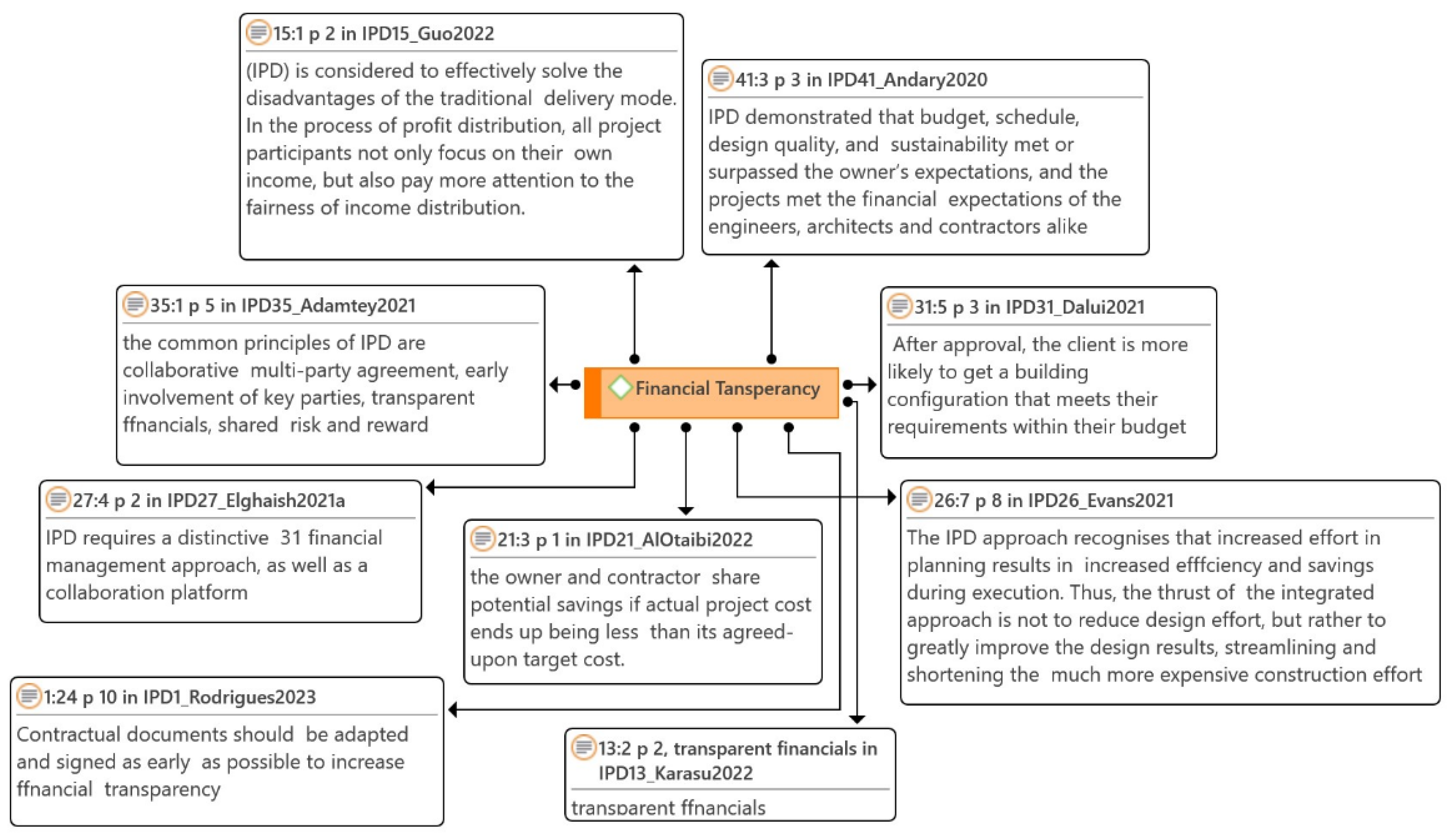
Network view of literature evidence on financial transparency from ATLAS.ti.
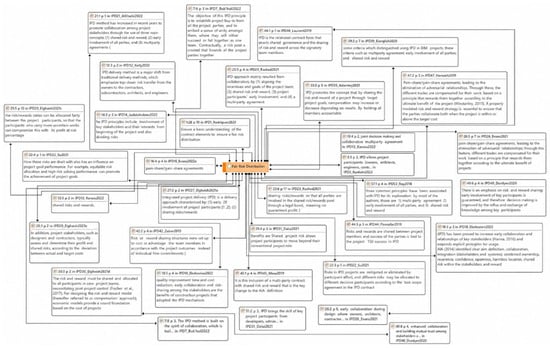
Unlike traditional contracting, where risk is often transferred to individual parties, IPD promotes shared risk–reward pools, pain-share/gain-share mechanisms, multiparty agreements, and joint accountability [9,13,21,43,56]. A fair distribution of risk encourages project stakeholders to solve problems collectively rather than protect separate organisational interests. IPD furthers this agenda of fairness into financial aspects through open-book costing, early contractual agreement, target cost setting, shared savings, and fair profit distribution [3,20,22,28,51]. Essentially, IPD improves commercial value not only by lowering cost, but by aligning financial incentives with project outcomes. Therefore, the overall pattern suggests that stakeholders expect IPD to function as a commercial and risk management mechanism where projects are governed transparently and collaboratively.
- (1)
- Cost Efficiency
The expectation of achieving cost efficiency in integrated project delivery (IPD) is identified from the literature. There are cost-related benefits of IPD, including reduced project costs, improved schedule performance, minimised rework, and enhanced value for money. It also discusses the role of IPD in optimising cost efficiency through improved communication, early stakeholder involvement, and the adoption of BIM tools.
The network diagram in Figure 9 conceptualises cost efficiency as a key expectation of IPD, showing how integrated planning, early involvement, BIM optimisation and collaborative decision-making reduce avoidable project costs. The linked evidence indicates that IPD can shorten schedules, minimise transaction costs, lower rework, reduce change orders and RFIs, and improve value for money [8,26,34,40,50]. It also shows that cost efficiency is connected to better constructability, budget certainty and quality performance because design, cost and schedule parameters are reviewed earlier by key stakeholders [3,13,33]. Several sources indicate potential cost savings ranging from 5% to 20%, with higher savings possible when strategic partnering is successfully integrated [51,52]. Essentially, the figure suggests cost efficiency is not achieved by cost-cutting alone, but by preventing waste and aligning incentives through shared risk-and-reward mechanisms [21,46,56]. Therefore, IPD becomes a proactive commercial strategy for improving overall project performance.
- (2)
- Fair Risk Distribution
Figure 10 illustrates the expectation of a fair risk distribution mechanism in IPD, showing how risk and reward are shared across project stakeholders rather than transferred to one party. The figure shows that pain-share/gain-share arrangements encourage stakeholders to work collectively because project success or failure is linked to shared outcomes [9,11]. This reduces adversarial behaviour and encourages open collaboration [20,43]. The pattern suggests that IPD manages uncertainty through collective accountability, where risks are allocated according to capability, project role and agreed commercial structure [3,39,52]. Therefore, fair risk distribution becomes both a governance and behavioural mechanism that motivates stakeholders to protect overall project value rather than individual organisational benefit.
- (3)
- Financial Transparency
Figure 11 presents financial transparency as a central tenet of IPD expectations. It shows that open-book financial management, early contractual agreement, and transparent cost information allow clients, designers, and contractors to align on budget, schedule, design quality, and sustainability expectations [3,20,26,27]. The figure also indicates that IPD enables financial transparency to encourage stakeholders to focus on collective project value rather than individual gain [23,24,45,51]. Essentially, it frames financial transparency as a governance mechanism that reduces opportunistic behaviour, supports informed planning and improves the likelihood of delivering client requirements within budget [3,12,27,49].
3.3.3. Expectations—Governance and Delivery
Stakeholders expect IPD to function as a sound governance and delivery mechanism, as depicted in the three clusters present in Figure 12, Figure 13 and Figure 14. IPD governance entails the integration of time control and management, whole-project optimisation, and contractual clarity. The optimum project duration cluster shows that IPD is expected to shorten delivery time, reduce RFIs, minimise change orders, and improve communication efficiency through early involvement and coordinated decision-making [8,20,26,34]. Faster delivery does not mean rushing activities to complete a project in the minimum possible time; however, it can be achieved by reducing fragmentation, rework, and late-stage design conflicts. Project optimisation cluster strengthens this expectation by showing that IPD aligns people, systems, business structures, and project actions into one collaborative process [13,22,45,46]. Project optimisation allows stakeholders to focus on design, value, productivity, waste, and lifecycle performance issues. In this sense, IPD is expected to have real value for money, not merely contractual compliance. This is where a well-established contractual framework comes into play—a framework for multiparty collaborative agreements, early involvement, shared risk and reward, fiscal transparency, and the alignment of goals [3,27,37,43,56]. Essentially, this framework reduces ambiguity in roles, responsibilities, decision authority, and accountability. Therefore, stakeholders expect IPD to deliver projects through a disciplined governance structure where time, value, collaboration, and contractual obligations are managed collectively from the earliest project stage.
Figure 12.
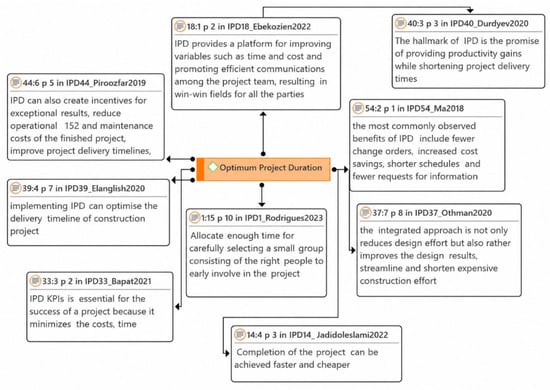
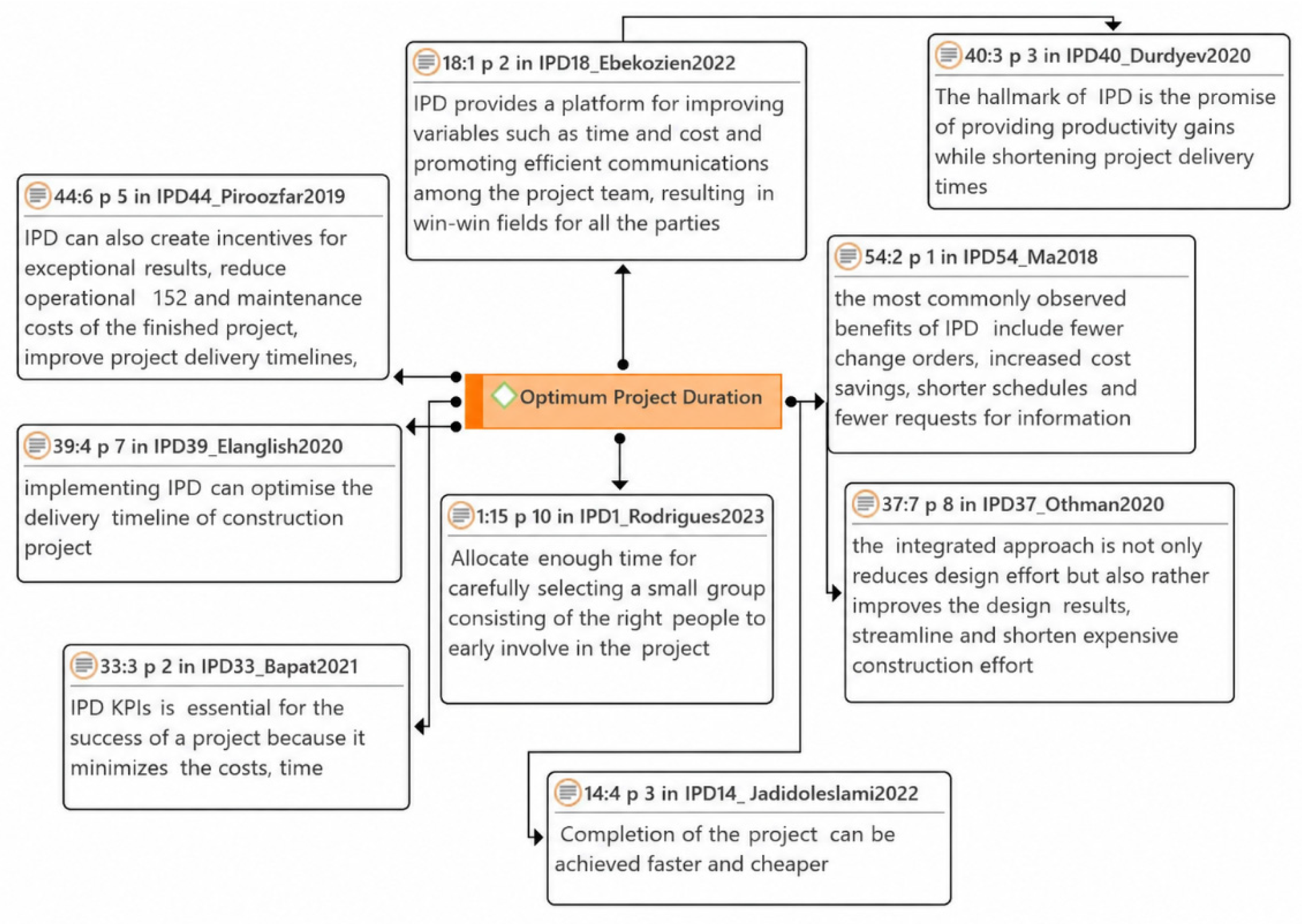
Network view of literature evidence on the optimum project duration from ATLAS.ti.
Figure 13.
Network view of literature evidence on the project optimisation from ATLAS.ti.
Figure 14.
Network view of literature evidence on the well-established contractual framework from ATLAS.ti.
- (1)
- Optimum Project Duration
The network diagram in Figure 12 presents optimum project duration as a key IPD expectation, showing that integrated delivery can shorten schedules while improving productivity, communication and cost performance [8,20,26]. It suggests that faster delivery is achieved through the early selection of the right participants, coordinated planning and reduced design or construction rework [3,46]. The linked studies also associate IPD with fewer RFIs, fewer change orders, improved delivery timelines and faster, cheaper completion [8,34,40]. The figure shows that time optimisation in IPD is not about rushing work, but about removing inefficiencies, aligning decisions and streamlining expensive construction effort across project phases.
- (2)
- Project Optimisation
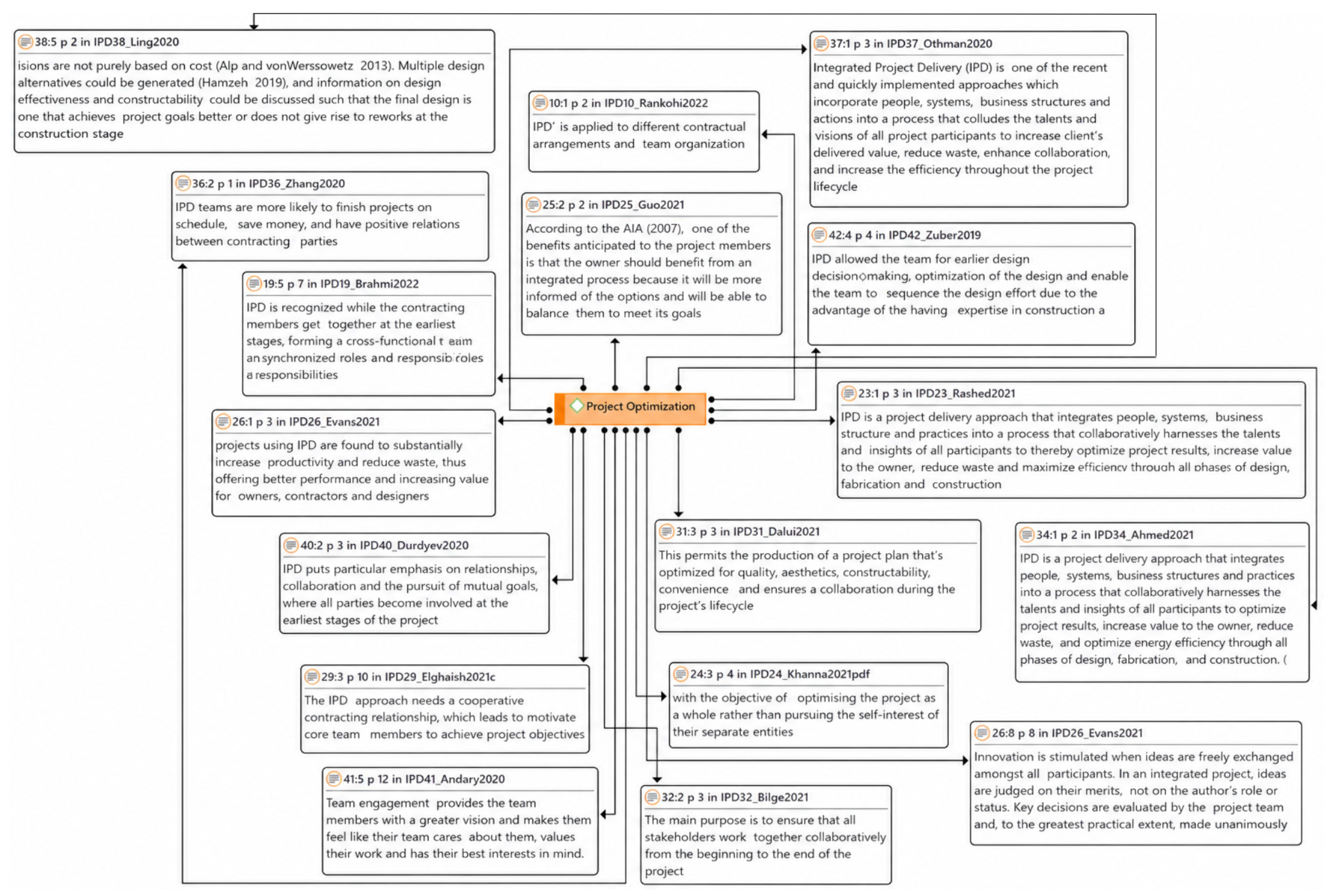
Figure 13 positions project optimisation as a key IPD expectation, showing how integrated delivery aligns people, systems, business structures and project actions to improve value throughout the project lifecycle [21,42,46]. It indicates that IPD enables early collaboration, shared responsibilities and synchronised roles, allowing teams to generate design alternatives, assess constructability and reduce rework before construction begins [17,39,50]. The figure also connects optimisation with productivity, waste reduction, energy efficiency, schedule certainty and better relationships among contracting parties [9,13,49].
Project optimisation is framed as more than technical efficiency; it requires a collaborative effort to transform a project into a synchronised team effort to achieve better value [23,25,26]. Therefore, stakeholders expect IPD to optimise the whole project system, not only individual tasks, by encouraging collective problem-solving, innovation, and lifecycle-oriented decision-making from project inception to completion [10,23,48]. This pattern reinforces IPD as a holistic governance and delivery mechanism.
- (3)
- Well–Established Contractual Framework
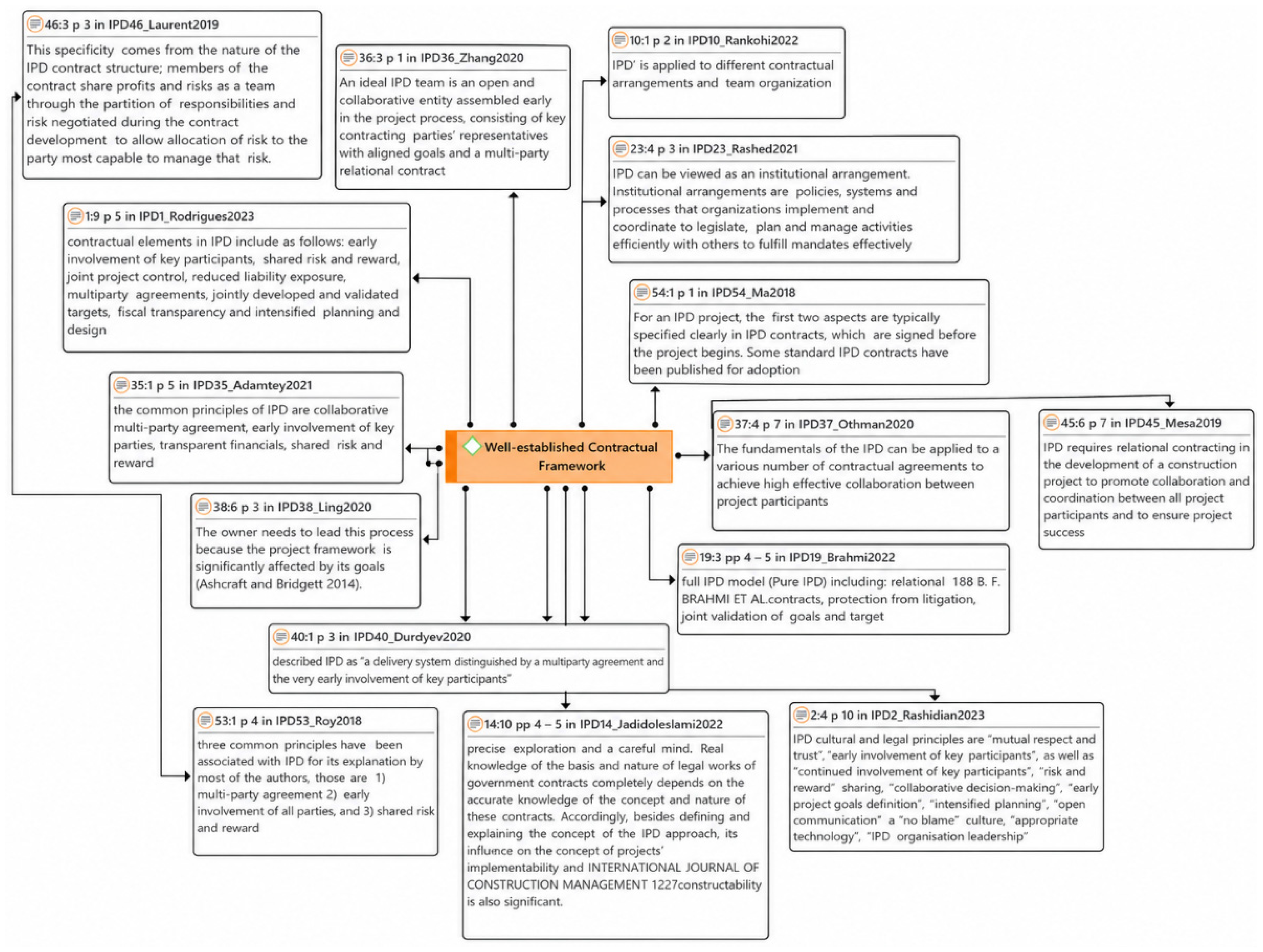
The network diagram in Figure 14 illustrates the well-established contractual framework as an IPD governance expectation, showing that contractual clarity enables collaboration, shared accountability and coordinated delivery. It highlights core contractual elements such as multiparty agreements, the early involvement of key participants, shared risk and reward, joint project control, fiscal transparency, validated targets and intensified planning [3,26,27,56]. These elements distinguish IPD from conventional delivery because responsibilities and risks are negotiated collectively, with allocation directed to the party most capable of managing them [43].
The figure also shows that relational contracting and institutional arrangements are required to formalise trust, mutual respect, open communication and coordinated decision-making among owners, designers, contractors and other stakeholders [10,21,37,47]. Importantly, the framework is not only a legal structure; it is a behavioural governance mechanism that reduces ambiguity, aligns goals and supports project success through early collaboration, transparent financial rules and shared commercial consequences [8,17,34,46].
3.3.4. Reality—Strategic and Organisational Issues
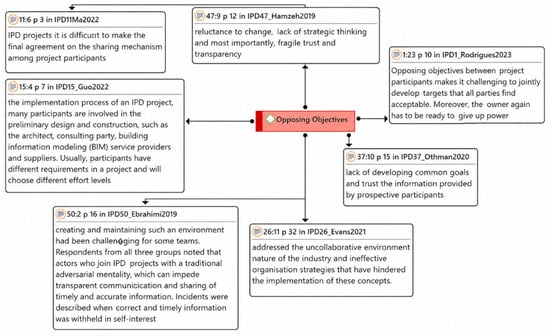
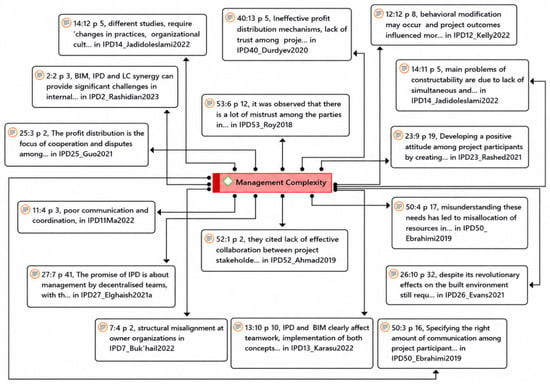
While IPD promotes the best for a project mindset and win–win for all, these promises are not translated into aligned objectives, leading to increased resistance among stakeholders [44]. The review identified differing objectives and management complexity as the two main clusters of strategic and organisational issues present in Figure 15 and Figure 16. It is identified that the initial promises are met with significant issues in IPD practice, such as organisational strategies, which affected the implementation of IPD concepts, trust and the achieving of common goals [45]. Elghaish et al. [6] noted that IPD promises decentralised management through synchronised teams, yet this is hardly evident in practice.
Figure 15.
Network view of literature evidence on opposing objectives from ATLAS.ti.
Figure 16.
Network view of literature evidence on management complexity from ATLAS.ti.
- (1)
- Opposing Objectives
Figure 15 highlights opposing objectives in IPD practice, presenting significant challenges in achieving alignment among project stakeholders. One major issue is the difficulty in reaching an agreement on sharing mechanisms, as noted in [41], due to the varied interests and expectations among stakeholders that hinder consensus. Different stakeholders, including architects, consultants, and suppliers, often have conflicting requirements and varying levels of effort, which complicates collaboration [20]. Opposing objectives create a challenge for stakeholders to develop mutually acceptable targets. This is where project owners are expected to jump in to resolve the situation but are often reluctant to relinquish control and exacerbate the issue [3]. The lack of common goals and trust impedes the flow of reliable information [46]. Fragile trust, resistance to change, and lack of strategic thinking are viewed as barriers to fostering effective teamwork [11]. Research by Patching et al. [29] shed light on adversarial attitudes, where teams withhold information to serve individual interests to undermine transparent communication, affecting IPD practice [45]. These opposing objectives illustrate the need for enhanced trust, shared goals, and transparent communication to maximise IPD’s potential benefits.
- (2)
- Management Complexity
Figure 16 demonstrates management complexity as a practical barrier to IPD implementation. Although IPD promises collaboration, integration and shared value, the evidence shows that implementation is often constrained by ineffective profit distribution, mistrust, poor communication and weak coordination among stakeholders [8,19,25,56]. These issues can cause disputes, the misallocation of resources and fragmented teamwork, especially when project participants are unfamiliar with collaborative behaviours or decentralised management structures [25,29,53]. The figure also highlights organisational and cultural resistance, where changes in practice, attitudes and project routines are required before IPD can function effectively [22,34]. In addition, the integration of BIM, Lean Construction and IPD creates technical and operational challenges, particularly when structural misalignment exists within client or owner organisations [12,59,64]. Overall, the figure suggests that IPD success depends not only on contractual or technological arrangements, but on trust-building, clear communication, behavioural readiness and coordinated management practices.
3.3.5. Reality—Procedural and Relational Issues
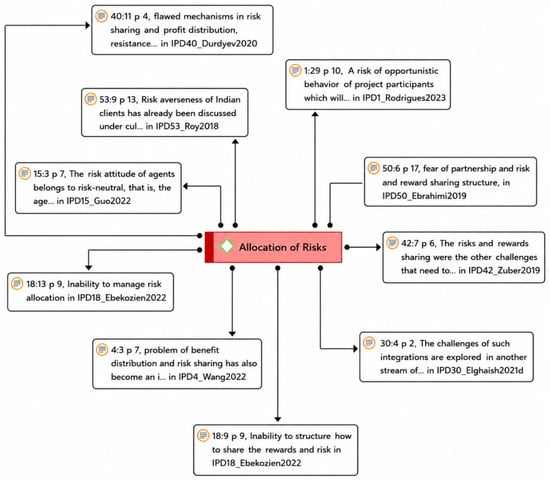
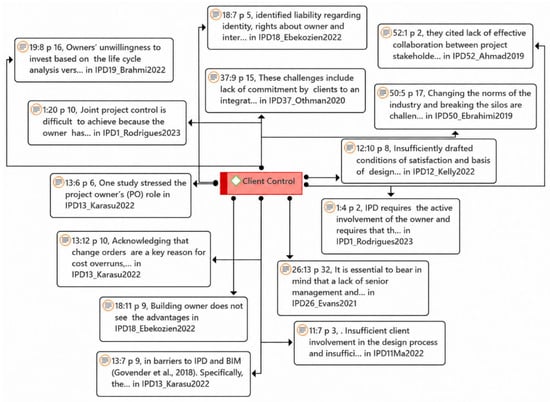
Stakeholders expect IPD to work as a collaborative practice to streamline many procedural and relational issues. However, this review suggests a different story. Key clusters identified are uneven risk allocation, client’s control, lack of awareness and knowledge and transparency as depicted in Figure 17, Figure 18, Figure 19 and Figure 20. Identified clusters clearly suggest that stakeholders have not shifted from adversarial attitudes and behaviours, which the IPD claims to address, probably due to a lack of awareness and the experience of the new IPD processes and settings. Therefore, there is increased client control over the process, rather than team effort. One important highlight is financial transparency. IPD is based on transparent systems and processes; however, the literature highlights financial transparency as an important issue in practice.
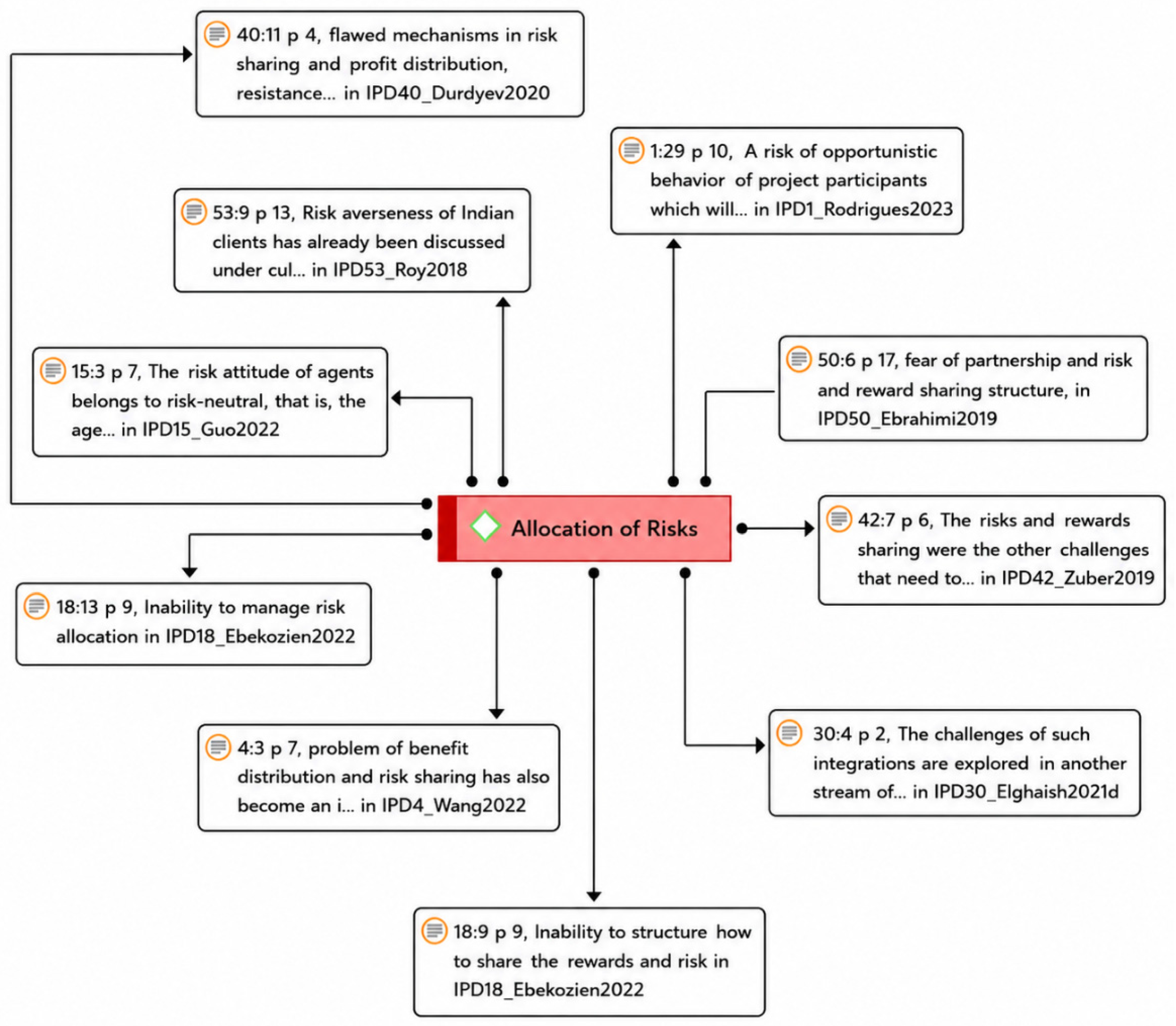
Figure 17.
Network view of literature evidence on allocation of risks from ATLAS.ti.
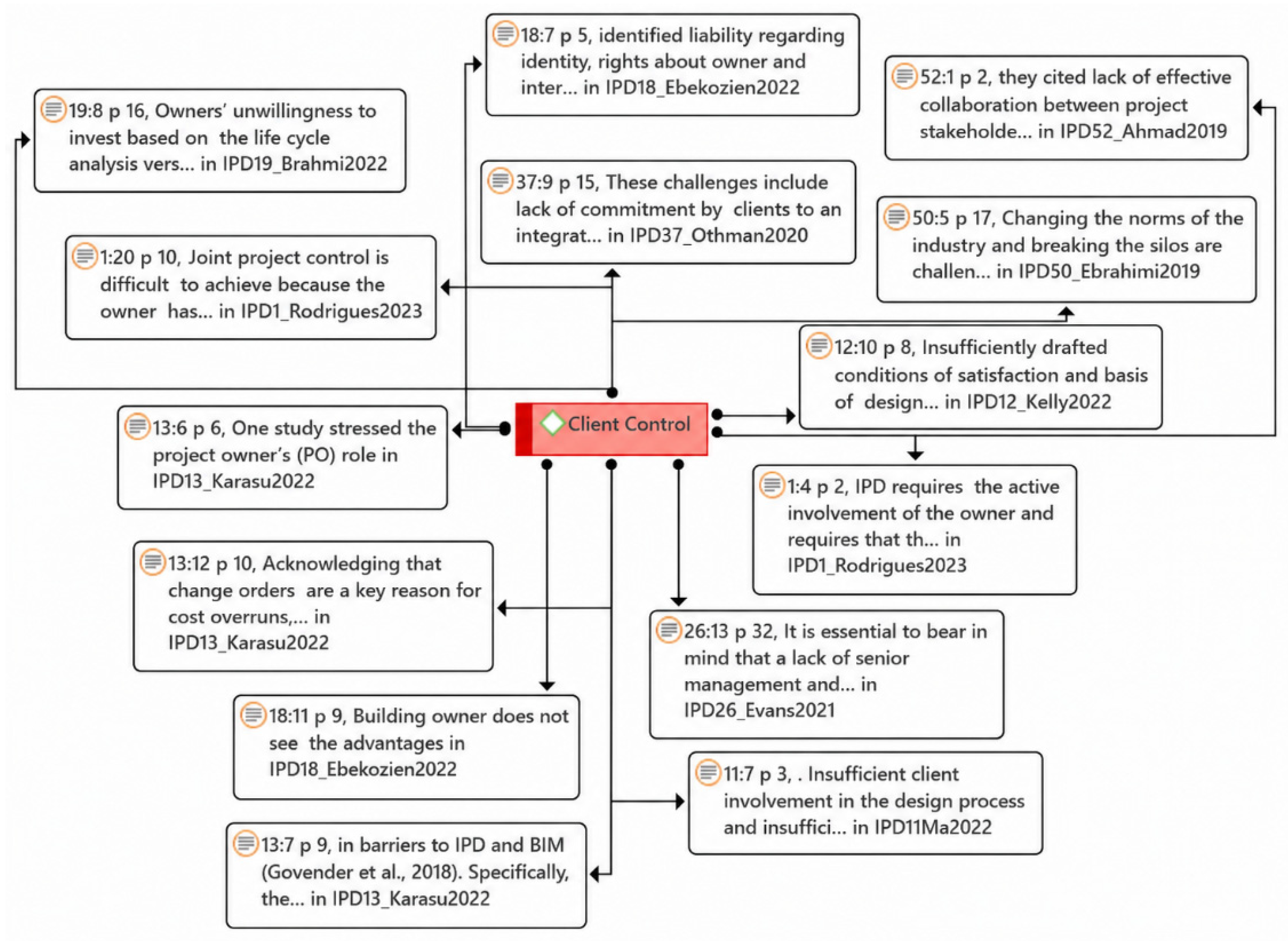
Figure 18.
Network view of literature evidence on the client’s control form ATLAS.ti.
Figure 19.
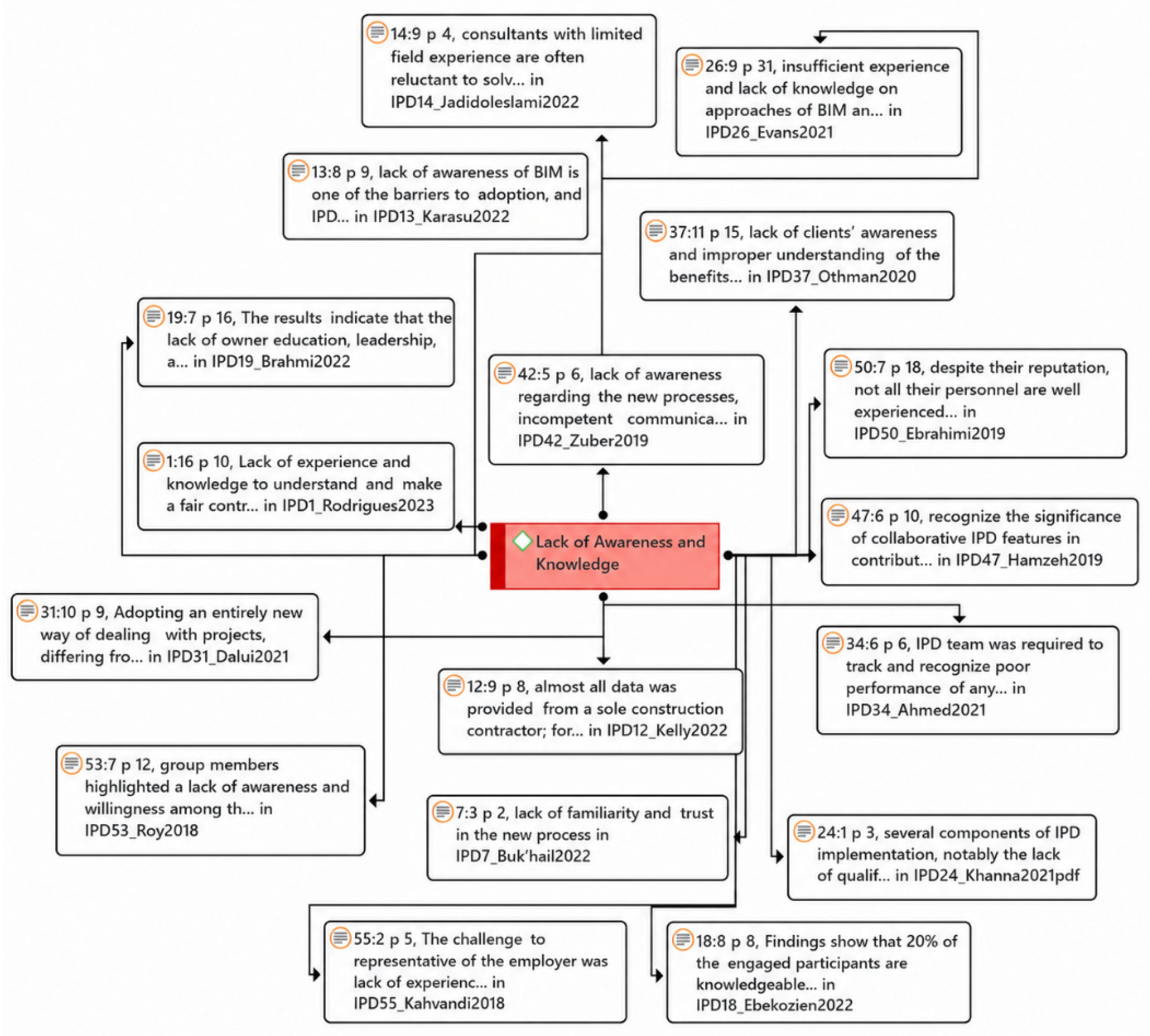
Network view of literature evidence on the lack of awareness and knowledge from ATLAS.ti.
Figure 20.
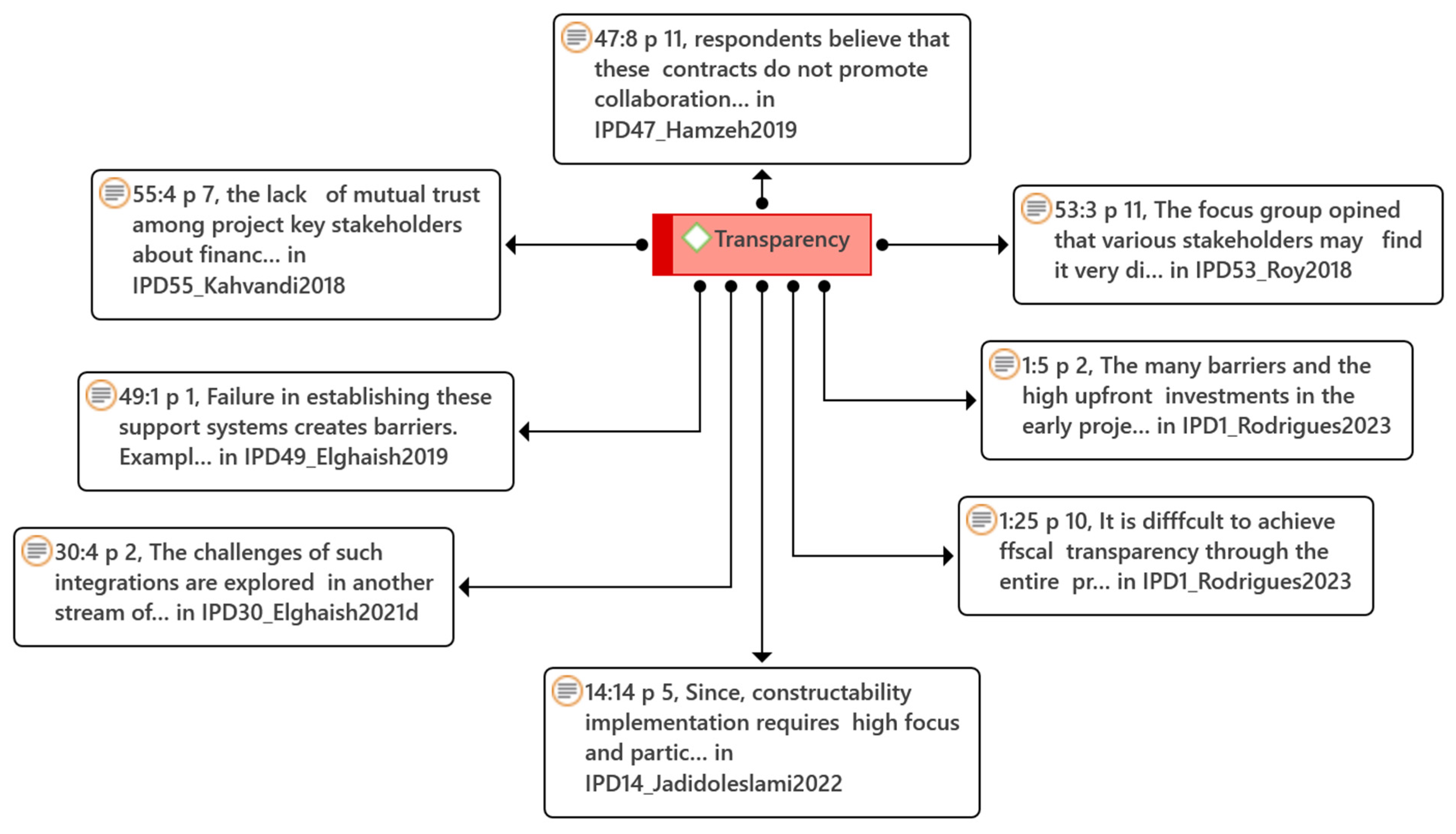
Network view of literature evidence on transparency from ATLAS.ti.
- (1)
- Allocation of Risks
Figure 17 demonstrates the uneven allocation of risks as a cluster identified in the review. Key issues include the inability of stakeholders to structure a risk-and-reward system, which proves to be a major hurdle in IPD processes [21,25,39]. This inability relates to the client’s awareness of risk and to allocating it to the stakeholder best suited to manage it. Not having proper risk management mechanisms pushes stakeholders back to the point where they resort to opportunistic behaviour [3].
- (2)
- Clients’ Control
Figure 18 demonstrates the client’s control as a cluster identified in the review. IPD promises a collaborative effort, which is led by a synchronous team. Review identified client’s control over the processes as a key issue. One important highlight that came out of this review is not having a bigger picture of the benefits of IPD and how IPD could achieve long-term objectives. This is why a number of authors have highlighted low focus on joint effort, less involvement in the design process, clients’ unwillingness and commitment to the project lifecycle and frequent change orders, which becomes a key reason for cost escalation [41].
- (3)
- Lack of Awareness and Knowledge
Figure 19 demonstrates a lack of awareness and knowledge as a cluster identified in the review. Key issues include awareness and knowledge of new workflows, processes and the technology adopted. Ebrahimi and Dowlatabadi [28] pointed out that despite the reputation of the client, a number of personnel were not experienced in this new way of working. Consultants involved with limited field experience were reluctant to solve problems; a major hurdle was the use of BIM as a key technology in the process, which was new for most of the stakeholders [13]. This leads to lower levels of trust among stakeholders of the process.
- (4)
- Transparency
Figure 20 demonstrates transparency as a cluster identified in the review. IPD is an open and collaborative effort, which promotes transparency as a central pillar. A key issue highlighted in this cluster was financial transparency. This leads back to the discussion where the client is exerting control over the project and does not offer an open system or open-book accounting system. Rodrigues and Lindhard [3] pointed out that IPD involves upfront investment in the early project stage, if the project does not offer a robust and transparent system for financial accountability, which would affect trust levels of stakeholders and ultimately their decision to make investments [57].
3.3.6. Reality—Implementation and Contractual Issues
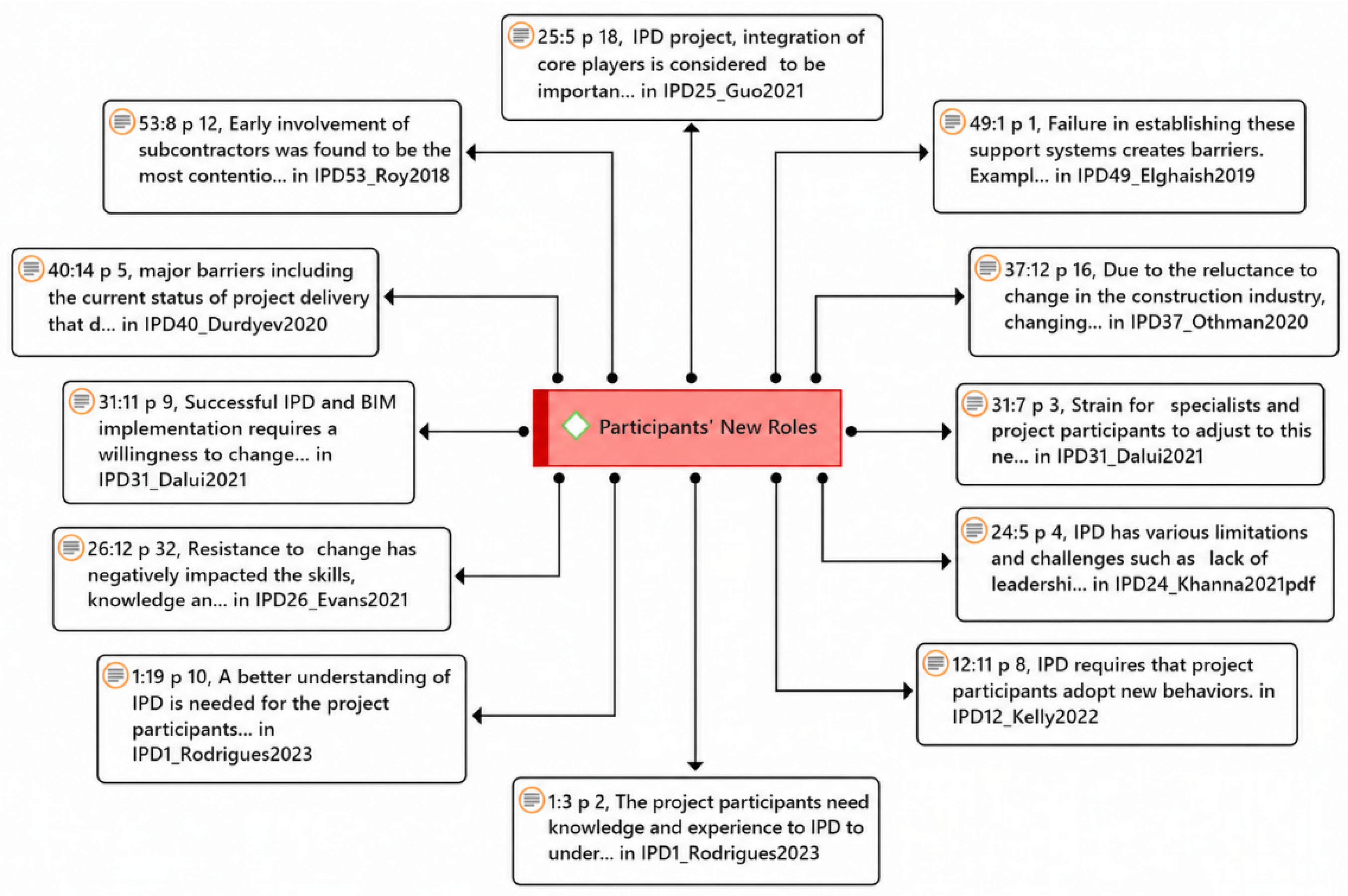
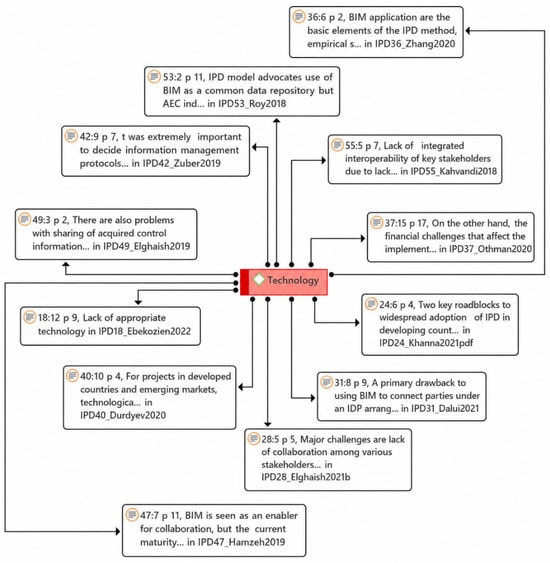
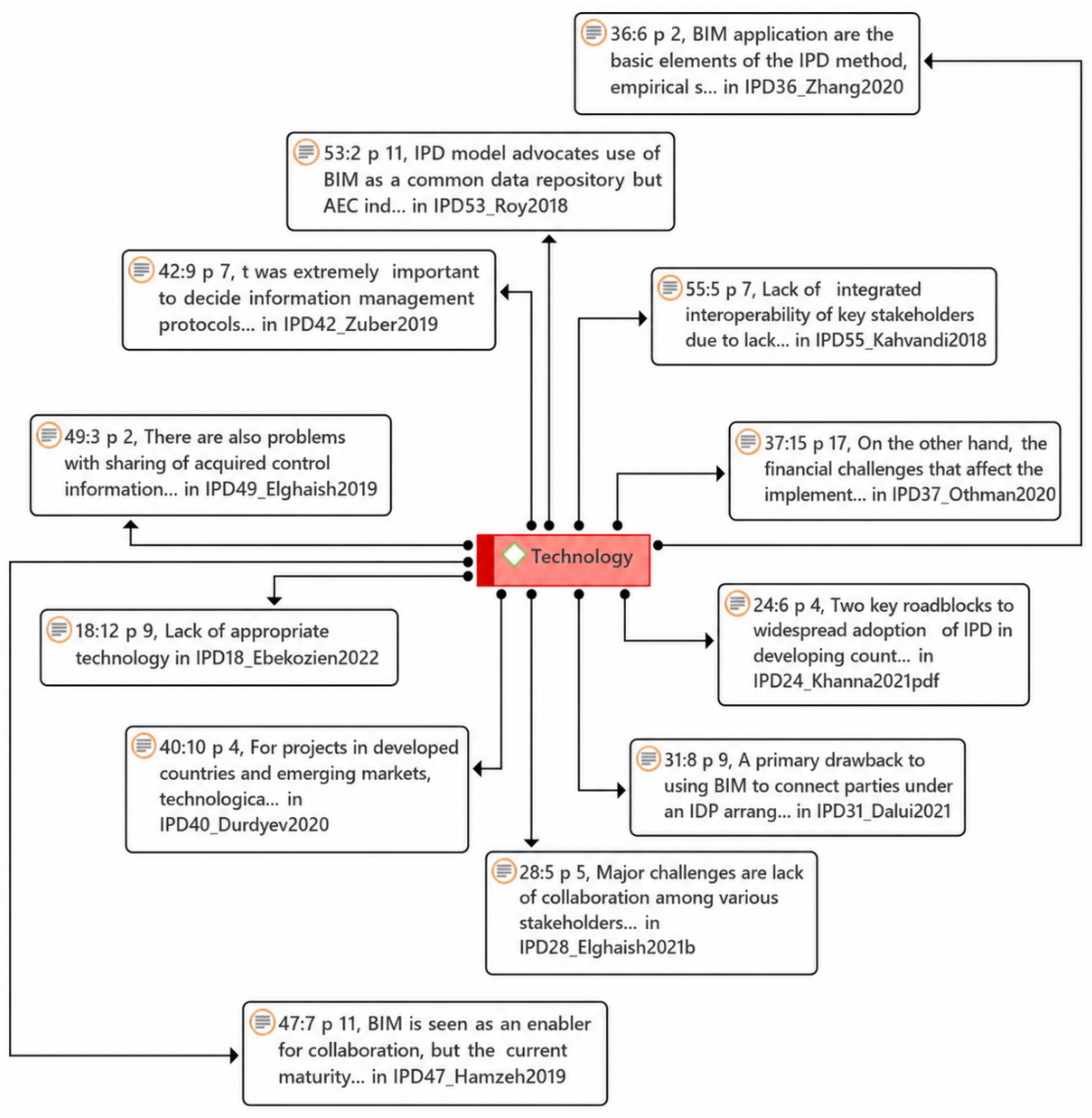
Three prominent clusters emerged under implementation and contractual issues, namely participants’ new roles, regulations and contract concerns, and technology adoption for effective IPD implementation, as presented in Figure 21, Figure 22 and Figure 23. First, participants’ roles in the IPD setting were often misaligned, despite the presence of collaborative contractual arrangements, because stakeholders were required to move beyond traditional organisational boundaries and adopt new behaviours, responsibilities and decision-making practices [3,9,33,49]. IPD aims to create an environment where parties work collectively as one team; when this relational environment is successfully established, stakeholders are less likely to depend heavily on formal contractual measures [21,37]. However, regulations and contract structures remain key concerns because unclear roles, legal responsibilities and collaborative obligations may limit implementation confidence [8,10,43]. Another critical issue concerns technology adoption. The literature highlights that unclear technology requirements, limited BIM maturity and centralised control over information can weaken collaboration, restrict transparency and negatively affect IPD implementation [7,12,23,47].
Figure 21.
Network view of literature evidence on participants’ new roles from ATLAS.ti.
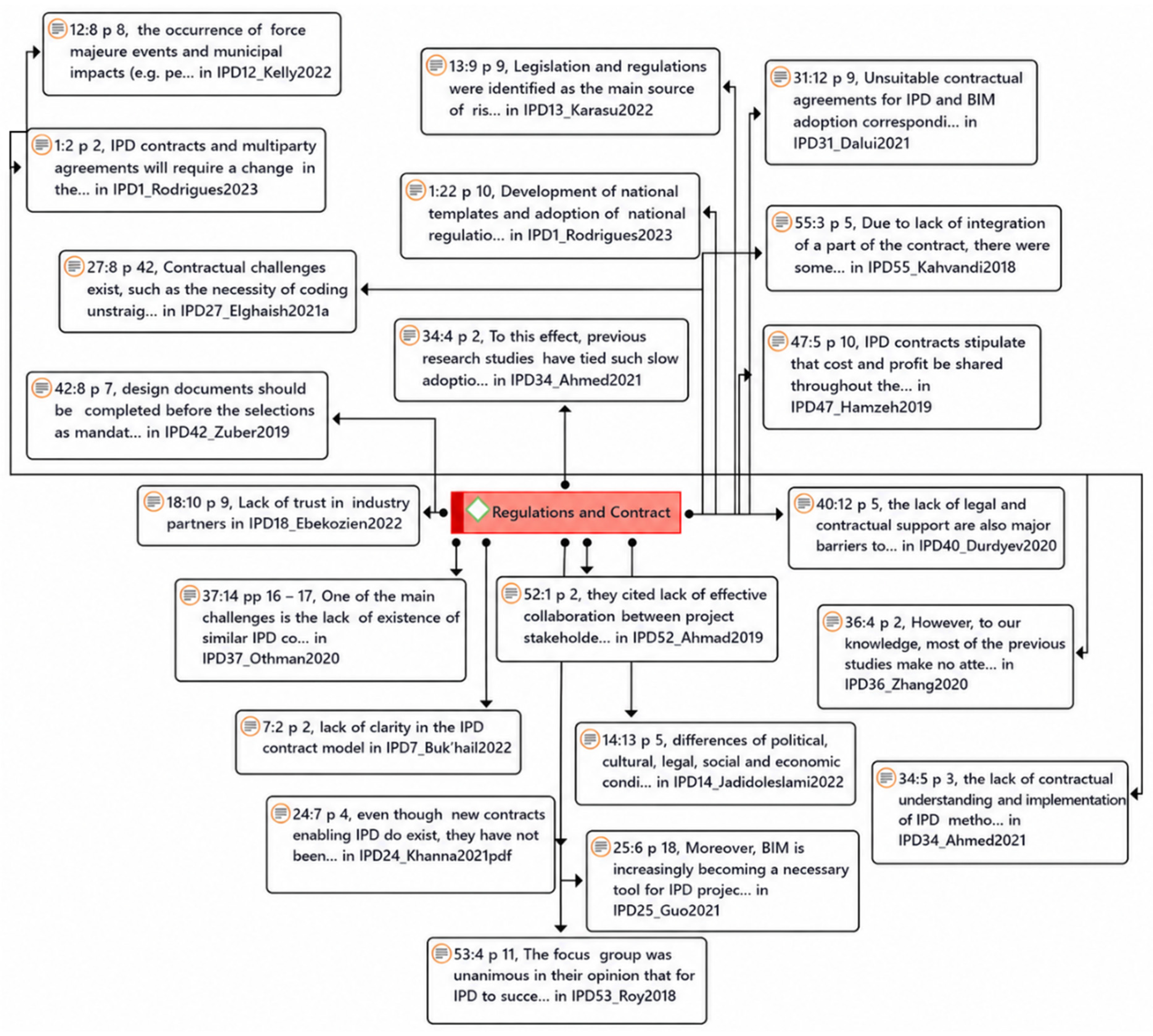
Figure 22.
Network view of literature evidence on regulation and contract form ATLAS.ti.
Figure 23.
Network view of literature evidence on technology from ATLAS.ti.
- (1)
- Participants’ New Roles
Figure 21 presents participants’ new roles as an implementation challenge in IPD, where project actors must move from traditional, discipline-based responsibilities to integrated, collaborative and behaviour-oriented roles. The cluster shows that successful IPD requires the early integration of core players, a stronger understanding of IPD principles, and a willingness to adopt new behaviours, knowledge and skills [3,20,33]. However, several studies indicate that this transition is difficult because specialists, subcontractors and project stakeholders may experience strain, uncertainty and resistance when required to work within new collaborative arrangements [9,46,49]. Early subcontractor involvement, although important, can become contentious when roles, authority and expectations are unclear [56]. The figure also highlights leadership gaps, support-system weaknesses and industry reluctance to change as barriers that limit effective role transformation [6,26,48].
- (2)
- Regulations and Contract
The complexities of regulation and contract within the implementation of IPD are identified from the review, as seen in Figure 22. Regulatory and contractual frameworks pose significant challenges, as evidenced by multiple studies [3,12,25,42,49,64]. Kelly and Ilozor [33] pointed out that the occurrence of force majeure events and municipal impacts are critical factors requiring attention. Similarly, legislation and regulations are significant sources of risk [12], and developing national templates and frameworks is necessary to facilitate the adoption of IPD methods [3]. Contractual challenges are also pervasive in different studies, describing the contractual weaknesses in recent IPD projects, such as the incomplete integration of contracts [57] and unsuitable contractual agreements for integrating IPD and BIM [49]. In addition, the stipulation of cost and profit sharing in IPD contracts may hinder widespread acceptance [11]. Therefore, the study in [6] discusses the need for coding unstructured contractual clauses, and Zuber et al. [39] stress the importance of completing design documents before selection processes.
Durdyev et al. [25] pinpoint the lack of legal and contractual support as a major barrier, a sentiment echoed by [42], who link these deficiencies to slow adoption. The study also acknowledges that the absence of clarity in IPD contract models further complicates implementation [42]. Despite new contracts enabling IPD, they have not been widely utilised, mainly due to differences in political, legal, and cultural conditions [34,48]. These legal and contractual issues, together with ineffective collaboration among stakeholders [42] and a lack of trust in industry partners [21], become significant obstacles. These challenges are further compounded by the scarcity of successful IPD implementations, as stated in [46] report, limiting confidence in the approach. From the unanimous opinion of focus groups, legal and contractual clarity are prerequisites for the success of IPD [56]. These findings emphasise the urgent need to refine legal, regulatory, and contractual frameworks to enable the smoother adoption and implementation of IPD in practice.
- (3)
- Technology
Figure 23 demonstrates technology as a cluster identified in the review. Roy et al. [56] pointed out that despite IPD advocating BIM as a common data repository, the industry is not yet ready to take up the challenge. The situation is even worse in developing countries [48]. Lack of integrated interoperability and understanding are other issues harming stakeholder collaboration [57]. Elghaish et al. [6] pointed out that due to acquired control over the information, it is difficult for stakeholders to make use of technologies. Zuber et al. [39] called for an information management protocol to ease this out with regard to technology in IPD.
3.4. Patterns of Expectations and Realities in IPD Implementation
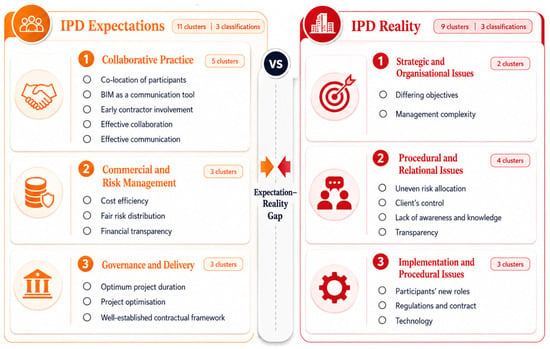
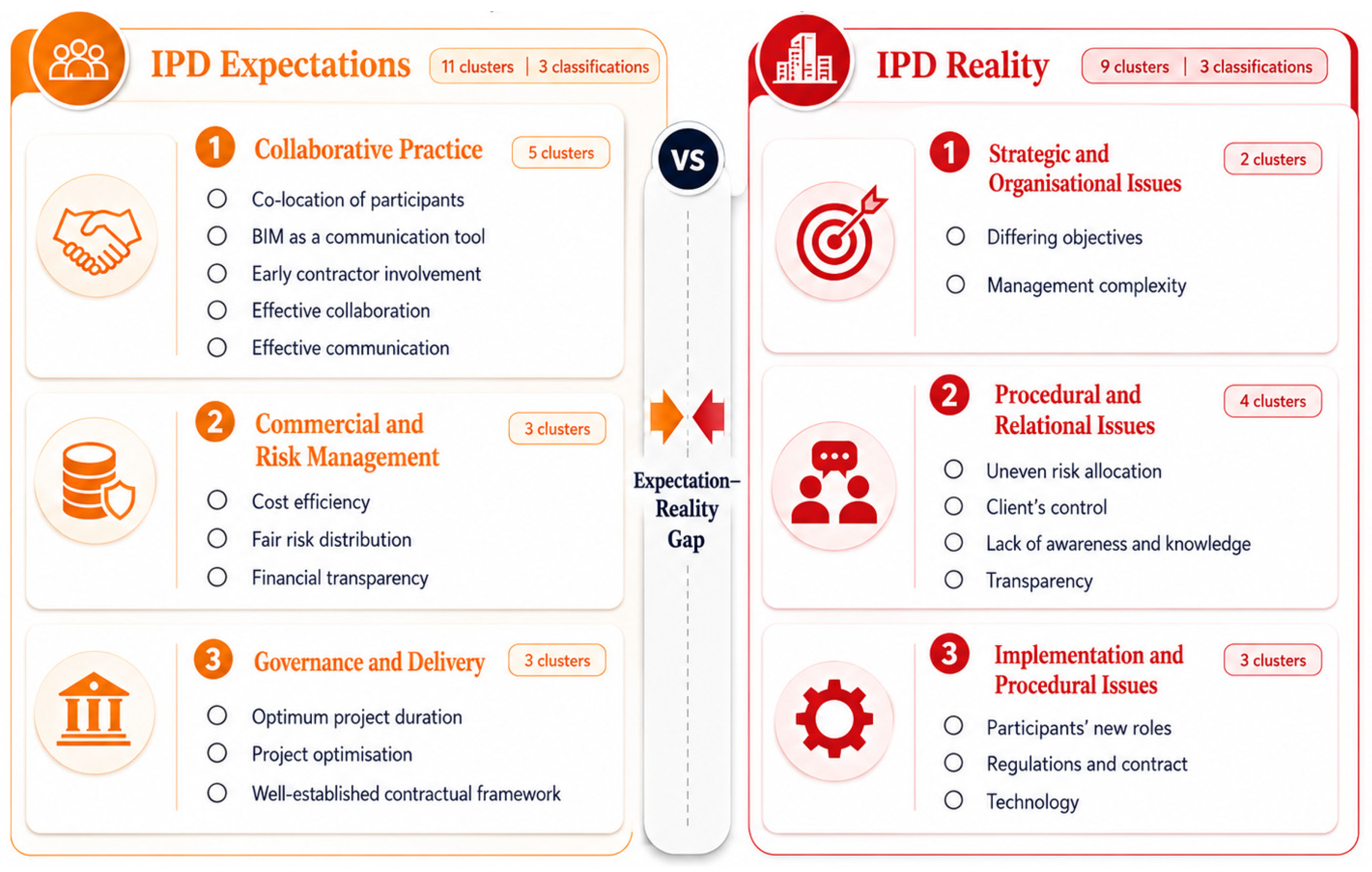
Taking a broader look at the expectations and realities, it is understood that stakeholders face several challenges in understanding how IPD is implemented in practice. IPD is more than a contractual system in the construction industry. It is an integrated delivery approach that requires early stakeholder involvement, shared decision-making, collaborative behaviours and information integration [65,66,67]. The current gap between expectation and reality highlights where IPD practice does not fully achieve its intended collaborative and performance-based outcomes. Figure 24 summarises the key themes emerging from the expectation and reality clusters.
Figure 24.
A pattern of systematic literature review on IPD expectations and reality developed using ChatGPT.
To achieve the maximum benefit of IPD, stakeholders need to focus on strategic and organisational objectives from the beginning of the process. This means adopting collaborative behaviour, developing positive attitudes, strengthening trust and aligning project objectives before fragmented organisational interests dominate the project [60,61,62,63]. IPD will not function as a collaborative practice if stakeholders continue to prioritise individual organisational goals over shared project goals.
Furthermore, stakeholders need to address procedural and relational issues, as transparent systems play an important role in building trust and confidence among project participants [60,62]. Most of the issues highlighted relate to fairness, transparency and the development of systems that could encourage stakeholders to work collaboratively. Once stakeholders establish clear protocols, implementation and procedural issues may be reduced. However, when such issues arise, stakeholders will already have systems in place to manage them effectively.
4. Conclusions
The systematic literature review identifies conflicting expectations of IPD from stakeholders and the reality of IPD implementation. The three broader areas are identified as collaborative practice, commercial and risk management, and governance and delivery, in line with the expectations of all IPD stakeholders. In the reality theme, three broader themes are identified: strategic and organisational issues, procedural and relational issues, and, lastly, implementation and procedural issues. These findings suggest areas for improvement for construction stakeholders. In principle, IPD promotes early stakeholder involvement, shared responsibility, and collaborative decision-making for improved project performance. Fragmented professional roles, limited trust among project participants, unclear risk-sharing mechanisms, and insufficient integration of technology in the process often constrain the successful application of IPD. It is worth noting that IPD is still in a niche market for knowledgeable stakeholders from both sides of the industry, especially sectors of the market that are capable and willing to change for a long-term benefit.
4.1. Practical Implications
By comparing expectations and reality gaps in IPD practice, this review provides a sound starting point for stakeholders to consider when planning and executing projects in an IPD setting. IPD is not lip service; if stakeholders are unable to develop systems for risk management, information sharing, aligning project objectives, and adopting the technologies needed for processes, IPD will not work effectively.
4.2. Limitations and Future Directions
This study focused on a systematic literature review to explore the expectations–reality gap in construction from 2018 to 2025. Future studies may broaden the scope and review research from 2000 to 2026 to improve our understanding of IPD across different industries, for which this paper demonstrates the potential. Any future research may adopt a mixed-methods strategy to investigate IPD in more depth, for example, the relationships between factors affecting the implementation of IPD, such as the adoption of various collaborative contracts, like the New Engineering Contract (NEC), and the success levels of construction projects. Qualitative studies may also be undertaken to explore issues in depth.
Funding
This research received no external funding.
Data Availability Statement
The data presented in this study are available on request from the corresponding author.
Acknowledgments
The work described in this paper was partially supported by the Hong Kong Metropolitan University Research Grant (Project Reference No. RD/2025/1.40).
Conflicts of Interest
The authors declare no conflicts of interest.
References
- Winch, G.M. Project organizing as a problem in information. Constr. Manag. Econ. 2015, 33, 106–116. [Google Scholar] [CrossRef] [Scilit]
- Williamson, O.E. The economics of organization: The transaction cost approach. Am. J. Sociol. 1981, 87, 548–577. [Google Scholar] [CrossRef] [Scilit]
- Rodrigues, M.R.; Lindhard, S.M. Benefits and challenges to applying IPD: Experiences from a Norwegian mega-project. Constr. Innov. 2023, 23, 287–305. [Google Scholar]
- Moher, D.; Liberati, A.; Tetzlaff, J.; Altman, D.G.; PRISMA Group. Preferred reporting items for systematic reviews and meta-analyses: The PRISMA statement. Int. J. Surg. 2010, 8, 336–341. [Google Scholar] [CrossRef] [Scilit] [PubMed]
- Zairul, M. Can member check be verified in real time? Introducing ARC (Asking, Record, Confirm) for member checking validation strategy in qualitative research. Eng. J. 2021, 25, 245–251. [Google Scholar] [CrossRef] [Scilit]
- Elghaish, F.; Abrishami, S.; Hosseini, M.R. Integrated project delivery with blockchain: An automated financial system. Autom. Constr. 2020, 114, 103182. [Google Scholar] [CrossRef] [Scilit]
- Elghaish, F.; Abrishami, S.; Hosseini, M.R.; Abu-Samra, S.; Gaterell, M. Integrated project delivery with BIM: An automated EVM-based approach. Autom. Constr. 2019, 106, 102907. [Google Scholar] [CrossRef] [Scilit]
- Ma, Z.; Zhang, D.; Li, J. A dedicated collaboration platform for Integrated Project Delivery. Autom. Constr. 2018, 86, 199–209. [Google Scholar] [CrossRef] [Scilit]
- Evans, M.; Farrell, P.; Elbeltagi, E.; Dion, H. Competency framework to integrate lean construction and integrated project delivery on construction megaprojects: Towards a future of work global initiatives in multinational engineering organisations. Benchmarking Int. J. 2022, 29, 1913–1956. [Google Scholar]
- Rankohi, S.; Bourgault, M.; Iordanova, I. The new-normal challenges and IPD solutions: A Canadian case study. Built Environ. Proj. Asset Manag. 2023, 13, 20–35. [Google Scholar]
- Hamzeh, F.; Rached, F.; Hraoui, Y.; Karam, A.J.; Malaeb, Z.; El Asmar, M.; Abbas, Y. Integrated project delivery as an enabler for collaboration: A Middle East perspective. Built Environ. Proj. Asset Manag. 2019, 9, 334–347. [Google Scholar] [CrossRef] [Scilit]
- Karasu, T.; Aaltonen, K.; Haapasalo, H. The interplay of IPD and BIM: A systematic literature review. Constr. Innov. 2023, 23, 640–664. [Google Scholar]
- Bilge, E.C.; Yaman, H. Information management roles in real estate development lifecycle: Literature review on BIM and IPD framework. Constr. Innov. 2021, 21, 723–742. [Google Scholar] [CrossRef] [Scilit]
- Elghaish, F.; Abrishami, S. Developing a framework to revolutionise the 4D BIM process: IPD-based solution. Constr. Innov. 2020, 20, 401–420. [Google Scholar] [CrossRef] [Scilit]
- Arar, A.J.; Poirier, E.; Staub-French, S. A research and development framework for integrated project delivery. Constr. Manag. Econ. 2025, 43, 85–112. [Google Scholar]
- Brahmi, B.F.; Sassi Boudemagh, S.; Kitouni, I.; Kamari, A. IPD and BIM-focussed methodology in renovation of heritage buildings. Constr. Manag. Econ. 2022, 40, 186–206. [Google Scholar]
- Wang, D.; Wang, X.; Liu, H.; Liu, M.; Sing, M.; Tang, H. Building information modelling and project performance: A framework unpacking the trust. Eng. Constr. Archit. Manag. 2025, 1–23. [Google Scholar] [CrossRef] [Scilit]
- Rankohi, S.; Bourgault, M.; Iordanova, I. The latest operational, contractual and organizational trends in IPD literature: Review and future directions. Eng. Constr. Archit. Manag. 2023, 30, 4339–4357. [Google Scholar]
- Guo, S.; Wang, J.; Xiong, H. The influence of effort level on profit distribution strategies in IPD projects. Eng. Constr. Archit. Manag. 2023, 30, 4099–4119. [Google Scholar]
- Ebekozien, A.; Aigbavboa, C.O.; Aigbedion, M.; Ogbaini, I.F.; Aginah, I.L. Integrated project delivery in the Nigerian construction sector: An unexplored approach from the stakeholders’ perspective. Eng. Constr. Archit. Manag. 2023, 30, 1519–1535. [Google Scholar]
- Rashed, A.; Mutis, I. Trends of integrated project delivery implementations viewed from an emerging innovation framework. Eng. Constr. Archit. Manag. 2023, 30, 989–1014. [Google Scholar] [CrossRef] [Scilit]
- Guo, S.; Wang, J.; Wu, H. Profit distribution of IPD projects using fuzzy alliance. Eng. Constr. Archit. Manag. 2021, 28, 2069–2089. [Google Scholar] [CrossRef] [Scilit]
- Elghaish, F.; Abrishami, S.; Hosseini, M.R.; Abu-Samra, S. Revolutionising cost structure for integrated project delivery: A BIM-based solution. Eng. Constr. Archit. Manag. 2021, 28, 1214–1240. [Google Scholar]
- Elghaish, F.; Abrishami, S. A centralised cost management system: Exploiting EVM and ABC within IPD. Eng. Constr. Archit. Manag. 2021, 28, 549–569. [Google Scholar]
- Durdyev, S.; Hosseini, M.R.; Martek, I.; Ismail, S.; Arashpour, M. Barriers to the use of integrated project delivery (IPD): A quantified model for Malaysia. Eng. Constr. Archit. Manag. 2020, 27, 186–204. [Google Scholar]
- Andary, E.G.; Abi Shdid, C.; Chowdhury, A.; Ahmad, I. Integrated project delivery implementation framework for water and wastewater treatment plant projects. Eng. Constr. Archit. Manag. 2020, 27, 609–633. [Google Scholar]
- Adamtey, S.A. A case study performance analysis of design-build and integrated project delivery methods. Int. J. Constr. Educ. Res. 2021, 17, 68–84. [Google Scholar]
- Ebrahimi, G.; Dowlatabadi, H. Perceived challenges in implementing integrated project delivery (IPD): Insights from stakeholders in the US and Canada for a path forward. Int. J. Constr. Educ. Res. 2019, 15, 291–314. [Google Scholar]
- Patching, A.; Skitmore, M.; Rusch, R.; Lester, D. Case study of the collaborative design of an integrated BIM, IPD and Lean university education program. Int. J. Constr. Manag. 2024, 24, 799–808. [Google Scholar]
- Bapat, H.; Sarkar, D.; Gujar, R. Application of multi-criteria decision making for evaluation of key performance indicators of integrated project delivery and BIM model for an infrastructure transportation project in Western India. Int. J. Constr. Manag. 2023, 23, 2077–2086. [Google Scholar]
- Trach, R.; Pawluk, K.; Lendo-Siwicka, M. The assessment of the effect of BIM and IPD on construction projects in Ukraine. Int. J. Constr. Manag. 2022, 22, 1844–1851. [Google Scholar]
- Rosayuru, H.D.R.R.; Waidyasekara, K.G.A.S.; Wijewickrama, M.K.C.S. Sustainable BIM based integrated project delivery system for construction industry in Sri Lanka. Int. J. Constr. Manag. 2022, 22, 769–783. [Google Scholar]
- Kelly, D.; Ilozor, B. Performance outcome assessment of the integrated project delivery (IPD) method for commercial construction projects in USA. Int. J. Constr. Manag. 2022, 22, 2808–2816. [Google Scholar] [CrossRef] [Scilit]
- Jadidoleslami, S.; Saghatforoush, E.; Heravi, A.; Preece, C. A practical framework to facilitate constructability implementation using the integrated project delivery approach: A case study. Int. J. Constr. Manag. 2022, 22, 1225–1239. [Google Scholar]
- Elghaish, F.; Abrishami, S.; Abu Samra, S.; Gaterell, M.; Hosseini, M.R.; Wise, R. Cash flow system development framework within integrated project delivery (IPD) using BIM tools. Int. J. Constr. Manag. 2021, 21, 555–570. [Google Scholar]
- Teng, Y.; Li, X.; Wu, P.; Wang, X. Using cooperative game theory to determine profit distribution in IPD projects. Int. J. Constr. Manag. 2019, 19, 32–45. [Google Scholar]
- Mesa, H.A.; Molenaar, K.R.; Alarcón, L.F. Comparative analysis between integrated project delivery and lean project delivery. Int. J. Proj. Manag. 2019, 37, 395–409. [Google Scholar] [CrossRef] [Scilit]
- Viana, M.L.; Hadikusumo, B.H.; Saghatforoush, E.; Sartori, T.; Kahvandi, Z. Adopting an integrated project delivery collaboration framework: A case study of a wastewater treatment plant project in Vietnam. Int. J. Proj. Organ. Manag. 2022, 14, 89–103. [Google Scholar] [CrossRef] [Scilit]
- Zuber, S.Z.S.; Nawi, N.M.; Nifa, F.A.A. Construction procurement practice: A review study of integrated project delivery (IPD) in the Malaysian construction projects. Int. J. Supply Chain Manag. 2019, 8, 777–783. [Google Scholar]
- Piroozfar, P.; Farr, E.R.; Zadeh, A.H.; Inacio, S.T.; Kilgallon, S.; Jin, R. Facilitating building information modelling (BIM) using integrated project delivery (IPD): A UK perspective. J. Build. Eng. 2019, 26, 100907. [Google Scholar] [CrossRef] [Scilit]
- Ma, Q.; Li, S.; Cheung, S.O. Unveiling embedded risks in integrated project delivery. J. Constr. Eng. Manag. 2022, 148, 04021180. [Google Scholar] [CrossRef] [Scilit]
- Ahmed, M.O.; Abdul Nabi, M.; El-adaway, I.H.; Caranci, D.; Eberle, J.; Hawkins, Z.; Sparrow, R. Contractual guidelines for promoting integrated project delivery. J. Constr. Eng. Manag. 2021, 147, 05021008. [Google Scholar] [CrossRef] [Scilit]
- Laurent, J.; Leicht, R.M. Practices for designing cross-functional teams for integrated project delivery. J. Constr. Eng. Manag. 2019, 145, 05019001. [Google Scholar] [CrossRef] [Scilit]
- Evans, M.; Farrell, P. A strategic framework managing challenges of integrating lean construction and integrated project delivery on construction megaprojects, towards global integrated delivery transformative initiatives in multinational organisations. J. Eng. Des. Technol. 2023, 21, 376–416. [Google Scholar]
- Evans, M.; Farrell, P.; Elbeltagi, E.; Dion, H. Barriers to integrating lean construction and integrated project delivery (IPD) on construction megaprojects towards the global integrated delivery (GID) in multinational organisations: Lean IPD & GID transformative initiatives. J. Eng. Des. Technol. 2023, 21, 778–818. [Google Scholar]
- Othman, A.A.E.; Youssef, L.Y.W. A framework for implementing integrated project delivery in architecture design firms in Egypt. J. Eng. Des. Technol. 2021, 19, 721–757. [Google Scholar]
- Rashidian, S.; Drogemuller, R.; Omrani, S. The compatibility of existing BIM maturity models with lean construction and integrated project delivery. J. Inf. Technol. Constr. 2022, 27, 496–511. [Google Scholar] [CrossRef] [Scilit]
- Khanna, M.; Elghaish, F.; McIlwaine, S.; Brooks, T. Feasibility of implementing IPD approach for infrastructure projects in developing countries. J. Inf. Technol. Constr. 2021, 26, 902–921. [Google Scholar] [CrossRef] [Scilit]
- Dalui, P.; Elghaish, F.; Brooks, T.; McIlwaine, S. Integrated project delivery with BIM: A methodical approach within the UK consulting sector. J. Inf. Technol. Constr. 2021, 26, 922–935. [Google Scholar] [CrossRef] [Scilit]
- Ling, F.Y.; Teo, P.X.; Li, S.; Zhang, Z.; Ma, Q. Adoption of integrated project delivery practices for superior project performance. J. Leg. Aff. Disput. Resolut. Eng. Constr. 2020, 12, 05020014. [Google Scholar] [CrossRef] [Scilit]
- AlOtaibi, M.; El-Rayes, K.; Altuwaim, A. Optimal planning of renovation work in leased buildings under integrated project delivery method. J. Manag. Eng. 2022, 38, 04022056. [Google Scholar] [CrossRef] [Scilit]
- Su, G.; Hastak, M.; Deng, X.; Khallaf, R. Risk sharing strategies for IPD projects: Interactional analysis of participants’ decision-making. J. Manag. Eng. 2021, 37, 04020101. [Google Scholar] [CrossRef] [Scilit]
- Ahmad, I.; Azhar, N.; Chowdhury, A. Enhancement of IPD characteristics as impelled by information and communication technology. J. Manag. Eng. 2019, 35, 04018055. [Google Scholar] [CrossRef] [Scilit]
- Bapat, H.; Sarkar, D.; Gujar, R. Evaluation of key performance indicators of integrated project delivery and BIM model for infrastructure transportation project in Ahmedabad, India through decision-making approach. J. Inst. Eng. Ser. A 2021, 102, 995–1011. [Google Scholar] [CrossRef] [Scilit]
- Wang, T.; Feng, J. Linking BIM definition, BIM capability maturity, and integrated project delivery in the AECO industry: The influences of BIM diffusion and moral hazard. J. Urban Plan. Dev. 2022, 148, 04022025. [Google Scholar] [CrossRef] [Scilit]
- Roy, D.; Malsane, S.; Samanta, P.K. Identification of critical challenges for adoption of integrated project delivery. Lean Constr. J. 2018, 1–15. [Google Scholar]
- Kahvandi, Z.; Saghatforoush, E.; Ravasan, A.Z.; Mansouri, T. An FCM-based dynamic modelling of integrated project delivery implementation challenges in construction projects. Lean Constr. J. 2018, 63–87. [Google Scholar]
- Hall, D.M.; Scott, W.R. Early stages in the institutionalization of integrated project delivery. Proj. Manag. J. 2019, 50, 128–143. [Google Scholar] [CrossRef] [Scilit]
- Rashidian, S.; Drogemuller, R.; Omrani, S.; Banakar, F. A review of the interrelationships and characteristics of building information modeling, integrated project delivery and lean construction maturity models. Smart Sustain. Built Environ. 2024, 13, 584–608. [Google Scholar] [CrossRef] [Scilit]
- Memon, S.A.; Rowlinson, S.; Sunindijo, R.Y.; Zahoor, H. Collaborative behavior in relational contracting projects in Hong Kong—A contractor’s perspective. Sustainability 2021, 13, 5375. [Google Scholar] [CrossRef] [Scilit]
- Memon, S.A.; Rowlinson, S. Exploring project teams’ collaborative behaviours in Hong Kong’s relational contracting projects. Proj. Gov. Control. Annu. Rev. 2019, 2, 1–12. [Google Scholar] [CrossRef] [Scilit]
- Memon, S.A.; Hadikusumo, B.H.; Sunindijo, R.Y. Using social interaction theory to promote successful relational contracting between clients and contractors in construction. J. Manag. Eng. 2015, 31, 04014095. [Google Scholar] [CrossRef] [Scilit]
- Memon, S.A. Hong Kong Relational Contracting: An Investigation into the Attitudes and Behaviours of Contractors’ Project Teams. Ph.D. Thesis, University of Hong Kong, Hong Kong, China, 2017. [Google Scholar]
- Buk’hail, R.S.; Al-Sabah, R.S. Exploring the barriers to implementing the integrated project delivery method. J. King Saud Univ.-Eng. Sci. 2024, 36, 543–551. [Google Scholar] [CrossRef] [Scilit]
- Viana, M.L.; Hadikusumo, B.H.; Mohammad, M.Z.; Kahvandi, Z. Integrated Project Delivery (IPD): An Updated Review and Analysis Case Study. J. Eng. Proj. Prod. Manag. 2020, 1, 147. [Google Scholar]
- Bakhary, N.A. Green building material and technologies: Assessing their potential in sustainable construction. J. Sustain. Civ. Eng. Technol. (JSCET) 2025, 4, 7–18. [Google Scholar] [CrossRef] [Scilit]
- Samsudin, N.S.; Khalil, N.; Mohammad, M.Z.; Md Ajis, A.; Hamzah, H.; Che Ibrahim, C.K.I.; Manu, P. An ontology to represent the prevention through design (PtD) concept in integrated project delivery (IPD) in the construction industry from an architectural perspective. Buildings 2023, 13, 1128. [Google Scholar] [CrossRef] [Scilit]
Disclaimer/Publisher’s Note: The statements, opinions and data contained in all publications are solely those of the individual author(s) and contributor(s) and not of MDPI and/or the editor(s). MDPI and/or the editor(s) disclaim responsibility for any injury to people or property resulting from any ideas, methods, instructions or products referred to in the content. |
© 2026 by the authors. Licensee MDPI, Basel, Switzerland. This article is an open access article distributed under the terms and conditions of the Creative Commons Attribution (CC BY) license.