


Abstract
Digital Twin (DT) technologies have demonstrated a positive impact across various stages of the Architecture, Engineering, and Construction (AEC) industry. Nevertheless, the industry has been slow to undergo digital transformation. The paper utilizes the Systematic Literature Review (SLR) approach to study a total of 842 papers on the application of DT in buildings, landscapes, and urban environments (BLU) from 2018 to 2024. Based on the research results, suggestions have been made for future research and practical directions. Meanwhile, it provides assistance to BLU’s designers, constructors, managers, and policymakers in establishing their understanding of the digital transformation of the AEC industry. The existing relevant research can be mainly divided into three categories: case study, framework study, and technology study. Compared with the buildings and urban environment industries, the number and depth of research in the landscape industry are relatively low. Through in-depth analysis of BLU projects, three research trends in the future are determined: (1) research and application of DT framework in the design and planning stage; (2) development of design tools and basic theory based on DT model; (3) application and exploration of DT technology in the landscape industry.
1. Introduction
The AEC industry is important in the field of constructing living spaces for the human population and development, where engineering objects involve cities, buildings, bridges, and underground engineering. It has become the engine of urban economic growth and has played an important role in improving the quality of people’s living environment [1]. Buildings, landscapes, and urban environments (BLU) are the main construction achievements in the AEC industry and the most well-known elements that residents can directly contact in their daily lives. The general design methods of BLU include architectural, landscape designs, and urban planning, and they usually use modeling software and image rendering software to display the achievements. Digital Twin (DT) has promoted the innovation of design methods, tools, and service approaches in BLU. In recent years, advancements in software, frameworks, and application tools have significantly reshaped the management of building assets throughout their lifecycle within the AEC sector [2]. With the gradual emergence of technologies and concepts such as Artificial Intelligence (AI), extended reality, Internet of Things (IoT), cloud computing, big data, Cyber Physical System (CPS), the application of DT has expanded into various fields, including transportation, healthcare, agriculture, energy, and architecture. The DT concept has evolved from being a product lifecycle management tool to becoming a comprehensive digital platform [3].
DT can be applied to many industries, such as healthcare, agriculture, new energy vehicles, ships, etc., and has already achieved some results. The AEC industry also needs to make positive changes and try to apply DT in the BLU projects. For example, Bruynseels et al. [4] believe that DT in engineering provides a conceptual framework for analyzing these emerging data-driven healthcare practices. This approach has the potential to deliver significant societal benefits by allowing for effective equalizing enhancement interventions. Liu et al. [5] proposed a cloud healthcare system framework based on Digital Twin Healthcare (DTH), which can be used to monitor, diagnose, and predict various aspects of the health of individual users. The concept of DTH and the reference framework of cloud deployment based on DTH are proposed, and the key implementation technologies are discussed. Pooyandeh et al. [6] presented a transformative methodology that harnesses the power of DT technology for the advanced condition monitoring of lithium-ion batteries (LIBs) in Electric Vehicle (EV). Qiao et al. [7] comprehensively discussed recent research and progress in the application of intelligent packaging and Industrial 4.0 technologies by focusing on data acquisition, traceability, processing, and visualization in the fresh foods supply chain. Coraddu et al. [8] used a large number of sensors on a ship to collect information and build a DT model of the ship to evaluate the speed loss caused by marine fouling.
2. Literature Reviews Related to the Subject and Research Significance
The concept of DT was initially introduced by Michael Grieves at the University of Michigan in 2003 as a “digital representation of a physical product” [9]. It is one of the most promising digital technology platforms. The emergence and development of new digital technologies enable new service approaches in many industries [10] and allow the virtual representation of a physical asset’s condition as data, which can be integrated bidirectionally at any point in time [11].
Some studies have proposed a DT framework and approach for BLU projects as shown in Table 1. DT is defined as an authentic digital representation of assets, processes, or systems [12]. For example, Dembski et al. [13]. established an urban DT prototype with a 3D model of the built environment, a visualization platform for virtual reality, and utilized them as a collaboration tool between practitioners and ordinary people. Redelinghuys et al. [14] presented an architecture for such a DT, which enables the exchange of data and information between a remote emulation and the physical twin. Chen et al. [15] developed a conceptual framework for smart factory buildings based on CPS by applying DT, big data-driven virtualization, and edge-to-cloud service technology. Zijian Ye [16] proposed a DT-based multi-information intelligent early warning and safety management platform towards high safety risks during tunnel construction. Schrotter, G et al. [17] established a DT in Zurich, visualized and analyzed this digital prototype, correlated the results with three-dimensional spatial data, and achieved interactive demonstrations of the urban environment. Havard et al. [18] proposed a cosimulation and communication architecture between DT and virtual reality software and presented a system architecture for DTs that is specifically designed at both the building and urban environment levels. Cai et al. [19] developed a 1:1 ratio, 3-dimensional urban environment model and ran real-time flood projections using ADCIRC model data with and without the coastal barrier in place.
Table 1.
Some reviews about DT in the BLU industry in the literature.
Some researchers are committed to summarizing the application characteristics of DT technology and constructing frameworks to provide appropriate services for BLU projects. For example, Zhao et al. [2] developed an evidence-based conceptual framework for stakeholders responsible for decision-making and facility management. Park [30] proposed a Cyber Physical Logistics System (CPLS) that is coordinated with the agent cyber physical production systems in a multilevel CPS structure. Wang [31] advanced a digital twin-based big data virtual and real fusion (DT-BDVRL) reference framework supported by the Industrial Internet towards smart manufacturing. Tan [32] developed a comprehensive approach to merging the DT into the chronology of forms, which was proposed based on a literature review of archaeological theory. Sun [33] proposed a novel hybrid model of Digital Twin Building Information Modeling (DTBIM). With AI, this model had completed the process of identifying resource shortages, analyzing requirements, executing decisions, scheduling resources, and updating all processes in the database. Wolf et al. [34] utilize Microsoft Azure cloud computing technology to establish a foundation for routine and multiagency event response in smart cities.
With the conscious digitalization of the BLU sector and the continuous deepening of digital technology research, some research interests, directions, and concepts that integrate traditional design and digital technology have emerged, such as virtual design, smart cities, intelligent operation and maintenance, etc., with extensive technology research and scenario applications derived from them.
By categorizing and summarizing the research status of DT in the BLU industry through a literature review, it is possible to effectively analyze and predict research hotspots. SLR is one of the general methods to provide knowledge about specific topics or answer specific research questions. For example, Tuhaise et al. [21] analyzed the current situation of DT in the field of construction by SLR, which follows a rigorous and explicit procedure to identify, evaluate, and synthesize the existing body of knowledge on a specific subject. The use of a systematic approach is reproducible, which can avoid bias in the selection of literature sources and determine the current status and research hotspots of research topics [35].
This study aims to comprehensively organize and describe the current application of DT technology in the BLU industry and determine the current research hotspots, trends, and limitations by searching and analyzing the literature from 2018 to 2024. Additionally, nonhot vocabulary will be screened and analyzed for future research potential. By elucidating the challenges and opportunities faced by the BLU industry at present, this study aims to provide insights into its current status while also attempting to analyze how the development of DT technologies directly or indirectly impacts industrial design theory, talent training schemes, and design tool innovation. As an integral component of AEC departments, technological innovation within the BLU industry has significant potential for generating critical economic and social benefits by optimizing practitioners’ work modes and processes by integrating actual functions with aesthetics and owner needs. This can ultimately lead to high-quality architectural design, landscape planning projects, and urban planning schemes, thereby improving people’s living environment.
The following issues necessitate particular attention:
- (1)
- What are the predominant, emerging, and pivotal technologies in the application of DT technologies within the BLU industry? Alternatively, what frameworks, systems, and design processes for DT technologies are suitable for the BLU industry?
- (2)
- Which countries/regions have made noteworthy contributions to the application of DT technologies in the BLU industry? Furthermore, how much emphasis is placed on this in developed and developing countries?
- (3)
- How can various stakeholders collaborate to advance the application of DT technologies in the BLU industry and attempt to predict future development trends and focal points through this study to promote digitization within the BLU industry?
- (4)
- From the practitioners’ perspective, what potential impacts will DT and their related technologies have on design theory, design tools, and talent cultivation within the BLU industry?
To address these concerns comprehensively, this study relies on scientific econometric analysis methods as well as literature analysis techniques. The specific methodologies and steps are detailed in Section 3. These findings are presented in Section 4, followed by a preliminary analysis. Section 5 provides an extensive discussion of the analytical results while identifying research limitations. The conclusion of this paper is presented in Section 6.
3. Systematic Literature Review Methodology
This paper utilized the systematic literature review approach to conduct a systematic analysis of research on DT application in the BLU industry. SLR has three main phases, which are the identification, screening, and eligibility to decide what should be included in the review process [36]. We also used the PRISMA checklist when writing our paper [37]. Science mapping can help achieve the phased objectives of SLR. The research tools developed based on this method include VOSviewer and CiteSpace. These tools will be described in detail in subsequent chapters. Science mapping is a process of producing domain analysis and visualization [38] and aims at displaying the structural and dynamic aspects of scientific research [39]. It consists of bibliometric analysis and scientometric analysis. Based on bibliometric tools and data, science mapping offers a broader approach to analyzing the literature and identifying potentially insightful patterns and trends of the domain [40]. This study adopted a three-step literature review approach, including bibliographic retrieval, scientometric analysis, and discussion. Figure 1 shows the three processes of literature screening and analysis and lists the typical search keywords and the number of literatures before and after screening. In addition, Python is used throughout the analysis process to parse and visualize files in formats such as txt, JSON, and Excel.
Figure 1.
Systematic literature review results by phase iterations.
3.1. Bibliographic Retrieval
The first step was the bibliographic search in the Web of Science (WOS) core collection database, which contains the most valuable and influential journals all over the world [41]. Based on specific subject keywords, relevant literature pertaining to the design industry and DT was retrieved from the database. The primary search terms included “digital twin” and “digital twin technologies”, while the secondary core search terms encompassed “buildings”, “landscape”, and “urban environment”. These were further expanded to include keywords such as “school”, “office”, and “residential building” representing various types of buildings in the construction industry, ensuring comprehensive search results. Table 2 presents details of all keywords based on the retrieval formula. Only journal articles were utilized for analysis across all search results, with a focus on English language literature.
Table 2.
Selection of search keywords.
Therefore, the process of the literature search is divided into three steps. The first step is keyword search, which is used to summarize the obtained literature and form the initial data for subsequent analysis. The second step is to remove literature that is clearly unrelated to the research topic. The third step is to eliminate the influence of low-quality papers. The basic principle is that for articles in journals with JCR partitions Q1 and Q2, papers with zero or more citations will be included in the paper collection. On the other hand, for articles with JCR partitions Q3 and Q4, papers with a citation count greater than or equal to 1 will be included in the paper collection. Overall, the selection of articles is relatively lenient in order to ensure the comprehensiveness of the literature as much as possible. The selected documents are marked and stored in WOS, and these records are exported to text and Excel files to improve readability and facilitate data and visual analysis. Through this process of retrieval, screening, and data exportation, a dataset comprising 842 articles was established. Figure 1 illustrates the amount of literature by year of publication within a time span ranging from 1990 to 2024, with the earliest inclusion dating back to 2018.
3.2. Scientometric Analysis
The second step is to use VOSViewer and Cite Space [42] as scientific econometric analysis tools to analyze the text data output in the first step. VOSviewer is a program that was developed for constructing and viewing bibliometric maps and can be used to construct maps of authors or journals based on cocitation data or to construct maps of keywords based on co-occurrence data [43]. In this step, VOSViewer (version 1.6.20) is used to filter the literature titles and abstract texts in the text data, followed by clustering and sorting combinations. During the filtering process, vocabulary unrelated to the literature content needs to be removed from the abstract, and finally a visual legend is generated to visually display the frequency of appearance of literature keywords. CiteSpace is able to analyze a specific knowledge domain, such as to identify the main research areas and the links between them [44], and can systematically generate various accessible charts, allowing scholars to intuitively study the hotspots in their respective fields and the relationships between research results. In this step, CiteSpace (version 6.3.R7 Advanced) is used to proceed with the literature data, including authors, countries, research institutions, and other data. Coword analysis of phrase frequency as well as cocitation analysis of journal and author frequency were deployed.
3.3. Data Visualization and Discussion
The third step is to utilize Python to parse the JSON files exported by VOSviewer and the Excel files exported by the WOS core database in the first step. JSON (JavaScript Object Notation, JS Object Notation) is a lightweight, text-based, language-independent syntax for defining data interchange formats. It was derived from the ECMAScript programming language but is programming language independent. JSON defines a small set of structuring rules for the portable representation of structured data [45].
The follow-up discussion aimed to provide an in-depth interpretation and discussion of the results of scientometric analysis. For each of the three analyses (coauthor analysis, coword analysis, and cocitation analysis), the discussion is presented after the analysis in Section 3.1, Section 3.2 and Section 3.3, respectively. Furthermore, an overall discussion and recommendation for future research will be presented in Section 5.
4. Results and Classification Analysis
4.1. Article Sample Characteristics with BLU Industry
4.1.1. Quantity and Regional Characteristics
Figure 2 illustrates the annual count of articles on DT applications in the BLU industry from 2018 to 2024, with the publication date concluding on June 1, 2024. The number of papers related to DT technologies has shown a significant increase from 2020 to 2024, totaling at 829 papers and accounting for 98.46% of the overall publications. This reflects that in recent years, the research interest in the application of DT technology in BLU industry has increased significantly, and relevant practitioners in BLU industry have begun to consciously promote digital transformation.
Figure 2.
Number of digital twin application articles in the BLU industry.
Amongst the total count of 842 papers, scholars from 73 countries/regions are represented, with over 25 articles originating from each of the eleven countries: China (265 articles), United States (109 articles), United Kingdom (92 articles), Italy (76 articles), Spain (56 articles), Germany (49 articles), South Korea (40 articles), Australia (37 articles), Canada (28 articles), Sweden (28 articles), and the Netherlands (25 articles). The colored part of the world map in Figure 3 shows the ten countries and regions with the largest number of published literature.
Figure 3.
Top 10 countries and regions with the highest number of publications.
4.1.2. Journal and Citation Features
The dataset comprises 842 articles sourced from 293 distinct journals. Figure 4 presents the top ten journals by article count, namely Sustainability (47 articles), Applied Sciences-Basel (44 articles), Buildings (42 articles), Automation in Construction (35 articles), IEEE Access (25 articles), Sensors (22 articles), Energies (19 articles), Energy and Buildings (18 articles), Journal of Building Engineering (16 articles), and Building and Environment (15 articles). These leading journals collectively account for 283 published articles, representing 33.61% of the total. Table 3 shows the proportion of the top ten journals in the total number of articles.
Figure 4.
Top 10 journals with the largest number of articles.
Table 3.
Proportion of top ten journals with the largest number of articles.
The total number of citations for 842 articles is 12329, with an average of 14.64 citations per article. The maximum number of citations for a single article is 205. The author of the article is Khajavi Siavash H. The top ten cited articles are shown in Table 4.
Table 4.
The top ten literature with the largest number of citations.
Based on the statistical analysis of the selected journal articles, the most productive authors in the field of DT application in the BLU industry were identified. As shown in Table 5, the top 10 most productive authors had published at least seven journal articles. Zhihan Lv has the highest output of 12 articles, accounting for 1.77% of the total number of articles.
Table 5.
Top 10 authors with the largest number of published papers.
4.2. Keyword Analysis of BLU Industry
Keywords serve as fundamental components within detection research endeavors. Vosviewer is used to build a visual keyword network and uses clustering technology, a natural language processing algorithm, and a text mining method to organize knowledge. Additionally, alongside author-generated terms, certain databases incorporate “index keywords” as subject headings to ensure comprehensive coverage across relevant terminology domains overlooked by authors themselves; both sets were leveraged for scientometric analysis herein.
Furthermore, a keyword filtering approach determined total instances across all papers under scrutiny; frequency within documents delineates overall thematic breadth, while co-occurrence tallies reflect mutual appearances within titles, abstracts, or lists. The depicted keyword co-occurrence network visually portrays bibliometric insights derived from imported textual data through an analytical process requiring at least three shared terms among its corpora.
4.2.1. JSON Analysis
Figure 5 shows the visual chart of the research keywords derived from VOSviewer based on their frequency of occurrence and related links. The icon can intuitively reflect the importance of the keywords, but the corresponding JSON file contains quantitative information, which needs to be exported and format converted to obtain more refined data.
Figure 5.
Keyword network analysis.
Furthermore, Python’s third-party modules Pandas, Codecs, JSON, and Python’s built-in system class OS were used to parse JSON files. The Pandas package was used for writing Excel data, JSON package was used for loading and reading JSON files, and Python’s built-in system package OS was used for modifying file paths for easy storage. After converting JSON files into Excel using Python, the data in JSON files were parsed and displayed in the form of tables. Table 6 shows various attributes related to keyword analysis that appear in JSON files and explains the significance of these attributes.
Table 6.
Properties and definitions of JSON files exported by VOSviewer.
The row coordinates are the attributes in the items tag under the newwork tag in the JSON file, arranged in order, such as id, “label”, “x”, and “y”, etc. The column coordinates are the values of the tags, and the final results are exported to an Excel file. The data obtained through the Excel file is shown in Table 7. The data in the table is arranged in the order of settlement labels, i.e., the “cluster” item, which is completely consistent with the clustering content expressed in Figure 6.
Table 7.
Data parsed from JSON files.
Figure 6.
Literature cocitation network.
4.2.2. Weight Analysis
In the exported JSON file, the “weights” attribute represents VOS’s weight analysis of the frequency of keyword occurrences in each literature title and abstract. This attribute has three sublabels, namely “Links”, “Total link strength”, and “Occurrences”. By observing Table 6, it can be seen that “digital twin” has the highest “Links” (61), “Total link strength” (399), and “Occurrences” (271). At the same time, “systems” (49, 143, 80) and “models” (43. 126, 71) also have high value, indicating that the application of DT technologies in the BLU industry needs to be based on intelligent systems and virtual models, and the industry is closely related to DT technologies. The construction of the design process and framework, information models, and digital tools of the design industry system is more important. The application requirements are more urgent. The weight attributes of “Smart City” (40, 82, 44) and “Building” (38, 99, 60) rank fourth and fifth, respectively. It is worth noting that the frequency of “Landscape” is too low and not within the statistical range of VOSviewer. This is because there is currently too little research on digital twin in the field of landscape and its related fields, and landscape is often considered a part of the urban environment, and its importance has not been given corresponding attention. In the weight analysis of keywords, the research of DT application framework, the specific functions of the DT application in the BLU project, and the discussion of the technology used in DT application are gradually decreasing in frequency.
4.2.3. Citation Score Evaluation
In the exported JSON file tag, the “scores” tag represents VOS’s analysis of the average publication year and citation frequency of the literature corresponding to each keyword, with three subtags: “Avg. pub. Year”, “Avg. Citations”, and “Avg. norm. Citations”. The specific meaning can be found in Section 4.2.1. By observing Table 6, it can be observed that the top ten keywords with the highest average citation frequency are “digital twin application” (51), “smart manufacturing” (41.333), “maintenance” (41.333), “vision” (39.1429), “smart city” (34.9318), “future” (31.8889), “concept” (31), “opportunity” (30.2222), “building information modeling (BIM)” (29.5), and “deep learning” (28.5), which reflects the importance of specific applications of digital twins. The top ten keywords with the highest average standardized citation frequency are “digital technology” (5.0902), “deep learning” (3.2487), “opportunity” (3.0145), “investment” (2.5044), “thing” (2.3591), “metaverse” (2.2505), “smart home” (2.2317), “smart building” (2.2121), “industry” (2.1124), and “concept” (1.923). The latest ten keywords for average publication years are “hvac system” (2023.3333), “smart building” (2023.2727), “China” (2023), “metaverse” (2022.8889), “digital twin framework” (2022.875), “building information modeling” (2022.875), “deep learning” (2022.8), “monitoring” (2022.7838), “control” (2022.7368), and “digital twin model” (2022.7273).
4.3. Cocitation Analysis of BLU Industry
Cocitation analysis includes journal cocitation analysis, author cocitation analysis, and document cocitation analysis. Cocitation can indicate the frequency that two documents are cited together by another document and can be used to compare the similarities between different articles. Cluster analysis can express two relationships. The first is the relationship between keywords in a single cluster. The second is the relative position relationship between clusters. The number of node connections between keywords measures the degree of tightness between them. It can also display timelines to analyze the generation of research trend changes and discover research hotspots in specific time periods.
4.3.1. Document Cocitation Network
A document cocitation network can be used to demonstrate the quantity of references cited by publications and the authorship of references cited by publications. The specific visualization legend of the cocitation network is shown in Figure 6.
The size of the node represents the number of times the references have been cocited, with the name of the first author and the year of publication marked on the node.
4.3.2. Author Cocitation Network
The node size of the author’s cocitation network reflects each author’s cocitation quantity, and the links between authors indicate a direct cooperative relationship established based on the frequency of cocitation. As shown in Figure 7, the highest cited authors included Tao Fei (236 times, China), Grieves M (175 times, USA), Qinglin Qi (102 times, China), Yuqian Lu (80 times, China), Jiewu Leng (76 times, China), Kritzinger W (69 times, Australia), Glaessgen EH (62 times, USA), Alam KM (61 times, Bangladesh), Schleich B (58 times, Germany), and Rosen R (55 times, Germany). The authors with high cocitations mostly come from Europe, the United States, and China.
Figure 7.
Author cocitation network.
It is worth noting that among the scholars with the highest cocitation frequency, Grieves M, Yuqian Lu, and Glaessgen E H also have high centrality, with values of 0.06, 0.05, and 0.05, respectively, indicating that their research has a high level of influence.
4.3.3. Journal Cocitation Network
The literature cocitation network can be used to display the number of cited references and author identities in publications. In the literature cocitation network chart, each node represents a piece of literature, and the label above displays the first author’s name and publication year of the literature.
As shown in Figure 8, the connection between the two nodes represents the cocitation relationship between these two pieces of literature.
Figure 8.
Journal cocitation network.
4.4. Application of Digital Twin Technology in Buildings
Among the weight attributes of keyword analysis, the frequency of “building” ranked fifth. Other keywords significantly related to the construction industry include “case study”, “management”, “construction”, “building information modeling”, etc. Building industry is still the key field of DT-related technology application. DT technology plays an active role in different stages of the whole life cycle of different types of buildings. The literature in the building industry tends to focus on the operational stage of projects, showcasing a considerable number of case studies. Table 8 classifies the application of DT technology, and summarizes the main research contents of the corresponding literature and the specific technologies and tools used. These cases encompass various types and scales of buildings, including residential buildings [46,47,48,49,50], healthcare buildings [51,52], heritage buildings [53,54,55,56,57], transportation buildings like bridges [58], and power buildings like power plants [59,60]. Typically, existing DT models in the field of architecture revolve around the physical entities, utilizing modeling software, 3D point cloud data, and other techniques to reconstruct virtual models based on the existing buildings. Subsequently, the architectural virtual models are combined with sensor data collected from various environmental factors both indoors and outdoors. This integration enables environmental monitoring, indoor data analysis, 3D model reconstruction, and data visualization.
Table 8.
Relevant literature on the application of digital twin technologies in the building.
4.4.1. Heritage Building
Confirming the current status of heritage buildings through digital means and predicting their potential future evolution is an important research direction in the field of architecture. Kong et al. [73] proposed a novel method for the health assessment of historical buildings, integrating photogrammetry and point cloud processing algorithms into a DT framework. Virtual models at different time points were created using photogrammetry, and the bridge health assessment approach was used to align and analyze the structural deterioration process. Zhang [53] developed a multi-indicator adaptive ventilation control system for IAQ management using DT technologies, which consisted of triggers and feedback. A digital representation of heritage buildings was established using heritage building information modeling (HBIM) with sensors to trigger adjustments in ventilation system settings. Gros [74] takes the reconstruction of the collapsed transverse arch in Notre Dame as a case and establishes a DT framework for hybrid reconstruction that integrates data acquisition and processing.
4.4.2. Public Building
In the case of DT technologies application in public buildings, there is a concentration in the field of indoor environmental data monitoring, forming a model-data-visualization framework. Opoku et al. [75] developed a real-time data collection platform that combines building information modeling, data visualization, and IoT-driven capabilities. They validated the platform in a university library by integrating sensors and building information models, providing data on the library’s internal conditions in the form of a DT. Cairoli [76] presents a possible DT architecture to enable digital twin applications aiming to impact building performance, acting on the facility management of stagecraft and variable acoustic architectural elements to control the reverberation time in real time.
4.4.3. Healthcare Building
The construction of DT models in the field of healthcare buildings includes complex facility systems and medical equipment systems. The internal space is divided into sterile areas and polluted areas by means of zoning design, with a high degree of specialization. Peng et al. [77] developed a persistent data integration system based on the concept of DT for hospital buildings. They deployed a DT software system with real-time visualization management and AI diagnosis modules in a newly built control center. This allowed managers to grasp the dynamics of the entire hospital through visual management. The system achieved the expected results during more than a year of stable operation, improving the quality of daily maintenance. Cheng et al. [78] presented a smart hospital for all-scenario intelligence by creating hospital-intelligent twins, and this exploration of creating hospital-intelligent twins can be a worthwhile endeavor to assess how to inform evidence-based decision-making better and enhance patient satisfaction and outcomes.
4.4.4. Residential Building
Residential buildings are highly related to people’s quality of life, and thermal environment comfort is an important evaluation index. Bastos et al. [47] empirically evaluated the EnergyPlus infiltration model “Design Flow Rate” (DFR). One of the objectives was to assess whether the equation could provide accurate estimates of air leakage in the living room of an attic in a 7-story building. Qian et al. [56] proposed a low-interventional carbon footprint accounting system based on a digital twin management platform. Multiple digital technologies are applied to monitor and evaluate the occupants’ lifestyles, indoor environment, user location, and equipment energy consumption.
4.4.5. Small Residential Settlement
The purpose of establishing the DT model of small residential areas such as villages and communities is to analyze and optimize the microclimate, thermal environment comfort, and community management of these settlements so as to promote the sustainable development of communities. Lin et al. [79] conducted field measurements, surveys, and simulated models of the built environment to study the microclimate of typical traditional settlements in China. They analyzed the surface characteristics and materials of the buildings, providing insights for the urbanization process of traditional settlements. For complex building clusters such as school campuses, which can be considered as miniature urban areas, they have a significant impact on the surrounding environment.
Lu et al. [80] proposed a system architecture for DT and used the West Cambridge Campus of the University of Cambridge as a practical case study. The architecture realizes the integration of heterogeneous data sources and supports efficient data query and analysis to support the management and decision-making on campus. It bridged the gap between buildings and the urban context, improving the understanding of the interrelationships between them. Pierce [81] conducted research on a decision-making framework based on DT models, analyzing the current status of energy consumption and carbon emissions in the district heating network of Dublin University in Ireland. They combine biomass thermoelectricity (CHP) and photovoltaic (PV) power generation strategies to reduce the energy consumption of the whole campus.
4.5. Application of Digital Twin Technology in Landscape
The application of DT technology in urban environmental landscapes is still in its infancy. The landscape in the existing literature is mainly located in the urban environment, and the natural landscape is also within the scope of discussion. Therefore, the typical landscape types include urban landscape [52,82,83,84,85], scenic spot [72,86], park [87], rural landscape [88], natural landscape [89,90] etc. Table 9 classifies DT application cases in the landscape industry, and lists the research focus of the corresponding literature and the relevant technologies used. With the ongoing expansion of urban areas, there is a growing demand for enhanced comfort in the urban landscape environment. The design, planning, construction, and maintenance of urban landscape systems such as parks, green spaces, and natural landscapes within cities play a crucial role in enhancing the overall quality of living environments. The application of DT in architecture and urban environments is steadily increasing based on existing literature. Research topics such as intelligent buildings, smart cities, and smart homes are gaining prominence alongside technologies like the Internet of Things, virtual reality, and deep learning to provide technical support for various stakeholders. However, there is limited focus on the application of DT technologies in the field of landscape, even within literature primarily focused on smart city research.
Table 9.
Relevant literature on the application of digital twin technologies in landscape.
Jia [57] proposed a novel approach combining gray relational analysis and machine learning to provide new design perspectives for traditional landscape planning and design based on big data information. Sun [72] utilized a new type of active 3D panoramic visual sensor for the preliminary design of scenic area environmental art and landscape, decision-making errors are avoided, and dangerous situations are predicted, thereby improving the environmental safety factor of the scenic area. Some literature also studies the design of intelligent landscapes in the internal environment of cities from the perspective of smart cities. Liu [52] underscores the critical role of smart landscaping in advancing sustainable energy management for netzero energy smart cities. The application of DT technologies in the field of landscape has not yet formed a complete technical process and application framework and may have great research potential in the future.
4.6. Application of Digital Twin Technology in Urban Environment
“Smart city” is the keyword with the highest frequency in the urban environment industry, and related keywords include “planning”, “city”, “operation”, “digital twin city”, “metaverse”, etc. By integrating DT technologies, the urban planning industry can collaboratively engage with smart cities, CIM, and IoT. The creation of DT models for cities enables a shift in urban planning schemes from a two-party engagement to a dynamic process involving multiple stakeholders. This comprehensive method helps to establish the relationship between experts and the public and aims to improve the public’s participation in the decision-making of living environment optimization. In addition, for urban scale planning and design, the use of GIS technology can effectively improve the efficiency of data analysis, making it possible to store data, establish the integration of data management systems, and improve public participation [82].
4.6.1. Urban Planning
Once urban planning schemes are determined and corresponding portions of city construction are implemented according to predefined milestones, the mode of urban planning transitions gradually from a singular decision-making approach to a monitor-and-redecide model. Table 10 summarizes the relevant applications of DT technology in urban planning and smart city. The research on digital twin technology in urban planning includes design methods [91,92,93], city development [94,95,96], and application frameworks [97,98,99,100,101]. This model involves dynamically monitoring urban information within the planning scope and making new decisions to adjust existing planning schemes. For instance, Najafi et al. [102] developed a city information model that integrates DT technologies, demonstrating its application in simulated urban community design activities within the Malvalan district of the Netherlands. Through quantitative data evaluation of experts and nonexpert stakeholders, the utilization of virtual CIM aided in optimizing community design by engaging and accommodating the interests of local stakeholders. Lohman et al. [103] have developed an expandable DT framework called Inter Model Broker (IMB), which enables the construction of a large-scale DT model for Amsterdam, the Netherlands. The framework provides an overall view of the city on traffic intensity, air quality, noise levels, and urban space and helps municipalities make future decisions based on existing planning schemes. Mortaheb et al. [104] combined Big Data, Geographic Information Science and Systems, and Data Science to propose a novel field called Geographic Artificial Intelligence (GeoAI). The aim of this field is to improve the efficiency of urban services and functions while enhancing the quality of life for all residents. Khahro et al. utilized GIS technology to evaluate the accessibility of urban parks to people and advocated adding urban parks to strengthen the connection between urban residents and communities so as to realize the sustainable development of the city [98].
Table 10.
Relevant literature on the application of DT technologies in urban environments.
4.6.2. Smart City
Smart City is committed to making urban construction and development more scientific and efficient and improving the efficiency of urban services through transparent and sufficient information acquisition, extensive and safe information transmission, and effective and scientific information processing to improve the operation efficiency of the city. For the research scope of smart cities, existing literature includes infrastructure [91,105], energy utilization [106,107], intelligent operation and maintenance [111,112,113], transportation systems [108], emergency management [114], etc.
Meng et al. [120] presented a comprehensive framework to enhance the cybersecurity and efficiency of smart urban energy systems by integrating cutting-edge technologies. The findings highlight the potential of this innovative framework to revolutionize urban energy management, providing a foundation for more resilient, secure, and efficient smart cities. Jin et al. [121] presented a lightweighting process for the Lightweight Digital Twin System as a method to provide various services that a smart city offers based on the digital twin, and a lightweighting method was proposed accordingly. Sharifi et al. [105] investigated the application of digital twin technology in urban drainage systems and emphasize the potential revolutionary impact of the combination of artificial intelligence and digital dual models in the development of intelligent urban rainwater infrastructure systems.
5. Discussion and Research Trends of the BLU Industry
5.1. Digital Twin in Design and Planning Stage of BLU Industry
In the BLU industry, the application of s primarily relies on existing physical entities such as buildings, landscapes, and cities. However, the disparity between virtual models and physical entities makes it challenging to fully match the component information and environmental parameters of virtual models with real-world conditions. As a result, the current application of DT in the BLU industry is predominantly focused on the construction and operation phases. There is a relative scarcity of literature on their utilization during the design and planning stages, indicating a certain degree of oversight regarding their potential application prospects. However, the application of DT in these stages can yield several benefits, including streamlining the design process, minimizing potential rework costs, and enabling design professionals to apply collected data to future projects [100]. Therefore, future research can be directed towards the application of DT during the design and planning phases, aiming to optimize the design and planning processes utilizing DT models and frameworks prior to finalizing the design schemes of physical entities. Shao and Wang [101] developed a meticulous planning approach guided by DT, considering various aspects of subsurface space, resulting in a systematic architecture and a clear delineation of the planning process.
5.2. Design Tools Based on DT Models
In the design phase of BLU projects, the traditional process is to use modeling software, 2D drawing tools, office software for presentation purposes, and drawing rendering tools for designing projects. Throughout this process, there may be iterations in the design phase due to the requirements of designers and owners themselves. At any stage of the design process, it is possible to overturn and redesign the solution. In practical projects, there is often a delayed response from practitioners in addressing client requirements, resulting in a loss of design time during the iterative refinement process, which can impact the final quality of the design. BIM software, such as Revit, is a design tool that pays more attention to multidisciplinary cooperation. Practitioners in architecture, structure, and HVAC can model and summarize separately and support the direct export of drawings. However, the use of BIM software improves the learning threshold of practitioners and requires architects to reduce repeated design as much as possible in the design stage because each modification is accompanied by synchronous modifications of other professional models, which has a negative impact on the design progress. As design tools evolve, they may be reconstructed in conjunction with DT models and digital platforms, giving rise to new design tools. This type of tool can enable real-time modifications to the design, achieving synchronization between the designer and the client. Additionally, these tools can segment the design components based on the constructed virtual model and associate them with actual data. As a result, practitioners can have a better understanding of the building’s environment and cost information during the design process. Kalantari et al. [94] have developed and tested a hybrid toolkit called “Ph2D” for architectural prototyping. This toolkit allows for mirroring and analyzing adjustments made in the physical floor plan models within a digital platform. It enables synchronized analysis with tools such as structural analysis and energy performance simulation, establishing the correlation between design and data. In user testing, the tool demonstrated considerable interest even from nondesigners.
5.3. The Potential Impact of DT on BLU-Related Discipline Education
The knowledge acquisition of BLU industry designers or practitioners typically comprises two main components. Firstly, professional education in academic institutions equips students with foundational theoretical knowledge through a series of courses. Subsequently, they may specialize in advanced professional courses related to architectural design, landscape design, urban planning, and proficiency in essential modeling software. Through virtual project assignments formulated by educators or institutions, students apply their acquired software tools to engage in architectural, landscape, and planning design. Their learning outcomes are evaluated through a final assessment upon completion of the design course. The second part involves professional practice within or outside of the school. Students follow teachers or experienced practitioners to engage in design practice, participate in real projects, and develop skills in communication with clients, project coordination, and presenting design solutions.
Kempenaar [95] presented that interaction and collaboration with stakeholders and communities in the design and development of our environment have become integral parts of landscape architecture practice, participatory, collaborative, and transdisciplinary design is an important topic in the current discourse amongst landscape architecture scholars. This may indicate an increase in attention to the topic in European landscape architecture education curricula in the future. In addition to mastering basic software tools, they need to gain practical experience through field research and on-site activities, either individually or in small groups. This part of the education complements the theoretical knowledge learned on campus and cultivates students’ comprehensive abilities.
With the application of DT in the BLU industry, traditional methods of knowledge acquisition for practitioners may undergo changes in the future; these teaching methods will combine DT-related technologies and involve various stakeholders, not only limited to teachers in schools but also potentially collaborating with design enterprises specializing in practical projects for joint training and codesign, offering collaborative courses. Liljaniemi et al. [96] created a course concept to research the benefits and barriers of DT technologies in engineering education. The research confirmed earlier findings concerning digitalization in engineering education. Balla et al. [122] aimed to demonstrate the use of DT technologies aimed at discrete manufacturing events in two case studies. A digital design strategy enables architects to make informed decisions and better handle the interdisciplinary nature of the discipline while dealing with various complexities, uncertainties, and an infinite number of potential solutions [123]. A virtual learning system utilizing DT models and virtual reality technology can be integrated, allowing practitioners to learn in virtual environments wearing VR devices. This approach enables preliminary spatial understanding of BLU projects without physically being present on-site. Overall, the potential impact of DT on the development of BLU design and education theory lies in their ability to enhance the design process, shift practitioners’ thinking patterns, and foster a multidimensional and data-driven approach to design and decision-making within the BLU industry.
5.4. Limitations of This Study
In future studies, comprehensive analyses encompassing sources, citations, cocitations, coauthorships, and bibliographic couplings of articles, authors, organizations, and countries can be presented to elucidate the findings of existing research. Another limitation of this study is that it only acquired data from the WOS core database instead of obtaining data from all databases. In the current scientific econometric analysis workflow for literature data export, scientific econometric tool analysis, and data processing, the initial step of literature data acquisition often yields limited information despite exporting the full literature format from the database. This results in a certain deficiency of comprehensive literature information. In future developments, more robust natural language processing tools should be designed to analyze entire texts rather than being confined to keywords or abstracts.
6. Conclusions
This paper utilizes the SLR approach to conduct a scientific econometric analysis of the application of DT technology in BLU, exploring its research methods, technological applications, research gaps, and future development trends. The purpose is to enable BLU’s design, construction, management, and research personnel to understand the importance of digital transformation, encourage them to learn new design tools, and improve the overall quality of practitioners.
According to the results of keyword analysis, people mainly focus on the application of DT in the fields of buildings and urban environment, with related keywords, such as “smart city”, “buildings”, “planning”, “city”, and “environment”. Landscape is rarely mentioned in research and is generally regarded as an accessory to the urban environment. The keywords “framework”, “system”, and “case study” reflect the current types of DT applications in BLU that are mainly divided into case studies, framework, and architecture design. The application and research direction of DT in BLU focuses on DT model framework design, intelligent operation and maintenance, energy utilization, emergency treatment, and infrastructure maintenance with the keywords of “integration”, “management”, “monitoring”, “construction”, “assessment”, “decision”, “operation”, “evaluation”, “control”, and the research on basic design methods is relatively less. “deep learning”, “metaverse”, “iot”, “virtual reality”, and “artificial intelligence” represent the main technical means representing DT applications. DT applications in buildings are based on specific different types of building cases, such as residential buildings, historical buildings, office buildings, medical buildings, etc. The DT application of urban environment can be basically divided into two parts: smart city and urban planning, in which smart city accounts for the majority. DT application in the field of landscape has not formed a complete system.
In general, DT technology can provide guidance for the digitalization, industrialization, and scientification of BLU projects, promote the connection between BLU industry and other basic fields, and have a potential impact on the talent cultivation, theoretical development, and technical path of BLU industry in the future. Specifically, the BLU practitioners should pay attention to DT applications in the landscape industry, the design and planning stage, and the design tools and theory. The construction of the application should be supported by the actual BLU projects. At the beginning of the design, a digital twin application platform based on the BIM model should be built to form a complete physical entity and virtual model—data storage and management—application and service—user interface structure, and the related equipment involved in the construction operation can be controlled and adjusted for a long time, rather than a simple theoretical research or the development of a display platform after the completion of the project.
Author Contributions
Conceptualization, W.L. and Y.L.; methodology, W.L.; software, Y.L.; validation, W.L., Q.W. and D.H.; formal analysis, W.L. and B.S.; investigation, W.L.; resources, W.L. and B.S.; data curation, Y.L. and D.H.; writing—original draft preparation, W.L. and Y.L.; writing—review and editing, W.L.; visualization, Y.L.; supervision, W.L. and Q.W.; project administration, W.L. and Q.W.; funding acquisition, W.L. All authors have read and agreed to the published version of the manuscript.
Funding
This research is funded by Jiangsu University of Science and Technology, grant number 1122932405.
Data Availability Statement
Data are contained within the article.
Conflicts of Interest
The authors declare no conflicts of interest.
Abbreviations
| ANN | Artificial Neural Network |
| AI | Artificial Intelligent |
| BIM | Building Information Modeling |
| CHP | Combined Heat and Power |
| CIM | City Information Modeling |
| CPS | Cyber Physical System |
| CPLS | Cyber Physical Logistics System |
| DFR | Design Flow Rate |
| DT | Digital Twin |
| DTBIM | Digital Twin Building Information Modeling |
| DTH | Digital Twin Healthcare |
| EV | Electric Vehicle |
| GeoAI | Geographic Artificial Intelligence |
| HVAC | Heating, Ventilation and Air Conditioning |
| IMB | Inter Model Broker |
| IoT | Internet of Things |
| LiDAR | Light Laser Detection and Ranging |
| PV | Photovoltaic |
| SEM | Structural Equation Modeling |
| UE | Unreal Engine |
| VR | Virtual Reality |
| WOS | Web of Science |
References
- Arditi, D.; Mochtar, K. Trends in productivity improvement in the US construction industry. Constr. Manag. Econ. 2000, 18, 15–27. [Google Scholar] [CrossRef] [Scilit]
- Zhao, J.; Feng, H.; Chen, Q.; Garcia de Soto, B. Developing a Conceptual Framework for the Application of Digital Twin Technologies to Revamp Building Operation and Maintenance Processes. J. Build. Eng. 2022, 49, 104028. [Google Scholar] [CrossRef] [Scilit]
- Tao, F.; Cheng, J.; Qi, Q.; Zhang, M.; Zhang, H.; Sui, F. Digital Twin-Driven Product Design, Manufacturing and Service with Big Data. Int. J. Adv. Manuf. Technol. 2018, 94, 3563–3576. [Google Scholar] [CrossRef] [Scilit]
- Bruynseels, K.; Santoni de Sio, F.; van den Hoven, J. Digital Twins in Health Care: Ethical Implications of an Emerging Engineering Paradigm. Front. Genet. 2018, 9, 31. [Google Scholar] [CrossRef] [Scilit]
- Liu, Y.; Zhang, L.; Yang, Y.; Zhou, L.; Ren, L.; Wang, F.; Liu, R.; Pang, Z.; Deen, M.J. A Novel Cloud-Based Framework for the Elderly Healthcare Services Using Digital Twin. IEEE Access 2019, 7, 49088–49101. [Google Scholar] [CrossRef] [Scilit]
- Pooyandeh, M.; Sohn, I. Smart Lithium-Ion Battery Monitoring in Electric Vehicles: An AI-Empowered Digital Twin Approach. Mathematics 2023, 11, 4865. [Google Scholar] [CrossRef] [Scilit]
- Qiao, J.; Zhang, M.; Qiu, L.; Mujumdar, A.S.; Ma, Y. Visual Early Warning and Prediction of Fresh Food Quality Deterioration: Research Progress and Application in Supply Chain. Food Biosci. 2024, 58, 103671. [Google Scholar] [CrossRef] [Scilit]
- Coraddu, A.; Oneto, L.; Baldi, F.; Cipollini, F.; Atlar, M.; Savio, S. Data-Driven Ship Digital Twin for Estimating the Speed Loss Caused by the Marine Fouling. Ocean Eng. 2019, 186, 106063. [Google Scholar] [CrossRef] [Scilit]
- Grieves, M.; Vickers, J. Digital Twin: Mitigating Unpredictable, Undesirable Emergent Behavior in Complex Systems. In Transdisciplinary Perspectives on Complex Systems: New Findings and Approaches; Springer: Berlin/Heidelberg, Germany, 2016; pp. 85–113. [Google Scholar] [CrossRef] [Scilit]
- Ozturk, G.B. Digital Twin Research in the AECO-FM Industry. J. Build. Eng. 2021, 40, 102730. [Google Scholar] [CrossRef] [Scilit]
- Herterich, M.; Eck, A.; Uebernickel, F. Exploring how digitized products enable industrial service innovation–an affordance perspective. In Proceedings of the 24th European Conference on Information Systems, ECIS 2016, Istanbul, Turkey, 12–15 June 2016. [Google Scholar]
- Bolton, R.N.; McColl-Kennedy, J.R.; Cheung, L.; Gallan, A.; Orsingher, C.; Witell, L.; Zaki, M. Customer experience challenges: Bringing together digital, physical and social realms. J. Serv. Manag. 2018, 29, 776–808. [Google Scholar] [CrossRef] [Scilit]
- Dembski, F.; Wössner, U.; Letzgus, M.; Ruddat, M.; Yamu, C. Urban Digital Twins for Smart Cities and Citizens: The Case Study of Herrenberg, Germany. Sustainability 2020, 12, 2307. [Google Scholar] [CrossRef] [Scilit]
- Redelinghuys, A.J.H.; Basson, A.H.; Kruger, K.A. Six-Layer Architecture for the Digital Twin: A Manufacturing Case Study Implementation. J. Intell. Manuf. 2020, 31, 1383–1402. [Google Scholar] [CrossRef] [Scilit]
- Chen, G.; Wang, P.; Feng, B.; Li, Y.; Liu, D. The Framework Design of Smart Factory in Discrete Manufacturing Industry Based on Cyber-Physical System. Int. J. Comput. Integr. Manuf. 2020, 33, 79–101. [Google Scholar] [CrossRef] [Scilit]
- Ye, Z.; Ye, Y.; Zhang, C.; Zhang, Z.; Li, W.; Wang, X.; Wang, L.; Wang, L. A Digital Twin Approach for Tunnel Construction Safety Early Warning and Management. Comput. Ind. 2023, 144, 103783. [Google Scholar] [CrossRef] [Scilit]
- Schrotter, G.; Hürzeler, C. The Digital Twin of the City of Zurich for Urban Planning. PFG 2020, 88, 99–112. [Google Scholar] [CrossRef] [Scilit]
- Havard, V.; Jeanne, B.; Lacomblez, M.; Baudry, D. Digital Twin and Virtual Reality: A Co-Simulation Environment for Design and Assessment of Industrial Workstations. Prod. Manuf. Res. 2019, 7, 472–489. [Google Scholar] [CrossRef] [Scilit]
- Cai, Z.; Newman, G.; Lee, J.; Ye, X.; Retchless, D.; Zou, L.; Ham, Y. Simulating the Spatial Impacts of a Coastal Barrier in Galveston Island, Texas: A Three-Dimensional Urban Modeling Approach. Geomat. Nat. Hazards Risk 2023, 14, 2192332. [Google Scholar] [CrossRef] [Scilit]
- Hosamo, H.H.; Nielsen, H.K.; Alnmr, A.N.; Svennevig, P.R.; Svidt, K. A Review of the Digital Twin Technology for Fault Detection in Buildings. Front. Built Environ. 2022, 8, 1013196. [Google Scholar] [CrossRef] [Scilit]
- Tuhaise, V.V.; Tah, J.H.M.; Abanda, F.H. Technologies for digital twin applications in construction. Autom. Constr. 2023, 152, 104931. [Google Scholar] [CrossRef] [Scilit]
- Adu-Amankwa, N.A.N.; Pour Rahimian, F.; Dawood, N.; Park, C. Digital Twins and Blockchain Technologies for Building Lifecycle Management. Autom. Constr. 2023, 155, 105064. [Google Scholar] [CrossRef] [Scilit]
- Nguyen, T.D.; Adhikari, S. The Role of BIM in Integrating Digital Twin in Building Construction: A Literature Review. Sustainability 2023, 15, 10462. [Google Scholar] [CrossRef] [Scilit]
- Coupry, C.; Noblecourt, S.; Richard, P.; Baudry, D.; Bigaud, D. BIM-Based Digital Twin and XR Devices to Improve Maintenance Procedures in Smart Buildings: A Literature Review. Appl. Sci. 2021, 11, 6810. [Google Scholar] [CrossRef] [Scilit]
- Hämäläinen, M. Urban Development with Dynamic Digital Twins in Helsinki City. IET Smart Cities 2021, 3, 201–210. [Google Scholar] [CrossRef] [Scilit]
- Faliagka, E.; Christopoulou, E.; Ringas, D.; Politi, T.; Kostis, N.; Leonardos, D.; Tranoris, C.; Antonopoulos, C.P.; Denazis, S.; Voros, N. Trends in Digital Twin Framework Architectures for Smart Cities: A Case Study in Smart Mobility. Sensors 2024, 24, 1665. [Google Scholar] [CrossRef] [Scilit] [PubMed]
- Shahat, E.; Hyun, C.T.; Yeom, C. City Digital Twin Potentials: A Review and Research Agenda. Sustainability 2021, 13, 3386. [Google Scholar] [CrossRef] [Scilit]
- Caldarelli, G.; Arcaute, E.; Barthelemy, M.; Batty, M.; Gershenson, C.; Helbing, D.; Mancuso, S.; Moreno, Y.; Ramasco, J.J.; Rozenblat, C.; et al. The Role of Complexity for Digital Twins of Cities. Nat. Comput. Sci. 2023, 3, 374–381. [Google Scholar] [CrossRef] [Scilit]
- Batty, M. Digital Twins in City Planning. Nat. Comput. Sci. 2024, 4, 192–199. [Google Scholar] [CrossRef] [Scilit]
- Park, K.T.; Son, Y.H.; Noh, S.D. The Architectural Framework of a Cyber Physical Logistics System for Digital-Twin-Based Supply Chain Control. Int. J. Prod. Res. 2021, 59, 5721–5742. [Google Scholar] [CrossRef] [Scilit]
- Luo, M. A Digital Twin-Based Big Data Virtual and Real Fusion Learning Reference Framework Supported by Industrial Internet towards Smart Manufacturing. J. Manuf. Syst. 2021, 58, 16–32. [Google Scholar] [CrossRef] [Scilit]
- Tan, J.; Leng, J.; Zeng, X.; Feng, D.; Yu, P. Digital Twin for Xiegong’s Architectural Archaeological Research: A Case Study of Xuanluo Hall, Sichuan, China. Buildings 2022, 12, 1053. [Google Scholar] [CrossRef] [Scilit]
- Sun, H.; Liu, Z. Research on Intelligent Dispatching System Management Platform for Construction Projects Based on Digital Twin and BIM Technology. Adv. Civ. Eng. 2022, 2022, e8273451. [Google Scholar] [CrossRef] [Scilit]
- Wolf, K.; Dawson, R.J.; Mills, J.P.; Blythe, P.; Morley, J. Towards a Digital Twin for Supporting Multi-Agency Incident Management in a Smart City. Sci. Rep. 2022, 12, 16221. [Google Scholar] [CrossRef] [Scilit] [PubMed]
- Schuldt, S.J.; Jagoda, J.A.; Hoisington, A.J.; Delorit, J.D. A systematic review and analysis of the viability of 3D-printed construction in remote environments. Autom. Constr. 2021, 125, 103642. [Google Scholar] [CrossRef] [Scilit]
- AlBalkhy, W.; Karmaoui, D.; Ducoulombier, L.; Lafhaj, Z.; Linner, T. Digital Twins in the Built Environment: Definition, Applications, and Challenges. Autom. Constr. 2024, 162, 105368. [Google Scholar] [CrossRef] [Scilit]
- Page, M.J.; McKenzie, J.E.; Bossuyt, P.M.; Boutron, I.; Hoffmann, T.C.; Mulrow, C.D.; Shamseer, L.; Tetzlaff, J.M.; Akl, E.A.; Brennan, S.E.; et al. The PRlSMA 2020 statement: An updated guideline for reporting systematic reviews. BMJ 2021, 372, 71. [Google Scholar] [CrossRef] [Scilit] [PubMed]
- Chen, C. Science Mapping: A Systematic Review of the Literature. J. Data Inf. Sci. 2017, 2, 1–40. [Google Scholar] [CrossRef] [Scilit]
- Börner, K.; Chen, C.; Boyack, K. Visualizing knowledge domains. Annu. Rev. Inf. Sci. Technol. 2003, 37, 179–255. [Google Scholar] [CrossRef] [Scilit]
- Hood, W.W.; Wilson, C.S. The Literature of Bibliometrics, Scientometrics, and Informetrics. Scientometrics 2001, 52, 291–314. [Google Scholar] [CrossRef] [Scilit]
- Pouris, A.; Pouris, A. Scientometrics of a Pandemic: HIV/AIDS Research in South Africa and the World. Scientometrics 2011, 86, 541–552. [Google Scholar] [CrossRef] [Scilit]
- Chen, C. CiteSpace: A Practical Guide for Mapping Scientific Literature; Nova Science Publishers: New York, NY, USA, 2016. [Google Scholar]
- Van Eck, N.J.; Waltman, L. Software survey: VOSviewer, a computer program for bibliometric mapping. Scientometrics 2010, 84, 523–538. [Google Scholar] [CrossRef] [Scilit]
- Chen, C. The CiteSpace Manual; College of Computing and Informatics: Philadelphia, PA, USA, 2014; Available online: https://cluster.ischool.drexel.edu/∼cchen/citespace/CiteSpaceManual.pdf (accessed on 29 December 2014).
- ECMA; ECMA-404. The JSON Data Interchange Syntax, 1st ed.; ECMA: Geneva, Switzerland, 2018; Available online: https://www.ecma-international.org/publications-and-standards/standards/ecma-404/ (accessed on 2 September 2021).
- El-Gohary, M.; El-Abed, R.; Omar, O. Prediction of an Efficient Energy-Consumption Model for Existing Residential Buildings in Lebanon Using an Artificial Neural Network as a Digital Twin in the Era of Climate Change. Buildings 2023, 13, 3074. [Google Scholar] [CrossRef] [Scilit]
- Bastos Porsani, G.; Casquero-Modrego, N.; Echeverria Trueba, J.B.; Fernández Bandera, C. Empirical Evaluation of EnergyPlus Infiltration Model for a Case Study in a High-Rise Residential Building. Energy Build. 2023, 296, 113322. [Google Scholar] [CrossRef] [Scilit]
- Henzel, J.; Wróbel, Ł.; Fice, M.; Sikora, M. Energy Consumption Forecasting for the Digital-Twin Model of the Building. Energies 2022, 15, 4318. [Google Scholar] [CrossRef] [Scilit]
- Sagarna, M.; Otaduy, J.P.; Mora, F.; Leon, I. Analysis of the State of Building Conservation through Study of Damage and Its Evolution with the State of Conservation Assessment BIM Model (SCABIM). Appl. Sci. 2022, 12, 7259. [Google Scholar] [CrossRef] [Scilit]
- Zhan, S.; Wichern, G.; Laughman, C.; Chong, A.; Chakrabarty, A. Calibrating Building Simulation Models Using Multi-Source Datasets and Meta-Learned Bayesian Optimization. Energy Build. 2022, 270, 112278. [Google Scholar] [CrossRef] [Scilit]
- Hosamo, H.H.; Nielsen, H.K.; Kraniotis, D.; Svennevig, P.R.; Svidt, K. Digital Twin Framework for Automated Fault Source Detection and Prediction for Comfort Performance Evaluation of Existing Non-Residential Norwegian Buildings. Energy Build. 2023, 281, 112732. [Google Scholar] [CrossRef] [Scilit]
- Liu, H.; Zoh, K. Smart landscaping design for sustainable net-zero energy smart cities: Modeling energy hub in digital twin. Sustain. Energy Technol. Assess. 2024, 65, 103769. [Google Scholar] [CrossRef] [Scilit]
- Zhang, J.; Chan, C.C.C.; Kwok, H.H.L.; Cheng, J.C.P. Multi-Indicator Adaptive HVAC Control System for Low-Energy Indoor Air Quality Management of Heritage Building Preservation. Build. Environ. 2023, 246, 110910. [Google Scholar] [CrossRef] [Scilit]
- Cheng, J.C.P.; Zhang, J.; Kwok, H.H.L.; Tong, J.C.K. Thermal Performance Improvement for Residential Heritage Building Preservation Based on Digital Twins. J. Build. Eng. 2024, 82, 108283. [Google Scholar] [CrossRef] [Scilit]
- Leng, J.; Chun, Q.; Wang, H.; Zhou, K. A Year-Long Field Investigation on the Spatio-Temporal Variations of Occupant’s Thermal Comfort in Chinese Traditional Courtyard Dwellings. Build. Environ. 2023, 228, 109836. [Google Scholar] [CrossRef] [Scilit]
- Qian, Y.; Leng, J.; Wang, H.; Liu, K. Evaluating Carbon Emissions from the Operation of Historic Dwellings in Cities Based on an Intelligent Management Platform. Sustain. Cities Soc. 2024, 100, 105025. [Google Scholar] [CrossRef] [Scilit]
- Jia, Z. Garden Landscape Design Method in Public Health Urban Planning Based on Big Data Analysis Technology. J. Environ. Public Health 2022, 2022, 2721247. [Google Scholar] [CrossRef] [Scilit] [PubMed]
- Banfi, F.; Brumana, R.; Salvalai, G.; Previtali, M. Digital Twin and Cloud BIM-XR Platform Development: From Scan-to-BIM-to-DT Process to a 4D Multi-User Live App to Improve Building Comfort, Efficiency and Costs. Energies 2022, 15, 4497. [Google Scholar] [CrossRef] [Scilit]
- Koo, J.; Yoon, S. Simultaneous in-situ calibration for physical and virtual sensors towards digital twin-enabled building operations. Adv. Eng. Inform. 2024, 59, 102239. [Google Scholar] [CrossRef] [Scilit]
- Park, H.-A.; Byeon, G.; Son, W.; Kim, J.; Kim, S. Data-Driven Modeling of HVAC Systems for Operation of Virtual Power Plants Using a Digital Twin. Energies 2023, 16, 7032. [Google Scholar] [CrossRef] [Scilit]
- Jradi, M.; Madsen, B.E.; Kaiser, J.H. DanRETwin: A Digital Twin Solution for Optimal Energy Retrofit Decision-Making and Decarbonization of the Danish Building Stock. Appl. Sci. 2023, 13, 9778. [Google Scholar] [CrossRef] [Scilit]
- Kaewunruen, S.; Rungskunroch, P.; Welsh, J. A Digital-Twin Evaluation of Net Zero Energy Building for Existing Buildings. Sustainability 2019, 11, 159. [Google Scholar] [CrossRef] [Scilit]
- Bastos Porsani, G.; Fernández-Vigil Iglesias, M.; Echeverría Trueba, J.B.; Fernández Bandera, C. Infiltration Models in EnergyPlus: Empirical Assessment for a Case Study in a Seven-Story Building. Buildings 2024, 14, 421. [Google Scholar] [CrossRef] [Scilit]
- Tang, Y.; Gao, F.; Wang, C.; Huang, M.M.; Wu, M.; Li, H.; Li, Z. Vertical Greenery System (VGS) Renovation for Sustainable Arcade-Housing: Building Energy Efficiency Analysis Based on Digital Twin. Sustainability 2023, 15, 2310. [Google Scholar] [CrossRef] [Scilit]
- Kaewunruen, S.; Sresakoolchai, J.; Kerinnonta, L. Potential Reconstruction Design of an Existing Townhouse in Washington DC for Approaching Net Zero Energy Building Goal. Sustainability 2019, 11, 6631. [Google Scholar] [CrossRef] [Scilit]
- Mohamad Zaidi, N.H.; Lim, C.H.; Razali, H. Mitigating the Energy Consumption and Carbon Emissions of a Residential Area in a Tropical City Using Digital Twin Technology: A Case Study of Bertam, Penang. Buildings 2024, 14, 638. [Google Scholar] [CrossRef] [Scilit]
- Pereira, P.F.; Ramos, N.M.M. Low-Cost Arduino-Based Temperature, Relative Humidity and CO2 Sensors–An Assessment of Their Suitability for Indoor Built Environments. J. Build. Eng. 2022, 60, 105151. [Google Scholar] [CrossRef] [Scilit]
- Dai, X.; Shang, W.; Liu, J.; Xue, M.; Wang, C. Achieving Better Indoor Air Quality with IoT Systems for Future Buildings: Opportunities and Challenges. Sci. Total Environ. 2023, 895, 164858. [Google Scholar] [CrossRef] [Scilit] [PubMed]
- Koo, J.; Yoon, S. Neural network-based nonintrusive calibration for an unobserved model in digital twin-enabled building operations. Autom. Constr. 2024, 159, 105261. [Google Scholar] [CrossRef] [Scilit]
- Both, M.; Kämper, B.; Cartus, A.; Beermann, J.; Fessler, T.; Müller, J.; Diedrich, C. Automated Monitoring Applications for Existing Buildings through Natural Language Processing Based Semantic Mapping of Operational Data and Creation of Digital Twins. Energy Build. 2023, 300, 113635. [Google Scholar] [CrossRef] [Scilit]
- Harode, A.; Thabet, W.; Dongre, P. A Tool-Based System Architecture for a Digital Twin: A Case Study in a Healthcare Facility. J. Inf. Technol. Constr. 2023, 28, 107–137. [Google Scholar] [CrossRef] [Scilit]
- Sun, C.; Zhou, X. Use of Digital Twins-Based Intelligent Navigation Visual Sensing Technology in Environmental Art Design of Scenic Spots. Adv. Civ. Eng. 2022, 2022, 6399515. [Google Scholar] [CrossRef] [Scilit]
- Kong, X.; Hucks, R.G. Preserving Our Heritage: A Photogrammetry-Based Digital Twin Framework for Monitoring Deteriorations of Historic Structures. Autom. Constr. 2023, 152, 104928. [Google Scholar] [CrossRef]
- Gros, A.; Guillem, A.; De Luca, L.; Baillieul, É.; Duvocelle, B.; Malavergne, O.; Leroux, L.; Zimmer, T. Faceting the Post-Disaster Built Heritage Reconstruction Process within the Digital Twin Framework for Notre-Dame de Paris. Sci. Rep. 2023, 13, 5981. [Google Scholar] [CrossRef] [Scilit]
- Opoku, D.-G.J.; Perera, S.; Osei-Kyei, R.; Rashidi, M.; Bamdad, K.; Famakinwa, T. Digital Twin for Indoor Condition Monitoring in Living Labs: University Library Case Study. Autom. Constr. 2024, 157, 105188. [Google Scholar] [CrossRef] [Scilit]
- Cairoli, M.; Tagliabue, L.C. Digital Twin for Acoustics and Stage Craft Facility Management in a Multipurpose Hall. Acoustics 2023, 5, 909–927. [Google Scholar] [CrossRef] [Scilit]
- Peng, Y.; Zhang, M.; Yu, F.; Xu, J.; Gao, S. Digital Twin Hospital Buildings: An Exemplary Case Study through Continuous Lifecycle Integration. Adv. Civ. Eng. 2020, 2020, 8846667. [Google Scholar] [CrossRef] [Scilit]
- Cheng, W.; Lian, W.; Tian, J. Building the Hospital Intelligent Twins for All-Scenario Intelligence Health Care. Digit. Health 2022, 8, 20552076221107894. [Google Scholar] [CrossRef] [Scilit] [PubMed]
- Lin, L.; Du, C.; Yao, Y.; Gui, Y. Dynamic Influencing Mechanism of Traditional Settlements Experiencing Urbanization: A Case Study of Chengzi Village. J. Clean. Prod. 2021, 320, 128462. [Google Scholar] [CrossRef] [Scilit]
- Lu, Q.; Parlikad, A.K.; Woodall, P.; Don Ranasinghe, G.; Xie, X.; Liang, Z.; Konstantinou, E.; Heaton, J.; Schooling, J. Developing a Digital Twin at Building and City Levels: Case Study of West Cambridge Campus. J. Manag. Eng. 2020, 36, 05020004. [Google Scholar] [CrossRef] [Scilit]
- Pierce, S.; Pallonetto, F.; De Donatis, L.; De Rosa, M. District Energy Modelling for Decarbonisation Strategies Development—The Case of a University Campus. Energy Rep. 2024, 11, 1256–1267. [Google Scholar] [CrossRef] [Scilit]
- Chandio, I.A.; Matori, A.N.B.; WanYusof, K.B.; Talpur, M.A.H.; Balogun, A.-L.; Lawal, D.U. GIS-Based Analytic Hierarchy Process as a Multicriteria Decision Analysis Instrument: A Review. Arab. J. Geosci. 2013, 6, 3059–3066. [Google Scholar] [CrossRef] [Scilit]
- Liu, M.; Zhang, K. Smart City Landscape Design for Achieving Net-Zero Emissions: Digital Twin Modeling. Sustain. Energy Technol. Assess. 2024, 63, 103659. [Google Scholar] [CrossRef] [Scilit]
- Kikuchi, N.; Fukuda, T.; Yabuki, N. Future Landscape Visualization Using a City Digital Twin: Integration of Augmented Reality and Drones with Implementation of 3D Model-Based Occlusion Handling. J. Comput. Des. Eng. 2022, 9, 837–856. [Google Scholar] [CrossRef] [Scilit]
- Pedrinis, F.; Samuel, J.; Appert, M.; Jacquinod, F.; Gesquière, G. Exploring Landscape Composition Using 2D and 3D Open Urban Vectorial Data. ISPRS Int. J. Geo-Inf. 2022, 11, 479. [Google Scholar] [CrossRef] [Scilit]
- Pardo Abad, C.J.; Fernández Álvarez, J. Landscape as Digital Content and a Smart Tourism Resource in the Mining Area of Cartagena-La Unión (Spain). Land 2020, 9, 112. [Google Scholar] [CrossRef] [Scilit]
- Luo, J.; Liu, P.; Cao, L. Coupling a Physical Replica with a Digital Twin: A Comparison of Participatory Decision-Making Methods in an Urban Park Environment. ISPRS Int. J. Geo-Inf. 2022, 11, 452. [Google Scholar] [CrossRef] [Scilit]
- Tan, F.; Cheng, Y. A Digital Twin Framework for Innovating Rural Ecological Landscape Control. Environ. Sci. Eur. 2024, 36, 59. [Google Scholar] [CrossRef] [Scilit]
- Chen, C.; Wang, H.; Wang, D.; Wang, D. Towards the Digital Twin of Urban Forest: 3D Modeling and Parameterization of Large-Scale Urban Trees from Close-Range Laser Scanning. Int. J. Appl. Earth Obs. Geoinf. 2024, 127, 103695. [Google Scholar] [CrossRef] [Scilit]
- Lu, S.; Fang, C.; Xiao, X. Virtual Scene Construction of Wetlands: A Case Study of Poyang Lake, China. ISPRS Int. J. Geo-Inf. 2023, 12, 49. [Google Scholar] [CrossRef] [Scilit]
- Ma, Z.; Pu, D.; Liang, H. Financing Net-Zero Energy Integration in Smart Cities with Green Bonds and Public-Private Partnerships. Sustain. Energy Technol. Assess. 2024, 64, 103708. [Google Scholar] [CrossRef] [Scilit]
- Boccardo, P.; La Riccia, L.; Yadav, Y. Urban Echoes: Exploring the Dynamic Realities of Cities through Digital Twins. Land 2024, 13, 635. [Google Scholar] [CrossRef] [Scilit]
- Waqar, A.; Othman, I.; Almujibah, H.; Khan, M.B.; Alotaibi, S.; Elhassan, A.A.M. Factors Influencing Adoption of Digital Twin Advanced Technologies for Smart City Development: Evidence from Malaysia. Buildings 2023, 13, 775. [Google Scholar] [CrossRef] [Scilit]
- Kalantari, S.; Pourjabar, S.; Xu, T.B.; Kan, J. Developing and User-Testing a “Digital Twins” Prototyping Tool for Architectural Design. Autom. Constr. 2022, 135, 104140. [Google Scholar] [CrossRef] [Scilit]
- Kempenaar, A. Learning to Design with Stakeholders: Participatory, Collaborative, and Transdisciplinary Design in Postgraduate Landscape Architecture Education in Europe. Land 2021, 10, 243. [Google Scholar] [CrossRef] [Scilit]
- Liljaniemi, A.; Paavilainen, H. Using Digital Twin Technology in Engineering Education–Course Concept to Explore Benefits and Barriers. Open Eng. 2020, 10, 377–385. [Google Scholar] [CrossRef] [Scilit]
- Corrado, C.R.; DeLong, S.M.; Holt, E.G.; Hua, E.Y.; Tolk, A. Combining Green Metrics and Digital Twins for Sustainability Planning and Governance of Smart Buildings and Cities. Sustainability 2022, 14, 12988. [Google Scholar] [CrossRef] [Scilit]
- Khahro, S.H.; Talpur, M.A.H.; Bhellar, M.G.; Das, G.; Shaikh, H.; Sultan, B. GIS-Based Sustainable Accessibility Mapping of Urban Parks: Evidence from the Second Largest Settlement of Sindh, Pakistan. Sustainability 2023, 15, 6228. [Google Scholar] [CrossRef] [Scilit]
- Del Campo, G.; Saavedra, E.; Piovano, L.; Luque, F.; Santamaria, A. Virtual Reality and Internet of Things Based Digital Twin for Smart City Cross-Domain Interoperability. Appl. Sci. 2024, 14, 2747. [Google Scholar] [CrossRef] [Scilit]
- Gholami, M.; Torreggiani, D.; Tassinari, P.; Barbaresi, A. Developing a 3D City Digital Twin: Enhancing Walkability through a Green Pedestrian Network (GPN) in the City of Imola, Italy. Land 2022, 11, 1917. [Google Scholar] [CrossRef] [Scilit]
- Shao, F.; Wang, Y. Intelligent Overall Planning Model of Underground Space Based on Digital Twin. Comput. Electr. Eng. 2022, 104, 108393. [Google Scholar] [CrossRef] [Scilit]
- Najafi, P.; Mohammadi, M.; van Wesemael, P.; Le Blanc, P.M. A User-Centred Virtual City Information Model for Inclusive Community Design: State-of-Art. Cities 2023, 134, 104203. [Google Scholar] [CrossRef] [Scilit]
- Lohman, W.; Cornelissen, H.; Jeroen, B.; Ralph, K.; Yashar, A.; Erwin, W. Building Digital Twins of Cities Using the Inter Model Broker Framework. Future Gener. Comput. Syst. 2023, 148, 501–513. [Google Scholar] [CrossRef] [Scilit]
- Mortaheb, R.; Jankowski, P. Smart City Re-Imagined: City Planning and GeoAI in the Age of Big Data. J. Urban Manag. 2023, 12, 4–15. [Google Scholar] [CrossRef] [Scilit]
- Sharifi, A.; Tarlani Beris, A.; Sharifzadeh Javidi, A.; Nouri, M.; Gholizadeh Lonbar, A.; Ahmadi, M. Application of Artificial Intelligence in Digital Twin Models for Stormwater Infrastructure Systems in Smart Cities. Adv. Eng. Inform. 2024, 61, 102485. [Google Scholar] [CrossRef] [Scilit]
- Chang, C.M.; Salinas, G.T.; Gamero, T.S.; Schroeder, S.; Vélez Canchanya, M.A.; Mahnaz, S.L. An Infrastructure Management Humanistic Approach for Smart Cities Development, Evolution, and Sustainability. Infrastructures 2023, 8, 127. [Google Scholar] [CrossRef] [Scilit]
- Li, B.; Yang, X.; Wu, X. Role of Net-Zero Renewable-Based Transportation Systems in Smart Cities toward Enhancing Cultural Diversity: Realistic Model in Digital Twin. Sustain. Energy Technol. Assess. 2024, 65, 103715. [Google Scholar] [CrossRef] [Scilit]
- Geremicca, F.; Bilec, M.M. Searching for New Urban Metabolism Techniques: A Review towards Future Development for a City-Scale Urban Metabolism Digital Twin. Sustain. Cities Soc. 2024, 107, 105445. [Google Scholar] [CrossRef] [Scilit]
- Simonsson, J.; Atta, K.T.; Schweiger, G.; Birk, W. Experiences from City-Scale Simulation of Thermal Grids. Resources 2021, 10, 10. [Google Scholar] [CrossRef] [Scilit]
- Shaposhnyk, O.; Lai, K.; Wolbring, G.; Shmerko, V.; Yanushkevich, S. Next Generation Computing and Communication Hub for First Responders in Smart Cities. Sensors 2024, 24, 2366. [Google Scholar] [CrossRef] [Scilit] [PubMed]
- Dani, A.A.H.; Supangkat, S.H.; Lubis, F.F.; Nugraha, I.G.B.B.; Kinanda, R.; Rizkia, I. Development of a Smart City Platform Based on Digital Twin Technology for Monitoring and Supporting Decision-Making. Sustainability 2023, 15, 14002. [Google Scholar] [CrossRef] [Scilit]
- An, S.M. A Study on Urban-Scale Building, Tree Canopy Footprint Identification and Sky View Factor Analysis with Airborne LiDAR Remote Sensing Data. Remote Sens. 2023, 15, 3910. [Google Scholar] [CrossRef] [Scilit]
- Zhu, J.; Wu, P. Towards Effective BIM/GIS Data Integration for Smart City by Integrating Computer Graphics Technique. Remote Sens. 2021, 13, 1889. [Google Scholar] [CrossRef] [Scilit]
- Park, S.; Park, S.H.; Park, L.W.; Park, S.; Lee, S.; Lee, T.; Lee, S.H.; Jang, H.; Kim, S.M.; Chang, H. Design and Implementation of a Smart IoT Based Building and Town Disaster Management System in Smart City Infrastructure. Appl. Sci. 2018, 8, 2239. [Google Scholar] [CrossRef] [Scilit]
- Shariatpour, F.; Behzadfar, M.; Zareei, F. Urban 3D Modeling as a Precursor of City Information Modeling and Digital Twin for Smart City Era: A Case Study of the Narmak Neighborhood of Tehran City, Iran. J. Urban Plan. Dev. 2024, 150, 04024005. [Google Scholar] [CrossRef] [Scilit]
- Zhou, W.; Persello, C.; Li, M.; Stein, A. Building use and mixed-use classification with a transformer-based network fusing satellite images and geospatial textual information. Remote Sens. Environ. 2023, 297, 113767. [Google Scholar] [CrossRef] [Scilit]
- Cureton, P.; Hartley, E. City Information Models (CIMs) as Precursors for Urban Digital Twins (UDTs): A Case Study of Lancaster. Front. Built Environ. 2023, 9, 1048510. [Google Scholar] [CrossRef] [Scilit]
- Singh, M.; Srivastava, R.; Fuenmayor, E.; Kuts, V.; Qiao, Y.; Murray, N.; Devine, D. Applications of Digital Twin across Industries: A Review. Appl. Sci. 2022, 12, 5727. [Google Scholar] [CrossRef] [Scilit]
- Shi, J.; Pan, Z.; Jiang, L.; Zhai, X. An Ontology-Based Methodology to Establish City Information Model of Digital Twin City by Merging BIM, GIS and IoT. Adv. Eng. Inform. 2023, 57, 102114. [Google Scholar] [CrossRef] [Scilit]
- Meng, X.; Zhu, L. Augmenting Cybersecurity in Smart Urban Energy Systems through IoT and Blockchain Technology within the Digital Twin Framework. Sustain. Cities Soc. 2024, 106, 105336. [Google Scholar] [CrossRef] [Scilit]
- Jin, C.; Lee, Y.; Lee, S.; Hyun, C. Lightweighting Process of Digital Twin Information Models for Smart City Services. KSCE J. Civ. Eng. 2024, 28, 1304–1320. [Google Scholar] [CrossRef] [Scilit]
- Balla, M.; Haffner, O.; Kučera, E.; Cigánek, J. Educational Case Studies: Creating a Digital Twin of the Production Line in TIA Portal, Unity, and Game4Automation Framework. Sensors 2023, 23, 4977. [Google Scholar] [CrossRef] [Scilit]
- Small, H. Co-citation in the scientific literature: A new measure of the relationship between two documents. J. Am. Soc. Inf. Sci. 1973, 24, 265–269. [Google Scholar] [CrossRef] [Scilit]
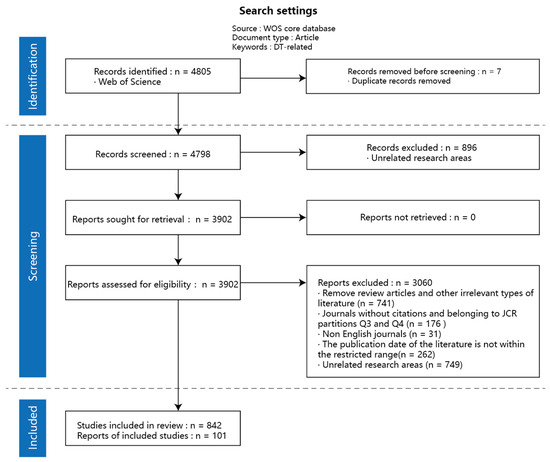
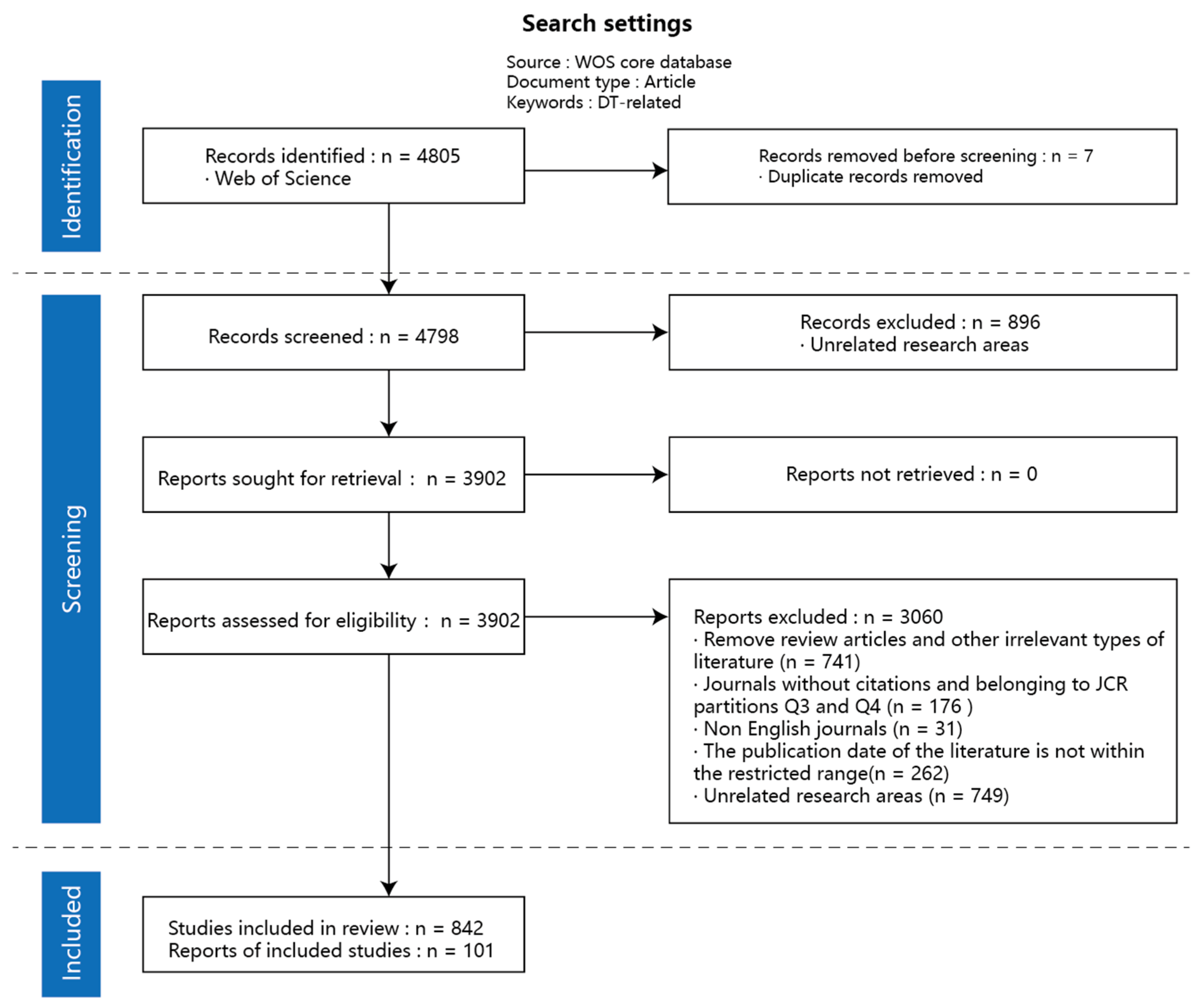
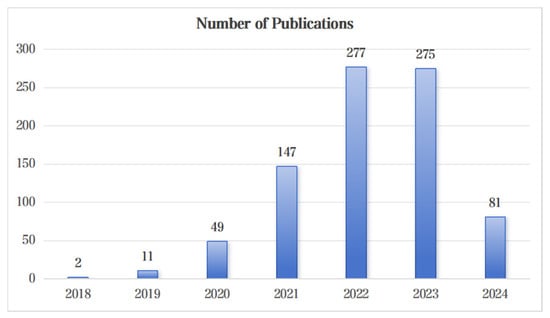
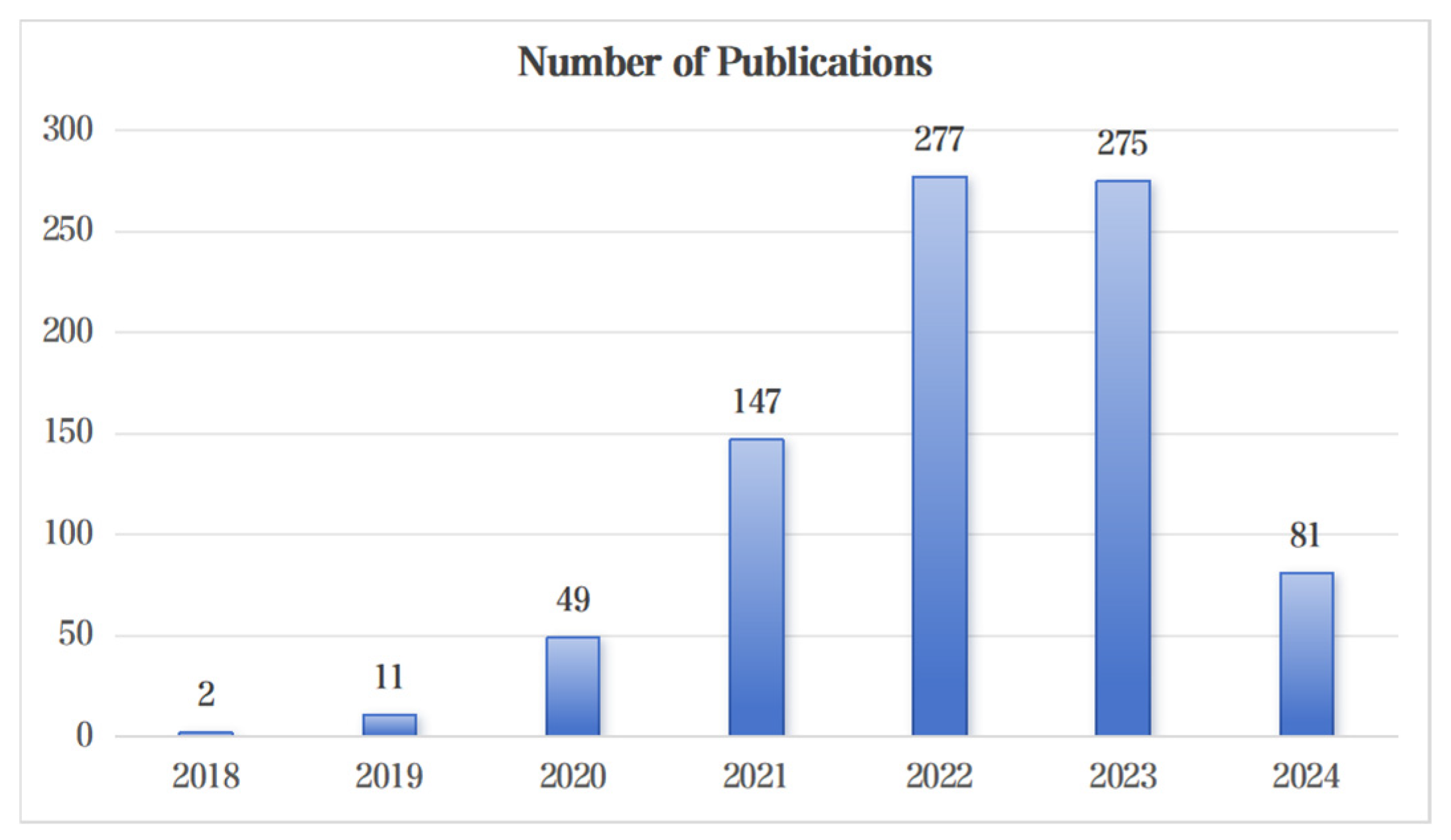
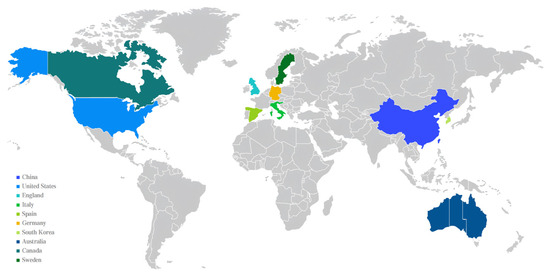
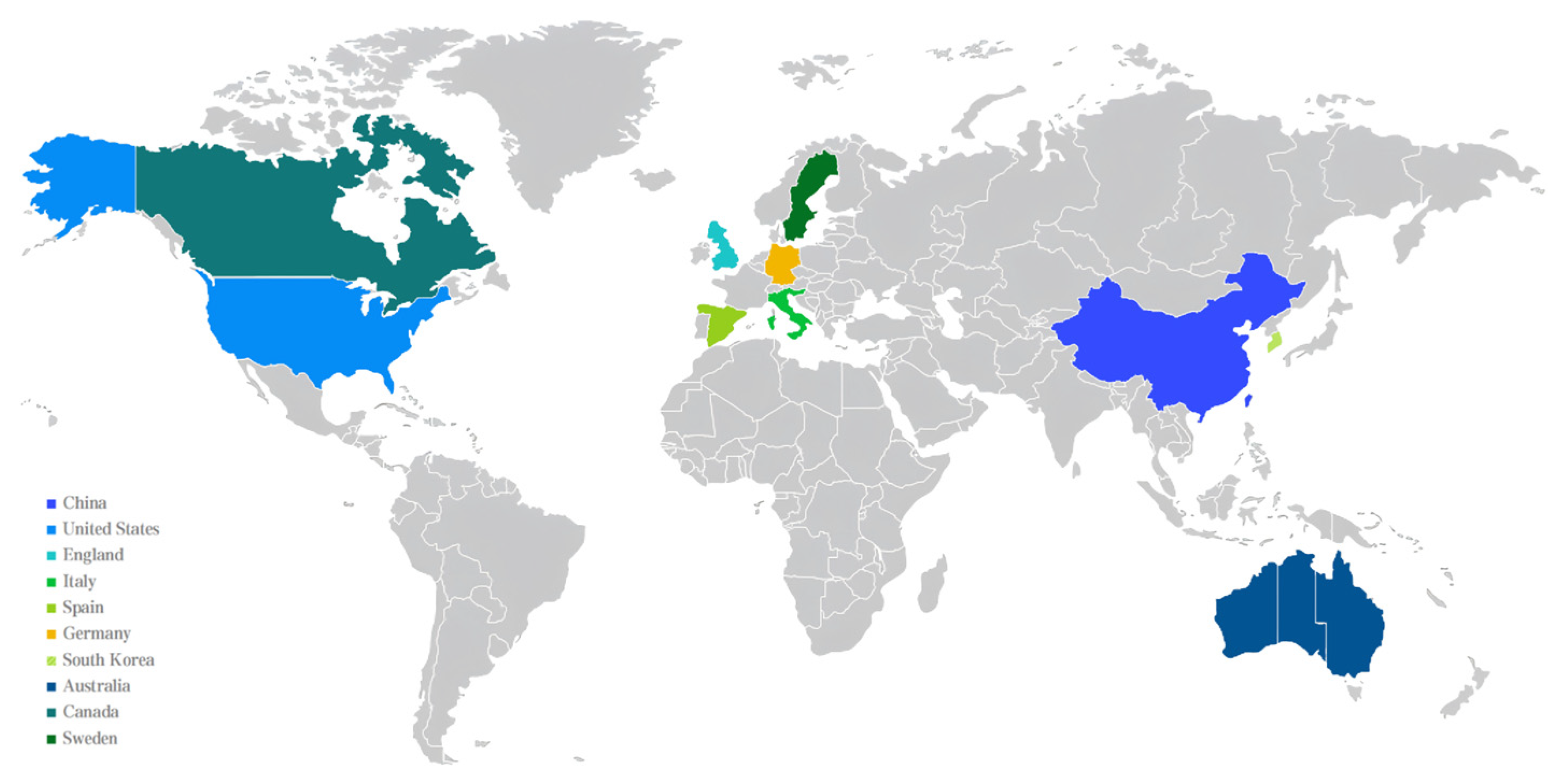
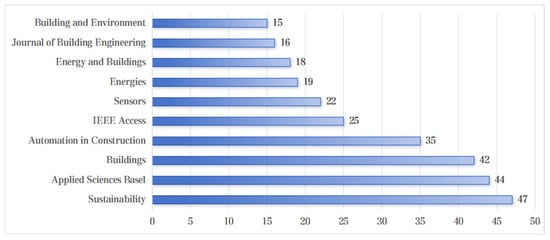
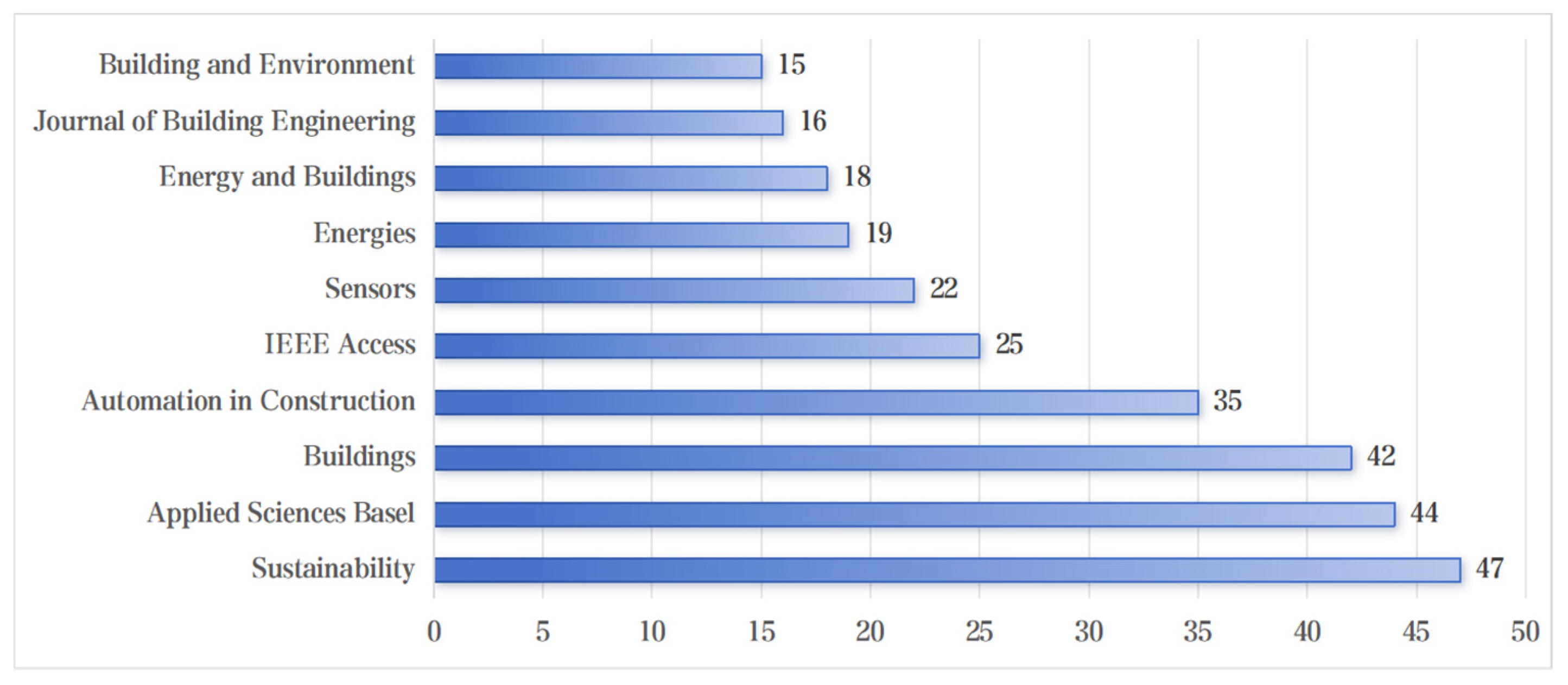
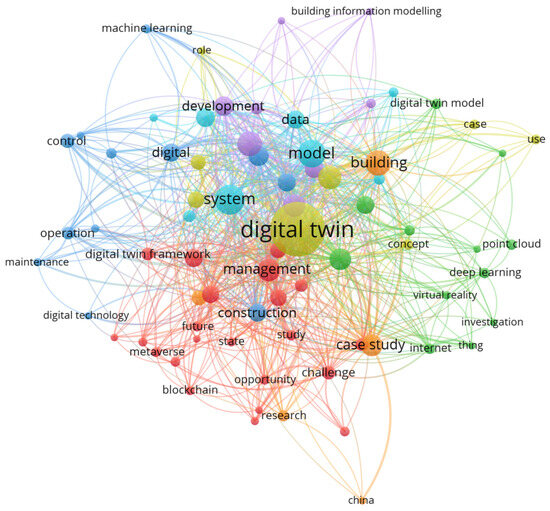
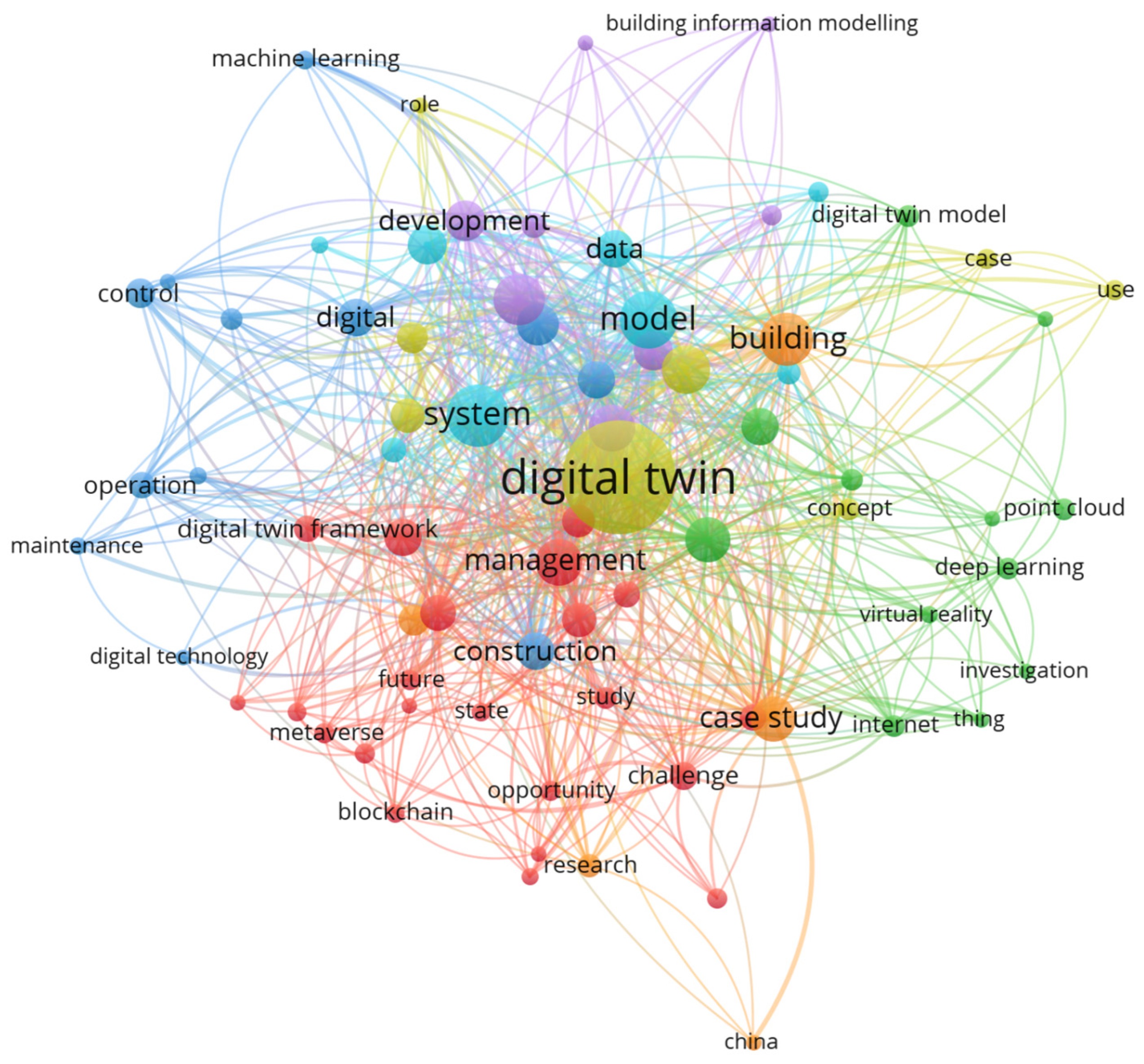
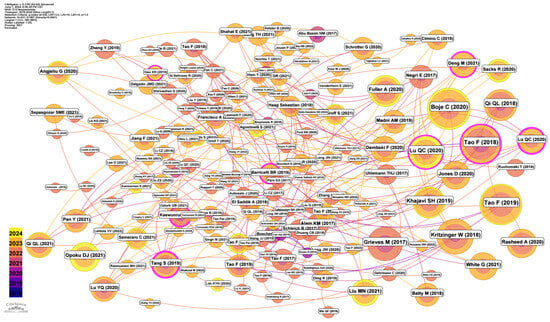
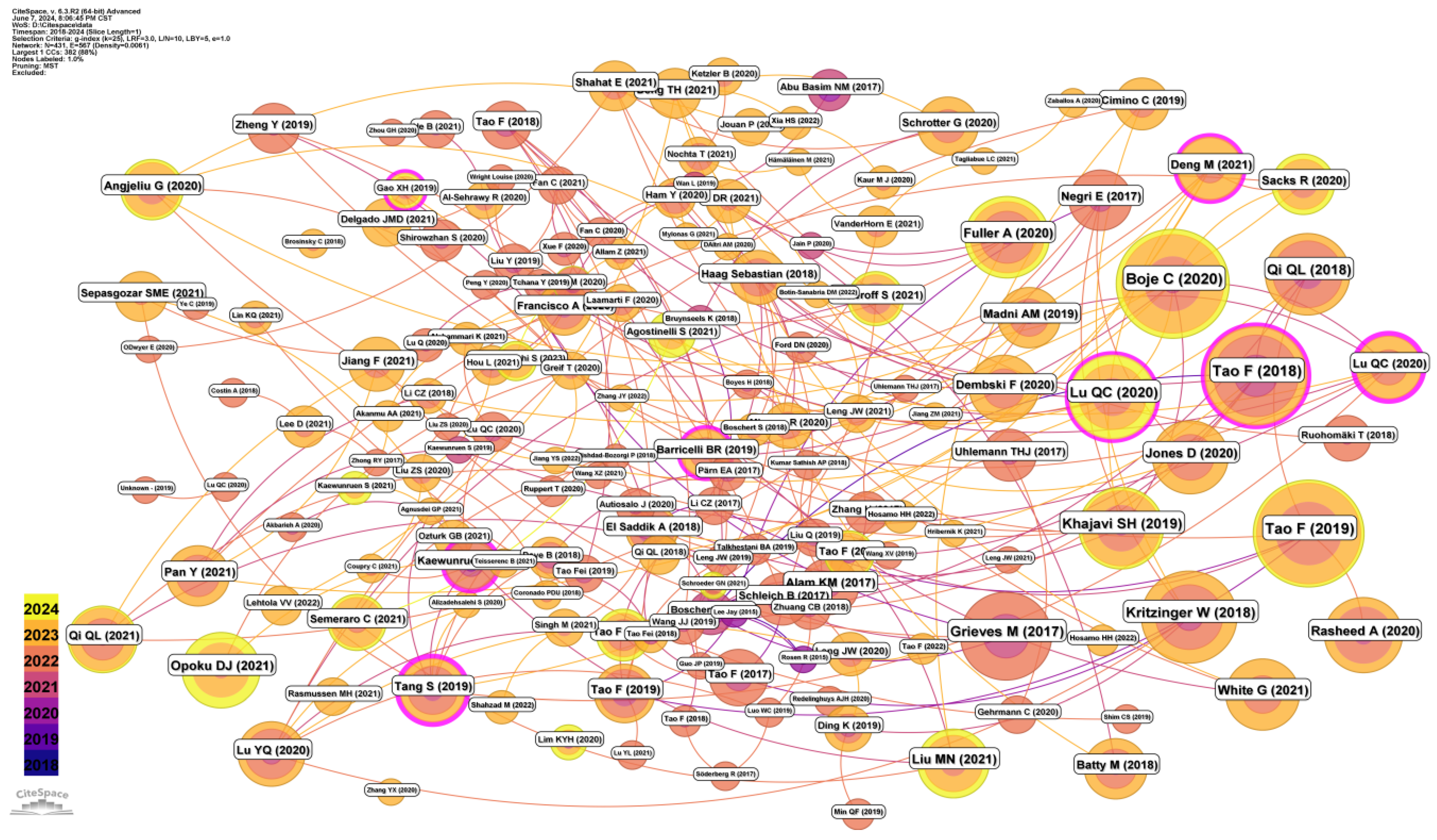
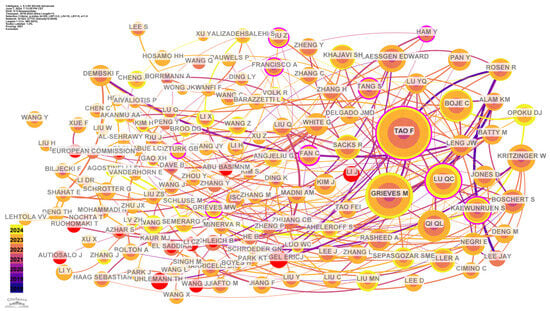
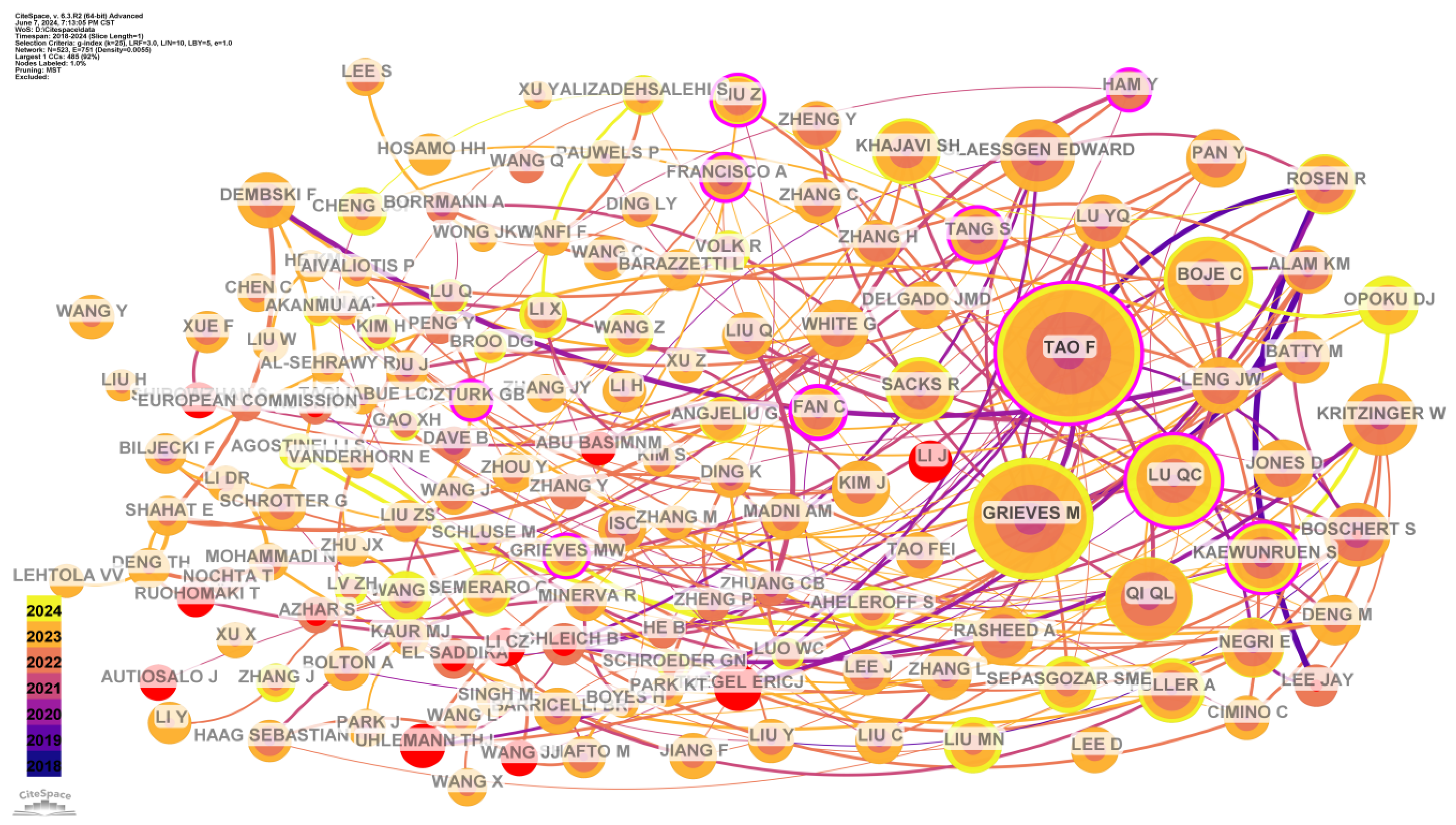
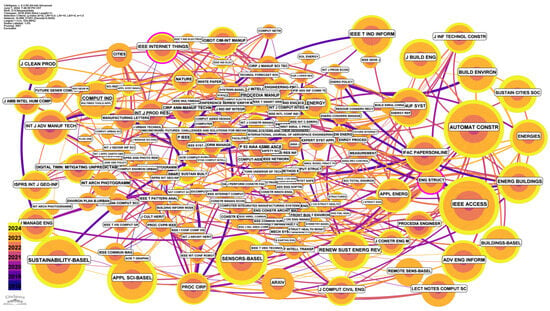
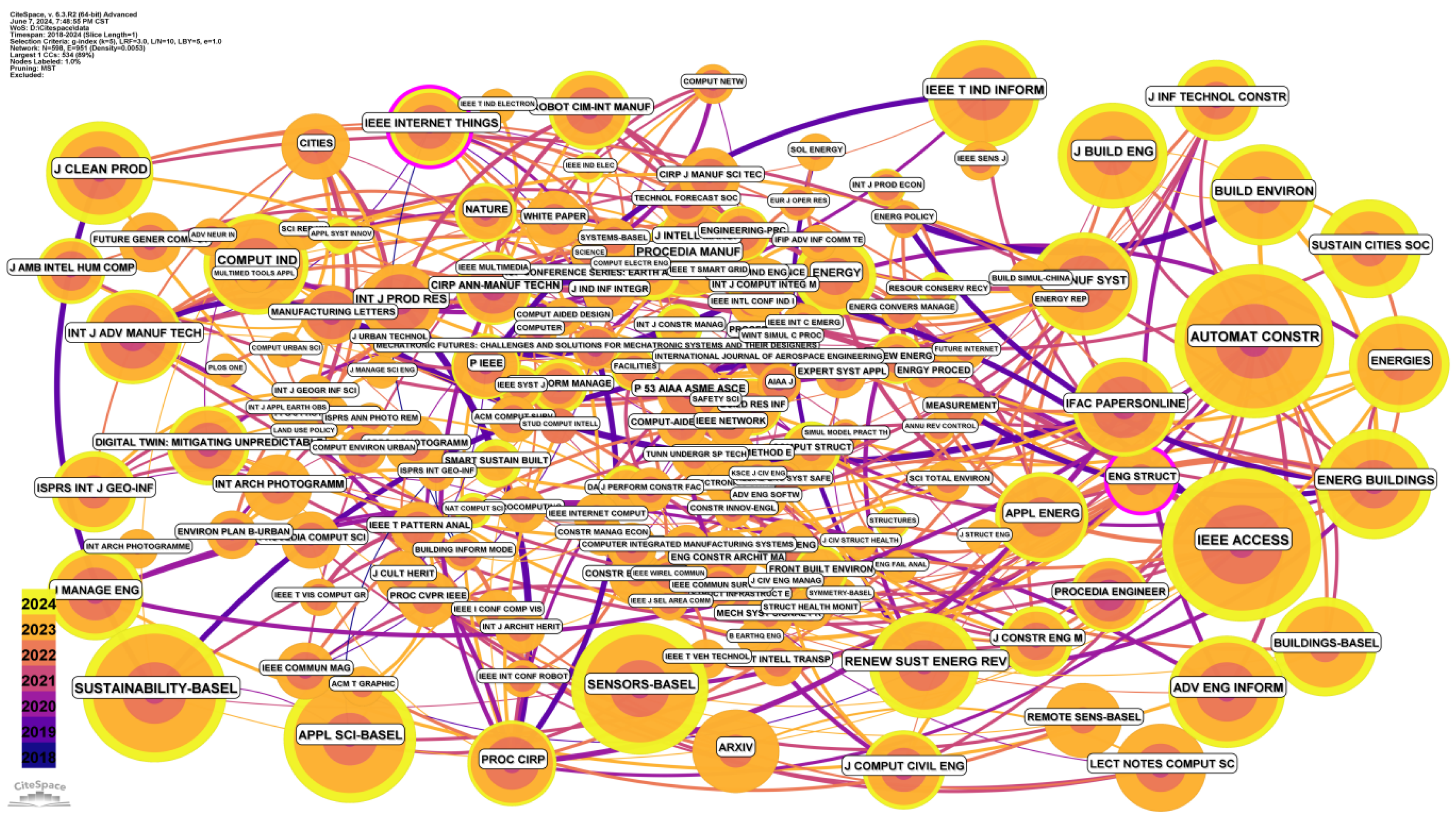

Disclaimer/Publisher’s Note: The statements, opinions and data contained in all publications are solely those of the individual author(s) and contributor(s) and not of MDPI and/or the editor(s). MDPI and/or the editor(s) disclaim responsibility for any injury to people or property resulting from any ideas, methods, instructions or products referred to in the content. |
© 2024 by the authors. Licensee MDPI, Basel, Switzerland. This article is an open access article distributed under the terms and conditions of the Creative Commons Attribution (CC BY) license (https://creativecommons.org/licenses/by/4.0/).