


Abstract
Disputes are inevitable in public-private partnership (PPP) projects and generate great losses of time and money in practice. If an in-depth understanding of dispute sources can be obtained beforehand, the process of PPP may become more smooth. This paper aims to identify and assess the causes of PPP disputes between the public and private sectors. First, 15 causes are explored based on the PPP litigation cases from China Judgments Online. Second, the Decision-Making Trial and Evaluation Laboratory (DEMATEL) method is utilized to provide a holistic understanding of the relative importance and define the cause-effect categories among PPP dispute sources. The results demonstrate that the top three decisive causes of PPP disputes are the repudiation of contracts (result category), lack of expertise and experience (reason category), and unreasonable risk allocation (result category). Further, dispute avoiding strategies are proposed to minimize or completely avoid the occurrence of PPP disputes. The outputs are expected to add meaningful insights to potential sources of dispute and dispute prevention mechanisms in PPPs. To some extent, the investors can develop strategic measures through the findings before entering into PPP markets.
1. Introduction
Public-private partnerships (PPPs) are a globally used type of financing, which brings multiple benefits for both government and public society. The involvement of the private operator relieves the government’s budgetary burden and improves public service quality due to their advanced technology and management experience [1,2,3]. After the 2007–2008 global financial crises, the adoption of PPP policy appeals to governments in almost all countries [4]. For instance, PPP or private finance initiatives (PFIs) are now being seen as a new form of risk allocation in public infrastructure projects in the UK [5]. In Australia, as opposed to the original goal of obtaining private investment, the choice of PPP procurement is mainly to achieve value for money, appropriate risk transfer, design innovation, etc., [6]. China has unique political, economic, cultural, and legal characteristics [7]. Before the 1980s, a highly centralized socialist economic system was adopted in China [8]. Infrastructure investment and construction was the sole responsibility of the government [6]. Since the reform and opening-up policy implemented in China after the 1980s, there has been a great demand for capital in Chinese infrastructure development. The government’s funds alone cannot meet the large investment needs for infrastructure construction. The investment system of infrastructure must be reformed. Thus, PPP was introduced in China to fill the financing gap. Unlike western countries, China is more conservative in procuring projects. Due to the lack of advanced technology and management in the Chinese construction industry [9], as well as the absence of a mature PPP management system (e.g., the lack of a national PPP law) [10], PPP practice in China has received much attention from scholars in recent years.
The information published by the China Public-Private Partnerships Center (CPPPC) indicated that in October 2021, 10103 PPP projects have been implemented nationwide with a total investment of 15.8 trillion RMB [11]. With the introduction and rapid development of PPPs in China, considering the complexity of this financing model, numerous problems have also emerged in Chinese PPP practice. The focus of this study is placed on the dispute between the public authority and the private partner, which is considered pivotal for causing distress and failure of the PPP projects [12,13]. Compared with traditional construction projects, PPP projects are more prone to disputes [14]. This is because of the long-term contract durations, complicated processes, multiple stakeholders with myriad interests and objectives, and high levels of uncertainty [15,16]. As published by China Judgments Online, during the period from 2013 to 2020, more than 1000 cases related to PPP projects were resolved through courts in China [17]. Nonetheless, the number of lawsuits continues to rise yearly [18].
The demand for infrastructure is now higher than ever, the successful implementation of China’s PPP projects is important to attract private investment and promote the sustainable development of the PPP financing model. Against this backdrop, it is necessary to conduct a comprehensive and in-depth investigation of the causes of PPP disputes so that both the public authority and private partner will obtain a holistic understanding of the potential dispute sources in the implementation of PPP projects beforehand. Essentially, this will help to avoid or minimize the occurrence of disputes, which can lead to huge loss of time and money.
To reach the objective, this paper identified the causes of PPP disputes through litigation cases from China Judgments Online (an official website that publishes judgment documents of courts at all levels nationwide), which was validated through expert interviews. Moreover, the Decision-Making Trial and Evaluation Laboratory (DEMATEL) method was used to assess the importance of each cause and the interdependencies of these causes. Finally, counterstrategies based on the decisive causes were explored to minimize the frequency of PPP disputes to some extent. The DEMATEL method is considered one of the most effective tools for investigating the importance and causality among elements of the system [19]. DEMATEL was chosen because of its ability to determine the interdependencies of elements in the system, meanwhile, the interrelationships among elements can be directly visualized through the cause-effect diagram [19].
This study is organized as follows. First, the literature review is discussed. Next, a total of 14 litigation cases from China Judgments Online is adopted to identify the dispute causes in the research methodology section. Meanwhile, the specific steps of the DEMATEL approach are introduced. Then the results and discussions of DEMATEL are presented. Finally, recommendations to minimize dispute occurrence based on the findings are prompted.
2. Literature Review
Considering the complexity of construction projects, the construction industry is increasingly turning to resolve disputes through the judicial system [20]. Nevertheless, there are two obvious disadvantages to addressing disputes through litigation. On the one hand, the litigation process often leads to long time costs [21]. Due to the complexity of PPP projects, dispute settlement becomes more difficult. According to the court documents published by China Judgments Online, the duration may last 1 to 5 years from acceptance to trial of the PPP lawsuits [18]. On the other hand, the prolonged, detailed investigation makes litigation costs very high [22]. It is expensive to hire a team of professional lawyers who specialize in the PPP field. What are the main root causes of PPP disputes? How to avoid PPP disputes, and even avoid them entering into the litigation process? This study aims to find answers to these questions.
2.1. Potential Dispute Causes in PPPs
Various failures and unforeseen risks are inevitable in PPP projects due to the long-term agreement and high levels of uncertainty [18]. Both the government and the private partners attempt to resolve the problem through renegotiations or other rational manners rather than immediately embroil in disputes. If the contradiction is not properly handled and solved, then disputes may occur. A considerable number of PPP disputes will destroy the private partner’s investment confidence and generate great losses, which is harmful to the sustainable development of PPPs [23].
Therefore, this study is closely related to two aspects of research. On the one hand, the risks and how to allocate in PPP agreements were the focus of past studies. Numerous researchers identified a variety of risks, such as political risk, legal risk, exchange and revenue risks, demand risk, environmental risk, and operational risk [24,25,26,27,28,29]. Ke et al. [26] conducted a detailed comparative study to illustrate the risk allocation preference among mainland China, Hong Kong Special Administrative Region, UK and Greece.
On the other hand, the prior literature mentioned factors influencing failure, renegotiation, and early termination of PPP projects. Chan et al. [30] put forward the potential obstacles to conducting PPP projects in mainland China and Hong Kong Special Administrative Region and the results showed that the top three obstacles were lengthy delays in negotiation, inadequate experience and skills, and lengthy delays because of political debate. Then the critical success factors for implementing PPP projects from Chinese perspective were also investigated [31]. These factors were classified into five decisive factors: stable macroeconomic environment, shared responsibility, competitive procurement process, stable political and social environment, and judicious government control. Cruz and Marques [32,33] extracted the exogenous and endogenous determinants that lead to PPP project renegotiations in Portugal. The findings concluded that demand below forecast, delays in expropriation, force majeure, etc., were the main exogenous causes for renegotiations, whereas the risk-sharing agreement, contract clauses, and key performance indicators (KPIs) were the key endogenous factors for renegotiations. Through the case study method, Song et al. [34] identified several factors influencing early termination and divided them into four categories: government default factors, private sector default factors, joint default factors, and nondefault factors.
2.2. Use of DEMATEL Methodology
The DEMATEL technique was first developed by the Geneva Research Centre of the Battelle Memorial Institute to illustrate the causal relationships among various elements and determine the importance of each element in the system [35,36]. It is a comprehensive method using causal relationship matrices or digraphs to establish a structural model and portray cause-effect relationships between systems components [37]. Although other evaluation techniques, such as interpretative structural modeling (ISM) or the analytical hierarchy process (AHP), may also be used, the DEMATEL approach has its obvious advantages [38]. First, this method allows for broader discrimination for measures of evaluation (ISM only has 0–1 levels) and multiple directional relationships (AHP has a unidirectional relationship and multiple separate matrices requiring integration). Further, without the need for large amounts of data, the DEMATEL approach can reveal the interrelationships between various criteria in social science problems [39]. According to Chileshe et al. [40], small data in qualitative research can still be performed to generalize meaningful findings because the study value is based on the quality rather than the quantity of data.
This method has been used successful in quantifying interactions among research factors in various domains, including construction management. Hiete et al. [41] indicated the interrelationships between the criteria of building rating systems in terms of sustainability. To improve the performance of suppliers in carbon management, Hsu et al. [42] recognized the influential criteria of carbon management in the green supply chain through the DEMATEL approach. Costa et al. [43] used the DEMATEL technique to provide a new understanding of the barriers to improve the customer-supplier relationship in construction supply chains by showing cause-effect relationships among these barriers. Dwijendra et al. [44] identified the most important and influential social impacts of high-rise buildings during the post-occupancy phase using the DEMATEL method.
In practice, PPP dispute is not caused by a sole reason but a combination of multiple reasons. By using the DEMATEL method, the public authority and the private sector can acquire a holistic understanding of the relative importance and relationships among PPP dispute causes. Then the key causes should be addressed to facilitate the sustainable development of PPP projects. Thus, DEMATEL is more suitable for analyzing and identifying the decisive causes of PPP disputes.
2.3. Knowledge Gap
A significant amount of studies have made great efforts on the causes of construction disputes [45,46,47,48,49]. Nevertheless, these studies and findings have mainly focused on the traditional bid-build projects, few studies have been conducted to investigate the causes of disputes between public and private sectors in PPPs. Moreover, the studies about the failure of PPP projects mainly identified the factors or risks that trigger renegotiation or early termination in PPP projects. However, these risks or factors cannot be straightforwardly treated as equal to the sources of PPP project disputes. Considering the rapid development of PPP in China, the potential sources of PPP disputes are still unclear, which brings great resistance to the implementation of PPPs. In addition, PPP dispute avoiding mechanisms have also caught little attention in existing literature.
To fill these knowledge gaps, this paper intends to explore the causes of PPP disputes using litigation cases from China. Furthermore, the root causes are identified using the DEMATEL method to obtain the appropriate dispute prevention measures. Essentially, the findings of this paper will contribute to providing effective information for potential Chinese or international investors to ensure their successful practices in PPP projects. Furthermore, the research results will set a solid foundation for the hypothesis formulation of the empirical studies of PPP disputes in the future.
3. Research Methodology
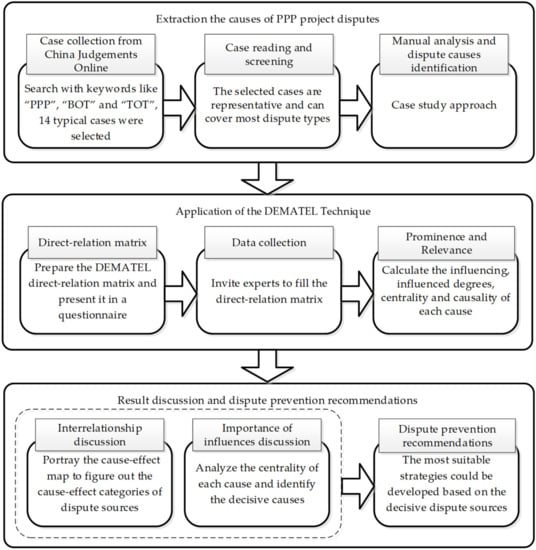
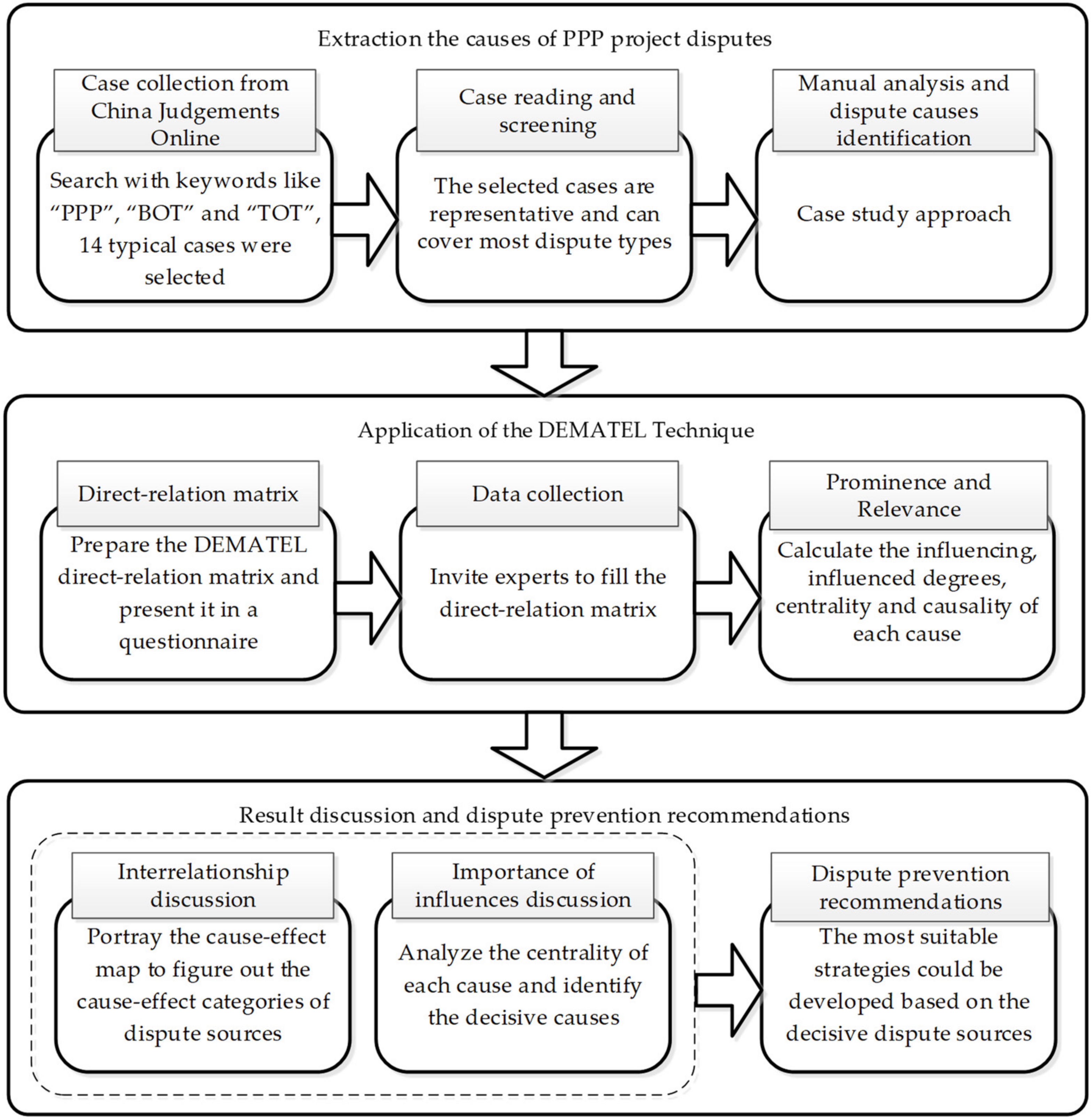
The aim of this paper is devoted to identifying the causes of PPP disputes between public authorities and private partners based on the multi-case study method. Then the DEMATEL model is developed to analyze the interrelationships among all causes and evaluate their importance. Furthermore, disputes prevention strategies are proposed based on the decisive causes. which can be helpful to minimize the possibility of disputes occurrence. The methodology is presented in Figure 1.
Figure 1.
Research methodology.
3.1. Identification of Dispute Causes Based on Cases
3.1.1. Case Study
The case study method is an effective tool in many disciplines. It has been widely used in the domain of identifying significant factors impacting the key issues of the PPP pattern. For instance, Chen [50] identified the factors impacting the re-applicability of a pilot Build Operate Transfer (BOT) project towards future projects based on the experience from Chengdu No. 6 Water Plant B Project. Martins et al. [51] used the PPP projects of wind power plants to illustrate the application of a PPP mode in Portugal. Cruz and Marques [32] investigated the exogenous determinants for PPP renegotiations in Portugal on a real database of 87 concessions. Song et al. [34] identified the factors influencing early termination of PPP projects based on case studies, and Zheng et al. [18] analyzed the litigation cases to extract the main events that trigger PPP project disputes in China. Almost all the scholars indicated that case study is an effective method to support this research.
3.1.2. Case Selection
Litigation is the extreme manifestation of the dispute between the two parties, and can best reflect the core characteristics of the dispute. Therefore, the PPP lawsuits from China Judgments Online were selected for this research.
The criteria for selecting cases are as follows: (1) the plaintiff and defendant in the litigation are the public and private sector, excluding financing institution, contractor, material supplier, etc.; (2) the selected cases are not in the appeals process and the judge’s decision is final, which ensures the real situation and root causes of disputes can be accurately analyzed and identified from the cases; (3) the types of cases are comprehensive and involve sewage treatment, gas supply, water supply, transportation, etc. In this regard, a total of 14 litigation cases (as shown in Table 1) were selected to identify the dispute causes.
Table 1.
Process used to identify causes for PPP disputes.
3.1.3. Identification of PPP Dispute Causes
To reveal the vital events and causes behind the disputes, elements such as the facts of cases, PPP contract terms, the focus of controversy, and the court judgment have been deeply analyzed. To better explain the logic, the extraction process is presented in Table 1. Table 1 contains the disputes’ basic information (column 3), the court judgment made by judges (column 4), direct dispute events (column 5), and dispute causes behind the dispute events (column 6). Furthermore, the expert review was carried out to seek professional cognizance (the interview was conducted simultaneously with expert scoring in Section 3.3). The theme of the expert review is to eliminate the inappropriate causes and supplement important causes based on the identified causes. As a result, 15 causes that triggered PPP disputes between public authorities and private partners were extracted. Table 2 summarizes these 15 causes and introduces their description.
Table 2.
The causes of PPP disputes and description.
3.2. DEMATEL Technique
The DEMATEL method is an effective tool to explore the essential features of problems, which will be helpful to support managers to make decisions and generate countermeasures to solve certain problems [52]. The specific steps of the DEMATEL approach are introduced as follows:
Step 1: Generation of original average matrix
First of all, the binary influencing relations and the relations’ strength among elements in the system need to be investigated. In this study, the degree of direct influence of dispute cause on is represented by , which is divided into five levels with the scores of 4, 3, 2, 1, and 0, namely, “strong influence”, “relatively strong influence”, “moderate influence”, “weak influence”, and “no influence”, respectively. The direct influence degree among different PPP dispute causes is obtained by asking experts to assign scores in accordance with their expertise and PPP project experience. Then the original average matrix is found by averaging all the experts’ scores. The matrix can be expressed as Equation (1):
Step 2: Normalized initial direct-relation matrix
The normalized initial direct-relation matrix is calculated by normalizing the average matrix through Equations (2) and (3):
The sum of row in matrix , , means the total direct effect of cause on other causes, , means the highest total direct effect produces other causes. Analogously, represents the maximum value the total direct effect receives from other causes. The positive scalar takes the larger of the two values, and the normalized initial direct-relation matrix can be obtained by dividing each element of the original average matrix by [53]. The value of each element of matrix is between 0 and 1.
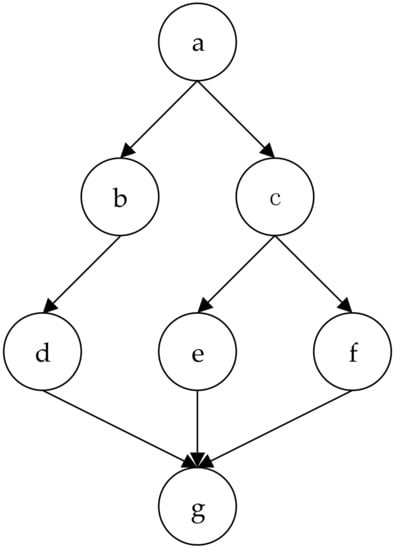
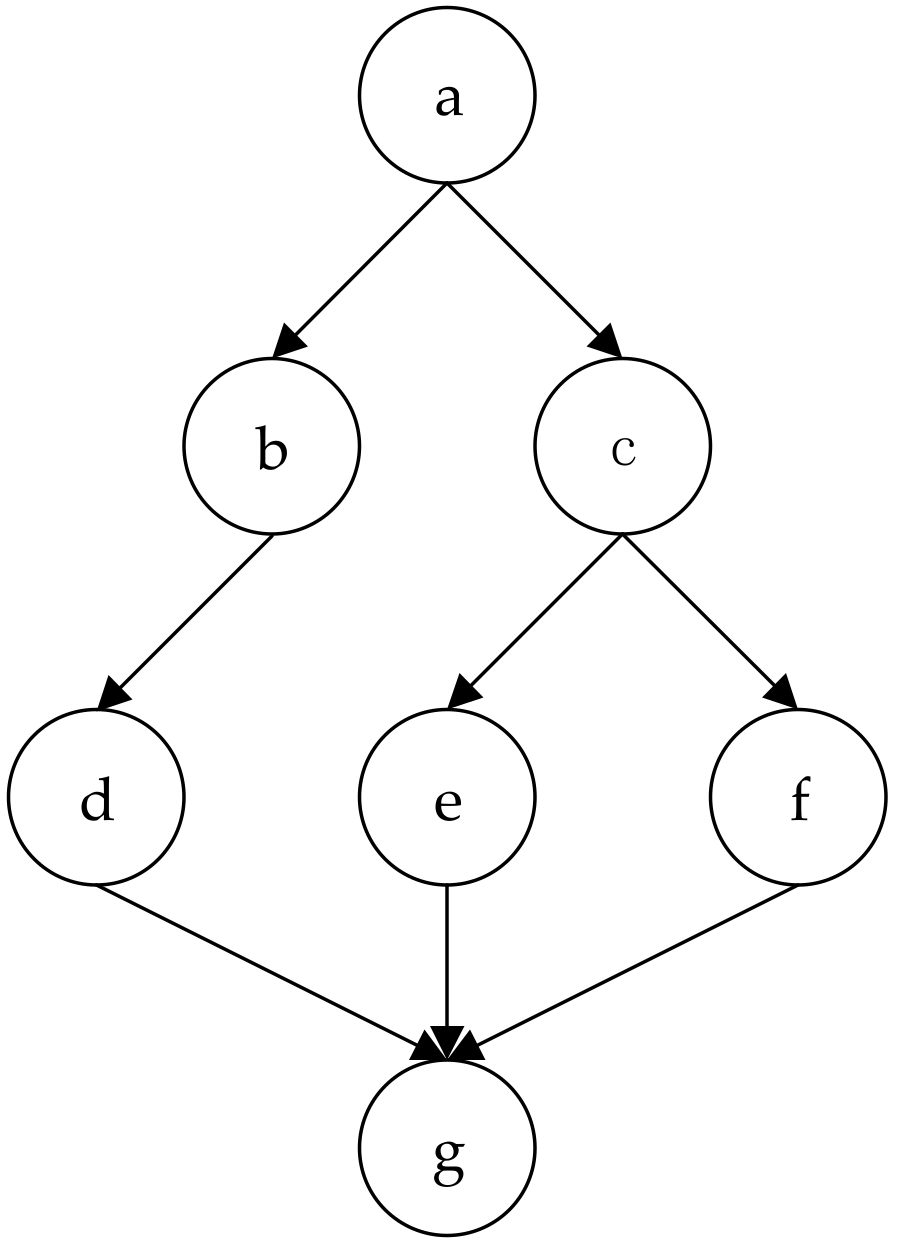
Based on the normalized direct-relation matrix , the initial effect an element exerts and receives from another is determined [54]. Each element in matrix portrays a relationship among all of the elements in the system and can be converted into a visible impact-digraph-map [54]. For example (as shown in Figure 2), the experts are asked to evaluate only the direct effect. In the directed digraph graph, element directly influences elements and ; indirectly, it also affects first , , and and, secondly, [54]. Therefore, the visible map based on the normalized direct-relation matrix helps to understand the structure of elements in the system.
Figure 2.
An example of direct graph.
Step 3: Total relation matrix
The power of the normalized initial direct-relation matrix , , which is called -indirect influence, can be used to indicate the effect of length [53]. The direct influence of problems can be gradually diminished by , , …, , to guarantee convergent solutions to the matrix inversion [55]. For example, in Figure 2, the influence of element on element is smaller than element on element , and again smaller than the influence exerted on element [54]. By using the infinite series, the full direct and indirect effects of each element can be illustrated. Therefore, the total relation matrix can be obtained by summing up , , , …, , as shown in Equation (4), where I = an identity matrix.
Step 4: The influencing and influenced degrees
The row sums () of the total relation matrix T means the overall direct and indirect influence dispatching from cause to other causes. Analogously, if each column in the total relation matrix is added (), the overall direct and indirect influence that cause receives from other causes can be obtained. In other words, represents the influenced degrees of cause by other causes, whether direct or indirect.
Step 5: The centrality and causality
Based on Equations (5) and (6), the centrality of dispute cause and causality of cause are determined by using Equations (7) and (8):
The sum () represents the overall influence both exerted and received by the cause i. It indicates the degree of the importance that the cause plays. The larger the value of () is, the more important cause i is among all of the dispute causes. Additionally, the difference value of () determines the net effect that the cause contributes to the system. If the causality is a positive value, then cause plays a causal role in triggering other causes. If is a negative value, then cause is affected by other causes [54].
Step 6: Draw the cause-effect diagram
The total-relation matrix provides information on how one cause influences another. Furthermore, the cause-effect diagram which explains the causal relationships among PPP dispute causes can be portrayed based on the total-relation matrix . To keep the complexity and avoid over-complications when drawing the cause-effect diagram, an appropriate threshold value needs to be set to filter out negligible effects in matrix [55]. Generally, the sum of the mean and standard deviation of the total-relation matrix T is established as the threshold [43].
Therefore, the centrality () is set as the abscissa and the causality () is set as the ordinate, the cause-effect diagram can be acquired by mapping a Cartesian coordinate system with two quadrants. The positions of different dispute causes can be marked in the cause-effect diagram, which will be helpful to provide valuable insights for analyzing the complicated causal relationships of the PPP dispute causes.
3.3. Data Source
An empirical questionnaire was conducted to determine the relative importance and the interrelations among the PPP dispute causes (Table 2) under the guidance of the application steps of the DEMATEL method. The respondents were requested to rate the influencing degree of cause on within their jurisdiction with the standards of five-point Likert items (0 = no influence, 1 = weak influence, 2 = moderate influence, 3 = relatively strong influence, and 4 = strong influence). A total of 16 respondents with different perspectives of PPP projects from government departments (public sectors), former private investors, academic organizations, management consultancies, financiers, law firms, and so on agreed to take part in the study. All of them are experts or researchers who have hands-on experience in PPP projects to ensure the quality of data. They were investigated and interviewed via face-to-face meeting and/or email. Through the method introduced in the first step of Section 3.2, the evaluation scales assigned by experts were aggregated to form the original average matrix. The experts’ profiles are shown in Table 3.
Table 3.
Profiles of the experts.
According to Lindstrom [56], when analyzing the causes of specific problems, a small size of the data still dominated for further analysis. Meanwhile, similar studies have been conducted through the DEMATEL method to identify and analyze the relative importance of factors for a problem. For example, Zhang et al. [57] received 20 questionnaires, whereas Costa et al. [43] obtained 8 responses from Brazil and Italy. Therefore, the samples are considered satisfactory to draw meaningful conclusions because the 16 respondents are all knowledgeable and practiced on PPP.
4. Result Analysis and Discussion
4.1. Results
MATLAB (version 2015b), a high-performance programming language, was used in this study for calculating the models. According to the aforementioned design steps of DEMATEL, the calculation process is shown as follows:
Step 1: Original average matrix
Based on Equation (1), the original average matrix of the relations among PPP dispute causes from the respondents’ opinions was calculated and presented in Table 4.
Table 4.
Direct-relation matrix.
Step 2: Normalized initial direct-relation matrix
As per the calculation methods of Equations (2) and (3), the normalized initial direct-relation matrix is obtained and shown in Table 5.
Table 5.
Normalized matrix.
Step 3: Total relation matrix
According to Equation (4), the total relation matrix is defined based on normalized initial matrix and shown in Table 6.
Table 6.
Total relation matrix.
Step 4: The influencing and influenced degrees
Within the total-relation matrix , the influencing degree () and influenced degree () can be separately obtained through Equations (5) and (6), as shown in Table 7.
Table 7.
The degree of centrality and causality.
Step 5: The centrality and causality
The centrality () and causality () can be directly obtained based on the value of F and E. The results are arranged in Table 7. The centrality () reflects the prominence or importance of the influences of the dispute causes in the complicated system [58]. Meanwhile, the dispute sources are also categorized into a reason group and a result group accordingly based on the values of causality ().
Step 6: Set a threshold and the cause-effect diagram
To explain the relationship among the PPP dispute causes more clearly, a cause-effect diagram is necessary to show adequate information for dispute prevention and resolution. The threshold value 0.13 was obtained by adding one standard deviation to the mean of the total matrix T (Table 6). Values in the total matrix T higher than the threshold value (0.13) are shown in bold in Table 6. For example, the value from the second row and the fourth column is 0.18, which means that C2 will affect C4.
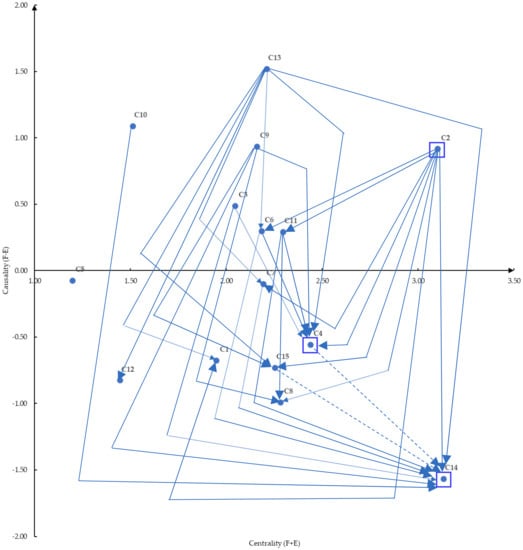
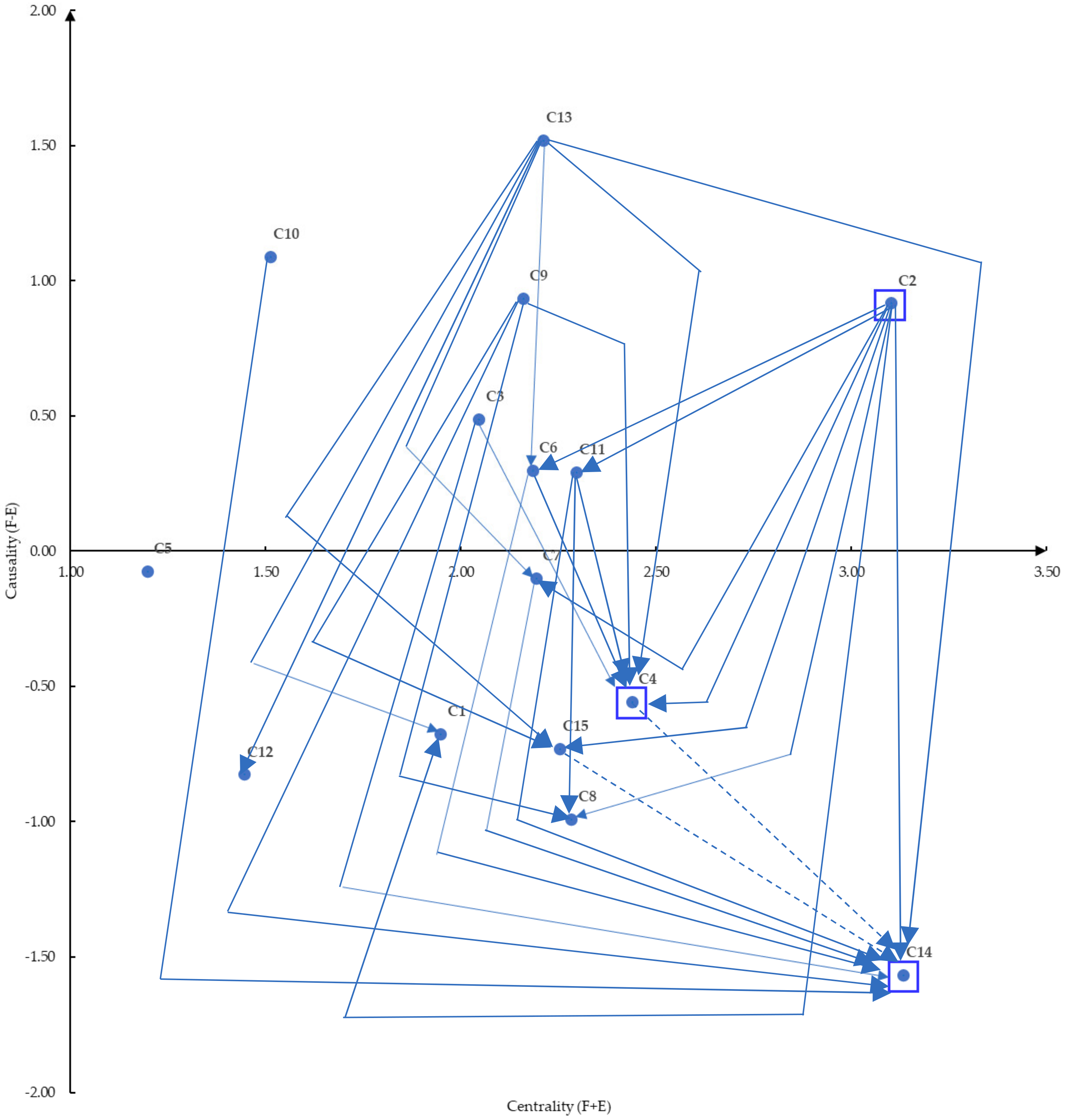
Finally, the prominence and cause-effect diagram is drawn in Figure 3. The lines with arrows mean the direction of the relationships among causes have matrix values higher than the threshold value (0.13). The dotted lines with arrows indicate the dispute sources of the result category influencing others.
Figure 3.
Prominence and cause–effect diagram.
4.2. Discussion
The influencing and influenced degrees, centrality, causality (Table 7), and the cause-effect diagram (Figure 2) provide a comprehensive view of analyzing the importance of PPP dispute causes from different perspectives. First, previous studies have demonstrated that the centrality () reflects the importance of a factor in the system [41,46]. Further, in the first quadrant, the dispute causes with positive values of causality () belong to the reason group; whereas in the fourth quadrant, the negative values () signify that the causes are regarded as the result group [23,57].
Considering there are a total number of 15 dispute causes extracted in this study, only the top three causes from different perspectives were selected to represent the decisive causes. This approach is consistent with other similar studies [44,59,60].
4.2.1. Dispute Sources of The Reason Category
As shown in Figure 2, in the first quadrant of the coordinate plane, the causality of C2, C3, C6, C9, C10, C11, and C13 is higher than zero, which indicates that these potential dispute causes are extremely possible to influence the occurrence of other dispute causes, then the combination of them leads to a dispute. In Figure 2, considering the rankings of the influencing degrees (), the top three causes are C2 (lack of expertise and experience), C13 (inadequate investigation and preparation), and C9 (unexpected changes), which influences eight, seven, and four other causes, respectively.
C2 (lack of expertise and experience) influences the biggest number of other causes. The results are not surprising because several studies in China have demonstrated that the lack of adequate knowledge, skills, and experience in PPPs often leads to many problems, even disputes [13,61]. In China, many local government authorities do not have enough experience and they also fail to introduce some professional talents to provide service and guidance for the decision-making process. As a consequence, it is very possible for governments to make wrong decisions, such as excessive or unrealistic guarantees, ambiguous contract design, and inaccurate demand forecasts. Further, these decisions may become the fuse of disputes. For instance, to attract the private sector’s investment, a high financial subsidy tends to be promised by the government. Once the revenues are not up to the expectations, the governments are forced to provide huge subsidies according to the contract [34]; whereas insufficient financing capacity will lead to a repudiation of contract and eventually result in lengthy disputes [60].
The influencing degrees () of C13 (inadequate investigation and preparation) is ranked second with scores of 1.86. Throughout the life cycle of PPP projects, preliminary investigation plays a determining role in a successful PPP project because it directly relates to entire steps in PPP project development and implementation. Inadequate preparation often includes inadequate site investigation, insufficient market research, an unreasonable compensation plan for displaced persons, and so on [13,34,62]. For example, if the project is located in areas with sensitive targets, such as ecological resources, historical and cultural sites, or large communities, for one thing, it is impossible to obtain the official approvals; for another, nearby residents will adamantly resist the construction of PPP projects, especially the sewage treatment plant and waste treatment plant, because they believe their health and asset values will be threatened. The cases of the Mianyang Underground Space Development Project and Dengfeng Ludian Sewage Treatment Plant in Table 1 explained the formation of a dispute due to inadequate site investigation.
The influencing degree () of C9 (unexpected changes) is ranked third with scores of 1.55. Previous studies have also proved that the unexpected changes in China, such as law and regulatory changes, tariff changes, market demand changes, nationalization, and so forth, is one of the primary causes of PPP dispute [18,34]. These changes would have a serious impact on project revenue, award process, and financing. On the one hand, the juristic system of PPP development and implementation is still immature in China. At present, there is no national PPP law with absolute authority in China, which cannot provide a good investment environment for private sectors [34]. With the implementation of the PPPs, more and more new problems will appear, which will be followed by the adjustment of laws and regulations. A common example is the cancelation of excessive guarantees. On the other hand, with Chinese rapid economic development, both governments and private sectors do not always form accurate forecasts about urban development due to bounded rationality and information asymmetry. Therefore, unexpected changes are inevitable and have hidden hazards on PPP implementation.
4.2.2. Dispute Sources of The Result Category
In the fourth quadrant of the cause-effect diagram (Figure 2), the influencing degrees of C1, C4, C5, C7, C8, C12, C14, and C15 are lower than zero, demonstrating that the occurrence of these causes is very susceptible to the causes in the reason category. Among those, C14 (repudiation of contract) and C4 (unreasonable risk allocation) are the most prominent.
C14 (repudiation of contract) is most impacted by other causes, indicating that it can be considered the main consequence. For example, the absence of enough experience and knowledge (C2) often leads to a skimpy understanding of the contractual duties and obligations [30,61]. Eventually, the improperly performing of contracts lead to a breach of contracts [13,34]. The collaborative relationship between public and private sectors would be destroyed or seriously damaged by the repudiation of contract. Whereas the relationship proved to be the critical factor for the success of a PPP project [63]. For governments, the common repudiation of the contract includes payment default, construction of competitive projects, absence of supportive infrastructure, and delays in expropriation [18,32]. For the private sector, unqualified public service and capital chain rupture occur more frequently.
C4 (unreasonable risk allocation) is influenced by the second biggest number of other causes. The prevalent principle of risk allocation is that risks should be allocated to the party best able to manage them and at the least cost [64]. The contract theory enforces the idea that an unfair risk allocation agreement tends to be disputed more often [18]. For instance, Ke et al. [26] conducted a questionnaire survey and the results showed that the risk of “project approvals and permits” tends to be assigned to the public authority. In the case of Yichang Waste-to-Energy Power Plant (Table 1), the contract stipulated that the private partner is responsible for all the approval procedures of the project. Obviously, it is unfair because the approval risk is supposed to be the responsibility of the government. Undoubtedly, if both parties to the contract are inexperienced, it is easy to make an incorrect assessment of their ability to deal with the risk. Analogously, unreliable feasibility studies (C6), inadequate investigation and preparation (C13) and poor financial affordability (C11) can also cause unreasonable/unfair risk allocation.
4.2.3. Analysis of Centrality
From Table 7 and Figure 2, the top three causes are C14 (repudiation of contract), C2 (lack of expertise and experience), and C4 (unreasonable risk allocation) in terms of centrality (). The more value of centrality, the more decisive the cause is because centrality depicts the prominence or importance degree of each cause [65]. Considering the overall influencing degrees () and influenced degrees (), these three causes have the greatest impact on PPP disputes in China. Thus, the findings from the DEMATEL method will be helpful to provide effective strategies to avoid or reduce the occurrence of PPP disputes.
5. Recommendations
Based on the major findings of this study, some significant strategies or implications are provided in Table 8 for both the governments and private partners to prevent or minimize the occurrence of disputes in PPP agreements.
Table 8.
The results and recommendations.
6. Conclusions
This paper recognized the specific causes of disputes in PPPs by means of the multicase study. Through a deep analysis of the document from the judgment, 15 causes were extracted and illustrated. The DEMATEL method was used to reveal the prominence and causal relationship among these causes. Experts with hands-on experience in PPP projects were invited to assign scores to evaluate the direct influence among different PPP dispute causes. By using the DEMATEL technique, the 15 causes were divided into the reason and result groups. Results showed that the top three dispute sources in the reason category are lack of expertise and experience, inadequate investigation and preparation, and unexpected changes. Meanwhile, the most influenced dispute sources in the result category are the repudiation of contract and unreasonable risk allocation. Considering the overall reason and result effect of each cause, the PPP dispute in China is mainly caused by the repudiation of contract, lack of expertise and experience, and unreasonable risk allocation.
The findings are not surprising because many local governments in China do not have enough in-depth knowledge and skill in PPP practices; therefore, incorrect decisions, unfair risk-sharing schemes, and unrealistic promises are often made by the governments, which result in the breach of contracts. To minimize dispute occurrence, both government and private partners need to strictly obey the contract and fulfill their duties and obligations. For the public sector, the establishment of a lifelong liability mechanism and the raised default cost in the contract will contribute to reducing the default. For the private sector, incentive and punishment mechanisms are proposed to avoid improper operation. Further, both the public and private sectors should conduct a detailed risk assessment and draw a reasonable risk allocation by mutual consent.
In summary, this study contributes to significant information on PPP disputes. First, it explores the potential sources of PPP disputes in China based on the actual litigation cases. This set of causes enriches the researches relevant to PPP disputes. Second, the DEMATEL method is an efficient technique to reveal the prominence and causal relationship among dispute causes. Finally, the proposed recommendations can help both the public and private sectors to prompt effective dispute-avoiding strategies before signing PPP agreements. Although this study reveals the specific dispute causes using litigation cases in the Chinese context, the outputs still provide adequate theoretical guidance for understanding the possible sources of disputes in PPPs. The research results can be used for the hypothesis formulation of empirical studies in the future.
However, this study is subject to several limitations. First, most PPP projects in China are still in the preparation, procurement, or construction stage, they have not yet entered the period of a large-scale outbreak of disputes. With the gradual increase in the number of dispute cases, potential research about PPP disputes in a particular industry or a particular phase would be worthwhile. Second, the list of dispute sources is not exhaustive because few studies have investigated the root causes of disputes in PPPs. It is therefore suggested that the current list of dispute causes need to be enhanced in the future. Third, although the interviewees with rich experience in PPP projects were invited to ensure the quality of data, there is still a factor of human subjective influence on the results of the experiment. Future research that involves more objective cases or data may provide a more scientific understanding of PPP disputes.
Author Contributions
Conceptualization, X.Z. and Y.L.; Data curation, X.Z., Y.L., R.S.; Formal analysis, X.Z.; Investigation, X.Z., R.S., J.T.; Methodology, X.Z., R.S., J.T.; Software, Q.Y.; Writing—original draft preparation, X.Z.; Writing—review and editing, X.Z., R.S. and J.T.; Project administration, X.Z. and Y.L.; Funding acquisition, Y.L. All authors have read and agreed to the published version of the manuscript.
Funding
This research was funded by National Natural Science Foundation of China, grant number 71841022.
Institutional Review Board Statement
Not applicable.
Informed Consent Statement
Not applicable.
Data Availability Statement
Not applicable.
Conflicts of Interest
All the authors have no conflict of interests.
References
- Carrillo, P.; Robinson, H.; Foale, P.; Anumba, C.; Bouchlaghem, D. Participation, barriers, and opportunities in PFI: The United Kingdom experience. J. Manag. Eng. 2008, 24, 138–145. [Google Scholar] [CrossRef] [Scilit]
- Ismail, S. Critical success factors of public private partnership (PPP) implementation in Malaysia. Asia Pac. J. Manag. 2013, 5, 6–19. [Google Scholar] [CrossRef] [Scilit]
- Dansoh, A.; Frimpong, S.; Ampratwum, G.; Oppong, G.D.; Osei-Kyei, R. Exploring the role of traditional authorities in managing the public as stakeholders on PPP projects: A case study. Int. J. Proj. Manag. 2020, 20, 628–641. [Google Scholar] [CrossRef] [Scilit]
- Osei-Kyei, R.; Chan, A.P. Review of studies on the Critical Success Factors for Public–Private Partnership (PPP) projects from 1990 to 2013. Int. J. Proj. Manag. 2015, 33, 1335–1346. [Google Scholar] [CrossRef] [Scilit]
- Bing, L.; Akintoye, A.; Edwards, P.J.; Hardcastle, C. The allocation of risk in PPP/PFI construction projects in the UK. Int. J. Proj. Manag. 2005, 23, 25–35. [Google Scholar] [CrossRef] [Scilit]
- KPMG. PPP Procurement: Review of Barriers to Competition and Efficiency in the Procurement of PPP Projects. Available online: http://www.kpmg.com/NZ (accessed on 6 December 2021).
- Mu, R.; Jong, M.; Koppenjan, J. The rise and fall of Public-Private Partnerships in China: A path-dependent approach. J. Transp. Geogr. 2011, 19, 794–806. [Google Scholar] [CrossRef] [Scilit]
- Zhang, S.; Gao, Y.; Feng, Z.; Sun, W. PPP application in infrastructure development in China: Institutional analysis and implications. Int. J. Proj. Manag. 2015, 33, 497–509. [Google Scholar] [CrossRef] [Scilit]
- Wang, X.; Chen, Y.; Liu, B.; Shen, Y.; Sun, H. A total factor productivity measure for the construction industry and analysis of its spatial difference: A case study in China. Constr. Manag. Econ. 2013, 31, 1059–1071. [Google Scholar] [CrossRef] [Scilit]
- Chen, C.; Doloi, H. BOT application in China: Driving and impeding factors. Int. J. Proj. Manag. 2008, 26, 388–398. [Google Scholar] [CrossRef] [Scilit]
- China Public Private Partnerships Center (CCPPC). National PPP Information Platform. Available online: https://www.cpppc.org:8082/inforpublic/homepage.html#/projectPublic (accessed on 1 October 2021).
- Chan, A.P.C.; Lam, P.T.I.; Wen, Y. Cross-sectional analysis of critical risk factors for PPP water projects in China. J. Infrastruct. Syst. 2015, 21, 04014031. [Google Scholar] [CrossRef] [Scilit]
- Osei-Kyei, R.; Chan, A.P.C.; Yu, Y.; Chen, C.; Dansoh, A. Root causes of conflict and conflict resolution mechanisms in public-private partnerships: Comparative study between Ghana and China. Cities 2019, 87, 185–195. [Google Scholar] [CrossRef] [Scilit]
- Osei-Kyei, R.; Chan, A.P.C. Developing transport infrastructure in Sub-Saharan Africa through public-private partnerships: Policy practice and implications. Transp. Rev. 2016, 36, 170–186. [Google Scholar] [CrossRef] [Scilit]
- Grimsey, D.; Lewis, M.K. Evaluating the risks of public private partnerships for infrastructure projects. Int. J. Proj. Manag. 2002, 20, 107–118. [Google Scholar] [CrossRef] [Scilit]
- Zheng, J.; Roehrich, J.K.; Lewis, M.A. The dynamics of contractual and relational governance: Evidence from long-term public-private procurement arrangements. J. Purch. Supply Manag. 2008, 14, 43–54. [Google Scholar] [CrossRef] [Scilit]
- China Judgements Online. Available online: http://wenshu.court.gov.cn/ (accessed on 1 October 2021).
- Zheng, X.; Liu, Y.; Jiang, J.; Thomas, L.M.; Su, N. Predicting the litigation outcome of PPP project disputes between public authority and private partner using an ensemble model. J. Bus. Econ. Manag. 2021, 22, 320–345. [Google Scholar] [CrossRef] [Scilit]
- Lin, C.W.; Chen, S.H.; Tzeng, G.H. Constructing a cognition map of alternative fuel vehicles using the DEMATEL method. J. Multi-Criteria Decis. Anal. 2009, 16, 5–19. [Google Scholar] [CrossRef] [Scilit]
- Echternach, M.; Pellerin, R.; Joblot, L. Litigation management process in construction industry. Procedia Comput. Sci. 2021, 181, 678–684. [Google Scholar] [CrossRef] [Scilit]
- Cheung, S.O.; Suen, H.C.H.; Lam, T.I. Fundamentals of alternative dispute resolution processes in construction. J. Constr. Eng. Manag. 2002, 128, 409–417. [Google Scholar] [CrossRef] [Scilit]
- Haugen, T.; Singh, A. Dispute resolution strategy selection. J. Leg. Aff. Disput. Resolut. Eng. Constr. 2015, 7, 05014004. [Google Scholar] [CrossRef] [Scilit]
- Zhang, X.Q.; Xiong, W. Renegotiation and early-termination in public private partnership. Int. J. Archit. Eng. Constr. 2015, 4, 204–213. [Google Scholar] [CrossRef] [Scilit]
- Wang, S.Q.; Tiong, R.L.K.; Ting, S.K.; Ashley, D. Evaluation and management of foreign exchange and revenue risks in China’s BOT projects. Constr. Manag. Econ. 2000, 18, 197–207. [Google Scholar] [CrossRef] [Scilit]
- Wang, S.Q.; Tiong, R.L.K.; Ting, S.K.; Ashley, D. Evaluation and management of political risks in China’s BOT projects. J. Constr. Eng. Manag. 2000, 126, 242–250. [Google Scholar] [CrossRef] [Scilit]
- Ke, Y.J.; Wang, S.Q.; Chan, A.P.C. Risk allocation in public-private partnership infrastructure projects: Comparative study. J. Infrastruct. Syst. 2010, 16, 343–351. [Google Scholar] [CrossRef] [Scilit]
- Cheung, E.; Chan, A.P.C. Risk factors of public-private partnership projects in China: Comparison between the water, power, and transportation sectors. J. Urban Plan. Dev. 2011, 137, 409–415. [Google Scholar] [CrossRef] [Scilit]
- Song, J.; Song, D.; Zhang, X.; Sun, Y. Risk identification for PPP waste-to-energy incineration projects in China. Energy Policy 2013, 61, 953–962. [Google Scholar] [CrossRef] [Scilit]
- Xu, Y.; Chan, A.P.C.; Xia, B.; Qian, Q.K.; Liu, Y.; Peng, Y. Critical risk factors affecting the implementation of PPP waste-to-energy projects in China. Appl. Energy 2015, 158, 403–411. [Google Scholar] [CrossRef] [Scilit]
- Chan, A.P.C.; Lam, P.T.I.; Chan, D.W.M.; Cheung, E.; Ke, Y. Potential obstacles to successful implementation of public-private partnerships in Beijing and the Hong Kong special administrative region. J. Manag. Eng. 2010, 26, 30–40. [Google Scholar] [CrossRef] [Scilit]
- Chan, A.P.C.; Lam, P.T.I.; Chan, D.W.M.; Cheung, E.; Ke, Y. Critical success factors for PPPs in infrastructure developments: Chinese perspective. J. Constr. Eng. Manag. 2010, 136, 484–494. [Google Scholar] [CrossRef] [Scilit]
- Cruz, C.O.; Marques, R.C. Exogenous determinants for renegotiating public infrastructure concessions: Evidence from Portugal. J. Constr. Eng. Manag. 2013, 139, 1082–1090. [Google Scholar] [CrossRef] [Scilit]
- Cruz, C.O.; Marques, R.C. Endogenous determinants for renegotiating concessions: Evidence from local infrastructure. Local Gov. Stud. 2013, 39, 352–374. [Google Scholar] [CrossRef] [Scilit]
- Song, J.; Hu, Y.; Feng, Z. Factors influencing early termination of PPP projects in China. J. Manag. Eng. 2018, 34, 05017008. [Google Scholar] [CrossRef] [Scilit]
- Gabus, A.; Fontela, E. World Problems: An Invitation to Further Thought within the Framework of DEMATEL; Battelle Geneva Research Centre: Geneva, Switzerland, 1972. [Google Scholar]
- Lin, Y.; Tseng, M.L.; Chen, C.C.; Chiu, A.S. Positioning strategic competitiveness of green business innovation capabilities using hybrid method. Expert Syst. Appl. 2011, 38, 1839–1849. [Google Scholar] [CrossRef] [Scilit]
- Huang, C.Y.; Tzeng, G.H.; Chen, Y.T.; Chen, H. Performance evaluation of leading fabless integrated circuit design houses by using a multiple objective programming based data envelopment analysis approach. Int. J. Innov. Comput. Inf. Control 2012, 8, 5899–5916. [Google Scholar]
- Sofiyabadi, J.; Movahedi, M.; Noori Nasab, S. Strategic orientation in evaluation of supply chain activities. Manag. Sci. Lett. 2012, 2, 1785–1794. [Google Scholar] [CrossRef] [Scilit]
- Chang, B.; Chang, C.W.; Wu, C.H. Fuzzy DEMATEL method for developing supplier selection criteria. Expert Syst. Appl. 2011, 38, 1850–1858. [Google Scholar] [CrossRef] [Scilit]
- Chileshe, N.; Rameezdeen, R.; Hosseini, M.R. Drivers for adopting reverse logistics in the construction industry: A qualitative study. Eng. Constr. Archit. Manag. 2016, 23, 134–157. [Google Scholar] [CrossRef] [Scilit]
- Hiete, M.; Kühlen, A.; Schultmann, F. Analysing the interdependencies between the criteria of sustainable building rating systems. Constr. Manag. Econ. 2011, 29, 323–328. [Google Scholar] [CrossRef] [Scilit]
- Hsu, C.W.; Kuo, T.C.; Chen, S.H.; Hu, A.H. Using DEMATEL to develop a carbon management model of supplier selection in green supply chain management. J. Clean. Prod. 2013, 56, 164–172. [Google Scholar] [CrossRef] [Scilit]
- Costa, F.; Denis Granja, A.; Fregola, A.; Picchi, F.; Portioli Staudacher, A. Understanding relative importance of barriers to improving the customer–supplier relationship within construction supply chains using DEMATEL technique. J. Manag. Eng. 2019, 35, 04019002. [Google Scholar] [CrossRef] [Scilit]
- Dwijendra, N.K.A.; Akhmadeev, R.; Tumanov, D.; Kosov, M.; Shoar, S.; Banaitis, A. Modeling social impacts of high-rise residential buildings during the post-occupancy phase using DEMATEL method: A case study. Buildings 2021, 11, 504. [Google Scholar] [CrossRef] [Scilit]
- Semple, C.; Hartman, F.T.; Jergeas, G. Construction claims and disputes: Causes and cost/time overruns. J. Constr. Eng. Manag. 1994, 120, 785–795. [Google Scholar] [CrossRef] [Scilit]
- Koh, C.P. The Causes of Construction Dispute on Client Organizations. Ph.D. Thesis, Universiti Teknologi Malaysia, Johor Bahru, Malaysia, 2005. [Google Scholar]
- Sambasivan, M.; Soon, Y.W. Causes and effects of delays in Malaysian construction industry. Int. J. Proj. Manag. 2007, 25, 517–526. [Google Scholar] [CrossRef] [Scilit]
- Rauzana, A. Causes of conflicts and disputes in construction projects. J. Mech. Civ. Eng. 2016, 13, 44–48. [Google Scholar] [CrossRef] [Scilit]
- El-Sayegh, S.; Ahmad, I.; Aljanabi, M.; Herzallah, R.; Metry, S.; El-Ashwal, O. Construction disputes in the UAE: Causes and resolution methods. Buildings 2020, 10, 171. [Google Scholar] [CrossRef] [Scilit]
- Chen, C. Can the pilot BOT project provide a template for future projects? A case study of the Chengdu No. 6 Water Plant B Project. Int. J. Proj. Manag. 2009, 27, 573–583. [Google Scholar] [CrossRef] [Scilit]
- Martins, A.C.; Marques, R.C.; Cruz, C.O. Public-private partnerships for wind power generation: The Portuguese case. Energy Policy 2011, 39, 94–104. [Google Scholar] [CrossRef] [Scilit]
- Chen, C. Using DEMATEL method for medical tourism development in Taiwan. Am. J. Tour. Res. 2012, 1, 26–32. [Google Scholar]
- Lee, H.S.; Tzeng, G.H.; Yeih, W.; Wang, Y.J.; Yang, S.H. Revised DEMATEL: Resolving the infeasibility of DEMATEL. Appl. Math. Model. 2013, 37, 6746–6757. [Google Scholar] [CrossRef] [Scilit]
- Tzeng, G.H.; Chiang, C.H.; Li, C.W. Evaluating intertwined effects in e-learning programs: A novel hybrid MCDM model based on factor analysis and DEMATEL. Expert Syst. Appl. 2007, 32, 1028–1044. [Google Scholar] [CrossRef] [Scilit]
- Li, C.W.; Tzeng, G.H. Identification of a threshold value for the DEMATEL method using the maximum mean de-entropy algorithm to find critical services provided by a semiconductor intellectual property mall. Expert Syst. Appl. 2009, 36, 9891–9898. [Google Scholar] [CrossRef] [Scilit]
- Lindstrom, M. Small Data: The Tiny Clues That Uncover Huge Trends; Martins’ Press: New York, NY, USA, 2016. [Google Scholar]
- Zhang, Y.; Song, Y. Identification of food safety risk factors based on intelligence flow and DEMATEL-ISM (DEcision-MAking Trial and Evaluation Laboratory and Interpretative Structural Modeling). DYNA-Ing. Ind. 2020, 95, 418–424. [Google Scholar] [CrossRef] [Scilit]
- Zhou, D.; Zhang, L. Establishing hierarchy structure in complex systems based on the integration of DEMATEL and ISM. J. Manag. Sci. China 2008, 11, 20–26. [Google Scholar]
- Zou, P.X.W.; Zhang, G.; Wang, J. Understanding the key risks in construction projects in China. Int. J. Proj. Manag. 2007, 25, 601–614. [Google Scholar] [CrossRef] [Scilit]
- Ke, Y.; Wang, S.; Chan, A.P.; Cheung, E. Understanding the risks in China’s PPP projects: Ranking of their probability and consequence. Eng. Constr. Archit. Manag. 2011, 18, 481–496. [Google Scholar] [CrossRef] [Scilit]
- Wang, S.Q.; Ke, Y.J.; Xie, J. Public Private Partnership Implementation in China. In Taking Stock of PPP and PFI Around the World; Winch, G.M., Onishi, M., Schmidt, S., Eds.; The Association of Chartered Certified Accountants (ACCA): London, UK, 2012; pp. 29–36. [Google Scholar]
- Kumaraswamy, M.M. Conflicts, claims and disputes in construction. Eng. Constr. Archit. Manag. 1997, 4, 95–111. [Google Scholar] [CrossRef] [Scilit]
- Zou, W.; Kumaraswamy, M.; Chung, J.; Wong, J. Identifying the critical success factors for relationship management in PPP projects. Int. J. Proj. Manag. 2014, 32, 265–274. [Google Scholar] [CrossRef] [Scilit]
- Cooper, D.F.; Grey, S.; Raymond, G.; Walker, P. Project Risk Management Guidelines: Managing Risk in Large Projects and Complex Procurements; Wiley: Chichester, UK, 2005. [Google Scholar]
- Li, J.; Wu, C.H.; Chen, C.W.; Huang, Y.F.; Lin, C.T. Apply fuzzy DEMATEL to explore the decisive factors of the auto lighting aftermarket industry in Taiwan. Mathematics 2020, 8, 1187. [Google Scholar] [CrossRef] [Scilit]
- Pellegrino, R. Effects of public supports for mitigating revenue risk in Public–Private Partnership projects: Model to choose among support alternatives. J. Constr. Eng. Manag. 2021, 147, 04021167. [Google Scholar] [CrossRef] [Scilit]

Publisher’s Note: MDPI stays neutral with regard to jurisdictional claims in published maps and institutional affiliations. |
© 2021 by the authors. Licensee MDPI, Basel, Switzerland. This article is an open access article distributed under the terms and conditions of the Creative Commons Attribution (CC BY) license (https://creativecommons.org/licenses/by/4.0/).