


Abstract
Ecuador’s Civil Code, codified in 2005 on the nineteenth-century text drafted by Andrés Bello, classifies every person under eighteen as legally incapable of exercising rights. Between 2017 and 2026, the Constitutional Court of Ecuador constructed a corpus of fifteen rulings that displaces that categorization in specific domains without derogating the Civil Code, and the article systematizes that corpus against the evidence of developmental science. A Scientific Support Index, built as an interpretive heuristic on explicitness, empirical base and adjustment with developmental research, places the six rulings of the critical core between 8.3 and 9.7, with sensitivity analysis confirming the ordering. The jurisprudence organizes into a three-dimensional typology of progressive exercise: (a) direct exercise of personal rights; (b) preferential weight of the child’s opinion, which operates as the decision unless the authority demonstrates through reinforced justification on best interests that departing from it is necessary; and (c) procedural participation as a condition of validity of proceedings that affect children and adolescents. Read against the convergence of rulings and evidence, the model dismantles restrictive ceilings that the evidence does not sustain while preserving protective floors. The analysis then identifies a structural legislative debt and proposes a reform architecture grounded on the Code of Children and Adolescents, with binding parameters for the legislator.
1. Introduction
The Civil Code currently in force in Ecuador was codified in 2005 (National Constituent Assembly of Ecuador 2005) on the basis of the text drafted by Andrés Bello in 1860. It classifies every person under eighteen as legally incapable of exercising rights. Article 1463 establishes absolute incapacity for children under twelve and relative incapacity for adolescents aged twelve to seventeen. Article 1462 defines capacity to exercise rights as the faculty to bind oneself legally without the ministry or authorization of another. Together, these provisions reflect a nineteenth-century patrimonial conception of capacity. In practice, it limits recognition of children and adolescents as rights-holders who progressively exercise their own capacities.
This categorization has coexisted since 1998 with a constitutionality block that points in the opposite direction. The Constitution of 1998 (Articles 48 and 49) (National Constituent Assembly of Ecuador 1998) recognized children and adolescents as subjects of rights with priority in state protection. The Constitution of 2008 (Article 44) (National Constituent Assembly of Ecuador 2008) deepened that recognition by establishing the prevalence of their rights over those of other persons and the obligation of the state, society and family to ensure their full development. Ecuador ratified the United Nations Convention on the Rights of the Child (Naciones Unidas 1989) in 1990. It ratified the American Convention on Human Rights (Organización de los Estados Americanos 1969), which protects children under Article 19, in 1977. It ratified the Convention on the Rights of Persons with Disabilities (Naciones Unidas 2006), whose Article 12 reformulates legal capacity at the international level, in 2008. The Code of Children and Adolescents of 2003 reinforced the doctrine of integral protection. Article 65 recognized the legal capacity of persons aged fifteen and over to enter into employment contracts and bring judicial actions in defence of their rights.
The reform of Article 21 of the Civil Code was introduced by the Organic Law Amending the Organic Law on Identity and Civil Data and published in Registro Oficial Supplement 517 of 13 March 2024. It eliminated the sex bias between male and female adulthood thresholds. It also incorporated the category of “adolescent” into the Civil Code for the first time. The reform did not modify the system of incapacities of Articles 1462 and 1463. The result is an internally fragmented Civil Code. Article 21 recognizes the category “adolescent” while Article 1463 retains the regime of absolute and relative incapacity.
The antinomy between the Civil Code and the Code of Children and Adolescents on capacity is structural. Article 65 of the Code recognizes operational capacity of adolescents in specific areas that Article 1463 of the Civil Code denies, and Section 2.2 develops the systematic reading that resolves the conflict in favour of the Code. That reading, however, has not consolidated uniformly in legal scholarship or in subordinate adjudication, which keeps the antinomy alive in practice.
The antinomy operates differently before the Constitutional Court, the legislature and ordinary courts. The Constitutional Court has set aside civil-law restrictions in the domains it has addressed, although its standards also have limits, discussed in Section 5. At the legislative level, laws enacted after 2008 continue to regulate children and adolescents through the lens of incapacity. The 2024 reform of Article 21 updated the Civil Code’s terminology while leaving Article 1463 unchanged. Ordinary courts show a mixed pattern. Judges have access to protocols and instruments based on the constitutionality block, yet their application remains uneven. Four rulings in the corpus arose from extraordinary protection actions, which are available after a judicial decision has violated constitutional standards. Their presence therefore documents gaps in ordinary adjudication. Whether case-by-case jurisprudence can close this gap remains an open question.
Within this fragmented normative framework, the Constitutional Court of Ecuador (Corte Constitucional del Ecuador) has produced fifteen rulings between 2017 and 2026. These rulings displace the civilist matrix of incapacity in specific domains of rights exercise without formally derogating the Civil Code. The rulings address sexual consent between peers, access to contraceptives without parental authorization, voluntary interruption of pregnancy following rape, gender identity recognition, informed consent in medical procedures, and the preferential weight of the child’s opinion in custody and migration proceedings. The Court has constructed this body of rulings on a case-by-case basis, without articulating a unified doctrinal typology of progressive exercise of rights.
This article seeks to fill that doctrinal gap and to evaluate the resulting jurisprudential model against the evidence of developmental science. Three research questions guide the analysis. First, what dimensions of progressive exercise of rights can be identified in the constitutional jurisprudence of Ecuador between 2017 and 2026? Second, to what extent does this jurisprudential model converge with the empirical evidence of developmental science on the decision-making capacities of children and adolescents? Third, what structural legislative debts persist in the Ecuadorian legal system after the constitutional jurisprudence has fixed standards in specific areas?
The article advances a moderate thesis grounded in scientific evidence. Ecuadorian constitutional jurisprudence has developed an implicit three-dimensional model of progressive exercise of rights. Section 4 identifies its dimensions: direct exercise of personal rights where substitution would defeat the right; preferential weight for the child’s opinion, subject to departure only through reinforced justification based on the child’s best interests; and procedural participation as a condition of valid state action.
The article also proposes the distinction between protective floors and restrictive ceilings as an evaluative tool. A protective floor establishes a minimum age or contextual safeguard where pressure, urgency or an asymmetry of power can compromise autonomous decision-making; these are hot-cognition contexts (Albert and Steinberg 2011). A restrictive ceiling blocks exercise in deliberate decisions made under conditions that allow reflection, consultation and time. When developmental evidence already supports the relevant capacity in such cold-cognition contexts, the restriction requires additional empirical justification (Icenogle et al. 2019). Section 2.4.4 develops this distinction.
After this introduction, the theoretical framework in Section 2 covers legal capacity, progressive exercise of rights, and the developmental science evidence later used as a benchmark. The methods follow in Section 3, which explains how the fifteen rulings were selected, why the period runs from January 2017 to March 2026, and what the Scientific Support Index can and cannot do. On that basis, Section 4 presents the rulings organized in three dimensions and applies the Index to the critical core, while Section 5 discusses the results and their implications for legislative reform, and Section 6 concludes.
2. Theoretical Framework
2.1. Legal Personality, Legal Capacity and Progressive Exercise of Rights
The legal architecture that governs the position of children and adolescents in any legal system rests on the conceptual triad of legal personality, legal capacity and progressive exercise of rights. The three concepts function at different analytical levels and produce different normative consequences when applied to children and adolescents.
Legal personality is the recognition that a human being is a subject of rights. The recognition is universal and unconditional. Every human being is a legal person from birth, regardless of cognitive capacity, age, disability or social condition. Article 6 of the Universal Declaration of Human Rights and Article 16 of the International Covenant on Civil and Political Rights reinforce this recognition. Article 3 of the American Convention on Human Rights and Article 12 of the Convention on the Rights of Persons with Disabilities do so as well. In Ecuadorian domestic law, Article 41 of the Civil Code establishes that every individual of the human species is a person.
Legal capacity has two distinct dimensions that the Ecuadorian Civil Code distinguishes separately. Capacity to hold rights, also referred to as capacity of enjoyment, is the aptitude to be the holder of rights and obligations. This dimension is identical to legal personality and is universal. Capacity to exercise rights, also referred to as capacity of exercise, is the faculty to act by oneself in legal life, binding oneself by one’s own will without the ministry or authorization of another. Article 1462 of the Civil Code defines this faculty. Article 1463 restricts it for children and adolescents through the regime of absolute and relative incapacity. Absolute incapacity entails that the act produces no valid effects and admits no confirmation. Relative incapacity entails that the act is voidable rather than void: it can be validated, and the law permits certain acts to be performed directly or with authorization. The divide falls at the age of twelve, with no assessment of actual capacity on either side of the line.
The conceptual distinction between holding rights and exercising rights becomes problematic when applied to children and adolescents. Restricting the capacity to exercise rights can, in practice, deny the capacity to hold them. The Inter-American Court of Human Rights addressed this tension in Caso Guachalá Chimbo y otros vs. Ecuador (Serie C No. 423, 26 March 2021) (Corte Interamericana de Derechos Humanos 2021) in relation to persons with disabilities, holding that the denial of capacity of exercise based on disability violates Article 3 of the American Convention on Human Rights. The reasoning of the Court applies, mutatis mutandis, to the analysis of the capacity of children and adolescents to exercise rights of which they are unquestionable holders (Quinn 2010; Tobin 2023).
The transposition of Article 12 of the Convention on the Rights of Persons with Disabilities to the regime of children and adolescents operates by analogical extension, mutatis mutandis, and requires explicit acknowledgement of its limits. The paradigm of supported decision-making was elaborated in relation to the legal capacity of persons with disabilities of all ages and does not transfer mechanically to the developmental trajectory of childhood and adolescence (Bach and Kerzner 2010). The translation preserves the shift from substitution to supports adjusted to the will and preferences of the right-holder. It also incorporates evolving capacities, which distinguish the trajectory of children and adolescents from that of adults with disabilities. Article 5 of the Convention on the Rights of the Child defines the specific position of children and adolescents within the broader reform of legal capacity initiated by the Convention on the Rights of Persons with Disabilities. This provision anchors the dimension of progressive autonomy. The articulation between both conventions has been developed by contemporary doctrine on legal capacity of children and adolescents, with attention to the limits of analogical transplant (Tobin 2023).
The limit is structural. Article 12 of the Convention on the Rights of Persons with Disabilities responds to the denial of legal capacity on the ground of disability, a condition the Convention treats as illegitimate in itself. Childhood involves capacities in formation, so the support model travels while the presumption behind it requires recalibration to the developmental stage with adjustments for the developmental stage.
The third concept in the triad is progressive exercise of rights. Article 5 of the Convention on the Rights of the Child requires states to respect parents’ responsibilities, rights and duties to provide appropriate direction and guidance in the child’s exercise of rights, consistent with evolving capacities. The provision combines two elements essential to this analysis. Capacity to exercise rights develops over time and cannot be reduced to a single age threshold. Parental guidance must adapt as the child’s capacities evolve, supporting autonomy and participation.
The theoretical foundations of progressive exercise of rights have been developed in close dialogue with the relational theory of autonomy, particularly in the work of Nedelsky (2011, pp. 118–57, 231–76). The relational conception rejects the liberal abstract notion of autonomy as independence and replaces it with autonomy as a capacity that develops within and through relationships of support, care and recognition. The relational conception aligns naturally with the doctrine of progressive exercise of rights of children and adolescents, who exercise their evolving capacities within the relational structures of family, school, community and state (Tobin 2023; Mathews 2022).
2.2. The Ecuadorian Civilist Regime and the Antinomy with the Code of Children and Adolescents
As the introduction recorded, the codification of 2005 carries forward the matrix that Andrés Bello drafted in 1860 and its blanket denial of exercise capacity before the age of eighteen. Article 1463 organizes that denial in two regimes. Absolute incapacity applies to children, defined for these purposes as persons under twelve years of age (referred to as “impúberes” in the Code). Relative incapacity applies to adolescents between twelve and eighteen years of age. The reform of 2024 introduced a third distinction within the category of children. Article 21, in its current wording, recognizes “infant” as the person who has not reached the age of seven years.
The reform of Article 21 of the Civil Code, introduced by the Organic Law Amending the Organic Law on Identity and Civil Data of 13 March 2024, produced two unresolved anomalies. First, the previous version of Article 21 defined “menor adulto” (minor adult) as a person who had reached puberty and had not yet reached the age of majority. Article 1463 still uses that term when establishing relative incapacity, although the reformed Article 21 eliminated it. Because the reform left Article 1463 unchanged, the Code now contains a mismatch between its definition section and its operative provision on incapacity. Second, the reformed Article 21 recognizes “infante” (infant) as a person under seven years of age, while Article 1463 places infants within the same absolute-incapacity category as all children under twelve. The differentiated category has no corresponding effect in the operative regime of capacity.
The Code of Children and Adolescents (Código de la Niñez y Adolescencia), enacted in 2003 (Law No. 100, Registro Oficial 737 of 3 January 2003), sets out a different conceptual framework. Article 12 establishes the priority of rights of children and adolescents in the activities of public and private institutions. Article 13 enshrines the principle of progressive exercise of rights, by providing that children and adolescents shall exercise their rights and freedoms in accordance with their evolving capacities, guided by their parents or legal representatives. Article 14 establishes the principle of more favourable interpretation, by providing that in case of doubt the norm that most favours the rights of the child shall prevail, regardless of its hierarchical position in the legal system.
Article 65 of the Code of Children and Adolescents sets out an operative regime of qualified legal capacity. The first paragraph recognizes that adolescents may exercise legal acts authorized by law. The second paragraph recognizes the legal capacity of adolescents aged fifteen and over to enter into employment contracts, receive their remuneration, administer income from their work, and bring judicial actions in defence of their rights. It also recognizes any other capacity provided by law. The expression “in addition” in the second paragraph supports a systematic reading in which Article 65 operates as a general qualified capacity for adolescents in matters not expressly restricted by another law. The listed capacities are therefore non-exhaustive. This reading is consistent with the principle of more favourable interpretation of Article 14 and with the principle of progressive autonomy of Article 5 of the Convention on the Rights of the Child.
The antinomy between Article 1463 of the Civil Code and Article 65 of the Code of Children and Adolescents is structural. The Civil Code denies operative legal capacity to adolescents on the ground of relative incapacity. The Code of Children and Adolescents recognizes that operative capacity in specific domains. The conflict cannot be resolved by mere chronological criterion, since both norms are in force. In the systematic reading proposed by the doctrine, the conflict is resolved through the principles of speciality and more favourable interpretation. These principles give prevalence to the Code of Children and Adolescents in matters of adolescent capacity (Simon Campaña 2008, 2010).
2.3. The Doctrine of Integral Protection in the Convention on the Rights of the Child
Ecuador ratified the Convention on the Rights of the Child on 23 March 1990. The Convention sets out the doctrine of integral protection. It conceives children and adolescents as full subjects of rights with progressively exercised capacities, replacing the previous doctrine of irregular situation, which treated them as objects of tutelary intervention (Beloff 2004, pp. 9–26). The shift carries operative consequences beyond the semantic change. The doctrine of irregular situation split childhood into two legal conditions: the protected child, and the “menor” available to tutelary intervention, for whom poverty itself operated as a ground for judicial control. Integral protection reverses that construction. Unmet basic needs activate social policy rather than the jurisdiction of judges; discretionary benevolence gives way to a policy of guarantees; and the effectiveness of rights becomes a responsibility shared by the state and organized civil society instead of a judicial monopoly (García Méndez 1994).
Under Articles 424 and 426 of the Constitution, international human rights treaties that recognize rights more favourable than those of the Constitution prevail over other legal norms and apply directly to every judge and authority. This hierarchy makes the Convention an integrated parameter for assessing the validity of the civil-law regime of incapacity and the jurisprudential corpus. Its provisions therefore inform interpretation across the legal system.
Constitutional recognition does not close the problem. Chilean constitutional practice shows that declaring children holders of rights while leaving the definition of their interest to adults reproduces the tutelary scheme under new vocabulary. The holding of a right becomes effective only where its exercise is shaped by the child’s own decisions, with best interests operating as a correction of last resort as a corrective safeguard for mature choices (Lovera Parmo 2009).
The doctrine of integral protection rests on four structural principles set out in Articles 2, 3, 6 and 12 of the Convention: non-discrimination; best interests as a primary consideration in all actions concerning children; the right to life, survival and development; and the right of the child to be heard with due weight according to age and maturity. The four operate as an integrated whole that orients the interpretation and application of every other provision (Tobin 2023).
Article 5 of the Convention introduces the principle of evolving capacities, which constitutes the doctrinal foundation of progressive exercise of rights. Its normative content, presented in Section 2.1, grounds a doctrinal elaboration that goes beyond the parental mandate. The principle has been developed by Lansdown (2005, pp. 12–15) as a triadic framework that combines parental responsibility, the autonomy of the child, and the obligation of states to support both. The framework rejects the binary conception of capacity as an attribute that activates at the age of majority and adopts a progressive conception that develops along the trajectory of childhood and adolescence. The Committee on the Rights of the Child has extended the reach of the clause well beyond Article 5, deploying evolving capacities as an enabling principle for children’s agency, as an interpretative principle for specific provisions, and as a policy principle addressed to states. That treatment displaces any reading of parental direction as authority over the child and recasts it as a duty owed to the child (Varadan 2019).
General Comment No. 12 of 2009 reads Article 12 as a right without a minimum age threshold, with a presumption that every child can form views on matters affecting them (paragraphs 20–21). Due weight demands individual assessment of age and maturity in each case (paragraphs 28–29); and the procedural right to be heard operates simultaneously with the substantive right to have those views considered (paragraphs 44–45) (Cashmore et al. 2023; Tobin 2023).
General Comment No. 14 of 2013 (Committee on the Rights of the Child 2013) frames the best interests of the child as a substantive right, an interpretative principle and a rule of procedure (paragraphs 1–7, 43–45). Its determination demands an individual assessment that considers the child’s views and identity, family environment, vulnerability, health and education (paragraphs 46–99), and any decision contrary to the child’s views requires reinforced justification in the specific case (paragraphs 85–99). General Comment No. 7 of 2006 (Committee on the Rights of the Child 2006) and General Comment No. 20 of 2016 (Committee on the Rights of the Child 2016) extend the same structure to early childhood and adolescence (paragraphs 1, 5, 14, 17 and 39–41). Latin American doctrine reads the principle in the same direction; the best interests of the child admit no content other than the satisfaction of the rights the Convention recognizes. So construed, the clause operates as a limit on discretion and prevails over any cultural consideration or calculation of collective benefit (Cillero Bruñol 1999).
The doctrine of integral protection of the Convention admits at least three readings on the scope of progressive exercise of rights. The robust reading recognizes full direct exercise of rights to adolescents with sufficient maturity, in any matter, with parental guidance as accompaniment without substituting adult will for the child’s own. The moderate reading recognizes direct exercise of personal rights in specific domains where developmental science supports adolescent decisional capacity. It also recognizes preferential weight for the child’s opinion in heteronomous decisions and procedural participation as a condition of valid state action. The restrictive reading retains parental authorization as the general rule and admits direct exercise only in exceptional cases. The article adopts the moderate reading, which is consistent with the systematic interpretation of the Convention, with the doctrine of the Committee on the Rights of the Child, and with the developmental science evidence presented in Section 2.4.
2.4. Developmental Science Evidence on Decision-Making Capacities of Children and Adolescents
Evaluating jurisprudential standards on the capacity of children and adolescents requires comparison with developmental science on cognitive, psychosocial and neurobiological capacities across age bands. This section organizes the evidence into three age bands and uses the distinction between cold cognition and hot cognition to structure the analysis.
2.4.1. Early Childhood (0–6 Years)
Developmental science evidence on early childhood shows that children develop cognitive, linguistic, emotional and social capacities of considerable complexity from the first months of life. The contemporary evidence shows that young children function as active learners who construct causal hypotheses about the world, evaluate evidence, and revise their beliefs in light of new information (Gopnik 2012). Inferential reasoning about causes emerges in the preschool years (Gopnik 2012). The capacities that decision-making requires build on these early foundations: recognition of one’s own beliefs and desires between three and four, functional language from five, logical reasoning from six to eight, with empirical studies locating competence to consent in specific medical domains around the ages of ten to twelve (Grootens-Wiegers et al. 2017).
The Ecuadorian normative framework recognizes early childhood as a stage of priority protection. Article 44 of the Constitution of 2008 establishes the right of children to integral development. The constitutional text defines integral development as the process of growth, maturation and deployment of the intellect and of the capacities, potentialities and aspirations of the child, within family, school, social and community environments of affection and security. Article 46.1 establishes the obligation of the state to provide priority attention to children under six years of age, with comprehensive policies of nutrition, health and education. Article 12 of the Code of Children and Adolescents establishes the priority of rights of children and adolescents. The recent Ley Orgánica de la Primera Infancia (Organic Law on Early Childhood), in force since May 2025 (National Constituent Assembly of Ecuador 2025), recognizes children as subjects of rights from conception until before reaching the age of six.
The constitutional and infraconstitutional recognition of infants as a differentiated category finds no reflection in the civil regime of capacity, an asymmetry that illustrates the structural fragmentation described in Section 2.2. The framework of integral protection of early childhood developed by the Committee on the Rights of the Child in General Comment No. 7 (CRC/C/GC/7/Rev.1, 20 September 2006) converges with the developmental science evidence systematized by Lansdown (2005, pp. 12–15) on the evolving capacities of children at this stage. That convergence supports the differentiated treatment of early childhood within the general regime of progressive exercise of rights. At this stage, capacity operates predominantly as relational and communicative capacity. It appears through the expression of preferences, the construction of meaning in interaction with caregivers, and participation in decisions that affect children. This differs from the autonomous decisional capacity available in adolescence.
2.4.2. Middle Childhood (7–11 Years)
The evidence on middle childhood shows that children at this stage acquire substantial decisional capacities in domains of cold cognition. A foundational study established that children aged nine reach decisional capacity equivalent to that of adults in informed consent contexts with adequate information and absence of contextual pressure (Weithorn and Campbell 1982). Earlier evidence had shown that the capacity to provide informed consent develops progressively through middle childhood (Grisso and Vierling 1978). Subsequent research with a validated assessment instrument (MacCAT-CR) confirmed that children aged eleven and twelve reach competence levels comparable to adults in research consent decisions, with younger children showing progressive acquisition of components of decisional competence (Hein et al. 2014).
Evidence indicates that the absolute incapacity imposed by Article 1463 of the Civil Code lacks empirical support for the upper part of the middle-childhood age band. Children progressively acquire decisional capacities, and studies show substantial competence in cold-cognition contexts from around age nine.
2.4.3. Adolescence (12–18 Years)
Developmental science evidence on adolescence converges around the concept of asynchronous maturation. Convergent evidence supports the dual systems model, which distinguishes between two neurobiological systems that mature at different rhythms during adolescence (Steinberg 2010; Casey et al. 2011). The cognitive control system, anchored in the prefrontal cortex, develops gradually throughout adolescence and reaches adult levels around age twenty-five. The socioemotional system, anchored in the limbic structures, reaches activation peaks during early and middle adolescence. The asymmetric development of both systems explains the differential decision-making patterns of adolescents in different contexts.
The conceptual elaboration of asynchrony has produced the operative distinction between cold cognition and hot cognition. Cold cognition operates in decision contexts characterized by temporal availability for deliberation, absence of immediate emotional pressure, possibility of consulting trusted adults or professionals, and reversibility of the decision. In cold cognition contexts, the cognitive control system operates fully and adolescent decisional capacity reaches adult levels around age sixteen, as confirmed by Icenogle et al. (2019) in a multinational sample. Hot cognition operates in decision contexts characterized by peer pressure, time urgency, emotional arousal, perceived reward and possibility of irreversibility. In hot cognition contexts, the socioemotional system operates with high intensity and the cognitive control system shows modulation deficits that persist beyond age sixteen and reach adult levels only around age twenty-five (Albert and Steinberg 2011; Cauffman et al. 2010).
The asynchronous development of the adolescent brain means that decisional capacities do not mature uniformly. Assessments should therefore consider chronological age alongside the circumstances of each decision, particularly factors that activate hot cognition (Moritz 2023).
2.4.4. Protective Floors and Restrictive Ceilings
The empirical distinction between cold and hot cognition supports a corresponding distinction between protective floors and restrictive ceilings. A protective floor establishes a minimum age threshold or contextual safeguard where pressure or an asymmetry of power can compromise autonomous decision-making. Evidence on the modulation deficits associated with hot cognition supports such safeguards. A restrictive ceiling blocks autonomous exercise in deliberate decisions even when available evidence supports the relevant capacity. Such a restriction requires additional empirical justification.
This distinction allows each jurisprudential standard to be evaluated against developmental science. Recognition of direct exercise in cold-cognition contexts removes a restrictive ceiling that lacks empirical support. Contextual protection in hot-cognition settings can preserve a justified protective floor. A standard that restricts exercise in cold-cognition contexts or fails to provide justified protection in hot-cognition settings is misaligned with the evidence and requires doctrinal review (Mathews 2022).
2.4.5. Decision-Making and Criminal Responsibility
Developmental science must be applied differently to decisional capacity and criminal responsibility. Asynchronous maturation supports two related conclusions with distinct legal consequences. In cold-cognition contexts, evidence of decisional capacity, discussed in Section 2.4.3, supports direct exercise of rights. In hot-cognition contexts, modulation deficits that persist into early adulthood support diminished criminal responsibility for adolescent offenders. The American Psychological Association advanced this doctrine in amicus curiae briefs before the United States Supreme Court in Roper v. Simmons (2005), Graham v. Florida (2010) and Miller v. Alabama (2012), drawing on the argument that adolescence reduces culpability (Steinberg and Scott 2003; Steinberg et al. 2009).
The Ecuadorian regime of adolescent offenders, established in Book IV of the Code of Children and Adolescents, presupposes the distinction between decisional capacity and criminal responsibility without articulating the empirical foundation expressly. The conceptual separation of both dimensions completes the theoretical framework adopted by the article. The decisional capacity in cold cognition contexts and the modulation deficits in hot cognition contexts operate as two faces of the same underlying empirical reality, with different normative consequences according to the matter of regulation. The framework provides the evaluative coordinates for the analysis of the corpus of constitutional jurisprudence in the following sections.
3. Materials and Methods
The article develops a three-phase sequential design that integrates dogmatic analysis of constitutional jurisprudence, systematization of developmental science evidence, and integrated evaluation through a Scientific Support Index. The design responds to the research questions formulated in the introduction and to the moderate thesis advanced by the article.
The first phase consists of dogmatic analysis of the corpus of constitutional jurisprudence of Ecuador on the capacity of children and adolescents between 2017 and 2026. The corpus comprises fifteen rulings selected on the basis of four cumulative criteria. Inclusion required (a) issuance by the Constitutional Court of Ecuador between 1 January 2017 and 31 March 2026; (b) a ratio decidendi addressing capacity, autonomy or participation of children and adolescents; (c) normative effects beyond the specific case, through binding precedent, abstract control of constitutionality, or development of standards in concrete control; and (d) relevance for the systematization of dimensions of progressive exercise proposed by the article. The eighteen-year marriage threshold introduced by the 2015 reform of the Civil Code implements a standard of the constitutionality block and is analyzed from that perspective in Section 5.2.
The period opens in January 2017 because the first ruling that displaces the civilist regime of incapacity in a specific domain dates from that year, so earlier decisions would add volume without adding displacement. It closes on 31 March 2026, the cut-off date on which the systematic search of the Court’s database was completed.
The selection was conducted by exhaustive search in the public database of the Constitutional Court of Ecuador, combined with cross-references in specialized doctrine and in subsequent rulings of the Court itself.
Each ruling was systematized in an analytical card with eleven fields. These covered identification of the ruling, date, type of control or guarantee, parties or applicants, subject matter, capacity issue, normative basis, ratio decidendi, standard fixed, dimension of progressive exercise of rights, and observations on convergence with developmental science evidence. The cards constitute the documentary base of the typology and of the evaluation of the rulings.
The second phase consists of a structured narrative review of developmental science evidence on decision-making capacities of children and adolescents. The review covered scientific literature indexed in PubMed, PsycINFO, Web of Science, and Scopus in English and Spanish. The searches combined terms on adolescent decision-making, informed consent, developmental capacity, the dual systems model, hot and cold cognition, and brain maturation. The review followed a purposive selection strategy oriented to foundational studies, validated assessment instruments and multinational samples that allow generalization, with priority given to peer-reviewed sources. The structured narrative design responds to the evaluative function of the review, which supplies the parameters systematized in Section 2.4 and applied in Section 4 to the contrast of jurisprudential standards, and does not pursue the exhaustive quantification proper to a systematic review protocol. The systematization was organized by age bands, in accordance with the structure of Section 2.4 of the theoretical framework.
The third phase evaluates the corpus of rulings against developmental science through the Scientific Support Index (ISC, its Spanish acronym). The Index is an interpretive heuristic, not a psychometric instrument. It places the doctrinal analysis on a comparable scale, makes the analyst’s judgments explicit and enables discussion of the relative weight assigned to each ruling. It does not measure latent attributes or claim statistical validity. Each ruling is evaluated through three equally weighted components. The first measures the explicitness of the operative standard on a scale from 0 to 10. The second measures the ruling’s use of developmental science evidence, through direct citation or alignment with evidence available at the time of issuance, on the same scale.
The third component is adjustment with literature, which evaluates the convergence of the standard fixed by the ruling with the developmental science literature systematized in Section 2.4 of the theoretical framework, on a scale of 0 to 10. The Index is calculated as the arithmetic mean of the three components, with a value range of 0 to 10.
The analytical justification of equal weights rests on three considerations. The three components capture analytically distinct dimensions of the same evaluative criterion, which is the scientific support of the jurisprudential standard. The equal weighting avoids analytical pre-decisions on the relative importance of each component. The relative importance of each component can be evaluated through sensitivity analysis with alternative weighting schemes. The article applies two alternative weighting schemes to the principal calculation. The first scheme assigns weights of 0.5, 0.3 and 0.2 to the three components, in order to evaluate the impact of a stronger preference for explicitness. The second scheme assigns weights of 0.4, 0.4 and 0.2 to the three components, in order to evaluate the impact of equal emphasis on explicitness and empirical base. The sensitivity analysis assesses the stability of the relative ordering of rulings under alternative weighting schemes, while the component scores are held constant.
The anchored rubric presented in Appendix A addresses that second source of variation by making explicit the descriptors that govern each score level, allowing independent rescoring of the corpus and controlled discussion of the analyst’s ratings. The rulings were scored in two separate rounds. The second round applied the anchored rubric to the six critical-core rulings in randomized order, blind to the first-round values. It reached exact agreement in 16 of 18 scores and agreement within one point in all 18, with no divergence of two or more points. The values of the first round remain as the published values. The second round additionally scored one ruling of the corpus outside the critical core as a contrast case, reported in Section 4.2.
The Index is applied to six rulings that constitute the critical core of the corpus. The selection responds to four cumulative criteria detailed in Table 1.
Table 1.
Selection criteria for the rulings of the critical core.
The six rulings that satisfy all four criteria constitute the critical core. The six rulings are 13-18-CN/21 on sexual consent between peers; 003-18-PJO-CC on sexual and reproductive rights and the protective dimension of parental authority; and 34-19-IN/21 on voluntary interruption of pregnancy following rape. They also include 28-15-IN/21 on maternal preference and hearing of the child; 4-24-CN/26 on change of gender mention; and 1313-19-JP/26 on change of gender mention. Table 2 presents the components and weights of the Scientific Support Index applied to this critical core.
Table 2.
Components and weights of the Scientific Support Index (ISC).
The analysis presented has four methodological limits. The corpus is limited to rulings of the period 2017–2026 and to the Ecuadorian system. The projection of the findings to other legal systems requires additional comparative analysis. The ISC synthesizes the critical evaluation of the article on each ruling, and the scoring of the components admits revision and debate. The formula is transparent and the sensitivity analysis robust, while the procedure depends on the qualitative evaluation of the analyst. The two-round scoring with anchored rubric and the contrast case mitigate that dependence without eliminating it, since both rounds proceed from the same analyst, and replication by independent raters constitutes a natural extension of the exercise. The scientific literature review prioritizes literature in English and, to a lesser extent, in Spanish, which can leave out relevant studies in other languages or research traditions. These limits do not invalidate the findings. They indicate directions for future research that broaden the empirical base, refine the ISC scoring and project the model to comparative contexts.
A fourth limitation concerns the age distribution of the corpus. One ruling addresses early childhood; the other fourteen concern adolescents or older children. This pattern reflects how cases reach the Court. Strategic litigation on capacity tends to focus on adolescents, while cases involving children under twelve are usually brought by legal representatives who rarely frame the dispute in terms of the child’s own capacity. The typology is therefore better supported for adolescence. The single ruling on early childhood permits a limited description, while broader conclusions for that age group remain tentative.
Generative artificial intelligence was used for language editing and translation between Spanish and English. The author reviewed the final text and takes responsibility for its content. The selection and analysis of the jurisprudential corpus, construction and scoring of the Scientific Support Index, and doctrinal arguments remain the author’s work.
4. Findings
4.1. The Corpus in Three Dimensions of Progressive Exercise of Rights
The systematization of the corpus of fifteen rulings produces a typology of three dimensions of progressive exercise of rights, with one ruling that combines elements of two dimensions. Table 3 presents the distribution of the corpus by dimension.
Table 3.
Jurisprudential corpus. Fifteen rulings by dimension of progressive exercise of rights.
The first dimension concerns the direct exercise of personal rights where substitution by a legal representative would defeat the right itself. Certain rights, by their personal nature, require exercise by the rights-holder. An adult decision made in the child’s place cannot perform the same function. The Court has grounded direct exercise in contextual assessments of decisional capacity in cold-cognition settings, with parental and professional support accompanying the child’s decision. This dimension comprises eight rulings: sexual consent between peers (13-18-CN/21); birth registration of children of adolescent migrant mothers (2185-19-JP/21); sexual and reproductive rights and the limits of parental protective authority (003-18-PJO-CC); voluntary interruption of pregnancy following rape (34-19-IN/21); change of gender mention in adolescents (4-24-CN/26 and 1313-19-JP/26); informed consent in health-care settings and obstetric violence (96-21-JP/25); and extraordinary birth registration of an adolescent (352-22-EP/24) (Tobin 2023; Moritz and Mathews 2023).
The second dimension covers preferential weight of the child’s opinion. The opinion of a child or adolescent with sufficient maturity to form a judgement of their own applies as the decision. The authority may depart from that opinion only with explicit reinforced justification referring to the best interests of the child in the specific case and showing that departure is necessary to protect their rights. The opinion operates with preferential weight. The authority does not weigh it freely as one input among others. The doctrine follows the standard of General Comment No. 12 of the Committee on the Rights of the Child, which rejects fixed age thresholds and requires presumption of capacity to form a judgement of their own (Committee on the Rights of the Child 2009, CRC/C/GC/12, paragraphs 20–21 and 28–29).
The dimension comprises six rulings. They concern maternal preference in custody (28-15-IN/21), and custody decisions that disregard the best interests of children or fail to hear them (239-17-EP/22). They also concern unaccompanied children in human mobility (2120-19-JP/21) and life plans in human mobility (212-20-EP/24). Other rulings concern changes in the order of surnames affecting children’s psychological integrity (42-21-CN/22). They also concern the right to gender identity and to be heard in administrative procedures involving early childhood (Caso C.L.A.G., 95-18-EP/24, which also engages dimension III) (Cashmore et al. 2023).
The third dimension covers procedural participation as a condition of validity of state action. The articulating principle of the dimension operates on the formal validity of the procedural act, prior to the substantive evaluation of its content. The right to be heard, anchored in Article 12 of the Convention on the Rights of the Child and in General Comment No. 12, is reconstructed as a procedural guarantee of validity; the omission of the hearing, or its inadequate operationalization, vitiates the act regardless of whether the substantive outcome would have changed. The dimension comprises one ruling of the corpus, the Caso Rosa Pérez (202-19-JH/21), on the institutional shelter of a girl who was not adequately heard in the protection procedure (Holder et al. 2023).
The corpus includes one ruling that combines elements of dimension II and dimension III, on the Caso C.L.A.G. (95-18-EP/24), of a transgender girl whose identity in the educational setting involved both substantive recognition of preferential weight of her opinion and procedural validity of the administrative process.
4.2. Critical Contrast of the Critical Core
The application of the Scientific Support Index to the six rulings of the critical core produces values between 8.3 and 9.7 on the scale of 0 to 10. Table 4 presents the disaggregation of the components and the resulting ISC for each ruling.
Table 4.
Scientific Support Index. Six rulings of the critical core.
The concentration of the six rulings in the upper region of the scale is analytically informative. The four criteria that define the critical core, detailed in Table 1, operate on typological belonging, normative reach, doctrinal significance and practical traction, and none of them incorporates the alignment of the standard with developmental science evidence. A ruling could satisfy the four criteria and obtain low values on the Index if its standard lacked explicitness, empirical base or convergence with the consolidated literature. The high values obtained indicate convergence between the jurisprudential construction and the available evidence; nothing in the selection procedure predetermined that result, since low values were equally possible.
Ruling 13-18-CN/21 on sexual consent between peers fixes a standard based on the symmetric position of adolescents in similar age bands. It replaces chronological age with a relational criterion that aligns with developmental science evidence on adolescent decisional capacity in this domain.
Ruling 003-18-PJO-CC on sexual and reproductive rights of adolescents and the limits of parental protective authority displaces a restrictive ceiling in a paradigmatic cold cognition context. Adolescents have time for deliberation, access to professional consultation, and a reversible decision in this context.
Ruling 34-19-IN/21 on voluntary interruption of pregnancy following rape addresses a reflective medical decision in a context where the developmental science evidence supports the decisional capacity of the adolescent. The ruling states the standard with high explicitness and incorporates the empirical evidence available at the moment of issuance, with full alignment to the consolidated literature.
Ruling 28-15-IN/21 on maternal preference and the hearing of the child in custody decisions establishes the right to be heard with preferential weight and without an age threshold. The ruling articulates the standard, while its practical operation remains an open question in the doctrine. It obtains an explicitness score of 8, an empirical base score of 8 and an adjustment score of 9, with an ISC of 8.3.
Rulings 4-24-CN/26 and 1313-19-JP/26 on change of gender mention in adolescents displace the majority-age restrictive ceiling established by Article 94 of the Organic Law on Identity and Civil Data. The decisions concern a paradigmatic cold cognition context with a deliberative trajectory, professional support, and reversibility limited to the registry dimension. Both rulings state the standard with full explicitness and rest on the developmental science evidence on identity formation and decisional capacity in cold cognition contexts during adolescence. The object of both rulings is the registry recognition of gender identity, a documentary decision without clinical component. The international debate on the evidence base for clinical gender-affirming interventions concerns a distinct object and does not reach the registry decision. The adjustment component of both rulings rests on evidence on adolescent identity development and cold cognition decisional capacity systematized in Section 2.4.
The adjacent literature on adolescent consent to gender-affirming medical treatment informs the broader field and remains distinguishable from the registry object evaluated here (Smith 2023; Jowett et al. 2022).
The discriminative capacity of the Index was examined through a contrast case outside the critical core. Ruling 202-19-JH/21, the only ruling of the corpus belonging to the third dimension, was scored with the anchored rubric under the same blind conditions of the second round. The ruling articulates the hearing standard with partial operationalization and uses categories that presuppose the available evidence without direct citation. It weighs the child’s opinion without preferential weight subject to reinforced justification. It obtains scores of 8 for explicitness, empirical base, and adjustment, with an ISC of 8.0. The value falls below the range of the critical core and reflects the object of the ruling, whose ratio decidendi concerns the validity of institutional shelter and reaches the capacity standard through the guarantee of hearing. The contrast indicates that the Index registers gradations within the corpus and that the values of the critical core respond to the content of the standards evaluated.
4.3. The Exercise-Support Matrix
Figure 1 presents the six rulings in the critical core according to the dimension of exercise recognized by the Court (horizontal axis) and their Scientific Support Index score (vertical axis). All six fall in the upper region of the matrix, with ISC values of at least 8, the threshold used here for robust support.
Figure 1.
Exercise-Support Matrix. Distribution of the six rulings of the critical core along the dimension of exercise recognized by the Court (horizontal axis) and the Scientific Support Index (vertical axis). The dashed line marks the threshold of robust support (ISC ≥ 8). Rulings 4-24-CN/26 and 1313-19-JP/26 are represented as a single marker by convergence of standards and identical ISC.
Table 5 presents the ISC values for the six rulings under the three weighting schemes, with a range column reporting the maximum variation across schemes.
Table 5.
Sensitivity analysis of ISC with alternative weighting schemes.
Rulings 34-19-IN/21, 4-24-CN/26 and 1313-19-JP/26 hold the three highest positions under every weighting scheme, while 28-15-IN/21 holds the lowest, so the ordering that the principal calculation produces does not depend on the weighting chosen.
Figure 2 summarizes the corpus as a stepped model. The horizontal axis shows early childhood, middle childhood and adolescence; the vertical axis distinguishes four levels of recognized exercise. Level I represents procedural participation as a condition of valid state action, without an age threshold. Level II represents the preferential weight of the child’s opinion in decisions made by others. Level III represents direct exercise in cold-cognition contexts, concentrated in rulings concerning adolescents. Level IV represents expanded direct exercise where sufficient maturity is demonstrated, which the Court recognizes case by case. The model follows the standards found in the corpus. Its lateral indicator shows that hot-cognition modulation deficits persist into late adolescence, supporting an approach to capacity that remains sensitive to context and available supports.
Figure 2.
Stepped Model of Capacity in Ecuadorian Constitutional Jurisprudence. Progressive recognition of capacity across age bands (horizontal axis) and dimensions of exercise (vertical axis). Levels I to IV represent procedural participation, preferential weight of opinion, direct exercise in cold cognition contexts and expanded direct exercise under demonstrated maturity. The lateral indicator marks the persistence of hot cognition modulation deficits through late adolescence.
5. Discussion
5.1. Internal Coherence of the Jurisprudential Model
Across the fifteen rulings, the Court has developed an implicit model through decisions in specific legal domains. Its three dimensions share a principle: children and adolescents progressively exercise rights according to maturity and context. The Court’s practice contains this approach even though it has not expressly formulated a unified typology.
The rulings displace the civil-law logic of incapacity in the domains the Court has addressed. None repeals Article 1463 of the Civil Code or declares it unconstitutional with general effect, and none applies Article 65 of the Code of Children and Adolescents as a mechanical rule. Each decision develops standards for concrete capacities grounded in the constitutionality block. The resulting model is layered: the civil-law regime remains in force as background law, while its practical reach recedes in the domains governed by the Court’s standards.
5.2. Protective Floors and Restrictive Ceilings in the Ecuadorian Model
The distinction between protective floors and restrictive ceilings helps explain the direction of the Court’s decisions. Ruling 13-18-CN/21 on sexual consent between peers grounds protection in the power relationship between the people involved and considers relational symmetry alongside age. Ruling 003-18-PJO-CC removes parental authorization as a barrier to access to contraceptives in a cold-cognition context. Ruling 34-19-IN/21 similarly addresses parental consent in the reflective medical decision involved in voluntary interruption of pregnancy following rape. Rulings 4-24-CN/26 and 1313-19-JP/26 remove the combined restrictions of parental authorization and prior judicial evaluation in registry decisions concerning gender identity. The legislative prohibition of marriage under eighteen, introduced by the 2015 Civil Code reform, offers a complementary example: it implements the treaty bodies’ standard on child marriage as a harmful practice.
The joint pronouncement of the Committee on the Elimination of Discrimination against Women and the Committee on the Rights of the Child characterizes child marriage as a harmful practice in which structural inequality compromises the child’s position and any apparent consent (Committee on the Elimination of Discrimination against Women and Committee on the Rights of the Child 2014). Both conventions form part of the constitutionality block under Article 424 of the Constitution, while Articles 11 and 417 establish the direct application of rights and the pro homine principle. The marriage threshold therefore functions as a protective floor grounded in contextual asymmetry. Its coexistence with the recognition of sexual consent between peers from age fourteen in ruling 13-18-CN/21 shows that the two categories address different circumstances. The marriage rule responds to a binding institutional status shaped by documented asymmetry; the ruling on consent concerns a relationship between peers without that institutional consequence.
5.3. The Structural Legislative Debt. The Code of Children and Adolescents as Irradiation Matrix and Parameters for the Legislator
The jurisprudential model leaves a structural legislative debt that cannot be resolved through isolated amendments to Article 1463 of the Civil Code or Article 65 of the Code of Children and Adolescents. The same assumptions about incapacity recur in special laws governing areas where children and adolescents seek to exercise rights. This pattern of inverse irradiation occurs when the civil-law matrix shapes special legislation instead of the principles of progressive exercise informing it.
5.3.1. Three Examples of the Inverse Irradiation Pattern
The Organic Law on Identity and Civil Data offers the first example. Article 78 restricts name changes to adults, allowing adolescents to change their names only with authorization from a legal representative or, in the absence of that authorization, a judicial decision. Article 94 likewise restricts changes to the registered gender mention to adults and contains no express exception for adolescents (National Constituent Assembly of Ecuador 2016, arts. 78 and 94). These registry decisions allow time for deliberation and professional advice. The developmental literature supports the relevant cognitive capacities from early adolescence. In ruling 4-24-CN/26, the Constitutional Court declared unconstitutional the automatic application of Article 94 to adolescents, while leaving the provision formally in place. Legislative harmonization with the constitutional standard remains pending (Jowett et al. 2022).
Tax regulation provides a second example. The Tax Code and Internal Revenue Service regulations restrict access to the Single Taxpayer Registry to adults and provide no express exception for adolescents engaged in autonomous paid work. Article 65 of the Code of Children and Adolescents recognizes the capacity of people aged fifteen and over to enter employment contracts (National Constituent Assembly of Ecuador 2003, art. 65.2). The tax rules therefore conflict with the recognition of adolescents’ economic activity. Without a harmonizing provision, adolescents who work autonomously may be unable to register for tax purposes, leaving their legally recognized activity fiscally invisible.
A third example appears in the General Organic Code of Processes. Article 65 of the Code of Children and Adolescents, read with Article 13 on progressive exercise, recognizes standing for children and adolescents to bring actions protecting their rights. Procedural rules in the General Organic Code of Processes retain categories of capacity and representation that may hinder this standing. Article 30 illustrates the problem by linking procedural capacity to Articles 1462 and 1463 of the Civil Code. The conflict becomes especially serious when legal representation contradicts the child’s wishes or the child needs protection against a legal representative. Ecuadorian procedural doctrine has yet to resolve this antinomy expressly.
5.3.2. The Code of Children and Adolescents as Replicable Matrix with Irradiation Effect
The pending legislative debt requires a structural reform that works at two articulated levels. The first level is a reform of the Code of Children and Adolescents replacing current Article 65 with a general regime of progressive exercise of rights with supports. The reform would align with Article 12 of the Convention on the Rights of Persons with Disabilities and Article 5 of the Convention on the Rights of the Child. It would also expressly incorporate the distinction between protective floors and restrictive ceilings developed by constitutional jurisprudence. This general regime would operate as a replicable matrix under the principle of speciality. Legislation regulating matters in which children and adolescents exercise rights would remain bound by the substantive parameters of the reformed Code of Children and Adolescents. The second level is a systematic reform of the normative bodies into which the civilist matrix has irradiated. These include the Organic Law on Identity and Civil Data, the Tax Code, the General Organic Code of Processes, the Organic Law on Health, the Organic Law on Intercultural Education, and labour legislation. The aim is to harmonize their categories with the general regime of the reformed Code of Children and Adolescents.
The structural reform requires, also, an institutional component. The reformed Code of Children and Adolescents or, failing that, the Organic Law on the Legislative Function, should bind the legislator with express parameters whenever it approves normative bodies that affect children and adolescents. The parameters would operate as a clause of mandatory referral to the constitutionality block, to the consolidated constitutional jurisprudence, and to the standards of the Committee on the Rights of the Child. The incorporation of these parameters would have two convergent functions. As a substantive mandate, it would oblige the legislator to regulate any matter affecting children and adolescents respecting the principles of progressive exercise of rights. As procedural clause, it would require express justification in the legislative process on how the new normative body articulates with those parameters.
5.3.3. The Resolution of May 2025 on Participation of Children and Adolescents in the Legislative Domain
The Resolution on the Participation and Hearing of Children and Adolescents in the Legislative Domain, approved by the National Assembly with 73 votes in May 2025, warrants separate critical attention (Asamblea Nacional del Ecuador 2025). The Resolution incorporates a normative, conceptual and technical framework and a practical methodological guide, both elaborated with technical assistance of ChildFund. The Resolution regulates the hearing of children and adolescents during the legislative process. It initially applies to the Permanent Specialized Commission on Integral Protection of Children and Adolescents, with provision for transmission to the other commissions for transversal adoption.
The Resolution is a procedural advance in implementing Article 12 of the Convention on the Rights of the Child and Article 13 of the Code of Children and Adolescents in the legislative process. Its legal effect remains limited because it regulates hearing children and adolescents during the drafting of legislation without establishing binding substantive parameters for the final law. Participation during drafting is valuable, including when legislation on gender identity is considered, yet it cannot by itself ensure that the resulting law complies with constitutional and conventional standards on direct exercise of rights. The Resolution needs to be complemented by binding substantive parameters.
Including binding substantive parameters in a reformed Code of Children and Adolescents or in the Organic Law on the Legislative Function would connect the Resolution’s procedural guarantees with the substantive standards that currently remain in constitutional jurisprudence.
5.3.4. Synthesis on the Legislative Debt
Legislative reform should establish a general framework for progressive exercise of rights with appropriate supports, while allowing jurisprudence to develop standards for specific domains as evidence and practices evolve. Chile’s 2013 reform offers a useful comparison: it incorporated indicators of the child’s best interests into the Civil Code while leaving room for circumstances that the legislature could not foresee (Ravetllat Ballesté and Olave 2015). Ecuadorian law contains a related technique in Article 52 of the Code of Children and Adolescents, which requires express authorization from adolescents over fifteen for public use of their image. Comparative doctrine regards this age-graded protection of a personality right as unusual in the region (Lathrop Gómez 2013). Such rules can guide assessments of progressive autonomy and clarify when adult representation is necessary.
5.4. Open Tensions of the Model
The model leaves open tensions. One concerns the scope of direct exercise in personal rights. The Court has recognized direct exercise in sexual consent between peers, access to contraceptives, voluntary interruption of pregnancy following rape, change of gender mention, and birth registration of children by adolescent mothers. Other domains where conventional doctrine sustains similar positions remain without express resolution, such as informed consent of adolescents for non-urgent medical treatment beyond the obstetric setting addressed in ruling 96-21-JP/25, confidential access to mental health services, and autonomous participation in political, religious or associative organizations. Whether the projection of the jurisprudential model over these domains will reach them through new rulings or through legislative reform is a question that the Ecuadorian system has not yet answered.
A further tension concerns the maturity assessments required by rulings 4-24-CN/26 and 1313-19-JP/26. The Court conditions direct exercise on psychosocial reports certifying sufficient maturity, yet the object of that assessment remains undefined. Some evaluative elements, including the consistency and persistence of gender affirmation, address identity itself and may exceed what is necessary to assess capacity for a registry decision. Doctrinal work should clarify the purpose and limits of maturity assessments. Comparative scholarship likewise finds that professionals often assess children’s capacity intuitively and with limited guidance. Daly (2020) supports a rights-based process grounded in autonomy, evidence, support and protection.
The scope of preferential weight in dimension II also requires further development. In line with General Comment No. 12, the Court recognizes the child’s right to be heard with preferential weight and without an age threshold. The standard requires the child’s expressed opinion to guide the decision unless the authority provides reinforced justification for departing from it, as discussed in Section 4.1. Questions remain about the level of justification required, how the child’s ability to form a view should be assessed, and how the child’s opinion should be weighed against other elements of the best interests assessment when they conflict. Comparative scholarship confirms that the difficulty is general; professionals assess children’s capacity intuitively and with little guidance, and the defensible response is a rights-based process of assessment built on autonomy, evidence, support and protection (Daly 2020). Ruling 28-15-IN/21 establishes the standard while leaving its practical application open to doctrinal and legislative development.
The relationship between early childhood and the general regime also remains unresolved. The Organic Law on Early Childhood recognizes children under six as rights-holders entitled to special priority, while the Civil Code places them within the same absolute-incapacity category as all children under twelve. In the corpus, ruling 95-18-EP/24 addresses early childhood through the validity of an administrative procedure; the other rulings focus mainly on adolescents and, to a lesser extent, middle childhood. Specific standards are still needed for hearing children in adoption procedures, considering their preferences in custody cases and ensuring their participation in protection proceedings. General Comment No. 7 provides an international framework that still requires more specific doctrinal and normative development in Ecuador.
5.5. Integration in the Theoretical Debate on Autonomy and Progressive Exercise
The jurisprudential model is consistent with the relational conception of autonomy developed in contemporary feminist theory (Nedelsky 2011, pp. 118–57). Children’s autonomy develops through parental, professional and institutional support. Parents and other adults should accompany the child’s emerging will, while respecting the child’s views and capacities. This approach aligns with Article 5 of the Convention on the Rights of the Child and the doctrine of the Committee on the Rights of the Child. The Court has applied it in decisions recognizing direct exercise of personal rights while retaining appropriate support (Tobin 2023; Mathews 2022; Moritz and Mathews 2023).
Developmental science provides criteria for evaluating legal standards. The ISC distinguishes rulings whose standards have strong empirical support from those that extend beyond the evidence or maintain restrictions without empirical foundation. Its scoring method is replicable and can support comparison with other legal systems. On this assessment, the critical core of Ecuadorian constitutional jurisprudence shows substantial alignment with the developmental literature.
Recognition of decisional capacity in cold-cognition contexts does not determine criminal responsibility. The asynchronous development of adolescent capacities supports direct exercise of rights in deliberative settings while also explaining diminished criminal responsibility in settings marked by heightened emotion, peer pressure or urgency (Steinberg et al. 2009; Steinberg and Scott 2003). Ecuadorian doctrine has yet to articulate this distinction fully, particularly in its relationship with Book IV of the Code of Children and Adolescents on adolescent offenders.
6. Conclusions
Between 2017 and 2026, the Constitutional Court of Ecuador developed standards that limit the application of the civil-law regime of incapacity in specific domains. Across fifteen rulings, the analysis identifies three dimensions of progressive exercise: direct exercise of personal rights, preferential weight for the child’s opinion, and procedural participation as a condition of valid state action. Together, these dimensions show that capacity must be assessed in light of maturity, context and available support.
Several issues remain unresolved. Doctrinal development should clarify the purpose and limits of maturity assessments, specify how authorities must operationalize the preferential weight of the child’s opinion, and develop standards for early childhood. Legislative reform should establish a general regime of progressive exercise with supports, harmonize special legislation with constitutional and conventional standards, and provide binding parameters for future legislation. The National Assembly’s May 2025 Resolution advances participation during the legislative process, while the substantive standards remain to be established.
The article contributes on three levels. Doctrinally, it systematizes fifteen rulings in a three-dimensional typology grounded in the distinction between legal personality, legal capacity and progressive exercise. Methodologically, it proposes a replicable Scientific Support Index for comparing jurisprudential standards with developmental science. Normatively, it identifies inverse irradiation of the civil-law incapacity model and proposes the Code of Children and Adolescents as a framework for structural reform. The conclusions remain subject to the corpus’s age distribution, particularly the limited number of rulings on early childhood.
Funding
This research received no external funding.
Institutional Review Board Statement
Not applicable.
Informed Consent Statement
Not applicable.
Data Availability Statement
All rulings of the Constitutional Court of Ecuador analyzed in this article are publicly available at the official database of the Court (https://www.corteconstitucional.gob.ec). The normative sources cited are publicly available at the Registro Oficial of Ecuador and at the official websites of the United Nations and the Inter-American System of Human Rights.
Acknowledgments
During the preparation of this manuscript, the author used Claude Fable 5 (Anthropic, 2026) for the purposes of translation between Spanish and English and language editing. The author has reviewed and edited the output and takes full responsibility for the content of this publication.
Conflicts of Interest
The author declares no conflicts of interest.
Appendix A. Anchored Rubric of the Scientific Support Index
The rubric presents the descriptors that govern the scoring of each component of the Scientific Support Index on the 0 to 10 scale. Intermediate values apply when the ruling satisfies the lower descriptor fully and the upper descriptor partially. The rubric enables independent rescoring of the corpus and controlled discussion of the ratings that sustain Table 4.
Component E. Explicitness of the standard: A score of 10 applies when the ruling articulates the operative standard on capacity within its ratio decidendi, with identifiable conditions of application and express indication of its normative scope. A score of 8 applies when the ruling articulates the operative standard with identifiable conditions of application and leaves its procedural operationalization open to subsequent development. A score of 6 applies when the standard can be reconstructed from the reasoning of the ruling without express articulation. A score of 4 applies when the ruling resolves the specific case without a reconstructable standard. Scores of 2 and below apply when the ruling addresses the matter of capacity only incidentally.
Component B. Empirical base: A score of 10 applies when the ruling incorporates developmental science evidence through direct reference to identifiable scientific sources. A score of 8 applies when the reasoning of the ruling operates with categories that presuppose the evidence available at the moment of issuance, without direct citation. A score of 6 applies when the alignment with the available evidence is partial, with elements of the reasoning indifferent to it. A score of 4 applies when the reasoning is constructed without connection to the available evidence. Scores of 2 and below apply when the reasoning contradicts the evidence available at the moment of issuance.
Component A. Adjustment with literature: A score of 10 applies when the standard fixed converges fully with the literature systematized in Section 2.4, both in the identification of the decisional context as cold or hot cognition and in the normative consequence attached to that identification. A score of 8 applies when the standard converges in the identification of the decisional context and attaches normative consequences that the literature supports partially. A score of 6 applies when the convergence covers only one of the two operations. A score of 4 applies when the standard maintains restrictions or recognitions without support in the literature. Scores of 2 and below apply when the standard contradicts the systematized literature.
References
- Albert, Dustin, and Laurence Steinberg. 2011. Judgment and Decision Making in Adolescence. Journal of Research on Adolescence 21: 211–24. [Google Scholar] [CrossRef] [Scilit]
- Asamblea Nacional del Ecuador. 2025. Resolución Relativa a la Participación y Escucha de Niñas, Niños y Adolescentes en el Ámbito Legislativo. Approved May 2025. Available online: https://www.asambleanacional.gob.ec/es/noticia/106061-asamblea-garantiza-la-participacion-y-escucha-de-ninas (accessed on 8 October 2026).
- Bach, Michael, and Lana Kerzner. 2010. A New Paradigm for Protecting Autonomy and the Right to Legal Capacity. Toronto: Law Commission of Ontario. [Google Scholar]
- Beloff, Mary. 2004. Los Derechos del Niño en el Sistema Interamericano. Buenos Aires: Editores del Puerto. [Google Scholar]
- Casey, B. J., Rebecca M. Jones, and Leah H. Somerville. 2011. Braking and Accelerating of the Adolescent Brain. Journal of Research on Adolescence 21: 21–33. [Google Scholar] [CrossRef] [Scilit]
- Cashmore, Judith, Peiling Kong, and Meredith McLaine. 2023. Children’s Participation in Care and Protection Decision-Making Matters. Laws 12: 49. [Google Scholar] [CrossRef] [Scilit]
- Cauffman, Elizabeth, Elizabeth P. Shulman, Laurence Steinberg, Eric Claus, Marie T. Banich, Sandra Graham, and Jennifer Woolard. 2010. Age Differences in Affective Decision Making as Indexed by Performance on the Iowa Gambling Task. Developmental Psychology 46: 193–207. [Google Scholar] [CrossRef] [Scilit]
- Cillero Bruñol, Miguel. 1999. El interés superior del niño en el marco de la Convención Internacional sobre los Derechos del Niño. In Justicia y Derechos del Niño. Santiago de Chile: UNICEF, vol. 1, pp. 45–62. [Google Scholar]
- Committee on the Elimination of Discrimination against Women and Committee on the Rights of the Child. 2014. Joint General Recommendation No. 31 of the Committee on the Elimination of Discrimination against Women and General Comment No. 18 of the Committee on the Rights of the Child on Harmful Practices. CEDAW/C/GC/31-CRC/C/GC/18. New York: United Nations. [Google Scholar]
- Committee on the Rights of the Child. 2006. General Comment No. 7. Implementing Child Rights in Early Childhood. CRC/C/GC/7/Rev.1. New York: United Nations. [Google Scholar]
- Committee on the Rights of the Child. 2009. General Comment No. 12. The Right of the Child to be Heard. CRC/C/GC/12. New York: United Nations. [Google Scholar]
- Committee on the Rights of the Child. 2013. General Comment No. 14 on the Right of the Child to Have His or Her Best Interests Taken as a Primary Consideration. CRC/C/GC/14. New York: United Nations. [Google Scholar]
- Committee on the Rights of the Child. 2016. General Comment No. 20 on the Implementation of the Rights of the Child During Adolescence. CRC/C/GC/20. New York: United Nations. [Google Scholar]
- Corte Interamericana de Derechos Humanos. 2021. Caso Guachalá Chimbo y Otros vs. Ecuador. Serie C No. 423. San José: Inter-American Court of Human Rights. [Google Scholar]
- Daly, Aoife. 2020. Assessing Children’s Capacity. Reconceptualising our Understanding through the UN Convention on the Rights of the Child. International Journal of Children’s Rights 28: 471–99. [Google Scholar]
- García Méndez, Emilio. 1994. Derecho de la Infancia-Adolescencia en América Latina. De la Situación Irregular a la Protección Integral. Santafé de Bogotá: Forum Pacis. [Google Scholar]
- Gopnik, Alison. 2012. Scientific Thinking in Young Children. Theoretical Advances, Empirical Research, and Policy Implications. Science 337: 1623–27. [Google Scholar] [CrossRef] [Scilit]
- Grisso, Thomas, and Linda Vierling. 1978. Minors’ Consent to Treatment. A Developmental Perspective. Professional Psychology 9: 412–27. [Google Scholar] [CrossRef] [Scilit]
- Grootens-Wiegers, Petronella, Irma M. Hein, Jos M. van den Broek, and Martine C. de Vries. 2017. Medical Decision-Making in Children and Adolescents. Developmental and Neuroscientific Aspects. BMC Pediatrics 17: 120. [Google Scholar] [CrossRef] [Scilit]
- Hein, Irma M., Pieter W. Troost, Robert Lindeboom, Marc A. Benninga, C. Michel Zwaan, Johannes B. van Goudoever, and Ramón J. L. Lindauer. 2014. Accuracy of the MacArthur Competence Assessment Tool for Clinical Research (MacCAT-CR) for Measuring Children’s Competence to Consent to Clinical Research. JAMA Pediatrics 168: 1147–53. [Google Scholar] [CrossRef] [Scilit]
- Holder, Robyn L., Dirkje Gerryts, Francisco Garcia, and Martine Powell. 2023. Claiming Justice. An Analysis of Child Sexual Abuse Complainants’ Justice Goals Reported during Investigative Interviews. Laws 12: 9. [Google Scholar] [CrossRef] [Scilit]
- Icenogle, Grace, Laurence Steinberg, Natasha Duell, Jason Chein, Lei Chang, Nandita Chaudhary, Laura Di Giunta, Kenneth A. Dodge, Kostas A. Fanti, Jennifer E. Lansford, and et al. 2019. Adolescents’ Cognitive Capacity Reaches Adult Levels Prior to Their Psychosocial Maturity. Evidence for a Maturity Gap in a Multinational, Cross-Sectional Sample. Law and Human Behavior 43: 69–85. [Google Scholar] [CrossRef] [Scilit]
- Jowett, Steph, Georgina Dimopoulos, and Fiona Kelly. 2022. Reforming the Law on Consent to Medical Treatment for Trans Youth. A Renewed Call for Legislative Intervention. Laws 11: 56. [Google Scholar] [CrossRef] [Scilit]
- Lansdown, Gerison. 2005. The Evolving Capacities of the Child. Florence: UNICEF Innocenti Research Centre. [Google Scholar]
- Lathrop Gómez, Fabiola. 2013. El derecho a la imagen de niños, niñas y adolescentes en Chile. Una mirada crítica a la luz del derecho internacional de los derechos humanos y de los estatutos normativos iberoamericanos de protección integral de la infancia y de la adolescencia. Revista Chilena de Derecho 40: 929–52. [Google Scholar] [CrossRef] [Scilit]
- Lovera Parmo, Domingo A. 2009. Niño, adolescente y derechos constitucionales: De la protección a la autonomía. In Justicia y Derechos del Niño 11. Santiago de Chile: UNICEF. [Google Scholar]
- Mathews, Ben. 2022. Adolescent Capacity to Consent to Participate in Research. A Review and Analysis Informed by Law, Human Rights, Ethics, and Developmental Science. Laws 12: 2. [Google Scholar] [CrossRef] [Scilit]
- Moritz, Dominique. 2023. Children’s Developmental (Im)maturity. Aligning Conflicting Decisional Capacity Assessment Approaches in Australia. Laws 12: 10. [Google Scholar] [CrossRef] [Scilit]
- Moritz, Dominique, and Ben Mathews. 2023. A Continuum of Protection to Empowerment. The Evolving Legal Landscape of Decision-Making for Children and Adolescents. Laws 12: 89. [Google Scholar] [CrossRef] [Scilit]
- Naciones Unidas. 1989. Convención Sobre los Derechos del Niño. Adopted by UN General Assembly Resolution 44/25. 20 November 1989. New York: United Nations. [Google Scholar]
- Naciones Unidas. 2006. Convención Sobre los Derechos de las Personas con Discapacidad. Adopted by UN General Assembly Resolution 61/106. 13 December 2006. New York: United Nations. [Google Scholar]
- National Constituent Assembly of Ecuador. 1998. Constitución Política de la República del Ecuador. Registro Oficial No. 1, 11 August 1998. Quito: Registro Oficial de la República del Ecuador. [Google Scholar]
- National Constituent Assembly of Ecuador. 2003. Código de la Niñez y Adolescencia. Ley No. 100. Registro Oficial No. 737, 3 January 2003. Quito: Registro Oficial de la República del Ecuador. [Google Scholar]
- National Constituent Assembly of Ecuador. 2005. Código Civil. Codificación No. 10. Registro Oficial Suplemento No. 46, 24 June 2005. Quito: Registro Oficial de la República del Ecuador. [Google Scholar]
- National Constituent Assembly of Ecuador. 2008. Constitución de la República del Ecuador. Registro Oficial No. 449, 20 October 2008. Quito: Registro Oficial de la República del Ecuador. [Google Scholar]
- National Constituent Assembly of Ecuador. 2016. Ley Orgánica de Gestión de la Identidad y Datos Civiles. Registro Oficial Suplemento No. 684, February 4, 2016, with reform of Registro Oficial Suplemento No. 517, 13 March 2024. Quito: Registro Oficial de la República del Ecuador. [Google Scholar]
- National Constituent Assembly of Ecuador. 2025. Ley Orgánica de la Primera Infancia. Registro Oficial Cuarto Suplemento No. 38, 14 May 2025. Quito: Registro Oficial de la República del Ecuador. [Google Scholar]
- Nedelsky, Jennifer. 2011. Law’s Relations. A Relational Theory of Self, Autonomy, and Law. New York: Oxford University Press. [Google Scholar]
- Organización de los Estados Americanos. 1969. Convención Americana sobre Derechos Humanos. 22 November 1969. San José: Organización de los Estados Americanos. [Google Scholar]
- Quinn, Gerard. 2010. Personhood and Legal Capacity. Perspectives on the Paradigm Shift of Article 12 CRPD. Paper presented at the HPOD Conference on Disability and Legal Capacity Under the CRPD, Harvard Law School, Cambridge, MA, USA, February 20. [Google Scholar]
- Ravetllat Ballesté, Isaac, and Ruperto Pinochet Olave. 2015. El interés superior del niño en el marco de la Convención Internacional sobre los Derechos del Niño y su configuración en el derecho civil chileno. Revista Chilena de Derecho 42: 903–34. [Google Scholar] [CrossRef] [Scilit]
- Simon Campaña, Farith. 2008. Derechos de la Niñez y Adolescencia. De la Convención sobre los Derechos del Niño a las Legislaciones Integrales. Tomo I. Quito: Cevallos Editora Jurídica. [Google Scholar]
- Simon Campaña, Farith. 2010. Apuntes sobre las características del régimen jurídico de protección de los derechos de la niñez y adolescencia en el Ecuador. Iuris Dictio 12. [Google Scholar] [CrossRef] [Scilit]
- Smith, Malcolm K. 2023. Leading Gillick Astray? An Analysis of the Law of Consent Relevant to Trans and Gender Diverse Minors and the Commencement of Gender-Affirming Hormone Treatment. Laws 12: 26. [Google Scholar] [CrossRef] [Scilit]
- Steinberg, Laurence. 2010. A Dual Systems Model of Adolescent Risk-Taking. Developmental Psychobiology 52: 216–24. [Google Scholar] [CrossRef] [Scilit]
- Steinberg, Laurence, and Elizabeth Scott. 2003. Less Guilty by Reason of Adolescence. Developmental Immaturity, Diminished Responsibility, and the Juvenile Death Penalty. American Psychologist 58: 1009–18. [Google Scholar] [CrossRef] [Scilit]
- Steinberg, Laurence, Elizabeth Cauffman, Jennifer Woolard, Sandra Graham, and Marie Banich. 2009. Are Adolescents Less Mature than Adults? Minors’ Access to Abortion, the Juvenile Death Penalty, and the Alleged APA Flip-Flop. American Psychologist 64: 583–94. [Google Scholar] [CrossRef] [Scilit]
- Tobin, John. 2023. Law and Children’s Decision Making. What Is the Rights Approach? Laws 12: 71. [Google Scholar] [CrossRef] [Scilit]
- Varadan, Sheila. 2019. The Principle of Evolving Capacities under the UN Convention on the Rights of the Child. International Journal of Children’s Rights 27: 306–38. [Google Scholar] [CrossRef] [Scilit]
- Weithorn, Lois A., and Susan B. Campbell. 1982. The Competency of Children and Adolescents to Make Informed Treatment Decisions. Child Development 53: 1589–98. [Google Scholar] [CrossRef] [Scilit]
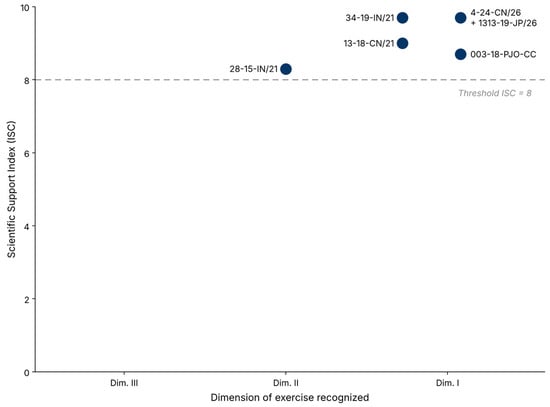
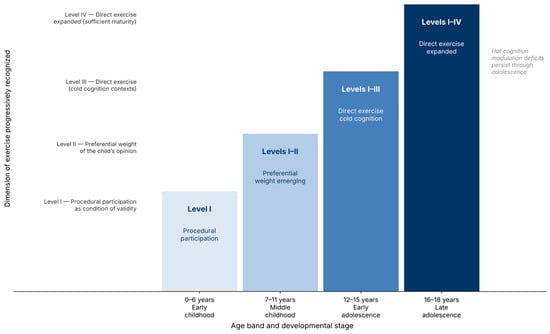

Disclaimer/Publisher’s Note: The statements, opinions and data contained in all publications are solely those of the individual author(s) and contributor(s) and not of MDPI and/or the editor(s). MDPI and/or the editor(s) disclaim responsibility for any injury to people or property resulting from any ideas, methods, instructions or products referred to in the content. |
© 2026 by the author. Licensee MDPI, Basel, Switzerland. This article is an open access article distributed under the terms and conditions of the Creative Commons Attribution (CC BY) license.