


Abstract
Constitutions do more than distribute public powers: they identify the political community, define the subjects of rights, and entrench the principles that legitimate public action. This article examines how twenty constitutional jurisdictions in Latin America and the Caribbean incorporate equality between women and men. It applies a qualitative comparative legal method to constitutional texts in force at the study cutoff date and codes six dimensions: constitutional language; equality as a foundational value or interpretive principle; formal equality; anti-discrimination guarantees; substantive equality and affirmative action; and parity or balanced representation. The findings reveal a layered but uneven process of constitutionalization. All texts recognize formal equality, but only ten expressly formulate equality between women and men, fifteen expressly include sex or gender within constitutional anti-discrimination protection, and six constitutionalize parity or balanced participation in public decision-making. Inclusive constitutional language and substantive-equality mandates are concentrated in a smaller group of texts. The article argues that constitutional equality should be assessed through four cumulative layers of constitutional depth: symbolic inclusion, status equality, transformative equality, and power-sharing equality. Latin American constitutionalism has generated notable innovations, particularly in parity democracy, yet constitutional design remains insufficient without enforceable duties, effective institutions, electoral safeguards, resources, and protection against political violence.
1. Introduction
A constitution is not merely a catalogue of institutions and competences. It is also a foundational legal narrative: it identifies who belongs to the political community, distributes authority, and protects decisions that a polity considers fundamental from ordinary legislative or governmental reversal. The constitutional recognition of equality therefore performs at least three functions. It creates enforceable legal standards, directs public authorities, and conveys a public account of which forms of hierarchy are compatible with the constitutional order (Hesse 1983; Irving 2008).
The history of constitutionalism nevertheless exposes a persistent contradiction between universal language and restricted membership. The modern social contract proclaimed an abstract subject of rights while excluding women from the constituent pact and assigning them to a subordinated private sphere. Feminist theory has described this architecture as inseparable from a sexual contract that transformed sexual difference into political and legal inequality (Pateman 1988, 1989). The extension of civil and political rights to women dismantled formal exclusion, but it did not automatically reconstruct the political subject, the organization of care, or the gendered distribution of power.
This tension is especially visible in constitutional language. A text may proclaim that “all persons” are equal while continuing to name public office, citizenship, or political agency through masculine forms. It may prohibit discrimination but omit sex as an expressly protected ground. It may guarantee equality before the law but provide no mandate to remove structural barriers. It may also recognize substantive equality while leaving the composition of decision-making institutions untouched. Constitutional equality is consequently not a binary attribute. It varies in depth, scope, beneficiaries, enforceability, and capacity to transform power.
Latin America and the Caribbean provide a particularly valuable field for comparative analysis. The region pioneered statutory electoral quotas, developed the language of parity democracy, and incorporated increasingly detailed equality and anti-discrimination provisions into constitutional texts. Regional commitments adopted from the Quito Consensus to the Montevideo Strategy and, more recently, the Tlatelolco Commitment have connected women’s autonomy, substantive equality, care, and equal participation in public decision-making (ECLAC 2007, 2017, 2025). These developments coexist, however, with significant differences in constitutional design and with persistent gaps between textual guarantees and institutional practice.
Existing scholarship has made major contributions on women and constitutional design, feminist critiques of the universal legal subject, and the diffusion and effects of electoral gender quotas (Sullivan 2002; Irving 2008; Krook 2009; Franceschet et al. 2012). Yet the relevant dimensions are often examined separately. Studies of constitutional language may not address parity; analyses of formal equality may not distinguish open and closed anti-discrimination clauses; and quota research frequently focuses on electoral legislation rather than on the constitutional entrenchment of power sharing.
This article addresses that fragmentation through an integrated comparison of twenty constitutional jurisdictions. It asks three questions. First, how do the texts name the political subject and make women visible as constitutional actors? Second, how far do they move from formal equality to anti-discrimination and substantive-equality duties? Third, when and how do they constitutionalize parity or balanced representation as a principle of democratic legitimacy? The contribution is both empirical and conceptual. Empirically, the article maps six dimensions across the regional corpus. Conceptually, it proposes a four-layer model of constitutional depth: symbolic inclusion, status equality, transformative equality, and power-sharing equality.
The four layers represent increasing forms of constitutional depth, from symbolic inclusion to the redistribution of access to public power, without assuming a single historical sequence or equating textual depth with achieved equality. The six indicators operationalize these layers at the level of constitutional text, while implementation, adjudication, and the wider constitutional framework remain analytically distinct.
2. Materials and Methods
The study uses qualitative comparative constitutional analysis. Its primary units are the constitutional provisions governing equality, non-discrimination, women’s status, and political participation in twenty Latin American and Caribbean jurisdictions: Argentina, Bolivia, Brazil, Chile, Colombia, Costa Rica, Cuba, Ecuador, El Salvador, Guatemala, Honduras, Mexico, Nicaragua, Panama, Paraguay, Peru, Puerto Rico, the Dominican Republic, Uruguay, and Venezuela. Puerto Rico is included as a constitutional jurisdiction within the Caribbean legal and political space; its inclusion does not treat it as a sovereign State.
The constitutional corpus was delimited by a common cutoff date of 31 December 2024. Freezing the legal corpus at a specified date is necessary because constitutional comparison otherwise combines texts from different moments. At the same time, the comparison does not assume that these provisions emerged from a common constitutional model or historical trajectory.
The cutoff incorporates Mexico’s reform of 15 November 2024, which added an express State guarantee of women’s substantive equality to Article 4 and strengthened equality obligations in several other provisions. Institutional data on political representation are updated separately through 1 January 2026 so that the descriptive context does not determine the legal classification of the constitutional texts.
The analytical framework is informed by feminist critiques of the supposedly universal constitutional subject. The historical extension of rights to women represented an indispensable legal transformation, but formal inclusion often operated through assimilation into a pre-existing model of citizenship whose implicit reference point remained male, autonomous, economically independent, and located in the public sphere. Feminist legal theory therefore questioned both the naturalization of women’s exclusion and the apparent neutrality of a universalism that could recognize equal legal status without reconsidering the public/private divide, social reproduction, or unequal access to power (Amorós 1997; Pateman 1988, 1989; Gómez Fernández 2017; Nuño Gómez 2016; Zúñiga Añazco 2020; Martínez de Aragón López 2023). Rubio-Marín’s account of the constitutional gender order and the Latin American scholarship collected by Pou Giménez, Rubio-Marín, and Undurraga Valdés reinforce this point: gender assumptions may be embedded not only in rights clauses but also in membership, family, work, institutional design, and the organization of political authority (Rubio-Marín 2022, 2025; Pou Giménez et al. 2024).
These critiques inform the choice of the six dimensions without converting the article into a general index of gender justice. Constitutional language addresses the symbolic construction of the political subject; foundational equality captures the place assigned to equality among constitutional values and interpretive principles; formal equality identifies equal legal status and any express women–men guarantee; anti-discrimination analysis examines the grounds, scope, and structure of reinforced protection; substantive equality identifies textual techniques that move beyond identical treatment and require or authorize corrective public action; and parity examines whether equal participation is constitutionalized in the composition of public power. The dimensions therefore follow a legal sequence central to feminist constitutional critique: from visibility and equal status, through the correction of structural disadvantage, to participation in the exercise of authority (Martínez de Aragón López 2023).
The six dimensions were selected because they capture distinct constitutional techniques through which the equality of women and men is recognized, protected, promoted, and projected onto public power. They correspond to recurrent questions in feminist constitutional analysis and to observable textual choices across the regional corpus: who is named; what constitutional status equality receives; whether women and men are expressly recognized as legal equals; which forms of unequal treatment are prohibited; whether public authorities are empowered or required to correct unequal starting positions; and whether access to decision-making power is constitutionally shared.
These six dimensions are analytically organized into four layers of constitutional depth: symbolic inclusion, status equality, transformative equality, and power-sharing equality. Constitutional language primarily informs symbolic inclusion; foundational equality, formal equality, and anti-discrimination guarantees define status equality; substantive-equality techniques provide the textual basis for transformative equality; and parity or balanced representation expresses power-sharing equality. The layers are analytically cumulative in depth, but they are not country scores and do not establish implementation. A constitution may contain provisions associated with a deeper layer while retaining limitations in an earlier one, and the practical effect of every clause depends on legislation, institutions, remedies, budgets, and adjudication. The analysis is textual and doctrinal rather than an index of implementation. Constitutional provisions were coded only where the wording expressly supported the classification. Judicial doctrines, ordinary legislation, electoral regulations, and public policies are used to contextualize the findings but do not substitute for constitutional text. This rule is important because similar outcomes may arise from different legal levels: a country may operate a strong statutory parity regime without constitutionalizing parity, while another may entrench parity constitutionally but implement it unevenly.
A further conceptual distinction is necessary for the coding of anti-discrimination provisions. This article does not use sex and gender as synonyms. For the purposes of the analysis, sex refers to sex-based status and sexed bodily characteristics. Gender refers to the socially constructed roles, expectations, norms, and hierarchies historically associated with sex and through which sexual difference may be translated into social and institutional inequality. Gender identity constitutes a further and distinct category concerning an individual’s gender identity, while sexual orientation concerns a separate dimension of personal identity and relationships. These categories may overlap in concrete experiences of discrimination, but they perform different analytical and legal functions and are therefore coded separately.
The distinction has constitutional consequences. A prohibition of discrimination on grounds of sex directly addresses disadvantage attached to sexed status, whereas gender may capture discrimination arising from social roles, stereotypes, and expectations associated with women and men. Gender identity and sexual orientation protect additional and distinct interests. Accordingly, a constitution that enumerates “gender” but not “sex”, or “sex” but not “gender identity”, is not treated as employing equivalent terminology. The study records the terms actually used by each constitutional text rather than retrospectively replacing one category with another. At the same time, sex-based inequality and gender hierarchy are understood as interconnected: discrimination against women frequently operates through social meanings and institutional expectations attached to sex.
To operationalize the comparative analysis, the six indicators were specified through a set of textual criteria applied consistently across the twenty constitutional texts. The first examines whether constitutional language is predominantly masculine, neutral, inclusive, or mixed. The second identifies equality as a foundational value, superior principle, or interpretive commitment. The third codes the general formal-equality clause and any express recognition of equality between women and men. The fourth examines anti-discrimination guarantees, recording separately whether sex, gender, gender identity, sexual orientation, or other expressly protected grounds are enumerated, and whether the relevant list is open, closed, sector-specific, or absent. The fifth identifies substantive-equality duties, affirmative or positive action, obstacle-removal mandates, and sector-specific provisions. The fifth dimension—substantive or material equality—requires particular precision because it is not coded from a single expression. The textual analysis records whether the constitution: (a) establishes specific equality mechanisms or policies; (b) constitutionalizes positive or affirmative action; (c) authorizes measures for disadvantaged, discriminated, or marginalized groups; (d) identifies vulnerable groups, including women, as beneficiaries of reinforced protection; (e) expressly recognizes structural inequality between women and men; (f) assigns public authorities a duty to remove obstacles to equality; (g) refers to equality of opportunity; (h) guarantees equality of treatment; (i) requires real and effective equality; (j) uses formulas of equity or equivalent conditions; or (k) recognizes situations of double or multiple vulnerability. These markers are not weighted as equivalent and do not constitute eleven additional variables. They identify the different legal techniques through which a constitutional text moves beyond identical treatment and accepts differentiated or positive intervention in response to unequal starting positions (Martínez de Aragón López 2023).
The sixth indicator examines the constitutionalization of parity, alternation, equal participation, or balanced representation in public decision-making. Coding is limited to express constitutional provisions governing electoral candidacies, elected bodies, public appointments, political organizations, or other decision-making institutions. Ordinary legislative quotas or parity rules are not coded as constitutional parity unless the constitutional text expressly incorporates or mandates them. This indicator is analytically distinct from substantive equality because it captures a specific form of institutional power sharing: not merely the correction of disadvantage, but the constitutional redistribution of access to representative and decision-making authority.
The categories are analytical rather than hierarchical scores. The method therefore separates textual presence from normative strength and implementation. Table 1 summarizes the coding framework.
Table 1.
Analytical framework for the comparative constitutional analysis.
The six indicators do not exhaust the constitutional gender order. Consistent with feminist critiques of the sexual contract and the public/private divide, care, family responsibilities, economic dependence, and sexual and reproductive autonomy are used as interpretive controls on the textual comparison (Nuño Gómez and Martínez de Aragón López 2022).
They help identify the limits of conclusions drawn from the six coded dimensions but are not converted into additional indicators or cross-country frequencies.
In addition, international and regional human-rights instruments were not, in principle, coded as an additional dimension of the comparative model, since the primary unit of analysis is the constitutional text itself. This methodological choice nevertheless requires an important qualification in the Latin American context. Given the central role played by the United Nations and the Inter-American system in the development of women’s rights and equality standards, international human-rights treaties may acquire constitutional or quasi-constitutional relevance where constitutions or constitutional jurisprudence incorporate them into the bloque de constitucionalidad or an equivalent parameter of constitutional review. Their domestic status may therefore affect legislative production, constitutional interpretation, judicial review, and the effective scope of constitutional equality even when the constitutional text itself contains comparatively few gender-specific provisions. Appendix B consequently records this variable as contextual information rather than as a seventh indicator. It also distinguishes binding treaty law from the declarations and programmes of action adopted at international conferences during the 1990s, including Vienna, Cairo, and Beijing, which have substantial political and interpretive significance but do not themselves create treaty obligations. CEDAW occupies a different position: it is a legally binding treaty for States Parties and is subject to international monitoring through the Committee on the Elimination of Discrimination against Women, with additional communications and inquiry procedures where the Optional Protocol has been ratified. In States Parties to the American Convention subject to the jurisdiction of the Inter-American Court of Human Rights, this wider framework also interacts with the doctrine of conventionality control, under which domestic authorities must assess internal norms in light of the Convention and the Court’s authoritative interpretation of it (IACtHR 2006).
The approach has three limitations. First, constitutional language does not reveal whether public institutions comply with constitutional duties. Second, the analysis does not provide a complete account of constitutional case law or of the horizontal effect of equality rights in each jurisdiction. Third, reforms adopted after the cutoff date require a later legal update. These limitations do not diminish the value of the comparison; rather, they define its purpose as a map of constitutional design and a basis for subsequent implementation research.
3. Constitutional Language, Citizenship, and the Political Subject
Language is not a merely ornamental feature of constitutional law. Constitutions name institutions, attribute rights and duties, and construct the subjects through whom the political community imagines itself. In Spanish and Portuguese, grammatical choices can make sex visible, conceal it behind a generic masculine, or avoid specification through neutral formulations. These alternatives do not mechanically determine legal outcomes, but they carry symbolic and interpretive consequences (García de Enterría 1994; Pauwels 1998; Balaguer 2005, 2008).
The generic masculine presents a particular constitutional paradox. The same form that historically referred only to men was later interpreted as encompassing women once female citizenship was recognized. The grammatical rule was thus asked to perform two opposite political functions: exclusion in the original constitutional order and presumed inclusion after suffrage.
The relevance attributed here to constitutional language rests on the premise that language is not merely a neutral vehicle for describing a pre-existing social reality. Within the Lacanian distinction between the Real, the Symbolic, and the Imaginary, social reality is mediated through symbolic structures—including language, institutions, and normative practices—through which subjects and social relations acquire meaning (Lacan 1983). When social change exposes a growing distance between lived reality and the inherited symbolic order, new categories and forms of representation become necessary to render that reality intelligible. From this perspective, linguistic change may both reflect and participate in broader processes of social and political transformation.
This approach differs from the position adopted by the Real Academia Española (RAE), which, in its 2020 report on inclusive language, maintained that the use of the generic masculine is “a strictly linguistic fact” without consequences for the visibility of women (Real Academia Española 2020, p. 8). Such a position is difficult to reconcile with the constitutive function of language in legal and political thought. Human beings conceptualize social reality through linguistic categories, and the vocabulary of law contributes to defining subjects, institutions, rights, and relationships of authority. Language therefore not only records social change but may also accompany and facilitate it. Studies of language and gender have long shown that linguistic conventions reflect social hierarchies and changing cultural meanings (Lakoff 1981; Pauwels 1998). In the legal field, García de Enterría similarly observed that major political transformations generate corresponding changes in legal language, as occurred after the French Revolution (García de Enterría 1994).
Naming women as constitutional subjects makes visible persons historically subsumed within an ostensibly universal but predominantly masculine political subject. As Bengoechea argues, women must be named “as embodied subjects, that is, in the feminine” (Bengoechea Bartolomé 2005, pp. 37–38), thereby contributing to the symbolic and material conditions for the full recognition of their citizenship and of rights historically denied to them (Ferrara-Bardile 2000). Conversely, their systematic omission can reinforce an androcentric representation of citizenship and the fiction of a homogenizing universalism. If, as Amorós argues, conceptualization is itself a political act (Amorós 2008, p. 15), constitutional language cannot be entirely depoliticized as a merely linguistic phenomenon.
The history of social and legal change offers numerous examples of this reciprocal relationship between language and reality. Social movements have repeatedly challenged inherited terminology and proposed new categories capable of identifying previously obscured forms of inequality or exclusion. The shift from expressions such as “domestic violence” or “mistreatment” to “gender-based violence”, for example, did more than modify terminology: it reframed the phenomenon by identifying its structural and gendered character. Comparable changes can be observed in the replacement of stigmatizing terminology relating to disability by rights-based concepts centred on the person. Linguistic innovation therefore does not, by itself, produce substantive equality, but neither is it politically or legally irrelevant. It forms part of the symbolic conditions through which previously excluded subjects become constitutionally visible.
Against this theoretical background, the comparative corpus displays four main linguistic patterns. Argentina, Brazil, Honduras, Panama, Puerto Rico, and Uruguay predominantly retain masculine formulations. Chile, Colombia, Costa Rica, Cuba, El Salvador, Guatemala, Mexico, Paraguay, and Peru rely mainly on neutral expressions such as “all persons,” “every person,” or “the people.” Bolivia, Ecuador, Venezuela, and the Dominican Republic use predominantly inclusive formulations that expressly mention women and men or systematically feminize and masculinize institutional subjects. Nicaragua combines masculine, neutral, and inclusive language without a stable model.
These four patterns should not, however, be understood as a simple hierarchy between neutral and inclusive drafting. Neutral language can avoid unnecessary binary repetition and can protect persons who do not identify within binary categories. Its constitutional adequacy depends on context. The difficulty arises when formally neutral language operates within an institutional and doctrinal tradition in which the implicit subject remains male. Expressly inclusive drafting can then have a corrective function: it reveals the historical partiality hidden beneath abstract universalism and prevents women’s citizenship from appearing as an interpretive extension rather than an original constitutional status.
International institutions have progressively recognized this dimension. UNESCO recommendations on non-sexist language and United Nations guidance on gender-inclusive communication treat language as part of institutional equality rather than as a purely stylistic preference (UNESCO 1999).
The constitutional texts of Bolivia, Ecuador, and the Dominican Republic illustrate a broader trend in parts of Latin American constitutionalism: linguistic innovation accompanies expanded catalogues of rights, recognition of collective subjects, and stronger duties of public action.
Nevertheless, linguistic inclusion is neither necessary nor sufficient for real equality. A text can name women while providing weak remedies, and a neutrally drafted clause can support robust anti-discrimination adjudication. The analytical significance of language lies elsewhere: within the four-layer model proposed here, it belongs to the symbolic-inclusion layer. By making visible a constituent subject historically obscured by the supposedly universal political subject, inclusive language can alter the symbolic configuration of constitutional citizenship. It does not, however, by itself establish formal or substantive equality, impose transformative duties, or redistribute access to public power. Its significance is therefore foundational rather than conclusive, and it cannot substitute for the separate analysis of formal equality, anti-discrimination, substantive equality, and parity. The constitutional question therefore extends beyond who is named within the political community to who is entitled to participate in the institutions through which that community exercises public power. This shift—from symbolic recognition to the distribution of political authority—provides the starting point for the analysis of electoral quotas, parity, and balanced representation developed in the following section.
4. From Electoral Quotas to Parity Democracy
4.1. From Formal Citizenship to Power Sharing
The recognition of women’s active and passive suffrage dismantled the most explicit constitutional form of political exclusion. Across the twentieth century, the demands first articulated by nineteenth-century suffrage movements progressively delegitimized the naturalization of women’s exclusion from citizenship, and constitutional systems formally incorporated women into the body of equal rights-holders. Yet the achievement of political citizenship did not automatically reconstruct the institutions, assumptions, or practices through which political authority had historically been organized. Formal eligibility to vote and stand for election could therefore coexist with persistent patterns of underrepresentation in positions of political decision-making.
Feminist critiques of constitutionalism help explain this disjunction between formal citizenship and effective political power. The problem was not only that women had originally been excluded from the constitutional subject, but that the ostensibly universal citizen had been constructed against a gendered division between public and private spheres. Pateman’s critique of the social and sexual contracts exposes how the liberal political subject was premised on an autonomous public individual while the relations of dependency, care, and reproduction associated with women were relegated to the private sphere (Pateman 1988, 1989; Nuño Gómez 2010). The later extension of existing citizenship rights to women removed a central legal exclusion, but it did not necessarily alter the assumptions embedded in that pre-existing political subject. Recent scholarship on Latin American constitutionalism similarly emphasizes that constitutional gender orders must be examined in relation not only to textual guarantees, but also to their historical context, political dynamics, feminist mobilization, institutional practice, and the legacy of separate gendered spheres (Pou Giménez et al. 2024).
This critique informs the analytical framework adopted in this article. The possession of equal political rights primarily addresses status equality: women cease to be formally disqualified from participation and acquire the same legal entitlement to vote, stand for office, and take part in public affairs. Equal legal status, however, does not ensure equal access to political authority. Party gatekeeping, gender stereotypes, unequal distributions of care and economic resources, political violence, and institutionalized “glass ceilings” and “glass walls” can continue to influence who is selected, elected, promoted, and able to exercise authority once formal barriers have disappeared. The relevant constitutional question therefore shifts from whether women are legally entitled to participate to whether the structures through which political power is distributed continue to reproduce their exclusion.
Latin American experience makes this distinction particularly visible. Regional scholarship has long linked women’s inclusion in political reform to the quality and democratic legitimacy of representative institutions rather than treating it solely as an individual claim to non-discrimination (Bareiro et al. 2007). The region was also an early laboratory for electoral gender quotas, beginning with Argentina’s 1991 quota law and followed by a rapid diffusion of similar measures. These reforms demonstrated both the potential and the limits of formal numerical requirements. Their effectiveness depended on the design of electoral rules, placement mandates, sanctions for non-compliance, party strategies, and the electoral system in which they operated. Comparative research on Argentina and Mexico, for example, shows that stronger quota design can significantly constrain party elites, whereas weaker rules preserve greater opportunities for strategic circumvention (Caminotti and Freidenberg 2016). Research on Bolivia and Ecuador similarly demonstrates that the transition from quotas to parity does not eliminate the effects of electoral systems and party strategies on women’s effective representation (Archenti and Tula 2014).
Quotas were initially conceptualized predominantly as positive-action measures intended to correct women’s structural disadvantage in access to representative institutions. In the terms of the analytical model used here, this rationale belongs principally to transformative equality: differentiated intervention is justified because formally identical rules operate against unequal starting conditions. Parity introduces a different constitutional logic. Rather than asking how many places should temporarily be reserved to compensate for women’s underrepresentation, it asks whether a representative democracy can legitimately accept the persistent concentration of political authority in one sex. The transition is therefore from corrective access to the organization of power itself.
This conceptual shift has been particularly visible in Latin America. Piscopo shows that regional arguments in favour of parity increasingly relied on women’s equal presence in the population, equality of outcomes, and the proposition that gender balance is a condition of democratic government rather than merely an exceptional remedy for discrimination (Piscopo 2016). The more recent literature on “parity democracies” likewise examines not only formal electoral rules but also the actors, enforcement mechanisms, and institutional conditions that determine whether parity provisions reshape political representation in practice (Freidenberg and Gilas 2022). From a constitutional perspective, Rodríguez-Ruiz and Rubio-Marín had already identified the corresponding shift in justification: quotas and parity can be approached through individual equality rights, but parity also raises a distinct question about the model of democratic representation itself (Rodríguez-Ruiz and Rubio-Marín 2009).
This distinction explains why parity is treated in this study as a separate sixth indicator rather than as a subcategory of substantive equality. Positive-action provisions seek primarily to overcome structural disadvantage; parity and balanced-representation clauses additionally concern the distribution and constitutional organization of public authority. Within the four-layer framework, the former are principally located within transformative equality, whereas constitutional parity belongs to power-sharing equality. The feminist critique of the formally universal political subject thus informs the coding itself: constitutional equality is not complete when women are merely admitted to pre-existing institutions on formally equal terms; it also raises the question of whether those institutions distribute decision-making authority in a manner compatible with equal democratic citizenship.
CEDAW’s temporary special measures are not a doctrinal basis for treating all gender-equality institutions as necessarily temporary. General Recommendation No. 25 distinguishes time-bound measures addressing an identified disadvantage from more general, continuing duties to achieve substantive equality (CEDAW Committee 2004). Parity may be articulated as an enduring institutional principle in particular constitutions, but this classification must follow the wording and legal system rather than the mere fact that a policy is called a quota or parity.
The Athens Declaration of 1992 and the Beijing Declaration and Platform for Action of 1995 provided important international and political foundations for the transition from women’s access to power towards parity as a democratic principle (European Summit of Women in Power 1992; United Nations 1995). In Latin America and the Caribbean, the Quito Consensus of 2007 explicitly connected parity with democratic institutions, while later regional agreements broadened the agenda to intersectionality, political violence, care, and women’s autonomy (ECLAC 2007, 2010, 2013, 2017, 2025). CEDAW General Recommendation No. 40 now formulates equal and inclusive representation as a 50:50 norm across decision-making systems, not merely as an electoral aspiration (CEDAW Committee 2024).
Constitutionalization changes the legal status of this commitment. Statutory quotas remain exposed to ordinary legislative reversal and can be interpreted as exceptions to formal equality. A constitutional parity provision instead makes balanced participation part of the architecture of democratic government. It can authorize electoral legislation, guide judicial review, constrain political parties, and stabilize equality across political cycles. It also reframes the legal question: the issue is no longer whether parity departs from equality, but whether a system that systematically excludes half of the people can satisfy constitutional democracy.
4.2. Thirty Years After Beijing: Presence, Leadership, and Unequal Power
Thirty years after the Beijing Platform for Action, the quantitative transformation of political representation is undeniable, but it remains incomplete. Between 1995 and 2025, women’s share of seats in national parliaments rose globally from 11.3% to 27.2%. The Americas recorded the largest regional increase, from 12.7% to 35.4%, a gain of 22.7 percentage points. Europe reached 31.8%, Sub-Saharan Africa 27.1%, the Pacific 23.2%, Asia 22.1%, and the Middle East and North Africa 16.7% (IPU 2025). Figure 1 situates the regional experience within this global trajectory.
Figure 1.
World and regional averages of women in national parliaments, 1995 and 2025. Source: Authors’ elaboration based on Inter-Parliamentary Union data for all chambers combined (IPU 2025).
This broader regional trajectory is particularly significant for the present study. The IPU category “Americas” is wider than the Latin American and Caribbean corpus examined here, but it records the largest regional increase over the thirty-year period. Within the jurisdictions analysed, this development has coincided with extensive experimentation with electoral quotas, parity rules, alternation requirements, and, in some cases, constitutional entrenchment.
Yet the increase in descriptive representation should not be equated with an equivalent redistribution of political power. As of 1 January 2026, women held 22.4% of cabinet posts and 27.5% of parliamentary seats worldwide, while only 28 countries were led by a woman Head of State or Head of Government (IPU and UN Women 2026).
These figures reveal a persistent vertical and horizontal segregation of political authority: women may enter representative institutions in growing numbers while remaining less present in positions that control executive authority, institutional agendas, strategic portfolios, party leadership, or access to political resources.
This distinction between presence and power is central to the feminist critique of representation. Descriptive representation matters because the systematic absence of women from decision-making institutions reinforces the symbolic identification of political authority with masculinity. However, a greater number of women does not automatically produce substantive representation of women’s interests, feminist policy, or equal authority within institutions. Evidence from Latin America illustrates this distinction. Freidenberg and Gilas, for example, show in the case of Morelos that an unprecedented increase in women legislators did not necessarily translate into equivalent advances in symbolic or substantive representation, as institutional, partisan, and attitudinal barriers persisted despite formal parity (Freidenberg and Gilas 2020).
The distinction is also visible in the distribution of authority within political institutions. “Glass ceilings” restrict access to the highest positions, while “glass walls” channel women toward areas conventionally associated with care, social policy, equality, family, or inclusion and away from portfolios with greater control over economic, security, or infrastructural resources. The problem is therefore not only how many women enter political institutions, but also which positions they occupy, how much authority accompanies those positions, and whether their political careers are subject to forms of precarity that do not affect their male counterparts to the same extent. The data and analysis developed in previous research similarly show that increasing women’s numerical presence does not necessarily remove these internal hierarchies of political power (Martínez de Aragón López 2025).
A second qualification concerns the heterogeneity of women as a political category. Parity between women and men cannot, by itself, answer which women gain access to decision-making power. Race, ethnicity, indigeneity, class, disability, age, territorial inequality, migration status, and sexuality intersect with sex to shape both access to candidacies and the conditions under which political authority is exercised. An intersectional reading is therefore necessary to prevent parity from reproducing inequalities within the category “women” (Crenshaw 1989). This does not invalidate parity as a constitutional principle; rather, it identifies the limits of a purely numerical understanding of power-sharing equality.
Political violence constitutes a third limitation to the equation of election with effective political participation. Harassment, intimidation, sexualized attacks, economic pressure, reputational violence, threats, and coercion may operate before, during, and after elections, affecting candidacy, the exercise of office, and political permanence. Latin America has played a pioneering role in identifying this phenomenon as a distinct obstacle to women’s political rights; Bolivia became the first country in the region to adopt specific legislation against political harassment and violence against women, and the regional debate subsequently influenced legislation and institutional responses elsewhere (Restrepo Sanín 2018). Research on violence against women in politics further shows that such practices cannot be understood merely as ordinary political conflict when they specifically seek to discipline women’s political participation or exclude them from political roles because they are women (Krook and Restrepo Sanín 2020).
These distinctions clarify the scope of constitutional parity. If formal citizenship guarantees access, parity addresses the composition of decision-making institutions; but effective power-sharing additionally depends on the conditions under which political authority is exercised. Numerical parity is therefore a necessary dimension of democratic inclusion, but it cannot by itself guarantee equal authority, substantive representation, intersectional inclusion, or freedom from political violence. As previous analysis of the region has emphasized, the relevant question is not only how many women occupy positions of power, but also what kind of power they exercise and under what institutional conditions.
This distinction is important for the scope of the present study. The sixth indicator codes the constitutionalization of parity, alternation, or balanced representation; it does not treat those provisions as evidence that equal political power has already been achieved. Constitutional parity is therefore interpreted here as an institutional commitment to power-sharing equality, while its implementation, intersectional effects, and translation into effective authority remain separate empirical questions. The following comparative analysis examines where and how that commitment, together with the other five dimensions of equality, is embedded in the constitutional texts.
5. Comparative Constitutional Findings
5.1. Equality as a Foundational Value or Guiding Principle
A first distinction concerns the constitutional rank and location of equality. Every text in the corpus contains an equality provision, but only a smaller group places equality among the values, principles, or fundamental characteristics of the State. Under the coding used here, Bolivia, Cuba, Nicaragua, and Venezuela give equality an express foundational role. Bolivia is distinctive because its catalogue of ethical and political values explicitly includes gender equity alongside equality and social justice.
The four cases in which equality is expressly incorporated into the foundational vocabulary of the State arise from markedly different constitutional and political trajectories.
In Venezuela, equality acquired this position in the Constitution of 1999, adopted through a constituent process initiated by President Hugo Chávez following a referendum and the subsequent election of a National Constituent Assembly. The resulting text placed equality among the superior values of the legal order and combined it with substantive-equality and positive-action provisions (Martínez de Aragón López 2023).
Bolivia represents a different constituent experience. The Constitution of 2009 emerged from a broader process of institutional and constitutional restructuring in a context marked by political instability, crisis of party representation, and social conflict. Women’s organizations participated actively in the Constituent Assembly, organizing twenty-one working commissions and submitting proposals concerning inclusive language, political rights, sexual and reproductive rights, and social and gender equity. The resulting Constitution consequently incorporated gender equality across several dimensions of the constitutional order (Martínez de Aragón López 2023).
Cuba’s case is more recent but institutionally distinct. The 2019 Constitution, approved by referendum to replace the previous constitutional text, considerably expanded the constitutional treatment of equality. It incorporated dignity and equality among the political foundations of the State, guaranteed effective equality in the enjoyment and exercise of rights, and expressly addressed sex, gender, sexual orientation, and gender identity within its anti-discrimination framework.
Nicaragua, however, should not be placed in the same category of recent constitution-making. Its current Constitution dates from 1987. The relevant change for this indicator derives from the 2014 constitutional reform, which incorporated equality as a superior value of the legal order and simultaneously strengthened the constitutional language of political participation, including parity and alternation requirements in electoral arrangements.
The common textual outcome should therefore not be mistaken for a common constitutional genealogy. Equality acquired foundational status through different mechanisms—new constitution-making in Venezuela, Bolivia, and Cuba, and constitutional amendment in Nicaragua—and under substantially different political conditions. This reinforces the need to interpret the comparative coding historically without treating constitutional chronology as a proxy for constitutional depth.
The position of equality among foundational provisions matters because it can influence systemic interpretation. A right to equality ordinarily protects an individual claimant against unequal treatment; equality as a constitutional value can also orient legislation, public administration, institutional design, and the interpretation of other rights. The two functions are complementary. The weakness of a value clause lies in its abstraction, while the weakness of an isolated individual right lies in its limited capacity to address structures. Their combination allows equality to operate both as an individual guarantee and as a system-wide interpretive principle.
5.2. Formal Equality and the Express Recognition of Women
All twenty constitutional jurisdictions recognize formal equality, but they formulate the protected subject and the meaning of equality in different ways. Most use universal clauses referring to “persons” or “human beings”. Argentina and Paraguay frame the general guarantee in relation to inhabitants, while Panama expressly distinguishes nationals and foreigners and permits statutory restrictions on certain activities. These differences are relevant because they determine the textual scope of the equality guarantee and whether its protection is framed in terms of personhood, residence, or citizenship.
The most common formula is equality “before the law.” That expression requires like cases to receive like legal consequences and prohibits arbitrary differentiation. It does not, by itself, prevent discrimination through indifference: formally identical treatment may preserve inequality when groups occupy structurally unequal positions. Some constitutions therefore supplement equality before the law with equality in rights, duties, dignity, opportunities, responsibilities, or conditions.
The universalization of formal equality represented a decisive constitutional break with the explicit legal exclusion of women that characterized early constitutionalism. Feminist legal theory has nevertheless exposed an important limitation of that achievement. Extending an already constructed category of citizenship to women did not necessarily transform the model of the citizen on which that category had been built. Pateman’s critique is particularly relevant here: incorporation into the rights of citizenship can operate as assimilation when the supposedly universal subject continues to be implicitly modelled on an autonomous male actor shaped by the public/private division (Pateman 1989). In similar terms, feminist scholarship has argued that formal equality may neutralize the identity through which exclusion previously operated without questioning the hegemonic identity against which equality is measured (Nuño Gómez 2016). The result is what De Lucas describes as a “sophism of neutrality”: formally universal rules may conceal the historically particular characteristics of the subject treated as the norm (De Lucas 2003).
This critique does not diminish the constitutional importance of formal equality. Rather, it explains why formal equality constitutes the status-equality layer of the analytical model rather than its endpoint. Its central achievement is to deny the legitimacy of legal subordination and unequal constitutional status. Its limitation is that treating formally equal subjects identically does not by itself reconstruct the institutional, social, or symbolic conditions that produced their unequal positions. The distinction is therefore between formal equality as an indispensable constitutional status and formal equality as a sufficient theory of gender justice. The former is foundational; the latter is inadequate.
Within the corpus, ten constitutions go one step further and expressly recognize equality between women and men: Bolivia, Brazil, Colombia, Cuba, Ecuador, Guatemala, Mexico, Nicaragua, Paraguay, and the Dominican Republic. The formulations differ significantly. In some cases, women–men equality forms part of the general equality provision; in others, it appears in a separate clause concerning civil, political, social, economic, cultural, family, or employment rights. Nicaragua employs particularly broad language concerning equality between women and men in political rights, while Paraguay extends the express guarantee across civil, political, social, economic, and cultural rights.
The presence of an express women–men clause has both legal and symbolic significance. Legally, it provides an explicit textual basis for sex equality and may support constitutional interpretation and positive State duties. Symbolically, it interrupts the historical fiction that a formally ungendered citizen was necessarily a neutral citizen. Expressly naming women can therefore operate as a corrective to the assimilative logic of the older universal formula. At the same time, as discussed above, such drafting should not be treated as exhaustive of the constitutional subject: a binary women–men formulation can make women visible while still requiring interpretation alongside protections concerning gender identity, sexual orientation, and intersectional disadvantage.
The political genealogy of these clauses also matters. Paraguay illustrates particularly clearly how express constitutional recognition can result from feminist mobilization during constitution-making. The 1992 Constitution was the first democratic constitution adopted after the Stroessner dictatorship. Women represented only a small minority of the Constituent Assembly, but female delegates organized across party lines through the Interbancada de Mujeres, while civil-society organizations participated through the Foros de la Mujer para la Constituyente. Their mobilization contributed to the inclusion of formal and substantive equality and to the express recognition of equality between women and men in Article 48 (Martínez de Aragón López 2023).
Bolivia provides a different but similarly instructive example. During the constituent process that culminated in the 2009 Constitution, women’s organizations created twenty-one working commissions and formulated proposals on inclusive language, political rights, sexual and reproductive rights, and social and gender equity. The resulting text incorporated equality between women and men across multiple constitutional provisions and combined that recognition with inclusive drafting and broader equality guarantees (Martínez de Aragón López 2023).
These examples help explain why express women–men equality should not be interpreted as a merely stylistic addition to a universal equality clause. In some constitutional processes, its inclusion was itself the product of organized political demands aimed at correcting the historical invisibility of women within the constitutional subject. The textual distinction therefore records not only different drafting techniques, but different ways of responding to the feminist critique of universalism.
Conversely, the absence of an express women–men formula does not demonstrate the absence of constitutional protection. Argentina is the clearest example. Article 16 does not expressly mention women or sex, yet the 1994 constitutional reform introduced Article 37, which guarantees real equality of opportunities between women and men in access to elective and party office; Article 75(23) empowers Congress to adopt positive measures, including measures concerning women; and Article 75(22) grants constitutional hierarchy to CEDAW. The Argentine case therefore shows why the indicator must remain precise: it records whether the constitution contains a general or cross-cutting women–men equality guarantee for the purposes of the formal-equality coding, not whether women enjoy constitutional equality protection as a whole.
The comparative finding is consequently more nuanced than a division between constitutions that “recognize” and “do not recognize” women’s equality. All twenty jurisdictions constitutionalize formal equality. What differs is whether women remain included only within a universal legal subject, are expressly named as equal constitutional subjects, or are additionally protected through anti-discrimination, substantive-equality, and positive-action provisions. Formal equality is thus best understood as the point at which exclusion from legal status is rejected; the following indicators examine whether the constitution also identifies the structures through which formally equal status may continue to coexist with substantive inequality.
5.3. Anti-Discrimination Guarantees: Grounds, Structure, and Reach
Formal equality and non-discrimination are closely related but analytically distinct.
Discrimination may be understood as differential treatment or disadvantage lacking sufficient objective and reasonable justification, particularly where it affects persons belonging to groups historically devalued, excluded, or “traditionally disadvantaged” (Rodríguez Ruiz 2017, p. 64). Constitutional systems may construct equality and non-discrimination as autonomous rights capable of separate protection or, alternatively, treat non-discrimination as an intrinsic specification of the general equality guarantee. The comparative corpus reflects both techniques. Equality establishes the general standard of equal legal status, whereas anti-discrimination protection additionally identifies grounds or practices regarded as particularly capable of reproducing exclusion and therefore requiring specific constitutional justification and protection. Depending on constitutional doctrine, such protection may operate in vertical relations with public authorities as well as in horizontal relations between private parties.
Fifteen jurisdictions expressly include either sex or gender among protected grounds: Bolivia, Brazil, Colombia, Cuba, Ecuador, El Salvador, Honduras, Mexico, Nicaragua, Panama, Paraguay, Peru, Puerto Rico, the Dominican Republic, and Venezuela. This aggregate figure is used to identify constitutional protection relevant to women’s equality; it does not imply that sex and gender are conceptually or legally equivalent. Consistently with the coding methodology, the terminology employed by each constitution is recorded separately.
The structure of the list matters. Bolivia, Brazil, Cuba, Ecuador, Honduras, Mexico, Peru, the Dominican Republic, and Venezuela combine enumerated grounds with an open clause capable of extending protection to analogous forms of discrimination. Colombia, Nicaragua, Panama, and Puerto Rico use comparatively closed lists. El Salvador expressly protects against sex-based restrictions in the enjoyment of civil rights, while Paraguay contains a general non-discrimination rule supplemented by sectoral protection in employment. Argentina, Chile, Costa Rica, Guatemala, and Uruguay do not enumerate sex within a general list in the provisions coded here.
Open clauses support evolutive interpretation because they prevent constitutional protection from being frozen at the historical moment of drafting. Their advantage is especially visible in relation to multiple and intersectional discrimination. A claimant may experience exclusion through the combined effects of sex, race, ethnicity, disability, migration status, poverty, age, language, or religion (Crenshaw 1989). A closed list can still be interpreted purposively, but it provides less textual flexibility where constitutional doctrine is formalistic.
The terminological distribution across the corpus demonstrates why the distinction between sex and gender established in the methodological framework has substantive constitutional relevance. Most of the constitutions that expressly identify the relevant ground refer to sex. Mexico and the Dominican Republic depart from this predominant terminology because their general anti-discrimination clauses use “gender” rather than expressly enumerating “sex”. This does not mean that their constitutions lack protection of sex equality: both separately recognize equality between women and men. It does, however, produce a different textual architecture. For comparative purposes, “gender” is therefore not retrospectively recoded as “sex”, and the two terms are not treated as interchangeable.
Other constitutional texts make the distinction between the different grounds still more explicit. Bolivia and Ecuador separately enumerate sex, sexual orientation, and gender identity, while Cuba’s 2019 Constitution expressly lists sex, gender, sexual orientation, and gender identity as distinct grounds. Mexico adopts yet another formulation, referring to “gender” and “sexual preferences” in its general anti-discrimination clause rather than using the expression “sexual orientation”. These drafting choices are analytically significant precisely because the categories coexist within the same constitutional provisions: their cumulative enumeration demonstrates that sex, gender, gender identity, and sexual orientation can operate as distinct textual bases of constitutional protection rather than as synonymous labels.
The historical and political context of these constitutional innovations is also relevant. Ecuador’s 2008 Constitution and Bolivia’s 2009 Constitution were adopted during the broader Latin American “left turn” of the early twenty-first century (Cameron 2009) and are commonly situated within what scholarship describes as the new Latin American constitutionalism (Martínez Dalmau 2009). These constituent processes formed part of broader projects of constitutional refoundation rather than isolated amendment and were associated with expanded catalogues of rights, stronger claims of popular participation, recognition of social and collective rights, and, particularly in the Andean cases, challenges to previously homogenizing conceptions of the State and political community. Their extensive anti-discrimination clauses should therefore be read within this wider cycle of constitutional transformation rather than simply as the product of more recent drafting.
At the same time, the political orientation of the governments promoting these processes cannot by itself explain the content of the resulting equality provisions. Constitutional innovation was also shaped by the mobilization of social, Indigenous, and women’s organizations and by transnational human-rights agendas (Garay Montañez 2018). Bolivia is particularly illustrative: women’s organizations participated in the constituent process through twenty-one working commissions and advanced proposals concerning inclusive language, political rights, sexual and reproductive rights, and social and gender equity (Martínez de Aragón López 2023). The breadth of the resulting equality architecture must therefore be understood as the product of interacting political, social, and constitutional dynamics rather than attributed to a single ideological cause.
Bolivia and Ecuador contain two of the most extensive catalogues of protected grounds in the corpus. Bolivia’s general clause combines sex with sexual orientation, gender identity, marital status, disability, pregnancy, economic or social condition, occupation, and other expressly identified circumstances, while additional provisions reinforce protection against discrimination affecting women. Ecuador similarly combines sex, gender identity, sexual orientation, socioeconomic and migration status, health status, disability, and HIV status within an open anti-discrimination clause. The Ecuadorian text is additionally distinctive in expressly recognizing multiple discrimination, thereby providing a textual basis for addressing the interaction of more than one ground of disadvantage.
Terminological variation changes the interpretive question, not merely the label in Table 2. A sex-equality claim, a claim based on gender stereotypes, and a claim based on gender identity may overlap in practice, but they do not necessarily rest on the same constitutional ground. Sex-based inequality and gender hierarchy are particularly interconnected: discrimination against women frequently operates through social roles, stereotypes, and institutional expectations attached to sex. Preserving the distinction between the two concepts therefore does not require treating them as isolated categories. Rather, it allows the analysis to identify both the sex-based status to which disadvantage attaches and the gendered social structures through which that disadvantage may be reproduced. Where sex is not enumerated in a general clause, sector-specific protection or a constitutionalized human-rights treaty may nevertheless affect the wider constitutional framework (see Appendix B). The coding therefore captures explicit guarantees but cannot settle the reach of analogical interpretation or the outcome of a concrete claim.
Table 2.
Constitutional language, express women–men equality, and anti-discrimination design.
The comparative significance of anti-discrimination design consequently cannot be reduced to the number of grounds enumerated. A more extensive catalogue can increase constitutional visibility and provide more direct textual footholds for claims that earlier constitutionalism did not anticipate, while an open clause can facilitate adaptation to emerging or intersecting forms of disadvantage. Neither technique, however, guarantees effective protection by itself. The normative effect of these techniques ultimately depends on constitutional interpretation, justiciability, remedies, and the interaction between anti-discrimination protection and substantive-equality duties. Anti-discrimination therefore strengthens the status-equality layer of the analytical model, but it also reveals the point at which formally equal status may require more specific constitutional techniques to confront historically structured disadvantage.
5.4. Substantive Equality, Positive Action, and State Duties
Substantive equality addresses a central limitation of formal equality: identical rules can preserve unequal structures. It therefore authorizes or requires differentiated treatment when necessary to remove disadvantage, equalize opportunities, or achieve real and effective equality. Constitutional wording ranges from general obstacle-removal duties to explicit affirmative action, public policies, specialized institutions, and sector-specific guarantees.
For the purposes of this study, substantive equality is not treated as synonymous with affirmative or positive action. The latter constitutes one constitutional technique for addressing unequal starting positions, but substantive equality may also be expressed through duties to remove obstacles, guarantees of real or effective equality, equality of opportunity or treatment, specialized equality mechanisms, and obligations directed at particular fields of public intervention. This distinction is consistent with CEDAW’s substantive-equality framework, which treats temporary special measures as one means of accelerating de facto equality and distinguishes them from broader social policies designed to alter the conditions producing women’s disadvantage (CEDAW Committee 2004).
This distinction also locates the transition from the status-equality layer to the transformative-equality layer of the analytical model. Formal equality principally prohibits unequal legal status; substantive-equality provisions alter the constitutional position of public authorities by permitting or requiring intervention in conditions that reproduce disadvantage. Their significance therefore lies not simply in granting additional individual protection, but in changing the constitutional question from whether the State has treated similarly situated persons alike to whether it has addressed structurally unequal starting positions.
Nine jurisdictions—Argentina, Bolivia, Colombia, Cuba, Ecuador, Mexico, Paraguay, the Dominican Republic, and Venezuela—contain express general provisions specifically framed in terms of substantive equality, positive action, or comparable corrective measures. Argentina authorizes affirmative measures for specified groups, including women. Colombia and Venezuela require measures in favor of discriminated, marginalized, or vulnerable persons and groups. Cuba and the Dominican Republic connect public policy with real equality and women’s full participation. Ecuador combines affirmative action with institutional mechanisms for incorporating a gender perspective into public plans and programs.
These provisions do not share a single constitutional genealogy. Some form part of newer constituent settlements, while others were introduced through amendment to much older constitutional frameworks. Argentina is particularly illustrative of the latter route: the 1994 reform supplemented the general equality clause of Article 16 with Article 75(23), which requires Congress to legislate and promote positive measures guaranteeing real equality of opportunities and treatment and the full enjoyment and exercise of constitutional and human-rights guarantees, particularly with respect to women and other specified groups, while Article 75(22) simultaneously accorded constitutional hierarchy to CEDAW. The Argentine case therefore demonstrates that an older constitution may acquire a substantially different equality architecture through later reform rather than constitutional replacement.
Mexico requires particular attention because the legal position changed during the study period. The constitutional reform published on 15 November 2024 retained the equality of women and men before the law and added that the State shall guarantee women’s enjoyment and exercise of the right to substantive equality. The reform also strengthened duties concerning a life free from violence, parity, and equal remuneration (Mexico 2024). Accordingly, under the coding adopted here, Mexico is classified among the constitutions with an express substantive-equality mandate rather than among those limited to formal equality.
Beyond this core group, Chile and Nicaragua contain broader duties to create conditions for equality or remove obstacles, although their wording is less specific regarding affirmative action. Brazil and Costa Rica provide important sectoral protections, particularly in employment and social policy, while Puerto Rico refers to essential human equality in education. El Salvador, Guatemala, Honduras, Panama, Peru, and Uruguay do not contain an equivalent general substantive-equality mandate within the provisions coded for this study.
The comparison also reveals that constitutional techniques differ in their degree of institutional specification. A clause may merely authorize differentiated measures, impose a general duty to remove obstacles, identify particular beneficiaries, or connect equality with specific institutions and policy fields. These differences matter because an authorization to adopt positive measures, a mandatory State duty, and an institutionalized mainstreaming mechanism do not perform identical constitutional functions. The coding records all of them within the substantive-equality dimension, but it does not treat them as normatively equivalent or assign them a common level of enforceability.
Two drafting risks emerge and are particularly relevant to feminist constitutional analysis. The first is paternalism: constitutions may describe women as inherently vulnerable rather than identify vulnerability as the result of structural conditions. If vulnerability is treated as an intrinsic attribute of women, protective constitutional language may reproduce the very essentialism that equality seeks to overcome. A structural formulation instead locates disadvantage in social, economic, institutional, or legal conditions and therefore identifies those conditions as susceptible to public transformation. The Ecuadorian formulation of “rights holders in situations of inequality” is instructive in this respect because it locates the disadvantage in a situation susceptible to legal and public intervention rather than in a presumed weakness of the subject. The second risk is indeterminacy: references to “real”, “effective”, or “substantive” equality may have considerable interpretive value, but their transformative capacity depends on the addressee of the duty, the degree of normative specificity, available remedies, institutional competence, and the resources devoted to implementation. The textual indicator therefore identifies constitutional authorization or obligation; it does not presume that substantive equality has been achieved.
Substantive equality also requires attention to social rights. Access to education, health, social security, care services, housing, and employment can reduce the cumulative effects of sex and economic inequality. This is particularly relevant from the feminist critique of the public/private divide: equal legal status in the public sphere can coexist with an unequal distribution of care, economic dependence, reproductive responsibilities, and access to time and material resources. A constitution may therefore contain a general substantive-equality mandate while leaving important material conditions of women’s citizenship comparatively untouched.
This study does not code the complete social-rights architecture of each constitution, because doing so would require a separate comparative framework extending beyond the six indicators used here; moreover, the practical realization of social rights depends substantially on legislation, budgets, institutions, and service provision. Nor does the fifth indicator purport to measure substantive equality in its entirety. It identifies the textual techniques through which constitutions move beyond identical treatment and provide a legal basis for correcting structural disadvantage. Social rights, care arrangements, labor regulation, reproductive autonomy, fiscal capacity, and institutional enforcement remain relevant contextual factors for any broader claim about transformative effect. The provisions nevertheless demonstrate why constitutional equality cannot be reduced to a formal anti-classification rule: the transformative-equality layer concerns the constitutional capacity to address the conditions under which rights are actually exercised.
5.5. Constitutional Parity and Balanced Representation
The final indicator identifies the constitutions that expressly address access to or the composition of public decision-making institutions. Bolivia, Colombia, Ecuador, Mexico, Nicaragua, and the Dominican Republic contain provisions on parity, alternation, equal participation, or balanced representation.
These provisions are grouped under the same analytical indicator because they constitutionalize rules concerning access to or composition of decision-making institutions, but they should not be treated as equivalent legal regimes. Their scope, degree of specification, institutional coverage, and relationship with implementing legislation differ substantially.
The comparative pattern also reflects different constitutional trajectories. In Bolivia and Ecuador, equality in political participation and parity were incorporated into the constitutional architecture of the constituent texts adopted in 2009 and 2008, respectively. Bolivia guarantees equitable participation under equal conditions between women and men and equal participation within political organizations, while Ecuador extends parity to elected and appointed public office and requires alternation and sequencing in multi-member electoral candidacies. Colombia follows a different model: Article 262 requires the progressive observance of parity, alternation, and universality in electoral lists, according to legislation. Mexico, in turn, illustrates constitutional expansion through reform: the 2019 constitutional reform on gender parity, commonly referred to as “Parity in Everything”, extended parity beyond electoral candidacies to the composition of public bodies and access to a broad range of public offices (Mexico 2019). The Dominican Republic adopts the language of balanced participation, requiring the State to promote and guarantee the balanced participation of women and men in candidacies and in public decision-making institutions. Nicaragua combines equal participation with alternation in the relevant electoral arrangements.
Constitutional parity is normatively distinct from a minimum quota. As discussed in Section 4, quotas can operate as corrective measures establishing a minimum threshold of access, whereas parity may operate as a permanent constitutional rule governing the distribution of political authority. This broader understanding of parity as a principle concerning the distribution of public power, rather than merely women’s access to electoral candidacies, has also been emphasized in recent constitutional scholarship (Reche Tello 2022). In the six jurisdictions identified here, the distinction is therefore not merely quantitative. Where parity is constitutionalized, the relevant question moves from facilitating women’s access to pre-existing institutions to determining how those institutions themselves should be composed. In terms of the analytical model developed here, this is the transition from transformative equality to power-sharing equality.
Constitutional entrenchment does not, however, eliminate the need for implementing rules concerning list placement, alternation, sanctions, replacement, party procedures, political finance, or remedies against political violence; nor does numerical parity itself ensure intersectional inclusion.
The comparison therefore distinguishes constitutional entrenchment from effective power sharing. A parity clause may alter the constitutional structure of representation without determining who is selected, which institutional positions women occupy, how authority is distributed within political organizations, or whether women can exercise office free from violence and coercion. Constitutionalization stabilizes a principle of access and composition; it does not by itself demonstrate equal political power.
This distinction is important for interpreting the sixth indicator, as summarized in Table 3. A “yes” in the comparative table means that the constitutional text expressly contains a parity, alternation, equal-participation, or balanced-representation rule. It does not mean that the six jurisdictions employ identical thresholds, cover the same institutions, or have achieved equivalent outcomes. Power-sharing equality is therefore the deepest institutional layer identified by the model, but—as with the other dimensions—its presence is a finding about constitutional design rather than a measure of implementation.
Table 3.
Substantive equality and constitutional power-sharing provisions.
6. Discussion
The comparison supports a layered understanding of constitutional equality. The first layer is symbolic inclusion: the text names women as members of the constituent community rather than treating them as implicit additions to a masculine subject. The second is status equality: women possess equal legal standing and are protected through formal-equality and anti-discrimination guarantees. The third is transformative equality: public authorities must remove structural obstacles, adopt positive measures, and create the material conditions for equal exercise of rights. The fourth is power-sharing equality: constitutional rules address the distribution of access to institutions that exercise public decision-making power.
These layers are cumulative in normative ambition but not linear in constitutional history. A text may use inclusive language while lacking enforceable remedies; another may retain masculine drafting while supporting strong equality adjudication; a third may constitutionalize parity without providing a broad substantive-equality clause. The model is therefore not a league table of constitutions. Nor does it imply that constitutional development follows a single chronological sequence. The findings show that similar equality techniques may emerge through different constitutional pathways: constituent replacement, later amendment or interaction with constitutionalized international law. Constitutional age therefore does not explain constitutional depth by itself.
A first transversal finding concerns the relationship between universalism and visibility. All jurisdictions recognize formal equality, but only half contain the general or cross-cutting women–men equality formulations captured by the formal-equality indicator. This supports the feminist critique that extending rights to a pre-existing universal subject does not necessarily reconstruct that subject. At the same time, the comparison also shows that explicit women–men wording cannot be treated as a complete proxy for constitutional protection: Argentina, for example, combines a relatively concise general equality clause with constitutional provisions on real equality of opportunity, positive measures, and the constitutional status of CEDAW. The relevant distinction is therefore not simply between constitutions that “name” women and those that do not, but between different ways of constructing women’s constitutional visibility and legal status.
A second finding concerns anti-discrimination design. The comparative results show that the relevant distinction is not only whether a constitution prohibits discrimination, but how it constructs the protected grounds. Open and closed lists perform different interpretive functions, while the separate enumeration of sex, gender, gender identity, and sexual orientation in some texts confirms that these categories should not be treated as interchangeable. The aggregate finding that fifteen jurisdictions protect sex or gender therefore conceals significant differences in constitutional technique. Textual precision matters because different grounds provide different legal footholds, even though their practical reach ultimately depends on interpretation, remedies, and the wider constitutional order.
The third finding concerns the transition from equal status to transformative duties. Formal equality is universal across the corpus, whereas general substantive-equality obligations are more selective and take different legal forms. Some constitutions authorize positive action; others impose obstacle-removal duties, require real or effective equality, establish institutional mechanisms, or target particular sectors. These techniques are related but not equivalent. The comparative evidence therefore supports treating substantive equality as a family of constitutional mechanisms rather than as a single formula. Mexico’s 2024 reform is especially revealing because it demonstrates that the normative depth of equality can change significantly through amendment without constitutional replacement.
This diachronic dimension also qualifies any simple association between newer constitutions and more developed equality guarantees. The extensive equality architectures of Ecuador and Bolivia emerged within the broader cycle of new Latin American constitutionalism and were shaped by constituent processes in which social and women’s organizations played an important role. Other advances, however, arose through later reform of older constitutional texts. The findings therefore point to different pathways of constitutional change rather than to chronology alone: constituent moments and amendment processes can both create openings for expanding equality, but neither automatically produces transformative outcomes.
The fourth and most distinctive regional development is constitutional parity. Six texts regulate the distribution of public decision-making through parity, balanced participation, or alternation. The significance of this finding lies less in the number of jurisdictions than in the constitutional function performed by these provisions. Parity relocates the equality question from individual access to the composition of public authority itself. In the four-layer model, it therefore marks the shift from transformative equality to power-sharing equality. The title “We (Nosotras) the People” captures this constitutional transformation: women cease to appear merely as beneficiaries of equal treatment and become part of the constituent and representative “we”.
The findings also confirm that parity should not be treated merely as a quantitatively stronger quota. Quotas principally operate by correcting barriers to access, whereas constitutional parity and related provisions concern the composition of decision-making authority itself. This functional distinction explains why parity is coded separately from substantive equality and located within the power-sharing layer.
Taken together, the findings show that the four layers perform distinct but cumulative constitutional functions. Symbolic inclusion addresses the visibility of women within the constitutional political subject; status equality rejects unequal legal standing and identifies prohibited grounds of discrimination; transformative equality provides constitutional techniques for addressing structural disadvantage; and power-sharing equality concerns the distribution of access to decision-making authority. Each layer therefore adds a different form of constitutional depth, while the presence of a deeper layer does not erase limitations that may persist in an earlier one.
Future research should test this model against implementation. Comparative studies could examine whether open anti-discrimination clauses produce broader judicial protection, whether substantive-equality mandates influence budgetary and social policy, and whether constitutional parity is associated with stronger electoral enforcement than statutory parity alone. Intersectional analysis is also essential: parity between women and men does not answer which women enter power, whose interests are heard, or whether Indigenous, Afro-descendant, rural, migrant, disabled, or economically marginalized women exercise equal political agency. Such research would allow the constitutional cartography developed here to be tested against adjudication, institutional practice, and social outcomes.
7. Conclusions
The constitutionalization of women’s equality in Latin America and the Caribbean is substantial but uneven. Every jurisdiction examined recognizes formal equality, yet the content of that recognition differs sharply. Ten constitutions contain the general or cross-cutting women–men equality formulations captured by the formal-equality indicator; fifteen expressly protect against discrimination on grounds of sex or gender; a smaller group establishes general substantive-equality or positive-action duties; and six constitutionalize parity, alternation, equal participation, or balanced representation in public decision-making. These figures are not the principal conclusion of the study, but the empirical basis for a broader theoretical and analytical claim: constitutional gender equality cannot be adequately assessed through the presence or absence of a general equality clause alone.
The study’s theoretical contribution is to conceptualize constitutional equality through four interconnected layers of increasing constitutional depth: symbolic inclusion, status equality, transformative equality, and power-sharing equality. Each layer adds a distinct normative function to the preceding ones: visibility within the constitutional “we”; equal legal status and protection against discrimination; techniques and duties to address structural disadvantage; and the redistribution of access to public decision-making power. The model is cumulative in normative ambition, although not necessarily sequential in historical development: constitutional systems may reach these layers through different trajectories, reforms, and institutional arrangements. The four layers therefore represent increasing forms of constitutional depth, from symbolic recognition to the redistribution of public power, without implying a single historical sequence or an automatic correspondence between textual depth and effective equality.
The comparative analysis also produces an explanatory finding: constitutional depth is shaped not simply by the formal age of a constitution, but by the legal, political, and social pathways through which equality norms enter the constitutional order. New constituent texts, later constitutional amendments, the constitutional incorporation of international human-rights treaties, and the participation of social and women’s movements can all alter the meaning and reach of equality. The experiences examined therefore resist a simple chronology in which newer constitutions are necessarily more transformative. Similar textual outcomes may emerge from different constitutional trajectories, while apparently sparse equality clauses may operate within a wider constitutional architecture that substantially strengthens women’s rights.
A second analytical conclusion concerns the internal differentiation of equality itself. Formal equality, anti-discrimination protection, substantive equality, and parity perform distinct constitutional functions and should not be collapsed into a single category. The distinction between sex, gender, gender identity, and sexual orientation further demonstrates that constitutional terminology is not merely stylistic: different grounds provide distinct textual bases for claims and must therefore be preserved analytically rather than treated as interchangeable. Likewise, positive action is only one constitutional technique of substantive equality, while parity is not simply an intensified quota but a constitutional technique concerning the composition of public power.
One of the most distinctive institutional developments identified by the comparison is the constitutionalization of parity and related power-sharing rules. Their significance lies not merely in facilitating women’s access to representative institutions, but in redefining the constitutional structure of representation itself. In this sense, parity relocates the equality question from the admission of women into pre-existing institutions to the constitutional composition of institutions through which public authority is exercised. The six jurisdictions identified here do not, however, establish a uniform model: parity, alternation, balanced participation, and equal participation differ in scope, institutional reach, and legal effects. Constitutionalization must therefore be distinguished from implementation and from the effective distribution of political influence.
Constitutional text nevertheless remains only the beginning. Effective equality requires independent institutions, accessible remedies, public resources, internal party democracy, transparent appointments, protection against political violence, and policies capable of redistributing the material conditions of participation. Without those elements, inclusive language can remain symbolic, substantive equality can remain programmatic, and parity can remain numerical. Textual guarantees can create legal opportunities, interpretive resources, and duties for public authorities, but they do not establish that equality has been achieved. The constitutional map developed here should therefore be understood as a map of normative architecture rather than a measurement of social outcomes.
For women to say “we the people” without translation into a male political subject, constitutional inclusion must extend beyond formal admission to the transformation of the constitutional “we” itself. The central conclusion of this study is therefore not that one constitutional formula provides a complete model of gender equality, but that women’s constitutional inclusion requires several distinct transformations of the political “we”: visibility as constitutional subjects, equal legal status, protection against structurally produced disadvantage, and equal participation in the exercise of public power. We (Nosotras) the People captures that broader constitutional question. The inclusion of women does not simply add a previously excluded group to an unchanged constitutional order; it raises the more fundamental question of how women’s inclusion transforms the constitutional political subject, the meaning of representation, and the foundations of democratic authority itself.
Author Contributions
Conceptualization, L.M.d.A.L. and L.N.G.; methodology, L.M.d.A.L. and L.N.G.; validation, L.M.d.A.L. and L.N.G.; formal analysis, L.M.d.A.L. and L.N.G.; investigation, L.M.d.A.L. and L.N.G.; resources, L.M.d.A.L. and L.N.G.; data curation, L.M.d.A.L. and L.N.G.; writing—original draft preparation, L.M.d.A.L. and L.N.G.; writing—review and editing, L.M.d.A.L. and L.N.G. All authors have read and agreed to the published version of the manuscript.
Funding
This research received no external funding.
Institutional Review Board Statement
Not applicable.
Informed Consent Statement
Not applicable.
Data Availability Statement
The data supporting the findings of this study are contained within the article and its Appendix. The research is based on the comparative analysis of publicly available constitutional texts and legal documents, which are identified in the references. No new datasets were generated during this study.
Acknowledgments
This article was developed within the framework of the research activities of the High-Performance Research Group on Feminism and Gender (GIAR FEMGEN) at Universidad Rey Juan Carlos, Spain. The Article Processing Charge (APC) was funded by the High-Performance Research Group on Feminism and Gender (GIAR FEMGEN) at Universidad Rey Juan Carlos, Spain (internal funding reference: V1703-A105672).
Conflicts of Interest
The authors declare no conflict of interest.
Abbreviations
The following abbreviations are used in this manuscript:
| CEDAW | Convention on the Elimination of All Forms of Discrimination against Women |
| ECLAC | Economic Commission for Latin America and the Caribbean |
| IPU | Inter-Parliamentary Union |
| UN | United Nations |
| UNESCO | United Nations Educational, Scientific and Cultural Organization |
Appendix A
Table A1 identifies the principal constitutional provisions used in the comparative coding.
Table A1.
Principal constitutional provisions coded in the study.
Appendix B
Table A2.
Constitutional status of international human-rights treaties and CEDAW within the jurisdictions analysed (cutoff: 31 December 2024).
References
- Amorós, Celia. 1997. Tiempo de Feminismo: Sobre Feminismo, Proyecto Ilustrado y Postmodernidad. Madrid: Cátedra. [Google Scholar]
- Amorós, Celia. 2008. Conceptualizar es politizar. In Género, Violencia y Derecho. Edited by Patricia Laurenzo Copello, María Luisa Maqueda Abreu and Ana María Rubio Castro. Valencia: Tirant lo Blanch, pp. 15–26. [Google Scholar]
- Archenti, Nélida, and María Inés Tula. 2014. Cambios normativos y equidad de género: De las cuotas a la paridad en América Latina: Los casos de Bolivia y Ecuador. América Latina Hoy 66: 47–68. [Google Scholar] [CrossRef] [Scilit]
- Balaguer, María Luisa. 2005. Mujer y Constitución. Madrid: Cátedra. [Google Scholar]
- Balaguer, María Luisa. 2008. Género y lenguaje: Presupuestos para un lenguaje jurídico igualitario. Revista de Derecho Político 73: 69–100. [Google Scholar]
- Bareiro, Line, Clyde Soto, and Lilian Soto. 2007. La Inclusión de las Mujeres en los Procesos de Reforma Política en América Latina. Washington, DC: Inter-American Development Bank. [Google Scholar] [CrossRef] [Scilit]
- Bengoechea Bartolomé, Mercedes. 2005. Necesidad de poseer cuerpo y nombre para acceder plenamente a la ciudadanía. In Género, Constitución y Estatutos de Autonomía. Edited by Teresa Freixes Sanjuán and Julia Sevilla Merino. Madrid: Instituto Nacional de Administración Pública, pp. 37–44. [Google Scholar]
- Cameron, Maxwell A. 2009. Latin America’s Left Turns: Beyond Good and Bad. Third World Quarterly 30: 331–48. [Google Scholar] [CrossRef] [Scilit]
- Caminotti, Mariana, and Flavia Freidenberg. 2016. Federalismo electoral, fortaleza de las cuotas de género y representación política de las mujeres en los ámbitos subnacionales en Argentina y México. Revista Mexicana de Ciencias Políticas y Sociales 61: 121–44. [Google Scholar] [CrossRef] [Scilit]
- Committee on the Elimination of Discrimination against Women (CEDAW Committee). 2004. General Recommendation No. 25: Article 4, Paragraph 1, of the Convention on the Elimination of All Forms of Discrimination Against Women, on Temporary Special Measures; New York: United Nations.
- Committee on the Elimination of Discrimination against Women (CEDAW Committee). 2024. General Recommendation No. 40 on the Equal and Inclusive Representation of Women in Decision-Making Systems. CEDAW/C/GC/40; Geneva: United Nations.
- Crenshaw, Kimberlé. 1989. Demarginalizing the Intersection of Race and Sex: A Black Feminist Critique of Antidiscrimination Doctrine, Feminist Theory and Antiracist Politics. University of Chicago Legal Forum 1989: 139–67. [Google Scholar]
- De Lucas, Javier. 2003. Multiculturalismo, un Debate Falsificado. Aula Intercultural, May. Available online: https://www.fuhem.es/media/ecosocial/file/Boletin%20ECOS/ECOS%20CDV/Boletin_8/Lucas_multiculturalismo.pdf (accessed on 28 August 2026).
- Economic Commission for Latin America and the Caribbean (ECLAC). 2007. Quito Consensus. Tenth Session of the Regional Conference on Women in Latin America and the Caribbean; Santiago: United Nations. Available online: https://repositorio.cepal.org/handle/11362/41345 (accessed on 28 August 2026).
- Economic Commission for Latin America and the Caribbean (ECLAC). 2010. Brasilia Consensus. Eleventh Session of the Regional Conference on Women in Latin America and the Caribbean; Santiago: United Nations. Available online: https://www.cepal.org/en/events/eleventh-session-regional-conference-women-latin-america-and-caribbean (accessed on 28 August 2026).
- Economic Commission for Latin America and the Caribbean (ECLAC). 2013. Santo Domingo Consensus. Twelfth Session of the Regional Conference on Women in Latin America and the Caribbean; Santiago: United Nations. Available online: https://repositorio.cepal.org/handle/11362/40451 (accessed on 28 August 2026).
- Economic Commission for Latin America and the Caribbean (ECLAC). 2017. Montevideo Strategy for Implementation of the Regional Gender Agenda Within the Sustainable Development Framework by 2030. LC/CRM.13/5; Santiago: United Nations. Available online: https://www.cepal.org/en/publications/41013-montevideo-strategy-implementation-regional-gender-agenda-within-sustainable (accessed on 28 August 2026).
- Economic Commission for Latin America and the Caribbean (ECLAC). 2025. Tlatelolco Commitment: A Decade of Action to Achieve Substantive Gender Equality and the Care Society. LC/CRM.16/7; Santiago: United Nations. Available online: https://conferenciamujer.cepal.org/16/en/documents/tlatelolco-commitment-decade-action-achieve-substantive-gender-equality-and-care-society (accessed on 28 August 2026).
- European Summit of Women in Power. 1992. Athens Declaration. Athens, November 3. Available online: https://lac.unwomen.org/es/digiteca/publicaciones/2017/07/atenea-paridad-en-la-toma-de-decisiones (accessed on 28 August 2026).
- Ferrara-Bardile, Viki. 2000. Uso no sexista del lenguaje en la Constitución Bolivariana de Venezuela. Educere 4: 89–100. [Google Scholar]
- Franceschet, Susan, Mona Lena Krook, and Jennifer M. Piscopo, eds. 2012. The Impact of Gender Quotas. New York: Oxford University Press. [Google Scholar]
- Freidenberg, Flavia, and Karolina Gilas. 2020. ¡Ellas tienen los escaños, ellos el poder! Representación legislativa de las mujeres en el estado de Morelos. Revista Mexicana de Ciencias Políticas y Sociales 65: 327–58. [Google Scholar] [CrossRef] [Scilit]
- Freidenberg, Flavia, and Karolina Gilas, eds. 2022. La Construcción de Democracias Paritarias en América Latina: Régimen Electoral de Género, Actores Críticos y Representación Descriptiva de las Mujeres (1990–2022). Mexico City: Instituto Nacional Electoral, Instituto de Investigaciones Jurídicas, Universidad Nacional Autónoma de México, and Instituto Interamericano de Derechos Humanos. [Google Scholar]
- Garay Montañez, Nilda. 2018. Procesos constituyentes en América Latina y las mujeres: Otras subjetividades, otra Constitución. Revista General de Derecho Constitucional 28: 1–46. [Google Scholar]
- García de Enterría, Eduardo. 1994. La Lengua de los Derechos: La Formación del Derecho Público Tras la Revolución Francesa. Madrid: Alianza Editorial. [Google Scholar]
- Gómez Fernández, Itziar. 2017. Una Constituyente Feminista: ¿Cómo Reformar la Constitución con Perspectiva de Género? Madrid: Marcial Pons. [Google Scholar]
- Hesse, Konrad. 1983. Escritos de Derecho Constitucional. Translated by Pedro Cruz Villalón. Madrid: Centro de Estudios Constitucionales. [Google Scholar]
- Inter-American Court of Human Rights (IACtHR). 2006. Case of Almonacid-Arellano et al. v. Chile. Preliminary Objections, Merits, Reparations and Costs. Judgment of 26 September 2006. Series C No. 154. Available online: https://biblioteca.corteidh.or.cr/documento/65145 (accessed on 28 August 2026).
- Inter-Parliamentary Union (IPU). 2025. Women in Parliament: 1995–2025. Geneva: Inter-Parliamentary Union. [Google Scholar]
- Inter-Parliamentary Union (IPU), and UN Women. 2026. Women in Politics: 2026. Situation on 1 January 2026. Geneva and New York: IPU and UN Women. [Google Scholar]
- Irving, Helen. 2008. Gender and the Constitution: Equity and Agency in Comparative Constitutional Design. Cambridge: Cambridge University Press. [Google Scholar]
- Krook, Mona Lena. 2009. Quotas for Women in Politics: Gender and Candidate Selection Reform Worldwide. New York: Oxford University Press. [Google Scholar] [CrossRef] [Scilit]
- Krook, Mona Lena, and Juliana Restrepo Sanín. 2020. The Cost of Doing Politics? Analyzing Violence and Harassment against Female Politicians. Perspectives on Politics 18: 740–55. [Google Scholar] [CrossRef] [Scilit]
- Lacan, Jacques. 1983. El Seminario de Jacques Lacan. Libro 2: El yo en la Teoría de Freud y en la Técnica Psicoanalítica, 1954–1955. Edited by Jacques-Alain Miller. Barcelona: Paidós. [Google Scholar]
- Lakoff, Robin. 1981. El Lenguaje y el Lugar de la Mujer. Translated by María Milagros Rivera. Barcelona: Hacer. [Google Scholar]
- Martínez Dalmau, Rubén. 2009. Los nuevos paradigmas constitucionales de Ecuador y Bolivia. La Tendencia. Revista de Análisis Político 9: 37–41. [Google Scholar]
- Martínez de Aragón López, Lara. 2023. La Igualdad de Mujeres y Hombres en el Constitucionalismo Contemporáneo: Análisis Comparado en el Ámbito Regional de América Latina. Granada: Comares. [Google Scholar]
- Martínez de Aragón López, Lara. 2025. De las cuotas a la parificación: Evolución de la hermenéutica constitucional en la presencia y representación de las mujeres. In Democracia Paritaria y Redistribución del Poder: Presencia, Representación y Reconocimiento. Edited by Iraia Hernández Darriba. Madrid: Dykinson, pp. 97–131. [Google Scholar] [CrossRef] [Scilit] [PubMed]
- Mexico. 2019. Decreto por el que se reforman los artículos 2, 4, 35, 41, 52, 53, 56, 94 y 115 de la Constitución Política de los Estados Unidos Mexicanos, en materia de Paridad entre Géneros. Diario Oficial de la Federación, June 6.
- Mexico. 2024. Decreto por el que se reforman y adicionan los artículos 4o., 21, 41, 73, 116, 122 y 123 de la Constitución Política de los Estados Unidos Mexicanos, en materia de igualdad sustantiva, perspectiva de género, derecho de las mujeres a una vida libre de violencia y erradicación de la brecha salarial por razones de género. Diario Oficial de la Federación, November 15.
- Nuño Gómez, Laura. 2010. El Mito del Varón Sustentador: Orígenes y Consecuencias de la División Sexual del Trabajo. Barcelona: Icaria. [Google Scholar]
- Nuño Gómez, Laura. 2016. El tratamiento de la diferencia sexual en las democracias formalmente igualitarias. Revista de Estudios Políticos 174: 113–41. [Google Scholar] [CrossRef] [Scilit][Green Version]
- Nuño Gómez, Laura, and Lara Martínez de Aragón López. 2022. ¿Deberes o derechos?: Hacia una reconceptualización teórica y jurídica de la libertad sexual y reproductiva de las mujeres. IgualdadES 6: 45–76. [Google Scholar] [CrossRef] [Scilit]
- Pateman, Carole. 1988. The Sexual Contract. Stanford: Stanford University Press. [Google Scholar]
- Pateman, Carole. 1989. The Disorder of Women: Democracy, Feminism and Political Theory. Stanford: Stanford University Press. [Google Scholar]
- Pauwels, Anne. 1998. Women Changing Language. London and New York: Longman. [Google Scholar]
- Piscopo, Jennifer M. 2016. Democracy as Gender Balance: The Shift from Quotas to Parity in Latin America. Politics, Groups, and Identities 4: 214–30. [Google Scholar] [CrossRef] [Scilit]
- Pou Giménez, Francisca, Ruth Rubio Marín, and Verónica Undurraga Valdés, eds. 2024. Women, Gender, and Constitutionalism in Latin America. Abingdon and New York: Routledge. [Google Scholar] [CrossRef] [Scilit]
- Real Academia Española. 2020. Informe de la Real Academia Española Sobre el uso del Lenguaje Inclusivo en la Constitución Española, Elaborado a Petición de la Vicepresidenta del Gobierno. Madrid: Real Academia Española. [Google Scholar]
- Reche Tello, Nuria. 2022. Democracia paritaria y debates sobre la paridad en el proceso constitucional chileno: Desafíos para el futuro. IgualdadES 7: 475–510. [Google Scholar] [CrossRef] [Scilit]
- Restrepo Sanín, Juliana. 2018. The Law and Violence against Women in Politics. Politics & Gender 14: 676–80. [Google Scholar] [CrossRef] [Scilit]
- Rodríguez Ruiz, Blanca. 2017. Género y Constitución: Mujeres y Varones en el Orden Constitucional Español. Lisboa: Editorial Juruá. [Google Scholar]
- Rodríguez-Ruiz, Blanca, and Ruth Rubio-Marín. 2009. Constitutional Justification of Parity Democracy. Alabama Law Review 60: 1171–95. [Google Scholar]
- Rubio-Marín, Ruth. 2022. Global Gender Constitutionalism and Women’s Citizenship: A Struggle for Transformative Inclusion. Cambridge: Cambridge University Press. [Google Scholar] [CrossRef] [Scilit]
- Rubio-Marín, Ruth. 2025. Gender and Constitutionalism: A Multifunctional Perspective. Annual Review of Law and Social Science 21: 149–71. [Google Scholar] [CrossRef] [Scilit]
- Sullivan, Kathleen M. 2002. Constitutionalizing Women’s Equality. California Law Review 90: 735–64. [Google Scholar] [CrossRef] [Scilit]
- United Nations. 1995. Beijing Declaration and Platform for Action. Report of the Fourth World Conference on Women; New York: United Nations.
- United Nations Educational, Scientific and Cultural Organization (UNESCO). 1999. Recommendations for a Non-Sexist Use of Language. Paris: UNESCO. [Google Scholar]
- Zúñiga Añazco, Yanira. 2020. Desafíos del Feminismo en la Discusión Constituyente. Santiago de Chile: CIPER Académico. [Google Scholar]
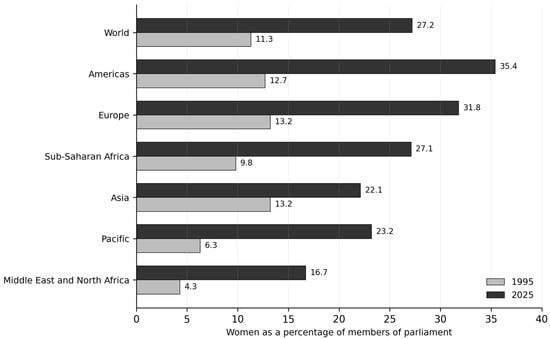

Disclaimer/Publisher’s Note: The statements, opinions and data contained in all publications are solely those of the individual author(s) and contributor(s) and not of MDPI and/or the editor(s). MDPI and/or the editor(s) disclaim responsibility for any injury to people or property resulting from any ideas, methods, instructions or products referred to in the content. |
© 2026 by the authors. Licensee MDPI, Basel, Switzerland. This article is an open access article distributed under the terms and conditions of the Creative Commons Attribution (CC BY) license.