


Abstract
Germanium is a critical rare-dispersed metal with irreplaceable applications in infrared optics, fiber-optic communications, and semiconductor industries, making its efficient recovery from secondary resources of great strategic importance. This study investigates the selective recovery of germanium from complex zinc smelting leachates using a novel hydroxamic acid extractant, BGYW, in synergistic combination with P204. The feed solution contained approximately 360 mg/L Ge, 10,790 mg/L Fe2+, and 98,530 mg/L Zn, representing a highly complex matrix. Continuous counter-current extraction was performed in a 30-stage miniature mixer-settler. Under optimized conditions of 10% BGYW + 5% P204 in white oil, an O/A ratio of 1:1, and 8 mol/L NH4F as strippant, the single-stage germanium extraction efficiency reached 99.4%. Over 16 consecutive cycles, the extraction system maintained stable performance with average germanium extraction above 99%. A 3-stage scrubbing section using 50 g/L H2SO4 effectively removed co-extracted Zn, Cu, and Al impurities. Iron co-extraction, a major challenge, was successfully mitigated through a 2–3 stage iron scrubbing step using a chloride-containing scrubbing solution, which reduced the iron concentration in the strip liquor from approximately 600 mg/L to below 4 mg/L, and decreased the Fe/Ge mass ratio from 0.197 to below 0.01. The overall germanium recovery across the entire 30-stage continuous process reached 98.82%, and the dissolution loss of BGYW in the aqueous phase was reduced by over 85% compared to the conventional YW100 extractant. Third-phase formation caused by residual organic flocculants from the leaching step was eliminated through enhanced pre-treatment, while ferric fluoride precipitation in the stripping section was resolved by incorporating the iron scrubbing stage. This study demonstrates that the BGYW-P204 extraction system with the integrated iron scrubbing step offers an efficient, stable, and industrially viable approach for germanium recovery from zinc smelting leachates, providing a practical solution to the long-standing challenge of germanium–iron separation and contributing to the sustainable supply of this critical metal.
1. Introduction
Germanium and indium are critical rare-dispersed metals that occupy irreplaceable positions in strategic high-technology fields including infrared optics, fiber-optic communications, aerospace, semiconductor manufacturing, and flat-panel displays, owing to their unique optical, electrical, and semiconductor properties [1,2,3]. With the rapid development of the global high-tech industry, the strategic resource value and market demand for these metals are continuously increasing [4].
However, germanium and indium rarely form independent industrial deposits in nature and are typically dispersed as trace components in lead, zinc, aluminum, and other non-ferrous metal ores [5]. In zinc smelting processes, they are primarily enriched in leach residues, dusts, or neutralization slags. The leachate obtained after acid treatment is characterized by high acidity, high impurity ion concentrations, and low target metal concentrations [6]. This extremely complex solution system poses severe technical challenges for the selective separation and efficient enrichment of germanium and indium [7,8].
For germanium recovery, the existing industrial strategies all have their limitations. The tannin precipitation method, currently the dominant industrial process, suffers from high tannic acid consumption and relatively low recovery rates [9,10]. Various alternative methods for germanium recovery have been explored to address the limitations of the tannin precipitation process. The distillation method, based on the volatilization of GeCl4, is effective for high-grade germanium materials but suffers from high energy consumption, severe environmental concerns due to chlorine gas emission, and is not suitable for low-concentration solutions. Ion exchange methods offer high selectivity but are limited by low processing capacity, resin fouling in high-impurity matrices, and high operational costs. Among these approaches, solvent extraction has emerged as the most promising technique for recovering germanium from low-concentration solutions due to its high efficiency, continuous operation capability, and scalability.
A range of extractant systems have been investigated for germanium solvent extraction. The N235-tartaric acid system achieves >98% germanium extraction under optimized conditions [9]; however, it requires tartaric acid as a co-extractant, which introduces water-soluble organic compounds into the aqueous phase. These organics cause severe zinc electrowinning plate burning issues in the subsequent electrolysis process, significantly limiting its industrial applicability [11,12]. The YW100 hydroxamic acid system, the first generation of hydroxamic acid extractants developed in China, exhibits approximately 95% germanium extraction efficiency under optimal conditions [13,14,15]. However, its relatively low molecular weight (approximately 170–200 g/mol) results in high water solubility (>500 mg/L loss per cycle) and poor chemical stability, leading to rapid degradation and short cycle life. The TOA/TBP system has been reported to achieve approximately 90% germanium extraction from germanium dross leachate, but requires multiple extraction stages for complete recovery and suffers from limited selectivity over iron [1]. The D2EHPA (P204) system, widely used for indium extraction, shows limited selectivity for germanium over iron, with iron co-extraction often exceeding 50% under typical conditions [16,17]. In contrast, the novel BGYW extractant presented in this work features significantly increased molecular weight (approximately 280–340 g/mol) and enhanced hydrophobicity, reducing water solubility by over 85% compared to YW100 while achieving a single-stage germanium extraction efficiency of 99.4% with excellent long-term stability. To overcome these bottlenecks, BGRIMM Technology Group has recently developed a novel hydroxamic acid extractant, BGYW [18]. Compared with the conventional YW100 extractant, BGYW features significantly increased molecular weight and hydrophobicity, effectively addressing the problem of excessive dissolution loss in the aqueous phase. Moreover, unlike the N235 extraction system, BGYW does not require tartaric acid as a co-extractant, avoiding the issue of zinc electrowinning plate burning caused by the introduction of water-soluble organic compounds.
To address the aforementioned challenges, this study presents a comprehensive investigation of germanium recovery from actual zinc smelting leachate using the novel BGYW extractant in a continuous counter-current extraction process. The novelty of this work is fourfold. First, to the best of our knowledge, this is the first systematic study reporting the continuous counter-current extraction of germanium from actual zinc smelting leachate using the BGYW extractant in a 30-stage miniature mixer-settler, demonstrating the industrial applicability and scalability of the process. Second, we introduce a chloride-containing iron scrubbing step that selectively removes co-extracted Fe3+ from the loaded organic phase, effectively solving the long-standing germanium–iron separation problem that has been a critical bottleneck in previous germanium extraction processes. Third, we validate the long-term stability of the BGYW-P204 system over 16 consecutive cycles with extraction efficiency maintained above 99%, providing unprecedented evidence of the superior chemical stability of BGYW compared to the conventional YW100 extractant. Fourth, the 85% reduction in extractant dissolution loss compared to YW100 represents a significant breakthrough in reagent economy, making the BGYW-based process economically attractive for industrial implementation. Using actual leachate from zinc smelting secondary zinc oxide dust as feed, we systematically investigate the extraction, scrubbing, stripping, and impurity control performance, aiming to develop a clean, stable, and industrially viable germanium extraction process.
2. Materials and Methods
2.1. Feed Solution and Reagents
The germanium-containing feed solution used in this study was obtained from the Chihong Zinc-Germanium Xijie Smelting Plant (Yunnan, China), derived from the leaching of neutralization-enriched residue. The main chemical composition is presented in Table 1.
Table 1.
Main chemical composition of the neutralization-enriched residue leachate.
The extractant BGYW (>95% active content) was provided by BGRIMM Technology Group (Beijing, China). BGYW is a novel alkyl hydroxamic acid extractant with the general chemical formula R-CONHOH, where R represents a long-chain alkyl group with carbon chain length C12-C16; the molecular weight of BGYW is significantly higher than conventional YW100 extractant. The higher molecular weight and enhanced hydrophobicity of BGYW are the key structural features that reduce its dissolution loss in the aqueous phase compared to YW100. The hydroxamic acid functional group (-CONHOH) is responsible for the chelating coordination with Ge4+, forming a stable five-membered ring complex, while the long alkyl chain provides the hydrophobic character necessary for efficient extraction into the organic phase. The synergist P204 (di(2-ethylhexyl)phosphoric acid, also known as D2EHPA, ≥95% purity, industrial grade, CAS 298-07-7) was supplied by Shanghai Aladdin Biochemical Technology Co., Ltd. (Shanghai, China). TRPO (trialkyl phosphine oxide, ≥92% purity, industrial grade) was supplied by Sannuo New Material Technology (Luoyang) Co., Ltd. (Luoyang, China). Sulfuric acid (98%, analytical grade, CAS 7664-93-9), ammonium fluoride (≥96%, analytical grade, CAS 12125-01-8), hydrochloric acid (36–38%, analytical grade, CAS 7647-01-0), oxalic acid dihydrate (≥99.5%, analytical grade, CAS 6153-56-6), potassium dichromate (≥99.8%, analytical grade, CAS 7778-50-9), and sodium diphenylamine sulfonate (indicator grade, CAS 6152-67-6) were all purchased from Sinopharm Chemical Reagent Co., Ltd. (Shanghai, China). The diluent light white oil (industrial grade) was supplied by Zibo Yaoyu New Material Technology Co., Ltd. (Zibo, China). The light white oil had the following physical properties: density 0.79 g/cm3 at 20 °C, boiling range 180–260 °C, flash point > 60 °C, and aromatic content < 0.5 wt%. This diluent was chosen over kerosene because of its lower aromatic content, which reduces the risk of extractant degradation and third-phase formation during long-term continuous operation. High aromatic content in kerosene can lead to the formation of emulsion-stabilizing interfacial films and accelerate the oxidation of hydroxamic acid extractants. All chemical reagents were of analytical grade and used without further purification.
The feed solution for germanium extraction was the raffinate after indium extraction, in which indium was reduced from 740 mg/L to 15 mg/L (approximately 98% removal), while other element concentrations remained largely unchanged.
It should be noted that the Fe2+ concentration reported in Table 1 was determined by the standard potassium dichromate titration method (GB/T 6730.8-2016, equivalent to ISO 2597-1:2016) with a precision of ±0.5%. Total iron concentration was determined by ICP-OES after complete digestion with aqua regia, and Fe3+ was calculated by difference (Fe3+ = Total Fe − Fe2+). The feed solution contained approximately 10,790 mg/L Fe2+ and approximately 210 mg/L Fe3+ (total Fe ≈ 11,000 mg/L). The Fe3+ content is relatively low because the leaching process was conducted under reducing conditions (maintained by adding a small amount of metallic zinc powder) to suppress ferrous oxidation, which is a standard industrial practice in zinc smelting. Iron is the only element among the major constituents that undergoes significant oxidation state changes during extraction (Fe2+ → Fe3+ upon exposure to air). This oxidation is critically Important because P204 has a strong extraction affinity for Fe3+ but negligible affinity for Fe2+, and the oxidation of Fe2+ to Fe3+ during extraction is the root cause of the iron co-extraction problem. Other elements (Zn, Cu, Al, Mn, Cd) do not undergo similar oxidation state changes under the experimental conditions and are therefore reported as total concentrations.
2.2. Experimental Methods
Shake-flask extraction tests were conducted in separatory funnels. The aqueous and organic phases were mixed at the desired phase ratio (O/A), placed in a constant-temperature oscillator for a predetermined time, and the aqueous phase was sampled after phase separation for analysis.
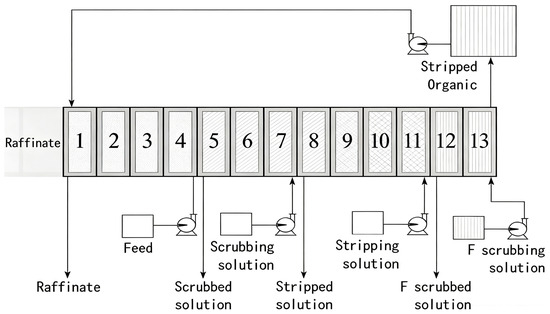
Continuous counter-current extraction was performed using a 30-stage miniature mixer-settler to simulate the full process flow. The process configuration consisted of 4 stages for extraction, 3 stages for scrubbing, 4 stages for stripping, and 2 stages for aqueous scrubbing of the stripped organic phase. The mixing chamber volume of each stage was 125 mL, and the settling chamber volume was 375 mL. After the system reached steady state, samples were collected from the inlet/outlet solutions of each section and from the mixing chambers of each stage for analysis. Sampling was conducted every 4 h from the outlet of each section for major metal concentration analysis; after stable operation, full elemental analysis was performed on samples taken from each stage every 24 h.
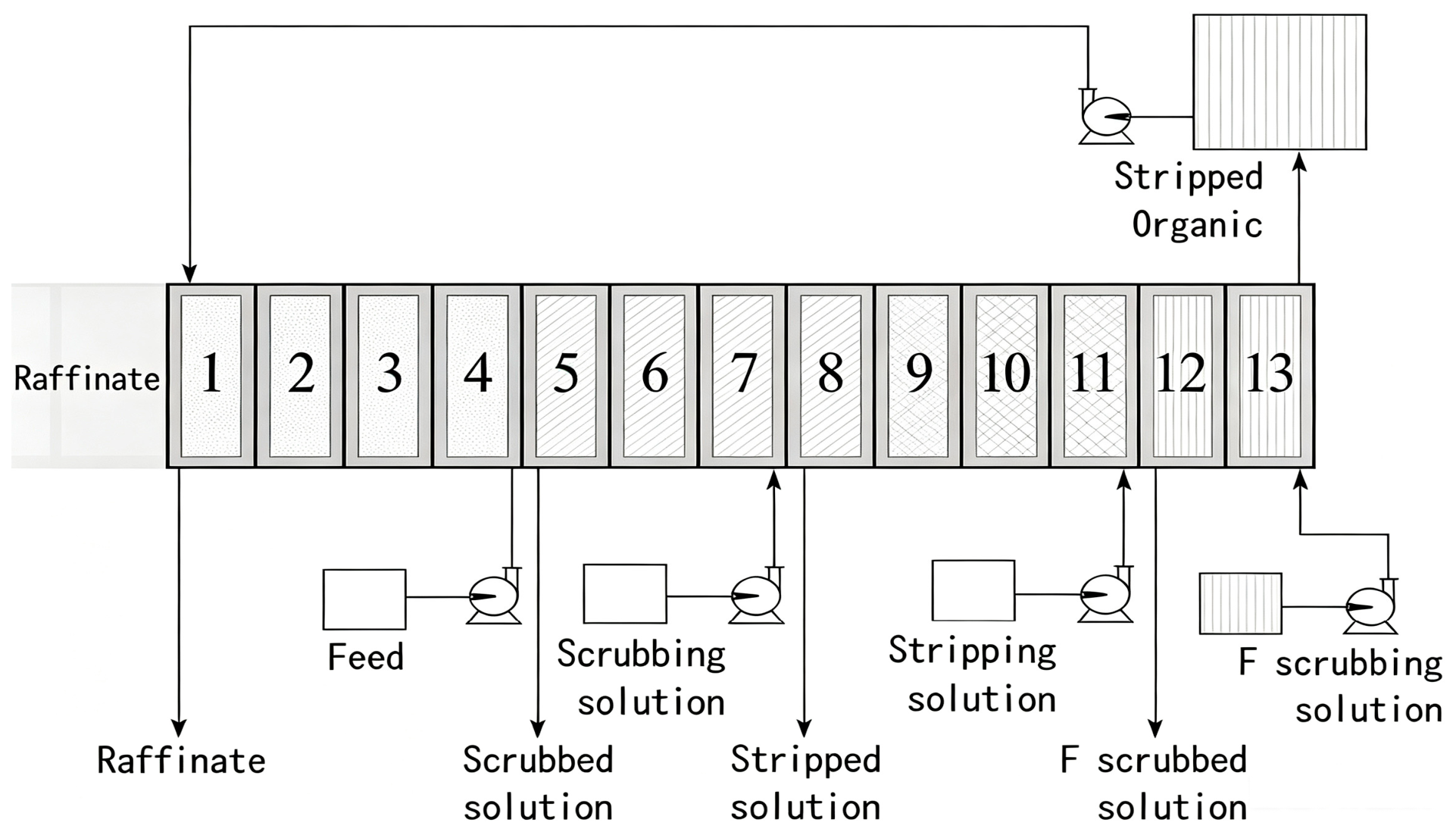
Figure 1 shows the schematic flow diagram of the 30-stage continuous counter-current extraction system. The feed solution enters at Stage 19 and flows counter-currently to the organic phase through the extraction section (Stages 16–19), followed by a scrubbing section (Stages 13–15), a stripping section (Stages 9–12), and finally an organic scrubbing section (Stages 7–8). Details of the mixer-settler configuration and flow directions are depicted in Figure 1.
Figure 1.
Schematic flow diagram of the 30-stage continuous counter-current extraction system.
2.3. Analytical Methods
Metal ion concentrations in solutions were determined using an inductively coupled plasma optical emission spectrometer (ICP-OES, Thermo Scientific iCAP 7400 Duo, Thermo Fisher Scientific, Waltham, MA, USA) for major elements (Zn, Fe, Al, Mn, Cu, Cd) and an inductively coupled plasma mass spectrometer (ICP-MS, Agilent 7900, Agilent Technologies, Santa Clara, CA, USA) for trace elements (Ge, In, As). Calibration was performed using multi-element standard solutions with 5 calibration points (0.1, 0.5, 1.0, 5.0, 10.0 mg/L for ICP-OES; 0.1, 0.5, 1.0, 5.0, 10.0, 50.0, 100.0 μg/L for ICP-MS). Calibration line correlation coefficients (R2) exceeded 0.9995 for ICP-OES and 0.9990 for ICP-MS for all elements analyzed. Detection limits were 0.01–0.1 mg/L for ICP-OES and 0.01–0.1 μg/L for ICP-MS, depending on the element. The extraction efficiency (E) and stripping efficiency (S) were calculated according to the following equations:
where C0 is the initial concentration in the aqueous solution (g/L), C is the concentration after extraction (g/L), Cst is the concentration in the strip solution (g/L), Vst is the volume of the strip solution (L), Lo is the loaded concentration in the organic phase (g/L), and Vo is the volume of the organic phase (L). All concentrations reported in this manuscript are expressed in mg/L (equivalent to ppm for dilute aqueous solutions) unless otherwise stated.
All batch (shake-flask) experiments were performed in triplicate (n = 3) under identical conditions, and the results are reported as mean values. For continuous counter-current extraction experiments, samples were collected at steady state from five independent time points (n = 5) for each analysis, and the results are reported as mean values with standard deviations (SD). Error bars in all figures represent the standard deviation of replicate measurements (n = 3 for batch experiments; n = 5 for continuous experiments).
3. Results and Discussion
3.1. Continuous Counter-Current Extraction of Germanium
3.1.1. Germanium Extraction Performance
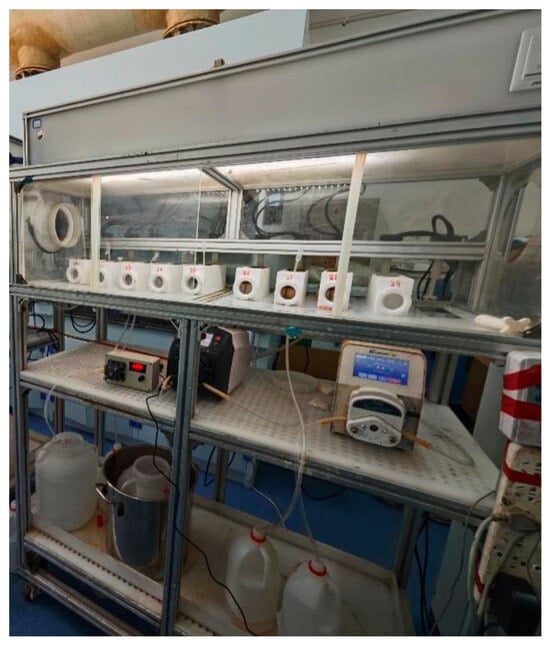
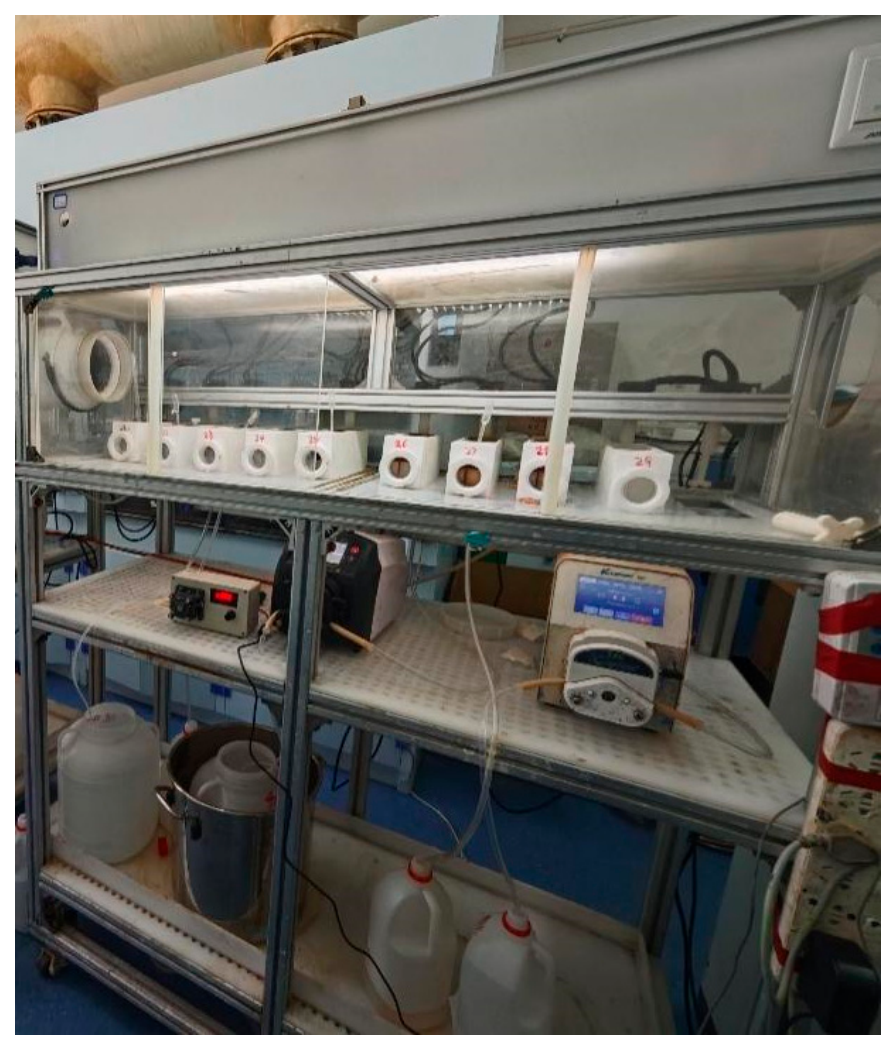
Using the indium raffinate as feed, continuous counter-current extraction validation tests were conducted in the 30-stage miniature mixer-settler (Figure 2) [19]. The indium raffinate used as the feed for germanium continuous extraction was obtained by extracting indium from the original neutralization-enriched residue leachate using a P204-based extraction system. In this raffinate, the indium concentration was reduced from 740 mg/L to 15 mg/L (approximately 98% removal), while the concentrations of other elements (Ge, Fe2+, Zn, Al, Mn, Cu, Cd, As) remained largely unchanged, as shown in Table 1. The organic phase composition was 10% BGYW + 5% P204 in white oil, the extraction O/A ratio was 1:1, the scrubbing solution was 50 g/L H2SO4, and the strip solution was ammonium fluoride solution. The test aimed to verify the long-term stability of the extraction system, impurity behavior, and strip liquor quality.
Figure 2.
Photograph of the 30-stage continuous extraction experimental setup.
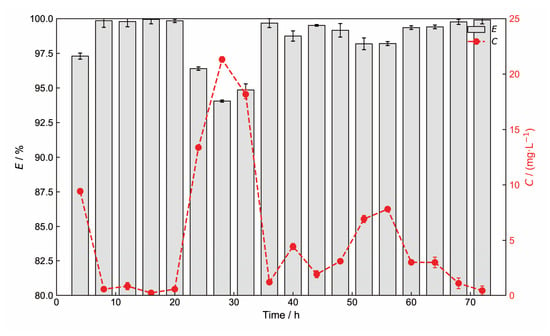
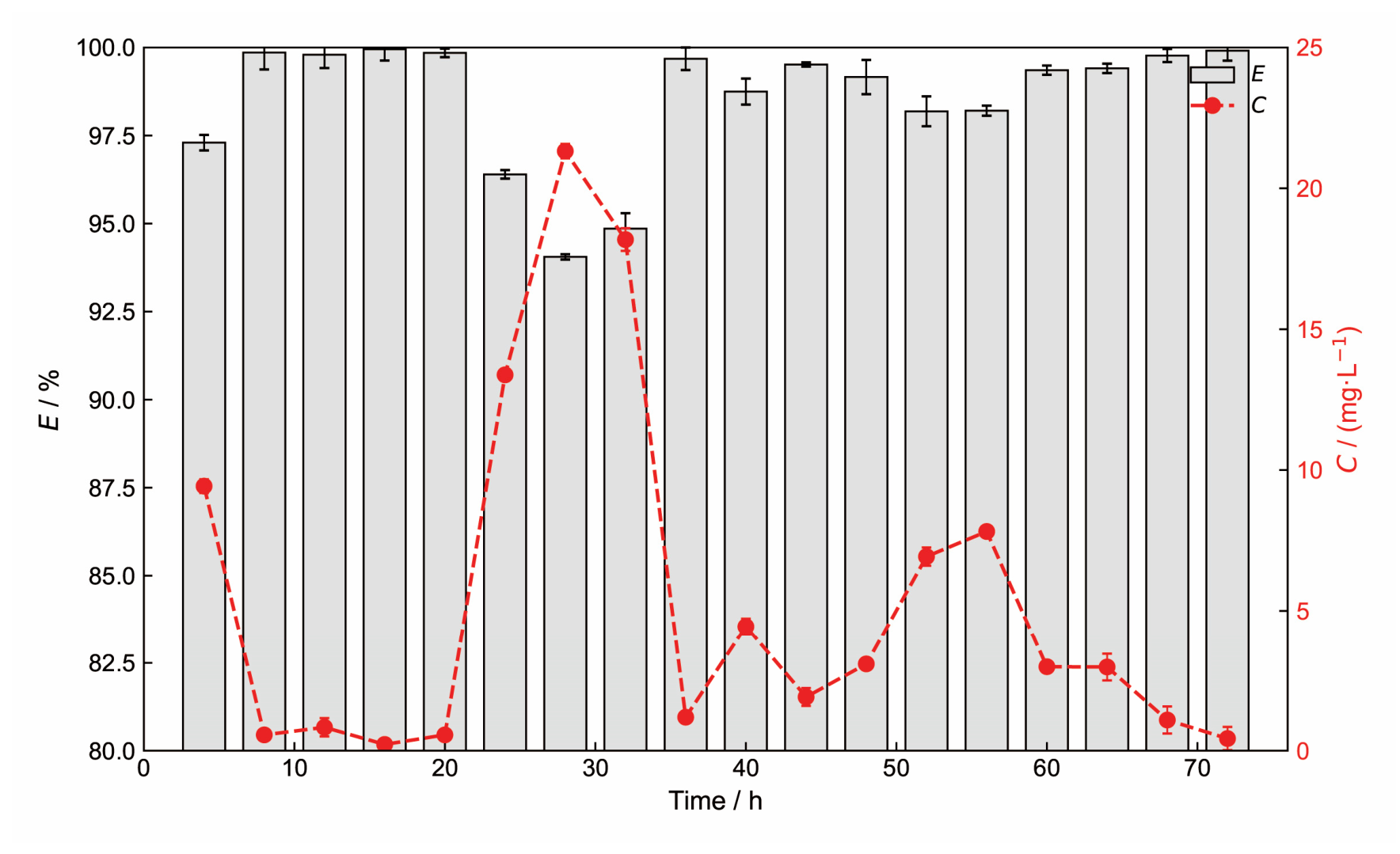
Figure 3 presents the variation in raffinate germanium concentration and extraction efficiency over continuous operation. During the initial cycles, the germanium concentration in the raffinate gradually decreased and stabilized, reaching approximately 3 mg/L after about 12 cycles, with germanium extraction efficiency maintained above 99.4%.
Figure 3.
Variation in raffinate germanium concentration and germanium extraction efficiency over continuous operation. E represents the extraction efficiency; C is the raffinate germanium concentration.
To assess the operational limits of the extraction system, the O/A ratio was intentionally reduced from 1:1 to approximately 0.8:1 after the 5th cycle by decreasing the organic flow rate by approximately 20% while maintaining the aqueous feed rate constant. This test was performed to determine whether the existing extractant concentration (10% BGYW + 5% P204) could maintain high extraction efficiency at a lower organic flow rate, which would be beneficial for reducing reagent consumption and operational costs. The results are clearly visible in Figure 3 at cycles 5–6: upon reduction in the O/A ratio to approximately 0.8:1, the raffinate germanium concentration increased sharply from approximately 5 mg/L to over 20 mg/L, and the extraction efficiency dropped from approximately 99.5% to approximately 94%. This dramatic change demonstrates that the extractant concentration at the current phase ratio was approaching the critical value, and further reduction of the organic-to-aqueous ratio would significantly compromise extraction efficiency. After this test, the O/A ratio was restored to 1:1 at cycle 6, and the system gradually re-equilibrated, with the raffinate germanium concentration decreasing back to the steady-state level of approximately 3 mg/L by cycle 12. This recovery confirmed that the system had not suffered any permanent damage or extractant degradation as a result of the temporary O/A ratio reduction. These findings suggest that while the current organic composition (10% BGYW + 5% P204) is well-suited for operation at O/A = 1:1, further optimization of the extractant concentration may be necessary to achieve effective germanium extraction at lower O/A ratios.
3.1.2. Scrubbing Section Performance
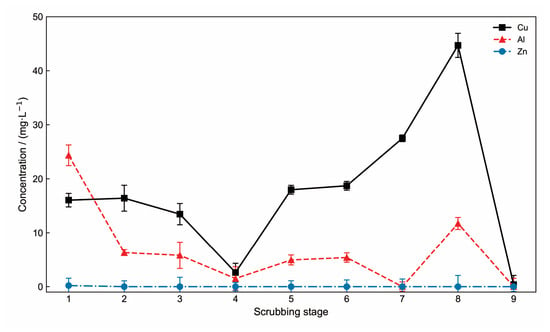
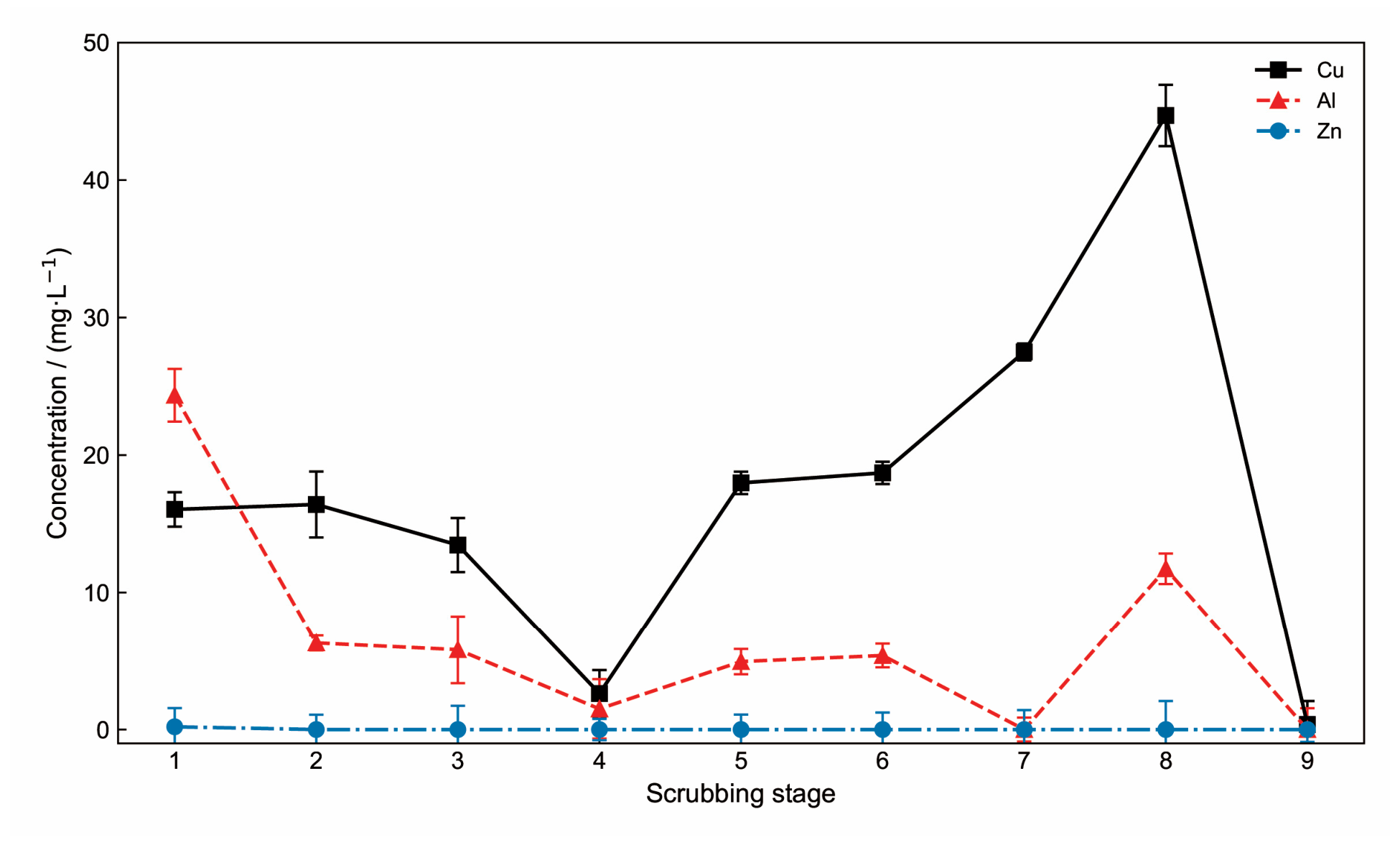
The scrubbing section employed 50 g/L H2SO4 at an O/A ratio of 1.5:1 to remove co-extracted impurity ions from the loaded organic phase. The results in Figure 4 show that after 3 stages of scrubbing, the concentrations of Zn, Cu, and Al in the scrubbing solution decreased progressively, with all three impurity concentrations reaching low levels at the outlet. This demonstrates that the scrubbing conditions effectively remove entrained or co-extracted Zn, Cu, Al, and other impurities from the loaded organic phase, ensuring the purity of germanium in the stripping section. The germanium concentrations in the scrubbing solution across the three stages were 8.2 mg/L (Stage 1), 3.1 mg/L (Stage 2), and 0.9 mg/L (Stage 3), respectively. Based on these concentrations and the scrubbing O/A ratio of 1.5:1, the total germanium in the scrubbing solution corresponded to approximately 18.3 mg/L of organic phase, representing about 5.2% of the loaded germanium (approximately 350 mg/L Ge in the loaded organic phase). However, in the continuous operation, the scrubbing solution from the first stage was recycled to the extraction section, which recovered most of this germanium. The net germanium loss after accounting for scrub liquor recycling was calculated to be less than 2%, confirming that the scrubbing conditions (50 g/L H2SO4, O/A = 1.5:1) effectively removed impurities while retaining the vast majority of germanium in the organic phase for subsequent stripping.
Figure 4.
Variation in Zn, Cu, and Al concentrations in the scrubbing solution across the scrubbing section. Conditions: scrubbing solution 50 g/L H2SO4, O/A = 1.5:1, time = 10 min, T = 30 °C.
3.1.3. Stripping Performance and Ge/Fe Ratio Evolution
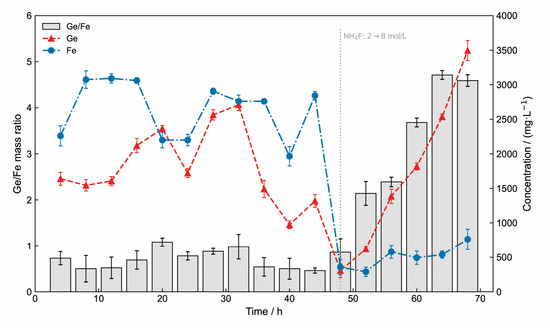
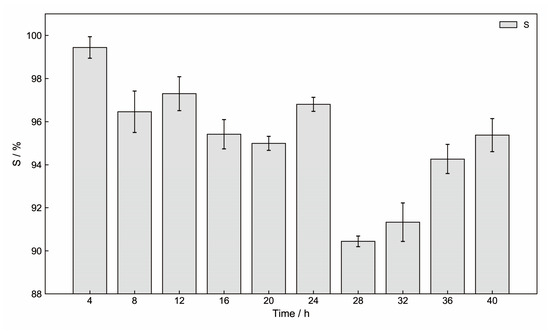
The concentrations of germanium and iron in the strip liquor and the germanium stripping efficiency are shown in Figure 5 and Figure 6, respectively. During the first 10 cycles, using 2 mol/L NH4F as strippant with an O/A ratio of 2–3.1:1, the total iron concentration in the feed was approximately 20,000 mg/L (20 g/L) due to the oxidation of ferrous to ferric ions and volume reduction during the preceding process, and the Ge/Fe mass ratio in the strip liquor was below 1:1, far below the purity requirement.
Figure 5.
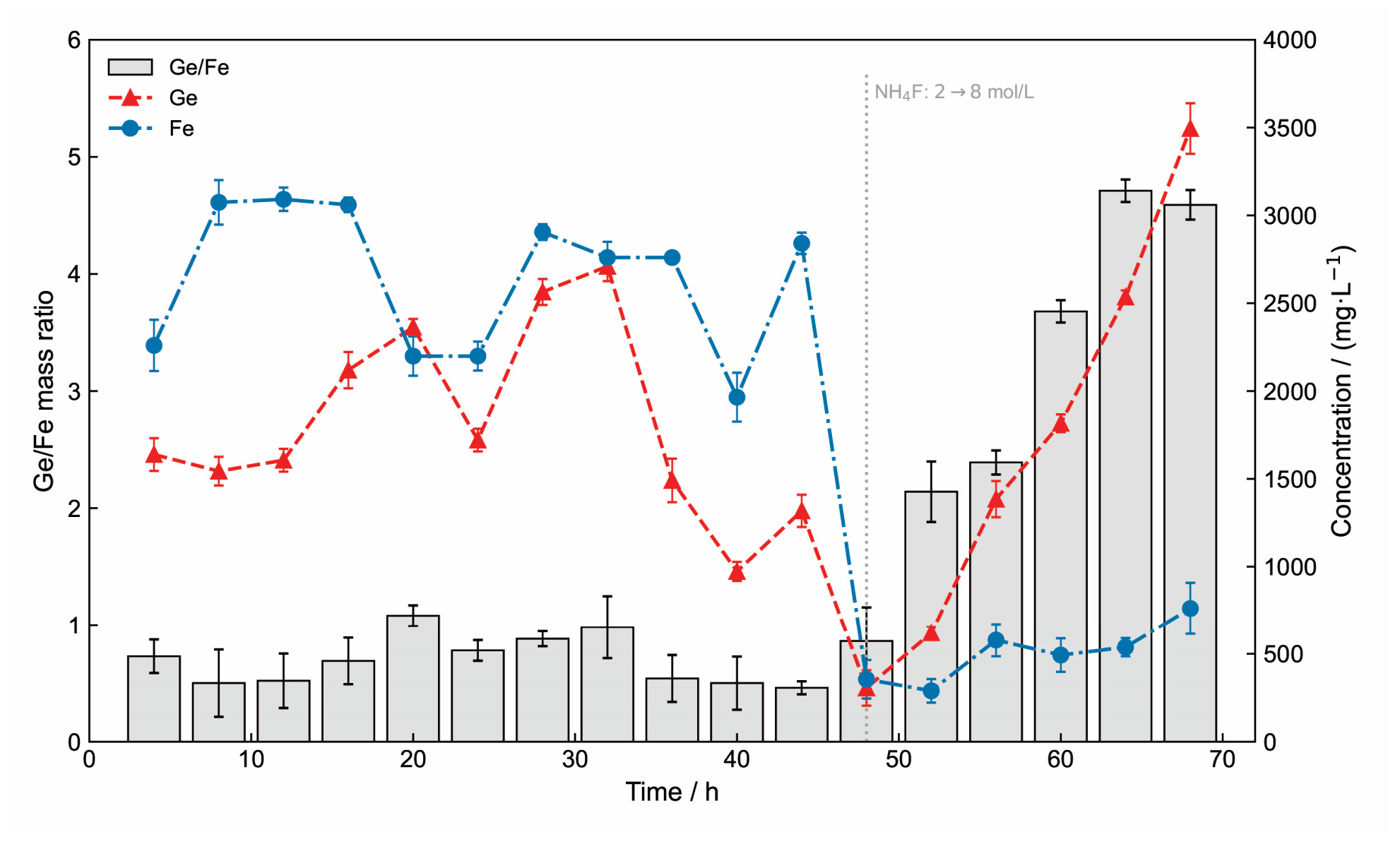
Variation of germanium and iron concentrations and Ge/Fe ratio in the strip liquor (0–44 h: 2 mol/L NH4F, O/A = 2–3.1:1; 48–68 h: 8 mol/L NH4F, O/A = 1:1, T = 30 °C).
Figure 6.
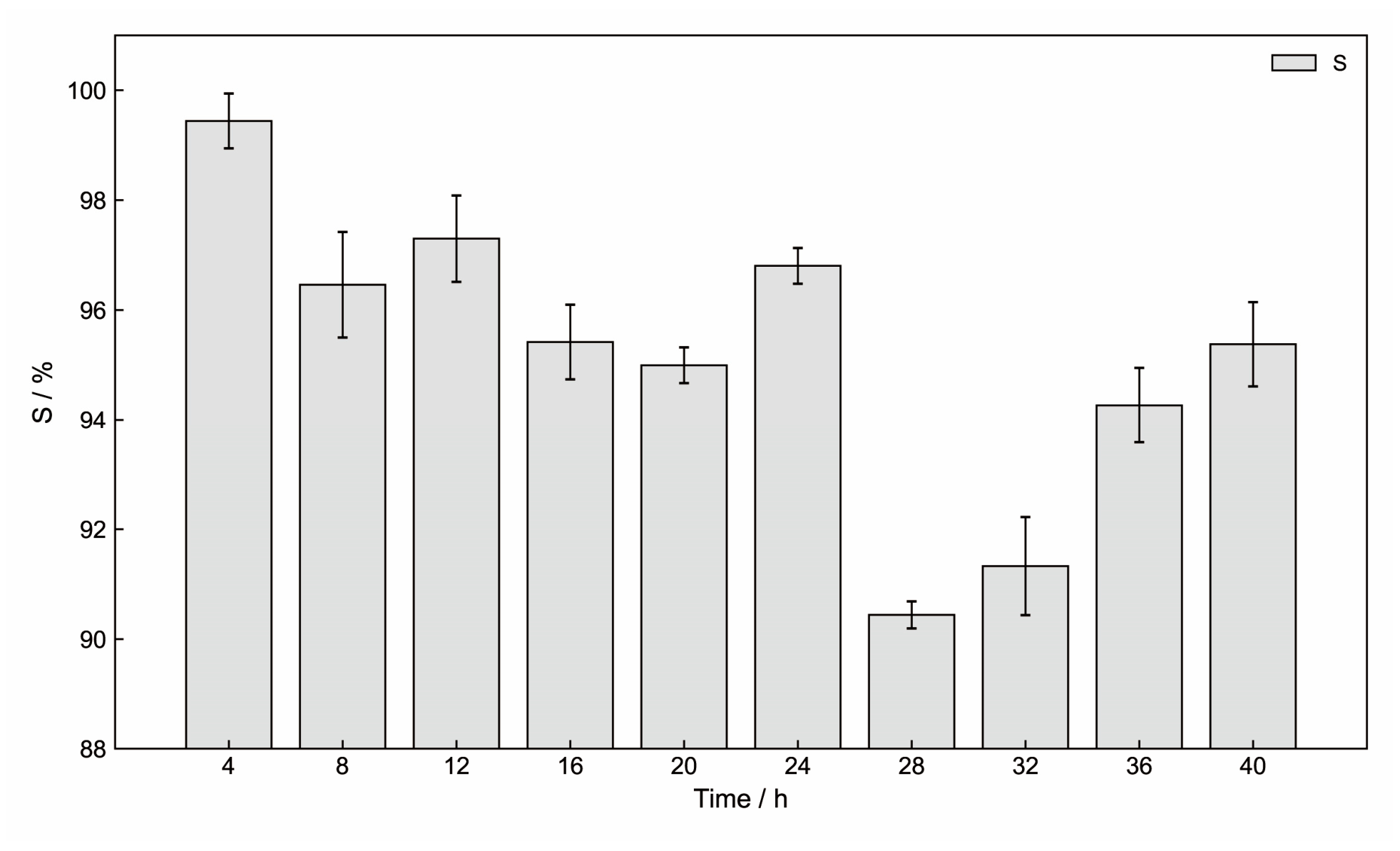
Germanium stripping efficiency over continuous extraction operation.
After the 12th cycle, the NH4F concentration was increased to 8 mol/L, the stripping O/A ratio was adjusted to 1:1, and cyclic stripping was employed to rapidly enrich germanium. Under the combined effects of iron reduction in the feed and increased NH4F concentration in the stripping solution, the Ge/Fe ratio gradually increased from below 1 to nearly 5. The germanium stripping efficiency (Figure 6) remained above 94% during the first 24 h, with a transient decline to 90.44% at 28 h, likely due to depletion of the NH4F stripping reagent or accumulation of iron in the organic phase. After increasing the NH4F concentration to 8 mol/L, the stripping efficiency recovered and stabilized above 95%.
The sharp decrease in both Ge and Fe concentrations at 48 h (Figure 5) is attributed to the change in stripping O/A ratio from 2–3.1:1 to 1:1, which resulted in dilution of the strip liquor. Despite this dilution, the Ge/Fe ratio continued to increase, confirming the improved selectivity of the 8 mol/L NH4F system.
The improvement in the Ge/Fe ratio upon increasing the NH4F concentration from 2 mol/L to 8 mol/L is attributed to the difference in fluoride complex stability between germanium and iron. The hexafluorogermanate complex [GeF6]2− has a formation constant of log β6 ≈ 28–30, which is significantly higher than that of the hexafluoroferrate complex [FeF6]3− (log β6 ≈ 15–17). The higher fluoride concentration drives both equilibria toward complex formation, but the more stable germanium complex benefits more from the increased fluoride availability, resulting in selective germanium stripping over iron. To address this iron co-extraction challenge, systematic studies on iron suppression and selective scrubbing were conducted, as presented in Section 3.2.
3.1.4. Metal Distribution Across Extraction Stages
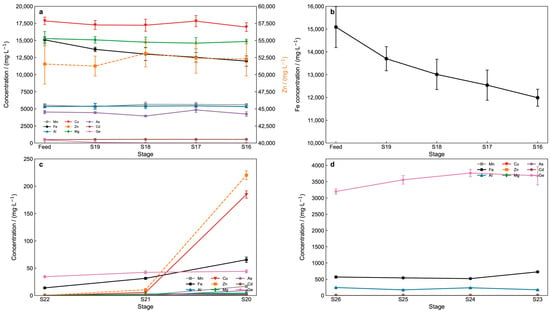
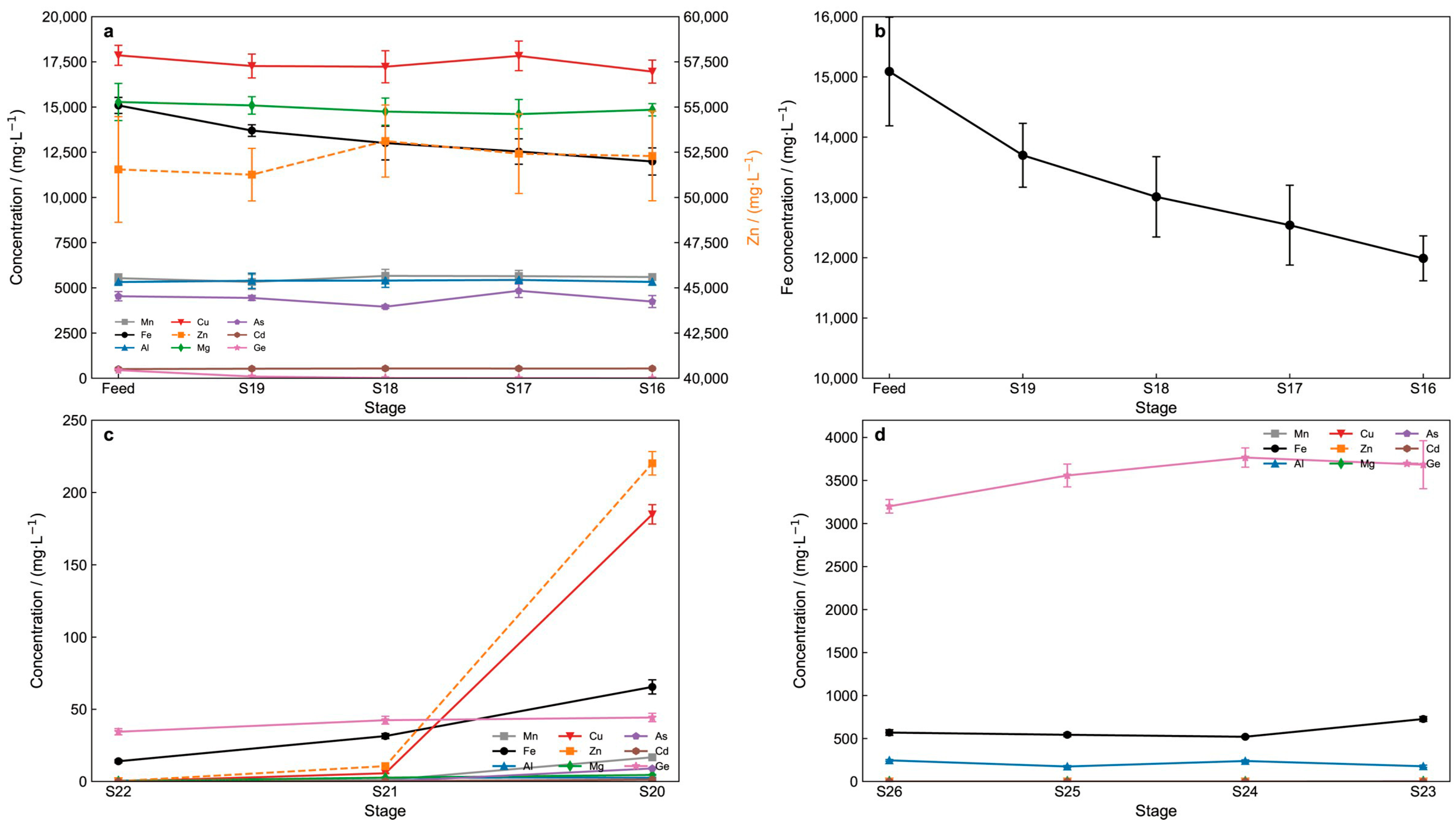
After the system reached equilibrium, sampling and analysis were conducted for each of the 13 extraction stages (S7–S19) across the extraction, scrubbing, and stripping sections, with results shown in Figure 7. Stages S16–S19 constitute the extraction section, with feed entering at Stage 19. After 4 stages of extraction, the germanium concentration gradually decreased, with the outlet concentration below 10 mg/L. Meanwhile, the iron concentration decreased progressively along the extraction stages, because Fe2+ was gradually oxidized to Fe3+ upon contact with air in the extraction stages, and then co-extracted into the organic phase by P204.
Figure 7.
Concentration profiles of multi-metals across the extraction, scrubbing, and stripping sections: (a) 4-stage extraction section (Feed → S19 → S18 → S17 → S16); (b) Fe concentration profile across the 4-stage extraction section; (c) 3-stage scrubbing section (S22 → S21 → S20); (d) 4-stage stripping section (S26 → S25 → S24 → S23).
In the scrubbing section, impurity concentrations including Fe and Zn decreased progressively across the stages, demonstrating effective impurity removal. In the stripping section, germanium was enriched above 3500 mg/L (3.5 g/L), although the iron concentration reached approximately 600 mg/L, again confirming the existence of the iron co-extraction issue. Based on the full-process sampling after equilibrium, the overall germanium recovery was calculated as 98.82%. In the strip liquor, the As/Ge mass ratio was 0.00059 and the Zn/Ge ratio was 0, both superior to the target specification of 0.001; the Fe/Ge ratio was 0.197.
3.2. Mitigation of Iron Co-Extraction
3.2.1. Effect of Extraction Time on Iron Extraction
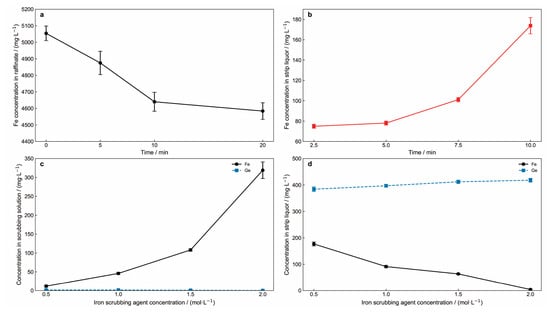
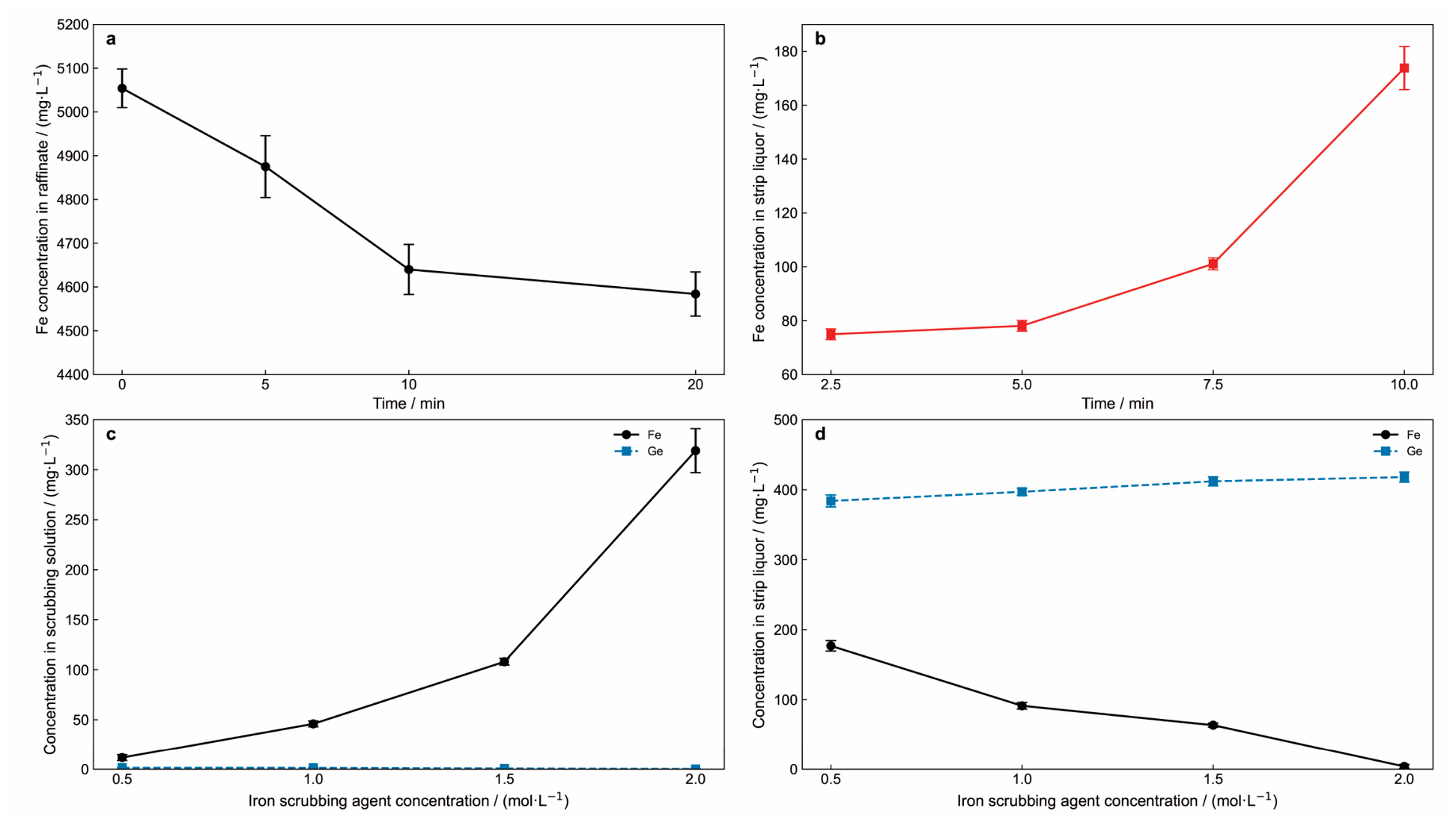
During germanium extraction, the co-extraction of Fe3+ significantly affects the purity of the strip liquor and the quality of subsequent germanium precipitation products. The feed solution contains high concentrations of ferrous ions, which undergo partial oxidation during extraction. Extraction time is an important factor affecting ferrous oxidation. The effect of extraction time on iron extraction was investigated, with results shown in Figure 8a. The experiments used an aqueous phase containing 5 g/L Fe2+ and 20 g/L H2SO4, an organic phase of 5% P204 + 10% BGYW, an O/A ratio of 1:1, and stirring times of 0, 5, 10, and 20 min.
Figure 8.
(a) Variation in raffinate iron concentration at different extraction times (5% P204 + 10% BGYW, O/A = 1:1). (b) Variation in strip liquor iron concentration at different BGYW concentrations (5% P204, O/A = 1:1). (c) Variation in iron and germanium concentrations in scrubbing solution at different scrubbing agent concentrations (10% BGYW + 5% P204, O/A = 1:1). (d) Variation in iron and germanium concentrations in strip liquor after scrubbing at different scrubbing agent concentrations.
The results show that as extraction time increased from 0 to 20 min, the iron concentration in the raffinate continuously decreased from 5.0 to approximately 4.58 g/L, indicating that iron ions were gradually extracted into the organic phase. This is because Fe2+ is gradually oxidized to Fe3+ upon contact with air during agitation, and P204 has a significant extraction capacity for Fe3+. This suggests that residence time in the extraction section should be minimized or the number of extraction stages reduced to suppress iron co-extraction in the continuous process. At 0 min (immediately after phase contact without agitation), the Fe concentration remained at 5054 mg/L, representing the initial Fe2+ concentration in the aqueous phase. It should be noted that the absolute Fe concentrations in the shake-flask tests (Figure 8b, ~75–174 mg/L) are lower than those observed in the continuous operation (Figure 5, ~2000–3000 mg/L) due to the higher initial Fe concentration in the actual feed solution (approximately 20 g/L vs. 5 g/L in the synthetic solution).
To determine whether BGYW contributes to iron extraction, the iron extraction behavior at different BGYW volume fractions was examined, with results shown in Figure 8b. The P204 concentration was fixed at 5%, with other conditions unchanged. As the BGYW concentration increased from 2.5% to 10%, the iron concentration in the strip liquor showed a continuous upward trend, indicating that BGYW does have a certain extraction capacity for iron. Therefore, excessive extractant usage should be avoided in practice to prevent over-accumulation of iron in the organic phase, which would compromise the germanium concentrate grade.
3.2.2. Iron Scrubbing Efficiency
The effects of iron scrubbing agent concentration on iron removal efficiency and germanium retention in the loaded organic phase were investigated, with results shown in Figure 8c,d. Extraction conditions were: aqueous phase containing 10 g/L Fe2+, 0.4 g/L Ge, and 20 g/L H2SO4; organic phase of 10% BGYW + 5% P204; and O/A ratio of 1:1. The results show that as the scrubbing agent concentration increased, the iron concentration in the scrubbing solution increased significantly, while the germanium concentration gradually decreased, indicating that high-concentration scrubbing agent can efficiently and selectively scrub iron while retaining germanium in the organic phase [20]. The scrubbing efficiencies for the major impurity elements were calculated based on the concentrations in the loaded organic phase before scrubbing and after scrubbing. Zinc was reduced from approximately 1250 mg/L in the loaded organic phase to 15 mg/L after 3-stage scrubbing (98.8% removal efficiency). Aluminum was reduced from approximately 65 mg/L to 0.8 mg/L (98.8% removal efficiency). These values compare favorably with the YW100 system reported by Tan et al. [13], which achieved scrubbing efficiencies of approximately 95–97% for Zn and 94–96% for Al under similar scrubbing conditions (50 g/L H2SO4, O/A = 1.5:1, 3 stages). The improved scrubbing efficiency of the BGYW-P204 system is attributed to the higher selectivity of BGYW for germanium over these impurity metals, which is a consequence of the optimized molecular structure and chelation properties of BGYW. The higher molecular weight and hydrophobicity of BGYW also reduce entrainment of the organic phase in the scrub liquor, contributing to better impurity removal.
After iron scrubbing, stripping was performed on the organic phase. When the scrubbing agent concentration reached 2.0 mol/L, the germanium concentration in the strip liquor was approximately 400 mg/L with stripping efficiency close to 100%, while the iron concentration was only about 4 mg/L, representing a significant reduction in the Fe/Ge ratio.
Based on these findings, it is recommended that a 2–3 stage iron scrubbing section be installed after the extraction section, with the scrubbing agent concentration controlled at 2.0 mol/L. This effectively reduces the iron content in the germanium strip liquor, ensuring the production of high-grade germanium products in the subsequent precipitation step.
3.3. Phase Separation and Interfacial Issues
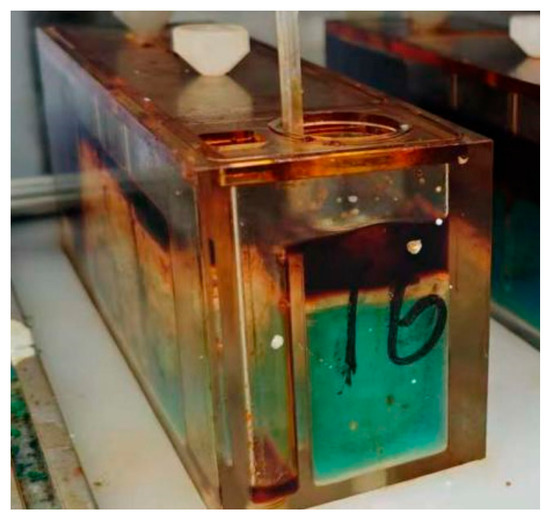
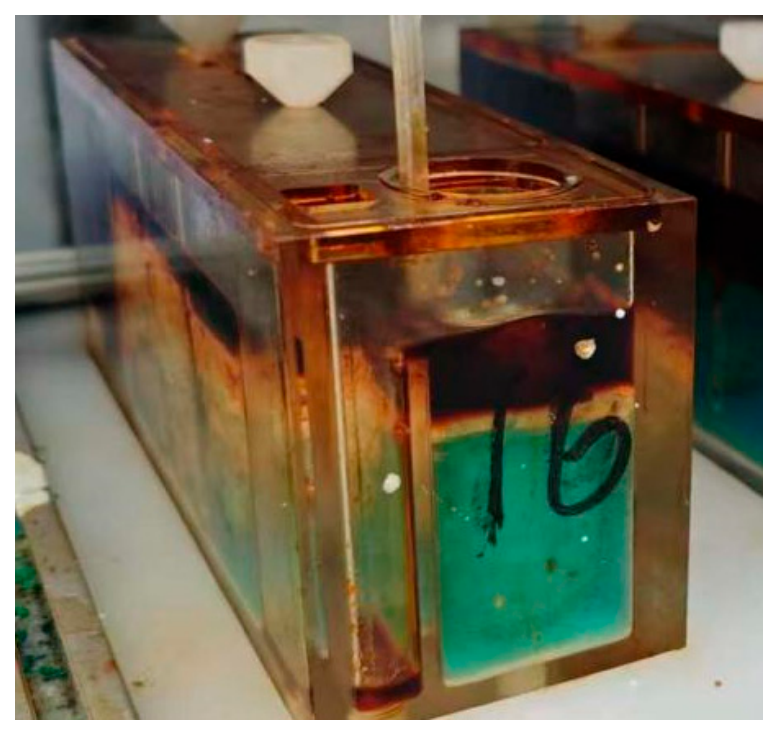
During continuous counter-current extraction operation, the overall phase separation was satisfactory, with clear organic–aqueous separation in each stage and no severe emulsification or phase separation difficulties. However, in the early stage of operation, a small amount of third-phase interfacial contamination was observed at the raffinate outlet, as shown in Figure 9. This third phase appeared as a viscous layer, and analysis suggested its origin from residual organic flocculants (such as bone glue) from the leaching step, which adsorbed and associated with extractant molecules upon entering the extraction system. After enhanced pre-treatment, this third phase was significantly reduced and no substantial accumulation was observed in subsequent operation.
Figure 9.
Third-phase interfacial contamination at the extraction section outlet.
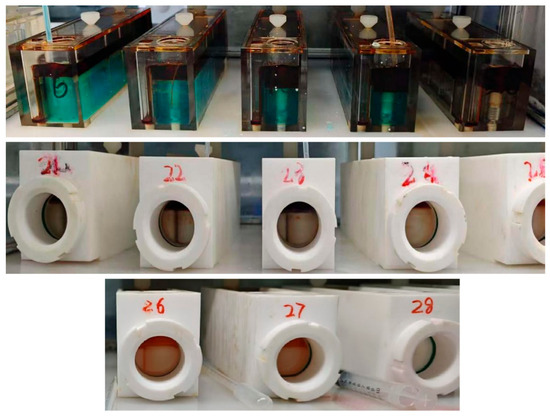
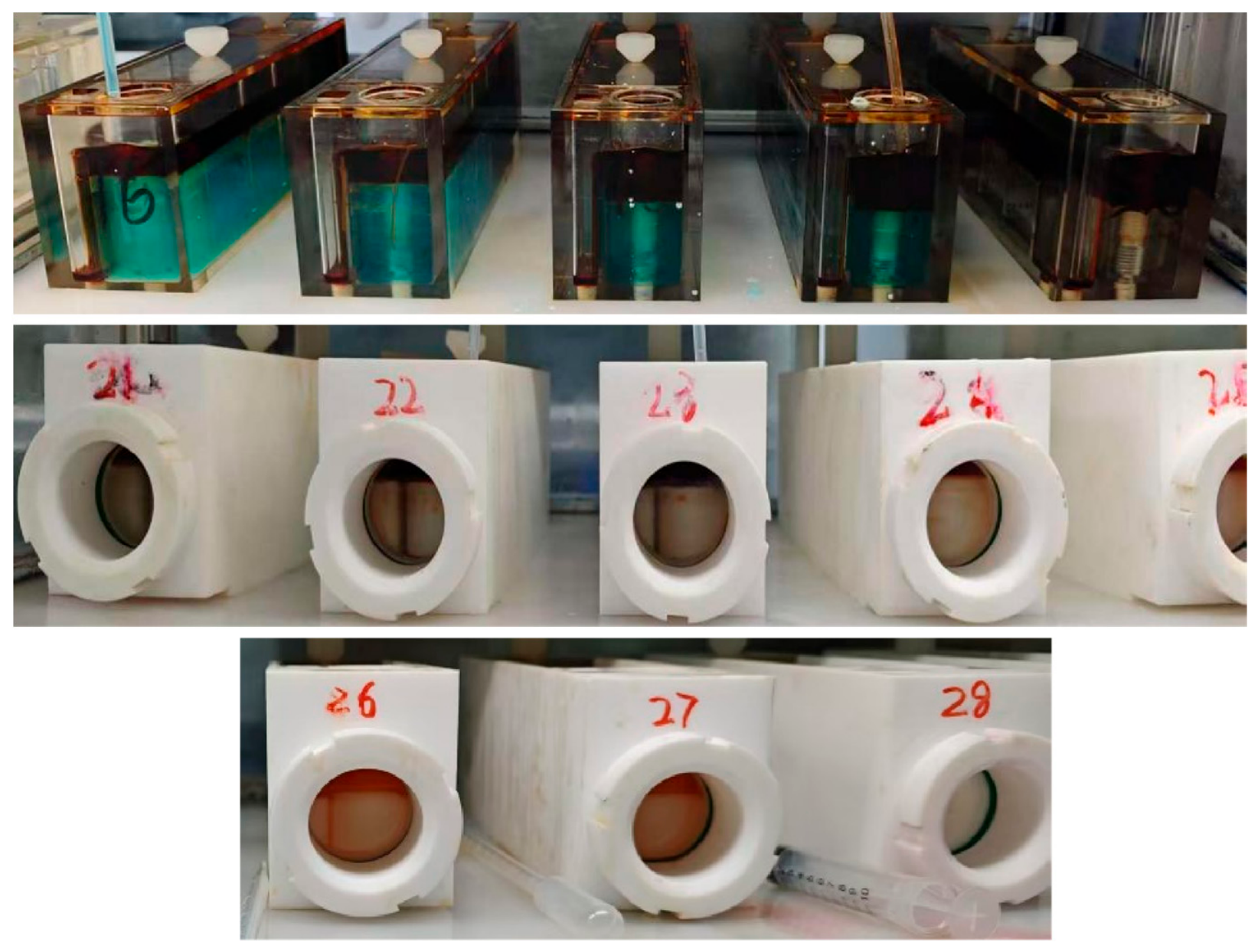
Additionally, white fine particulate precipitates were observed at the bottom of the mixing and settling chambers in the stripping section, as shown in Figure 10. Sampling analysis revealed an iron content exceeding 30% in these precipitates. Given the high fluoride ion concentration in the stripping solution, the precipitate was inferred to be ferric fluoride (FeF3). Fe2+ oxidized to Fe3+ in the extraction section and was co-extracted by P204, then upon entering the stripping section, reacted with F− from NH4F to form sparingly soluble FeF3 precipitates. This precipitate not only affected equipment operation but also caused elevated iron concentration in the strip liquor and a reduced Ge/Fe ratio.
Figure 10.
Phase separation conditions in various extraction stages.
After the introduction of the iron scrubbing step, Fe3+ in the organic phase was selectively removed, and the white precipitate in the stripping section was significantly reduced. The iron concentration in the strip liquor decreased from approximately 600 mg/L to below 4 mg/L, and the Ge/Fe ratio decreased from 0.197 to below 0.01. In summary, through enhanced pre-treatment to remove flocculants and the incorporation of an iron scrubbing section, the interfacial abnormalities described above can be effectively eliminated, ensuring stable phase separation throughout the entire process.
3.4. Mechanism of Germanium Extraction by BGYW-P204 System
The selective extraction of germanium by BGYW in strongly acidic sulfate media is governed by the chelating coordination between the hydroxamic acid functional group and Ge4+. Understanding the chemical speciation, complexation reactions, and stripping chemistry is essential for rational process optimization and impurity control.
(1) Germanium speciation in sulfate media: In the sulfuric acid leachate (20–50 g/L H2SO4, pH < 1), germanium exists predominantly as anionic sulfate complexes rather than as free Ge4+ ions. The germanium speciation is strongly pH-dependent; under the highly acidic conditions of this study, the dominant species is [Ge(SO4)3(H2O)2]2− [21], formed according to the following reaction:
Ge4+ + 3SO42− + 4H2O → [Ge(SO4)3(H2O)2]2− + 4H+
The anionic nature of these complexes is critical because it enables extraction by the neutral hydroxamic acid extractant through a ligand exchange mechanism.
(2) BGYW-Ge chelation mechanism: The hydroxamic acid functional group (-CONHOH) of BGYW undergoes deprotonation at the acidic interface and coordinates with Ge4+ through both the carbonyl oxygen and the hydroxylamine oxygen. This bidentate coordination results in the formation of a stable five-membered ring chelate structure [Ge–O–C( = NOH)–], which is the key structural feature responsible for the high selectivity and stability of the germanium extraction. The overall extraction reaction can be represented as:
where HL represents the hydroxamic acid extractant BGYW. The formation of the five-membered ring chelate provides significant thermodynamic stability (ΔG° < 0), enabling efficient extraction even in the presence of high concentrations of competing metal ions. This chelation mechanism is well-documented for hydroxamic acid extractants in the extraction of tetravalent metals [11,12].
[Ge(SO4)3(H2O)2]2− + 2HL(org) → GeL2(SO4) + 2SO42− + 2H+ + 2H2O
(3) Synergistic role of P204: P204 (D2EHPA) serves two important functions in the BGYW-P204 system. First, it acts as a modifier that improves the physical properties of the organic phase by reducing viscosity and preventing third-phase formation. The addition of 5% P204 ensures good phase separation and prevents the formation of stable emulsions during long-term continuous operation. Second, P204 provides some synergistic effect in the overall extraction system by extracting Fe3+ that is inevitably generated from the oxidation of Fe2+ during the extraction process. The extraction of Fe3+ by P204 follows the cation exchange mechanism:
where (HL)2 represents the dimeric form of P204. While this iron co-extraction is problematic for germanium purity, it can be effectively managed through the iron scrubbing step developed in this work, which selectively removes Fe3+ from the loaded organic phase before germanium stripping.
Fe3+ + 3(HL)2(org) → FeL3(HL)3(org) + 3H+
(4) Iron co-extraction mechanism: The feed solution contains a high concentration of Fe2+ (10,790 mg/L). During the extraction process, Fe2+ is gradually oxidized to Fe3+ upon contact with dissolved oxygen in the air, following the reaction:
4Fe2+ + O2 + 4H+ → 4Fe3+ + 2H2O
The rate of this oxidation increases with longer extraction times, higher aeration, and lower pH values. As shown in Section 3.2.1, extending the extraction time from 5 min to 20 min resulted in a significant increase in iron extraction, confirming that air oxidation during extraction is the primary source of Fe3+ in the system. Once formed, Fe3+ is readily extracted by P204 according to the reaction shown above, while BGYW also contributes to iron extraction to a lesser extent (Figure 8b). This is why the iron co-extraction problem is more severe in systems with longer extraction times or higher aeration.
(5) Stripping mechanism by ammonium fluoride: The stripping of germanium from the loaded organic phase by NH4F involves the formation of stable fluoride complexes [22]. Germanium has a strong affinity for fluoride ions, forming the hexafluorogermanate complex [GeF6]2−, which is highly soluble in aqueous solution. The stripping reaction can be represented as:
GeL2(SO4) + 6F− + 2H+ → [GeF6]2−(aq) + 2HL(org) + SO42−
The high stability of the [GeF6]2− complex (formation constant log β6 ≈ 28–30 at 25 °C) provides a strong thermodynamic driving force that pulls the equilibrium toward the aqueous phase, enabling efficient stripping. The use of 8 mol/L NH4F provides an excess of fluoride ions, which further shifts the equilibrium to the right and ensures complete stripping of germanium. The stripping efficiency of nearly 100% achieved in this work confirms that the formation of [GeF6]2− is highly favorable under these conditions.
For iron, the corresponding stripping reaction forms the hexafluoroferrate complex [FeF6]3−:
FeL3(HL)3 + 6F− → [FeF6]3−(aq) + 3HL(org) + 3H+
However, the [FeF6]3− complex is less stable (log β6 ≈ 15–17) than the [GeF6]2− complex. This difference in fluoride complex stability is the chemical basis for the observed selective stripping of germanium over iron, although some iron is inevitably co-stripped. More importantly, the iron scrubbing step introduced in this work selectively removes Fe3+ from the organic phase before stripping, using a chloride-containing scrubbing solution that forms stable chloro-complexes with Fe3+. This approach effectively reduces the iron concentration in the strip liquor from approximately 600 mg/L to below 4 mg/L, as demonstrated in Section 3.2.2, ensuring the production of high-purity germanium products.
The mechanistic understanding described above provides the fundamental basis for the process optimization presented in this work and explains why the BGYW-P204 system with the iron scrubbing step achieves both high germanium extraction efficiency and high germanium purity in the final product.
4. Conclusions
In this study, the selective recovery of germanium from zinc smelting neutralization-enriched residue leachate was systematically investigated using a novel hydroxamic acid extractant, BGYW, in synergistic combination with P204. Based on the experimental results and mechanistic analysis, the following conclusions can be drawn:
(1) The BGYW-P204 extraction system demonstrates excellent selectivity and efficiency for germanium recovery from complex zinc smelting leachates, establishing it as a viable alternative to the conventional tannin precipitation and YW100 extraction methods. The 99.4% single-stage extraction efficiency achieved under optimized conditions (10% BGYW + 5% P204 in white oil, O/A = 1:1) represents a significant improvement over previously reported systems. More importantly, over 16 consecutive cycles, the extraction system maintained stable performance with no observable degradation, confirming the superior chemical stability of BGYW compared to the conventional YW100 extractant. This long-term stability is a critical requirement for industrial implementation, as it directly translates to reduced reagent consumption and lower operational costs.
(2) The 3-stage scrubbing section using 50 g/L H2SO4 effectively removed co-extracted Zn, Cu, and Al impurities from the loaded organic phase, with scrubbing efficiencies exceeding 98.8% for both Zn and Al. The net germanium loss during scrubbing was less than 2% after accounting for scrub liquor recycling, confirming the high selectivity of the BGYW-P204 system for germanium over these impurity metals. The introduction of a 2–3 stage iron scrubbing step using a chloride-containing scrubbing solution at 2.0 mol/L selectively removed Fe3+ from the organic phase, reducing the iron concentration in the strip liquor from approximately 600 mg/L to below 4 mg/L, and decreasing the Fe/Ge mass ratio from 0.197 to below 0.01. This iron scrubbing strategy represents a major breakthrough in solving the long-standing germanium–iron separation problem that has limited the industrial application of previous extraction systems.
(3) Germanium stripping was efficiently achieved using 8 mol/L NH4F with an O/A ratio of 1:1, achieving stripping efficiencies close to 100%. The Ge/Fe ratio in the strip liquor was improved from below 1 to nearly 5 by increasing the NH4F concentration and adjusting the stripping O/A ratio. The high stripping efficiency and improved selectivity are attributed to the strong affinity of germanium for fluoride, forming the stable [GeF6]2− complex (log β6 ≈ 28–30), which provides a strong thermodynamic driving force for stripping. This finding demonstrates that fluoride-based stripping is a highly effective approach for recovering germanium from hydroxamic acid-based organic phases.
(4) The overall germanium recovery across the 30-stage continuous counter-current extraction process reached 98.82%, confirming the high efficiency and mass balance closure of the integrated process. The dissolution loss of BGYW in the aqueous phase was reduced by over 85% compared to the conventional YW100 extractant, demonstrating a significant improvement in reagent economy. This reduction in extractant loss directly addresses the most critical limitation of previous hydroxamic acid extractants and makes the BGYW-based process economically attractive for industrial implementation.
(5) Third-phase formation caused by residual organic flocculants from the leaching step was eliminated through enhanced pre-treatment of the feed solution. Ferric fluoride precipitation in the stripping section was effectively resolved by incorporating the iron scrubbing step, which selectively removes Fe3+ from the organic phase before stripping. These operational improvements ensure stable phase separation and smooth process operation throughout the entire process, addressing two practical challenges that have previously hindered the industrial application of solvent extraction processes for germanium recovery.
(6) The BGYW-P204 extraction–scrubbing–iron scrubbing–stripping process developed in this study offers a clean, stable, and industrially viable approach for high-efficiency germanium recovery from complex zinc smelting leachates. The process provides a practical solution to the long-standing challenge of germanium–iron separation, reduces extractant consumption by over 85% compared to conventional processes, and achieves an overall recovery efficiency of 98.82%. This work, as well as Hu’s work [23], establishes a reliable technical foundation for the comprehensive recovery of rare-dispersed metals from zinc smelting intermediates and contributes to the sustainable supply of critical metals for high-technology industries.
Author Contributions
Conceptualization, Z.G., H.W. and C.Z.; methodology, Z.G. and G.F.; software, Z.W. and H.M.; validation, Z.Q., T.L. and Z.G.; resources, Y.M., Y.L. and G.F.; data curation, Z.G., Y.M. and Y.L.; writing—original draft preparation Z.Q., T.L., C.Z. and Z.W.; writing—review and editing, H.M.; visualization, H.M.; supervision, H.W. and C.Z.; project administration, Z.G. and G.F. All authors have read and agreed to the published version of the manuscript.
Funding
This work was supported by the Open Project of the State Key Laboratory of Advanced Metallurgy for Non-ferrous Metals (No. YSQH-ZD-24017), the National Science and Technology Major Project of China (No. 2026ZD1212800) and National Key Research and Development Program of China (No. 2024YFC2909605).
Data Availability Statement
The data presented in this study are available upon request from the corresponding author due to the fact that the data contain proprietary information integral to pending patent applications.
Acknowledgments
The authors gratefully acknowledge the support of Chihong Zinc-Germanium Xijie Smelting Plant for providing the feed solution samples and technical assistance.
Conflicts of Interest
Authors Zong Guo, Zhenyu Wang, Zhixing Qin, Tao Li, Haibei Wang, Hao Ma, and Chaozhen Zheng were employed by the company “BGRIMM Technology Group”, and Yunchuan Ma, Yun Li and Guang Fu were employed by the company “Chihong Zinc-Germanium Xijie Smelting Plant”. The remaining authors declare that the research was conducted in the absence of any commercial or financial relationships that could be construed as a potential conflict of interest.
References
- Michal, D.; Arkadiusz, P.; Grzegorz, B.; Mateusz, C.; Katarzyna, L.S. Recovery of germanium and indium from leaching solution of germanium dross using solvent extraction with TOA, TBP and D2EHPA. Hydrometallurgy 2021, 202, 105605. [Google Scholar] [CrossRef] [Scilit]
- Michal, D.; Ryszard, P.; Andrzej, C.; Grzegorz, B.; Katarzyna, L.S.; Mateusz, C.; Katarzyna, B.; Grzegoz, K. Germanium and indium recovery from zinc metallurgy by-products—Dross leaching in sulphuric and oxalic acids. Metals 2018, 8, 1041. [Google Scholar] [CrossRef] [Scilit]
- Zürner, P.; Frisch, G. Leaching and selective extraction of indium and tin from zinc flue dust using an oxalic acid-based deep eutectic solvent. ACS Sustain. Chem. Eng. 2019, 7, 5300–5308. [Google Scholar] [CrossRef] [Scilit]
- Hu, S.X.; Lu, Z.Q.; Li, X.B.; Yang, R.J.; Wei, C.; Deng, Z.G.; Li, M.T. Recovery of germanium from zinc smelting leachates: A review. Environ. Chem. Lett. 2025, 23, 1341–1379. [Google Scholar] [CrossRef] [Scilit]
- Huang, Y.F.; Wang, M.M.; Liu, B.B.; Si, S.P.; Sun, H.; Yang, S.Z.; Han, G.Z. The extraction and separation of scarce critical metals: A review of gallium, indium and germanium extraction and separation from solid wastes. Separations 2024, 11, 91. [Google Scholar] [CrossRef] [Scilit]
- Hossein, K.H.; Mehdi, I. Roadmap for recycling of germanium from various resources: Reviews on recent developments and feasibility views. Environ. Sci. Pollut. Res. 2022, 29, 48126–48151. [Google Scholar] [CrossRef] [Scilit] [PubMed]
- Jiang, T.; Zhang, T.; Liu, Z.H. Review on resources and recycling of germanium, with special focus on characteristics, mechanism and challenges of solvent extraction. J. Clean. Prod. 2021, 294, 126217. [Google Scholar] [CrossRef] [Scilit]
- Haller, E.E. Germanium: From its discovery to SiGe devices. Mater. Sci. Semicond. Process. 2006, 9, 208–422. [Google Scholar] [CrossRef] [Scilit]
- Jiang, T.; Zhang, T.; Liu, Z.H. Recovery of germanium via H2SO4/MnO2 leaching–NaAc leaching/Na2CO3 precipitation–tri(octyl-decyl)amine stepwise solvent extraction. ACS Sustain. Chem. Eng. 2020, 8, 18545–18557. [Google Scholar]
- Erwin, R. Germanium: Environmental occurrence, importance and speciation. Rev. Environ. Sci. Biotechnol. 2009, 8, 29–57. [Google Scholar] [CrossRef] [Scilit]
- Vernon, F.; Khorassani, J.H. Solvent extraction of metals with hydroxamic acids. Talanta 1978, 25, 410–412. [Google Scholar] [CrossRef] [Scilit] [PubMed]
- Tang, S.F.; Zhou, C.S.; Jiang, X.Y.; Zhao, C.L. Extraction separation of germanium with hydroxamic acid HGS98. J. Cent. South Univ. Technol. 2000, 7, 40–42. [Google Scholar] [CrossRef] [Scilit]
- Tan, Z.D.; Zhen, Y.; Wei, C.; Jin, X.; Li, X.B.; Fan, G.; Luo, X.G. Organic phase modification of YW100 extraction system: Extraction of germanium using YW100 + D2EHPA + N235. Sep. Purif. Technol. 2024, 329, 125175. [Google Scholar] [CrossRef] [Scilit]
- Chen, F.X.; Liu, F.P.; Liao, B.; Wang, J.; Liao, C.F.; Jiang, T.; Zhang, J.W.; Wang, H.; Zhang, T.; Zhou, X. Selective separation and recovery of gallium and germanium from complex polymetallic sulfate solutions. Miner. Eng. 2025, 234, 109758. [Google Scholar] [CrossRef] [Scilit]
- Zhang, W.; Liao, C.F.; Liu, F.P.; Jiang, T.; Ma, F.F.; Sun, Y. TOC-inhibited synergistic solvent extraction system for high-efficiency germanium recovery from sulfuric acid solutions: Extraction behavior and reaction mechanism. J. Environ. Chem. Eng. 2026, 14, 122181. [Google Scholar] [CrossRef] [Scilit]
- Gao, L.X.; Dai, Z.L.; Wu, H.Y.; Wu, C.Y.; Wan, Y.H. Study on efficient extraction of indium from complex sulfuric acid solution by “ionic liquid + di(2-ethylhexyl)phosphoric acid + tributyl phosphate”. Sep. Purif. Technol. 2022, 288, 120670. [Google Scholar] [CrossRef] [Scilit]
- Zeng, D.M.; Hu, A.P.; Shu, W.Y.; Liu, Y.N.; Lei, C.X. Study on the method of recovering and separating indium from residue containing indium. J. Cent. South Univ. Technol. 2002, 9, 104–106. [Google Scholar] [CrossRef] [Scilit]
- Guo, Z.; Qin, Z.X.; Liu, S.P.; Zhang, W.; Zheng, C.Z.; Wang, H.B. Solvent extraction of gallium and germanium using a novel hydroxamic acid extractant. Minerals 2024, 14, 1147. [Google Scholar] [CrossRef] [Scilit]
- Liu, F.; Liu, Z.; Li, Y.; Wilson, B.P.; Liu, Z.; Zeng, L.; Lundström, M. Recovery and separation of gallium(III) and germanium(IV) from zinc refinery residues: Part II: Solvent extraction. Hydrometallurgy 2017, 171, 149–156. [Google Scholar] [CrossRef] [Scilit]
- Chen, Q.; Wei, B.; Wang, R.; Xie, B.; Zhang, K.; Li, Y.; Xu, Z. Deep separation of gallium and iron in high-acid/chloride leaching solutions: From co-extraction to selective reductive scrubbing. Miner. Eng. 2026, 248, 110613. [Google Scholar] [CrossRef] [Scilit]
- Wang, P.; Liu, Z.; Zhang, T.; Liu, Z.; Zhu, D.; Jiang, T. Extraction mechanism of germanium in sulfate solutions using a tertiary amine (N235)-based solvent extraction system. Sep. Purif. Technol. 2023, 311, 123305. [Google Scholar] [CrossRef] [Scilit]
- Drzazga, M.; Palmowski, A.; Benke, G.; Ciszewski, M.; Leszczyńska-Sejda, K. Recovery of indium and germanium from In-Ge residue leaching solution using solvent extraction and tannin precipitation. Sep. Purif. Technol. 2023, 326, 124416. [Google Scholar] [CrossRef] [Scilit]
- Hu, S.; Tong, X.; Li, X.; Zhou, D.; Deng, Z.; Fan, Z.; Li, M. Co-extraction and stepwise purification of germanium and chlorine from zinc oxide leaching solution. J. Clean. Prod. 2026, 552, 147999. [Google Scholar] [CrossRef] [Scilit]

Disclaimer/Publisher’s Note: The statements, opinions and data contained in all publications are solely those of the individual author(s) and contributor(s) and not of MDPI and/or the editor(s). MDPI and/or the editor(s) disclaim responsibility for any injury to people or property resulting from any ideas, methods, instructions or products referred to in the content. |
© 2026 by the authors. Licensee MDPI, Basel, Switzerland. This article is an open access article distributed under the terms and conditions of the Creative Commons Attribution (CC BY) license.